Ūlupji, Latvia
8 memories from Ūlupji, Latvia
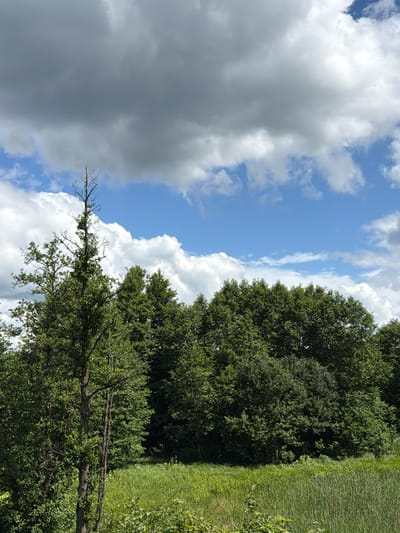
The image depicts a natural landscape scene, likely on the outskirts of Ūlupji, Latvia, characterized by a dense forest bordering a field of tall grass. The sky above is a mix of blue patches and dramatic, heavy grey and white clouds. In the foreground, a tall, sparsely branched tree stands out against the backdrop of the forest canopy. The forest itself is composed of a variety of deciduous trees, their leaves appearing lush and green, suggesting a summer or late spring season. The field in front of the trees is covered in dense, green vegetation. There are no people or man-made structures visible in the image. The overall impression is one of a wild, uncultivated natural environment.
Ūlupji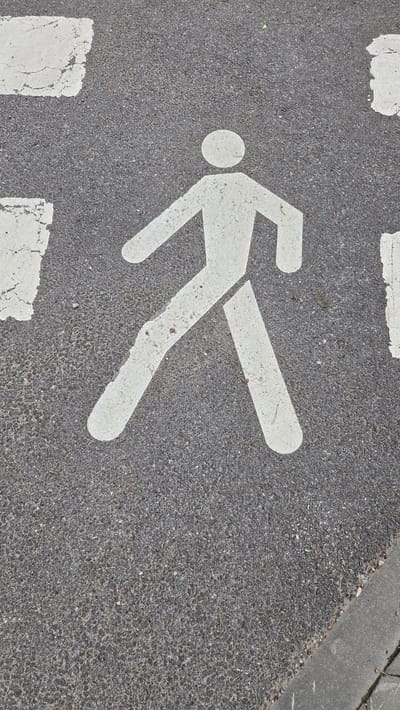
The image shows a pedestrian crossing symbol painted in white on asphalt in Ūlupji, Latvia. The symbol depicts a stylized human figure walking. The asphalt is dark grey and appears to be slightly worn, with some small pebbles visible. There are also white painted stripes of the pedestrian crossing, some of which are cracked and faded. To the right of the pedestrian symbol, a concrete curb is visible, indicating the edge of the road. The overall scene suggests an urban or semi-urban environment where pedestrian safety is marked on the roadway.
Ūlupji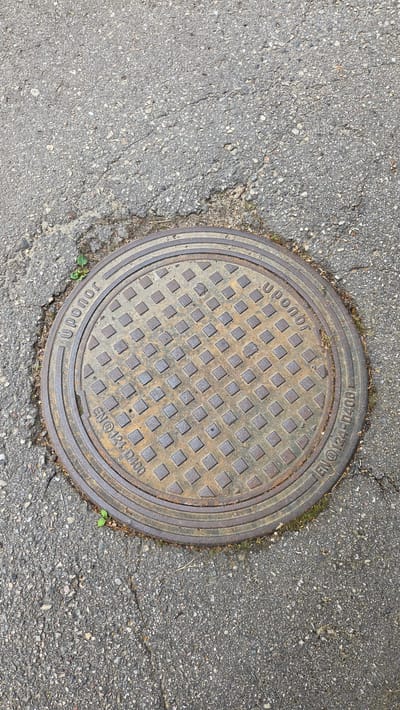
An overhead shot shows a circular, rusty metal manhole cover embedded in cracked asphalt. The manhole cover features a grid pattern of raised squares and has text inscribed around its circumference. On the left side, it reads "uponor" in a curved font, followed by "EN®124 D400" in a straighter font. On the right side, the text "uponor" is also visible in a curved font, and further around, it reads "EN®124-D400 L". Small green weeds are growing in the cracks of the asphalt surrounding the manhole cover. The environment is an outdoor urban setting, likely a street or sidewalk in the city of Ūlupji, Latvia. There are no people or animals visible in the image.
Ūlupji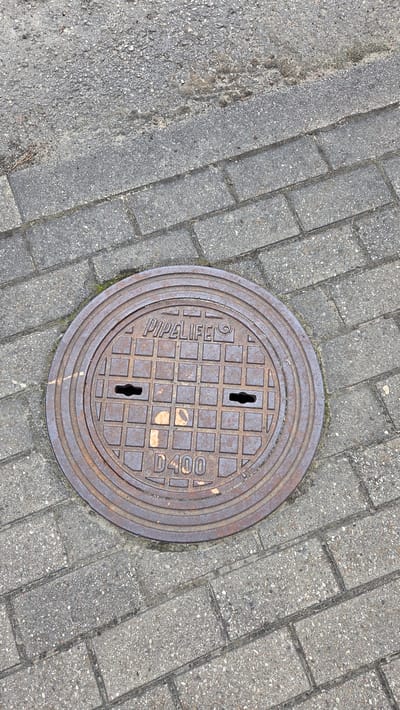
This is a top-down, close-up, eye-level shot of a manhole cover set into a paved surface. The manhole cover is round and made of dark, rusted metal with concentric rings around its edge. The surface of the cover features a grid pattern of raised squares, and two keyhole-shaped openings are visible. The text "PIPELIFE" is embossed in capital letters on the left side of the manhole cover, and "D400" is embossed on the right. The surrounding ground is paved with rectangular, grey interlocking pavers. To the left of the pavers, there is a strip of rougher, darker asphalt or concrete, with some visible debris and dried vegetation. The lighting suggests it is daytime. No people are visible in the frame. The scene appears to be an outdoor urban or suburban setting, likely a street or sidewalk in Ūlupji, Latvia.
Ūlupji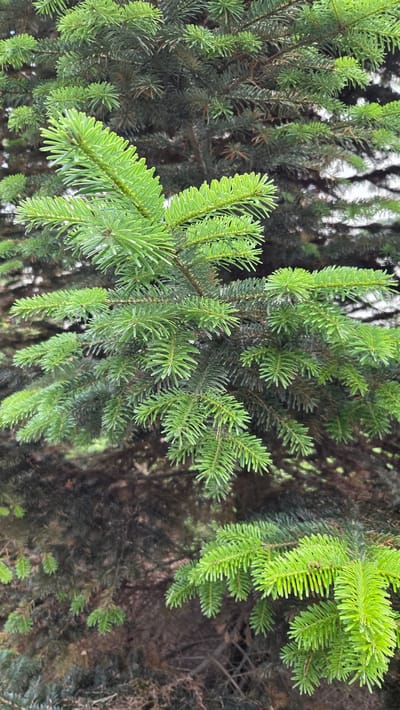
The image displays a close-up view of a fir tree's branches. The needles are a vibrant green, indicating new growth, and are densely packed along the twigs. The background is a blur of darker green and brown, suggesting more of the tree's foliage and possibly the ground beneath. No people, structures, or specific landmarks are visible in the frame. The location in the city of Ūlupji, Latvia, cannot be determined from the visual information provided in the image.
Ūlupji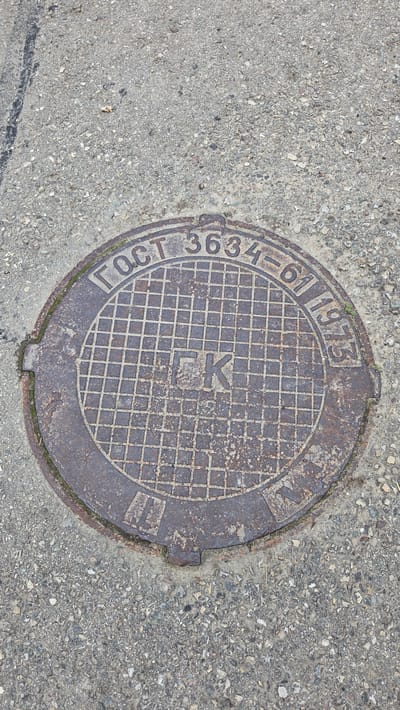
The image shows a close-up, overhead view of a cast iron manhole cover set into a concrete pavement. The manhole cover is circular and has a textured, grid-like pattern across its surface. In the center of the grid, the Cyrillic letters "LK" are embossed. Around the perimeter of the manhole cover, text is inscribed. The visible text reads "ГОСТ 3634-61 1973". This inscription indicates that the manhole cover conforms to the GOST 3634-61 standard, and was manufactured in 1973. The manhole cover is weathered and shows signs of rust and wear. The surrounding concrete is rough and speckled with small stones and debris. The lighting suggests it is daytime, with no specific weather conditions evident. The location is identified as Ūlupji, Latvia. The image focuses solely on the manhole cover and its immediate surroundings, creating a utilitarian and somewhat stark aesthetic.
Ūlupji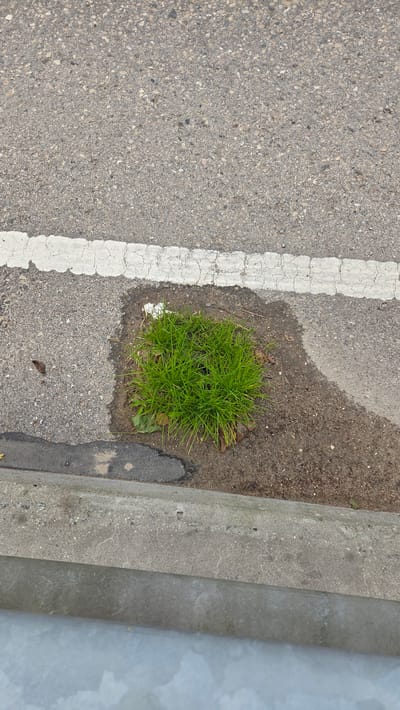
A clump of green grass grows in a patch of dirt on the side of a paved road. A white line is painted on the road next to the grass. A concrete curb runs along the edge of the road. The scene appears to be located in an urban area, possibly a street or parking lot, in Ūlupji, Latvia. The lighting suggests it is daytime, with overcast skies contributing to the soft illumination. There are no people or animals visible in the image. The environment is otherwise unremarkable, consisting primarily of asphalt, dirt, and concrete.
Ūlupji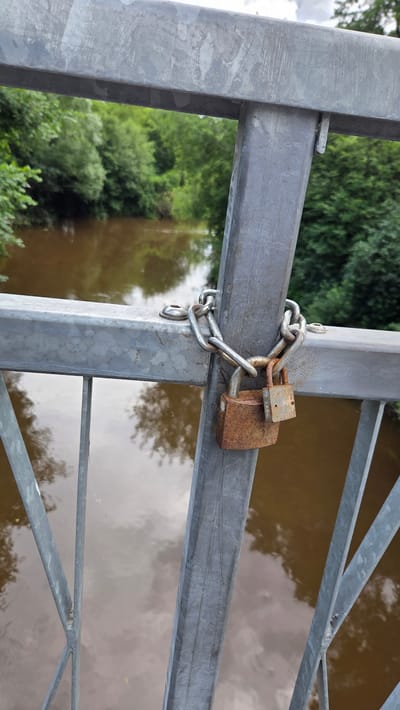
The image shows a close-up view of a metal gate with two rusty padlocks securing it with a chain. The gate appears to be part of a bridge or a fence overlooking a body of water, possibly a river or canal, with murky brown water reflecting the sky and surrounding greenery. The background is filled with lush green trees, suggesting an outdoor natural setting. The padlocks are made of metal and have a weathered, rusty appearance, indicating they have been exposed to the elements for some time. The chain linking them is also metallic and appears to be of a robust design. The gate itself is constructed from thick metal beams and bars, painted in a dull gray, and shows signs of wear and tear. One of the gate's vertical support beams has a small, flat piece of metal inserted into a gap, possibly a shim or a repair. The scene is brightly lit, suggesting it was taken during daylight hours. The sky's reflection on the water indicates some cloud cover. There is no visible text in the image. The overall impression is one of security and perhaps a sense of being closed off or restricted, given the locked gate. The location context of Ūlupji, Latvia, places this scene in a rural or semi-rural area of Latvia.
Ūlupji