CM:

ATTN

Get the app

Ado-Ekiti, Nigeria

30 memories from Ado-Ekiti, Nigeria

This media file captures a scene at a gas station in Ado-Ekiti, Nigeria, with multiple cars lined up, suggesting a queue for fuel. The perspective is from inside a vehicle, looking outwards.

The primary subjects are the cars, with a black Toyota Corolla prominently featured in the foreground. The license plate of this car reads "YEE 871AE". Several other vehicles are visible behind it, also waiting. The gas station structure is a prominent object, with a large, angular blue and grey canopy. The word "Matrix" is visible in large white letters on a blue section of the canopy.

The setting is an outdoor gas station with a concrete ground. The time of day appears to be daytime, indicated by the bright sky and clouds. The weather seems to be partly cloudy.

The activity is a typical gas station queue, with vehicles lined up to refuel. There are no people clearly visible within the frame of the cars or at the gas pumps, but their presence is implied by the activity.

Notable details include the visible license plate, the "Matrix" signage on the canopy, and the overall impression of a busy, functional gas station. The image is oriented vertically and rotated, which might be a result of how it was captured or processed. The presence of a side mirror from the vehicle in which the photo is taken is also a notable detail, reflecting a portion of the scene.

This media file captures a scene at a gas station in Ado-Ekiti, Nigeria, with multiple cars lined up, suggesting a queue for fuel. The perspective is from inside a vehicle, looking outwards. The primary subjects are the cars, with a black Toyota Corolla prominently featured in the foreground. The license plate of this car reads "YEE 871AE". Several other vehicles are visible behind it, also waiting. The gas station structure is a prominent object, with a large, angular blue and grey canopy. The word "Matrix" is visible in large white letters on a blue section of the canopy. The setting is an outdoor gas station with a concrete ground. The time of day appears to be daytime, indicated by the bright sky and clouds. The weather seems to be partly cloudy. The activity is a typical gas station queue, with vehicles lined up to refuel. There are no people clearly visible within the frame of the cars or at the gas pumps, but their presence is implied by the activity. Notable details include the visible license plate, the "Matrix" signage on the canopy, and the overall impression of a busy, functional gas station. The image is oriented vertically and rotated, which might be a result of how it was captured or processed. The presence of a side mirror from the vehicle in which the photo is taken is also a notable detail, reflecting a portion of the scene.

Ado-Ekiti

The image shows an indoor scene, likely in Ado-Ekiti, Nigeria, given the prompt. Two individuals are standing; one wearing a dark t-shirt and jeans with decorative stitching on the back pocket, and the other wearing a light green shirt and a blue baseball cap. It appears the first person is attending to the other in some way. There is lighting equipment set up, suggesting this might be a photoshoot or video shoot. A table with various items, including water bottles, snacks, and cosmetics, sits in the foreground. The interior space includes a door and what appears to be another room visible through an opening. A pink garment is draped in the lower right corner.

The image shows an indoor scene, likely in Ado-Ekiti, Nigeria, given the prompt. Two individuals are standing; one wearing a dark t-shirt and jeans with decorative stitching on the back pocket, and the other wearing a light green shirt and a blue baseball cap. It appears the first person is attending to the other in some way. There is lighting equipment set up, suggesting this might be a photoshoot or video shoot. A table with various items, including water bottles, snacks, and cosmetics, sits in the foreground. The interior space includes a door and what appears to be another room visible through an opening. A pink garment is draped in the lower right corner.

Ado-Ekiti
A close-up, slightly angled shot depicts two individuals. A dark-skinned person with close-cropped hair and a gold chain around their neck is wearing a textured, possibly knitted, green-colored top. Their head is positioned towards the top of the image, with their face clearly visible, eyes open. Below them is a person with braided brown hair and wearing a white shirt. This person's face is mostly obscured, with only their ear and the back of their head visible. The background appears to be a plain, light-colored surface. The location in Ado-Ekiti, Nigeria is unknown. There is no additional contextual information available to determine the environment, specific actions, or interactions.

A close-up, slightly angled shot depicts two individuals. A dark-skinned person with close-cropped hair and a gold chain around their neck is wearing a textured, possibly knitted, green-colored top. Their head is positioned towards the top of the image, with their face clearly visible, eyes open. Below them is a person with braided brown hair and wearing a white shirt. This person's face is mostly obscured, with only their ear and the back of their head visible. The background appears to be a plain, light-colored surface. The location in Ado-Ekiti, Nigeria is unknown. There is no additional contextual information available to determine the environment, specific actions, or interactions.

Ado-Ekiti
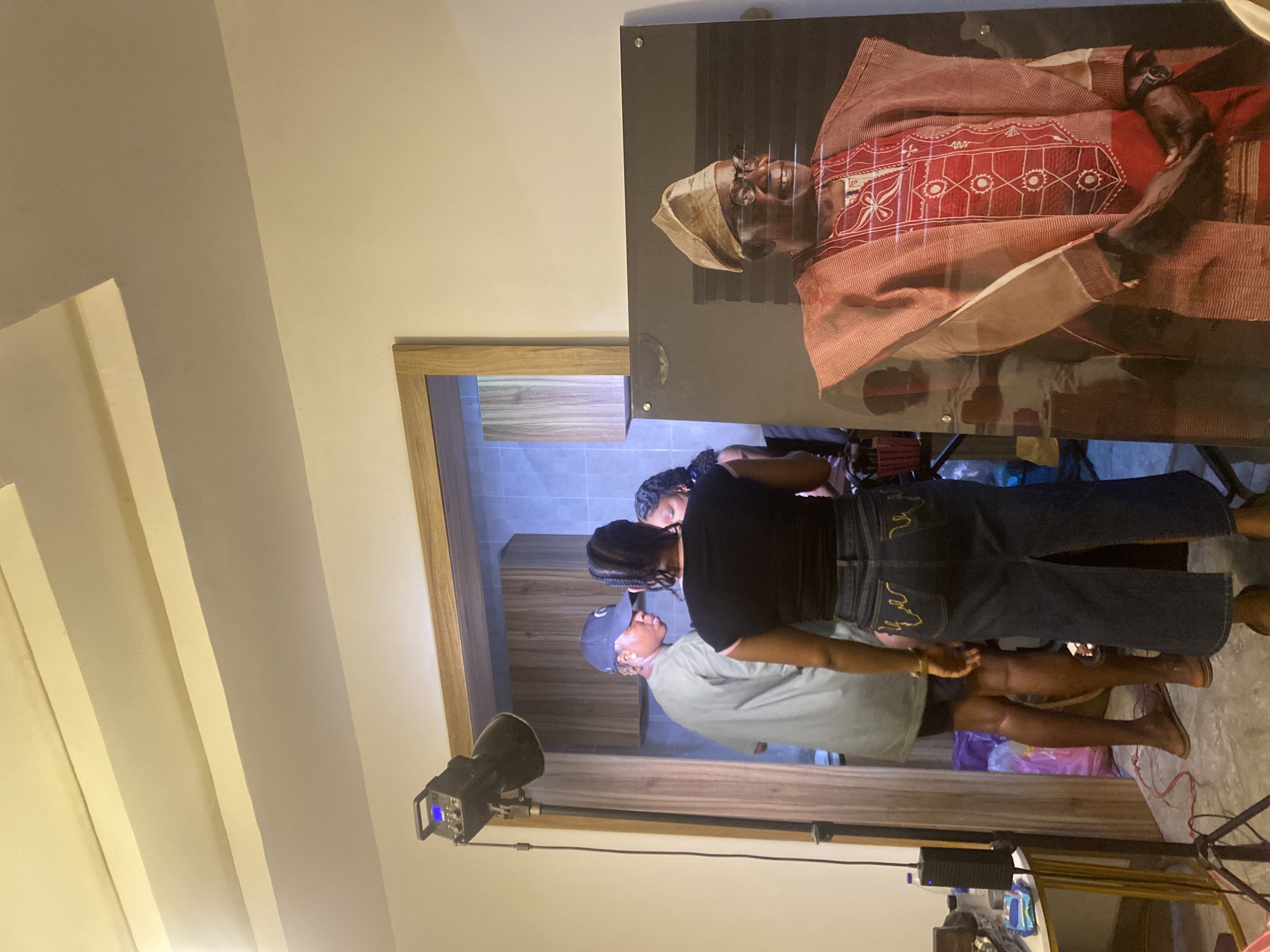
A photograph taken indoors depicts a film set in what seems to be a private residence. The photo is oriented vertically, showing a corner of a room with beige-painted walls and a doorway. On the wall is a framed portrait of an elderly man in traditional Nigerian attire.

In the doorway, a film crew appears to be working. At least three people are visible; one is wearing a black shirt and blue jeans, facing towards the interior room, another wearing a light-colored shirt and a baseball cap. Camera lights and equipment surround them. The interior room is tiled and contains wooden cabinetry.

Given the mention of Ado-Ekiti, Nigeria, the portrait subject is likely a local figure.

A photograph taken indoors depicts a film set in what seems to be a private residence. The photo is oriented vertically, showing a corner of a room with beige-painted walls and a doorway. On the wall is a framed portrait of an elderly man in traditional Nigerian attire. In the doorway, a film crew appears to be working. At least three people are visible; one is wearing a black shirt and blue jeans, facing towards the interior room, another wearing a light-colored shirt and a baseball cap. Camera lights and equipment surround them. The interior room is tiled and contains wooden cabinetry. Given the mention of Ado-Ekiti, Nigeria, the portrait subject is likely a local figure.

Ado-Ekiti
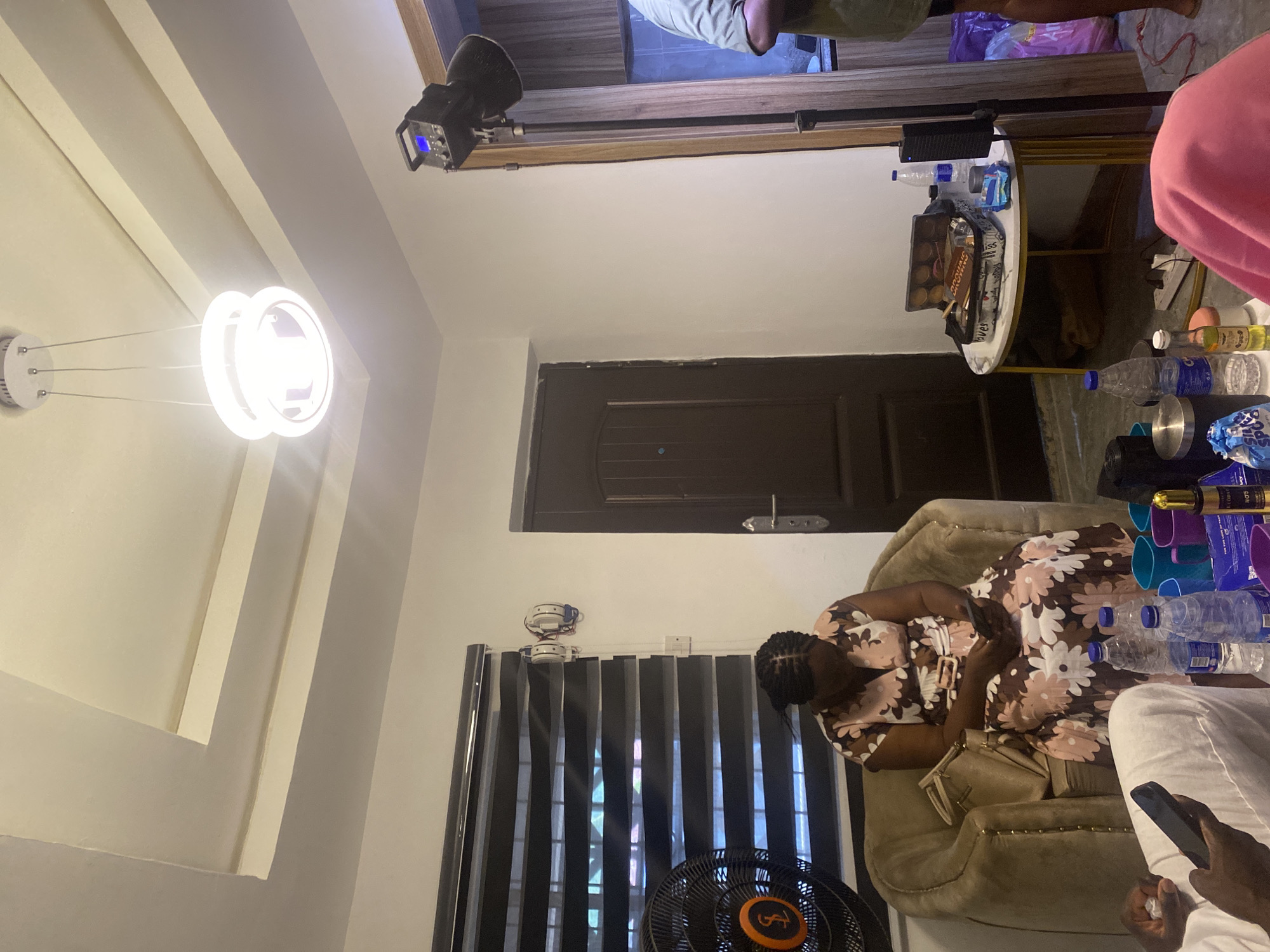
A cluttered interior in Ado-Ekiti, Nigeria. A woman in a floral dress sits in an armchair, likely using a phone. A ceiling fan stands near a window with blinds. A chandelier hangs from the ceiling. Bottles and other items clutter a table. Other people are present. A door is in the background. Lighting equipment is present.

A cluttered interior in Ado-Ekiti, Nigeria. A woman in a floral dress sits in an armchair, likely using a phone. A ceiling fan stands near a window with blinds. A chandelier hangs from the ceiling. Bottles and other items clutter a table. Other people are present. A door is in the background. Lighting equipment is present.

Ado-Ekiti
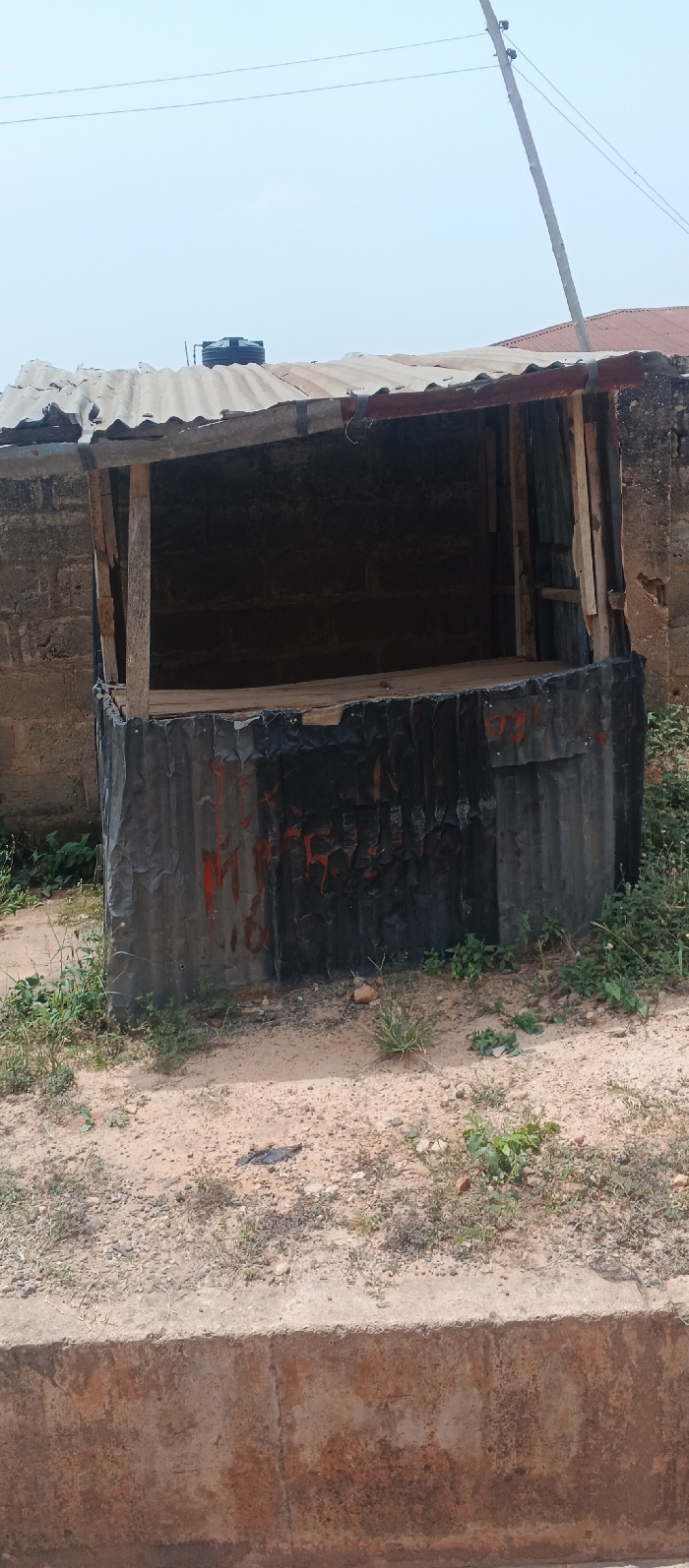
The image captures an unoccupied, open-fronted roadside stall or kiosk in Ado-Ekiti, Nigeria. The structure's lower exterior is composed of dark, weathered corrugated metal sheeting, exhibiting dents, creases, and sporadic reddish-orange paint marks. The upper frame is constructed from rough wooden planks, supporting a rusted and worn corrugated metal roof. An empty wooden shelf or counter is visible within the stall's interior. The background immediately behind the stall features a cinder block wall. The ground in the foreground consists of dry, light brown soil mixed with small stones and sparse green vegetation. A weathered concrete curb runs across the bottom of the frame. In the distant background, under a pale sky, a utility pole with power lines is visible, along with a partial view of another building's reddish-brown corrugated roof and a black water storage tank situated on a separate rooftop. No individuals, merchandise, or vehicles are present in the scene.

The image captures an unoccupied, open-fronted roadside stall or kiosk in Ado-Ekiti, Nigeria. The structure's lower exterior is composed of dark, weathered corrugated metal sheeting, exhibiting dents, creases, and sporadic reddish-orange paint marks. The upper frame is constructed from rough wooden planks, supporting a rusted and worn corrugated metal roof. An empty wooden shelf or counter is visible within the stall's interior. The background immediately behind the stall features a cinder block wall. The ground in the foreground consists of dry, light brown soil mixed with small stones and sparse green vegetation. A weathered concrete curb runs across the bottom of the frame. In the distant background, under a pale sky, a utility pole with power lines is visible, along with a partial view of another building's reddish-brown corrugated roof and a black water storage tank situated on a separate rooftop. No individuals, merchandise, or vehicles are present in the scene.

Ado-Ekiti
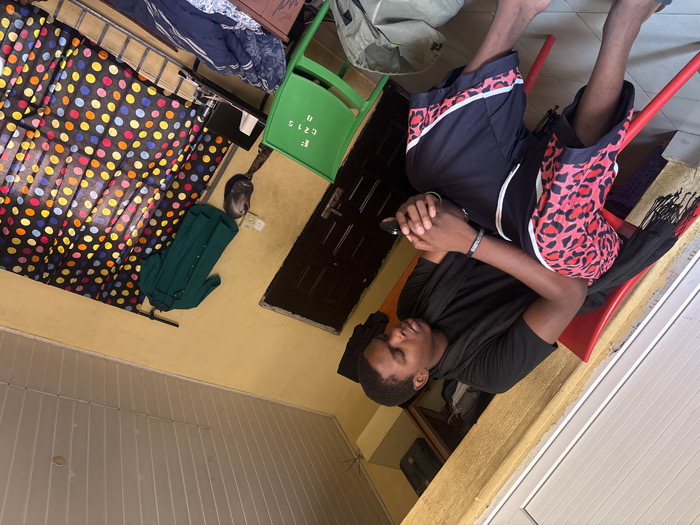
The image depicts an indoor scene within a room in Ado-Ekiti, Nigeria. A male individual, appearing young adult, is seated on a red plastic chair, looking down intently at a dark-colored smartphone held in both hands. He is wearing a black short-sleeved t-shirt, a black scarf draped over his left shoulder and lap, and dark shorts that feature a red and black leopard print pattern on the upper part, transitioning to solid black with white stripes on the lower part. A dark-colored bracelet is visible on his left wrist. He is barefoot, with a dark flip-flop partially visible on the floor below his left foot.

To the right of the seated individual, a green plastic chair is positioned, bearing white markings "F C215 8" on its backrest. The walls of the room are painted a light yellow-beige, showing some signs of wear. A dark-colored wooden door is visible on the left side of the frame. On the right wall, a dark green short-sleeved collared shirt hangs from a black rod or hanger, with a dark cap suspended beneath it. Adjacent to this, a multi-colored polka-dot curtain with a black background and dots in yellow, orange, red, blue, and green, covers an opening. Below the curtain, a dark-colored shelf or table holds a white cup and other indistinct items. A bed with blue and white patterned bedding is partially visible in the lower right, and a light-colored fabric bag rests on the floor in front of it. The ceiling is white and constructed from horizontal slats.

The image depicts an indoor scene within a room in Ado-Ekiti, Nigeria. A male individual, appearing young adult, is seated on a red plastic chair, looking down intently at a dark-colored smartphone held in both hands. He is wearing a black short-sleeved t-shirt, a black scarf draped over his left shoulder and lap, and dark shorts that feature a red and black leopard print pattern on the upper part, transitioning to solid black with white stripes on the lower part. A dark-colored bracelet is visible on his left wrist. He is barefoot, with a dark flip-flop partially visible on the floor below his left foot. To the right of the seated individual, a green plastic chair is positioned, bearing white markings "F C215 8" on its backrest. The walls of the room are painted a light yellow-beige, showing some signs of wear. A dark-colored wooden door is visible on the left side of the frame. On the right wall, a dark green short-sleeved collared shirt hangs from a black rod or hanger, with a dark cap suspended beneath it. Adjacent to this, a multi-colored polka-dot curtain with a black background and dots in yellow, orange, red, blue, and green, covers an opening. Below the curtain, a dark-colored shelf or table holds a white cup and other indistinct items. A bed with blue and white patterned bedding is partially visible in the lower right, and a light-colored fabric bag rests on the floor in front of it. The ceiling is white and constructed from horizontal slats.

Ado-Ekiti
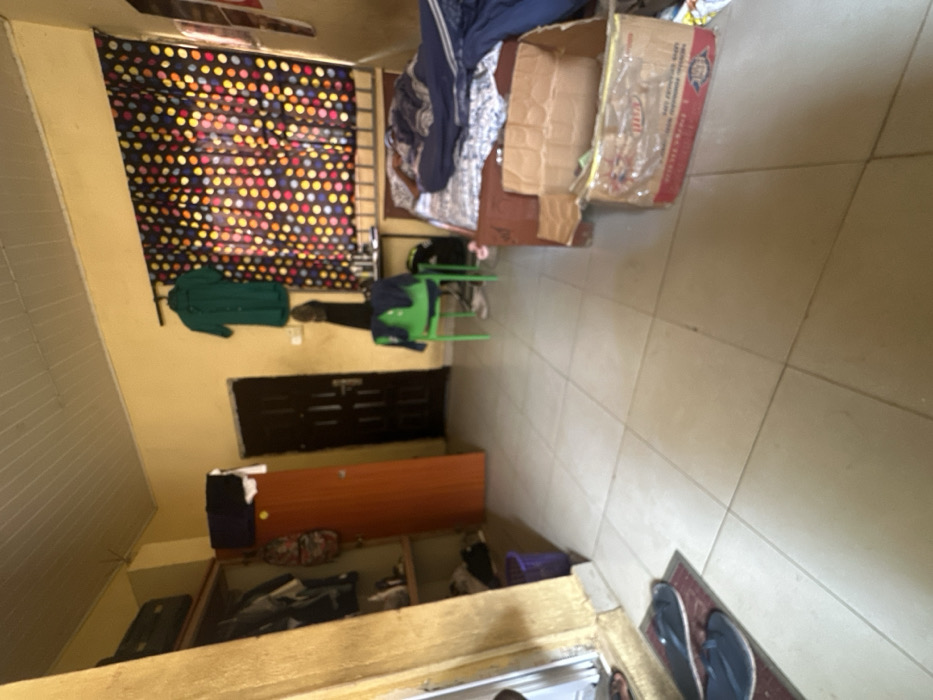
The image displays a moderately cluttered residential room located in Ado-Ekiti, Nigeria. The room features light yellow-painted walls and a ceiling composed of white slatted panels. The floor is covered with light-colored square tiles.

On the right side of the room, a bed with a dark brown wooden frame is positioned against the wall. It is covered with a white and blue patterned sheet, overlaid with dark blue blankets or folded clothing. Adjacent to the bed, a small black table holds several indistinct items. A large, open cardboard box, partially crushed and displaying red and white branding, rests on the tiled floor next to the bed.

A window on the right wall is covered by a multi-colored curtain featuring a polka-dot pattern in red, yellow, orange, and blue. A green collared shirt is hanging on the wall above the curtain rod, and a black shoe is visible hanging near the curtain. A green plastic chair stands in the midground, draped with dark clothing, with a pair of white sneakers positioned beneath it.

On the back wall, a dark brown security door with a silver-colored handle and lock mechanism is centrally located. To its left, a tall, narrow reddish-brown wooden door or cupboard is visible. Further to the left, a built-in wooden wardrobe or shelving unit contains various pieces of clothing and a patterned backpack. A dark purple bucket or container is present on the floor in the lower-left corner near the wardrobe.

In the immediate foreground, two dark-colored flip-flops are placed on a red mat. No individuals are present in the scene, and no specific actions or interactions are depicted. The room appears lived-in.

The image displays a moderately cluttered residential room located in Ado-Ekiti, Nigeria. The room features light yellow-painted walls and a ceiling composed of white slatted panels. The floor is covered with light-colored square tiles. On the right side of the room, a bed with a dark brown wooden frame is positioned against the wall. It is covered with a white and blue patterned sheet, overlaid with dark blue blankets or folded clothing. Adjacent to the bed, a small black table holds several indistinct items. A large, open cardboard box, partially crushed and displaying red and white branding, rests on the tiled floor next to the bed. A window on the right wall is covered by a multi-colored curtain featuring a polka-dot pattern in red, yellow, orange, and blue. A green collared shirt is hanging on the wall above the curtain rod, and a black shoe is visible hanging near the curtain. A green plastic chair stands in the midground, draped with dark clothing, with a pair of white sneakers positioned beneath it. On the back wall, a dark brown security door with a silver-colored handle and lock mechanism is centrally located. To its left, a tall, narrow reddish-brown wooden door or cupboard is visible. Further to the left, a built-in wooden wardrobe or shelving unit contains various pieces of clothing and a patterned backpack. A dark purple bucket or container is present on the floor in the lower-left corner near the wardrobe. In the immediate foreground, two dark-colored flip-flops are placed on a red mat. No individuals are present in the scene, and no specific actions or interactions are depicted. The room appears lived-in.

Ado-Ekiti
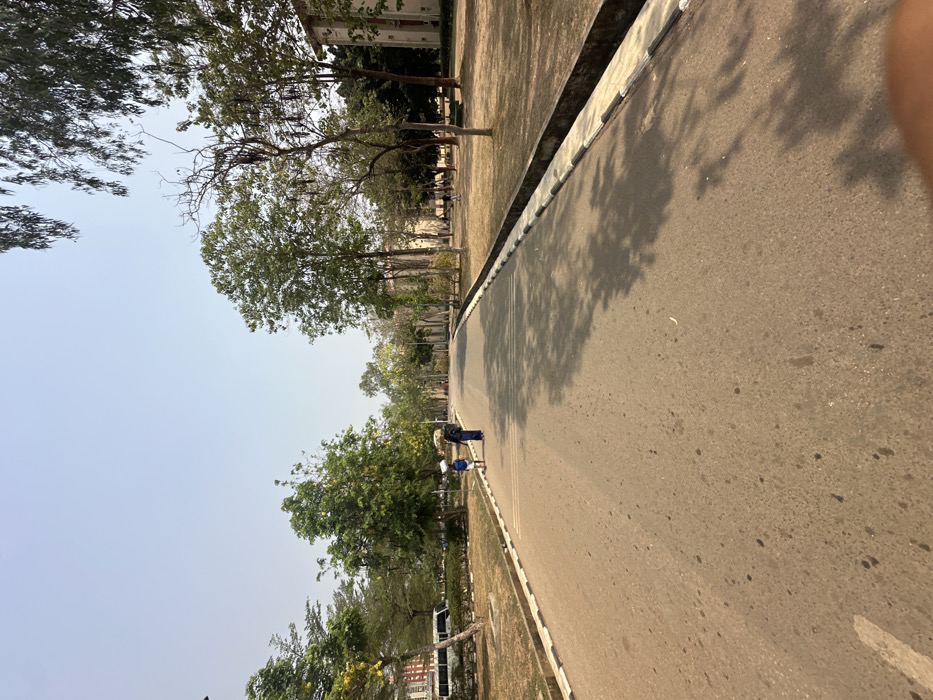
The image displays a wide asphalt road extending into the distance under a clear, light blue sky in Ado-Ekiti, Nigeria. The road surface exhibits minor discolouration and scattered dark spots. Both sides of the road are delineated by concrete curb stones painted alternately white and black, bordering manicured grassy areas. Numerous trees with varying foliage densities line the roadside, casting long shadows across the asphalt from the right. In the middle ground, two individuals are walking away from the camera: an adult in dark blue attire, appearing to carry a light-colored object on their head, and a child in lighter clothing walking slightly ahead and to the left of the adult. Multi-story institutional or residential buildings with light-colored facades are visible through the trees in the background on both sides. A white mini-bus is partially visible, parked on the left side behind some trees. The scene is brightly lit by natural sunlight, indicating daytime.

The image displays a wide asphalt road extending into the distance under a clear, light blue sky in Ado-Ekiti, Nigeria. The road surface exhibits minor discolouration and scattered dark spots. Both sides of the road are delineated by concrete curb stones painted alternately white and black, bordering manicured grassy areas. Numerous trees with varying foliage densities line the roadside, casting long shadows across the asphalt from the right. In the middle ground, two individuals are walking away from the camera: an adult in dark blue attire, appearing to carry a light-colored object on their head, and a child in lighter clothing walking slightly ahead and to the left of the adult. Multi-story institutional or residential buildings with light-colored facades are visible through the trees in the background on both sides. A white mini-bus is partially visible, parked on the left side behind some trees. The scene is brightly lit by natural sunlight, indicating daytime.

Ado-Ekiti
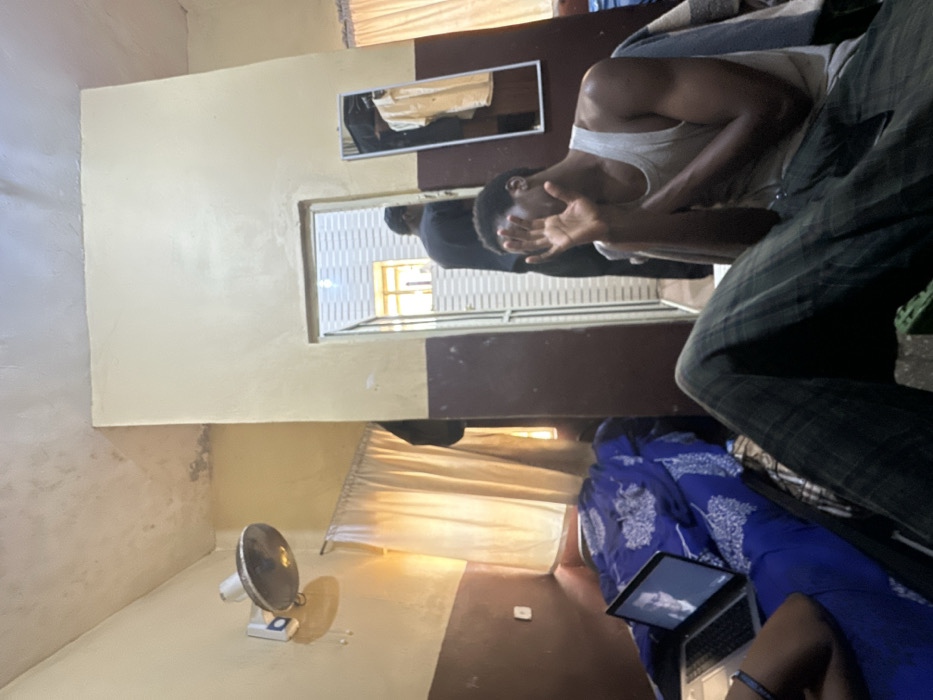
The image depicts an interior room located in Ado-Ekiti, Nigeria. The room features a two-toned wall design with a cream-colored upper section and a dark brown lower section. The ceiling shows evidence of wear or staining.

On the left wall, a white wall-mounted oscillating fan is positioned above a window draped with light-colored curtains, through which bright natural light illuminates the area. On a surface below the window, covered with blue patterned fabric, a silver laptop computer is open, displaying a screen that shows the face of a man wearing glasses.

In the mid-ground, a dark-skinned male subject is seated, wearing a light-colored tank top and dark plaid trousers. His right hand is raised, obscuring his face.

An open doorway in the center-right leads to an adjacent space with light-colored, horizontally striped walls. A second dark-skinned male subject is visible from the back within this doorway, wearing a dark long-sleeved garment and dark trousers. To the immediate right of the doorway, a rectangular mirror is mounted on the wall, reflecting or displaying a light-colored shirt. A green object is partially visible on the floor in the lower right foreground.

The image depicts an interior room located in Ado-Ekiti, Nigeria. The room features a two-toned wall design with a cream-colored upper section and a dark brown lower section. The ceiling shows evidence of wear or staining. On the left wall, a white wall-mounted oscillating fan is positioned above a window draped with light-colored curtains, through which bright natural light illuminates the area. On a surface below the window, covered with blue patterned fabric, a silver laptop computer is open, displaying a screen that shows the face of a man wearing glasses. In the mid-ground, a dark-skinned male subject is seated, wearing a light-colored tank top and dark plaid trousers. His right hand is raised, obscuring his face. An open doorway in the center-right leads to an adjacent space with light-colored, horizontally striped walls. A second dark-skinned male subject is visible from the back within this doorway, wearing a dark long-sleeved garment and dark trousers. To the immediate right of the doorway, a rectangular mirror is mounted on the wall, reflecting or displaying a light-colored shirt. A green object is partially visible on the floor in the lower right foreground.

Ado-Ekiti
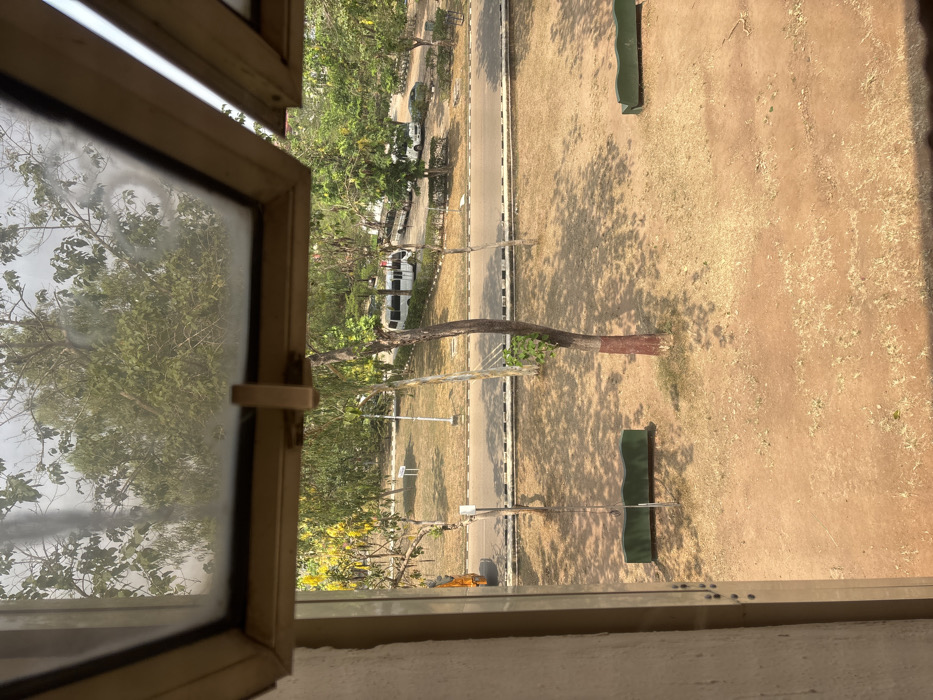
The image presents an outdoor scene in Ado-Ekiti, Nigeria, observed from an elevated window. The window frame, constructed of a light brown or beige material, is partially open, framing the view. The immediate external foreground consists of dry, reddish-brown earth with sparse, short patches of dried vegetation, suggesting arid conditions or a dry season. Multiple elongated shadows from unseen trees are cast across this ground. Two dark green, undulating benches are positioned on the dry earth, one on the left and another on the right, both casting clear shadows. Several trees with sparse foliage and varying trunk colors are present, including one central tree with a distinctive reddish-brown lower trunk.

Beyond the foreground, a paved asphalt road is visible, bordered by white and black striped curbing. No vehicles are actively in motion on this road, nor are any pedestrians present. A white utility pole or signpost stands upright near the road on the left side. The background features a cluster of vehicles parked in an open area, including at least two white passenger vans or minibuses, a white car, and a darker vehicle. This area is surrounded by numerous trees with vibrant green leaves, some exhibiting yellow blossoms. The sky is a pale, hazy blue, indicating daylight with atmospheric haze. No human figures or specific actions are discernible within the frame.

The image presents an outdoor scene in Ado-Ekiti, Nigeria, observed from an elevated window. The window frame, constructed of a light brown or beige material, is partially open, framing the view. The immediate external foreground consists of dry, reddish-brown earth with sparse, short patches of dried vegetation, suggesting arid conditions or a dry season. Multiple elongated shadows from unseen trees are cast across this ground. Two dark green, undulating benches are positioned on the dry earth, one on the left and another on the right, both casting clear shadows. Several trees with sparse foliage and varying trunk colors are present, including one central tree with a distinctive reddish-brown lower trunk. Beyond the foreground, a paved asphalt road is visible, bordered by white and black striped curbing. No vehicles are actively in motion on this road, nor are any pedestrians present. A white utility pole or signpost stands upright near the road on the left side. The background features a cluster of vehicles parked in an open area, including at least two white passenger vans or minibuses, a white car, and a darker vehicle. This area is surrounded by numerous trees with vibrant green leaves, some exhibiting yellow blossoms. The sky is a pale, hazy blue, indicating daylight with atmospheric haze. No human figures or specific actions are discernible within the frame.

Ado-Ekiti
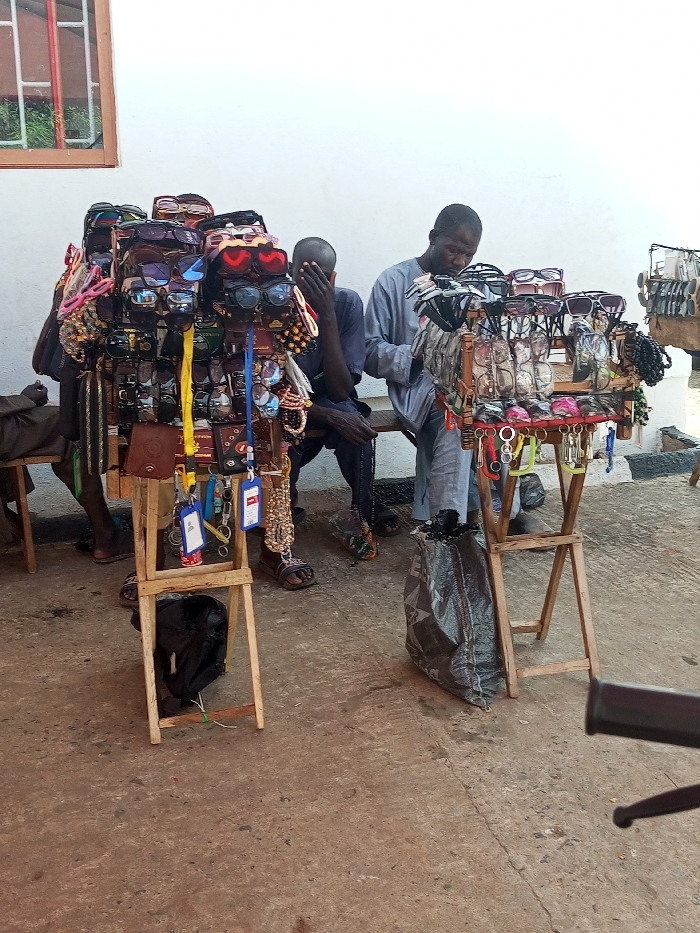
Two men sit behind stands displaying sunglasses, wallets, and trinkets. One man wears a light blue long-sleeved shirt and is looking at the sunglasses on his stand. The other man wears a dark blue long-sleeved shirt and has his hand to his face. The stands are simple wooden structures. A black bag rests beneath the stand on the left, and a gray trash bag sits beside the stand on the right. A window with a red frame is visible in the background.

Two men sit behind stands displaying sunglasses, wallets, and trinkets. One man wears a light blue long-sleeved shirt and is looking at the sunglasses on his stand. The other man wears a dark blue long-sleeved shirt and has his hand to his face. The stands are simple wooden structures. A black bag rests beneath the stand on the left, and a gray trash bag sits beside the stand on the right. A window with a red frame is visible in the background.

Ado-Ekiti
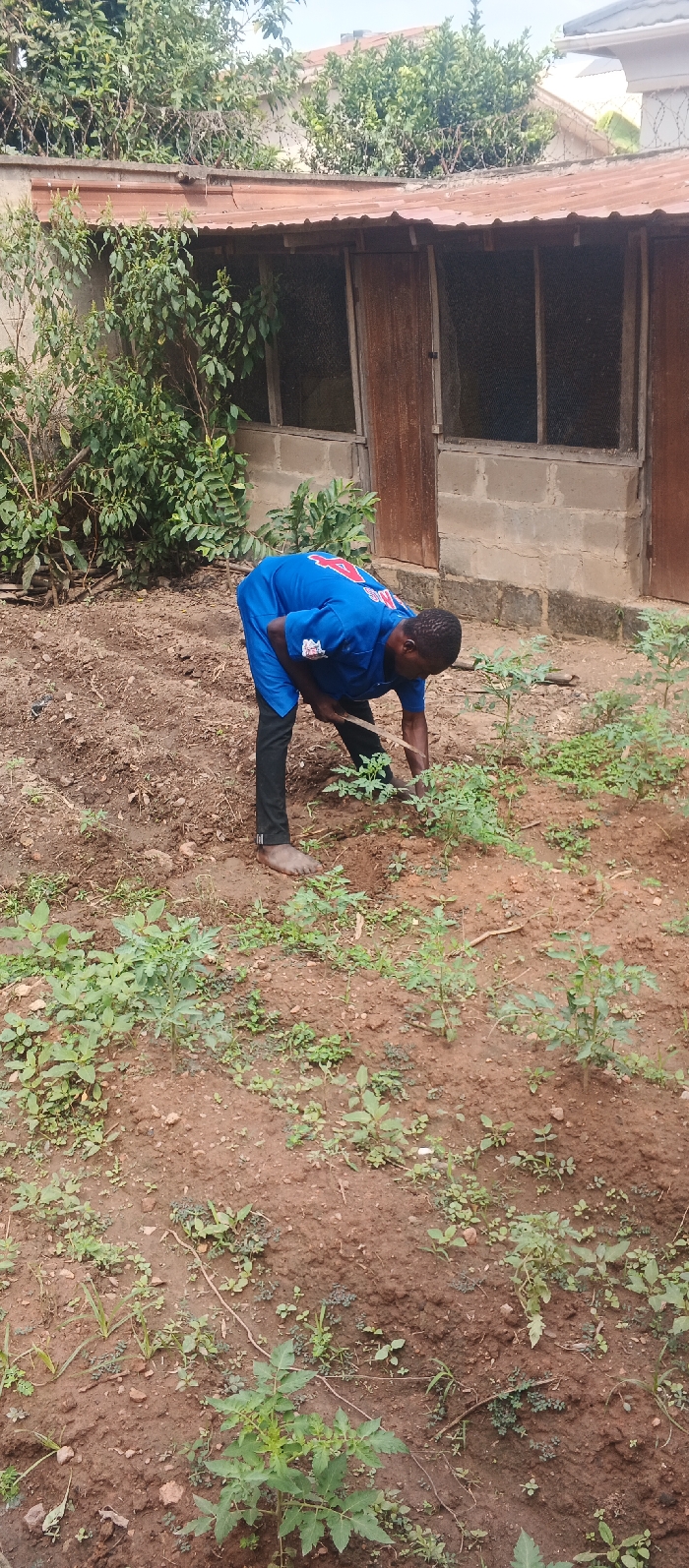
In an outdoor garden setting within Ado-Ekiti, Nigeria, a dark-skinned male is depicted tending to small plants. He is wearing a blue short-sleeved shirt with a red logo on the back and black pants, with one foot visibly bare. The man is bent at the waist, using a slender, light-colored implement to cultivate the reddish-brown soil around several young, green plants, which appear to be arranged in rows. The ground is sparsely covered with both cultivated plants and weeds. In the background, a low-slung building with concrete block walls, multiple mesh-covered windows, and a rusty corrugated metal roof is visible. A weathered wooden door is present on the building's right side. Behind this structure, a concrete wall topped with strands of barbed wire and dense green foliage marks a boundary.

In an outdoor garden setting within Ado-Ekiti, Nigeria, a dark-skinned male is depicted tending to small plants. He is wearing a blue short-sleeved shirt with a red logo on the back and black pants, with one foot visibly bare. The man is bent at the waist, using a slender, light-colored implement to cultivate the reddish-brown soil around several young, green plants, which appear to be arranged in rows. The ground is sparsely covered with both cultivated plants and weeds. In the background, a low-slung building with concrete block walls, multiple mesh-covered windows, and a rusty corrugated metal roof is visible. A weathered wooden door is present on the building's right side. Behind this structure, a concrete wall topped with strands of barbed wire and dense green foliage marks a boundary.

Ado-Ekiti

An image captured in Ado-Ekiti, Nigeria, depicts a young male individual seated indoors, likely within a shop or storage area. The individual, who has dark skin and short hair, is positioned facing right, with his eyes partially closed or downcast. A hand is visible touching the back of his neck or head on the left side of the frame. He is wearing a dark blue polo shirt with red and green stripes across the chest and a "BURBERRY SETABI.SHEBSAE" logo. A multi-patterned shirt with geometric shapes and stripes in black, white, red, and orange/brown is visible underneath or layered on his right side. In his right hand, he holds an orange and red thermos-style cup containing a clear straw. On a surface near his lap, a clear plastic blister pack containing two metal plumbing fixtures is visible. The background consists of wooden shelving units displaying various packaged merchandise, including clear plastic bags with components, blue cardboard boxes, and a hanging white ribbed rod. A dark green surface runs along the bottom edge of the shelving.

An image captured in Ado-Ekiti, Nigeria, depicts a young male individual seated indoors, likely within a shop or storage area. The individual, who has dark skin and short hair, is positioned facing right, with his eyes partially closed or downcast. A hand is visible touching the back of his neck or head on the left side of the frame. He is wearing a dark blue polo shirt with red and green stripes across the chest and a "BURBERRY SETABI.SHEBSAE" logo. A multi-patterned shirt with geometric shapes and stripes in black, white, red, and orange/brown is visible underneath or layered on his right side. In his right hand, he holds an orange and red thermos-style cup containing a clear straw. On a surface near his lap, a clear plastic blister pack containing two metal plumbing fixtures is visible. The background consists of wooden shelving units displaying various packaged merchandise, including clear plastic bags with components, blue cardboard boxes, and a hanging white ribbed rod. A dark green surface runs along the bottom edge of the shelving.

Ado-Ekiti

The image depicts an active street scene in Ado-Ekiti, Nigeria. In the foreground, a woman of African descent walks from left to right, wearing a light pink short-sleeved top, a dark patterned skirt, and light-colored flip-flops. Her head is covered by a dark fabric. She carries a grey, irregularly shaped bundle in her right hand. Directly behind her, a red motorcycle is visible, carrying a driver and a passenger. The driver wears a dark blue jacket, light-colored pants, and a prominent bright yellow helmet. The passenger, seated behind the driver, wears a brown jacket and dark headwear. In the mid-ground and background, several other individuals are present. To the left, a man in a red shirt is partially visible. Further back, a person in a white t-shirt stands facing away from the camera. The environment includes structures resembling market stalls or shops with wooden framing, some displaying hanging items. The ground is a light, unpaved surface. A dark, vertical pole with green circular accents frames the scene on the far right.

The image depicts an active street scene in Ado-Ekiti, Nigeria. In the foreground, a woman of African descent walks from left to right, wearing a light pink short-sleeved top, a dark patterned skirt, and light-colored flip-flops. Her head is covered by a dark fabric. She carries a grey, irregularly shaped bundle in her right hand. Directly behind her, a red motorcycle is visible, carrying a driver and a passenger. The driver wears a dark blue jacket, light-colored pants, and a prominent bright yellow helmet. The passenger, seated behind the driver, wears a brown jacket and dark headwear. In the mid-ground and background, several other individuals are present. To the left, a man in a red shirt is partially visible. Further back, a person in a white t-shirt stands facing away from the camera. The environment includes structures resembling market stalls or shops with wooden framing, some displaying hanging items. The ground is a light, unpaved surface. A dark, vertical pole with green circular accents frames the scene on the far right.

Ado-Ekiti
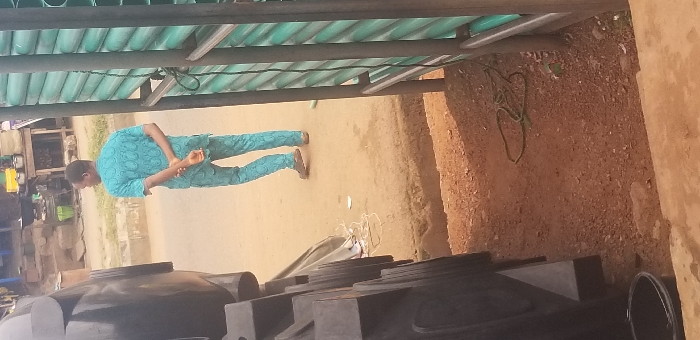
The image captures an outdoor urban scene in Ado-Ekiti, Nigeria, characterized by commercial activity and mixed ground surfaces under daylight.

In the immediate foreground, a light brown concrete surface, possibly a step, transitions to a reddish-brown dirt and gravel ground. On the left, a stack of multiple large, black, cylindrical plastic water tanks partially frames the scene, with a black bucket with a metallic handle visible on the concrete step near them. A tangled white cable and a coiled dark green rope lie on the dirt ground. A narrow dirt ditch or gutter separates this unpaved area from a light grey paved road.

On this paved road, a single adult male stands with his back to the camera, facing away. He is dressed in a light blue/teal patterned short-sleeved top and matching trousers, indicative of traditional Nigerian attire, and wears brown sandals. His hands are clasped behind his back.

In the background, beyond the man and the road, several items suggest commercial or food preparation activity. These include a wooden table supporting multiple metallic cooking pots and bowls, a black pot on a stand, and a green plastic bucket on the ground. The far background shows reddish-brown earth formations and sparse green vegetation along the road's edge.

The image captures an outdoor urban scene in Ado-Ekiti, Nigeria, characterized by commercial activity and mixed ground surfaces under daylight. In the immediate foreground, a light brown concrete surface, possibly a step, transitions to a reddish-brown dirt and gravel ground. On the left, a stack of multiple large, black, cylindrical plastic water tanks partially frames the scene, with a black bucket with a metallic handle visible on the concrete step near them. A tangled white cable and a coiled dark green rope lie on the dirt ground. A narrow dirt ditch or gutter separates this unpaved area from a light grey paved road. On this paved road, a single adult male stands with his back to the camera, facing away. He is dressed in a light blue/teal patterned short-sleeved top and matching trousers, indicative of traditional Nigerian attire, and wears brown sandals. His hands are clasped behind his back. In the background, beyond the man and the road, several items suggest commercial or food preparation activity. These include a wooden table supporting multiple metallic cooking pots and bowls, a black pot on a stand, and a green plastic bucket on the ground. The far background shows reddish-brown earth formations and sparse green vegetation along the road's edge.

Ado-Ekiti
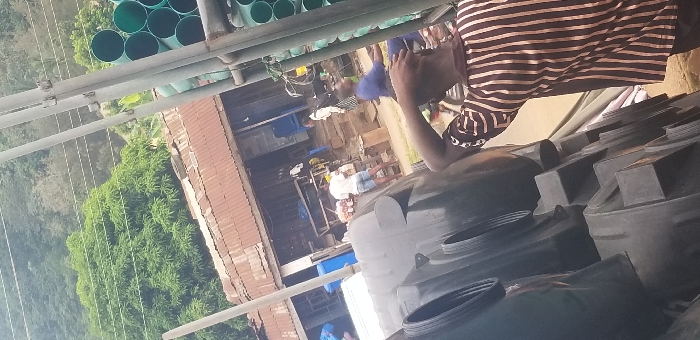
This image captures a bustling outdoor commercial area in Ado-Ekiti, Nigeria. In the foreground, multiple large, dark-grey plastic water storage tanks are stacked on the left, partially obscuring the view. To their right, the back of an individual wearing a brown and light-striped long-sleeved shirt is visible, with their right arm raised towards their head.

The midground features a single-story building with a rusty, corrugated metal roof and open-front structures, indicative of multiple small shops or market stalls. An individual in a white t-shirt and blue shorts stands near a small table displaying items for sale in front of this building. Another person in blue attire is partially visible to the right, possibly on a motorcycle or bicycle. Further back, a person in a white top and dark skirt, carrying a backpack, ascends steps leading to the building. Scattered blue plastic barrels and various goods are present near the structure.

On the far right of the midground, a rack holds numerous stacked green PVC pipes, suggesting a hardware or construction supply business. The background is characterized by a dense, green hillside covered in lush trees. Multiple utility poles with overhead wires extend vertically across the scene.

This image captures a bustling outdoor commercial area in Ado-Ekiti, Nigeria. In the foreground, multiple large, dark-grey plastic water storage tanks are stacked on the left, partially obscuring the view. To their right, the back of an individual wearing a brown and light-striped long-sleeved shirt is visible, with their right arm raised towards their head. The midground features a single-story building with a rusty, corrugated metal roof and open-front structures, indicative of multiple small shops or market stalls. An individual in a white t-shirt and blue shorts stands near a small table displaying items for sale in front of this building. Another person in blue attire is partially visible to the right, possibly on a motorcycle or bicycle. Further back, a person in a white top and dark skirt, carrying a backpack, ascends steps leading to the building. Scattered blue plastic barrels and various goods are present near the structure. On the far right of the midground, a rack holds numerous stacked green PVC pipes, suggesting a hardware or construction supply business. The background is characterized by a dense, green hillside covered in lush trees. Multiple utility poles with overhead wires extend vertically across the scene.

Ado-Ekiti

This image depicts an unpopulated indoor bedroom located in Ado-Ekiti, Nigeria. The central subject is a queen-sized bed with a dark-colored wooden frame and a headboard featuring four horizontal gold-colored strips. A light brown or beige mattress, devoid of bedsheets, rests on the bed frame. A single rectangular pillow with a patterned cover (brown, white, and reddish-orange geometric design) is positioned at the head of the bed on the left side. On the right side of the mattress, a small, crumpled textile item is visible. The room's walls are painted a light lavender or pale purple color. A window, fitted with dark-colored metal security bars, is present on the right wall, allowing ambient light into the room. The floor is covered with dark, polished tiles, exhibiting some reflectivity. No individuals are present, and no actions or interactions are depicted.

This image depicts an unpopulated indoor bedroom located in Ado-Ekiti, Nigeria. The central subject is a queen-sized bed with a dark-colored wooden frame and a headboard featuring four horizontal gold-colored strips. A light brown or beige mattress, devoid of bedsheets, rests on the bed frame. A single rectangular pillow with a patterned cover (brown, white, and reddish-orange geometric design) is positioned at the head of the bed on the left side. On the right side of the mattress, a small, crumpled textile item is visible. The room's walls are painted a light lavender or pale purple color. A window, fitted with dark-colored metal security bars, is present on the right wall, allowing ambient light into the room. The floor is covered with dark, polished tiles, exhibiting some reflectivity. No individuals are present, and no actions or interactions are depicted.

Ado-Ekiti
This image depicts an unmade bed, likely located within a private residence in Ado-Ekiti, Nigeria. The central subject is a light blue or greenish-blue mattress with a white or off-white quilted floral and swirling pattern. The mattress shows signs of wear and surface dust or debris. A dark blue pillow with white and light blue horizontal stripes is positioned on the upper left portion of the mattress. Part of a crumpled dark blue and white plaid fabric, possibly a blanket or sheet, is visible below the pillow. The background on the upper left is an overexposed area of light-colored wall or ceiling, indicative of ambient light source or bright reflections. The overall environment appears to be an interior space, likely a bedroom, with no individuals present. No specific actions or interactions are depicted.

This image depicts an unmade bed, likely located within a private residence in Ado-Ekiti, Nigeria. The central subject is a light blue or greenish-blue mattress with a white or off-white quilted floral and swirling pattern. The mattress shows signs of wear and surface dust or debris. A dark blue pillow with white and light blue horizontal stripes is positioned on the upper left portion of the mattress. Part of a crumpled dark blue and white plaid fabric, possibly a blanket or sheet, is visible below the pillow. The background on the upper left is an overexposed area of light-colored wall or ceiling, indicative of ambient light source or bright reflections. The overall environment appears to be an interior space, likely a bedroom, with no individuals present. No specific actions or interactions are depicted.

Ado-Ekiti
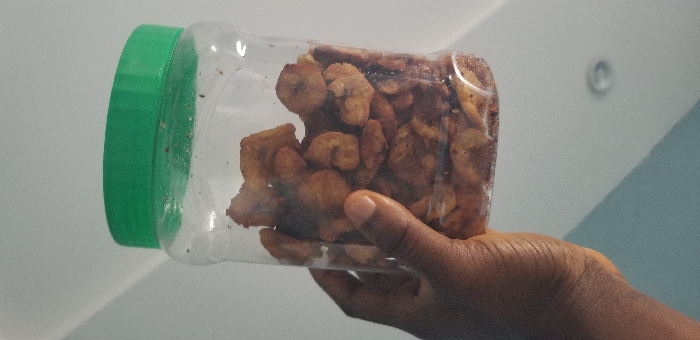
A dark-skinned right hand is observed gripping a clear, cylindrical plastic jar approximately three-quarters full of golden-brown, irregularly shaped fried plantain chips (kpekere). The jar is sealed with a solid green screw-top lid. Dark particulate matter, consistent with seasoning, is visible on the chips and adhered to the interior surface of the container. The background consists of an indoor environment, featuring a light-colored, possibly off-white, ceiling with a partially visible circular recessed light fixture in the upper right quadrant of the image. The lower portion of the background suggests a light-colored wall. This scene is located in the city of Ado-Ekiti, Nigeria.

A dark-skinned right hand is observed gripping a clear, cylindrical plastic jar approximately three-quarters full of golden-brown, irregularly shaped fried plantain chips (kpekere). The jar is sealed with a solid green screw-top lid. Dark particulate matter, consistent with seasoning, is visible on the chips and adhered to the interior surface of the container. The background consists of an indoor environment, featuring a light-colored, possibly off-white, ceiling with a partially visible circular recessed light fixture in the upper right quadrant of the image. The lower portion of the background suggests a light-colored wall. This scene is located in the city of Ado-Ekiti, Nigeria.

Ado-Ekiti
This image depicts an outdoor, natural scene in Ado-Ekiti, Nigeria, primarily composed of dense vegetation under an overcast sky. The upper third of the frame is occupied by a uniformly light gray, hazy sky. Below the horizon, the scene is dominated by various shades of green foliage. A prominent tree, possibly a mango tree, stands in the mid-ground, slightly right of the vertical center, exhibiting both mature dark green leaves and clusters of reddish-brown new growth at its canopy. Its brown trunk and branches are visible below the foliage. To the left and behind this central tree, a thick expanse of darker green trees and bushes forms a dense barrier. Through a gap in the foliage on the far left, a faint, light-colored structure with a discernible reddish-orange roofline or architectural detail is visible in the distant background, indicating proximity to human development. The lower foreground consists of low-lying, lighter green vegetation, consistent with undergrowth or ground cover. No people, animals, or specific actions are visible within the frame.

This image depicts an outdoor, natural scene in Ado-Ekiti, Nigeria, primarily composed of dense vegetation under an overcast sky. The upper third of the frame is occupied by a uniformly light gray, hazy sky. Below the horizon, the scene is dominated by various shades of green foliage. A prominent tree, possibly a mango tree, stands in the mid-ground, slightly right of the vertical center, exhibiting both mature dark green leaves and clusters of reddish-brown new growth at its canopy. Its brown trunk and branches are visible below the foliage. To the left and behind this central tree, a thick expanse of darker green trees and bushes forms a dense barrier. Through a gap in the foliage on the far left, a faint, light-colored structure with a discernible reddish-orange roofline or architectural detail is visible in the distant background, indicating proximity to human development. The lower foreground consists of low-lying, lighter green vegetation, consistent with undergrowth or ground cover. No people, animals, or specific actions are visible within the frame.

Ado-Ekiti
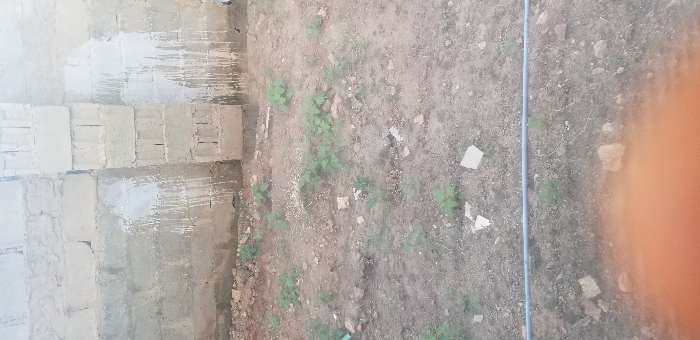
The image displays an outdoor scene in Ado-Ekiti, Nigeria, featuring a concrete block wall and an uncultivated plot of ground under overcast daylight conditions. The wall, constructed from grey concrete blocks, occupies the upper half of the frame. Two prominent vertical sections, likely reinforced pillars or buttresses, are integrated into the wall structure. White liquid, possibly paint or plaster, is splattered and streaks vertically downwards in multiple irregular rivulets across the concrete blocks, concentrated around the vertical sections. The ground in the lower half of the image consists of dry, reddish-brown earth, showing signs of minimal cultivation or natural growth. Scattered small green herbaceous plants and weeds are interspersed across the soil. Numerous small rocks, pebbles, and fragments of light-colored debris are visible on the ground surface. A single, thin, grey pipe runs horizontally across the lower-middle portion of the frame. No human subjects or active interactions are depicted. A blurred orange discoloration obscures the very bottom edge of the image.

The image displays an outdoor scene in Ado-Ekiti, Nigeria, featuring a concrete block wall and an uncultivated plot of ground under overcast daylight conditions. The wall, constructed from grey concrete blocks, occupies the upper half of the frame. Two prominent vertical sections, likely reinforced pillars or buttresses, are integrated into the wall structure. White liquid, possibly paint or plaster, is splattered and streaks vertically downwards in multiple irregular rivulets across the concrete blocks, concentrated around the vertical sections. The ground in the lower half of the image consists of dry, reddish-brown earth, showing signs of minimal cultivation or natural growth. Scattered small green herbaceous plants and weeds are interspersed across the soil. Numerous small rocks, pebbles, and fragments of light-colored debris are visible on the ground surface. A single, thin, grey pipe runs horizontally across the lower-middle portion of the frame. No human subjects or active interactions are depicted. A blurred orange discoloration obscures the very bottom edge of the image.

Ado-Ekiti
A dark-skinned human hand is shown grasping a crinkled black plastic bag. The thumb and fingers are visible, securing the bag on the left side of the frame. The black plastic bag contains an irregularly shaped, lumpy mass, obscuring its contents. The bag's surface is reflective. The background is out of focus, featuring an overexposed bright rectangular area in the upper portion, consistent with a window or light source. A dark vertical structural element is present to the left of this bright area. Indistinct light blue and grey tones are visible in the lower right background. The scene is located in Ado-Ekiti, Nigeria.

A dark-skinned human hand is shown grasping a crinkled black plastic bag. The thumb and fingers are visible, securing the bag on the left side of the frame. The black plastic bag contains an irregularly shaped, lumpy mass, obscuring its contents. The bag's surface is reflective. The background is out of focus, featuring an overexposed bright rectangular area in the upper portion, consistent with a window or light source. A dark vertical structural element is present to the left of this bright area. Indistinct light blue and grey tones are visible in the lower right background. The scene is located in Ado-Ekiti, Nigeria.

Ado-Ekiti
This image depicts a static indoor scene in a location identified as Ado-Ekiti, Nigeria. The primary subject is a large, cylindrical, stainless steel insulated food container or flask, positioned centrally. It features a reflective exterior, a prominent screw-on hexagonal lid, and a folding metal handle attached to its upper sides.

To the left and front of the container, a colorful notebook or exercise book is visible, resting flat. Its cover displays a "Creative eXpression" title and a design of wavy, layered bands in shades of dark brown, red, orange, yellow, and beige. Handwritten information, including labels for "Name," "Class," "School," and "Date," is present on the right side of the cover, with some illegible entries.

Behind the stainless steel container, several packaged items are stacked. At least two red-colored packages, possibly containing snacks, are discernible, with one partially revealing what appears to be "Beloxxi" branding. A blue-colored sachet or package is partially visible behind the red items.

All objects rest on a dark, flat surface, likely a table or shelf. The background consists of a plain, light blue-green wall. No individuals are present in the image, and no actions or interactions are depicted.

This image depicts a static indoor scene in a location identified as Ado-Ekiti, Nigeria. The primary subject is a large, cylindrical, stainless steel insulated food container or flask, positioned centrally. It features a reflective exterior, a prominent screw-on hexagonal lid, and a folding metal handle attached to its upper sides. To the left and front of the container, a colorful notebook or exercise book is visible, resting flat. Its cover displays a "Creative eXpression" title and a design of wavy, layered bands in shades of dark brown, red, orange, yellow, and beige. Handwritten information, including labels for "Name," "Class," "School," and "Date," is present on the right side of the cover, with some illegible entries. Behind the stainless steel container, several packaged items are stacked. At least two red-colored packages, possibly containing snacks, are discernible, with one partially revealing what appears to be "Beloxxi" branding. A blue-colored sachet or package is partially visible behind the red items. All objects rest on a dark, flat surface, likely a table or shelf. The background consists of a plain, light blue-green wall. No individuals are present in the image, and no actions or interactions are depicted.

Ado-Ekiti
A clear plastic bottle of "BIG" brand drinking water rests horizontally on a patterned textile surface. The bottle is approximately two-thirds full of liquid and exhibits external condensation droplets. It is sealed with a blue screw cap. The label, predominantly white and blue, prominently features the word "BIG" in blue, accompanied by a white silhouette of a figure, likely a runner. Additional text on the label includes "PREMIUM DRINKING WATER," a QR code, nutritional information, and a NAFDAC logo, indicating its Nigerian origin. The background textile displays an ikat-style pattern with repeating geometric and stylized flame-like motifs in orange and dark brown hues on a white or cream base. No individuals, actions, or direct interactions are visible. The scene is depicted in a setting within the city of Ado-Ekiti, Nigeria.

A clear plastic bottle of "BIG" brand drinking water rests horizontally on a patterned textile surface. The bottle is approximately two-thirds full of liquid and exhibits external condensation droplets. It is sealed with a blue screw cap. The label, predominantly white and blue, prominently features the word "BIG" in blue, accompanied by a white silhouette of a figure, likely a runner. Additional text on the label includes "PREMIUM DRINKING WATER," a QR code, nutritional information, and a NAFDAC logo, indicating its Nigerian origin. The background textile displays an ikat-style pattern with repeating geometric and stylized flame-like motifs in orange and dark brown hues on a white or cream base. No individuals, actions, or direct interactions are visible. The scene is depicted in a setting within the city of Ado-Ekiti, Nigeria.

Ado-Ekiti
The image depicts an indoor scene focused on a collection of domestic items. The precise location within the city of Ado-Ekiti, Nigeria, is not discernible from the visual evidence presented.

In the central foreground, a pile of light-colored, possibly white or off-white, crumpled fabric, consistent with laundry, rests atop a black plastic bag. This bag appears to contain or cover an orange plastic laundry basket, parts of which are visible through perforations in the bag, revealing its grid-like pattern. To the far left, a vertical section of dark blue or navy blue fabric, consistent with a curtain or heavy drape, is present.

The background above the items is brightly illuminated and faded, suggesting an overhead light source or strong ambient light. The floor consists of light-colored, possibly beige or cream-colored, tiles with irregular, darker veining patterns, resembling natural stone like marble. On the floor, near the bottom right edge of the frame, a transparent plastic-wrapped object, consistent in shape and size with a toothbrush, is visible. No individuals are present in the scene, and no active interactions are depicted.

The image depicts an indoor scene focused on a collection of domestic items. The precise location within the city of Ado-Ekiti, Nigeria, is not discernible from the visual evidence presented. In the central foreground, a pile of light-colored, possibly white or off-white, crumpled fabric, consistent with laundry, rests atop a black plastic bag. This bag appears to contain or cover an orange plastic laundry basket, parts of which are visible through perforations in the bag, revealing its grid-like pattern. To the far left, a vertical section of dark blue or navy blue fabric, consistent with a curtain or heavy drape, is present. The background above the items is brightly illuminated and faded, suggesting an overhead light source or strong ambient light. The floor consists of light-colored, possibly beige or cream-colored, tiles with irregular, darker veining patterns, resembling natural stone like marble. On the floor, near the bottom right edge of the frame, a transparent plastic-wrapped object, consistent in shape and size with a toothbrush, is visible. No individuals are present in the scene, and no active interactions are depicted.

Ado-Ekiti
The image displays white text on a solid magenta background. The text reads: "Don't watch the clock; do what it does. Keep going."* — Sam Levenson. No people, subjects, objects, actions, or interactions are depicted. The environment consists solely of the colored background and text. The image contains no visual information to establish a physical location, including any specific area within Ado-Ekiti, Nigeria.

The image displays white text on a solid magenta background. The text reads: "Don't watch the clock; do what it does. Keep going."* — Sam Levenson. No people, subjects, objects, actions, or interactions are depicted. The environment consists solely of the colored background and text. The image contains no visual information to establish a physical location, including any specific area within Ado-Ekiti, Nigeria.

Ado-Ekiti
This image, observed in the city of Ado-Ekiti, Nigeria, displays white sans-serif text on a solid, bright green background. The prominent text reads: "Architecture is the learned game, correct and magnificent, of forms assembled in the light." Immediately below, the attribution "— *Le Corbusier*" appears, also in white sans-serif font and enclosed by asterisks. The image contains no people, physical objects apart from the text itself, actions, or interactions. The entire visual environment is a uniform green color, devoid of any topographical or architectural features.

This image, observed in the city of Ado-Ekiti, Nigeria, displays white sans-serif text on a solid, bright green background. The prominent text reads: "Architecture is the learned game, correct and magnificent, of forms assembled in the light." Immediately below, the attribution "— *Le Corbusier*" appears, also in white sans-serif font and enclosed by asterisks. The image contains no people, physical objects apart from the text itself, actions, or interactions. The entire visual environment is a uniform green color, devoid of any topographical or architectural features.

Ado-Ekiti
The image depicts an indoor space transitioning to an outdoor environment in Ado-Ekiti, Nigeria. The interior floor consists of light brown square tiles, exhibiting dark stains and smudges. A person with dark skin, wearing a dark short-sleeved top and red shorts, is prominently positioned in the center, bent over at the waist. This individual wears brown flip-flops and has their right arm extended into an open white woven sack on the floor. Behind this person's legs, a light brown wicker basket is present. To the right of the central figure, a collection of white woven sacks and one large black plastic sack are stacked against a dark vertical metal beam, which defines the right edge of the immediate indoor area. In the extreme foreground on the left, the lower leg and foot, clad in a dark sandal, of a second person are visible.

Through the doorway, the outdoor scene includes two large, dark grey cylindrical plastic water storage tanks immediately outside the opening on the left, one displaying a white logo. To the right of these tanks, a dark-colored SUV is parked on an unpaved surface. The background reveals corrugated metal rooftops of distant structures, interspersed with green foliage. A white or light-colored umbrella or canopy is partially visible in the far-right background. The overall lighting suggests daytime.

The image depicts an indoor space transitioning to an outdoor environment in Ado-Ekiti, Nigeria. The interior floor consists of light brown square tiles, exhibiting dark stains and smudges. A person with dark skin, wearing a dark short-sleeved top and red shorts, is prominently positioned in the center, bent over at the waist. This individual wears brown flip-flops and has their right arm extended into an open white woven sack on the floor. Behind this person's legs, a light brown wicker basket is present. To the right of the central figure, a collection of white woven sacks and one large black plastic sack are stacked against a dark vertical metal beam, which defines the right edge of the immediate indoor area. In the extreme foreground on the left, the lower leg and foot, clad in a dark sandal, of a second person are visible. Through the doorway, the outdoor scene includes two large, dark grey cylindrical plastic water storage tanks immediately outside the opening on the left, one displaying a white logo. To the right of these tanks, a dark-colored SUV is parked on an unpaved surface. The background reveals corrugated metal rooftops of distant structures, interspersed with green foliage. A white or light-colored umbrella or canopy is partially visible in the far-right background. The overall lighting suggests daytime.

Ado-Ekiti
The image displays an indoor scene within a commercial establishment in Ado-Ekiti, Nigeria. Two adult males are seated at a wooden table, facing each other. The individual on the left, viewed from a partial rear-side profile, wears a loose-fitting, light brown or mustard-yellow short-sleeved top and matching trousers. He is seated on a light-colored plastic chair and wears dark-colored open-toed sandals. His right arm is visible, resting on the table. The individual on the right is heavily backlit by a bright light source, rendering him largely in silhouette. He appears to be wearing a dark jacket over a white collared shirt, with dark dress shoes visible beneath the table. His right hand rests on a document or papers on the table. The interaction suggests a conversation or a business transaction. On the wall behind the right individual, multiple white rectangular signs with dark lettering are visible, including phone numbers and "MONEYPOINT POS" (Point of Sale), indicating a financial or agent banking service. The floor is tiled in a light color. The environment is generally dim, with significant glare from the right side of the frame.

The image displays an indoor scene within a commercial establishment in Ado-Ekiti, Nigeria. Two adult males are seated at a wooden table, facing each other. The individual on the left, viewed from a partial rear-side profile, wears a loose-fitting, light brown or mustard-yellow short-sleeved top and matching trousers. He is seated on a light-colored plastic chair and wears dark-colored open-toed sandals. His right arm is visible, resting on the table. The individual on the right is heavily backlit by a bright light source, rendering him largely in silhouette. He appears to be wearing a dark jacket over a white collared shirt, with dark dress shoes visible beneath the table. His right hand rests on a document or papers on the table. The interaction suggests a conversation or a business transaction. On the wall behind the right individual, multiple white rectangular signs with dark lettering are visible, including phone numbers and "MONEYPOINT POS" (Point of Sale), indicating a financial or agent banking service. The floor is tiled in a light color. The environment is generally dim, with significant glare from the right side of the frame.

Ado-Ekiti