Agbara, Nigeria
30 memories from Agbara, Nigeria

The video shows two men standing on the back of a yellow van. The man on the left is wearing a green t-shirt and light-colored shorts. The man on the right is wearing a white t-shirt, black shorts, and a black crossbody bag. Both men are looking forward and appear to be interacting with something outside the frame. The van has a license plate that reads "AKD 357 A". The environment appears to be an outdoor setting, possibly a street or highway, with other vehicles and structures visible in the background. The sky is overcast.
Agbara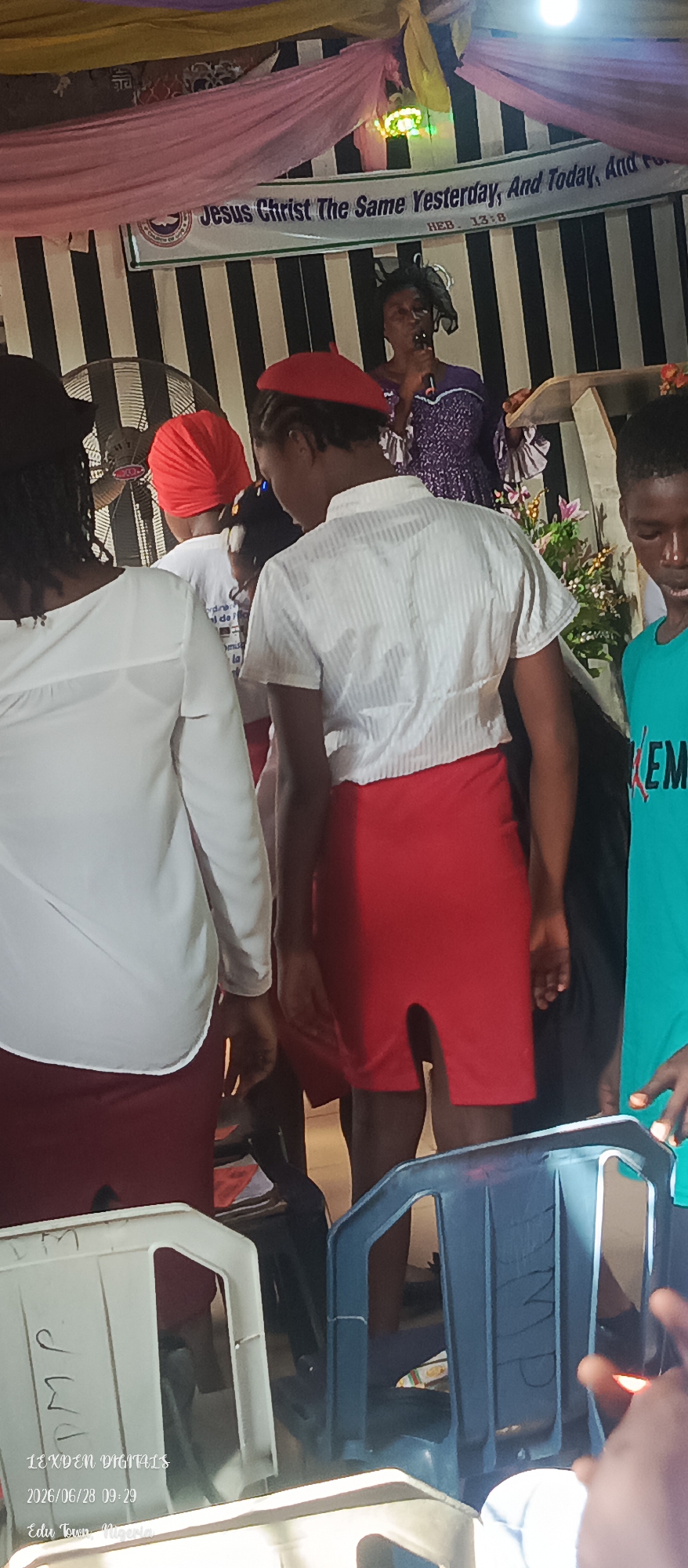
The image captures an indoor event, likely a religious service or gathering, taking place in Agbara, Nigeria. Several individuals, primarily young people, are visible. In the foreground, two individuals are partially visible, one wearing a white long-sleeved shirt and a red skirt, and another in a white short-sleeved shirt and a red skirt. Behind them, another person in a white shirt and red skirt is also present. To the right, a young male is wearing a teal shirt with text that reads "EM". At the back, a woman in a purple dress is speaking into a microphone, possibly addressing the gathering. A banner with text that reads "Jesus Christ The Same Yesterday, And Today, And Fo" and "HEB. 13:8" is displayed prominently on the wall. The environment appears to be decorated with draped fabric in pink and yellow hues, and a striped black and white background is visible. Several plastic chairs are scattered throughout the scene, some of which have writing on them. The overall atmosphere suggests a formal or semi-formal event. The timestamp on the image indicates it was taken on June 28, 2026, at 09:29.
Agbara
A young boy is looking at the camera. He is wearing a white outfit with a black stripe on the side. The boy's hair is short and black. He is in an indoor setting with a purple curtain on the left side and a corrugated metal roof above. The lighting is bright, creating a shadow across his face. The boy is moving his head slightly.
Agbara
A group of children and young people are gathered in a room. Several individuals are standing at the front of the room, facing a group of people seated in chairs. One person at the front is holding a microphone and appears to be speaking or singing. The room is decorated with colorful fabric draped from the ceiling. A banner with text is visible above the individuals at the front. The overall atmosphere suggests a gathering or event, possibly a church service or a performance.
Agbara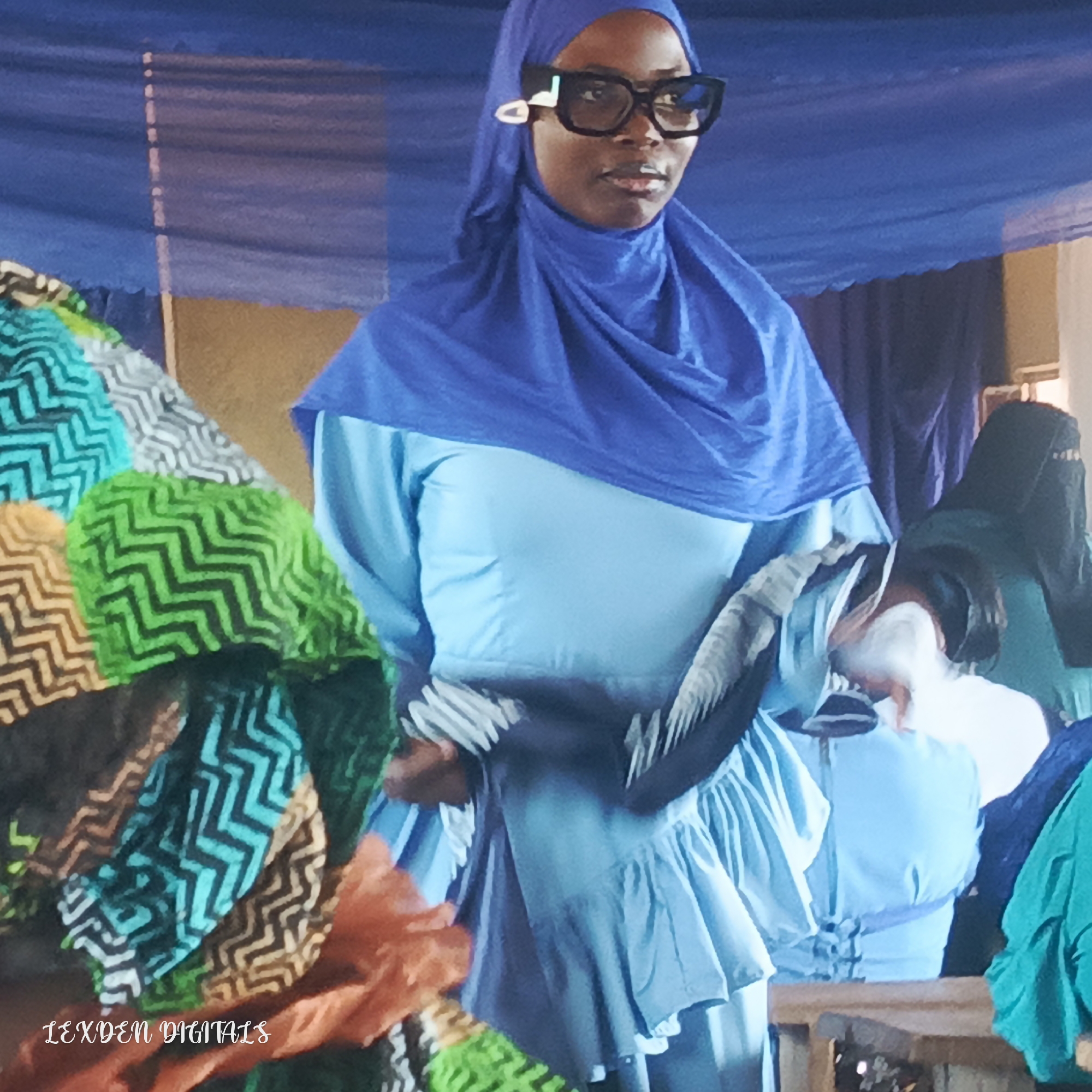
The image shows a group of people, primarily women, at an indoor event. One woman in the foreground, wearing a vibrant blue hijab and a light blue dress with ruffles, is the main subject. She has large, black, geometric-shaped glasses and is holding a patterned fan or accessory. Her posture suggests she is either posing or observing something. Other women are visible in the background, also wearing hijabs and modest attire in various shades of blue and green. The setting appears to be a gathering or celebration, likely in Nigeria given the location context. The backdrop consists of draped blue fabric, creating a festive atmosphere. The lighting is somewhat dim, suggesting an indoor event possibly taking place during the day or evening. The overall mood seems to be one of quiet observation and perhaps a fashion show or cultural presentation, given the stylish attire and accessories. The fabric in the foreground, to the left of the main subject, features a striking pattern of green, black, and beige zigzags. Visible text at the bottom left corner reads "LEXDEN DIGITALS". The focus is on the people and their clothing, highlighting cultural fashion and personal style within the context of a community event.
Agbara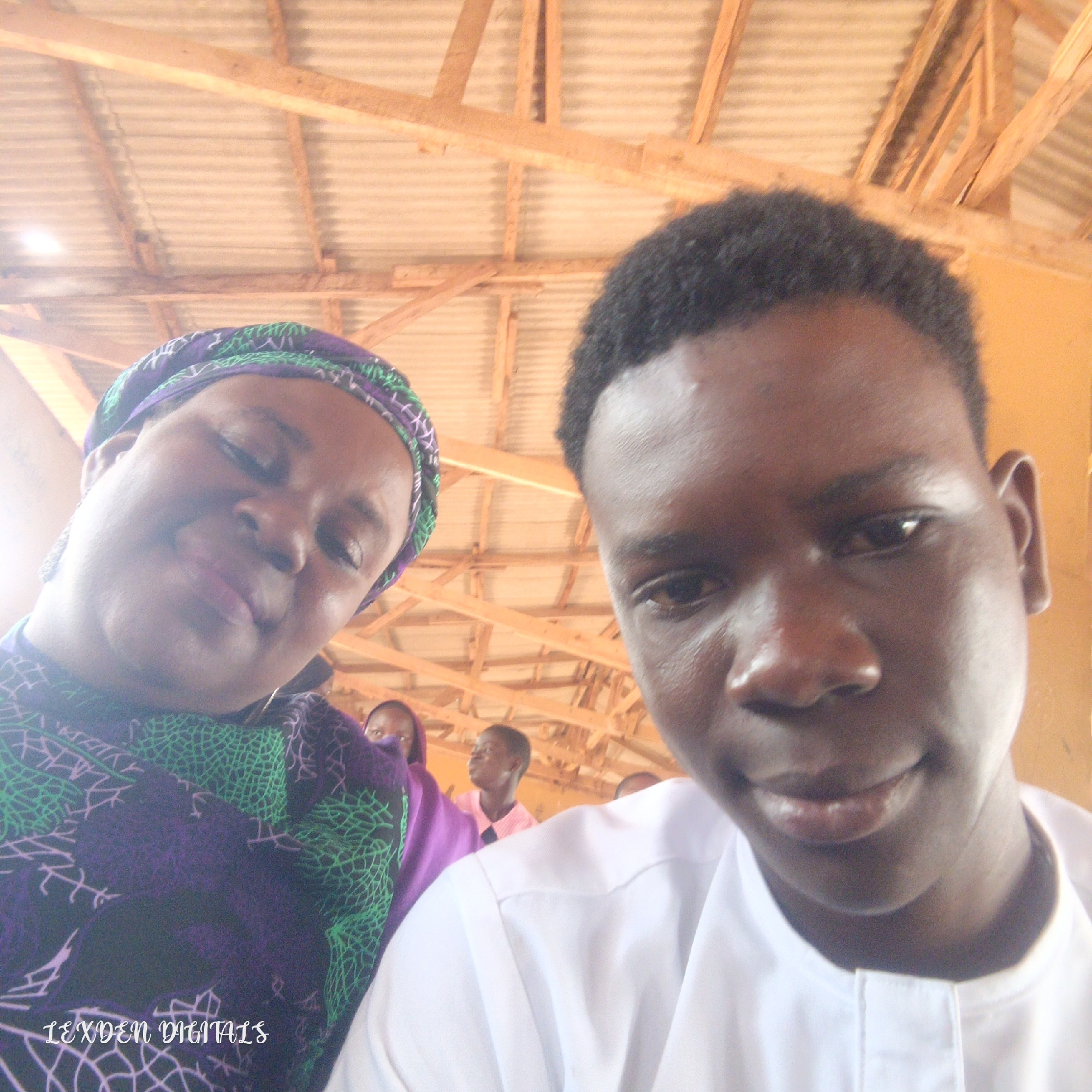
The image is a close-up selfie taken indoors, under a corrugated metal roof supported by wooden beams. In the foreground, on the left, a woman wearing a purple and green patterned headwrap and garment is looking slightly down. To her right and slightly in front, a young man wearing a white shirt is looking towards the camera. In the background, two other individuals, a young woman in a purple headwrap and a young man in a pink shirt, are visible. The lighting suggests it is daytime. The location is identified as Agbara, Nigeria.
Agbara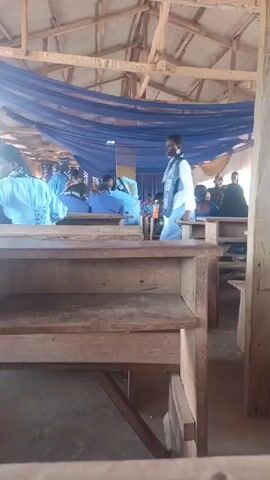
The video shows an indoor event, likely a school function, in Agbara, Nigeria. The setting appears to be a hall with a wooden ceiling and blue drapery. In the foreground, there are traditional wooden school desks. Several individuals are present, mostly wearing blue attire. One young woman stands out, wearing a white shirt, a light blue tie, and a sash that reads "JUNIOR HIGH" on one side and "ACADEMIC COMMENDATION" on the other, with white fringe. She is holding an orange beverage bottle. Other students are seated at the desks, some facing forward and others turned away from the camera. An adult in a blue cap and gown is also visible, along with other attendees in the background. The atmosphere seems celebratory, possibly an awards ceremony or a graduation event for junior high students. The sunlight filtering in suggests it is daytime. The overall scene depicts a formal gathering within an educational institution.
Agbara
This media file depicts a traffic jam in Agbara, Nigeria. The scene is dominated by various vehicles, including a large red bus in the foreground, a container truck, a yellow minibus, and several cars and a tricycle. The road appears wet, suggesting recent rain, and the sky is overcast, indicating a cloudy day. People are visible inside and around the vehicles. In the yellow minibus in the foreground, a person is seated in the driver's seat, and others appear to be passengers. In the background, a group of people are gathered near a building. The overall impression is one of congestion and slow-moving traffic, a common occurrence in urban or industrial areas. Notable details include the distinctive yellow color of many of the vehicles, characteristic of public transport in Nigeria. The container truck suggests that the area is likely an industrial or logistics hub. There is some visible text on a sticker on the yellow minibus in the foreground, although it is too blurry to read clearly. The scene appears to be set during daylight hours. There are no overt indications of emotions, but the visual of a traffic jam inherently implies a degree of frustration or impatience for those involved. The setting, with its mix of vehicles, buildings, and power lines, points to a busy, functional, and possibly industrial area of Agbara, Nigeria.
Agbara
The media file shows a close-up of a person's hands manipulating dark blue fabric. The hands are dark-skinned. The fabric appears to be a rough, woven material, possibly cotton or a blend. In the background, a wooden surface with stains and debris is visible, suggesting a workspace or a casual setting. To the right of the frame, a dark green object, possibly furniture or a large piece of equipment, is partially visible. There are also other pieces of fabric scattered around, including one with stripes of pink, green, and white. The lighting is dim, with some areas brightly illuminated and others in shadow, indicating an indoor environment with artificial light, or it could be at night. No text is visible in the media file. The activity appears to be related to sewing, crafting, or preparing fabric for some purpose. There are no clear indicators of the time of day or weather. The focus is on the tactile interaction with the fabric.
Agbara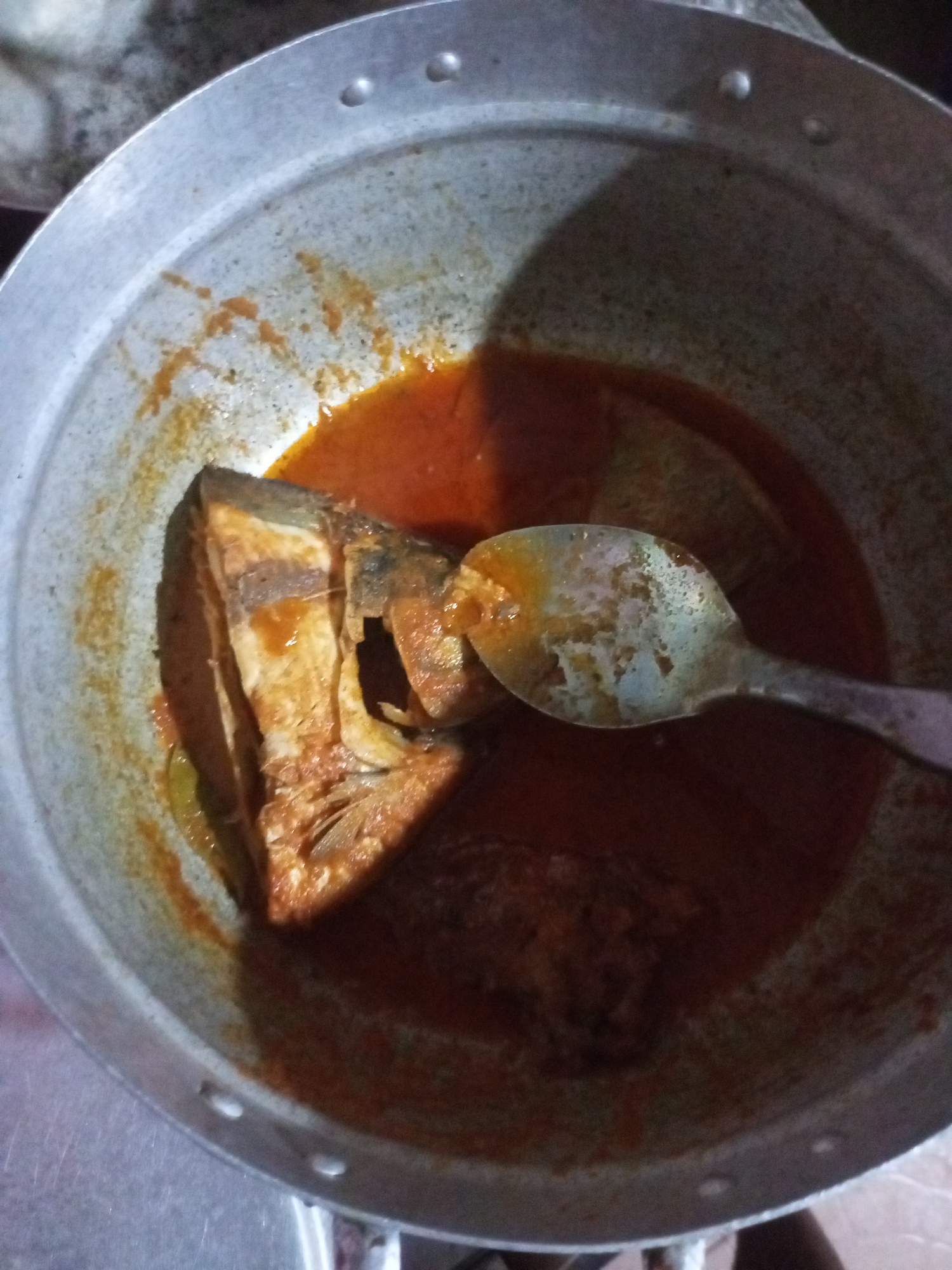
In Agbara, Nigeria, a close-up shot captures a metallic pot containing a fish head submerged in a reddish-orange sauce. A tarnished metal spoon rests within the pot, partially obscured by the fish and sauce. The pot's interior exhibits stains and specks, suggesting previous use. The lighting is dim, casting shadows and highlighting the textures of the food and cookware.
Agbara
This media file depicts a sewing machine in a brightly lit room, likely a workshop or tailor's studio. The sewing machine is a prominent object in the foreground, a cream-colored model with red accents on its arm and presser foot area. Some text is visible on the cream-colored body of the machine. In the background, a person is standing, blurred by the intense light coming from an opening, possibly a doorway or window. This person is wearing a patterned garment. The scene is indoors, with visible shelving and some fabric or materials scattered around. The bright light suggests it is daytime, with the sun possibly shining directly into the space. The overall impression is of a functional workspace, possibly in Agbara, Nigeria, where tailoring or garment production is taking place. There are no strong indicators of weather conditions, and the emotions are neutral, focusing on the operational setting.
Agbara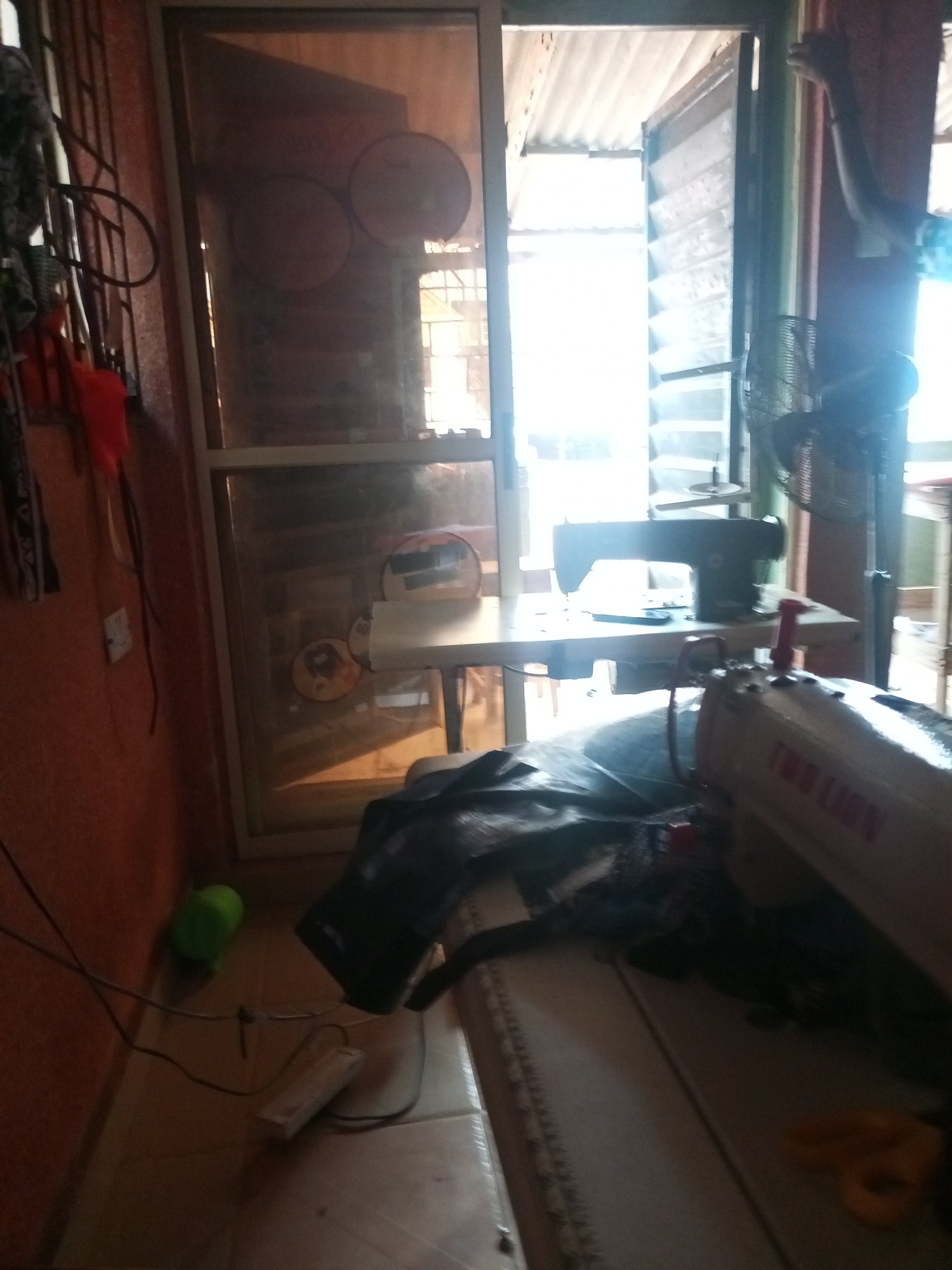
The image shows a dimly lit room, likely a workshop or a home sewing area, in Agbara, Nigeria. Two sewing machines are visible. The machine in the foreground is a beige "TWO LION" brand, partially obscured by dark fabric. The second sewing machine, a black industrial model, sits on a table positioned in front of a large glass door that opens to the outside. The door itself has a corrugated metal roof structure visible through it, suggesting an outdoor or semi-outdoor space beyond. On the left side of the image, the wall is painted an orangish-red color. A metal grate or rack is attached to the wall, with some red and black fabric items hanging from it. A green plastic bottle and electrical cords are on the floor near the wall. Inside the room, beyond the glass door, stacked circular items are visible against a wall, possibly for storage or display. The overall impression is a functional workspace, perhaps a bit cluttered, with natural light filtering in from the open doorway. The time of day is indeterminate, but the lighting suggests it could be daytime, with the bright light from outside creating a contrast with the interior. No people are visible in the image.
Agbara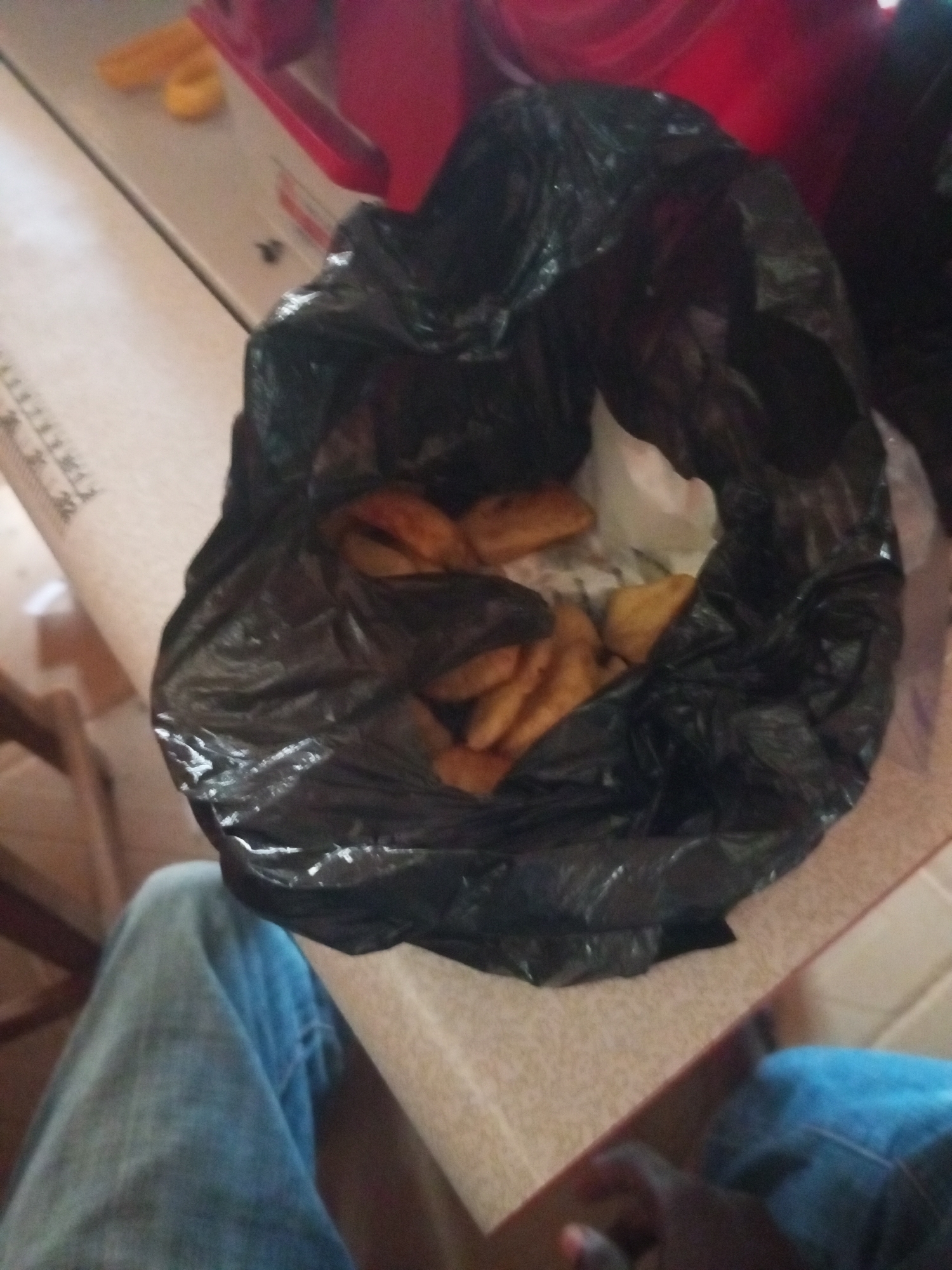
A black plastic bag filled with fried plantains sits on a table. A person wearing blue jeans is partially visible in the foreground. The environment appears to be indoors, possibly a home or a street-side stall in Agbara, Nigeria. The lighting is dim.
Agbara
A low-angle, slightly blurry, medium shot captures an industrial setting, likely a workshop or repair shop in Agbara, Nigeria. In the foreground, a dark, cylindrical object, possibly part of a sewing machine or industrial equipment, lies horizontally across a light-colored, textured surface that appears to be a workbench or table. The object is worn and shows signs of use, with a rough, dark texture. Several small, dark circular indentations, possibly screw heads or rivets, are visible on the workbench. To the right of the main object, a black fan with visible blades is positioned, partially cut off by the frame. Its presence suggests a need for ventilation or cooling in the workspace. In the background, the scene is dimly lit, with parts of wooden structures and a bright, possibly natural, light source suggesting an open area or a window. The overall impression is one of a functional, working environment where repairs or manufacturing might take place. A foot, clad in blue denim, is visible in the lower right corner, indicating human presence in the scene. The environment appears cluttered, with some red material visible on the left side of the main object.
Agbara
The image shows a close-up view of a human hand resting on a blue fabric, likely clothing. The hand is clasped, with the knuckles and veins prominently visible. The skin texture is detailed, showing pores and fine lines. The lighting suggests an indoor or shaded environment. The location is not determinable from the image alone and there is no contextual information to place it in Agbara, Nigeria.
Agbara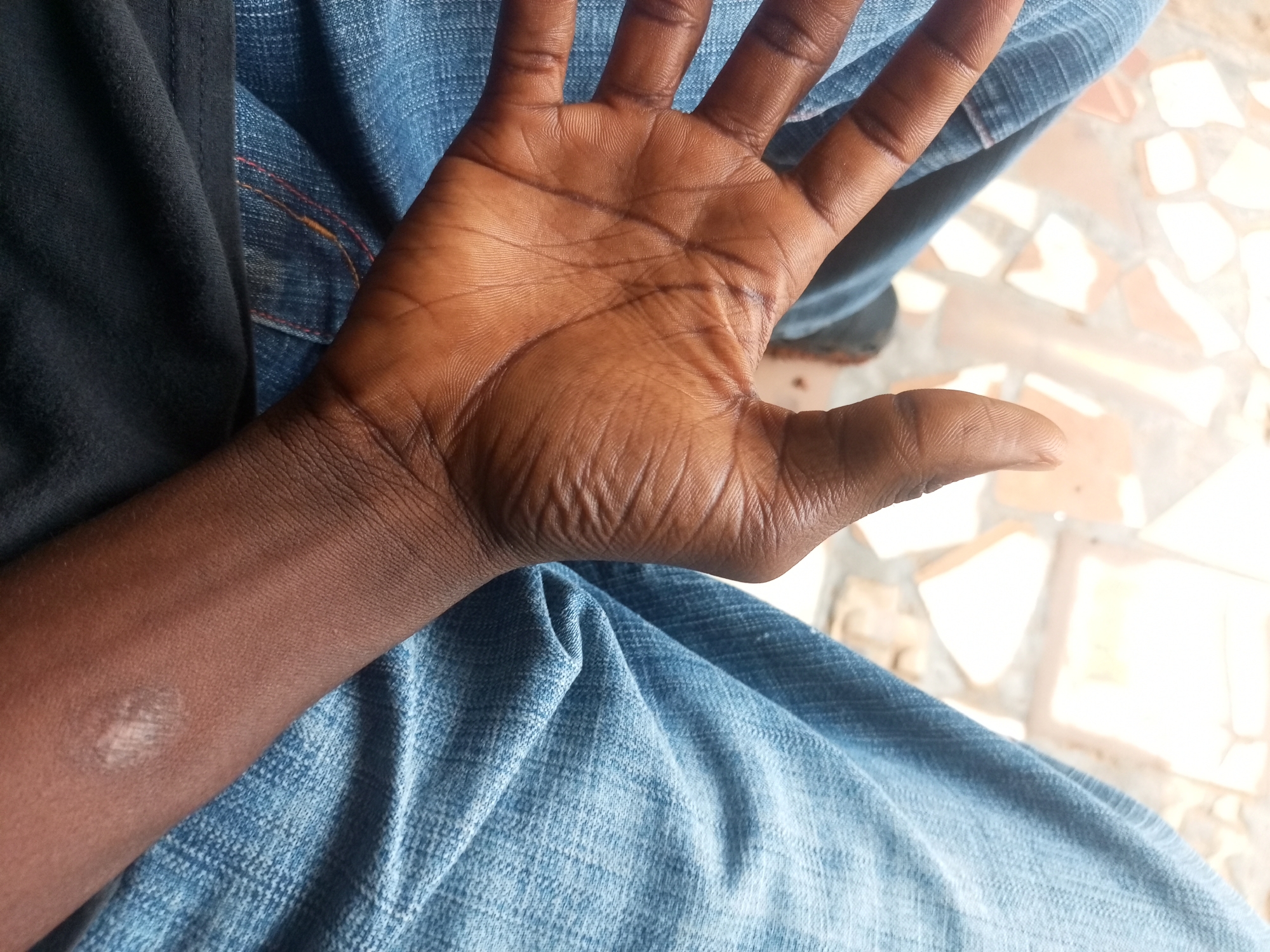
The image shows a close-up view of a person's left arm and hand, resting on blue denim jeans. The skin tone is dark brown. The hand is open, palm facing upwards, revealing several fine lines and creases. On the forearm, there is a pale, circular mark, possibly a scar, approximately 2-3 cm in diameter. The background consists of light-colored, irregularly shaped tiles, suggesting an outdoor setting. The person appears to be seated or leaning against something covered in blue denim. The overall lighting indicates it is daytime. The location is in Agbara, Nigeria.
Agbara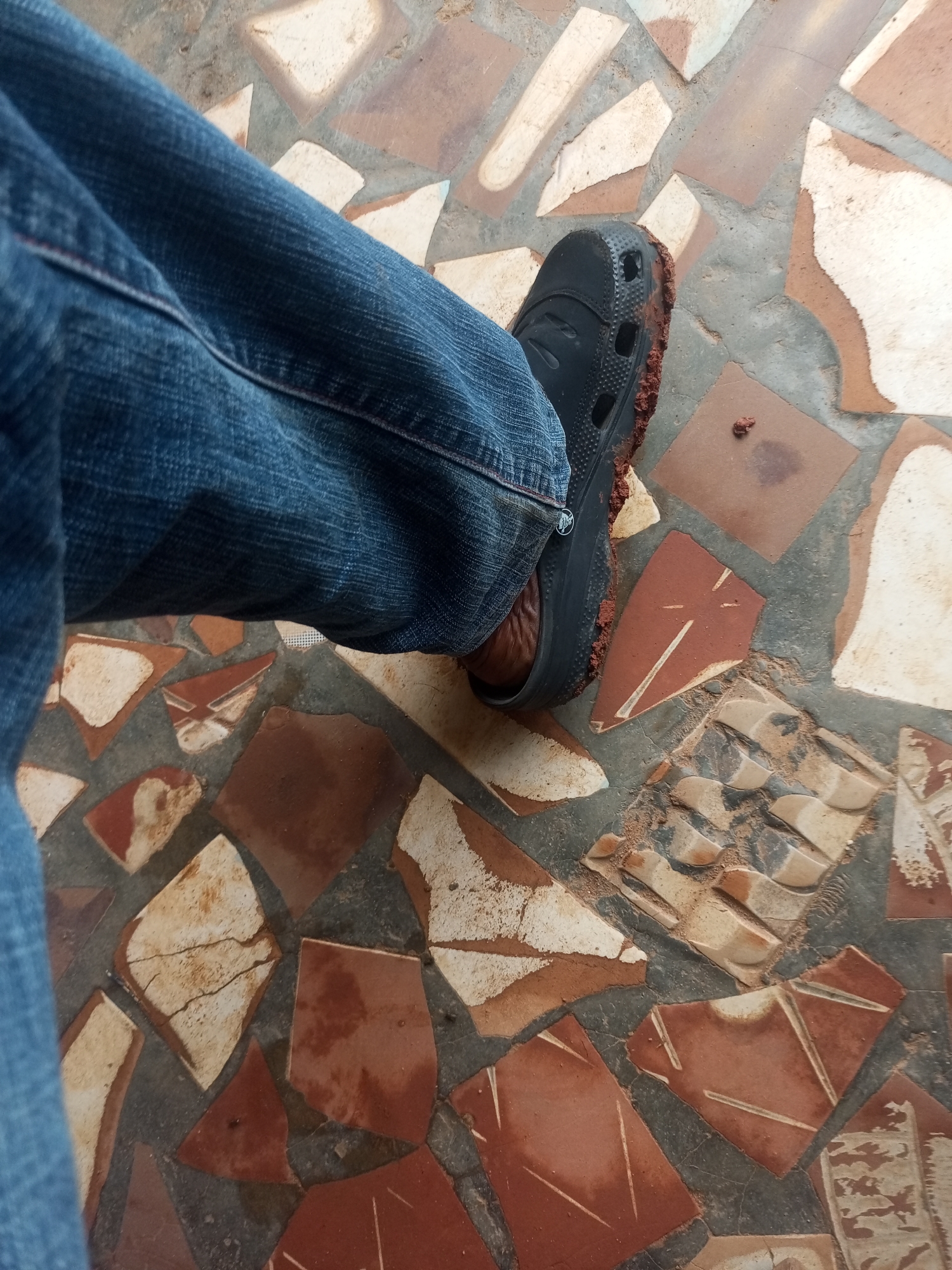
A low-angle, close-up shot shows a person's left leg clad in blue denim jeans and a black clog shoe, partially covered in reddish-brown dirt, resting on a floor composed of irregularly shaped, broken terracotta tiles and grey cement. The tiles display variations in color, ranging from pale beige to deep red, with some exhibiting cracked surfaces and chipped edges. The overall impression is of an outdoor or semi-outdoor setting, possibly a patio or walkway in Agbara, Nigeria, where the dry, dusty conditions are evident from the dirt on the shoe and floor.
Agbara
The image depicts an interior view, possibly of a shop or storage area, tilted at an angle and dimly lit. In the foreground, a green-framed window or doorway is visible, with reflections on its glass surfaces. Through this opening, a brightly lit area with pink walls and white cubbies can be seen. Some objects are present within these cubbies, appearing to be clothing or fabric items. The background is darker, with a tiled wall and a bright light source casting a strong illumination. Above, a ceiling is visible, with some discoloration or damage. In the upper right quadrant, a portion of a sign with blue lettering on a green background is partially visible, though the text is mostly obscured. The overall impression is one of a cluttered, somewhat neglected indoor space. The scene does not provide specific details that would allow for definitive identification of its location in Agbara, Nigeria, beyond being an interior environment.
Agbara
The image shows an interior view, looking upwards and diagonally into a space with architectural elements that suggest a multi-level structure. The dominant colors are dark greens, browns, and muted reds, with areas of bright light reflecting off surfaces. In the foreground, there is a dark green framed window or opening. Through this opening, another layer of the structure is visible. This second layer appears to be a wall or partition with a reddish-orange textured surface. A bright light source is reflected in the glass or surface of this area, creating a strong highlight. Further into the image, the perspective shifts upwards and into a darker, more recessed area. The walls here are a light, possibly white or grey, and show signs of wear or discoloration, with some dark patches suggesting mold or water damage. There are structural elements, possibly beams or framing, visible in the upper portion of the image, which are a light wood color. In the mid-ground, within one of the openings, a small white object or structure is visible, possibly a vent or a recessed shelf. There are also reflections in the darker areas, indicating other light sources or objects present in the environment. The overall impression is of an interior space that is partially lit and appears to be under construction, undergoing renovation, or in a state of disrepair. The angle of the shot and the lighting create a sense of depth and mystery. Specific details about Agbara, Nigeria are not discernible from the image itself. The image is a visual representation of an interior architectural space.
Agbara
The image shows a close-up view of two people's legs wearing blue jeans and black slip-on shoes, standing on a tiled floor. The tiles are large and appear to be a light brown or beige color, with a pattern of raised geometric shapes. There are pieces of white paper scattered on the floor, and some loose threads. In the lower right of the image, a wooden frame or structure is visible. The scene appears to be indoors, possibly in a home or workshop. The image's composition focuses on the lower bodies of the individuals and the immediate surroundings.
Agbara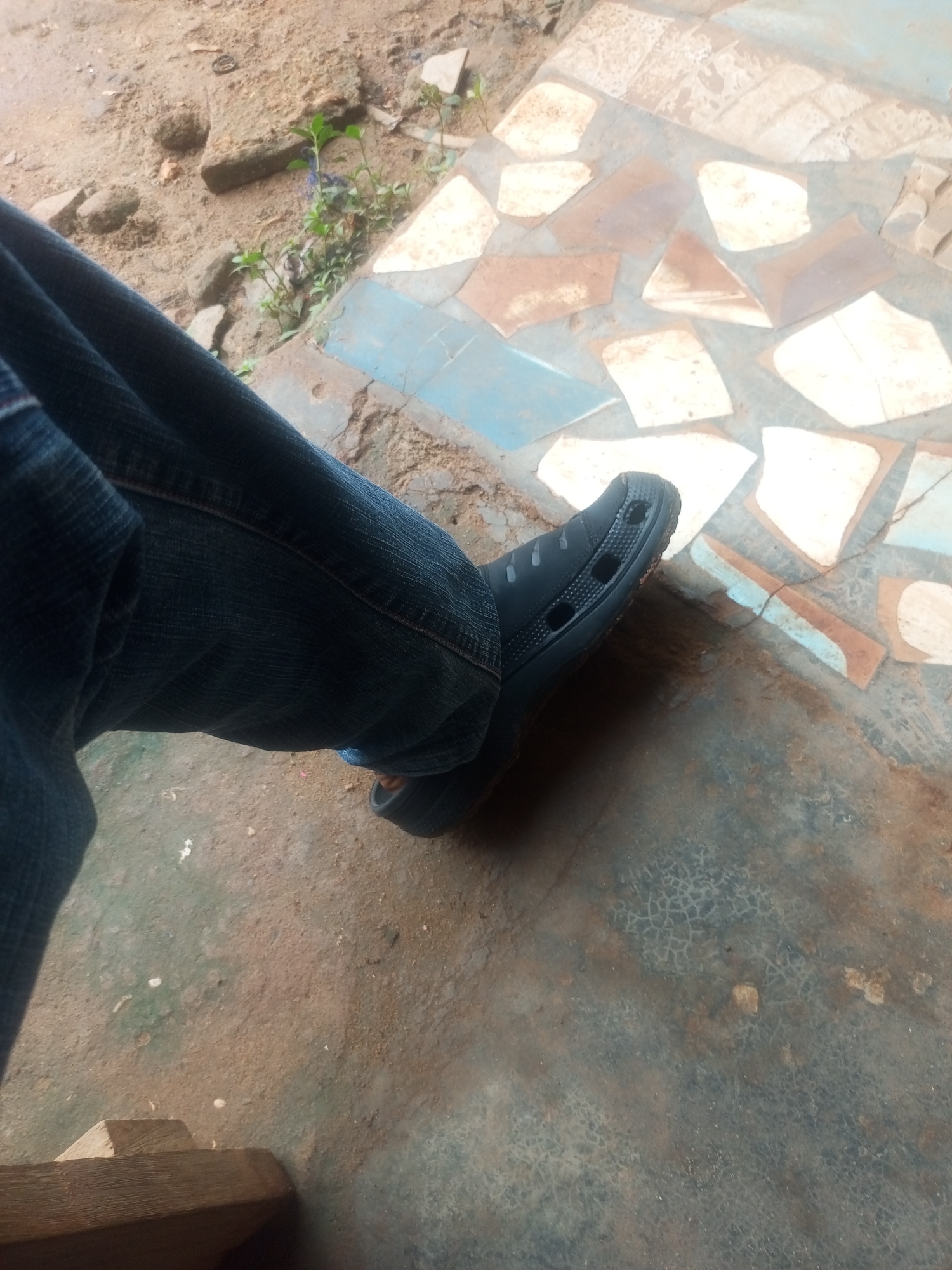
The image shows a person's legs and feet wearing blue jeans and black crocs. The person is sitting on a step, with their left leg crossed over their right. The background is a mosaic tiled floor with brown and blue tiles. There is also some dirt and gravel visible on the ground. The scene appears to be outdoors, possibly in a residential area of Agbara, Nigeria.
Agbara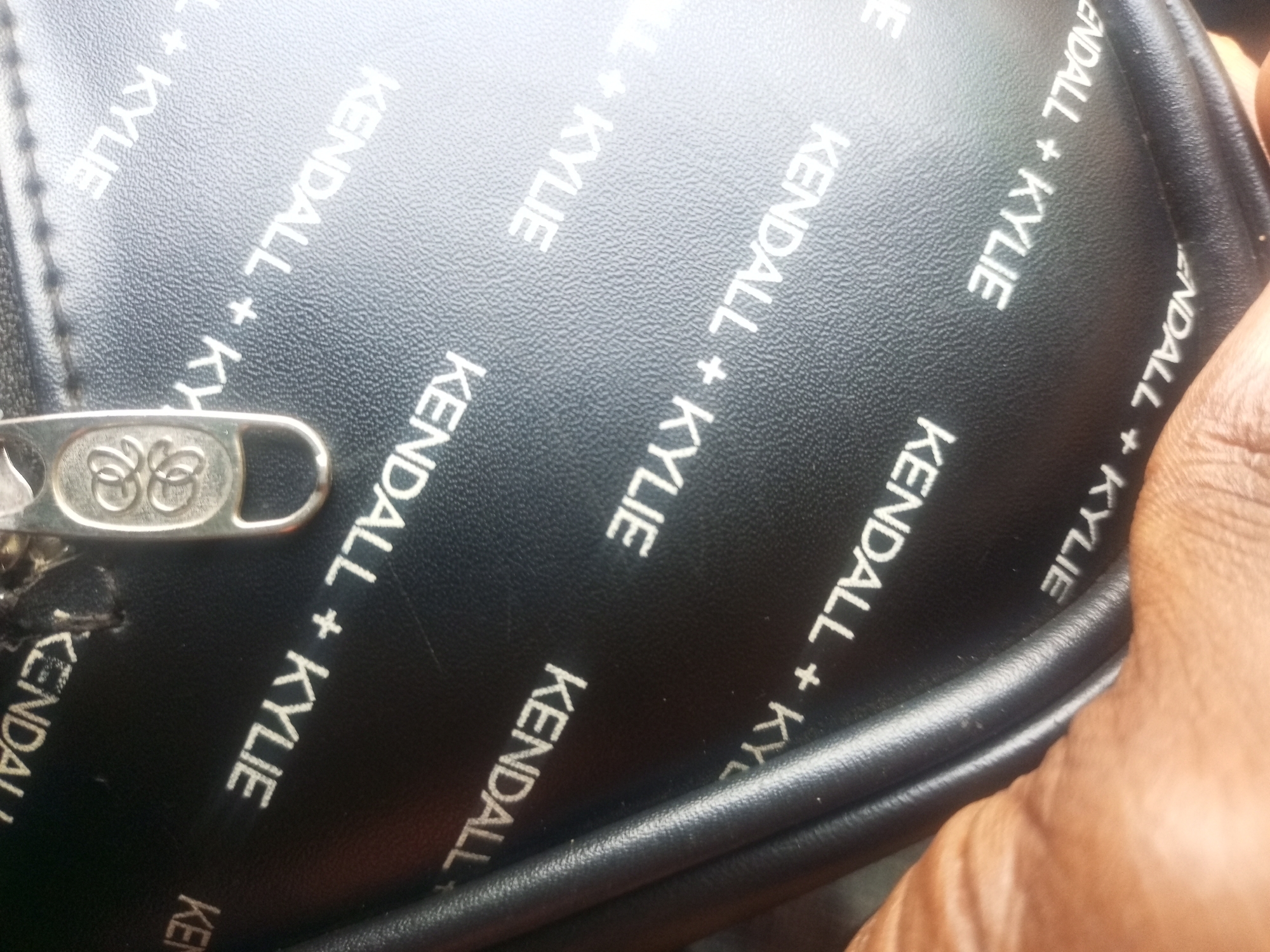
The image shows a close-up of a black bag with the repeating text "KENDALL + KYLIE" embossed in white. A silver zipper pull with a design resembling Olympic rings is visible on the left side of the bag. A person's hand is visible on the right, holding the bag. The background is indistinct and appears to be an outdoor setting. There is no visible indication of the city of Agbara, Nigeria, in the image itself.
Agbara
The video shows a close-up view of what appears to be a tiled floor. The tiles are irregular in shape and color, with some appearing to be broken or chipped. The lighting is dim, and the focus shifts throughout the video. There are no people or objects clearly visible in the frame. The overall impression is of an aged or weathered surface.
Agbara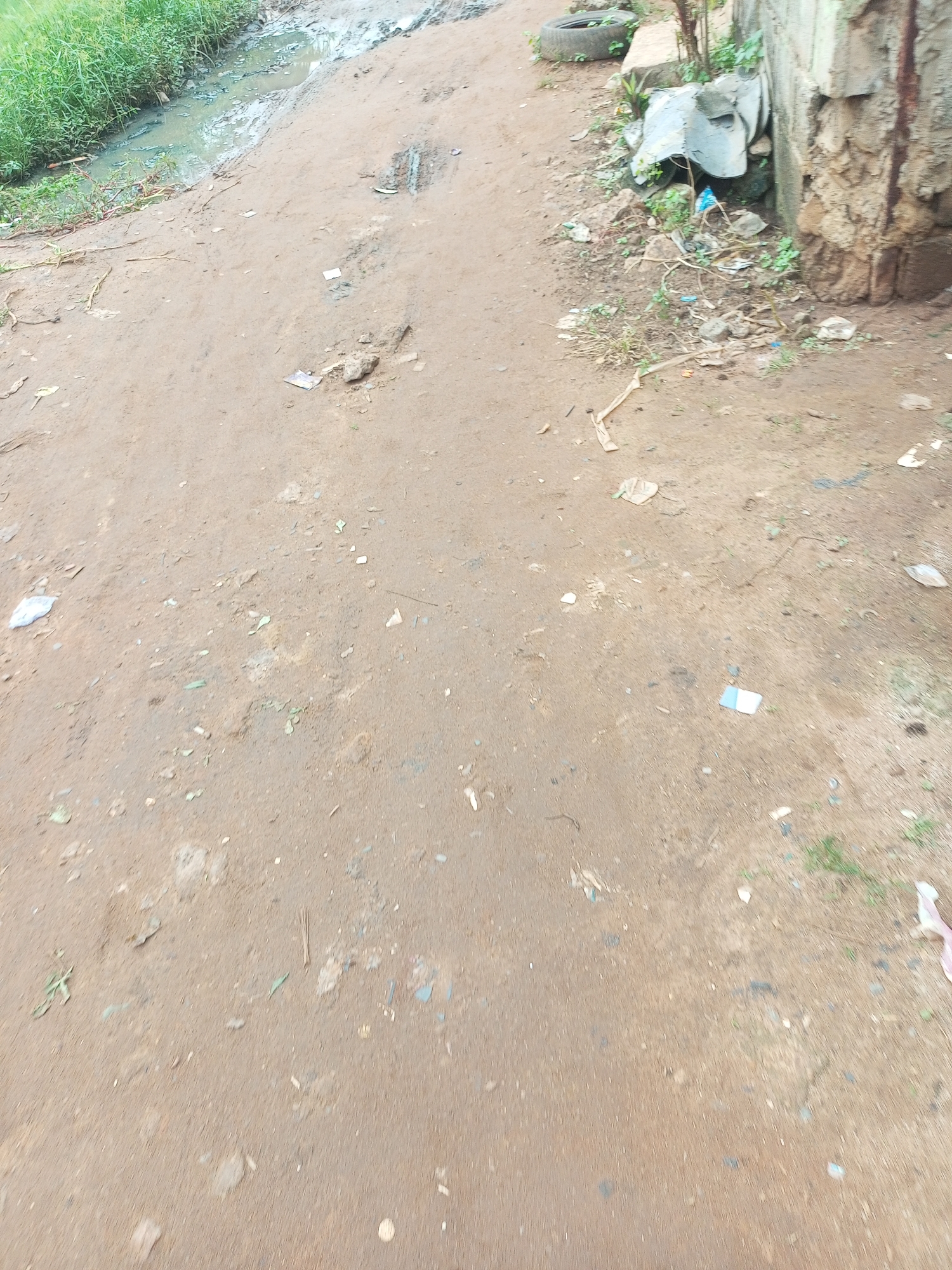
This is a ground-level, eye-level shot of a dirt road in Agbara, Nigeria, on what appears to be a cloudy day. The road is unpaved and uneven, with a ditch filled with murky water and grass on the left side of the frame. Scattered on the road are various pieces of debris, including plastic wrappers, what look like discarded food packaging, and some larger pieces of scrap metal or discarded items near a stone wall on the right. The wall itself appears weathered and shows signs of rust. There are no people visible in the scene. The overall impression is one of an undeveloped or neglected area.
Agbara
The image depicts an interior view of a basement or crawl space with concrete block walls and a concrete floor. The environment appears damp and unlit, with streaks of discoloration on the walls and floor suggesting moisture or mildew. The perspective is angled, looking down a narrow corridor or channel formed by the walls. In the far right of the image, a blurry object resembling a drum or barrel is visible against the dark wall. The overall scene is dimly lit, with a lack of distinct features, creating a sense of disuse and neglect. The location in Agbara, Nigeria, suggests a possibly industrial or residential underground area.
Agbara
A first-person perspective video shows a hand held up to the camera at night. The hand is partially illuminated, and the background is dark and indistinct, possibly indicating an outdoor setting. The hand is open, with fingers spread. The video is shaky and moves around slightly.
Agbara
The image shows a close-up view of a person's legs wearing blue jeans. The fabric of the jeans is textured and appears to be denim. There is a small section of patterned fabric visible at the bottom of the image, which is light-colored with a darker, possibly snake-like pattern. The lighting suggests an indoor setting, possibly at night. The location in Agbara, Nigeria, is not visually evident from the provided image.
Agbara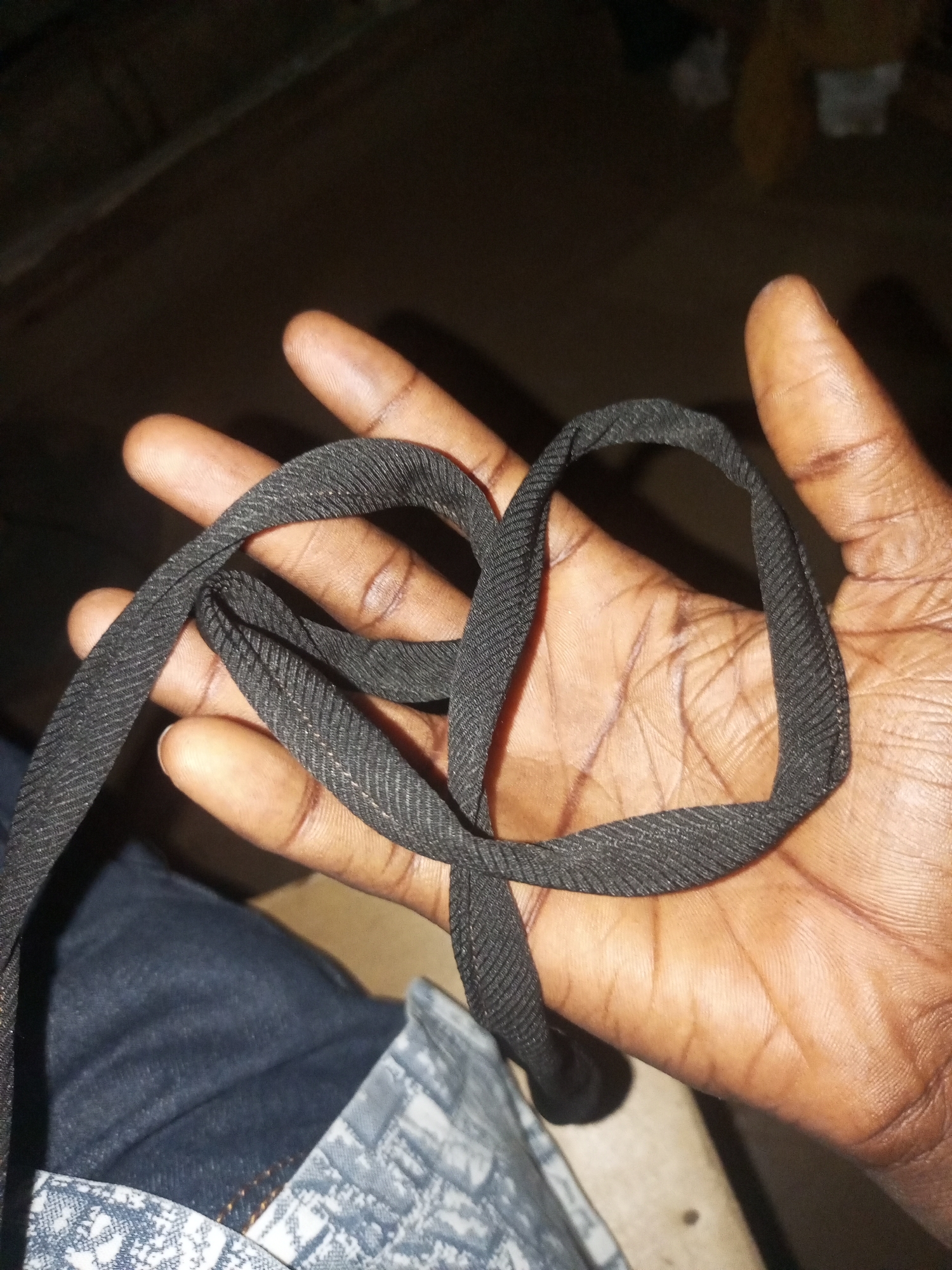
A close-up, slightly overexposed shot shows a person's open palm in Agbara, Nigeria, holding a black fabric cord looped into a heart shape. The cord has a ribbed texture. The background is dark and out of focus, with hints of wooden furniture and possibly a yellow object. The person's hand is dark-skinned with visible lines and creases. The person is wearing dark denim jeans and a patterned fabric, possibly a shirt or accessory, partially visible at the bottom of the frame. The lighting is dim, suggesting an indoor setting at night.
Agbara
The image is a solid magenta background with the text "Jerryblinx06" in white, sans-serif font positioned centrally. There is no discernible location in Agbara, Nigeria or any other geographical context within the image. The image is a simple text overlay on a colored background.
Agbara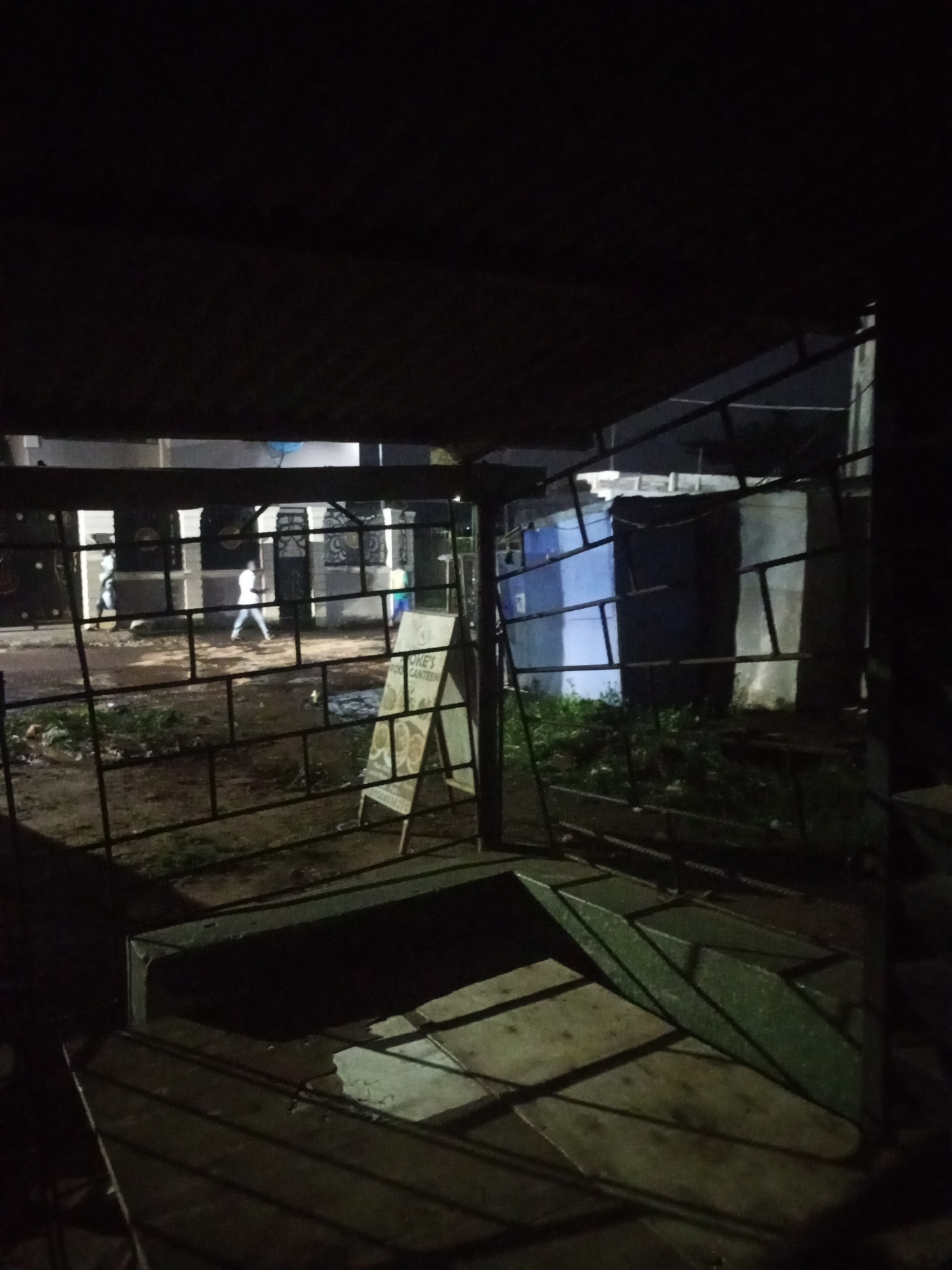
The image depicts an outdoor scene at night, with the lighting suggesting artificial illumination from the right. In the foreground, a dark, metallic fence structure obscures the view of the scene beyond. Through the fence, on the left side of the image, a paved area is visible with a few people walking. One person, dressed in white, is walking away from the viewer towards the center of the frame. Further to the left, another person in white is also walking. The background shows buildings with decorative metalwork on the facade, and some areas are illuminated, casting shadows. To the right of the frame, an A-frame sign with text is partially visible, leaning against a structure. Behind the A-frame sign, a blue structure and a white structure are visible, possibly temporary shelters or buildings. The ground appears to be wet in places, indicating recent rain or a damp surface. The overall impression is a dimly lit urban or semi-urban environment, possibly a commercial area or residential street in Agbara, Nigeria.
Agbara