Baki, Uzbekistan
30 memories from Baki, Uzbekistan
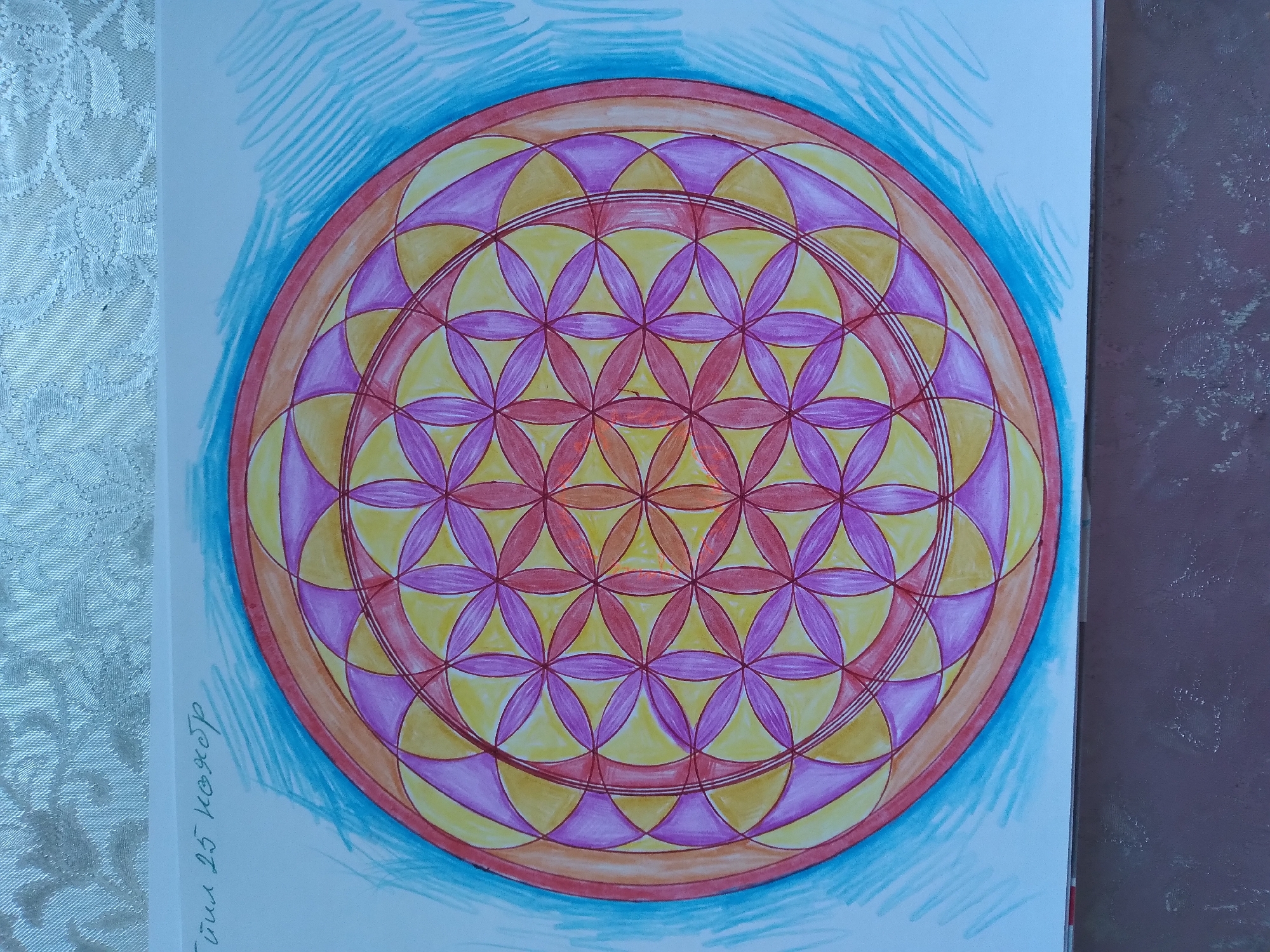
The image displays a colorful circular mandala-like drawing with geometric patterns rendered in yellow, pink, and orange. The drawing is on a white surface, likely paper, and there is faint blue sketching around the perimeter of the mandala. In the upper left corner of the white surface, there is handwritten text in what appears to be Cyrillic script, reading "Тдил 25 ноябр". This text is not legible enough to definitively translate, but it resembles a date. The drawing is partially obscured at the bottom by a dark, textured surface. The background behind the white surface features a textured, light-colored fabric, possibly a tablecloth or a piece of textile with an embossed pattern. There is no visible indication of the city of Baki, Uzbekistan, or any elements that would place the image within that specific geographical location.
Baki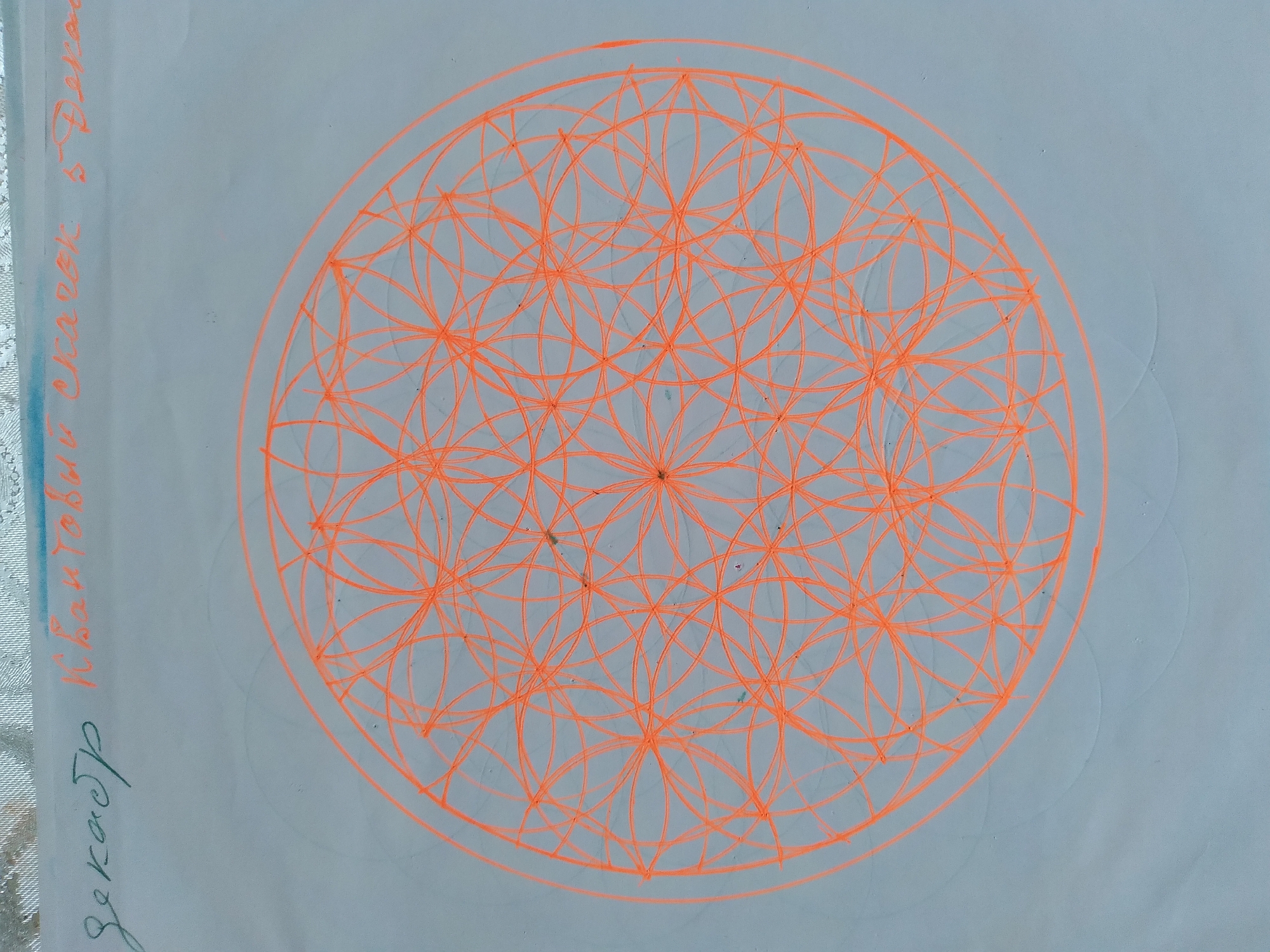
The image shows a white surface with a geometric pattern drawn in orange. The pattern is a complex arrangement of overlapping circles, forming a symmetrical design that resembles the "Flower of Life" symbol. Faint circular outlines can be seen beneath the orange pattern, suggesting that it was drawn over an initial sketch. Above the geometric drawing, there is text written in two different colors. The text on the left is in green and appears to be in Cyrillic script, possibly a date or a word. The text on the right is in orange and is also in Cyrillic script. The scene is a flat, light blue surface, which is likely a piece of paper or cardboard. The lighting appears to be natural, casting a soft illumination on the surface. There are no people or animals present in the image. The background consists of a textured surface, possibly a tablecloth or a wall, with a metallic sheen. It is impossible to determine the location in the city of Baki, Uzbekistan, based solely on this image. The image depicts a drawing and text, which do not contain any geographical markers or contextual information that would link it to a specific city or country.
Baki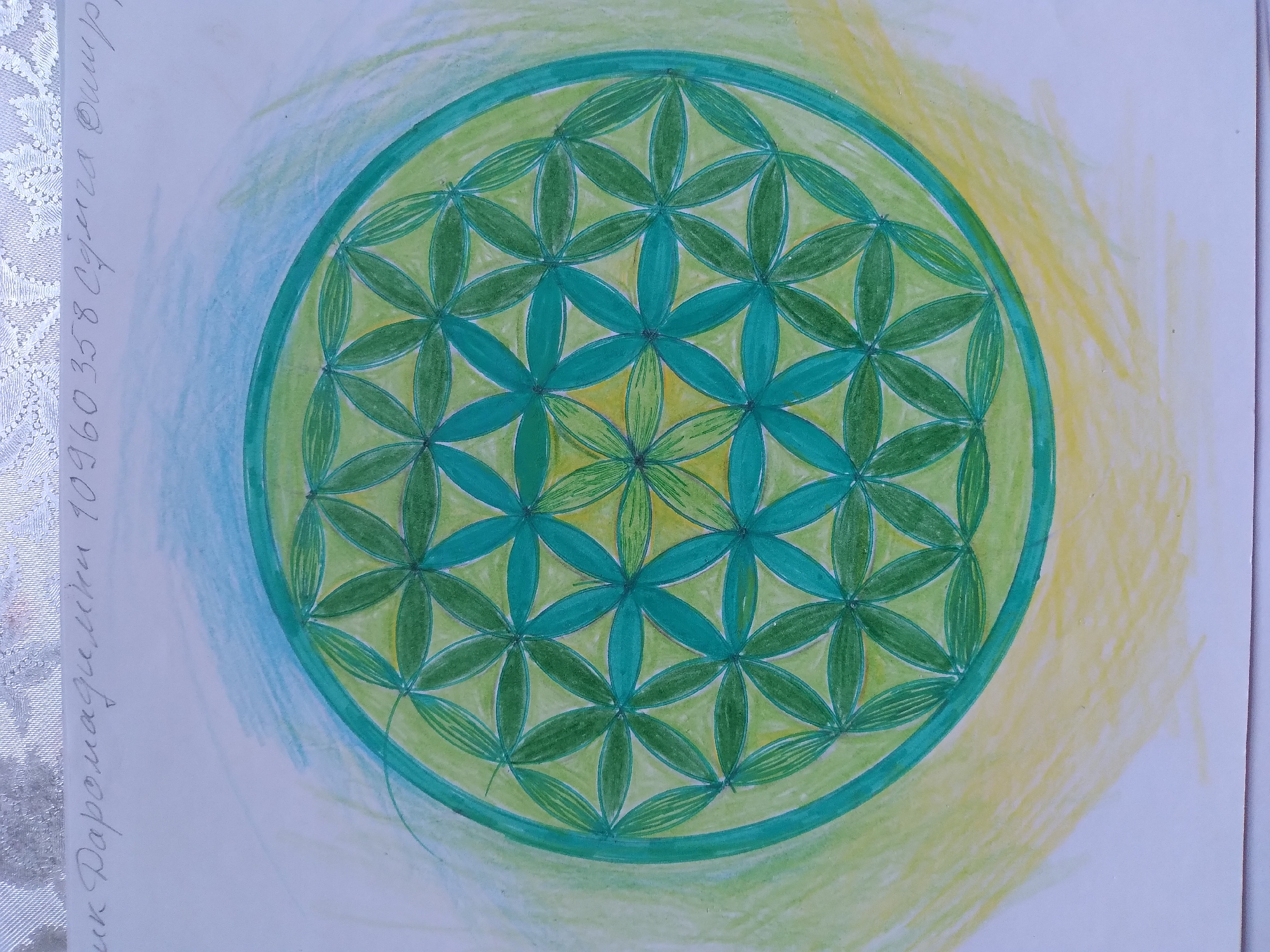
The image displays a drawing of the Flower of Life geometric pattern, rendered in shades of green and yellow. The drawing is centered on a white sheet of paper, with a subtle gradient of light blue and yellow pastel shading surrounding it. Faint, handwritten text in what appears to be Cyrillic script is visible at the top of the image. No specific location within the city of Baki, Uzbekistan, can be identified from the provided visual information. The image focuses solely on the artwork and the writing.
Baki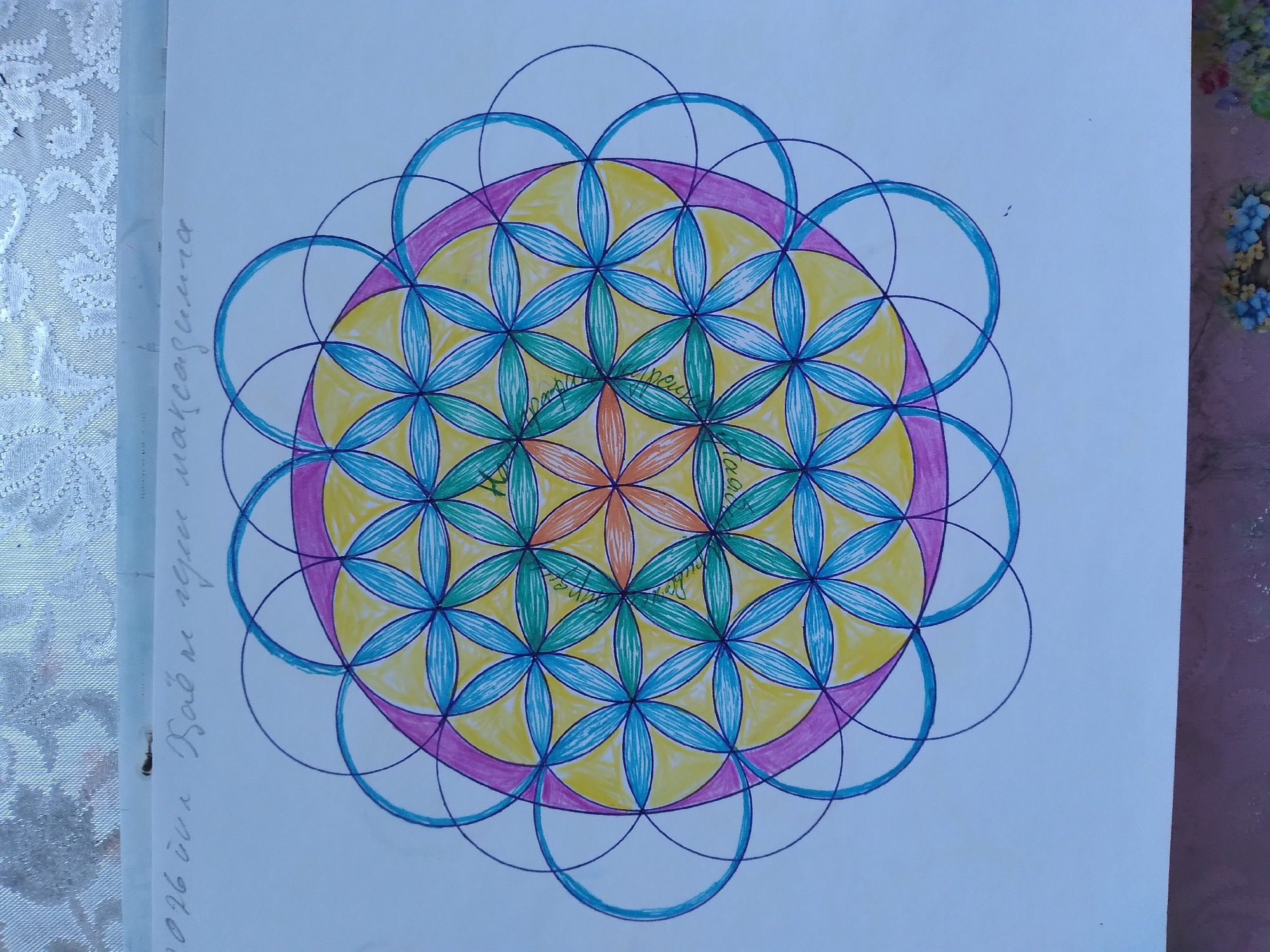
The image displays a colorful geometric drawing on a white surface. The drawing features a central mandala-like design composed of overlapping circles, creating petal-like shapes filled with yellow, blue, and green. Some areas of the design are outlined in purple. There is faint handwritten text above the drawing, appearing to be in Cyrillic script, which is illegible. The surface the drawing is on appears to be a piece of paper, possibly a notebook page, with a textured fabric visible at the top and a darker surface at the bottom. There is no discernible indication of the city of Baki, Uzbekistan, within the image or its content.
Baki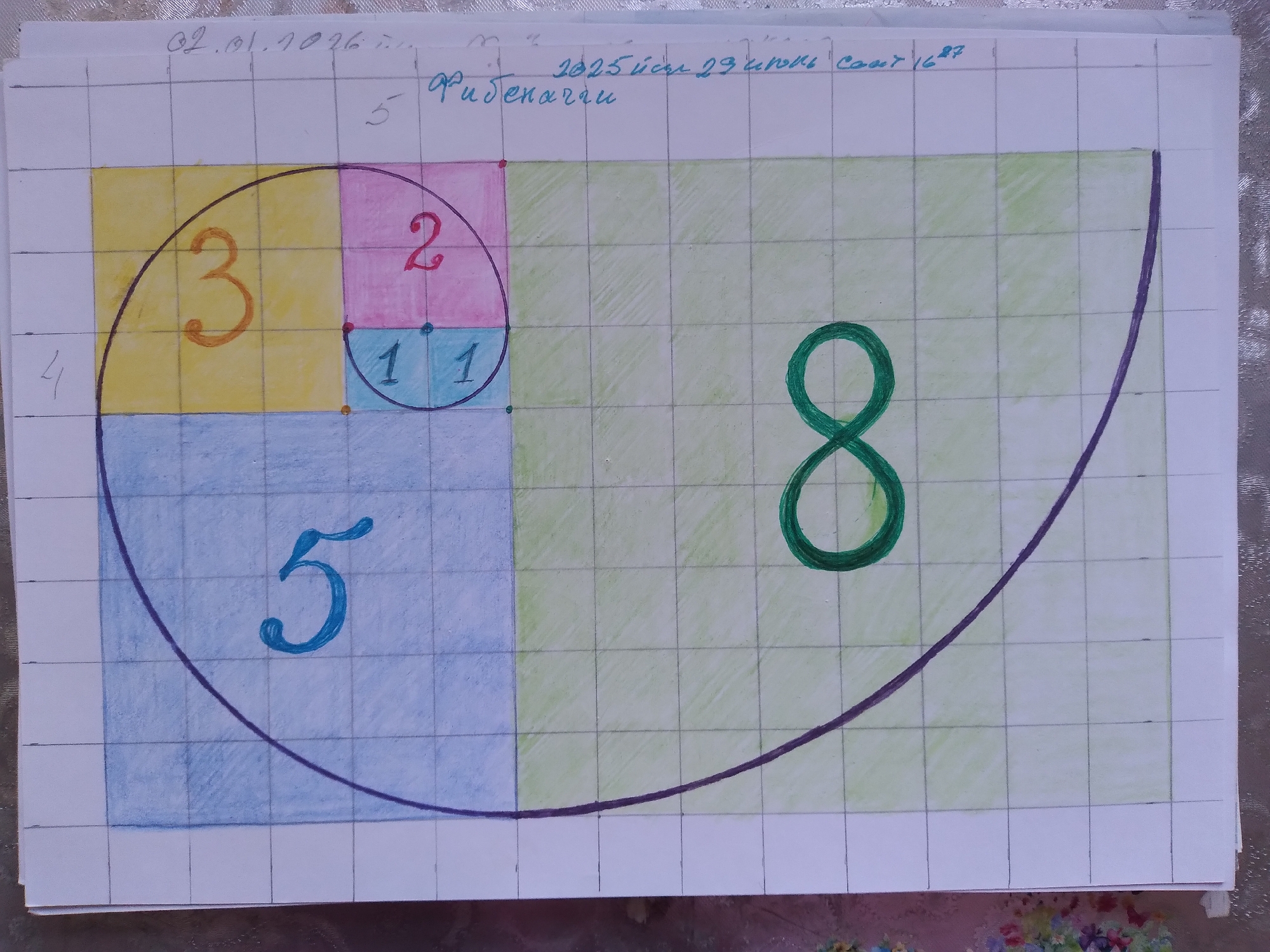
The image displays a hand-drawn representation of the Fibonacci sequence and its associated golden spiral on graph paper. The squares are colored in blue, yellow, pink, and green, and labeled with the corresponding Fibonacci numbers: 5, 3, 2, 1, 1, and 8. A large infinity symbol is drawn in green in the lower half of the image. Text is present on the right side of the image, written in blue ink. The first line of text is "02.01.2026". Below this, a second line reads "ФиБеначчи". Below that, a third line appears to be "2025 и 29 / 1013". The final visible line of text is "Сая". There is no identifiable information within the image that connects it to the city of Baki, Uzbekistan.
Baki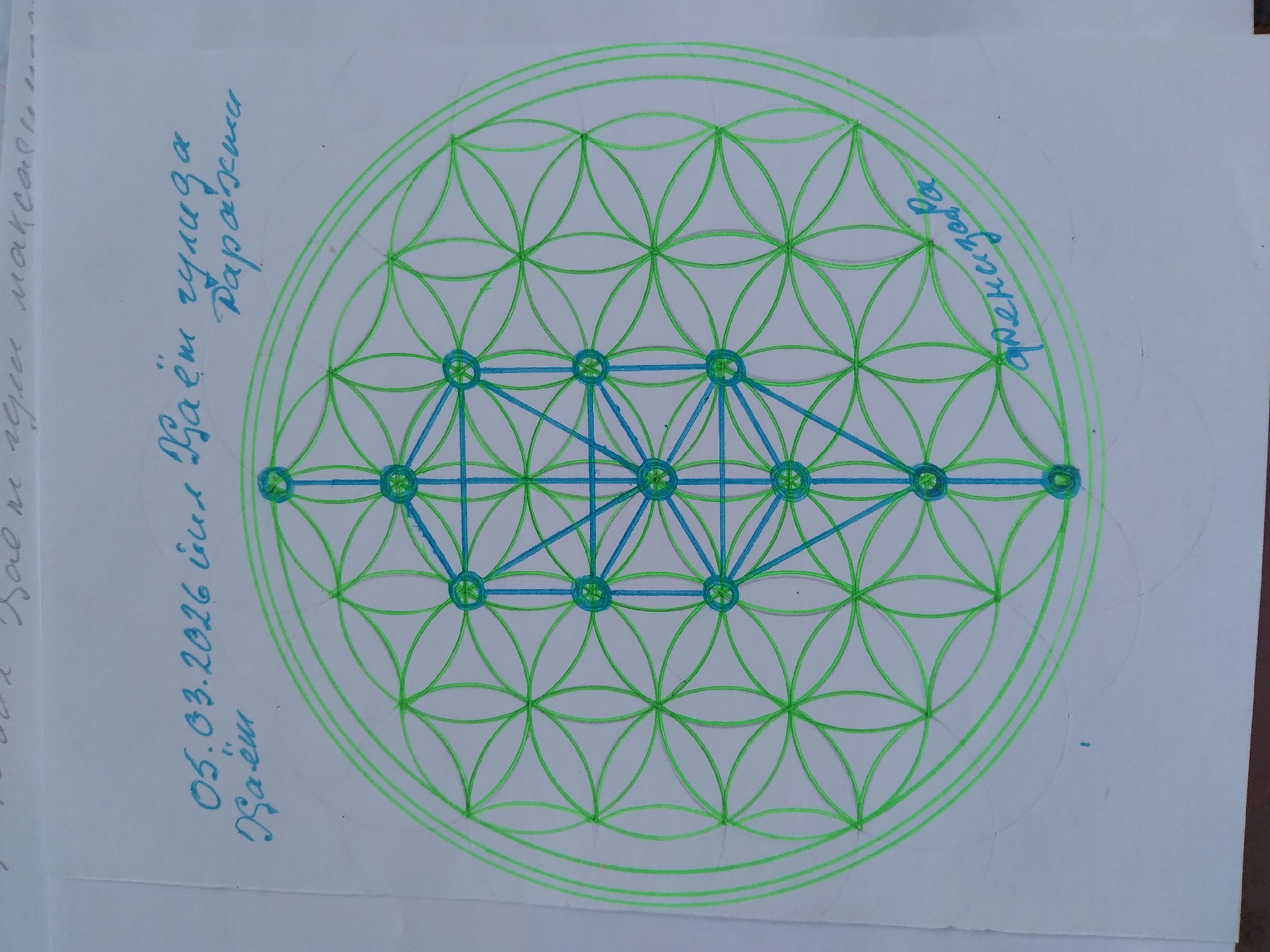
The image shows a drawing of the Flower of Life geometric pattern, rendered in green and blue ink on white paper. The drawing is centered within the frame. Above the drawing, in blue ink, is handwritten text that appears to be in Cyrillic script. The text includes a date "05.03.2026" and what looks like a name or a phrase. The bottom right corner of the drawing contains another inscription in blue ink, also in Cyrillic script. The image does not contain any information or visual cues that would suggest a specific location in the city of Baki, Uzbekistan, or any other city. It is a close-up of a drawing and surrounding paper.
Baki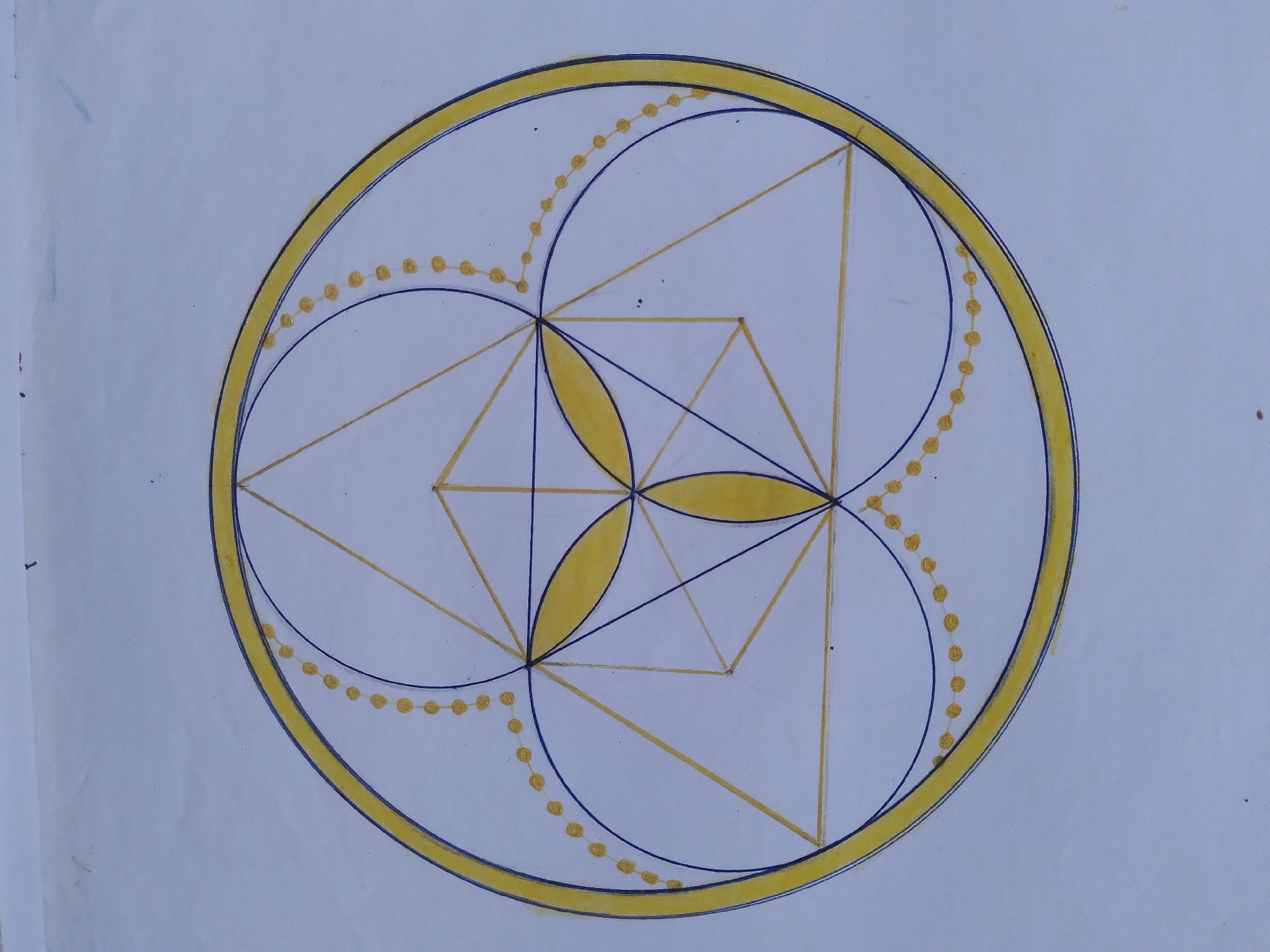
The image displays a hand-drawn geometric pattern on a white surface, possibly paper. The pattern is predominantly composed of yellow and blue lines and yellow colored shapes. The central element is a circle, outlined in yellow with a thinner blue line just inside it. Within this circle, a complex arrangement of triangles and arcs is visible. Three yellow leaf-like shapes are arranged in a radial pattern at the center. Blue arcs connect points on the outer circle, and a string of yellow dots follows these arcs. The drawing appears to be a stylized mandala or sacred geometry design. There is no indication of Baki, Uzbekistan, or any urban environment within the image itself.
Baki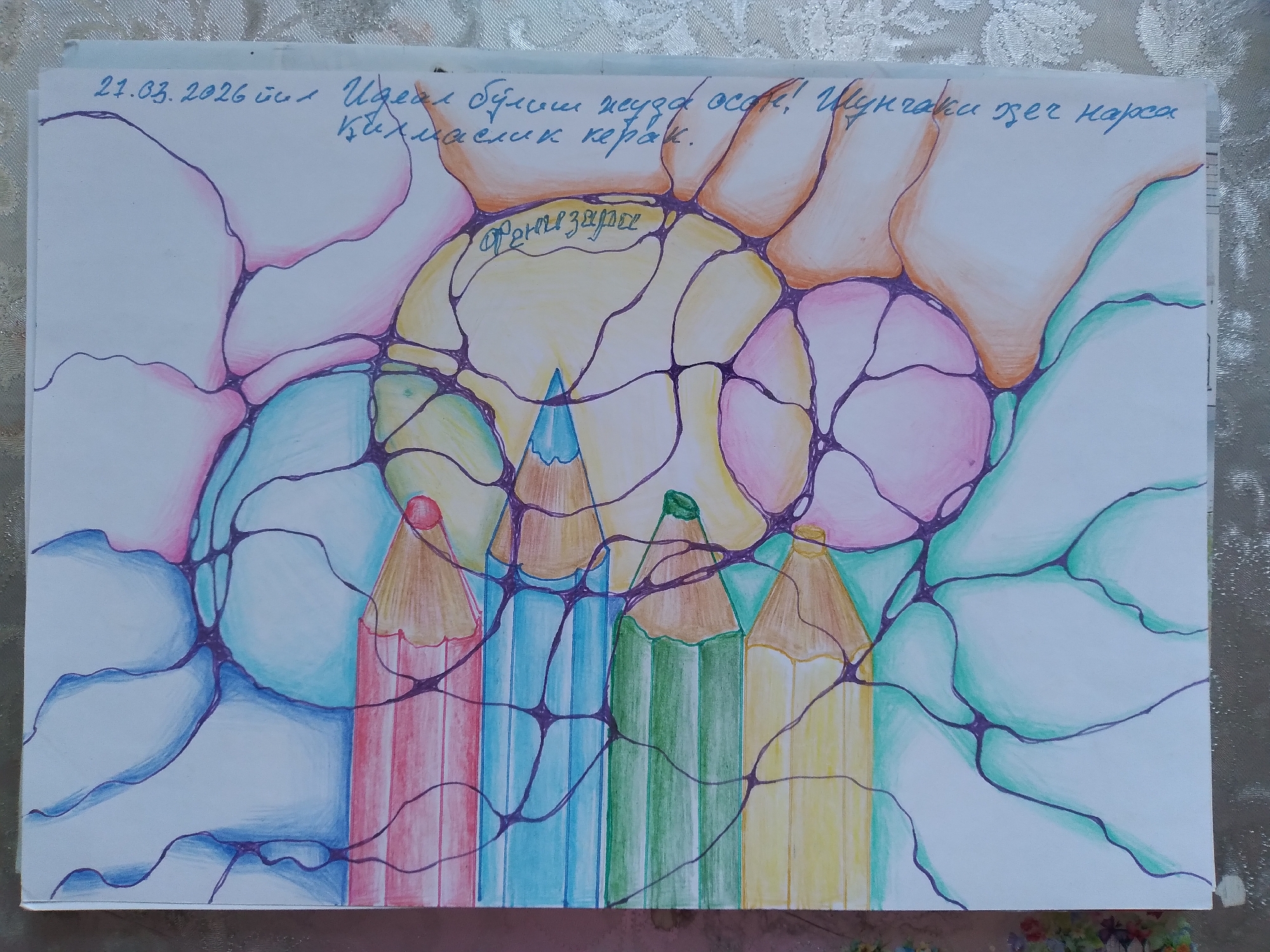
The image is a close-up, slightly angled, overhead view of a drawing on white paper. The drawing features a neurographic art style, characterized by swirling lines and organic shapes filled with various pastel colors, including pink, light blue, yellow, green, and orange. Interspersed within the abstract design are the sharpened points of several colored pencils, suggesting they were used to create the artwork. There is handwritten text in blue ink on the right side of the drawing. The text appears to be in Cyrillic script. The top line reads "21.03.2026 й." which likely indicates a date. Below this, there is more text that is difficult to fully decipher due to the angle and script, but parts of it seem to be a name or dedication. The script is written vertically along the right edge of the paper. The drawing itself is centered within the frame, with the white paper extending beyond its edges. The paper is placed on a textured surface, possibly a tablecloth with a floral or lace pattern, which is visible at the bottom and right edges of the image. The lighting appears to be natural and diffused, casting soft shadows and highlighting the colors of the drawing and pencils. There is no indication of the city of Baki, Uzbekistan, or any specific urban environment within the image.
Baki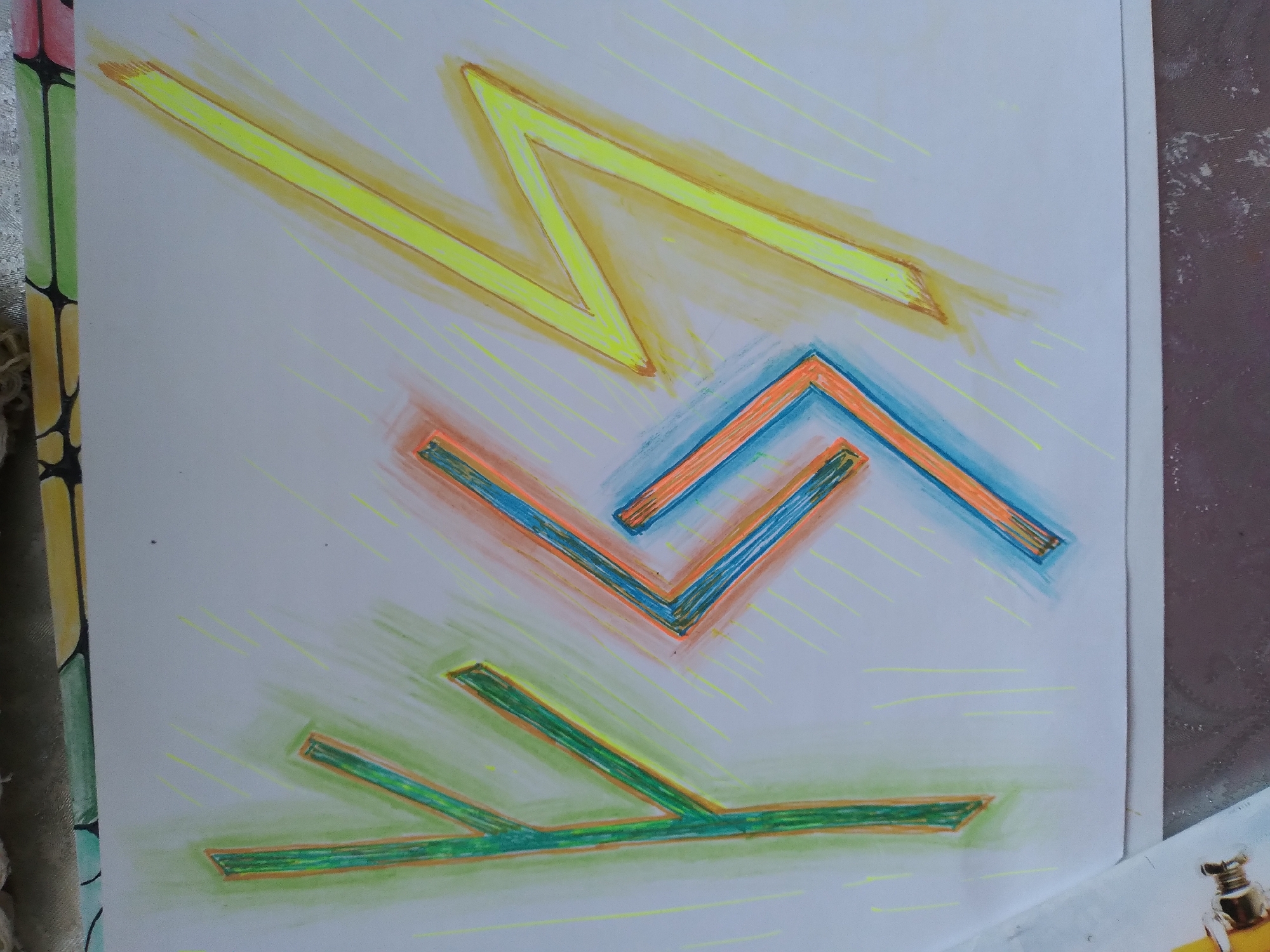
The image shows a close-up of a white sheet of paper with abstract drawings made with colored pencils or crayons. The drawings consist of geometric shapes and lines in green, orange, blue, and yellow. There are no people, objects, or discernible actions visible. The drawing is on a flat surface, and a portion of what appears to be a book or binder with a patterned edge is visible on the right side of the image. The background is a light grey, textured surface, possibly a table. There is no information in the image to suggest a location in the city of Baki, Uzbekistan.
Baki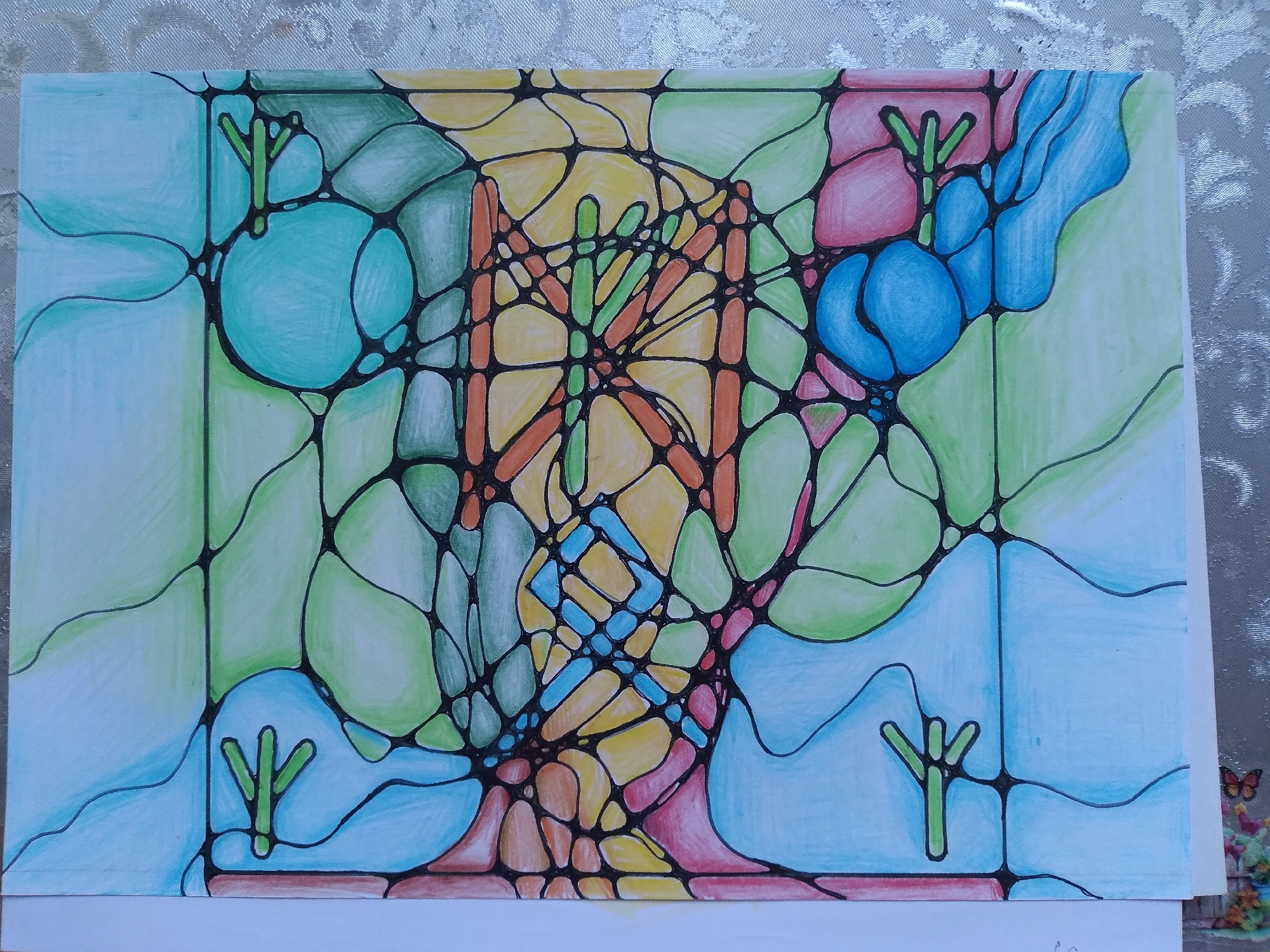
The image is a close-up, eye-level, medium shot of a drawing on white paper, which is laid on a textured, silver-white tablecloth. The drawing is abstract and features a network of interconnected, irregular shapes filled with various colors including light blue, green, yellow, orange, and pink. Thick black lines outline each shape. Within some of the light blue shapes, there are small, green, stylized figures resembling peace signs or simplified stick figures with three protrusions. The drawing appears to be a neurographic art piece, characterized by flowing lines and organic forms. There is no discernible location in the city of Baki, Uzbekistan, depicted in this image. The scene is static, showing only the artwork and its immediate background.
Baki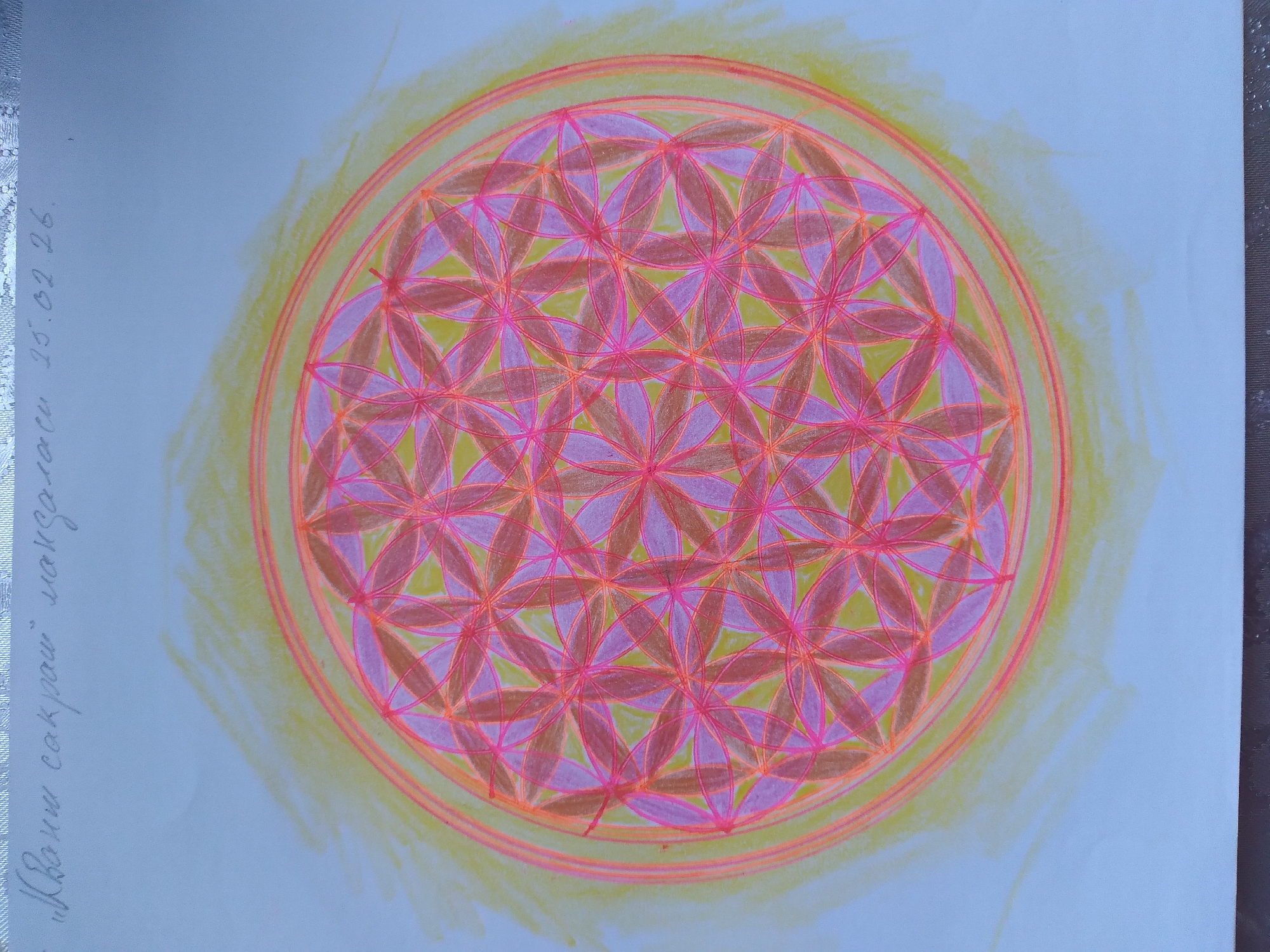
The image displays a drawing of the Flower of Life symbol, rendered in shades of yellow, orange, pink, and purple. The symbol is enclosed within concentric circles, and a yellow aura extends outwards. Above the drawing, there is handwritten text in what appears to be Cyrillic script, followed by a date: "15.02.26." The image does not provide any information or visual cues related to the city of Baki, Uzbekistan.
Baki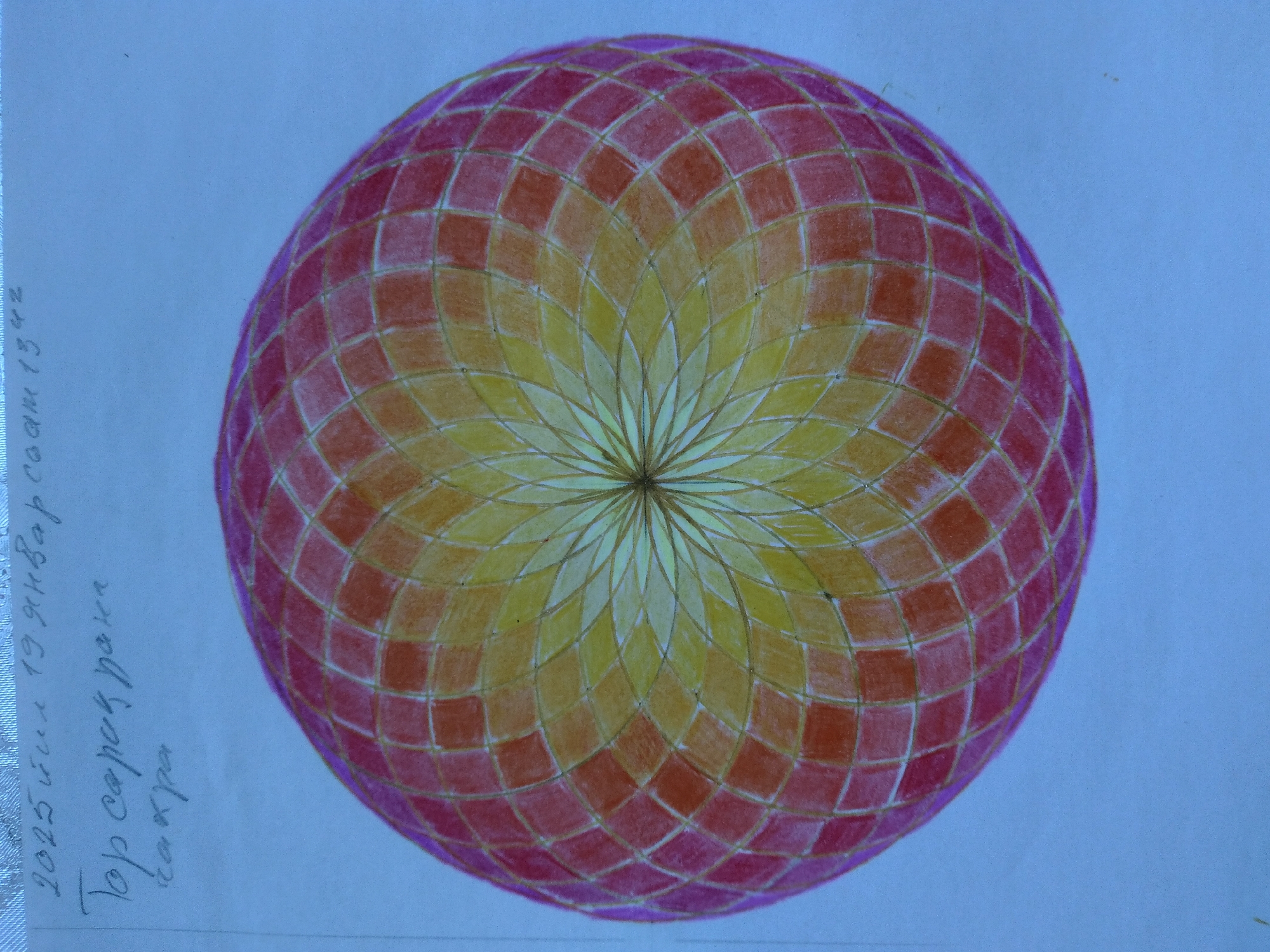
The image shows a drawing of a geodesic sphere or a faceted sphere with a floral or star-like pattern in the center. The sphere is colored in shades of yellow, orange, and pink, with the colors transitioning from the center outwards. The drawing is on a piece of paper that also contains handwritten text. The text appears to be in Russian and includes a date "2025 йил 19 январ" which translates to "January 19, 2025". Below the date, there is more text that reads "Тор сарак дача" and "чакра". The text and drawing are on a light blue background. There is no depiction of the city of Baki, Uzbekistan, nor any other specific geographical location. The image is a static artwork and does not contain any people, actions, or interactions.
Baki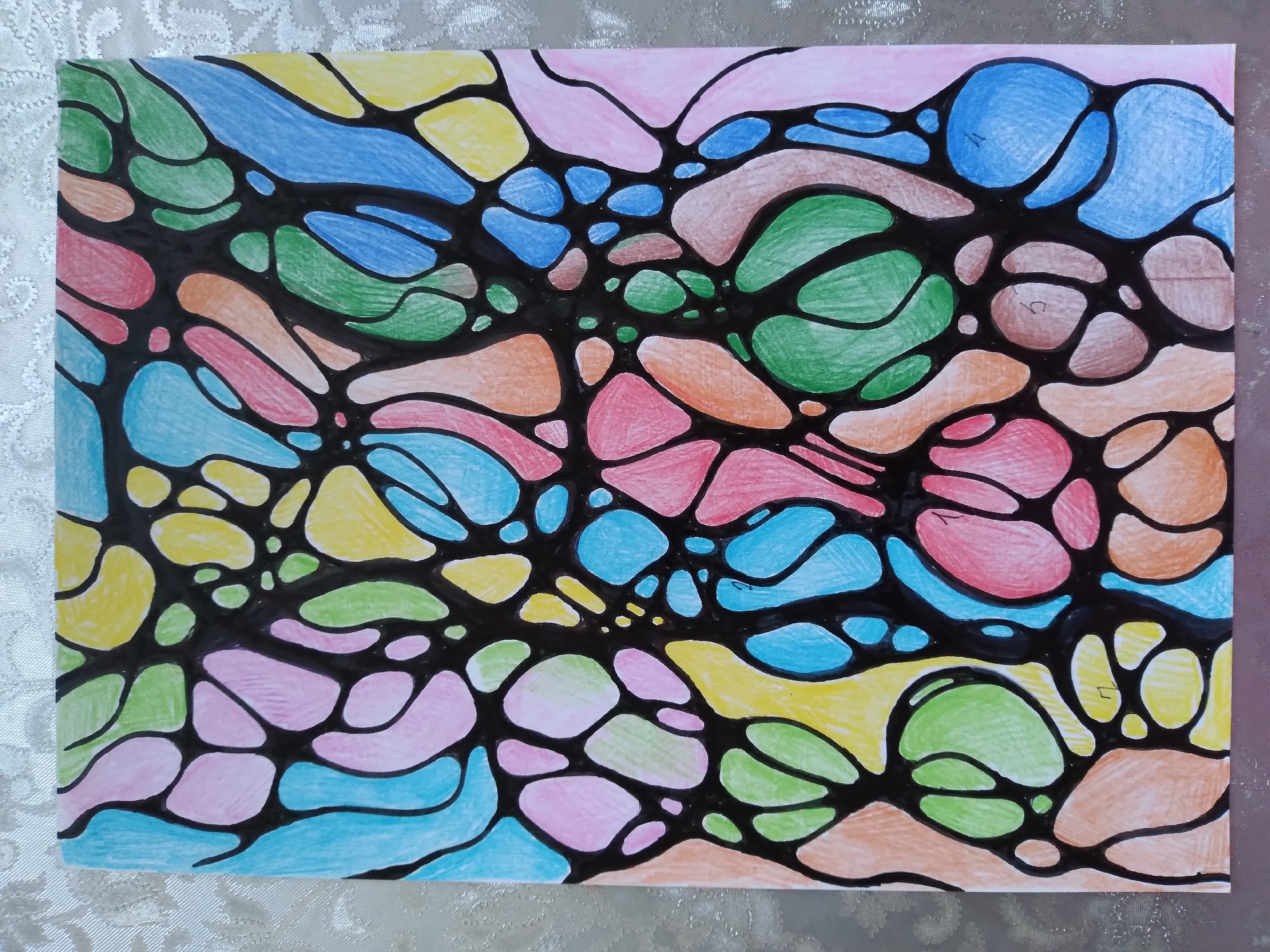
The image is a close-up, overhead shot of a piece of artwork on a textured, light-colored surface. The artwork is a drawing with black outlines creating an abstract pattern of connected, irregularly shaped cells. These cells are filled with various vibrant colors, including light blue, pink, yellow, green, orange, and a lighter blue. Some of the cells are outlined in black. The overall style is reminiscent of neurographic art or a stained-glass effect. The background surface appears to be a fabric with a subtle woven pattern. There are no people, actions, or interactions visible in the image. The artwork is the sole subject. There is no information or visual cues within the image that would indicate its location in the city of Baki, Uzbekistan.
Baki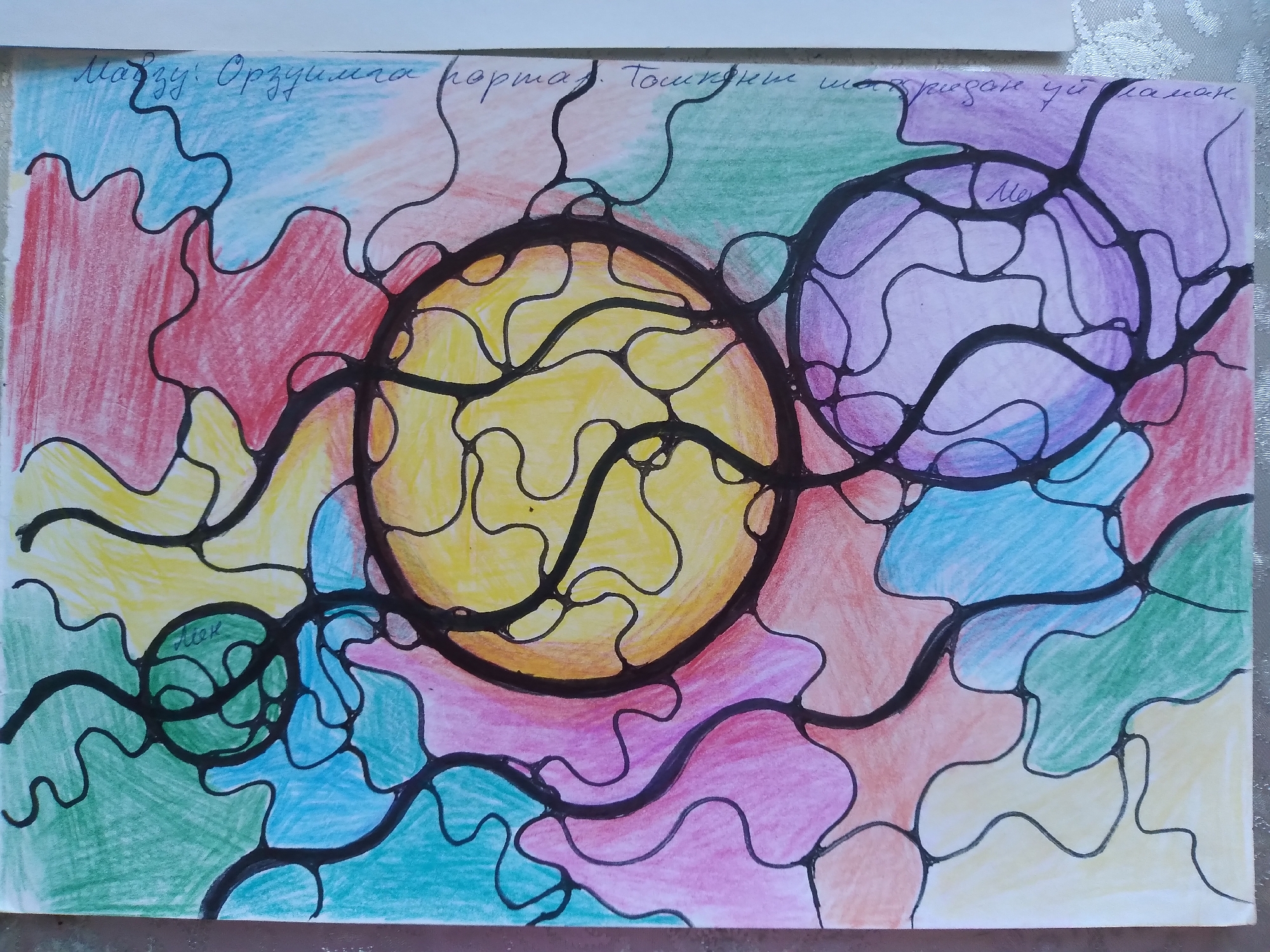
The image is a colorful abstract drawing rendered in colored pencils on paper. It features interconnected, organic shapes filled with vibrant hues of yellow, green, blue, pink, red, and purple, all outlined in black. Two prominent circular forms are centrally placed, one in yellow and the other in purple, each containing intricate black line patterns. The drawing is oriented vertically and appears to be a piece of art. There is text written vertically along the right side of the drawing. The text is in Cyrillic script and appears to be a signature or dedication. There is no indication of any specific location in the city of Baki, Uzbekistan, or any depiction of an urban environment. The image is a close-up shot of the artwork itself.
Baki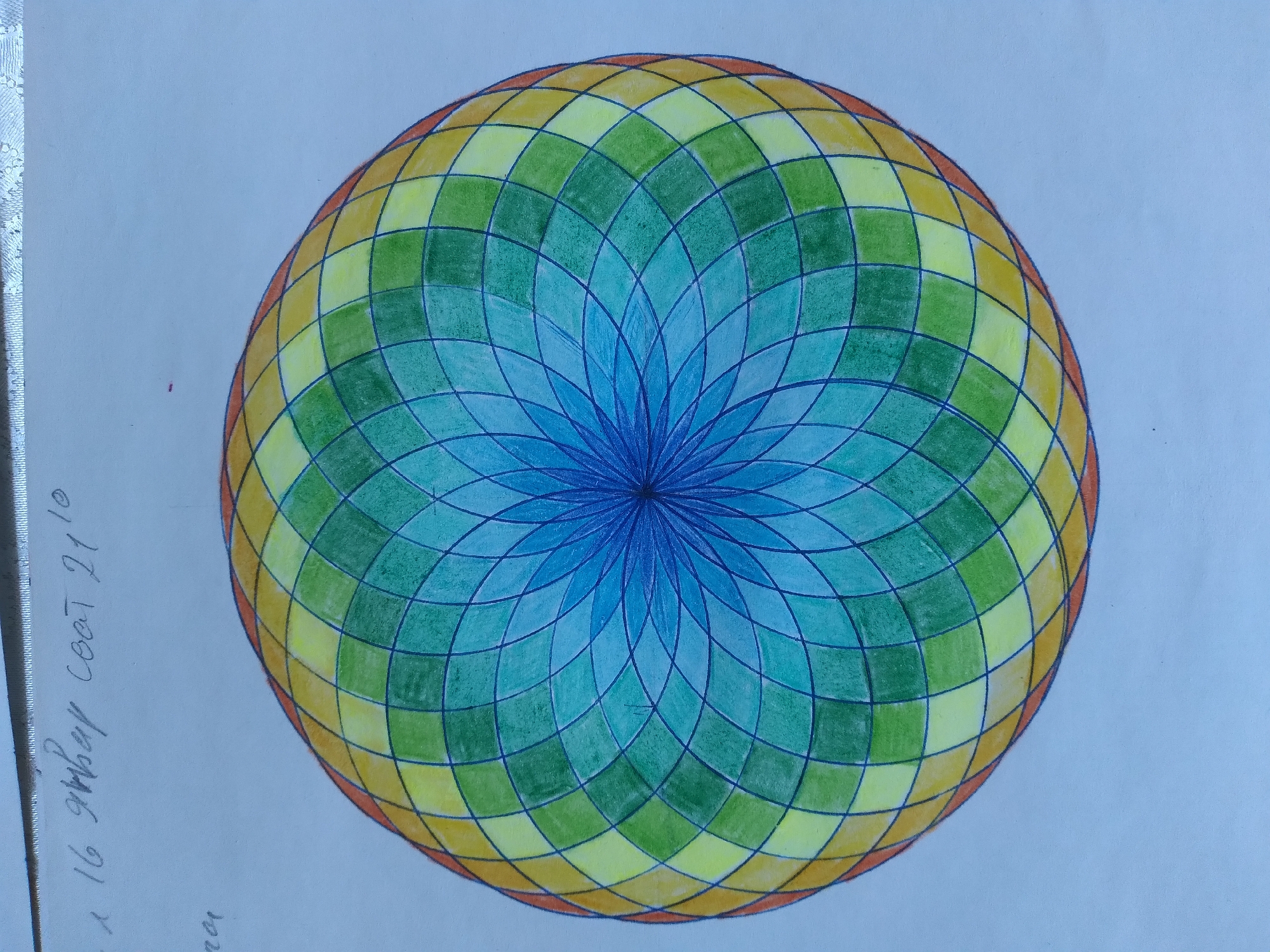
A hand-drawn mandala-like design is centered on a white piece of paper. The design is circular and features a radial pattern of colored segments. The colors start with dark blue in the center and transition through shades of turquoise, green, yellow, and orange towards the outer edge. The drawing is done with colored pencils. In the top left corner of the paper, there is handwritten text in what appears to be Cyrillic script, with the visible portion reading "16 января 2021" which translates to "January 16, 2021". There is no indication of the city of Baki, Uzbekistan, or any other geographical location in the image. The image is a close-up shot of the artwork.
Baki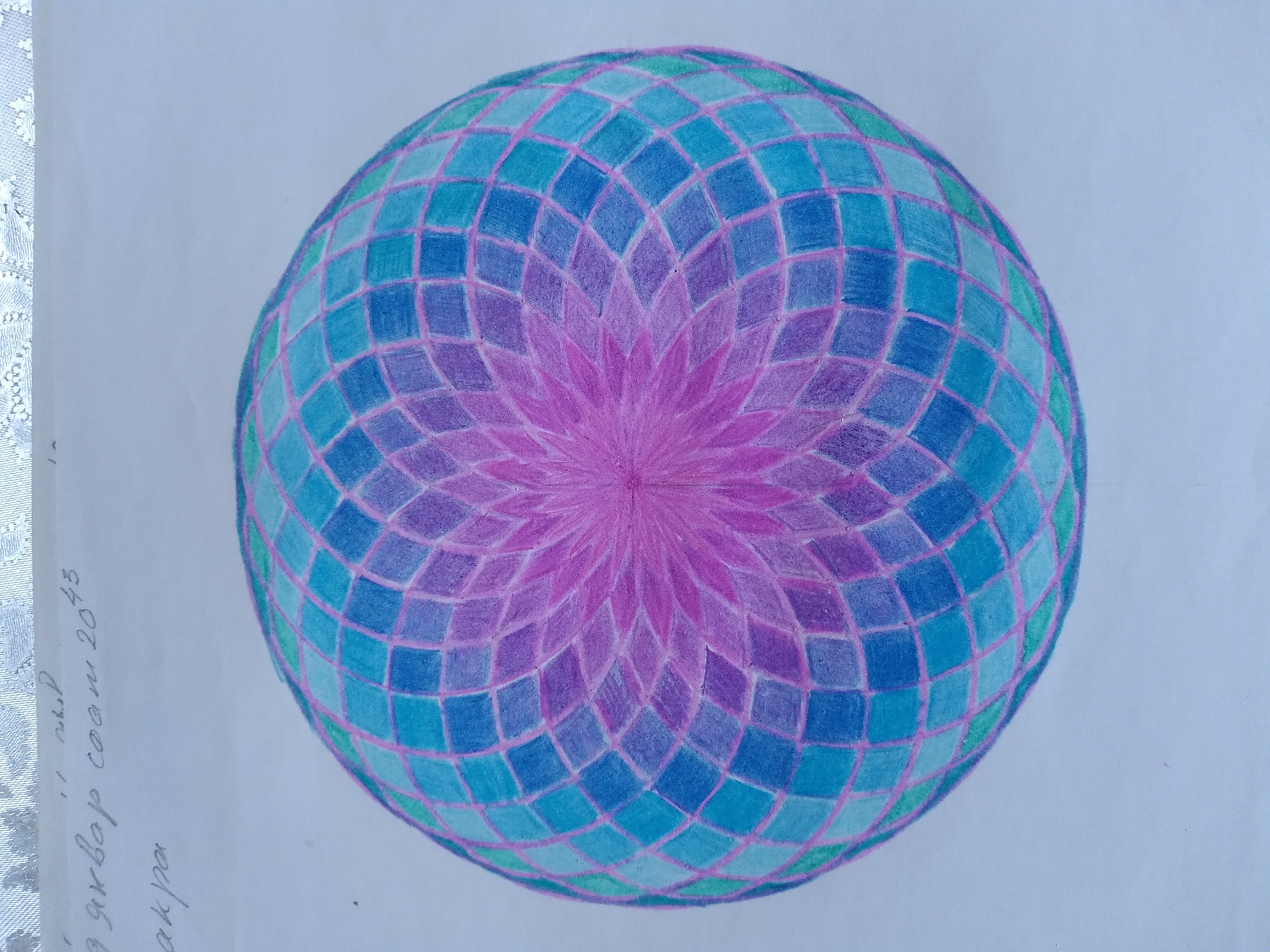
The image shows a hand-drawn geometric mandala or floral pattern, centered on a white sheet of paper. The pattern is spherical in appearance and colored with shades of pink, purple, blue, and teal, arranged in a grid-like design that radiates outwards from a central point. There is handwritten text in the upper left corner of the image. The text is in Cyrillic script. The first line reads "11 nil" and the second line reads "9 яньвар соат 2043". This translates to "January 9th, 2043". The third line reads "ак ра". The image does not contain any information that would allow for the identification of its location in the city of Baki, Uzbekistan.
Baki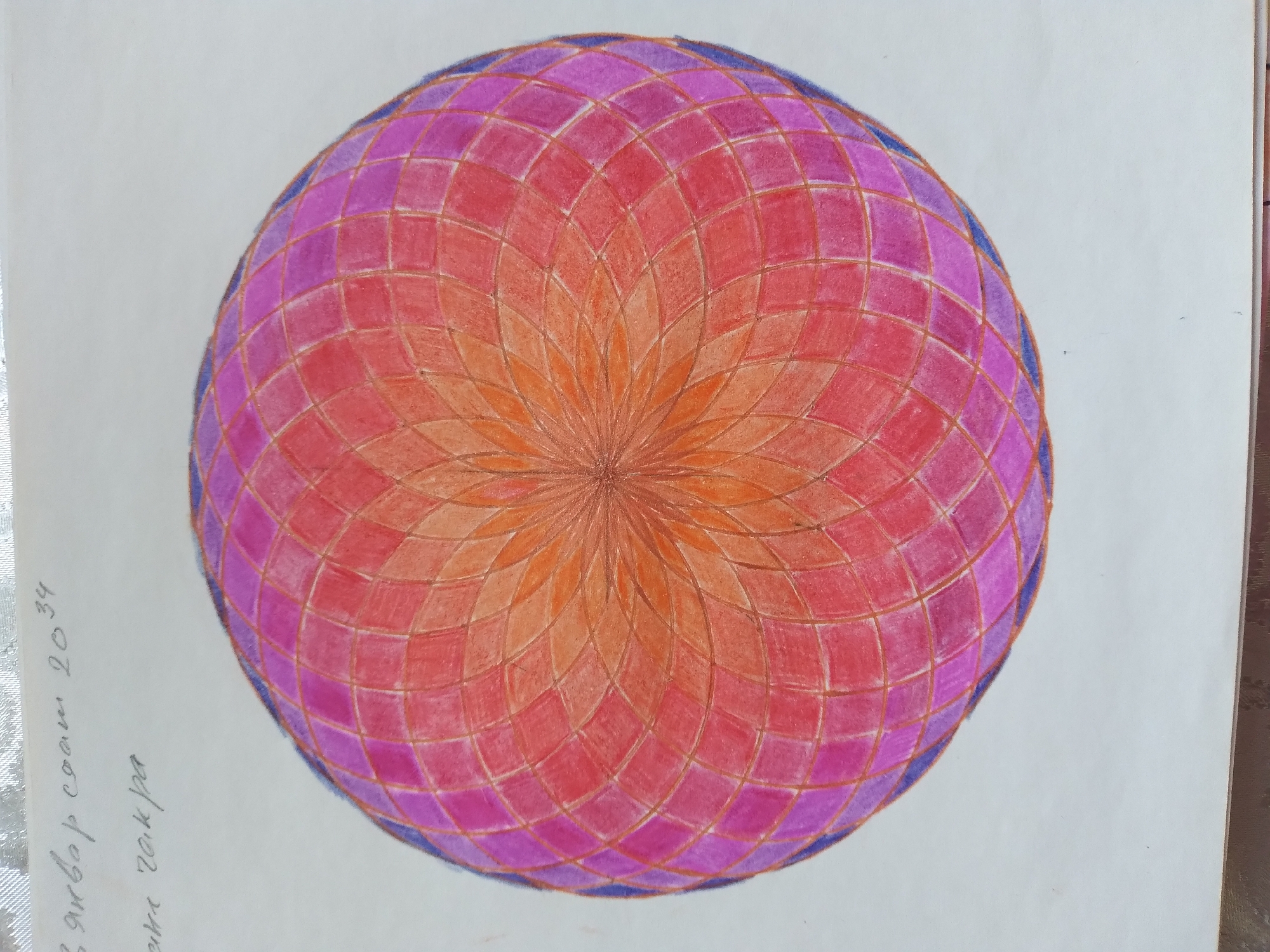
The image displays a colored pencil drawing of a geometric mandala or flower-like design. The design is circular and features concentric layers of patterned segments radiating from the center. The colors transition from orange and red at the core to shades of pink and purple towards the outer edges. Some faint handwritten text in what appears to be Cyrillic script is visible at the top left of the image. There is no identifiable location within the city of Baki, Uzbekistan.
Baki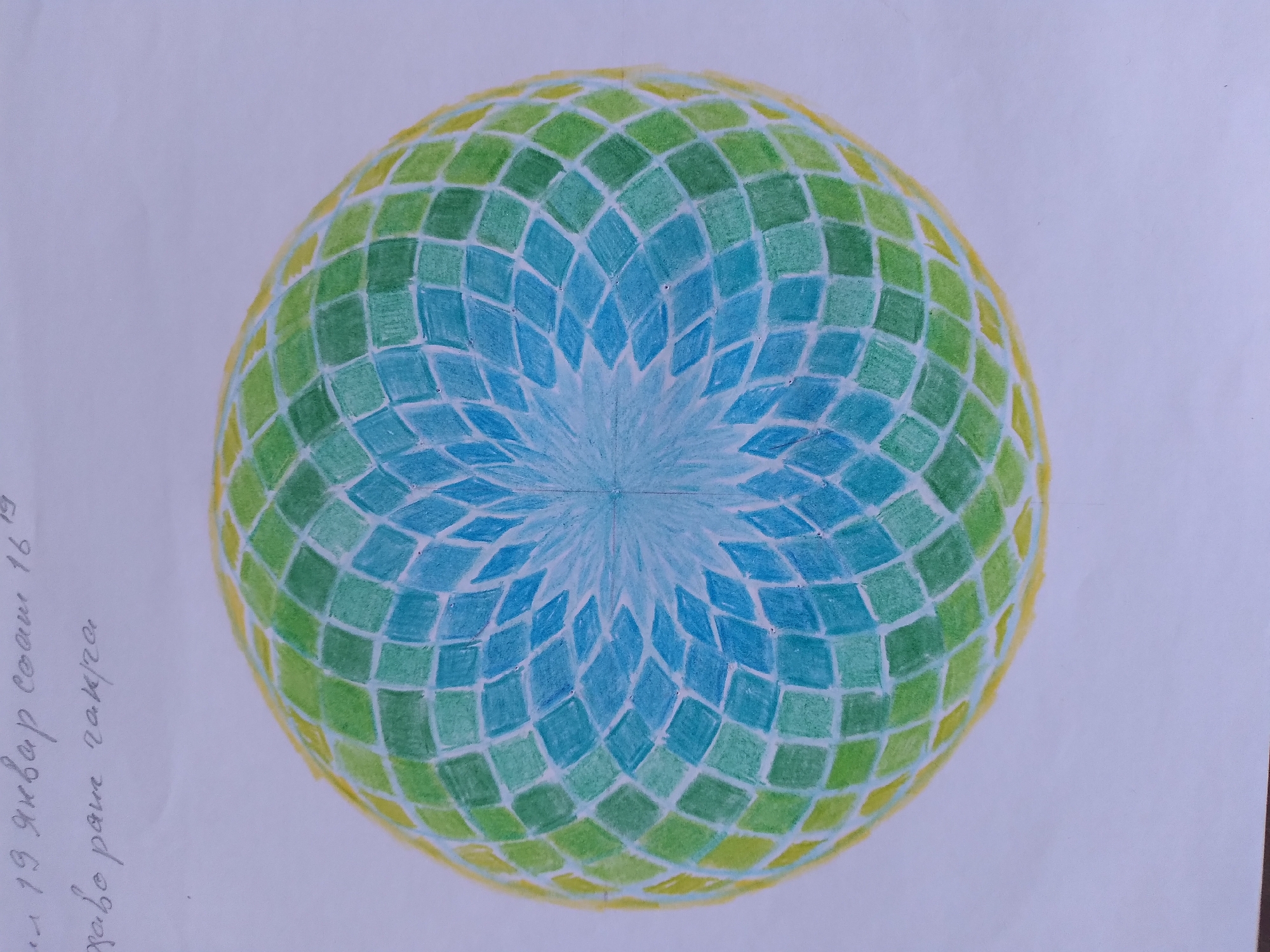
The image depicts a drawing of a spherical, mandala-like design rendered in shades of blue, green, and yellow. The design is composed of repeating diamond and square shapes, creating a mosaic effect that tapers towards the center in lighter shades of blue and white. The drawing is on a white paper surface, and in the upper right corner of the image, there is handwritten text in Cyrillic script. The text appears to be a date and possibly a location or personal note, but it is not discernible as "Baki, Uzbekistan" and cannot be used to place the drawing in that specific location. The drawing itself is the sole subject of the image.
Baki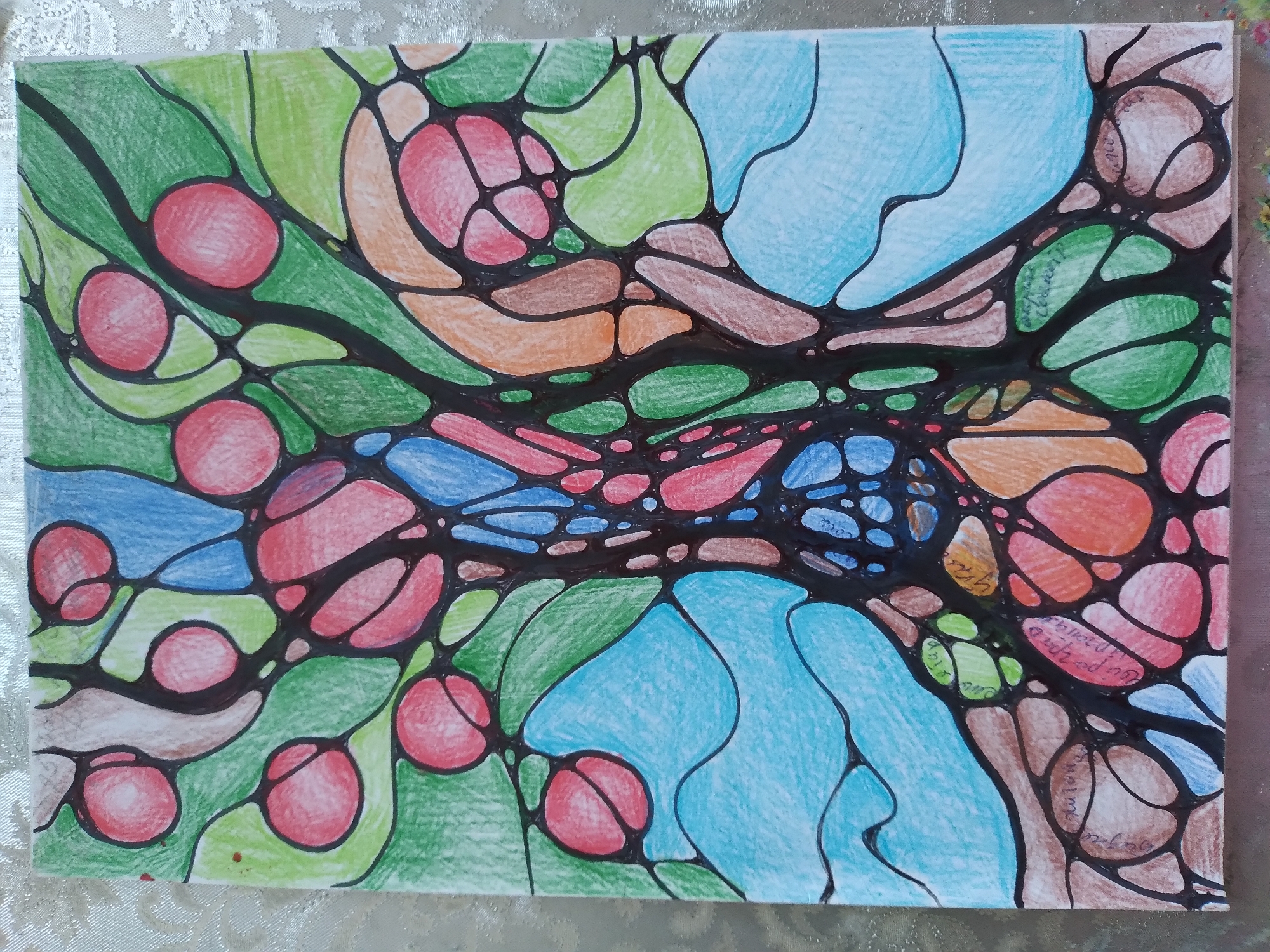
The image is a close-up, eye-level, colored pencil drawing on paper. The artwork depicts a stylized tree with organic, interconnected shapes in vibrant colors, including green, red, blue, and orange. The drawing features a central trunk-like structure branching out into various sections filled with circular and oval shapes, resembling fruits or leaves. The background is a textured, light-colored fabric, possibly a tablecloth. There are no people, actions, or interactions visible. The drawing does not depict any identifiable landmarks or scenes from the city of Baki, Uzbekistan.
Baki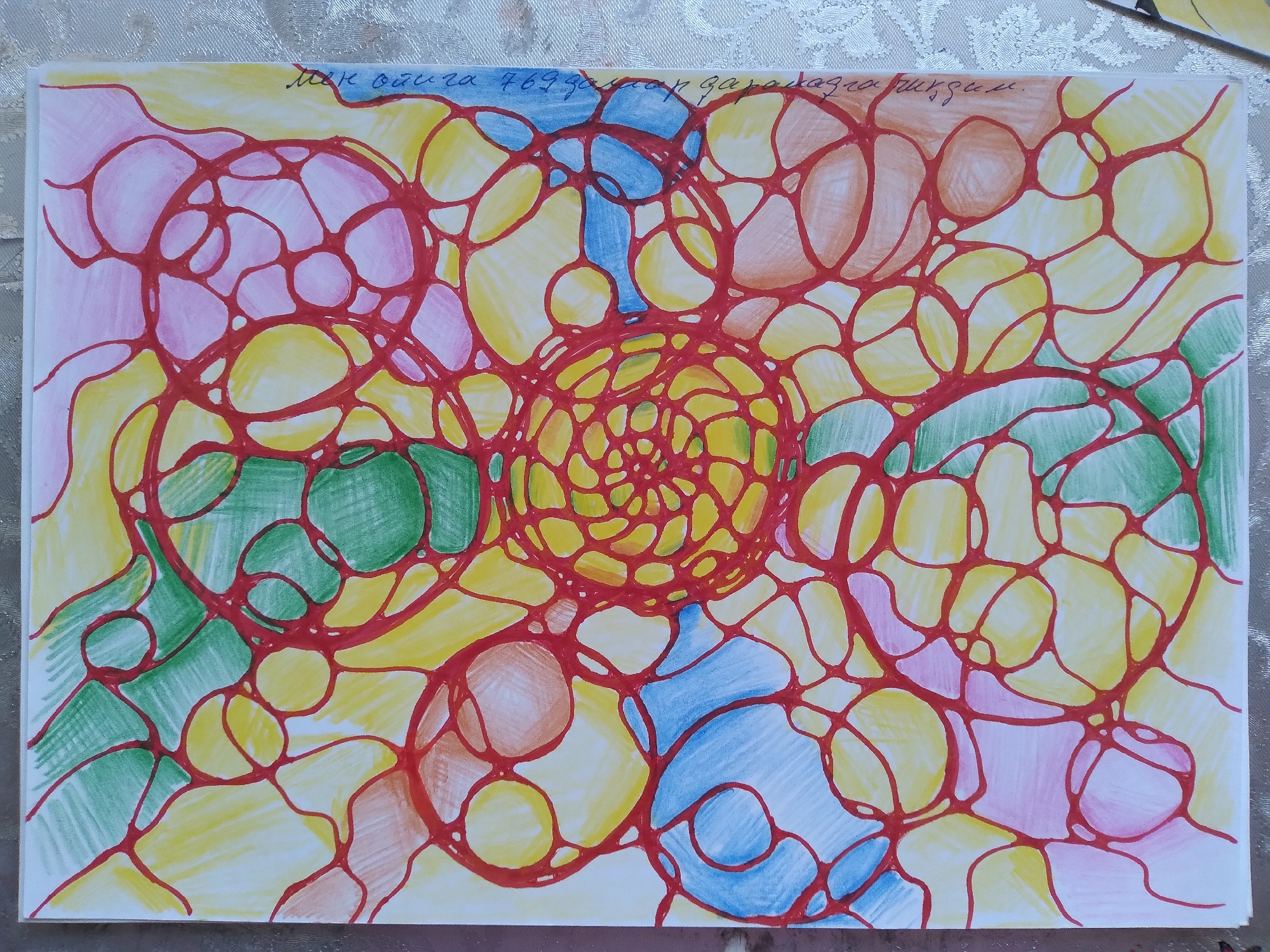
The image shows an abstract drawing on a white paper. The drawing is composed of interconnected red lines forming a network of circular and oval shapes. These shapes are filled with various colors, including yellow, pink, green, blue, and a light brown or orange. There is some text written in cursive script in the upper right corner of the paper, but it is illegible. The paper is lying on a textured white surface, possibly a tablecloth. The drawing does not depict any recognizable objects or scenes, and there is no indication of a specific location, including Baki, Uzbekistan.
Baki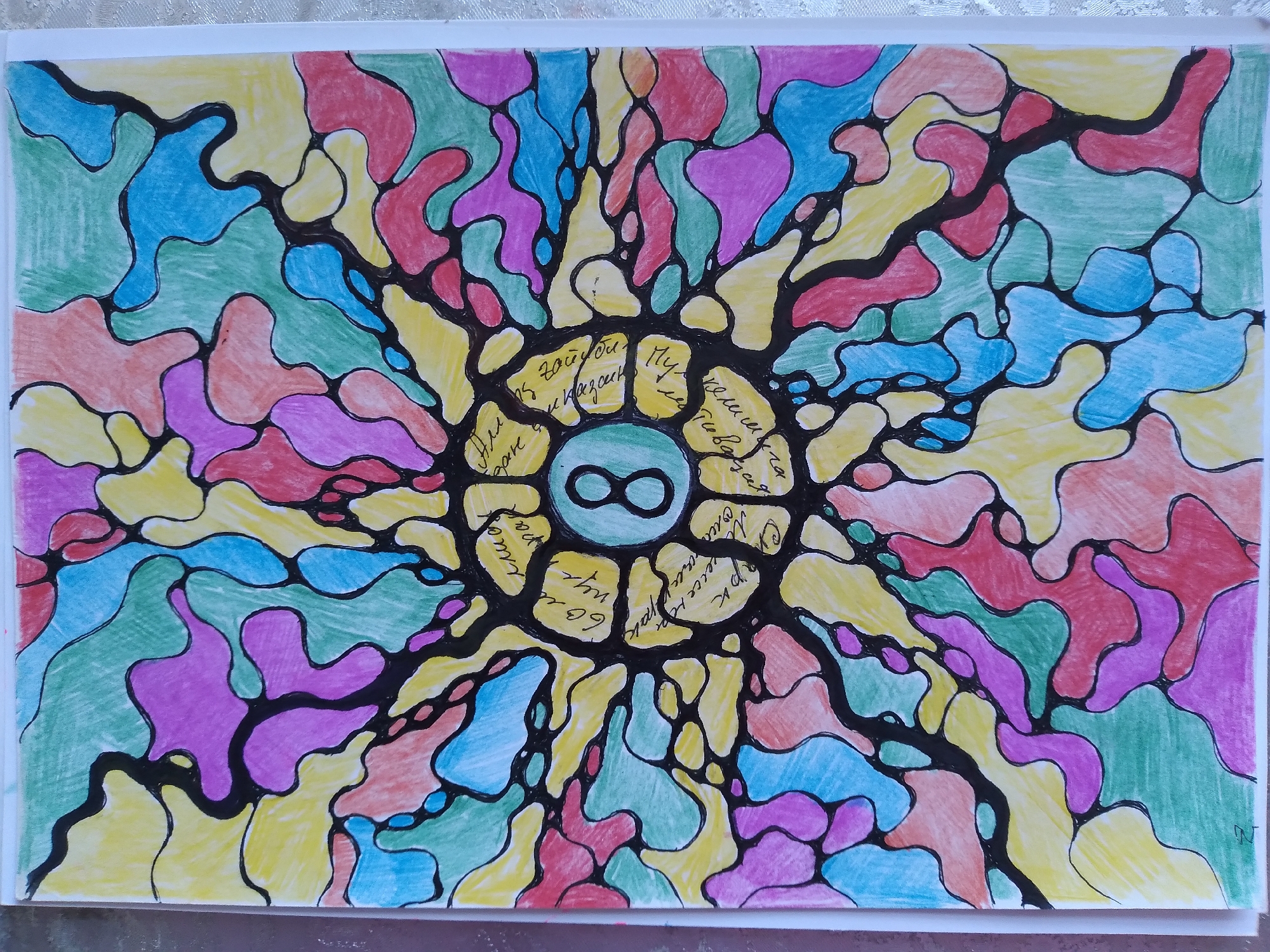
The image is a colorful, abstract drawing featuring a central circle with the number "8" inside. The circle is surrounded by organic, interconnected shapes in various colors, including yellow, blue, green, red, and purple. These shapes are outlined in black, creating a mosaic-like pattern that extends outwards from the center. Some of the yellow shapes within the central circle contain handwritten text. The drawing appears to be on a white surface, possibly paper, and is presented in a top-down perspective. There is no indication of any location in the city of Baki, Uzbekistan.
Baki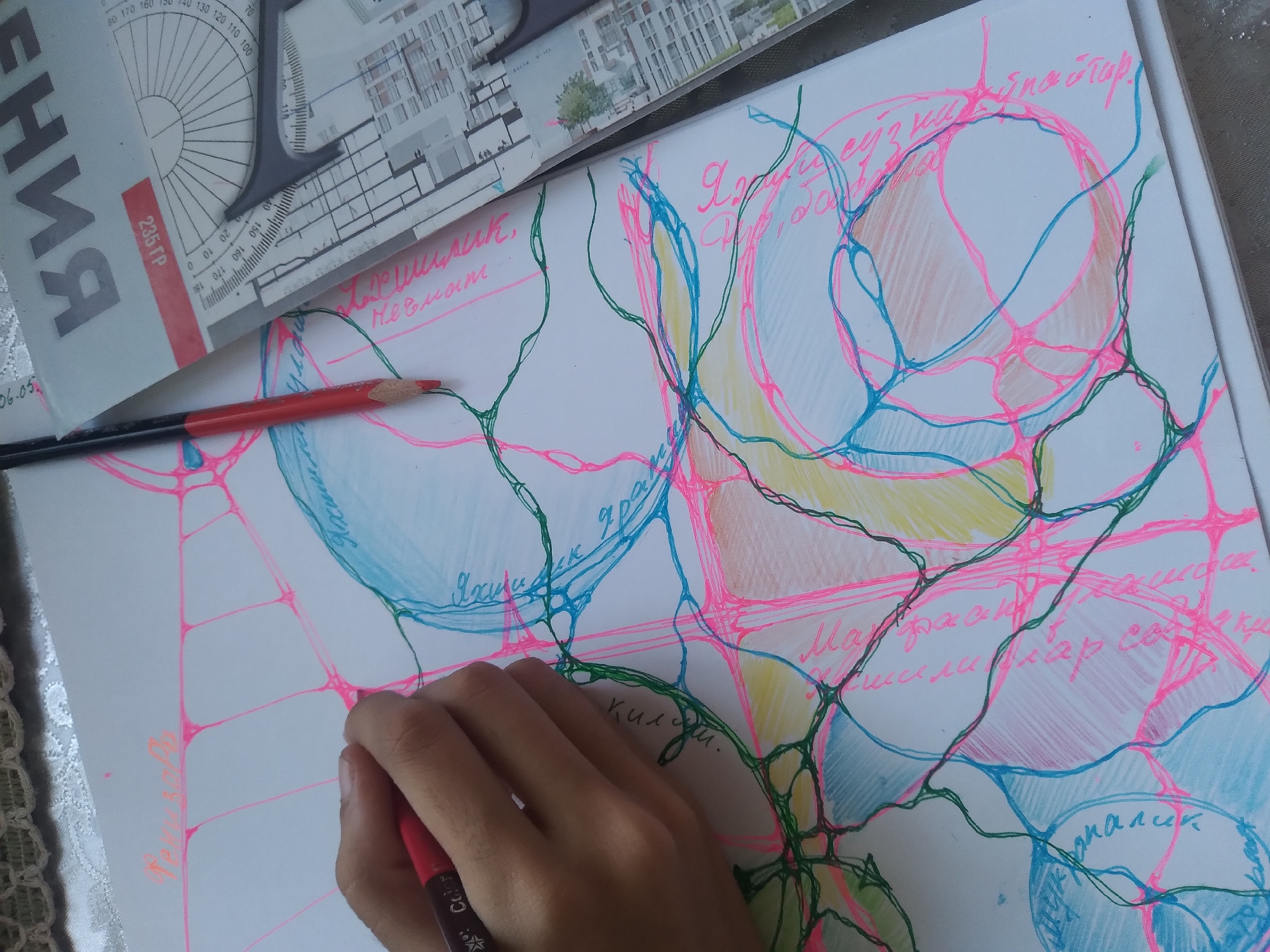
The image shows a close-up of a hand holding a red marker, drawing on a white sheet of paper covered in a network of colorful lines in pink, green, and blue. The drawing appears abstract, with circular shapes and interconnected lines. There is also a red pencil lying on the paper, and a ruler with architectural drawings and Cyrillic text is partially visible in the background. The lighting suggests an indoor setting. There is no visible indication of the city of Baki, Uzbekistan.
Baki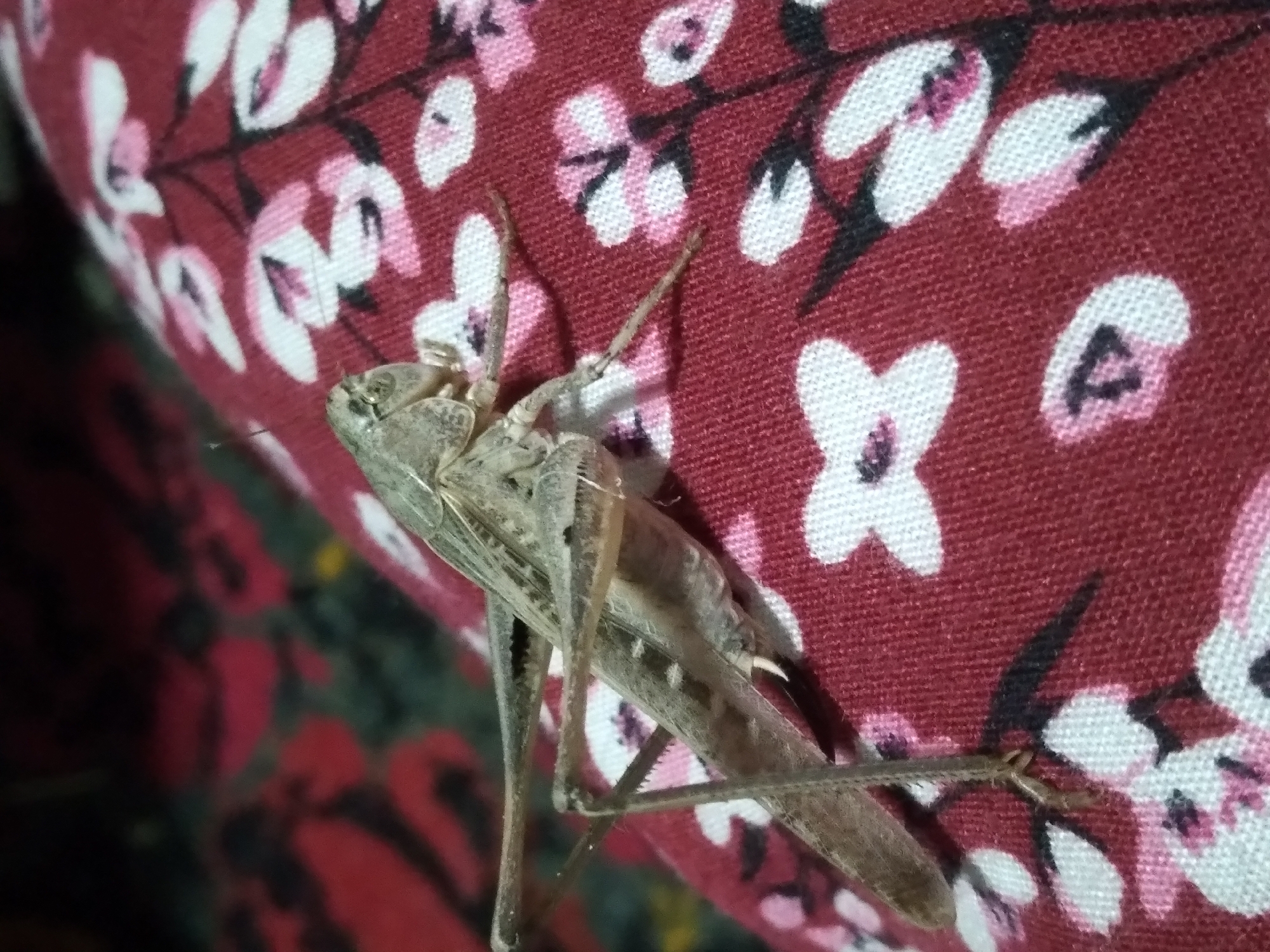
A close-up, eye-level shot focuses on a light brown grasshopper perched on a red fabric with a floral pattern. The grasshopper is positioned on its side, with its head facing towards the right of the frame. Its long, spiny hind legs are visible, as are its delicate forelegs and antennae. The fabric beneath the grasshopper is a deep red color, adorned with white and pink flowers with dark centers. The background is out of focus and appears to be a dark, indeterminate color with hints of red. The lighting is dim, casting soft shadows. The scene is likely indoors or in a shaded outdoor area, given the lack of strong, direct light. There is no discernible location in the city of Baki, Uzbekistan.
Baki
The image shows a silhouette of mountains against a pale pink sky, likely during sunset or sunrise. The foreground is dark and indistinct, with the outlines of trees and possibly some structures visible as dark shapes. The overall impression is one of a natural landscape, possibly a rural or mountainous area. There are no visible people, animals, or specific identifiable landmarks. The scene appears to be located in a natural environment, and it is not possible to definitively determine the city of Baki, Uzbekistan based solely on this image.
Baki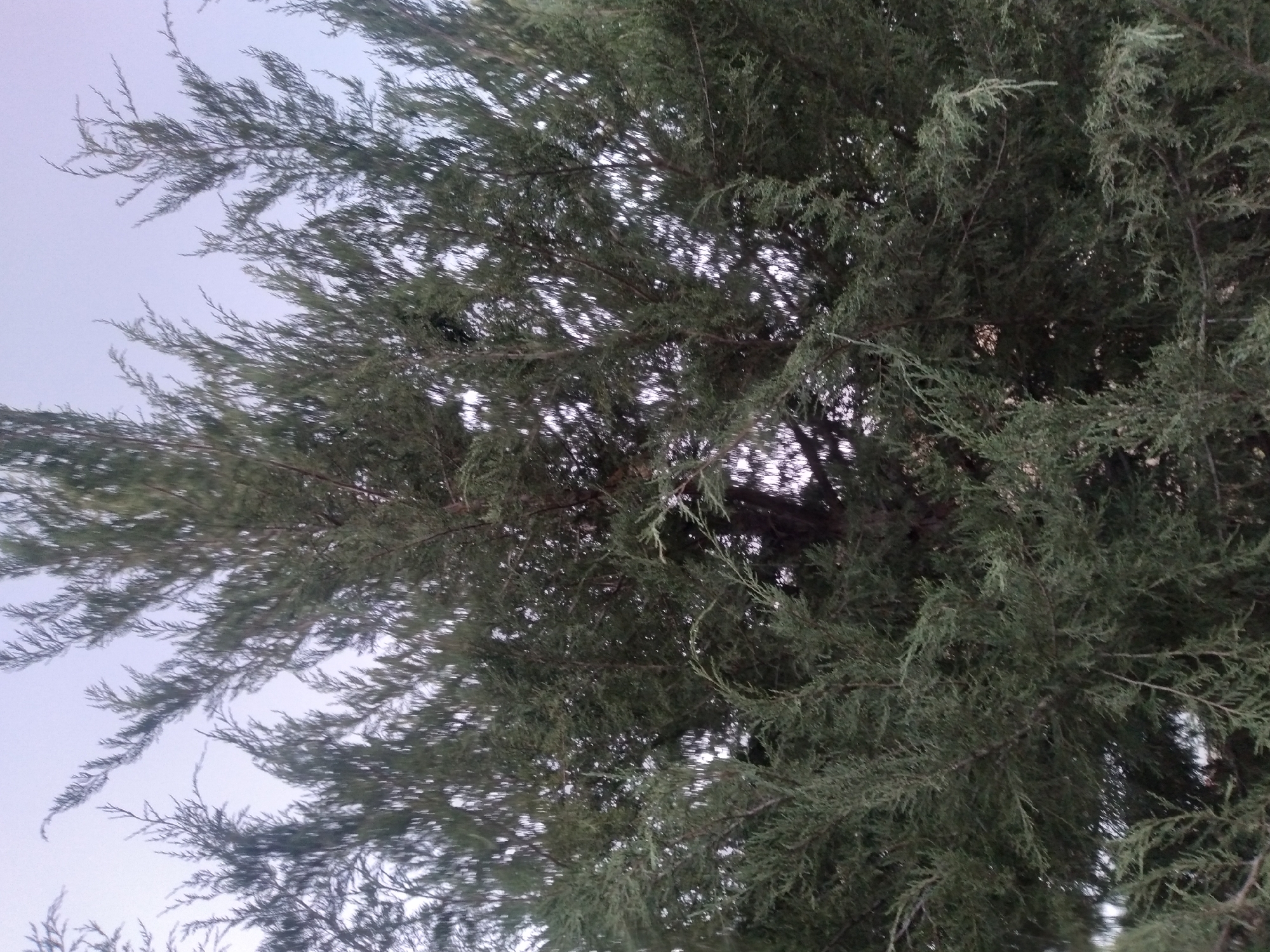
The image displays a close-up view of a mature juniper tree with dense, feathery foliage. The branches are covered in scale-like leaves that are dark green in color. The tree is seen against a pale, overcast sky, suggesting it might be early morning or late evening. The lighting is diffused, with no harsh shadows. The overall impression is one of natural growth and texture. The photograph does not contain any people, animals, or man-made structures, and therefore, its specific location within the city of Baki, Uzbekistan cannot be determined from the visual information alone.
Baki
The image is a blurred, low-light photograph of trees. The motion blur suggests the photograph was taken while moving. The foliage appears dark green and dense, with streaks of lighter areas indicating light filtering through the branches or gaps in the trees. The overall impression is one of movement through a wooded area. There are no discernible people, specific objects, or architectural elements visible due to the blur and darkness. The photograph does not provide any contextual clues to determine its location within the city of Baki, Uzbekistan.
Baki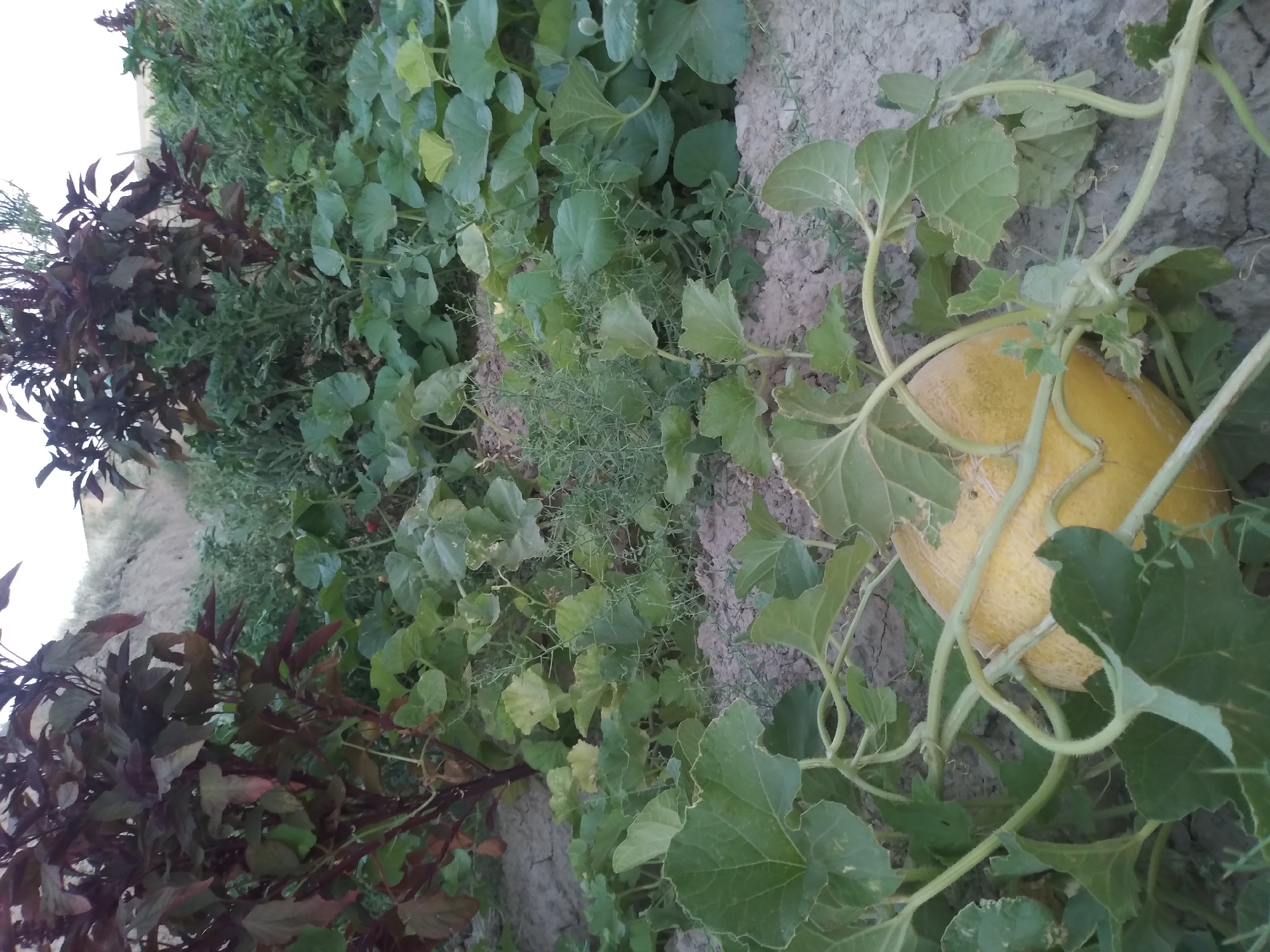
In Baki, Uzbekistan, a scene unfolds in a garden with a focus on a melon growing on a vine in the foreground. The melon is elongated and pale yellow, nestled amongst large, green, lobed leaves. Tendrils from the vine curl around and over the fruit and foliage. The ground is a dry, cracked, light brown soil. In the background, more lush green foliage of various plants, including some with dark red leaves, creates a dense backdrop. The sky above is overcast and light. The overall impression is one of a cultivated but somewhat wild and overgrown garden.
Baki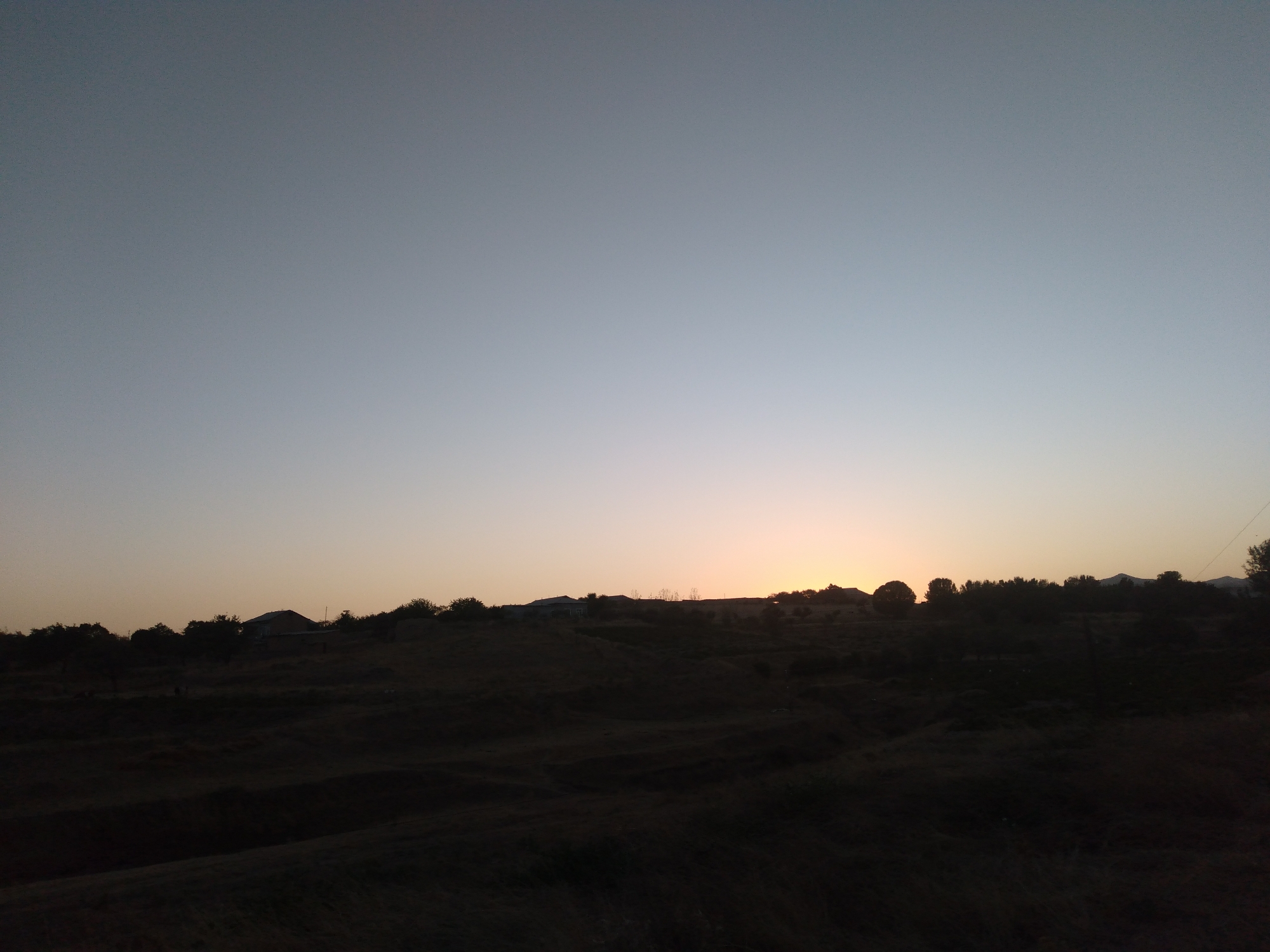
The image depicts a silhouetted landscape at dusk, with a clear sky transitioning from a pale blue at the top to a soft orange glow near the horizon. The foreground is a dark, undulating terrain, possibly fields or hills, with indistinct textures due to low light. Along the crest of the terrain, a line of silhouetted trees and several structures, likely houses or buildings, are visible. The overall impression is one of a rural or semi-rural setting on the outskirts of a city, such as Baki, Uzbekistan, as the day ends. There are no visible people or animals.
Baki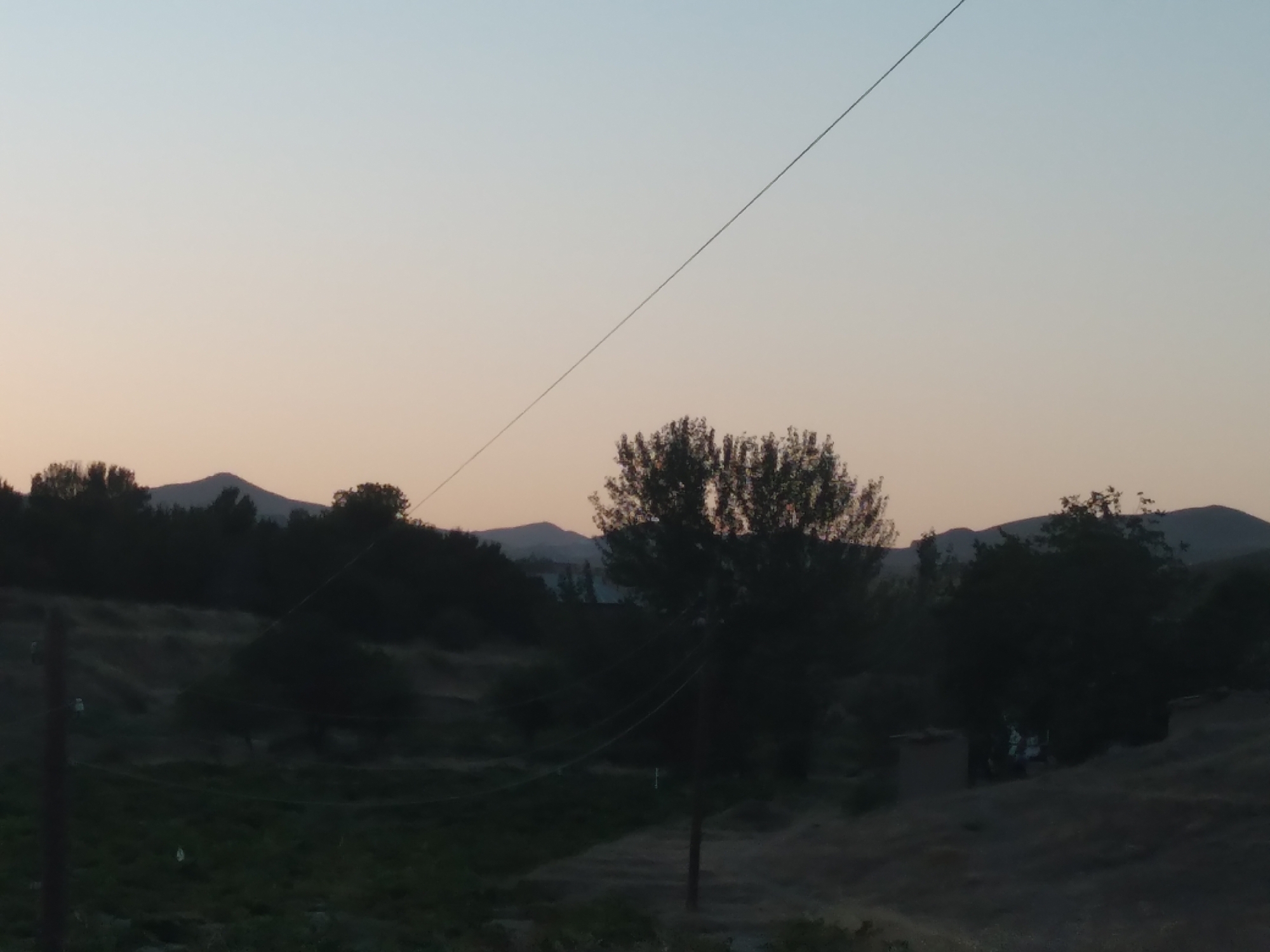
The image depicts a rural landscape at dusk. A power line stretches diagonally across the sky, which fades from light blue at the top to a pale orange near the horizon. In the middle ground, a cluster of trees with dark foliage stands out against the muted tones of the sky. Beyond the trees, rolling hills and mountains are visible, silhouetted against the fading light. The foreground is dominated by dark vegetation, and a wooden pole is visible on the left side. The scene appears to be in a sparsely populated area. There are no people or specific identifiable landmarks to pinpoint a location within Baki, Uzbekistan.
Baki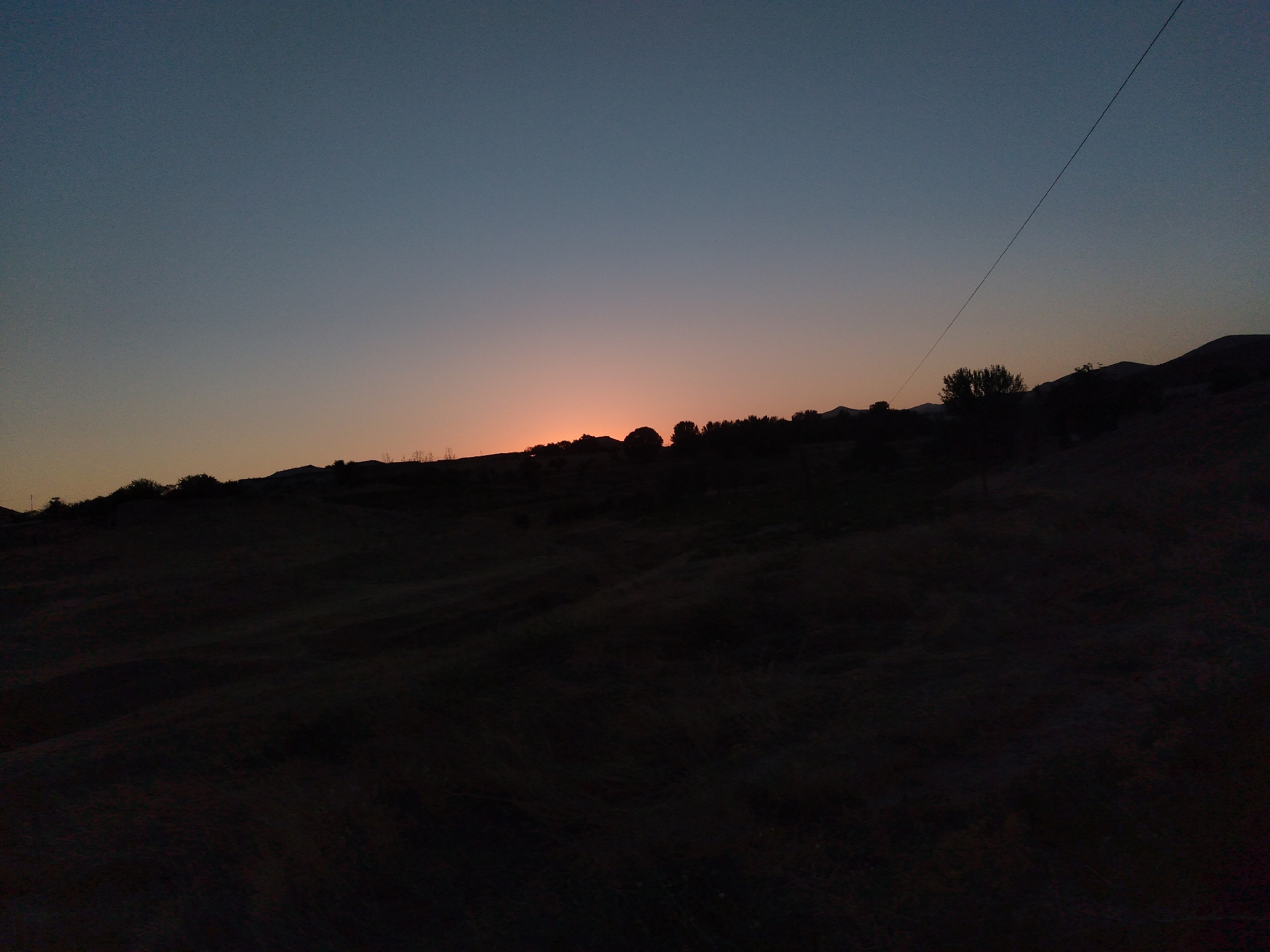
The image depicts a twilight scene in the city of Baki, Uzbekistan, characterized by a low, silhouetted landscape against a gradient sky. The horizon is marked by rolling hills, sparsely dotted with trees and vegetation, all rendered in dark silhouette. The sky transitions from a deep, almost black blue at the top of the frame to a soft peach and orange hue near the horizon, indicating the lingering light of sunset or the approaching dawn. A single, thin power line stretches diagonally across the upper right portion of the sky, its dark line contrasting with the lighter tones of the atmosphere. The foreground is a dark, indistinct expanse, likely a field or uneven terrain, with the texture obscured by low light conditions. No people or specific structures are clearly identifiable in the scene, lending it a natural and serene, albeit somewhat stark, atmosphere.
Baki