Batalha, Portugal
4 memories from Batalha, Portugal
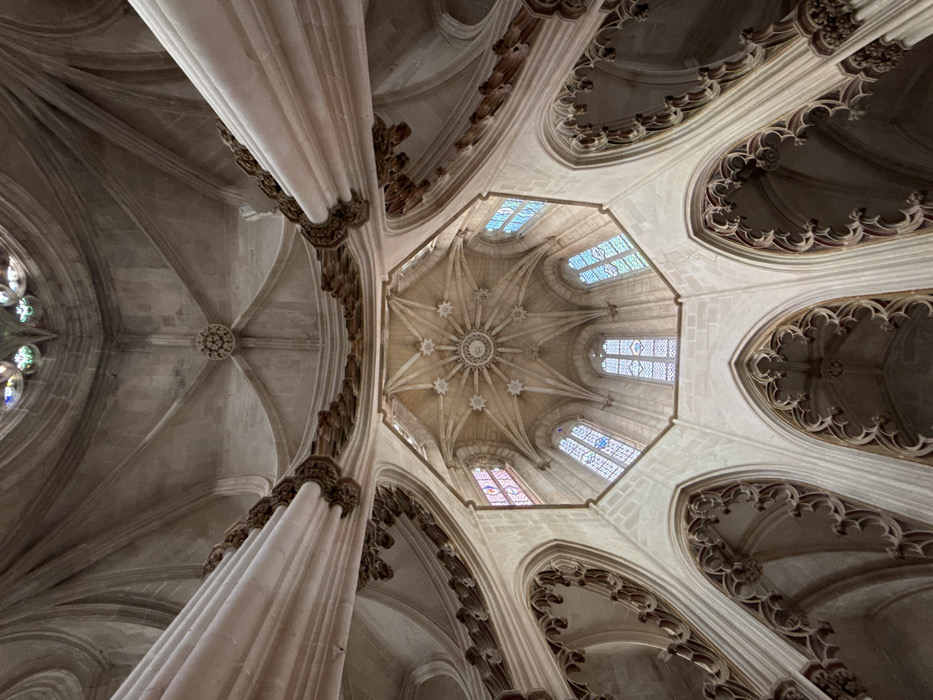
The image displays an upward-looking view into the ornate vaulted ceiling and upper walls of an octagonal chapel within the Batalha Monastery, located in Batalha, Portugal. The central feature is an elevated octagonal dome, constructed from light-colored stone, characterized by intricate ribbed vaults converging towards a prominent, circular carved boss. Smaller star-shaped bosses are present at rib intersections. Around the base of this central dome are tall, slender arched windows featuring stained glass in various hues, including blue, red, pink, and clear patterns, allowing natural light to penetrate. Supporting elements include massive, fluted, cream-colored columns with elaborately carved capitals and friezes depicting foliage motifs, which are positioned at the periphery of the central octagonal structure. Below these columns and extending downwards, pointed arches with decorative tracery are visible. The overall architectural style is consistent with late Gothic and Manueline periods. No individuals or movable objects are present in the scene.
Batalha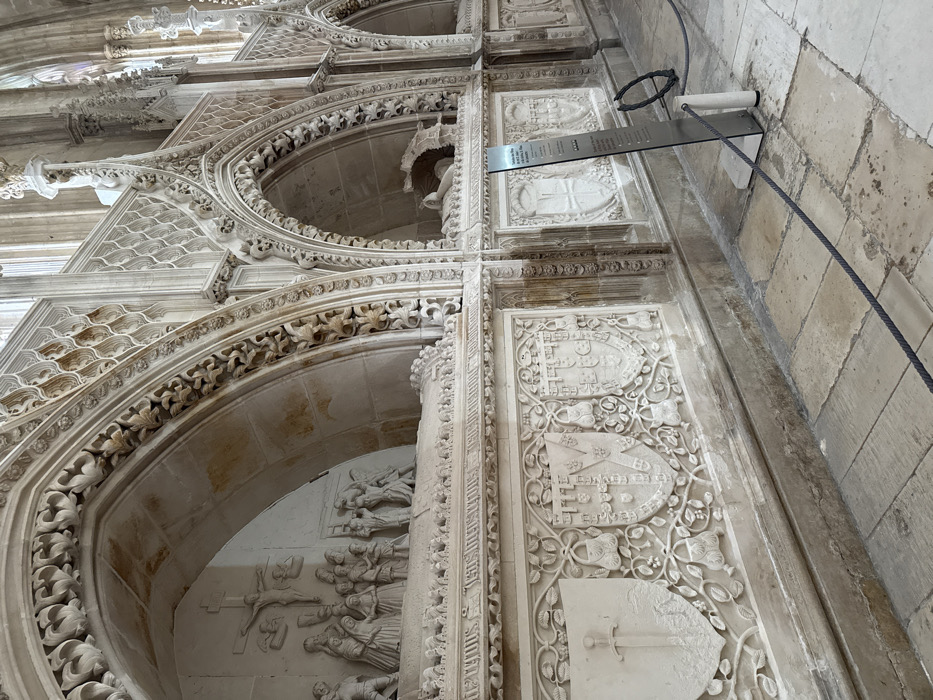
The image displays an interior section of the Monastery of Batalha in Batalha, Portugal, featuring a series of ornate stone tombs integrated into a wall. On the left, a large arcosolium contains a detailed bas-relief carving depicting the Crucifixion of Christ, with Christ on the cross and approximately twelve figures, including mourners and a soldier, gathered below. The tomb's lower facade beneath this relief features a frieze with an inscription, followed by three prominently carved heraldic shields. The leftmost shield depicts a sword, while the two central shields exhibit complex coats of arms surrounded by intricate foliate patterns. To the right, several additional arcosolia are visible, each with highly decorated Gothic arches and recesses containing smaller, recumbent effigies. The surrounding wall is adorned with extensive Gothic architectural details, including tracery, finials, and carved ornamentation. The floor is composed of large, worn stone slabs. A black rope barrier supported by white posts demarcates a viewing area in the foreground, with a tall metallic informational sign positioned behind it to the right. The scene is illuminated, highlighting the intricate stone carvings.
Batalha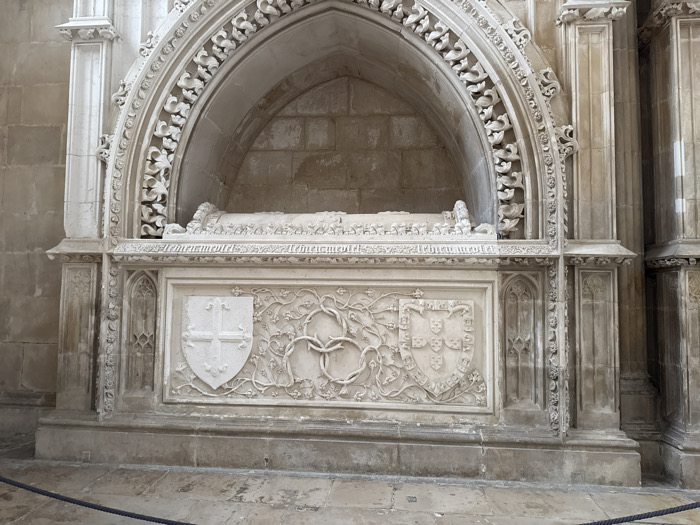
The image displays a large, intricately carved stone funerary monument located within a Gothic architectural setting in Batalha, Portugal. The monument is constructed from light-colored stone and consists of a rectangular sarcophagus base surmounted by a deeply recessed arched niche. The front of the sarcophagus base features three distinct relief carvings. On the left, a shield displays a cross pattee with trefoil terminals. On the right, a second shield shows the Portuguese coat of arms, composed of five escutcheons each containing five bezants. Between these heraldic shields, elaborate vegetative scrollwork and a central interlaced knot design are carved. The base is flanked by decorative vertical buttresses or pilasters. Above the sarcophagus, a horizontal frieze bears an incised inscription in an antique script. The upper section consists of a pointed arch, richly embellished with foliate and tracery patterns, framing an alcove. Within this alcove lies a recumbent stone effigy, depicting a human figure in repose, largely obscured but identifiable by its form. The monument is integrated into a larger stone structure, characterized by Gothic-style pillars and walls made of dressed stone blocks, indicative of a monastic or ecclesiastical environment. The floor in the immediate foreground is paved with stone. A dark rope barrier is visible horizontally across the lower part of the frame, marking a designated viewing area. No individuals or active subjects are present.
Batalha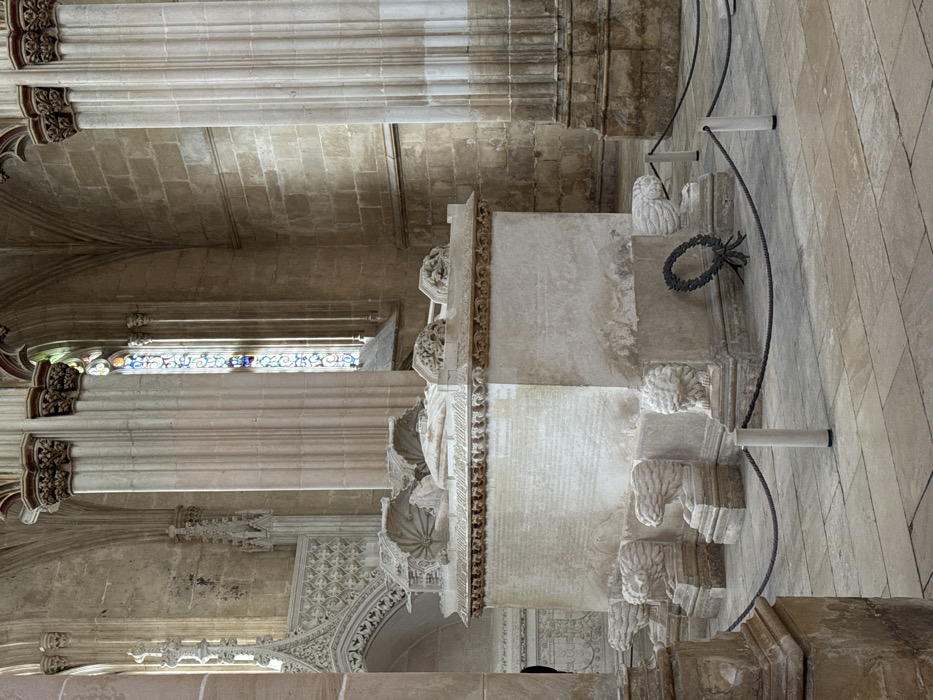
This image displays the interior of the Founder's Chapel within the Batalha Monastery (Mosteiro da Batalha) in Batalha, Portugal. The central subject is a large, rectangular stone tomb, specifically the joint tomb of King John I and Philippa of Lancaster. The tomb's base is supported by six carved stone lions. Its main body features carved inscriptions on its visible sides and an intricate frieze along the top edge. The lid presents two recumbent effigies, crowned and resting on carved pillows, partially obscured by ornate, shell-like carved canopies. The surrounding environment includes several massive, light-colored, fluted stone columns with ornate capitals, supporting Gothic-style pointed arches and ribbed vaulting. Walls are constructed from cut stone blocks. A tall, narrow stained glass window with multicolored panes is visible in the mid-background. The floor is paved with large, rectangular stone tiles. A low barrier, composed of a dark chain strung between light-colored cylindrical bollards, restricts access to the tomb. A dark wreath rests on the tiled floor against the base of the tomb on the right side of the barrier. A portion of another ornate carved stone structure is visible in the far-left background. No individuals are present in the scene.
Batalha