Biberach an der Riß, Germany
30 memories from Biberach an der Riß, Germany
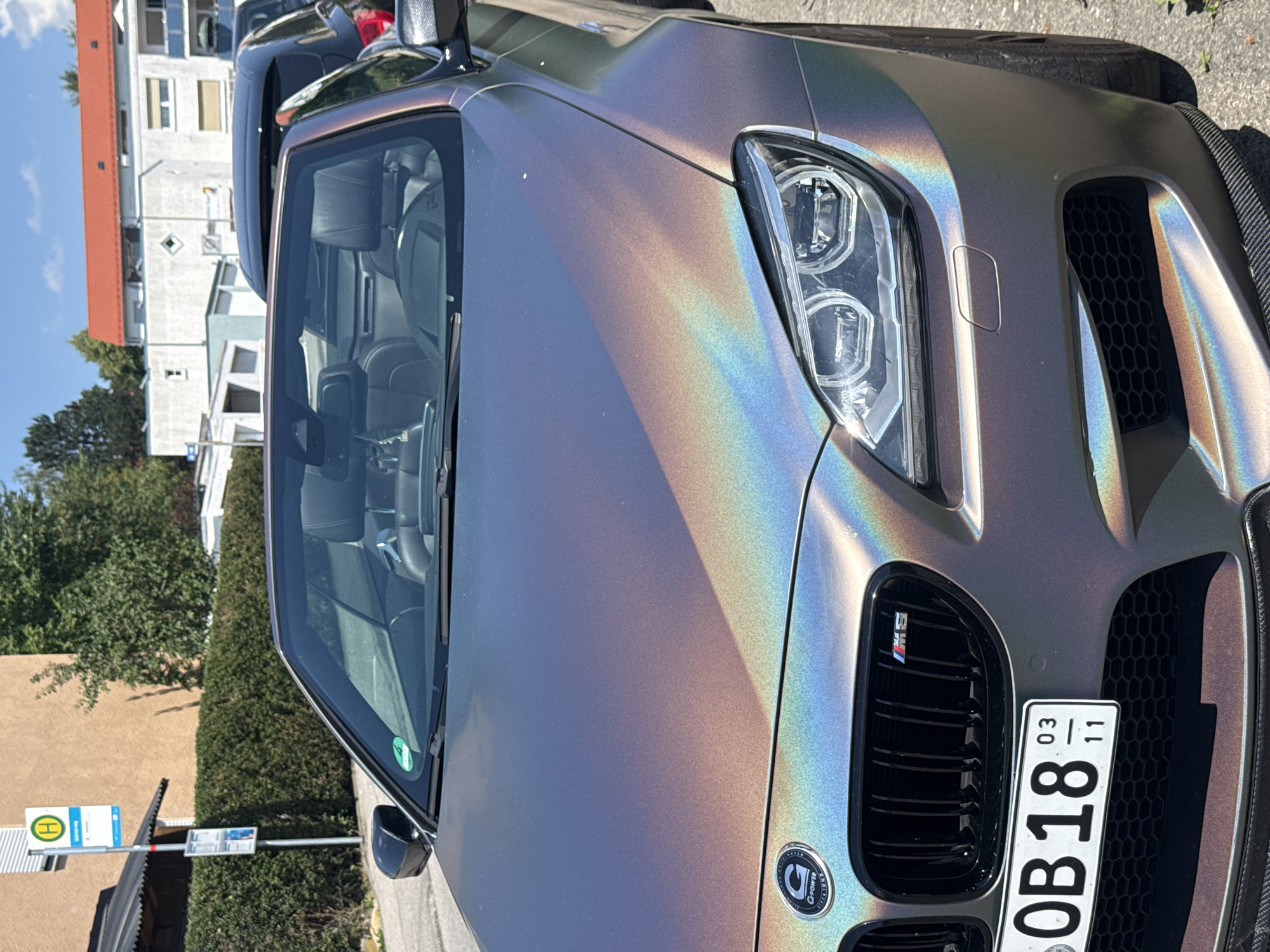
The image shows a close-up of the front of a chameleon-colored BMW M6 convertible parked on a street in Biberach an der Riß, Germany. The car's hood and front bumper exhibit a rainbow-like iridescent effect. The vehicle has a black grille with an "M6" badge on the right side, and a "G-POWER" emblem on the left. A German license plate, "OB 18 03/11", is visible below the grille. In the background, a bus stop sign with a yellow "H" symbol and informational panels is present, along with a neatly trimmed hedge, buildings with red and white facades, and other parked vehicles. The sky is clear and blue, indicating a sunny day. No people are visible in the image.
Biberach an der Riß
This is a close-up, top-down, full-frame photograph of a vibrant red rose. The petals are layered and textured, with deep shadows creating a sense of depth and volume. The lighting suggests a bright, sunny day. The image is abstract in its focus on the form and color of the flower, offering no discernible details of its surroundings or location. Therefore, it is impossible to determine if this image is located in Biberach an der Riß, Germany, or any other specific geographic location.
Biberach an der Riß
The image shows a close-up of a red snapdragon flower in bloom. The flower has a tall, spiky cluster of buds at the top, some of which are unfurling into vibrant red petals. The lower part of the flower is fully open, revealing a deep red color and a prominent yellow stamen. The flower is surrounded by green foliage and other snapdragon plants, some of which have yellow blooms. The scene appears to be in a garden or park setting, with the ground visible in the foreground. The image does not contain any people or specific landmarks that would indicate its location within Biberach an der Riß, Germany.
Biberach an der Riß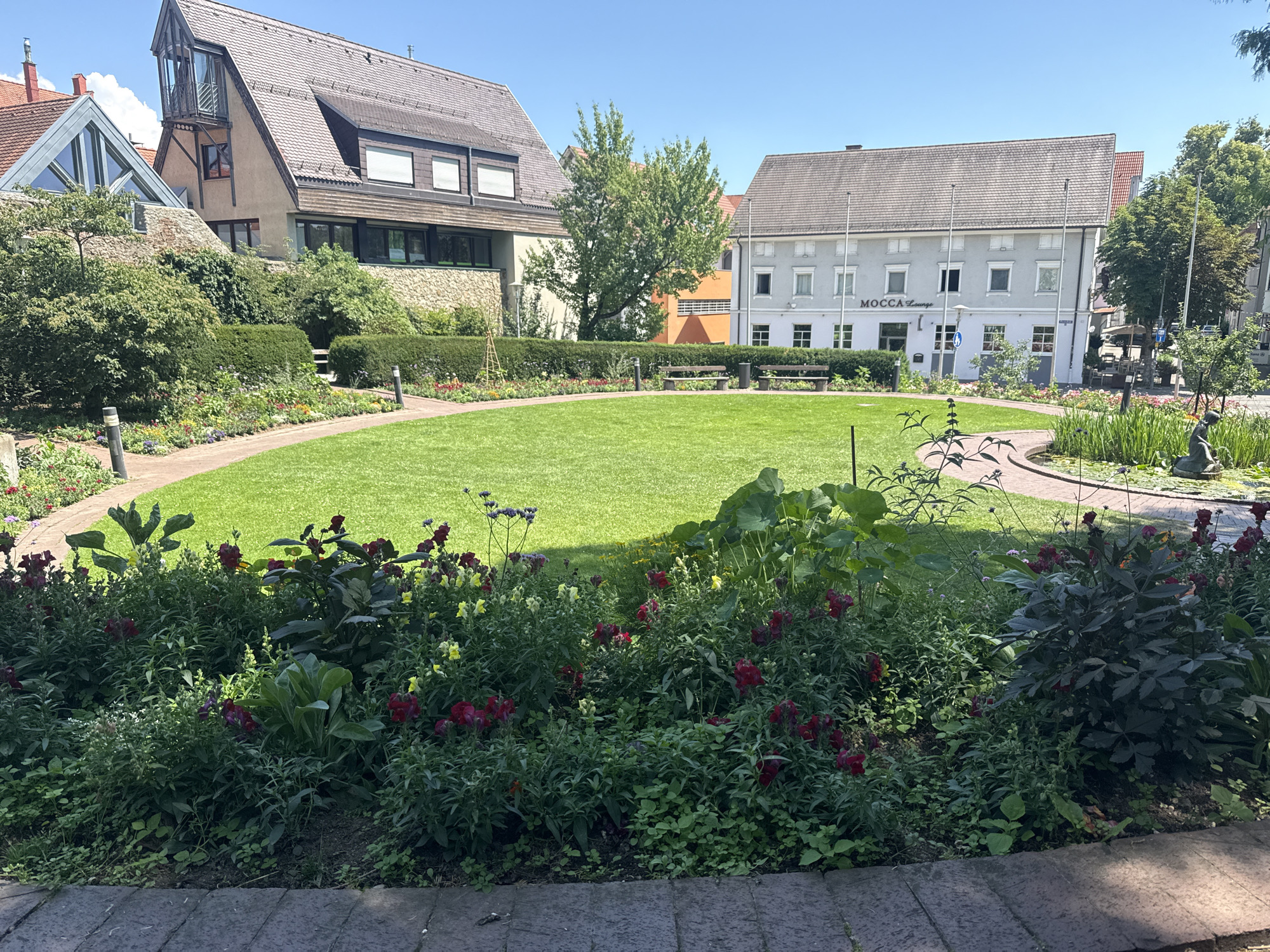
The image depicts a public garden area in Biberach an der Riß, Germany. In the foreground, a lush green lawn is bordered by a brick pathway and a colorful flower bed containing red, yellow, and purple blossoms. Several trees and bushes are visible around the lawn, with buildings in the background. One building, labeled "MOCCA Lounge," is a light gray structure with multiple windows. Another building to its left is taller with a grey roof and windows. The sky is clear and blue.
Biberach an der Riß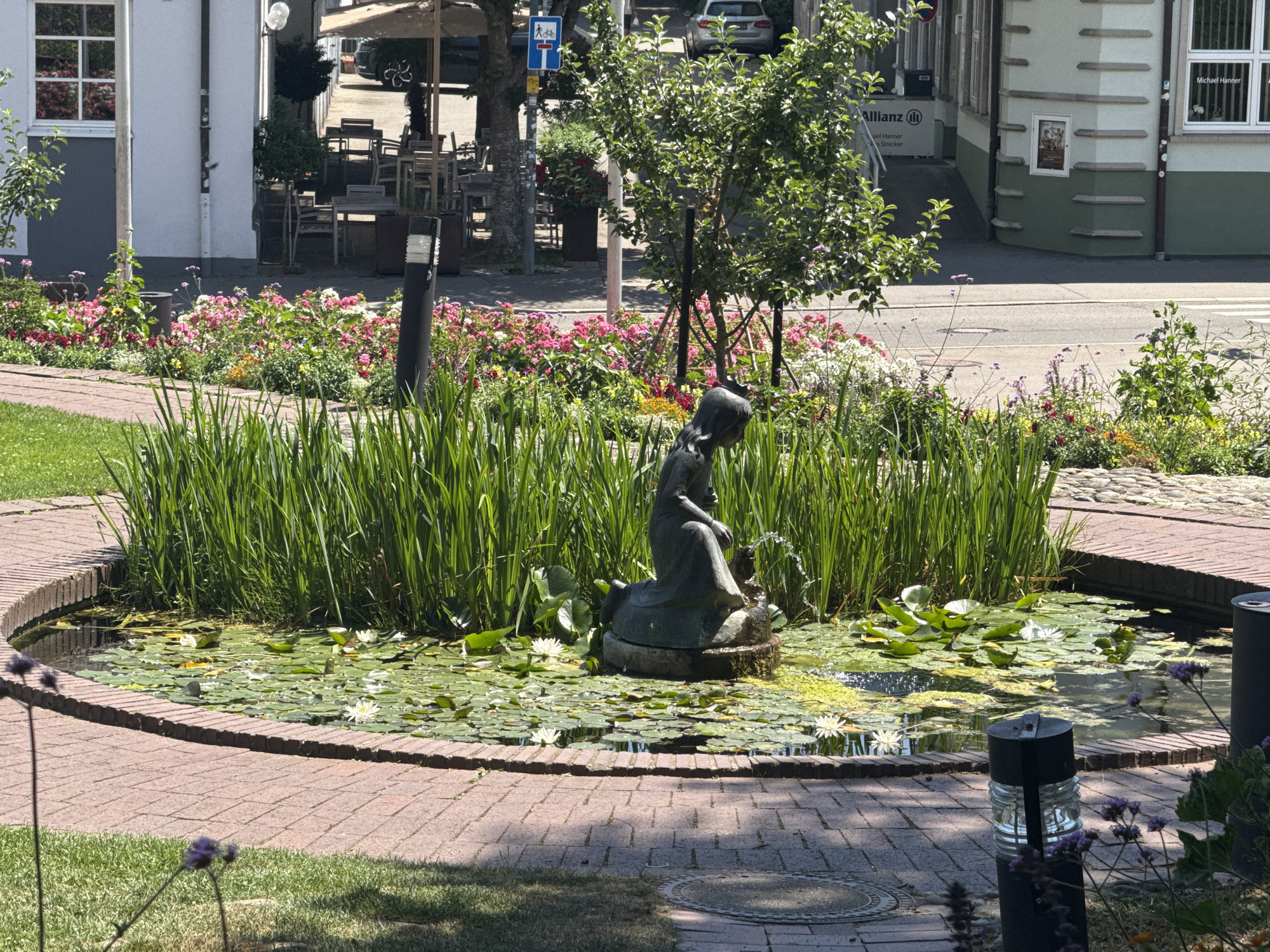
This image captures a serene outdoor scene in Biberach an der Riß, Germany, likely in a public square or park area adjacent to commercial establishments. In the foreground, a circular pond is filled with lush green lily pads and several white water lilies. A small bronze statue of a child sitting by the pond serves as a fountain, with a gentle stream of water emerging from it. Tall, green reeds surround the pond, creating a natural barrier. A red brick pathway curves around the pond, bordered by well-maintained grass. Behind the pond, a vibrant flowerbed bursts with a variety of colorful blossoms in shades of pink, red, yellow, and white. In the background, several tables and chairs are set up under large umbrellas, suggesting an outdoor seating area for a cafe or restaurant. Adjacent buildings with light-colored facades and green accents are visible, with windows displaying reflections of the surrounding environment. A street with a silver car parked on it is also present, indicating the urban setting. The overall ambiance is peaceful and well-kept, highlighting a charming blend of nature and urban life.
Biberach an der Riß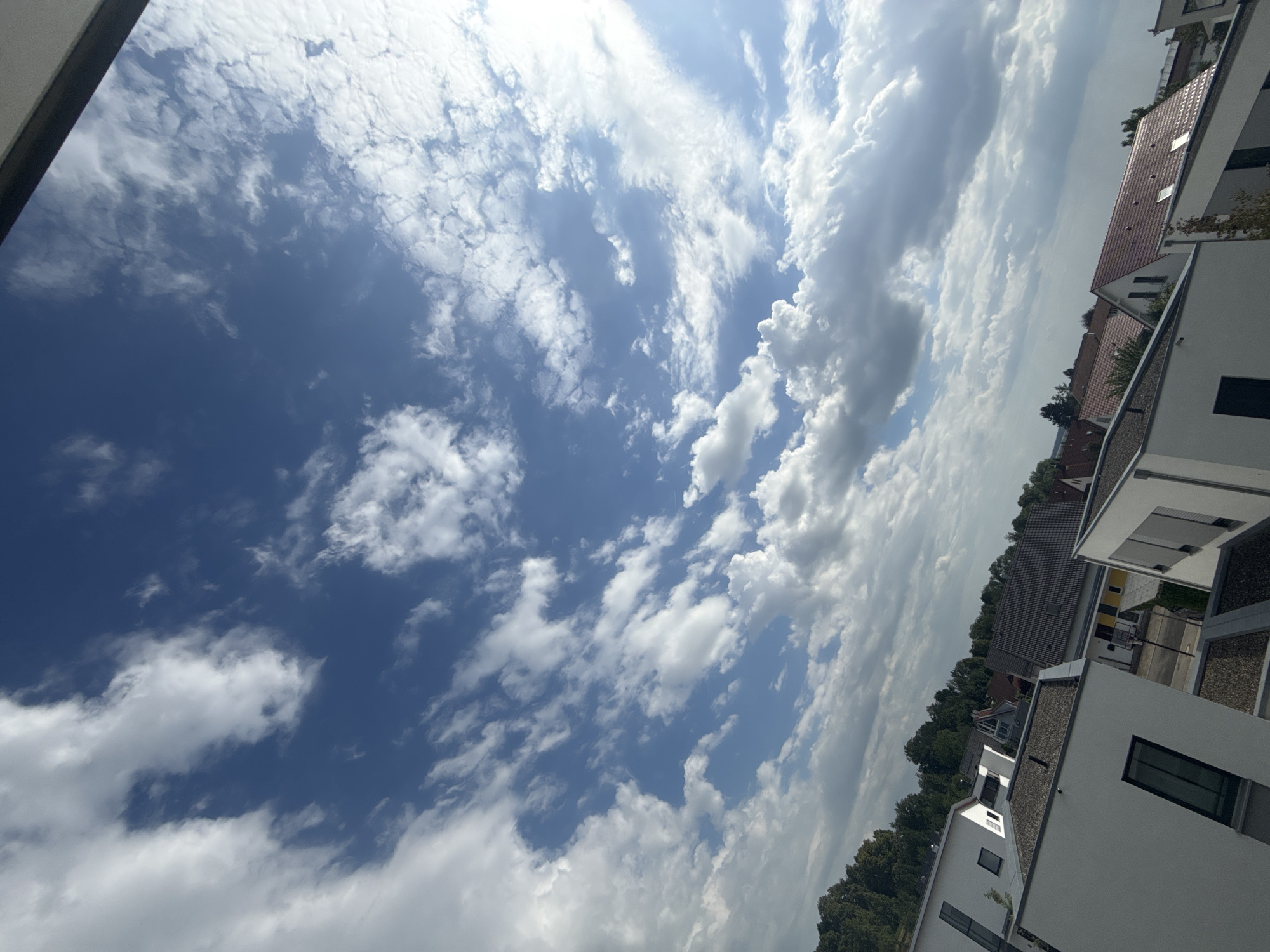
This is a landscape, vertically oriented, image taken on a sunny day in Biberach an der Riß, Germany. The photo captures a bright blue sky filled with a variety of white, fluffy clouds. The clouds are scattered across the sky, with some appearing more dense and textured than others. In the lower right portion of the image, modern residential buildings are visible. These buildings have white facades, dark-framed windows, and flat or low-pitched roofs. Some of the roofs appear to be covered in gravel or decorative stones, while one is tiled in a reddish-brown color. The buildings are situated closely together, suggesting an urban or suburban setting. A line of lush green trees runs along the horizon behind the buildings, providing a natural contrast to the architecture. The overall scene suggests a peaceful and pleasant day, likely in the late morning or early afternoon, given the bright sunlight and clear sky. There is no text visible in the image.
Biberach an der Riß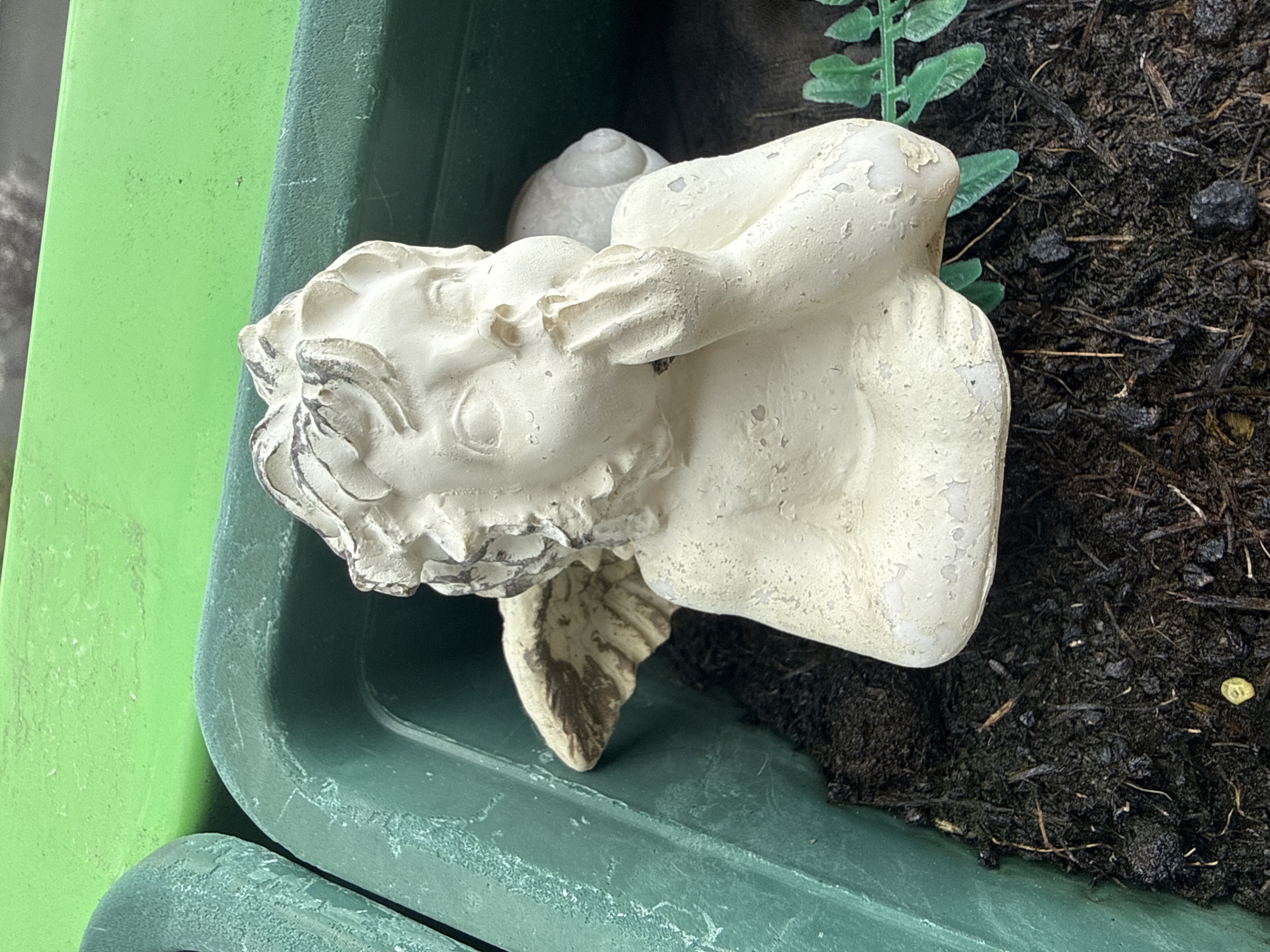
A close-up, overhead shot shows a weathered, white cherub statue lying on its back in a dark soil mixture within a green plastic planter. The statue is facing upwards, with its head tilted to the left and its arms raised, one hand touching its forehead. The cherub's face is detailed, with curls sculpted into its hair, and the paint is chipped and aged, revealing a darker material underneath. One small, light-colored wing is visible extending from its back, also showing signs of wear. Behind the cherub's head, a small, light-colored snail shell is partially visible. To the left of the statue and planter, a vibrant, lime-green surface is seen, which appears to be another part of the planter or an adjacent object. The soil is dark and appears moist, with small bits of wood, twigs, and dark pebbles scattered throughout. A few artificial green leaves from a plant are emerging from the soil in the upper right portion of the frame, adding a touch of contrasting color. The overall impression is one of neglect or abandonment, with the cherub statue appearing to rest or slumber amongst the soil. There are no indications of the time of day or weather, but the natural lighting suggests it is daytime. The setting is likely an outdoor garden or patio. No text is visible in the image.
Biberach an der Riß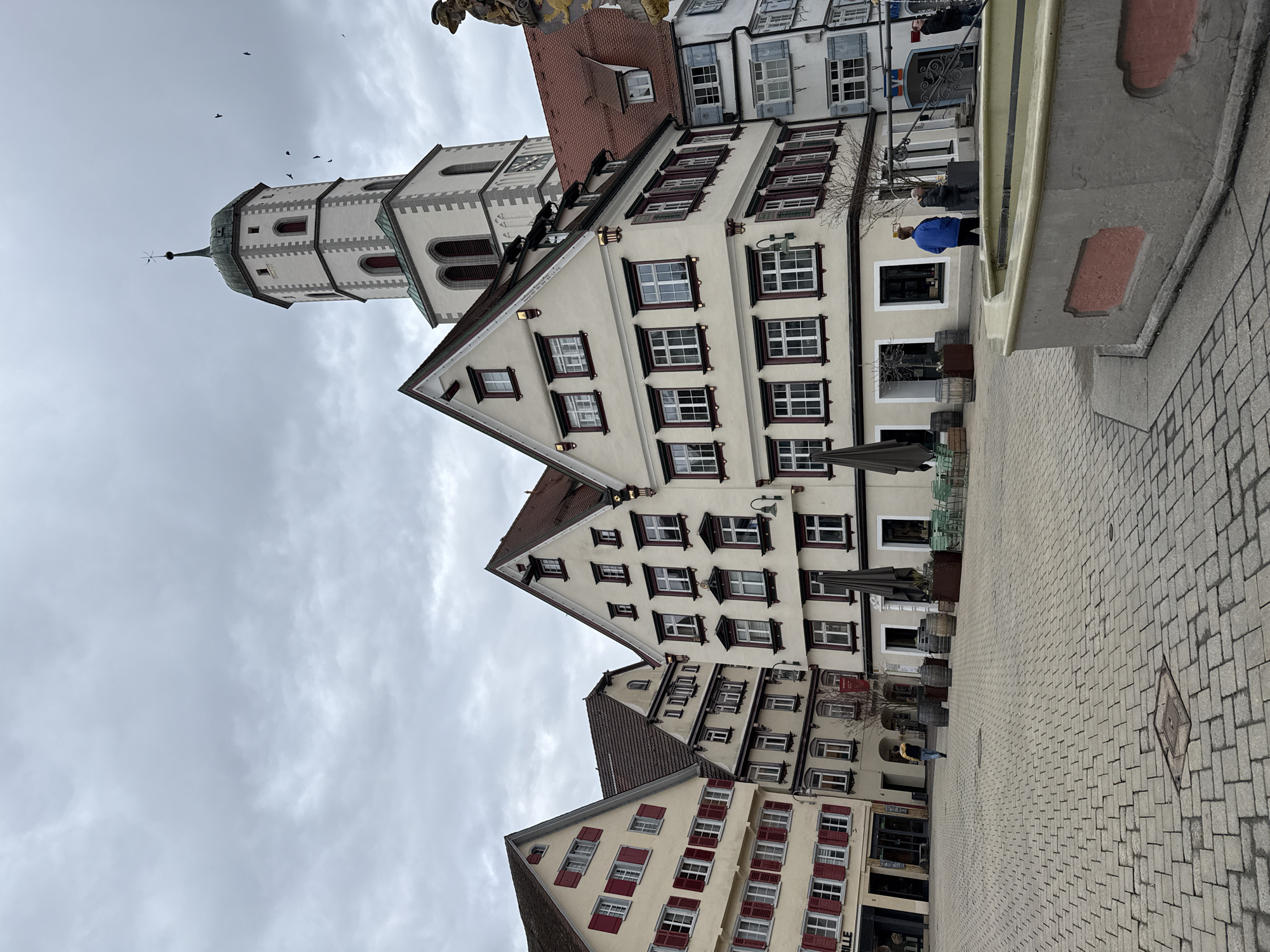
The image shows a street scene in Biberach an der Riß, Germany. Several buildings are visible, including the Catholic Church of St. Martin, with its steeple towering into a cloudy sky. There is a square paved with light-colored bricks. A few people are present. A fountain stands in the foreground.
Biberach an der Riß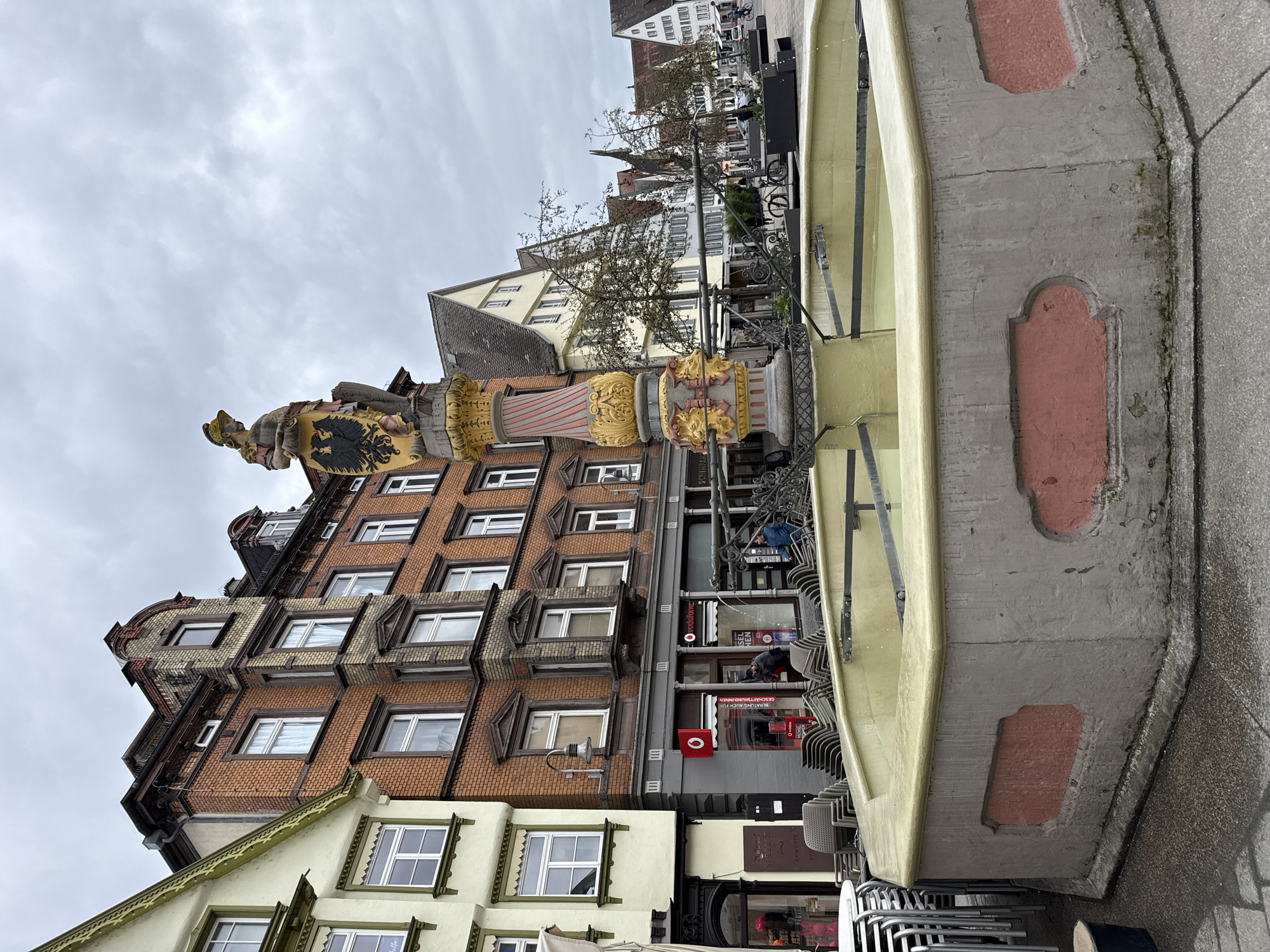
The image shows a partially obscured view of Biberach an der Riß in Germany, prominently featuring a stone fountain in the foreground. The fountain's structure is weathered with visible cracks, and details like its red-painted rectangular insets. Numerous chairs and tables are stacked around the fountain. Behind the fountain are buildings, constructed of brick and various light-colored materials, displaying a mix of architectural styles, including windows with white frames. Above the buildings, the sky is overcast with a gray cloudy texture. There is a figure on scaffolding, suggesting maintenance or renovation work is in progress. Signage for Vodafone is visible on one building. The objects visible are tables and chairs in the plaza.
Biberach an der Riß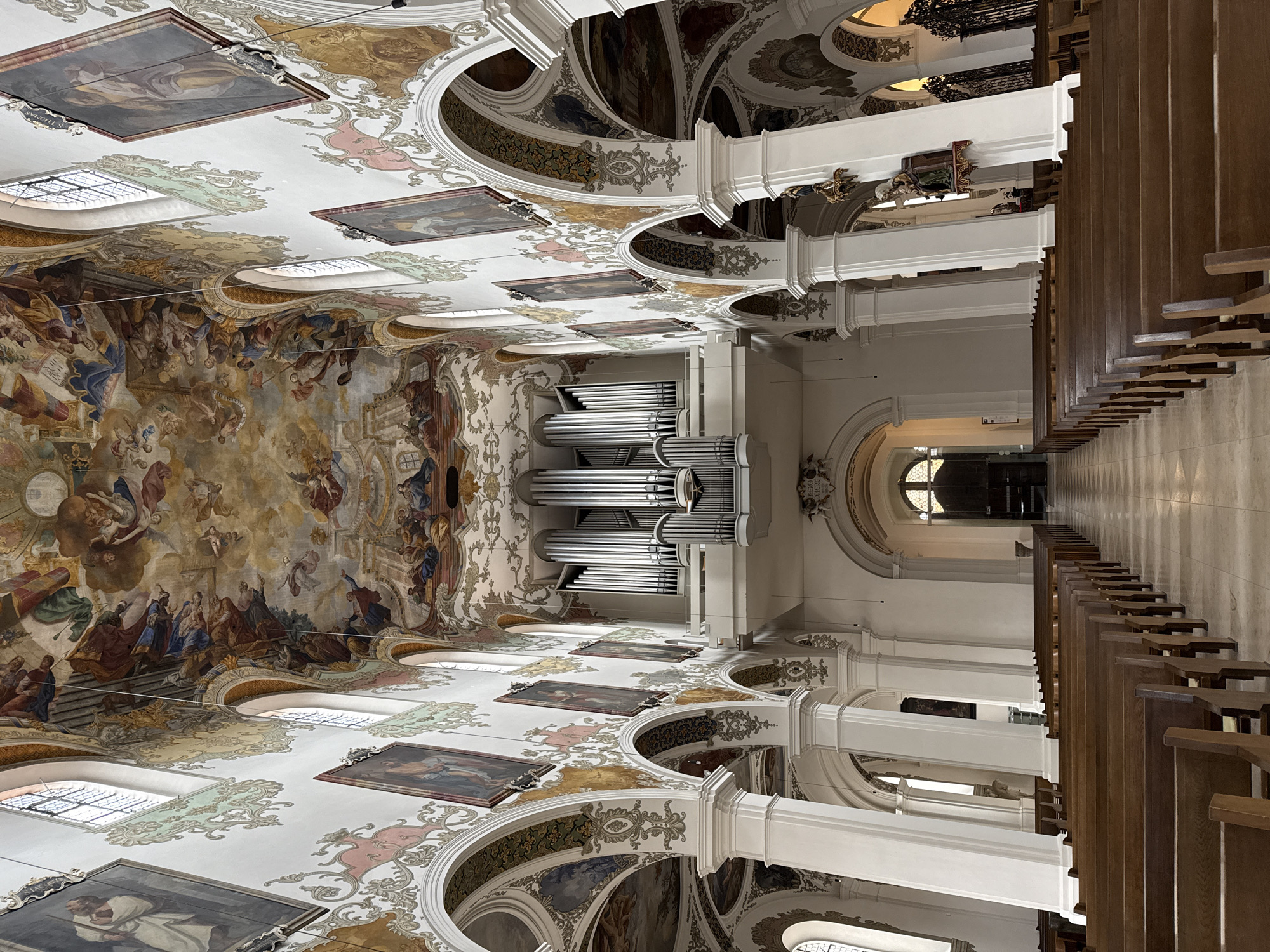
This image depicts the interior of the Catholic Parish Church of St. Martin in Biberach an der Riß, Germany. The view is from the back of the church, looking towards the altar. The ceiling features ornate baroque-style artwork including frescoes and framed paintings. Large organ pipes are visible in the midground, above the rows of pews running down the nave. The walls are white with arched openings and decorative moldings. The floor is light-colored, and a glimpse of the entrance can be seen at the far end of the church. There are no people visible in the image.
Biberach an der Riß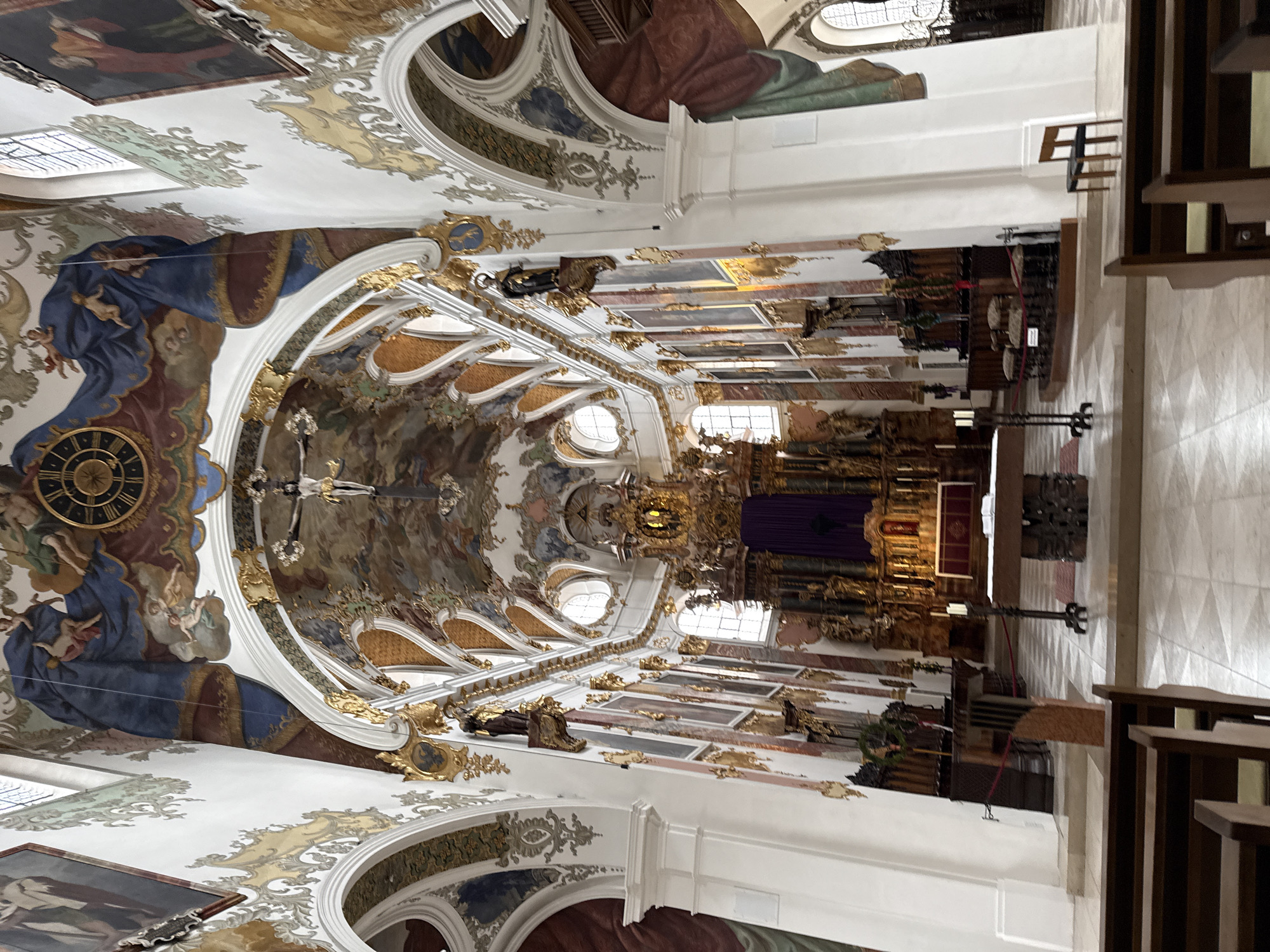
The image shows the interior of a church. The ceiling is highly decorated with paintings and gold trim. A clock and depictions of figures are visible on the ceiling. A crucifix hangs from the ceiling. Windows provide natural light. In the foreground, there is a wooden pew. In the background, there is an altar covered with a purple cloth, surrounded by ornate decorations. The location is Biberach an der Riß, Germany.
Biberach an der Riß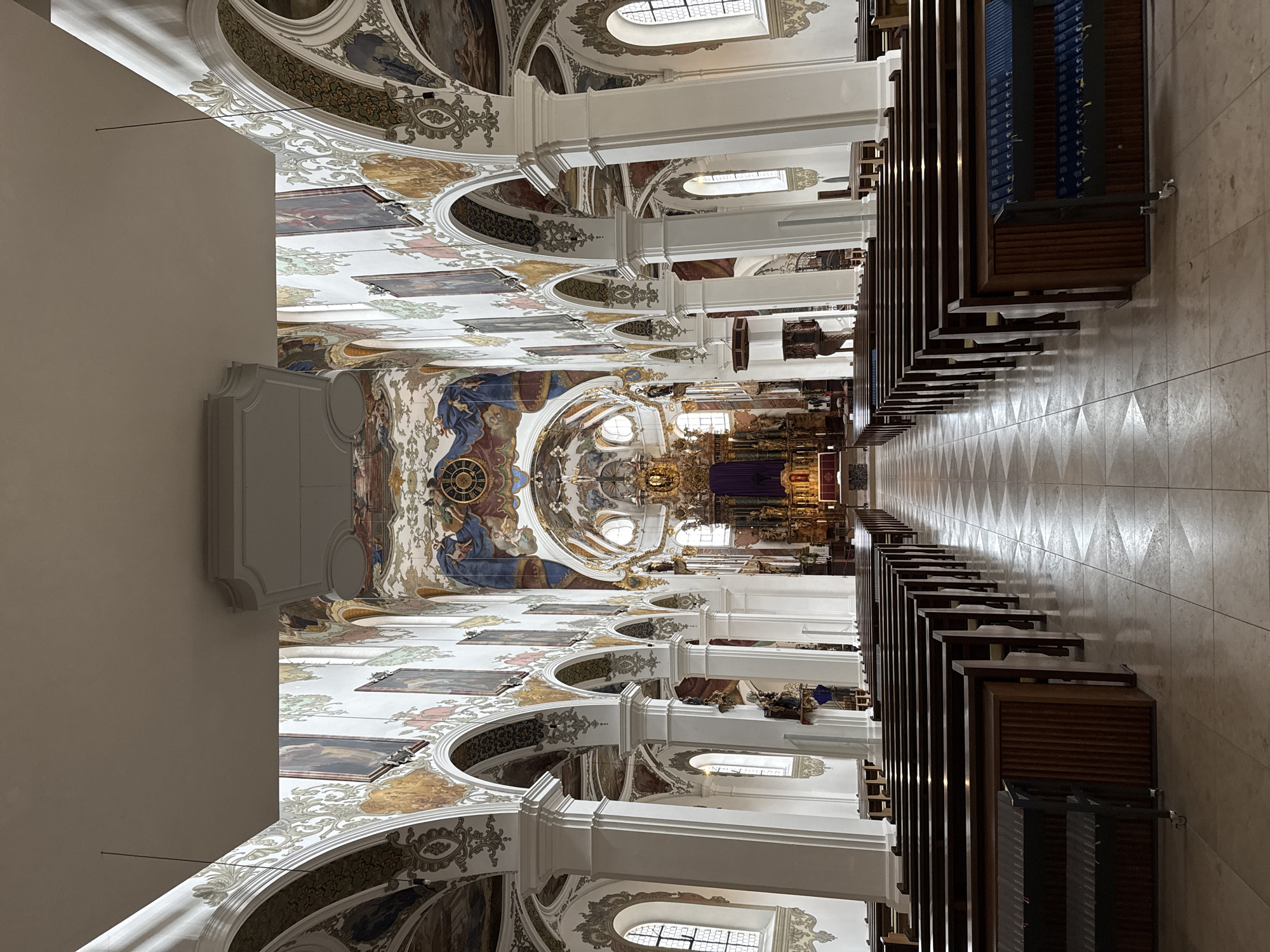
This image shows the interior of the baroque basilica of Saint Martin in Biberach an der Riß, Germany. The camera angle is at floor level, capturing the length of the nave. Rows of dark wooden pews line the right side of the image, leading toward the altar area. The aisle floor is tiled in a geometric pattern, reflecting light from the windows. On the left, ornate white columns and arches extend the length of the nave, supporting a highly decorated ceiling with religious paintings and frescoes. The architecture is characterized by elaborate details, typical of baroque style. The altar area is visible in the distance, featuring gold detailing and religious figures. No people are visible in the scene.
Biberach an der Riß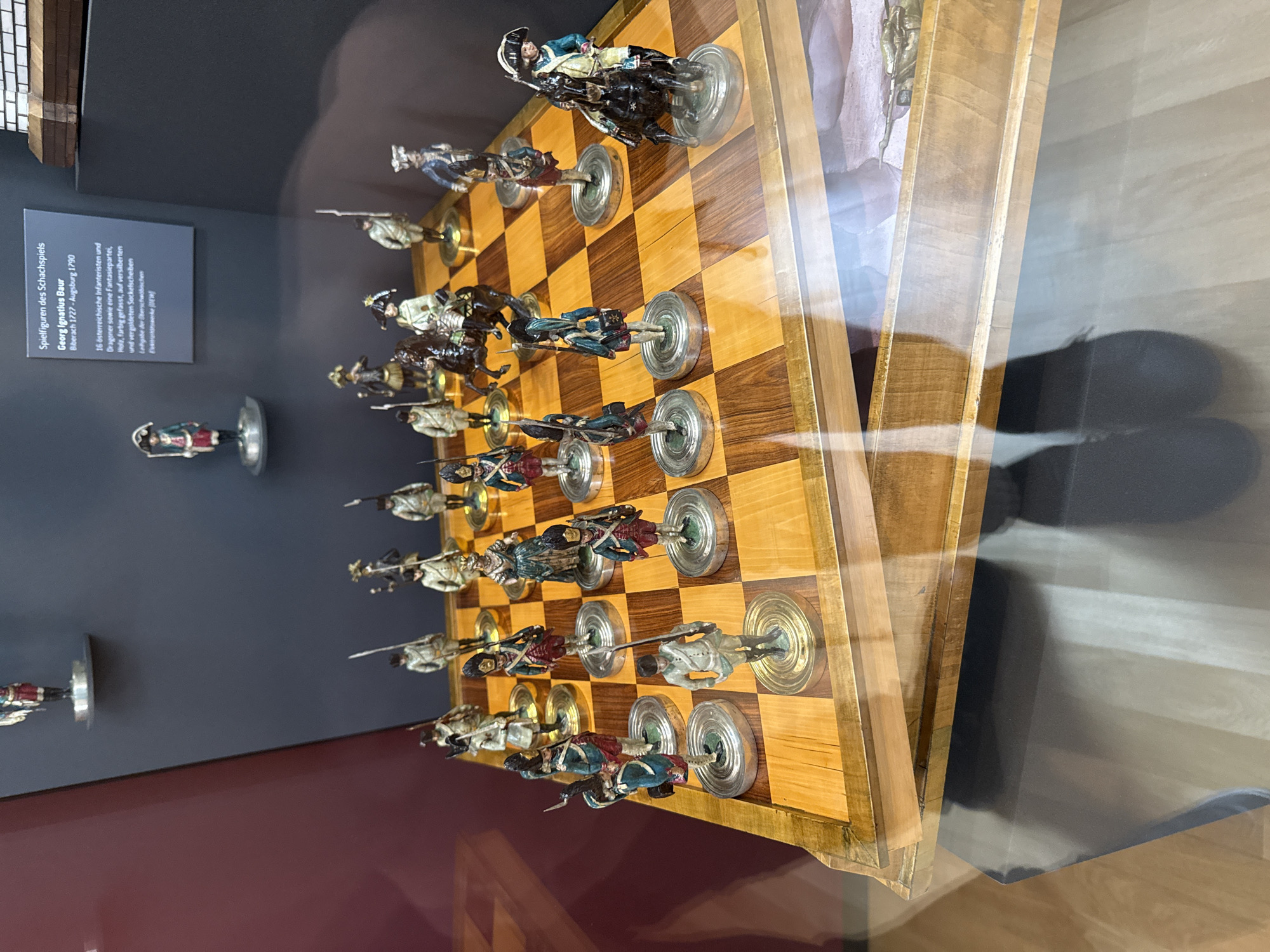
Here is a description of the image: The image shows a chess set with figures dressed as 18th-century Austrian soldiers on display in a glass case. The board is made of light and dark wood squares, and the figures stand on silver and gold circular bases. A sign next to the chess set identifies it as "Spielfiguren des Schachspiels" (Chess figures) by Georg Ignatius Baur, a Biberach native (1727-1790). The location is likely a museum or historical exhibit in Biberach an der Riß, Germany.
Biberach an der Riß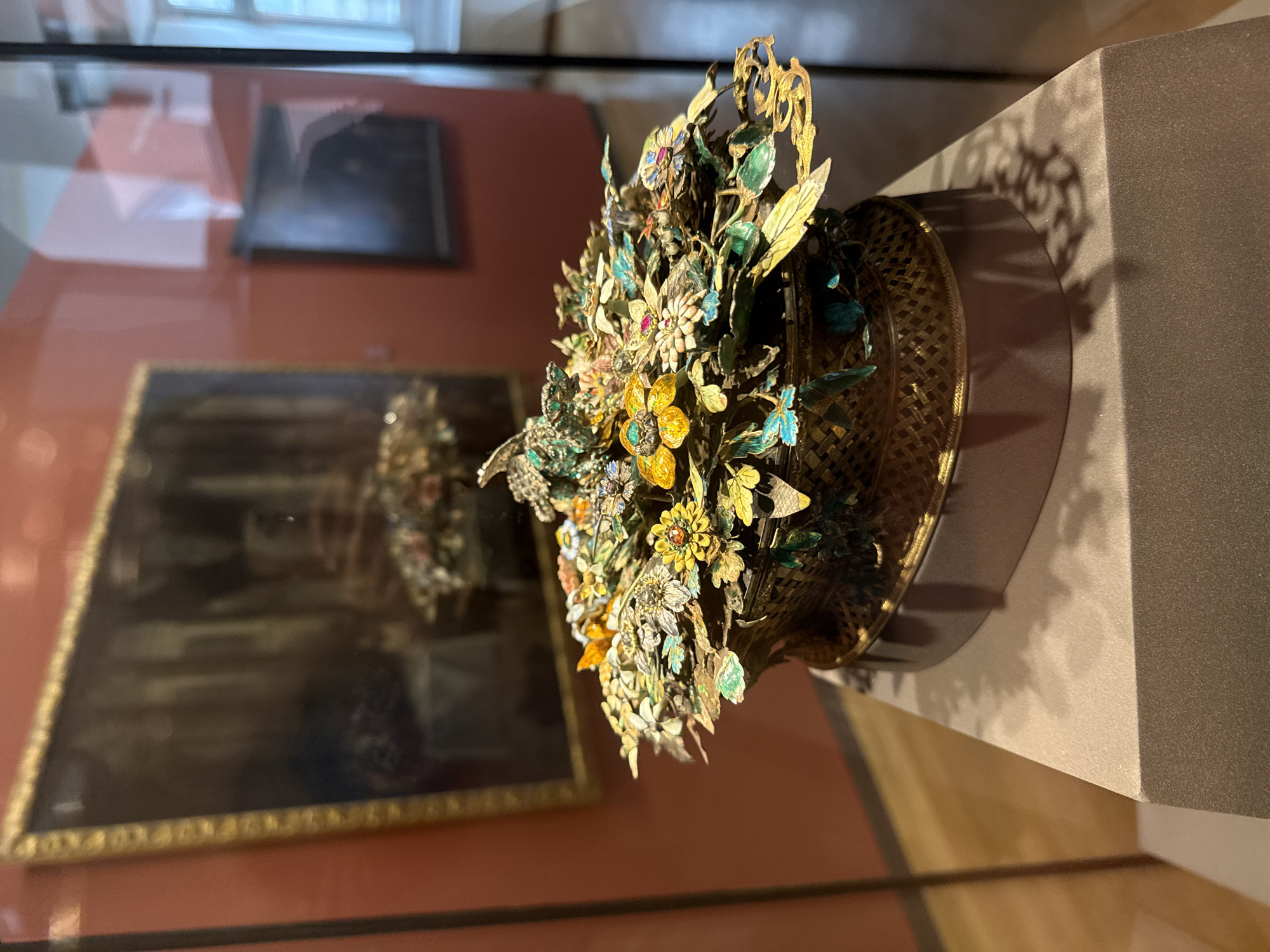
The image shows a floral crown in a museum display case in Biberach an der Riß, Germany. The crown is made of gold and features various flowers and leaves. It sits on a grey display stand. In the background, reflections show an artwork, possibly a painting, and the museum's interior. The lighting is a mix of natural light and artificial illumination, highlighting the intricate details of the crown.
Biberach an der Riß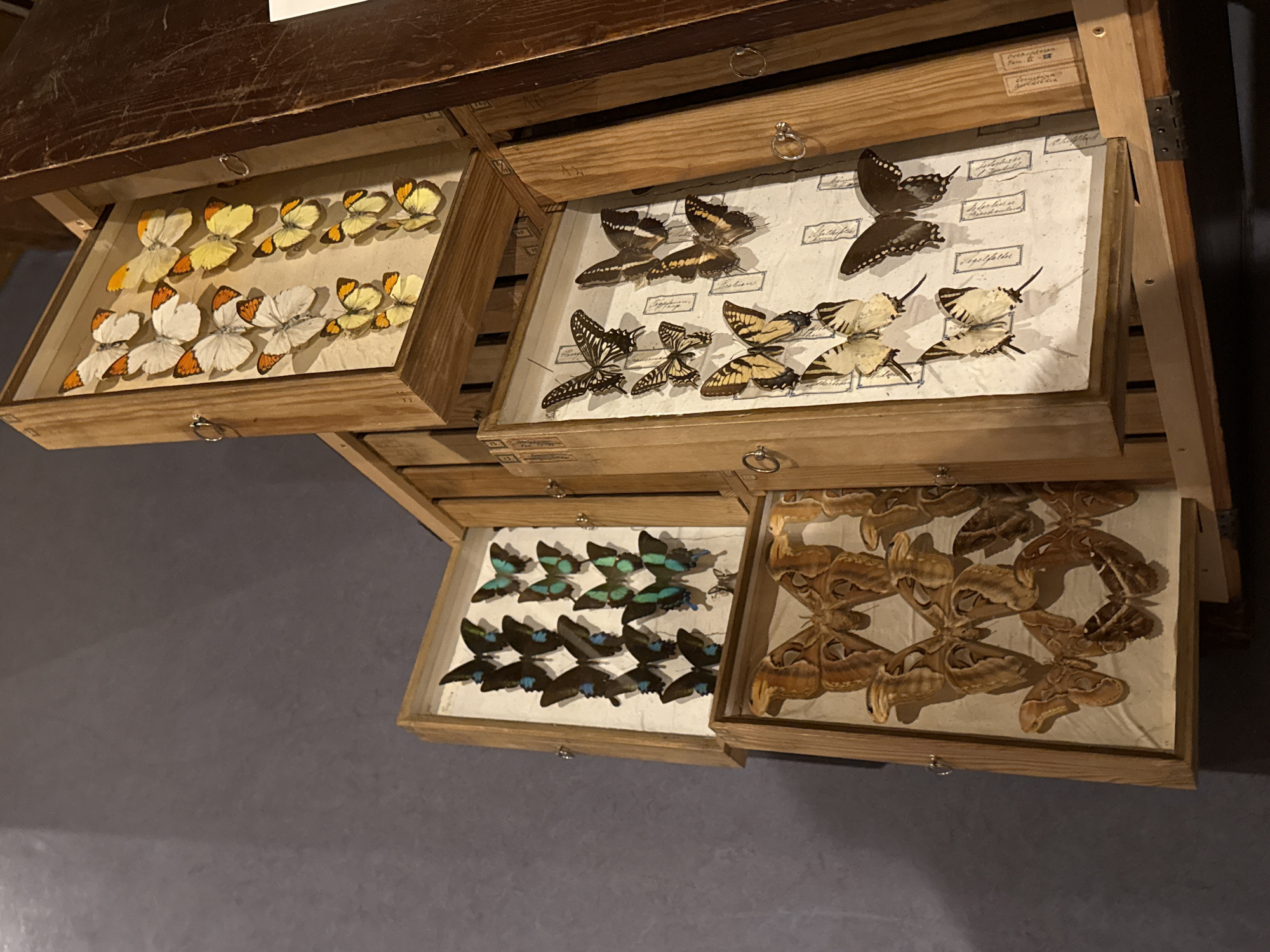
This image shows a wooden cabinet with four open drawers, each containing a collection of pinned butterflies and moths. The butterflies and moths are displayed on a white surface within the drawers. The first drawer on the top left features butterflies with orange and white wings. The second drawer next to it on the top right contains a variety of black, white, and yellow butterflies with labels written in script. The third drawer on the bottom left has rows of dark butterflies with blue and green iridescent markings. The last drawer on the bottom right contains large brown moths with distinctive patterns. The cabinet appears to be antique, judging by the wood and the style of the drawers. The scene is likely a museum exhibit, possibly in Biberach an der Riß, Germany, showcasing entomological specimens.
Biberach an der Riß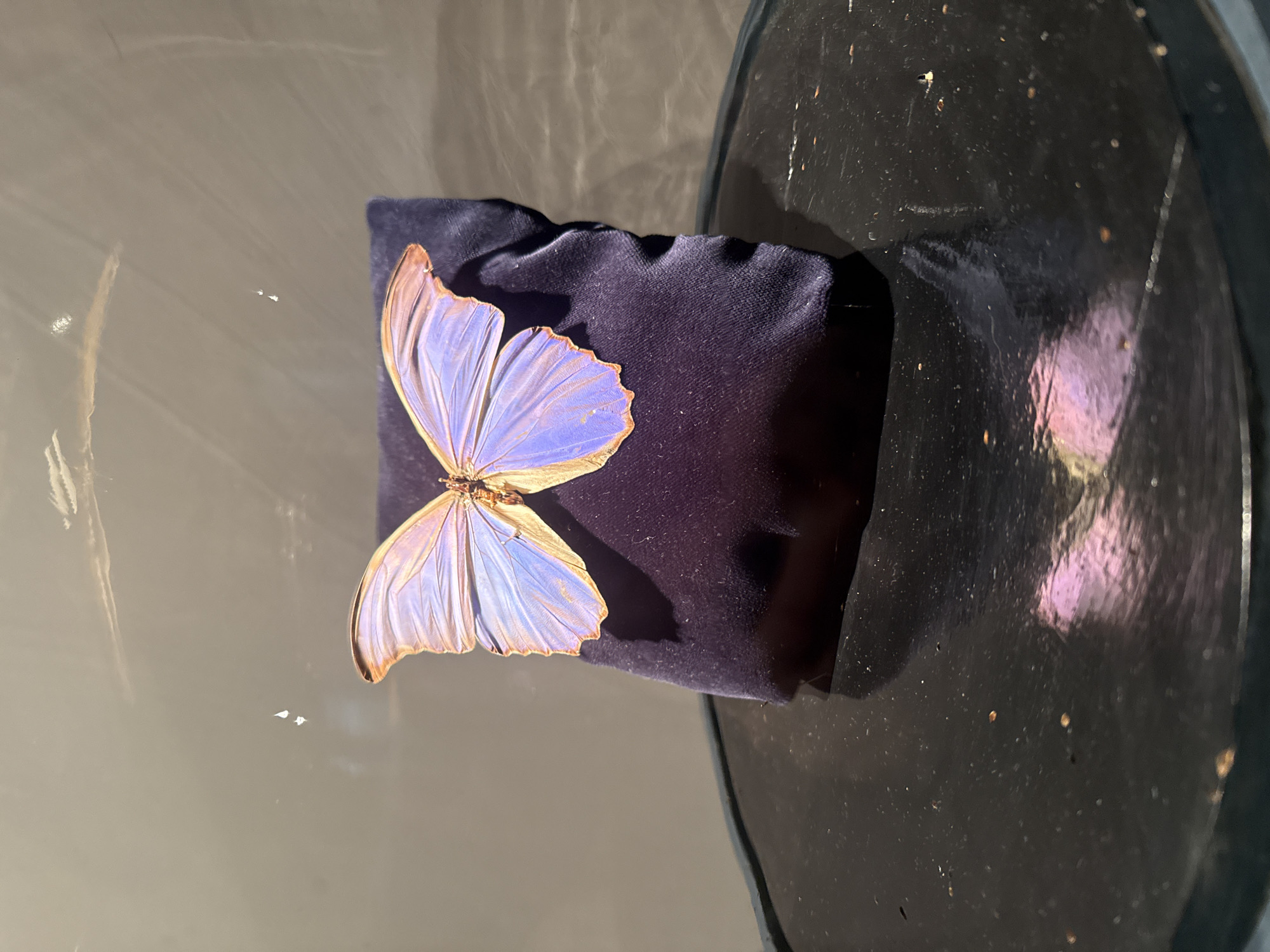
The image shows a mounted butterfly specimen resting on a dark purple velvet cushion. The cushion sits on a dark, possibly lacquered, circular surface, likely a table. The butterfly has light purple and tan/brown wings with intricate vein patterns. The environment includes reflective surfaces, suggesting the objects are indoors and possibly in a museum or collection setting. While the location is requested to be Biberach an der Riß, Germany, there are no visual clues in the image to confirm this.
Biberach an der Riß
The video shows a mounted butterfly on a small, dark-blue velvet pillow, displayed on a reflective black surface. The butterfly's wings are pale orange and iridescent blue. The backdrop is a blurry, light-grey surface reflecting overhead lights. The camera circles around the butterfly to provide a complete view.
Biberach an der Riß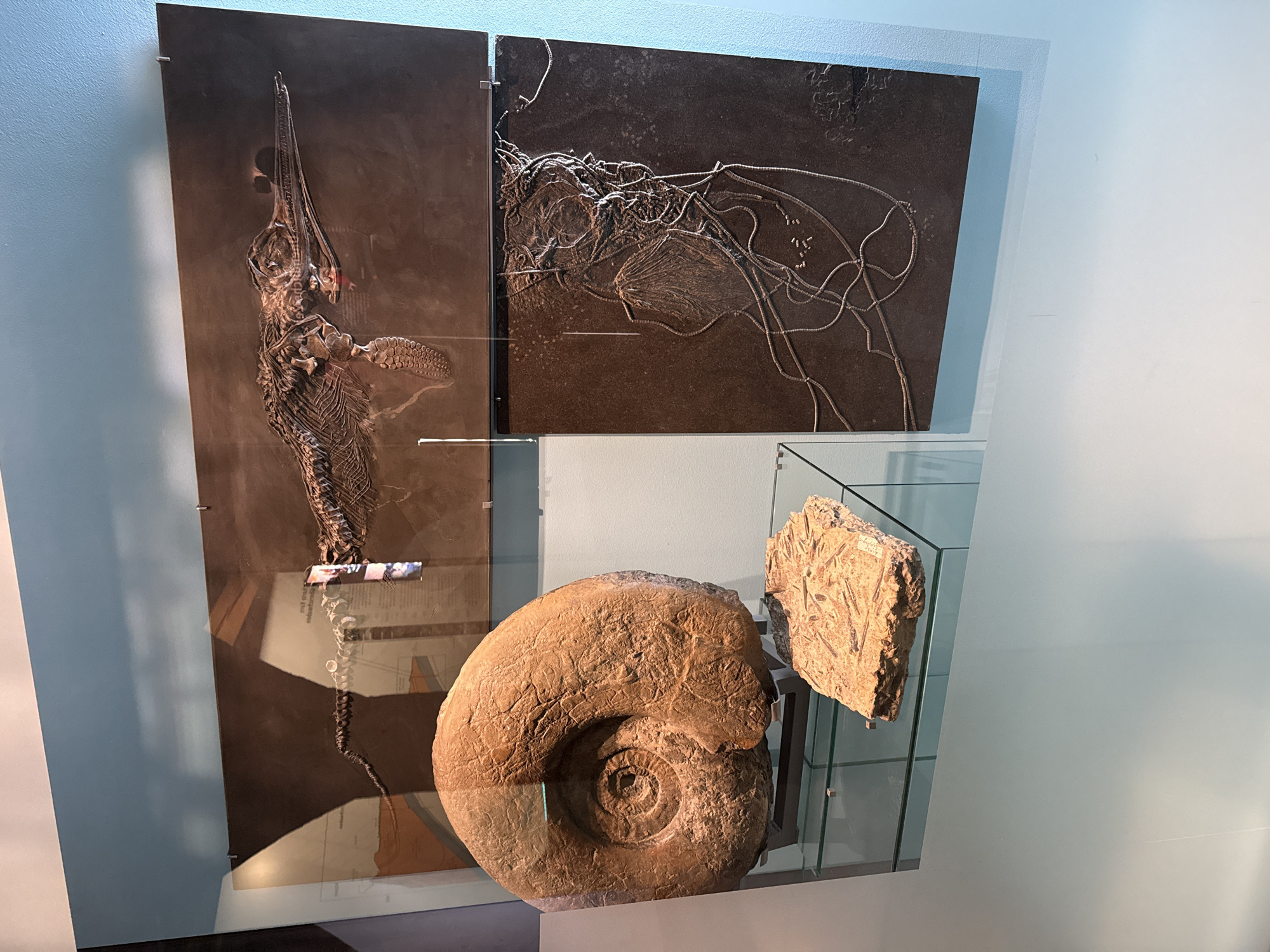
A display case in what appears to be the fossil museum in Biberach an der Riß, Germany exhibits fossilized remains. On the left, a pair of dark stone slabs display skeletal remains, one resembling a reptile and the other a group of sea stars or similar invertebrates. Below and to the right in the display case are three-dimensional fossils: a large ammonite and a smaller fossilized rock containing multiple, possibly plantlike, fossils. The display case is glass and has a modern design. The walls are a light blue and white. The lighting is diffused and even.
Biberach an der Riß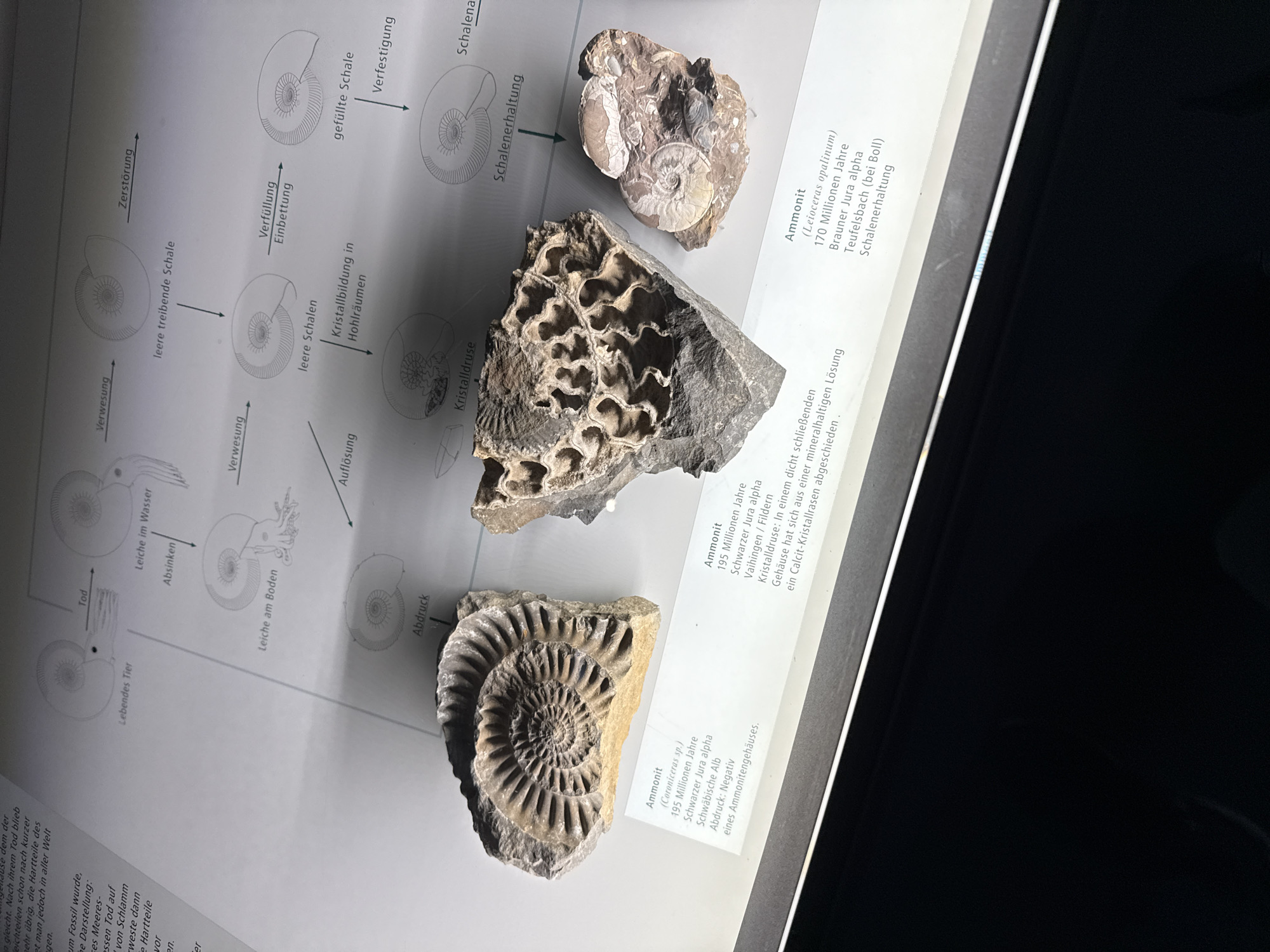
The image shows a display of ammonite fossils in a museum setting. The fossils include examples of different forms of ammonite preservation. Accompanying the fossils are diagrams and text in German explaining the process of fossilization, specifically focusing on how ammonite shells are preserved. The text mentions that the fossils are from the Swabian Alps, near Vaihingen/Fildern and Teufelsbach (near Boll) in Germany. The type specimen includes fossils of "Coroniceras sp." found from a "Schwarzer Jura alpha." This suggests it is being displayed in a natural history museum or geological exhibit in the city of Biberach an der Riß, Germany.
Biberach an der Riß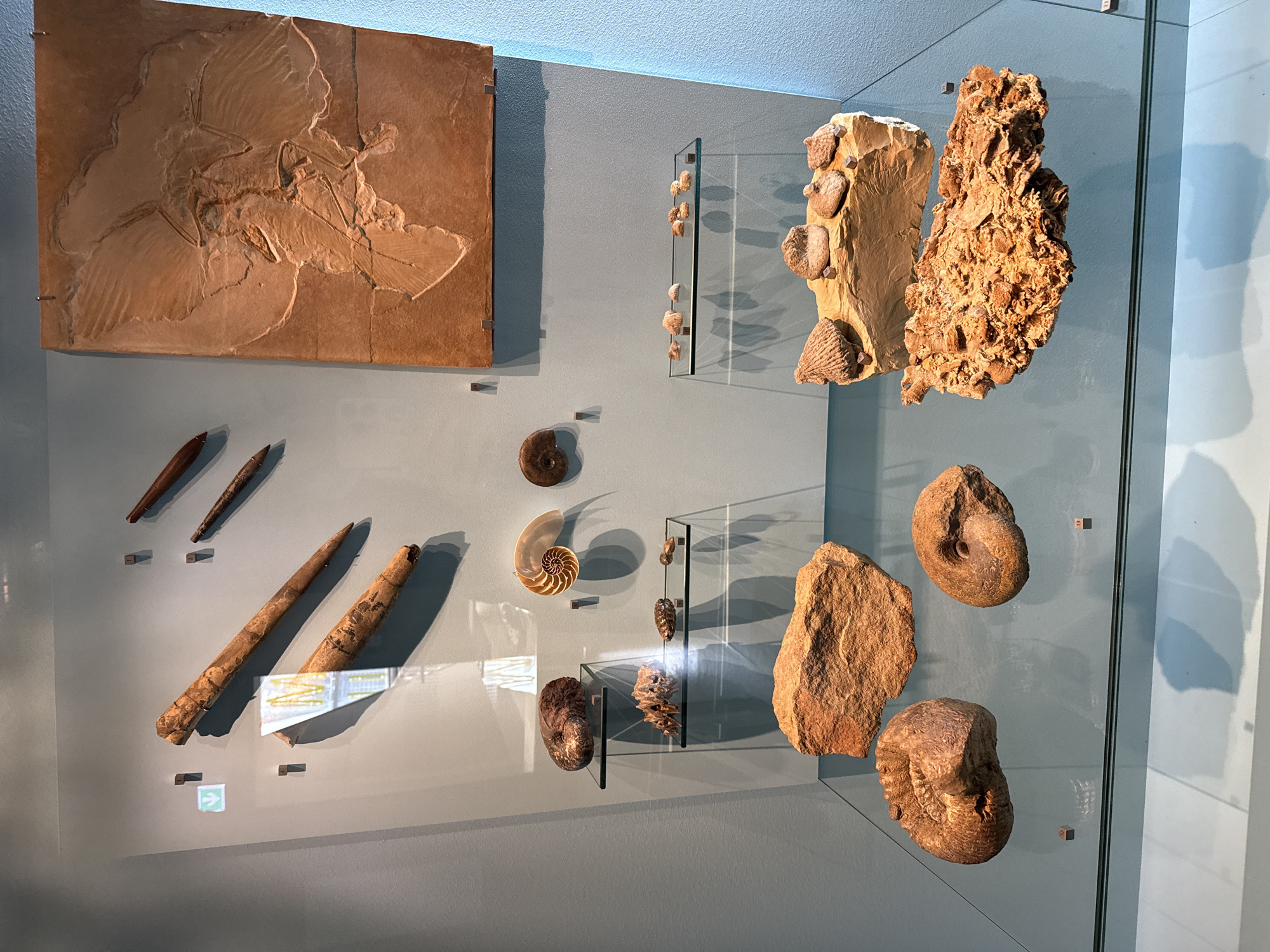
The image depicts an exhibit in a museum in Biberach an der Riß, Germany. A collection of fossils is displayed on a light-blue wall behind glass. The fossils include a large brown fossil of a bird, several elongated conical fossils, a fossil of a nautilus shell, and a variety of other rock and shell fossils. Some of the fossils are mounted on small glass shelves, and numbered labels are present next to each item. A directional arrow is visible on the bottom left of the display case.
Biberach an der Riß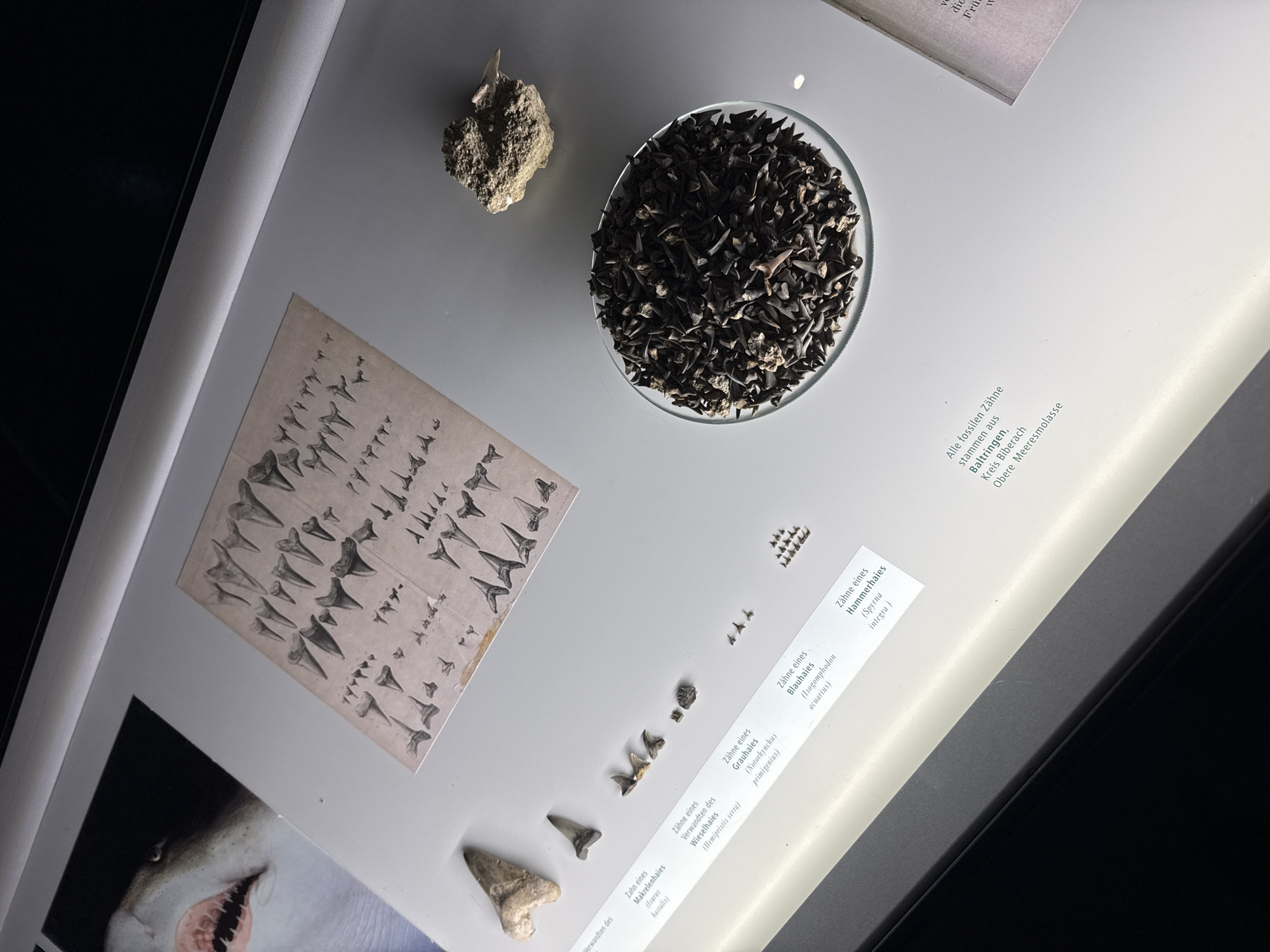
The image shows a museum exhibit about shark teeth fossils in Biberach an der Riß, Germany. Various examples are on display, including a collection of fossil teeth, shark tooth illustrations, and an image of a shark. Labels identify the specific shark species to which the teeth belong, such as the Mackerel Shark, Weasel Shark, Gray Shark, Blue Shark, and Hammerhead Shark. A sign states that the fossil teeth originate from Baltringen in the Biberach district and come from the Upper Marine Molasse.
Biberach an der Riß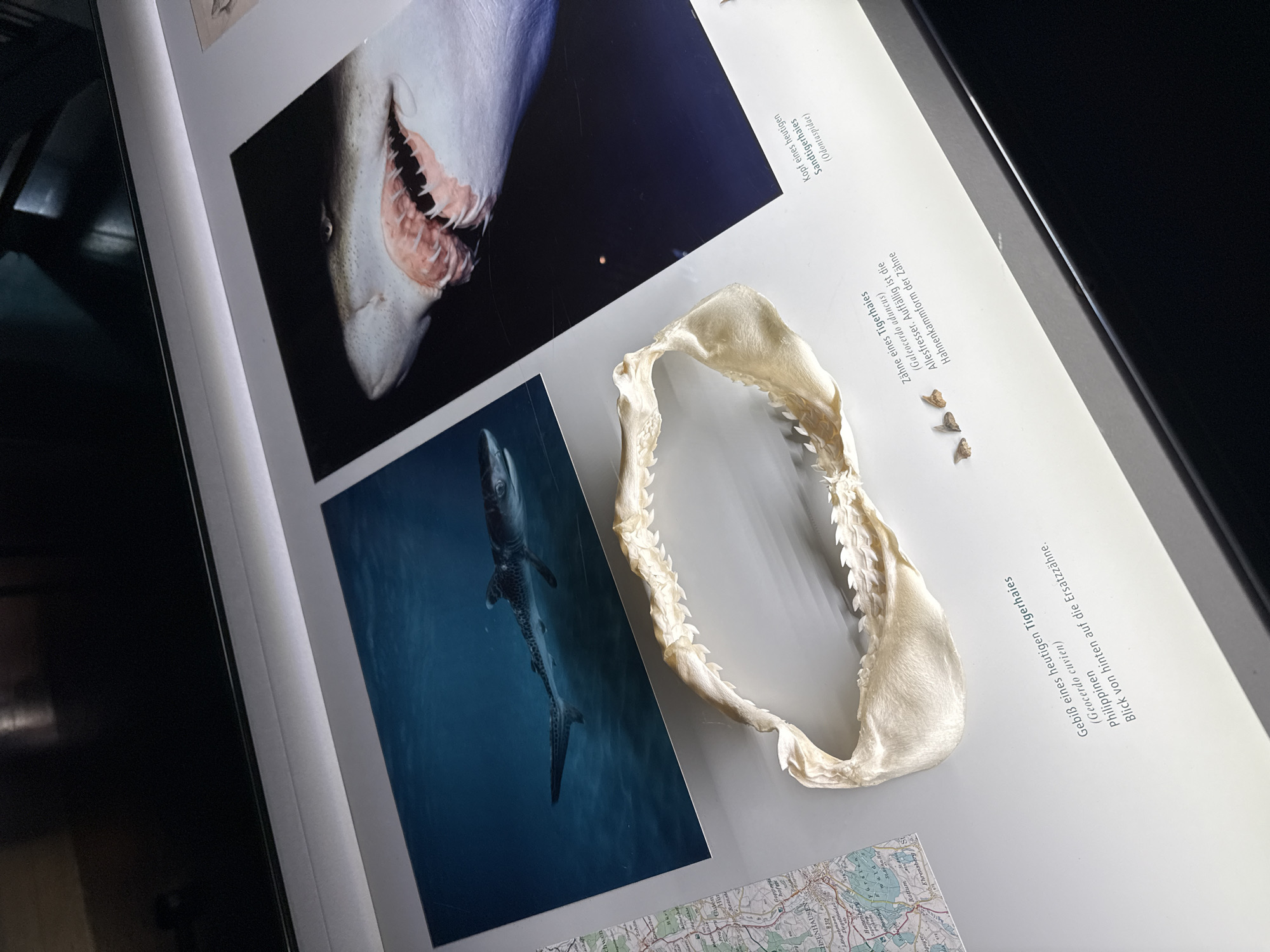
The image is a close-up photograph of a book page, likely in a museum or exhibit. The page features images and information about sharks. Prominently displayed is a real shark jaw bone lying on the page. Above the jaw, there is a photograph of a shark's head with its mouth open, showcasing its teeth. Below the jaw, another photograph shows a full-body shot of a shark swimming in the ocean. The accompanying text, written in German, provides the names of the shark species. A map, also visible on the page, might indicate the areas where these sharks are typically found. The text also states the name of the shark species (Geocerdo cuvier) and it mentions the Philippines. A small town map with the name "HSENHAUSEN" is also visible. Given the German text, "HSENHAUSEN" could be in Germany and given that the shark teeth are on display and a map of the region is included, it is likely that the town is located within driving distance to the city of Biberach an der Riß, Germany.
Biberach an der Riß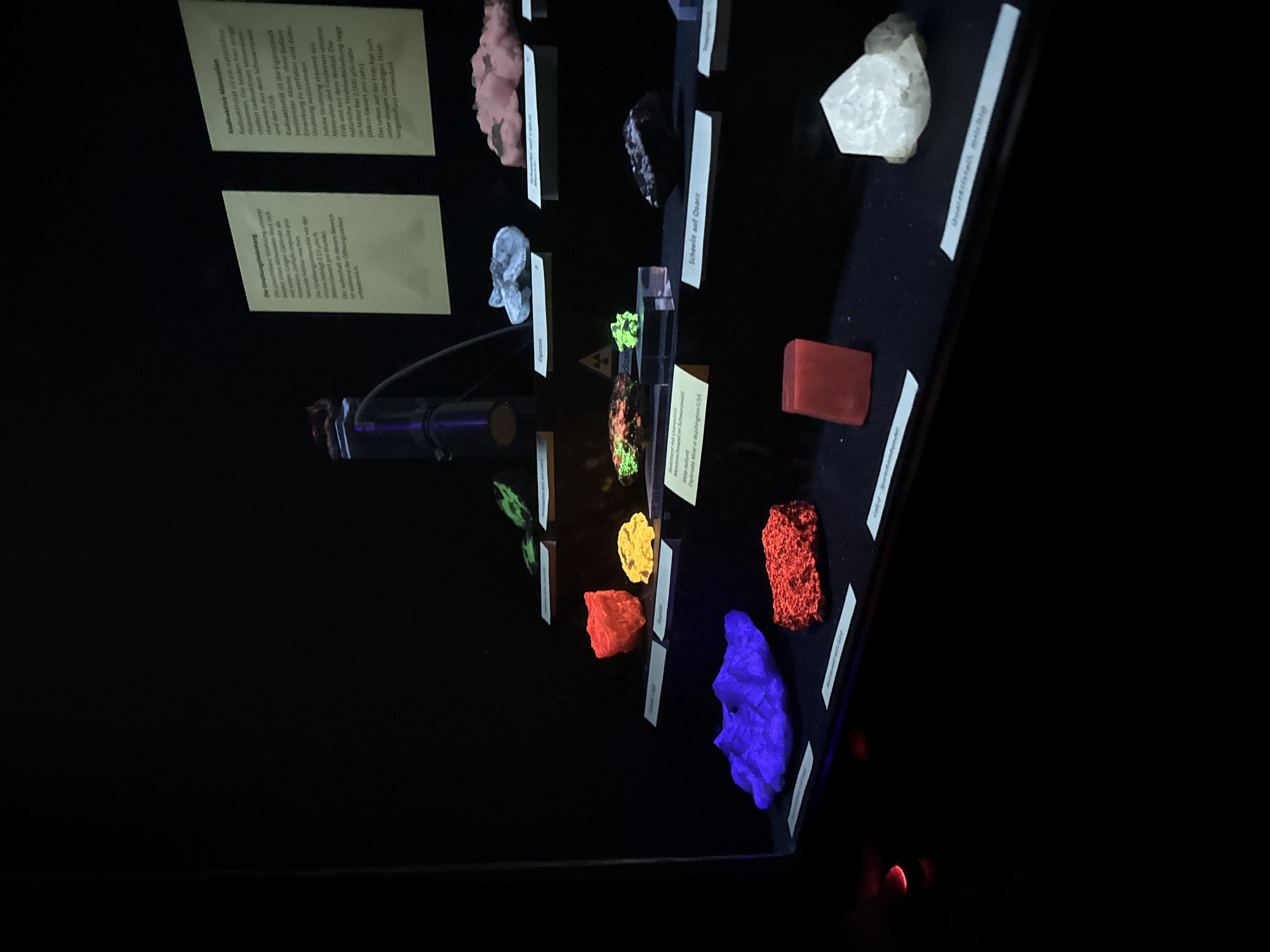
The image shows a display of fluorescent minerals in a dark environment, possibly a museum exhibit. Text labels and signs are present, indicating the names of minerals and information about radioactive materials. The text on the signs appears to be in German, potentially indicating the location is in Germany, specifically with reference to "Der Tagbau-Museum Washington/USA" and the "Schwarzwald". The fluorescence colors range from blue to green, orange, red, and yellow, suggesting a varied mineral composition.
Biberach an der Riß
The image shows a museum display of various mineral specimens mounted in glass-fronted cases against a dark gray wall. The specimens are arranged in vertical rows, with labels attached to the wall beside each one. The minerals vary in color, size, and texture, ranging from geodes with crystal-lined cavities to crystalline formations and banded rocks. Text is visible in German, including geographic locations like "Berbes, Spanien" (Spain), "China", "Grube Capnic, Rumänien" (Romania), "Xanthi, Griechenland" (Greece), and "Siegertand."
Biberach an der Riß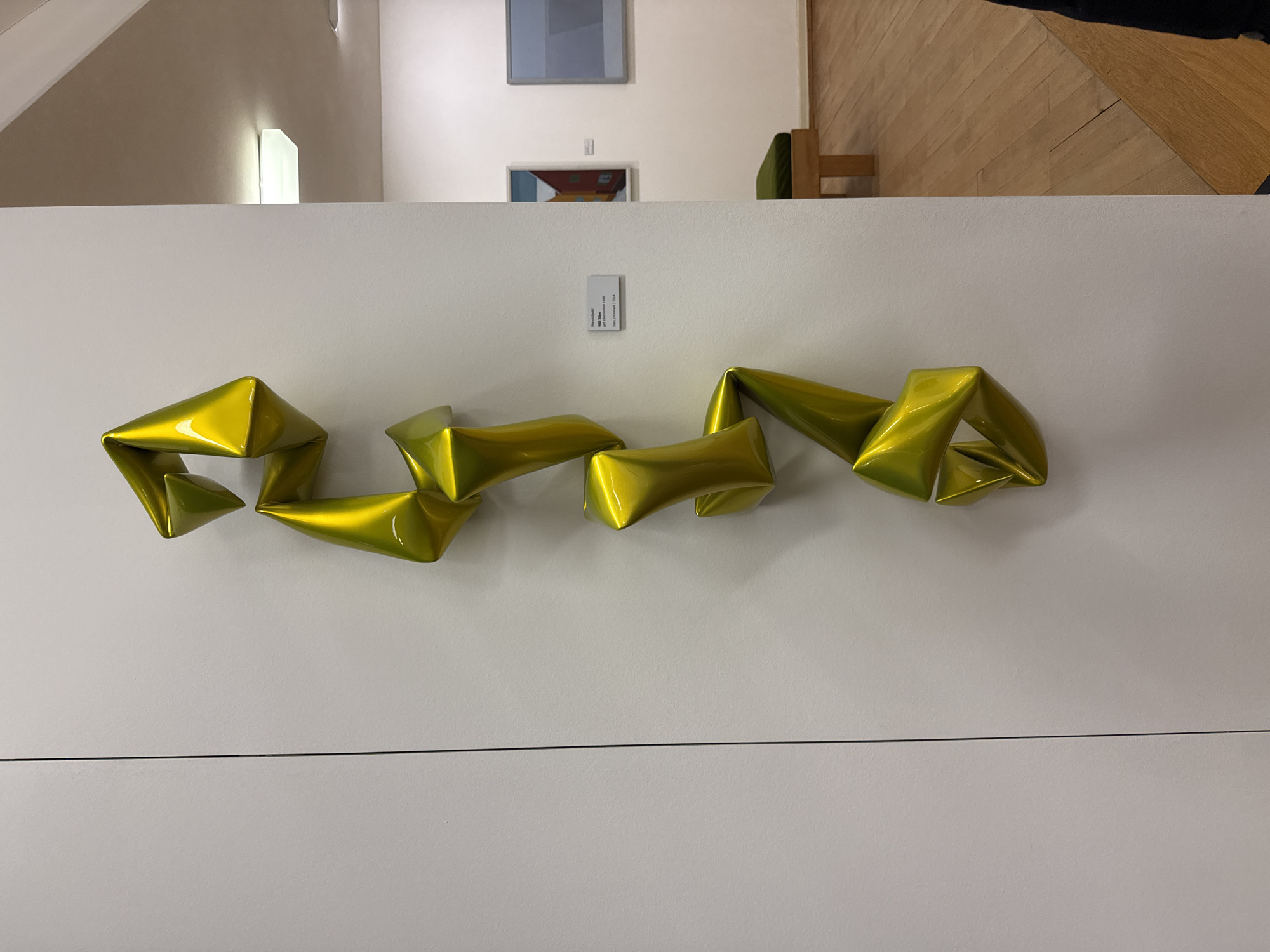
The image depicts a yellow abstract sculpture mounted on a white wall. The sculpture consists of angular, geometric shapes that are connected and arranged horizontally. Above the sculpture, there is a small, rectangular information sign. In the background, a portion of a building interior is visible, including a hallway or room with white walls, a doorway, and a section of wood flooring. Based on the information sign, the sculpture is a work by Wolfgang Stiller titled "Verwandlung" ("Transformation"), made of synthetic resin and car paint, and created in 2014. The location is likely an art gallery or museum. The city is Biberach an der Riß, Germany.
Biberach an der Riß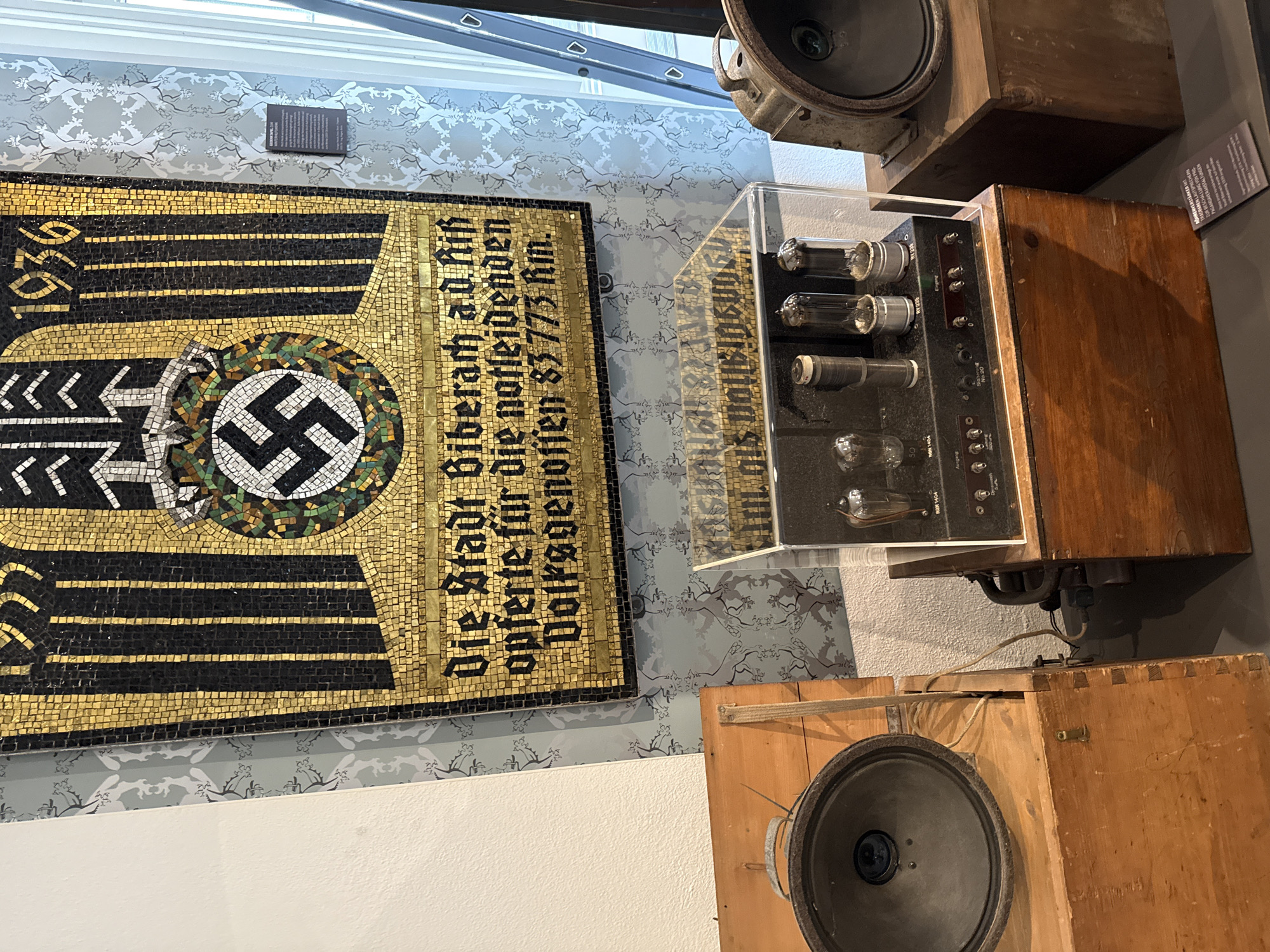
The image shows a mosaic banner with a swastika in the center, framed in black and gold. Above the swastika is the year 1936. To the right of the swastika, the banner says in gold lettering, "Die Stadt Biberach a.d. Riß opferte für die notleidenden Volksgenossen 83 773 km." To the right of the banner are two vintage loudspeakers in wooden boxes, one above the other. In between these two loudspeakers is a brown wooden box containing vacuum tubes, protected by a clear plastic case. Next to the top loudspeaker is a plaque containing information about the objects. The background is a patterned wallpaper.
Biberach an der Riß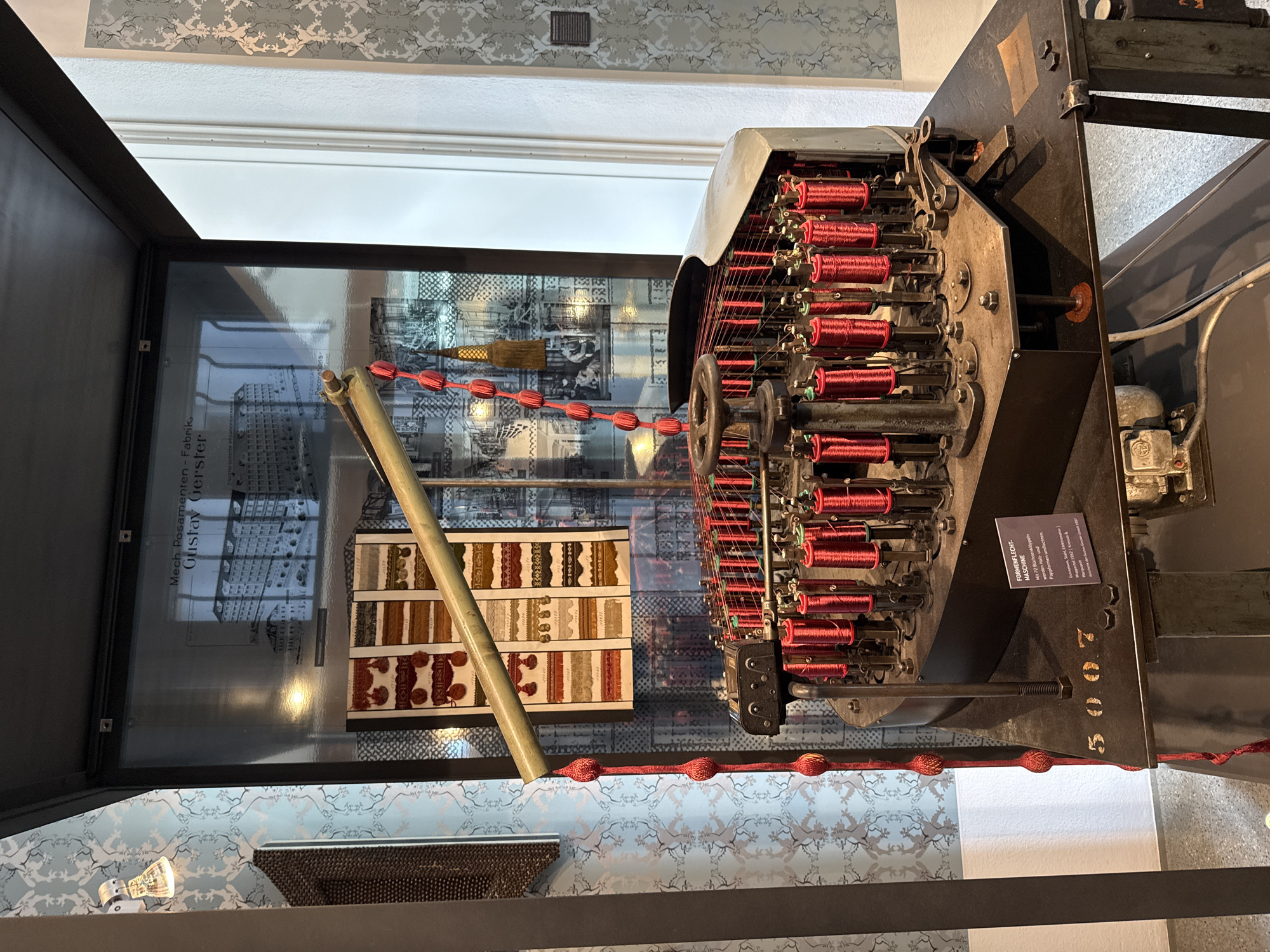
Here's a description of the image: The image captures a vintage "Formenflecht Maschine" (shape braiding machine) at a museum display. This machine, from the Mech. Posamenten - Fabrik Gustav Gerster, likely produced decorative passementerie items. The machine features rows of bobbins, each wound with red thread, that intertwine to create intricate patterns. A sign near the machine provides information in German, indicating its function: "Mit 72 Büchsenklöppeln werden Holz und Pappformen umflachter" (With 72 bobbin clappers, wooden and cardboard forms are braided around). The machine is behind a glass case. A metal tube structure is attached to it. In the background of the display is an illustration and examples of the kinds of products it would have made. The display is next to a patterned blue and white wallpaper. The number "5007" is painted on the machine. The museum is likely located in Biberach an der Riß, Germany, given the German text on the signage and the machine's historical context within the country's textile industry.
Biberach an der Riß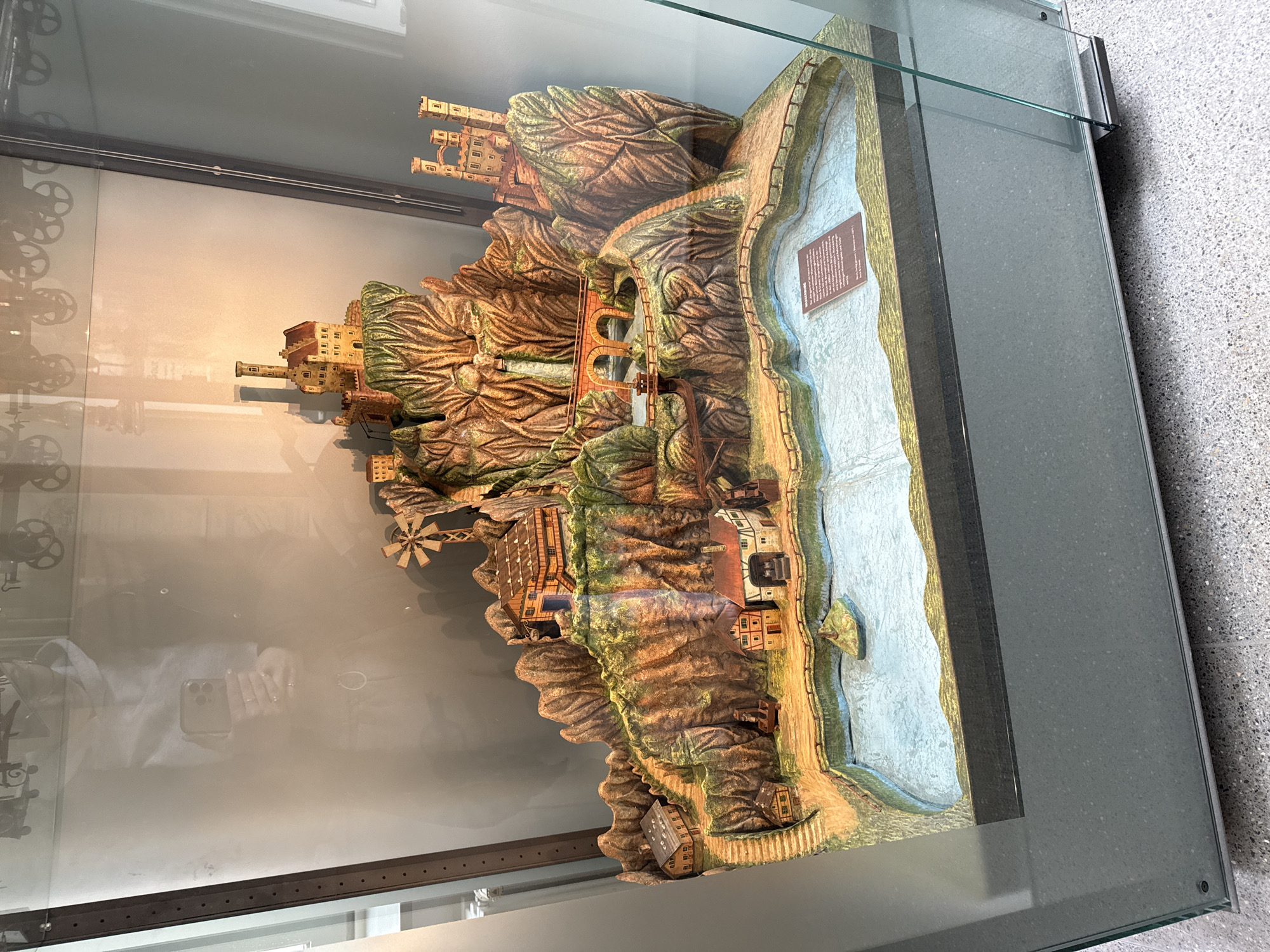
The image shows a three-dimensional, intricately detailed model of a landscape with buildings, mountains, and a river. The model is housed inside a glass display case. Buildings are situated on the mountains, including structures resembling castles and smaller houses. A windmill is also present. A bridge connects sections of the landscape. The river is rendered in light blue. A sign is affixed to the river's edge, likely providing information about the model. The scene is indoors, with the model presented as an exhibit. The glass display case is modern, with a dark gray frame. The location is Biberach an der Riß, Germany.
Biberach an der Riß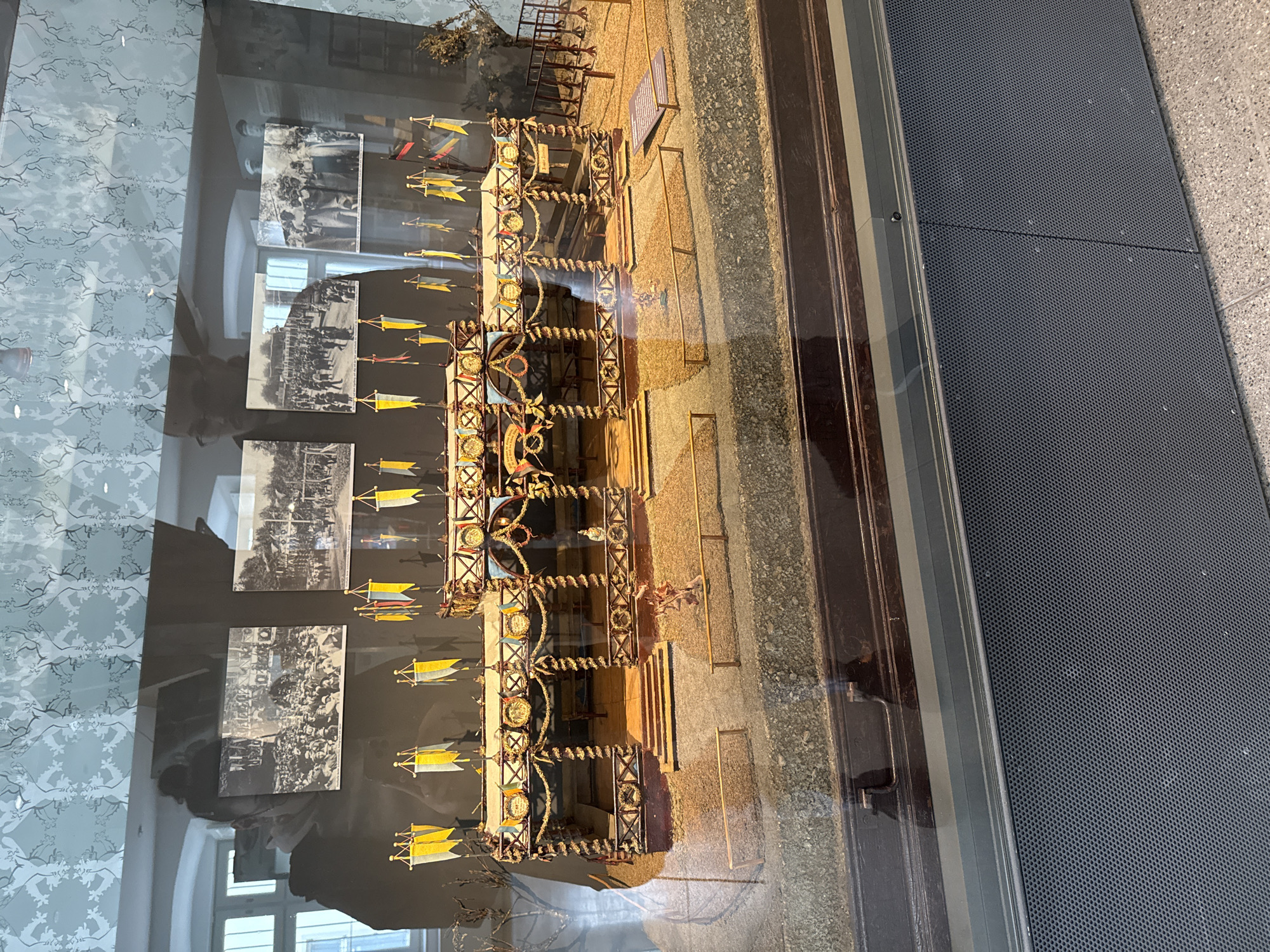
The image shows a diorama of a historic scene, displayed behind glass, likely within a museum or historical institution. The diorama is situated in Biberach an der Riß, Germany. The diorama depicts an event featuring a crowd of people in front of a grandstand structure adorned with flags. Mounted on the glass display case, adjacent to the diorama, are black and white photographs depicting what appears to be the actual historical event that the diorama represents. The setting is indoors, with a textured, decorative wall visible through the glass case. The floor nearby, to the side of the glass case, has a dark, perforated surface.
Biberach an der Riß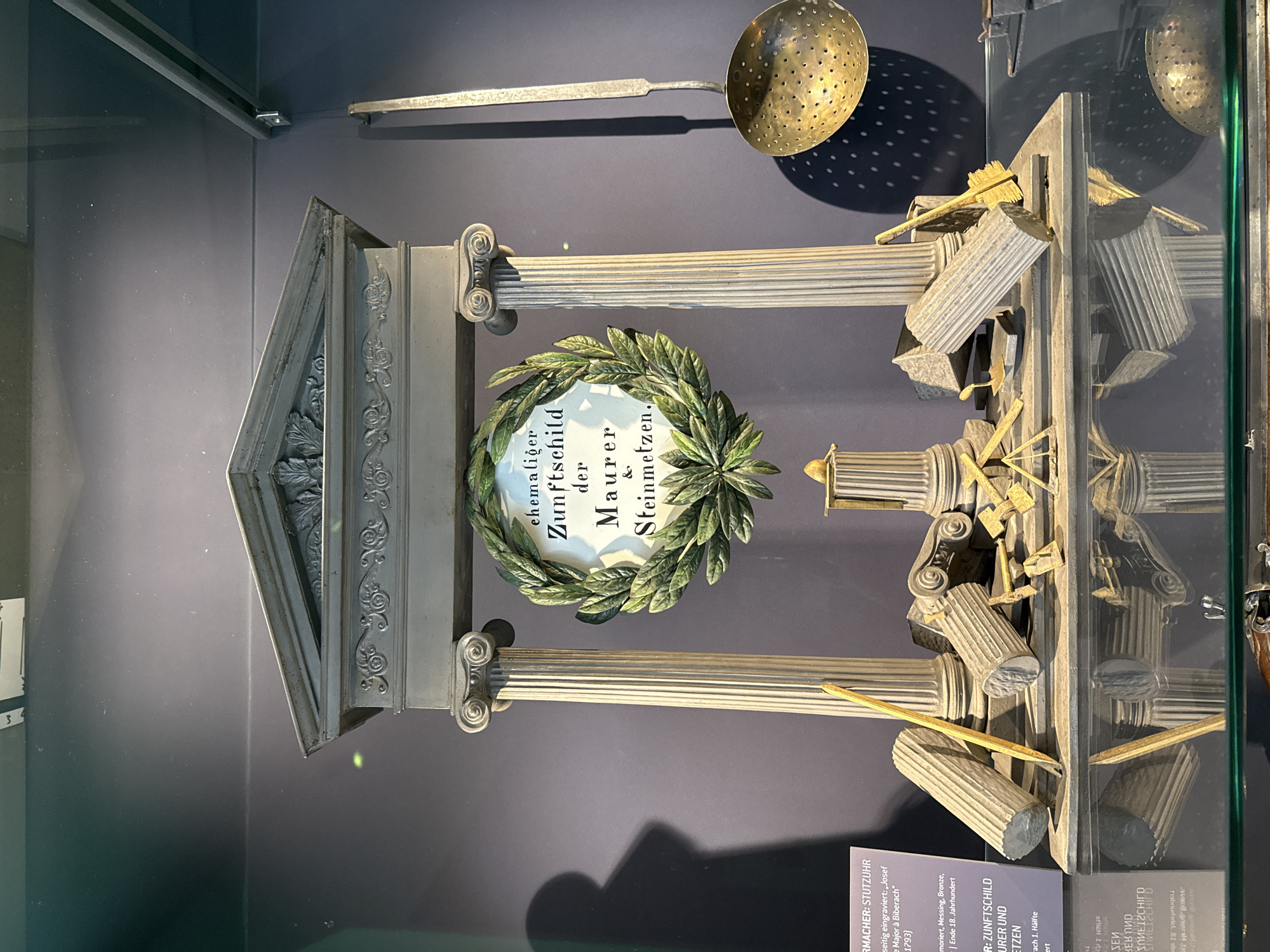
The image shows a Zunftschild (guild sign) for stonemasons and bricklayers. It is an artifact displayed in a glass cabinet. The sign is composed of classical architectural elements, including columns, a pediment, and a laurel wreath surrounding a central inscription in German: "ehemaliger Zunftschild der Maurer & Steinmetzen" (former guild sign of bricklayers & stonemasons). The sign also includes broken columns and tools, suggesting labor and potentially construction or destruction. Above the sign, a metal skimmer with holes is visible. In the bottom of the frame there is a table with the title of what is inside the cabinet: STUTZUHR. The display includes printed labels with additional information. A partial label is visible with the text "RMACHER: STUTZUHR" and some text in the German language relating it to the city of Biberach an der Riß.
Biberach an der Riß