Blitar, Indonesia
30 memories from Blitar, Indonesia
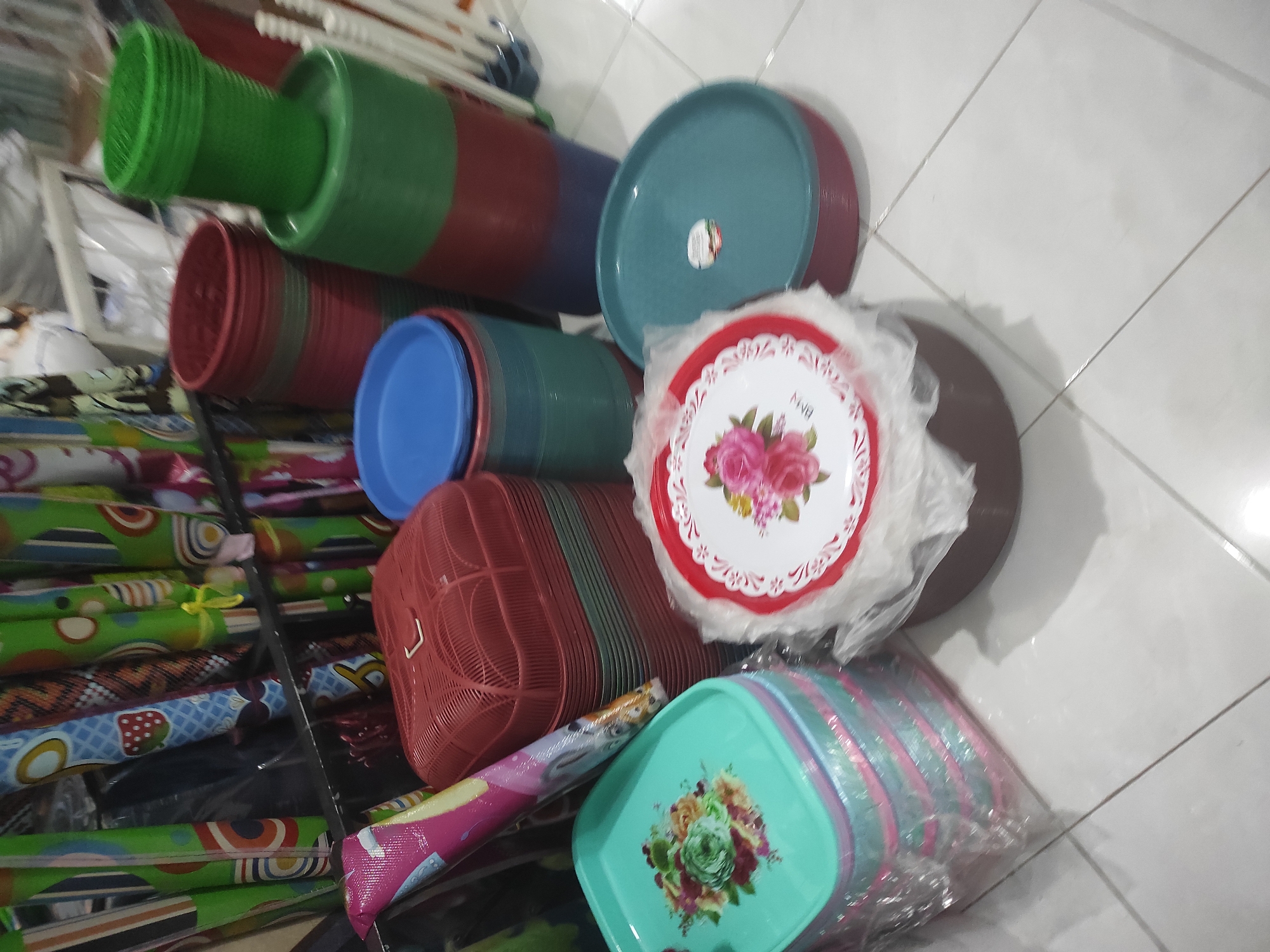
This image depicts a collection of plastic household items, likely for sale in a market stall, situated on a tiled floor. In the background, vertically stacked items with colorful patterns, possibly rolled-up mats or fabrics, are visible. Dominating the foreground are various plastic containers and platters in an array of colors including red, green, blue, and teal. Several stacks of square, teal-colored containers with floral prints are wrapped in clear plastic. Next to them, a round, brown container is covered with a white, lacy plastic sheet, topped by a red and white round platter decorated with roses. A large red basket-like container and several smaller red and green nesting containers are also present. In the upper right corner, a stack of green plastic baskets is prominent. The scene is consistent with a retail environment for plastic housewares, potentially in the city of Blitar, Indonesia, given the context provided.
Blitar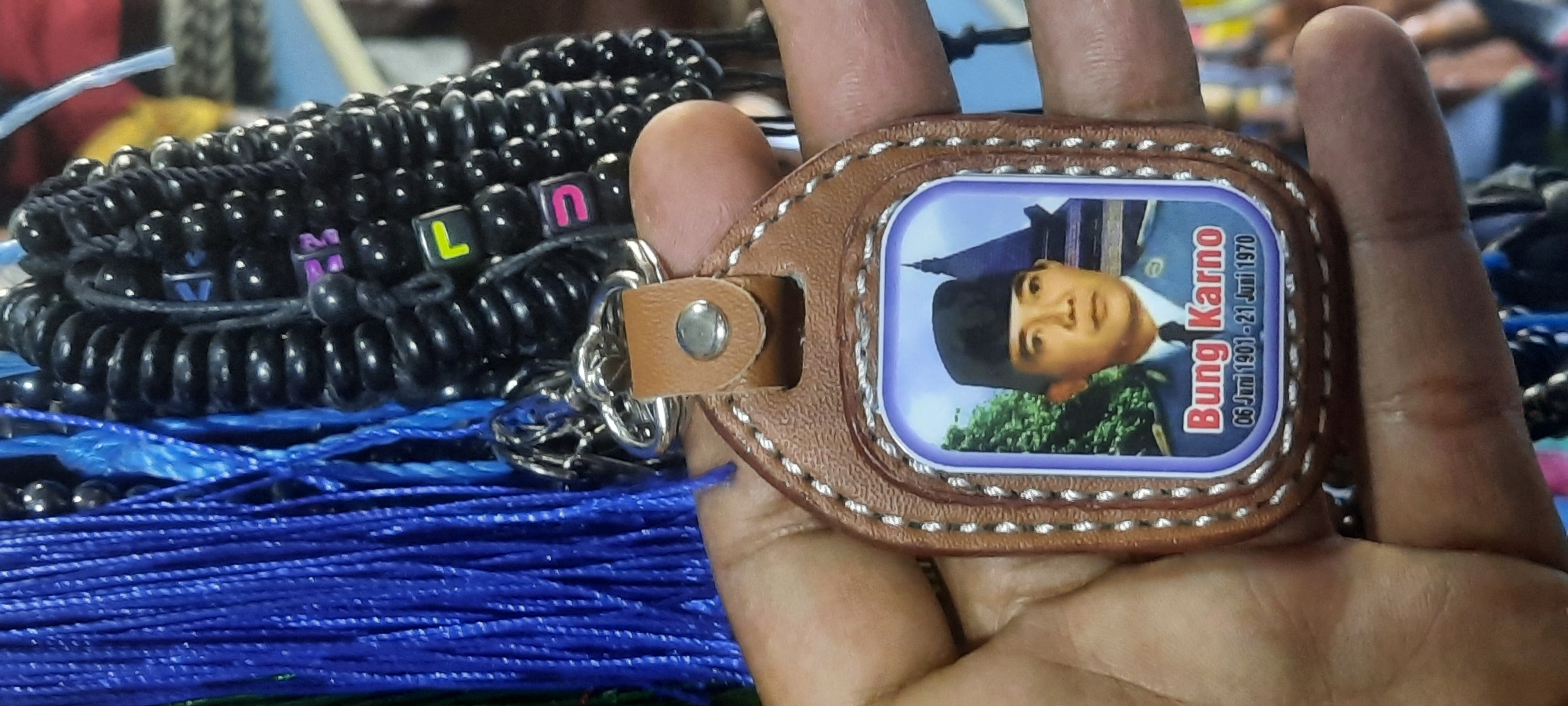
A hand holds a brown leather keychain featuring a printed image of Bung Karno, the first President of Indonesia. Bung Karno is depicted wearing a black Peci hat and a blue uniform with a tie. Below his image, the text "Bung Karno" is displayed in red, followed by his birth and death dates: "06 Juni 1901 - 21 Juni 1970" in blue. The keychain is attached to a metal ring. Behind the hand, there are several strings of black prayer beads and blue strings, possibly part of other souvenirs or merchandise. The background is blurred, showing hints of colors and shapes that suggest a market or shop setting. The image is taken in the city of Blitar, Indonesia, a location historically significant as Bung Karno's final resting place.
Blitar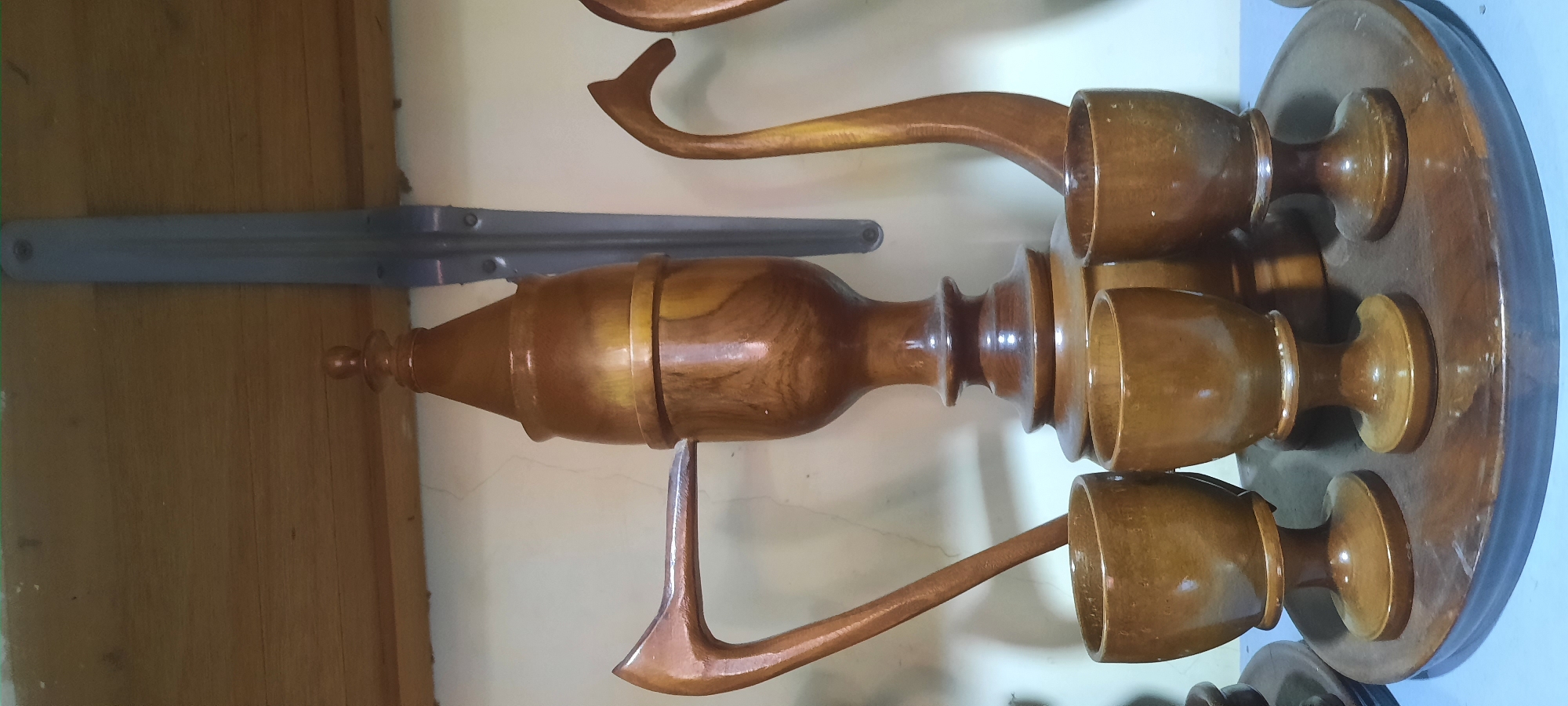
A close-up, waist-level, indoor shot shows a display of wooden items, likely decorative or functional, against a light-colored wall. The objects are arranged on a wooden shelf or surface, with a metal bracket visible behind the central item. The foreground is dominated by three small, goblet-shaped wooden cups arranged on a circular wooden tray. To the left, a larger, intricately carved wooden handle or spout extends from a central object. The central object itself is a tall, wooden pitcher or ewer with a rounded body and a conical lid, featuring decorative bands and a pedestal base. To the right of the pitcher, a curved, wooden piece, possibly a spout or handle, is visible, shaped like a swan's neck. The lighting is soft, highlighting the polished wood grain and reflections. The overall aesthetic suggests a collection of artisanal wooden crafts. The image does not provide any direct information about a specific location in Blitar, Indonesia, beyond being an indoor setting.
Blitar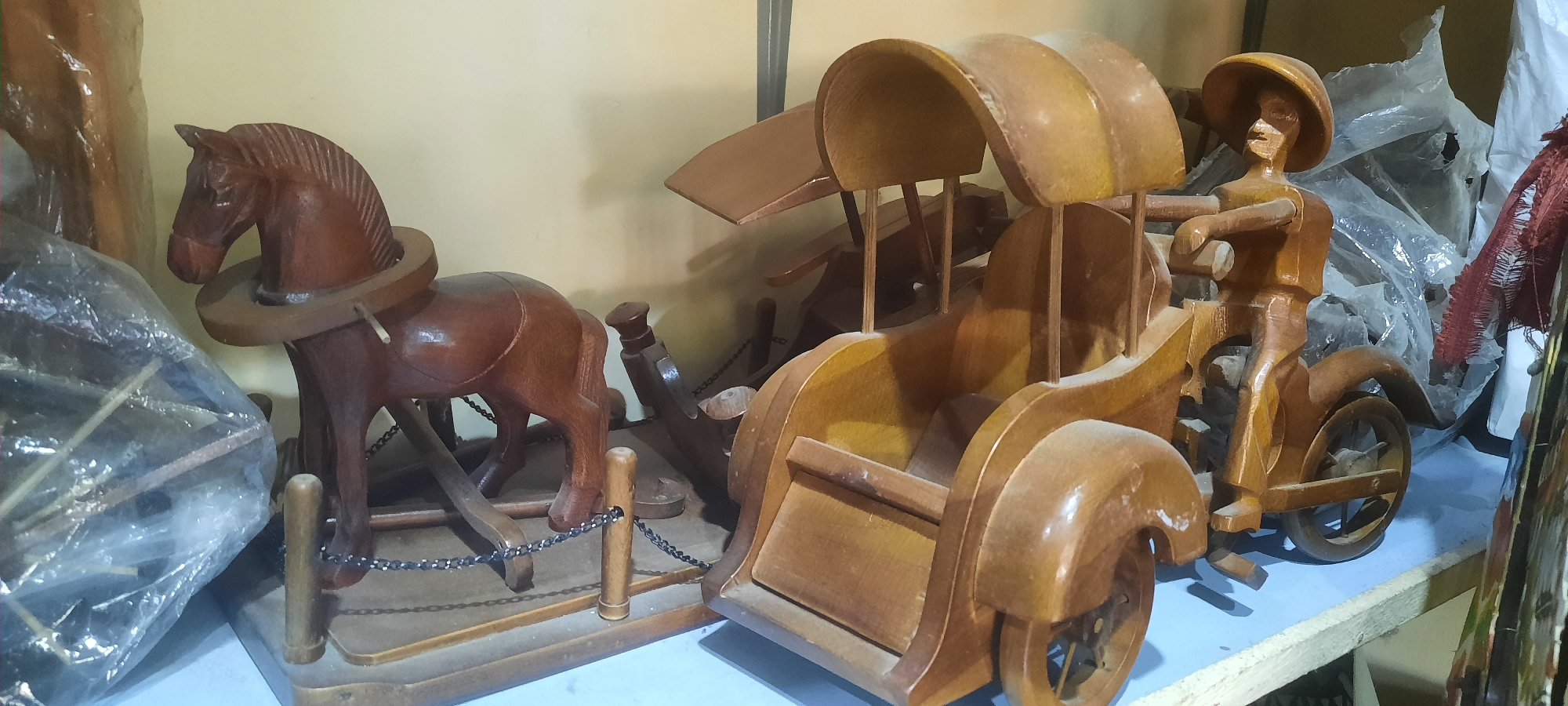
In the city of Blitar, Indonesia, this image captures a close-up view of several wooden carvings displayed on a shelf. On the left, a wooden rocking horse, carved in brown wood, is positioned with its head facing left, its mane detailed with carved lines. The horse is adorned with a wooden collar and is attached to wooden rocking supports with chains. To the right of the horse, a wooden tricycle-like vehicle is prominently featured. This vehicle has a passenger seat covered by a dual-tiered canopy supported by wooden poles. Seated at the driver's position is a carved wooden figure wearing a conical hat, with its arms extended as if steering. The tricycle has two wheels at the rear and one at the front, which is partially obscured. The objects appear to be displayed indoors, possibly in a shop or market, with a plain wall in the background and some plastic-wrapped items visible behind the wooden carvings.
Blitar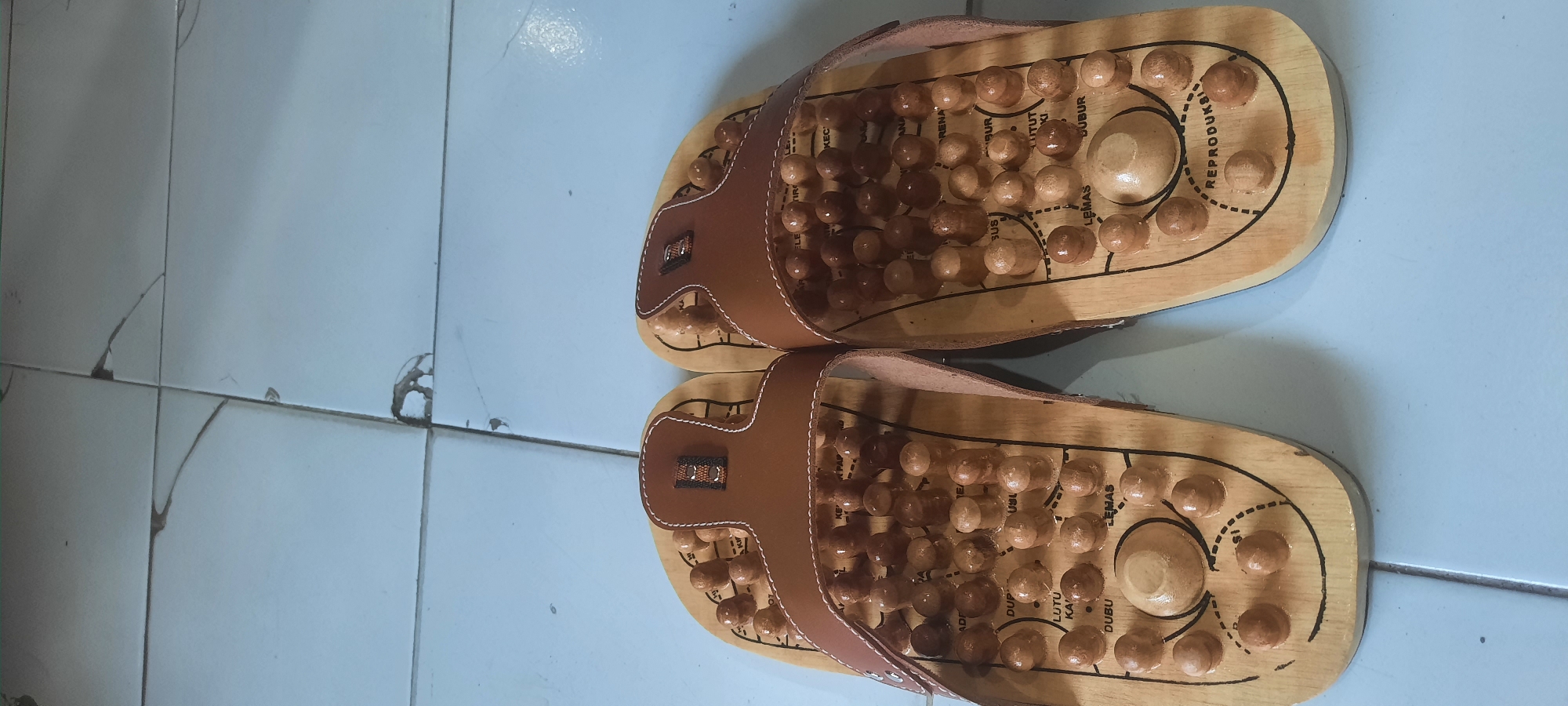
A pair of brown leather and wood acupressure sandals are displayed on a light blue tiled floor. The sandals are oriented vertically, with the soles facing upwards and the toe straps pointing towards the top of the image. Each sandal sole is made of wood and features a grid of small, rounded wooden pegs, intended for acupressure. Black text, written in Indonesian, is printed on the wooden soles, indicating various acupressure points. A smooth, rounded wooden protrusion is present near the heel of each sandal. The background consists of the tiled floor, with visible grout lines and some minor imperfections or damage to the tiles. The lighting appears to be from above, casting subtle shadows. The scene is static and appears to be an indoor setting.
Blitar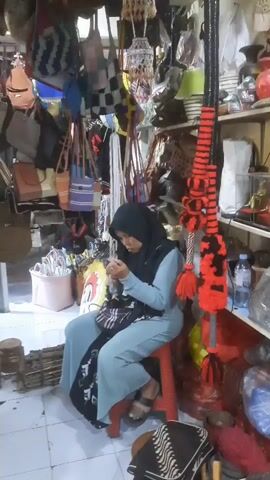
A woman wearing a blue hijab and a light blue dress sits on a red stool in what appears to be a shop. She is looking down and appears to be sewing or working with her hands on a piece of fabric. The shop is filled with various items, including bags hanging from the ceiling, shelves stocked with various objects like vases and what look like busts, and items wrapped in plastic. A decorative rope-like object with red and black pom-poms hangs prominently in the foreground. The lighting is somewhat dim.
Blitar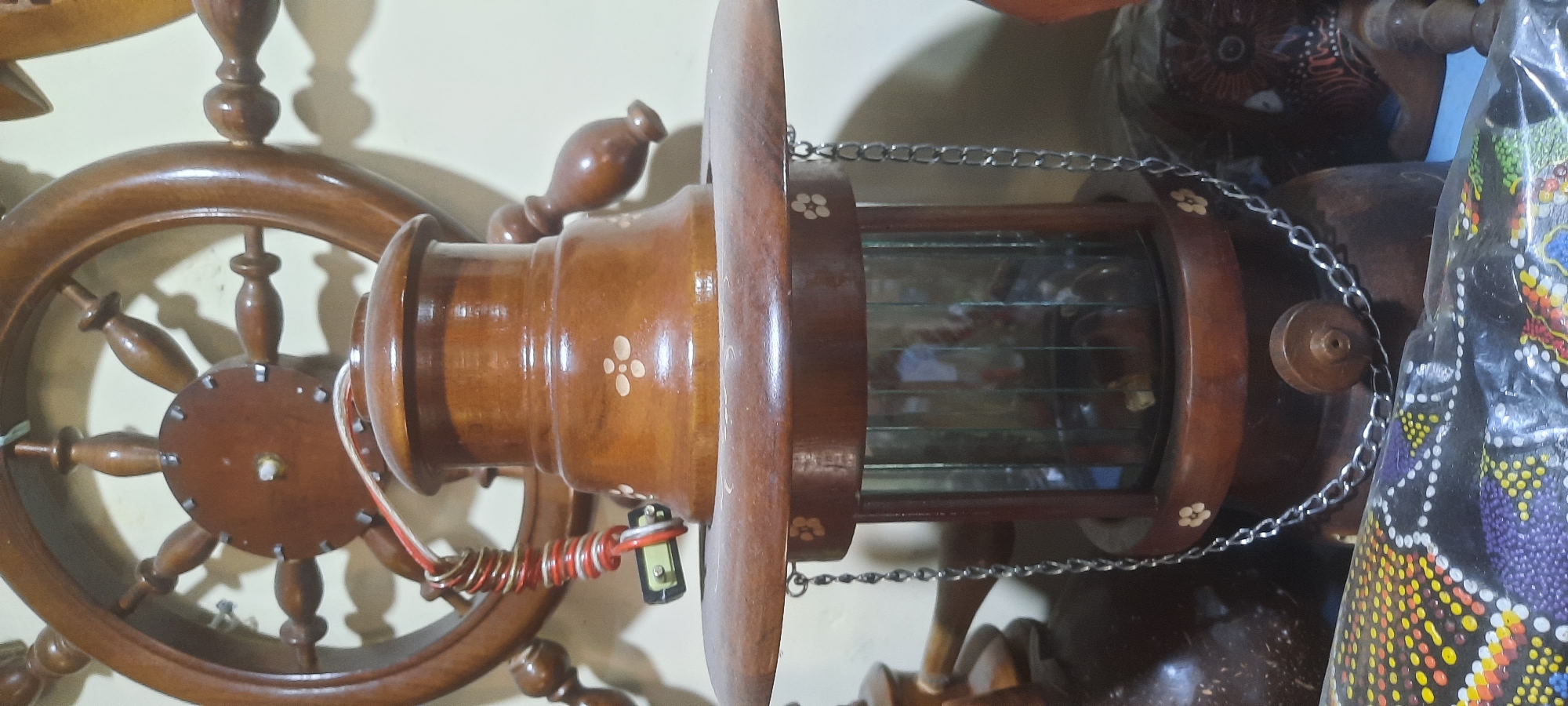
The image depicts a close-up, vertical view of a decorative wooden lantern with glass panels, suspended by chains. The lantern has a dark brown finish and is adorned with small, lighter-colored floral motifs. It rests on a flat, circular wooden base. Above the lantern, a portion of a large wooden ship's wheel is visible, also dark brown and intricately carved. Wires, one red and white, are loosely coiled and attached to the top of the lantern, with a small battery-like object visible near the coiled wires. The background is a plain, light-colored wall. In the foreground, partially visible, is a colorful, patterned fabric or wrap, possibly an Indonesian batik or textile, with intricate dot patterns in yellow, orange, purple, and white on a dark background. To the right of the lantern, a portion of another carved wooden object, possibly a decorative mask or figurine, is visible. The scene appears to be an indoor display, likely in a shop or home, showcasing decorative items. Based on the available information, this scene is likely located in the city of Blitar, Indonesia, given the context of the provided image and the commonality of such decorative items and artistic crafts in the region. The precise location within Blitar is not discernible from the image itself. No people are visible in the image, and no actions or interactions are depicted. The environment is static and appears to be a curated display of artisanal objects.
Blitar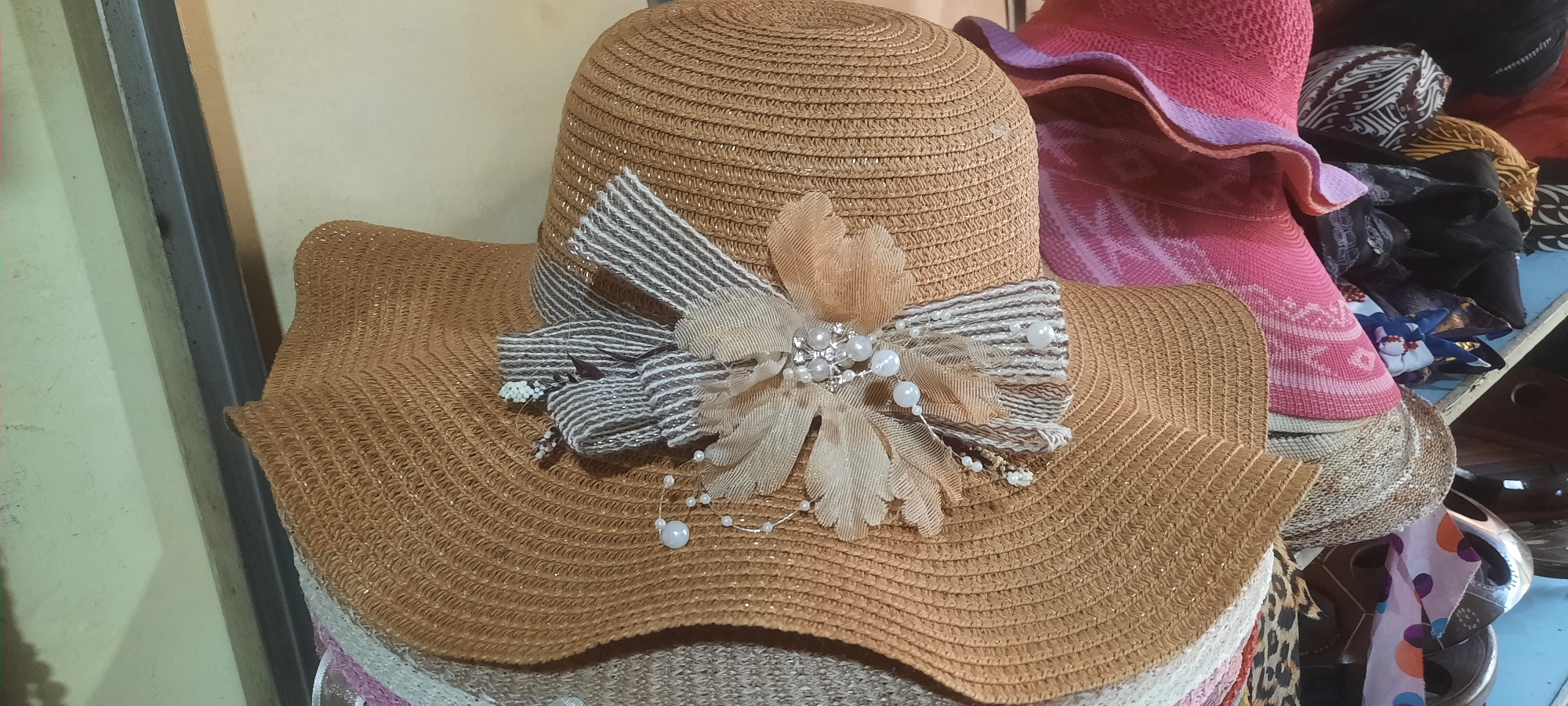
A close-up, high-angle, full shot shows a woven straw sun hat with a wide brim, decorated with a bow and faux pearls. The hat is positioned in the foreground, obscuring other items beneath it, including what appear to be other hats and scarves. The hat's natural straw color is a warm tan, and the brim is gently curved. A decorative element featuring a striped ribbon, sheer fabric petals in a muted peach color, and small white beads and faux pearls is centered on the front of the hat. The background is blurred, but shows other hats, including a bright pink one with a ruffled brim, and some patterned fabrics. The scene suggests a retail environment, possibly a stall or shop selling accessories. The lighting is even, highlighting the textures of the hat and decorations. The image is taken in Blitar, Indonesia.
Blitar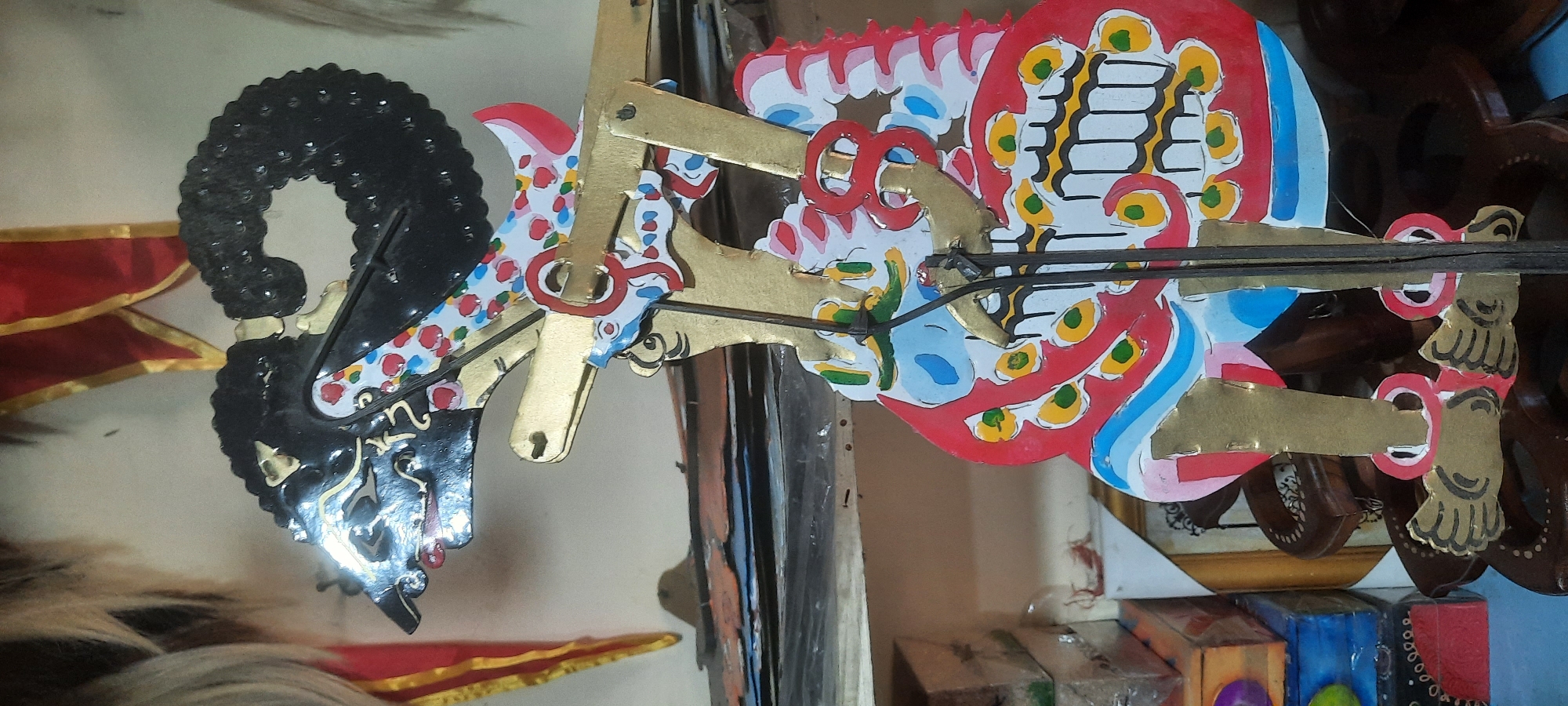
An intricately decorated Wayang Golek puppet, a traditional Indonesian form of shadow puppetry, is displayed. The puppet features a black, elaborate headdress, a detailed face with red lips and gold accents, and a vibrant costume painted in red, blue, yellow, and white. The body is constructed from layered materials, possibly wood or leather, with articulated joints indicated by visible brass or gold-colored metal pieces. The puppet's hands and feet are also crafted with fine details. It is held upright, possibly by thin rods or strings, and appears to be part of a collection or display, as suggested by the blurred background which includes shelves with various items and what appears to be the edge of another puppet or decorative item. The lighting is soft, casting subtle shadows. The puppet is likely located in Blitar, East Java, Indonesia, where such cultural artifacts are prevalent.
Blitar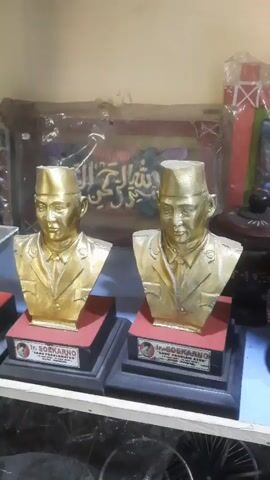
The video pans across a shelf displaying several gold-colored busts and full-body statues of a person, likely a historical figure given the name "SOEKARNO" visible on some of the bases. Two busts are prominently featured in the foreground, followed by more busts and statues encased in glass display boxes. In the background, there are various items, including what appears to be framed artwork with Arabic calligraphy and other objects covered in plastic wrap. The lighting suggests an indoor setting, possibly a shop or display area. The video is shaky at times.
Blitar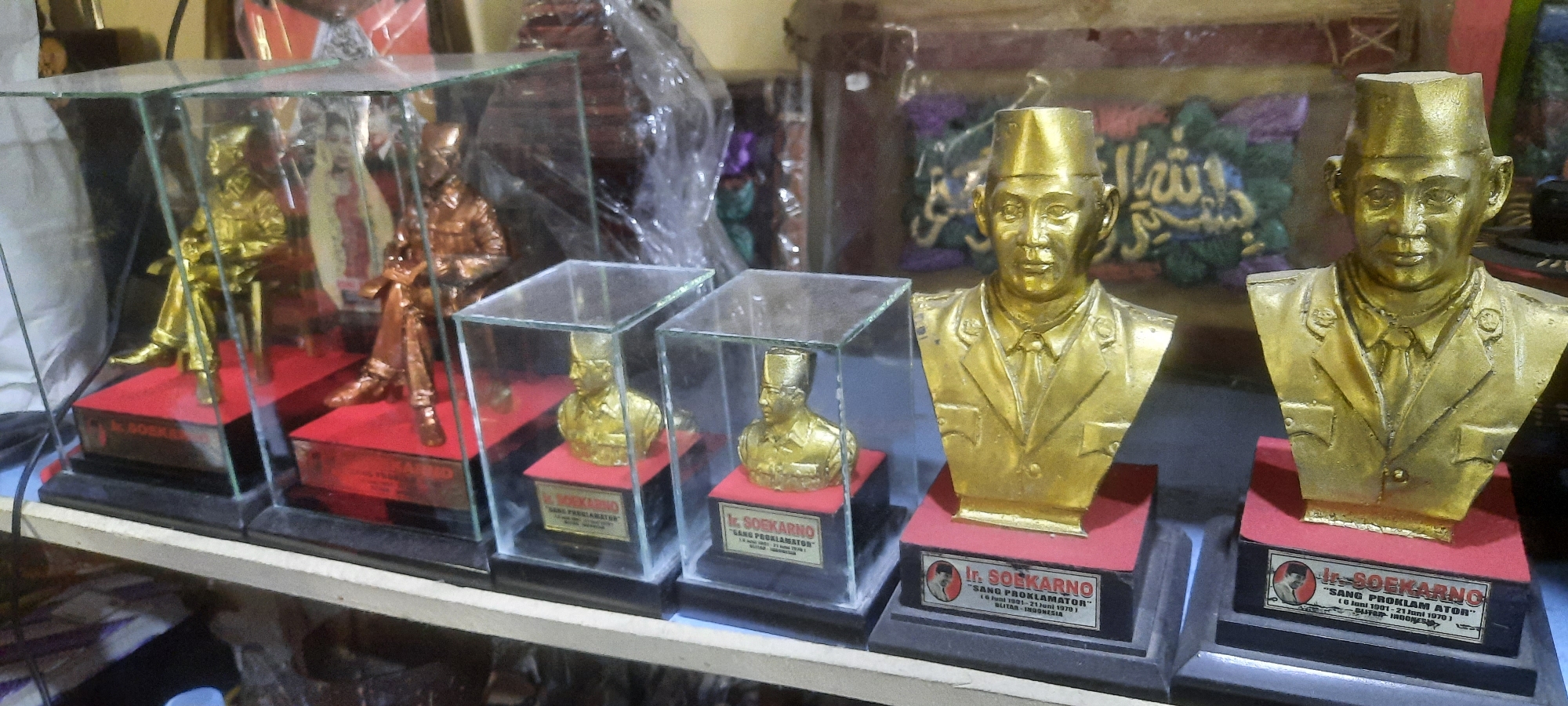
In Blitar, Indonesia, a shelf displays several gold-colored busts and figurines of Ir. Soekarno, the first president of Indonesia. The items are placed in glass cases and on individual black bases with red platforms. Some of the busts have small plaques with text that appears to be biographical information about Soekarno. In the background, there are various other decorative items and some plastic-wrapped objects.
Blitar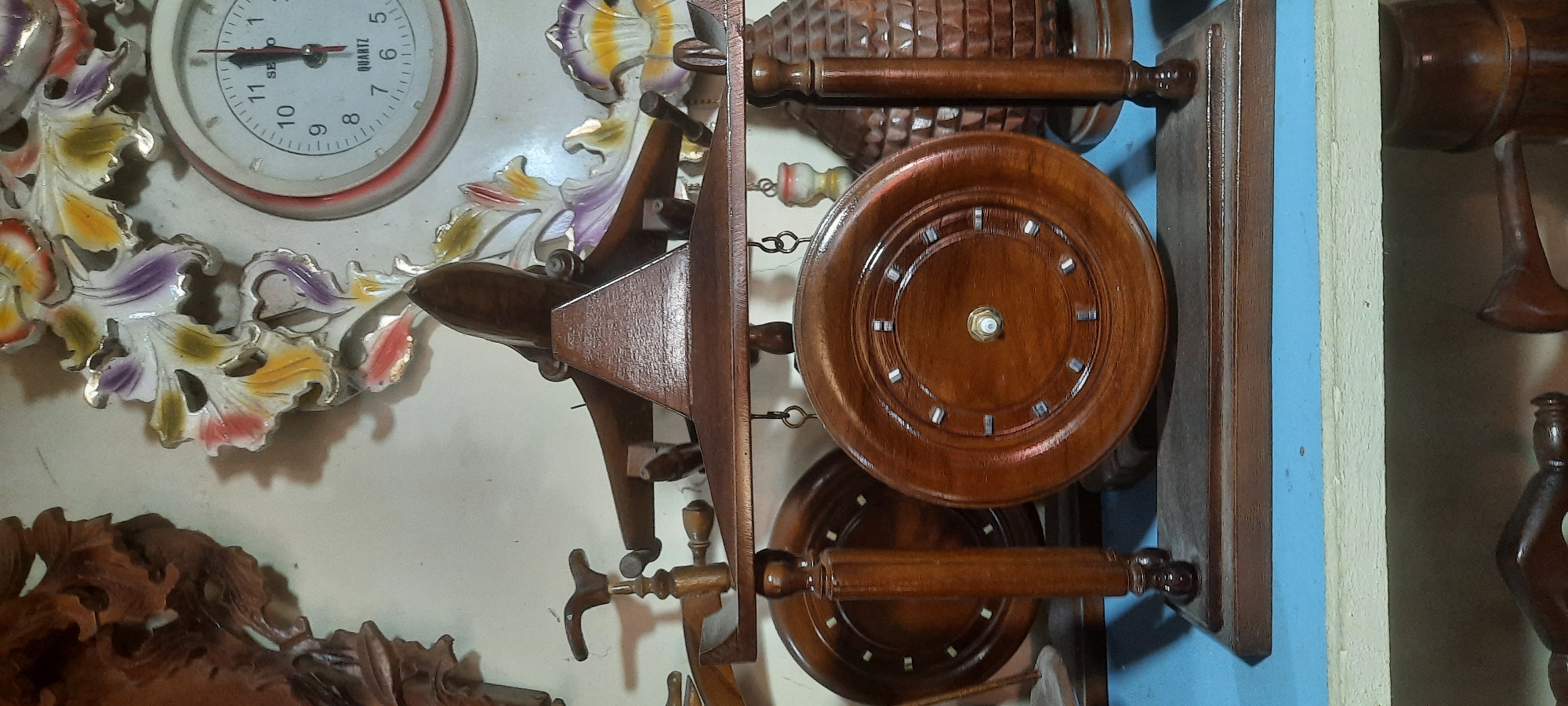
The image shows a close-up view of a wooden clock with an airplane on top, displayed in what appears to be a shop or home interior in Blitar, Indonesia. The clock itself is ornate, featuring carved wooden elements and a face with Roman numerals. The airplane is also made of wood and is positioned to look like it's in flight. In the background, there are other decorative items, including what looks like a colorful, floral-themed clock and a carved wooden panel. The lighting suggests an indoor setting, possibly a shelf or display area.
Blitar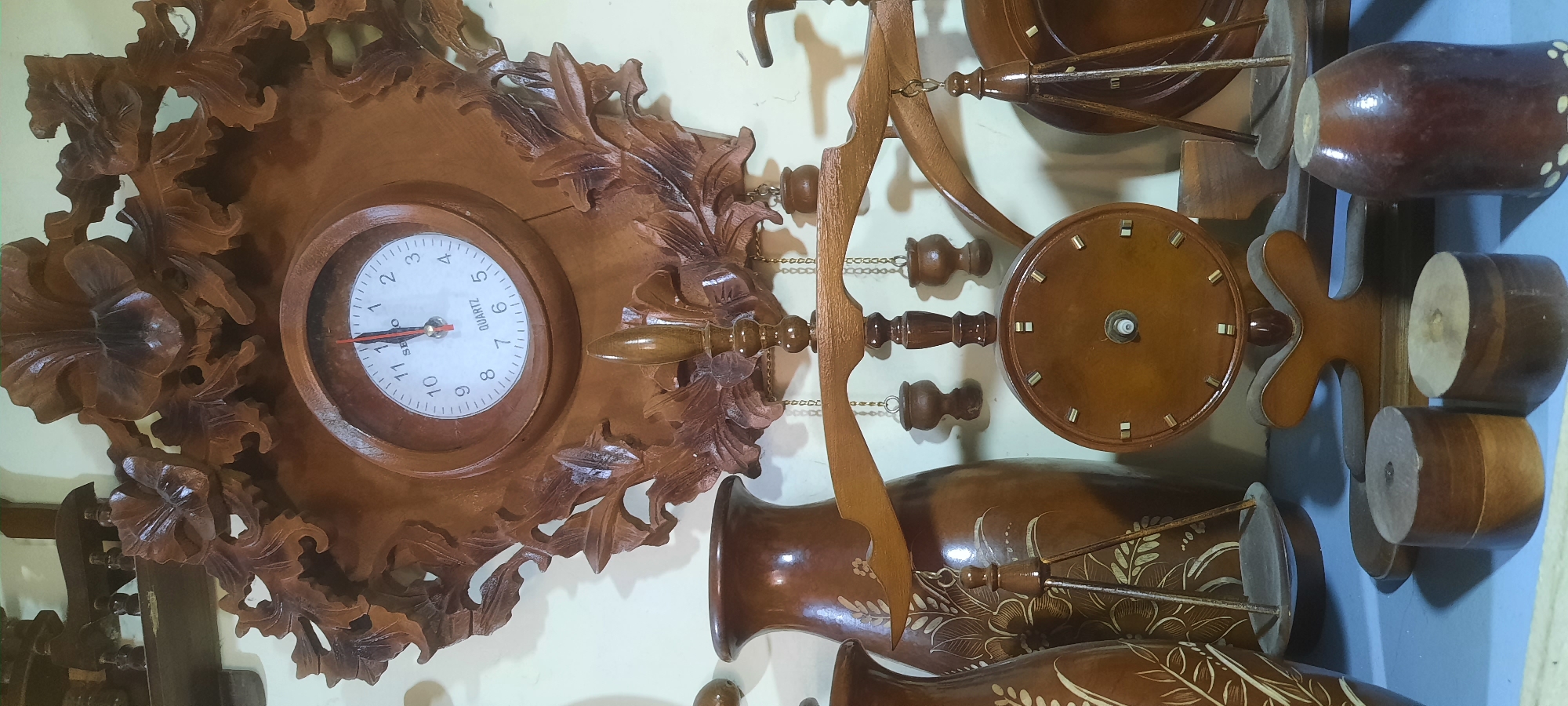
This is a close-up, eye-level shot of a collection of carved wooden objects displayed on a shelf. The most prominent item is an ornate, carved wooden clock with a round face and Roman numerals. The clock is flanked by two decorative carved wooden vases with floral patterns and a decorative wooden balance scale. In the foreground, there are several round wooden objects, possibly for decoration or display. The overall color palette is warm browns and creams, with a slightly muted tone. The lighting appears to be artificial, casting soft shadows. The scene suggests a display of handcrafted items, possibly in a shop or a private collection. The image does not contain any people or specific environmental indicators that would pinpoint its location to Blitar, Indonesia, beyond the provided context.
Blitar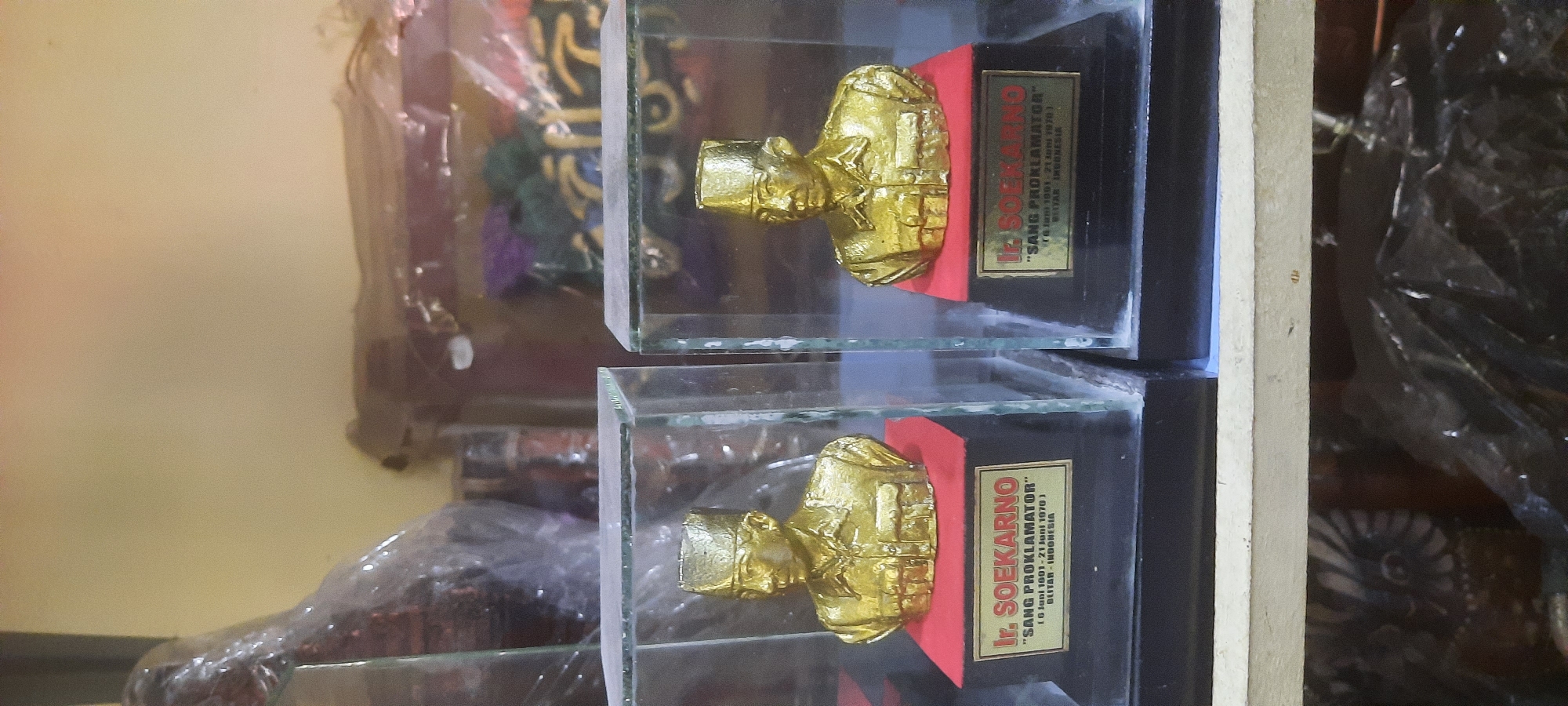
Two identical busts of Ir. Soekarno, a key figure in Indonesian history, are displayed in separate glass enclosures. Each bust is golden in color and sits atop a red pedestal, which is mounted on a black base. A gold plaque is affixed to the front of each black base. The left plaque reads "Ir. SOEKARNO (6 Juni 1901 - 21 Juni 1970) BLITAR - INDONESIA". The right plaque is partially obscured but appears to have identical text. The busts are displayed on a shelf in what appears to be a shop or collection. Behind the busts, out-of-focus items are visible, including what looks like packaging and other decorative objects. The lighting suggests an indoor environment, possibly with natural light supplemented by artificial sources. The presence of the Blitar, Indonesia inscription on the plaque strongly suggests this location is within or related to the city of Blitar.
Blitar![The image displays a golden statue of a man sitting in a chair and reading a book. The statue is housed in a glass display case on a red platform, which is itself on a black base. A plaque below the statue reads "Ir. SOEKARNO 'SANG PROKLAMATOR' [6 Juni 1901 - 21 Juni 1970] BLITAR - INDONESIA". Behind the statue, there is a printed backdrop featuring a portrait of a man in a green uniform and a black hat, as well as some decorative patterns. The overall setting suggests a display in a museum or gallery. The text on the plaque indicates the statue is of Ir. Soekarno, a significant figure in Indonesian history, and that it is located in Blitar, Indonesia.](https://firebasestorage.googleapis.com/v0/b/patr-3a75e.appspot.com/o/uploads%2Fimage_picker_8a0c42ae-1e69-4775-a.jpg?alt=media)
The image displays a golden statue of a man sitting in a chair and reading a book. The statue is housed in a glass display case on a red platform, which is itself on a black base. A plaque below the statue reads "Ir. SOEKARNO 'SANG PROKLAMATOR' [6 Juni 1901 - 21 Juni 1970] BLITAR - INDONESIA". Behind the statue, there is a printed backdrop featuring a portrait of a man in a green uniform and a black hat, as well as some decorative patterns. The overall setting suggests a display in a museum or gallery. The text on the plaque indicates the statue is of Ir. Soekarno, a significant figure in Indonesian history, and that it is located in Blitar, Indonesia.
Blitar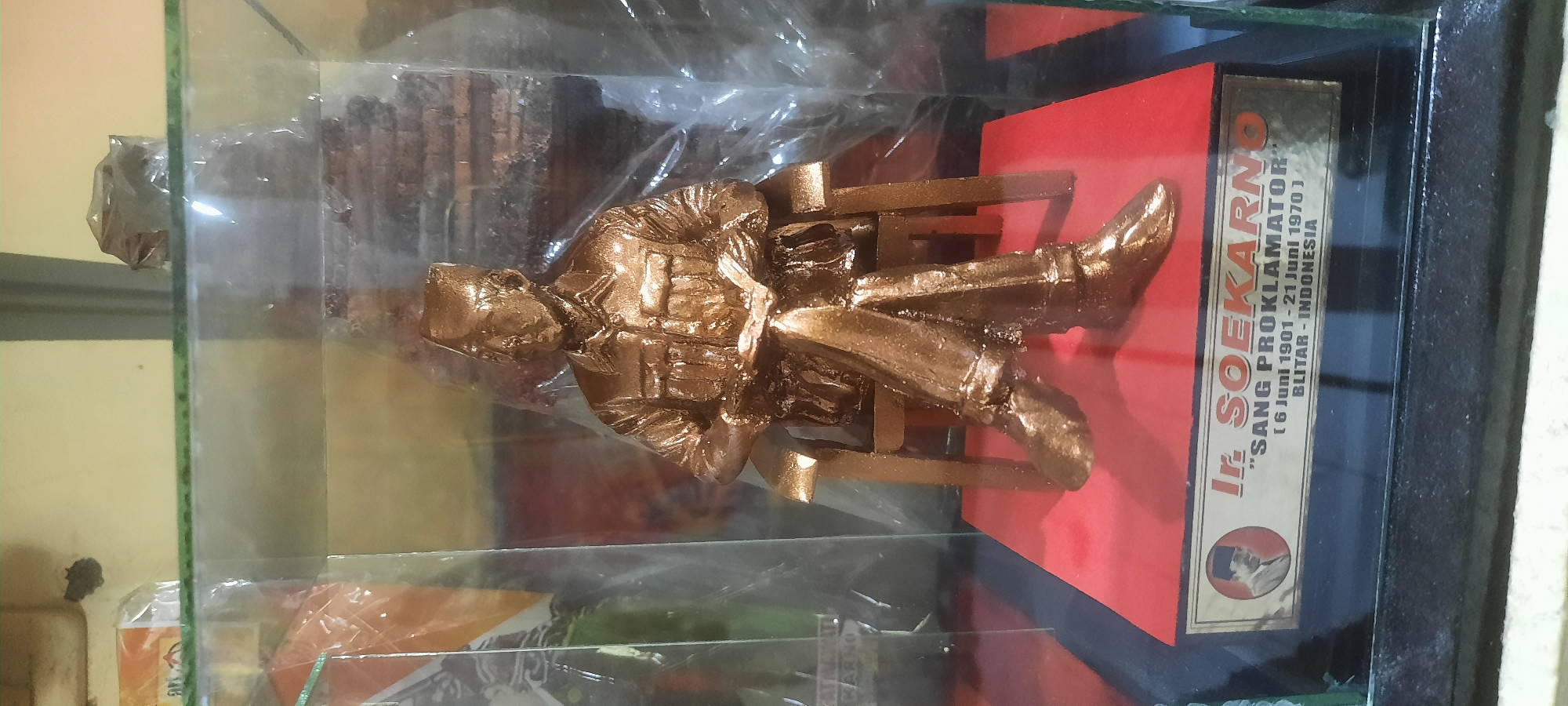
A bronze statue of Ir. Soekarno is displayed inside a glass case. The statue depicts him seated in a chair, holding a book. A plaque below the statue reads "Ir. SOEKARNO 'SANG PROKLAMATOR' (6 Juni 1901 - 21 Juni 1970) BLITAR - INDONESIA". The statue is placed on a red platform. The background is blurry, but appears to be shelves with various items.
Blitar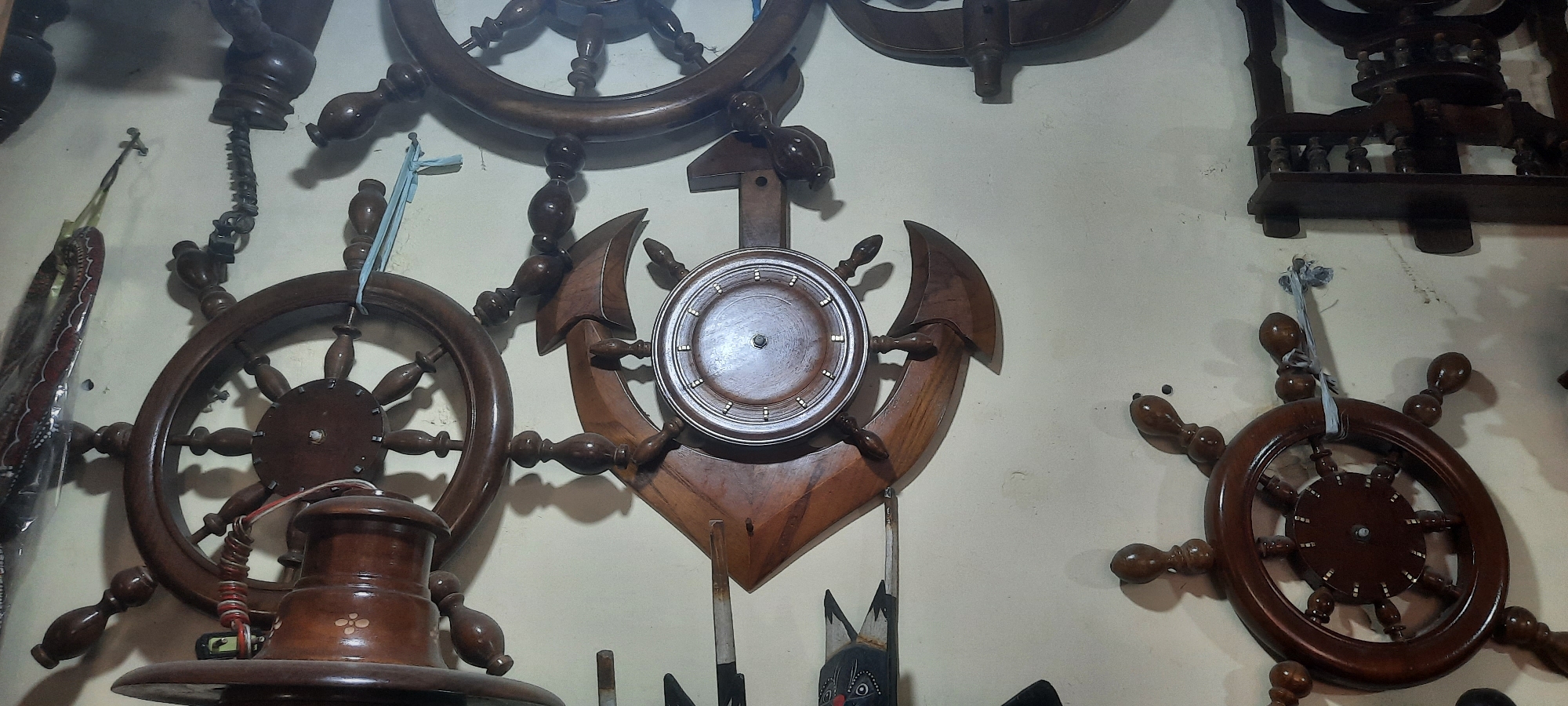
The image depicts a wall adorned with several wooden nautical-themed decorative items, including ship's wheels and an anchor. The items are made of dark polished wood and appear to be handcrafted. The wall itself is a light, neutral color and shows some minor imperfections. In the foreground, a large ship's wheel is partially visible on the left, with a cylindrical wooden object beneath it. In the center, a prominent wooden anchor with a circular detail is mounted on the wall. To the right, another ship's wheel is visible. There are also glimpses of other decorative elements, including what appears to be a wooden stand or furniture piece in the upper right corner, and some decorative items with red and black patterns on the far left. The scene suggests a shop or display area specializing in nautical decor, likely located in Blitar, Indonesia, given the context. No people are visible in the image, and the focus is solely on the arrangement of these decorative objects.
Blitar![The image displays two golden busts of Ir. Soekarno, positioned side-by-side on dark bases with red surfaces. Each bust is mounted on a rectangular plaque with text and a small portrait of Soekarno. The plaque on the left reads "Ir. SOEKARNO" with "SANG PROKLAMATOR" and dates "[6 Juni 1901 - 21 Juni 1970]" and "BLITAR - INDONESIA" below. The plaque on the right is partially obscured but appears to have identical text. In the background, there's a blurred tapestry with Arabic calligraphy, suggesting a cultural or religious context. The overall scene is indoors, with the busts likely displayed on a shelf or table.](https://firebasestorage.googleapis.com/v0/b/patr-3a75e.appspot.com/o/uploads%2Fimage_picker_6f577e37-ecb1-431b-9.jpg?alt=media)
The image displays two golden busts of Ir. Soekarno, positioned side-by-side on dark bases with red surfaces. Each bust is mounted on a rectangular plaque with text and a small portrait of Soekarno. The plaque on the left reads "Ir. SOEKARNO" with "SANG PROKLAMATOR" and dates "[6 Juni 1901 - 21 Juni 1970]" and "BLITAR - INDONESIA" below. The plaque on the right is partially obscured but appears to have identical text. In the background, there's a blurred tapestry with Arabic calligraphy, suggesting a cultural or religious context. The overall scene is indoors, with the busts likely displayed on a shelf or table.
Blitar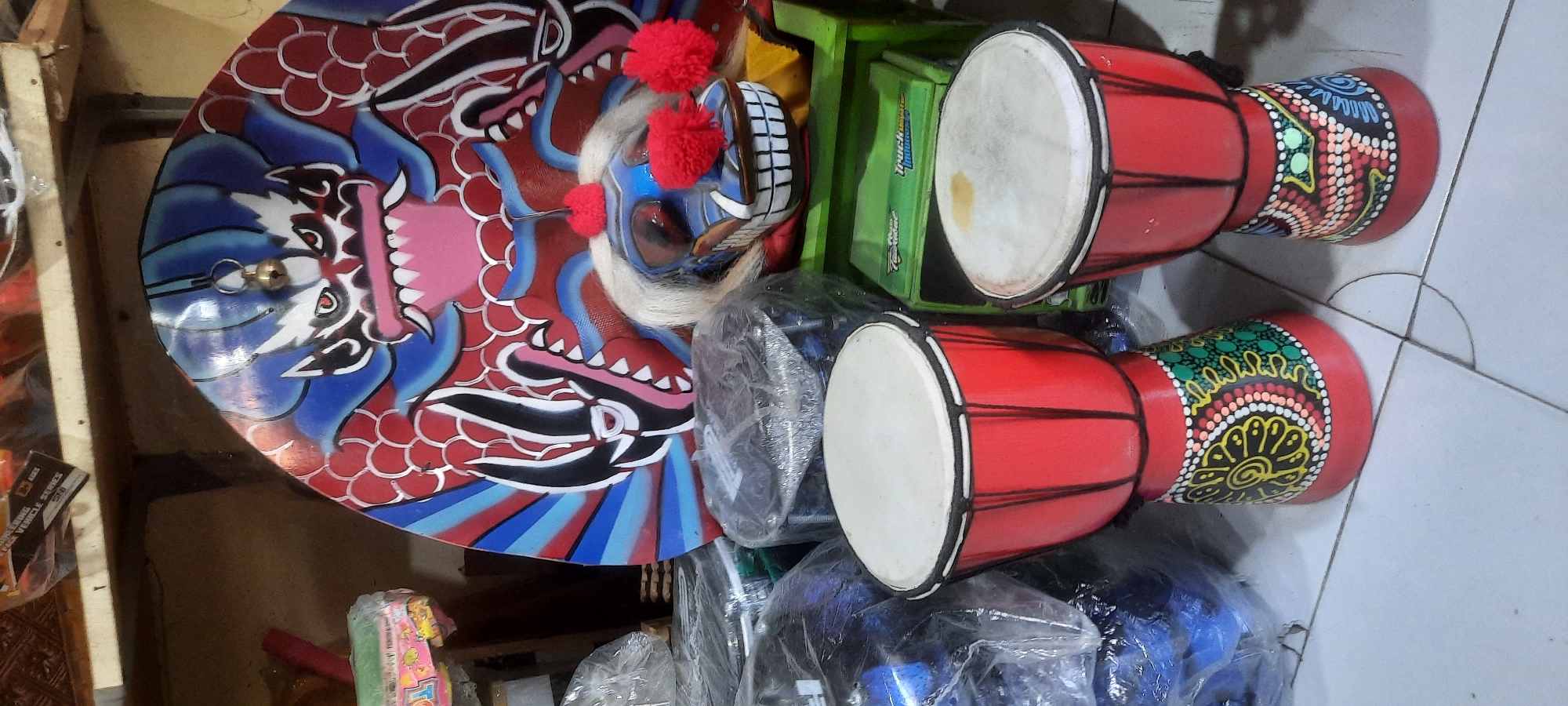
In Blitar, Indonesia, a close-up shot captures a collection of handcrafted items, likely for sale or display in a market or shop. Dominating the foreground are two red djembe drums, each adorned with intricate, colorful dot patterns around their bases. The drum on the left is slightly taller and features a mandala-like design with yellow, green, pink, and white dots, while the drum on the right has a more abstract pattern with similar colors. Behind the drums, a large, vibrant mask with a fierce, dragon-like face painted in red, blue, and black is propped up. This mask has a prominent golden bell attached to its forehead. To the right of the mask, a smaller, blue and white mask with a similar fierce expression and decorated with fluffy red pom-poms rests on a green shelf. The background reveals stacks of items wrapped in plastic, possibly musical instruments or other merchandise, and a glimpse of shelving with various objects. The scene is set against a tiled floor, indicating an indoor setting.
Blitar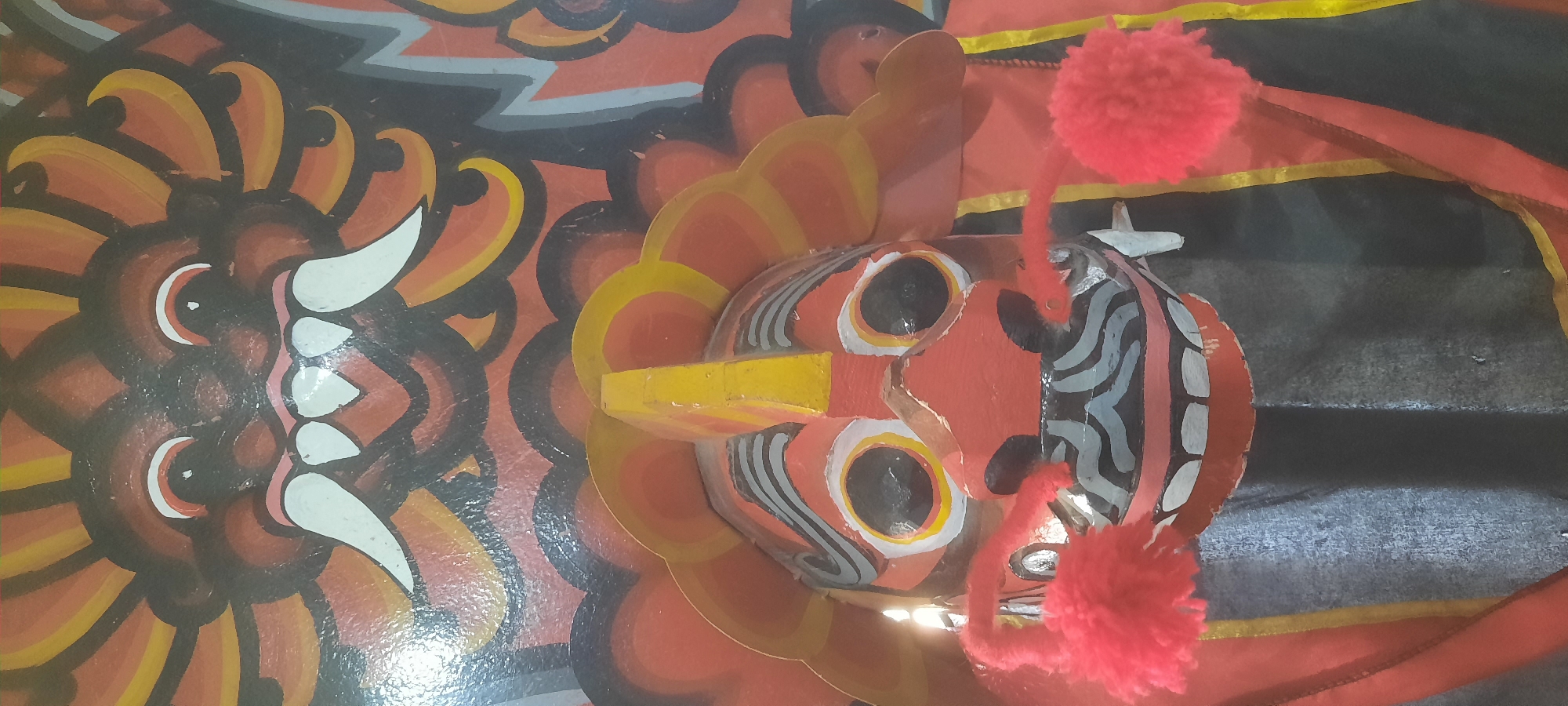
The image shows a close-up of a brightly painted traditional mask, likely a Barong mask from Balinese culture, displayed in an indoor setting. The mask is predominantly red with black, white, and yellow accents. It features large, circular eyes with white and yellow rings, a wide open mouth with sharp white teeth, and a protruding nose. Two fluffy red pom-poms are attached to the sides of the mask, serving as decorative elements or perhaps symbolic whiskers. The mask is positioned against a backdrop of similar colorful, stylized painted elements, suggesting it is part of a larger decorative display or a traditional costume. The lighting in the image is somewhat diffused, with a bright light source creating a slight glare on the mask's surface. The specific location in Blitar, Indonesia is not discernible from the visual information provided in the image.
Blitar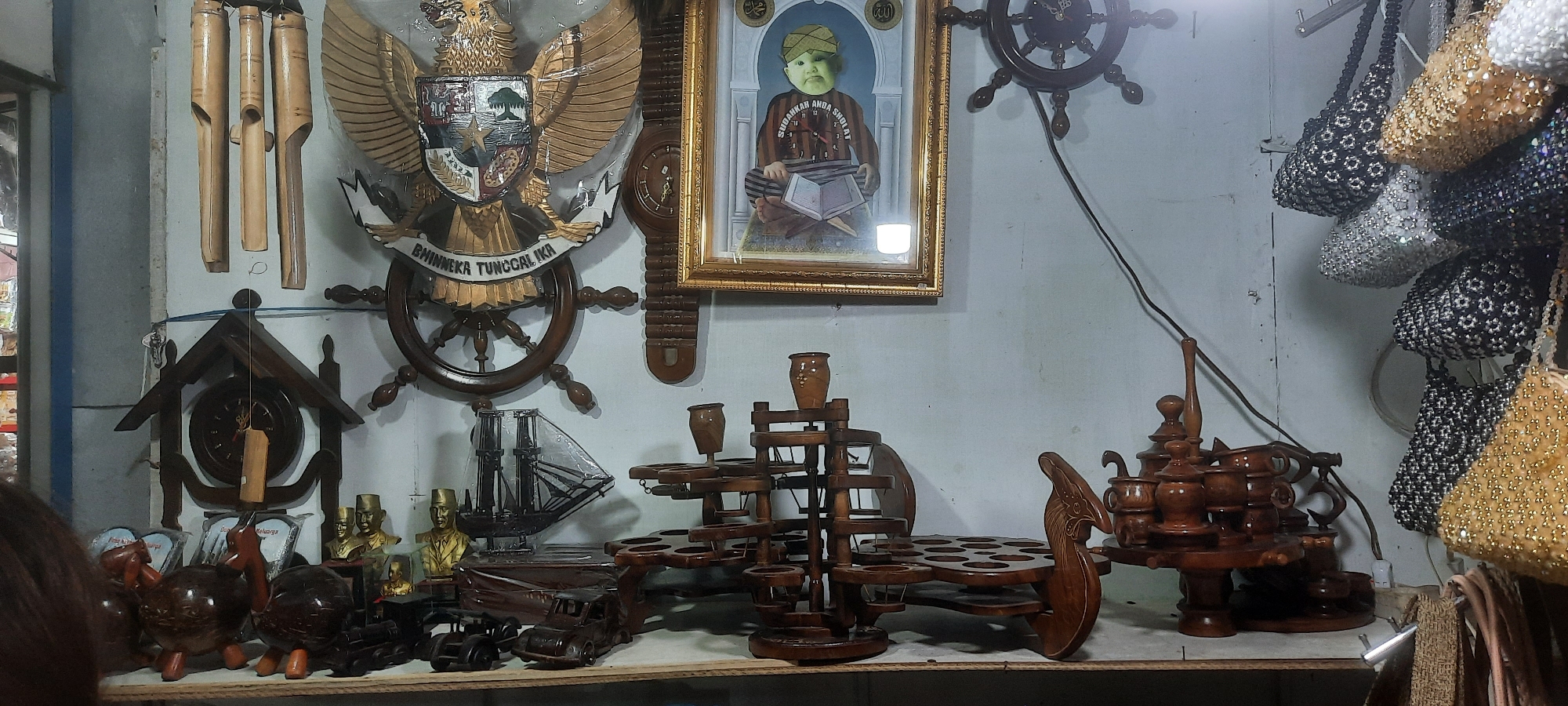
The image depicts a cluttered stall or shop interior, likely in Blitar, Indonesia, showcasing a variety of handcrafted items. Dominating the left side of the frame is a large wooden Garuda symbol, the national emblem of Indonesia, with the motto "BHINNEKA TUNGGAL IKA" visible beneath it. To the right of the Garuda is a framed portrait of a child wearing traditional attire and holding a book. Various wooden decorative items are displayed, including a ship model, several small carved animals, and what appear to be ornate wooden racks holding small containers, possibly for tea or spices. Several beaded bags, in black, white, and gold, hang from a rail on the right side of the image, suggesting they are also for sale. A wooden clock is mounted on the wall above the Garuda. The lighting suggests it is daytime, with the stall appearing to be indoors, possibly an open-air market stall or a shop. No people are clearly visible in the scene, though a sliver of someone's dark hair is present at the bottom left corner. The overall impression is of a vibrant, artisanal marketplace.
Blitar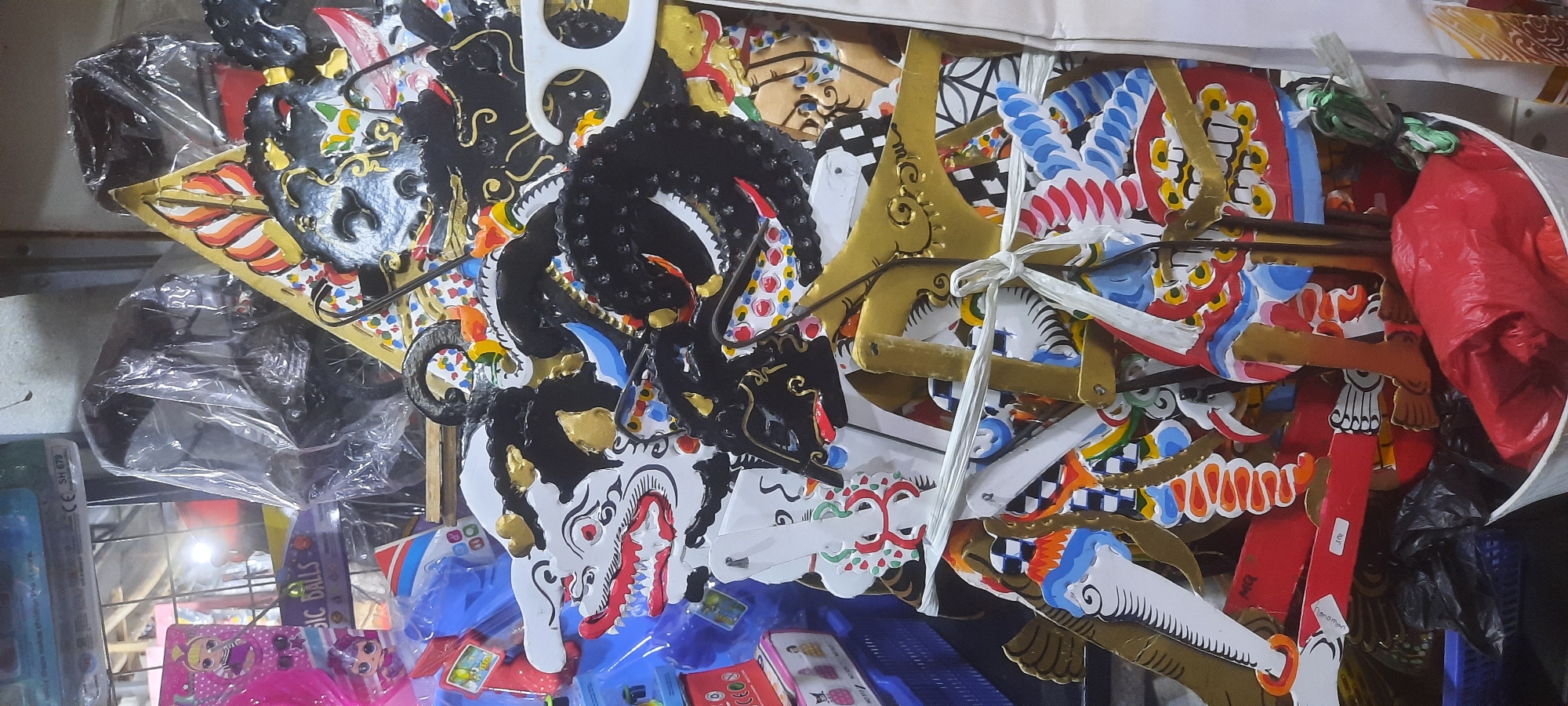
The image depicts a close-up view of a collection of Wayang Kulit puppets, a traditional form of Indonesian puppetry, displayed in what appears to be a shop or market stall. The puppets are made of intricately painted leather and are characterized by their vibrant colors and detailed designs, featuring mythical figures with exaggerated features such as sharp teeth, elaborate headdresses, and expressive eyes. Several puppets are visible, including figures with white, black, and gold coloration. One prominent puppet on the left has a white face with red eyes and a red mouth displaying sharp teeth, a black mane, and gold accents on its headdress. To its right, another puppet has a predominantly black face with intricate gold detailing and a coiled headdress. Other puppets, partially obscured, display colorful patterns, including checkered designs, and red and blue embellishments. The puppets are arranged in a vertical stack, with some appearing to be held together by white string. Wooden rods, used to manipulate the puppets, are visible protruding from some of them. In the background, glimpses of other items are visible, including what looks like plastic packaging, a blue plastic crate, and possibly other toys or merchandise. There are also red and black plastic bags at the bottom of the frame, suggesting the puppets are either stored or displayed in a retail environment. The scene is brightly lit, highlighting the details of the puppets. The overall impression is one of a vibrant cultural display, likely in a location that sells traditional Indonesian crafts. The presence of "CE SH 679" on a label in the upper left corner indicates a product certification, suggesting that these items are for sale. While the image does not explicitly state the location within Blitar, Indonesia, the style of the puppets strongly suggests they are of Javanese origin, a common art form in the region. The overall setting appears to be indoors, possibly a market or a specialized shop selling cultural artifacts.
Blitar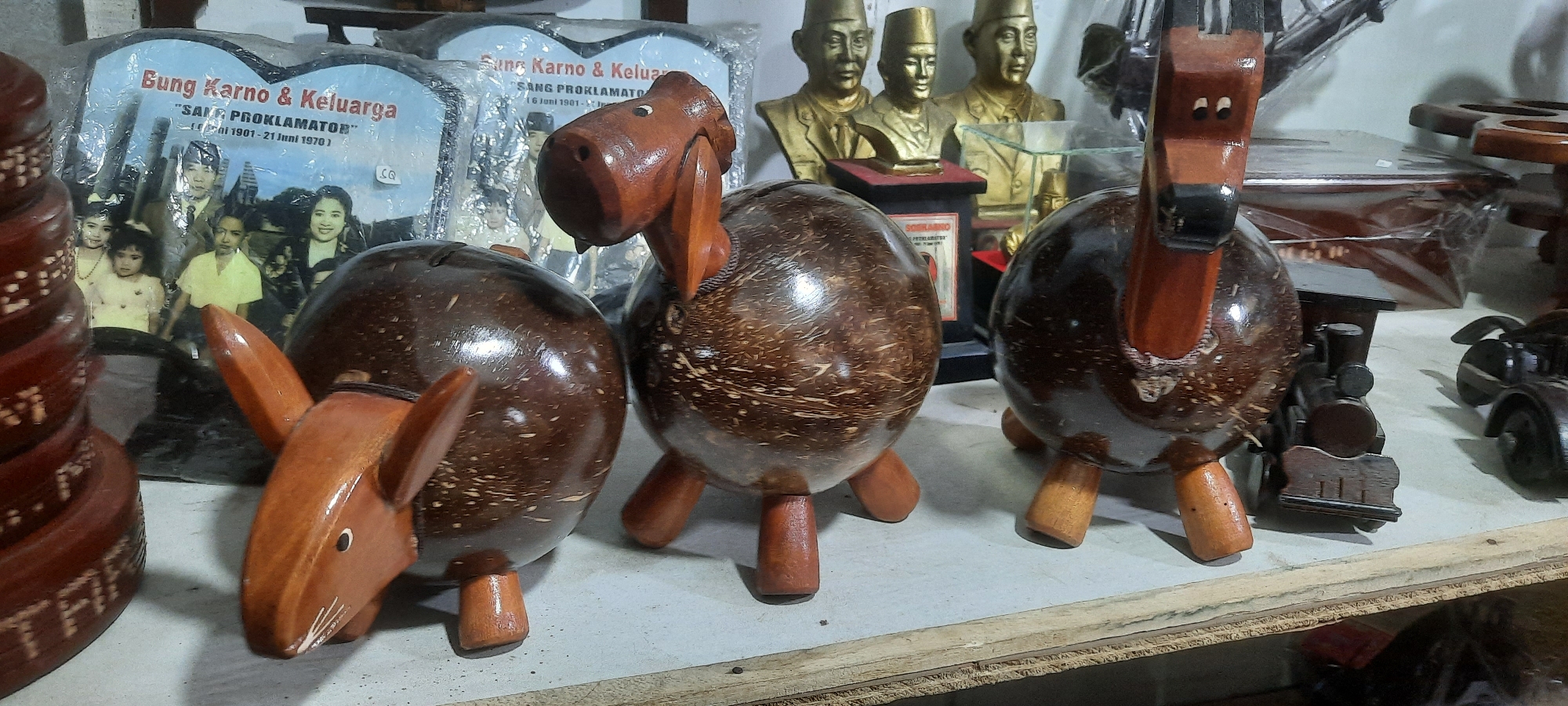
The image depicts a close-up of several wooden handicraft items displayed on a shelf. In the foreground, there are three animal-shaped objects made from coconuts and wood. The leftmost object appears to be a donkey with wooden ears and legs attached to a coconut body. To its right, a horse-shaped figure is made from a coconut body with wooden legs and a wooden head and neck. The third animal, also a horse, is situated on the right side of the frame, with a similar construction of coconut body and wooden extremities. In the background, there are framed pictures and busts. One framed picture on the left shows a family portrait, with text that appears to read "Bung Karno & Keluarga" and "SAM PROKLAMATOR". Behind the animal figures, several golden busts of men in traditional hats are visible, possibly historical figures. A small wooden train is positioned to the right of the horse figures, and further to the right, a partial view of a wooden car can be seen. The overall setting suggests a handicraft shop or market stall. The image does not provide any specific visual cues that would allow for the precise location within Blitar, Indonesia, to be determined.
Blitar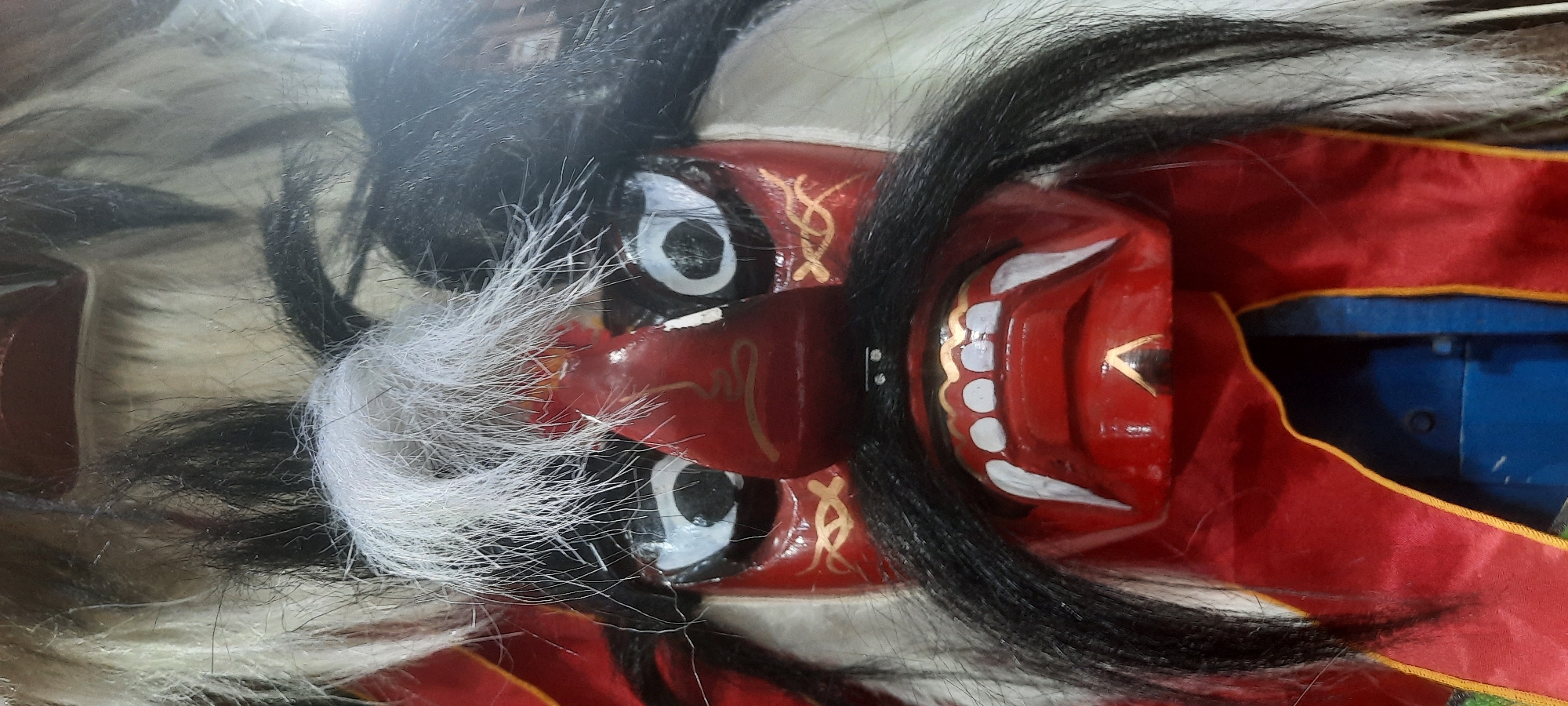
A close-up, head-on shot shows a red, carved wooden mask with a fierce expression. The mask has large, white-rimmed black eyes with pointed inner corners. The nose is prominent and red, with thin gold markings on the bridge and sides. A thick, black mustache with a slight curl at the ends covers the upper lip. The mouth is open, revealing rows of white teeth, with two sharp, fang-like teeth protruding from the upper jaw. The mask is adorned with gold decorative patterns around the eyes and mouth. A sparse, white, spiky fringe runs across the forehead, with black hair cascading down the sides and back. The mask is partially obscured by red fabric with a gold trim, and a glimpse of blue material is visible beneath. This mask is likely an exhibit or prop from a cultural performance in Blitar, Indonesia, possibly related to traditional Javanese theater or dance.
Blitar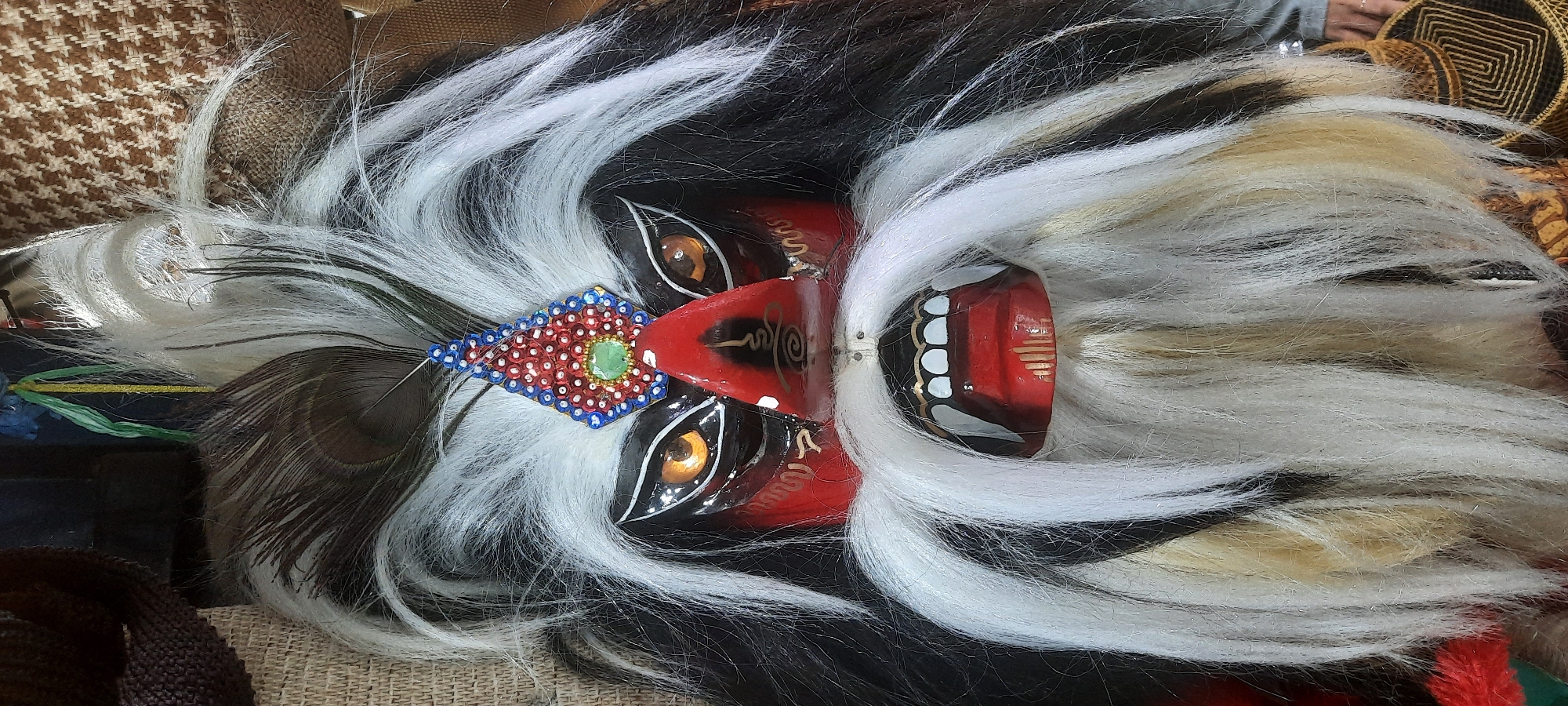
The image is a close-up, head-on shot of a mask with a fierce expression. The mask has large, orange eyes with black pupils and black outlines. The face is primarily red, with black markings around the eyes and nose. The nose is a prominent red structure with swirling gold markings on it. The mouth is open, revealing white teeth and fangs, with the tongue also painted red. A large white beard and prominent white eyebrows frame the face. Black and white hair, made of what appears to be synthetic fibers or animal hair, sprouts from the top and sides of the head, with a few peacock feathers visible near the top. A decorative headdress with red and blue sequins and a green jewel is centered on the forehead. The background is blurred, but appears to be composed of textured fabrics in brown and beige tones, suggesting the mask may be displayed or stored. There are no visible people or specific environmental details that would indicate a location within the city of Blitar, Indonesia.
Blitar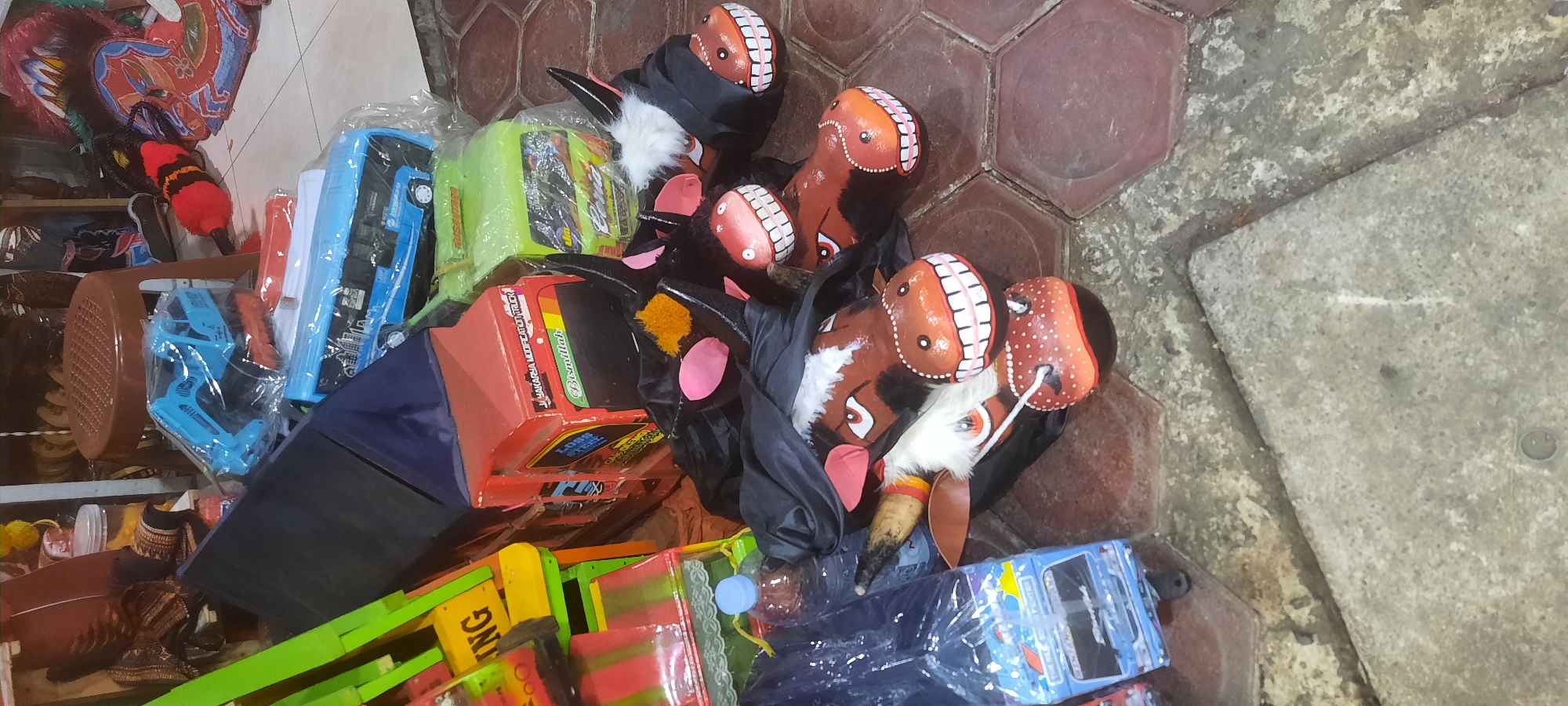
This image depicts a collection of traditional Indonesian "kuda lumping" horse masks and toy trucks displayed outdoors on a tiled surface, likely a street or market stall. The masks are elaborately decorated with painted faces, resembling horses or mythical creatures, and some are covered with black fabric. They are arranged in a group, with some appearing to be for sale. Several toy trucks, including a blue bus and a red truck, are also visible, some of them packaged in plastic. The environment suggests a bustling commercial area, possibly in Blitar, Indonesia, given the context of the kuda lumping tradition. The lighting and arrangement of objects indicate that this is a daytime scene. There are no people clearly visible in the frame.
Blitar
The video shows an indoor market scene with two women. The woman on the right is wearing a black hijab and a dark long-sleeved shirt, standing behind a stall laden with various packaged snacks and candies. She appears to be attending to the stall. The woman on the left is wearing a light brown hijab and a dark long-sleeved shirt, and she is browsing the items on the stall, reaching out to pick up a package. The stall is filled with numerous plastic-wrapped food items arranged on shelves and in containers. The background shows more shelves with packaged goods and fluorescent lighting. The environment appears to be a small shop or a market stall.
Blitar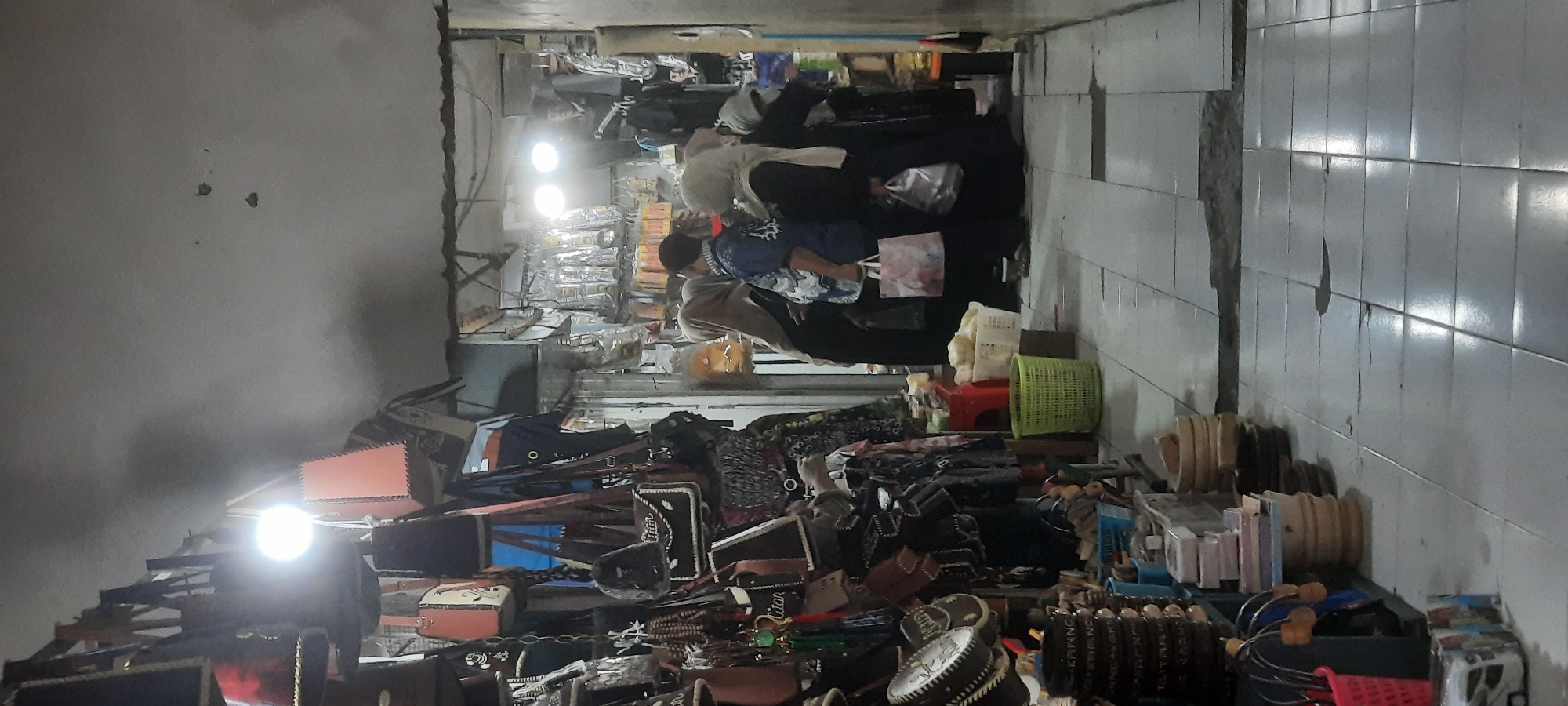
The image depicts an indoor market stall in Blitar, Indonesia, likely focused on selling bags and accessories. A variety of bags, made from different materials such as leather, are displayed hanging from the ceiling and on racks. Some bags are plain, while others have decorative elements or patterns. There are also smaller accessories like tassels and beaded items visible. In the background, a group of people are gathered near a stall. Several individuals are wearing headscarves, suggesting a conservative cultural setting. One person, a male, is wearing a blue patterned shirt and appears to be interacting with the other shoppers. Two women, also wearing headscarves, are holding shopping bags. The stall behind them is filled with various items, possibly electronics or small personal accessories, displayed in clear packaging. The environment appears to be a narrow passageway within the market, with a tiled floor that shows some signs of wear and tear. Lighting in the scene comes from overhead bulbs, casting a warm glow on the merchandise and the shoppers. To the left of the frame, more merchandise is stacked, including wooden items that appear to be hand-carved and some boxed items. A red basket is also visible. The overall impression is of a bustling, somewhat crowded market setting.
Blitar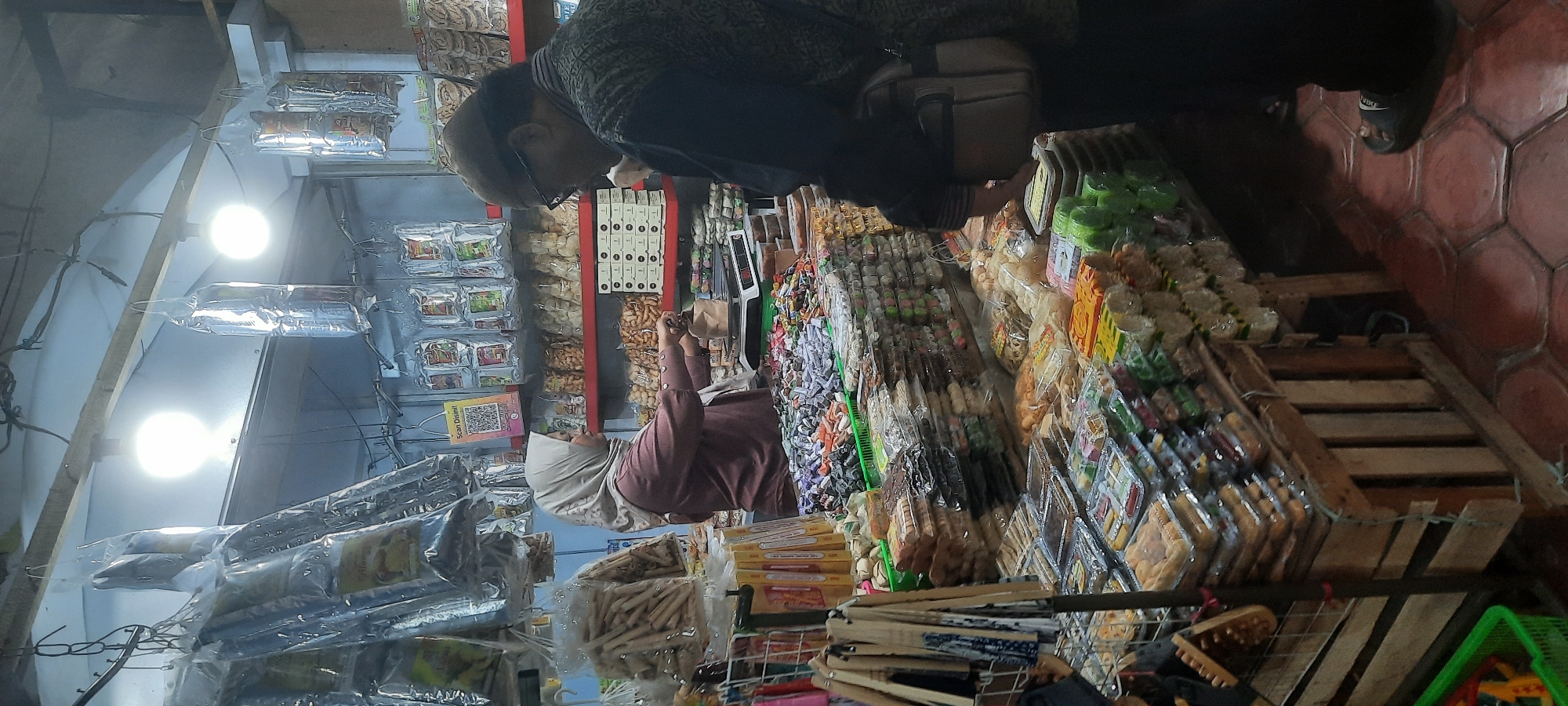
In the city of Blitar, Indonesia, a vendor wearing a light-colored hijab and a mauve shirt is operating a scale at a market stall. She is seen interacting with a customer, a man with glasses and a dark patterned shirt, who is facing away from the camera and appears to be observing the transaction. The stall is filled with various food items, including an abundance of individually wrapped candies and snacks displayed in clear plastic packaging. Some items are also hanging in larger plastic bags from the stall's overhead structure. The overall environment suggests a busy market setting, with a focus on confectionery and packaged snacks. The flooring consists of hexagonal tiles.
Blitar
This is a close-up, shaky, handheld video of a market stall piled high with packaged snacks and sweets. The items are predominantly in plastic packaging, with some in cardboard boxes. The snacks appear to be a mix of cookies, wafers, and other dried or fried treats. Several prominent packages of "Mochi" snacks are visible, some with images of milk and chocolate. The stall is crowded with merchandise, creating a dense visual display of food items. The lighting is somewhat dim, with bright highlights reflecting off the plastic packaging. There are no people clearly visible in the frame, and no actions or interactions are captured.
Blitar