Cádiz, Spain
30 memories from Cádiz, Spain
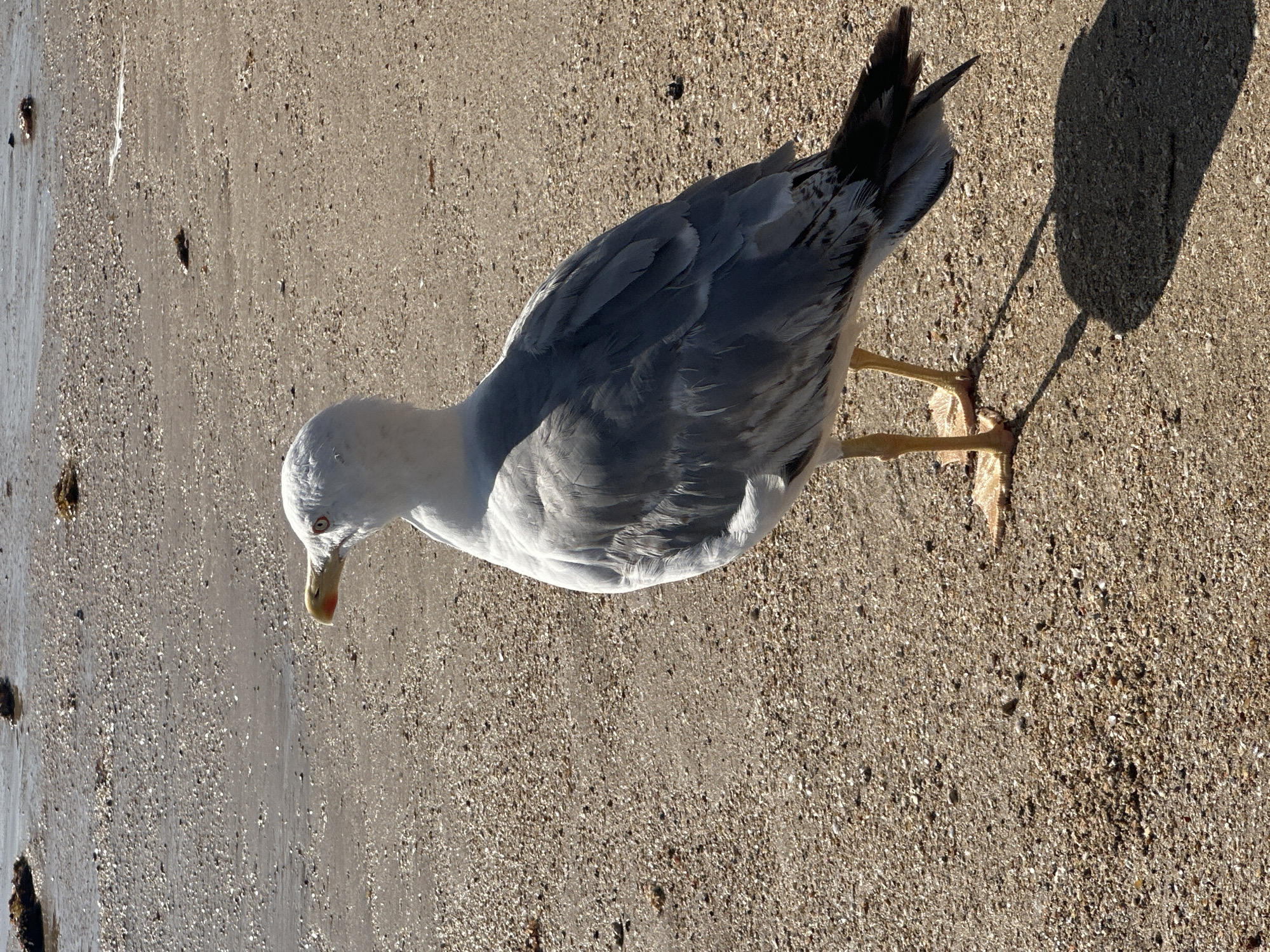
A lone seagull stands on a wet, sandy beach, facing left. Its white head and neck contrast with its grey wings and black-tipped tail. The bird's yellow legs are visible, casting a shadow on the sand. The background shows shallow water with small pieces of seaweed and debris. The location is La Caleta beach in Cádiz, Spain.
Cádiz
A seagull is walking across a sandy area. The seagull is white with gray wings and yellow legs and feet. Its beak is yellow with a red tip. The sun is casting a shadow of the seagull on the sand. The video is shot from a medium distance, capturing the seagull's full body and its movements. The background is out of focus, emphasizing the seagull as the main subject. The lighting suggests it is daytime, likely outdoors. The seagull appears to be moving from left to right in the frame.
Cádiz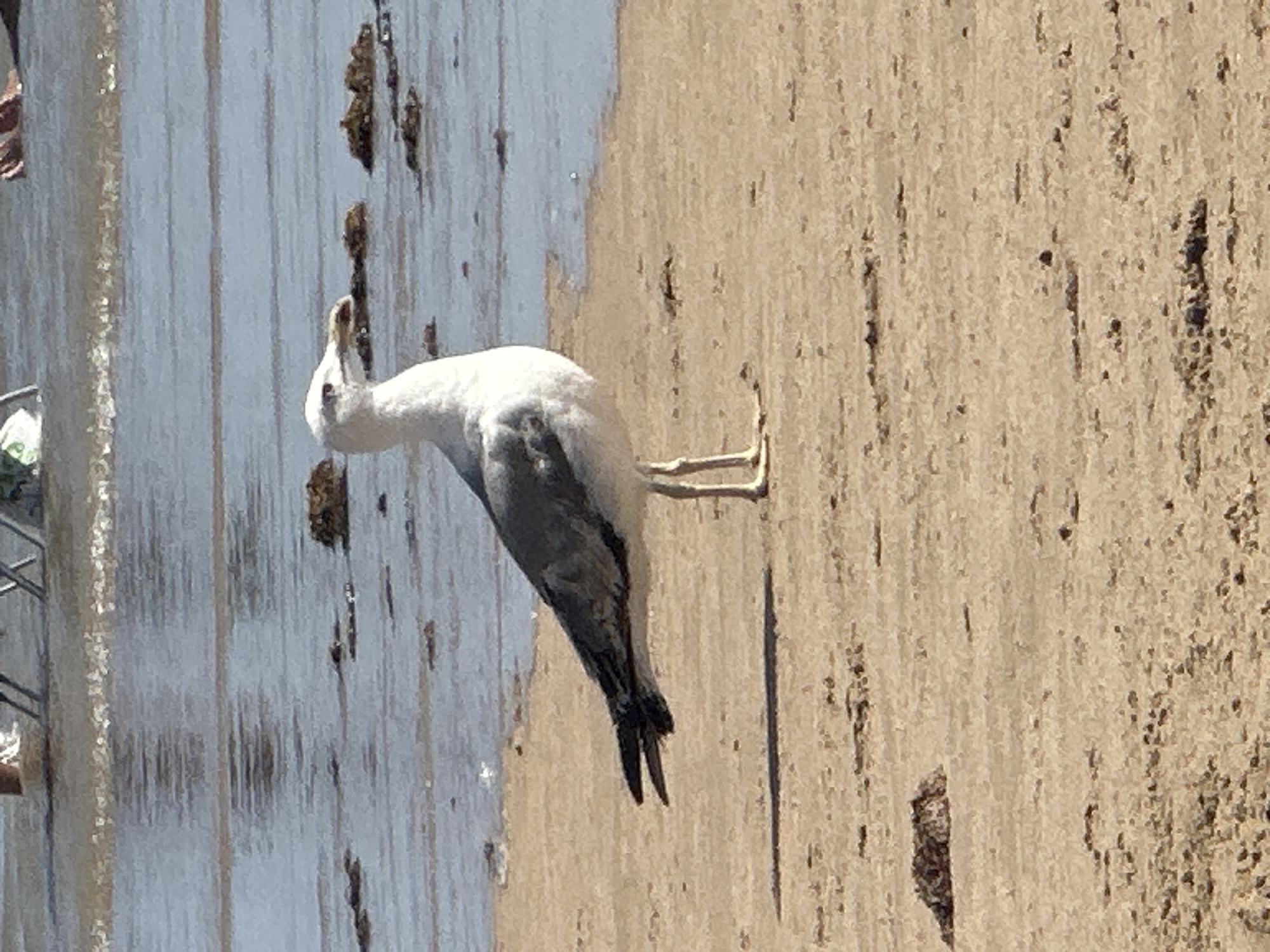
A seagull stands on a sandy beach in Cádiz, Spain, facing right. The bird is mostly white with grey on its back and wings. Its beak is yellow with a red tip, and its legs are yellow. The background shows shallow, rippling water with a few scattered rocks or debris. The sand in the foreground and mid-ground is textured with small pebbles and debris. In the upper background, out of focus, are hints of people and beach furniture, suggesting a public beach.
Cádiz
The image captures a person from behind, with their back and buttocks to the camera. They are wearing a light-colored bikini and are standing on a sandy beach, with the ocean in the background. The water is reflecting sunlight, creating a shimmering effect. The sky is clear and blue. The person has dark hair and appears to have tattoos on their back and arm. Their head is tilted back, and they are looking up towards the sky. The angle of the shot emphasizes their posture and the curves of their body. The scene suggests a relaxed and leisurely day at the beach. The bright sunlight indicates it is likely daytime, possibly mid-morning or afternoon. The presence of other figures in the water in the distance suggests it is a public beach. The image is oriented vertically, with the person's head towards the left of the frame and their feet towards the right. The sand occupies the right side of the image, transitioning to the water and then the sky on the left.
Cádiz
Two seagulls stand on a sandy beach near the ocean. The seagull in the foreground is facing away from the camera, looking towards the water. The second seagull is further back, also facing the water. The ocean waves are breaking gently in the background, and sunlight glints off the water's surface. Some seaweed is visible on the wet sand near the birds. The overall lighting suggests it is daytime.
Cádiz
The video shows a seagull standing on a sandy beach near the water. The seagull is facing away from the camera initially, then turns to its side. The water is visible in the background with small waves and sunlight glinting off the surface. Some dry seaweed is scattered on the sand in front of the bird.
Cádiz
The video depicts a beach scene in Cádiz, Spain. The main subjects are a seagull standing in shallow water and a person swimming in the ocean in the background. The seagull is facing away from the camera, pecking at the water. The person in the background is visible as a dark silhouette in the wavy ocean. The setting is a sandy beach with the ocean in the background. The water is a clear blue-green and appears to have small waves breaking on the shore. The sand in the foreground is light brown and appears wet near the waterline. There are some small dark clumps of seaweed or debris scattered on the sand. The lighting suggests it is daytime, likely a sunny day due to the bright reflections on the water. The overall mood is peaceful and relaxed, typical of a beach environment. No text is visible in the video.
Cádiz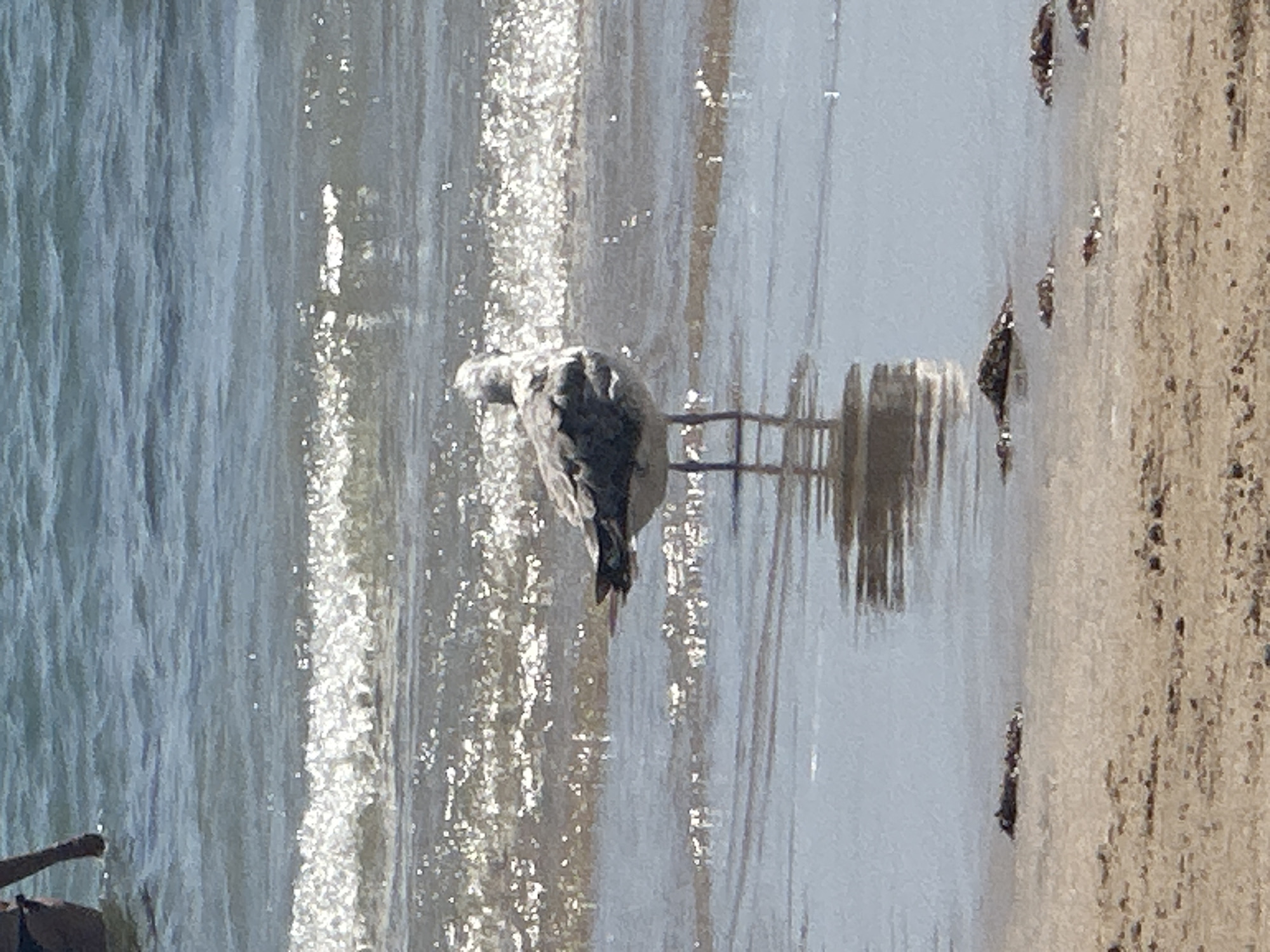
A seagull stands in shallow water on a sandy beach. The seagull is facing away from the camera, with its back to the viewer. Its feathers are a mix of grey and white, and it has dark legs. The water is clear and reflects the sunlight, creating a shimmering effect. In the background, waves can be seen breaking on the shore. To the left of the seagull, a person's legs are visible, wading in the water. The beach is made of light-colored sand, with a few small rocks and debris scattered along the waterline. The scene appears to be a sunny day at the coast. Based on the commonality of seagulls and beach scenes, this could be any coastal area, but specific details to pinpoint it to Cádiz, Spain are not present in the image.
Cádiz
A seagull stands at the edge of the water on a sandy beach. The seagull is facing away from the camera, looking out at the ocean. Waves are breaking in the background. There are two people swimming in the ocean in the distance. The seagull dips its head and appears to be looking for food. The video is shot from a low angle, making the seagull appear to be the main subject of the video. The lighting is bright, suggesting a sunny day.
Cádiz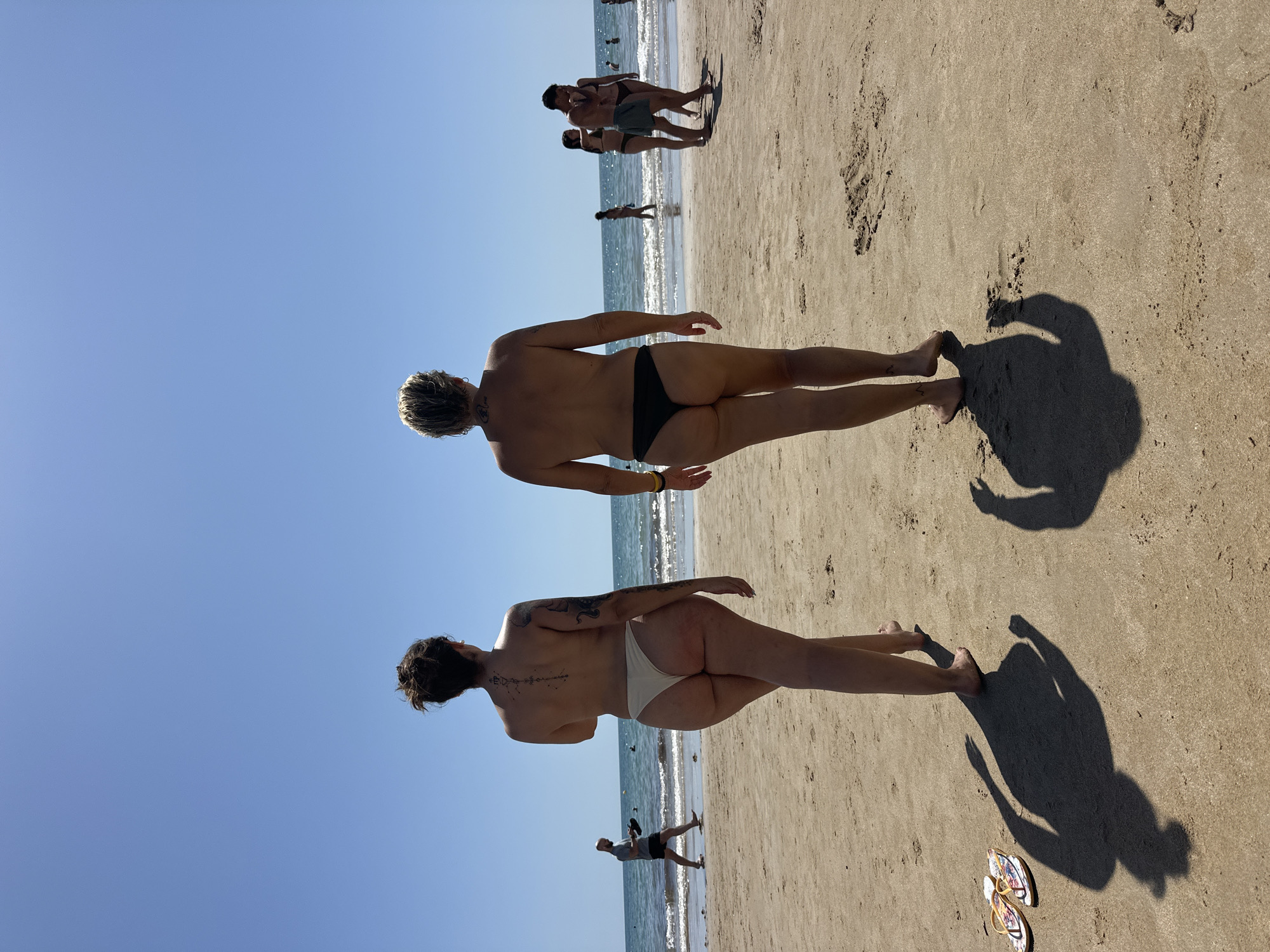
The image depicts a sunny day at a beach in Cádiz, Spain. Several people are visible on the sandy shore and in the shallow water. In the foreground, two women are facing away from the camera, both wearing swimsuits. The woman closer to the camera is in the process of adjusting her dark bikini bottoms, while the woman further back wears a white bikini bottom. Both women have tattoos. In the background, other beachgoers can be seen. A group of three people, two men and one woman, are standing near the water's edge. Another person is walking in the surf, and a man is seen further down the beach with a phone in his hand. The sky is clear and blue, indicating good weather. The tide appears to be relatively low, with wet sand closer to the water. The sun is casting long shadows, suggesting it is either early morning or late afternoon. The overall scene conveys a relaxed and casual atmosphere typical of a beach vacation. No text is visible in the image.
Cádiz
The image shows two people sunbathing on lounge chairs on a beach. The person in the foreground is lying on their back, with their torso and legs visible. They are wearing a dark bikini bottom and a gold necklace with a blue pendant. Their skin is tanned and glistening with oil. The person in the background is lying on their side, also sunbathing. They have tattoos on their arm and are holding a white cup with a straw. They are wearing a pink towel draped over their lap. The scene is set on a beach, with the sand visible in the background. The lighting suggests it is daytime, likely sunny. The overall mood is relaxed and leisurely. There is no visible text in the image.
Cádiz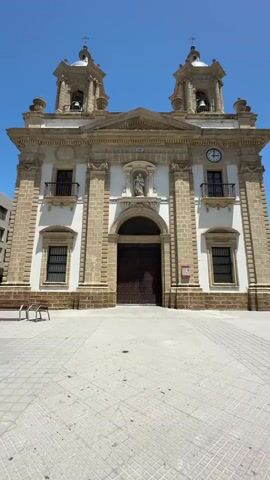
This is a vertical, eye-level shot of a large church facade on a bright, sunny day. The building is made of stone with white accents, and features two bell towers with domes at the top, each topped with a cross. In the center of the facade, above the large, dark wooden double doors, is a niche with a statue of a saint. Above the statue is an arched window, and a clock face is visible on the right side of the facade. There are balconies on either side of the central section. The ground in front of the church is paved with square tiles, and a couple of benches are visible to the left. A modern building can be seen to the far left of the frame. The sky is a clear, vibrant blue, indicating fair weather. The sun casts strong shadows, suggesting it is mid-day. The scene appears to be a public square in front of a place of worship in Cádiz, Spain. There are no people visible in the shot. There is a small pink sign on the right side of the building, but no text is legible.
Cádiz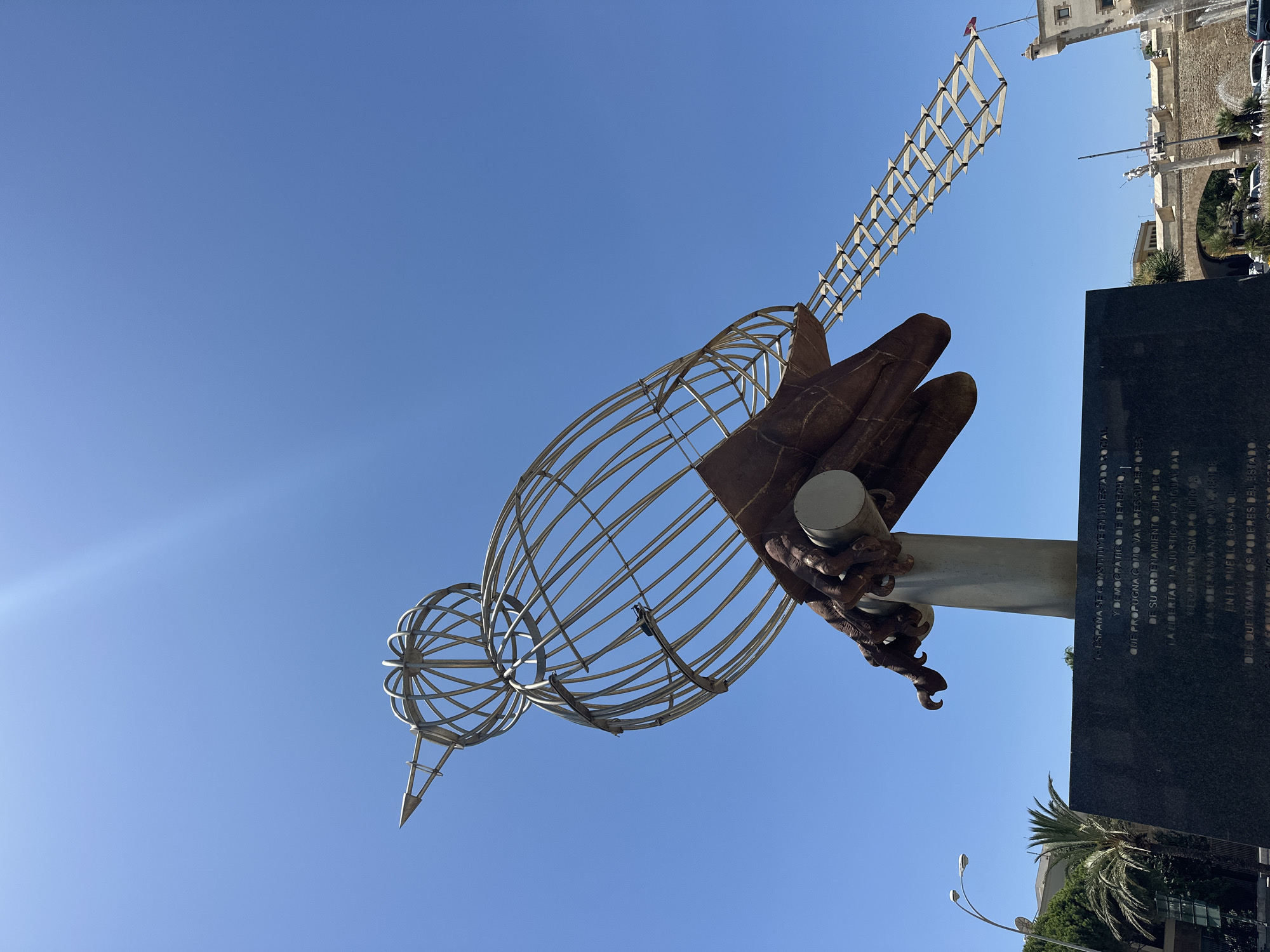
The image shows a large metal sculpture of a bird, viewed from below against a clear blue sky. The bird sculpture is made of wireframe and appears to be perched on a metal pole that is attached to a dark stone monument. The monument has text inscribed on it, though it is partially obscured by shadows and the angle of the photograph. The sculpture is located in the city of Cádiz, Spain, near a street with palm trees and other buildings in the background. There are no people visible in the frame.
Cádiz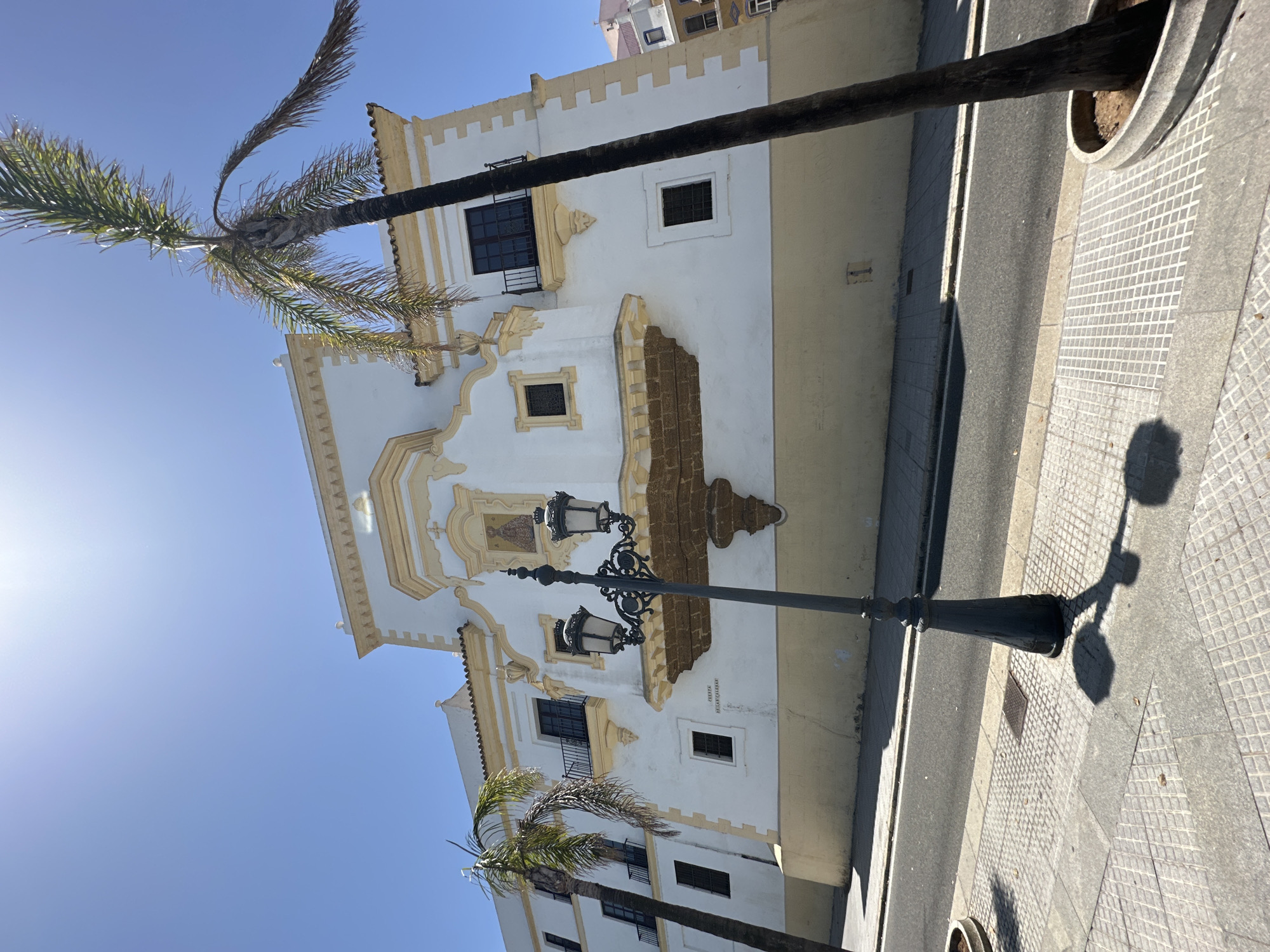
The image shows a street view of a building in Cádiz, Spain, on a bright, sunny day. The building is a white facade with yellow trim, featuring multiple windows and balconies. A decorative architectural element is prominent on the central part of the building, adorned with an image of a religious figure. In the foreground, a lamppost casts a long shadow on the sidewalk. Two palm trees are visible on either side of the building, one in the left foreground and the other to the right. The street is paved with asphalt, and the sidewalk is made of checkered tiles. The sky is a clear, bright blue. A sign on the building reads "Plaza de San Francisco".
Cádiz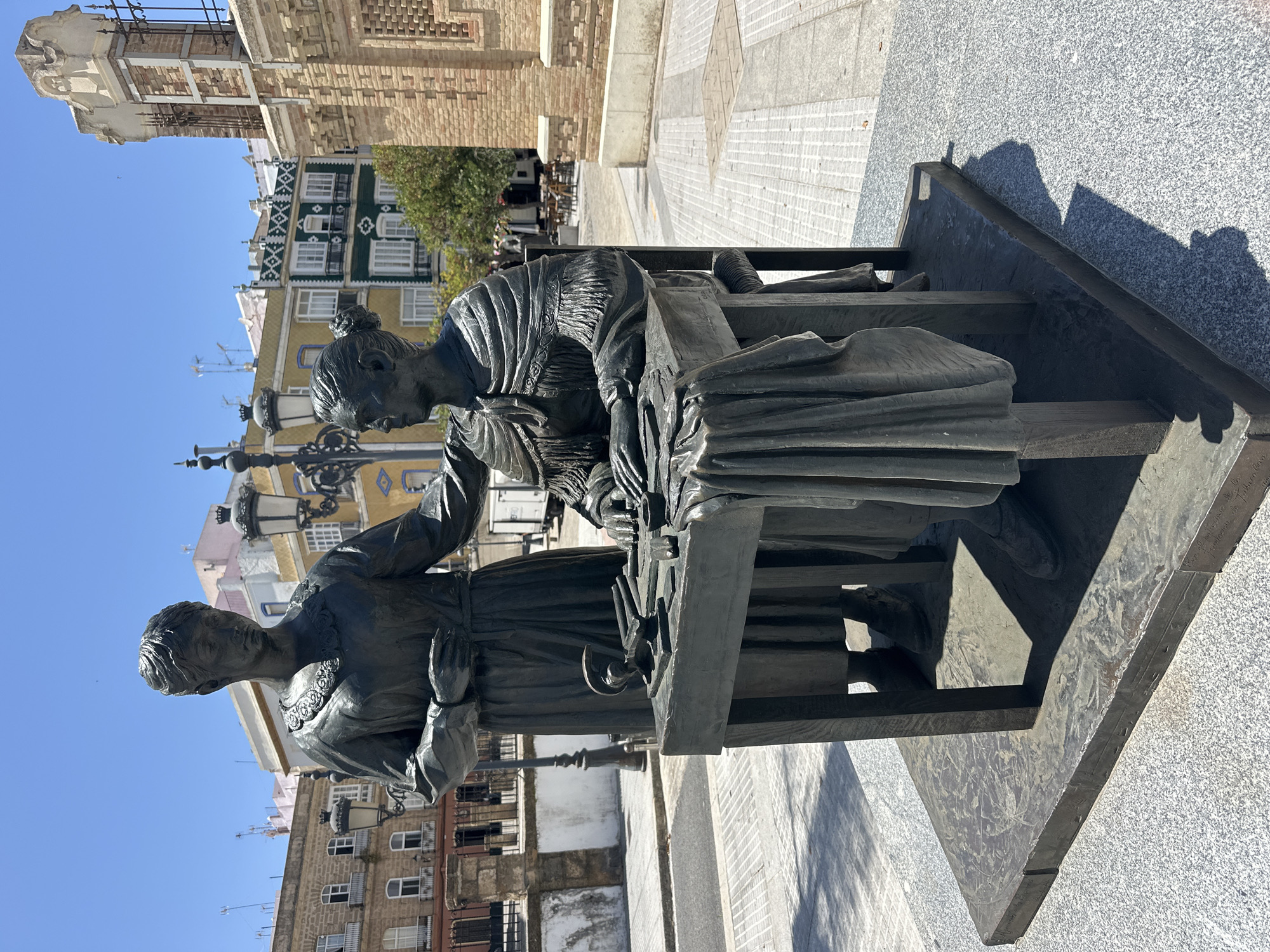
This is a bronze statue depicting two women, one standing and one seated at a table, in the Plaza de las Viudas in the city of Cádiz, Spain. The standing woman, dressed in a long gown, places her hand on the shoulder of the seated woman. The seated woman, also in historical attire, is engaged in sewing, with a sewing machine and other tools laid out on the table. The statue is positioned on a stone base in a paved plaza. In the background, there are colorful buildings typical of Cádiz architecture, lampposts, and a clear blue sky. The statue appears to be a memorial or artistic representation.
Cádiz
A red, open-top double-decker tour bus with the branding "Qecobus City Sightseeing Official Tour Worldwide" is parked on a city street. The bus is decorated with colorful images of various landmarks, including what appears to be the Parthenon, a pagoda, and a skyscraper. There are several passengers seated on the upper deck of the bus, enjoying the ride. In the background, trees and buildings suggest an urban environment. The street is paved, and a white line runs across it, indicating a pedestrian crossing or lane marking. To the left of the bus, a dark-colored SUV is visible. The sky is clear and blue, suggesting a sunny day. The license plate of the bus is partially visible as "1758 WSV". The image appears to have been taken in Cádiz, Spain, given the architectural styles depicted on the bus and the overall ambiance.
Cádiz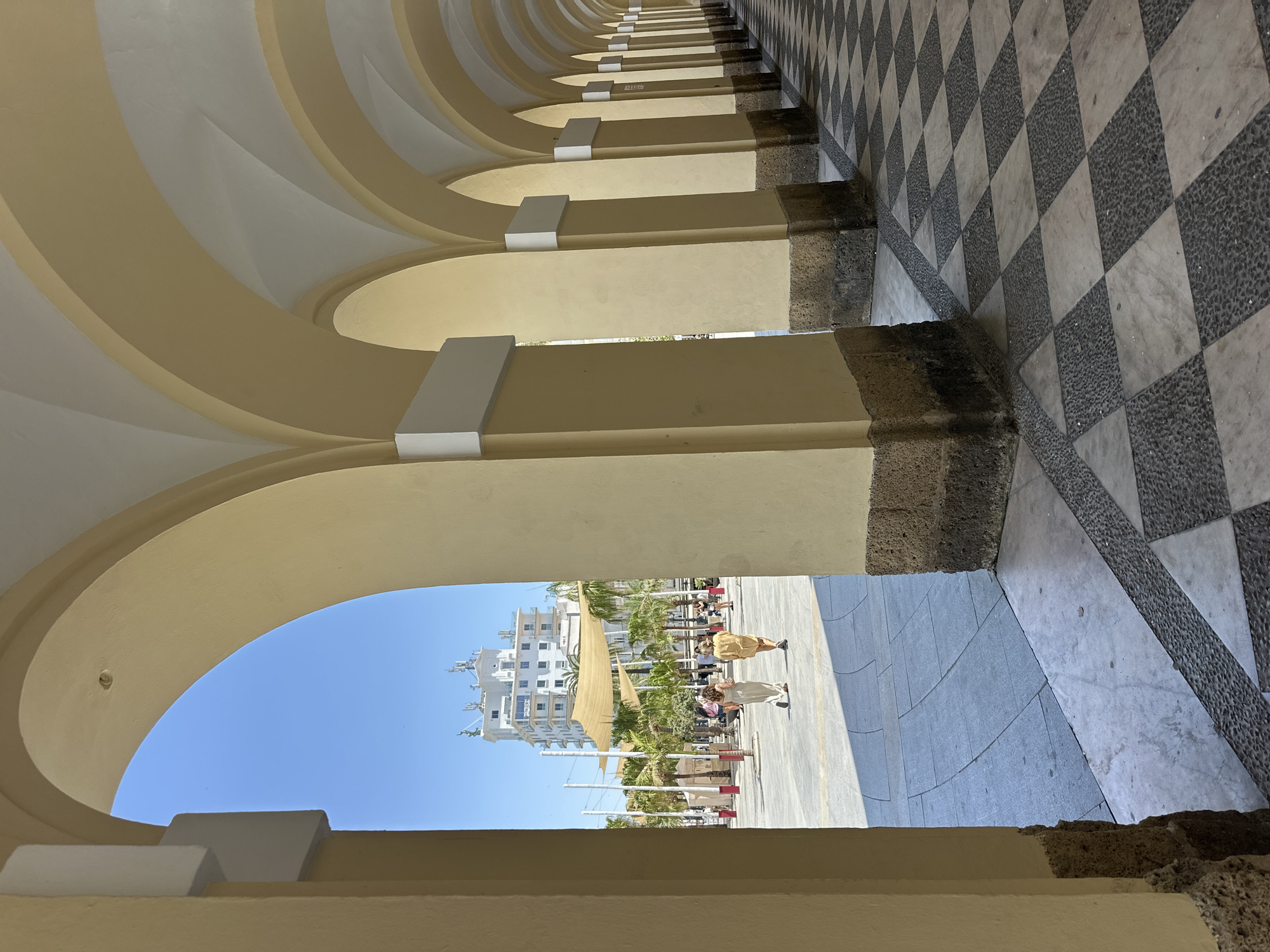
The image depicts a view through an arched portico with pale yellow columns and a checkered floor pattern of dark gray and white tiles. The portico extends into the distance, creating a sense of depth. Through the arches, a bright outdoor plaza is visible under a clear blue sky. Several palm trees are scattered across the plaza, along with people walking and standing. A prominent white building with multiple stories and balconies stands in the background, topped with antennas. Two women are walking away from the camera, towards the plaza. The architectural style and the presence of palm trees suggest a Mediterranean or southern European location, consistent with Cádiz, Spain. The lighting indicates it is daytime, likely with strong sunlight.
Cádiz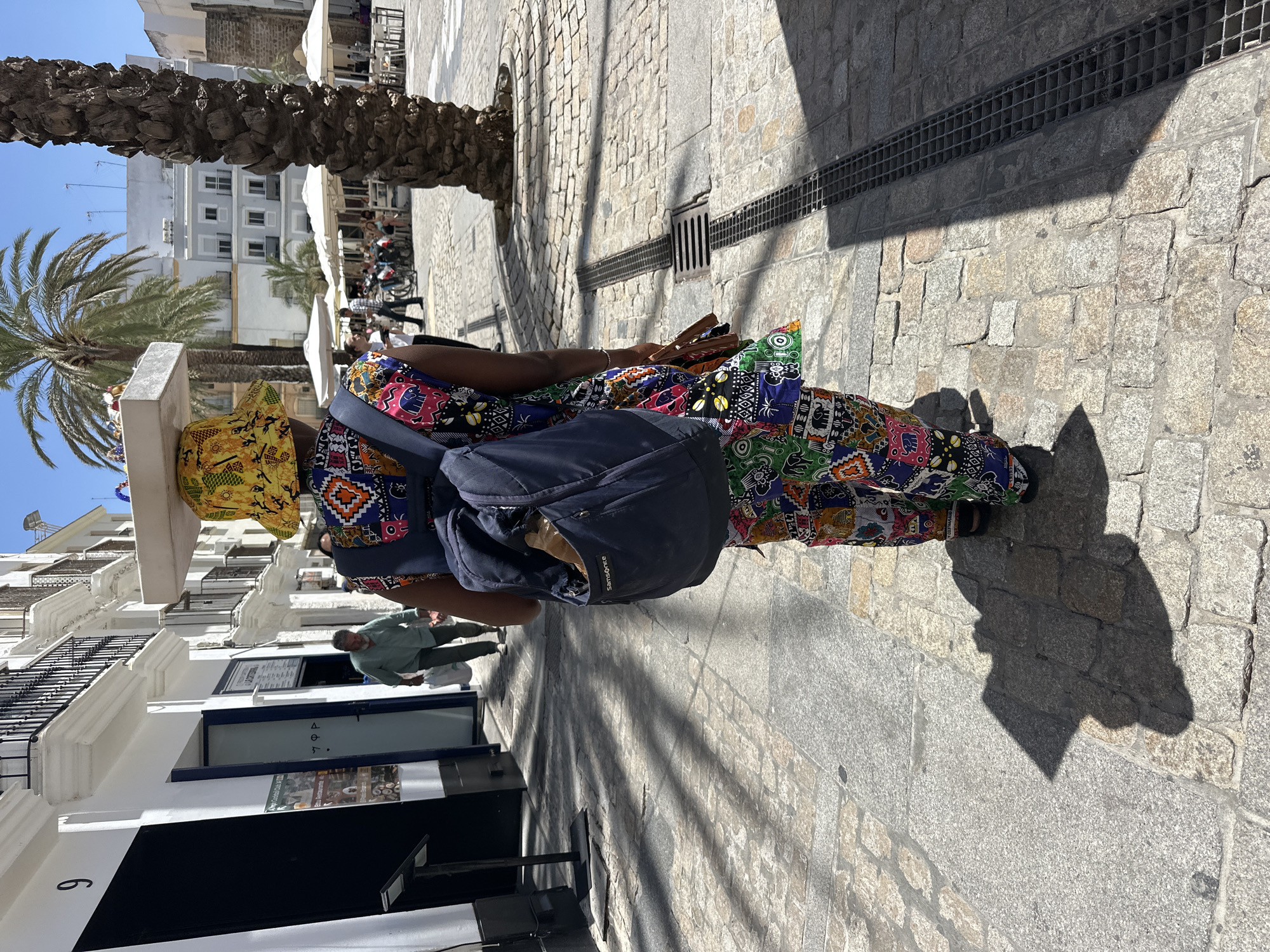
The image shows a rear view of a person walking on a cobblestone street in Cádiz, Spain. The person is wearing a colorful, patterned outfit with a yellow hat and a dark blue backpack. They are carrying a tray of items on their head. In the background, there are buildings with white facades and balconies, palm trees, and outdoor seating areas for a cafe or restaurant. The sun is casting shadows on the street. A man in a light green shirt is walking in the opposite direction. The scene appears to be a sunny day in a public square.
Cádiz
Two young women are dancing in a street in Cádiz, Spain. The woman on the left wears a white hat, a purple and pink patterned scarf over a purple top, and denim shorts. She has on a pair of white sandals. The woman on the right wears sunglasses, a purple short-sleeved shirt, and gray cargo shorts. She has on a pair of black sandals. The two women are in a side-by-side dance pose, facing each other with their arms raised and bent. Their bodies are angled, with their hips and legs extended to the side. The dance appears to be a spontaneous and joyful expression, possibly a form of street performance or a playful interaction between friends. The women's facial expressions are not clearly visible due to distance and sunglasses, but their posture suggests energy and engagement. The setting is a sun-drenched street paved with cobblestones. Behind the dancers is a building with a striped awning over shop windows. The building's facade is painted a pale pink. In the background, to the right, another woman is visible, holding a phone and seemingly filming the dancers. A street sign, or information board, is leaning against the building. The overall atmosphere is bright and lively, suggesting a warm, sunny day, typical of southern Spain. The time of day is likely midday or early afternoon, given the strong sunlight and shadows cast on the ground. No text is clearly visible in the media file.
Cádiz
The image shows a close-up view of two ornate, brass hand-shaped door knockers, each mounted on a dark wooden door panel. Below each knocker is a brass escutcheon plate with a keyhole. The hands are depicted in a fist-like gesture, with the fingers slightly curled. The brass has a polished finish, with some areas showing patina and tarnish. The wooden door appears to be made of vertical planks. This detail was captured on a door in the city of Cádiz, Spain.
Cádiz
Two men are playing acoustic guitars outside a store. The man on the left is bald, wearing a white t-shirt and dark shorts. He is sitting on a metal chair and playing a light brown acoustic guitar. A black guitar case is open on the ground in front of him, with a pack of cigarettes, two cell phones, and a pair of sunglasses on it. There is also a small black amplifier with orange trim behind him. The man on the right is wearing a dark t-shirt, shorts, and sunglasses. He is sitting on a black metal chair and playing a red acoustic guitar. A black guitar case is behind him. There is a water bottle on the ground in front of him. The ground is paved with cobblestones. The store behind them has large glass windows. Other people are walking by in the background. The scene appears to be on a sunny day.
Cádiz
A young man with dark hair, a beard, and sunglasses is playing a red acoustic guitar while sitting on a black folding chair outdoors. He is wearing a dark t-shirt and white shorts. A small black amplifier with red accents is positioned to his left. A guitar case rests on the ground next to the amplifier. The man is seated on a tiled walkway in front of a storefront with large glass windows. Several people are walking in the background on the street, and trees provide shade. The man is actively strumming and fretting the guitar, indicating he is performing.
Cádiz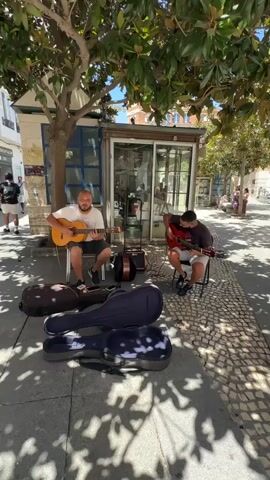
Two men are playing acoustic guitars on a sunny day, seated on chairs in front of a small kiosk. They are positioned on a cobblestone sidewalk lined with trees that cast dappled shadows. Three guitar cases are stacked on the ground in the foreground. The man on the left is wearing a white t-shirt and shorts, while the man on the right is wearing a dark t-shirt and shorts. In the background, other people are walking on the sidewalk, and buildings are visible. The overall setting appears to be a public outdoor space, possibly a street or plaza.
Cádiz
A sunny day outdoors with two men playing acoustic guitars on a sidewalk in front of shops. The man on the left is wearing a white t-shirt and dark shorts and is seated on a red chair. The man on the right is wearing a dark t-shirt and shorts and is seated on a folding chair. Their guitars are visible. There are bags on the ground near them, possibly for donations. Behind them, there is an ice cream shop with colorful signage. A few other people are in the background, including a man standing near the ice cream shop entrance. A woman is partially visible in the foreground on the right side of the frame, holding a white bag. The ground is paved, and there are trees providing shade.
Cádiz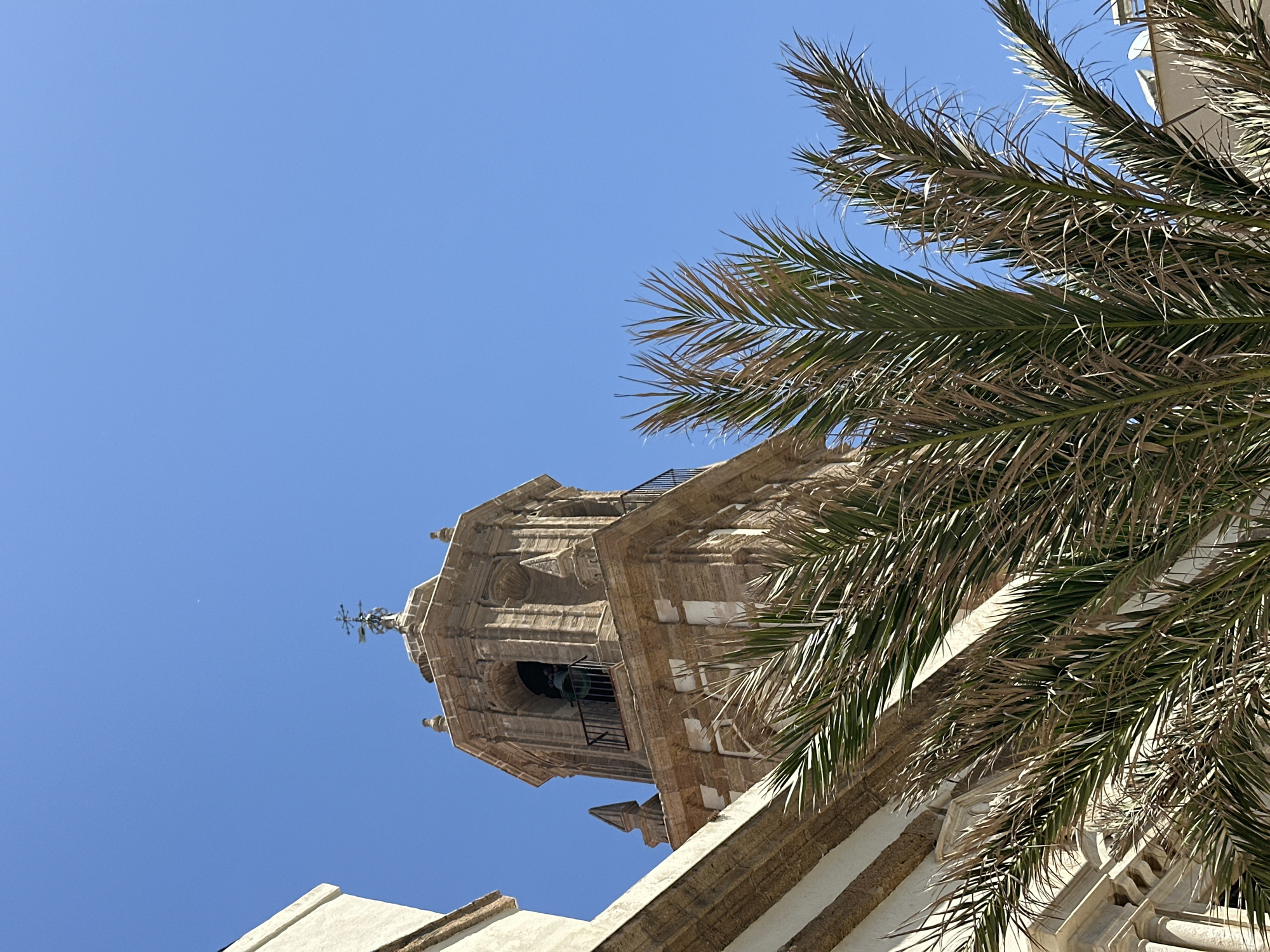
The image shows a low-angle view of a church bell tower in Cádiz, Spain, against a clear blue sky. In the foreground, a palm tree with green and brown fronds partially obscures the lower section of the tower. The tower is made of stone, with architectural details such as arches, decorative carvings, and small finials. A bell is visible through one of the arched openings, and a black metal railing surrounds a balcony on the tower. A weather vane with a cross sits atop the tower. To the left, a portion of an adjacent building with white and stone facades is visible. The overall scene depicts a sunny day in an urban setting.
Cádiz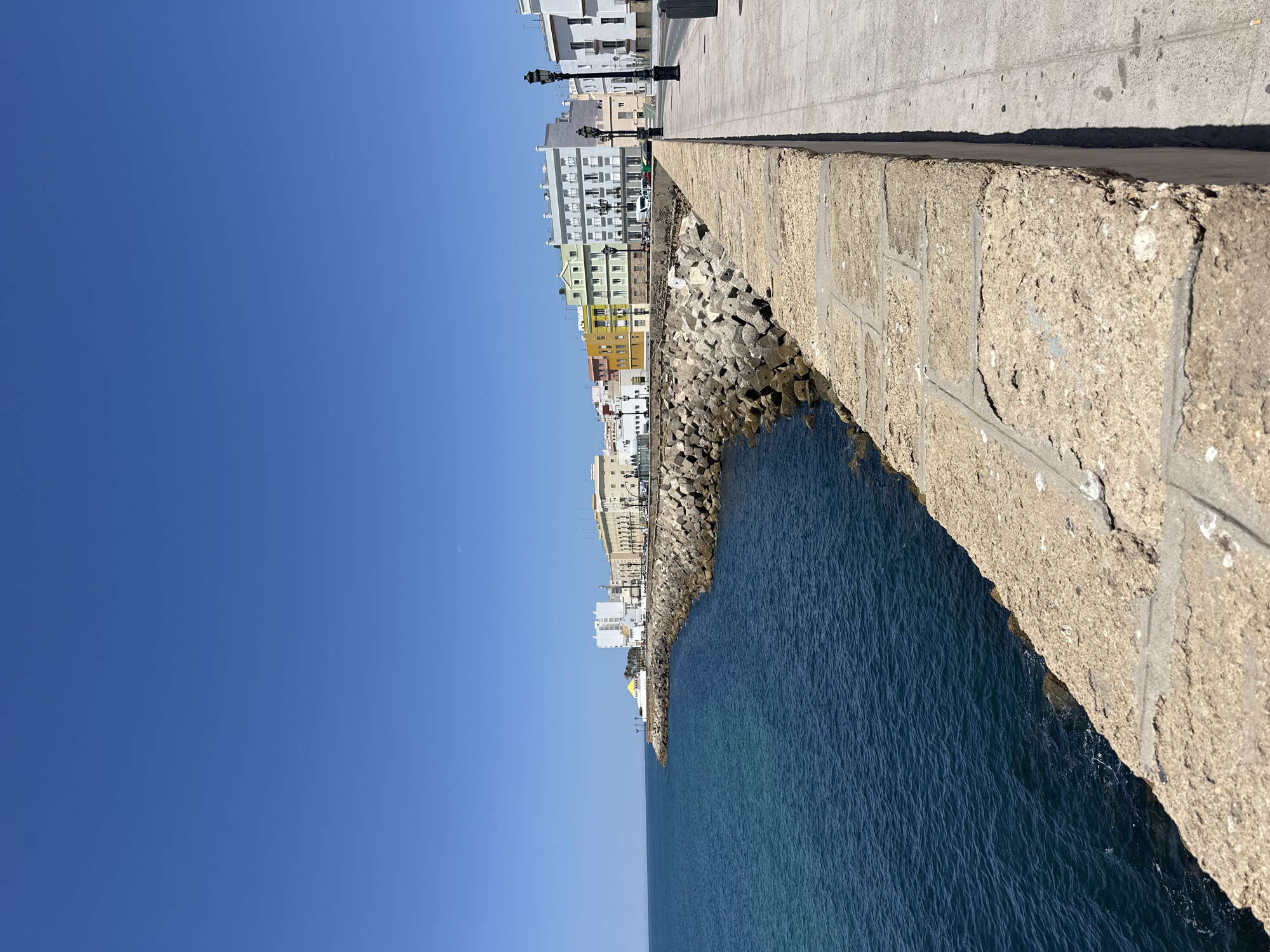
This is a high-angle, wide shot of a sunlit promenade along the coast of Cádiz, Spain. The image features a clear blue sky and the turquoise sea on the left. A stone wall separates the sea from a paved walkway. Beyond the walkway is a street lined with buildings of various colors, including white, yellow, green, and blue, with trees and lampposts interspersed. Several vehicles, including cars and a van, are visible on the street. The architecture appears to be typical of a coastal European city.
Cádiz
A high-angle, vertical, wide shot shows a bright blue sky over a calm, deep blue ocean with turquoise hues. The ocean meets a curved stone embankment or seawall that runs diagonally from the bottom left to the middle right of the frame. The seawall is constructed of large, light brown, rough-hewn stone blocks. Beyond the seawall, a rocky breakwater extends into the sea, dotted with a few scattered rocks and some vegetation. Along the shore behind the breakwater, a row of colorful buildings, painted in yellow, orange, green, and white, stand against the sky. A white building with a few windows is visible in the distance to the left, and a white tower or structure is located further down the coastline. A paved walkway or path runs alongside the seawall in the foreground, with a few people visible walking on it in the far distance on the right. The sun is shining brightly, creating a clear, distinct shadow on the seawall in the foreground. The water is smooth with very slight ripples.
Cádiz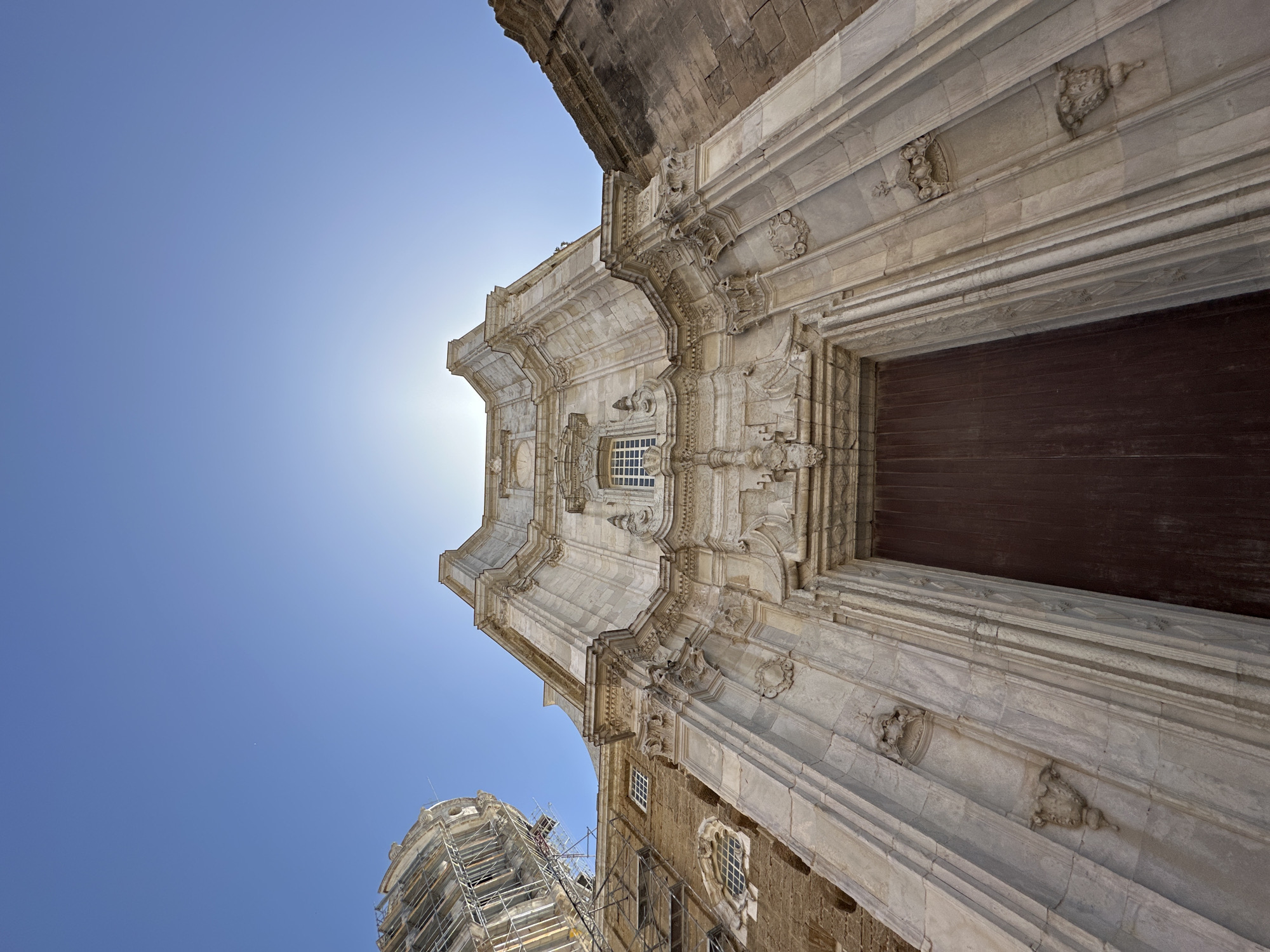
The image shows a low-angle perspective of the ornate facade of the Cádiz Cathedral, located in Cádiz, Spain. The cathedral's light-colored stone is intricately carved with architectural details, including columns, moldings, and decorative elements around the large, dark wooden doors. Above the entrance, a classical pediment features a central window. To the left of the main facade, part of another section of the cathedral is visible, adorned with windows, and surrounded by scaffolding, suggesting ongoing construction or restoration. The sky above is a clear, bright blue, with the sun partially obscured by the top of the facade, creating a lens flare effect. The overall scene captures the grandeur and historical significance of the cathedral under a sunny sky.
Cádiz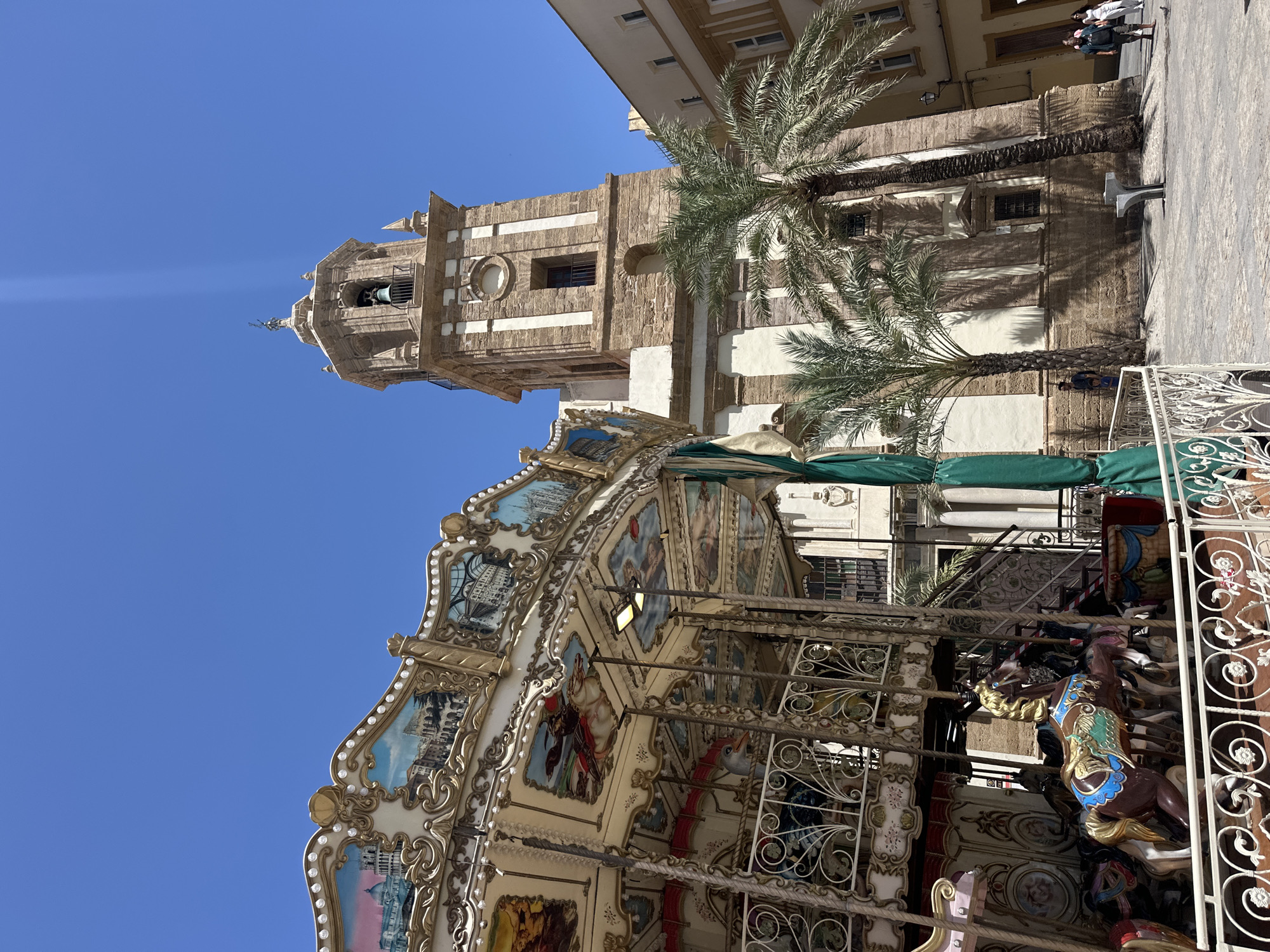
This image captures a sunny day in Cádiz, Spain, featuring a vibrant carousel in the foreground and the iconic clock tower of the Cádiz Cathedral in the background. The carousel, with its ornate gold detailing and painted panels depicting classical scenes, is in operational condition, though no one is actively riding it at this moment. Several painted horses are visible, some adorned with elaborate saddles and trappings. Behind the carousel, the impressive Cádiz Cathedral tower stands tall against a clear blue sky. The tower is constructed of stone, with a bell chamber at the top and visible clock faces. Palm trees are scattered throughout the scene, their fronds casting dappled shadows on the cobblestone plaza. A few people can be seen in the distance, strolling through the plaza, adding a sense of everyday life to the picturesque setting. The architecture of the surrounding buildings, typical of a Spanish city, complements the historical ambiance of the location. The lighting suggests it is midday, with strong sunlight creating distinct shadows.
Cádiz
The video shows a full shot of an ornate carousel operating outdoors on a sunny day. The carousel is white with gold trim and decorated with colorful paintings of landscapes and sea scenes. Green fabric drapes hang from the roof. Several horses are visible, some occupied by people. The carousel is surrounded by a decorative white fence. The ground is paved with cobblestones. In the background, there are buildings, a palm tree, and a clear blue sky. The carousel is slowly rotating.
Cádiz