Cirebon, Indonesia
30 memories from Cirebon, Indonesia
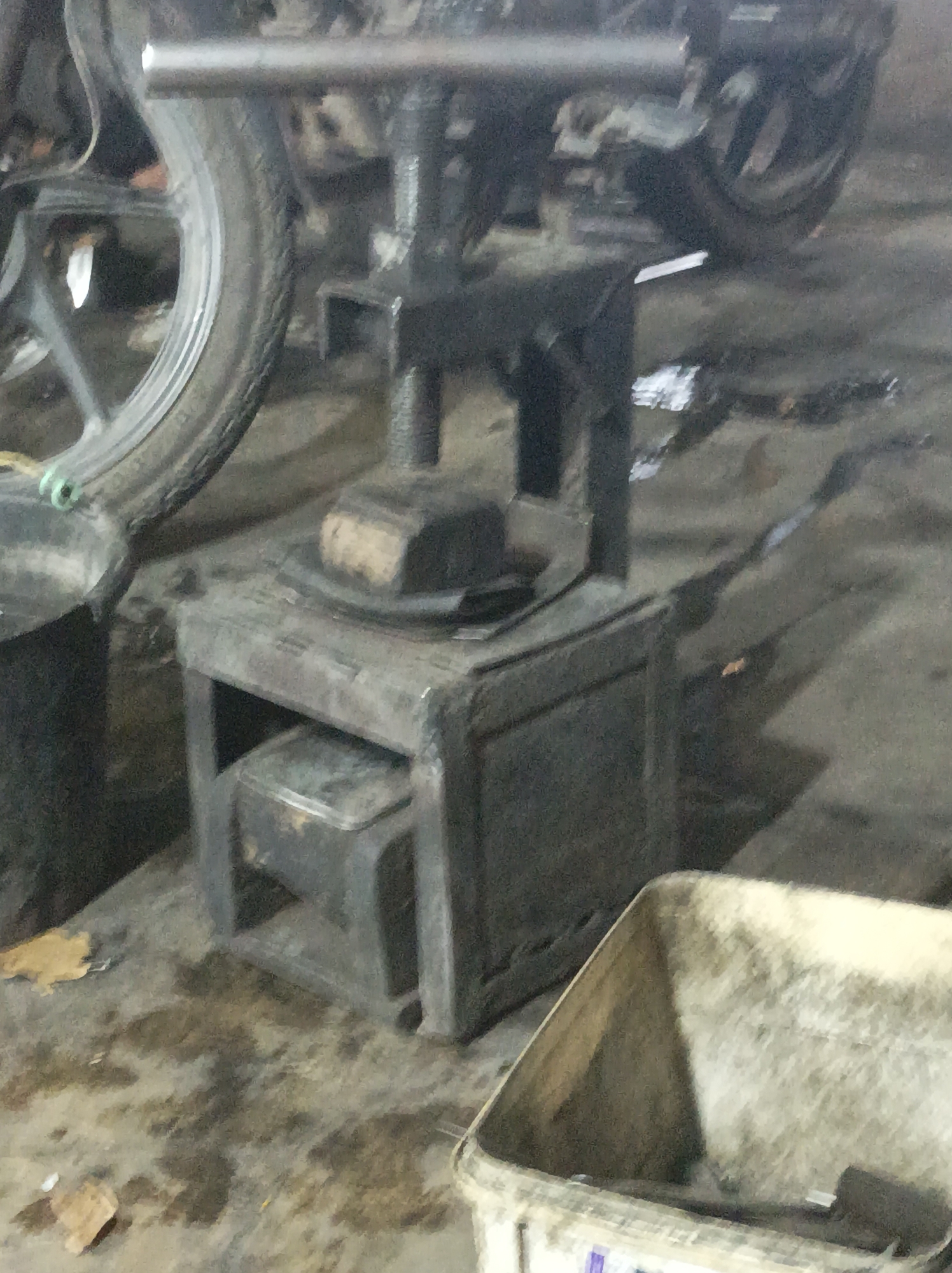
The image depicts a cluttered, dimly lit workshop or storage area, possibly located in Cirebon, Indonesia. A prominent object in the foreground is a heavy-duty press, likely used for industrial or repair work. It's constructed from dark metal and sits on a sturdy, cube-shaped base. Beneath the press, on the base, is a metal container. To the left of the press, a large, weathered tire and rim from a vehicle are visible. The floor is concrete and appears wet and dirty, with oil stains and scattered debris, including small pieces of paper or cardboard. In the background, partially obscured, is what appears to be another vehicle or a large piece of machinery. A light-colored, open-top container, possibly a bin or bucket, is situated in the lower right corner of the frame. The overall impression is one of an active, if somewhat disorganized, workspace.
Cirebon
The image shows a rectangular concrete pit filled with dark water, reflecting tree branches and a building. The pit is situated on a cracked concrete surface that appears to be an outdoor area, possibly a yard or alleyway, in Cirebon, Indonesia. Scattered on the ground around the pit are dry leaves, a discarded plastic cup, and some white plastic debris. A yellow hose runs along the left side of the pit, and a person's legs, clad in dark pants and wearing a blue sandal, are visible in the lower left corner of the frame. In the background, parts of a motorcycle and its exhaust pipe are visible, suggesting the location might be near a road or a parking area. The overall impression is one of a somewhat neglected outdoor space with evidence of recent activity or debris accumulation.
Cirebon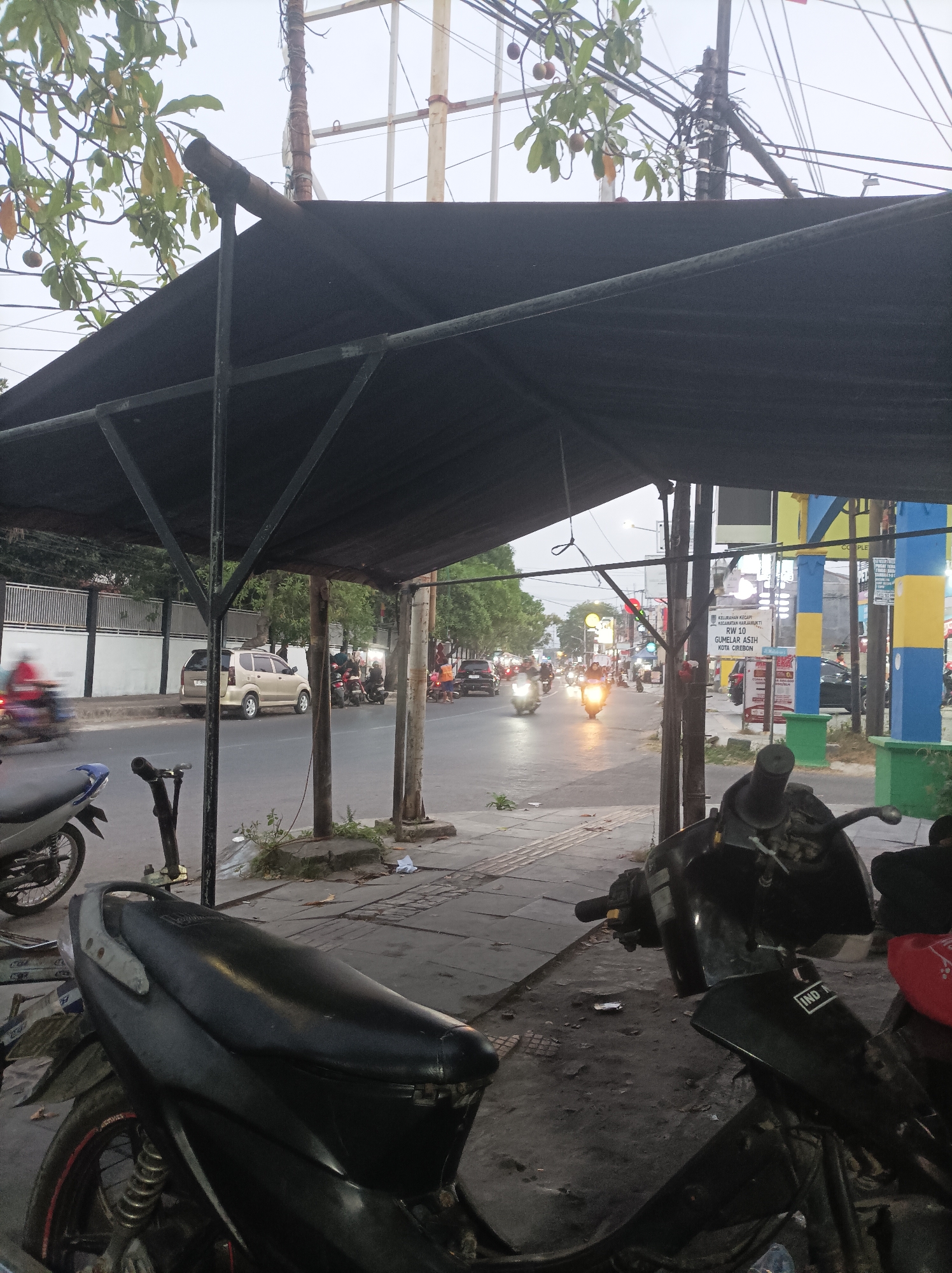
The image captures a street scene in Cirebon, Indonesia, likely during the late afternoon or early evening, as indicated by the dim lighting and streetlights beginning to illuminate. In the foreground, two motorcycles are parked under a dark canopy, which is supported by metal poles. The motorcycle on the left is partially visible, showing its rear wheel and fender. The motorcycle on the right is more prominent, with its black bodywork and handlebars clearly visible. A portion of its seat and a red object, possibly a bag or cushion, are also visible. The street itself is paved, with a sidewalk running alongside it. Several trees with green leaves and some fruit are visible along the sidewalk. Beyond the sidewalk, the street is active with traffic. Cars and motorcycles are moving, with their headlights and taillights creating streaks of light, suggesting motion. Some of these vehicles appear to be stopped or moving slowly, possibly at an intersection. In the background, there are various buildings and structures. One building on the left has a white wall with a dark fence. Further down the street, colorful structures, including pillars painted blue and yellow, are visible, suggesting commercial activity. Several signs are present, one of which, in the middle ground, is white with text in Indonesian, including "KELURAHAN ASAH", "RW 10", and "KOTA CIREBON", confirming the location as Cirebon. Overhead, there are numerous electrical wires and poles, a common sight in urban Indonesian settings. The sky is overcast. There are no clearly discernible individuals in sharp focus, though the movement of people within vehicles or on the sidewalk is implied by the general activity.
Cirebon
The image depicts an outdoor scene viewed from inside a dimly lit structure. In the foreground, the floor is tiled and covered in shadow. Two dark-colored flip-flops are visible on the floor. The exterior area is mostly visible through an open doorway or frame. Outside, the ground is a mixture of gravel and dirt. A yellow truck with a white cargo box is parked in the middle ground. The truck has visible text on its side, including "TERUS KITA BERSAMA". To the left of the truck, a blue metal fence and lush green banana trees are present, suggesting a tropical or subtropical environment. Several houses with red tile roofs are visible in the background, indicating a residential or mixed-use area. Red and white pennant flags are strung across the top of the frame, possibly for a celebration. On the right side of the exterior, a light-colored textured wall is prominent. An electrical box with wires attached is mounted on this wall. To the right of this wall, a dark blue door is partially visible, with peeling paint. Two metal folding chairs are positioned on the ground in the middle ground, facing the truck. The overall lighting suggests it is daytime, with the sun casting strong shadows. The environment appears somewhat disheveled, with visible wear and tear on structures and a generally unkempt appearance of the grounds. This scene likely represents a street or alleyway in a city, potentially in Indonesia given the text on the truck and the tropical vegetation. Based on the provided context, the location is the city of Cirebon, Indonesia.
Cirebon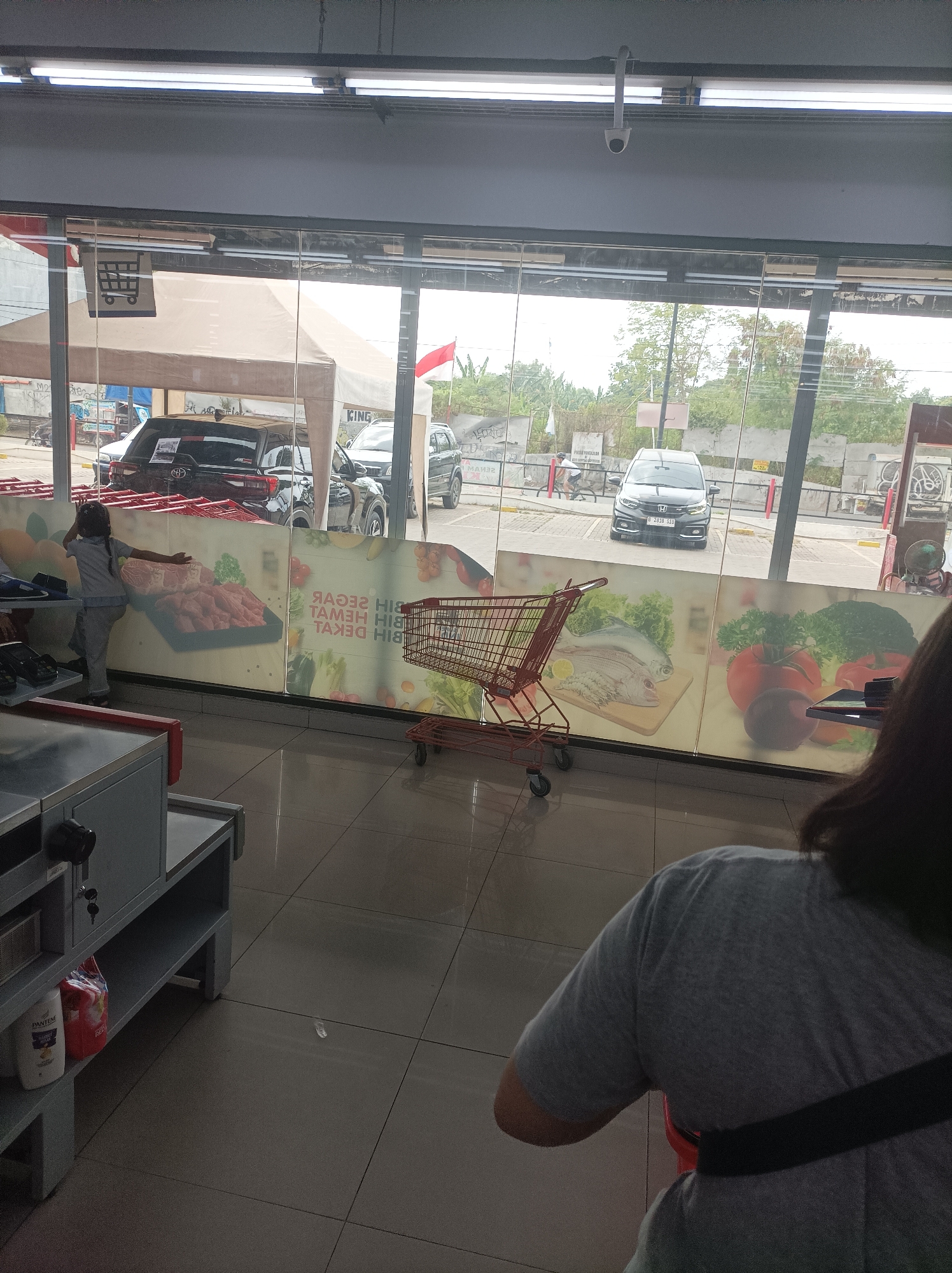
The image shows the interior of a minimarket in Cirebon, Indonesia, looking out through a large glass window at a parking lot and beyond. Inside the minimarket, to the left, a young child in a grey uniform is seen touching a display of raw meat behind a glass partition. To the right of the child, a red shopping cart is visible. The glass partition features a graphic advertisement with images of food items, including meat, fish, and vegetables. In the background, visible through the window, are several cars parked in a lot, a white tent structure, and trees. A security camera is mounted on the ceiling above the window. The floor inside the minimarket is tiled. A shopping cart is also visible in the parking lot outside.
Cirebon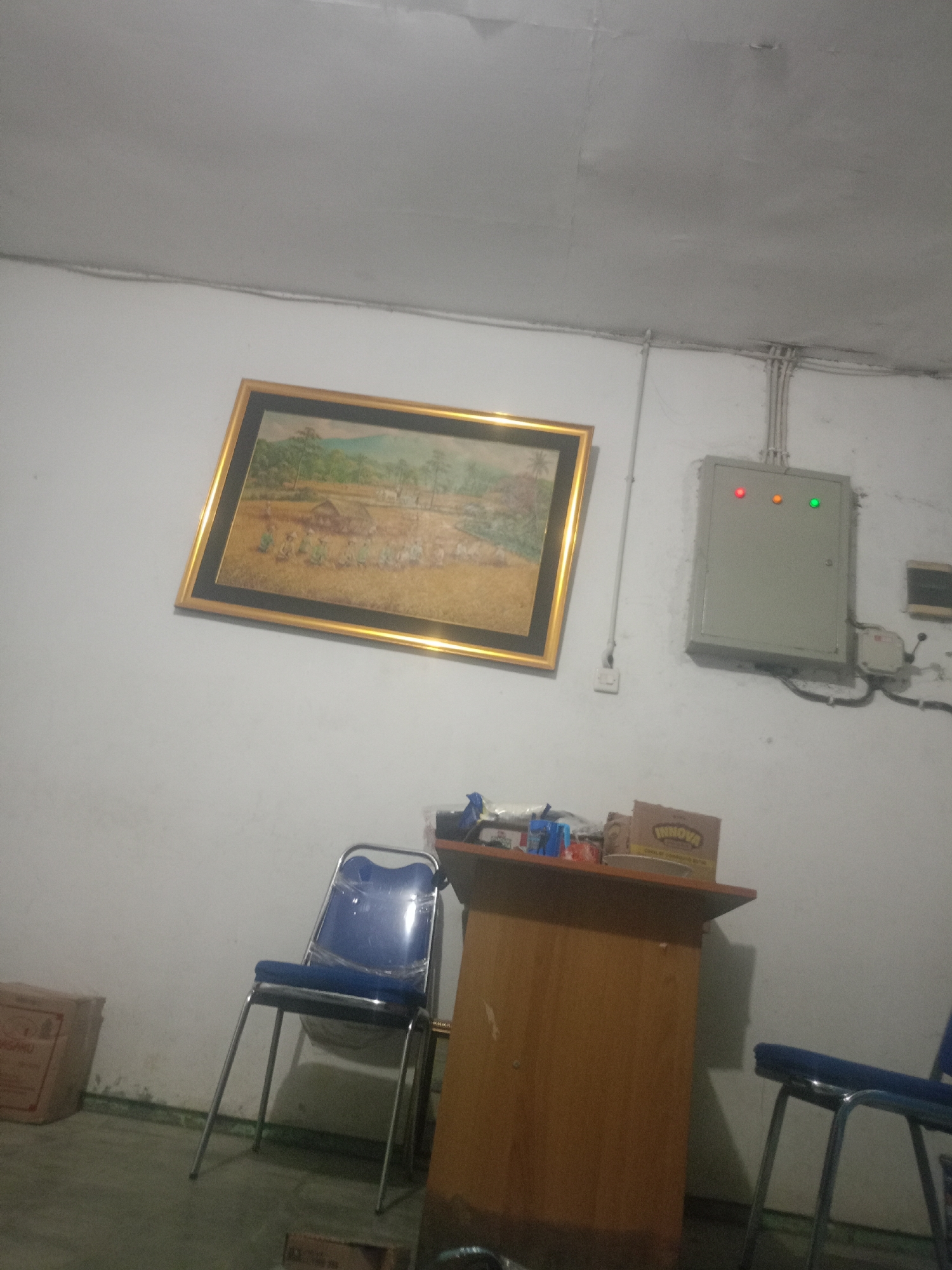
The image depicts an indoor scene, likely an office or meeting room. A framed painting with a golden border hangs on a white wall, displaying a rural landscape with figures and traditional huts. To the right of the painting, a gray electrical panel is mounted on the wall, featuring three indicator lights: red on the left, amber in the middle, and green on the right. Below the electrical panel, a wooden table stands, topped with various items including boxes, one labeled "INNOVA". Two blue chairs with metal frames are present, one in the foreground and another slightly out of focus to the right. The floor is dark and appears to be tiled or concrete. The overall lighting is dim, suggesting it might be evening or the room has limited natural light. The scene does not provide explicit clues about its specific location within Cirebon, Indonesia, but the interior setting suggests it could be a government building, a business office, or a community hall.
Cirebon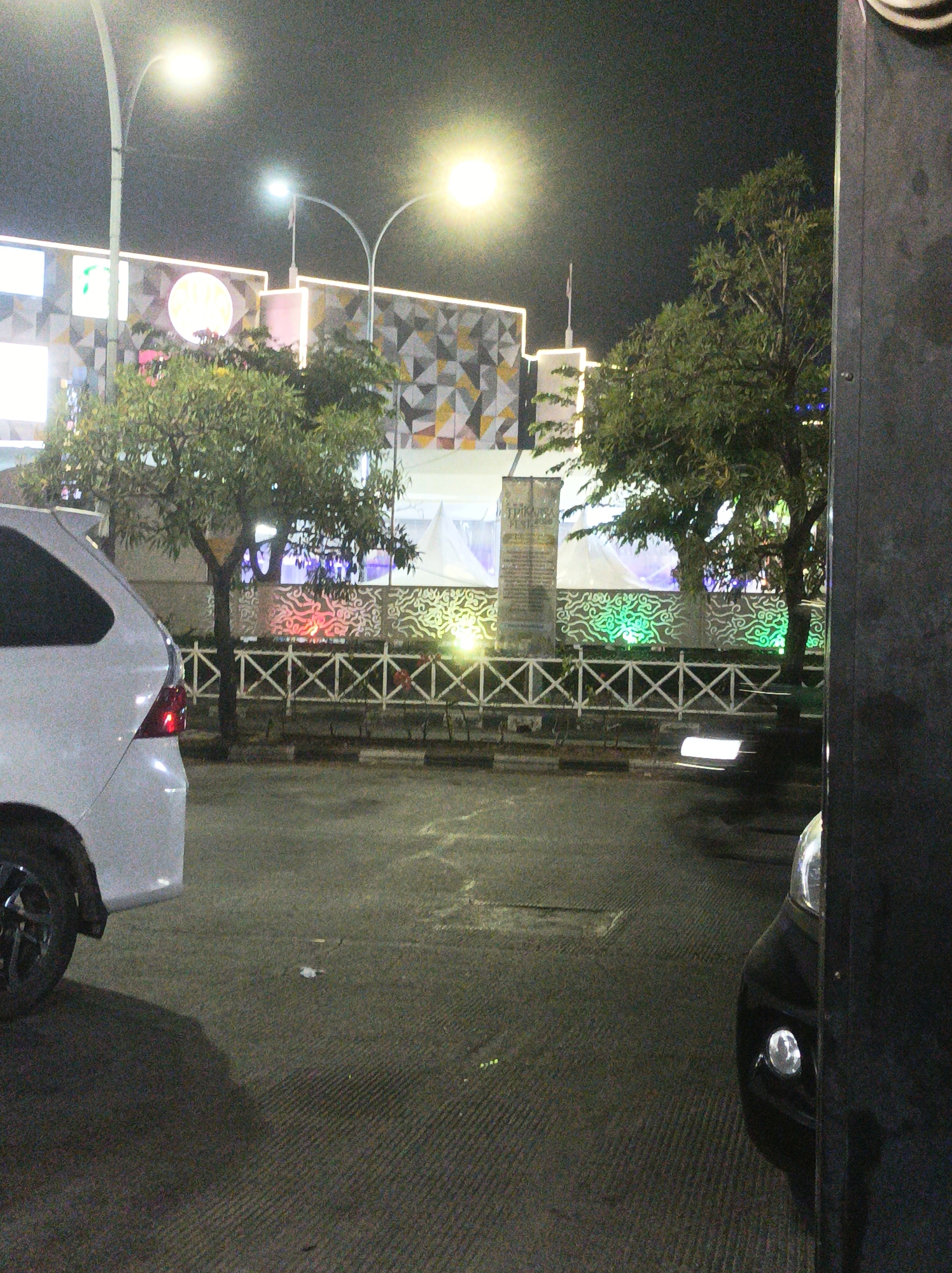
A nighttime exterior shot shows a street scene in Cirebon, Indonesia, with a paved area in the foreground. A white car is parked on the left, facing away from the camera, with its taillights illuminated. A black car is partially visible on the right side of the frame, also parked. Behind the cars, a decorative white fence with crisscrossing patterns lines a raised area. Beyond the fence, trees are illuminated by colored lights, with red and green hues visible. In the background, a building facade features a geometric pattern and is outlined with white lights. Streetlights with bright bulbs are visible overhead.
Cirebon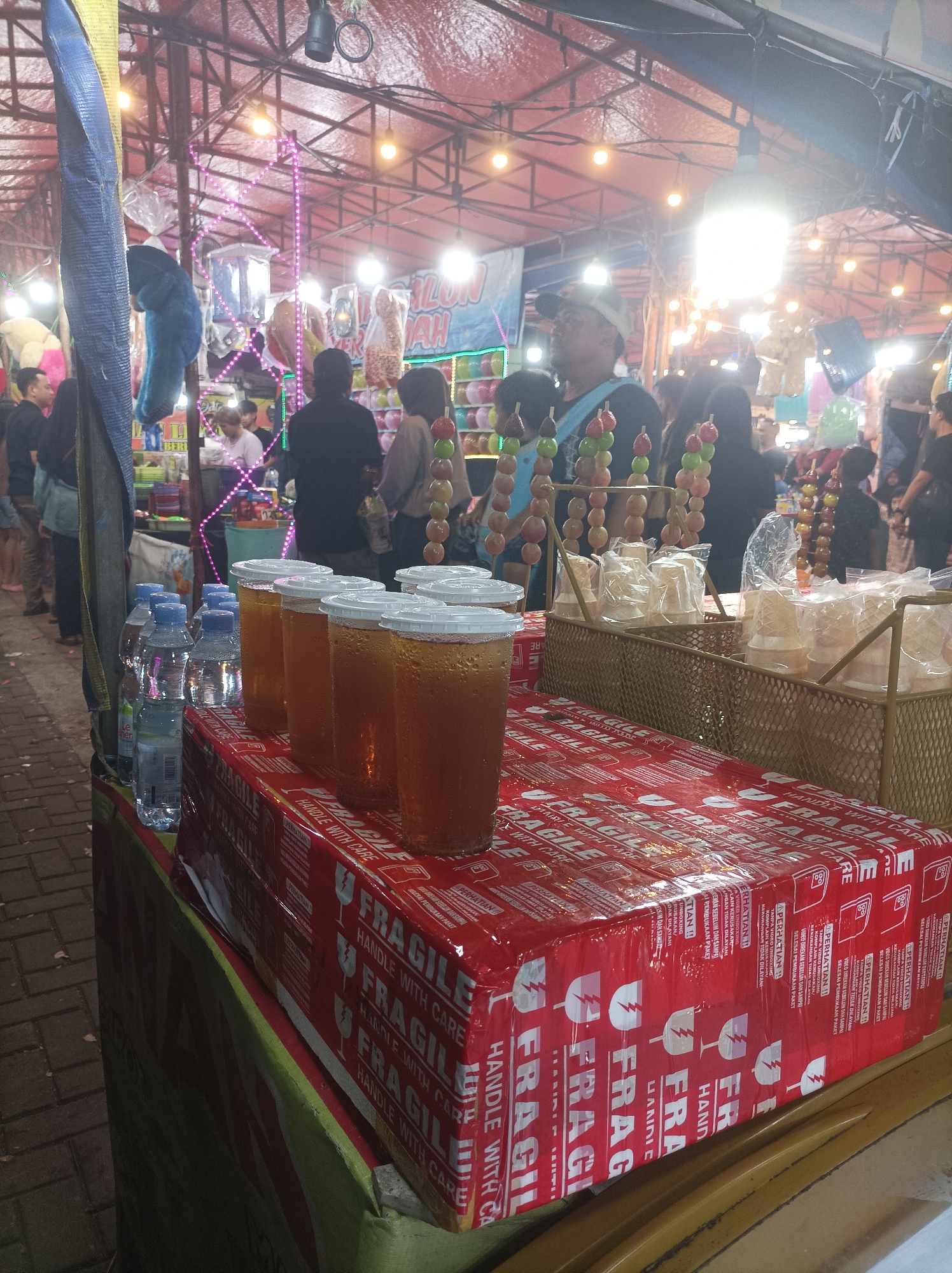
The image depicts a bustling outdoor market scene, likely in Cirebon, Indonesia, given the presence of Indonesian text on packaging. In the foreground, a stall displays several glasses of iced tea, arranged on top of a red box wrapped in plastic. The box is prominently marked with "FRAGILE" and "HANDLE WITH CARE" in multiple languages, suggesting it might contain delicate items or serve as a protective layer for the drinks. To the left of the iced tea, several bottles of water are lined up. Behind the stall, the market extends into the background, illuminated by a network of bright lights and decorative string lights in pink and yellow. People are seen browsing and interacting in the crowded environment. Various stalls and displays of goods are visible, including what appear to be toys, balloons, and food items such as skewers of fruit. The overall atmosphere is one of lively commerce and community gathering, typical of night markets. The red canopy overhead and the tiled or paved ground suggest an established market area.
Cirebon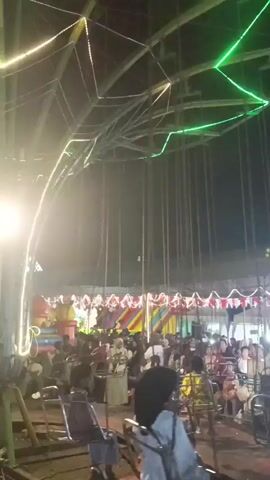
The video shows a crowded fairground at night. Lights illuminate the scene, with a large star-shaped structure adorned with green and white lights overhead. Below, people are gathered, some sitting in what appear to be ride seats. In the background, a Ferris wheel-like structure is visible, as well as various stalls and tents. The atmosphere is festive, with many people present.
Cirebon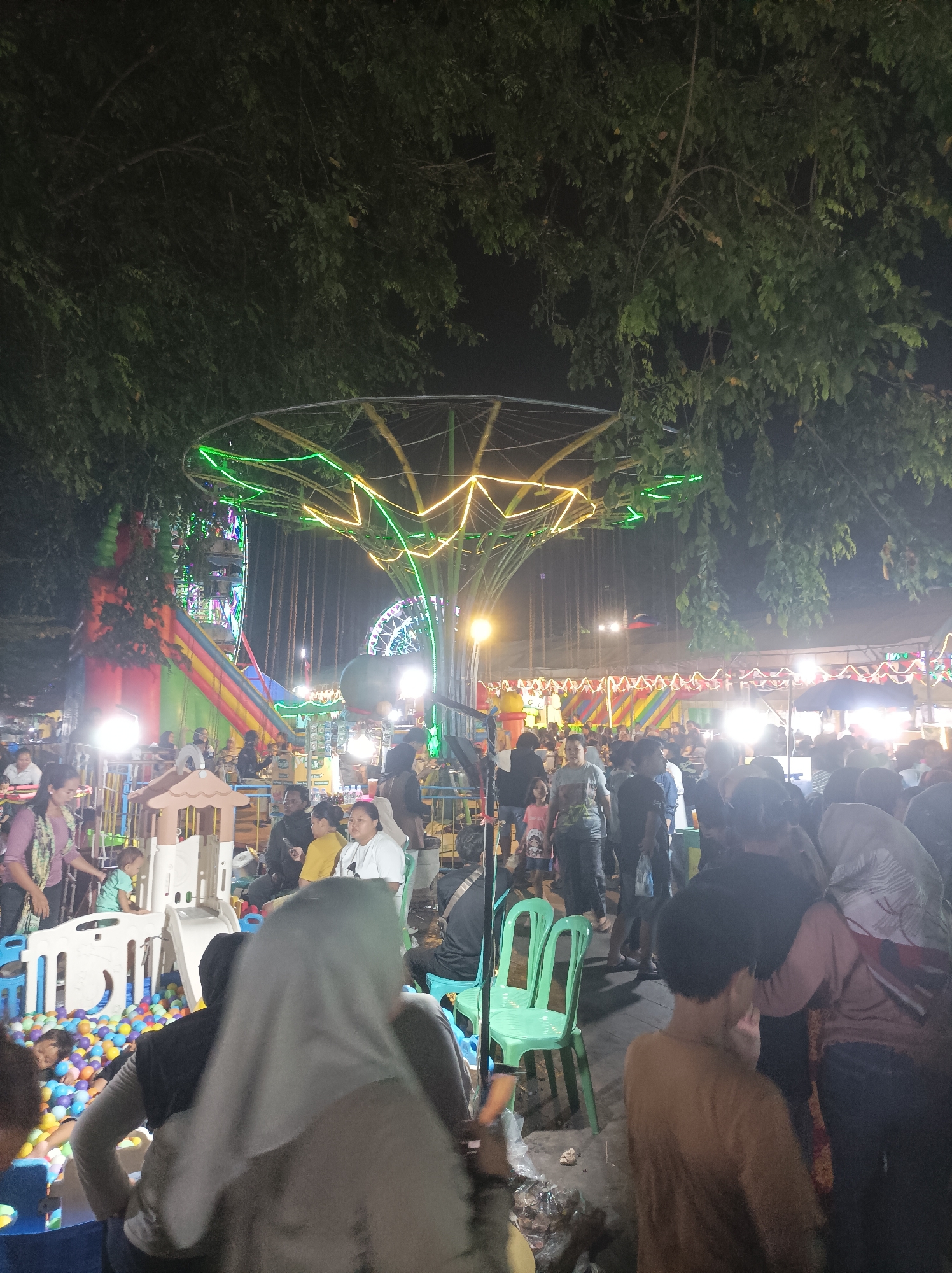
The image depicts a night scene at a bustling carnival or fairground, likely in the city of Cirebon, Indonesia, given the context. A large, illuminated ride, possibly a swing ride or carousel, dominates the upper portion of the frame, adorned with bright green and yellow lights. Below, a crowd of people of various ages are gathered, some standing, others seated. Several attractions are visible, including a large inflatable slide with colorful stripes, a ball pit with numerous colorful balls, and various stalls or booths. The environment appears to be outdoors, with trees providing a canopy overhead. The lighting is a mix of artificial carnival lights and general ambient illumination, creating a lively and somewhat chaotic atmosphere. People are dressed in casual attire, and the overall impression is one of a community event or local festival.
Cirebon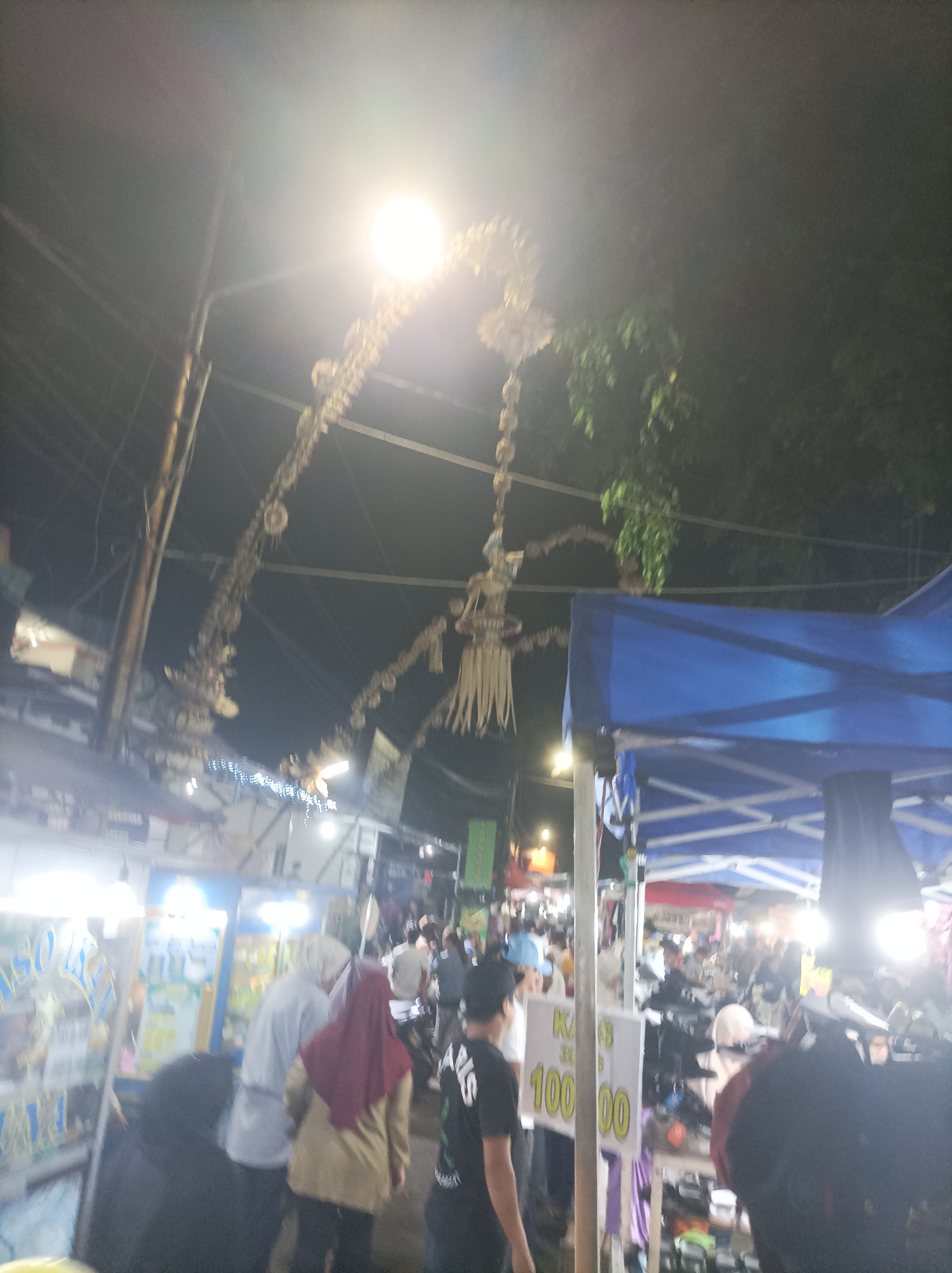
The image depicts a night market scene in Cirebon, Indonesia. In the foreground, several people are visible, some wearing hijabs, suggesting a predominantly Muslim population. One individual is wearing a black t-shirt with white lettering. There are stalls with merchandise, including what appear to be shoes and clothing. A blue tent is prominently featured. Decorative elements, possibly traditional decorations, hang from overhead structures, illuminated by bright lights. The overall atmosphere suggests a lively and bustling marketplace at night.
Cirebon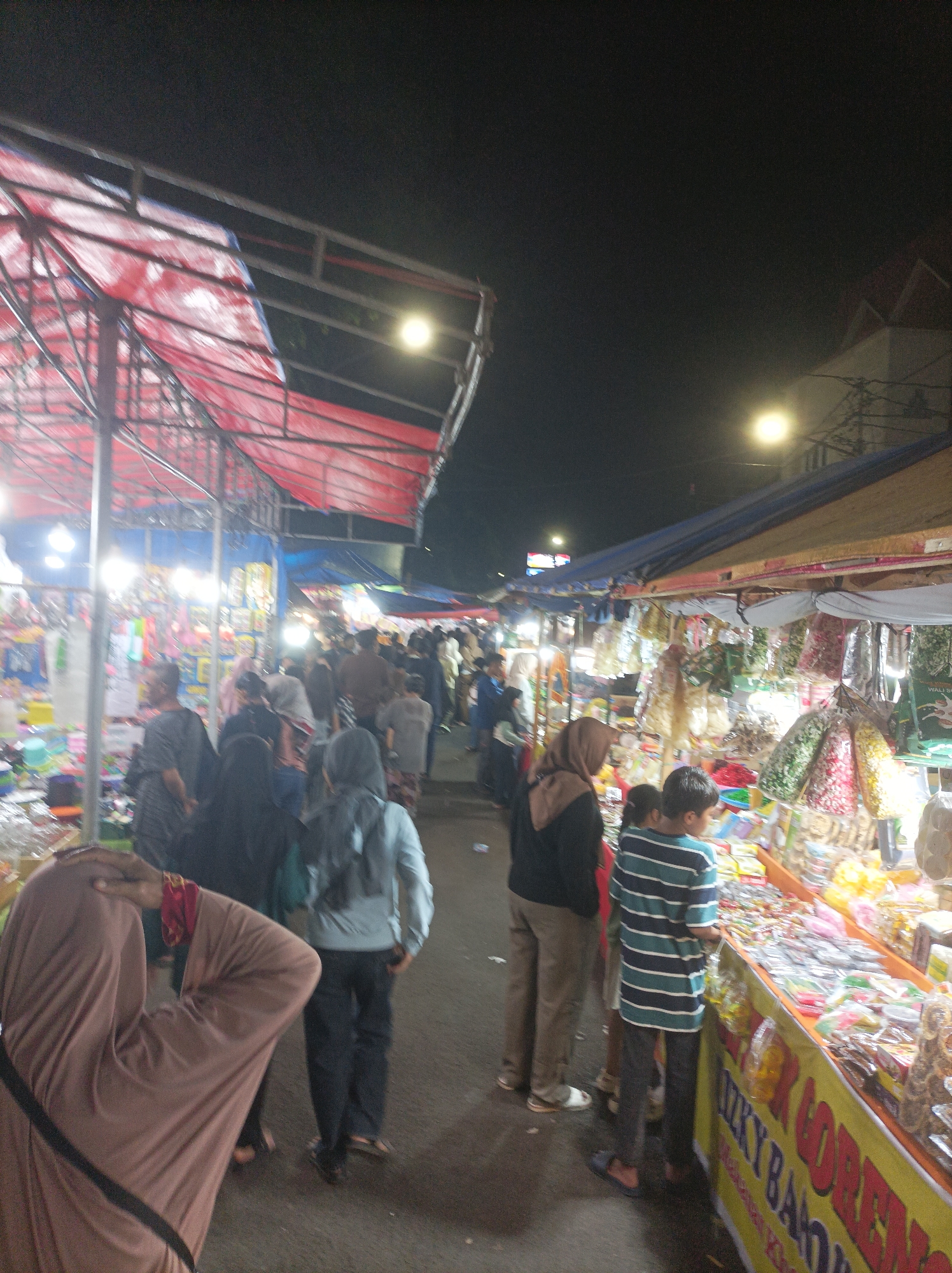
A night market scene is depicted, likely in Cirebon, Indonesia, given the presence of a banner with Indonesian text. The market is set up along a street, with stalls lining both sides. Red and blue tarpaulins are used as makeshift roofs for the stalls, supported by metal frames. Bright artificial lights illuminate the area, creating a bustling atmosphere. In the foreground, to the left, a person wearing a light brown headscarf and a brown robe is partially visible from behind, with their arm raised. To their right, a woman in a dark headscarf and a black jacket, and another person in a grey headscarf are also visible. Further into the market, a group of people are browsing the stalls. One stall in the middle ground displays a variety of items, possibly snacks or toys, arranged in colorful packaging. To the right of this stall, a woman wearing a brown headscarf is looking at the merchandise, accompanied by a young boy in a striped shirt and a young girl. Behind them, more shoppers and stall setups extend into the background. A prominent yellow banner with large red Indonesian text, "UZKY BAO," is visible on the right side of the frame, likely advertising a product or vendor. The overall scene captures the vibrant energy of a street market at night.
Cirebon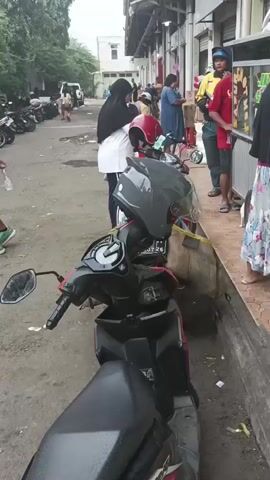
A group of people are gathered outside a food stall. The stall has a sign with Indonesian writing, and appears to be selling snacks. Several motorcycles are parked in the background. The people are standing in line, and some appear to be ordering or receiving food. The scene is outdoors, and the weather appears to be overcast.
Cirebon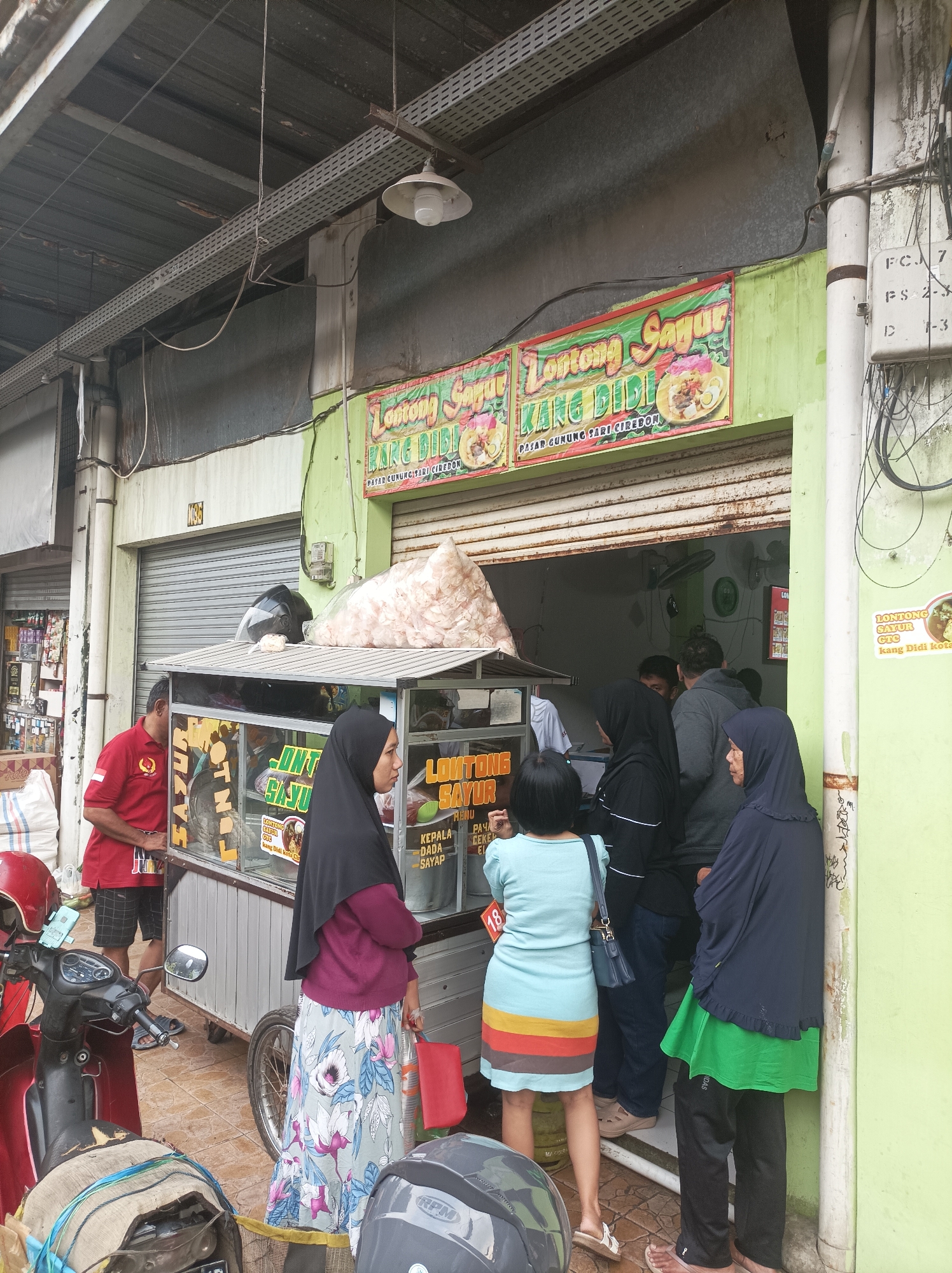
The image depicts a street-level view of an outdoor food stall in Cirebon, Indonesia. The stall, identified by signage as "Lontong Sayur Kang Didi," is situated against a building with a light green facade. The food stall features a wheeled cart with glass display cases showcasing food items and advertising menus. A large pile of white crackers or chips is stacked on top of the stall's canopy. Several individuals are present. A man in a red shirt and plaid shorts stands behind the food cart, appearing to be an employee. A woman in a black hijab and a patterned skirt is standing in front of the cart, facing away from the camera. Another woman in a light blue dress with a striped hem is also in front of the cart, interacting with the scene. Several other individuals, mostly obscured, are either queuing or inside the stall's covered area. In the foreground, a red motorcycle is parked, with parts of another motorcycle visible. The ground is paved with textured tiles. Overhead, a metal canopy supported by electrical conduits provides shade. The overall impression is of a bustling local eatery in an urban Indonesian setting.
Cirebon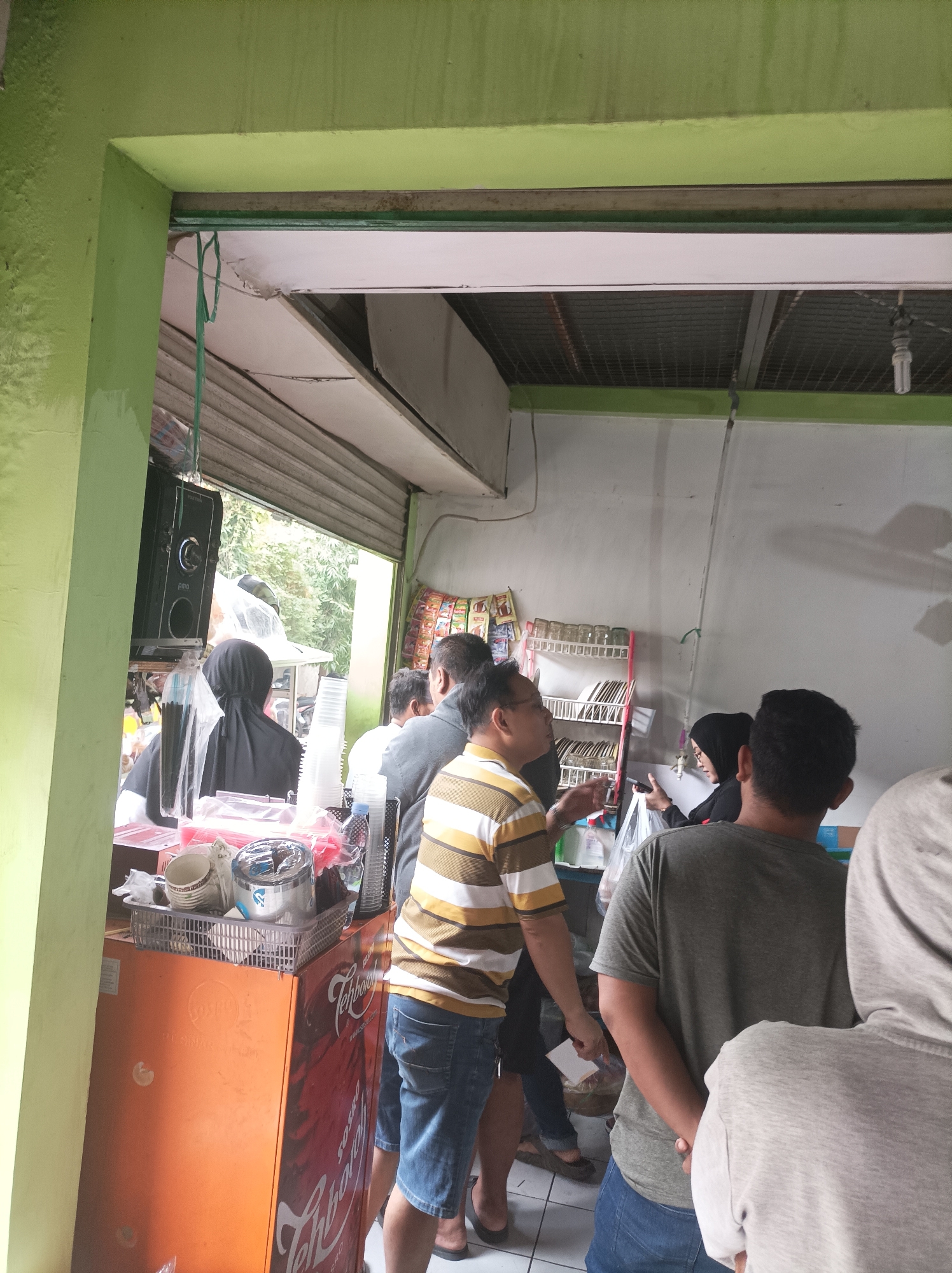
The image shows a busy outdoor food stall in Cirebon, Indonesia. Several people are queuing to order or pick up food. A woman in a black headscarf is visible behind the counter, possibly serving customers. In the foreground, a man in a striped shirt and denim shorts is talking to someone. The stall appears to be selling drinks, with stacks of plastic cups and bottles on display. The overall environment is casual and bustling, typical of a street food establishment.
Cirebon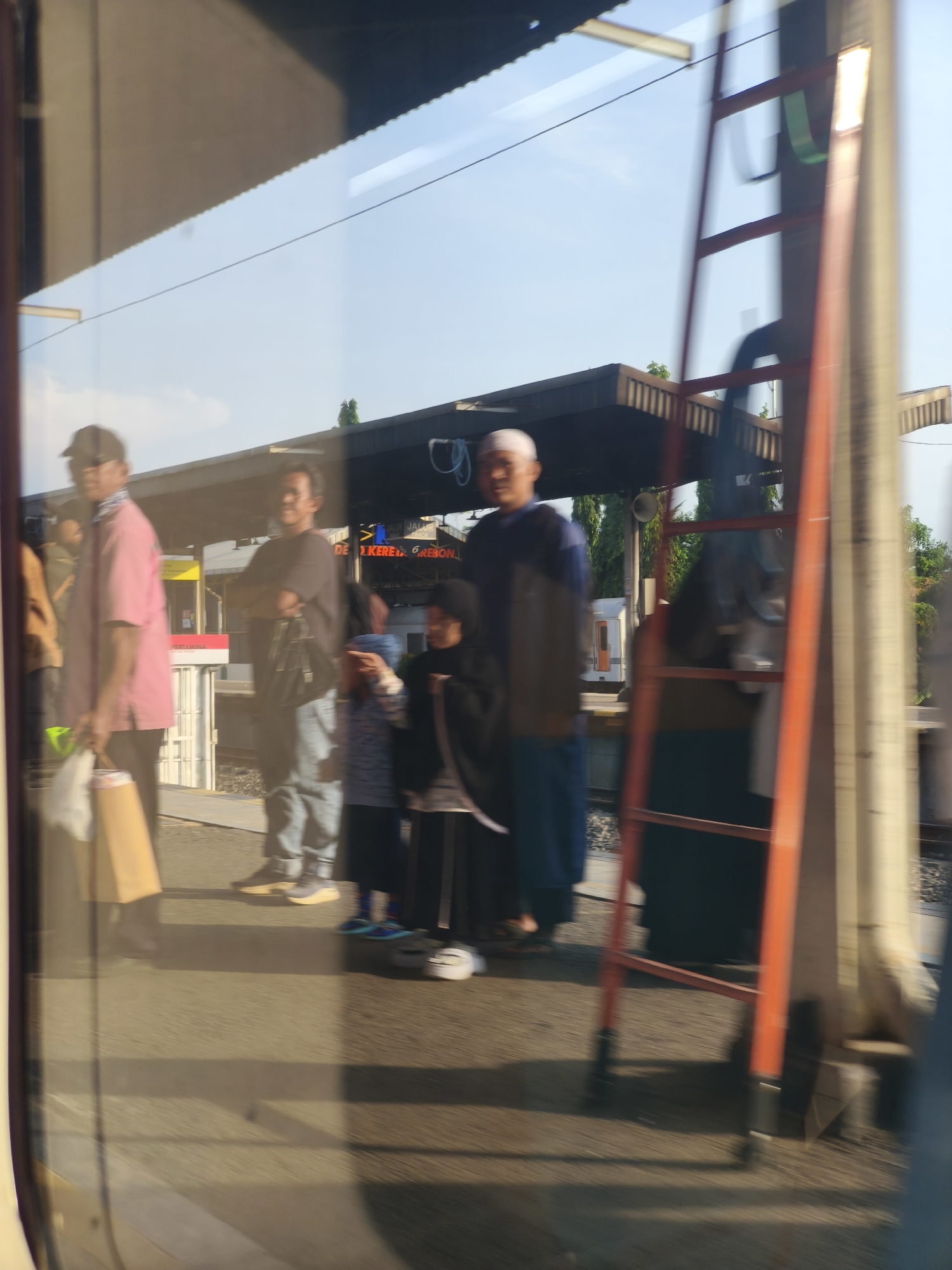
The image captures a blurry scene at Cirebon Station in Cirebon, Indonesia, likely taken from inside a train or a viewing area. Several individuals are visible, including a person in a pink shirt carrying shopping bags on the left, a person in a dark shirt standing with arms crossed in the middle, and a person wearing a white skullcap and dark clothing to the right. A child in a dark head covering is standing near the person in the dark shirt. Behind them, a red ladder-like structure is prominent, along with a pillar. The background shows a train track and a covered platform area with signage that partially reads "JALUR KERETA CIREBON". The overall impression is a busy station environment with people waiting, possibly for a train, under the bright sky of a sunny day. The reflection on the glass suggests a mirrored view of the scene.
Cirebon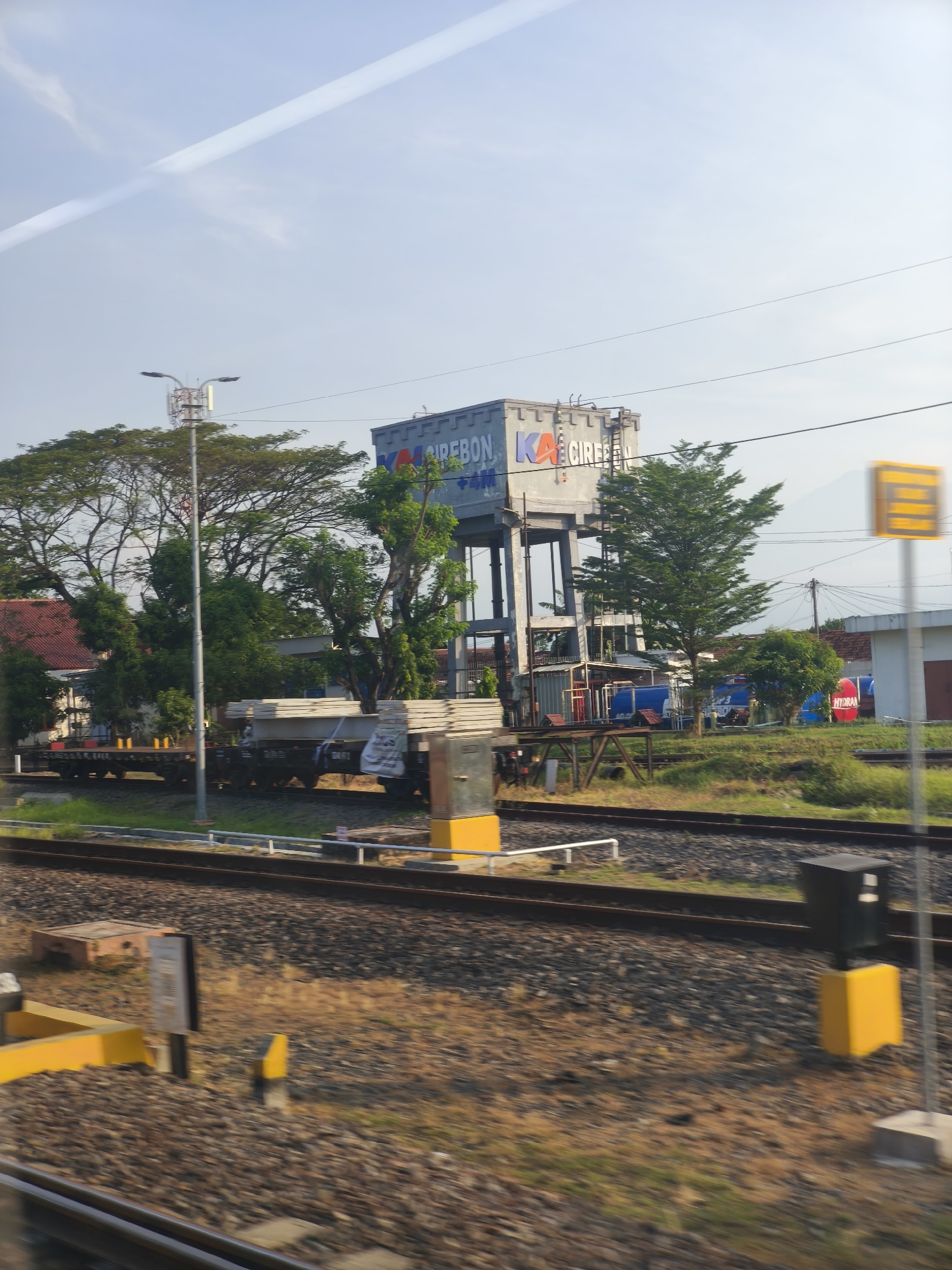
This media file depicts a train yard with a prominent water tower in the background, located in Cirebon, Indonesia. The scene is set outdoors under a clear, bright sky, suggesting a sunny day. The time of day appears to be late morning or early afternoon, indicated by the clear sky and the shadows cast by the structures. The central subject is a large, industrial water tower, painted blue and grey, with the text "CIREBON KA" prominently displayed in white and orange letters. Adjacent to the water tower, there are several railway tracks, with a train car loaded with what appear to be concrete slabs visible on one of the tracks. Other railway infrastructure, such as signals and track switches, are also present. In the middle ground, a variety of trees with lush green foliage are visible, some of which are quite tall and mature. Behind the trees, buildings with red tile roofs can be seen, suggesting a nearby town or industrial area. Further in the background, a distant mountain range is faintly visible on the horizon. The foreground is dominated by the railway tracks and ballast. Several yellow and black signal posts are positioned along the tracks. The overall impression is one of an active industrial and transportation hub, set against a backdrop of natural greenery and clear skies. There are no people visible in the frame. The image conveys a sense of operational activity within a railway environment.
Cirebon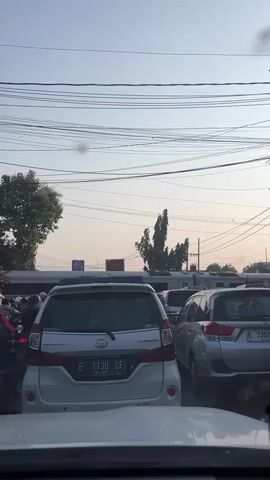
The video shows a first-person perspective of being in a traffic jam. The camera is inside a vehicle, looking forward. In front are several other vehicles, including a white Toyota Avanza with license plate E 1130 CF, and a silver SUV. There are also many motorcycles to the left. In the background, there are trees, utility poles with many wires, and some buildings. The sky is visible above the wires, suggesting it is daytime, possibly late afternoon due to the soft light. The vehicles are stationary, indicating a traffic standstill. There are no clear interactions between people visible, other than drivers being in their cars.
Cirebon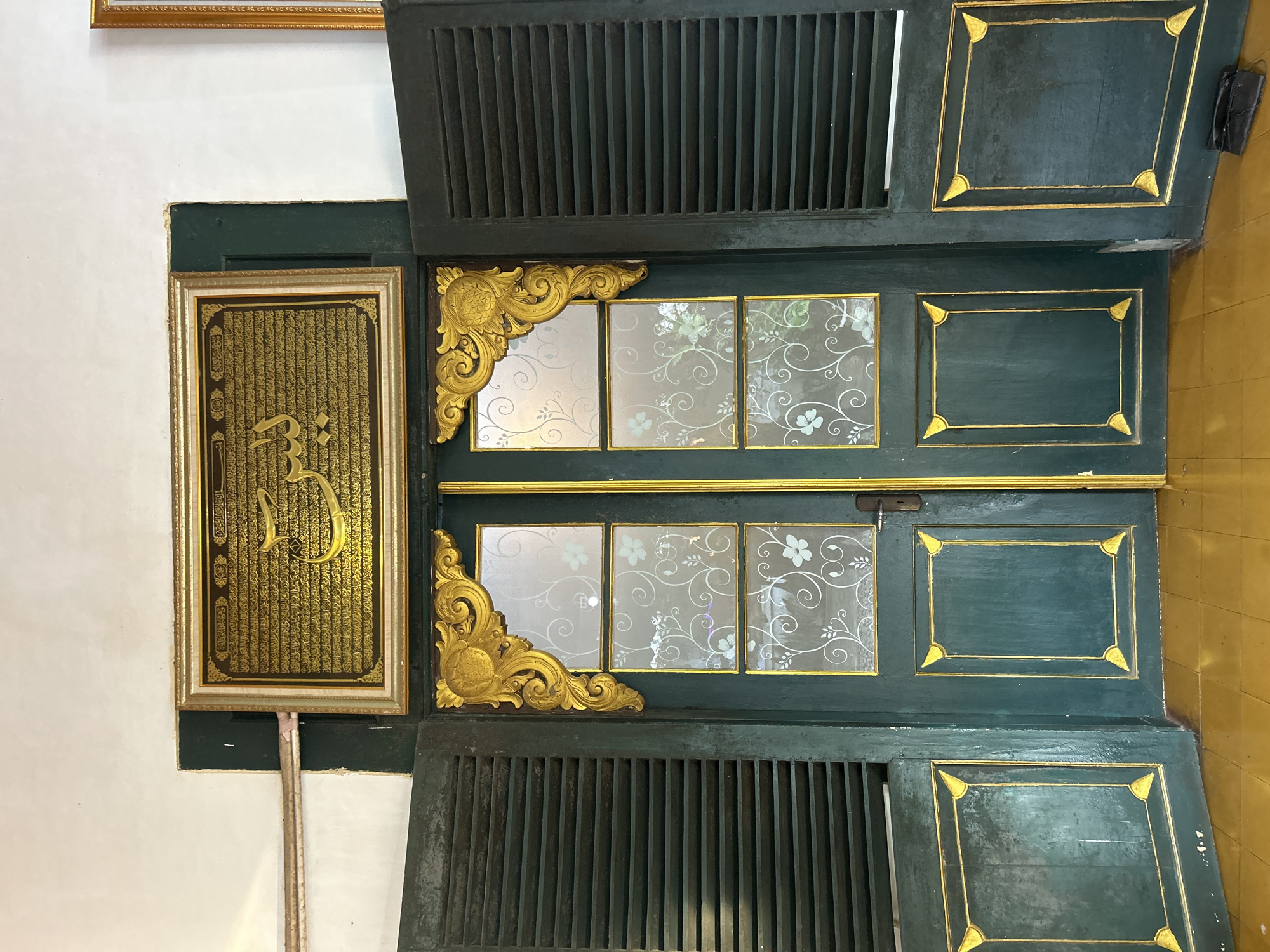
A pair of dark green double doors with ornate gold trim are open, revealing louvered shutters on each side. A framed piece of Arabic calligraphy in gold lettering hangs above the doors. The doors have decorative glass panels with a floral pattern and brass door handles. The floor is covered in yellow tiles. The image appears to be taken inside a building, possibly a mosque or historical site, in the city of Cirebon, Indonesia.
Cirebon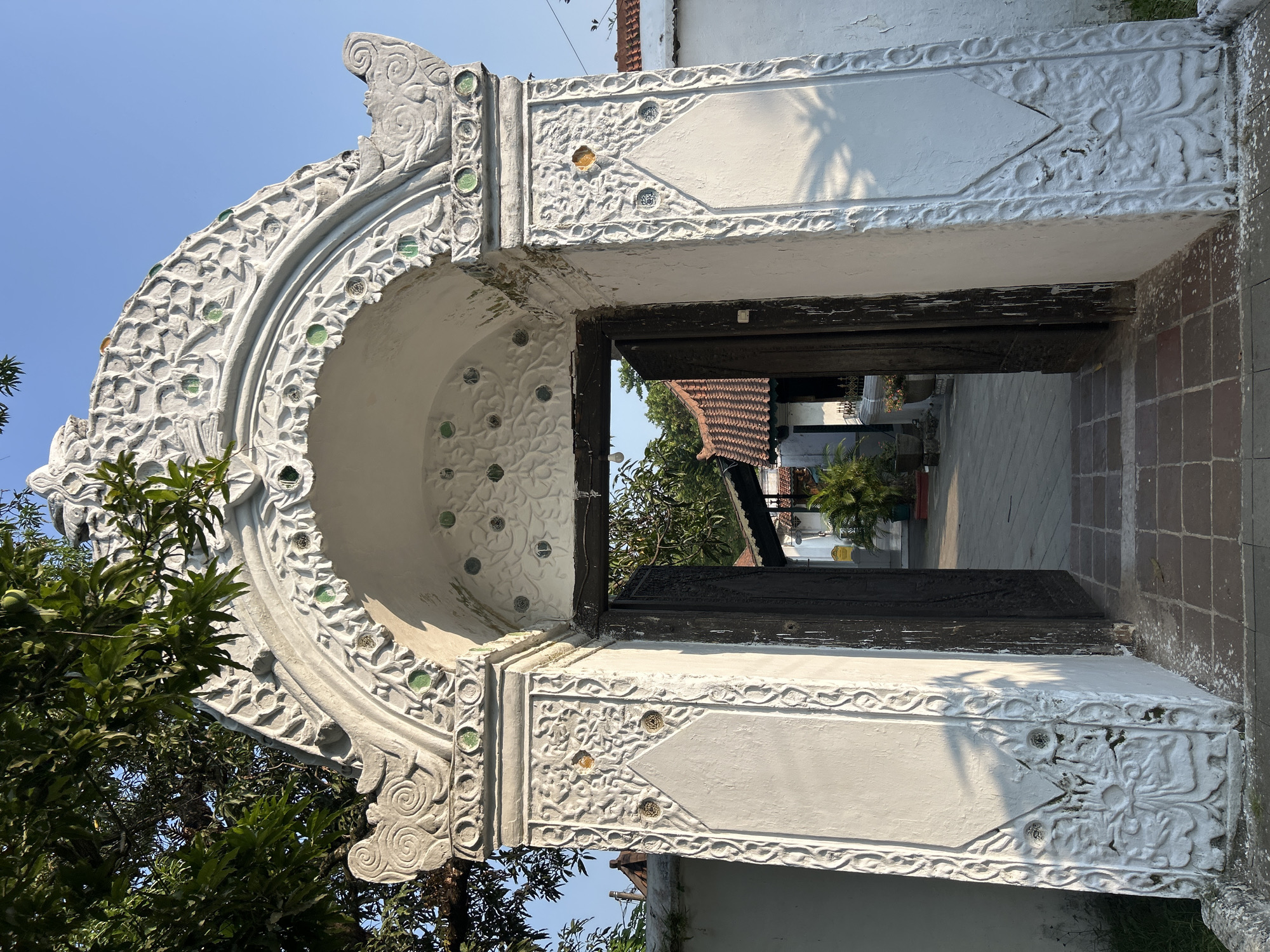
The image depicts the intricately carved white archway of the Sunan Gunung Jati tomb complex in Cirebon, Indonesia. The archway is adorned with floral motifs and embedded with small green glass circles, while the door appears to be made of dark wood and is partially open. Beyond the archway, a courtyard is visible with traditional Indonesian tiled roofs and lush greenery. The sun casts shadows on the white walls of the complex, indicating it is daytime.
Cirebon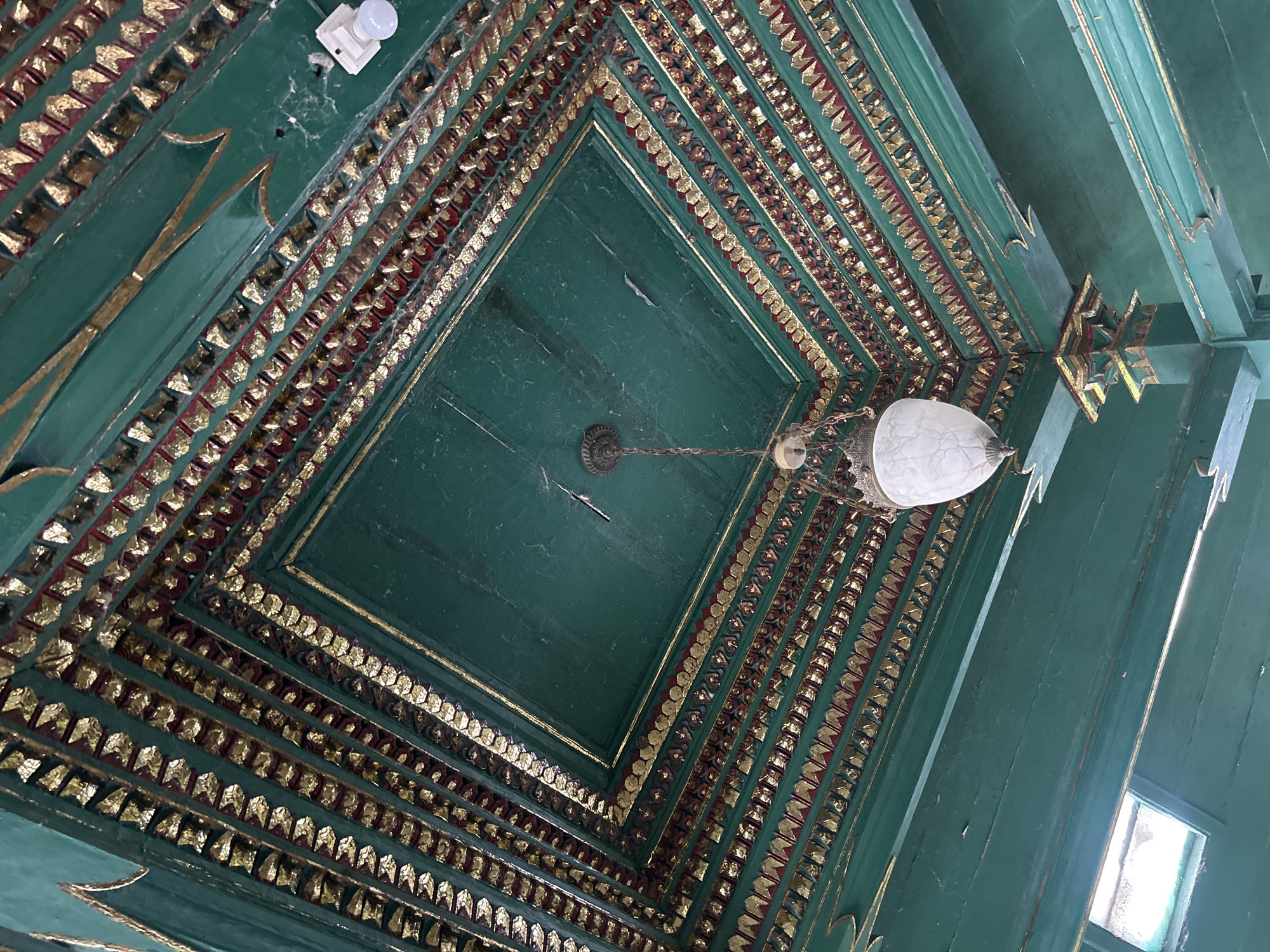
The image shows a close-up, low-angle view of a highly ornate, green painted ceiling with extensive gold and red decorative elements. The ceiling is tiered, with each layer adorned with intricate patterns. The central area of the ceiling is flat and green, with a decorative molding framing it. Suspended from the center of the ceiling is an antique-looking white glass pendant lamp, hanging from a dark metal chain. The surrounding areas of the ceiling feature multiple rows of repeating geometric patterns, alternating between red and gold leaf accents. Along the edges of the ceiling, there are carved green decorative elements that extend downwards. On the upper right of the image, a white light fixture is visible, mounted on the ceiling. A small square window with bright light emanating from it is visible in the lower left corner. This ceiling is located within the Kasepuhan Palace (Keraton Kasepuhan) in Cirebon, Indonesia, specifically in the Jenggala room, which is known for its unique architecture and historical significance.
Cirebon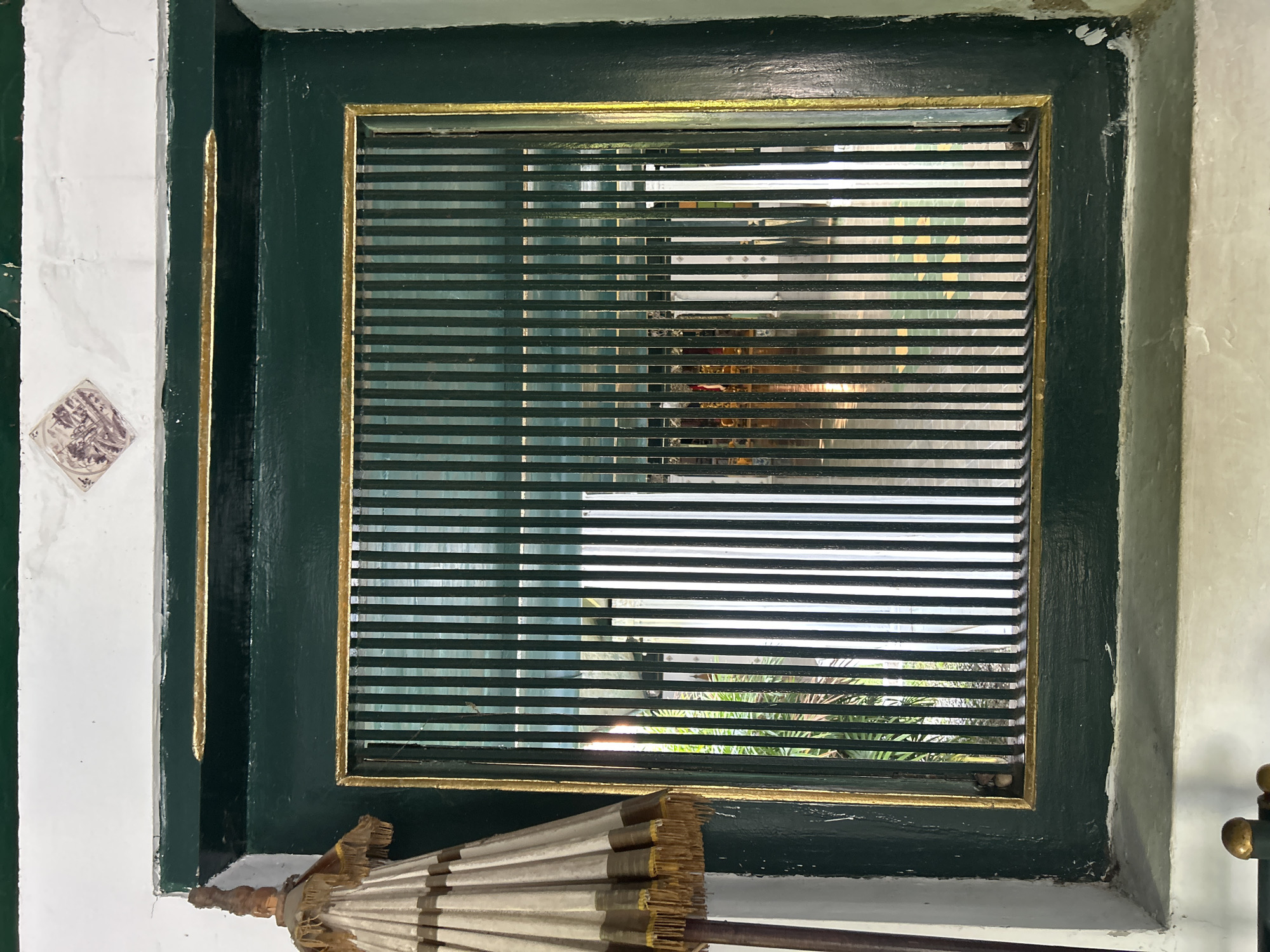
The image shows a close-up view of a green-painted window frame with a gold trim, set against a white wall. The window is covered by a vertical metal grate, also painted green. Through the grate, an interior space is visible, featuring a tiled floor with a yellow and green pattern. There are also glimpses of what appears to be decorative elements, possibly furniture or cultural artifacts, with some red and gold colors. On the left side of the window, a portion of an ornate umbrella or parasol, white with gold tassels and trim, is visible, leaning against the wall. The overall impression is one of a traditional architectural element, possibly within a historical building or palace in Cirebon, Indonesia, a city known for its rich cultural heritage. The lighting suggests it is daytime.
Cirebon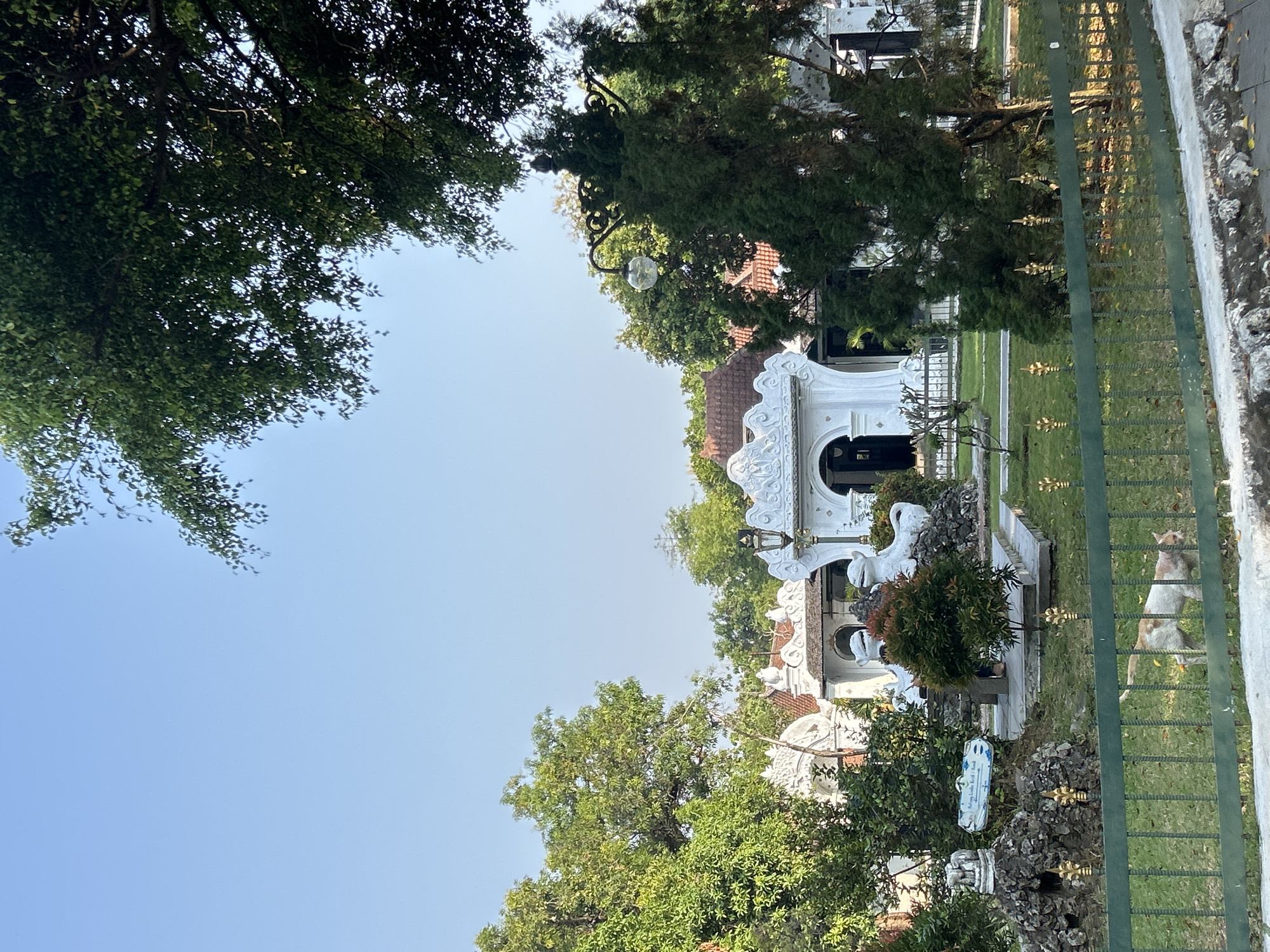
This image captures a view of the Taman Sari Gua Sunyaragi in Cirebon, Indonesia. The foreground features a green metal fence with decorative gold finials. Beyond the fence, a light-colored, possibly calico cat is walking on a grassy lawn. In the middle ground, the distinctive white, intricately decorated buildings of Taman Sari Gua Sunyaragi are visible, set amidst lush green trees. Some of these buildings feature ornate white sculptures, including what appear to be stylized animal figures. A lamppost with a globe-shaped light fixture stands near one of the buildings. The background consists of a clear blue sky and more foliage. The overall scene suggests a well-maintained historical and cultural site bathed in natural light.
Cirebon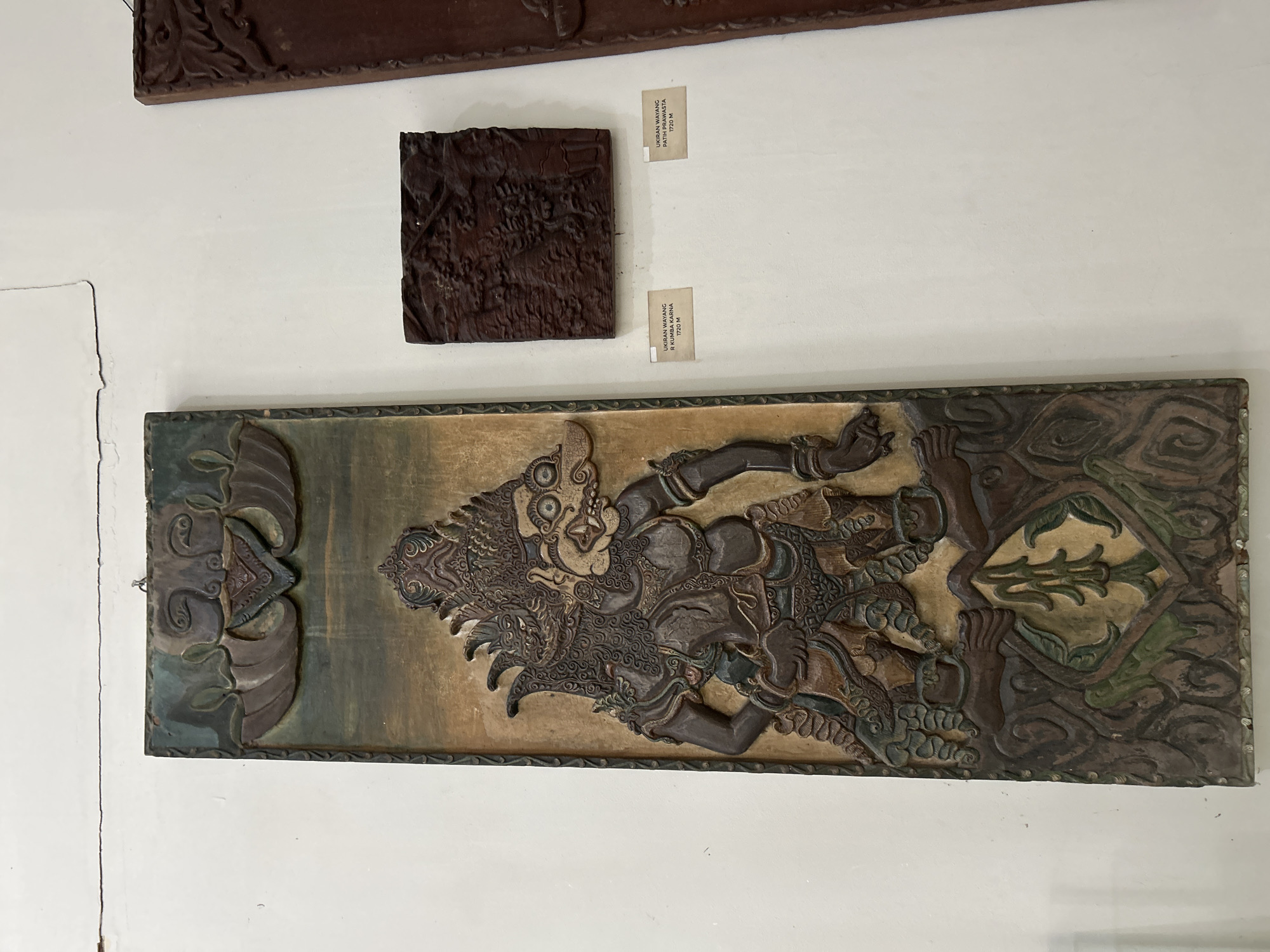
This media file captures a display of carved artworks on a white wall, likely in a museum or gallery setting in Cirebon, Indonesia. The primary focus is on two dark wooden relief carvings. The larger, lower carving is a horizontal panel featuring a dynamic, stylized depiction of a figure that appears to be a mythological character or warrior. The figure has an elaborate headdress, intense facial features with wide eyes and bared teeth, and is rendered in a dramatic pose with limbs outstretched. The carving is intricate, showcasing detailed patterns in the clothing, armor, and surrounding decorative elements. The background of this panel has a textured, earthy tone with hints of green and brown pigment, suggesting a weathered or aged appearance. The overall style evokes traditional Indonesian art forms, possibly influenced by Wayang puppetry. Above this larger piece, a smaller, square wooden carving is displayed. It also features a detailed relief, though the subject matter is less distinct at this resolution. Two small, rectangular paper labels are affixed to the wall next to this smaller carving. The visible text on these labels reads: "UKIRAN WAYANG / PATIMUR" and "UKIRAN WAYANG / R KUMBA KARNA", with "1720 M" also visible on both. These labels suggest that both carvings are "Wayang carvings" and may be dated to 1720. The setting appears to be an indoor environment with bright, even lighting. The wall is painted white, and there are some subtle signs of age or imperfection on the wall's surface. The arrangement suggests a curated exhibition of cultural artifacts.
Cirebon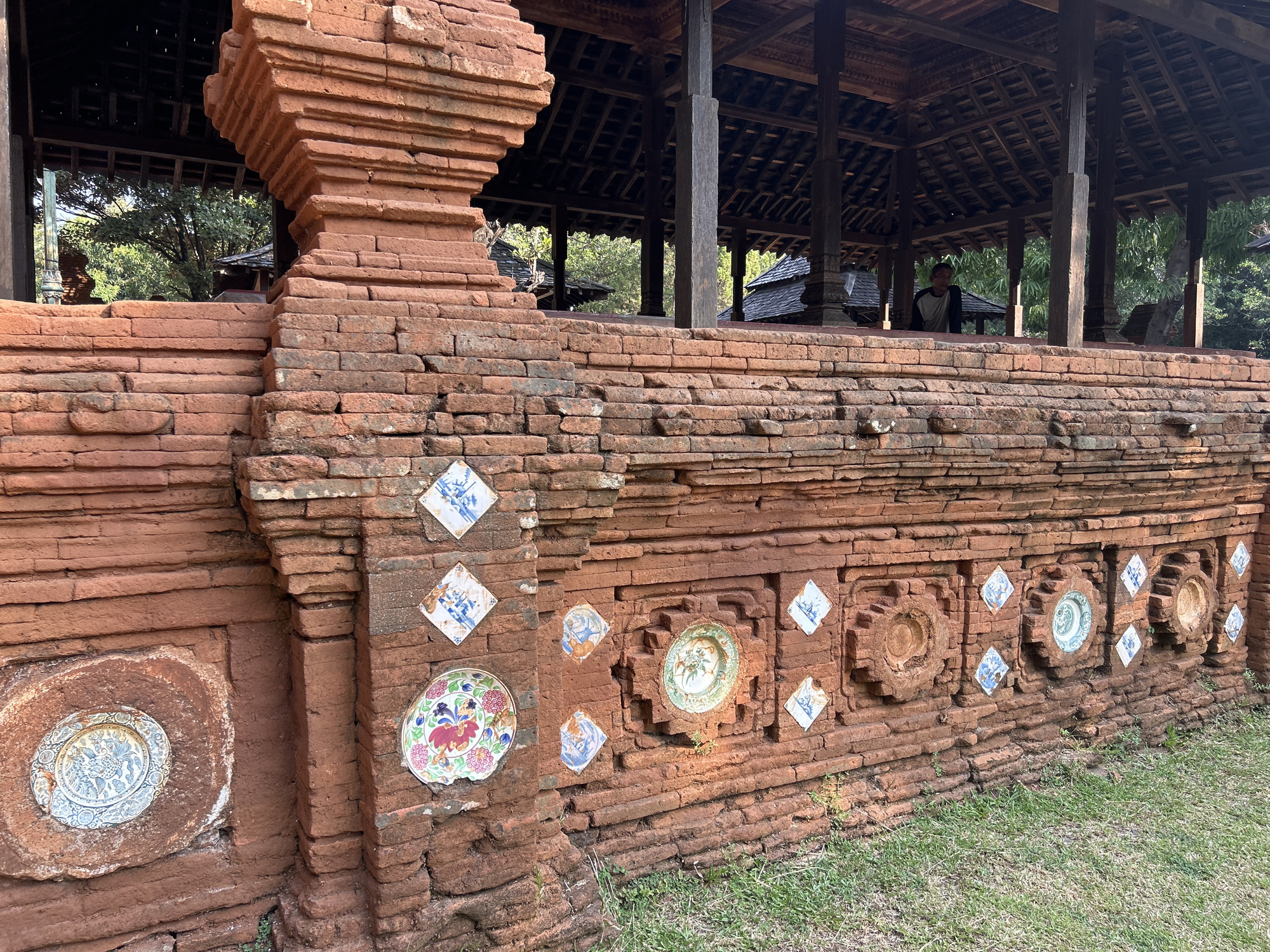
The image displays the exterior of a historical brick structure, likely part of a building or monument, in Cirebon, Indonesia. The structure is made of reddish-brown bricks and is adorned with various ceramic plates and tiles embedded within its walls. These decorations include patterned blue and white diamond-shaped tiles and larger, circular ceramic plates featuring floral and avian motifs. The architecture suggests a traditional style, with a covered wooden structure visible in the background, supported by wooden pillars. A person, appearing to be a male, is seated within this covered area, observing the surroundings. The ground in front of the brick structure is covered with green grass, indicating an outdoor setting. The overall scene conveys a sense of historical and cultural significance, typical of heritage sites.
Cirebon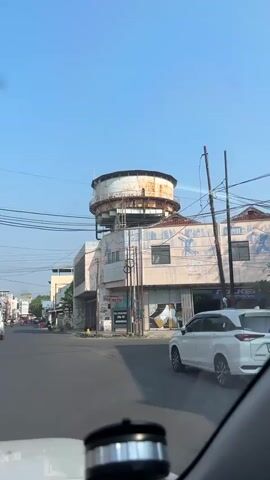
A vertical video shows a water tower built on top of a light-colored commercial building. The water tower is rusted and appears old. The building has multiple floors and windows. The lower part of the building has large, rolled-up metal doors, suggesting it might be a store or garage. There is a street in front of the building with some traffic. A white car is visible on the right side of the road. On the left side, a motorcycle rider is passing by. The sky is clear and blue, indicating it is daytime. The video appears to be taken from inside a vehicle, possibly a car, as the bottom of the frame shows parts of the dashboard and a black object. The overall scene suggests an urban or semi-urban environment.
Cirebon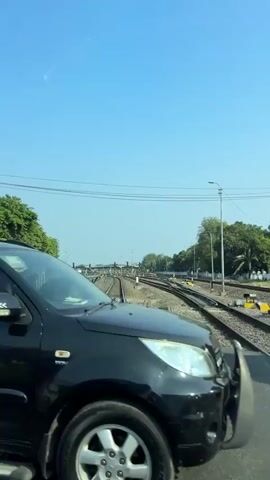
The video shows a view from inside a vehicle traveling on a road that intersects with railroad tracks. The scene is illuminated by bright daylight under a clear blue sky. At the beginning of the video, the side of a black SUV is visible, with tinted windows and a silver roof rack. As the vehicle moves, it approaches a railway crossing. A man wearing a blue shirt and a hat is seen pushing a bicycle with a passenger carriage attached to it across the tracks. Further along, a black flatbed truck is parked or moving slowly near the tracks. Next, a white van is positioned at the railway crossing. Finally, an elderly man wearing a brown vest over a greenish shirt and grey pants is walking away from the camera, carrying a white plastic bag in his left hand. He appears to be walking alongside the white van, which is partially obscuring him from view. The background consists of trees and railway infrastructure, including multiple sets of tracks and overhead wires.
Cirebon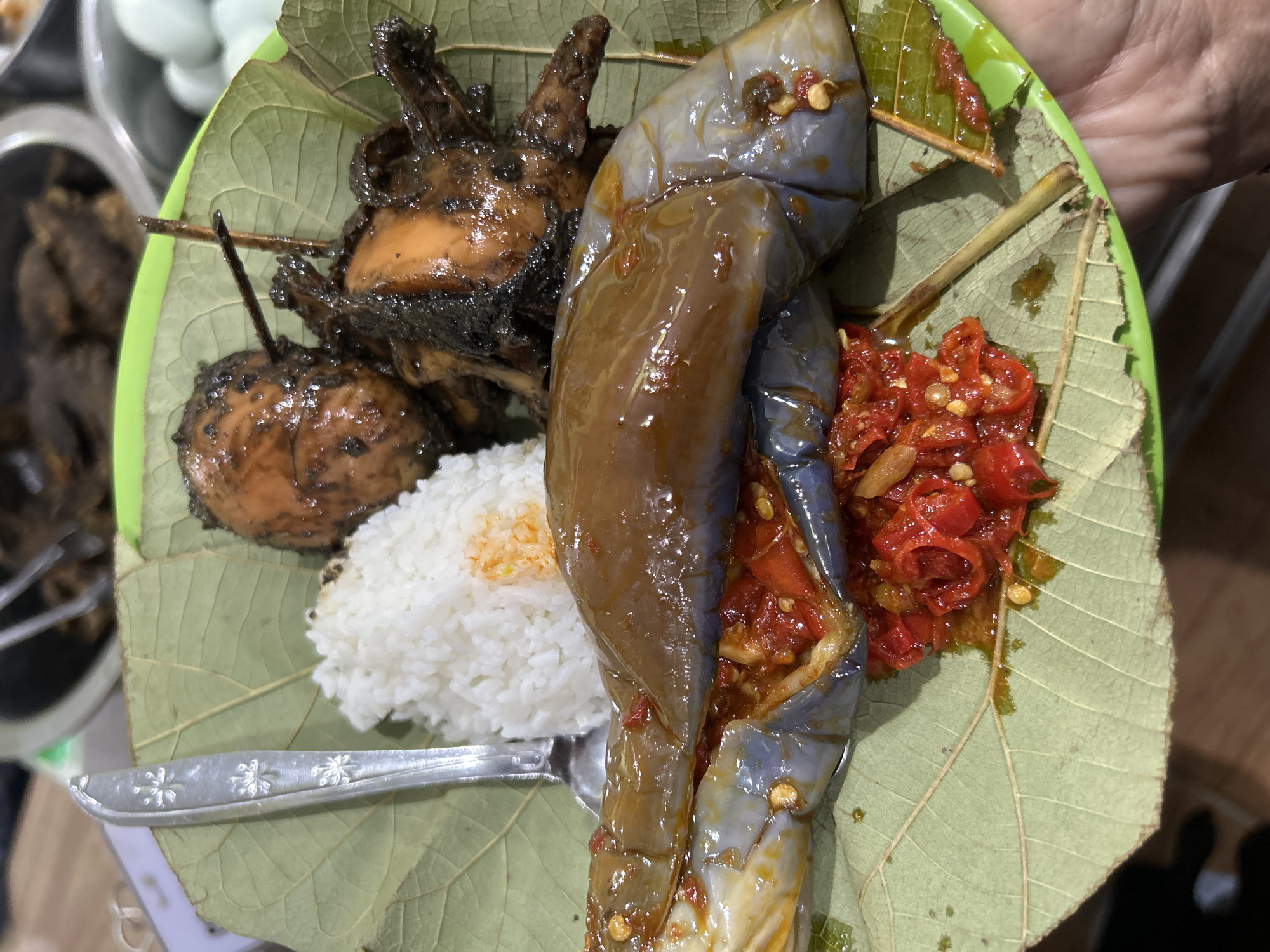
A close-up, overhead shot shows a meal served on a large green leaf placed on a green plate. The leaf, with its prominent veins, serves as a natural platter. In the foreground, a whole, cooked eggplant, likely grilled or fried, is presented split open and generously topped with a vibrant red chili and garlic sambal. The eggplant's skin is a deep purple-blue, and its flesh is a glossy brown, coated in a sauce. To the left of the eggplant, a mound of fluffy white rice is visible, with a hint of orange spice mixed in. Partially submerged in the rice is the handle and bowl of a spoon. To the upper right of the rice, two pieces of dark, glazed chicken or meat are skewered together with a thin wooden stick. They appear to be cooked in a dark, savory sauce. In the background, out of focus, are glimpses of more food containers, one possibly holding more dark meat and another with white, oval-shaped items, possibly boiled eggs. The scene appears to be set in an outdoor or informal dining setting. The image is likely taken in Cirebon, Indonesia, a city known for its diverse culinary traditions.
Cirebon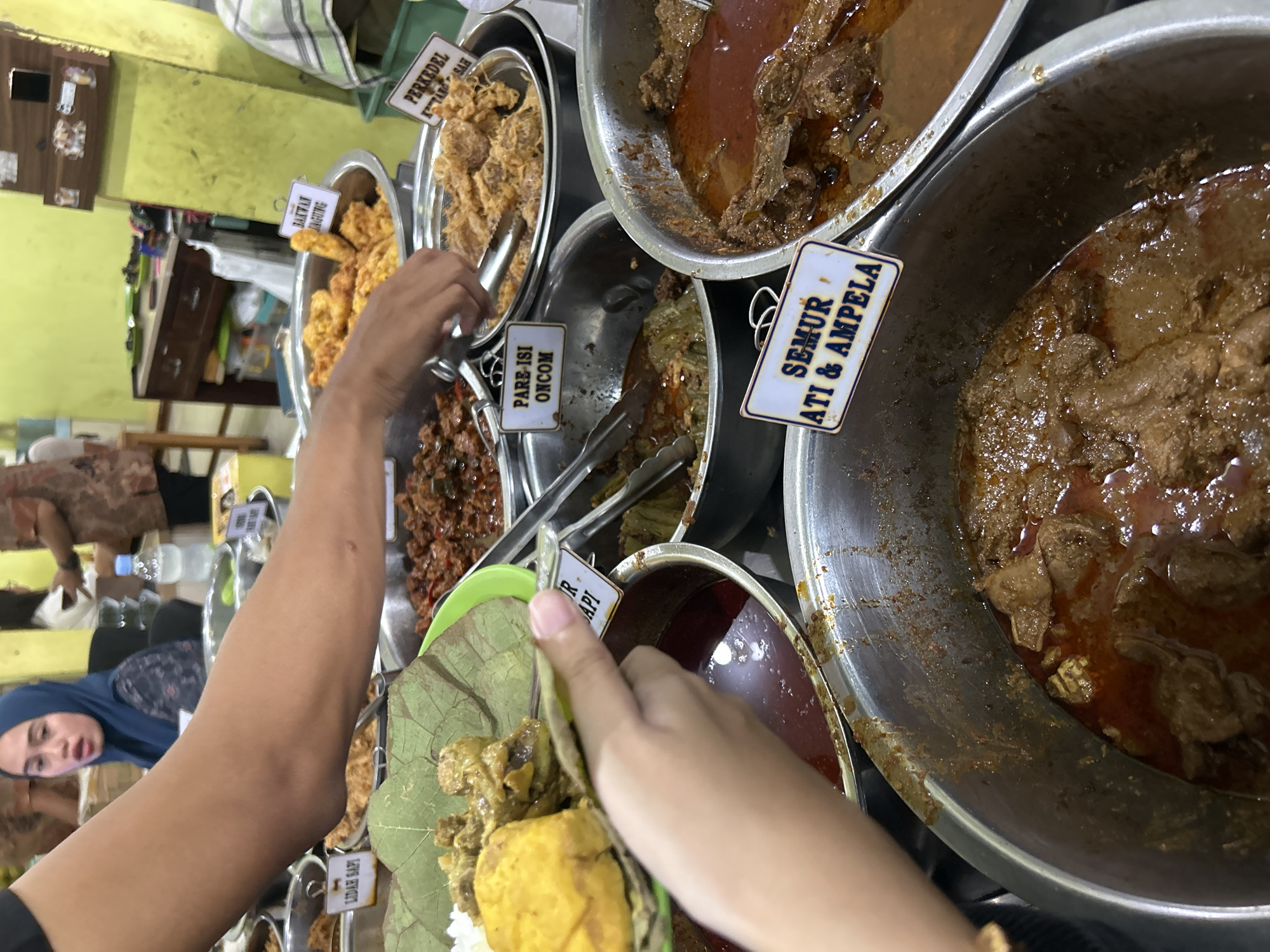
In a bustling Indonesian food stall in Cirebon, a person's arm is visible in the foreground, holding a plate of food. The plate contains rice, a yellow piece of food, and several pieces of meat with a sauce. The background shows a variety of food dishes in metal containers, including what appears to be beef rendang, semur hati & ampela (stewed liver and gizzard), pare-isi oncom (bitter melon with fermented soybean), bakwan jagung (corn fritters), and perkedel kentang (potato fritters). A woman wearing a blue hijab is visible in the middle ground, looking towards the food. The stall is brightly lit, with green walls and wooden furniture. The atmosphere is lively and suggestive of a popular eatery.
Cirebon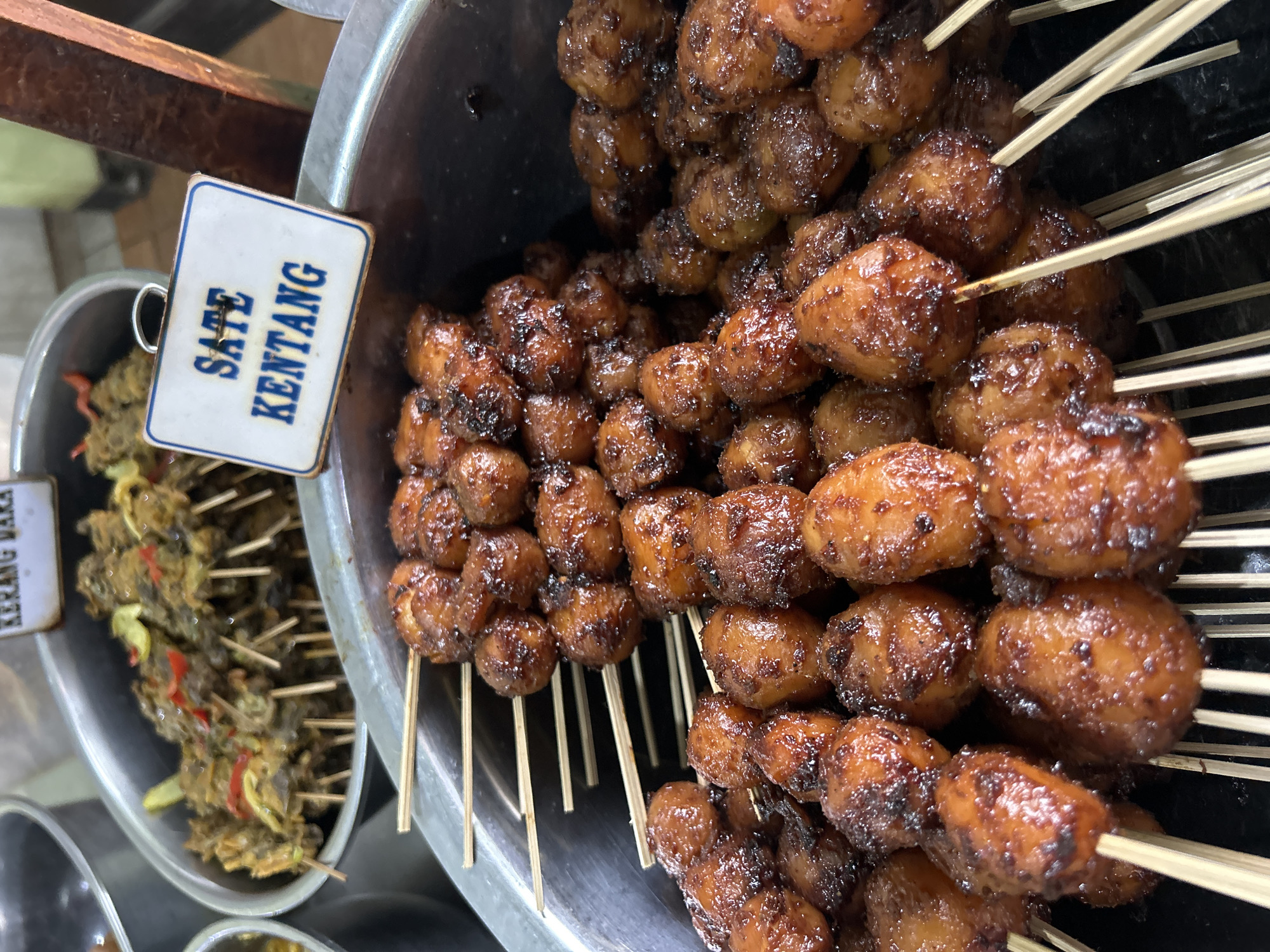
The image shows a close-up view of several skewers of "Sate Kentang" (potato satay) in a large metal container. The potatoes are small, round, and appear to be glazed with a dark, sticky sauce, some pieces showing charring from grilling. They are arranged on wooden skewers. A white sign with blue text reading "SATE KENTANG" is visible in the upper right portion of the image. Behind the potato satay, a similar metal container holds skewers of what appears to be "Kerang Dara" (blood clam) satay, identifiable by the darker, less uniform shapes and specks of red and yellow ingredients. The scene is likely a food stall or market in Cirebon, Indonesia, a city known for its diverse street food offerings, particularly satay variations. The lighting suggests an indoor or covered outdoor setting, possibly a market during daylight hours. There are no people visible in the frame.
Cirebon