Fangshan District, China
7 memories from Fangshan District, China
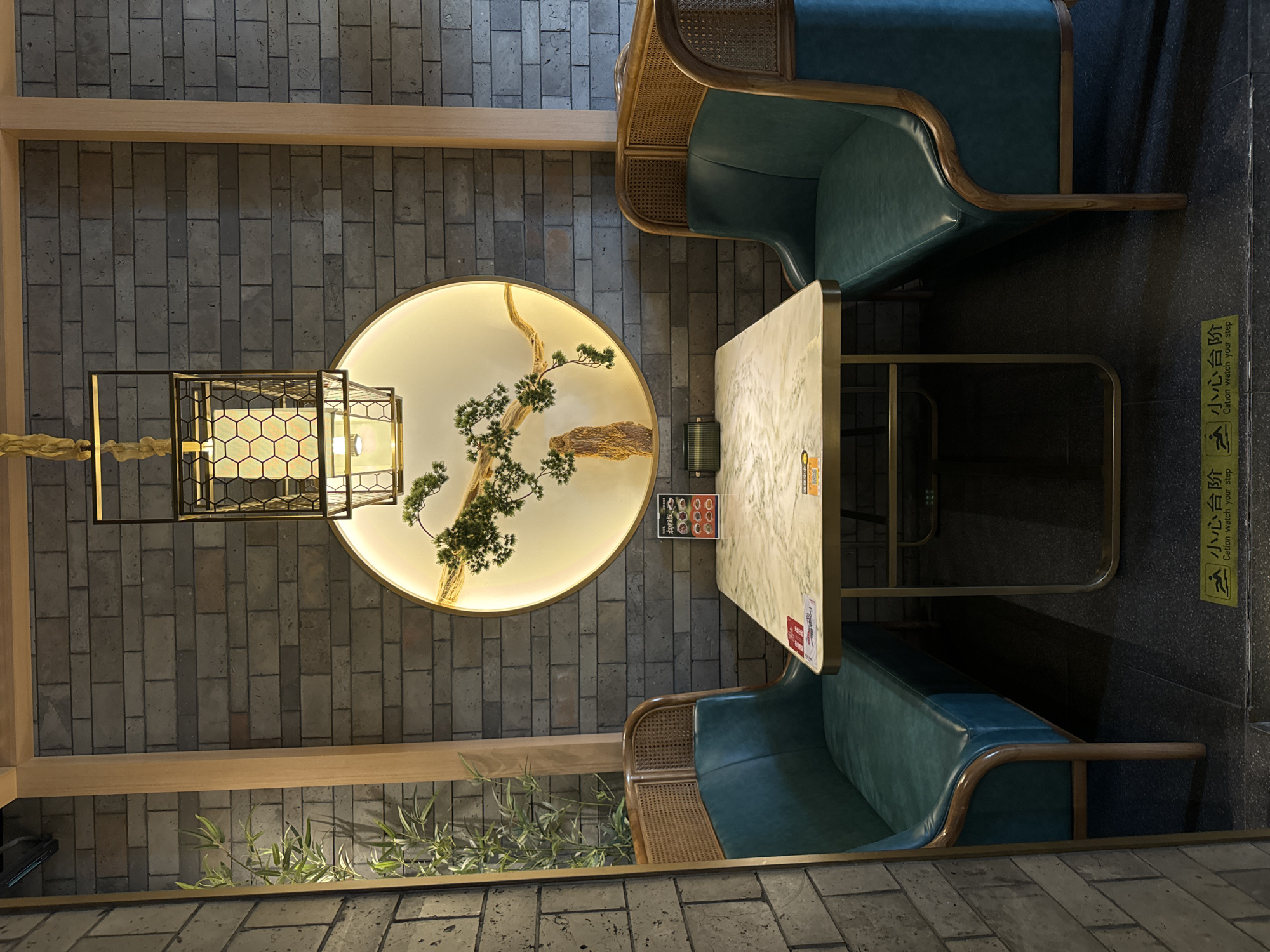
The image displays an interior dining or lounge area, likely within a restaurant or cafe in Fangshan District, China. The setting features a contemporary design with traditional Chinese aesthetic influences. The walls are constructed from grey rectangular bricks, and a light wooden beam horizontally spans the mid-ground. Below this beam, artificial green foliage resembling bamboo leaves adds a natural element. A prominent circular backlit art piece on the back wall showcases a gnarled, bonsai-like tree with green leaves, seemingly growing from a rocky landscape, emitting a warm, soft glow. To its left, a modern geometric lantern with a golden frame and hexagonal patterns hangs from the ceiling, providing additional ambient lighting. In the foreground, two comfortable teal-colored upholstered armchairs, or booth seats, with wooden frames and rattan detailing on their backrests, are arranged opposite each other. Between them is a rectangular table with a light-colored, possibly marble-patterned, top and a dark metal base. Small stickers or papers, likely menus or promotional items, are visible on the table surface. A small rectangular sign with pictorial representations of food items is also visible on the brick wall above the table. The floor is a dark, textured surface. On the far right, a yellow warning sign is visible, displaying the Chinese characters "小心台阶" and the English phrase "Caution Watch your step," along with a pictogram of a person falling, indicating a step or change in floor level. No people are present, suggesting a quiet or unoccupied moment. The overall atmosphere is calm and inviting, with a focus on thoughtful design and lighting. The indoor setting does not provide weather details, but the lighting suggests a controlled environment, potentially an evening ambiance.
Fangshan District
This image captures a serene scene within a pond or water feature, situated in Fangshan District, China. The composition is dominated by a lush, green coniferous tree branch, likely a pine, extending into the frame from the top and right. Its long, spiky needles are densely packed, and a section of its textured, brown bark is visible where it branches. Beneath the tree branch, several goldfish, varying in shades of orange and gold, swim in dark, reflective water. The water's surface shows areas of lighter reflections and subtle ripples, indicating movement or a light source above. The pond's bottom appears dark, with granular sediment or small pebbles, and includes some larger, irregularly shaped objects, possibly rocks or submerged decor, one of which has a pale orange-yellow hue. The scene conveys a peaceful atmosphere, typical of a decorative garden pond or a similar indoor display. No people are visible, and there is no discernible text. The lighting suggests it is either daytime or a brightly illuminated indoor setting.
Fangshan District
A young woman, appearing to be in her 20s or 30s, is captured in a close-up, angled selfie, looking directly at the camera with a neutral expression. Her long, straight brown hair is parted on the side, and she wears black-framed glasses that reflect her eyes. She has light pink lipstick and clear skin. She is dressed in a light yellow top or dress. A delicate silver chain necklace with a small, intricate cross-like pendant rests on her collarbone. A small, flower-shaped earring or helix piercing adorns her right ear. Below her collarbone, a decorative branch adorned with small, round, orange fruits or berries is visible, suggesting seasonal decor. The background indicates an indoor or sheltered outdoor environment, consistent with Fangshan District, China. To the top left, a vibrant red sign featuring bold black Chinese calligraphy is partially visible. Behind her, wooden slat-like structures are present. In the upper right background, a bright yellow "Wet Floor" caution sign with Chinese text stands. The ground beneath the structures appears to be paved with light-colored bricks or stones. The visible text includes Chinese calligraphy on the red sign and "小小心地滑" (Xiǎo xīn dì huá), meaning "Caution: Wet Floor," on the yellow sign. The overall ambiance is calm and brightly lit, suggesting daytime.
Fangshan District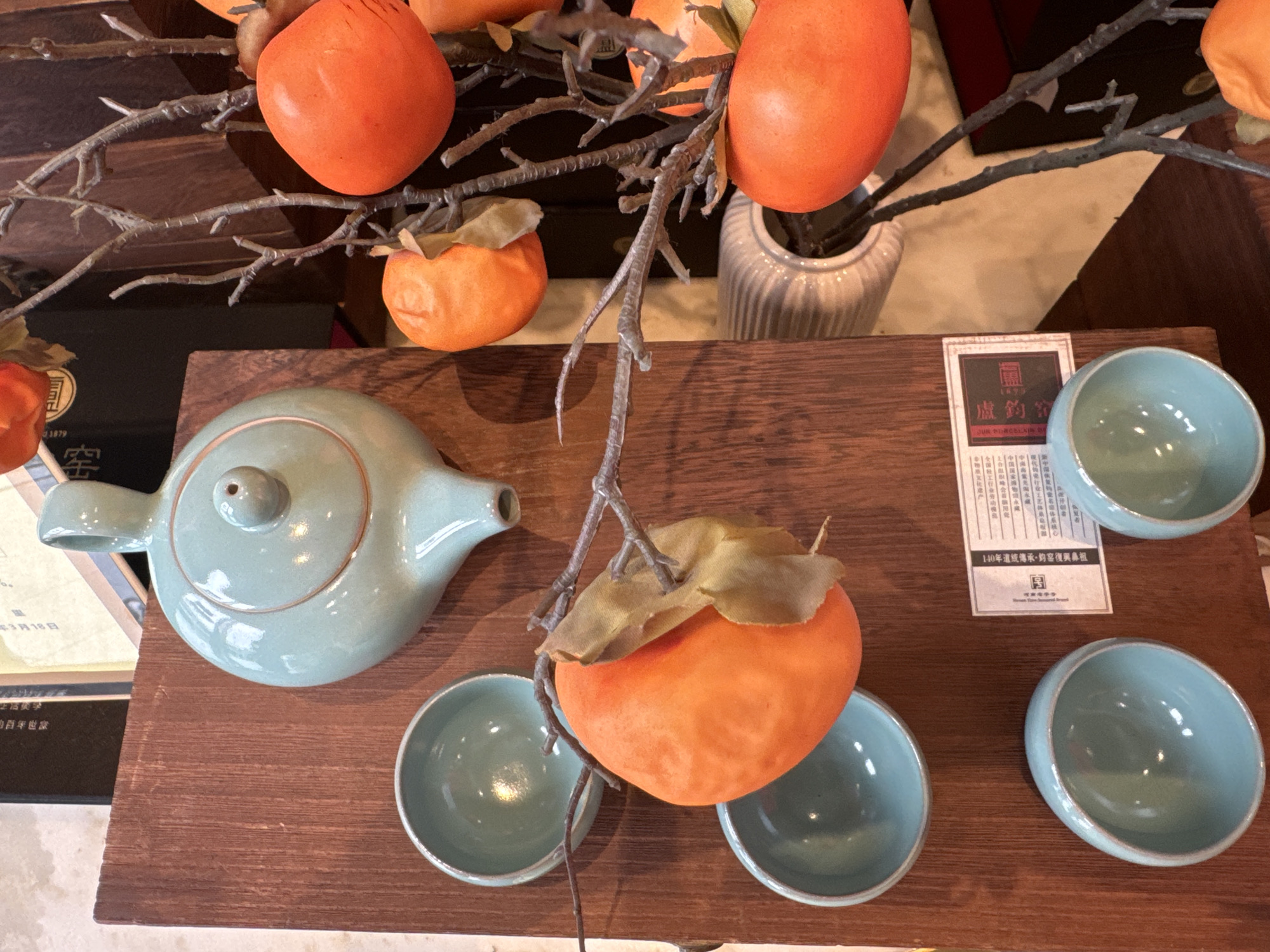
The image captures a static indoor display featuring artificial persimmons, ceramic tea ware, and wooden elements. In the foreground, a light blue-green glazed ceramic teapot, characterized by its round body, short spout, and handle, rests on a dark reddish-brown wooden plank. Five small, matching blue-green ceramic cups are arranged around the teapot on the same wooden surface. Above the tea set, bare, gnarled branches are adorned with vibrant orange artificial persimmons, many still bearing their green or brown calyxes, evoking an autumnal or harvest theme. These branches appear to originate from vases, with a light-colored, fluted vase partially visible holding some branches in the background. Further back, a darker wooden surface and a black box or packaging are discernible. A white rectangular label or card, placed on the wooden plank near the cups, features Chinese characters and some English text. Visible text includes "JUN PORCELAIN", "盧鈞家" (Lu Jun Jia), and "窑" (kiln). Key phrases like "140年道統傳承-钧窑復興鼻祖" (140 years of traditional inheritance - the ancestor of Jun porcelain revival) are present, along with "年3月18日" (March 18th) and "当百年世家" (When a century-old family/clan). This text strongly suggests the display is related to the heritage and craftsmanship of Jun porcelain, a type of Chinese ceramic ware, likely situated in a shop, showroom, or cultural exhibit in Fangshan District, China. The color palette combines the bright orange of the fruit with the serene blue-green of the ceramics and the warm browns of the wood, creating an aesthetically pleasing arrangement.
Fangshan District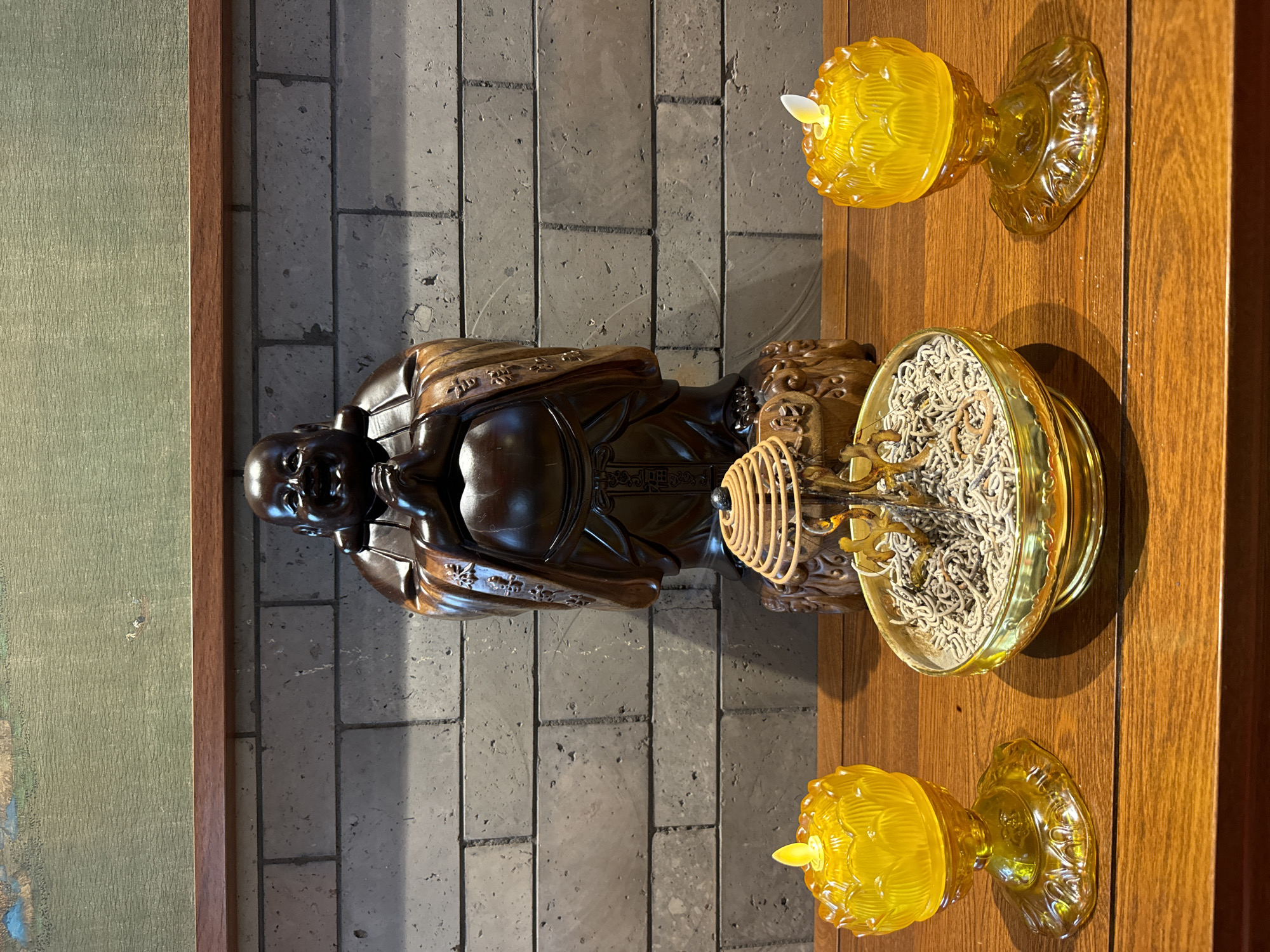
An upright-oriented indoor scene displays a collection of spiritual objects arranged on a polished wooden surface, likely a table or shelf, against a textured gray brick wall. The central subject is a dark brown, intricately carved wooden statue of a smiling Buddhist monk or deity, possibly Hotei (Budai), depicted with a jovial expression and traditional robes. Chinese characters, including "福" (fú - good fortune/blessing), are faintly visible carved into the robes. The statue rests on a decorative base, also carved from wood. To the right of the statue, on the wooden surface, are two yellow glass candle holders, each designed in a floral or lotus pattern, holding a small, white, battery-operated LED candle simulating a flame. Between these candle holders is a round, golden metal bowl or censer, filled with ash and numerous short, white remnants of burned incense sticks or coils. A spiral-shaped, light-colored wooden or rattan incense holder is placed within this censer. The background features a wall composed of vertically stacked, rectangular gray bricks or stones, showing some wear and texture. To the far left, a framed piece of artwork or textile is partially visible, characterized by a muted green, textured surface and bordered by a simple wooden frame. Natural light appears to enter from the right, casting soft shadows of the objects onto the wall and wooden surface, suggesting daytime. The arrangement suggests a setting dedicated to worship or meditation, such as a home altar or a temple.
Fangshan District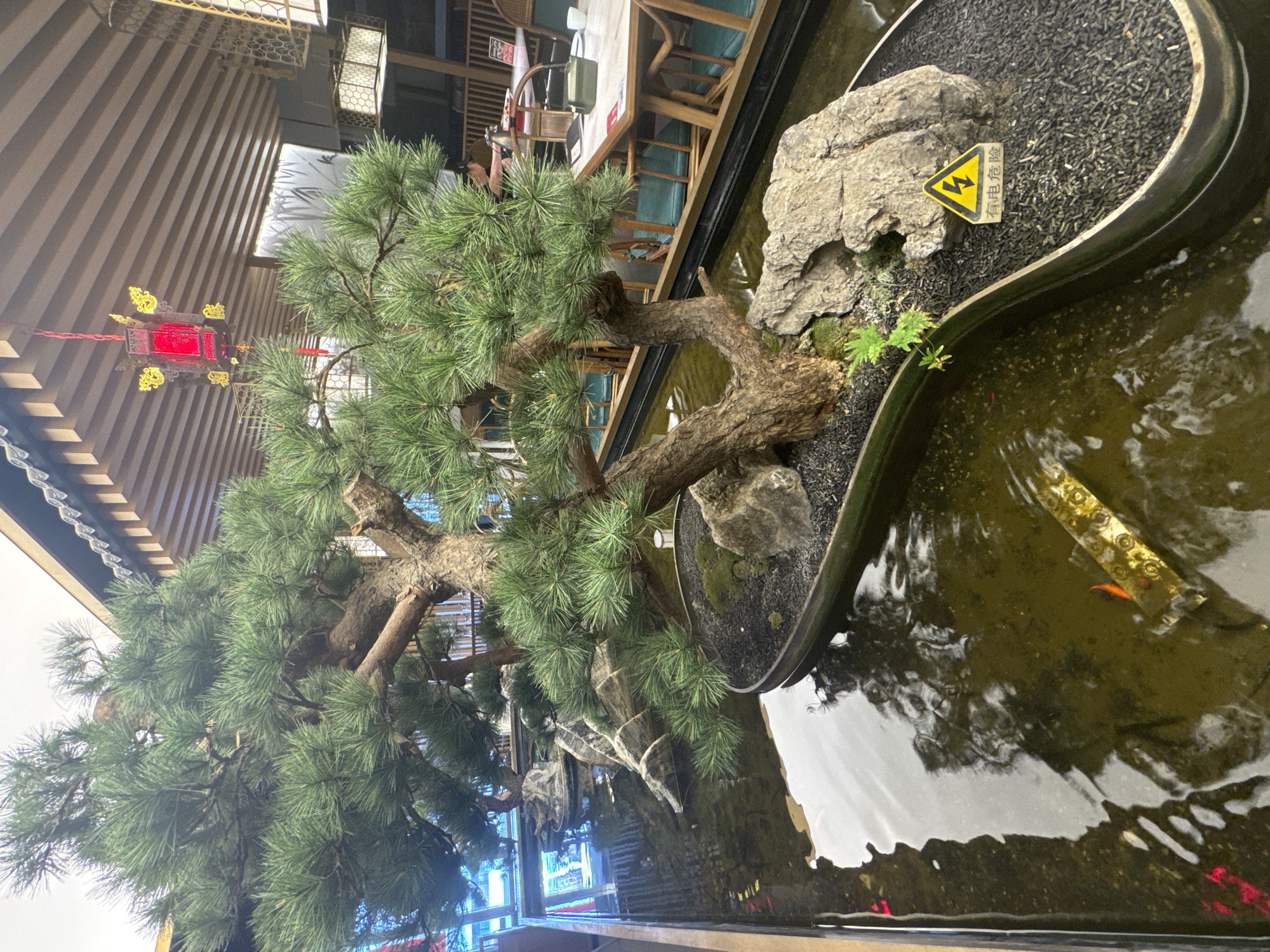
This media file captures an indoor scene, likely within a restaurant or tea house in Fangshan District, China, showcasing a prominent decorative garden feature. The central subject is a magnificent, large bonsai tree, possibly a pine, with a thick, gnarled, dark brown trunk and dense clusters of vibrant green needles. The tree's branches extend gracefully over a shallow water feature. Surrounding the base of the bonsai are various natural elements, including several grey rocks, small patches of green moss, and a delicate fern-like plant. The ground immediately around the bonsai and rocks is covered with a dark, granular material, resembling charcoal or decorative pebbles. The water feature, appearing as a dark-bottomed pond, holds calm water that reflects the surrounding architecture and lights. Several small, bright orange fish, likely goldfish or small koi, are visible swimming in the water. A golden, perforated object is partially submerged in the water. A small, yellow triangular warning sign with a black lightning bolt symbol is placed near the rocks. The text on the sign reads "有电危险" (Yǒu diàn wēixiǎn), indicating "Danger of Electric Shock" or "Electrical Hazard." In the background, the indoor setting features wooden walls with horizontal slats and a ceiling adorned with decorative light panels and a vibrant red and gold Chinese lantern hanging from intricate chains. Further back, wooden tables and chairs, some with light blue cushions, suggest a dining or seating area. A person is faintly visible in the background, seated at a table. The overall ambiance suggests a blend of natural tranquility and traditional Chinese decor.
Fangshan District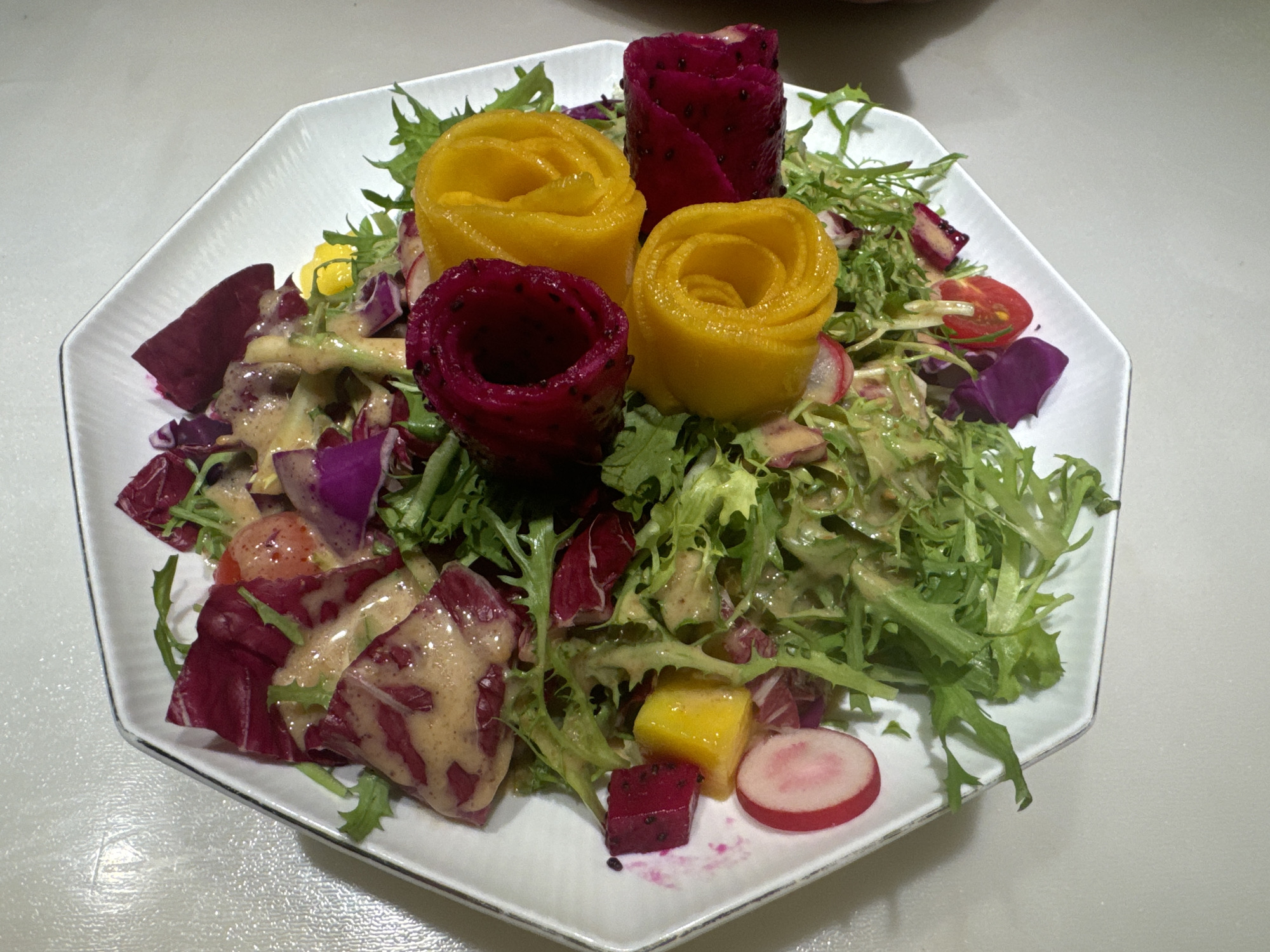
A vibrant and artfully arranged salad is presented on a white octagonal plate, set against a plain light grey surface. The dish features a colorful assortment of fresh ingredients, meticulously placed for visual appeal, consistent with a dining experience in Fangshan District, China. The base of the salad consists of a mix of leafy greens, including frisée or endive with its characteristic curly leaves, and possibly darker red lettuce or radicchio. A creamy, speckled dressing, light brown or tan in color, is generously drizzled over the greens and other components. Central to the presentation are four prominent "roses" made from fruit: two bright yellow ones, likely carved from mango, and two deep magenta ones, crafted from red dragon fruit, showcasing its distinctive tiny black seeds. These decorative elements are nestled among the greens. Other visible salad components include slices of radish with red skin and white flesh, small cubes of yellow mango and red dragon fruit, pieces of red cabbage or radicchio, and halved cherry tomatoes. There are also larger, dark red pieces, possibly slices of beetroot or another type of red root vegetable, and smaller purple elements mixed throughout. A tiny yellow edible flower or fruit piece is also visible among the greens. The image is a close-up, focusing entirely on the salad, suggesting an indoor setting with artificial lighting. There are no people visible, nor any text. The overall impression is one of a fresh, healthy, and aesthetically pleasing culinary creation.
Fangshan District