Firenze, Italy
30 memories from Firenze, Italy
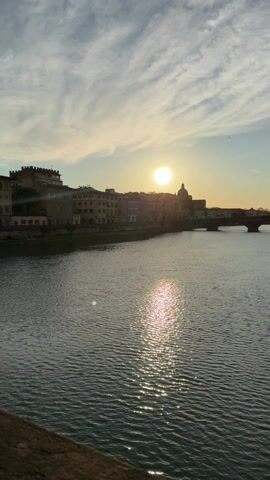
The video shows a sunset over a river in an Italian city, presumably Florence. The camera pans from left to right across the water, revealing the reflection of the sun, the city skyline including a dome, a bridge, and buildings along the riverbank. People can be seen sitting and standing along the stone wall that runs along the river. The video ends focused on the buildings and people.
Firenze
The video shows a close-up of a pad of small, light green paper sheets on a shiny, reflective surface. The sheets are numbered sequentially. Someone flips through the sheets, revealing numbers from 73 to 01. The background is blurred, but appears to be a wooden surface with a small, clear plastic container on it.
Firenze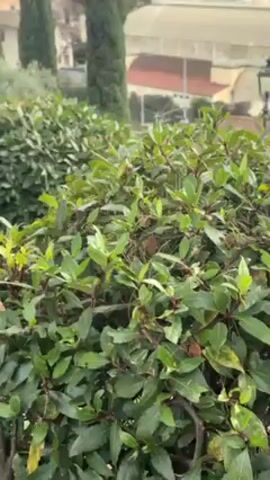
From a low vantage point overlooking dense greenery, a cityscape emerges. Tall, slender cypress trees punctuate the landscape, reaching towards a slightly overcast sky. In the distance, buildings with red-tiled roofs and a large, light-colored structure stand out. A vintage-style street lamp is visible, adding to the classic urban scene.
Firenze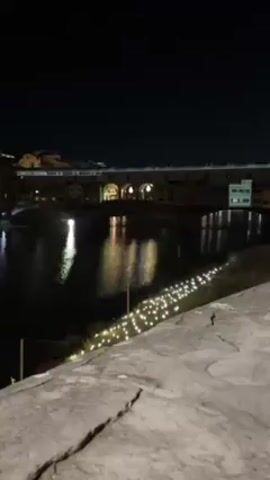
At night, the Ponte Vecchio bridge in Florence, Italy, is illuminated with a light show. The bridge’s buildings reflect in the Arno River. Along the near shoreline, decorative lights are visible. The camera is situated on a stone wall, displaying its rough texture. No people are readily visible.
Firenze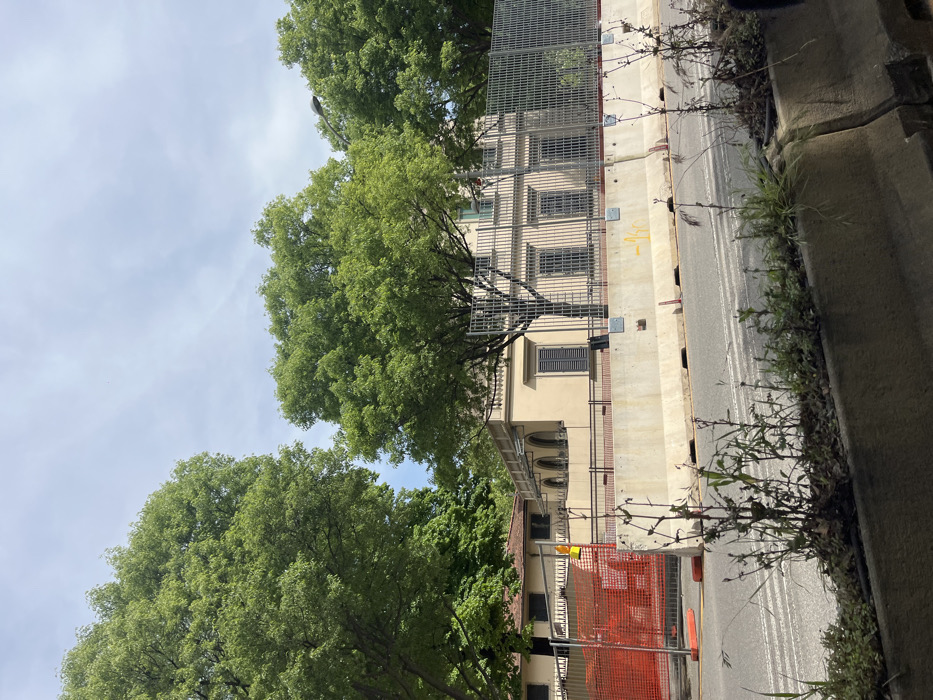
The image shows a view of a large concrete barrier wall with red and white netting that is in front of a large building. The building is made of beige stone and has many windows and doors. There are many green trees to the left and right of the building. The barrier wall is in front of a street that is empty. The image is most likely taken in Florence, Italy, at the location of the coordinates.
Firenze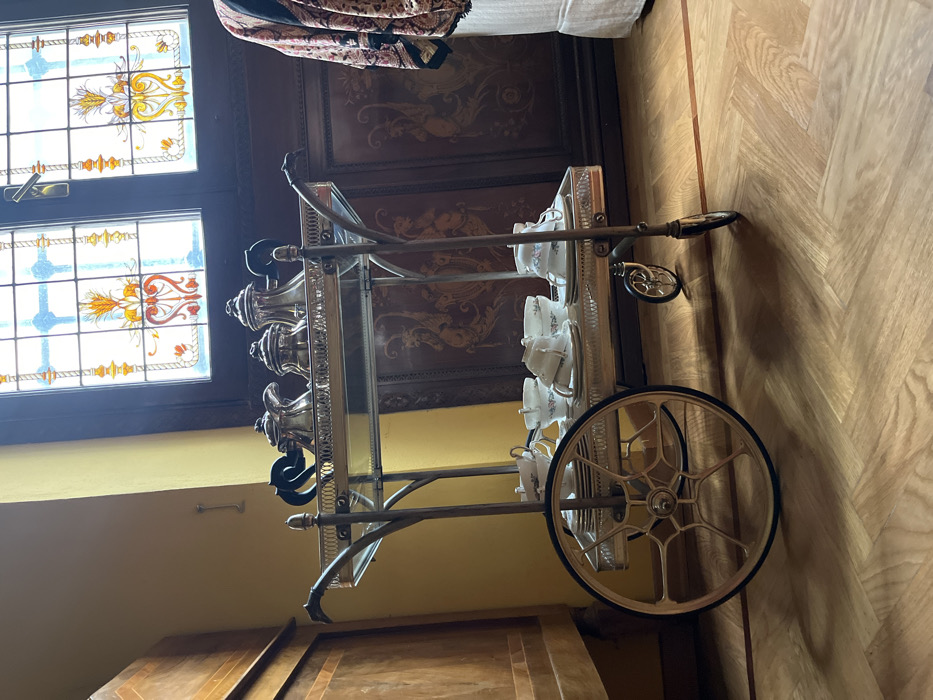
A silver serving cart with a large, round wheel is positioned near the wall of a room with a wooden floor in Firenze, Italy (43.775, 11.272). The cart is partially obscured by a large, ornate window with stained glass. Several teapots and cups are on the cart, and it appears to be a serving cart for tea. The wooden floor has a parquet pattern. There is a piece of furniture with a patterned surface in the lower left corner of the image. The cart has a glass top and two levels. There are six cups and saucers on the top shelf of the cart. There are three teapots on the lower shelf, each with a different design. The bottom shelf is also made of glass. The cart is near a window with stained glass and a paneled wall with an ornate design. The room is well-lit and there are no people visible in the image.
Firenze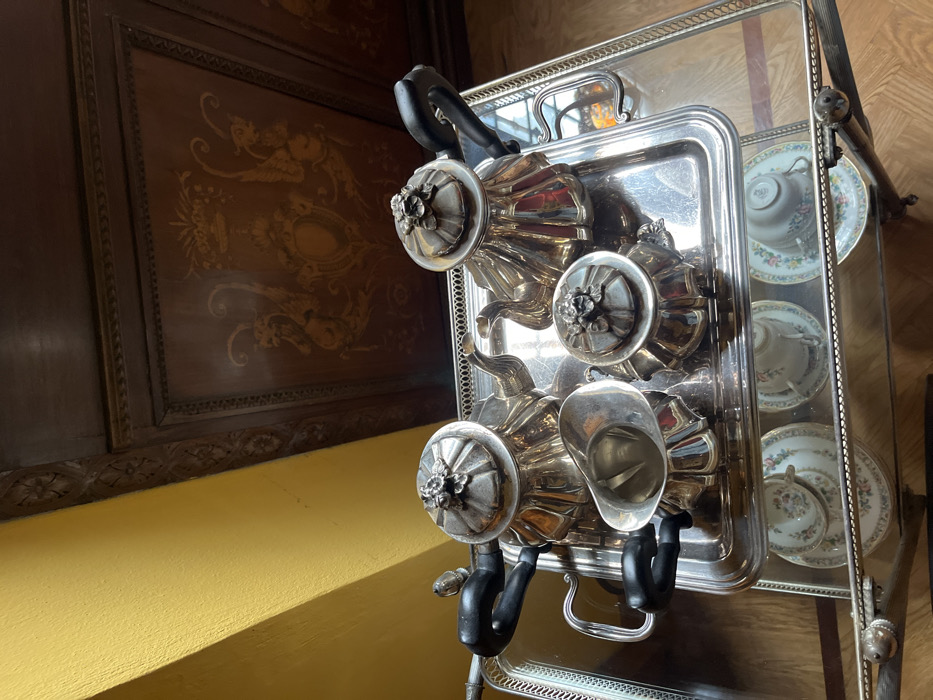
A silver tea service set on a glass-top serving cart. The cart is in a room in a building located at 43.775 latitude and 11.272 longitude in Firenze, Italy. The service includes two teapots with ornate floral designs on the lids, a creamer, and a sugar bowl. The cart has a silver trim, and there are three empty teacups, each on a saucer with a floral design, underneath the cart. The background is a yellow wall, partially obscured by a brown wood-paneled wall with an ornate carving. The surface of the cart is reflective, showing the room below. The room appears to be a dining room with a wooden floor.
Firenze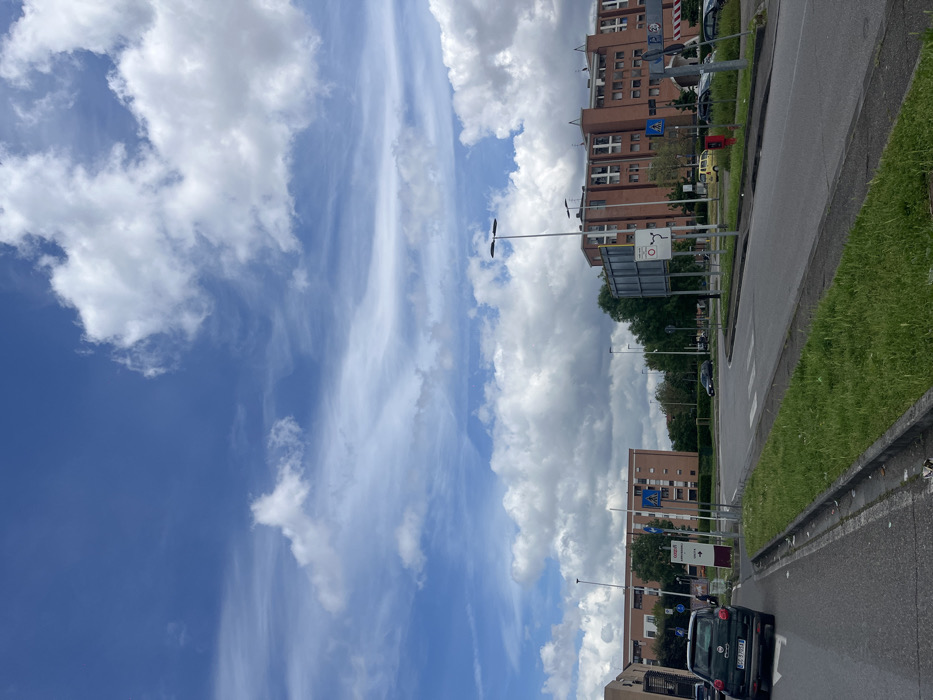
The image shows a street in Florence, Italy, at the coordinates 43.765 latitude and 11.198 longitude. The street is paved with asphalt and has a grassy median strip in the center. There are several buildings on the left and right sides of the street, with trees in between. The buildings are multi-story brick structures with windows, and there are some small signs on the buildings, which cannot be read. There is a car parked on the right side of the street. The sky is blue with white clouds, and the sun is shining. There are several streetlights in the street. There are some trees on both sides of the street. The image does not show any people.
Firenze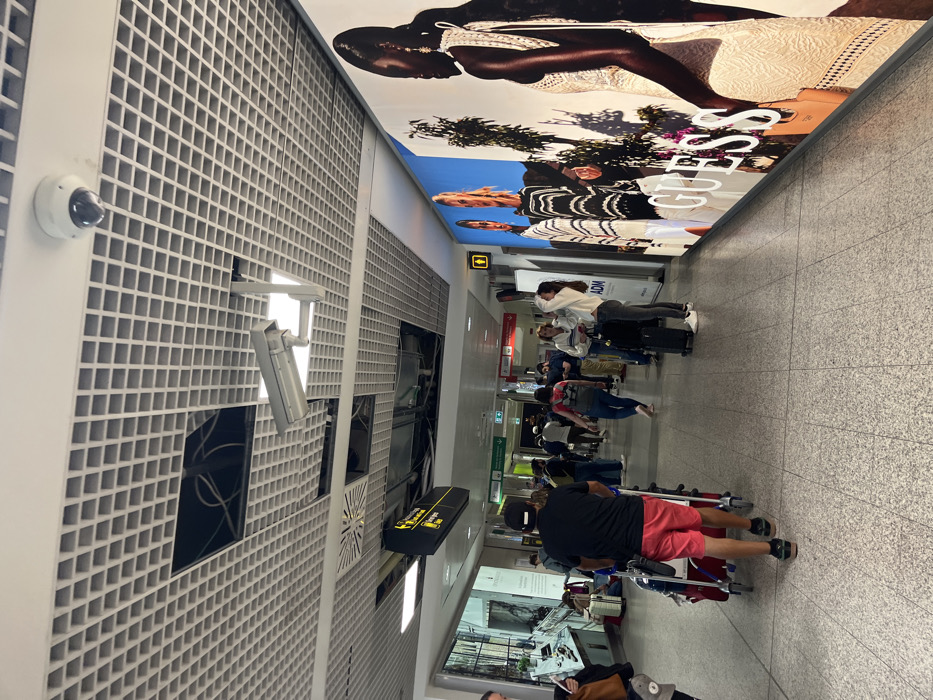
The image shows the interior of a corridor in the Florence Airport, located at coordinates 43.802, 11.201. The ceiling is made of white square panels and includes multiple surveillance cameras. The walls are painted white. A large sign on the right wall displays a Guess advertisement. The sign features three people, two women and a man. One of the women is black. The corridor is populated by multiple people with luggage, some walking while others are standing, including a man pushing a luggage cart. A yellow sign with an arrow is visible on the left wall. There is an opening at the end of the corridor revealing an area beyond.
Firenze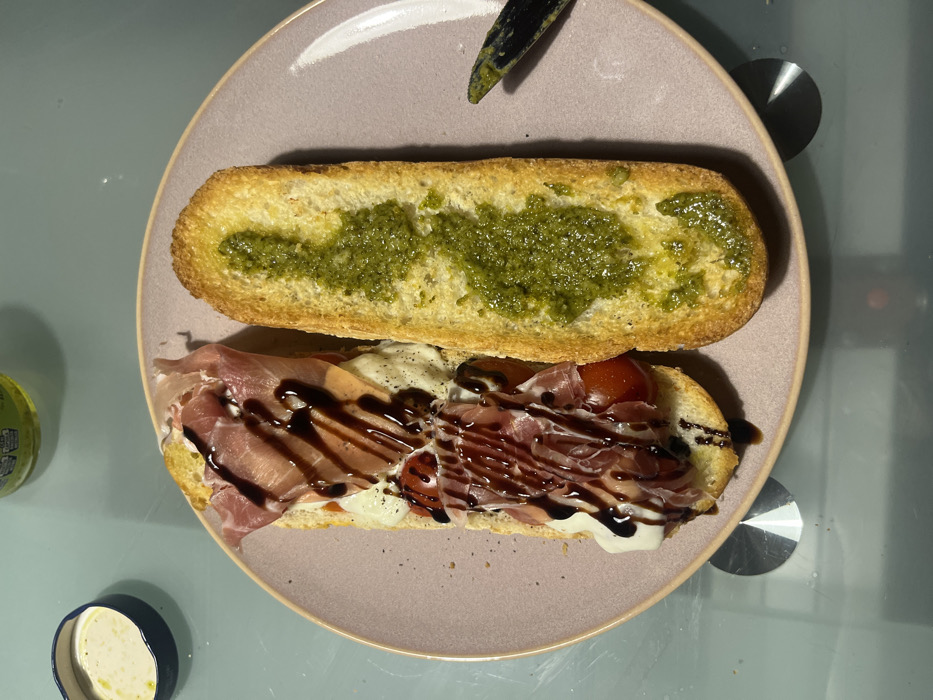
Two halves of a sandwich, laying flat on a pink plate on a glass table. The sandwich is composed of a toasted baguette, mozzarella cheese, sliced tomatoes, and prosciutto. The top half of the sandwich is drizzled with balsamic glaze, the bottom half is topped with pesto. The plate also contains a silver butter knife. The location of the image is in the city of Firenze, Italy, at 43.781 degrees north latitude and 11.24 degrees east longitude.
Firenze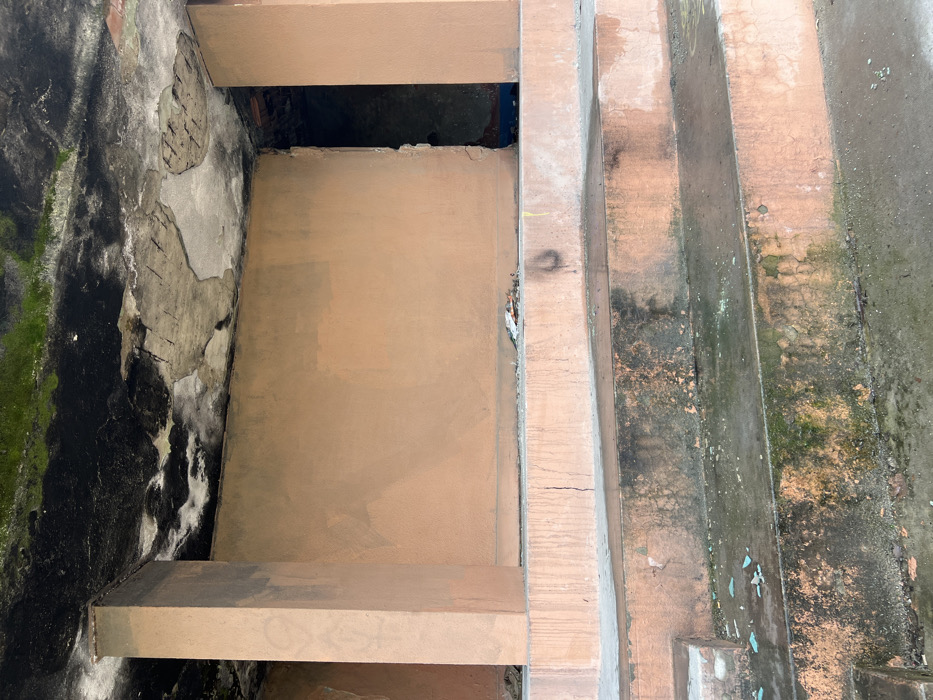
The image shows a set of concrete steps leading up to a doorway. The steps are worn and weathered, with patches of moss and dirt growing on their surface. The doorway is framed by two concrete pillars. The ceiling above the doorway is cracked and stained, and there is evidence of water damage. The image was taken in Firenze, Italy at the coordinates 43.787, 11.211. There are no people or objects in the image.
Firenze
The image shows a black pan containing a portion of spaghetti with a creamy sauce, located on a stainless-steel stove top. The pan is being stirred with a black spatula. The stove top is in the kitchen of a private residence in Firenze, Italy, at the coordinates provided. The background shows tiled walls featuring a floral design.
Firenze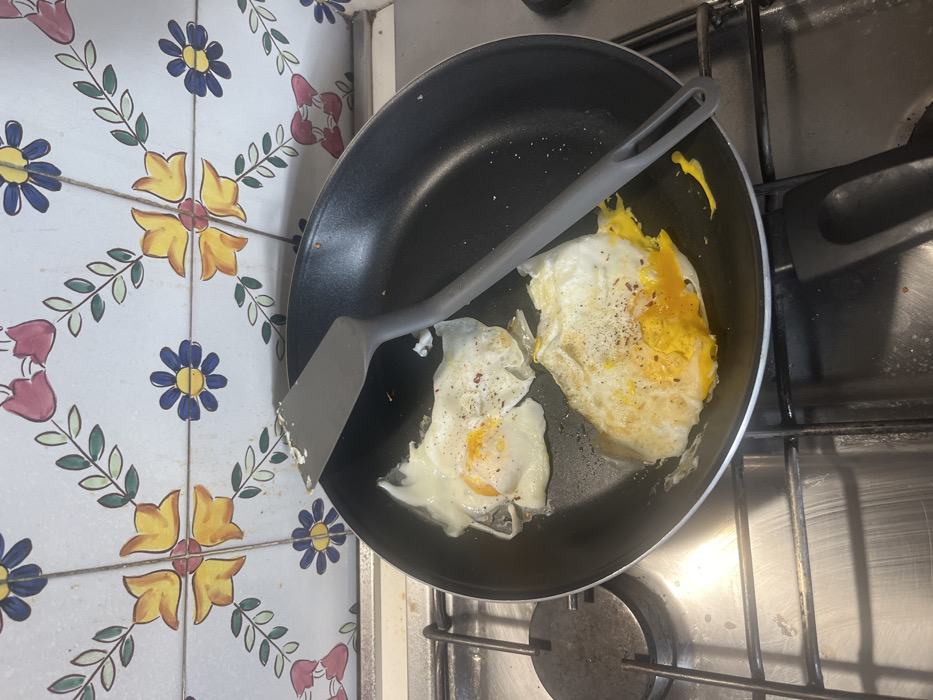
Two fried eggs with yolks still intact and a sprinkle of black pepper are in a black frying pan sitting on a silver gas stovetop. The frying pan is on the left burner of the stove. A gray spatula is positioned on top of the fried eggs. The backdrop is a tiled wall with a decorative pattern of colorful flowers and leaves. This scene is in a kitchen in Firenze, Italy, at the coordinates (43.781, 11.24).
Firenze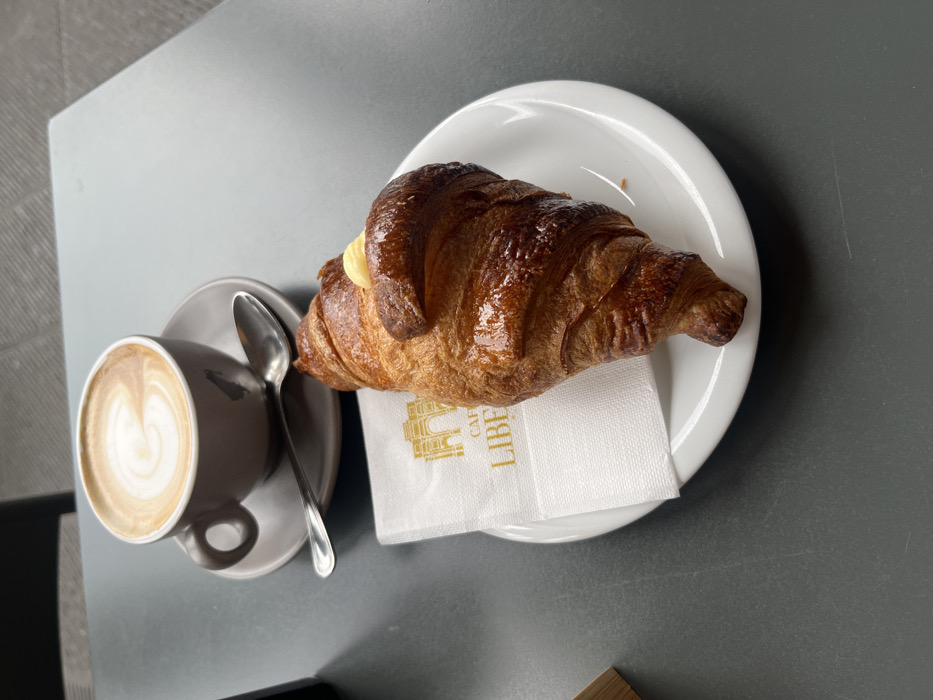
A croissant with a dollop of butter is on a white napkin on a white plate. The croissant is on a gray table in front of a gray table with a cappuccino in a white cup with a saucer next to it. The scene is located in the city of Firenze, Italy, at the coordinates 43.785, 11.262. There is a silver spoon in the saucer next to the cappuccino. There is a logo on the napkin.
Firenze
An overhead shot displays food preparation items arranged on a wooden cutting board, situated over a stainless steel kitchen sink. A large, light-yellow wedge of hard cheese, consistent with Parmesan, rests directly on the cutting board towards the upper right. Adjacent to it, a smaller piece of the same cheese is positioned on a hand grater, which has a distinct orange and white handle. To the left of the grater, a clear plastic container holds a collection of green sprigs, possibly herbs like thyme or rosemary, mixed with purplish-pink onion or shallot peels. Below this container, the handle and part of the blade of a kitchen knife with a black handle are visible, lying on the cutting board. A small, crumpled piece of white paper is also seen within the plastic container. The stainless steel sink, with its reflective surface, forms the background and parts of the foreground. The scene suggests an active kitchen environment, possibly preparing ingredients for a meal. No text or individuals are visible in the image. The setting is an indoor kitchen, provided contextually as Firenze, Italy.
Firenze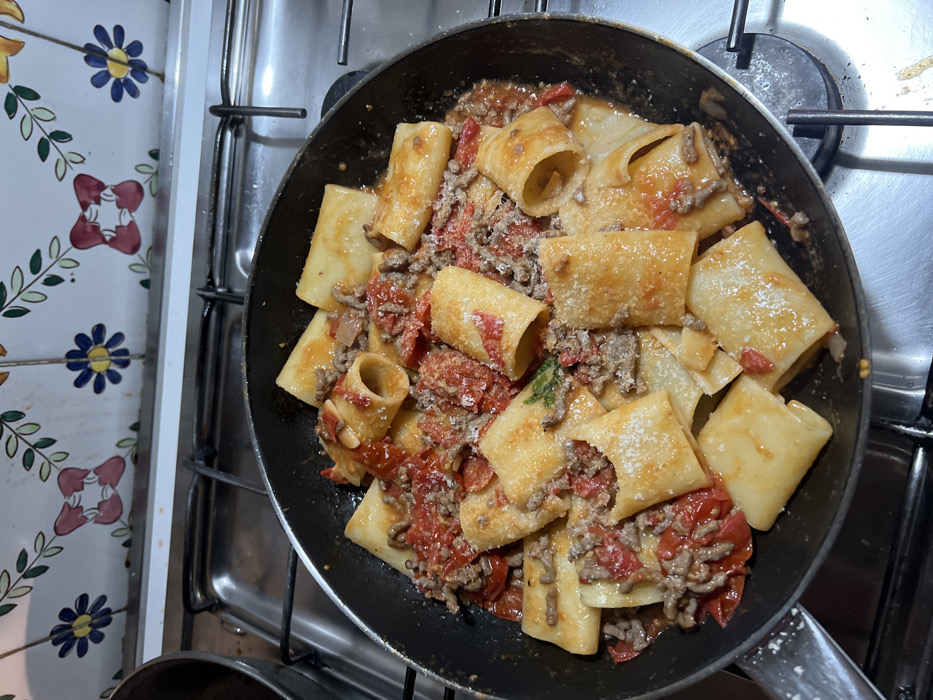
A close-up, high-angle shot captures a black frying pan filled with a dish of pasta and meat sauce, resting on the grates of a gas stove. The pasta consists of large, tubular pieces, possibly paccheri or rigatoni, generously coated in a rich, red sauce. Visible ingredients in the sauce include finely diced tomatoes and ground meat, creating a hearty texture. A light dusting of what appears to be grated cheese and a few green herb leaves (likely basil) are scattered across the top, indicating a finished or near-finished preparation. To the left of the pan, a section of a kitchen wall is visible, adorned with decorative ceramic tiles. These white square tiles feature a charming, traditional pattern: blue and yellow flowers with green stems, interspersed with red, bow-like or stylized heart shapes also accompanied by green foliage. The setting suggests a home kitchen, with the pasta dish characteristic of Italian cuisine. The lighting indicates an indoor environment. No people are present, and no text is visible within the image. Given the provided context, the scene is set in Firenze, Italy.
Firenze
An overhead shot captures a single serving of food in a light brown-pink bowl, set on a reflective, greenish-tinted glass table. The bowl is divided, with a rich, vibrant orange-red curry or stew occupying about two-thirds of the space, and a mound of fluffy white rice filling the remainder. The curry contains chunky pieces of green vegetables, which appear to be zucchini or courgette, along with other unidentifiable ingredients, and has a creamy consistency. A silver spoon is partially submerged in the curry, indicating the meal is either about to be eaten or is currently being consumed. Some grains of rice show slight orange staining from contact with the curry. The setting is indoors, likely a dining area, illuminated by bright, diffused light. A circular, metallic object with concentric grooves, possibly a coaster or part of the table's design, is visible on the glass surface to the right of the bowl. No people are visible, and there is no discernible text in the image.
Firenze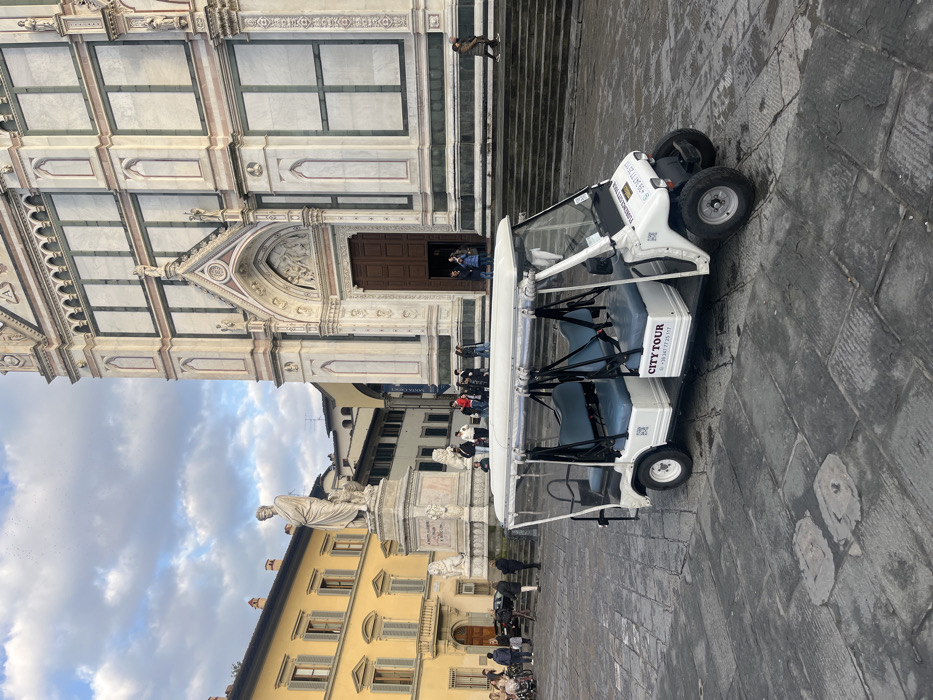
This media file captures a vibrant scene in a public square in Florence, Italy, featuring a grand historic building, tourist vehicles, and a statue, all under a partly cloudy sky. The prominent subject is the ornate facade of a large church or cathedral, positioned on the left side of the image. Its multi-layered marble construction displays intricate carvings, decorative panels, and a majestic main entrance with large wooden double doors, approached by a series of steps. In the foreground and to the right, two white, open-sided electric vehicles, similar to golf carts, are parked on the grey stone-paved square. These vehicles are clearly branded for tourism, with "CITY TOUR" visible on their sides. Further text on the lead vehicle includes a phone number "+39 347 77 25 171," "FIRENZE," and a QR code, indicating they are used for guided city tours. To the right of the church and behind the tour vehicles, a significant white marble statue of a seated male figure stands on a tall pedestal, contributing to the historical atmosphere of the square. Behind the statue, other traditional Italian buildings with light-colored facades and windows line the background. Numerous people are visible throughout the scene, with some gathered near the church entrance and others walking across the square, suggesting a mix of tourists and locals enjoying the area. The sky is partly cloudy, indicating a daytime setting with soft, natural lighting. The ground is paved with large, irregular grey stone blocks, typical of historic European squares.
Firenze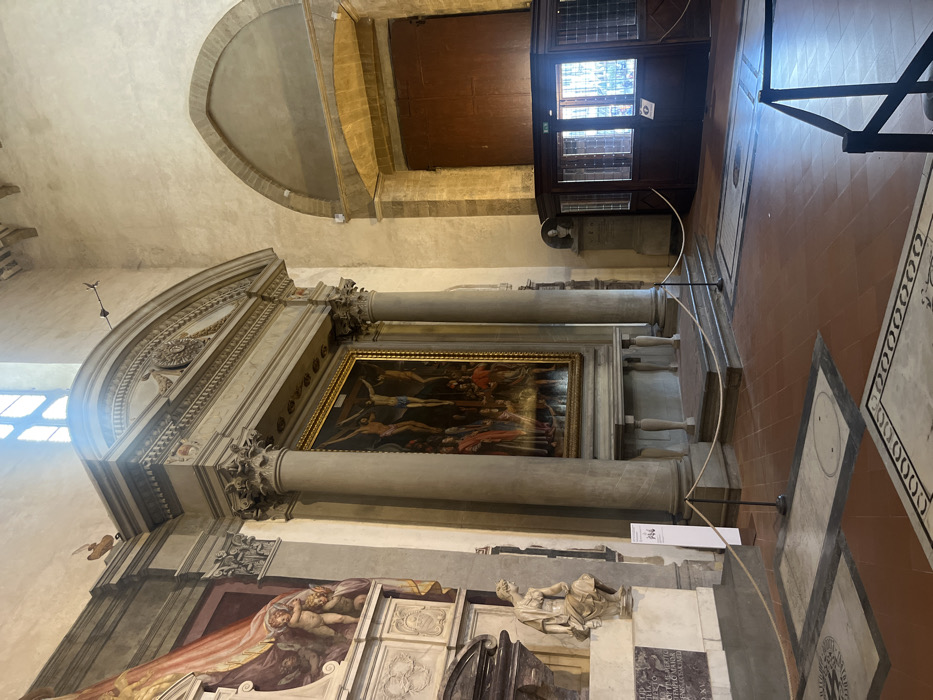
This image depicts the interior of a grand, historic building, likely a church or basilica in Florence, Italy, given the architectural style and art. The perspective looks towards an elaborate altarpiece or monumental structure. The primary subject is a large, ornate altarpiece on the left, constructed from light grey stone with detailed classical columns, intricate friezes, and decorative motifs. At its center is a large framed oil painting depicting a crucifixion scene, showing multiple figures on and around crosses against a somber background. Below this central painting, there are further sculptural elements, including a white marble statue of a draped human figure on the right side of the lower section of the monument. The building features high, arched ceilings made of light-colored stone or plaster, with natural light streaming in from tall windows visible on the upper left. Towards the upper right of the image, an elevated wooden structure, possibly a choir loft or pulpit, is visible, featuring dark wood and small, gridded windows. The floor is composed of reddish-brown terracotta tiles interspersed with large marble grave slabs. These slabs are often white marble with darker grey or black inlays and faint inscriptions. Text such as "MEMORIAE" and parts of other Latin phrases, including "TEMPO" and Roman numerals, can be discerned on some of these floor markers. A rope barrier, supported by dark metal stanchions, extends across the foreground, indicating a visitor path. A small white sign with an unidentifiable black logo is attached to this rope. The scene is illuminated by natural daylight.
Firenze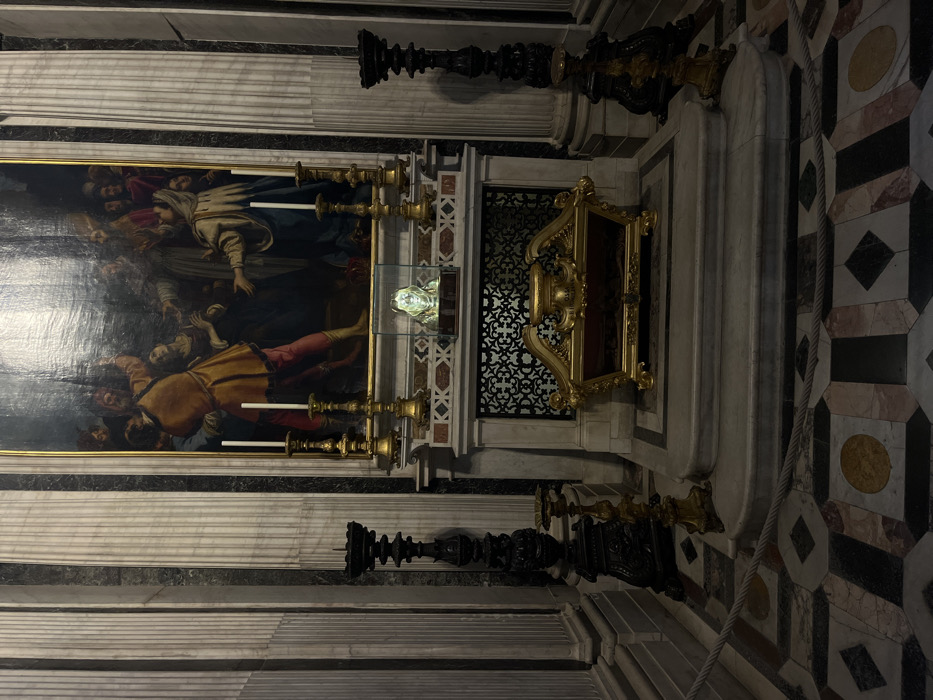
The image displays a solemn interior, likely a chapel or side altar within a grand church or cathedral, consistent with the architecture found in Florence, Italy. The central feature is a large, vertically oriented painting depicting a dramatic religious or historical scene with multiple figures. In the foreground of the painting, a figure in brown and red attire lies prone, surrounded by a crowd of individuals, some appearing distressed or sorrowful. A woman in a light head covering and blue garment stands prominently among them. Below the painting, on a marble-clad structure, are several ornate brass candlesticks. A small, glowing object, possibly a relic or miniature sculpture, is visible within a glass case directly beneath the painting. To its right, an elaborate golden frame, which might contain another sacred item or a smaller artwork, rests against an intricately patterned dark metal grille. The walls are constructed of polished, light-colored marble, featuring vertical fluting or panelling. The floor exhibits a richly detailed geometric mosaic pattern crafted from various shades of marble, including white, black, grey, and brown tiles arranged in squares, diamonds, and circles. Large, dark, ornate candelabra stand on the floor, flanking the central display. The overall impression is one of reverence and historical grandeur. No discernible text is visible within the image.
Firenze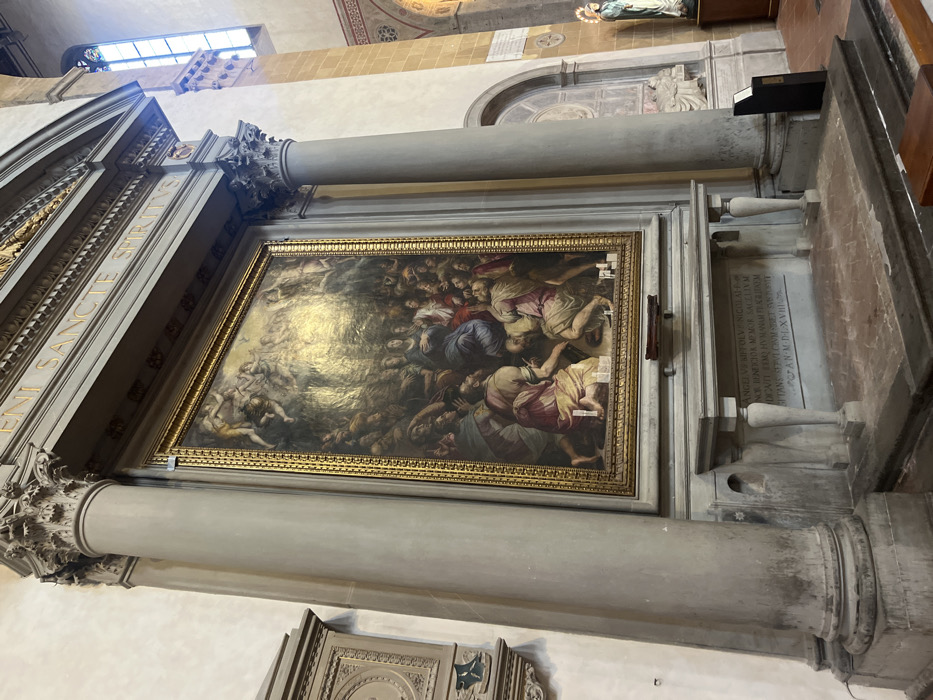
This media file captures the interior of a grand religious building, likely a church or cathedral in Florence, Italy, given the architectural style and Latin inscriptions. The viewpoint is angled upwards, highlighting a large, ornate gilded painting flanked by imposing grey classical columns with intricate Corinthian capitals. The painting itself depicts a dynamic and crowded scene, characteristic of Renaissance or Baroque religious art, possibly illustrating a heavenly ascent or a gathering of souls. A bright, ethereal light emanates from the upper left of the canvas, illuminating numerous figures, many of whom appear to be ascending or in movement. To the left of the painting, a prominent gilded inscription reads "VENI SANCTE SPIRITUS" (Come Holy Spirit), set within a decorative frieze. Below the painting on the right, a marble memorial or tomb structure features smaller balustrades and another Latin inscription. Portions of this inscription are legible through OCR, including "ANGELVS IPPOLITVS NICOLAI F" and "AN M.DLXV," indicating a date of 1565, which corresponds to the mid-16th century. Further back on the right, a small statue of the Virgin Mary with a halo is visible on a pedestal. Natural light floods in from a high, multi-paned window visible on the upper left, suggesting it is daytime. The scene conveys a sense of historical depth and spiritual reverence, typical of Italian ecclesiastical architecture.
Firenze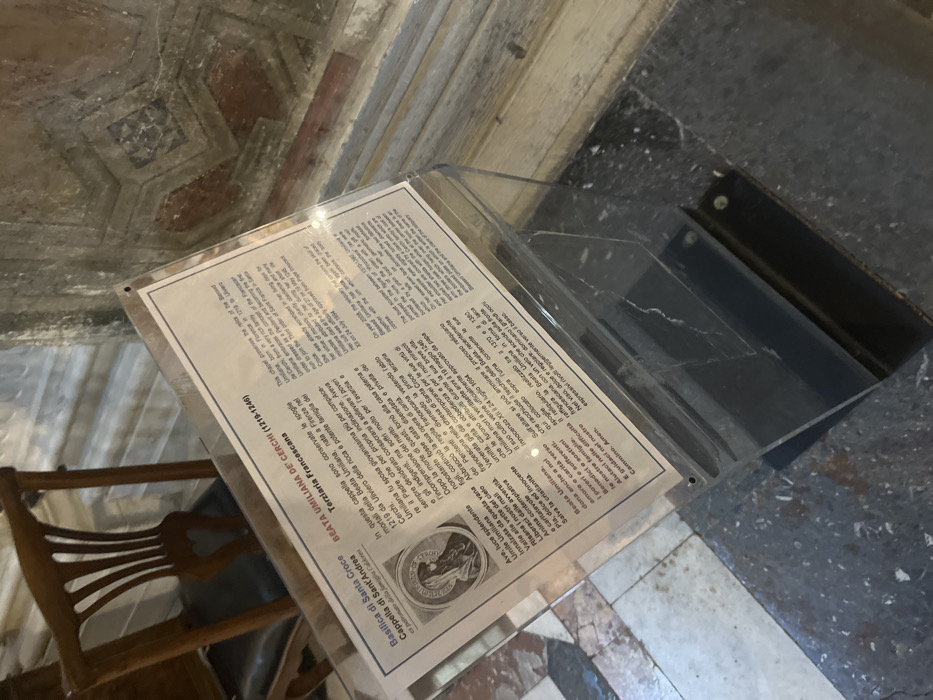
The image captures an informational display within what appears to be a historical building, likely a church in Florence, Italy, as indicated by the text "Basilica di Santa Croce, Cappella di Sant'Andrea." The primary subject is a document protected by a clear plexiglass display case, presented at an angle. The document contains text in Italian and English, along with a circular emblem featuring the name "CERCHI." The text details the life of "BEATA UMILIANA DE CERCHI (1219-1246), Terziaria Francescana." It describes her birth in Florence to the rich Cerchi family, her early marriage, her desire to help the poor, her struggles with her husband's avarice, and her eventual embracing of the Franciscan rule as the first Franciscan tertiary in Santa Croce. It mentions her veneration for virtues and miracles, her death at 27, and the official approval of her cult in 1604. The display also references a reliquary from 1370-1380 containing her skull, depicting her with a veil and expressive eyes, now housed above her urn. An Italian prayer to Beata Umiliana is also visible. In the background, a classic-style wooden chair with a slatted back is partially visible. The floor and a wall or ceiling section display decorative geometric patterns in shades of grey, white, and reddish-brown marble or stone. The plexiglass case shows some reflections and minor scuffs. The scene is static, providing historical and biographical information about a religious figure. The time of day is not discernible due to the indoor setting.
Firenze
An image, rotated 90 degrees clockwise from its likely original orientation, prominently features a red fire extinguisher mounted on a white wall. The fire extinguisher is secured horizontally within a black metal bracket that extends from the wall. It has a black hose, a nozzle, and a red safety pin on its handle. A white label with blue text is affixed to its body, clearly showing the brand name "SINTOR" and fragmented text including "F.O.R.E." and instructional details, though not fully legible. The white wall occupies the left side of the image, while a section of gray tiled floor or an adjacent wall is visible on the right. Above the white wall and the gray section, there is a dark-colored frame or track, possibly belonging to a window, a sliding door, or another architectural element. The setting appears to be an interior space or a covered area. There are no people visible, and no specific activity is taking place other than the static presence of the safety equipment. The lighting is even, suggesting an indoor environment or an overcast day if outdoors. The specific time of day and weather conditions are not discernible. The location context is Firenze, Italy, though no specific landmarks or details in the image confirm this.
Firenze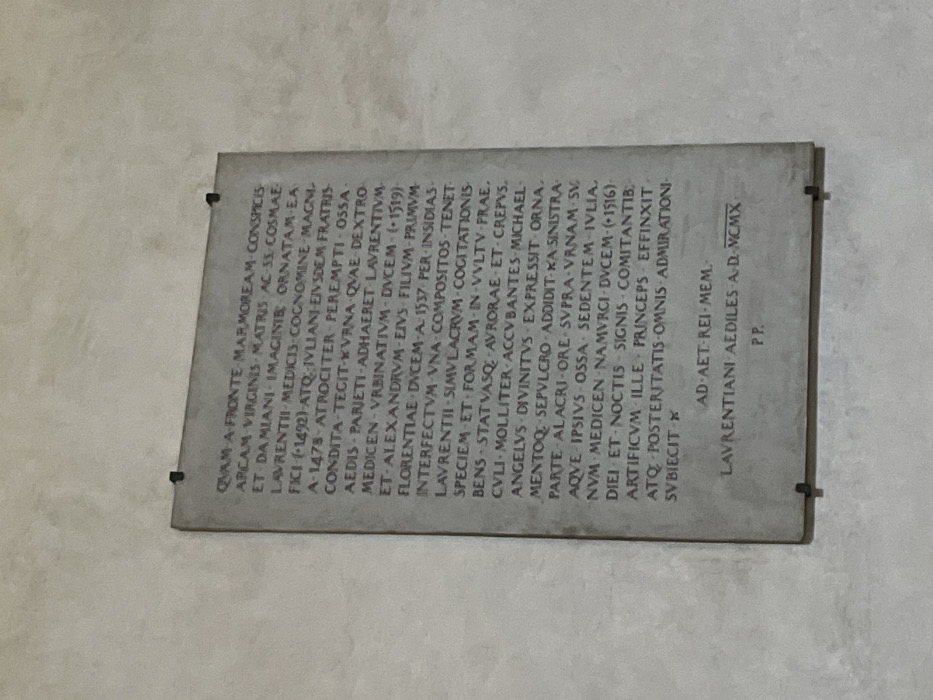
A rectangular stone plaque, light gray in color, is mounted on a plain, light-colored wall. The plaque is inscribed with dense, uppercase Latin text, commemorating historical figures and events. Small black fasteners are visible along the top and bottom edges, securing the plaque to the wall. The inscription details the burial place of several members of the Medici family, including Lorenzo the Magnificent (d. 1492) and his brother Giuliano (d. 1478), as well as Lorenzo, Duke of Urbino (d. 1519), and Alessandro, Duke of Florence (d. 1537). It highlights that Michelangelo "divinely expressed and adorned" the sepulchre mentioned. The plaque itself states it was erected in 1910 (A.D. MCMX) by the Laurentian Aediles "for eternal memory" (AD AET. REI MEM.). The setting appears to be indoors, possibly within a historical building or museum in Florence, Italy, given the context of the Medici family and Michelangelo. There is no activity depicted beyond the presence of the commemorative plaque.
Firenze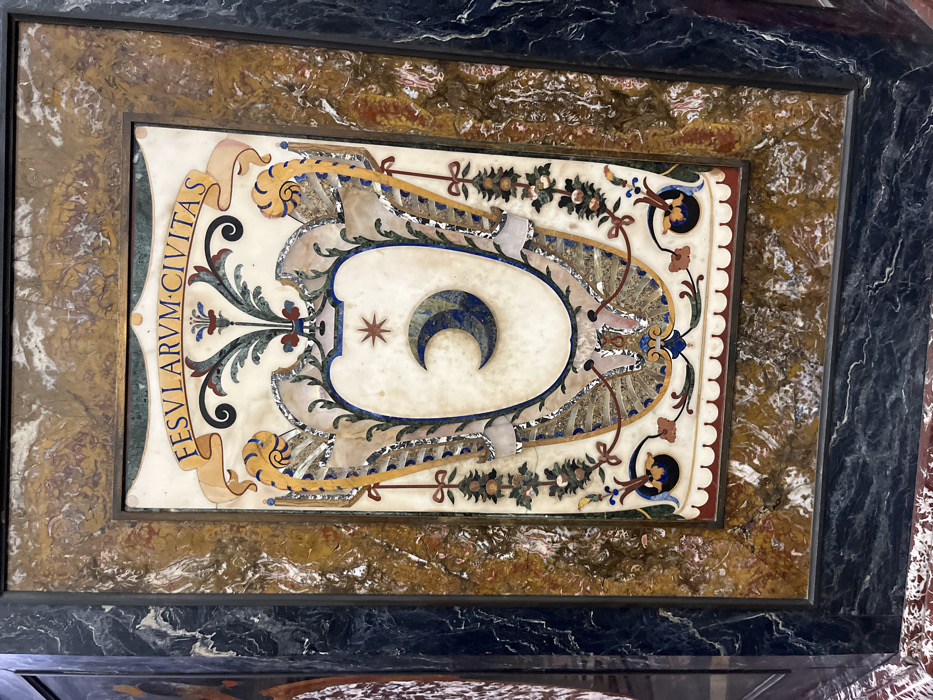
The image displays an ornate rectangular tabletop or panel, exemplary of Florentine pietra dura or intricate marble inlay. The central field, made of light-colored marble, features a prominent, stylized elongated oval motif. Within this central design, a dark blue crescent moon is depicted alongside a reddish-brown star, crafted from inlaid stone. Elaborate scrollwork, naturalistic floral garlands, and stylized leaves, composed of meticulously cut and fitted colored stones including green, red, blue, and yellow, adorn the areas surrounding the central oval. These intricate patterns showcase the precise craftsmanship and rich palette of the artwork. A banner-like scroll, fashioned from yellowish stone, is integrated into the design along the left side of the central panel. It bears the Latin inscription in capital letters: "FESVLARVM CIVITAS". The central inlaid panel is bordered by a wide frame of mottled brown and gold marble, which exhibits a complex, veined pattern. This inner frame is then encased by a substantial outer frame of dark blue or black marble, characterized by prominent white veining. The piece is a static decorative object, devoid of any ongoing activity. Its style, materials, and Latin inscription are indicative of historical, high-status Florentine artistry, consistent with its location context in Firenze, Italy.
Firenze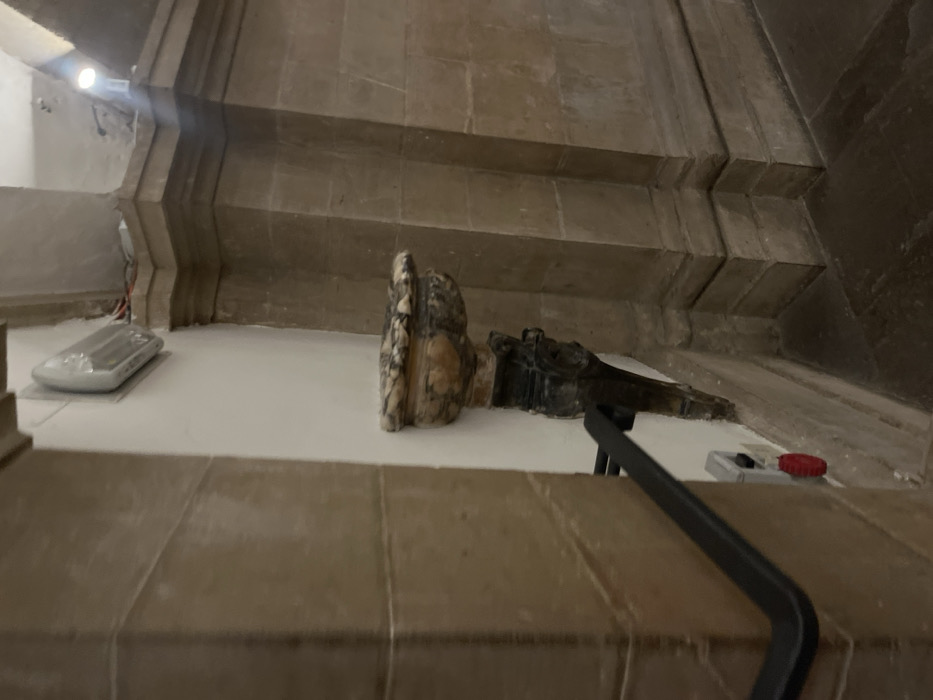
The image captures an indoor architectural detail within a historical building, likely in Firenze, Italy. The setting features robust walls constructed from light brown, precisely cut stone blocks, showcasing intricate stepped and recessed moldings that ascend towards the upper parts of the structure, characteristic of classical or medieval European architecture. On a smooth, light-colored surface serving as a ledge or floor, several objects are arranged. Prominently in the mid-ground are two sculptural fragments. The left fragment is a substantial piece of mottled light-colored marble or alabaster, displaying textured, organic forms suggesting part of a larger figure or ornate carving. To its right lies a darker, possibly metal or patinated wood, fragment with more angular and elongated shapes, also appearing to be an architectural or decorative remnant. Further to the left, a modern, silver-grey rectangular light fixture or sensor is installed on the light-colored surface, with associated wiring leading to a bright light source visible on the adjacent wall. A section of a black metal railing or support structure is partially visible in the bottom right foreground. In the background on the far right, a small red cap or lid and another grey object are placed on the ledge. The scene, illuminated by artificial light, suggests either a temporary storage area for salvaged historical elements or an exhibition display within a larger building, possibly undergoing restoration or curated presentation. There is no visible text.
Firenze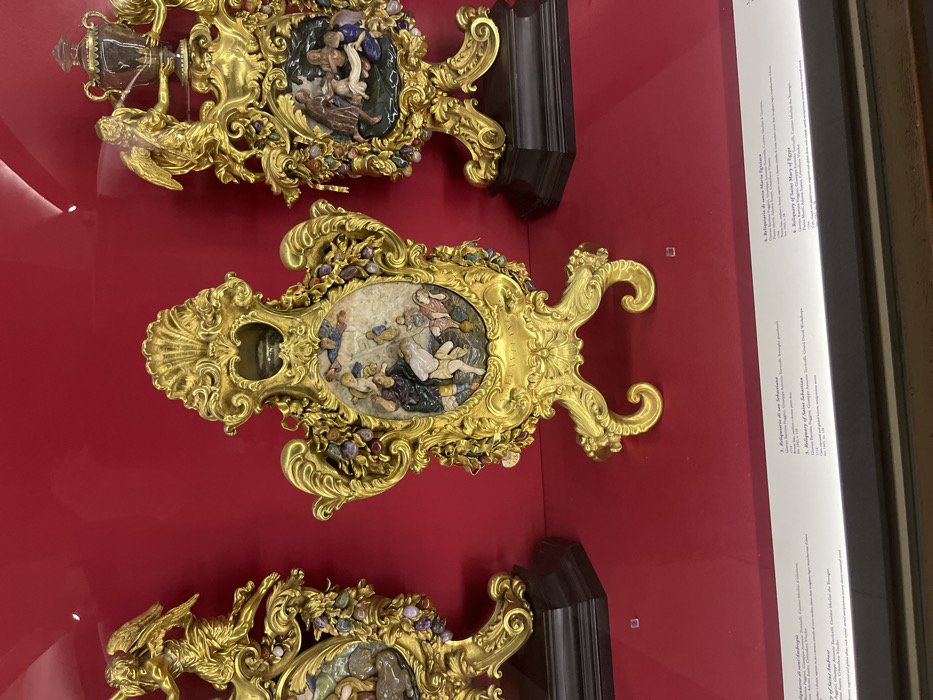
Three ornate, gilded reliquaries are displayed vertically against a vibrant red background, likely within a museum or gallery setting in Florence, Italy. The objects are viewed through a reflective surface, suggesting a glass or acrylic display case. Each reliquary is characterized by its elaborate Baroque design, featuring intricate scrolling motifs, shell-like elements, and numerous small, multi-colored polished stones, likely pietre dure. Central to each reliquary is an oval or rectangular panel depicting a religious scene, also crafted from various colored stones. The top reliquary showcases a multi-figured scene set against a dark green background, with a small glass ampoule held by a winged figure at its upper left. The middle reliquary, most prominent in the frame, features a scene with several figures rendered in white, brown, green, and purple stones, including a key figure seemingly ascending amidst clouds. It also includes a small glass container within a scallop shell detail on its left side. The bottom reliquary is similar in style, with a central pietre dure panel depicting multiple figures in a landscape of blue and green. All reliquaries are mounted on dark, possibly wooden, pedestals. To the far right, a vertical information panel provides details in both Italian and English. Partially legible text identifies the objects as reliquaries, including "3. Reliquiario di san Sebastiano" (Reliquary of Saint Sebastian) and "4. Reliquiario di santa Maria Egiziaca" (Reliquary of Saint Mary of Egypt). The text mentions materials such as "Oro, pietre dure" (gold, hard stones) and provenance from "Bottega granducale" (Grand Ducal Workshop), reinforcing their Florentine origin and exquisite craftsmanship.
Firenze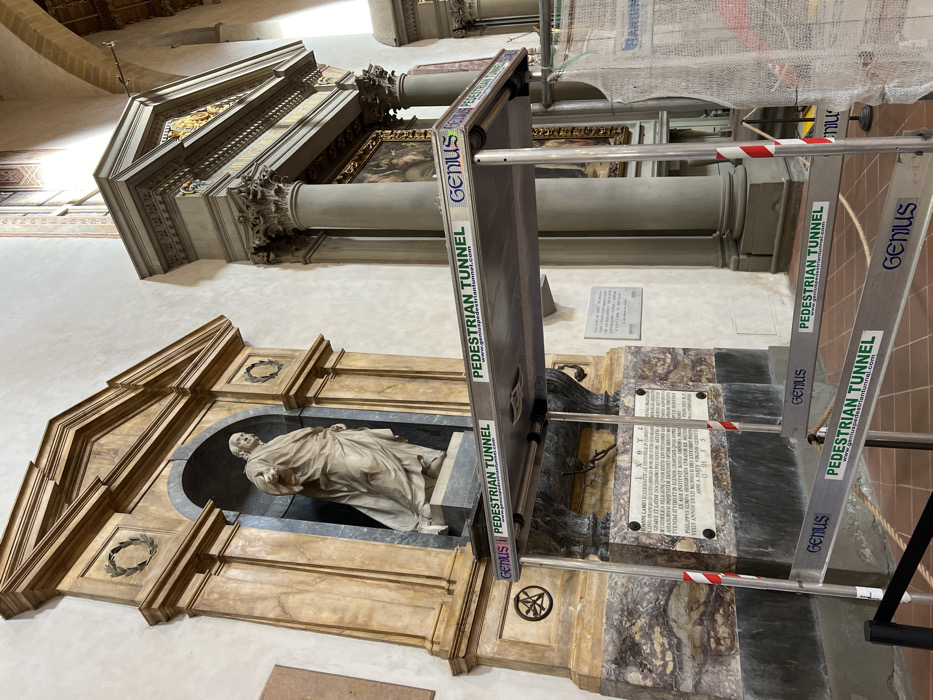
This image captures the interior of a grand historic building, likely a church or cathedral in Florence, Italy, undergoing renovation or maintenance. The scene presents a striking contrast between ancient architectural and sculptural artistry and modern temporary structures. Prominently featured in the foreground and midground are sections of a temporary pedestrian tunnel or walkway. These structures are made of aluminum or similar metal, displaying the brand "GENIUS" and the text "PEDESTRIAN TUNNEL" along with the website "www.geniuspedestriantunnel.com". Red and white striped warning tape is visible on some of the support poles. To the left, a richly detailed marble sepulchral monument is visible. It features a recumbent white marble statue of a robed figure, possibly a male cleric or nobleman, resting within an arched niche. The monument's frame is adorned with carved decorative elements, including wreaths. Below the statue, a large rectangular marble slab is inscribed with text, partially legible as "GRACE IT LATINE", "PYLL PPS", "ANNI A PARTY VE", and "OHSS". A smaller, plain white plaque is fixed to the wall further back. On the right side of the image, a magnificent architectural structure stands, possibly an altarpiece or another large tomb. It comprises tall, fluted grey columns supporting a richly decorated entablature. A painting or fresco appears to be set into the wall behind these columns. In the background, extensive scaffolding draped with white protective netting indicates broader restoration work underway throughout the building. The walls are a light, neutral color, and the ornate ceiling is visible at the top. The scene is well-lit, suggesting natural daylight. The overall impression is one of historical preservation efforts within a revered space.
Firenze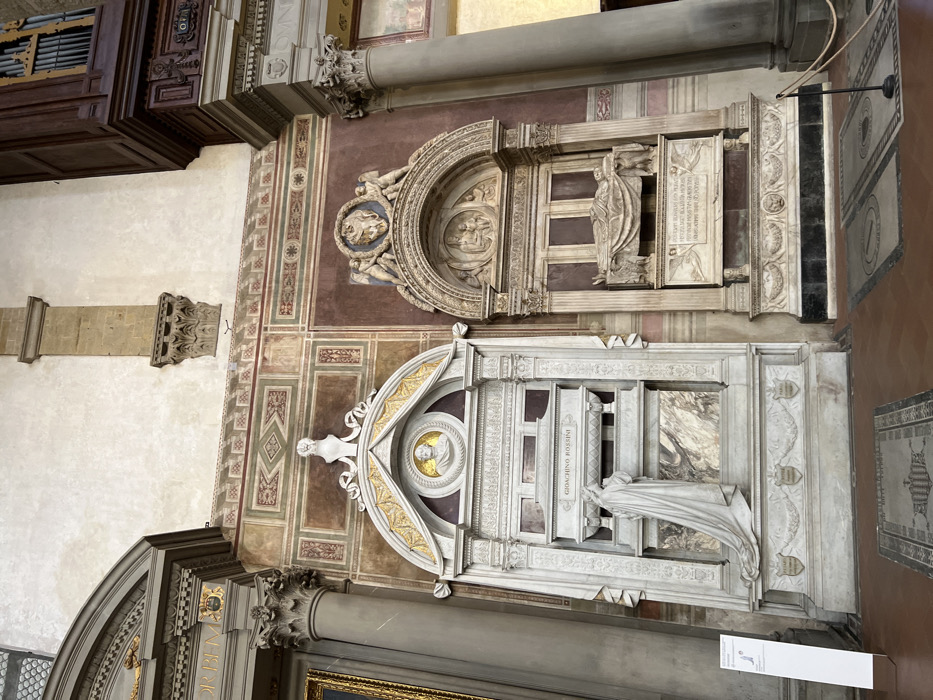
This media file captures the interior of a grand historical building, likely a basilica or church in Florence, Italy, showcasing two elaborate funerary monuments mounted on a richly decorated wall. The scene features two prominent marble monuments. The upper monument, crafted from light-colored stone, exhibits classical architectural elements. It includes a central arched niche containing a high-relief sculpture depicting multiple figures. Above this arch, a circular medallion with a profiled head is flanked by two reclining figures. To the right, a draped standing allegorical figure is sculpted in relief. Below this, a rectangular panel bears faint Latin text, partially legible as "D. O. M. / IOANNES. MA..." and "AN. SAL. MDC..." (likely indicating a name and a 17th-century date). The lower monument, also in white marble, is characterized by a triangular pediment with golden geometric patterns. A central circular medallion within the pediment holds a bust of a man. Below this, the name "GIOACHINO ROSSINI" is clearly inscribed on a horizontal panel, identifying it as the tomb of the famous composer. To the right, a white marble draped figure, possibly representing music or mourning, is depicted seated or kneeling. The background behind this figure features a darker, mottled marble. The monuments are flanked by classical columns with ornate capitals. The surrounding wall is adorned with painted decorative friezes and geometric patterns in shades of brown, red, green, and cream. In the upper left corner, a dark wooden structure, possibly an organ or part of a choir loft, is visible. A simple stone pillar with a decorative capital stands against a plain lighter wall section to the left. The floor visible in parts shows patterned tiles. The lighting appears natural, suggesting daytime. No activity or event is taking place; the image is a static capture of these historical and artistic displays.
Firenze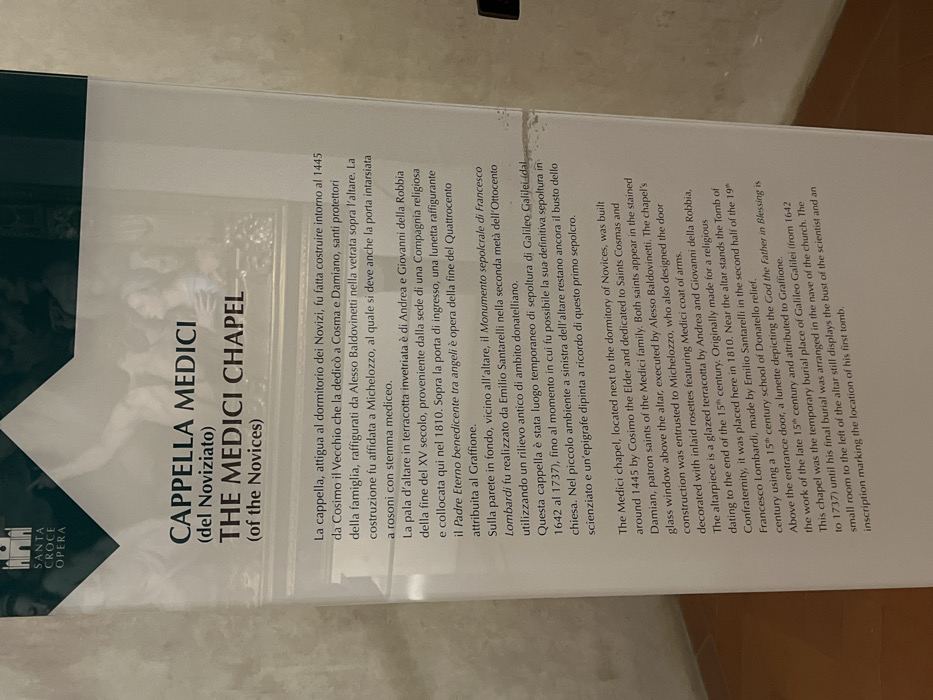
An informational panel, likely from a historical site or museum in Florence, Italy, is shown positioned vertically. The panel displays text in both Italian and English, detailing information about "THE MEDICI CHAPEL (of the Novices)". The title is prominently featured, along with a logo for "SANTA CROCE OPERA". The text describes the chapel, built around 1445 by Cosimo the Elder, dedicated to Saints Cosmas and Damian. It mentions key artists and architects involved, such as Alesso Baldovinetti (stained glass), Michelozzo (construction and carved door), Andrea and Giovanni della Robbia (glazed terracotta altarpiece), and an attribution to Graffione (lunette depicting God the Father). A tomb of Francesco Lombardi by Emilio Santarelli is also noted. A significant historical detail is that the chapel served as the temporary burial place for Galileo Galilei from 1642 to 1737, with his bust and an inscription still marking the original tomb location in a side room. The panel itself is made of a reflective material, causing some glare in the image, particularly over the English text. A faint, blurred image, possibly of the chapel's interior, can be seen behind the text. The overall setting is implied to be indoors, where visitors would read about the historical significance of the chapel.
Firenze