Fort-Şevtşenko, Kazakhstan
30 memories from Fort-Şevtşenko, Kazakhstan
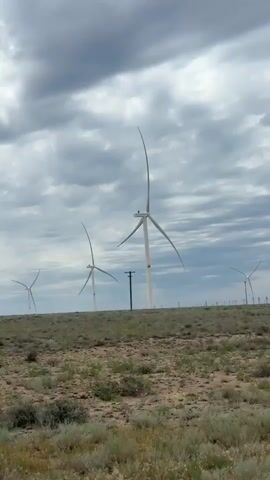
The video shows a field of wind turbines under a cloudy sky. The wind turbines are tall and white with large blades that are spinning. The ground is covered with dry grass and shrubs. There are also a few utility poles scattered throughout the landscape. The video is shot from a moving vehicle, as evidenced by the slight blur of the foreground. The overall impression is one of a vast, open landscape, possibly in a rural or industrial area.
Fort-Şevtşenko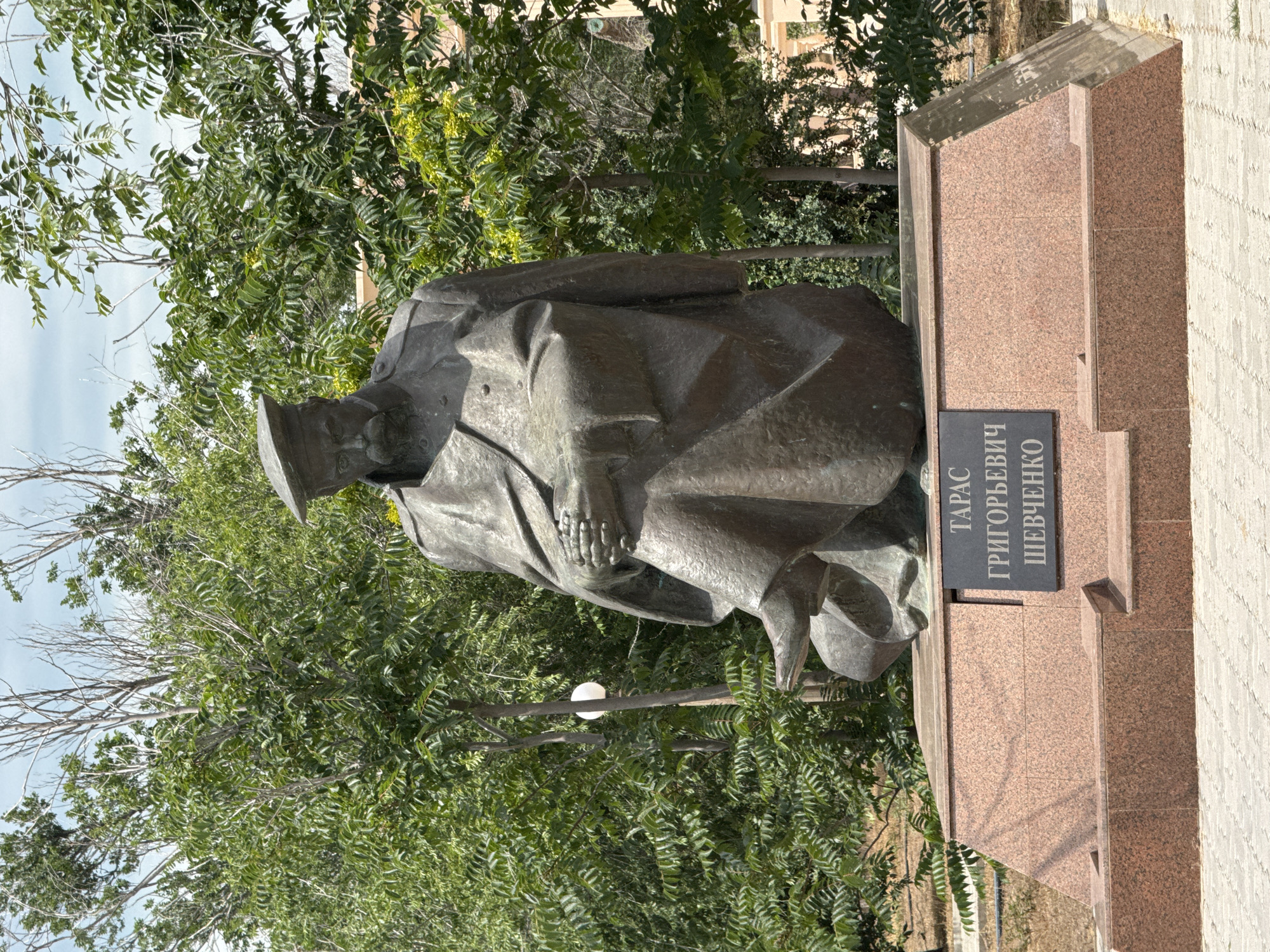
The image shows a bronze statue of a seated man in military attire. He is wearing a cap, a long coat, and boots. His hands are clasped in his lap, and he is looking down. The statue is mounted on a granite pedestal with a plaque that reads "ТАРАС ГРИГОРЬЕВИЧ ШЕВЧЕНКО" in Cyrillic. The statue is located in a park-like setting with trees and foliage in the background. The sky is visible above the trees. The ground in front of the pedestal is paved with light-colored bricks. The overall impression is of a monument to a historical figure, likely in a public space in Fort-Shevchenko, Kazakhstan.
Fort-Şevtşenko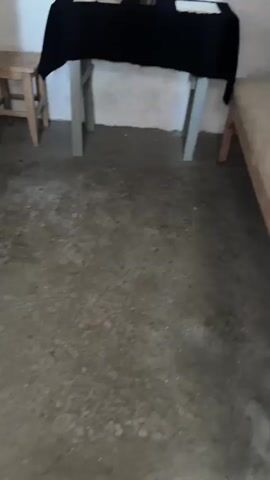
The video pans across a dimly lit room with concrete floors and white, rough-textured walls. In the first shot, a small, light-colored wooden stool is visible in the corner. A table covered with a black cloth stands nearby, with what appears to be a book or papers on it. The camera then moves to the left, showing a portion of the wall and a kettle on a stand. As the video continues, the stool is again visible, and then the camera focuses on the table with its dark cloth and contents. In the final shot, a small window is visible high on the wall, and two colored strips, one yellow and one blue, lie on the floor. The overall impression is of a sparse, utilitarian space, possibly a storage area or a simple dwelling.
Fort-Şevtşenko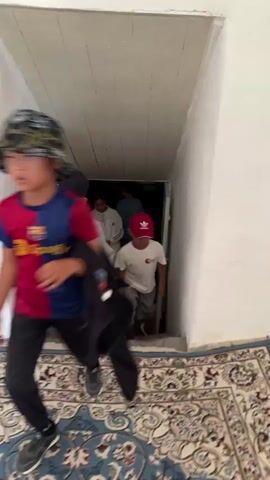
A group of four young people descend a narrow, unfinished concrete staircase. The person filming is moving backwards, following the others down. In the foreground, a person wearing a white hoodie with "USA" on the leg and a blue baseball cap walks away from the camera, their back turned. To their right and slightly behind, a young girl in a white tracksuit with black stripes on the sleeves and grey pants walks down the stairs, her face is visible and she is looking down. She is wearing a red baseball cap. Further down the stairs, two more individuals are visible in the dimly lit area at the bottom of the stairs. One is wearing a blue t-shirt with a palm tree design and patterned shorts. The other, to their left, is wearing a dark t-shirt and green shorts and appears to be holding a phone. The walls of the staircase are white and unfinished. The ceiling above is made of wooden planks. A patterned rug is visible in the very bottom right corner of the frame.
Fort-Şevtşenko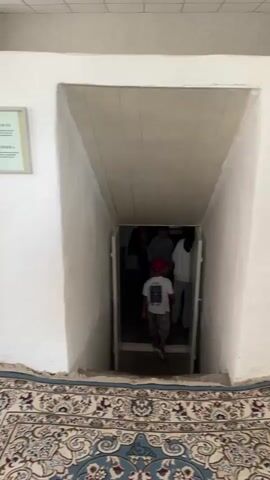
The video shows an interior scene with a downward sloping passageway leading into a dimly lit area. A few people, including children, are visible near the entrance of this passageway. In the foreground, two boys are standing, looking towards the passageway. The floor in the foreground is covered with a patterned rug. The walls are white and the ceiling of the passageway appears to be made of wood panels. The lighting is dim, particularly within the passageway.
Fort-Şevtşenko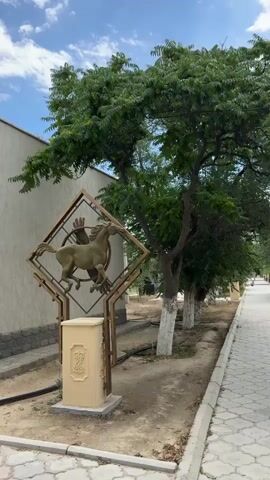
The video shows a paved walkway lined with trees. On the left side of the walkway, there is a decorative metal sculpture featuring a horse with wings and a person. A beige box is positioned below the sculpture. Further down the walkway, a person is seen pushing a stroller. The environment appears to be an outdoor park or garden with a blue sky and scattered clouds.
Fort-Şevtşenko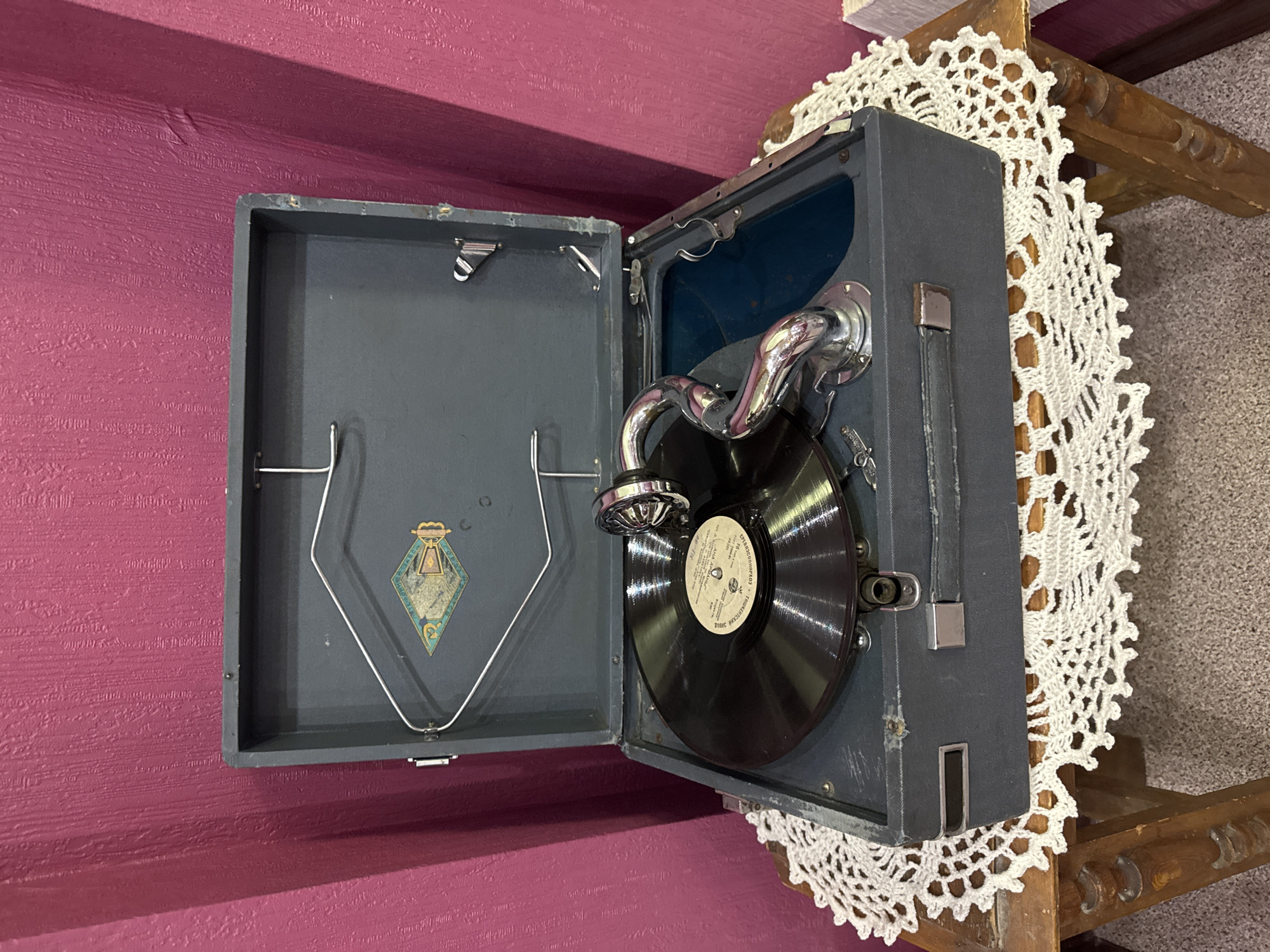
A vintage portable record player is open and displayed on a crocheted doily atop a wooden side table. The record player is a dark gray color with a silver tone horn and needle. A black vinyl record is on the turntable. The background is a textured, deep pink wall. The scene is indoors. There are no people present. The location is specified as Fort-Şevtşenko, Kazakhstan.
Fort-Şevtşenko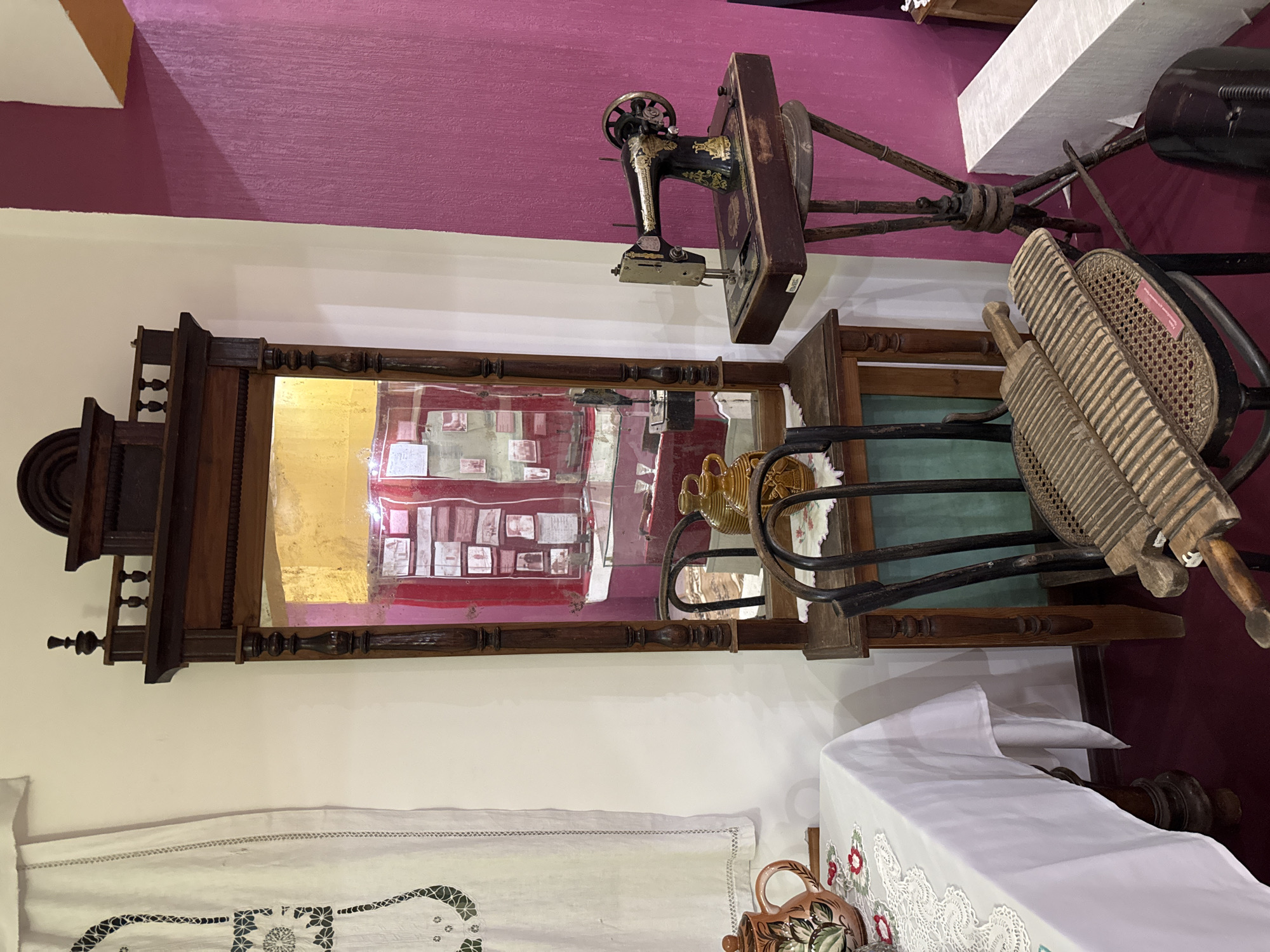
The image depicts an interior scene, likely a museum or a historical exhibit in Fort-Shevchenko, Kazakhstan. In the center of the frame, a dark wooden hall tree with a mirror stands against a pale wall. The mirror reflects a display behind it, featuring framed photographs and objects. To the left of the hall tree, a table is covered with a white tablecloth adorned with lace and embroidered flowers. On the table, a decorative ceramic teapot with floral motifs is visible. To the right of the hall tree, a vintage black sewing machine with gold embellishments rests on a wooden base, which is mounted on a rustic, tripod-like stand. This stand is placed against a vibrant magenta wall. In the foreground, a wooden chair with a woven seat holds two wooden washboards. The floor is covered with a dark red carpet. The overall impression is one of an organized display of historical artifacts, likely related to domestic life and crafts.
Fort-Şevtşenko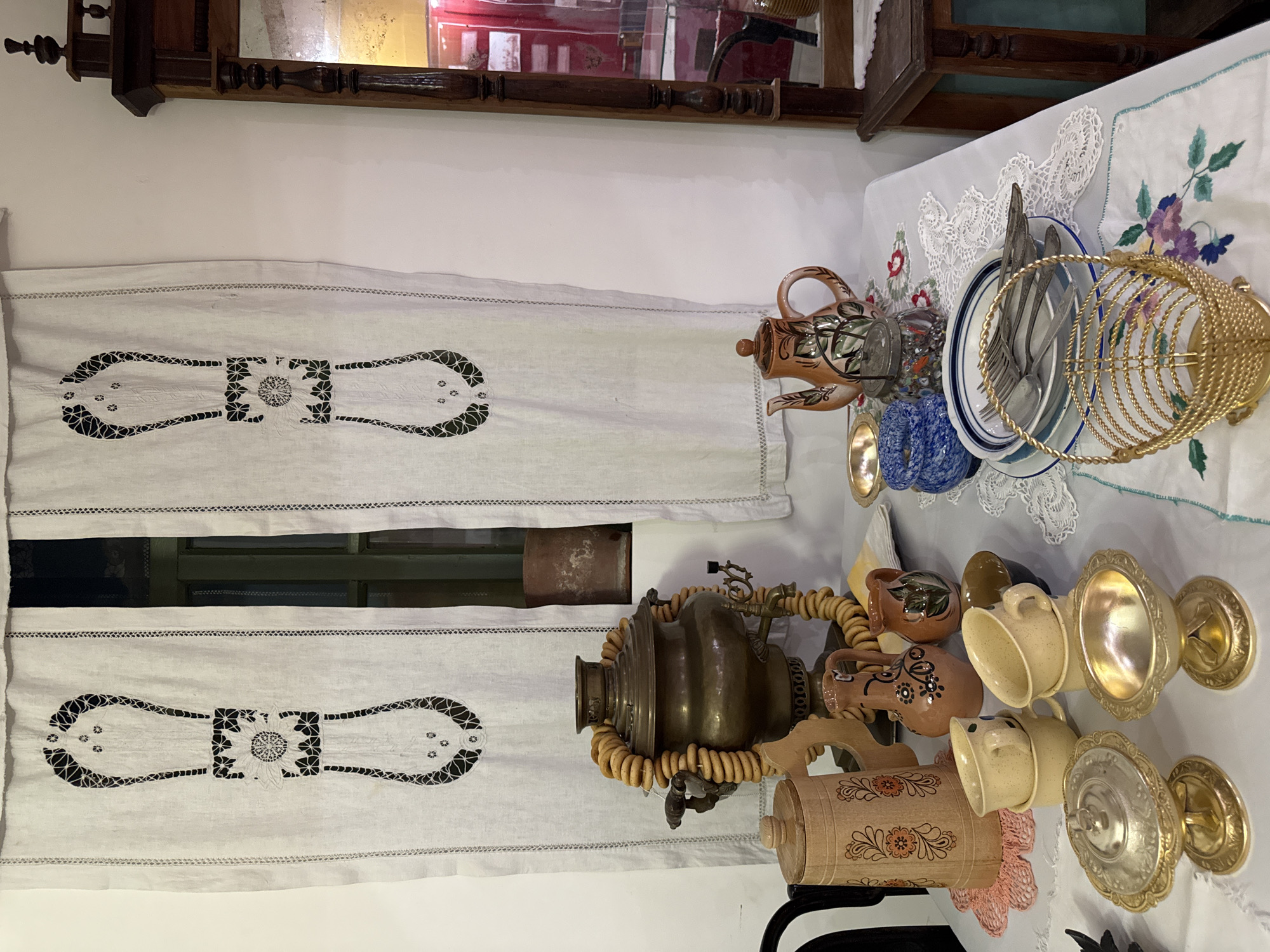
This image depicts a still life of a table set for a traditional tea ceremony, likely in a museum setting in Fort-Shevchenko, Kazakhstan. The foreground features a white tablecloth adorned with embroidered flowers. On the table are various objects, including a large brass samovar draped with a string of dried bread rings, several ceramic cups and pitchers, a wooden cylindrical container with painted floral designs, a decorative ceramic teapot, a glass jar filled with small objects, and stacks of plates with silverware. Two ornate gold-colored bowls or chalices are prominently displayed. In the background, white curtains with black embroidered patterns hang over a window. To the right, a dark wooden antique cabinet with a mirror is partially visible, reflecting a portion of the room. There are no people present in the image.
Fort-Şevtşenko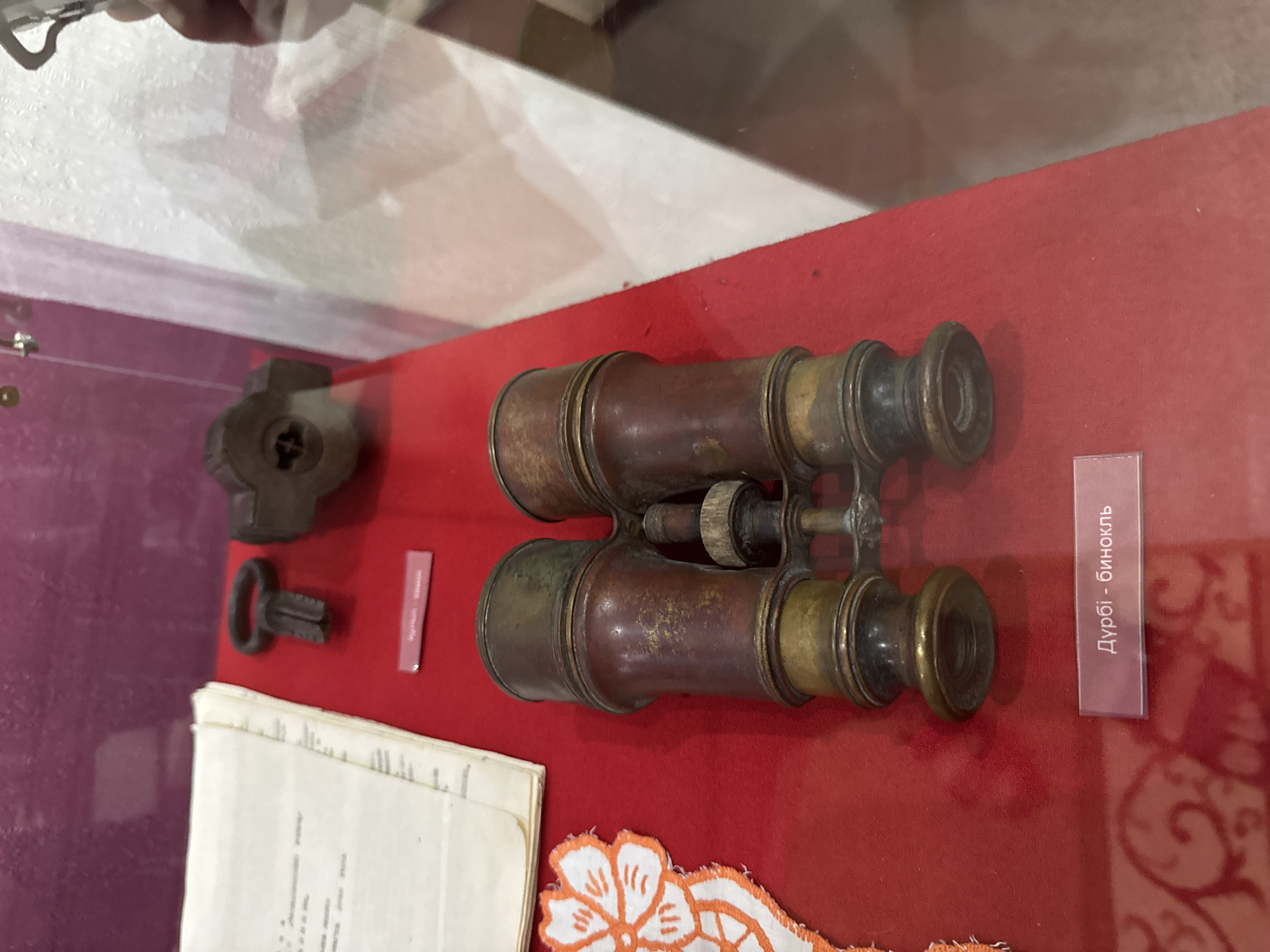
In a museum display case at the Fort-Shevchenko Museum in Fort-Shevchenko, Kazakhstan, antique binoculars rest on a red velvet surface. The binoculars are made of brass and have a worn, antique appearance. To the left of the binoculars is a stack of papers and a small embroidered white fabric with orange floral designs. Above the binoculars and to the left, there is an old key and a metal object that appears to be part of a lock. A pink label below the binoculars reads "Дурбі - бинокль" which translates to "Binoculars." The background is a deep magenta color.
Fort-Şevtşenko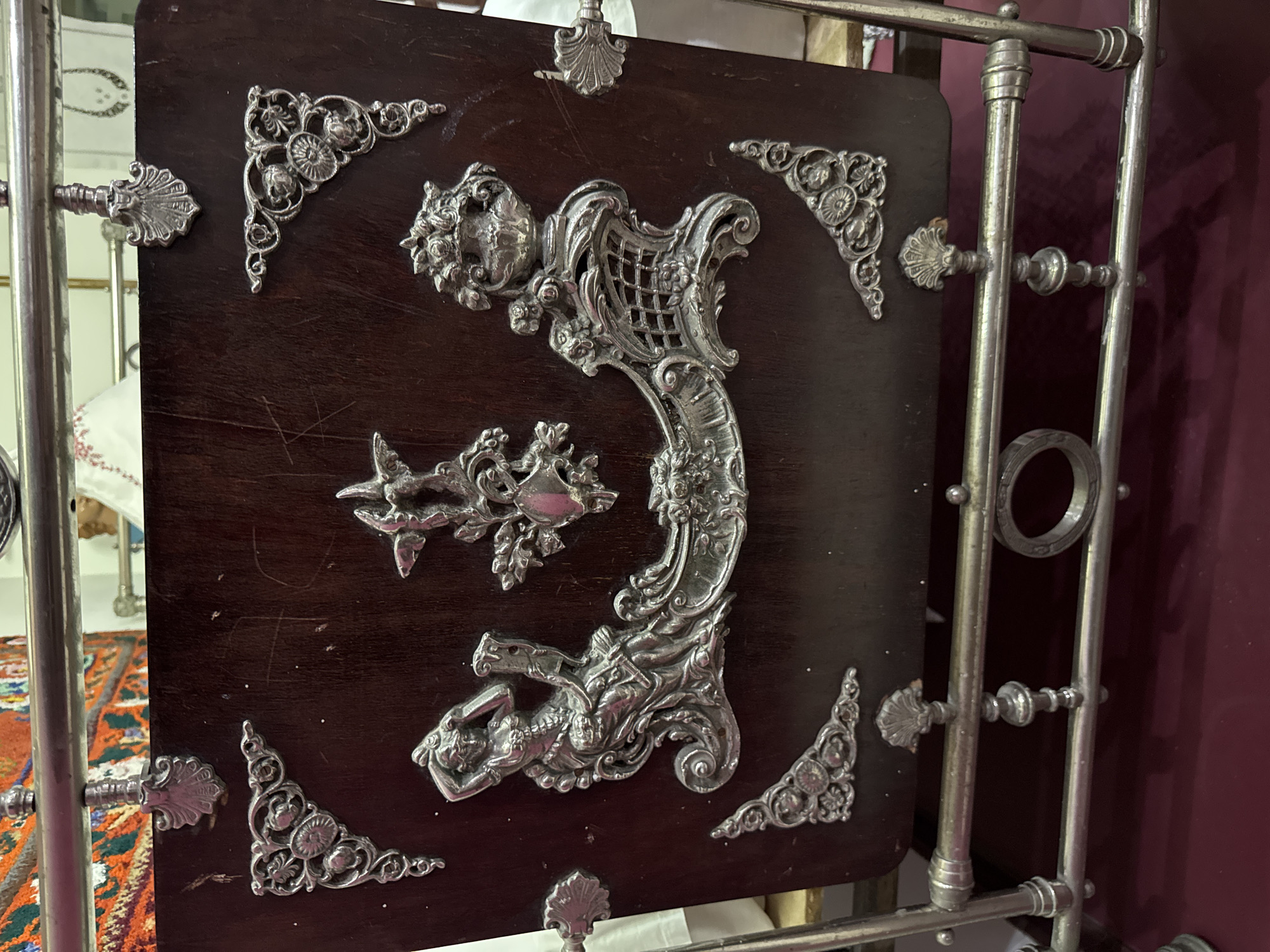
The image shows a close-up view of an ornate, decorative object, possibly a fireplace screen or a decorative panel. It is made of dark wood with intricate silver-colored metal embellishments. These embellishments include floral motifs, corner decorations, and a central scene depicting a figure of a woman holding a scroll or book, a winged cherub, and a decorative vase with floral arrangements. The object is supported by a metal frame, which appears to be made of silver or a similar polished metal. The background is blurred but suggests an indoor setting with textiles and other objects visible, hinting at an antique shop or a museum display. The object is located in Fort-Şevtşenko, Kazakhstan.
Fort-Şevtşenko
The video shows a traditional bedroom setting. A vintage metal bed frame with ornate details is visible in the foreground. The bed is made with white linens and several white pillows, one of which is embroidered with pink floral patterns. A decorative rug with a vibrant floral design in shades of red, pink, green, and blue hangs on the wall above the bed. To the right of the bed, on a shelf, is a small bust of a person. The overall impression is of a preserved historical room.
Fort-Şevtşenko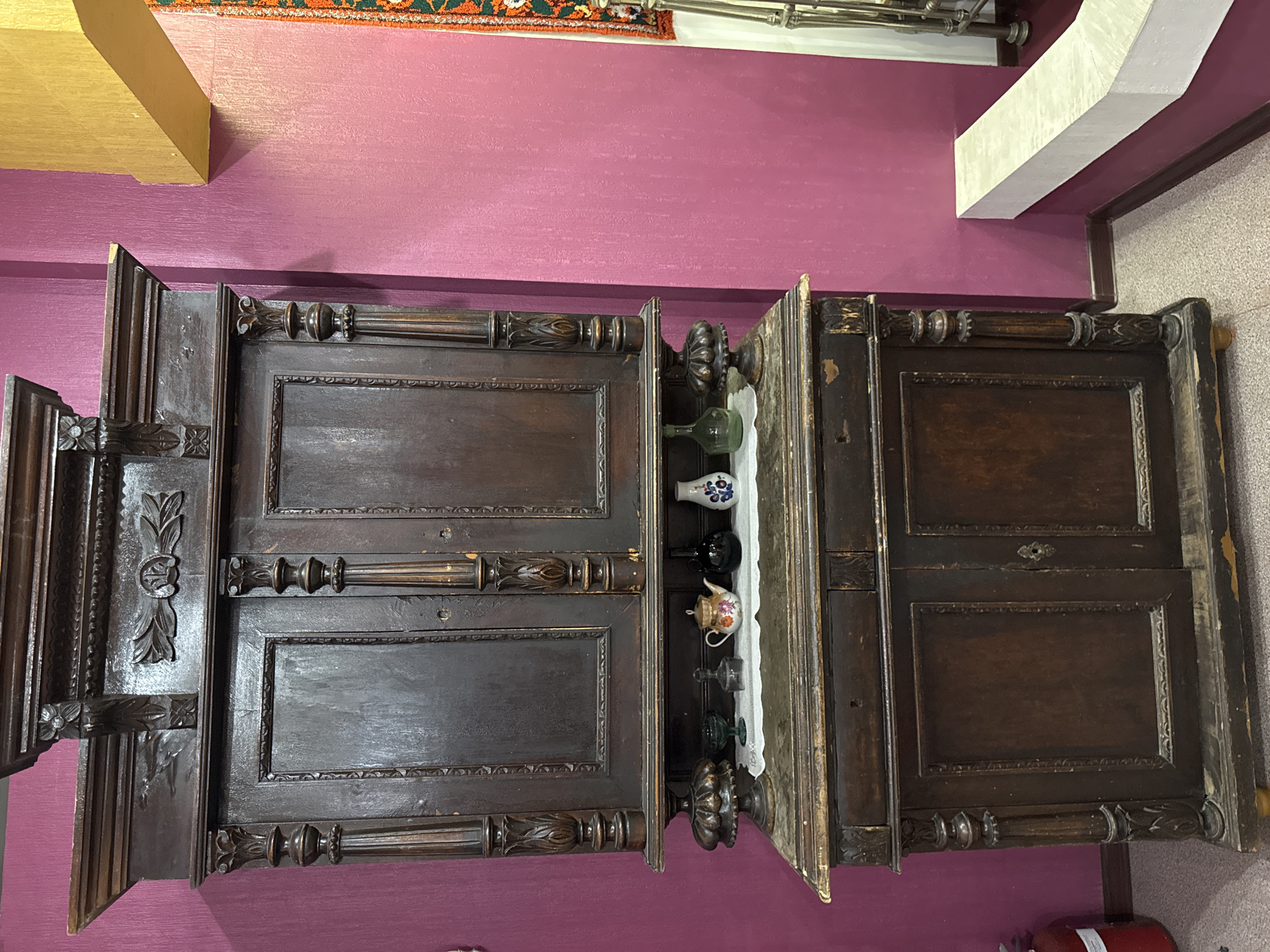
The image depicts an antique, dark wood hutch against a vibrant magenta textured wall. The hutch is ornately carved with decorative elements, including floral motifs and turned columns. It features two large cabinet doors on the upper section and two smaller doors on the lower section, separated by a narrow drawer. On a shelf above the lower doors, several small decorative items are displayed, including a teapot, a black vase, and a small floral patterned vase. To the right of the hutch, a portion of a colorful tapestry or rug is visible hanging on the wall, and a yellow architectural element extends from the upper right corner of the frame. A portion of a metal railing or furniture is visible on the far right. The floor appears to be carpeted. The overall scene suggests an indoor setting, possibly a room in a museum or a home decorated with antique furnishings. The specific location in Fort-Şevtşenko, Kazakhstan, is not visually ascertainable from the image itself.
Fort-Şevtşenko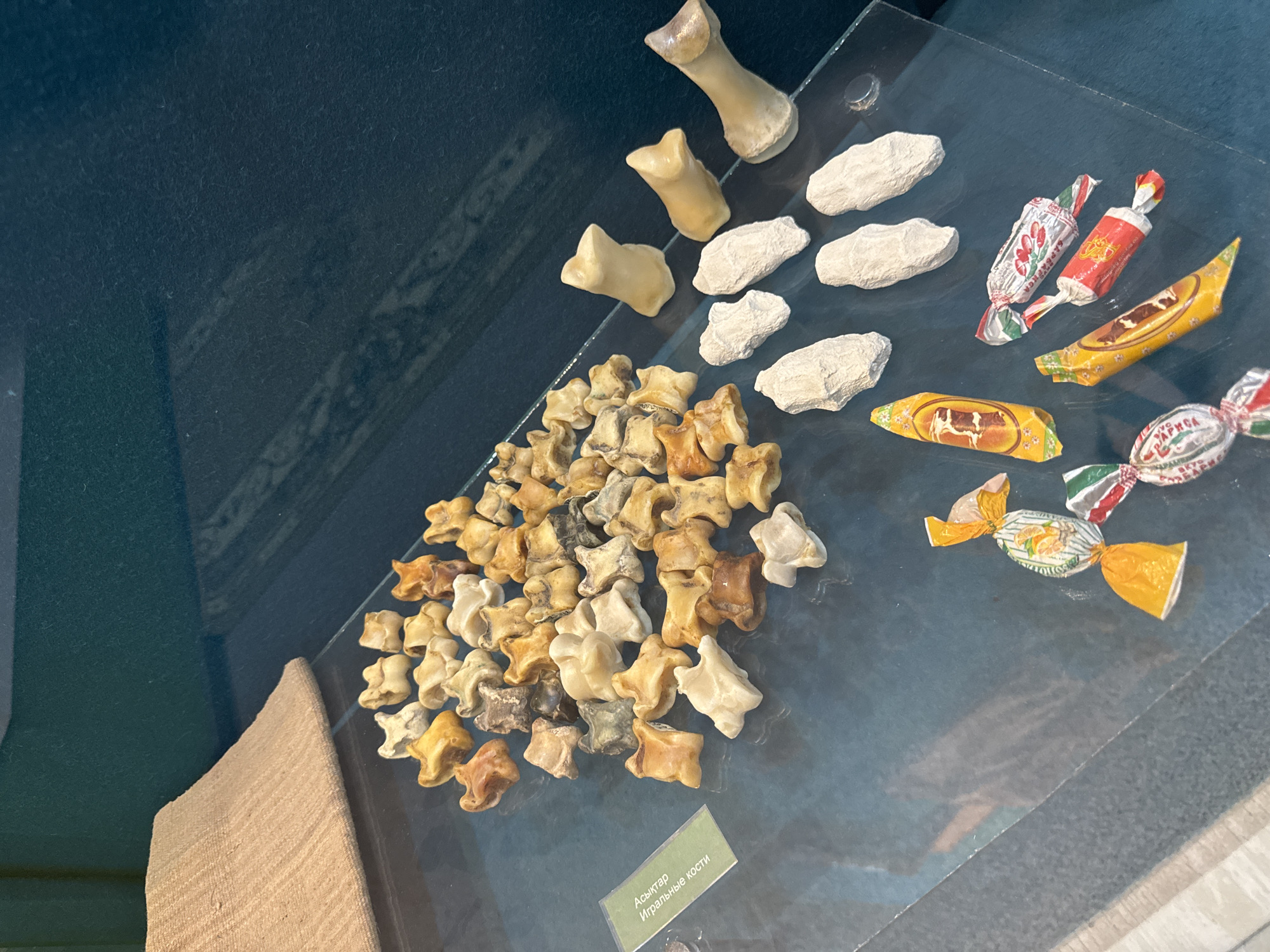
The image displays a collection of ancient artifacts and modern candy, likely within a museum exhibit in Fort-Shevchenko, Kazakhstan. In the upper left corner, a piece of coarse, tan fabric is draped over an unseen object. The majority of the frame is occupied by a glass surface, upon which various items are arranged. In the center left, a large pile of small, light-colored bones, appearing to be animal astragali (ankle bones), are scattered across the glass. These bones are varied in shape and color, ranging from off-white to tan and brown, suggesting they are ancient. A small green label with text in a Cyrillic script, likely Russian or Kazakh, is placed among the bones. To the right of the bones, three light beige, foot-shaped objects, possibly replicas or casts of ancient footwear or bone fragments, are positioned in a row. Below these, a cluster of rough, white, oblong objects, resembling dried or mummified objects, are arranged. In the foreground, several pieces of colorful, foil-wrapped candy are scattered on the glass surface. One candy wrapper features an image of a horse and rider, another depicts oranges and greenery, and others have red and white striped patterns. The background consists of a dark, teal-colored surface, possibly the interior of a display case. The overall lighting is even, highlighting the details of the objects.
Fort-Şevtşenko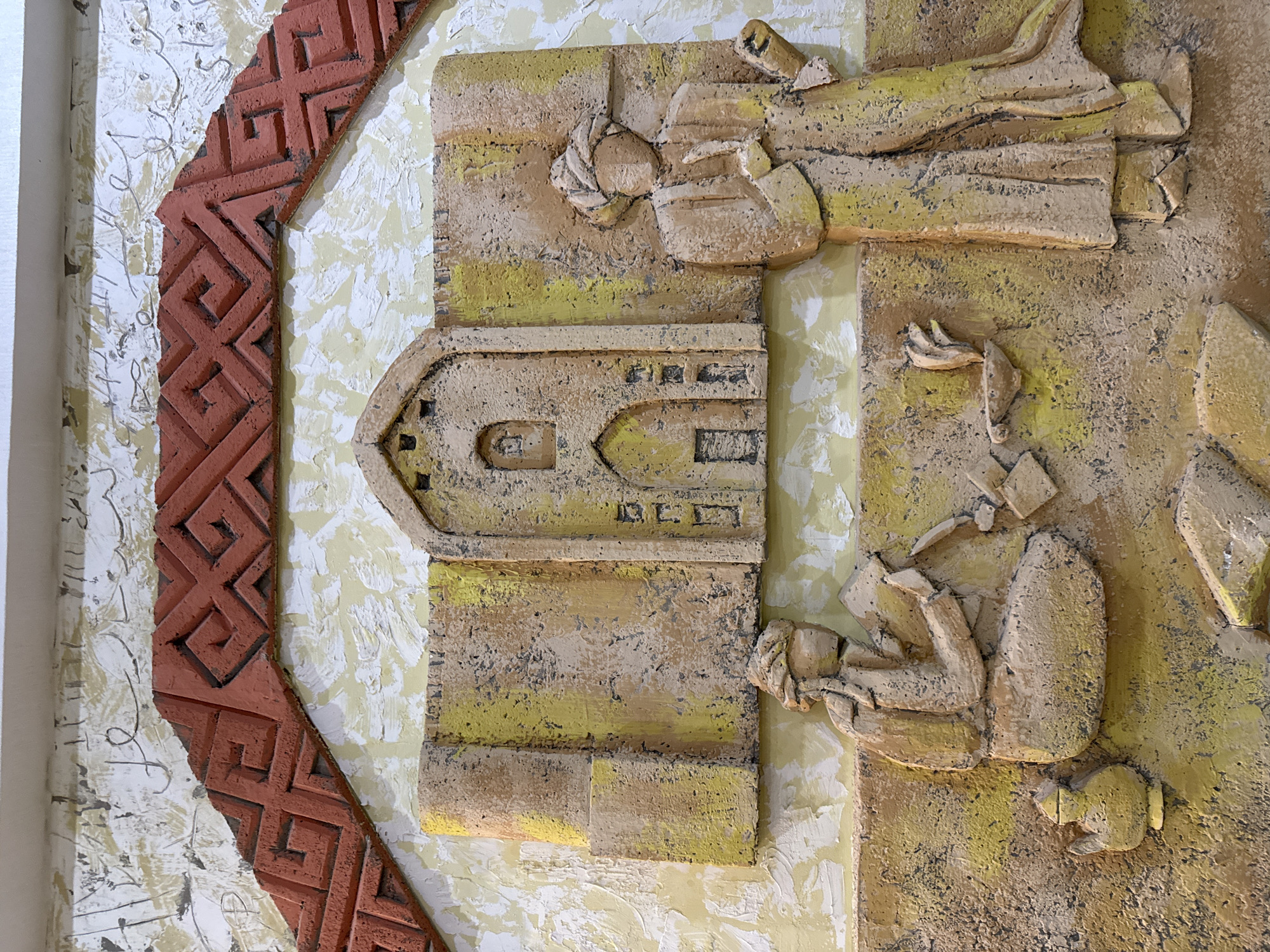
The image displays a bas-relief sculpture depicting a scene with two figures and a building. The artwork is located on a textured wall, with a red, geometric pattern bordering the top of the relief. The central building is rendered in a light brown and yellow hue, featuring an arched doorway and windows. To the left, a seated figure in traditional attire is engaged in an activity, possibly reading or writing, with books and a jug nearby. To the right, a standing figure, also in traditional dress with a turban, holds a rolled document or scroll. The overall color palette consists of earth tones, yellows, and reds, suggesting an arid or historical setting. The sculpture appears to be part of a larger mural or installation in Fort-Şevtşenko, Kazakhstan, likely a cultural or historical monument.
Fort-Şevtşenko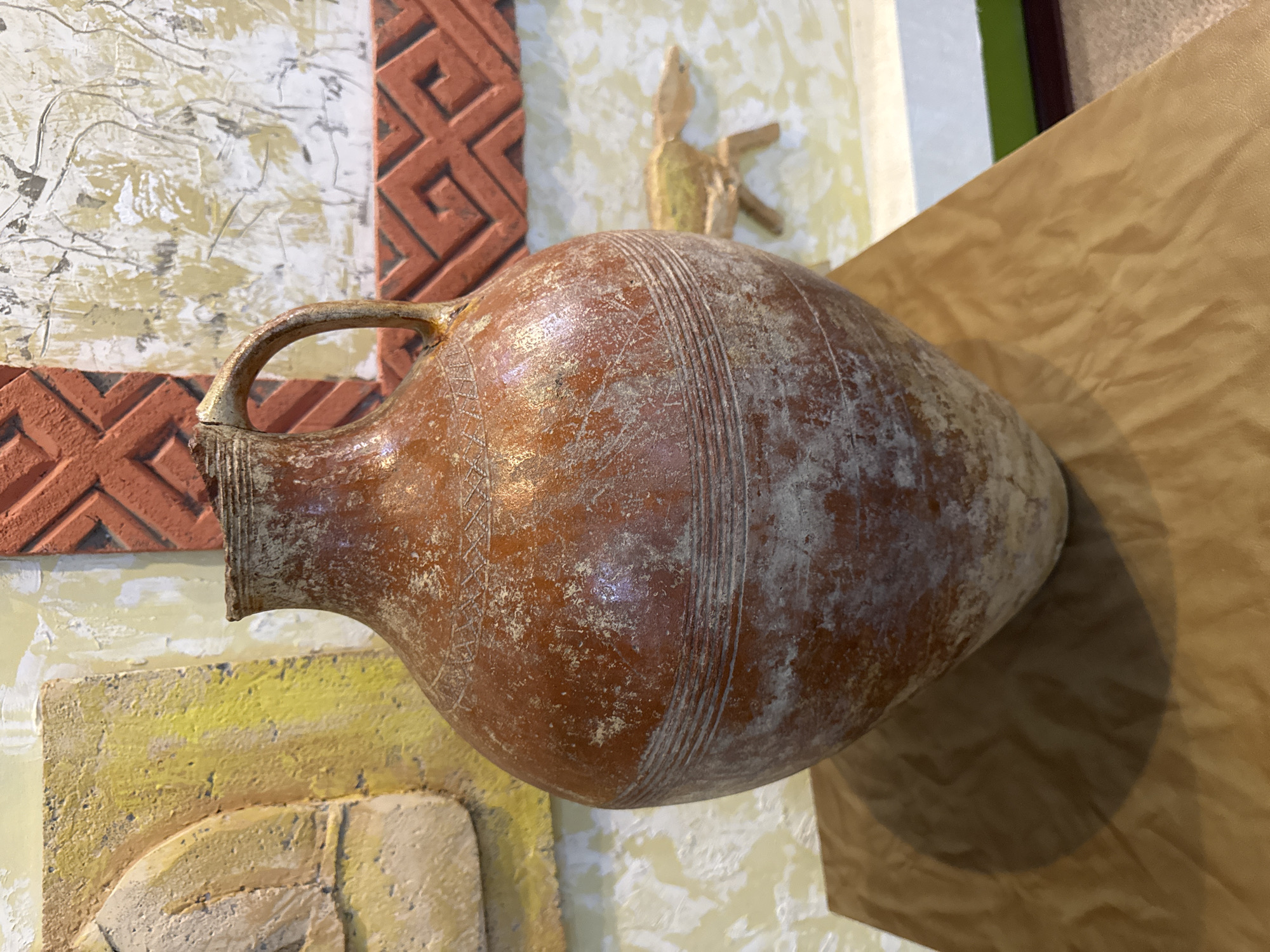
An ancient terracotta jug with a handle and a narrow neck sits on a wooden surface. The jug has horizontal lines around its body and is decorated with faded geometric patterns. The background features a wall with textured artwork, including a yellow relief and red geometric designs. A small, light-colored wooden sculpture of an animal is visible in the background, to the right of the jug. The scene is indoors, suggesting a museum or exhibition space in Fort-Şevtşenko, Kazakhstan.
Fort-Şevtşenko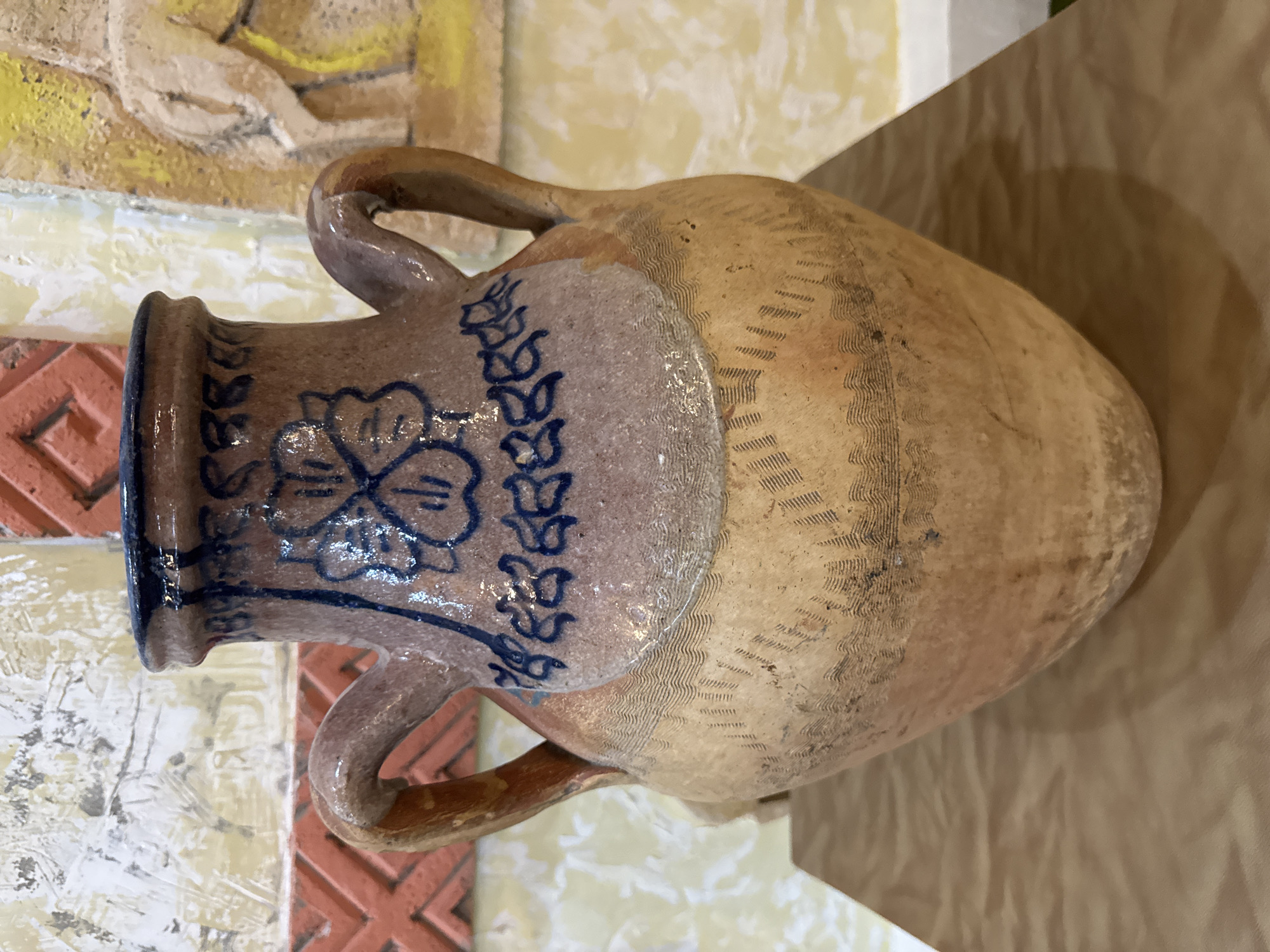
An aged, terracotta-colored vase with two handles and a dark blue rim is displayed on a light brown, textured surface. The vase features a lighter band around its neck, decorated with blue floral motifs and an inscription. The lower portion of the vase has incised linear patterns. In the background, there is a textured wall with faded artwork and decorative elements. The lighting suggests an indoor setting. The image is a close-up shot focused on the vase, with the surrounding environment serving as a backdrop. The specific location in the city of Fort-Şevtşenko, Kazakhstan is not visually identifiable from the image itself.
Fort-Şevtşenko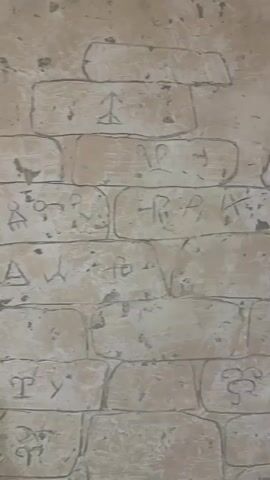
The video shows a close-up, vertical view of a textured, light-colored wall resembling brickwork. Each "brick" is outlined with a dark line, and some have rough, uneven surfaces with dark speckles. Inscribed on these "bricks" are various symbols and drawings, all rendered in the same dark line as the outlines. These markings include what appear to be geometric shapes, stick figures, and an image of a fish. The lighting is diffused, suggesting an indoor environment, and the camera is slowly panning upwards. There are no people or explicit actions visible in the frame.
Fort-Şevtşenko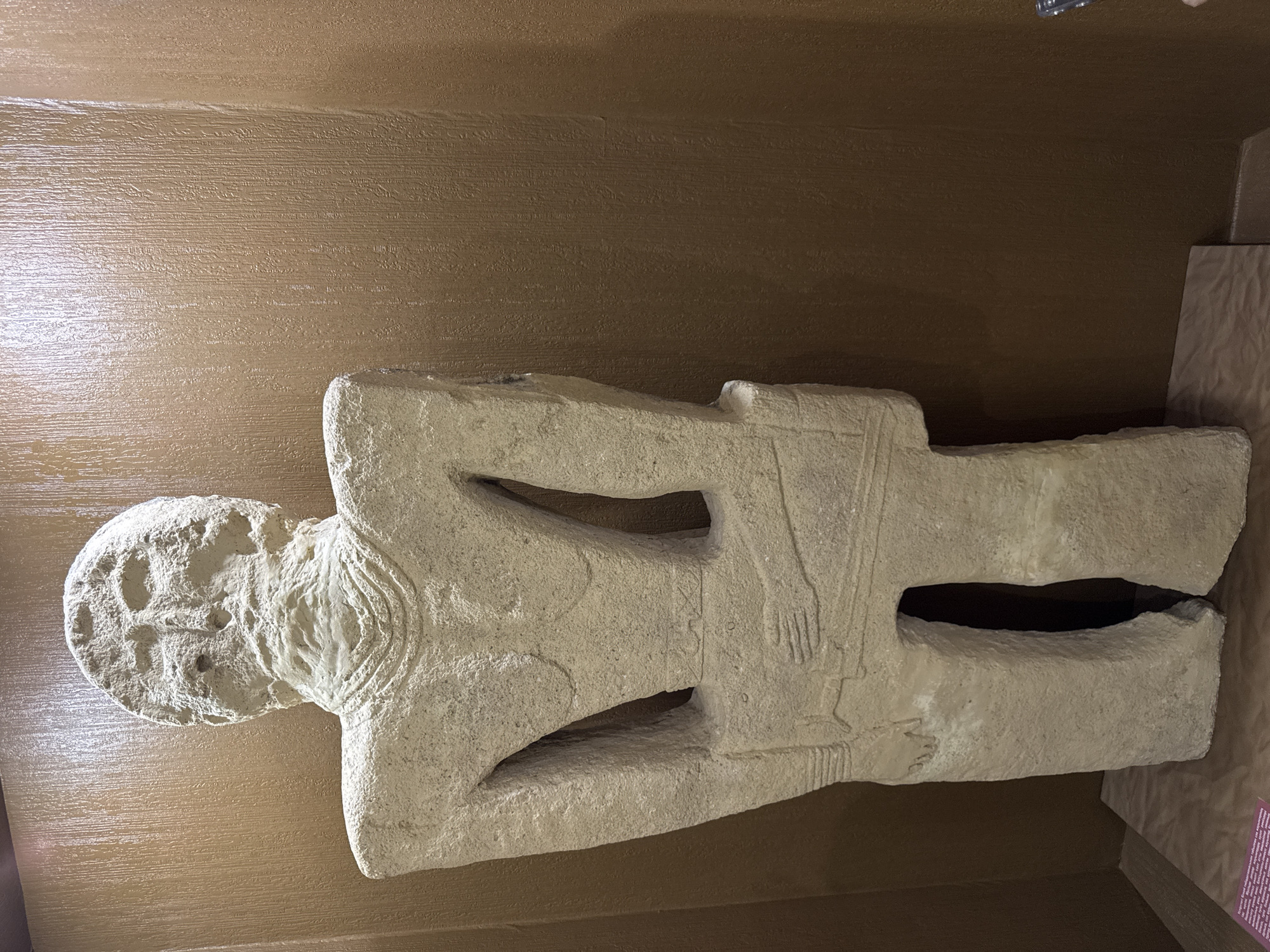
This is a full-body, eye-level shot of an ancient anthropomorphic stele, viewed from the rear. The stele is carved from light-colored stone and depicts a standing, headless figure with a stylized beard. The figure has a wide torso with openings that suggest arms, and a narrow lower body split into two legs. Intricate carvings adorn the stele, including concentric circles around the neck and geometric patterns on the waist. The stele stands on a textured platform, possibly wood or stone, and is positioned against a vertically textured, brown wall. To the left of the stele, a small portion of a informational placard is visible, containing text in an unidentified script. The overall environment suggests a museum or exhibition space.
Fort-Şevtşenko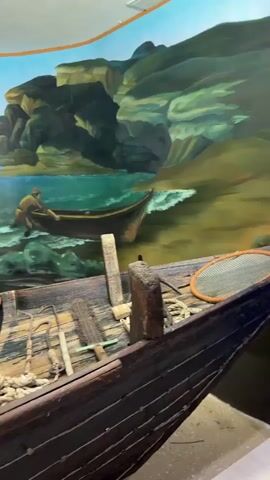
The video pans across a museum exhibit featuring a weathered wooden boat in the foreground, filled with nautical equipment like ropes, nets, and a barrel. Behind the boat is a large mural depicting a coastal scene with two figures in small boats and one on the rocky shore, engaged in fishing or handling nets. The mural shows a bright blue sky, a rocky coastline, and choppy water. The camera movement is slow and steady, highlighting the details of the boat and the painted backdrop.
Fort-Şevtşenko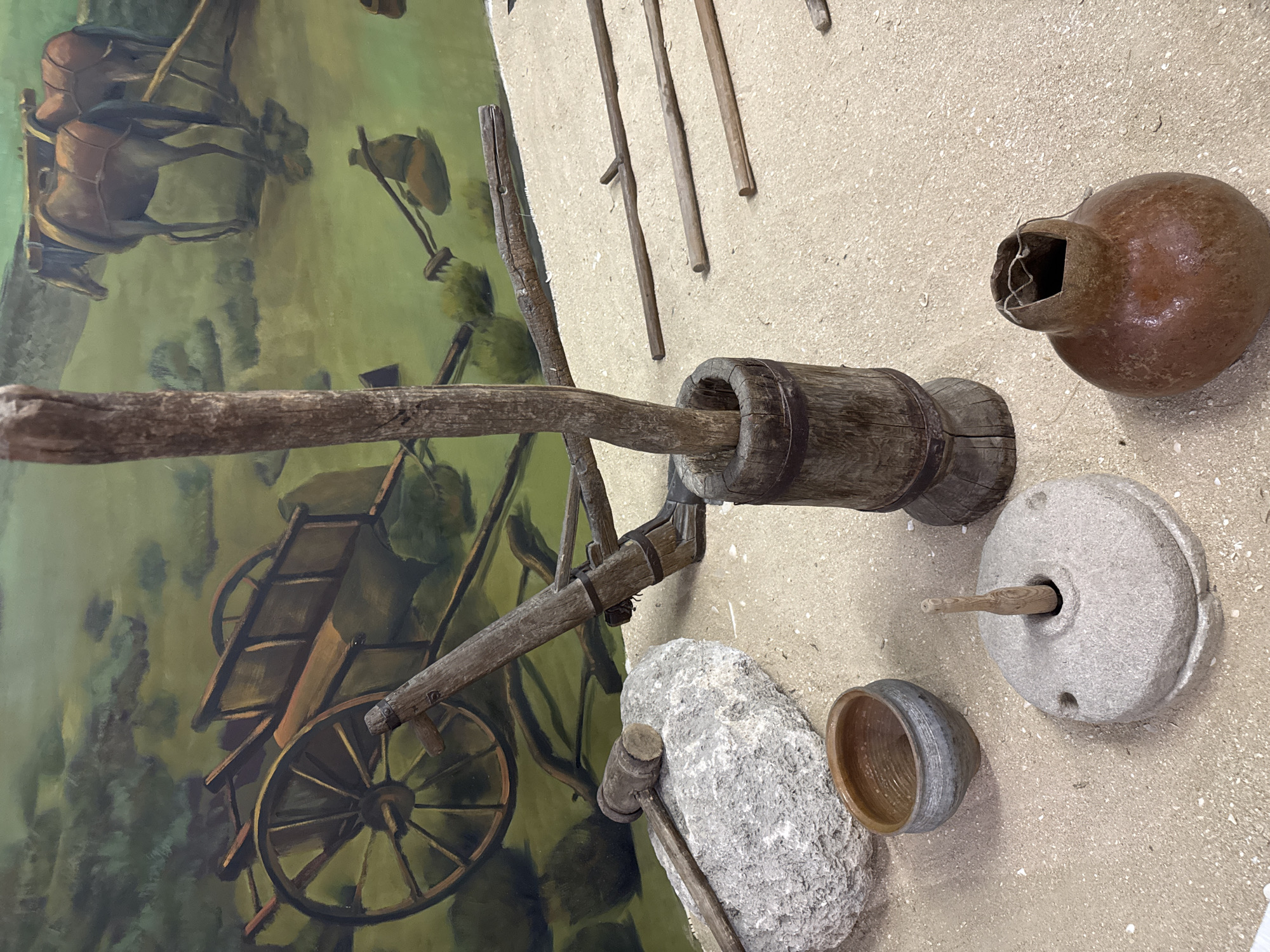
The image displays a diorama of historical agricultural tools and artifacts set against a painted mural depicting a pastoral scene. In the foreground, on a sandy surface, rest several objects: a large, grey, circular grinding stone with a wooden pestle inserted in its center; a small, dark, rounded pot; a wooden mallet resting on a large, rough stone; a wooden mortar with a wooden pole inserted into it; and a brown, gourd-like vessel with a narrow opening. Several long, wooden poles are scattered on the sand behind these items. The background mural shows two horses harnessed to a wooden plow, and a wooden cart with large spoked wheels, all set in a green, hilly landscape. The overall impression is that of an exhibit intended to showcase traditional farming methods. The location is identified as Fort-Şevtşenko, Kazakhstan.
Fort-Şevtşenko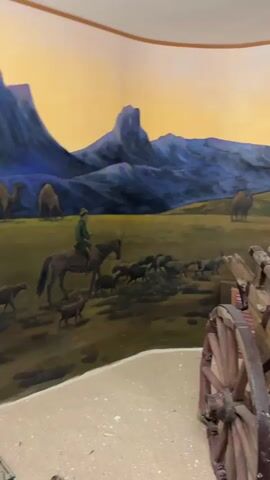
The video pans across a diorama depicting a desert landscape with a mural on the wall. In the foreground, a wooden cart with large spoked wheels is laden with sacks, rugs, and rope. The mural behind the cart shows a shepherd on horseback herding a flock of sheep, camels grazing in the distance, and a yurt with people gathered outside. The landscape in the mural features rolling hills and a jagged mountain peak under a yellow and blue sky.
Fort-Şevtşenko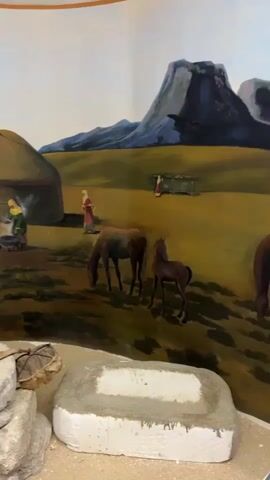
The video shows a mural depicting a nomadic scene with yurts, horses, and mountains. In the foreground, there are various artifacts, including millstones, ropes, and what appears to be a wooden rake or tool. The mural features people tending to a fire outside a yurt, a person in a red dress standing near another yurt, and a camel being attended to. The overall environment depicted in the mural is a grassy plain with a large mountain in the background. The lighting suggests it is daytime.
Fort-Şevtşenko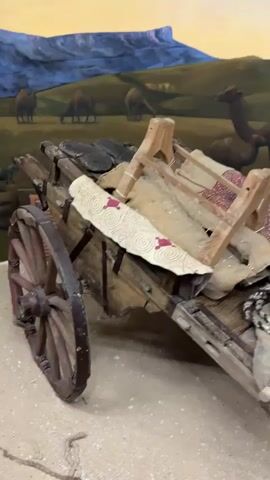
A close-up shot of an antique wooden cart filled with assorted items. In the background, a mural depicts a desert landscape with camels, yurts, and people. The cart itself is laden with burlap sacks, a rope coiled on top, and what appear to be textiles or rugs. A large, rough-hewn wooden wheel is visible on the left side of the cart. To the right of the cart, a stone grinding mill with a wooden handle rests on a base of rocks, suggesting a historical or cultural exhibit. The lighting appears to be artificial, illuminating the scene within an indoor setting.
Fort-Şevtşenko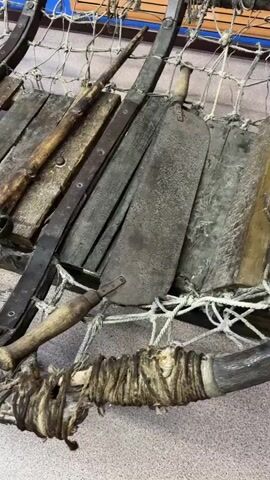
The video shows a close-up view of an old, rustic sled. The sled is constructed primarily of wood and metal, with a net-like material forming the bed. Several items are placed on the sled, including what appear to be two firearms, one longer and thinner than the other, and what might be a knife or machete with a wooden handle. The wood is weathered and appears aged, with visible grain and some damage. Metal straps and fasteners are used to hold the wooden slats together and attach them to the sled's frame. The sled is resting on a carpeted floor, and the background suggests an indoor setting, possibly a museum or historical display, with blue and wooden paneling visible. The lighting is somewhat dim, creating shadows that accentuate the textures and age of the objects.
Fort-Şevtşenko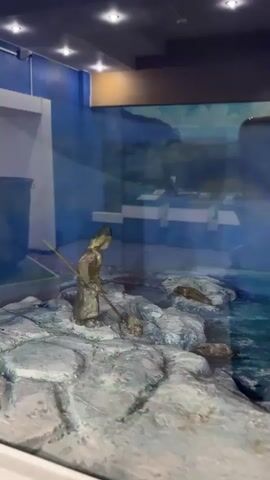
The video shows a diorama of a historical scene, possibly depicting indigenous people fishing in an icy environment. A central figure, a small statue of a person in traditional clothing, stands on rocky terrain near a body of water. The figure holds a long spear, and appears to be interacting with several other small animal statues in the water, which resemble seals or otters. The diorama is enclosed in a glass display case, through which a reflection of a person holding a phone or camera is visible. The background of the diorama features a painted landscape with mountains and water, as well as some architectural elements. The lighting in the display case is bright, with overhead spotlights. The overall impression is that of a museum exhibit.
Fort-Şevtşenko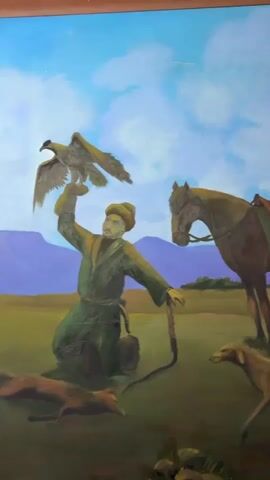
The video shows a painting of a falconer kneeling in a field, holding a falcon on his gloved hand. A horse stands to his right, and two dogs are in the foreground. The background features rolling hills and a sky with clouds. The falconer wears a traditional hat and green robes. One dog is walking, and the other is lying down. The horse is saddled and bridled. The scene depicts a hunting expedition.
Fort-Şevtşenko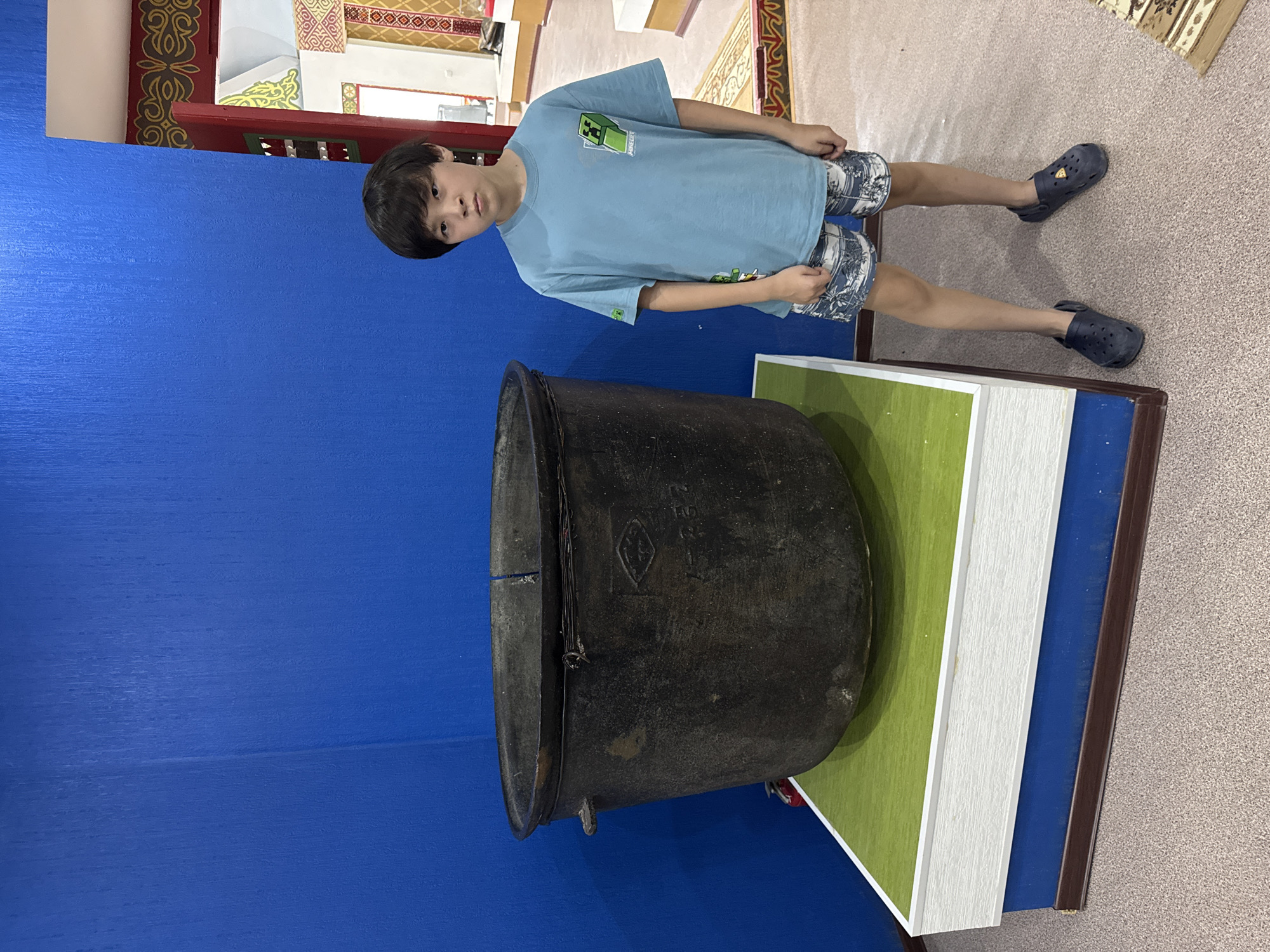
In the city of Fort-Şevtşenko, Kazakhstan, a young boy stands to the right of a large, dark metal pot. The boy is wearing a light blue t-shirt with a Minecraft design and patterned shorts. He is also wearing dark blue clogs. The pot is positioned on a multi-layered display base, with the top layer being a bright green surface. Behind the pot and the boy is a vibrant blue wall. To the right of the blue wall, an opening reveals an interior space with traditional Kazakh decor, including colorful patterns and intricate designs. The floor is carpeted with a light brown pattern. The overall environment suggests a museum or cultural exhibition.
Fort-Şevtşenko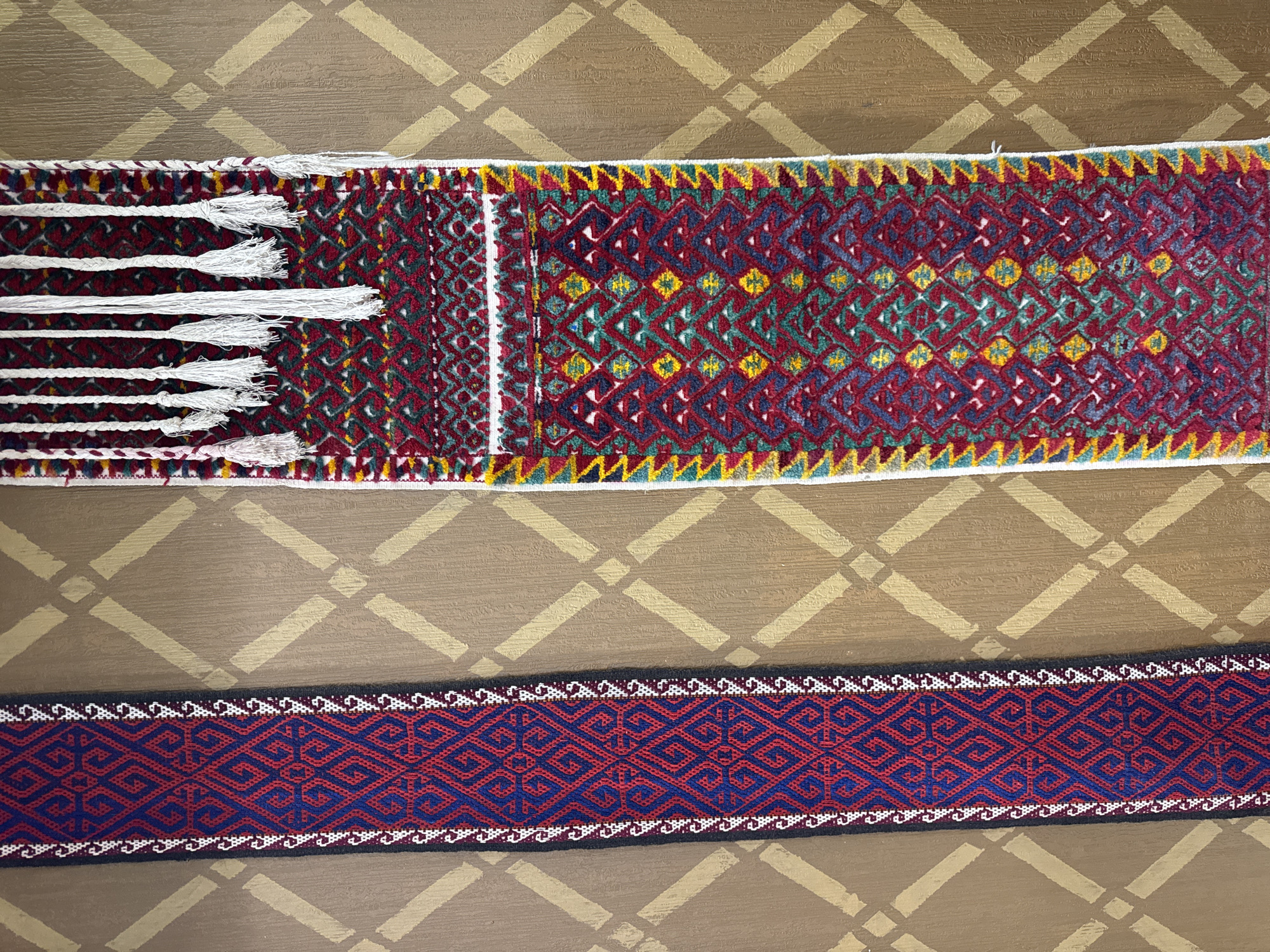
Two pieces of intricately woven textiles are displayed vertically against a wall with a textured, patterned background. The textile on the left is a narrow band with a repeating geometric pattern in red and dark blue, bordered by white and black trim. The textile on the right is wider and features a more complex pattern of red, green, yellow, and blue, with white tassels hanging from the top edge. The wall behind the textiles has a diamond-shaped stencil pattern in a lighter beige color against a darker brown background. This scene is located in Fort-Şevtşenko, Kazakhstan.
Fort-Şevtşenko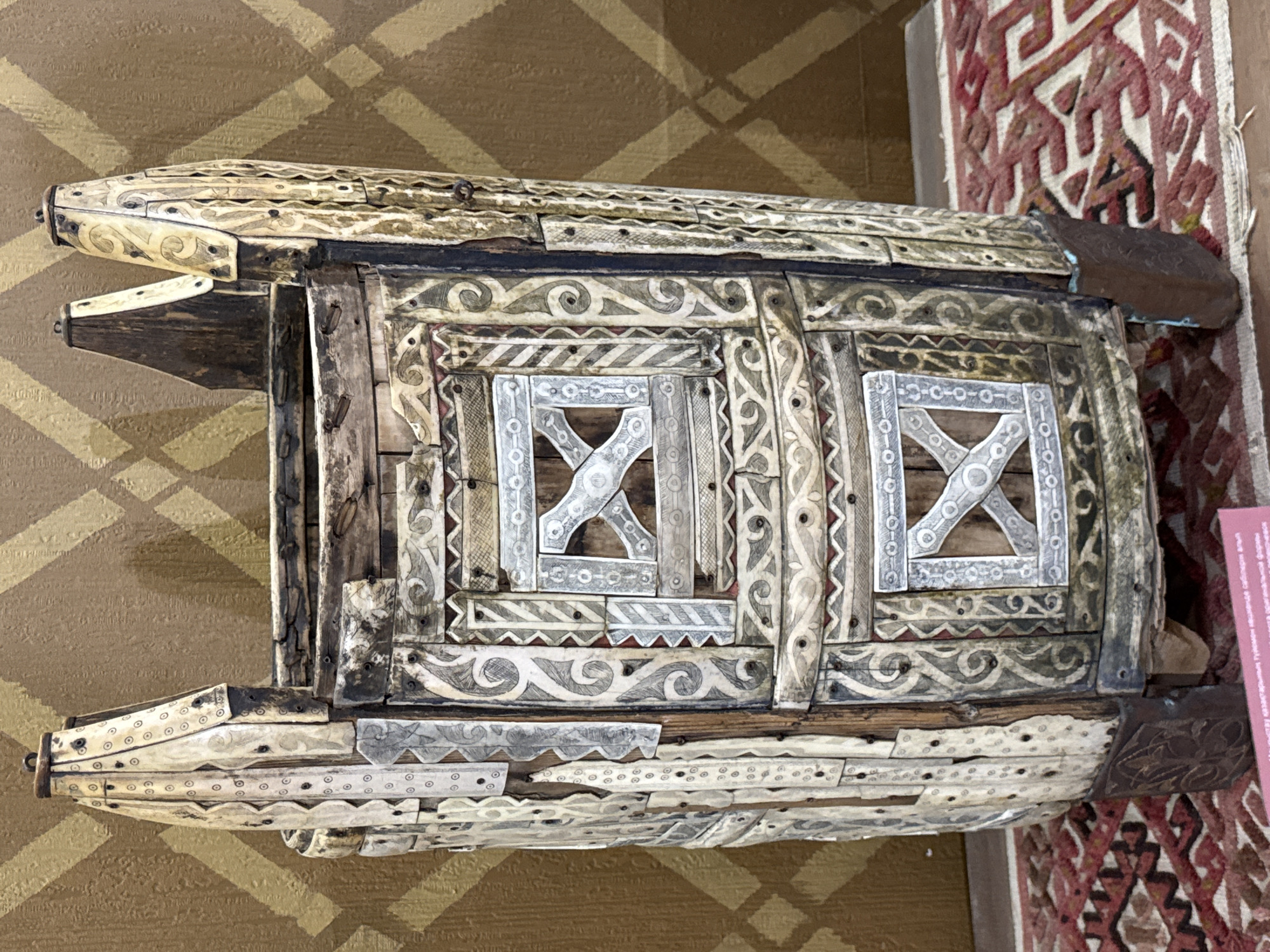
The image shows a close-up, eye-level, full shot of an intricately decorated wooden object. This object is standing on a rug with a red and white geometric pattern. The object itself is cylindrical with a flared top, appearing to be a type of container or furniture. It is adorned with numerous pieces of bone or ivory, carved with detailed patterns, which are affixed to the wooden structure with small nails or pins. The bone decorations include intricate scrollwork, geometric shapes, and circular motifs. The wooden parts of the object are weathered and show signs of age. The background consists of a wall with a repeating diamond-shaped pattern in gold and brown tones. A small pink label with text is visible at the bottom of the image. The object is located in the Museum of Fort-Shevchenko in Fort-Şevtşenko, Kazakhstan.
Fort-Şevtşenko