Goshabi, Sudan
5 memories from Goshabi, Sudan
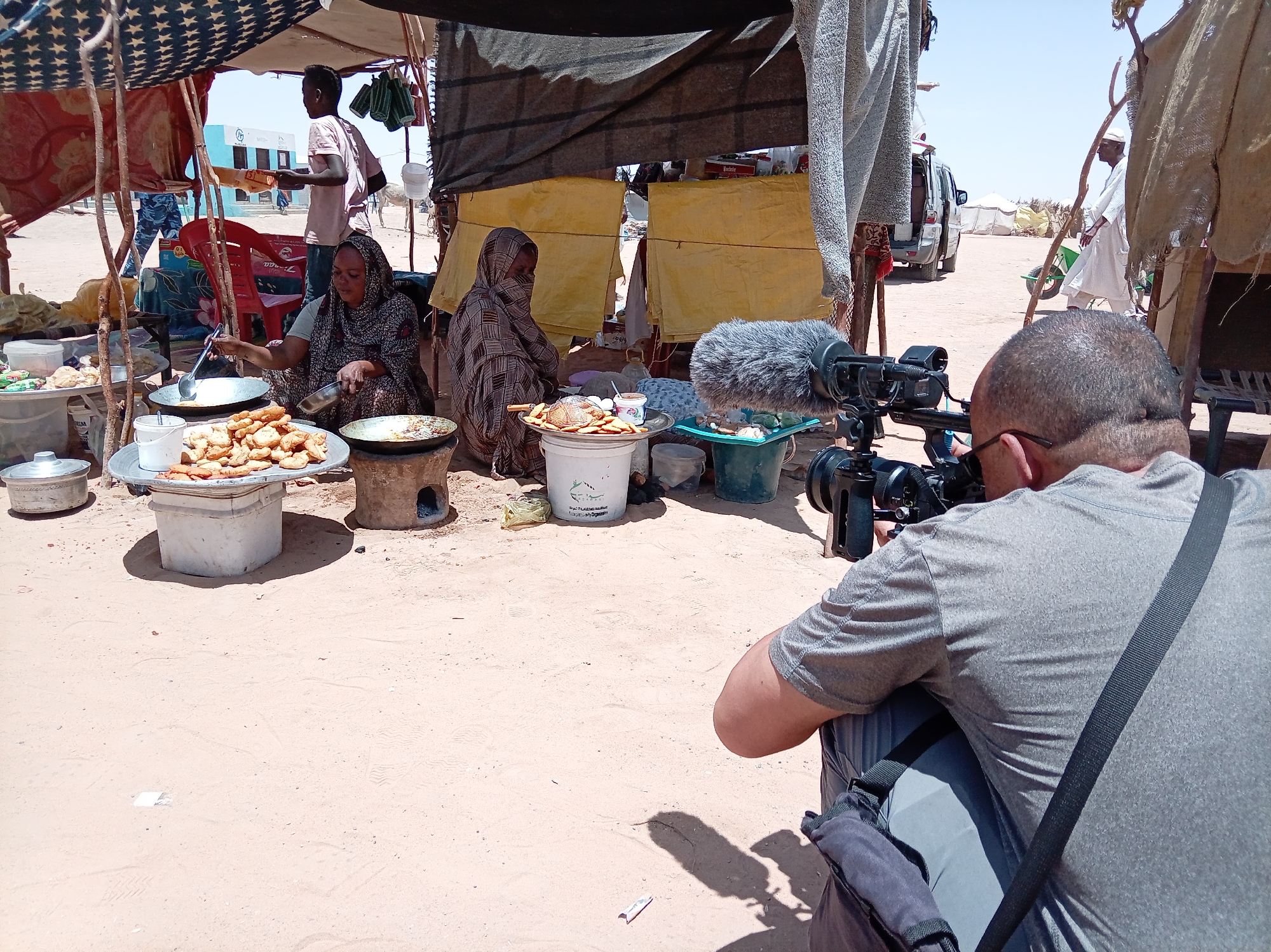
The image captures an outdoor market scene in Goshabi, Sudan, where daily activities are being documented by a film crew. In the foreground, a man, seen from behind, is crouched down, intently operating a professional video camera. The camera is fitted with a large furry wind-muff on its microphone, and the man wears glasses, a grey t-shirt, and a dark shoulder bag. His camera is pointed towards a makeshift food stall set up under a canopy of various fabrics, including a patterned blue and white cloth and dark tarpaulins, supported by wooden poles. Two women are seated on the sandy ground, actively preparing food. The woman on the left, dressed in a patterned garment and head covering, is stirring a large pan with a ladle. Next to her is a large tray filled with golden-brown fried food, resembling fritters or donuts, and a traditional clay or mud oven. The second woman, further back and partially obscured, is also seated, wearing a similar head covering. White and green plastic buckets, metal pots, and various utensils are arranged around their cooking area. One white bucket displays visible text in Arabic script, alongside the English word "Organisation," suggesting it might be from a humanitarian or development group. In the mid-distance, a young man in a pink t-shirt stands near the cooking area. Beyond the immediate stall, the scene opens to a dusty, arid landscape under a clear, bright sky. Several people are visible in the background, including a man in traditional white clothing pushing a wheelbarrow, and a white SUV. A light blue building can be seen in the far distance, providing a contrasting, more established element to the rustic surroundings. The bright sunlight and strong shadows indicate it is daytime, likely midday or early afternoon. The overall impression is one of a bustling, yet routine, outdoor marketplace in an arid region, with the film crew observing and recording local life.
Goshabi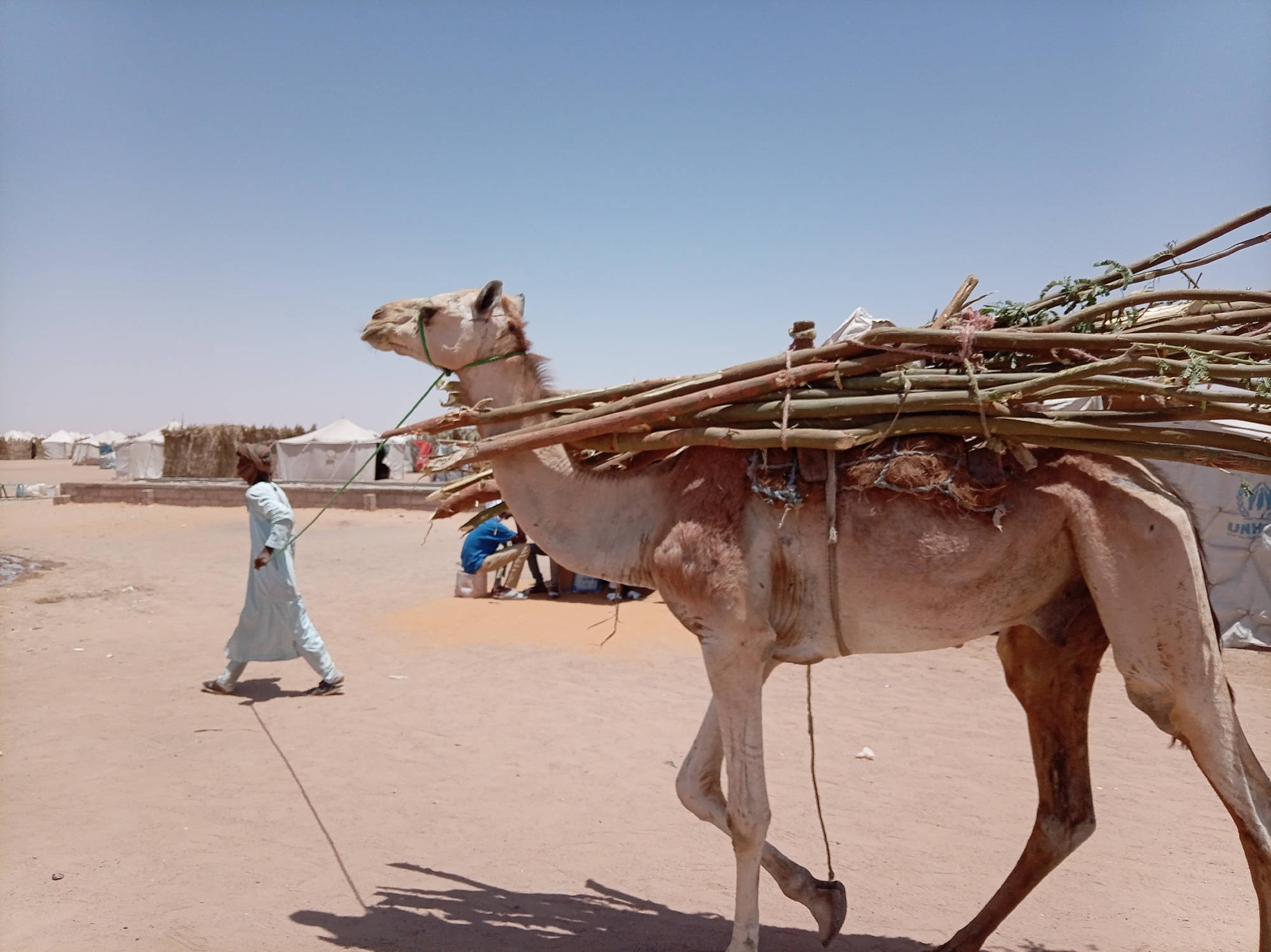
An outdoor, wide-angle shot captures a man leading a camel laden with branches through an arid camp in Goshabi, Sudan, under a clear, bright midday sky. The camel, a light brown dromedary, occupies the right half of the frame, walking from right to left. Its back is heavily loaded with a large bundle of light-colored sticks and leafy branches, secured by ropes. A green rope is tied around its head, serving as a halter. To the left of the camel, a man dressed in a flowing, light-colored robe walks forward, holding the lead rope of the camel. His distinct shadow is cast on the dusty, sandy ground beneath him, indicating the high sun. In the background, a sprawling camp is visible, featuring numerous white canvas tents of various sizes alongside several smaller, rustic structures made of natural materials like brushwood or reeds. Towards the far right background, part of a white tent shows the partial text "UNH," suggesting the presence of the United Nations High Commissioner for Refugees (UNHCR) and reinforcing the camp setting. Another individual, wearing a blue top, is visible sitting or crouching near a white container in the mid-ground, between the man and the camel's legs. The scene depicts a routine daily activity in an arid environment, likely involving the gathering and transport of resources such as firewood, crucial for life in a temporary settlement or refugee camp. The clear blue sky and strong shadows indicate a sunny and likely hot day.
Goshabi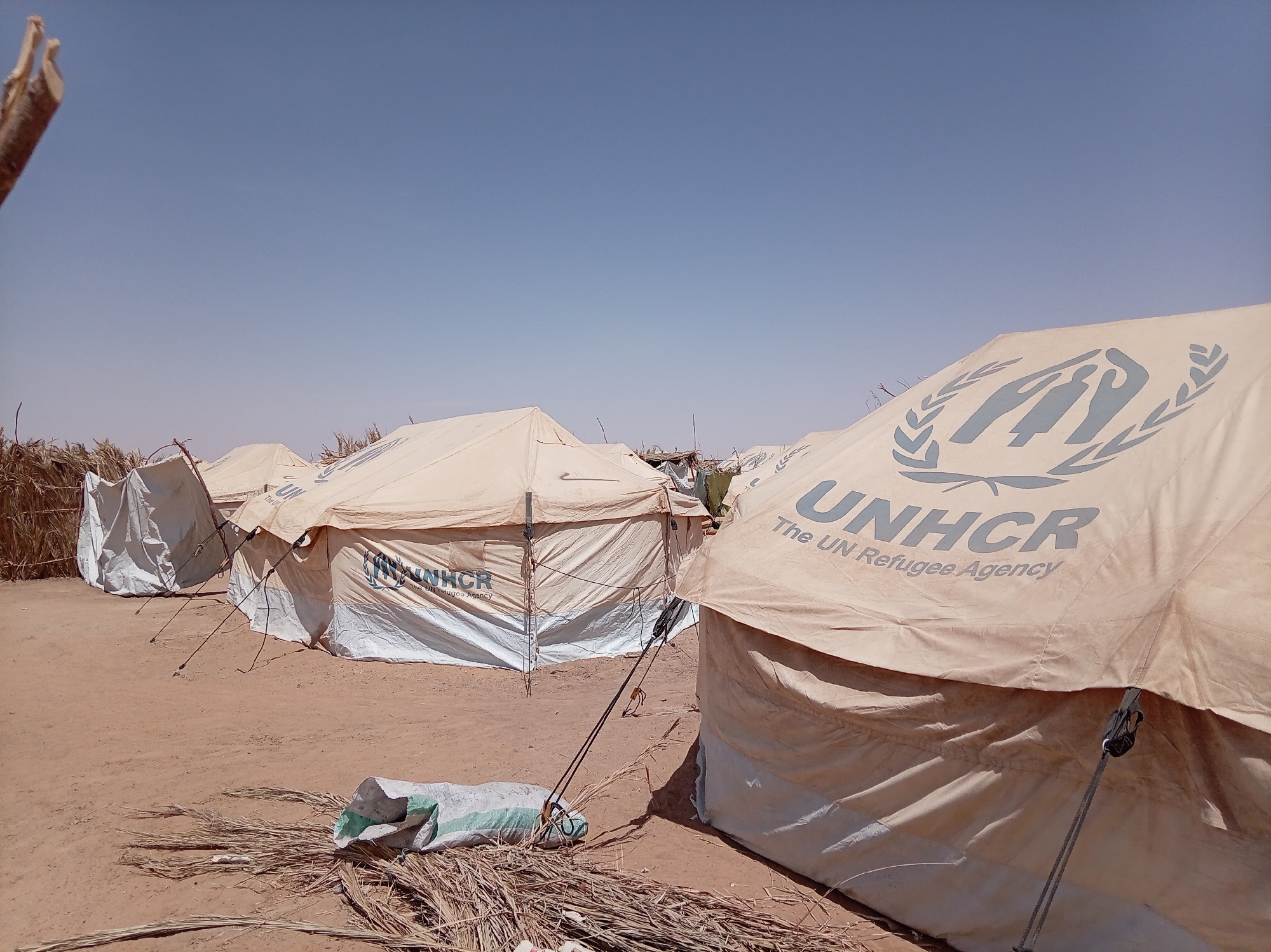
The image captures a scene within a refugee camp in Goshabi, Sudan, under a clear, bright sky. The setting is arid, characterized by sandy, dry ground with scattered dry straw-like debris. No people are visible in the frame. The primary subjects are several large, light-colored tents, which appear to be temporary shelters. The tent in the foreground and others partially visible bear the blue logo of the United Nations High Commissioner for Refugees (UNHCR), featuring two stylized human figures embraced by olive branches. The text "UNHCR" and "The UN Refugee Agency" is clearly printed on the tents, indicating their purpose in humanitarian aid. The tents are secured to the ground with ropes and stakes. In the background, other tents and what appears to be rudimentary structures made from branches and dry vegetation are discernible, suggesting a blend of organized and improvised shelter. A white and green bag lies on the ground near the front tent. The strong, direct sunlight indicates it is daytime, possibly mid-morning or early afternoon, with minimal shadows cast by the tents. The absence of clouds reinforces the dry, clear weather conditions typical of an arid region. The overall scene depicts basic living conditions in a humanitarian aid context, emphasizing the provision of shelter by the UN Refugee Agency.
Goshabi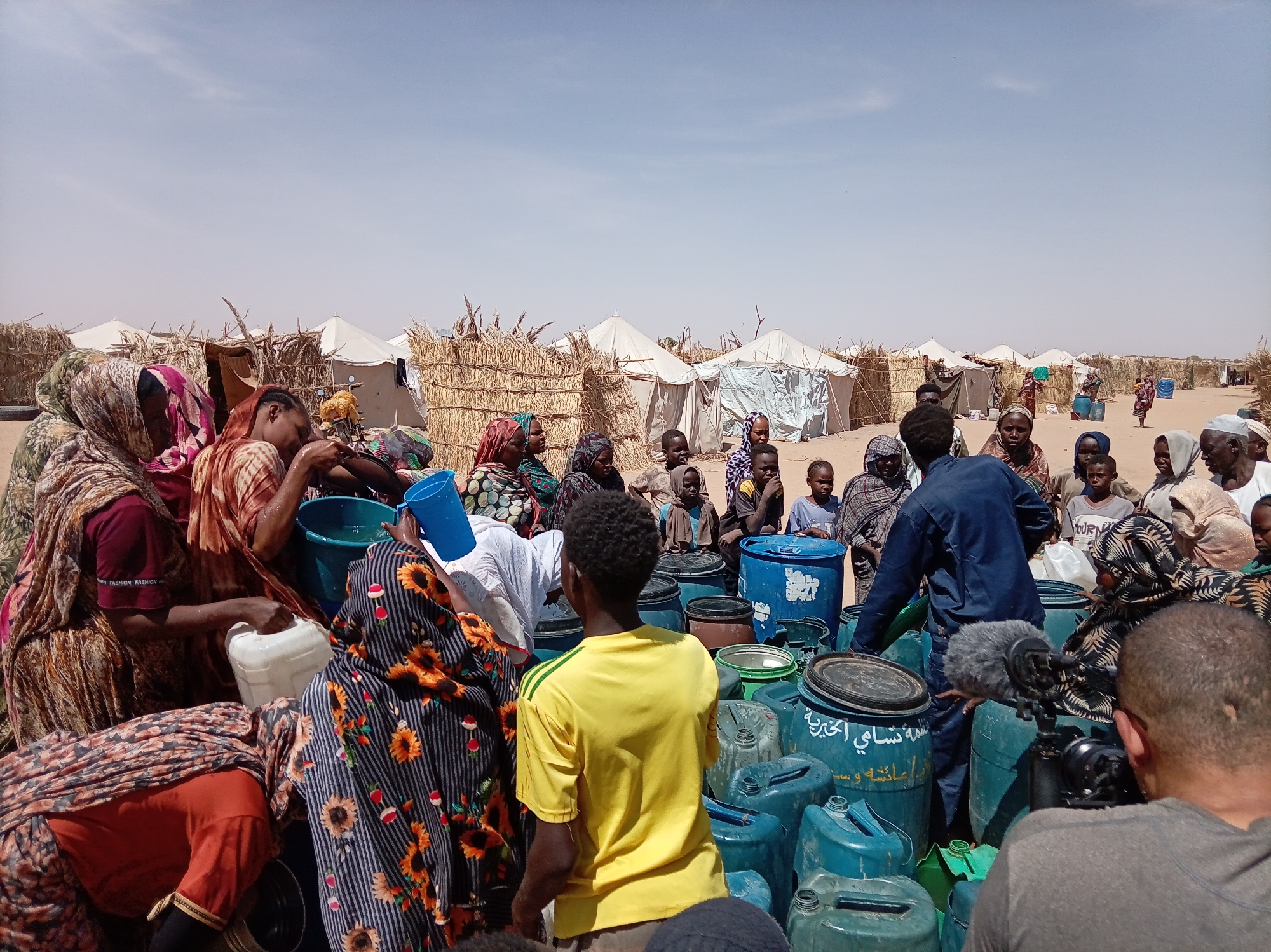
The image captures an outdoor scene in what appears to be a displacement camp or temporary settlement in Goshabi, Sudan, under a bright, clear blue sky. The ground is dusty and arid, with rudimentary shelters made of dried straw or reeds interspersed with white canvas tents in the background. A large group of people, including men, women, and children, are gathered in the foreground and midground. Most of the women are wearing headscarves and traditional clothing. The central activity involves the collection or distribution of water. Numerous blue and green plastic barrels and smaller jerry cans are densely packed together, and individuals are seen handling these containers, some actively pouring water using blue plastic jugs and buckets. The scene is brightly lit by the sun, suggesting midday or early afternoon. In the immediate foreground, with his back to the viewer, a person is operating a professional video camera fitted with a shotgun microphone, indicating the presence of media or a documentary crew. Arabic script is visible on some of the blue barrels; specifically, one large blue barrel on the right prominently displays "منظمة تشادي الخيرية" (Chad Charity Organization), with "عائشة و..." (Aisha and...) written below it. The overall impression is one of a community managing essential resources in challenging conditions.
Goshabi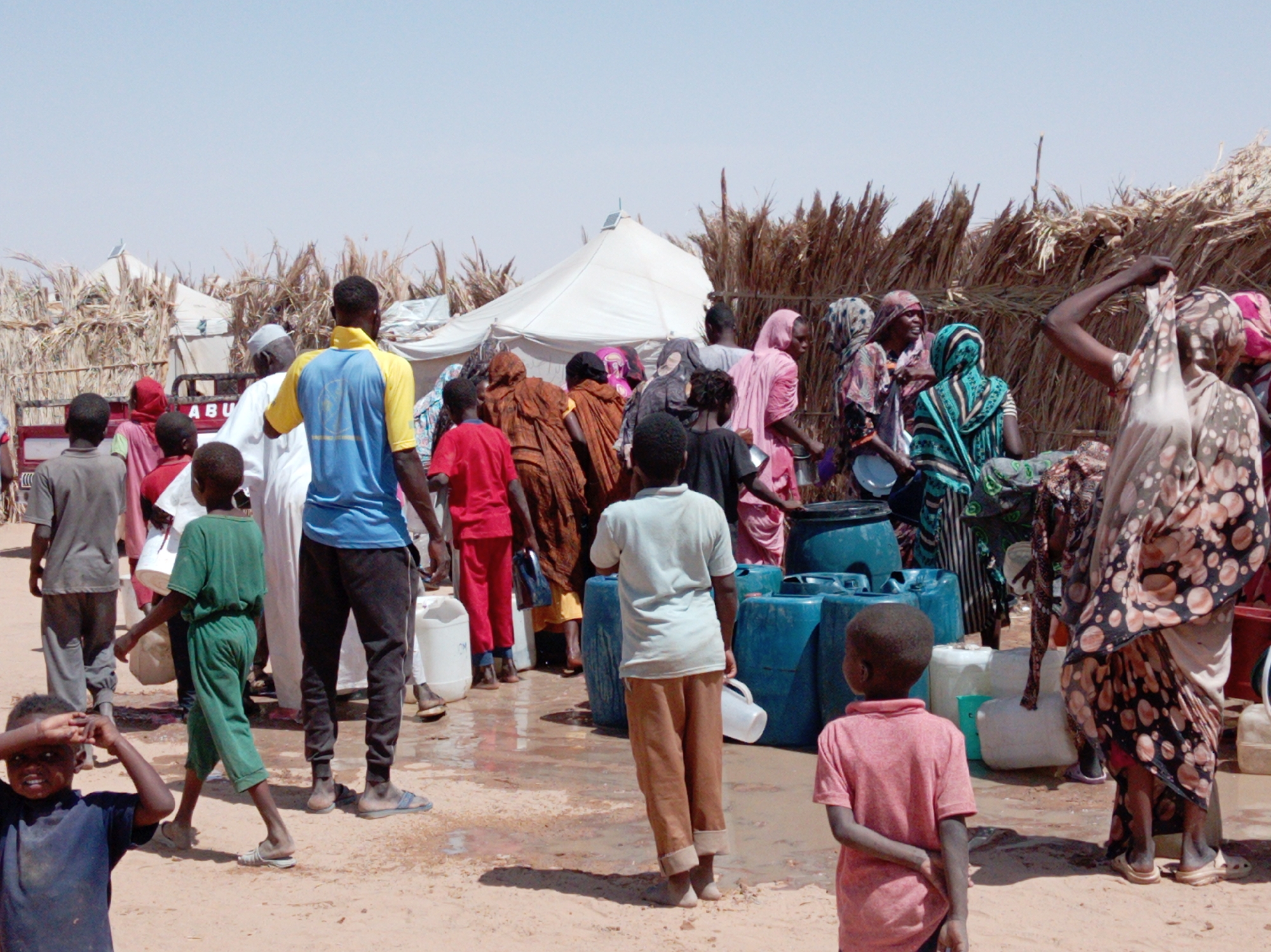
The image depicts a busy outdoor scene in Goshabi, Sudan, centered around a water collection or distribution point. A diverse group of people, including men, women, and numerous children, are gathered and moving through a sandy, dusty environment. The ground shows patches of standing water and mud, suggesting spillage from the containers. Prominently featured are several large, dark blue plastic barrels and smaller white plastic jerrycans, which are being used for water storage and transport. Many women are dressed in colorful, patterned traditional clothing, often with head coverings, and some are holding small bowls or containers. Men wear various attire, from casual shirts and pants to traditional robes. Children are present throughout the crowd, some observing the activity, while others move about. In the foreground, a child in a dark blue shirt looks towards the viewer, hands near their head, while another child in a red shirt stands with their back to the viewer near the blue barrels. In the background, temporary structures made of dried straw or reeds are visible, along with a white tent, suggesting a settlement or camp in an arid region. The sky is a clear, light blue, indicating bright daylight, likely midday, given the harsh shadows cast on the ground. Part of a vehicle, possibly a truck bed, can be seen in the mid-left, with the letters "ABU" clearly visible on its side. The scene conveys a communal effort focused on accessing and transporting water.
Goshabi