Guayacán, Venezuela
30 memories from Guayacán, Venezuela
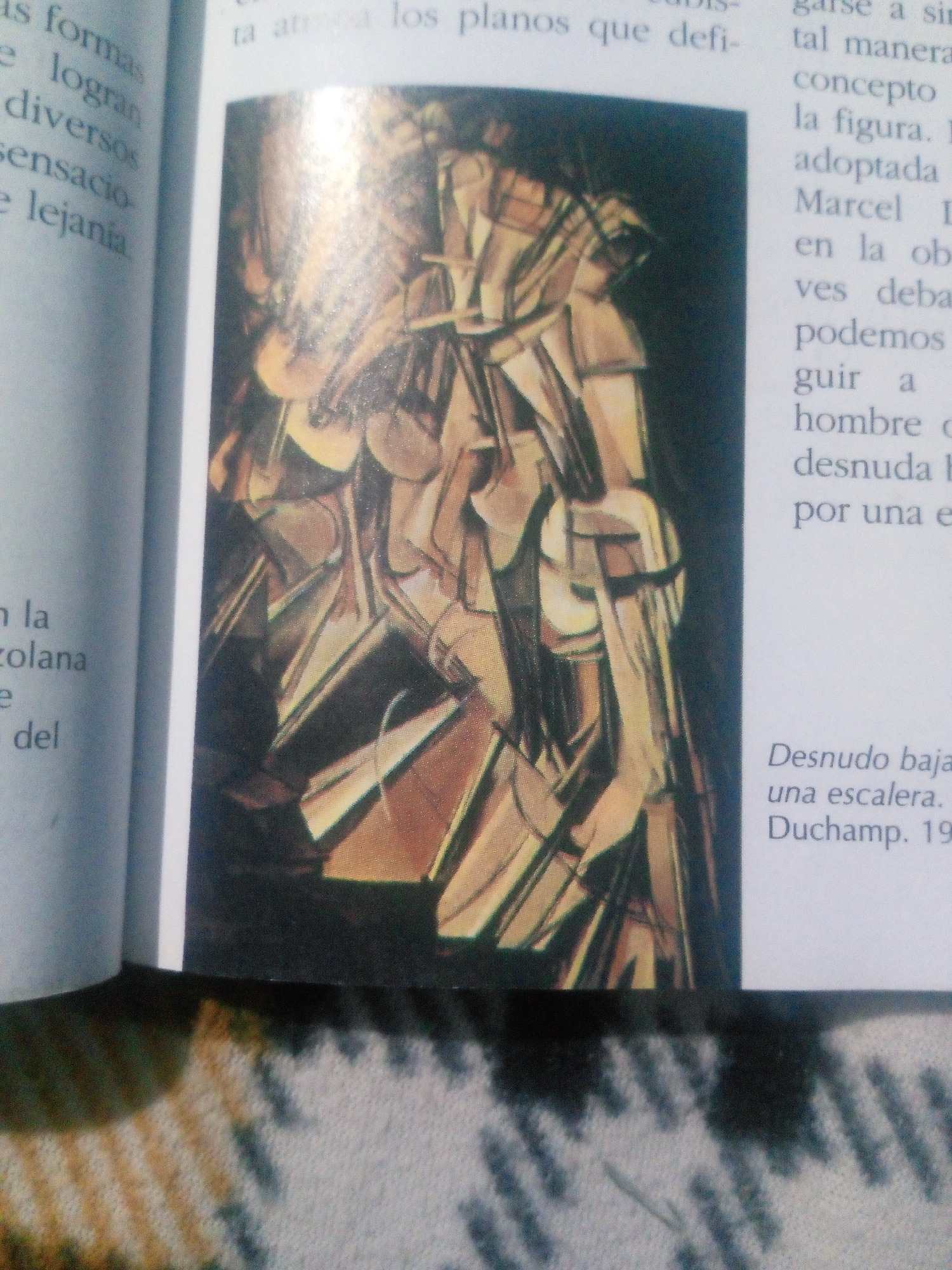
The image shows a book open to a page with a painting on the left and text on the right. The painting depicts a fragmented and abstract figure, possibly a dancer or a person in motion, rendered in earthy tones of brown, yellow, and beige with dark shadows. The style is cubist or futurist, with sharp angles and overlapping planes creating a sense of dynamism. The text on the right describes the painting, mentioning "Desnudo baja una escalera" (Nude descending a staircase) and "Duchamp. 19." This suggests the painting is Marcel Duchamp's famous work. The book is lying on a patterned surface, possibly a carpet or blanket. There is no information within the image or its context provided that relates it to the city of Guayacán, Venezuela.
Guayacán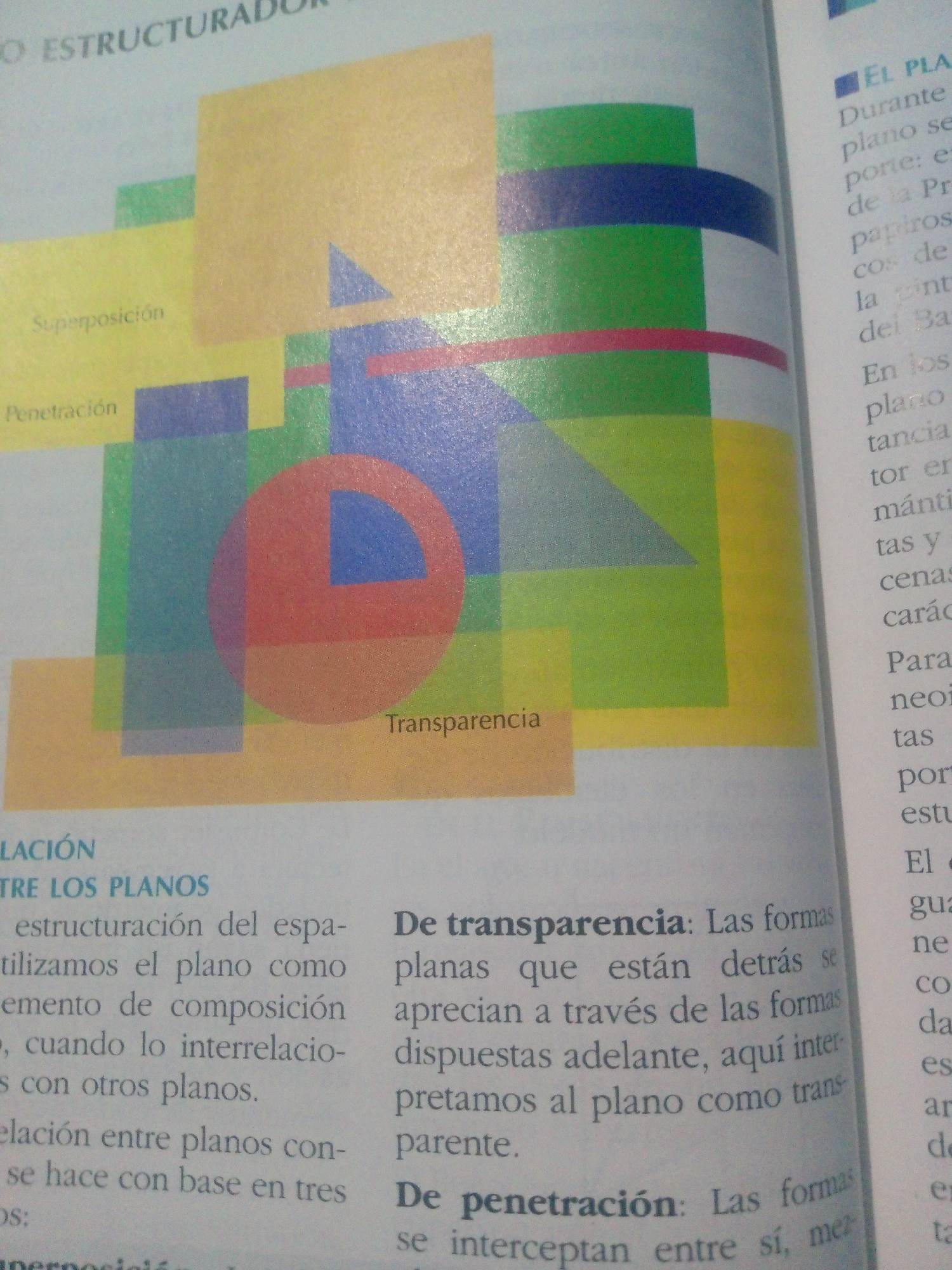
The image displays a page from a book with a diagram illustrating principles of composition, specifically focusing on planes. The diagram features overlapping geometric shapes in various colors such as yellow, blue, green, and red. Text labels like "Superposición" (Superposition) and "Penetración" (Penetration) are visible on the diagram, indicating different elements of the composition. The right side of the page contains text in Spanish, discussing concepts related to planes and their interaction. The location of Guayacán, Venezuela is not depicted or mentioned in the image.
Guayacán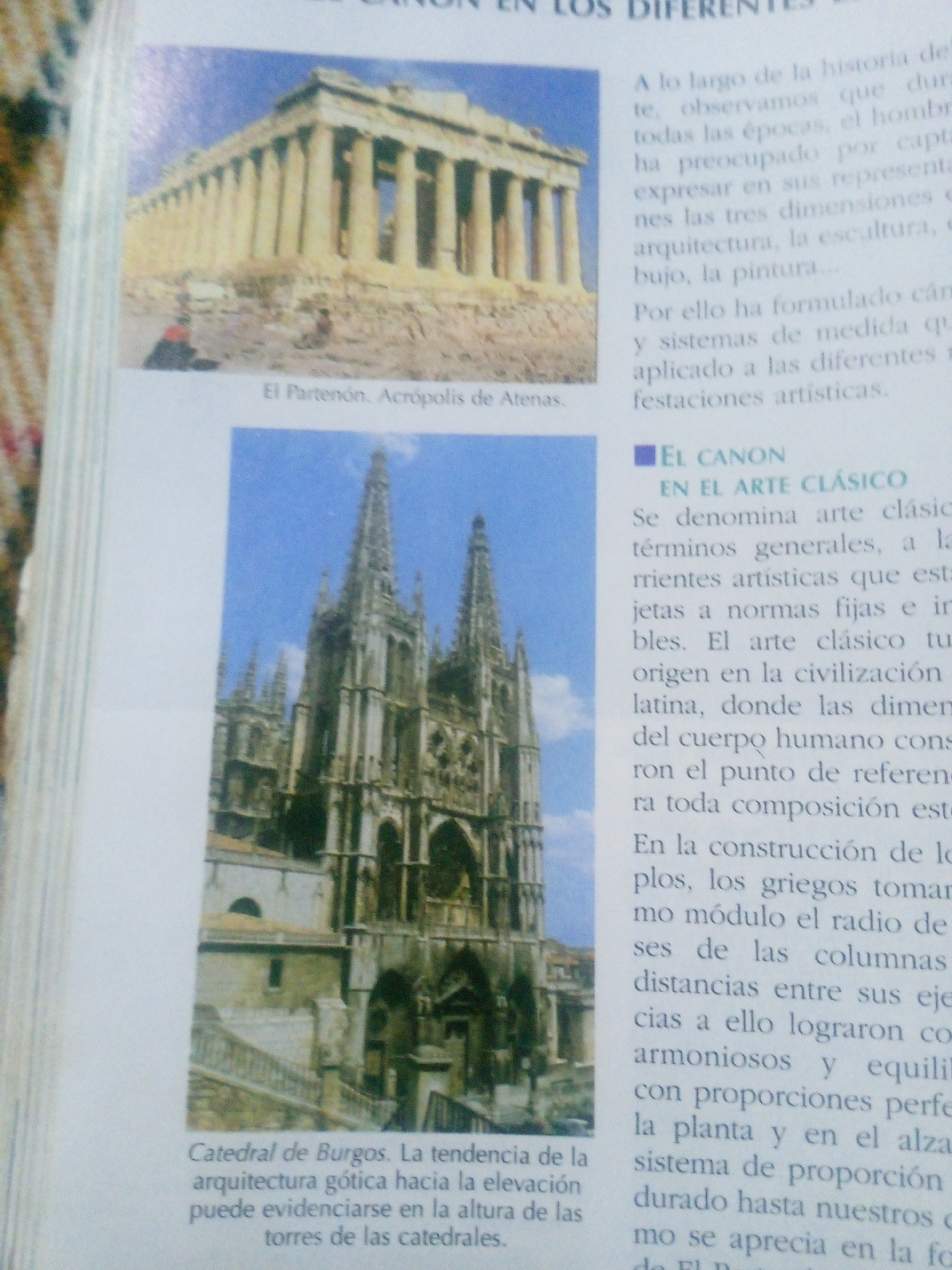
The image displays two photographs of architectural structures and accompanying text. The top photograph shows the Parthenon in Athens, Greece, with its distinctive columns and pediment. The bottom photograph depicts the Cathedral of Burgos in Spain, a grand Gothic cathedral with spires and intricate detailing. The text on the right side discusses "EL CANON EN EL ARTE CLÁSICO" (The Canon in Classical Art), explaining that classical art adheres to fixed norms. It references the influence of Greek civilization and the human body as a reference point for proportion. The text also mentions the construction of Greek temples, using the radius of columns as a module to achieve harmonious proportions. The text below the image of the Cathedral of Burgos describes its Gothic architecture and elevation. This image and its accompanying text are from a publication that appears to be educational, focusing on art history and architectural styles. There is no information present in the image that relates to the city of Guayacán, Venezuela.
Guayacán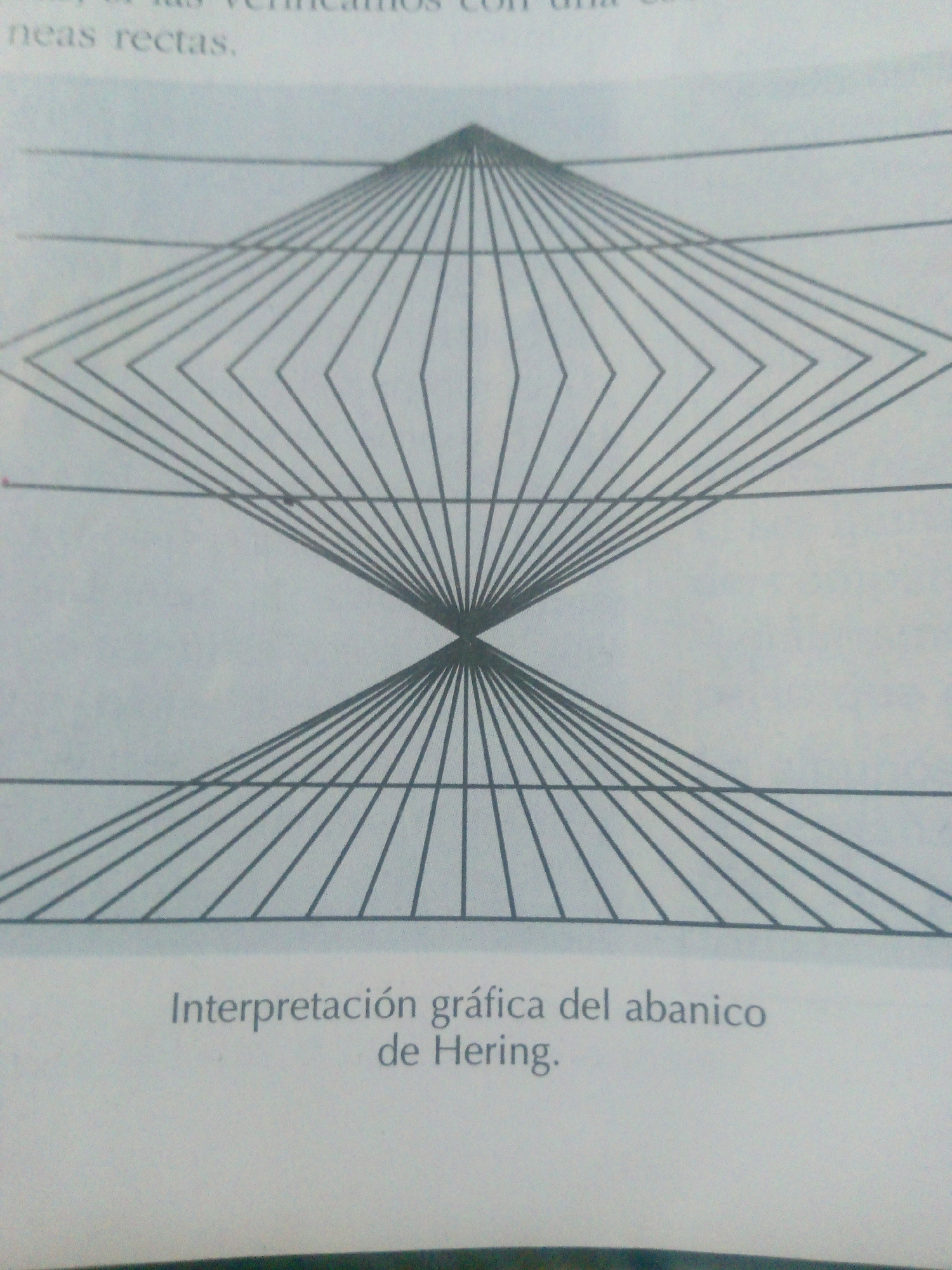
The image displays a graphic illustration featuring a series of converging lines that create a visual effect resembling a fan or an hourglass shape. There are horizontal lines interspersed with these radial lines, forming diamond-like shapes. Below the illustration, text reads "Interpretación gráfica del abanico de Hering." This text translates to "Graphical interpretation of the Hering fan." The image does not contain any information about the city of Guayacán, Venezuela, nor does it depict any people, subjects, objects, actions, interactions, or specific environmental settings. It is solely a technical diagram with accompanying text.
Guayacán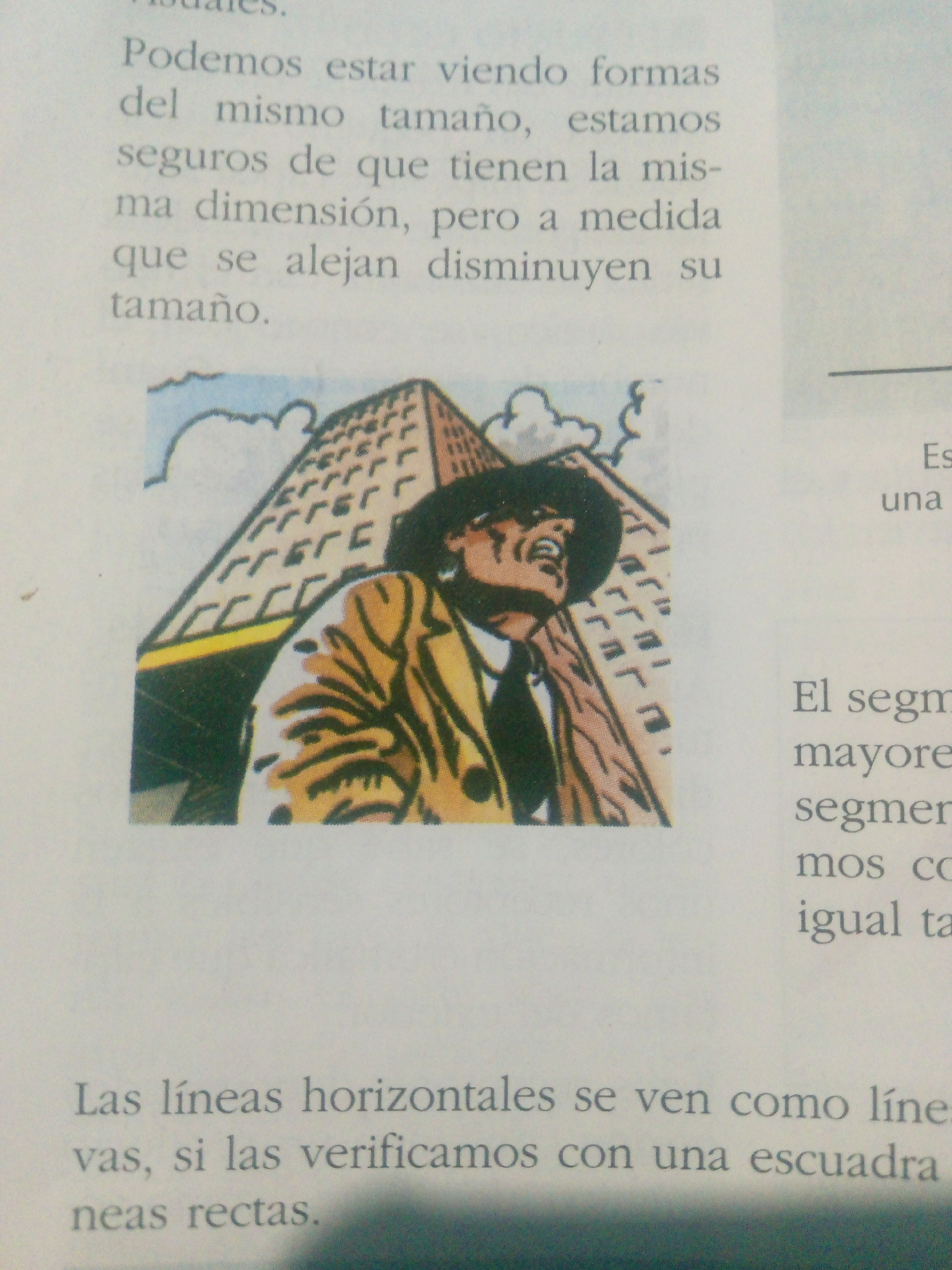
The image shows a page from a book with text and an illustration. The text is in Spanish. On the left side, there is an illustration of a person wearing a hat and a jacket, standing in front of tall buildings. The person appears to be looking up. The illustration is in a comic book style. On the right side of the page, there is more Spanish text. There is no information in the image to suggest a location in Guayacán, Venezuela. The image is a close-up of the book page, and the background is out of focus.
Guayacán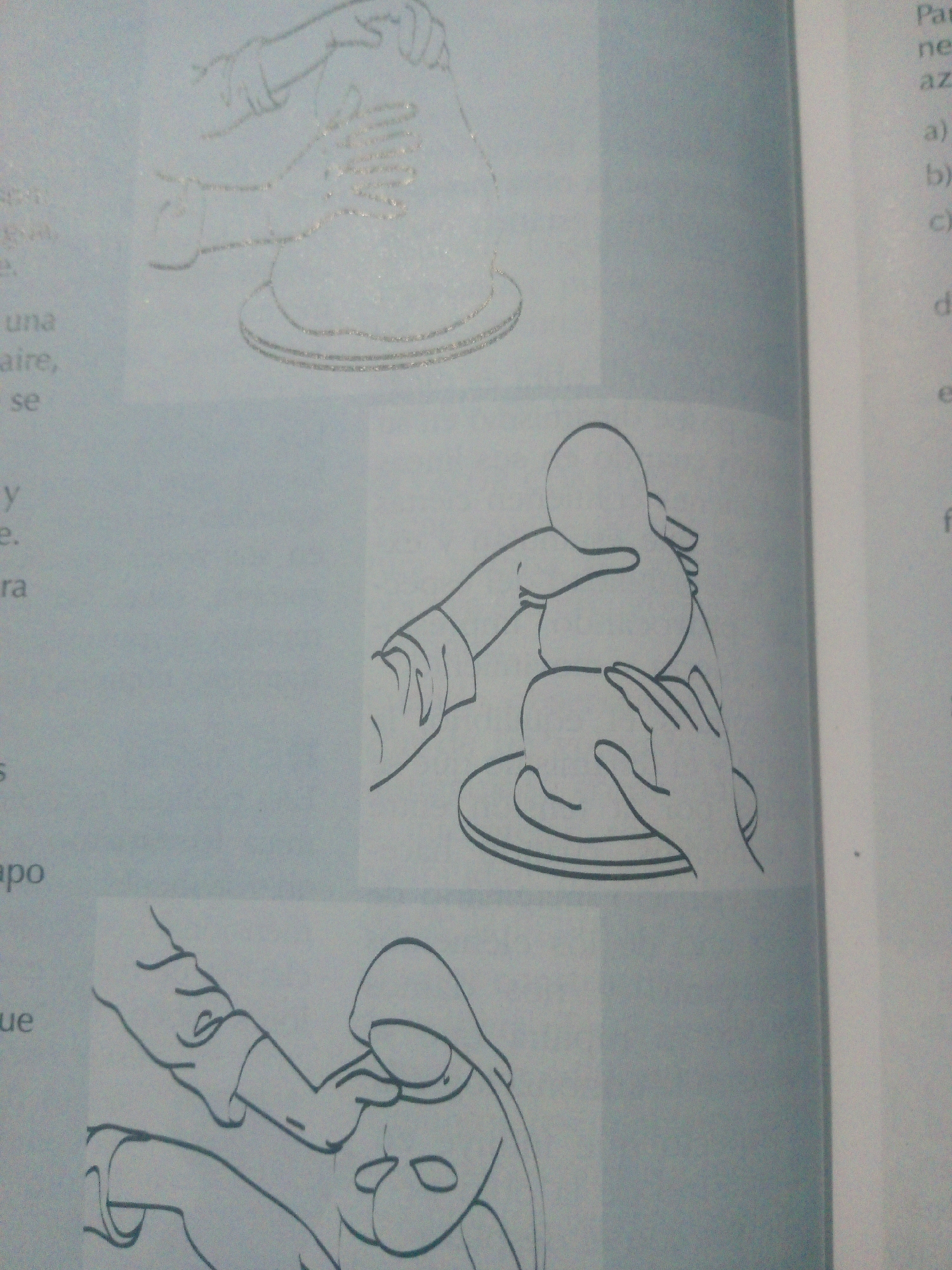
The image depicts three illustrations of hands manipulating clay figures. The top illustration shows hands shaping a large, round object, possibly a pot or a sculpture base, on a circular platform. The middle illustration shows hands working on a smaller, more defined figure, seemingly a person or an animal, also on a platform. The bottom illustration features hands engaged with a more complex clay form, where one hand appears to be adding or shaping a part of the figure, while another hand supports it. Text is visible on the left side of the image, with some words partially obscured, including "una," "aire," "se," "y," "e," "ra," "s," and "apo." On the right side, there are Roman numerals (a, b, c, d, e, f) listed vertically, suggesting a step-by-step or instructional context. The illustrations are line drawings on a light blue background, and there is no visible information about the city of Guayacán, Venezuela, within the image.
Guayacán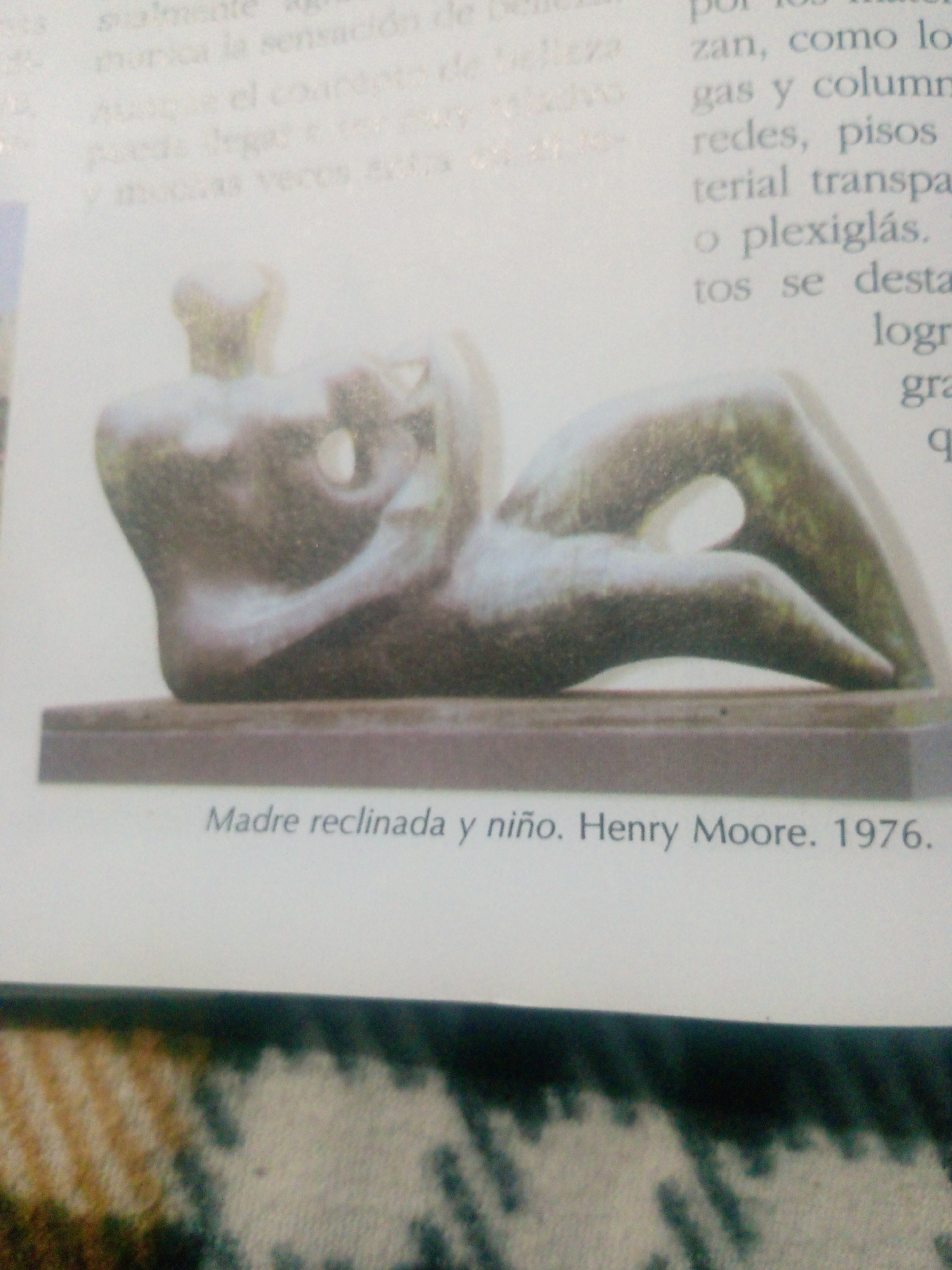
The image shows a sculpture titled "Madre reclinada y niño" (Reclining mother and child) by Henry Moore, dated 1976. The sculpture depicts a woman lying on her back with her knees bent, holding a child. The sculpture is made of a dark material, possibly bronze, and is mounted on a rectangular base. The background consists of text, but it is partially obscured and out of focus. There is no discernible information within the image or its context to suggest any connection to the city of Guayacán, Venezuela.
Guayacán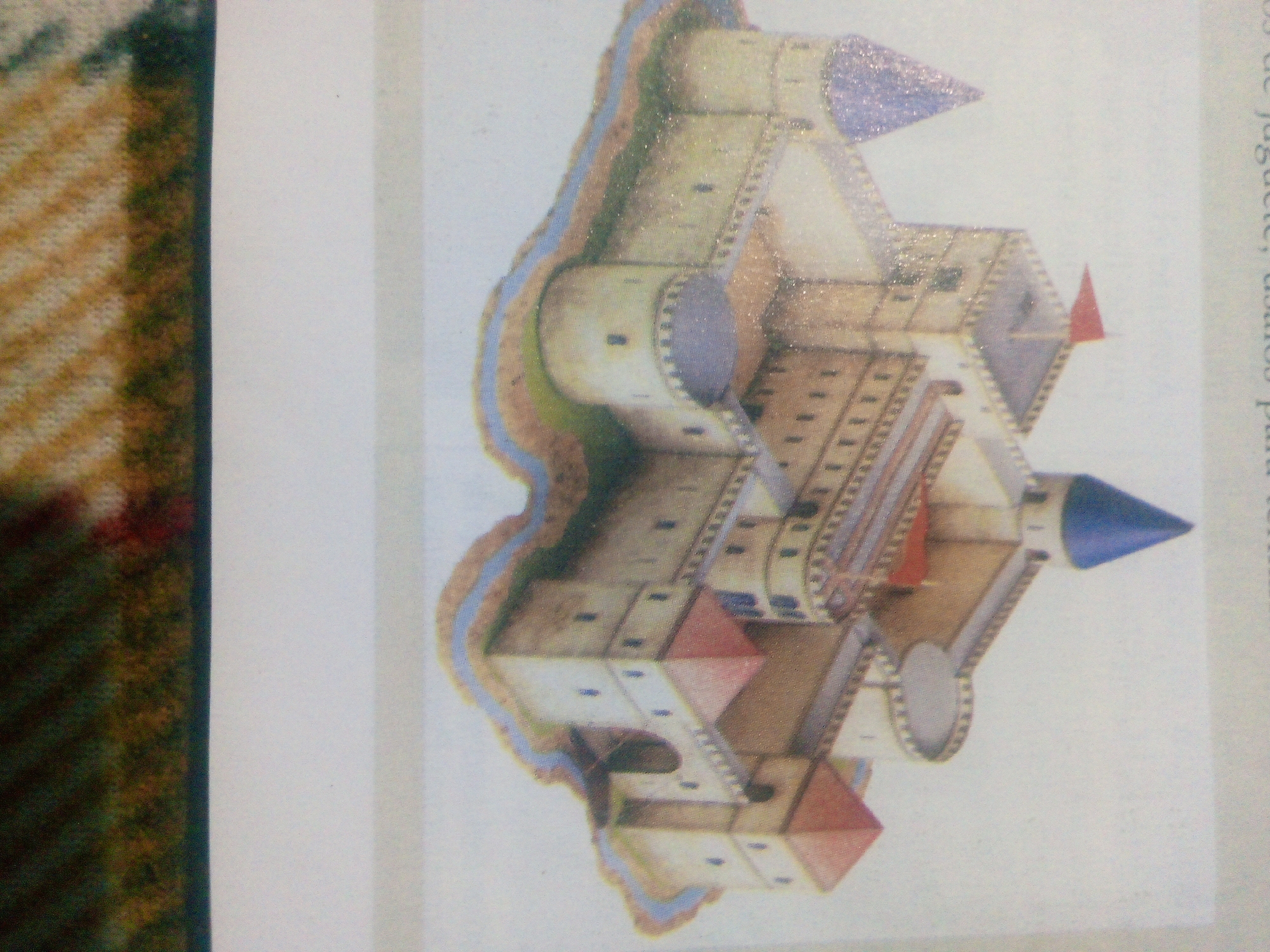
The image displays a detailed, isometric illustration of a castle model. The castle is depicted in a sandy, beige color with various architectural features including towers, battlements, and what appear to be roofs or turrets in red and blue. The castle is situated on a brown and green landscape that is bordered by a blue river or moat. The overall presentation suggests a craft or model-building project, possibly for educational or recreational purposes. There is no visible indication of the city of Guayacán, Venezuela, within the image itself.
Guayacán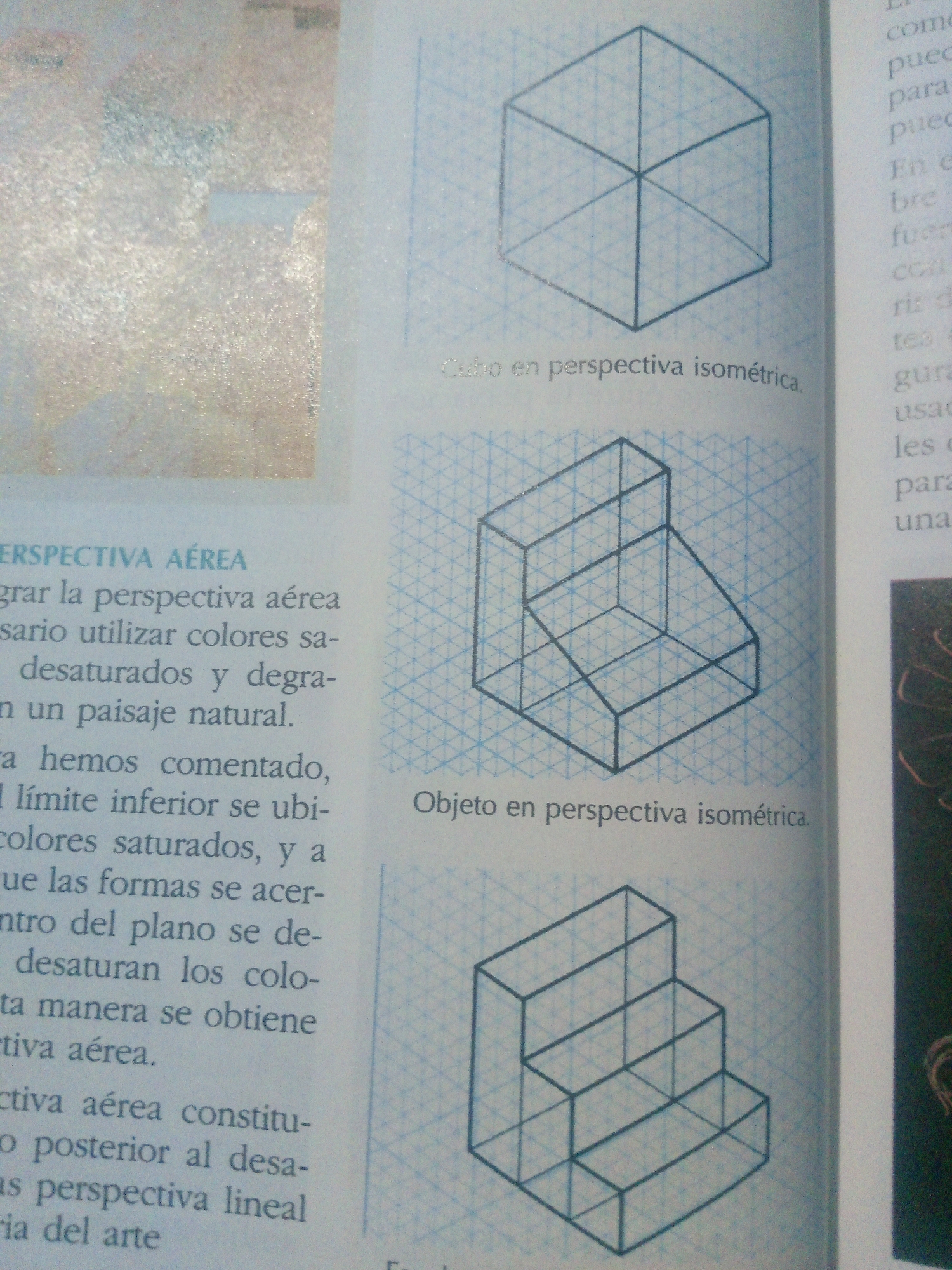
The image displays a page from a book or magazine, featuring text and technical drawings. On the left side, there is a block of text in Spanish discussing "PERSPECTIVA AÉREA" (Aerial Perspective). Below this text, there are three isometric drawings. The top drawing depicts a cube. The middle drawing shows a stepped object composed of two stacked rectangular prisms. The bottom drawing illustrates a set of stairs, also formed by stacked rectangular prisms. On the right side of the page, there is more Spanish text, followed by what appears to be an image of a decorative element or pattern, possibly a close-up of an artwork or textile. The background of the page has a grid pattern, common for technical drawings. There is no information about the city of Guayacán, Venezuela, or any specific location in the image.
Guayacán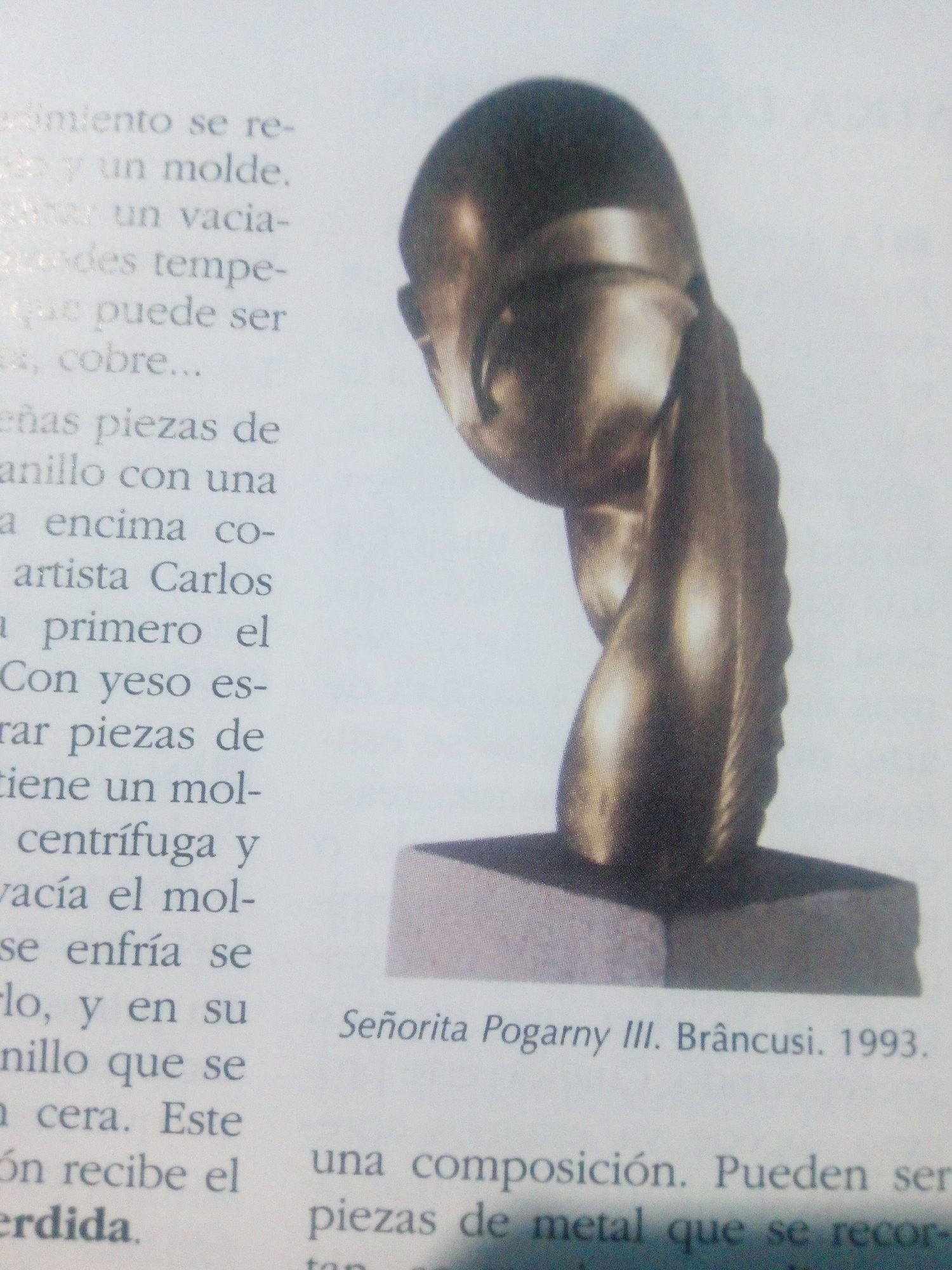
The image shows a close-up of a bronze sculpture of a head and upper torso, which appears to be a fragment of a larger work. The sculpture is resting on a grey, textured base. To the right of the sculpture, text reads "Señorita Pogarny III. Brâncusi. 1993." Below the sculpture and to the left, more text is visible in Spanish, discussing a process involving molds and a material that can be "cera" (wax). The overall scene is a printed page from what appears to be a book or magazine, featuring an art piece and its accompanying description. The location of Guayacán, Venezuela, is not depicted or mentioned in the provided image.
Guayacán![This image shows a sculpture made of white material, possibly stone or ceramic, featuring intertwined, smooth forms that suggest a human or organic shape. The sculpture is displayed outdoors, with a blue sky and some greenery visible in the background. The text below the sculpture identifies it as "Escultura libre en la Expo de Sevilla. Berrocal. 1992." and further describes the artwork. The text mentions "dientes gruesos y [something] muy usada para [something] ar." and then "ya que un golpe fuerte puede ocasionar que la pieza se fracture en pedazos." The caption under the image reads, "contorneadas de esta escultura sugieren un cuerpo en reposo." The location of Guayacán, Venezuela, is not mentioned in the provided image or text.](https://firebasestorage.googleapis.com/v0/b/patr-3a75e.appspot.com/o/uploads%2Fimage_picker_2de65e3f-385b-4b0e-a.jpg?alt=media)
This image shows a sculpture made of white material, possibly stone or ceramic, featuring intertwined, smooth forms that suggest a human or organic shape. The sculpture is displayed outdoors, with a blue sky and some greenery visible in the background. The text below the sculpture identifies it as "Escultura libre en la Expo de Sevilla. Berrocal. 1992." and further describes the artwork. The text mentions "dientes gruesos y [something] muy usada para [something] ar." and then "ya que un golpe fuerte puede ocasionar que la pieza se fracture en pedazos." The caption under the image reads, "contorneadas de esta escultura sugieren un cuerpo en reposo." The location of Guayacán, Venezuela, is not mentioned in the provided image or text.
Guayacán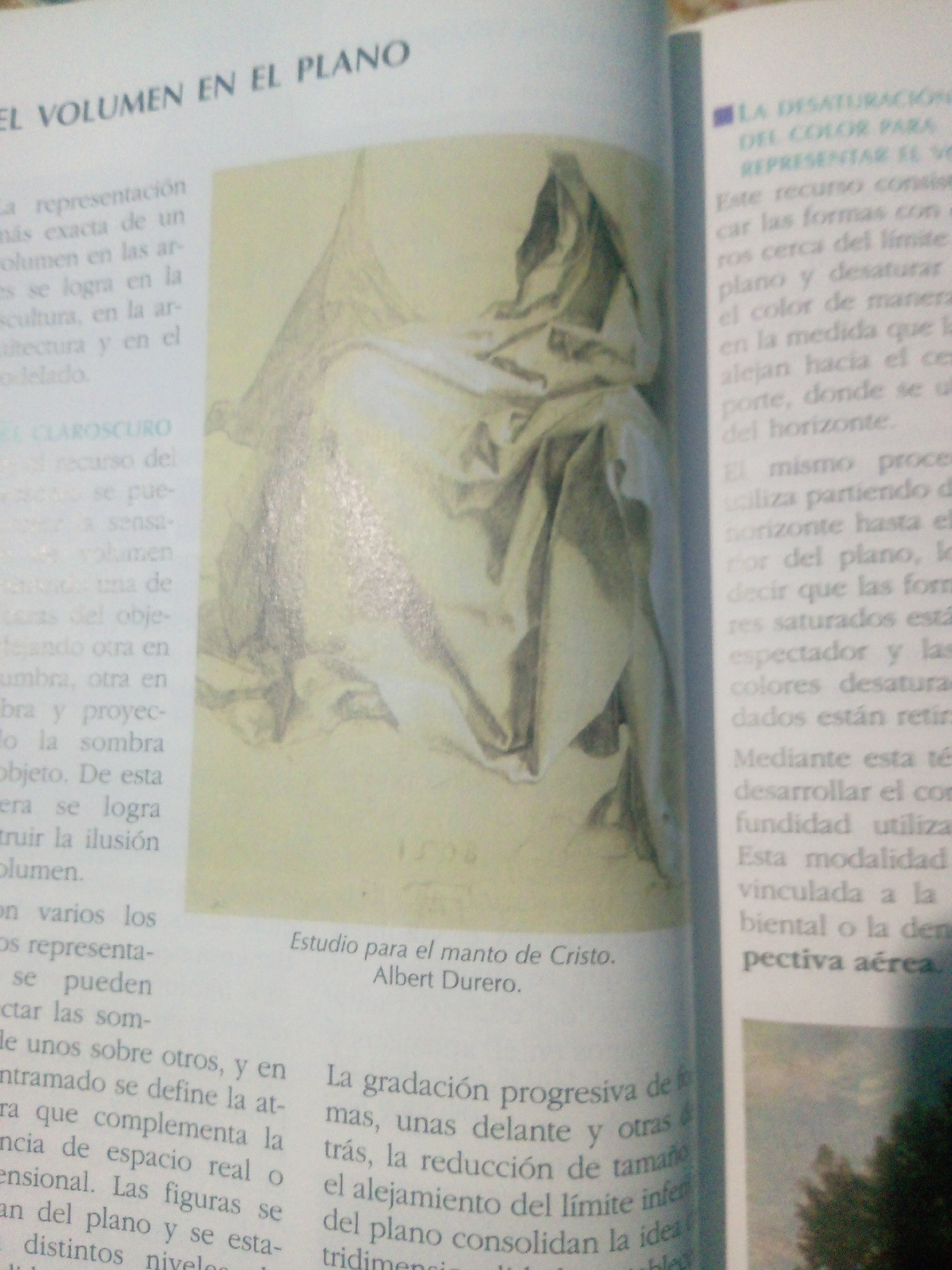
The image is a scan of an open book, showing text and a drawing. The drawing is a monochromatic sketch of draped fabric, possibly a study for a larger artwork. The text discusses visual concepts like "volume in the plane," "chiaroscuro," and "color saturation." One caption reads "Estudio para el manto de Cristo. Albert Durero." The image itself is not located in Guayacán, Venezuela, nor does it depict any scene from that city. It is a reproduction of a drawing and text from a book, likely an art or art history publication.
Guayacán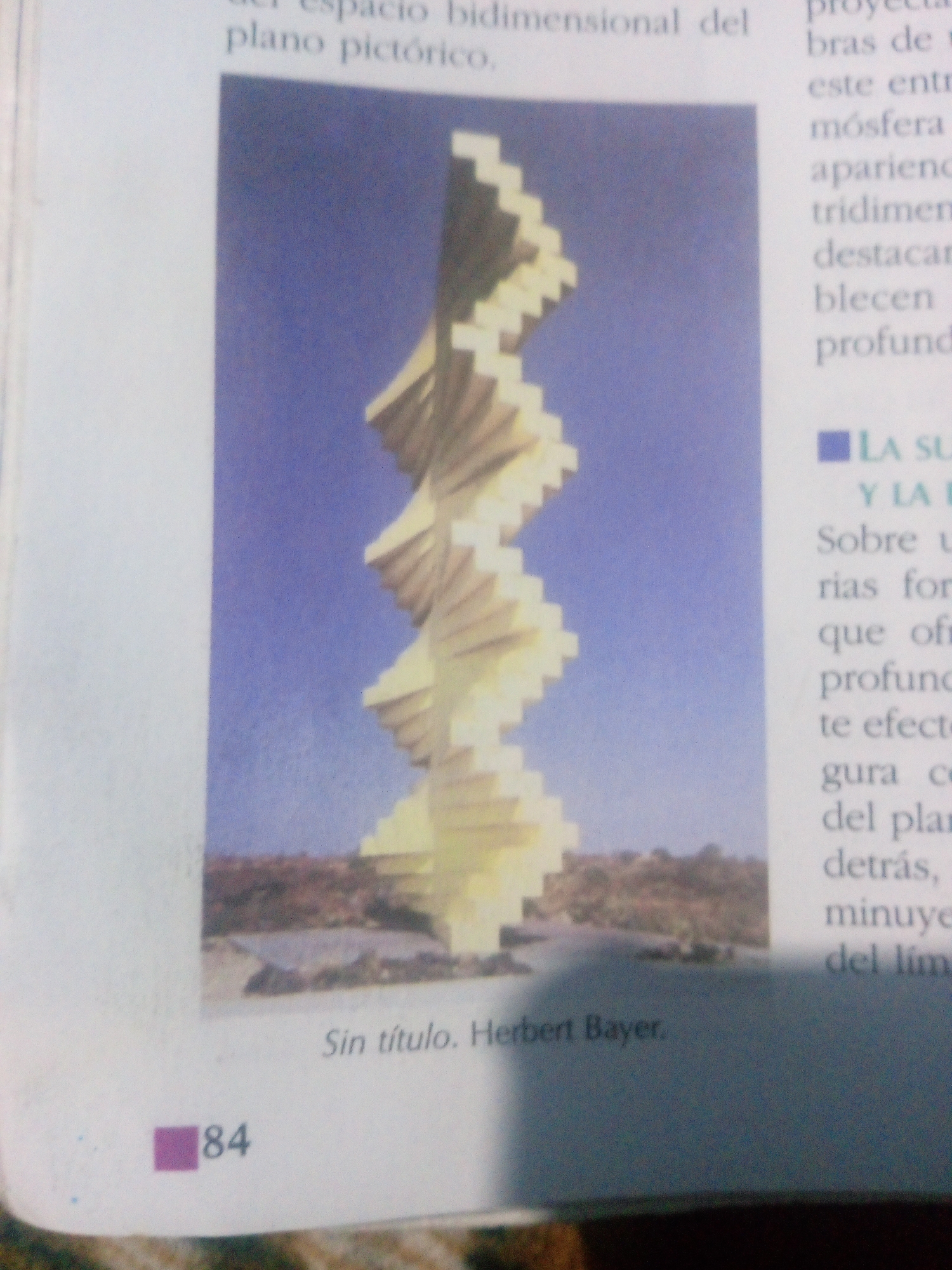
The image displays a page from a book featuring a sculpture. The sculpture is a tall, spiraling structure made of stacked rectangular blocks, giving it a stepped or tiered appearance. It is yellow or beige in color and is set against a backdrop of a clear blue sky and a barren, desert-like landscape. The text in the image discusses "pictorial space" and "dimensional projection," suggesting the sculpture is related to artistic or design concepts. At the bottom of the page, the caption reads "Sin título. Herbert Bayer." and the number "84" is visible. The location of Guayacán, Venezuela is not mentioned or depicted in the image.
Guayacán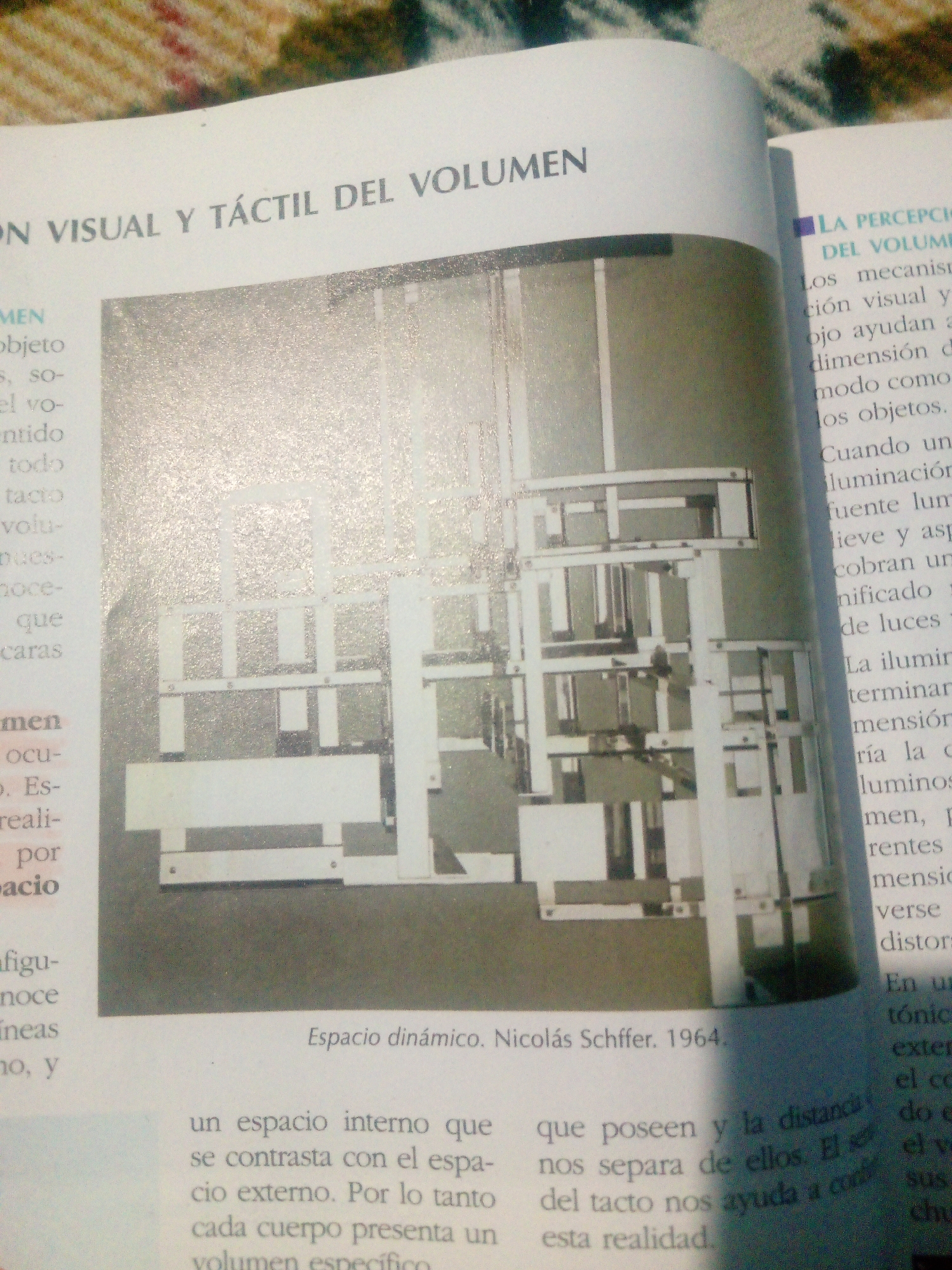
The image shows a book open to a page with text and an illustration. The text discusses visual and tactile perception of volume, and the illustration appears to be a diagram or model related to this concept. The page on the right also has text in Spanish and a section titled "LA PERCEPCIÓN DEL VOLUMEN". There is no information in the image that relates to the city of Guayacán, Venezuela.
Guayacán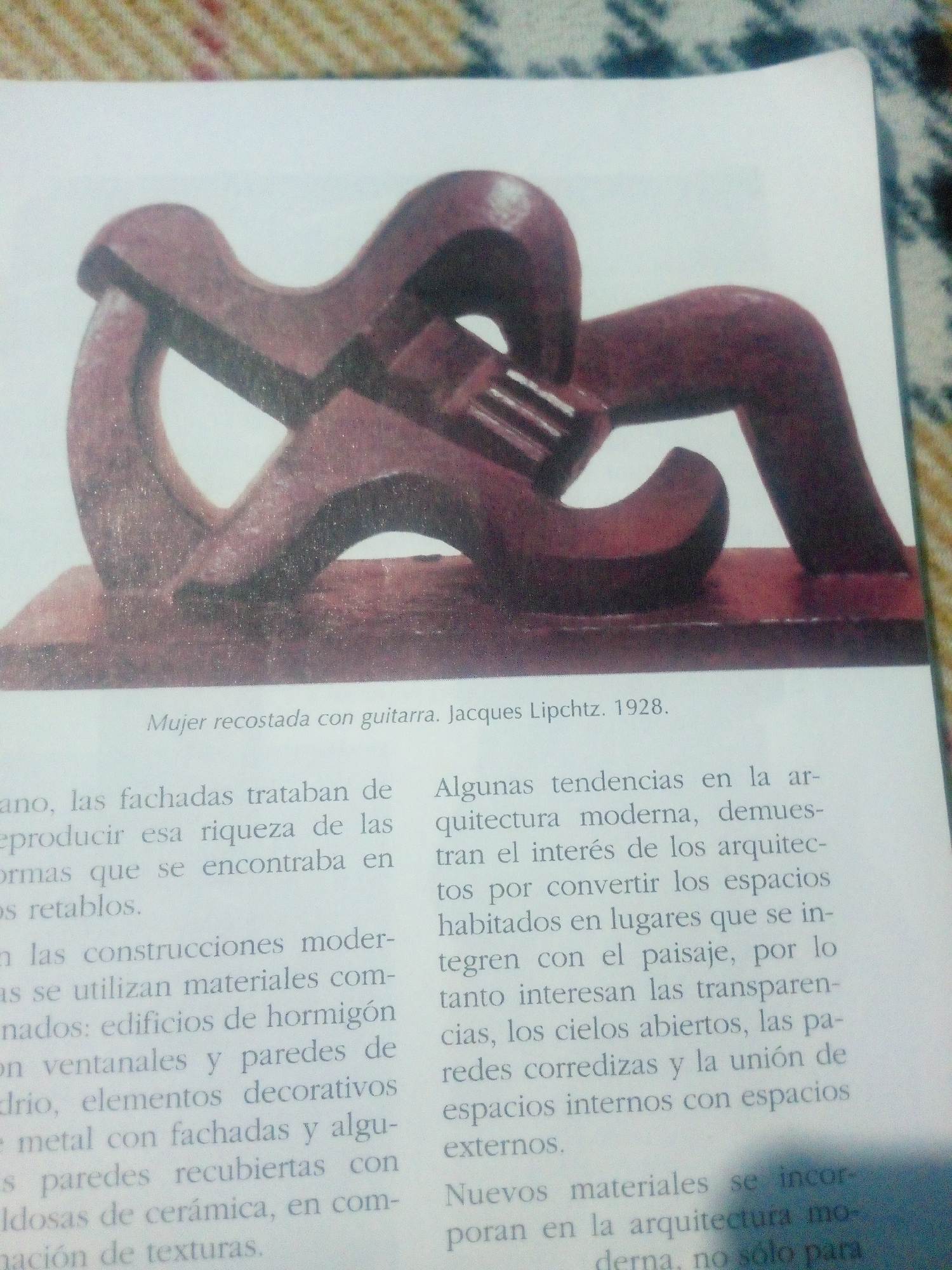
The image shows a close-up of a sculpture and a page of text. The sculpture appears to be abstract and made of dark-colored material, possibly wood or metal. It depicts a figure that resembles a reclining woman with a guitar. The text below the sculpture identifies it as "Mujer recostada con guitarra. Jacques Lipchitz. 1928." This indicates the artwork is "Reclining Woman with Guitar" by Jacques Lipchitz, created in 1928. The surrounding text discusses modern architectural trends and materials. There is no information about Guayacán, Venezuela in the image.
Guayacán
The image displays a close-up, abstract photograph with a dark, circular opening or void in the center against a textured, light gray background. There are subtle indentations and variations in the surface texture surrounding the central feature. Below the photograph, there is text identifying the work as "Letargo. Edgar Sánchez. 1981." At the bottom left, a purple square is visible next to the number "74." The image is likely from a book or publication, with part of a white page and binding visible on the left side. There is no identifiable location in the city of Guayacán, Venezuela, depicted in this image; it appears to be an artistic or scientific photograph.
Guayacán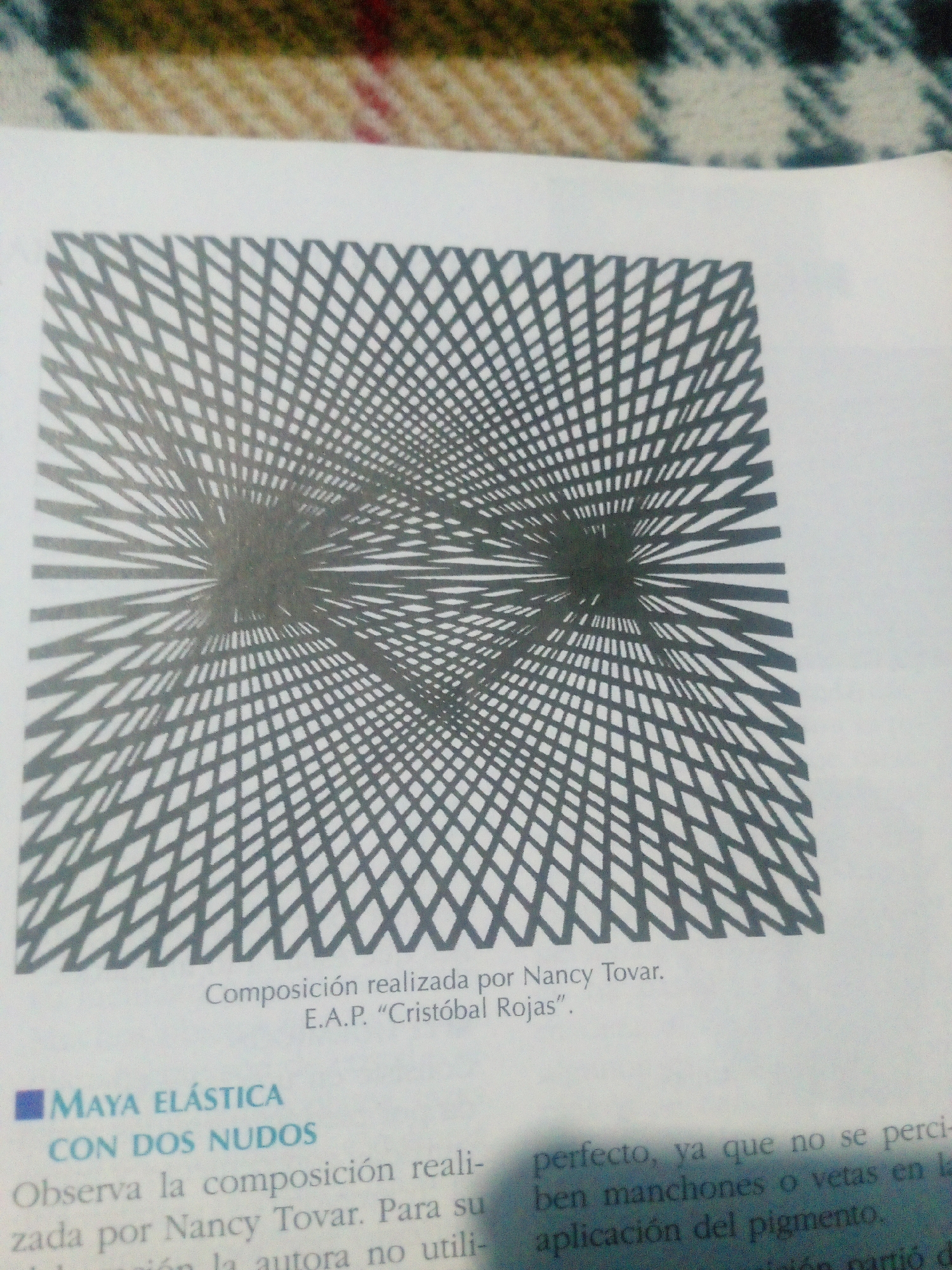
The image shows a page from a book with an optical illusion artwork and text. The artwork features a black and white pattern of radiating lines and intersecting shapes that create a three-dimensional, tunnel-like effect. Below the artwork, there is text in Spanish. The text includes a title "MAYA ELÁSTICA CON DOS NUDOS" and a description of the composition, attributing it to Nancy Tovar of E.A.P. "Cristóbal Rojas". The scene is indoors, likely a classroom or study, as indicated by the presence of the book page and the background which appears to be a patterned fabric. There are no people or specific geographical locations depicted or mentioned in relation to Guayacán, Venezuela.
Guayacán![The image shows a black and white illustration or drawing. The drawing depicts a textured surface, possibly fabric or paper, with visible lines and patterns created by hatching and cross-hatching. There is a sense of depth and form suggested by the varying density and direction of the lines. The lower part of the image shows a darker, shadowed area.
The text accompanying the image refers to "texture," "sensation," and "torn pieces of fabric." It also mentions "left side torn" and "raids." Another section of text describes "lines of the plum [pen]," "filled with fine lines," and "finished."
This image is not located in the city of Guayacán, Venezuela. The text provided is in Spanish and discusses artistic technique rather than a specific location.](https://firebasestorage.googleapis.com/v0/b/patr-3a75e.appspot.com/o/uploads%2Fimage_picker_1bf2fc0c-3488-45a9-b.jpg?alt=media)
The image shows a black and white illustration or drawing. The drawing depicts a textured surface, possibly fabric or paper, with visible lines and patterns created by hatching and cross-hatching. There is a sense of depth and form suggested by the varying density and direction of the lines. The lower part of the image shows a darker, shadowed area. The text accompanying the image refers to "texture," "sensation," and "torn pieces of fabric." It also mentions "left side torn" and "raids." Another section of text describes "lines of the plum [pen]," "filled with fine lines," and "finished." This image is not located in the city of Guayacán, Venezuela. The text provided is in Spanish and discusses artistic technique rather than a specific location.
Guayacán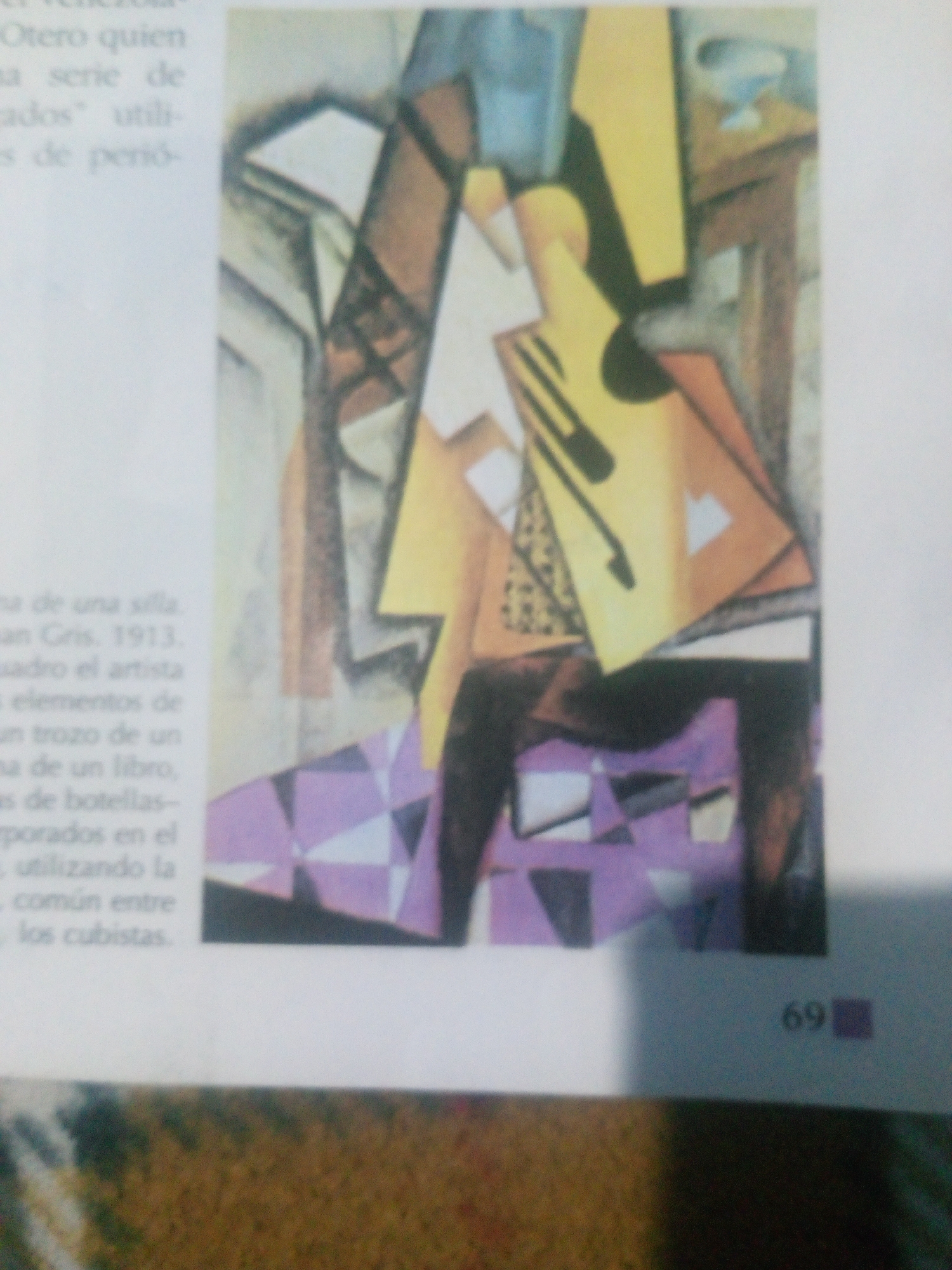
The image displays a close-up of a page from a book or magazine. On the right side of the page, a colorful cubist painting is visible. The painting features abstract geometric shapes in shades of yellow, orange, brown, purple, white, and blue, with black outlines. A prominent element in the painting appears to be a guitar or a similar stringed instrument. On the left side of the page, text is partially visible, with some words readable in Spanish, such as "Otero quien," "serie de," "utili-," and "perió-." At the bottom right of the page, the number "69" is present, followed by a small purple square. The background of the image shows a textured surface, possibly a table or cloth, with a mottled brown and green pattern. The text on the left appears to be describing art, referencing the artist Juan Gris and the year 1913. The location "Guayacán, Venezuela" is not mentioned or discernible from the provided image.
Guayacán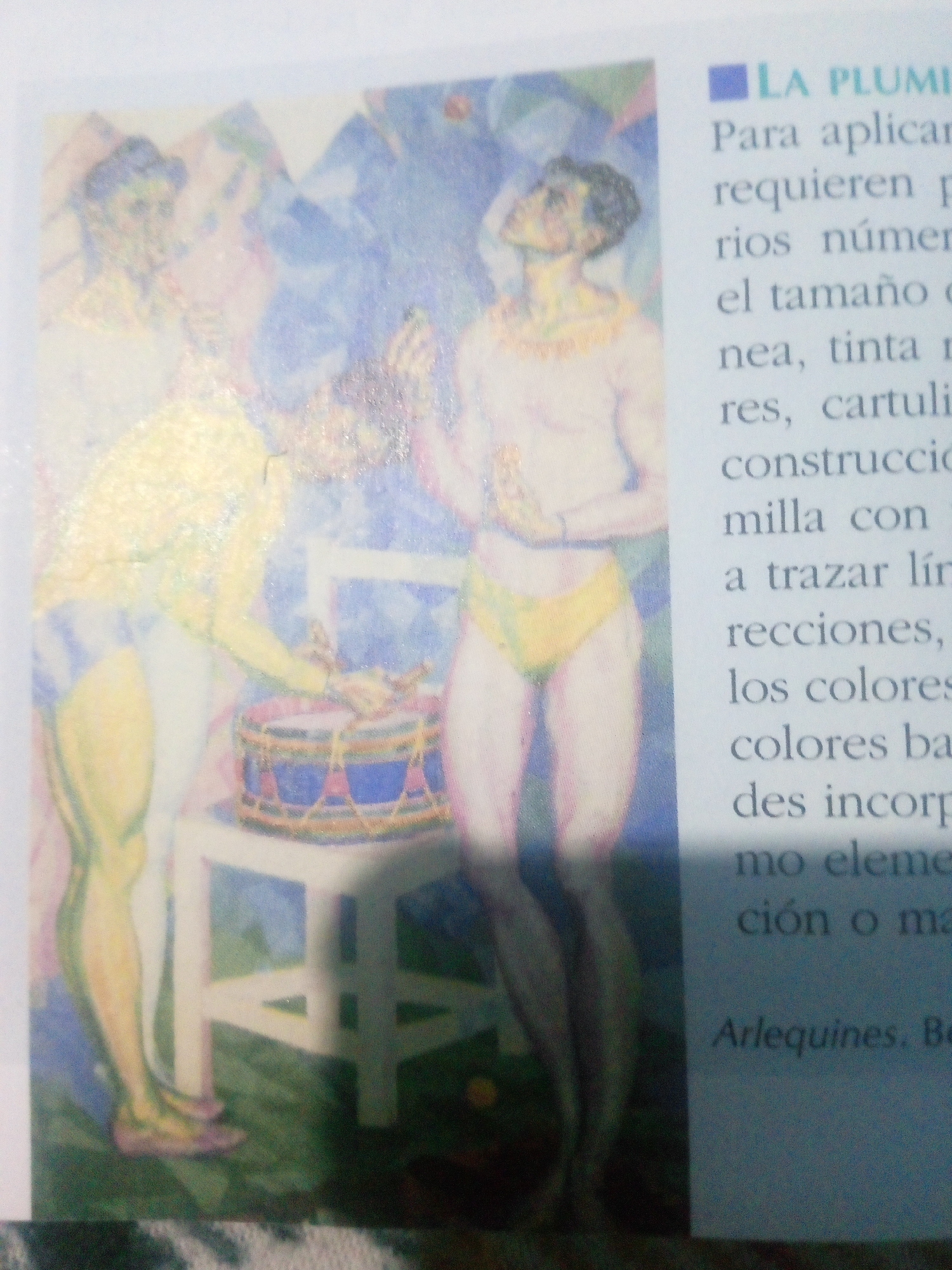
The image depicts a painting featuring three figures in a surreal, colorful environment. Two figures are in the foreground, one to the left with yellow attire and blue shorts, and another to the right with a pale pink upper body garment and yellow briefs. The figure on the left is playing a drum, which rests on a white stool. The figure on the right is looking upwards. A third figure, rendered in muted colors, is visible in the background, partially obscured. The background is a mosaic of geometric shapes in shades of blue, pink, and white. To the right of the painting, text is visible, which appears to be from a book or magazine. The text is in Spanish and discusses the application of various elements, mentioning "pluma," "numeros," "tamaño," "tinta," "res," "cartulina," "construccion," "milla," "trazar," "recciones," "colores," and "elementos." The text also mentions "Arlequines." There is no indication of the city of Guayacán, Venezuela, within the image itself.
Guayacán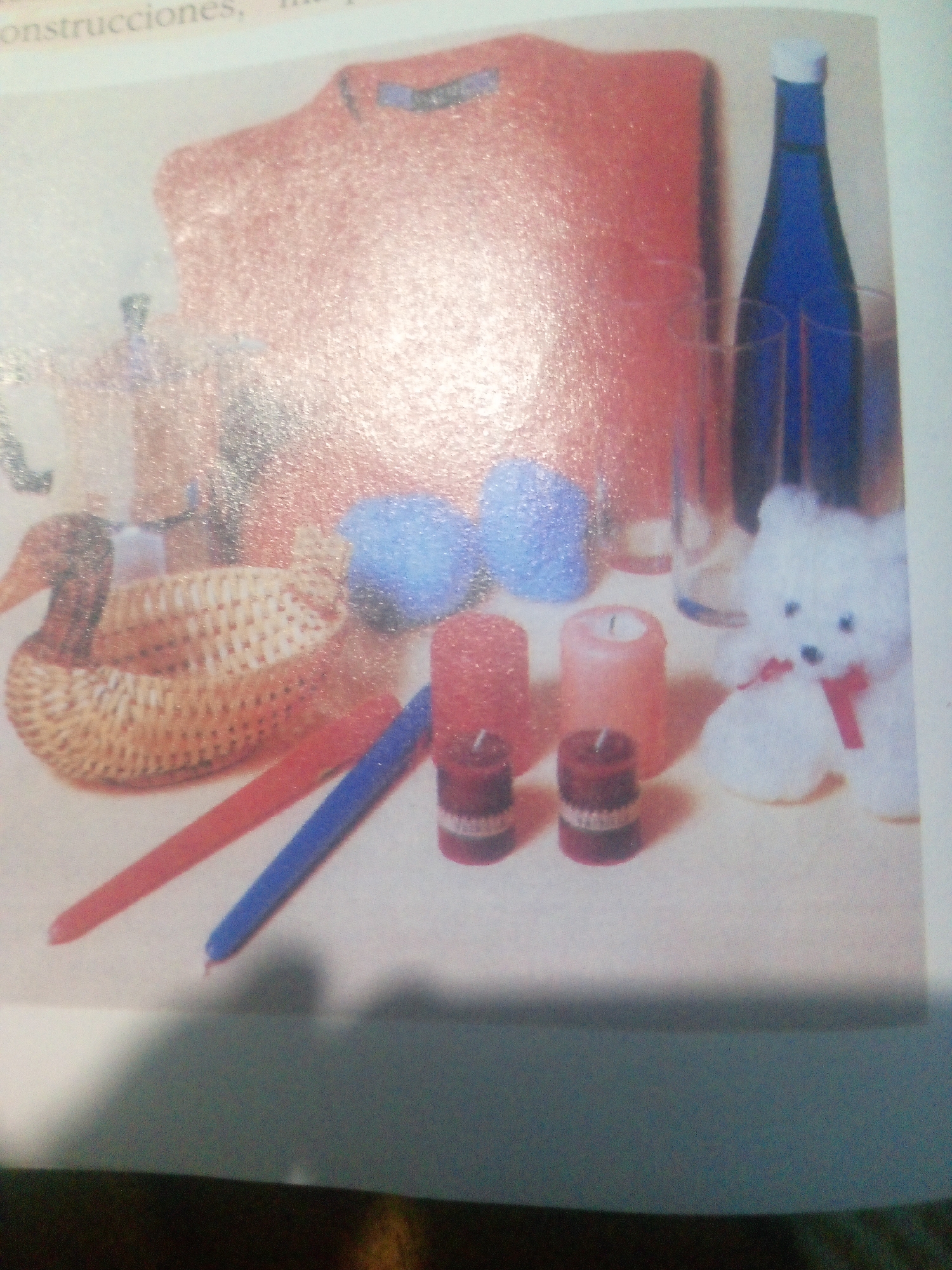
The image displays a collection of objects on a light-colored surface. In the background, a large, reddish-orange fabric is visible, possibly a piece of clothing or material, with some blue accents. To the right of this fabric is a tall, dark blue bottle with a white cap, placed inside a clear glass. In the mid-ground, a wicker basket shaped like a duck sits to the left, with its head and neck facing left. In front of the duck basket are two cylindrical objects that appear to be red and blue sticks, possibly crayons or markers. Further to the right in the mid-ground, there are two blue, spherical objects. In the foreground, there are several cylindrical candles. Two small, dark red candles with white bands are on the left. To their right is a taller, pale pink candle. Behind these candles, a white, plush teddy bear with a red ribbon around its neck is visible. The overall scene appears to be a still life arrangement of crafts or decorative items, possibly for a crafting project or display. There is no indication or contextual information suggesting any connection to Guayacán, Venezuela.
Guayacán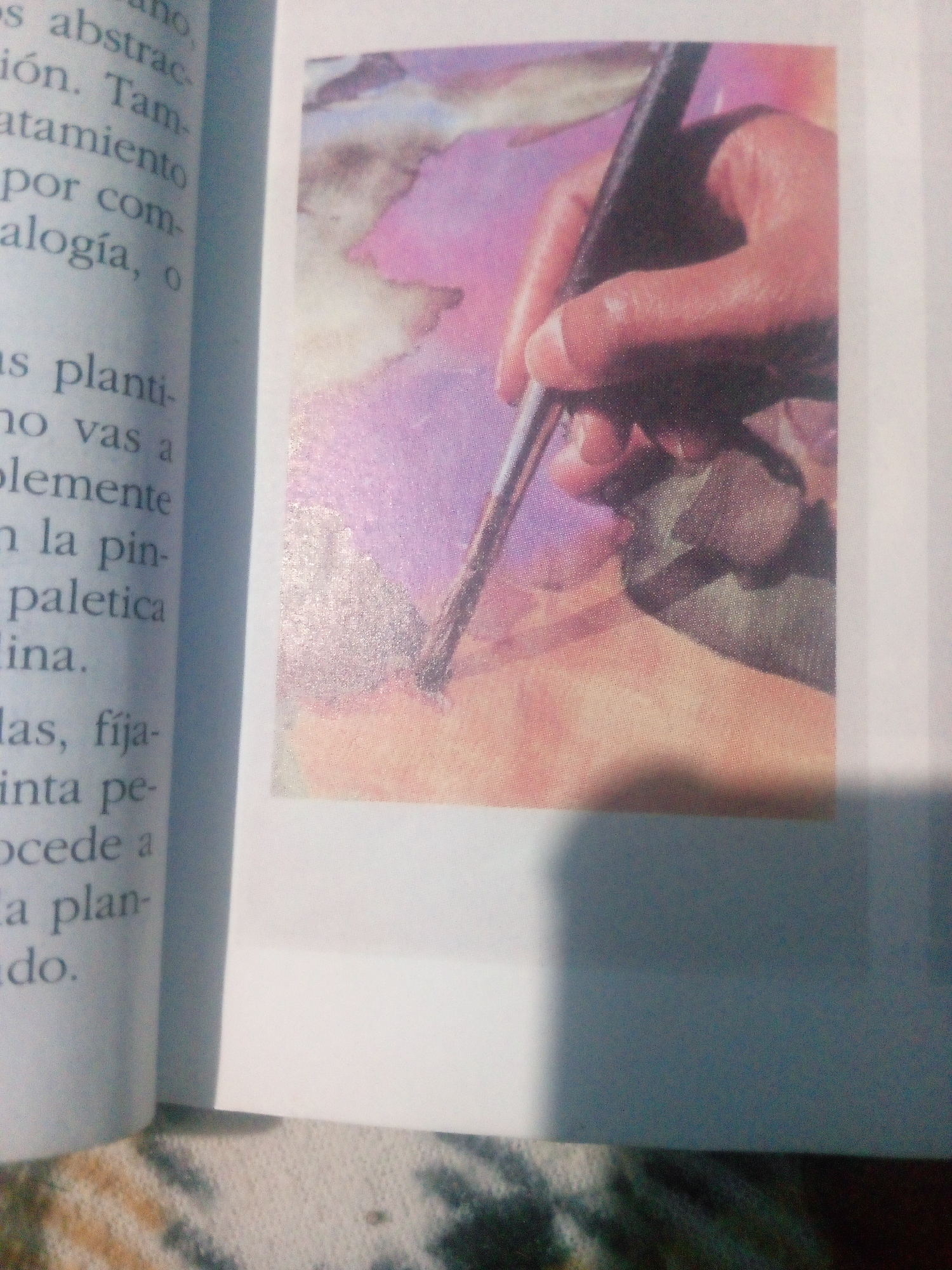
The image shows a close-up of a person's hand holding a paintbrush, actively painting on a canvas. The canvas displays abstract shapes and colors, with dominant tones of pink, purple, and brown. The hand is positioned to apply paint, indicating an ongoing artistic creation. The background is out of focus, but appears to be a flat surface, likely a table or studio setup. The image is a photograph, likely taken in a domestic or studio setting, and does not contain information related to Guayacán, Venezuela.
Guayacán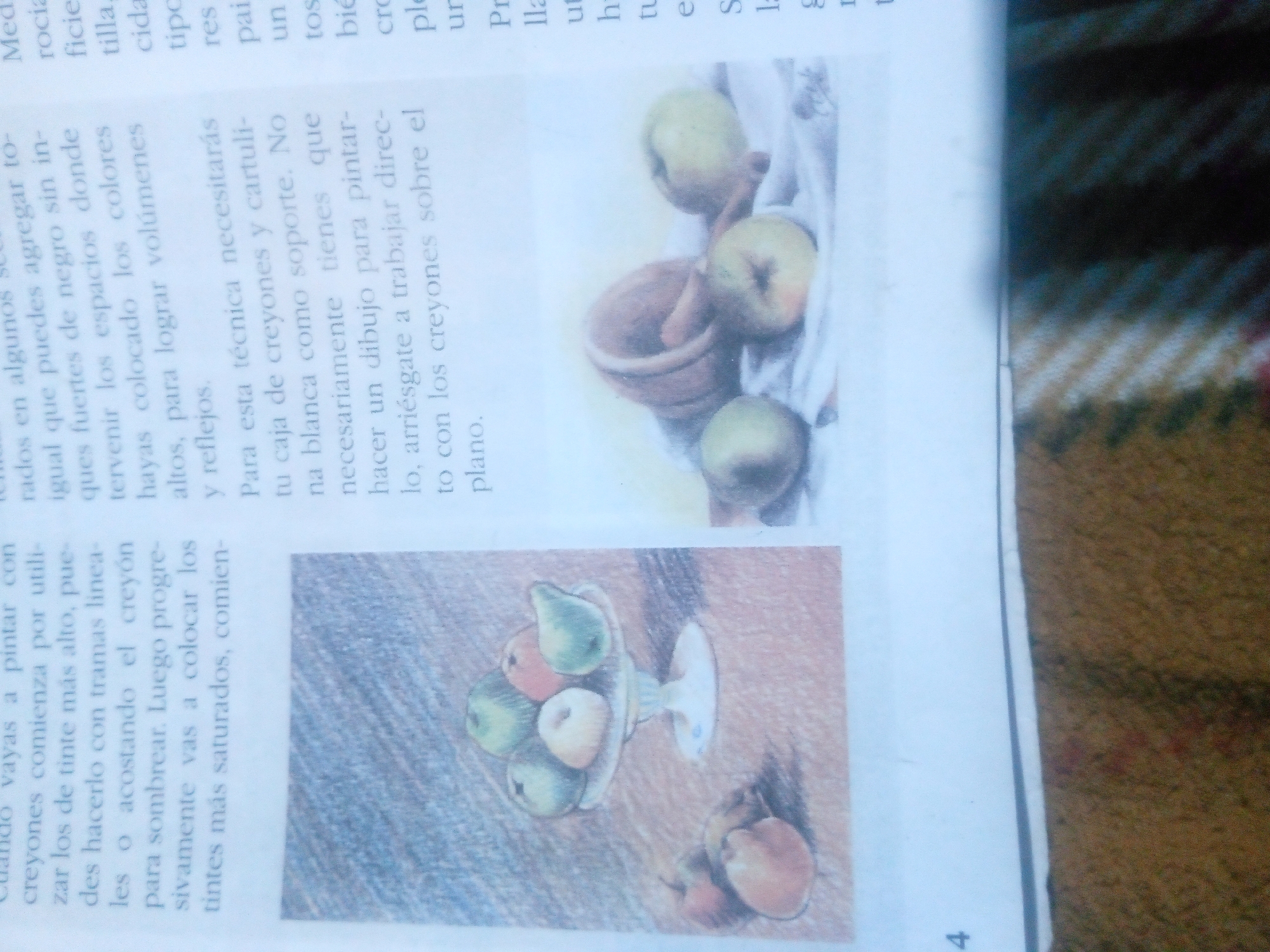
The image shows a close-up of a page from a book. The page contains text in Spanish and two illustrations. The text discusses a technique for drawing with crayons. The upper illustration depicts a still life of apples in a bowl, with one apple in the foreground. The lower illustration is a still life of pears and apples in a bowl, with another pear in the foreground. There is no indication in the image of the city of Guayacán, Venezuela.
Guayacán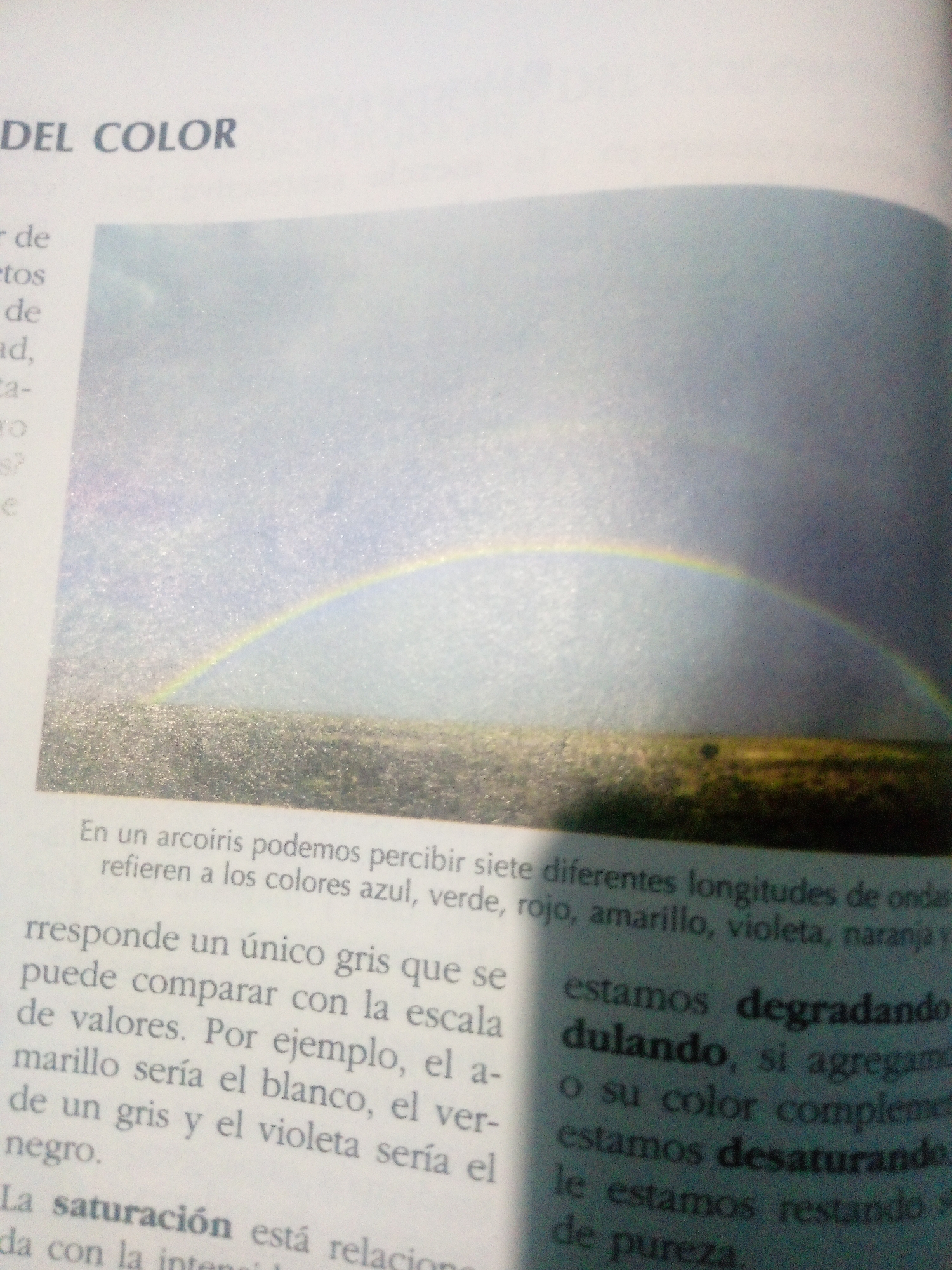
The image shows a page from a book, featuring text and a photograph of a rainbow. The text discusses colors and perception. The photograph displays a rainbow arching over a landscape of fields and a cloudy sky. There is no information in the image or provided context that mentions Guayacán, Venezuela.
Guayacán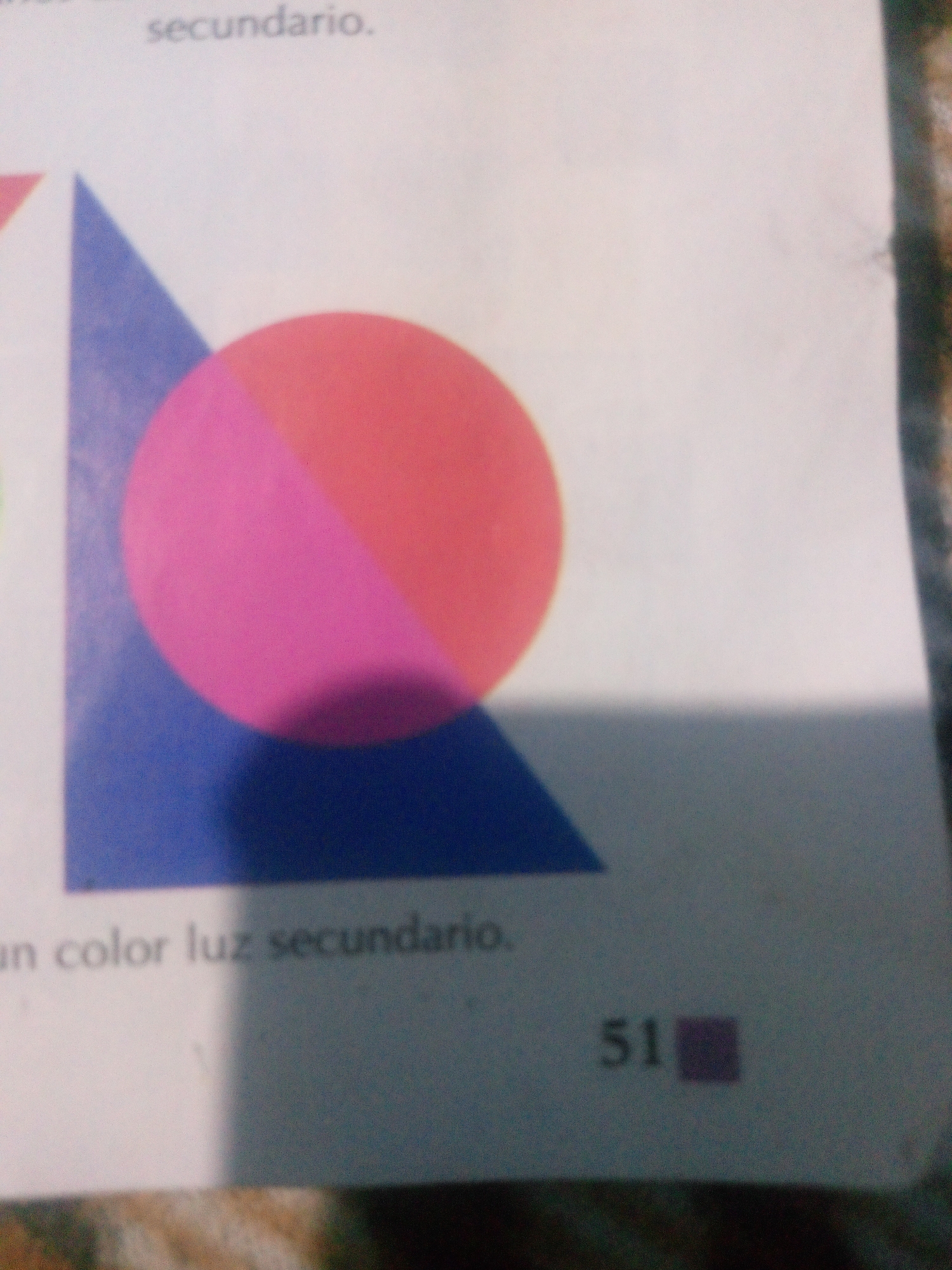
The image displays a page from a book with geometric shapes and text. A blue triangle intersects with a circle divided into pink and red halves. Text above the shapes reads "secundario.". Below the shapes, the text reads "un color luz secundario." and to the right, the number "51" is visible next to a small purple square. The background is a plain white surface with some shadow casting from the shapes. The overall scene suggests an educational context, possibly related to art or color theory. There is no identifiable information or visual cue within the image that relates to the city of Guayacán, Venezuela.
Guayacán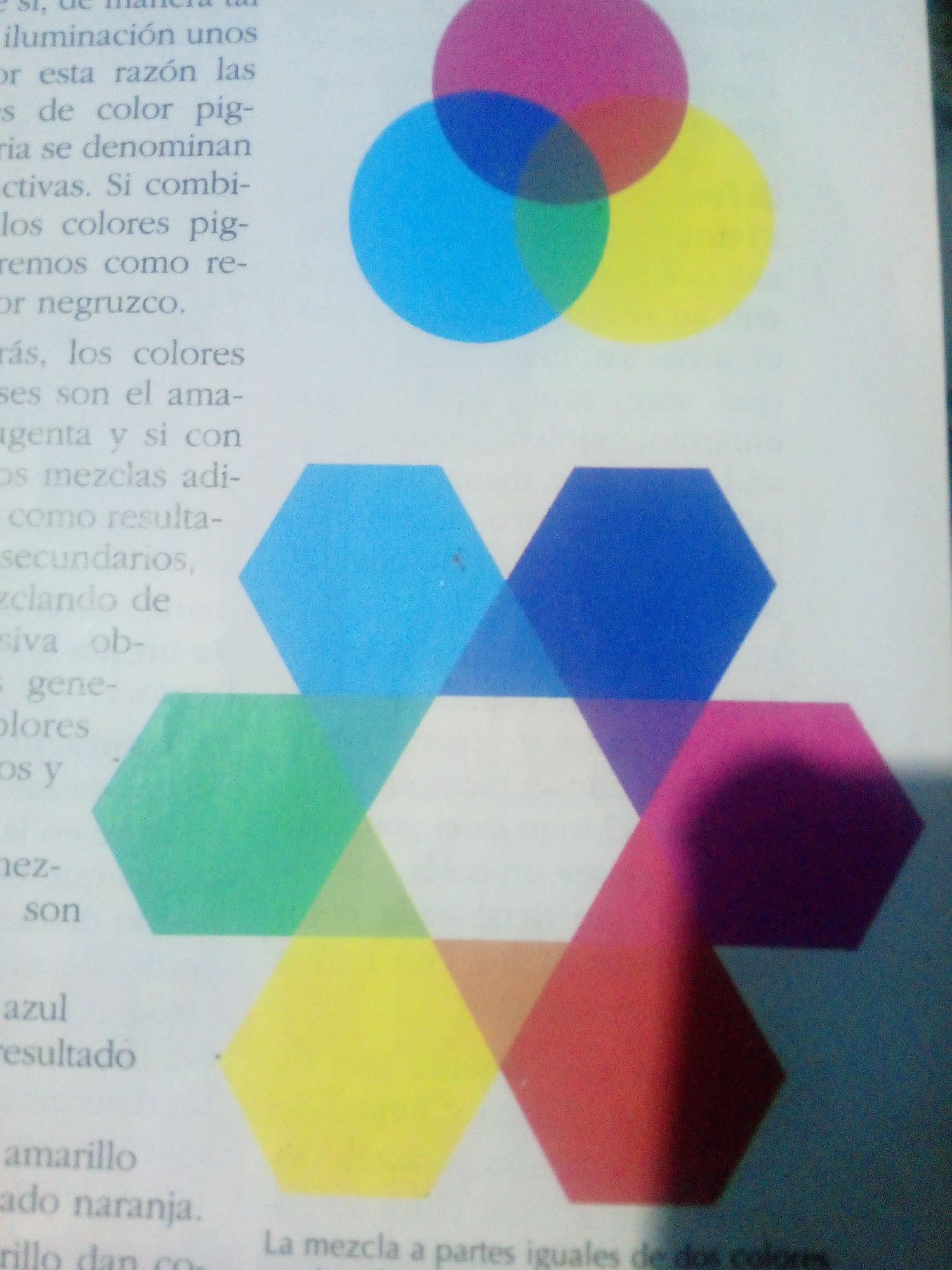
The image depicts a page from a book or educational material featuring a diagram of color mixing. On the upper right, there are three overlapping circles in magenta, blue, and yellow, illustrating primary colors. Below this, on the left side of the page, there is text in Spanish that discusses color pigments, combinations, and resulting colors. The right side of the page displays a geometric pattern of overlapping hexagons in various colors, including blue, green, yellow, and red, further demonstrating color mixing principles. The lower portion of the image contains more Spanish text, some of which appears to be a caption for the hexagonal diagram, stating "La mezcla a partes iguales de dos colores". The overall environment appears to be indoors, with the lighting suggesting it is a well-lit room, possibly a classroom or study area. There is no information within the image that relates to Guayacán, Venezuela.
Guayacán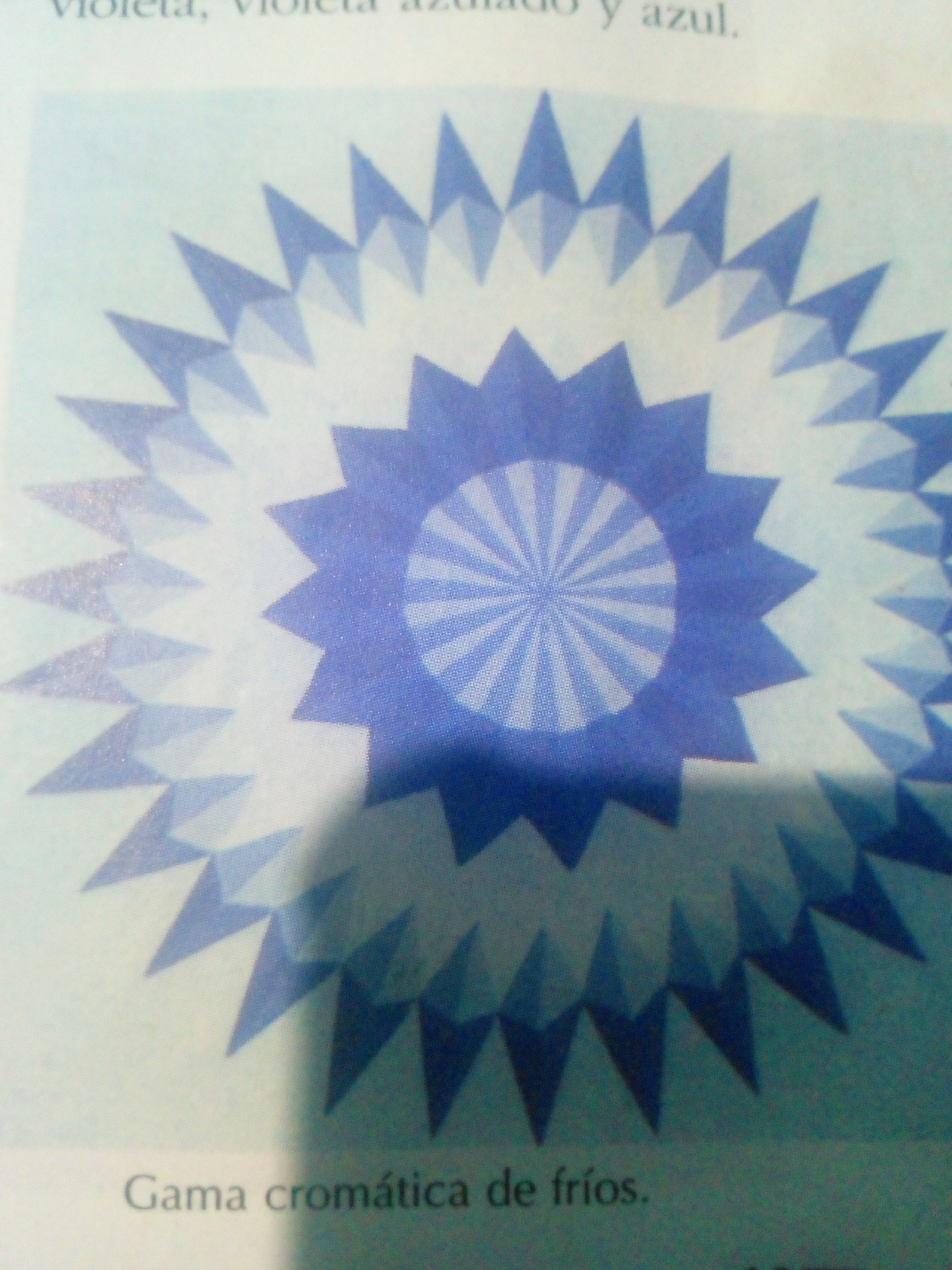
The image shows a geometric pattern of blue and light blue triangles radiating outwards from a central circle. The pattern resembles a stylized sun or flower. Below the pattern, the text "Gama cromática de fríos." is visible. There is no information in the image that pertains to the city of Guayacán, Venezuela.
Guayacán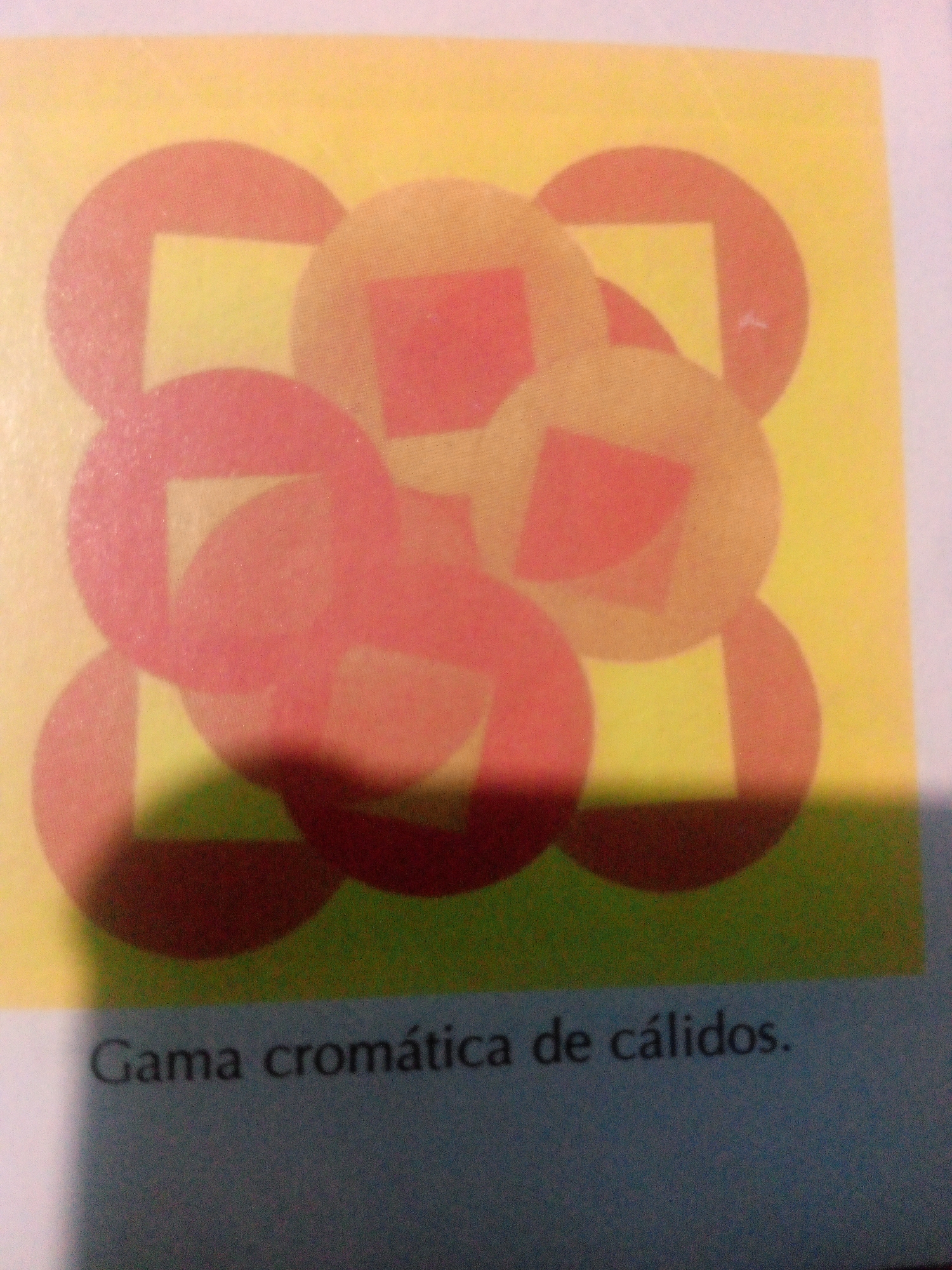
The image displays an abstract geometric design featuring overlapping circles and squares in shades of yellow, orange, and pink. The text below the design reads "Gama cromática de cálidos." This translates to "Chromatic range of warm colors." The provided image does not contain any information or context related to Guayacán, Venezuela.
Guayacán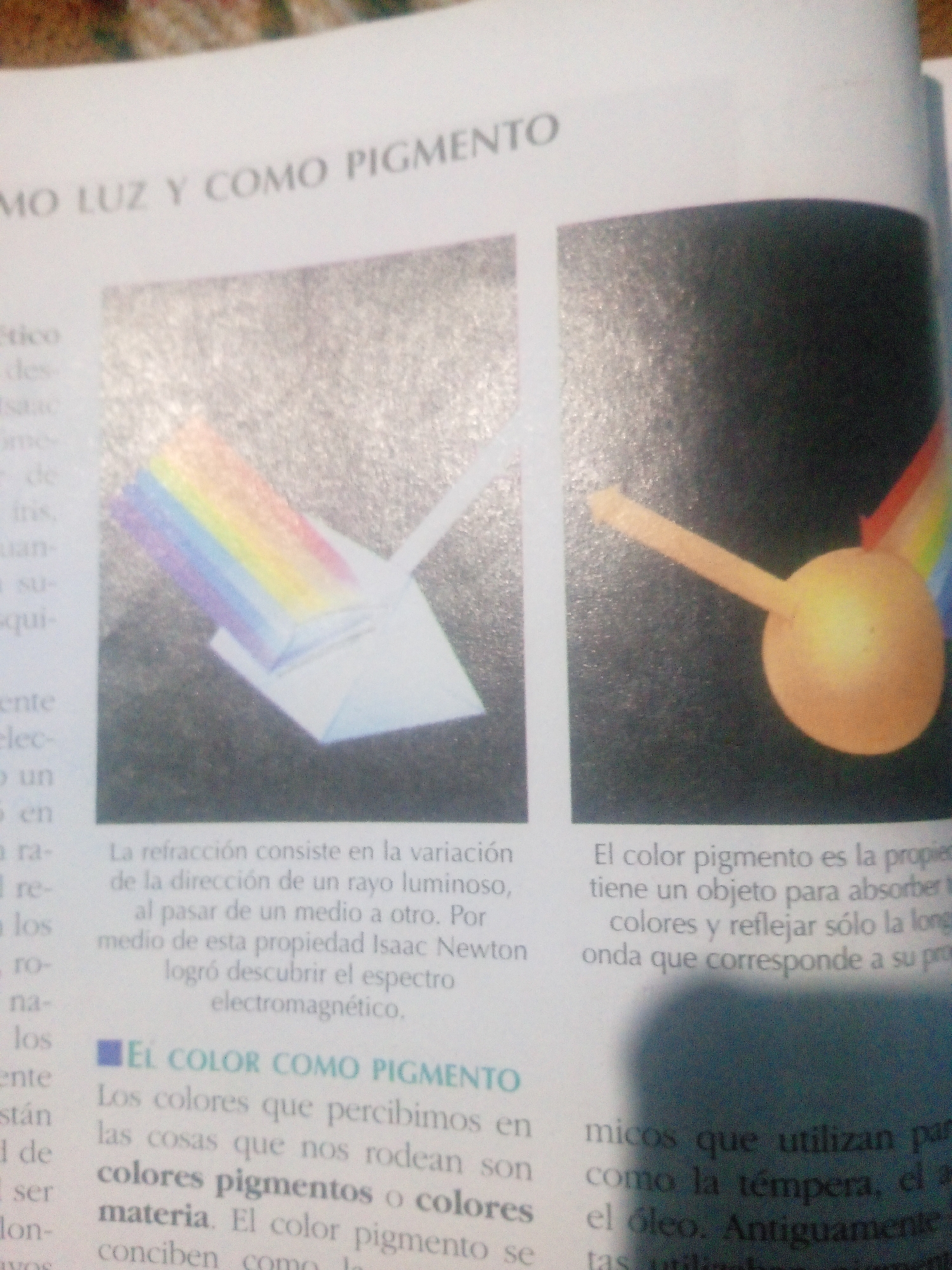
The image shows an open book with text and illustrations. The text discusses "LUZ Y COMO PIGMENTO" (Light and as Pigment). One illustration depicts a prism refracting white light into a rainbow spectrum. Another illustration shows a sphere with a stick projecting from it, also associated with color. The text to the left of the illustrations appears to be a continuation of the topic. The text below the illustrations provides explanations related to refraction and pigment color. There is no mention or depiction of Guayacán, Venezuela, or any specific city. The environment appears to be an indoor setting, likely a library or personal study, given the presence of a book.
Guayacán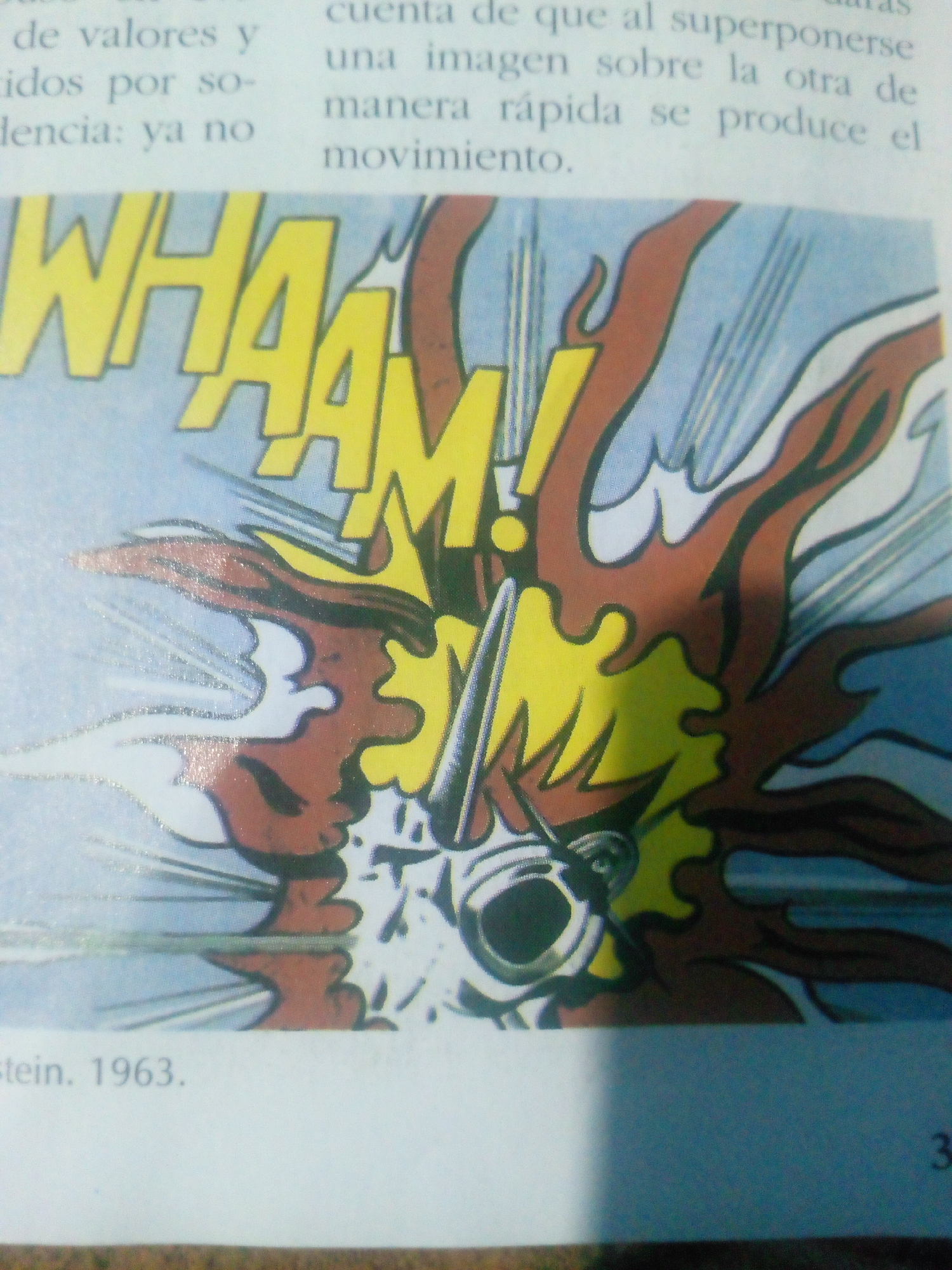
The image is a close-up photograph of a comic book panel featuring the onomatopoeia "WHAAAM!" rendered in large, yellow, block letters with a black outline. The letters are part of an explosive visual effect, with red and yellow stylized flames or energy bursts radiating outward. A central element appears to be a metallic, circular object with concentric rings and a dark center, possibly representing an explosion or a weapon. The background is a light blue with thin, dark diagonal lines suggesting speed or impact. Below the comic panel, text is visible, including "stein. 1963." and a partial number "3" in the lower right corner. The text above the comic panel is in Spanish and appears to be descriptive or narrative from the comic. The image does not provide any information about the city of Guayacán, Venezuela, or any context relating to that location.
Guayacán