Gwagwa, Nigeria
30 memories from Gwagwa, Nigeria
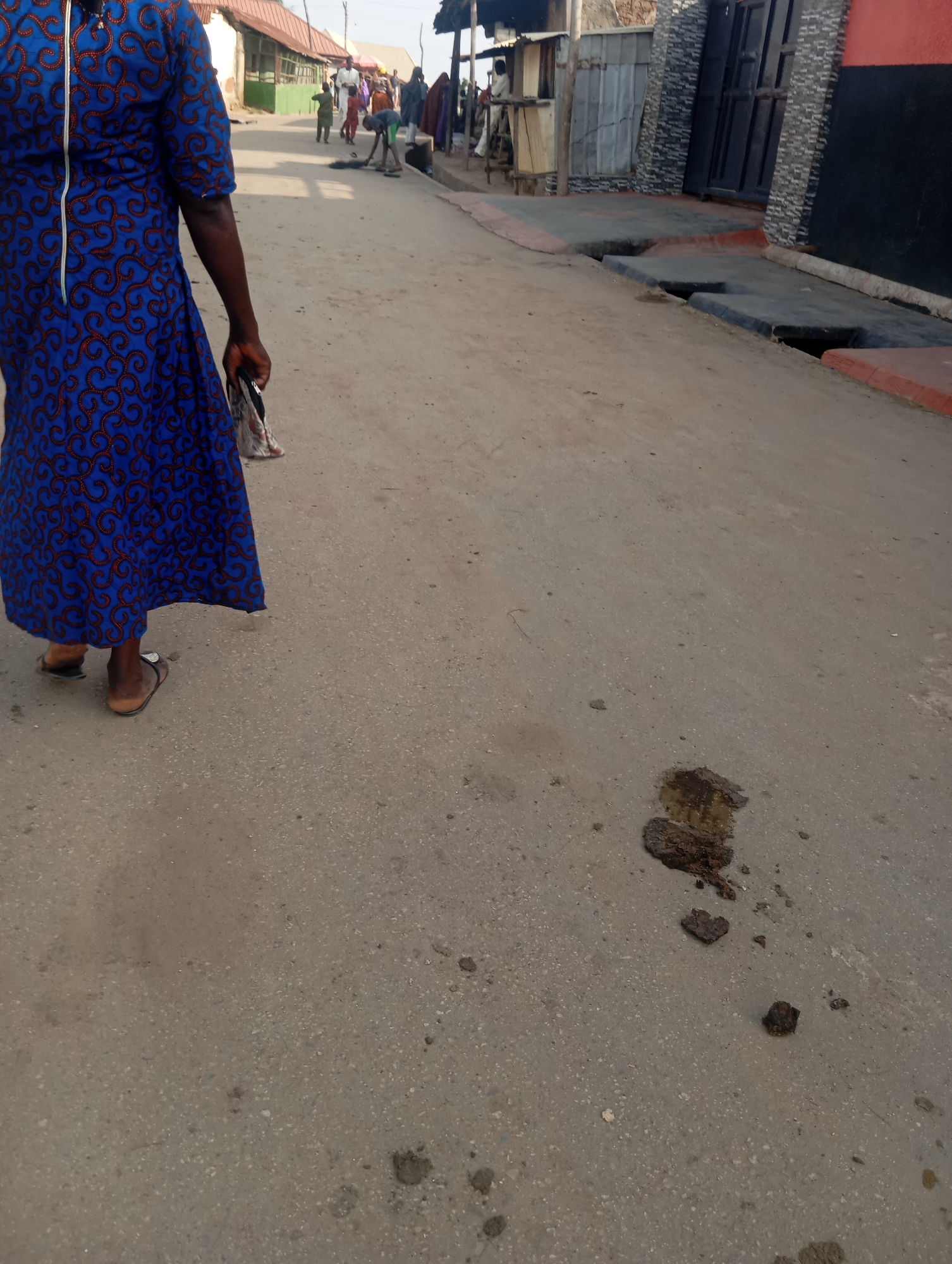
In Gwagwa, Nigeria, a street scene unfolds with a person in the foreground walking away from the camera, their blue and red patterned dress dominating the left side of the frame. The individual is wearing brown sandals. Behind them, other people are visible further down the dusty street, some tending to stalls or engaged in conversation. Buildings line the sides of the street, some with corrugated metal roofs and others with more permanent structures. A drainage channel is visible along the right side of the street, partially filled with water and debris. Several dark, wet patches, likely oil or liquid spills, are present on the asphalt surface in the middle and lower right portions of the image. The overall environment appears to be an open-air market or commercial area.
Gwagwa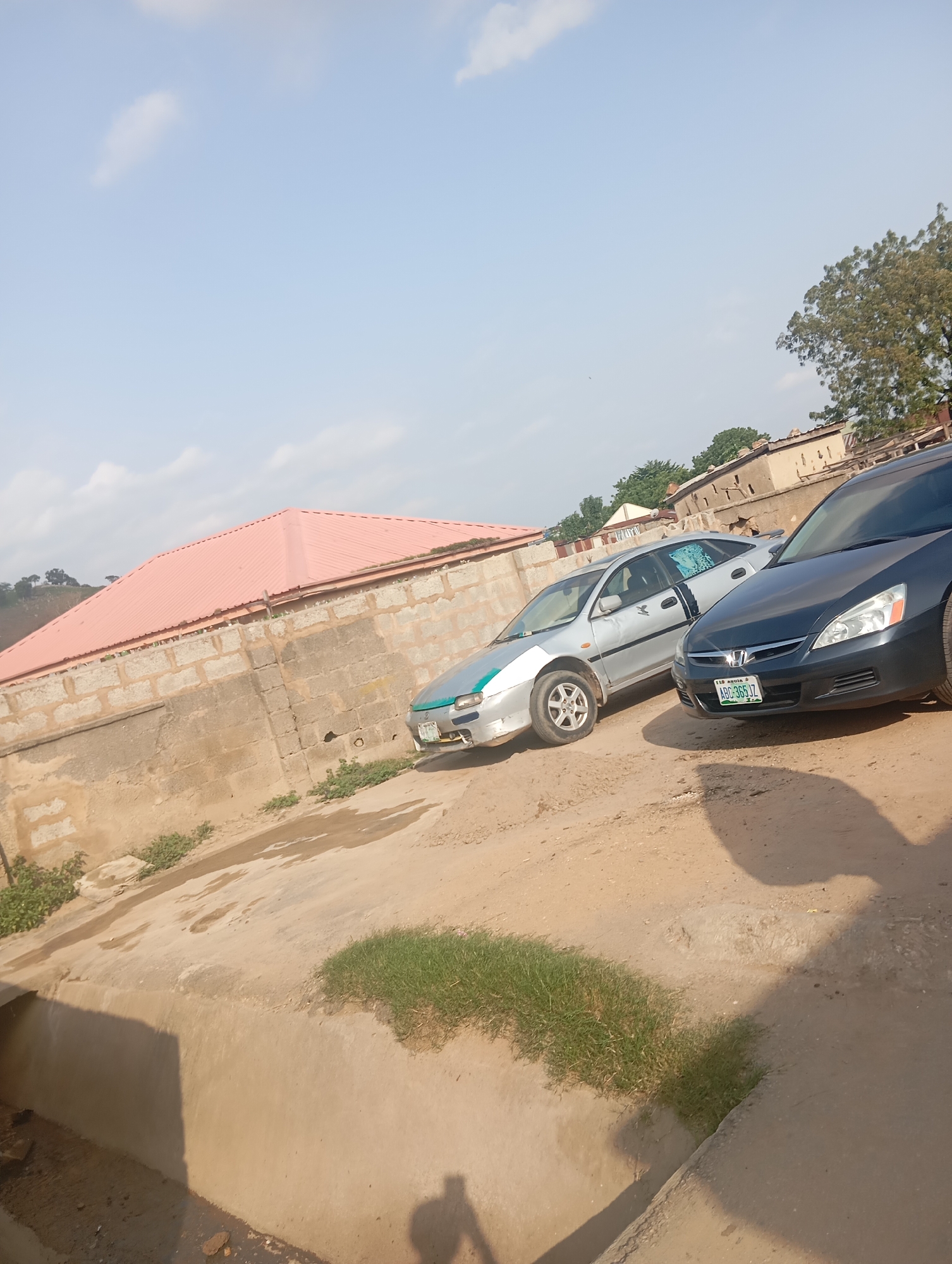
This image captures an outdoor scene in Gwagwa, Nigeria, likely during the day. Two cars are parked on a dirt lot in front of a building with a prominent red corrugated metal roof and a stone block wall. The car in the foreground is a dark gray sedan, possibly a Honda Accord, with a license plate that reads "ABC 365 JZ". The car behind it is a silver sedan, appearing older and slightly weathered, with a turquoise accent on its front bumper. The ground is a mixture of dirt and some patches of dry grass, with a concrete drainage channel running along the bottom of the frame. In the background, there are more buildings and a large tree. The sky is a clear, pale blue with a few wispy clouds, suggesting fair weather. The lighting indicates it is daytime, possibly late morning or early afternoon, with shadows cast by the cars and an unseen object, possibly the photographer. No people are visible in the image. The overall impression is one of a simple, everyday scene in a residential or commercial area.
Gwagwa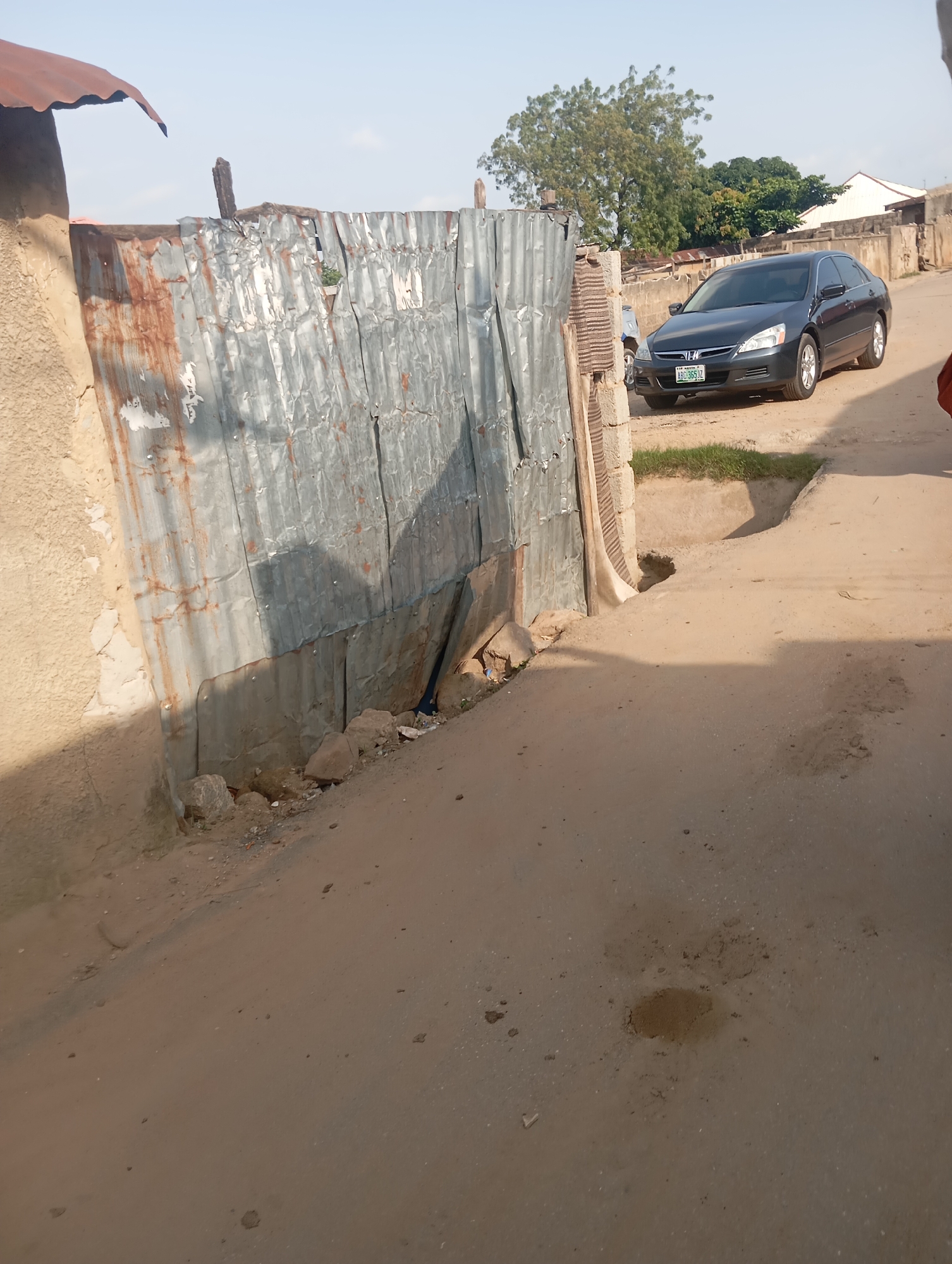
The image depicts a street scene in Gwagwa, Nigeria. On the left, a roughly constructed wall of corrugated metal is visible, showing signs of rust and damage. Adjacent to it is a light-colored, stucco-like wall. A portion of a reddish-brown, corrugated metal roof juts out from the top left of the frame. The street itself is unpaved, composed of dirt and sand, with some scattered rocks and debris. In the background, a dark-colored sedan, possibly a Honda Accord based on the license plate which reads "ABC 365JZ", is parked on the right side of the road. Beyond the car, there are some low-lying buildings with concrete walls and a few trees with green foliage under a clear, bright sky. The overall impression is of a modest, semi-urban or rural environment.
Gwagwa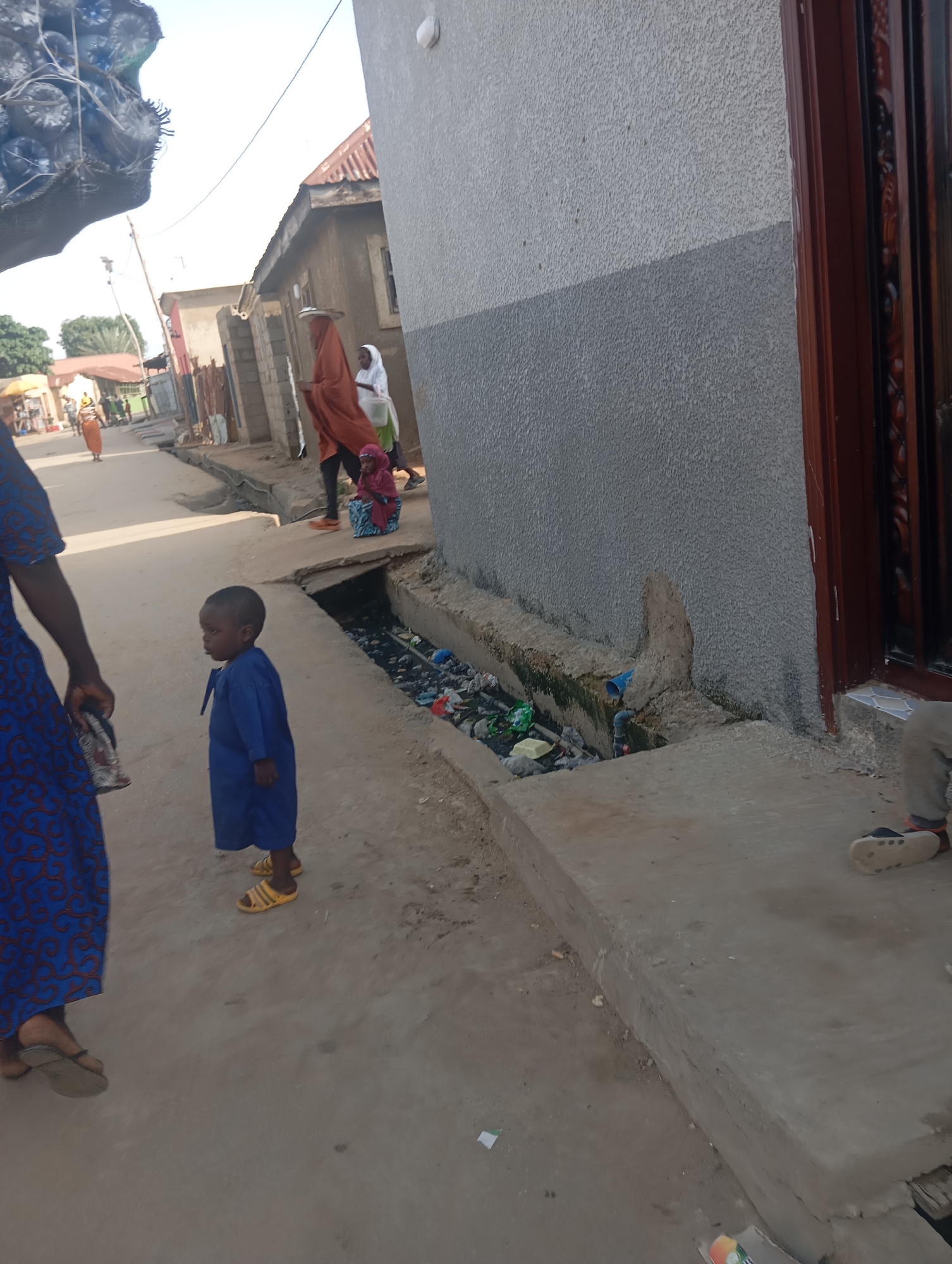
A medium shot shows a boy standing in a street with a building on the right. The boy is wearing a blue outfit and yellow sandals. A woman in a blue dress is partially visible on the left. The street is paved and has a drainage ditch filled with trash on the right side. In the background, other people and buildings are visible. The scene appears to be in a dusty, outdoor urban environment. The building on the right has a textured gray wall and a dark brown door frame. The overall impression is a snapshot of everyday life in a residential or market area.
Gwagwa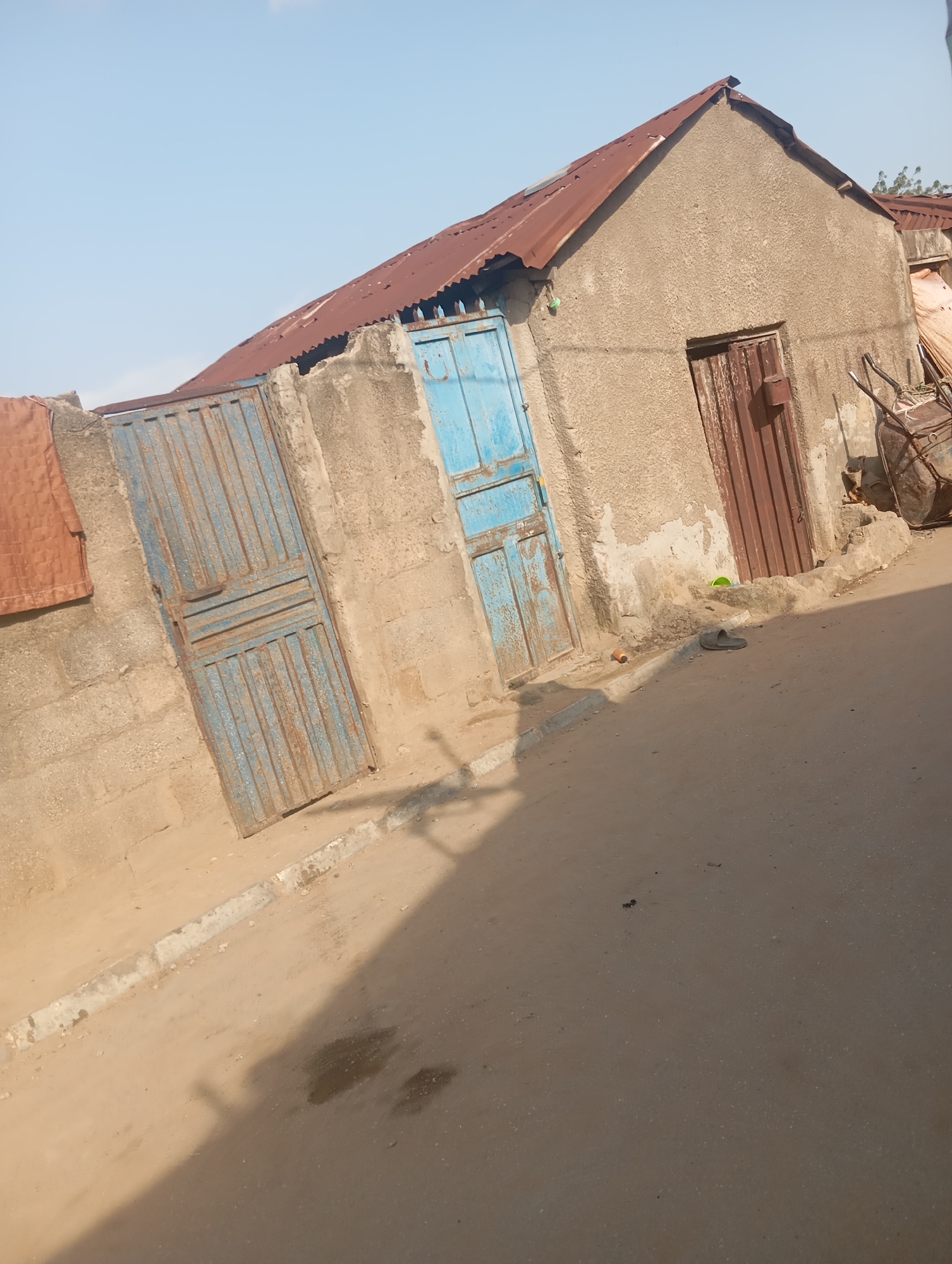
This is a medium-angle, full-shot photograph of a street scene in Gwagwa, Nigeria. The sky is clear and blue. In the center-left of the frame, a light-colored cinder block wall with a rusty, blue metal gate is visible. The gate is partially open and appears to be two panels. To the right of this gate, a blue metal door is visible. Further to the right, a building with a textured, beige-colored exterior and a corrugated metal roof is present. This building has a brown, vertical metal door. In front of the building, there is a slight rise in the ground covered in the same textured material. To the far right, a portion of a large, rusty metal container or tank is visible. On the ground in front of the building, a single dark-colored sandal is lying. The ground is a dirt road with some gravel. There are two dark wet patches on the road in the foreground. Shadows are cast across the road from an unseen source, suggesting it is daytime.
Gwagwa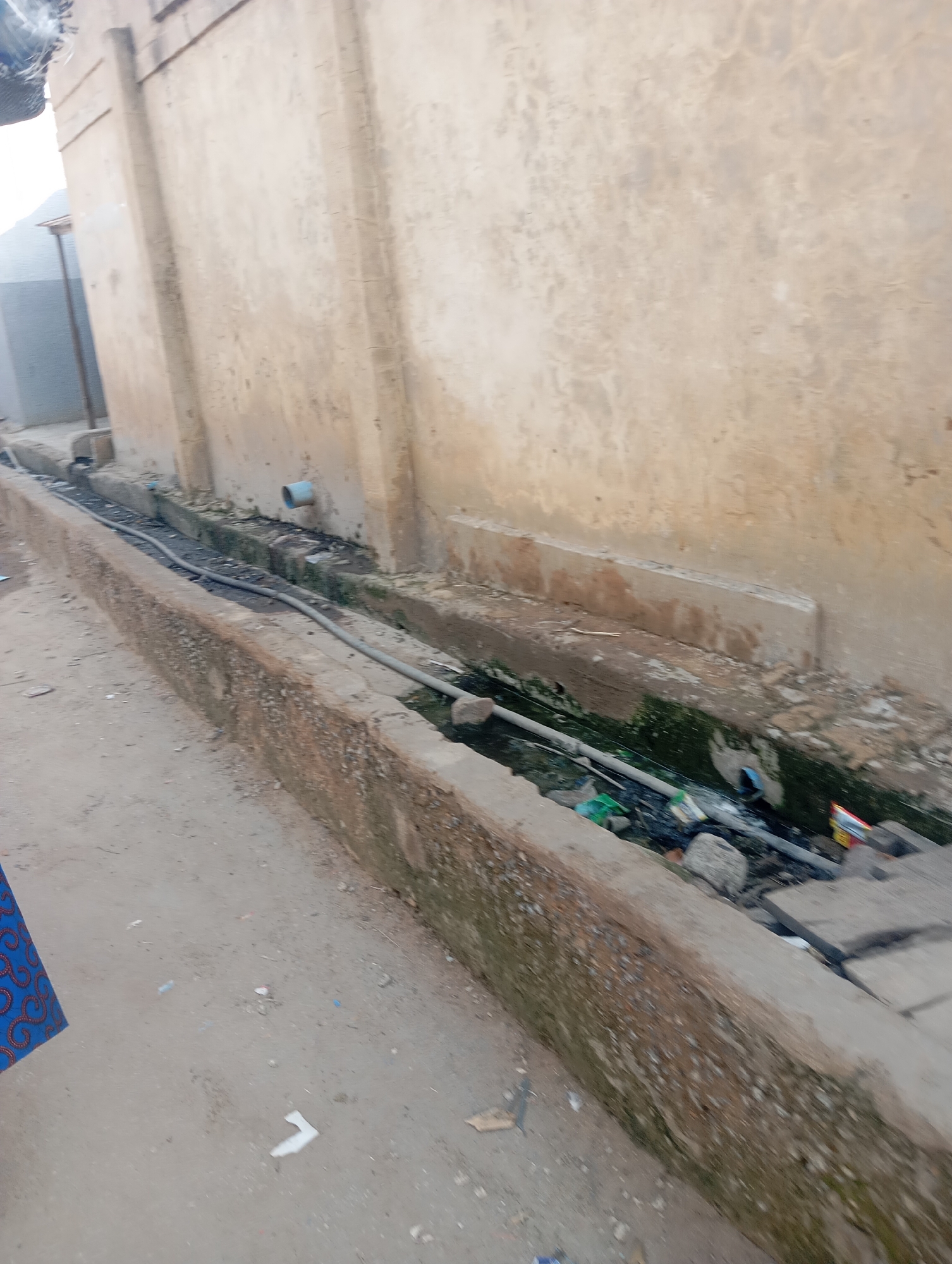
An exterior shot captures a scene of a dirty drainage ditch running alongside a textured, light-brown wall. The ditch is filled with murky water, debris, and green algae. A gray pipe extends from the wall into the ditch, and another hose-like pipe runs along the length of the ditch, partially submerged. The ground beside the ditch is made of compacted dirt and scattered litter. A small portion of a blue fabric with a red swirl pattern is visible in the lower-left corner of the frame, suggesting a person is present but out of view. The lighting suggests it is daytime. The location is identified as Gwagwa, Nigeria.
Gwagwa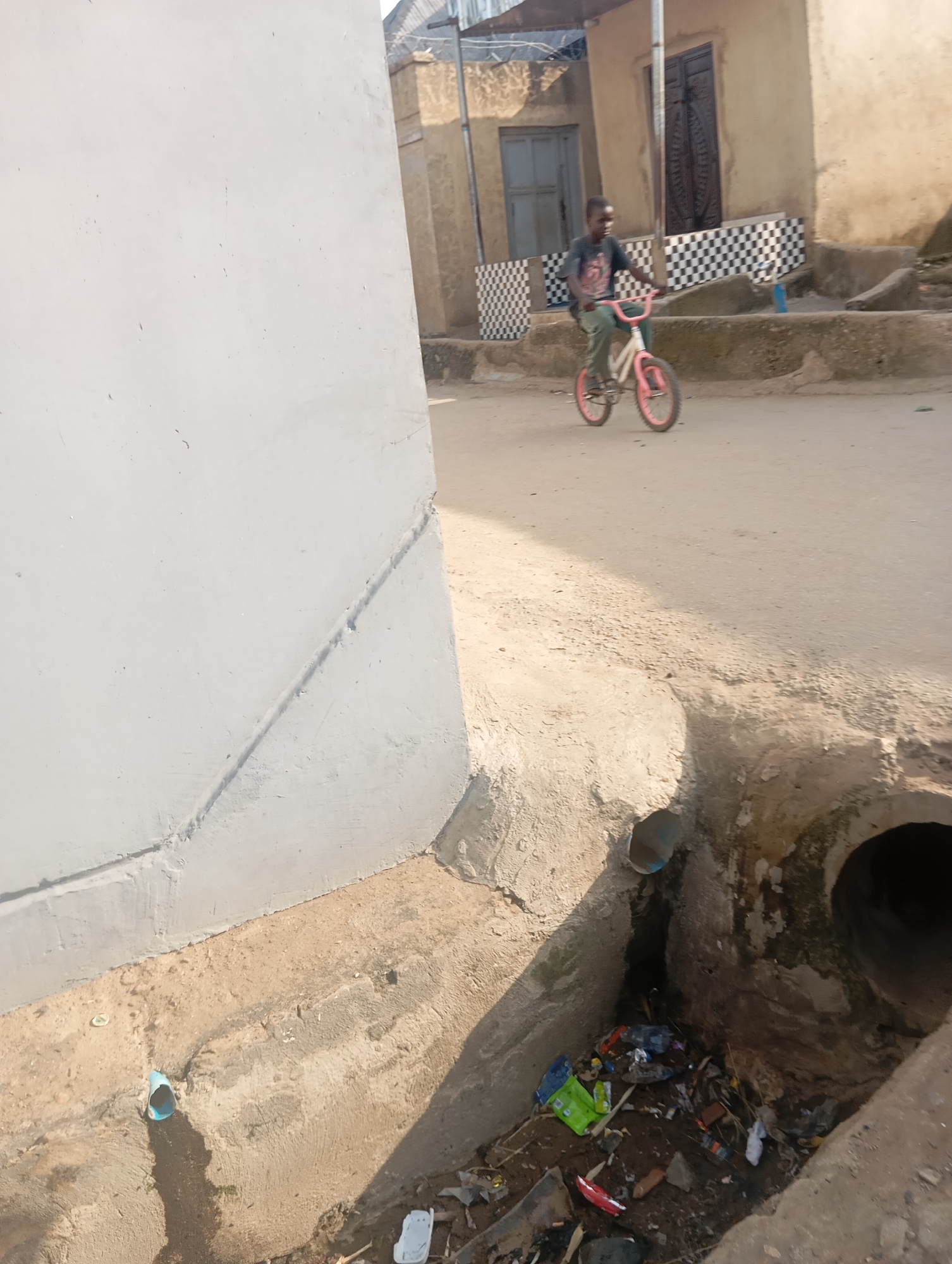
In Gwagwa, Nigeria, a young boy is riding a pink and white bicycle on a dirt road. He is wearing a dark t-shirt and green pants. The boy is positioned in the middle of the frame, with the bicycle angled slightly towards the viewer. To the left of the road, a white concrete wall dominates the foreground. To the right, buildings with checkered patterns and wooden doors are visible. A drainage ditch runs along the edge of the road in the foreground, containing scattered debris and a visible pipe. The overall scene depicts a typical street view in a Nigerian community, with elements of everyday life and infrastructure.
Gwagwa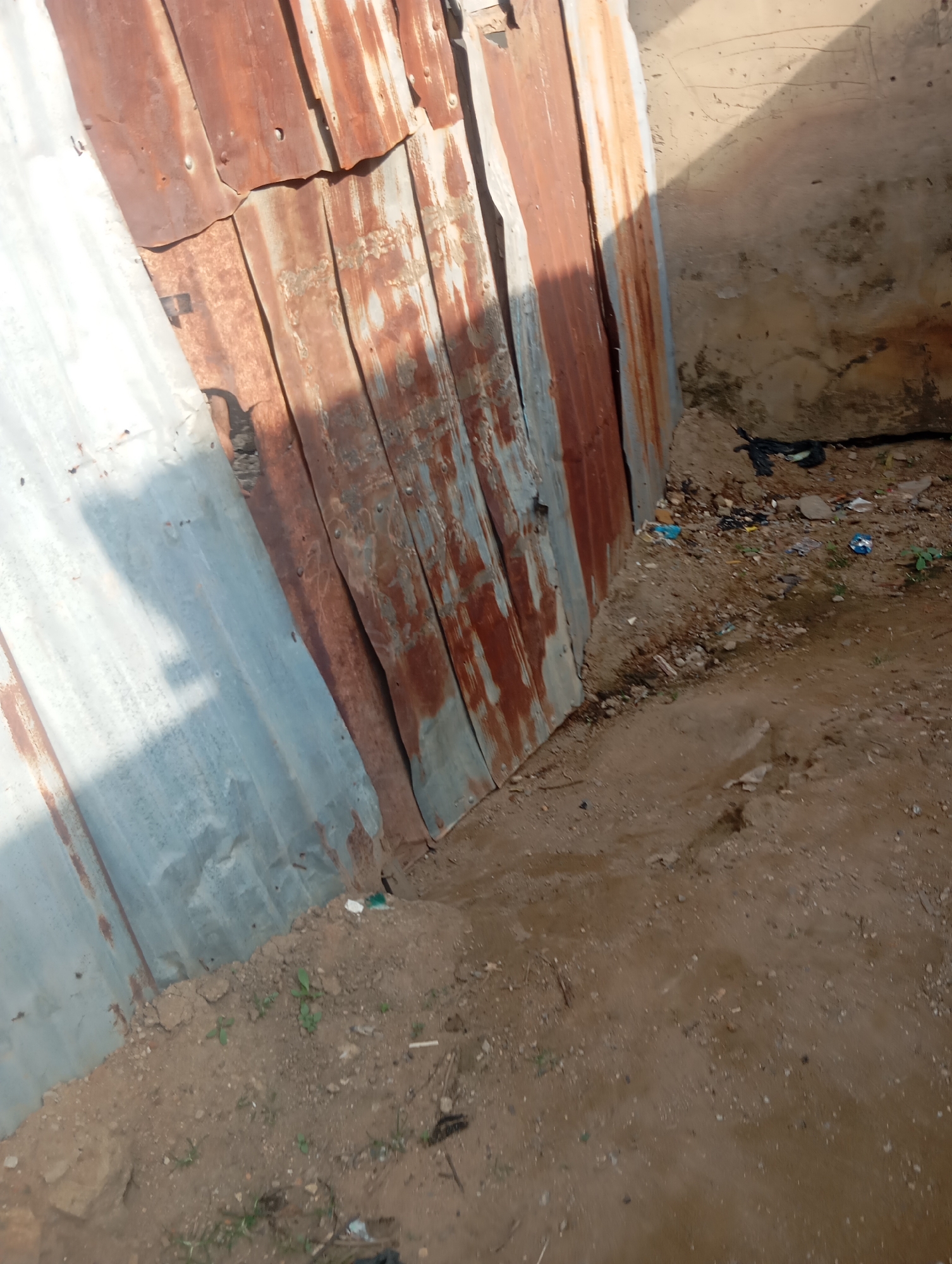
A vertical, close-up, eye-level, outdoor shot shows a weathered, corrugated metal wall constructed from sheets of rusty brown and silver-grey metal. The wall is situated in an urban environment in Gwagwa, Nigeria, with a dirt ground in the foreground and a rough, textured wall to the right. A pile of dark-colored plastic bags is visible in the mid-ground to the right of the metal wall, amidst scattered debris. The ground is uneven, with patches of dry soil and small stones. The overall scene depicts a neglected or informal area.
Gwagwa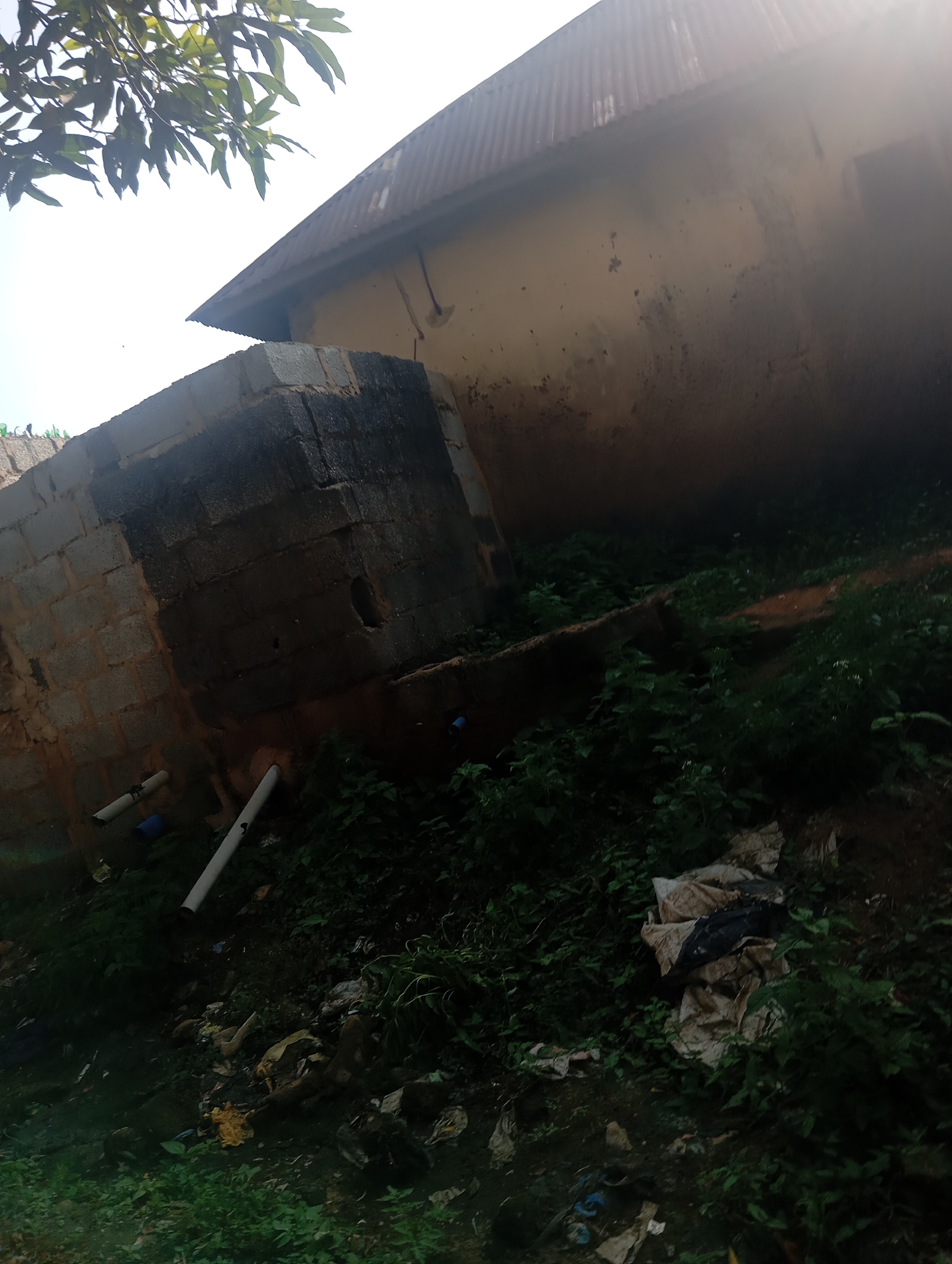
The image depicts an exterior view of a dilapidated structure with a corrugated metal roof and rough, uneven walls, likely in Gwagwa, Nigeria. The building is set against an overgrown, natural environment with lush green vegetation. In the foreground, a concrete block wall stands, partially covered in dark, stained material, suggesting dampness or decay. Two white pipes protrude from the wall, one angled downwards and the other extending horizontally. Beneath the wall, debris and trash are scattered among the dense foliage. A large, light-colored, partially damaged object, possibly a water tank or cistern, is visible adjacent to the block wall, also showing signs of wear and tear. The overall scene conveys a sense of neglect and disrepair.
Gwagwa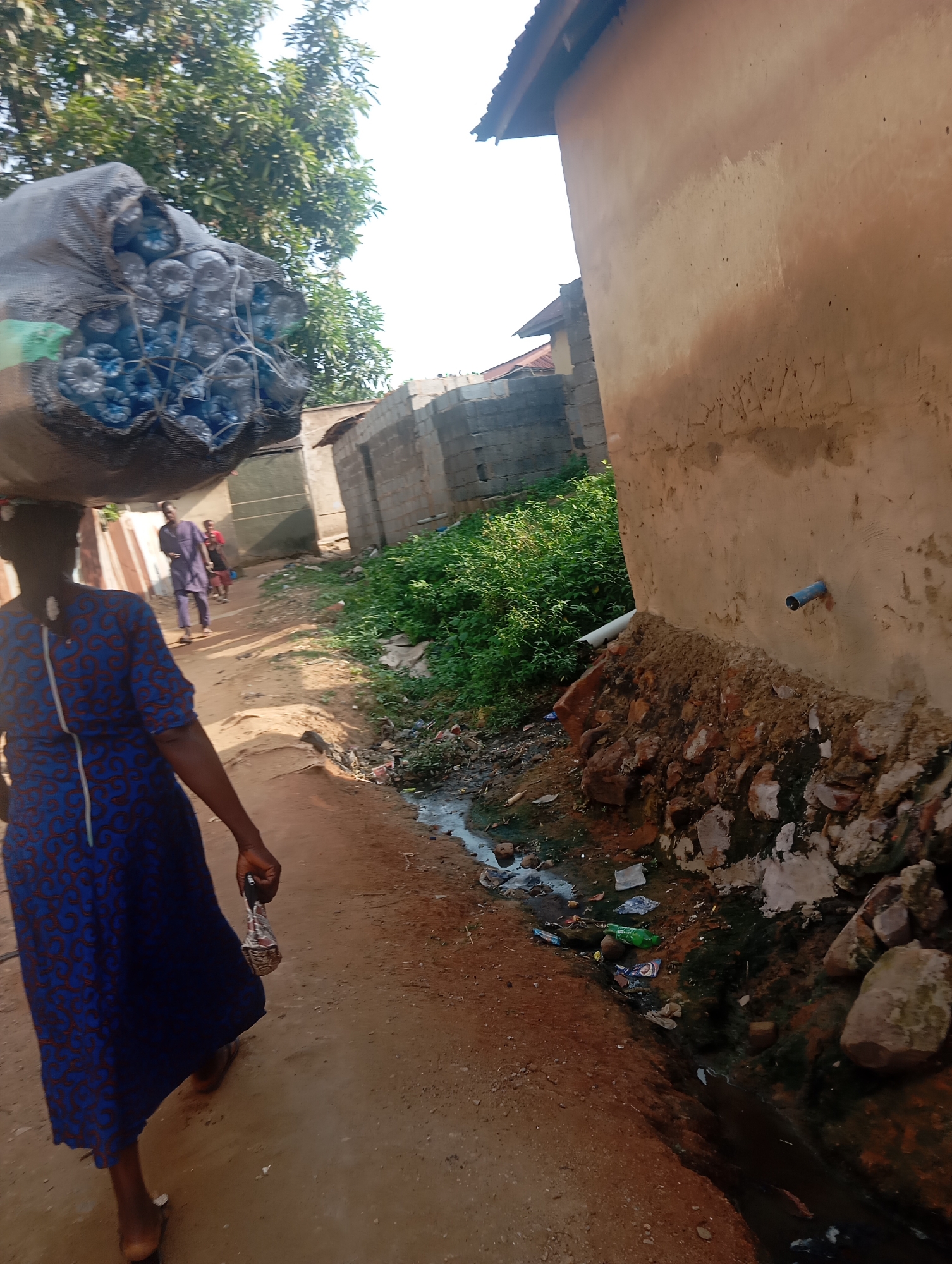
The media file depicts a scene in Gwagwa, Nigeria. The primary subject is a woman walking away from the camera, carrying a large bundle of plastic water bottles on her head, secured in a dark mesh bag. She is wearing a vibrant blue and red patterned dress. To her left, another person, a man in a purple traditional outfit, walks further down the dirt path, followed by a child. The setting appears to be a village or rural area, with a dirt road running alongside buildings constructed from mud and cinder blocks. Lush green vegetation grows on the right side of the path, where there is also a small, unmanaged drainage ditch filled with murky water and debris, including plastic bottles and wrappers. A blue pipe protrudes from the side of a mud-plastered wall. The sunlight suggests it is daytime, possibly late morning or early afternoon, with bright illumination and distinct shadows. The overall atmosphere is one of daily life and resourcefulness, with the woman actively transporting goods. No visible text is present in the image.
Gwagwa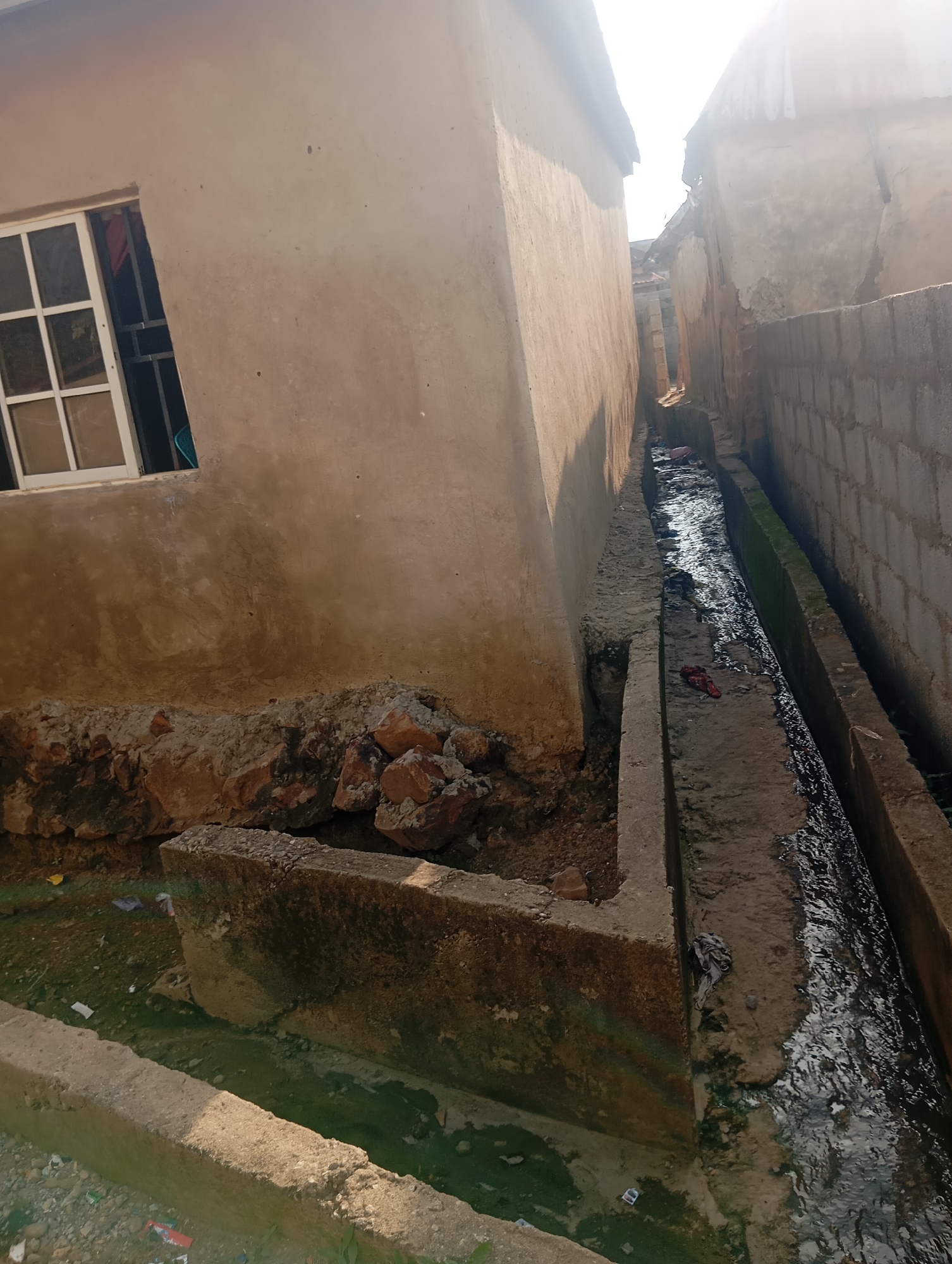
A high-angle, medium shot captures a narrow, unpaved alleyway in Gwagwa, Nigeria, flanked by two dilapidated buildings and a concrete drainage ditch running through the center. The building on the left features a pale, textured wall with a white-framed window and a metal security grate. On the right, a wall constructed of grey cinder blocks separates the alley from an adjacent property. The drainage ditch is filled with murky, dark water and debris, including what appears to be a piece of red fabric and a clump of grey fabric. Rocks and concrete rubble are piled near the base of the building on the left, adjacent to the drainage channel. The ground on either side of the ditch is littered with small pieces of trash, including wrappers and plastic. The sky is bright and hazy, suggesting either early morning or late afternoon. The overall impression is one of neglect and poor sanitation.
Gwagwa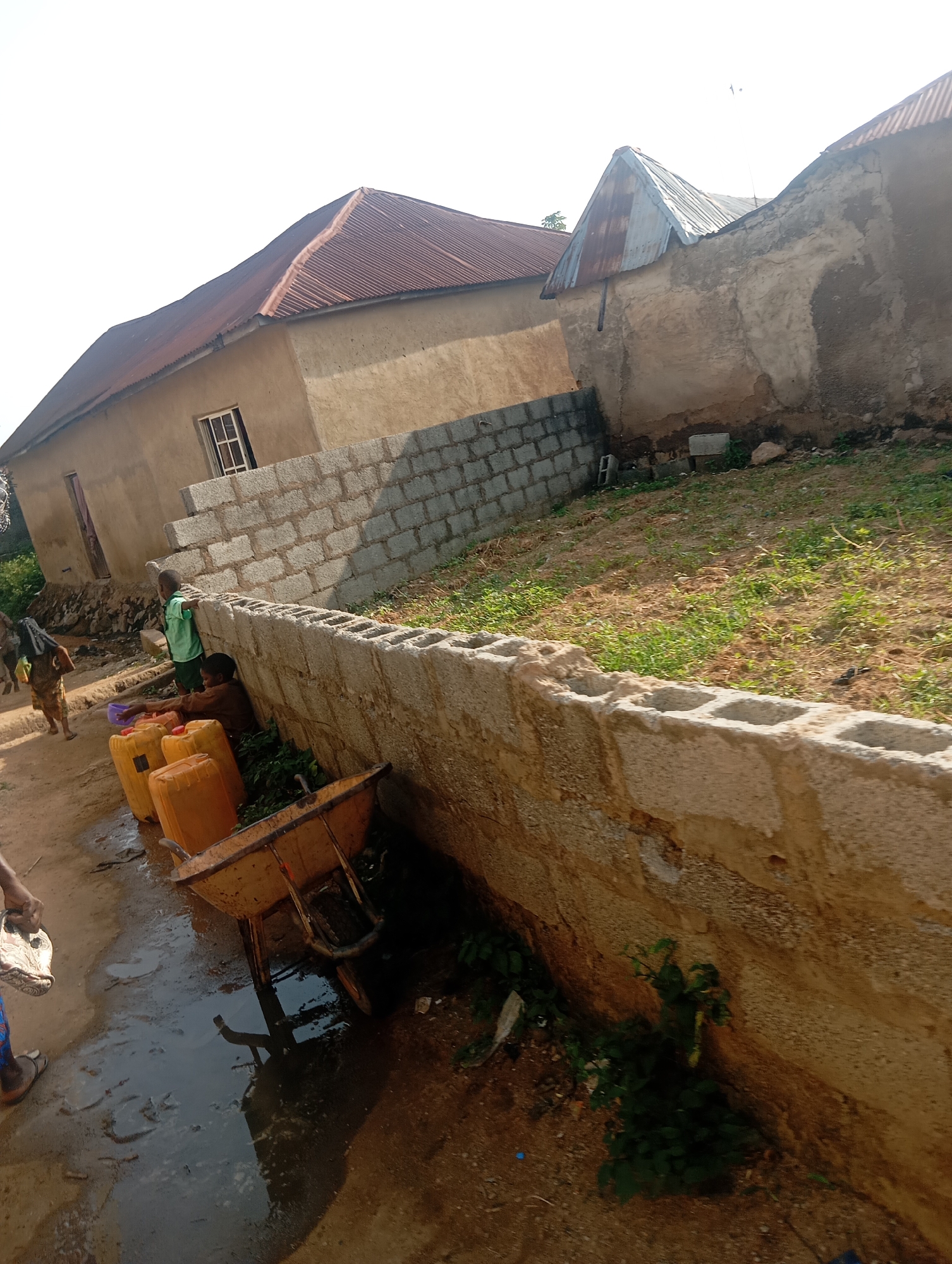
In Gwagwa, Nigeria, a scene unfolds near a structure with a reddish-brown corrugated metal roof. The building's walls are constructed from a tan, textured material. In the foreground, a low wall made of concrete blocks separates a dirt path from a grassy area. Several large, yellow plastic water containers are clustered on the dirt path. A wheelbarrow, also yellow, rests nearby, its contents obscured. Two young boys are present; one in a green shirt stands near the concrete block wall, while the other, in a brown shirt, sits by the water containers, holding a purple plastic cup. A woman walks away from the containers, carrying items over her head, and another person, likely a child, is partially visible behind her. The ground is a mixture of dirt and puddles, suggesting recent rain or water spillage. The overall environment appears to be a residential area under development or in a state of disrepair.
Gwagwa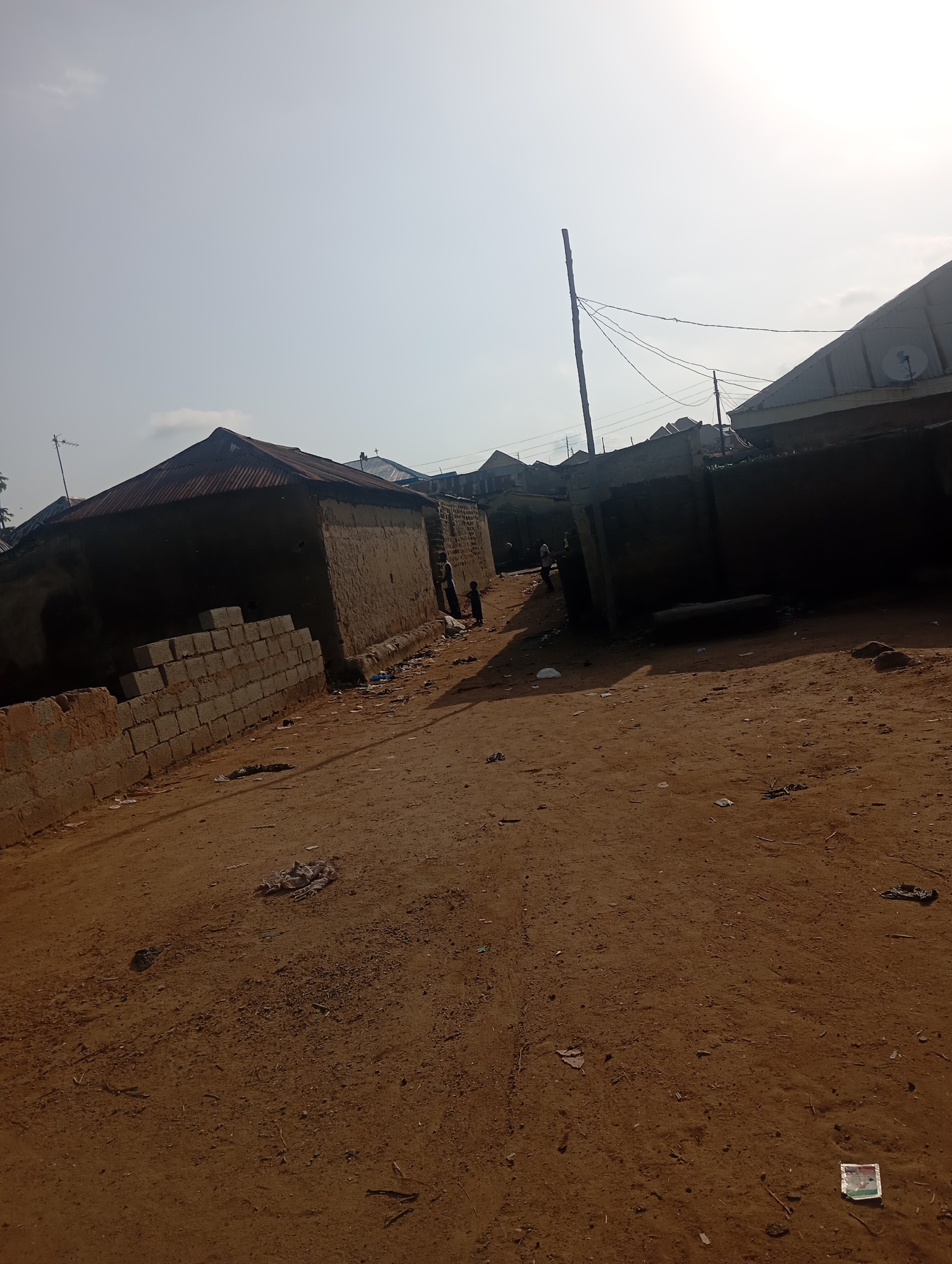
The image depicts a dusty, unpaved street in Gwagwa, Nigeria. Structures with corrugated metal roofs and mud or brick walls line the street, some appearing unfinished or in disrepair. The ground is covered in loose, reddish-brown soil and debris, including scattered plastic bags and other refuse. In the background, several figures, including at least two adults and one child, are visible near the buildings. Overhead power lines stretch across the scene, supported by wooden poles. The sky is bright and hazy, suggesting a sunny day.
Gwagwa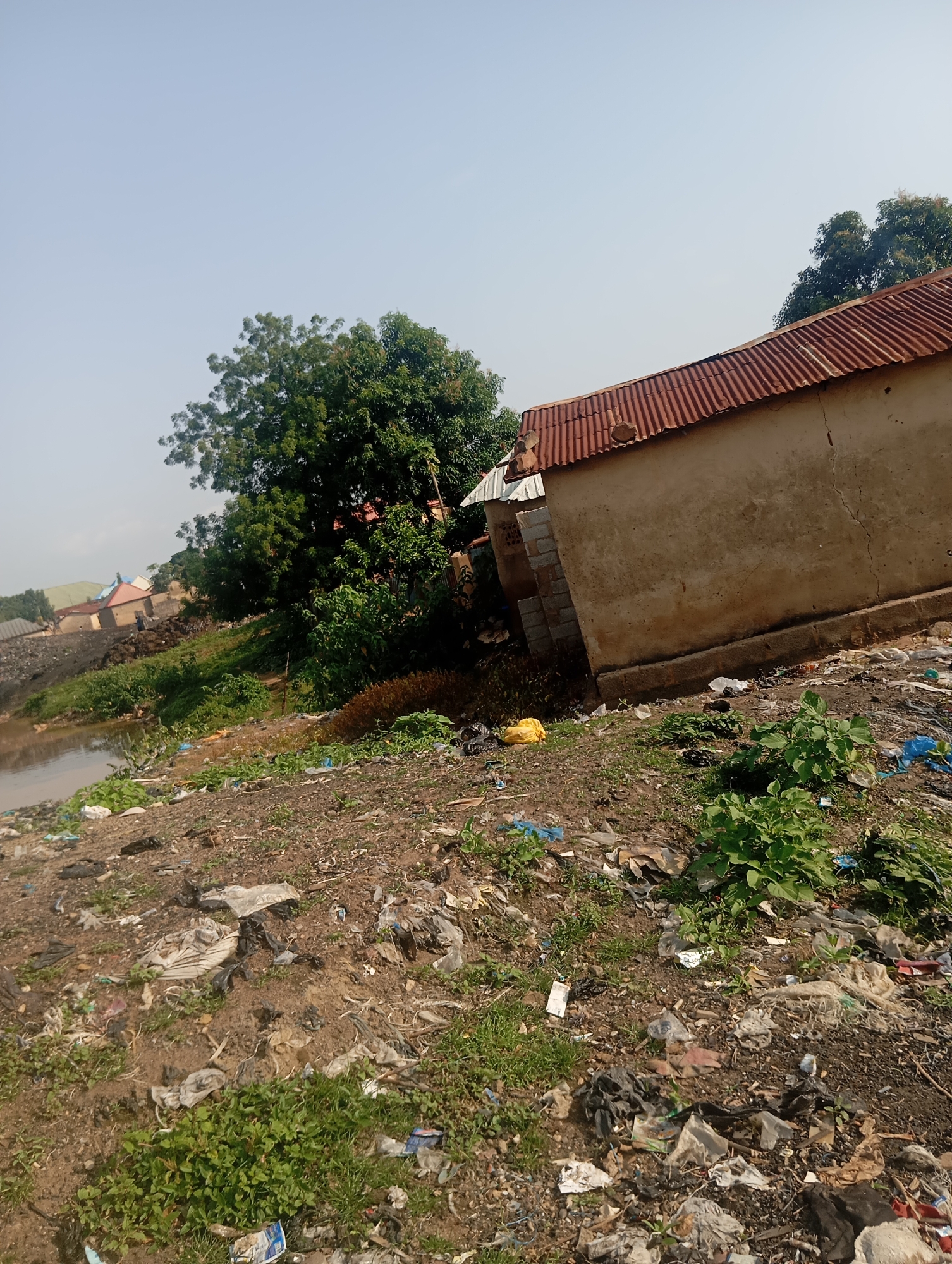
The image depicts a cluttered environment in Gwagwa, Nigeria, with a notable accumulation of refuse. A small, weathered structure with a corrugated metal roof is visible, appearing to be a dwelling or outbuilding, constructed with concrete blocks and mud plaster. The ground surrounding this structure is heavily strewn with various types of trash, including plastic bags, wrappers, and other debris. In the background, a body of murky water, possibly a pond or river, is present, with its banks also showing signs of litter. Adjacent to the water and the immediate foreground, there is a growth of green vegetation, including trees and smaller plants, some of which are partially obscured by the refuse. Further in the distance, several other buildings with colorful roofs are scattered across the landscape, suggesting a residential area. The sky is clear and pale blue, indicating daytime. No people are visible in the frame. The overall impression is one of environmental neglect and inadequate waste management.
Gwagwa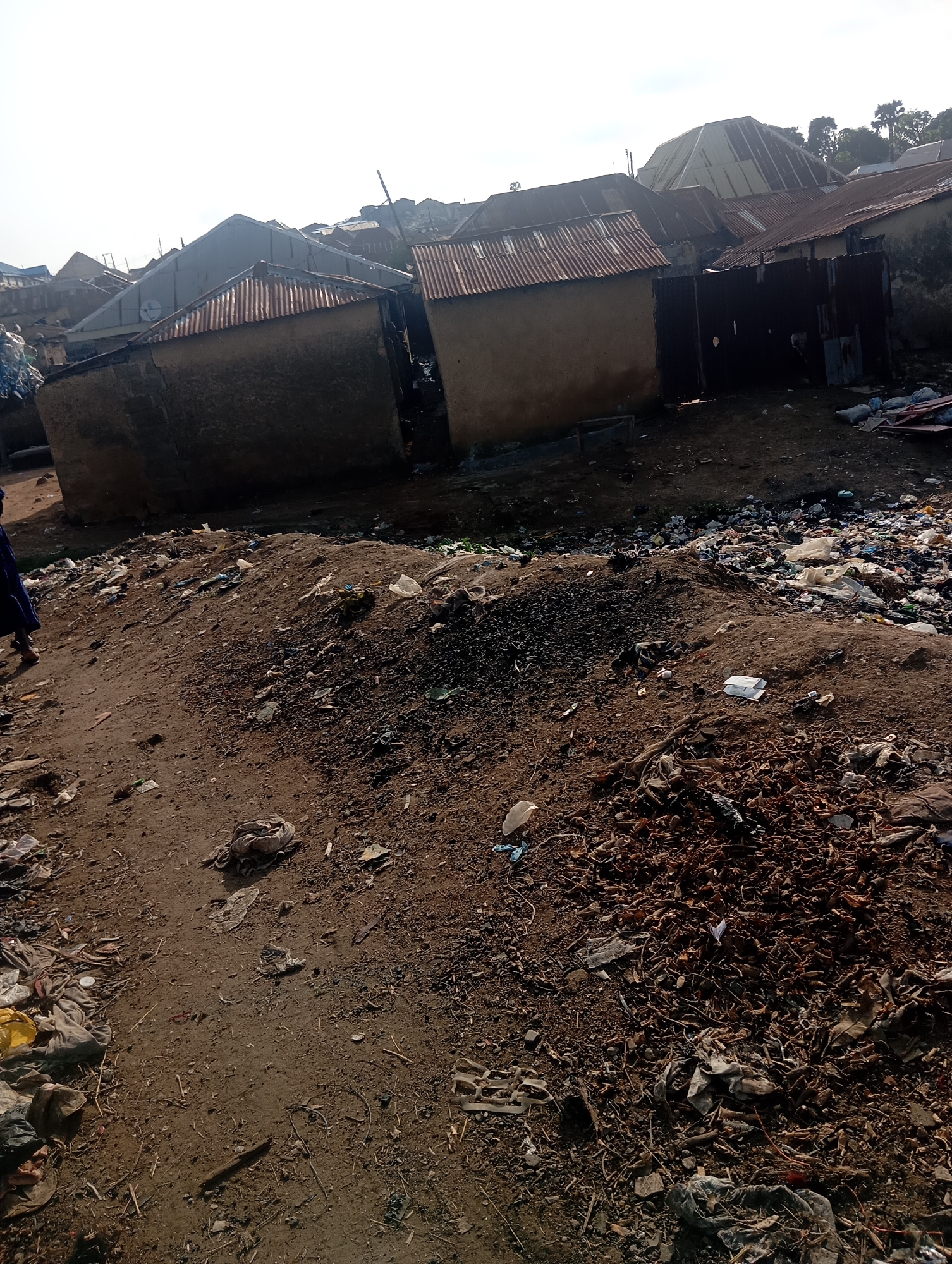
The image depicts a scene in a part of Gwagwa, Nigeria characterized by dilapidated structures and extensive refuse. Several buildings with corrugated metal roofs and earth-toned walls are visible, some appearing to be in a state of disrepair. The ground is heavily strewn with a considerable amount of garbage, including plastic waste, debris, and organic matter. A person, partially visible on the left side of the frame, is dressed in dark clothing. The overall environment suggests an area with poor waste management and substandard living conditions.
Gwagwa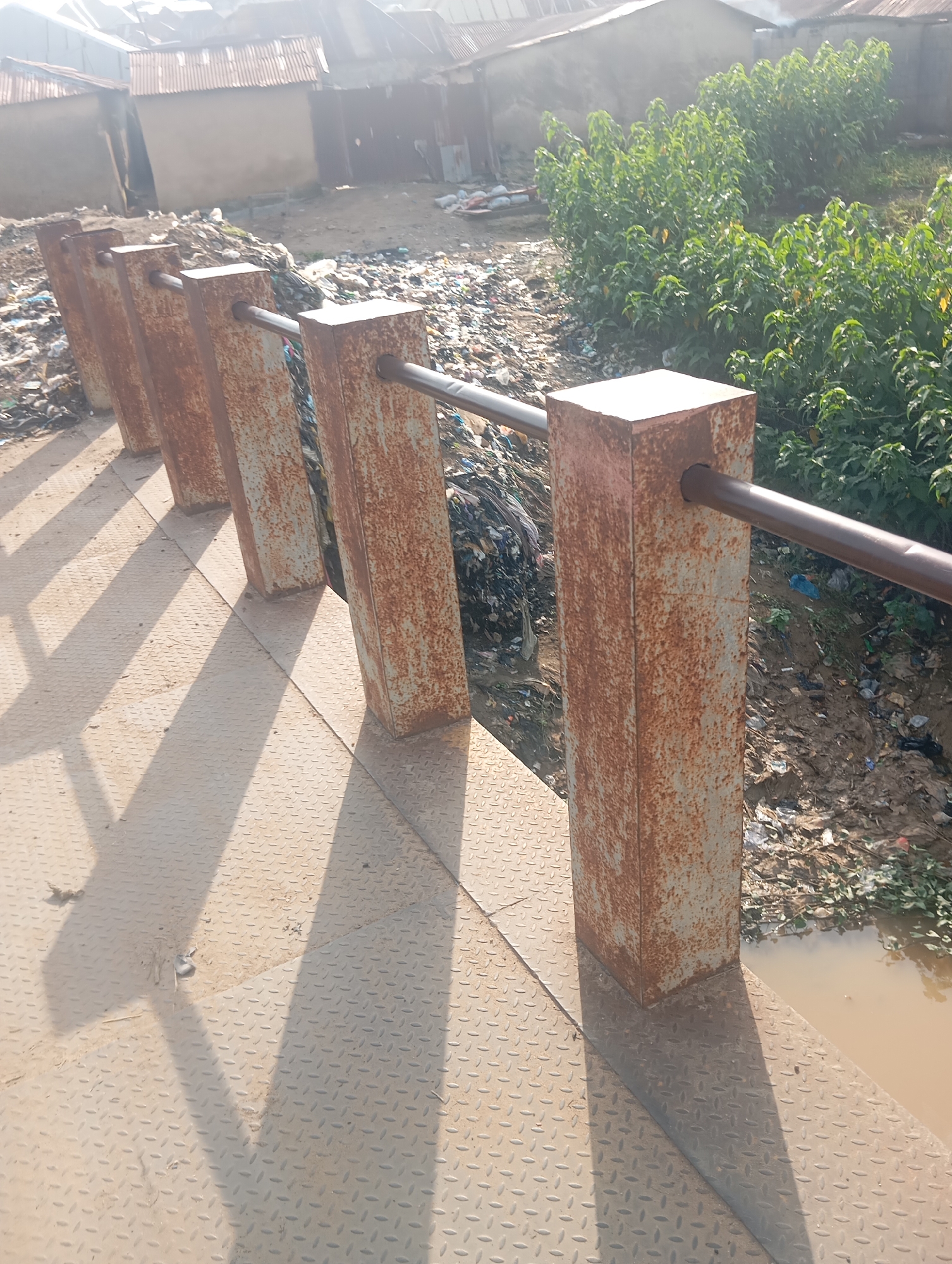
The image shows a rusty railing made of square metal posts and a dark metal pipe along the top, casting long shadows on a metal grate floor. Behind the railing, a scene of disarray unfolds with piles of garbage and debris. In the background, several dilapidated structures with corrugated metal roofs suggest a densely populated or informal settlement. To the right, a dense growth of green bushes borders the garbage-strewn ground, and a murky body of water is visible. The overall impression is one of neglect and poor sanitation in an urban or semi-urban environment. This scene is located in Gwagwa, Nigeria.
Gwagwa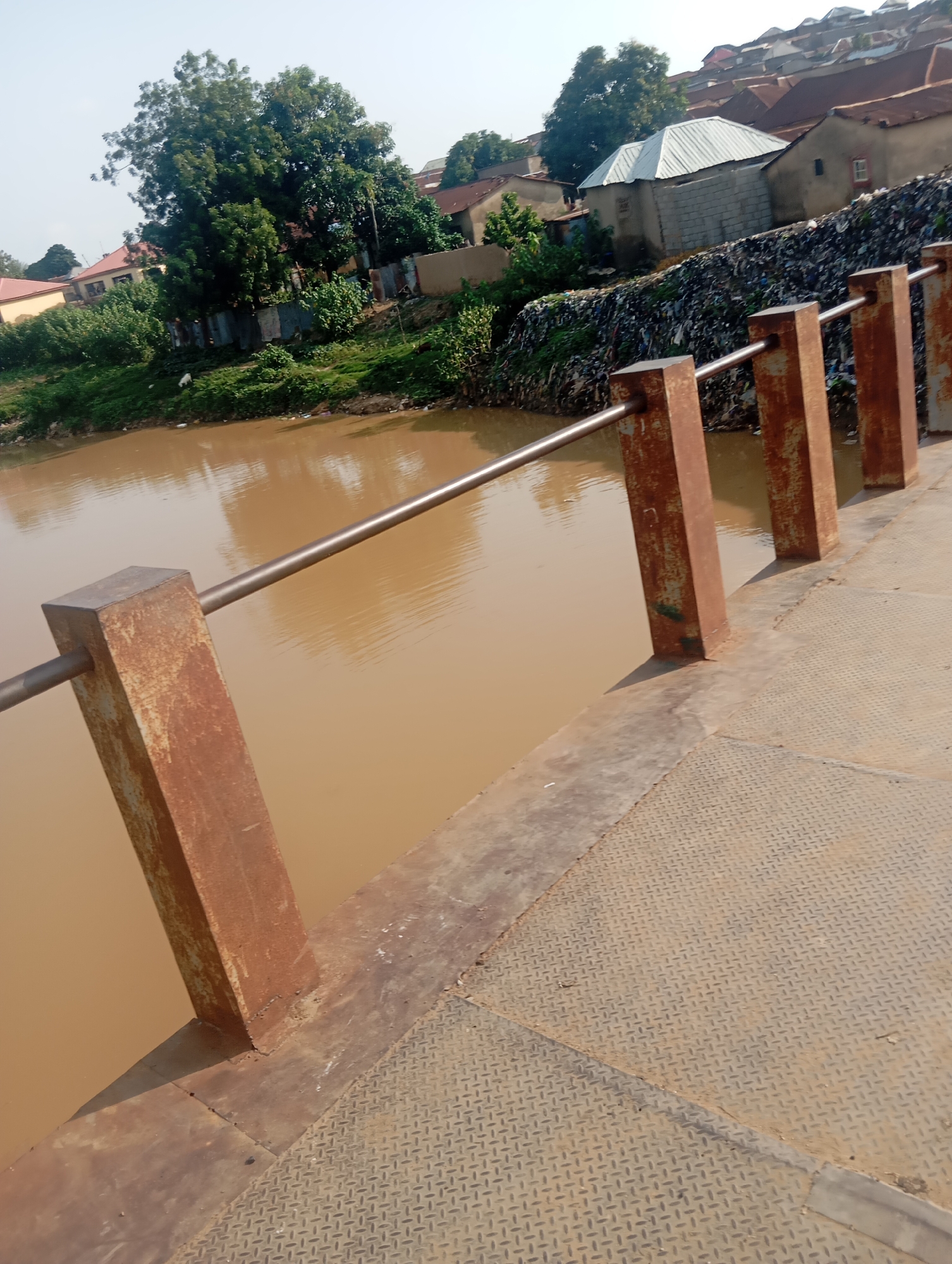
The image depicts a scene from a bridge overlooking a muddy brown river. On the far bank, a densely populated settlement is visible, characterized by numerous houses with red and metallic roofs. The landscape is hilly, and the buildings appear to be constructed on the slopes, suggesting a challenging terrain. A significant amount of waste is piled up along the riverbank, creating an unsightly barrier between the water and the settlement. Lush green vegetation, including several trees, can be seen interspersed with the houses, providing some natural contrast to the man-made structures and the accumulated debris. The bridge itself has a metallic walkway with a diamond plate pattern and weathered, rusty metal railings supported by square posts. The river's surface is calm, reflecting the hazy sky and the surrounding environment. The light suggests it is daytime, possibly late morning or early afternoon, given the clear but somewhat diffused sunlight. The overall impression of the scene is one of a functional bridge in an urban or semi-urban area, but with evident environmental challenges, particularly the waste management issue. No people are visible in the frame, and the focus is on the environment and the infrastructure. The location is identified as Gwagwa, Nigeria.
Gwagwa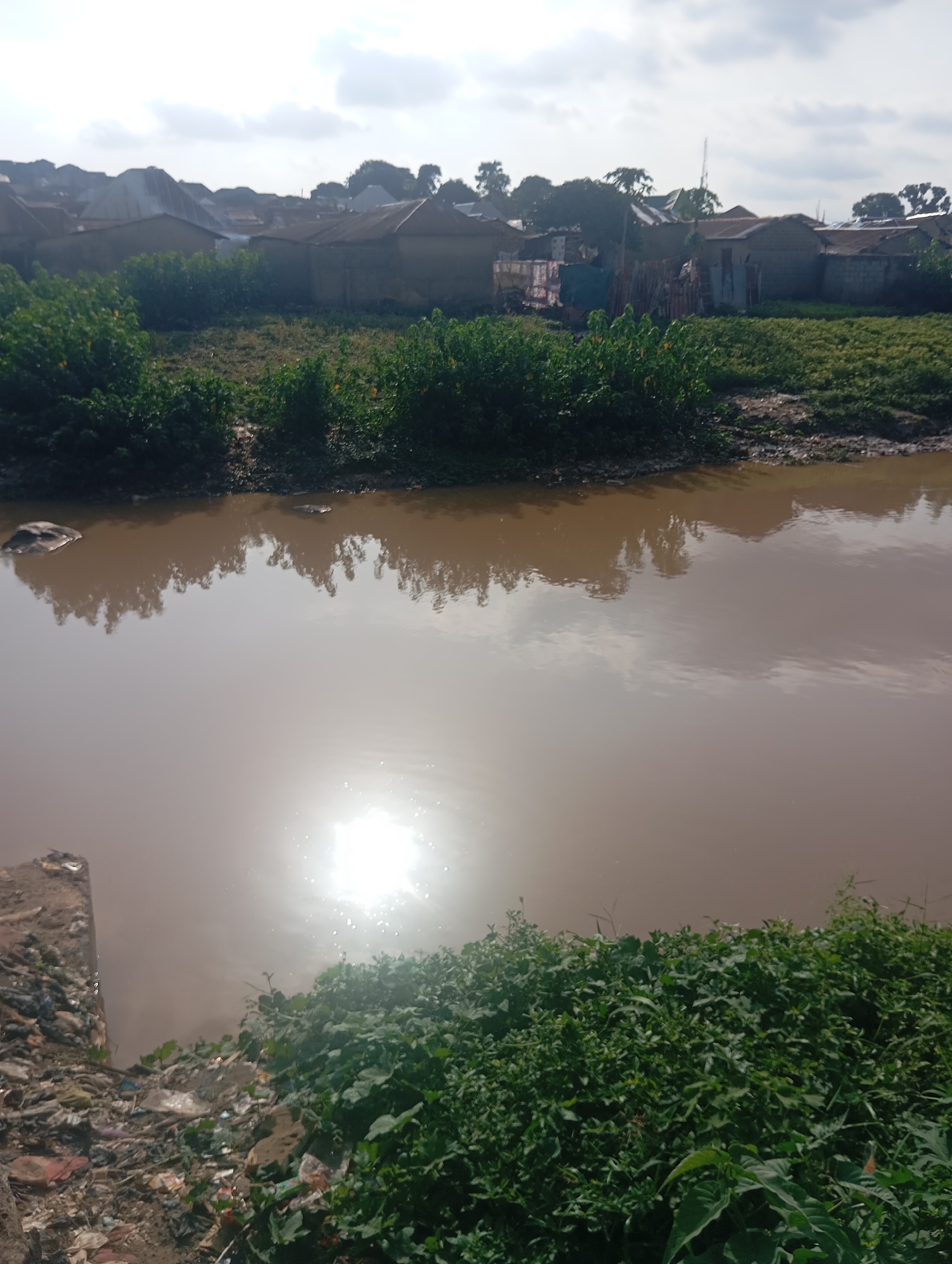
The image shows a wide, murky brown body of water, likely a river or stream, reflecting the overcast sky and surrounding vegetation. On the far bank, a cluster of low-rise buildings with corrugated metal roofs are visible, typical of a residential area in Gwagwa, Nigeria. The buildings appear to be constructed from brick and mud, with some showing signs of disrepair. Dense green foliage grows along the banks of the water, with some areas appearing cultivated, possibly with small crops. On the near bank, there is a significant amount of debris and garbage piled up, indicating poor waste management. The sun is visible as a bright, diffused light source reflecting off the water's surface, creating a hazy glare. No people or animals are clearly discernible in the scene. The overall impression is one of a community situated alongside a natural waterway, with visible signs of both greenery and human habitation, as well as environmental challenges related to waste.
Gwagwa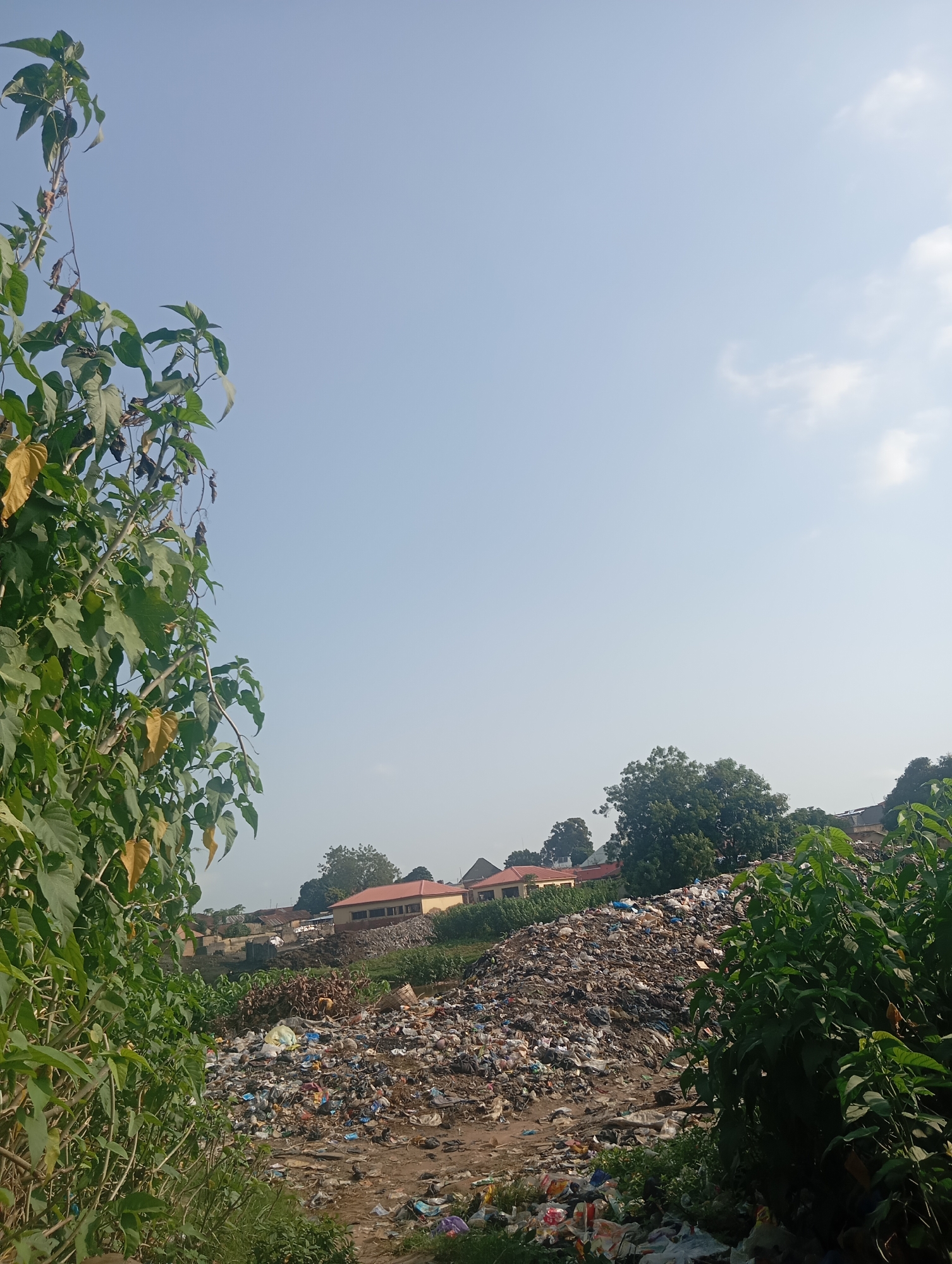
The image depicts a large, overflowing landfill situated in Gwagwa, Nigeria. The scene is dominated by a massive pile of assorted garbage, including plastic bottles, bags, and other refuse, spread across a sloped terrain. In the background, several buildings with reddish-brown roofs are visible, suggesting a nearby settlement. Lush green vegetation, including trees and bushes, flanks the landfill, with some plants in the foreground partially obscuring the view. The sky is clear and light blue, with a few wispy clouds, indicating fair weather and likely daytime, possibly late morning or early afternoon given the brightness and soft shadows. The overall impression is one of environmental neglect and a significant waste management challenge. No people or text are clearly visible in the image.
Gwagwa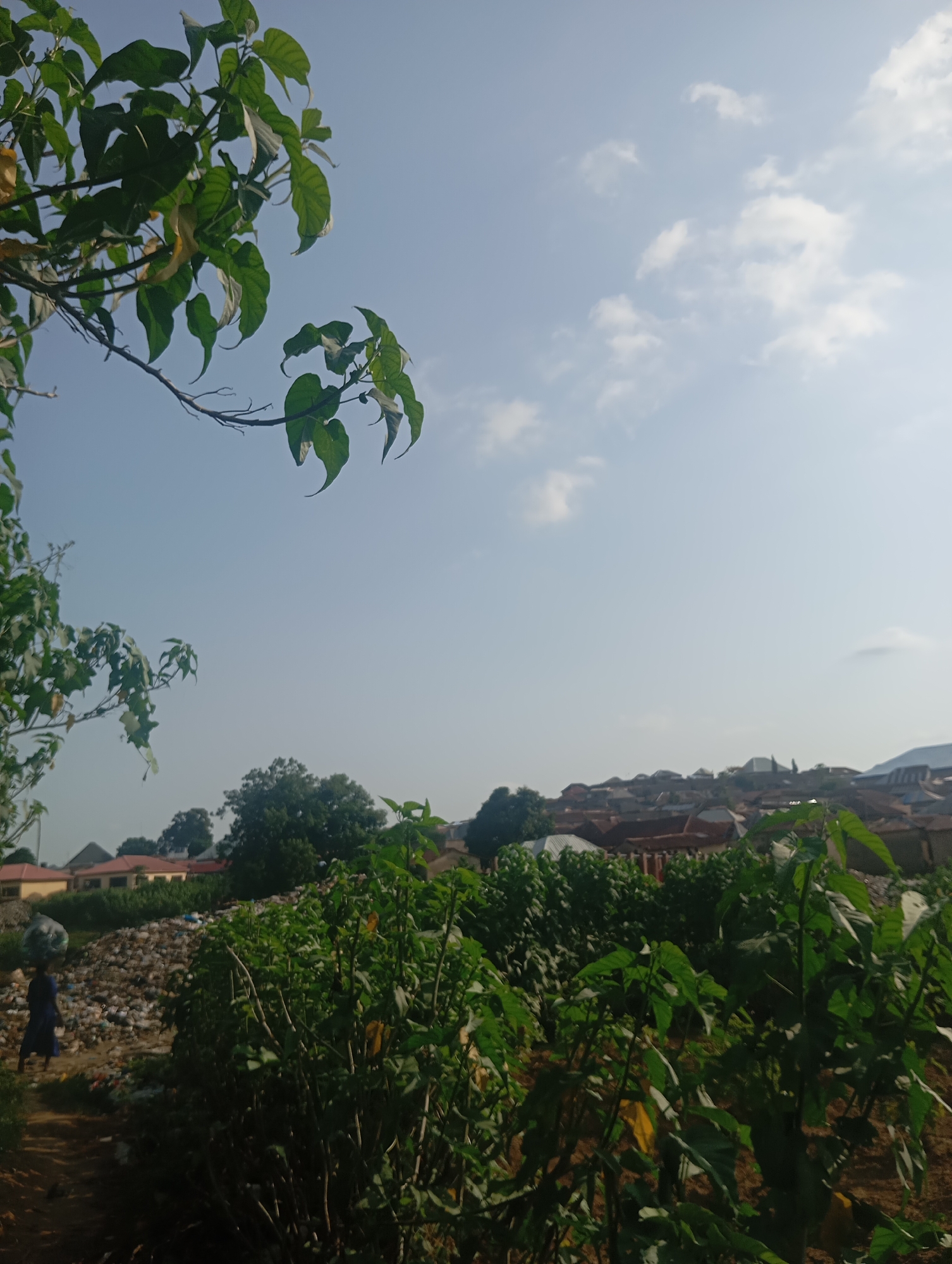
In Gwagwa, Nigeria, under a clear sky dotted with sparse clouds, a figure walks along a dirt path carrying a large, round object on their head. The figure, wearing a dark blue garment, is moving towards the left side of the frame. To the right of the path, a large pile of debris, consisting of plastic waste and other refuse, is visible. In the foreground, lush green plants and bushes dominate the scene, obscuring the ground in places. In the middle ground, beyond the debris, a collection of buildings with red-tiled roofs and some with light-colored walls stretches across the landscape. The background features a gentle, undulating terrain with more buildings and trees, suggesting a densely populated area. The overall impression is one of a community situated near a significant amount of waste, with a clear contrast between the natural vegetation and the human-made environment.
Gwagwa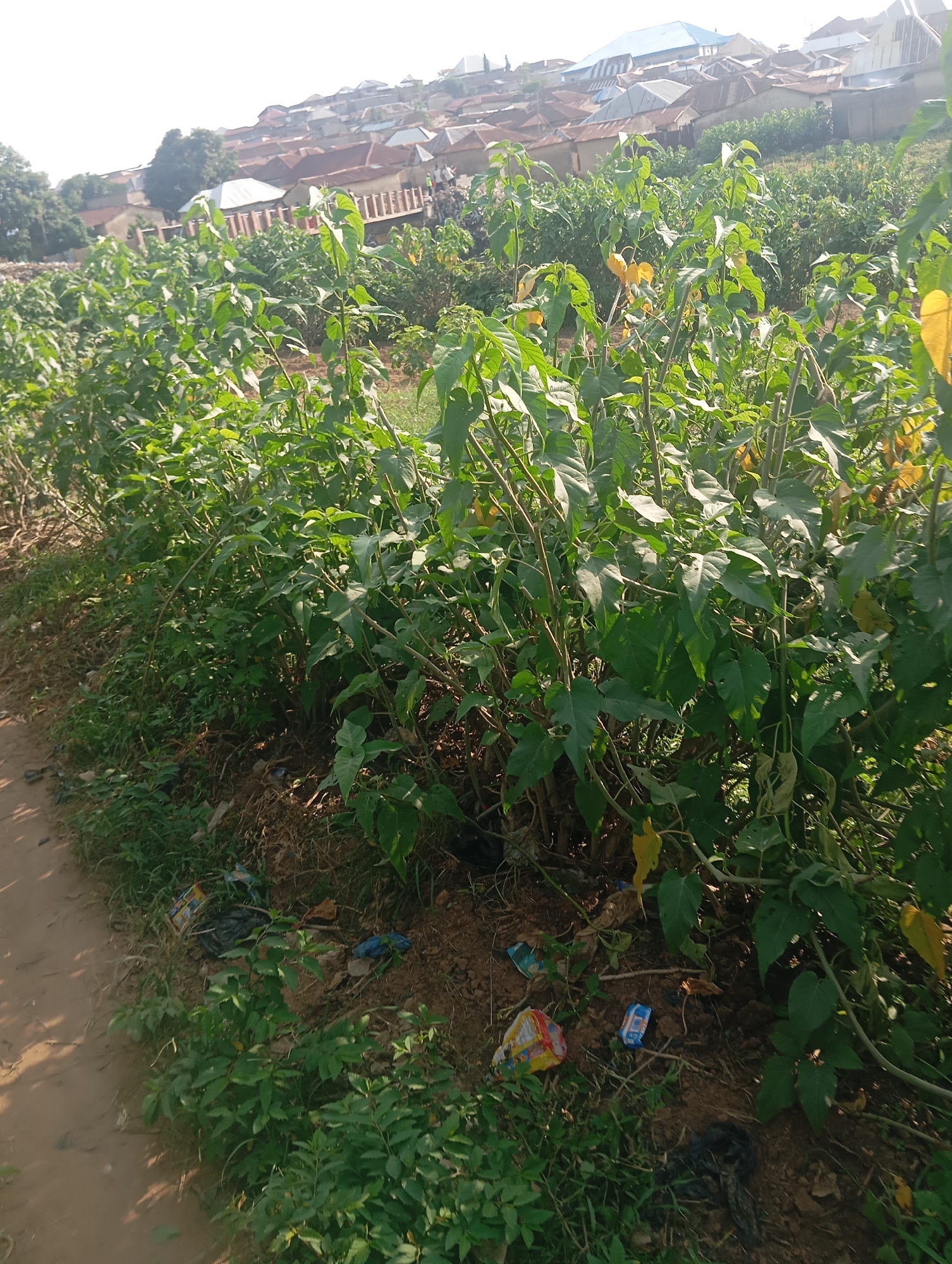
The image depicts a roadside area in Gwagwa, Nigeria, with a focus on a dense growth of green vegetation lining the edge of a dirt path. The path occupies the lower left portion of the frame, appearing worn and unpaved. Behind the vegetation, a hillside is visible, covered with numerous residential buildings with corrugated iron roofs, characteristic of urban development in the region. The sky is bright and clear, suggesting daytime. Scattered on the ground amongst the plants and near the path are several pieces of trash, including plastic bags and wrappers, indicating a degree of littering in the area. No people are clearly visible in the foreground or midground; however, a few distant figures can be observed among the buildings on the hillside. The vegetation is lush and appears to be a mix of cultivated plants and wild growth, with some leaves showing signs of yellowing. The overall scene suggests a rural or semi-urban environment on the outskirts of Gwagwa.
Gwagwa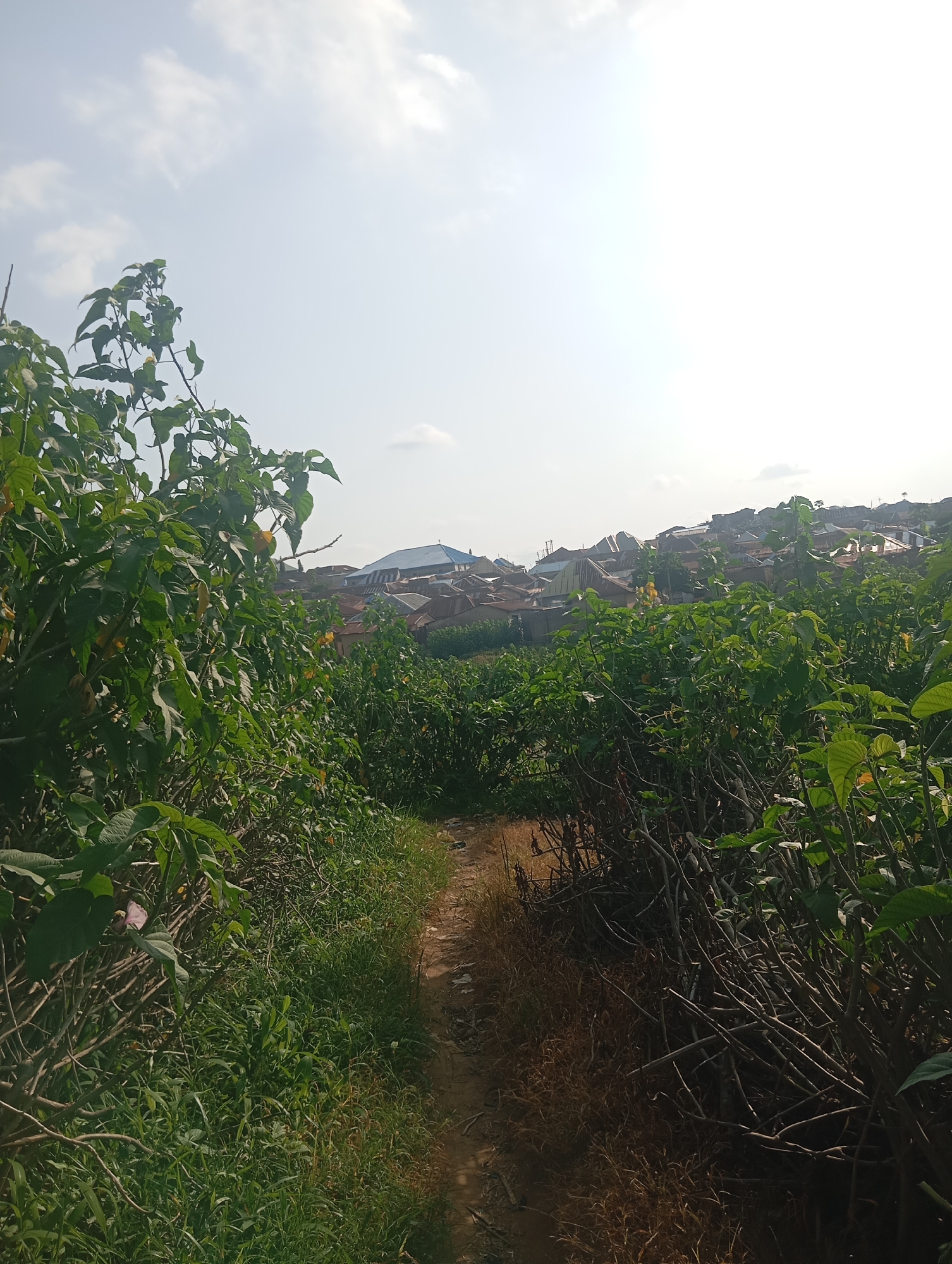
This image captures a view of a pathway cutting through dense vegetation, leading towards a hillside settlement. The pathway is narrow and appears to be made of dirt, with dry grass and fallen leaves lining its edges. On either side of the pathway, lush green foliage dominates, with thick bushes and tall plants creating a natural corridor. In the background, a collection of buildings with various roof types, including corrugated iron and some with a blue roof, are visible, suggesting a densely populated area. The sky above is bright and mostly clear, with a few wispy clouds. The overall scene suggests an outdoor environment in a somewhat unkempt or natural state, on the outskirts of an urban area.
Gwagwa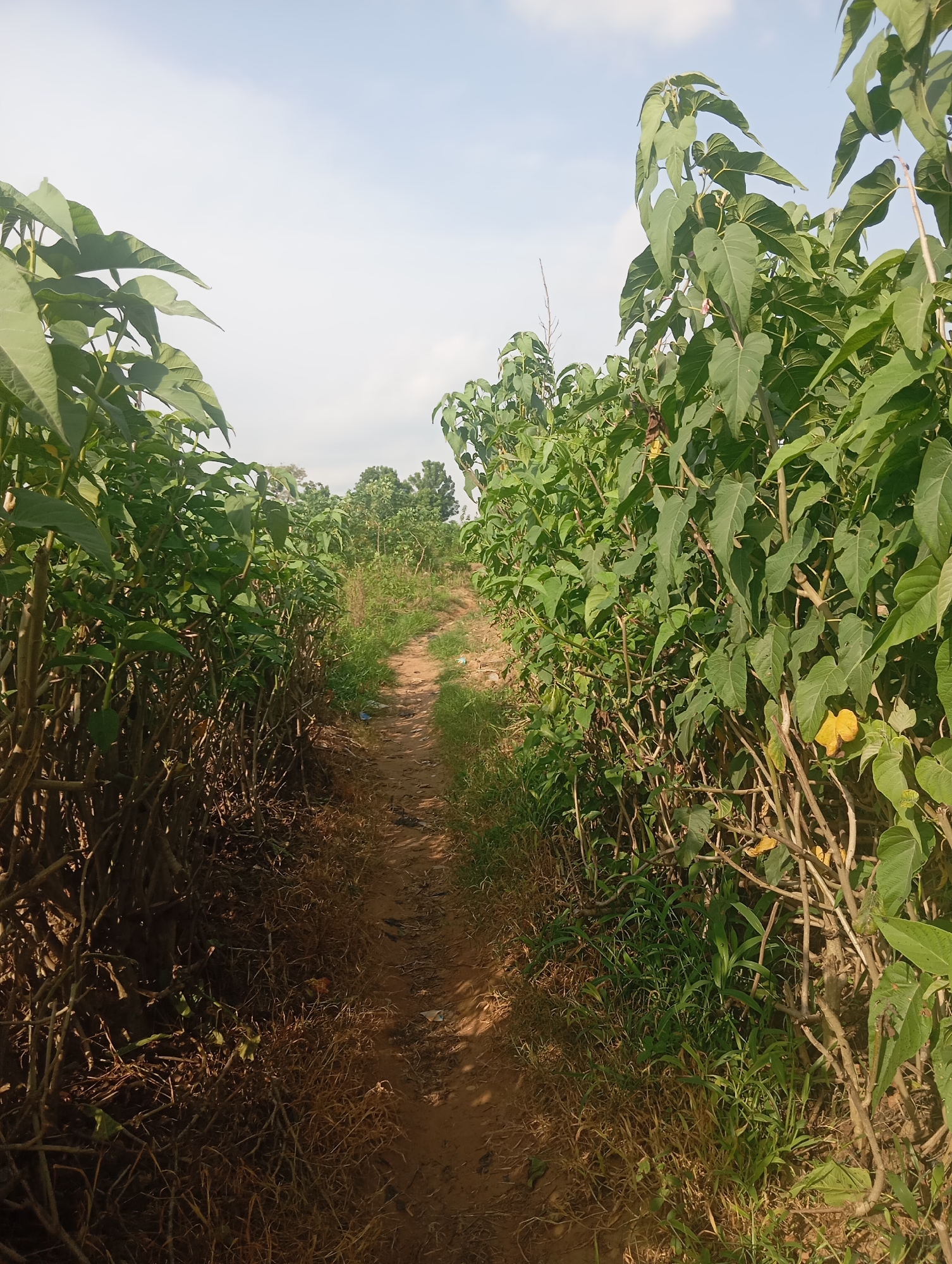
The image depicts a dirt path winding through a dense thicket of green leafy plants. The path is roughly in the center of the frame, leading away from the viewer into the distance. On either side of the path, the plants are tall and bushy, with large, heart-shaped leaves. The stems of these plants are visible, appearing woody and somewhat dry. The ground along the path is a reddish-brown earth, with patches of dry grass and some scattered debris. In the background, more trees and vegetation are visible under a pale blue sky with some wispy clouds. The scene appears to be a natural or semi-natural environment, likely in a rural or semi-rural setting. The image does not contain any people or specific identifiable landmarks that would pinpoint its exact location. Without further information, it is impossible to confirm if this scene is located in Gwagwa, Nigeria.
Gwagwa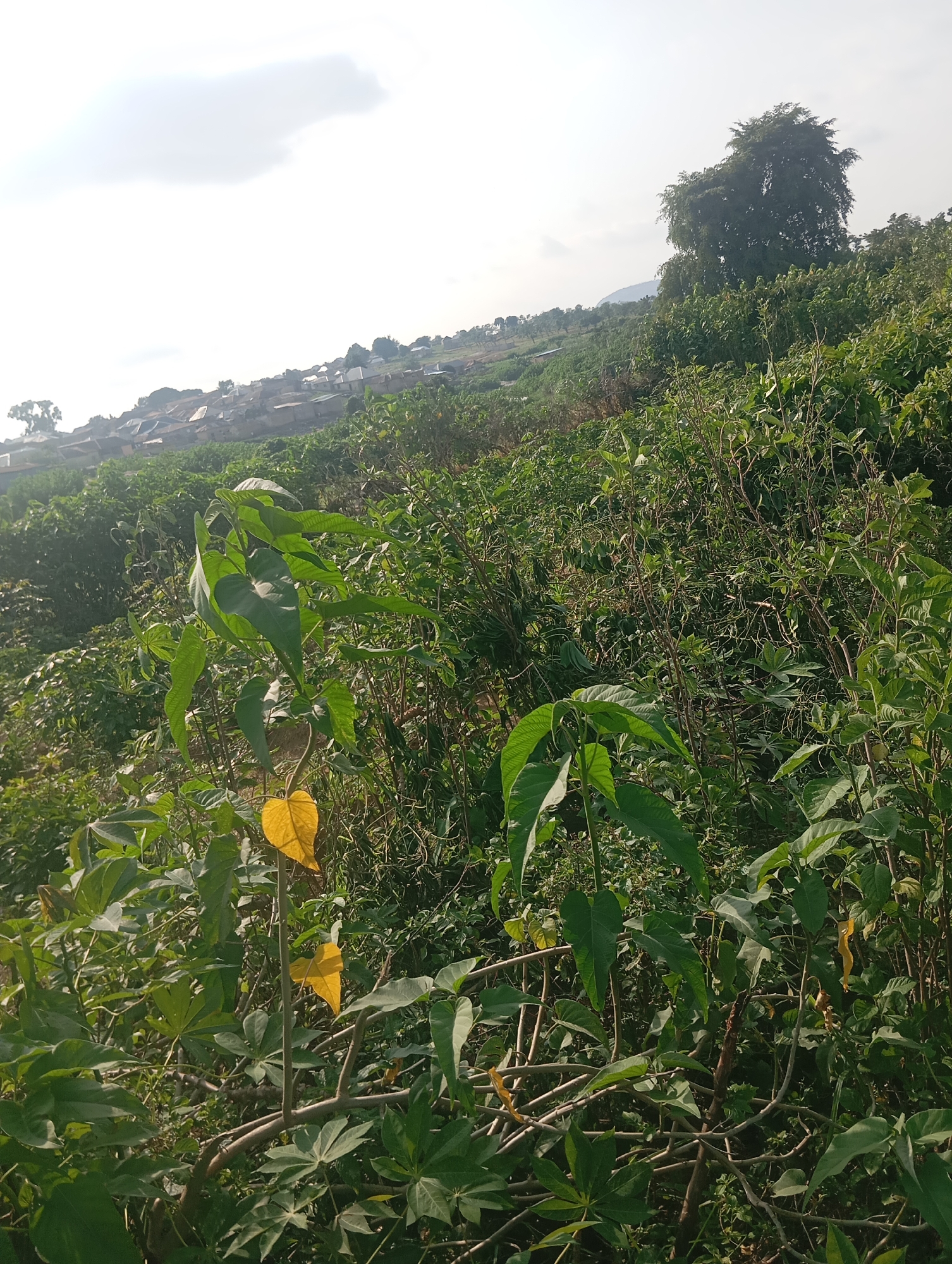
The image depicts a lush, overgrown landscape with a settlement visible on a hillside in the background. The foreground is dominated by dense green vegetation, including leafy plants and branches. Two yellow leaves are prominent on a plant in the mid-ground. In the distance, a collection of buildings with red and grey roofs is clustered on the slope. A large, mature tree with a full canopy stands to the right of the settlement, overlooking the area. The sky is overcast with diffused light. The scene appears to be a rural or semi-rural setting, consistent with the outskirts of Gwagwa, Nigeria.
Gwagwa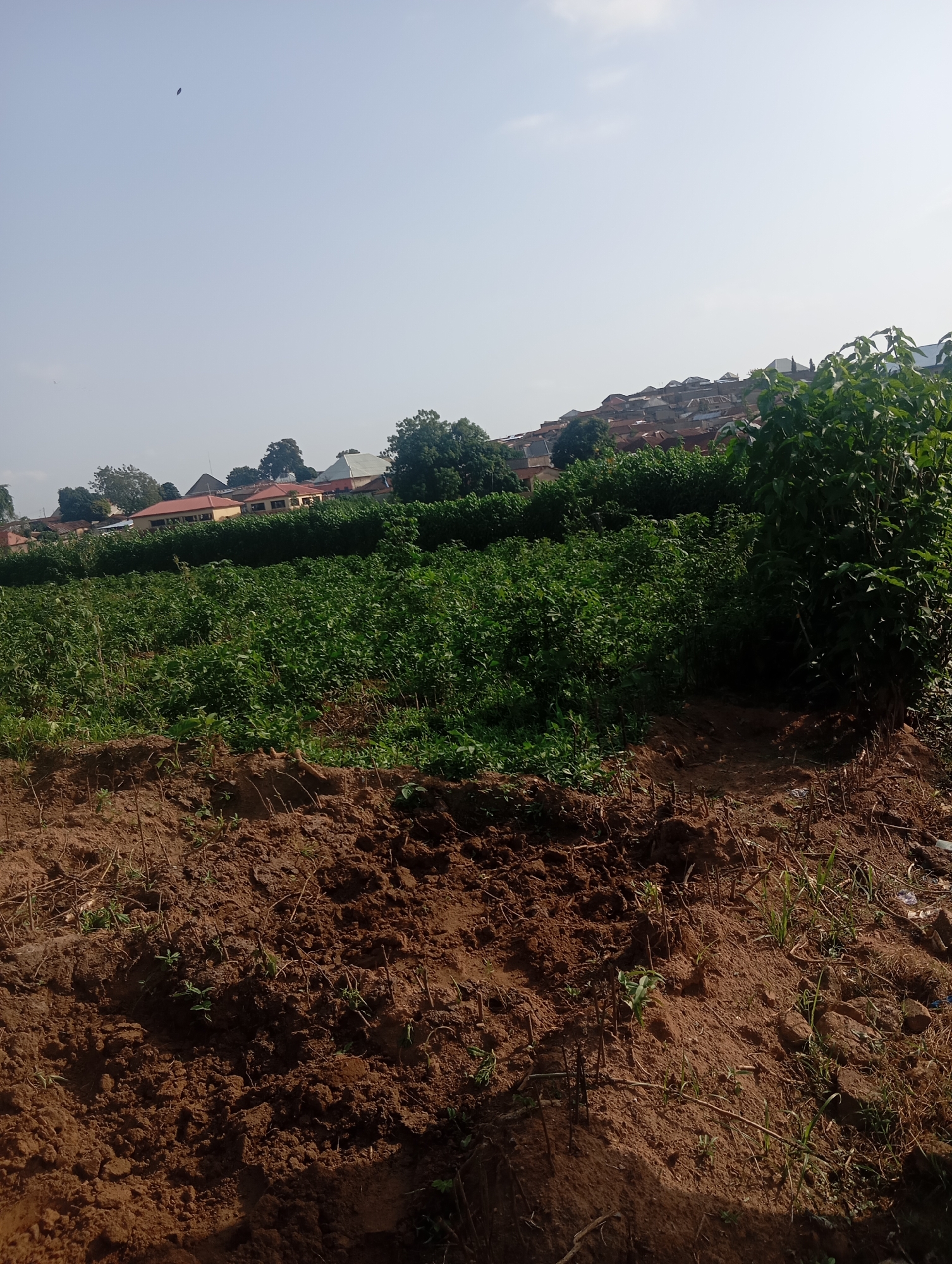
The image depicts a rural landscape in Gwagwa, Nigeria, characterized by a field of lush green crops in the mid-ground, suggesting agricultural activity. The foreground shows disturbed, reddish-brown soil, indicative of tilling or recent planting, with some scattered dry vegetation and thin, upright stalks. In the background, a cluster of residential buildings with terracotta-tiled roofs is visible, nestled amongst trees. The sky is clear and pale blue, with a faint object, possibly a kite or a distant bird, visible in the upper left quadrant. The overall scene suggests a semi-urban or peri-urban setting where agriculture is integrated with residential areas.
Gwagwa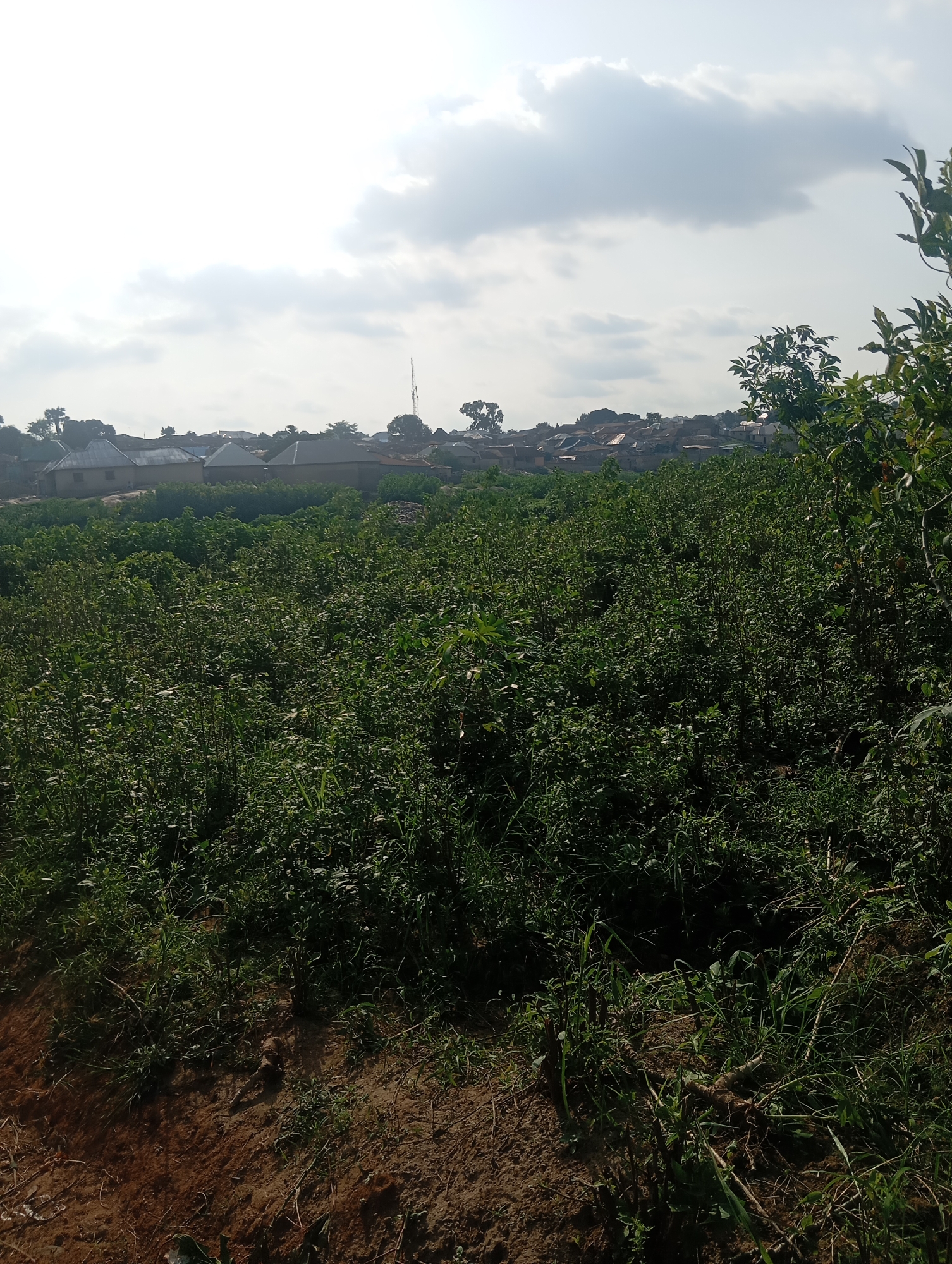
In Gwagwa, Nigeria, a vast expanse of lush green vegetation dominates the foreground, with individual plants and tall grasses creating a dense canopy. The terrain slopes upwards from the bottom of the frame. In the middle ground, a collection of buildings with metallic roofs are visible, interspersed with trees and other vegetation. A prominent telecommunications mast stands tall among the structures. The background reveals a hazy sky with scattered clouds. The overall scene depicts a rural or semi-urban settlement surrounded by abundant plant life.
Gwagwa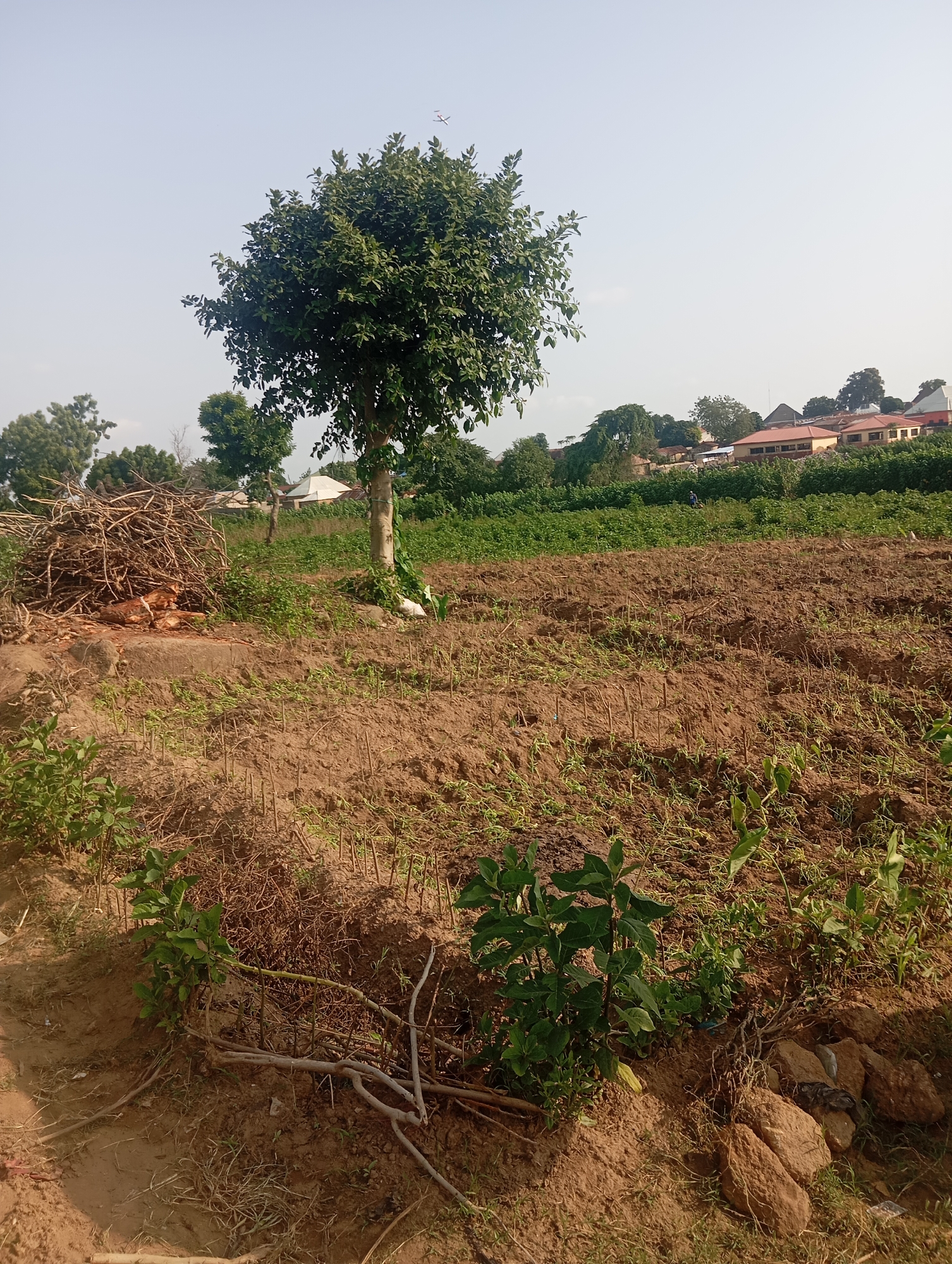
The image shows an outdoor scene in Gwagwa, Nigeria. A cleared field with rows of recently planted crops or stubble is in the foreground, with rich brown soil. To the left, a large pile of dry branches and logs is stacked near a concrete-like base. A single, mature tree with dense green foliage stands in the middle ground. Beyond the field, a line of lush green vegetation is visible, with several buildings, including houses with red roofs and other structures, situated on a slight incline in the background. The sky is clear and pale blue. An airplane is visible in the sky.
Gwagwa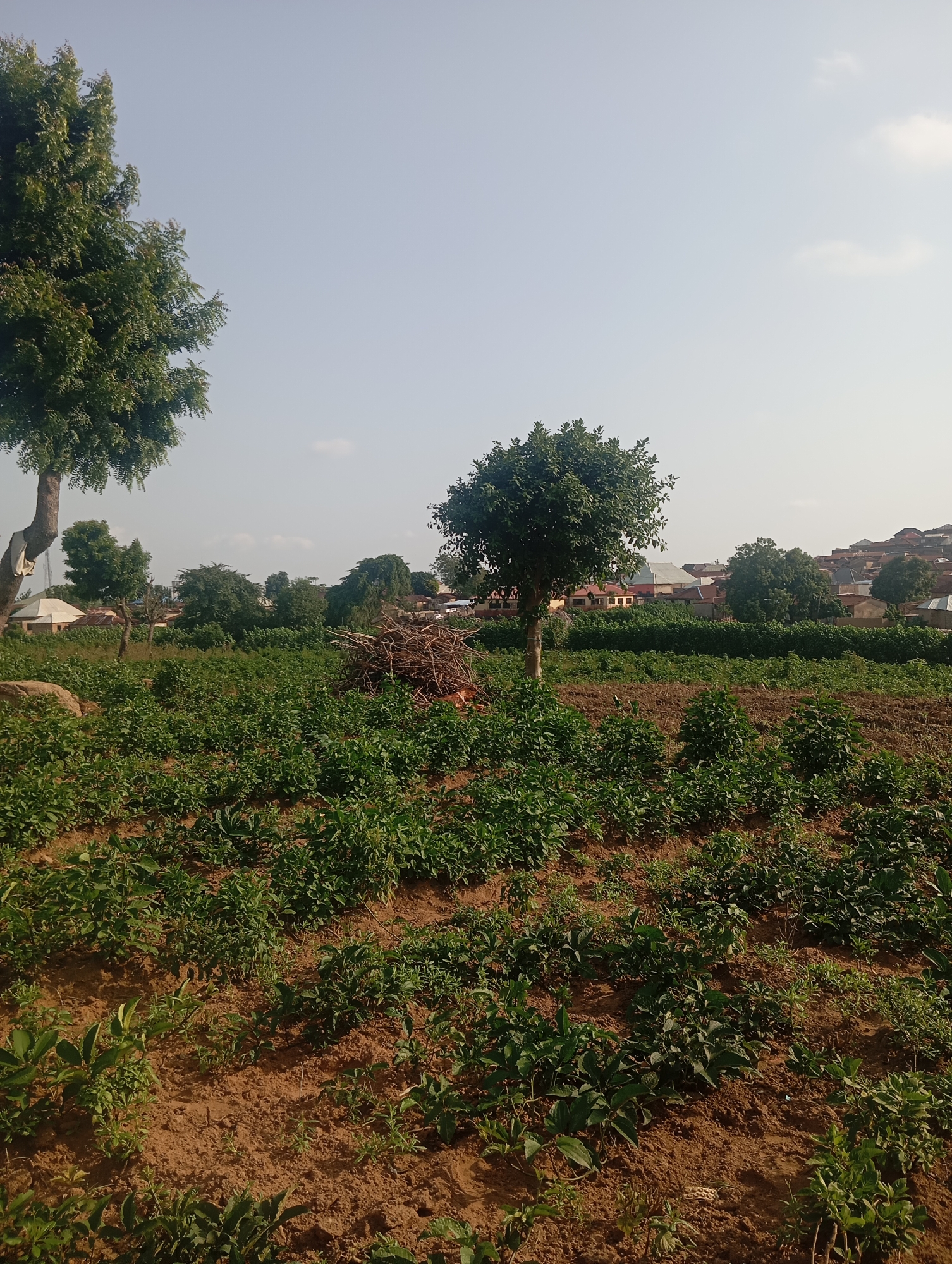
This media file depicts an outdoor scene in Gwagwa, Nigeria. The primary subjects are a field of green crops, several trees, and some scattered buildings in the background. The crops appear to be low-lying plants, possibly vegetables or legumes, growing in rows on reddish-brown soil. Two prominent trees stand out: one on the left with a thick, gnarled trunk and lush green foliage, and another in the middle ground with a more slender trunk and a rounded canopy. Beyond the field, a cluster of buildings with various roof colors, including red and grey, suggests a residential area or small village. A pile of dry branches or firewood is visible to the right of the middle ground tree. The activity taking place is not explicitly shown, but the cultivated field implies agricultural work or the passive growth of crops. The setting is rural, characterized by natural vegetation and open space. The time of day appears to be late morning or early afternoon, given the bright, diffused sunlight and the clear sky, though there are a few faint clouds present. The weather seems pleasant and likely warm, typical of the region. There is no visible text in the image. The overall impression is one of a rural landscape in Nigeria, likely a farming community.
Gwagwa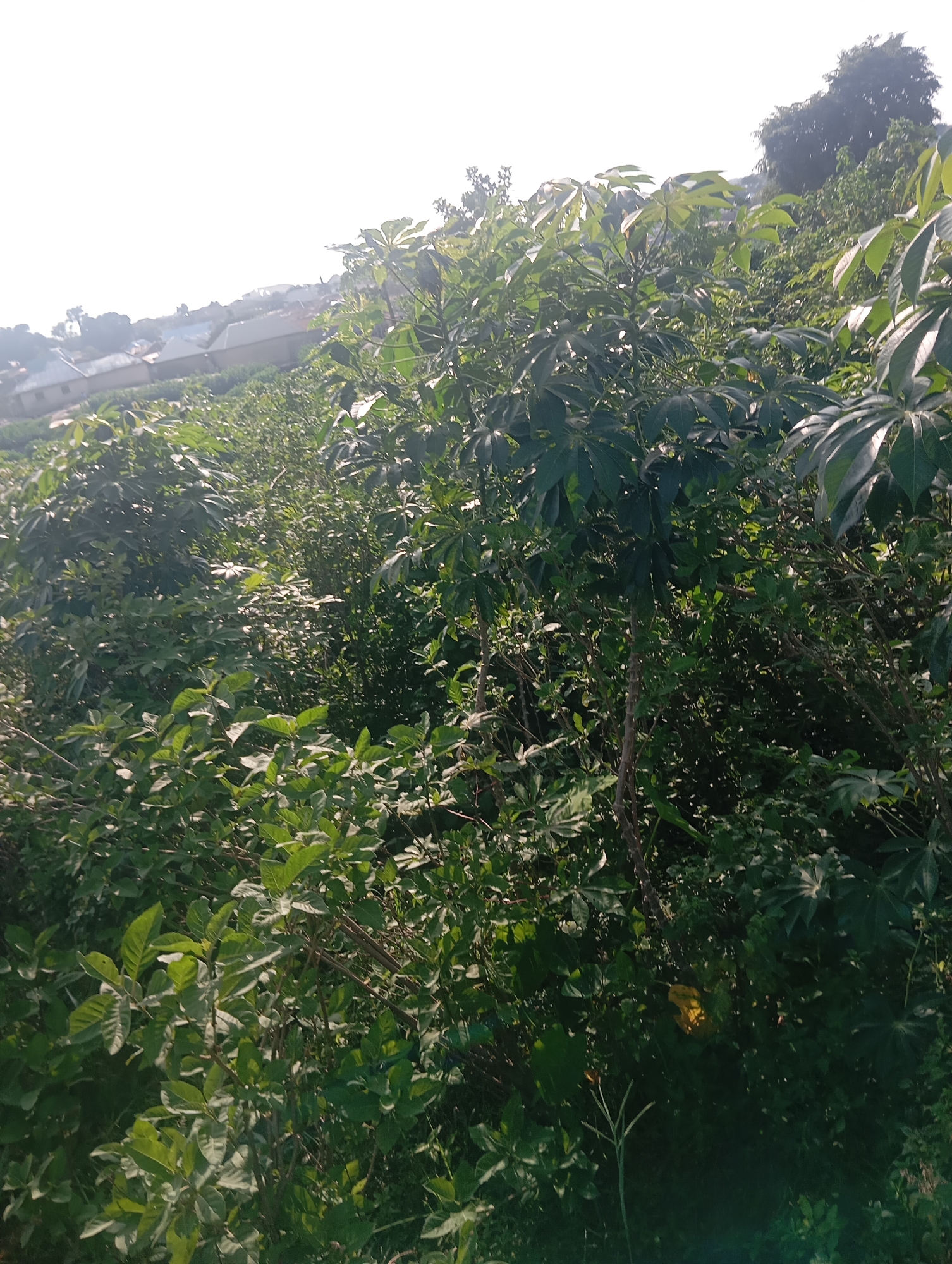
The image depicts a lush, green landscape filled with dense vegetation, primarily composed of leafy plants and trees. The foliage is rich and varied, suggesting a thriving natural environment. In the background, a cluster of buildings with reddish-brown roofs can be observed, interspersed with the green of the landscape, indicating a settlement or village. The sky is bright and appears to be a clear day with ample sunlight, casting shadows on the plants. The overall impression is one of a rural or semi-urban area with significant greenery. The location is identified as Gwagwa, Nigeria, implying an African setting characterized by tropical or subtropical vegetation. There are no people visible in the image, and no actions or interactions are depicted. The scene is static and focuses solely on the natural and built environment.
Gwagwa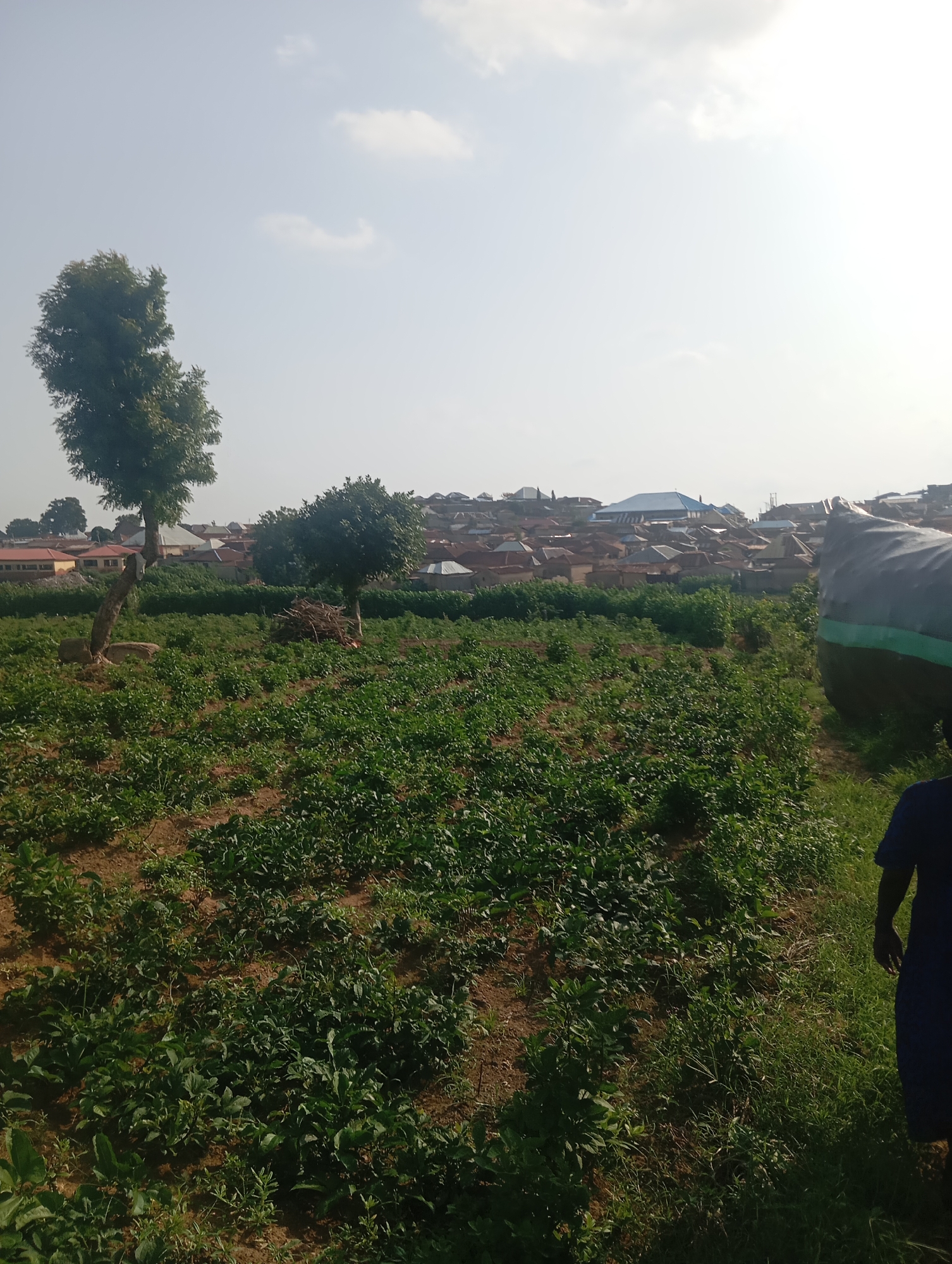
The image captures a rural or semi-rural landscape in Gwagwa, Nigeria, under a hazy sky with sparse clouds. In the foreground, a field of lush green crops, possibly legumes or leafy vegetables, covers the reddish-brown soil. The plants are densely packed, with some bare patches of earth visible. Dominating the mid-ground are two trees; one on the left is tall and slender with a trunk partially supported by a rock, and another on the right is shorter and bushier. Behind the trees, a pile of cut branches is stacked near the base of the right-hand tree. In the background, a cluster of buildings forms a village or town. The structures are predominantly made of brick with corrugated metal or tiled roofs in varying shades of brown, red, and blue. Some buildings appear to be residences, while others might be commercial or public spaces. A large, dark, cylindrical object, possibly a water tank or a large sack, is positioned on the right side of the image, partially obscuring the view of the town. On the far right edge of the image, a person wearing a dark blue robe is walking away from the camera, their back to the viewer. The scene suggests an agricultural setting adjacent to a populated area.
Gwagwa