Huejotzingo, Mexico
30 memories from Huejotzingo, Mexico

The image shows the interior of an airplane cabin with passengers seated. The perspective is from the aisle, looking forward towards the front of the plane. The overhead compartments are visible, with advertisements displayed on them. One advertisement reads "Conocer" and features an image of a vehicle. Another advertisement has "VIVO" and a picture of people. Control panels with buttons and air vents are mounted on the ceiling above the seats. The seats are upholstered in dark purple fabric. Several passengers are visible, some looking forward, others looking down at their phones or resting. The lighting appears to be artificial, consistent with an indoor setting. The overall atmosphere seems to be a typical commercial flight. Text visible includes "Conocer", "VIVO", and "MENICO Y QUA". Based on the location context provided, the flight is likely in or around Huejotzingo, Mexico.
Huejotzingo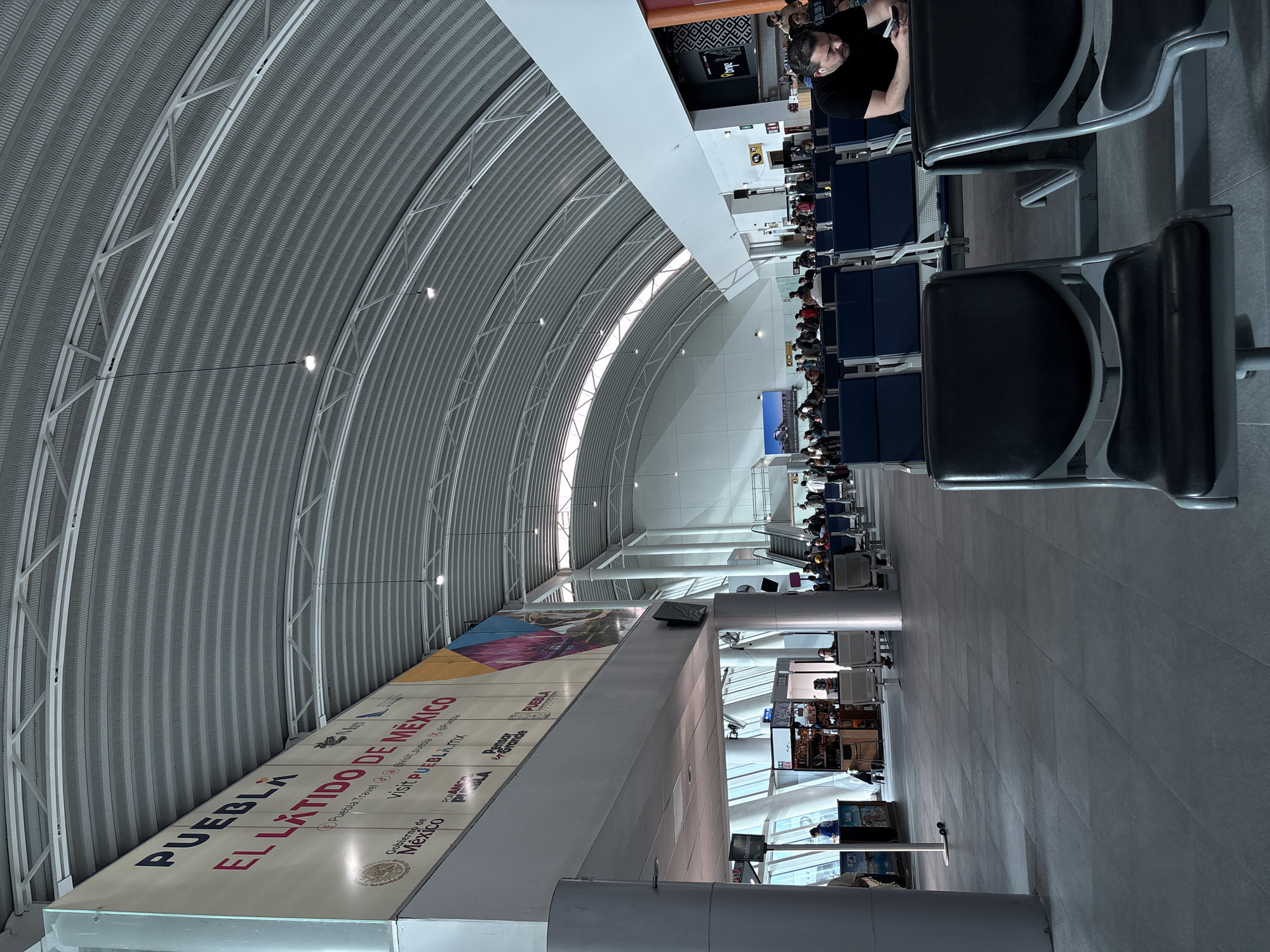
The image depicts the interior of an airport terminal, likely at Hermanos Serdán International Airport (PBC) in Huejotzingo, Mexico, given the visible "Puebla" signage. The terminal features a large, arched metal roof with visible structural beams and suspended lighting. The floor is tiled in a large, grey pattern. In the foreground, rows of empty dark-colored airport seating are visible. Further back, a man in a black t-shirt is seated, looking at his phone. Other passengers are seated in rows of blue chairs in the middle ground, and some are standing. Various kiosks and service counters are visible along the left and right sides of the terminal. A large banner with "PUEBLA EL LÁTIDO DE MÉXICO" (Puebla, the Heartbeat of Mexico) is prominently displayed on the left side, featuring the Mexican coat of arms and tourism information. Sunlight streams in from large windows on the left, illuminating the space. An escalator is visible in the background on the right.
Huejotzingo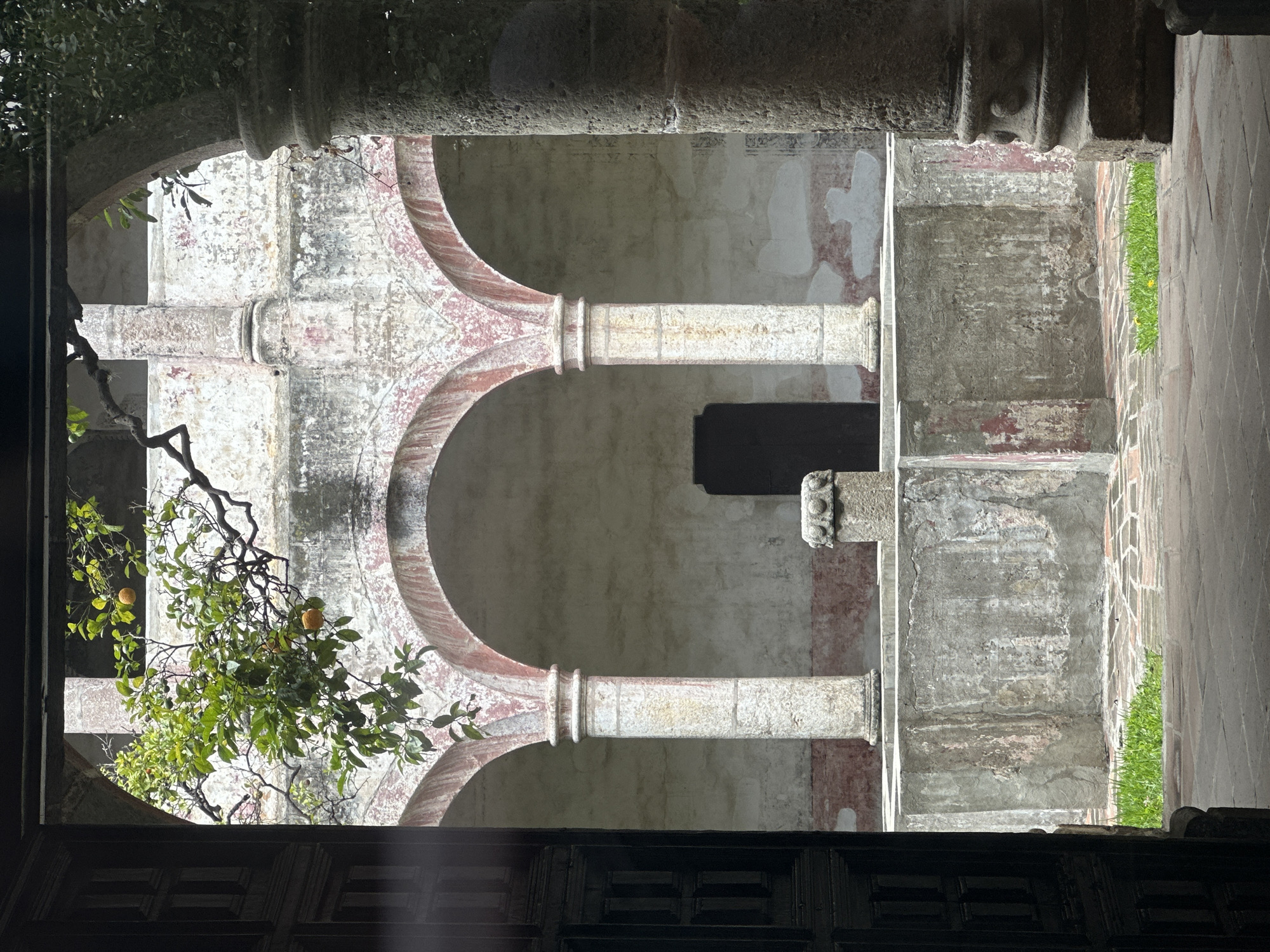
The image shows an interior courtyard with an arched walkway supported by stone columns. The walls are weathered and show signs of age, with peeling paint and a reddish hue around the arches. A branch from a citrus tree hangs into the courtyard, bearing several small, round fruits, likely oranges. In the foreground, a dark wooden door is partially visible on the left. The courtyard floor is paved with terracotta tiles, and a small patch of bright green grass with a yellow flower grows in the center. In the background, a dark doorway is visible beneath one of the arches. The scene suggests a historical or monastic setting, possibly located in Huejotzingo, Mexico, given the architectural style and presence of fruit-bearing trees common in the region. The lighting is soft and diffused, indicating an overcast day or a shaded area. There are no people visible in the image.
Huejotzingo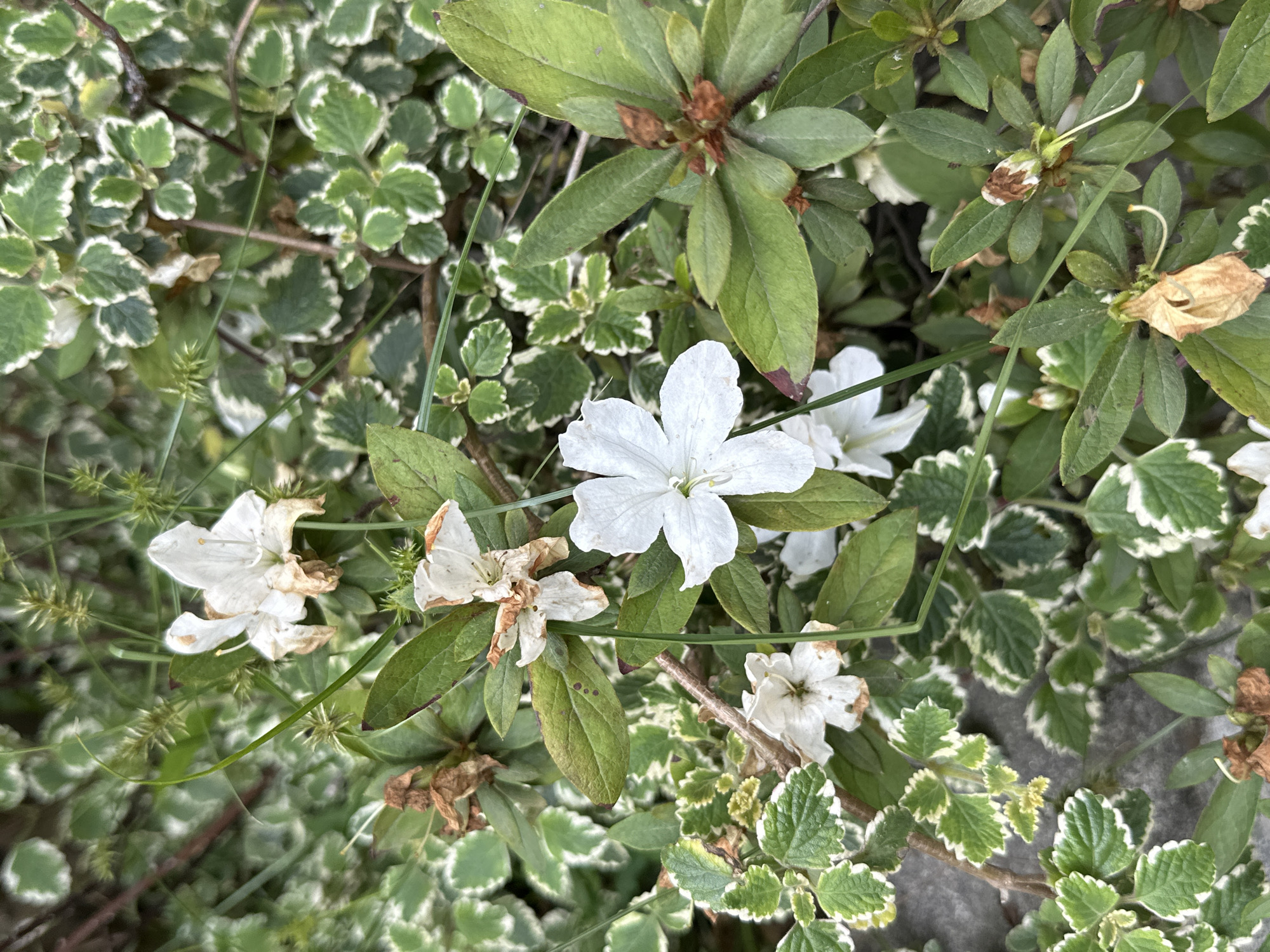
In Huejotzingo, Mexico, an overhead shot reveals a dense, naturalistic ground cover with a variety of green foliage. The dominant features are several white azalea flowers, some in full bloom and others partially withered, interspersed with the variegated green and white leaves of another plant. The leaves of the azalea are dark green and elongated, while the other plant's leaves are smaller, rounded, and possess a distinct white margin. Thin, dry, brown leaves are scattered among the green, indicating the passage of time or environmental stress. The scene is composed of natural elements, with no humans or animals present. The overall impression is of a somewhat unkempt but thriving garden bed, with elements of both new growth and decay.
Huejotzingo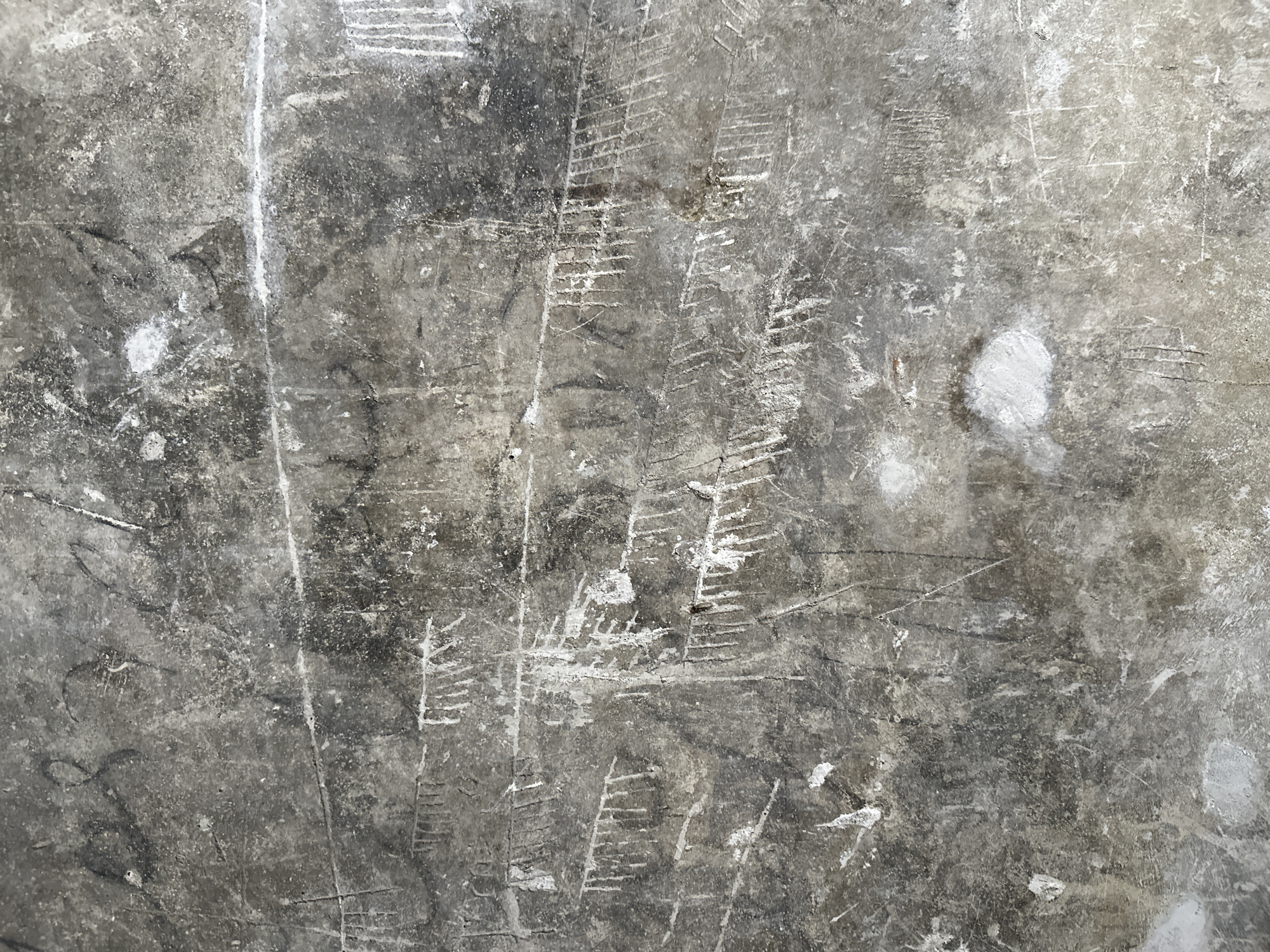
The image displays a close-up view of a textured, weathered concrete surface, likely a wall or floor. The surface is predominantly gray with variations in tone, indicating age and exposure. There are numerous markings on the concrete, appearing as scratches, lines, and smudges. Some of these markings are lighter, suggesting they were made with a hard object, possibly a sharp tool or by abrasion. There are also darker smudges, which could be dirt, grime, or old paint. In some areas, there are accumulations of white material, possibly plaster or chalk dust, which stand out against the darker concrete. The overall impression is one of an aged and possibly neglected surface bearing the marks of time and human activity. The location of Huejotzingo, Mexico, suggests this concrete surface could be part of historical architecture or an everyday urban structure. Without further context or visible features like signage or distinct architectural elements, it's impossible to specify the exact location within Huejotzingo.
Huejotzingo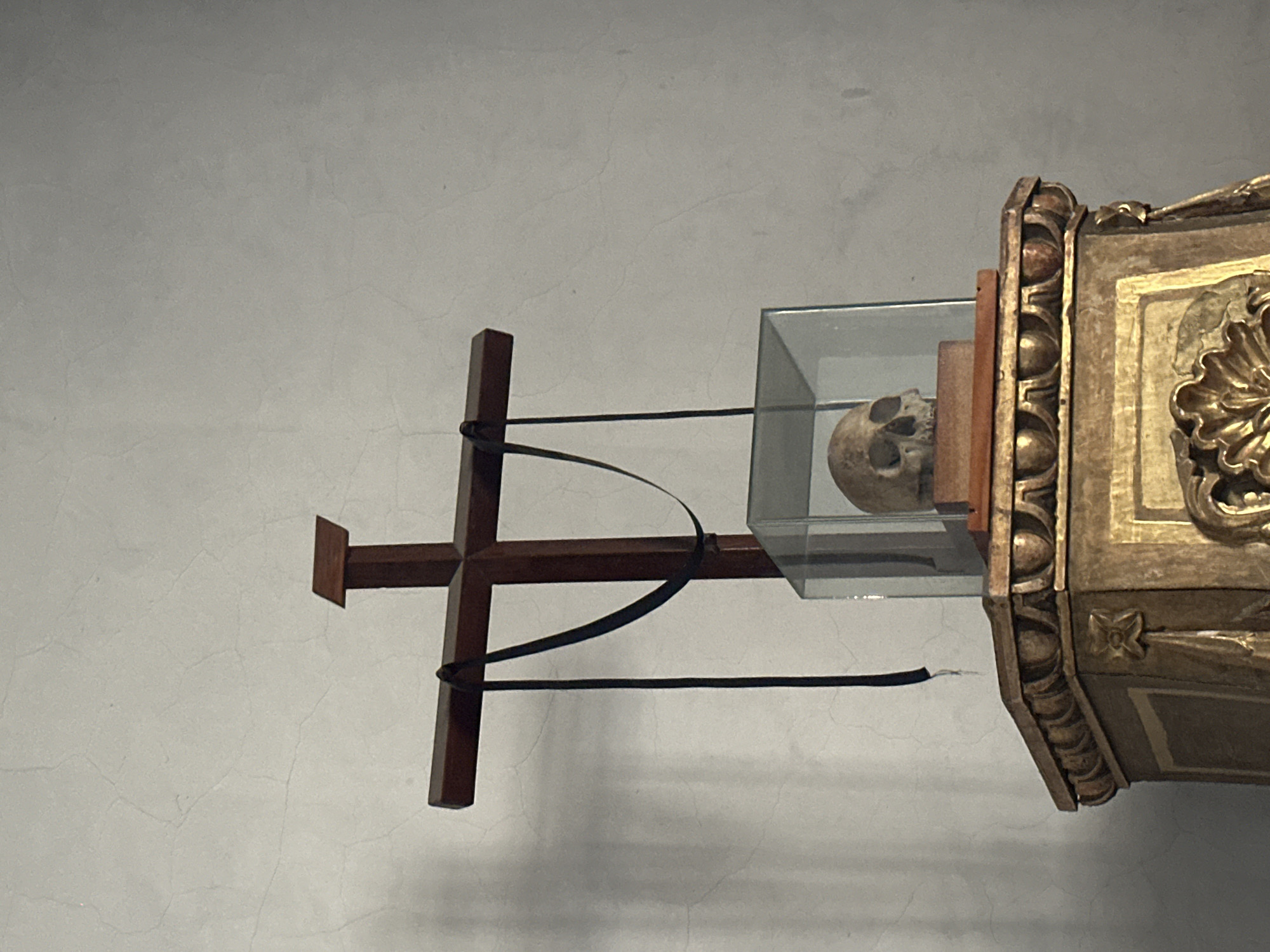
This image depicts a wooden cross with two black ribbons hanging from it, placed atop an ornate, gold-colored pedestal. In front of the cross, a human skull is displayed inside a glass case, resting on a wooden block. The background is a textured, light-colored wall. The scene is located in the San Miguel Arcángel church in Huejotzingo, Mexico, likely within a reliquary or devotional display.
Huejotzingo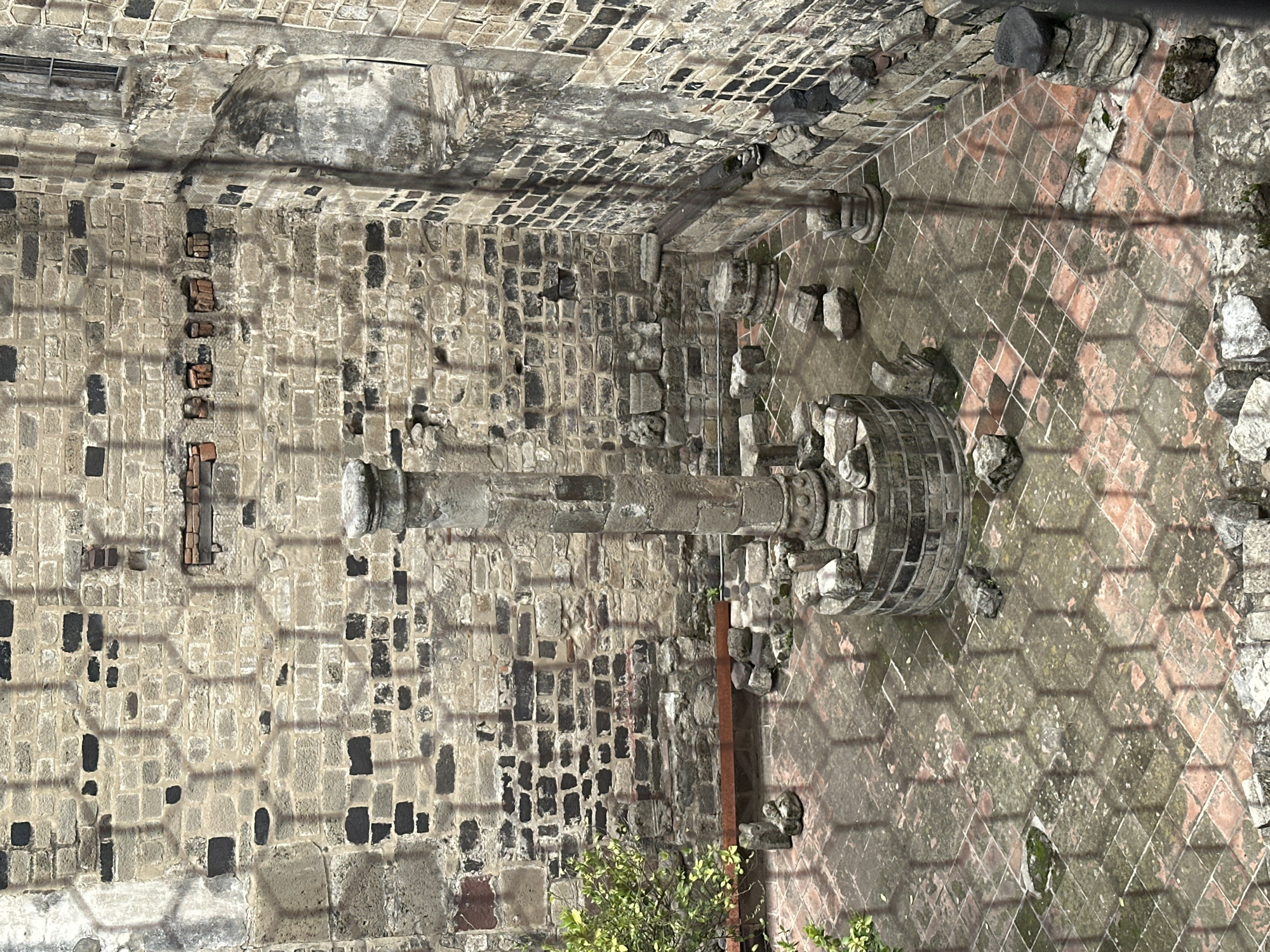
The image shows a courtyard at the Ex-Convento de San Miguel Arcángel in Huejotzingo, Mexico. A large stone column stands in the center of the courtyard, surrounded by a circular base constructed from bricks. Scattered around the courtyard are various stone fragments, some appearing to be architectural remnants. The walls of the courtyard are made of stone and brick, showing signs of age and weathering. The ground is paved with reddish-brown tiles, some of which are covered in moss or debris. A small green bush is visible on the left side of the frame, near the wall. A faint hexagonal pattern, likely a shadow from a fence or grate, is superimposed over the scene. There are no people visible in the image. The overall impression is one of an ancient, possibly archaeological, site within the historic convent.
Huejotzingo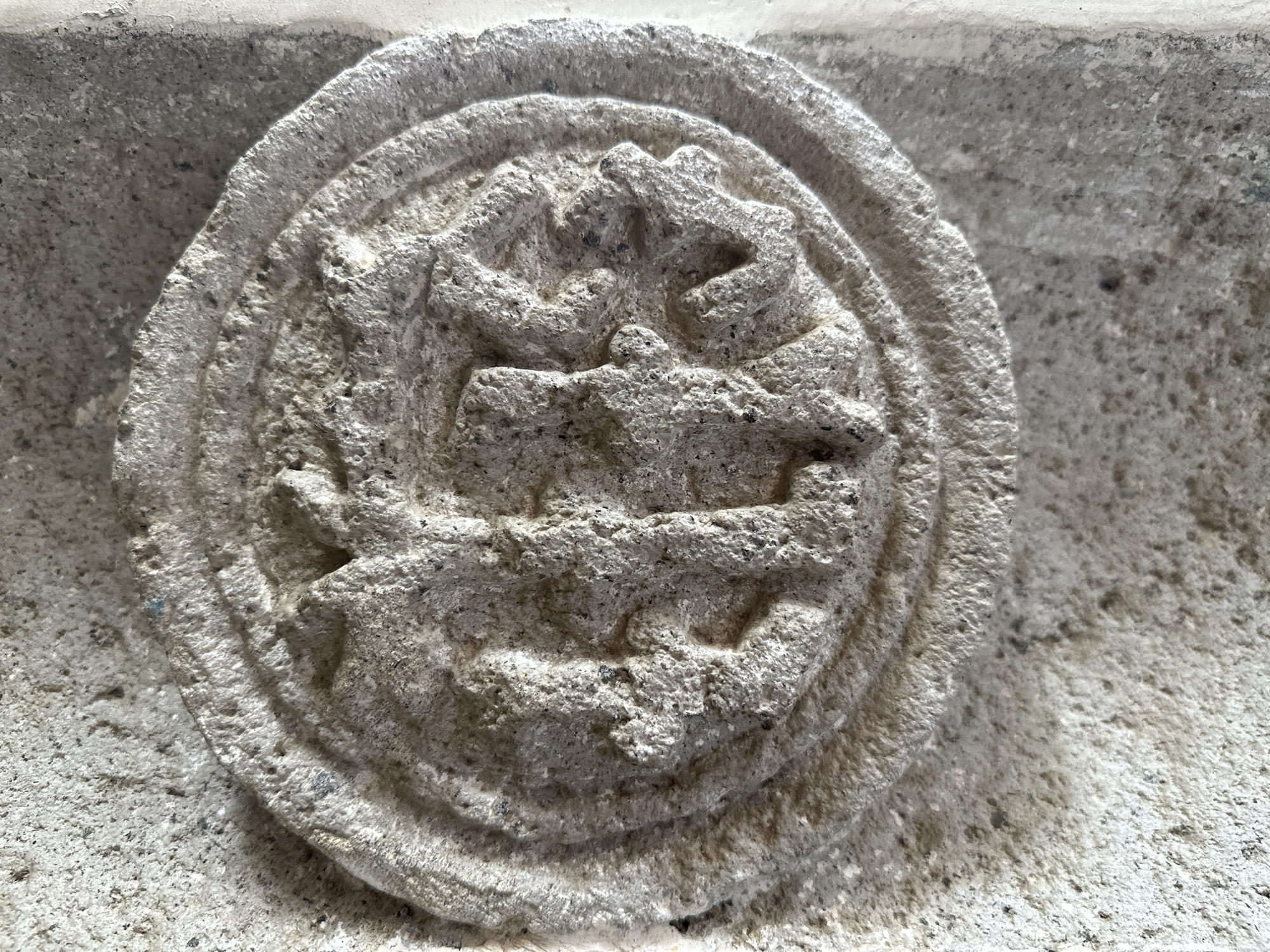
A close-up, overhead shot captures a circular, bas-relief carving made of light-colored stone, embedded in a rough, textured stone wall. The carving appears weathered and displays a central, indistinct figure or symbol with circular elements around it. The wall itself is composed of a coarse, speckled material, with lighter and darker shades of gray. The lighting casts shadows that highlight the texture and depth of the carving and the surrounding wall. This artifact is located on the facade of the Ex-Convento Agustino de San Miguel Arcángel in Huejotzingo, Mexico.
Huejotzingo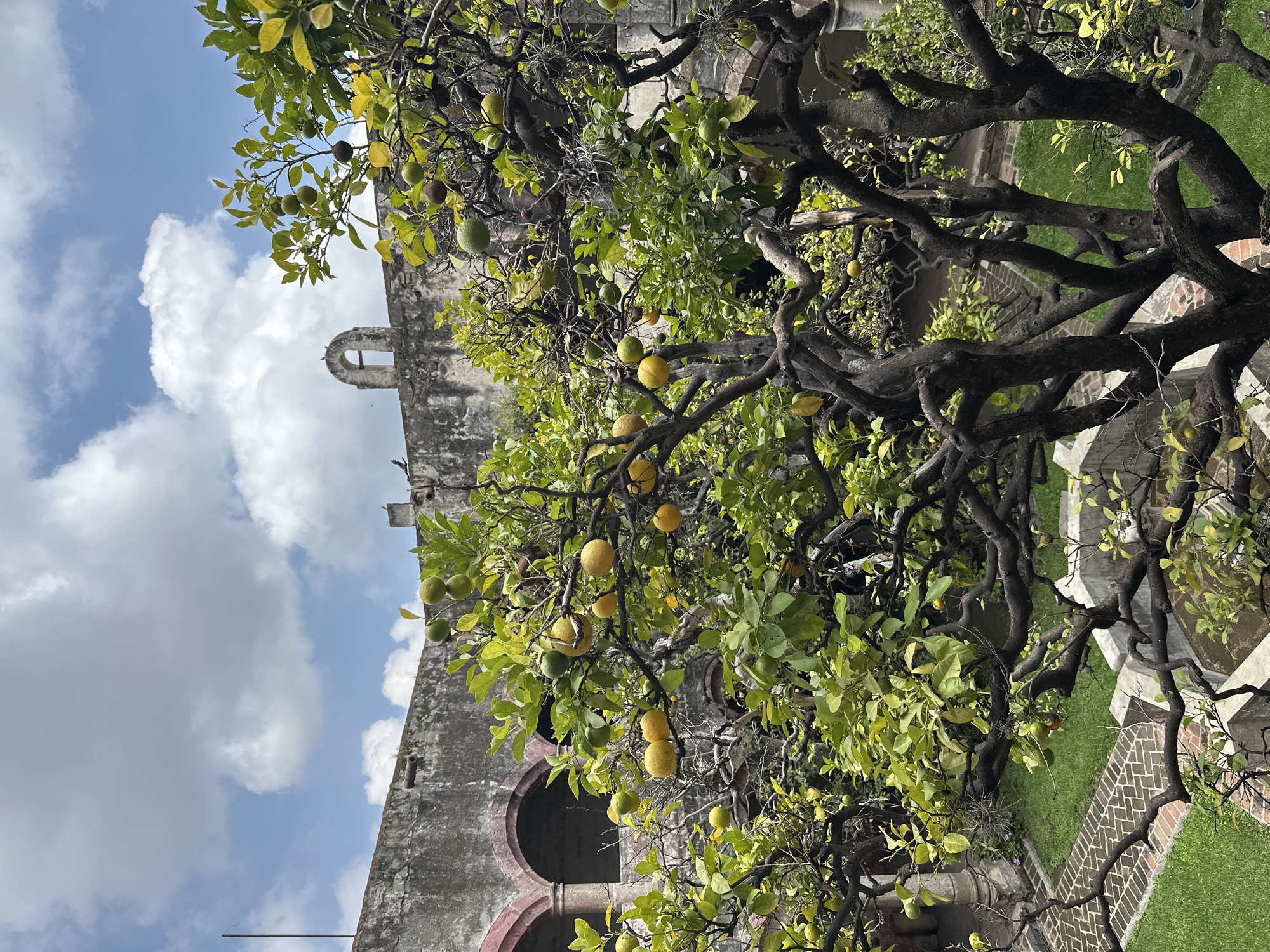
The image captures an interior courtyard in Huejotzingo, Mexico, likely within the historic Ex-convento de San Miguel Arcángel. A mature citrus tree, heavily laden with both green and yellow fruits, dominates the foreground. Its gnarled, dark branches spread extensively, creating a dense canopy of green leaves. The background reveals the characteristic architecture of the ex-convent. A textured, weathered stone wall with arched openings frames the courtyard. Above the wall, a section of the sky is visible, with scattered white clouds against a pale blue backdrop. One of the crops reveals a distinctive arched window or niche atop the stone structure. The ground within the courtyard is covered in neatly mown green grass, with a brick pathway visible in the lower left corner, bordered by low concrete walls. The overall impression is one of a serene, historic space with lush natural elements.
Huejotzingo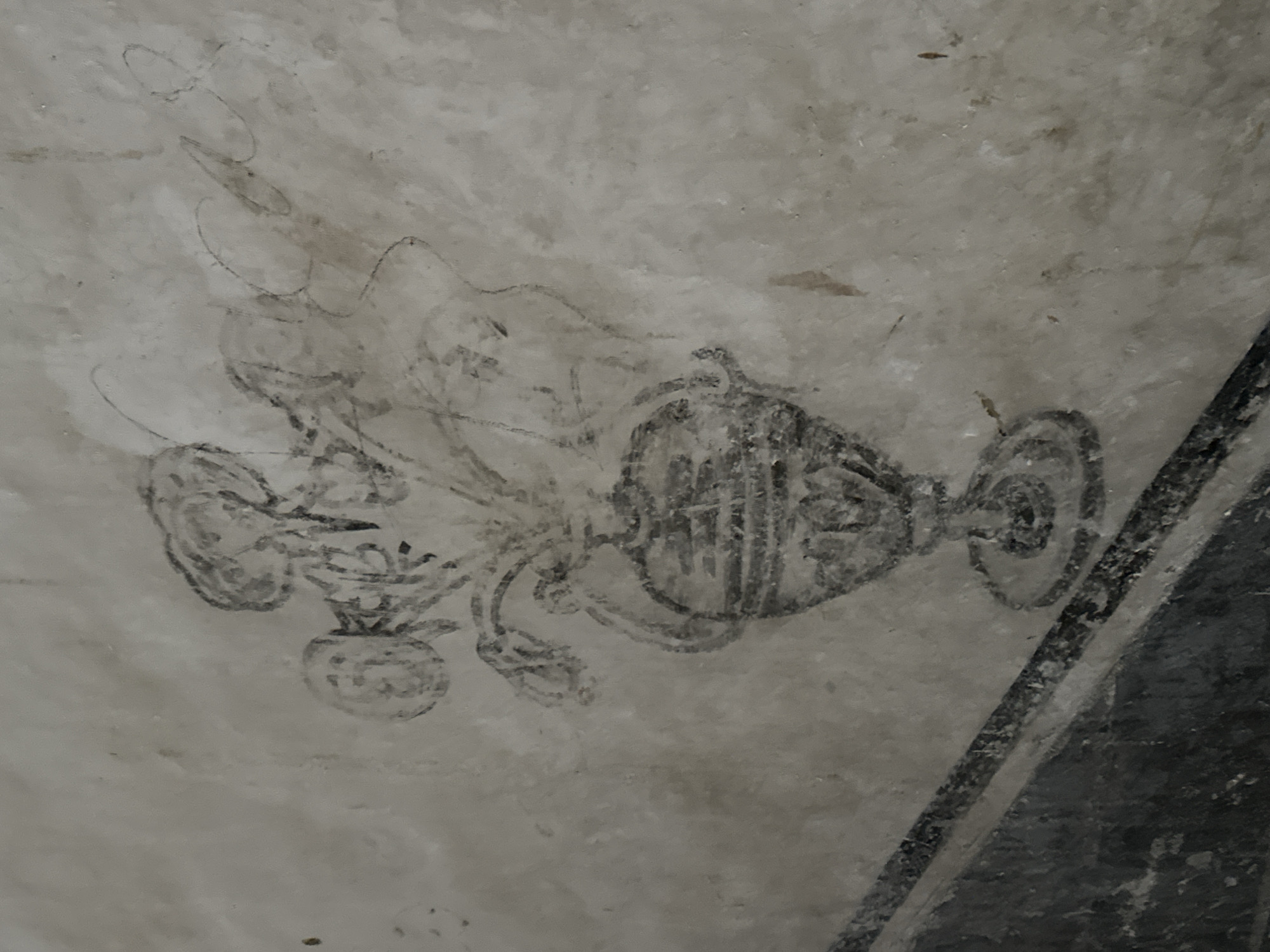
This image shows a black and white drawing on a stucco wall. The drawing depicts a vase of flowers. The vase is ornate with horizontal lines and a decorative base. The flowers above the vase are rendered with loose, sketchy lines. To the left of the vase, a dark, diagonal band runs across the bottom of the image, possibly representing a table or shelf. The wall itself appears aged and textured, with some faint smudges and discolorations. This drawing is located in the Convent of San Miguel Arcángel in Huejotzingo, Mexico.
Huejotzingo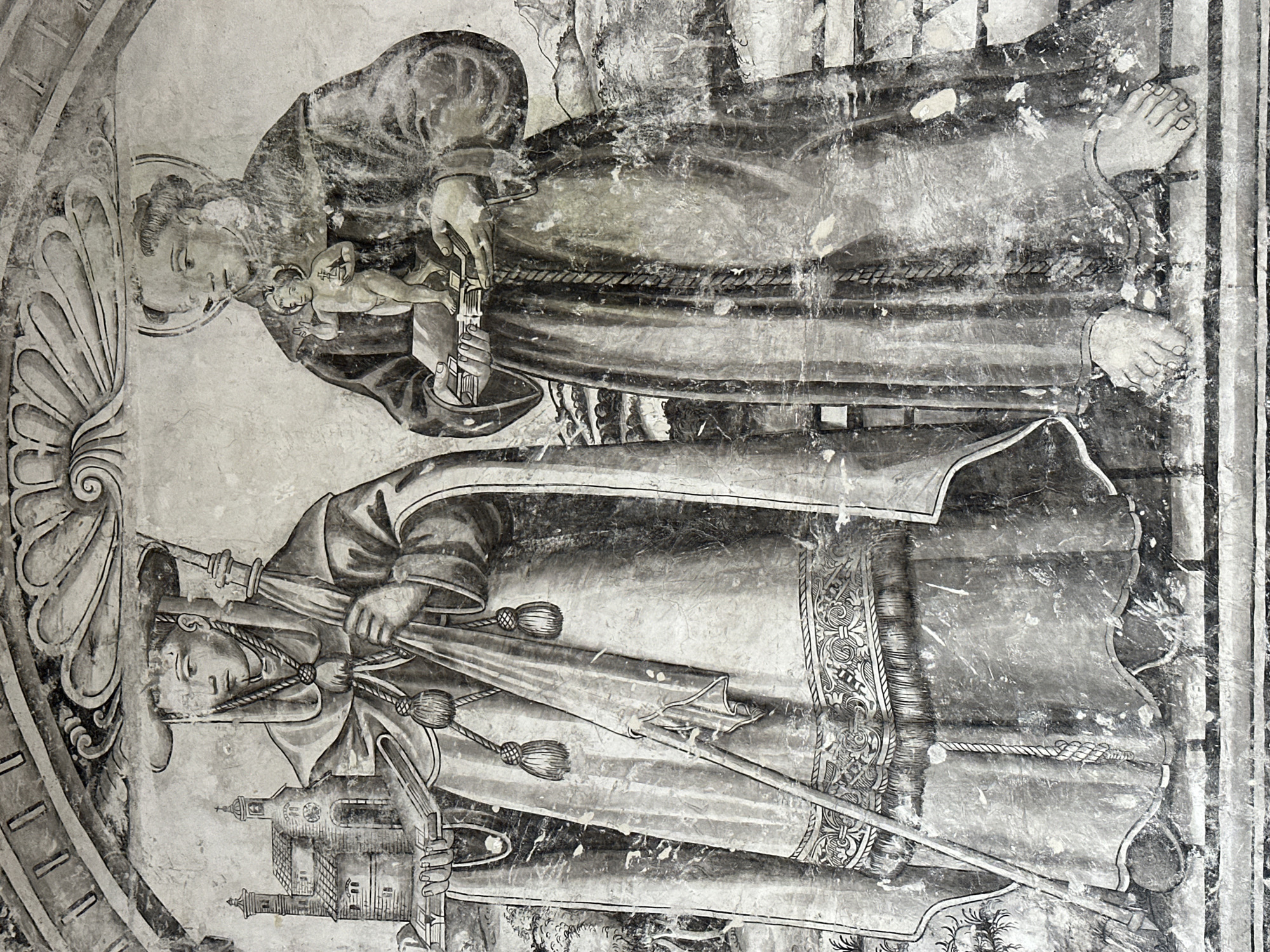
The image is a fresco depicting two figures in religious attire. The figure on the left wears a wide-brimmed hat and a hooded robe with decorative tassels and a patterned belt. This figure holds a staff in their right hand and what appears to be a miniature church or building in their left hand. To the left of this figure is a depiction of a two-towered church with a cross on top. The figure on the right wears a hooded robe and a halo around their head. This figure holds a book in their left hand and a small naked child with a cross in their right hand. The background of the fresco includes a landscape with trees and hills. The fresco is located in the *Ex-convento de San Miguel Arcángel* in Huejotzingo, Mexico.
Huejotzingo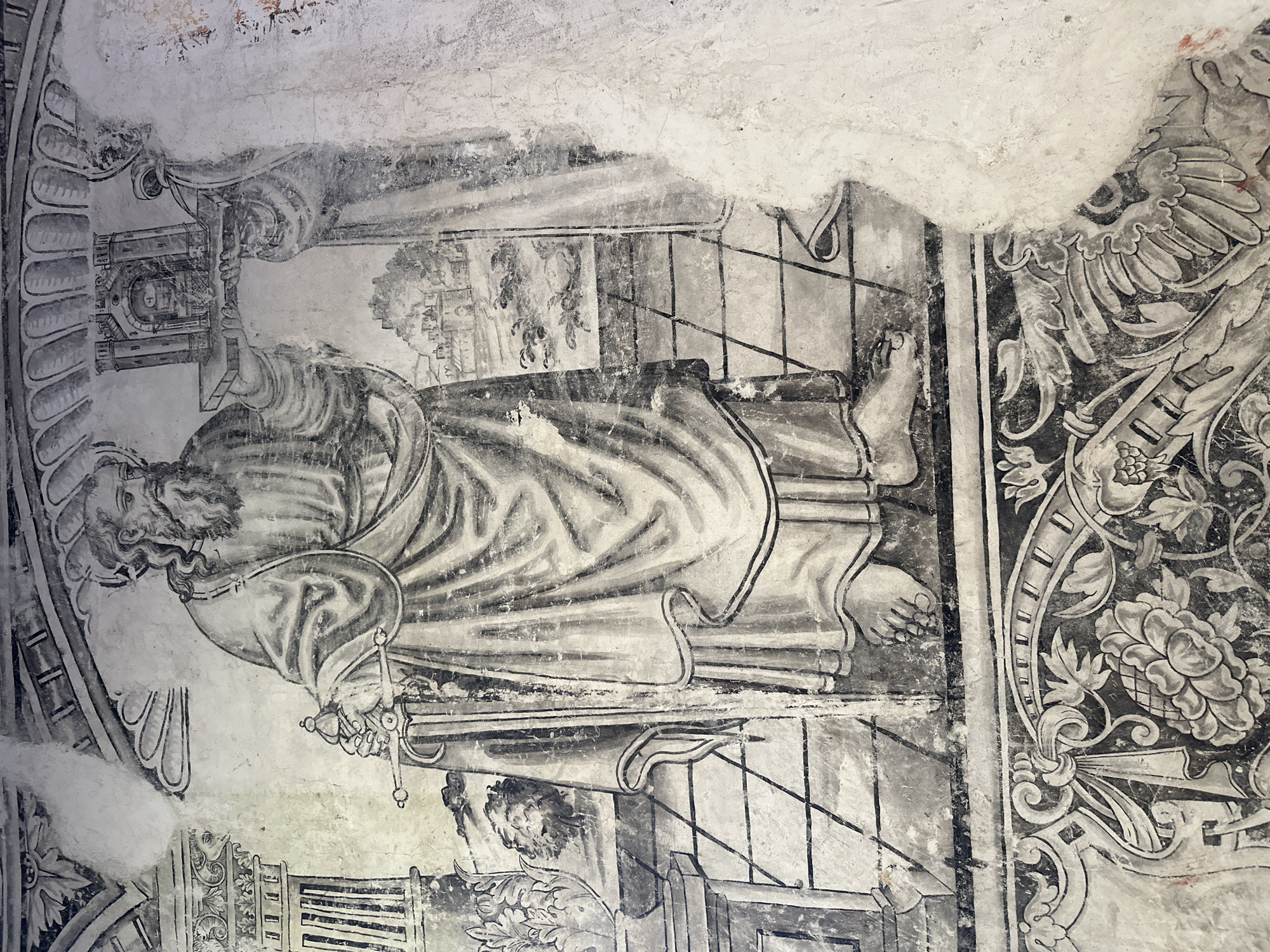
The image is a photograph of a faded fresco on a wall in Huejotzingo, Mexico. The fresco depicts a male figure with a beard, wearing a toga and sandals. He holds a sword in his left hand and a miniature architectural structure in his right. The figure stands on a patterned floor within a shallow architectural setting, indicated by columns and arches. A second, partially obscured figure is visible to the right. In the background, a landscape with buildings and vegetation is depicted. The lower portion of the fresco features an ornamental border with floral motifs. The fresco is in a state of deterioration, with large areas of the plaster missing, revealing the underlying wall. The colors are monochromatic, rendered in shades of gray and black.
Huejotzingo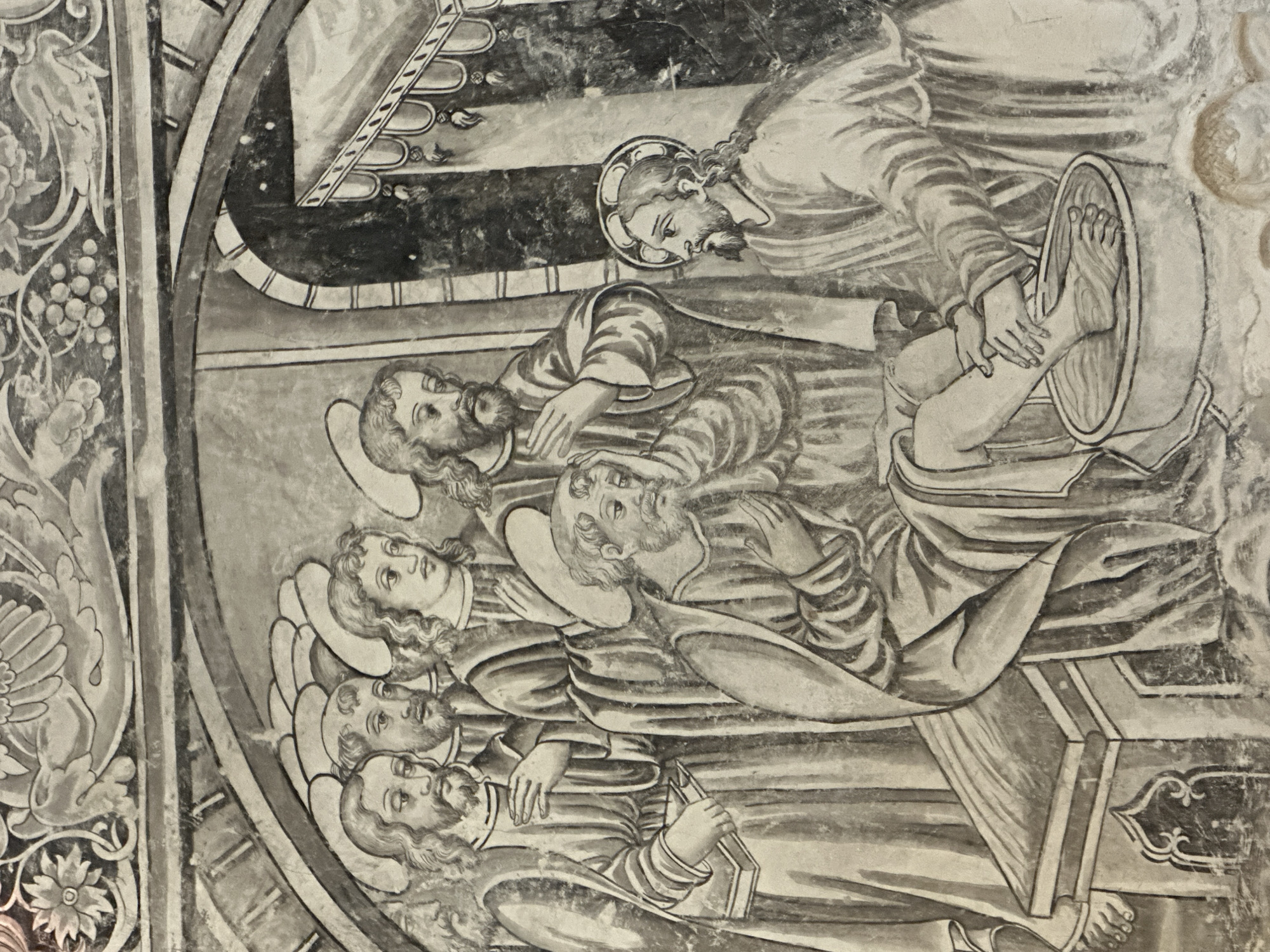
This is a fresco depicting Jesus washing the feet of Saint Peter. Jesus, with a halo, is kneeling and holding Peter's foot, which is in a basin of water. Peter, also with a halo, is sitting and looking down at his foot with an expression of surprise or humility. Around them stand other figures, presumably apostles, also with halos, dressed in robes. The scene takes place within an architectural setting that includes an archway and a curtained alcove. The fresco is located in the Augustinian convent of San Miguel in Huejotzingo, Puebla, Mexico.
Huejotzingo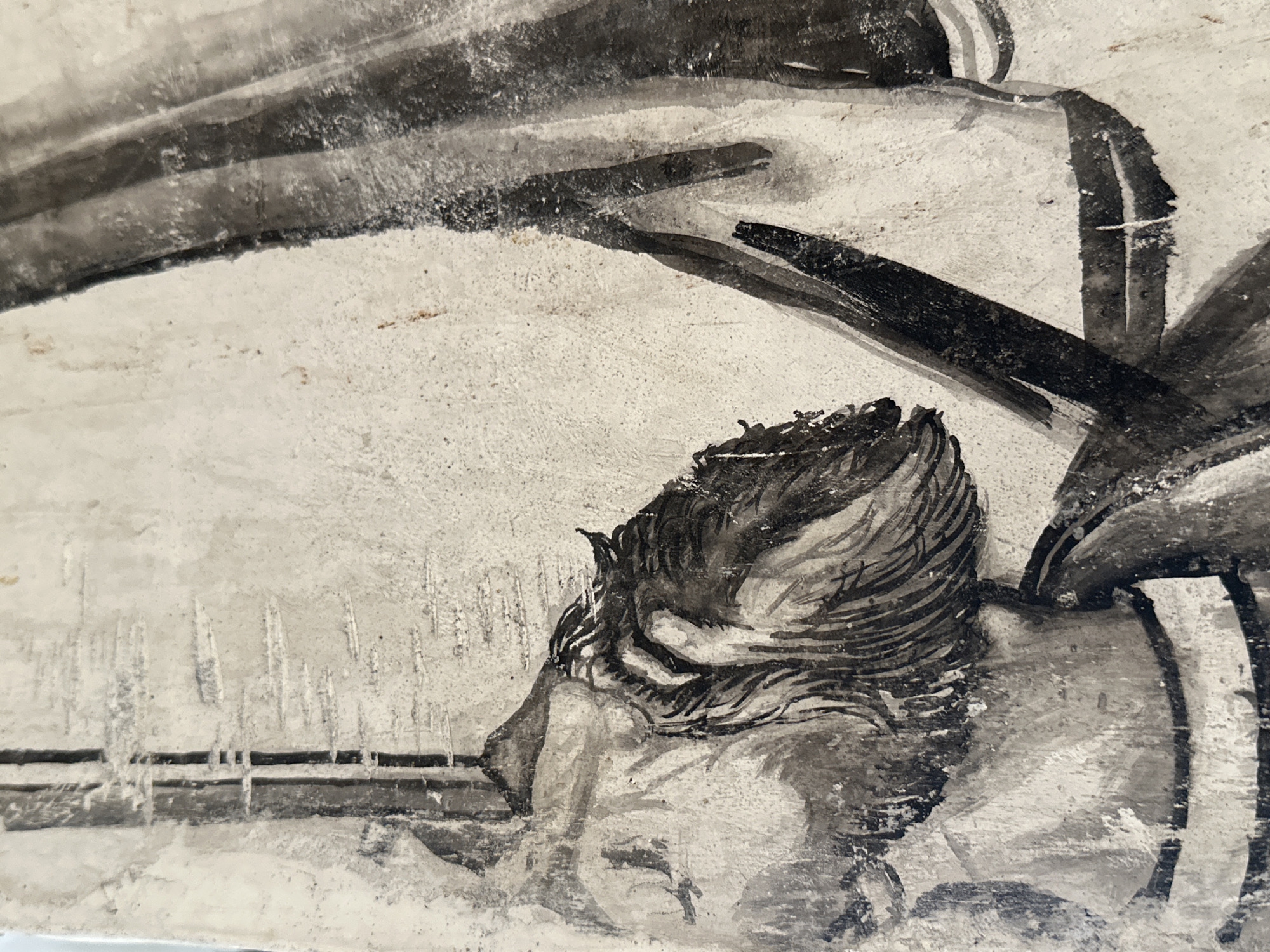
The image shows a detail of a mural painting, likely depicting a historical or religious scene. The style is a fresco, characterized by its muted color palette of grays, blacks, and whites, with some hints of earth tones. The texture of the wall is visible, showing imperfections and the granular nature of the plaster. In the foreground, the head and shoulders of a figure are depicted. The figure has dark, textured hair, rendered with loose brushstrokes. The face is partially obscured, but the profile suggests a downward gaze. The figure appears to be wearing clothing with striped details. To the right of the figure, a dark, draped element, possibly fabric or a garment, is shown with broad, sweeping brushstrokes, creating a sense of volume and movement. Behind the figure, a vertical structure, possibly a pillar or a column, is present, with linear markings that could represent wood grain or a decorative pattern. The background is a light, textured surface, suggestive of a wall. This mural is located in the former Franciscan monastery of San Miguel Arcángel in Huejotzingo, Puebla, Mexico. The monastery, founded in the 16th century, is renowned for its well-preserved architecture and significant collection of colonial-era murals, some of which are among the oldest in Mexico.
Huejotzingo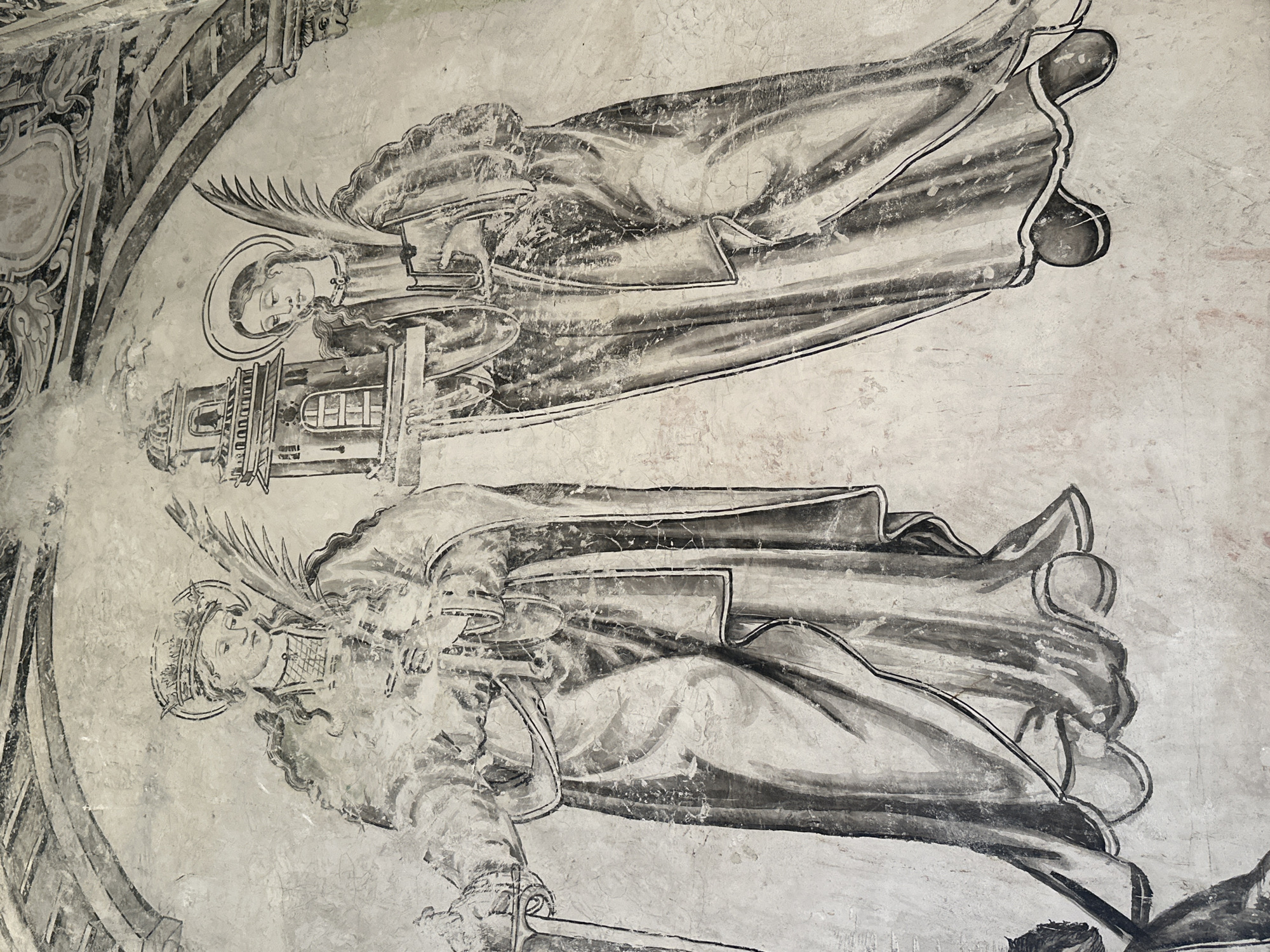
This is a fresco painting located in the atrium of the Convent of San Miguel Arcángel in Huejotzingo, Mexico. The painting depicts two female figures, likely saints or religious figures, rendered in a monochromatic palette of black and grey. They are depicted standing, facing slightly towards each other, and are elaborately robed in draped garments. Both figures wear halos, suggesting their religious significance. The figure on the left holds a palm frond and a cross-like object. The figure on the right holds a palm frond and a small building, possibly a church or bell tower, in her left hand, and a book in her right. The background is a plain, textured wall, consistent with a fresco medium, and above the figures, architectural elements of the fresco, such as arched structures and decorative motifs, are visible, also rendered in grey tones. The painting shows signs of age and wear, with visible cracks and fading in the plaster.
Huejotzingo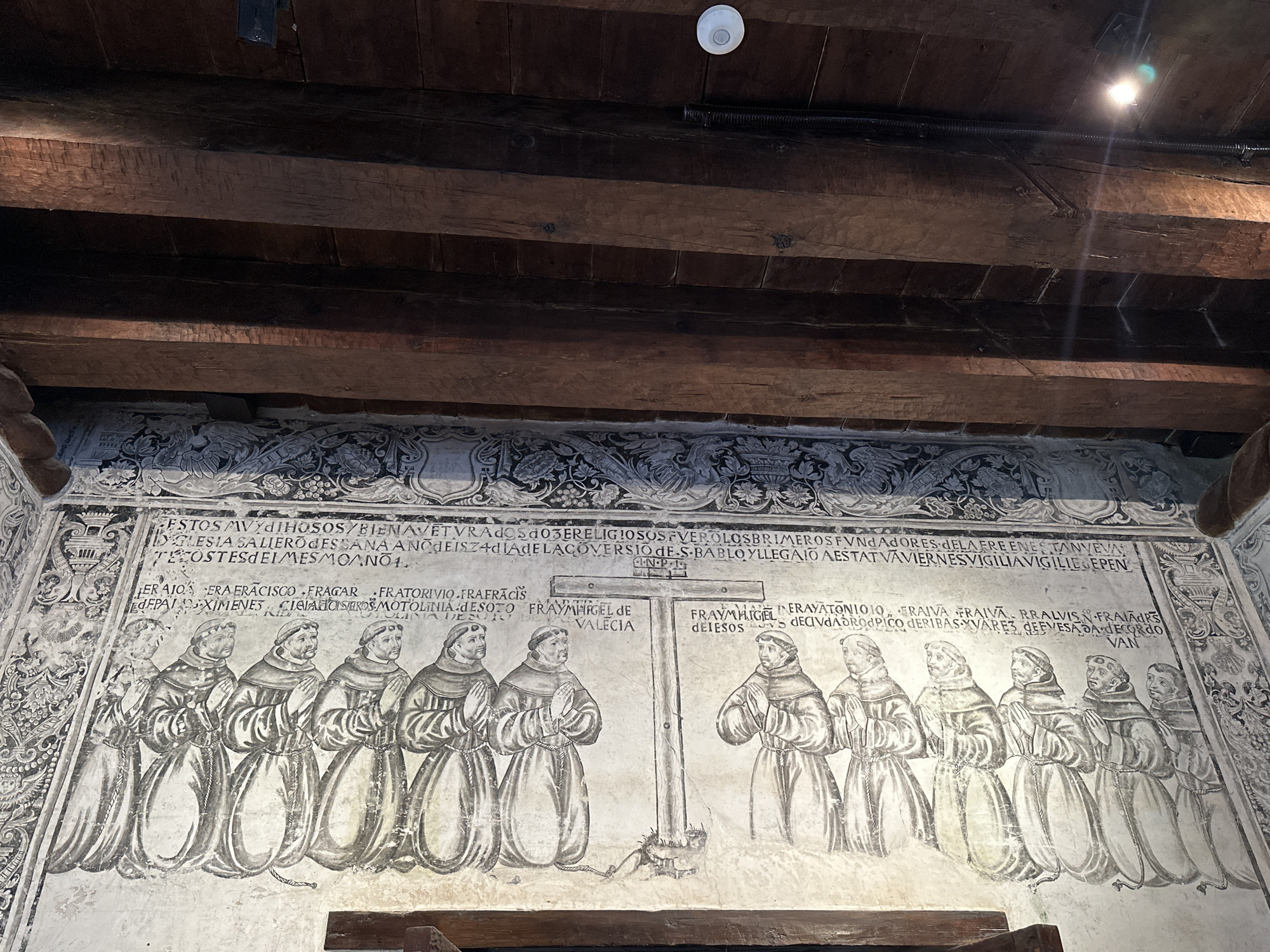
This image depicts a detailed mural on the interior wall of the former Augustinian convent of San Miguel Arcángel in Huejotzingo, Mexico. The mural is executed in a monochromatic style, primarily in black ink or paint, against a light-colored, textured wall. The central section of the mural displays a group of Franciscan friars, distinguished by their hooded robes and ropes. They are depicted in various stages of prayer, with their hands clasped in front of them and their heads bowed. The friars are arranged in two distinct groups, separated by a large, wooden cross. The group on the left appears to be larger, with at least seven figures visible, while the group on the right has five figures. Above and between the friars and the cross are lines of text in Spanish, likely inscriptions identifying the individuals or providing context for the scene. Decorative elements, including stylized floral motifs and geometric patterns, frame the upper portions of the mural. The overall scene evokes a sense of religious devotion and historical narrative. The wooden beams of the ceiling are visible above the mural, indicating the age and architectural style of the building.
Huejotzingo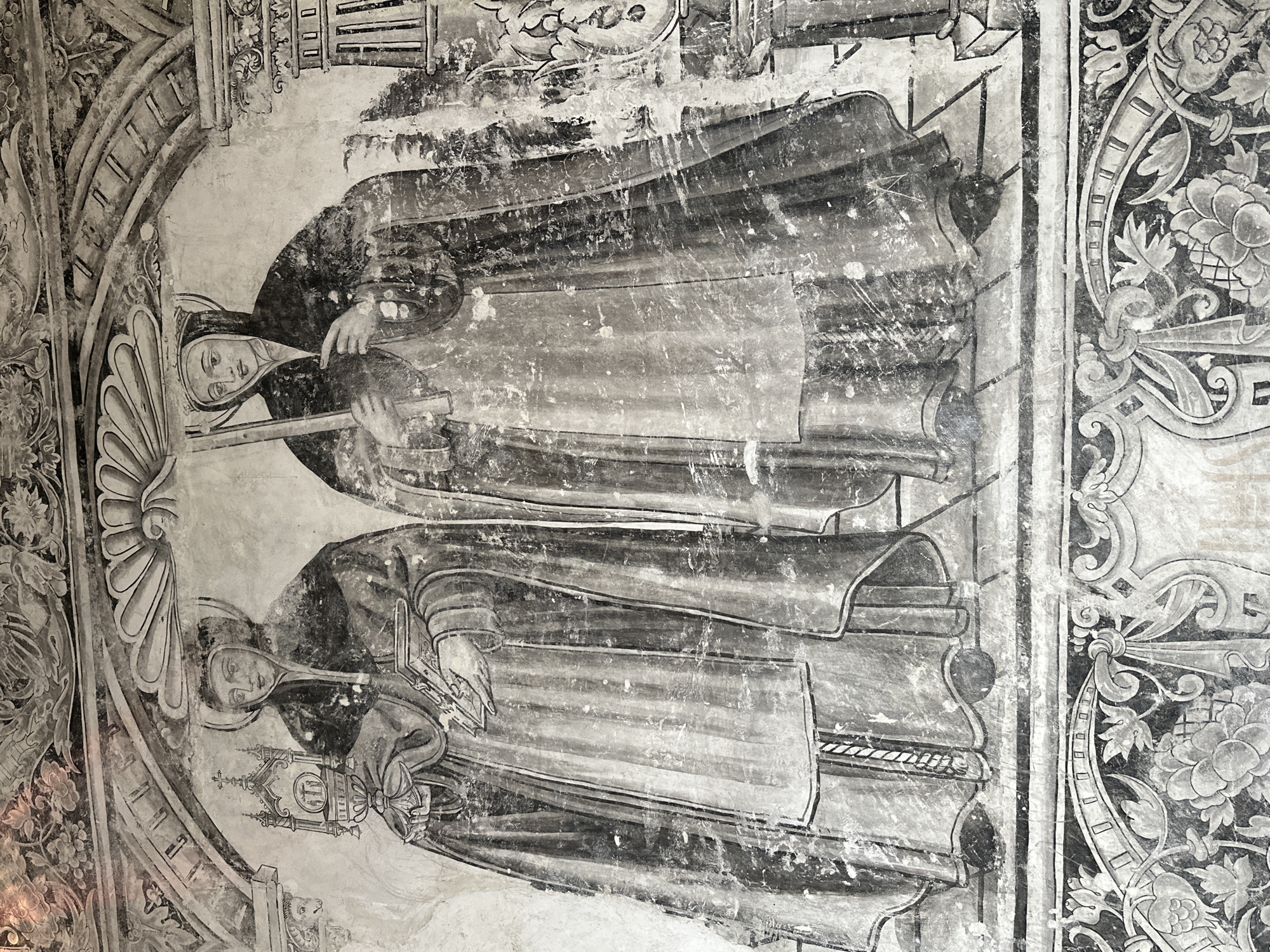
The image shows a mural painted on a wall, likely in Huejotzingo, Mexico. The mural depicts two robed figures standing side-by-side. The figure on the left is holding a monstrance in their left hand and a book in their right hand. They are wearing a hooded robe and have a halo around their head. The figure on the right is holding a staff or cross in their hands. They are also wearing a hooded robe and have a halo around their head. Both figures appear to be standing on a tiled floor, and there is decorative stonework above them. The mural is in black and white, and shows signs of wear and tear. The overall style suggests religious iconography, possibly depicting saints or religious figures. The lower part of the image shows a decorative border with floral motifs.
Huejotzingo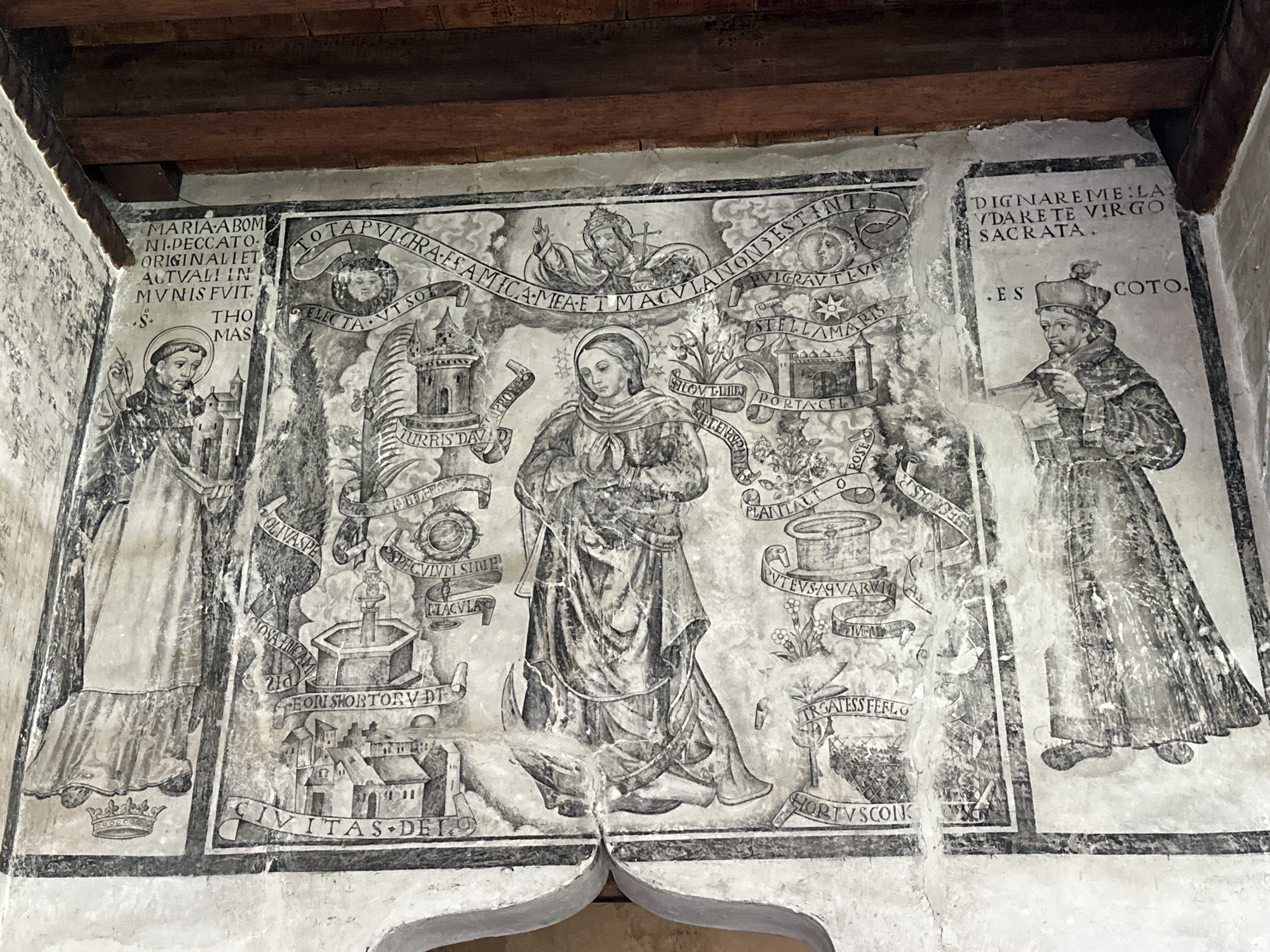
This is a black and white fresco painted on a wall within the Church of San Miguel Arcángel in Huejotzingo, Mexico. The fresco depicts a religious scene with multiple figures and symbolic elements. In the center is a female figure, likely a saint, with her hands clasped in prayer and a halo above her head. She is dressed in robes. To her left stands a male figure in monastic attire, also with a halo, holding a staff and looking towards the central figure. To the right of the central figure is another male figure, also in religious garb and wearing a distinctive hat, holding a book or scroll and appearing to read. The fresco is surrounded by elaborate scrolls and banners containing Latin inscriptions, though they are difficult to read in detail due to the age and condition of the painting. Various architectural elements, such as towers and cityscapes, are depicted, along with symbolic objects like crowns, stars, and plants. The overall composition is complex and laden with religious symbolism. The fresco shows signs of age and wear, with some areas appearing faded or damaged. The background is a textured, light-colored wall, and the wooden ceiling beams are visible at the top of the image.
Huejotzingo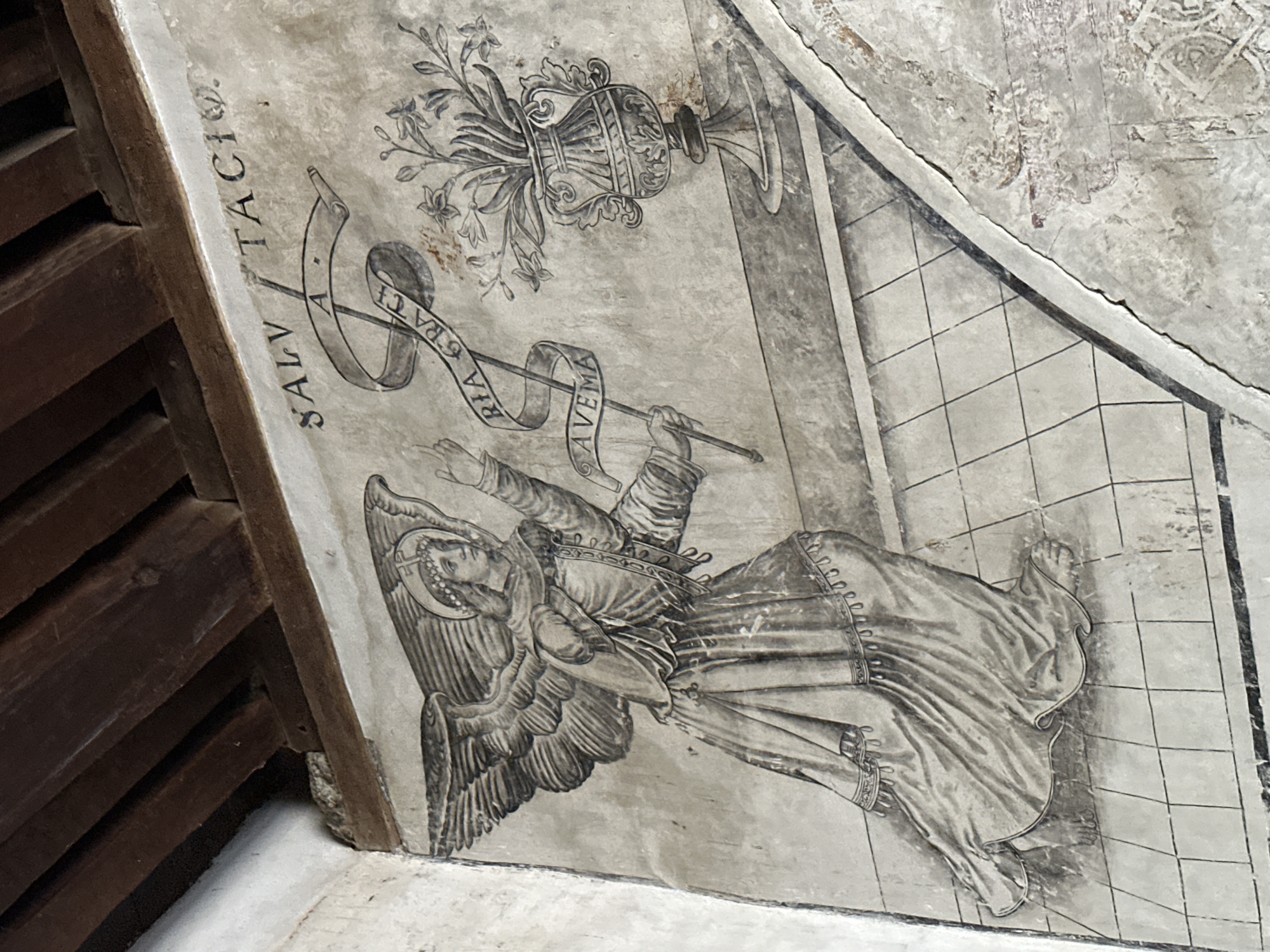
This image depicts a fresco on a wall, likely within the Augustinian Convent of San Miguel in Huejotzingo, Mexico. The fresco features an angel in flight, rendered in grayscale. The angel has large, feathered wings and is adorned with a halo and a jeweled crown. It is dressed in a long, flowing robe and holds a staff with a banner attached, inscribed with Latin text. The banner reads "AVE MARIA GRATIA PLENA" on one side and a partial "SALVATOR" on the other. To the right of the angel, a decorative vase filled with flowers is depicted. The background is textured, with a tiled floor pattern beneath the angel. The upper portion of the image shows wooden beams of a ceiling, suggesting the fresco is located indoors. The overall style is reminiscent of Renaissance or Baroque religious art.
Huejotzingo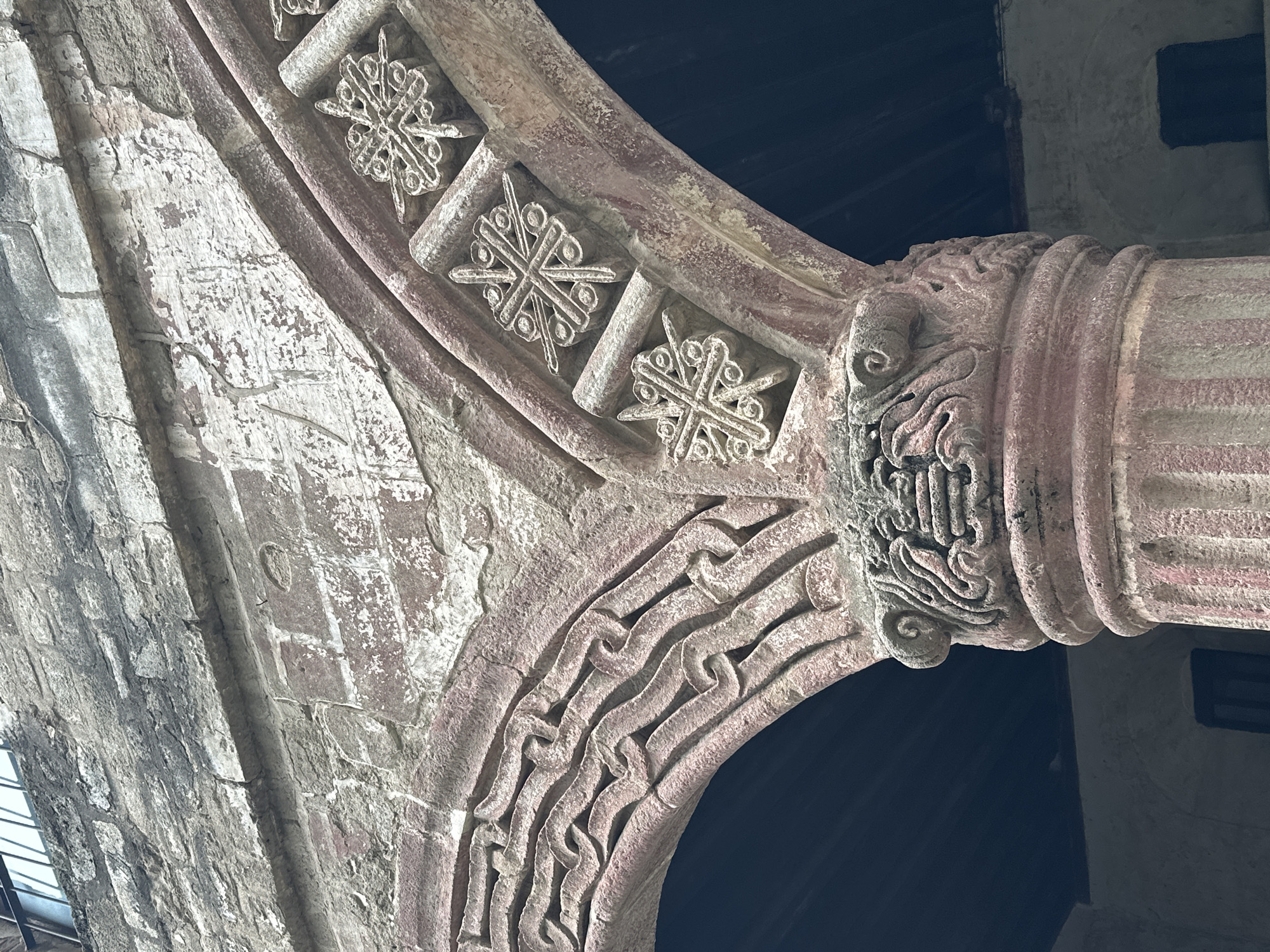
The image shows a close-up of ornate stone carvings on an architectural element, likely part of a building's facade or interior. The stone is a reddish-pink hue, showing signs of age and wear with some chipped areas and exposed underlying brick. The carvings are intricate and detailed, featuring geometric patterns and stylized motifs. On the right side, there are several circular designs with radiating lines and smaller circular embellishments, resembling stars or elaborate crosses. To the left, a series of wavy, interlocking lines form a decorative band. The top of the image reveals a section of aged brick wall with a stone lintel above, and a glimpse of a barred window. The lower portion of the image shows a portion of a fluted column with more sculpted detail at its capital, topped by volutes and a band of complex, layered carvings. The background is a dark recess, suggesting an archway or covered space. This architectural detail is located in the city of Huejotzingo, Mexico, specifically at the Monastery of San Miguel Arcángel, a historic Augustinian convent.
Huejotzingo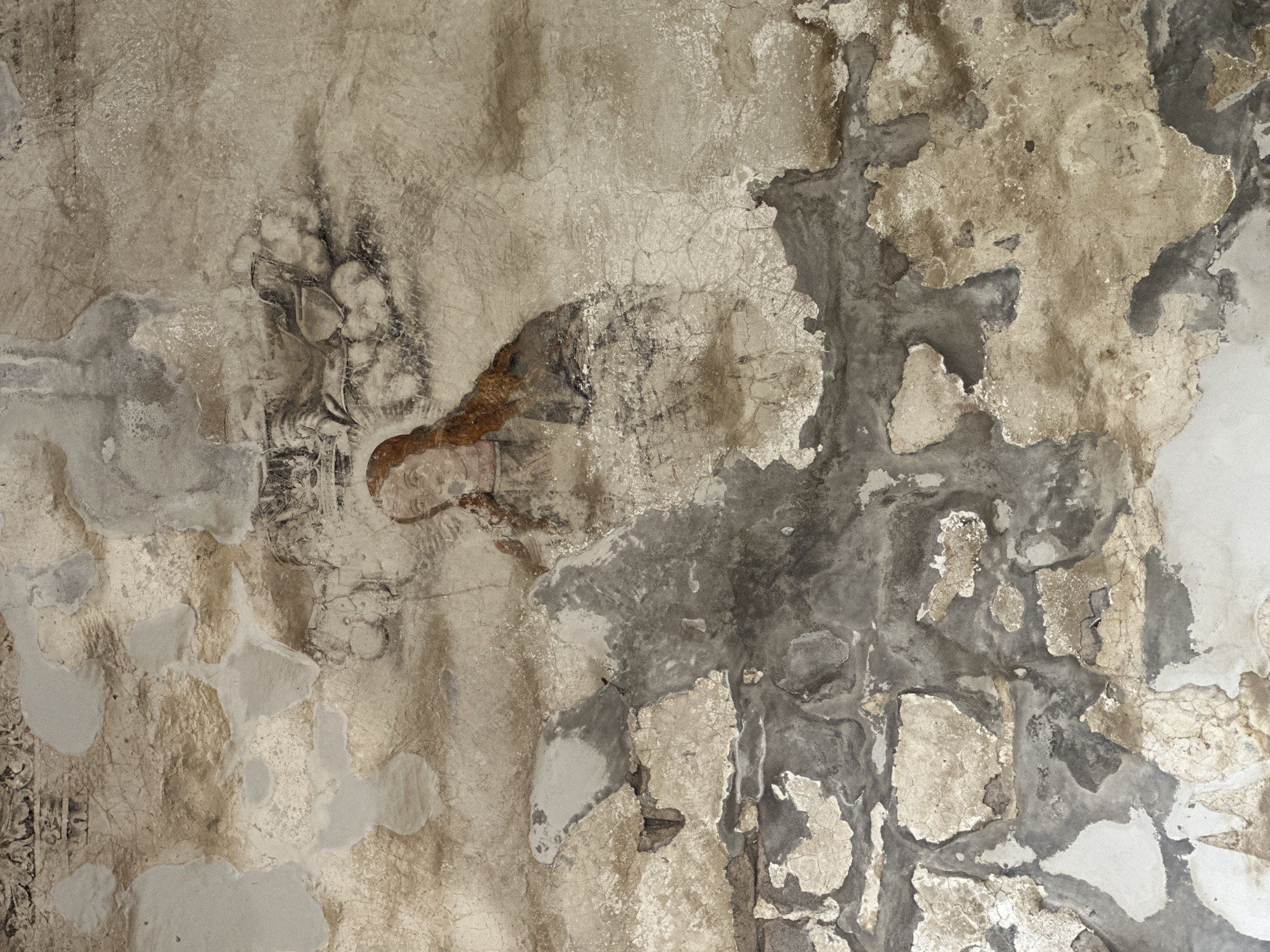
A faded mural depicts a figure with reddish-brown hair and a serene expression, rendered in earthy tones and dark outlines. The figure appears to be wearing a garment with a light-colored collar and possibly a darker overlay. Behind the figure, a shadowy, abstract form suggests a chariot or throne, complete with wheels and decorative elements, all depicted with similar muted colors. The mural is heavily damaged, with large sections of plaster flaking off, revealing the underlying stonework and rough texture of the wall. The damage creates an uneven surface, with lighter patches of new plaster repairs interspersed with the original weathered paint and crumbling substrate. The overall impression is of an ancient artwork in a state of significant decay, located within the historic structure of the San Miguel Arcángel Convent in Huejotzingo, Mexico.
Huejotzingo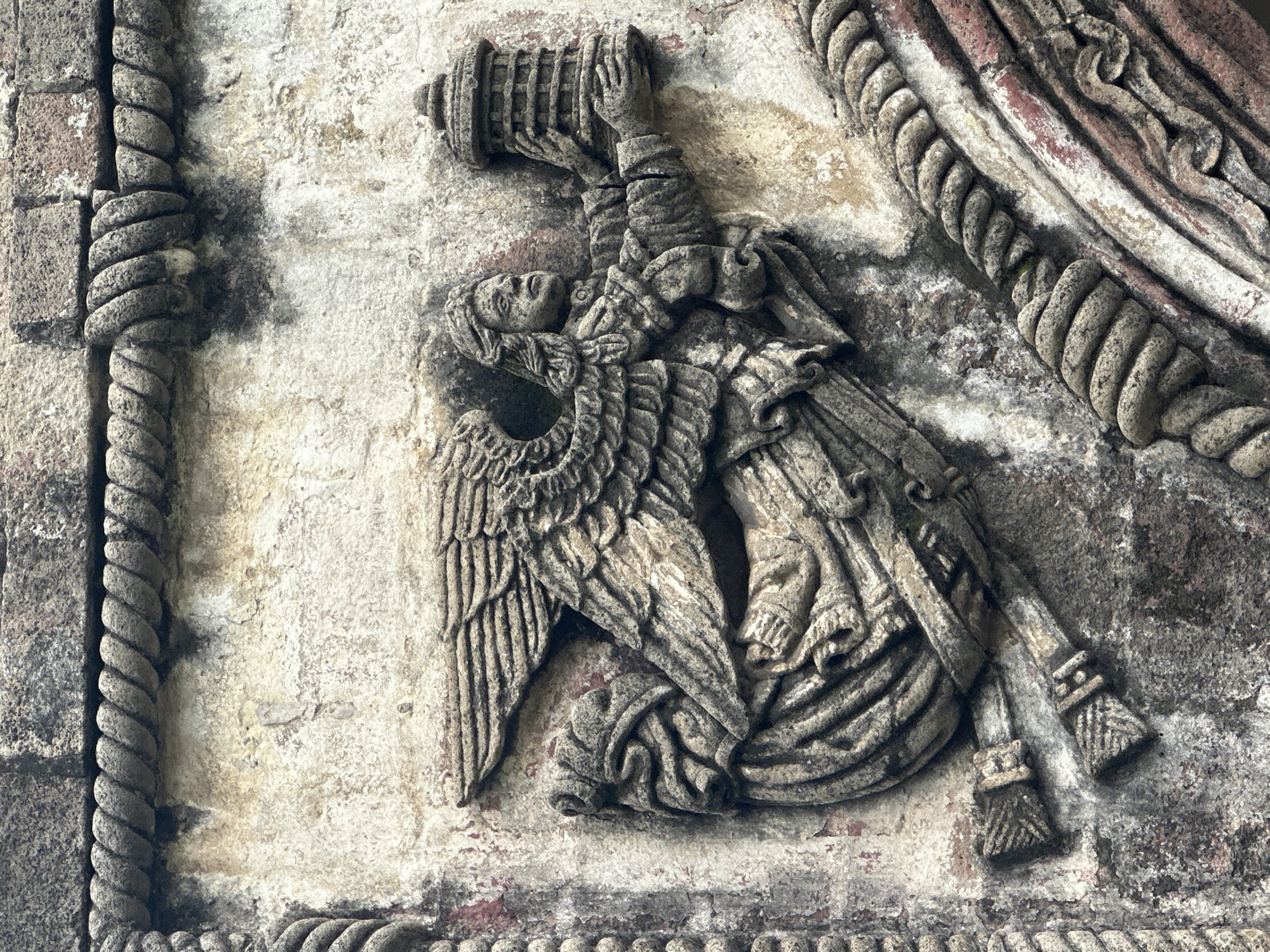
This is a close-up, eye-level shot of a stone carving depicting an angel with wings, holding a lantern. The carving is part of the facade of the San Miguel Arcángel church in Huejotzingo, Mexico. The angel, rendered in grey stone, has detailed feathered wings, flowing robes, and a serene expression. It is positioned in the center of the frame, with its left hand holding a multi-tiered, cylindrical lantern. The stone is weathered and shows signs of age, with patches of discoloration and texture variations. The background consists of the rough, textured stone wall of the church, adorned with rope-like decorative elements and other carved architectural details, some of which show traces of red pigment. The lighting appears to be natural daylight, casting subtle shadows that highlight the relief of the carving.
Huejotzingo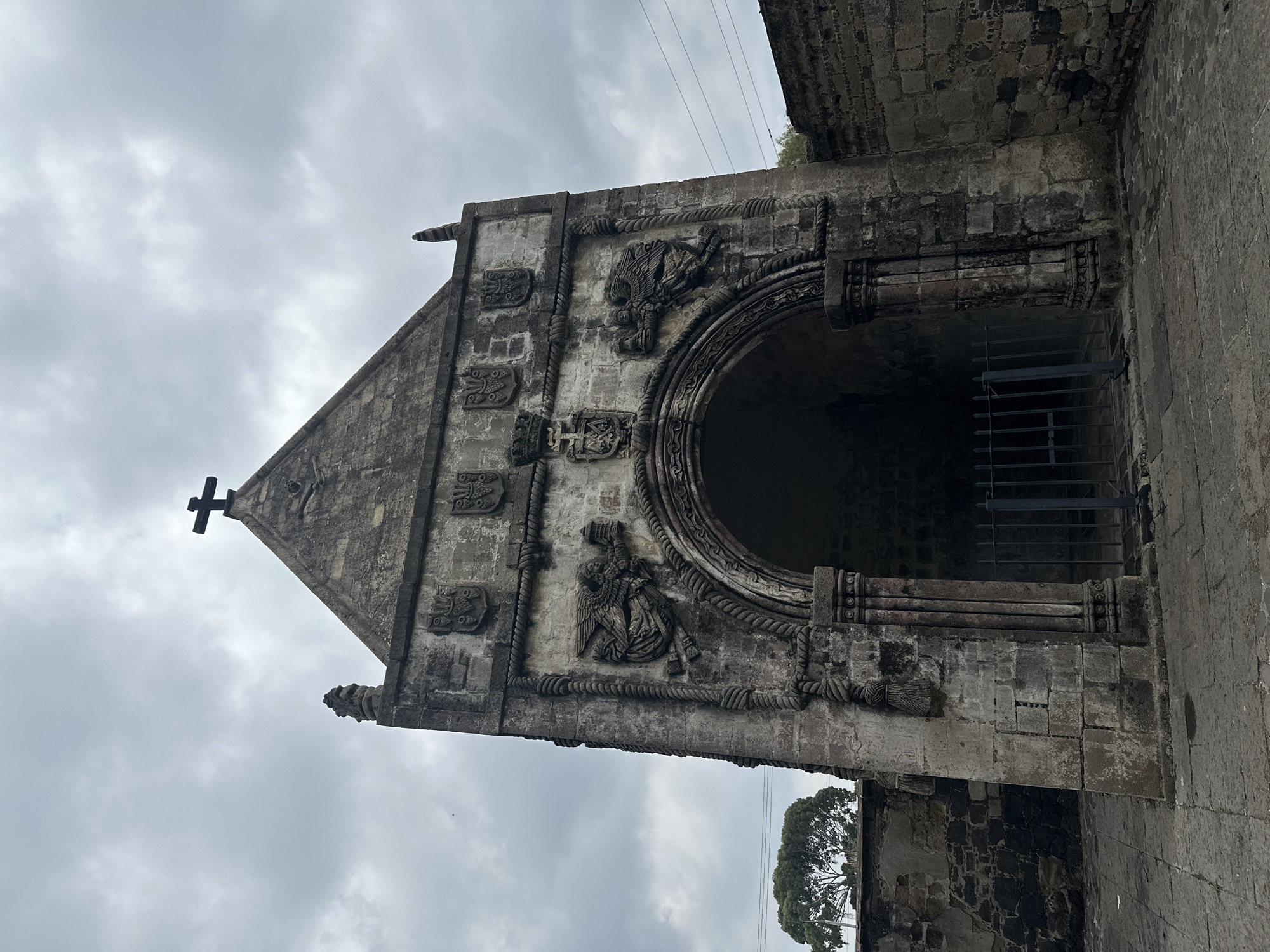
This image shows the exterior of a stone structure, likely a chapel or shrine, with a prominent arched entrance. The structure is made of weathered stone blocks and features intricate carvings. Above the arch, there are depictions of angels holding candelabras and shields with coats of arms. A cross is visible at the apex of the building's triangular gable. The area in front of the entrance is paved with stone, and a dark metal gate is positioned within the archway. To the left of the structure, a stone wall is visible, and further in the background, a single tree stands against a cloudy sky. The overall impression is of an old, historic religious site. This structure is located in Huejotzingo, Mexico, and is part of the Franciscan monastery complex.
Huejotzingo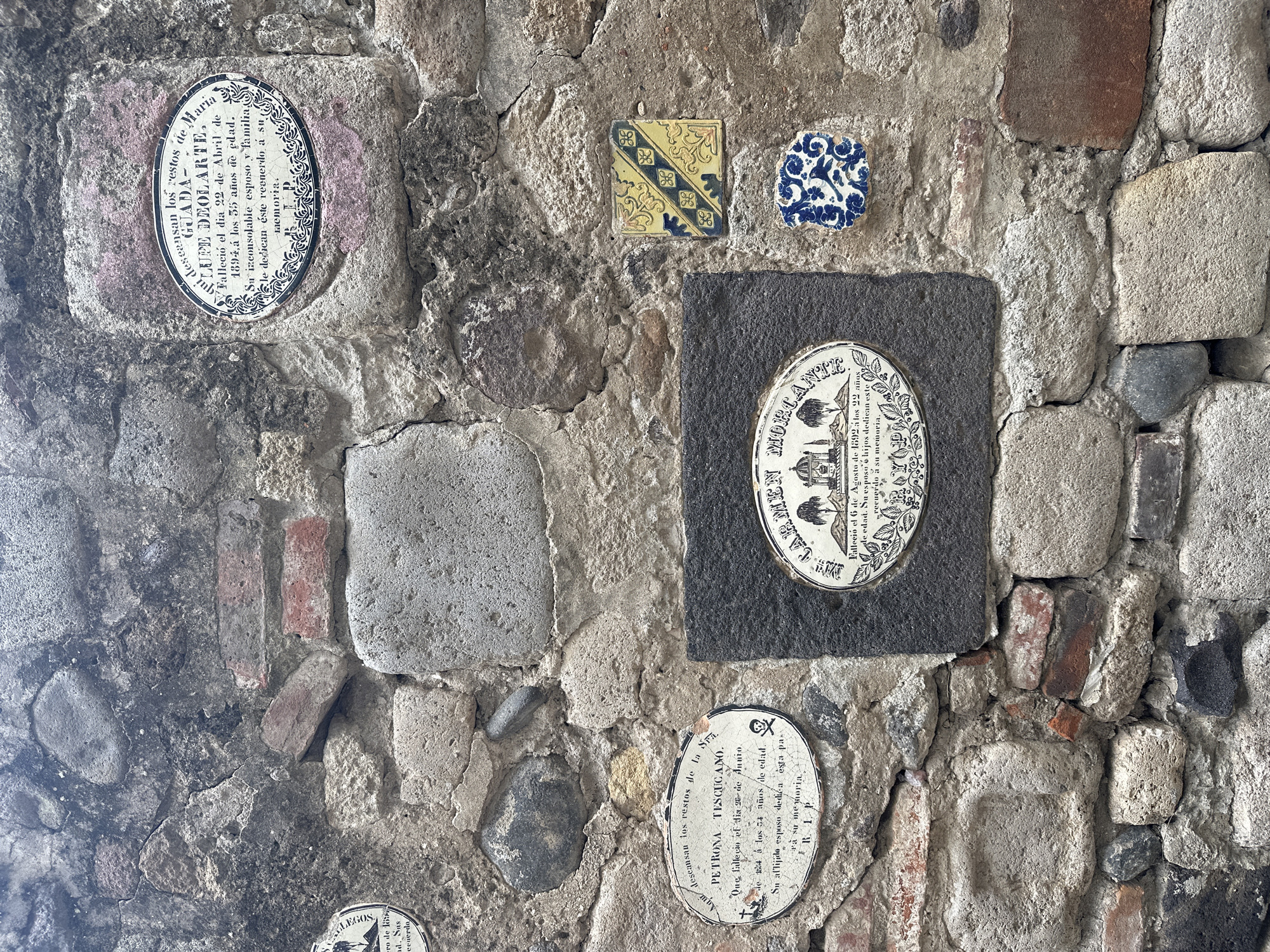
The image shows a section of a stone and brick wall with several commemorative plaques and tiles affixed to it. These appear to be part of a historic structure, possibly a cemetery or church in Huejotzingo, Mexico. The central focus is a dark gray rectangular stone on which an oval plaque is mounted. This plaque features a decorative border surrounding an illustration of a domed building with trees and people. Below the illustration, text is inscribed in Spanish, indicating a memorial for someone named "Ma. del Carmen Mortante," who died on August 6, 1892, at the age of 22. Her husband and children dedicated this memorial. To the left of the central plaque is another oval plaque, white with black lettering and a decorative border. This plaque memorializes "Petrona Tuscugano," who died on June 29, at the age of 34. Her afflicted husband dedicated this to her memory, with "R. I. P." inscribed at the bottom. A small skull and crossbones symbol is also present on this plaque. Above the "Petrona Tuscugano" plaque, and slightly to the right, is a third oval plaque, white with a black border and decorative elements. This plaque memorializes "Guada-Lupe Deolart," who died on April 22, 1894, at the age of 35. Her inconsolable husband and family dedicated this to her memory. Interspersed among the plaques are various tiles. Two small square tiles are visible in the upper right quadrant: one with a yellow background and a blue diamond pattern, and another with a blue and white floral design. The wall itself is constructed from irregular-shaped stones, some of which are rounded river stones, and portions of red brick. The mortar between the stones is visible and shows signs of age and weathering. The overall impression is one of a well-maintained historical site.
Huejotzingo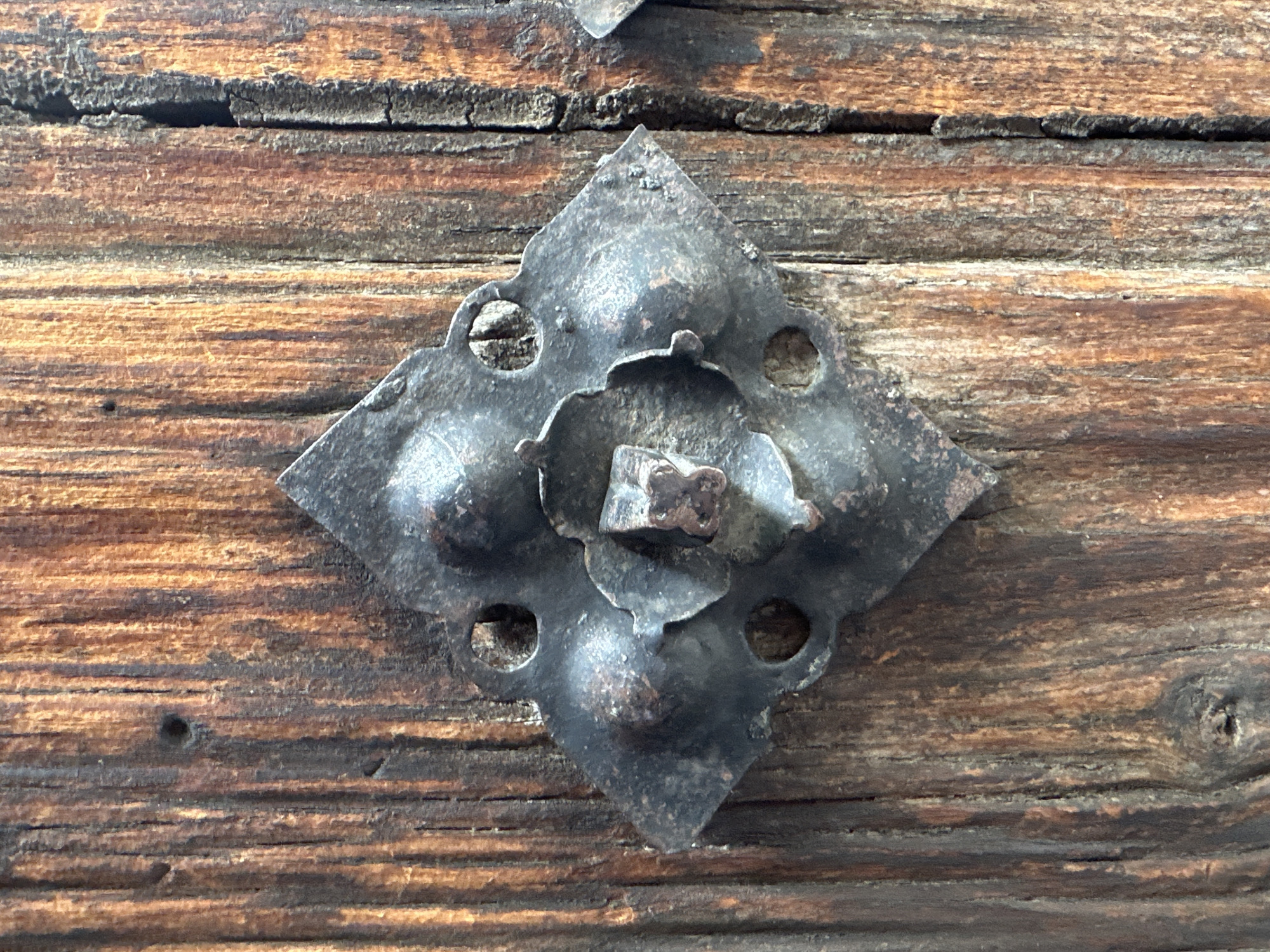
This is a close-up, eye-level, vertical photograph of an ornate, dark metal embellishment attached to rough, weathered, vertical wooden planks. The metal piece is diamond-shaped with decorative rounded points and features a central floral motif with a small, four-pronged metal clasp. It is affixed to the wooden surface with visible nail heads. The wood exhibits a textured grain with variations in color, ranging from light brown to dark brown and black, suggesting age and exposure. The overall scene appears to be a detail from an old door or gate in Huejotzingo, Mexico.
Huejotzingo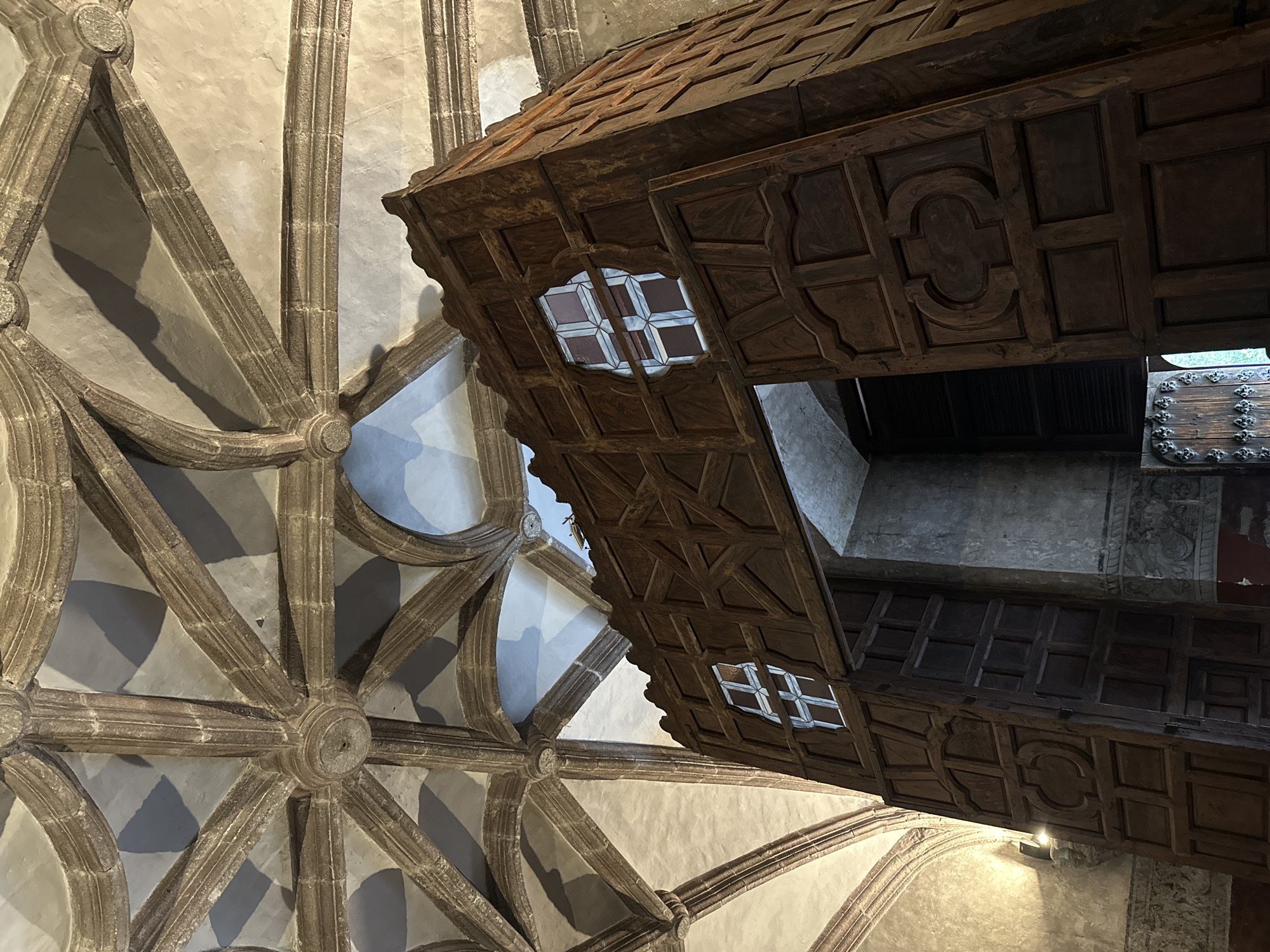
The image shows the interior of a colonial-era building, likely a church or monastery, in Huejotzingo, Mexico. The most prominent feature is a massive, intricately carved wooden door structure, appearing to be a confessional or a similar partition. This structure is made of dark wood with geometric patterns and ornate carvings. Above the doorway, there are two small, stained-glass windows with a diamond pattern. The ceiling is a striking example of Gothic architecture, with ribbed vaults and stone embellishments, suggesting a significant historical and artistic value to the location. The walls have some faded murals or decorative painting towards the bottom. The lighting is dim, with some light sources casting shadows, enhancing the dramatic effect of the architecture and the imposing wooden structure. No people are visible in the frame.
Huejotzingo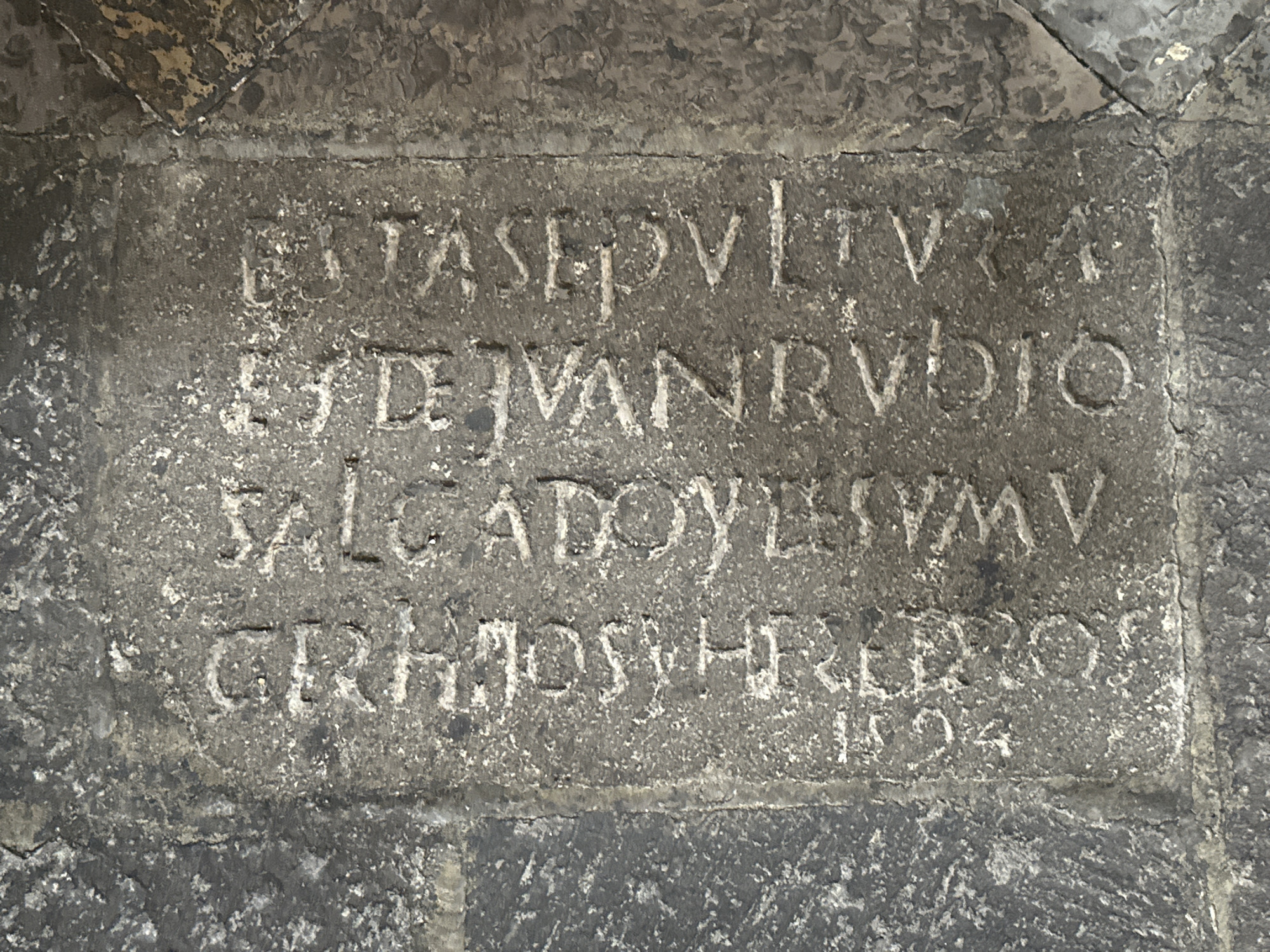
The image displays a weathered stone inscription, likely a historical marker or tombstone, embedded in a textured surface. The inscription consists of several lines of Roman numerals and letters, heavily eroded and difficult to decipher fully. The stone is dark grey and appears to be part of a larger structure or paving. The lighting suggests an indoor or shaded environment, possibly a crypt or an ancient ruin. The overall condition of the inscription indicates significant age and exposure to the elements. The context of the city of Huejotzingo, Mexico, suggests this inscription could be related to the region's colonial history or indigenous heritage, though the specific content is not clearly legible.
Huejotzingo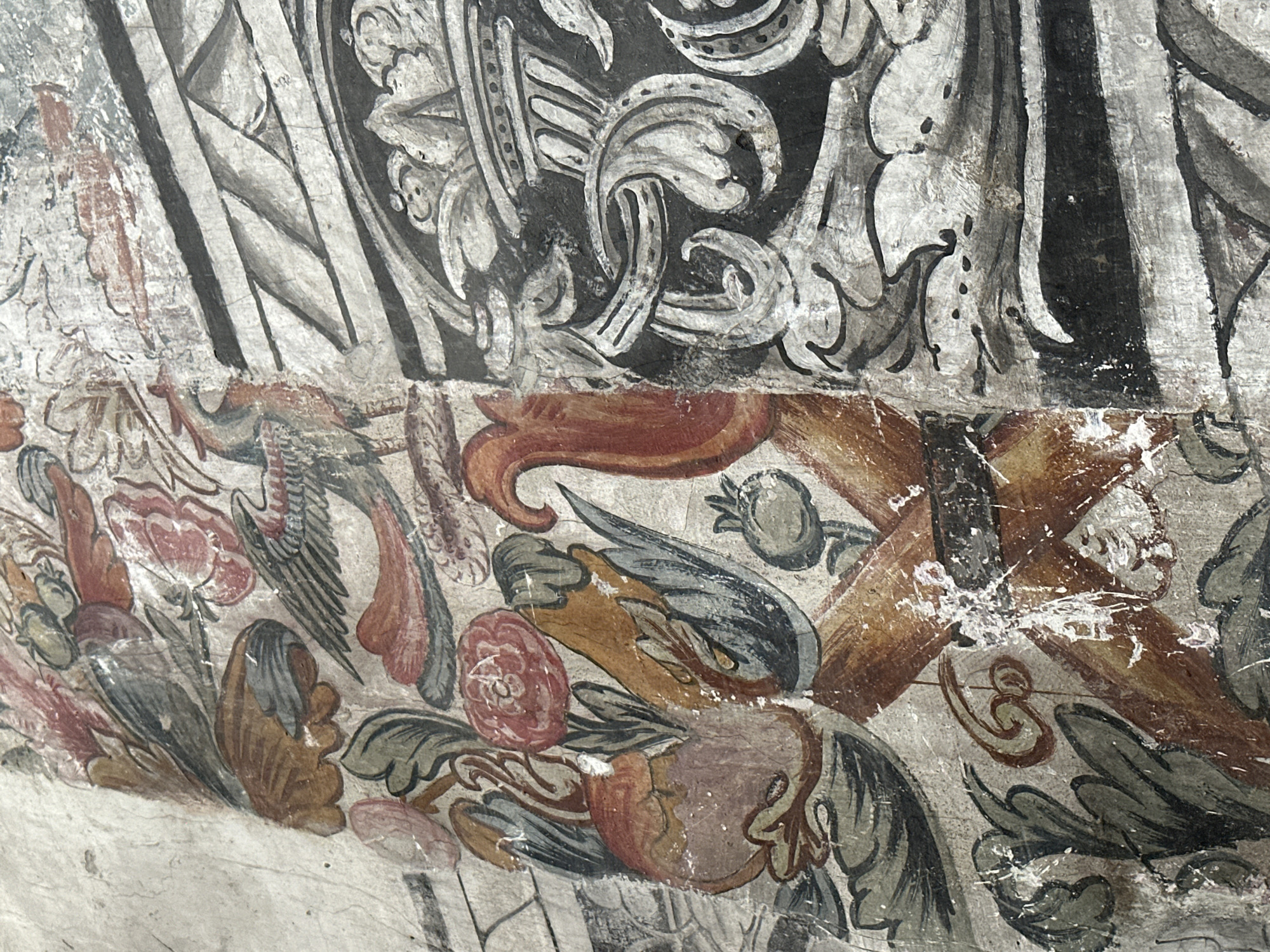
This is a detailed photograph of a fresco on a wall in Huejotzingo, Mexico, likely within the former Franciscan monastery. The fresco depicts a vibrant, stylized composition. On the left side, there is a section with botanical elements, including a reddish-pink flower resembling a rose, a round, reddish fruit, and a series of large, dark green, pointed leaves. A bird with intricate feathering in shades of blue, grey, and brown, with a red crest, is prominently featured. To the right of the botanical elements, the fresco transitions to a section with a more architectural and geometric design. This section features black and white patterns, including what appear to be mountain-like shapes within a banded structure, and elaborate scrolling white motifs against a dark background. The fresco exhibits signs of age, with visible cracks and areas where the paint has flaked away, revealing the underlying plaster. The colors, though somewhat faded, remain vivid, showcasing a rich palette of reds, blues, greens, browns, and black and white.
Huejotzingo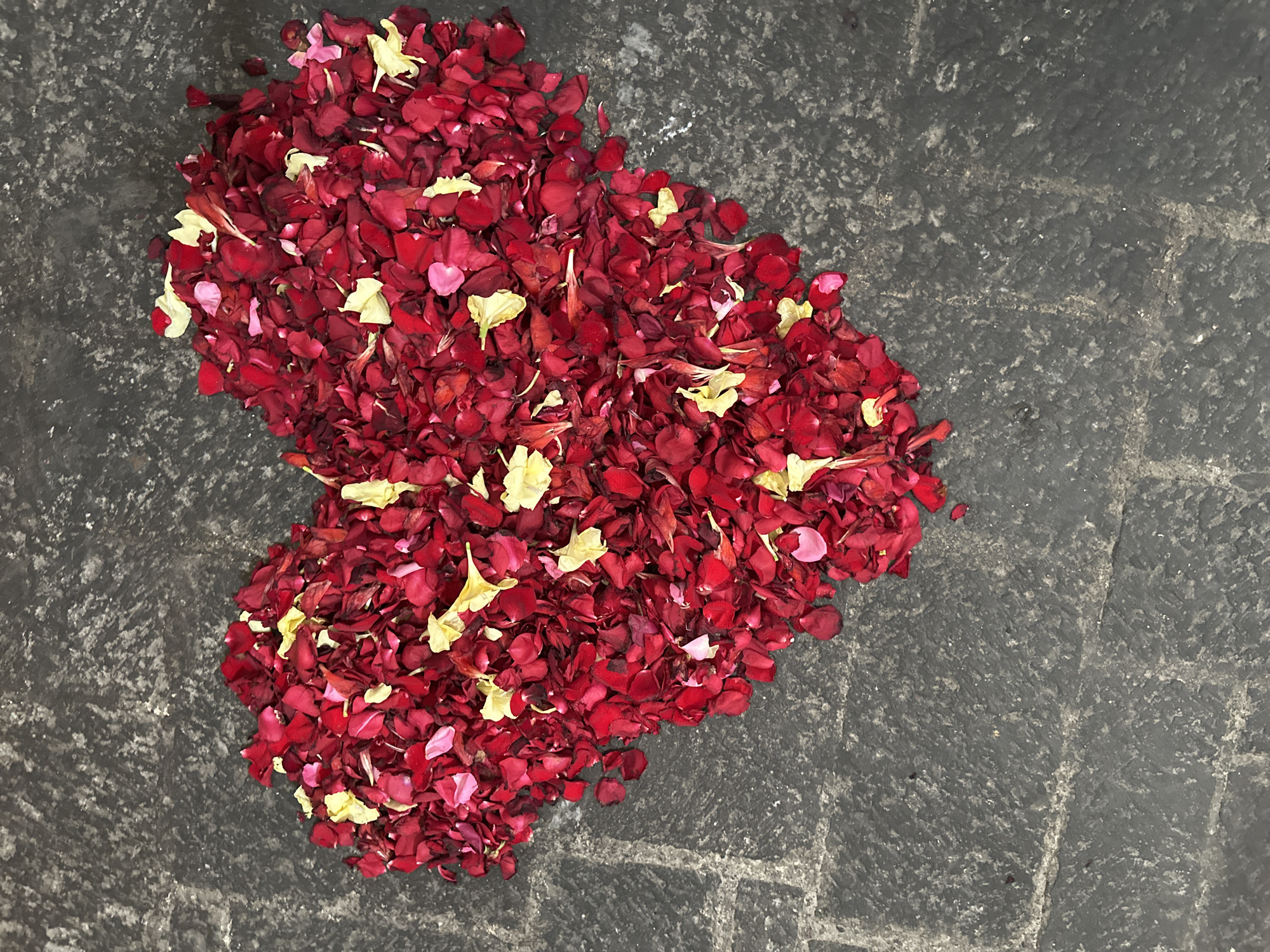
A heart shape formed from red and yellow rose petals rests on a dark grey stone surface in Huejotzingo, Mexico. The stone appears to be a walkway or patio, with visible grout lines and a rough texture. The rose petals are scattered loosely within the heart shape, with some individual petals falling outside the boundary. The lighting is even, casting no distinct shadows, suggesting an overcast day or indirect light source. There are no people or other objects present in the frame.
Huejotzingo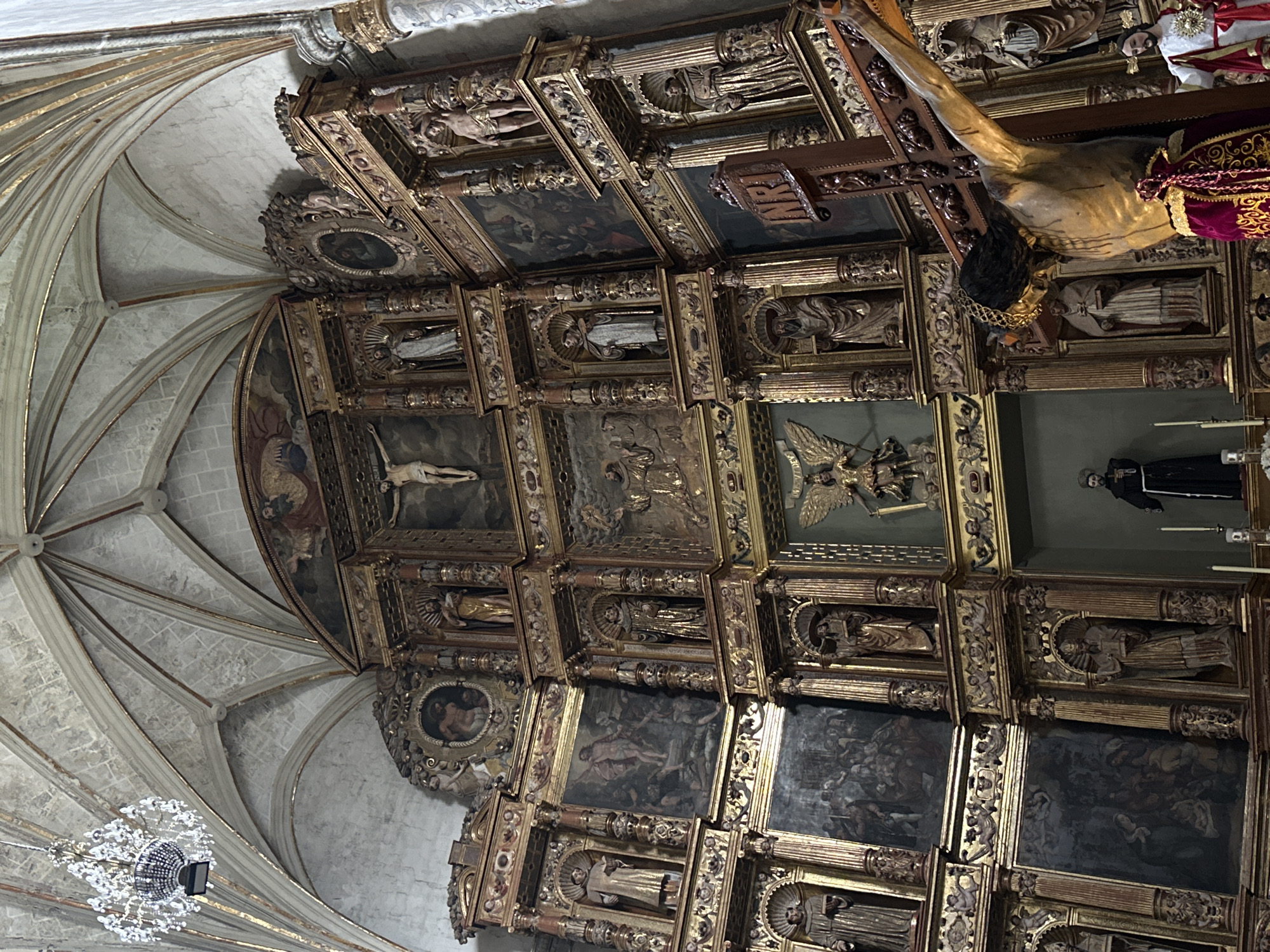
The image shows the ornate retablo of the San Miguel Arcángel church in Huejotzingo, Mexico. The retablo is a large, gilded altarpiece featuring numerous sculptures and paintings depicting biblical scenes and figures. In the foreground, a large crucifix with a statue of Jesus Christ is prominently displayed, with a sign bearing the inscription "INRI" attached to the cross. Behind the crucifix, the retablo rises in multiple tiers, showcasing a complex arrangement of niches containing statues of saints and angels, as well as painted panels. The architectural style of the church's ceiling, with its ribbed vaults and decorative elements, is visible in the upper portion of the image. The overall scene evokes a sense of religious devotion and historical artistry.
Huejotzingo