Kabuga, Nigeria
30 memories from Kabuga, Nigeria
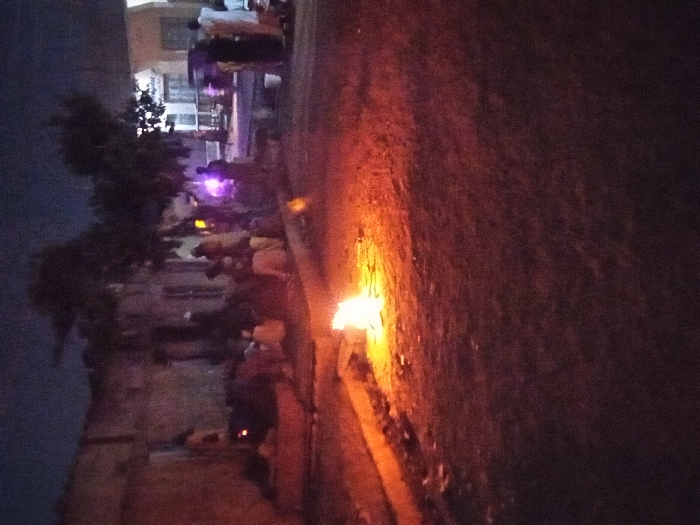
A nighttime scene captures a group of people near a building. The individuals are partially obscured by shadows, with some figures appearing to stand and others seated. A small, bright fire burns intensely on the ground near the group, casting a glow on the surroundings. The image is dark overall, suggesting a nighttime or dimly lit environment.
Kabuga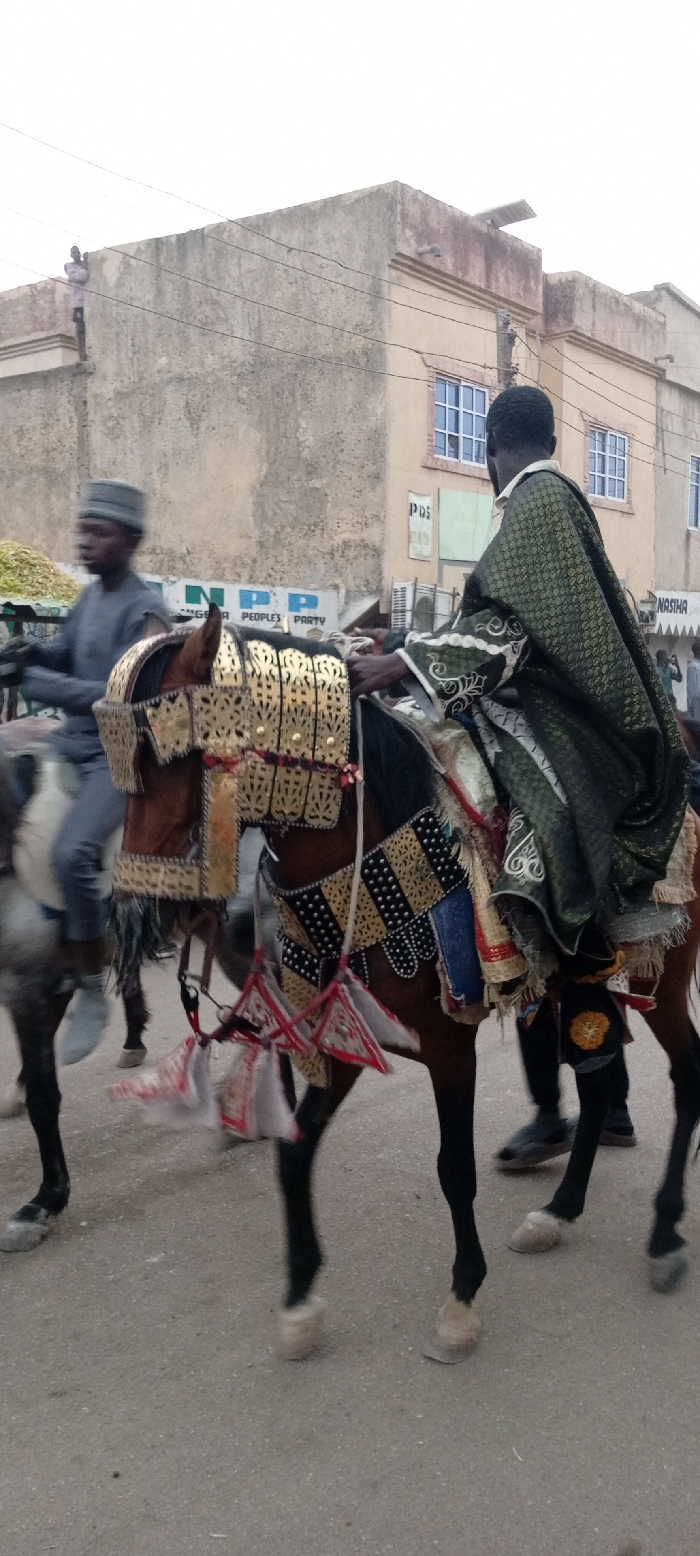
Two men on horseback are shown. The horse in the foreground is decorated with gold and black armor, and the rider wears a green robe. Behind them is another horse and rider. A building with windows is in the background. On top of the building, a person is visible. A sign saying "NPP PEOPLE'S PARTY" is also visible.
Kabuga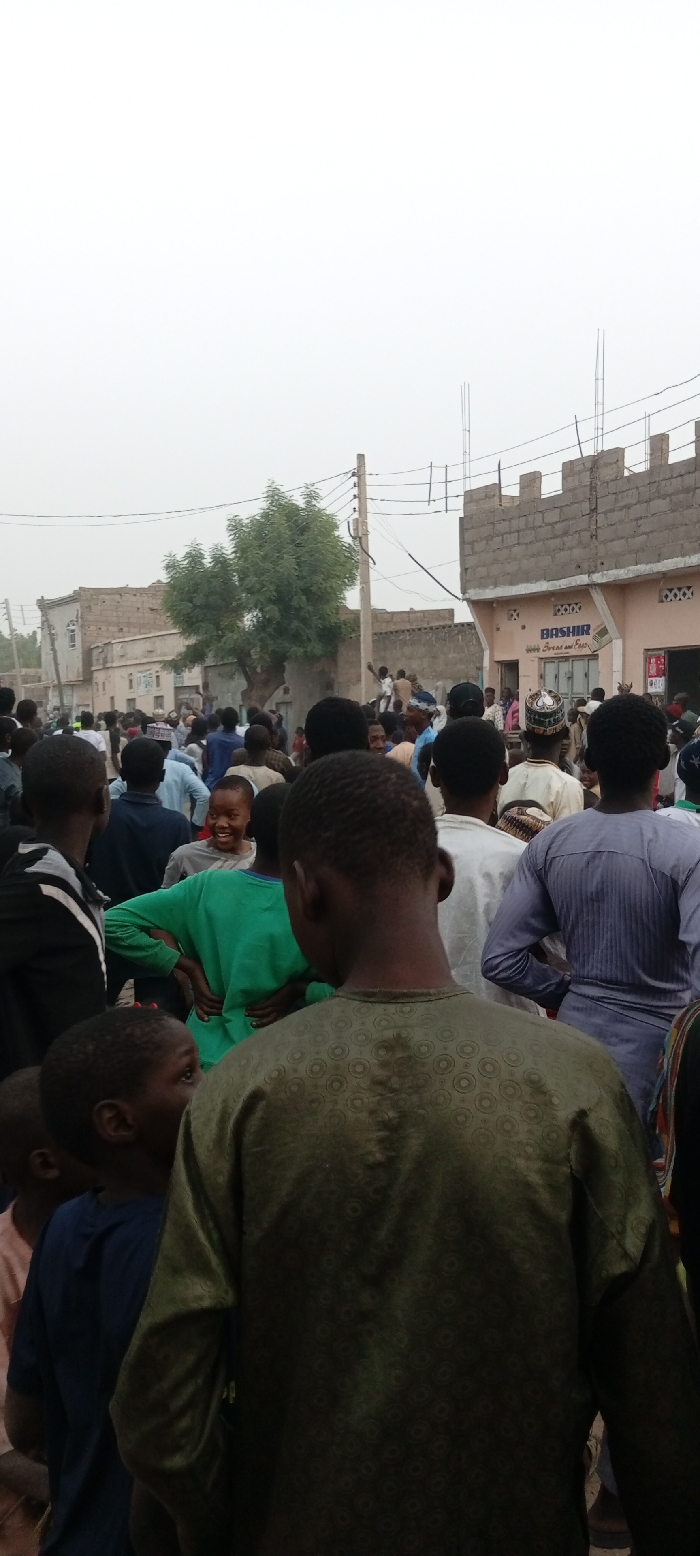
This image captures a dense gathering of people outdoors, likely in a street or open area, under an overcast or hazy sky. The perspective is from within the crowd, looking forward, with many individuals visible from behind. In the immediate foreground, the back of a young person wearing a dark olive-green long-sleeved garment with a subtle circular pattern is prominent, occupying much of the lower-right portion of the frame. To their left, another young person in a dark blue shirt is partially visible from the back. Further into the mid-ground, amidst the crowd, a young boy in a bright green long-sleeved shirt stands out, facing slightly towards the left and looking towards the camera with a clear smile. His hands are on his hips. Other people of various ages, predominantly male, are visible, many wearing light-colored traditional garments, while some are in darker clothing. A person in a light blue striped top is seen towards the right mid-ground. The background features several buildings, suggesting an urban or semi-urban environment. Some buildings appear to be residential, while one on the far right has a commercial front. This building is constructed with light-colored concrete blocks and has a distinctive crenellated top edge. A sign on this building reads "BASHIR" in large blue letters, with smaller, lighter text underneath that appears to say "Super and Eggs" or "Super n Eggs". Another building further to the left is older, with a lighter facade. An electrical pole with numerous wires runs diagonally across the mid-ground, and a large green-leafed tree is situated between the pole and the buildings on the left. More people are gathered around the base of the tree and near the buildings. The overall impression is one of a busy community event or a bustling street scene. The hazy sky indicates either an overcast day or atmospheric conditions reducing visibility.
Kabuga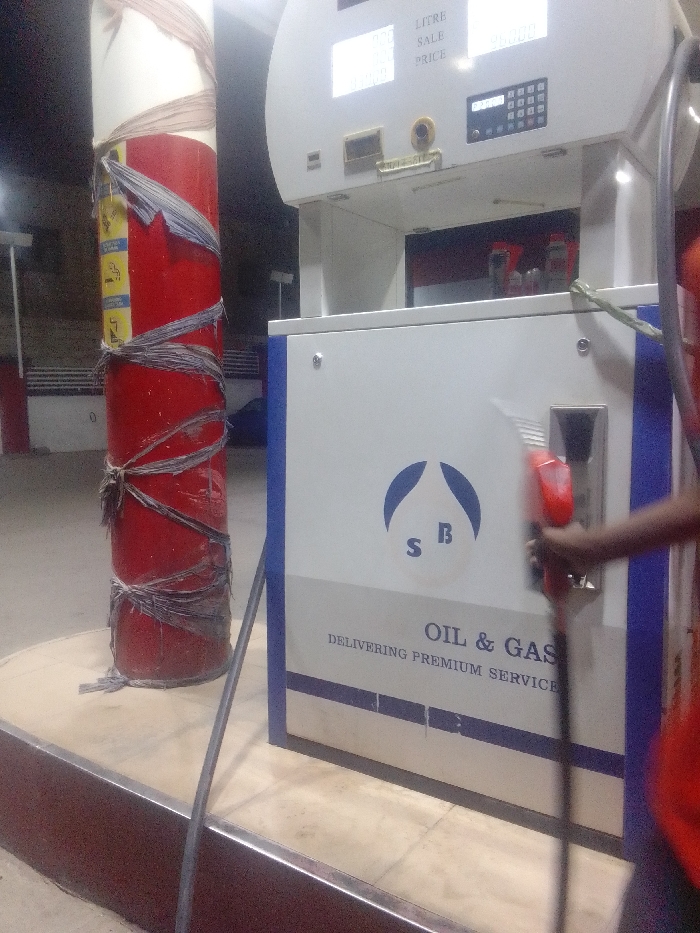
A red cylindrical post wrapped in gray material stands next to a gas pump. The pump features a digital display showing "LITRE SALE PRICE." It also has a logo with "S B" beneath a stylized droplet, and the text "OIL & GAS DELIVERING PREMIUM SERVICE." A person's arm holding a red gas nozzle is partially visible on the right side of the frame. The scene appears to be at a gas station during the evening.
Kabuga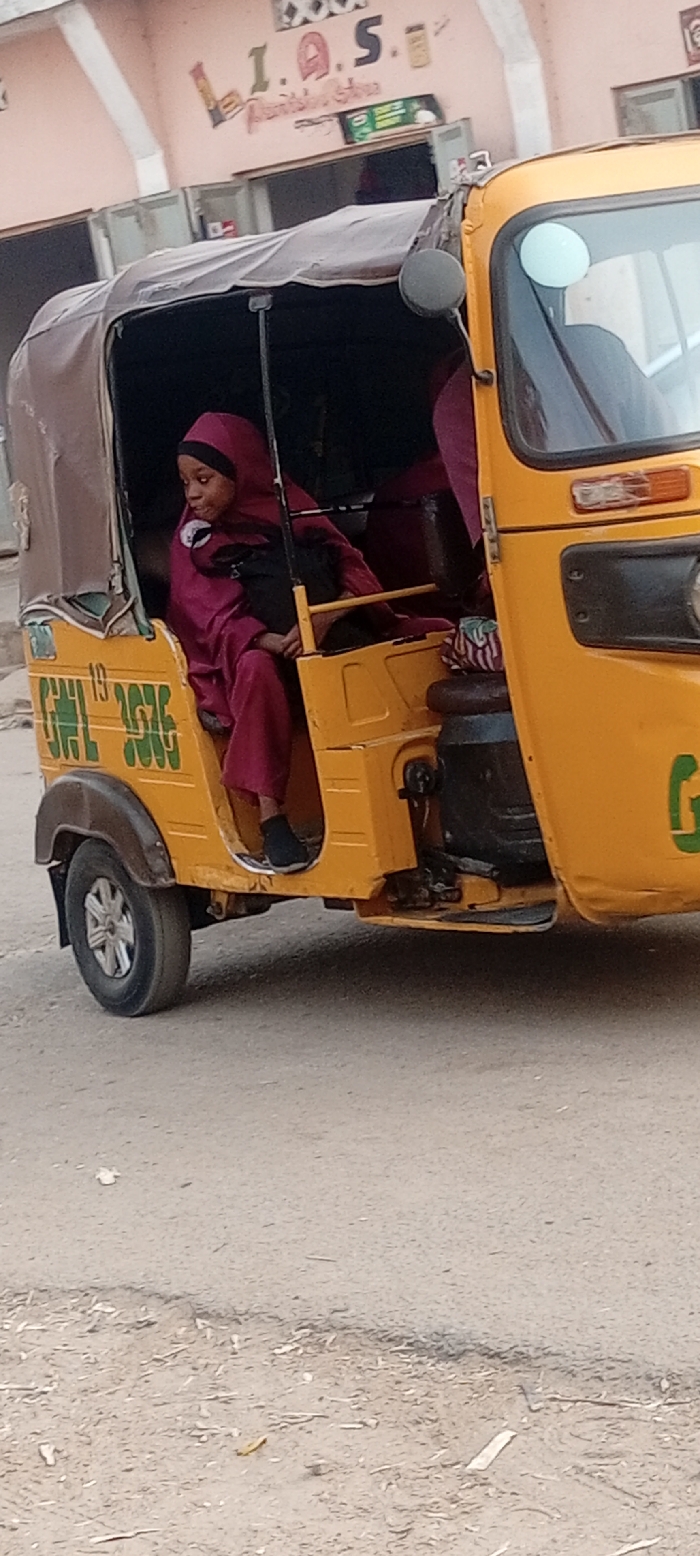
A young girl, wearing a deep maroon or pink hijab and matching long dress, sits inside a yellow three-wheeled auto-rickshaw, commonly known as a 'keke napep' in Nigeria. She is positioned towards the left side of the vehicle, looking out with a neutral expression. Another individual, similarly dressed, is partially visible deeper within the rickshaw. The vehicle itself is painted bright yellow with a dark brown soft top. On its side, faded green numbers and letters are visible, reading "19 GML 3676". A partial green letter "G" is also seen on the front-right panel of the rickshaw. The auto-rickshaw is parked or moving slowly on a dusty, unpaved road. The ground is light brown with scattered debris and small pebbles. In the background, there is a light-colored building, likely made of concrete, with a prominent sign featuring large, stylized red and brown letters spelling "I.A.S.". Below this, smaller, less distinct text appears to read "Furniture Home". To the right of "I.A.S.", another sign, possibly green, is visible, though its text is not clearly discernible. The scene takes place during the daytime under bright, natural light, suggesting clear weather. The overall impression is a common street scene in a Nigerian town or city, typical of the location context of Kabuga.
Kabuga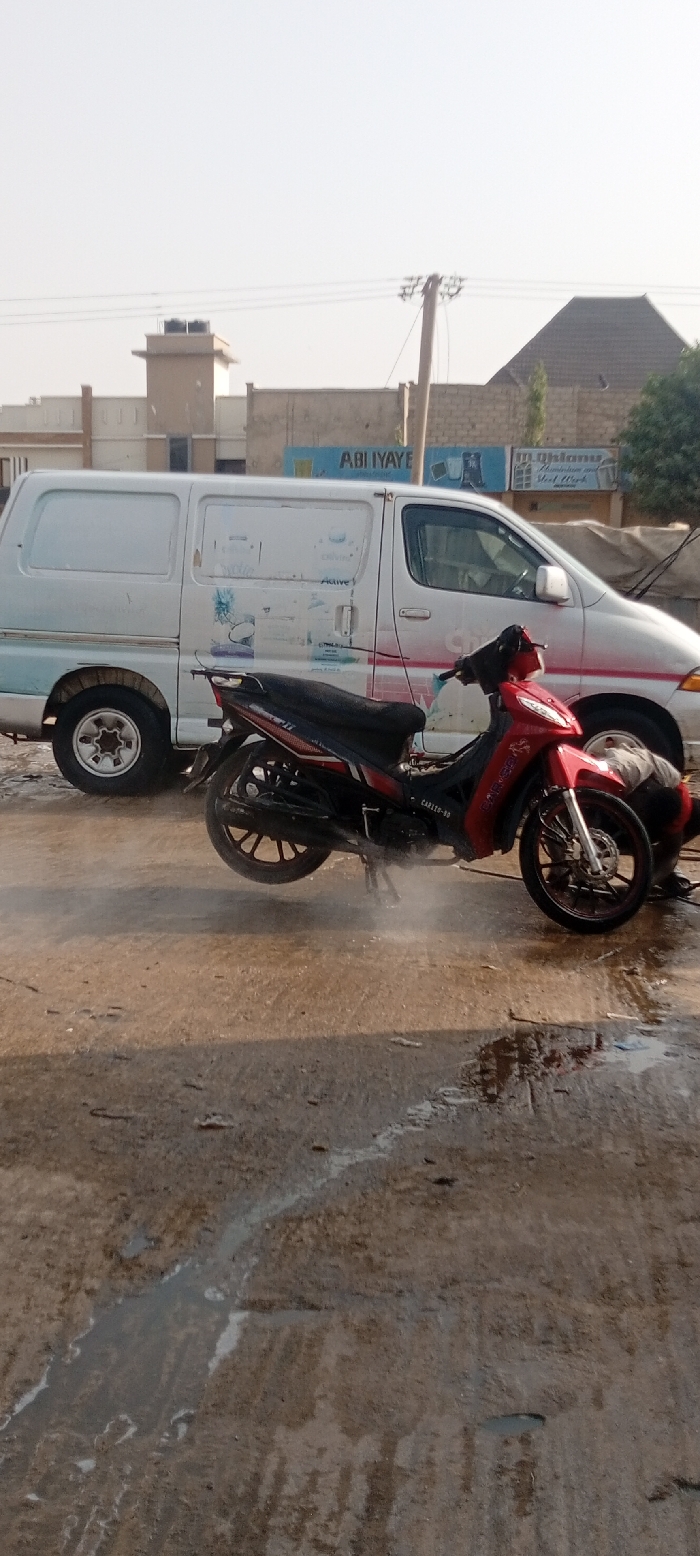
This outdoor scene, set in Kabuga, Nigeria, depicts the washing of a motorcycle. In the foreground, a red and black motorcycle is positioned on a stand, with visible water spray or steam around its engine area, indicating it is actively being cleaned. The lower legs and feet of a person, likely the individual performing the wash, are partially visible near the front wheel. The motorcycle has the text "CARLITO-90" on its side fairing. Behind the motorcycle, a white cargo van is parked, showing signs of use and faded graphic designs on its side, including faint text like "Active" and "CAFE". The ground beneath both vehicles is wet and reflective in areas, with puddles and streaks of water from the cleaning process. The background reveals several buildings under a bright, clear sky, suggesting a sunny daytime setting. A prominent sign on one building clearly displays "ABI IYAYE". Next to it, another sign reads "M. Ghaniu Aluminum and Steel Work". A utility pole with power lines is also visible on the right side, framing the busy, everyday environment.
Kabuga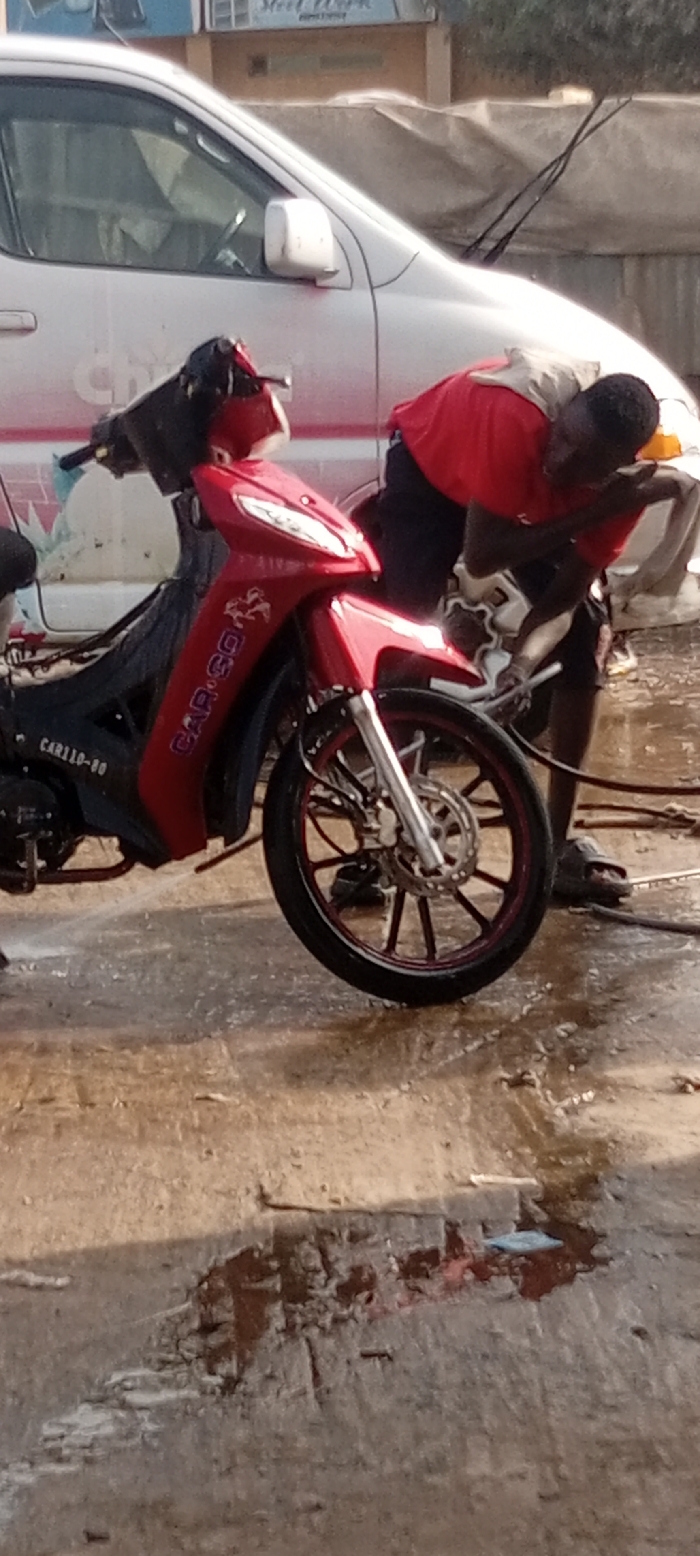
This image depicts an outdoor scene in Kabuga, Nigeria, likely at a vehicle washing facility during the daytime. The central subject is a man, dressed in a red t-shirt and dark shorts or trousers, actively washing a red motorcycle. He is bent over the front section of the motorcycle, holding a nozzle or hose to direct water onto the vehicle. The motorcycle is a red scooter-style model with black accents, including its seat and some lower body panels. Distinct text on its side reads "CAR-GO," accompanied by a stylized horse logo, and "CAR110-80" near the engine. The motorcycle features black wheels with striking red rims and a disc brake system on the front wheel. The ground beneath and around the vehicles is wet and muddy, consistent with a washing operation. In the background, a white car, resembling an SUV or pickup truck, is parked. Its side mirror is visible, and its windshield wipers are raised, suggesting it might also be in the process of being washed or recently completed. Faint, partial text, possibly "Ch...", can be seen on the side of the white car. Further in the background, a sign with the clear text "Steel Work" is visible, hinting at a nearby business. The natural lighting suggests it is daytime. The man appears focused on his work.
Kabuga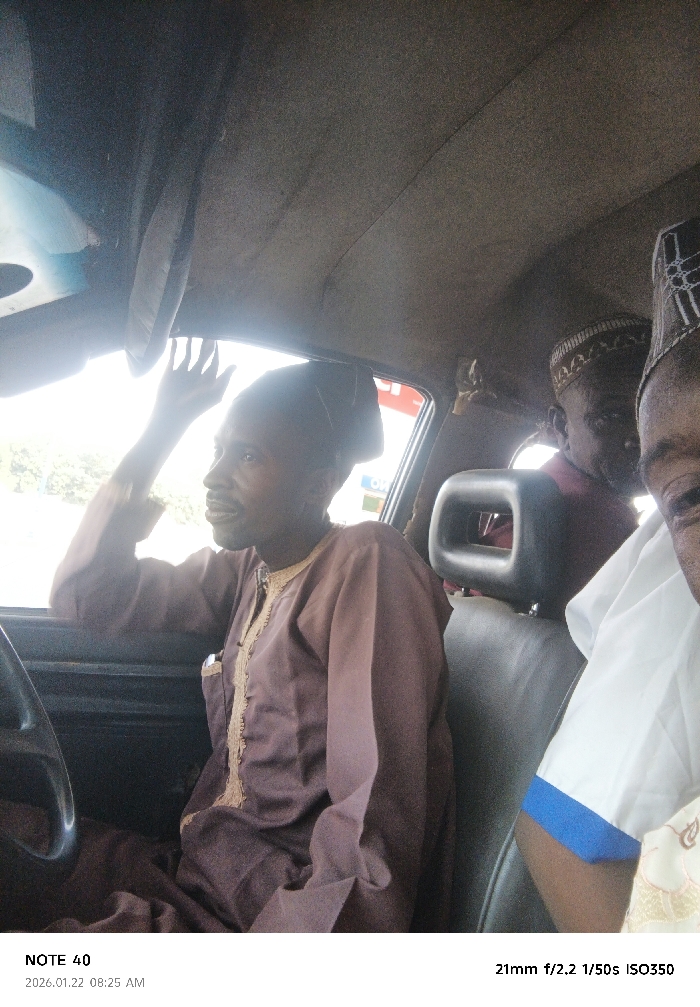
The image captures the interior of a car with three men, taken from a perspective that suggests the photographer is also inside the vehicle, possibly in the front passenger seat. The setting is identified as Kabuga, Nigeria, during daylight hours, specifically 08:25 AM according to the metadata. In the foreground, seated on what appears to be the driver's side, is a man wearing a dark brown, long-sleeved traditional garment with light embroidery down the front, and a dark, flat-topped cap. He is looking out the side window to the left, with his mouth slightly open as if speaking or smiling. His right hand is raised towards the top of the window, partially obscured by a car visor, possibly shielding his eyes from the intense light or gesturing. Behind him, another man is visible, looking forward. He wears a reddish-brown garment and a light-colored, intricately patterned cap. To the right, a third man's face and upper body are partially seen, wearing a white garment with a distinctive blue band on the sleeve, and a similar patterned cap. The car's interior features a grey headliner and dark seats. A portion of the steering wheel is visible on the left side of the frame. The view outside the car windows is overexposed due to strong backlighting, indicating a bright and likely sunny morning. Visible text in the bottom left corner includes "NOTE 40" and the capture date and time "2026.01.22 08:25 AM". In the bottom right corner, camera metadata states "21mm f/2.2 1/50s ISO350".
Kabuga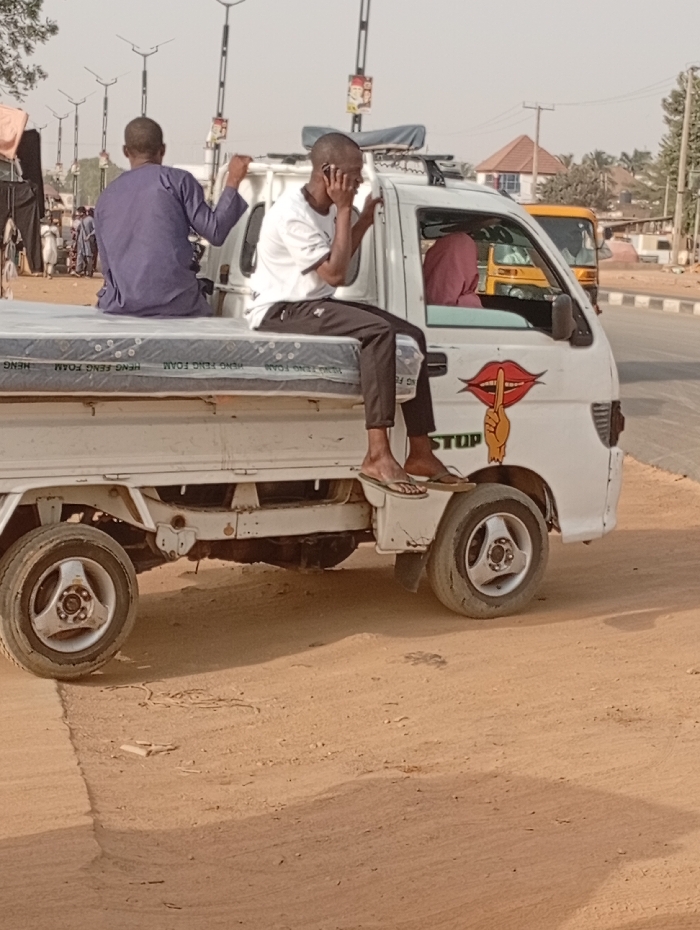
The image depicts an outdoor scene in what appears to be a dry and sunny environment, characteristic of Kabuga, Nigeria. A white pickup truck, possibly a light commercial vehicle, is the central focus, positioned on a dusty, reddish-brown road. Two men are riding in the open bed of the truck. On the left, a man in a dark blue traditional garment is seated on a mattress, facing away from the camera, with his right arm raised in a gesture. To his right, another man, wearing a white t-shirt and dark pants, sits on the edge of the truck bed, his bare feet with flip-flops dangling. He is holding a smartphone to his ear, appearing to be on a call. A white mattress, bearing the repeated text "HENG FENG FOAM," covers the truck bed. Inside the truck's cabin, a person wearing a maroon or reddish-brown headscarf is visible. A notable detail on the truck's passenger side is a sticker featuring red lips with a finger shushing them, and the partially visible word "STOP" beneath. The truck itself appears to be used, showing some wear. In the background, other vehicles, including a yellow tricycle, are partially visible. Various buildings and utility poles line the road, suggesting an urban or semi-urban setting. The bright daylight and clear sky indicate a sunny day. The scene captures an everyday moment of transportation and activity.
Kabuga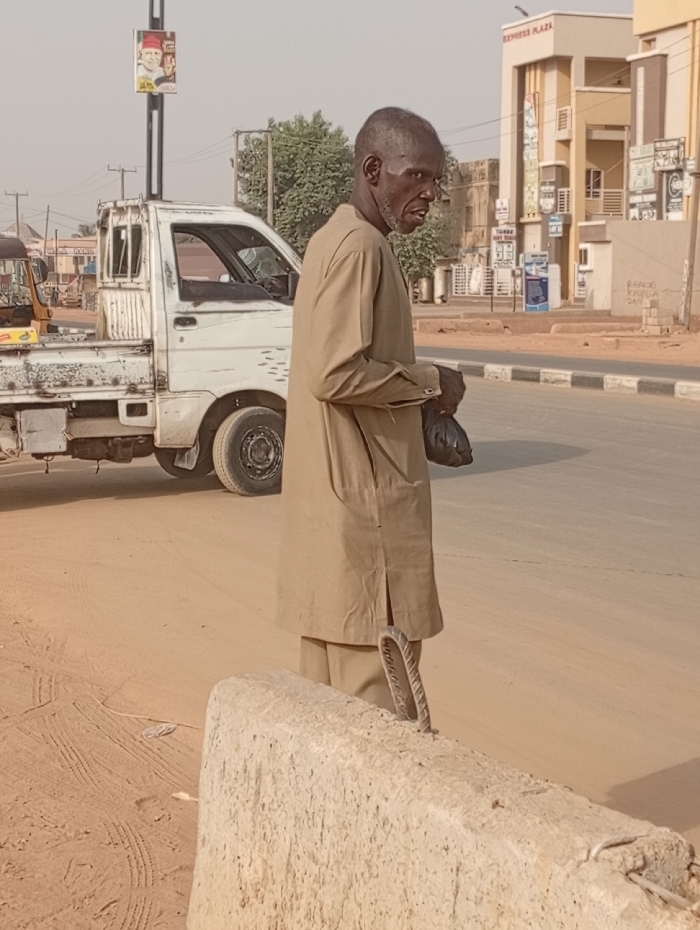
An elderly man in a beige tunic and trousers stands near a concrete barrier on a sandy road. He holds a dark bag in his left hand. A white utility truck is parked nearby. In the background are buildings, a street lamp with a poster, and glimpses of other vehicles on the road. The overall scene has a dusty, urban feel, possibly in a developing area.
Kabuga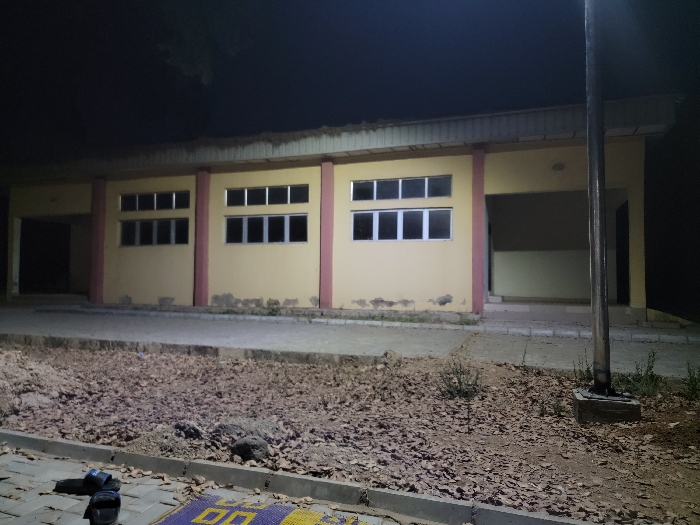
A yellow building with a symmetrical facade sits beneath a dark sky, illuminated by unseen light sources. Three sets of windows punctuate the walls, interspersed with reddish-brown vertical sections. Open doorways flank the windowed sections. The ground in front of the building is uneven, covered in debris and leaves. A pole stands near the right side of the structure. A pair of sandals rest on a striped mat at the bottom left. The entire scene is captured in a dimly lit environment.
Kabuga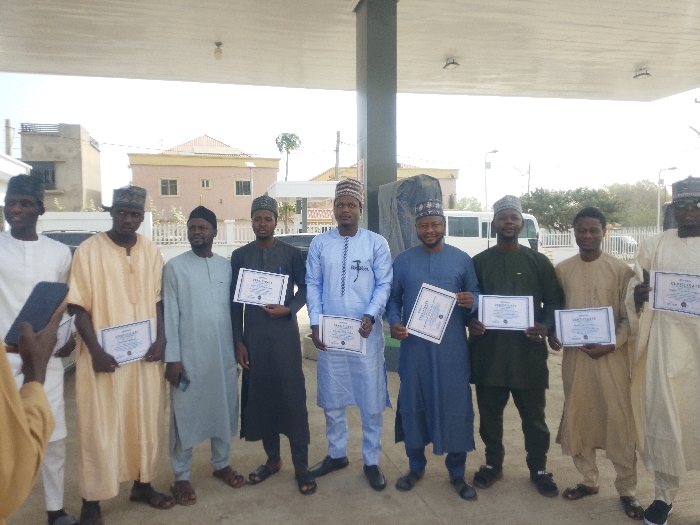
Nine adult males are arranged in a horizontal line, facing the camera, under a white, open-air canopy structure in Kabuga, Nigeria. Each male is dressed in traditional Nigerian attire, consisting of long tunics and caps; garment colors include white, beige, light blue, dark blue, olive green, and black. All nine individuals are holding a white, framed certificate with dark borders at waist height, presenting them towards the foreground. Their facial expressions are generally neutral or exhibit faint smiles. In the lower left foreground, a hand holding a dark smartphone is partially visible. The background features multi-story buildings, including a prominent beige structure with multiple windows and a darker, unfinished concrete building. Partially visible vehicles, specifically a white van or bus, and streetlights are present further in the background under a bright sky.
Kabuga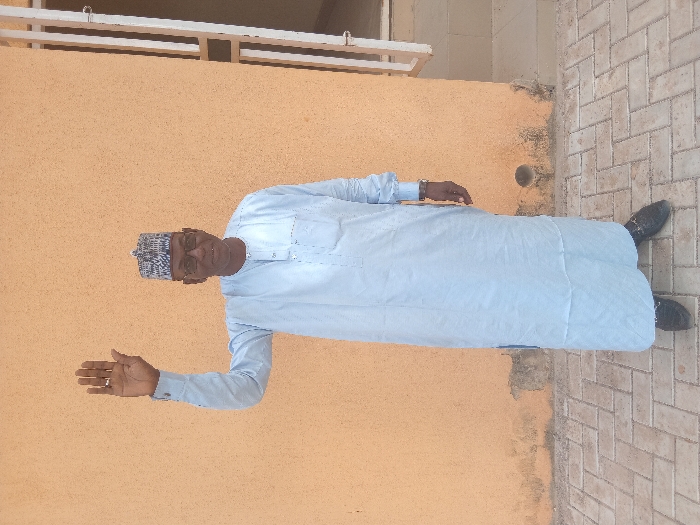
An adult male stands outdoors in Kabuga, Nigeria, centered against a plain, light orange-brown stucco wall. He wears black-rimmed glasses, a patterned cap, a light blue long-sleeved traditional garment, and dark slip-on shoes. A watch is visible on his left wrist. His right arm is raised vertically, with the hand open and palm facing forward. The subject has a slight smile. The ground is paved with light-colored interlocking bricks arranged in a herringbone pattern. A partial white door or window frame is visible to the right of the man against the wall, which exhibits dark discoloration near its base.
Kabuga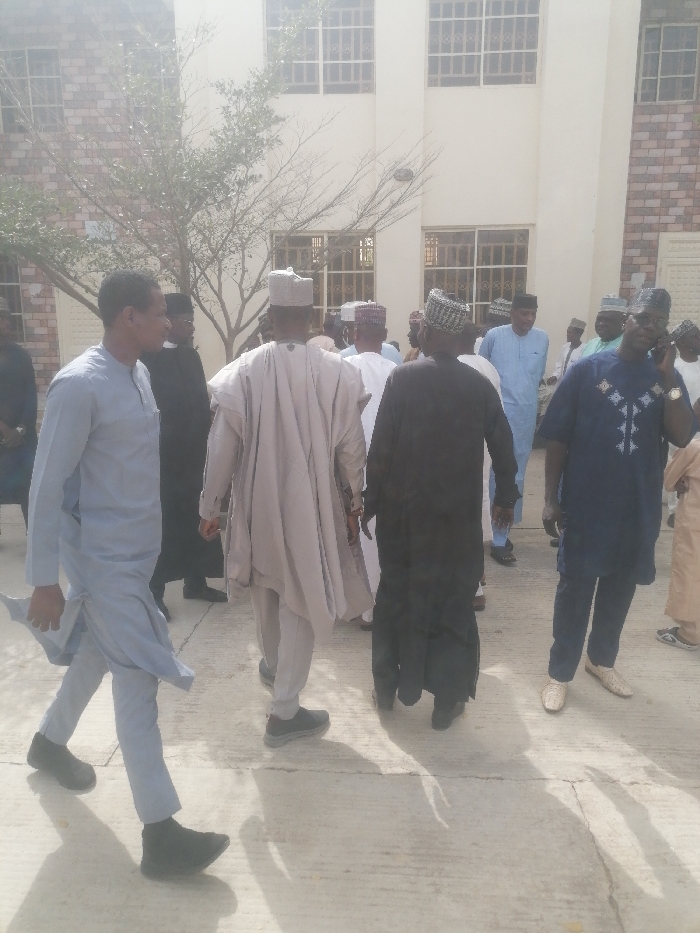
The image displays an outdoor scene in Kabuga, Nigeria, featuring approximately 15 to 20 adult males gathered on a light-colored paved surface under bright daylight, indicated by strong shadows. A light-colored, multi-story building with numerous gridded windows forms the background, with a sparsely leafed tree positioned towards the left. In the foreground, a man wearing a light blue traditional tunic and trousers is seen walking towards the left, viewed in profile. To his immediate right, another man in a light beige babanriga and cap walks away from the camera. Directly behind him, a man in a black traditional outfit also walks away. On the far right, a man in a dark blue patterned tunic, dark trousers, glasses, and a patterned cap is actively holding a dark mobile phone to his right ear, appearing to be on a call. Various other men in similar traditional attire are scattered throughout the mid-ground and background, either standing or in motion. No specific interactions beyond general congregation are visible.
Kabuga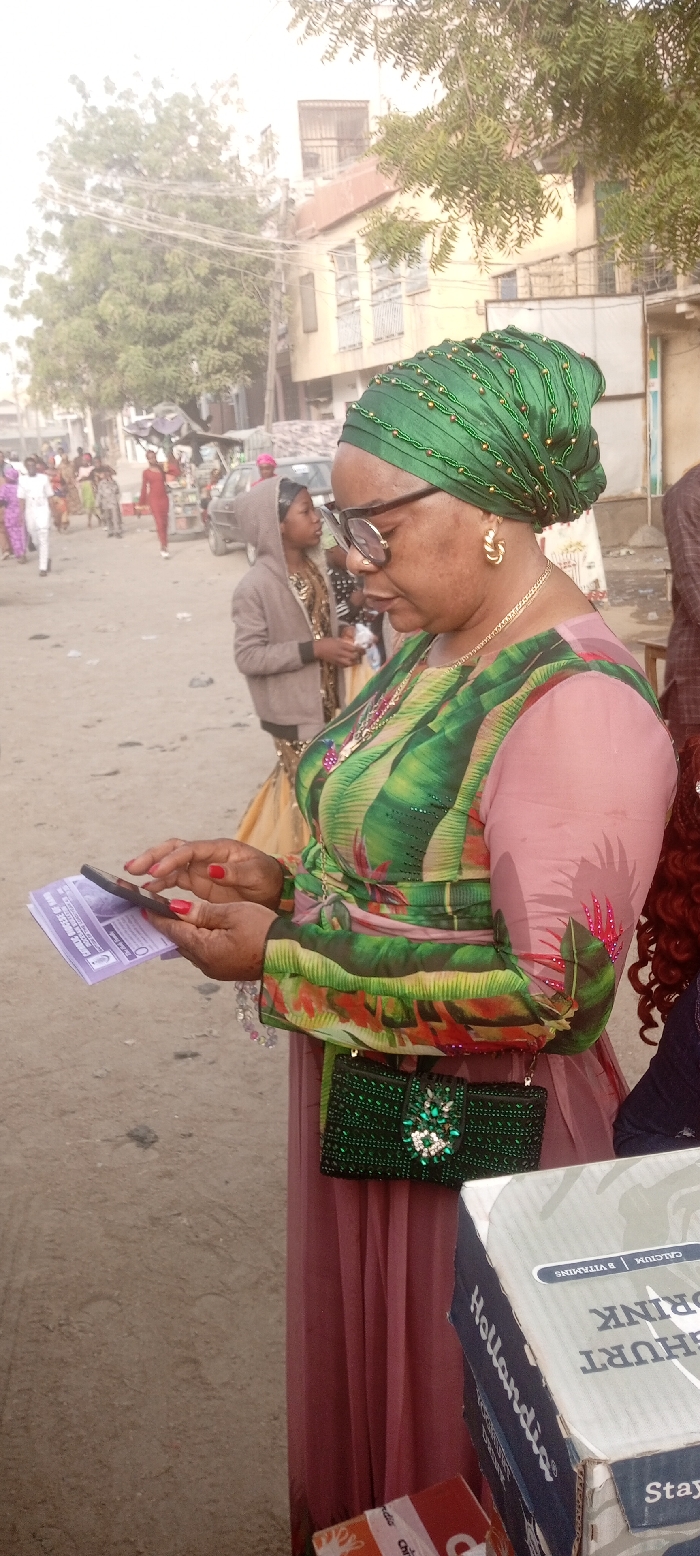
A woman with glasses wearing a green beaded headwrap, a green floral top, and a light pink dress stands outside holding a phone. She also has a green beaded purse with crystal embellishments. In the background is a street scene with people, vehicles, and buildings. A box partially visible in the foreground has "Hollandia" and "Yoghurt Drink" printed on it.
Kabuga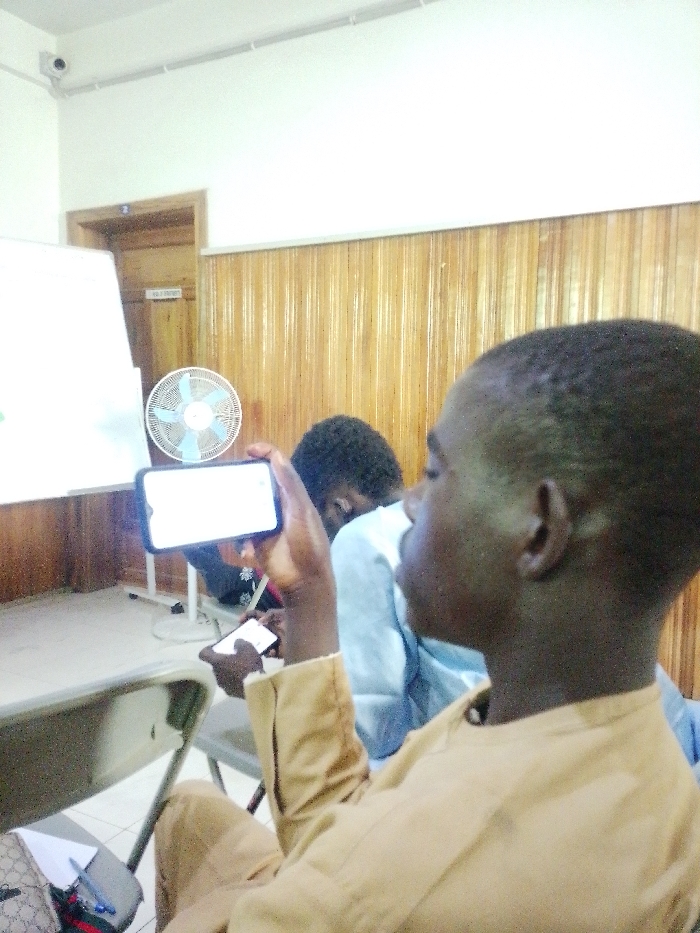
The scene depicts an indoor room, identified as being in Kabuga, Nigeria, consistent with a classroom or meeting space. In the foreground, a dark-skinned male wearing a light brown long-sleeved garment is seated, viewed from his right profile. He holds a black smartphone horizontally with his right hand, displaying a brightly illuminated screen with indistinct white content. His left hand simultaneously holds a smaller, dark-colored smartphone. Behind him and slightly to the left, another individual with dark, curly hair is seated, wearing a light blue top, and appears to be looking downwards. The room features light brown vertical wooden paneling on the lower portion of the walls, transitioning to an off-white or cream color on the upper walls and ceiling. A white oscillating fan on a stand is positioned in the midground to the left of the foreground subject. Partially visible to the fan's left is a white easel-style whiteboard. A light brown wooden door frame with a closed door, marked with a white number "2", is present in the upper left background. A small, dark security camera is mounted on the off-white ceiling in the upper left corner, with white electrical conduit running along the ceiling. A patterned bag, a pen, and paper are visible on a surface or chair near the foreground subject's feet.
Kabuga
The image presents a highly blurry and dark nighttime scene, characterized by prominent artificial light sources and lens flares. The overall composition is abstract due to significant motion blur and low-light conditions. On the left side of the frame, multiple bright, elongated light sources in shades of white and blue are visible. A distinct crescent-shaped light appears near the top left, with another circular, bright light below it. Further down, a vertical cluster of intensely bright white lights forms a focal point, illuminating indistinct, blocky shapes behind them which are too blurry to identify with certainty, but could suggest parts of vehicles or structures. A faint, crescent-like light shape is also visible towards the bottom left. A large, soft, warm orange-brown glow dominates the right side of the image, extending into the center as a prominent streak of light. Near the bottom center, a very bright, star-burst-like orange light source creates a strong vertical light streak. The background is predominantly deep black, indicating nighttime, with a visible grainy texture. No specific people or activities are discernible. The image appears to have been captured at night, likely with camera movement, given the pronounced light streaks and general blurriness. No legible text is visible anywhere in the frame. While provided with the context of Kabuga, Nigeria, the image itself does not contain any visual cues to confirm this location.
Kabuga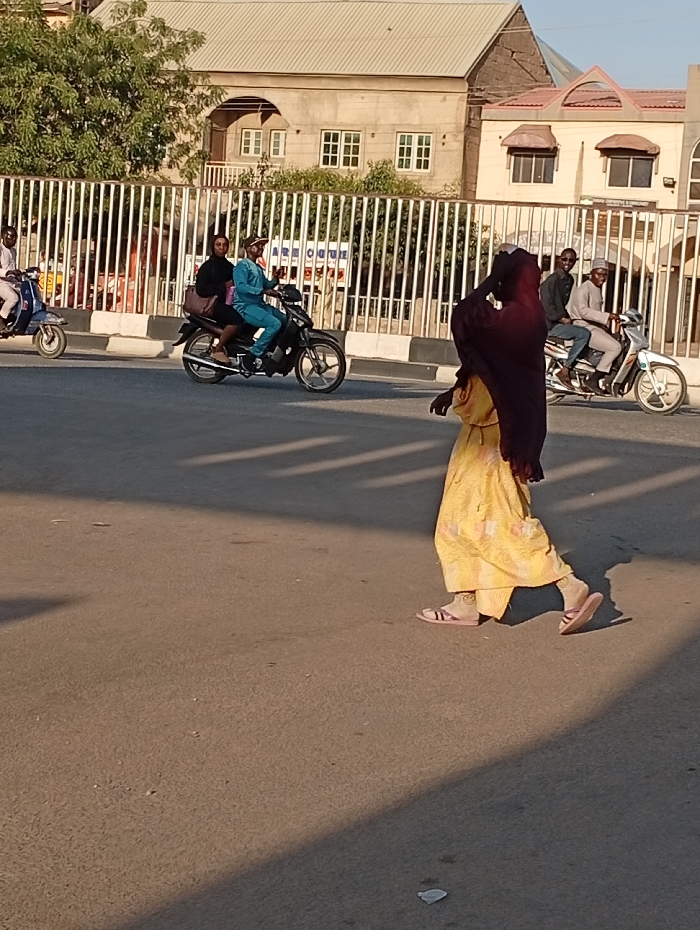
The image captures a sunlit street scene in Kabuga, Nigeria, likely during the early morning or late afternoon, as indicated by the long shadows stretching across the asphalt road. In the foreground, a woman walks from right to left with her back mostly to the viewer. She is wearing a yellow, patterned flowing dress or long garment, a dark head covering, and light-colored sandals over socks. Her form is cast in shadow, emphasizing the light on the road. Behind her, on the road, several motorcycles are in motion. To the left, a man in a blue outfit is driving a dark motorcycle with a female passenger behind him, who is wearing a dark top and skirt and carrying a bag. Further left, another man is riding a light-colored scooter. To the right, another man in a light-colored outfit and cap is driving a white motorcycle, with a passenger seated behind him. The driver appears to be smiling and looking towards the camera. A white vertical-barred metal fence runs along the side of the road, separating it from an area with buildings and trees. In the background, behind the fence, are several buildings with light-colored walls and distinct rooflines, suggesting residential or commercial structures. Green foliage from trees is visible above and behind the fence. Visible text on a sign or building behind the fence, somewhat obscured by the fence and a tree, includes parts of words like "ARBOQUE" and possibly "COLLEGE" or "OFFICE". The scene depicts a typical daily activity of commuting or movement on a street, characterized by the use of motorcycles as a common mode of transport.
Kabuga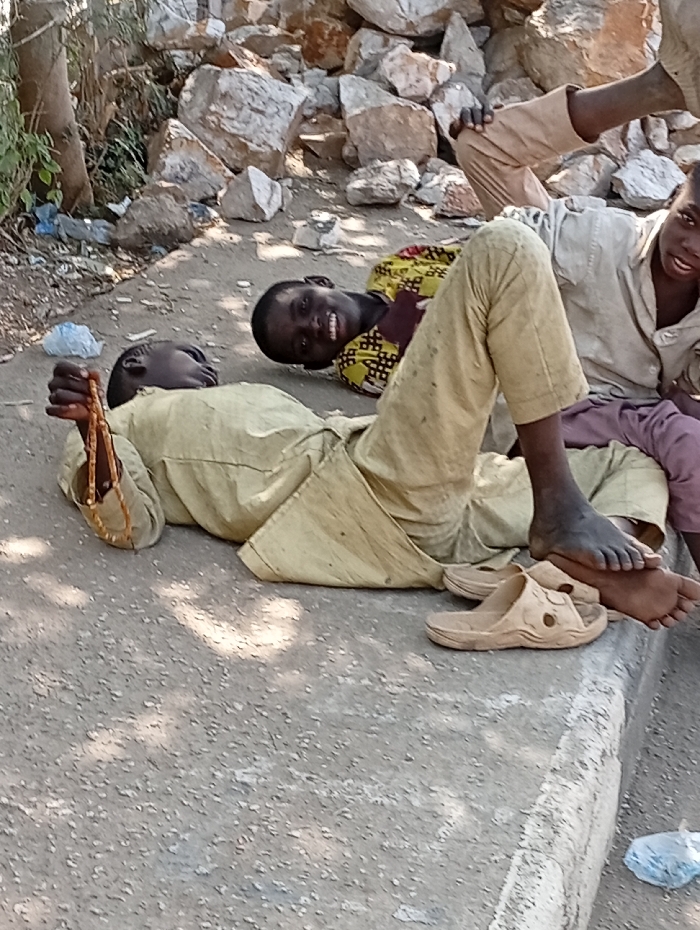
Three children are reclining on a roadside. One child is lying down, holding a string of beads. Adjacent to this child is another, grinning at the camera. A third child is positioned higher up in the scene. Discarded plastic bags litter the ground. The scene is set alongside a concrete road and a pile of rocks. One pair of sandals are laying on the ground next to the reclining child.
Kabuga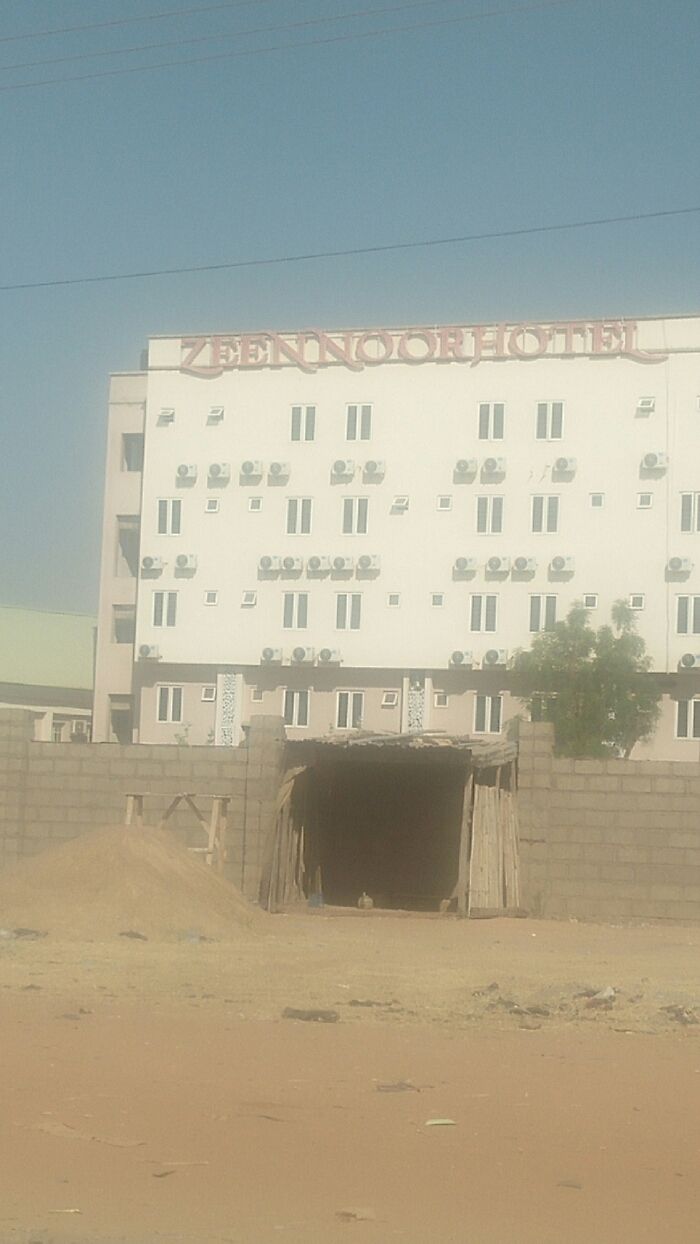
A dusty foreground leads to a walled construction site, revealing a dimly lit, tunnel-like opening. Behind it stands the Zeennoor Hotel, a tall building with rows of windows and air conditioning units. A few trees are visible on the right side of the construction site, and power lines stretch across a clear sky above the hotel.
Kabuga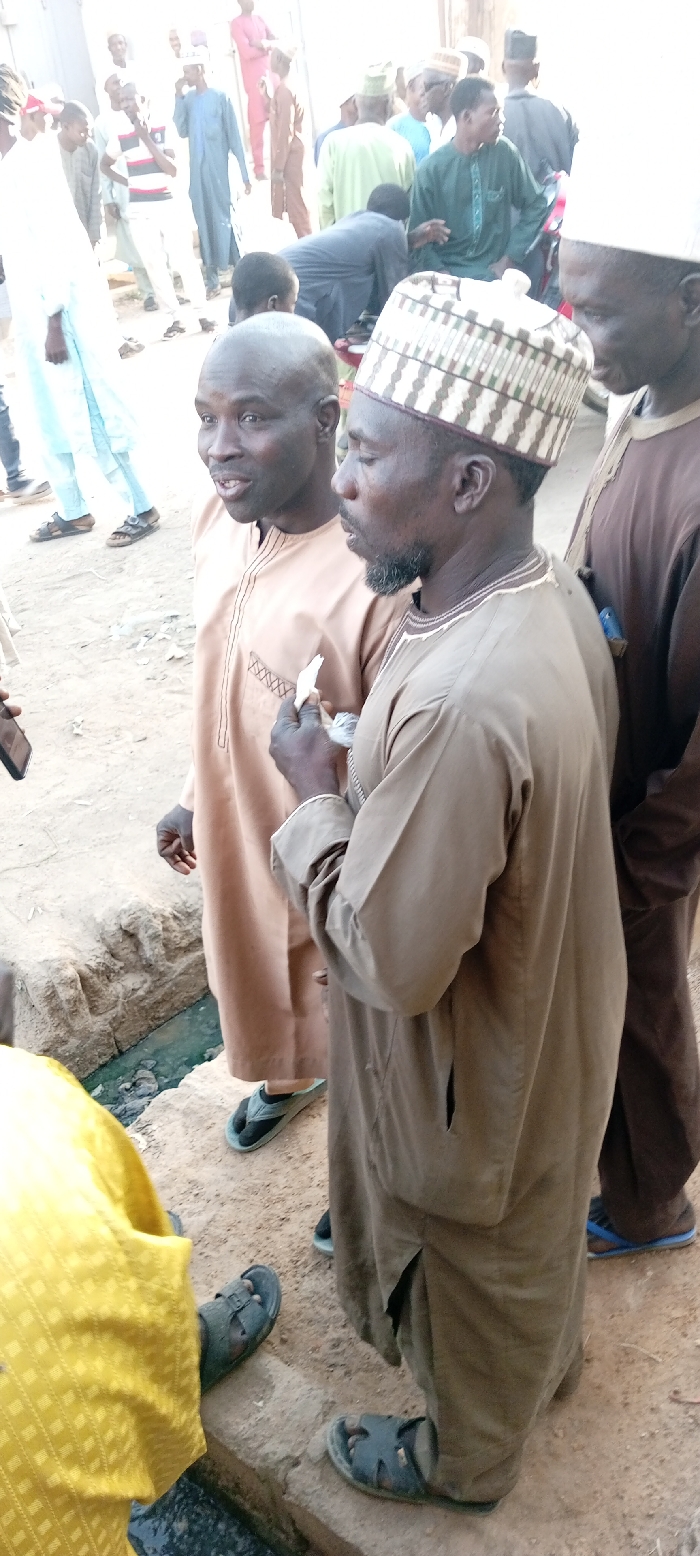
This image depicts an outdoor gathering of approximately twenty or more adult males in Kabuga, Nigeria. In the immediate foreground, three individuals are prominent. The leftmost subject is a bald male wearing a light beige long-sleeved garment with dark embroidery and dark open-toed sandals, exhibiting an open-mouthed expression and directing his gaze slightly right. Adjacent to him, a male with a short dark beard and mustache wears a light brown long-sleeved garment and a white and brown patterned cap, holding several white paper currency notes in his right hand at chest level, with his gaze directed downwards. To his right, a third male is partially visible, wearing a dark brown long-sleeved garment. The background shows additional males in various traditional garments, including light blue, green, and white, suggesting a crowded public space. The ground surface is unpaved earth. A narrow, open concrete drainage channel containing murky liquid runs horizontally across the lower mid-ground. Footwear observed on visible individuals includes various sandals and flip-flops. The scene is illuminated by natural daylight.
Kabuga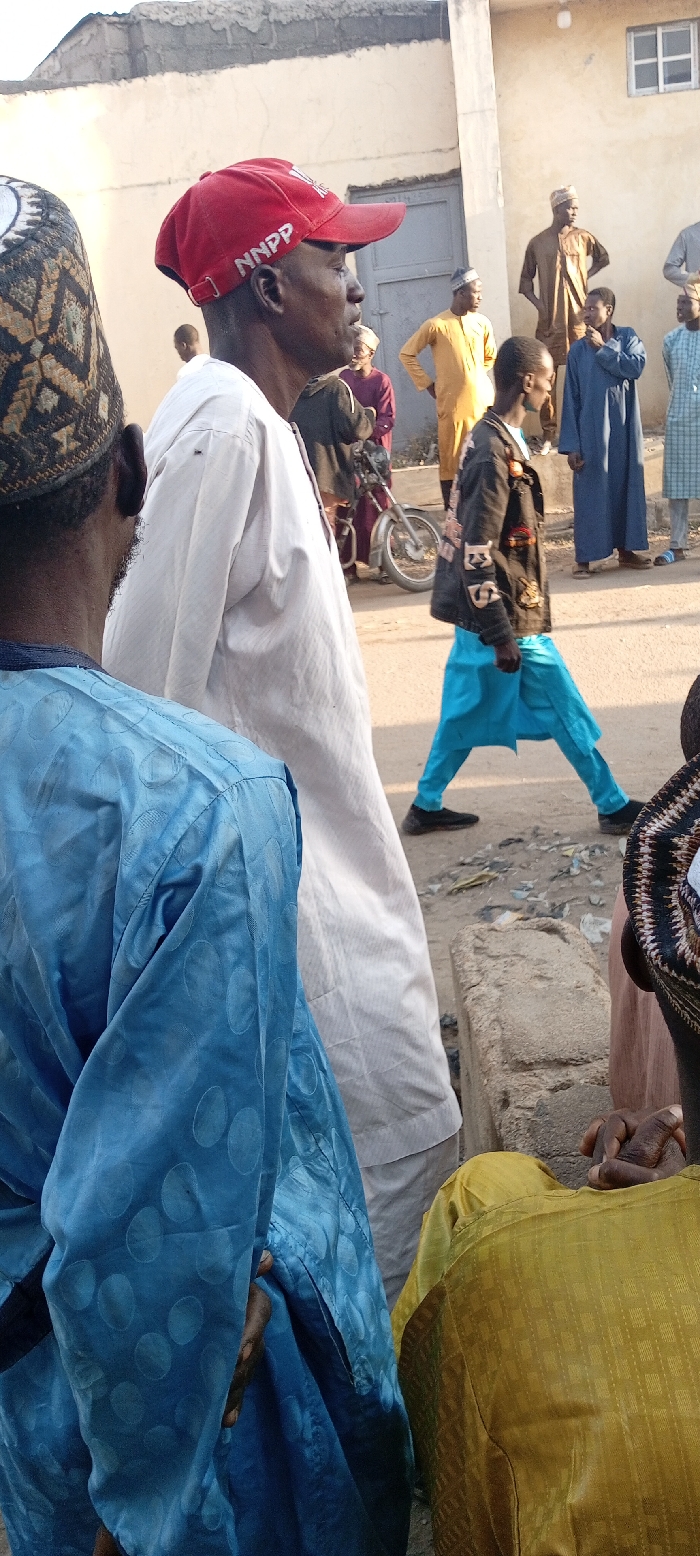
The scene depicts a daylight street gathering in Kabuga, Nigeria, with multiple individuals present. In the immediate foreground, from the left, a person wearing a blue patterned garment with circular motifs is partially visible, facing right. To their right, a man in a plain white garment and a red baseball cap, embroidered with "NNPP" in white letters on the front, stands facing right in profile. His gaze is directed forward. In the midground, to the right of the man in white, another individual walks right to left, wearing a dark jacket adorned with light-colored patterns and bright blue loose-fitting pants, with black shoes. Behind this moving figure, a silver-colored motorcycle with a spoked wheel is parked or stationary. Further in the midground and background, several other men are visible, primarily standing. They wear traditional Nigerian attire, including various solid-colored garments such as brown, dark blue, light blue plaid, and maroon, with some wearing skullcaps. The background consists of a light-colored building with an off-white or beige textured facade. A rectangular door is visible on the left side of this building, and a small, white-framed window is positioned higher on the right. The ground in the foreground and midground is a mix of dirt and gravel, with a concrete curb or block visible on the right. The lighting suggests a bright, possibly late morning or afternoon sun, casting soft shadows.
Kabuga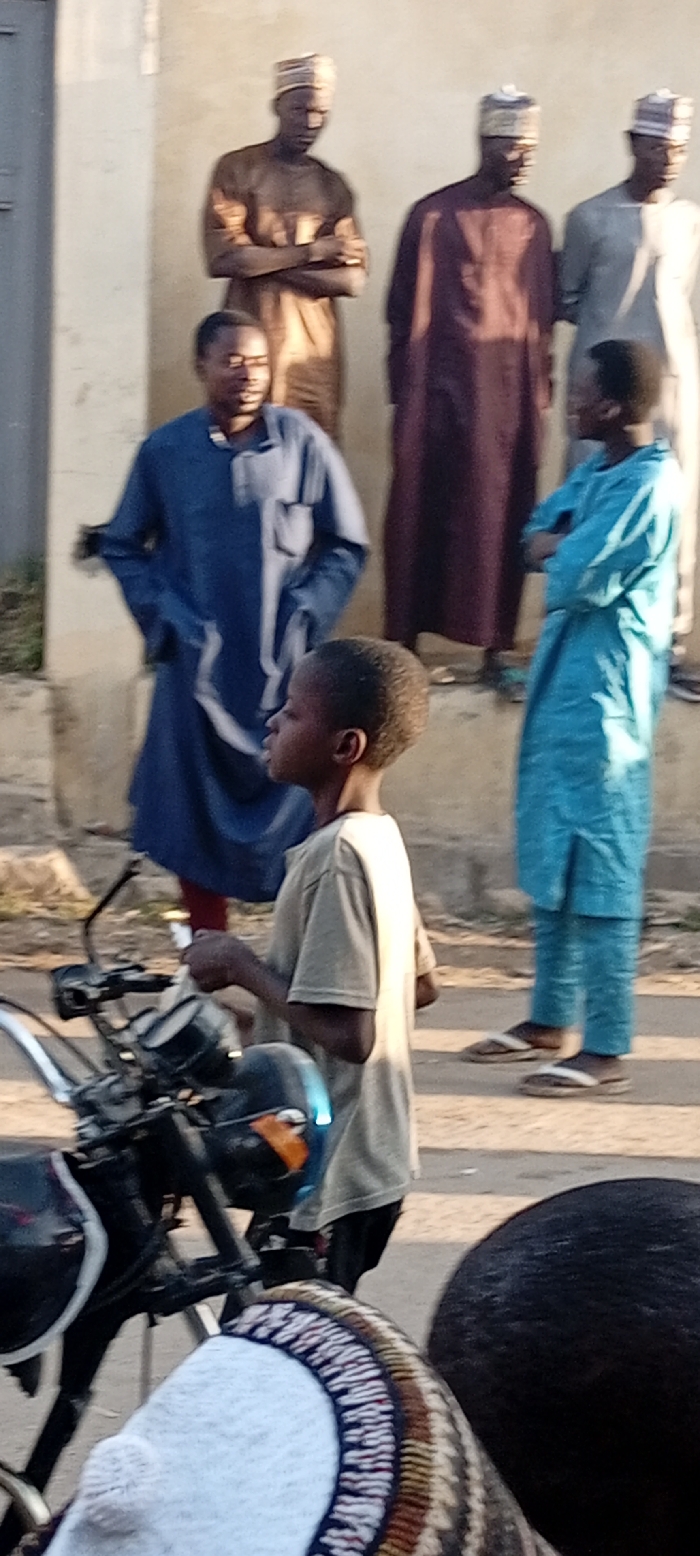
The image depicts an outdoor street scene in Kabuga, Nigeria, under natural daylight. In the immediate foreground, the handlebars and a portion of the seat of a black motorcycle are visible. A young male, approximately 8-12 years old, with short dark hair, wearing a light tan short-sleeved t-shirt and dark trousers, stands to the right of the motorcycle, facing left in profile. He holds a small, light-colored object in his right hand. In the midground, from left to right: 1. A male in a dark blue long-sleeved kaftan, standing with hands in his pockets, looking towards the right. 2. A male in a light blue long-sleeved kaftan and matching trousers, wearing sandals, standing with arms crossed, looking towards the left. In the background, against a plain, light-colored wall, three adult males are partially visible, all wearing traditional caps. From left to right: 1. A male in a light brown kaftan, standing with arms crossed. 2. A male in a dark maroon kaftan. 3. A male in a light grey kaftan. The ground appears to be an unpaved, uneven surface. Shadows indicate a light source from the right side of the frame. The individuals are standing in various states of observation or interaction with each other and their surroundings.
Kabuga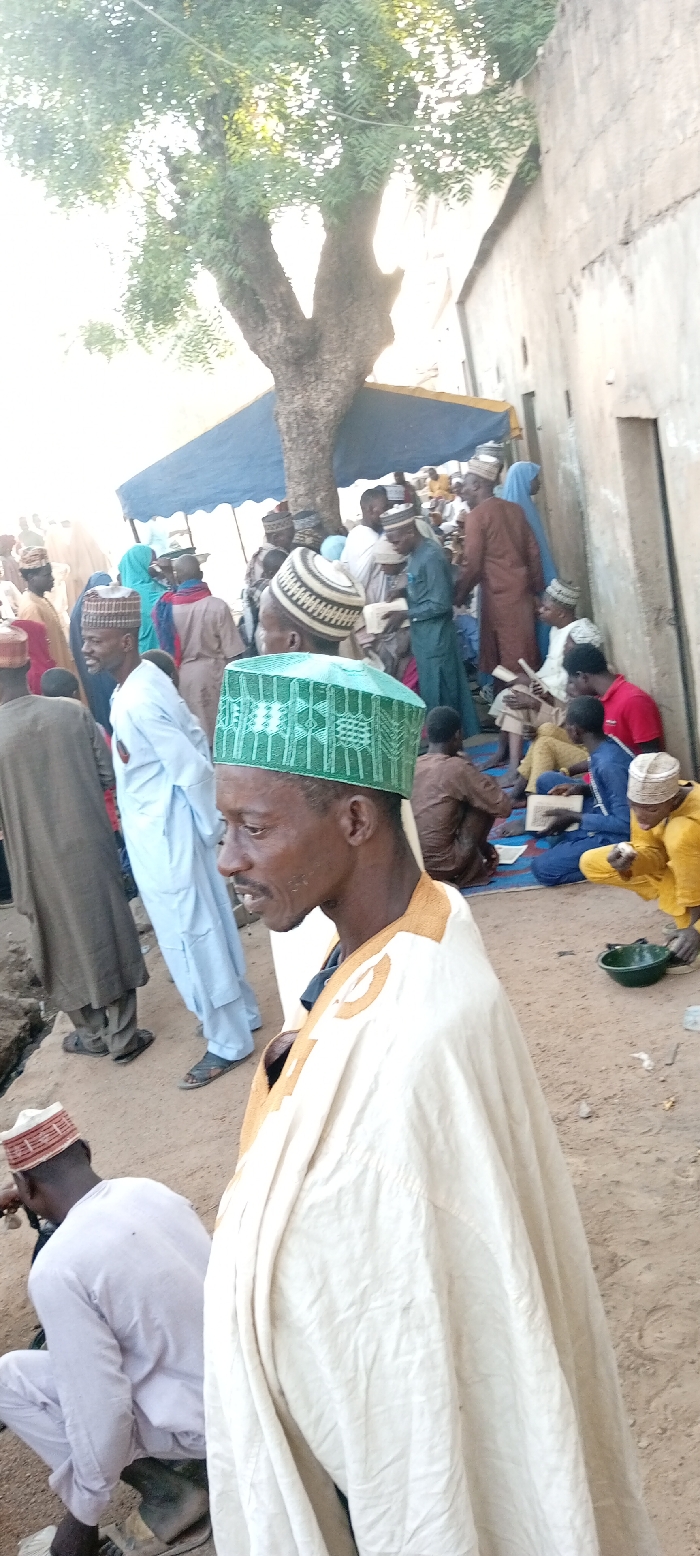
This image depicts an outdoor gathering of approximately twenty-five individuals, predominantly adult males, in Kabuga, Nigeria, under daylight conditions. The ground is unpaved and appears dusty. A large tree with a thick trunk and green foliage dominates the upper left quadrant, with a blue rectangular canopy positioned beneath it, providing shade. A weathered, light-colored concrete building wall is visible along the right side of the frame. In the immediate foreground, a man is shown in profile, facing right, wearing a cream-colored robe with tan embroidery on the shoulders and a green skullcap adorned with white geometric patterns. He has a short beard and his gaze is directed downwards. To his left and slightly behind, a man in a light blue robe and sandals stands near an unpaved trench or depression in the ground. The mid-ground and background feature multiple individuals, primarily men dressed in traditional robes and various caps. Several are seated on the ground or on blue mats, actively engaged in reading from open books or pamphlets. One man in yellow attire is seated on the far right, near a green bowl placed on the ground. A woman wearing a light blue head covering is also discernible within the gathered crowd. The subjects are clustered, indicating a communal assembly.
Kabuga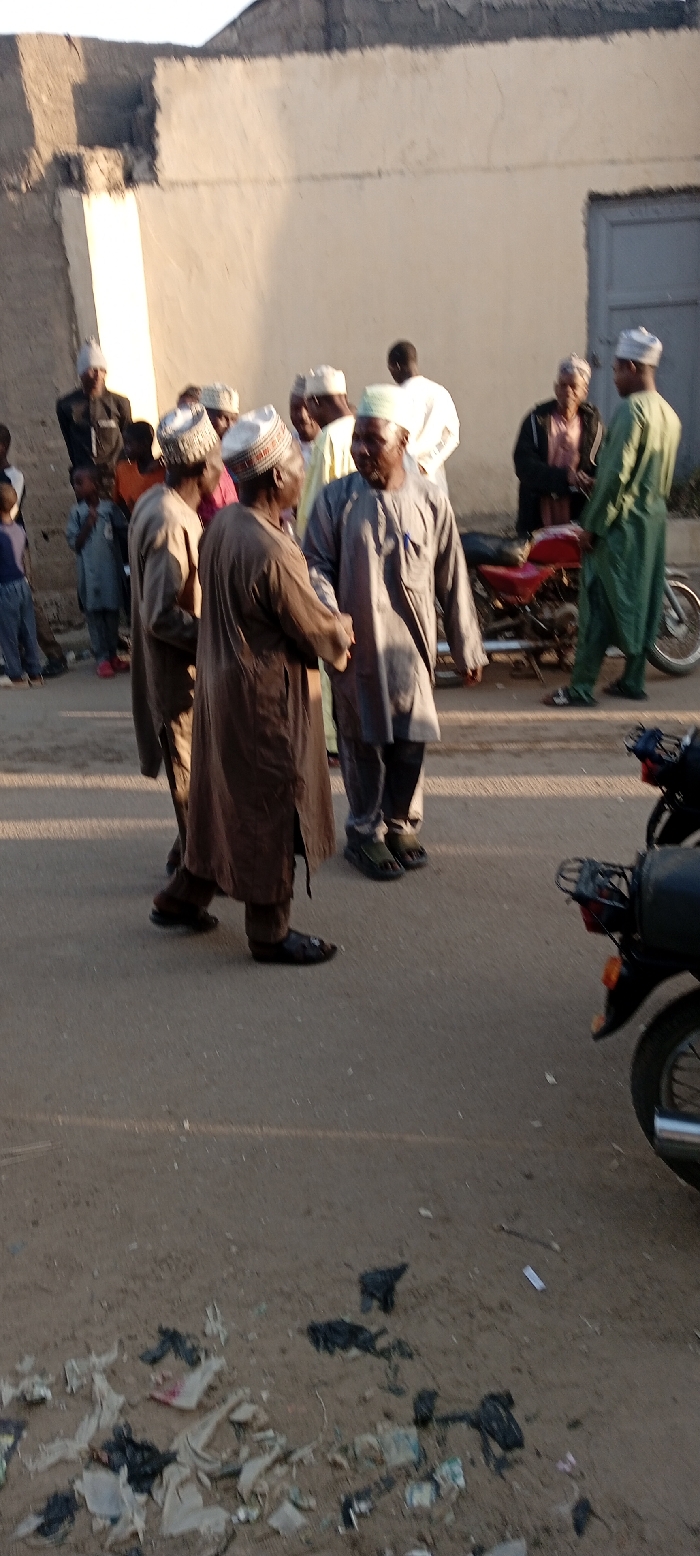
The image captures an outdoor street scene in Kabuga, Nigeria, under bright daylight conditions, evidenced by clear shadows. Approximately 15 individuals are present, consisting primarily of adult males along with a few children. Most adults wear traditional Nigerian attire, including long robes (brown, grey, green, white, and beige) and various caps. In the foreground, two men in robes and caps stand facing each other, one in brown and one in grey, seemingly engaged in conversation. To their right, a man in a green robe and cap stands near a red motorcycle parked by a building. Another dark-colored motorcycle is partially visible in the bottom right corner. In the background, a light-colored, textured building wall with a dark doorway is visible. The ground surface in the foreground is a paved area, heavily scattered with white and black plastic bags, paper, and other debris.
Kabuga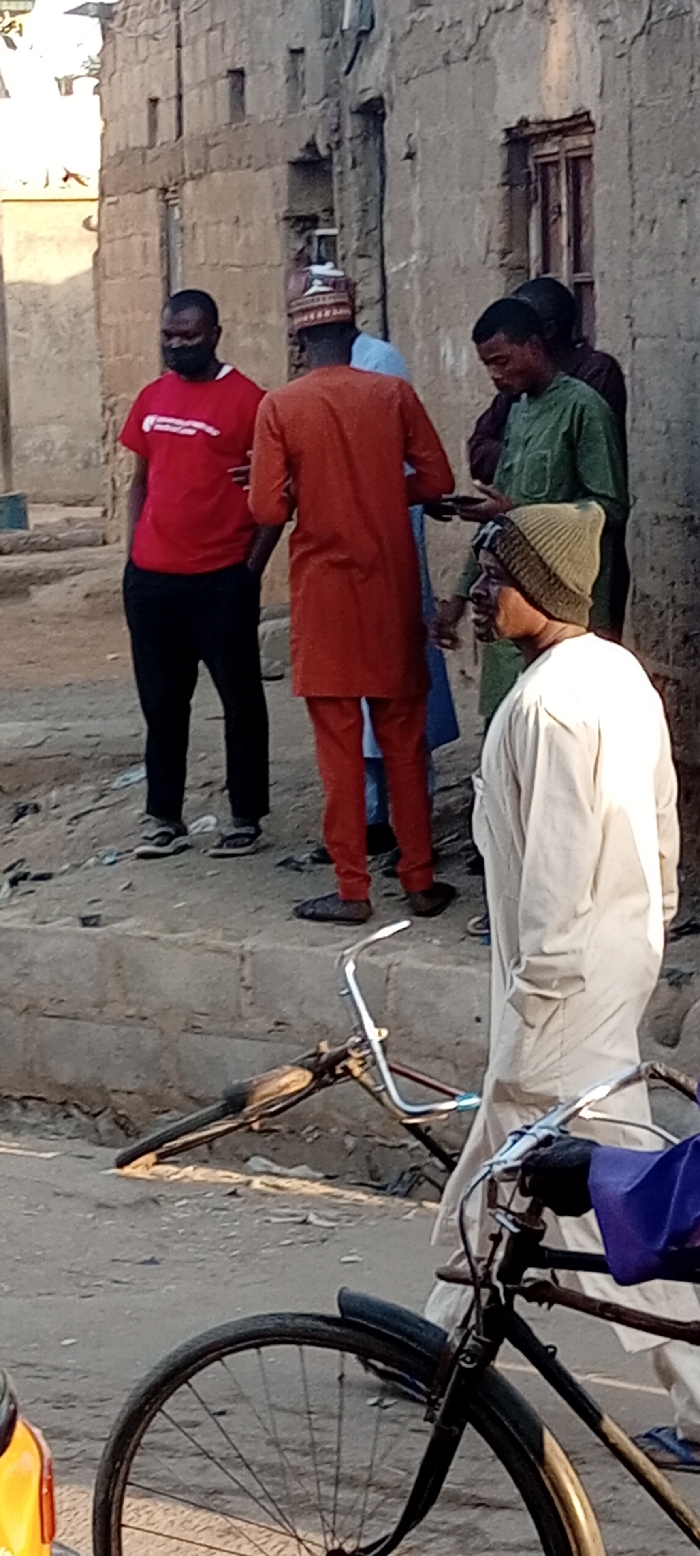
The image depicts a street scene in Kabuga, Nigeria, featuring six adult males and two bicycles near a dilapidated building. In the foreground, two bicycles are present. On the lower left, part of a yellow vehicle with a reflector is visible. Adjacent to it, the front wheel and handlebars of an upright bicycle are seen, with a purple fabric draped over the handlebars. To the right, a second bicycle lies horizontally on the dusty ground, partially obscured by a low concrete curb. On a raised concrete platform or steps behind the bicycles, five men are gathered. From left to right: 1. A man wearing a red t-shirt, black trousers, and a black face mask stands with his hands in his pockets, facing right. 2. Next to him, a man in an orange long-sleeved traditional tunic and matching trousers, wearing a patterned cap, stands with his back largely to the viewer, facing right. He wears dark slippers. 3. Partially obscured behind the man in orange is a third man in a light blue traditional garment. 4. Further right, a man in a green long-sleeved traditional shirt is looking down at a mobile phone he holds in his hands. 5. Partially visible behind the man in green is another individual in a dark garment. In the right foreground, slightly separated from the group on the platform, a sixth man is seen in profile, facing left. He wears a light-colored (possibly off-white or cream) long traditional tunic and a brown and olive green knitted beanie. He has a short beard. The background consists of a weathered, light-colored building constructed of concrete blocks or mud bricks, featuring several recessed windows, some appearing boarded up or partially filled. The ground is unpaved, dusty, and uneven, with visible debris. The scene is illuminated by natural daylight.
Kabuga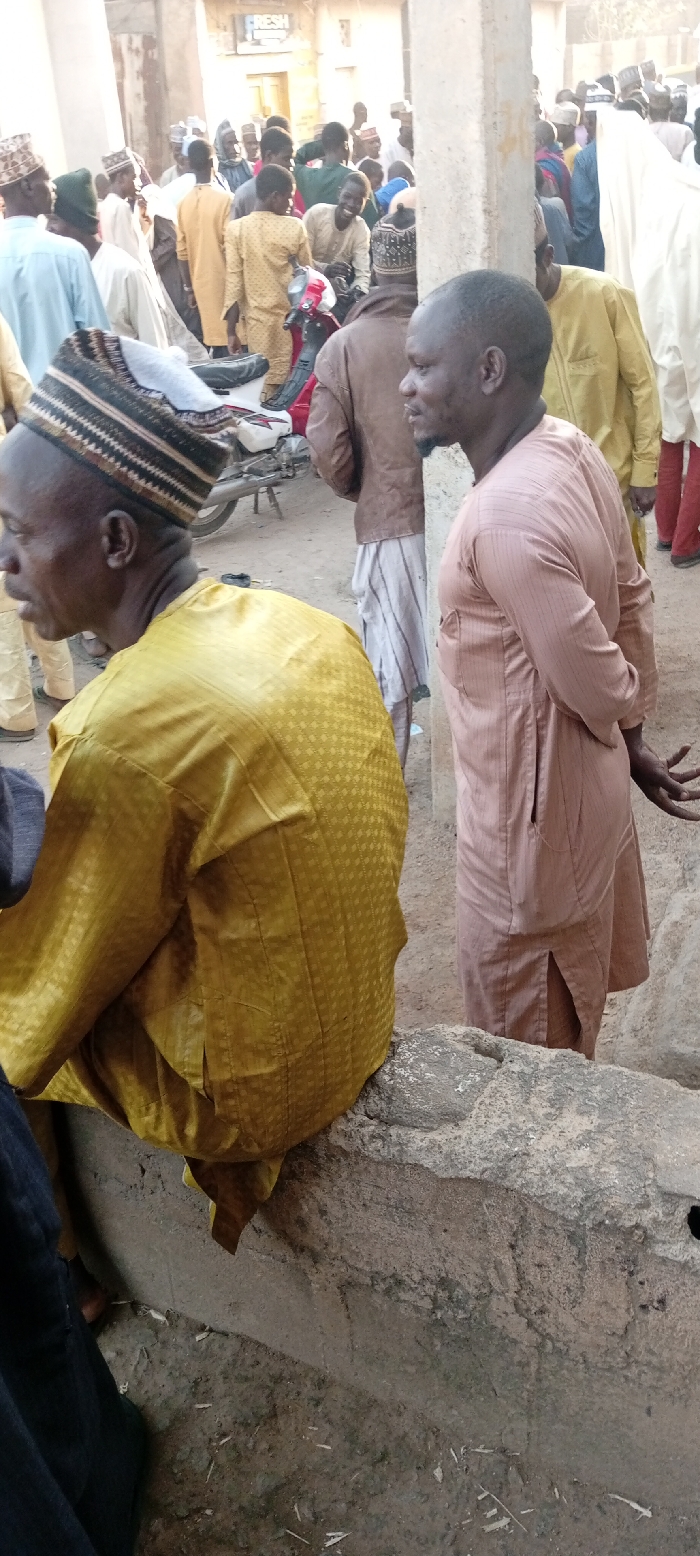
This image depicts a crowded outdoor scene in Kabuga, Nigeria. In the foreground, two adult males are prominent. On the left, a man wearing a yellow patterned tunic and a striped brown and white cap is seated or squatting on a low, rough concrete or stone barrier, facing away from the camera's direct view. To his right, another man in a light brown, long-sleeved tunic stands with his hands clasped behind his back, looking towards the right side of the frame. He exhibits a short beard and mustache. Behind these two individuals, a dense gathering of approximately 20-30 people, primarily adult males, fills the midground and background. They are standing and moving within what appears to be a public space or market area. Many individuals wear traditional Nigerian attire, including various tunics and skullcaps. A white and red motorcycle or scooter is partially visible amidst the crowd in the midground, positioned to the left. The ground is an uneven, dusty surface of packed earth or dirt with scattered small pieces of debris. Several concrete pillars are present throughout the scene, one prominent to the left of the standing man. In the background, blurred building structures, possibly shops, are visible, one featuring a partial sign displaying the word "FRESH." The scene is illuminated by natural daylight, suggesting an outdoor environment during the day.
Kabuga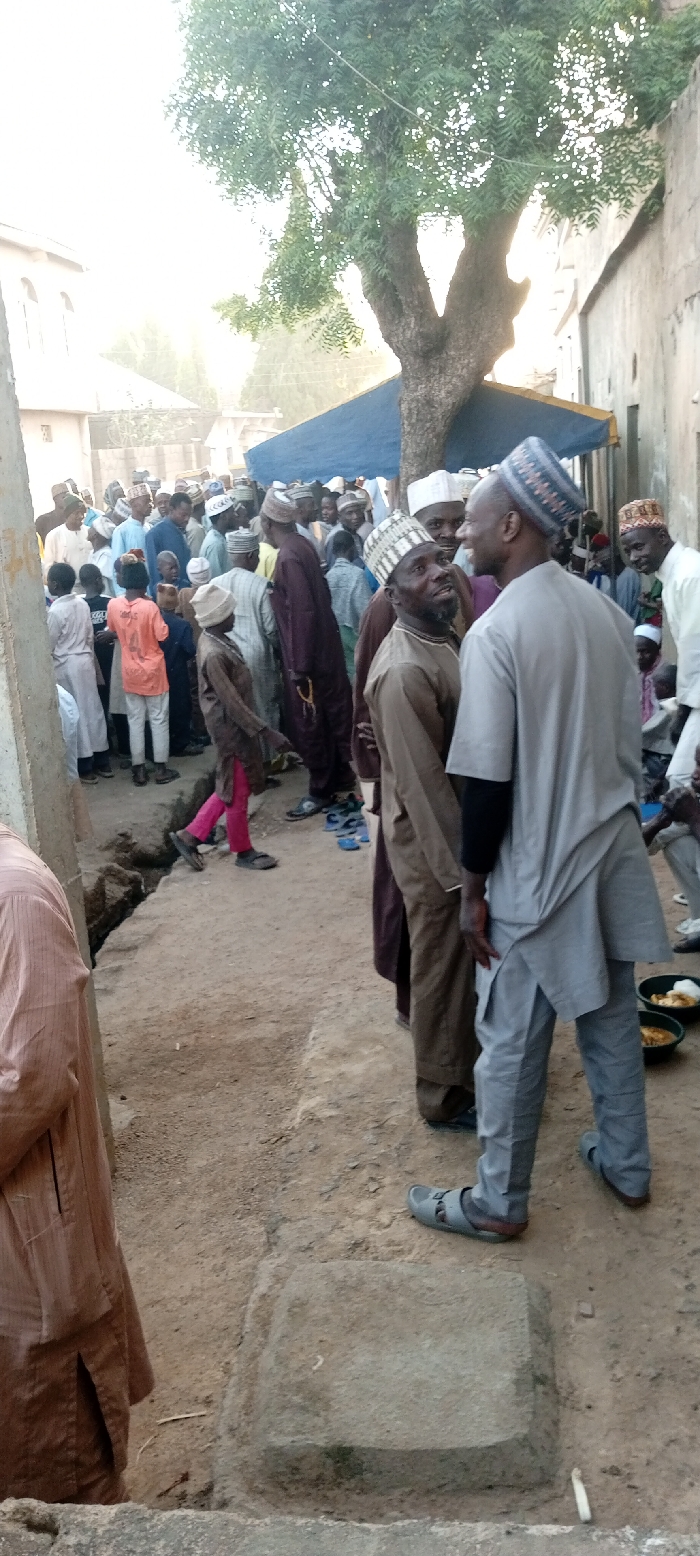
The image depicts an outdoor gathering of approximately 30-50 individuals, predominantly adult males and several boys, within an unpaved thoroughfare in Kabuga, Nigeria. The scene is illuminated by natural daylight, casting soft shadows. The foreground features an uneven dirt ground. On the lower left, a portion of a man in a light brown striped tunic is visible. A rectangular, weathered stone block is embedded in the dirt slightly to the right of the center foreground. An open, unlined ditch runs along the left side of the dirt path. In the mid-ground, a young boy in a brown long-sleeved shirt and bright pink trousers walks towards the left. The central focus includes two adult males facing each other and smiling. The man on the left wears a brown long-sleeved tunic, brown trousers, and a patterned light-colored cap. The man on the right wears a light grey short-sleeved tunic over a black long-sleeved shirt, grey trousers, and a blue patterned cap. To their right, several pairs of sandals and slippers, including blue and black ones, are scattered on the ground. Further right, near the edge of the frame, two light-colored bowls are on the ground, one containing yellowish food. The background shows a dense crowd of people, mostly men, dressed in various traditional tunics and caps (kufis). Colors include white, blue, brown, maroon, and orange. Many are standing and interacting. Behind the crowd, a large tree with green foliage stands prominently, its trunk visible above a blue tarp or awning that extends over part of the gathering. Buildings with light-colored walls line both sides of the street; the structure on the left features arched windows, while the building on the right has a simpler, unadorned facade.
Kabuga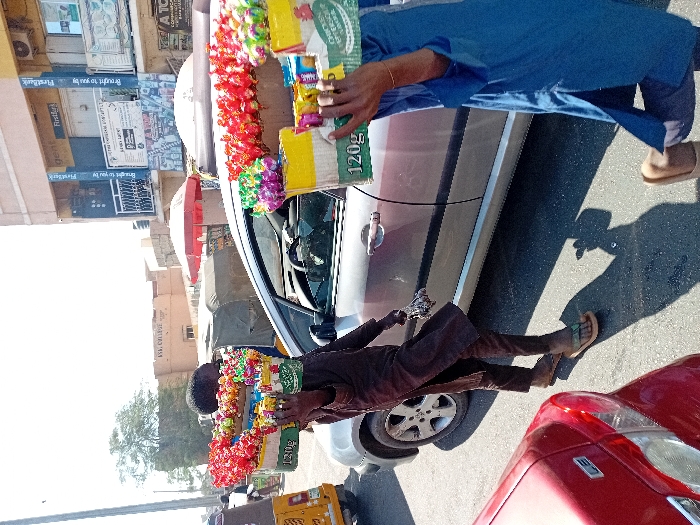
A daylight urban street scene in Kabuga, Nigeria, depicts two male street vendors navigating a paved road. Each individual carries a rectangular tray loaded with brightly colored, individually packaged snacks or candies balanced on their head. The vendor on the left, partially obscured, wears a dark long-sleeved garment, dark trousers, and light green flip-flops, while holding an unidentifiable bundled object in his left hand. The vendor on the right, also partially obscured, wears a blue long-sleeved tunic, light trousers, and light brown slip-on shoes. A silver sedan is positioned between the two vendors, with a red vehicle partially visible in the extreme foreground-left. Strong shadows are cast on the asphalt, indicating bright sunlight. The background features commercial buildings, including a multi-story structure prominently displaying "FirstBank" branding in blue and yellow, along with various advertisements and a red parasol. A yellow tricycle is partially visible on the far left.
Kabuga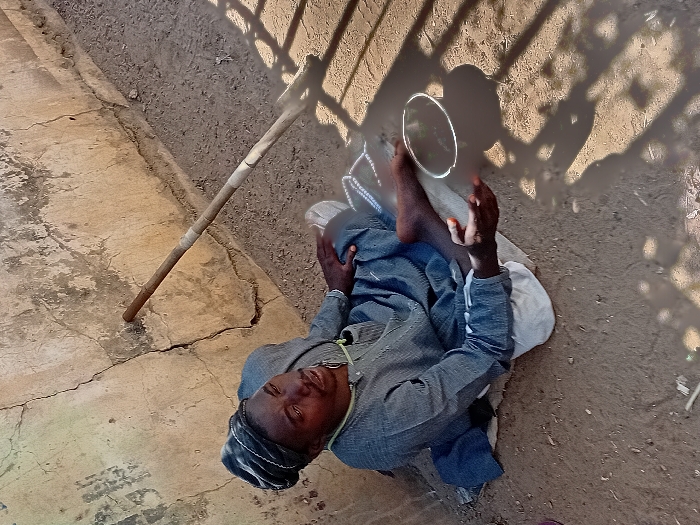
An adult male is seated on dry dirt ground in Kabuga, Nigeria, leaning against a weathered concrete wall. He is wearing a dark skullcap, a long-sleeved dark tunic, and a lighter fabric beneath him. A light-colored cord hangs around his neck. His legs are bent, and his feet are bare. He holds a small, dark metallic bowl in his right hand, extended forward. A light brown wooden stick, wrapped with lighter material, rests on the ground beside him, leaning against the wall. The scene is illuminated by strong sunlight, casting distinct grid-like shadows on the ground and the bowl. The wall shows cracks and discoloration.
Kabuga