Kamalapura, India
30 memories from Kamalapura, India
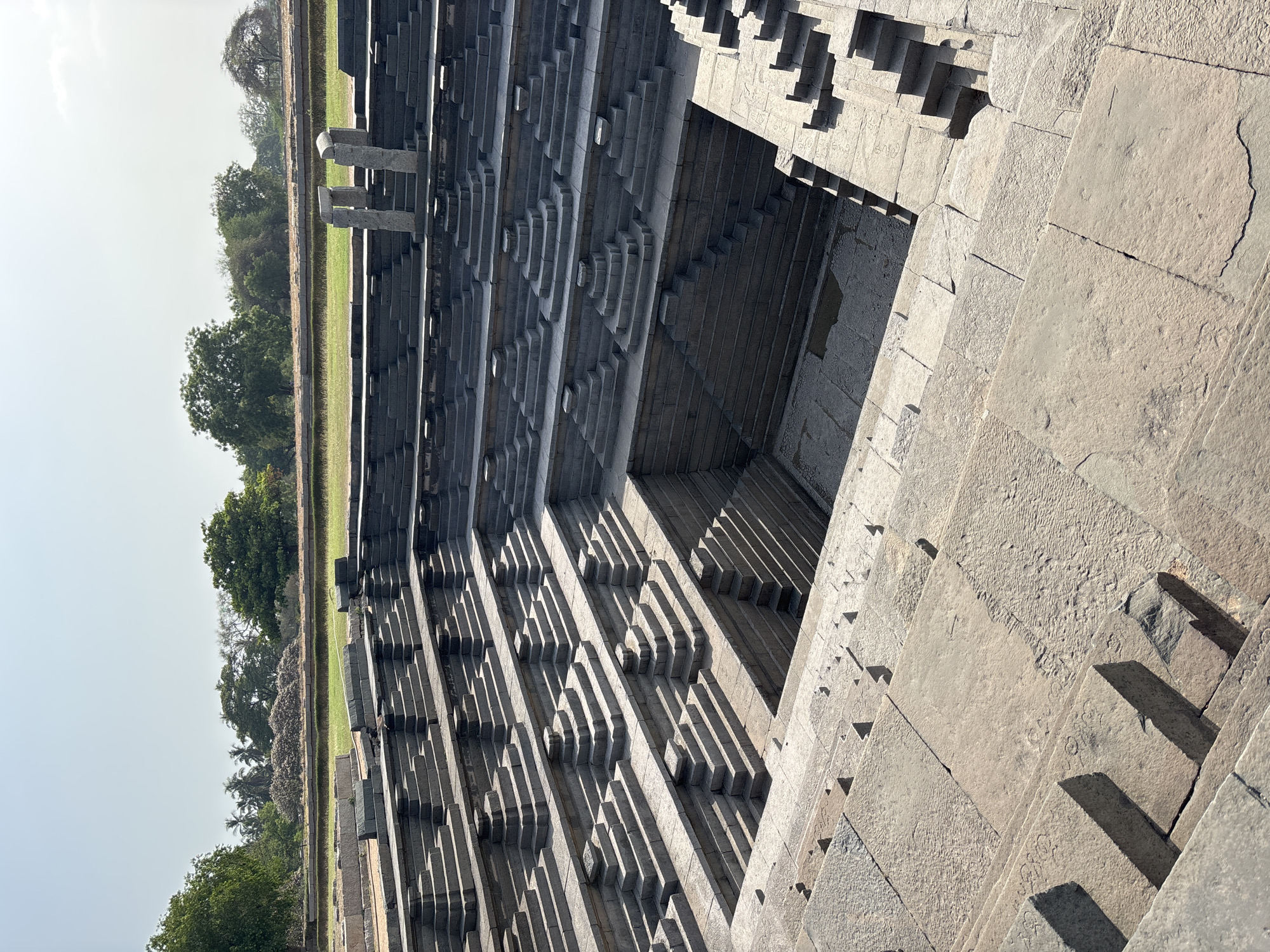
The image shows the stepped tank of Pushkarani in Kamalapura, India. The tank is made of stone and features a series of stepped levels leading down to a square-shaped center. Along the side of the tank is a grass strip, a low stone wall, and a line of trees. The sky is pale blue. The tank's architecture features repetitive geometric patterns, creating a complex interplay of light and shadow. The stone used in the structure appears aged and weathered.
Kamalapura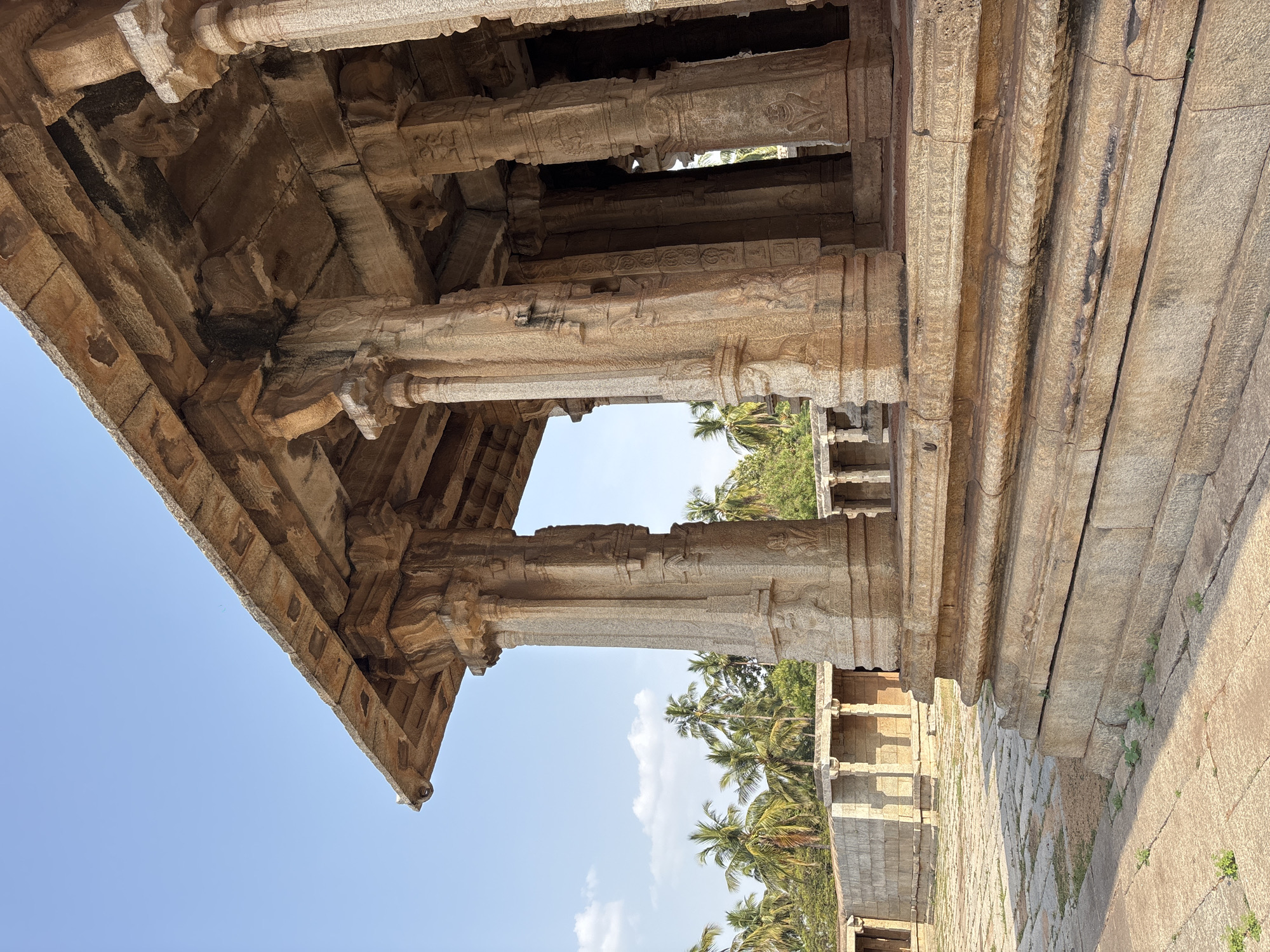
The image shows a perspective view of a structure in Kamalapura, India. The structure is characterized by pillars and stone construction, suggesting an architectural style typical of the region. The building materials are weathered, indicating age and exposure to the elements. The frame includes views of palm trees and other vegetation, suggesting a location in a tropical or subtropical area. The sky is visible through openings in the structure. There are no people visible.
Kamalapura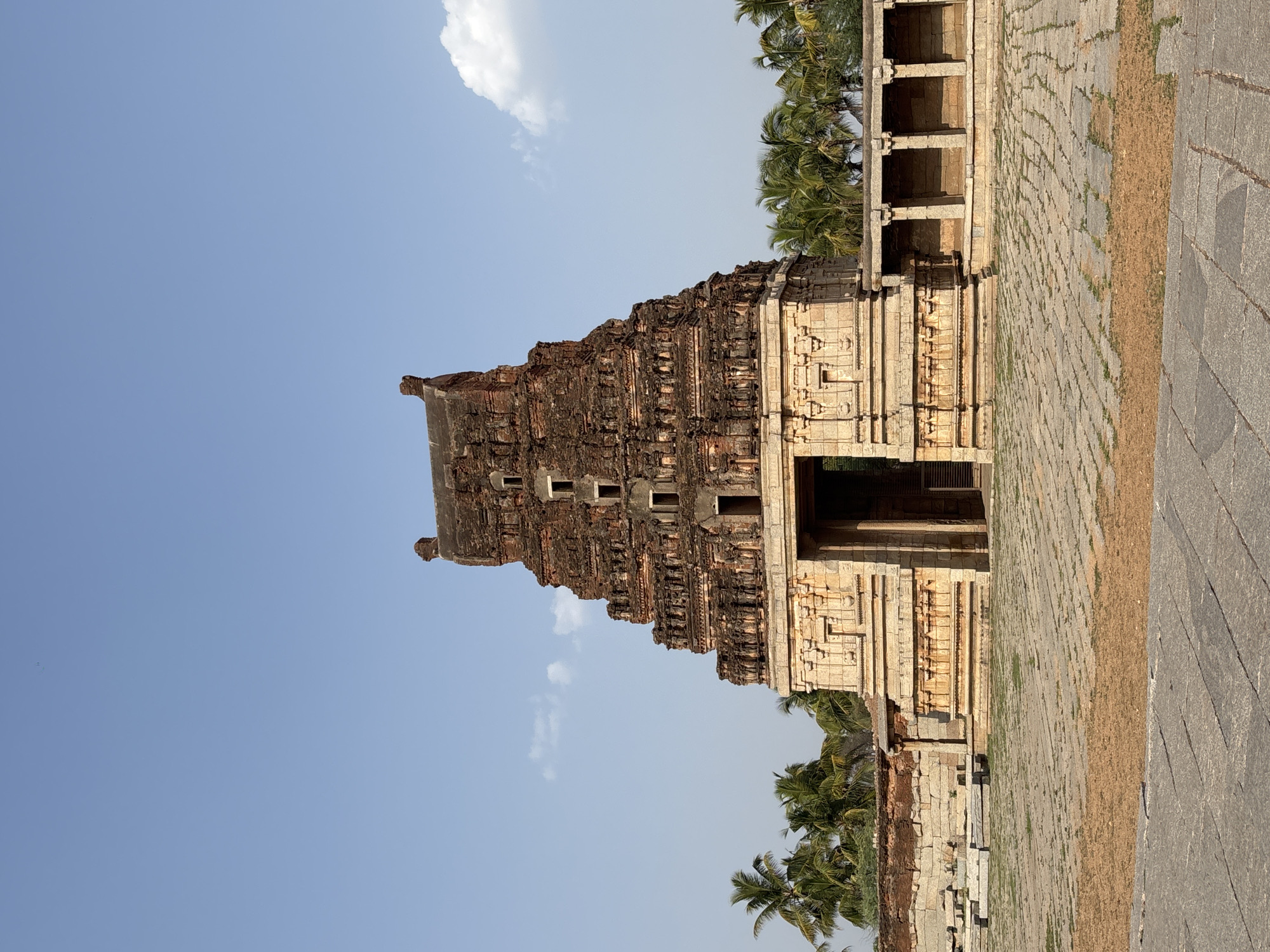
The image shows the Hazara Rama Temple in Kamalapura, India, situated under a bright blue sky with scattered clouds. The temple's structure is primarily constructed of tan stone, exhibiting layered details and architectural designs. A pathway with stone pavers leads towards the structure, with adjacent vegetation in the surrounding area. The building's orientation in the frame shows a partial view of the entrance and its prominent tower.
Kamalapura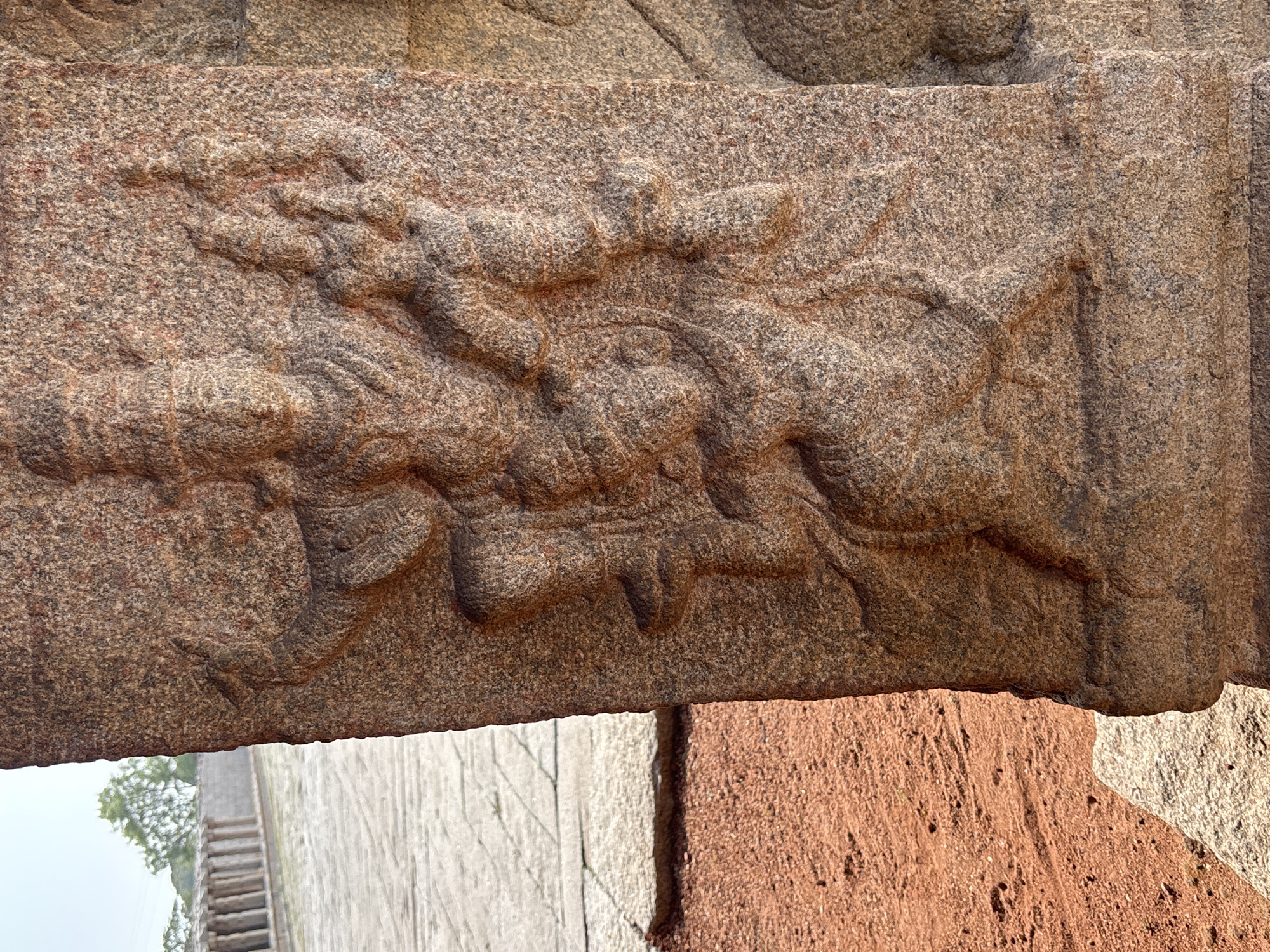
The image shows a close-up of a stone carving, likely part of an architectural structure in Kamalapura, India. The carving depicts a mythical creature, possibly a Yali or similar composite animal, rendered in relief on a rectangular section of brownish-gray stone. The creature has a textured surface, with details such as facial features, limbs, and possibly wings or decorative elements suggested by the carving. The surrounding stone surface is rough and weathered, suggesting age and exposure to the elements. The carving is positioned horizontally, and a section of another stone structure or wall is visible beneath it, showing a transition to a different color and texture of stone. In the background, faint outlines of what appear to be steps and vegetation can be discerned.
Kamalapura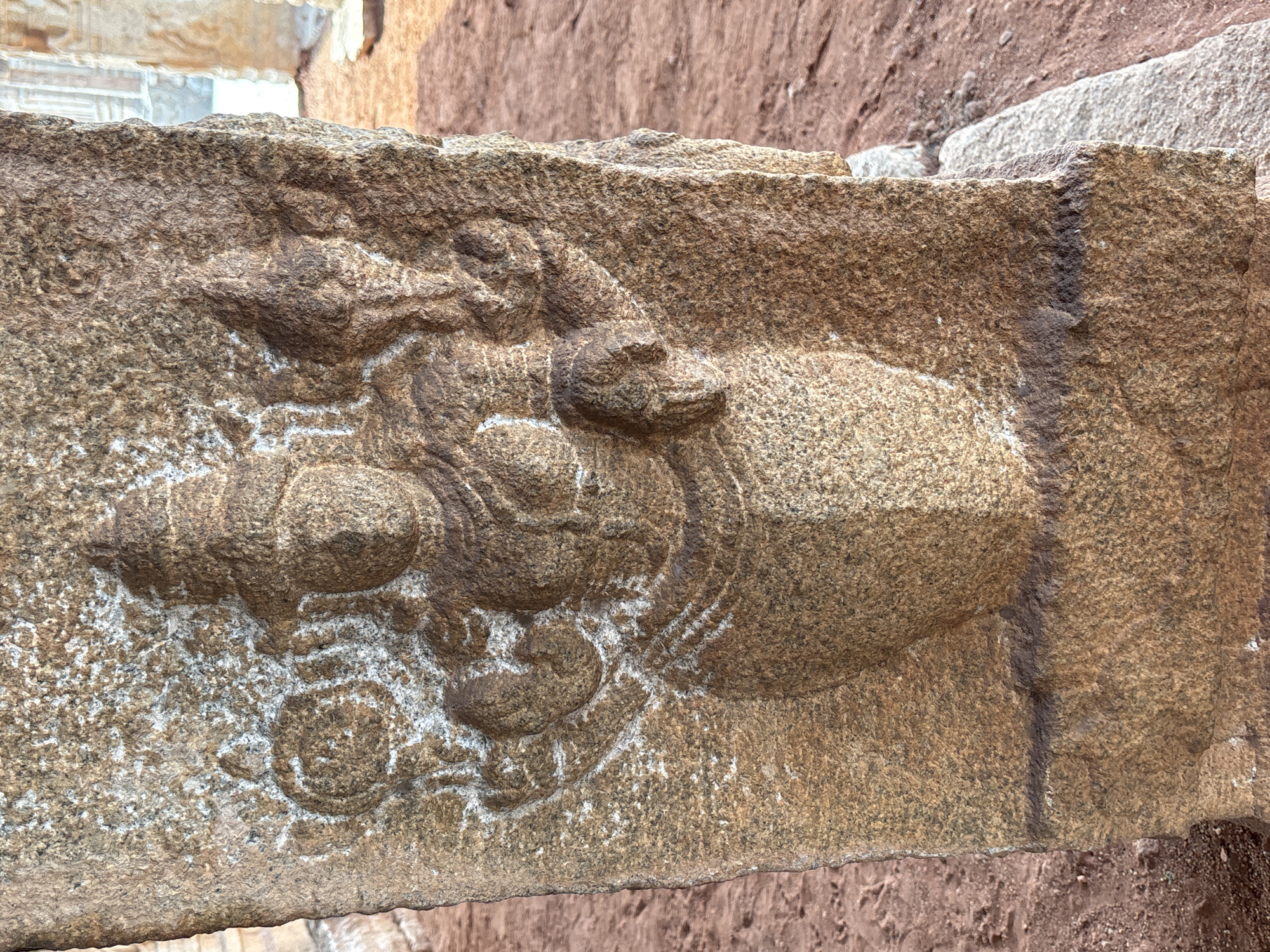
A close-up shot depicts an aged stone carving, likely a lintel or structural element, found in Kamalapura, India. The carving presents a stylized, reclining figure with multiple limbs, possibly a deity or mythical creature. The figure is situated amidst decorative carvings and appears weathered. The stone exhibits a rough texture with visible erosion and lichen growth. The background includes a blurred wall of similarly textured stone, emphasizing the age and historical context of the carving.
Kamalapura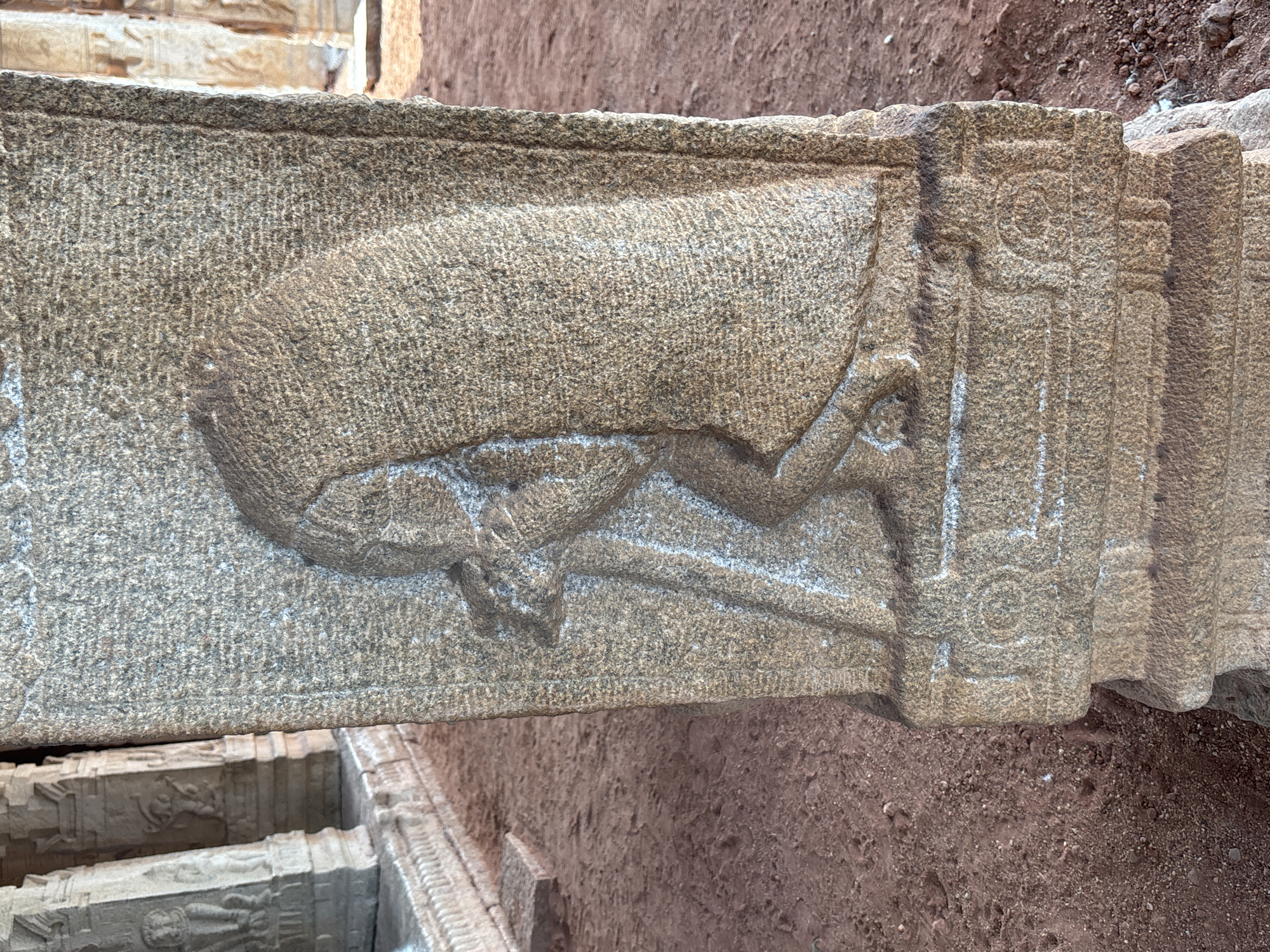
A close-up, upward-tilted shot captures a section of a weathered stone structure featuring a bas-relief carving, presumably located in or near Kamalapura, India. The carving depicts a horizontal, stylized figure, possibly an animal or mythical creature, sculpted into the stone's surface. The subject's posture suggests a reclining or falling position. The stone is textured with a coarse, grainy surface, indicating its age and exposure to the elements. To the right of the carving, the stone is fashioned into decorative columns or pilasters with carved linear and geometric motifs. The background is predominantly reddish-brown soil.
Kamalapura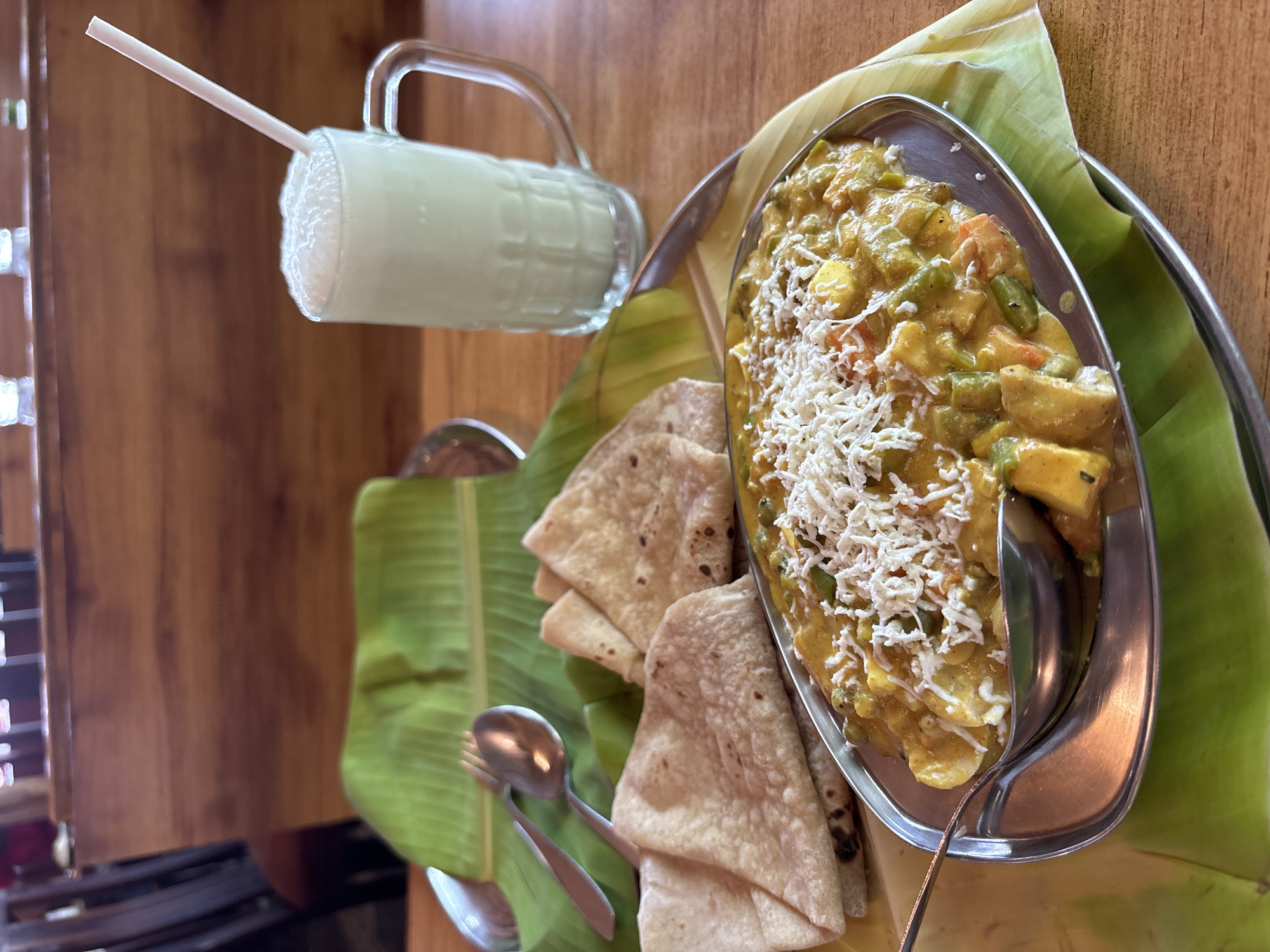
The image captures a meal presentation likely in Kamalapura, India, evidenced by the cuisine and style of serving. On a wooden surface, there's a layered serving arrangement. At the base is a metal tray layered with broad green banana leaves. On the right, a silver oblong dish contains a yellow, creamy vegetable curry topped with shredded white cheese. A spoon is inserted into the curry. To the left of the curry, stacks of chapati bread are neatly placed on the banana leaves. Beside the chapati, a spoon and a fork rest on the green leaves. In the background is a glass mug filled with a frothy white beverage, possibly lassi, and a white straw. The mug has a handle and sits atop the edge of the tray. The light suggests daytime. The environment appears to be a restaurant or eatery due to the presentation style. No people are visible in the image.
Kamalapura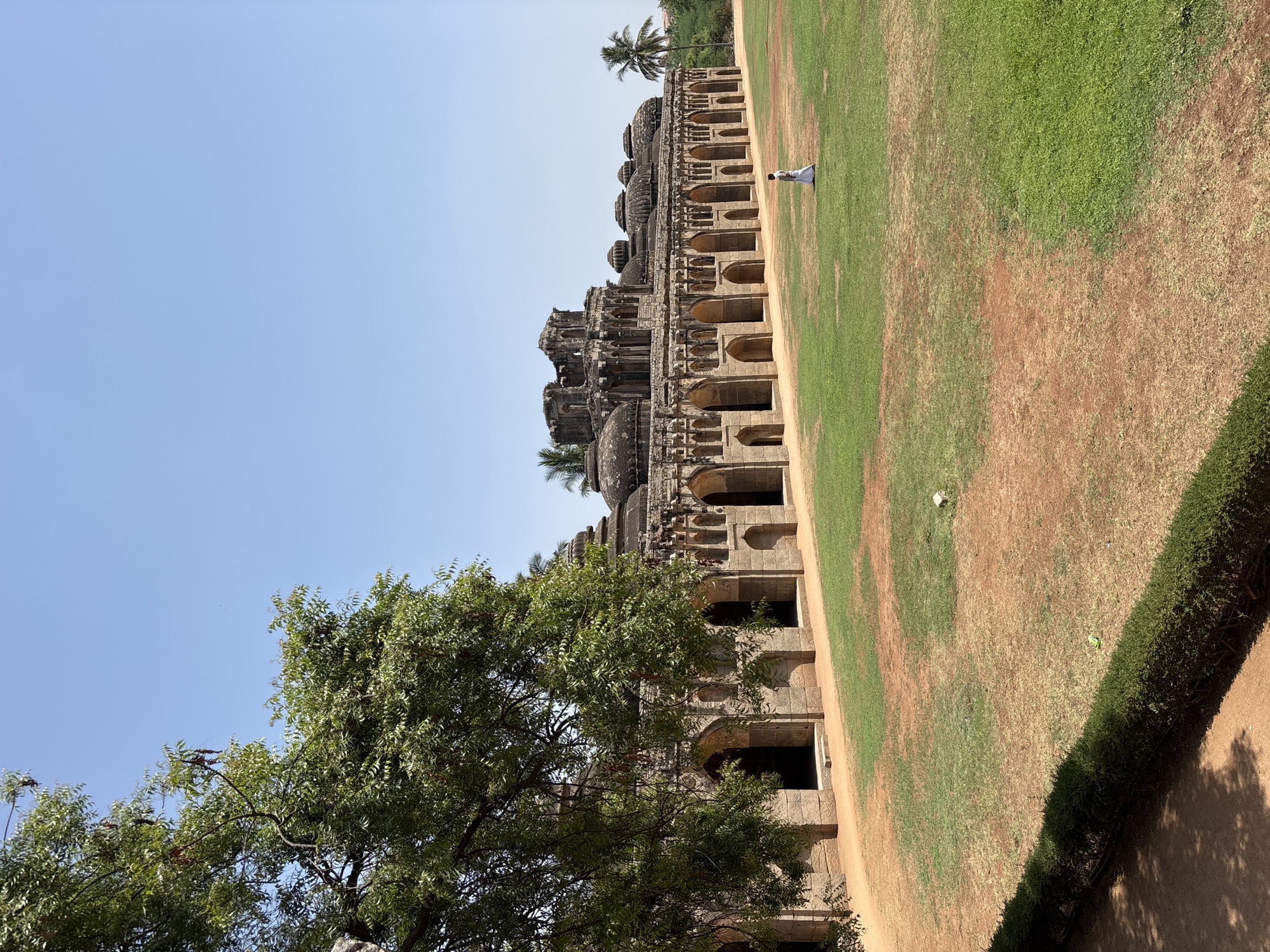
The image shows the Elephant Stables in the city of Kamalapura, India, a long, single-story building with multiple domed chambers. The structure is made of stone with arched openings. A person in white stands near the building. A large grassy area, transitioning from green to brown soil, stretches beside the stables. A tree is in the lower left corner. The sky is a clear blue.
Kamalapura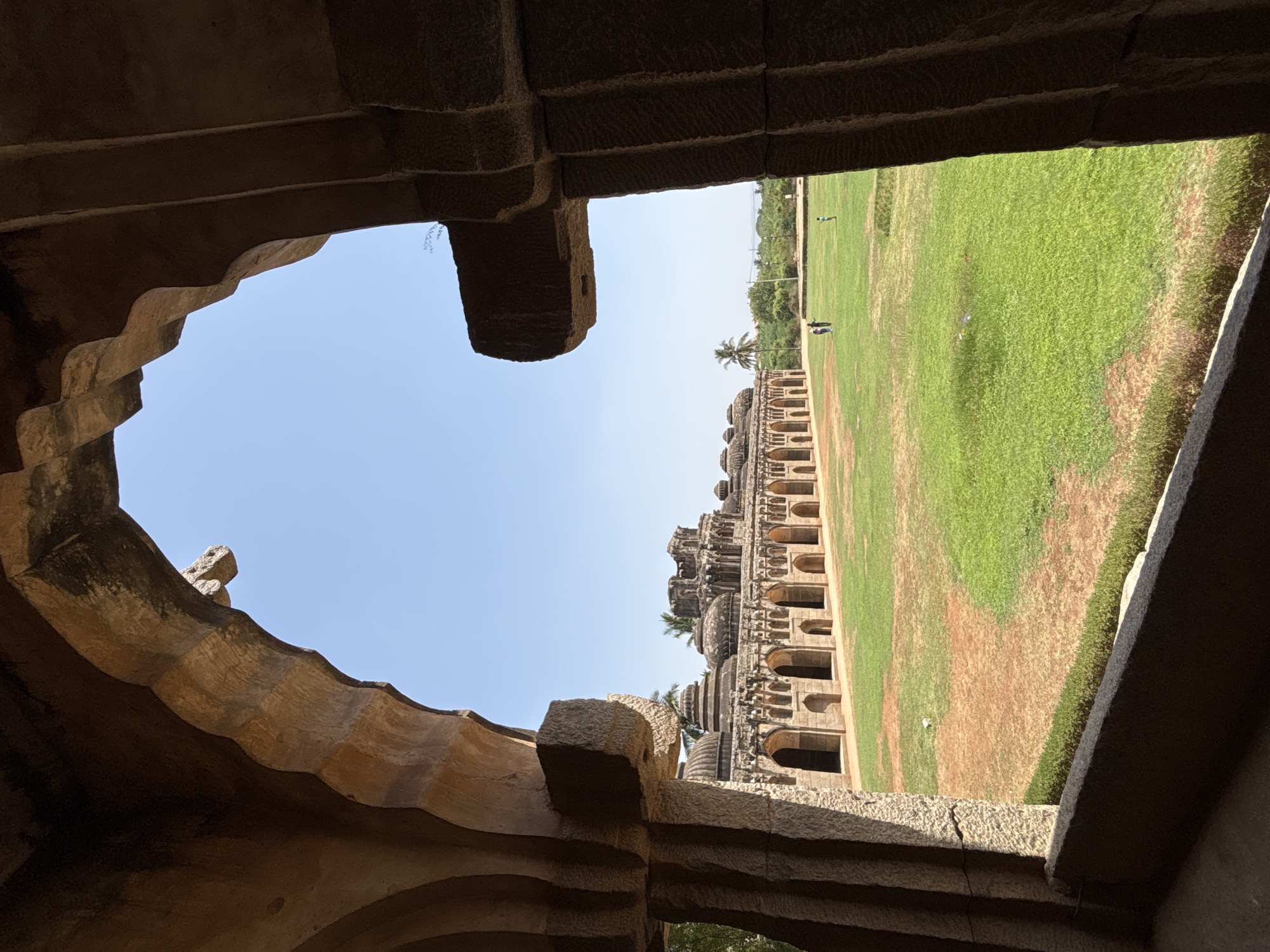
The image captures the Hazara Rama Temple Complex in Kamalapura, India, viewed through a stone archway. A partial view of the sky is visible through the archway's irregular opening. The complex itself is characterized by a long, low structure with arched openings and multiple levels. A grassy field, partially brown, stretches out beyond the structure. Several individuals can be seen on the field in the distance. The foreground consists of the weathered stone of the archway, showing its construction and texture.
Kamalapura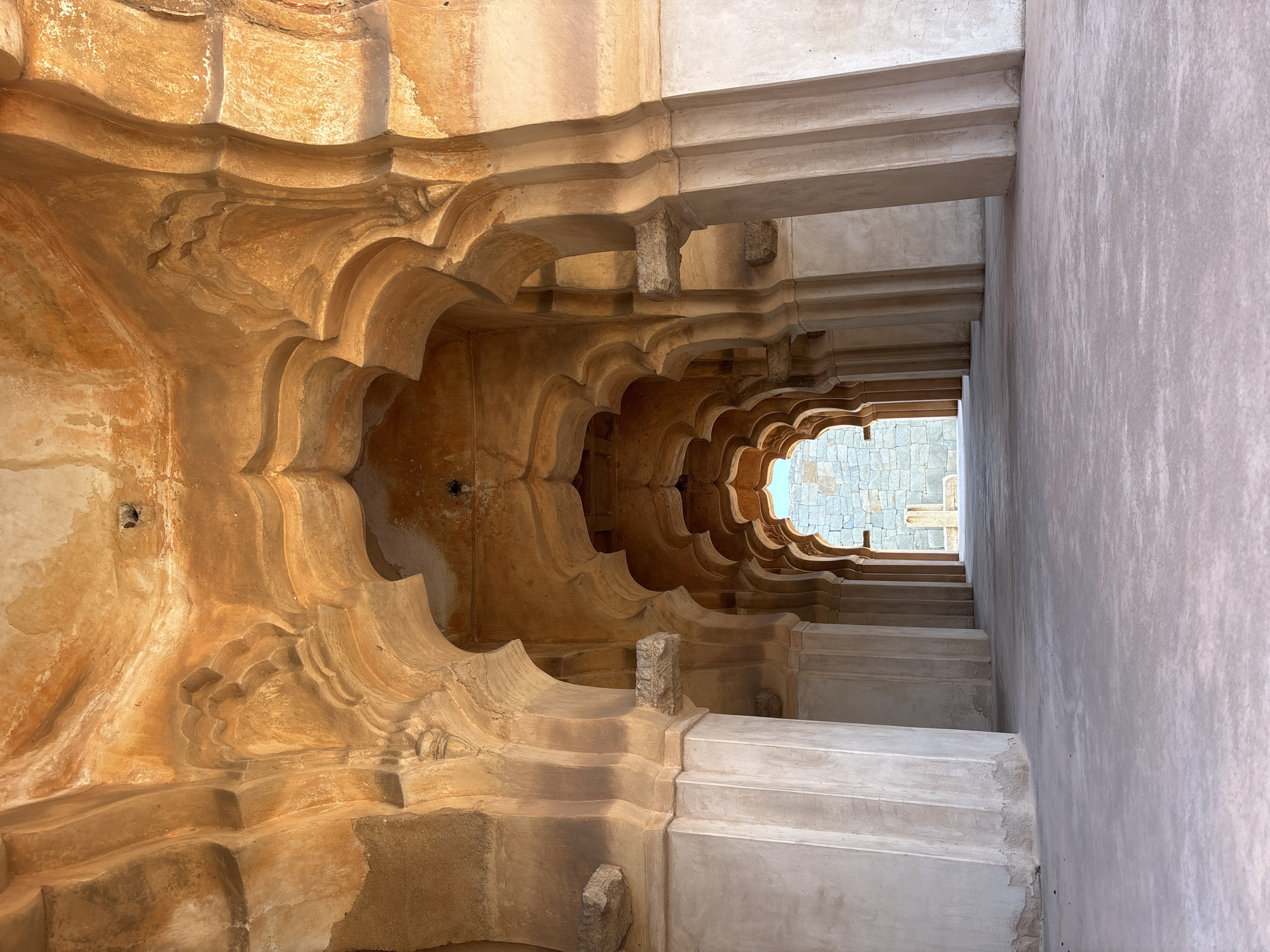
A ground-level, interior shot depicts a deep, diminishing corridor, angled slightly upward toward a distant opening revealing an exterior stone structure. The corridor's left side features an elaborate, ornate wall with repeating, scalloped archways in a warm, earthy tone. These archways are stacked in layers, creating a sense of depth and intricacy. The wall transitions to a cooler, pale tone further into the corridor. The right side of the corridor has a smooth, lighter-colored wall with horizontal lines suggesting steps or tiers leading upward. Overhead, a series of simple, rectangular beams span the corridor, providing a structural framework. The lighting is uneven, with the foreground walls being more intensely lit than the darker, recessed areas. In the distance, the opening to the exterior reveals a section of stone construction. The image is from Hampi, Kamalapura, India.
Kamalapura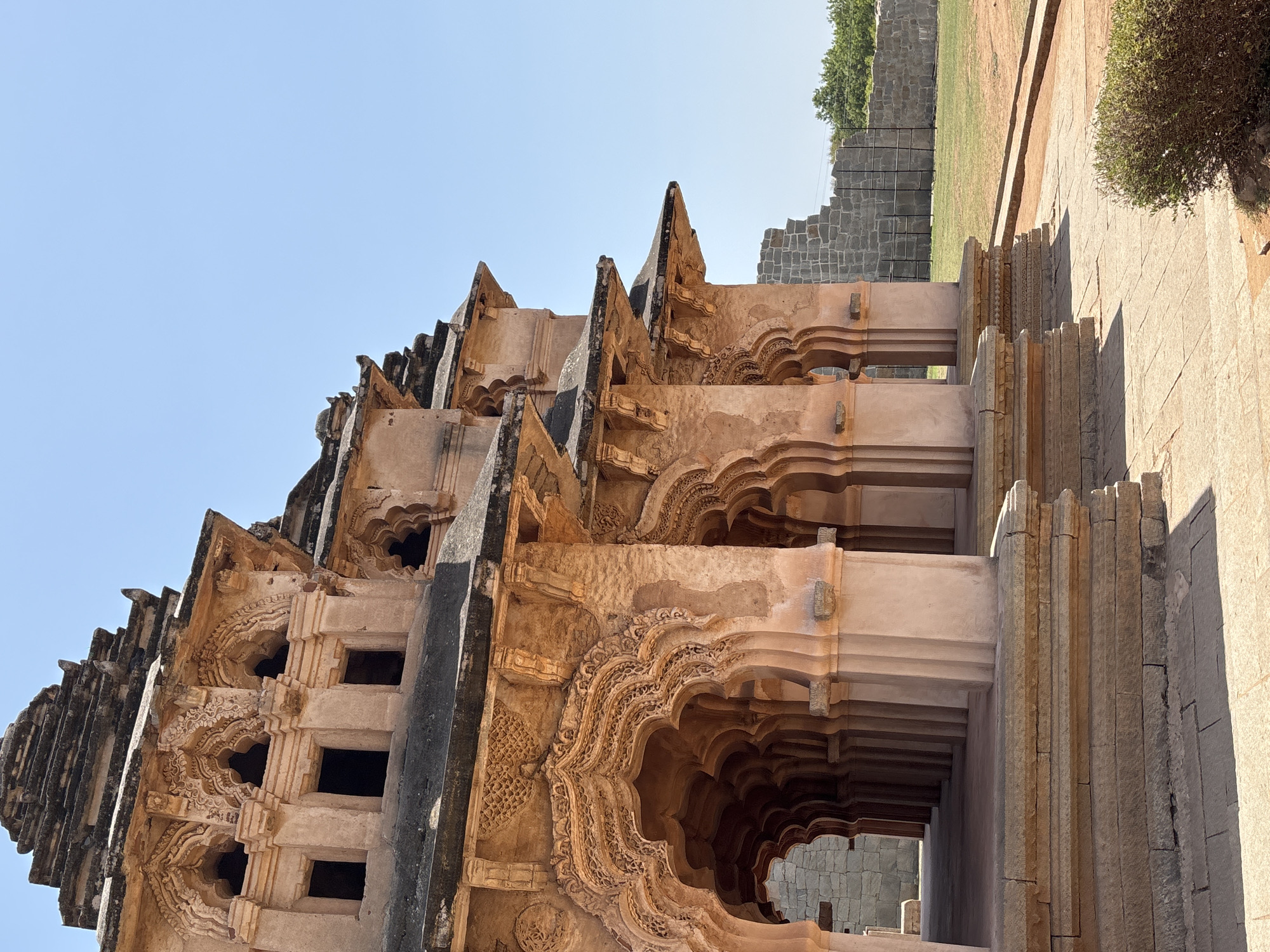
This outdoor, medium-angle shot features the Lotus Mahal building located in Kamalapura, India. The building is constructed from a tan-colored stone. The perspective is looking up at the side and roof of the building. The roof has a series of triangular elements that are stacked on top of each other. The side of the building features a repetitive archway design. The arches are intricately carved with floral and geometric designs. The building has windows. A stone wall with stone stairs on the top right part of the frame. Above the wall is grass, trees, and blue sky. The light is bright and diffused.
Kamalapura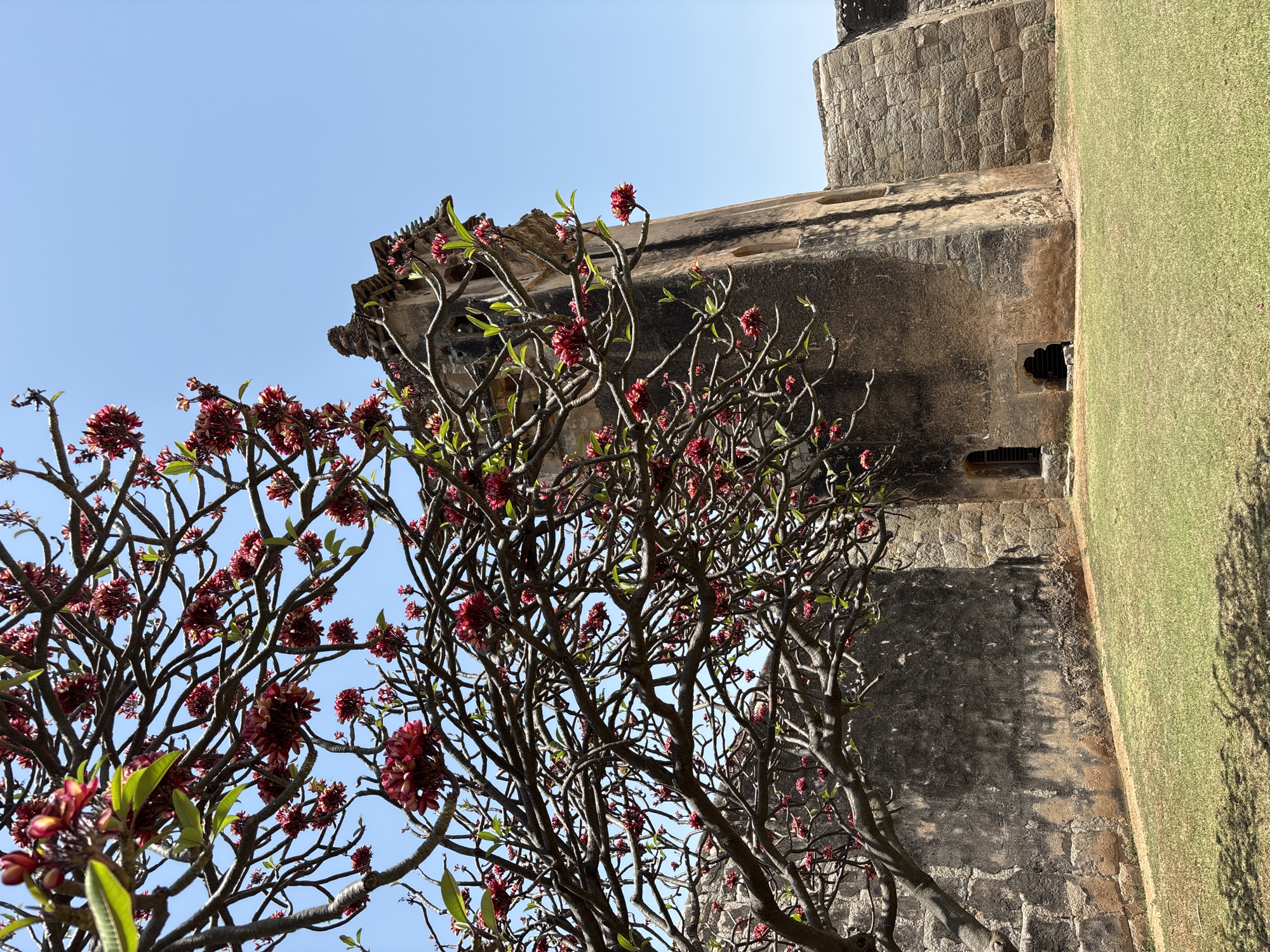
The image captures the Hazara Rama Temple in Kamalapura, India. The view is angled upwards towards the structure, partially obscured by a foreground of flowering trees with dark branches and red blossoms. The temple itself is constructed from stone, displaying visible wear and aging on its surface. It features small arched windows and a section of a green lawn is visible beside its base. The sky in the background is clear and blue.
Kamalapura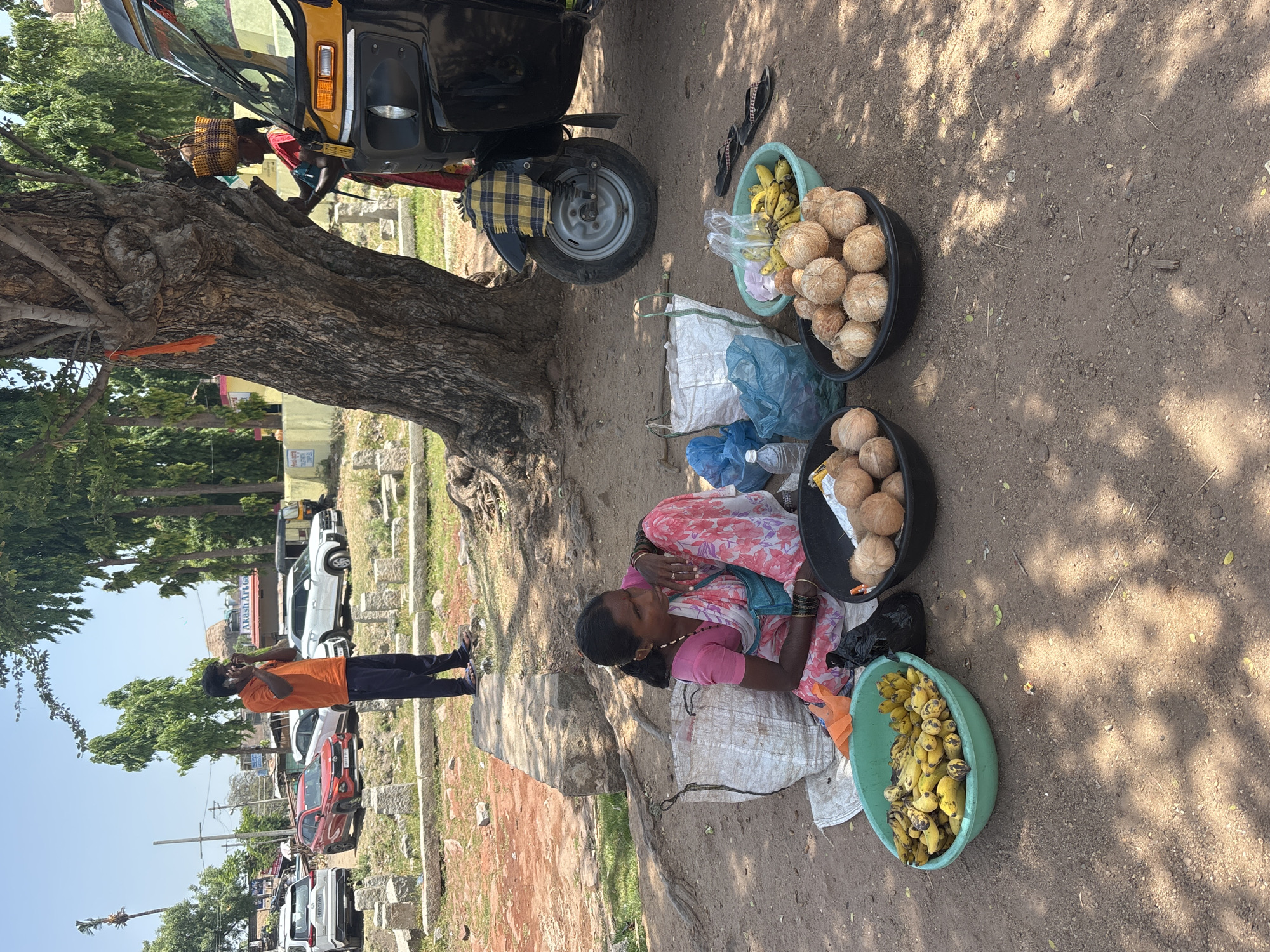
The image depicts a street scene in Kamalapura, India. A woman is sitting on a sack on the ground, surrounded by three large bowls containing coconuts and bananas. These items are likely for sale. Beside her is a parked black auto-rickshaw. In the background, a man in an orange shirt is standing on a street with parked cars. A large tree provides shade over the woman and her merchandise. The ground is dirt and scattered with leaves.
Kamalapura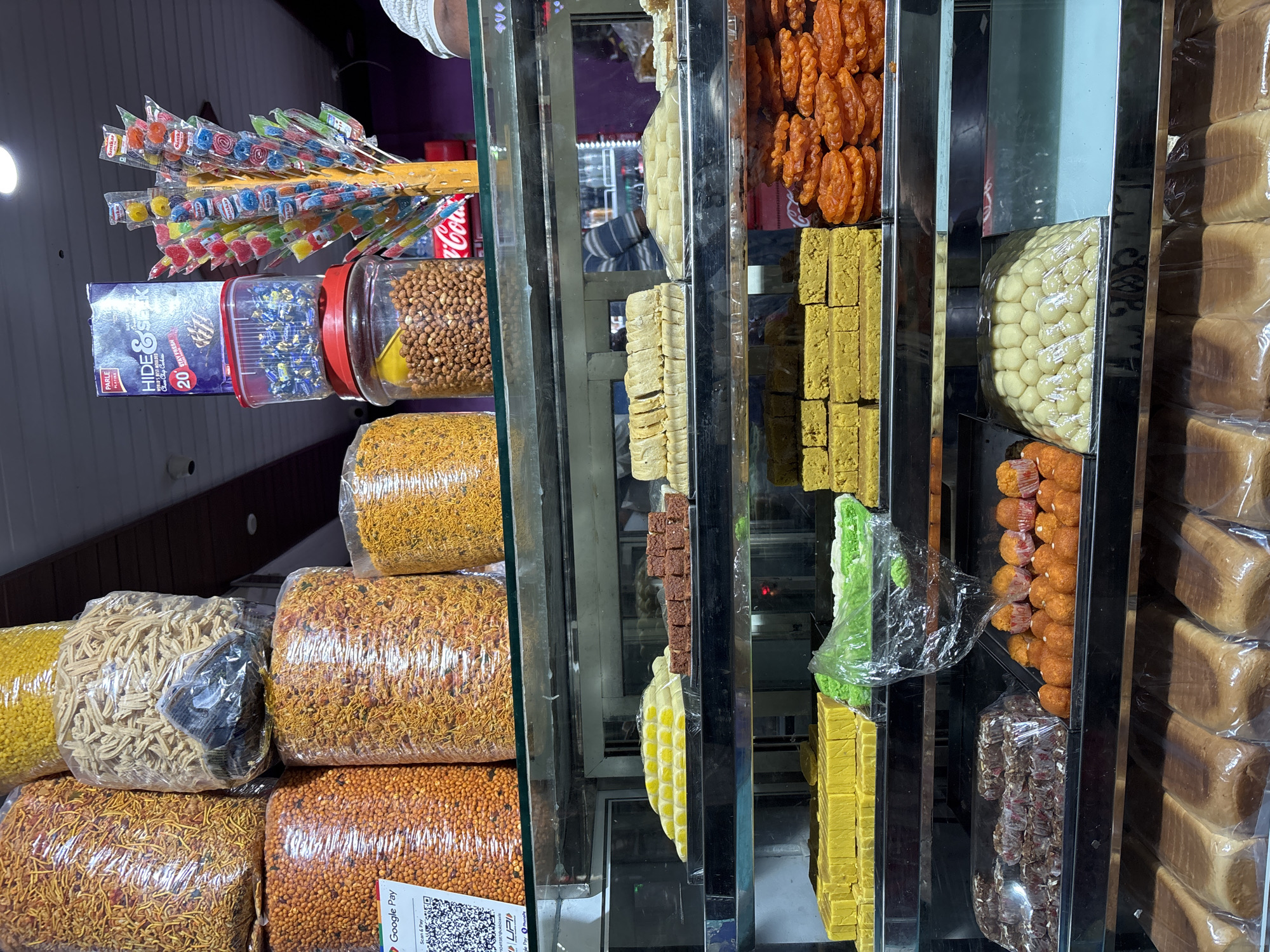
Here's a description of the image: **Scene:** A street-side storefront in Kamalapura, India. The shop features a display of various snacks, sweets, and baked goods arranged on shelves behind a glass partition. **Objects:** * **Left side of display:** * Packages of Indian "namkeen" (savory snacks), like sev, gathiya, and chivda, are stacked in plastic bags. * Jars filled with peanuts and other small snacks * Boxes of Parle Hide & Seek biscuits. * Lollipops * **Right side of display (sweets):** * Jalebi (a sweet, fried dough). * Burfi (Indian milk-based sweets) in multiple colors * Laddu (ball-shaped sweets) * Stacks of sliced bread. **Environment:** * The display is likely situated in a brightly lit shop, visible through the glass front. * The storefront is likely in a busy commercial area, as evidenced by the variety of goods on offer.
Kamalapura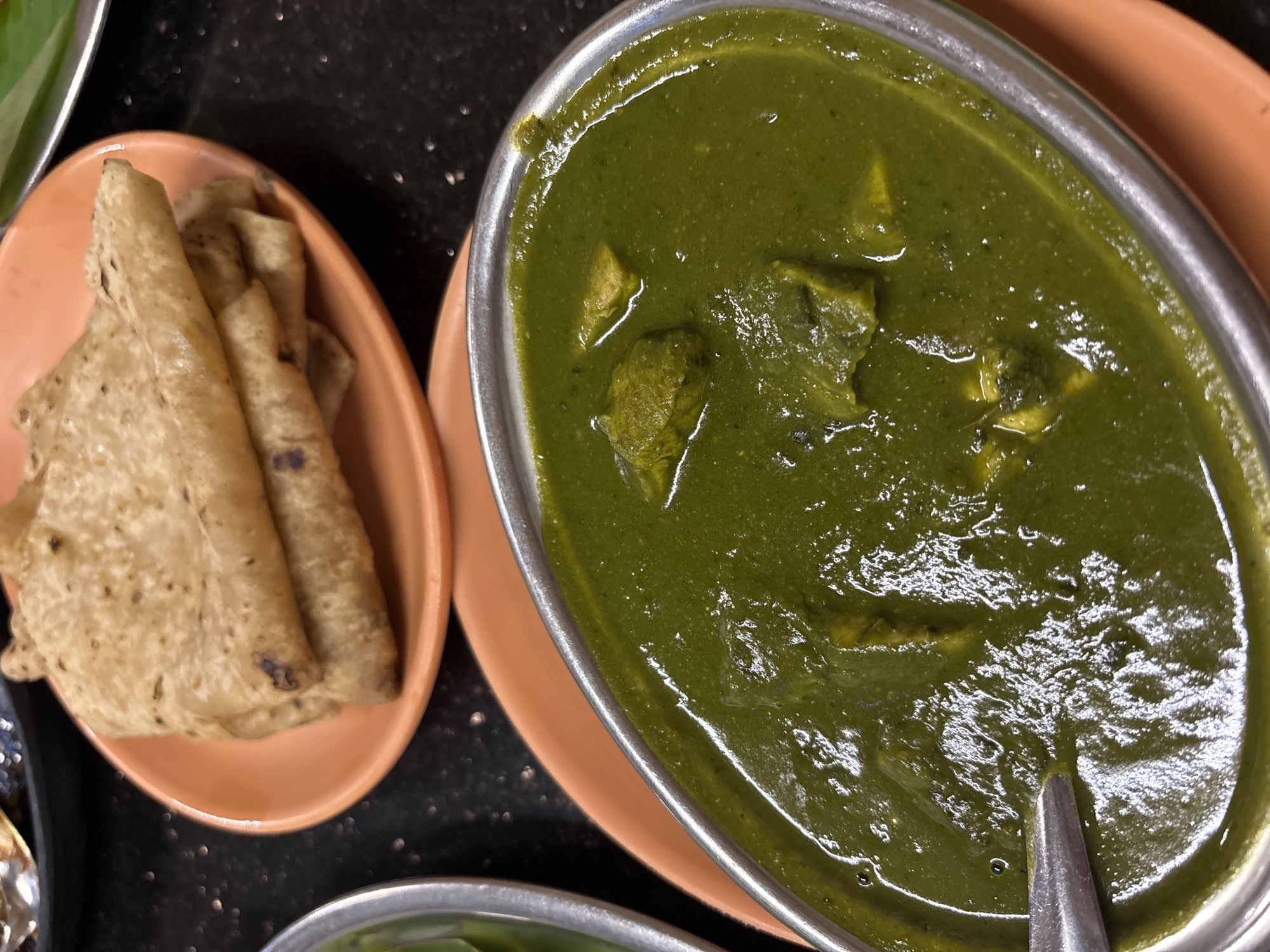
The image shows two dishes of food. On the right, there is a metal bowl filled with a green, thick curry, likely Palak Paneer, an Indian dish made from spinach and cheese. A spoon rests in the curry. To the left, there is an oval orange plate with several rolled flatbreads, possibly roti or chapati. The background is a dark, speckled surface. The scene is likely a restaurant or home meal setting in Kamalapura, India, based on the style of the cuisine and the cuisine type.
Kamalapura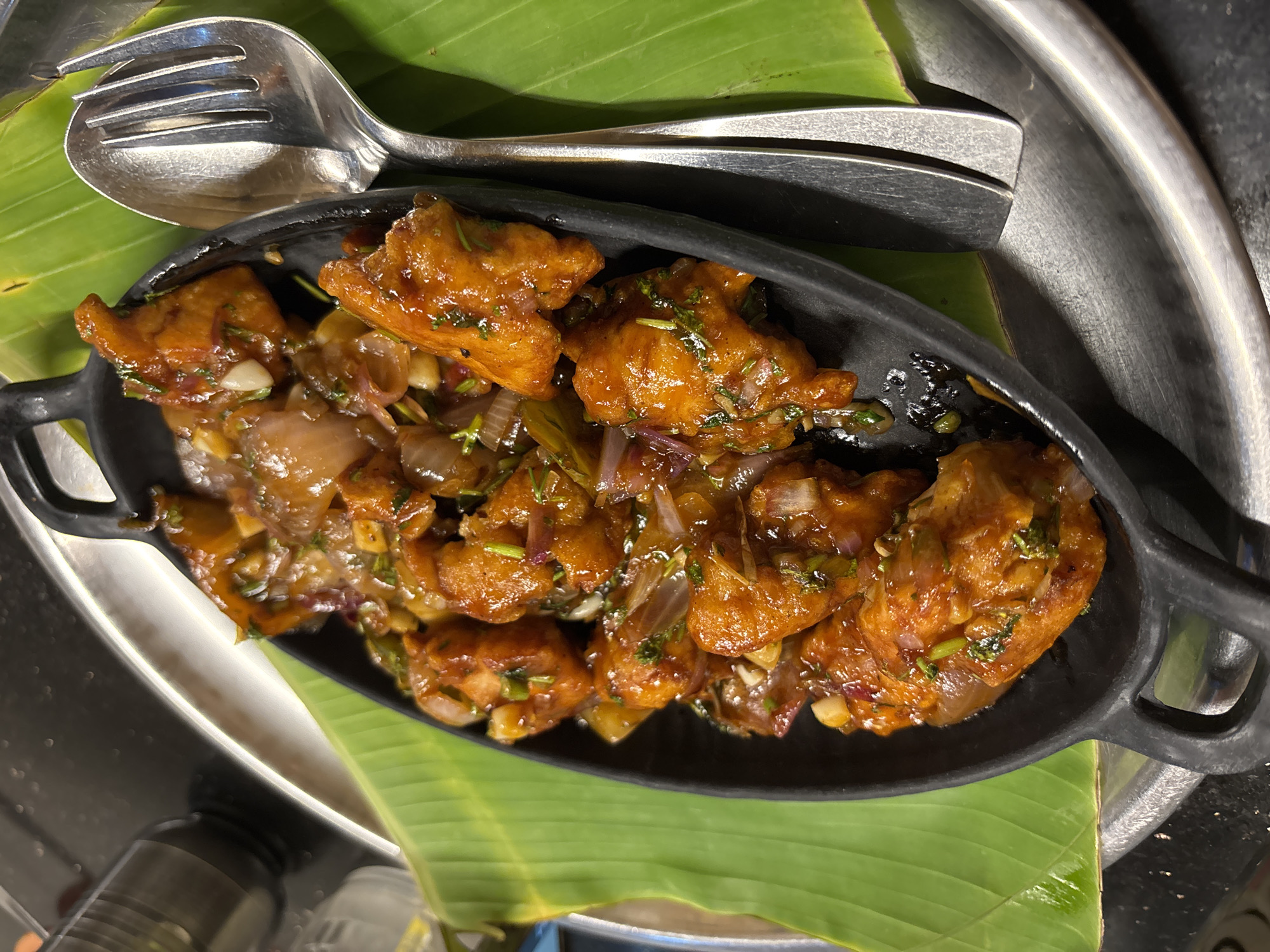
The image depicts a close-up of a serving of Chicken Manchurian, a popular Indo-Chinese dish, presented in a black oval serving dish. The dish rests on a vibrant green banana leaf, which in turn lies on a larger, silver-colored platter. A serving spoon and fork are placed beside the serving dish on the banana leaf. The Chicken Manchurian appears to consist of bite-sized pieces of fried chicken coated in a dark brown, slightly glossy sauce. Diced onions and green herbs are visible within the sauce. The image was taken in Kamalapura, India.
Kamalapura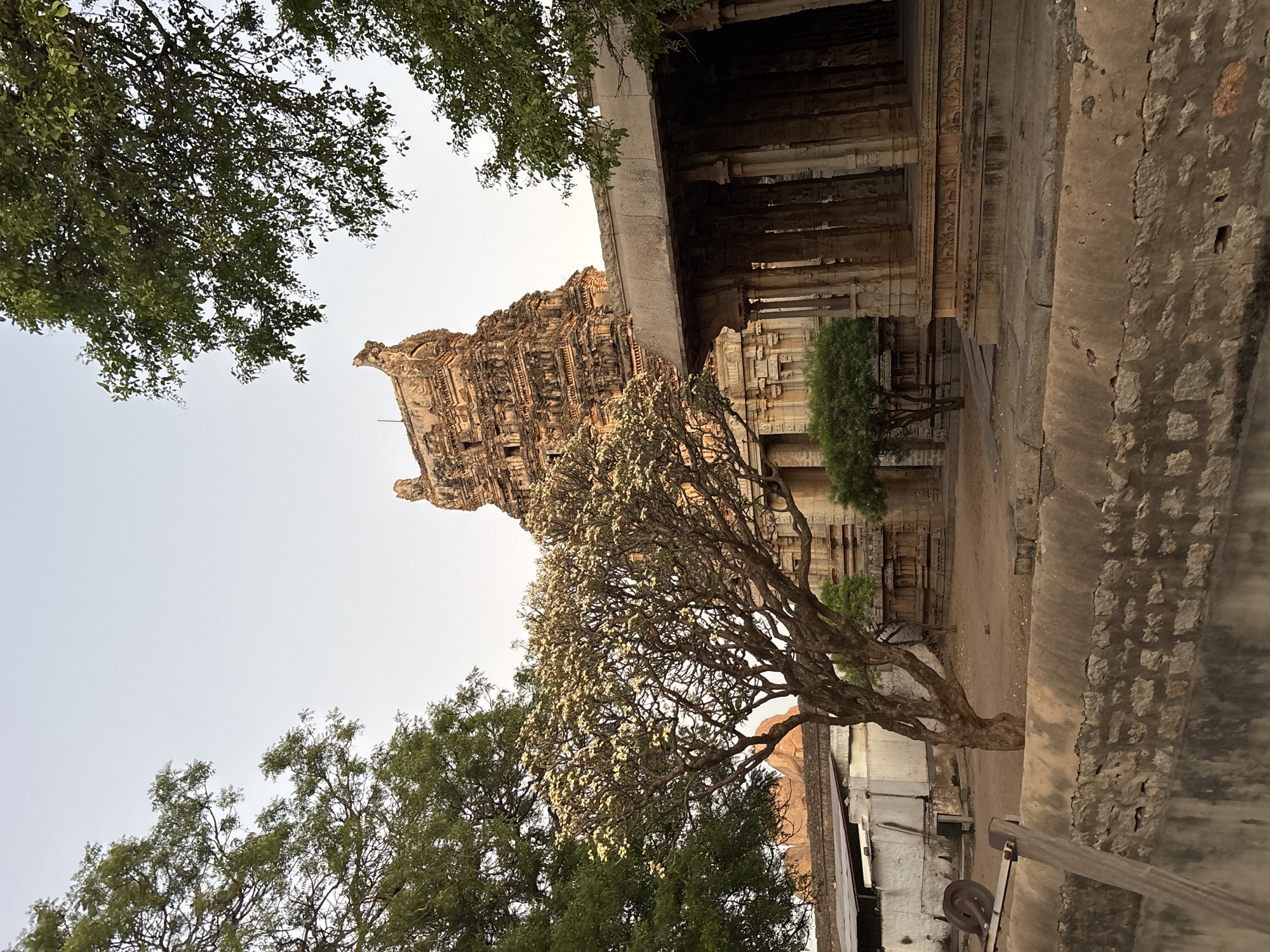
The image shows the Hazara Rama Temple in Kamalapura, India. The temple tower rises above trees and a building to the right. The temple complex is made of stone and is partially shaded. The sky is visible in the upper-left. A tree with light-colored flowers is in the center of the image. The image is taken from a low angle.
Kamalapura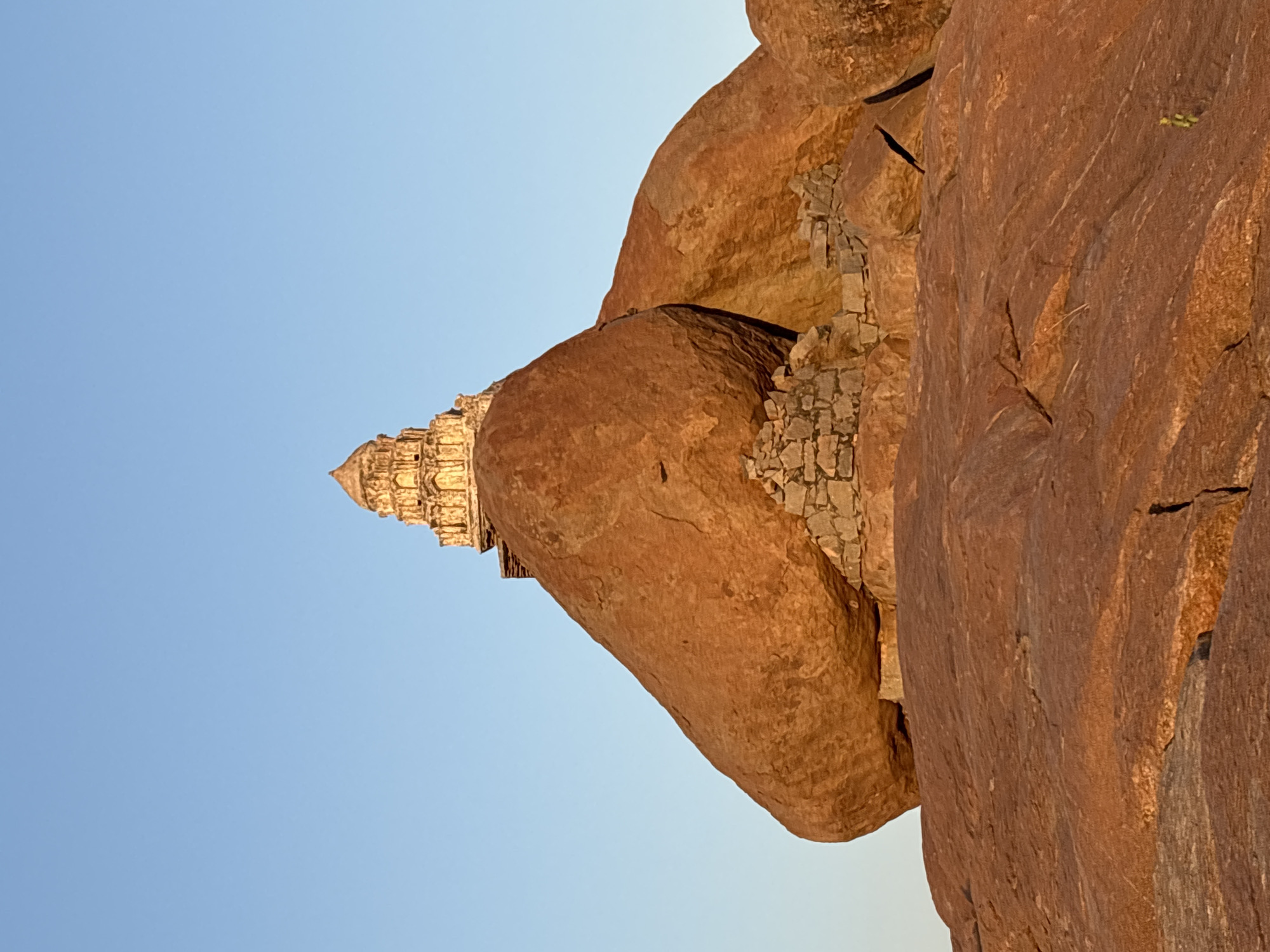
The image shows the Achyutaraya Temple, a ruined temple complex in Hampi, near Kamalapura, India. The temple is partially obscured by large, reddish-brown boulders typical of the Hampi landscape. A small portion of the blue sky is visible in the upper left corner of the image. The temple itself is a light color and intricately carved. Smaller stones appear to be wedged between the boulders.
Kamalapura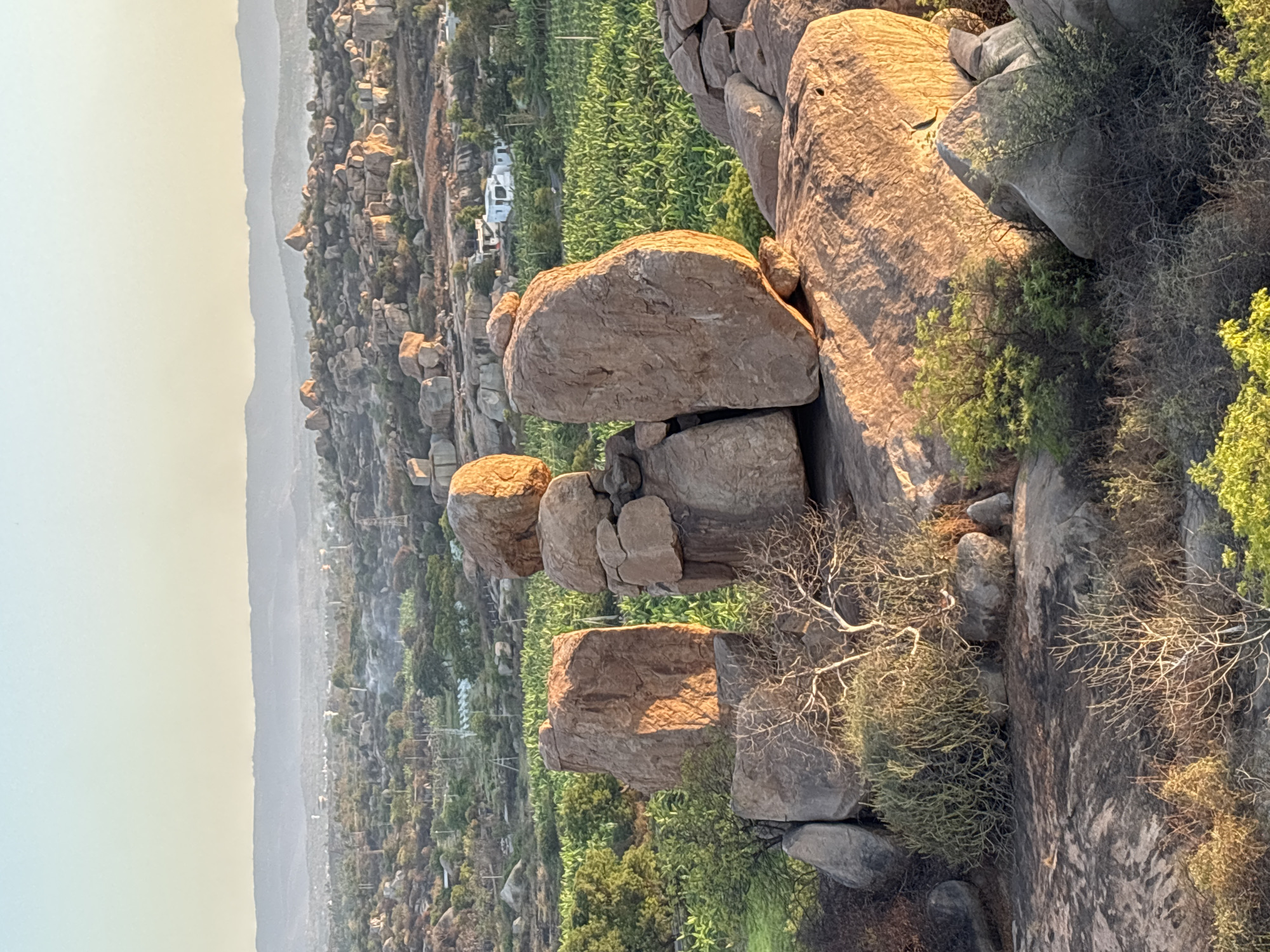
The image shows a landscape in Kamalapura, India, characterized by clusters of large, weathered boulders. The boulders vary in size and shape, and are piled atop one another, creating unusual formations. Vegetation, including green plants, shrubs, and a dry tree, grows around and between the rocks. In the distance, a view opens up to a wider landscape of trees and buildings. The lighting suggests either sunrise or sunset, with soft, diffused light washing over the scene.
Kamalapura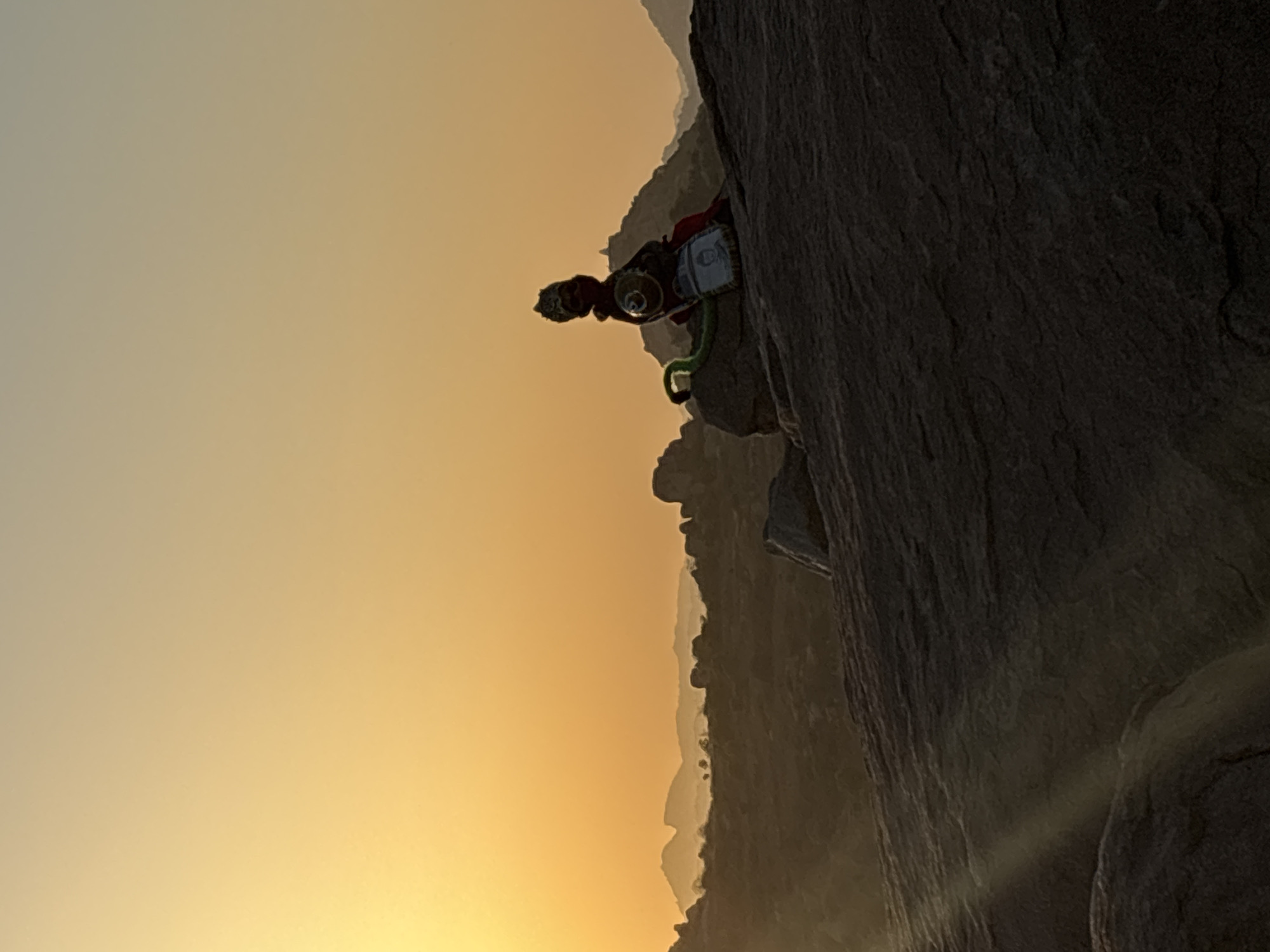
A medium shot shows a rock climber perched on a rock face at Kamalapura, India. The climber, facing the viewer, is wearing a red shirt, and climbing gear, including a helmet, climbing rope, and harness. The climber appears to be preparing for the next move. The rock face is a large, dark stone structure, partially obscured by shadows. The background features a light yellow and orange-hued sky, indicating sunset or sunrise. Rolling hills and other rock formations are faintly visible in the distance.
Kamalapura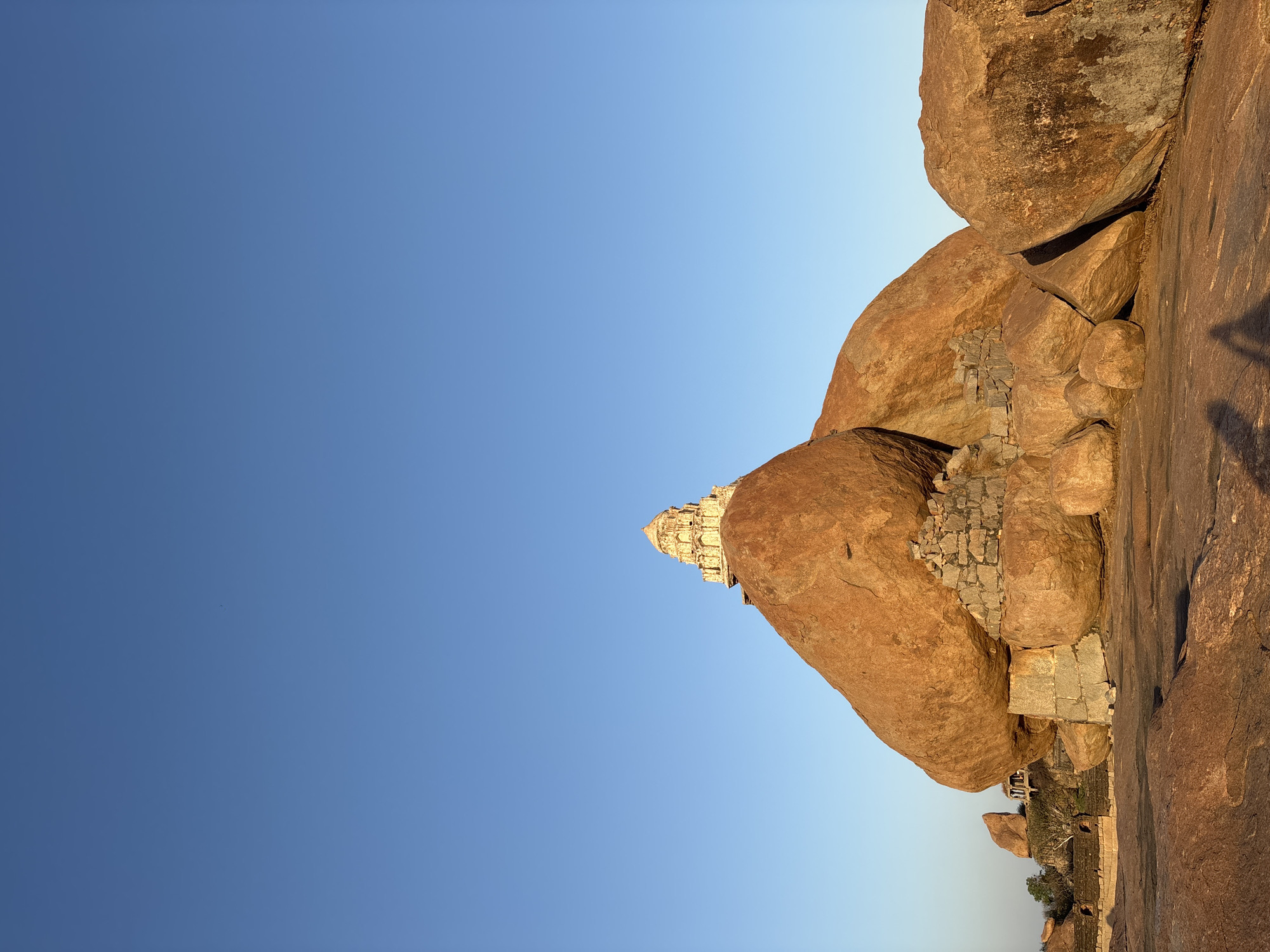
The image shows a view of the Hanuman Temple at Hampi, located in Kamalapura, India. The temple is built on top of a large rock formation. The sky is a clear blue with a slight gradient. The rock formations are primarily reddish-brown. In some parts, one can see evidence of structures made from stones that might be linked to the temple. The sun is on the rocks, creating shadows on the rock surfaces.
Kamalapura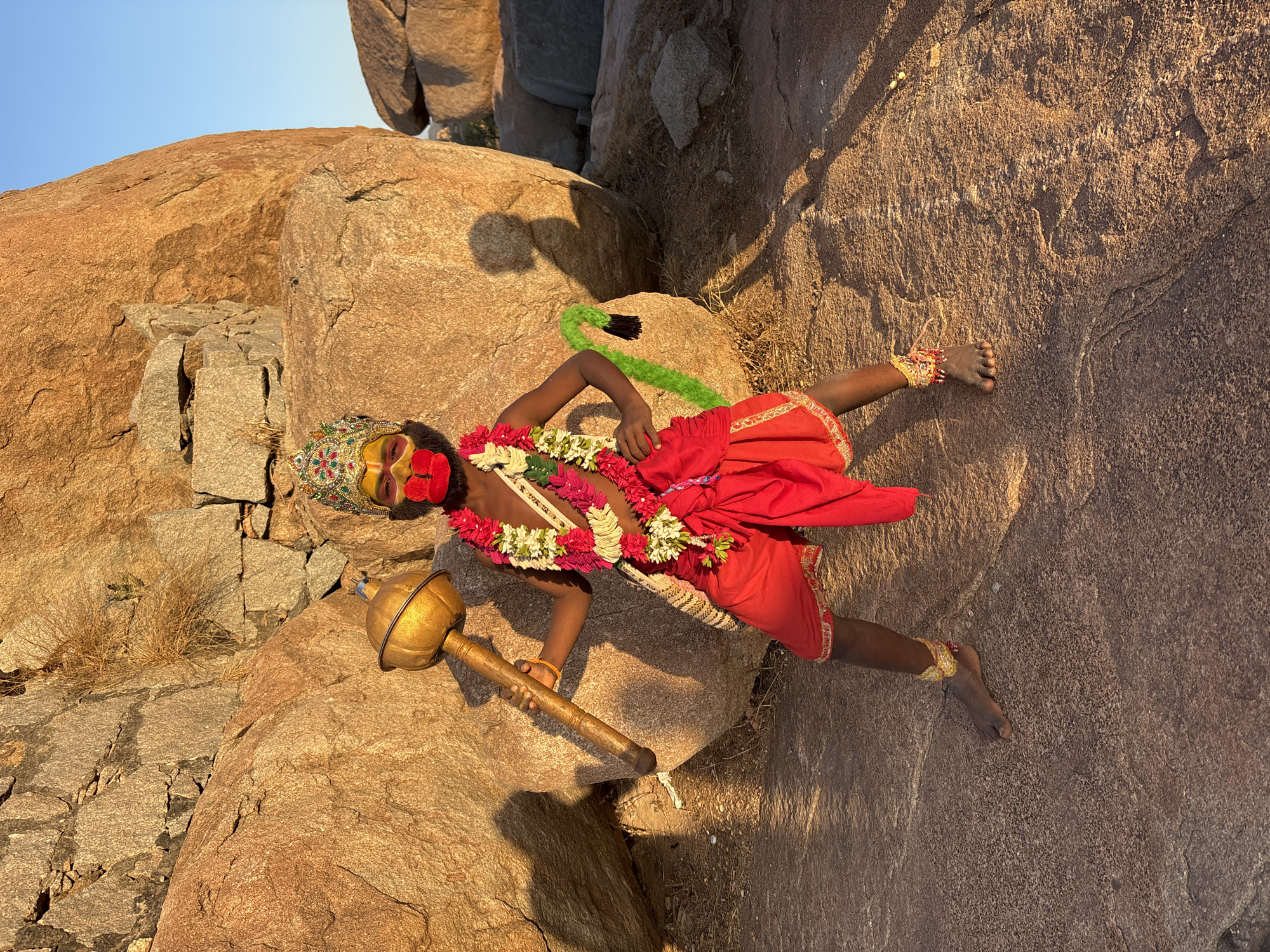
A young boy in a costume resembling the Hindu god Hanuman poses on a rocky terrain. He is dressed in red clothing, adorned with floral garlands and an ornamental headdress. His face is painted with yellow makeup and red around the mouth. He holds a golden mace in his left hand. A green and black faux tail is attached to his back. The scene is set against a backdrop of large reddish-brown boulders. The image was taken outdoors, with natural lighting. The location appears to be in the city of Kamalapura, India, given the characteristic rock formations.
Kamalapura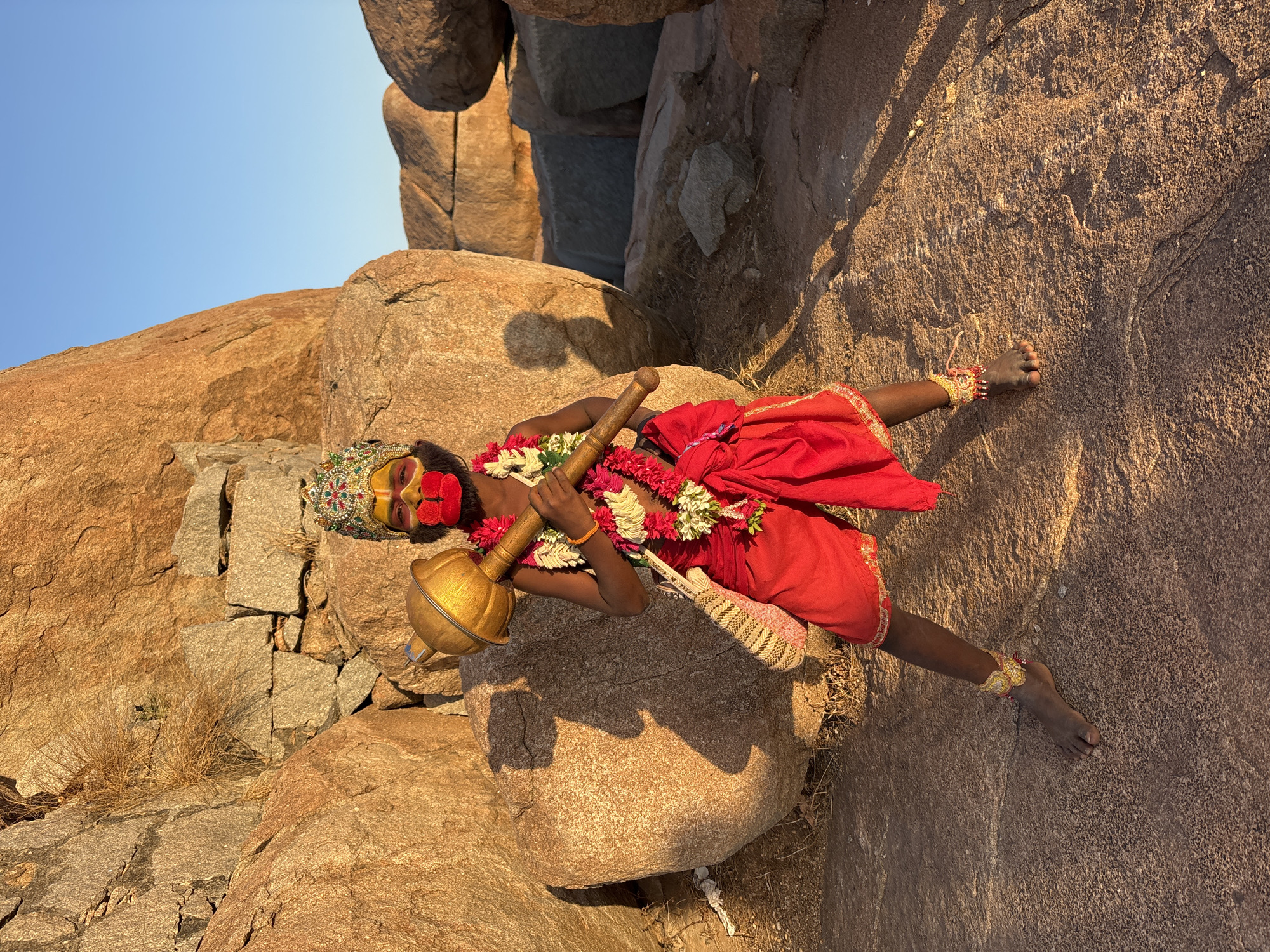
A color photograph depicts a person dressed as the Hindu deity Hanuman, situated amongst large rock formations, likely in Kamalapura, India. The individual is adorned with a headdress, facial paint including a red mouth, necklaces of flowers, and bracelets. They are clad in red clothing and holding a golden mace. The setting appears to be a natural landscape with smooth, weathered rocks and a clear sky in the background.
Kamalapura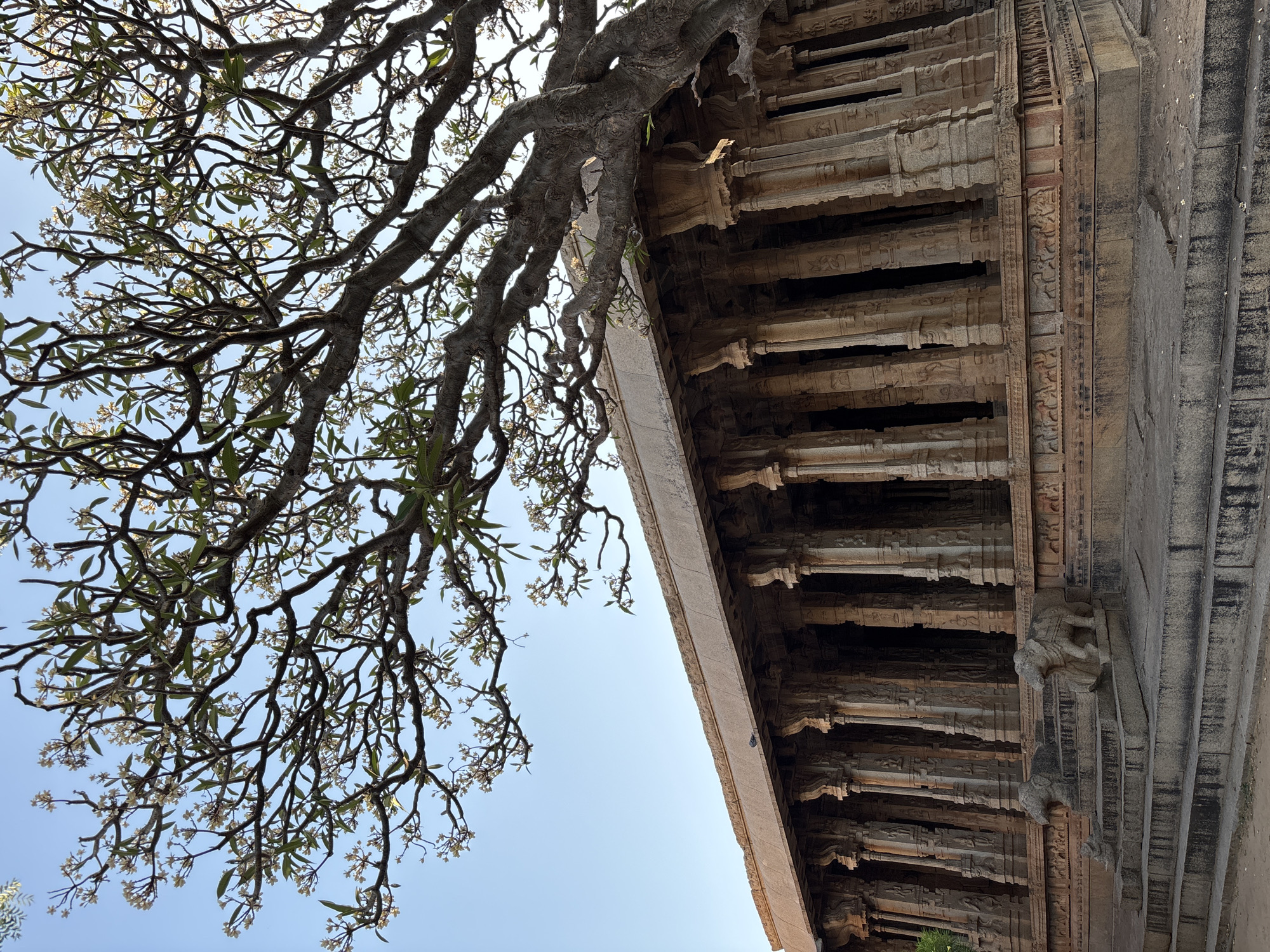
The image shows a low-angle view of a temple structure, possibly located in Kamalapura, India, judging by the architectural style. A large tree with branches and leaves partially obscures the sky. The temple’s architectural elements consist of numerous columns and detailed carvings. The materials appear to be stone or a similar masonry material. There are no people visible in the frame. The sky is clear and light blue.
Kamalapura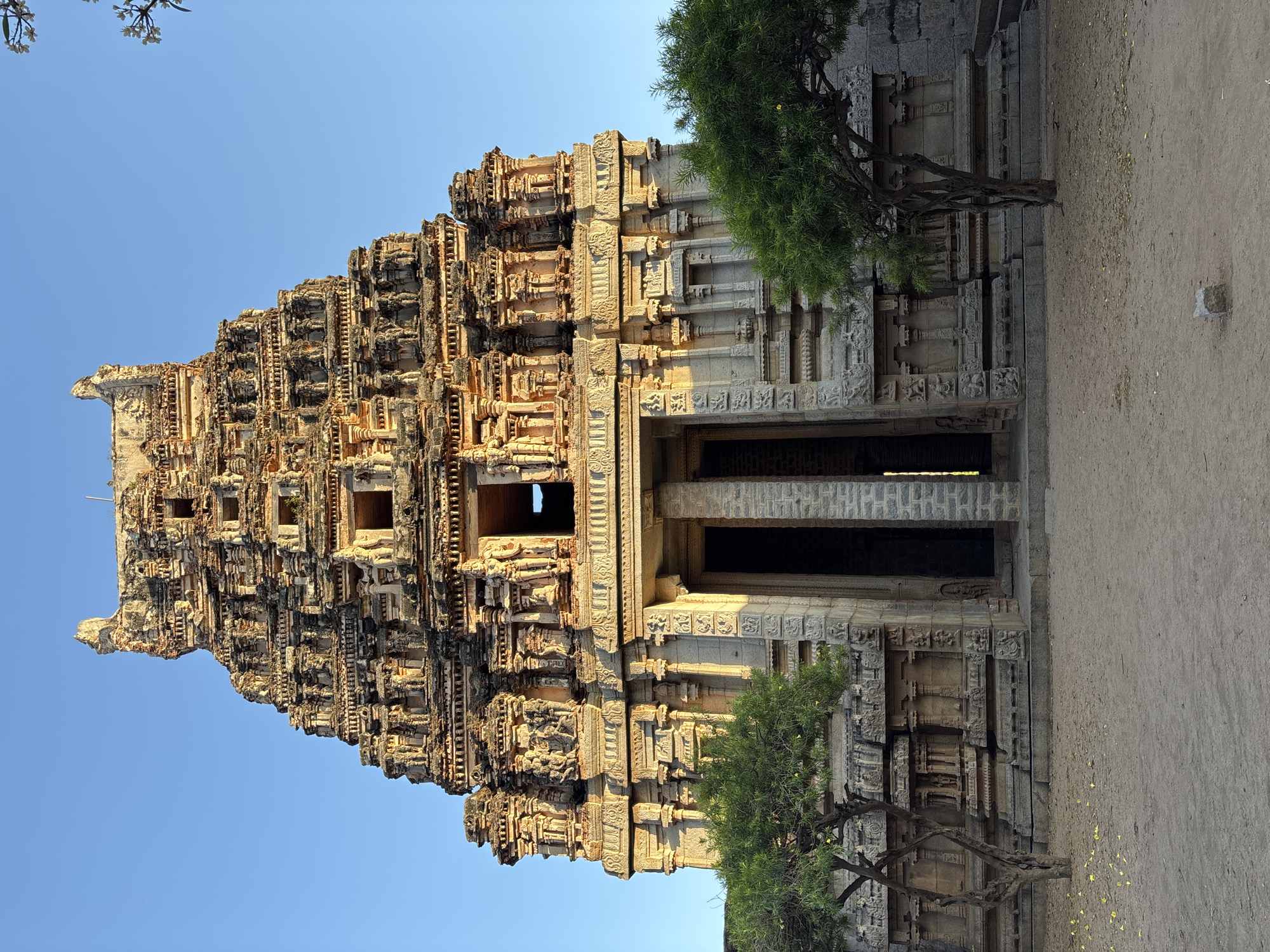
The image captures the Hazara Rama Temple in Kamalapura, India. The temple's towering gopuram, adorned with intricate carvings, dominates the frame. The temple entrance is flanked by carved pillars and stone walls. Two trees with green foliage frame the lower part of the structure. The ground is visible, a tan color. The sky above the temple is a clear blue.
Kamalapura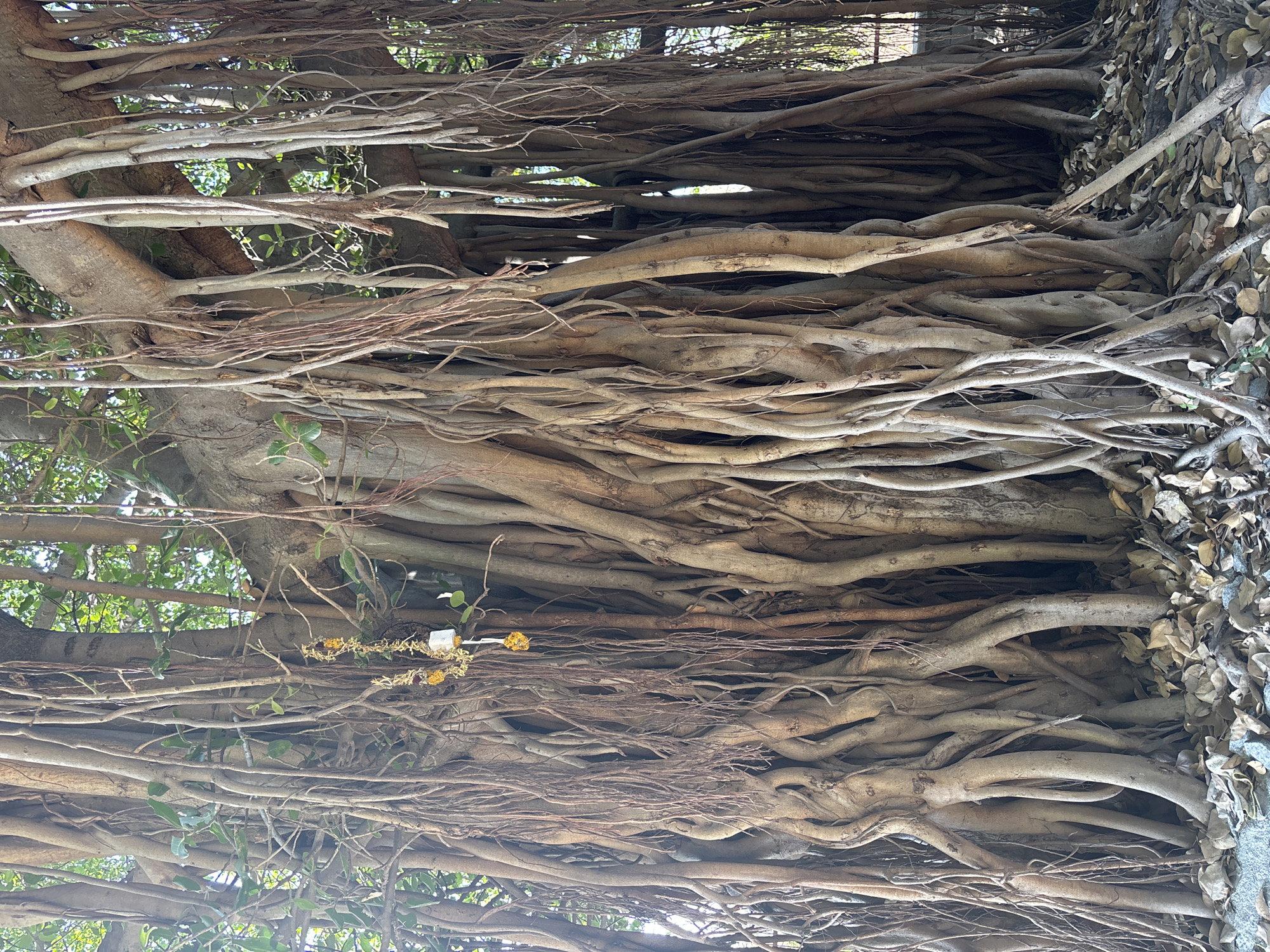
The image shows the aerial roots of a banyan tree in Kamalapura, India. The tree's roots are densely packed and spread in a horizontal direction, creating a complex network. Some of the roots are thick and stem-like, while others are thin and stringy. There is a small shrine with yellow and white flowers attached to the roots. The background is blurred, suggesting a shallow depth of field. The image is taken from a low angle, looking up at the tree.
Kamalapura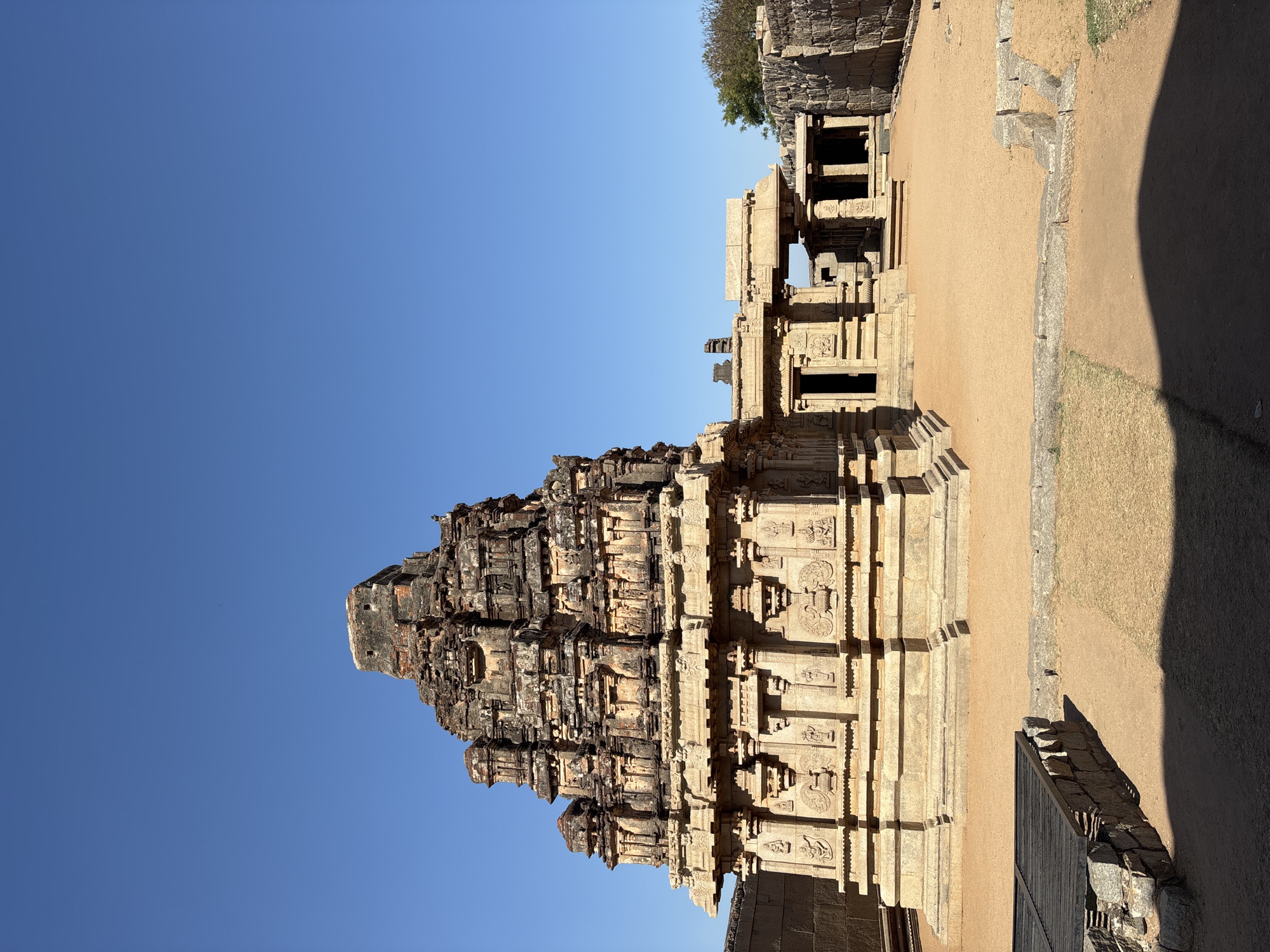
The image shows the Hazara Rama Temple in Kamalapura, India. The structure is a large, ornate stone building with multiple tiers and detailed carvings. The sky is clear and blue. The surrounding area appears to be dry and dusty, with other stone structures in the background.
Kamalapura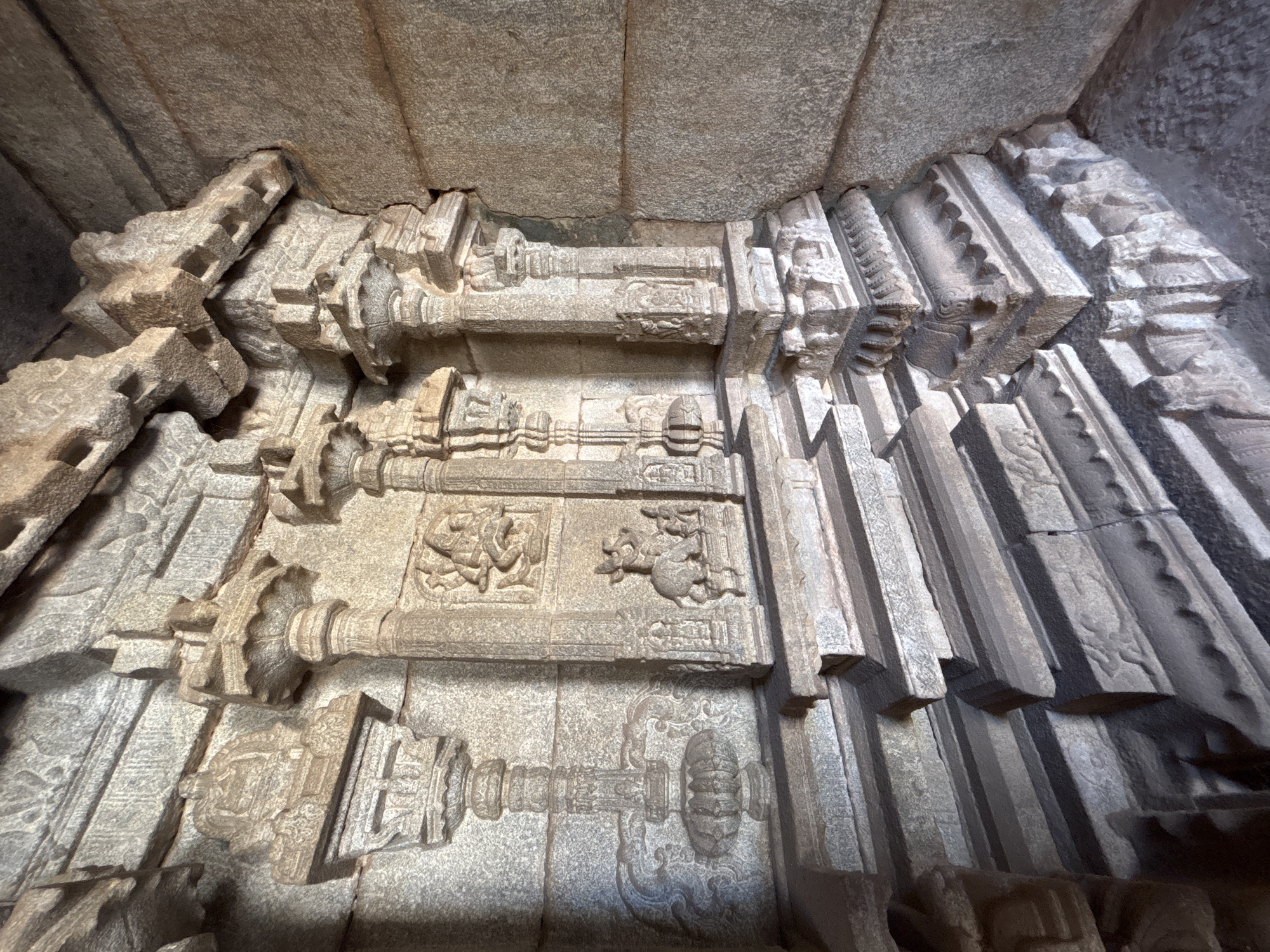
This image depicts the interior stonework of the Hazara Rama Temple, located in Kamalapura, India. The scene is an upward-angled view of sculpted walls and ceiling, showcasing detailed carvings in a light grey stone. The walls feature horizontal beams with decorative column-like structures. Carved depictions of figures and animals are integrated into the stonework. The architectural elements have a rough, aged texture. The ceiling is composed of plain stone blocks. Lighting within the scene casts shadows, highlighting the intricate details of the carvings.
Kamalapura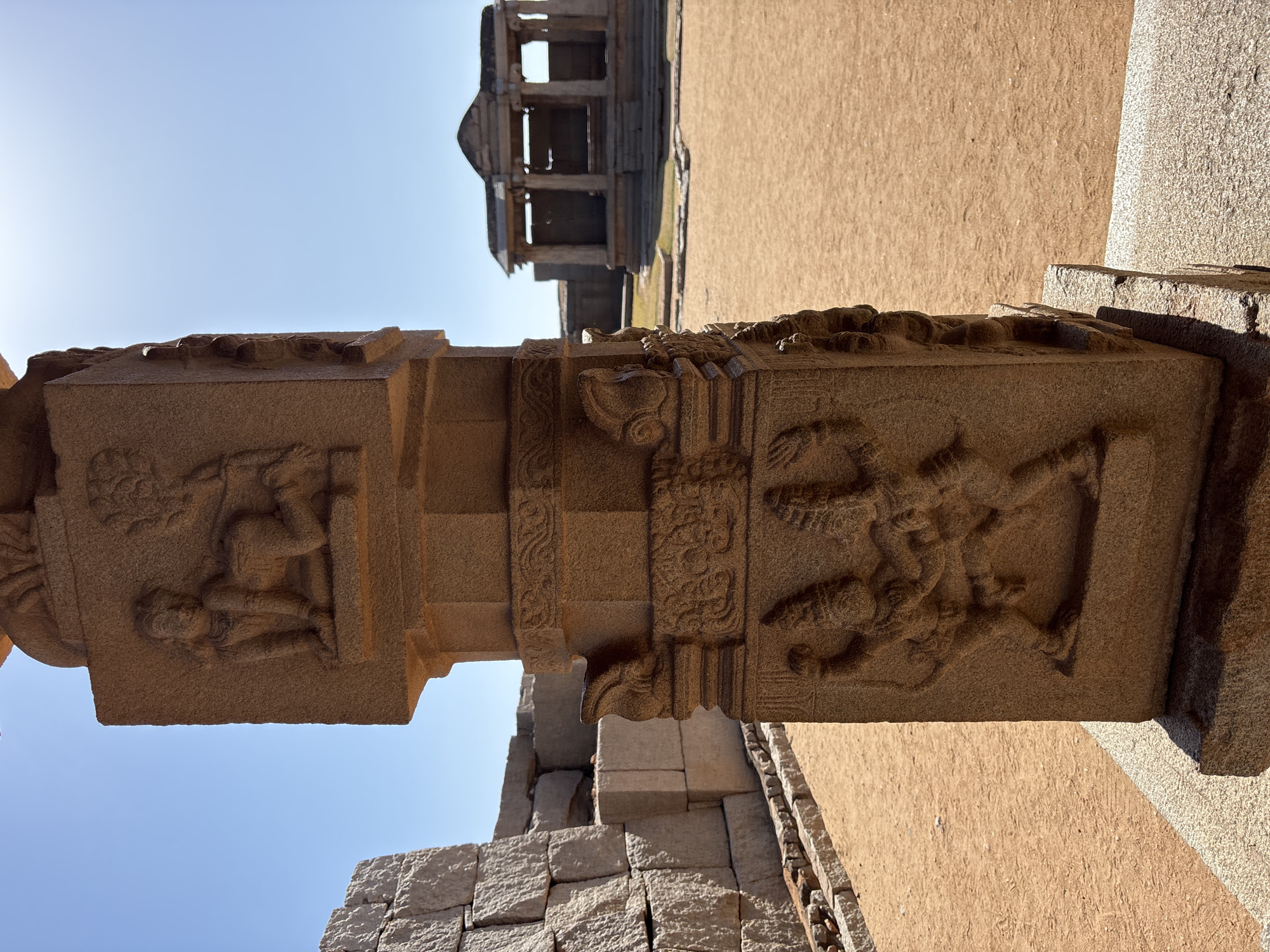
The image shows a detailed stone pillar with carved figures in Kamalapura, India, located in the ruins of Hampi. The pillar is made of a light brown stone and features intricate carvings of human figures in various poses. In the background is a partially destroyed building with multiple levels and pillars, against a clear blue sky. The ground is covered with a layer of sand and stone.
Kamalapura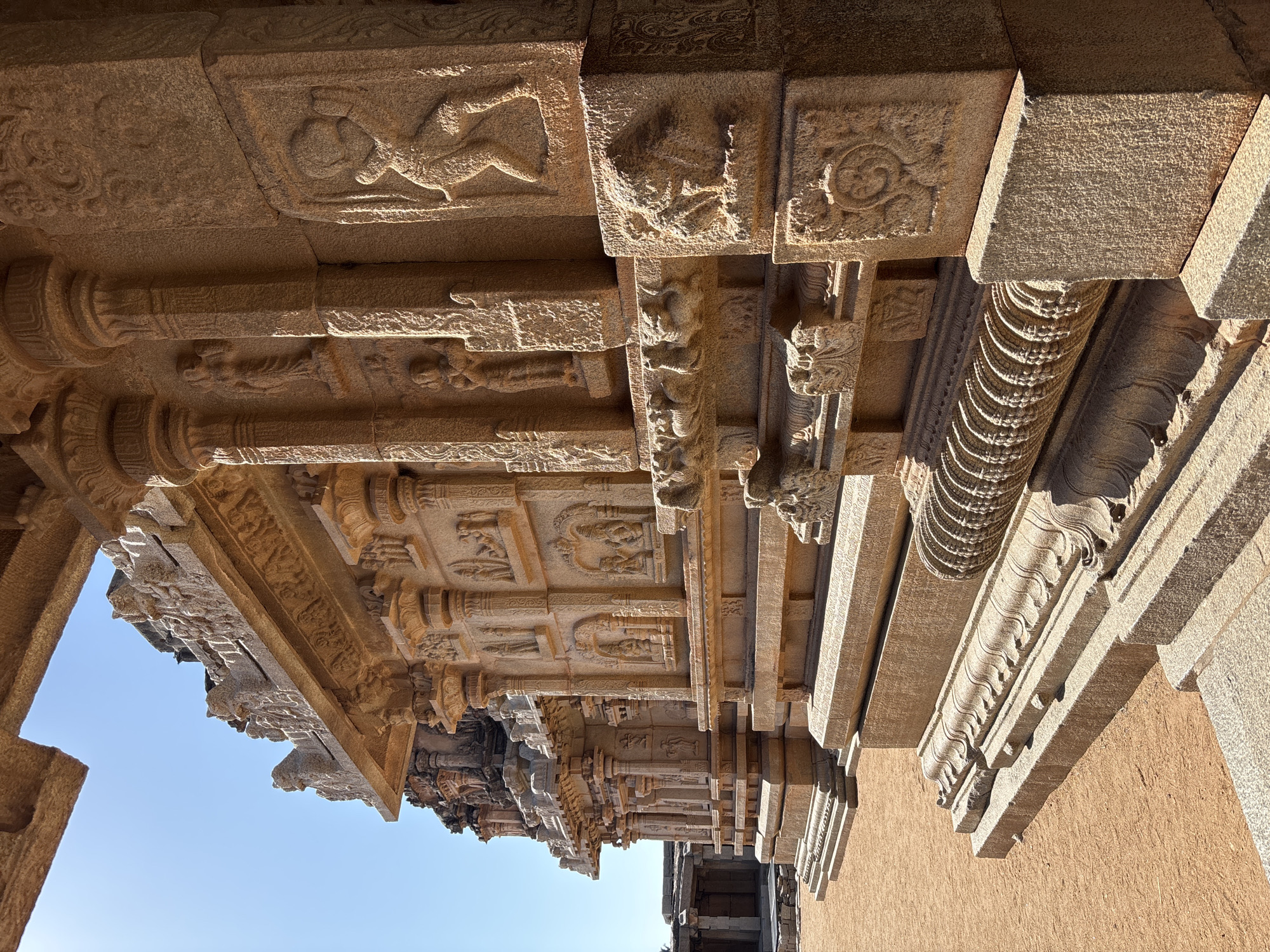
The image shows the underside of a stone structure, likely a temple, in Kamalapura, India. The structure consists of multiple layers of intricately carved stone beams and pillars. The carvings depict various figures, floral patterns, and geometric designs. The stone is a light brown color. The sky is visible in the lower left corner, indicating that the photograph was taken during the day. The overall perspective suggests the photo was taken from a low angle, looking up at the structure.
Kamalapura