Karzok, India
30 memories from Karzok, India
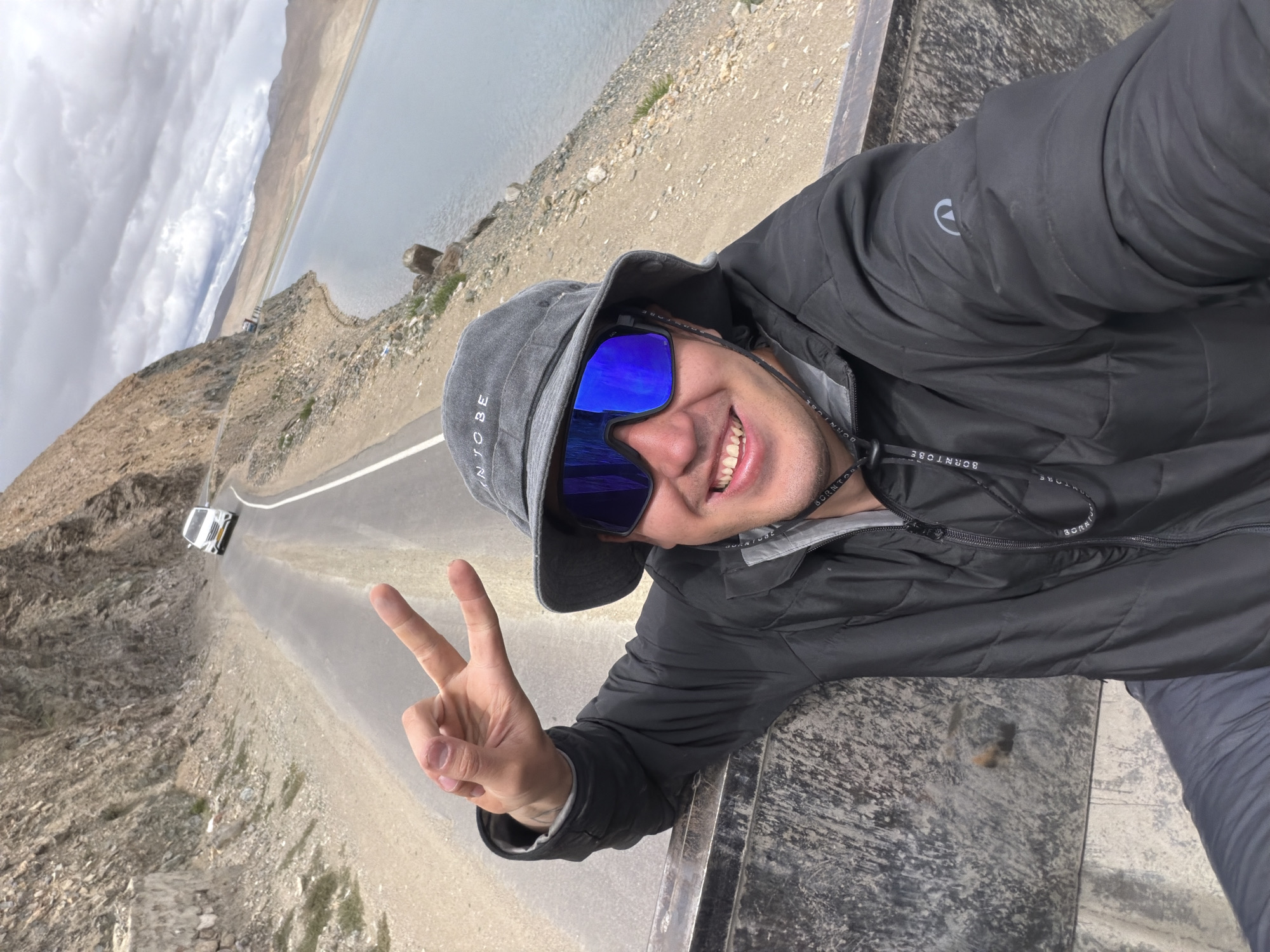
A young man is taking a selfie from the back of a truck. He is wearing a black puffer jacket, a grey bucket hat, and large blue ski goggles. He is smiling and making a peace sign with his right hand. The truck is on a paved road next to a large body of water, likely Tso Moriri lake, in the remote Karzok region of India. The road winds along the side of a steep, rocky mountain. The sky is overcast with dramatic clouds. The image captures a sense of adventure and travel in a rugged, natural landscape.
Karzok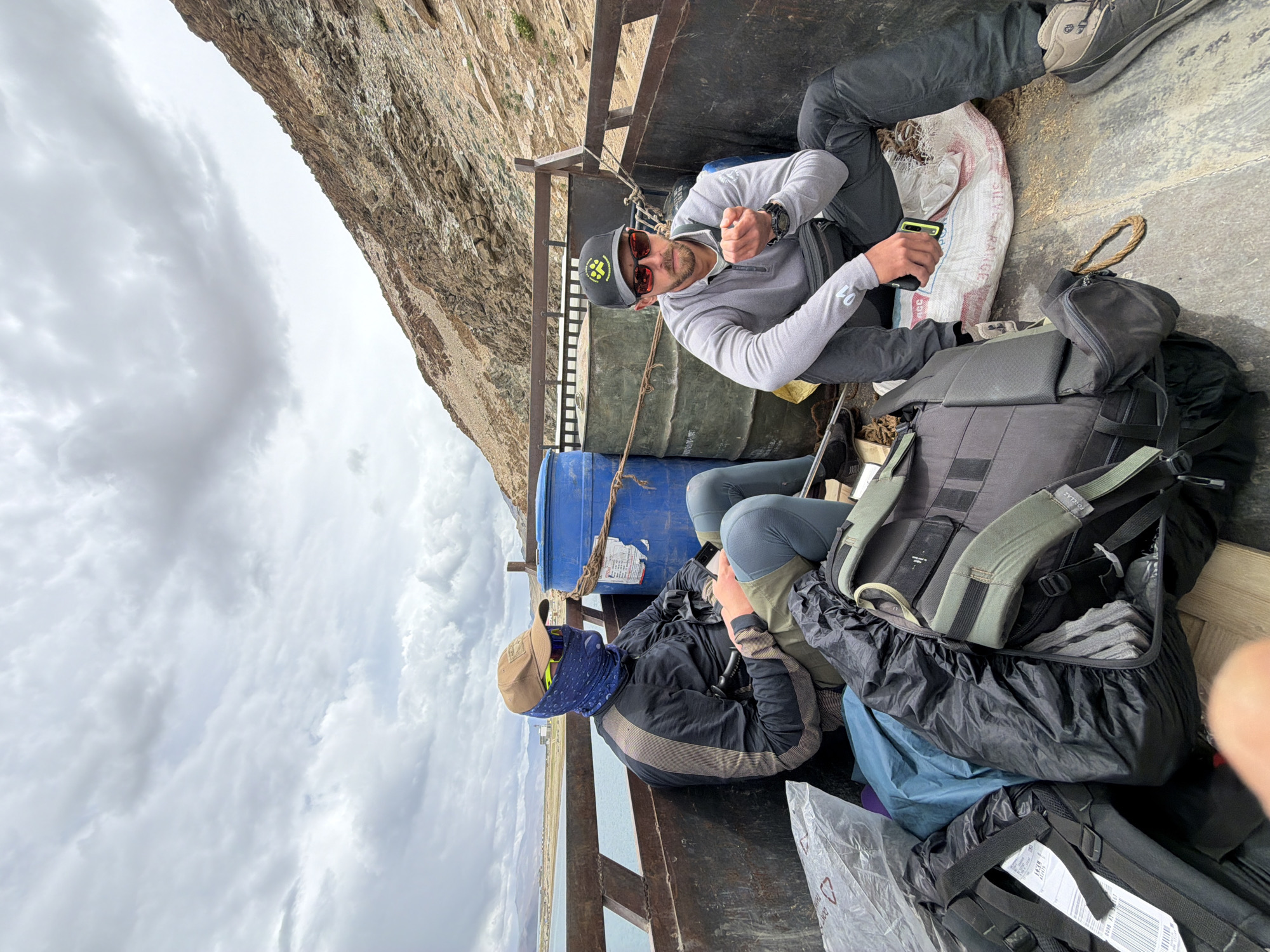
Two individuals are seated in the back of a utility vehicle in a rocky, mountainous landscape near a body of water, possibly Karzok, India. The person on the left, wearing a brown cap, blue bandana, and dark jacket, is facing right, looking towards the right side of the frame. The person on the right, wearing a black cap, sunglasses, and grey long-sleeved shirt, is facing forward, looking down at something in their hands. The vehicle bed is filled with various bags, backpacks, and two large barrels. The sky is overcast with clouds. The terrain is dry and rugged.
Karzok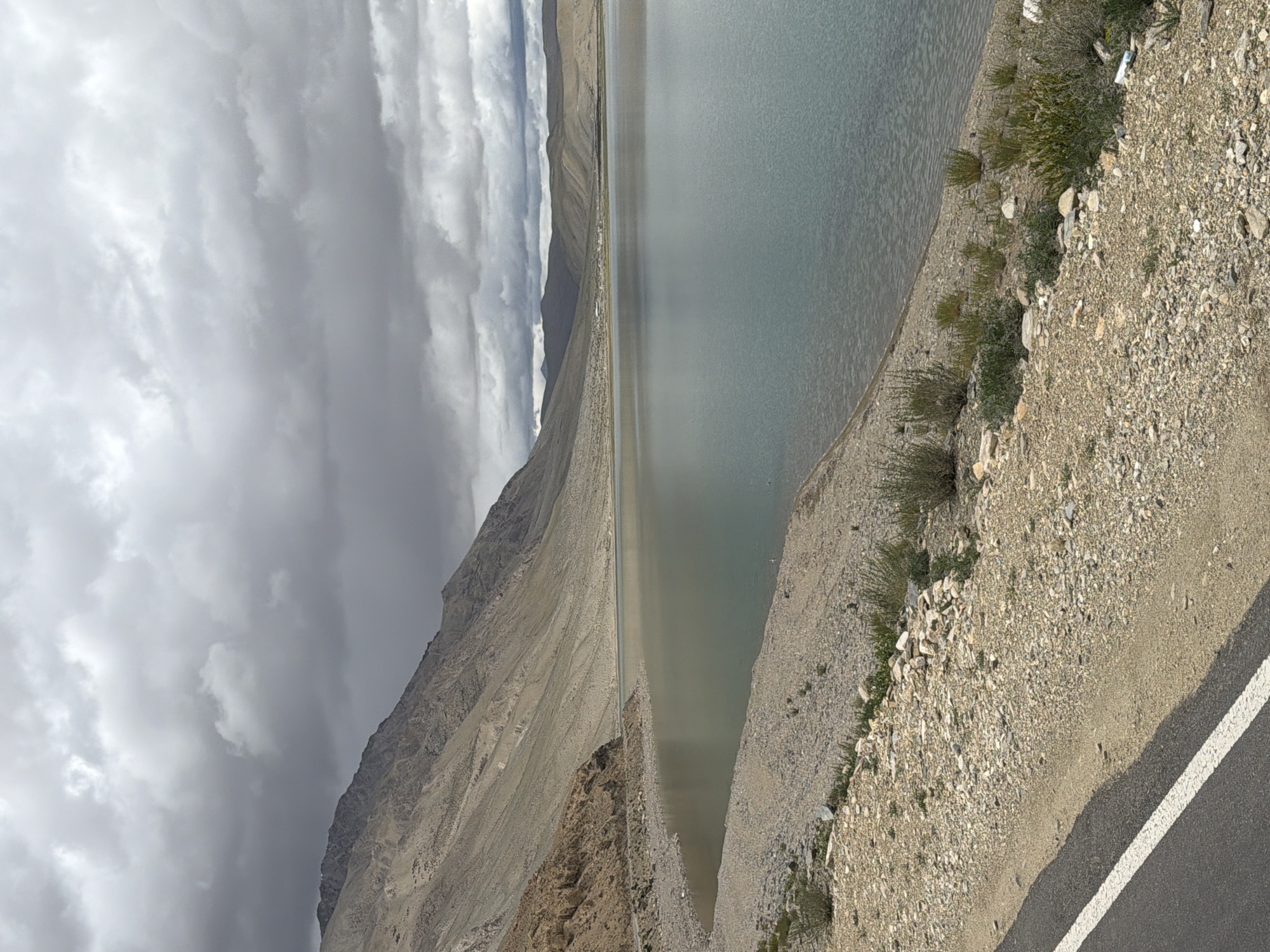
This is a landscape photograph of a serene lake and a mountainous region under a cloudy sky. In the foreground, a section of a paved road with a white stripe is visible, bordering a rocky, barren shoreline. The shoreline is sparsely populated with small, dry shrubs and scattered rocks. The lake itself occupies the majority of the midground and extends into the background. The water appears calm and reflects the muted tones of the sky and surrounding landscape. The color of the water ranges from a muted blue-green to a lighter, almost silvery hue. In the background, a large, imposing mountain dominates the left side of the frame, its slopes barren and streaked with erosion patterns. The mountain is a sandy, beige color. Further in the distance, a range of softer, rolling hills stretches across the horizon, with a small settlement visible nestled at their base. The sky is overcast with thick, grey clouds, suggesting a potentially cool or damp climate. The location is identified as the city of Karzok, India. Karzok is a village situated on the shore of Tso Moriri lake in Ladakh, India. The scene depicted aligns with the typical landscape of this high-altitude region, characterized by its vast lakes, rugged mountains, and arid terrain. There are no people or specific actions visible in the image; it is a static depiction of the natural environment.
Karzok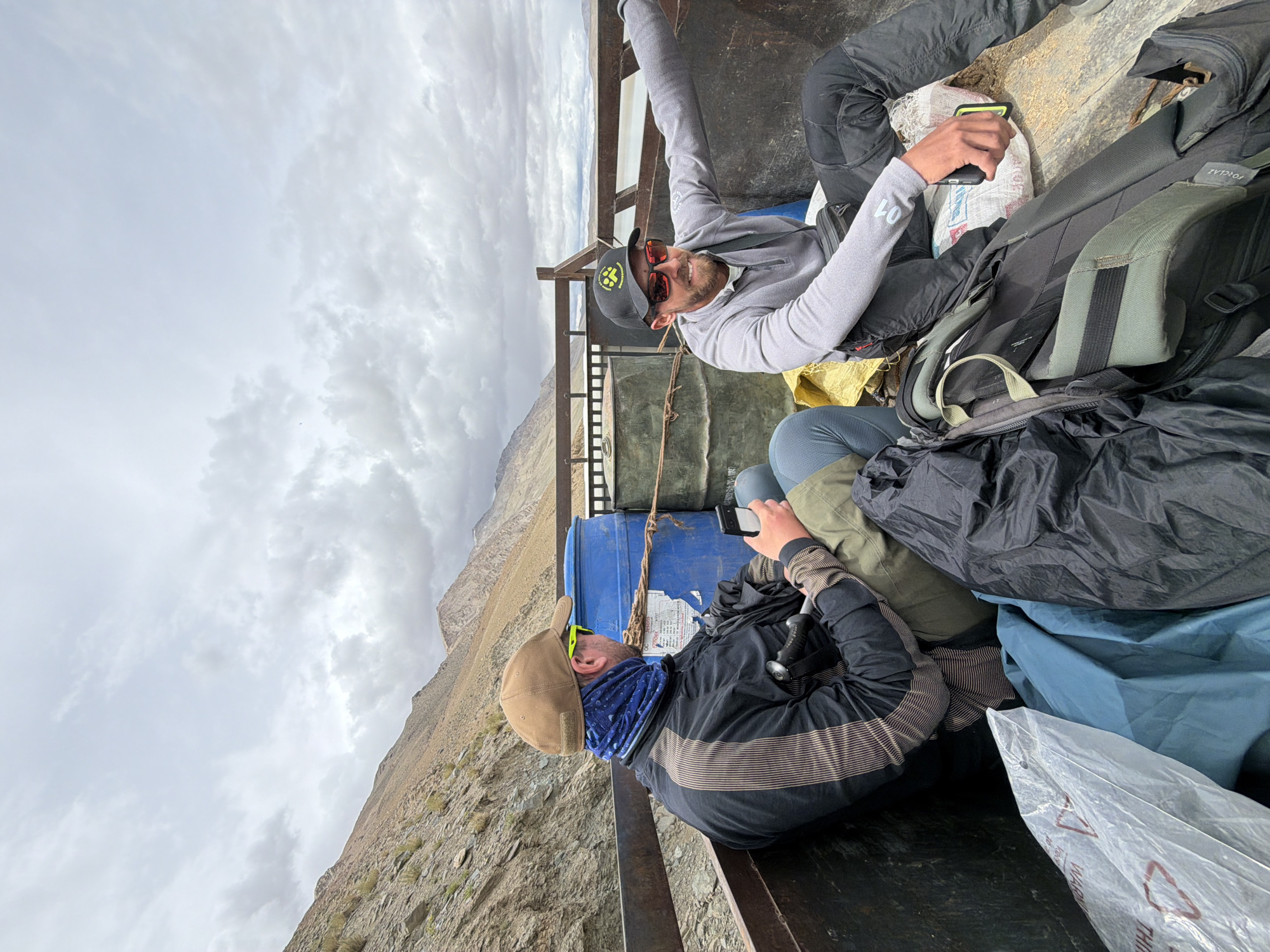
Two men are sitting in the back of a truck in a mountainous, remote area, likely near Karzok, India. The man on the left, wearing a tan baseball cap and a blue patterned neck gaiter, is looking down at his phone. He has on a black jacket with brown stripes and olive green pants. A walking stick is visible between his legs. To his right is a large blue barrel secured with rope. The man on the right, wearing a black baseball cap with a yellow logo and sunglasses, is smiling and extending his right arm. He is wearing a grey long-sleeved shirt and black pants. He is also holding a phone in his right hand. Several backpacks and duffel bags are piled around the men in the truck bed. The background shows a barren, rocky mountainside under a cloudy sky. The overall impression is a utilitarian mode of transport in a rugged, natural environment.
Karzok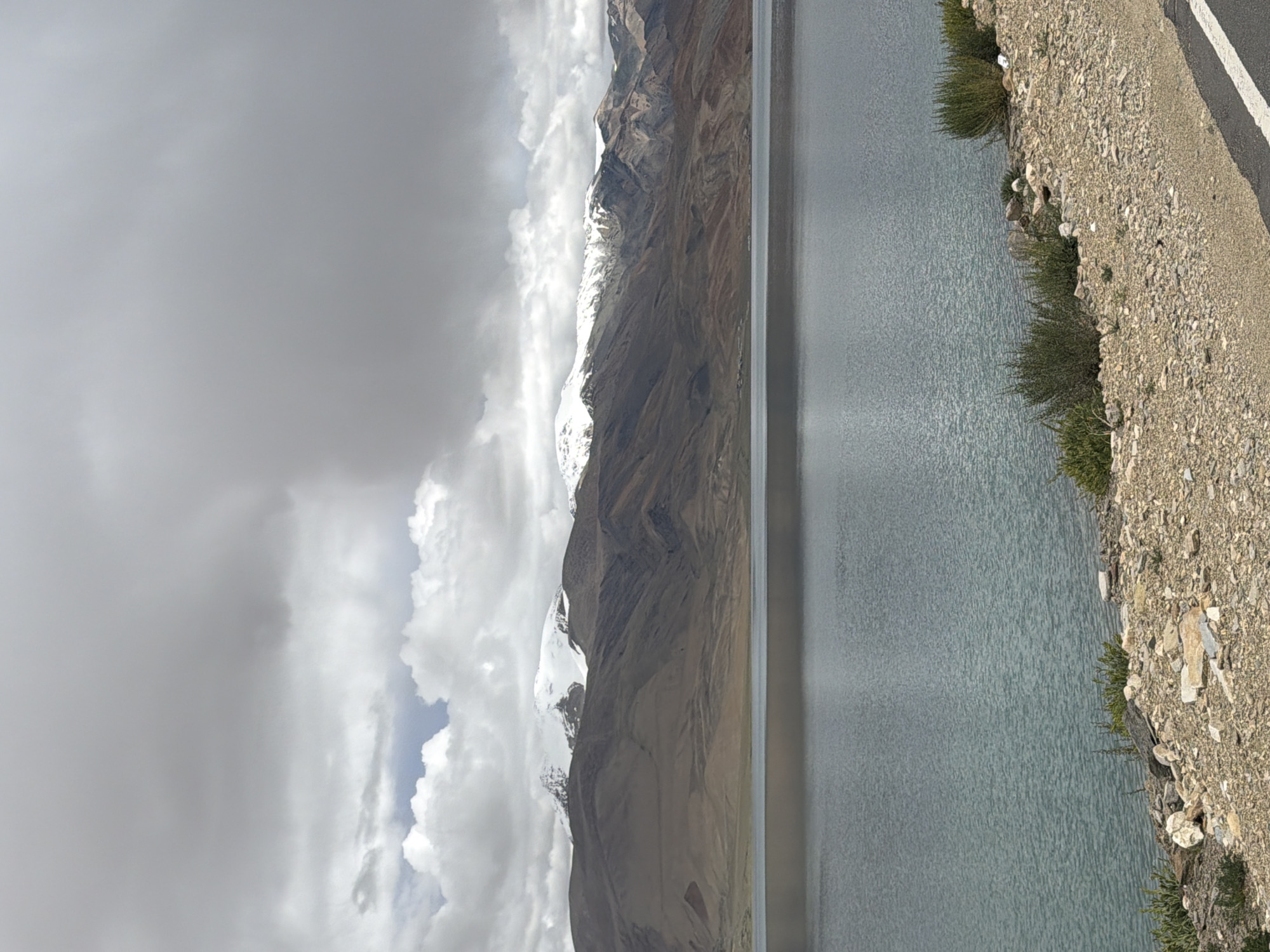
A wide shot captures a serene, serene lake reflecting the overcast sky. The lake's surface is calm, with gentle ripples distorting the reflection of the barren, mountainous landscape that borders it. The mountains are layered with shades of brown and tan, their peaks dusted with snow. The sky above is filled with heavy, grey clouds, obscuring any direct sunlight. The foreground of the image shows a rocky, dry terrain leading to the lake, with sparse, green bushes dotting the landscape. The road is visible on the far right of the frame. This is likely the location in Karzok, India.
Karzok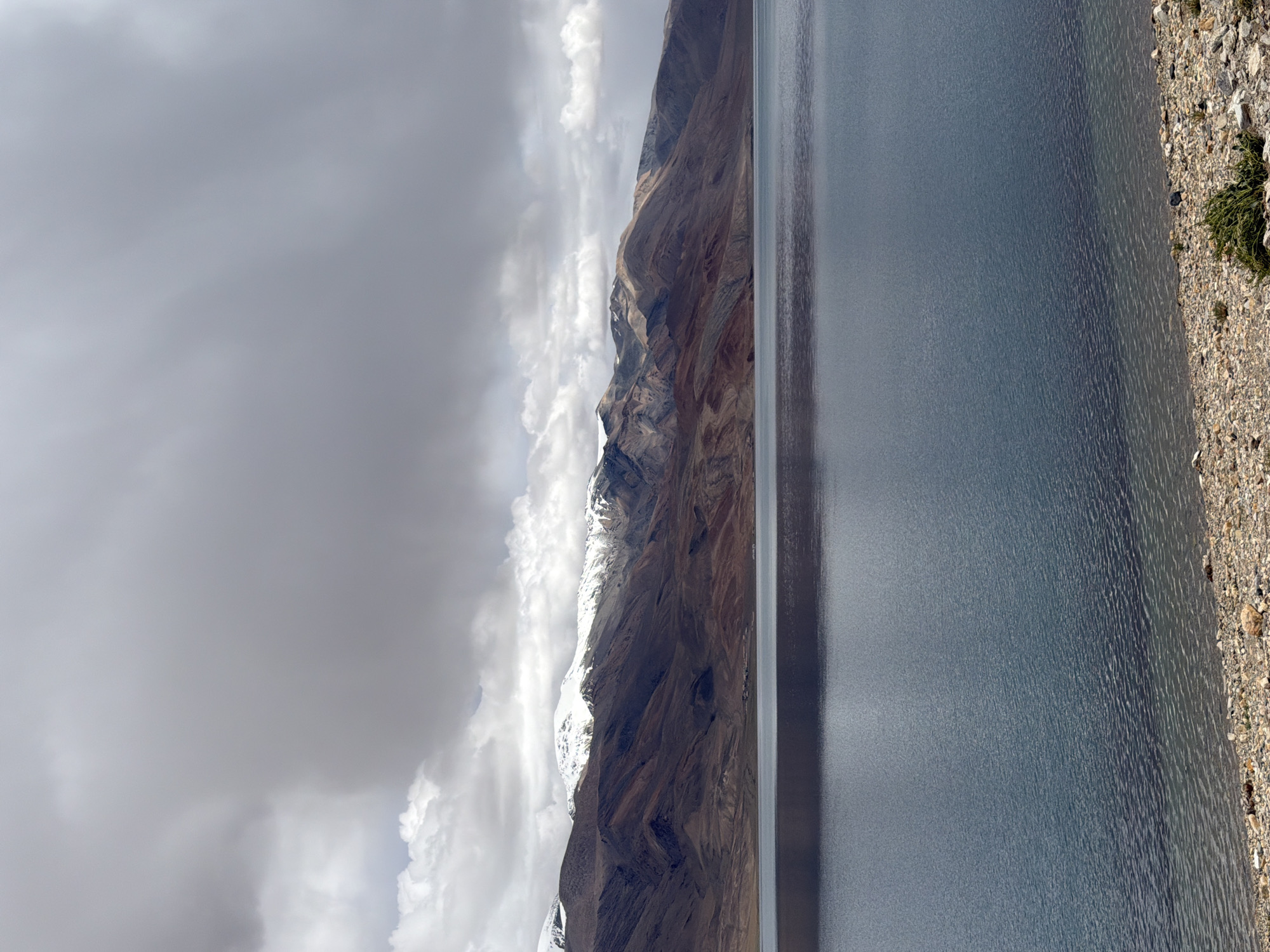
The image depicts a vast, calm lake in the city of Karzok, India. The water is a deep blue with slight rippling. In the background, imposing mountains rise, their slopes a mix of reddish-brown earth and patches of snow on their peaks. The sky above is heavily clouded, with thick gray clouds dominating the upper portion of the frame, interspersed with some lighter, puffy white clouds. The foreground of the image shows a rocky shore of the lake, with scattered pebbles and a small patch of green vegetation. There are no people or animals visible in the scene.
Karzok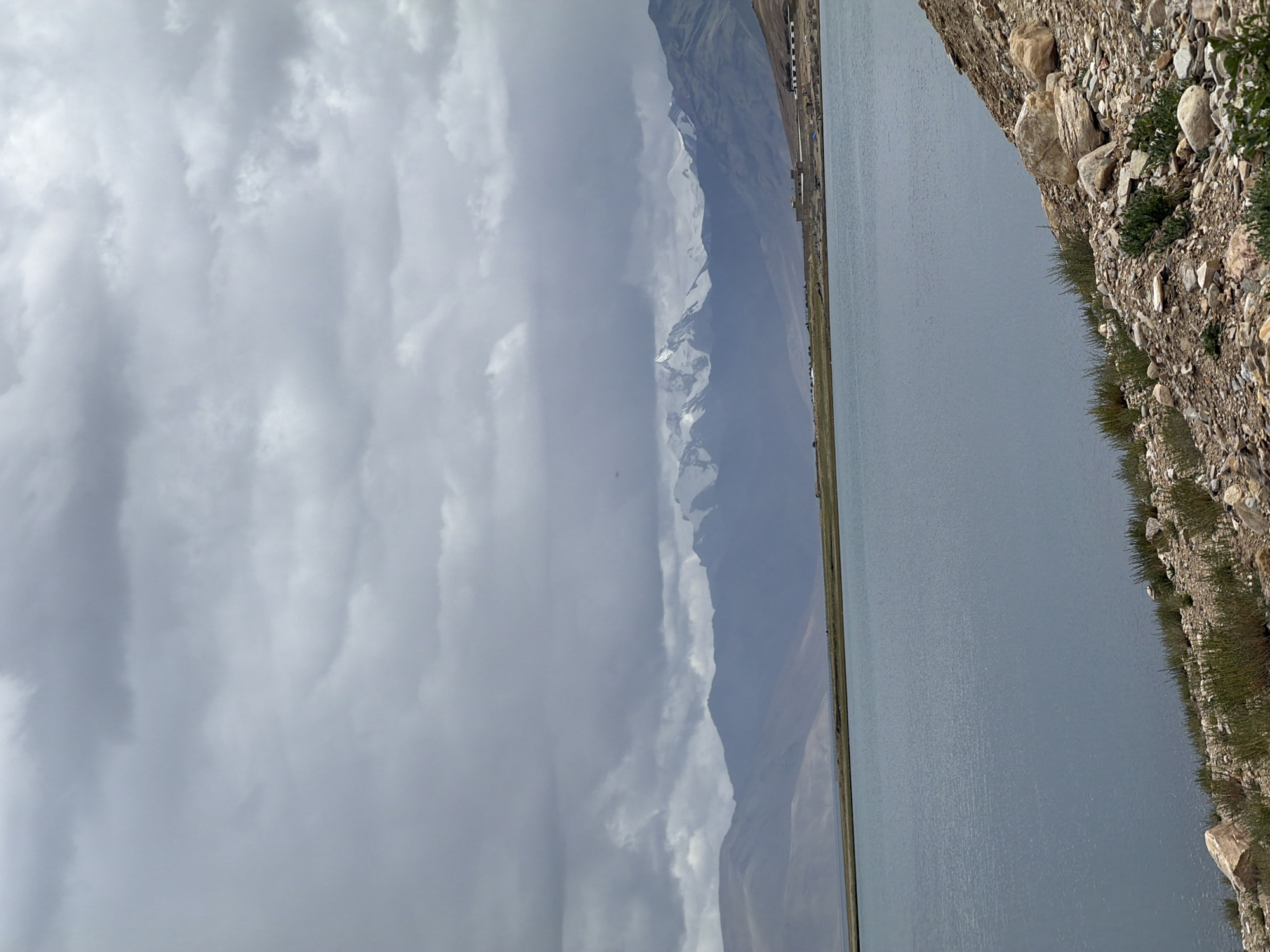
A wide shot captures a serene lake with calm, blue water in the foreground. Beyond the lake, a flat, green shore stretches towards a range of mountains, some of which are capped with snow. The sky above is overcast with heavy, grey clouds. The scene appears to be a natural landscape.
Karzok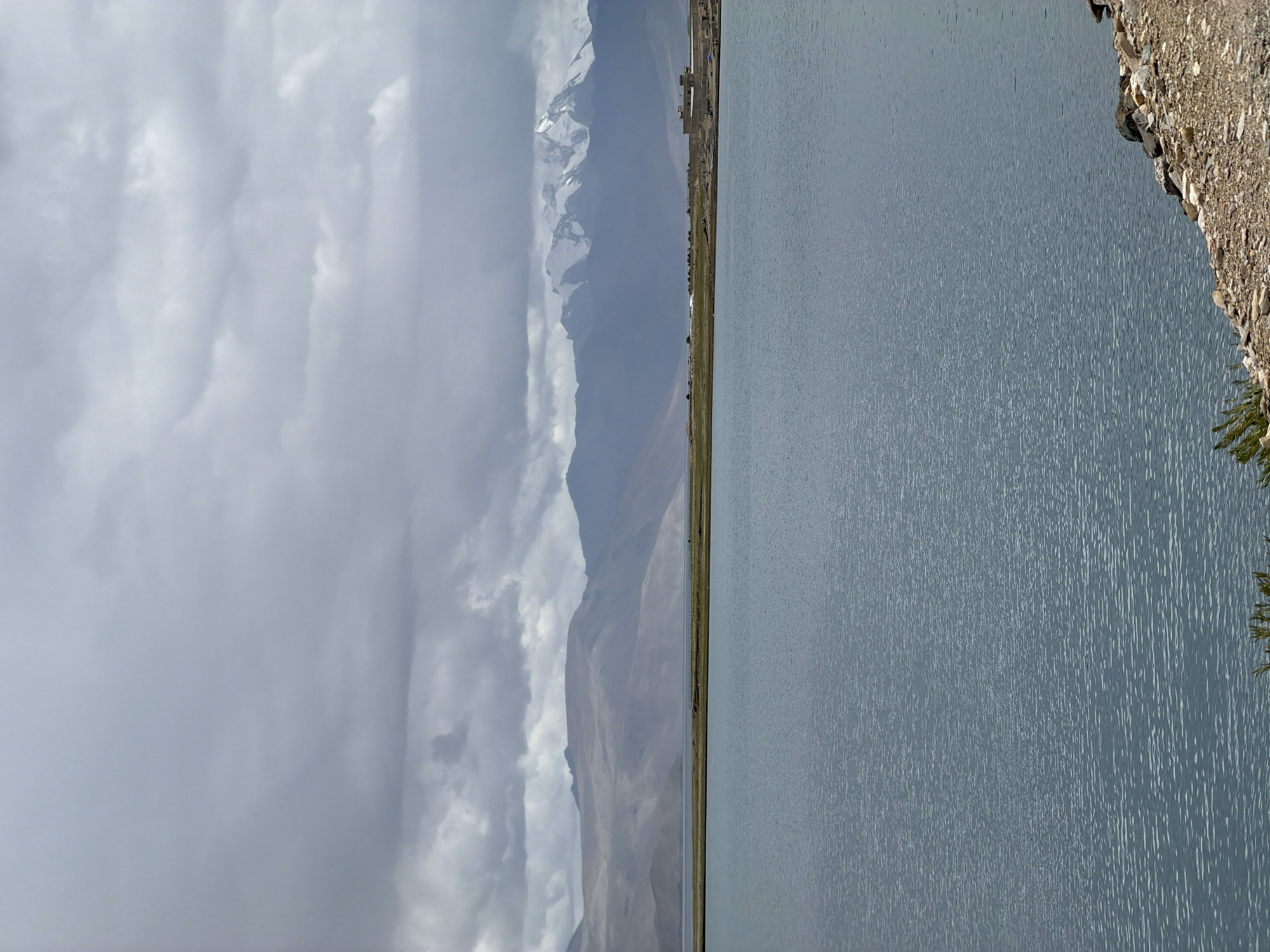
A wide shot captures a tranquil lake with a vast, overcast sky. The lake's surface is a muted blue, rippled by a gentle breeze, reflecting the cloudy heavens. In the background, a low, arid mountain range stretches across the horizon, its slopes a soft brown and beige. To the right, a section of the range is capped with snow-covered peaks, standing out starkly against the muted tones of the lower mountains. Along the lake's far shore, a strip of green grass creates a distinct line between the water and the mountains. Further to the right, nestled against the foothills, is a cluster of buildings with light-colored walls, some appearing to be under construction or a small settlement. The immediate foreground shows a rocky, gravelly shoreline with sparse vegetation. The scene is devoid of human presence, focusing entirely on the natural landscape. The location is identified as Karzok, India, a village situated on the banks of Tso Moriri lake. The image conveys a sense of vastness and quietude under a heavy, gray sky, with the snow-capped mountains hinting at the high-altitude, remote nature of the location.
Karzok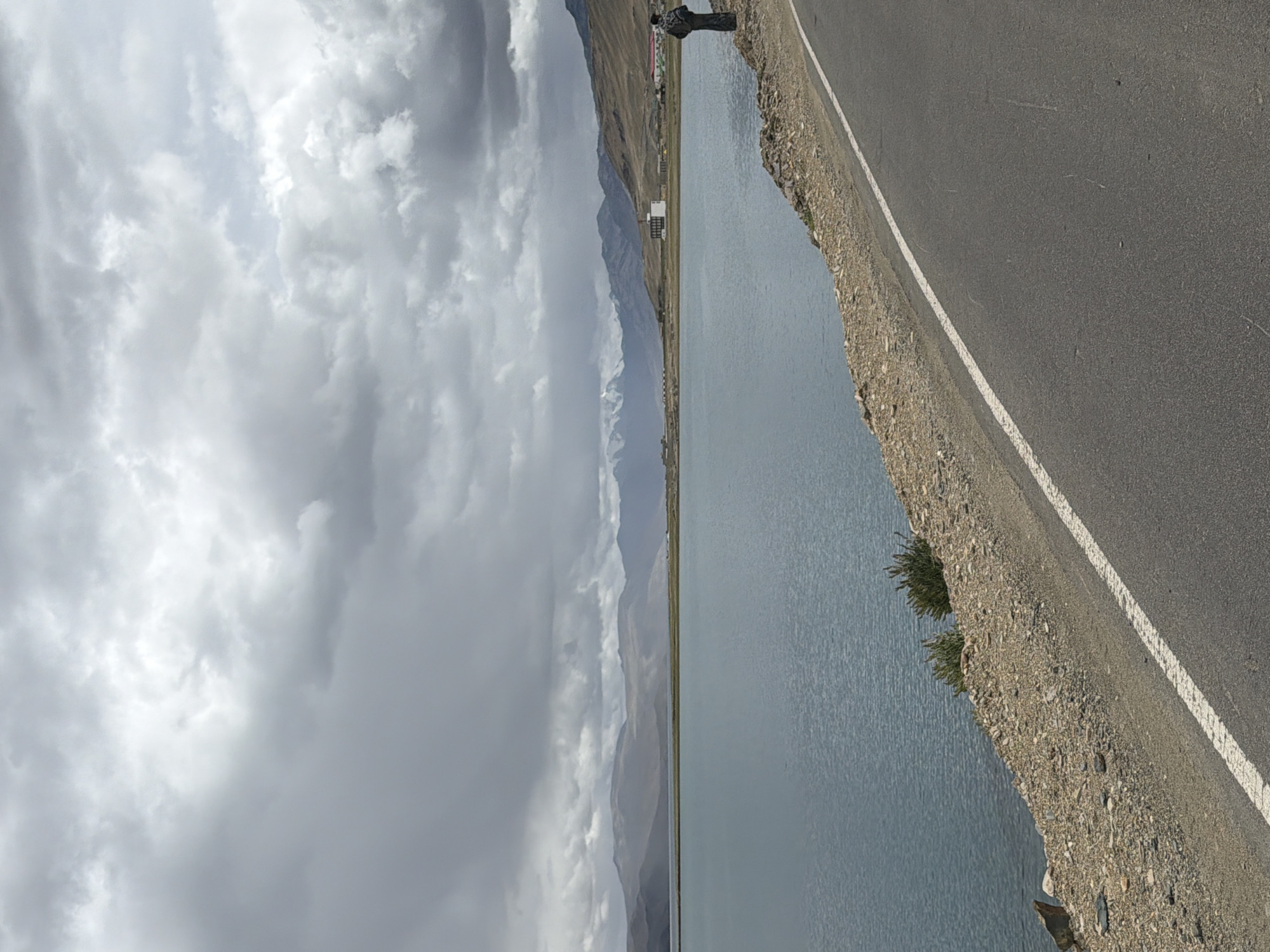
A lone individual stands on the side of a paved road, looking out over a large, calm body of water. The road curves to the right, with a gravelly shoulder that slopes down to the water's edge. The water is a deep blue and stretches towards a distant shoreline with rolling, barren hills. In the far distance, snow-capped mountains are visible under a dramatic, cloudy sky. The person is wearing dark clothing and a patterned shawl or backpack. The scene appears to be located in the high-altitude desert region of Karzok, India, near the Tso Moriri lake. The overall atmosphere is one of solitude and the vastness of nature.
Karzok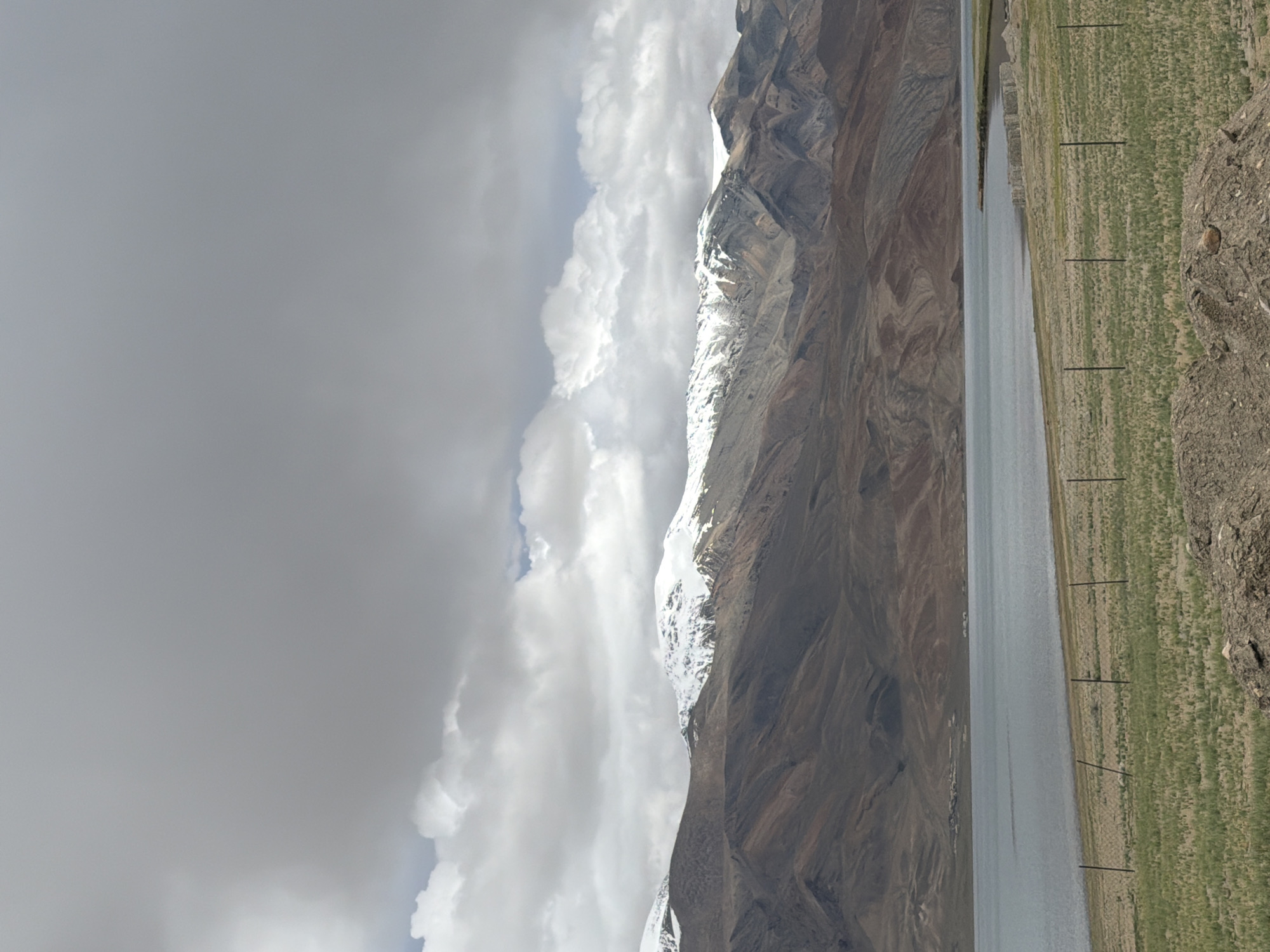
An overcast sky looms above a vast, serene lake in Karzok, India. Snow-capped mountains with rugged, brown slopes form a dramatic backdrop to the tranquil water. In the foreground, a grassy field stretches towards the lake, punctuated by a few thin, dark fence posts. The scene is natural and undeveloped, suggesting a remote and untouched landscape.
Karzok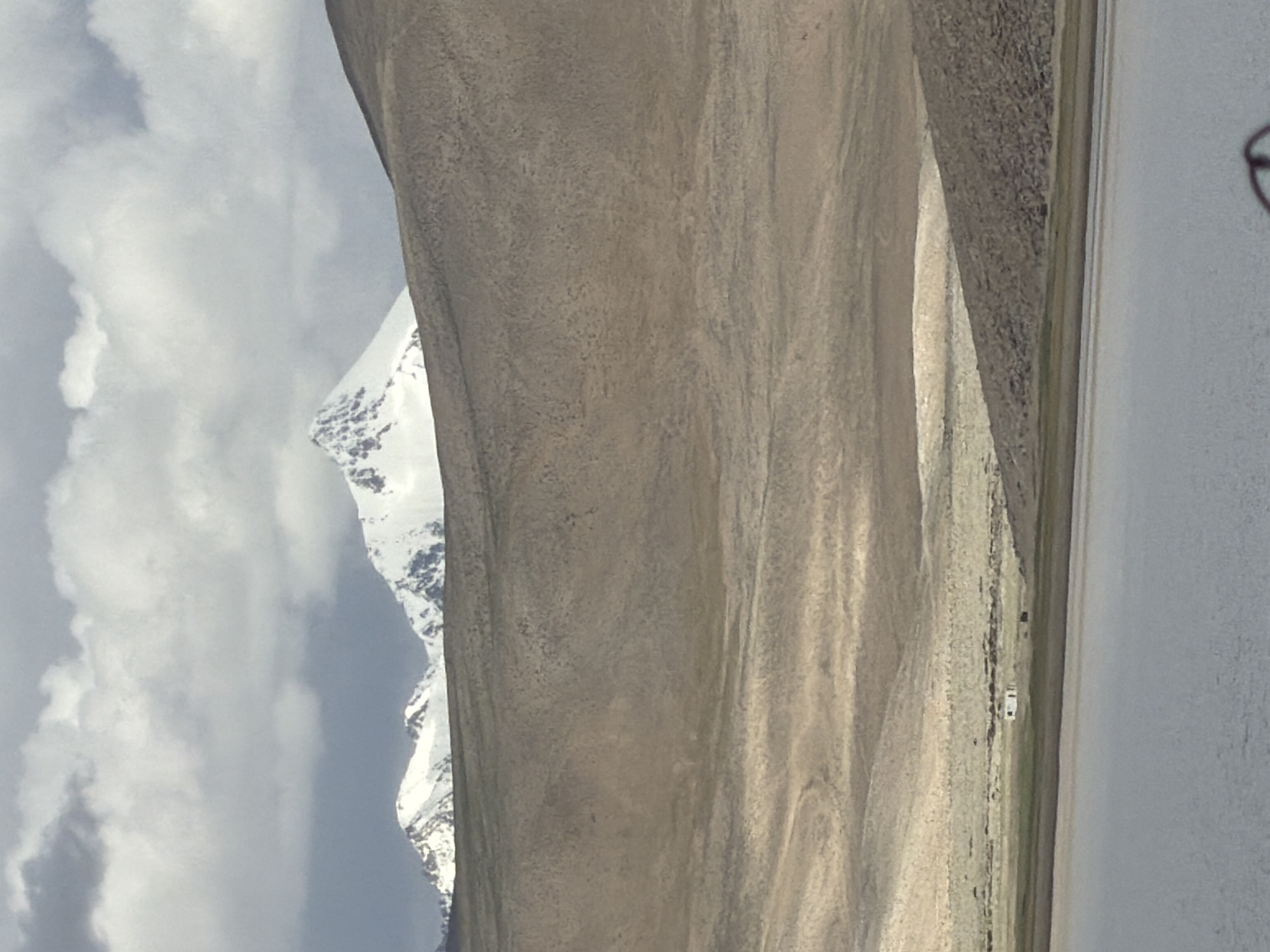
The image shows a panoramic view of a desolate, mountainous landscape near Karzok, India. In the foreground, a large body of calm, grey water occupies the bottom portion of the frame. Beyond the water, the terrain rises into rolling, arid hills with sparse vegetation. The hills exhibit shades of brown and tan, with subtle variations in texture and contour. In the middle ground, a small cluster of white structures, possibly buildings or tents, are visible on a patch of green land. Further in the background, imposing snow-capped mountains pierce the sky. These peaks are jagged and rugged, their white snow contrasting sharply with the muted tones of the surrounding landscape. The sky above is a mix of grey and white clouds, suggesting an overcast or partly cloudy day. The overall impression is one of vastness, solitude, and rugged natural beauty.
Karzok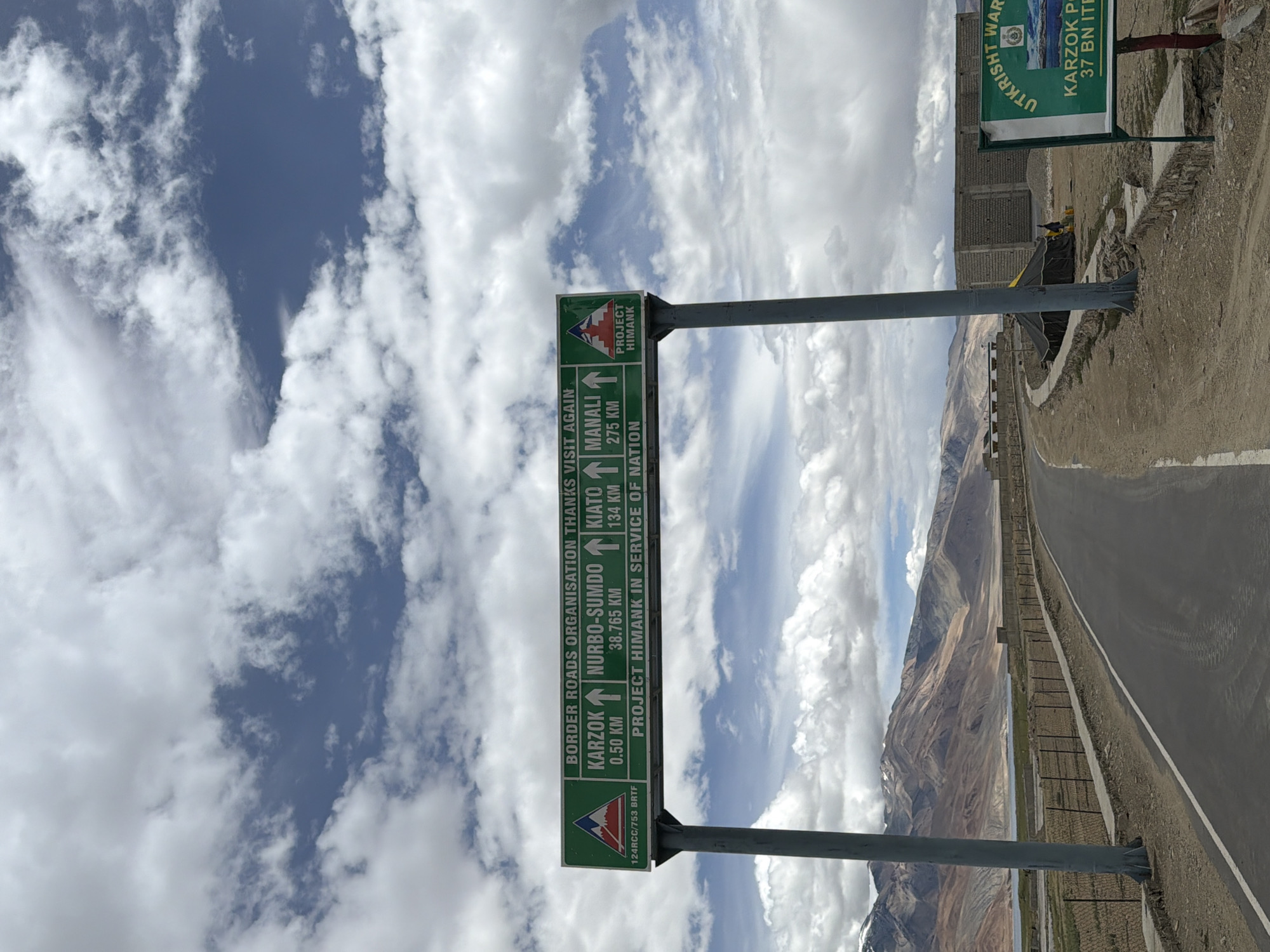
A sign on a metal pole indicates distances to various locations: Karzok at 0.50 km, Nurbo-Sumdo at 38.765 km, Kiato at 134 km, and Manali at 275 km. The sign also states "BORDER ROADS ORGANISATION THANKS VISIT AGAIN" and "PROJECT HIMANK IN SERVICE OF NATION." A logo with mountains is visible on the sign. In the background, a road curves to the right, leading towards a body of water and mountains. The sky is cloudy. Another sign on the right side of the image reads "UTKRISHT WAR..." and "KARZOK P..." with "37 BN IT..." below it, also featuring a logo. A tent is set up near some brick structures. The location is identified as Karzok, India.
Karzok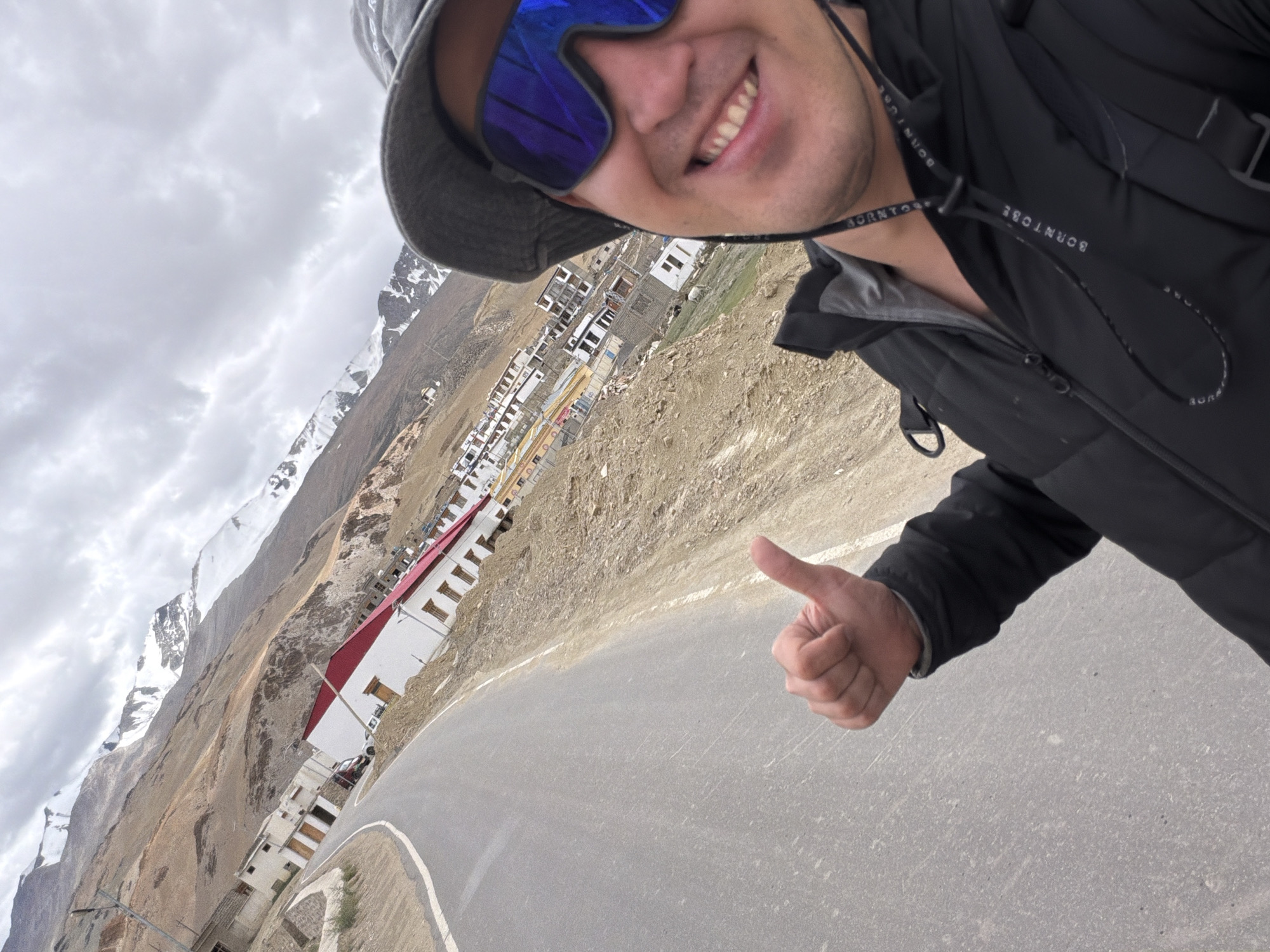
A first-person perspective selfie shows a man with a dark bucket hat and reflective blue goggles smiling widely. He is wearing a black puffer jacket with a gray inner layer and a black lanyard with white text that reads "BORNTODBE." His right hand is raised, giving a thumbs-up gesture. The man is positioned in the foreground against a backdrop of a steep, mountainous landscape. A paved road curves through the scene, leading towards a village of white buildings with red roofs. The mountains in the distance are snow-capped under a cloudy sky. The village is identified as being in Karzok, India. The environment is dry and arid, with rocky terrain and scattered vegetation.
Karzok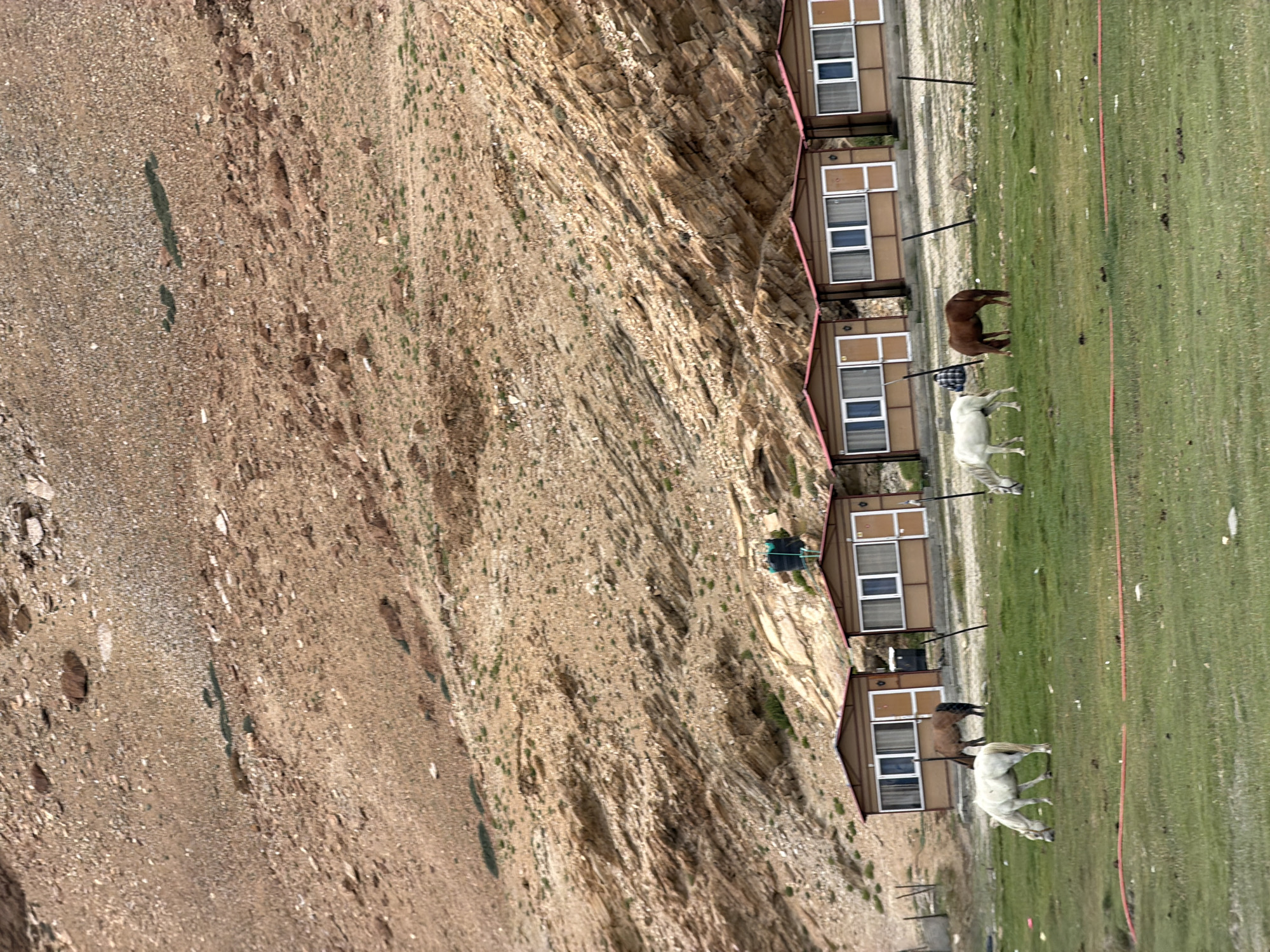
The image depicts a row of small wooden cabins situated at the base of a steep, rocky mountain slope in Karzok, India. The cabins have red roofs and white-trimmed windows and doors. In the foreground, a grassy field is populated by four horses: two white horses are grazing, and one brown horse is standing, while another brown horse is partially visible in the background. The mountain slope is barren and appears to be composed of reddish-brown rock and scree, with sparse patches of vegetation. The sky is overcast. A water tank is visible on the slope behind some of the cabins.
Karzok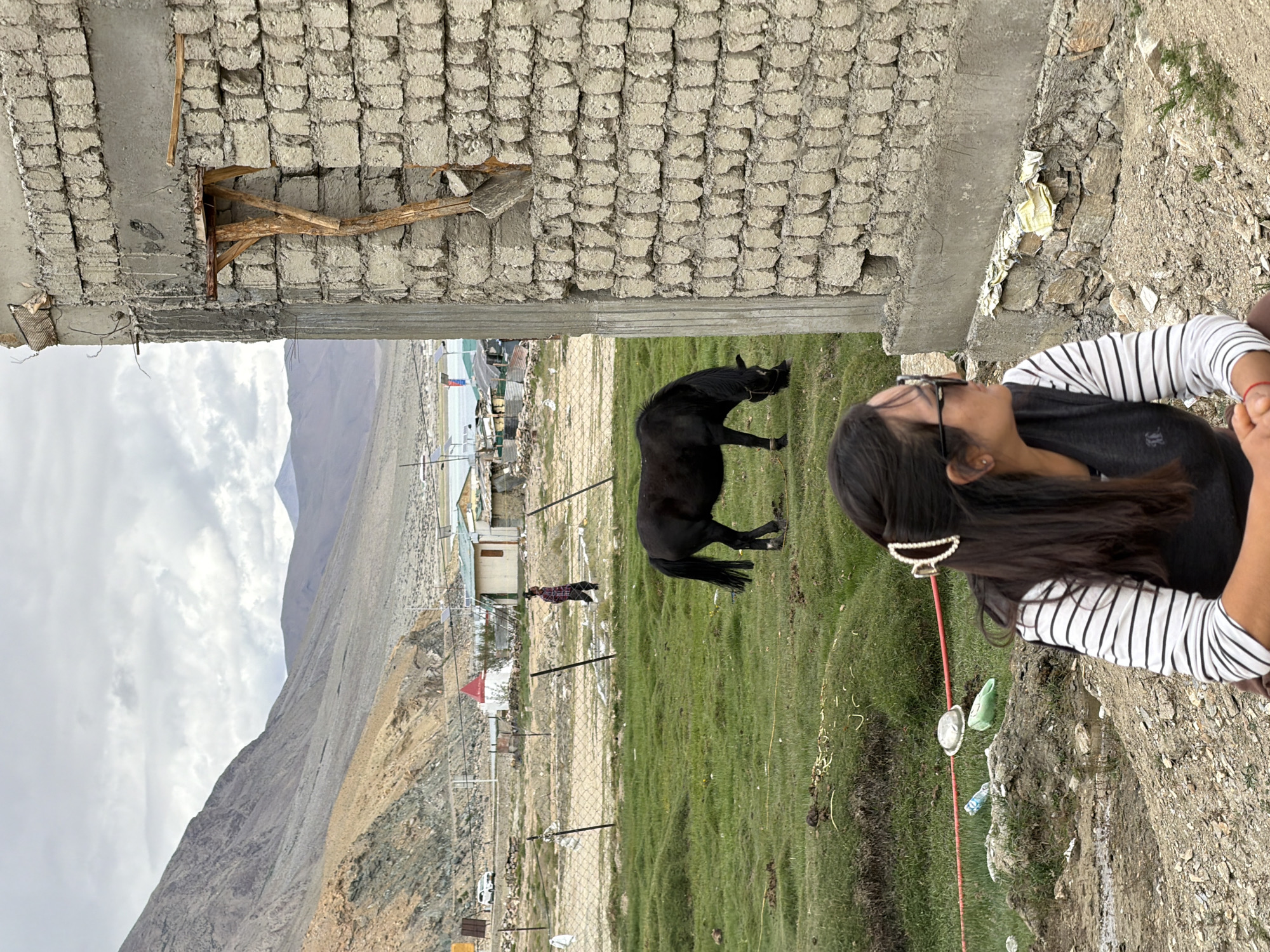
The image shows a young woman in the foreground, wearing a black vest over a striped long-sleeved shirt and dark sunglasses. She is looking to her right. Behind her, a black horse grazes in a grassy field. In the mid-ground, a person in a checkered shirt walks near a fence. A white car is parked in the distance, along with several buildings, some with red roofs. The background features a vast, mountainous landscape under a cloudy sky. A partially constructed brick building with exposed wooden supports is prominent in the right foreground. The scene appears to be in the high-altitude village of Karzok, India, located on the shores of Tso Moriri lake. The environment is a mix of natural landscapes and human settlement, with evidence of construction and scattered debris in the foreground.
Karzok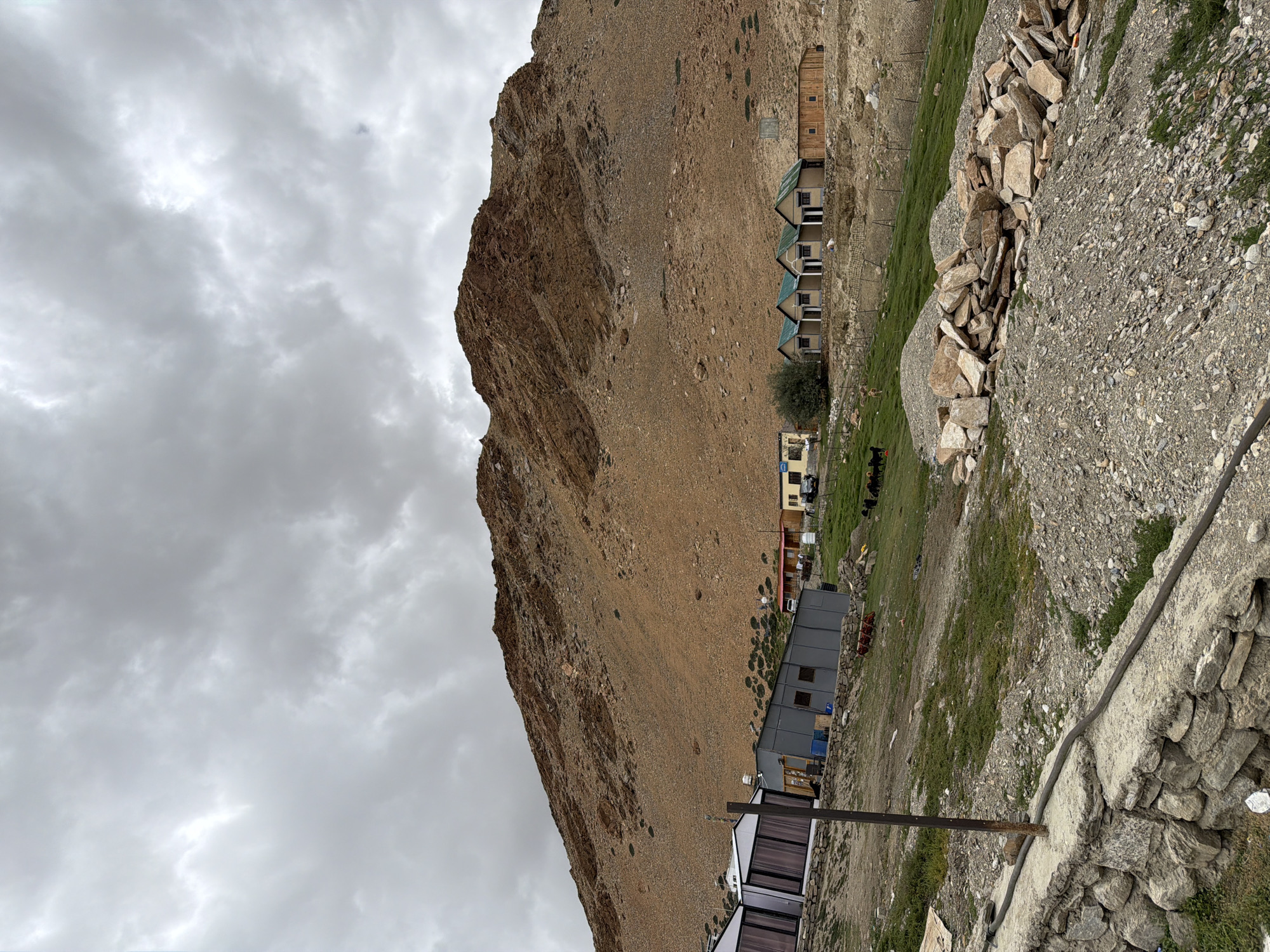
A medium shot captures a village with small houses and structures in front of a large, barren mountain under a cloudy sky. The houses are small, with green roofs, and are lined up in a row. Some of the structures are modern, with glass windows, and others are made of wood. A dirt road runs through the village, and there are a few cars parked. The mountain is covered in brown rocks and sparse vegetation. The sky is overcast with gray clouds, suggesting a cool or possibly rainy day. The scene appears to be a remote village in a mountainous region. This location is likely in the village of Karzok, India, which is known for its high-altitude setting and proximity to the Himalayas.
Karzok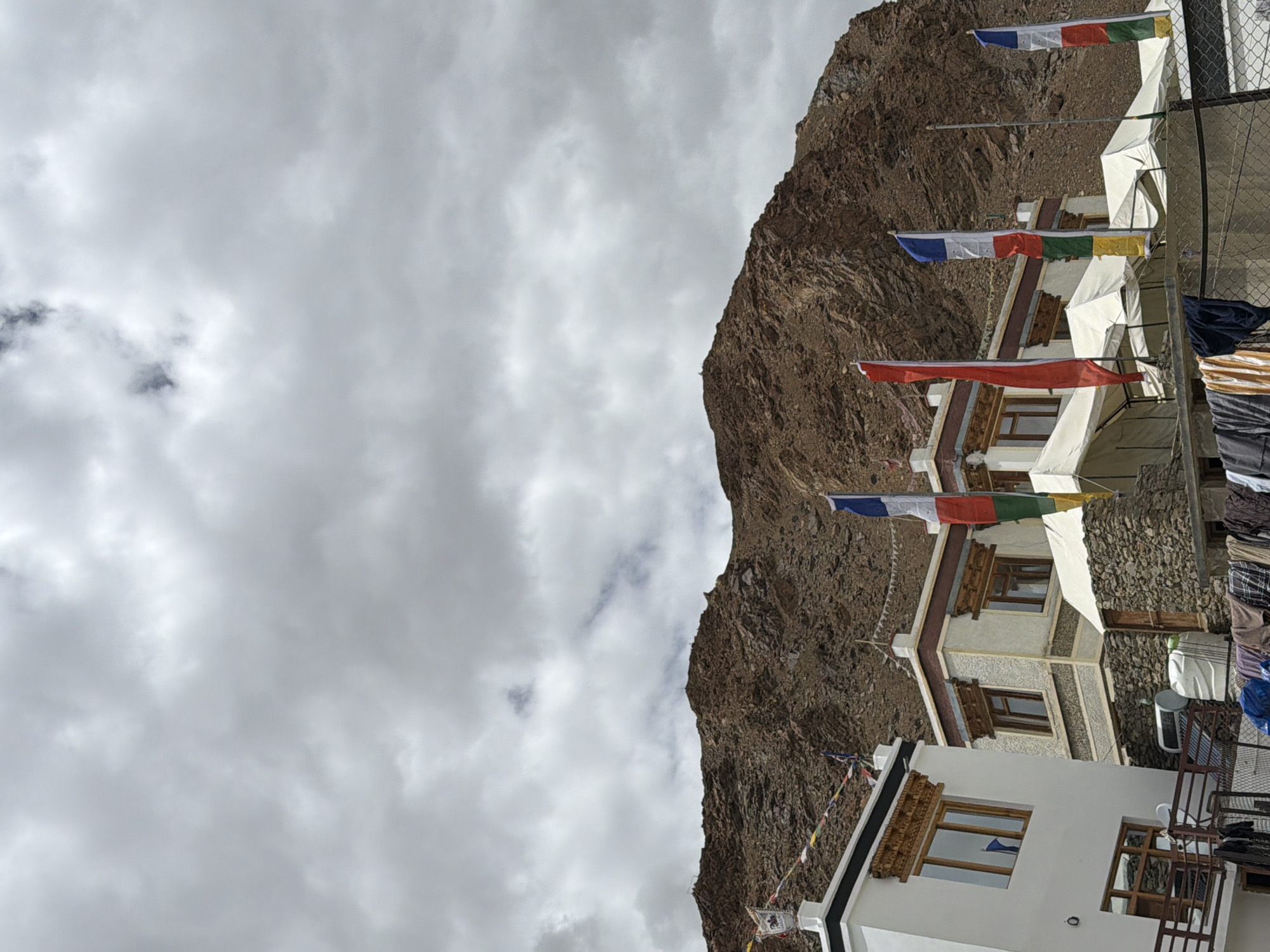
In Karzok, India, under a cloudy sky, a cluster of buildings stands against a rocky mountain. The structures, a mix of white-plastered and stone-faced designs, feature traditional wooden window frames. Prayer flags in various colors flutter between them. In the foreground, tents are set up, and laundry hangs on a line. A satellite dish and water tanks are visible on a lower level, indicating a residential area. The mountain's rugged texture and the muted colors of the scene suggest a high-altitude, arid environment.
Karzok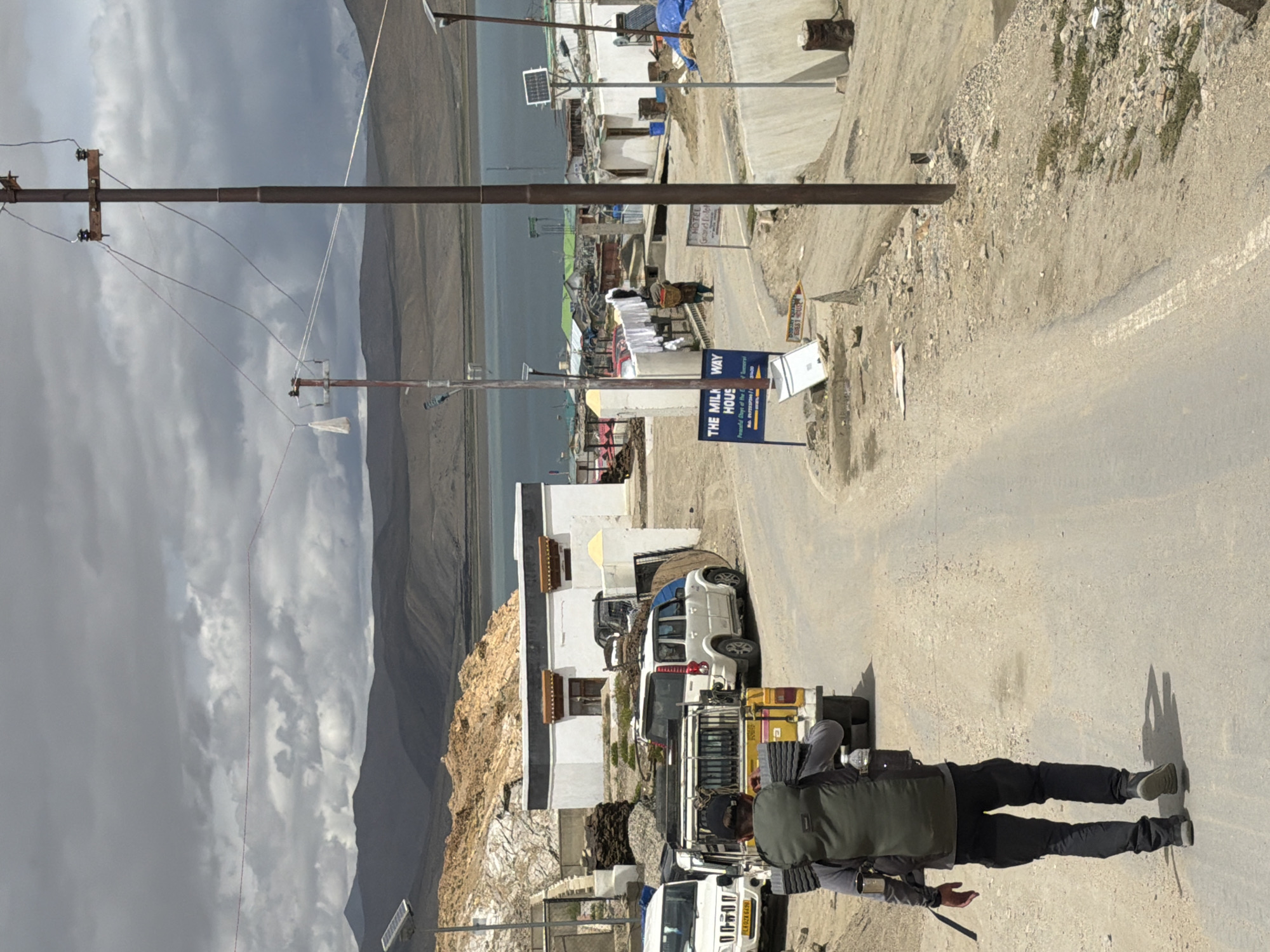
A man with a large backpack walks away from the camera on a dusty road in Karzok, India. He is wearing a gray long-sleeved shirt and black pants. In the background, several vehicles are parked, including a white SUV and a yellow pickup truck. A white building with a red-trimmed roof is visible behind the vehicles, and beyond that, a large body of water stretches towards distant, hazy mountains under a cloudy sky. A utility pole with power lines stands to the right of the frame. A sign that reads "THE MILK WAY HOUSE" is on the left side of the road. The environment appears arid and mountainous.
Karzok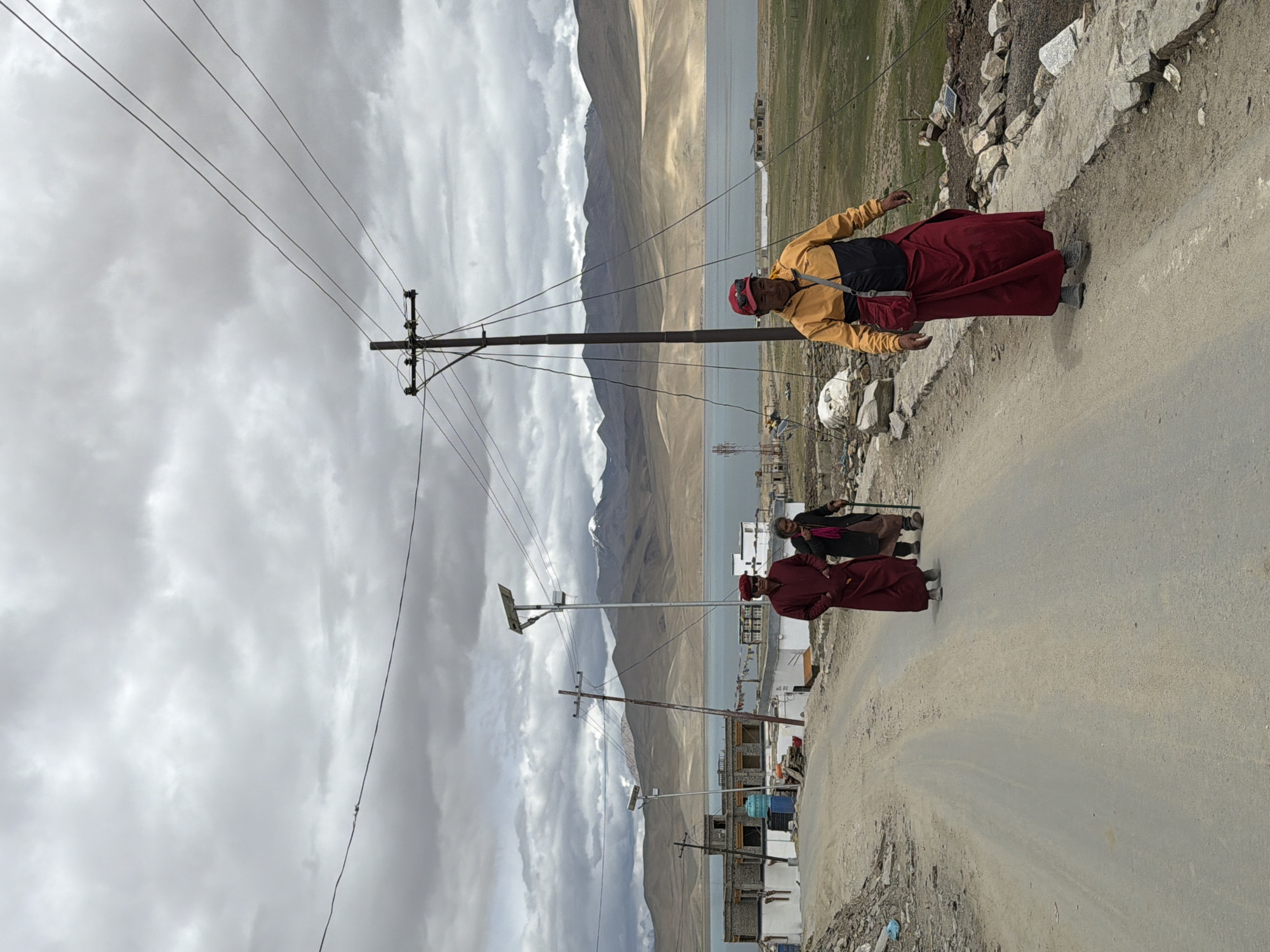
In the village of Karzok, India, three individuals are walking along a dusty road with a large body of water and mountains in the background. The sky is heavily clouded. The person in the foreground is wearing a yellow and black jacket over a long red robe, with a red bag slung over their shoulder. Behind them, two people in traditional maroon robes walk together. The person on the left is wearing a maroon robe, and the person on the right is wearing a darker robe and carrying a walking stick. Structures that appear to be buildings, some with white walls and others with brick, are visible on the left side of the road. There are also utility poles with wires stretching across the scene, and a solar panel mounted on a pole. The road itself is unpaved and appears to be made of gravel and dirt. The landscape beyond the road is a mix of green grassland and barren, mountainous terrain.
Karzok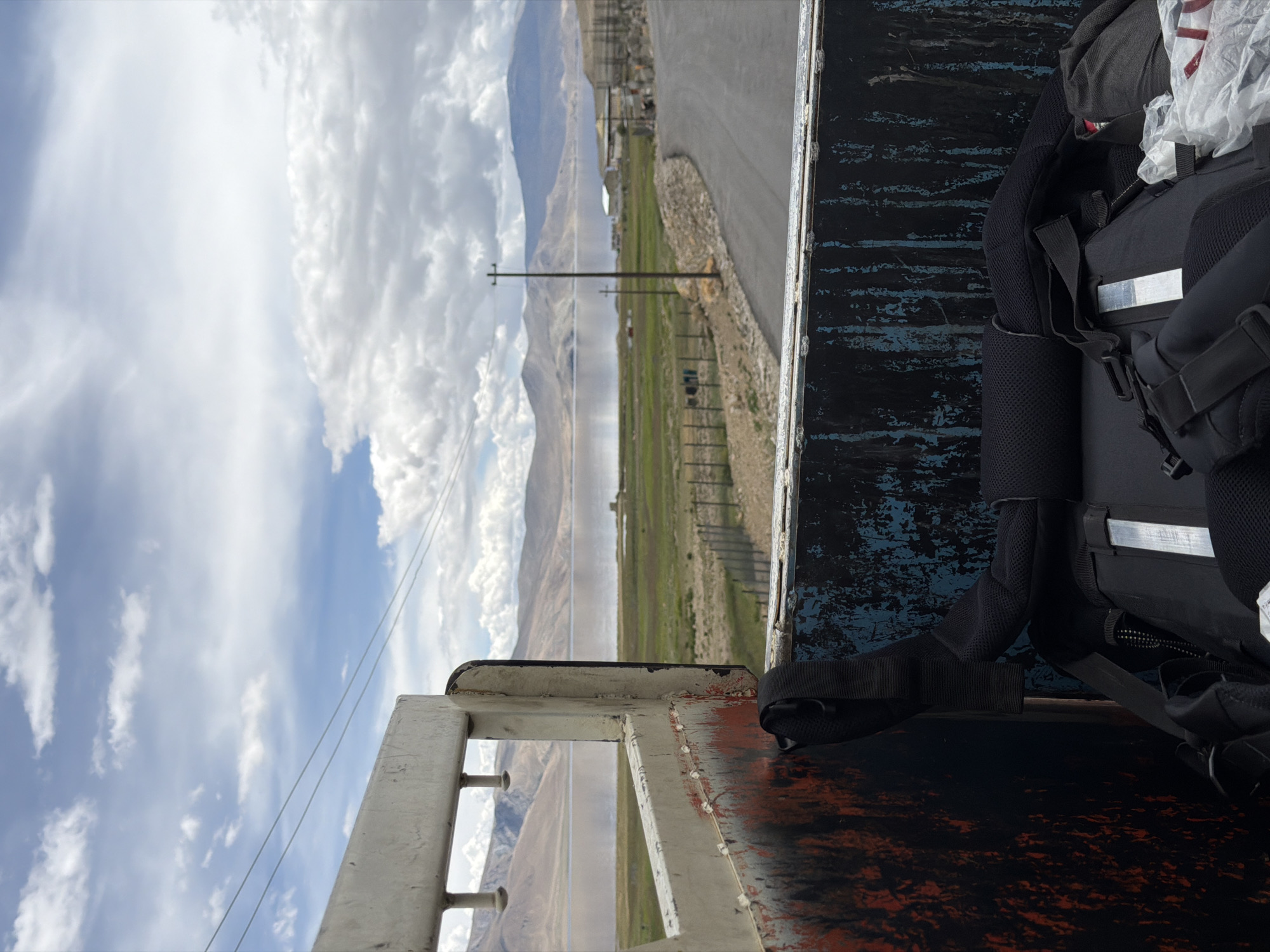
The image is taken from the back of a vehicle, looking out over a landscape in the city of Karzok, India. In the foreground, a weathered, blue and red metal truck bed contains a black backpack with straps. The background shows a body of water, likely Tso Kar, a salt lake. Beyond the lake, barren mountains rise under a cloudy sky with patches of blue. A dirt road curves into the distance, bordered by a grassy plain and a fence. A solitary utility pole stands near the road. The overall scene is one of a remote, rugged environment.
Karzok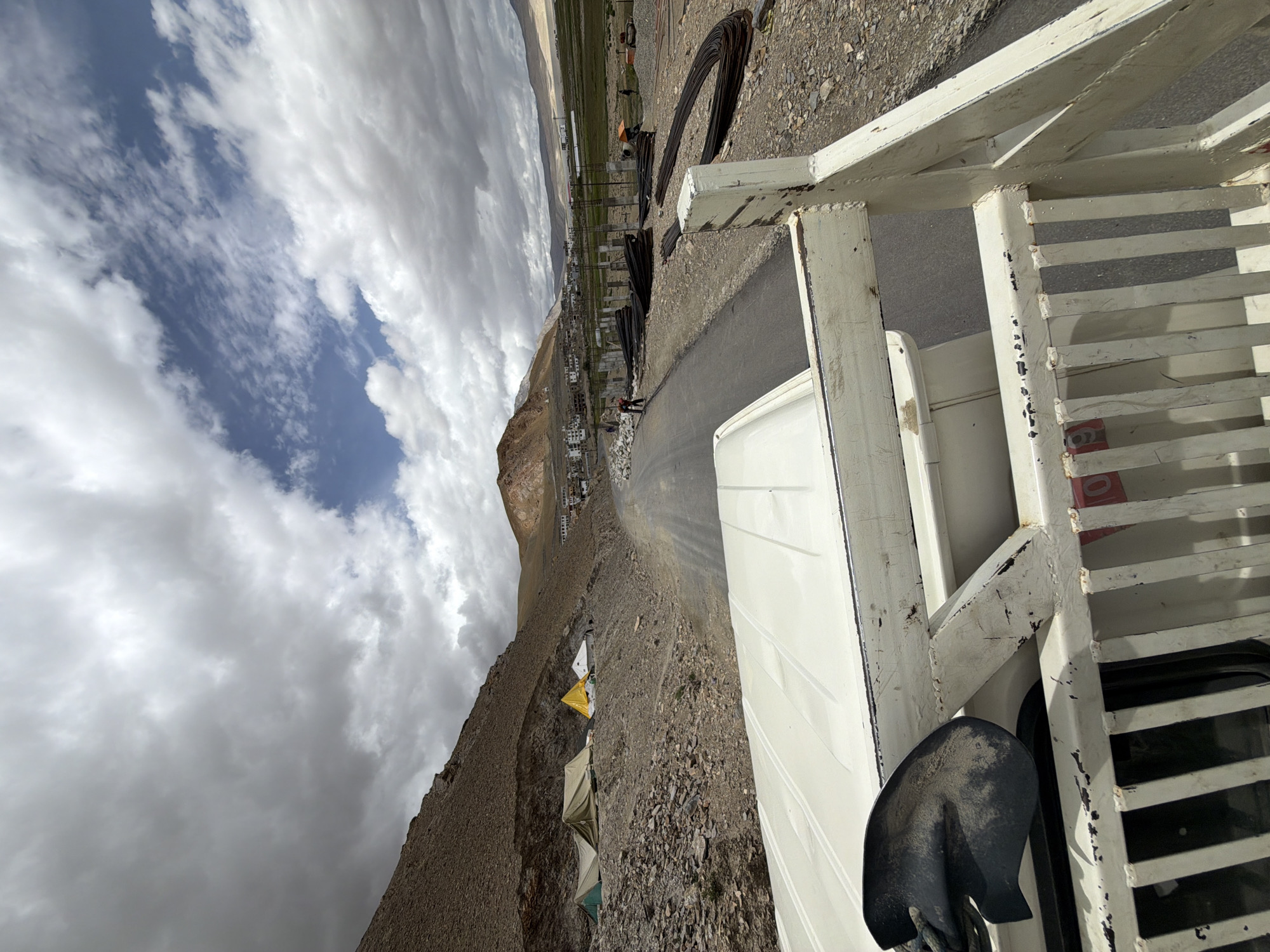
The image shows a view from the back of a white truck, looking forward along a paved road in Karzok, India. On the left side of the road, several tents are set up on a rocky, sloped terrain, with a prominent yellow tent. Further up the road, buildings of a settlement are visible. On the right side of the road, there is a construction site with piles of rebar and some concrete pillars. A few individuals are present at the construction site. The sky is partly cloudy with patches of blue. The overall environment suggests a remote, high-altitude location.
Karzok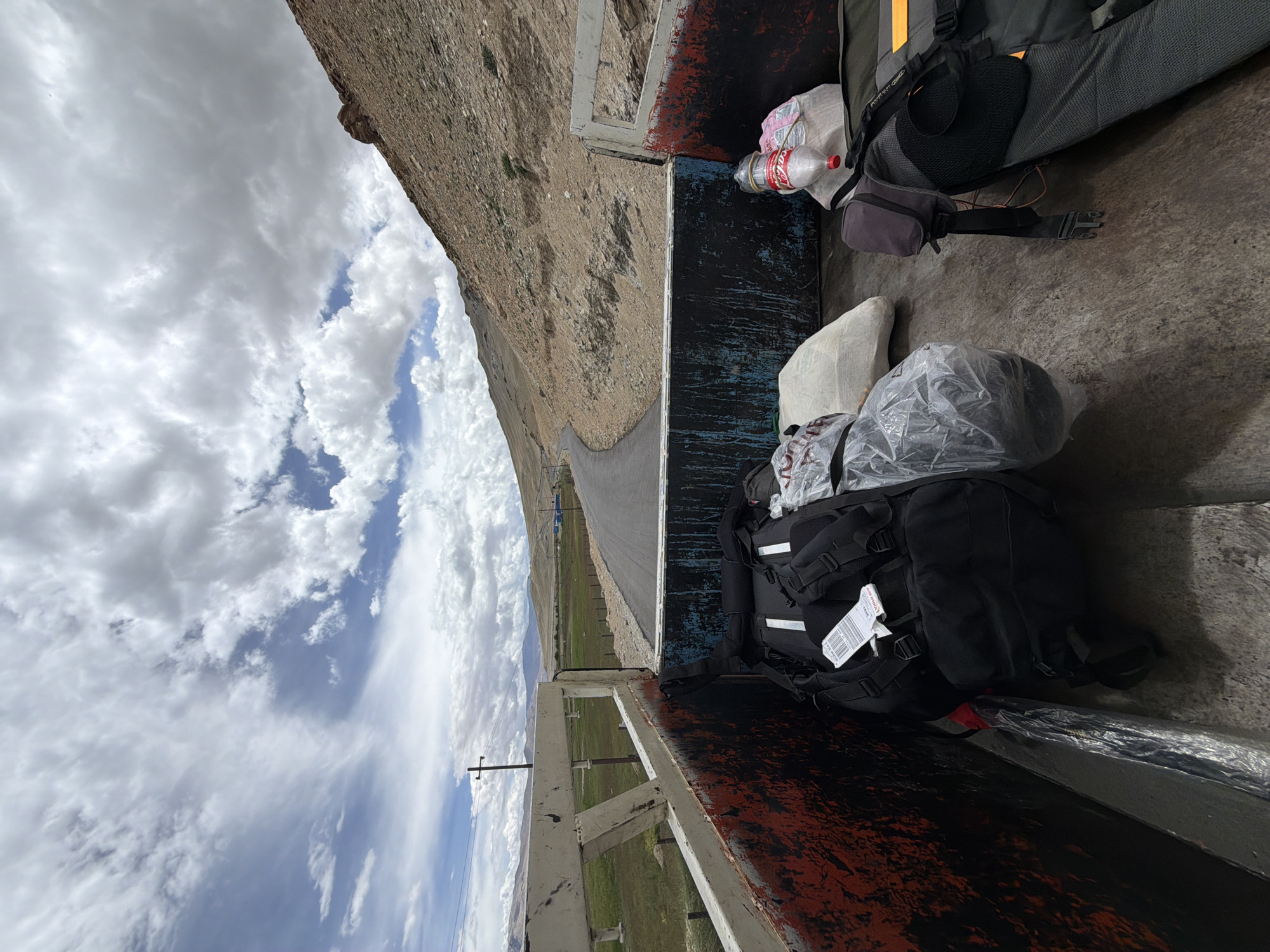
A high-angle, forward-facing outdoor shot shows the back of an open-bed truck filled with luggage. The truck is on a paved road that curves through a dry, mountainous landscape under a cloudy sky. To the left, a grassy field is visible behind a white metal fence and a utility pole. In the truck bed, there are several black backpacks, one clear plastic-wrapped item, a white cloth bag, and a red-labeled water bottle. The truck bed has red and black painted sides. The scene appears to be in Karzok, India, a village located on the shore of Tso Moriri lake in Ladakh.
Karzok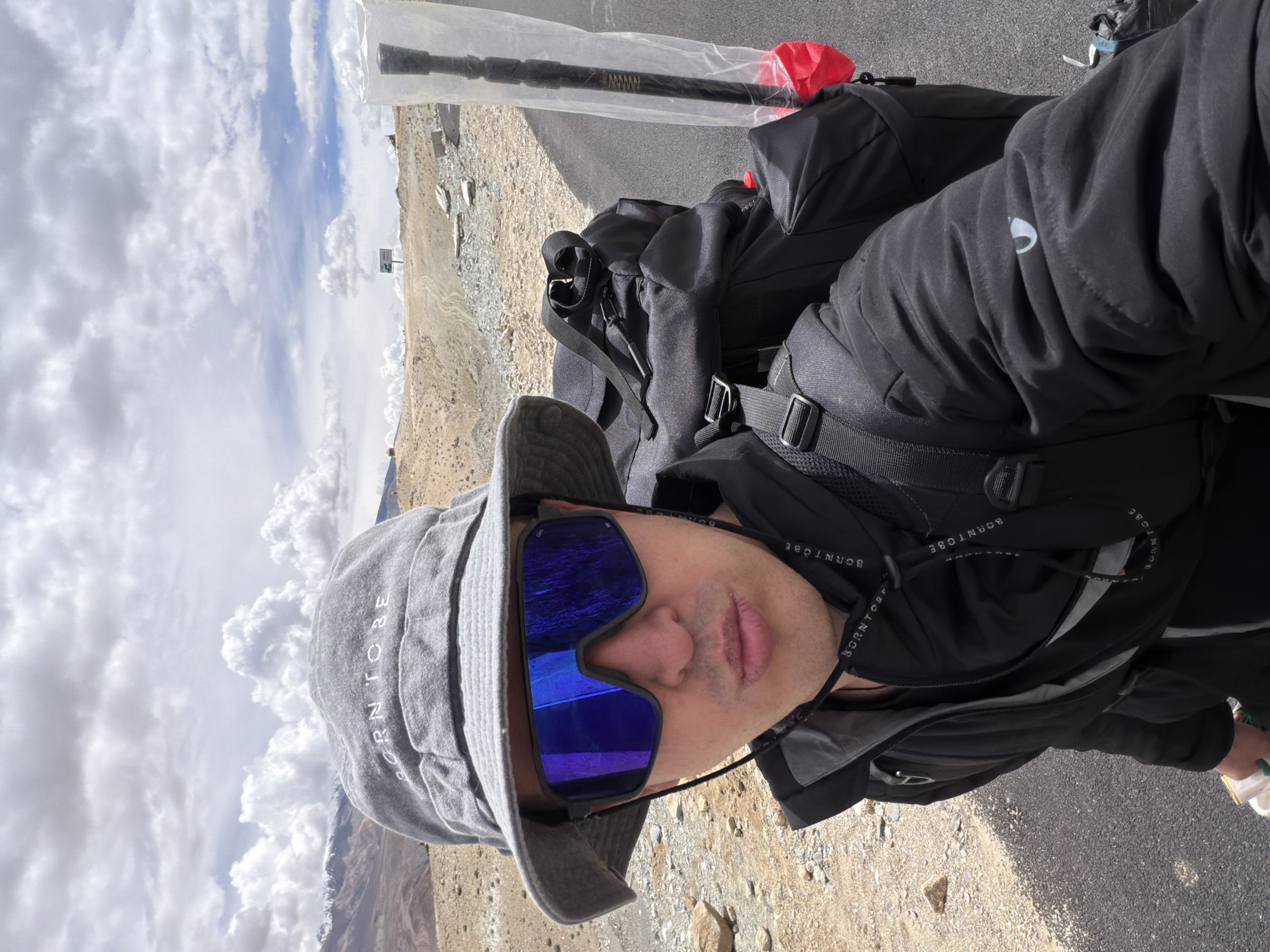
A person wearing a grey bucket hat with the text "BORN TO BE" is looking at the camera with bright blue mirrored ski goggles. They are wearing a black jacket with a grey trim and a large black backpack. A black trekking pole is visible, covered in clear plastic and tied with a red ribbon, strapped to the backpack. The person is standing on an asphalt road in a mountainous, arid region with scattered rocks and dry vegetation. In the background, there are hills with patches of snow on their peaks and a cloudy sky. A distant signpost is also visible on the horizon. The person's lips are pursed as if about to kiss. The scene appears to be on a road leading out of or into the village of Karzok, India, given the distinctive landscape and the presence of trekking equipment.
Karzok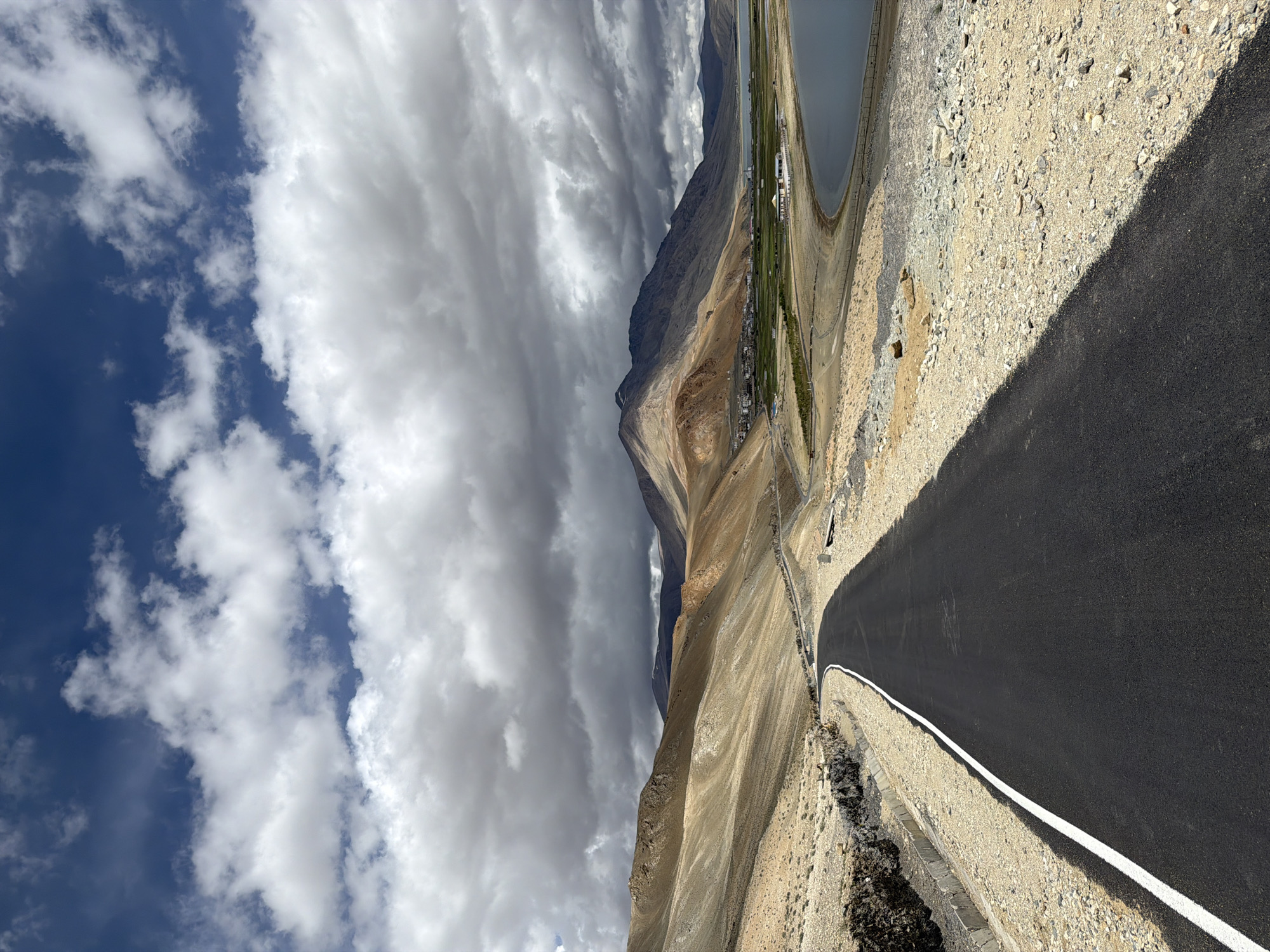
A paved road with a white line marking curves through a barren, mountainous landscape. The terrain is dry and rocky, with sparse vegetation. In the distance, a village is nestled beside a large body of water. Towering mountains rise behind the village, their peaks partially obscured by dramatic, dark clouds. The sky is a mix of deep blue and gray, with white clouds scattered across it.
Karzok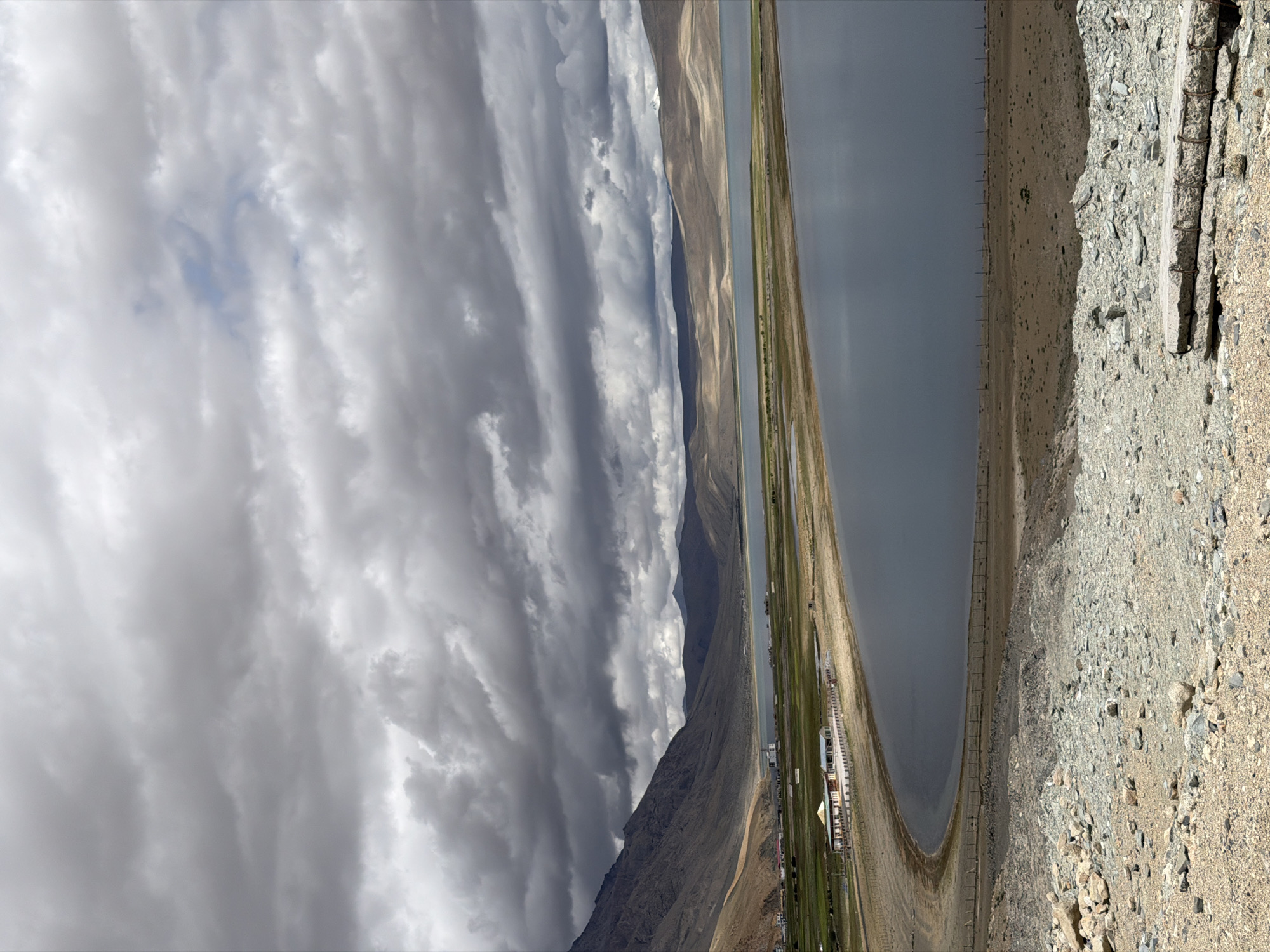
The image shows a wide panoramic view of the Tso Kar lake in Karzok, India, under a cloudy sky. In the foreground, there is a rocky, desolate landscape. A path or road made of gravel and scattered rocks leads down towards the lake. Along the edge of the lake, there is a sandy shore lined with a simple fence. In the middle ground, a long, rectangular building with a light-colored roof and several smaller attached structures is situated on the shore, surrounded by green fields. Further in the distance, the lake stretches out, meeting a plain dotted with some scattered structures and then the vast, barren mountains. The sky is filled with dramatic, dark grey clouds, suggesting an overcast or impending rainy weather. The overall impression is one of a remote, high-altitude landscape with a hint of human settlement near the water.
Karzok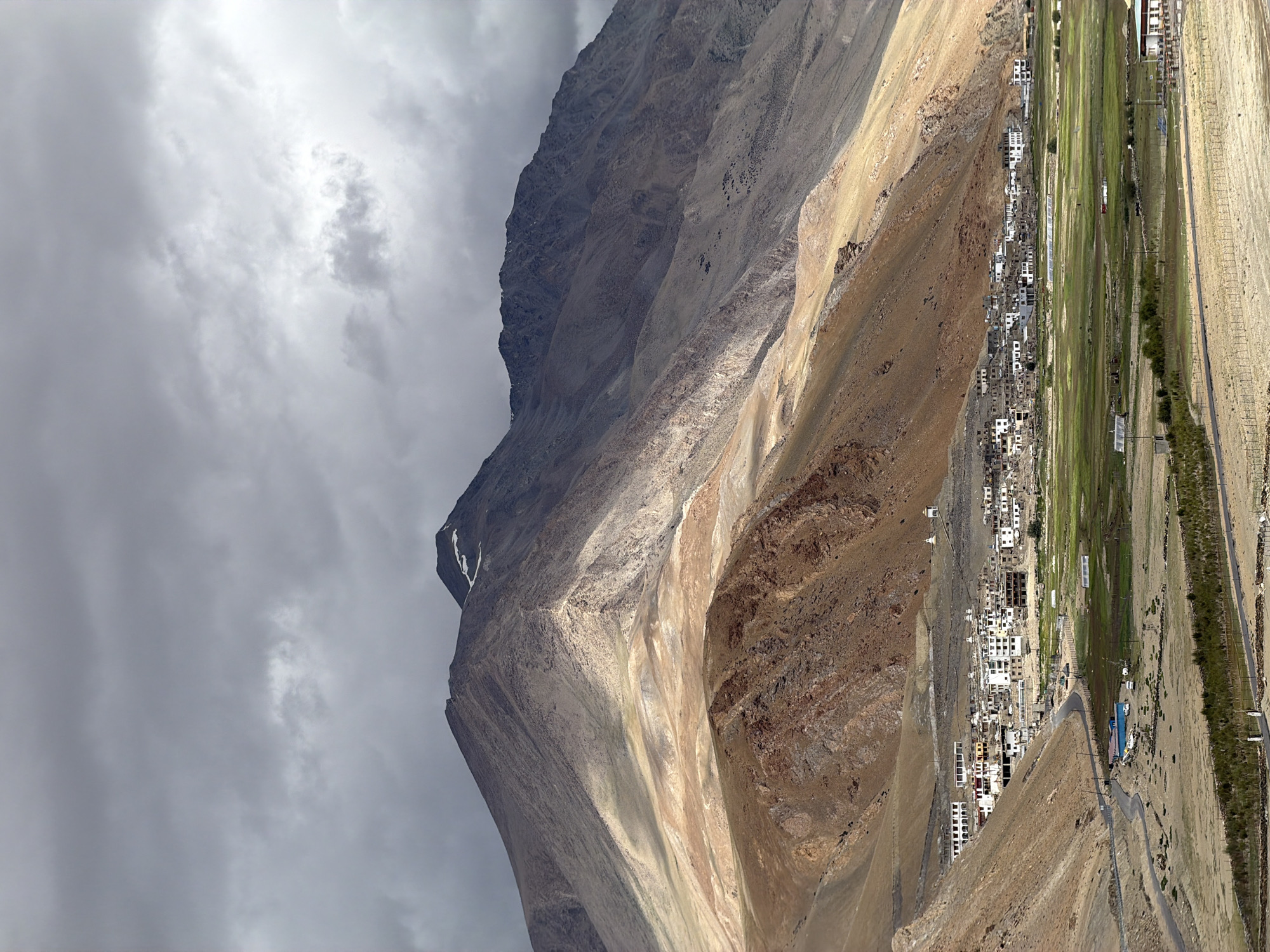
The image depicts the remote Himalayan village of Karzok, India, nestled in a valley at the base of towering, arid mountains under a dramatic, cloudy sky. The village is characterized by its cluster of white-washed buildings, many with flat roofs, interspersed with green agricultural fields. A winding road leads into the village, with several vehicles visible on it and near a small cluster of buildings. The landscape is stark and rugged, with the mountains exhibiting layers of tan and reddish-brown rock, partially illuminated by shafts of sunlight breaking through the clouds. Two small white stupas are visible on the higher slopes behind the village, common in Buddhist regions of the Himalayas. The overall impression is one of isolation and resilience in a harsh, yet beautiful, natural environment.
Karzok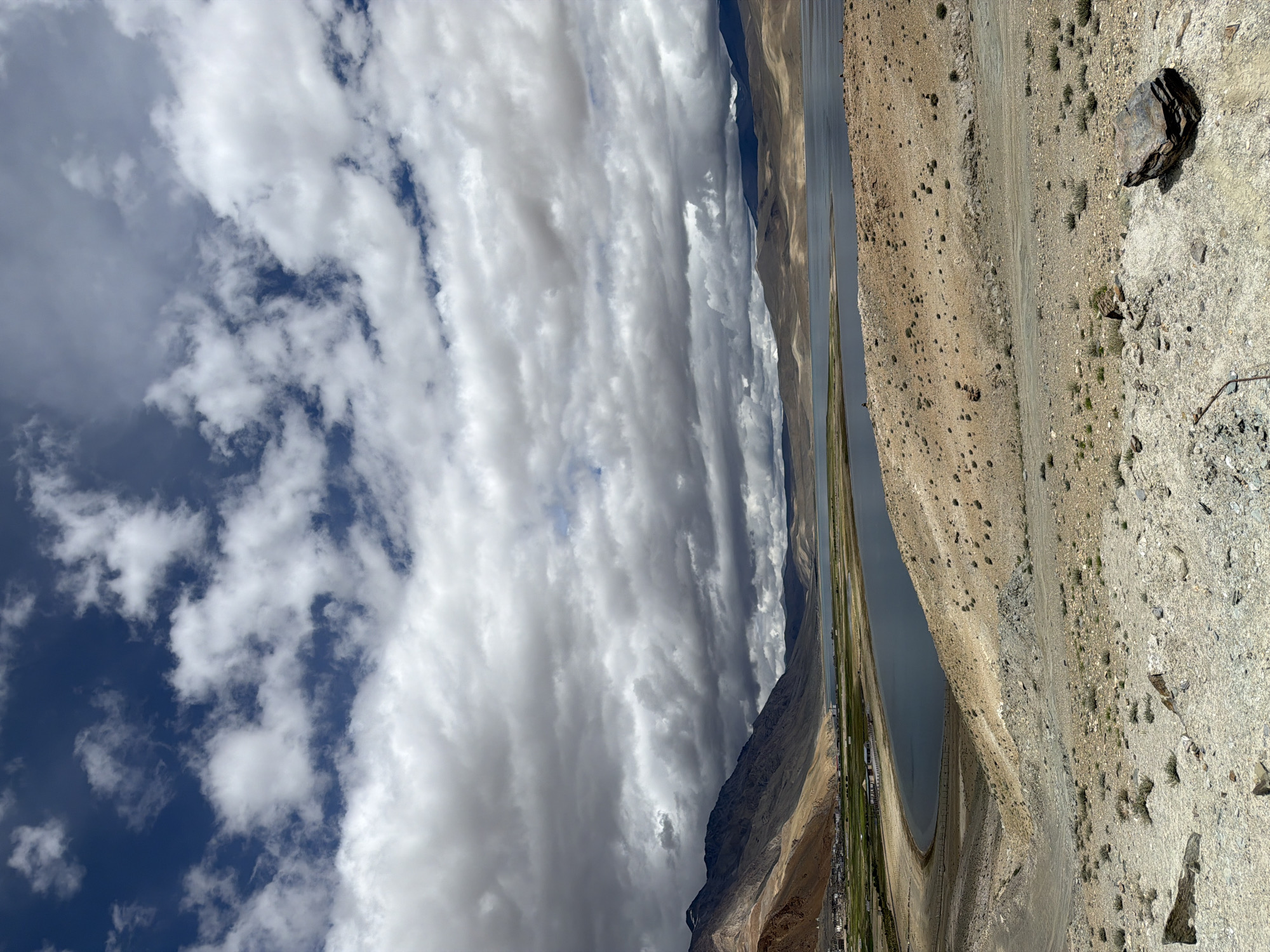
This is a vertical, eye-level, full shot of a vast, arid landscape with a large body of water and mountains under a dramatic sky, likely taken in Karzok, India. In the foreground, the ground is covered in dry, sandy earth with scattered rocks and small green shrubs. A larger, dark, flat rock rests on the right side of the foreground. A dirt path winds through this area, leading towards the middle ground. The middle ground features a wide, tranquil lake with calm, dark blue water. The shoreline is a mix of sandy areas and dry earth, with some green vegetation visible on the far side of the lake. Beyond the lake, rolling hills and mountains dominate the background, their slopes a mixture of brown, tan, and some hints of green. The peaks of the mountains are softened by distance and atmospheric haze. A small village or settlement with buildings and green agricultural fields is nestled along the left bank of the lake, at the base of the mountains. The architecture appears traditional, with a cluster of white buildings and some red roofs. The sky is a prominent feature, filled with a dramatic mix of dark, heavy storm clouds and patches of bright blue sky. The contrast between the dark clouds and the clear blue creates a sense of depth and impending weather change. Sunlight breaks through in places, illuminating parts of the landscape and the clouds. There are no people prominently visible in the image, though there may be very small figures on the distant shore of the lake. The scene is one of natural grandeur and vastness, characteristic of high-altitude desert regions.
Karzok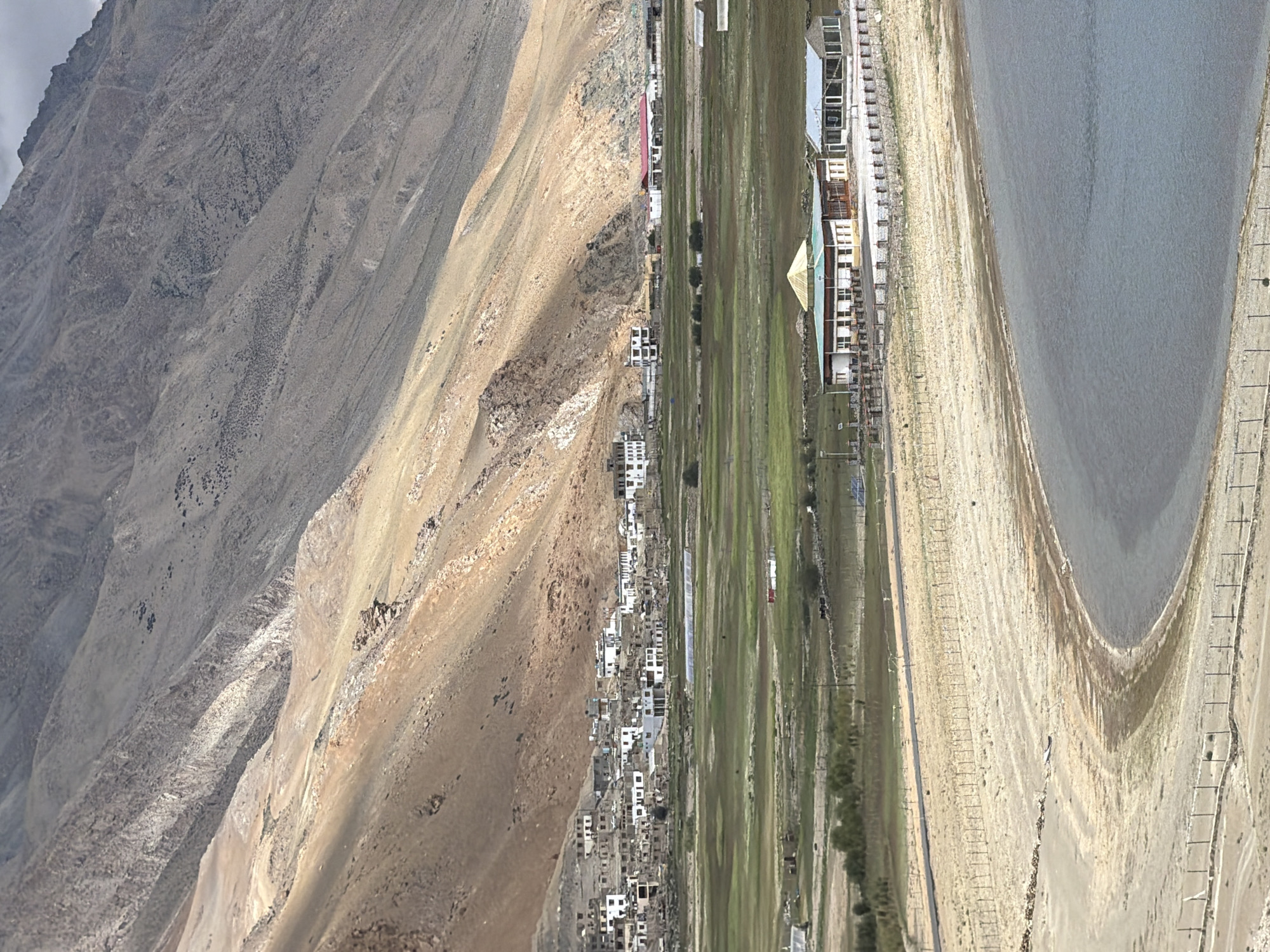
The image shows a panoramic view of the town of Karzok, India, situated in a valley at the base of a large, arid mountain range. The mountain slopes are characterized by varying shades of brown and grey, with sparse vegetation visible on the lower sections. In the middle ground, a cluster of white and beige buildings forms the village of Karzok. These structures appear to be residential or communal buildings, with some featuring flat roofs and multiple stories. In front of the village, a vast expanse of green fields stretches out, dotted with a few scattered buildings and what appear to be greenhouses. A road runs through this agricultural area, connecting to the village. Closer to the foreground, a curved body of water, likely a lake or reservoir, occupies the lower right portion of the image. The shoreline is a sandy, dry expanse bordered by a fence. Further into the foreground, another fenced area encloses a building complex with a prominent green-roofed structure and adjacent glass-enclosed buildings. The sky is overcast with scattered clouds. The overall scene depicts a remote, high-altitude settlement surrounded by natural landscapes.
Karzok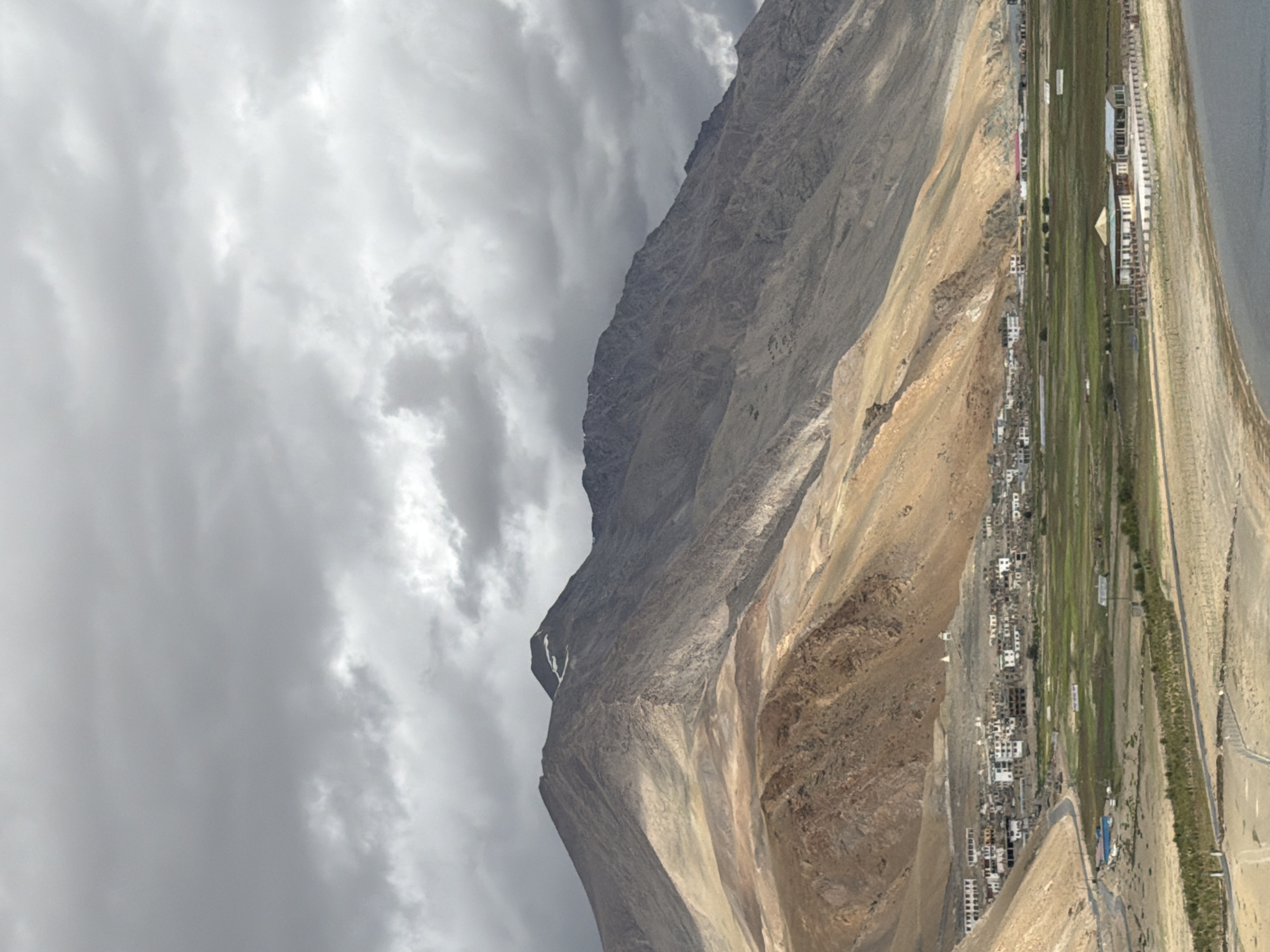
The image depicts a village scene in Karzok, India, nestled in a valley at the foot of a large, rugged mountain range. The sky is overcast with dramatic, dark clouds, suggesting a recent or impending storm. The mountains exhibit layers of brown and tan rock, with some patches of lighter scree and sparse vegetation. In the midground, a cluster of white buildings, forming the village of Karzok, is situated on a gentle slope. These structures appear to be low-rise, with many flat roofs. A road winds through the village and extends outwards. Adjacent to the village is a vibrant green, flat area that looks like cultivated fields or a meadow. In the foreground, a body of water, likely a lake, is visible, with its surface reflecting the muted light. Along the edge of the water and extending towards the village are areas of dry, sandy terrain. A low fence-like structure runs along the embankment between the water and the land. Further inland, there are more arid, sandy areas with sparse vegetation and winding paths or roads. A distinct building with a light-colored roof and a surrounding courtyard is positioned prominently on the edge of the dry land, closer to the lake. The overall impression is one of a remote, high-altitude settlement with a stark, natural environment. There are no visible people or animals in the image.
Karzok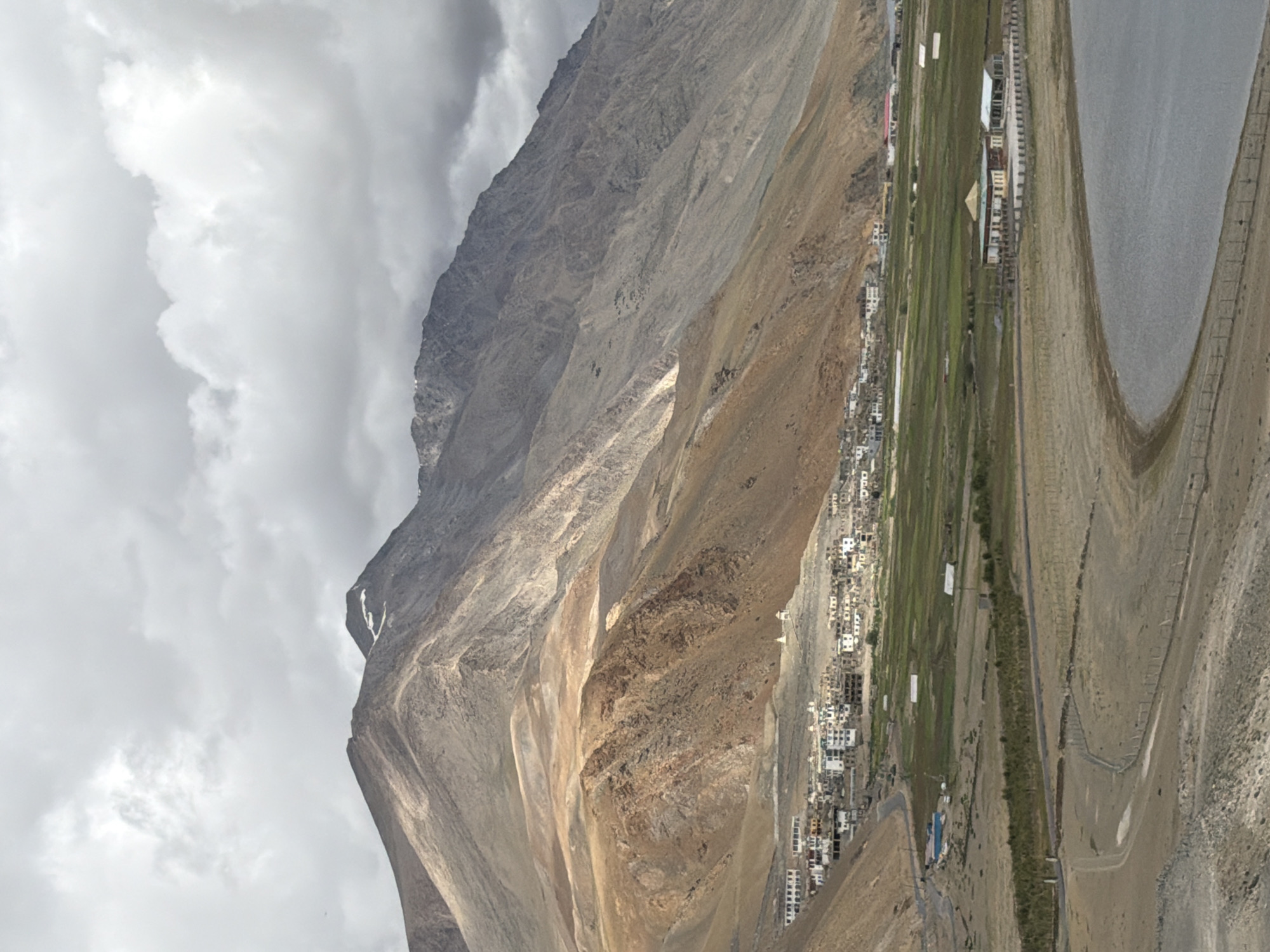
An aerial, distant, vertical, slightly overcast, wide shot captures a settlement nestled at the foot of a large, arid mountain range in Karzok, India. The mountain is a mix of tan, brown, and grey rock, with hints of snow on its upper peaks. In the mid-ground, a village of white buildings with flat roofs is clustered on the lower slopes of the mountain. A road winds through the village and leads to a patch of vibrant green fields. A body of water, appearing as a lake or river, occupies the foreground, its surface a muted blue-grey. The shoreline is sandy and bare, with a low fence running along a portion of it. A modern building with a central pagoda-like roof and an adjacent structure with a white roof sit near the water's edge. The sky is filled with heavy, grey clouds. There are no people visible in the scene.
Karzok