Kaya, India
30 memories from Kaya, India
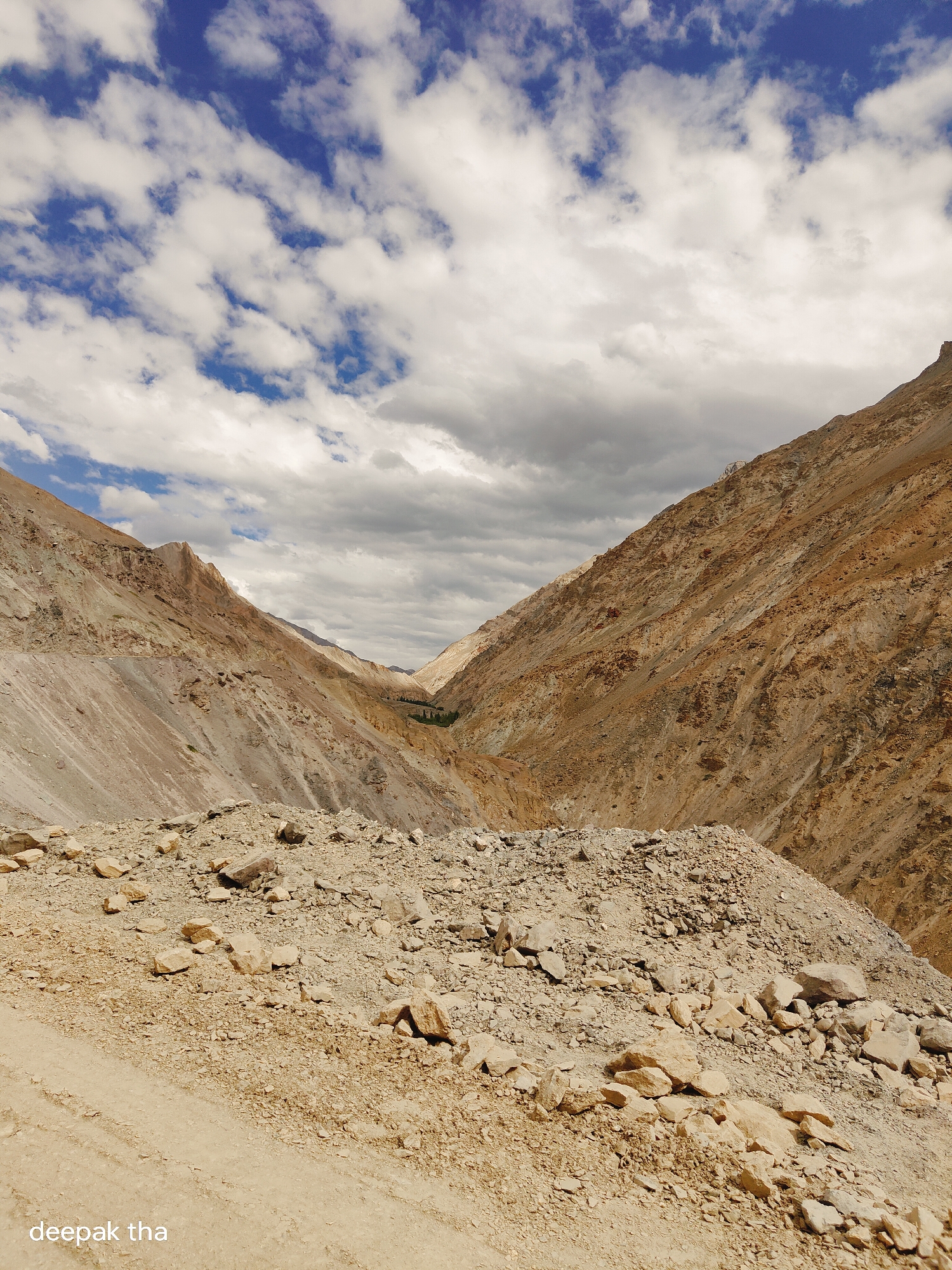
The image depicts a barren, mountainous landscape with rugged, eroded slopes in shades of brown and tan. The foreground is dominated by a pile of rocks and gravel, suggesting a rough terrain or construction site. In the background, a narrow valley opens up, with a winding road visible on the left slope. Further in the distance, a small patch of green vegetation can be seen nestled within the valley, and a bridge or structure spans across it. The sky above is a vibrant blue, dotted with dramatic, white and grey clouds, indicating a dynamic weather system. The overall impression is one of a remote, arid, and elevated environment. There are no people or specific structures identifiable as belonging to the city of Kaya, India. The watermark "deepak tha" is present in the bottom left corner.
Kaya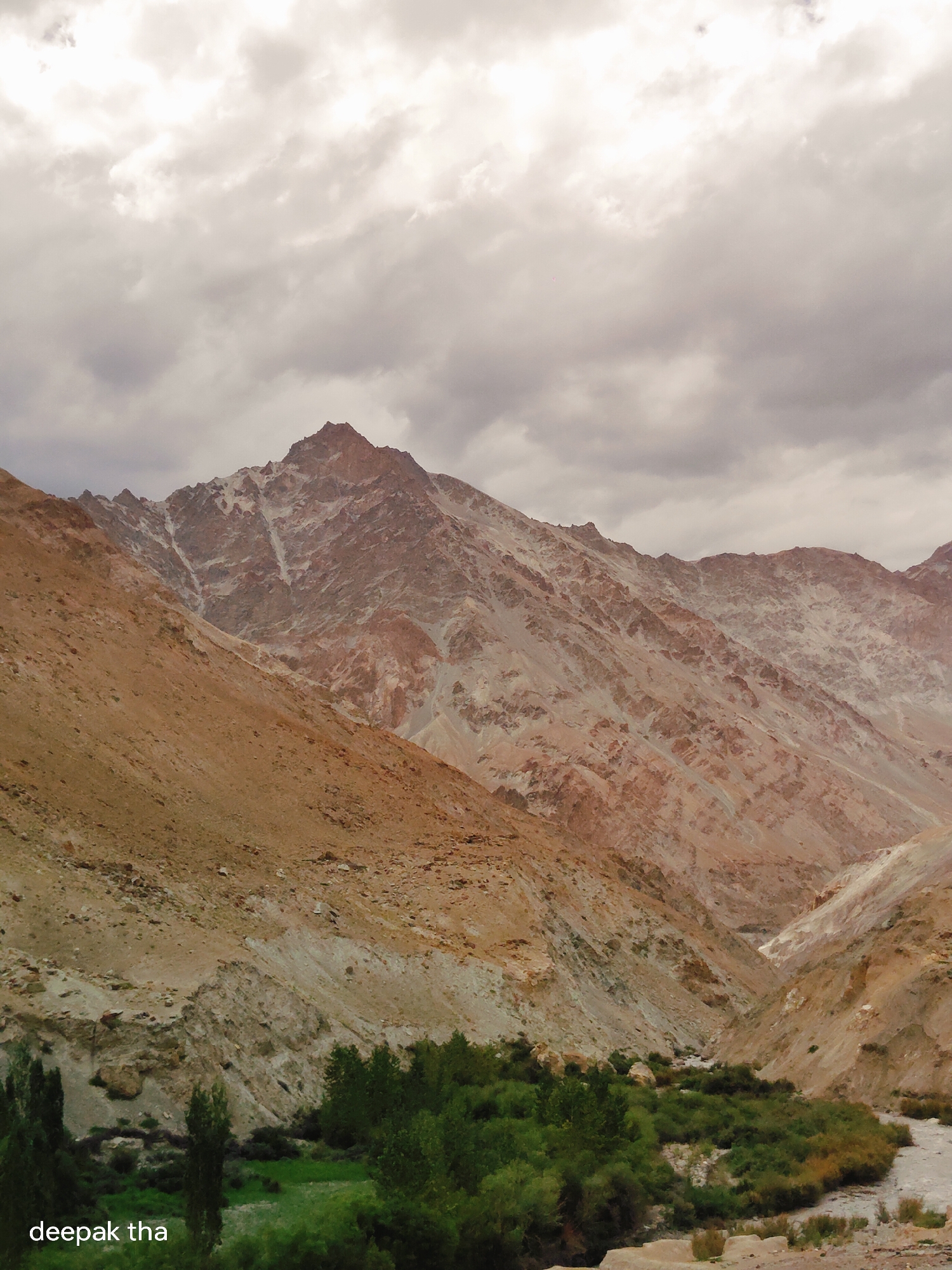
The image shows a wide mountain valley under a cloudy sky. In the foreground, there is a lush green area with several trees and a stream. The mountains are steep and rocky, with a mix of brown and reddish-brown hues. There are no people visible in the image. The text "deepak tha" is overlaid on the bottom left corner of the image. The location is described as Kaya, India, which is a city in West Bengal. However, the landscape depicted appears to be arid and mountainous, which is not characteristic of Kaya.
Kaya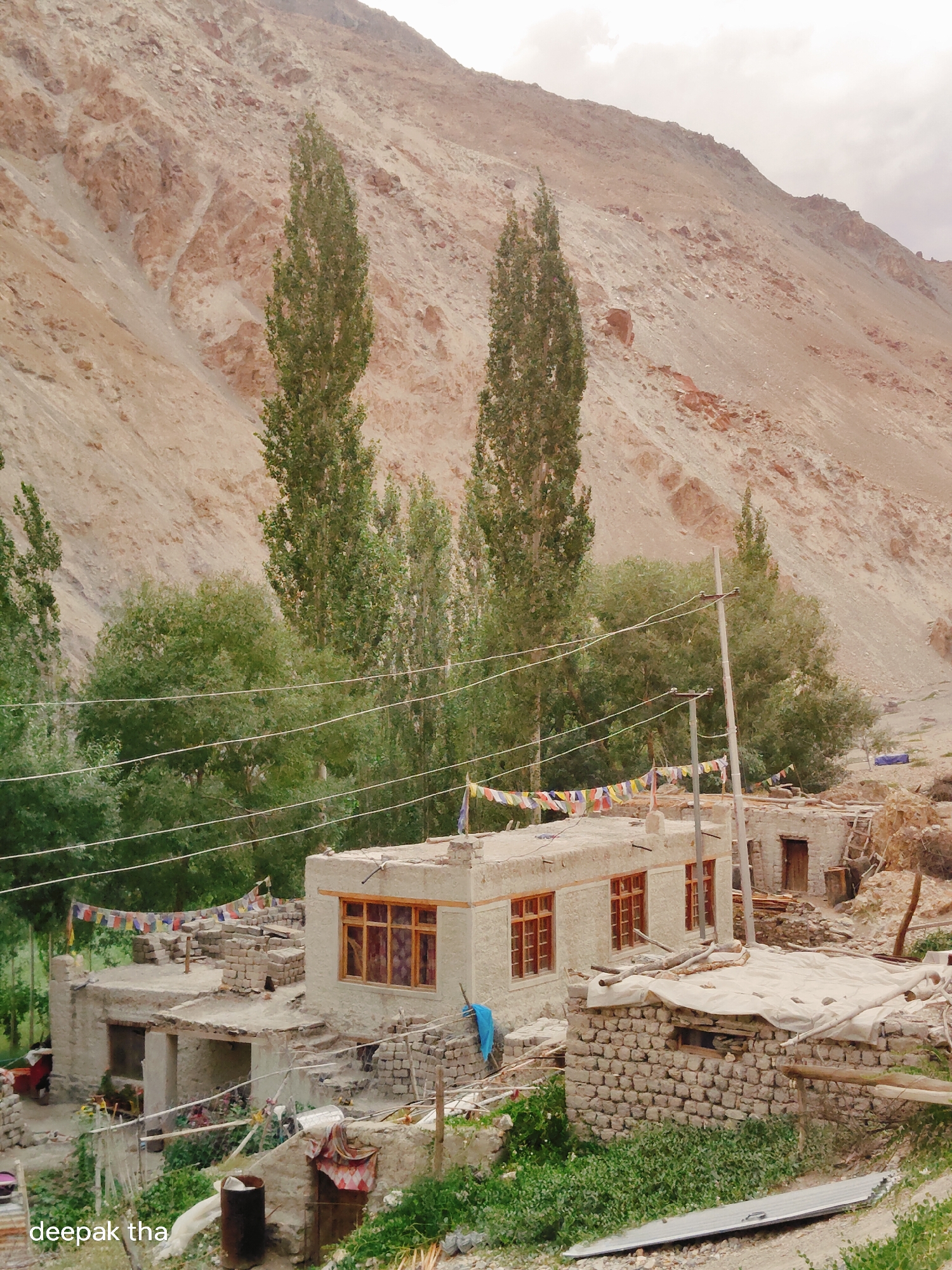
The image depicts a village nestled at the base of a barren, sandy mountain range. The architecture is rustic, with buildings constructed from stone and mud, some appearing weathered or partially ruined. Prayer flags are strung across some structures, indicating a possible Buddhist influence. Lush green trees contrast with the arid landscape, suggesting an oasis-like settlement. The sky is overcast, hinting at a neutral or possibly cooler climate. There is a person in the lower left corner, a woman dressed in red, tending to plants. In the lower right, a wooden ladder leans against a wall, and dried branches and debris are scattered around, suggesting ongoing construction or a storage area. The foreground shows a cluster of green vegetation and a corrugated metal sheet. The overall scene is one of rural life in a challenging, mountainous environment. The location is identified as Kaya, India.
Kaya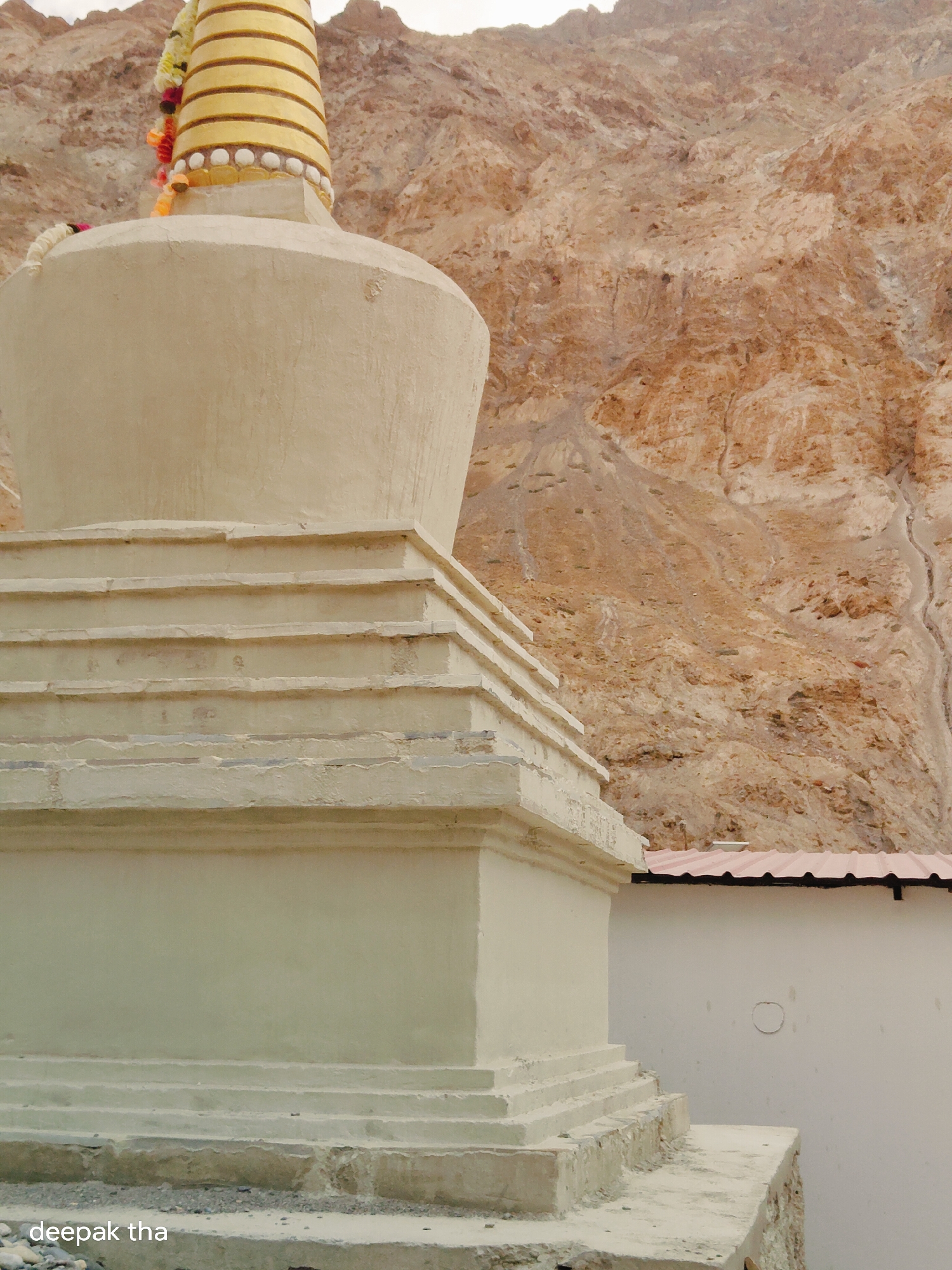
A Buddhist stupa, painted a light cream color, stands in the foreground of the image. The stupa has a tiered base and a rounded dome, topped with a golden, multi-layered spire. A garland of colorful flowers and beads adorns the spire. Behind the stupa, a rugged, sandy mountain range dominates the background, with evidence of erosion and small gullies. To the right of the stupa, a white wall with a red-tiled roof can be seen. The scene appears to be in a dry, arid environment. The location is identified as Kaya, India. There are no people or animals visible in the image.
Kaya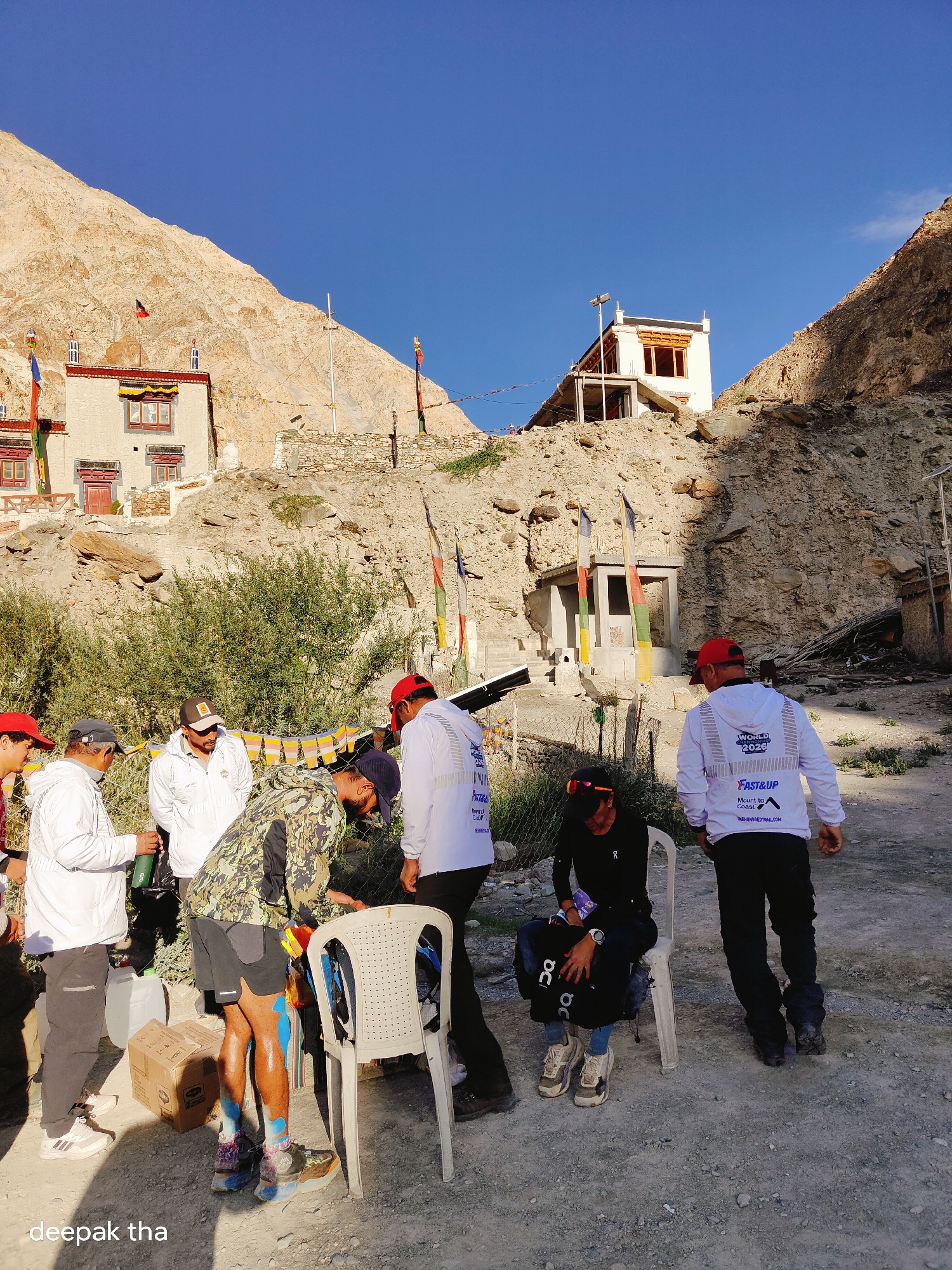
In a dusty, mountainous environment, several individuals are gathered outdoors. The landscape features rugged, sun-baked mountainside with traditional architecture, including white buildings with red-trimmed roofs and prayer flags strung between them. The ground is a mix of gravel and dirt. In the foreground, a group of people are interacting. One person, wearing a camouflage jacket and black shorts, is bent over, appearing to be attending to their legs which are taped with blue and pink kinesiology tape. Another person, seated on a white plastic chair, wears black athletic clothing and sunglasses. To their left, several individuals in white jackets are standing and observing, one holding a green water bottle. A cardboard box and a large plastic container are visible on the ground nearby. The individuals are dressed in casual and athletic attire, with several wearing hats and jackets. The overall scene suggests an outdoor event or gathering in a remote, high-altitude location. The presence of athletic tape and the focused attention on one person's legs could indicate a sporting event or recovery activity.
Kaya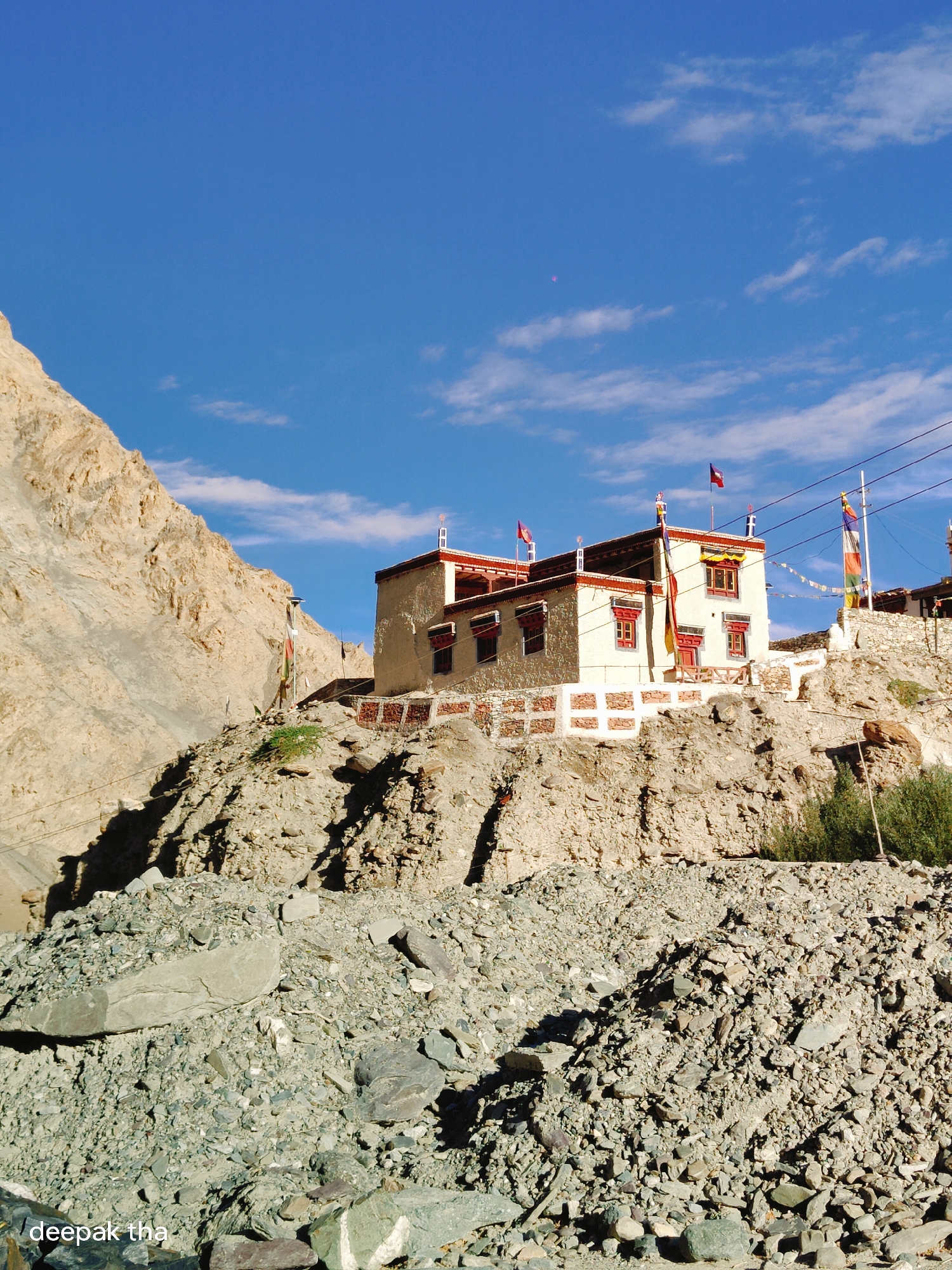
This is a photograph of a Buddhist monastery situated on a rocky hillside under a clear blue sky with scattered clouds. The monastery appears to be constructed from light-colored stone and features red-trimmed windows and roofs. Prayer flags, predominantly in red, white, yellow, and blue, are visible flying from poles and strung between buildings, suggesting a Tibetan Buddhist influence. A steep, barren, light-brown mountain dominates the left side of the frame, casting shadows on the rocky foreground. The ground in the foreground is covered in loose stones and gravel, with some sparse green vegetation visible towards the right. A watermark reading "deepak tha" is present in the bottom left corner of the image. The image depicts a tranquil, remote mountainous landscape. There is no indication of the city of Kaya, India in the image or the provided context.
Kaya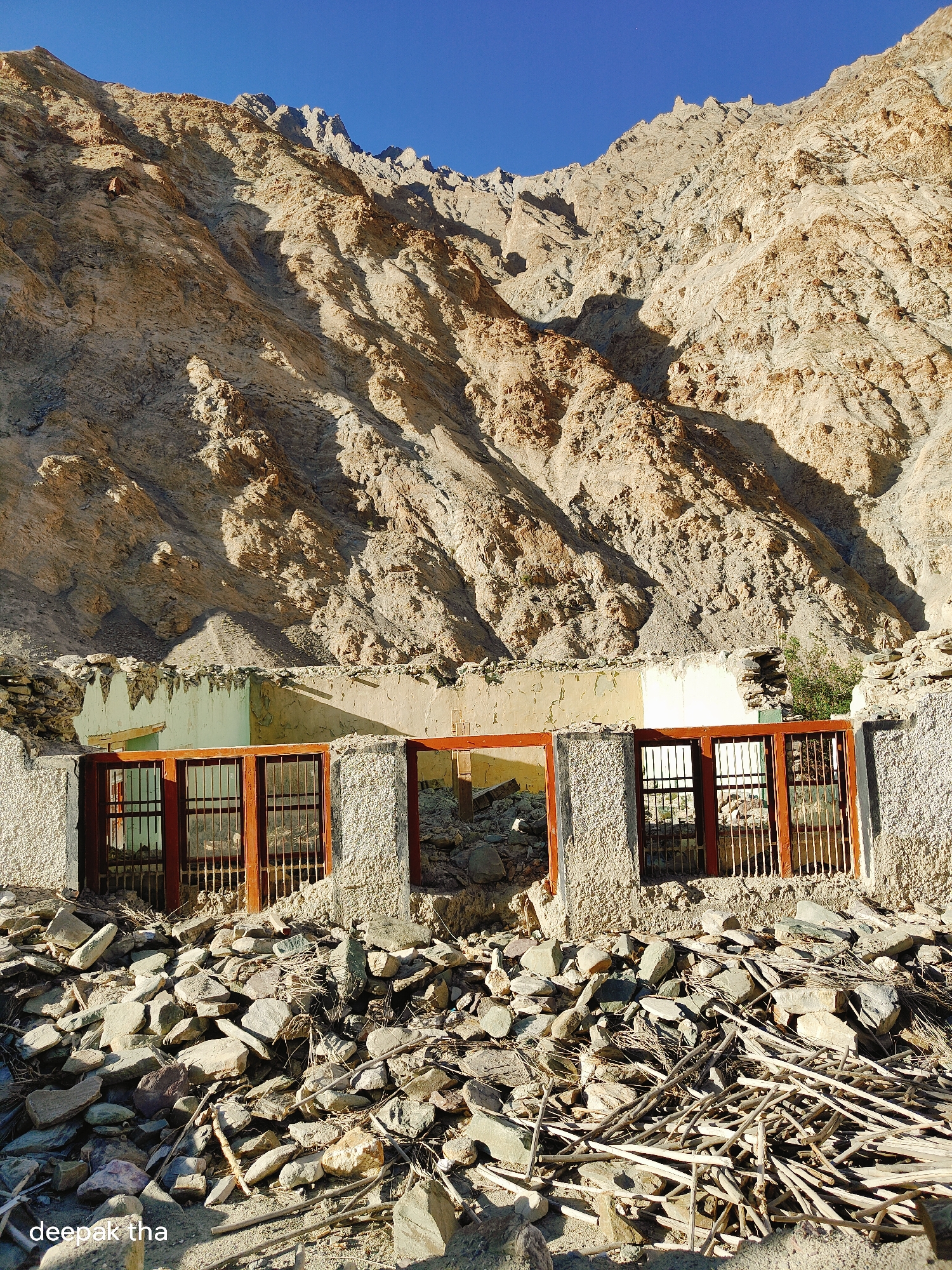
An eye-level, medium shot captures a desolate scene in Kaya, India, dominated by the ruins of a building and a harsh, mountainous backdrop under a clear blue sky. The foreground is cluttered with debris, primarily large, grey rocks and dry, brittle branches, suggesting a recent collapse or significant weathering. A partially constructed or ruined wall, made of rough grey concrete or stone, forms the central part of the image. Within this wall, two sections of a wooden gate with vertical bars are visible. The gate's wooden frame is a warm reddish-brown, and the bars are dark. Through the gate, the interior of the structure appears dark and filled with more debris. The wall extends horizontally across the frame, with some sections showing faded paint in light green and cream colors. Behind the wall, the stark, rocky slopes of a mountain rise steeply. The mountain's surface is textured with countless crevices, ridges, and sharp, angular rock formations, illuminated by the strong sunlight, creating deep shadows that accentuate its ruggedness. The upper portion of the image is filled with the expanse of the deep blue sky. A faint watermark with the text "deepak tha" is visible in the bottom left corner.
Kaya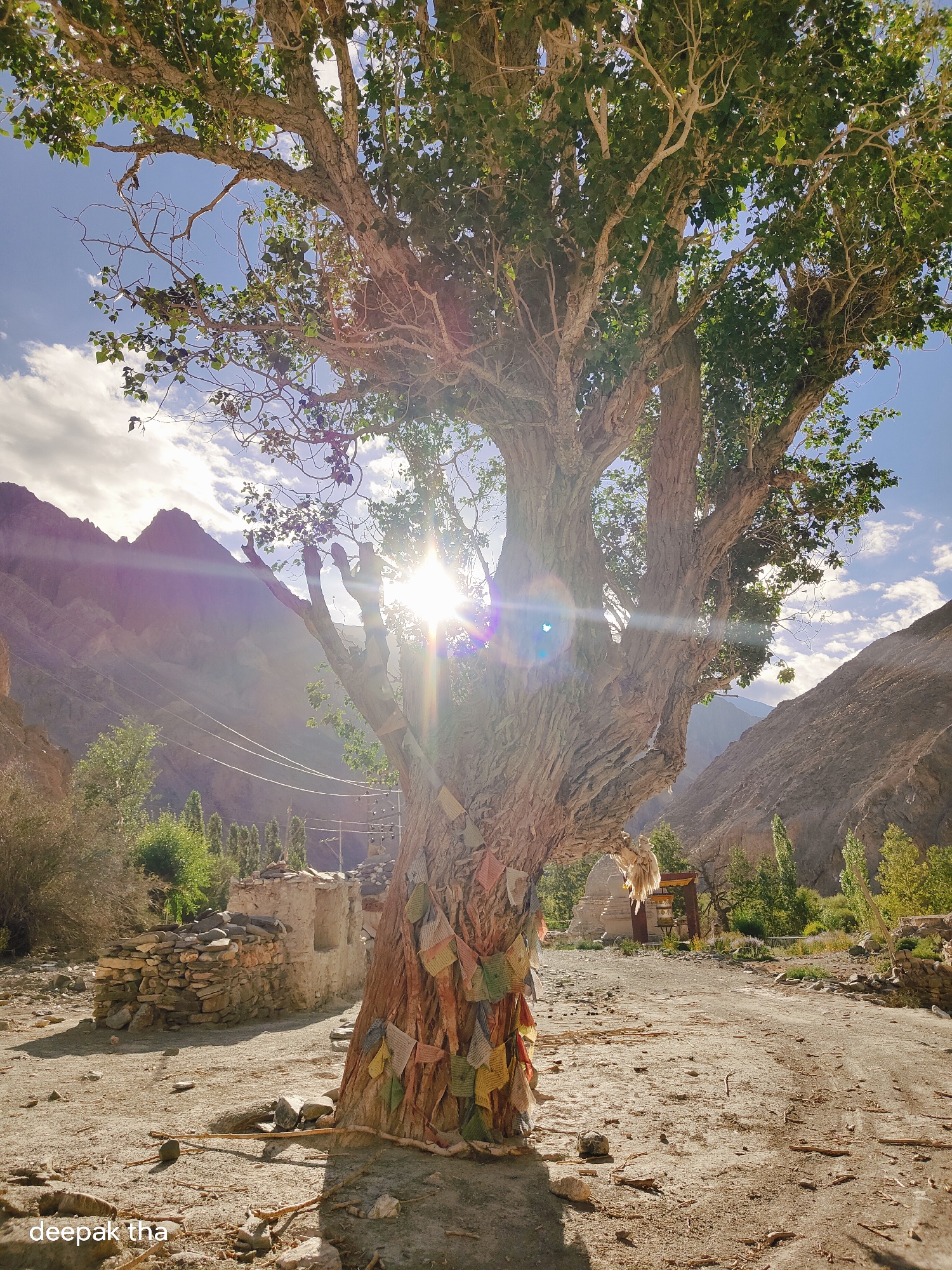
The image depicts a large, old tree in the foreground, adorned with prayer flags. The tree's trunk is thick and textured, with branches reaching upwards towards a bright, sunlit sky. The sun is visible through the branches, creating lens flare and a strong backlight. In the background, rugged, mountainous terrain is visible, with a clear blue sky and scattered clouds. To the left of the tree, there are some stone structures, appearing to be ruins or an old wall. The ground is dusty and uneven, with scattered stones and dry twigs. To the right of the tree, a dirt path leads into the distance, bordered by more vegetation and mountains. The overall impression is a serene, possibly remote, natural setting with elements of human cultural influence, like the prayer flags. The location is specified as Kaya, India.
Kaya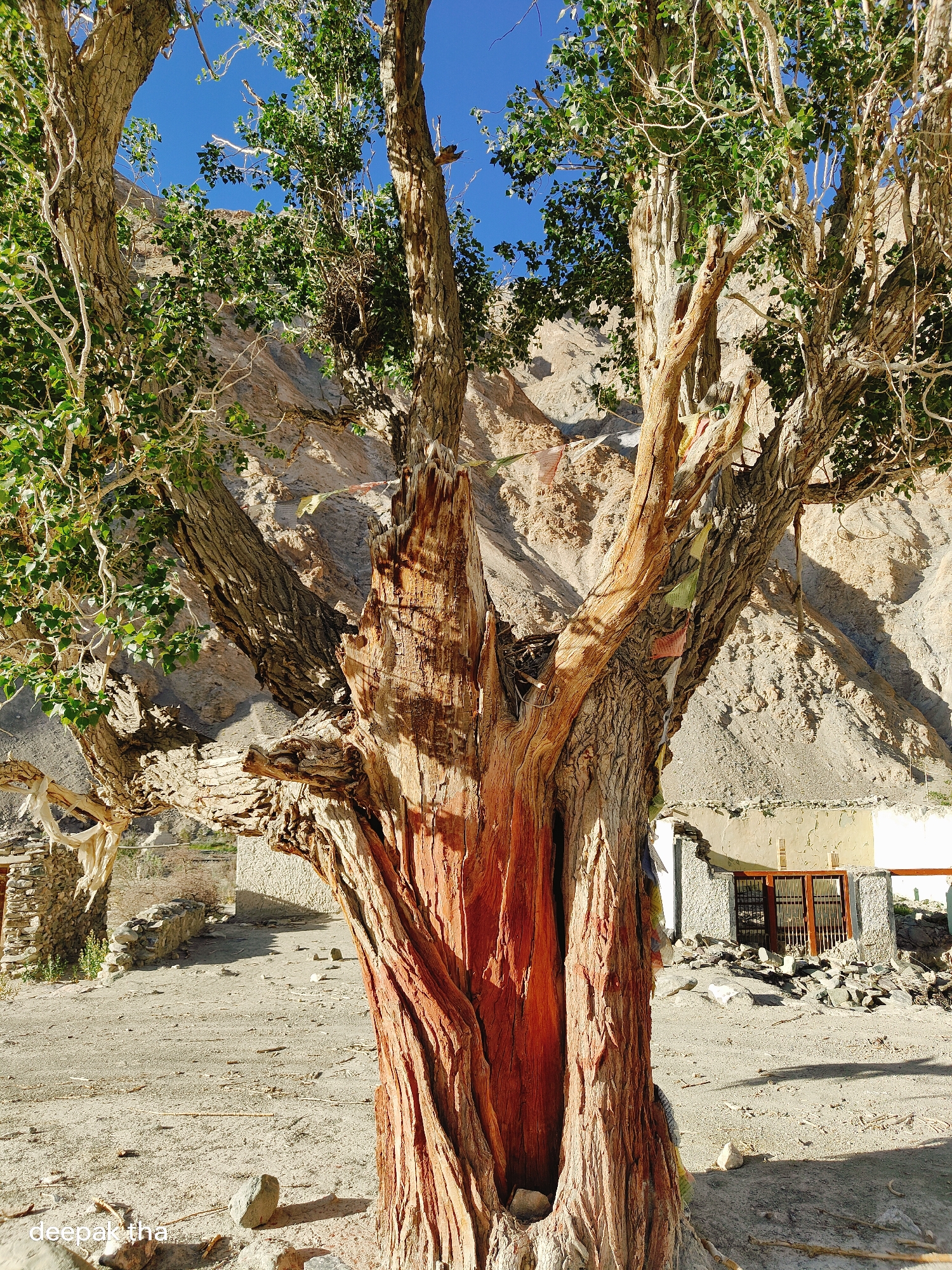
In the city of Kaya, India, a large, ancient tree with a gnarled, reddish-orange trunk dominates the foreground of the image. The tree has multiple branches, some bare and others with lush green leaves, reaching towards a clear blue sky. Prayer flags are visible, tied to the branches and draped on the mountainside in the background. The ground is a dusty, sandy terrain littered with small stones. To the right of the tree, a simple building with a light-colored facade and wooden doors is partially visible. The building appears to be constructed with stone and has rubble in front of it, suggesting it is either under construction or in disrepair. The overall setting is arid and mountainous, characteristic of a remote or high-altitude location.
Kaya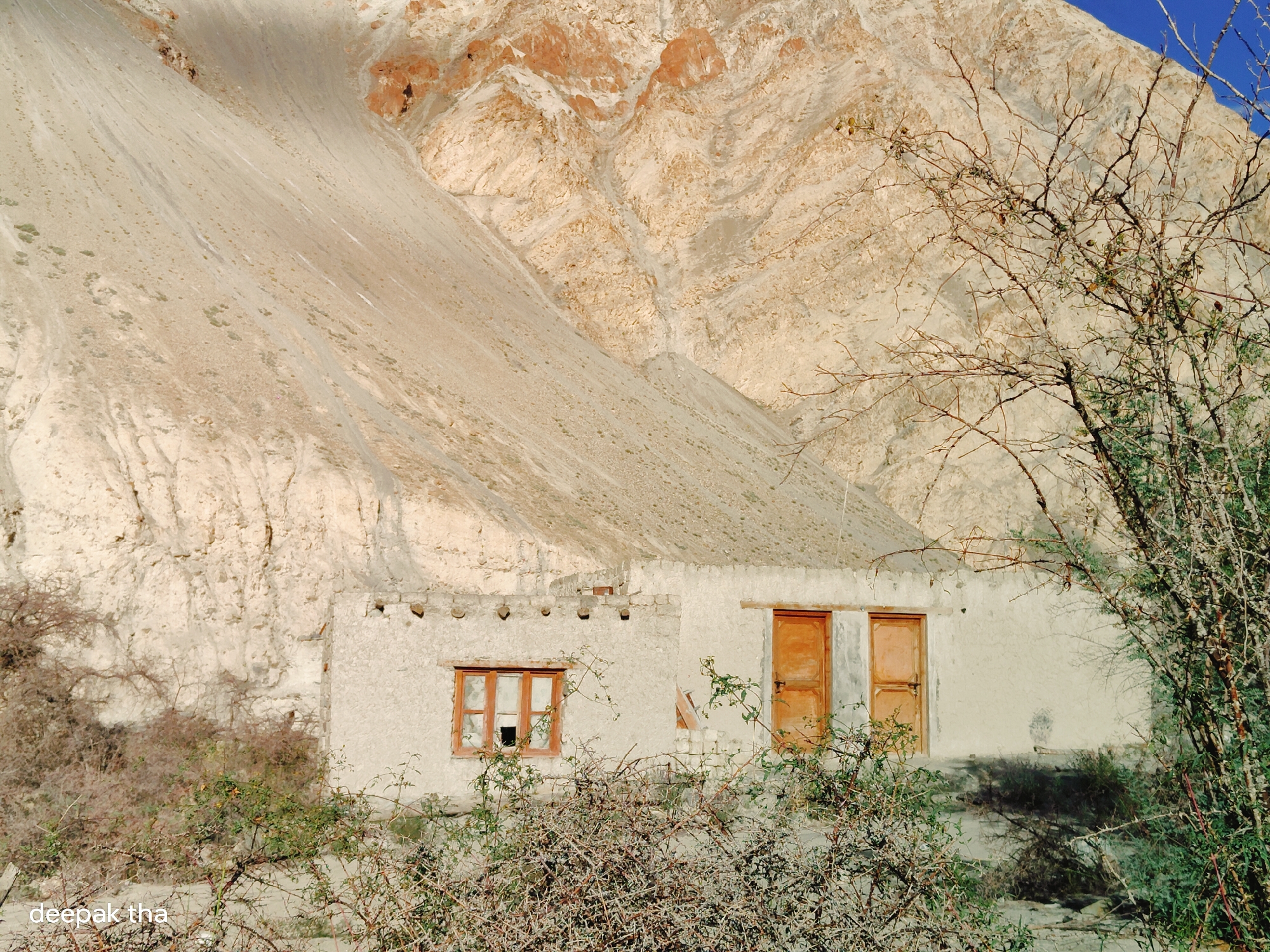
The image depicts a small, dilapidated building nestled at the base of a steep, sandy mountain slope. The building appears to be constructed of light-colored stone or plaster, with a rough texture. It has at least two wooden doors, painted a pale orange, and a window with wooden panes, some of which are broken. The mountain behind the building is characterized by its arid, eroded terrain, showing striations and variations in color from light tan to reddish-brown. Sparse, dry vegetation, including thorny bushes and bare branches of trees, surrounds the building and partially obscures its lower portions. The sky is a clear, bright blue. The overall scene conveys a sense of desolation and remoteness, likely in a mountainous, arid region. The watermark "deepak tha" is visible in the lower left corner.
Kaya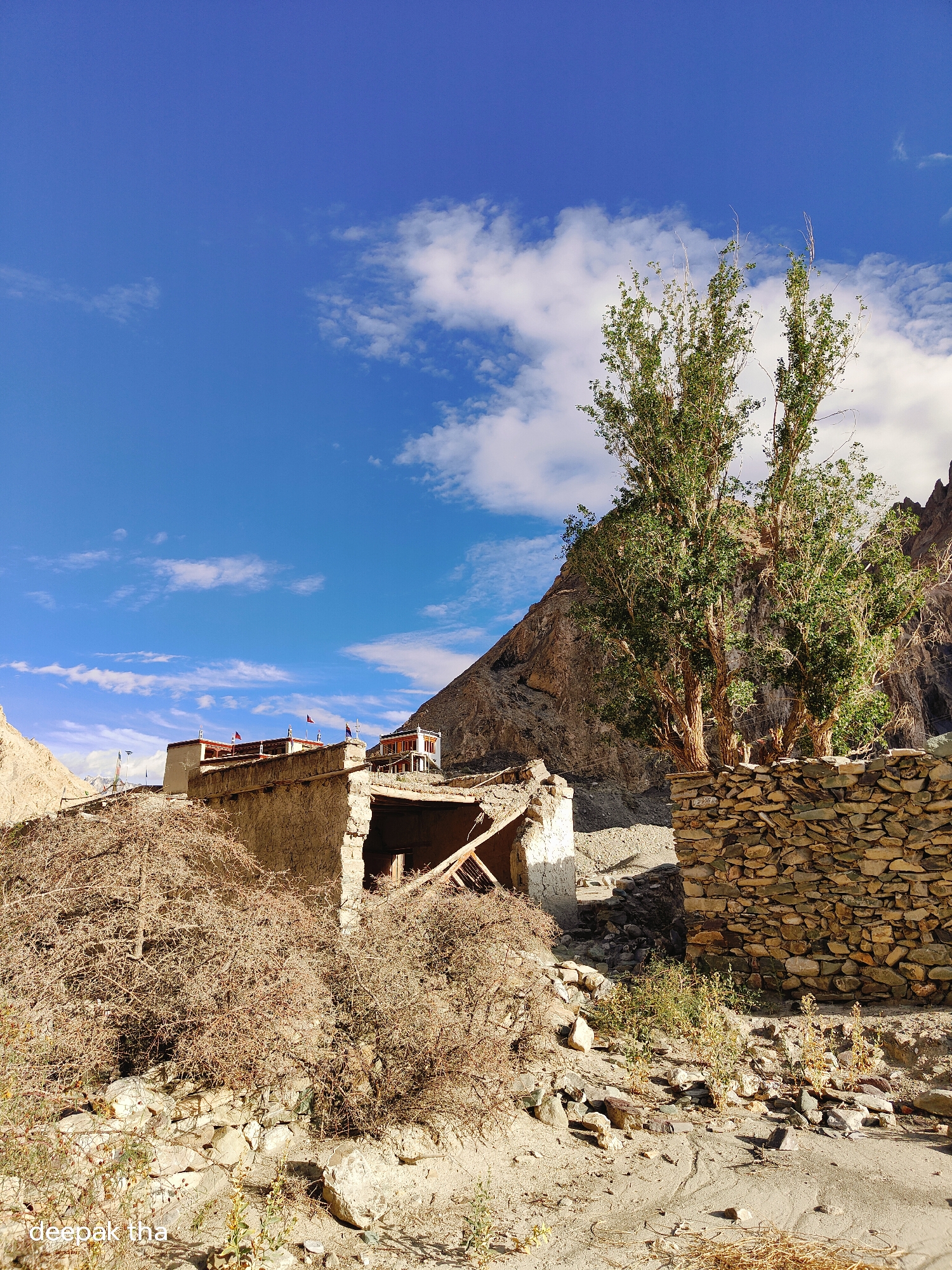
The image depicts a dilapidated courtyard with a partially collapsed building in the foreground. The building is constructed of stone and mud, with exposed wooden beams and a caved-in roof. Dry, thorny bushes cover the ground in front of the structure, interspersed with rocks. To the right, a sturdy stone wall encloses a large tree with green foliage. In the background, a steep, rocky mountain rises under a bright blue sky with scattered white clouds. Further back, another building with a white facade and red-tiled roof is visible, adorned with small red flags. The scene suggests a rural or remote location, possibly a historic site or abandoned settlement. The watermark "deepak tha" is present in the bottom left corner.
Kaya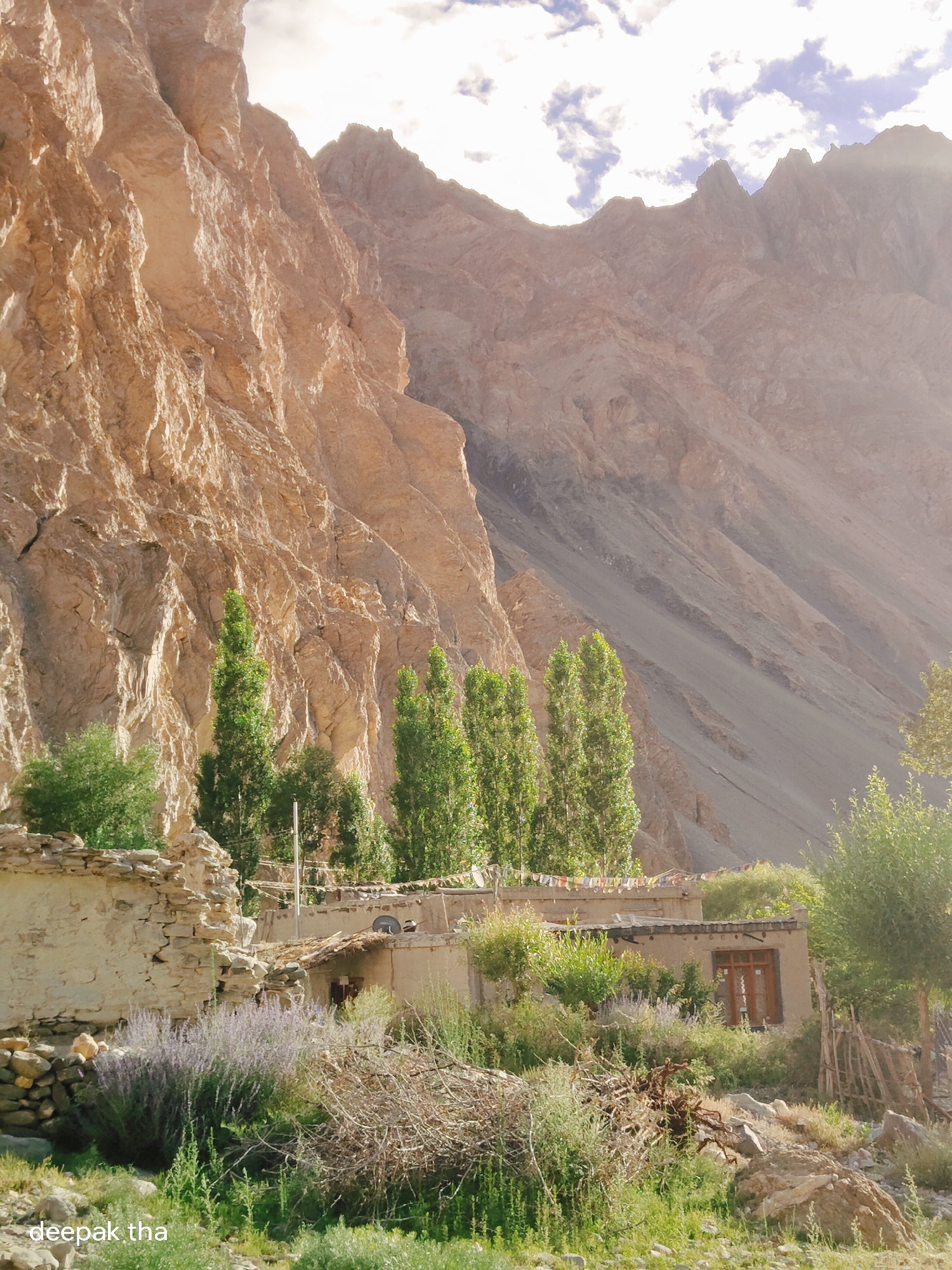
The image shows a mountainous landscape in Kaya, India. A village is nestled at the base of a towering, sun-drenched mountain. The architecture of the village appears rustic, with some structures showing signs of age and disrepair, constructed from stone and mud. Vegetation, including tall green trees and shrubs, surrounds the village. prayer flags are strung across some of the buildings, indicating a likely Buddhist influence. The mountains themselves are vast and imposing, with rugged, rocky slopes. The sky above is partly cloudy, with the sun shining through, casting a warm glow on the scene.
Kaya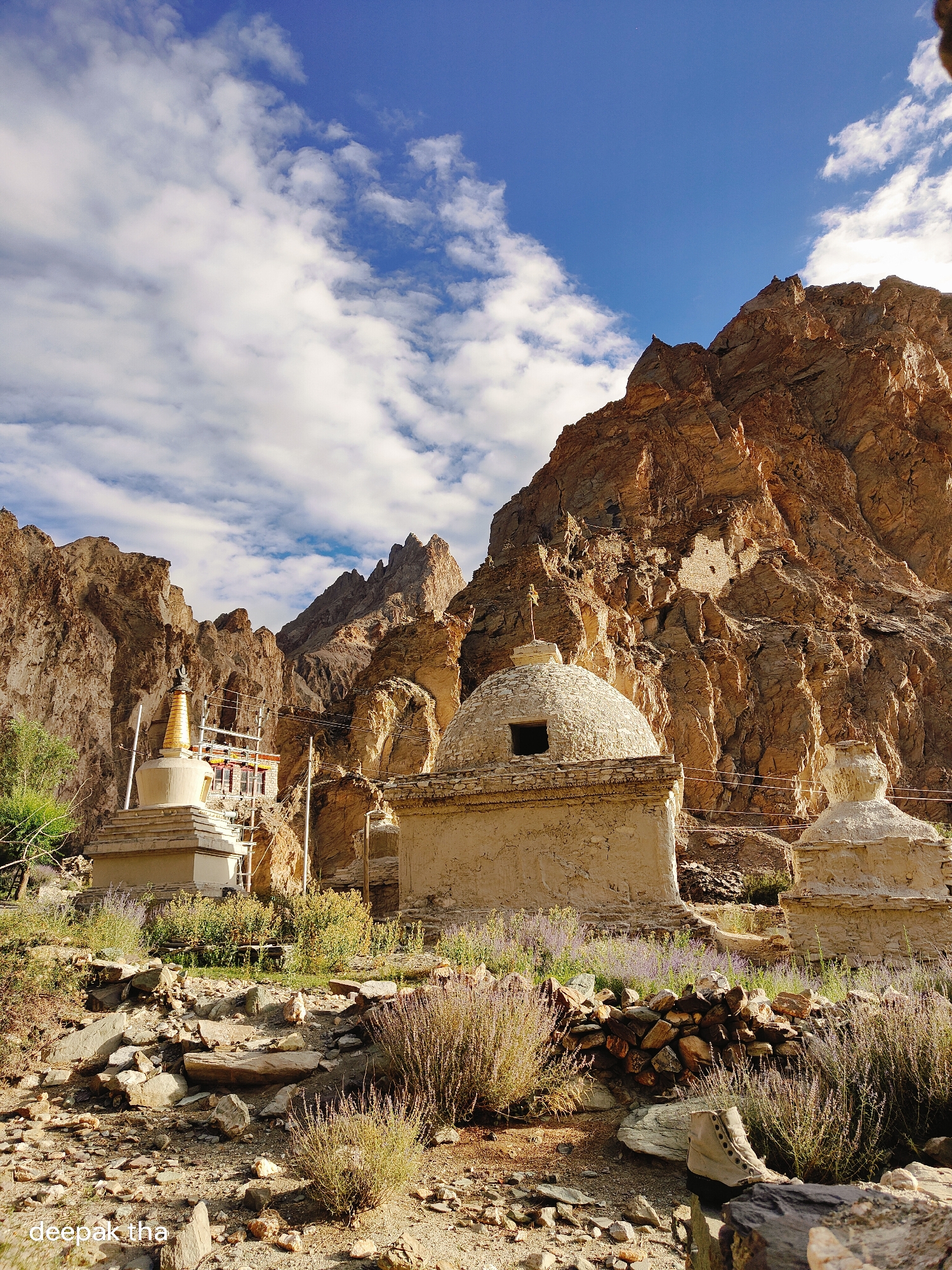
The image depicts an outdoor scene with stupas and a monastery nestled at the base of a rocky mountain range. The sky is a vibrant blue, dotted with white clouds. In the foreground, a dry, rocky terrain is covered with sparse vegetation, including bushes of dried lavender and small shrubs. Scattered stones and a single weathered boot are visible on the ground. Three stupas are present: one on the left with a pointed spire and decorative elements, a central dome-shaped stupa with a small opening, and another smaller stupa on the right. A building with windows and scaffolding, possibly part of the monastery, is situated behind the left stupa. The mountains are steep and rugged, exhibiting layered rock formations and shadows. The location is identified as Kaya, India, suggesting a high-altitude, possibly arid region. The overall impression is one of ancient spirituality and natural grandeur.
Kaya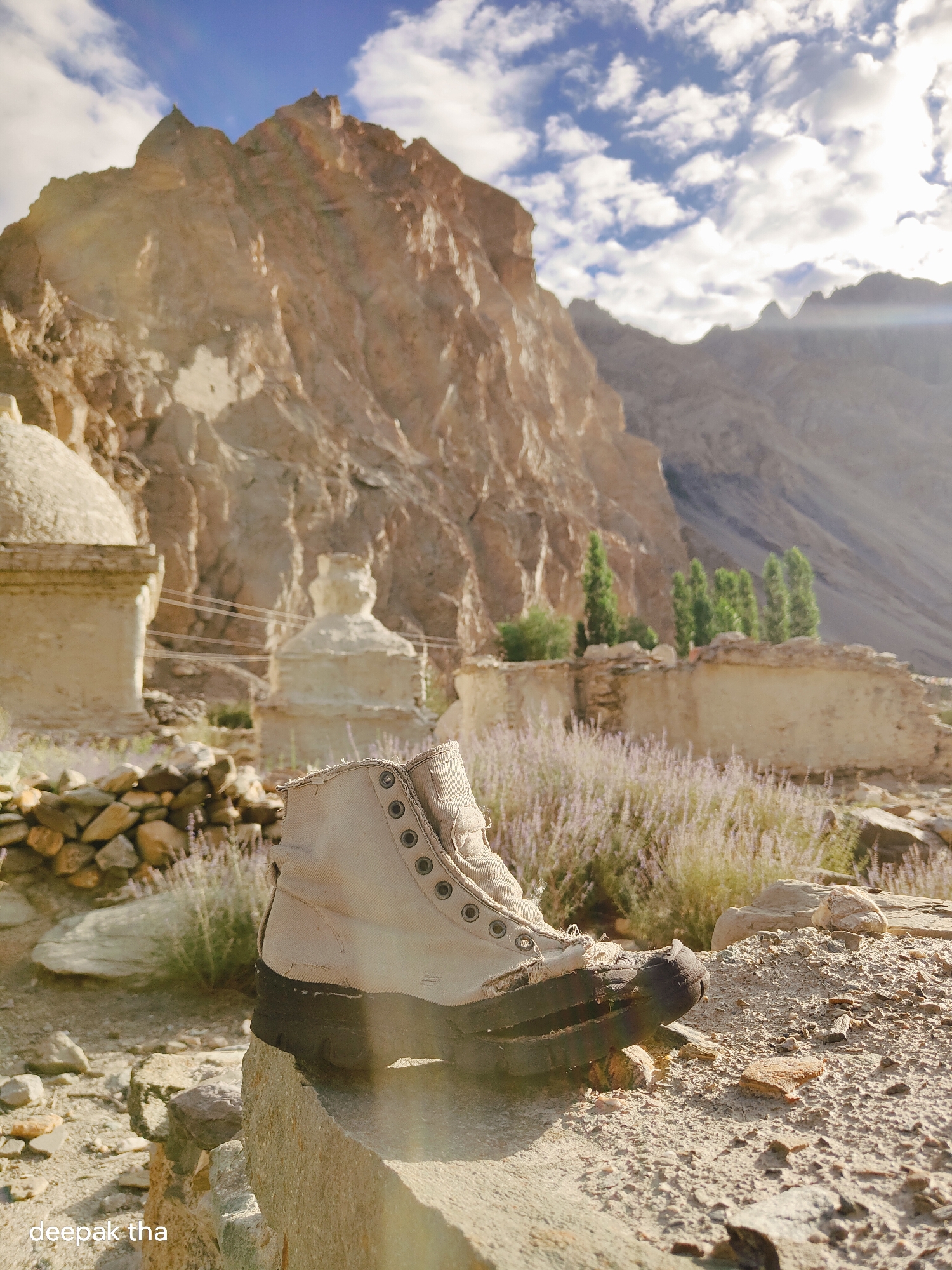
The image depicts a weathered, light-colored canvas boot with a worn black sole placed on a rough, stone surface. The boot is positioned in the foreground and appears to be the primary subject. In the background, there are ancient stone structures with dome-shaped roofs, possibly stupas or small shrines. Beyond these structures, a rocky, mountainous landscape dominates the scene under a partly cloudy blue sky. Sparse vegetation, including a patch of lavender-colored flowers and a few trees, is visible amidst the ruins and rocks. The lighting suggests it is daytime, with sunlight casting shadows and creating a lens flare on the right side of the image. The overall impression is one of arid, mountainous terrain with historical or religious remnants. The location is identified as Kaya, India.
Kaya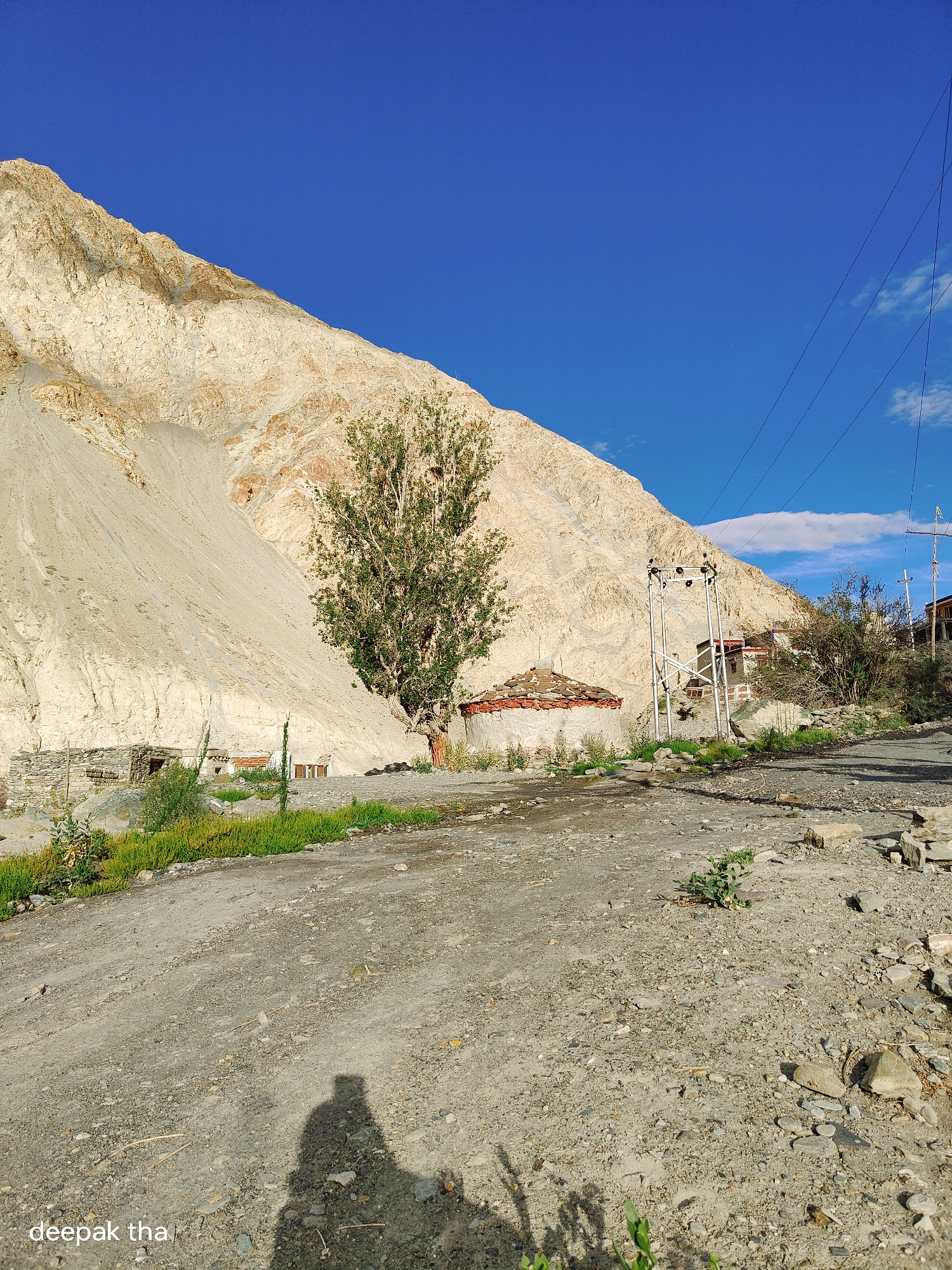
A rural scene unfolds under a clear blue sky with a few wispy clouds. A stark, pale mountain dominates the left side of the frame, its surface textured with erosion marks and striations. At the base of the mountain, a large, leafy tree stands prominently. To the right of the tree, a small, circular structure with a reddish-brown roof sits on a concrete base, surrounded by some vegetation. Further to the right, a cluster of buildings with similar reddish-brown roofs is visible, nestled amongst sparse trees and bushes. An electrical utility pole with wires stretches across the upper right quadrant of the image, connecting to another pole in the distance. The foreground is a rough, gravelly dirt road. A shadow of a person, possibly the photographer, is cast on the road in the lower left of the frame. Text overlayed on the bottom left reads "deepak tha". The scene suggests a remote, arid location, possibly in a mountainous region of India.
Kaya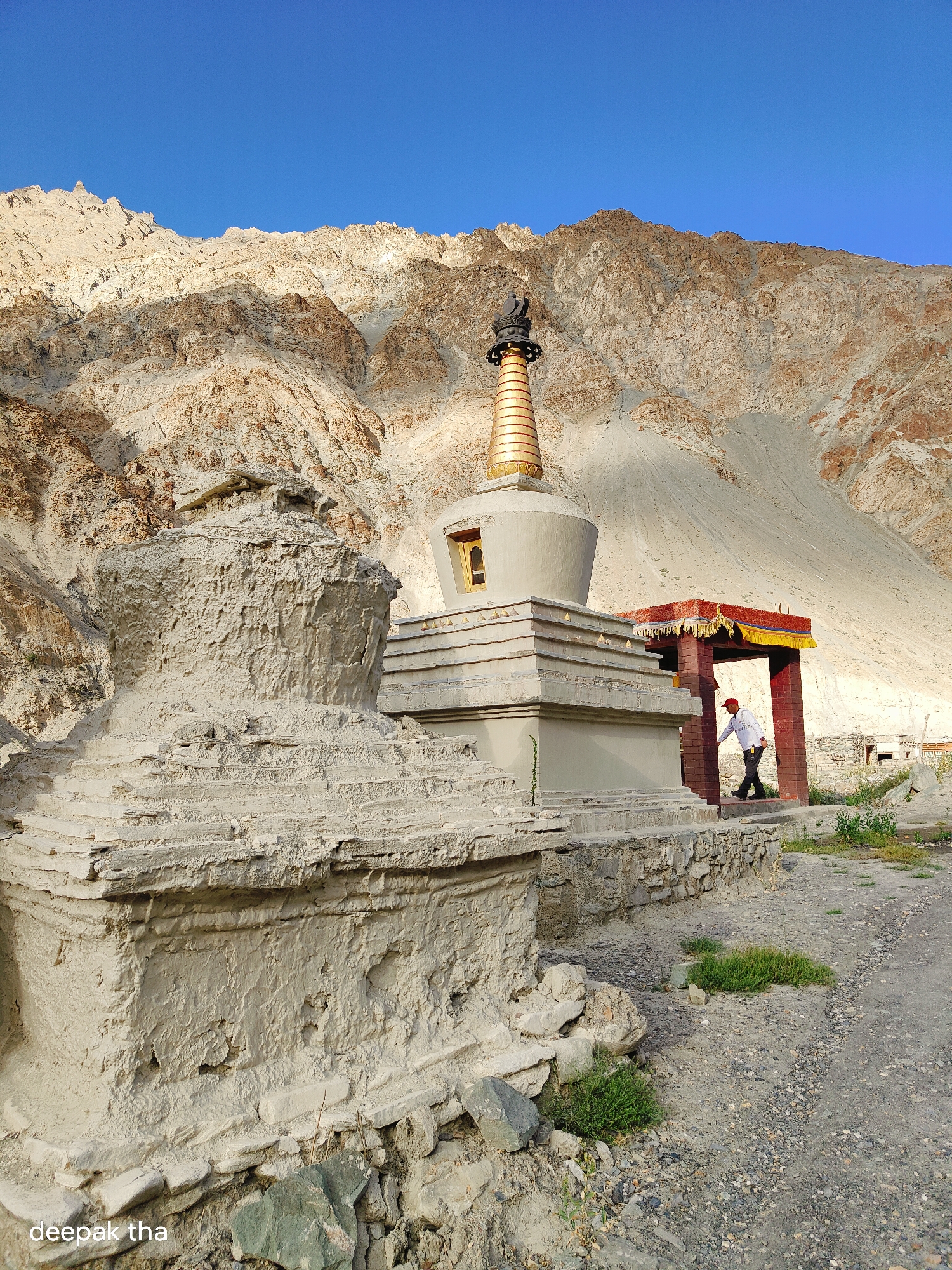
The image depicts a stupa and mountainous terrain under a clear blue sky. In the foreground, a weathered, multi-tiered stupa is prominent, showing signs of age and erosion. To its right, a larger, more ornate stupa stands beside a covered entryway with red and yellow fabric. A person in a white shirt and red cap is walking through this entryway. The background is dominated by a steep, rocky mountain range, characterized by layers of beige and brown rock formations. The ground is a mix of gravel and dry earth, with sparse green vegetation growing in patches. The overall scene suggests a remote, high-altitude location, likely a religious site. The text "deepak tha" is watermarked in the lower left corner.
Kaya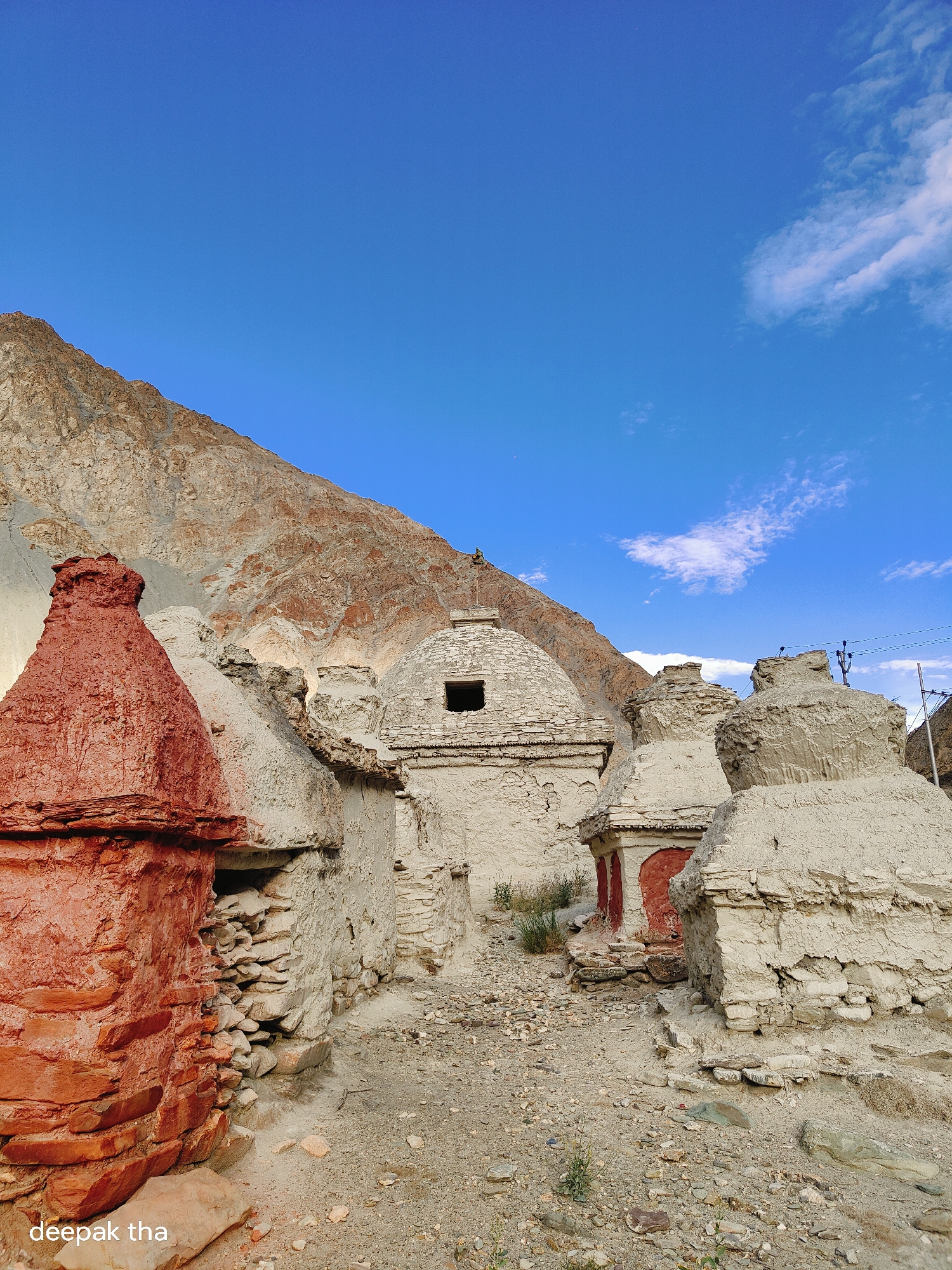
An outdoor, low-angle, full shot captures a cluster of ancient stupas with a dramatic mountain range and clear blue sky in the background. The stupas, made of rough, light-colored stone and clay, exhibit varying states of decay. One stupa in the foreground is painted a vibrant red, with a textured conical shape. Other stupas are weathered and show signs of crumbling, with small arched openings and square windows visible on some. The ground is covered with loose gravel and sparse vegetation. In the distance, utility poles and wires are visible, suggesting proximity to civilization. The overall impression is one of historical significance and arid, mountainous terrain.
Kaya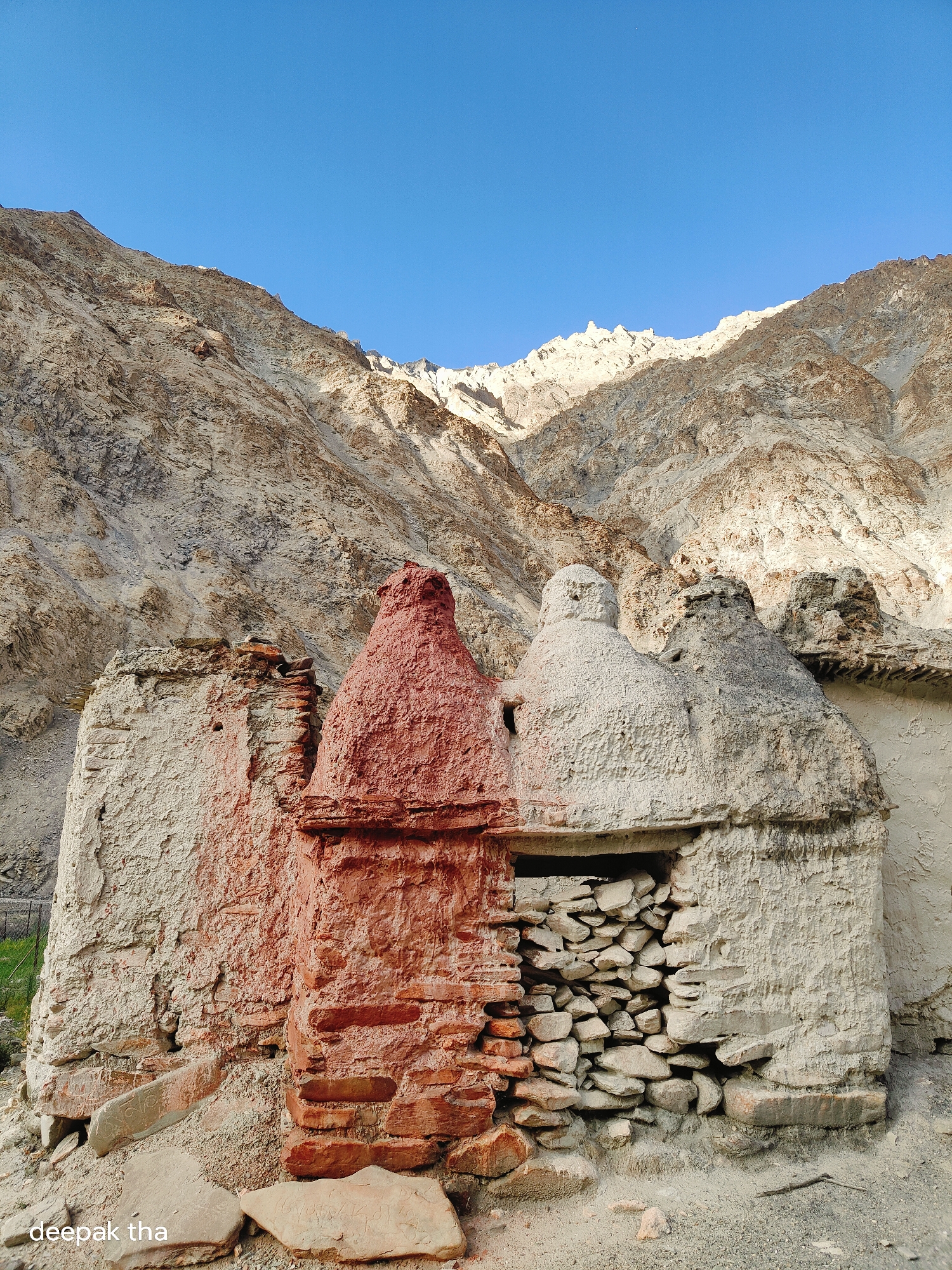
The image shows a low-angle, eye-level view of three mud-brick structures in front of a mountainous backdrop under a clear blue sky. The leftmost structure is predominantly light brown with some red staining. The middle structure is painted a vibrant red and has a stepped top. The rightmost structure is light grey and features a recessed opening filled with stacked stones. These structures appear to be ancient, with visible signs of wear and erosion. The mountains behind them are barren and rocky, with sharp ridges catching the sunlight. The foreground consists of dusty ground with scattered rocks. The location is identified as Kaya, India, likely a remote, high-altitude area given the landscape. The overall impression is one of a historical and rugged environment.
Kaya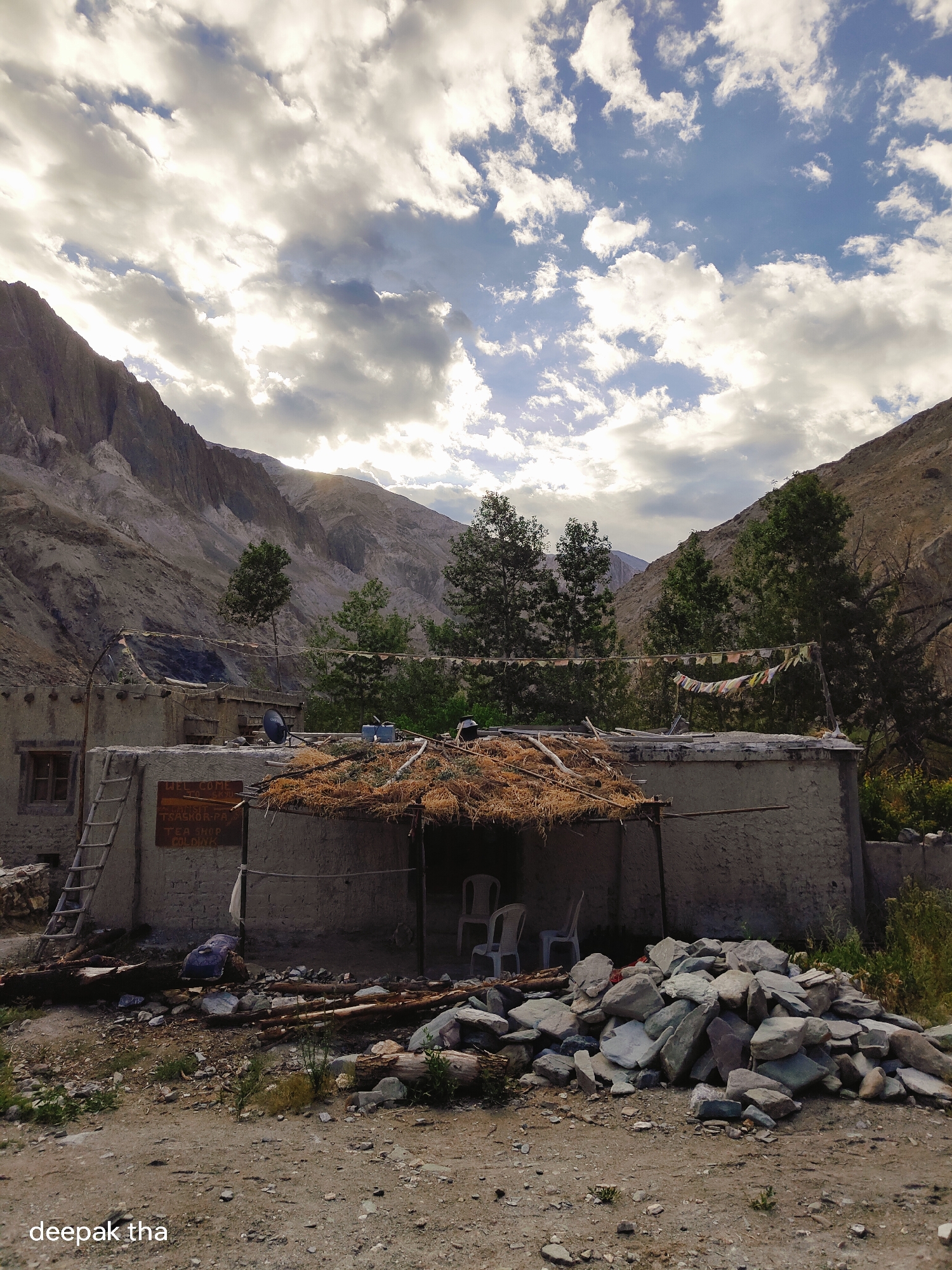
The image shows a rural scene in the city of Kaya, India, with a small, rustic building in the foreground. The building appears to be made of mud and straw, with a thatched roof. There are two white plastic chairs placed outside the building, under the shelter of the roof. A pile of rocks and logs is situated in front of the building. In the background, there are mountains and trees. The sky is cloudy, with the sun peeking through the clouds. There is a sign on the wall of the building that reads "WELCOME TO GASIT TSASHOR-PA TEA SHOP COLDWE". The overall impression is one of a remote and simple settlement.
Kaya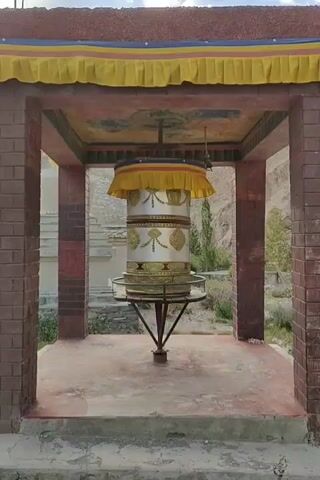
A prayer wheel spins within an open structure with brick pillars. The prayer wheel is cylindrical and ornate, with gold-colored embellishments against a white background. It is topped with a yellow and red fabric canopy and hangs from a central support. The structure has a painted ceiling and a worn, reddish-brown floor. In the background, a white building with decorative elements is visible, along with dry vegetation and a mountainous landscape. The sky is partly cloudy. The video captures the gentle rotation of the prayer wheel.
Kaya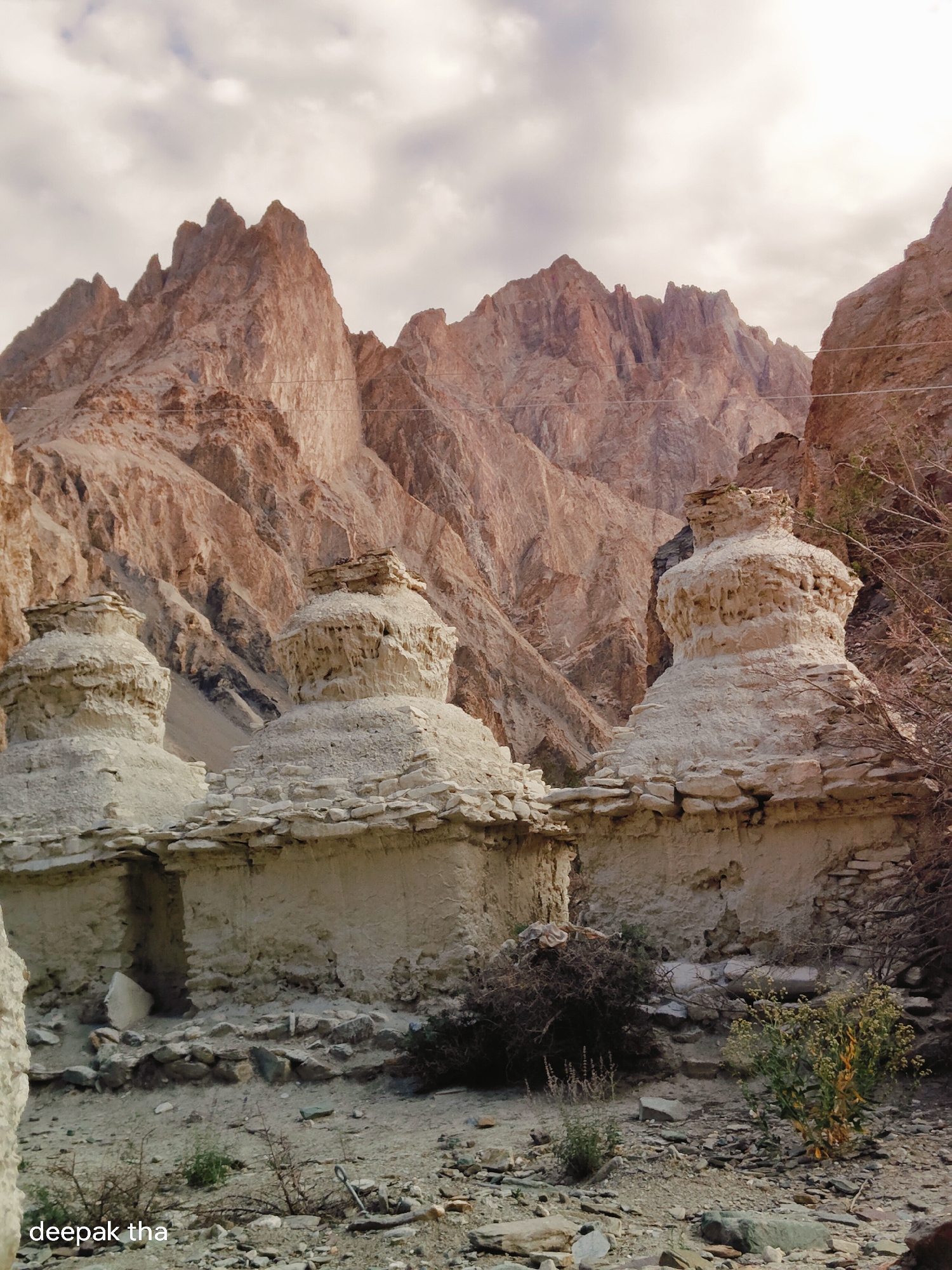
This is a landscape photograph of ancient stupas set against a backdrop of rugged, mountainous terrain. The stupas, constructed from light-colored stone and earth, are arranged in a row in the foreground. They exhibit signs of age and weathering, with crumbling edges and layered stone construction visible. The surrounding ground is rocky and arid, with sparse vegetation. In the background, imposing, jagged mountains rise under a cloudy sky. The scene is bathed in natural light, creating soft shadows. The location is identified as Kaya, India, suggesting an arid, mountainous region likely in the Himalayas or a similar geological formation. There are no people or animals depicted in the image. The overall impression is one of historical significance and natural grandeur.
Kaya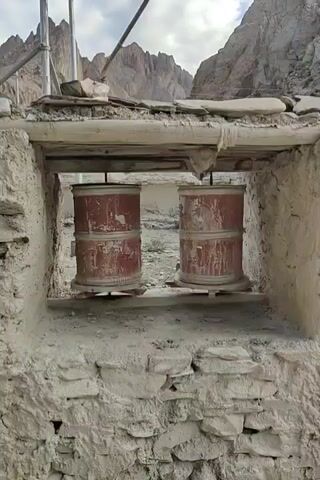
The video shows a close-up view of prayer wheels mounted on the side of a stone building. The prayer wheels are red and weathered, with some signs of rust. They are positioned in an opening in the building's wall, which is made of rough stone and mud. In the background, a dramatic mountain landscape can be seen under a cloudy sky. There are also some scaffolding poles visible on the left side of the frame, suggesting ongoing construction or repair work. The overall impression is one of an ancient religious site in a remote, mountainous region.
Kaya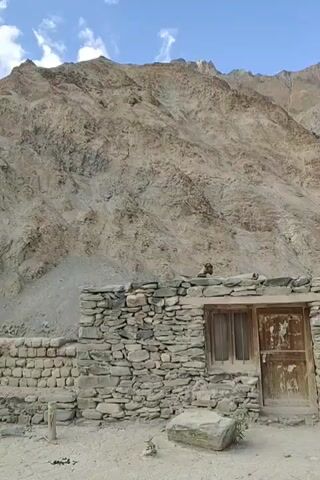
The video pans across a barren, mountainous landscape. In the foreground, a small, rustic stone building with a wooden door and window is visible. Behind it, a larger, more modern structure made of concrete and plaster is seen, with several doorways and windows. The terrain is dry and rocky, with sparse vegetation. The sky is blue with a few scattered clouds.
Kaya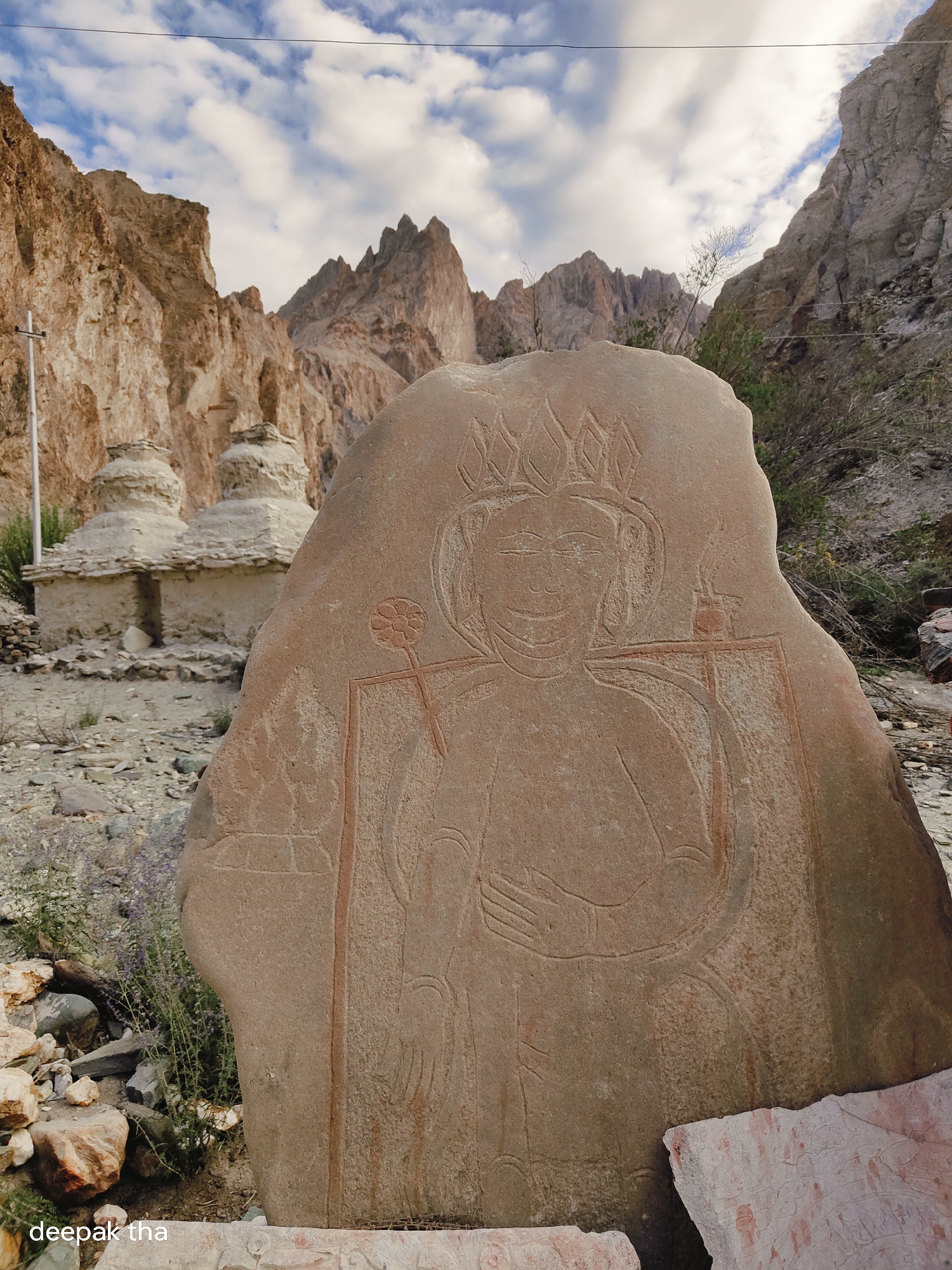
A large, reddish-brown stone slab with an ancient carving of a figure stands in the foreground. The figure appears to be wearing a crown and has a serene expression. The carving also depicts a lotus flower to the left of the figure and what seems to be a stylized robe. In the background, a rugged mountain landscape is visible under a cloudy sky. Two small stupas, traditional Buddhist structures, are situated to the left of the stone, with a rough, rocky terrain surrounding them. The area appears to be remote and possibly a historical or religious site. The image is geotagged to Kaya, India, but there is no information to confirm this specific location within the image.
Kaya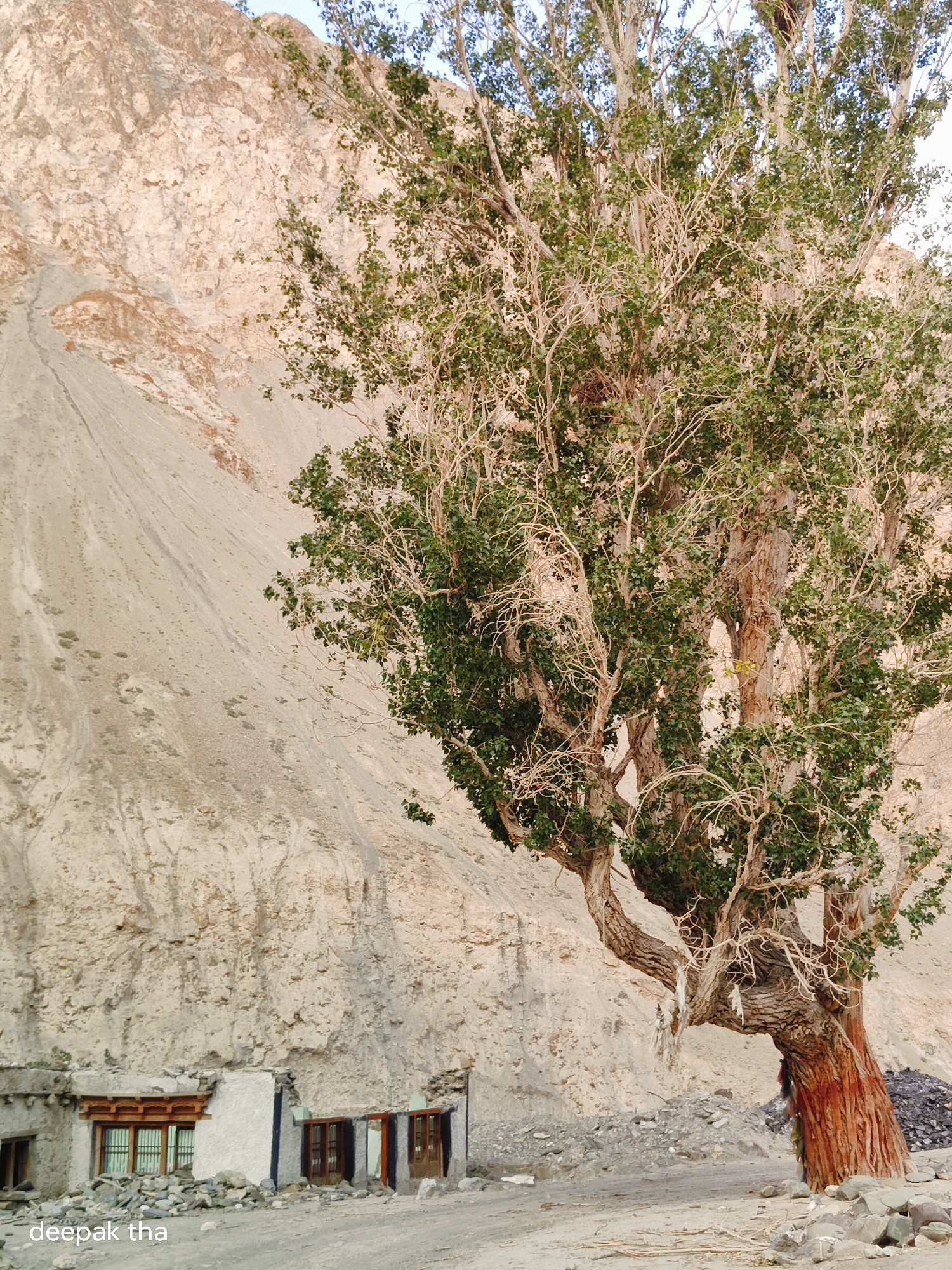
A massive, gnarled tree with thick, reddish-brown bark and sparse green foliage dominates the right half of the frame. Its branches twist and turn, creating a complex, almost skeletal silhouette against the background. To the left of the tree, a rough, light-colored mountain slope rises dramatically, showing layers of rock and scree. At the base of the mountain, partially built into the slope, is a small, weathered structure that appears to be a house or dwelling. The building has a white facade, a wooden-framed window with multiple panes on the left, and several doorways with wooden frames to the right. Loose stones and rubble are scattered in front of the structure and around the base of the tree. The ground is a dusty, light brown. The overall impression is one of a remote, arid environment. The text "deepak tha" is visible in the lower left corner of the image.
Kaya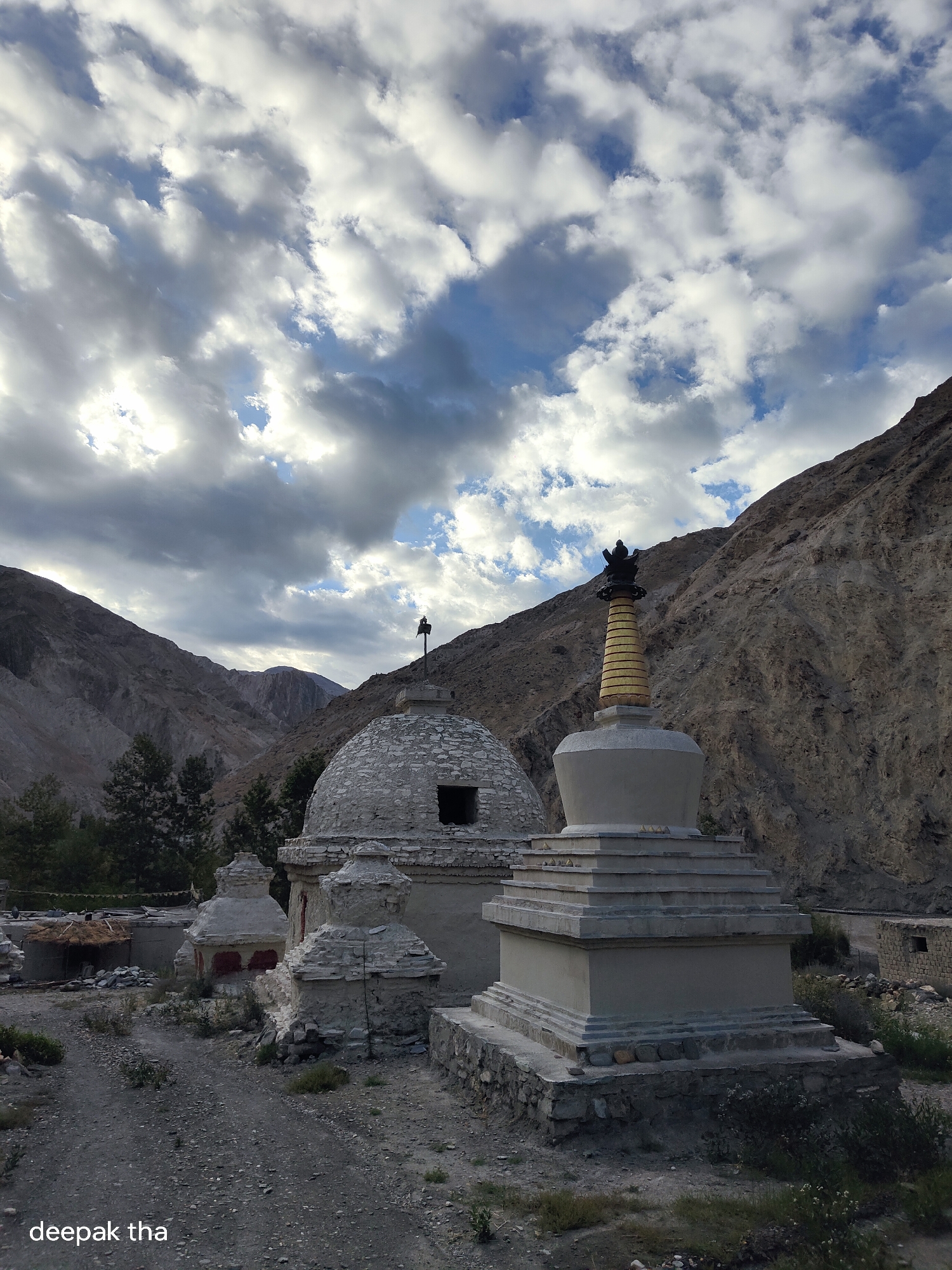
The image depicts a traditional Buddhist stupa complex nestled within a mountainous, arid landscape. The stupas are constructed from stone and plaster, with the largest one in the foreground featuring a distinctive gold-colored spire topped with decorative elements. Smaller stupas are visible to the left, some with red accents. The structures are situated on a dirt path, with sparse vegetation growing around them. In the background, a steep, rocky mountain slope rises dramatically, partially obscured by a dramatic sky filled with dark, heavy clouds interspersed with patches of blue. The lighting suggests it is either early morning or late afternoon. The presence of a watermark "deepak tha" in the bottom left corner indicates the photographer. The overall scene conveys a sense of spiritual tranquility and the harsh beauty of the remote Himalayan region.
Kaya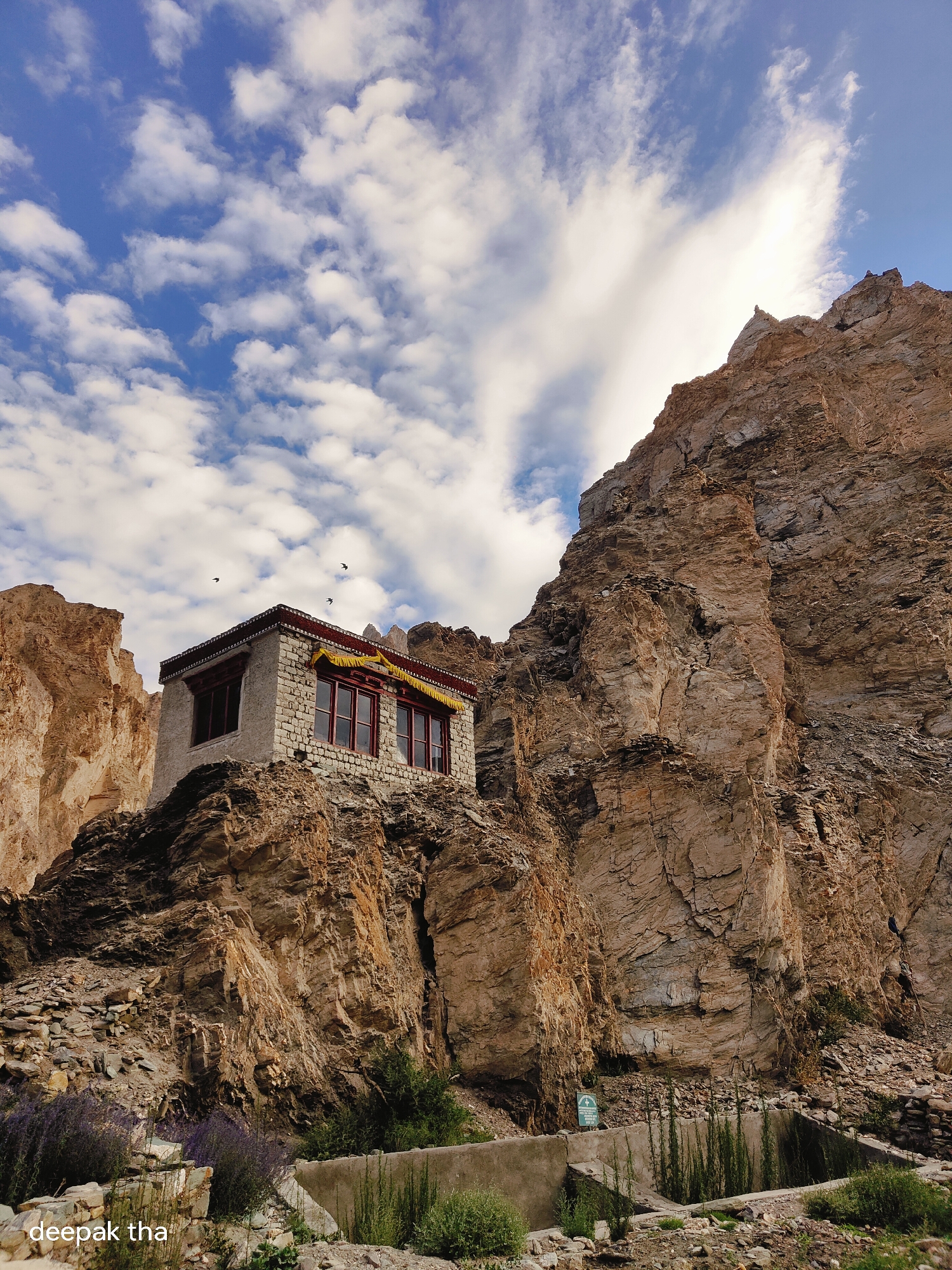
A small, stone building with a red-framed window and a decorative yellow and red roof sits precariously on a rocky outcrop. The building is situated in a mountainous region. The sky above is blue with scattered white clouds. In the foreground, there is a concrete structure with some greenery growing within it. A sign is visible near the concrete structure, though its text is illegible. There are also a few birds in flight above the building. The overall scene suggests a remote and rugged location in India, possibly a monastery or a hermit's dwelling, given the architectural style and the environment.
Kaya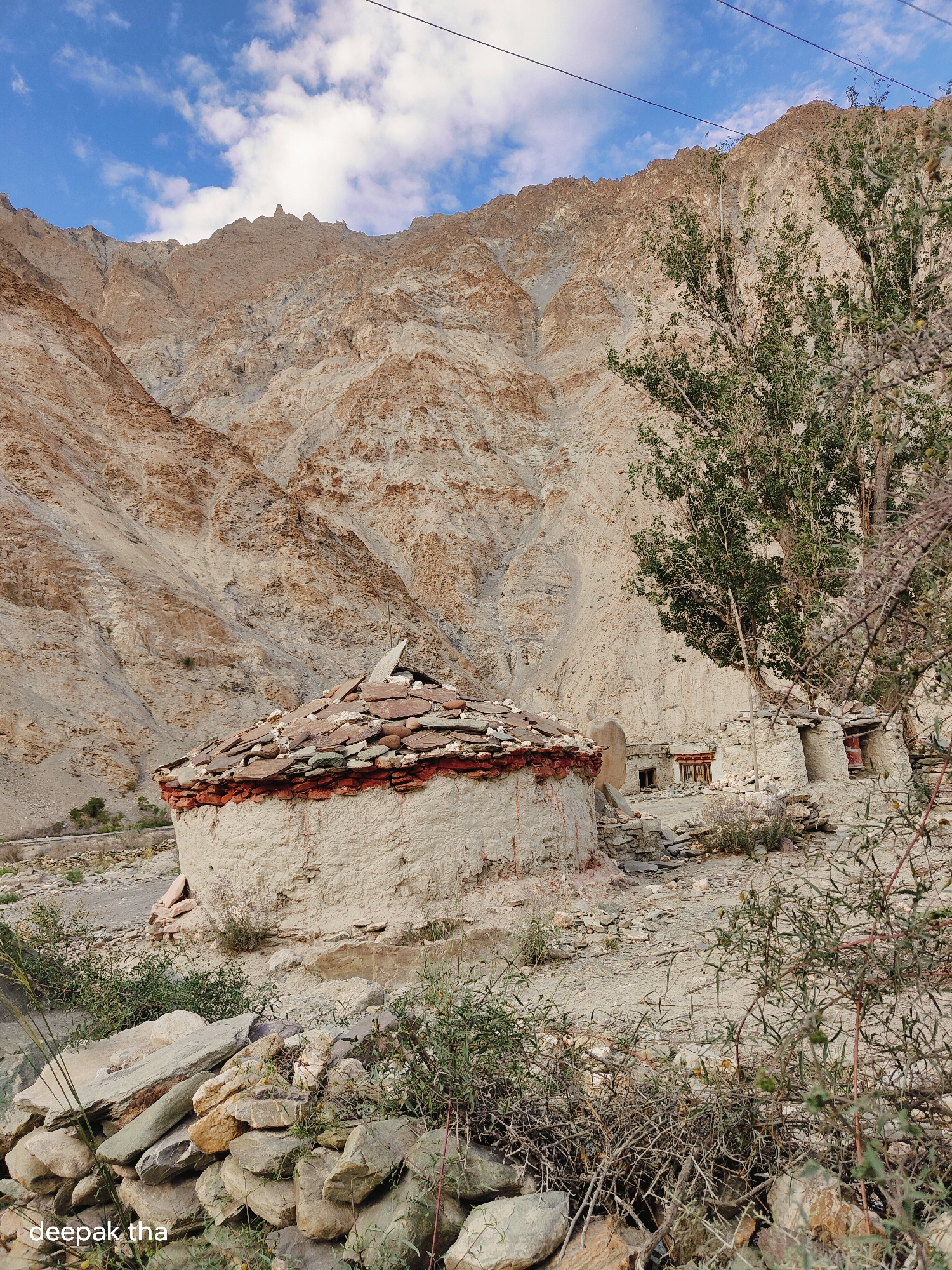
The image depicts a circular, mud-and-stone dwelling with a layered stone roof, situated in a mountainous, arid landscape. The structure, which appears to be a traditional rural home or a small religious building, is weathered and integrated into the rocky terrain. To the right of the primary dwelling are two smaller, similarly constructed buildings with wooden doors and windows, one appearing to be partially in ruins. A large tree with sparse green foliage stands prominently in the mid-ground, its branches reaching towards the rugged, beige mountains that dominate the background. The sky above is a clear blue with scattered white clouds. The ground is covered in dirt, stones, and sparse, dry vegetation. A low wall constructed from piled stones is visible in the foreground. The scene is devoid of any visible people or animals. The image is marked with the text "deepak.tha" in the lower left corner. This setting is consistent with the remote, mountainous regions of India, such as parts of Ladakh, where such architectural styles are common.
Kaya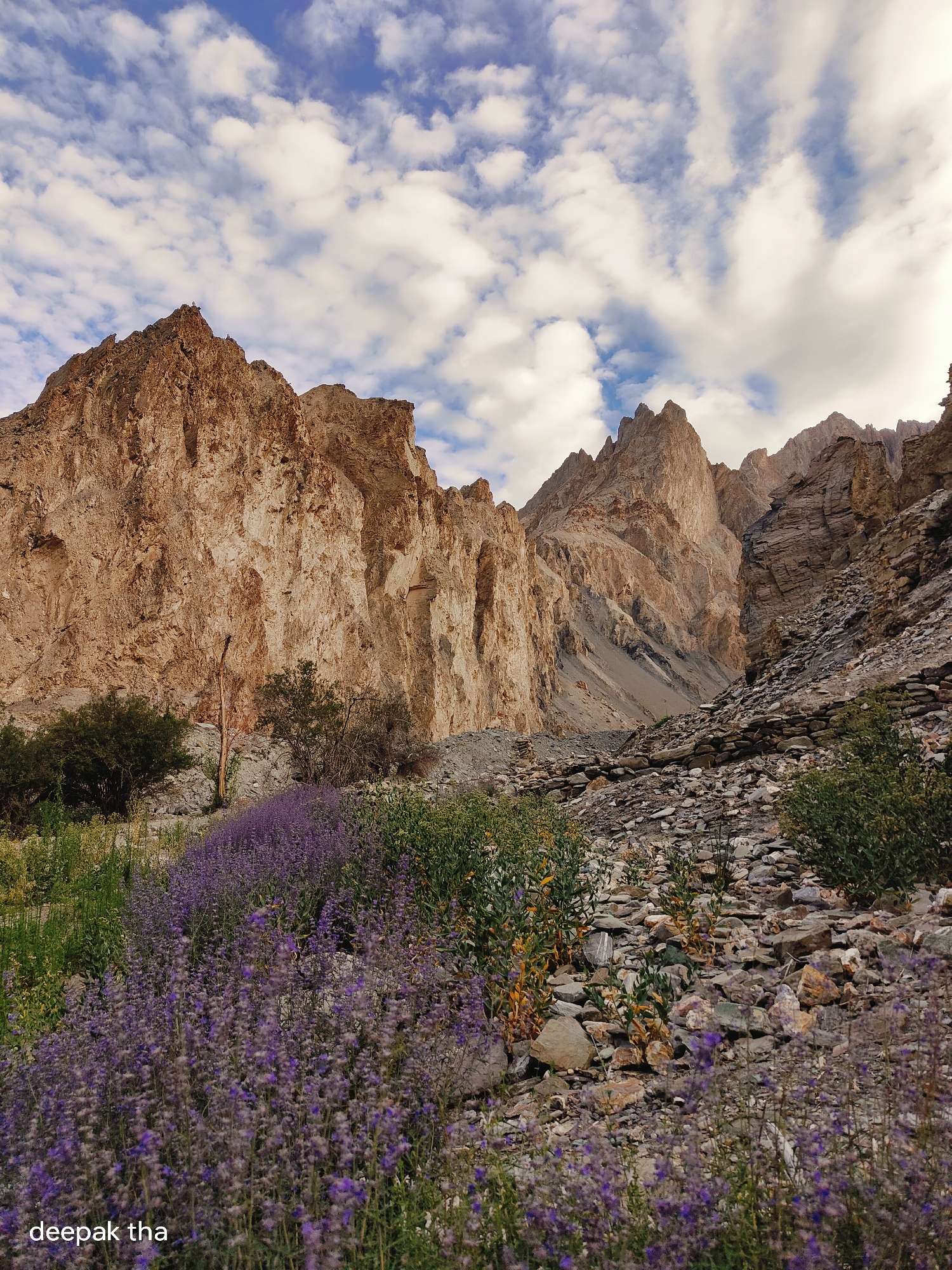
The image captures a mountainous landscape with a prominent, rugged cliff face dominating the left side. The cliff is a light brown, textured rock, showing signs of erosion and stratification. To the right of the cliff, jagged, taller peaks rise, with steep, rocky slopes and canyons. The sky above is a bright blue with scattered, puffy white clouds. In the foreground, a vibrant patch of purple wildflowers adds a splash of color to the otherwise arid terrain. The ground is covered in rocks and sparse green vegetation. The overall scene depicts a natural, wild environment. The watermark "deepak tha" is present in the bottom left corner of the image. This location is not in the city of Kaya, India.
Kaya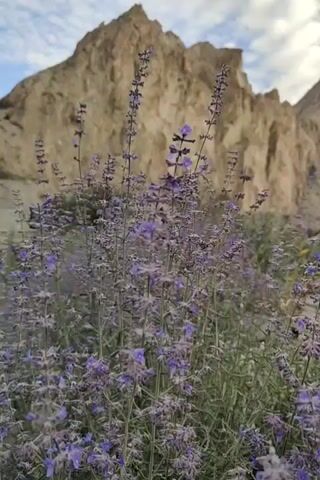
A low-angle shot focuses on a cluster of purple flowers in the foreground. Behind the flowers, a beige, rocky mountain dominates the background, with a cloudy sky above. The flowers are densely packed and appear to be swaying slightly.
Kaya