Kazdanga, Latvia
30 memories from Kazdanga, Latvia
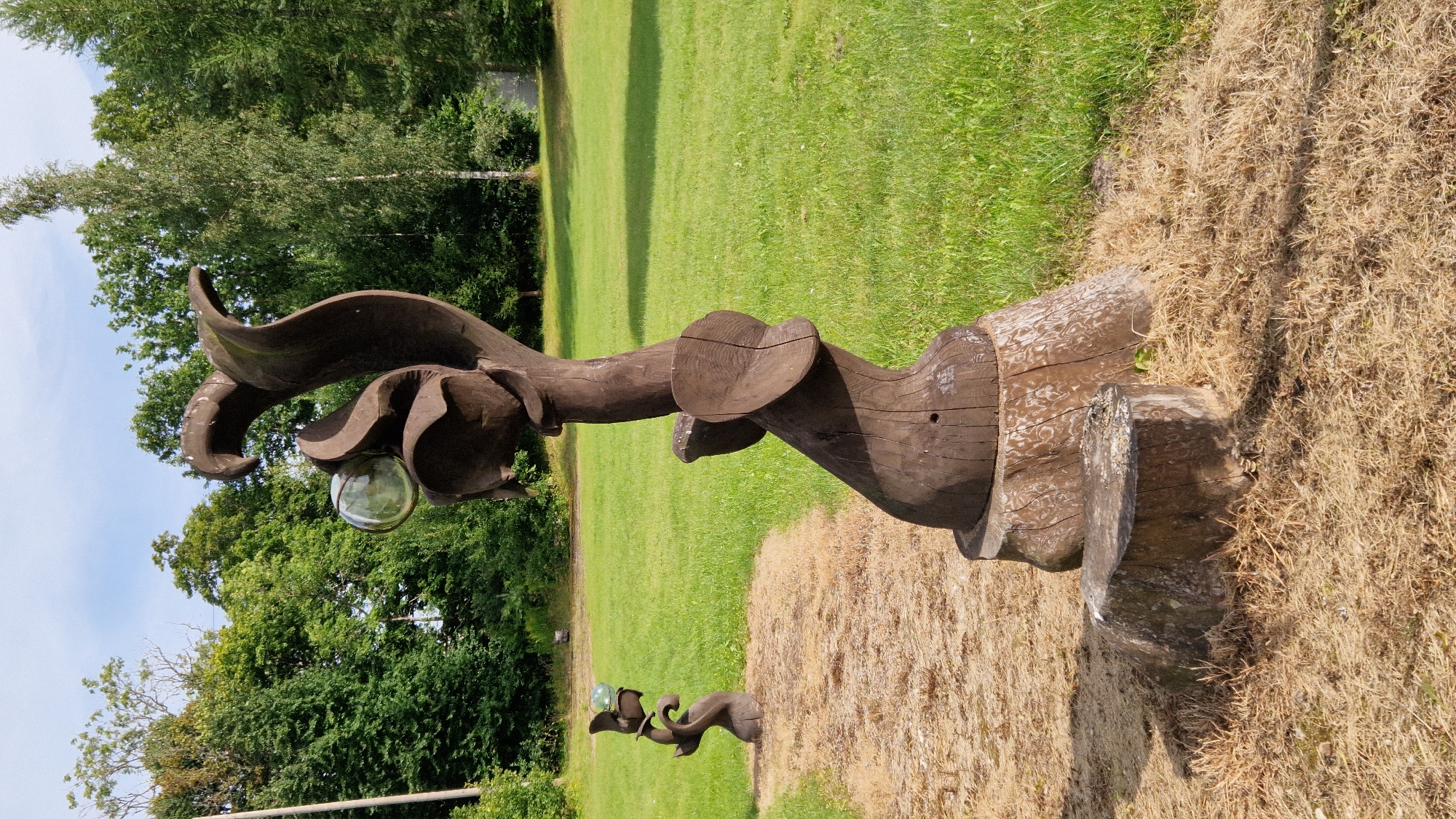
The image depicts a wooden sculpture resembling a stylized plant with a round, transparent glass sphere embedded near its top. The sculpture is dark brown and appears weathered. It is mounted on a thick tree stump. In the background, another similar, smaller sculpture is visible further down a dry, grassy path. The environment is a park or garden with lush green grass, trees, and a bright sky with some clouds. The scene is located in the vicinity of Kazdanga, Latvia, as indicated by the provided context. There are no people visible in the image. The overall impression is one of outdoor art installation in a natural setting.
Kazdanga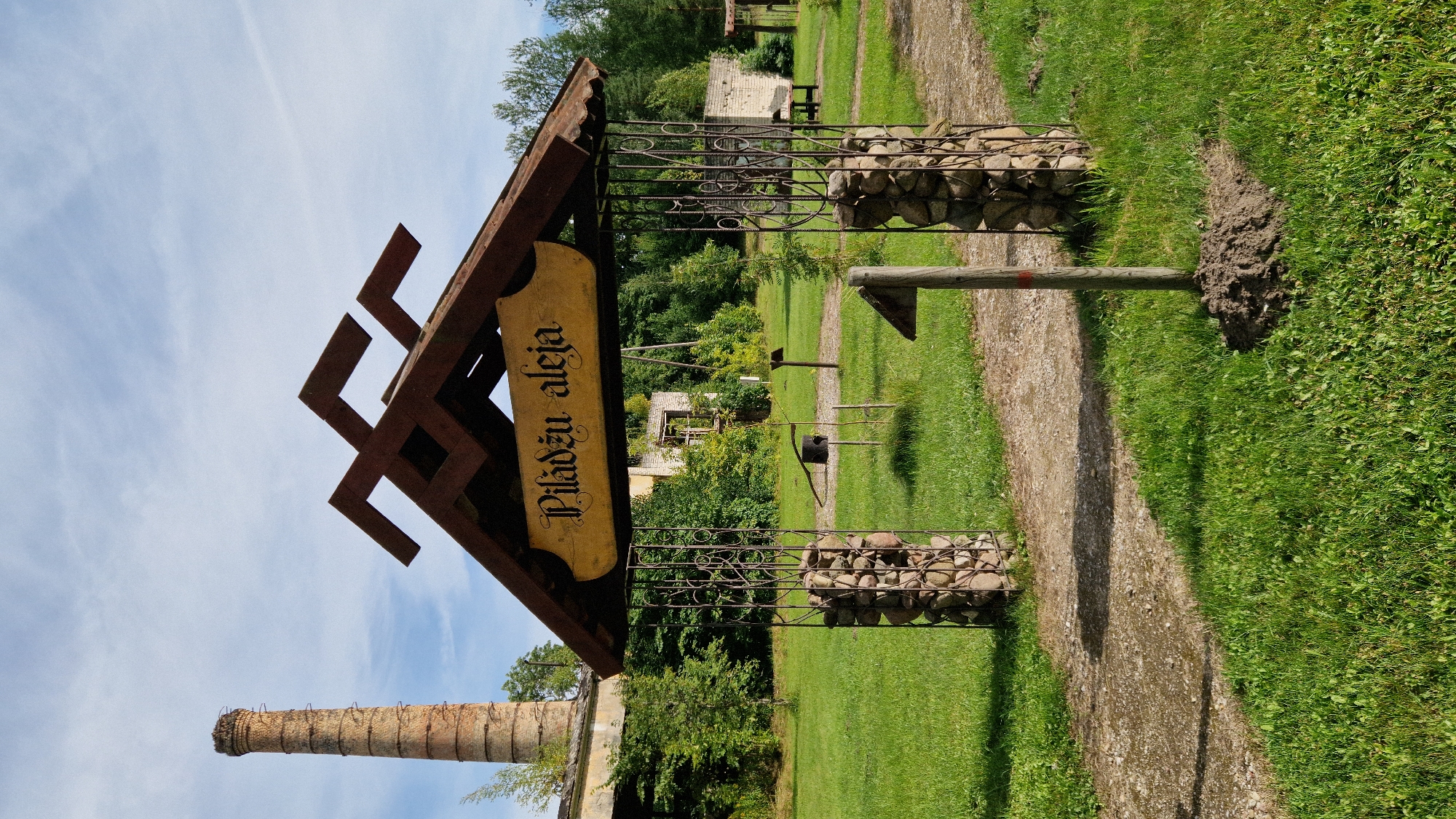
In Kazdanga, Latvia, an entrance archway stands on a gravel path in a grassy field. The archway has a wooden roof with a decorative metal frame. A yellow wooden sign with the inscription "Pilādu aleja" hangs from the arch. The supports of the archway are constructed from metal cages filled with stones. To the left of the archway, a tall brick chimney rises against a partly cloudy sky. Behind the archway, several dilapidated brick buildings are visible, partially obscured by dense green foliage. The ground is covered in a mix of green grass and a gravel path. Several small, wooden posts are scattered throughout the area.
Kazdanga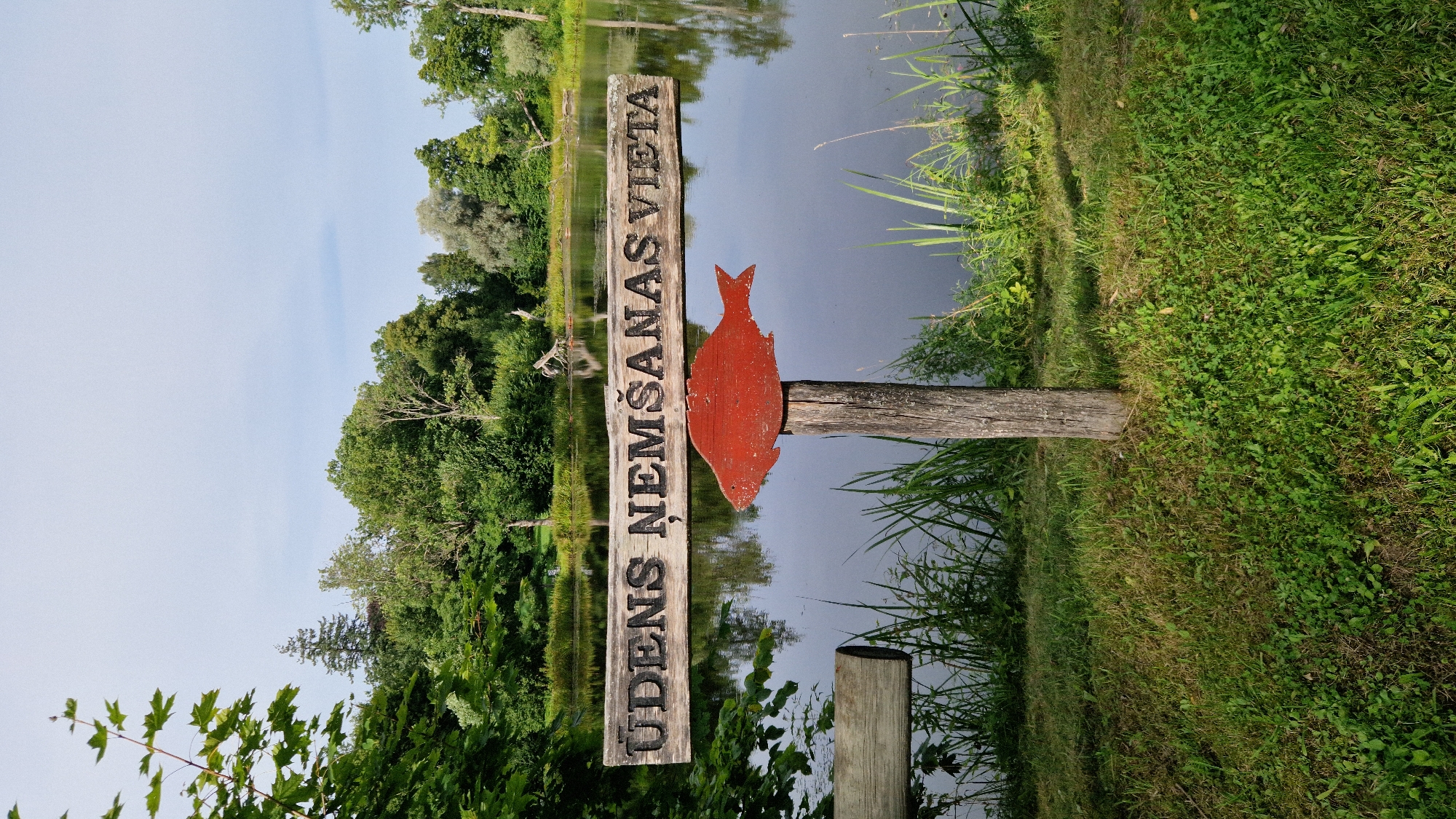
A wooden sign with the inscription "ŪDENS NEMŠANAS VIETA" (meaning "Water Intake Place") is positioned in front of a calm body of water, likely a pond or lake, surrounded by lush green trees and vegetation. The sign is mounted on a weathered wooden post, and below it, a red, silhouette-style cutout of a fish is attached to the post, indicating a fishing-related location. The environment appears serene and natural, suggesting it is located in a park or rural area. The water reflects the surrounding greenery and the sky, which is a pale blue with scattered clouds. The foreground consists of mown grass, with some taller reeds and other plants growing near the water's edge. The overall impression is of a tranquil, outdoor setting in Kazdanga, Latvia, marked for a specific activity related to the water. There are no people or animals visible in the image.
Kazdanga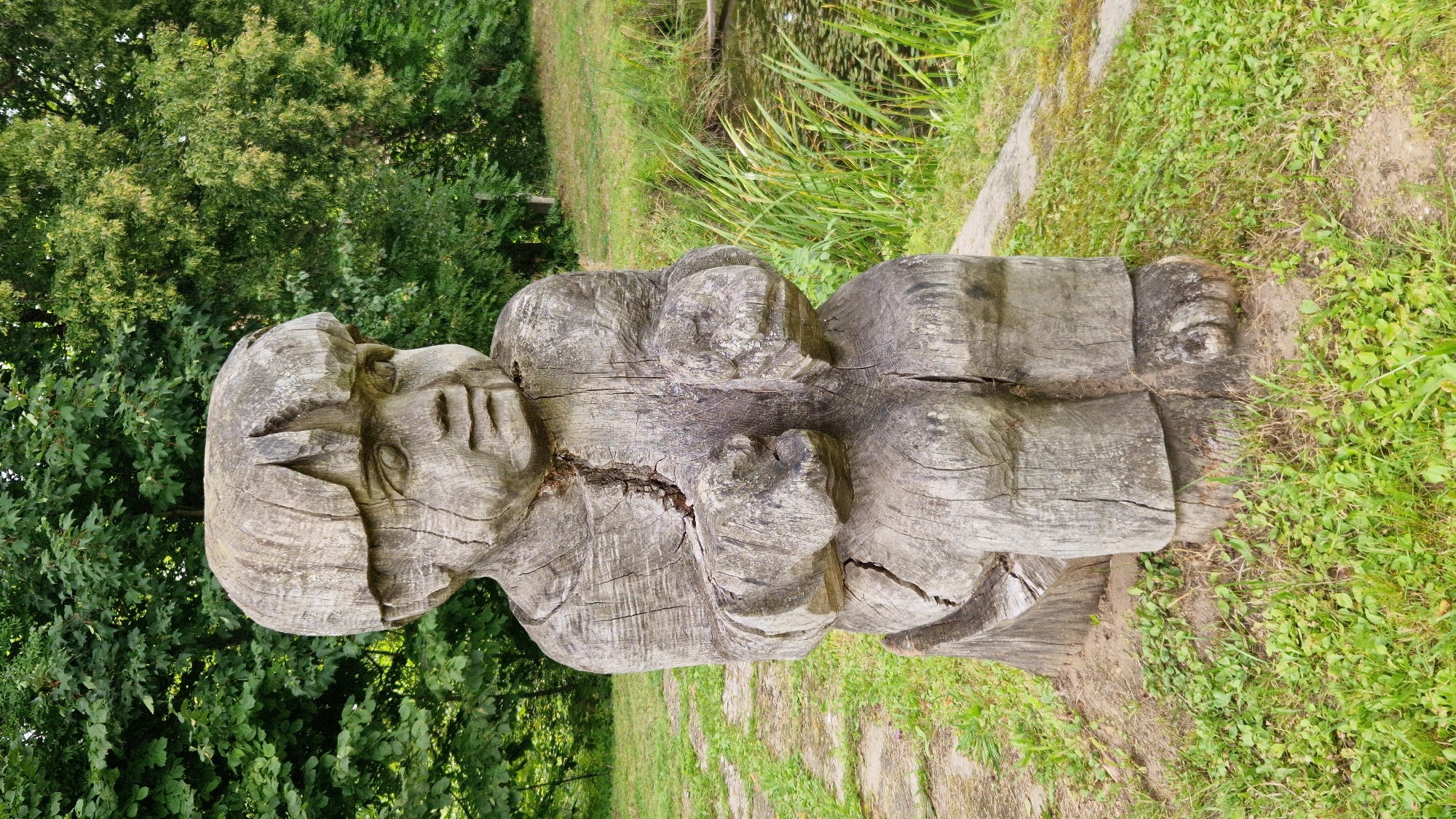
A weathered wooden sculpture of a child sits in a grassy area with trees in the background. The sculpture is of a seated figure with a bowl-shaped haircut, large hands, and detailed legs and feet. The wood shows significant cracking and signs of age. To the right of the sculpture, there is a body of water with reeds growing along its edge. A stone path is visible on the left and in the background. The sculpture is located in Kazdanga, Latvia, specifically in the park adjacent to Kazdanga Manor.
Kazdanga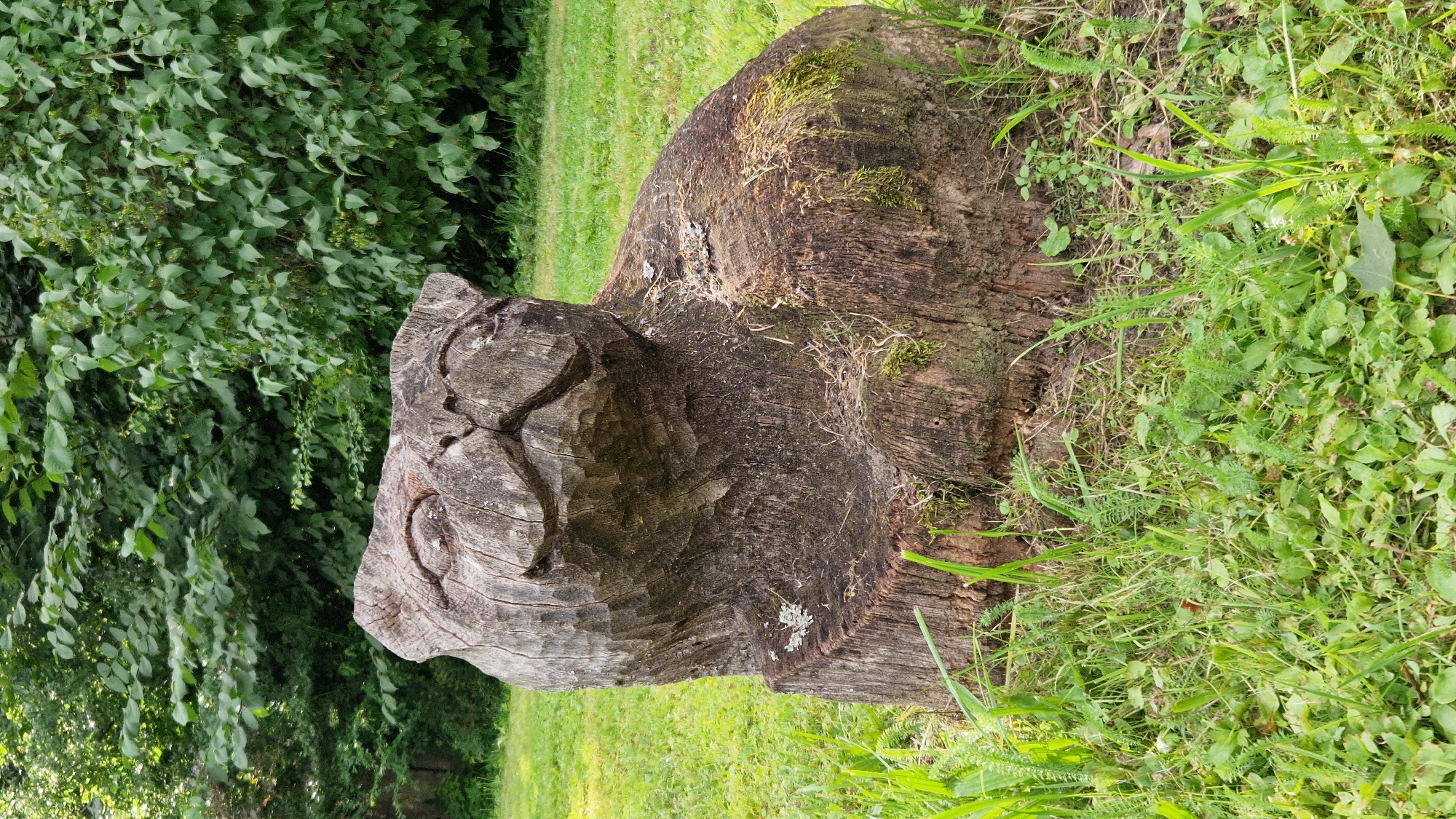
A weathered wooden sculpture resembling a cat is situated on a grassy area with lush green trees in the background. The sculpture is carved from a tree stump and depicts the cat in a seated position, with carved eyes and facial features. Some moss and dried grass are visible on the surface of the wood. The sculpture is located outdoors in what appears to be a park or natural setting.
Kazdanga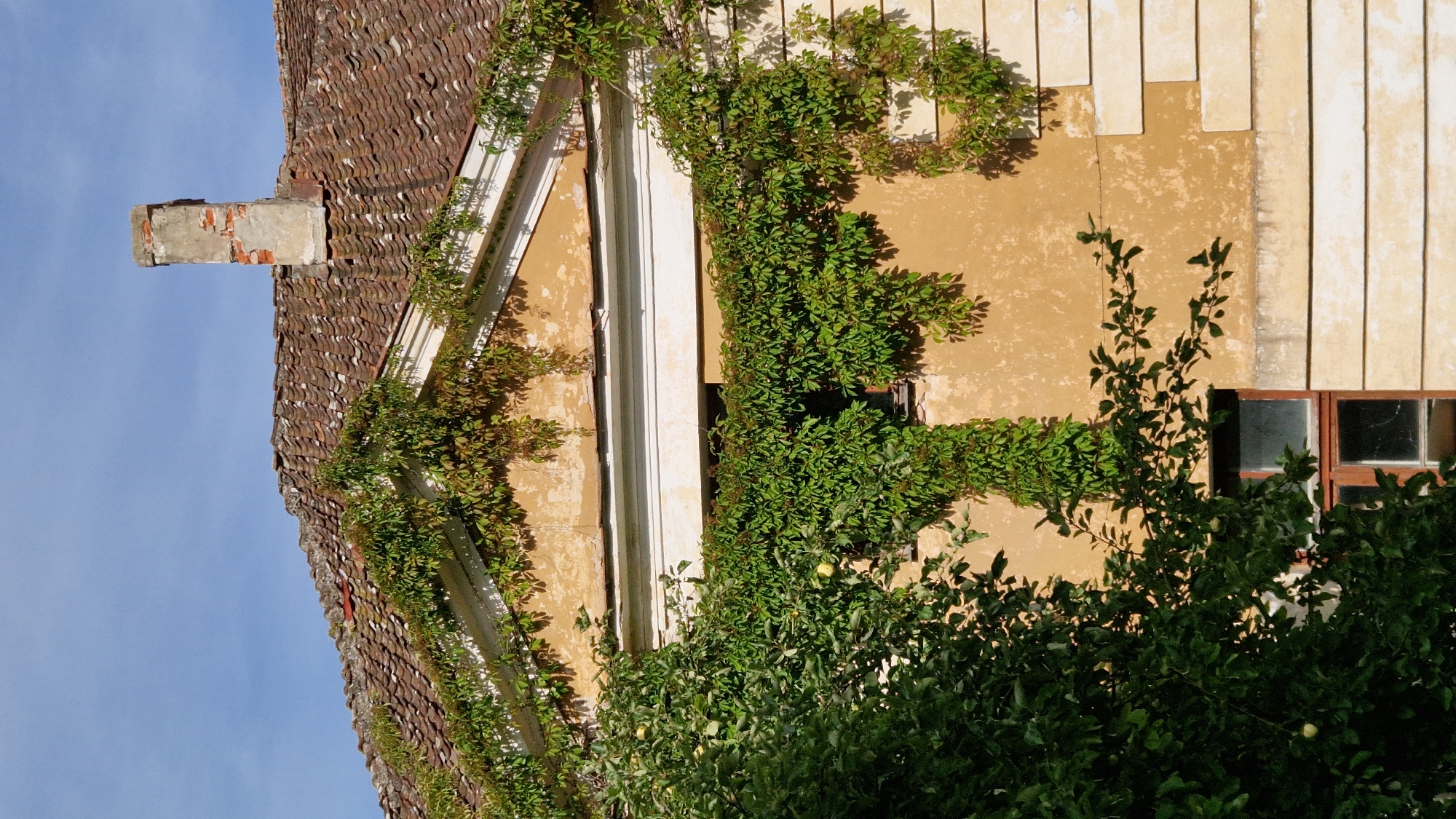
The image shows the facade of an old, weathered building with a tiled roof and a brick chimney. Lush green ivy covers large portions of the building's exterior walls and creeps along the roofline. A tree with green foliage and at least one visible yellow fruit is prominent in the foreground, partially obscuring a window with a dark wooden frame. The building's walls are a pale yellow, with areas of peeling plaster and decorative architectural details. The sky above is clear and blue. The building is located in the city of Kazdanga, Latvia.
Kazdanga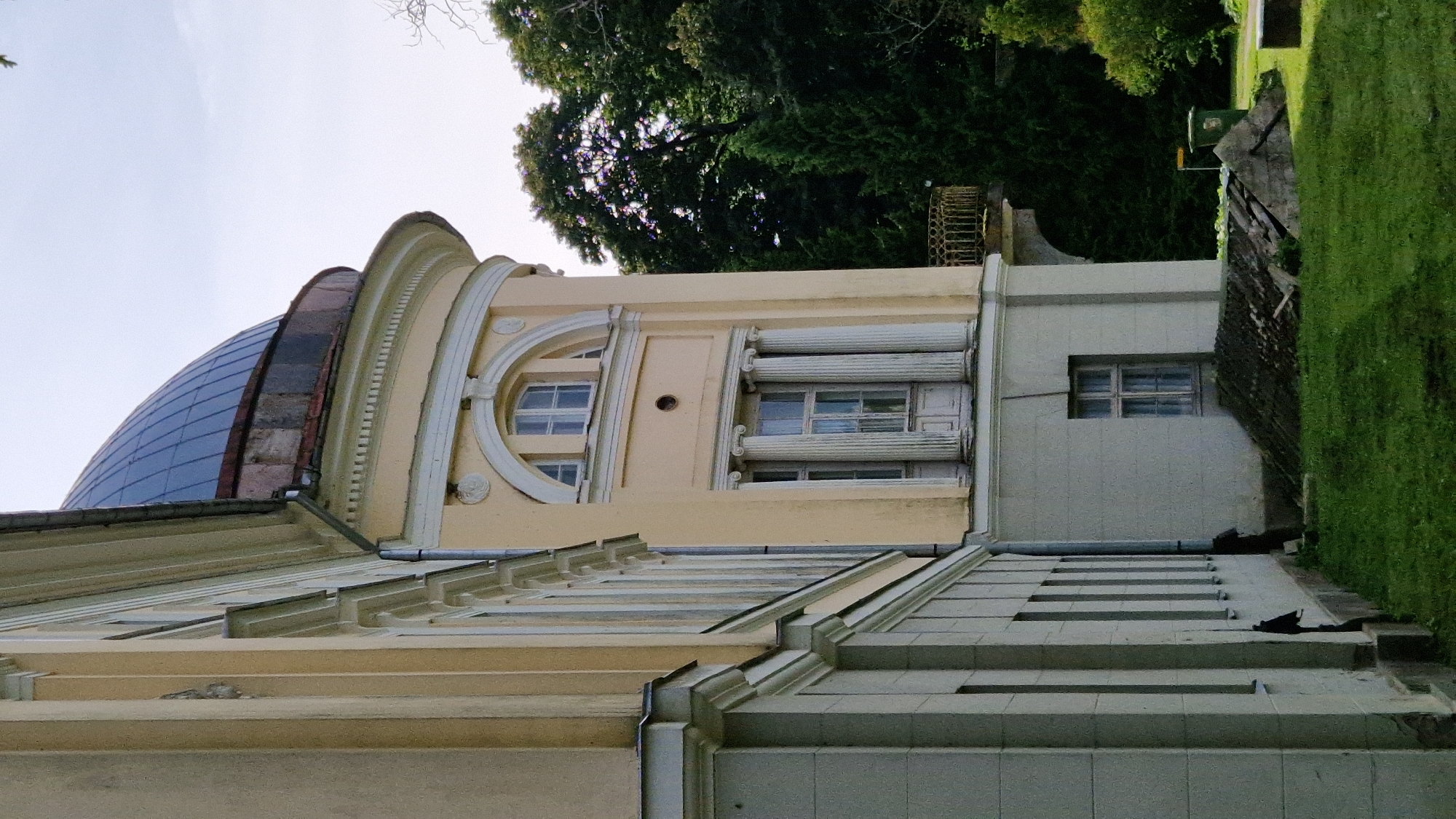
The image shows a side view of a light yellow classical building with a blue domed roof. The building has a complex facade with arched windows, columns, and decorative molding. To the right of the building, there are several mature trees, some of which are evergreen. In the foreground, there is a grassy area with some construction debris or landscaping materials. The sky is overcast. The building appears to be part of the Kazdanga Manor complex in Kazdanga, Latvia. There are no people visible in the image.
Kazdanga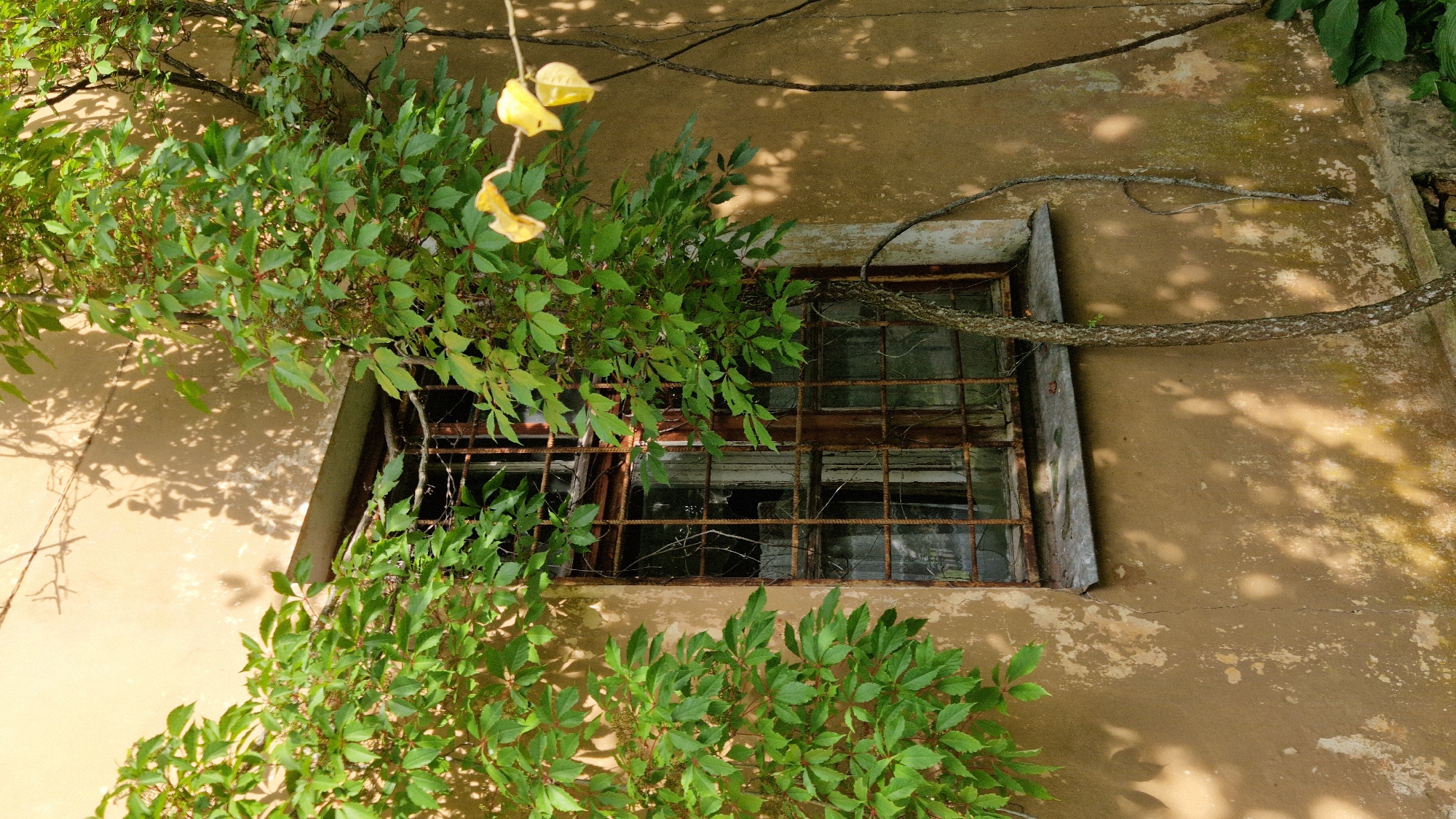
The image shows a close-up of a weathered building facade in Kazdanga, Latvia, with a prominent barred window. Green ivy vines with lush foliage are growing over and around the window and the wall, partially obscuring the view into the window. The window itself appears old and possibly broken, with visible panes and a rusted metal grate. Sunlight casts dappled shadows of leaves and branches onto the textured, peeling stucco wall, creating a pattern of light and shade. A thin, gnarled tree branch snakes its way up the wall next to the window. The overall impression is one of an abandoned or neglected structure reclaimed by nature. There are no people visible in the image.
Kazdanga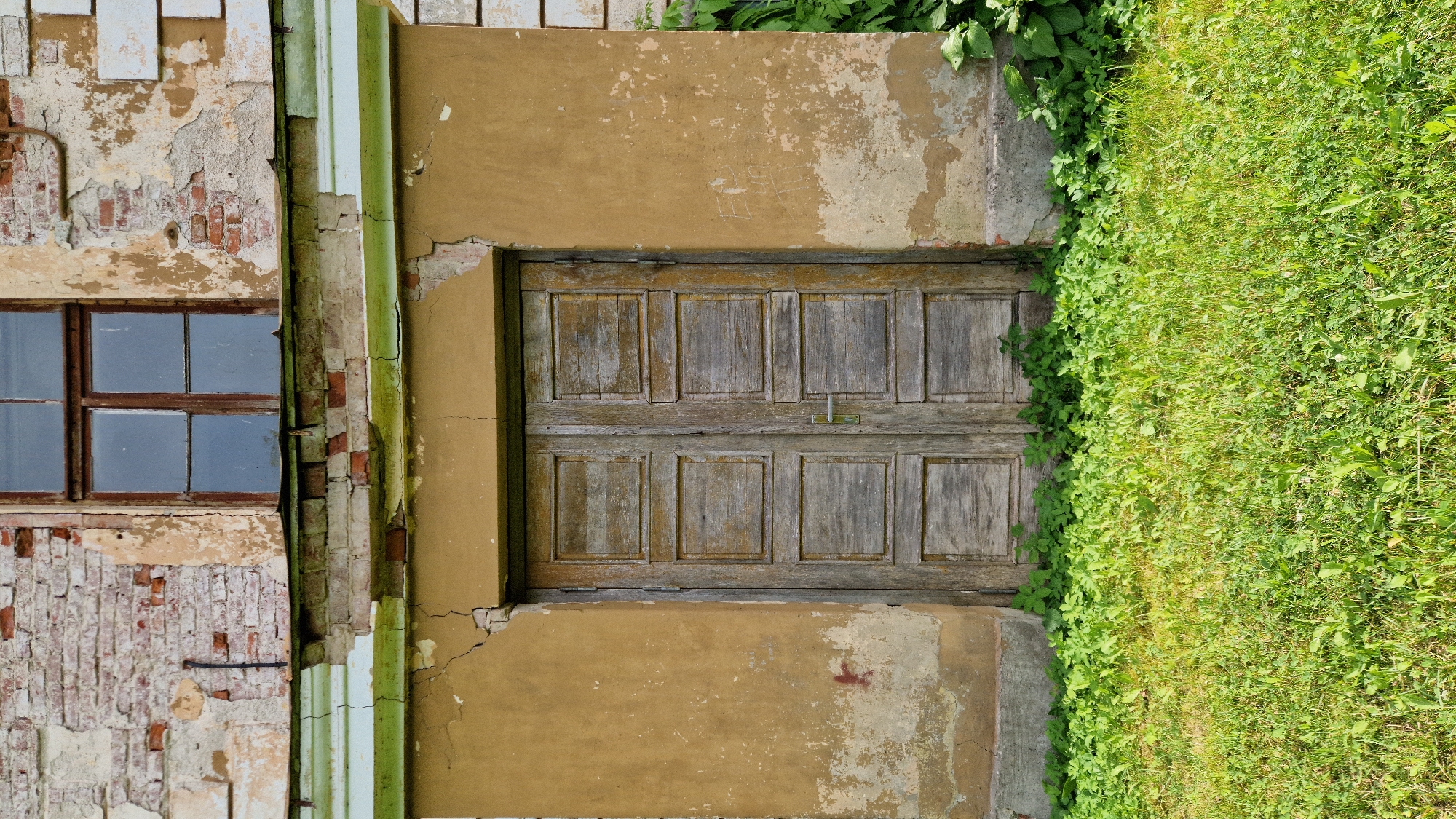
The image shows an exterior view of an old, weathered building with a distressed facade in Kazdanga, Latvia. A double wooden door, aged and showing signs of wear, is centrally located in a mustard-yellow, stucco-covered section of the building. Above the door, a window with a dark frame and multiple panes is visible within a section of exposed brickwork and crumbling plaster. The lower portion of the building features overgrown green grass and foliage, suggesting neglect or a natural landscape reclaiming the structure. The overall impression is one of decay and disuse, characteristic of historical sites that have been left to the elements. There are no people present in the image.
Kazdanga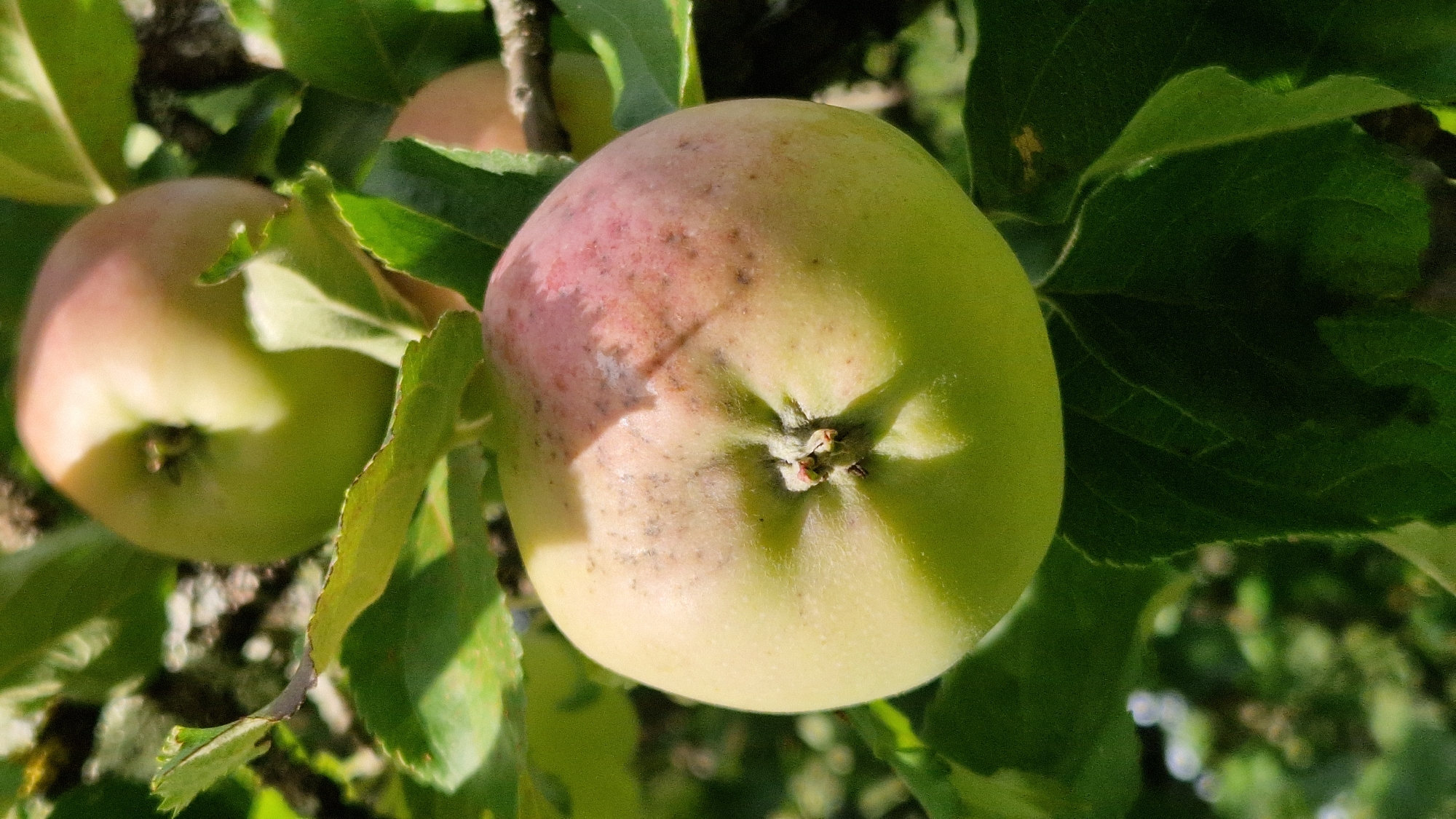
An apple tree branch in Kazdanga, Latvia, bears several unripe apples. The apple in the foreground is the largest and most in focus, with a pale green hue and developing pink blush on one side. Its stem is clearly visible. Other apples and green leaves surround it, with the background blurred into a soft green and brown.
Kazdanga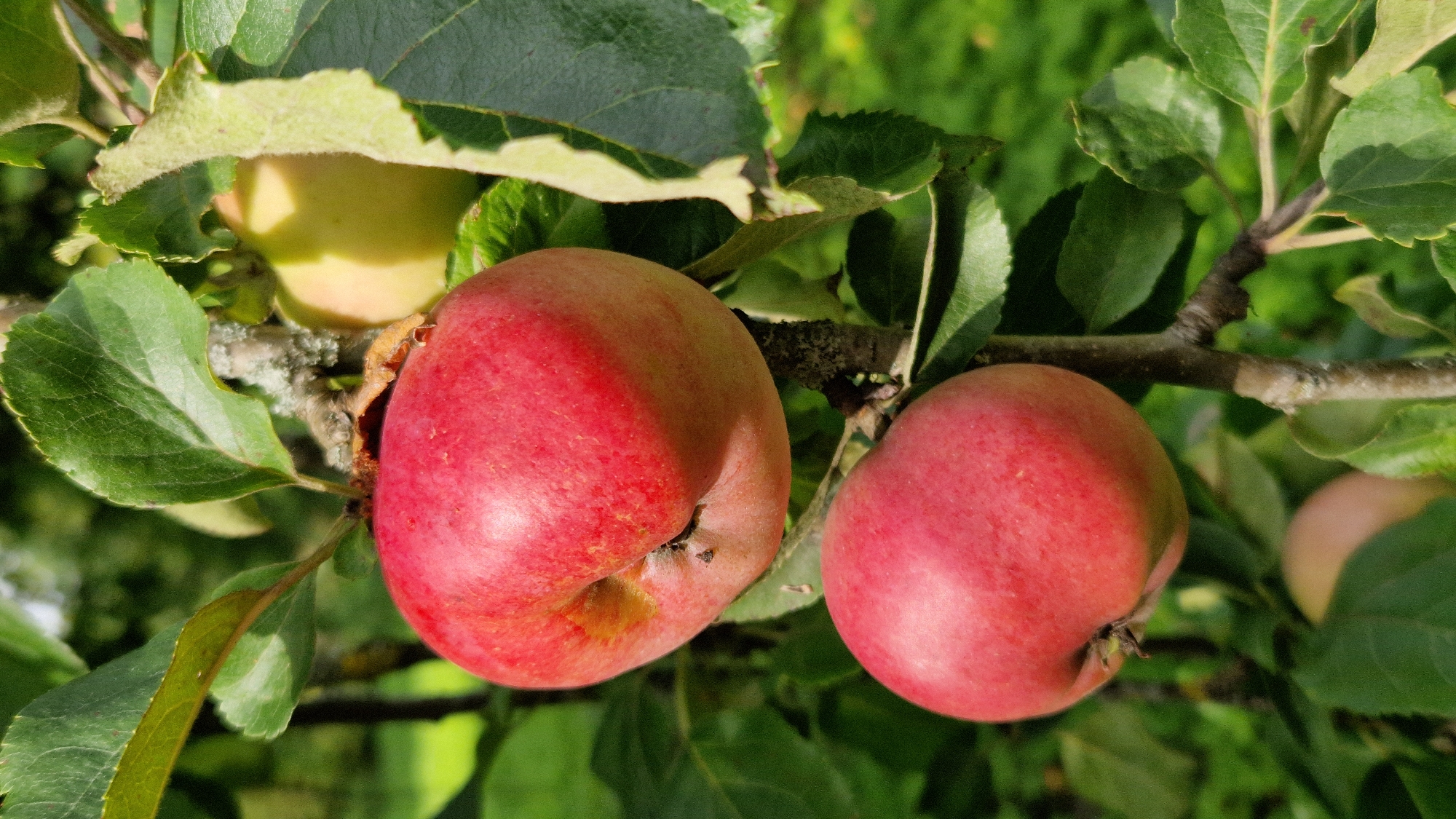
The image shows two ripe red apples on a tree branch, with green leaves and a blurred background of trees. There is also a hint of a yellow apple in the upper right corner. The scene appears to be an orchard or garden in a rural setting. The location is specified as Kazdanga, Latvia.
Kazdanga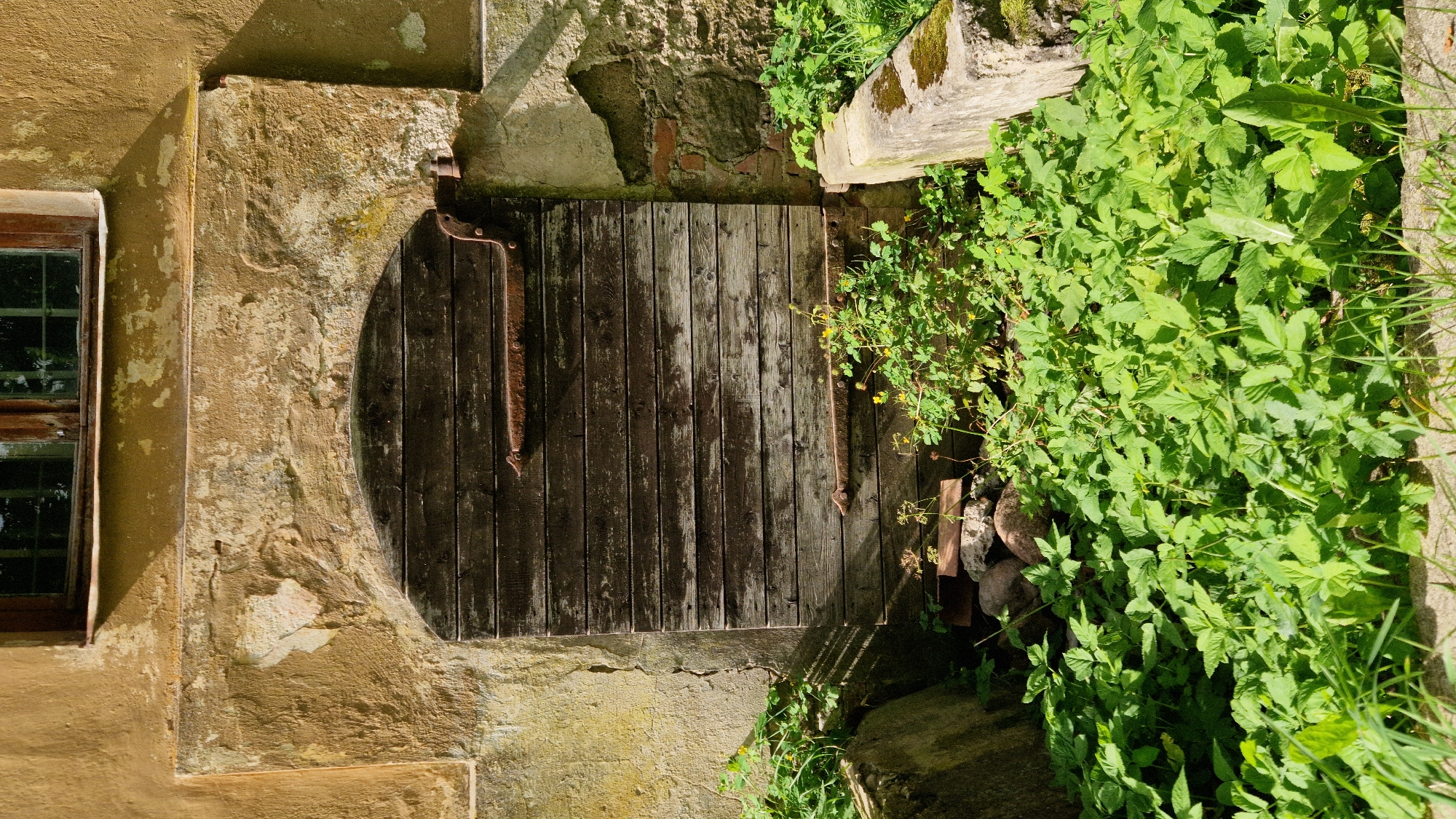
This image depicts an old, arched wooden door set into a weathered stone and plaster wall. The door is made of dark, horizontal planks and is secured by two rusty metal hinges. The wall surrounding the door shows signs of decay, with peeling plaster and exposed brickwork. The area in front of the door is overgrown with lush green vegetation, including various types of plants and some scattered stones and concrete blocks. A small window with a wooden frame is visible above the door. The scene appears to be outdoors, likely in a rural or historic setting, with sunlight casting shadows on the wall and ground. The location is identified as Kazdanga, Latvia.
Kazdanga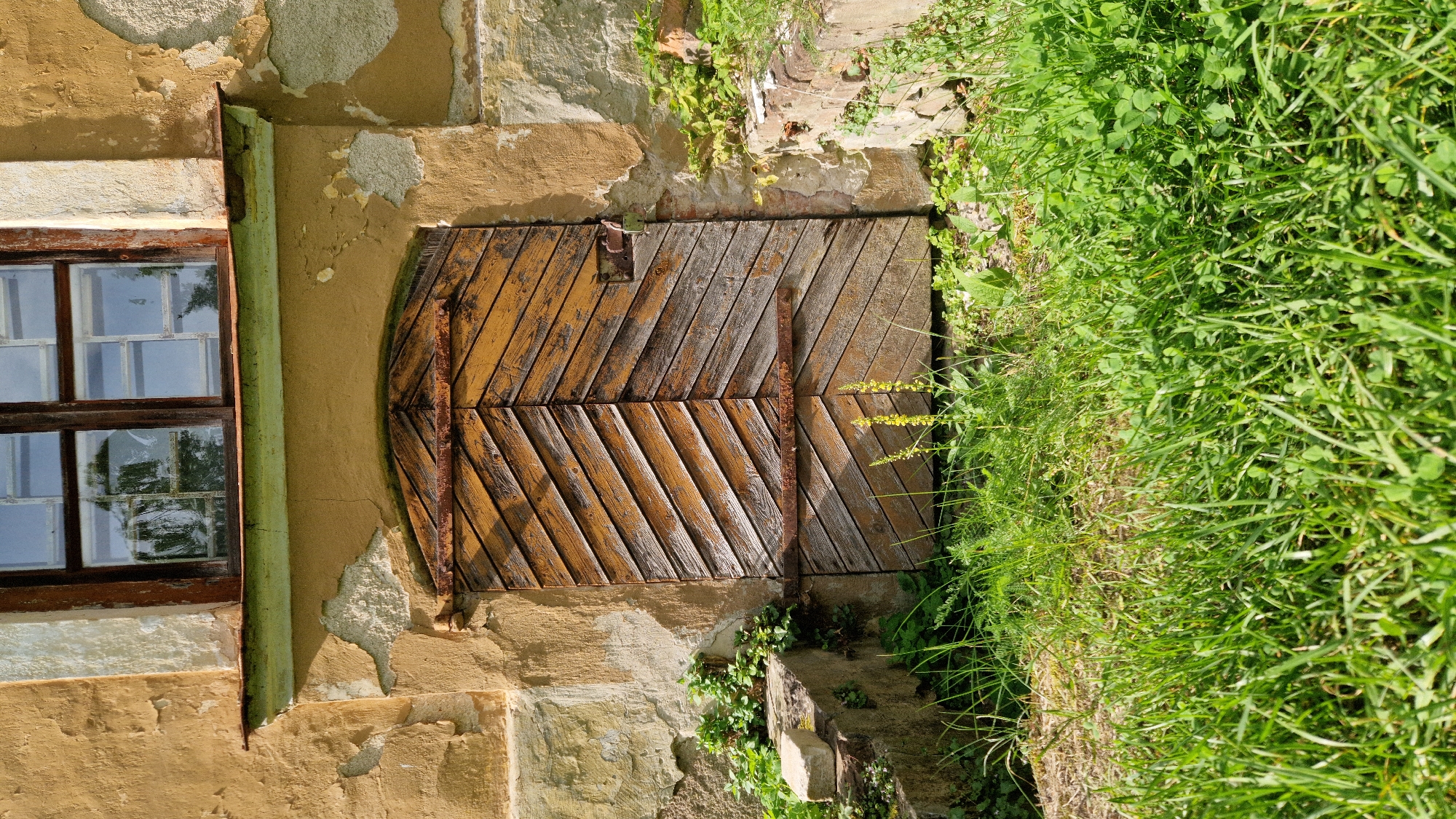
This is a full-frame, eye-level, vertical, outdoor, daytime photograph of an old wooden double door set into a weathered building facade. The door is painted a faded yellow with diagonal wooden planks. It has two rusty horizontal metal bars securing it, and a small rusty padlock hangs from a hasp. Above the door is a small green-painted overhang. The building's wall is rough plaster, mostly light brown and beige, with areas of peeling paint and visible concrete beneath. A window with a dark wooden frame and multiple panes is visible above the door. The window reflects trees and sky. To the left of the door, there are worn concrete steps with some green plants growing around them, and a single light-colored stone. To the right of the door, more concrete structures and green plants are visible. The foreground is filled with dense, bright green grass, with some clover mixed in. In the distance, a few yellow wildflowers are visible near the bottom of the door. The overall impression is one of neglect and age. The location is identified as Kazdanga, Latvia.
Kazdanga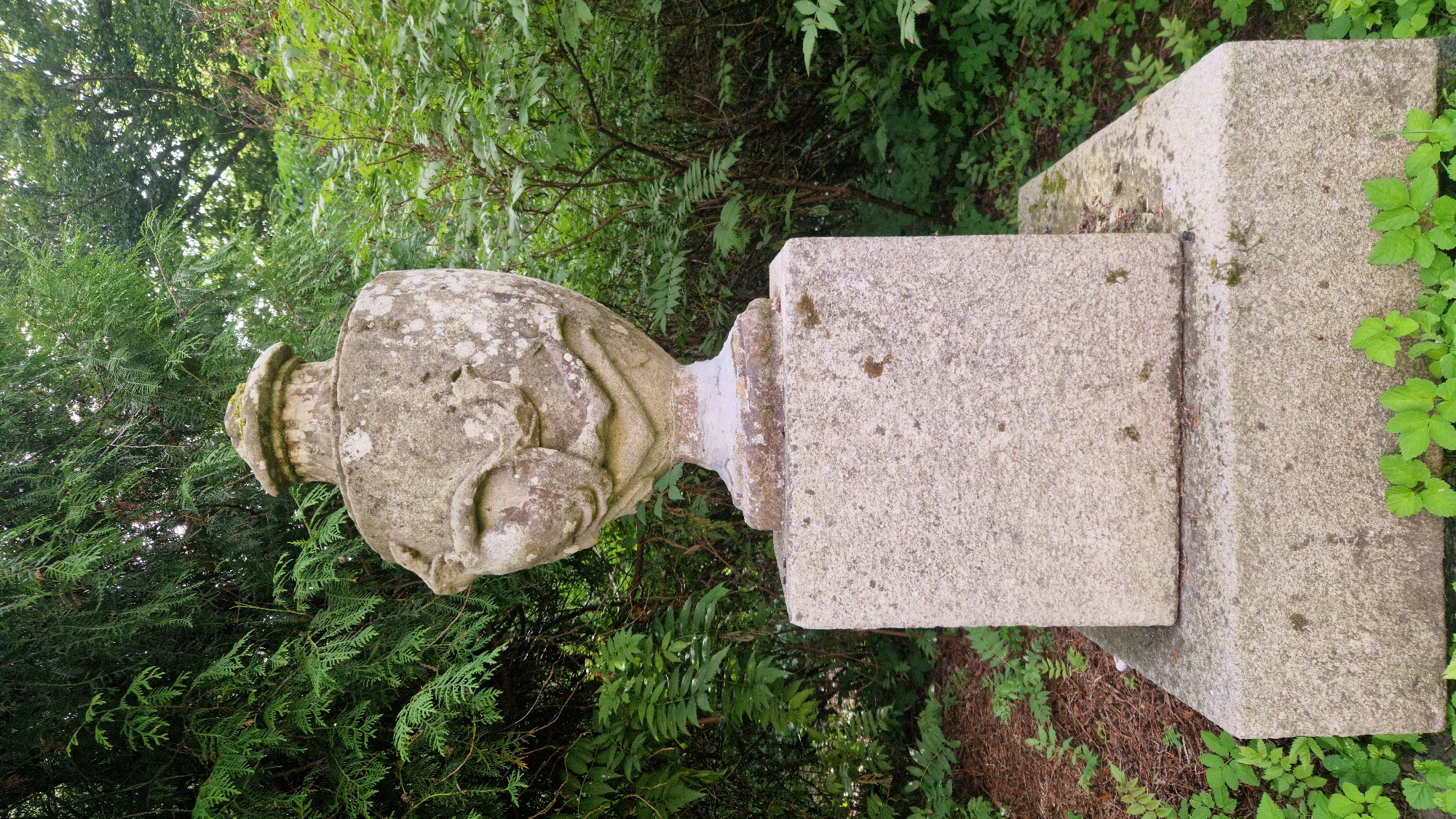
The image shows a weathered stone urn on a two-tiered stone pedestal, set outdoors amidst lush green foliage. The urn is ornate, with a lid and decorative elements on its body, possibly depicting a carved motif. The stone shows signs of age, with lichen and moss growth. The pedestal is cubic and made of rough-hewn stone. The background consists of dense trees and smaller plants, suggesting a garden or park setting. The scene appears to be situated in the grounds of Kazdanga Manor in Kazdanga, Latvia, a historical estate known for its park and architecture.
Kazdanga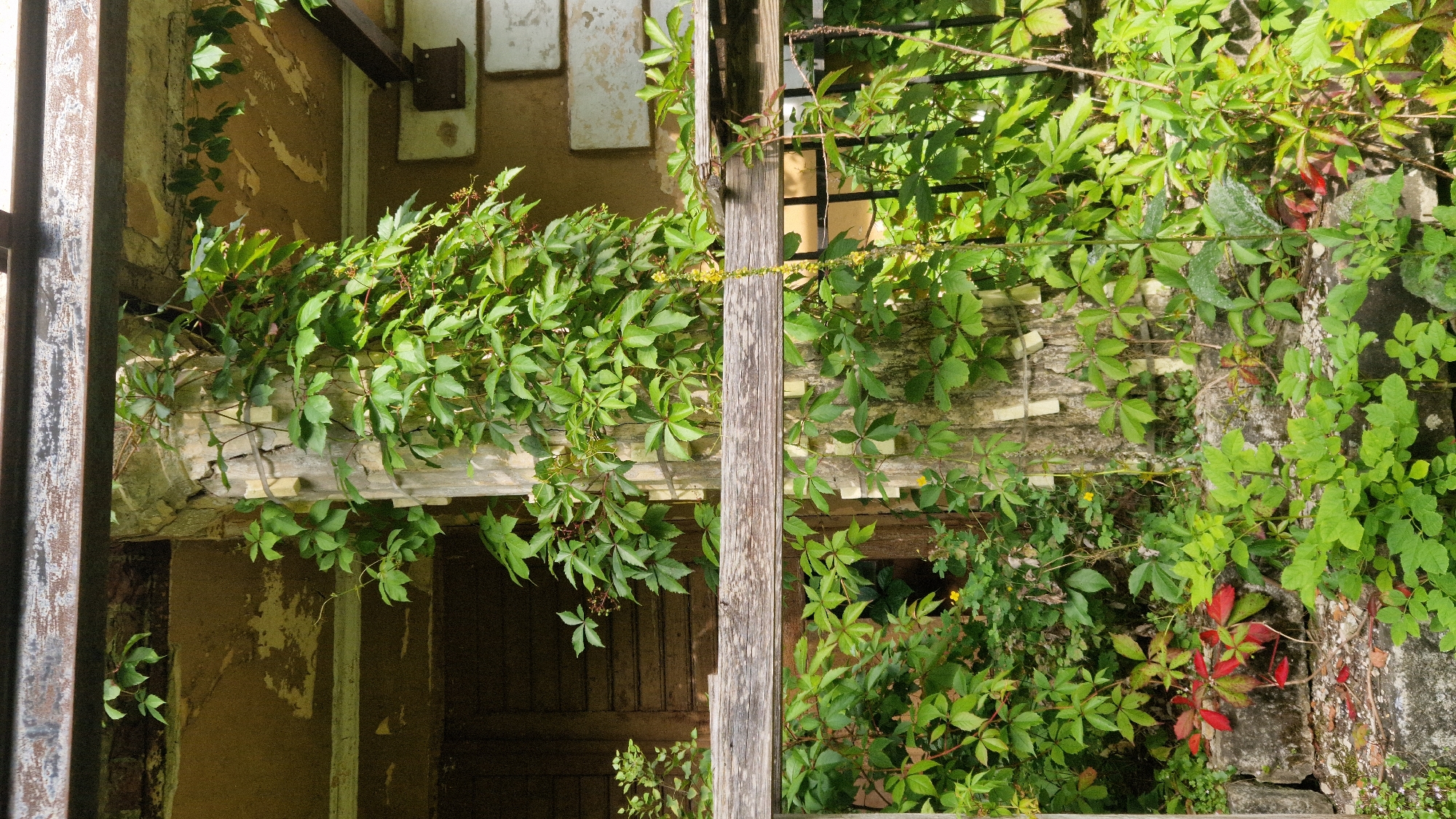
The image captures a close-up of an overgrown, weathered wooden structure in Kazdanga, Latvia, likely an abandoned building or an old shed, with a thick vine of Virginia creeper (Parthenocissus quinquefolia) covering a rough-barked tree trunk that serves as a central support. The vine's green leaves dominate the scene, with some leaves showing hints of red, suggesting early autumn. Yellow flowers are visible on a stalk trailing down the trunk. The structure appears to be a porch or veranda, with a heavy, distressed wooden beam running horizontally in the foreground, supported by the vine-covered tree trunk. Behind the foliage, sections of a textured, pale yellow wall and a dark wooden door are partially visible. The ground is littered with debris, including stones and fallen leaves. The overall impression is one of nature reclaiming a man-made structure, creating a scene of decay and verdant growth.
Kazdanga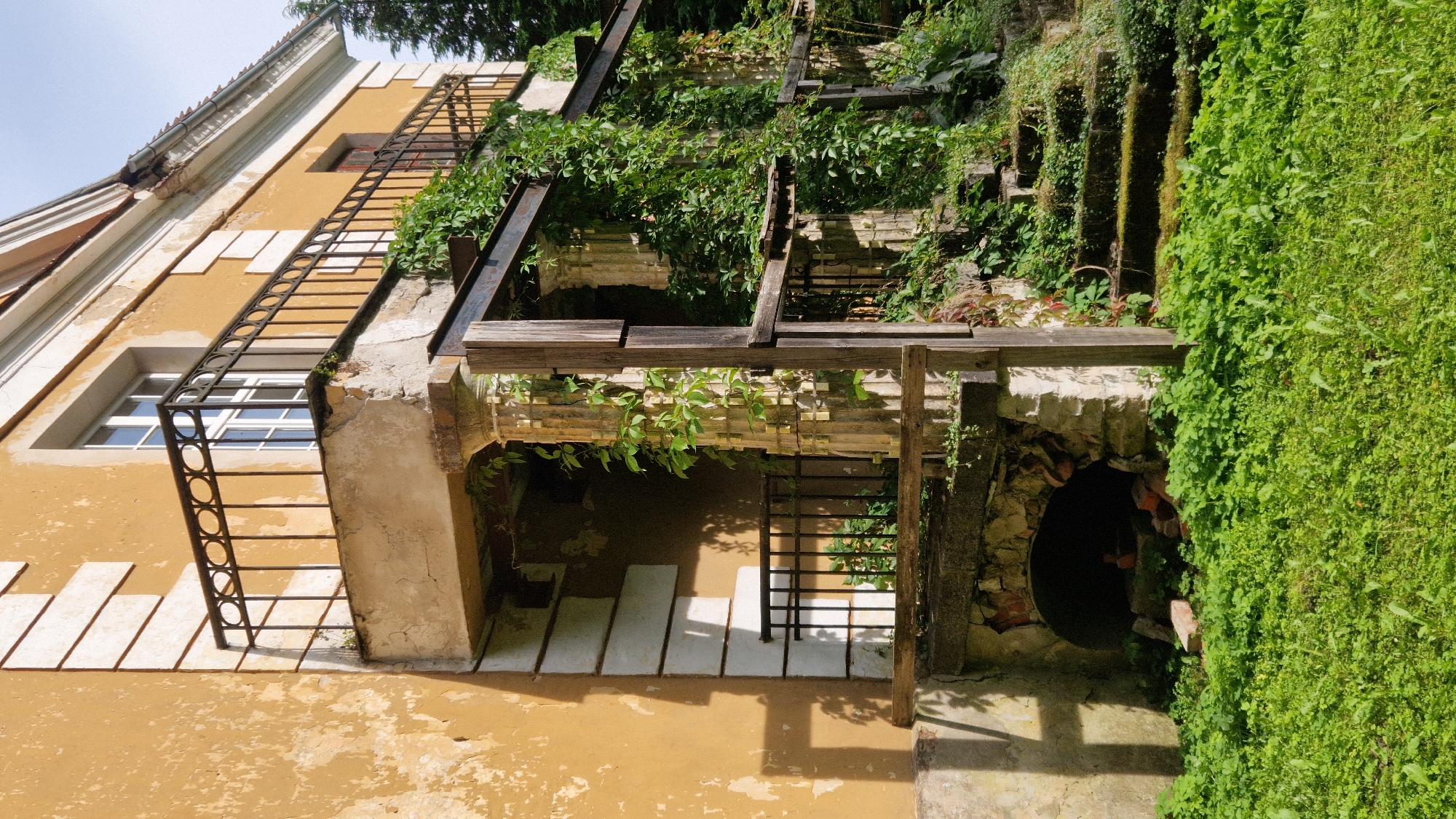
The image depicts the overgrown and dilapidated facade of an old building in the city of Kazdanga, Latvia. A weathered, ochre-colored wall dominates the left side of the frame, marked by white, rectangular decorative elements. A wrought-iron balcony with circular embellishments extends from the second story, its concrete base showing signs of decay and cracking. Below the balcony, a covered porch area is visible, supported by crumbling stone pillars entwined with lush green vines. Wooden beams, some rotted, are integrated into the structure, suggesting past repairs or attempts at stabilization. To the right, moss-covered stone steps ascend, also heavily overgrown with vegetation, leading to an upper level. A dark, arched opening at the base of the structure, possibly an old fireplace or cellar entrance, is filled with debris, including scattered red bricks. The foreground is a dense carpet of vibrant green grass and various weeds, indicating a lack of regular maintenance. The overall scene evokes a sense of abandonment and the passage of time, with nature steadily reclaiming the man-made structure. The lighting suggests it is daytime, with shadows cast by the building and the sun filtering through the foliage. No people or animals are present in the image.
Kazdanga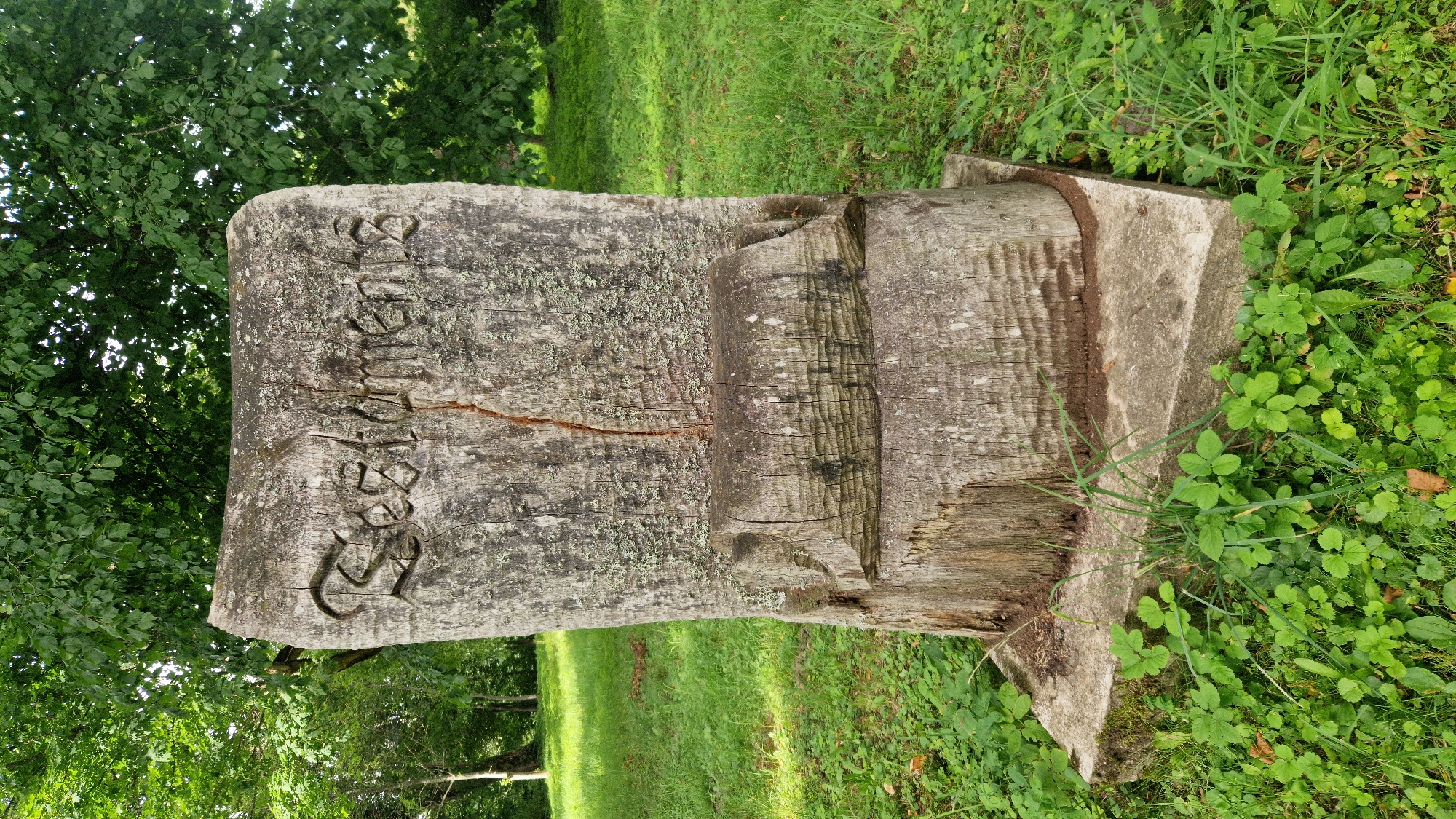
The image shows a weathered, carved wooden monument in a park-like setting. The monument, appearing to be made from a large tree trunk, is roughly rectangular with a curved top edge. Carved into its surface in an ornate script are the words "Sestamens". A vertical crack runs down the center of the monument. Below the inscription, a section of the wood has been carved to resemble a seat or bench. The monument rests on a rough concrete base which is surrounded by green grass and some low-lying plants. In the background, mature trees with dense green foliage are visible, suggesting a natural, outdoor environment. The scene is illuminated by natural light, likely daytime, with dappled sunlight filtering through the trees. There are no people or animals present in the image. The monument is located in Kazdanga, Latvia.
Kazdanga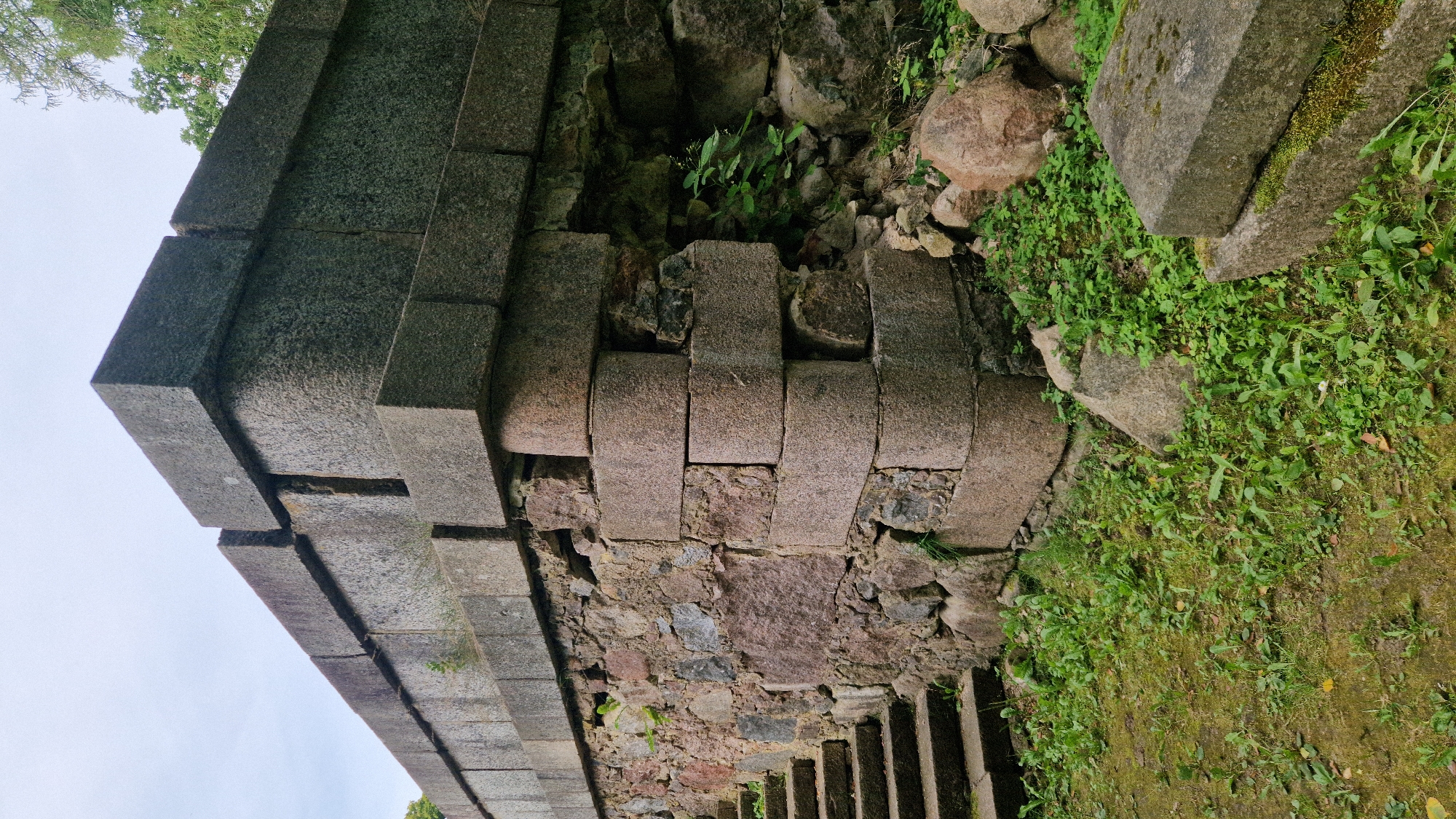
An outdoor, low-angle, eye-level medium shot captures a section of a dilapidated stone structure, likely part of the historical Kazdanga Manor ruins in Kazdanga, Latvia. The structure exhibits a corner where a lower, roughly constructed stone wall meets a more precisely engineered upper section made of large, rectangular granite blocks. Some of these upper blocks show signs of weathering and displacement, with noticeable gaps and cracks between them. The lower wall is composed of irregularly shaped stones of varying sizes and colors, embedded with mortar. To the left of the structure, a set of stone steps, also appearing weathered, ascends alongside the wall. The ground surrounding the structure is covered in a mixture of moss, grass, and small green plants, with several large, rounded stones and broken pieces of masonry scattered about. In the background, the upper parts of the stone construction are visible, extending upwards and disappearing out of frame. Lush green foliage and trees are visible at the top right of the image, suggesting a natural, overgrown environment. The sky above is overcast and pale. No people or animals are present in the scene.
Kazdanga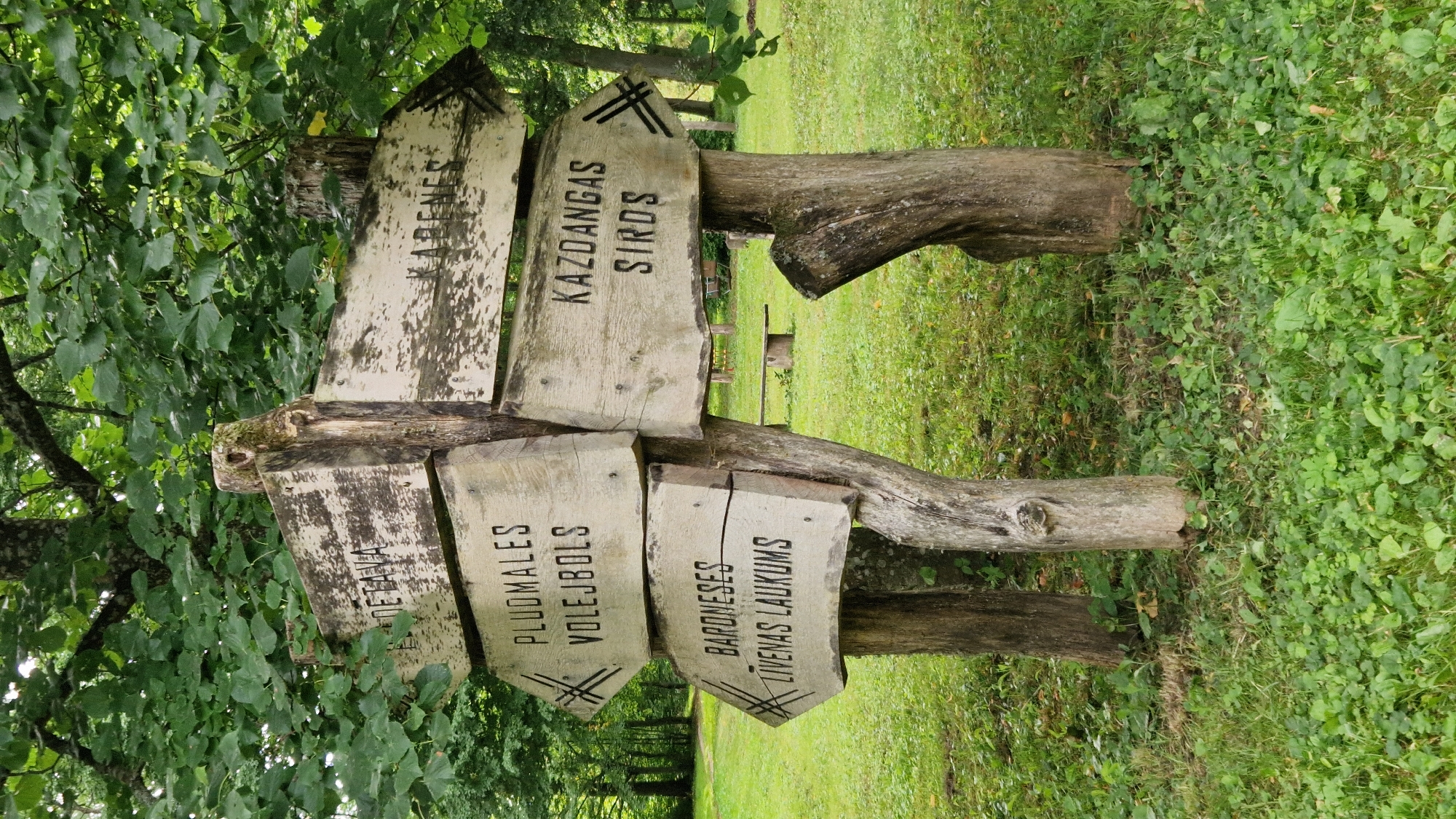
This image shows a weathered wooden directional signpost in Kazdanga, Latvia, surrounded by lush green grass and trees. The signpost is made of rough-hewn wood and has several planks attached at different angles, each with hand-painted text. The text on the signs, which appear to be in Latvian, indicates different destinations. One sign points left and reads "PLUOMALES VOLEJBOLS", another points left and below it reads "BARONESES LĪVENAS LAUKUMS". On the right side, one sign points right and reads "KARENES", and another below it reads "KAZDANGAS SIRDS". The wood of the signpost is aged and shows signs of wear, with peeling paint and visible grain. The environment is natural and appears to be a park or forest area, with sunlight filtering through the leaves of the trees. In the background, a wooden bench and table are partially visible, suggesting a recreational area. There are no people visible in the image. The overall impression is one of a rustic, natural setting with clear directional guidance to various points of interest.
Kazdanga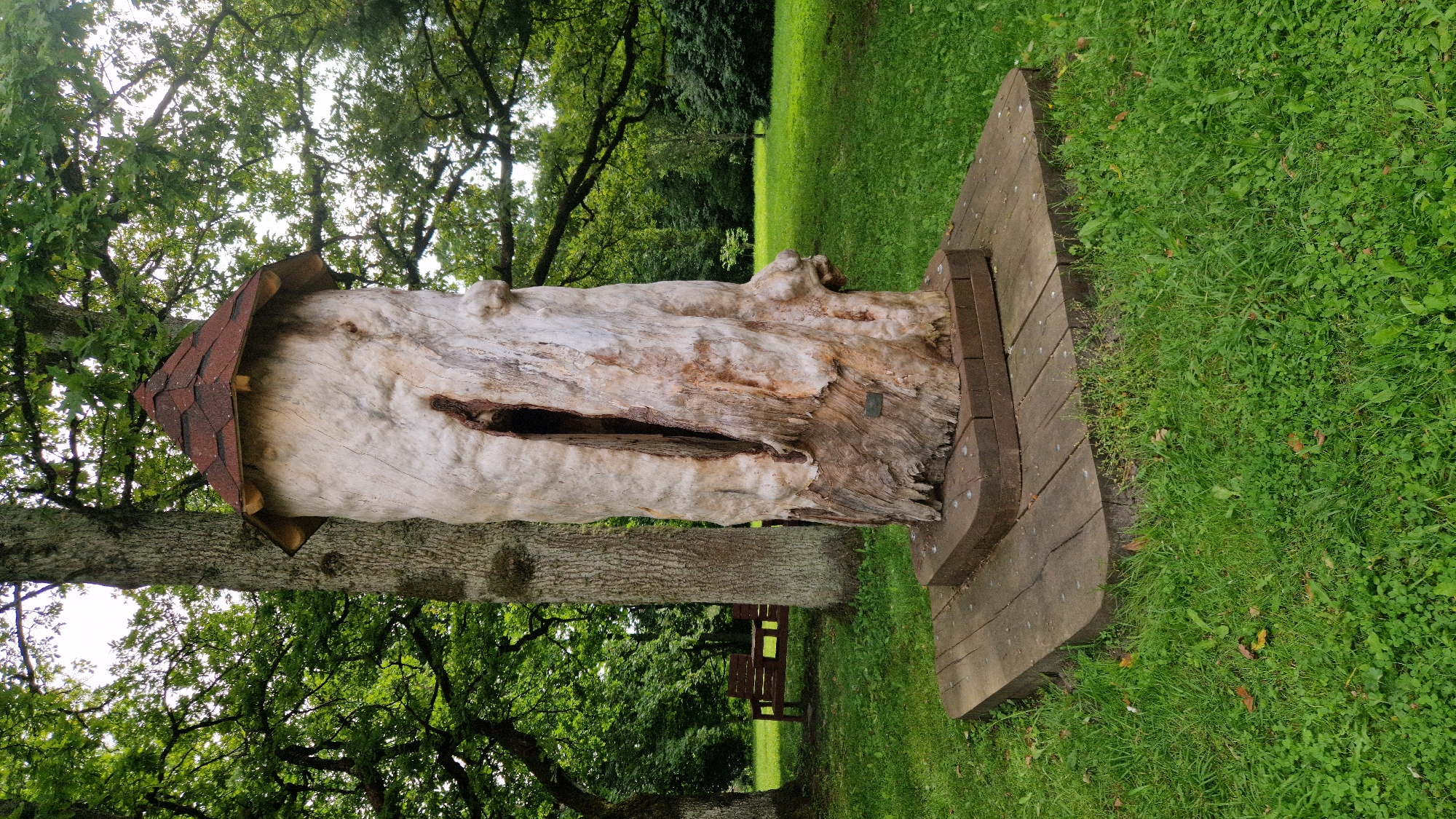
The image shows a hollowed-out tree trunk, possibly a natural monument or art installation, with a roof constructed from red shingles. The trunk is light in color with visible grain and a large, dark opening in the center. It stands on a square base made of dark wooden planks, which in turn rests on a lower platform of brick-like material. The installation is situated on a well-maintained lawn in a park-like setting, surrounded by mature trees with dense green foliage. In the background, to the left, a wooden bench and table are visible, suggesting a recreational area. The overall impression is of a peaceful, natural environment within the grounds of Kazdanga, Latvia. There are no people visible in the image.
Kazdanga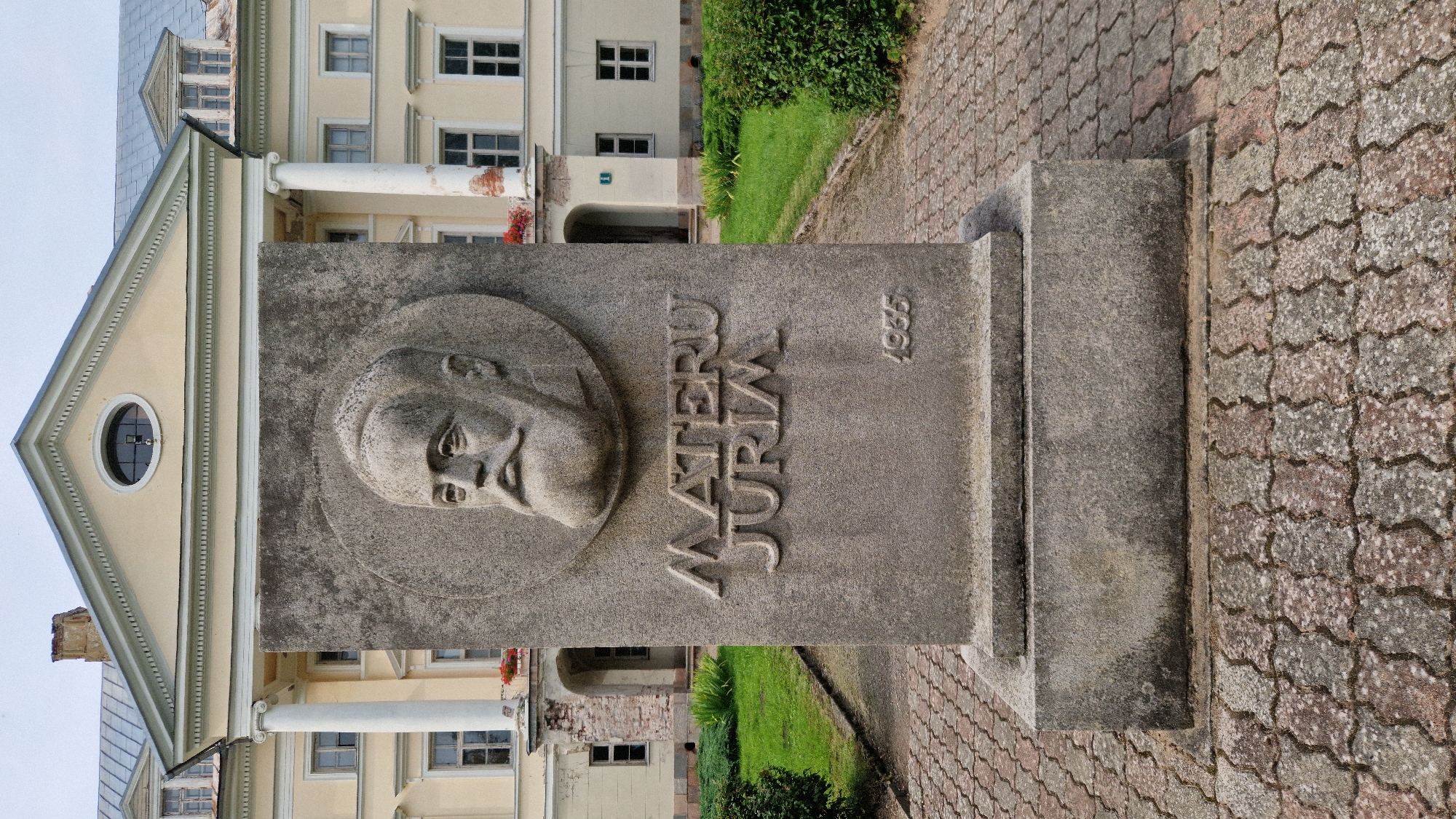
In Kazdanga, Latvia, a stone monument stands in front of a pale yellow building with white columns. The monument features a bas-relief portrait of a man with a beard and mustache, enclosed in a circular border. Below the portrait, the inscription "MATERU JURIM" is carved, followed by the year "1935" to the right. The monument is placed on a paved walkway made of interlocking bricks. Green grass and shrubs are visible on either side of the walkway. The building in the background appears to be a historical structure, possibly a manor or public building, with multiple windows and a light-colored roof.
Kazdanga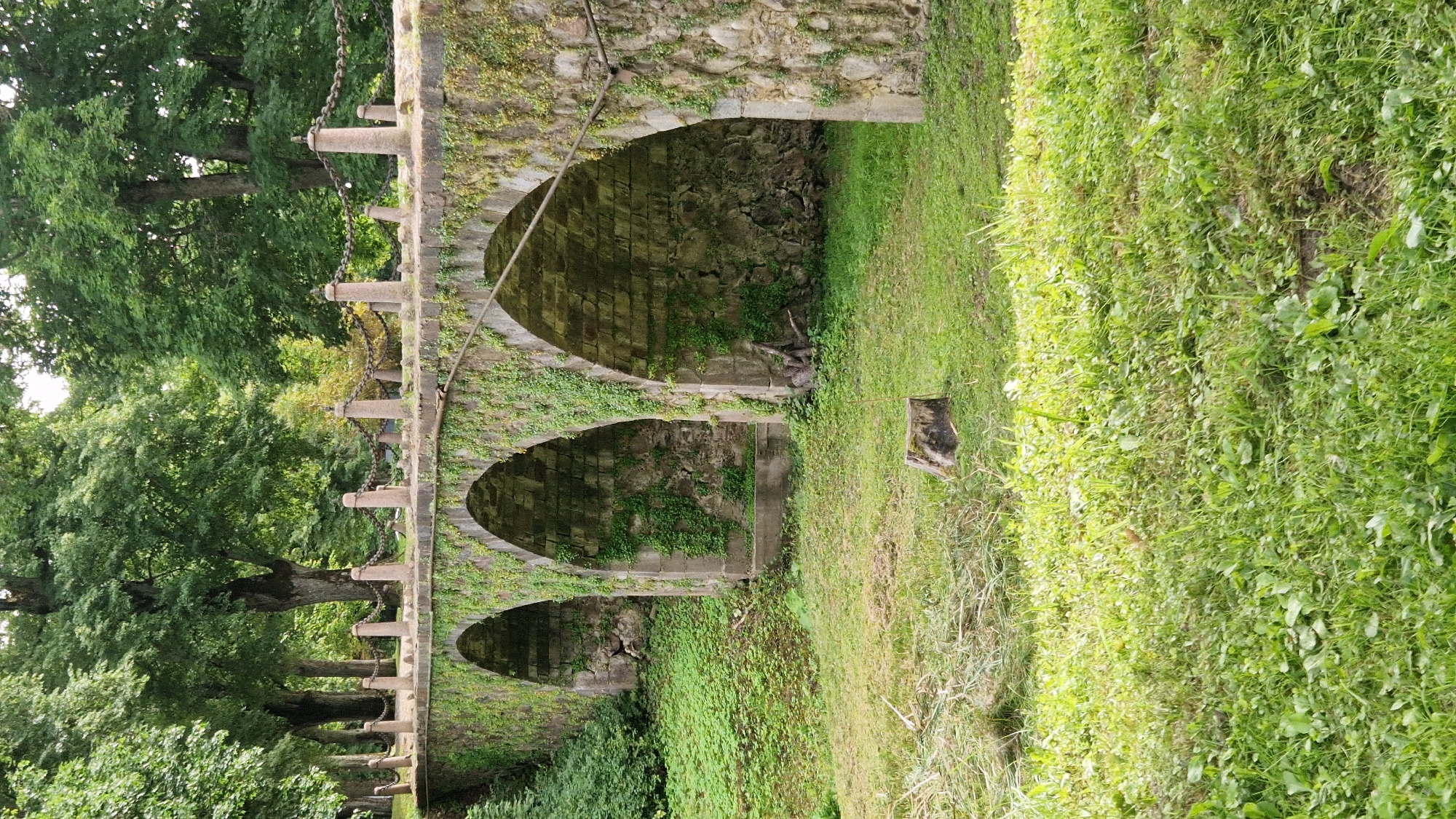
The image depicts an old stone bridge with three arched openings, covered in green ivy. The bridge is made of rough-hewn stone blocks and has stone posts with chains along its top. It is situated in a lush green park-like environment with tall trees in the background and dense vegetation and grass in the foreground. A tree stump is visible in the middle ground. The scene appears to be in Kazdanga, Latvia, likely within the grounds of the Kazdanga Manor. There are no people or animals present in the image, and no actions are being performed. The environment is natural and appears serene.
Kazdanga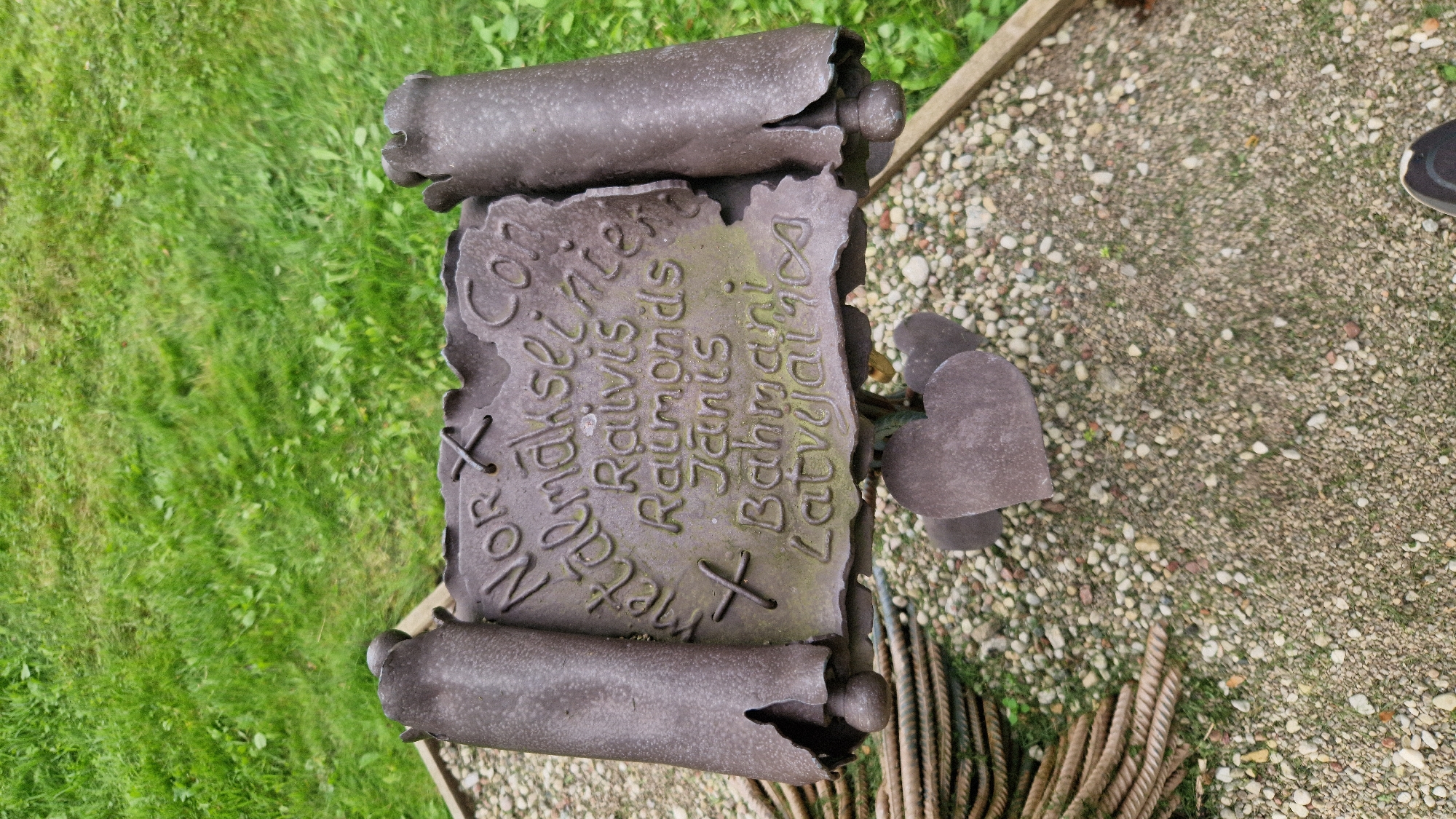
The image shows a metal scroll with names and text inscribed on it. The scroll is made of rusted metal and appears to be part of an outdoor display, possibly a sculpture or memorial. The text on the scroll is in Latvian and reads "NOR metālmāksles", "Raivis", "Raimonds", "Janis", "Bahmani", and "Latvijal". Below the scroll, there are several metal hearts. The background consists of grass and gravel. The scene is likely located in Kazdanga, Latvia, given the reference to "Latvijal" which can be interpreted as "Latvia".
Kazdanga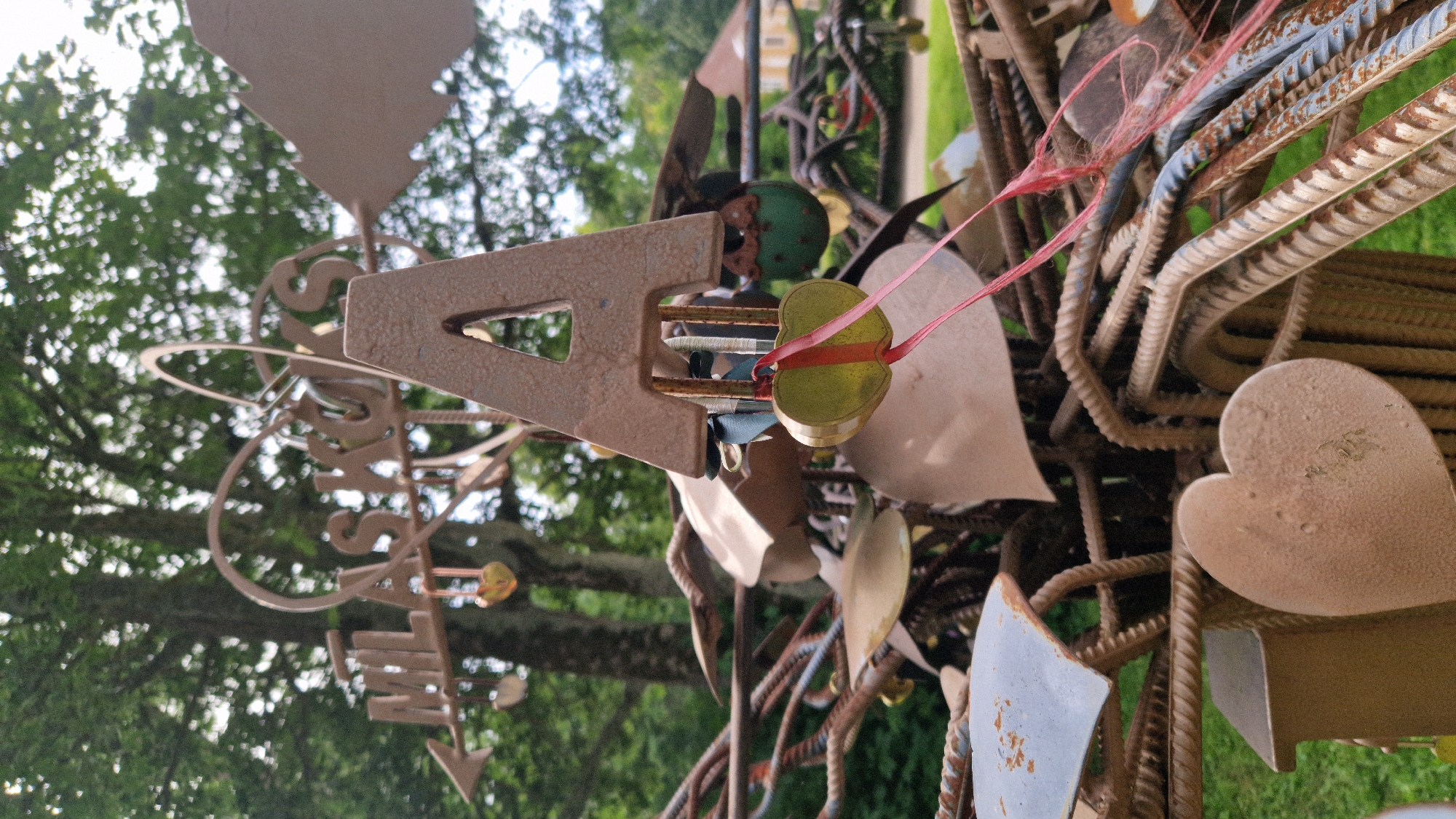
The image shows a close-up of a metal sculpture adorned with heart-shaped locks, likely a lover's lock sculpture, situated in a park or outdoor setting. The sculpture features an array of metal elements, including what appears to be a stylized wind vane with the letters "MILAS KOKS" visible, a large letter "A", and numerous heart-shaped locks of various sizes and colors, some hanging by ribbons. The background consists of lush green trees and foliage, suggesting a natural environment. In the distance, a building with yellow siding and a red roof is partially visible. The sculpture appears to be made of rebar and other metal pieces, giving it a rustic and somewhat industrial aesthetic. The focus is on the intricate details of the sculpture and the locks. The scene is well-lit, indicating it was taken during daylight.
Kazdanga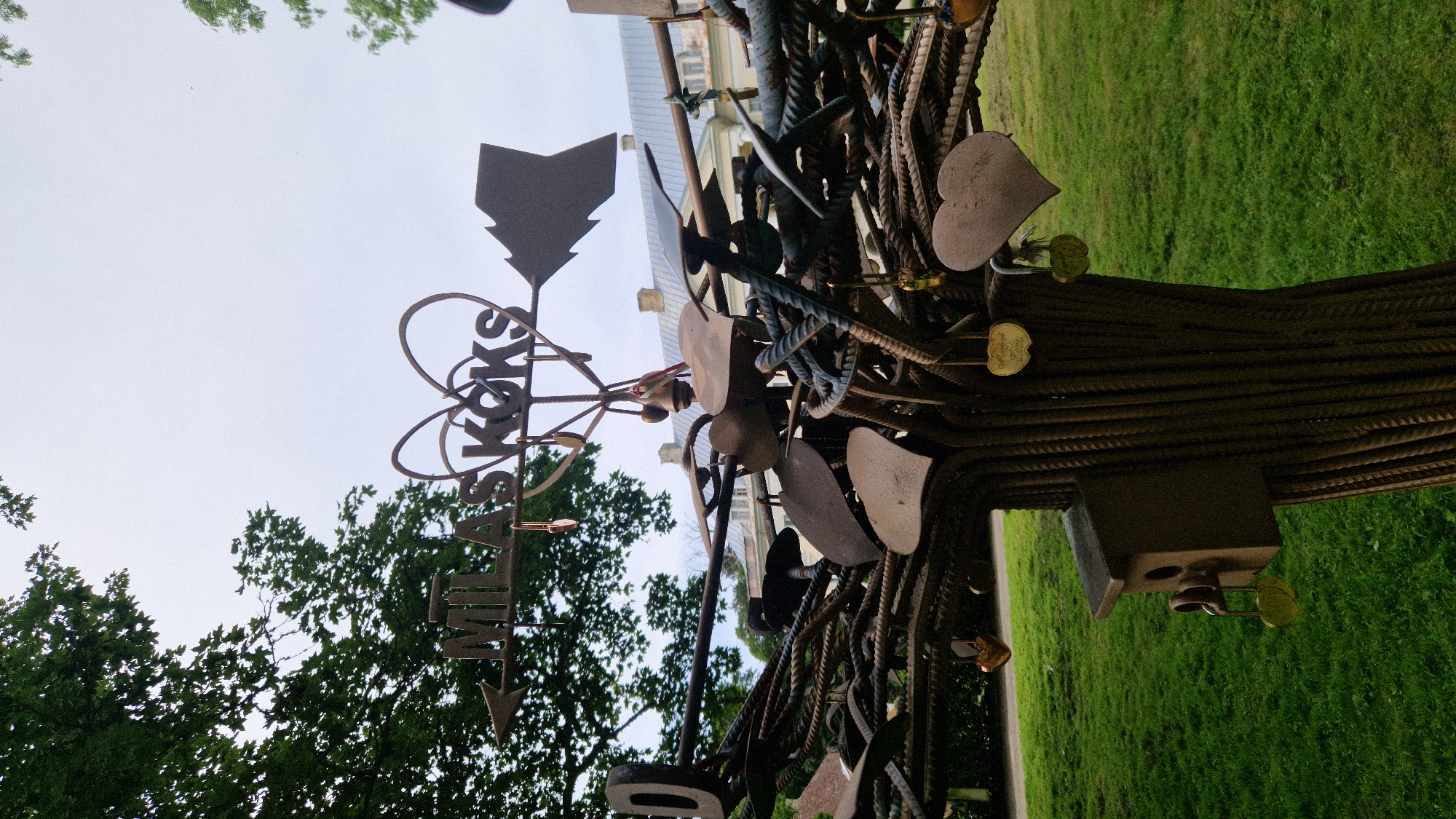
The image depicts a sculpture made of metal rods and rebar, shaped like a tree. The sculpture is adorned with numerous heart-shaped locks and decorative elements, including a birdhouse. At the top of the sculpture, a metal sign reads "MĪLAS KOKS" (Tree of Love) with an arrow and a heart shape. The sculpture is situated in an outdoor setting with green grass and trees in the background. A building with a light-colored facade and a gray roof is visible behind the sculpture, suggesting an urban or park environment. The sky is overcast. This sculpture is located in the city of Kazdanga, Latvia.
Kazdanga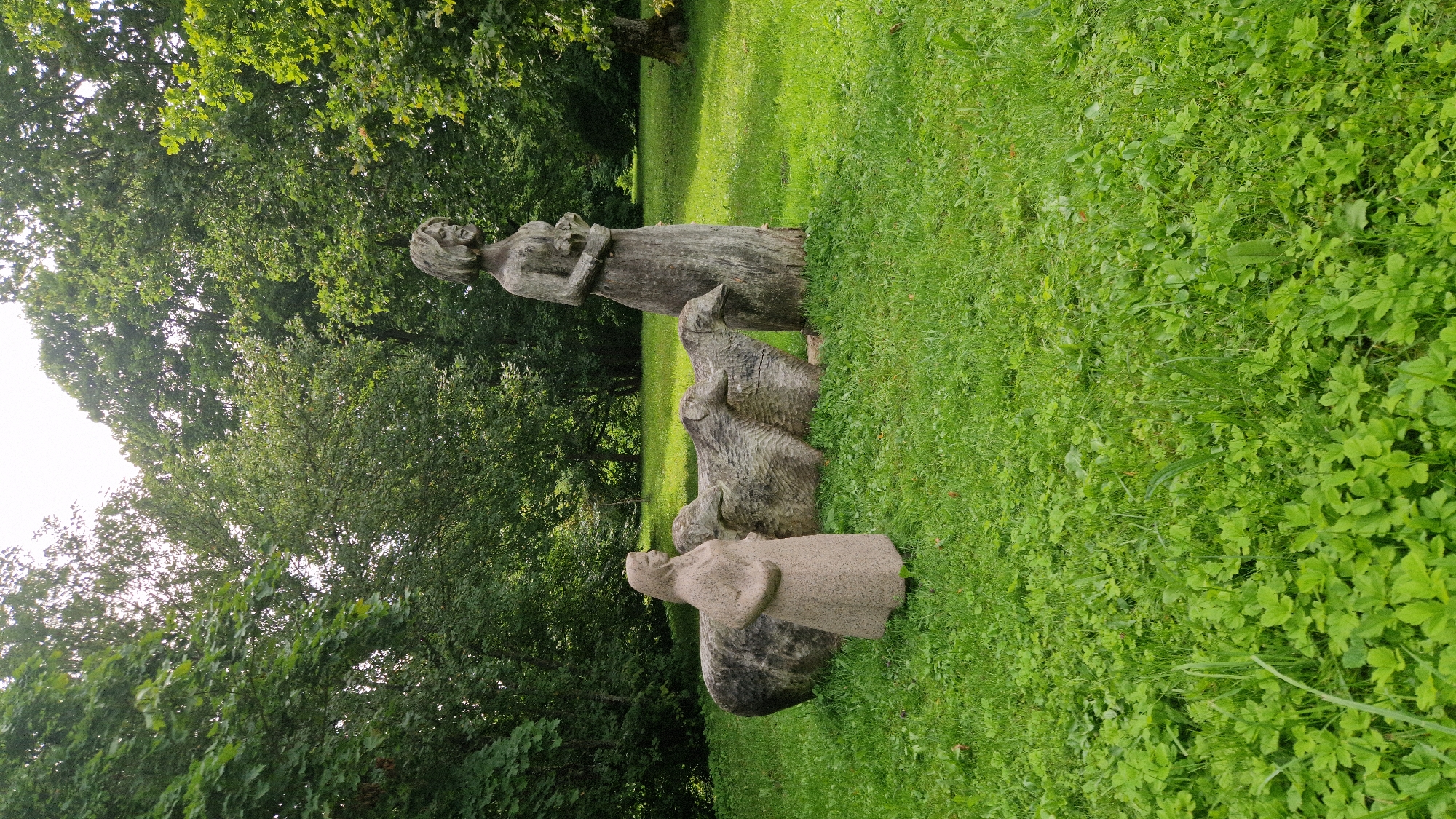
This is a photograph taken in the Kazdanga municipality of Latvia. In the foreground, lush green grass covers the ground. Two stone sculptures are visible: on the left, a female figure in a long dress stands facing right, and to her right, a series of three carved wooden sheep are arranged in a line. Behind the sheep, a tall, slender wooden sculpture of a female figure holding a bouquet stands facing left. The background is dominated by a dense forest of green trees under a bright sky.
Kazdanga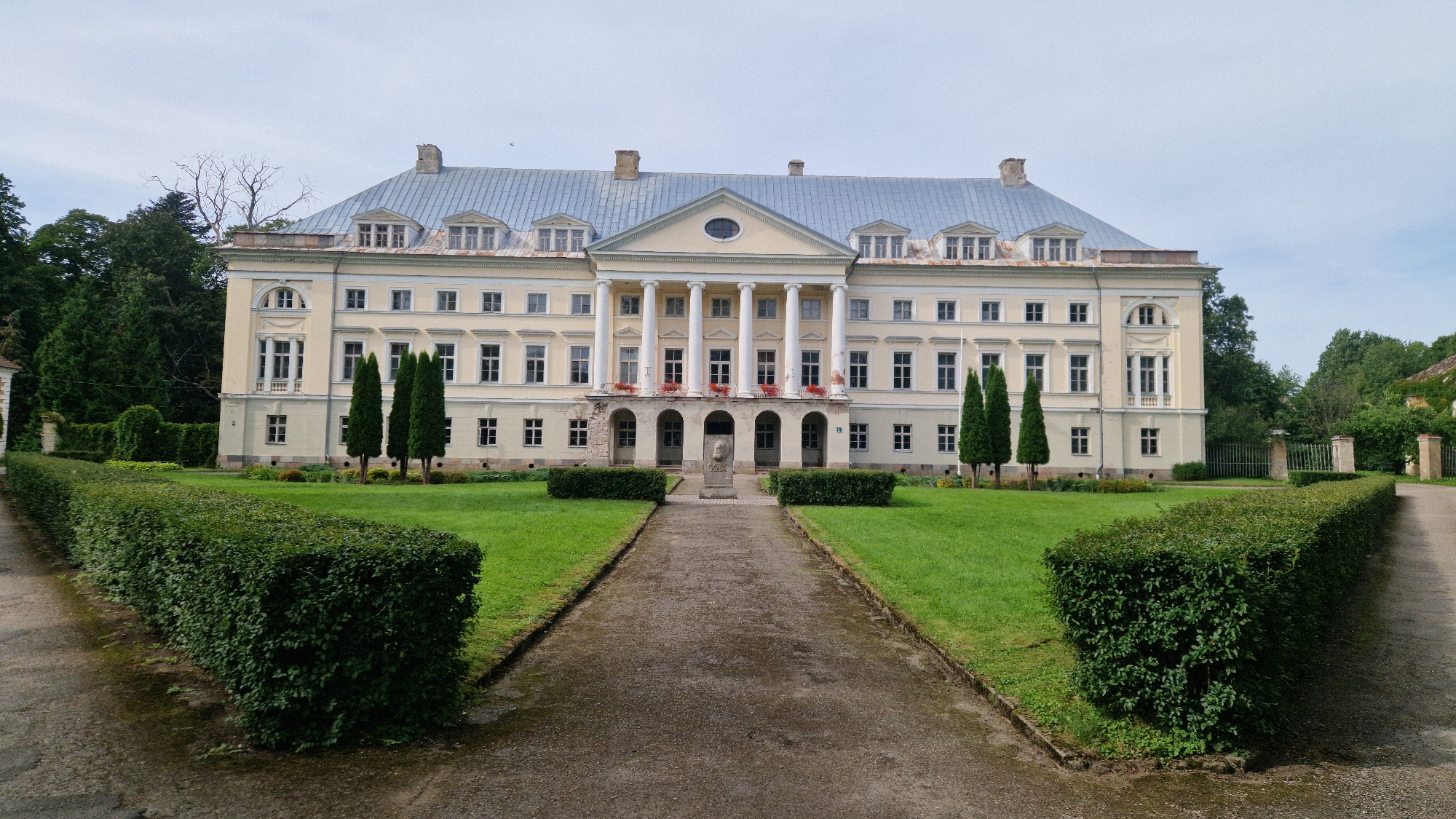
This is a full, eye-level, outdoor shot of Kazdanga Palace in Kazdanga, Latvia, on an overcast day. The pale yellow, neoclassical palace dominates the center of the frame, featuring a central portico with six large columns, a triangular pediment with an oval window, and a symmetrical facade with numerous windows and dormers. A gravel pathway leads from the foreground to the palace entrance, flanked by manicured green lawns and hedges. Two tall, slender evergreen trees stand to the right of the pathway and in front of the palace. In the center of the pathway, a stone pedestal with a bust of a person is visible. The palace grounds transition to dense green trees on the left and right sides of the frame, with a fence and more trees visible in the distance on the right. There are no people or animals visible in the image. The sky is a pale, hazy grey.
Kazdanga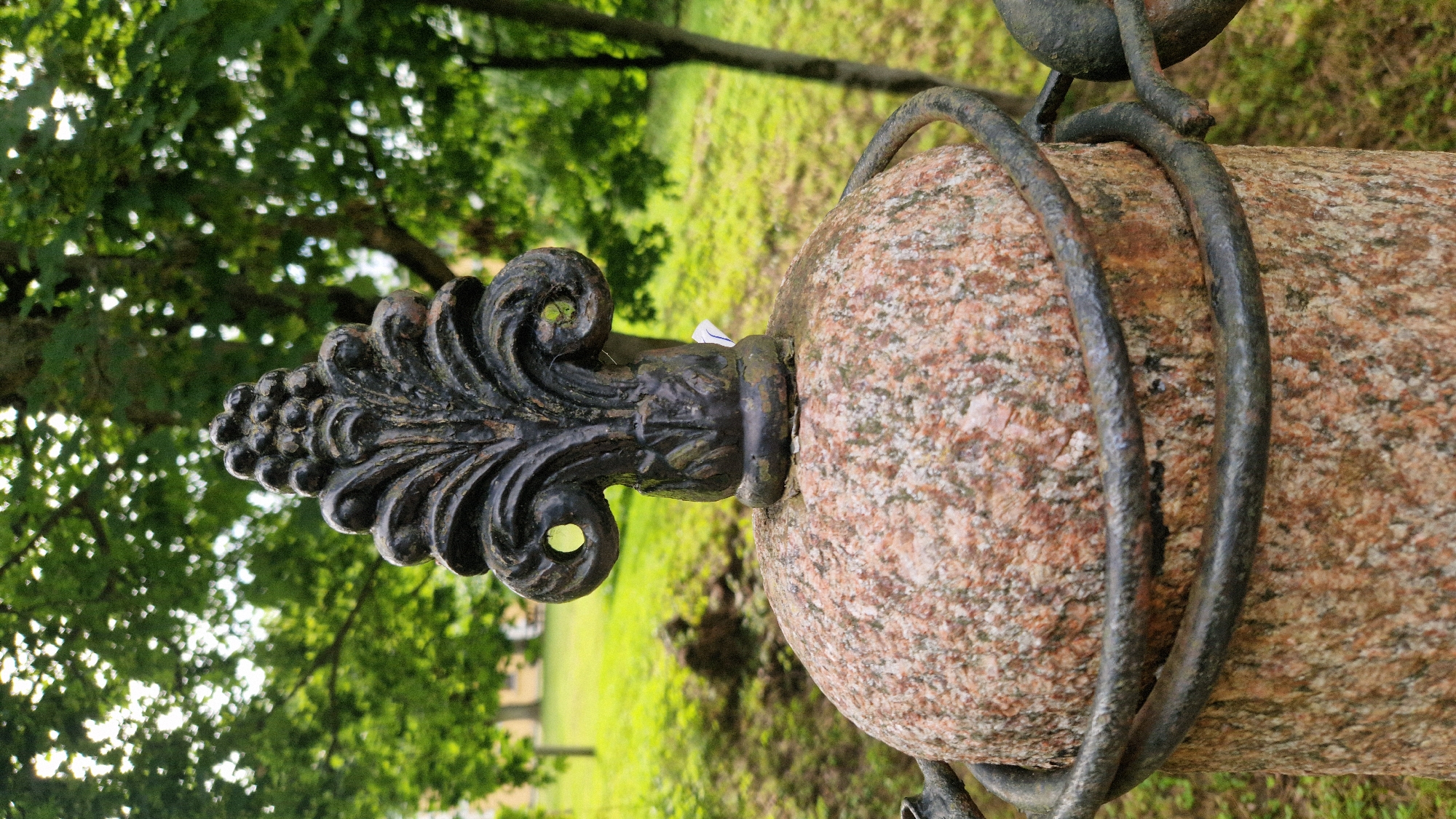
The image shows a close-up of a decorative cast iron finial atop a granite pillar. The finial is black and resembles an acanthus leaf with a cluster of berries at the top. The granite pillar is roughly cylindrical with a rounded top, exhibiting a speckled pink and grey texture. Two thick, dark metal rings are wrapped around the pillar. The background is a softly focused green landscape with trees and grass, suggesting an outdoor park or garden setting. A hint of a white paper tag is visible beneath the finial. The location is identified as the Kazdanga Manor park in Kazdanga, Latvia.
Kazdanga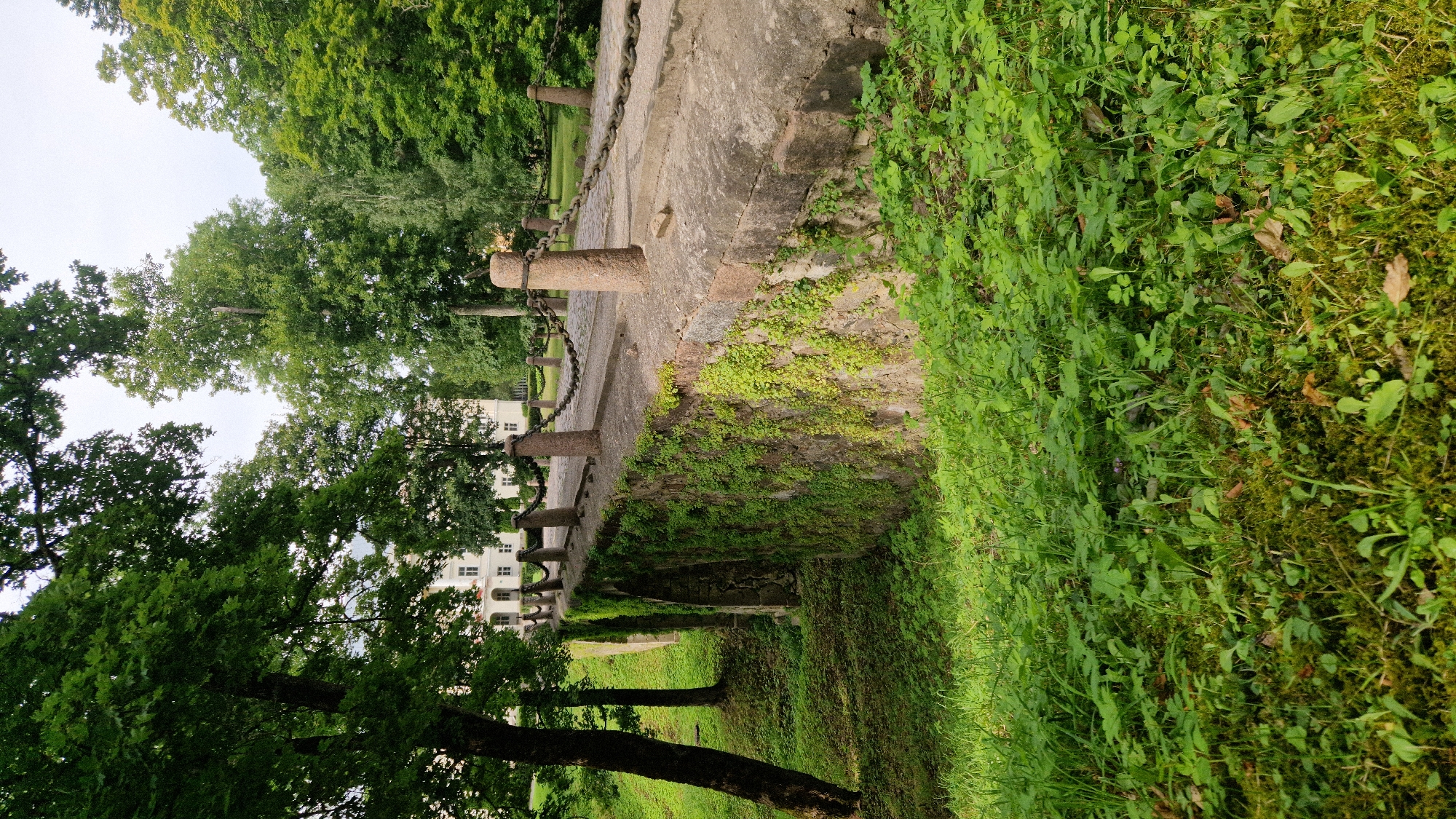
An outdoor, slightly overcast, eye-level medium shot captures an old stone bridge overgrown with ivy, connecting to a path in front of a stately white building. The bridge's stone pillars are topped with ropes or chains, and a stone wall forms its base, covered in vibrant green moss and ivy. Lush green grass and trees fill the foreground and the background. The white building in the background, visible through the trees, features a symmetrical design with multiple windows and a red-tiled roof. This scene is located in the Kazdanga municipality of Latvia, likely within the grounds of the Kazdanga Manor.
Kazdanga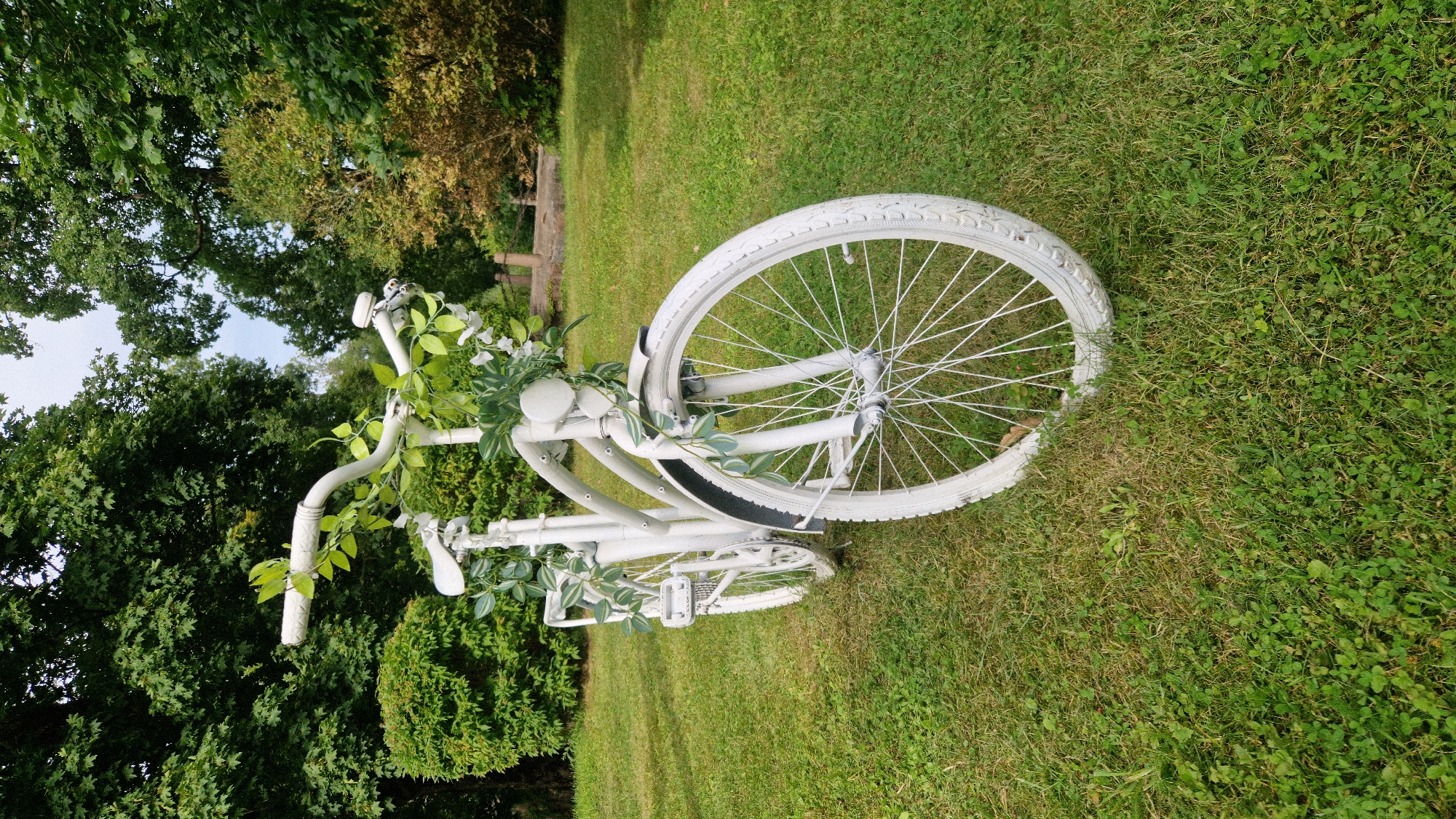
A white bicycle is adorned with green foliage and white flowers, placed on a grassy lawn in front of a backdrop of lush green trees. The bicycle is positioned in the foreground, facing slightly to the left. The scene appears to be outdoors, possibly in a park or garden setting. The overall impression is one of decorative outdoor ambiance.
Kazdanga