Kebunbaru, Indonesia
18 memories from Kebunbaru, Indonesia

A young child wearing a black hijab and blue jeans is standing on a yellow bar of a playground structure in Kebunbaru, Indonesia. The child is looking directly at the camera with wide eyes. The playground structure is made of colorful metal bars in blue, red, green, and yellow. The ground is a concrete surface with scattered paint marks. The child's left hand is gripping a blue bar of the structure.
Kebunbaru
A young child wearing a black hijab and a light-colored shirt with dark pants stands in front of a metal gate. The child is facing away from the camera and appears to be interacting with the gate, possibly trying to open it. The ground is concrete, with some patchy areas and a small puddle. The gate is partially open, revealing a glimpse of what appears to be a schoolyard or outdoor area with other children and buildings in the background. The scene is outdoors, and the lighting suggests it is daytime.
Kebunbaru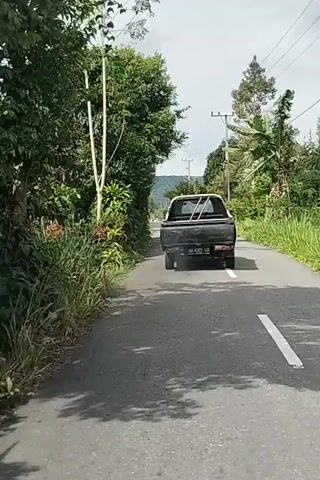
This is a short video clip shot from a moving vehicle, likely a car or motorcycle, on a paved road in a rural, tropical setting. The primary subject is a black pickup truck traveling in the same direction on the road ahead. The truck appears to be in motion, and the camera vehicle is following at a distance. The scene is characterized by lush greenery on both sides of the road. Dense foliage, including trees and what appear to be banana plants, lines the left and right sides of the asphalt. Sunlight dapples the road surface, suggesting it is daytime, possibly late morning or early afternoon, with some cloud cover present as indicated by the sky. In the distance, a hazy mountain or hill can be seen. There are utility poles along the roadside, suggesting the presence of infrastructure. There are no people clearly visible in the frame, only the occupants of the pickup truck, whose faces are not discernible. The activity is simply traveling along a road. The overall mood is neutral and observational, capturing a moment of transit through a scenic, natural environment. No text is visible within the video frames themselves. The setting is consistent with a location like Kebunbaru, Indonesia, given the tropical vegetation and rural road conditions.
Kebunbaru
A young girl wearing large black-framed glasses and a white t-shirt with a colorful dinosaur print is pictured from the chest up. Her mouth is open, revealing her teeth and tongue. The girl has dark hair that is slightly messy. The image is taken outdoors, with blurred green foliage in the background and a rustic, wooden-like structure above. The lighting suggests it is daytime, and the weather appears to be clear. The overall mood is playful and spontaneous. No visible text is present. The setting is likely a garden or a natural outdoor space.
Kebunbaru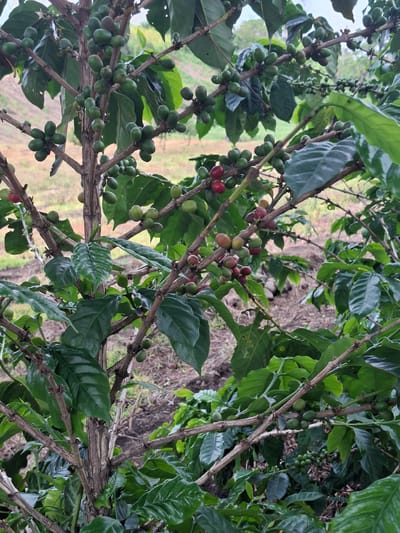
The image shows a close-up view of a coffee plant branch laden with both green and red coffee cherries, interspersed with lush green leaves. The branches themselves are woody and brown, with some showing signs of age. The coffee cherries are clustered together in varying stages of ripeness, with the red ones indicating maturity and readiness for harvest. The background is blurred, suggesting a natural outdoor setting, likely a coffee plantation. The lighting indicates it is daytime, possibly overcast as there are no harsh shadows. The overall impression is one of a bountiful harvest, with the vibrant colors of the cherries contrasting against the deep green foliage. The setting is identified as Kebunbaru, Indonesia, a region known for its coffee cultivation. There is no visible text in the image.
Kebunbaru
The image shows a close-up of a fluffy, brown seed head of a grass plant in Kebunbaru, Indonesia. The seed head is positioned horizontally in the center of the frame, with its fine hairs clearly visible. Behind the seed head, a dense field of green grass stretches into the background, creating a soft bokeh effect. The lighting suggests an overcast day, with diffused light illuminating the scene. There are no people or animals visible in the image. The environment is natural and appears to be a grassy area.
Kebunbaru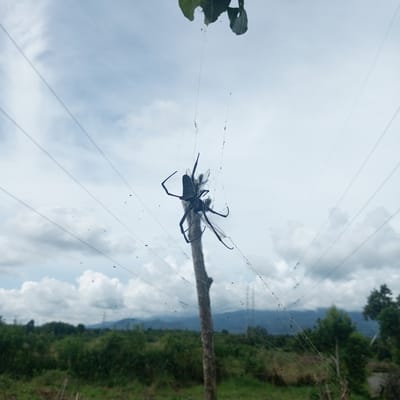
This media file depicts a spider in its web, positioned in the center of the frame against a cloudy sky. The spider, which appears to be a large, dark-colored species, is actively engaged with its prey, a dragonfly, which is caught in the intricate silken threads of the web. The background features a blurry landscape of green foliage, trees, and distant mountains, with a hint of human infrastructure such as power lines and possibly electricity pylons. The scene is set outdoors, likely in a rural or natural environment. The weather appears overcast, with dramatic clouds filling the sky, suggesting it might be daytime, perhaps late morning or early afternoon. The overall impression is one of nature's predator-prey dynamic. There is no visible text in the image. The location context provided is Kebunbaru, Indonesia.
Kebunbaru
The image is a close-up, slightly blurred photograph of small, budding flowers with bright red tops and green stems. Several of these flower buds are visible, some with delicate white wisps of what appear to be seeds or undeveloped stamens. The background is a soft focus of green foliage, suggesting an outdoor, natural setting. The location in Kebunbaru, Indonesia, is not evident from the image itself, as there are no recognizable landmarks or specific environmental cues to indicate this particular place. The focus is entirely on the botanical subjects.
Kebunbaru
This media file is a selfie taken by a woman wearing a light blue hijab. She is positioned on the right side of the frame, with her face partially visible and looking towards the camera. Her makeup includes red lipstick and subtle eye makeup. She is wearing a grey hoodie underneath the hijab and a backpack is visible on her shoulder. Her left hand is extended, with fingers slightly splayed, resting near the bottom of the frame. The background of the selfie depicts a natural landscape. Immediately behind the woman is a textured, rocky ground with sparse vegetation. Further in the background, there is a dramatic cliff face with layered soil and sand, indicative of erosion. Green trees and foliage are visible atop the cliff and in the distance, suggesting a somewhat hilly or mountainous terrain. A dry riverbed or gully is visible at the base of the cliff. The lighting suggests it is daytime, possibly late morning or afternoon, with a slightly hazy or overcast sky contributing to the soft, diffused light. The overall setting appears to be a natural, rugged outdoor environment. The woman's expression is neutral, perhaps slightly thoughtful. The image captures a moment of personal reflection or exploration within this natural setting, likely in Kebunbaru, Indonesia, as indicated by the location context. No visible text is present in the image.
Kebunbaru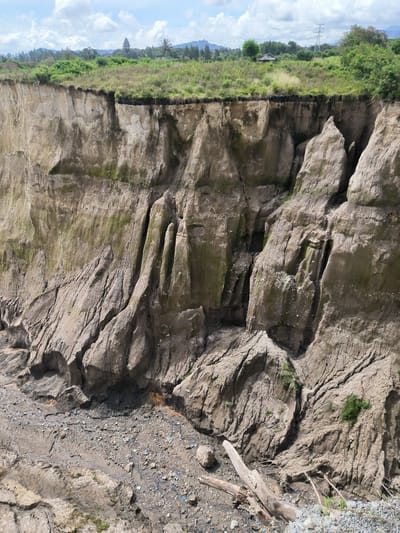
This media file depicts a dramatic landscape featuring a deep, eroded cliff face, likely a result of natural geological processes exacerbated by weather. The cliff is composed of layered soil and rock, showing signs of significant erosion with deep fissures, gullies, and overhangs. Patches of green vegetation, including grass and some shrubs, cling to the top edge of the cliff and sporadically grow on its sheer face, adding a touch of life to the rugged terrain. At the base of the cliff, a rocky, debris-strewn area is visible, with scattered pieces of wood and what appear to be fragments of plastic litter. In the background, a lush green landscape stretches out, with trees and hills creating a natural horizon. In the distance, a small, simple building can be seen nestled among the greenery, and a prominent power pylon stands against the sky, suggesting proximity to infrastructure. The sky is partly cloudy with bright sunlight, indicating it is daytime. The overall scene evokes a sense of raw, untamed nature and the powerful forces of erosion. There is no visible text in the image. The location context of Kebunbaru, Indonesia, suggests a tropical or subtropical environment, which could explain the vibrant vegetation and the geological conditions leading to such erosion.
Kebunbaru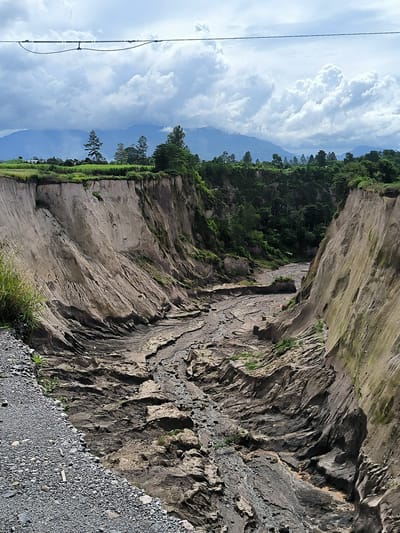
The image depicts a dramatic geological formation, likely a canyon or a deep gully, carved into the earth. The sheer, eroded walls of the gully are composed of layered sediment in shades of tan, grey, and brown, with some patches of green vegetation clinging to the slopes. The floor of the gully appears to be a dry, rocky riverbed with evidence of past water flow, showing intricate patterns of erosion and debris. On the left side of the frame, a gravelly path borders the edge of the gully. In the background, a lush green landscape with trees and hills is visible, leading to distant mountains shrouded in mist. The sky is filled with dramatic, billowing white clouds against a blue sky, suggesting a dynamic weather system. A power line stretches across the upper portion of the image, supported by unseen poles. The scene is a natural landscape, likely in a rural or semi-rural area, showcasing the erosive power of nature. The provided location information places this scene in Kebunbaru, Indonesia, suggesting a tropical or subtropical environment given the vegetation. There are no people or animals visible in the image, and no specific actions or interactions are depicted.
Kebunbaru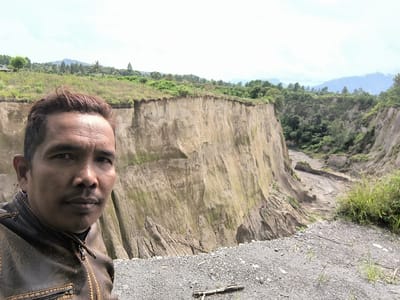
This is a medium shot, outdoor, selfie-style photograph featuring a man in the foreground. The man, who appears to be of Southeast Asian descent, has short, dark hair and a mustache. He is wearing a dark brown leather jacket with a zipper and intricate stitching. He is looking directly at the camera with a neutral expression. Behind the man is a dramatic landscape characterized by steep, eroded cliffs and a deep ravine. The cliffs are a light tan color, with streaks of green vegetation clinging to their surfaces. The ravine floor appears to be a mix of sand, gravel, and dried mud, with evidence of water flow. The background features rolling hills covered in lush green vegetation and trees, with mountains visible in the distance under an overcast sky. The overall impression is one of a rugged and natural environment. The lighting suggests it is daytime, likely overcast, as there are no strong shadows. The location appears to be rural or natural, possibly in a mountainous or volcanic region given the geological formations. The image was taken in Kebunbaru, Indonesia. No text is visible in the image.
Kebunbaru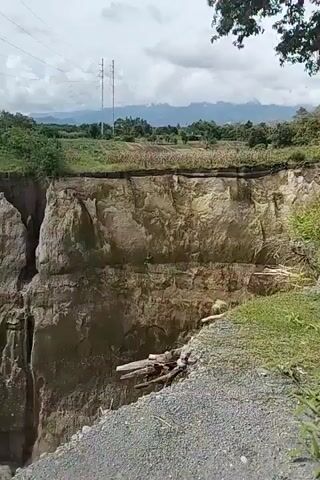
This media file shows a panoramic view of a dramatic geological formation, likely a canyon or ravine, in Kebunbaru, Indonesia. The camera pans across the landscape, revealing the sheer, eroded cliffs of the gorge. The walls of the canyon are layered with sediment, displaying various shades of tan, brown, and grey, with patches of green vegetation clinging to the upper edges and in sheltered crevices. The scene is characterized by the stark contrast between the barren, weathered earth of the canyon and the lush green landscape that borders its rim. In the distance, rolling hills and mountains can be seen under a cloudy sky. Power lines stretch across the upper portion of the frame, hinting at nearby infrastructure. The ground in the foreground appears to be a gravelly path, suggesting the location is accessible, possibly a tourist spot or a natural landmark. The activity taking place is the observation of this natural wonder, as indicated by the camera's movement and perspective. There are no people visible in the media file. The time of day appears to be daytime, with diffused light suggesting it might be overcast or that the sun is not directly overhead. The overall impression is one of awe at the power of natural erosion and the impressive scale of the landscape. The eroded surfaces and the dry riverbed at the bottom of the gorge suggest a history of water activity, perhaps flash floods, that have carved out this striking natural feature. There is no visible text in the media file.
Kebunbaru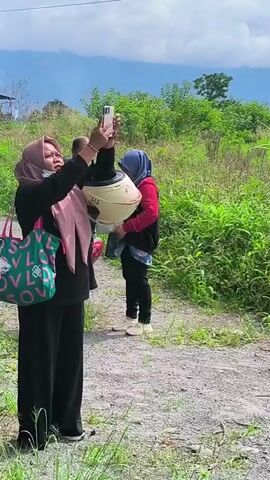
The video shows a wide shot of a steep, eroded landscape. In the foreground, a person wearing a hijab, red long-sleeved shirt, and dark pants is walking away from the camera, carrying a light-colored bag. To the right, a portion of a dark-colored vehicle is visible. The landscape itself features dramatic gullies and cliffs with sparse vegetation. In the background, hills and trees are visible under a cloudy sky. The erosion appears significant, creating a rugged and uneven terrain.
Kebunbaru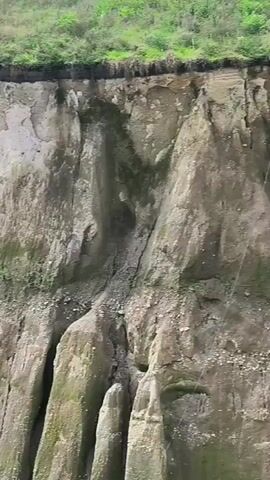
This video showcases a dramatic, eroded landscape in Kebunbaru, Indonesia. The scene is dominated by steep, barren cliffs of layered sediment, showing signs of significant erosion. Green moss and vegetation cling to some of the cliff faces, particularly in the lower sections, offering a stark contrast to the dry, exposed earth. A dry riverbed or gully snakes through the center of the frame, crisscrossed with channels and debris, evidence of past water flow. The surrounding area at the top of the cliffs and in the distance features lush green trees and foliage, suggesting a tropical or subtropical environment. The overall impression is one of natural forces at work, shaping a rugged and dramatic terrain. There are no people or specific objects visible, only the raw landscape. The time of day appears to be daytime, with soft, diffused light, and the weather seems calm, with no indication of rain or strong winds. The focus is entirely on the geological features and the natural beauty of the eroded land. There is no visible text in the video.
Kebunbaru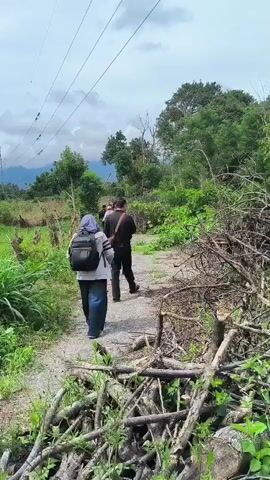
The video shows a group of people walking on a gravel path through a rural, outdoor setting. The path is bordered by lush green vegetation, including tall grasses and trees. In the foreground, there is a pile of cut branches and debris, suggesting recent clearing or maintenance. In the background, more trees and some distant mountains or hills are visible under a cloudy sky. Power lines stretch across the upper portion of the frame. The group consists of several individuals, all walking away from the camera down the path. The person closest to the camera is wearing a grey jacket, dark pants, and a black backpack. Another person in front of them is wearing a light purple jacket and a hijab. Further ahead, other individuals are also walking, some with backpacks. The overall atmosphere appears to be casual, possibly a hike or a nature walk. The time of day seems to be daytime, given the natural light, though the cloudy sky might suggest overcast conditions. The location, identified as Kebunbaru, Indonesia, combined with the dense greenery and mountains, paints a picture of a rural Indonesian landscape. There are no visible text elements in the media file. The activity is straightforward: a group of people traversing a path in a natural environment.
Kebunbaru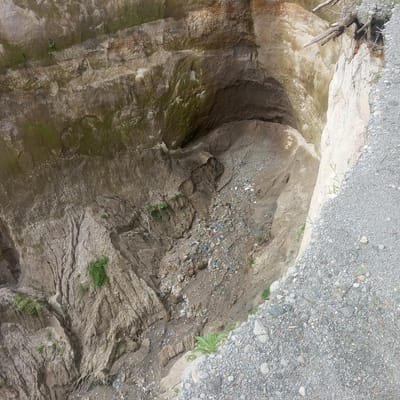
The image depicts a deep excavation or sinkhole in Kebunbaru, Indonesia. The scene is dominated by the raw, eroded earth walls of the pit, showing layers of sediment and rock. Patches of green moss and small plants are visible clinging to the damp surfaces, indicating a humid environment. The bottom of the pit is filled with rubble, soil, and a significant amount of scattered plastic debris, including blue and white fragments. A few branches and pieces of wood are also present, some embedded in the sides or resting near the top edge. To the right, a steep embankment of loose gravel and small stones leads down into the pit. The lighting suggests it is daytime, with no distinct shadows indicating a specific time. The overall impression is one of an untidy, possibly abandoned excavation site, affected by erosion and human waste. There is no visible text in the image.
Kebunbaru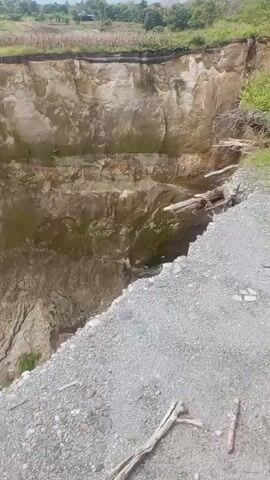
A video captures a steep, eroded cliff face, likely a canyon or ravine. The cliff is composed of layered earth and rock, with patches of green moss or vegetation clinging to its surface. The top of the cliff appears to be a field with some crops, suggesting agricultural activity in the vicinity. At the bottom of the ravine, a small body of water is visible, possibly a river or stream. The foreground shows loose gravel and some dead branches, indicating the edge of a path or the surrounding terrain. The camera moves slightly, offering different perspectives of the dramatic geological formation.
Kebunbaru