Khumbupasanglahmu, Nepal
3 memories from Khumbupasanglahmu, Nepal
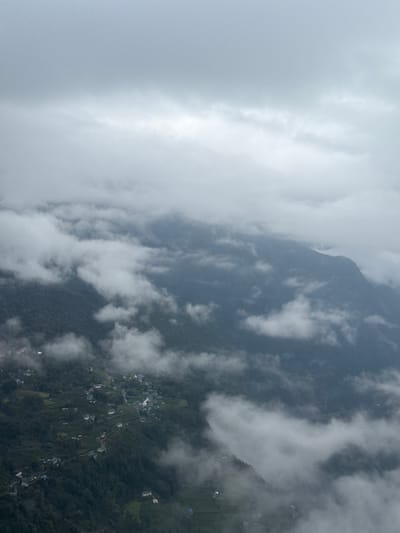
The image depicts a mountainside scene in Khumbupasanglahmu, Nepal, partially obscured by heavy fog and clouds. The terrain is rugged and forested, with a small village or cluster of buildings visible amidst the trees. The mountain's peak is shrouded in mist. The overall atmosphere is hazy and overcast.
Khumbupasanglahmu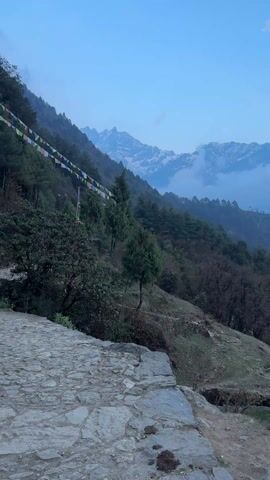
The video opens with a panoramic view of a mountainous landscape. To the left, a stone path or wall is visible in the foreground. Prayer flags, in traditional Buddhist colors, are strung across a steep, forested slope on the left side of the frame. In the midground, green pine trees are scattered among other deciduous trees, some appearing bare, suggesting a cool climate. Majestic snow-capped mountains with rugged peaks rise in the distance, partially obscured by soft, white clouds. The sky above is a clear, light blue. As the camera pans to the right, a small stone house with a green corrugated metal roof comes into view in the midground. The house has several white-framed windows and appears to be built into the hillside. Further to the right, another similar building is partially visible. A Nepali flag, with its distinctive double-triangle shape and colors (blue, red, white, green, yellow), flies proudly on a wooden pole in front of the houses. Two large black water tanks are also visible near the houses. The light suggests either early morning or late evening, with soft hues and a clear atmosphere.
Khumbupasanglahmu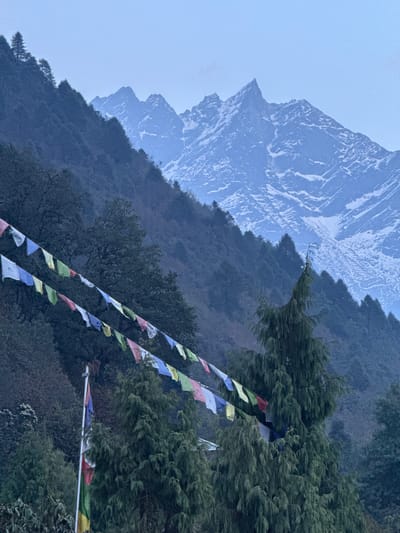
The image presents a serene mountainous landscape, likely situated in the high altitudes of Nepal as suggested by the context of Khumbupasanglahmu. The scene is dominated by natural elements and cultural symbols. In the foreground and midground, dense, dark green evergreen trees, possibly conifers, cover steep mountain slopes. These trees appear lush and abundant. Diagonally across the upper right to lower left of the frame, multiple strings of colorful Tibetan prayer flags are prominently displayed. These flags feature traditional colors such as blue, white, red, green, and yellow, adding vibrant splashes to the otherwise muted natural tones. They are partially integrated with the tree foliage, suggesting a well-established placement. The background is dominated by a majestic, snow-capped mountain peak. Its rugged, rocky surface, streaked with snow, rises steeply against a hazy, light blue-grey sky. The atmospheric haze suggests either an overcast day or the typical conditions found at high elevations, lending a soft, diffused quality to the light and partially obscuring the finest details of the distant peak. The overall impression is one of tranquility and natural grandeur, underscored by the spiritual presence of the prayer flags. The time of day appears to be daytime, possibly early morning or late afternoon, given the soft, non-harsh lighting. No people or specific activities are visible, but the prayer flags evoke a sense of cultural and spiritual significance. No discernible text is visible on the flags or within the scene.
Khumbupasanglahmu