Killibur, India
20 memories from Killibur, India
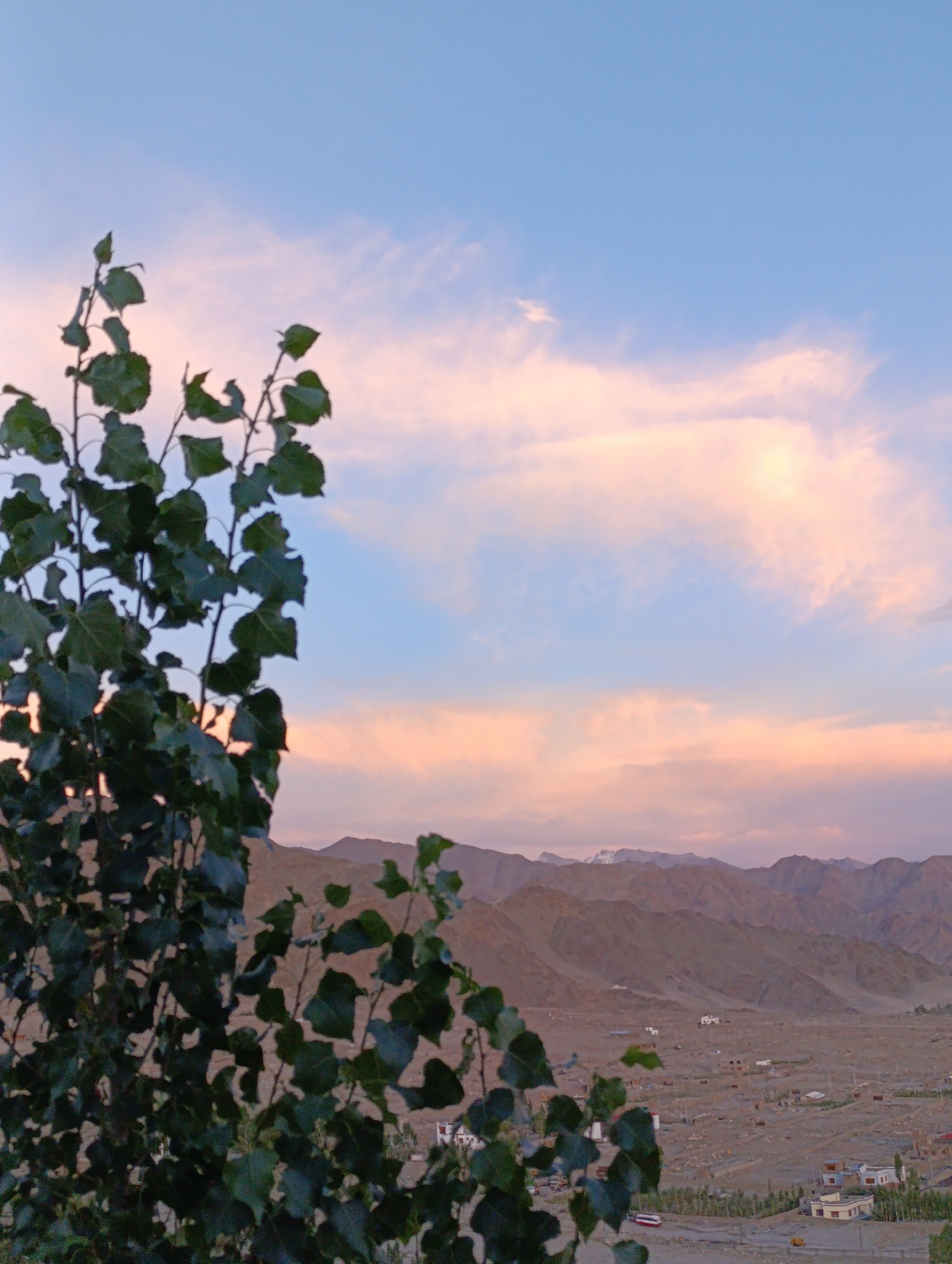
The image captures a wide view of a valley at dusk, with the sky displaying soft pink and blue hues from the setting sun. In the foreground, on the left, a leafy green tree branches obscure part of the view. The middle ground reveals a scattered settlement with small buildings, some appearing to be houses and others possibly more utilitarian structures. A red bus is visible on a road within the settlement. The background is dominated by rugged, mountainous terrain, with the peaks receding into the distance. The overall impression is one of a tranquil, rural landscape under a twilight sky. The location is identified as Killibur, India.
Killibur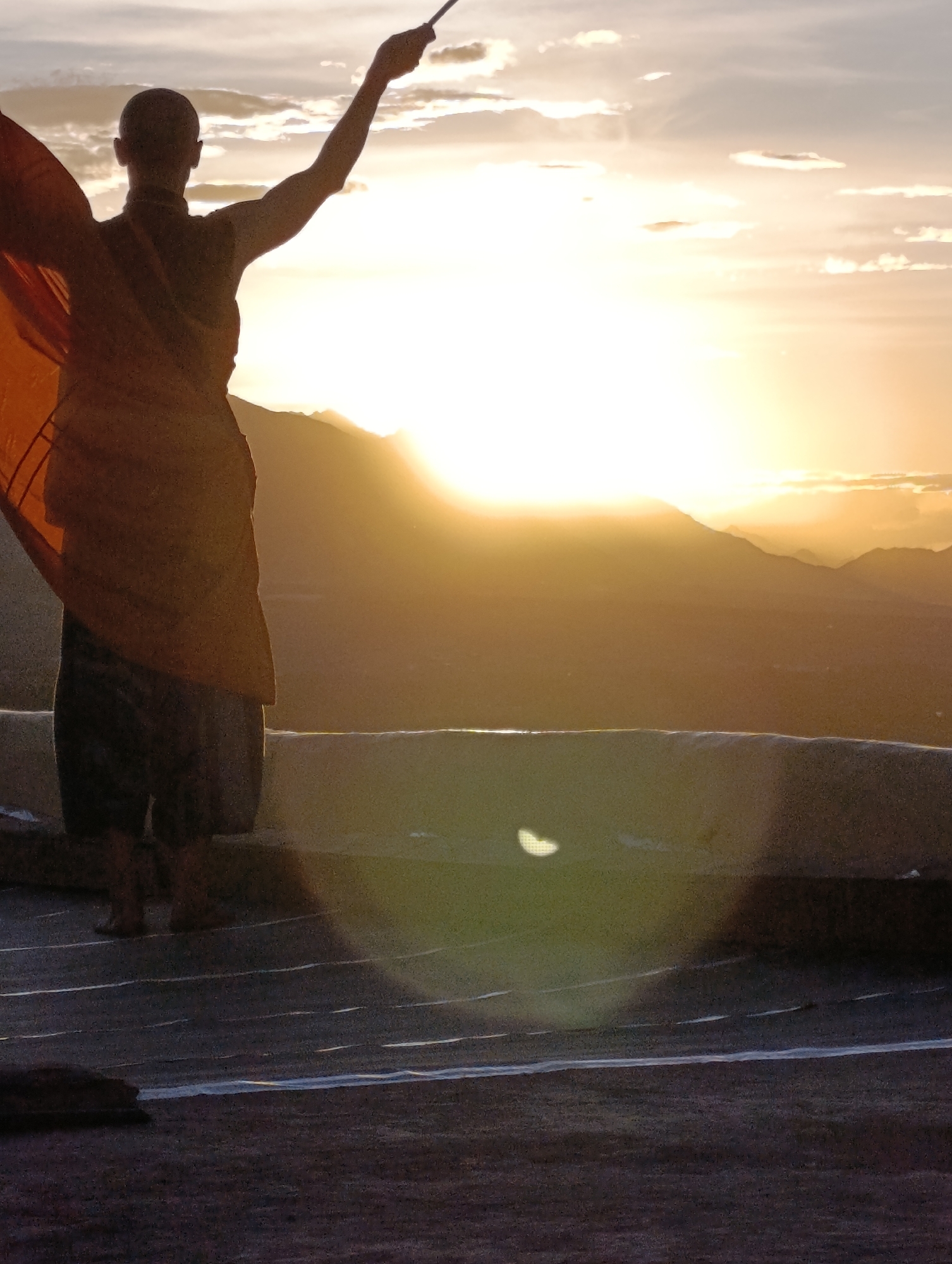
The image depicts a person, likely a monk based on the saffron-colored robe, standing on a rooftop at sunset. The individual is silhouetted against the bright sky, with one arm raised, holding a thin object. A large, flowing orange cloth, possibly part of the robe or a banner, billows behind them. The background features a hazy mountain range illuminated by the setting sun, which casts a warm, golden light across the scene. The rooftop appears to be made of dark material with faint white lines. The overall impression is one of serene contemplation or a ceremonial gesture against a dramatic natural backdrop. The specific location in Killibur, India, is not visually identifiable from the image alone; it is a contextual detail provided in the prompt.
Killibur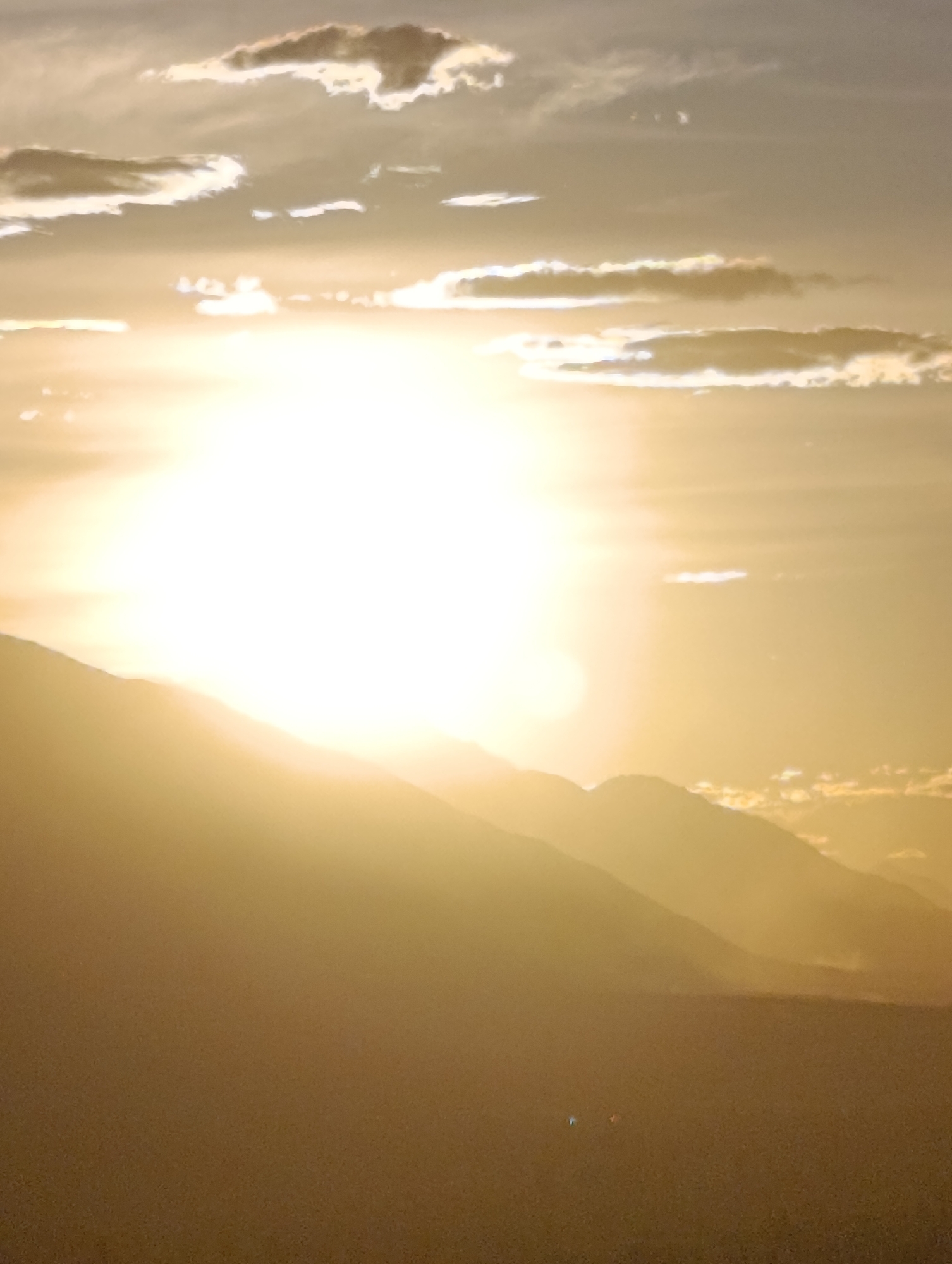
The image depicts a sun-drenched mountain range at sunset. The sun is a bright, almost blinding orb near the center of the frame, casting a warm, golden light across the scene. Wispy clouds are scattered across the sky, illuminated by the setting sun. The mountains are silhouetted against the bright sky, with layers of peaks fading into the distance. The foreground is a dark, out-of-focus expanse, possibly a valley or plain. There is no information available to associate this image with Killibur, India.
Killibur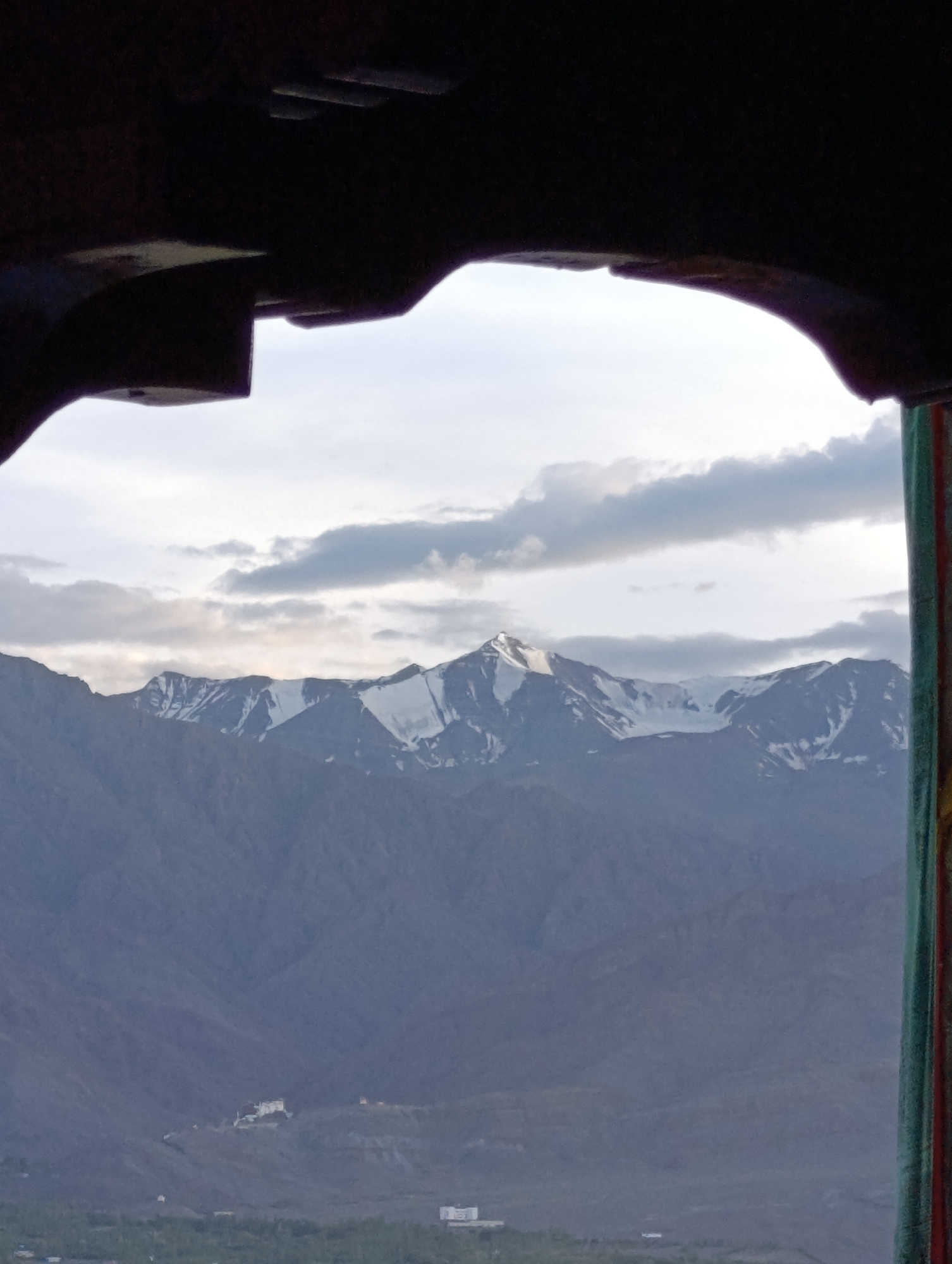
The image captures a scenic view of snow-capped mountains in the distance, framed by a dark, wooden architectural element in the foreground, possibly an archway or window frame. The sky above is partly cloudy, with soft gray clouds contrasting with lighter sky. The mountains themselves are rugged and imposing, with patches of snow on their peaks and upper slopes. The lower parts of the mountains appear barren and rocky. In the middle ground, a town or settlement is visible, with a few buildings scattered across the landscape. The overall impression is one of a remote and mountainous region. The location is stated to be in Killibur, India, a place known for its dramatic mountainous terrain and high altitudes.
Killibur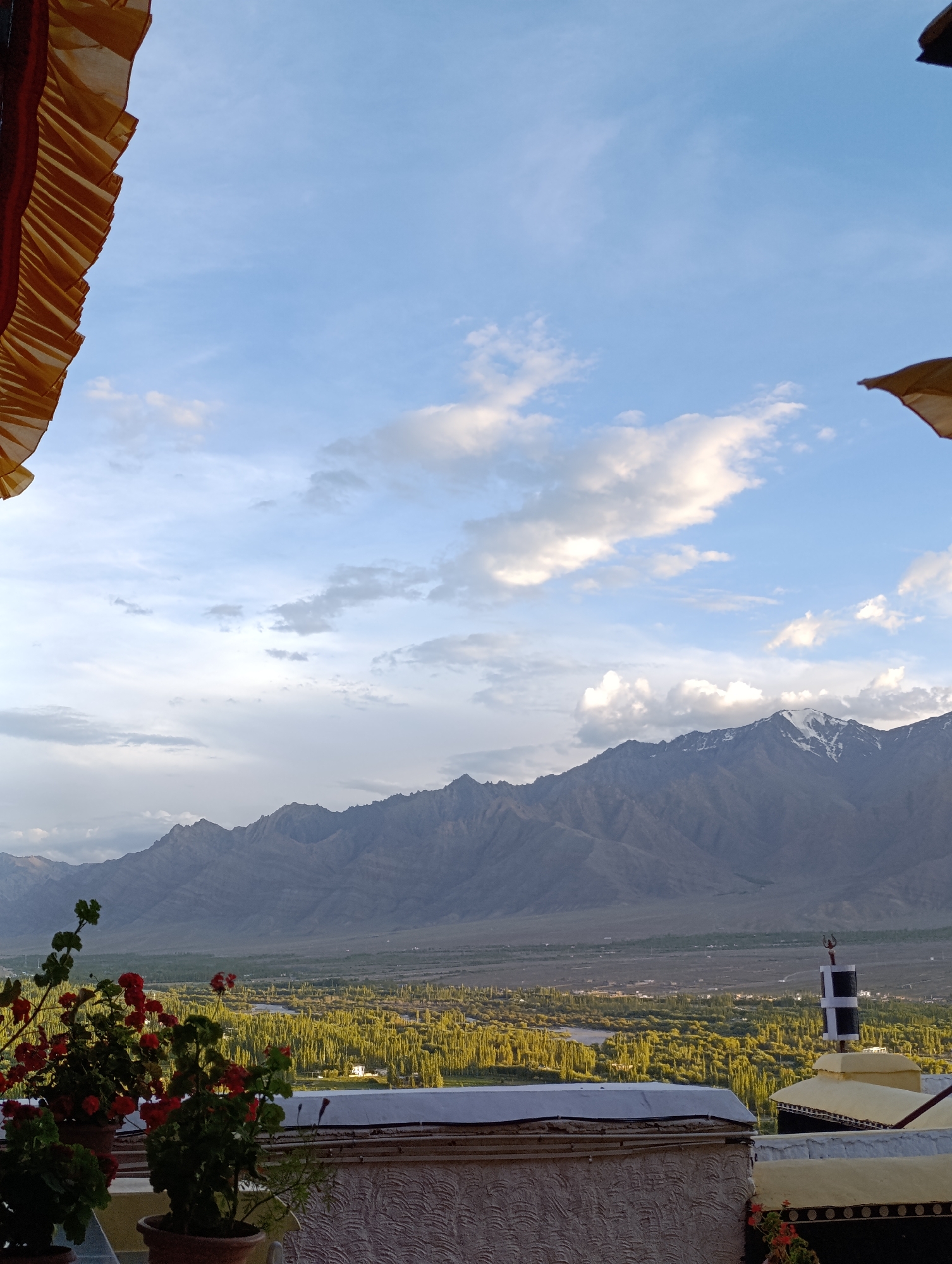
The image captures a panoramic view of a valley with a river and a forest, framed by mountains in the background. The sky above is partly cloudy with a mix of blue and white. In the foreground, there are potted plants with red flowers on a balcony or rooftop, and part of a building with yellow and white elements. The scene is set in Killibur, India, as suggested by the architectural style and vegetation, possibly a monastery or a viewpoint overlooking the landscape. The overall impression is one of natural beauty and tranquility, with a hint of religious or cultural significance due to the building's design.
Killibur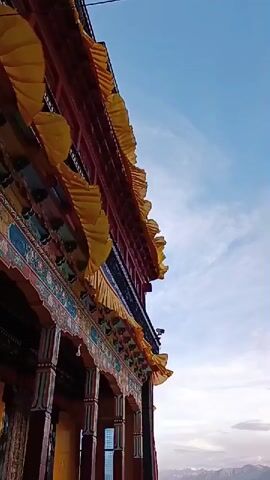
A low-angle, medium shot captures the side of a multi-story building with colorful decorative trim and fabric awnings. The building's facade features columns, intricate patterns, and red and yellow elements. Behind the building, a vast landscape unfolds, revealing rolling hills or mountains under a bright blue sky with wispy clouds. Green foliage and a few scattered structures are visible in the distance. The perspective emphasizes the grandeur of the architecture against the natural scenery.
Killibur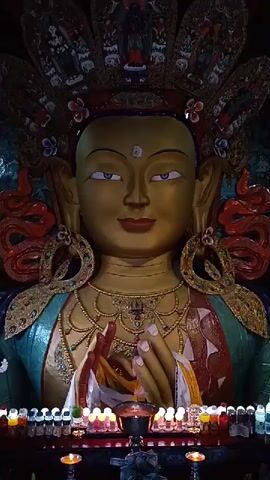
This is a vertical, close-up video of a large, ornate statue, likely of a deity or revered figure, with a golden face and elaborate headdress. The statue has blue eyes, a serene expression, and is adorned with intricate jewelry and colorful fabric. Its hands are held together in front of its chest, wrapped in prayer scarves of white, red, yellow, and blue. In front of the statue, a row of small, lit candles or oil lamps are arranged on a dark surface, possibly an altar. The background is dark and appears to be the interior of a temple or shrine, with decorative elements visible behind the statue's head. The camera slowly zooms in on the statue's face and hands.
Killibur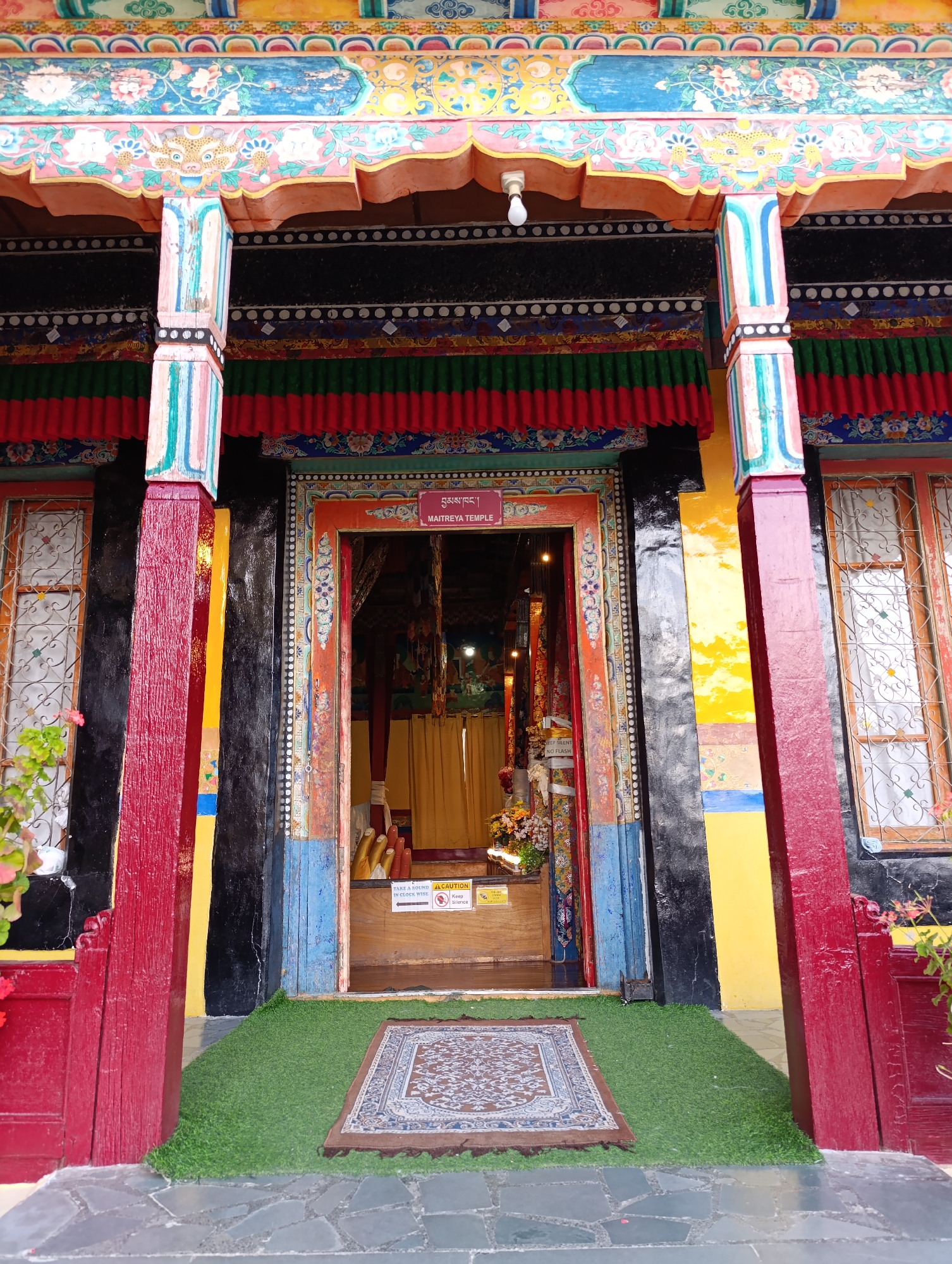
The image depicts the entrance to a Buddhist temple in the city of Kullu, India. The architecture is vibrant and ornate, featuring brightly painted columns and intricate decorative elements on the facade. A red carpet is placed on a patch of artificial grass leading up to the entrance. Inside the temple, a yellow curtain is visible. Above the entrance, a sign reads "MAITREYA TEMPLE" in English and Tibetan script. The overall scene suggests a place of religious and cultural significance.
Killibur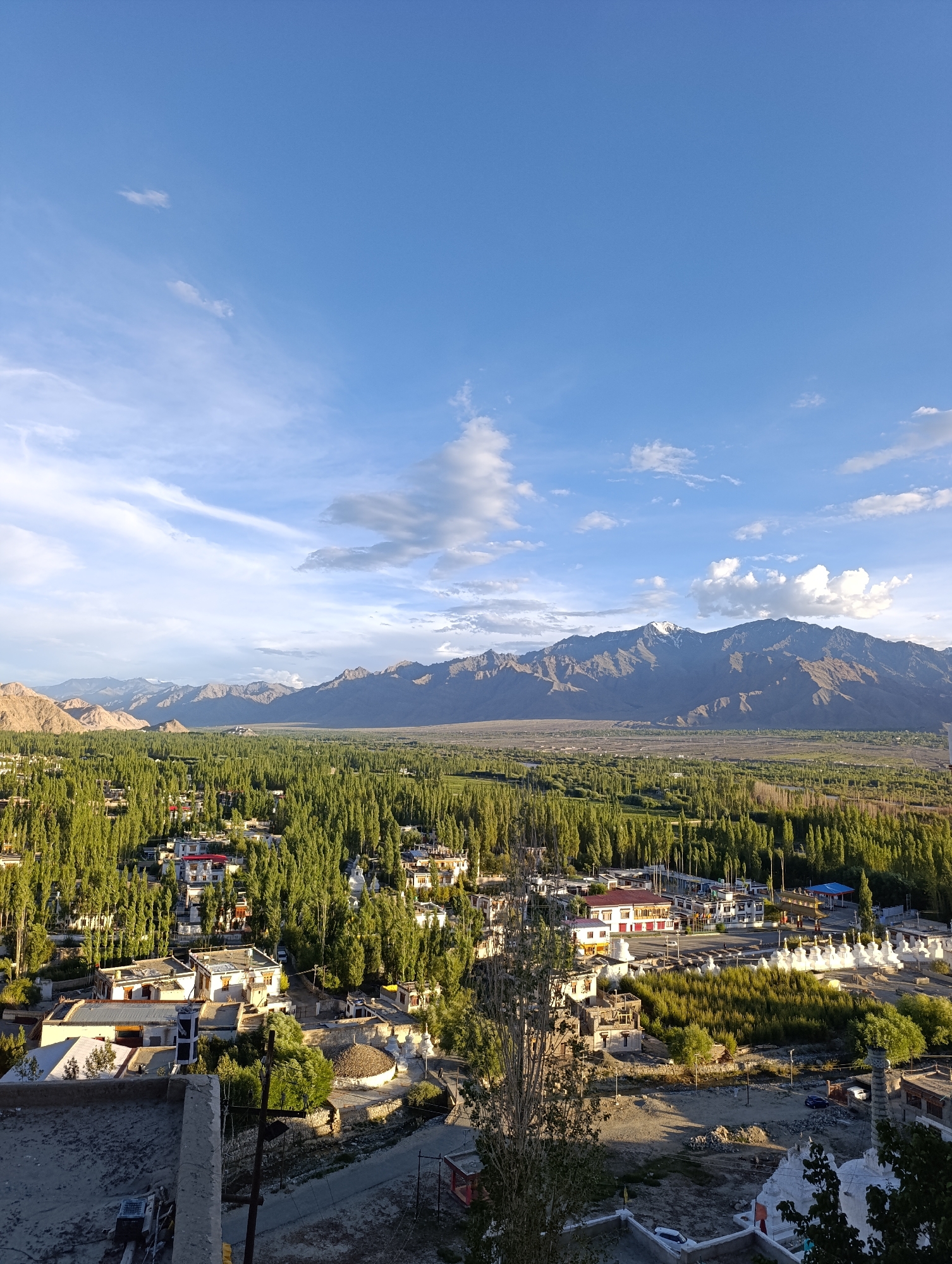
The image depicts a panoramic view of a village nestled amongst a dense forest of tall, slender trees, likely poplar or cypress. The village structures, characterized by white walls and red-tiled roofs, are scattered amidst the greenery. In the background, a range of imposing, arid mountains dominates the horizon, with a few snow-capped peaks visible in the distance. The sky is a clear blue, dotted with scattered, wispy clouds that are catching the late afternoon sun, casting long shadows across the landscape. The scene suggests a rural setting in a mountainous region, possibly Ladakh, India, known for its monasteries, arid terrain, and vibrant green valleys during the growing season. The overall impression is one of tranquility and natural beauty.
Killibur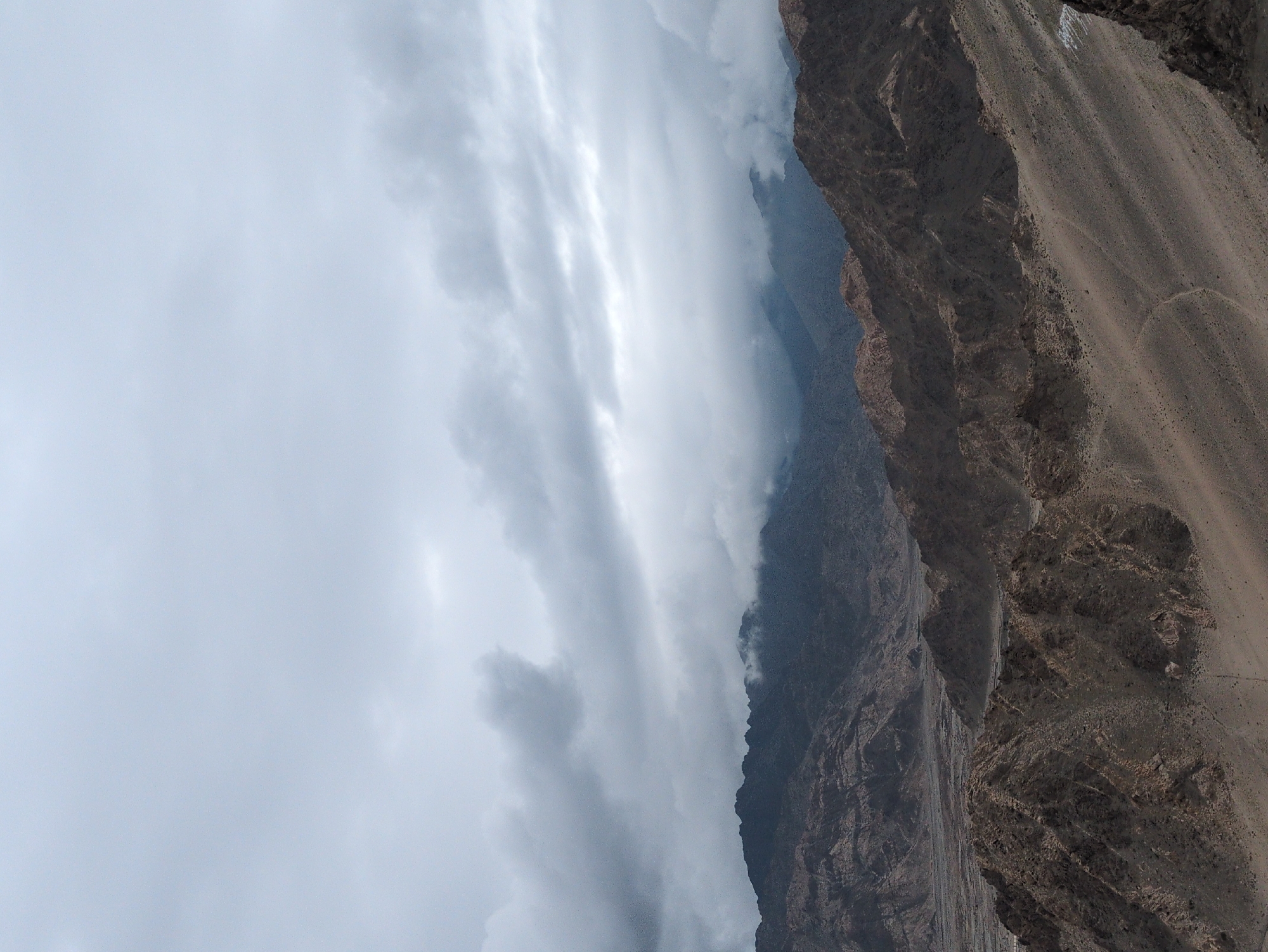
The image depicts a dramatic, overcast landscape of rugged, rocky mountains under a thick, grey sky. The terrain is barren and arid, with layers of mountains receding into the distance, partially obscured by clouds and mist clinging to their peaks. The foreground is dominated by steep, eroded slopes covered in scree and sparse vegetation. The overall impression is one of stark, natural beauty and imposing geological formations. The location is identified as Killibur, India, suggesting a high-altitude, mountainous region within that country. No people, animals, or man-made structures are visible in the scene.
Killibur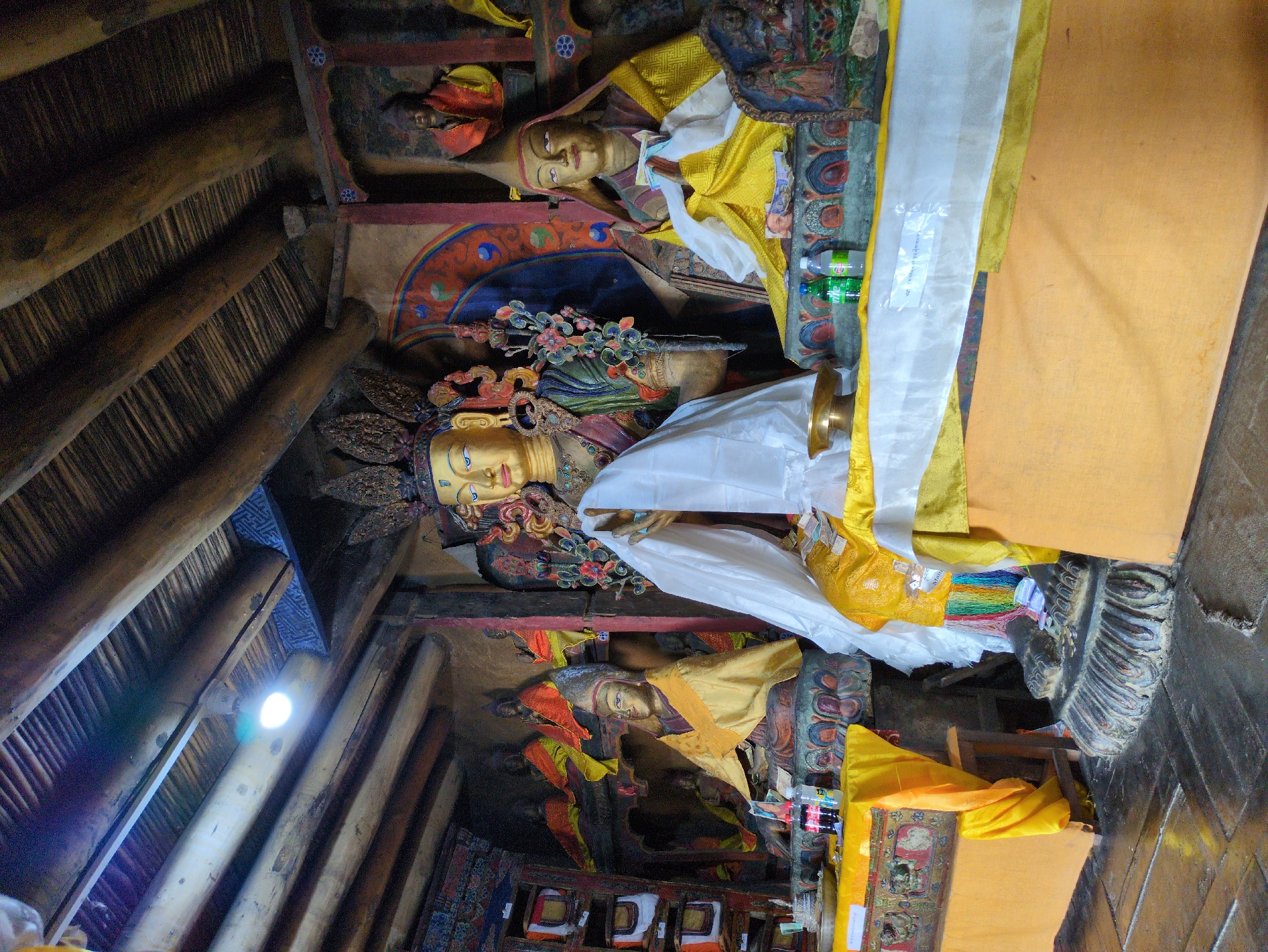
The image shows the interior of a Buddhist shrine in Killibur, India. The main subjects are several statues of what appear to be deities or important figures, adorned with colorful robes and intricate headdresses. These statues are arranged in a hierarchical manner within the shrine. In the foreground, a prominent golden statue with a serene expression is visible, draped in white and yellow cloth. Behind it, another statue, also golden-faced, wears a yellow robe and a detailed headdress. Further back, a statue with a more pronounced headdress and a stern expression is draped in yellow fabric. The statues are placed on wooden platforms within a dimly lit, rustic setting. The shrine is constructed with rough-hewn wooden beams forming the ceiling and walls, giving it a weathered and ancient feel. Colorful murals and decorative elements are visible on the walls, adding to the spiritual ambiance. There are also offerings and religious artifacts placed around the statues, including a brass bowl and some prayer flags. In the background, a bright light bulb hangs from the ceiling, illuminating parts of the shrine. Two plastic bottles, one green and one clear, are placed near one of the statues. The overall impression is one of reverence and spiritual devotion within a traditional religious space.
Killibur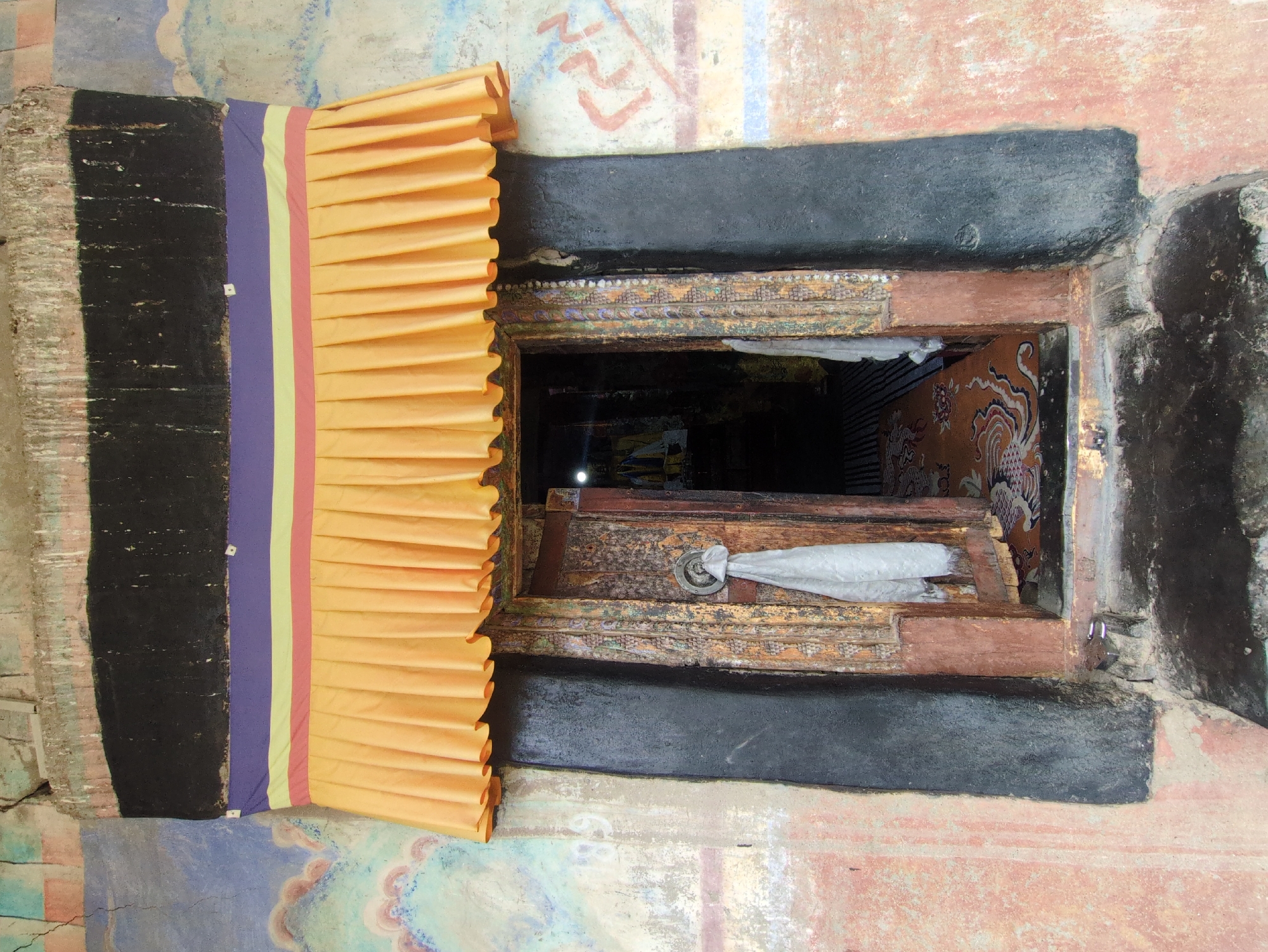
The image shows an entrance to a building with faded painted murals on the walls. A bright orange fabric draped with pleats hangs over the entrance. The entrance itself is a weathered wooden door, partially open, revealing a dimly lit interior with a patterned rug on the floor. A light gray cloth is tied to the door handle and another hangs from the right side of the doorframe. The building appears to be constructed of stone and plaster, with some visible cracks and damage. The overall scene suggests an old, possibly religious, structure in a rural or remote location. The presence of Tibetan prayer flags (indicated by the colorful stripes of fabric above the orange drape) suggests the location is in a region with Tibetan Buddhist influence, such as Ladakh. While the prompt mentions Killibur, India, this specific location is not visually identifiable from the image alone.
Killibur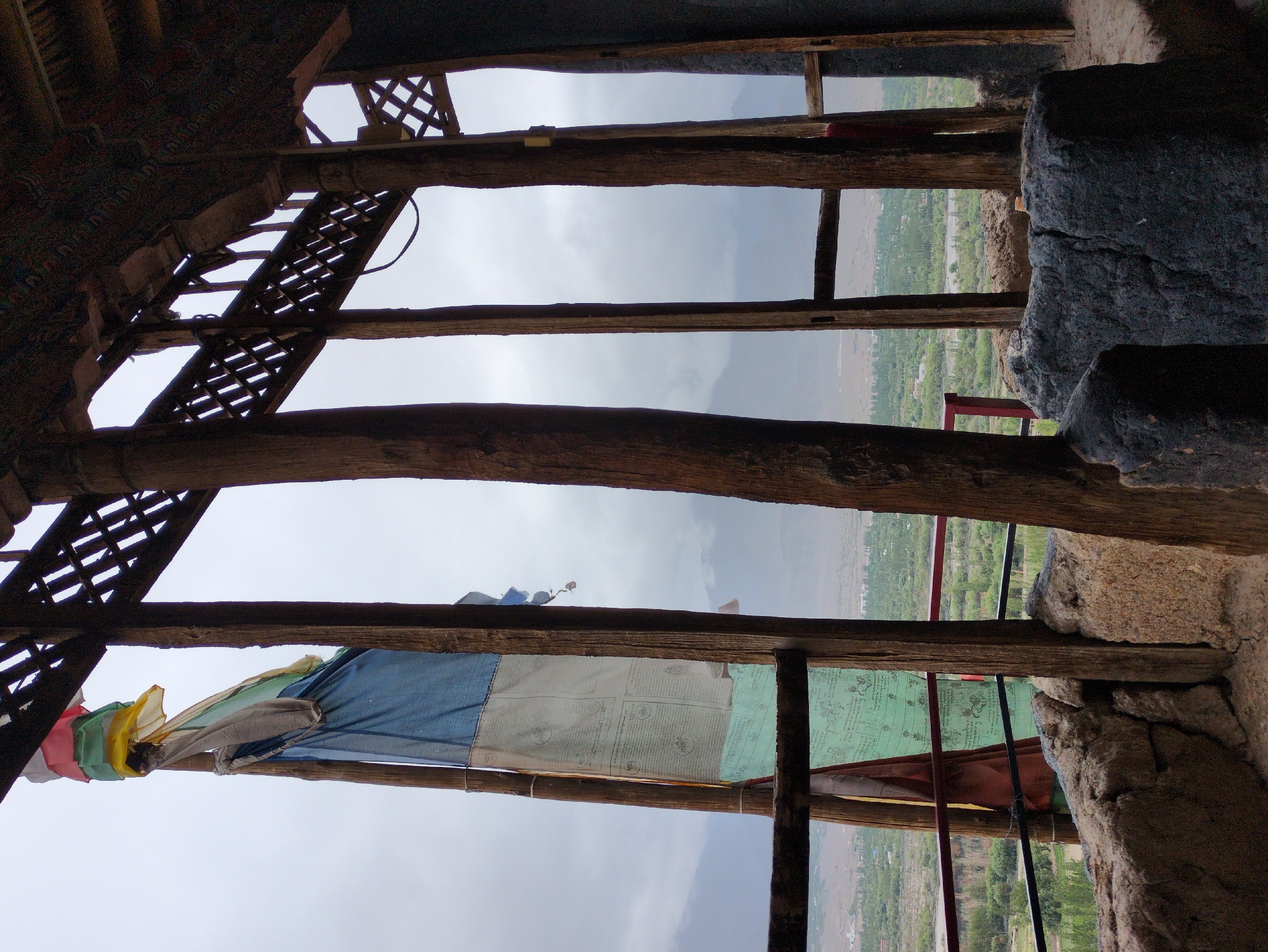
This is a medium-shot, eye-level, outdoor, natural-light photograph taken from within a wooden structure, looking out over a landscape. In the foreground, on the left, are prayer flags hanging from a wooden pole, with the top layers showing white, pink, yellow, and green fabric. Below these, the prayer flags continue down, displaying blue, white, and green fabric. The flags are partially obscured by wooden posts that form part of the structure. The structure itself is made of rough, dark wooden beams and posts, some of which are carved and show wear. The ceiling of the structure is visible at the top, with decorative patterns. In the mid-ground, a scenic view unfolds with rolling hills and a valley. The landscape is dotted with green trees and vegetation, suggesting it is a rural area or outskirts of a settlement. A body of water, possibly a river, is visible in the valley. In the background, mountains are shrouded in mist, under a cloudy, overcast sky. The overall atmosphere is subdued, possibly due to the weather. The location is identified as Killibur, India. There are no people or animals visible in the frame. The image captures a serene and spiritual ambiance, with the prayer flags symbolizing a connection to religious or cultural practices of the region.
Killibur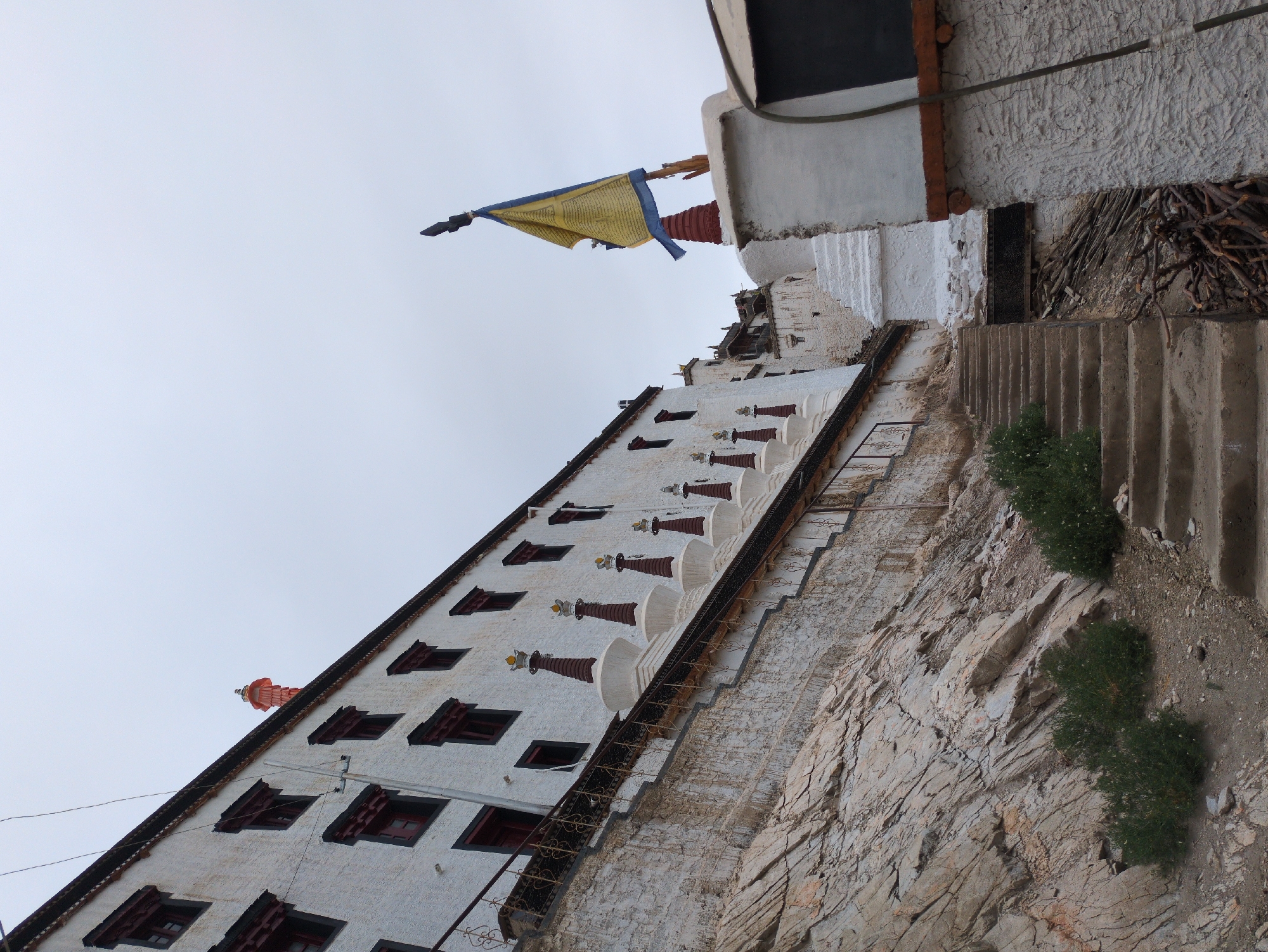
This is a low-angle, full shot of a whitewashed, multi-story building with dark-rimmed windows, possibly a monastery, situated on a rocky incline. The building is designed with a tiered facade, and several white stupas with brown spires are visible along a lower terrace. A yellow and blue flag flies from a pole atop a white structure to the right of the main building. A stone staircase leads upwards toward the right side of the frame, with sparse green bushes dotting the rocky ground. The sky is overcast. The scene appears to be in an outdoor location, given the natural rock formations and vegetation. The architecture and flag suggest a location in a region with Tibetan Buddhist influence, such as Ladakh, India.
Killibur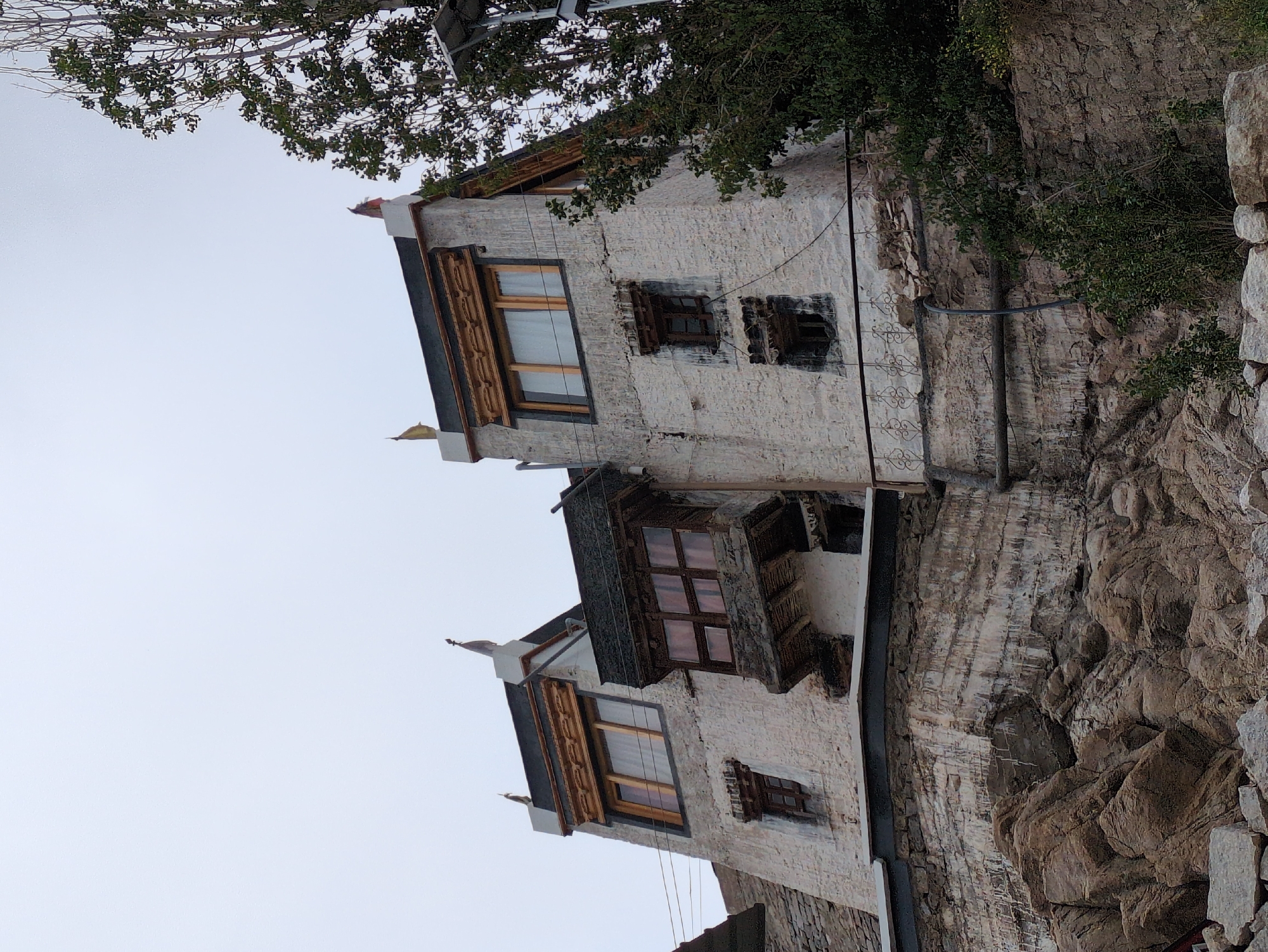
The image shows a portion of a traditional building, likely a monastery, situated on a rocky hillside. The building's architecture features whitewashed walls with prominent wooden window frames and decorative cornices. There are flags on the rooftops of the building. The lower portion of the scene is dominated by rugged, natural rock formations and some dry vegetation. A large tree with green foliage is visible on the right side of the image, partially obscuring a lamppost. The sky is overcast and appears pale. There are no people visible in the image. The building's construction suggests it is ancient and built to withstand its mountainous environment. The context provided places the scene in Killibur, India.
Killibur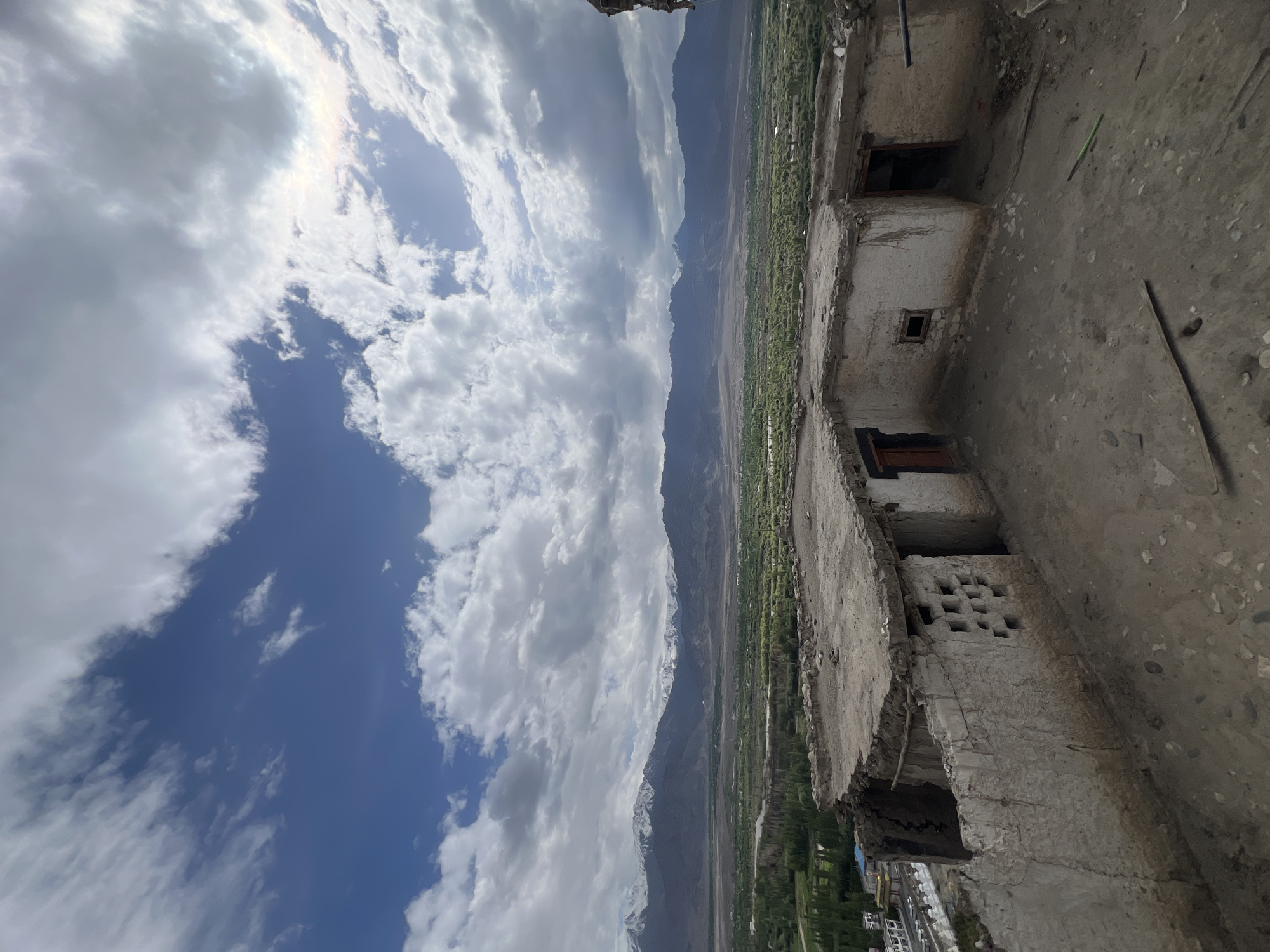
The image shows a rural landscape with a valley and mountains in the background, under a partly cloudy sky. In the foreground, there is a weathered, flat-roofed structure made of stone and mud. The building has several doorways and windows, and parts of the roof appear to be deteriorating. The surrounding environment shows a green valley with trees and some distant buildings. The mountains in the distance are snow-capped. The scene is lit by daylight. The location is identified as Killibur, India.
Killibur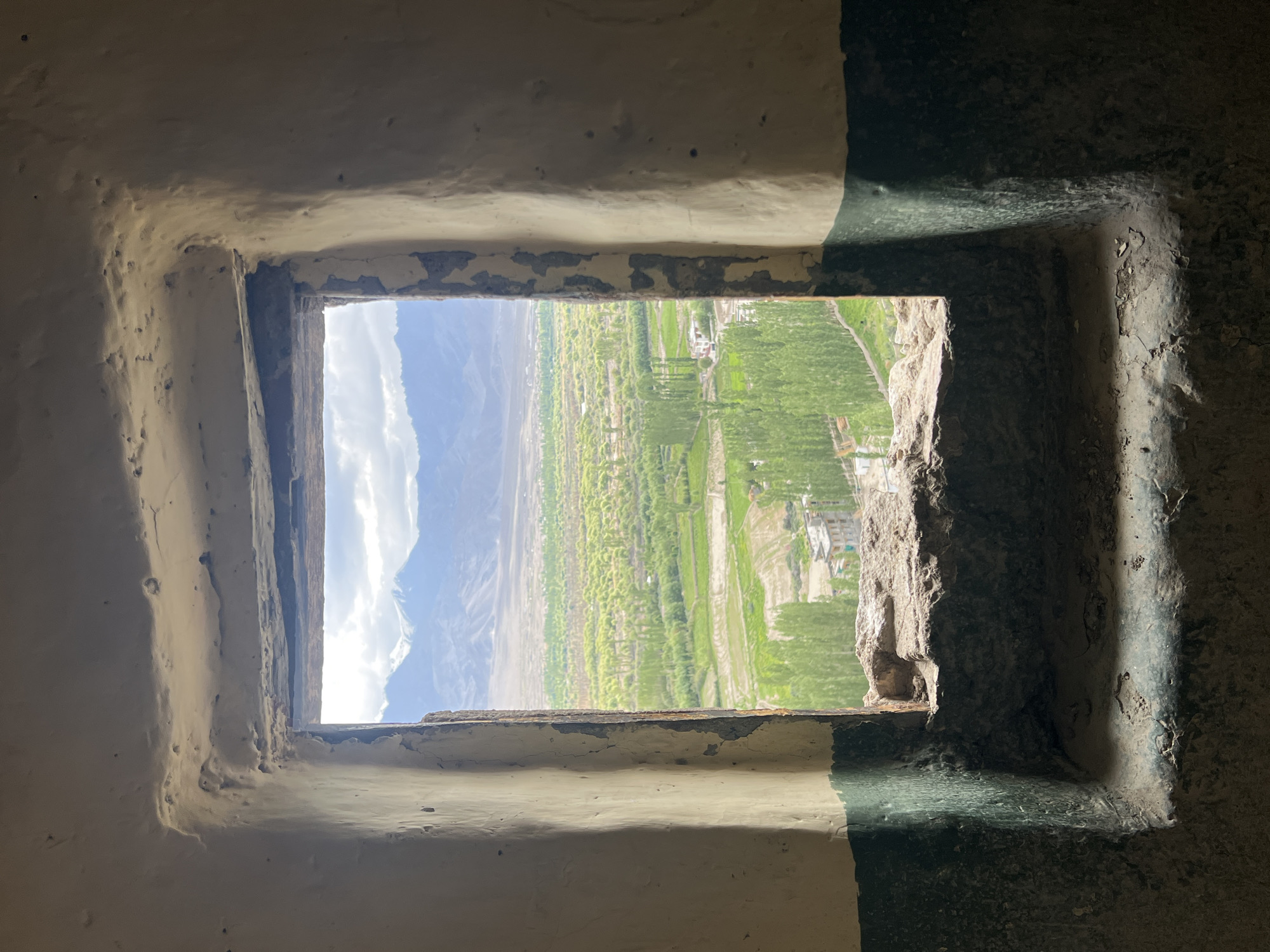
The image shows a view from a rough, stone-lined window opening looking out over a valley. The interior of the window frame is textured and appears to be made of rough plaster and stone. The exterior view reveals a lush green valley with numerous trees, fields, and some buildings. In the background, a range of mountains with snow-capped peaks under a cloudy sky is visible. The location is identified as Kilburi, India. The scene is static, with no people or overt actions taking place. The focus is on the contrast between the rustic interior of the structure and the expansive natural landscape outside.
Killibur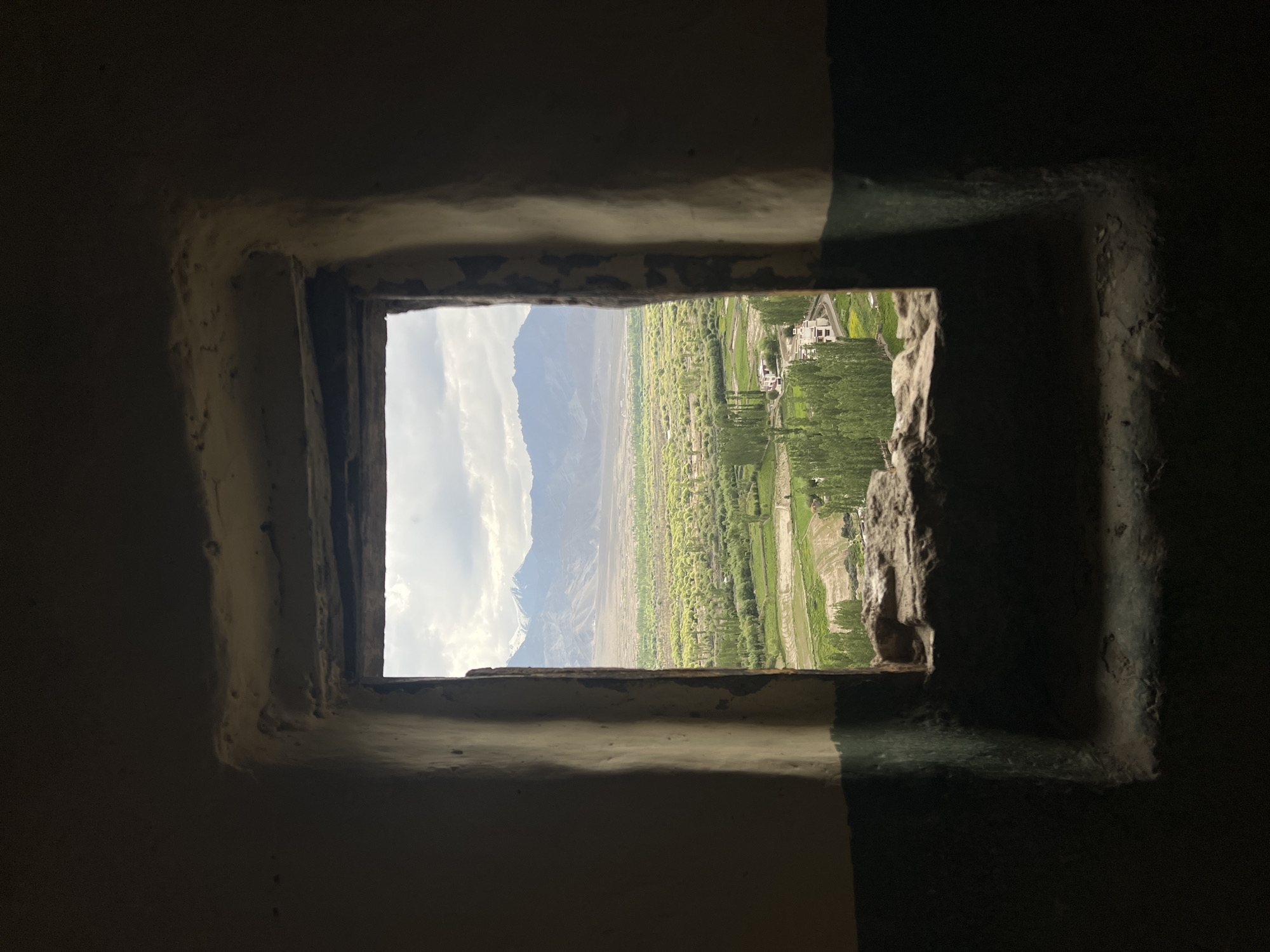
An interior shot looks through a rustic, rough-hewn window opening to a lush valley and distant mountains. The window frame, constructed of earth and plaster, shows signs of age and wear, with chipped edges and uneven surfaces. The interior walls are dark and appear to be roughly plastered, with a distinct horizontal line where the plaster transitions from a dark color on the bottom to a lighter, yellowish-tan color on the top. Through the window, a vibrant green valley unfolds, dotted with numerous trees and fields of varying shades of green. Several white buildings with red roofs are scattered throughout the valley, suggesting a village or settlement. In the background, a range of majestic mountains rises, their peaks possibly snow-capped. The sky above is partly cloudy, with a mix of bright sky and darker clouds. The overall impression is one of a rustic, historic viewpoint overlooking a fertile and picturesque landscape. The location is identified as the city of Killibur, India.
Killibur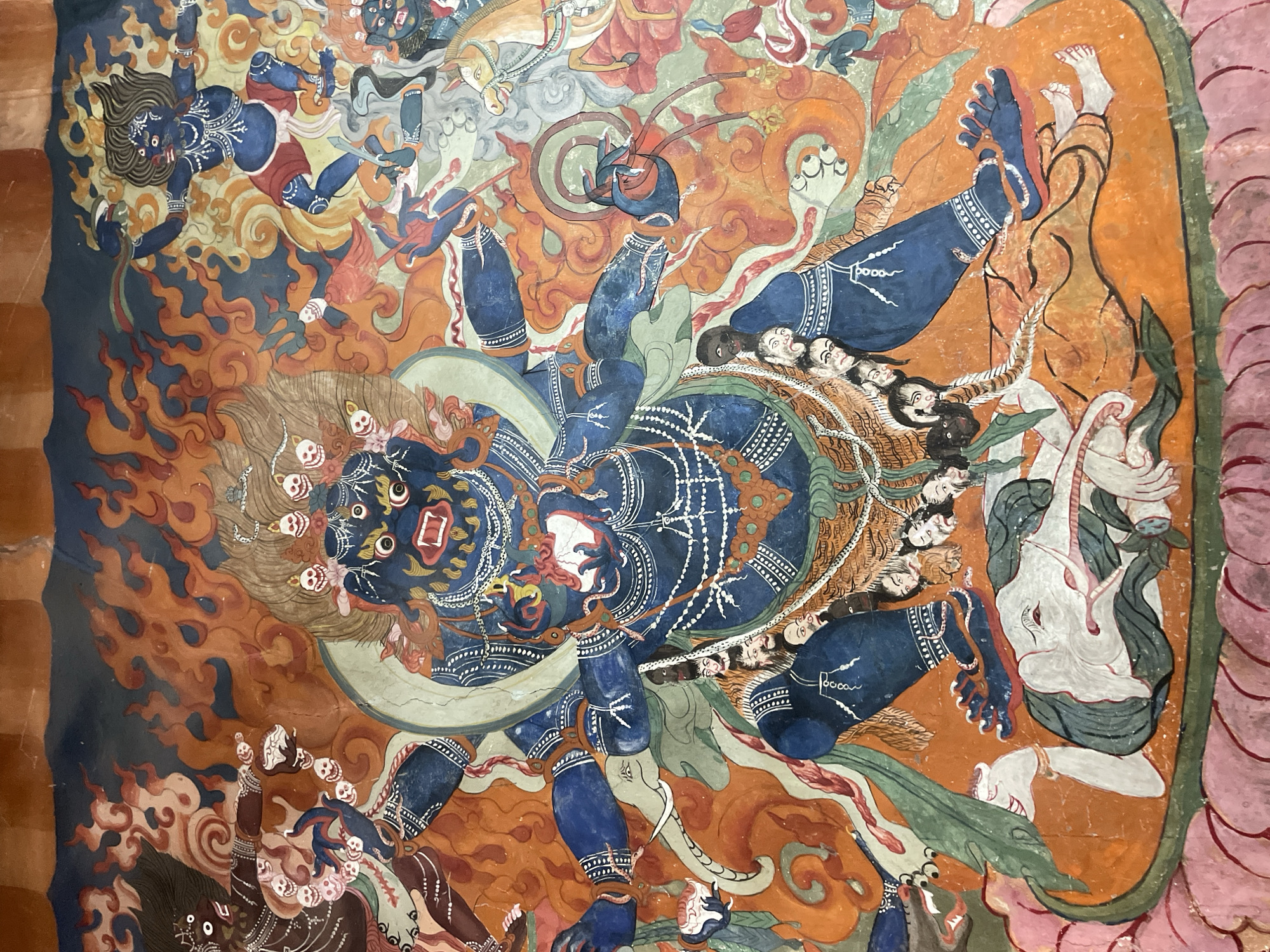
This image is a close-up of a Tibetan Thangka painting. The central figure is a wrathful deity, depicted with blue skin, multiple faces, and numerous arms. The deity is adorned with necklaces of skulls and is shown in a dynamic, powerful pose, standing on a prostrate figure and an elephant. The background is filled with flames and other figures, some of whom also appear to be wrathful deities or demons. The artwork is highly detailed with vibrant colors, characteristic of Buddhist art. There is no city named Killibur, India. Therefore, I cannot provide the location of this artwork within that city.
Killibur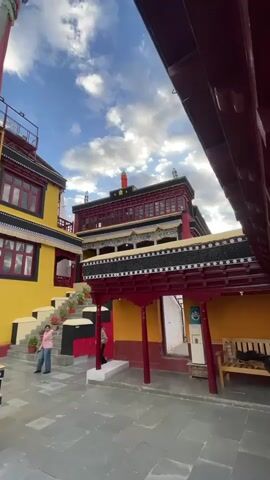
The video pans across a courtyard of a building complex that appears to be a monastery or temple. The architecture is vibrant, with brightly painted walls in yellow and red, accented with intricate decorative elements. A tall flagpole with prayer flags stands prominently in the center of the courtyard. Several people are visible, some walking, some standing, and one person is seated on a low wall. The sky above is a bright blue with scattered white clouds, suggesting pleasant weather. The ground is paved with stone tiles. The overall impression is of a cultural or tourist site with active visitors.
Killibur