La Cuesta, Spain
30 memories from La Cuesta, Spain
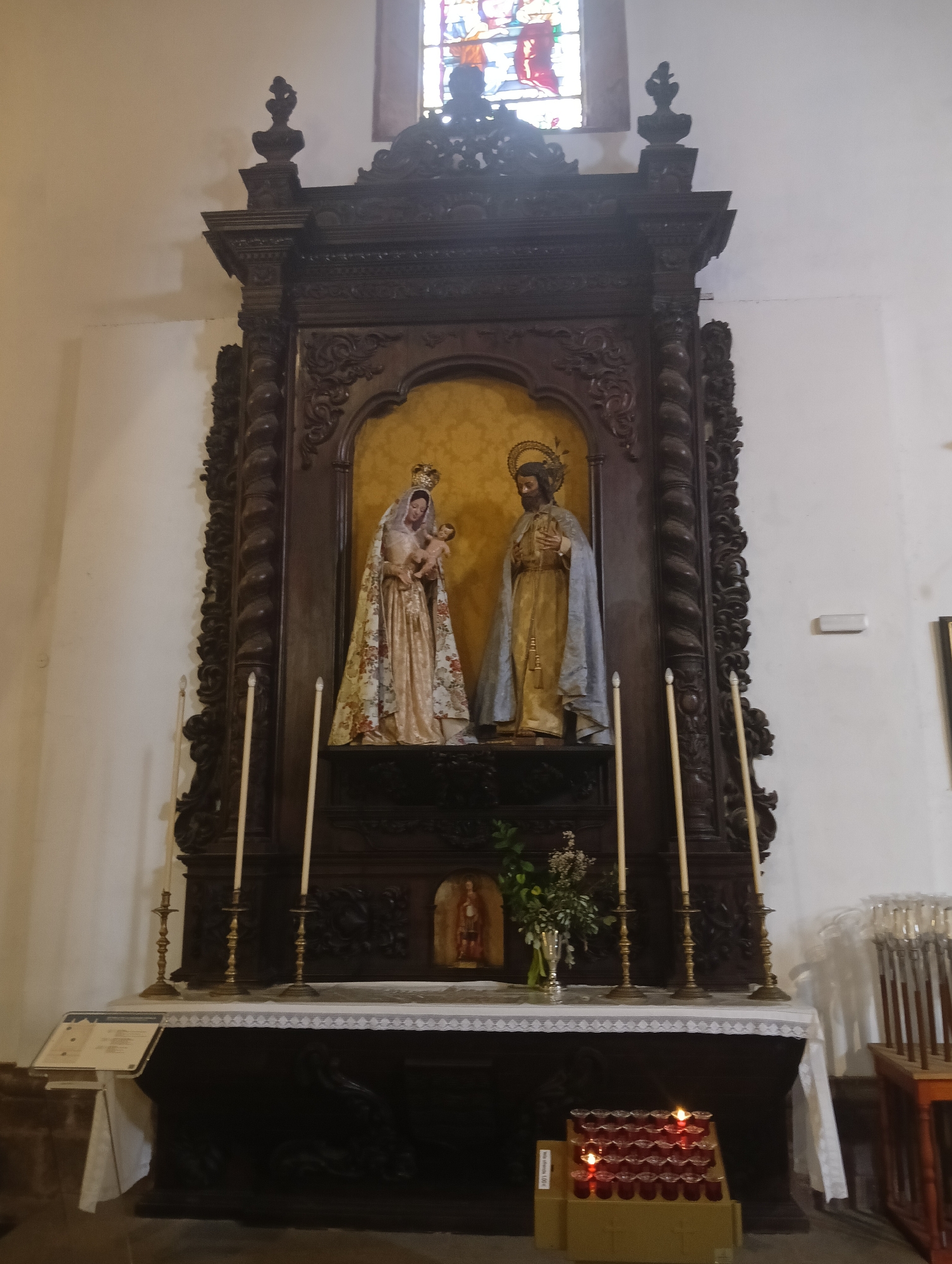
The image depicts an altar in a church in La Cuesta, Spain. The central focus is a large, intricately carved dark wood altarpiece housing two statues. On the left, a statue of the Virgin Mary, adorned with a crown and holding a baby Jesus, is dressed in an ornate, floral-patterned gown. To her right stands a statue of Saint Joseph, wearing a blue cloak over a yellow robe. The statues are positioned within a recessed niche with a golden backdrop. Flanking the niche are tall, slender candles on ornate brass candleholders. Below the statues, on the altar shelf, a small framed image of a saint is visible, along with a vase of greenery. In the foreground, a wooden box holds numerous votive candles, some of which are lit, casting a warm glow. The altar itself is draped with a white lace-covered cloth. To the left of the altar, a sign in a protective sleeve is mounted on a stand. In the background, part of a stained-glass window with colorful panes can be seen above the altarpiece. The walls of the church are painted a light color.
La Cuesta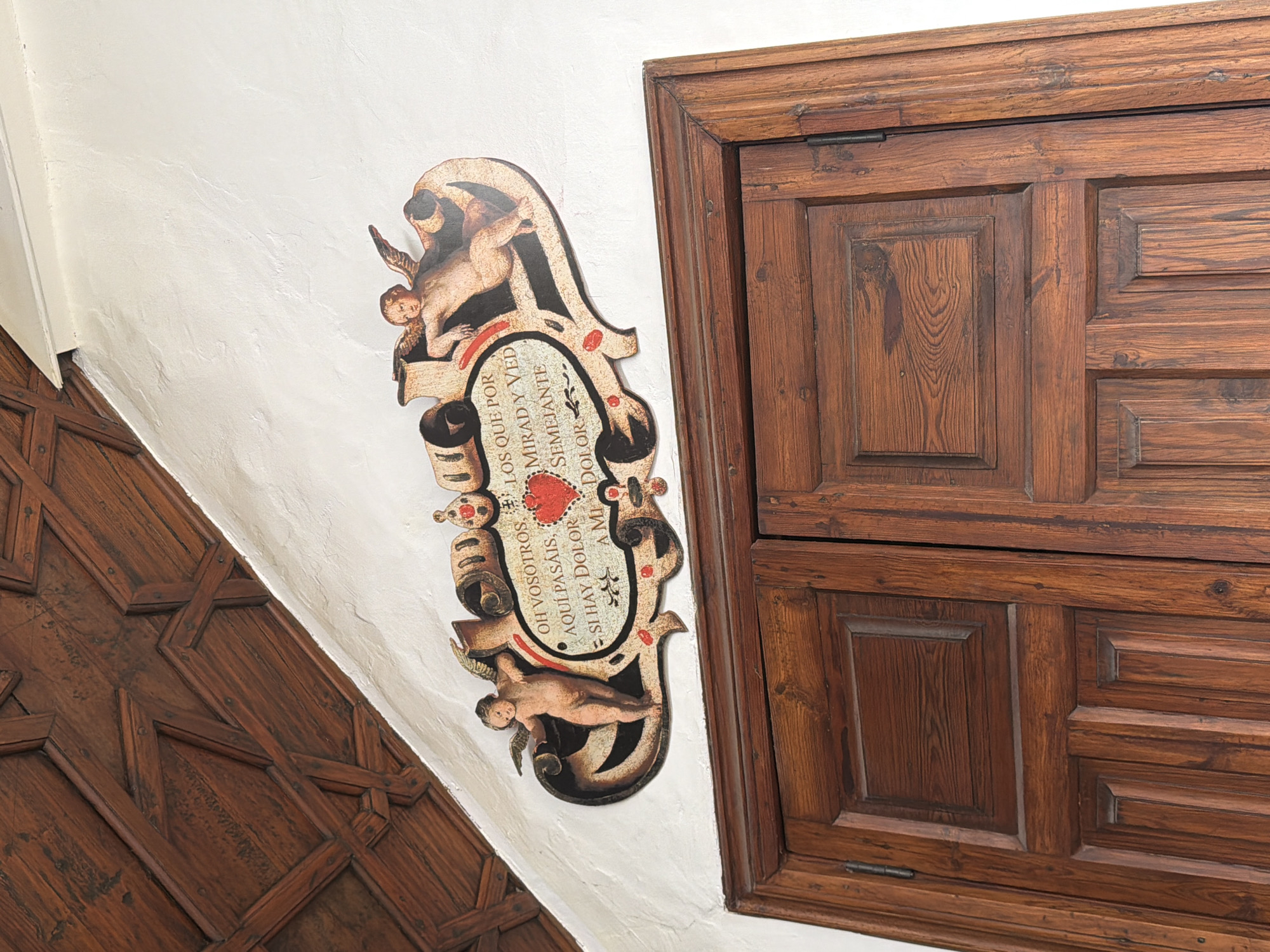
The image shows a close-up view of a wooden door and an ornate plaque on a white wall. The door is made of dark, aged wood with visible grain and knot patterns. It appears to be a double door, with the right door slightly more visible. The door features raised panels, a common decorative element in traditional woodworking. Above the door, mounted on the white wall, is a decorative plaque. The plaque is elaborately designed with scrollwork and two cherubic figures, one on the left and one on the right. These figures are depicted in a classical style, with wings and child-like bodies. The plaque itself has a cream-colored background with intricate black and red detailing. In the center of the plaque, there is a red heart symbol, and around it, there are inscriptions in what appears to be Spanish. One section of the inscription reads "OH VOSOTROS, LOS QUE POR AQUI PASÁIS, MIRAD Y VED SI HAY DOLOR SEMEJANTE A MI DOLOR." This translates to "OH YOU WHO PASS HERE, LOOK AND SEE IF THERE IS PAIN LIKE MINE." The wall behind the plaque is textured and painted white, contrasting with the dark wood of the door and the rich colors of the plaque. Above the wall, a section of a dark wooden ceiling is visible. This ceiling has a geometric, coffered design, suggesting an older architectural style. The lighting in the image suggests an indoor environment, possibly a historical building or a well-preserved interior space. The overall scene conveys a sense of history and artistic craftsmanship. The location of La Cuesta, Spain, is not directly evident from the visual details of the image itself, but is provided as contextual information.
La Cuesta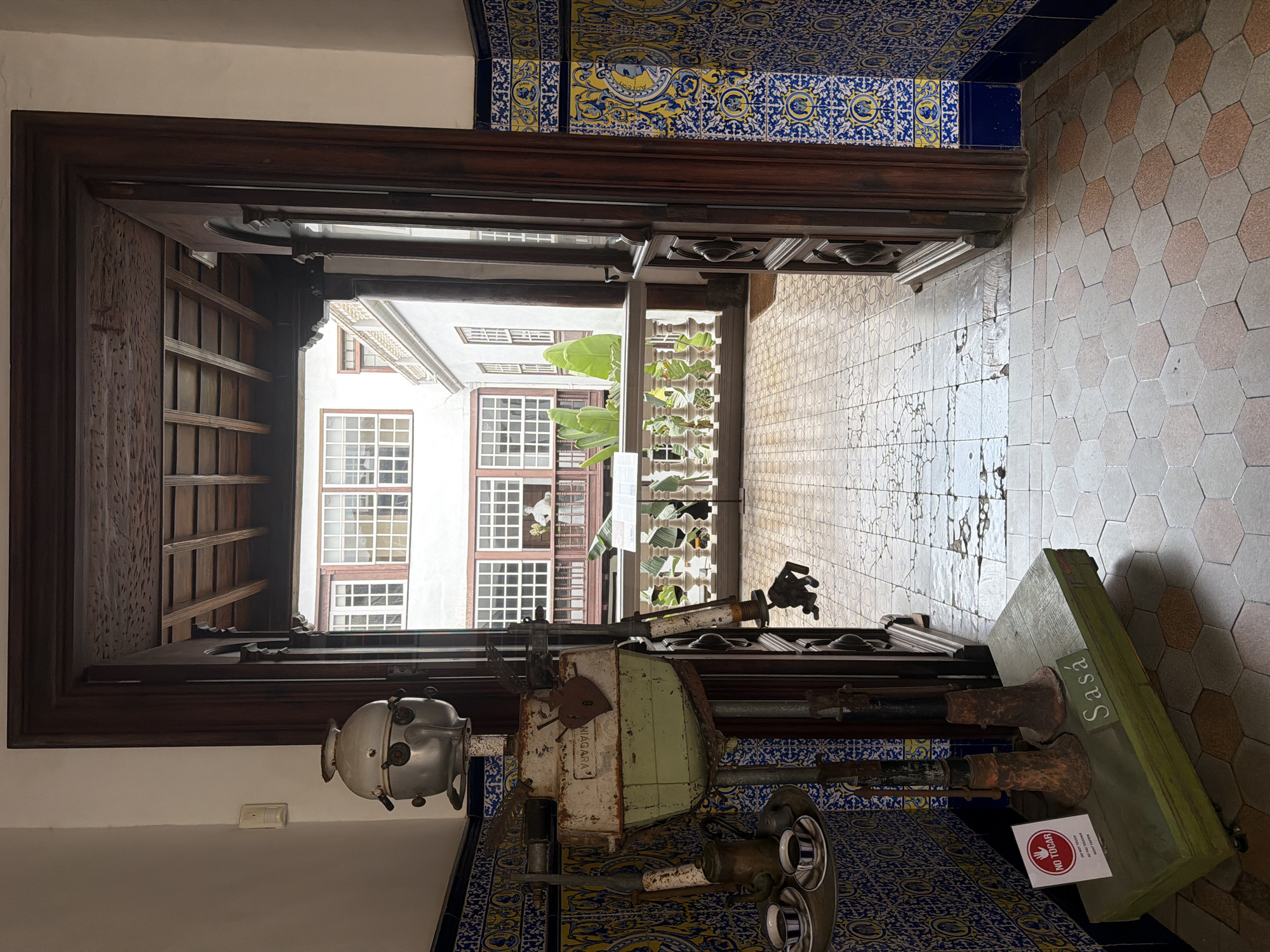
The image depicts a view through a large, ornate wooden doorway into a courtyard in La Cuesta, Spain. In the foreground, on the left, stands a peculiar, repurposed metal sculpture resembling a robot, adorned with a "No Tocar" (Do Not Touch) sign. This sculpture is placed on a green wooden base with the name "Sasa" etched into it. To the left of the sculpture, a small tray holds two cups of coffee with saucers. The walls are decorated with intricate blue and yellow patterned tiles. The doorway opens to a tiled courtyard, with a railing and lush greenery visible beyond. The architecture suggests a traditional Spanish building with multiple windows and balconies overlooking the courtyard.
La Cuesta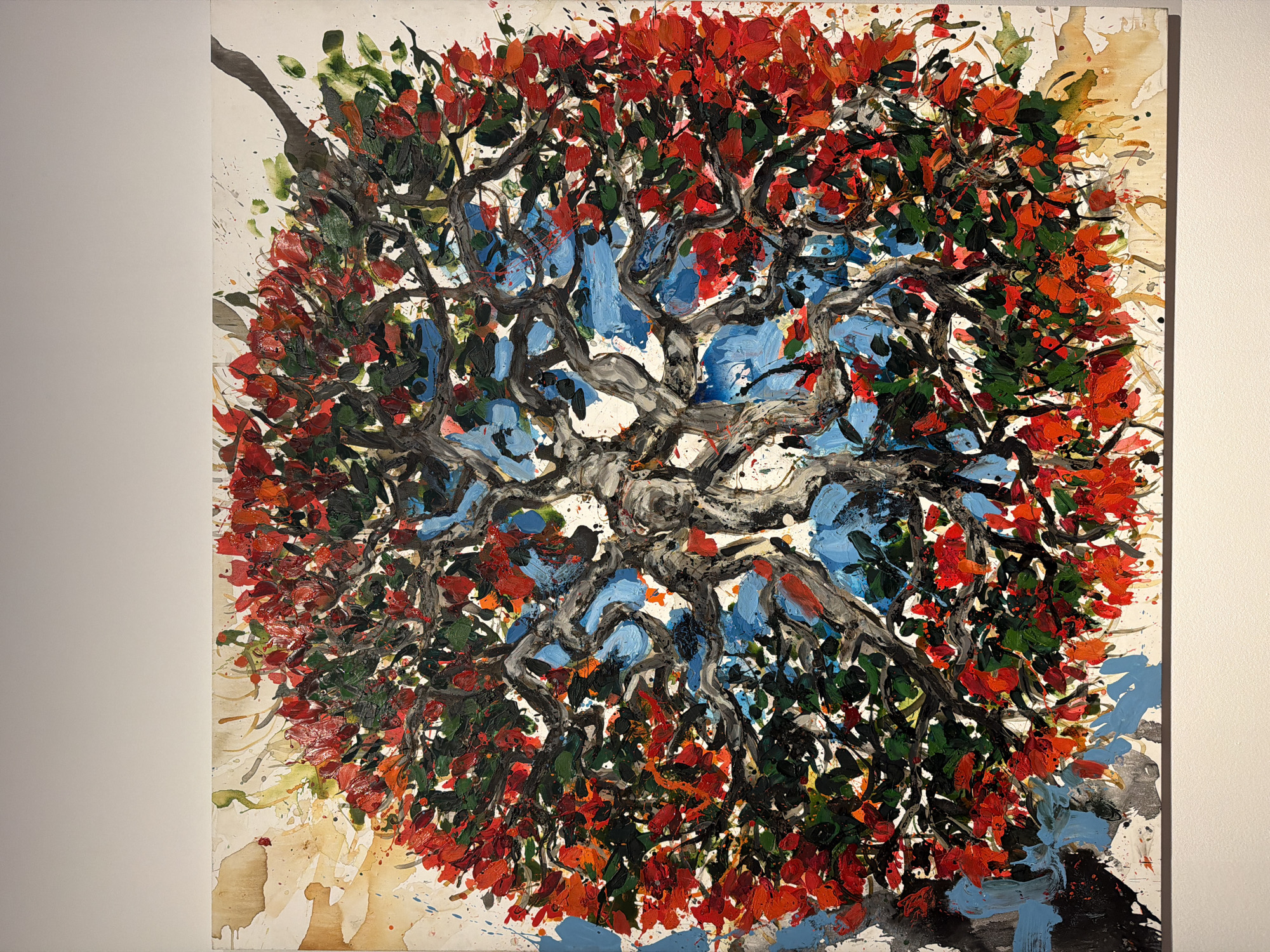
This is an abstract painting of a tree with vibrant red and green leaves, set against a blue sky. The tree's trunk and branches are depicted with thick, dark brushstrokes, giving them a sense of texture and movement. The leaves are rendered in a more impressionistic style, with dabs of color that suggest their fullness and vibrancy. Splashes of paint in various colors, including white, yellow, and brown, are scattered across the canvas, adding to the abstract and energetic feel of the artwork. The painting evokes a sense of nature's beauty and the raw power of the elements. The bright colors and dynamic brushwork suggest a lively and perhaps windy atmosphere. The composition, with the tree filling most of the frame and branches reaching towards the viewer, creates an immersive experience. The interplay of light and shadow, though abstractly represented, adds depth and dimension to the scene. The setting appears to be outdoors, given the depiction of the tree and sky. The context of La Cuesta, Spain, might suggest a Mediterranean landscape, known for its sunny weather and lush vegetation. However, the abstract nature of the painting allows for a more universal interpretation, focusing on the essence of the tree and its natural surroundings. There is no visible text in the image. The overall emotion conveyed is one of vitality, dynamism, and the untamed beauty of nature.
La Cuesta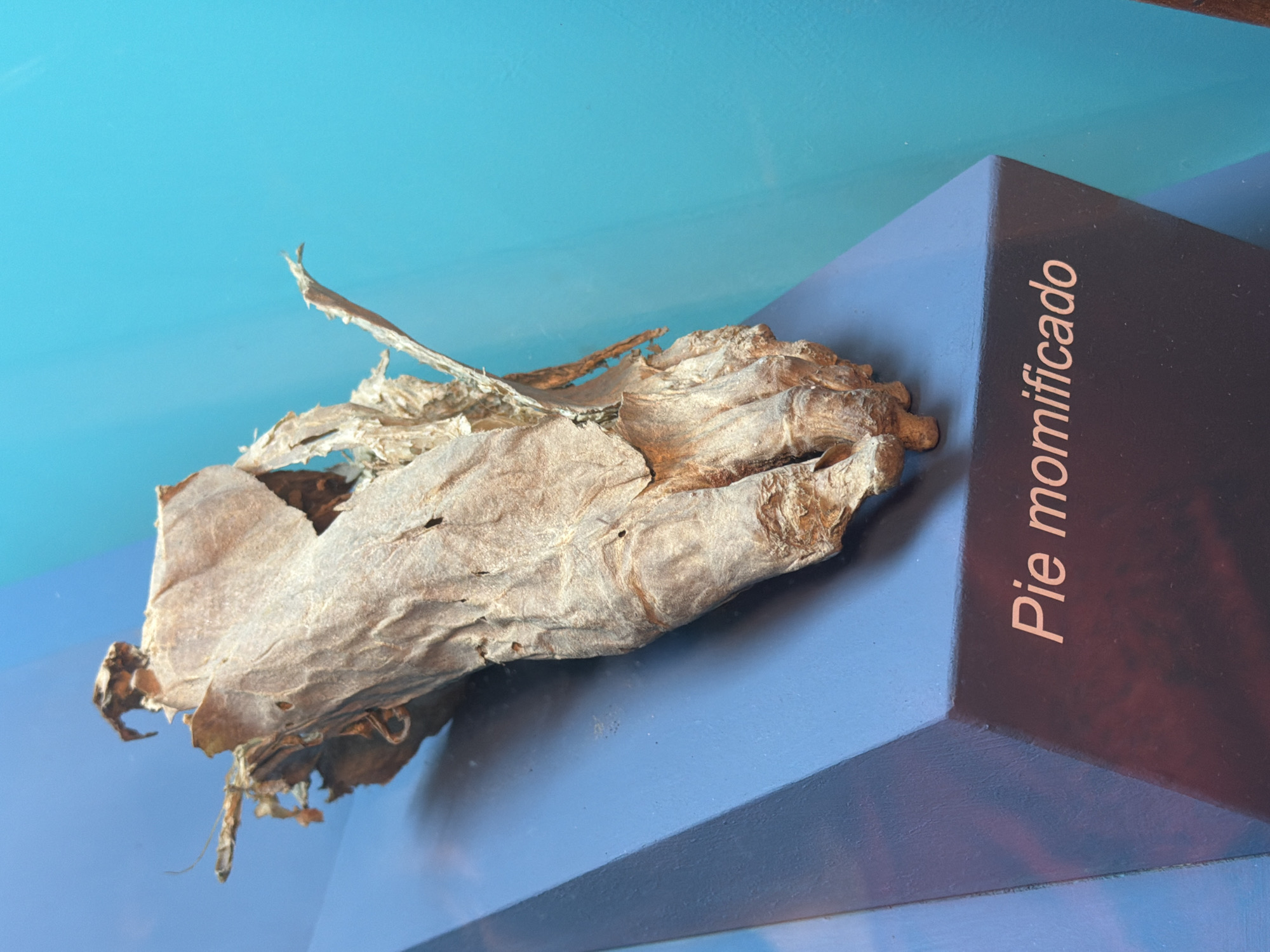
The image shows a mummified foot resting on a blue display case. The foot is dried and shriveled, with visible skin and bone. It is positioned at an angle, with its toes pointing upwards. The display case has text written on its side in white letters, which reads "Pie momificado". The background is a solid blue color, suggesting an indoor setting such as a museum or exhibition. The lighting is even, and there are no shadows to indicate a specific time of day or weather conditions. The overall impression is of a preserved artifact on display, likely for educational or historical purposes. The location context indicates the display is in La Cuesta, Spain.
La Cuesta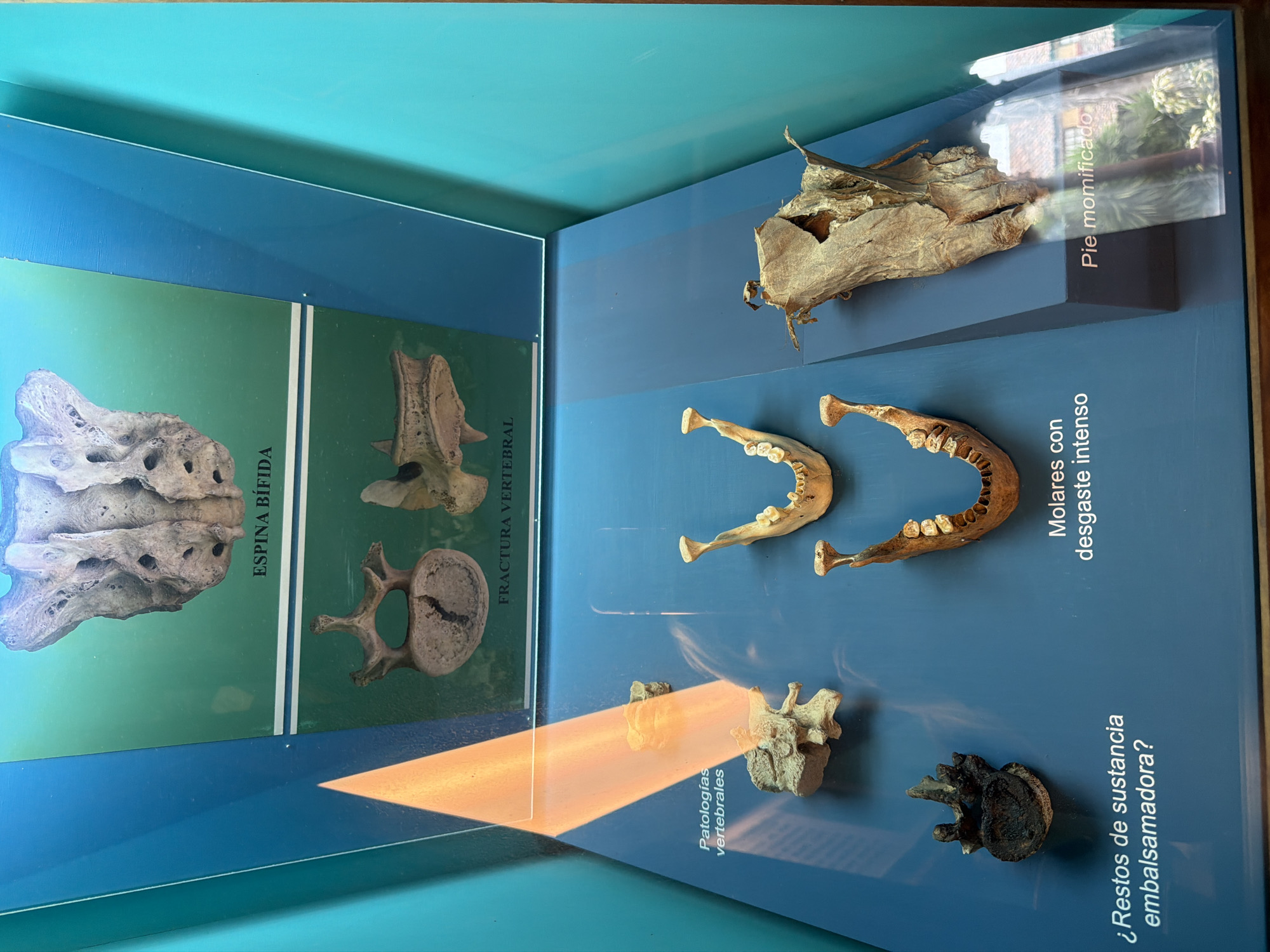
The image displays an exhibit of anatomical specimens, likely in a museum or educational setting. The main subjects are various skeletal parts, including what appears to be a mummified foot, jawbones with visible teeth, and vertebrae exhibiting different conditions. One display card labels a mummified foot as "Pie momificado," and another discusses "Molares con desgaste intenso" (Molars with intense wear). There are also labels for "ESPINA BÍFIDA" (Spina bifida) and "FRACTURA VERTEBRAL" (Vertebral fracture), suggesting educational content related to spinal conditions and injuries. The final visible label asks "¿Restos de sustancia embalsamadora?" (Remains of embalming substance?), indicating a display about mummification or preservation techniques. The setting is an indoor display with a blue background. A diagonal beam of orange light cuts across the lower portion of the image, suggesting directional lighting or a spotlight. The exhibit is behind a protective barrier, possibly glass, as reflections are visible on the surface. The overall impression is one of a scientific or historical presentation of biological and pathological specimens. The specific location cue "La Cuesta, Spain" is not directly visible within the image itself, but it provides context for the origin or subject of the exhibit. No people are visible in the image, and there are no cues about the time of day or weather.
La Cuesta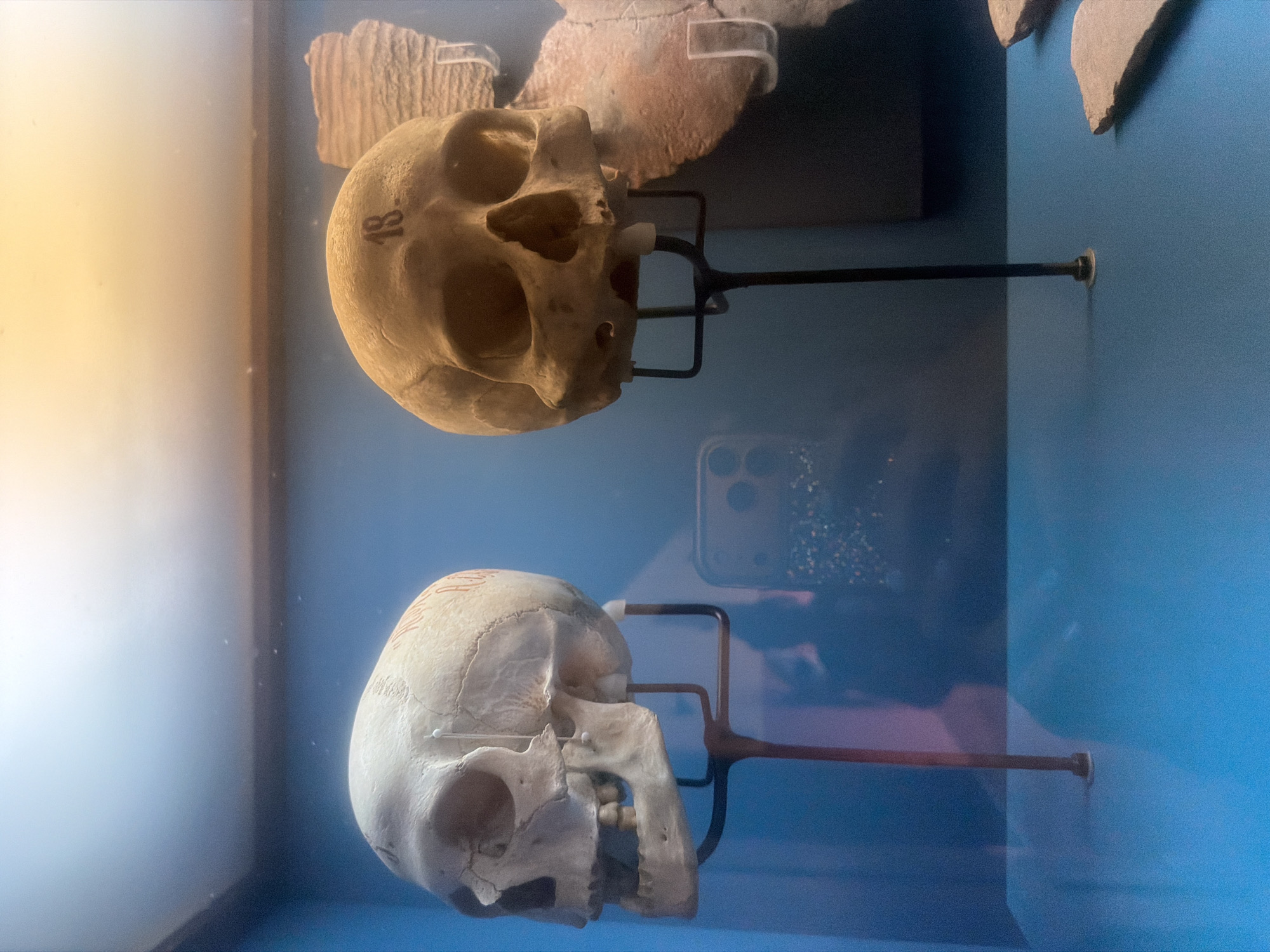
In La Cuesta, Spain, two human skulls are displayed on stands within a museum exhibit. The skull on the left is lighter in color and appears to have some text or markings on it, indicated by a pin inserted into the side. The skull on the right is darker and has the number "18" clearly marked on its forehead. Both skulls are positioned facing forward, with the display case exhibiting a blue background and a reflective surface at the bottom. Fragmented artifacts, possibly pottery shards, are visible in the background and to the right of the skulls. The overall environment suggests an archaeological or anthropological exhibition.
La Cuesta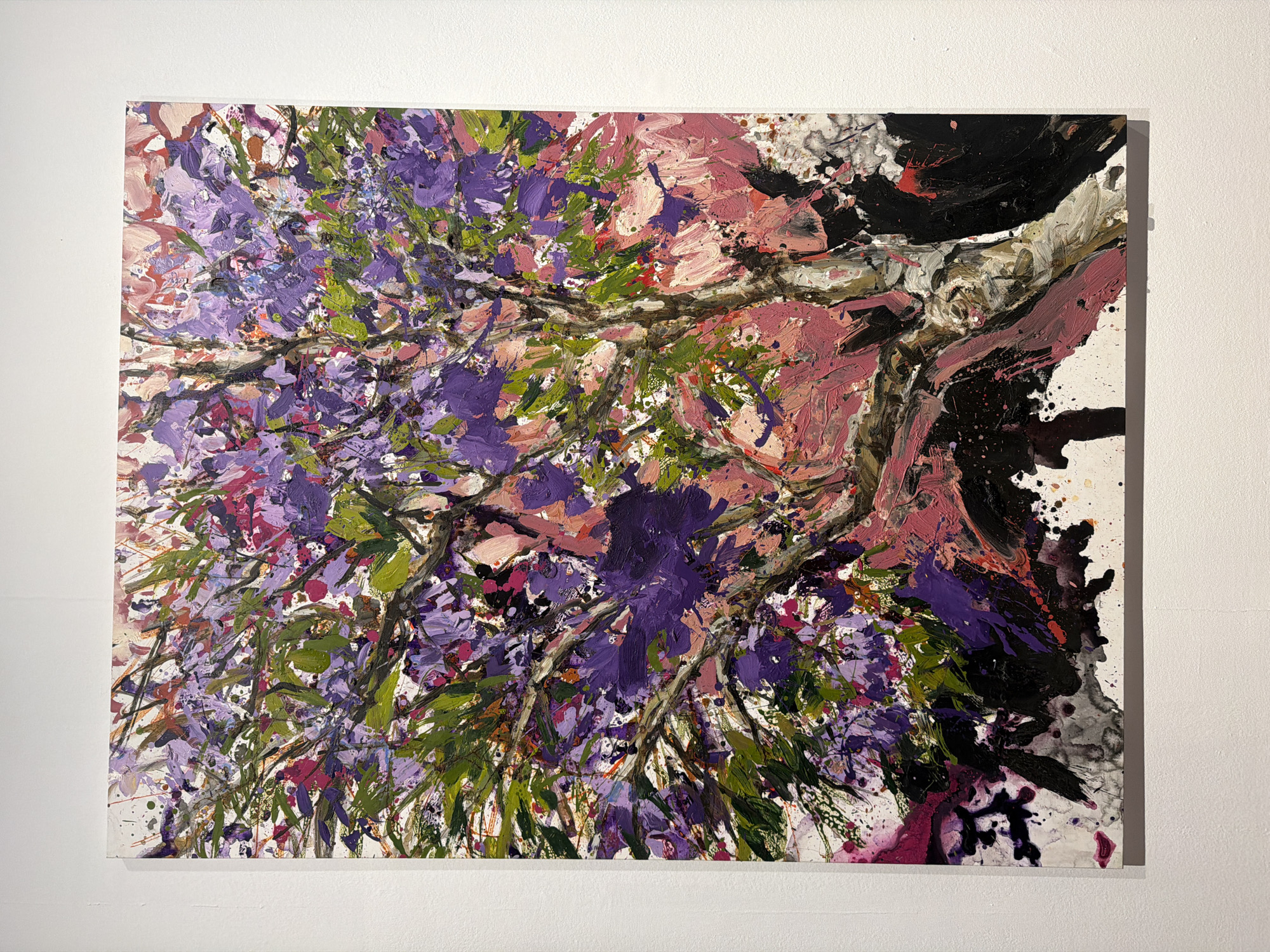
This is a close-up, eye-level shot of an abstract painting displayed on a white wall, possibly in a gallery or art exhibition. The painting is predominantly a vibrant mix of purples, greens, and pinks, with accents of black and white. It depicts an abstracted tree, characterized by thick, gestural brushstrokes and splatters of paint. The upper portion of the canvas is filled with a dense canopy of leaves and flowers rendered in various shades of purple and green, interspersed with pink. The trunk of the tree is a prominent vertical element in the center, painted with lighter tones of white and brown, suggesting texture. The lower part of the painting features darker, more dramatic strokes of black and deep purple, creating a sense of depth and contrast. The overall impression is energetic and expressive. The artwork is framed by the stark white of the wall and the subtle shadow cast by its edge, indicating it is a physical object and not a digital display. The image's context as being located in La Cuesta, Spain is not visually evident from the artwork itself.
La Cuesta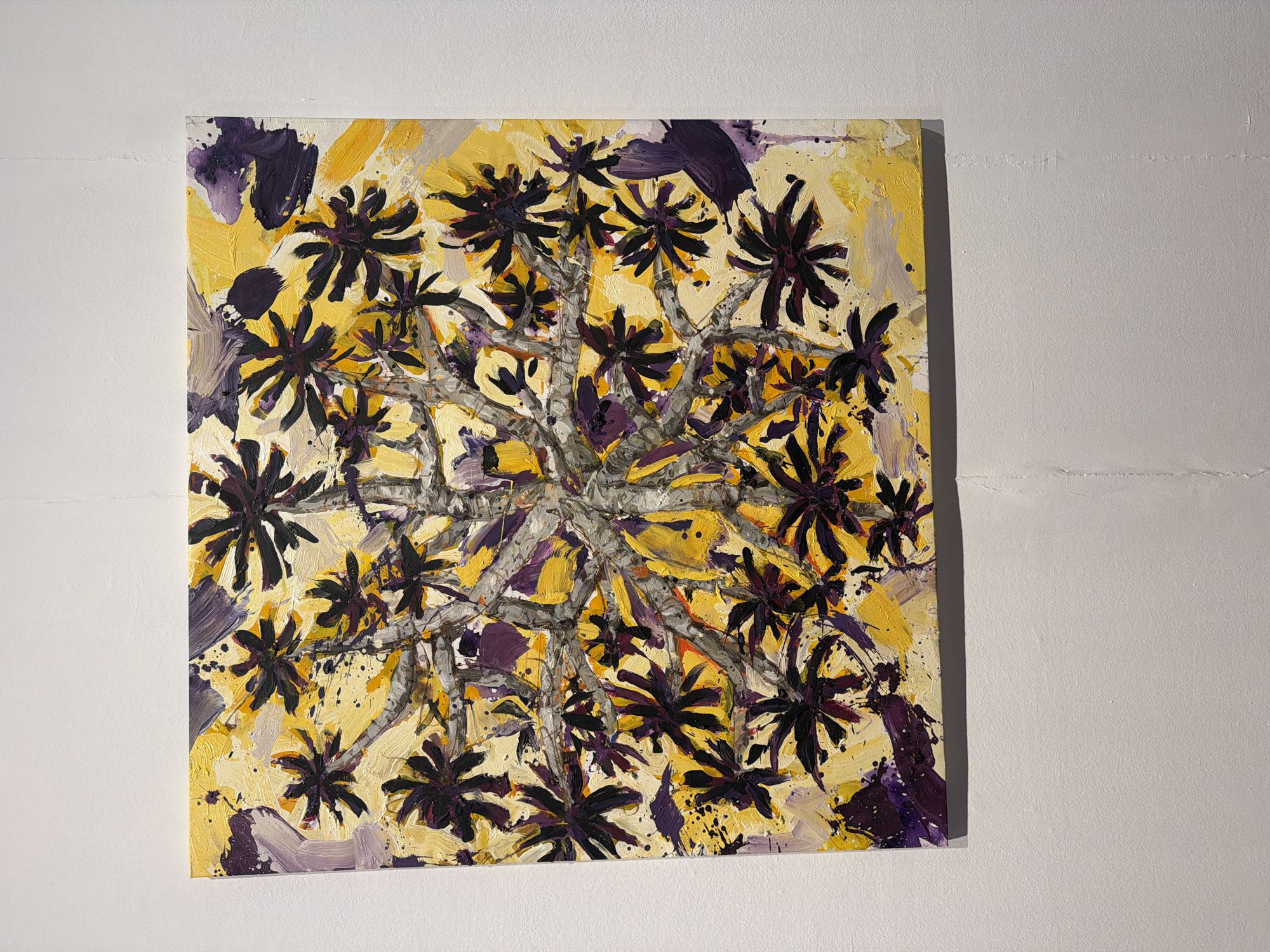
This is a square, abstract painting with a textured, impasto technique. The artwork is dominated by a vibrant yellow background, overlaid with strokes of purple and grey. The central subject appears to be a stylized representation of a plant or tree, with dark purple, star-shaped floral elements radiating outwards from a grey, branching structure. Splashes and drips of black paint are visible throughout the composition, adding to the abstract and energetic feel. The painting is hung on a white, textured wall, which is slightly uneven, suggesting it might be in a gallery or studio space. The lighting appears to be artificial, casting a slight shadow to the right of the artwork. There is no visible text within the image. The overall impression is one of bold color and dynamic form, possibly evoking a sense of nature viewed through an expressive and non-realistic lens.
La Cuesta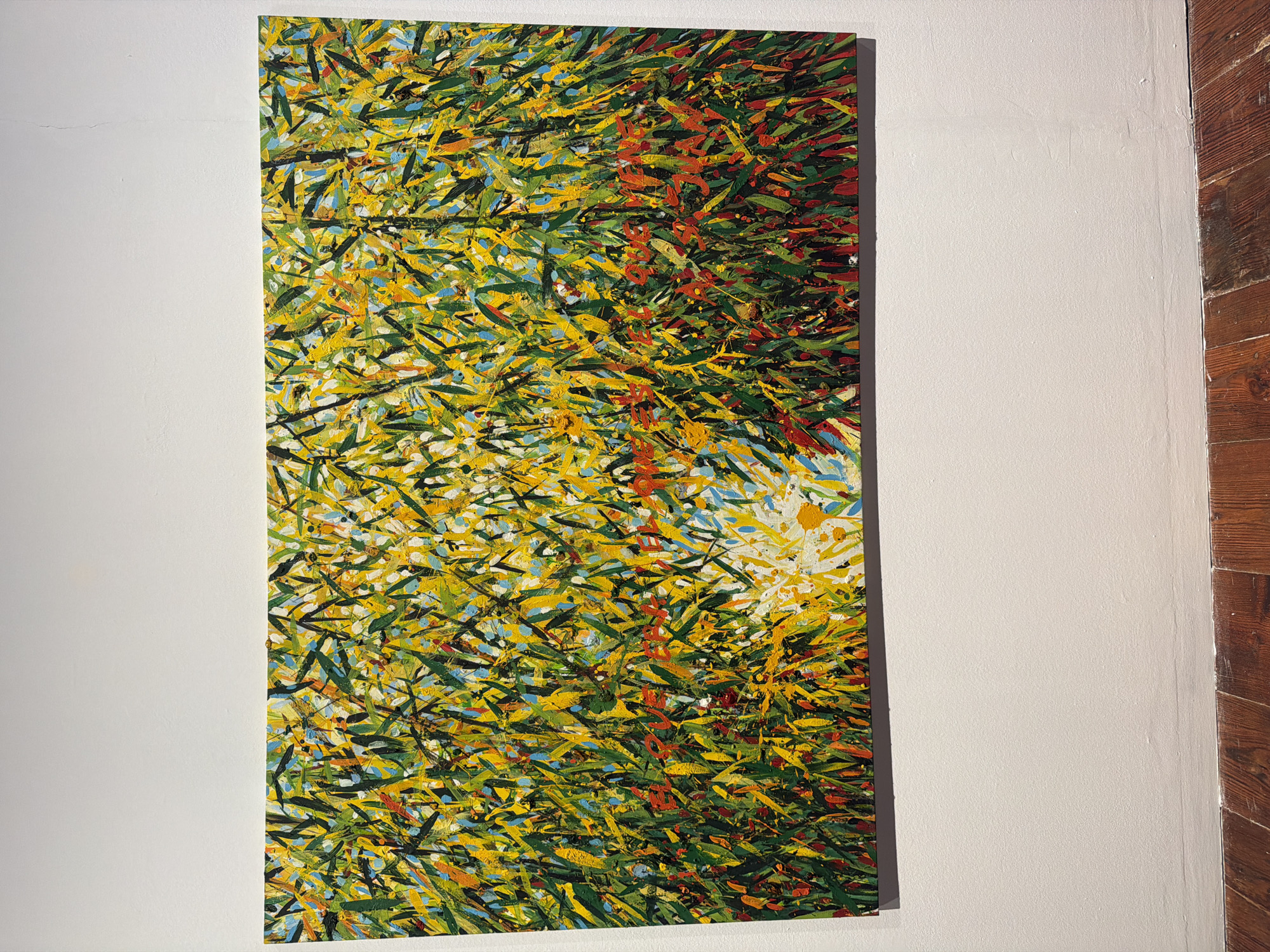
This is a vertical, close-up, eye-level shot of a vibrant abstract painting hanging on a textured, off-white wall. The painting is a dense tapestry of short, expressive brushstrokes in various shades of green, yellow, orange, red, and blue. The strokes are layered and overlapping, creating a sense of movement and depth. There are hints of black and white interspersed, adding further visual complexity. The overall impression is one of a chaotic yet harmonious natural scene, perhaps suggesting foliage in a strong wind or a sun-drenched field. The painting occupies the right half of the frame. The left side of the image is dominated by the plain, off-white wall, which exhibits subtle texture and a few faint imperfections. To the far right of the painting, a narrow section of a wooden wall is visible, with dark, vertical planks showing a natural wood grain and some visible knots. The lighting appears to be artificial, casting a soft glow on the artwork and the wall. There is no visible text or any depiction of people or specific objects. The setting suggests an indoor display, possibly an art gallery or studio space, given the presentation of the artwork and the neutral background.
La Cuesta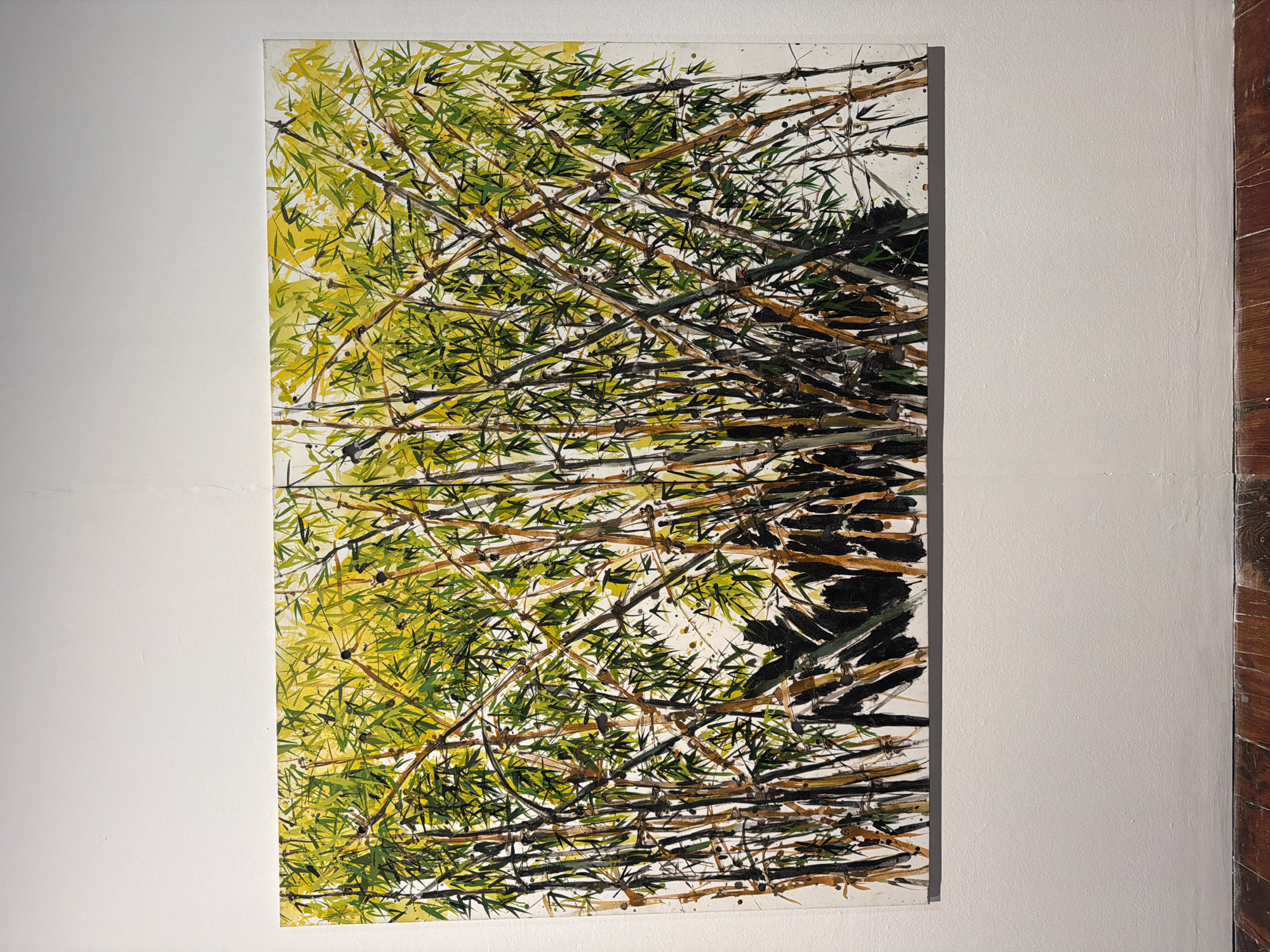
The image shows a tall, narrow painting on a white wall. The painting depicts a dense cluster of bamboo stalks and leaves rendered in a loose, expressive style. The bamboo is predominantly green and yellow, with brown and black accents for the stalks and shadows. The brushstrokes are visible and energetic, suggesting movement and a sense of natural growth. The composition is abstract, focusing on the textures and interplay of light and shadow within the bamboo thicket. There is no visible text in the image. The painting is hung in a gallery or art space, as indicated by the plain white wall and the adjacent wooden paneling, which may be part of the building's architecture or a display element. The lighting suggests an indoor environment, possibly with natural light supplementing artificial sources. The overall impression is one of organic vitality and a focus on the visual qualities of the bamboo itself. The location context of La Cuesta, Spain, does not provide specific visual cues within the image itself, but situates the artwork in a particular geographical and cultural setting.
La Cuesta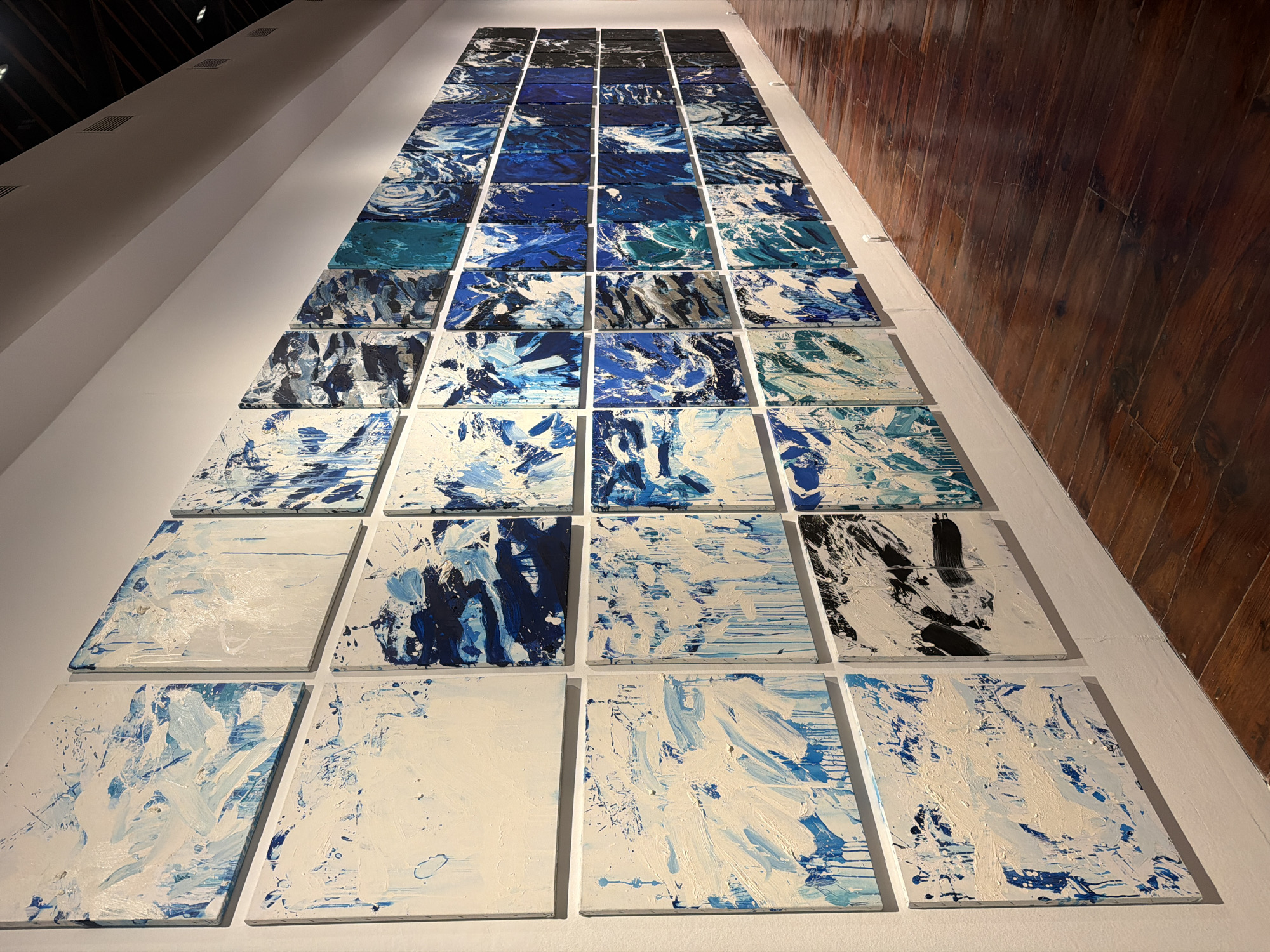
This media file showcases a large-scale art installation composed of numerous square and rectangular canvases arranged in a grid formation on a white wall. The artwork is abstract, featuring a palette dominated by various shades of blue, white, and some black. The brushstrokes are dynamic and varied, ranging from thick impasto to thin washes and splatters, creating a sense of movement and texture. Some canvases appear to depict abstract representations of water or fluid forms, with swirling patterns and energetic lines. Others are more minimalist, with broad strokes of white paint and subtle hints of blue. The installation is presented in an indoor setting, likely an art gallery or exhibition space, given the clean white walls and the polished wooden floor visible to the right of the artwork. The lighting appears to be artificial, casting shadows that emphasize the texture of the paintings and the arrangement of the canvases. The overall impression is one of a contemporary, visually striking art piece. There are no people visible in the frame, and no text is present in the artwork or the surrounding environment. The context of "La Cuesta, Spain" suggests this is a location where such an exhibition might be held, but the image itself does not contain specific geographical markers.
La Cuesta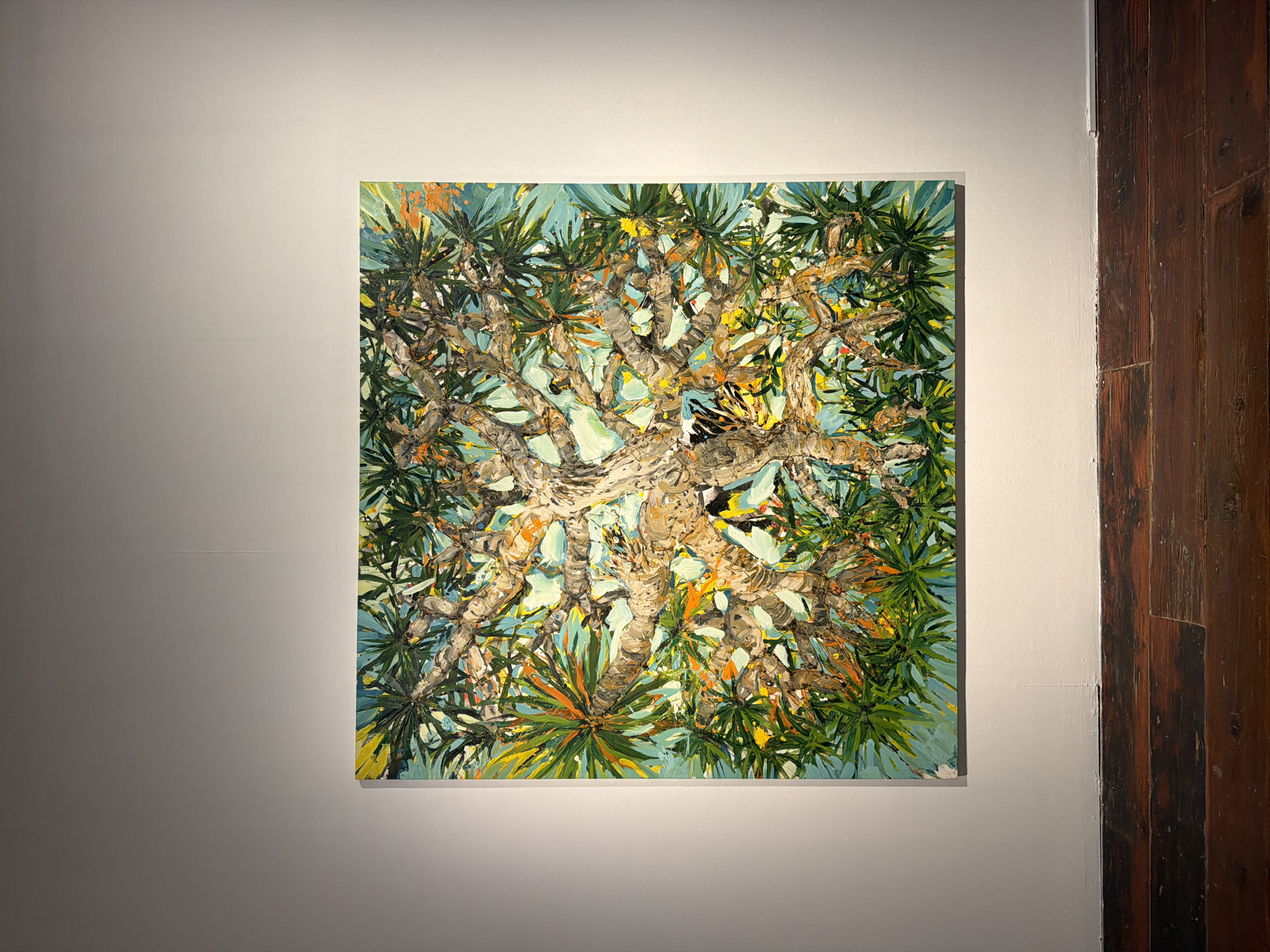
A square, textured oil painting of a tree viewed from below is displayed on a white wall, illuminated by a spotlight. The artwork depicts a dense canopy of leaves and thick, twisting branches against a bright turquoise sky. The leaves are rendered in various shades of green, with accents of yellow, orange, and red, suggesting sunlight filtering through. The tree's trunk and branches are painted with thick impasto strokes, creating a tactile surface with a palette of browns, grays, and whites. The composition is dynamic, with the branches creating an intricate, almost abstract pattern. To the right of the painting, a section of a rustic, dark wooden door is visible, with vertical planks showing a weathered texture and varied wood grain. The wall on the left of the painting is a neutral white, subtly lit to highlight the artwork. The overall impression is of a vibrant, close-up view of nature, likely captured in a warm climate given the style of foliage. The lighting suggests an indoor setting, possibly an art gallery or a well-lit exhibition space. No people are visible in the frame, and there is no visible text. The time of day and weather are implied by the bright, clear sky depicted in the painting. The location context of La Cuesta, Spain, would support the subject matter of a tree with such foliage.
La Cuesta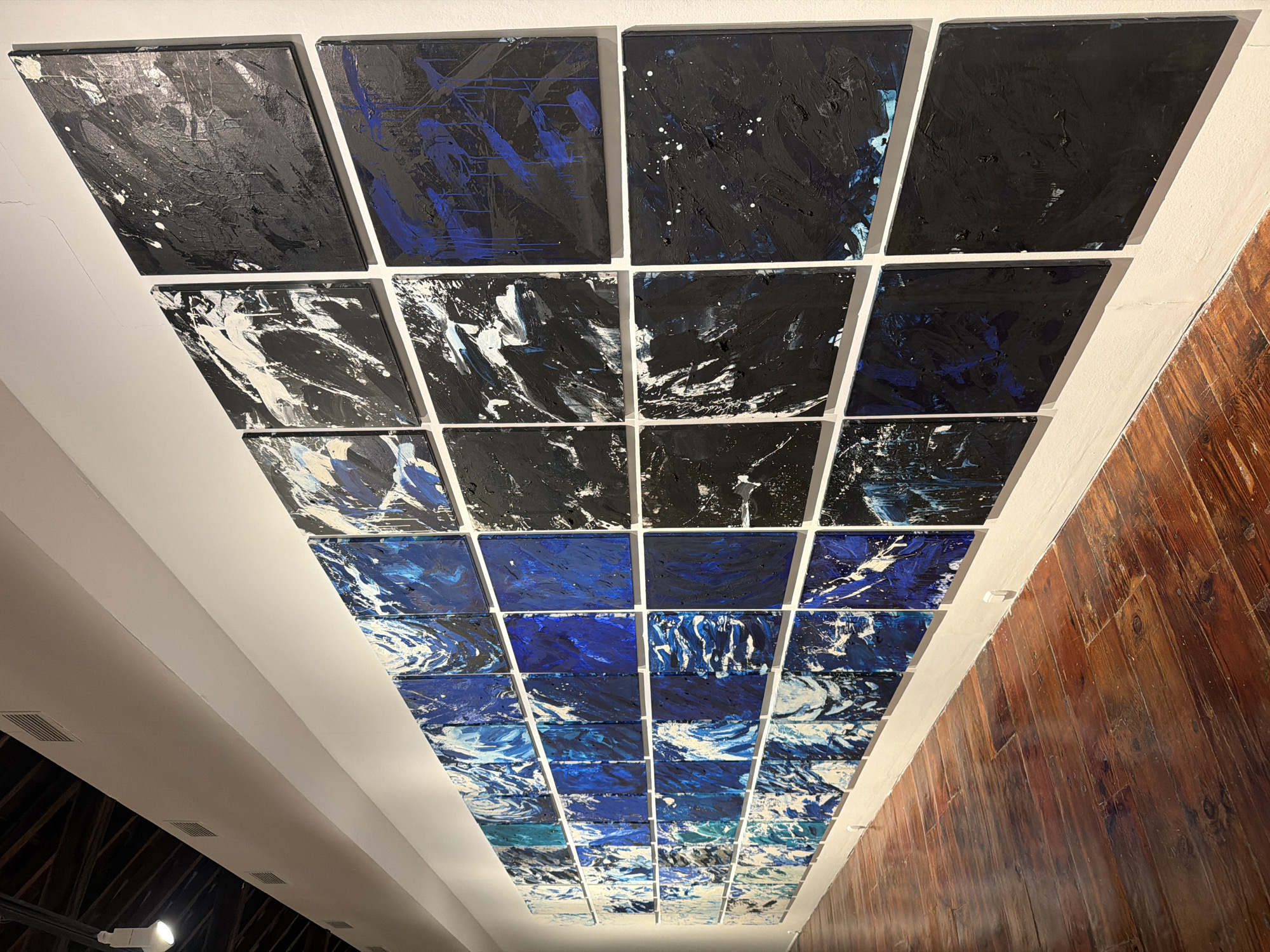
This media file shows a ceiling installation of abstract paintings. The paintings are arranged in a grid-like pattern, with each painting being a square canvas. The paintings are predominantly in shades of black, white, and various blues, with some featuring splashes of color and textured brushstrokes. The overall impression is one of dynamism and perhaps cosmic or aquatic themes, given the color palette and abstract nature of the art. The paintings are mounted on a white ceiling, with a warm wooden wall visible on the right side of the frame, suggesting an interior space, possibly an art gallery or a modern architectural setting. The lighting appears to be artificial, illuminating the artwork from above and casting subtle shadows. There are no people visible in the media file, and the focus is solely on the artwork and its installation. The time of day and weather are not discernible from the image. No visible text is present. The location context is La Cuesta, Spain.
La Cuesta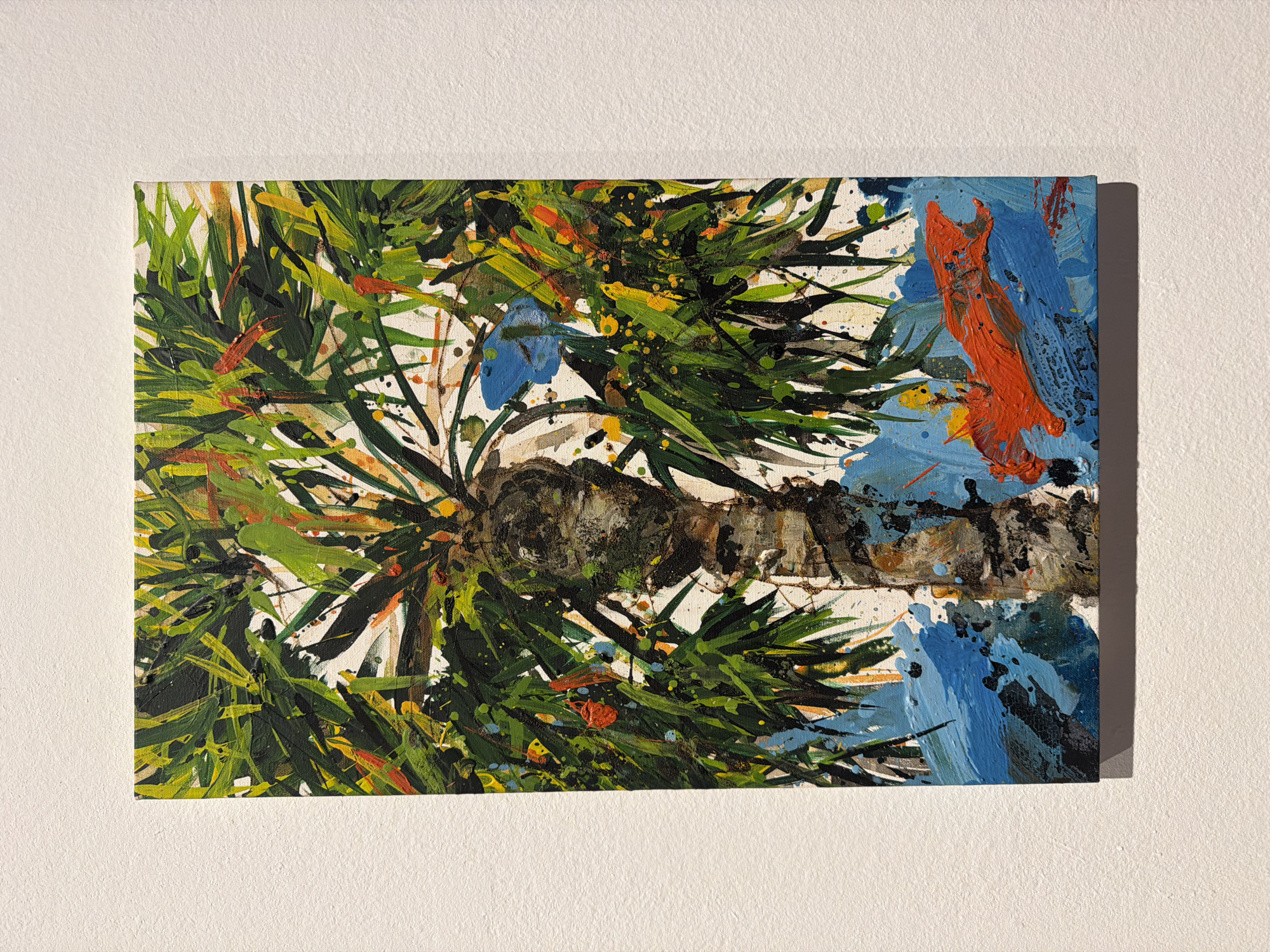
This is a medium shot, eye-level, horizontal photograph of an abstract acrylic painting mounted on a textured white wall. The painting depicts a close-up, impressionistic view of what appears to be pine needles and a branch. Dominant colors include various shades of green, brown, black, and blue, with accents of orange and yellow. The brushstrokes are dynamic and energetic, with visible splatters and thick applications of paint, suggesting a sense of movement and texture. The background is primarily white, with abstract splashes of blue, orange, and black paint on the right side of the canvas, creating a contrast with the natural elements on the left. The lighting suggests ambient, likely indoor lighting, casting a subtle shadow to the right of the painting. There is no discernible text or any indication of a specific time of day, weather, or explicit emotion within the artwork itself. The setting is a plain white wall, likely in a gallery or home environment. The subject matter appears to be a stylized representation of nature, possibly a pine tree branch, rendered in a bold, abstract style.
La Cuesta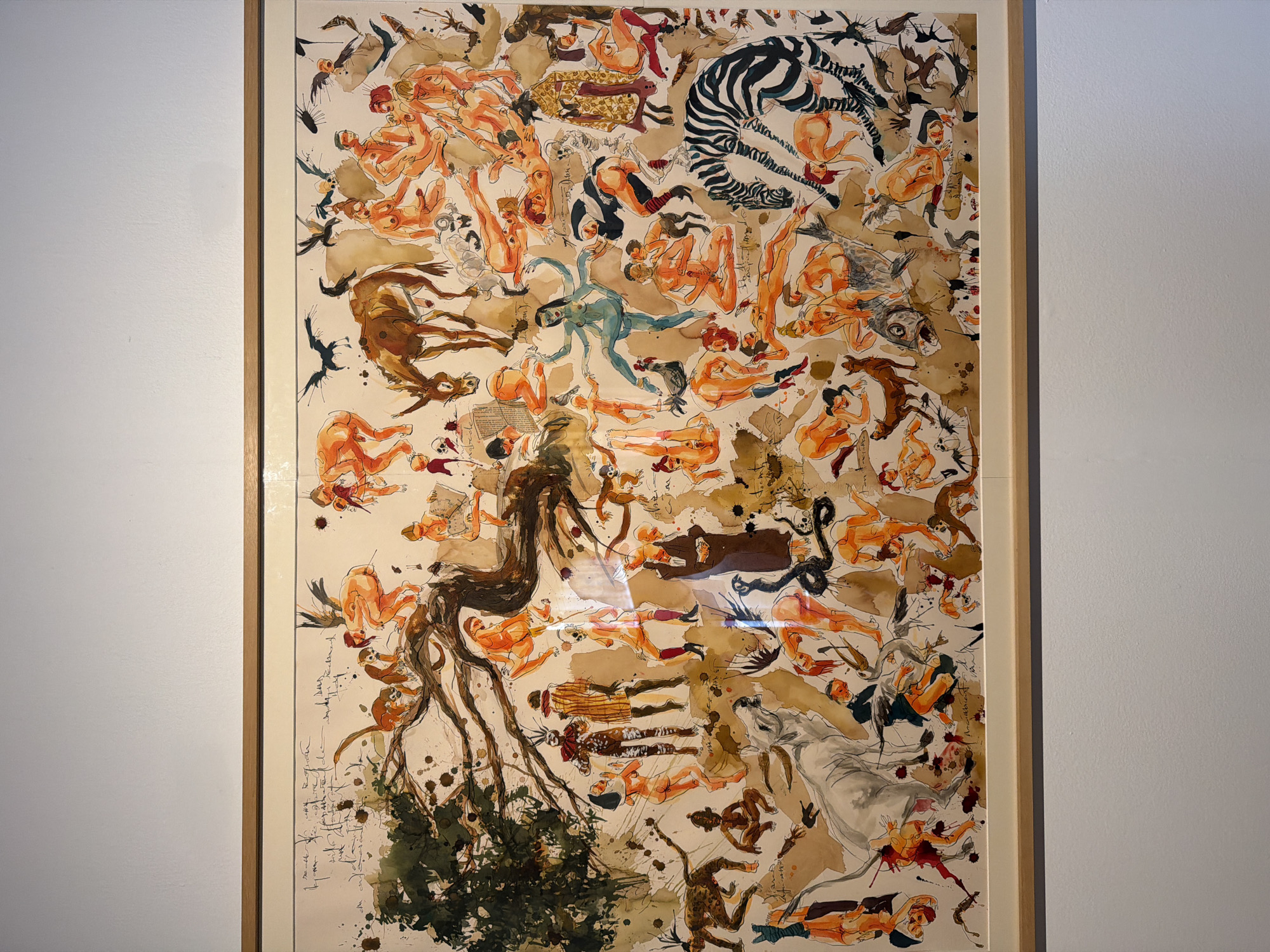
This is a framed artwork, likely a painting or drawing, featuring a chaotic and densely populated scene. The primary subjects are numerous nude and semi-nude figures in various poses, interspersed with animals such as a zebra, a horse, a fish, and monkeys. There are also depictions of what appear to be abstract forms, branches, and foliage. The style is loose and expressive, with watercolor and ink evident. The figures are rendered in warm, earthy tones, predominantly orange and brown, with some darker accents and washes. The overall impression is one of disarray and movement, with figures seemingly falling, reaching, or interacting in an unclear narrative. Some figures are reading or holding objects, while others are intertwined or in dynamic poses. The composition is crowded, with elements overlapping and filling the entire space. There are splashes of ink and paint, adding to the sense of energy and perhaps turmoil. Notable details include the presence of what looks like a snake, a fish with discernible scales, and the stylized black and white stripes of the zebra. The lower left portion of the artwork includes what appears to be handwritten text in cursive script, predominantly dark ink on a lighter background, which is difficult to decipher. The artwork is framed in a simple wooden frame. The background against which the artwork is displayed appears to be a light-colored wall. No specific time of day, weather, or strong emotional cues beyond a general sense of activity are immediately apparent, but the imagery could be interpreted as symbolic or allegorical. The location context of La Cuesta, Spain, provides a geographical setting but no specific visual cues within the artwork itself.
La Cuesta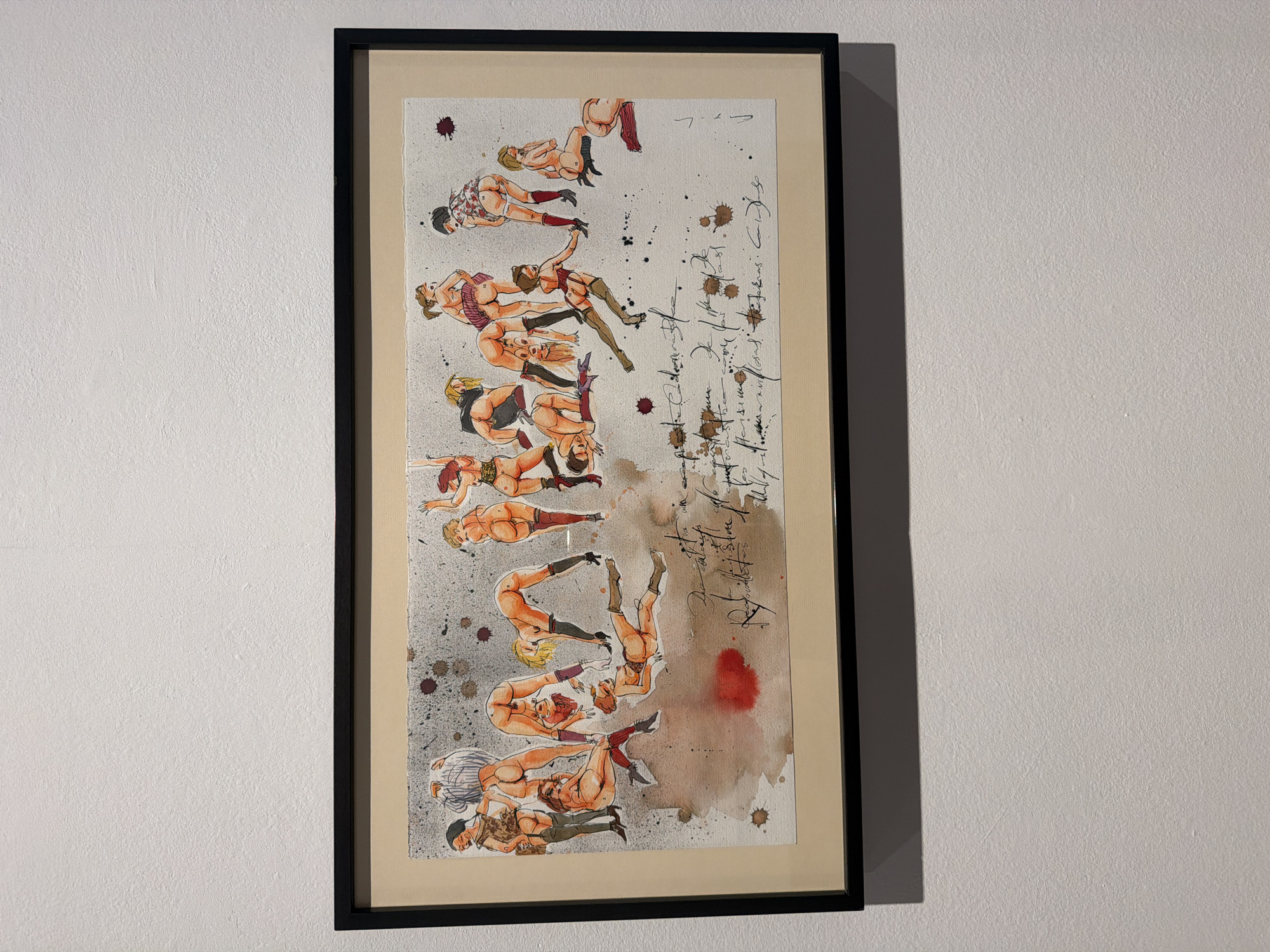
This is a framed artwork hanging on a textured white wall, likely in a gallery or home setting in La Cuesta, Spain. The artwork is a vertical, mixed-media piece featuring a series of illustrated female figures in various contorted and suggestive poses. The figures appear to be rendered in a sketchy, watercolor style, with accents of red, orange, and brown, possibly representing ink or diluted paint. Some of the figures are depicted wearing stockings and other suggestive attire. Scattered across the background are dark splatters and smudges, along with larger washes of reddish-brown watercolor, giving the impression of stains or abstract elements. To the right of the figures, there is handwritten text in dark ink. The script is cursive and somewhat difficult to decipher, but appears to be French or possibly Spanish. The overall impression of the artwork is one of artistic expression, possibly exploring themes of sensuality or the human form. The lighting in the image suggests it was taken indoors during the daytime, with artificial light casting a shadow to the left of the frame.
La Cuesta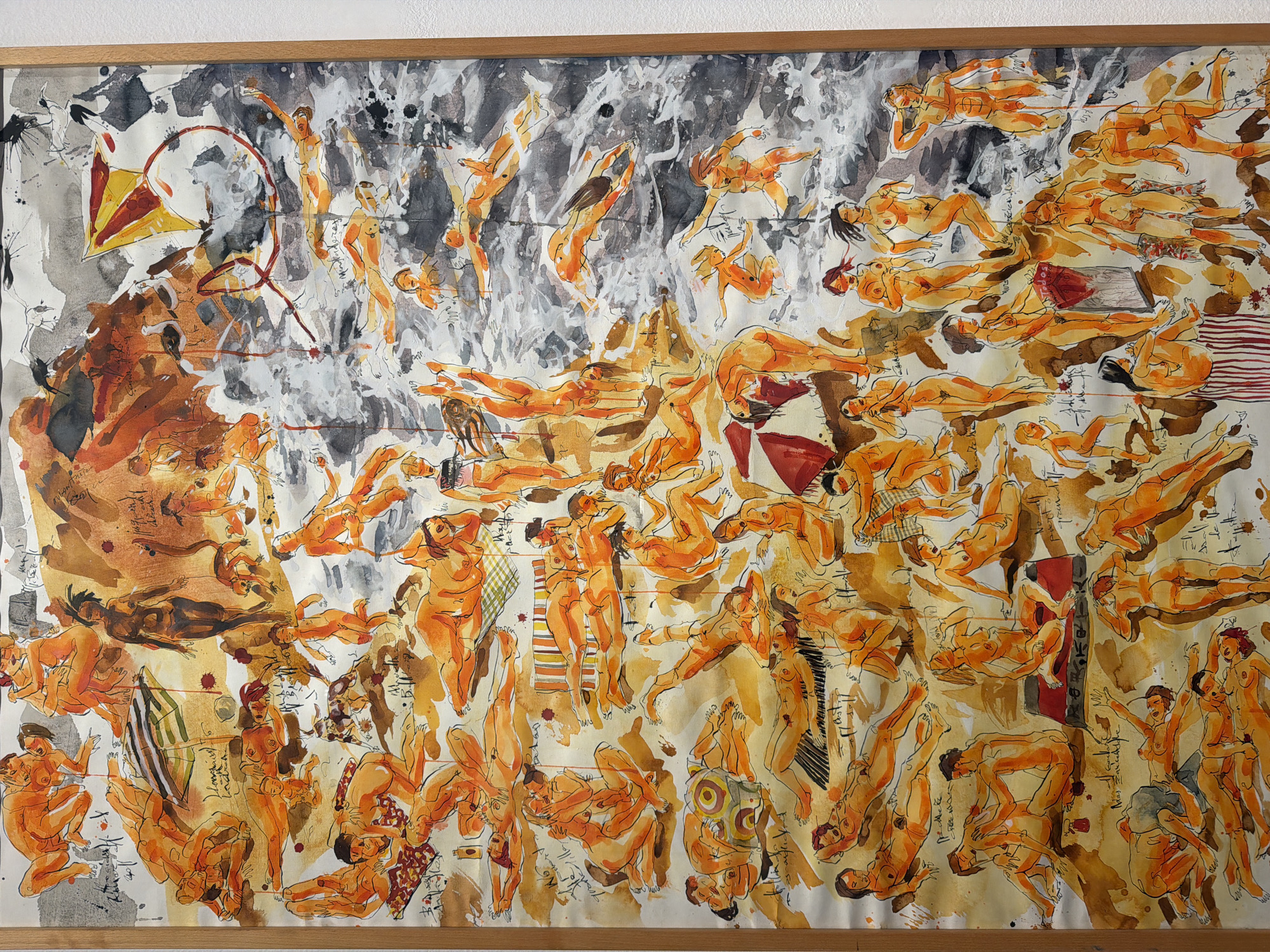
The image is a watercolor painting depicting a busy beach scene populated by numerous nude figures. The figures are rendered in shades of orange and brown, with loose, expressive brushstrokes. They are engaged in various activities: sunbathing, interacting with each other, and playing in the water. Some figures are lying on towels, while others are standing or in motion. Beach umbrellas and a kite are visible in the background, adding to the atmosphere of leisure. The water is represented with washes of gray and white, suggesting waves and movement. The overall impression is one of vibrant energy and a lively gathering. The location in the city of La Cuesta, Spain, is not discernible from the artwork itself.
La Cuesta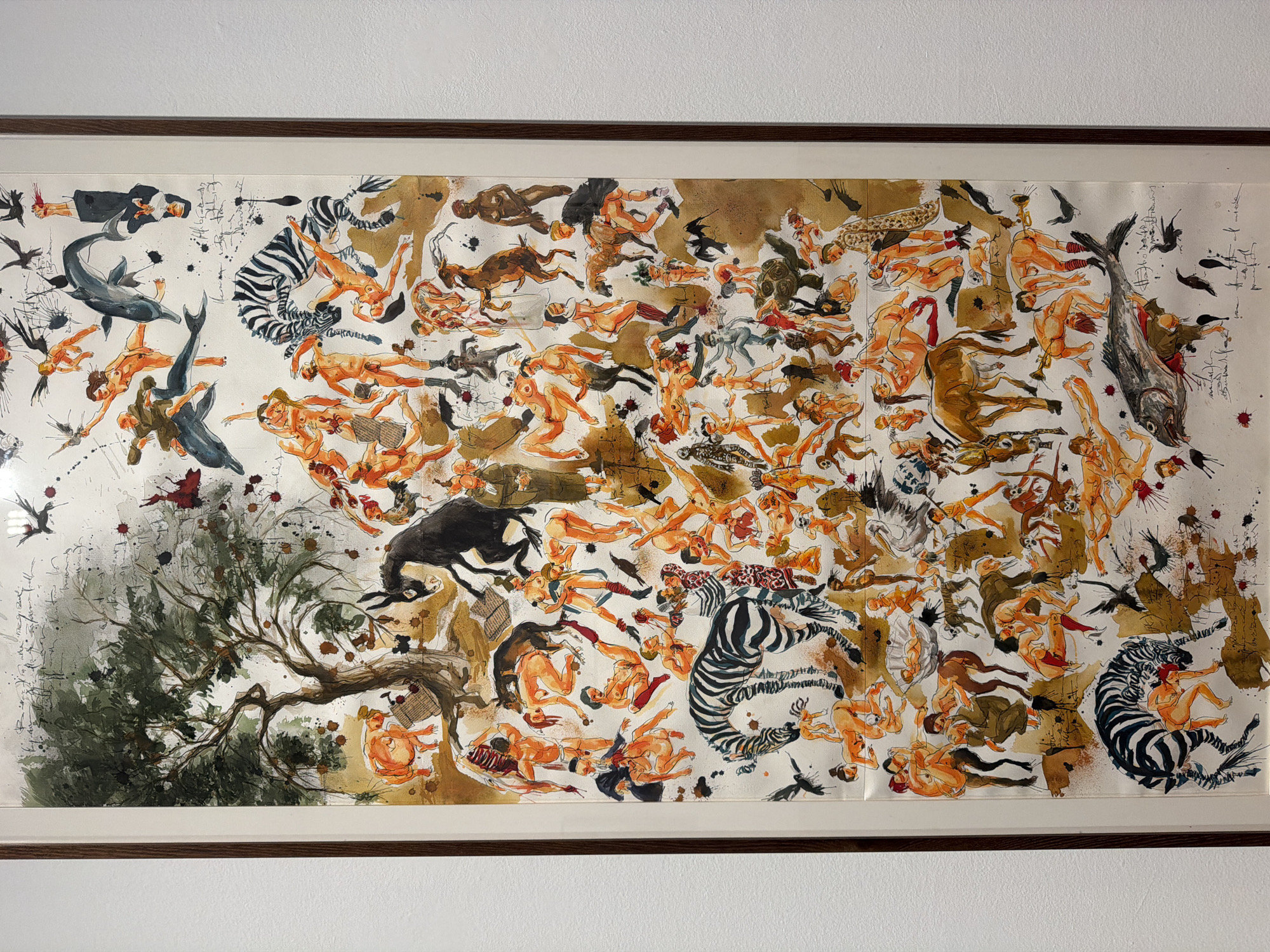
This is a watercolor painting on paper, framed in a thin wooden frame. The artwork depicts a chaotic scene filled with numerous nude and partially clothed human figures, intertwined with various animals. The style is expressive and somewhat surreal, with figures appearing to float or fall through a textured, earthy background. The subjects include a multitude of human figures, rendered in shades of orange and brown, some with darker skin tones. They are depicted in various poses, suggesting movement, struggle, or perhaps a dreamlike state. Among the animals present are a dolphin, zebras, a large fish, a bull or ox, birds, a deer, and a turtle. Some figures are interacting with the animals, while others seem to be in distress or being carried by them. There are also elements that could be interpreted as abstract shapes or splashes of color, adding to the overall sense of disarray. A prominent tree with dark green foliage is visible on the left side of the composition, rooted in a ground that appears to be made of abstract splotches of color and texture. The activity or event taking place is not clearly defined, but the composition evokes a sense of an upheaval, a struggle for survival, or perhaps a symbolic representation of human experience. The figures and animals are densely packed, creating a dynamic and visually complex image. There are no clear indications of time of day or weather; the lighting is uniform, and the background offers no environmental cues. The setting is abstract and dreamlike, with no recognizable landmarks or geographical features. The emotions conveyed are a mix of turmoil, desperation, and perhaps a strange sense of abandon. Notable details include the distinct black and white stripes of the zebras, the smooth, sleek form of the dolphin, and the detailed rendering of the tree. The use of ink splatters and washes creates a textured and organic feel. There is some visible text in the painting, appearing as handwritten script, primarily on the left side of the artwork and scattered in smaller instances throughout. The text is not easily decipherable from the image. This artwork is located in La Cuesta, Spain.
La Cuesta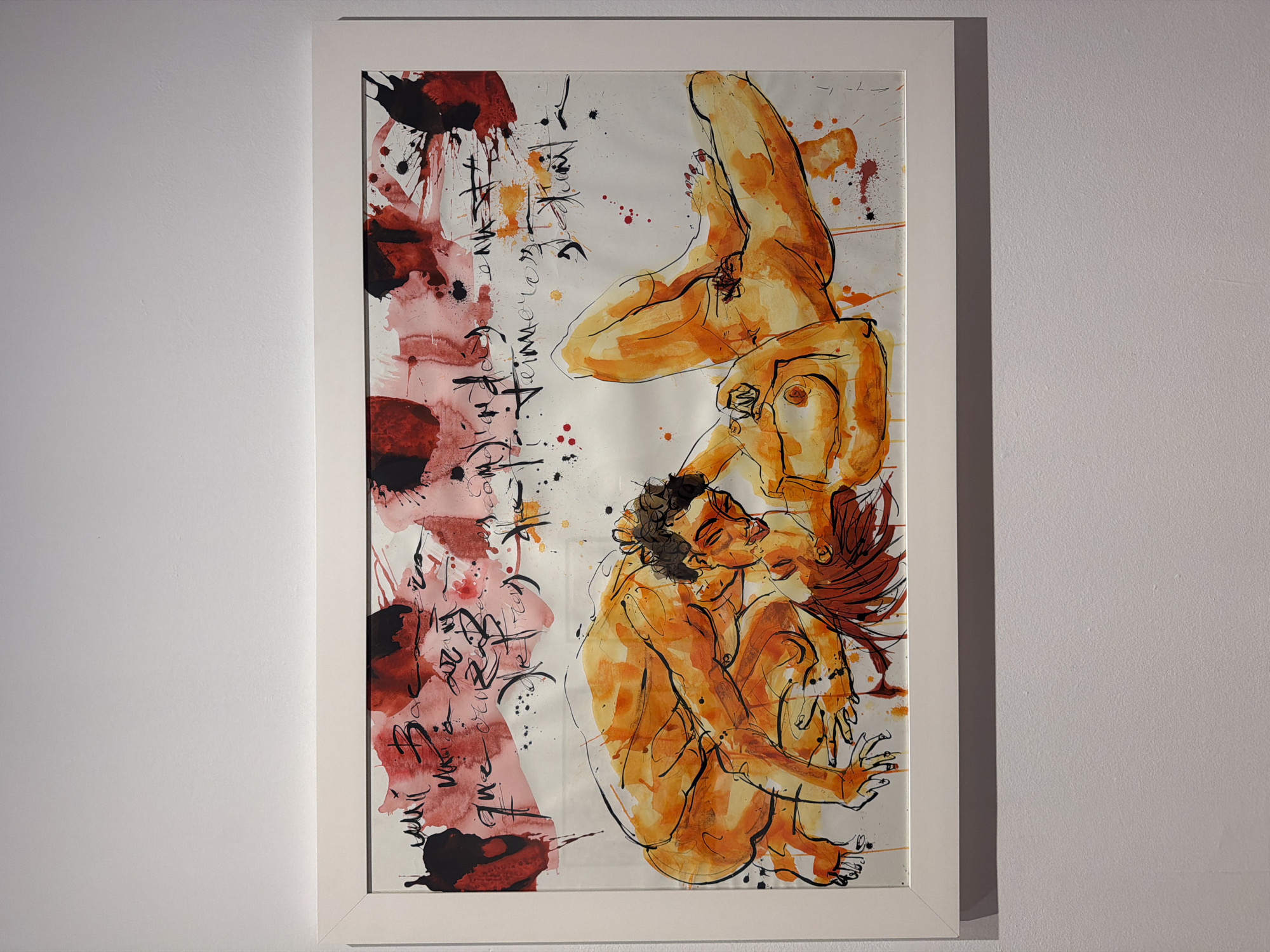
This is a framed watercolor painting of two nude figures in an abstract style, mounted on a white wall. The figures are rendered in warm orange and yellow tones with black ink outlines. They are positioned in a dynamic, intertwined pose, with one figure appearing to be upside down and supported by the other. The background is predominantly white, with splashes of red and black ink, as well as some illegible black calligraphic text along the left side of the painting. The style is expressive and gestural, with visible brushstrokes and drips of watercolor. The lighting suggests an indoor setting, likely a gallery or exhibition space. There is no indication of time of day, weather, or specific location within the artwork itself, other than the provided context of La Cuesta, Spain. The overall mood is artistic and somewhat sensual, with the figures appearing relaxed or in a moment of contemplation or embrace.
La Cuesta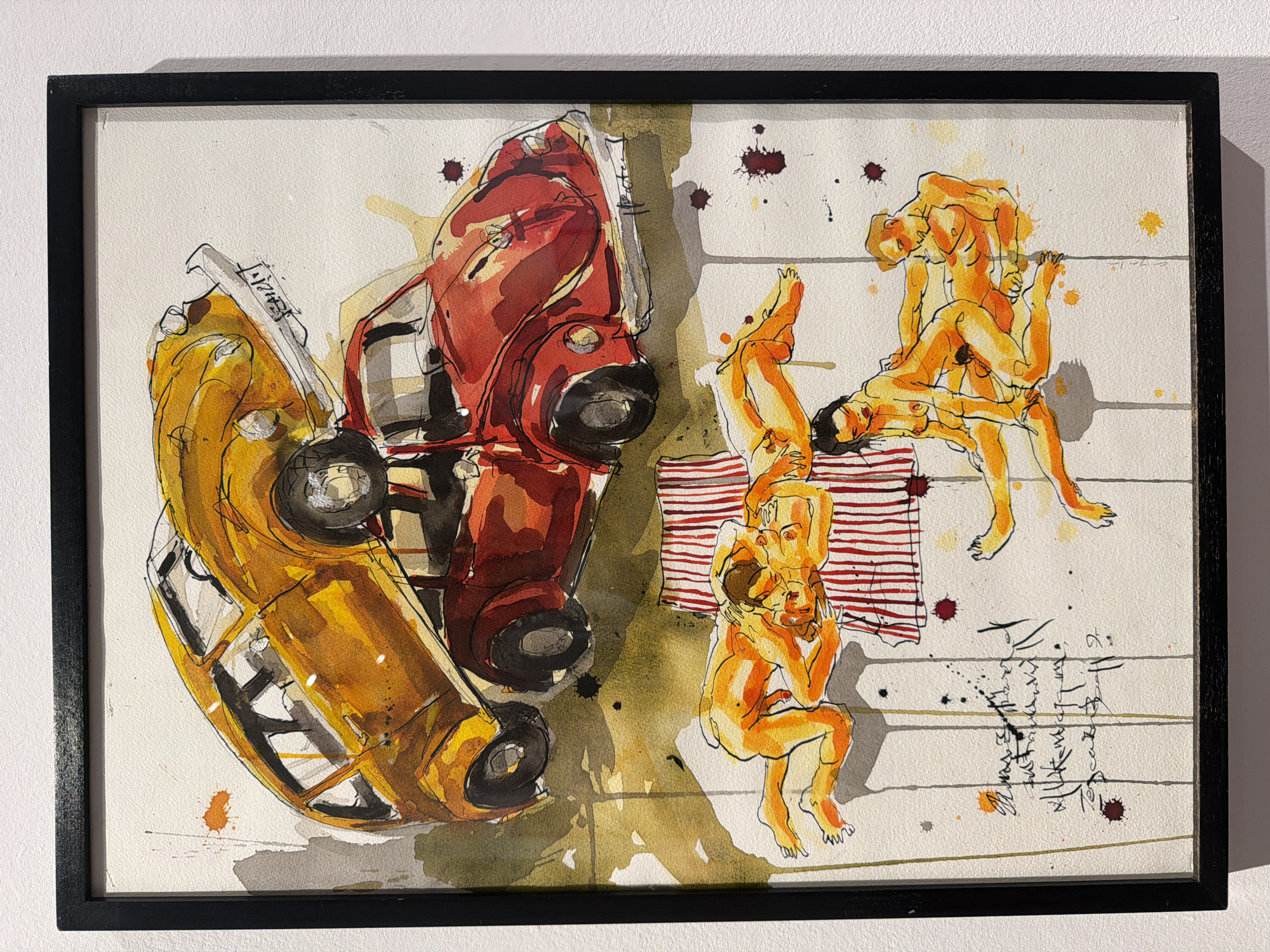
This is a framed watercolor and ink drawing of an unusual scene. Two cars, one yellow and one red, are depicted tipped over and on their sides, taking up the left half of the composition. The cars are rendered with loose, expressive brushstrokes and bold black outlines. Splatters of paint in red and yellow suggest a chaotic or dynamic event. On the right side of the drawing, several nude figures are gathered. They are depicted in various poses, some intertwined and others reclining. The figures are painted in warm orange and yellow tones with simple black linework. One figure appears to be sitting on a striped red and white blanket or mat, while others are positioned around them. The background is a light wash of white with thin horizontal lines, suggesting a flat surface or perhaps a stylized representation of a beach or open space. There are no explicit cues for time of day or weather. The overall impression is abstract and somewhat surreal, with the juxtaposition of the overturned vehicles and the reclining figures creating a sense of disarray or an unconventional gathering. Visible text includes some handwritten calligraphy or signatures in the lower right quadrant of the artwork. The characters are in black ink and appear to be a script, possibly Spanish or another language. The overall mood is ambiguous, leaving interpretation open to the viewer.
La Cuesta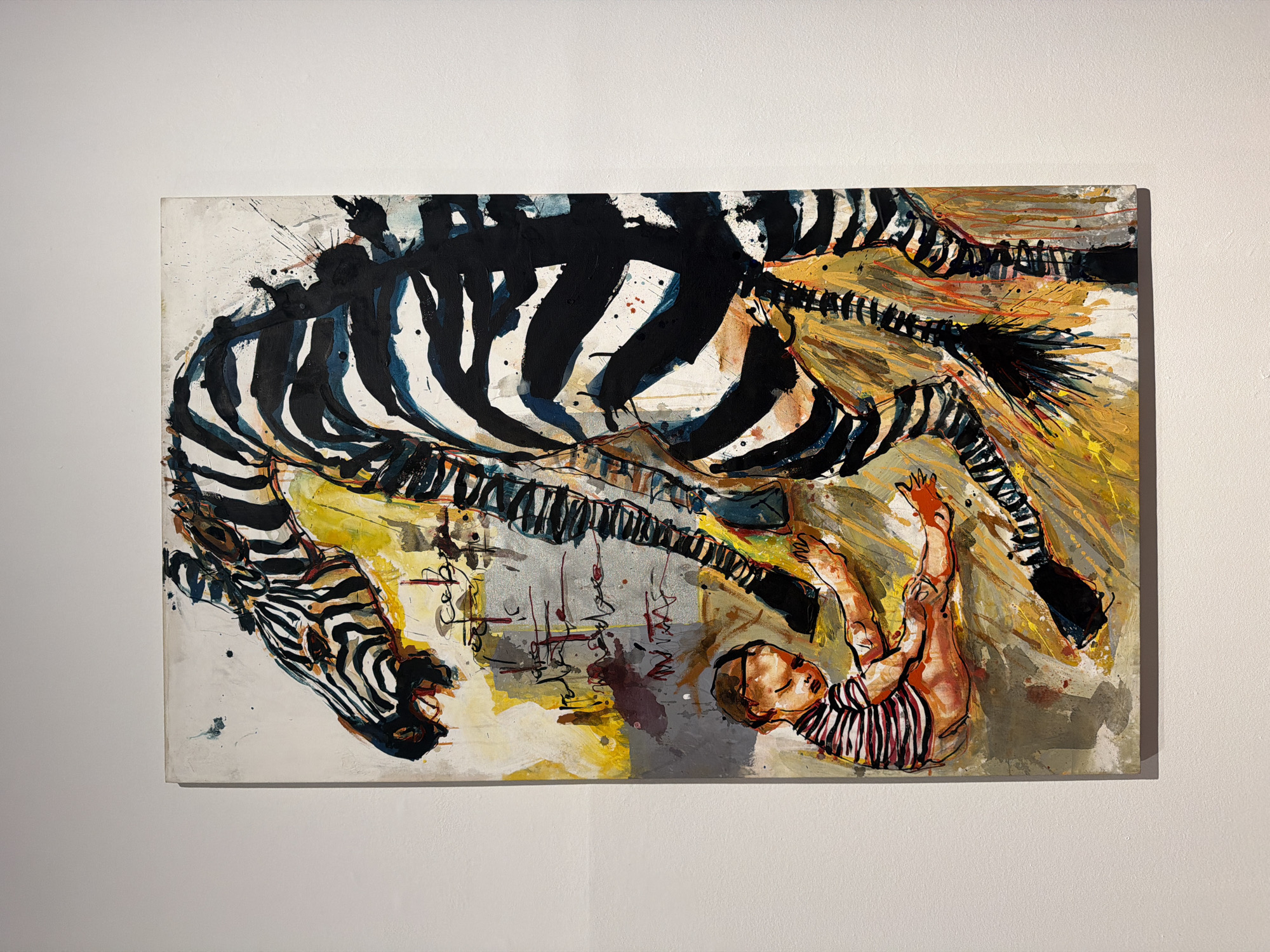
This is an image of a painting on a wall. The painting depicts a large zebra and a baby. The zebra is rendered in black and white stripes with bold brushstrokes, with its head down and mouth open. A baby, wearing a striped shirt, is sitting on the ground to the left of the zebra, looking down. The background of the painting is abstract with splashes of yellow, grey, and red. The painting is hanging on a textured white wall. The context of La Cuesta, Spain, is not discernible from the image itself.
La Cuesta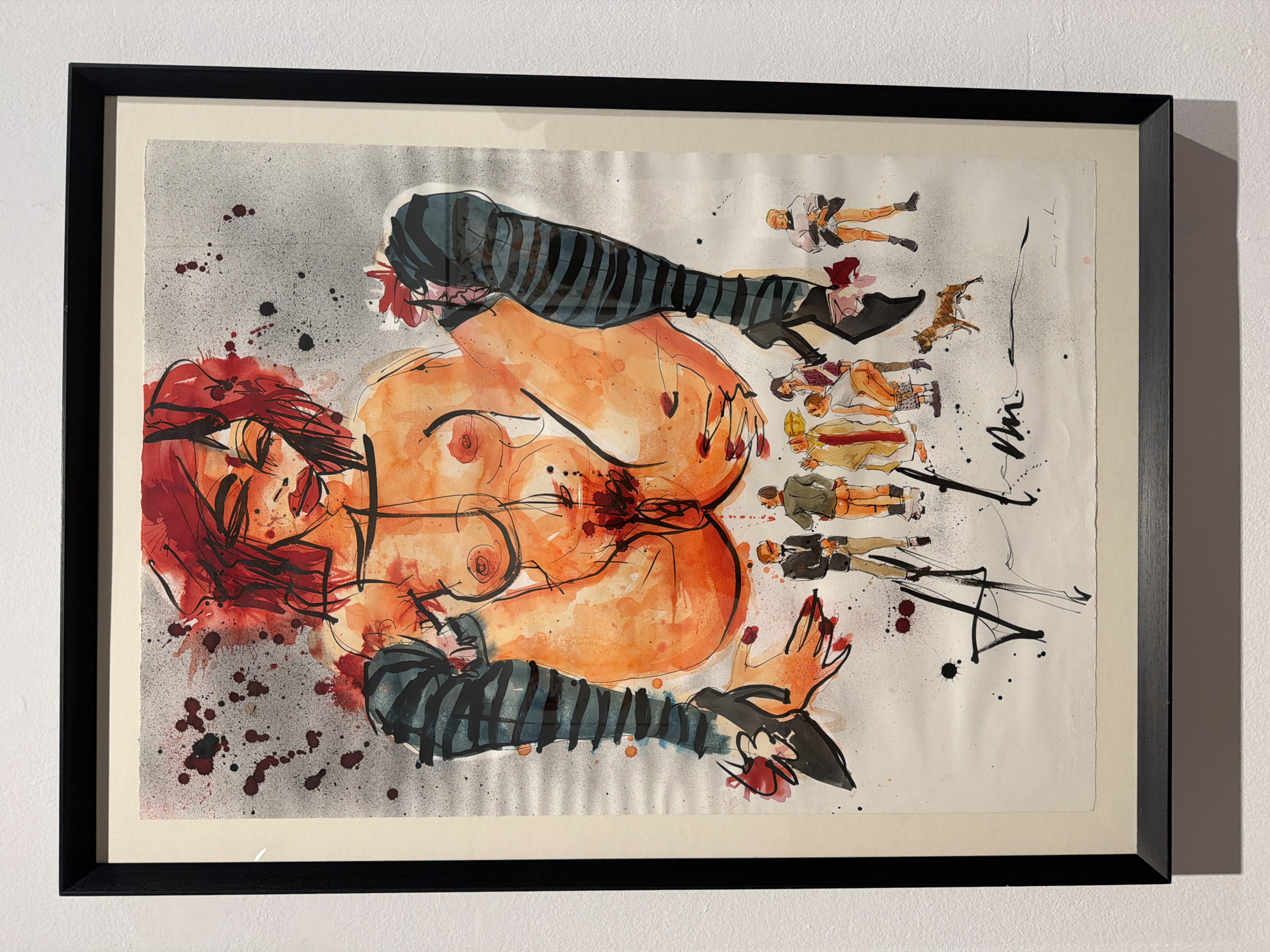
This is a framed watercolor and ink artwork depicting a surreal scene. The central subject is a large, nude female figure rendered in oranges and reds, with black striped stockings on her legs. Her body is partially obscured by expressive lines and splatters of red and black ink, suggesting blood or ink. Arranged along the right side of the composition are several smaller figures, appearing almost like characters in a procession or story. These figures are depicted in a more illustrative style, wearing various outfits including what appears to be a papal garment, business suits, and academic attire. One small figure is depicted running. There is also a small dog with its mouth open, appearing to be running or leaping. The background is a muted gray with black ink splatters, creating a stark contrast with the vibrant colors of the central figure and the detailed smaller figures. The overall style is expressive and somewhat abstract, with a clear sense of movement and narrative implied. The artwork is signed in black ink with the name "Mir" in stylized script. The framing is simple, with a black border and a white mat. The lighting suggests an indoor setting, likely a gallery or home.
La Cuesta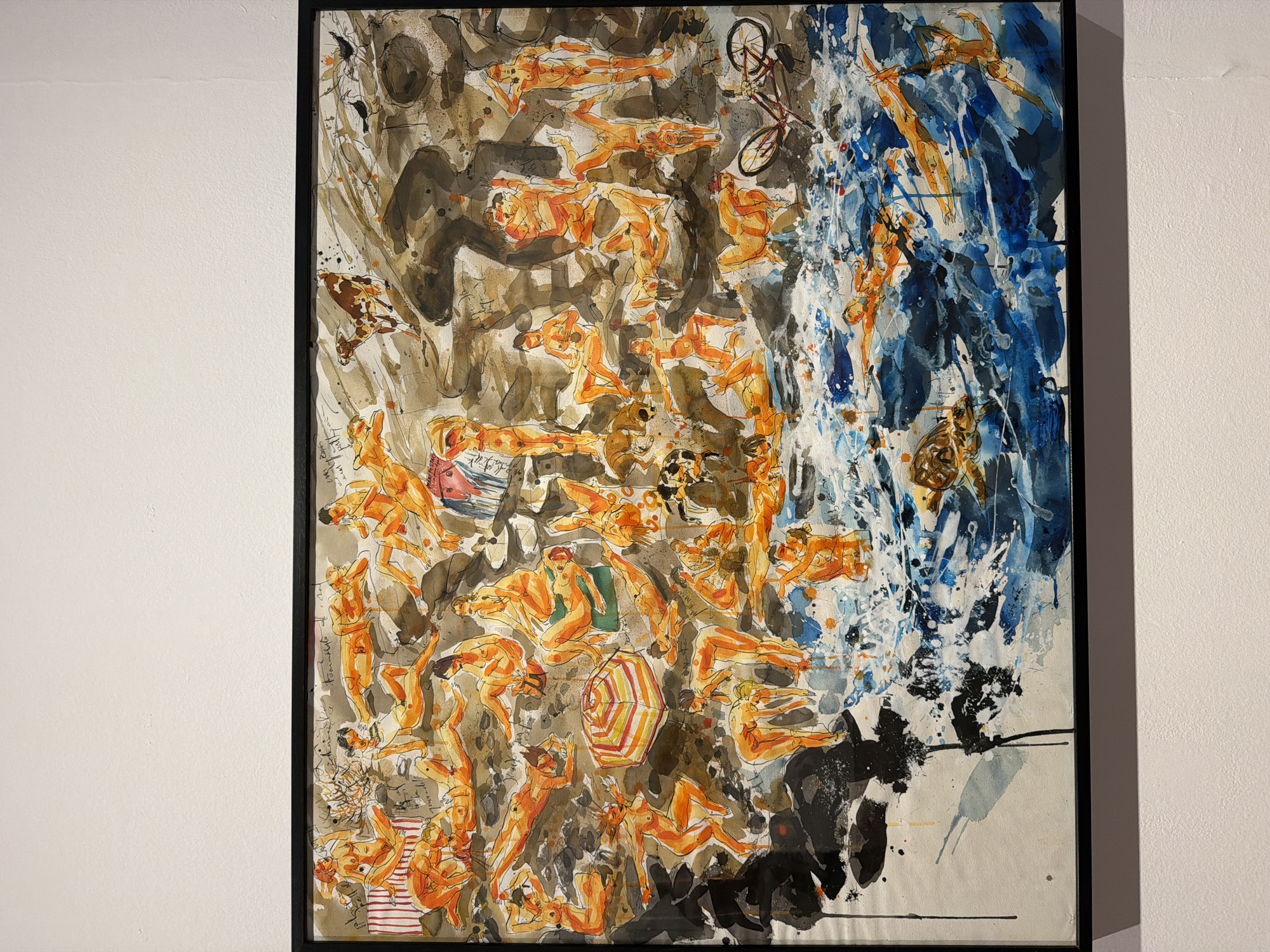
This is a framed watercolor painting depicting a chaotic scene filled with numerous nude figures. The figures are rendered in loose, energetic brushstrokes with predominantly orange and brown tones, suggesting human skin. They are arranged in a crowded composition, with some figures reclining, others in dynamic poses, and some appearing to be in motion. There are hints of a beach setting with a striped umbrella and what might be a beach towel at the bottom left. On the right side of the painting, the scene transitions into a wash of vibrant blues, suggesting water or a dramatic sky, with several orange figures seemingly diving or falling into it. A bicycle is depicted in the upper right quadrant, adding an unexpected element to the human-centric composition. The background is a mix of earthy brown and dark, abstract shapes, contributing to the sense of disarray and intensity. Splatters and drips of paint are visible throughout, adding to the dynamic and somewhat frenetic quality of the artwork. The overall impression is one of a bustling, perhaps overwhelming, moment captured with raw energy. There are no clear indicators of a specific time of day or weather conditions beyond the implied presence of water and the sunny hues of the figures. The emotional tone appears to be one of movement, energy, and possibly even a sense of being overwhelmed or submerged. There is some faint, illegible text or scribbles incorporated into the painting, particularly on the left side and around some of the figures, but no clear words or phrases are discernible. The location context of La Cuesta, Spain, might imply a Mediterranean beach setting, though this is not explicitly depicted.
La Cuesta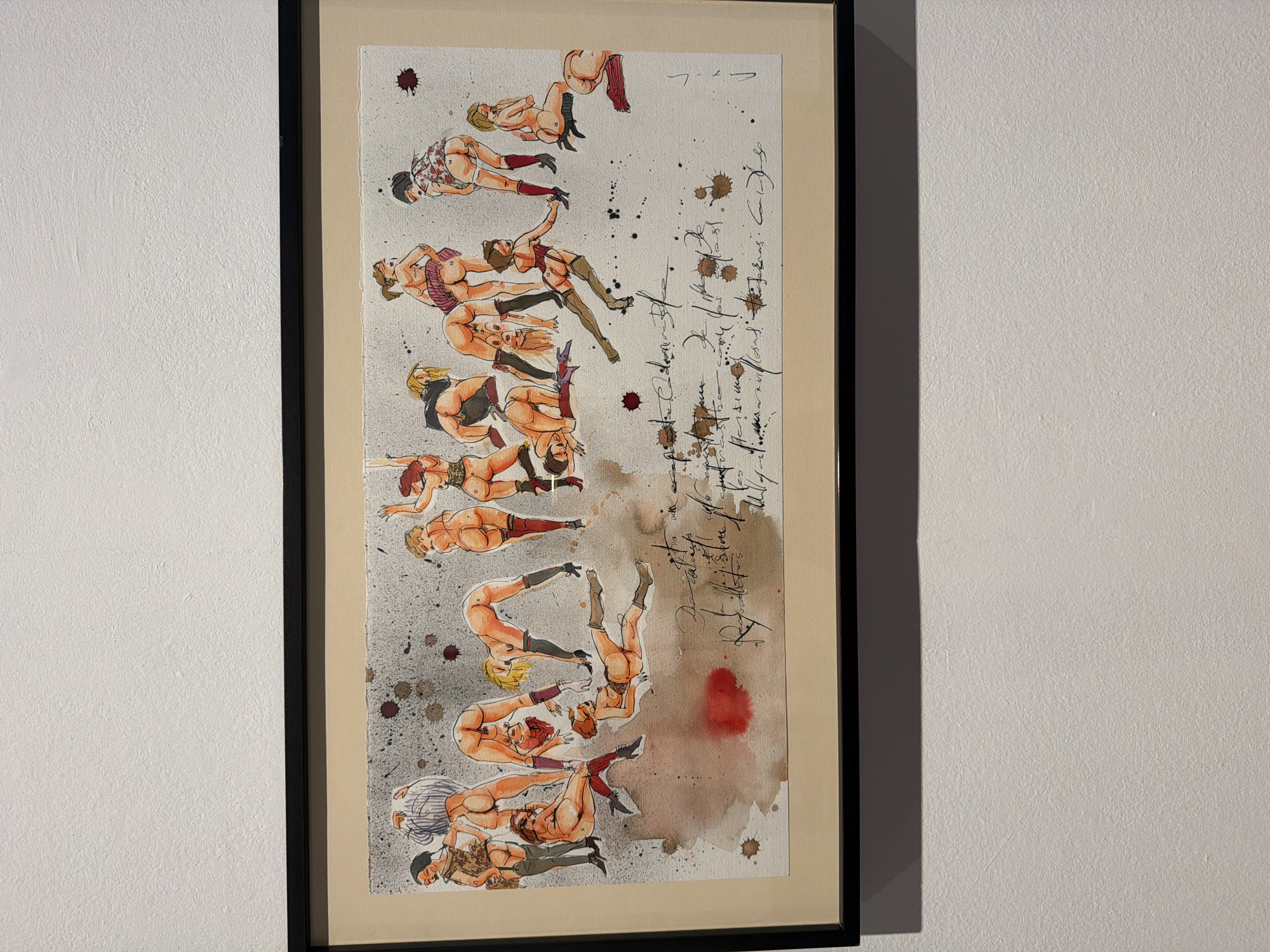
This is a framed artwork depicting a series of figures in a stylized, illustrative manner. The subjects appear to be human figures, predominantly female, depicted in various poses, some of which are acrobatic or contorted. They are rendered with bold outlines and colored with watercolors, giving them a somewhat abstract yet figurative quality. Some figures are nude or semi-nude, wearing lingerie or suggestive clothing. The background of the artwork is a textured paper with scattered ink splatters and watercolor washes, creating a somewhat chaotic or abstract environment. To the right of the figures, there is handwritten text in a script style, which is difficult to decipher fully. Some words or phrases appear to be present, but their meaning or content cannot be determined from the image alone. The overall impression is that of a dynamic composition, possibly exploring themes of the human form, movement, or sensuality. The artwork is framed with a black border and a cream-colored mat. The setting appears to be an indoor space, possibly a gallery or home, where the artwork is displayed on a textured white wall. The lighting suggests an indoor environment, possibly during the day or with artificial lighting. There are no specific location cues within the artwork itself, other than the stated context of La Cuesta, Spain.
La Cuesta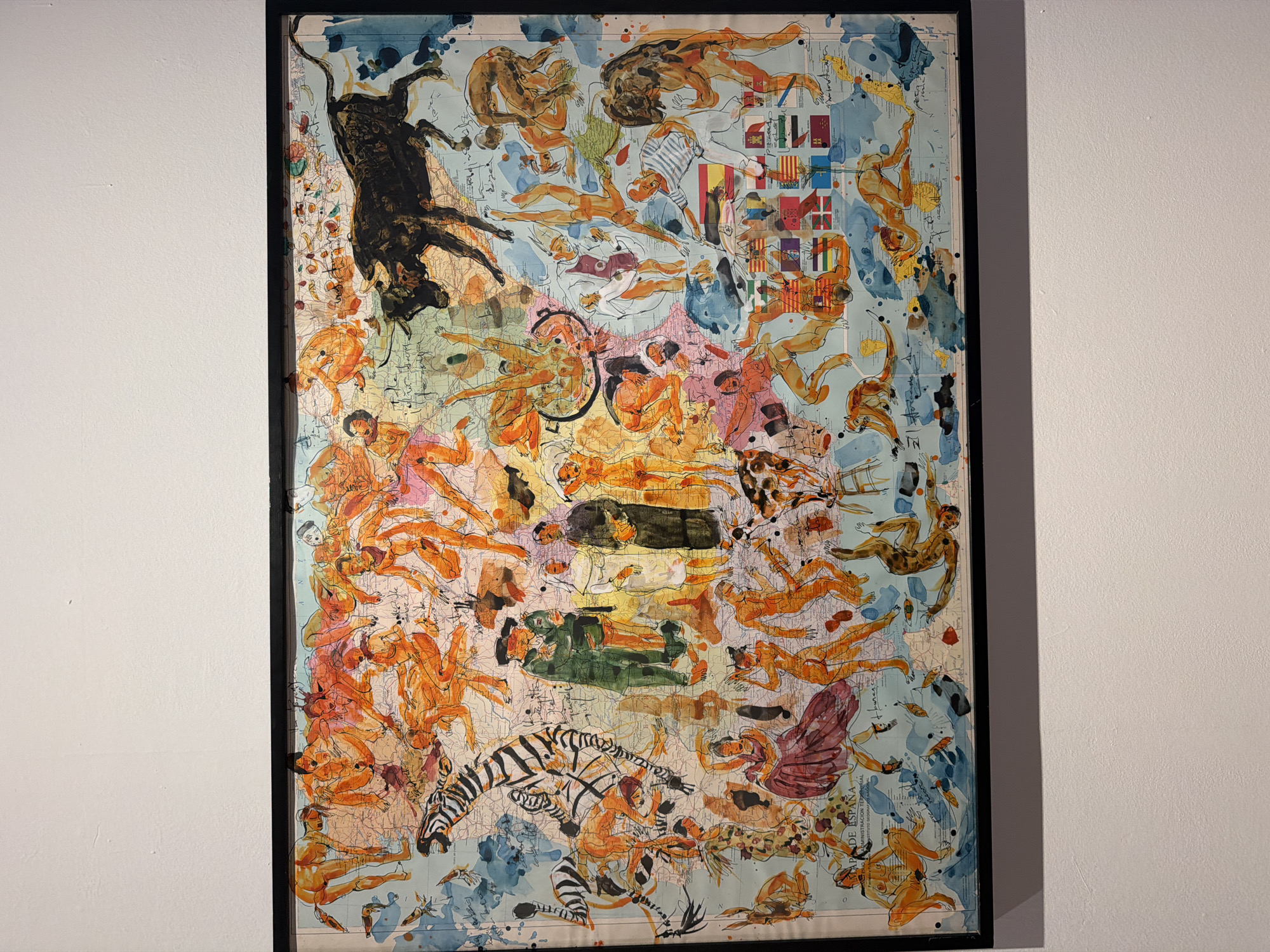
This is a framed artwork, likely a painting or mixed media piece, displayed on a white wall. The artwork is densely populated with various figures and elements, appearing to be set against a backdrop of a map, given the lines, grids, and geographical markings visible beneath the painted layers. The subjects include numerous human figures, depicted in various dynamic poses, many rendered in shades of orange and brown. These figures are interspersed with other elements such as a large black bull, a zebra, a creature with large, reddish-brown wings, and what appears to be a tank or military vehicle in green. There are also several small flags scattered across the upper right portion of the artwork. The overall impression is one of chaotic movement and perhaps struggle or exertion, with figures contorted and interacting with each other and the surrounding elements. The scene lacks a clear narrative, instead presenting a collage of disparate forms and imagery. Notable details include the use of watercolor or ink washes, giving some areas a fluid and translucent quality, while other areas have more defined lines. The map beneath suggests a geographical context, and the presence of flags could allude to national or political themes. The artwork does not convey a specific time of day or weather conditions, and the emotions evoked are open to interpretation, but the active poses suggest energy and intensity. Visible text includes fragmented geographical labels on the underlying map, such as "ADMINISTRACION TERRITORIAL" and "DE ESPAÑA". There are also some indecipherable handwritten annotations and possibly labels on the flags.
La Cuesta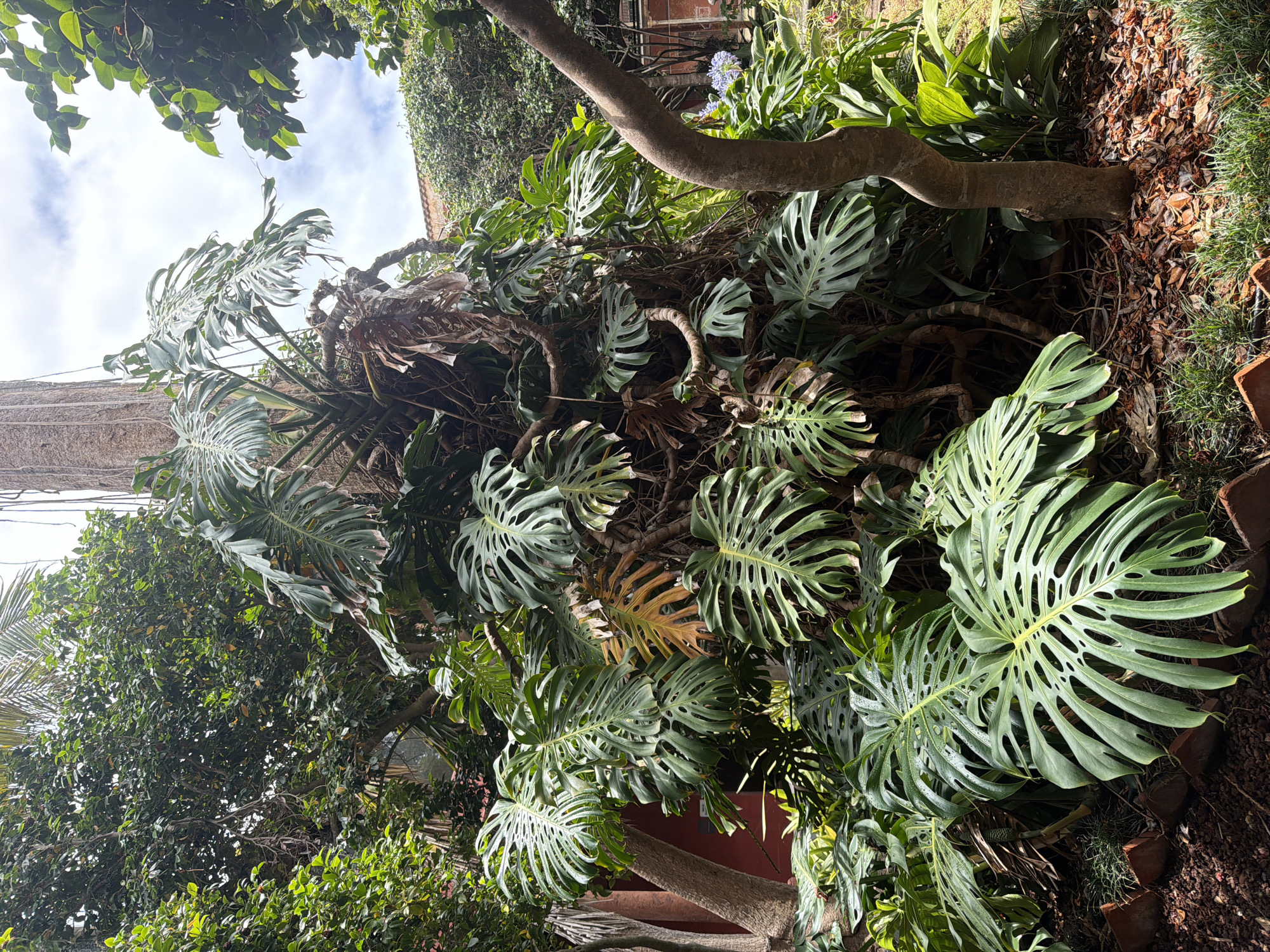
This media file captures a lush, vibrant scene of a Monstera Deliciosa plant thriving outdoors. The plant is the primary subject, with its iconic, large, fenestrated leaves dominating the frame. The leaves are a deep green, with some showing signs of browning, suggesting natural aging or exposure. Thick, twisting aerial roots and stems intertwine, creating a dense, naturalistic growth habit. The setting appears to be a garden or outdoor patio area in La Cuesta, Spain, indicated by the presence of terracotta pots, dry leaves and soil on the ground, and glimpses of surrounding vegetation. A mature tree trunk, likely supporting or near the Monstera, is visible with rough bark. In the background, hints of buildings and greenery suggest a residential or semi-tropical environment. The lighting suggests it is daytime, with sunlight dappling through the leaves, creating areas of light and shadow. The sky is visible in the upper portion of the image, with white clouds scattered across a pale blue expanse. The overall impression is one of natural abundance and a well-established, thriving plant in a warm climate. No people or specific events are depicted.
La Cuesta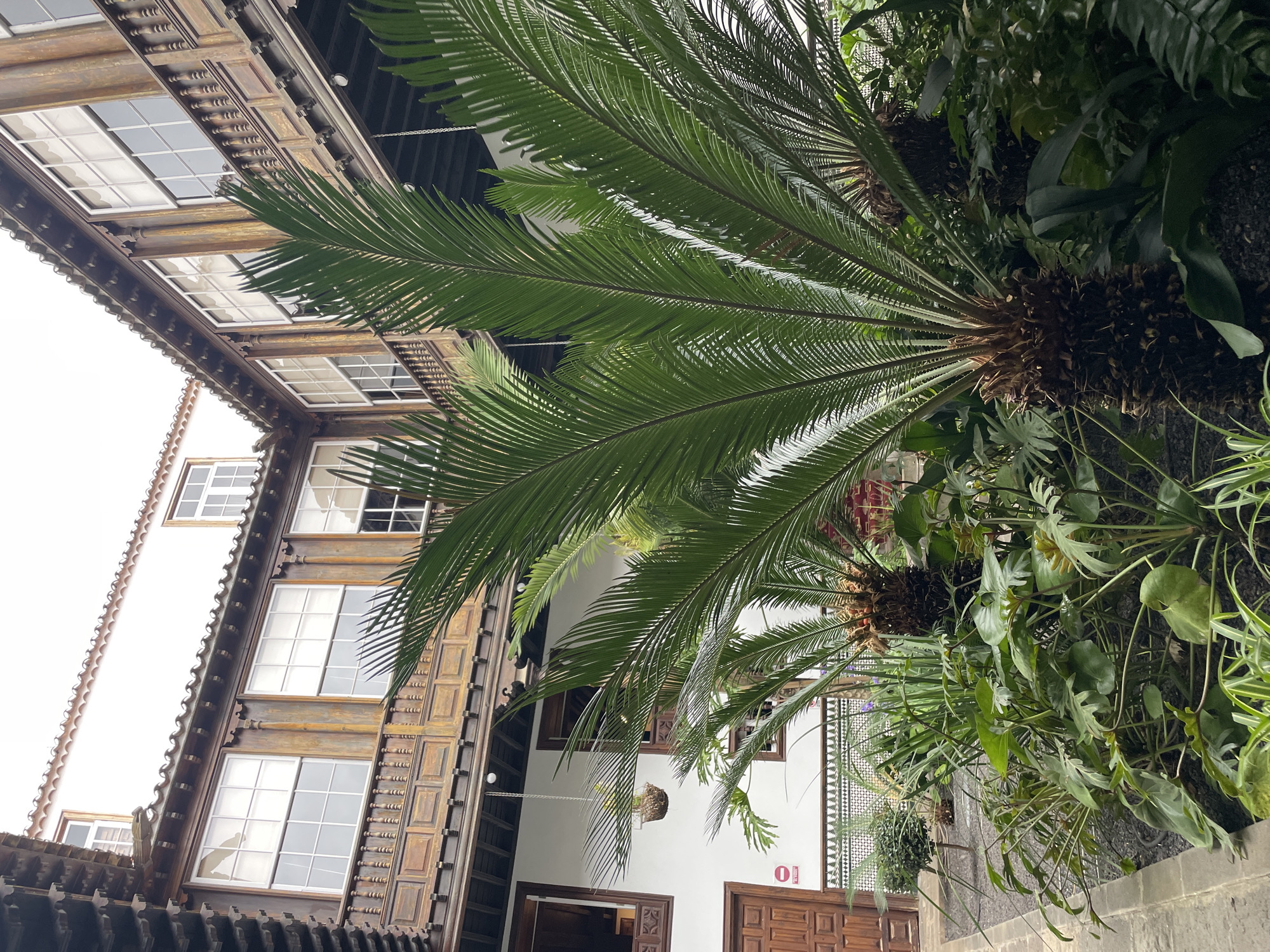
The image shows an upward view of a courtyard in La Cuesta, Spain. A multi-story building with white walls, dark wood trim, and windows fills the left side of the frame. A large palm tree with vibrant green fronds dominates the center, partly obscuring the building. To the right of the palm tree, an interior courtyard featuring a white wall adorned with geometric decorations. Brown doors and potted plants complete the composition. The ground appears to be paved with dark stones.
La Cuesta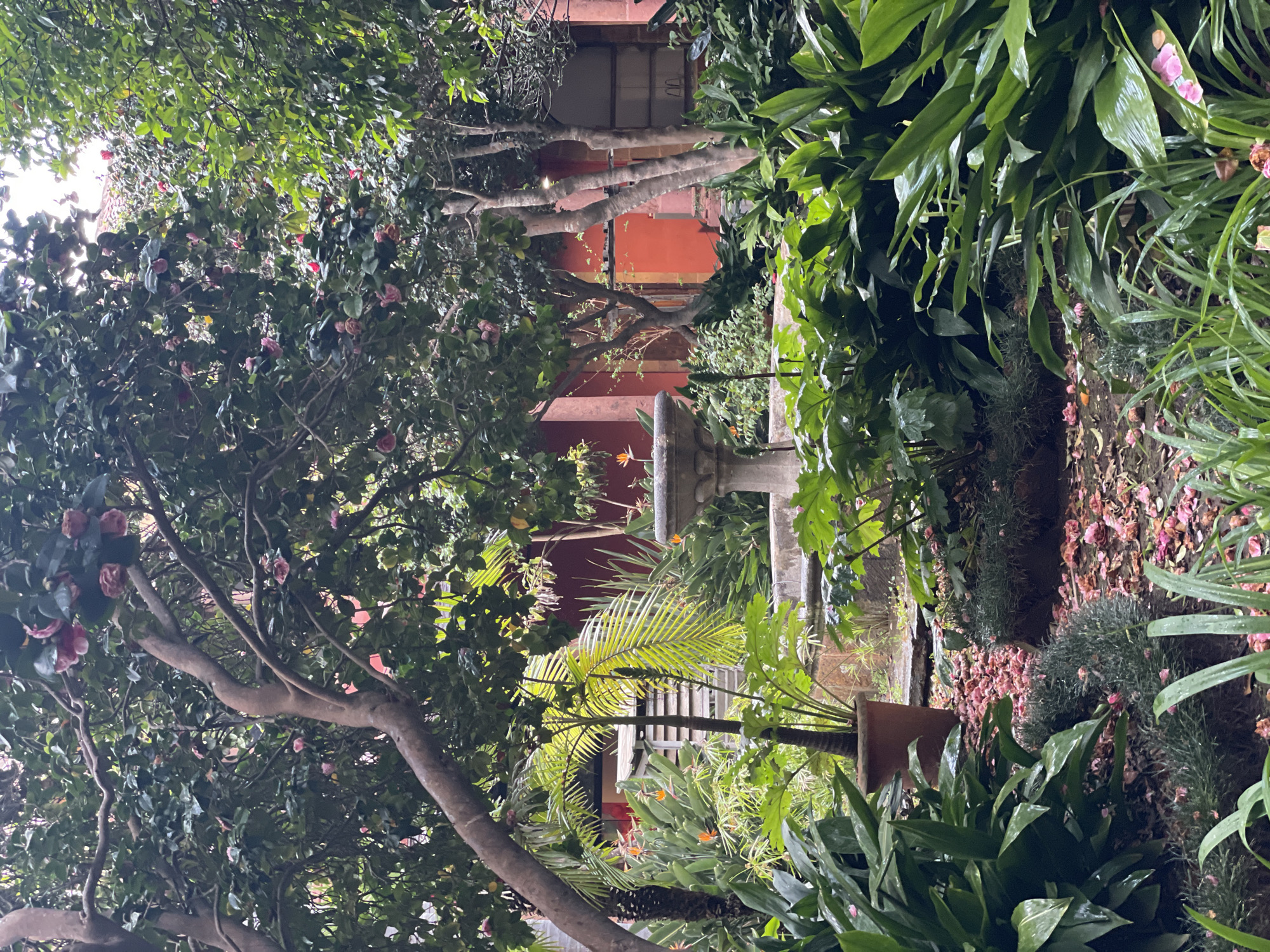
The image captures a garden scene in La Cuesta, Spain. Lush greenery dominates the foreground, featuring a variety of plants with glossy, green leaves, interspersed with other foliage. A tree with pink blossoms frames the left side of the image. In the middle ground, a two-tiered stone fountain is visible. Behind the fountain, a building with an orange-red facade is seen. The garden appears well-maintained, with fallen petals scattered on the ground, adding a touch of color to the scene. No people are visible in the image.
La Cuesta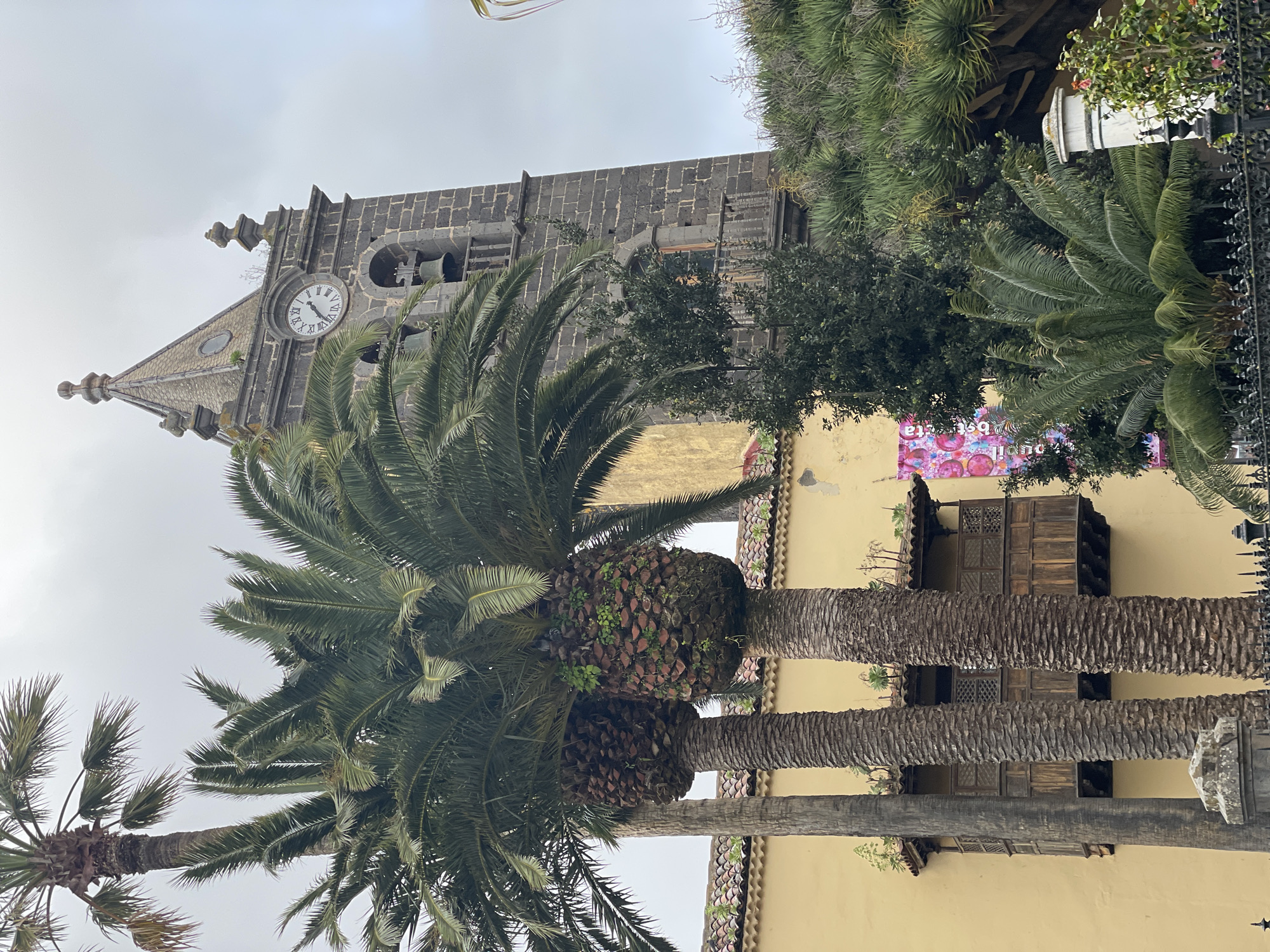
An outdoor scene captures a historic church tower and surrounding architecture, partially framed by prominent palm trees, under an overcast sky. The central subject is a dark grey or black stone church tower, characteristic of local volcanic rock, standing tall on the left side of the frame. It features a bell section with arched openings revealing bells and a circular clock face with Roman numerals (I through XII). The clock hands point to approximately 1:55 or 1:56. The tower culminates in a pointed steeple adorned with decorative elements at its corners. Several large palm trees dominate the foreground and midground, their thick, textured trunks and lush green fronds partially obscuring both the church and the buildings behind. Some palm tree bases show fibrous remnants of old fronds and small green plants growing on them. Behind the palm trees and to the right of the church tower, a building with a light yellow or beige facade is visible. It features dark, intricately carved wooden balconies or window boxes, typical of traditional architecture in the region. Further green foliage, including bushes and spiky-leaved plants, adds to the natural elements of the scene. A dark, ornate metal fence or railing is partially visible on the far right. No specific activity is taking place; the image is a static architectural and landscape shot. The time of day is indicated as late afternoon by the clock, under an uniformly bright, overcast sky. The architectural style, the dark stone, and the abundance of palm trees strongly suggest a warm-climate Spanish location, consistent with La Cuesta, Spain. A colorful banner or poster on the yellow building is partially visible through the foliage, displaying pink and purple circular designs on a white background. Fragments of inverted text can be discerned, including "bst" and "ta," as well as "uli."
La Cuesta