La Tagua, Venezuela
30 memories from La Tagua, Venezuela
A person's hand is holding a purple and white pouch of "Gel Intimo" in front of a tiled wall. The pouch has floral illustrations and text in Spanish. The text on the pouch indicates it contains extracts of calendula and centella asiatica, is pH controlled, with lactic acid for sensitive skin, and has a net content of 500ml. The tiles on the wall are a neutral gray color and appear to be in a bathroom or similar environment. There is no specific visual information in the image that would allow for the determination of its location within the city of La Tagua, Venezuela.
La Tagua
An open makeup palette with a large mirror is displayed on a patterned pink and white surface. The palette has a black casing with a pink interior. It contains 36 eyeshadow pans, each with an embossed "S" logo. The eyeshadow colors range from white and pastels to bright neons and deep jewel tones. The names of the eyeshadow shades are printed in small white text below each pan. The palette is positioned with its hinge on the left side. The background surface has a geometric diamond pattern.
La Tagua
The image displays a collection of colorful building blocks, predominantly red, blue, yellow, and green, arranged on a striped fabric surface. The blocks are of various shapes and sizes, resembling common toy building bricks. One yellow block, shaped like a small house with four studs, is positioned to the left of the frame. To its right, several rectangular blocks are stacked. The bottom-most is red, followed by a blue block, then a yellow block, and finally a green block. In the background, more blocks are visible, including a white one with circular indentations and an orange one. The lighting suggests an indoor setting, possibly a bedroom or play area. There are no people or animals present in the image. The scene is static and shows no activity. The context of La Tagua, Venezuela is not discernible from the visual information in the image.
La Tagua
The image is a cartoon illustration depicting a person with a broken leg, using a crutch. The person is wearing a baseball cap and glasses, and their leg is in a cast. Behind them, there is a flag with a red cross, indicating a medical context. In the background, another cartoon character is shown using a computer. The text "Mar..." with a wave emoji is visible in the lower left corner. The scene is presented in a simplified, black and white style with some areas filled with a light blue color. There is no discernible information in the image that would allow for its location to be specified as La Tagua, Venezuela, or any other specific urban area.
La Tagua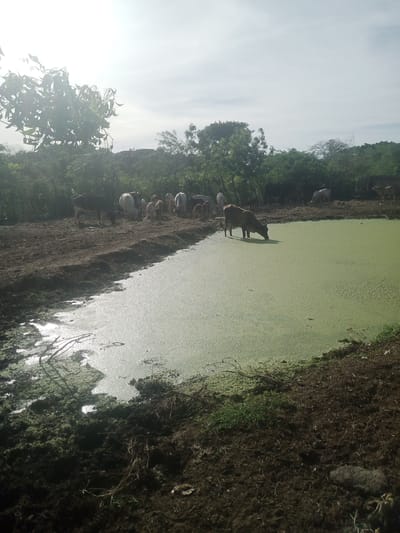
A herd of cattle are gathered around a pond covered in green algae in La Tagua, Venezuela. One cow is drinking from the pond, while others graze on the muddy bank. Trees and vegetation surround the scene, and the sky is overcast. The image depicts a rural setting with livestock.
La Tagua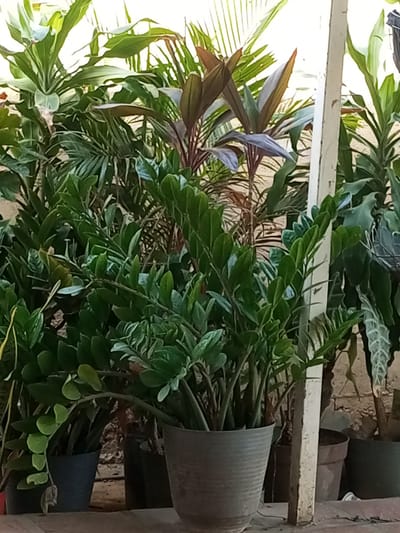
A collection of potted plants are arranged outdoors, likely in a garden or nursery setting. The plants vary in size and species, with lush green foliage dominating the scene. In the foreground, a large plant with glossy, oval-shaped leaves is housed in a textured gray pot. Behind it, several other potted plants are visible, including some with darker, reddish-purple leaves and others with tall, spiky green leaves. The background shows a brick wall and some overhead structures that suggest an outdoor space. The lighting indicates it's daytime, possibly late morning or early afternoon, with the sun casting shadows and illuminating the leaves. There is no visible text. The overall impression is one of a vibrant and thriving plant collection. The scene is static, with no discernible activity or event taking place, suggesting a still-life composition of the plants. The location context of La Tagua, Venezuela, implies a warm, tropical or subtropical climate, which is consistent with the types of plants depicted.
La Tagua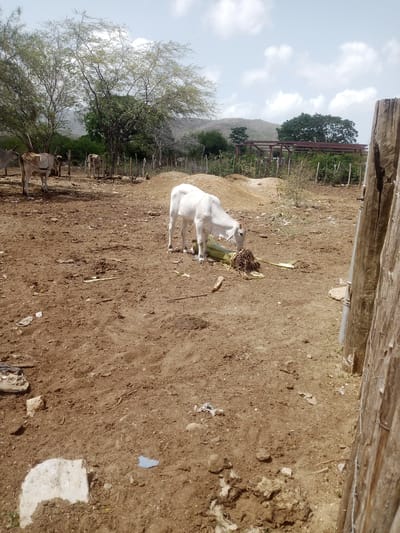
The image depicts a rural scene in La Tagua, Venezuela, under a bright, cloudy sky. The foreground is dominated by dry, dusty earth, scattered with a few rocks, some pieces of white debris, and a blue plastic fragment. In the center of the frame, a young white calf is engrossed in eating what appears to be a fallen plant stalk with exposed roots. Further back, a small herd of cattle is visible. Two cows stand to the left, one light brown and white, the other mostly white. A third cow, also light brown and white, is lying down. The background features sparse vegetation, including a few trees with light green foliage. Beyond the trees, a partially constructed metal frame structure stands, suggesting some ongoing development or agricultural infrastructure. Rolling hills form the distant backdrop, partially obscured by trees. The presence of the fence made of rough wooden posts and wire on the right side of the image reinforces the rural, potentially enclosed, setting of a farm or ranch. The overall impression is one of a typical sunny day in a dry, agricultural region.
La Tagua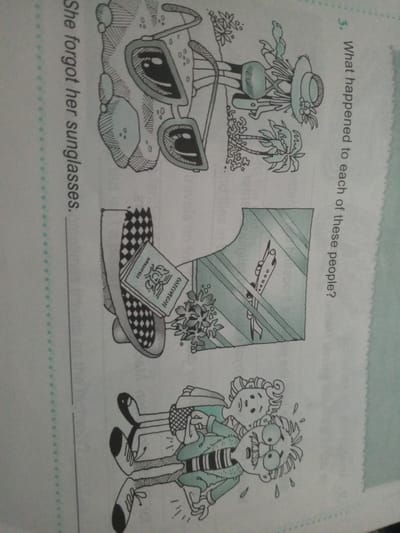
The image depicts a comic-style illustration with three distinct panels, each depicting a different scenario. The overall aesthetic is cartoonish and lacks realistic detail. There is no visual information or text present in the image that references La Tagua, Venezuela, or any specific city. Panel 1: This panel features a pair of oversized sunglasses resting on a textured surface that resembles sand or rocks. Scattered around the sunglasses are small dots, possibly representing sand grains or decorative elements. There are also stylized representations of foliage, including a palm tree and some flowering plants. Panel 2: This panel shows a shoe with a checkered pattern on the inside. A small booklet or passport is placed inside the shoe. The booklet has an illustration and text that is too small and stylized to be legible. Behind the shoe, a rectangular frame contains an illustration of an airplane with a propeller. This frame appears to be a reflection or a window. Panel 3: This panel illustrates two cartoon figures. One figure is partially visible, wearing a hat and glasses. The other figure, a man with wide, startled eyes and sweat droplets around his head, is depicted in a state of distress or exertion. He is wearing striped clothing and appears to be holding or interacting with the first figure.
La Tagua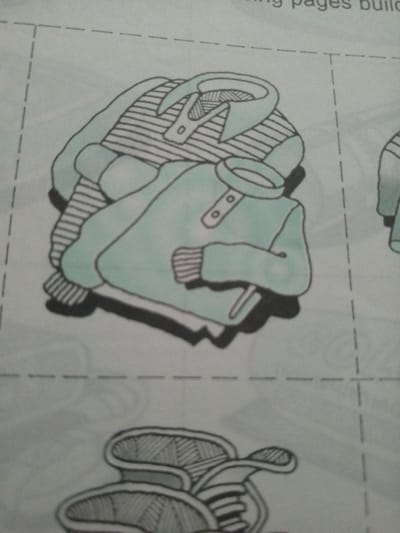
This media file is a drawing of clothing items, possibly intended as a cut-out activity. The main subject is a stack of two garments, rendered in black ink with some areas highlighted in a light teal color. The top garment appears to be a striped shirt or sweater with a collar and buttons. Beneath it is a lighter colored garment, possibly a tunic or kurta, also with a collar and buttons, and striped cuffs. The clothing is depicted as neatly folded. Below the folded clothing, another object is partially visible, which resembles a pair of shoes or sandals, also drawn with intricate line work and outlines. The drawing is set against a light-colored background with dashed lines indicating perforations, suggesting it is part of a larger sheet designed to be cut out. There is some faint text visible at the top of the image, partially obscured, which appears to read "g pages build". The drawing style is simple and illustrative. There are no visible people or indications of a specific time of day, weather, or strong emotions. The location context provided, "La Tagua, Venezuela", does not appear to be directly represented within the image itself, suggesting it is external information about the origin or purpose of the media file.
La Tagua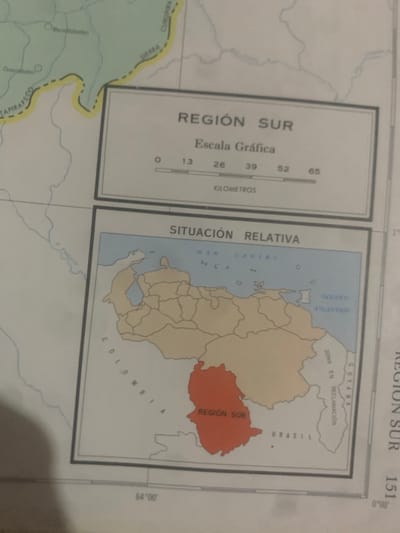
The media file is a photograph of a map, likely from a book or atlas. The map depicts a region labeled "REGIÓN SUR" in Spanish. It shows geographical features such as bodies of water, national borders, and a shaded area highlighting a specific territory. Text on the map includes place names like "CURUPIRA," "ERRA," "TAPIRAPECO," "MAR CARIBE," "OCEANO ATLANTICO," "GUYANA," "ZONA EN RECLAMACIÓN," and "BRASIL." A graphic scale is provided with the label "Escala Gráfica" and marks for "KILOMETROS." Coordinates and other numerical labels are also visible. The map is displayed in a way that suggests it is part of a larger publication, as evidenced by the cropping and the presence of a faint outline of what could be a page edge or binding. The image appears to be taken in daylight, with no significant shadows or lighting effects that would indicate a specific time of day or weather conditions. The focus is entirely on the map itself, with no people, animals, or other living subjects present. The overall impression is that of an educational or informational document.
La Tagua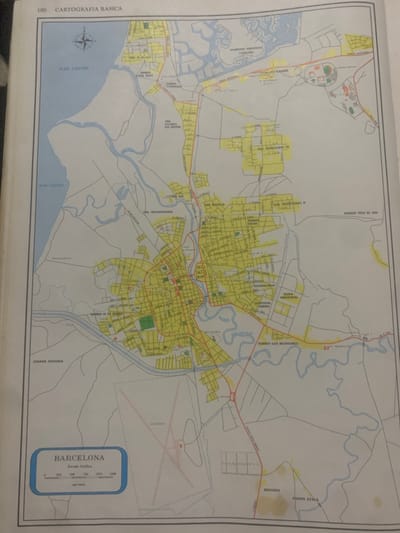
The image is a map of Barcelona, Venezuela, titled "CARTOGRAFIA BASICA". It displays a grid of streets and various named areas such as "MAR CARIBE", "PUERTO NEVERI", "URB. TRICENTENARIA", "ZONA INDUSTRIAL", "MESONES", and "FUENTE AYALA". The map includes a scale in meters and shows bodies of water, roads, and some buildings represented by outlines. The city is situated on the coast, bordering the Caribbean Sea, with a river running through it. An airport, labeled "AEROPUERTO", is visible in the lower right section of the map. There are no people, subjects, or actions depicted in this map; it is purely a geographical representation. The context provided about "La Tagua, Venezuela" is not directly visible or inferable from the map itself.
La Tagua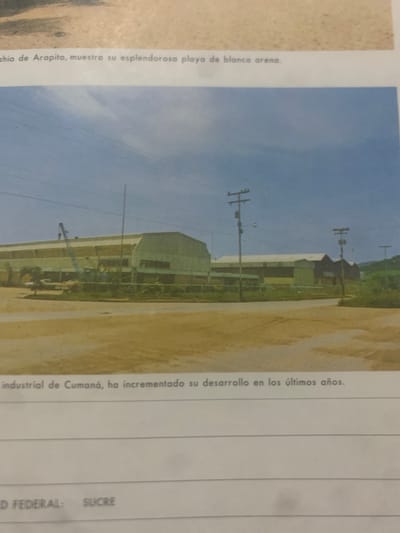
This is a photograph of a landscape that appears to be a beach with industrial buildings in the background. The image is oriented vertically. In the foreground, on the left, there is text written vertically, describing the "playa de blanca arena" (white sand beach) of Arapito. The middle ground shows a large, light-colored industrial building with a white roof, possibly a warehouse or factory. There are also utility poles with wires running across the sky. In the background, there are hills covered in green vegetation. The sky is clear and blue, suggesting it is daytime with good weather. Further text is present on the right side of the image, also oriented vertically, which states "industrial de Cumaná, ha incrementado su desarrollo en los últimos años" (industrial of Cumaná, has increased its development in recent years) and also mentions "D FEDERAL: SUCRE". The overall scene depicts a coastal area that is undergoing industrial development. There are no people visible in the photograph.
La Tagua
A close-up, slightly blurred photograph shows a round, tabletop mirror with a silver metal frame and base, set against a plain white background. The word "sanitario" is visible in small, grey text at the top of the image, suggesting the mirror is for sanitary use. The mirror is angled slightly upwards. The lighting is soft and even, with no harsh shadows. There are no people or other objects visible in the frame. The photograph does not contain any information about the location in the city of La Tagua, Venezuela.
La Tagua
The image shows a close-up of a light blue towel draped over a clothesline, secured by two yellow and two orange clothespins. The towel is wrinkled, creating vertical folds. To the right of the towel, a white sheet of paper is partially visible, with two numerical annotations, "63" and "61", each preceded by a small red triangle. The paper appears to be a diagram or instruction sheet. The background to the left of the towel contains the word "edias" in dark text. The scene is an indoor or outdoor setting where laundry is being hung to dry. There is no indication of the specific location being in the city of La Tagua, Venezuela.
La Tagua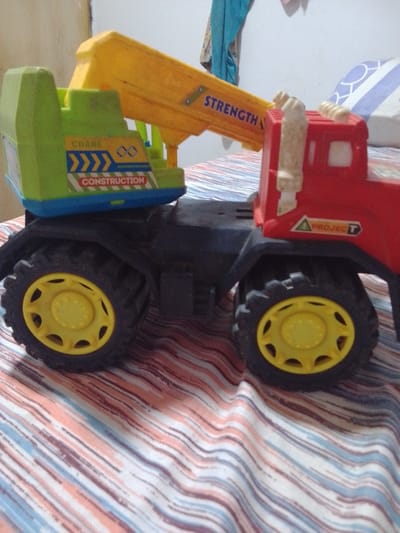
A toy crane truck is displayed on a bed with striped sheets. The truck is red and green with yellow accents, featuring a crane arm that extends from the top. The crane arm has the word "STRENGTH" printed on it in blue letters. The truck's body is labeled "CRANE CONSTRUCTION" in blue and red lettering. The truck has large black wheels with yellow rims. A sticker with a green triangle and the word "PROJECT" in red is visible on the side of the red cab. The background is blurred, showing a white wall and a portion of a patterned pillow. The setting appears to be indoors, possibly a bedroom, given the presence of the bed and wall. No people are visible in the image.
La Tagua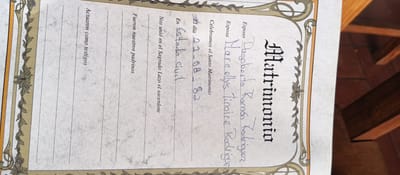
This is a close-up, vertical shot of a marriage certificate. The certificate is ornate, with decorative borders featuring floral motifs and geometric patterns. The background is textured, resembling aged paper. The primary focus is on the handwritten entries on the certificate, which are in Spanish. The title "Matrimonio" is prominently displayed in a stylized font. Below this, fields are filled in, indicating the names of the groom, "Dagoberto Ramón Rodriguez," and the bride, "Mareelys Tinaire Rodriguez." The date of the marriage is recorded as "21-08-82," and it is noted that the ceremony took place "En Estado civil" (in civil status). Other text on the certificate includes phrases like "Celebramos el Santo Matrimonio" (We celebrate the Holy Matrimony), "Nos unió en el Sagrado Lazo el sacerdote" (The priest united us in Holy Matrimony), and "Fueron nuestros padrinos" (They were our godparents). The final line reads "Actuaron como testigos" (They acted as witnesses). The image appears to be taken indoors, with wooden furniture visible in the background, suggesting a room within a building. The lighting is somewhat dim, highlighting the parchment texture and the ink of the handwritten entries. The overall impression is of a preserved historical document.
La Tagua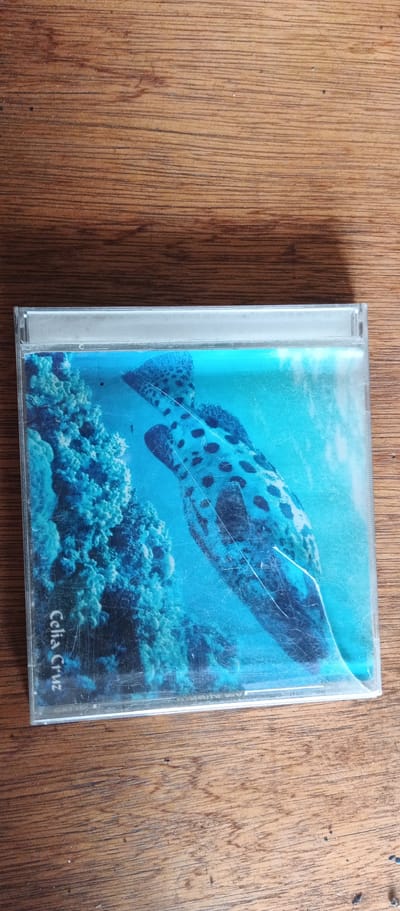
A CD case with a picture of a fish and coral is resting on a wooden surface. The CD case is clear plastic and shows signs of scratching. The image on the CD is a close-up of a large fish with dark spots swimming in blue water, with coral on the left side. The text "Celia Cruz" is visible on the bottom left corner of the CD image. The wooden surface has a prominent grain pattern and appears to be a table or countertop.
La Tagua
The image is a close-up photograph of a crocodile with its mouth open, revealing sharp teeth. The crocodile's textured skin is visible, with scales and bumps. The background is a muted reddish-brown color, possibly representing sand or rocky terrain. The image appears to be printed on paper, as indicated by creases and some wear on the surface. The lighting suggests an indoor setting or an overcast day, as there are no strong shadows. The crocodile's open mouth and bared teeth suggest a moment of aggression or a defensive posture. There is no visible text in the image. The overall impression is one of a wild and potentially dangerous animal captured in a still photograph.
La Tagua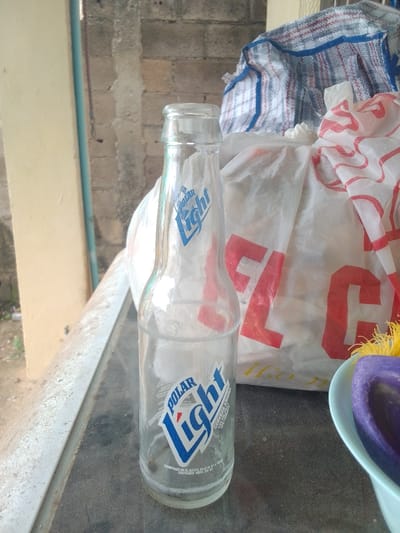
A clear glass bottle with a blue and white label that says "POLAR Light" stands on a dark surface. Behind the bottle, a white plastic bag with red lettering is partially visible, as well as another larger bag with a plaid pattern. The background consists of a textured brick wall and a light-colored vertical structure. The overall scene appears to be outdoors, possibly in a casual setting. There is no visible indication of the time of day or weather conditions. The location is identified as La Tagua, Venezuela.
La Tagua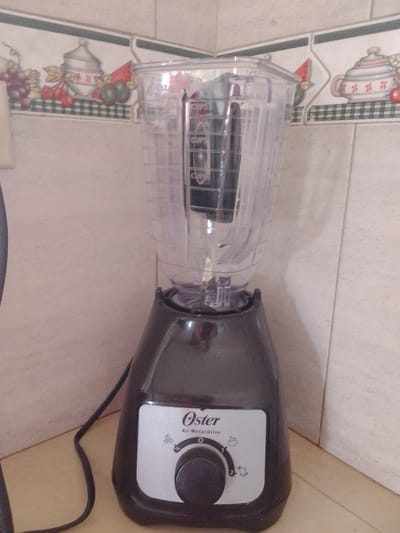
In La Tagua, Venezuela, an Oster All-Metal Drive blender sits on a countertop against a tiled backsplash. The blender is black with a clear plastic pitcher. The pitcher has measurement markings visible. The control panel on the blender's base displays various speed settings indicated by icons. To the left of the blender, a black power cord is visible. The backsplash features a decorative border with images of fruit and pottery.
La Tagua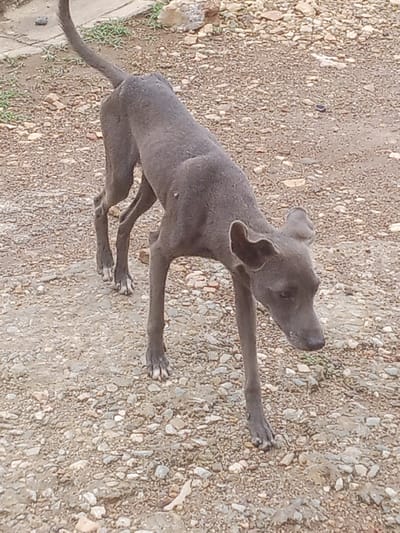
A lean, dark gray dog stands on a path covered with small stones and dirt. The dog is facing towards the right of the frame, with its head lowered and looking down. Its body is elongated and thin, with visible ribs. The dog has large, floppy ears and a long, thin tail that curves upwards. The path appears to be outdoors, with some sparse green vegetation visible in the background and around the edges of the path. The ground is uneven and rocky, suggesting a rural or unpaved area. The lighting suggests it is daytime, and the weather appears to be dry. There is no visible text in the image. The scene is located in La Tagua, Venezuela.
La Tagua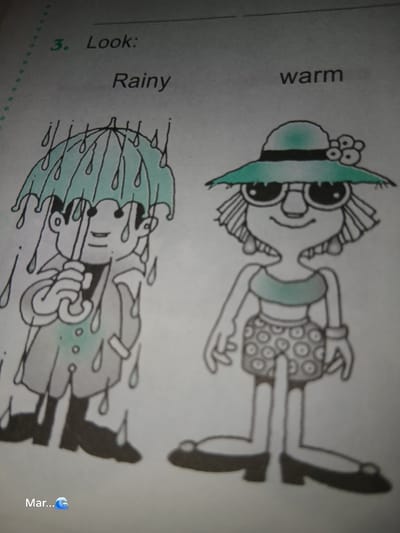
The image shows two cartoon drawings illustrating weather conditions. On the left, a person is depicted holding an umbrella and wearing a raincoat, with raindrops falling around them, representing a "Rainy" day. On the right, a person is shown wearing a hat, sunglasses, and summer clothing, suggesting a "warm" day. The drawings are in black and white with some areas colored in light green. The text "3. Look:" appears above the drawings. Below the drawings, there is text that reads "Mar...🌊". The image is a photograph of a page from a book or worksheet. There is no indication of the city of La Tagua, Venezuela within the image itself.
La Tagua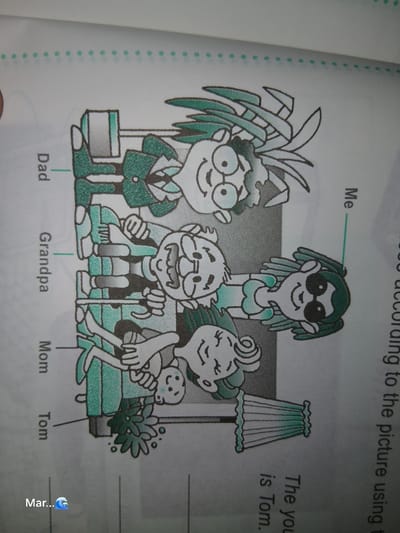
The image depicts a stylized, cartoonish drawing of a family. From top to bottom, the labels indicate "Dad," "Grandpa," "Mom," and "Tom." There is also a label "Me" pointing to a female figure wearing sunglasses. The family appears to be sitting together, possibly on a couch, with a lamp to the right. The drawing uses limited colors, primarily green and black outlines on a white background. There are no discernible elements in the image that relate to the city of La Tagua, Venezuela, nor are there any forensic details to report.
La Tagua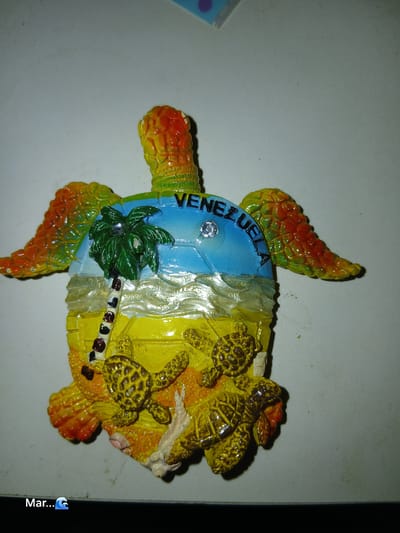
A souvenir magnet shaped like a sea turtle is displayed on a plain, light-colored surface. The turtle magnet is colorful, with a yellow and orange shell, green wings, and a blue background depicting a sky with a palm tree and the word "VENEZUELA" in black letters. The scene on the turtle's shell shows a beach with sand and several smaller sea turtles. The bottom left corner of the image has text that reads "Mar..." followed by a wave emoji. This souvenir likely represents the coastal regions of Venezuela, which includes areas like La Tagua.
La Tagua![The image displays a page from what appears to be a language learning book or material. The main subjects are food items and a grammatical concept. On the left, a whole pizza is pictured, and below it, the text "one pizza [uán pítsa] una pizza" is visible, indicating this is an example of a "count noun" in English and its translation into Spanish. On the right, two pumpkins are shown, accompanied by the text "two pumpkins [tu pómpkins] dos calabazas," further illustrating the concept of count nouns.
Above these examples, the heading "Count nouns" is prominently displayed in large, bold font, with the phonetic pronunciation "[cáunt náuns]" and the Spanish translation "Nombres contables" below it.
In the background, there is text in Spanish that seems to be part of a lesson or instructional material. This text reads: "ando vas al supermercado o preparas ur odúctos o ingredientes que necesitas. E ntar, otros no." This translates to something like: "When you go to the supermarket or prepare something, you need products or ingredients. You take some, others not."
The setting appears to be an indoor environment, likely a classroom or study space, given the presentation of educational content. There are no people visible in the image. The lighting is even, suggesting an indoor setting during the daytime. The overall mood is educational and informative. The location context of La Tagua, Venezuela, is not directly indicated by any visual cues within the image itself.](https://xiw.io/cdn-cgi/image/width=400,quality=80/https://storage.googleapis.com/patr-3a75e.appspot.com/uploads/image_picker_0340d396-bf73-40cf-b.jpg)
The image displays a page from what appears to be a language learning book or material. The main subjects are food items and a grammatical concept. On the left, a whole pizza is pictured, and below it, the text "one pizza [uán pítsa] una pizza" is visible, indicating this is an example of a "count noun" in English and its translation into Spanish. On the right, two pumpkins are shown, accompanied by the text "two pumpkins [tu pómpkins] dos calabazas," further illustrating the concept of count nouns. Above these examples, the heading "Count nouns" is prominently displayed in large, bold font, with the phonetic pronunciation "[cáunt náuns]" and the Spanish translation "Nombres contables" below it. In the background, there is text in Spanish that seems to be part of a lesson or instructional material. This text reads: "ando vas al supermercado o preparas ur odúctos o ingredientes que necesitas. E ntar, otros no." This translates to something like: "When you go to the supermarket or prepare something, you need products or ingredients. You take some, others not." The setting appears to be an indoor environment, likely a classroom or study space, given the presentation of educational content. There are no people visible in the image. The lighting is even, suggesting an indoor setting during the daytime. The overall mood is educational and informative. The location context of La Tagua, Venezuela, is not directly indicated by any visual cues within the image itself.
La Tagua![This media file is a photograph of a page from a vocabulary book. The page displays illustrations and text related to personal hygiene and household items.
The subjects are objects: a purple comb, a pink hairbrush, and a stack of two towels (one purple and one dark blue). The objects are presented in a clean, studio-like setting against a plain white background, which is typical for educational materials.
The activity taking place is the presentation of vocabulary words. The page is divided into sections, each featuring an image, its English name, a phonetic pronunciation guide, and its Spanish translation.
Notable details include the text present on the page. For the comb, the text reads "comb [cóumb] peinilla". For the hairbrush, it reads "hairbrush [jérbrosh] cepillo del pelo". For the towels, it reads "towels [táuols] toallas". There is also fragmented text visible at the bottom of the page, suggesting a section on verbs: "En verbos como whwash, do, go, agrega -e En verb".
The time of day, weather, location cues (other than it being a vocabulary book page), and emotions are not discernible from the image. The overall presentation is straightforward and educational. The focus is clearly on the vocabulary being taught, with no extraneous elements. The quality of the image suggests it was taken indoors, likely with artificial lighting.](https://xiw.io/cdn-cgi/image/width=400,quality=80/https://storage.googleapis.com/patr-3a75e.appspot.com/uploads/image_picker_030a65a1-ad19-4953-9.jpg)
This media file is a photograph of a page from a vocabulary book. The page displays illustrations and text related to personal hygiene and household items. The subjects are objects: a purple comb, a pink hairbrush, and a stack of two towels (one purple and one dark blue). The objects are presented in a clean, studio-like setting against a plain white background, which is typical for educational materials. The activity taking place is the presentation of vocabulary words. The page is divided into sections, each featuring an image, its English name, a phonetic pronunciation guide, and its Spanish translation. Notable details include the text present on the page. For the comb, the text reads "comb [cóumb] peinilla". For the hairbrush, it reads "hairbrush [jérbrosh] cepillo del pelo". For the towels, it reads "towels [táuols] toallas". There is also fragmented text visible at the bottom of the page, suggesting a section on verbs: "En verbos como whwash, do, go, agrega -e En verb". The time of day, weather, location cues (other than it being a vocabulary book page), and emotions are not discernible from the image. The overall presentation is straightforward and educational. The focus is clearly on the vocabulary being taught, with no extraneous elements. The quality of the image suggests it was taken indoors, likely with artificial lighting.
La Tagua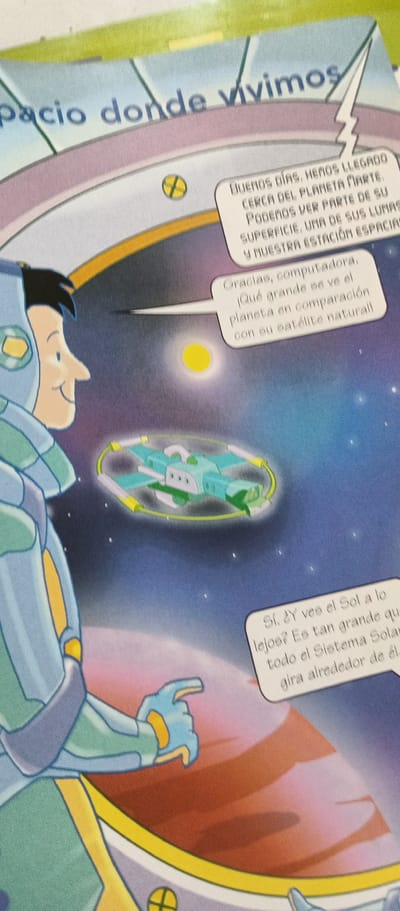
The image depicts an illustration from a children's book or comic, featuring an astronaut in a blue and green spacesuit looking at a celestial scene. The astronaut is on the left side of the frame, facing right, with a smiling expression. They are looking towards a small, light blue spacecraft with yellow accents that is suspended in space. In the background, there is a planet with a reddish-pink hue, a bright yellow sun, and a starry sky. Two speech bubbles are visible. The first, from the top right, reads: "BUENOS DIAS, HEMOS LLEGADO CERCA DEL PLANETA MARTE. PODEMOS VER PARTE DE SU SUPERFICIE, UNA DE SUS LUNAS Y NUESTRA ESTACIÓN ESPACIAL." This translates to "GOOD MORNING, WE HAVE ARRIVED NEAR THE PLANET MARS. WE CAN SEE PART OF ITS SURFACE, ONE OF ITS MOONS AND OUR SPACE STATION." The second speech bubble, originating from near the spacecraft, reads: "Gracias, computadora, ¡Qué grande se ve el planeta en comparación con su satélite natural!" This translates to "Thank you, computer, How big the planet looks in comparison to its natural satellite!" A third speech bubble, located at the bottom right, contains the text: "SÍ, ¿Y VEE el Sol a lo lejos? Es tan grande que todo el Sistema Solar gira alrededor de él." This translates to "YES, AND DO YOU SEE the Sun in the distance? It is so big that the entire Solar System revolves around it." The overall scene is set in outer space, with a focus on exploration and learning about planets and the solar system. The mood is one of wonder and discovery. The text suggests the characters are exploring Mars. The specific location context of La Tagua, Venezuela, is not visually evident in the illustration itself, but it is provided as external information.
La Tagua![This image features a close-up of text from a book or publication, accompanied by illustrations. The text, written in Spanish, appears to be a poem or prose about childhood, love, and memories. It evokes a sense of nostalgia, mentioning themes like kites, rain, fruit, and parents.
The illustrations depict elements that complement the text: a colorful kite with streamers, several smaller kite-like shapes trailing from a string, and a playful dog. The overall scene suggests an outdoor setting, perhaps a park or a rural area, given the mention of "aldea" (village) and "naranjos" (orange trees). The color palette is warm, with oranges and yellows dominating the background, hinting at a sunny day.
The text visible includes phrases like "Te amo, infancia, te amo" (I love you, childhood, I love you), "tardes con cielos de cometas" (afternoons with skies full of kites), and "que plantó mi padre en el horno donde mi madre doradas roscas con azúc" (that my father planted in the oven where my mother [made] golden doughnuts with sugar). These lines suggest a domestic and familial context, reinforcing the theme of cherished memories.
The style of the illustrations is cartoonish and friendly, with soft lines and bright colors, suggesting the content is intended for a younger audience or has a whimsical tone. The dog illustration at the bottom is particularly lively, with its mouth open and tongue out, conveying happiness and energy. The combination of text and imagery creates a heartwarming and evocative picture of childhood experiences and familial bonds.](https://xiw.io/cdn-cgi/image/width=400,quality=80/https://storage.googleapis.com/patr-3a75e.appspot.com/uploads/image_picker_00d032b2-a261-4a83-b.jpg)
This image features a close-up of text from a book or publication, accompanied by illustrations. The text, written in Spanish, appears to be a poem or prose about childhood, love, and memories. It evokes a sense of nostalgia, mentioning themes like kites, rain, fruit, and parents. The illustrations depict elements that complement the text: a colorful kite with streamers, several smaller kite-like shapes trailing from a string, and a playful dog. The overall scene suggests an outdoor setting, perhaps a park or a rural area, given the mention of "aldea" (village) and "naranjos" (orange trees). The color palette is warm, with oranges and yellows dominating the background, hinting at a sunny day. The text visible includes phrases like "Te amo, infancia, te amo" (I love you, childhood, I love you), "tardes con cielos de cometas" (afternoons with skies full of kites), and "que plantó mi padre en el horno donde mi madre doradas roscas con azúc" (that my father planted in the oven where my mother [made] golden doughnuts with sugar). These lines suggest a domestic and familial context, reinforcing the theme of cherished memories. The style of the illustrations is cartoonish and friendly, with soft lines and bright colors, suggesting the content is intended for a younger audience or has a whimsical tone. The dog illustration at the bottom is particularly lively, with its mouth open and tongue out, conveying happiness and energy. The combination of text and imagery creates a heartwarming and evocative picture of childhood experiences and familial bonds.
La Tagua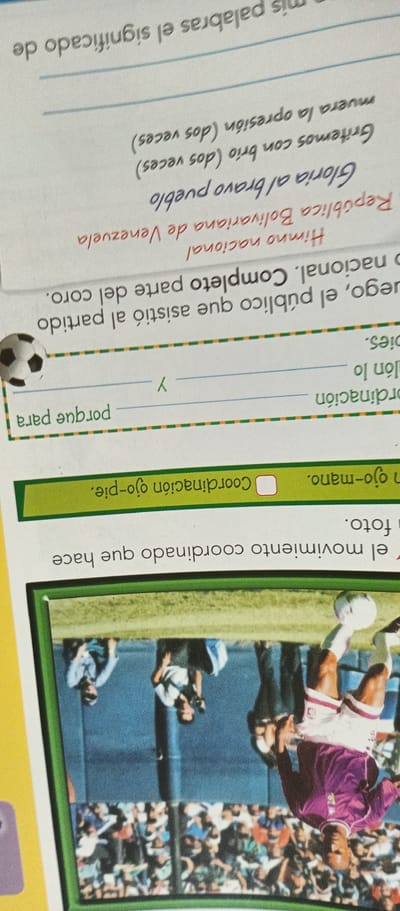
This is a close-up, slightly tilted shot of a page from a workbook or textbook, featuring handwritten and printed text. The text is primarily in Spanish and discusses Venezuelan national identity. Specifically, it includes lines from the Venezuelan national anthem, "Gloria al bravo pueblo," and refers to the country's history and symbols. There is a small soccer ball graphic to the left of some text. Below this, a section of text is underlined with a green border, stating "Coordinación ojo-pie" which translates to "Eye-foot coordination." This section is followed by a photograph of a soccer game, showing players in action on a field, with spectators in the background. The photograph is upside down, as is some of the text on the page. There is no information provided in the image to indicate its location in the city of La Tagua, Venezuela.
La Tagua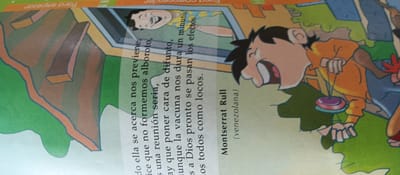
The image depicts a colorful illustration, likely from a children's book or comic, featuring cartoon characters. The scene is rendered in a vibrant, somewhat abstract style with bold outlines and flat areas of color. In the foreground, a boy with dark hair and a green shirt is depicted with his mouth wide open in an exaggerated expression. He is holding a yo-yo, which is suspended by a string. His left hand is extended, appearing to be in motion with the yo-yo. To his right, a segment of another character is visible, wearing an orange garment and blue trousers. To the left of the boy, text is visible, written in a vertical orientation. The text appears to be in Spanish and describes a situation involving a meeting and a vaccine, with phrases like "reunión seria," "cara de difunto," and "vacuna nos dura un minuto." Below this text, the name "Montserrat Rull" is written, followed by "(venezolana)," indicating a Venezuelan origin. In the background, a partially visible character with dark hair and a smiling face peers out from behind a window frame. This character is wearing a patterned shirt. The overall environment appears to be depicted with earthy tones, including browns and greens, suggesting an outdoor or natural setting. The context of La Tagua, Venezuela is not directly depicted or inferable from the visual elements of the illustration itself. The image is a fictional rendering and does not represent a specific real-world location in La Tagua.
La Tagua