Lalitpur, Nepal
30 memories from Lalitpur, Nepal

A woman with blonde hair pulled back is standing outside at night. She is wearing a light-colored button-up shirt over a dark tank top. She is holding her right hand to her neck and throat area. The background is dark with some blurry lights and vegetation. The woman is looking towards the camera.
Lalitpur
The image shows a street scene in Lalitpur, Nepal. On the left, a multi-story building features several shops with large display windows. The shop in the foreground, identified by the sign "MBSH", showcases a variety of goods including bags, textiles, and decorative items. String lights hang above the shopfronts. The pavement in front of the shops is paved with hexagonal grey tiles. To the right, a sidewalk runs alongside a street with traffic, including cars and a motorcycle. Signs for "ARZARA" and "Neon Hopen" are visible on poles. A concrete barrier with some vegetation growing alongside it separates the sidewalk from a lower section of pavement. The sky is overcast.
Lalitpur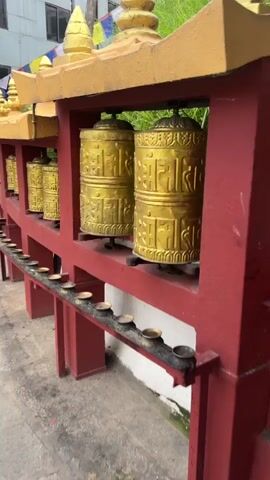
A row of golden Buddhist prayer wheels are shown. They are cylindrical and have an inscription in an unknown language running around them. They are mounted on a red wooden frame, under a yellow roof. In front of the prayer wheels, there is a red shelf with a row of small brass oil lamps. The ground in front of the shelf is paved with rough stones and dirt. Behind the prayer wheels, there is green foliage.
Lalitpur
A woman with blonde hair and sunglasses walks down a street, filming herself. She is wearing a black top and a black jacket. The street is lined with buildings and has electrical wires overhead. There are several motorcycles in the background.
Lalitpur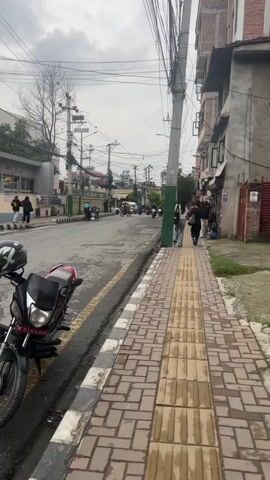
The video shows a street scene with a sidewalk on the right and a road on the left. Several people are walking on the sidewalk and riding motorcycles on the road. The sky is overcast. There are buildings on both sides of the street. A motorcycle is parked on the left side of the road in the foreground.
Lalitpur
A hand holds a glass candle with a pink wax interior. The glass is decorated with watercolor-style images of four-leaf clovers. There are also pieces of red fruit, possibly strawberries, embedded in the wax. The background is a soft, blurred mix of fabric, appearing to be bedding. There is no indication of the location in the city of Lalitpur, Nepal.
Lalitpur
The image shows the exterior of a Hindu temple in Lalitpur, Nepal. The temple is made of red brick and is intricately carved with many decorative elements, including statues and architectural details. The sky is overcast, and there is some greenery growing on the temple walls, suggesting it is outdoors and possibly in a humid environment. The perspective is from a low angle, looking up at the towering structures of the temple. The overall impression is one of grandeur and historical significance, with the detailed craftsmanship of the temple being a prominent feature.
Lalitpur
An ornate, golden Buddhist statue is displayed on a wooden stand in what appears to be a shrine or museum. The statue depicts a seated figure with multiple arms and intricate jewelry, seated on a lotus throne. The background consists of glass-fronted shelves displaying other golden religious artifacts, some of which are wrapped in plastic. The flooring is a mosaic of light-colored tiles with dark green accents. The image's composition, with a dark, out-of-focus object on the left, suggests it was taken from within a doorway or a similar restricted vantage point. This scene is likely located in the city of Lalitpur, Nepal, a region renowned for its rich Buddhist heritage and numerous temples and monasteries.
Lalitpur
The image shows a low-angle, full shot of a Hindu temple in Lalitpur, Nepal. The temple features intricate carvings and multiple tiered spires, common in Nepalese temple architecture. Two smaller, ornate spires are visible on either side of a larger, central spire. The temple is constructed of reddish-brown brick and stone, with details highlighted by white accents. The sky is overcast and gray. No people are visible in the frame. The architectural style suggests a traditional Hindu temple, possibly a pagoda-style structure, but the elaborate detailing is characteristic of Nepalese craftsmanship. The overall impression is one of grandeur and historical significance.
Lalitpur
This is a low-angle, full shot of the golden statue of Buddha inside the Kumbeshwar Temple in Lalitpur, Nepal. The statue is positioned centrally within a recessed alcove, illuminated by a soft orange glow. The Buddha is depicted in a seated meditation pose, with his eyes closed and hands resting in his lap. The statue is adorned with an orange cloth draped over its shoulders. Surrounding the statue are decorative elements and offerings. The temple itself is intricately carved from dark wood and red brick. Above the alcove, the temple features multiple tiered roofs with ornate detailing, characteristic of Nepali pagoda-style architecture. Smaller stupa-like structures rise from the corners of the main roof. The sky above is overcast, casting a diffused light on the scene. To the left and right of the central temple structure, there are glimpses of adjacent buildings, also with traditional architectural features. In the foreground, two brass lamps with small flames are visible, suggesting a ritualistic or devotional setting. The overall impression is one of serene spirituality and rich cultural heritage.
Lalitpur
The image shows a gilded statue of Buddha seated in a shrine. The Buddha is adorned in a red and gold robe and has his hands resting in his lap. He is positioned within an ornate, carved wooden alcove decorated with colorful patterns. White cloths hang on either side of the alcove, and a smaller, darker Buddha statue is visible at the top of the shrine. In front of the main statue, on a lower level, are various offerings including small golden bowls, flowers, and what appear to be candles. A prominent blue and gold bowl filled with folded banknotes sits on a dark wooden table in the foreground. The shrine is set against a backdrop of dark, aged wooden pillars and beams, suggesting an old and sacred space. The overall impression is one of reverence and devotion, likely within a Buddhist temple or monastery. The image was taken in Lalitpur, Nepal, a city renowned for its rich cultural heritage and numerous temples.
Lalitpur
This image depicts a street scene in Lalitpur, Nepal, likely at Patan Durbar Square, a UNESCO World Heritage Site. In the foreground, a man wearing a green jacket and helmet rides a black motorcycle, looking to his left. He is wearing blue jeans and a light-colored shirt and has a mask covering his mouth and nose. To his right, a woman in a red dress and patterned black and red top is seated on the back of another motorcycle. Further back, three individuals are walking away from the camera. The person on the left wears a black t-shirt and dark pants, carrying a yellow shopping bag. The person in the middle is in a purple sweater and grey pants, carrying a black shoulder bag. The person on the right wears a light blue and white patterned outfit and carries a blue shopping bag. A white car is parked on the right side of the road. In the background, prominent traditional Nepali architecture is visible, including a multi-tiered pagoda-style temple with ornate carvings on the left, and another similar temple structure to the right. Other buildings with wooden detailing and tiled roofs line the street. The sky is overcast with clouds. Several other people are visible in the background, walking and standing.
Lalitpur
A medium shot captures the Nyatapola Temple complex in Bhaktapur, Nepal, under a cloudy sky. In the foreground, a red valance hangs across the top of a row of shops with tiled roofs, some adorned with moss. A large bell, suspended from a wooden structure with intricate carvings and stone pillars, is the central focus. Flanking the bell structure are two pagoda-style temples with multi-tiered roofs. Several birds are in flight against the overcast sky. The shops below display signage, including one advertising "BUBBLE TEA AVAILABLE."
Lalitpur
The photograph captures a low-angle view of the Nyatapola Temple in Bhaktapur Durbar Square, Lalitpur, Nepal. The temple's intricately carved wooden facade, adorned with multiple tiers of pagoda-style roofs, dominates the upper portion of the frame. Below, a stone statue of a fierce-looking guardian lion, known as a Singha, stands prominently in the foreground, its mouth open as if roaring. To the left of the lion is another stone sculpture depicting a multi-armed deity, possibly Vishnu, seated in a shrine. The temple is constructed from brick and wood, with detailed carvings visible on the pillars and archways. The scene appears to be set during daylight, with no people present in the immediate vicinity. The overall atmosphere is one of historical grandeur and religious significance.
Lalitpur
The image shows a low-angle view of the Nyatapola Temple in Bhaktapur Durbar Square, Lalitpur, Nepal. The temple is a five-story pagoda, constructed of brick and wood. It is famous for its intricate carvings and towering architecture. In the foreground, a large stone pillar with a decorative top supporting a statue is visible. A golden, cloth-like decorative element hangs vertically beside the pillar, spanning a significant portion of the image. The temple's red brick walls and tiled roofs are prominent, adorned with numerous small bells hanging from the eaves. The sky above is overcast with clouds.
Lalitpur
In the bustling city of Lalitpur, Nepal, a street vendor prepares fried snacks. The vendor, a man with a sharp haircut and wearing an apron, stands behind a collection of large metal bowls filled with fried food, some golden brown and others a vibrant orange. He is actively cooking in a large wok filled with bubbling oil, using tongs to handle the food. The setup includes propane tanks and a yellow plastic jerrycan, indicative of a temporary outdoor food stall. In the background, the narrow street is lined with multi-story brick buildings, typical of Nepalese architecture, and a few people are visible walking along. The scene captures a lively moment of daily commerce and culinary tradition on a stone-paved street.
Lalitpur
The image shows the upper portions of traditional wooden architecture, likely part of a temple complex in Lalitpur, Nepal. The structures feature multiple tiered roofs with intricate carvings and decorative elements, including small bells hanging from the eaves. A blue tarp is draped over a section of the foreground, obscuring part of the view and suggesting ongoing work or protection. Tangled electrical wires crisscross the lower portion of the frame, indicating the presence of modern infrastructure within the historic setting. The sky is overcast.
Lalitpur
A medium shot captures an outdoor scene in the city of Lalitpur, Nepal. In the foreground, three men are seated on the left side of a narrow, paved street. One man in a light blue, striped shirt and dark pants is looking forward. To his left, a man in a grey t-shirt and dark pants is looking towards the left. Partially obscured between them is another man in a dark shirt. A potted plant sits in front of the men, with a woven orange stool visible to the right of the man in the blue shirt. The street is lined with brick buildings on both sides, some with ornate wooden architectural details. A complex network of tangled electrical wires is visible overhead. In the background, several motorcycles are parked and being ridden. One red scooter is prominent on the right side of the frame, with a person in a yellow jacket and helmet riding it. Other individuals, some wearing school uniforms, are walking or riding motorcycles further down the street. The overall atmosphere suggests a busy urban environment with traditional architecture.
Lalitpur
The image depicts a street scene in Lalitpur, Nepal. In the foreground, a red and yellow motorcycle is parked. The motorcycle features chrome handlebars, a rearview mirror reflecting buildings, and a decorative, circular orange and white sign attached to its side, adorned with graffiti. Behind the motorcycle, a green painted pillar stands tall, and lush green plants in pots are visible. In the background, a narrow street lined with buildings is seen. People are walking along the street, some of them appearing to be schoolchildren in uniforms. The architecture suggests a traditional urban environment.
Lalitpur
The image depicts an outdoor scene, likely a street market, with several paintings displayed. In the foreground, a large, unframed painting of snow-capped mountains with prayer flags and a stupa is leaning against a wall. To the right of this painting is a clear plastic container filled with small, folded cards, some of which show mountain scenes. Behind the container, there are two circular wooden objects, one with a carved face. To the left of the main mountain painting, another framed painting shows a peacock perched on a rock beside a body of water. Further back and dominant in the frame is a large, framed painting of a blue Buddha figure against a brick wall. To the right of the Buddha painting, a framed artwork depicts a multi-armed deity, possibly Hindu. The background suggests a building facade with wooden doors and possibly a sign indicating "WE ACCEPT". The overall impression is that of an art stall in a bustling urban environment in Lalitpur, Nepal, where local artists are selling their work.
Lalitpur
This is a low-angle, medium shot of a stone temple in Lalitpur, Nepal, on an overcast day. The temple is intricately carved and features multiple tiers with decorative spires and small arched windows. Vegetation, including small trees and moss, grows on the temple's ledges and structures, suggesting it is an older or less maintained building. The temple's facade is dark and weathered, with some portions appearing to be in shadow. A small red marking is visible on the upper part of the temple. The background is a bright, featureless sky with some faint cloud cover. To the left, a portion of another building, appearing to be made of brick, can be seen with a window and lattice work. The overall impression is one of historical grandeur and the encroachment of nature on ancient architecture.
Lalitpur
The image depicts a street scene in Lalitpur, Nepal, likely near Patan Durbar Square, given the presence of traditional architecture and handicraft shops. In the foreground, a black bicycle with a blue plastic cover on its seat is parked on a wet, stone-paved sidewalk. The bicycle's front wheel is on the right side of the frame, and the rear wheel is visible on the left. Several individuals are present in the midground and background. A man in a blue t-shirt and jeans stands on the left, holding a light-colored bag. Behind him, a person wearing a black t-shirt and helmet rides a motorcycle. Further back, another individual in a dark blue vest and a black baseball cap stands facing away from the camera. To the right, a storefront with the sign "B.R.B. HANDICRAFT" is visible. Three men are seated outside the shop on a low wall or bench. One man in a light blue shirt is holding a book or papers. Another man beside him is wearing a white t-shirt. A third man, wearing a light-colored shirt and pants, is also seated. A motorcycle is parked in front of the shop. The environment shows traditional brick buildings with wooden accents and balconies. Overhead, numerous electrical wires crisscross the sky. The ground is wet and appears to have puddles, suggesting recent rain. Green potted plants are placed near the storefront and the seated individuals. The overall impression is of a bustling, albeit somewhat damp, street in a historic urban area.
Lalitpur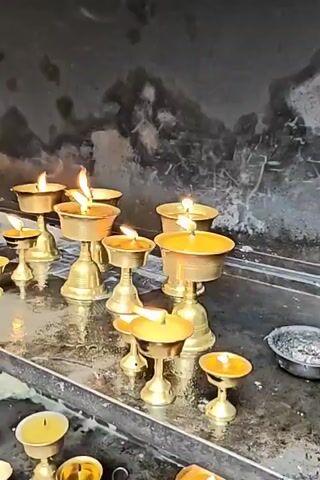
A video pans across a table filled with lit brass oil lamps. The lamps are of various sizes and designs, some with decorative bases. The flames flicker, casting a warm glow on the surrounding area. The table appears to be made of a dark, reflective material, possibly marble or polished stone, and is slightly wet, with some drips of what looks like melted wax. Behind the table is a dark, textured wall. The overall impression is of a dimly lit, devotional space.
Lalitpur
The image shows a bronze statue of the Buddha seated in meditation, surrounded by a decorative archway adorned with floral motifs and what appears to be a serpent hood. The statue is placed within a shrine in Lalitpur, Nepal, with intricately carved wooden latticework forming the background. The shrine's architectural style, characterized by its golden hues and detailed carvings, is typical of the Newari craftsmanship found in the Kathmandu Valley. The Buddha statue is golden in color and sits on a tiered base that includes decorative elements and figures on either side. The overall scene depicts a religious artifact in a culturally rich setting.
Lalitpur
This is a frontal, eye-level, medium shot of a large, ornate golden statue of a multi-armed deity, likely a Buddhist figure, housed within an elaborate golden shrine. The statue is seated on a lotus throne and is adorned with intricate jewelry and a headdress. Its numerous hands are in various mudras, or symbolic gestures, with the primary two clasped in front of its chest. The shrine is richly decorated with carved details, including serpents, celestial beings, and floral motifs, all rendered in a metallic gold finish. To the left of the main statue, a small brass bell hangs from a chain suspended from the shrine's upper structure. Below the bell, a golden chalice rests on a pedestal. To the right of the main statue, smaller golden figurines and offerings are visible. In front of the main altar, a smaller statue is adorned with a colorful bouquet of fresh flowers. The entire scene is illuminated, highlighting the golden tones and intricate craftsmanship of the religious artifacts. This shrine is located in the Golden Temple (Hiranya Varna Mahavihar) in the city of Lalitpur, Nepal.
Lalitpur
This image depicts the interior of a building in Lalitpur, Nepal, likely a temple or monastery, with a view looking outwards through an opening. In the foreground, there is a wooden railing with several golden prayer wheels mounted on it. Below the prayer wheels, there are small, shallow brass bowls, likely for offerings. In the background, a large golden statue of an elephant carrying two seated figures can be seen. The architecture features intricate carvings and traditional Nepali design elements. Scaffolding and turquoise fabric are visible further in the background, suggesting ongoing construction or renovation. The overall scene conveys a sense of spiritual and cultural significance.
Lalitpur
The image shows a close-up of intricate architectural details of the Char Narayan Temple in Lalitpur, Nepal. In the foreground, a bronze sculpture of a bird with its wings spread is perched on a curved, dark surface, likely a decorative finial or roof ornament. To the right of the bird, a carved stone head, resembling a deity or Buddha, is visible, emerging from the same architectural structure. The head is depicted with serene facial features, curly hair, and a subtle urna on its forehead. The architectural elements exhibit detailed carvings and inscriptions, with a band of what appears to be Devanagari script running along the curved surface. In the background, scaffolding made of metal pipes is erected, suggesting ongoing renovation or construction work at the temple. Some sections of the scaffolding obscure portions of the temple structure, which includes brickwork and wooden beams. A bright green tarp is also visible, draped over some of the scaffolding. The overall scene captures a blend of ancient artistry and contemporary restoration efforts.
Lalitpur
A close-up, eye-level shot captures a detailed view of a brick wall in Lalitpur, Nepal, featuring a large, ornate golden sculpture of a female deity on the left, a weathered bronze sculpture of a mythical creature atop a tiered platform in the center, and a circular wall clock to the right. The golden sculpture, intricately carved, depicts a woman with a crown and flowing garments, surrounded by stylized fruit. Below it, a golden decorative element with carved inscriptions is visible. The bronze sculpture is a fantastical beast with a human-like figure seated on its back, both appearing aged and detailed. The wall clock, with a wooden frame and white face, displays the time as approximately 11:08. The brick wall itself is a vibrant red, with some areas showing signs of age and wear. A metal railing with pointed finials runs across the bottom of the frame, partially obscuring the base of the sculptures. The scene is lit by natural light, casting subtle shadows.
Lalitpur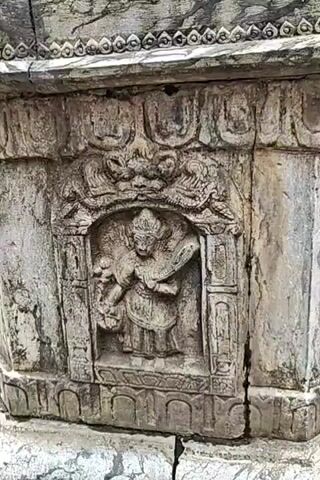
A stone structure with intricate carvings is filmed from various angles. The structure appears to be part of a larger monument or temple, with additional decorative elements and inscriptions visible at the top. In the background, glimpses of other buildings and greenery suggest an outdoor setting, possibly a courtyard or a public space. There are no people visible in the video, and the focus remains solely on the stone artifact.
Lalitpur
The image shows a close-up of a traditional stone stupa base in Lalitpur, Nepal. The base is octagonal and intricately carved with decorative motifs and inscriptions. A single red flower lies on the bottom tier of the base. Behind the stupa, a larger black structure with a golden dome is visible, as well as colorful buildings typical of the city's architecture. The overall scene depicts a religious and cultural site within an urban setting.
Lalitpur