Lhasa, China
30 memories from Lhasa, China
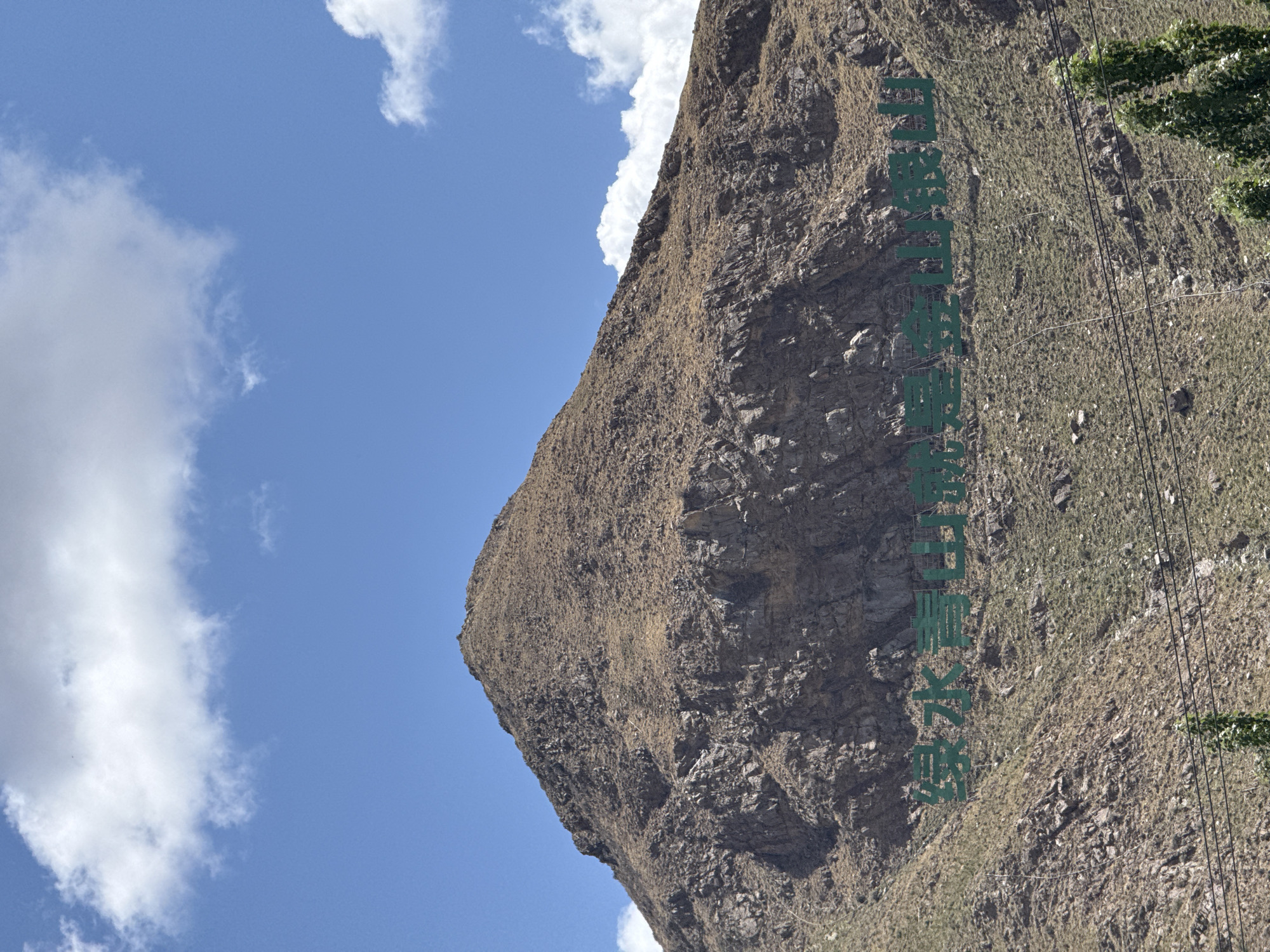
The image, when viewed upright (rotated 90 degrees counter-clockwise), displays a majestic mountain or hillside under a bright, clear blue sky dotted with scattered white, fluffy clouds. The mountain, which dominates the right side of the frame, features rugged, rocky terrain interspersed with areas of sparse, dry, brownish vegetation. A notable feature is a large, green inscription written in Chinese characters running vertically up the side of the mountain. The characters read, from top to bottom: "雪山高原圣洁" (xuě shān gāo yuán shèng jié). This translates to "Snow Mountain Plateau, Holy and Pure." To the right of the green text, several dark lines resembling cables or wires ascend the mountain, suggesting the presence of a cable car system or utilities. On the far right edge of the frame, some denser green foliage is visible. The scene captures a sunny day with excellent visibility in a high-altitude, mountainous region, consistent with the location context of Lhasa, China.
Lhasa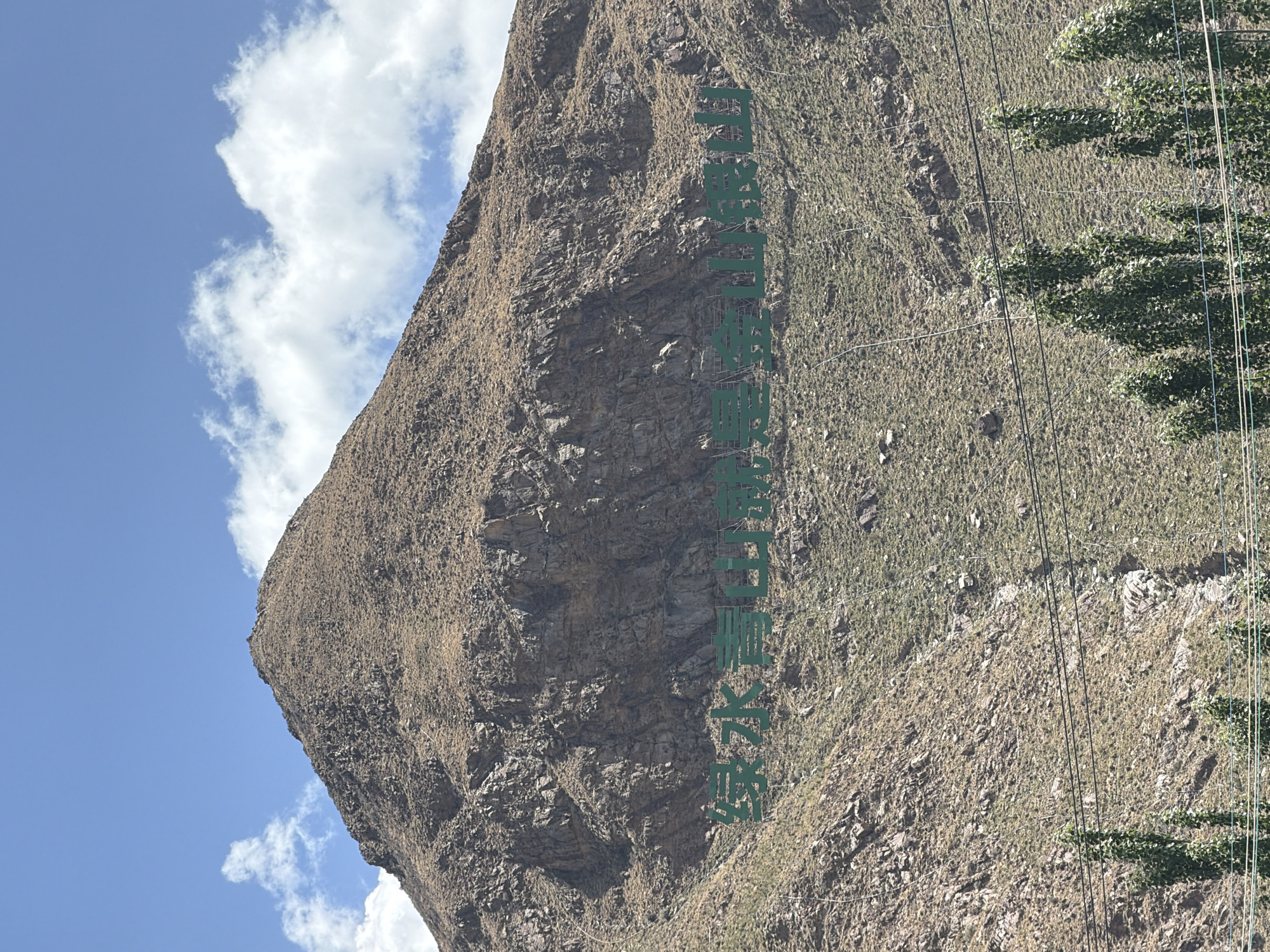
The image displays a steep, rugged mountain face under a clear blue sky dotted with scattered white clouds. The mountain is covered in dry, sparse vegetation and exposed rock, exhibiting shades of brown and grey. On the right side of the frame, a cluster of green-leafed trees partially obscures multiple power lines that stretch diagonally across the mountainside. Prominently featured on the mountain face are large, green Chinese characters painted vertically. Reading from top to bottom, the text spells out: 圣 (Shèng), 水 (Shuǐ), 山 (Shān), 水 (Shuǐ), 泽 (Zé), 大 (Dà), and 桥 (Qiáo). This translates to "圣水山水泽大桥" (Shèngshuǐ Shānshuǐ Zédàqiáo), meaning "Holy Water Mountain Water Ze Big Bridge," which likely identifies the location or a nearby landmark. The scene is set in a mountainous region, consistent with the high-altitude terrain found near Lhasa, China. The bright sunlight suggests it is daytime, possibly midday or early afternoon, with fine weather. No people or specific activities are visible, emphasizing the natural landscape marked by human inscription.
Lhasa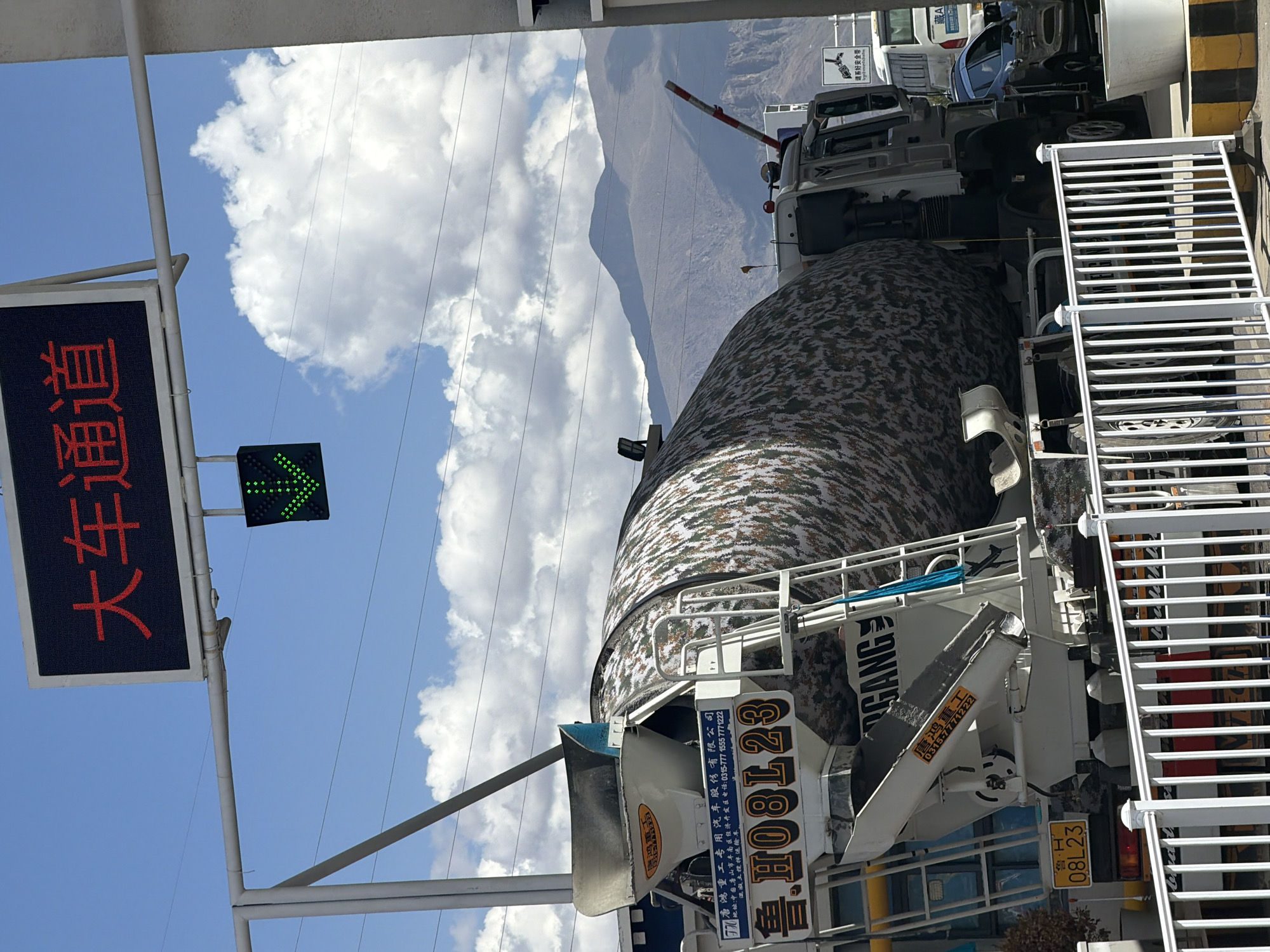
The image, originally oriented vertically, depicts a sunny outdoor scene at what appears to be a vehicle checkpoint or gate. A bright blue sky with scattered white cumulus clouds dominates the upper portion of the frame, suggesting a clear day. In the foreground, a large white concrete mixer truck is prominently featured. Its mixing drum is distinctively covered in a camouflage-like pattern. Various pieces of text are visible on the truck, including "鲁 H08L23" (likely a vehicle registration number), and Chinese characters identifying the manufacturer as "唐沈重工专用汽车股份有限公司" (Tang Shen Heavy Industry Special Purpose Vehicle Co., Ltd.) along with contact information: "地址:中国唐山市丰南区经济开发区电话:0315-777 15557771222". Other discernible texts include "GANG", "唐鸿重工", and "成土搅拌运输车" (Concrete Mixer Transport Vehicle). Overhead, a digital LED sign displays red Chinese characters "大车通道" (Large Vehicle Lane) and a green arrow pointing to the right, indicating an open passage. To the right of the truck, a white metal barrier structure is visible, consistent with a gate mechanism. In the midground, a red-and-white striped barrier arm is seen, controlling vehicle access. Near the barrier arm, a small white sign with an icon and the Chinese text "请系好安全带" (Please fasten seatbelt) is present. Other vehicles, including another truck and a dark car, are visible behind the mixer truck. One license plate clearly shows "藏A", which indicates Lhasa, China, matching the provided context. The background features large, rugged mountains under the clear sky.
Lhasa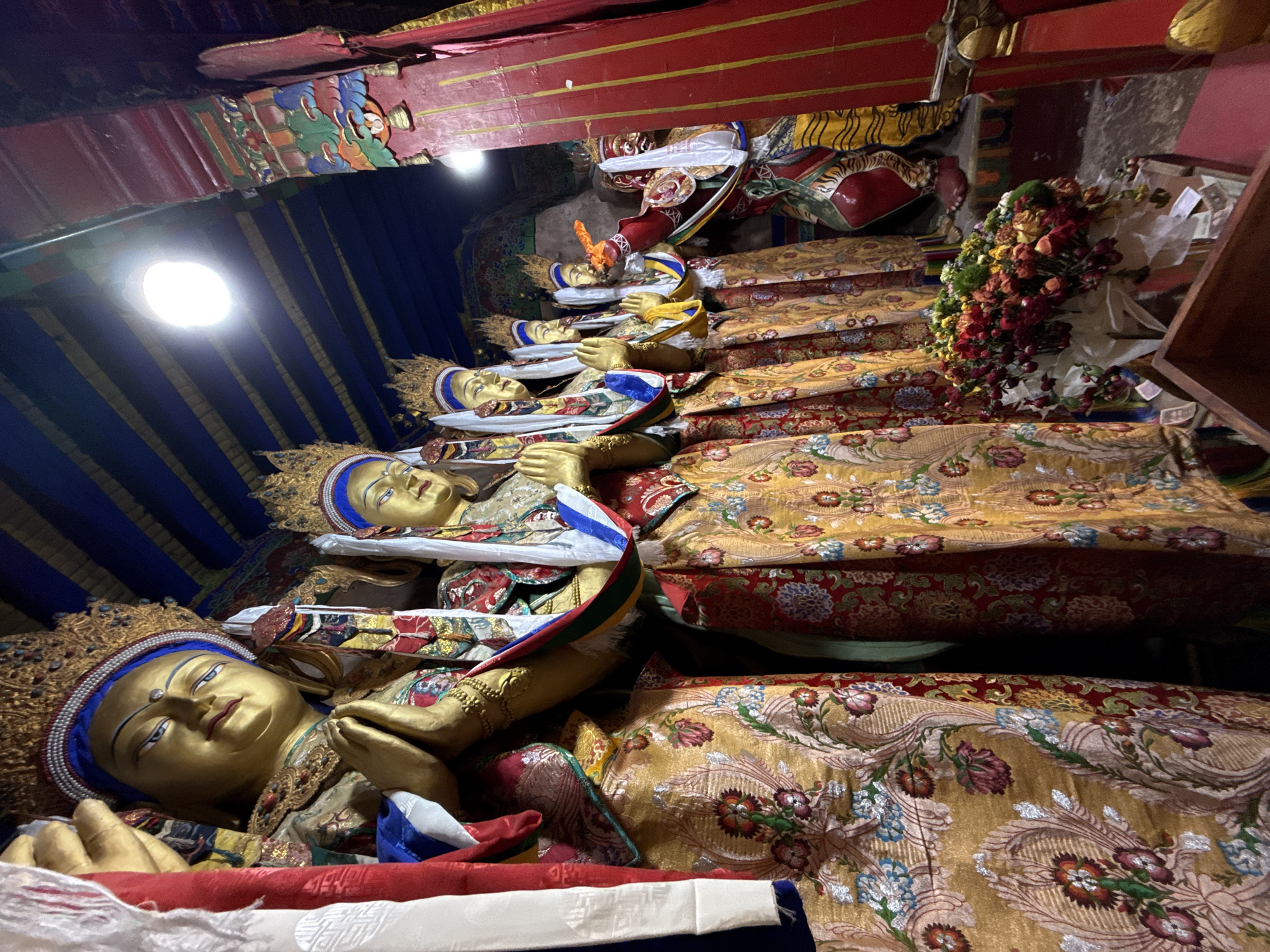
The image depicts a row of golden reclining Buddha statues inside a building, likely a temple, located in Lhasa, China. The statues are draped in colorful fabrics with intricate floral patterns and wear elaborate headgear. The statues are laid out in a descending line from the foreground to the background, receding into the depth of the image. Behind them, a collection of flowers and decorative items sits at the rear of the row of statues. The walls and ceiling of the temple are decorated with traditional Tibetan designs and colors, featuring reds, blues, and greens. A bright light illuminates the scene from the upper left corner.
Lhasa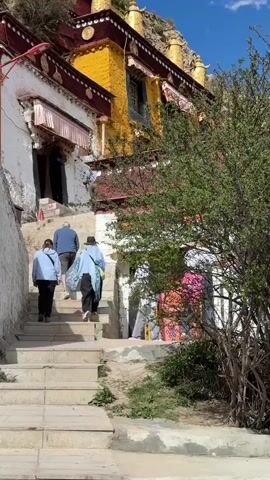
A low-angle shot shows four people walking up a stone staircase toward a traditional building. The people are dressed in casual clothes and are walking away from the camera. The building is several stories high and has a distinct architectural style, with white and yellow walls, red trim, and golden ornaments on the roof. The staircase is flanked by a stone wall on one side and a small tree on the other. The sky is blue with a few scattered clouds. The camera angle is slightly tilted upwards.
Lhasa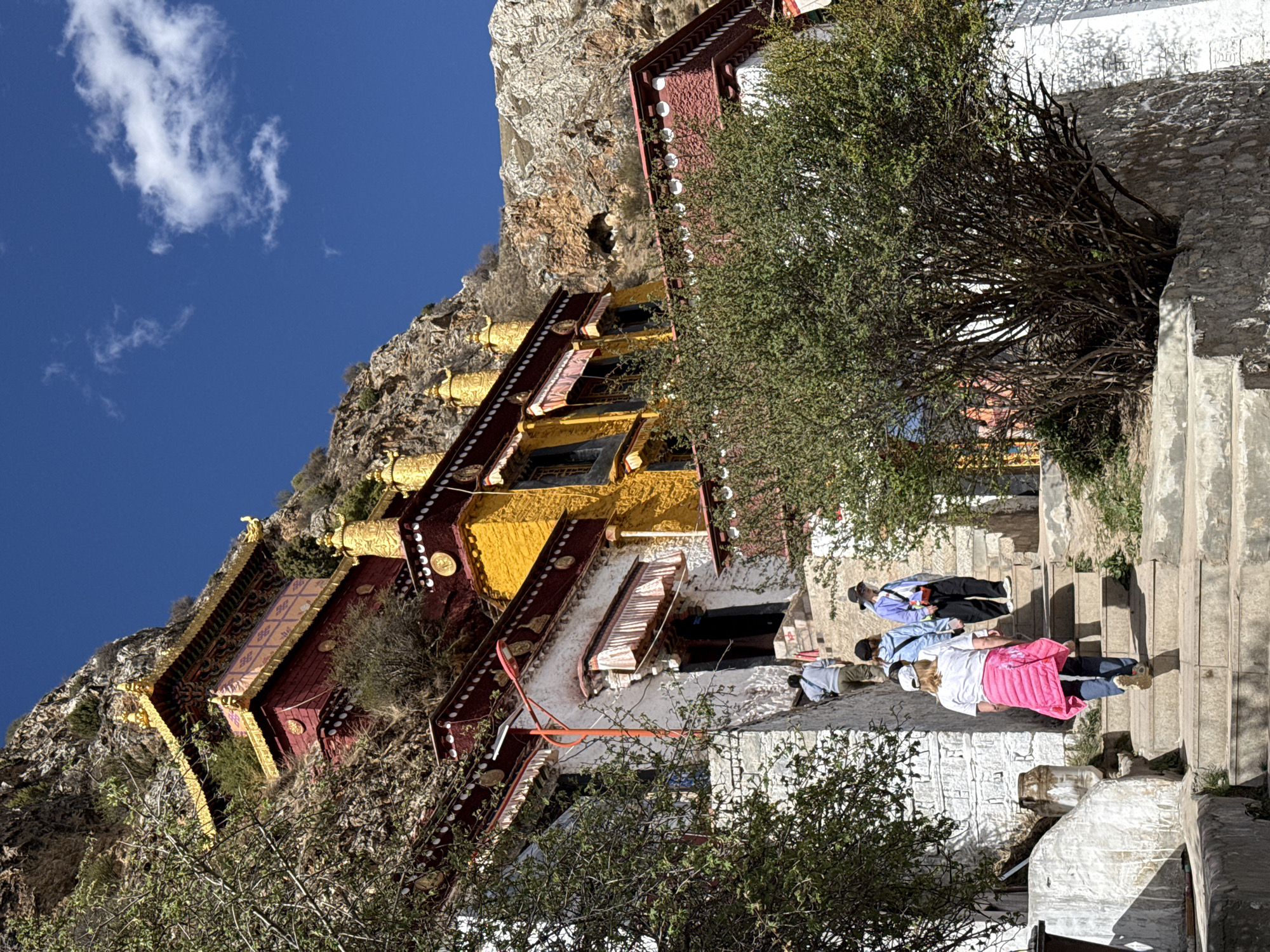
The image depicts a Buddhist monastery built into a cliffside in Lhasa, China. The monastery features a multi-tiered structure with red, white, and yellow walls, and golden decorative elements. The building is partly integrated into the rocky terrain, with a clear blue sky above and some scattered clouds. A group of four tourists is walking up a stone staircase adjacent to the building. One tourist is wearing a pink skirt and white shirt. Trees and bushes are present, obscuring some parts of the monastery.
Lhasa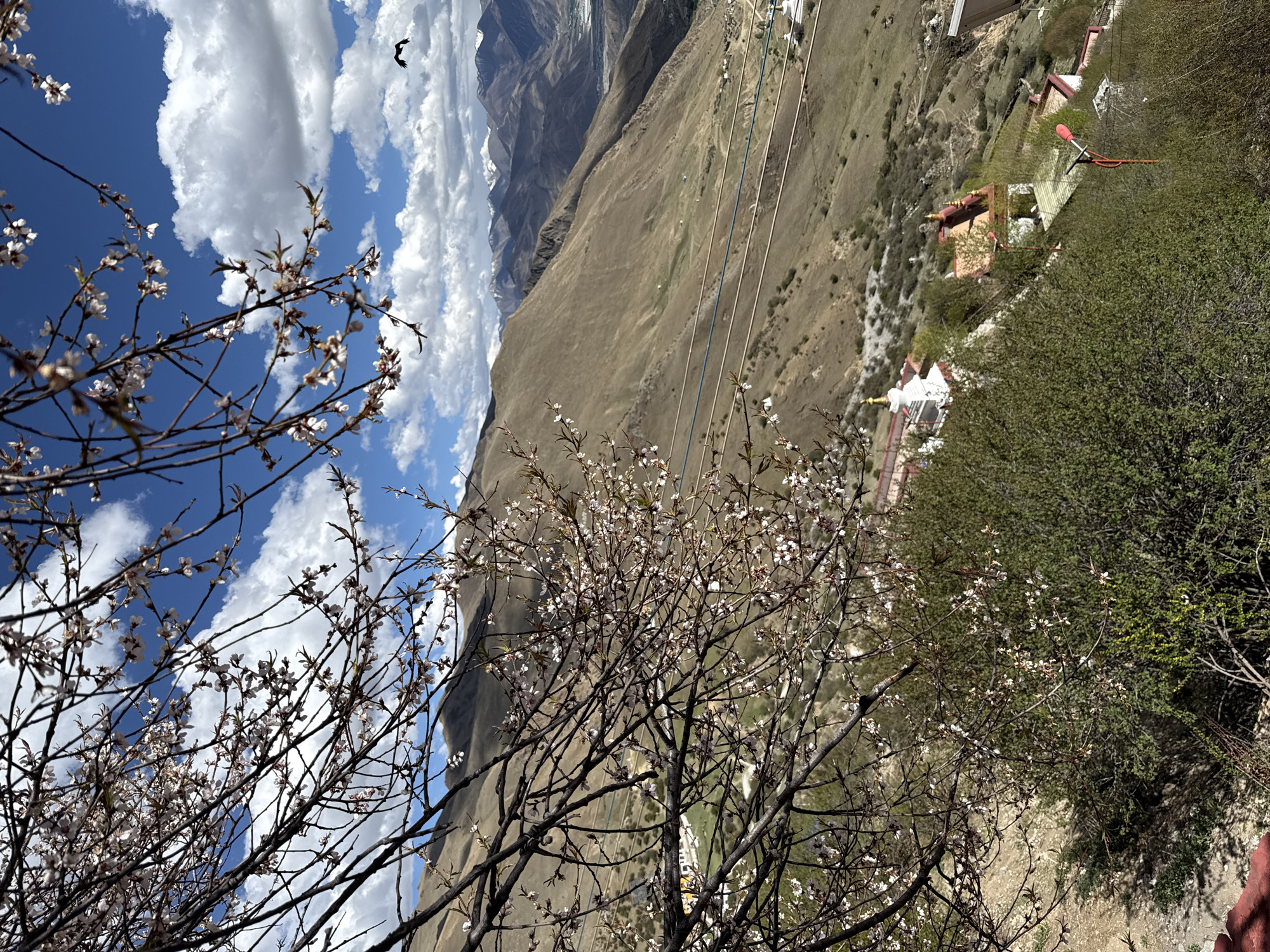
The image depicts a mountain landscape with blooming trees in the foreground. In the background, a large, bare mountain slopes downward towards a valley with structures and buildings. Overhead power lines run down the mountainside. The sky is blue with scattered white clouds. A bird is flying in the sky. A tree branches with white flowers in the bottom left corner. Greenery surrounds the buildings, including trees and bushes. This is likely in the city of Lhasa, China, given the distinctive architecture and mountainous terrain.
Lhasa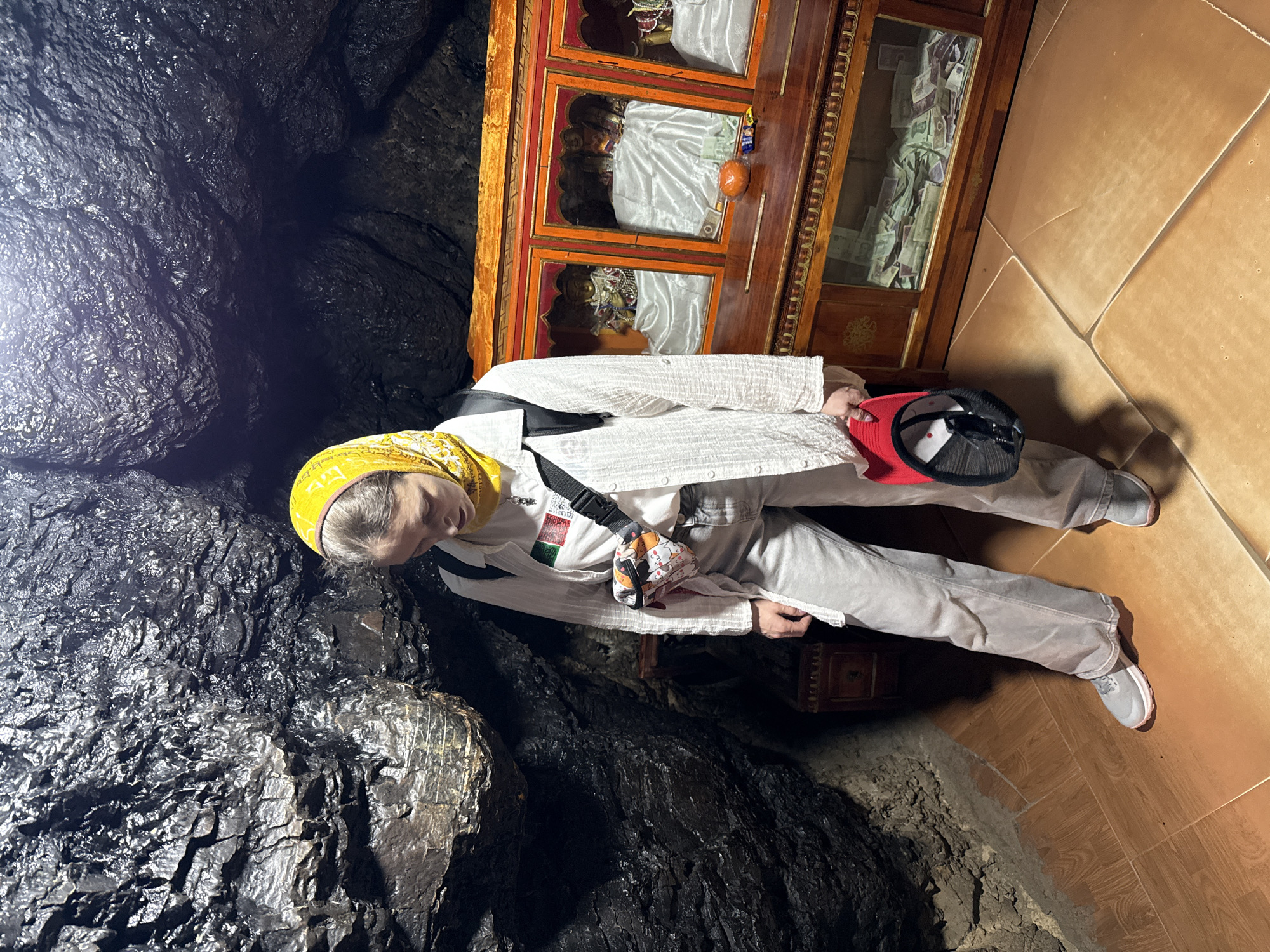
The image shows a person standing inside a cave at Drak Yerpa, located northeast of Lhasa, Tibet Autonomous Region, China. The person is wearing a yellow headscarf, a white shirt with patches, and gray pants. They are holding a red baseball cap in their left hand and have a shoulder bag across their body. To their right is an altar with glass doors, likely containing religious items and paper money. The cave walls are dark and rough, contrasting with the tile flooring outside the cave entrance. The lighting suggests a mix of natural and artificial sources.
Lhasa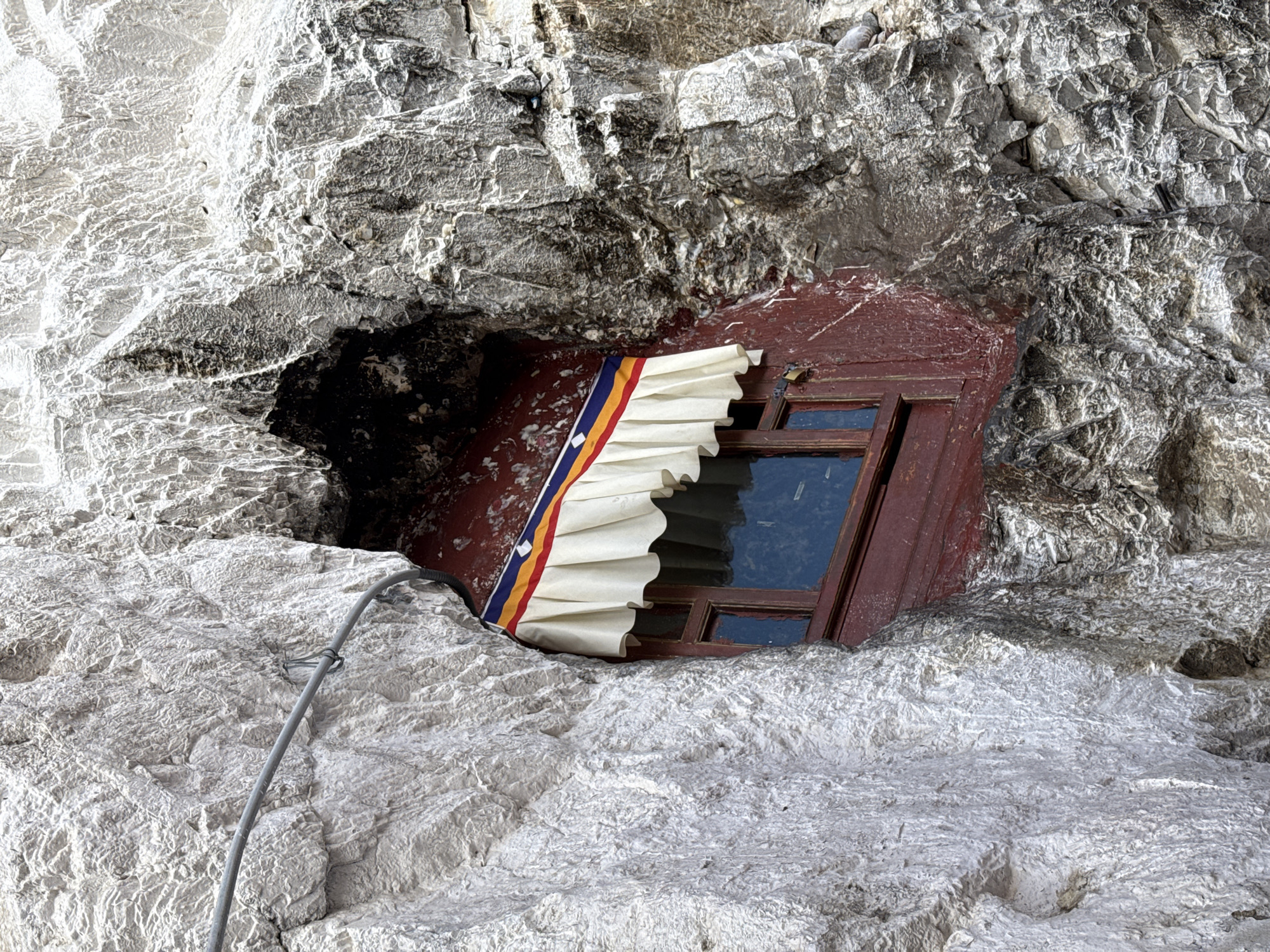
A window is set into the side of a gray, rocky cliff face. The window frame is painted a dark red, and a scalloped, cream-colored valence with a blue, red, and yellow strip hangs from the top left corner. The glass of the window reflects the surroundings. A gray cable runs from the window down the rock face. The location is Lhasa, China.
Lhasa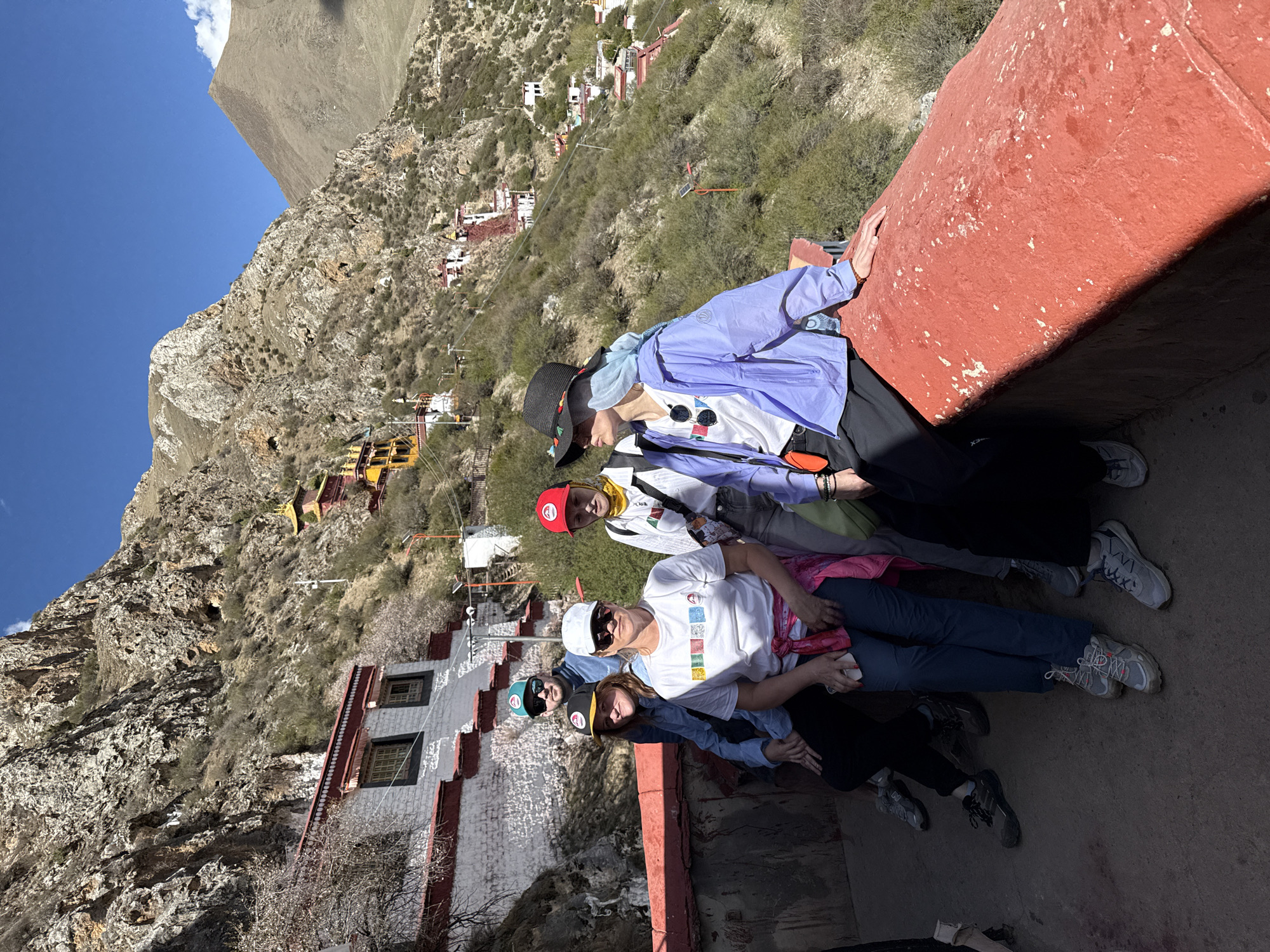
A group of four individuals are positioned against a red wall, likely at Sera Monastery, within the city of Lhasa, China. The background includes a mountain landscape, interspersed with buildings and vegetation, and a blue sky. The individuals are wearing a variety of casual attire, including T-shirts, jackets, and hats. Some of them are wearing sunglasses. They appear to be posing for a photograph. One individual is wearing a red baseball cap and another a black hat. The architectural style of the buildings in the background suggests they are likely part of the monastery complex. A cable car is also visible in the background.
Lhasa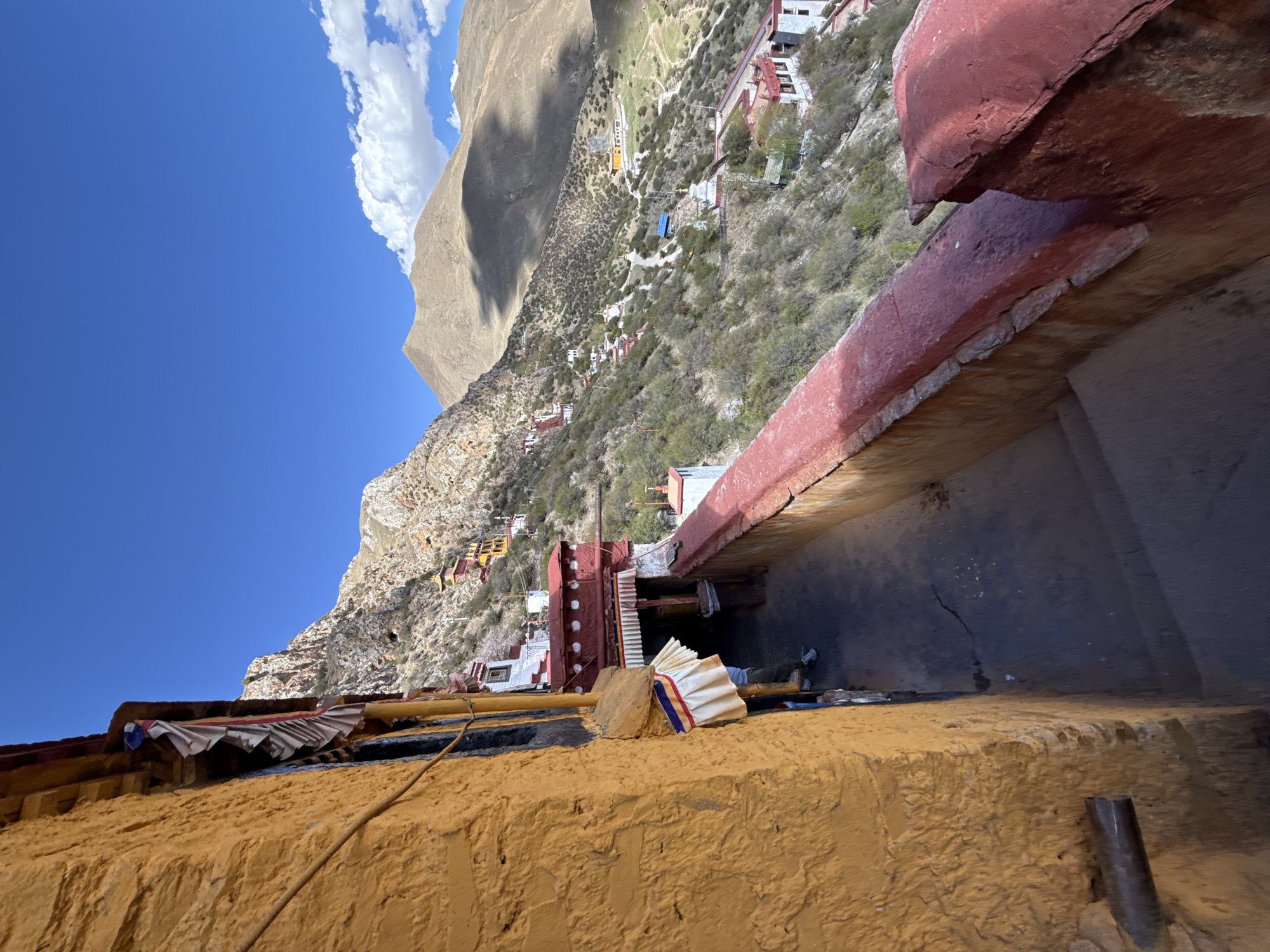
The image shows a view from what appears to be a high vantage point, likely within the city of Lhasa, China. The architecture is characteristic of Tibetan buildings, with textured yellow walls and red accents on the roofs. There are layers of buildings and structures visible, descending down a mountainside covered with vegetation. In the distance, a large mountain is partially obscured by clouds. The sky is a clear blue.
Lhasa
The camera pans slowly up the side of a mountain to reveal a monastery built into the cliff face. The monastery is white with red trim and a golden roof. The surrounding landscape is mountainous and rugged, with sparse vegetation. A blue sky with fluffy white clouds provides the backdrop. The shot emphasizes the monastery's isolation and integration with the natural environment. No people are visible.
Lhasa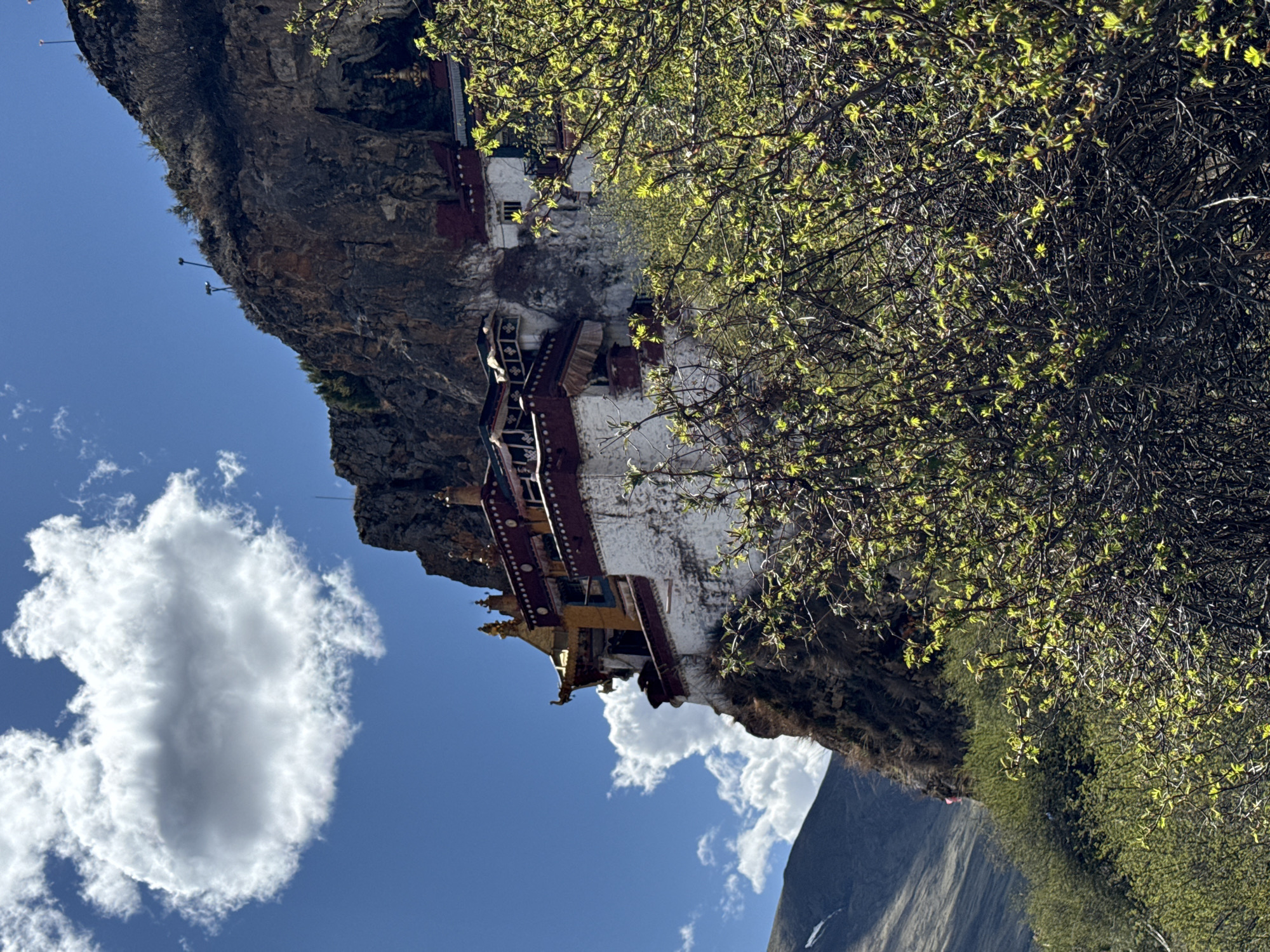
A view of Drak Yerpa monastery, located in the Lhasa region of Tibet, China, is seen clinging to the side of a cliff. The structure is predominantly white with red and gold accentuations. A cliff face looms above the monastery, while branches laden with budding leaves dominate the right side of the frame. The sky is blue with scattered white clouds, and the peak of a mountain is visible in the bottom right corner.
Lhasa
The camera pans across a mountain range in a sunny, daytime scene. The terrain is rocky and grassy, with sparse shrubbery. Visible are several buildings in white, red, and yellow hues, situated on the mountainside. A row of yellow prayer wheels lines a path near the camera. As the camera pans, the vista reveals a vast valley dotted with more buildings, with the mountain range extending into the distance under a clear blue sky with scattered white clouds. The scene suggests a remote, possibly religious or spiritual location, high in the mountains.
Lhasa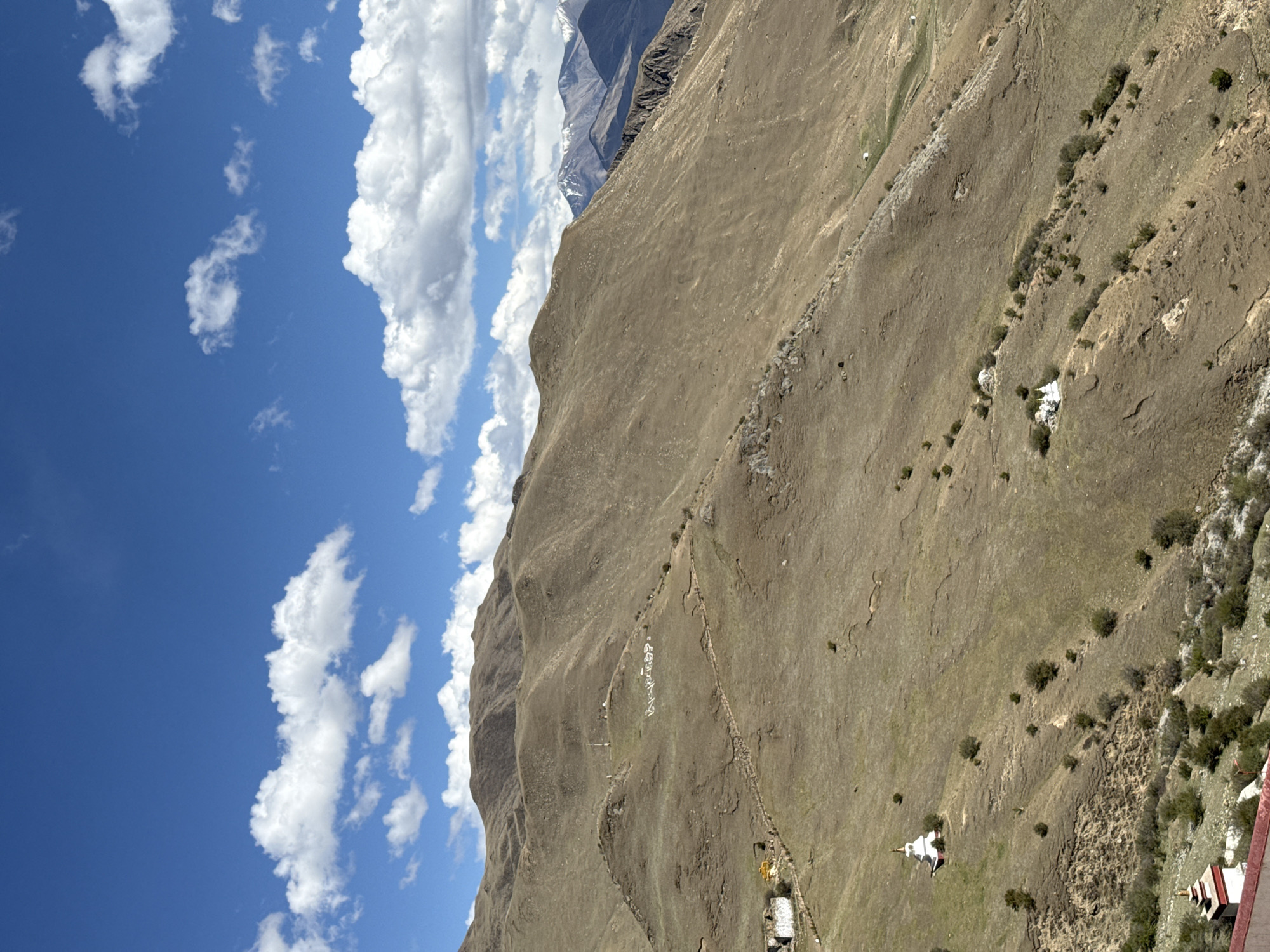
The image presents a landscape scene featuring a mountainside and a clear blue sky with cumulus clouds. The mountainside is predominantly brown and barren, exhibiting varying textures and shades, indicating sparse vegetation. The mountain range has a path across its side. There are scattered small, white structures resembling chortens or stupas, structures found in Tibetan Buddhist regions. These structures are located at various points on the slope. The distant mountain peaks are visible, covered with snow. The sky is vivid blue, dotted with white, puffy cumulus clouds. There is no indication of the location or city. The description is based on the visual elements present in the image, without additional contextual information.
Lhasa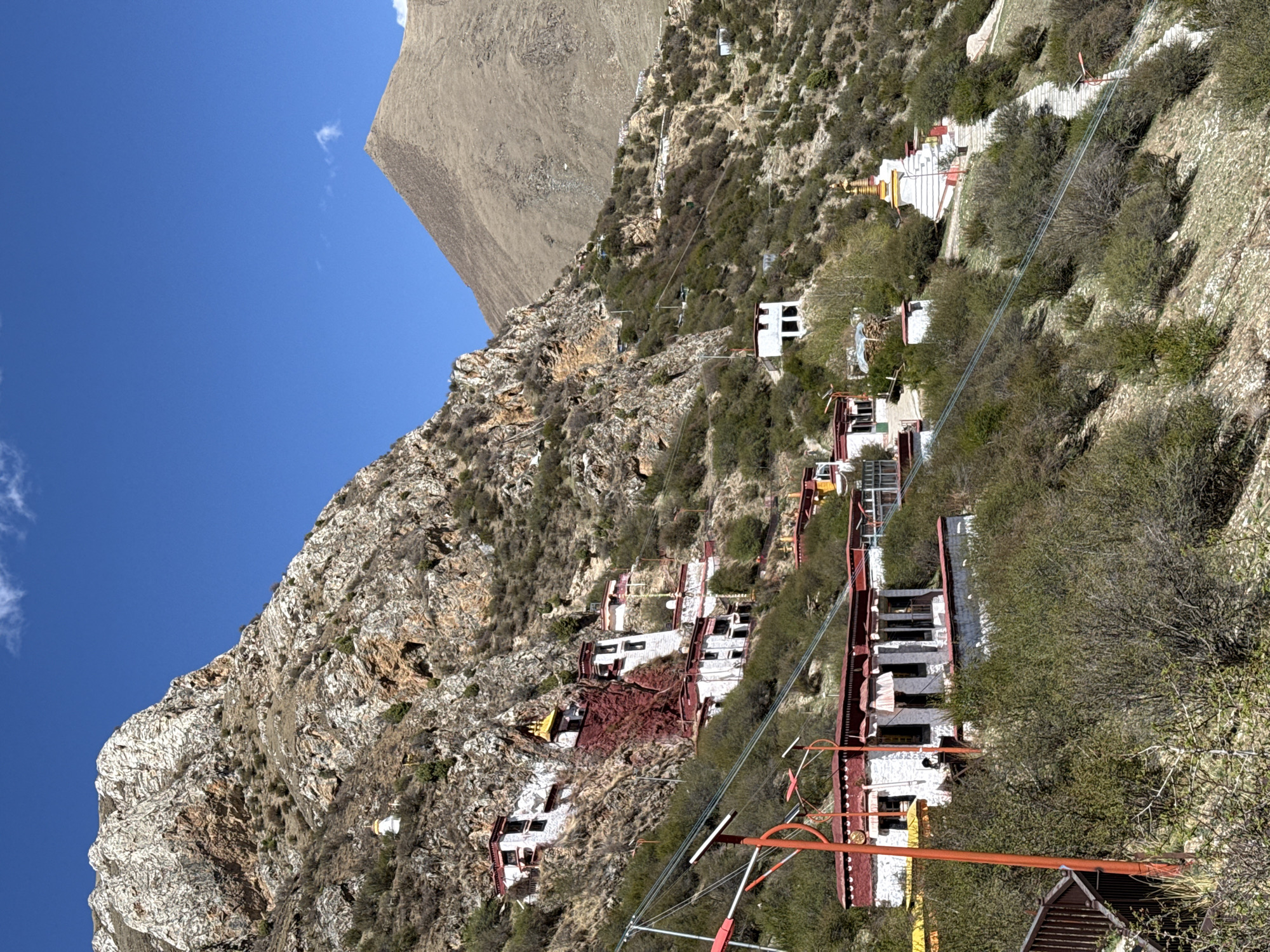
The image shows a mountain slope with buildings and a cable car system. The buildings appear to be religious structures, possibly part of a monastery or temple complex. The buildings are white with red and gold detailing, typical of Tibetan architecture. The cable car system has red and orange pylons and cables, suggesting a means of transporting people or supplies up and down the steep slope. The surrounding environment consists of rocky terrain and sparse vegetation. The clear blue sky indicates a sunny day. Based on the architecture and landscape, it's very likely this is near Lhasa, China.
Lhasa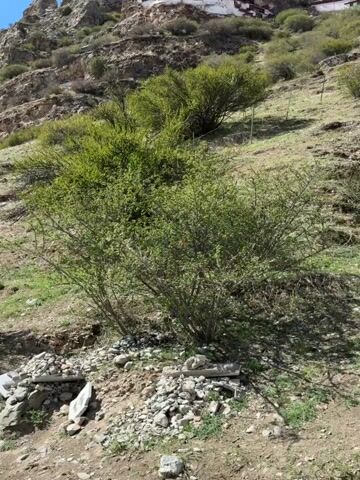
The video shows a mountainous landscape with a traditional Tibetan building perched on the hillside. The building is white with red and yellow accents and a golden roof. The hillside is rocky and covered with green bushes and sparse grass. The sky is blue with a few clouds. The camera zooms in slowly toward the building.
Lhasa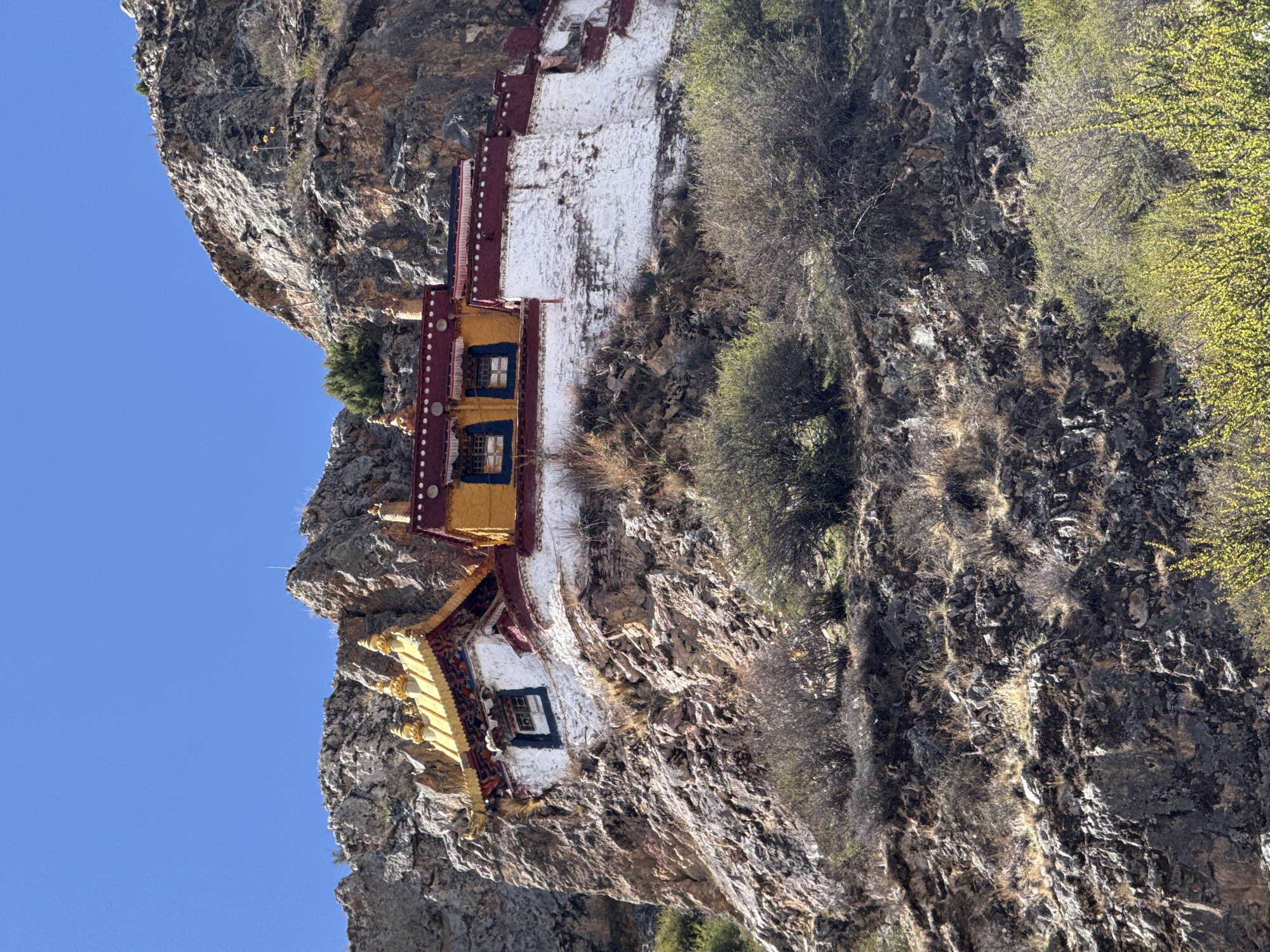
The image captures the Pabonka Hermitage, a historical site located in the city of Lhasa, Tibet Autonomous Region, China. The hermitage appears to be constructed directly into the side of a rock cliff face. The structures feature white walls with roofs colored in red and gold, traditional Tibetan architectural elements. The cliff face itself is craggy and rough-textured, exhibiting a mix of dark and light grey tones, with vegetation, including bushes and dry grasses, clinging to its surface. The sky is a clear, bright blue.
Lhasa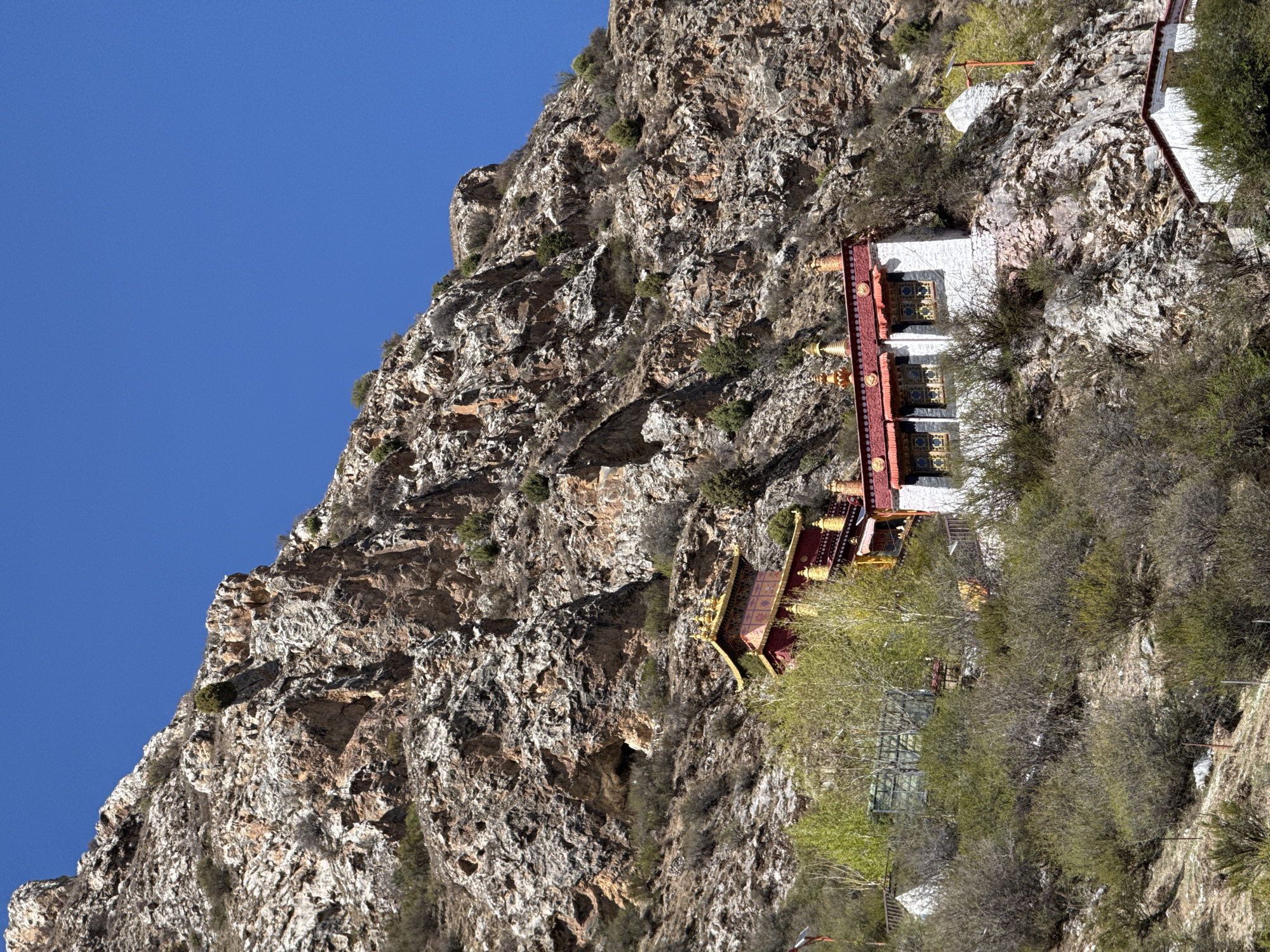
The image features a cliff face with a structure built into it. The cliff is primarily rock, with sparse vegetation clinging to its surface. The structure is multi-tiered with white and red walls. The location is likely in Lhasa, China, given the architectural style. The sky is clear and blue.
Lhasa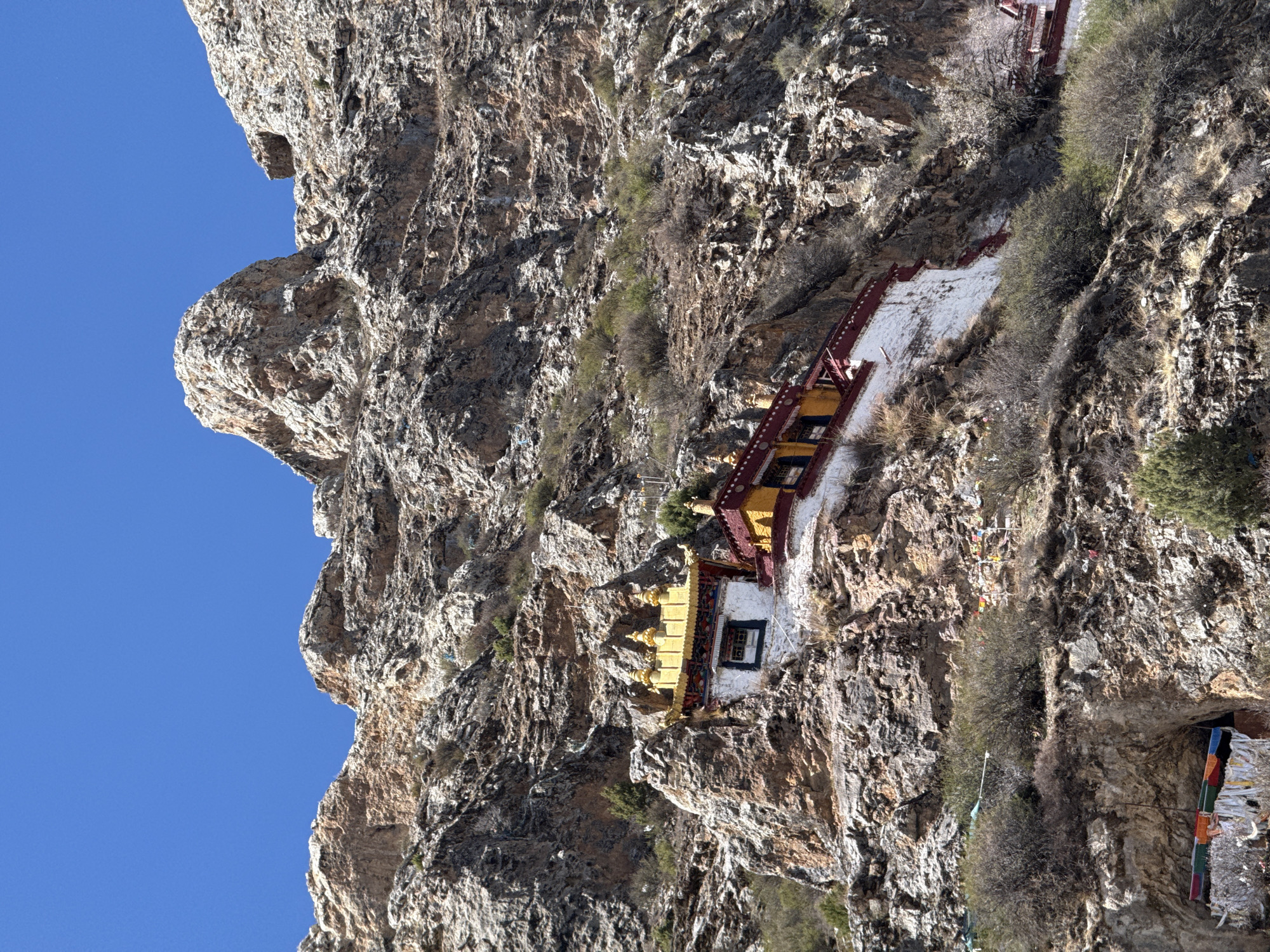
A vertical, medium shot captures a building nestled into the side of a rocky cliff face under a clear blue sky. The cliff is varied in color and texture with protruding rock formations and small patches of vegetation. A building with a white facade and red and gold architectural details is affixed to the cliff. A series of stairs, painted white with red railings, ascends along the cliff face, connecting to the building. Near the bottom right of the image, colorful prayer flags are visible near the base of the cliff. The overall setting appears to be a rugged, mountainous landscape. This is Drakyerpa Monastery in Lhasa, Tibet, China.
Lhasa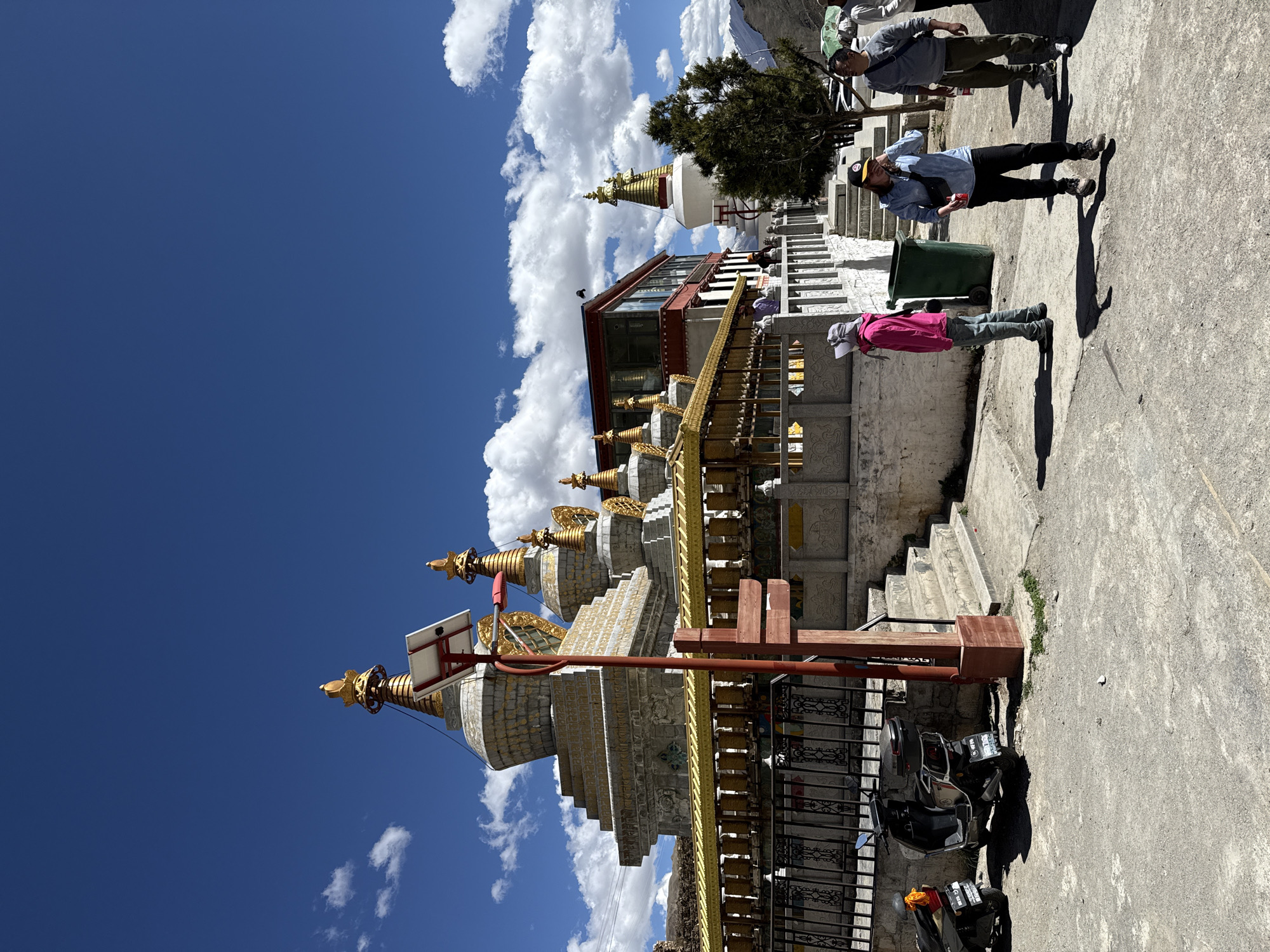
The image depicts a Buddhist temple complex in Lhasa, China, under a bright blue sky dotted with puffy white clouds. The architecture features tiered stupas with golden spires. A building with a red roof and gold-colored railings is visible in the background. Three people are present in the scene. One person is wearing a pink jacket and a white hat. Another person is wearing a blue shirt, black pants, and a baseball cap. A third person is standing at the top of a set of stairs. Other objects include a green trash can, a black motorcycle parked near a fence, and a tree. The ground is paved with concrete.
Lhasa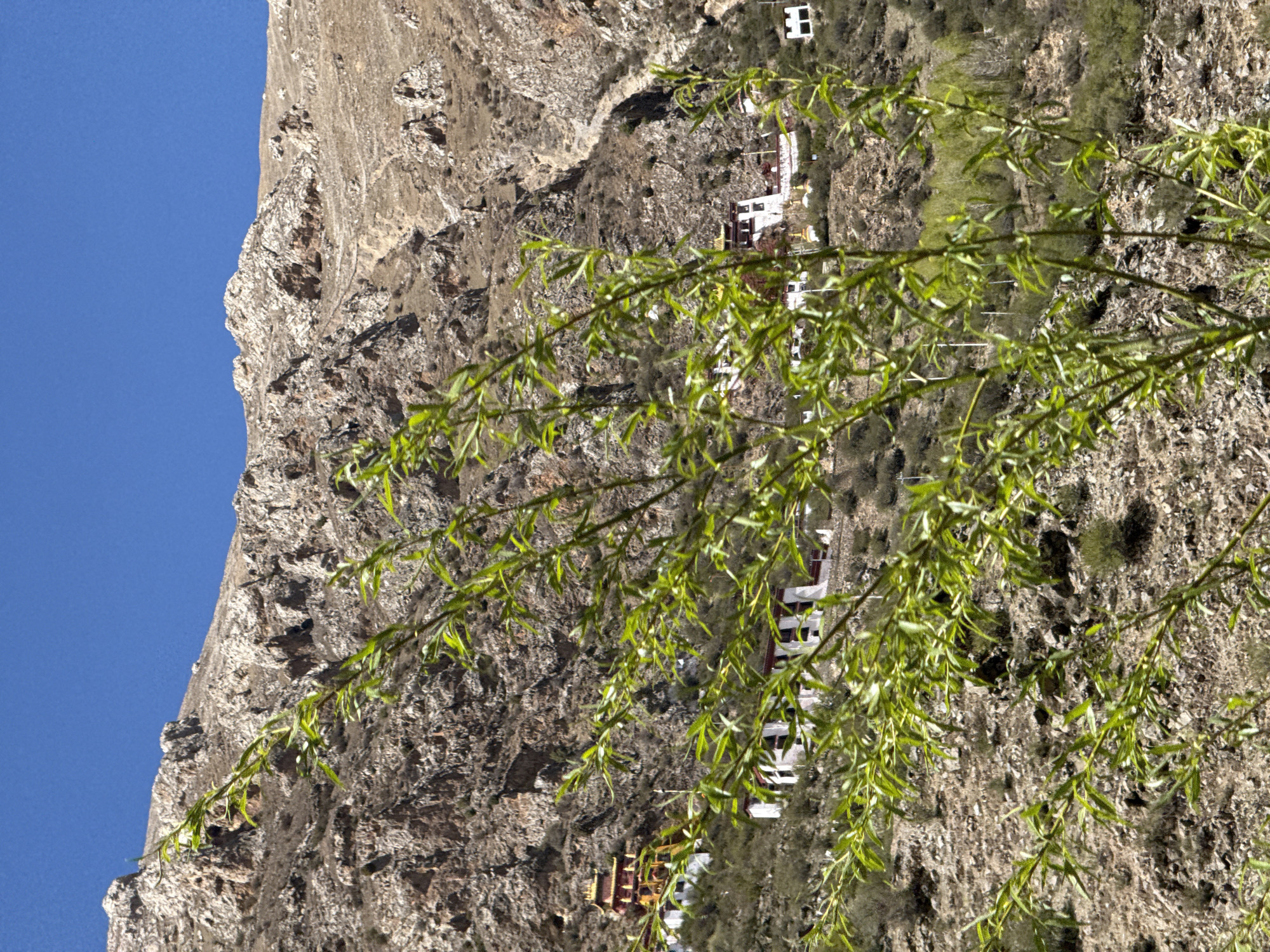
The image depicts a mountain face in Lhasa, China. Buildings are constructed into the side of the mountain. In the foreground, tree branches with green leaves obscure portions of the buildings and mountain face. A blue sky is visible on the left.
Lhasa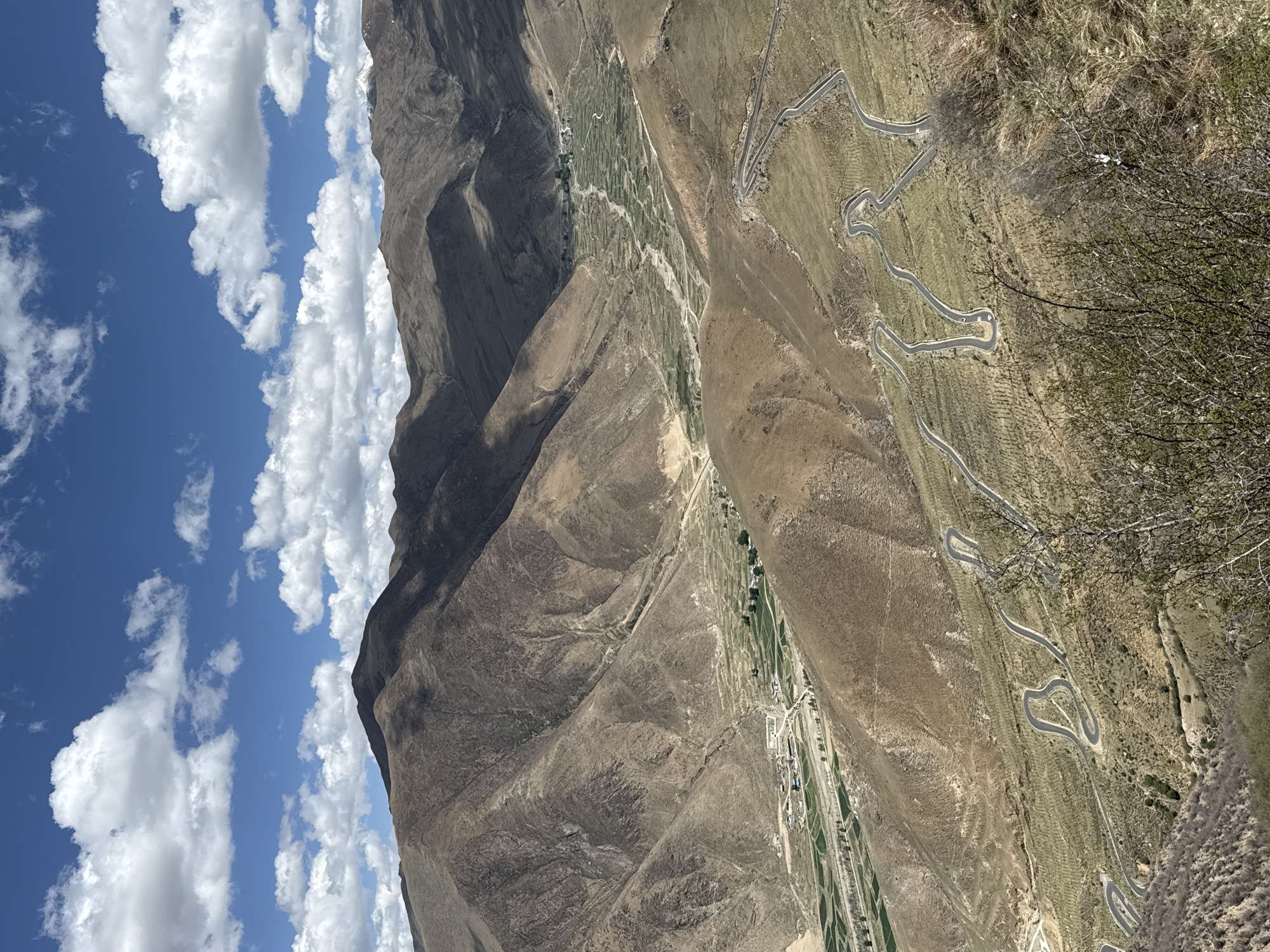
The image depicts a mountainous landscape with a winding road. The sky is visible with white clouds, indicating daytime. A green valley runs through the mountains, with what appears to be a road or river cutting through. Lhasa, China, is not visible in the image.
Lhasa
The camera, positioned on a grassy slope, offers a wide-angle view of a valley and mountain range under a partly cloudy sky. The valley contains fields, a road, a river, and some structures. In the foreground, sparse vegetation dots the hillside. The mountains in the background are a muted brown and green. The sky is a bright blue, with fluffy white clouds scattered across it. The sunlight casts shadows on the landscape, creating a contrast between light and dark areas.
Lhasa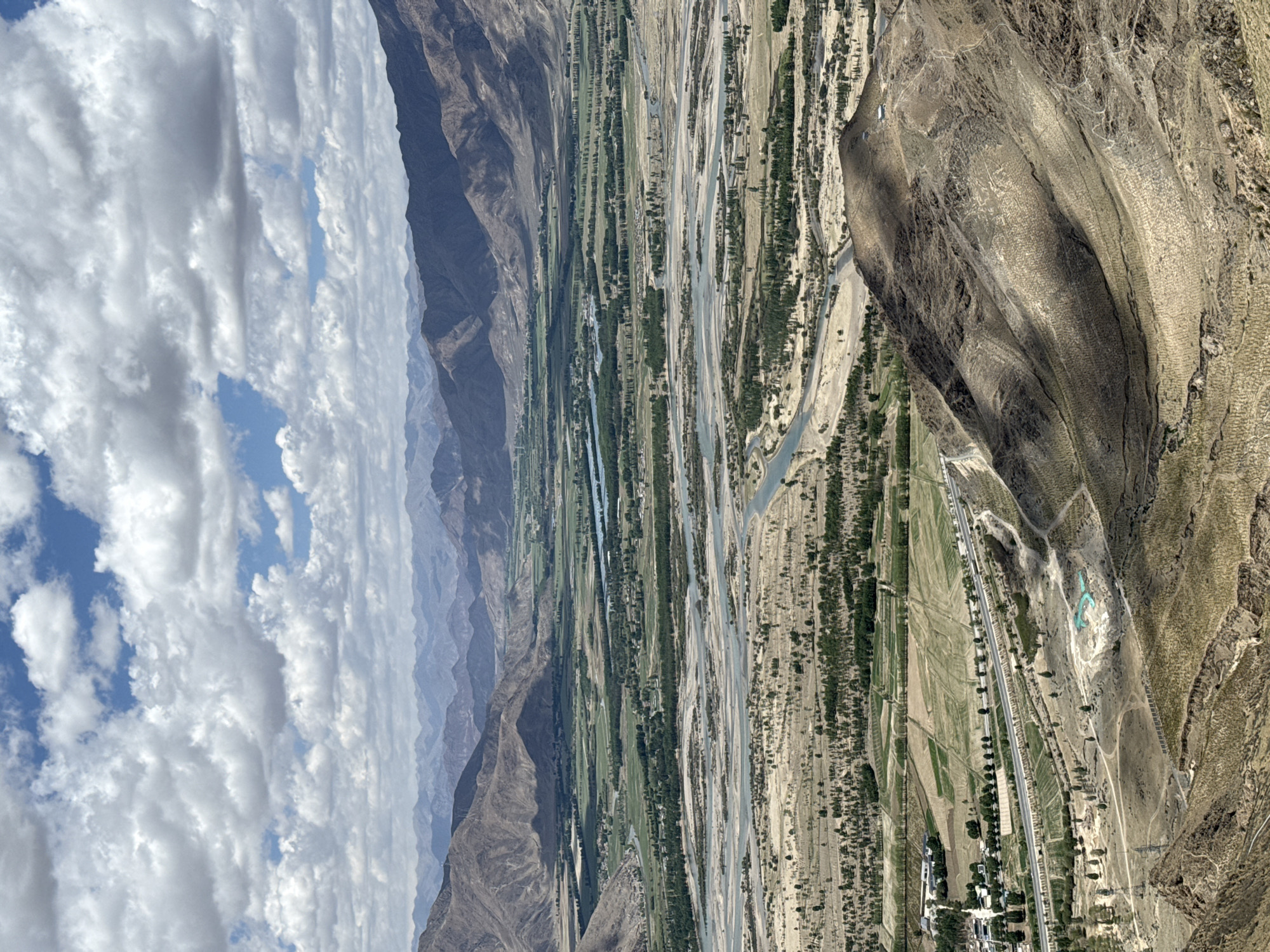
The image depicts a valley in Lhasa, China, viewed from an elevated perspective. The foreground features a dry, mountainous terrain transitioning into a valley with a braided river system. The river separates green agricultural fields and sparsely vegetated areas. A road runs parallel to the river through the valley. The background shows layered mountains receding into the distance, with a sky filled with cumulus clouds overhead.
Lhasa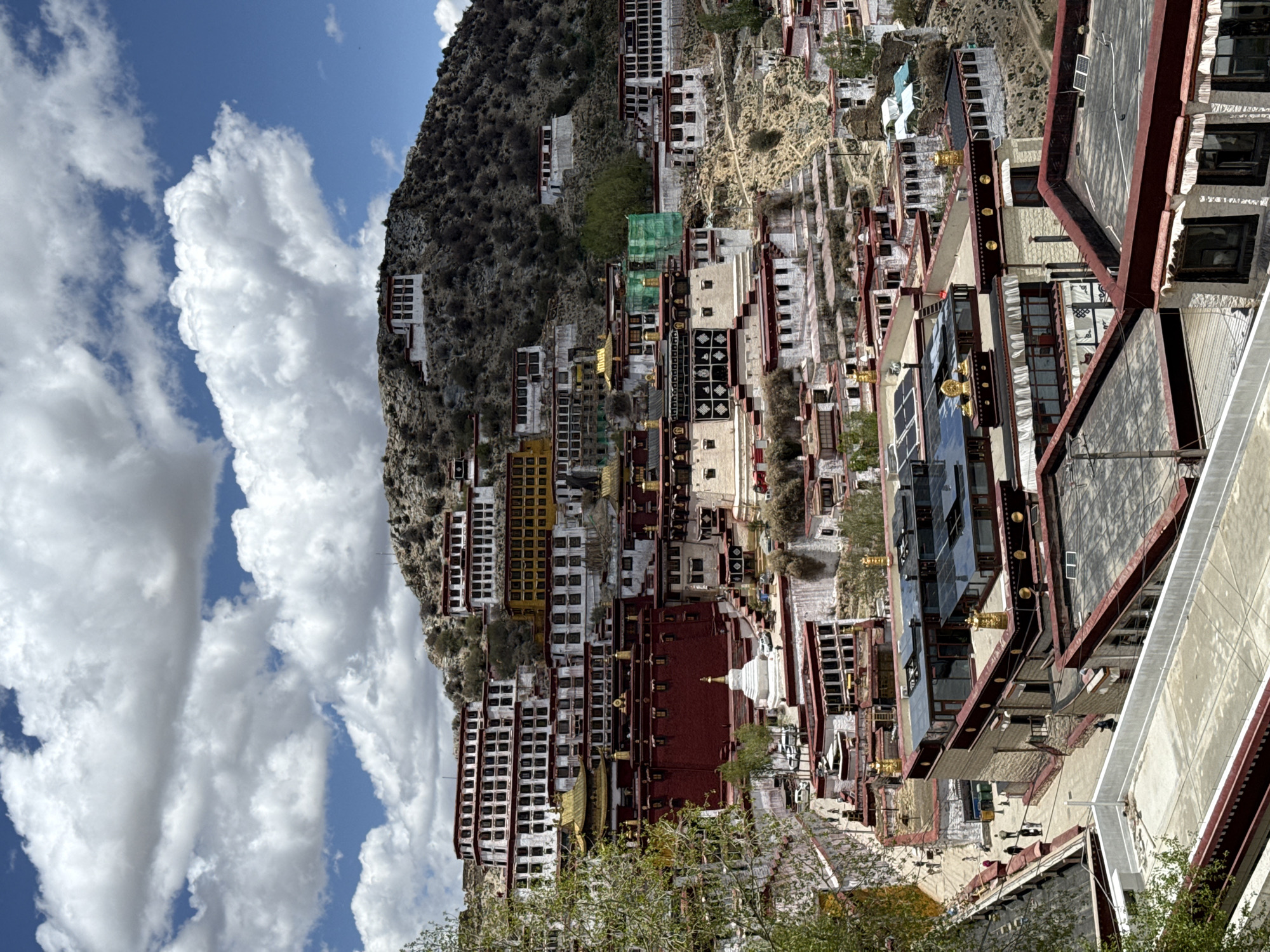
This image shows the Potala Palace, located in Lhasa, Tibet Autonomous Region, China. The palace complex is built on a hillside and consists of multiple buildings, some of which are painted in white, red, yellow, and gold. The structures are arranged vertically and are densely packed. A mountain is visible in the background, with some buildings built into its side. The foreground shows greenery, including trees, suggesting the location might be a park or garden area. The sky is visible on the left, with white clouds scattered against a blue background.
Lhasa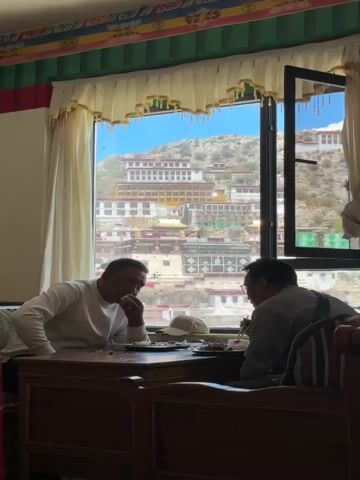
Two men are sitting at a wooden table, eating in front of a large open window. The man on the left is wearing a white long-sleeved shirt, and the man on the right wears a gray shirt and eyeglasses. He is using chopsticks. The table has two plates of food, a hat, and some utensils. Behind them, the window shows a view of a large, multi-tiered complex built on a mountainside under a bright blue sky. The room is decorated with colorful patterns along the ceiling. The window is framed by white curtains with gold trim.
Lhasa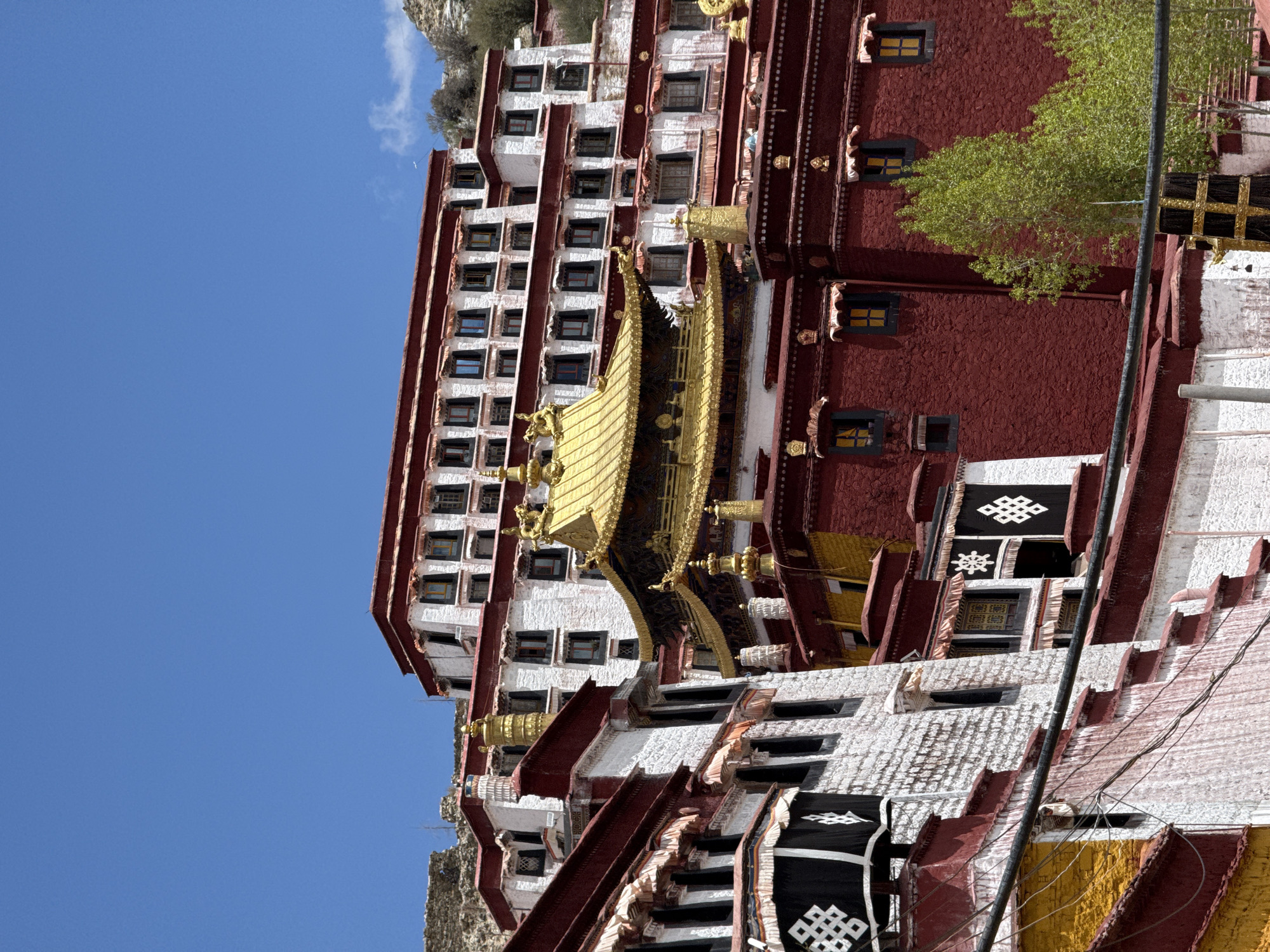
The image captures the Potala Palace in Lhasa, China. The palace, a multi-storied structure, features a predominantly red and white color scheme, with golden architectural elements. The building has numerous windows. Prayer flags are visible near the lower portion of the palace. The sky is blue. A portion of a mountain is visible near the palace. A tree is near the palace.
Lhasa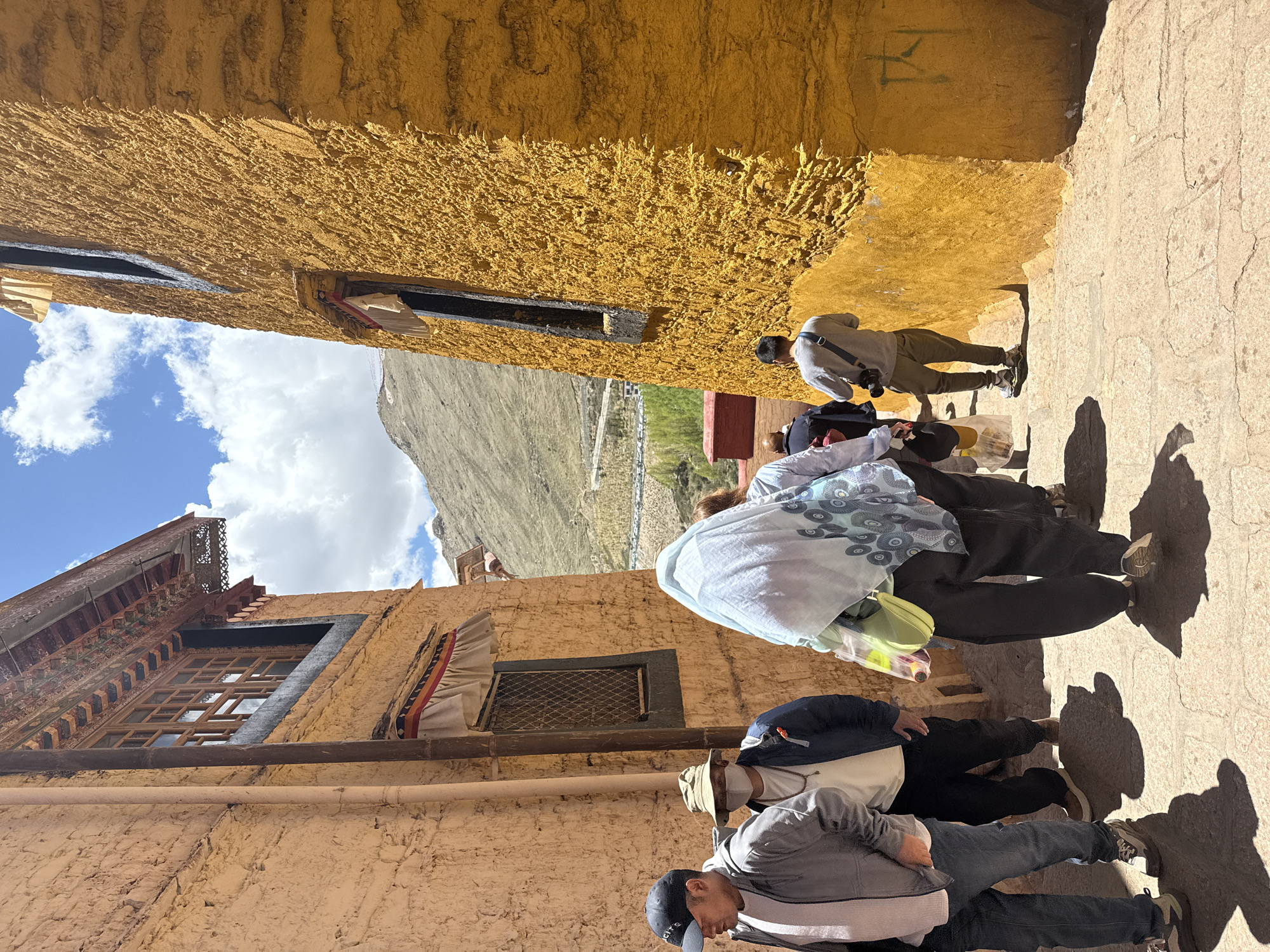
The image captures a street scene in Lhasa, China, with a group of people walking along a narrow stone path flanked by buildings. The buildings exhibit traditional Tibetan architecture, characterized by thick, textured yellow walls and ornamented windows. The sky is visible at the top left, displaying scattered clouds and a blue hue. In the background, there is a glimpse of mountainous terrain. The people are dressed in casual clothing and their shadows are cast on the stone pavement.
Lhasa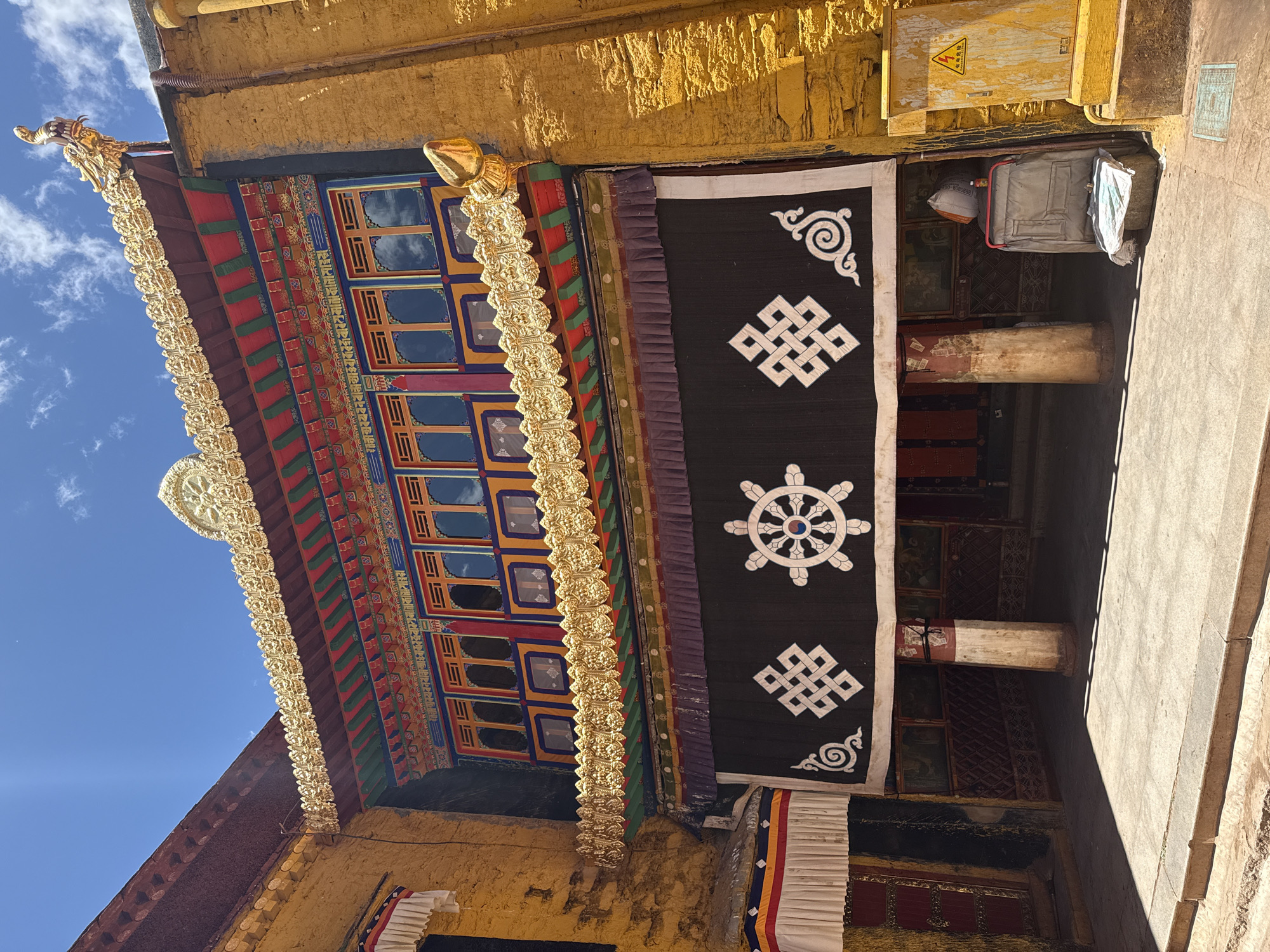
A street-level, worm's-eye shot captures an ornate building in Lhasa, China, possibly a monastery or temple. The architectural features are Tibetan-style, identifiable by vibrant colors, intricate details, and specific iconography. The building has a yellowish, rough texture. Overhead, an elaborately decorated eave projects outward, featuring layers of colors—red, green, and blue—along with rows of small, square windows that catch the light. A golden, fringed trimming runs along the edge of the eave, adding to the grandeur. Hanging from the eave is a black banner adorned with white symbols, including an endless knot, a Dharma wheel, and decorative swirls. These symbols indicate the location's religious significance. Behind the banner, wooden pillars and framed artwork peek into the interior, suggesting an entryway. The upper right corner contains a utilitarian electrical box, juxtaposing the ancient architecture with modern utilities. The sky visible in the upper-left is bright blue and clear, providing a vivid contrast to the building's colors.
Lhasa