Limpok, Indonesia
6 memories from Limpok, Indonesia
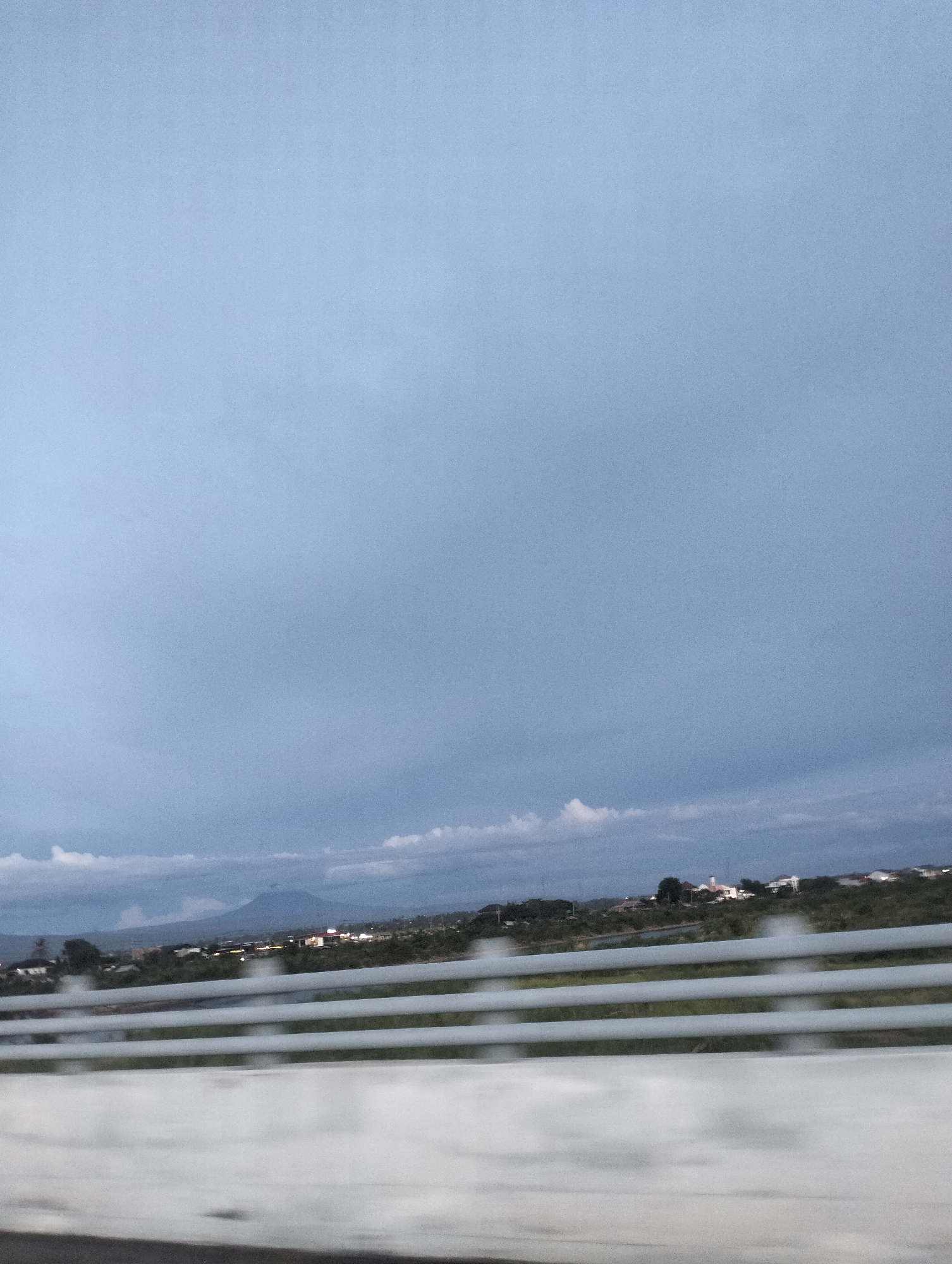
This media file depicts a landscape scene in Limpok, Indonesia, likely captured from a moving vehicle. The primary subjects are a vast, overcast sky with shades of gray and blue, suggesting a cloudy or approaching stormy weather condition. Below the sky, a distant horizon is visible, featuring rolling hills and a prominent, solitary mountain peak. The landscape includes scattered buildings and trees, indicating a semi-urban or rural settlement. In the foreground, a metallic barrier with horizontal slats is prominent, suggesting the viewpoint is from a highway or elevated road. The overall impression is one of a somber, perhaps cool, day, with the diffused light contributing to a muted color palette. There are no people or text visible in the image.
Limpok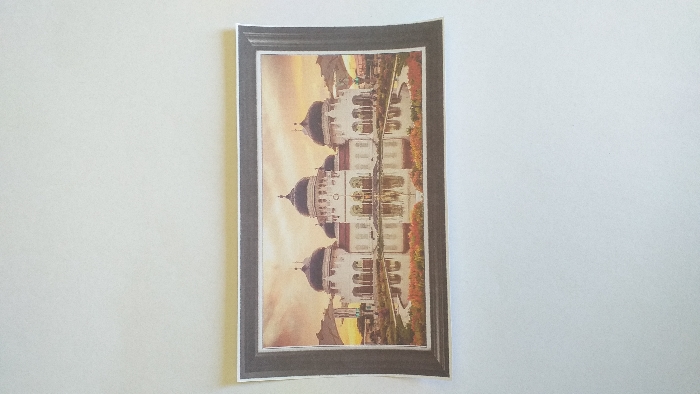
The image displays a rectangular color print, ostensibly a photograph, placed horizontally on a uniformly light-colored, flat surface. The print depicts a grand mosque, identified as the Baiturrahman Grand Mosque, presented as a scene from Limpok, Indonesia. The mosque features a prominent central dome flanked by two smaller domes, all dark in color, surmounting white, multi-arched structures. Its ornate facade is reflected clearly in a still body of water that occupies the foreground. Surrounding the reflective pool are landscaped areas with green foliage and patches of reddish-orange flora, suggesting flowerbeds. The sky above the mosque exhibits warm, diffused light with orange and yellow gradients, indicative of either sunrise or sunset. Large, white, inverted-V or umbrella-like structures are visible to the left and right of the main mosque building, positioned over what appear to be paved courtyards or walkways. No human figures are present within the depicted scene. The print itself includes a simulated dark frame with a thin white internal border. The right edge of the print exhibits a slight upward curl.
Limpok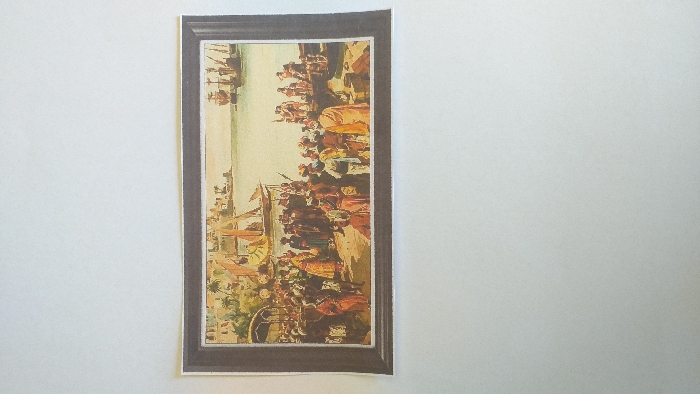
The image displays a photograph of a framed historical painting or print, presented against a plain white background. The painting depicts a busy port scene in the city of Limpok, Indonesia, characterized by a large gathering of people along the waterfront and numerous ships in the harbor. The environment shows a body of water in the middle ground, bordered by land on both the left and right sides. On the left, lush green vegetation, including palm trees, and light-colored architectural structures are visible behind a crowded shoreline. On the right, a wooden pier or dock extends into the water. The sky above is a clear, light blue. Numerous individuals are present, engaging in various activities. On the left side of the scene, a large crowd congregates by the water's edge. This group consists of diverse individuals dressed in a mix of traditional attire, including robes and turbans, and more formal European-style clothing. A central interaction is occurring where a figure in a prominent yellow/gold robe appears to be engaging with another group of people. Some figures carry what appear to be spears or muskets. Behind this group, a structure resembling a canopy or palanquin is discernible. On the right side of the image, a smaller group of people is active on the pier, some appearing to be partially clothed, possibly laborers. In the water, various vessels are present. Smaller sailing boats with lateen sails are closer to the left shore, while larger, multi-masted sailing ships, possibly caravels or galleons with square sails, are positioned further out in the harbor on the right. The overall scene conveys a bustling maritime hub with significant human interaction and trade or diplomatic exchange.
Limpok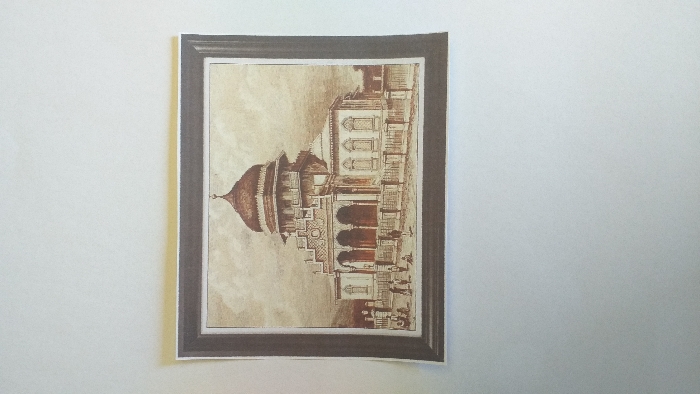
The image displays a physical sepia-toned print, bordered by a dark frame and a thin white inner margin, resting on a plain white, flat surface. The print depicts an elaborate, multi-tiered building, identified as a mosque, located in Limpok, Indonesia. The central structure of the mosque features a prominent, bulbous dome with a finial, surmounting an ornate, multi-level base that includes an octagonal section. The primary facade presents a series of three large, pointed arches forming a deep portico, supported by columns. The building's side wings contain several rectangular windows with decorative frames. A low, decorative fence runs along the immediate foreground of the mosque. Approximately seven to ten indistinct human figures are scattered on the paved ground area in front of the building, engaged in various actions such as standing, sitting, or milling about. The environment includes a partly cloudy sky above the mosque and a faint architectural structure visible in the distant background to the right. The illustration is rendered with primary brown and reddish-brown hues against a lighter, desaturated backdrop.
Limpok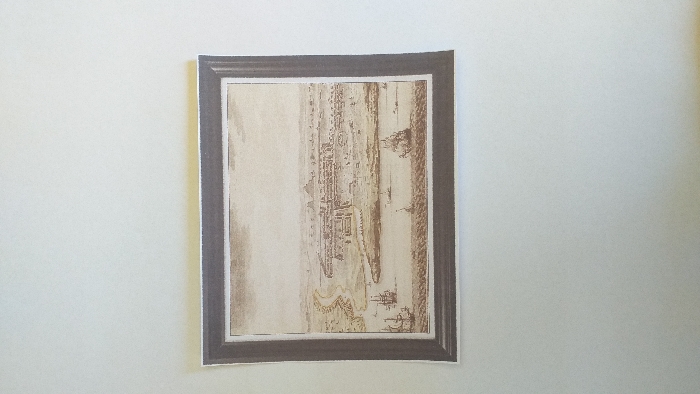
The image displays a photograph of a sepia-toned historical print, presented within a dark, simulated frame against a plain, light-colored background. The print itself depicts an elevated, panoramic view of the city of Limpok (Jambi), Indonesia. The scene features a wide river dominating the mid-ground, containing a large elongated island or peninsula. Numerous sailing vessels are visible on the water, including two prominent multi-masted ships positioned in the lower-left portion of the river, and several smaller boats scattered across the waterway, indicating active maritime traffic. The city of Limpok is situated on the riverbank, characterized by a dense arrangement of structures, some of which appear as fortified walls or large building complexes. The architecture suggests a historical period. The background shows distant, undefined terrain under a light sky, while the immediate foreground consists of a strip of land bordering the river. No individual human figures are discernible within the detailed illustration.
Limpok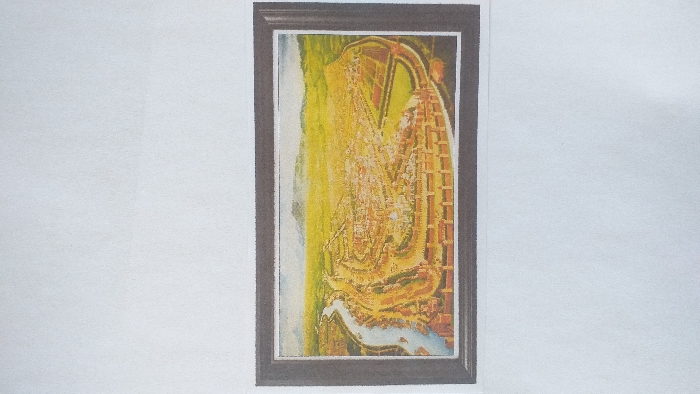
The image is a vertical photograph of a horizontally oriented, framed painting, displayed against a plain white background. The painting, contextually associated with the city of Limpok, Indonesia, depicts a stylized urban landscape. On the right side of the artwork, large expanses of bright yellow and green suggest open land or fields. Towards the center, a dense, sprawling collection of abstract orange and brown structures represents a city or settlement, with numerous buildings appearing to rise from the landscape. On the left, a prominent winding body of water, rendered in shades of blue and white, resembling a river or canal, flows through or alongside the urban area. The overall artistic style is impressionistic or abstract, focusing on color and form rather than fine detail. No discernible individuals, specific actions, or interactions are visible within the artwork.
Limpok