Mariri, Nigeria
30 memories from Mariri, Nigeria
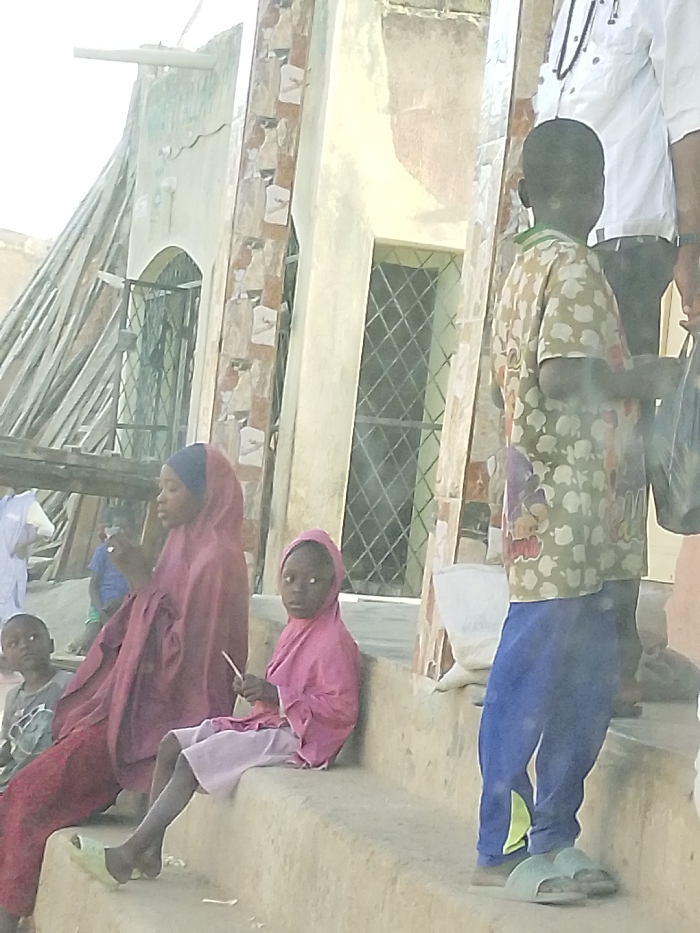
Several children are sitting on the steps of a building. Two girls wear headscarves, one in maroon and the other in pink, with matching attire. A boy stands on the steps to the right, holding a plastic bag. Another boy is seated to the left. A portion of a man wearing a white shirt is visible behind the standing boy. The building behind them has windows and a column with a decorative pattern. Wooden scaffolding leans against the building to the left.
Mariri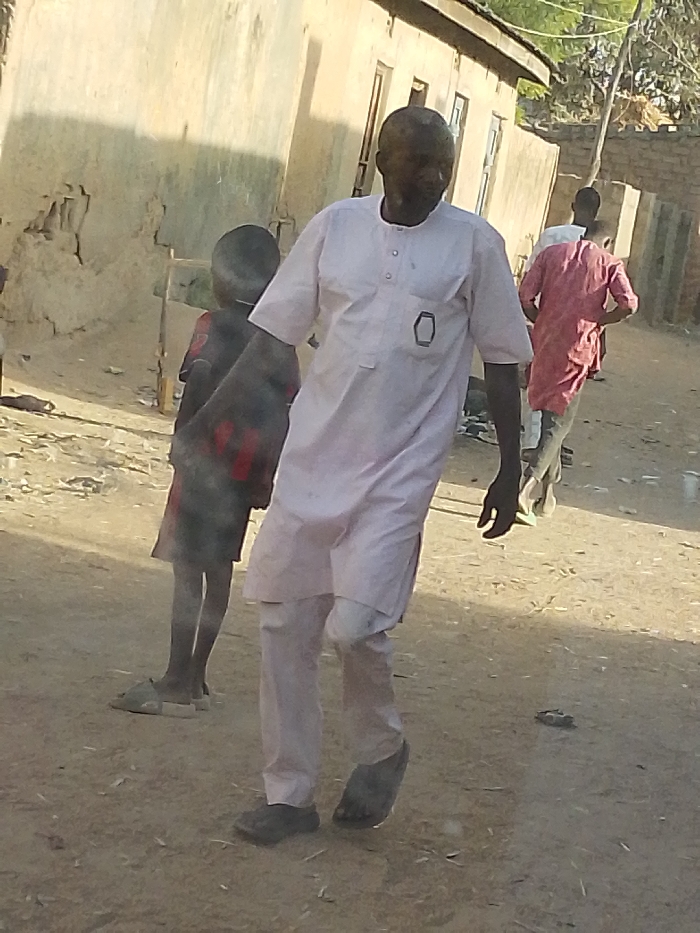
An older man walks on a dusty street, wearing a light pink, long-sleeved traditional outfit and dark shoes. He walks past a child in a patterned shirt. Behind him, another person in a reddish shirt walks further away. Buildings, likely residences, line the street, with one close by displaying weathered, sun-faded walls. The scene appears to be set in a rural or less developed area.
Mariri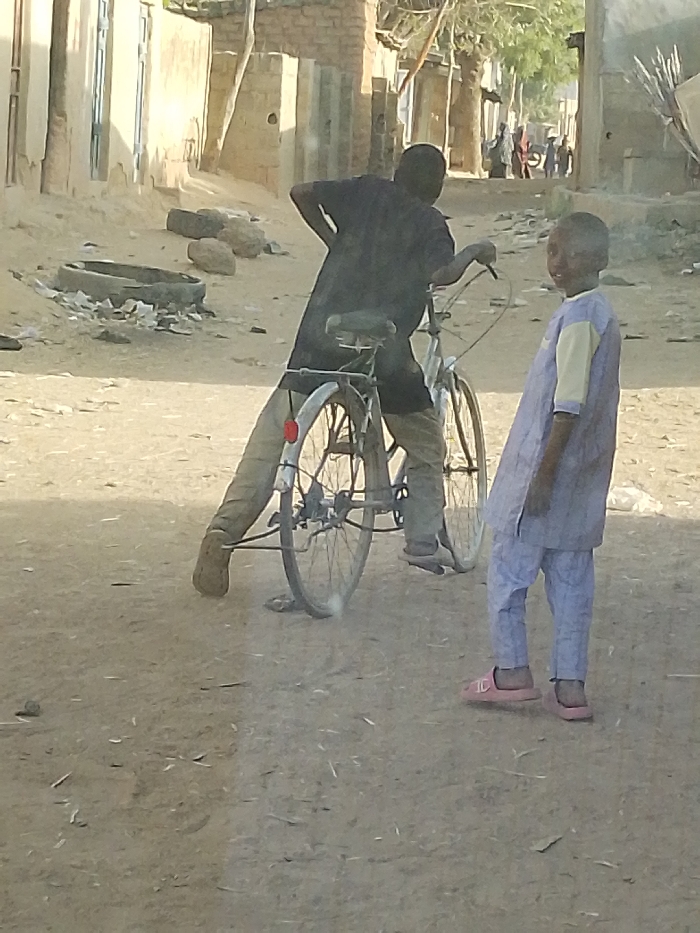
In a dusty street setting, a person in dark clothing leans over a bicycle with a flat tire, while another child, dressed in light-colored clothing and pink sandals, stands to the side looking directly at the camera. The background shows buildings and other people in the distance. A discarded tire sits near a pile of debris.
Mariri
A bald, Black man with a beard and mustache is seated, wearing a grey t-shirt with red and white graphics. He is making a "W" or "peace sign" with his hand. He appears to be inside a vehicle. The vehicle’s window is visible behind him, with a sticker and rearview mirror in view. The interior of the vehicle appears to be white.
Mariri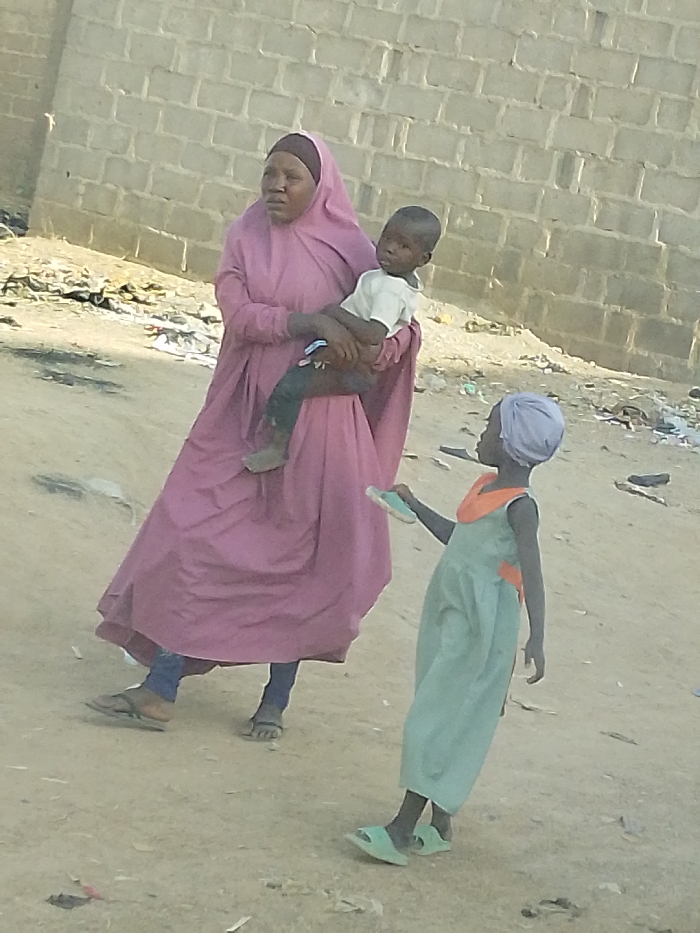
A woman in a long, dusty-rose robe and headscarf carries a small child in a white shirt. Both are dark-skinned. A younger child wearing a light green dress, light green headscarf, and matching sandals stands in front of them holding a sandal in their left hand. All three are on a dirt road. A brick wall is in the background, along with some scattered litter.
Mariri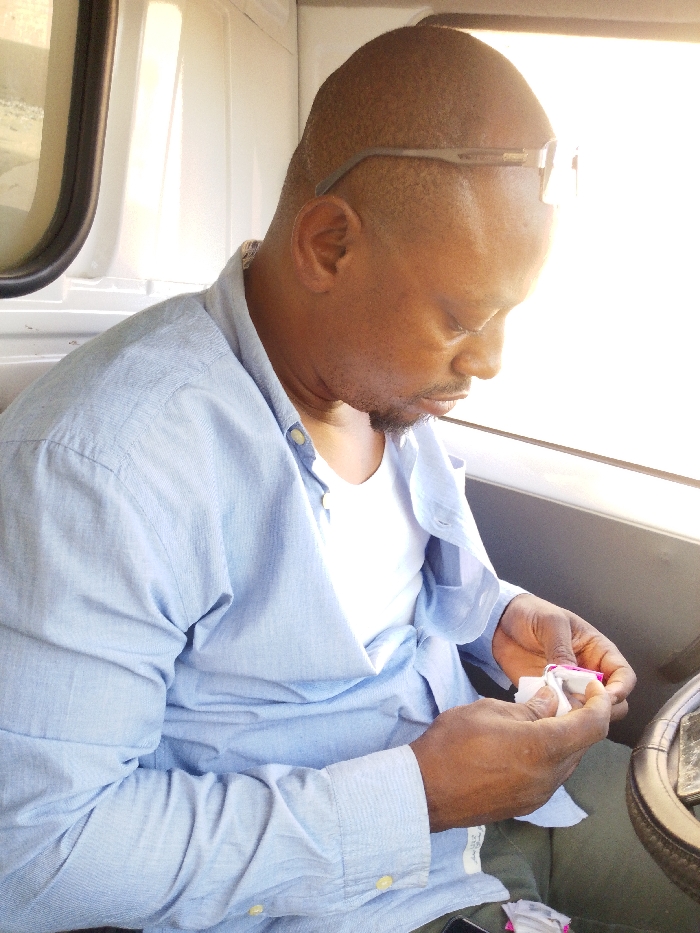
A middle-aged Black man sits indoors, possibly in a vehicle, wearing a blue button-down shirt over a white undershirt. He's holding a small, possibly medical, item wrapped in tissue. Sunglasses are perched on his head. He's looking down at the item in his hands with a focused expression. The background is blurred by strong sunlight, and only the vehicle interior is visible.
Mariri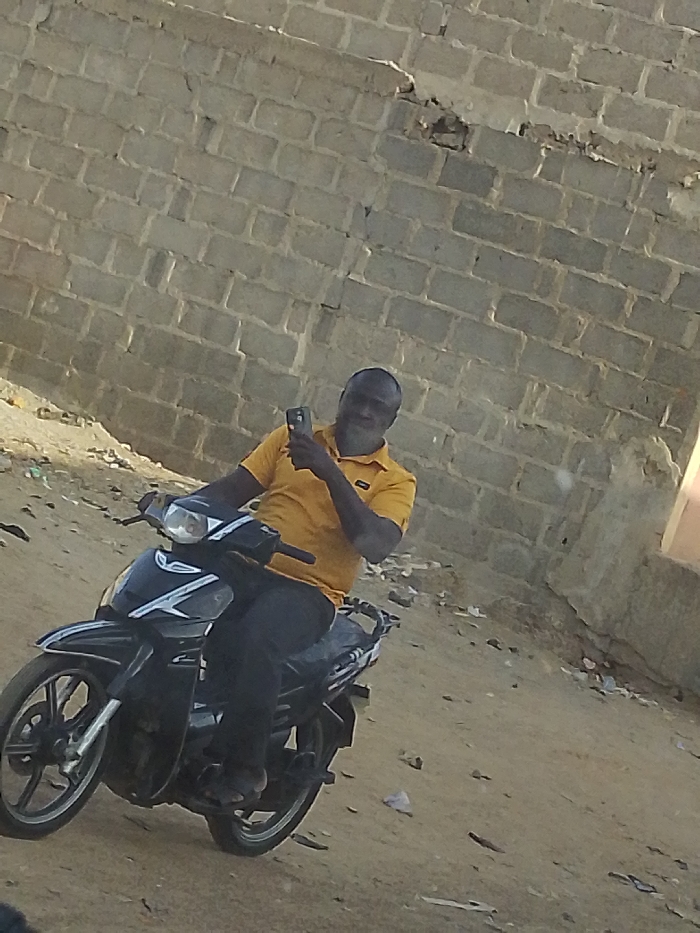
A man in a yellow shirt sits on a black motorbike in front of a cinder block wall. He holds a mobile phone up, possibly taking a photo or recording a video. Debris litters the ground next to the wall. The man faces the camera with a smile. The area appears to be a dirt or sand lot.
Mariri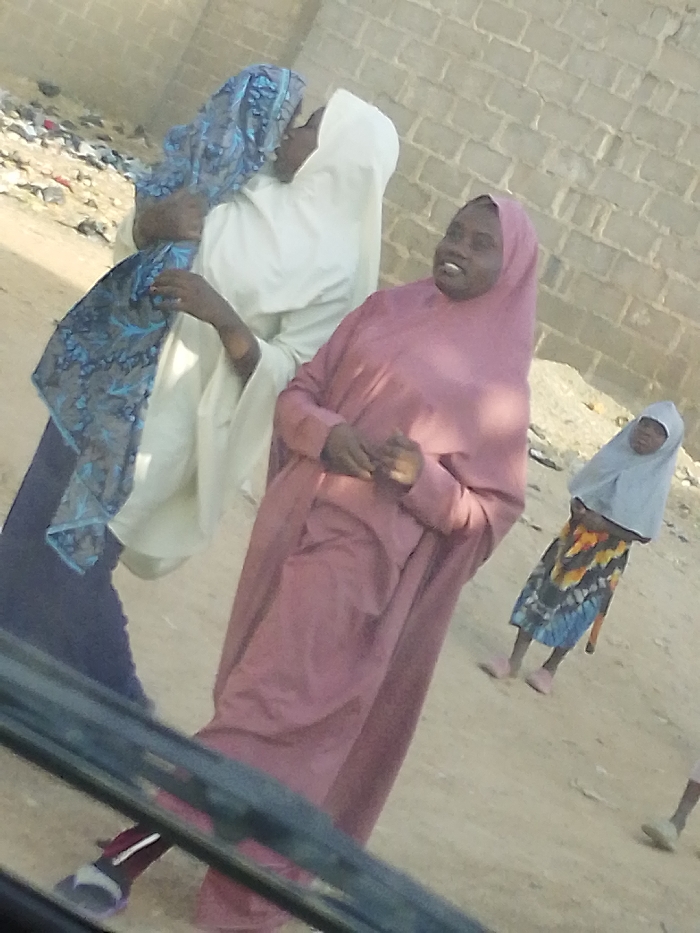
Four women, possibly a family, are gathered in an outdoor setting with a brick wall in the background. Two women are close, one embracing the other. A third woman in a pink robe is standing and smiling. A child in a hijab stands in the background wearing a patterned dress and pink shoes. The women are wearing traditional Muslim clothing. The bottom portion of the image is a vehicle windshield and frame.
Mariri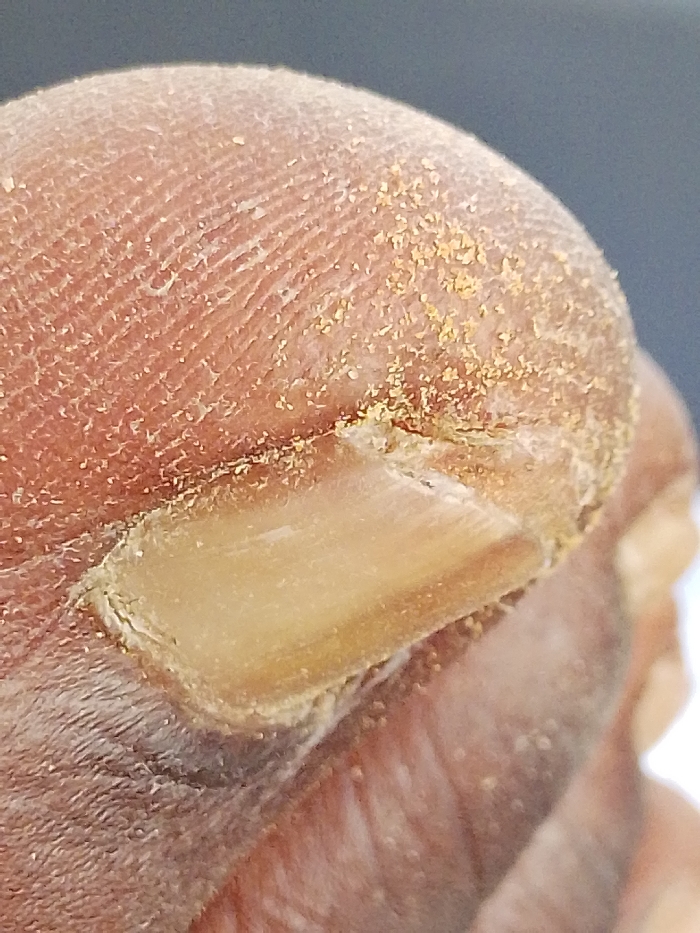
A close-up shows the tip of a dark-skinned toe, likely the big toe. The skin appears dry and peeling, with small, yellowish flakes scattered across the surface. The nail is thick and discolored, appearing yellowish-brown. The cuticle area appears dry and slightly raised. The overall image suggests a potential fungal infection or severe dryness affecting both the skin and nail.
Mariri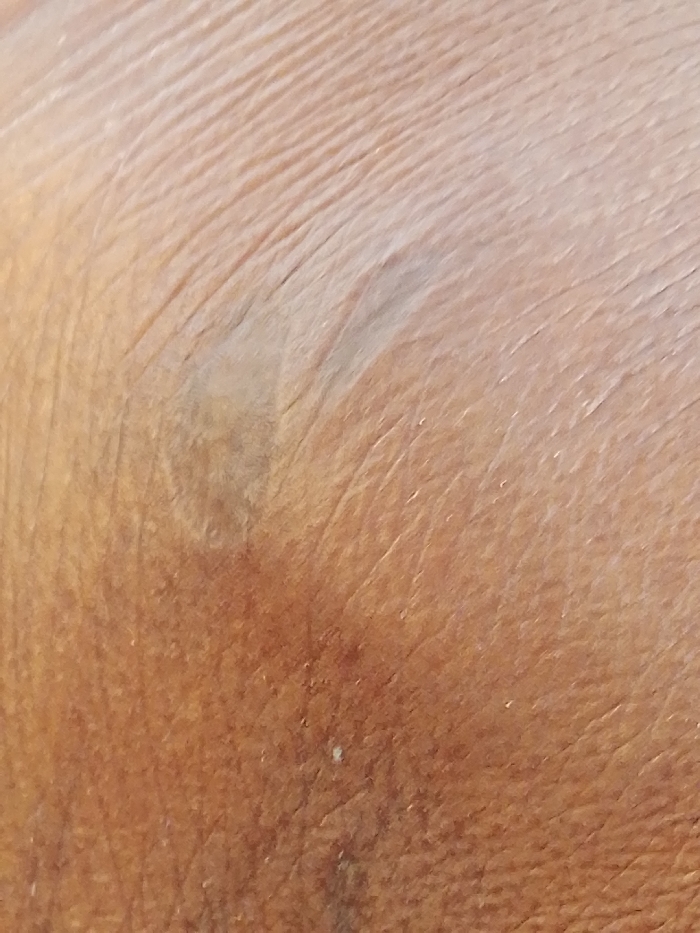
The image shows a close-up of human skin. The skin is tan, displaying fine wrinkles and lines. A noticeable discoloration, appearing as a bruise or scar, is present with slightly lighter shade. The texture is detailed, highlighting the natural ridges and patterns of the skin. A small, light-colored spot is also visible. The overall impression is of aged and textured skin.
Mariri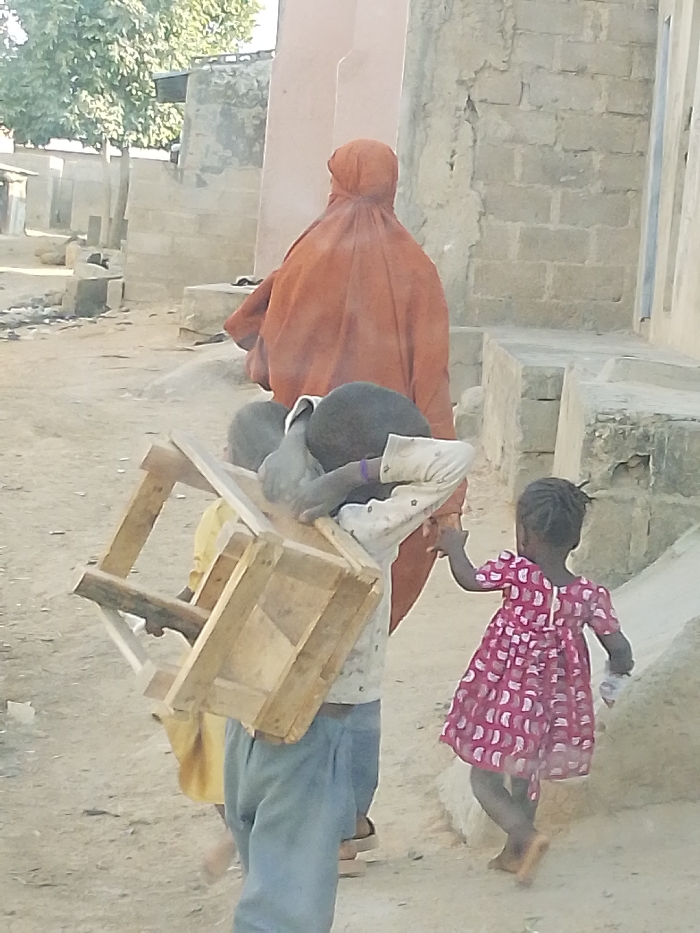
A woman wearing an orange burqa walks away, followed by three children. Two kids carry a wooden structure, possibly a chair or stool, on their shoulders. A small girl in a pink patterned dress holds the hand of one of the boys carrying the wooden object. They are on a dusty path between buildings constructed of concrete blocks. A tree is visible in the background.
Mariri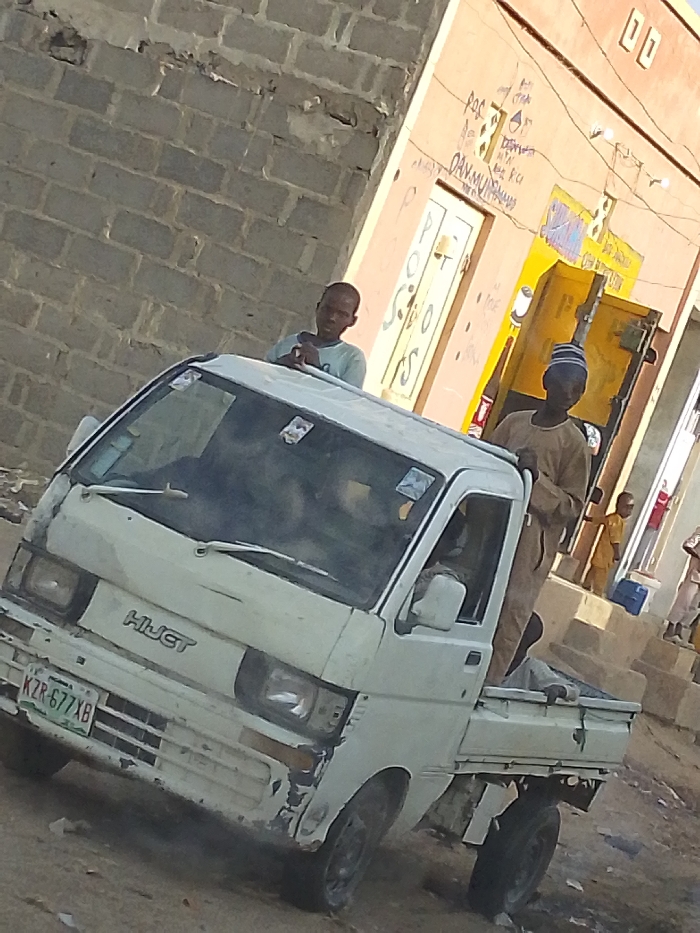
A compact white pickup truck, showing wear and tear, is parked on a street. The license plate reads "KZR-677XB." Two men stand near the truck: one rests his hands on the truck's roof, while the other stands in the truck bed, wearing a traditional cap. In the background, buildings with faded paint and brickwork can be seen, along with hints of other people walking along the street.
Mariri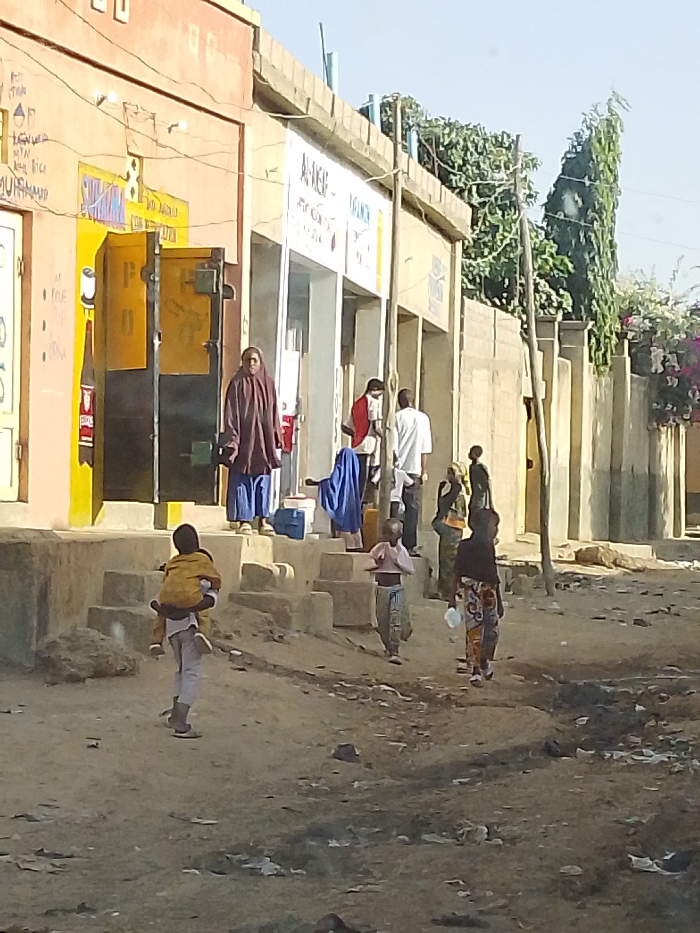
The image captures an outdoor scene, likely a street or public area in a town or village under bright daylight. On the left, there are two connected buildings. The first building, closest to the viewer, is painted a light orange or peach color with a prominent yellow section around its two open doorways. The interiors of these doorways appear dark. Above the left doorway, faint text is visible, including "STAR," "LEGADA MTN," "MA," "KAI RICE," and "MUHAMMAD." Vertically along the left door frame, "DPO" can be read. The second building to its right is lighter, possibly white or light gray, and also has open entrances. Text on this building's facade reads "AL-AKAF - ADANCA." Both buildings have flat roofs with a low parapet wall, and some utility wires are visible against the sky near the first building. A set of concrete steps leads up to the entrances of these buildings from the dirt ground below. Several individuals are present in the scene. An adult woman, wearing a long, dark purple or maroon garment and a head covering, stands on the steps in front of the first building, looking generally towards the left. Near the second building's entrance, a man in a red shirt and white trousers is partially visible, along with another man in a white shirt and dark trousers. A blue piece of fabric is draped over something on the ground near them. In the foreground, on the unpaved, dusty ground, several children are visible. To the left, one child is carrying a smaller child on their back in a piggyback ride. Both are wearing light-colored clothes and walking towards the right. Further to the right and slightly behind them, another child in light, patterned trousers and a light top stands with their hands clasped together, facing left. The farthest child to the right, wearing a dark top and colorful patterned lower garment, walks away from the camera, holding a small white object. In the mid-ground, other less distinct figures, including what appears to be a person carrying something on their head, are near the steps of the buildings. On the right side of the image, a wooden utility pole stands tall. Behind it, a beige fence or wall separates the street from a property, with lush green foliage, including a tall, slender evergreen tree and some pink/purple bougainvillea-like flowers, visible beyond. The ground is a dirt path with some debris. The overall impression is a bustling community setting.
Mariri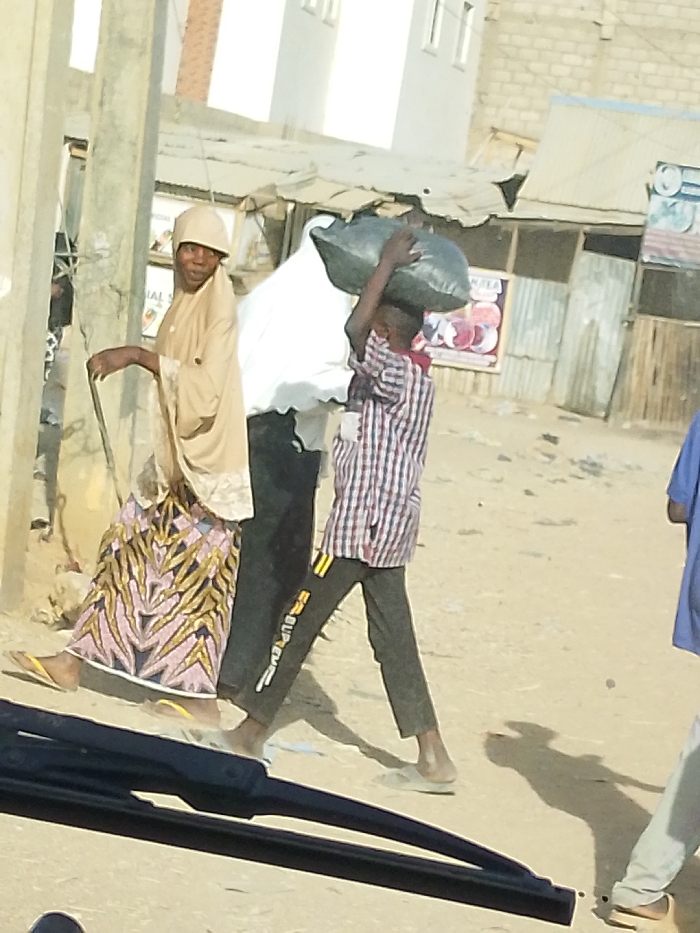
On a dusty street, a woman in a tan head covering and patterned skirt walks with a cane. Beside her, a child carries a large black bag atop their head. The child wears a plaid shirt and dark pants with white lettering. Buildings and shops line the background, and a glimpse of a car windshield is visible in the foreground. Another person in a blue shirt walks on the right side of the image.
Mariri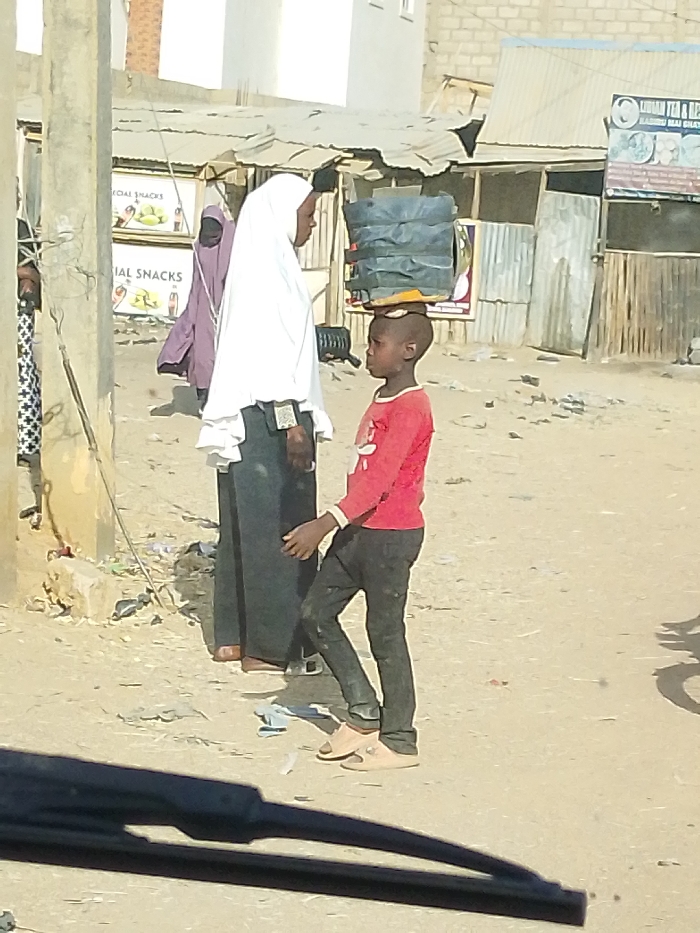
A boy with black pants and a red shirt carries a stack of containers on his head. He wears light-colored sandals and stands next to a woman in a white hijab and dark skirt. They are on a dirt road in front of buildings, some with signs that say "Snacks" and another with "Tea & Snacks." A second woman in a purple robe stands in the background, with trash visible on the ground. A car windshield is visible at the bottom of the frame.
Mariri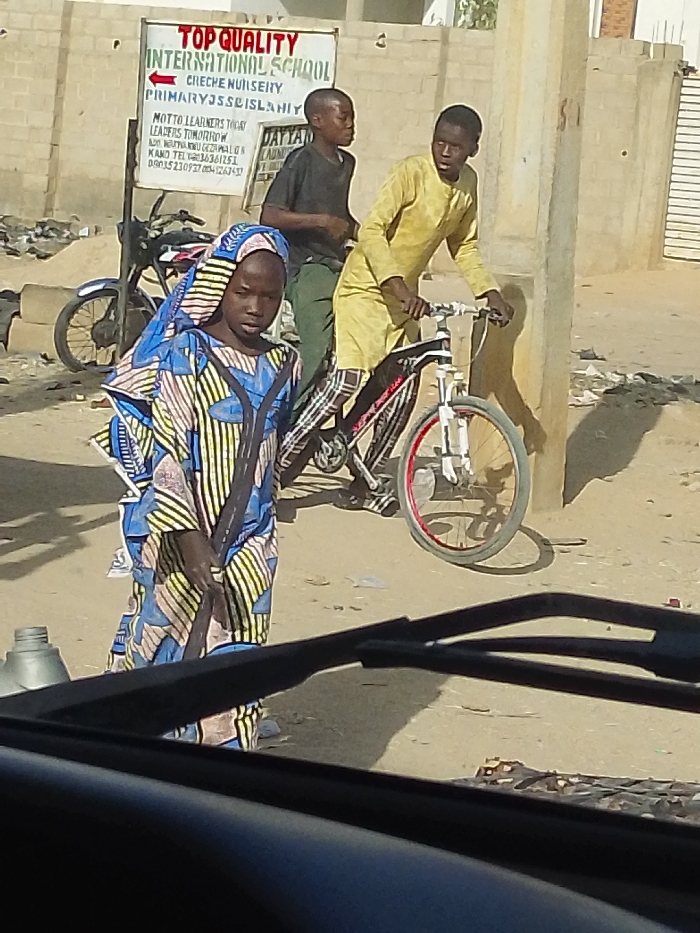
A young girl in a colorful headscarf and patterned dress stands holding a broom on a dusty street. Two boys are nearby, one riding a bicycle and another standing beside him in a dark shirt. In the background is a sign for "Top Quality International School" and a parked motorcycle. The scene appears to be viewed from inside a vehicle, as a dashboard and windshield wipers are visible in the foreground.
Mariri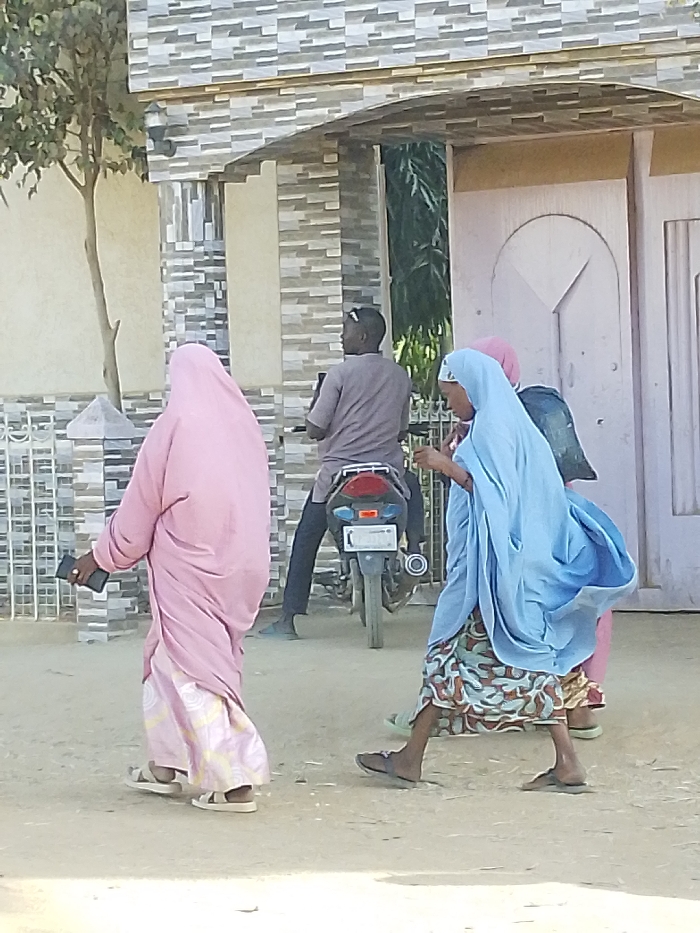
The image captures an outdoor scene, likely on an unpaved road or path, featuring several people and a building in the background on a bright, sunny day. In the foreground, on the left, a person is walking away from the viewer. They are dressed in a flowing, light pink full-body covering, possibly a hijab or abaya, layered over a light-colored, subtly patterned long skirt or dress. This individual is holding a black smartphone in their right hand and wearing light-colored sandals or flip-flops. To the right of this person, another individual is walking, wearing a light blue head covering that drapes over their shoulders and a vibrant, multi-colored patterned long skirt or dress. They are looking downwards or to their side and wearing dark-colored sandals or flip-flops. Partially visible behind this person is a third individual, seen from the waist up, wearing a pink top and what appears to be a blue denim jacket. In the middle ground, a person is seated on a dark-colored motorcycle, facing away from the camera. This individual is wearing a grey t-shirt and dark pants. They have short dark hair with sunglasses perched on top of their head. They appear to be holding a small dark object, possibly a phone, in their hands. The motorcycle features a red taillight, a silver exhaust pipe, and a white license plate on the back, though the text on it is not legible. The background consists of a building with a textured facade. The upper portion and part of the structure on the left are adorned with horizontal rectangular tiles in shades of grey and light beige, creating a patterned effect. Below this, there is a smooth, lighter-colored wall. On the right side of the building, a light pinkish-beige wooden door or gate with a distinctive arched design element is visible. A slender tree with light brown bark and green foliage stands on the far left, partially visible behind the foreground elements. A light-colored metal fence or railing can also be seen behind the person in pink on the left. The overall scene depicts a casual everyday moment with people walking and one person on a motorcycle, against a backdrop of a local building.
Mariri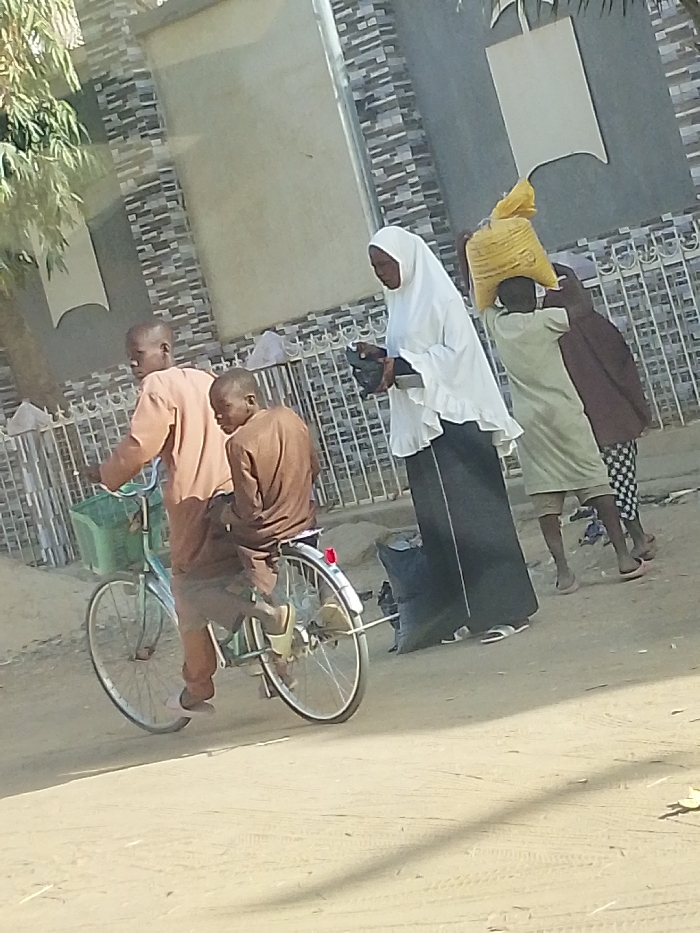
The image depicts a daytime outdoor scene featuring several individuals on an unpaved, dusty path or street, against a backdrop of a building and some foliage. In the left foreground, two young males are interacting with a bicycle. One, wearing a light brown or orange long-sleeved top and pants, is standing next to the bicycle, holding its handlebars. The bicycle is light blue or green with a green plastic basket mounted on the front. A second young male, dressed in a similar light brown top and darker pants, is seated on the back of the bicycle, facing towards the left, with light-colored sandals on his feet. The bicycle has a red reflector on its rear fender. To the right of the bicycle, a group of three females is walking. The most prominent among them is a woman or older girl wearing a white hijab that covers her head and shoulders, and a long dark skirt. She is holding a dark, possibly rectangular object or small bag in her hands. Next to her, a younger individual, possibly a child, is seen from behind, wearing a light green long garment and expertly carrying a large, bulging yellow sack or bag on their head. Further to the right and slightly behind, another person, also appearing to be young, is walking, wearing a dark top and patterned (possibly checkered) pants or skirt. All the walking individuals appear to be wearing sandals or flip-flops. The background features a building with a textured wall, possibly made of grey and black tiles. A white metal fence or gate runs in front of this wall. On the far left, some green leaves from a tree or bush are visible, indicating vegetation in the area. The ground is dry, unpaved, and light brown, suggesting a sandy or dusty environment. The bright, natural lighting and clear shadows indicate it is daytime, likely mid-morning or afternoon. No visible text is present in the image.
Mariri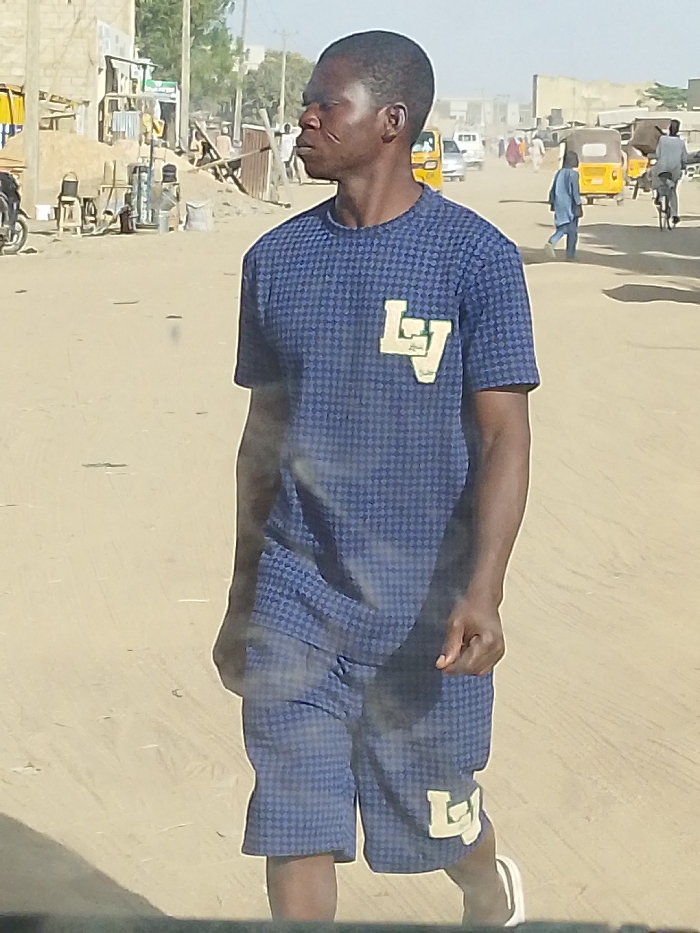
The image captures a full-length shot of a dark-skinned man walking on an unpaved, dusty road under clear daylight. He is positioned slightly off-center to the left, facing towards the left side of the frame, with his head turned slightly upward. The man has short, dark hair and prominent scarification marks on his left cheek and temple area. He is wearing a matching two-piece outfit consisting of a short-sleeved t-shirt and shorts, both in a dark blue color with a small, light-colored checkered or houndstooth pattern. On the left chest area of his shirt, there is a prominent light-colored patch or appliqué, stylized to resemble the letters "LV". A similar "LV" patch is visible on the left leg of his shorts. His right arm is bent, and his hand is visible, while his left arm is mostly obscured. He is wearing light-colored shoes with dark soles, possibly sneakers or sandals. The background depicts a bustling, dusty street scene. On the immediate left, there are buildings made of light-colored block or concrete, with some construction materials like piles of sand or dirt, and wooden planks. A motorcycle is partially visible on the far left. The road itself is wide and unpaved, appearing to be dirt or sand. Further down the road, several yellow auto-rickshaws (tuk-tuks) are scattered, along with other cars in the distance. Multiple people are visible in the mid-ground and background, including one person in blue walking towards the right, and another person on a bicycle on the far right. The sky is bright and clear, indicating a sunny day. The overall lighting suggests strong sunlight, casting some subtle shadows. There are some smudges or dust particles visible across the image, potentially on the camera lens or a window through which the photo was taken, giving a slightly hazy effect over the man's lower body.
Mariri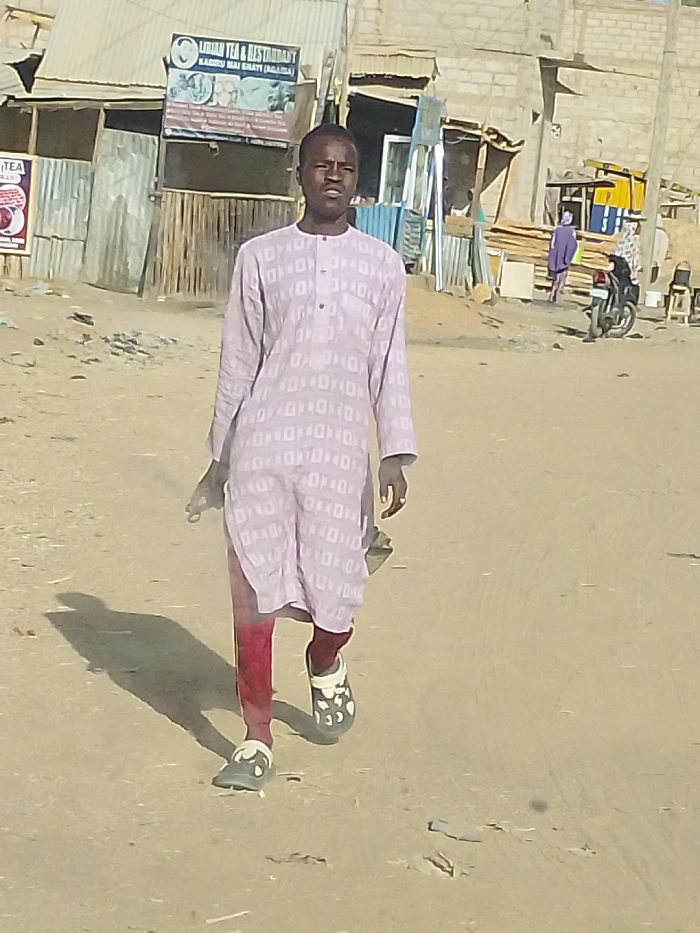
The image depicts a young man walking directly towards the camera on an unpaved, dusty street or path. He is featured prominently in the foreground, taking up a significant portion of the frame. The man is wearing a light purple, long-sleeved tunic (possibly a kaftan or thobe) that extends down to his knees. The tunic has a subtle, repetitive pattern of small, interlocking square-like shapes. Underneath, he wears dark red or maroon pants. On his feet, he has black clogs or sandals with white or light-colored circular and dot patterns. His right arm is slightly bent at the elbow, and his left arm hangs by his side. He has a neutral, somewhat serious expression as he looks towards the camera. A distinct, elongated shadow stretches out behind him and to his right, indicating a strong light source, likely the sun, positioned high in the sky to his left. The background reveals an urban or semi-urban street scene. To the man's left and behind him are several rudimentary structures, appearing to be small shops or businesses. These buildings are constructed from a combination of corrugated metal sheets (zinc) and light-colored concrete blocks. One building prominently displays a signboard that clearly reads "LIDIAN TEA & RESTAURANT" at the top, with "KADUNA MAI GAYYA (NIGERIA)" written below it. The sign also features graphical representations of food and drinks. Further into the background, particularly on the right side of the street, more similar structures made of concrete blocks and corrugated metal are visible. Construction materials, including stacks of wooden planks, can be seen near these buildings. To the far right, a person dressed in purple clothing is visible, standing near a parked motorcycle. The ground throughout the scene is sandy or dusty brown, characteristic of unpaved roads in arid or semi-arid environments. The overall impression is that of a bright, sunny day in a busy local area, likely in Nigeria as indicated by the sign.
Mariri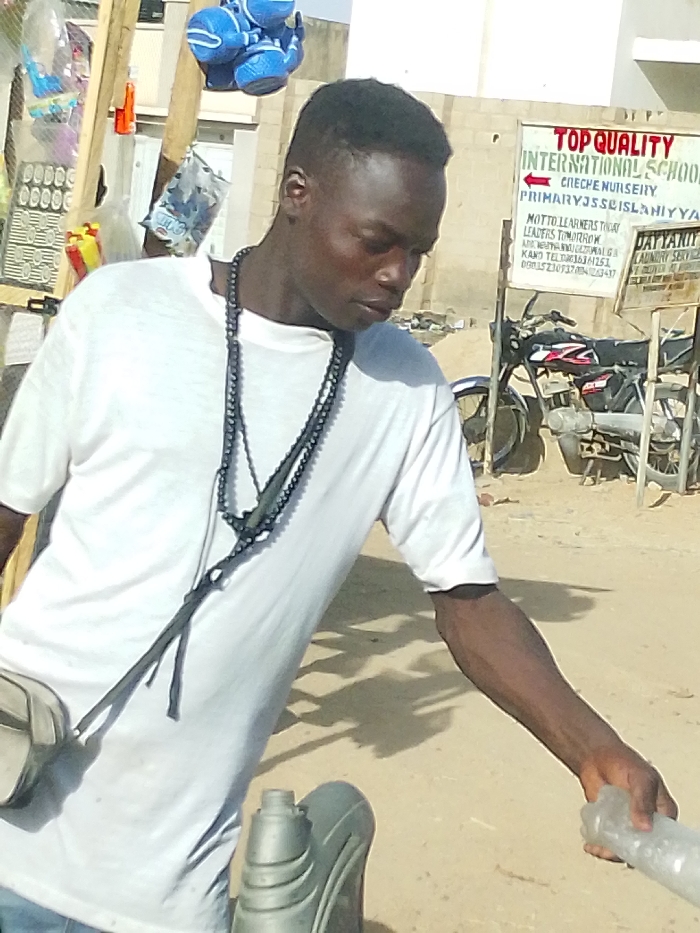
A young man with dark skin and a short, faded haircut is captured outdoors in bright daylight. He is wearing a plain white short-sleeved t-shirt and multiple dark-colored necklaces or prayer beads around his neck, some of which extend down his chest with dark, possibly leather, tassels or straps. His gaze is directed downwards and to his right, focusing intently on something below him or in his hands. His right arm is extended downwards, and he is holding a clear, textured plastic bottle. Near his left side, a grey, possibly plastic, container or flask with an open top is visible. To the left of the man, various items, including blue children's shoes and plastic bags containing small goods, are hanging from what appears to be a makeshift stall or stand. In the background, to the right of the man, a prominent white sign with red text is visible. The text reads: "TOP QUALITY INTERNATIONAL SCHOOL," followed by "CRECHE NURSERY," and "PRIMARY J.S.S ISLANIYYA." Below this, the motto "LEARNERS TODAY, LEADERS TOMORROW" is displayed. Further details on the sign include "MR. NERMANU/GULUMALGA," and "KANO TEL: 08036361251, 09035230937/08020428347." Partially visible next to this sign is another smaller sign that reads "DAYYANIY LAUNDRY SERVIC." Behind the signs, several motorcycles are parked on a light brown, dusty, or sandy ground. Light-colored buildings are visible in the distance under a bright sky. Distinct shadows are cast on the ground by the man and other objects, indicating bright sunlight, likely during the midday or early afternoon. The scene suggests an outdoor commercial or street market setting, possibly in Kano, Nigeria, given the phone numbers on the school sign. The man appears to be engaged in an activity related to the items he is handling, possibly a transaction or preparation for sale.
Mariri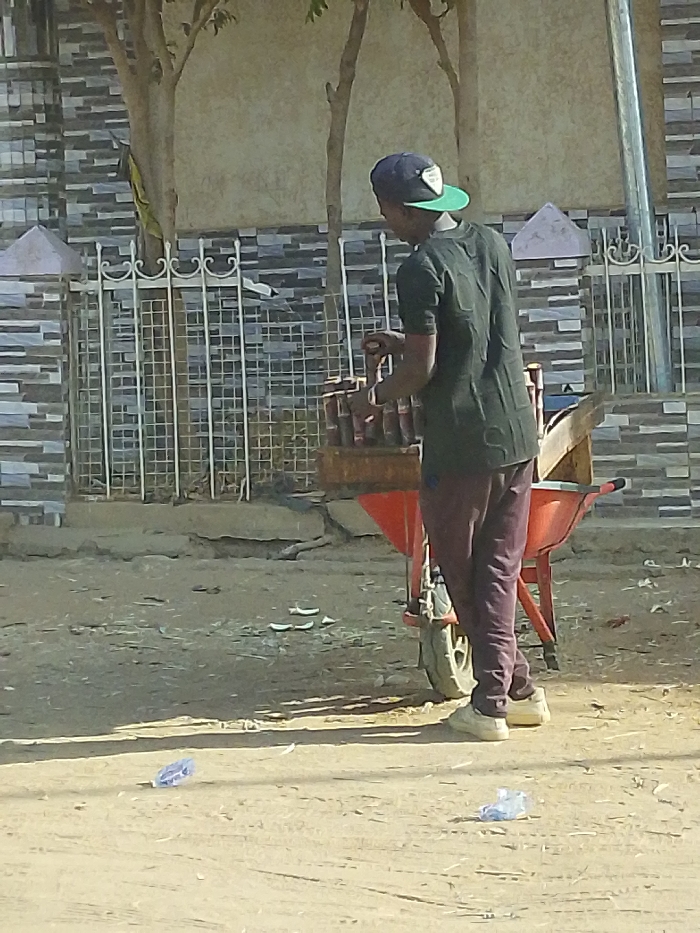
A person with a green-brimmed baseball cap stands behind a red wheelbarrow loaded with goods. The person wears a dark green shirt and reddish-purple pants with light-colored shoes. Behind the wheelbarrow is a wrought iron fence in front of a building with light and dark grey horizontal siding. Litter is strewn on the ground in front of the wheelbarrow. The scene appears to be set in a residential neighborhood on a sunny day.
Mariri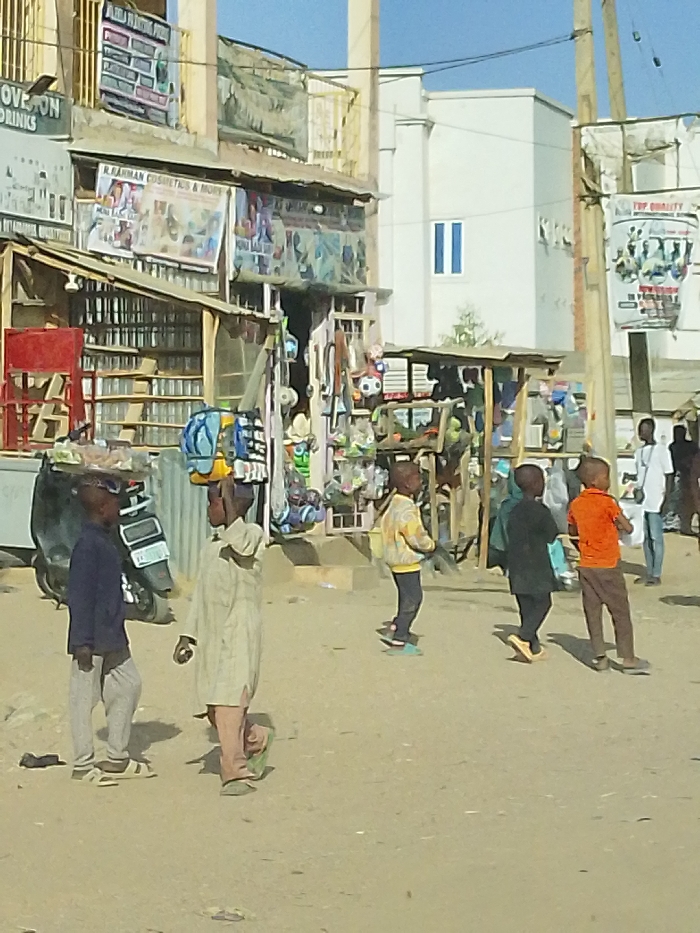
A dusty street scene showcases several young boys walking. One boy balances items on his head. The surrounding area is densely packed with small shops, displaying various goods and advertisements. A white building with two blue windows stands in the background. Utility poles are also visible. The overall atmosphere suggests a bustling, lively street in a developing area.
Mariri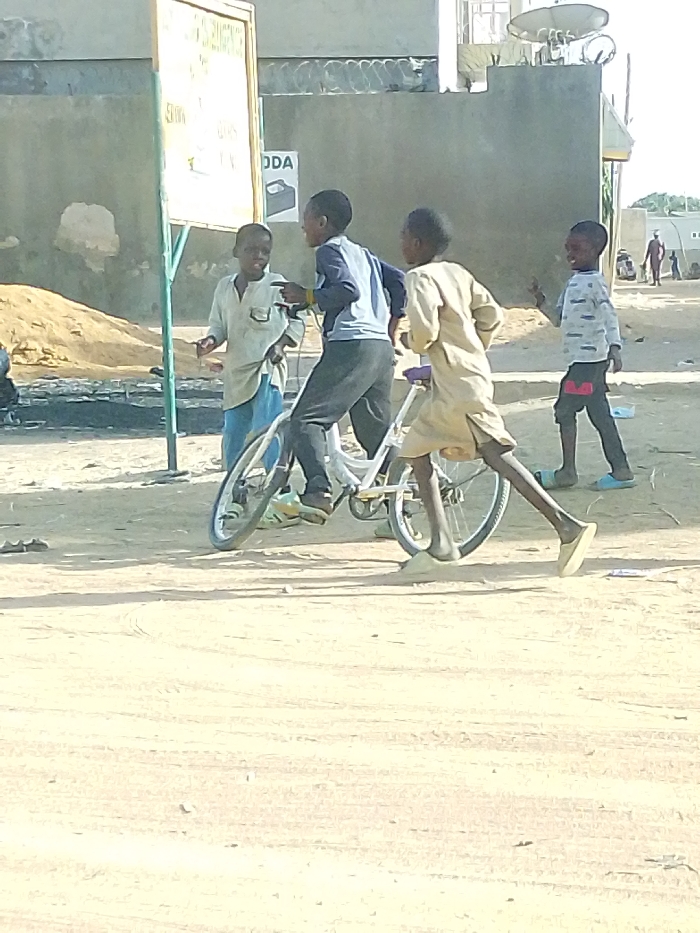
Four young boys are on a dirt road near a building with a sign. One boy is on a white bicycle, while the other three stand nearby. The boy on the bicycle is wearing gray pants and a blue shirt. One of the other boys is wearing a light shirt and blue jeans, while the other two boys are wearing long-sleeved shirts. One boy is walking with a pair of sandals. Several other people are visible in the background.
Mariri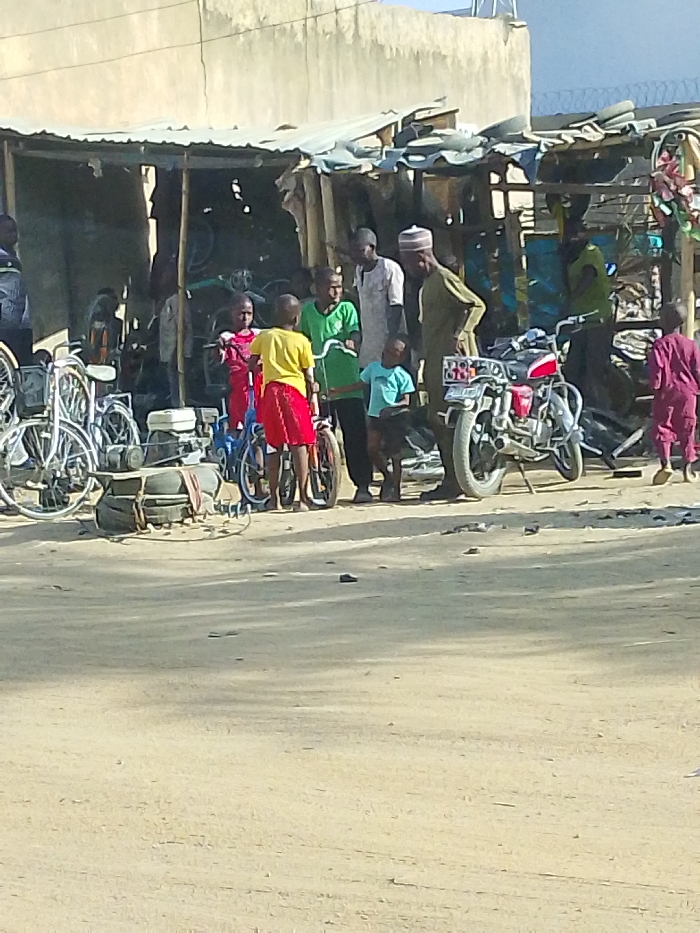
The image captures an outdoor scene, likely a bustling street or market area, under bright, possibly midday sunlight which casts distinct shadows on the dusty ground. In the background, a rudimentary stall or workshop is visible, constructed with a corrugated metal roof and supported by wooden or metal poles. This structure appears to deal with bicycles and motorcycles, with various parts and frames stored within. At the center of the frame, a group of people, including several children and at least two adult males, are gathered. From left to right within this central cluster: a child in a red top and red shorts or skirt stands next to a small blue bicycle; another child in a yellow t-shirt and red shorts or skirt is positioned next to a similar small bicycle; a third child, wearing a green t-shirt, stands near another small bicycle. Behind these children, an adult male in a light-colored shirt or tunic observes the scene. To his right, another adult male, wearing a long olive-green traditional outfit and a cap (possibly a kufi), stands facing the group, seemingly interacting with them. A small child in a light blue t-shirt stands close to this adult in green. To the immediate right of this central group, a red and silver motorcycle is parked, facing towards the left. It has a visible rear license or number plate, though the digits are unclear due to the image resolution. Further to the right, a child in a maroon or purple outfit is seen walking away from the central activity. More indistinct figures are visible deeper inside the makeshift stall. On the far left, a stack of adult-sized bicycles is leaning against the side of the stall. In the lower-left foreground, a small, light-colored engine or pump-like machine rests on a stack of worn tires, secured with straps or ropes. The ground is unpaved, appearing sandy or dusty, consistent with a dry climate. The overall impression is one of a busy, informal commercial area, possibly a bicycle or motorcycle repair and sales point, with daily life unfolding.
Mariri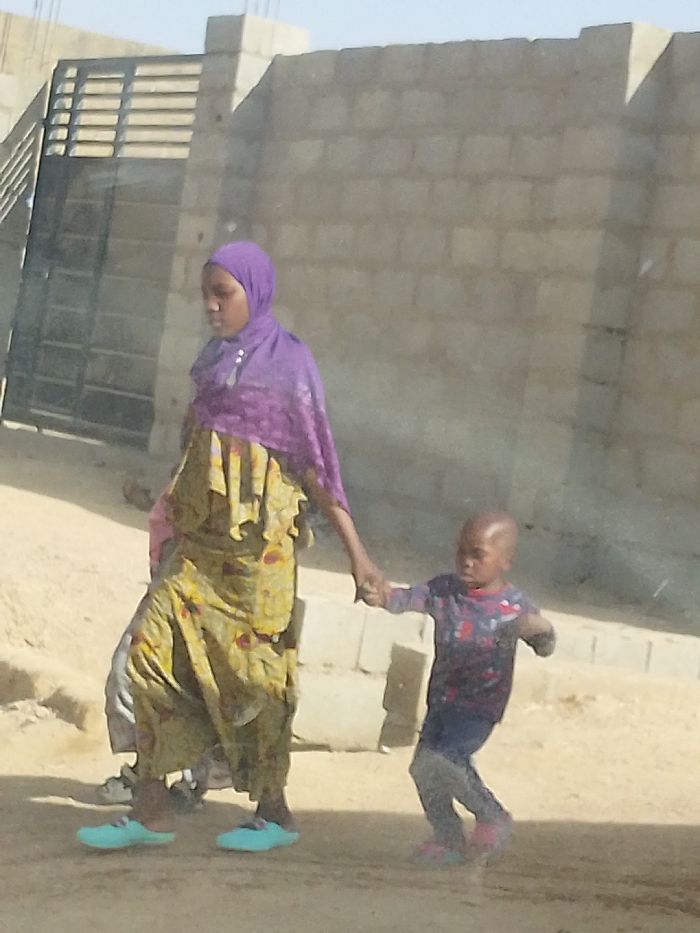
This image captures an adult female and a young child walking on a dirt path in Mariri, Nigeria, during daylight. The adult female, positioned on the left, wears a purple headscarf, a yellow and green patterned dress, and light blue flat shoes. Her left hand holds the right hand of the young child, who walks slightly ahead. The child, with a shaven head, is dressed in a dark patterned long-sleeved shirt, dark trousers, and pink shoes. Partially visible behind the adult female are the lower legs of a third individual. The background features an unplastered grey cinder block wall extending from the center-right, and a dark metal gate with horizontal bars on the left. The ground is a light brown, uneven dirt surface.
Mariri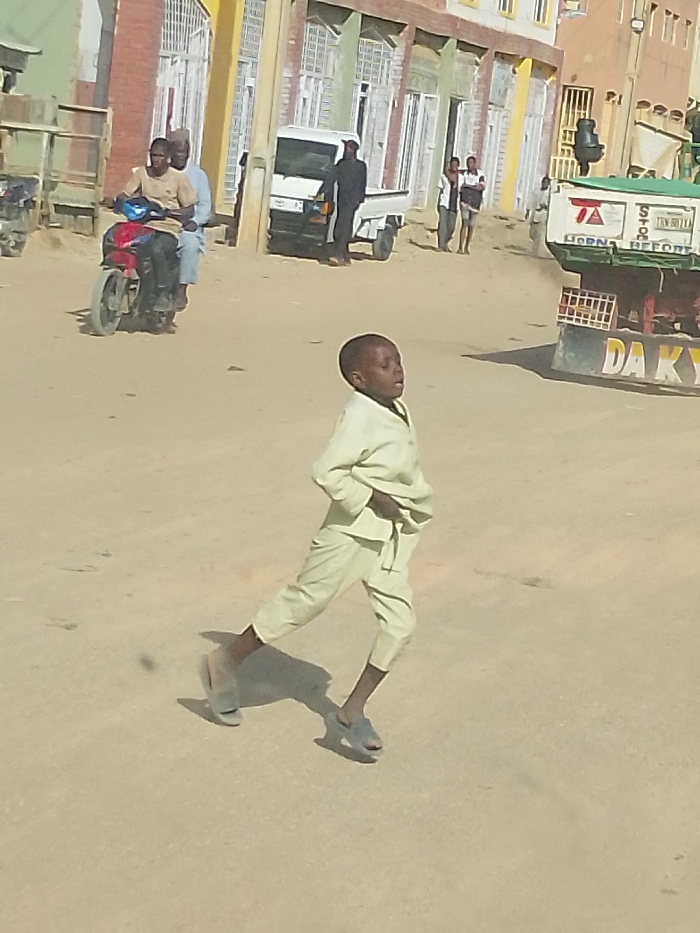
The image depicts a street scene in Mariri, Nigeria. In the immediate foreground, a young Black male child, approximately 5-7 years old, is shown mid-stride, moving from left to right across a light-colored, unpaved or dusty road. He wears a light yellowish-tan long-sleeved tunic and matching cropped pants, with light grey slip-on sandals. His gaze is directed forward and slightly upwards, with his mouth slightly ajar. In the mid-ground to the left, two Black adult males are riding a red and black motorcycle away from the viewer. The driver wears a light brown shirt and dark pants, while the passenger behind him is clad in a light blue garment and a light-colored cap. Further left, a white pickup truck is parked, and a dark-clothed figure stands near its rear. In the mid-ground to the right, a large truck with a green cargo bed and a red undercarriage is partially visible, displaying text including "HORN BEFORE" and "DA KYA". Several indistinct figures are visible walking on the far side of the street. The background consists of multi-story buildings with brick and painted facades, featuring numerous windows, some with white frames and security bars. Overhead utility lines and poles are visible. The scene is illuminated by bright daylight, casting visible shadows.
Mariri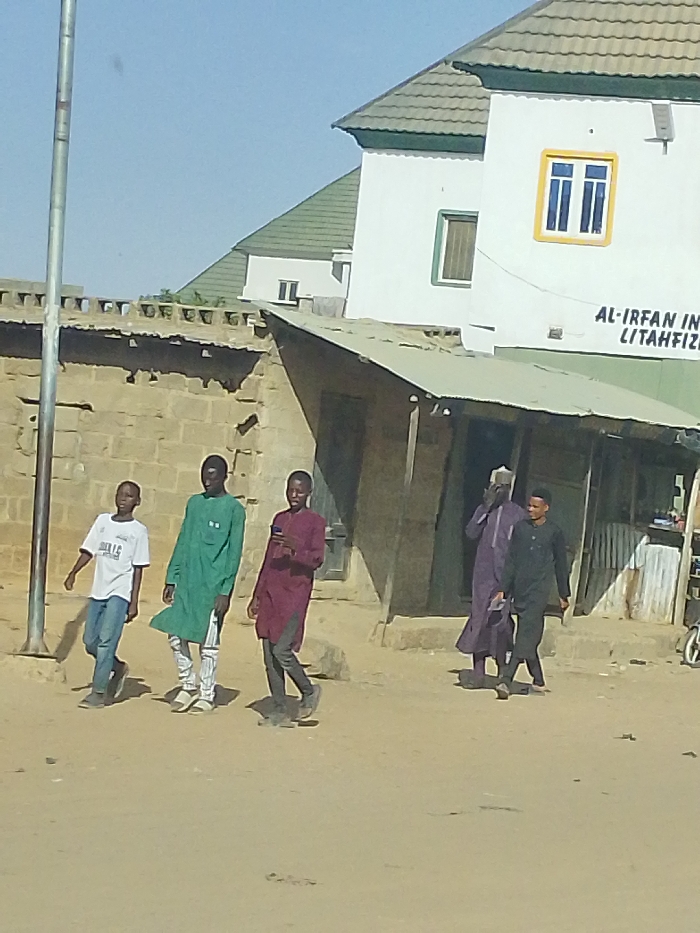
The image displays a daytime street scene in Mariri, Nigeria. Five males are positioned on a light-colored dirt road. From left to right, a young male in a white t-shirt and blue jeans walks left. Beside him, a young male in a green tunic and striped pants walks left. Adjacent to him, a young male in a maroon tunic and dark pants walks left while observing a smartphone held in his right hand. Behind this group, an older male in a purple tunic and a light-colored cap walks right, with his right hand raised near his face. Alongside him, a young male in a dark tunic walks right. In the background on the left, a low, rough-hewn stone wall is visible. To the right of the wall, a single-story structure with a slanted corrugated metal roof is present. Behind these, a two-story white building with a green tiled roof features a prominent yellow-framed window with blue vertical bars. Text reading "AL-IRFAN IN LITAHFIZ" is visible on its facade, and a solar panel is mounted on its roof. Another building with a green roof is partially visible beyond it. A tall, thin metal pole stands vertically on the far left. The sky is clear, and strong sunlight casts distinct shadows.
Mariri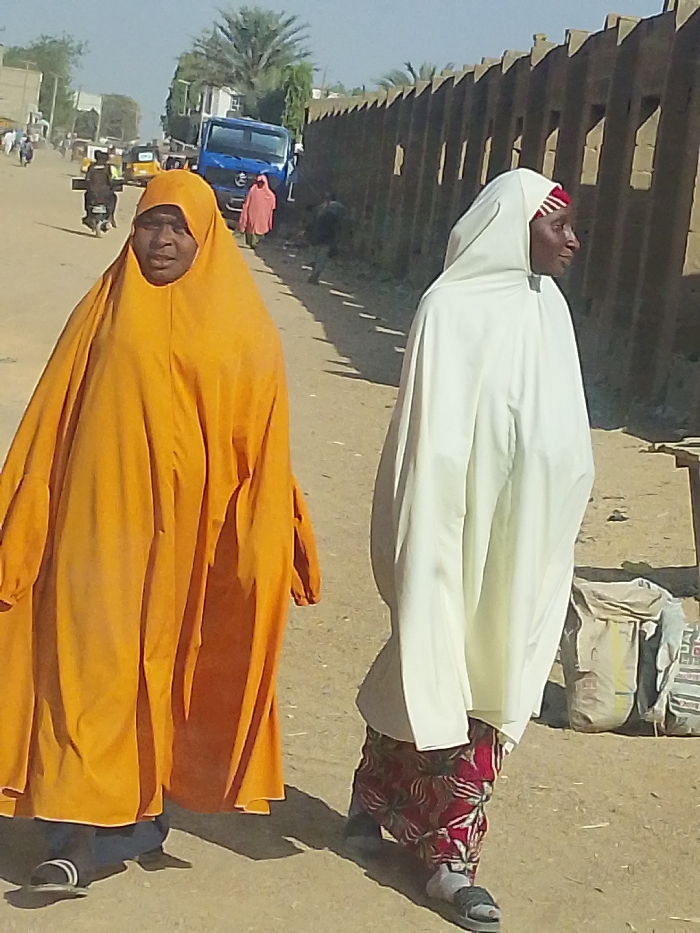
This image depicts an unpaved street scene in Mariri, Nigeria, under bright daylight. In the foreground, two individuals, presumably adult females, walk towards the viewer. On the left, a person wearing a voluminous, bright orange full-body covering (jilbab or abaya) with a hood covering the head, looks directly forward. This individual wears dark closed-toe shoes with white soles. To the right, another person wears a white full-body garment with a hood, revealing a red and white striped head covering underneath. This person's face is in profile, looking towards the right, and they wear patterned red and white pants under the white garment, with grey open-toed sandals. The ground is dusty and unpaved, with long shadows cast towards the viewer, suggesting strong sunlight. In the midground, several vehicles are visible: a blue truck parked or moving on the left side of the street, a yellow tricycle (keke Napep), and a person on a motorcycle. Other indistinct figures are present in the distance. Along the right side of the street, a light brown concrete wall with repeating vertical indentations extends into the background. A large grey bag, possibly containing cement or grain, rests on the ground near the base of this wall. Palm trees and other buildings are visible in the far background.
Mariri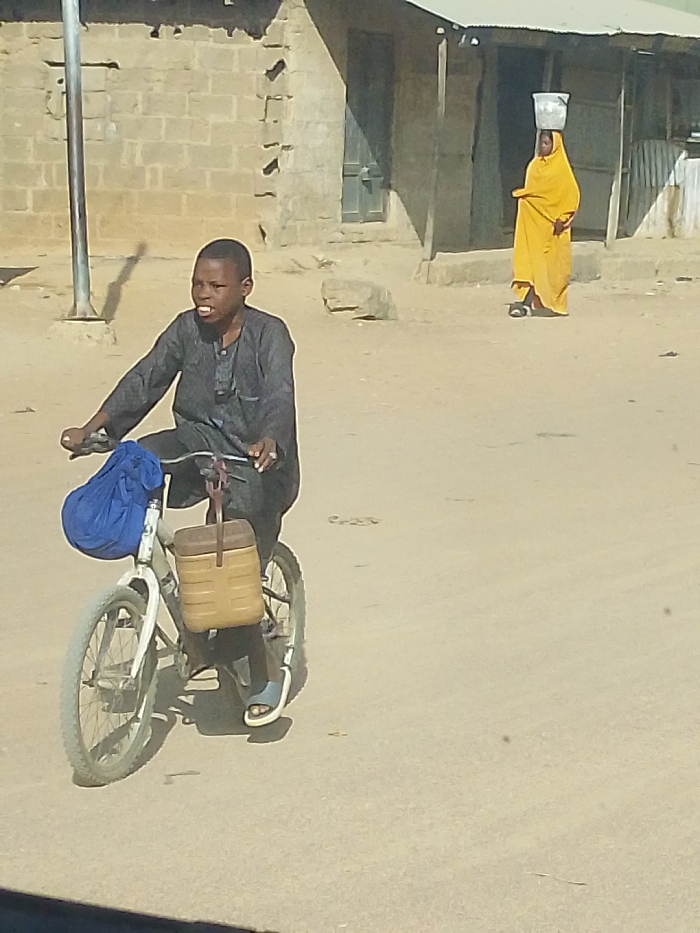
The image depicts an outdoor scene in the city of Mariri, Nigeria, on an unpaved dirt road under clear daylight. In the foreground, a young male with dark skin and short dark hair, wearing a dark grey long-sleeved tunic and light-colored sandals, rides a white bicycle from right to left. His mouth is open, suggesting speech or exertion. A blue fabric bag is tied to the bicycle's handlebars, and a tan, rectangular insulated container hangs from the bicycle frame below the handlebars. In the mid-ground, on the opposite side of the road, a female figure walks away from the viewer, clad in a bright yellow full-body covering that obscures most features. She carries a silver-colored bucket or container balanced on her head. The background features simple, single-story buildings constructed of light-colored stone or brick, with at least one having a corrugated metal roof. A tall, dark metal pole stands on the left side of the road. Strong shadows indicate bright sunlight. No direct interaction between the two individuals is evident.
Mariri