Merida, Spain
14 memories from Merida, Spain
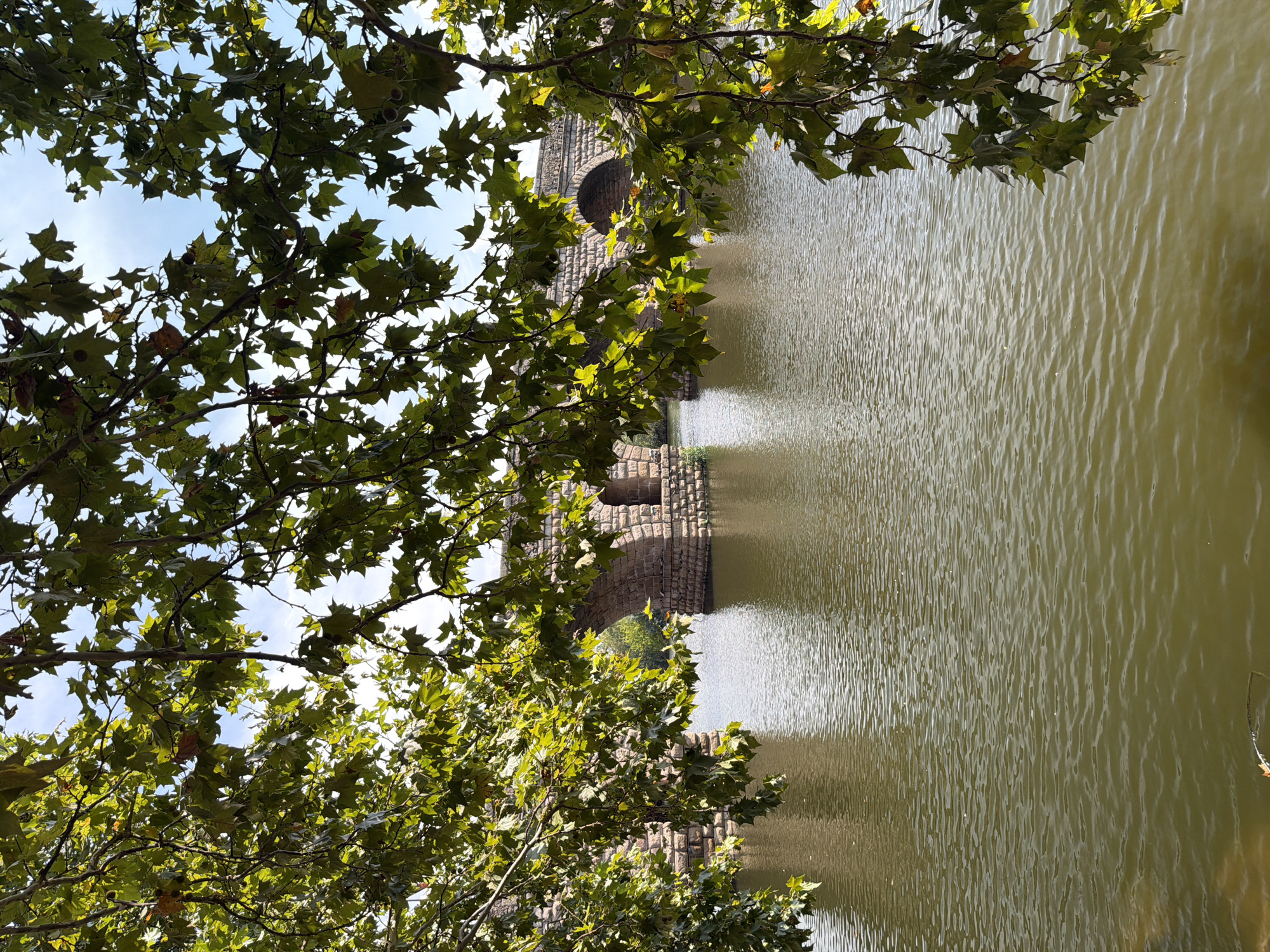
The image shows a view of the Roman Bridge of Merida, Spain, from across the Guadiana River. The bridge, made of stone arches, is partially obscured by the branches of a tree in the foreground, which are laden with green leaves. The river is calm and reflects the sky and the bridge. The sky is blue with some scattered white clouds. The overall scene is peaceful and scenic.
Merida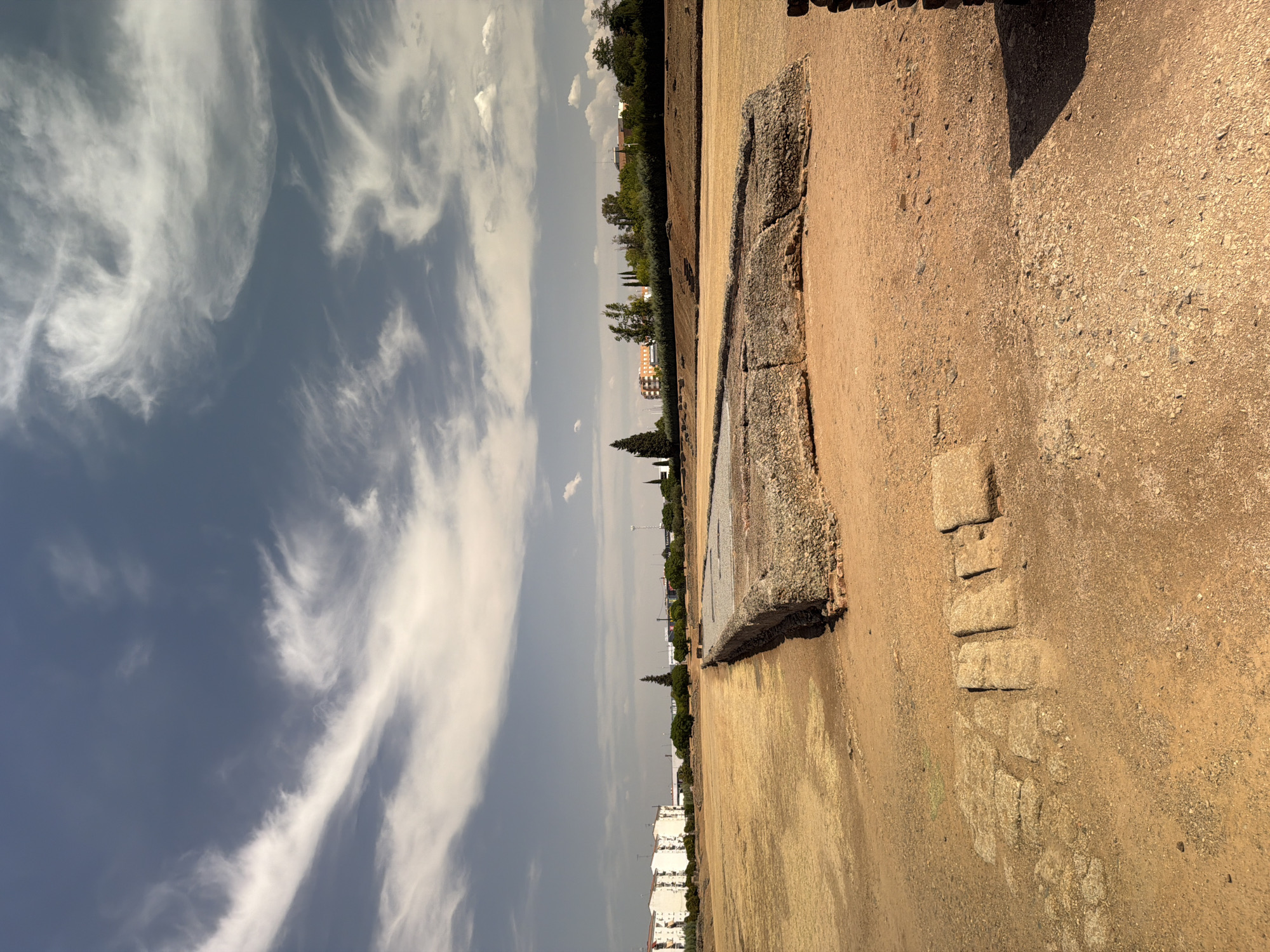
The image depicts an outdoor scene at an archaeological site in Mérida, Spain, likely the Roman Amphitheatre or Circus Maximus area. In the foreground, there are weathered, rough-hewn stone blocks and a raised, rectangular platform made of similar material, showing signs of age and decay. The ground is a dry, sandy, and dusty earth surface with scattered small stones and debris. The middle ground features a large, flat, open area, possibly a former arena or pathway, also covered in the dry earth. Beyond this, a low, dark brown mound of earth or dirt bank runs horizontally across the image. At the far end of this bank, a line of trees, some appearing evergreen and others deciduous, creates a green buffer. Behind the trees, modern urban structures are visible, including white residential buildings with multiple windows and some orange-tiled roofs. In the distance, more trees and a tall, slender conical tree stand out against the sky. The sky occupies the upper portion of the image and is dramatic with a mix of dark gray clouds and wispy white cirrus clouds, suggesting a dynamic weather pattern. The lighting indicates it is daytime, with shadows cast by the structures in the foreground. There are no people or animals visible in the scene. The overall impression is one of historical ruins juxtaposed with the modern city.
Merida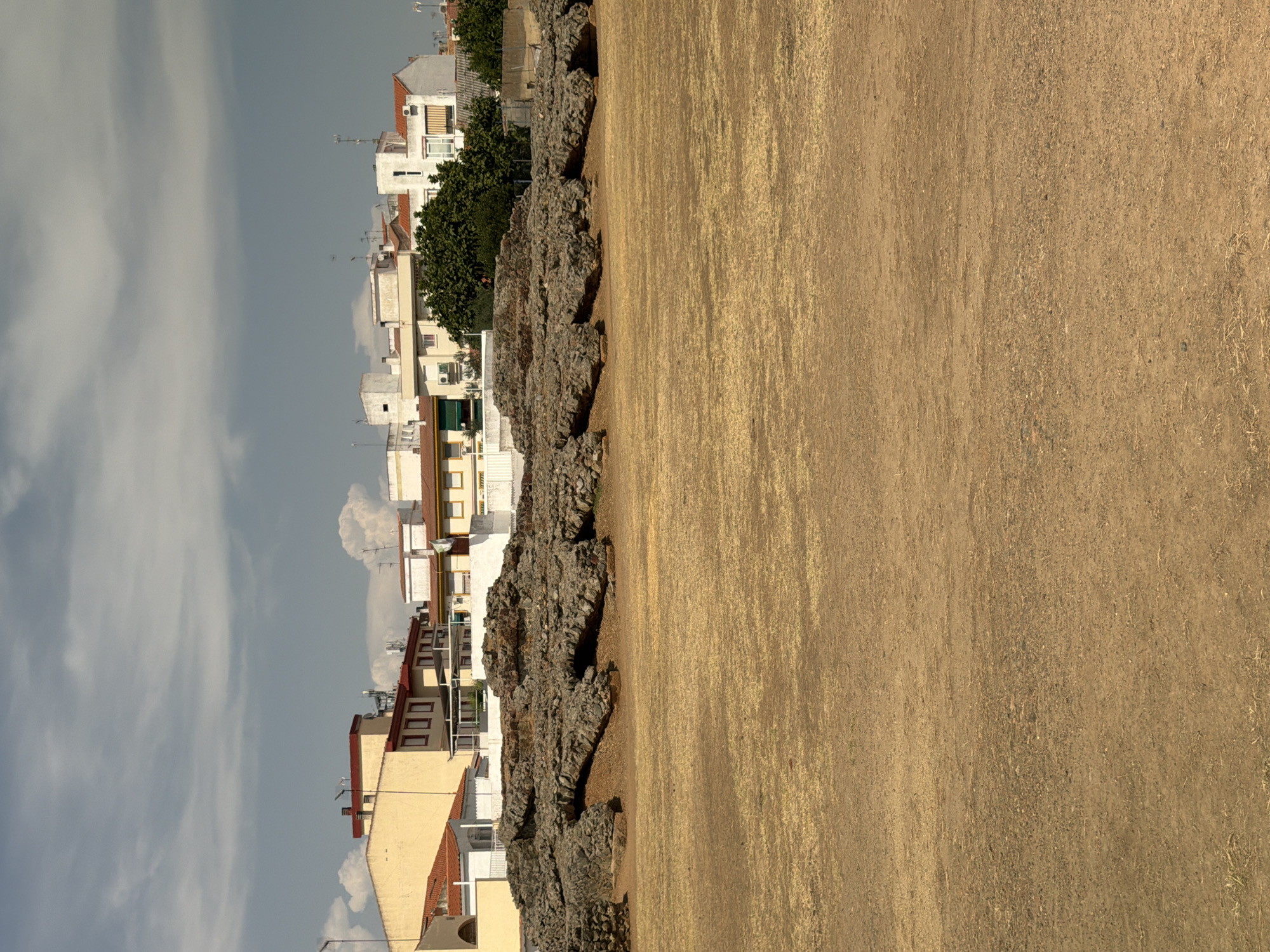
The image captures a view of the Roman amphitheater in Merida, Spain. In the foreground, a large expanse of dry, light brown earth stretches out, appearing to be a field or an arena floor. Behind this field, a row of ancient stone ruins, possibly remnants of the amphitheater's seating or structure, forms a rugged, dark brown barrier. These stones are large and irregular, with visible arch-like formations and layered construction. In the background, a line of modern buildings, primarily residential, with white and yellow facades and red-tiled roofs, are visible against a cloudy sky. The buildings are low-rise and typical of a Spanish town. Some trees are interspersed among the buildings, and various antennas and satellite dishes are present on the rooftops. The overall scene suggests a juxtaposition of ancient history and contemporary urban life in the city of Merida.
Merida
A vertical video shows an outdoor archaeological site under a bright sky with scattered clouds. The foreground features uneven dirt ground with some exposed stone blocks arranged in a line. To the right, a weathered, wooden, cube-shaped structure, possibly a protective cover or display, is situated on the dirt. In the middle ground, a low, rubble-like stone wall or foundation runs horizontally, with more exposed stone work beyond it. The background reveals a line of white buildings with red-tiled roofs, indicative of a town or city. Trees and vegetation are visible beyond the buildings and archaeological features. The overall impression is of an ancient ruin partially excavated and preserved within a modern landscape.
Merida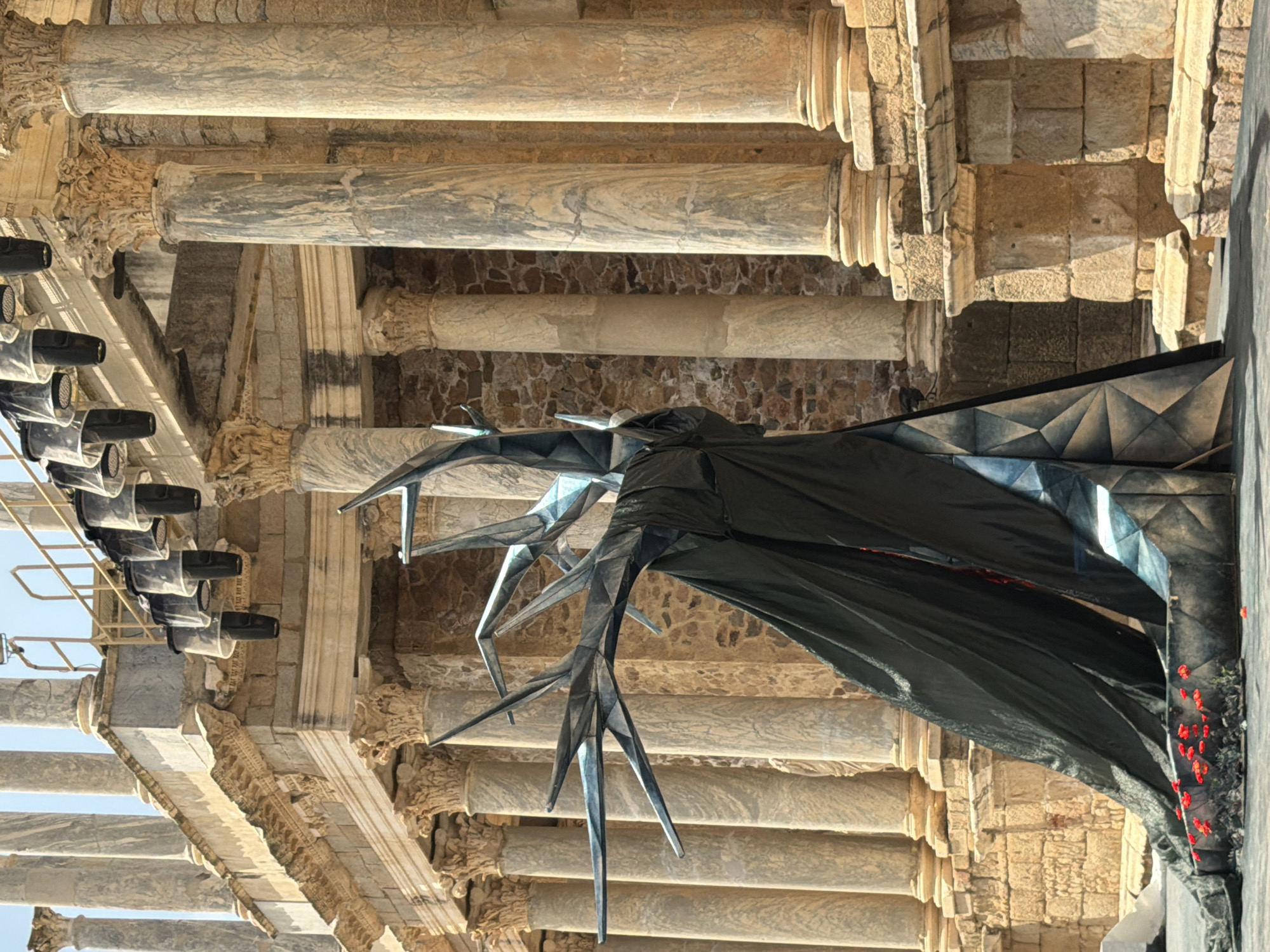
The image shows a theatrical stage set in front of the Roman Theatre of Merida, Spain. The stage features a large, abstract sculpture resembling a skeletal tree with dark fabric draped around its base. Red flowers are planted at the foot of the sculpture. In the background, the stone architecture of the Roman Theatre, characterized by its columns and tiered seating, is visible. Lighting equipment is suspended above the stage area. The scene appears to be set for an outdoor performance.
Merida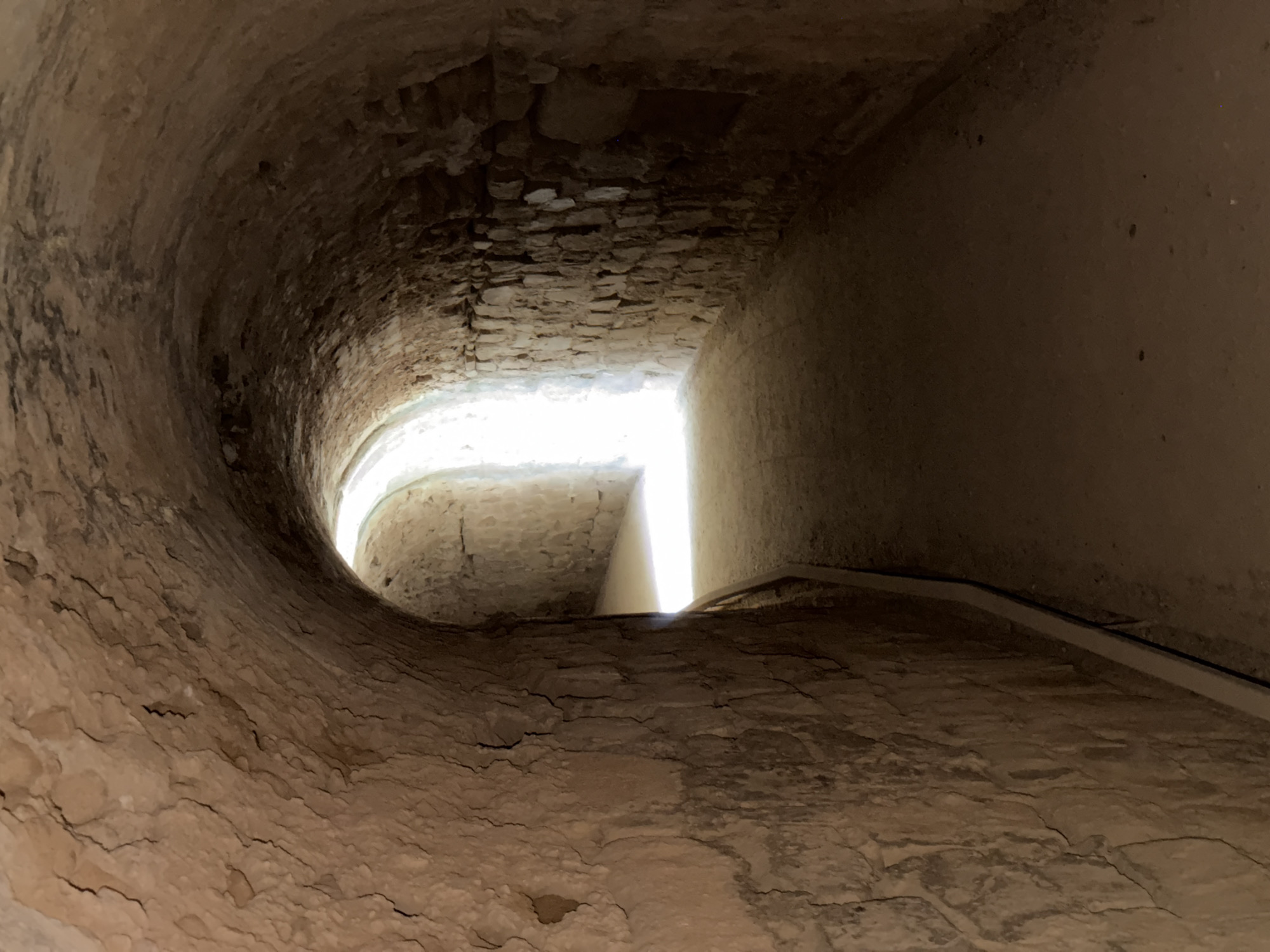
The image shows an ancient stone tunnel. The tunnel is dimly lit, with a bright light source at the end of the tunnel, suggesting an exit or opening. The walls of the tunnel are constructed from rough-hewn stones, with some sections appearing to be made of packed earth or mortar. The floor of the tunnel is covered in dirt and sand. The tunnel appears to be part of an underground structure, possibly an aqueduct or part of Roman ruins. This tunnel is located in Merida, Spain, which is known for its well-preserved Roman ruins.
Merida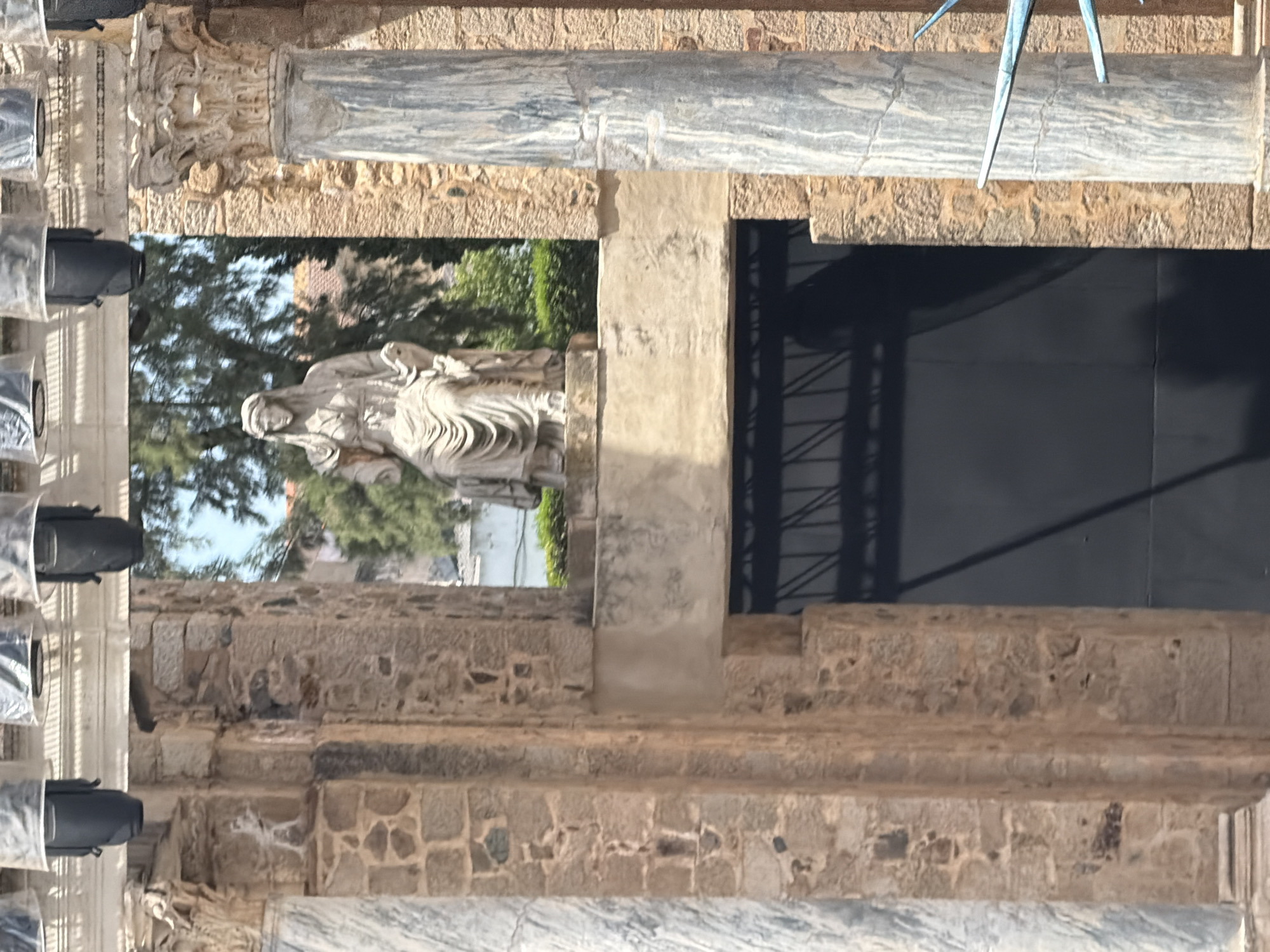
The image shows a section of the Roman Theatre of Merida, Spain. In the upper part of the image, several spotlights are visible. The central focus is a statue of a seated woman wearing a toga and a veil, positioned behind a stone archway. The statue is made of light-colored stone. To the left and right of the statue, there are stone columns. The left column is made of marble with grey veining, while the right column is also marble with grey veining. Behind the columns and the statue, there are trees and buildings. In the lower part of the image, a large dark door or entrance is visible, framed by stone architecture. Partially visible on the far right is a blue star-shaped sculpture.
Merida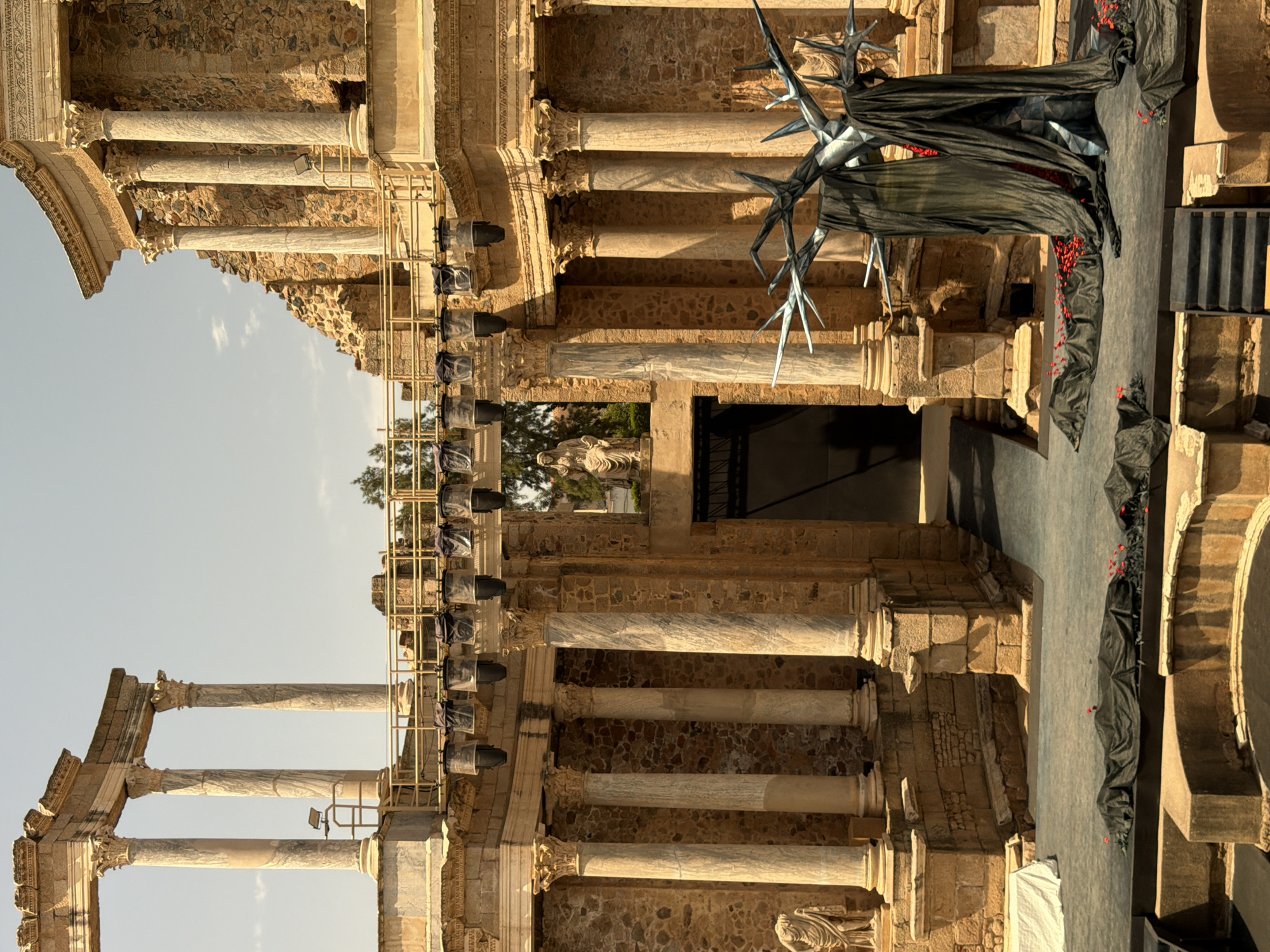
The image depicts the Roman Theatre of Merida, Spain, a UNESCO World Heritage site. The theatre, an ancient stone amphitheater, serves as a stage for a theatrical production. The stage is adorned with dark fabric draped over a metallic tree-like sculpture with sharp, angular branches. Scattered red rose petals are strewn across the stage floor, some nestled within the fabric. In the background, the stone seating of the theatre rises, interspersed with imposing columns and remnants of the ancient structure. The upper portion of the theatre reveals a clear sky, suggesting daytime. A few statues are visible, partially integrated into the architectural features. Stage lighting is suspended from a metal rig above the stage, hinting at an upcoming or concluded performance.
Merida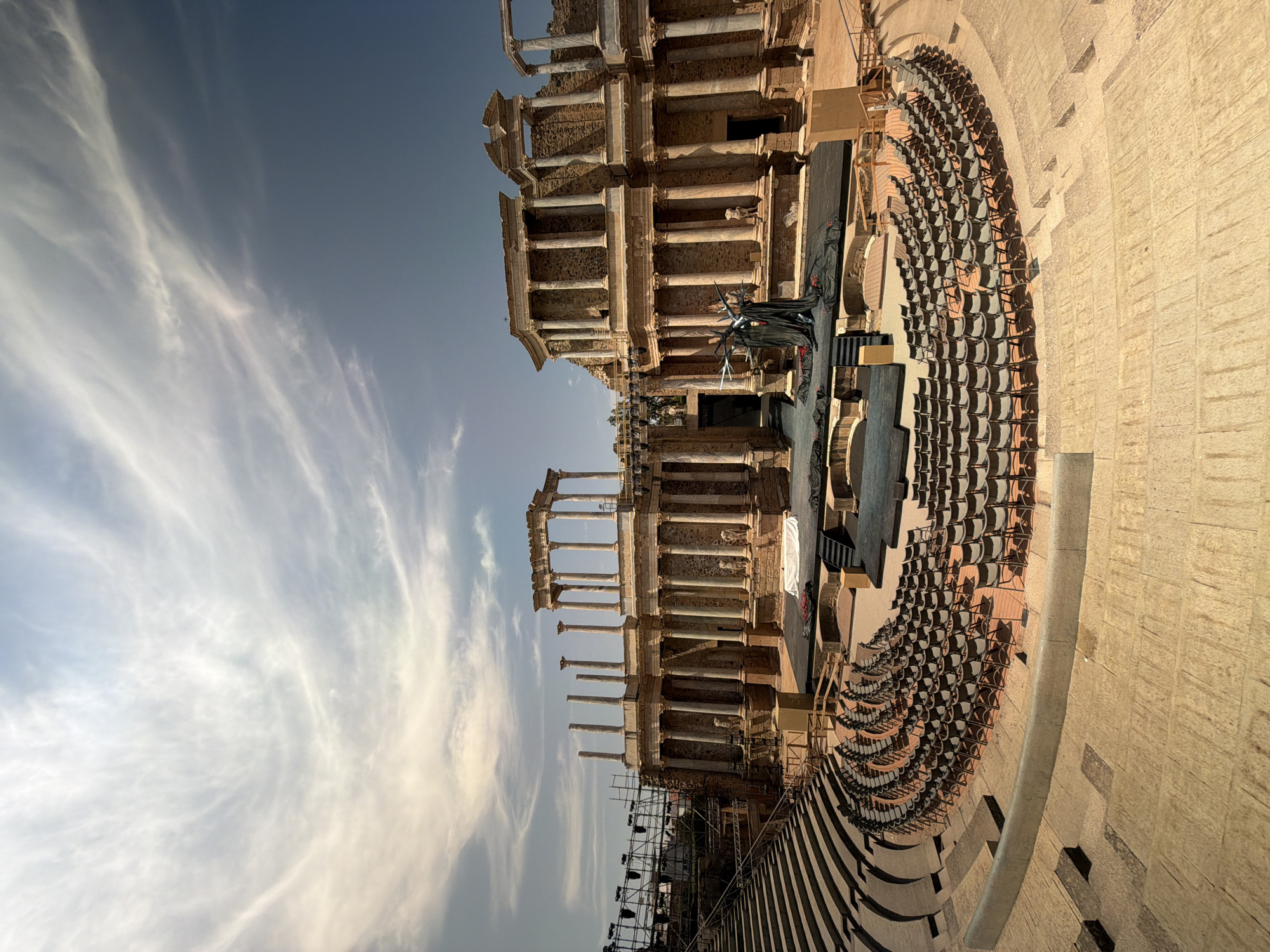
The image depicts the Roman Theatre of Merida, Spain, an ancient amphitheater still used for performances. The sun is shining under a sky with wispy white clouds. In the foreground, the tiered seating area is empty and made of stone. Rows of dark chairs are set up on a circular section of the stone seating. The stage area is visible in the middle ground. It is a dark, raised platform with a backdrop of stone ruins featuring columns and arches. A figure dressed in black, appearing to be an actor in costume, stands center stage next to a dark, tree-like prop decorated with red fabric. Scaffolding and lighting equipment are visible to the left of the theatre ruins. The overall scene suggests a preparation for a performance in a historical setting.
Merida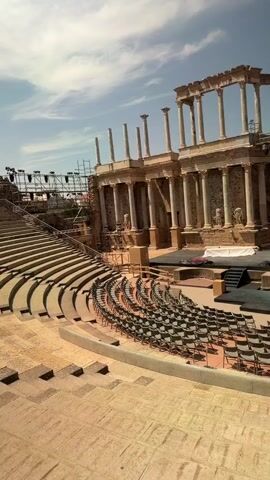
The video shows a wide-angle view of an ancient Roman theater. In the foreground, rows of empty seats are visible, made of stone and arranged in a semi-circle. The seats are facing a stage area. The stage itself appears to be set up for a performance, with black fabric covering parts of it and a theatrical prop resembling a stylized tree or figure with dark fabric draped over it. Behind the stage, the remains of the theater's impressive architecture are visible. This includes a grand facade with multiple levels of columns, arched openings, and stone stonework. Some of the upper parts of the structure appear to be in ruins. In the background, scaffolding and stage lighting equipment are set up, suggesting preparations for an event. The sky above is blue with some scattered white clouds. The overall scene is bathed in sunlight, indicating it is daytime. The video pans slightly to the right, offering a broader view of the seating area and the stage. There are no people actively performing or interacting on the stage. A few individuals are visible in the background, near the architectural structure, possibly workers or staff involved in setting up.
Merida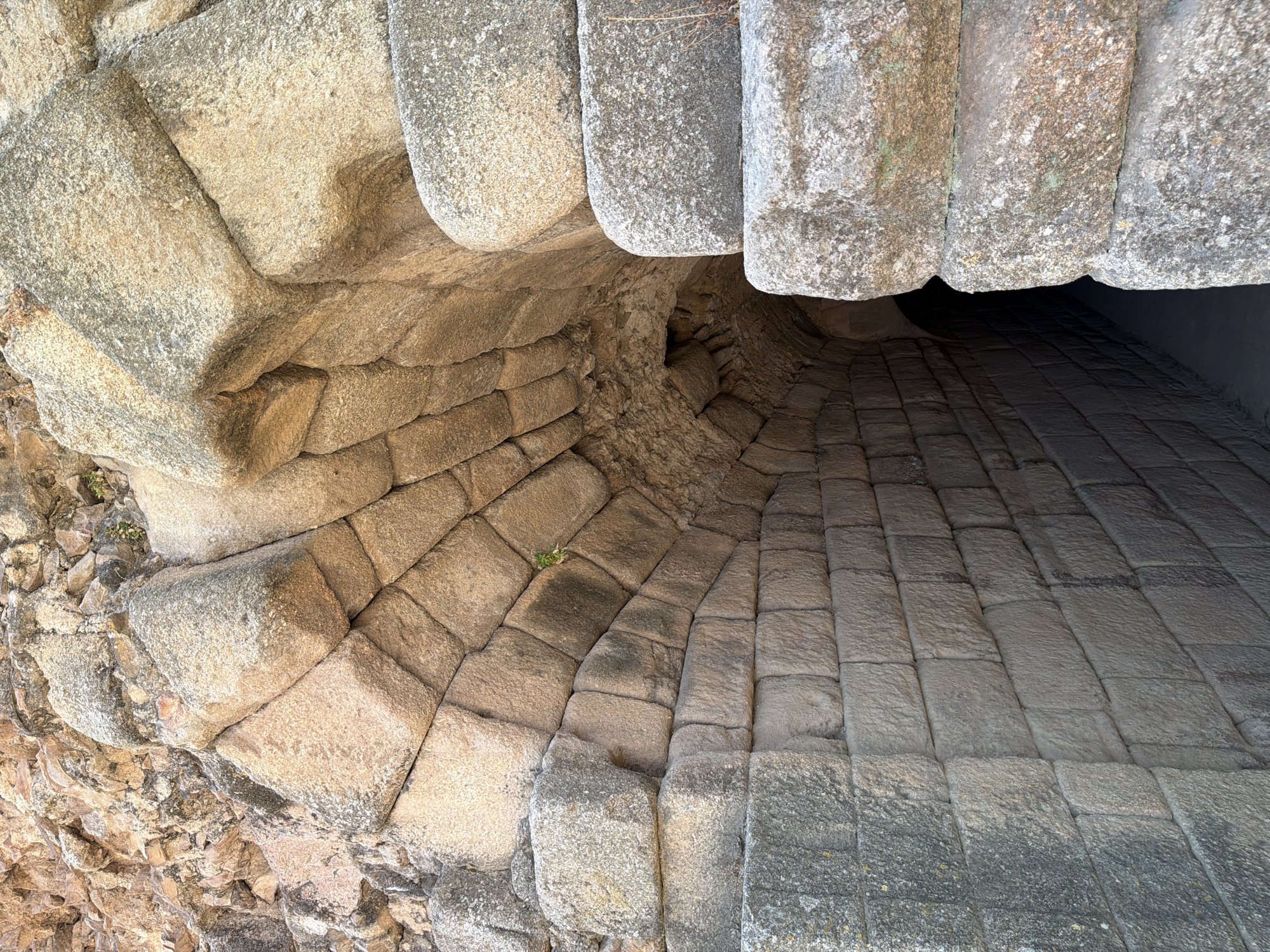
This is a close-up, eye-level, medium shot of the arched entrance to an underground passage within the Roman amphitheater in Merida, Spain. The passage walls are constructed from rough-hewn, irregular stone blocks, creating a textured and aged appearance. Sunlight illuminates the left side of the entrance, casting shadows into the dark, narrow interior of the passage. The archway itself is formed by larger, more precisely cut stone voussoirs, some of which are partially obscured by the rougher stonework of the surrounding structure. The scene is static and devoid of people or animals. The overall impression is one of ancient architecture and a sense of depth extending into darkness.
Merida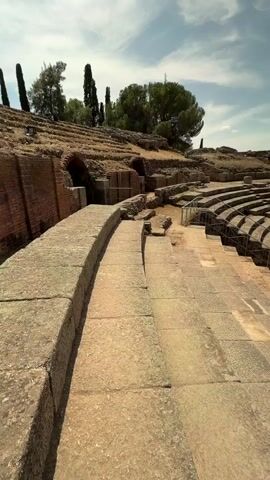
The video shows a panoramic view of an ancient Roman amphitheater on a sunny day. The camera pans from a close-up of stone seating in the foreground to reveal the full structure of the amphitheater, including the stage area and tiered seating. The stonework is weathered and shows signs of age. Beyond the amphitheater, trees and a small town with buildings are visible under a clear blue sky with some scattered white clouds. A few people are walking around the amphitheater, appearing to be tourists. The scene is bathed in bright sunlight, casting shadows on the stone structures.
Merida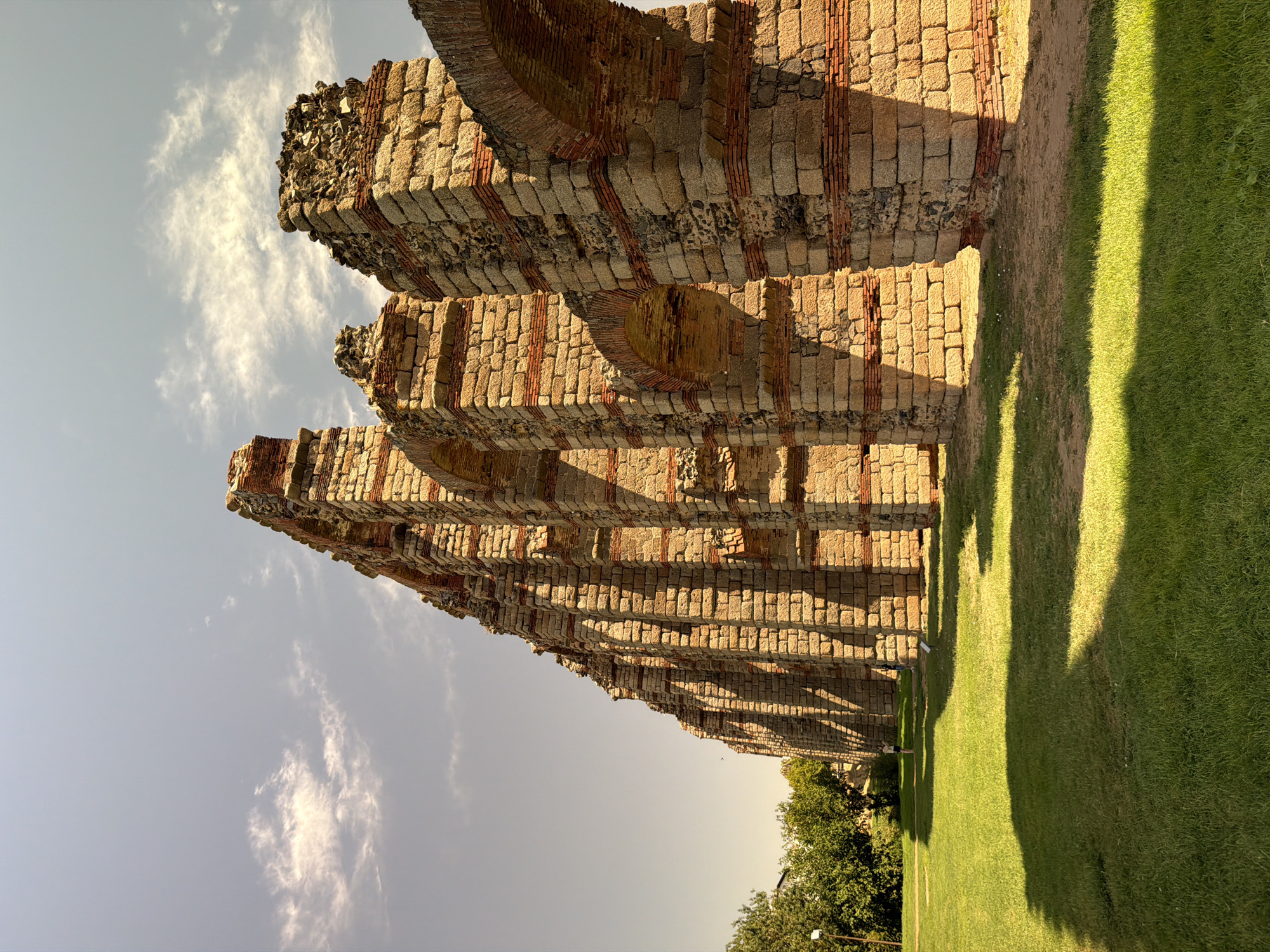
The image shows a section of the Roman Aqueduct of the Miracles in Merida, Spain, under a partly cloudy sky during daylight. The aqueduct is constructed of stone blocks and brick, featuring multiple arches, with some sections appearing weathered and partially collapsed. The aqueduct runs diagonally from the left foreground towards the right background, casting long shadows across a well-maintained grassy lawn. In the background on the left, there are trees and a hint of buildings. Two people are visible in the distance on the grassy area, one standing and looking towards the aqueduct, and another further back. The overall impression is of an ancient, grand structure set against a natural, open environment.
Merida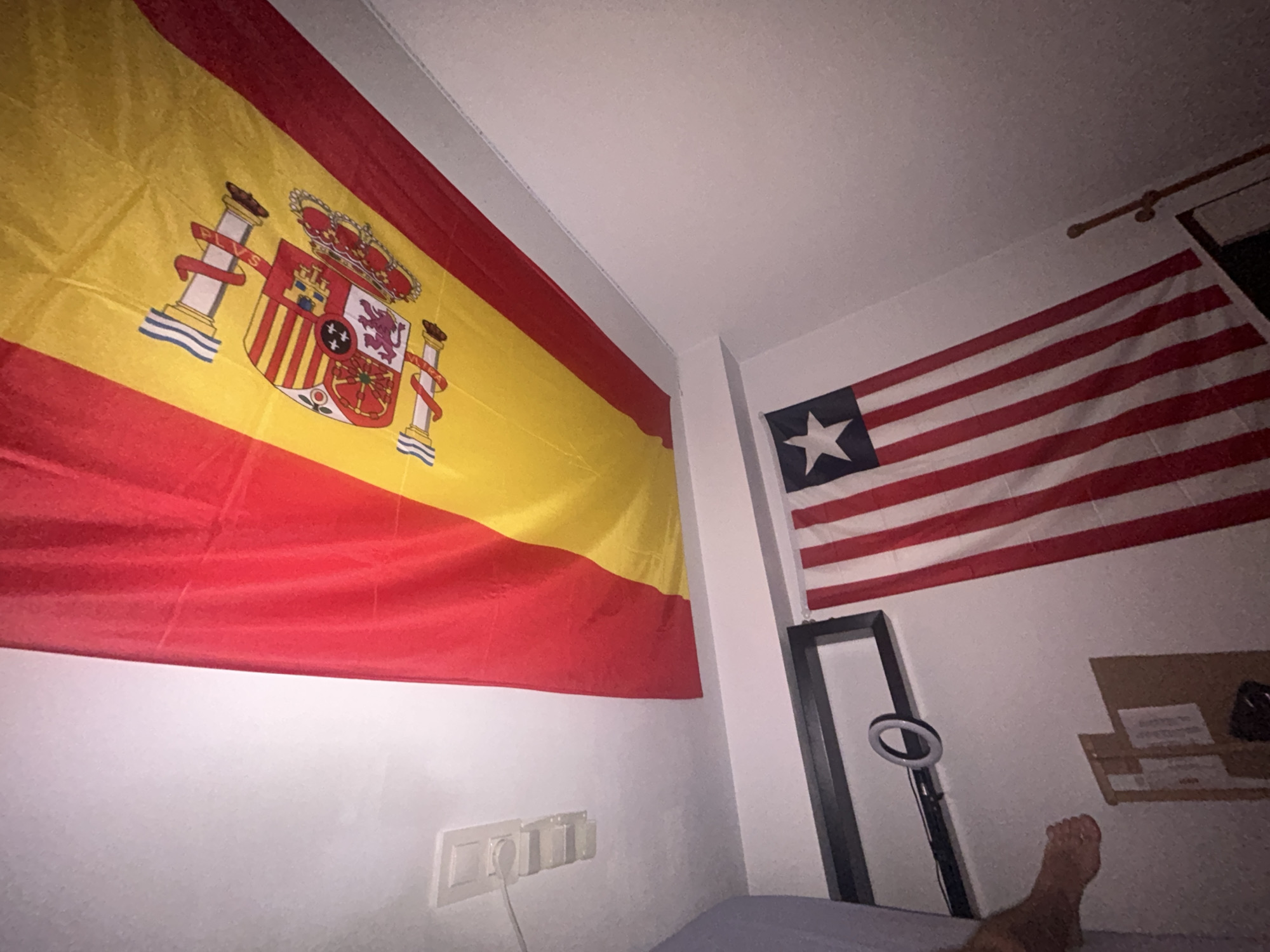
The image depicts an interior scene, likely a bedroom, with two flags prominently displayed on a white wall. On the left, a large Spanish flag, featuring horizontal bands of red and yellow with the national coat of arms on the yellow stripe, hangs across the wall. To the right, a flag with horizontal red and white stripes and a blue square with a white star in the canton is visible. This second flag appears to be the flag of Liberia. A black frame, possibly for a mirror or picture, stands vertically on the floor to the right of the Spanish flag, with a ring light attached to its side. In the lower right corner, a person's bare foot and lower leg are visible, resting on a grey surface, suggesting they are lying down. Electrical outlets are mounted on the wall below the Spanish flag. The lighting in the room is dim, with some light sources creating shadows. The overall impression is of a personalized living space. There is no indication of the specific location within the city of Merida, Spain.
Merida