Paradela, Spain
7 memories from Paradela, Spain
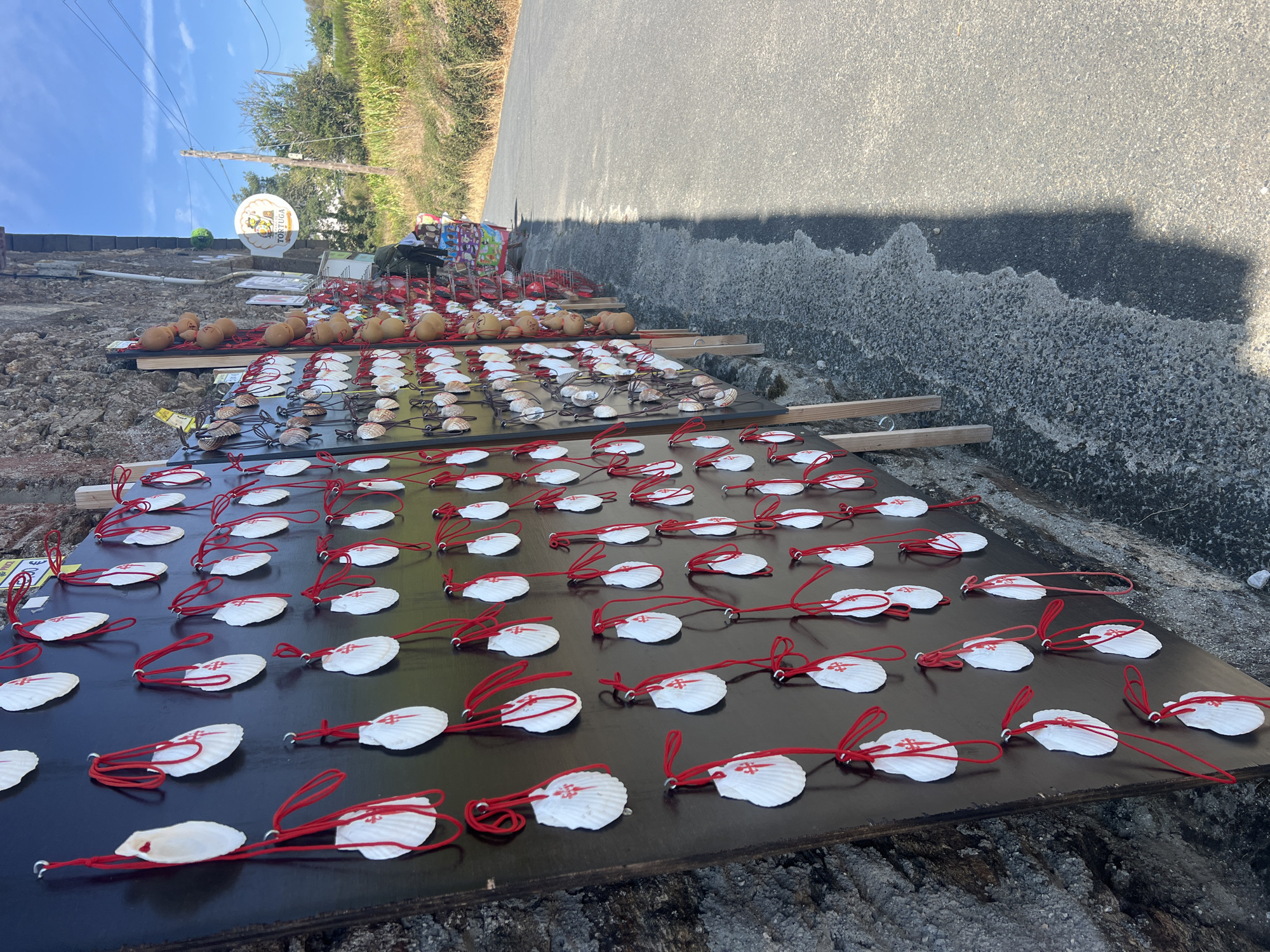
In the city of Paradela, Spain, a stall displays numerous scallop shells, a symbol of the Camino de Santiago pilgrimage. These shells, attached to red cords and adorned with red crosses, are hung on a dark wooden board. Behind this display, a road stretches into the distance, bordered by dry grass and a few trees under a clear blue sky. The scene suggests a commercial setup for pilgrims, with additional items visible further down the road, including more decorative shells and possibly food products. The overall environment is rural and sunny, indicative of a warm climate.
Paradela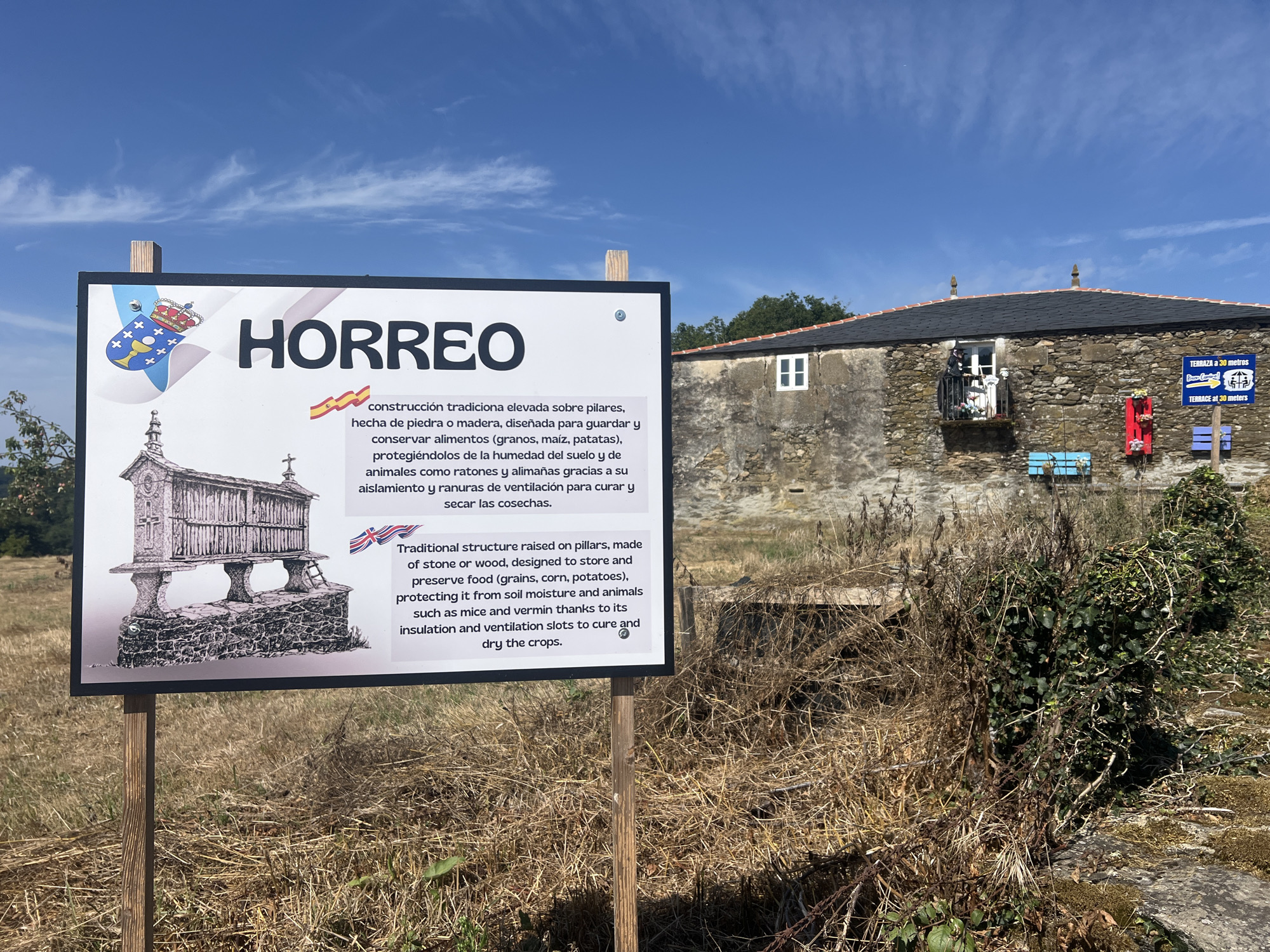
The image shows an informational sign about a "Horreo" with a depiction of the structure in the foreground, set against a rural background of a stone building and vegetation under a blue sky with scattered clouds. The sign is positioned in front of a weathered stone building with a dark tiled roof. The building has a single window and a small balcony with some decorations. To the right of the building, there are several colorful wooden crates mounted on the wall, one red and two blue, and a blue sign indicating "TERRAZA a 30 metros" (Terrace at 30 meters). The informational sign is rectangular and mounted on wooden posts. The top of the sign features a crest with a crown and a shield containing blue and white crosses, and the word "HORREO" in large, bold letters. Below this, there is text in both Spanish and English describing the traditional construction and purpose of a horreo, which is a raised granary. An illustration of a horreo is shown on the left side of the sign. The text explains that it is a traditional structure made of stone or wood, raised on pillars, designed to store and preserve food (grains, corn, potatoes), protecting it from soil moisture and vermin thanks to its insulation and ventilation slots. The ground around the sign and the building is covered in dry, straw-like grass, with some thorny vines and moss-covered stones visible. The environment suggests a rustic, possibly historical, setting in the countryside. There are no people visible in the image. The location is identified as Paradela, Spain, based on the context provided.
Paradela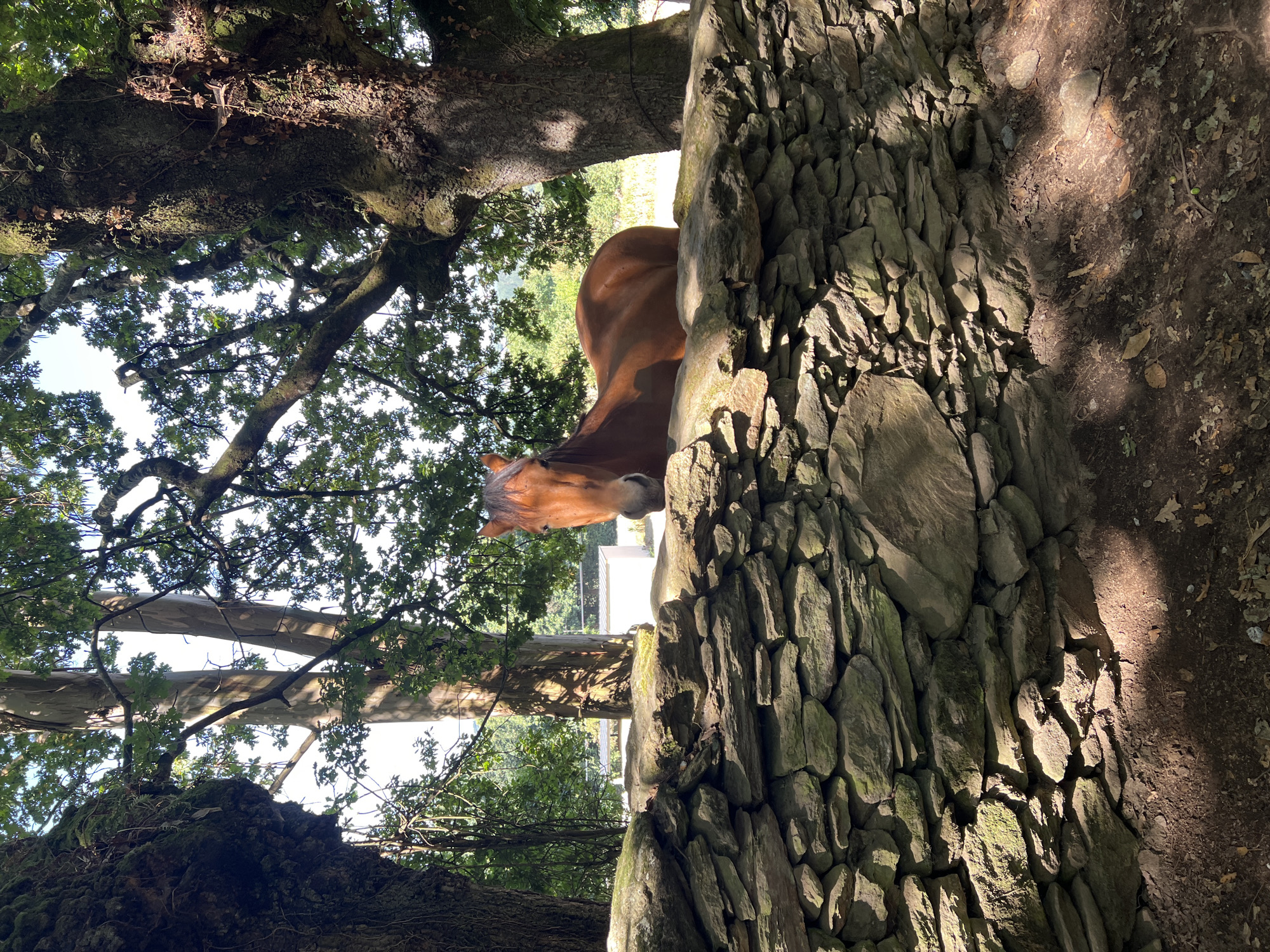
An eye-level, medium shot captures a brown horse peeking over a low, uneven stone wall. The horse, with its head and neck visible above the wall, faces forward, its ears pricked and eyes dark. The wall is constructed of rough, grey stones of varying sizes, some with patches of moss. Behind the wall, sunlight dapples through the dense green foliage of large trees, casting shadows on the ground. The environment suggests a rural or natural setting, possibly a farm or a park in Paradela, Spain. The horse appears to be the sole subject in the immediate foreground, with the rest of the scene dominated by the natural elements of trees, stone, and earth.
Paradela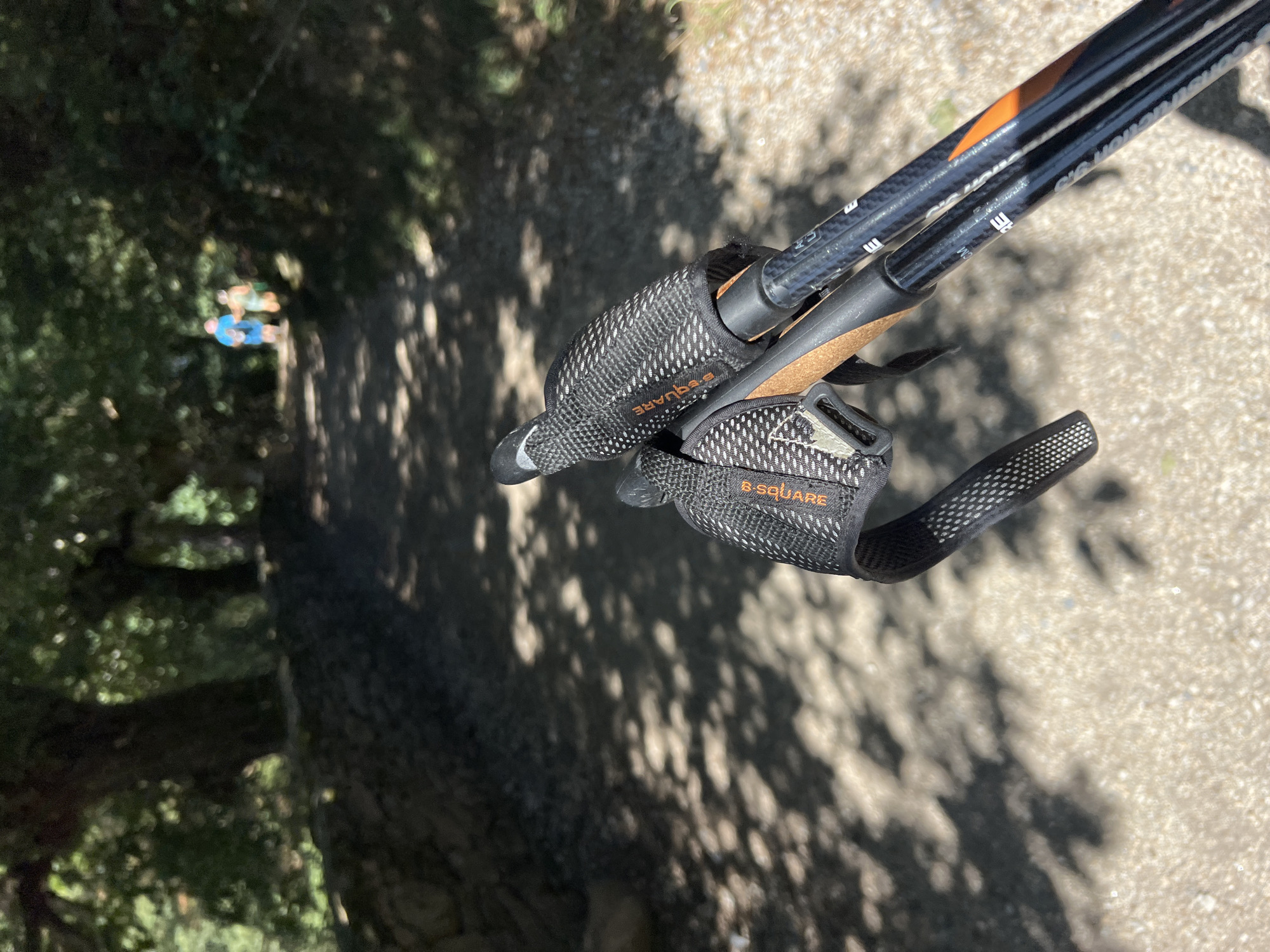
The image shows a pair of trekking poles with black and orange accents in the foreground, held by an unseen person. The poles are positioned diagonally across the frame, with the grips and straps clearly visible. The background depicts a sun-dappled dirt path, likely in a wooded area. Two blurry figures, appearing to be walking away from the camera, are visible in the distance on the path. The environment suggests a rural or natural setting, possibly a trail for hiking or walking. The lighting indicates it is daytime, with strong sunlight casting shadows from the trees onto the path. The location is identified as Paradela, Spain.
Paradela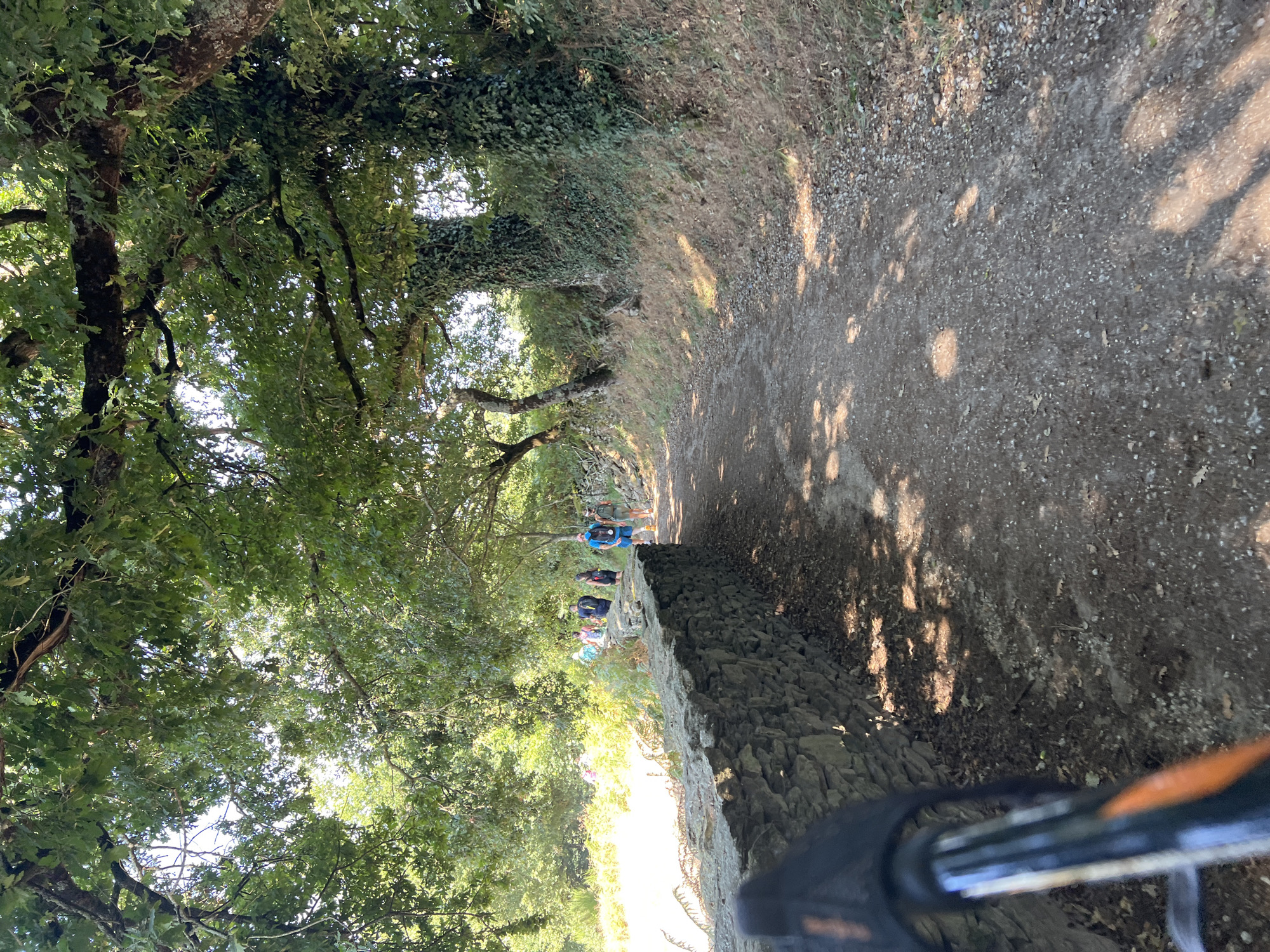
The image depicts a group of people walking on a dirt path lined with a stone wall on the left and trees on the right. The path is covered in gravel and dirt, with shadows from the trees dappling the ground. The people are walking away from the camera, towards a brighter area in the distance. They appear to be hikers, dressed in casual clothing and carrying backpacks. The environment is natural, with lush green trees overhead and vegetation along the sides of the path. The stone wall is made of rough-hewn stones, suggesting an older construction. The scene appears to be a rural or natural setting. While the city of Paradela, Spain is mentioned, there are no explicit landmarks or identifiable features in the image that confirm this specific location.
Paradela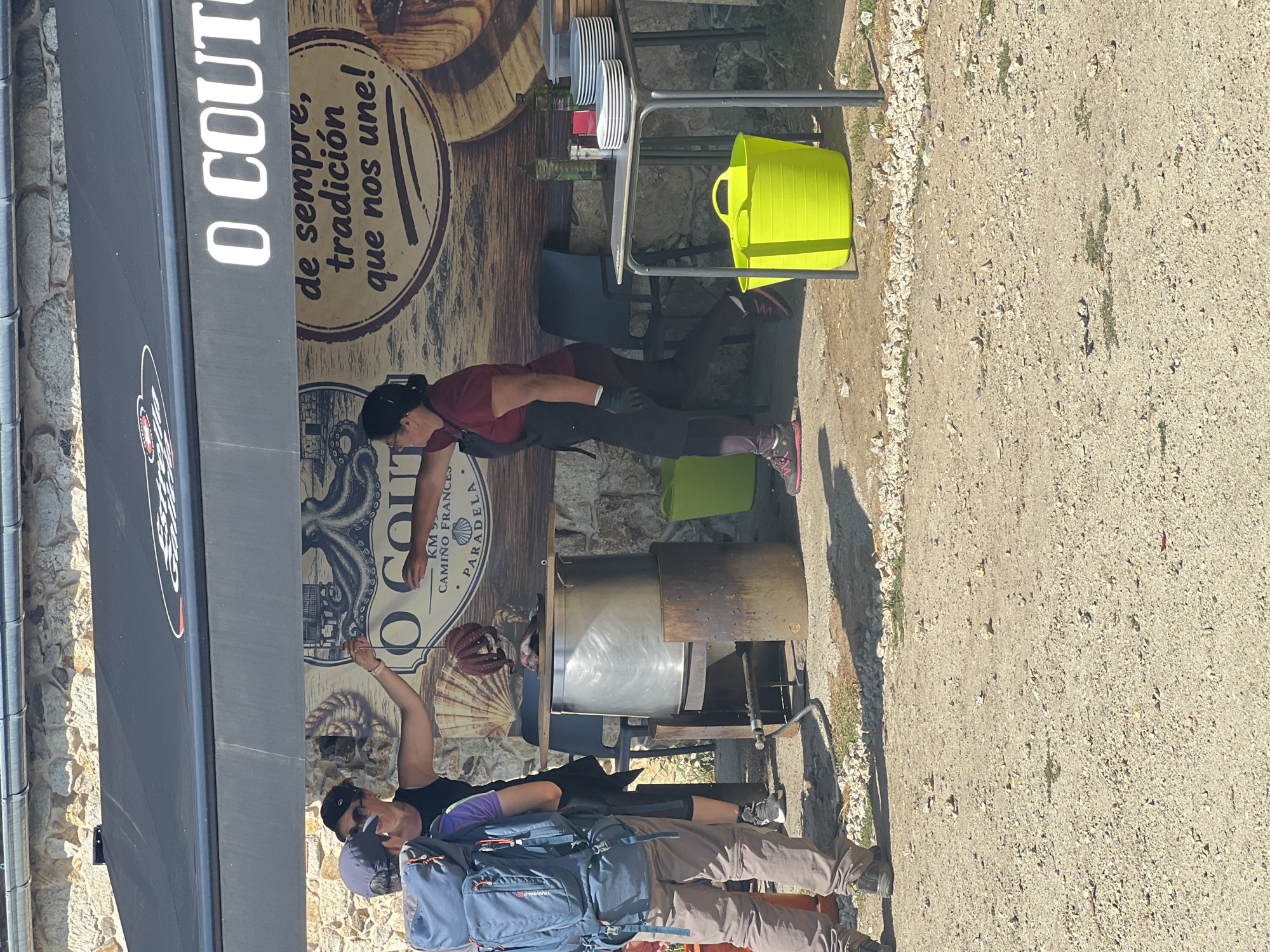
In Paradela, Spain, a street-side establishment displays food and beverages for sale, possibly related to a local festival or market. A large metal pot, heated by a portable stove, is prominent in the scene, suggesting food preparation. Several individuals are present, engaged in various activities. One person, wearing a backpack, stands on the left side of the image. Another person, dressed in an apron and gloves, appears to be serving or preparing food. Behind them, a woman in dark clothing and a cap holds a string with an octopus and some meat suspended from it. A table to the right is laden with plates and bottles, indicating a serving area. The environment is outdoors, with a stone wall and a black awning providing shelter. The ground is covered with gravel and dirt. The overall atmosphere suggests a bustling commercial setting with a focus on food service.
Paradela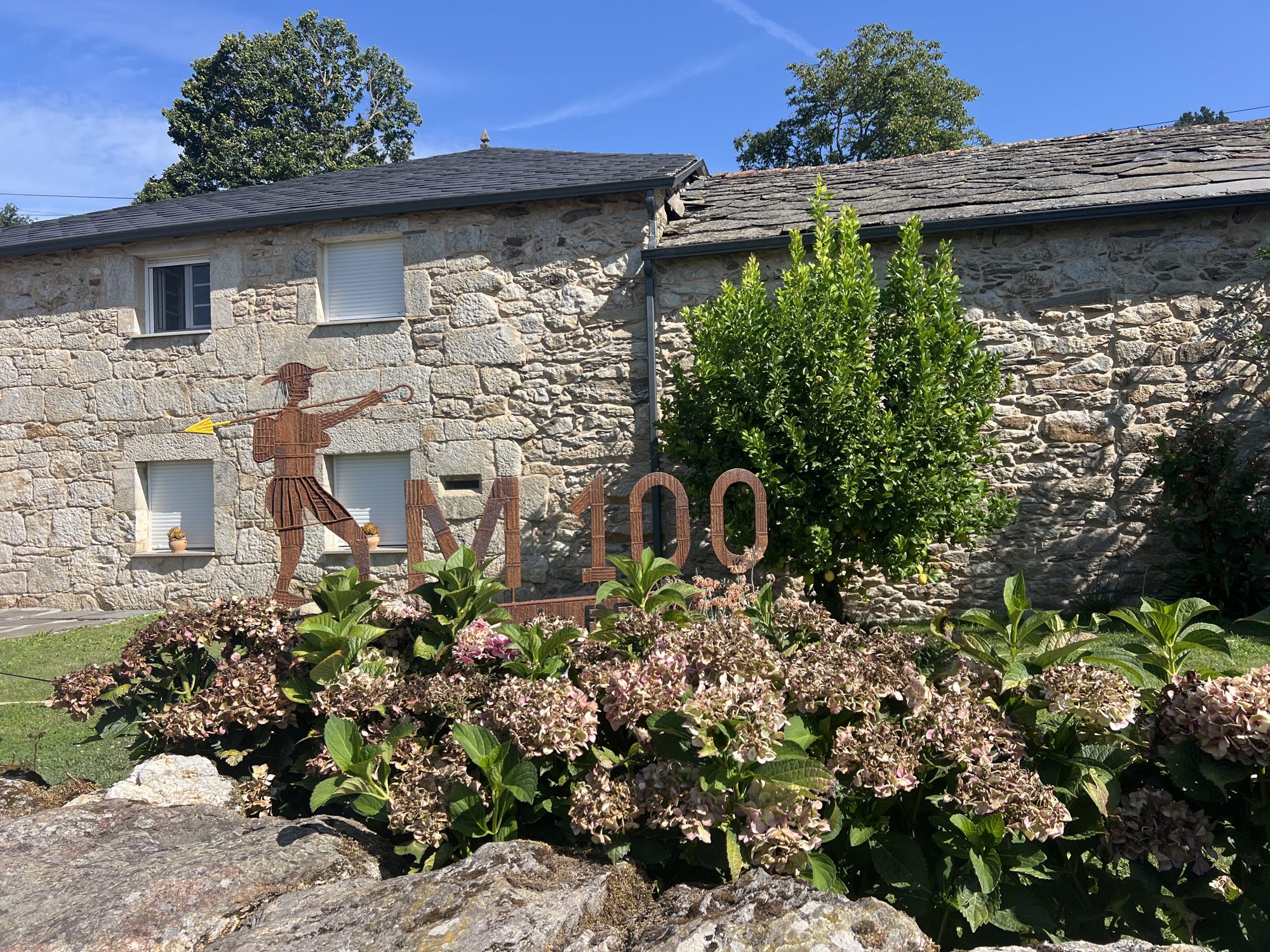
In the foreground, a patch of hydrangeas with predominantly dried and faded pink and brown blossoms is set against a backdrop of large, grey rocks. Behind the flowers, a metallic sculpture of a human figure holding a long yellow object that resembles a staff or spear is positioned to the left of a large, rusted metal sign spelling out "M 100". The sculpture and sign are set in front of a rustic stone building with a dark grey tiled roof. Two windows with white rolling shutters are visible on the building's facade. A small, well-maintained green lawn is to the left of the flowers, and a dense green bush is to the right of the sign and sculpture. The scene is set outdoors under a clear blue sky with a few faint white clouds. The building appears to be located in Paradela, Spain, given the context.
Paradela