CM:

ATTN

Get the app

Phú Xuân Ward, Vietnam

30 memories from Phú Xuân Ward, Vietnam
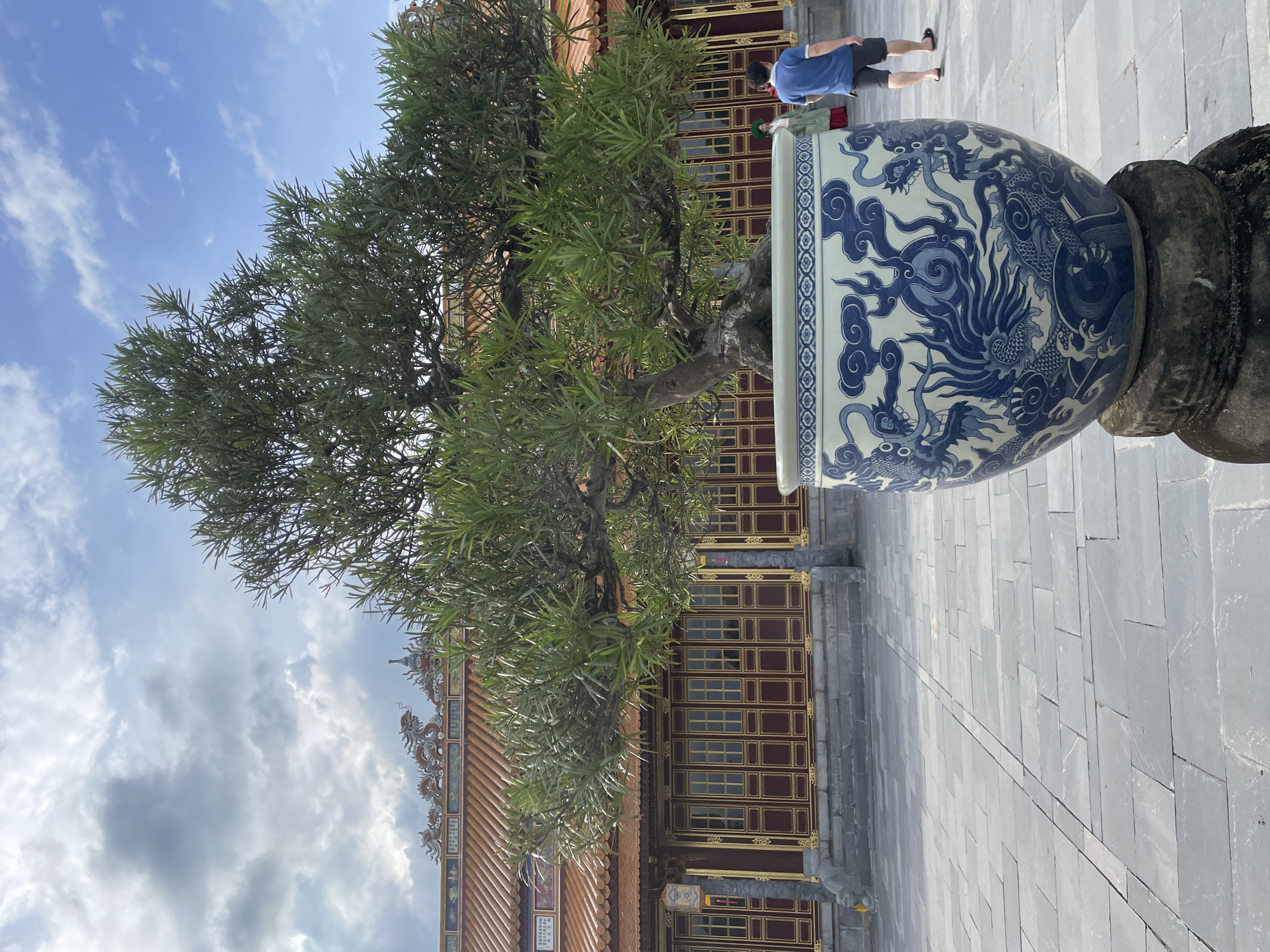
The image depicts the Citadel of Hue, a historical fortification located in Phú Xuân Ward, Vietnam. The scene is overcast and appears to be a gloomy day, possibly raining, with a thick haze in the background.

Dominating the center of the frame is the Flag Tower of Hue, a prominent structure within the Citadel. A tall flagpole extends upwards, topped by a Vietnamese flag, which is red with a yellow star. The tower itself is a substantial, multi-tiered stone structure with crenellated battlements.

The Citadel walls are visible in the foreground and extending to the right, constructed from dark stone. These walls are robust and imposing, suggesting a historical military significance.

To the left of the Citadel, a wide, paved area with green grass borders it. A lamppost stands prominently on this paved area. Further in the background, through the haze, other structures can be seen, including a smaller, ornate building with a curved roof that is reddish-orange in color. Trees and a distant cityscape are also discernible through the atmospheric conditions. The overall impression is one of historical grandeur under a somber sky.

The image depicts the Citadel of Hue, a historical fortification located in Phú Xuân Ward, Vietnam. The scene is overcast and appears to be a gloomy day, possibly raining, with a thick haze in the background. Dominating the center of the frame is the Flag Tower of Hue, a prominent structure within the Citadel. A tall flagpole extends upwards, topped by a Vietnamese flag, which is red with a yellow star. The tower itself is a substantial, multi-tiered stone structure with crenellated battlements. The Citadel walls are visible in the foreground and extending to the right, constructed from dark stone. These walls are robust and imposing, suggesting a historical military significance. To the left of the Citadel, a wide, paved area with green grass borders it. A lamppost stands prominently on this paved area. Further in the background, through the haze, other structures can be seen, including a smaller, ornate building with a curved roof that is reddish-orange in color. Trees and a distant cityscape are also discernible through the atmospheric conditions. The overall impression is one of historical grandeur under a somber sky.

Phú Xuân Ward
A mummified rodent carcass lies on a brick pathway. The carcass is positioned diagonally, with its head pointing towards the top left and its tail extending towards the bottom left. The rodent's skeleton is visible, particularly the rib cage and skull, indicating significant decomposition. Its fur is matted and dark, and some loose white material, possibly dried tissue or skin fragments, is scattered around the body. The pathway is constructed of reddish-brown bricks, with grey mortar filling the gaps between them. Some dried grass and straw are present on and around the carcass and pathway, suggesting an outdoor environment. The lighting suggests it is daytime. The image does not provide any information about the specific location in Phú Xuân Ward, Vietnam.

A mummified rodent carcass lies on a brick pathway. The carcass is positioned diagonally, with its head pointing towards the top left and its tail extending towards the bottom left. The rodent's skeleton is visible, particularly the rib cage and skull, indicating significant decomposition. Its fur is matted and dark, and some loose white material, possibly dried tissue or skin fragments, is scattered around the body. The pathway is constructed of reddish-brown bricks, with grey mortar filling the gaps between them. Some dried grass and straw are present on and around the carcass and pathway, suggesting an outdoor environment. The lighting suggests it is daytime. The image does not provide any information about the specific location in Phú Xuân Ward, Vietnam.

Phú Xuân Ward
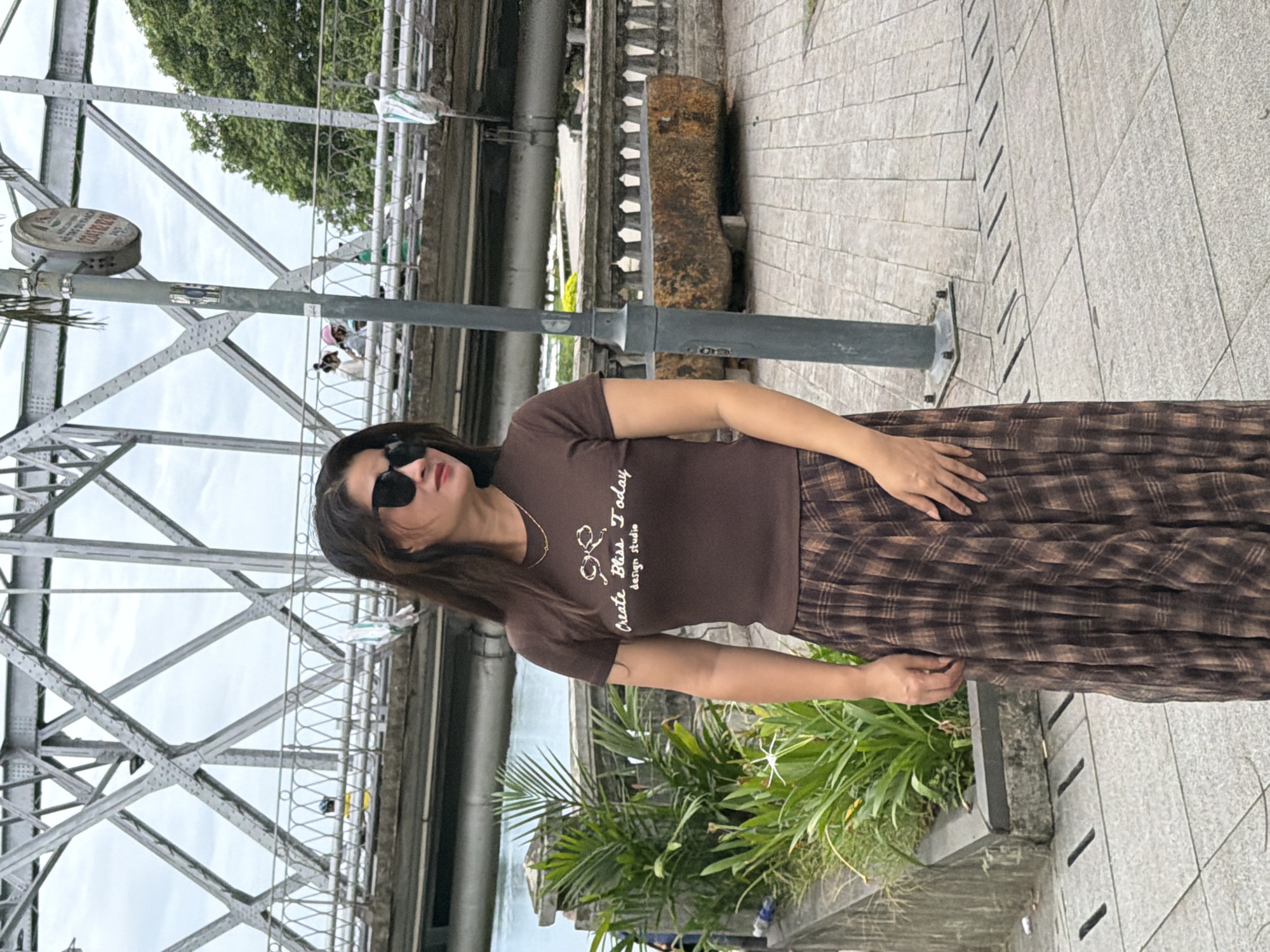
The image shows a tiled pathway along an ancient brick wall. The wall is on the left side of the frame, showing signs of age and wear. The pathway is made of square terracotta tiles laid in a diamond pattern and extends into the distance. To the right of the pathway, there is a field of overgrown grass and some trees. In the background, there are buildings and more trees, suggesting an urban or semi-urban environment. The sky above is cloudy with patches of blue sky and the sun is partially visible through the clouds on the left side of the frame, indicating either sunrise or sunset. The location is identified as Phú Xuân Ward, Vietnam. No people are clearly visible, though a few distant figures may be present in the background. A white car is parked on the right side of the frame, near the trees.

The image shows a tiled pathway along an ancient brick wall. The wall is on the left side of the frame, showing signs of age and wear. The pathway is made of square terracotta tiles laid in a diamond pattern and extends into the distance. To the right of the pathway, there is a field of overgrown grass and some trees. In the background, there are buildings and more trees, suggesting an urban or semi-urban environment. The sky above is cloudy with patches of blue sky and the sun is partially visible through the clouds on the left side of the frame, indicating either sunrise or sunset. The location is identified as Phú Xuân Ward, Vietnam. No people are clearly visible, though a few distant figures may be present in the background. A white car is parked on the right side of the frame, near the trees.

Phú Xuân Ward
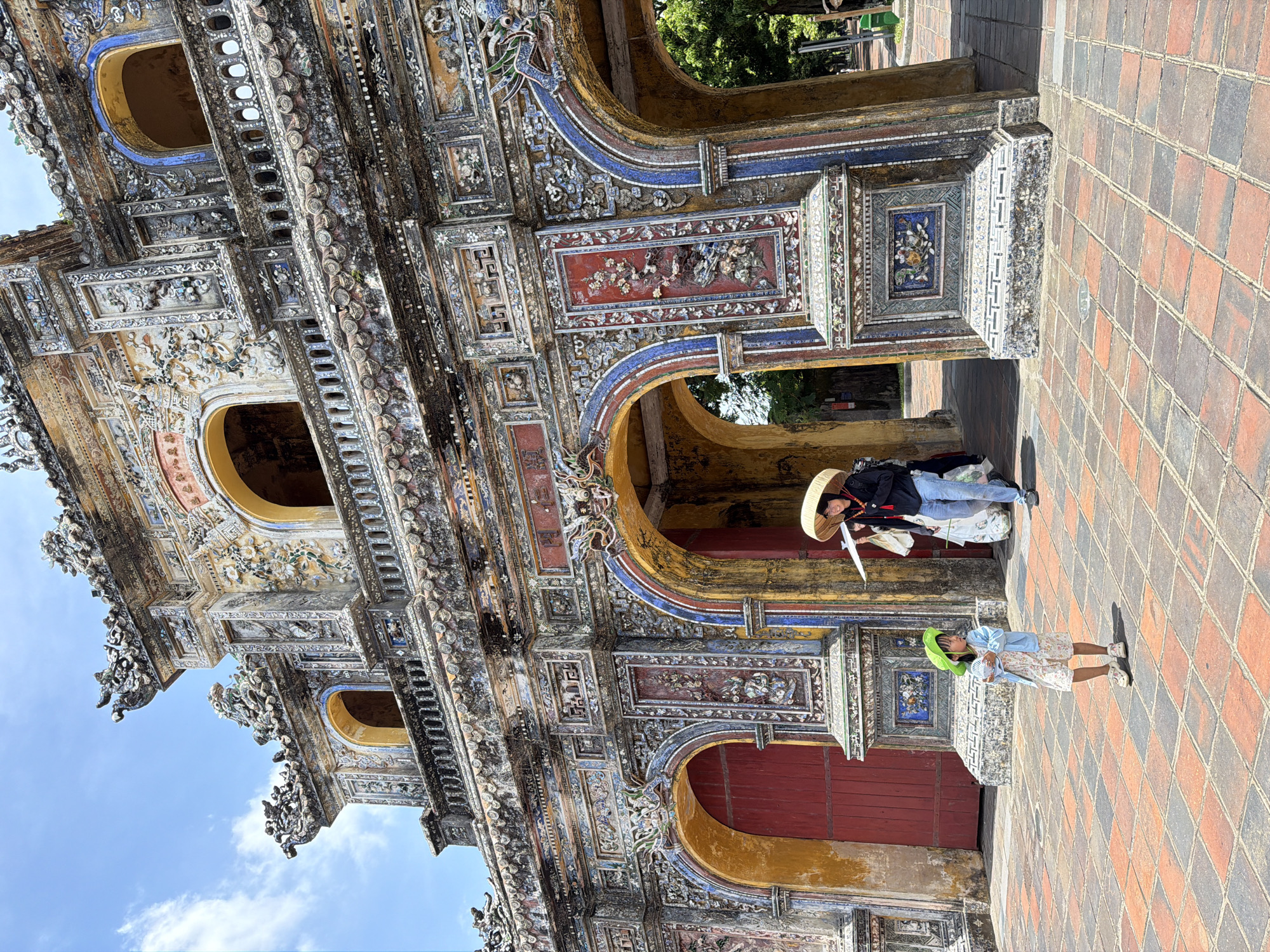
The image shows a brightly decorated three-arched gate at night. The gate's arches are framed by intricate designs in yellow, white, and blue. The doors behind the arches are painted red. Above the arches, there is a balcony-like structure with a balustrade. The upper section of the gate features more ornate designs and a tiled roof with decorative figurines. The sky behind the gate is dark, suggesting it is nighttime. Bushes with white flowers are planted in front of the gate. The location is Phú Xuân Ward, Vietnam.

The image shows a brightly decorated three-arched gate at night. The gate's arches are framed by intricate designs in yellow, white, and blue. The doors behind the arches are painted red. Above the arches, there is a balcony-like structure with a balustrade. The upper section of the gate features more ornate designs and a tiled roof with decorative figurines. The sky behind the gate is dark, suggesting it is nighttime. Bushes with white flowers are planted in front of the gate. The location is Phú Xuân Ward, Vietnam.

Phú Xuân Ward
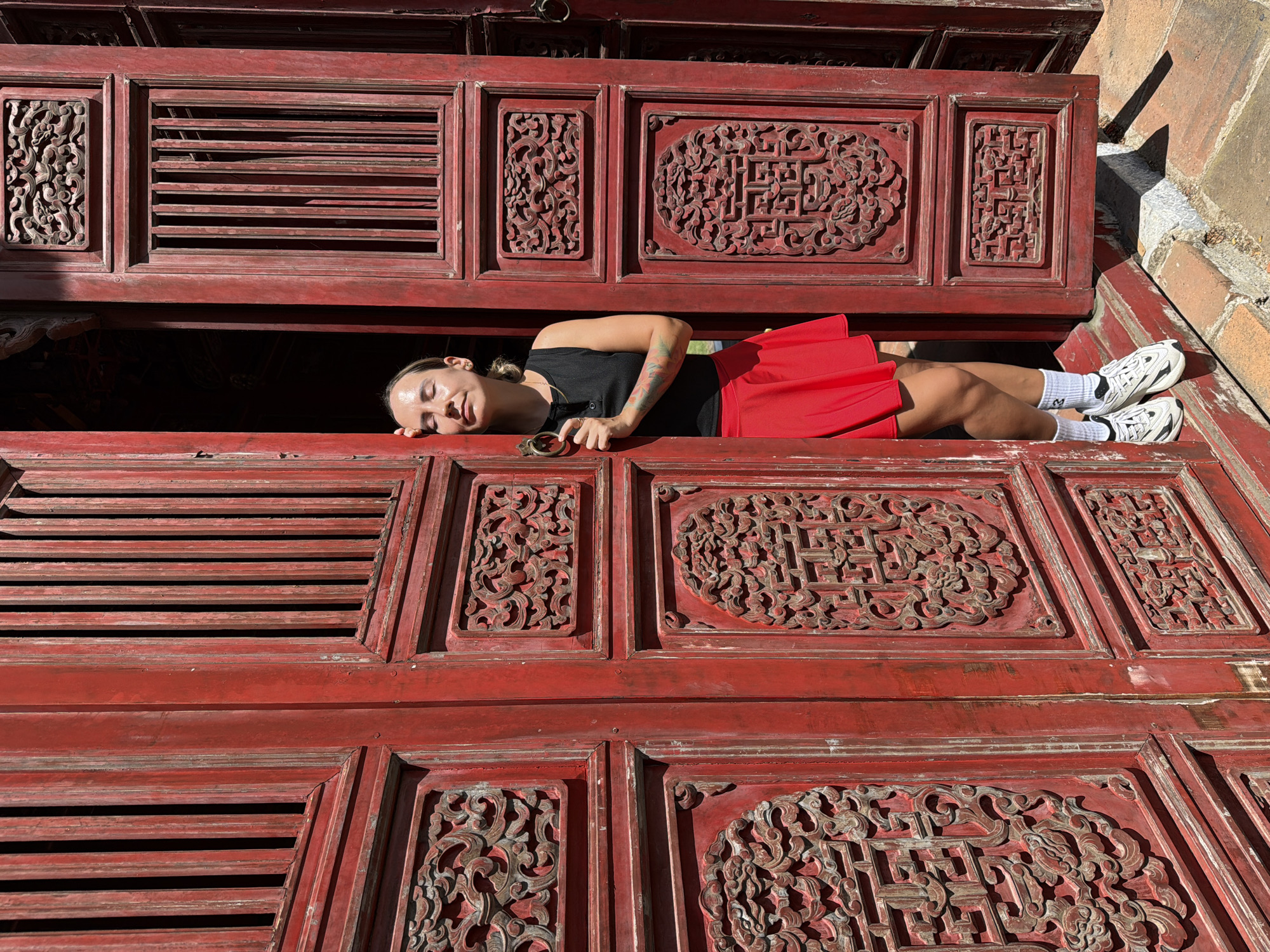
The image shows a row of traditional red Vietnamese doors, possibly from a historic structure, lined up against a stone wall or walkway. The doors are adorned with intricate carvings and designs, some featuring lattice-like ventilation and others ornamental motifs. Their weathered appearance suggests age and exposure. The location is Phú Xuân Ward, Vietnam, identifiable through the style of architecture.

The image shows a row of traditional red Vietnamese doors, possibly from a historic structure, lined up against a stone wall or walkway. The doors are adorned with intricate carvings and designs, some featuring lattice-like ventilation and others ornamental motifs. Their weathered appearance suggests age and exposure. The location is Phú Xuân Ward, Vietnam, identifiable through the style of architecture.

Phú Xuân Ward
The image captures a scene on a bridge in Phú Xuân Ward, Vietnam, during sunset. An orange sun shines through the bridge’s steel truss structure. Two people are riding motorbikes. One person, wearing a helmet and a surgical mask, is riding a red scooter. Further ahead is another scooter, with two riders, partially visible. Yellow lines mark the road on the bridge. Trees and buildings are visible in the background.

The image captures a scene on a bridge in Phú Xuân Ward, Vietnam, during sunset. An orange sun shines through the bridge’s steel truss structure. Two people are riding motorbikes. One person, wearing a helmet and a surgical mask, is riding a red scooter. Further ahead is another scooter, with two riders, partially visible. Yellow lines mark the road on the bridge. Trees and buildings are visible in the background.

Phú Xuân Ward
A single individual stands in front of a yellow architectural structure in Phú Xuân Ward, Vietnam, likely within the Imperial City of Hue. The individual is a female, facing forward, wearing a light yellow or cream-colored traditional Vietnamese tunic with long sleeves and matching wide-legged trousers. She wears a conical straw hat (nón lá) adorned with a red flower or tassel on its right side. Her hands are at her sides.

Behind her, a prominent yellow balustrade with white balusters runs horizontally across the midground. Below the balustrade, a multi-tiered concrete platform or base is visible. To the far left, a square, weathered concrete post from a lower elevation is partially visible.

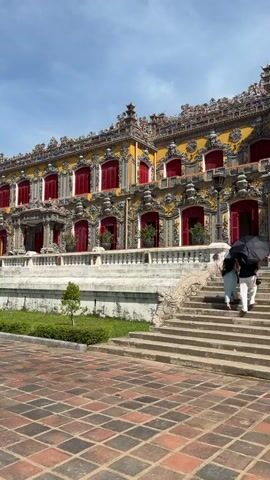
The background features a grand building with a vibrant yellow facade. Several arched windows with red louvered shutters are symmetrically arranged. Intricate mosaic or ceramic decorations in white, blue, and green floral patterns, including stylized vases and foliage, adorn the wall above and around the windows. A small, dark-colored wall-mounted lantern is visible between two windows on the upper left section of the facade. The scene is brightly illuminated by direct sunlight, casting clear shadows.

A single individual stands in front of a yellow architectural structure in Phú Xuân Ward, Vietnam, likely within the Imperial City of Hue. The individual is a female, facing forward, wearing a light yellow or cream-colored traditional Vietnamese tunic with long sleeves and matching wide-legged trousers. She wears a conical straw hat (nón lá) adorned with a red flower or tassel on its right side. Her hands are at her sides. Behind her, a prominent yellow balustrade with white balusters runs horizontally across the midground. Below the balustrade, a multi-tiered concrete platform or base is visible. To the far left, a square, weathered concrete post from a lower elevation is partially visible. The background features a grand building with a vibrant yellow facade. Several arched windows with red louvered shutters are symmetrically arranged. Intricate mosaic or ceramic decorations in white, blue, and green floral patterns, including stylized vases and foliage, adorn the wall above and around the windows. A small, dark-colored wall-mounted lantern is visible between two windows on the upper left section of the facade. The scene is brightly illuminated by direct sunlight, casting clear shadows.

Phú Xuân Ward
The image displays a highly ornate section of a traditional Vietnamese building's rooftop, set against a light blue sky with minimal cloud cover. The structure, located in Phú Xuân Ward, Hue City, Vietnam, features an extensively decorated gable. Central to this gable is a circular, terracotta-red medallion containing three relief figures. The central figure is a man wearing a tall, patterned hat and lighter-colored robes, flanked by two other men in darker, patterned robes, all standing front-facing.

Surrounding the central medallion and extending across the gable are intricate mosaic patterns composed of white, blue, and brown ceramic pieces, forming geometric designs and stylized floral motifs. Visible at the upper edges of the gable are sections of two stylized dragon sculptures. Below the elaborate gable, rows of weathered orange and reddish-brown terracotta roof tiles are present. To the right of the frame, a dark wooden architectural element, possibly an eave or part of an adjacent roof, diagonally descends into view. The scene is illuminated by bright daylight.

The image displays a highly ornate section of a traditional Vietnamese building's rooftop, set against a light blue sky with minimal cloud cover. The structure, located in Phú Xuân Ward, Hue City, Vietnam, features an extensively decorated gable. Central to this gable is a circular, terracotta-red medallion containing three relief figures. The central figure is a man wearing a tall, patterned hat and lighter-colored robes, flanked by two other men in darker, patterned robes, all standing front-facing. Surrounding the central medallion and extending across the gable are intricate mosaic patterns composed of white, blue, and brown ceramic pieces, forming geometric designs and stylized floral motifs. Visible at the upper edges of the gable are sections of two stylized dragon sculptures. Below the elaborate gable, rows of weathered orange and reddish-brown terracotta roof tiles are present. To the right of the frame, a dark wooden architectural element, possibly an eave or part of an adjacent roof, diagonally descends into view. The scene is illuminated by bright daylight.

Phú Xuân Ward
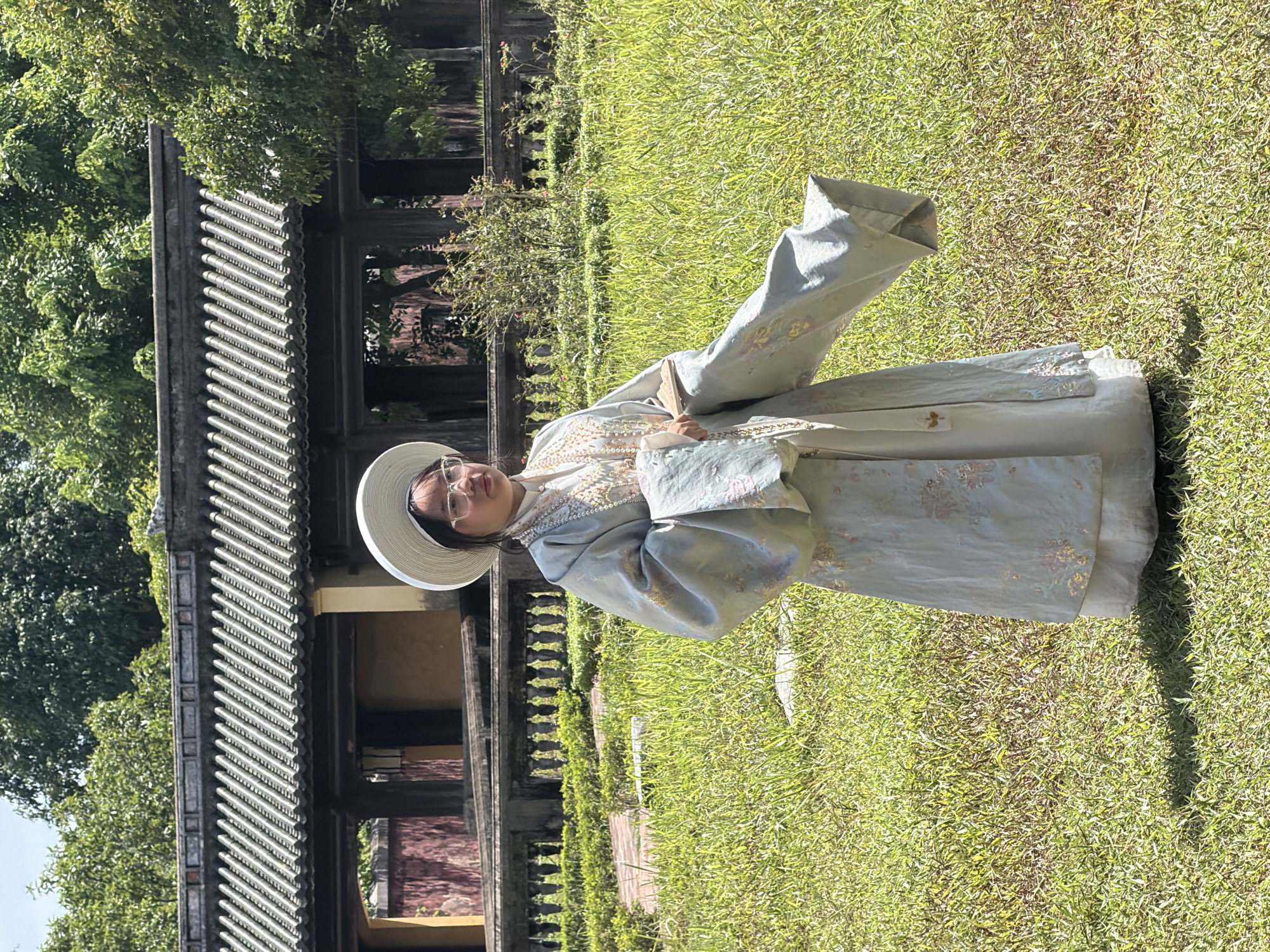
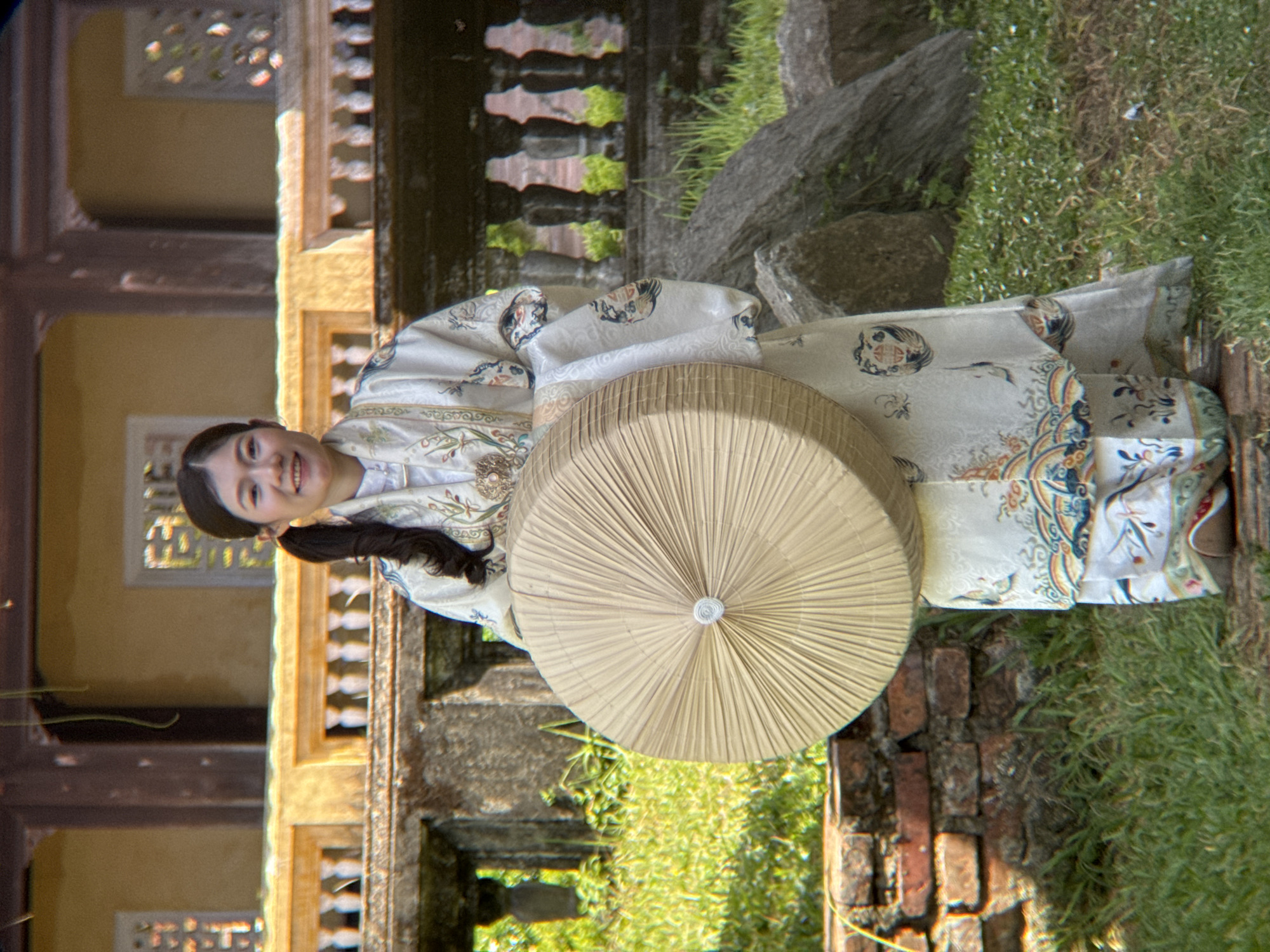
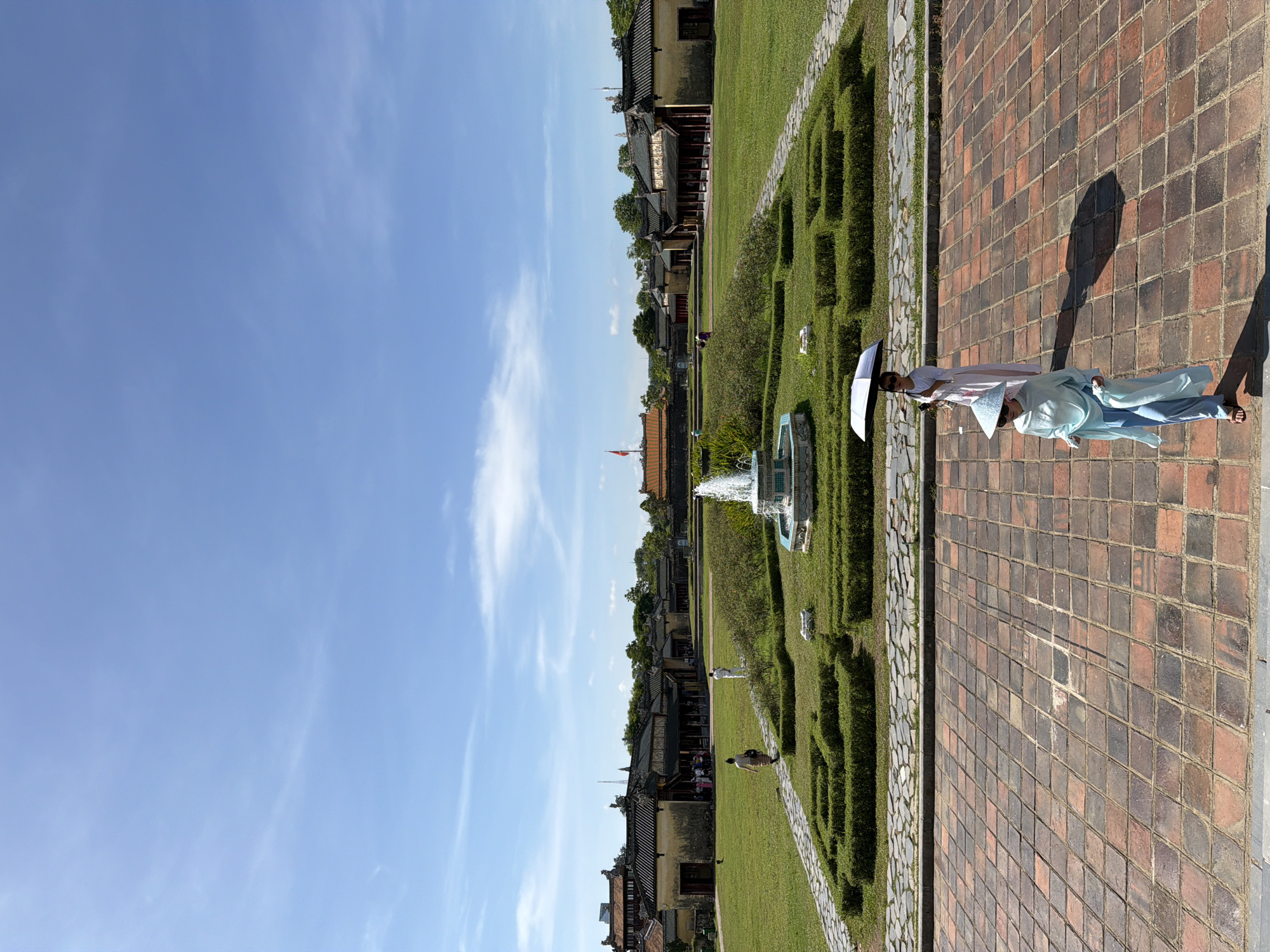
The scene is set outdoors in Phú Xuân Ward, Huế, Vietnam, likely within a historical complex such as the Imperial City. In the foreground, a young East Asian female stands centrally, facing slightly to her left. She wears a wide-brimmed, flat white traditional Vietnamese hat and an elaborate cream-colored long-sleeved robe with gold floral patterns and a complex multicolored embroidered collar. A multi-strand pearl necklace is draped around her neck. Her hands are clasped or folded at her waist, and her gaze is directed downward.

Behind her, a grey stone balustrade with ornate square cutouts extends horizontally. Beyond this balustrade, a dense bed of red flowering plants forms a vibrant mid-ground. To the left, partially obscured by these flowers, a second female in light-colored attire holds an open white parasol. To the right, a third female, dressed in a pink top, dark pants, and a white cap, is actively holding a smartphone or camera at eye level, appearing to photograph something beyond the frame. A fourth individual is partially visible behind her. The background consists of a tall, weathered brick wall, exhibiting discoloration and sparse green vegetation. Below the balustrade, a rough stone wall foundation is visible. The scene is brightly lit under direct daylight.

The scene is set outdoors in Phú Xuân Ward, Huế, Vietnam, likely within a historical complex such as the Imperial City. In the foreground, a young East Asian female stands centrally, facing slightly to her left. She wears a wide-brimmed, flat white traditional Vietnamese hat and an elaborate cream-colored long-sleeved robe with gold floral patterns and a complex multicolored embroidered collar. A multi-strand pearl necklace is draped around her neck. Her hands are clasped or folded at her waist, and her gaze is directed downward. Behind her, a grey stone balustrade with ornate square cutouts extends horizontally. Beyond this balustrade, a dense bed of red flowering plants forms a vibrant mid-ground. To the left, partially obscured by these flowers, a second female in light-colored attire holds an open white parasol. To the right, a third female, dressed in a pink top, dark pants, and a white cap, is actively holding a smartphone or camera at eye level, appearing to photograph something beyond the frame. A fourth individual is partially visible behind her. The background consists of a tall, weathered brick wall, exhibiting discoloration and sparse green vegetation. Below the balustrade, a rough stone wall foundation is visible. The scene is brightly lit under direct daylight.

Phú Xuân Ward
This image depicts an outdoor area within a historical or cultural complex in Phú Xuân Ward, Vietnam, under a partly cloudy sky with scattered white cumulus clouds.

In the immediate foreground, a weathered concrete and stone balustrade with ornate, rectangular, reddish-brown latticework patterns is visible. Directly behind this, a reddish-brown tiled or paved area contains several small flowering plants with slender stems and small purple and red blossoms, along with scattered dry leaves.

Beyond this foreground element, a rectangular, artificial pond or moat with placid, murky green water occupies the lower-mid section of the frame. The pond is bordered by sturdy walls constructed from rough, dark-grey stones, topped with lighter concrete coping and a simple balustrade.

On the far side of the pond, a ground area or path is present, largely shaded by a prominent, mature tree with a thick, gnarled trunk and dense green foliage that extends across much of the upper frame. Four individuals are situated on this path. One person, dressed in dark clothing, is seated on the pond's balustrade beneath the tree's canopy. To their right, two men stand: one in a light shirt and a hat, facing towards the seated individual; the other, in a dark jacket and light pants, stands slightly further right, holding a device resembling a camera or smartphone towards the pond. A fourth person, wearing a light blue jacket and light pants, stands further to the right, facing away from the pond, adjacent to a building.

The building, partially visible on the far right, features a dark, multi-tiered roof with ornate eaves and a light-colored wall. In the background, behind the pond and tree, a long, weathered red brick wall with dark coping runs horizontally across the scene, indicating a boundary or enclosure.

This image depicts an outdoor area within a historical or cultural complex in Phú Xuân Ward, Vietnam, under a partly cloudy sky with scattered white cumulus clouds. In the immediate foreground, a weathered concrete and stone balustrade with ornate, rectangular, reddish-brown latticework patterns is visible. Directly behind this, a reddish-brown tiled or paved area contains several small flowering plants with slender stems and small purple and red blossoms, along with scattered dry leaves. Beyond this foreground element, a rectangular, artificial pond or moat with placid, murky green water occupies the lower-mid section of the frame. The pond is bordered by sturdy walls constructed from rough, dark-grey stones, topped with lighter concrete coping and a simple balustrade. On the far side of the pond, a ground area or path is present, largely shaded by a prominent, mature tree with a thick, gnarled trunk and dense green foliage that extends across much of the upper frame. Four individuals are situated on this path. One person, dressed in dark clothing, is seated on the pond's balustrade beneath the tree's canopy. To their right, two men stand: one in a light shirt and a hat, facing towards the seated individual; the other, in a dark jacket and light pants, stands slightly further right, holding a device resembling a camera or smartphone towards the pond. A fourth person, wearing a light blue jacket and light pants, stands further to the right, facing away from the pond, adjacent to a building. The building, partially visible on the far right, features a dark, multi-tiered roof with ornate eaves and a light-colored wall. In the background, behind the pond and tree, a long, weathered red brick wall with dark coping runs horizontally across the scene, indicating a boundary or enclosure.

Phú Xuân Ward
This image captures the Ngọ Môn Gate (Meridian Gate) of the Imperial City of Huế, located in Phú Xuân Ward, Vietnam, under an overcast sky with diffused light.

In the foreground, a dense bed of green plants with scattered red and purple flowers occupies the lower left. A light-colored concrete pathway with decorative balustrades runs horizontally across the mid-foreground, bordering a dark body of water, likely a moat. Beyond the moat, a robust, dark grey stone wall, constructed from stacked rough stones, forms a bank, featuring a rectangular planter box filled with vibrant red flowers in the mid-right.

The central architectural subject is the multi-tiered Ngọ Môn Gate, presented as a prominent structure built on a raised dark grey stone platform. The gate features traditional Vietnamese design elements, including elaborate dark-tiled roofs with decorative finials, visible red support columns, and lighter orange-ttiled upper sections. A large arched entrance is centrally positioned within the stone platform, with additional smaller arched or rectangular openings visible. Approximately 15-20 individuals, appearing to be visitors, are congregated on the platform and near the gate entrance. A single individual in dark clothing stands on a pathway to the far left, facing the gate.

A stone bridge crosses the moat, providing access to the gate's platform. Green tree foliage partially frames the image from the upper left and right corners. A continuous band of green trees lines the top of the distant wall, which extends horizontally behind the main gate structure.

This image captures the Ngọ Môn Gate (Meridian Gate) of the Imperial City of Huế, located in Phú Xuân Ward, Vietnam, under an overcast sky with diffused light. In the foreground, a dense bed of green plants with scattered red and purple flowers occupies the lower left. A light-colored concrete pathway with decorative balustrades runs horizontally across the mid-foreground, bordering a dark body of water, likely a moat. Beyond the moat, a robust, dark grey stone wall, constructed from stacked rough stones, forms a bank, featuring a rectangular planter box filled with vibrant red flowers in the mid-right. The central architectural subject is the multi-tiered Ngọ Môn Gate, presented as a prominent structure built on a raised dark grey stone platform. The gate features traditional Vietnamese design elements, including elaborate dark-tiled roofs with decorative finials, visible red support columns, and lighter orange-ttiled upper sections. A large arched entrance is centrally positioned within the stone platform, with additional smaller arched or rectangular openings visible. Approximately 15-20 individuals, appearing to be visitors, are congregated on the platform and near the gate entrance. A single individual in dark clothing stands on a pathway to the far left, facing the gate. A stone bridge crosses the moat, providing access to the gate's platform. Green tree foliage partially frames the image from the upper left and right corners. A continuous band of green trees lines the top of the distant wall, which extends horizontally behind the main gate structure.

Phú Xuân Ward
The image depicts an expansive outdoor scene within the Imperial City of Hue, Phú Xuân Ward, Vietnam. The sky occupies the upper two-fifths, featuring dense light gray and white cumulus clouds with patches of clear blue sky.

In the foreground, a dark, rough ground surface covers the lower right. To the left, an ornate black metal fence extends, bordering a reddish-brown brick pathway. Three metallic utility boxes are positioned against a weathered brick wall that runs horizontally across the mid-ground. This brick wall shows signs of discoloration and minor vegetation growth.

Above the brick wall, a large, well-maintained green grassy lawn extends into the background, sloping gently upwards towards the right. A reddish-brown brick path is visible on the far left of the grassy area. A line of dense green trees, interspersed with smaller structures and a tall, multi-headed streetlamp, stretches across the mid-distance. Several small human figures are discernible walking on the grass and near these distant structures.

Prominently situated on an elevated grassy mound on the right side of the image is a traditional Vietnamese multi-tiered pagoda-like structure. It features dark grey walls, a distinctive reddish-orange tiled roof with curved eaves, and a central arched opening. A set of steps leads up to this structure. Faint outlines of distant urban buildings are visible on the far right horizon.

The image depicts an expansive outdoor scene within the Imperial City of Hue, Phú Xuân Ward, Vietnam. The sky occupies the upper two-fifths, featuring dense light gray and white cumulus clouds with patches of clear blue sky. In the foreground, a dark, rough ground surface covers the lower right. To the left, an ornate black metal fence extends, bordering a reddish-brown brick pathway. Three metallic utility boxes are positioned against a weathered brick wall that runs horizontally across the mid-ground. This brick wall shows signs of discoloration and minor vegetation growth. Above the brick wall, a large, well-maintained green grassy lawn extends into the background, sloping gently upwards towards the right. A reddish-brown brick path is visible on the far left of the grassy area. A line of dense green trees, interspersed with smaller structures and a tall, multi-headed streetlamp, stretches across the mid-distance. Several small human figures are discernible walking on the grass and near these distant structures. Prominently situated on an elevated grassy mound on the right side of the image is a traditional Vietnamese multi-tiered pagoda-like structure. It features dark grey walls, a distinctive reddish-orange tiled roof with curved eaves, and a central arched opening. A set of steps leads up to this structure. Faint outlines of distant urban buildings are visible on the far right horizon.

Phú Xuân Ward
An exterior, eye-level photograph depicts the Hiển Lâm Các (Pavilion of Splendid Caprice) within the Imperial City, Phú Xuân Ward, Huế, Vietnam, under a partly cloudy sky. The central subject is a two-tiered, weathered stone and brick pavilion, characterized by its traditional tiered roof with reddish-brown tiles and dark grey, discolored walls. The lower tier features a central arched opening flanked by two circular, patterned windows. The upper tier displays a single circular, patterned window centrally placed. A small, indistinct human figure is partially visible on the lower tier to the left of the central archway.

In the immediate foreground, a dark grey stone wall with an orange-tiled coping runs horizontally across the bottom of the frame. Behind this wall, a strip of green grass precedes a concrete pathway ascending from the left towards the pavilion. To the right of the grass, a dirt path runs alongside the pavilion, marked by two light-colored vertical posts. Dense green trees and foliage are visible to the left of the pavilion. To the right, a dark stone wall or fortification extends into the midground, beyond which distant urban buildings with light-colored facades and various roof styles are discernible against the horizon. The sky is a light blue, containing scattered white and grey cumulus clouds.

An exterior, eye-level photograph depicts the Hiển Lâm Các (Pavilion of Splendid Caprice) within the Imperial City, Phú Xuân Ward, Huế, Vietnam, under a partly cloudy sky. The central subject is a two-tiered, weathered stone and brick pavilion, characterized by its traditional tiered roof with reddish-brown tiles and dark grey, discolored walls. The lower tier features a central arched opening flanked by two circular, patterned windows. The upper tier displays a single circular, patterned window centrally placed. A small, indistinct human figure is partially visible on the lower tier to the left of the central archway. In the immediate foreground, a dark grey stone wall with an orange-tiled coping runs horizontally across the bottom of the frame. Behind this wall, a strip of green grass precedes a concrete pathway ascending from the left towards the pavilion. To the right of the grass, a dirt path runs alongside the pavilion, marked by two light-colored vertical posts. Dense green trees and foliage are visible to the left of the pavilion. To the right, a dark stone wall or fortification extends into the midground, beyond which distant urban buildings with light-colored facades and various roof styles are discernible against the horizon. The sky is a light blue, containing scattered white and grey cumulus clouds.

Phú Xuân Ward
An upward-angled view captures a weathered, dark gray stone archway with a heavy, double-panel metal gate, closed and secured by a padlock, in Phú Xuân Ward, Vietnam. The gate, exhibiting significant paint chipping and rust, features vertical bars that partially obscure a long, ascending staircase beyond. The staircase, constructed of light gray stone or concrete, shows minor green vegetation growing between steps. Approximately halfway up the stairs, a small, dark-colored canine animal is visible, facing the viewer. Further in the background, atop the staircase, a multi-tiered building with traditional East Asian architectural elements and weathered facades is visible against a bright, overcast sky. The overall scene is illuminated by natural daylight.

An upward-angled view captures a weathered, dark gray stone archway with a heavy, double-panel metal gate, closed and secured by a padlock, in Phú Xuân Ward, Vietnam. The gate, exhibiting significant paint chipping and rust, features vertical bars that partially obscure a long, ascending staircase beyond. The staircase, constructed of light gray stone or concrete, shows minor green vegetation growing between steps. Approximately halfway up the stairs, a small, dark-colored canine animal is visible, facing the viewer. Further in the background, atop the staircase, a multi-tiered building with traditional East Asian architectural elements and weathered facades is visible against a bright, overcast sky. The overall scene is illuminated by natural daylight.

Phú Xuân Ward
The image captures a dark brown, medium-sized dog standing on a weathered concrete staircase in Phú Xuân Ward, Vietnam. The dog, displaying lighter tan markings on its muzzle, chest, and legs, and hints of graying around its snout, stands alertly, facing slightly left from the viewer's perspective. It is positioned centrally in the frame, partially obscured by two prominent vertical metallic bars of what appears to be a gate or fence in the foreground. These bars exhibit signs of rust and wear, with a rusted latch mechanism visible on the left bar.

The concrete stairs ascend into the background, showing significant deterioration with cracks, chips, and extensive growth of green vegetation (weeds, small plants, moss) emerging from between the steps and along their surfaces. Above and beyond the stairs, a worn, stained concrete or stucco wall is visible, further indicating an aged structure. The top of the image reveals a bright, possibly overcast, sky. The scene is brightly illuminated by natural light, casting subtle shadows. No other individuals or animals are present, and the dog is stationary.

The image captures a dark brown, medium-sized dog standing on a weathered concrete staircase in Phú Xuân Ward, Vietnam. The dog, displaying lighter tan markings on its muzzle, chest, and legs, and hints of graying around its snout, stands alertly, facing slightly left from the viewer's perspective. It is positioned centrally in the frame, partially obscured by two prominent vertical metallic bars of what appears to be a gate or fence in the foreground. These bars exhibit signs of rust and wear, with a rusted latch mechanism visible on the left bar. The concrete stairs ascend into the background, showing significant deterioration with cracks, chips, and extensive growth of green vegetation (weeds, small plants, moss) emerging from between the steps and along their surfaces. Above and beyond the stairs, a worn, stained concrete or stucco wall is visible, further indicating an aged structure. The top of the image reveals a bright, possibly overcast, sky. The scene is brightly illuminated by natural light, casting subtle shadows. No other individuals or animals are present, and the dog is stationary.

Phú Xuân Ward
An outdoor scene in Phú Xuân Ward, Vietnam, features a large, heavily corroded artillery piece. The primary subject is a substantial, rust-colored cannon barrel, oriented upwards and slightly right, exhibiting extensive surface degradation and flaking at its muzzle. It is secured on a rectangular, rust-toned metal carriage that displays an embossed dragon motif on its visible front panel, also showing significant corrosion. In the immediate foreground, a dark, rough-textured concrete structure, likely a defensive wall or pedestal, partially obstructs the cannon's base. Sparse vegetation grows along the top edge and base of this concrete structure. To the left, a tall, octagonal concrete support column rises vertically, showing weathering. The upper background consists of a clear to partly cloudy blue sky, intersected by several dark overhead utility lines. The scene is viewed from a low-angle perspective.

An outdoor scene in Phú Xuân Ward, Vietnam, features a large, heavily corroded artillery piece. The primary subject is a substantial, rust-colored cannon barrel, oriented upwards and slightly right, exhibiting extensive surface degradation and flaking at its muzzle. It is secured on a rectangular, rust-toned metal carriage that displays an embossed dragon motif on its visible front panel, also showing significant corrosion. In the immediate foreground, a dark, rough-textured concrete structure, likely a defensive wall or pedestal, partially obstructs the cannon's base. Sparse vegetation grows along the top edge and base of this concrete structure. To the left, a tall, octagonal concrete support column rises vertically, showing weathering. The upper background consists of a clear to partly cloudy blue sky, intersected by several dark overhead utility lines. The scene is viewed from a low-angle perspective.

Phú Xuân Ward
A rusty, dark brown cannon is positioned centrally, pointing forward, resting on a multi-tiered grey stone carriage with two visible grey wheels. It is flanked by two dark red-brown brick walls, which show signs of age. The immediate ground is paved with dark, weathered stones, and a red base is visible beneath the cannon's carriage. Beyond the brick walls, a narrow grassy area and a water-filled moat or trench separate the foreground from a paved road. The road features white markings and a parallel white barrier. In the mid-distance on the road, small figures on what appear to be motorbikes or bicycles are discernible, including a distinct dark blue-green scooter. The background is dominated by a dense line of trees with varying foliage, some green and others bare, with a large body of water visible behind them. The sky is uniformly overcast and grey. This scene is located in Phú Xuân Ward, Vietnam.

A rusty, dark brown cannon is positioned centrally, pointing forward, resting on a multi-tiered grey stone carriage with two visible grey wheels. It is flanked by two dark red-brown brick walls, which show signs of age. The immediate ground is paved with dark, weathered stones, and a red base is visible beneath the cannon's carriage. Beyond the brick walls, a narrow grassy area and a water-filled moat or trench separate the foreground from a paved road. The road features white markings and a parallel white barrier. In the mid-distance on the road, small figures on what appear to be motorbikes or bicycles are discernible, including a distinct dark blue-green scooter. The background is dominated by a dense line of trees with varying foliage, some green and others bare, with a large body of water visible behind them. The sky is uniformly overcast and grey. This scene is located in Phú Xuân Ward, Vietnam.

Phú Xuân Ward
A close-up, vertical shot captures a heavily rusted cast iron object, presumed to be a section of an antique cannon barrel, located outdoors in Phú Xuân Ward, Vietnam. The cylindrical object exhibits a deeply pitted, rough, and oxidized surface, predominantly reddish-brown with darker grey patches, indicating extensive weathering. Raised characters, consistent with traditional Asian script, are vertically cast into the surface, partially obscured by corrosion but discernible. A circumferential raised band is present near the bottom of the visible section. Direct sunlight illuminates the object's right side, creating a distinct shadow line along its left. The blurred background consists of a light-colored, possibly paved or stone surface. No people, actions, or specific interactions are depicted.

A close-up, vertical shot captures a heavily rusted cast iron object, presumed to be a section of an antique cannon barrel, located outdoors in Phú Xuân Ward, Vietnam. The cylindrical object exhibits a deeply pitted, rough, and oxidized surface, predominantly reddish-brown with darker grey patches, indicating extensive weathering. Raised characters, consistent with traditional Asian script, are vertically cast into the surface, partially obscured by corrosion but discernible. A circumferential raised band is present near the bottom of the visible section. Direct sunlight illuminates the object's right side, creating a distinct shadow line along its left. The blurred background consists of a light-colored, possibly paved or stone surface. No people, actions, or specific interactions are depicted.

Phú Xuân Ward
The image displays an outdoor historical fortification, specifically a cannon battery, situated in Phú Xuân Ward, Vietnam, under a bright blue sky partially covered by scattered white cumulus clouds. Five dark, weathered cannons, likely constructed of cast iron, are arranged in a linear sequence, extending from the foreground towards the midground. Each cannon rests on a light-colored, ornate base featuring red trim and carved patterns. These cannons are positioned behind a series of low, dark reddish-brown brick walls, forming individual defensive embrasures. The ground is paved with square, weathered reddish-brown tiles or bricks, showing minor discoloration and a small circular depression in the immediate foreground. A dense line of green trees spans the horizon in the background. Above the tree line, a modern cityscape is visible, characterized by multiple buildings, including a tall, multi-story structure with an angular roofline on the right side. To the left of this skyscraper, a smaller, traditional Vietnamese pavilion with an orange roof and yellow walls is also visible. No individuals are present in the scene.

The image displays an outdoor historical fortification, specifically a cannon battery, situated in Phú Xuân Ward, Vietnam, under a bright blue sky partially covered by scattered white cumulus clouds. Five dark, weathered cannons, likely constructed of cast iron, are arranged in a linear sequence, extending from the foreground towards the midground. Each cannon rests on a light-colored, ornate base featuring red trim and carved patterns. These cannons are positioned behind a series of low, dark reddish-brown brick walls, forming individual defensive embrasures. The ground is paved with square, weathered reddish-brown tiles or bricks, showing minor discoloration and a small circular depression in the immediate foreground. A dense line of green trees spans the horizon in the background. Above the tree line, a modern cityscape is visible, characterized by multiple buildings, including a tall, multi-story structure with an angular roofline on the right side. To the left of this skyscraper, a smaller, traditional Vietnamese pavilion with an orange roof and yellow walls is also visible. No individuals are present in the scene.

Phú Xuân Ward
An exterior view depicts a historical fortification in Phú Xuân Ward, Vietnam, under a heavily overcast sky. A two-tiered, dark stone or brick tower, characteristic of the Hue Citadel, dominates the midground, rising above a substantial, dark fortification wall. The tower features a dark tiled roof, multiple arched openings, and circular decorative elements on its facades, capped by a slender central finial. To the tower's immediate left, a light green rectangular panel, possibly a utility box or door, is affixed to the lower wall. To the right, a dark, large-caliber cannon rests on a marked stone base adjacent to the wall, oriented towards the right. A smaller, darker tower or turret is faintly visible in the distant left background atop the extended fortification. The foreground consists of a dense field of vibrant green grass. The sky is largely obscured by extensive, uniform grey clouds, with a minor brighter patch visible in the upper left quadrant. No individuals or discernible activities are present within the scene.

An exterior view depicts a historical fortification in Phú Xuân Ward, Vietnam, under a heavily overcast sky. A two-tiered, dark stone or brick tower, characteristic of the Hue Citadel, dominates the midground, rising above a substantial, dark fortification wall. The tower features a dark tiled roof, multiple arched openings, and circular decorative elements on its facades, capped by a slender central finial. To the tower's immediate left, a light green rectangular panel, possibly a utility box or door, is affixed to the lower wall. To the right, a dark, large-caliber cannon rests on a marked stone base adjacent to the wall, oriented towards the right. A smaller, darker tower or turret is faintly visible in the distant left background atop the extended fortification. The foreground consists of a dense field of vibrant green grass. The sky is largely obscured by extensive, uniform grey clouds, with a minor brighter patch visible in the upper left quadrant. No individuals or discernible activities are present within the scene.

Phú Xuân Ward
An outdoor, eye-level wide shot depicts a large, weathered stone fortress wall, or rampart, under a partly cloudy blue sky in Phú Xuân Ward, Vietnam. The wall, dark gray and appearing constructed of blocks, extends horizontally across the middle of the frame from left to right, turning at a corner on the right. A prominent multi-segmented flagpole is mounted atop the wall to the left of the corner, flying a red Vietnamese flag with a central yellow five-pointed star.

In the foreground, the ground is paved with reddish-brown square tiles. A raised, light-colored curb separates this area from a darker, possibly gray, paved path that runs diagonally towards the upper left, parallel to the wall. A strip of green ground cover, possibly low shrubs or vines with scattered yellow flowers, borders the base of the fortress wall on the left side of the frame. To the right, a dark metal fence with decorative scrollwork separates the tiled foreground from an upward-sloping, dark-colored stone or paved ramp leading to the top of the fortress. No people, discernible actions, or interactions are visible in the scene. The overall lighting suggests a bright, sunny day.

An outdoor, eye-level wide shot depicts a large, weathered stone fortress wall, or rampart, under a partly cloudy blue sky in Phú Xuân Ward, Vietnam. The wall, dark gray and appearing constructed of blocks, extends horizontally across the middle of the frame from left to right, turning at a corner on the right. A prominent multi-segmented flagpole is mounted atop the wall to the left of the corner, flying a red Vietnamese flag with a central yellow five-pointed star. In the foreground, the ground is paved with reddish-brown square tiles. A raised, light-colored curb separates this area from a darker, possibly gray, paved path that runs diagonally towards the upper left, parallel to the wall. A strip of green ground cover, possibly low shrubs or vines with scattered yellow flowers, borders the base of the fortress wall on the left side of the frame. To the right, a dark metal fence with decorative scrollwork separates the tiled foreground from an upward-sloping, dark-colored stone or paved ramp leading to the top of the fortress. No people, discernible actions, or interactions are visible in the scene. The overall lighting suggests a bright, sunny day.

Phú Xuân Ward
The image depicts a decorated building entrance in Phú Xuân Ward, Vietnam, viewed from the street level. A corrugated metal awning extends from a white multi-story building, beneath which elaborate red and white fabric drapes create a festive enclosure over the sidewalk. The drapes are tied back to form an arched entrance on the left, revealing interior seating. The sidewalk area directly beneath the awning is covered with green artificial turf.

To the right of the fabric entrance, a large red "Double Happiness" (囍) symbol stands prominently, surrounded at its base by clusters of red artificial flowers. Adjacent to this, a small pink oval sign with Vietnamese text is affixed. Further to the right, two decorated vertical pillars, adorned with red, orange, and green artificial flowers and foliage, frame another entrance or display area.

A grey scooter with a visible license plate ("75-F1 376.26") is parked on the green turf, facing slightly left. A large tree with dense green foliage grows immediately above the awning, its trunk partially visible. The foreground consists of a grey asphalt road with a concrete curb, on which scattered leaves and debris are visible. In the distance on the right, another scooter is partially visible on the street. No individuals are present in the immediate scene. The lighting suggests daytime conditions.

The image depicts a decorated building entrance in Phú Xuân Ward, Vietnam, viewed from the street level. A corrugated metal awning extends from a white multi-story building, beneath which elaborate red and white fabric drapes create a festive enclosure over the sidewalk. The drapes are tied back to form an arched entrance on the left, revealing interior seating. The sidewalk area directly beneath the awning is covered with green artificial turf. To the right of the fabric entrance, a large red "Double Happiness" (囍) symbol stands prominently, surrounded at its base by clusters of red artificial flowers. Adjacent to this, a small pink oval sign with Vietnamese text is affixed. Further to the right, two decorated vertical pillars, adorned with red, orange, and green artificial flowers and foliage, frame another entrance or display area. A grey scooter with a visible license plate ("75-F1 376.26") is parked on the green turf, facing slightly left. A large tree with dense green foliage grows immediately above the awning, its trunk partially visible. The foreground consists of a grey asphalt road with a concrete curb, on which scattered leaves and debris are visible. In the distance on the right, another scooter is partially visible on the street. No individuals are present in the immediate scene. The lighting suggests daytime conditions.

Phú Xuân Ward
The image depicts an outdoor scene in Phú Xuân Ward, Vietnam, overlooking a segment of the moat and exterior wall of the Huế Imperial City. In the foreground, the ground is covered with dark soil, an accumulation of brown fallen leaves, and scattered white and light-colored plastic debris. Two slender, bark-covered tree trunks rise vertically from the lower portion of the frame, partially framing the view. Dense green undergrowth, including several large-leafed plants, occupies the area closer to the water's edge.

The midground features a still body of water, likely a moat or canal, reflecting a grey sky. Its surface is extensively dotted with numerous small, light-colored floating objects or vegetation, creating a textured appearance. Across the water, the far bank is lined with additional green foliage.

In the background, a long, weathered wall constructed of reddish-brown bricks or stone extends horizontally across the frame, partially obscured by trees and distant vegetation. This structure is consistent with the fortifications of the Huế Imperial City. The upper portion of the scene reveals a light, overcast sky visible through and above the tree canopy. No individuals, animals, or discernible actions are present in the image.

The image depicts an outdoor scene in Phú Xuân Ward, Vietnam, overlooking a segment of the moat and exterior wall of the Huế Imperial City. In the foreground, the ground is covered with dark soil, an accumulation of brown fallen leaves, and scattered white and light-colored plastic debris. Two slender, bark-covered tree trunks rise vertically from the lower portion of the frame, partially framing the view. Dense green undergrowth, including several large-leafed plants, occupies the area closer to the water's edge. The midground features a still body of water, likely a moat or canal, reflecting a grey sky. Its surface is extensively dotted with numerous small, light-colored floating objects or vegetation, creating a textured appearance. Across the water, the far bank is lined with additional green foliage. In the background, a long, weathered wall constructed of reddish-brown bricks or stone extends horizontally across the frame, partially obscured by trees and distant vegetation. This structure is consistent with the fortifications of the Huế Imperial City. The upper portion of the scene reveals a light, overcast sky visible through and above the tree canopy. No individuals, animals, or discernible actions are present in the image.

Phú Xuân Ward
A two-story building, located in Phú Xuân Ward, Vietnam, is viewed from a paved courtyard under an overcast sky. The structure features white-painted walls with reddish-brown tiled gables and roof elements. The central entrance is accessed by three reddish-brown steps, flanked by two gray planters containing vibrant light-green foliage. The doorway is dark and open. Two square, yellow lanterns hang from the triangular-shaped tiled eaves above the entrance.

To the immediate right of the entrance, the ground floor section exhibits a stone-patterned facade with a dark-framed window. A plain wooden bench is positioned against the wall beneath a black metal pergola, from which multiple small white lights are suspended. A security camera is mounted on the wall above this window. The upper floor displays multiple dark-framed windows, with significant green and white-flowering plant growth cascading from a small balcony railing and around the window frames.

The foreground is dominated by a path paved with light-colored, irregularly shaped interlocking concrete pavers, showing areas of discoloration and wear. A narrow strip of green grass borders the paved path on the right, alongside an irregularly shaped, stone-edged pond containing murky water and some surface vegetation. To the far left of the paved area, a dark wooden bench with black metal scrollwork arms is partially visible on the grass. Further left, behind a weathered wall, two dark motorcycles are parked amidst dense green foliage. Additional square yellow lanterns and small white lights are strung among the trees and overhead structures on the left side of the scene. No individuals are present in the frame.

A two-story building, located in Phú Xuân Ward, Vietnam, is viewed from a paved courtyard under an overcast sky. The structure features white-painted walls with reddish-brown tiled gables and roof elements. The central entrance is accessed by three reddish-brown steps, flanked by two gray planters containing vibrant light-green foliage. The doorway is dark and open. Two square, yellow lanterns hang from the triangular-shaped tiled eaves above the entrance. To the immediate right of the entrance, the ground floor section exhibits a stone-patterned facade with a dark-framed window. A plain wooden bench is positioned against the wall beneath a black metal pergola, from which multiple small white lights are suspended. A security camera is mounted on the wall above this window. The upper floor displays multiple dark-framed windows, with significant green and white-flowering plant growth cascading from a small balcony railing and around the window frames. The foreground is dominated by a path paved with light-colored, irregularly shaped interlocking concrete pavers, showing areas of discoloration and wear. A narrow strip of green grass borders the paved path on the right, alongside an irregularly shaped, stone-edged pond containing murky water and some surface vegetation. To the far left of the paved area, a dark wooden bench with black metal scrollwork arms is partially visible on the grass. Further left, behind a weathered wall, two dark motorcycles are parked amidst dense green foliage. Additional square yellow lanterns and small white lights are strung among the trees and overhead structures on the left side of the scene. No individuals are present in the frame.

Phú Xuân Ward
The scene depicts an outdoor urban setting on a paved surface in Phú Xuân Ward, Vietnam. In the mid-ground, four individuals are seated or standing near a small red table. One person, wearing a black garment with white circular patterns, is seated on a white plastic stool on the left. A bottle of Sprite is on a smaller white stool beside them. Another person, dressed in a yellow garment, is seated on a white stool with their back to the camera, positioned at the red table where several bowls and cups are present. A third person in a red patterned garment is partially visible seated behind the person in yellow. A fourth person, wearing light brown trousers, is partially visible further right. On the far right, the lower legs of a person in grey shorts and flip-flops are visible next to a parked white and maroon scooter-style motorcycle.

In the foreground-midground, a light brown dog with short, possibly brindle-patterned fur walks towards the left of the frame. The dog features prominent patches of reddish-pink dyed fur on its head/neck area and on its bushy tail. To the far left, a red cooler box with a white lid rests on the ground. The ground is a grey, textured paved surface, appearing to be asphalt or concrete, marked with scattered sandy debris and multiple dark, irregular stains or wet patches. Strong overhead sunlight creates a distinct triangular shadow on the right side of the frame.

The scene depicts an outdoor urban setting on a paved surface in Phú Xuân Ward, Vietnam. In the mid-ground, four individuals are seated or standing near a small red table. One person, wearing a black garment with white circular patterns, is seated on a white plastic stool on the left. A bottle of Sprite is on a smaller white stool beside them. Another person, dressed in a yellow garment, is seated on a white stool with their back to the camera, positioned at the red table where several bowls and cups are present. A third person in a red patterned garment is partially visible seated behind the person in yellow. A fourth person, wearing light brown trousers, is partially visible further right. On the far right, the lower legs of a person in grey shorts and flip-flops are visible next to a parked white and maroon scooter-style motorcycle. In the foreground-midground, a light brown dog with short, possibly brindle-patterned fur walks towards the left of the frame. The dog features prominent patches of reddish-pink dyed fur on its head/neck area and on its bushy tail. To the far left, a red cooler box with a white lid rests on the ground. The ground is a grey, textured paved surface, appearing to be asphalt or concrete, marked with scattered sandy debris and multiple dark, irregular stains or wet patches. Strong overhead sunlight creates a distinct triangular shadow on the right side of the frame.

Phú Xuân Ward
This image captures a detail of a building facade, likely a temple or pagoda, in Phú Xuân Ward, Vietnam. The scene is dominated by a vibrant, rectangular relief panel featuring three anthropomorphic figures, commonly identified as the Fú Lù Shòu (Three Star Gods).

From left to right:
The first figure is an elderly male with a long white beard and a prominent forehead, dressed in a blue robe with yellow trim. He holds a staff in his left hand and an indeterminate object in his right.
The central figure is a male with a dark beard, wearing a red robe with intricate yellow and blue patterns and a red cap. He holds a green ruyi scepter in his right hand.
The third figure is a male with a dark beard, clad in a green robe with yellow trim and a dark cap. He holds a cluster of peaches in both hands.
The background of the relief depicts a stylized landscape with green mountains, trees, and small, traditional buildings under a light blue sky with several bird silhouettes.

Above the relief, a row of reddish-brown, undulating roof tiles is visible, surmounted by a lighter-colored eave. A black rectangular floodlight or surveillance camera is mounted on a light-colored metal bracket on the roof, with visible wiring extending from it. To the immediate left of the light, a yellow and red decorative element, possibly part of a dragon or mythical creature, with two spring-like wires protruding, is partially visible.

Below the relief, an ornate dark brown frieze features golden decorative patterns and partially visible Vietnamese script, forming part of a larger inscription or sign. Beneath this, a plain light-colored (possibly pinkish-beige) wall surface is present. The sky above the building appears overcast and light grey.

This image captures a detail of a building facade, likely a temple or pagoda, in Phú Xuân Ward, Vietnam. The scene is dominated by a vibrant, rectangular relief panel featuring three anthropomorphic figures, commonly identified as the Fú Lù Shòu (Three Star Gods). From left to right: The first figure is an elderly male with a long white beard and a prominent forehead, dressed in a blue robe with yellow trim. He holds a staff in his left hand and an indeterminate object in his right. The central figure is a male with a dark beard, wearing a red robe with intricate yellow and blue patterns and a red cap. He holds a green ruyi scepter in his right hand. The third figure is a male with a dark beard, clad in a green robe with yellow trim and a dark cap. He holds a cluster of peaches in both hands. The background of the relief depicts a stylized landscape with green mountains, trees, and small, traditional buildings under a light blue sky with several bird silhouettes. Above the relief, a row of reddish-brown, undulating roof tiles is visible, surmounted by a lighter-colored eave. A black rectangular floodlight or surveillance camera is mounted on a light-colored metal bracket on the roof, with visible wiring extending from it. To the immediate left of the light, a yellow and red decorative element, possibly part of a dragon or mythical creature, with two spring-like wires protruding, is partially visible. Below the relief, an ornate dark brown frieze features golden decorative patterns and partially visible Vietnamese script, forming part of a larger inscription or sign. Beneath this, a plain light-colored (possibly pinkish-beige) wall surface is present. The sky above the building appears overcast and light grey.

Phú Xuân Ward
The image displays an urban street scene in Phú Xuân Ward, Vietnam, under a heavily overcast sky. A female, wearing a white long-sleeved shirt, white pants, and a dark backpack, rides a dark-colored electric bicycle equipped with a front basket. She is positioned facing slightly left, gripping the handlebars, and navigating from the left side of the frame toward the right across an asphalt street. A prominent white pedestrian crossing is marked on the asphalt in the foreground.

In the background, a two-story building occupies the corner of an intersection. The building's left section is painted a faded light pinkish-white, while the right section is a degraded yellow, both exhibiting extensive dirt and weathering. It features a red-tiled hip roof. The upper story contains multiple arched windows with dark frames, some appearing open. The lower story has rectangular windows. A dark, stained concrete wall serves as the building's perimeter fence. Attached to this wall are a yellow informational sign with graphics on the left and a white sign further to the right. An orange rectangular flag is visible on the left section of the wall, and a blue rectangular flag is near the center.

A tall, dark gray metal lattice utility pole stands directly at the building's corner, heavily laden with numerous crisscrossing black electrical and communication wires. A gray utility box is mounted on the lower part of this pole. A pink rectangular flag hangs near the utility pole, and another orange flag is visible further to the right, adjacent to an unseen structure. A young tree supported by wooden stakes is positioned against the concrete wall on the left. A parked scooter is partially visible behind the wall on the far left of the frame.

The image displays an urban street scene in Phú Xuân Ward, Vietnam, under a heavily overcast sky. A female, wearing a white long-sleeved shirt, white pants, and a dark backpack, rides a dark-colored electric bicycle equipped with a front basket. She is positioned facing slightly left, gripping the handlebars, and navigating from the left side of the frame toward the right across an asphalt street. A prominent white pedestrian crossing is marked on the asphalt in the foreground. In the background, a two-story building occupies the corner of an intersection. The building's left section is painted a faded light pinkish-white, while the right section is a degraded yellow, both exhibiting extensive dirt and weathering. It features a red-tiled hip roof. The upper story contains multiple arched windows with dark frames, some appearing open. The lower story has rectangular windows. A dark, stained concrete wall serves as the building's perimeter fence. Attached to this wall are a yellow informational sign with graphics on the left and a white sign further to the right. An orange rectangular flag is visible on the left section of the wall, and a blue rectangular flag is near the center. A tall, dark gray metal lattice utility pole stands directly at the building's corner, heavily laden with numerous crisscrossing black electrical and communication wires. A gray utility box is mounted on the lower part of this pole. A pink rectangular flag hangs near the utility pole, and another orange flag is visible further to the right, adjacent to an unseen structure. A young tree supported by wooden stakes is positioned against the concrete wall on the left. A parked scooter is partially visible behind the wall on the far left of the frame.

Phú Xuân Ward
The image presents an urban street scene in Phú Xuân Ward, Vietnam, under an overcast sky. In the foreground, an asphalt road leads to a concrete sidewalk bordered by a curb. A black refuse bag is positioned on the sidewalk to the far left. A prominent, gray metal lattice utility pole, supporting numerous black electrical and communication cables that crisscross the upper portion of the frame, stands in the left-center. A gray electrical enclosure is attached to this pole.

Behind the sidewalk and utility pole, a dark, weathered stone or concrete fence with decorative ironwork encloses two multi-story buildings. The structure to the left, which is closer, features a faded light yellow and pale pink facade, exhibiting widespread staining and organic growth. It has a gabled roof section and an overhang supported by columns. Two upper-story windows with arched tops and dark-framed sashes are open. A light pink flag is affixed to a pole near the left side of this building, and an orange flag is flown further along the fence. A partially visible sign displaying "TAEKWONDO" and a martial artist graphic is mounted on the fence. Blue tarpaulins are visible behind the fence line.

Further into the scene, a second building with similar architectural characteristics, including arched windows and a yellow facade, is visible. This building is topped with a reddish-brown corrugated metal roof. A yellow flag is flown near this structure. A street light fixture is positioned between the two buildings above the fence line. To the right, several deciduous trees with sparse new leaf growth stand against the sky. No individuals are present in the depicted scene.

The image presents an urban street scene in Phú Xuân Ward, Vietnam, under an overcast sky. In the foreground, an asphalt road leads to a concrete sidewalk bordered by a curb. A black refuse bag is positioned on the sidewalk to the far left. A prominent, gray metal lattice utility pole, supporting numerous black electrical and communication cables that crisscross the upper portion of the frame, stands in the left-center. A gray electrical enclosure is attached to this pole. Behind the sidewalk and utility pole, a dark, weathered stone or concrete fence with decorative ironwork encloses two multi-story buildings. The structure to the left, which is closer, features a faded light yellow and pale pink facade, exhibiting widespread staining and organic growth. It has a gabled roof section and an overhang supported by columns. Two upper-story windows with arched tops and dark-framed sashes are open. A light pink flag is affixed to a pole near the left side of this building, and an orange flag is flown further along the fence. A partially visible sign displaying "TAEKWONDO" and a martial artist graphic is mounted on the fence. Blue tarpaulins are visible behind the fence line. Further into the scene, a second building with similar architectural characteristics, including arched windows and a yellow facade, is visible. This building is topped with a reddish-brown corrugated metal roof. A yellow flag is flown near this structure. A street light fixture is positioned between the two buildings above the fence line. To the right, several deciduous trees with sparse new leaf growth stand against the sky. No individuals are present in the depicted scene.

Phú Xuân Ward
An outdoor, eye-level photograph captures a street scene in Phú Xuân Ward, Vietnam, featuring a severely dilapidated two-story building heavily overgrown by a large tree. The building's exterior walls are extensively covered in moss and staining, with visible brickwork and crumbling plaster. Its roof shows significant damage and partial collapse, revealing exposed timbers and debris. Two window openings are visible on the upper floor; one is a barred vent or shuttered window, and the other, to the left, appears to be an open, glassless frame.

A large tree dominates the left side of the frame, its thick trunk and numerous aerial roots intertwining with and growing into the building's foundation and lower wall. The tree's canopy is dense with green leaves, and overhead, multiple black utility lines traverse horizontally across the sky.

In the foreground, two individuals are riding a dark-colored motor scooter from left to right on a paved road. The driver wears a blue helmet and a grey short-sleeved shirt, while the passenger wears a red helmet and a white short-sleeved shirt. The scooter's rear license plate, "75-AF 097.54," is visible. A concrete sidewalk separates the road from the building. The sky above is overcast.

An outdoor, eye-level photograph captures a street scene in Phú Xuân Ward, Vietnam, featuring a severely dilapidated two-story building heavily overgrown by a large tree. The building's exterior walls are extensively covered in moss and staining, with visible brickwork and crumbling plaster. Its roof shows significant damage and partial collapse, revealing exposed timbers and debris. Two window openings are visible on the upper floor; one is a barred vent or shuttered window, and the other, to the left, appears to be an open, glassless frame. A large tree dominates the left side of the frame, its thick trunk and numerous aerial roots intertwining with and growing into the building's foundation and lower wall. The tree's canopy is dense with green leaves, and overhead, multiple black utility lines traverse horizontally across the sky. In the foreground, two individuals are riding a dark-colored motor scooter from left to right on a paved road. The driver wears a blue helmet and a grey short-sleeved shirt, while the passenger wears a red helmet and a white short-sleeved shirt. The scooter's rear license plate, "75-AF 097.54," is visible. A concrete sidewalk separates the road from the building. The sky above is overcast.

Phú Xuân Ward
The image captures an unoccupied outdoor cafe or garden entrance located in Phú Xuân Ward, Vietnam. A prominent archway, constructed from four large, weathered dark timber beams, stands centrally. The archway features two vertical posts supporting a horizontal crossbeam, with a lower horizontal beam forming a threshold. A rusted, circular metal flange with visible bolt holes is affixed centrally to the top crossbeam. On the interior side of each vertical post, a rusted, cylindrical metal object, possibly a repurposed muffler or pipe, hangs from a curved metal rod.

Beyond the archway, a path of light-colored gravel contains a circular wooden stepping stone. To the left, several large, cream-colored patio umbrellas provide shade over multiple wooden tables and chairs. To the right, dense green foliage, including ferns and broad-leafed plants, surrounds additional wooden tables and chairs, positioned near a light-colored building with dark architectural elements partially visible. The immediate foreground shows ground covered with dark wooden planks, gravel, and scattered leaves. No individuals or active interactions are observed within the frame. The scene is illuminated by natural, diffused daylight.

The image captures an unoccupied outdoor cafe or garden entrance located in Phú Xuân Ward, Vietnam. A prominent archway, constructed from four large, weathered dark timber beams, stands centrally. The archway features two vertical posts supporting a horizontal crossbeam, with a lower horizontal beam forming a threshold. A rusted, circular metal flange with visible bolt holes is affixed centrally to the top crossbeam. On the interior side of each vertical post, a rusted, cylindrical metal object, possibly a repurposed muffler or pipe, hangs from a curved metal rod. Beyond the archway, a path of light-colored gravel contains a circular wooden stepping stone. To the left, several large, cream-colored patio umbrellas provide shade over multiple wooden tables and chairs. To the right, dense green foliage, including ferns and broad-leafed plants, surrounds additional wooden tables and chairs, positioned near a light-colored building with dark architectural elements partially visible. The immediate foreground shows ground covered with dark wooden planks, gravel, and scattered leaves. No individuals or active interactions are observed within the frame. The scene is illuminated by natural, diffused daylight.

Phú Xuân Ward