Pkhundavi, Georgia
17 memories from Pkhundavi, Georgia

In the city of Pkhundavi, Georgia, the interior of a church is depicted, characterized by aged stone walls and a towering pillar adorned with faded religious frescoes. To the left, a tall brass candelabra stands on the stone floor, its circular top holding multiple candle sockets. Further to the left, a framed religious icon, depicting a robed figure with a halo, hangs on the wall. To the right of this, another smaller framed icon of a man in red robes is visible. Dominating the center-left of the frame is a large, ornate golden-framed icon depicting a congregation of figures, seemingly saints, gathered in front of a mountainous landscape. Below this, a small oil lamp with a curved handle hangs from the pillar. To the right of the large icon, a smaller framed icon is mounted on the wall, displaying religious figures. A piece of paper with text, likely a description or prayer, is attached below the small hanging icon. Further right, a wooden door is recessed into the wall. In the background, a portion of an altar or religious shrine is visible, featuring framed artwork and decorative elements. A red carpet with intricate patterns lies on the floor.
Pkhundavi
This image captures the interior of a historical church in Pkhundavi, Georgia, characterized by its ancient architecture and religious artwork. The ceiling features grand arches and a ornate chandelier, hinting at the church's age and architectural significance. The walls are adorned with vibrant frescoes depicting religious figures, a common feature in Orthodox churches, showcasing the rich cultural and artistic heritage of the region. In the foreground, several people are observing the church's interior. Some are casually dressed tourists, possibly engaged in exploration and photography. Their presence suggests the church is a site of historical and cultural interest, drawing visitors to experience its ambiance and artistic treasures. The overall scene evokes a sense of reverence and historical contemplation, as people immerse themselves in the spiritual and artistic atmosphere of this sacred space.
Pkhundavi
The image captures the interior of a church, likely the Church of the Holy Cross in Pkhundavi, Georgia. The central feature is a large, ornate iconostasis adorned with numerous religious paintings. A crystal chandelier hangs from the arched ceiling, illuminated by multiple bulbs. Several people are present in the foreground, observing the iconostasis. The walls and ceiling exhibit signs of age and wear. The floor is covered with a red carpet leading towards the iconostasis.
Pkhundavi
A group of tourists stands on a stone-paved courtyard of a historical complex, possibly Ananuri Fortress, in Pkhundavi, Georgia. The tourists, dressed in casual outdoor wear, are looking out at a vast body of water, likely the Zhinvali Reservoir, surrounded by lush green mountains. The sky is overcast with heavy, gray clouds, creating a dramatic and somewhat muted atmosphere. The architectural style of the courtyard, with its stone walls and crenellated battlements, suggests an ancient defensive structure. Some individuals are pointing or gesturing, possibly engaging with a tour guide or observing the scenery. The overall scene captures a moment of exploration and appreciation of the natural and historical landscape of the region.
Pkhundavi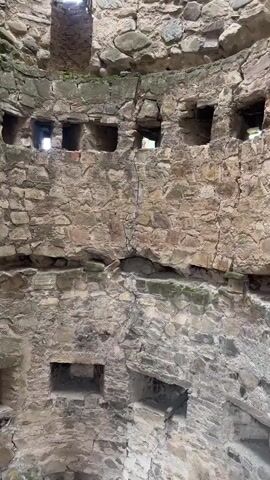
The video shows a group of people exploring an ancient stone structure. The first few seconds show the interior of the structure, with rough stone walls and small openings. Then, the view shifts to people walking on stone steps and a pathway outside the structure. The final frames reveal the exterior of the stone structure, which appears to be a historical site or monastery, with several buildings, tiled roofs, and a large gathering of people in the courtyard. The overall scene depicts tourists visiting a historical location.
Pkhundavi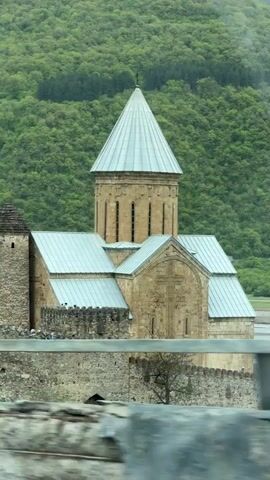
The video shows a stone church with a silver roof, surrounded by a stone wall. The church is set against a backdrop of lush green hills. The camera pans slightly to the left, revealing more of the building and its surroundings. The video appears to have been taken from a moving vehicle.
Pkhundavi
The video shows a roadside view, likely filmed from a moving car. A large rock face towers over the road, with loose rocks scattered on the asphalt. A road sign indicating "ANANURI 1000M" in both English and Georgian is visible. In the background, green hills and mountains complete the landscape. A glimpse of Ananuri fortress can be seen behind the sign. The sky is partly cloudy with blue patches.
Pkhundavi
The image presents an upward-looking view into the weathered interior of a dome, likely part of a church or monastery in Pkhundavi, Georgia. The dominant feature is the large, light-colored circular dome, supported by robust arches and pendentives, visible along the edges of the frame. A distinctive design element is the ring of numerous rectangular windows, roughly 16 to 18 in number, arranged around the base of the dome. These windows channel bright daylight into the space, creating stark contrasts and shadows within their deep recesses. The very center of the dome features a circular, textured area, possibly showing signs of past decoration or decay. The architectural surfaces exhibit considerable age and disrepair. Extensive cracks are visible across the plaster of the dome and supporting arches, and areas of peeling paint are present. Patches of greenish-blue discoloration, possibly from moisture damage or biological growth, trace the lines of the architectural elements. The color palette is predominantly muted, featuring off-white, beige, and various shades of gray, accented by the greenish hues. At the bottom of the frame, parts of an ornate structure are visible, likely an altar or iconostasis. It features a golden cross centrally placed, flanked by intricately carved and gilded decorative elements. No people are present, and no specific activity is occurring. The bright natural light streaming through the windows suggests it is daytime. No visible text is present in the image.
Pkhundavi
This image offers an interior view of a historic church or monastery in Pkhundavi, Georgia, characterized by its high vaulted ceilings, arches, and a central dome. The walls are painted in a light cream or beige, with some arches featuring a faded greenish-blue trim. At the front of the sanctuary, a prominent, multi-tiered iconostasis stands, richly adorned with religious icons and paintings, featuring gold and blue decorative accents, and a central double door. A large, ornate golden chandelier with numerous lights hangs from the center of the dome, providing artificial illumination. The dome itself is pierced by several tall, narrow windows, allowing natural daylight to stream into the space. Faded frescoes or murals depicting religious figures are visible on the high walls, particularly on the left side, indicating the building's ancient heritage. The floor is covered with large, intricately patterned carpets, predominantly red and blue with floral and geometric designs. In the left foreground, a single person is seen from behind, seemingly observing the surroundings or engaged in devotion. Near them, a dark, carved wooden structure, possibly a reliquary stand or seat, is placed on the carpet. Several small stands with lit candles are scattered near the iconostasis, contributing to the serene and spiritual atmosphere. The scene captures a quiet moment within this sacred and historical setting, likely during daylight hours due to the natural light. No legible text is visible.
Pkhundavi
The image displays an interior scene within an Orthodox Christian church or monastery, likely in Pkhundavi, Georgia. The central feature is an elaborate, dark wooden iconostasis or shrine, richly adorned with intricate floral and scrollwork carvings. Within the wooden structure, behind a glass panel, rests a painted icon of Jesus Christ. He is depicted with a halo, a beard, and a solemn expression, holding an open book (likely the Gospels) in his left hand while his right hand is raised in a gesture of blessing. A small, ornate golden vigil lamp (kandili) hangs directly in front of the icon, suspended by chains, its burning wick casting a warm glow. To the left of the iconostasis, an ornate, golden-colored metal stand holds several devotional candles. Two candles are actively burning, one with a prominent flame, set in a tray filled with sand or ash. Behind this stand, a bouquet of artificial or dried roses in shades of pink and red rests on a simple dark wooden chair or stool. The surrounding walls are light-colored and textured, suggesting stone or aged plaster, with faint traces of a painted mural visible on the right. A small, white rectangular plaque with text in an indecipherable script, presumably Georgian, is visible on the lower left portion of the icon, behind the glass. The presence of burning candles and the vigil lamp suggests an ongoing act of prayer or devotion within a sacred space, creating a serene and reverent atmosphere.
Pkhundavi
This image shows a fresco painting on a wall. The painting is weathered, with some sections faded or damaged. The top portion depicts a central figure surrounded by an aureole, possibly Christ, with attendant figures including angels behind and several people below. The middle section shows several scenes including: 1. A cross on top of what appears to be a table. 2. An angel holding a scale. 3. What looks like the depiction of both Heaven and Hell. The bottom portion of the mural depicts multiple figures standing and walking. Given the location (Pkhundavi, Georgia), this is likely a religious scene from a Georgian Orthodox Church. The subject may be The Last Judgement.
Pkhundavi
The image depicts a section of the interior of the Pkhundavi Cathedral in Georgia. The focal point is an ornate iconostasis composed of two tiers of painted panels within arched frames. The upper tier features scenes from the Bible, while the lower tier depicts individual figures, possibly saints or angels. A central set of doors is concealed behind a red curtain adorned with a golden starburst. The scene is roped off with velvet ropes supported by golden stanchions. In the foreground, there is a patterned rug leading towards the doors and a reading stand with an icon on it. The walls are off-white, and the flooring is made of reddish bricks. A partially visible tombstone is near the rope line.
Pkhundavi
The image shows the interior of a building, likely a church or other religious structure, located in Pkhundavi, Georgia. The scene is dominated by a large stone pillar adorned with faded religious frescoes. These paintings depict human figures with halos, characteristic of religious iconography. One fresco shows two standing figures, partially obscured by wear, while the other depicts a single figure in a robe with a halo. Flanking the pillar are two framed icons hanging on the walls. Below one icon is a small wooden chair and a table with candle holders. Natural light streams in through a window at the top left and through a door to the right, partially illuminating the scene and causing glare. The walls are roughly textured and aged, suggesting a historical context.
Pkhundavi
A full-length shot shows the interior of Svetitskhoveli Cathedral in Pkhundavi, Georgia. A person, presumably female, dressed in a light blue jacket, grey pants, and white sneakers, with a white bag slung over her shoulder, stands towards the left of the frame. In the foreground, a large, ornate, dark wood chair with a red ribbon is set upon a patterned rug. The cathedral interior features exposed brick flooring and rough white walls. Religious icons are displayed in wooden frames on the walls. A window is visible in the background above an arch.
Pkhundavi
A wide-angle shot shows the interior of a church in Pkhundavi, Georgia. The church's architecture includes a high, arched ceiling with vertical window slits at the top, allowing sunlight to stream in. An ornate chandelier hangs from the center. A highly decorated iconostasis stands at the front, featuring religious paintings and a central door. Several people are present, with one individual standing prominently in the foreground, appearing to be observing the church's interior. In the background, there is a dark altar or shrine and mural paintings on the walls. The scene is dimly lit, with the chandelier and sunlight providing the primary illumination. The floor is covered with a patterned carpet.
Pkhundavi
This image is a photograph of a large, ornate icon displayed on a textured stone wall, likely within a church in Pkhundavi, Georgia. The icon is encased in an elaborate gold-colored frame featuring intricate floral and scrollwork designs. The icon itself depicts a complex scene in the Eastern Orthodox style. In the foreground, a prominent group of male figures, many with halos, are shown as warriors or soldiers. They wear ancient military attire including chainmail, tunics (in blue, red, and brown), and boots, and are armed with swords, spears, and shields. Their expressions are serene and resolute. One fallen figure, dressed in blue and white, lies on the ground at their feet, near a small banner. The background unfolds a detailed narrative. On the left, a mountainous landscape features a fortified town or monastery perched on a hill, with smaller figures and what appear to be cannons below. In the middle ground, a large river or body of water flows, spanned by a bridge on the right. On this bridge, a group of robed figures, likely clergy or saints, are depicted. In the upper center, within a circular frame, is a bust of a haloed figure, possibly Christ or the Virgin Mary. The icon uses a vibrant palette of blues, reds, greens, and gold, characteristic of traditional iconography. Several lines of text are visible within the icon, primarily in the upper sections, written in Georgian script. Small white informational plaques with Georgian text are also visible on the wall to the left and right of the framed icon. Reflections on the icon's surface are noticeable, particularly towards the bottom center. The overall scene commemorates a significant historical or hagiographical event, likely a battle or a group martyrdom.
Pkhundavi
The image presents a devotional scene within an Eastern Orthodox church, likely in Pkhundavi, Georgia. A prominent framed icon of the Virgin Mary holding the Christ Child is centrally featured, hanging against a textured, light-colored wall. Mary is depicted in a red robe with a darker mantle, while baby Jesus also wears red. The icon shows signs of age and rich detail, including smaller figures of saints or angels surrounding the main depiction and within its border. In the foreground, an ornate, golden icon lamp (kandila) hangs from chains, with a lit wick casting a warm glow. The lamp features intricate metalwork, possibly with small red accents, and small crosses dangling from its base. To the left of the icon, a sprig of fresh green leaves is tucked behind the frame, a common offering in Orthodox worship spaces. Below the icon, a white plaque with text in Georgian script is affixed to the wall. The visible text is a rendition of the "Axion Esti" (Worthy Art Thou) hymn, a revered prayer to the Mother of God, followed by a supplication for protection. The wall itself shows signs of age and patina. In the background to the right, parts of another religious painting or an altar piece are visible, further indicating the sacred setting. A patterned red carpet can also be seen on the floor. The overall ambiance is one of deep religious tradition and reverence, typical of an ancient Orthodox sanctuary.
Pkhundavi