Plast, Russia
16 memories from Plast, Russia
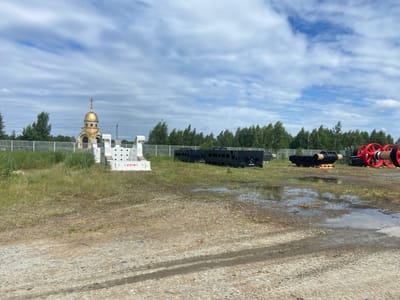
The image depicts an outdoor scene with a church, industrial equipment, and a natural landscape. In the background, a small church with a golden dome stands prominently, its cross reaching towards the sky. In front of the church, a white concrete structure with circular indentations is visible, bearing red Cyrillic text that appears to read "-УЗТМ-". To the right of the white structure, several large, black, industrial objects are arranged on the grassy ground. These appear to be heavy machinery or components, possibly for construction or manufacturing. Further to the right, a stack of large, red-spoked wheels are visible, suggesting they might be part of a larger piece of equipment or machinery. The ground in the foreground is a mix of gravel and dirt, with several puddles of water indicating recent rain. The surrounding area is covered in dry, green grass and shrubs, with a dense line of trees forming the horizon. The sky is partly cloudy, with patches of blue visible between the white clouds. The overall impression is of an industrial or storage area adjacent to a religious site, likely in a rural or semi-rural location. There are no people visible in the image. The time of day appears to be daytime, and the weather is overcast with some sun breaking through. The location cues suggest a setting in Plast, Russia, as indicated by the provided context.
Plast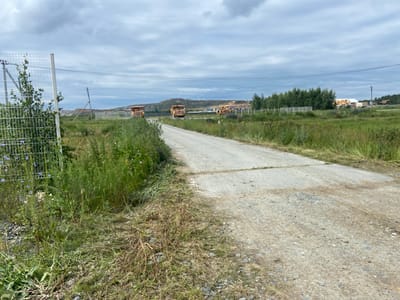
This image depicts an outdoor scene in Plast, Russia, featuring a dirt road leading into a grassy field. In the distance, several large yellow mining trucks are parked, suggesting a potential construction or mining site. The sky is overcast with gray clouds, indicating a cloudy day. Green trees are visible in the background, bordering the field. A wire fence runs along the left side of the road, with some vegetation growing through it. The overall setting appears to be rural or industrial, with an emphasis on the natural landscape and heavy machinery. There is no visible text in the image.
Plast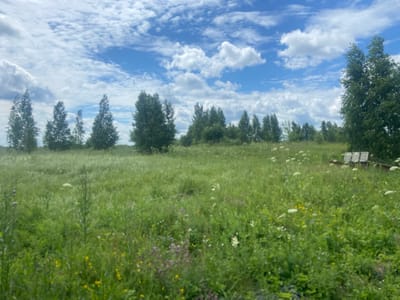
The image depicts a lush, green meadow under a bright blue sky dotted with fluffy white clouds. The meadow is filled with various wildflowers, including small yellow and purple blooms, interspersed with tall grasses. A line of trees forms a distant backdrop across the middle ground. In the far right of the image, a wooden bench is visible among the vegetation. The scene is consistent with an outdoor natural environment, possibly a park or rural area, located in Plast, Russia. There are no people or animals present in the image.
Plast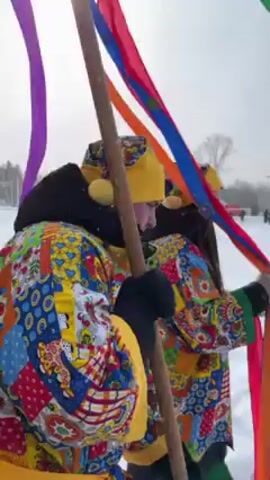
The video shows a group of people on snow, holding a pole structure with colorful ribbons attached. The ribbons are waving in the wind. People are dressed in colorful clothes. It appears to be a winter celebration or festival. A few trees are visible in the background.
Plast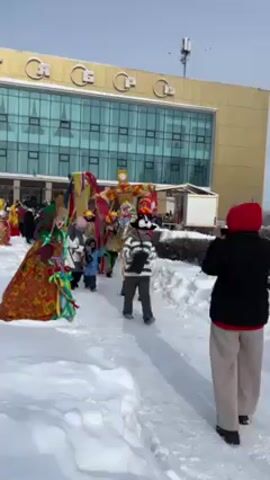
A parade of people are walking on a snow-covered path next to a building. The parade is led by people carrying traditional figures dressed in bright clothes and ribbons. A small child in a blue jacket walks in the center of the parade. A woman on the right side of the screen wearing a black jacket and tan pants is taking a photo of the parade. The building behind the parade is gold with blue windows. The sky is clear and blue.
Plast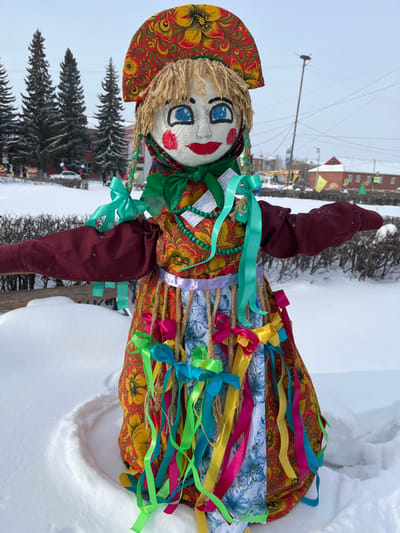
An effigy, consistent with a traditional Maslenitsa doll, stands prominently in a snow-covered outdoor environment in Plast, Russia, under an overcast sky. The doll, facing forward, features a white, spherical head with drawn blue eyes, black eyebrows, red cheeks, and red lips. Its blonde yarn hair is visible beneath a semi-circular headdress adorned with red, yellow, and green floral patterns. A green scarf is tied around its neck. The effigy wears a long-sleeved, reddish-brown garment with outstretched arms. A light teal ribbon is tied around the left elbow. The torso section of the dress exhibits a reddish-brown and yellow floral pattern. Several small, white rectangular paper tags, possibly containing written text, are attached to the chest, along with a green beaded necklace. A light purple ribbon separates the torso from the skirt. The multi-layered skirt features a reddish-brown and yellow floral pattern, partially covered by a panel of blue and white floral fabric. Numerous lengths of twine hang from the waist, each decorated with multiple colorful satin ribbons tied into bows, including shades of green, blue, yellow, and fuchsia. The effigy is anchored in a circular impression within the white, undisturbed snow covering the foreground. Behind the doll, low, snow-dusted dark green bushes are visible. In the midground, several tall, dark green coniferous trees stand against the sky. The background reveals a street with a parked white car, various low-rise buildings (some with red roofs), utility poles with overhead wires, and streetlights. Pedestrian crossing signs are also discernible. Distant, indistinct human figures are visible on the street, and colorful flags or banners are present in the far background, suggesting a public area.
Plast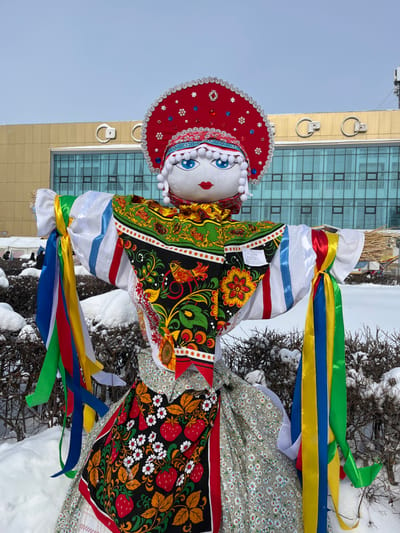
A large, traditional Russian effigy, approximately human-sized, stands upright amidst snow-covered ground and shrubs. The effigy features a fabric head with painted blue eyes, red lips, and white pom-pom hair. It wears a prominent, ornate red kokoshnik-style headdress adorned with silver trim, red gemstones, and silver embellishments. The effigy's body is dressed in multiple layers of patterned fabric, including a colorful shawl with a black background featuring birds, flowers, and foliage, and a skirt with a small floral pattern, overlaid with an apron-like piece depicting red strawberries and white flowers on a black background. Its extended arms are constructed from straw or sticks, covered in white fabric, with multiple colorful satin ribbons (blue, red, yellow, green, and white) tied to both sides. In the immediate foreground, dark green shrubs are visible, partially covered by white snow. The background features a large, modern building with a light beige or yellow facade and numerous blue-tinted reflective windows. Two large, white ring-shaped fixtures are visible on the building's roofline. The sky above is a clear, light blue. The scene is located in the city of Plast, Russia, under winter conditions.
Plast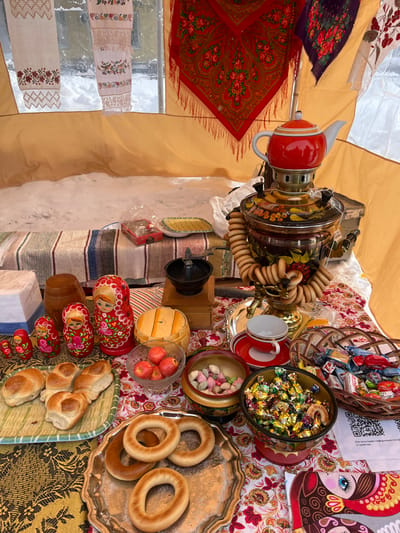
This image captures an outdoor vendor's stall in Plast, Russia, situated under a beige/tan tent with transparent panels revealing a snow-covered ground and distant building in the background, indicating a winter setting. The scene focuses on a table densely covered with patterned tablecloths, displaying traditional Russian goods and food items. A prominent, ornate gold-colored samovar, painted with red and black floral designs, stands centrally, topped by a red and white teapot. A string of sushki bagels is looped around the samovar's base. To the left, a graduated set of five red matryoshka nesting dolls with floral patterns is arranged alongside a small wooden barrel and a white rectangular block. A light green rectangular platter holds several small, braided bread rolls. A silver platter presents multiple bubliki bagels. Other items on the table include a clear glass bowl containing small red apples, a wooden bowl filled with pastel-colored candies, and two additional bowls holding an assortment of individually wrapped, colorful candies. A small black coffee grinder on a wooden base, a red and white teacup with a saucer, a small red box, and a yellow patterned plate are also present. A white paper with a QR code is visible on the bottom right. Hanging textiles visible in the background include two white embroidered linen pieces and a large red floral shawl with fringe, alongside a darker patterned fabric. No people or active interactions are depicted within the frame.
Plast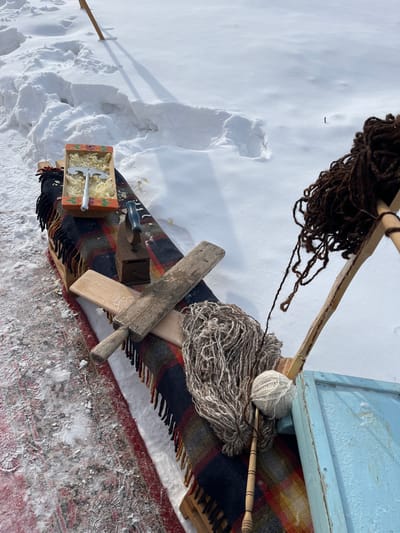
This image, captured in Plast, Russia, depicts an outdoor winter scene featuring a display of traditional items arranged on a makeshift snow-covered surface. The primary subject is a low wooden bench-like structure, draped with a dark plaid blanket featuring red, orange, and yellow patterns with fringed edges. This structure is positioned in deep, undisturbed snow under bright daylight conditions, casting subtle shadows. On the blanket, from left to right, are several objects: 1. An ornate, reddish-orange wooden box with painted floral designs, containing a quantity of finely shredded or grated light-yellow material, possibly butter or cheese. A decorative silver utensil with a stylized handle rests within this material. 2. An antique cast-iron clothes iron, dark-colored with a black handle. 3. Two wooden paddles or boards; the left one is lighter-toned and appears smoother, while the right one is darker, more weathered, and possibly a *valek* (laundry paddle). 4. Bundles of natural-colored wool or yarn. A large, shaggy bundle of mottled grey and white fibers rests on the blanket, adjacent to a neatly wound ball of light grey yarn. 5. A slender, carved wooden spinning tool or spindle with several dark bands, positioned next to the yarn ball. 6. To the far right, a weathered, light blue wooden object, possibly a frame or part of a larger structure, is partially visible. 7. Above the blue object, a loose mass of dark brown, shaggy fibers, resembling unspun wool or animal hair, hangs from an upright, natural wooden stick or branch. The ground to the left of the bench reveals a section of a faded red and black patterned rug or textile, partially obscured by a light dusting of snow and ice. The background consists entirely of expansive, undisturbed snowdrifts under a clear sky. No individuals are present, and no active interactions are depicted.
Plast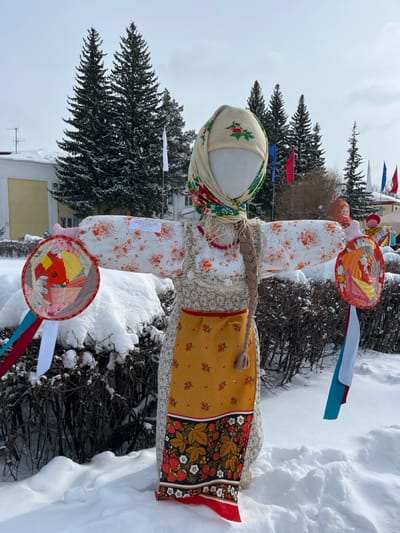
An effigy, styled as a traditional Russian woman, stands upright in a snow-covered public area within the city of Plast, Russia, under an overcast sky. The effigy is dressed in a white headscarf patterned with green leaves and red berries, a white blouse with orange floral patterns, an embroidered vest-like garment, a red necklace, and a yellow apron decorated with red berries and a broad strawberry-patterned border. A braided pigtail hangs from its right side. Its outstretched arms each hold a circular, multi-colored quilted disc, from which red, blue, and white ribbons, emblematic of the Russian flag, extend downwards. Deep snow covers the ground, obscuring the base of the effigy and nearby low-lying bushes. In the background, numerous tall, snow-dusted evergreen trees rise prominently. To the left, a light-colored building with a snow-covered roof is partially visible. Further back and to the right, several flags, including white, red, and blue, are displayed on poles. Another smaller effigy is partially visible in the distant right background.
Plast
The video depicts a winter scene with people participating in a festive activity. The ground is covered in snow. The participants are holding hands and walking over a series of wooden pallets placed on the snow. Among the participants, there are individuals in colorful costumes, possibly related to a cultural celebration or performance. They wear outfits that include bright colors like yellow, orange, and purple. Other people are dressed in typical winter clothing such as coats, hats, and scarves. The weather seems cold but sunny. The overall atmosphere is lively and communal, suggesting a public event or gathering. In the background, there are buildings and trees, indicating an outdoor location, possibly a park or open space.
Plast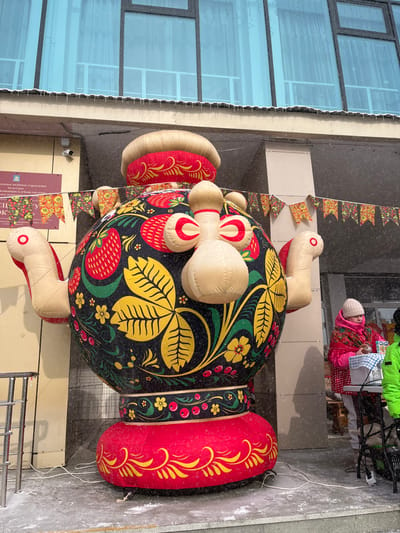
A large, inflated Matryoshka doll stands near a building with reflective windows. The doll features traditional Russian folk art designs of leaves, flowers, and strawberries. It has red and beige inflatable elements resembling headscarves and arms. Strings and banners with similar floral patterns hang nearby. The ground is covered in a light dusting of snow. A person in bright pink and green clothing is visible in the background.
Plast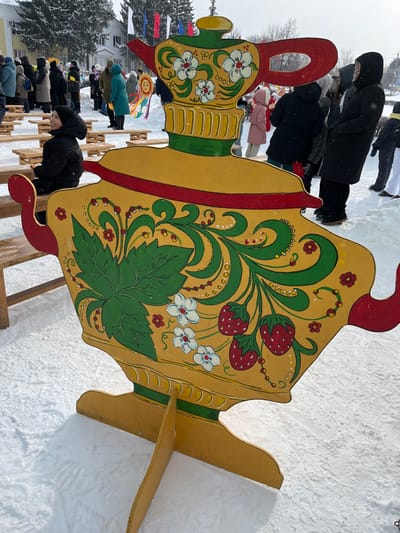
The image displays an outdoor winter scene, captured sideways such that the ground appears on the right and left sides, and vertical elements are horizontal. If rotated 90 degrees counter-clockwise to its intended upright orientation, the scene shows a large, brightly painted wooden cutout resembling a teapot or samovar, standing prominently in a snow-covered landscape. The central object is a large, flat, freestanding wooden cutout, predominantly golden yellow, with intricate folk art-style decorations. It depicts a traditional Russian teapot or samovar. The body of the object is decorated with flowing green vines and large green leaves, possibly strawberry leaves. Scattered among the foliage are clusters of red strawberries with small green caps, white flowers with yellow centers, and small red flowers. The design also features numerous small white and red dots, adding to the decorative detail. Red borders outline parts of the teapot, including its handle (on the left, if upright) and spout (on the far left, if upright). The cutout appears to be supported by wooden braces or stands, visible at the bottom right of the image (or bottom, if upright). Numerous people are visible in the midground and background, all dressed in heavy winter clothing such as dark puffer coats, hats, and scarves, indicating cold weather. Some individuals are seen standing near the large cutout, while others are further back, forming loose groups or lines. One person in the foreground, wearing a black coat and black hat, is visible near the base of the cutout. In the background, slightly to the left, another person holds up a circular yellow object with radiating lines, resembling a stylized sun, possibly a prop for an event. The ground is uniformly covered in a thick layer of white snow. In the background, there are bare deciduous trees and some evergreen trees. Small flags or banners, predominantly red, white, and blue, are strung up in the left background, suggesting a festive or public gathering. The sky is bright and overcast, characteristic of a winter day. The overall impression is that of an outdoor winter festival or celebration, likely with a focus on Russian culture, given the traditional folk art style of the decorative teapot and the presence of what appears to be a sun effigy (often associated with Maslenitsa celebrations). No visible text is present in the image.
Plast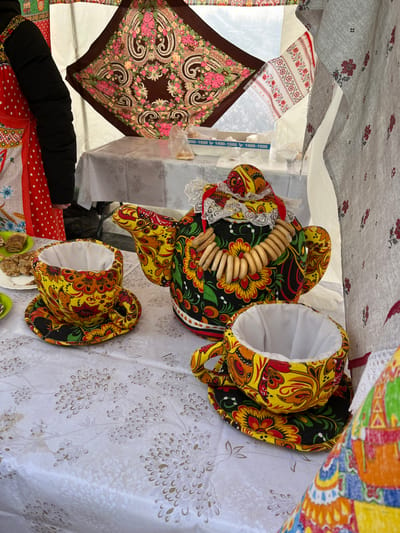
This image captures a vibrant display of folk art and traditional items, likely at a market, festival, or craft fair. The scene is illuminated by natural light, suggesting it is daytime, possibly outdoors or under a large canopy. In the foreground, slightly to the right, are two fabric cozies. The most prominent is a large teapot cozy, intricately decorated with a rich, colorful floral pattern featuring yellow, red, orange, and green flowers and leaves on a black background, reminiscent of Khokhloma painting. A string of light-colored, ring-shaped bagels (known as sushki or baranki, traditional Eastern European snacks) is draped over the top of the teapot cozy. Next to it, to the lower right, is a smaller, matching cozy, possibly for a cup or a smaller pot, with the same vibrant floral design and a white lining visible inside. These cozies rest on a light-colored tablecloth or fabric which has a subtle, almost golden, botanical pattern. To the left, a dark brown square scarf or shawl is spread out, displaying a large, elaborate pattern of pink, cream, and brown paisley motifs and flowers. Above this scarf, another piece of white fabric with red embroidered patterns is visible. In the lower left corner, an arm wearing a black sleeve is partially visible, extending towards a red fabric with white polka dots. Small, light green items, possibly slippers or decorative mats, are visible at the very bottom right of the image. The background shows elements of a temporary structure, such as a tent or stall. There are various other fabrics and textiles in the background, including a colorful one with bright orange, yellow, and blue geometric or folk patterns. On a blue and white strip of material visible in the mid-background, partially obscured, the numbers "1400-1500" and "1500-1600" are discernible, which could indicate prices, size ranges, or time slots. The overall impression is one of cultural celebration and the showcasing of handcrafted goods.
Plast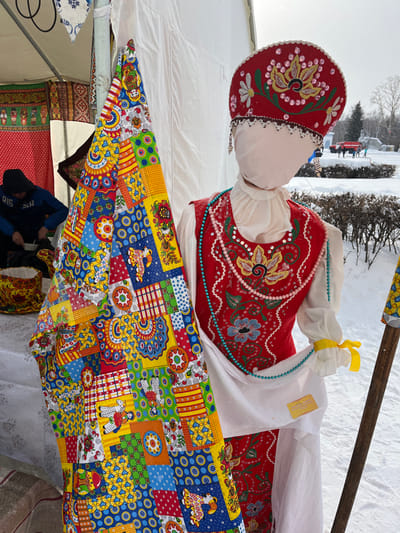
The image shows a large, anthropomorphic doll or effigy, prominently displayed outdoors in what appears to be a winter setting. The doll is oriented vertically, with its head at the top and the long, flowing skirt extending downwards. The doll's head is a simple white sphere, topped with a striking red traditional Russian headpiece, possibly a kokoshnik. This headpiece is intricately embroidered with floral patterns in white, yellow, and green, and adorned with numerous small, shiny elements that resemble pearls or beads, particularly around the edges. Its upper body is clad in a white long-sleeved blouse with puffy shoulders and ruffled cuffs, one of which has a yellow ribbon tied around it. Over the blouse, the doll wears a vibrant red vest or sarafan top, also richly decorated with embroidery. The embroidery on the vest features green leafy motifs, blue and yellow flowers, and scattered silver sequins or beads. Two strands of beads are draped around the doll's neck: an inner strand of light pink beads and an outer strand of brighter blue beads. A small, rectangular yellow tag is visible on the white fabric of the doll's right sleeve. The lower half of the doll is dominated by an expansive, colorful skirt made of a patchwork-style fabric. This fabric is composed of numerous small squares and rectangles, each featuring different patterns. These patterns include geometric shapes (circles, squares, stripes), stylized floral designs, and various pictorial elements such as birds, roosters, sheep or lambs, horses with riders, and what appear to be traditional Russian matryoshka dolls. The colors are very bright and varied, including blues, yellows, reds, greens, and oranges. The doll is positioned under a white tent or canopy, parts of which are visible in the upper left and lower left of the frame. Behind the doll, a rough wooden pole or beam runs diagonally upwards and to the right. The background outside the tent reveals a snowy landscape with snow-covered ground and bare trees. In the distance, faintly visible, are some structures and possibly people or vehicles, suggesting a public event or gathering. The lighting suggests it is daytime, possibly overcast given the soft light and lack of harsh shadows. In the lower left corner, beneath the doll's skirt, other patterned fabrics are visible, possibly indicating additional merchandise or decorations within the tent. Blurred figures, likely people, can also be seen in the lower left section, partially obscured by the fabrics. The overall appearance of the doll, with its traditional Russian attire and the snowy setting, strongly suggests it is an effigy, possibly for a celebration like Maslenitsa (Shrovetide), which marks the end of winter in Slavic cultures.
Plast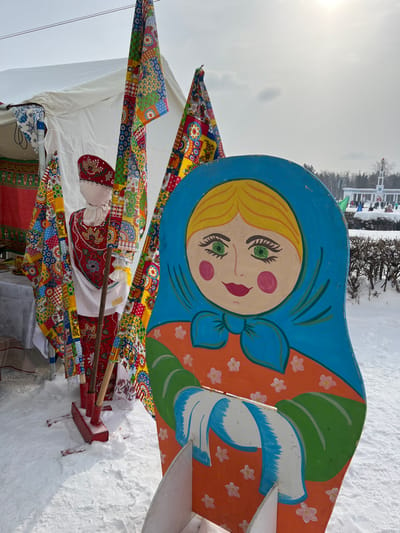
The image captures an outdoor scene during what appears to be a winter festival or cultural event. The ground is covered in a thick layer of snow, indicating cold weather. The sky is bright but overcast, suggesting a cloudy day. In the foreground, a large, brightly painted wooden cutout of a Matryoshka doll (Russian nesting doll) stands prominently. The doll's headscarf is blue, framing a face with blonde hair, green eyes, pink rosy cheeks, and red lips. Its body is painted orange with delicate white and green floral patterns, and there are distinct white and blue elements at its base, resembling a sash or apron. To the left and slightly in front of the large Matryoshka, a smaller, traditional-looking effigy or doll is visible, propped up on a wooden pole. This figure is dressed in red and white clothing with intricate patterns, including a red headpiece. Numerous colorful flags or banners are displayed around these figures. These banners feature a vibrant patchwork design with various geometric and floral patterns in blues, reds, yellows, and greens, contributing to a festive atmosphere. They are attached to poles, some of which are held by the smaller effigy. In the background, beyond the immediate display, there is a white tent or canopy. Further back, a line of trees, likely snow-covered, stretches across the landscape, and a distinct white building with classical-style pillars or columns can be seen, suggesting a park or estate setting. The overall impression is one of a cheerful and colorful display, likely part of a public celebration or fair, possibly with Russian cultural themes given the Matryoshka doll. No discernible text is visible in the image.
Plast