Rangkasbitung, Indonesia
8 memories from Rangkasbitung, Indonesia

The image depicts a dense forest scene with sunlight filtering through the canopy. Several trees are visible, with varying degrees of foliage and bark texture. In the foreground, a prominent tree trunk with mottled bark stands to the right. The background is filled with more trees and lush greenery, creating a sense of depth. The lighting suggests it is daytime, with bright sunlight creating lens flare in the upper portion of the image. The terrain appears uneven, with visible soil and some sparse vegetation on the ground. There are no people or animals present in the frame. The scene is consistent with a natural, wooded area, potentially within or on the outskirts of Rangkasbitung, Indonesia, given the tropical vegetation.
Rangkasbitung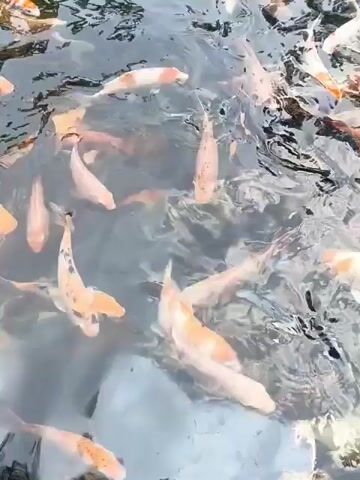
The video shows a close-up, overhead view of a pond filled with numerous koi fish. The water is murky, and the fish, varying in shades of orange, white, and black, are actively swimming and appear to be feeding. In the bottom left corner of the frame, a person's hand is visible, reaching into the water, likely interacting with the fish. The surface of the water is disturbed by the fish's movements and the ripples created by the hand.
Rangkasbitung
The image depicts an altar within a building, likely a temple or shrine, located in Rangkasbitung, Indonesia. The altar is adorned with various religious objects and decorative elements. In the background, a large framed artwork, possibly a painting or tapestry, features a dark, mountainous landscape with streaks of white, suggesting mist or clouds. In front of this artwork, several golden statues of deities or revered figures are arranged. Some are seated, while others stand, all appearing to be in ceremonial attire. In front of the main statues, a small framed picture displays three figures in red and white robes. The altar surface itself is dark and polished, reflecting the surrounding lights. On the left side of the altar, a clear glass bowl filled with a golden liquid, likely oil or tea for an offering, sits on a silver tray. To its right, a bouquet of white flowers in a glass vase is prominently displayed, with a single red flower among them. Further to the right, another clear glass bowl with a lit candle floats in a golden liquid is visible. Scattered on the altar are several smaller objects, including what appear to be fruits (oranges and a pear-like fruit), small red objects, and a golden censer. A small brass bell rests on a red cushion. A red and gold border runs across the front of the altar, with gold lettering that reads "KWAN IM HUD COUW." Below this, a blue panel features carved or painted lotus flowers in various stages of bloom, along with green lily pads. Golden Chinese characters are inscribed on this blue panel. In the lower left corner of the image, a large bundle of the same white flowers seen in the vase on the altar is placed, suggesting a recent offering or preparation. The overall lighting suggests an indoor environment, possibly with natural light filtering in from the upper right, casting some shadows. The scene conveys a sense of reverence and tradition associated with religious practices.
Rangkasbitung
This is a photograph of a Buddhist altar, likely located within a temple or shrine. The main subject is a large, dark statue of Buddha seated in meditation on a tiered, ornate pedestal. The pedestal is red with gold accents, featuring a sun-like motif. To the left and right of the main Buddha statue, on a lower level, are smaller statues of meditating figures. In front of the main statue, on a dark marble surface, are three smaller, colorful Buddha statues, also seated in meditation. A bronze bowl sits in front of the central smaller Buddha. Red and orange lights are visible, illuminating the altar. The backdrop of the altar features a textured wall with a gold and red border. Below the altar, a red band displays gold lettering that reads "9 BUDDHA GAUTAMA". The lower portion of the image shows a wall with a marble-like pattern. The overall scene suggests a place of worship or religious significance. The location of this specific altar is not discernible from the image itself.
Rangkasbitung
The image depicts an altar, likely in a temple or shrine, featuring religious iconography. At the center of the altar is a golden statue of a deity, draped in flowing robes. Incense sticks are burning in a bronze censer placed in front of the statue. Flanking the censer are two ornate bowls, one on each side, containing lit candles. The altar itself is adorned with carvings of dragons and other mythical creatures, and is surrounded by decorative elements. A red banner with gold lettering is visible below the altar. The background consists of marbled walls and a wooden structure, typical of religious spaces. The scene suggests a place of worship or offering. Based on the provided text "HIO 1 BATANG" and "HOK TEK TJENG SIN" visible on the altar, this location is likely a Hok Tek Tjeng Sin temple. Temples dedicated to Hok Tek Tjeng Sin, a deity associated with prosperity and fortune, are common in Chinese communities in Indonesia. Without further information to pinpoint the exact location, it is impossible to confirm its presence in the city of Rangkasbitung, Indonesia.
Rangkasbitung
The image depicts an altar within a temple, likely a Buddhist or Taoist shrine, located in Rangkasbitung, Indonesia. The central focus is a tiered, ornate structure resembling a miniature temple, adorned with gold accents and intricate carvings of dragons and auspicious symbols like the character "福" (fú), meaning fortune. Within this structure, two statues of deities are visible, one draped in green fabric. In front of the altar, a brass censer filled with incense sticks and ashes sits on a wooden base. To the left and right of the censer, two glass bowls containing burning oil lamps are placed on saucers. The altar is situated on a dark, polished surface, possibly granite, and a red banner with gold lettering, reading "4 KWAN TEK KUN HIO 1 BATANG," is mounted above a vibrantly painted panel depicting dragons and clouds. The background consists of marble-patterned walls, and the overall lighting suggests an indoor setting, possibly with artificial illumination.
Rangkasbitung
The video shows a first-person perspective of someone walking towards and through a turnstile. The turnstile is made of brushed metal and has a horizontal bar that rotates to allow passage. The floor is tiled with a pattern of light and dark squares. In the background, there is a black and white checkered floor. The person is wearing black sandals. The video is shot in landscape orientation.
Rangkasbitung
The video shows the interior of a train car. A person wearing black pants and black shoes is mopping the floor with a blue and white mop. Another person, wearing a black jacket and pants, is standing to the left, partially obscured. Two passengers are seated on a blue and white patterned bench in the background. The person in the foreground is wearing dark blue pants. The floor is a light brown, shiny surface that appears to be wet. The mop is moving across the floor, spreading the water.
Rangkasbitung