Rio de Janeiro, Brazil
30 memories from Rio de Janeiro, Brazil
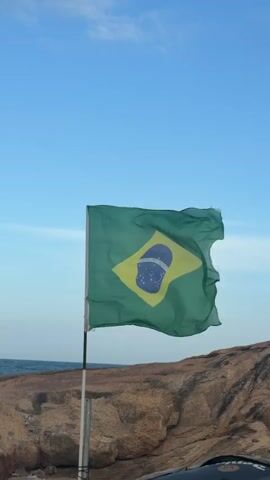
A Brazilian flag flutters in the wind against a clear blue sky. The flag is green with a yellow rhombus in the center, containing a blue circle with stars and a curved white band. The flag is attached to a metal pole, which is partially visible. In the background, a rocky coastline meets the ocean, with waves gently lapping at the shore. The lighting suggests it is daytime, likely late afternoon or early morning due to the soft light. There are no people visible in the frame.
Rio de Janeiro
This video shows a crowd of people attending a sporting event. The camera is positioned among the spectators, looking towards the field and the opposite stands. Red and green lights are visible illuminating the stadium's ceiling. Many people in the foreground are wearing shirts with green and maroon stripes, suggesting they are fans of a particular team. Some individuals are raising their hands, cheering or waving. The field of play is visible in the background, with players on the grass and more spectators in the distant stands. The atmosphere appears energetic and celebratory.
Rio de Janeiro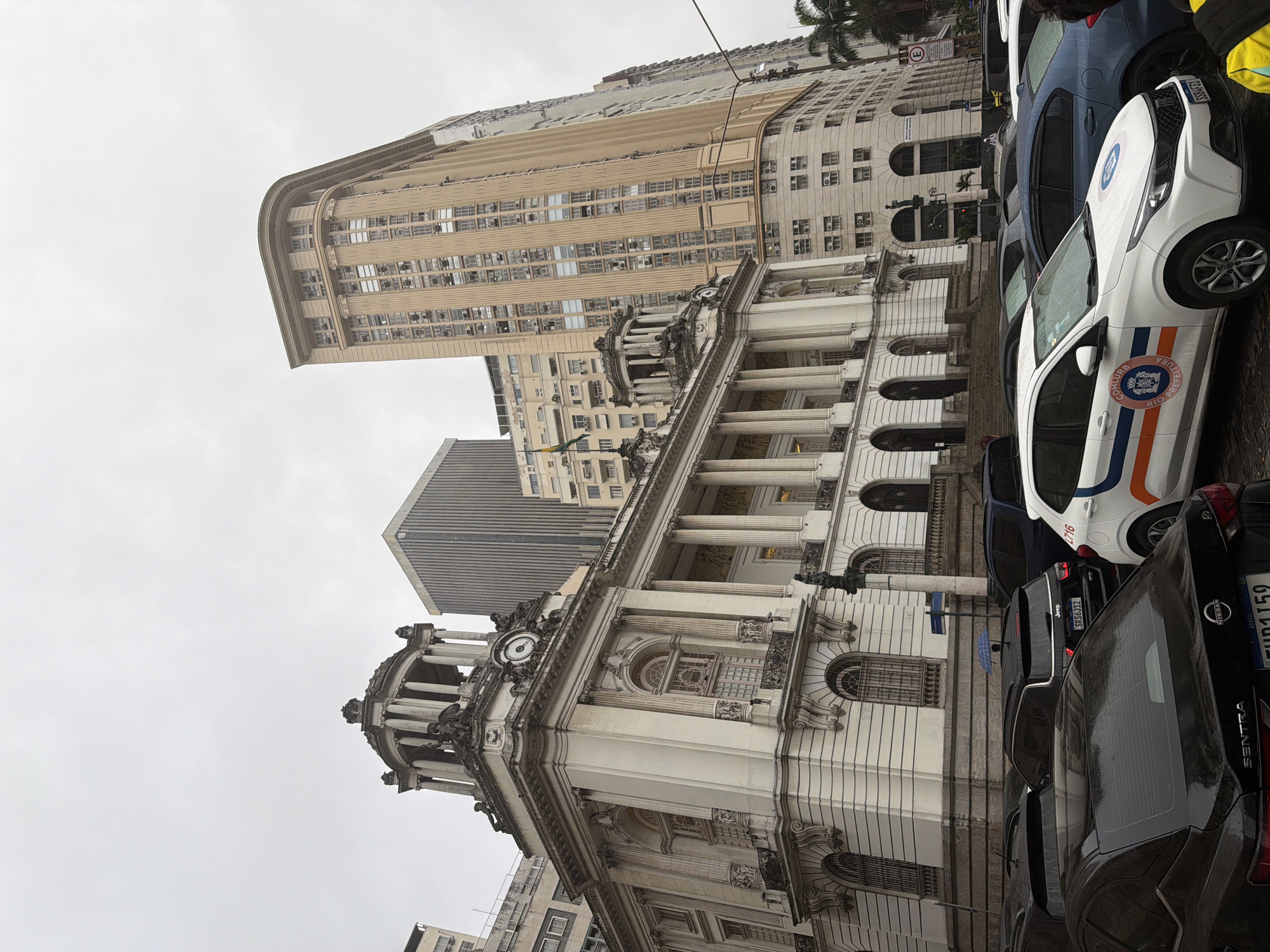
This is a full-frame, eye-level, outdoor, daytime shot of a historic building with classical architecture, likely the Prefeitura (City Hall) of Rio de Janeiro, Brazil, on an overcast day. The building features a dome, columns, and ornate stonework. In the background, several modern high-rise buildings of varying heights and architectural styles are visible. The foreground is occupied by a street with several parked cars, including a white vehicle with official markings that appears to be a municipal service car. One of the cars has a small blue umbrella on its roof. The street is wet, suggesting recent rain. The overall atmosphere is muted due to the cloudy weather.
Rio de Janeiro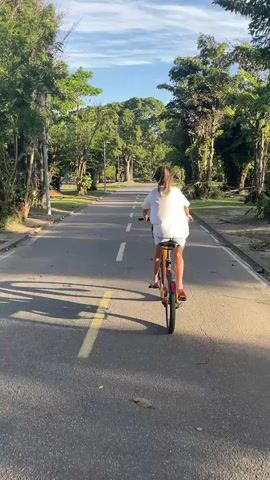
A young woman with long brown hair is riding a bicycle on a paved path lined with trees. She is wearing a white t-shirt and dark shorts. The path has yellow lines painted on it. The sun is shining and the sky is blue with some clouds. The trees are lush and green. The scene appears to be a park or a recreational area.
Rio de Janeiro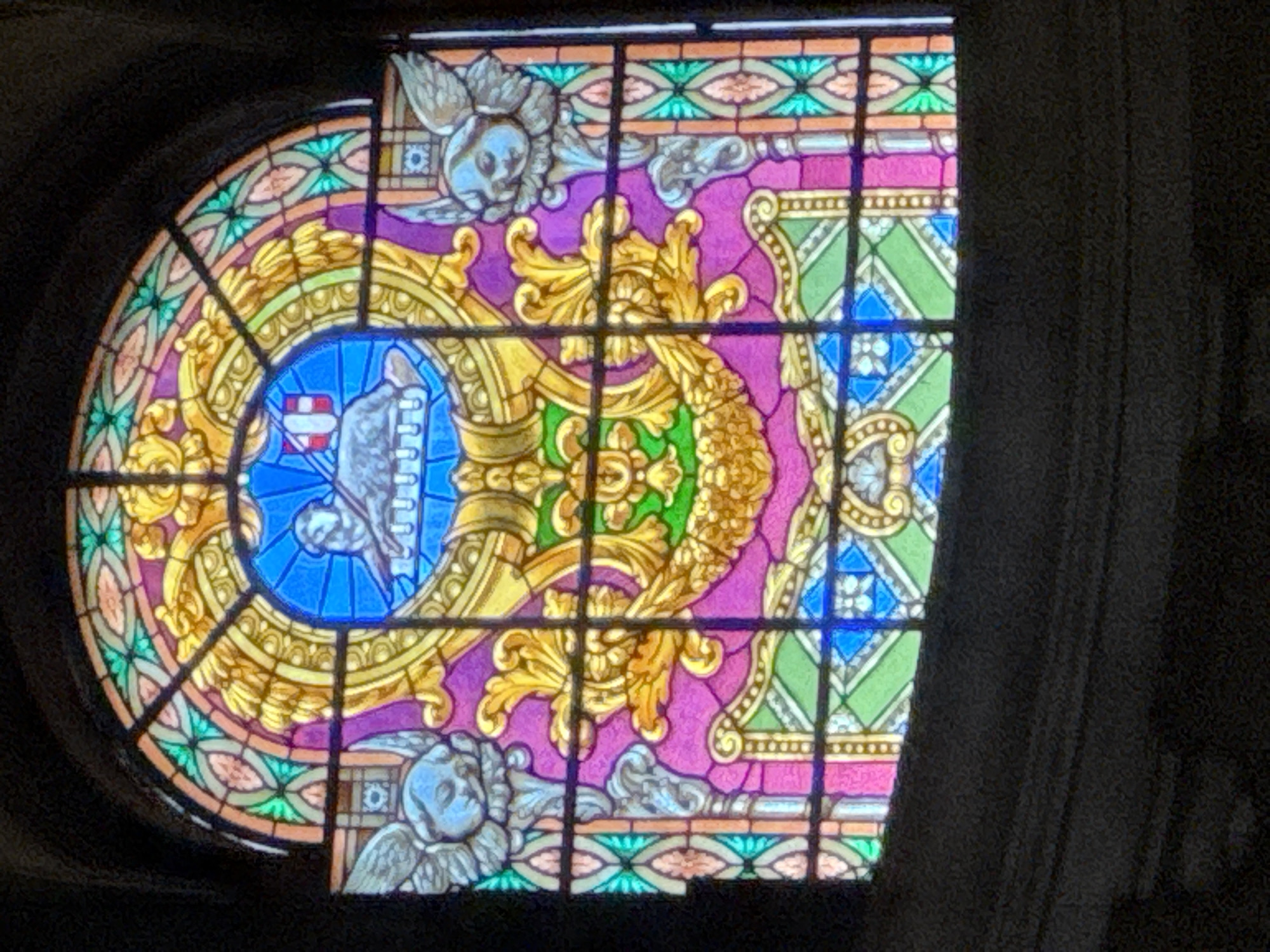
This image shows a stained-glass window, possibly located in the Metropolitan Cathedral of Rio de Janeiro, Brazil. The central motif of the window is a lamb with a banner, symbolizing the Lamb of God. Flanking the lamb are two cherubic figures with wings. The surrounding design features intricate patterns of gold, purple, green, blue, and pink glass, with ornate scrollwork and geometric shapes. The overall impression is one of religious artistry and grandeur. The lighting suggests the image was taken indoors, with light filtering through the stained glass.
Rio de Janeiro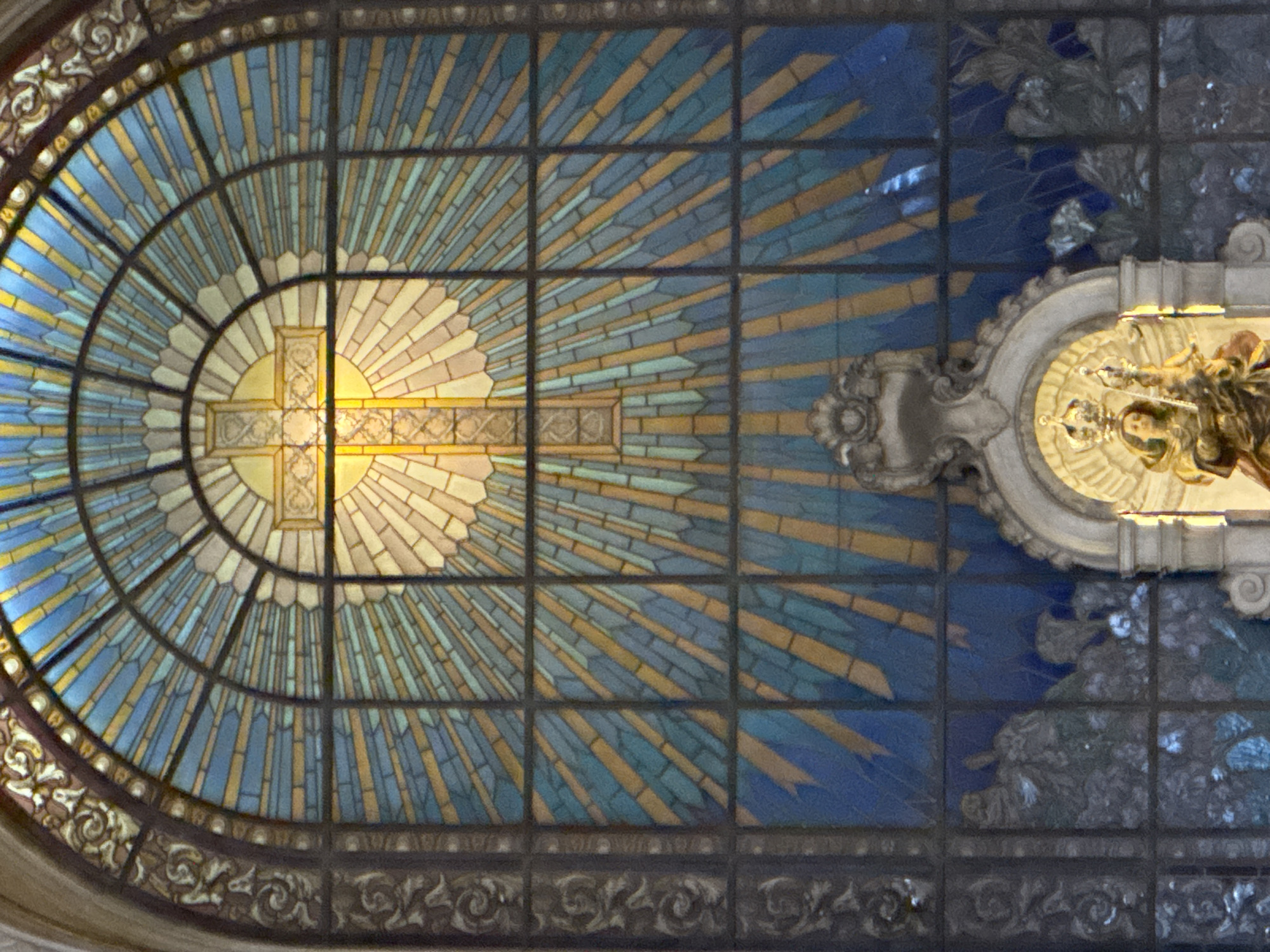
This image shows a stained-glass window above a religious statue in the Church of Our Lady of the Rosary of the Black People (Igreja de Nossa Senhora do Rosário dos Homens Pretos) in Rio de Janeiro, Brazil. The stained-glass window is arched and features a central cross surrounded by radiating lines of yellow and blue glass. The cross itself is depicted with yellow glass and subtle detailing. Below the window is an ornate, light-colored structure framing a statue. The statue appears to be of a crowned woman holding a child, both with golden halos and elaborate robes. The scene is indoors, with the lighting suggesting it is daytime, illuminating the stained glass from behind. The lower portion of the image shows darker, possibly more abstract, stained glass depicting figures or scenes in deep blues and greys. The overall impression is one of religious art and architecture within a church setting.
Rio de Janeiro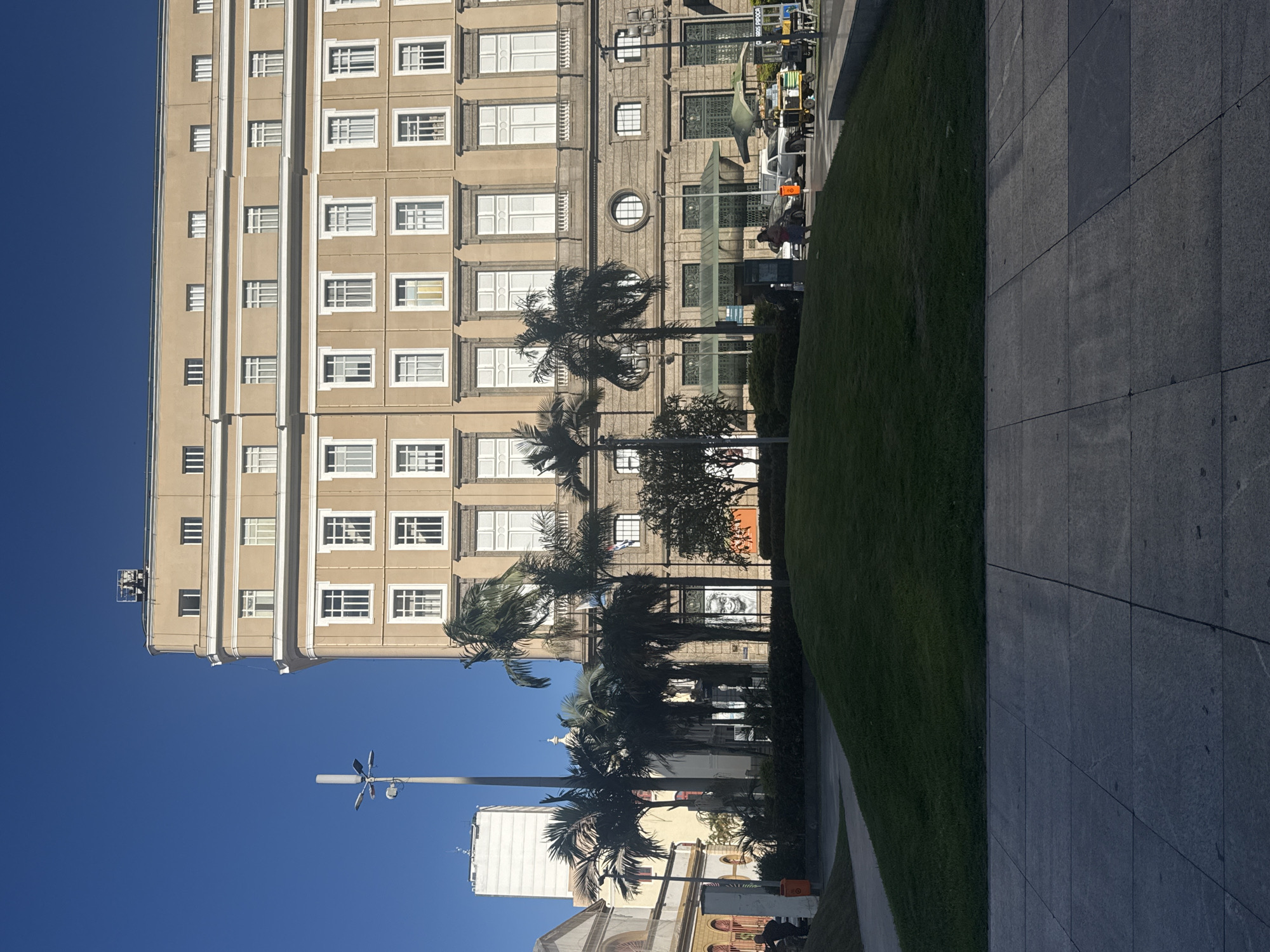
The image depicts an outdoor scene in the city of Rio de Janeiro, Brazil, likely near Cinelândia square, a historical and cultural hub. Dominating the frame is a large, beige, multi-story building with numerous white-framed windows, characteristic of the architecture in the area. In front of the building, a manicured, sloping green lawn is visible, leading towards a paved area in the foreground. Palm trees are scattered across the scene, some tall and slender, others shorter and fuller, adding a tropical element. On the street level of the building, there are awnings and entrances. Several vehicles are present, including a white pickup truck, a small food cart with a green canopy, and other cars. People are sparsely distributed; a few individuals are walking on the sidewalk near the street, and one person is seated on the grass. A tall lamppost with multiple lights stands to the left of the main building, and further left, a taller, white building with a distinct antenna or structure on top is visible. The sky is a clear, bright blue, suggesting a sunny day. The overall impression is one of a public urban space, possibly a plaza or park area adjacent to significant architecture.
Rio de Janeiro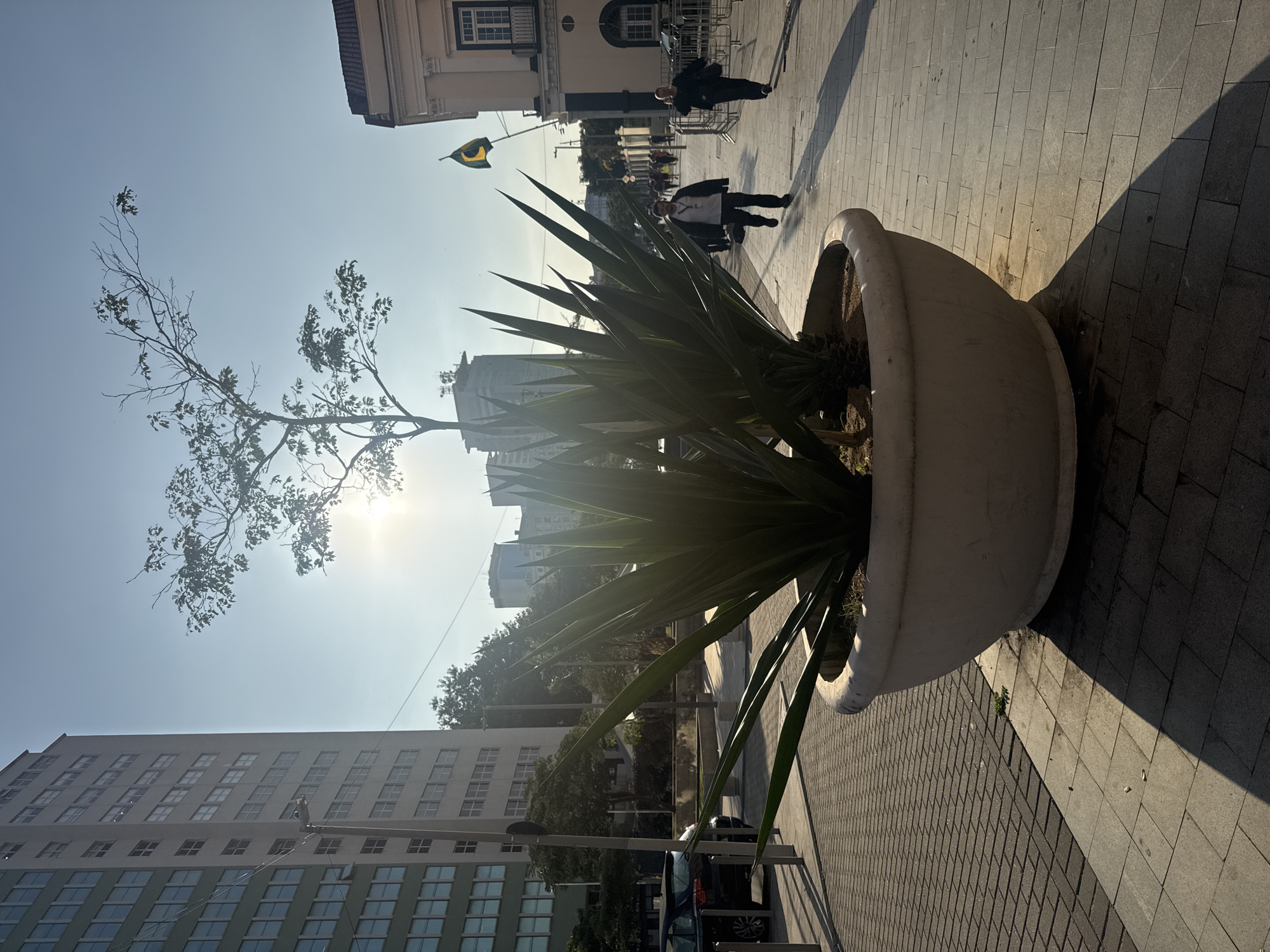
The image shows an outdoor scene on a sunny day, likely in Rio de Janeiro, Brazil. The orientation of the image is such that the ground appears on the right and the sky on the left. In the foreground, a large, white planter holds a spiky green plant and a bare tree branch extending upwards. The planter casts a long shadow across the paved walkway. The walkway is made of grey rectangular tiles, with some areas showing wear or discoloration. Further back, several people are walking on the sidewalk. One person is in the middle ground, walking away from the camera. Another figure, further in the background, is walking towards the camera. The people are casually dressed. Behind the people and walkway, there is a building with a classical facade and a tiled roof. A Brazilian flag is visible, attached to a flagpole. Beyond this building, a modern, tall office building with many windows is visible. In the distance, other city buildings can be seen. The sun is bright and high in the sky, creating strong shadows and a sense of a clear day. The overall mood is calm and ordinary, depicting a typical urban scene. There is no visible text in the image.
Rio de Janeiro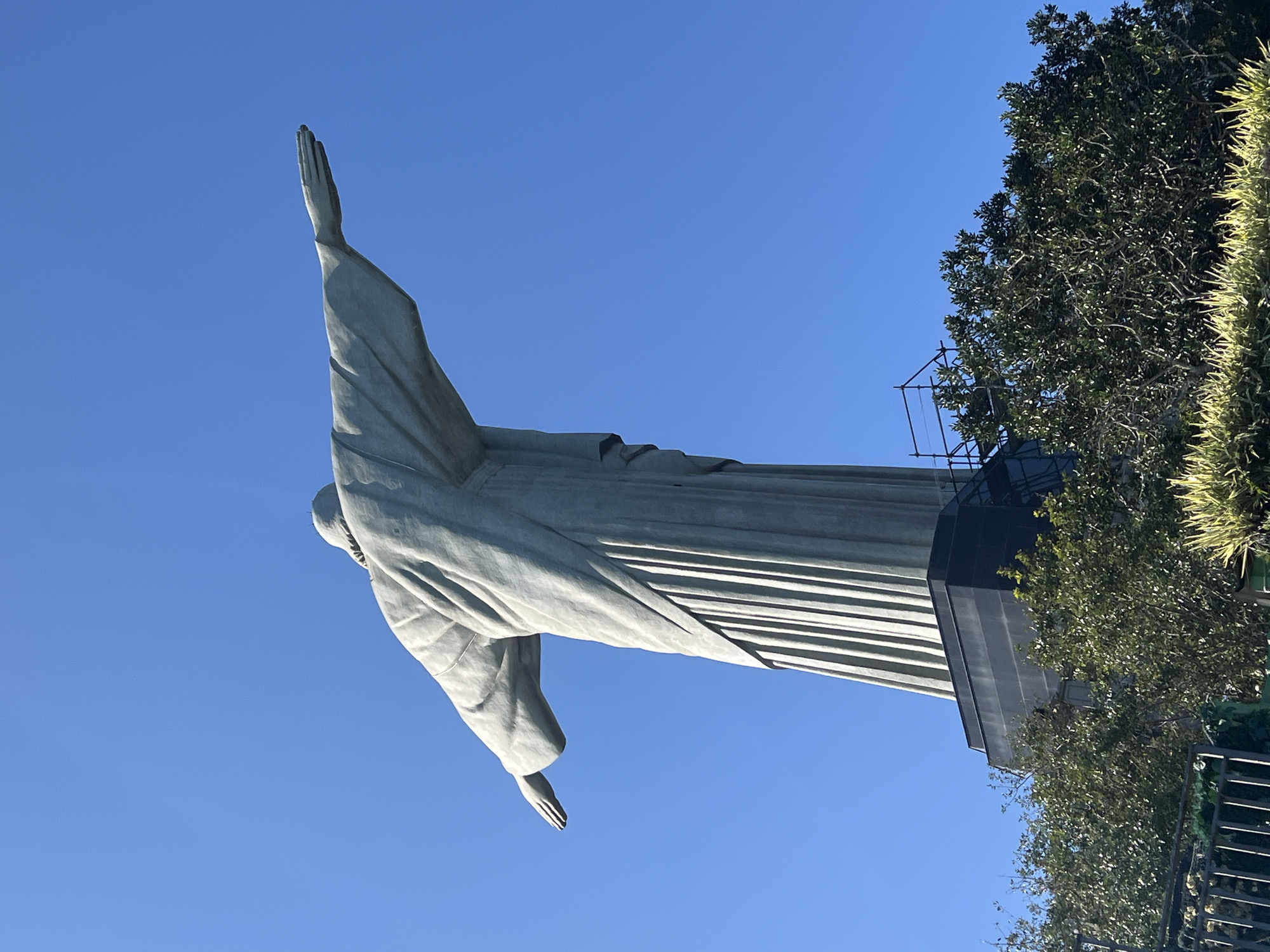
This is a low-angle, full-body shot of the Christ the Redeemer statue in Rio de Janeiro, Brazil, set against a clear, bright blue sky. The statue is made of concrete and soapstone and is depicted with its arms outstretched. The iconic statue is positioned on Corcovado Mountain, overlooking the city. The base of the statue, a dark, rectangular structure, is visible below, partially obscured by lush green foliage and trees. A metal fence and some smaller plants are visible in the foreground. Construction scaffolding can be seen near the base of the statue, suggesting ongoing maintenance or work. The image is captured on a sunny day, with the bright light casting subtle shadows on the statue, highlighting the textures of its robes.
Rio de Janeiro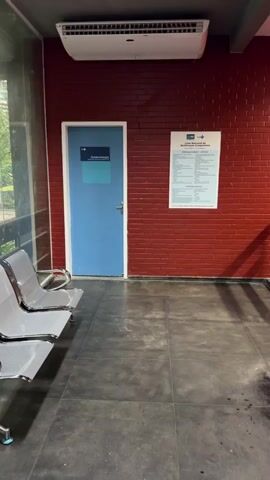
The video pans across a waiting area with a red brick wall. To the left, a blue door is marked with "Epidemiologia" and an arrow pointing left. A white sign with text and a logo hangs on the brick wall to the right of the door. In the foreground, rows of empty, metallic chairs are visible. An air conditioning unit is mounted on the wall above the door. The floor is tiled in a dark gray. The video ends with a shot of a railing on the right side of the frame.
Rio de Janeiro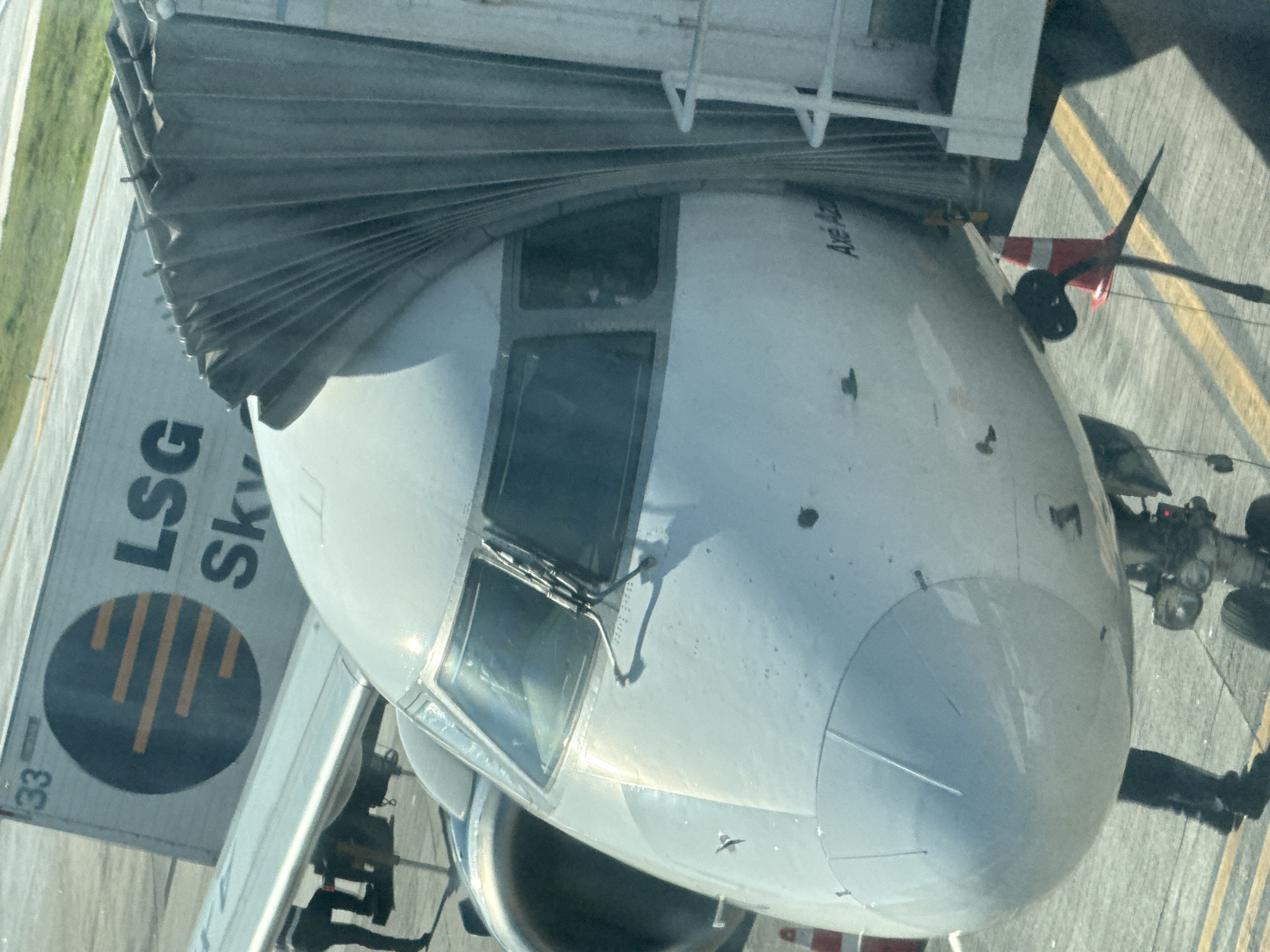
The image presents a detailed view of the cockpit and nose section of a white commercial passenger aircraft, identified by the partial text "Axé Azul" on its fuselage, indicative of a Brazilian airline. A flexible, accordion-style jet bridge is docked to the right side of the aircraft's forward cabin. Two windshield wipers are visible on the cockpit's front windows. In the background, behind the aircraft's left wing, a white cargo trailer bearing the text "LSG Sky" and the number "33" is parked. This trailer features a dark circular logo with horizontal orange stripes. A ground crew member in dark clothing is standing on a mobile platform near the left wing, attending to the aircraft. The foreground shows the aircraft's front landing gear on an asphalt tarmac, which has yellow painted lines. A red and white traffic cone is placed near the nose, with a black piece of ground equipment connected to the aircraft or positioned adjacent to the cone. The scene is outdoors under natural daylight. This activity takes place at an airport in Rio de Janeiro, Brazil.
Rio de Janeiro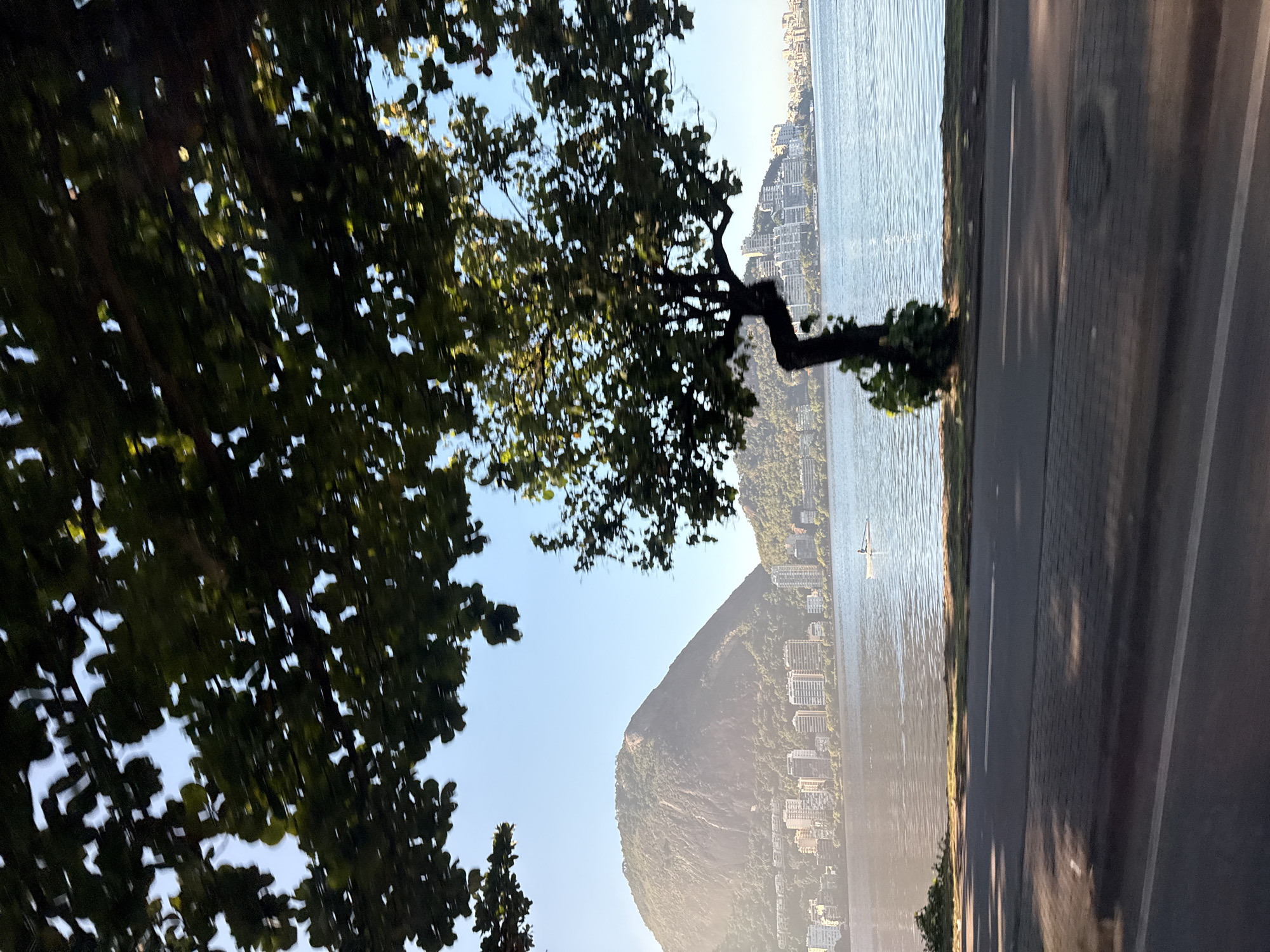
The image depicts an urban waterfront scene in Rio de Janeiro, Brazil, specifically identifiable as Lagoa Rodrigo de Freitas with Corcovado Mountain in the background. The foreground, blurred by motion, shows a paved road with white dividing lines and a textured pedestrian sidewalk to its left. Overhanging tree foliage, also blurred, frames the top of the image. A single, dark-trunked tree with a gnarled lower branch stands on a grassy bank between the road and the water, slightly right of center. In the midground, a calm body of water, Lagoa Rodrigo de Freitas, extends across the frame. A lone individual in a white racing scull or rowboat is visible on the water, paddling away from the viewer towards the left. The background features a cityscape of numerous multi-story residential buildings lining the far shore, nestled at the base of two prominent mountains. The most significant is a large, steep, granite mountain on the left, identified as Corcovado Mountain, partially obscured by a light atmospheric haze. Its lower slopes are vegetated. To the right, a smaller, heavily forested mountain rises behind additional city structures. The sky is clear and pale blue, suggesting either morning or late afternoon light, which casts subtle shadows on the foreground road and illuminates the right side of Corcovado Mountain.
Rio de Janeiro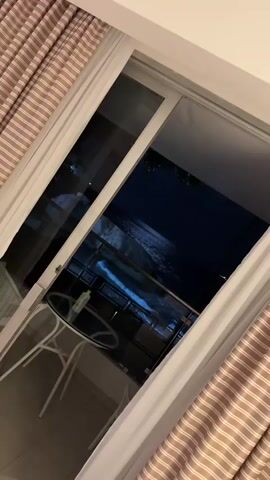
The video captures a serene nighttime view from a balcony, showcasing the ocean with gentle waves. The balcony is furnished with a small round glass table and two white chairs, with a green bottle resting on the table. Striped curtains in brown and white frame the scene, enhancing the tranquil ambiance.
Rio de Janeiro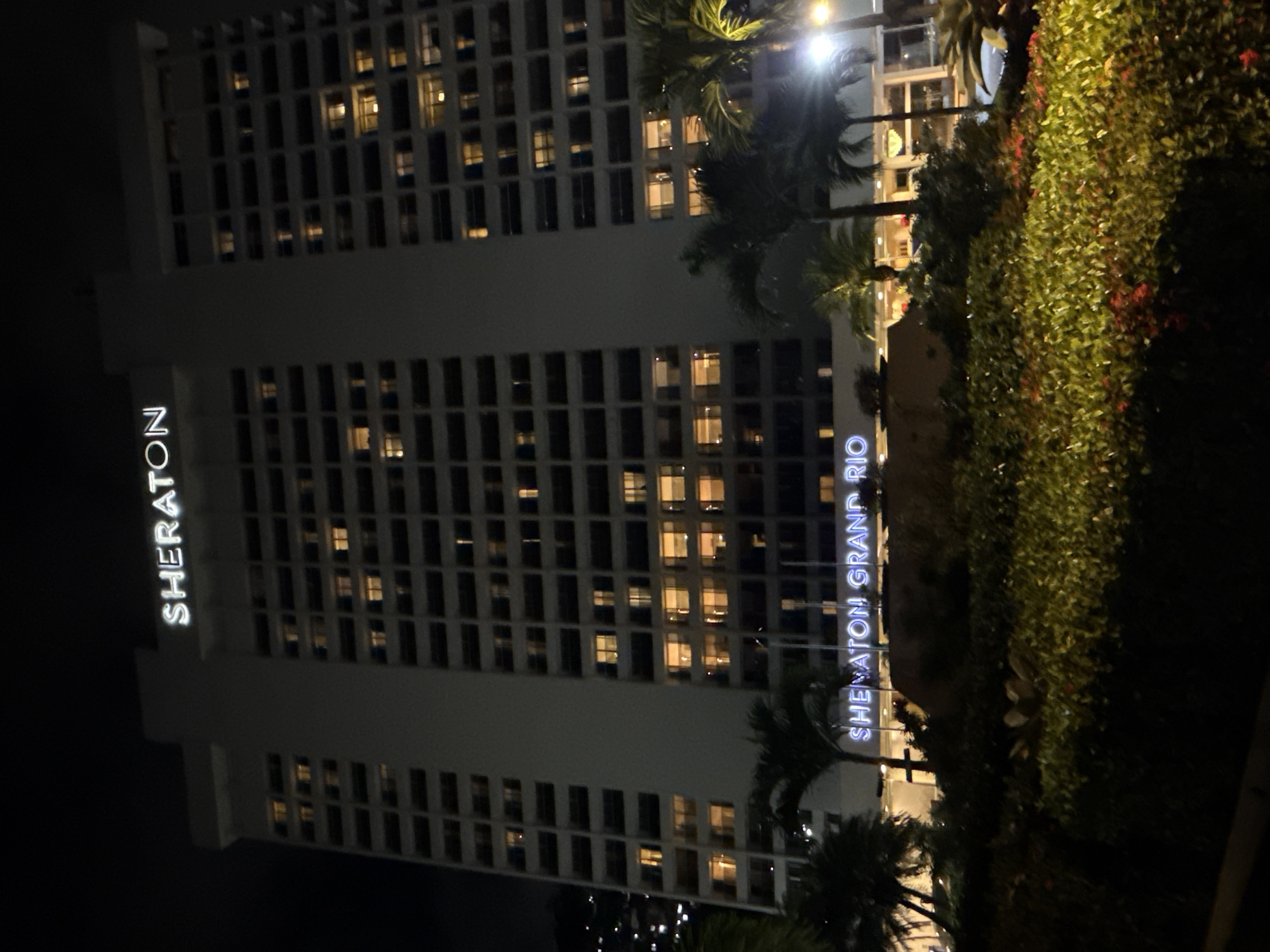
This image presents a low-angle, nighttime exterior view of a prominent hotel building, identified as the Sheraton Grand Rio in Rio de Janeiro, Brazil. The main structure is a tall, multi-story building with a light-colored facade, featuring numerous rectangular windows and balconies across its width. Many of these windows are illuminated with warm yellow light, indicating interior activity. At the very top of the building, the word "SHERATON" is displayed in large, glowing white letters. Closer to the base of the building, a smaller, similarly illuminated sign reads "SHERATON GRAND RIO." In the immediate foreground, a dense array of green foliage, possibly a landscaped garden or shrubbery, dominates the lower part of the frame. This vegetation is illuminated from below by artificial lights, highlighting its texture and revealing scattered patches of red flowers. Several tall palm trees are visible, some partially obscuring the lower sections of the hotel facade. To the far left in the background, a dark hillside or mountain is discernible, dotted with numerous small, faint lights, suggesting distant urban or residential development. The sky above is dark and featureless. No individuals are visible in the scene, and no specific actions or interactions are depicted. The overall ambiance is that of a large, active hotel at night in a tropical, urban environment.
Rio de Janeiro
The video captures a nighttime urban scene from the perspective of a vehicle in motion. Tall buildings with illuminated windows line the street. Palm trees and other foliage are visible along the roadside. Bright streetlights cause lens flares as the camera passes them. The road features a distinct patterned sidewalk or median. Other vehicles with headlights can be seen on the street. The constant movement of the camera results in motion blur, particularly on closer objects.
Rio de Janeiro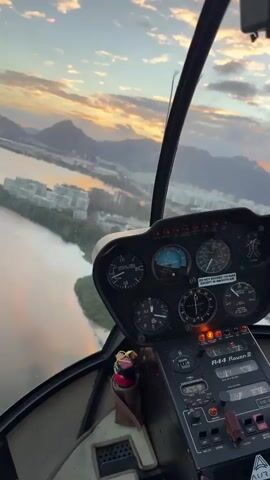
The video displays a first-person perspective from the cockpit of a helicopter, specifically an R-44 Raven II, as indicated on the visible control panel. The instrument panel, featuring multiple circular gauges, a radio stack, and various switches, occupies the right side and bottom-center of the frame. Through the helicopter's windscreen, a vast body of water is visible below and to the left, reflecting the ambient light. Beyond the water, a landmass with numerous urban buildings and green foliage stretches into the distance. In the far background, a range of mountains rises against the horizon. The sky is partially cloudy, illuminated by warm, soft light suggesting either sunrise or sunset, with hues of orange, pink, and blue. The helicopter appears to be in stable flight, with the external scenery slowly passing by.
Rio de Janeiro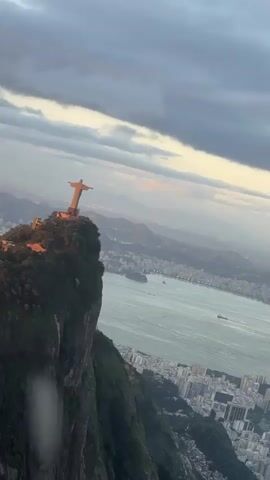
A drone captures an aerial view of the cityscape and landmarks of Rio de Janeiro, Brazil. The camera begins by focusing on the Christ the Redeemer statue from a high altitude, then pans right to reveal Sugarloaf Mountain and the surrounding urban areas, including the Maracana Stadium and various beaches. The cloudy sky shows some blue patches, and the overall lighting suggests either sunrise or sunset. The city lights are visible in the distance, indicating evening.
Rio de Janeiro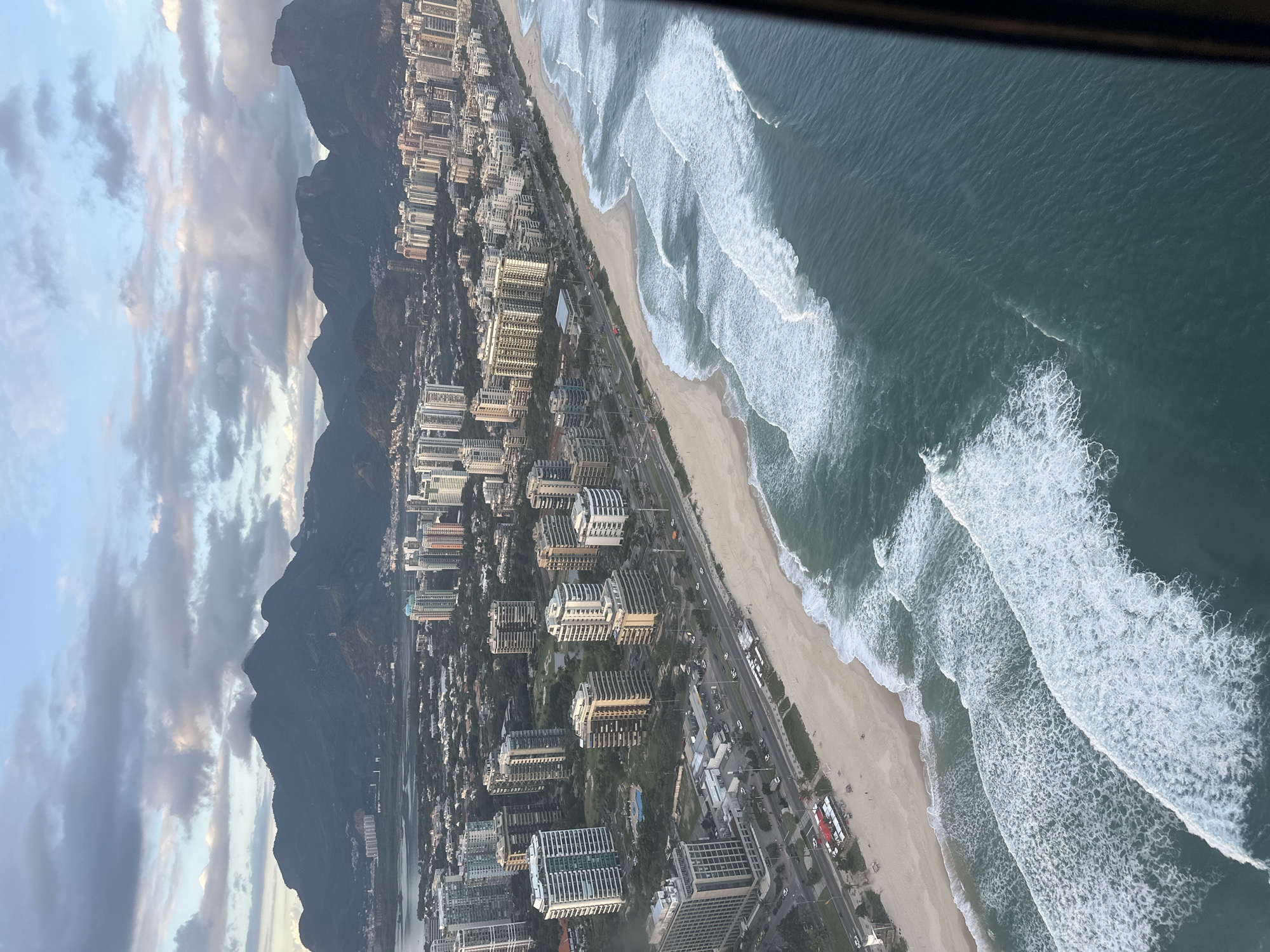
This aerial image captures a coastal urban landscape in Rio de Janeiro, Brazil, viewed from an elevated perspective, likely a helicopter or high-rise building, with a dark vertical frame element visible on the right. The sky is overcast with a mixture of grey and lighter white-blue clouds, indicating diffuse daylight. In the distant background, a range of dark, tree-covered mountains with multiple distinct peaks spans the horizon. Some low-lying clouds are partially obscuring the upper slopes of these mountains. In the mid-ground, an extensive urban area unfolds, featuring numerous multi-story residential and commercial buildings, predominantly light in color. These structures vary in height and architectural design. Interspersed within the cityscape are patches of green vegetation, possibly parks or undeveloped lots. A body of dark water, likely a lagoon or bay, is visible between some inland buildings and the mountain range. The foreground is dominated by a wide, light beige sandy beach running parallel to the coastline. A multi-lane asphalt road, populated with cars and buses, separates the beach from the adjacent urban developments. Several small, red-roofed structures, consistent with beach kiosks or facilities, are visible on the sand near the road. Minimal human presence is discernible on the beach or along the road. The Atlantic Ocean occupies the lower and right portions of the image, displaying shades of turquoise and deep blue. Multiple parallel lines of white-crested waves are actively breaking and rolling towards the shore, forming distinct patterns of foam and whitewater. The overall scene illustrates a developed coastal zone at the base of substantial mountain ranges, characteristic of the Barra da Tijuca or Recreio dos Bandeirantes areas of Rio de Janeiro.
Rio de Janeiro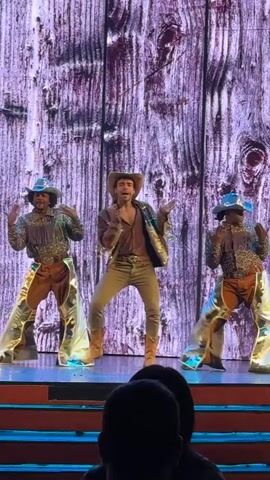
Three men in cowboy attire are performing on a stage. The man in the center wears a brown cowboy hat, a brown jacket over a dark shirt, tan pants, and brown boots. The two men on either side wear similar cowboy hats and vests, with prominent gold-colored chaps or boot covers over brown pants. They are all dancing and moving in sync, with the central performer appearing to sing or lip-sync into a microphone that is not visible. Behind the performers is a large screen displaying a digital image of a rustic wooden wall with a purple hue, resembling barn wood. The stage floor is dark. In the foreground, the backs of several audience members are visible as dark silhouettes, indicating they are watching the performance. The overall scene suggests a lively stage show or concert.
Rio de Janeiro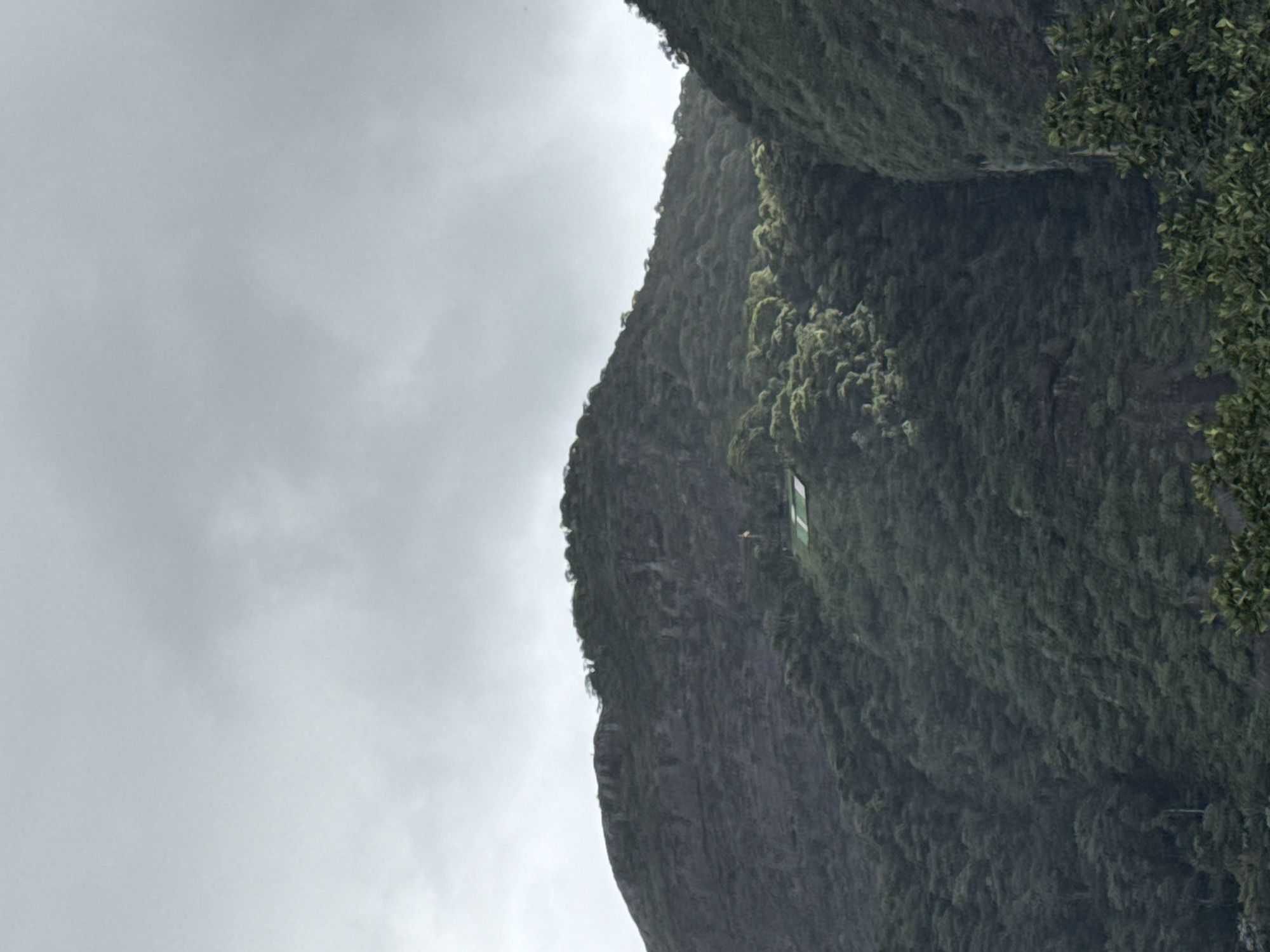
The image displays a dramatic and steep mountainous landscape under an overcast sky. The upper left portion of the frame is dominated by a light grey, cloudy sky, suggesting either an overcast day or foggy conditions. The bulk of the image on the right is occupied by a towering mountain or cliff face, densely covered in dark green foliage, indicative of lush, possibly tropical, vegetation. The texture of the greenery suggests a thick canopy of trees or dense shrubbery clinging to the steep slopes. Nestled high up on the mountain, near the upper right side, is a small, rectangular building or structure. It features a distinctive green and white color scheme. This structure appears to be a man-made installation, possibly a cable car station, a viewing platform, or some other facility for visitors, given its elevated and somewhat isolated position on the rugged terrain. Its size relative to the mountain emphasizes the grand scale of the natural environment. No individuals or explicit activities are visible, but the presence of the building suggests human interaction with this natural site, likely for tourism or transport. While some faint markings are visible on the building's green facade, they are too indistinct to be legible. The scene's characteristic features, combined with the location context of Rio de Janeiro, Brazil, evoke iconic landscapes found in the region. The overall impression is one of natural grandeur and a sense of awe due to the immense scale and height.
Rio de Janeiro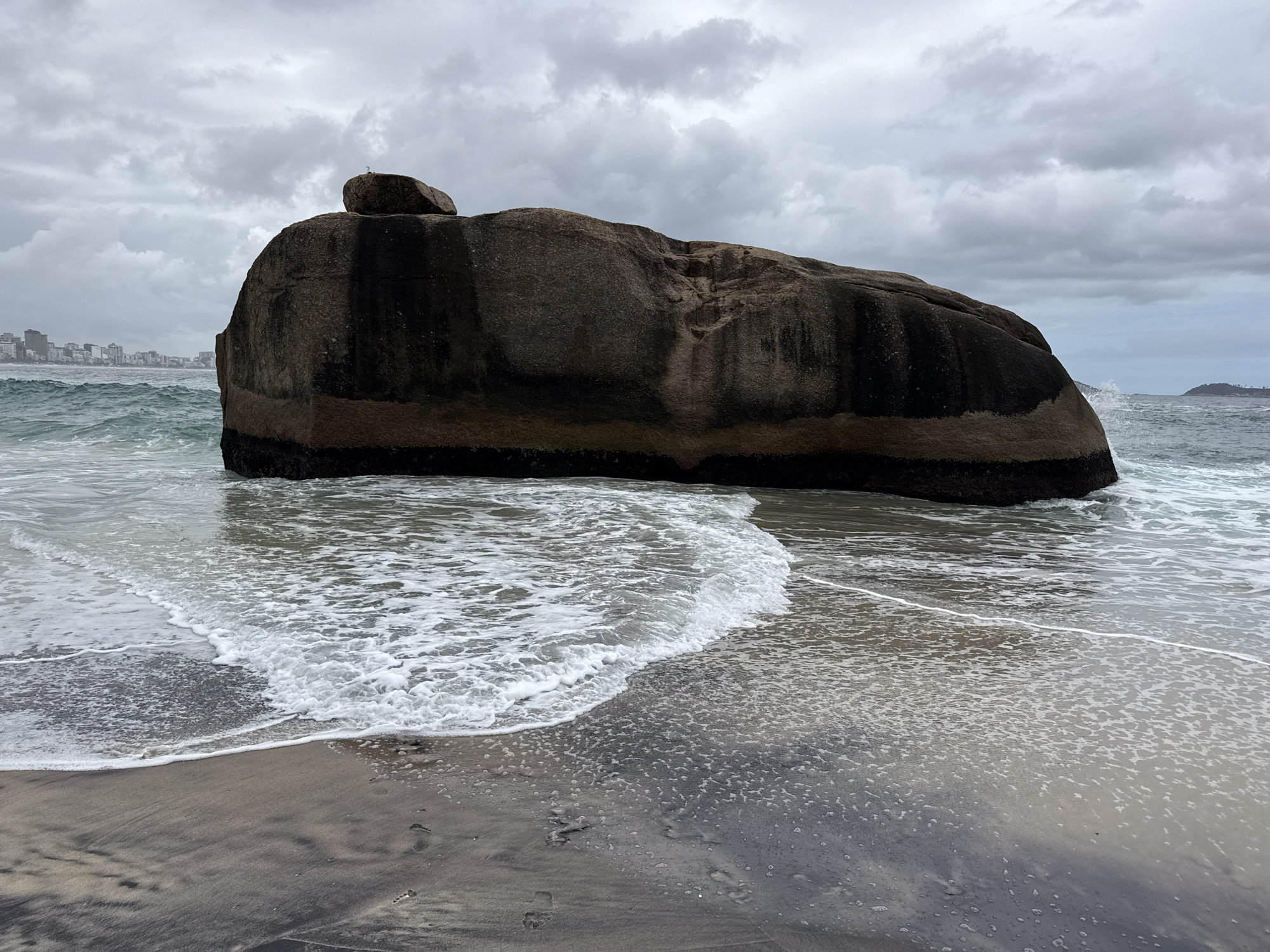
This photograph captures a rugged coastal scene in Rio de Janeiro, Brazil, dominated by a massive, dark rock formation at the edge of the ocean. The sky is overcast with heavy grey clouds, suggesting a cloudy or stormy day, but it is clearly daytime. The primary subject is a very large, dark grey rock, appearing like a huge boulder, situated in the shallow waters where the waves meet the shore. Its lower section, frequently submerged, appears darker and more saturated, possibly from being wet or a tidal mark. On top of this main rock, a smaller, similarly dark rock rests, and a tiny white bird, likely a seagull, is perched atop the smaller rock, looking towards the distant city. The ocean waves crash around the base of the large rock and gently roll onto the sandy shore in the foreground. The water is a deep grey-green, with frothy white foam from the breaking waves creating intricate patterns on the wet sand. The sand itself shows variations in tone, from lighter tan to darker, almost black, likely due to moisture content and mineral composition. In the distant background, a cityscape of high-rise buildings lines the horizon, partially obscured by the overcast sky, indicating an urban presence near this natural landmark. To the far right, a faint outline of another landmass or island can be seen across the water. There is no discernible human activity or visible text in the image. The overall mood is one of natural grandeur and a slightly muted palette due to the cloudy weather.
Rio de Janeiro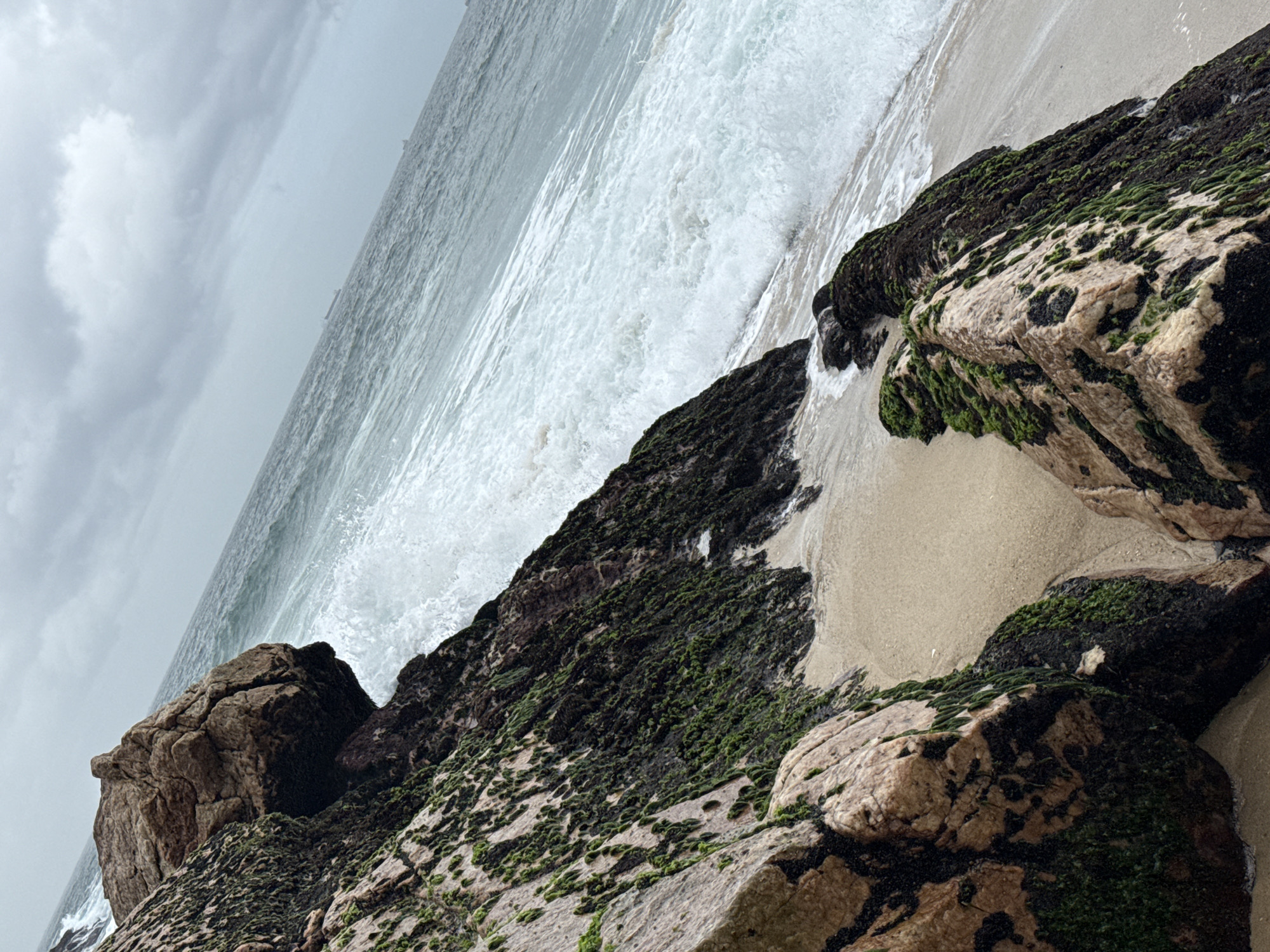
The image captures a dynamic coastal scene, rotated to present a diagonal horizon line. The primary subjects are the ocean, large rock formations, and a sandy beach, all under an overcast sky. Waves are actively crashing against the shore, creating white foam and ripples as they recede and advance over the dark, rugged rocks and light sand. The rocks are a prominent feature, covered extensively with patches of vibrant green moss or algae, particularly on their wet, darker surfaces, while some exposed areas show a lighter, earthy tone. The sand is damp and compacted where it meets the water. The time of day appears to be during daylight hours, but the heavy, uniform grey clouds indicate overcast weather, suggesting either a cloudy day or possibly an approaching storm. In the far distance on the ocean's horizon, faint, indistinct shapes that might be ships or distant landmasses are visible. The scene evokes a sense of natural ruggedness and the powerful interaction between sea and land, characteristic of a coastal environment like Rio de Janeiro, Brazil. There is no visible text in the image.
Rio de Janeiro
The video opens with a close-up shot of a person's bare right foot, featuring pink nail polish on the toes, stepping onto wet, dark grey sand. Small ripples and scattered specks are visible on the sand's surface. The camera then slowly pans upwards, revealing the expanse of the beach and the ocean. Gentle waves with white foamy crests roll onto the shore and recede, leaving the sand visibly wet. The ocean water appears a deep blue-grey under an overcast sky filled with heavy clouds. In the distance, faint silhouettes of landforms, possibly mountains or hills, can be seen along the left horizon. The scene captures a tranquil, cloudy day at the beach.
Rio de Janeiro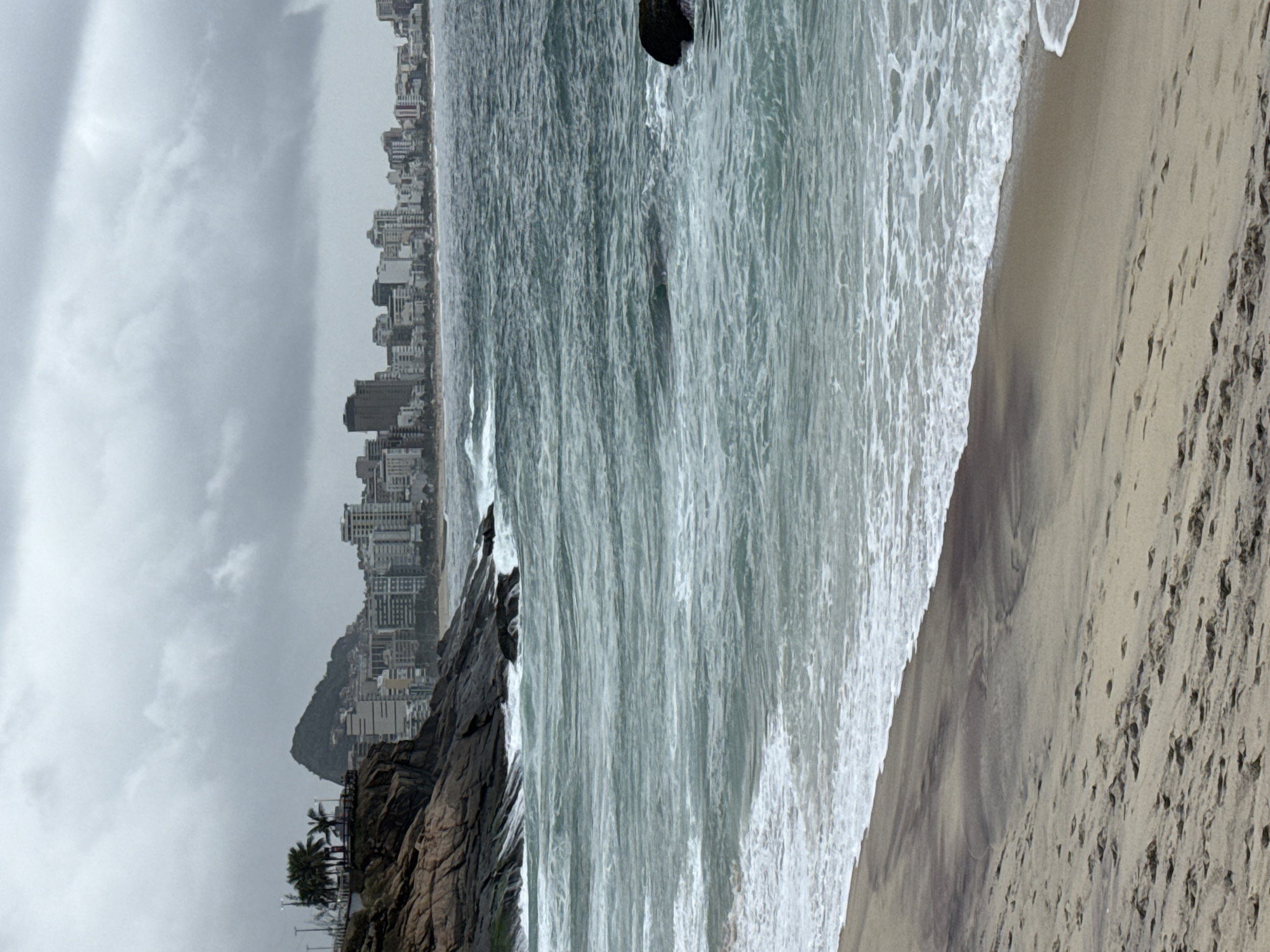
The image presents a wide view of a coastal city under an overcast sky, showcasing the interface between urban development, natural rock formations, the ocean, and a sandy beach. On the left side, a prominent, dark rocky outcrop extends into the water, with several palm trees visible near its base. Behind this, a dense skyline of numerous high-rise buildings stretches horizontally along the coastline, indicating a significant metropolitan area. The buildings, mostly light in color, rise several stories high, creating a busy urban backdrop. The middle section of the image is dominated by the ocean, characterized by light grey-blue water. Numerous waves are actively breaking, creating extensive white foam as they advance towards the shore, suggesting a moderately active sea. To the right, a broad sandy beach occupies the foreground. The sand exhibits a light brown hue with darker, damp patterns near the waterline. Multiple footprints are visible across the sand, indicating recent human activity, although no people are present in the frame. The boundary where the foamy waves meet the sand is distinct. The sky above is uniformly overcast, filled with light grey clouds, suggesting a cloudy or potentially rainy day. The lighting is soft and diffuse, lacking strong shadows, which points to daytime conditions, likely late morning or afternoon. The combination of a mountainous, rocky coastline, extensive beach, and a high-rise urban environment strongly aligns with the geographical characteristics of Rio de Janeiro, Brazil. There is no visible text in the image.
Rio de Janeiro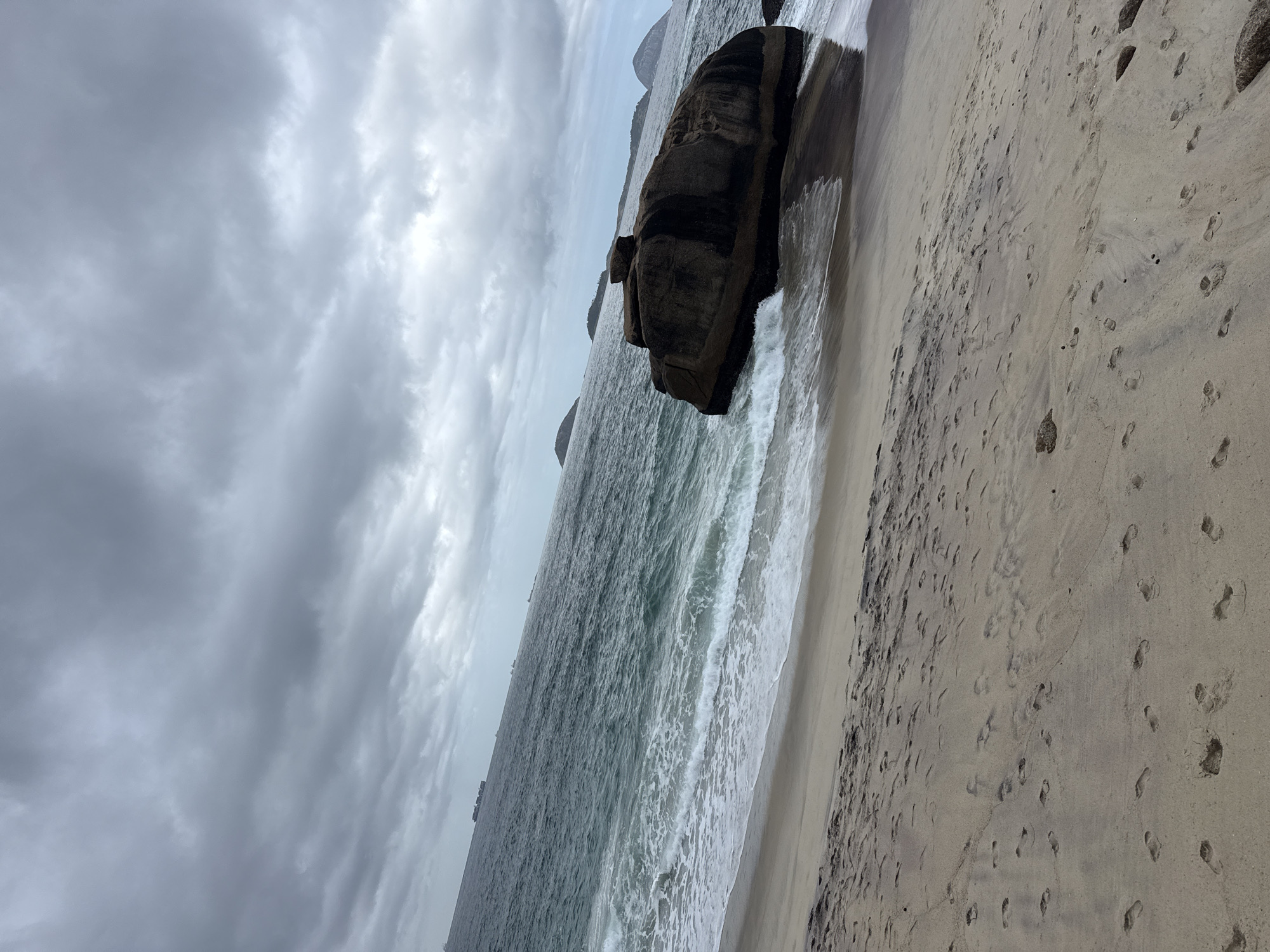
This landscape image captures a dramatic beach scene, likely along the coast of Rio de Janeiro, Brazil, under an overcast sky. The photograph is composed with the horizon cutting through the middle, featuring a vast expanse of cloudy sky above, the ocean in the mid-ground, and sandy shore in the foreground. The sky is dominated by thick, grey and white stratocumulus clouds, suggesting a cloudy day without direct sunlight, casting a diffused, soft light over the entire scene. The clouds show various textures and layers, with brighter areas hinting at some light breaking through. The ocean, a steel grey color under the cloudy sky, exhibits moderate waves. White foam crests where the waves break, particularly around a large, dark rock that stands prominently at the water's edge. This striking rock, partially submerged by the incoming tide, features distinct horizontal bands of lighter grey or brown material against its dark, possibly granite surface. In the distance, faint outlines of other mountains or landmasses can be seen along the horizon, partially obscured by the haze or cloud cover. The sandy beach in the foreground stretches across the right side of the image, showing numerous footprints of varying sizes, indicating recent human activity despite no people being visible. The sand appears wet near the waterline, transitioning to a drier, lighter hue further up the shore. Smaller stones and debris are scattered across the sand. The overall impression is one of natural grandeur and a slightly moody, serene atmosphere typical of a cloudy day at the coast. No text is visible in the image.
Rio de Janeiro
This close-up image showcases a diverse and appetizing breakfast or brunch spread laid out on a white, oval-shaped plate with a subtle ridged rim. No people are visible in the scene. The plate is filled with a variety of food items. Prominently featured are fluffy, yellow scrambled eggs, appearing moist and freshly prepared, in the upper central portion. To the right of the eggs are two round, golden-brown baked items, which strongly resemble Brazilian Pão de Queijo (cheese bread). A vibrant orange half-slice of ripe papaya, replete with numerous dark, glossy seeds, sits centrally towards the bottom. Accompanying the main items are several fresh components: bright yellow chunks of ripe mango are positioned on both the left and right sides of the plate. A dollop of white, lumpy cottage cheese or similar dairy product is visible in the upper left, while a mound of green, textured paste, likely guacamole or mashed avocado, sits below it. A whole, greenish-purple fig can be seen on the right side. Beneath the tropical fruits, slices of various cheeses (ranging from pale yellow to orange-yellow) are layered with slices of reddish-brown salami or other cured meat, adding a savory element to the spread. The arrangement of food suggests a hearty and well-presented meal, likely enjoyed during the daytime, possibly morning or early afternoon, given the breakfast/brunch typical items and soft lighting. The background features a dark, woven texture, suggesting a placemat or table surface. The combination of Pão de Queijo and tropical fruits like papaya, mango, and fig strongly points to a location with a warm climate, consistent with the given context of Rio de Janeiro, Brazil. There is no visible text in the image.
Rio de Janeiro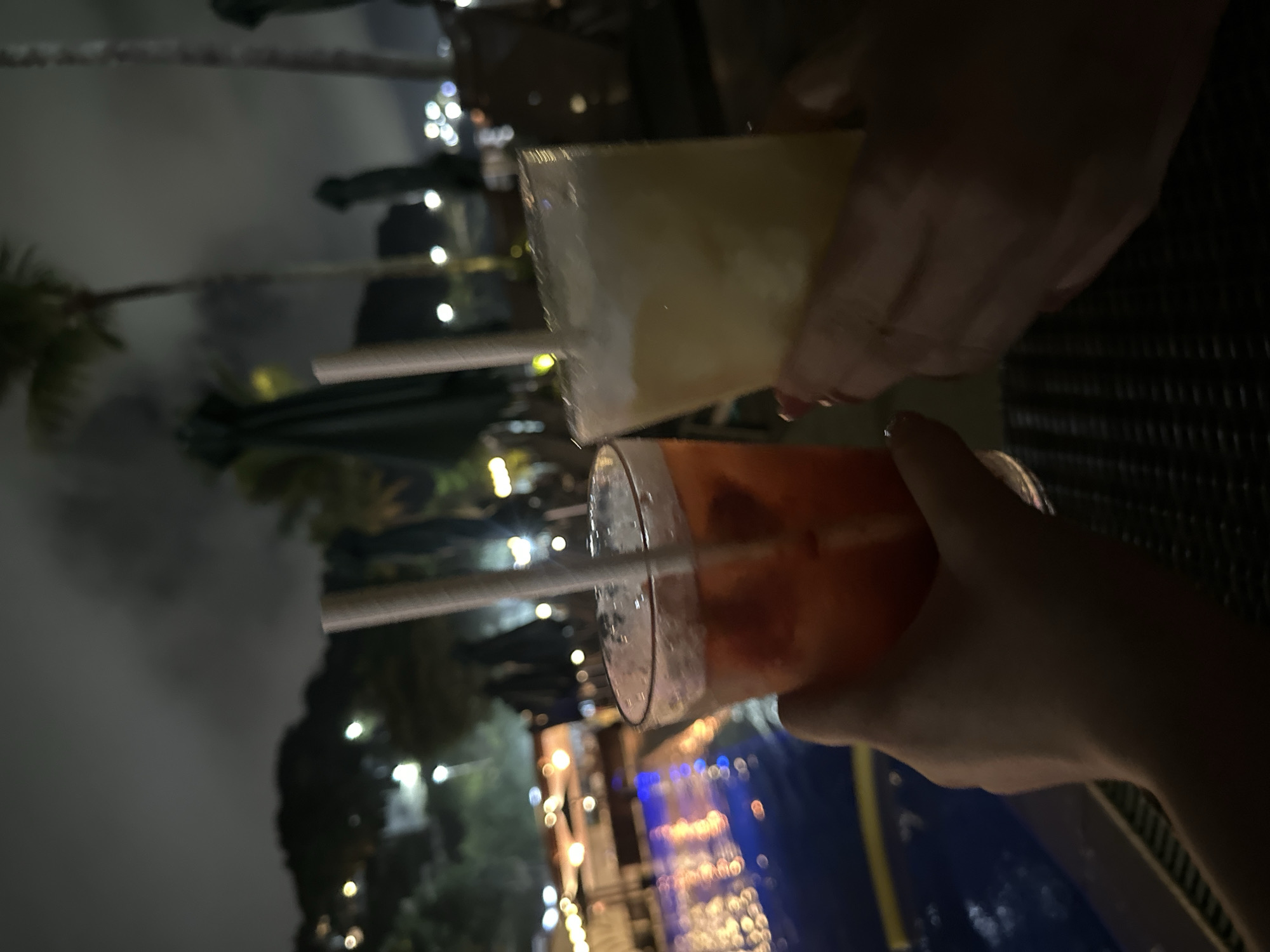
The image, rotated 90 degrees counter-clockwise, captures a nighttime scene of two individuals holding drinks in an outdoor setting in Rio de Janeiro, Brazil. Two hands are prominent in the foreground, each grasping a glass. The left hand holds a tall glass containing a light yellow, possibly icy or blended beverage with a white straw. The right hand holds a glass with a vibrant red or orange drink, also featuring a white straw and condensation on the glass, suggesting it is cold. In the blurred background, the dark night sky is dotted with numerous soft, glowing artificial lights, creating a warm and inviting atmosphere. Silhouetted palm trees are visible, indicating a tropical location. Below the drinks, reflections of lights shimmer on a body of water, which appears to be a swimming pool, adding to the resort-like ambiance. The scene conveys a sense of leisure and enjoyment during an evening out. No text is visible in the image.
Rio de Janeiro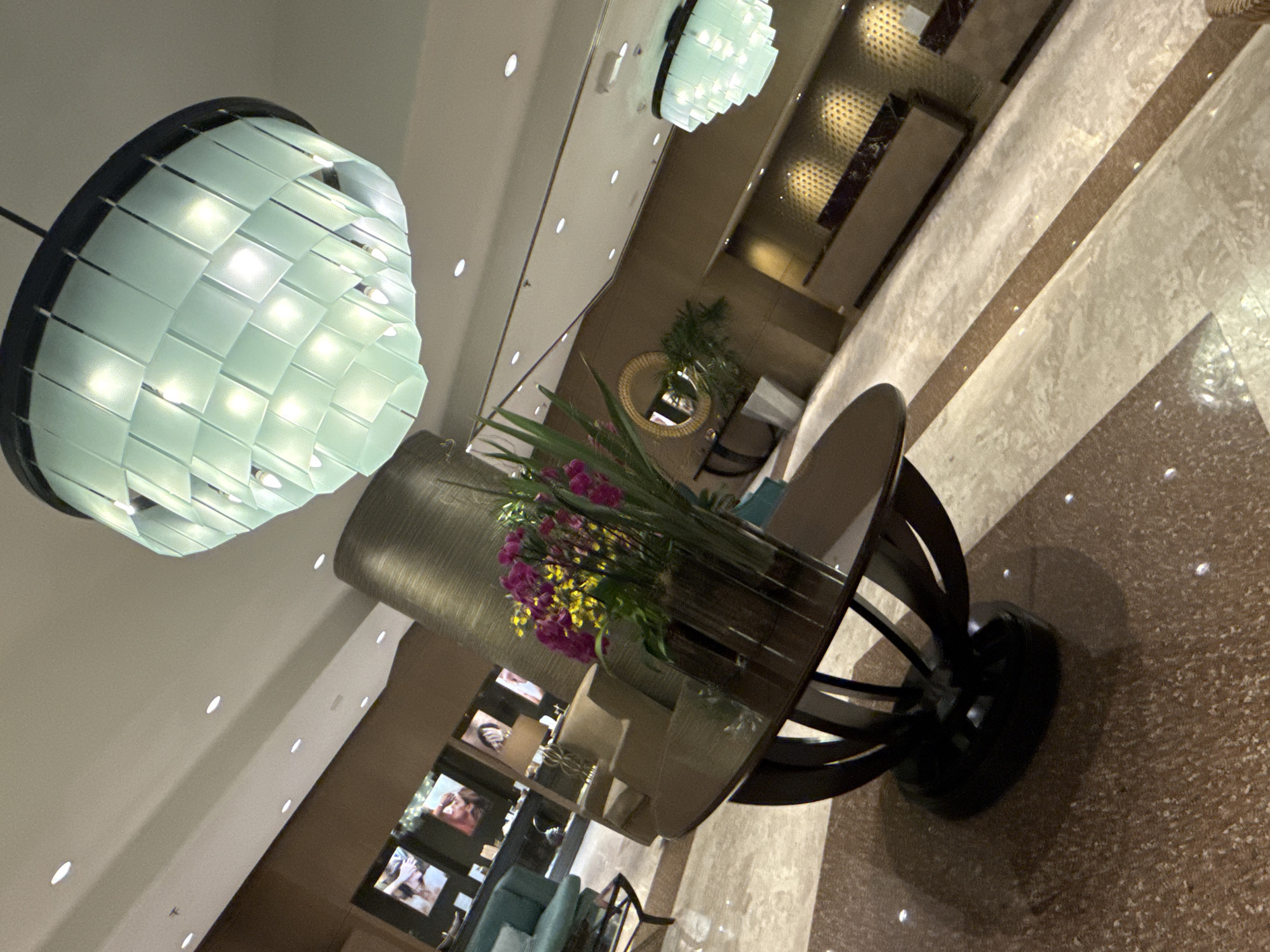
The image captures an interior scene, likely a hotel lobby or a public lounge area, viewed from an upward and tilted angle. The primary focus is a large, modern chandelier hanging from the ceiling, characterized by numerous translucent, light-colored (possibly frosted glass or plastic) rectangular panels arranged in a spiraling, tiered design. These panels emit a bright, cool-toned light from internal bulbs. Another similar chandelier is partially visible further in the background. Below the main chandelier, a round table with a dark, sculpted base and a reflective glass top stands prominently. On the table, a vibrant floral arrangement features purple and yellow flowers mixed with long, green leaves, adding a splash of color to the setting. The background reveals parts of the room's elegant decor. There are what appear to be multiple framed screens or artworks on a wall, showing images of people, though the details are not clearly discernible. Some light blue or teal upholstered seating can be glimpsed near these screens. A circular mirror with a golden frame is also visible on a wall further back, reflecting parts of the room. The ceiling is white with numerous recessed lights, and the floor is a light-toned, speckled material, possibly granite or marble, with contrasting darker striped patterns. The walls feature various textures and patterns, some reflective. No people or identifiable activities are visible in the static shot. The lighting suggests an indoor setting, and no text is discernible within the image.
Rio de Janeiro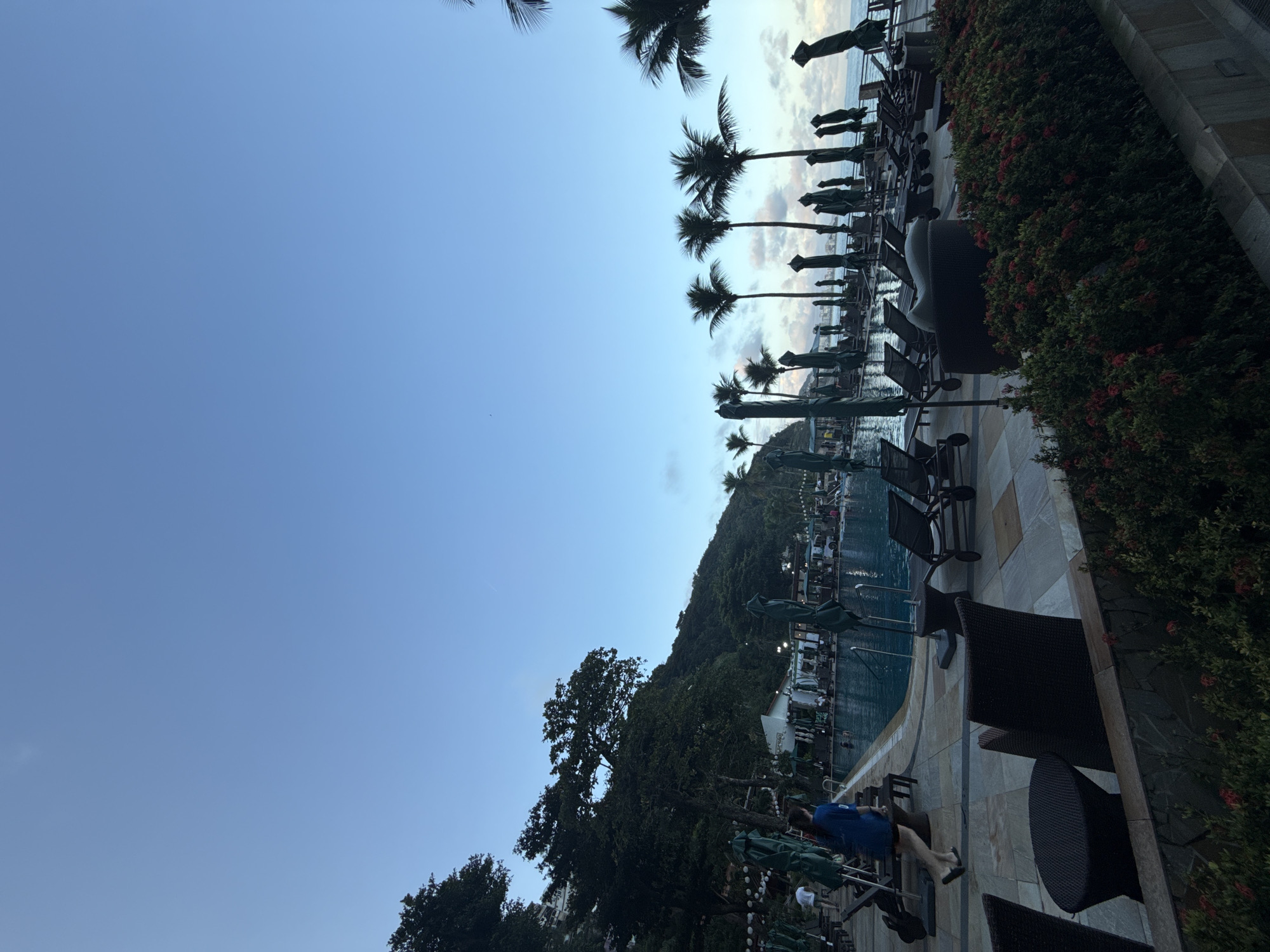
This media file captures a serene outdoor scene at what appears to be a resort or hotel in a tropical or sub-tropical setting, consistent with Rio de Janeiro, Brazil. In the foreground, a person wearing a blue shirt and light-colored shorts or pants is seated on a dark lounge chair on a tiled patio, facing away from the camera and towards the swimming pool and background. The patio also features dark wicker chairs and tables. Along the edge of the patio are lush green bushes with small red berries or flowers. The mid-ground features a large, inviting swimming pool with blue water. Numerous dark lounge chairs with green, folded umbrellas are neatly arranged along the pool's edge, suggesting a quiet time of day. A line of tall palm trees extends across the scene, separating the pool area from the sky and contributing to the tropical ambiance. In the background, a dense, forested hill or mountain rises, covered in dark green foliage, adding a natural and majestic backdrop to the cultivated resort area. The sky is a clear, light blue with scattered wispy clouds, suggesting either early morning or late afternoon, when the light is softer. The overall atmosphere conveys relaxation and tranquility. There is no visible text in the image.
Rio de Janeiro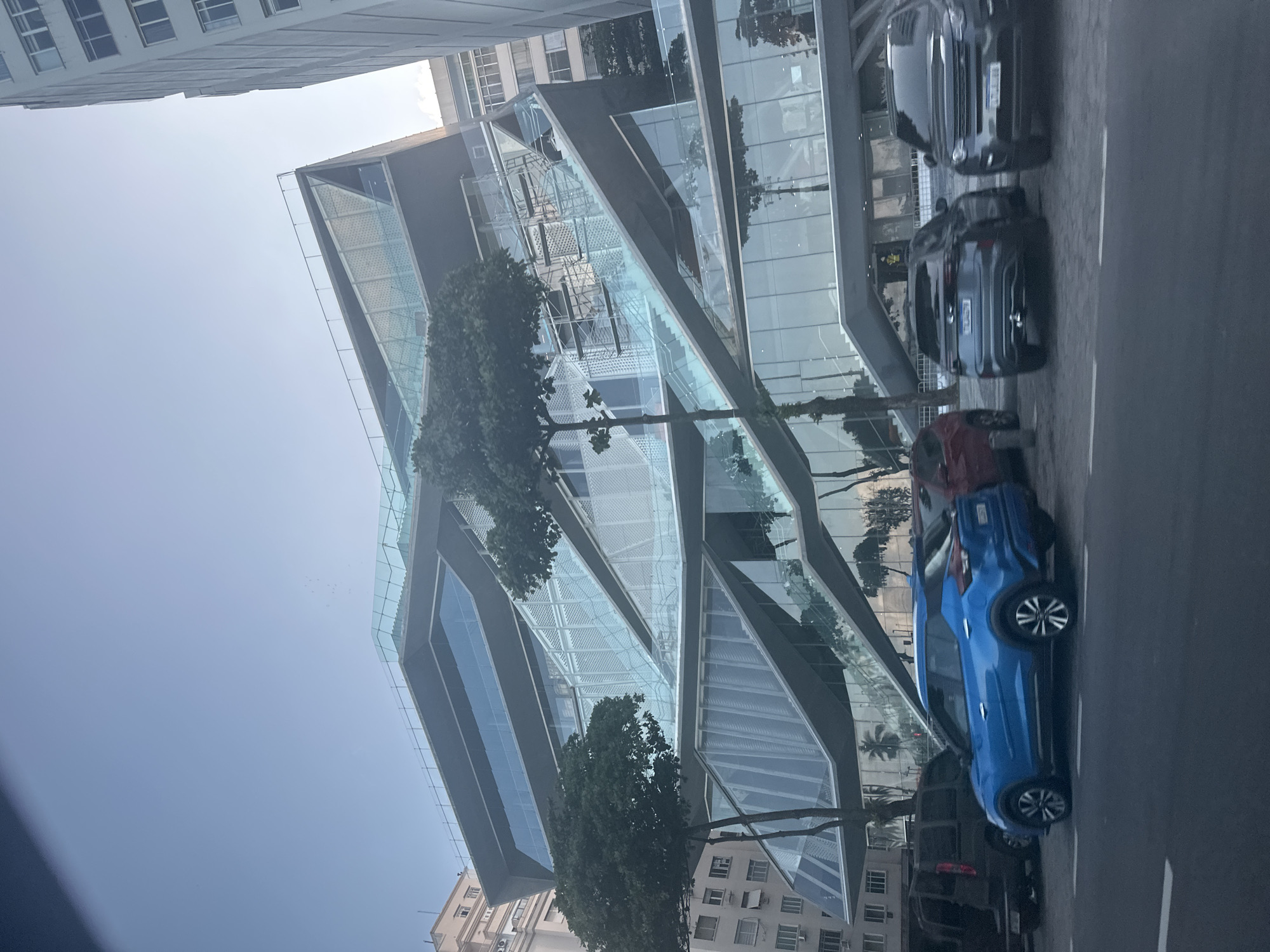
The original image, taken from a slightly low-angle perspective and rotated 90 degrees clockwise, displays an urban street scene in Rio de Janeiro, Brazil, on a clear, sunny day. The dominant subject is a striking, modern multi-story building characterized by a complex, geometric facade of dark grey or black panels interspersed with large, reflective glass sections. These glass segments form diagonal and angular patterns, creating a dynamic and contemporary aesthetic. Portions of the glass reflect the blue sky and trees, while others reveal interior structures or architectural elements. In the foreground, a city street runs parallel to the building, featuring several parked cars. Most prominently, a bright blue SUV is parked closest to the viewer. Behind it, a dark grey or black SUV, a black SUV, and a dark red car are also visible. Green-leafed trees are scattered along the street and beside the building, adding natural elements to the concrete and glass environment. In the background and to the sides, older, more traditional buildings with numerous windows can be seen, contrasting with the modern architecture of the main structure. The sky is a clear, light blue, indicating fair weather and daytime. No people are explicitly visible, and no discernible text apart from illegible license plates on the vehicles. The scene captures a vibrant blend of contemporary and established urban landscapes.
Rio de Janeiro