CM:

ATTN

Get the app

Rosh HaAyin, Israel

30 memories from Rosh HaAyin, Israel
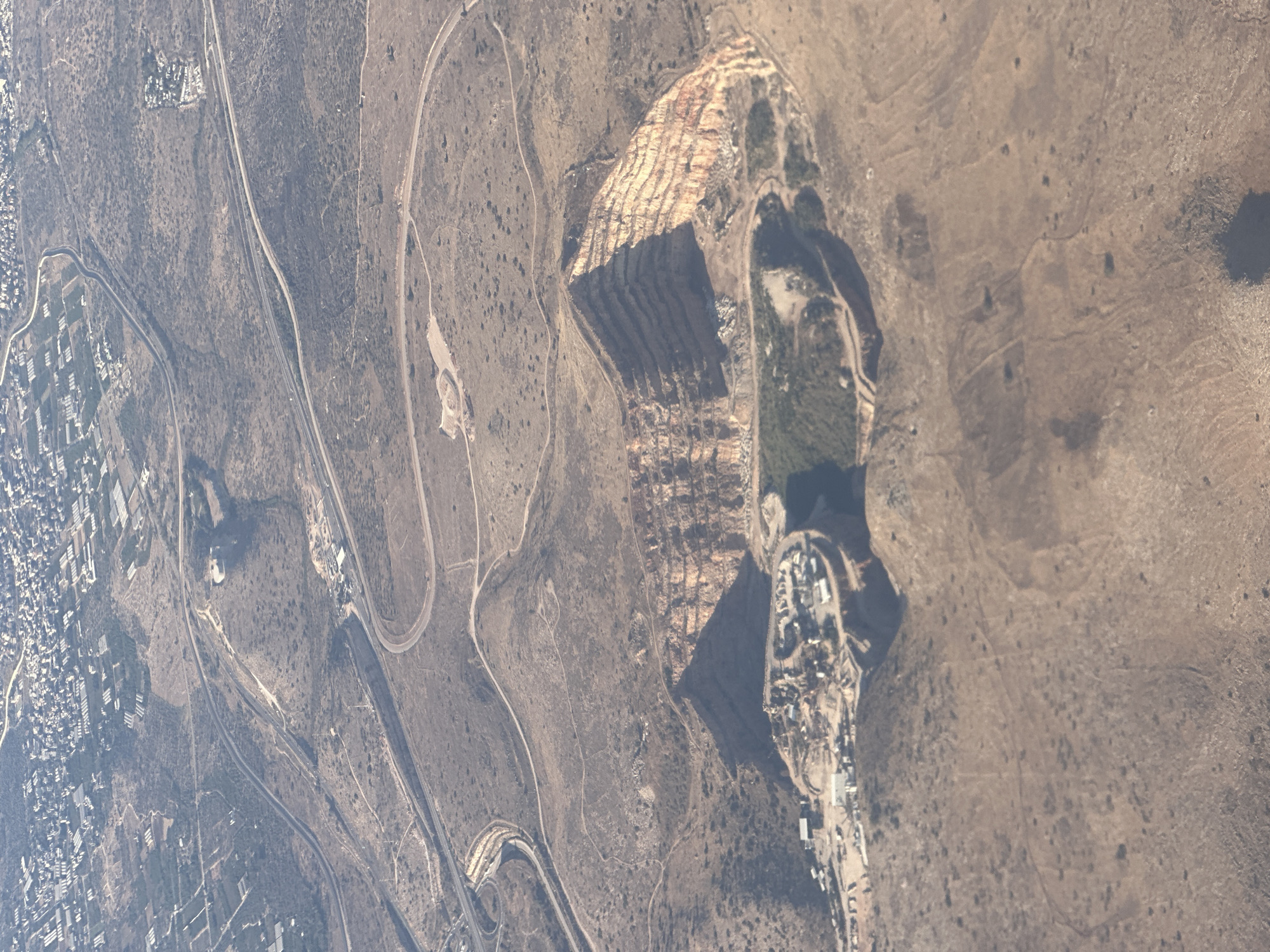
This aerial photograph captures a landscape near Rosh HaAyin, Israel. The scene is dominated by rugged, dry terrain with sparse vegetation. A prominent feature is a large, terraced quarry, its stepped layers carved into the hillside, revealing reddish-brown rock. Adjacent to the quarry, a cluster of buildings and industrial structures suggests ongoing activity, possibly related to mining or processing.

Several roads wind through the landscape. One appears to be a major highway with multiple lanes, curving through the foothills. Other, smaller dirt tracks and paved roads lead to and from the quarry and surrounding areas. On the left side of the image, a densely populated residential area with numerous buildings is visible, contrasting with the more natural, undeveloped land elsewhere. Green patches, possibly agricultural fields or parks, are interspersed within this urban area and along the edges of the undeveloped land.

The lighting suggests it is daytime, with shadows cast by the quarry's terraces and the buildings, indicating the sun is at an angle. The weather appears clear, with no visible cloud cover. The overall impression is one of a semi-arid environment where human development, including infrastructure and industry, interacts with the natural landscape. There is no visible text in the image.

This aerial photograph captures a landscape near Rosh HaAyin, Israel. The scene is dominated by rugged, dry terrain with sparse vegetation. A prominent feature is a large, terraced quarry, its stepped layers carved into the hillside, revealing reddish-brown rock. Adjacent to the quarry, a cluster of buildings and industrial structures suggests ongoing activity, possibly related to mining or processing. Several roads wind through the landscape. One appears to be a major highway with multiple lanes, curving through the foothills. Other, smaller dirt tracks and paved roads lead to and from the quarry and surrounding areas. On the left side of the image, a densely populated residential area with numerous buildings is visible, contrasting with the more natural, undeveloped land elsewhere. Green patches, possibly agricultural fields or parks, are interspersed within this urban area and along the edges of the undeveloped land. The lighting suggests it is daytime, with shadows cast by the quarry's terraces and the buildings, indicating the sun is at an angle. The weather appears clear, with no visible cloud cover. The overall impression is one of a semi-arid environment where human development, including infrastructure and industry, interacts with the natural landscape. There is no visible text in the image.

Rosh HaAyin
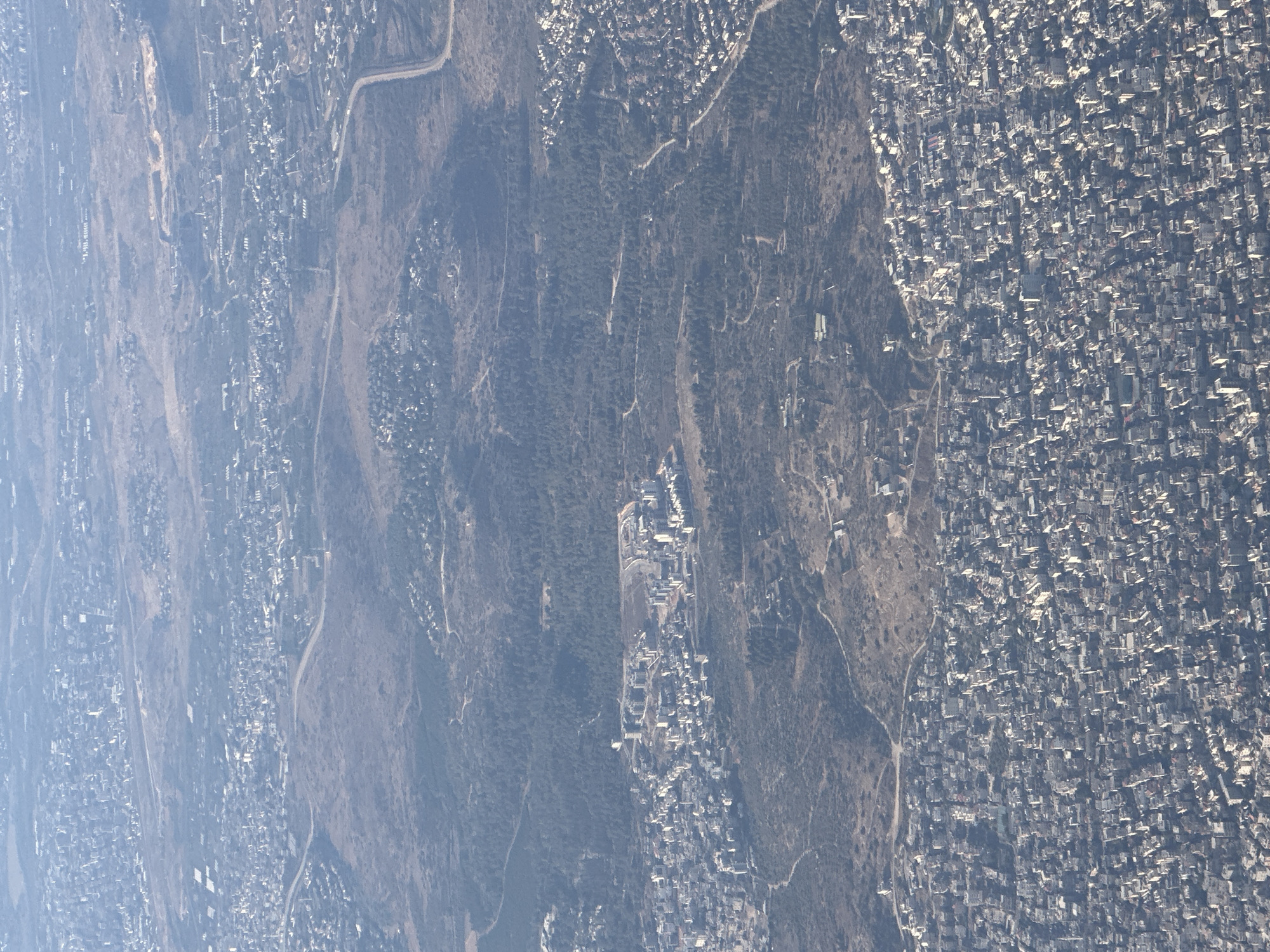
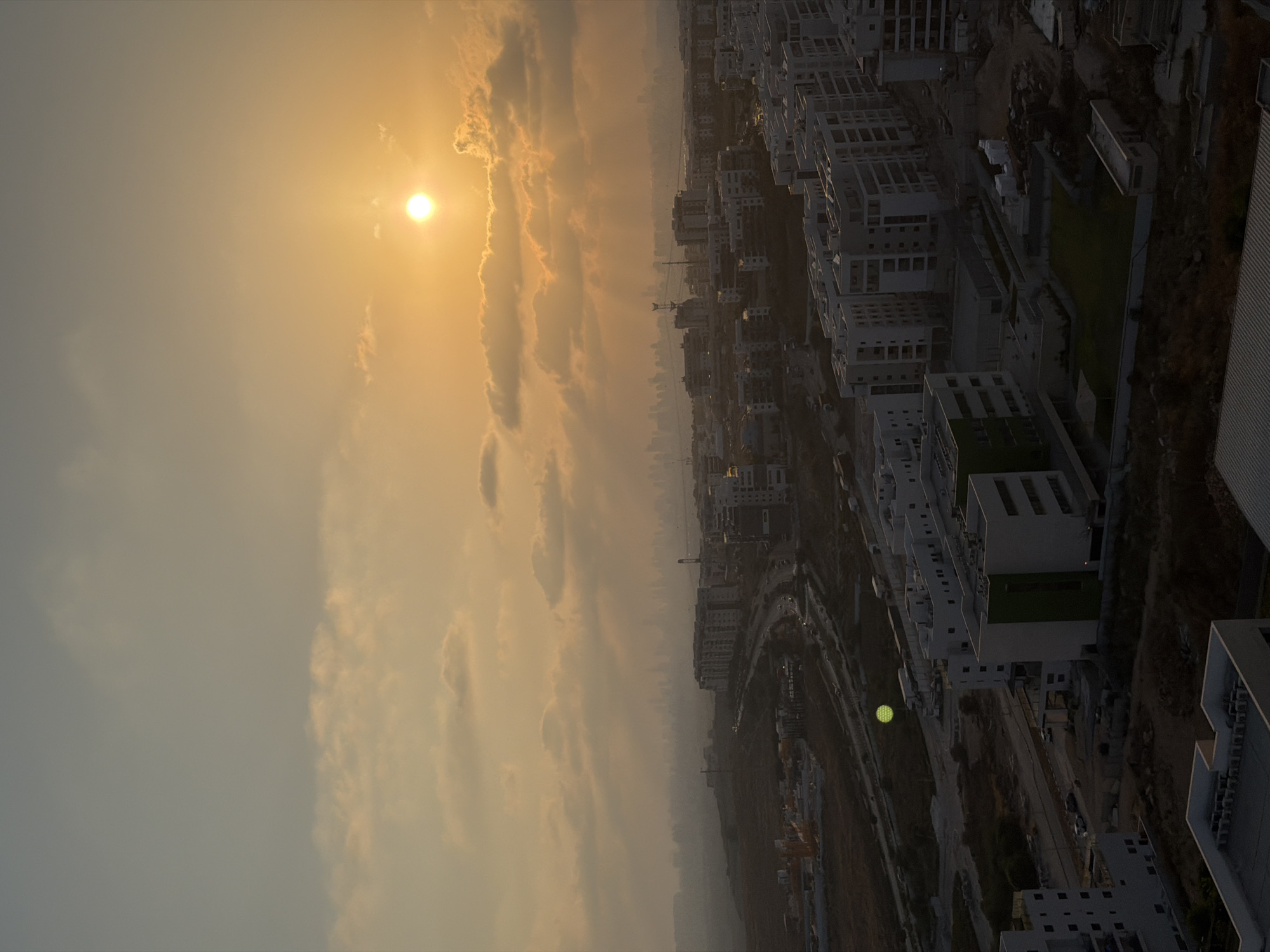
This aerial photograph captures a dense urban landscape, characteristic of Rosh HaAyin, Israel. The image displays a mix of residential and possibly commercial areas, with a vast expanse of tightly packed buildings dominating the foreground. The architecture appears to be predominantly low-rise to mid-rise, with many structures featuring light-colored facades and flat roofs, common in the region.

Further into the mid-ground, the urban density gradually thins out, giving way to patches of undeveloped land, sparsely vegetated hillsides, and a significant forested area. Winding roads and pathways are visible throughout the landscape, connecting different parts of the city and the surrounding natural terrain. In the distance, the urban sprawl continues, merging with the hazy horizon, suggesting a larger metropolitan area or continued development.

The overall impression is one of a sprawling city situated within a hilly, somewhat arid environment, typical of the Israeli landscape. The lighting suggests it's daytime, with shadows indicating the sun's position, though the haziness common in aerial shots slightly softens the details. There is no visible human activity or specific objects of interest that stand out, presenting a general view of urban development and its integration with the natural surroundings.

This aerial photograph captures a dense urban landscape, characteristic of Rosh HaAyin, Israel. The image displays a mix of residential and possibly commercial areas, with a vast expanse of tightly packed buildings dominating the foreground. The architecture appears to be predominantly low-rise to mid-rise, with many structures featuring light-colored facades and flat roofs, common in the region. Further into the mid-ground, the urban density gradually thins out, giving way to patches of undeveloped land, sparsely vegetated hillsides, and a significant forested area. Winding roads and pathways are visible throughout the landscape, connecting different parts of the city and the surrounding natural terrain. In the distance, the urban sprawl continues, merging with the hazy horizon, suggesting a larger metropolitan area or continued development. The overall impression is one of a sprawling city situated within a hilly, somewhat arid environment, typical of the Israeli landscape. The lighting suggests it's daytime, with shadows indicating the sun's position, though the haziness common in aerial shots slightly softens the details. There is no visible human activity or specific objects of interest that stand out, presenting a general view of urban development and its integration with the natural surroundings.

Rosh HaAyin
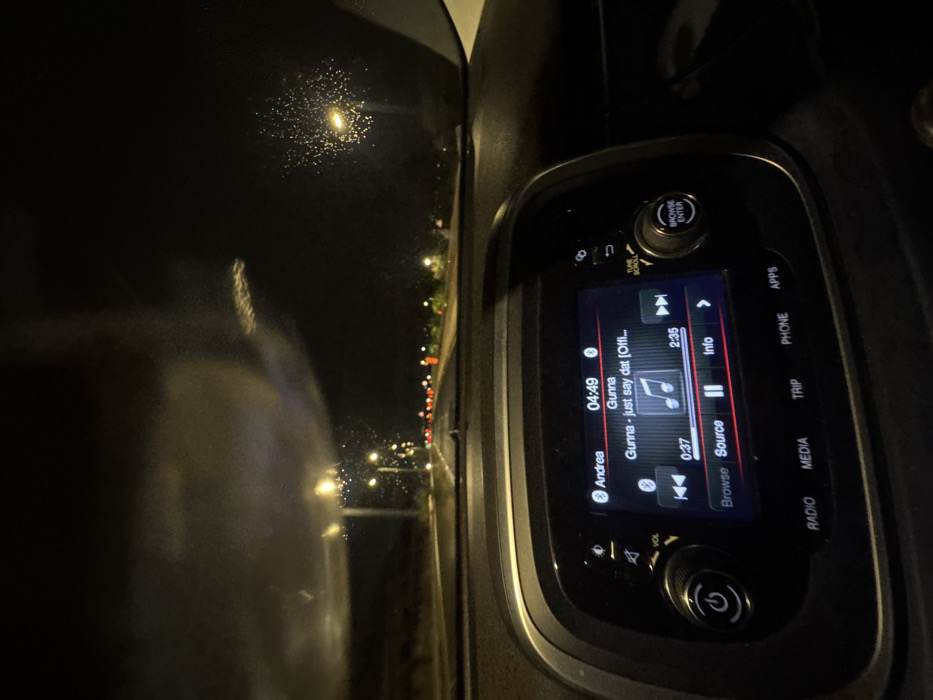
The image captures an interior view from a vehicle at night, looking through a rain-spattered windshield onto a public road. The specific location within Rosh HaAyin, Israel, is not identifiable from the visual evidence.

In the foreground, the upper portion of a vehicle's dashboard is visible, featuring a central infotainment system. The digital display shows "Andrea" connected via Bluetooth, a time of 04:49, and indicates the song "Gunna - just say dat [Offi..." by artist Gunna is playing. The track progress is 0:37 out of 2:35. Playback controls for previous track, pause, and next track are displayed, along with menu options for "Browse," "Source," and "Info." Below the screen are physical buttons labeled "RADIO," "MEDIA," "TRIP," "PHONE," and "APPS," flanked by rotary knobs for power/volume and tune/scroll/enter functions.

Beyond the windshield, a multi-lane road extends into the distance, illuminated by numerous streetlights. Water droplets are visible on the windshield, indicating rain or recent precipitation, causing light reflections. Red tail lights from distant vehicles are discernible along the road ahead against the dark, unlit sky.

The image captures an interior view from a vehicle at night, looking through a rain-spattered windshield onto a public road. The specific location within Rosh HaAyin, Israel, is not identifiable from the visual evidence. In the foreground, the upper portion of a vehicle's dashboard is visible, featuring a central infotainment system. The digital display shows "Andrea" connected via Bluetooth, a time of 04:49, and indicates the song "Gunna - just say dat [Offi..." by artist Gunna is playing. The track progress is 0:37 out of 2:35. Playback controls for previous track, pause, and next track are displayed, along with menu options for "Browse," "Source," and "Info." Below the screen are physical buttons labeled "RADIO," "MEDIA," "TRIP," "PHONE," and "APPS," flanked by rotary knobs for power/volume and tune/scroll/enter functions. Beyond the windshield, a multi-lane road extends into the distance, illuminated by numerous streetlights. Water droplets are visible on the windshield, indicating rain or recent precipitation, causing light reflections. Red tail lights from distant vehicles are discernible along the road ahead against the dark, unlit sky.

Rosh HaAyin
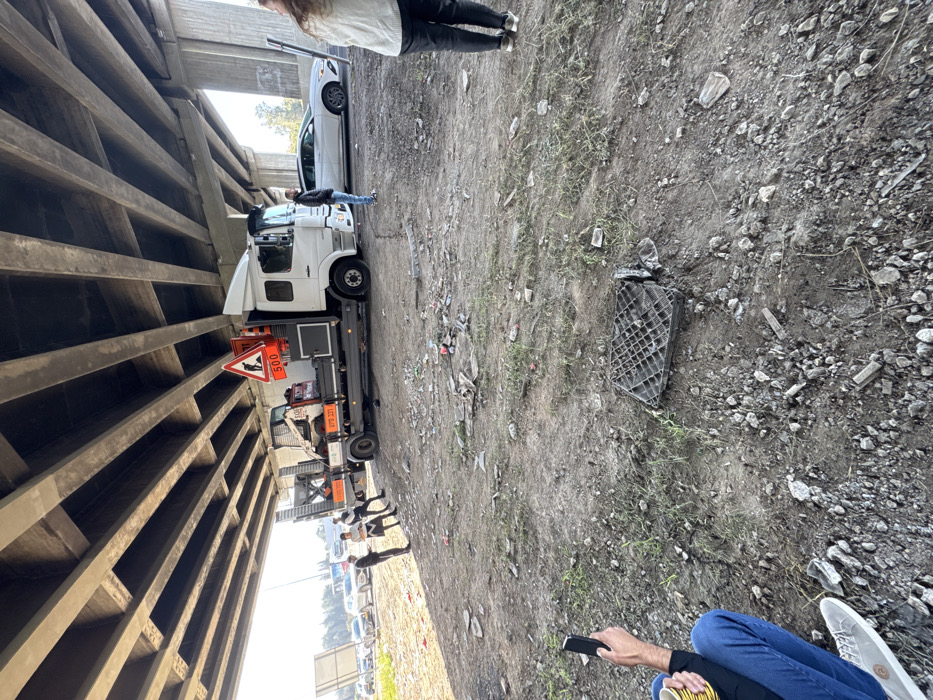
The scene depicts an unpaved area beneath a concrete overpass in Rosh HaAyin, Israel, under daylight conditions. The ground consists of dry, uneven dirt mixed with gravel, sparse green vegetation, and significant scattered litter including plastic fragments and cardboard.

A white Mercedes-Benz flatbed truck, license plate number 979-331 (Israeli plates), is parked centrally on the dirt. Its flatbed carries a white compact construction machine, possibly a mini excavator or skid steer loader. An orange triangular warning sign with a black worker silhouette and a red "500" box is affixed to the truck's load. To the right of the truck, a white sedan is parked facing the same direction. In the background, on a paved surface, a line of additional vehicles is visible.

Several individuals are present. On the left side, a group of three to four men stand conversing near the front of the truck's flatbed. Another man in a dark jacket and jeans stands alone near the passenger side of the truck. On the far right, partially visible from the rear, is a woman with long hair wearing a light-colored top and dark pants. In the immediate foreground, to the bottom left, a person's lower body is visible; they are holding a black smartphone with the screen facing away and a yellow-striped cup. A black, grid-patterned plastic or rubber grate-like object lies on the ground in the mid-foreground.

The overhead structure consists of numerous parallel concrete beams forming the underside of the multi-lane overpass.

The scene depicts an unpaved area beneath a concrete overpass in Rosh HaAyin, Israel, under daylight conditions. The ground consists of dry, uneven dirt mixed with gravel, sparse green vegetation, and significant scattered litter including plastic fragments and cardboard. A white Mercedes-Benz flatbed truck, license plate number 979-331 (Israeli plates), is parked centrally on the dirt. Its flatbed carries a white compact construction machine, possibly a mini excavator or skid steer loader. An orange triangular warning sign with a black worker silhouette and a red "500" box is affixed to the truck's load. To the right of the truck, a white sedan is parked facing the same direction. In the background, on a paved surface, a line of additional vehicles is visible. Several individuals are present. On the left side, a group of three to four men stand conversing near the front of the truck's flatbed. Another man in a dark jacket and jeans stands alone near the passenger side of the truck. On the far right, partially visible from the rear, is a woman with long hair wearing a light-colored top and dark pants. In the immediate foreground, to the bottom left, a person's lower body is visible; they are holding a black smartphone with the screen facing away and a yellow-striped cup. A black, grid-patterned plastic or rubber grate-like object lies on the ground in the mid-foreground. The overhead structure consists of numerous parallel concrete beams forming the underside of the multi-lane overpass.

Rosh HaAyin
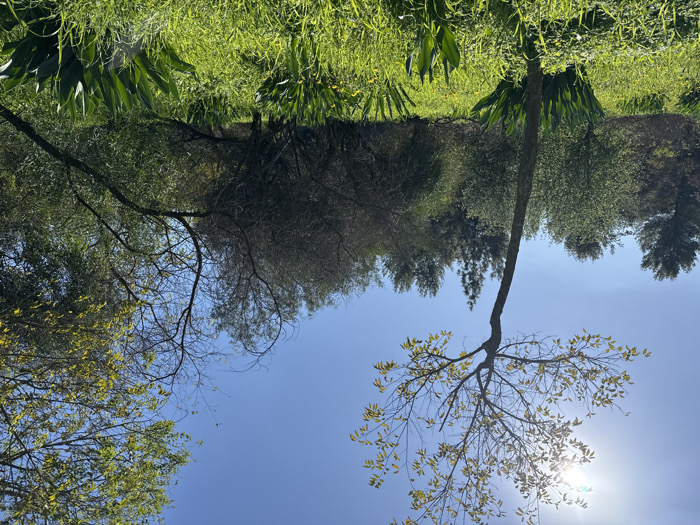
The image depicts an outdoor natural environment in Rosh HaAyin, Israel, under a clear blue sky with bright sunlight. A prominent, slender deciduous tree with sparse light green leaves and a dark brown trunk stands in the left foreground, leaning slightly right. A significant sun flare emanates from the upper left, partially obscuring the tree's upper foliage. The midground and background consist of a dense line of various trees and bushes, some with dark green foliage and others appearing deciduous with fewer leaves. The ground is covered with lush, vibrant green grass interspersed with small yellow wildflowers. Several clusters of large, dark green, broad-leafed plants are visible in the foreground and midground, scattered throughout the grass. No individuals or animals are present.

The image depicts an outdoor natural environment in Rosh HaAyin, Israel, under a clear blue sky with bright sunlight. A prominent, slender deciduous tree with sparse light green leaves and a dark brown trunk stands in the left foreground, leaning slightly right. A significant sun flare emanates from the upper left, partially obscuring the tree's upper foliage. The midground and background consist of a dense line of various trees and bushes, some with dark green foliage and others appearing deciduous with fewer leaves. The ground is covered with lush, vibrant green grass interspersed with small yellow wildflowers. Several clusters of large, dark green, broad-leafed plants are visible in the foreground and midground, scattered throughout the grass. No individuals or animals are present.

Rosh HaAyin
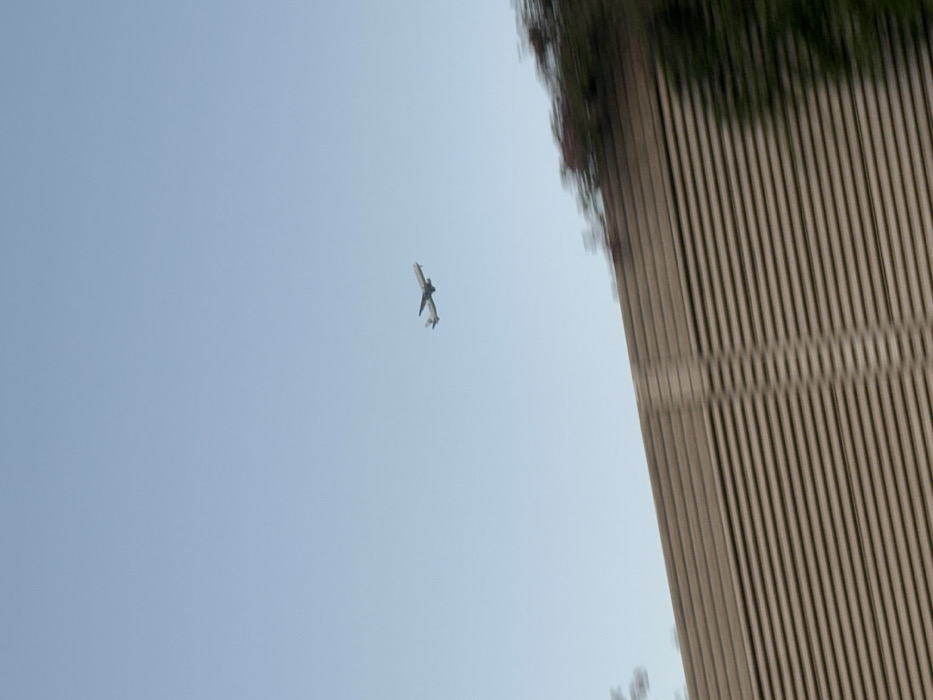
The image displays a light-colored commercial airplane in flight against a clear, light blue sky over Rosh HaAyin, Israel. The aircraft is positioned in the upper-right quadrant, appearing to be in an ascent phase with its landing gear extended. The lower third of the frame is occupied by a large, horizontally ribbed, light-brown or beige barrier structure, which exhibits significant motion blur, suggesting the photograph was taken from a moving vehicle. Above and to the right of this structure, blurred green and red foliage is visible, also affected by motion blur. No individuals are depicted.

The image displays a light-colored commercial airplane in flight against a clear, light blue sky over Rosh HaAyin, Israel. The aircraft is positioned in the upper-right quadrant, appearing to be in an ascent phase with its landing gear extended. The lower third of the frame is occupied by a large, horizontally ribbed, light-brown or beige barrier structure, which exhibits significant motion blur, suggesting the photograph was taken from a moving vehicle. Above and to the right of this structure, blurred green and red foliage is visible, also affected by motion blur. No individuals are depicted.

Rosh HaAyin

A man with a beard, wearing a dark jacket and backpack, is seen from a low angle against a backdrop of branches and autumn foliage. The bright blue sky peeks through the leaves. The man's face is centered, capturing his gaze and expression. The overall composition suggests an outdoor setting.

A man with a beard, wearing a dark jacket and backpack, is seen from a low angle against a backdrop of branches and autumn foliage. The bright blue sky peeks through the leaves. The man's face is centered, capturing his gaze and expression. The overall composition suggests an outdoor setting.

Rosh HaAyin
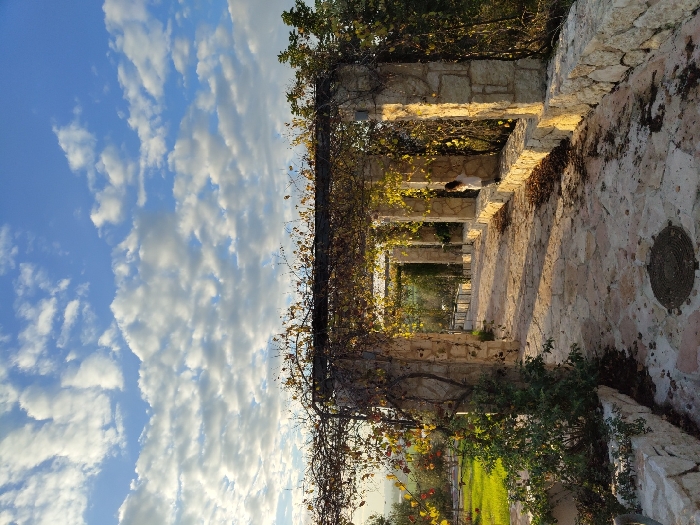
A stone pergola extends from right to left, creating a shaded path. Vines with autumn foliage adorn the structure. Sunlight streams through the openings, casting shadows on the stone path. Beyond the pergola, green grass and trees appear. A bright blue sky filled with puffy white clouds fills the left side of the frame.

A stone pergola extends from right to left, creating a shaded path. Vines with autumn foliage adorn the structure. Sunlight streams through the openings, casting shadows on the stone path. Beyond the pergola, green grass and trees appear. A bright blue sky filled with puffy white clouds fills the left side of the frame.

Rosh HaAyin

A man's selfie captures him from a low angle against an outdoor backdrop. He has dark hair, a beard, and light-colored eyes. He wears a dark jacket or shirt with visible straps or backpack elements. The background includes foliage with green leaves and golden grasses, suggesting a natural environment. A clear blue sky with some wispy clouds is visible above the trees. The photo has natural lighting, giving it a vibrant feel.

A man's selfie captures him from a low angle against an outdoor backdrop. He has dark hair, a beard, and light-colored eyes. He wears a dark jacket or shirt with visible straps or backpack elements. The background includes foliage with green leaves and golden grasses, suggesting a natural environment. A clear blue sky with some wispy clouds is visible above the trees. The photo has natural lighting, giving it a vibrant feel.

Rosh HaAyin
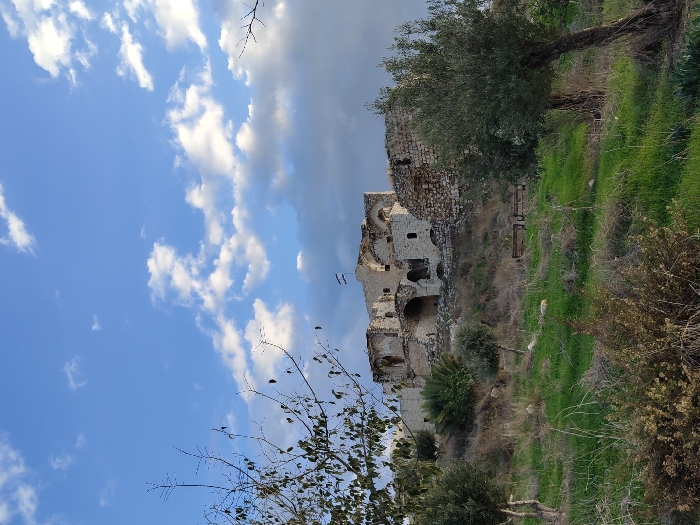
A weathered stone building rests atop a green hill. Its decaying walls and arched openings hint at a storied past. Above, a sky blends bright blue and gray clouds. Bare branches reach skyward from a tree in the foreground, contrasting with lush greenery surrounding the building. The scene evokes a sense of history and decay in a natural setting.

A weathered stone building rests atop a green hill. Its decaying walls and arched openings hint at a storied past. Above, a sky blends bright blue and gray clouds. Bare branches reach skyward from a tree in the foreground, contrasting with lush greenery surrounding the building. The scene evokes a sense of history and decay in a natural setting.

Rosh HaAyin
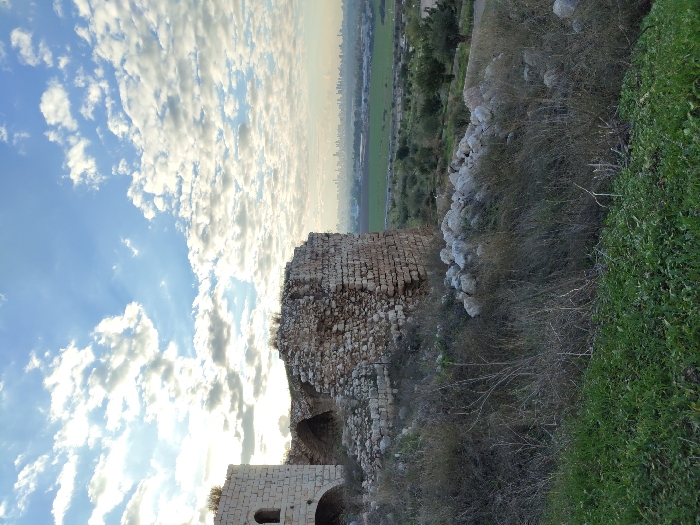
The image shows an old, partially ruined stone structure set against a backdrop of a cloudy blue sky. Part of a cityscape is visible in the distance. The structure appears to be crumbling, with missing stones and visible interior spaces. It is surrounded by grass and bushes. The image is rotated counter-clockwise.

The image shows an old, partially ruined stone structure set against a backdrop of a cloudy blue sky. Part of a cityscape is visible in the distance. The structure appears to be crumbling, with missing stones and visible interior spaces. It is surrounded by grass and bushes. The image is rotated counter-clockwise.

Rosh HaAyin
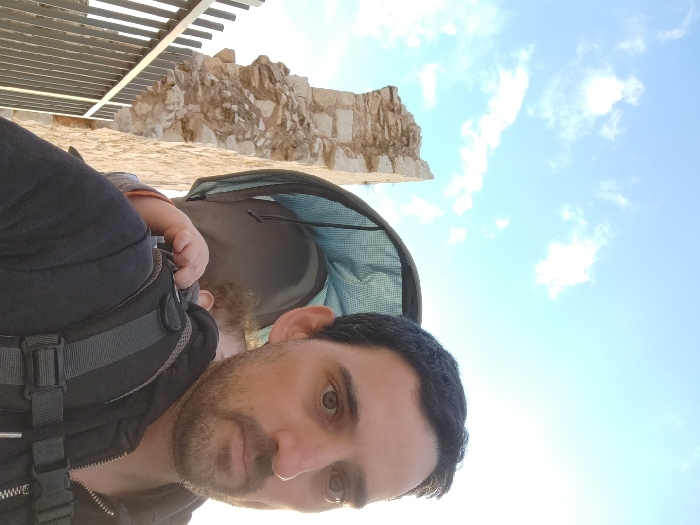
A close-up selfie captures a man and a child in a baby carrier outdoors on a bright day in Rosh HaAyin, Israel. The image, originally taken in portrait orientation, features the man prominently in the foreground, looking directly at the camera with a neutral expression. He has dark hair, a beard, and brown eyes, and is wearing a dark jacket or shirt. A robust baby carrier is strapped to his front, holding a partially visible infant or small child with curly hair and a tiny hand. The carrier's interior lining is a distinctive light blue or teal checkered fabric.

The background reveals light-colored stone ruins or natural rock formations, indicative of an archaeological or historical site, consistent with the Rosh HaAyin context. Above the ruins, the sky is a vibrant blue with scattered white clouds, suggesting clear weather. Strong, natural sunlight illuminates the scene, with a noticeable glare in the lower right, placing the time of day between late morning and early afternoon. In the upper left, a modern structure with horizontal slats, possibly a shaded walkway or viewing platform, can be seen. No text is visible in the media.

A close-up selfie captures a man and a child in a baby carrier outdoors on a bright day in Rosh HaAyin, Israel. The image, originally taken in portrait orientation, features the man prominently in the foreground, looking directly at the camera with a neutral expression. He has dark hair, a beard, and brown eyes, and is wearing a dark jacket or shirt. A robust baby carrier is strapped to his front, holding a partially visible infant or small child with curly hair and a tiny hand. The carrier's interior lining is a distinctive light blue or teal checkered fabric. The background reveals light-colored stone ruins or natural rock formations, indicative of an archaeological or historical site, consistent with the Rosh HaAyin context. Above the ruins, the sky is a vibrant blue with scattered white clouds, suggesting clear weather. Strong, natural sunlight illuminates the scene, with a noticeable glare in the lower right, placing the time of day between late morning and early afternoon. In the upper left, a modern structure with horizontal slats, possibly a shaded walkway or viewing platform, can be seen. No text is visible in the media.

Rosh HaAyin
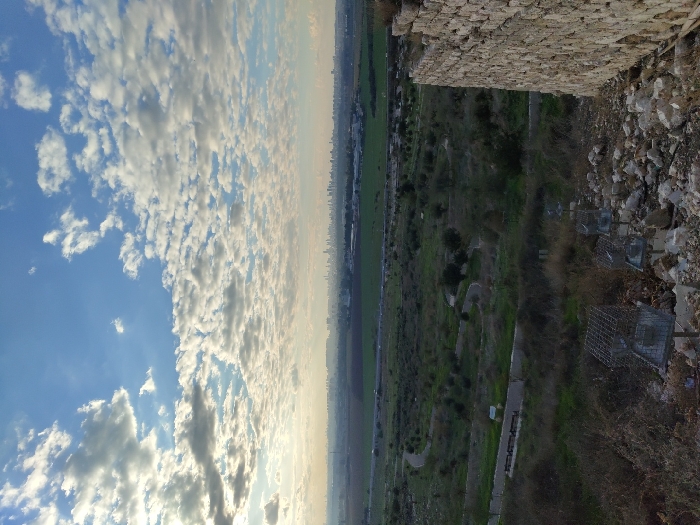
The image, taken in landscape orientation, presents a panoramic view from an elevated position, likely atop ancient ruins or a hill, overlooking a broad valley and distant cityscape.

In the immediate foreground, on the right side, a substantial stone wall constructed from rough-hewn, light-colored stones dominates. Below the wall, the ground is covered with rubble and loose stones, interspersed with dry vegetation. Several square, metal cage-like structures are visible among the debris.

The midground transitions into a wide, verdant expanse of fields and uneven terrain, characterized by patches of green grass and scattered low shrubs and trees. Faint pathways or dirt roads can be discerned winding through this landscape.

On the far left, a hazy silhouette of a distant city or town stretches across the horizon, with numerous buildings just visible through the atmospheric haze.

The upper portion of the image is filled with a vast, partly cloudy blue sky. Numerous white, fluffy clouds are scattered across the frame, some appearing brighter than others, suggesting sunlight breaking through. The overall lighting implies either early morning or late afternoon, with a soft, diffused glow.

There is no specific activity or event taking place; the scene is a static landscape. The weather appears clear and bright, with pleasant cloud cover. The presence of ancient-looking stone structures overlooking agricultural land and a modern city is consistent with the context of Rosh HaAyin, Israel, a region known for its historical sites like Tel Afek/Antipatris, offering views of the surrounding plains and contemporary development. No visible text is present in the image.

The image, taken in landscape orientation, presents a panoramic view from an elevated position, likely atop ancient ruins or a hill, overlooking a broad valley and distant cityscape. In the immediate foreground, on the right side, a substantial stone wall constructed from rough-hewn, light-colored stones dominates. Below the wall, the ground is covered with rubble and loose stones, interspersed with dry vegetation. Several square, metal cage-like structures are visible among the debris. The midground transitions into a wide, verdant expanse of fields and uneven terrain, characterized by patches of green grass and scattered low shrubs and trees. Faint pathways or dirt roads can be discerned winding through this landscape. On the far left, a hazy silhouette of a distant city or town stretches across the horizon, with numerous buildings just visible through the atmospheric haze. The upper portion of the image is filled with a vast, partly cloudy blue sky. Numerous white, fluffy clouds are scattered across the frame, some appearing brighter than others, suggesting sunlight breaking through. The overall lighting implies either early morning or late afternoon, with a soft, diffused glow. There is no specific activity or event taking place; the scene is a static landscape. The weather appears clear and bright, with pleasant cloud cover. The presence of ancient-looking stone structures overlooking agricultural land and a modern city is consistent with the context of Rosh HaAyin, Israel, a region known for its historical sites like Tel Afek/Antipatris, offering views of the surrounding plains and contemporary development. No visible text is present in the image.

Rosh HaAyin
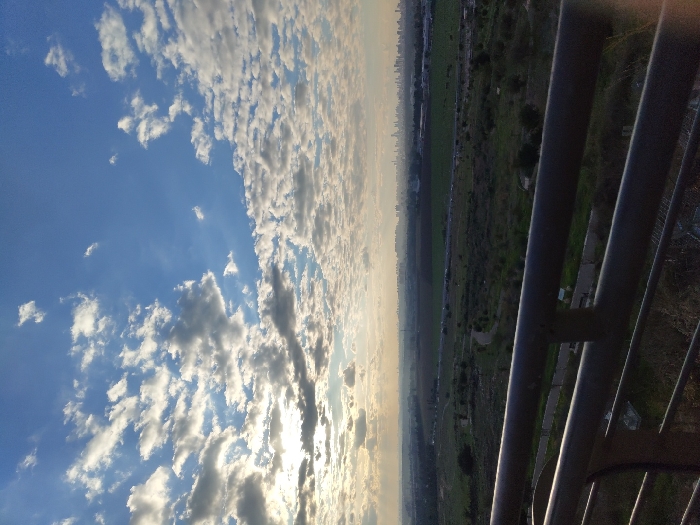
From a high vantage point, a view unfolds. A sky filled with scattered, white clouds stretches above. Below, a landscape reveals green fields intersected by a road and distant buildings. The sun is trying to break through the clouds. A portion of the image is obscured by the metal railing in the foreground. The scene evokes a sense of elevation.

From a high vantage point, a view unfolds. A sky filled with scattered, white clouds stretches above. Below, a landscape reveals green fields intersected by a road and distant buildings. The sun is trying to break through the clouds. A portion of the image is obscured by the metal railing in the foreground. The scene evokes a sense of elevation.

Rosh HaAyin
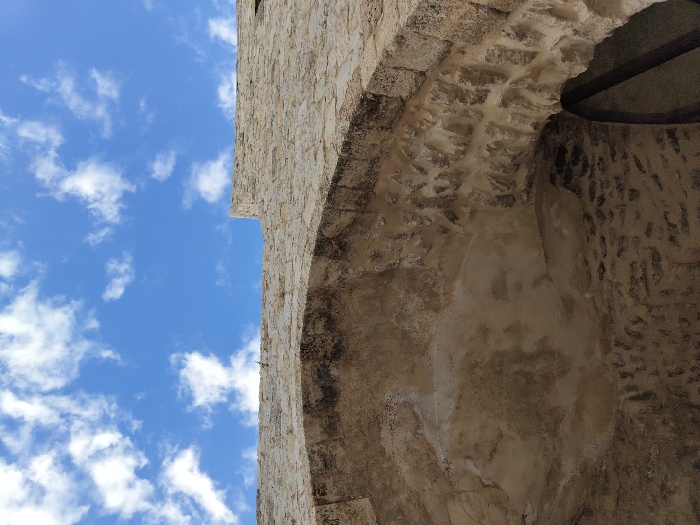
A weathered stone archway curves across the frame, its rough, aged texture contrasting with a bright blue sky dotted with fluffy white clouds. The stone is a light, creamy color with darker, shadowed areas highlighting the individual blocks. A dark horizontal beam sits just inside the upper arch. The structure appears old and possibly part of a larger building. The perspective is from below, looking upwards towards the sky.

A weathered stone archway curves across the frame, its rough, aged texture contrasting with a bright blue sky dotted with fluffy white clouds. The stone is a light, creamy color with darker, shadowed areas highlighting the individual blocks. A dark horizontal beam sits just inside the upper arch. The structure appears old and possibly part of a larger building. The perspective is from below, looking upwards towards the sky.

Rosh HaAyin

A male subject is depicted in a high-angle shot, looking upwards towards the camera, against a light-colored tiled ground in Rosh HaAyin, Israel. The individual has dark hair, a receding hairline, dark eyebrows, and green/hazel eyes. He exhibits a furrowed brow and a slight grimace or smirk, with his lips slightly parted. A short, dark beard and mustache are present. He is wearing a dark grey, zippered hoodie with the zipper partially open at the top. Black-framed sunglasses are perched on the top of his head. The background consists of light-beige, rectangular paving tiles.

A male subject is depicted in a high-angle shot, looking upwards towards the camera, against a light-colored tiled ground in Rosh HaAyin, Israel. The individual has dark hair, a receding hairline, dark eyebrows, and green/hazel eyes. He exhibits a furrowed brow and a slight grimace or smirk, with his lips slightly parted. A short, dark beard and mustache are present. He is wearing a dark grey, zippered hoodie with the zipper partially open at the top. Black-framed sunglasses are perched on the top of his head. The background consists of light-beige, rectangular paving tiles.

Rosh HaAyin
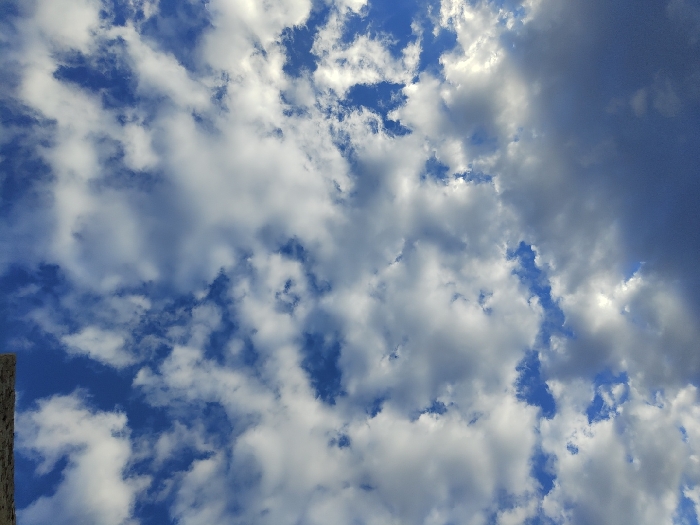
The image displays a sky observed over the city of Rosh HaAyin, Israel. The scene is dominated by a clear blue sky interspersed with various cloud formations. Numerous cumulus and stratocumulus clouds are visible, varying in size, shape, and density. Patches of bright white clouds, indicative of direct sunlight, are juxtaposed with areas of darker grey clouds, suggesting thickness or shadowing. Sunlight appears to be illuminating the cloud tops and edges from an unseen source. A small, partial architectural element, possibly a concrete or stone overhang or building edge, is visible at the very top of the frame, slightly left of center, indicating the upward perspective of the photograph. No discernible people, specific man-made objects within the sky, or active interactions are present. The environment depicted is exclusively the atmospheric sky.

The image displays a sky observed over the city of Rosh HaAyin, Israel. The scene is dominated by a clear blue sky interspersed with various cloud formations. Numerous cumulus and stratocumulus clouds are visible, varying in size, shape, and density. Patches of bright white clouds, indicative of direct sunlight, are juxtaposed with areas of darker grey clouds, suggesting thickness or shadowing. Sunlight appears to be illuminating the cloud tops and edges from an unseen source. A small, partial architectural element, possibly a concrete or stone overhang or building edge, is visible at the very top of the frame, slightly left of center, indicating the upward perspective of the photograph. No discernible people, specific man-made objects within the sky, or active interactions are present. The environment depicted is exclusively the atmospheric sky.

Rosh HaAyin
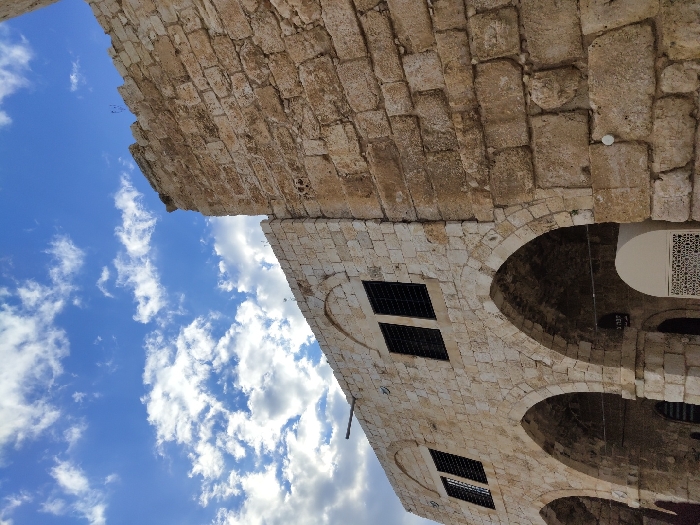
The image displays a historic stone building in Rosh HaAyin, Israel, under a blue sky with scattered white clouds. The structure is composed of light-colored, irregular stone blocks, showing signs of age. Its lower section features a series of pointed arches, forming an arcade. The upper facade includes rectangular windows fitted with black grates. The right side of the building exhibits larger, more weathered stone blocks and a jagged, partially ruined top edge from which small vegetation grows. A dark conduit or pipe protrudes from the upper-left area of the structure. Below one of the arches, a small white structure with a decorative base is present, alongside a sign displaying the Hebrew text 'מבוא ב' (Mavo Bet), translated as 'Entrance B'. No individuals are depicted within the frame.

The image displays a historic stone building in Rosh HaAyin, Israel, under a blue sky with scattered white clouds. The structure is composed of light-colored, irregular stone blocks, showing signs of age. Its lower section features a series of pointed arches, forming an arcade. The upper facade includes rectangular windows fitted with black grates. The right side of the building exhibits larger, more weathered stone blocks and a jagged, partially ruined top edge from which small vegetation grows. A dark conduit or pipe protrudes from the upper-left area of the structure. Below one of the arches, a small white structure with a decorative base is present, alongside a sign displaying the Hebrew text 'מבוא ב' (Mavo Bet), translated as 'Entrance B'. No individuals are depicted within the frame.

Rosh HaAyin
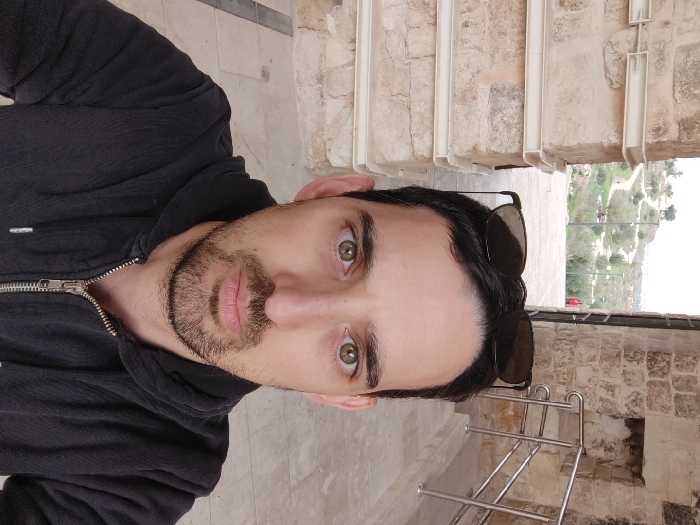
A male individual is centered in a close-up, frontal photograph, looking directly at the camera with a neutral expression. He has dark hair, a short, trimmed beard, and light green-hazel eyes. He is wearing a dark, zippered hooded sweatshirt, with dark sunglasses resting on top of his head.

The subject is positioned within or immediately in front of a stone architectural structure, likely a passage or large doorway, in Rosh HaAyin, Israel. The structure is constructed from light-colored, rectangular cut stone blocks. To the left, a stone pillar exhibits several horizontal, white, planar protrusions. To the right, a stone wall features a recessed niche and a flight of light-colored steps accompanied by a silver-colored metal handrail.

Beyond this structure, an outdoor park environment is visible. This includes paved pathways traversing a gently sloping, vegetated landscape with scattered trees and lampposts under an overcast sky. A distant hill with faint structures is present on the horizon. A small, partially obscured figure in red clothing is discernible in the mid-ground, near a pathway. The ground in the immediate foreground where the subject stands is a light-colored paved surface.

A male individual is centered in a close-up, frontal photograph, looking directly at the camera with a neutral expression. He has dark hair, a short, trimmed beard, and light green-hazel eyes. He is wearing a dark, zippered hooded sweatshirt, with dark sunglasses resting on top of his head. The subject is positioned within or immediately in front of a stone architectural structure, likely a passage or large doorway, in Rosh HaAyin, Israel. The structure is constructed from light-colored, rectangular cut stone blocks. To the left, a stone pillar exhibits several horizontal, white, planar protrusions. To the right, a stone wall features a recessed niche and a flight of light-colored steps accompanied by a silver-colored metal handrail. Beyond this structure, an outdoor park environment is visible. This includes paved pathways traversing a gently sloping, vegetated landscape with scattered trees and lampposts under an overcast sky. A distant hill with faint structures is present on the horizon. A small, partially obscured figure in red clothing is discernible in the mid-ground, near a pathway. The ground in the immediate foreground where the subject stands is a light-colored paved surface.

Rosh HaAyin
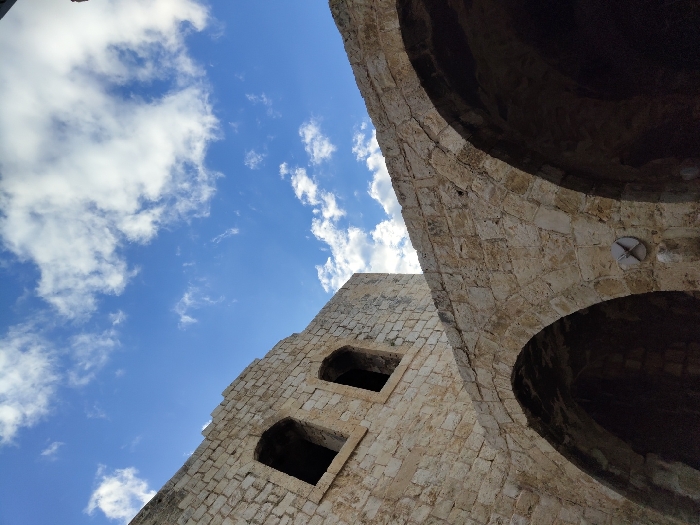
The image captures a low-angle perspective of ancient stone architecture under a partly cloudy blue sky, located in Rosh HaAyin, Israel. The foreground features two large, light-colored stone arches, constructed from irregular blocks. A circular, light-toned object with a debossed cross-like pattern is affixed to the stone wall between the arches. To the left, a taller section of a stone building rises, also made of rough-hewn, light-colored stone blocks. This structure displays two distinct, dark, empty rectangular window openings on its upper facade. The top edge of the building exhibits an uneven, partially ruined appearance. No individuals or active subjects are present in the scene.

The image captures a low-angle perspective of ancient stone architecture under a partly cloudy blue sky, located in Rosh HaAyin, Israel. The foreground features two large, light-colored stone arches, constructed from irregular blocks. A circular, light-toned object with a debossed cross-like pattern is affixed to the stone wall between the arches. To the left, a taller section of a stone building rises, also made of rough-hewn, light-colored stone blocks. This structure displays two distinct, dark, empty rectangular window openings on its upper facade. The top edge of the building exhibits an uneven, partially ruined appearance. No individuals or active subjects are present in the scene.

Rosh HaAyin
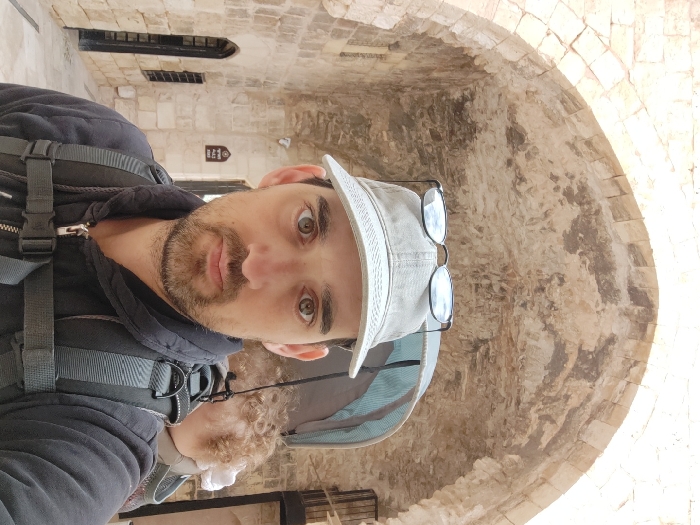
The image depicts a male individual, appearing in his 30s-40s, with short dark hair, a beard, and brown eyes, looking directly forward. He wears a black zippered hoodie, a light grey baseball cap with sunglasses perched on top, and a dark-colored hiking backpack. A small child with curly light brown hair is visible from behind in a child carrier attached to the man's backpack, positioned on his back. A blue and grey sunshade extends from the child carrier above the child's head.

The setting is an ancient stone structure characterized by multiple arches and walls constructed from large, light-colored, rough-hewn stone blocks. These stones exhibit weathering and discoloration. Directly above the subjects, a large stone arch forms the ceiling. To the left, a narrow passageway extends into the background, featuring a dark arched doorway and a small window with bars. A small brown sign with white text, potentially in Hebrew, is affixed to the left stone wall. The architectural style is consistent with historical sites found in Israel, such as the ruins of Tel Afek (Antipatris) National Park, located within the city of Rosh HaAyin. The man is posing for a photograph, likely a selfie, while carrying the child.

The image depicts a male individual, appearing in his 30s-40s, with short dark hair, a beard, and brown eyes, looking directly forward. He wears a black zippered hoodie, a light grey baseball cap with sunglasses perched on top, and a dark-colored hiking backpack. A small child with curly light brown hair is visible from behind in a child carrier attached to the man's backpack, positioned on his back. A blue and grey sunshade extends from the child carrier above the child's head. The setting is an ancient stone structure characterized by multiple arches and walls constructed from large, light-colored, rough-hewn stone blocks. These stones exhibit weathering and discoloration. Directly above the subjects, a large stone arch forms the ceiling. To the left, a narrow passageway extends into the background, featuring a dark arched doorway and a small window with bars. A small brown sign with white text, potentially in Hebrew, is affixed to the left stone wall. The architectural style is consistent with historical sites found in Israel, such as the ruins of Tel Afek (Antipatris) National Park, located within the city of Rosh HaAyin. The man is posing for a photograph, likely a selfie, while carrying the child.

Rosh HaAyin
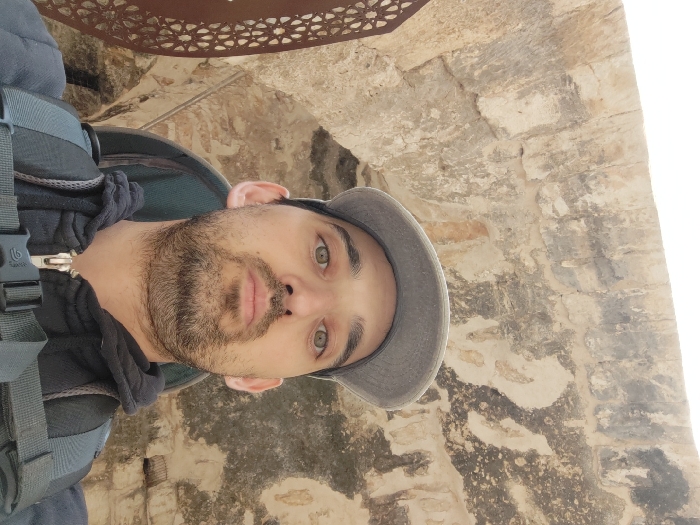
A male subject is centered in a close-up, chest-up shot, looking directly at the camera. He is an adult with a short dark beard and mustache, light-colored eyes, and is wearing a grey baseball cap, a dark grey or black zippered hooded sweatshirt, and a dark grey backpack with visible straps and a black plastic buckle. The background consists of a rough-hewn stone wall, constructed from light-colored blocks, forming an arching structure overhead and behind the subject. A decorative, rusted metal panel with an intricate geometric pattern is partially visible on the left side of the frame. The scene is located within Tel Afek National Park (Antipatris) in Rosh HaAyin, Israel, likely adjacent to the Ottoman fortress ruins.

A male subject is centered in a close-up, chest-up shot, looking directly at the camera. He is an adult with a short dark beard and mustache, light-colored eyes, and is wearing a grey baseball cap, a dark grey or black zippered hooded sweatshirt, and a dark grey backpack with visible straps and a black plastic buckle. The background consists of a rough-hewn stone wall, constructed from light-colored blocks, forming an arching structure overhead and behind the subject. A decorative, rusted metal panel with an intricate geometric pattern is partially visible on the left side of the frame. The scene is located within Tel Afek National Park (Antipatris) in Rosh HaAyin, Israel, likely adjacent to the Ottoman fortress ruins.

Rosh HaAyin
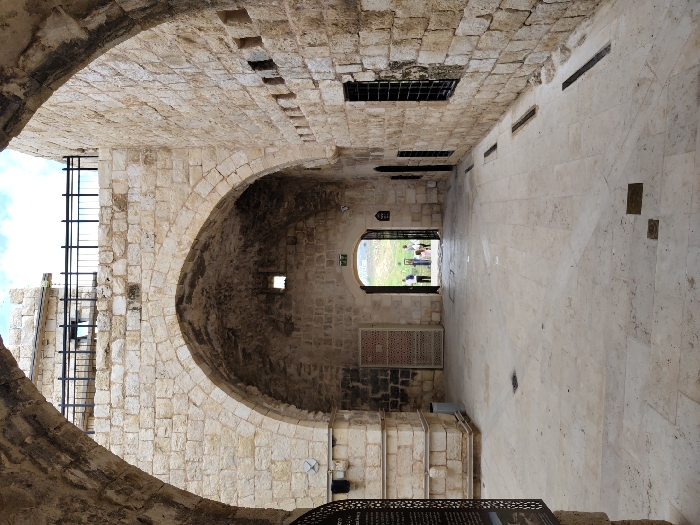
The image depicts an interior passage or courtyard within the Antipatris Fortress (Tel Afek National Park) in Rosh HaAyin, Israel. The structure is predominantly constructed from light-colored, rough-hewn stone blocks.

Two large, curved stone arches frame the immediate foreground, opening into a paved area floored with light-colored flagstones. On the far left, a stone pillar supports a circular mounted fixture, and a gray cylindrical waste bin is situated nearby. A metal informational screen with text and decorative patterns is partially visible on the extreme left. Further into the passage, a decorative, latticed wooden screen or door stands against the left wall.

A prominent, pointed stone archway centrally dominates the midground, serving as an exit to an exterior environment. Above this arch, a small rectangular opening is visible. Through this archway, approximately 5-7 individuals, dressed in casual, light-colored clothing, are seen standing or walking on a distant bright green grassy hill under a blue sky with scattered clouds.

The right wall of the passage is also built from light stone blocks and features a horizontal row of approximately ten small, rectangular apertures at an elevated height. Below these, two modern-style windows protected by black metal grates are installed. Dark, linear drainage channels are embedded in the flagstone floor along this wall. In the central area of the flagstone floor, several dark, square or rectangular metal plates are visible. Above the central arch and extending along the upper sections of the surrounding walls, an additional level of stone structure is apparent, topped with a black metal safety railing.

The image depicts an interior passage or courtyard within the Antipatris Fortress (Tel Afek National Park) in Rosh HaAyin, Israel. The structure is predominantly constructed from light-colored, rough-hewn stone blocks. Two large, curved stone arches frame the immediate foreground, opening into a paved area floored with light-colored flagstones. On the far left, a stone pillar supports a circular mounted fixture, and a gray cylindrical waste bin is situated nearby. A metal informational screen with text and decorative patterns is partially visible on the extreme left. Further into the passage, a decorative, latticed wooden screen or door stands against the left wall. A prominent, pointed stone archway centrally dominates the midground, serving as an exit to an exterior environment. Above this arch, a small rectangular opening is visible. Through this archway, approximately 5-7 individuals, dressed in casual, light-colored clothing, are seen standing or walking on a distant bright green grassy hill under a blue sky with scattered clouds. The right wall of the passage is also built from light stone blocks and features a horizontal row of approximately ten small, rectangular apertures at an elevated height. Below these, two modern-style windows protected by black metal grates are installed. Dark, linear drainage channels are embedded in the flagstone floor along this wall. In the central area of the flagstone floor, several dark, square or rectangular metal plates are visible. Above the central arch and extending along the upper sections of the surrounding walls, an additional level of stone structure is apparent, topped with a black metal safety railing.

Rosh HaAyin
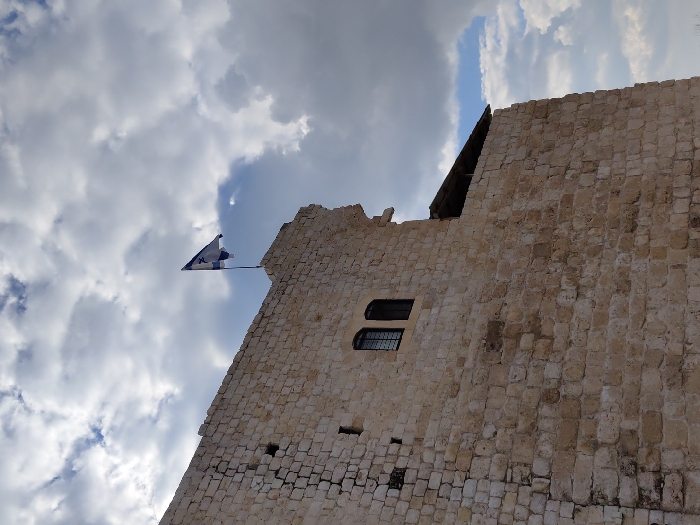
The image displays an upward view of a large, light-colored stone wall, part of the Antipatris Fortress (Qal'at Ras al-Ain) located in Rosh HaAyin, Israel. The wall is constructed from numerous cut stone blocks, exhibiting signs of age and wear. Approximately midway up the visible structure, two narrow, arched windows with dark frames or grates are set into the stone. At the highest point of the visible ruin, an Israeli flag, featuring blue stripes and a blue Star of David on a white field, is mounted on a pole and appears to be gently waving against a backdrop of heavily clouded sky. The clouds are predominantly white and grey, with some patches of blue sky visible. No individuals, specific actions, or interactions are present in the scene.

The image displays an upward view of a large, light-colored stone wall, part of the Antipatris Fortress (Qal'at Ras al-Ain) located in Rosh HaAyin, Israel. The wall is constructed from numerous cut stone blocks, exhibiting signs of age and wear. Approximately midway up the visible structure, two narrow, arched windows with dark frames or grates are set into the stone. At the highest point of the visible ruin, an Israeli flag, featuring blue stripes and a blue Star of David on a white field, is mounted on a pole and appears to be gently waving against a backdrop of heavily clouded sky. The clouds are predominantly white and grey, with some patches of blue sky visible. No individuals, specific actions, or interactions are present in the scene.

Rosh HaAyin
A male individual is positioned in the foreground, slightly to the right, in an outdoor setting identified as the Antipatris Fortress (Tel Afek) in Tel Afek National Park, Rosh HaAyin, Israel. He is seen from the chest up, wearing a dark hooded sweatshirt and a light grey baseball cap with dark sunglasses resting on the brim. A dark backpack with visible straps is on his back. He has short, dark hair, dark eyes, and stubble on his face, looking directly at the camera with a neutral expression. Behind him, to the left and extending across the midground, are the stone ruins of the fortress, characterized by arches and multi-story sections. A dark blue flag is visible atop a flagpole on the fortress's highest point. The terrain in the foreground and midground consists of a grassy slope with both vibrant green and dry, brown vegetation. The sky is bright white, suggesting an overcast day.

A male individual is positioned in the foreground, slightly to the right, in an outdoor setting identified as the Antipatris Fortress (Tel Afek) in Tel Afek National Park, Rosh HaAyin, Israel. He is seen from the chest up, wearing a dark hooded sweatshirt and a light grey baseball cap with dark sunglasses resting on the brim. A dark backpack with visible straps is on his back. He has short, dark hair, dark eyes, and stubble on his face, looking directly at the camera with a neutral expression. Behind him, to the left and extending across the midground, are the stone ruins of the fortress, characterized by arches and multi-story sections. A dark blue flag is visible atop a flagpole on the fortress's highest point. The terrain in the foreground and midground consists of a grassy slope with both vibrant green and dry, brown vegetation. The sky is bright white, suggesting an overcast day.

Rosh HaAyin
This image presents a forensic view of Migdal Afek (Antipatris Fortress) located in Rosh HaAyin, Israel. The primary subject is a multi-sectioned stone fortress constructed from light-colored, possibly limestone, blocks. The left section of the fortress appears largely intact, featuring a flat roofline and several rectangular windows. One window on the far left shows light through its opening, while others appear dark. A blue and white Israeli flag, bearing a Star of David, is flown from a flagpole positioned on the highest point of the fortress, near the center-right of the main structure. To the right of the main section, a more ruinous part of the fortress is visible, characterized by crumbling walls and large arched openings. The foreground consists of a sloping terrain covered in sparse, dry, dark-toned brush and patches of vibrant green grass, particularly prominent in the lower left. Scattered rocks and natural debris are present on the ground. A dark-colored, vertically oriented lamppost with a light fixture is situated in the mid-ground, positioned to the right of the main fortress section and in front of the ruined portion. The sky above is partially overcast, with a bright, diffused sunlight source visible through clouds in the upper left, and segments of clear blue sky towards the upper right. No individuals, explicit actions, or interactions are depicted.

This image presents a forensic view of Migdal Afek (Antipatris Fortress) located in Rosh HaAyin, Israel. The primary subject is a multi-sectioned stone fortress constructed from light-colored, possibly limestone, blocks. The left section of the fortress appears largely intact, featuring a flat roofline and several rectangular windows. One window on the far left shows light through its opening, while others appear dark. A blue and white Israeli flag, bearing a Star of David, is flown from a flagpole positioned on the highest point of the fortress, near the center-right of the main structure. To the right of the main section, a more ruinous part of the fortress is visible, characterized by crumbling walls and large arched openings. The foreground consists of a sloping terrain covered in sparse, dry, dark-toned brush and patches of vibrant green grass, particularly prominent in the lower left. Scattered rocks and natural debris are present on the ground. A dark-colored, vertically oriented lamppost with a light fixture is situated in the mid-ground, positioned to the right of the main fortress section and in front of the ruined portion. The sky above is partially overcast, with a bright, diffused sunlight source visible through clouds in the upper left, and segments of clear blue sky towards the upper right. No individuals, explicit actions, or interactions are depicted.

Rosh HaAyin
The image captures ancient stone ruins, identified as Antipatris Fortress, on a hillside in Rosh HaAyin, Israel, under a partially cloudy sky. The primary subjects are the dilapidated light-colored stone structures, exhibiting significant damage and structural collapse. The leftmost section of the ruins is a relatively intact wall featuring two small arched window openings and a larger rectangular aperture, with a flagpole displaying a light-colored flag mounted atop this section. To the right, more extensively damaged sections present multiple large arched openings, revealing interior spaces and crumbled masonry. Two black, modern-style lampposts are visible within the ruins, one positioned to the left and another partially obscured on the far right. The foreground consists of a vibrant green grassy slope, which transitions into a dense midground area dominated by dry, brown, woody scrub, thorny bushes, and scattered rocks. The background sky is blue with numerous white and grey cumulus clouds, through which sunlight appears to break in several areas. No individuals are present in the scene.

The image captures ancient stone ruins, identified as Antipatris Fortress, on a hillside in Rosh HaAyin, Israel, under a partially cloudy sky. The primary subjects are the dilapidated light-colored stone structures, exhibiting significant damage and structural collapse. The leftmost section of the ruins is a relatively intact wall featuring two small arched window openings and a larger rectangular aperture, with a flagpole displaying a light-colored flag mounted atop this section. To the right, more extensively damaged sections present multiple large arched openings, revealing interior spaces and crumbled masonry. Two black, modern-style lampposts are visible within the ruins, one positioned to the left and another partially obscured on the far right. The foreground consists of a vibrant green grassy slope, which transitions into a dense midground area dominated by dry, brown, woody scrub, thorny bushes, and scattered rocks. The background sky is blue with numerous white and grey cumulus clouds, through which sunlight appears to break in several areas. No individuals are present in the scene.

Rosh HaAyin
The image presents a panoramic view of the Migdal Afek (Antipatris) fortress, situated on a hilltop near Rosh HaAyin, Israel, under a partly cloudy sky. The foreground features a gently sloping terrain covered with vibrant green grass and scattered light-colored stones. Several sparse, deciduous shrubs with thin branches and a few small olive trees with dense, dark green canopies are visible on this lower slope. The midground transitions to a drier, more rugged slope leading to the fortress, populated by additional olive trees with distinct trunks. The background is dominated by the light-colored stone fortress, consisting of multiple interconnected structures with visible rectangular windows. The leftmost primary building section includes an upper level with a railing. To the right, another section of the stone complex is visible, from which a dark blue flag flies on a pole. The sky above is a mosaic of bright blue patches and numerous white and grey cumulus clouds. No individuals are present within the frame.

The image presents a panoramic view of the Migdal Afek (Antipatris) fortress, situated on a hilltop near Rosh HaAyin, Israel, under a partly cloudy sky. The foreground features a gently sloping terrain covered with vibrant green grass and scattered light-colored stones. Several sparse, deciduous shrubs with thin branches and a few small olive trees with dense, dark green canopies are visible on this lower slope. The midground transitions to a drier, more rugged slope leading to the fortress, populated by additional olive trees with distinct trunks. The background is dominated by the light-colored stone fortress, consisting of multiple interconnected structures with visible rectangular windows. The leftmost primary building section includes an upper level with a railing. To the right, another section of the stone complex is visible, from which a dark blue flag flies on a pole. The sky above is a mosaic of bright blue patches and numerous white and grey cumulus clouds. No individuals are present within the frame.

Rosh HaAyin
The image depicts an outdoor, slightly upward-angled selfie-style photograph taken near Antipatris Fortress in Rosh HaAyin, Israel. In the right half of the frame, a male subject in his 30s-40s is visible, wearing dark sunglasses, a short beard, and a black zippered hoodie. He is carrying a dark green child-carrying backpack with a deployed sun canopy on his back; light-colored patterned fabric is visible inside the carrier, indicating it is in use, though a child is not explicitly visible. A small orange object is attached to the left side of the carrier. The foreground shows green grass on the lower left, transitioning to dry, sparse brown vegetation covering a hillside. In the mid-left background, on an elevated position, stands a large, light-colored stone structure identified as Antipatris Fortress (also known as Binar Bashi or Ras al-Ayn Fortress), featuring multiple windows, arches, and a fortified upper section. The sky overhead is uniformly bright white and overcast.

The image depicts an outdoor, slightly upward-angled selfie-style photograph taken near Antipatris Fortress in Rosh HaAyin, Israel. In the right half of the frame, a male subject in his 30s-40s is visible, wearing dark sunglasses, a short beard, and a black zippered hoodie. He is carrying a dark green child-carrying backpack with a deployed sun canopy on his back; light-colored patterned fabric is visible inside the carrier, indicating it is in use, though a child is not explicitly visible. A small orange object is attached to the left side of the carrier. The foreground shows green grass on the lower left, transitioning to dry, sparse brown vegetation covering a hillside. In the mid-left background, on an elevated position, stands a large, light-colored stone structure identified as Antipatris Fortress (also known as Binar Bashi or Ras al-Ayn Fortress), featuring multiple windows, arches, and a fortified upper section. The sky overhead is uniformly bright white and overcast.

Rosh HaAyin
The image displays the ruins of the Antipatris Fortress, located within Tel Afek National Park near Rosh HaAyin, Israel, observed from a low angle. The central subject is a large, partially collapsed stone structure constructed from light-colored, irregular blocks, situated on an elevated, rocky mound. Significant portions of the structure are in disrepair, with substantial rubble piles accumulated against its lower walls, particularly on the left side.

The foreground and midground consist of a sloping terrain covered with sparse, dry green and brown vegetation, interspersed with numerous light-colored rocks and boulders. Three prominent, tan-colored boulders are visible in the immediate foreground. On the lower left, a rectangular white sign with dark Hebrew text and a red 'no entry' symbol is present. To the right of the main ruin, a more preserved or reconstructed section of a building is visible, featuring a dark metal railing and what appears to be a utility pole or light fixture. The sky above is partially covered by scattered white cumulus clouds against a blue background. No individuals are visible in the scene.

The image displays the ruins of the Antipatris Fortress, located within Tel Afek National Park near Rosh HaAyin, Israel, observed from a low angle. The central subject is a large, partially collapsed stone structure constructed from light-colored, irregular blocks, situated on an elevated, rocky mound. Significant portions of the structure are in disrepair, with substantial rubble piles accumulated against its lower walls, particularly on the left side. The foreground and midground consist of a sloping terrain covered with sparse, dry green and brown vegetation, interspersed with numerous light-colored rocks and boulders. Three prominent, tan-colored boulders are visible in the immediate foreground. On the lower left, a rectangular white sign with dark Hebrew text and a red 'no entry' symbol is present. To the right of the main ruin, a more preserved or reconstructed section of a building is visible, featuring a dark metal railing and what appears to be a utility pole or light fixture. The sky above is partially covered by scattered white cumulus clouds against a blue background. No individuals are visible in the scene.

Rosh HaAyin