Salatiga, Indonesia
3 memories from Salatiga, Indonesia
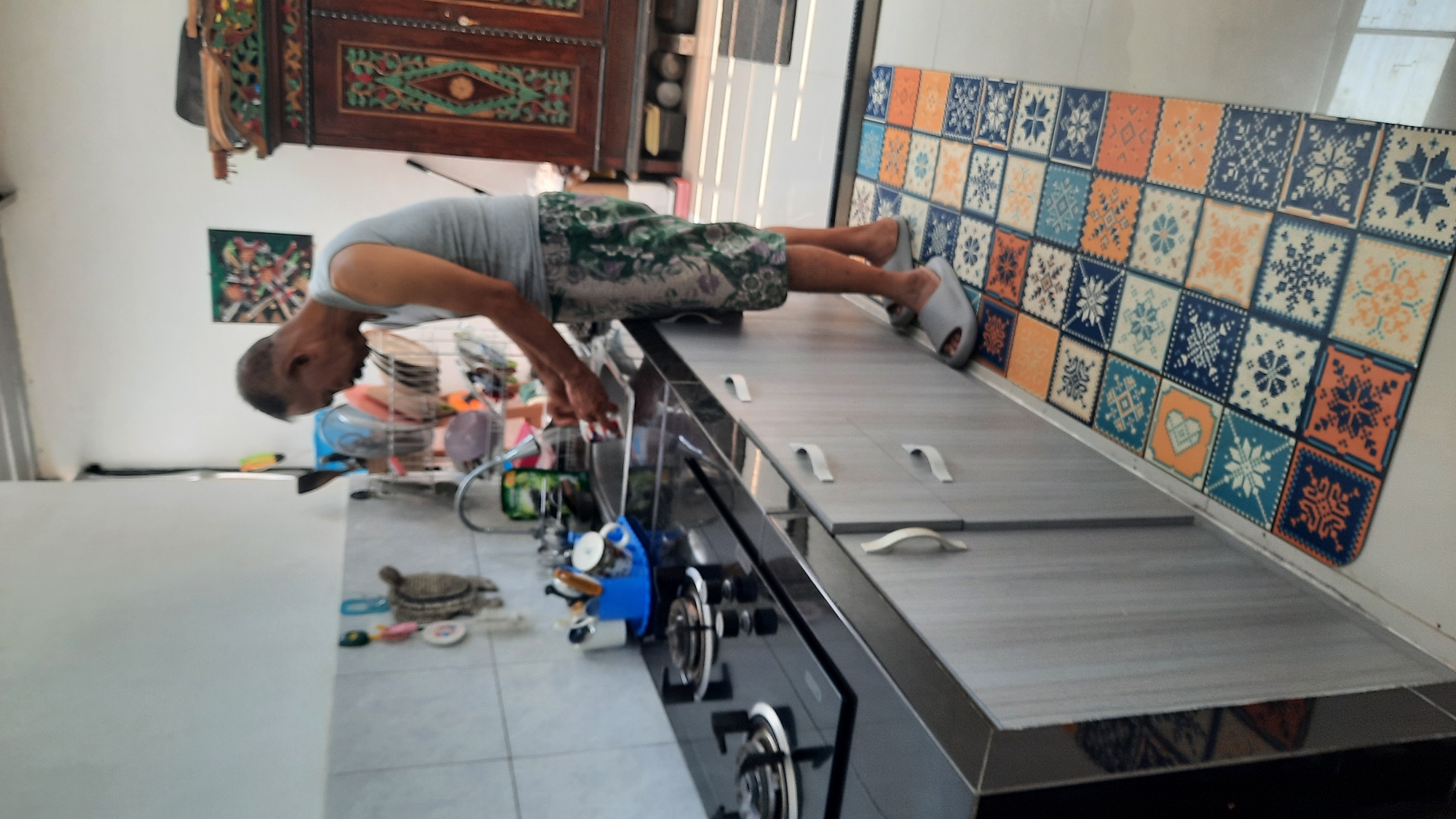
In a kitchen setting, an adult male with short, dark hair and a mustache, wearing a grey sleeveless shirt and patterned shorts, stands at a sink and appears to be washing dishes. The kitchen features a black countertop with a built-in stovetop, grey cabinetry below the counter, and a tiled backsplash. A colorful rug with a mosaic tile pattern is laid out on the floor in front of the cabinets. In the background, a dark wooden cabinet with ornate carvings is visible, along with a piece of artwork on the wall. The environment suggests a domestic space, likely a home kitchen, located in Salatiga, Indonesia.
Salatiga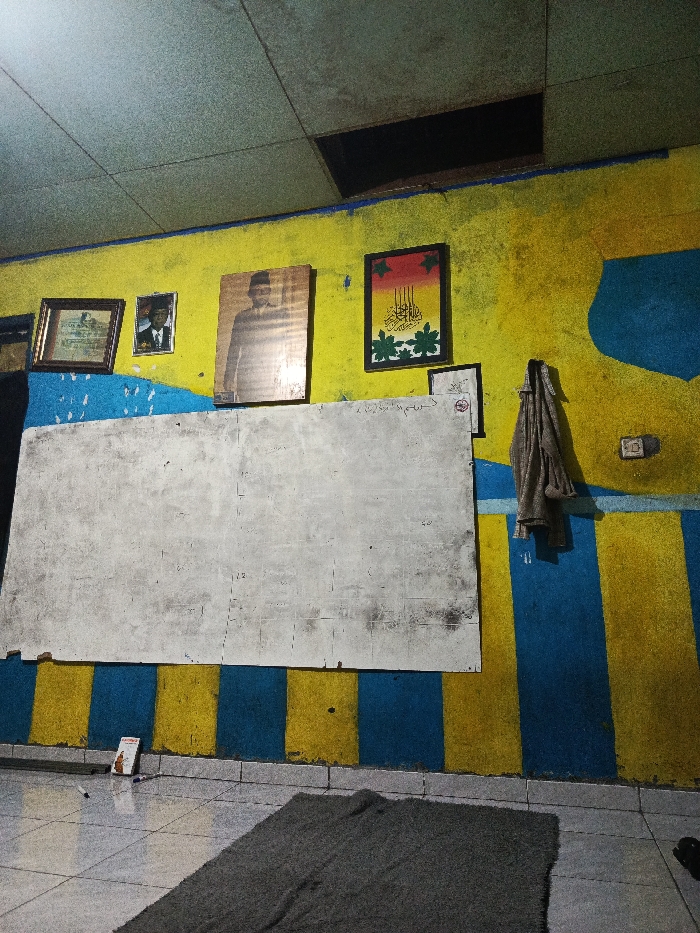
The image presents an interior view of a room, likely a classroom or communal space in Salatiga, Indonesia. The walls are distinctly painted in a vibrant, irregular pattern of yellow and blue. A large, worn white board with faint, illegible markings, possibly including Arabic script and numbers, is prominently centered on the wall. To the right of the whiteboard, a smaller framed document with indistinct text is visible. Above the whiteboard, a collection of framed items hangs on the yellow wall. From left to right, there is a small framed document, followed by a framed portrait of a man in a suit. The most prominent portrait is a larger, rectangular one depicting a man wearing a peci (traditional cap) and a suit, strongly suggesting an influential Indonesian figure such as Sukarno. Further right, a framed artwork displays intricate Arabic or Jawi calligraphy in black script, set against a red and orange gradient background and adorned with green, leaf-like designs. To the far right, a light-colored cloth or garment hangs from a hook on the blue section of the wall, below which is a white electrical outlet or light switch. The ceiling features square, textured panels, with a noticeable dark, rectangular opening or missing panel in the upper section. The floor is covered with light-colored square tiles, upon which a dark grey, rectangular rug or mat is placed. Near the bottom left, a small book or box and a piece of white packaging or paper are visible on the tiled floor. The lighting is artificial and somewhat dim, suggesting the scene takes place indoors, possibly in the evening or at night. No direct activity is depicted, making the scene static. The visible portraits and calligraphy are significant cultural cues for Indonesia.
Salatiga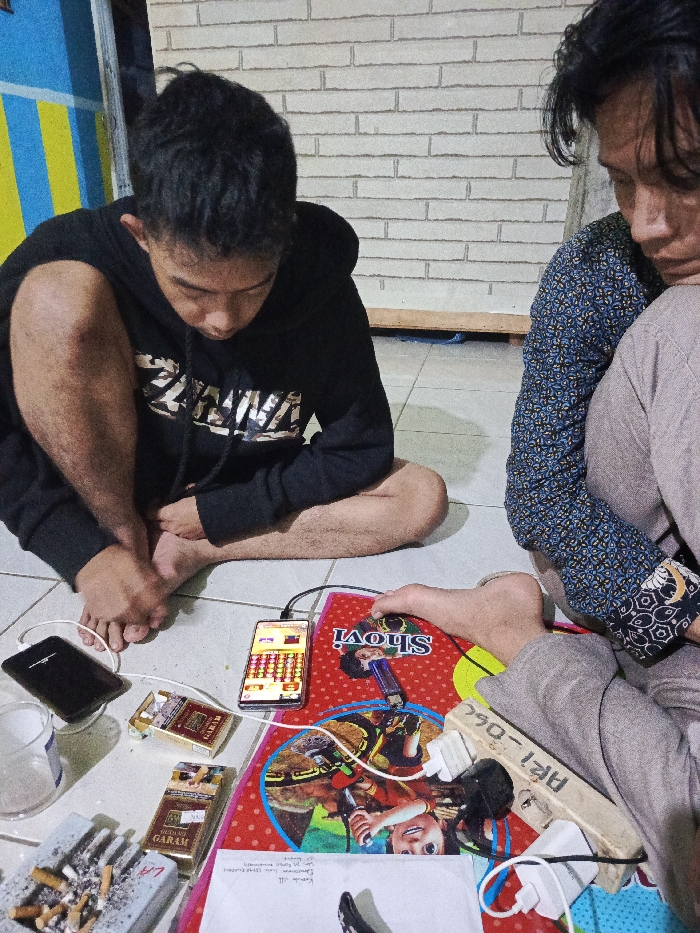
Two young men are seated on a tiled floor in what appears to be an indoor setting in Salatiga, Indonesia. The person on the left wears a black hoodie with "ZELDA" written on the front and is looking downwards. The other person, on the right, wears a blue patterned long-sleeved shirt and light-colored pants, also looking down, with only their upper body and legs visible. In front of them, scattered on the floor, is an array of personal items. Two smartphones are visible, both connected to charging cables. One phone, centrally placed, displays what appears to be a mobile game interface with multiple colored blocks. Next to it are two packs of "GARAM" brand cigarettes, one open and one closed, along with an ashtray filled with cigarette butts. The charging cables lead to a multi-socket power strip, which is a piece of wood with several power outlets, labeled with the text "ARI-060". This charging setup rests on a red mat or book that features various cartoon-like images and the text "Shovi". The activity centers around the use of mobile phones, possibly for gaming, while smoking. The scene depicts a casual gathering, likely in the evening or at night, suggested by the indoor artificial lighting and the light-colored brick wall in the background. The men appear focused on their respective activities. In the far left background, a blue and yellow striped object is partially visible.
Salatiga