Salvador, Brazil
30 memories from Salvador, Brazil
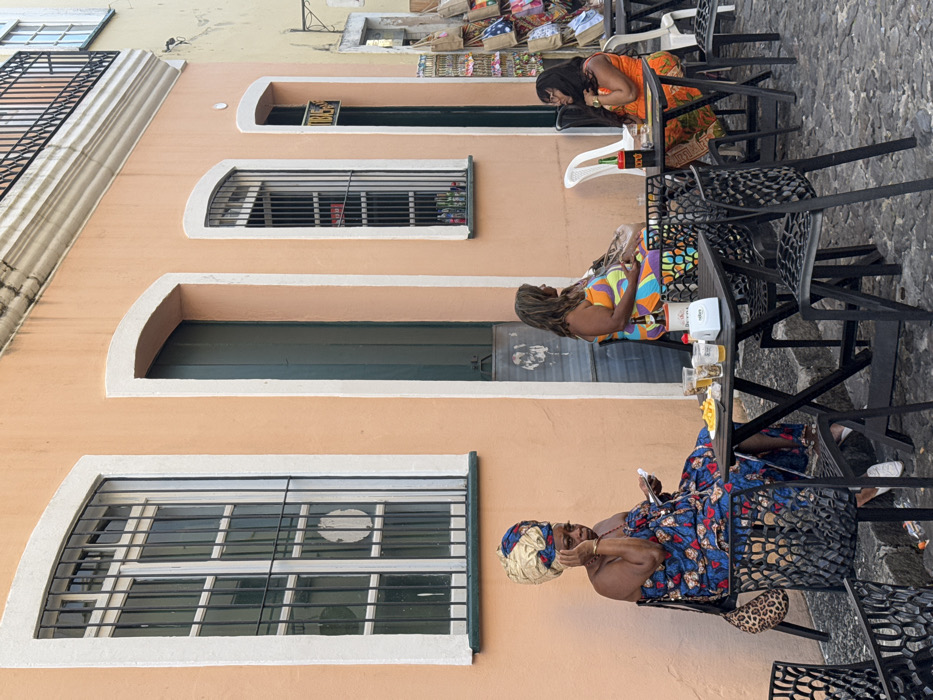
Three women sit at tables outside a building with peach-colored walls. The women are wearing colorful outfits. Two tables have drinks and other items on them. The building has windows with security bars and arch-shaped tops. A few items are hanging on the building wall behind one of the women. The area appears to be a restaurant patio.
Salvador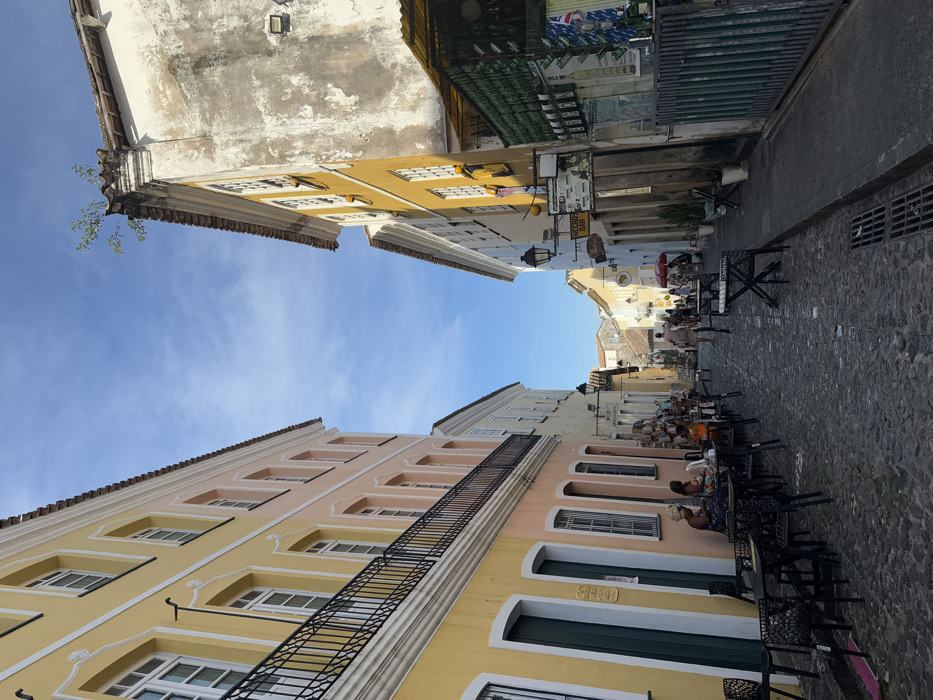
Cobblestone street between tall buildings. The buildings are painted in shades of yellow and pink, with white trim and window frames. Black metal balconies and ornate detailing adorn the façades. Tables and chairs line the street, occupied by people, suggesting a café or restaurant area. The sky is visible between the buildings, a pale blue with scattered clouds. The perspective is looking up the street, creating a sense of depth.
Salvador
The video shows a group of people gathered in a public square. Many of them are wearing red shirts, and some are holding flags. In the background is a large, ornate church or governmental building. The square has a wave-like pattern on the pavement and is decorated with palm trees. The sky is blue with some clouds. The people appear to be standing around talking, suggesting a gathering or demonstration. The overall atmosphere seems peaceful and potentially political or celebratory.
Salvador
The video shows a public square with people milling about. In the center, several dark-colored cars are parked near a truck that appears to be a makeshift stage. People dressed in red shirts are standing on the top of the truck, waving flags, including the flags of Colombia and Brazil. Some people are standing around the vehicles, while others walk across the square. The square is paved with cobblestones. The backdrop is a building that is predominantly white with architectural details, including arched porticos and shuttered windows. Another building with a yellow facade is partially visible. The scene is bathed in sunlight.
Salvador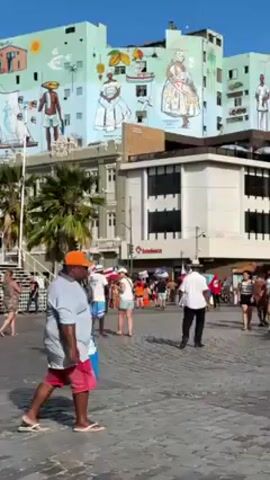
The video shows a bustling public square or plaza during the day. Numerous people are walking around. Some are holding flags. There's a building with a colorful mural depicting people in traditional clothing. A palm tree is visible to the left. The sky is clear and blue.
Salvador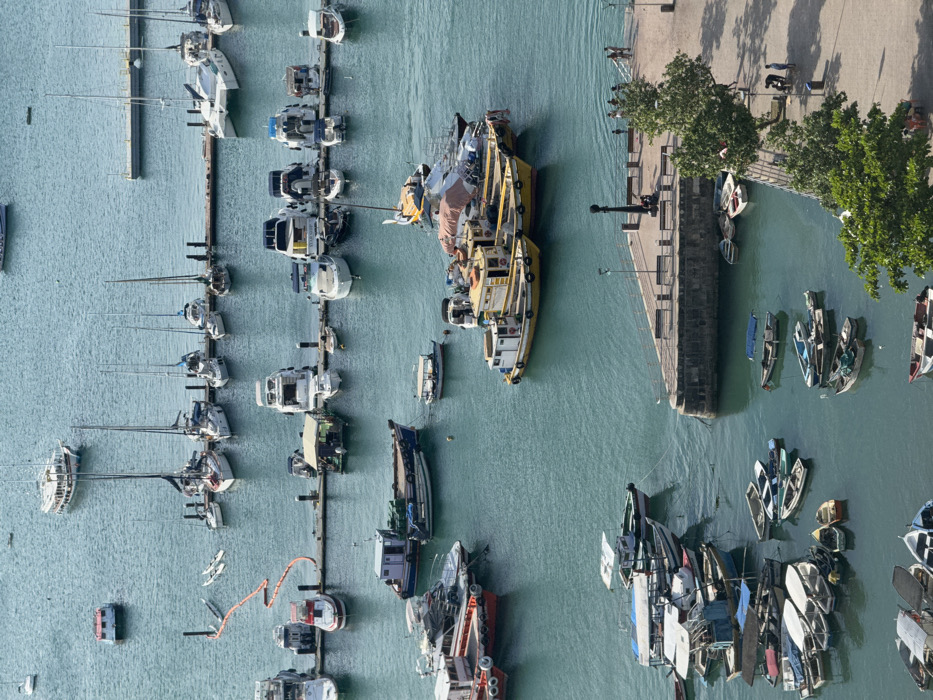
A marina filled with various boats is seen from above. Many white yachts and sailboats are docked along a pier. Two large yellow and black vessels are clustered together. A stone harbor wall runs parallel to the boats. Small rowboats are clustered near the harbor wall. Trees line the harbor with people walking along the paved path. The water is calm and turquoise.
Salvador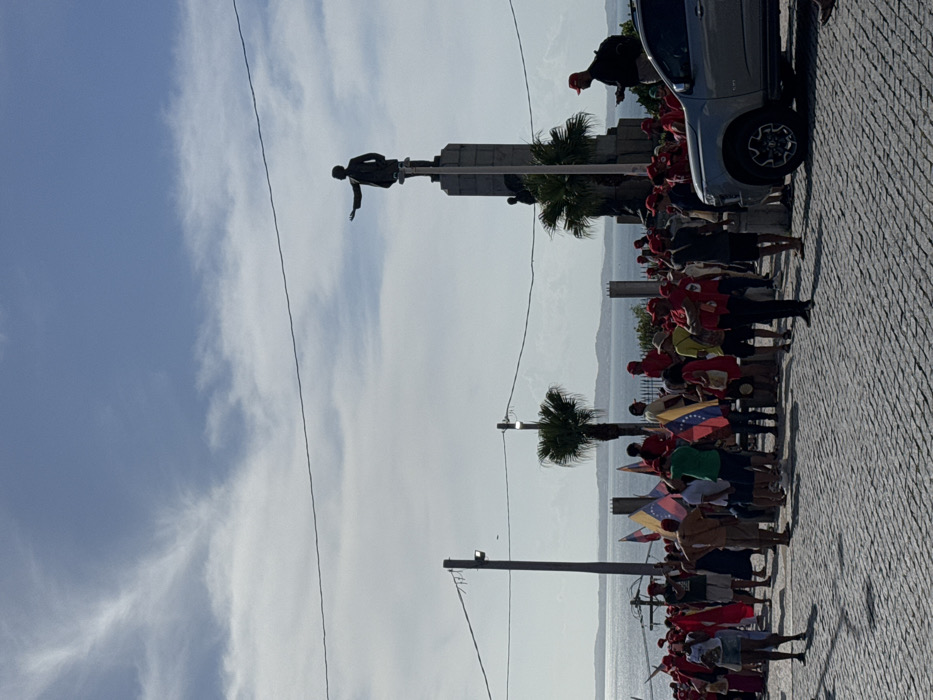
A statue stands atop a stone pedestal against a cloudy sky. A crowd, many wearing red hats, gathers along a cobblestone path near the water. Some hold Venezuelan flags. A parked silver vehicle is visible. Utility poles and palm trees line the path.
Salvador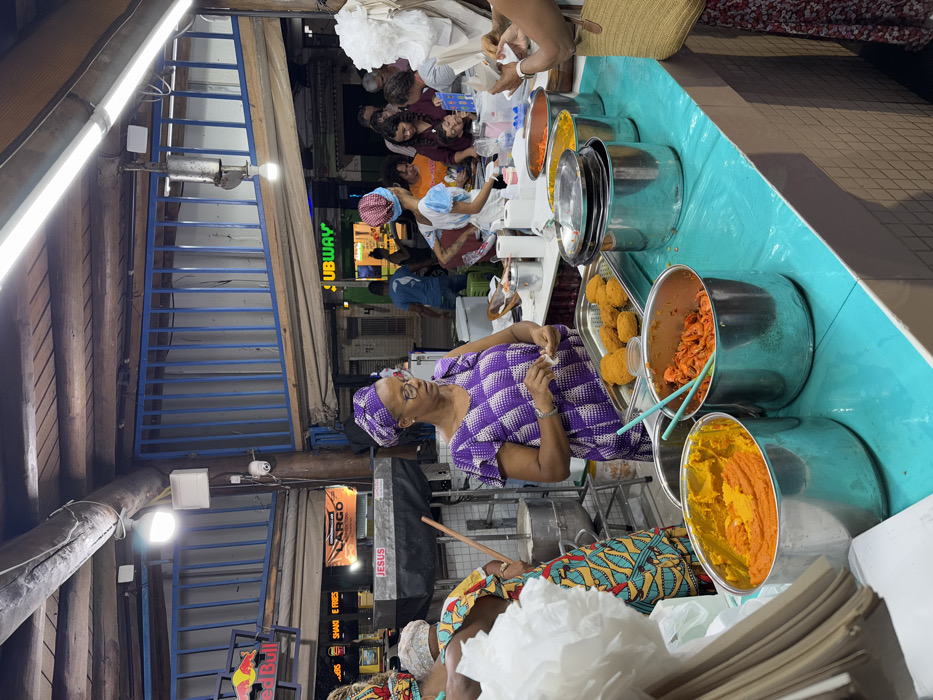
A woman in a purple and white dress stands behind a food stall with various pots of food. The pots contain yellow and orange colored food. Another woman is visible in the lower part of the image. A line of people stands beyond the stall. A Subway restaurant is visible in the background. The area is covered with wooden beams and blue painted metal structures.
Salvador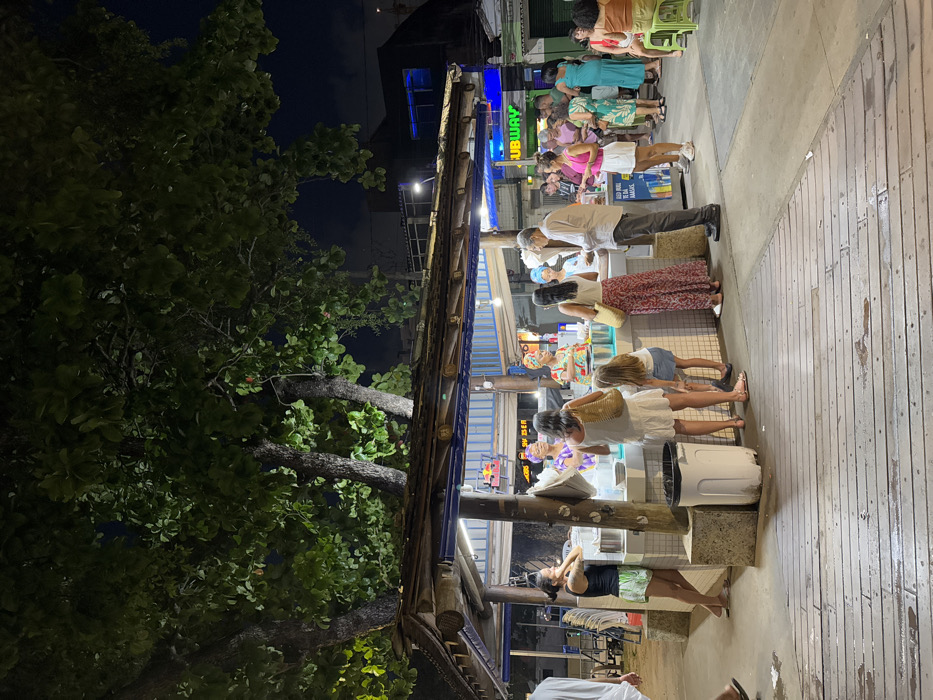
People stand in line at a food stall at night. The stall has a wooden frame and bright lighting. A "Subway" sign is visible further down the street. A large leafy tree is to the left of the stall, and the area is dimly lit beyond the stall. The ground appears to be made of wooden planks. Most of the people in line are facing the stall.
Salvador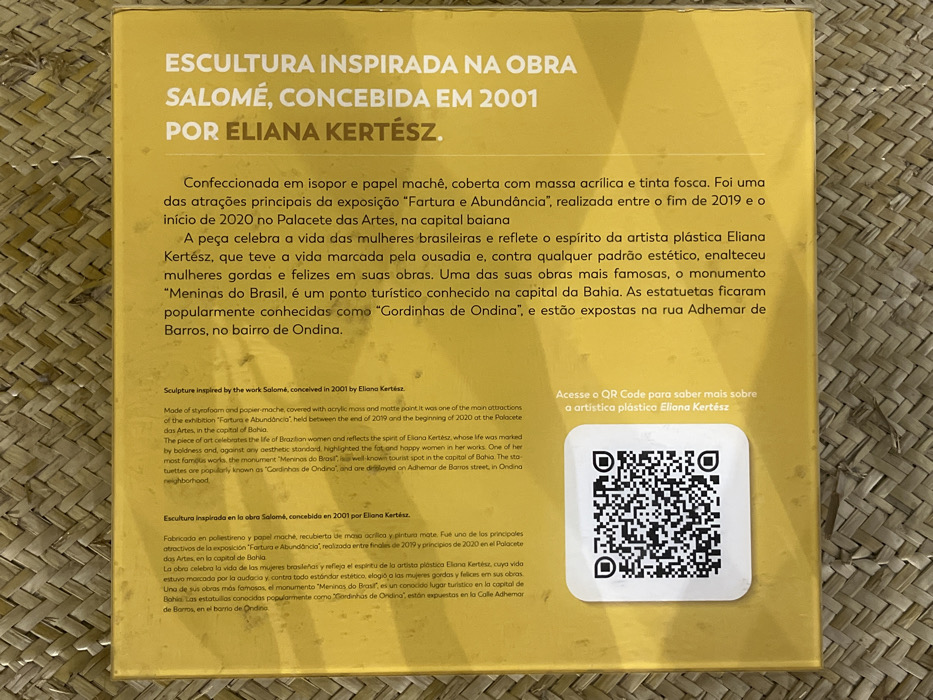
The image displays an overhead view of a yellow, rectangular object, likely a book cover or box, resting on a light brown, woven surface. The object's visible face is yellow, predominantly covered with black text in Portuguese, with some sections translated into English and Spanish. A white square sticker containing a black QR code is affixed to the lower-left portion of the yellow surface. The primary text, oriented vertically along the right edge, reads "ESCULTURA INSPIRADA NA OBRA SALOMÉ, CONCEBIDA EM 2001 POR ELIANA KERTÉSZ." Further text details an exhibition titled "Fartura e Abundância," which took place at the Palacete das Artes in Salvador, Bahia, Brazil. It references the artist Eliana Kertész's work, including sculptures known as "Meninas do Brasil" and "Cordinhas de Ondina." The description explicitly states that the "Cordinhas de Ondina" sculptures are exhibited on Rua Adhemar de Barros, located in the Ondina neighborhood of Salvador, Bahia, Brazil. Adjacent to the QR code, text in Portuguese instructs the viewer to "Acesse o QR Code para saber mais sobre a artista plástica Eliana Kertész" (Access the QR Code to learn more about the plastic artist Eliana Kertész). The background consists of a tightly woven material, likely straw or wicker, displaying a diagonal pattern. There are no individuals or discernible actions depicted in the scene.
Salvador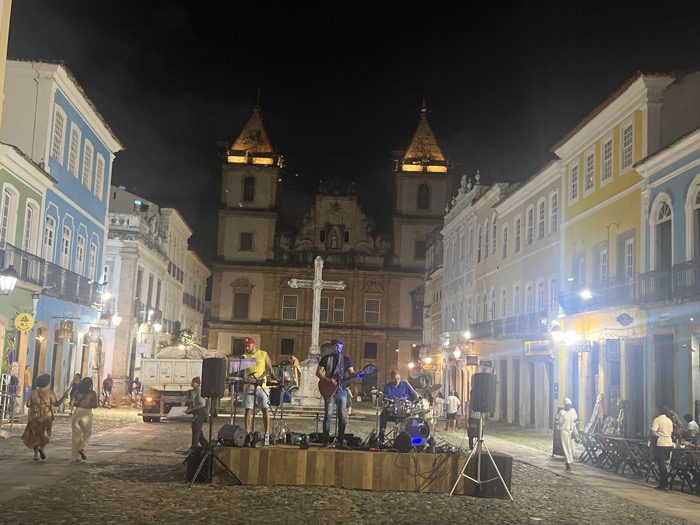
The image depicts a nighttime scene in the Largo do Cruzeiro de São Francisco, located within the Pelourinho district of Salvador, Brazil. A live music performance is taking place on a raised wooden stage situated on the cobblestone square. Three male musicians are actively performing: a keyboardist wearing a yellow shirt and a red cap, a guitarist in dark attire, and a drummer dressed in a blue shirt. Musical instruments and equipment, including a keyboard, guitars, a drum kit, microphones, and speakers on stands, are arranged on and around the stage, illuminated by stage lights. Behind the performing band, a large white stone cross stands centrally in the square. Dominating the background is the illuminated Igreja e Convento de São Francisco (Church and Convent of Saint Francis), distinguished by its ornate façade and two prominent bell towers. Historic colonial-style buildings, featuring multiple stories, balconies, and white-framed windows, line both sides of the square. These buildings are painted in various bright colors, including blue, green, yellow, and white. Several pedestrians are present on the cobblestone street; two women are visible walking on the left side, and other individuals are scattered further back, some seated at outdoor tables on the right. A light-colored truck with a raised bed is positioned on the left side of the square, behind the pedestrians. The entire scene is artificially illuminated by streetlights, shop lights, and stage lights under a dark night sky.
Salvador
At night, in what appears to be a public square, there are several brightly colored buildings. The building on the left is yellow, the building in the center is blue, and buildings on the right are primarily white with yellow accents. The blue building has a banner that reads “QUANTA FREE” hanging on it. Several people are milling about in the square, including some posing for pictures in front of the blue building. A small service vehicle is parked to the left of the yellow building. Street lamps illuminate the square.
Salvador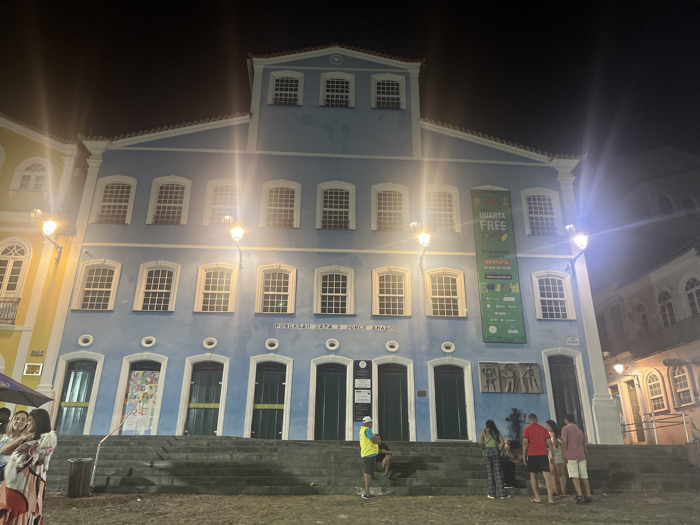
This nighttime image documents the illuminated facade of the Fundação Casa de Jorge Amado, situated in the Pelourinho district of Salvador, Bahia, Brazil. The three-story structure is painted light blue with white trim, featuring numerous white-grid windows across its upper floors and seven dark green arched ground-floor entrances. The building's name is inscribed centrally above the lower doors. A large green banner displaying "QUARTA FREE" is affixed vertically to the upper right facade, and an artistic relief sculpture is present on the lower right wall. Two luminous yellow streetlights are mounted on the building. A wide, shallow flight of stone steps leads from a rough, unpaved plaza up to the building's entrance level. On the left, two adult females are positioned near a dark cylindrical trash bin, one partially obscured. On the right, a cluster of five to six adults is observed at the base of the steps; one male in a yellow-green shirt and white hat is seated, while the others stand facing each other, conversing. Adjacent structures include a yellow building on the left and a lighter-toned building with arched windows in the background on the right.
Salvador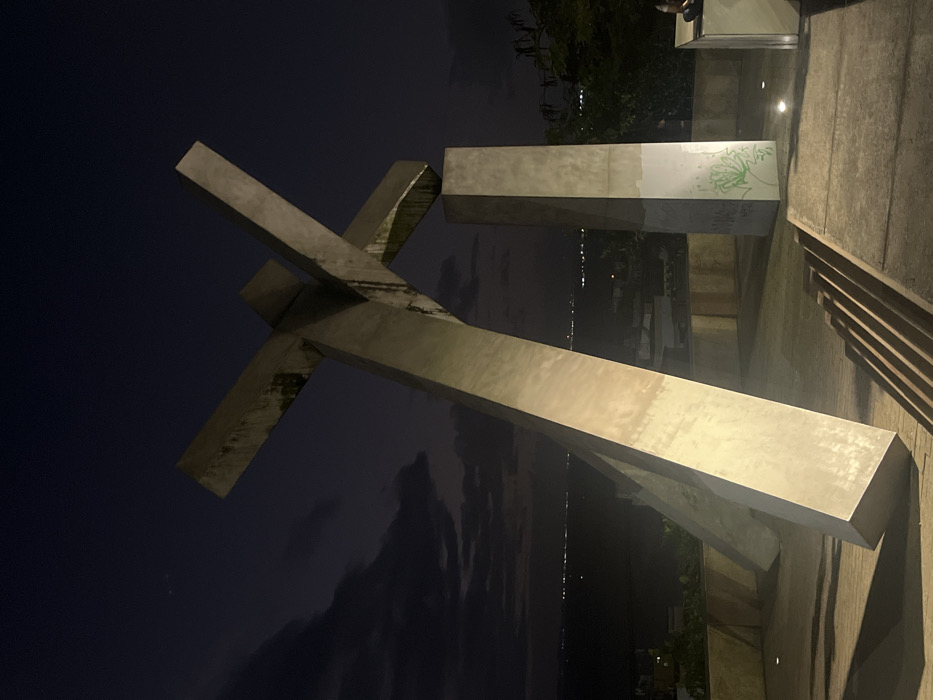
The image depicts the "Cruz Caída" (Fallen Cross) monument at Praça da Sé in Salvador, Bahia, Brazil, at night. The monument consists of three large, rectilinear concrete beams. Two elongated beams intersect and lean dynamically, while a third shorter, vertical beam serves as a base on the right. The concrete surfaces display weathering, including dark streaks and discoloration, with green graffiti visible on the lower section of the vertical base on the right. Artificial ground lighting illuminates the monument, casting distinct, elongated shadows on the concrete platform beneath. In the background, beyond a low wall or railing, the dark expanse of the All Saints Bay (Baía de Todos os Santos) is visible, illuminated by numerous distant city lights on the opposite shore. The sky above is a dark, cloudy blue-black. On the far lower right, a dark, indistinct figure is partially visible, seated on a low, block-like structure. Concrete steps or tiered elements are present in the lower right foreground.
Salvador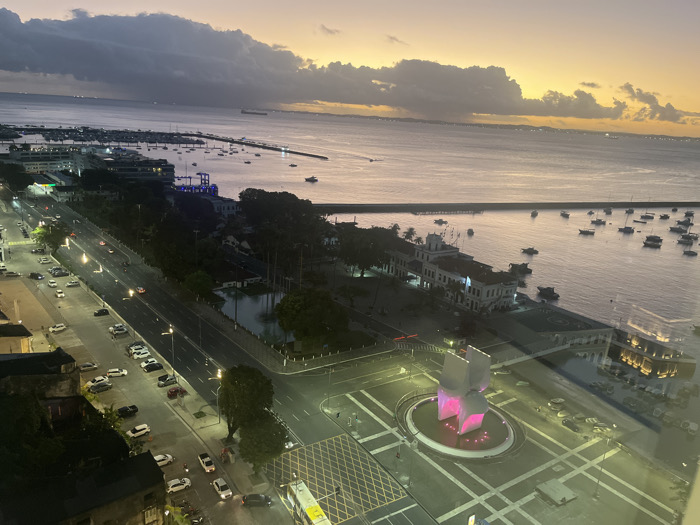
An elevated, wide-angle view captured at dusk depicts a vibrant urban waterfront scene in Salvador, Brazil, specifically overlooking Praça Cairu and Baía de Todos os Santos. The sky presents a gradient of color, transitioning from a warm orange-yellow near the western horizon to a cooler purple and dark grey at the top, indicative of heavy cloud cover. In the foreground, an illuminated modern monument, composed of two large block-like structures, stands centrally in a circular fountain or reflecting pool, emitting a bright pink light. This monument, the Monumento ao Cruzeiro Quatrocentenário de Salvador, is situated within a large paved plaza marked with white road lines and yellow crosshatch patterns. A yellow bus is partially visible at the bottom edge of the frame. Reflections of interior lighting are visible on the glass surface through which the photograph was taken, primarily in the lower right quadrant. Midground elements include a multi-lane roadway running parallel to the coastline, illuminated by streetlights, with several vehicles, some displaying active headlights or taillights. Numerous cars are parked along the road's edge. Adjacent to the road, historical buildings with white facades and prominent windows line the waterfront, including a structure resembling the Mercado Modelo. A small, tranquil body of water or canal is discernible behind a line of trees. Further along the waterfront, a distinct blue illuminated structure, possibly a stage or architectural feature, is visible. The background is dominated by the expansive Baía de Todos os Santos. A long pier or breakwater extends into the bay, sheltering a significant number of small boats and vessels anchored within the calm waters. Beyond this sheltered area, the bay contains scattered larger ships, likely cargo vessels, in the distance. The far horizon shows the faint outline of land on the opposite side of the bay, dotted with distant lights.
Salvador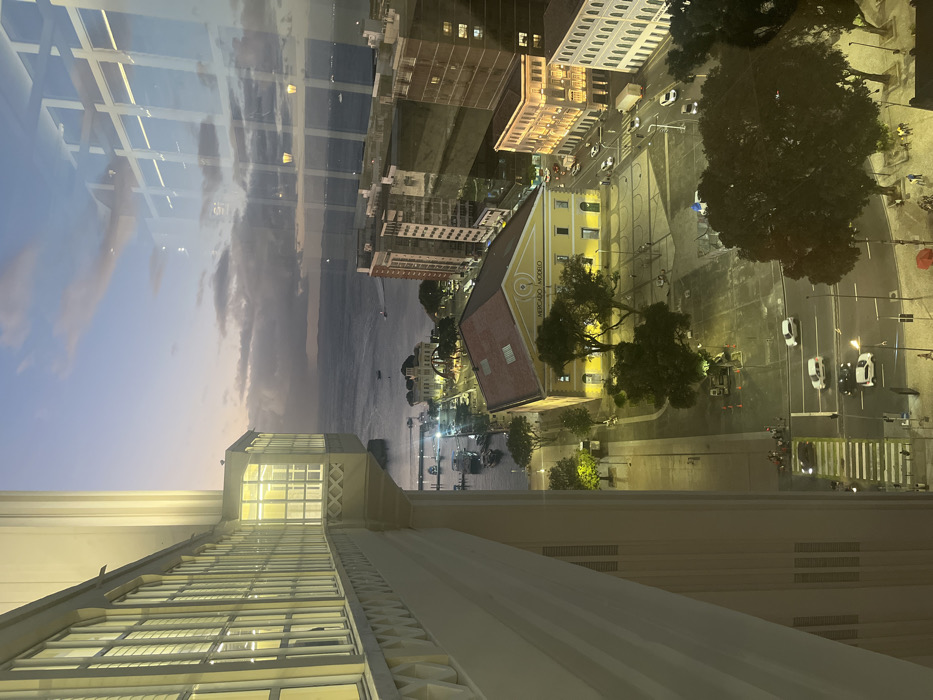
The image provides an elevated, dusk-time view of the waterfront in Salvador, Bahia, Brazil, specifically overlooking the Mercado Modelo and the Baía de Todos-os-Santos. The perspective appears to be from a building adjacent to or part of the Lacerda Elevator complex. In the immediate foreground on the left, a portion of a cream-colored, multi-story building is visible, featuring a long horizontal section with numerous windows and an illuminated enclosed balcony area projecting outward, supported by a decorative railing. The building's interior lights are active. The midground features the distinct yellow-painted Mercado Modelo building, with a dark red-brown gabled roof and a central circular facade displaying "MERCADO MODELO." This building is well-lit, casting light onto the surrounding area. In front of the Mercado Modelo is a large paved public square, mostly empty, with several dark green trees under artificial illumination. Beyond the square, a multi-lane street carries vehicular traffic, including several white and dark cars, and a light-colored truck. Streetlights illuminate the roadway. A zebra crosswalk is visible in the lower-left, where a small group of indistinct figures can be seen. Further into the midground, the Baía de Todos-os-Santos stretches across the scene. A pier with multiple small boats docked and moving is visible on the water's edge. Distant landmasses or structures are discernible across the bay under a twilight sky. The background consists of the bay merging with a horizon line under a sky transitioning from pale blue at the horizon to a darker blue-gray overhead, with scattered dark clouds. Artificial lights are visible across the distant bay and on the landmasses. To the right of the Mercado Modelo, various multi-story urban buildings with illuminated windows contribute to the city lights. Reflections of internal lights from the vantage point are visible on the glass through which the photograph was taken, particularly in the upper-right quadrant. The overall scene depicts an active urban environment transitioning into night, characterized by a mix of architectural structures, artificial illumination, and natural features.
Salvador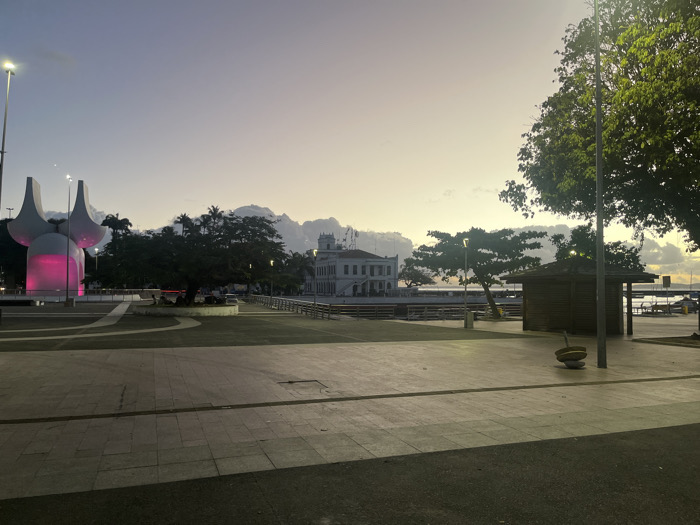
The image captures Praça Cairu in Salvador, Brazil, at either dawn or dusk. The scene is dominated by a paved public plaza extending into the midground. On the left, a large, white modernist monument with two upward-curving elements features a central cylindrical section illuminated with pink light. Adjacent to this monument, a mature tree shades a circular bench where two individuals are seated. A tall streetlight stands near the monument. On the right side of the plaza, a small, dark-wood kiosk with a sloped roof is positioned beneath another large tree, near an active streetlight. A unique sculpture composed of stacked, rounded stone elements rests on the pavement in front of the kiosk. In the background, a multi-story historic white building with a red-tiled roof and a prominent central tower, identified as the Mercado Modelo, overlooks the Baía de Todos-os-Santos. A pier with benches extends into the water from the waterfront. The sky displays a gradient of purple, orange, and yellow tones with scattered clouds, consistent with early morning or late evening lighting conditions. Artificial illumination from streetlights and the monument is visible.
Salvador
This image displays the Mercado Modelo in Salvador, Bahia, Brazil, a large, two-story, circular building with a distinctive yellow facade. The ground level features an open arcade with columns, enclosed by a dark metal fence. The upper level presents an expansive outdoor terrace, equipped with numerous tables and chairs, largely shaded by an array of black, red, and yellow parasols, indicating an active dining or seating area. A yellow conical roof tops the structure. In the foreground, a paved plaza exhibits a decorative star-shaped pattern. A prominent, colorful sculptural sign spelling "AXÉ" (with red, blue, and green letters) stands before the building. Two street vendors operate pushcarts with umbrellas on the plaza near the building's entrance; one cart is yellow, the other red, with patrons seated nearby. Several individuals are visible on the plaza and the street to the left. The background to the left reveals older, multi-story buildings, primarily white and blue, on an incline. To the right, a dense concentration of modern and older multi-story buildings, varying in color and style, ascends a steep hillside. The sky is partially cloudy blue, indicating daylight.
Salvador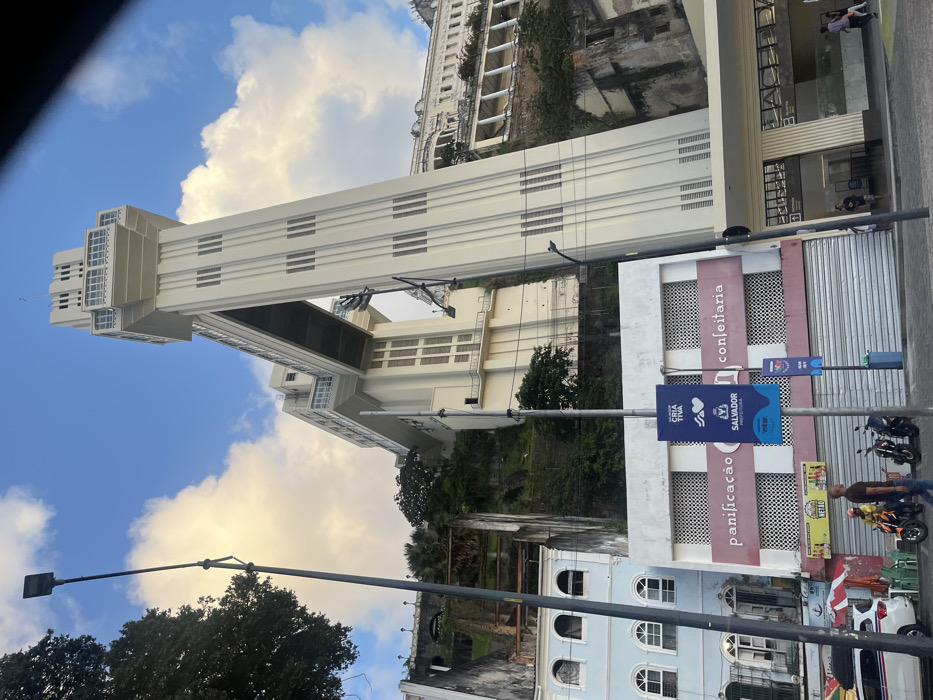
The image presents a street-level view of the Elevador Lacerda in Salvador, Bahia, Brazil, specifically from the Cidade Baixa (Lower City). The central subject is the multi-story, cream-colored Art Deco elevator complex, comprising two vertical towers connected by an overhead horizontal bridge, facilitating transit to the Cidade Alta (Upper City). The visible tower features repetitive vertical fluted designs and recessed rectangular window groupings. To the left of the elevator, a light blue and white building displays "panificação e confeitaria" (bakery and confectionery) lettering on its facade, with its street-level entrance secured by corrugated metal shutters. Several blue and white banners, advertising "SALVADOR PREFEITURA" and other civic initiatives, are mounted on tall, black streetlights positioned along the foreground. On the paved street, a white car is parked on the far left, partially obscured. Two individuals are visible walking on the sidewalk in the midground, near three parked motorcycles. The background shows a steep, vegetated cliff face rising between the lower and upper city levels, with additional building structures, including an ornate white building, visible towards the upper right. The sky is predominantly blue with scattered white clouds, some exhibiting a yellowish tint from the ambient lighting conditions.
Salvador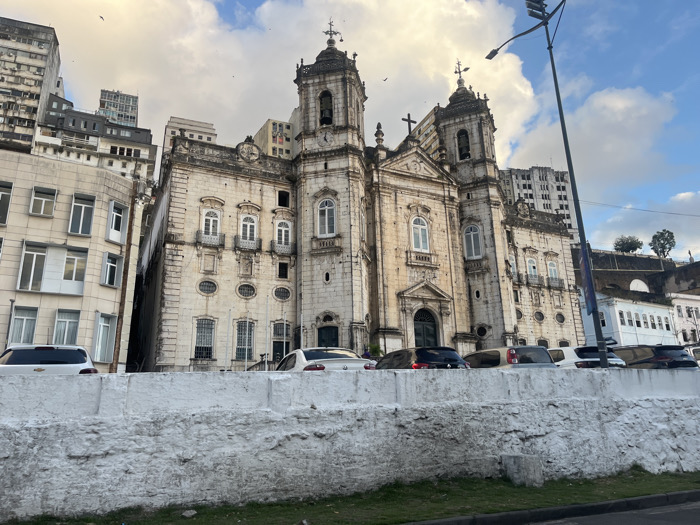
The image displays an urban scene in Salvador, Brazil, centered on the Basílica Santuário Nossa Senhora da Conceição da Praia. This prominent Baroque church, constructed from light-colored, aged stone, features a symmetrical facade with a large arched main entrance, multiple arched windows, and ornate balustraded balconies on its upper levels. Two bell towers, each topped with a dome and a cross, flank the central structure. Weathering and dark streaking are visible on the stone surfaces. To the left of the church, a multi-story building with a light-colored facade and numerous rectangular windows stands adjacent, partially obscuring other modern high-rise buildings in the background. To the right of the church, a lower white building is visible, followed by an elevated stone retaining wall with some small trees and shrubs on top. A tall, black lamppost equipped with multiple light fixtures and a vertical banner stands on the far right, partially obscuring the view. In the immediate foreground, a rough, textured white concrete or stone retaining wall runs horizontally across the bottom of the frame, separating a narrow strip of green grass from a paved street. Several passenger vehicles are parked along this street in front of the church, including a white Chevrolet SUV on the left, a light-colored sedan, and multiple darker-colored vehicles further down. The sky is partially cloudy, showing areas of blue between white and grey clouds, and small birds are visible in flight near the church towers. No people are clearly discernible.
Salvador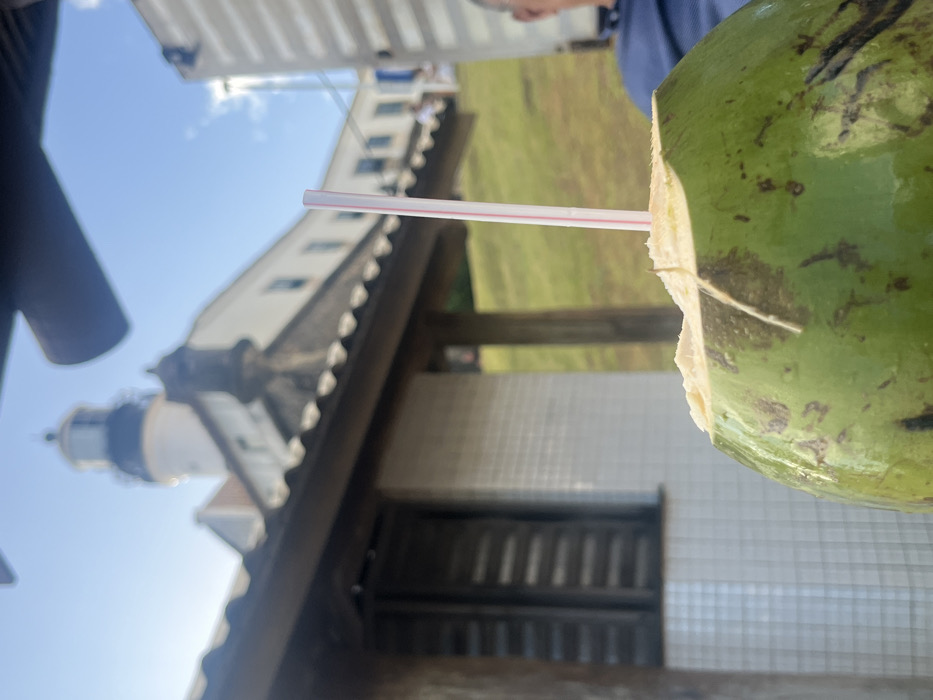
The image depicts a green coconut, partially cut at the top with a white and red striped straw inserted, in the foreground. The coconut is slightly out of focus. In the midground, a low building with a tiled roof and white square tiled walls is visible on the left, featuring a louvered window. Behind this structure, the distinctive white Farol da Barra (Barra Lighthouse) with its dark top stands prominently against a bright blue sky. Adjacent to the lighthouse complex, a multi-story building with white walls and numerous windows is situated on an elevated, grassy embankment. A partial view of a person wearing a dark blue shirt is visible on the far right. The scene is outdoors on a clear day, located near the Farol da Barra in the city of Salvador, Bahia, Brazil.
Salvador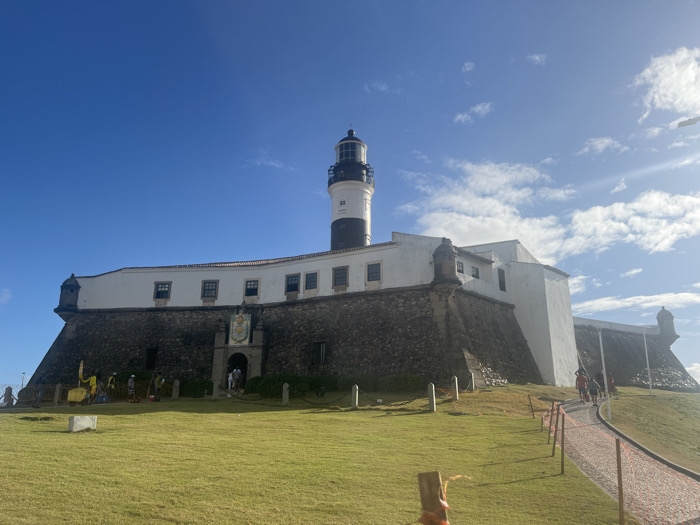
The image displays the Forte de Santo Antônio da Barra and the Farol da Barra (Barra Lighthouse) in Salvador, Bahia, Brazil, under a bright blue sky with scattered white cumulus clouds. Intense sunlight originating from the right side of the frame illuminates the scene, creating minor lens flare and distinct shadows. The central subject is a historic fortress, characterized by a substantial stone base with white-painted upper battlements. The fort structure includes multiple small rectangular windows and defensive bastions at its corners. A prominent arched entrance, centrally located on the main facade, is topped by an ornate, multicolored heraldic crest. Rising directly from the fort's structure is the Farol da Barra lighthouse, a tall cylindrical tower with alternating black and white horizontal stripes, culminating in a dark-colored lantern room. The foreground features an expansive, well-maintained green lawn that gently slopes upward towards the fort. On the left side of this lawn, a group of approximately six individuals, some wearing yellow high-visibility clothing, are gathered near a piece of yellow machinery, indicating activity such as construction or maintenance. Two small, white rectangular concrete blocks are also present on the grass in this area. On the right side of the image, a paved pathway, constructed from reddish-brown pavers, curves and ascends towards the fort. This path is bordered by a series of temporary white posts interconnected by orange tape or string. Approximately four to five individuals are observed walking uphill on this path towards the fort. Additional people are visible at the fort's main entrance, either entering or exiting the structure.
Salvador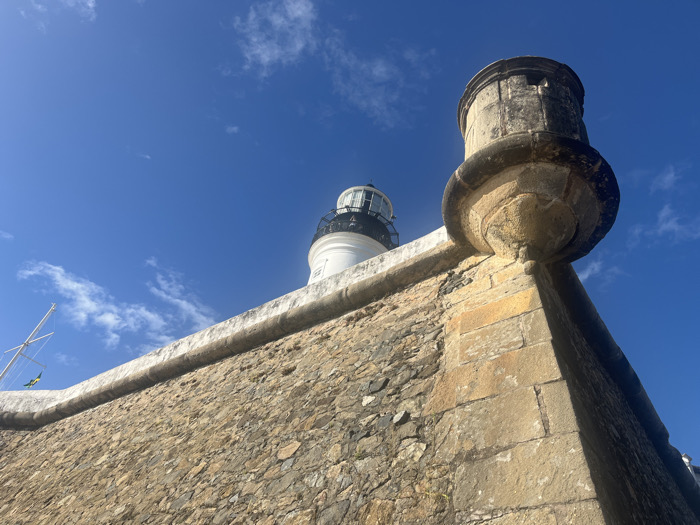
The image displays a low-angle perspective of the Forte de Santo Antônio da Barra and the Farol da Barra (Barra Lighthouse) in Salvador, Brazil, against a clear blue sky. A large, textured stone fort wall, constructed from irregular brown, grey, and ochre-colored blocks, dominates the foreground, extending from the lower left to the right. A lighter-colored, smooth stone coping runs horizontally along the wall's top edge. On the right, a cylindrical, weathered stone bartizan (watchtower) with small rectangular openings protrudes from a corner of the fort wall, featuring a decorative base. Behind the fort wall, to the left of the bartizan, the upper portion of the white Farol da Barra lighthouse is visible, capped by a black lantern room. To the far left, a bare mast, likely from a vessel or a flagpole, rises above the wall, from which a small green and yellow flag flutters. The background consists of a vibrant blue sky with sparse, wispy white clouds. The scene is brightly illuminated by natural sunlight, casting distinct shadows and emphasizing the textures of the stone structures. No people are present.
Salvador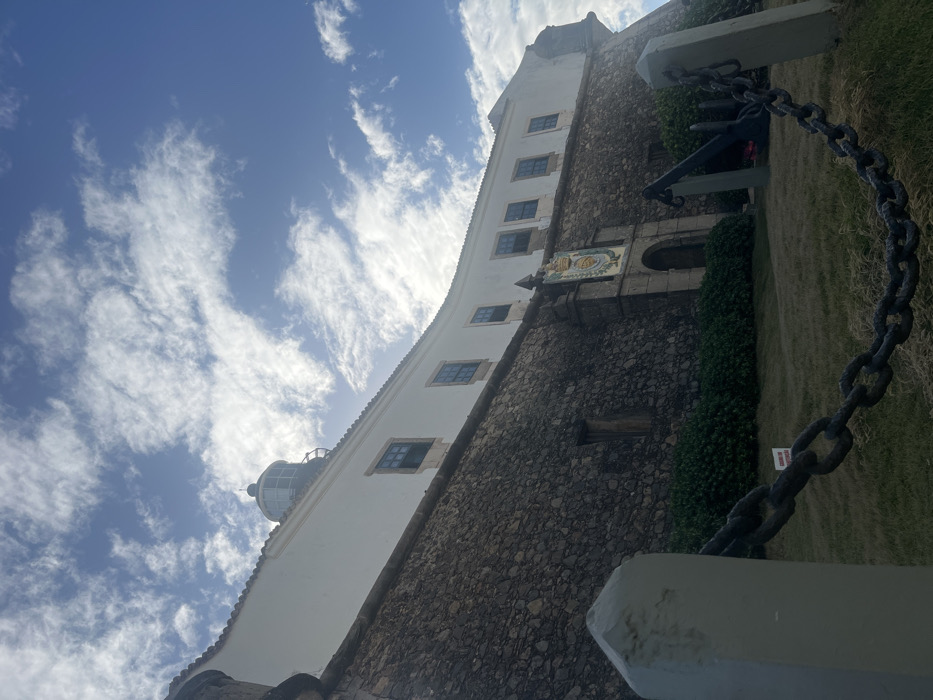
The image displays a low-angle view of the Santo Antônio da Barra Fort, also known as Farol da Barra, situated in Salvador, Bahia, Brazil. In the foreground, a dark metal chain barrier extends across the bottom, connected between two light-colored, pyramidal-topped posts. The ground slopes upwards, covered in dry, light green grass, with a line of dense green bushes bordering the fort's base. To the right of the fort's central entrance, a large black anchor with a chain rests on the grass. The fort's lower structure is a robust, dark-colored stone wall constructed from irregular masonry. Centrally positioned on this wall is a decorative arched stone entrance, topped by an ornate coat of arms or crest. Above the stone wall, a white-painted building with a gently curving facade features multiple evenly spaced rectangular windows with dark frames. At the highest point of this white structure, towards the left, the cylindrical lantern room of the lighthouse is visible, capped by a dark, conical roof and finial. The background consists of a bright blue sky filled with scattered, textured white cumulus clouds. No individuals are present in the scene.
Salvador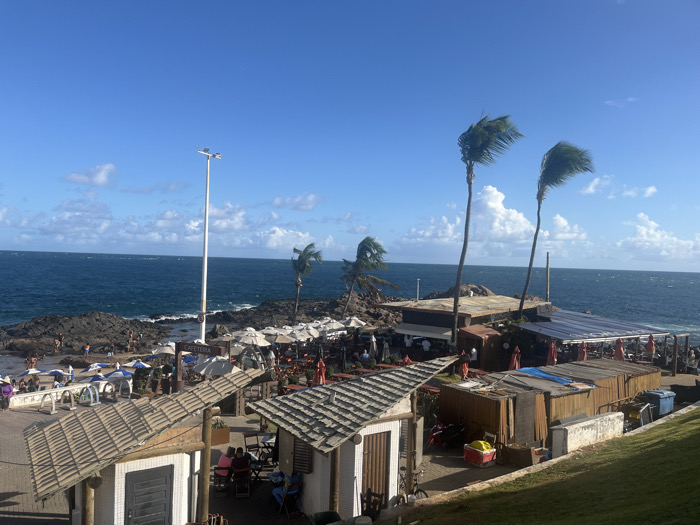
The image displays a vibrant coastal recreational area identified as Praia do Buracão in Salvador, Bahia, Brazil, under a bright blue sky with scattered cumulus clouds. The dark blue ocean, exhibiting whitecap waves, forms the background. A rocky shoreline is prominent on the left and center-left, with individuals visible wading and swimming in natural pools. In the mid-ground, a sandy and rocky beach is populated by numerous people relaxing on lounge chairs under white and blue striped umbrellas. Adjacent to the beach, a cluster of informal, single-story establishments constructed from wood and corrugated materials feature outdoor dining areas shaded by multiple white and orange/red umbrellas. A tall, white lamppost with multiple light fixtures stands vertically to the left of the central establishments, displaying a sign indicating "CAFETERIA" with an arrow pointing left. Several tall palm trees, their fronds visibly bent by wind, are interspersed throughout the scene, particularly to the right of the lamppost and above the main establishments. The immediate foreground on the right presents a neatly maintained grassy slope. In the bottom-left foreground, two small, single-story structures with ridged roofs and dark-colored doors are visible. People are present throughout the various sections of the scene, engaged in leisure activities.
Salvador
The image captures a daylight scene of the Barra neighborhood coastline in Salvador, Bahia, Brazil. In the foreground, a grassed slope with concrete steps descends, where two individuals, an adult male in a blue shirt and a child in blue swimwear, are seated. A paved asphalt road separates this area from the beach and ocean. On the left, a multi-story white building with numerous windows stands prominently. Along the road, a collection of urban buildings extends into the distance. The road is populated by several individuals walking, and a parked motorcycle is visible. Two tall, industrial-style streetlights with multiple fixtures are positioned along the promenade, with birds in flight near one. The midground features a sandy beach densely populated with individuals. Numerous blue beach umbrellas and corresponding chairs are set up. Closer to the water's edge on the promenade, two large rectangular blue containers are present. The right side of the image is dominated by the dark blue ocean, exhibiting moderate waves breaking near the shore. Several individuals are present in the water, swimming or wading. A dark rock formation is visible partially submerged in the ocean. The background presents an urban skyline with various high-rise buildings stretching along the coastline. The sky is clear blue with scattered white cumulus clouds.
Salvador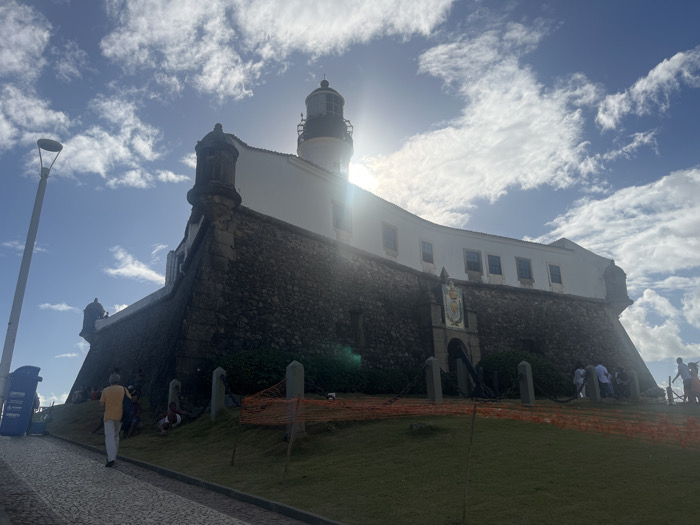
The image displays the Forte de Santo Antônio da Barra and the Farol da Barra (Barra Lighthouse) in Salvador, Bahia, Brazil, under a bright blue sky with scattered white clouds. The sun is positioned behind the lighthouse, causing significant backlighting and lens flare. The fort consists of a robust, dark stone base with discernible corner bastions or turrets. A lighter-colored heraldic crest is affixed to the stone wall's central section. Above the stone base, the fort transitions into a white building featuring multiple rectangular windows. Capping the entire structure is the Farol da Barra, a black and white striped lighthouse tower with a black domed top. In the foreground, a patterned cobblestone pathway curves upwards from the lower-left. A lone individual, viewed from behind, wearing a yellow shirt and light-colored pants, walks along this path. To the immediate left of the path stands a tall, grey streetlamp alongside two blue waste bins. The ground leading up to the fort is a green grassy slope, partially delineated by a horizontal orange safety net. Several individuals are present on this slope, some seated or resting near the fort's base. Another group of people is visible near a partially obscured entrance in the fort's stone wall on the right side of the image.
Salvador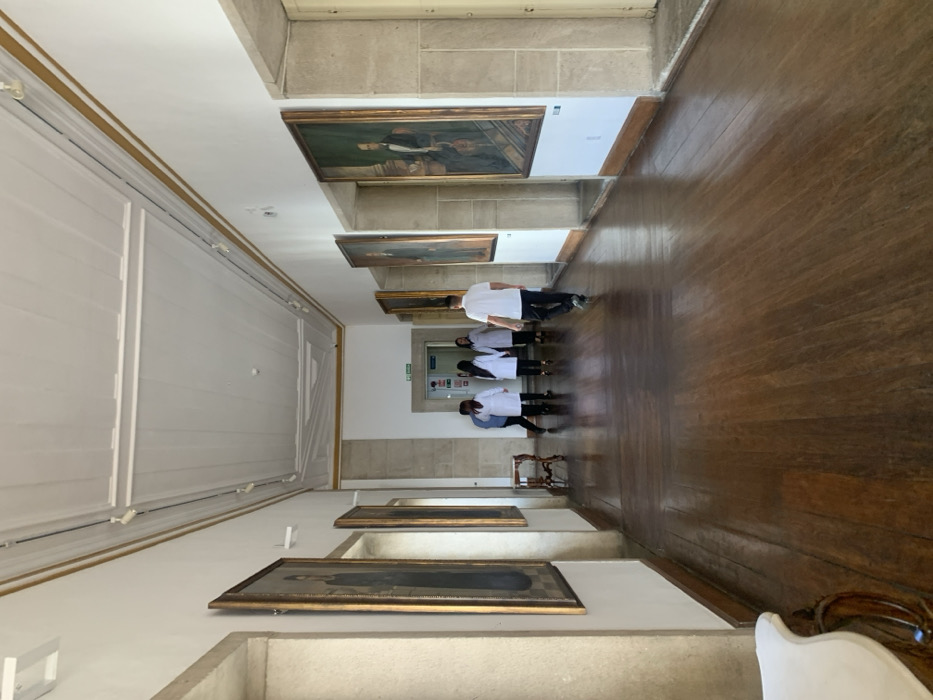
The image displays a long, well-lit interior hallway within the Palácio da Aclamação, located in the Campo Grande neighborhood of Salvador, Bahia, Brazil. The hallway features polished dark wooden floorboards, white painted walls, and a high ceiling with white wooden paneling and ornate molding accented with gold-colored trim, equipped with track lighting fixtures. Multiple large, framed oil portraits are mounted along both walls. On the left wall, two portraits are visible, the foremost depicting a dark-robed figure. A small, dark wooden console table with ornate legs stands against the left wall further down the corridor. On the right wall, at least three large portraits, depicting men in formal attire, are displayed within recessed, light-colored stone frames. Similar stone frames define doorways or architectural recesses along the corridor. Seven individuals are present. In the mid-ground, a group of six walks away from the camera, deeper into the hallway. Five members of this group wear white lab coats, while the individual leading them wears a light blue shirt and dark pants. Separately, a male individual wearing a white short-sleeved t-shirt and dark pants walks towards the camera on the right side of the hallway, distinct from the group. At the far end of the hallway, a doorway is visible with a green "EXIT" sign positioned above it. In the immediate foreground, bottom left, a portion of a white-upholstered, ornately carved wooden furniture piece is visible.
Salvador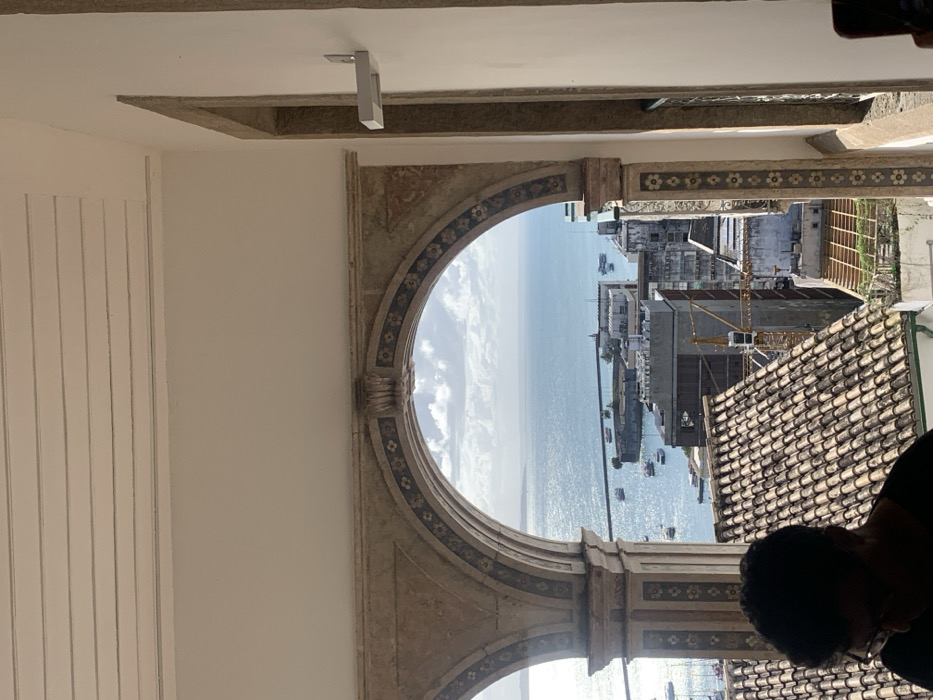
An elevated, panoramic view captures the Baía de Todos os Santos in Salvador, Brazil, framed by an ornate architectural structure. The foreground features two stone arches; one is fully visible centrally, adorned with carved details and dark floral or geometric patterns, while a second arch is partially visible on the left. Above the arches, a white ceiling with parallel linear grooves is present. To the right, a plain white wall features a horizontal, grey rectangular wall sconce. Below the archway, multiple terracotta-tiled rooftops of city buildings descend towards the bay. The background is dominated by the expansive, shimmering blue water of the Baía de Todos os Santos under a partly cloudy sky. Numerous small boats are scattered across the bay. Along the waterfront, a circular fortified structure is visible in the mid-distance, surrounded by various urban buildings, including a prominent yellow construction crane. In the lower-left foreground, the upper portion of an individual's head and shoulders is visible. The person has dark hair, wears glasses, and a dark shirt, appearing to look downwards out of frame.
Salvador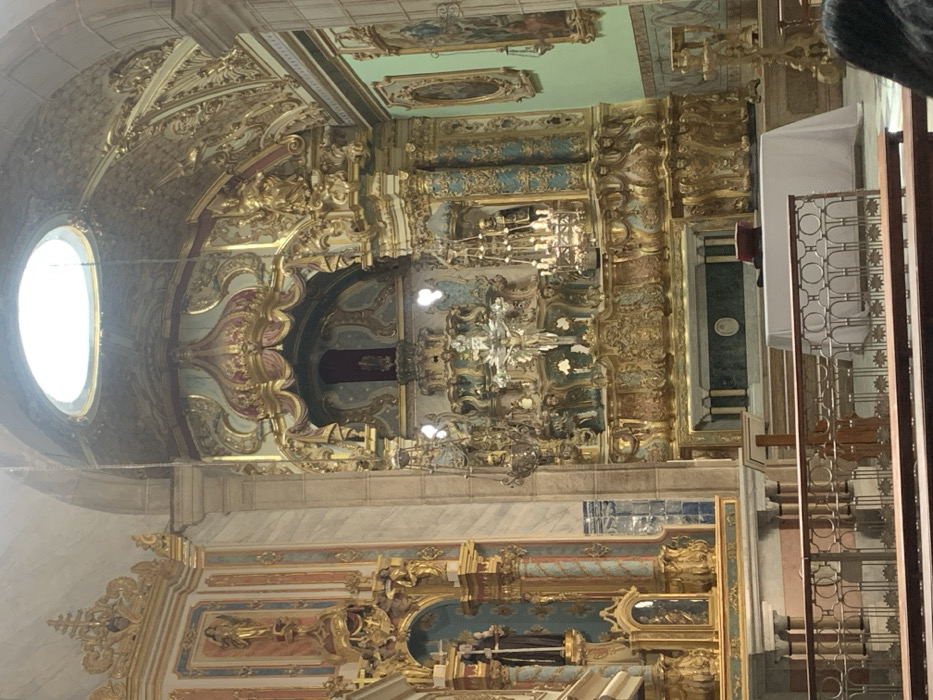
The image displays the highly ornate Baroque interior of the Igreja e Convento de São Francisco (Church and Convent of Saint Francis), located in the Pelourinho neighborhood of Salvador, Bahia, Brazil. The scene is dominated by the elaborate main altarpiece, which is extensively covered in gilded woodcarvings (talha dourada) and features intricate scrolling, volutes, and statuettes. Teal-blue accents are integrated into the gilded framework. A large crucifix with a figure of Christ is centrally positioned above a white-draped altar table. A dark, possibly liturgical, book rests on the altar table. Numerous hanging chandeliers with crystal-like elements are suspended around the main altar, contributing to the illumination. To the left of the main altar, a side altar structure, equally resplendent with gilded carvings and blue accents, houses statues of two robed figures, likely Franciscan friars. The ceiling is vaulted and richly decorated with gold ornamentation, featuring a prominent circular skylight (oculus) that provides natural light. The right wall, painted a light green, displays framed religious paintings. In the foreground, sections of dark wooden pews are visible, along with a decorative metal railing separating the nave from the chancel. A person's dark hair is partially visible in the bottom right corner, indicating a viewer seated in a pew. The environment is one of extreme opulence, meticulously crafted and reflective of historic religious artistry. No explicit actions or interactions are depicted beyond the static arrangement of the church interior.
Salvador