San Martín Tilcajete, Mexico
30 memories from San Martín Tilcajete, Mexico
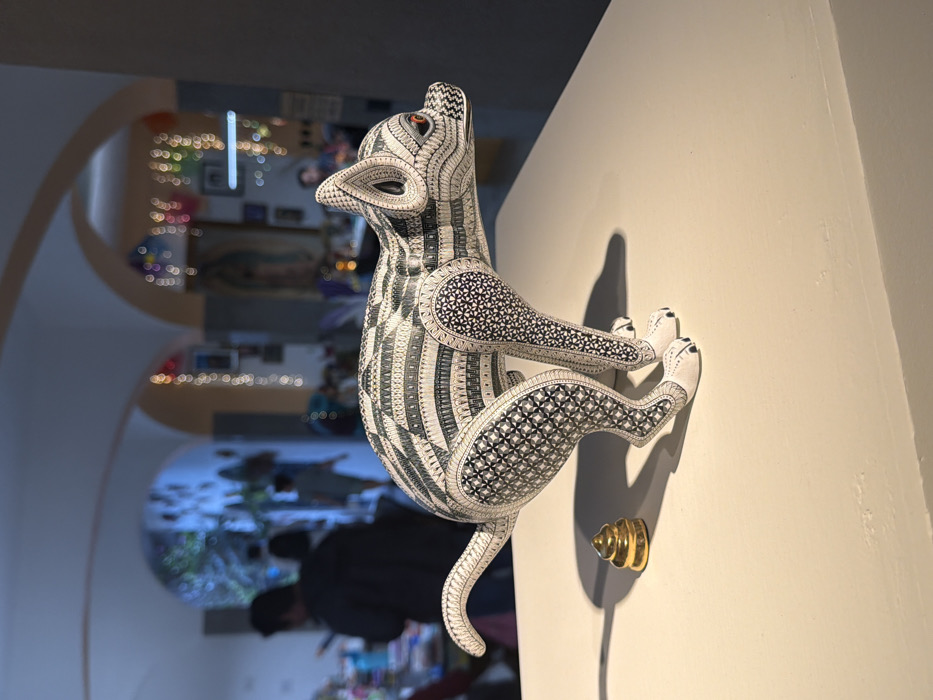
A black and white alebrije, likely a coyote, is mounted on a white wall. The artistic sculpture exhibits intricate geometric patterns. A golden-toned mounting screw is visible below the sculpture, casting a shadow. The background reveals an out-of-focus interior space with arched doorways and blurred figures, suggesting a gallery or museum setting.
San Martín Tilcajete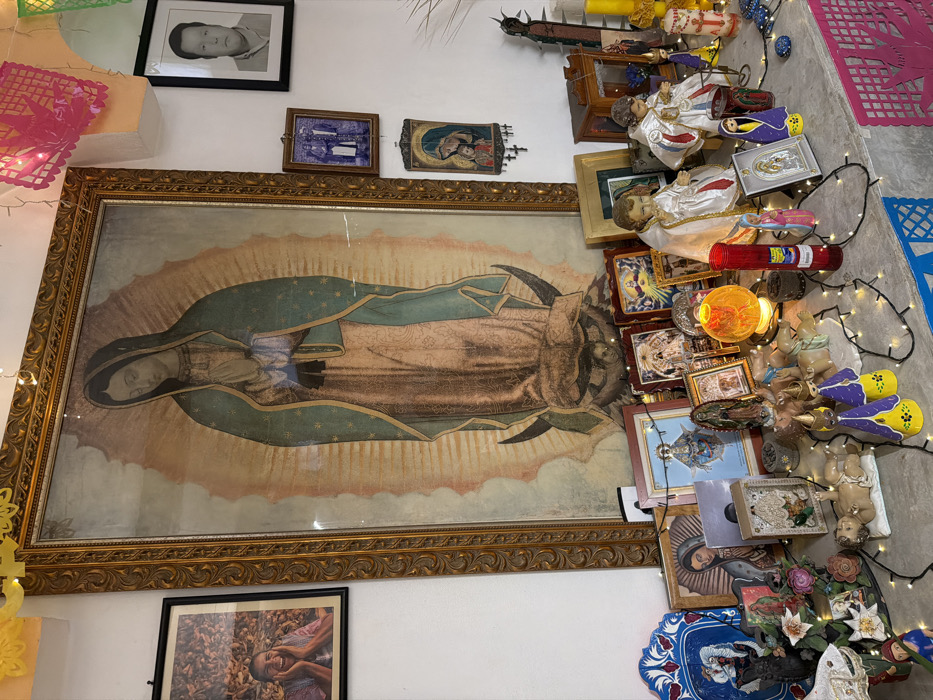
A wall displays a chaotic assemblage of religious iconography and decorative objects. Prominently featured is a large, framed depiction of the Virgin of Guadalupe. Smaller framed pictures, statuettes of baby Jesus figures, religious candles, and string lights cluster densely to its right. Above, a framed portrait, paper decorations, and other religious artifacts contribute to the eclectic, cluttered aesthetic. Below the large painting is another framed picture.
San Martín Tilcajete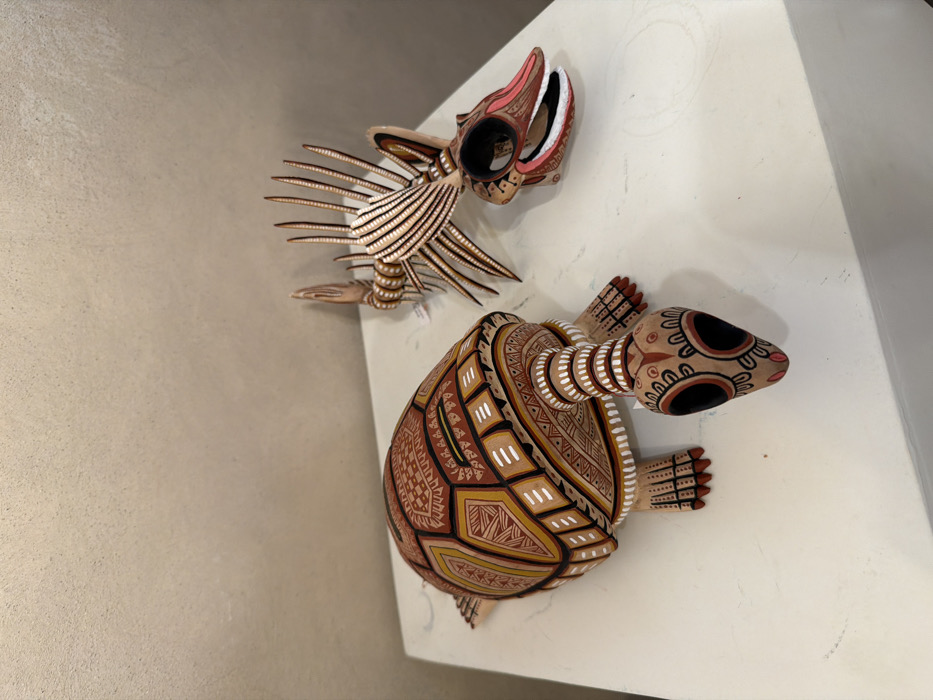
The image displays two intricately carved and painted wooden figures, likely alebrijes, against a textured, light-colored wall, possibly in a corner or an alcove. The scene is static, showing the figures on display. The top figure resembles a fantastical creature with an elongated body, spiky projections along its back, and an open mouth with visible teeth. It is predominantly painted in shades of beige, brown, and white, with red accents around its mouth and eyes, and features delicate striped and dotted patterns. Below it is a larger figure of a turtle. Its shell is adorned with elaborate geometric patterns in shades of brown, yellow, and white, including triangles, squares, and dotted lines. The turtle's head, limbs, and tail also feature similar decorative motifs and colors, with black for its eyes. Both figures exhibit a characteristic style of Mexican folk art known for vibrant colors and detailed designs. No human subjects are present, and no specific activity is taking place beyond the display of the art pieces. There is no visible text in the image. The setting appears to be indoors, potentially a shop or gallery, consistent with the given location context of San Martín Tilcajete, Mexico, a town famous for its alebrije carvings.
San Martín Tilcajete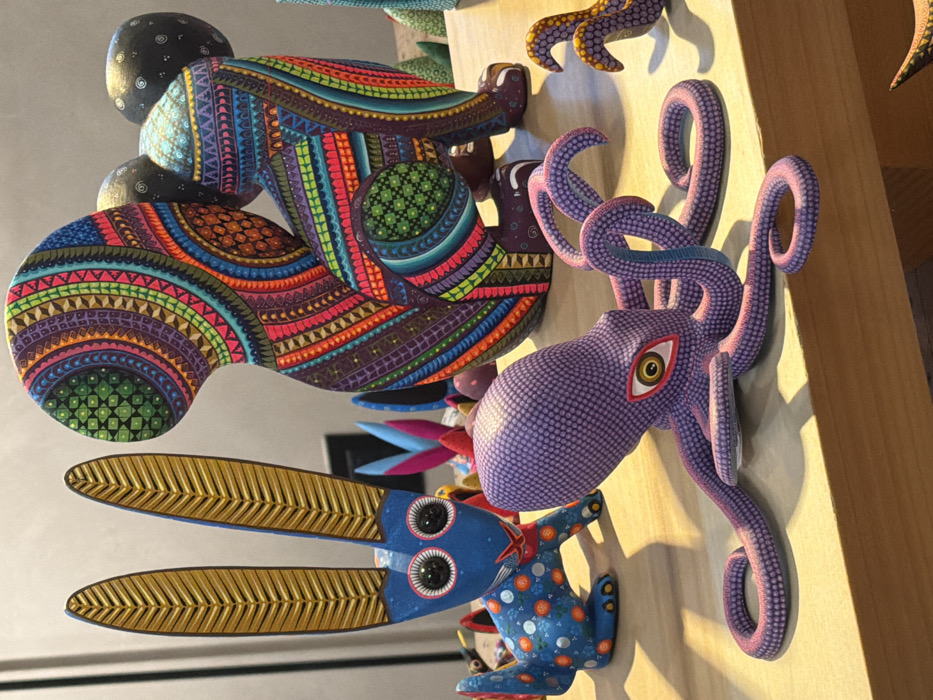
This image showcases a vibrant display of intricately carved and painted wooden folk art, known as alebrijes, against a light-colored background, likely a wall or shelf. The photo is oriented vertically, with the sculptures appearing to be displayed on a horizontal surface. The most prominent sculpture in the upper left is a large, stylized animal, possibly an armadillo or similar creature, with a rounded body and stubby limbs. It is adorned with incredibly detailed, repetitive geometric patterns in a riot of bright colors including purples, blues, greens, oranges, reds, and yellows. Its head, partially visible at the top, is dark with white dot patterns. To the right, a purple octopus sculpture captures attention with its complex swirling tentacles and a single, large, striking eye featuring a yellow iris and a red pupil. The entire surface of the octopus is covered in a uniform pattern of small white dots, giving it texture. In the lower part of the image, a blue rabbit-like creature is visible. It has large, elongated golden ears with carved details resembling feathers or leaves. Its face features prominent, wide-set black eyes with white reflections. Its body is adorned with white and orange dot patterns. Other smaller, colorful figures are partially visible in the background, adding to the bustling collection. The objects are brightly lit, casting distinct shadows on the display surface, suggesting a strong light source, possibly from the right. There is no visible text in the image. The style and vibrant detail are characteristic of alebrijes from San Martín Tilcajete, Mexico.
San Martín Tilcajete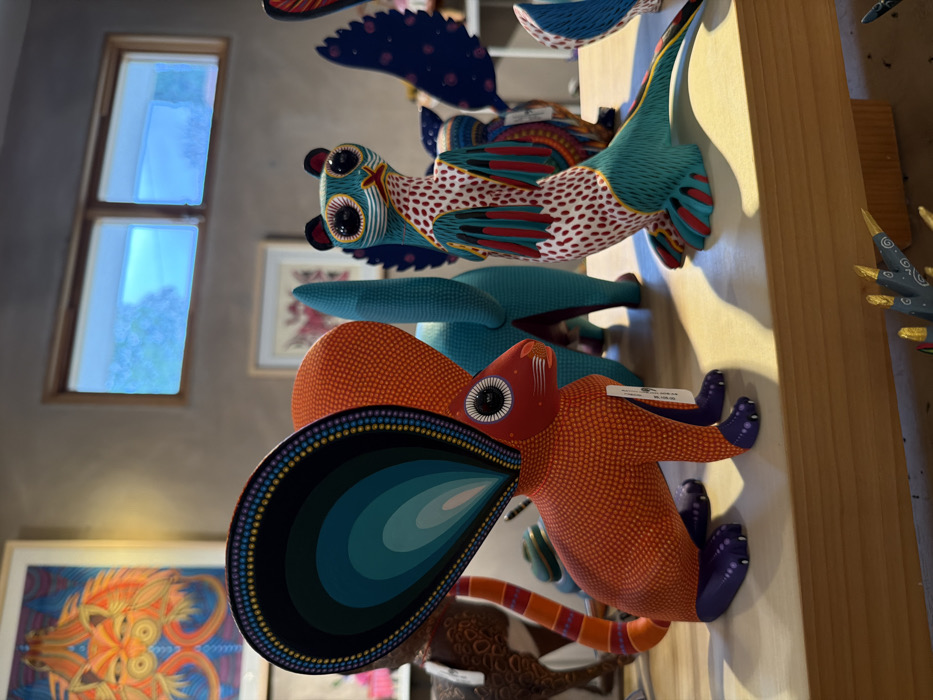
A collection of brightly colored, wooden animal carvings are displayed on a light wooden surface. The foremost carving is an orange creature with a large, teal and blue teardrop-shaped appendage. Above it is a teal carving and another bird-like carving with red and white patterned wings. In the background are a window and framed artworks on a gray wall, adding depth to the scene.
San Martín Tilcajete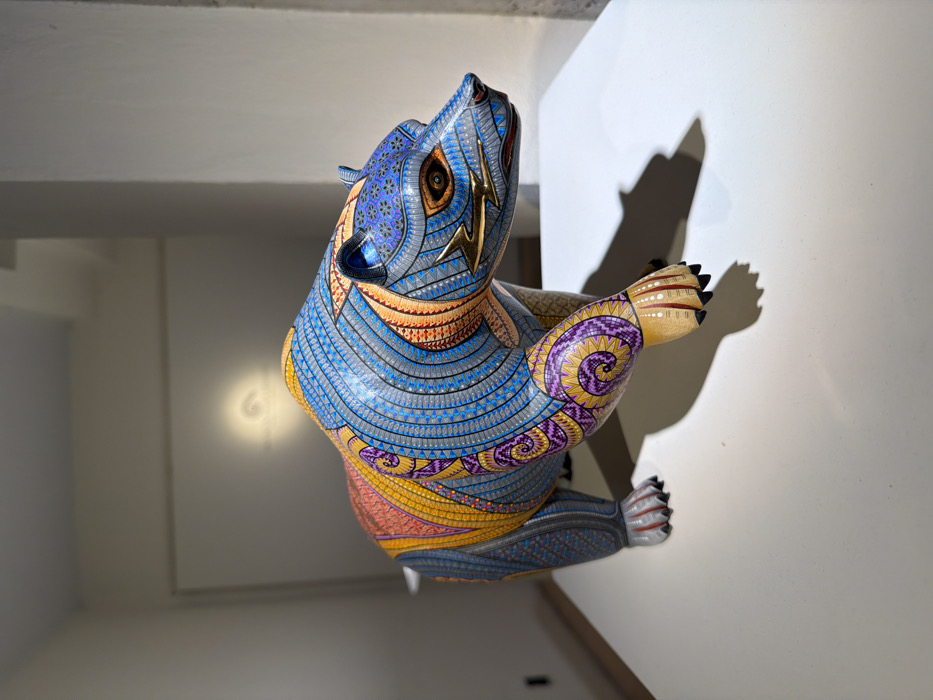
A vibrant, hand-painted wooden bear statue is positioned in a corner. Its body is adorned with intricate patterns in shades of blue, gold, purple, and orange. The head features golden accents, with detailed eyes and ears. The statue's shadow is cast on the white wall, creating a distinct contrast. The surrounding environment includes sections of a bright, white wall and a dimly lit ceiling, emphasizing the bear's colorful presence in the space.
San Martín Tilcajete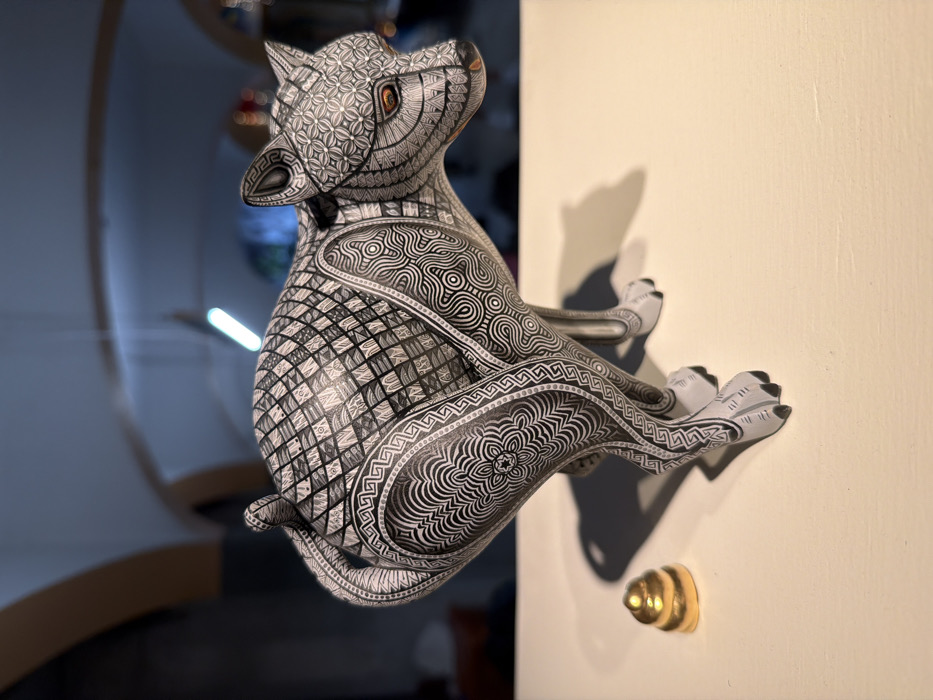
An Alebrije wolf figure, meticulously decorated with geometric patterns in black and white, sits on a pale wall, casting a shadow. The figure's head is tilted upwards, and its orange eyes stand out against the monochromatic design. A golden door knob is visible below, contrasting with the figure's intricate detailing and adding a touch of color. The background is blurred, suggesting an indoor setting.
San Martín Tilcajete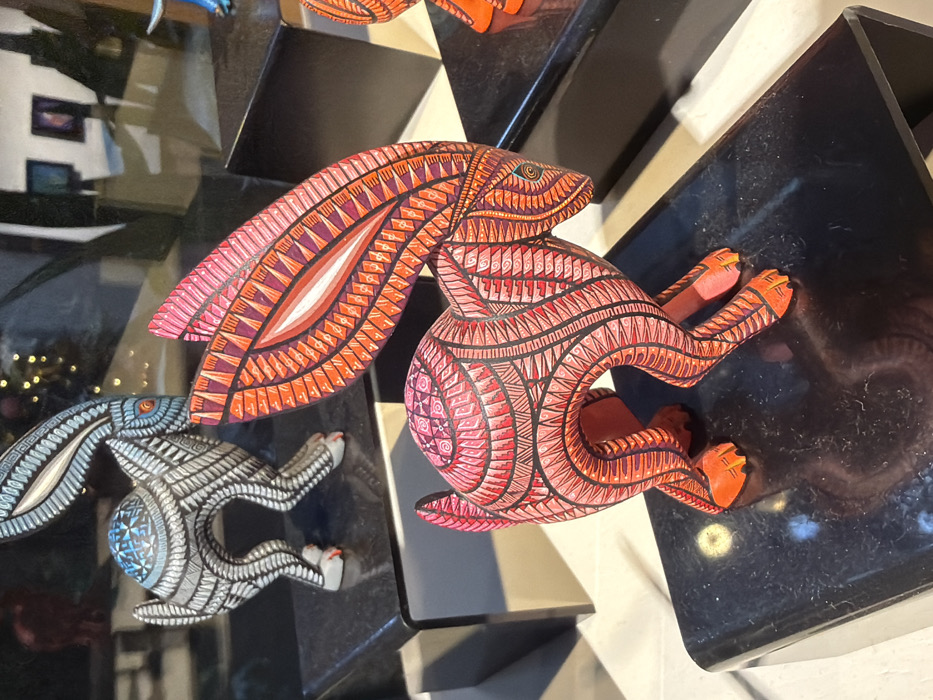
The image displays several vibrant and intricately patterned alebrijes, which are Mexican folk art sculptures, predominantly featuring rabbit figures. The central and largest subject is a red and orange rabbit, adorned with elaborate geometric and abstract designs in pink, purple, white, and black across its body, ears, and limbs. It is depicted in a dynamic, seemingly leaping pose. Partially visible in the lower left is another smaller rabbit alebrije, colored in shades of light blue, grey, white, and black, also covered with complex patterns. Both sculptures are presented on glossy, black, reflective platforms arranged geometrically, which mirror parts of the figures and the surrounding environment. The background includes blurred reflections of an indoor space, possibly showing windows or architectural elements, along with small, circular lights. The scene suggests an indoor setting, likely a gallery, artisan shop, or display area. The detailed craftsmanship, rich colors, and fantastical animal forms are characteristic of alebrijes, a traditional Oaxacan art form, consistent with the location context of San Martín Tilcajete, Mexico. The items are displayed for admiration or sale, with no human activity visible. The lighting is bright, highlighting the intricate details of the sculptures. No discernible text is present in the image.
San Martín Tilcajete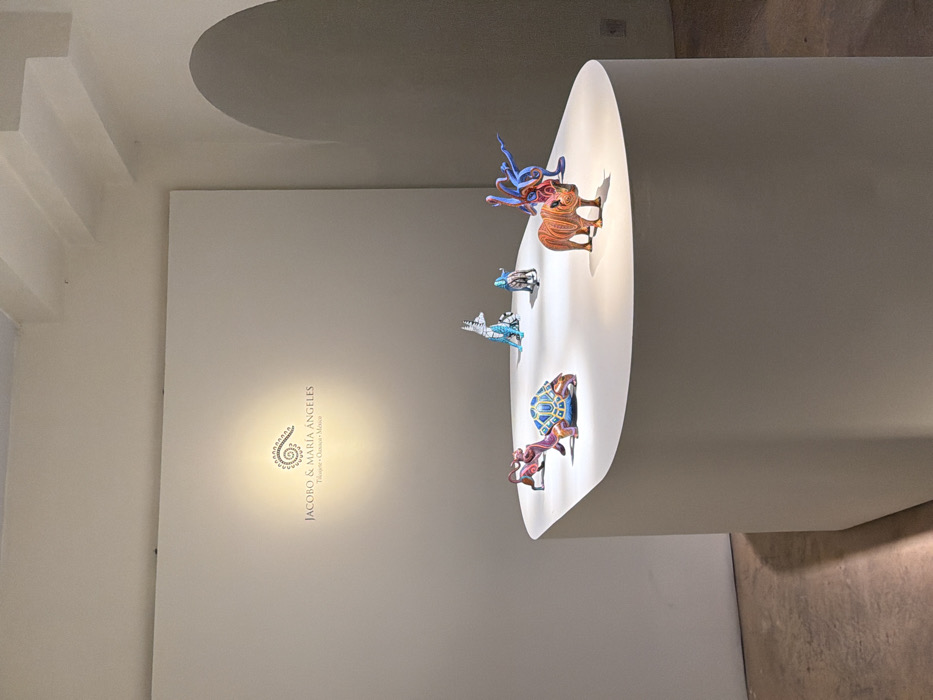
The image displays a modern art installation within a gallery. A curved, white display panel showcases several colorful, animal-like sculptures. The panel extends from the wall, under a recessed circular ceiling feature. The opposite wall bears the name "Jacobo & Maria Angeles," presumably the artists. The gallery has minimalist design, with neutral walls and flooring.
San Martín Tilcajete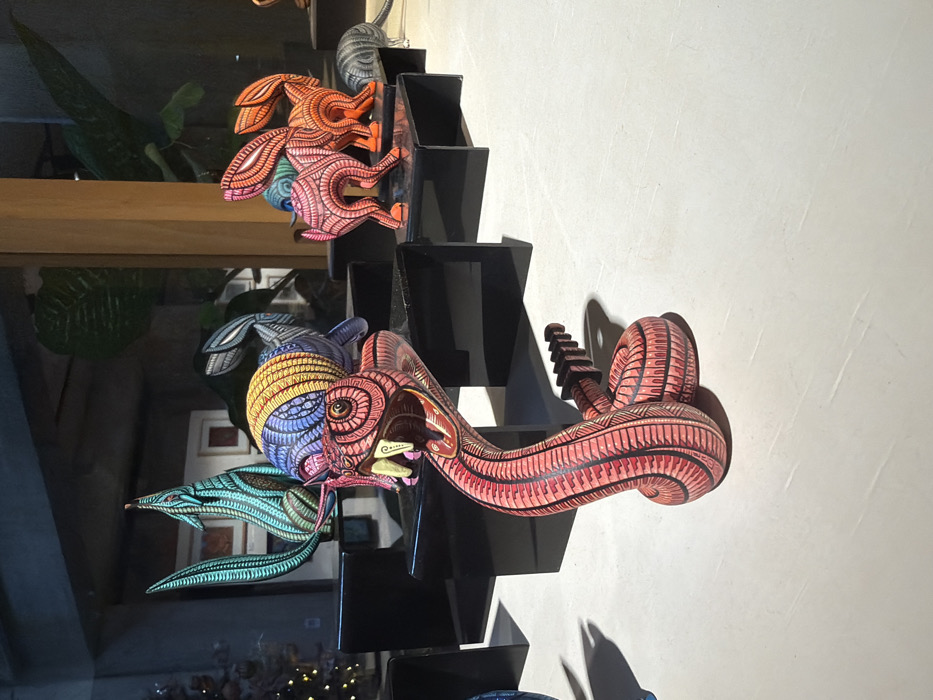
A collection of colorful, hand-painted wooden animal sculptures are displayed on a black, stair-step shelf. The sculptures include rabbits with intricate designs in shades of orange, red, blue, and green. One sculpture depicts a snake-like creature in red tones, coiled and resting on one of the shelf tiers, its shadow cast on the wall. Some sculptures are partially obscured, and there are green plants and reflections in the background. The composition is artistic and visually striking.
San Martín Tilcajete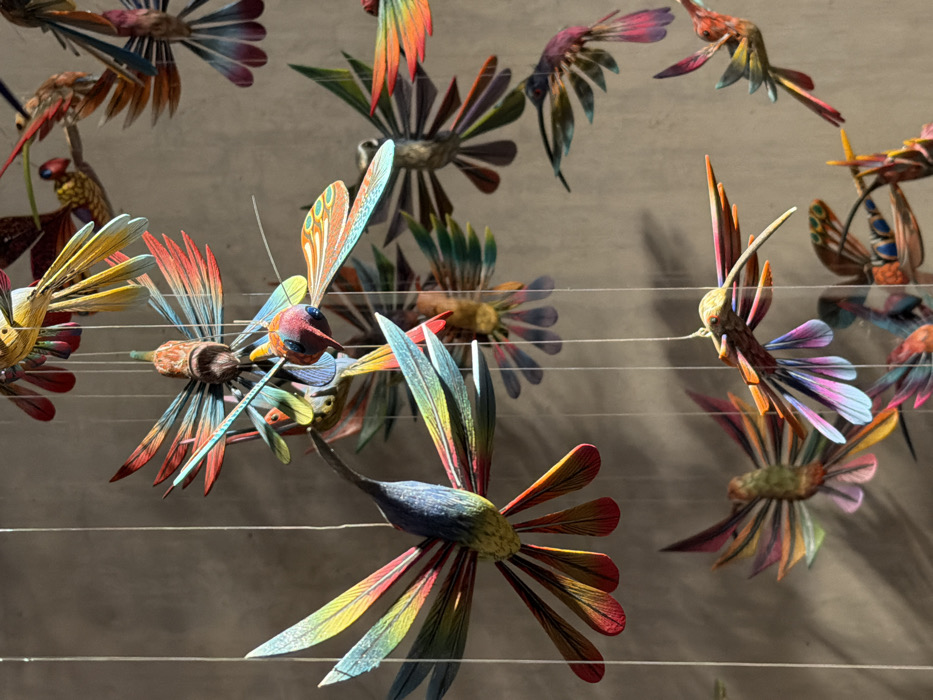
A collection of brightly colored, intricately carved wooden hummingbird figures are suspended from thin horizontal strings against a neutral-toned background. The hummingbirds display a variety of vibrant hues, including blues, reds, greens, and yellows, arranged in feather-like patterns. Their wings are spread, creating a dynamic sense of flight and movement within the static display. The lighting suggests an indoor setting, possibly a museum or gallery.
San Martín Tilcajete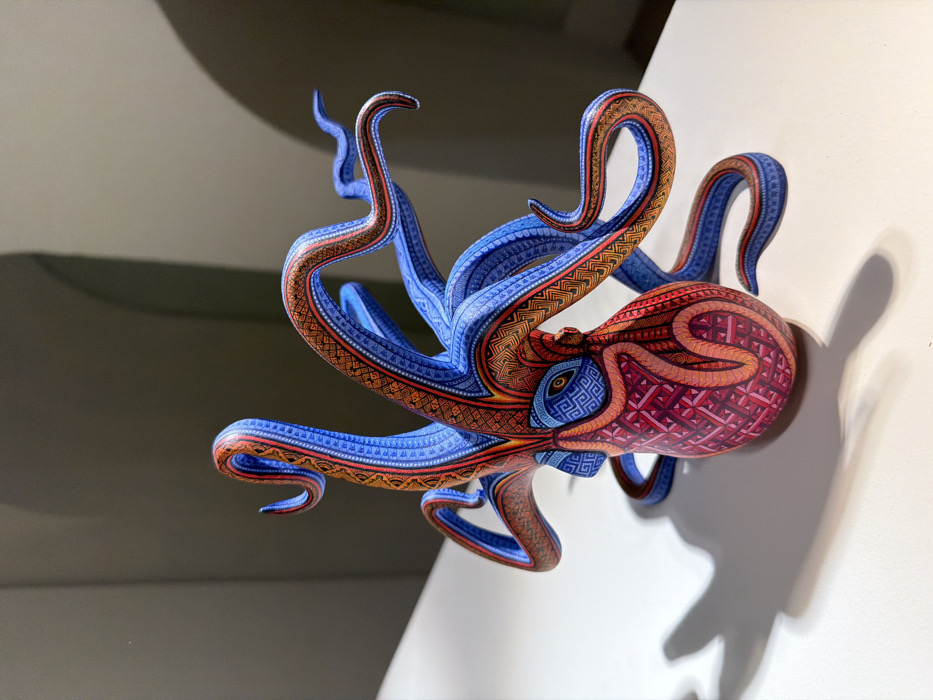
A vibrant, detailed wooden octopus sculpture clings to a white wall. Its body is adorned with a red and pink geometric pattern, transitioning to blue and orange on the tentacles. The tentacles, painted in intricate patterns, twist and curl, creating dynamic shapes. A shadow of the octopus is visible on the wall, and a soft, diffused light illuminates the sculpture. The backdrop consists of plain walls, highlighting the craftsmanship and artistry of the piece.
San Martín Tilcajete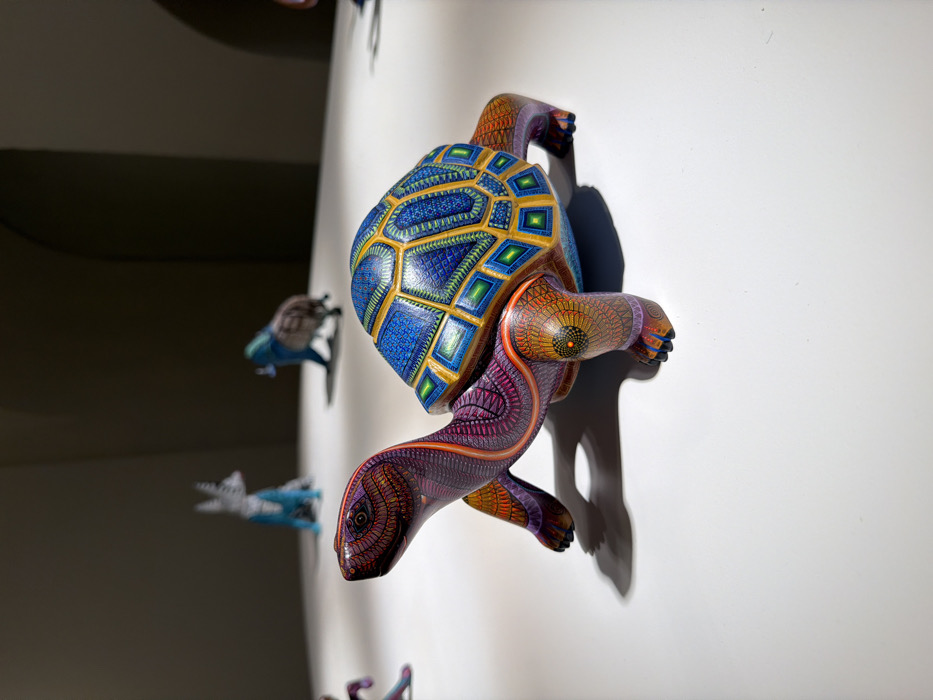
A vibrant, hand-carved turtle sculpture clings to a white wall. Its shell boasts intricate blue, yellow, and green geometric patterns, while the head and limbs display a rich blend of purple and orange hues. Its shadow casts a dark silhouette on the wall behind it. Other animal sculptures are visible in the background on the same wall, adding depth to the image.
San Martín Tilcajete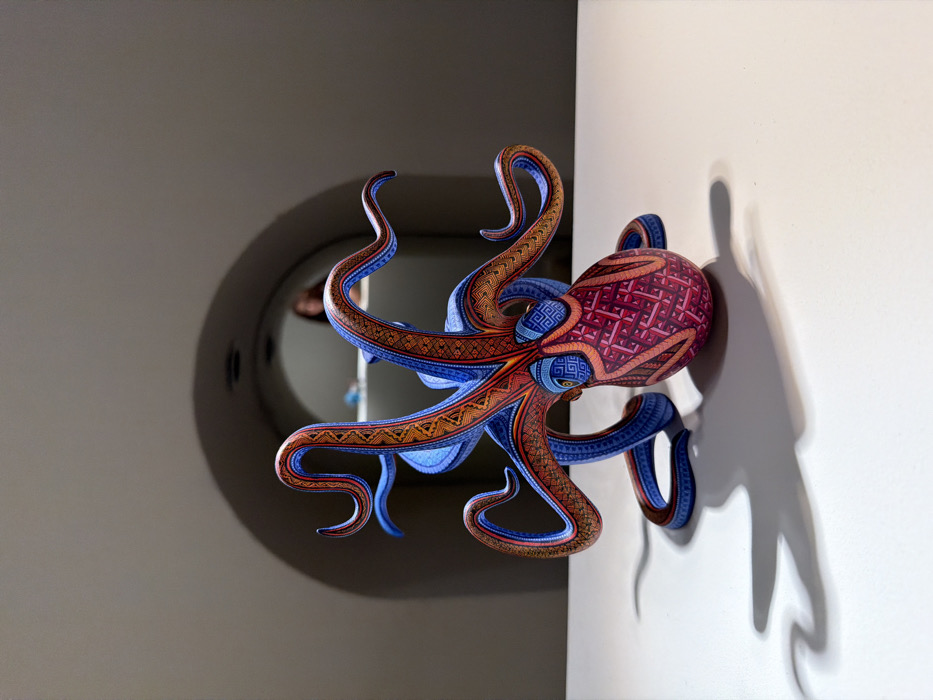
An ornate, wooden octopus sculpture is mounted on a white wall. The octopus has blue and brown striped tentacles, a deep red body with a geometric pattern, and one visible eye. The sculpture casts a shadow on the wall behind it. To the left, a circular recessed feature is visible in a gray wall, creating a contrasting element in the background. The lighting is soft, accentuating the details of the sculpture and its shadow.
San Martín Tilcajete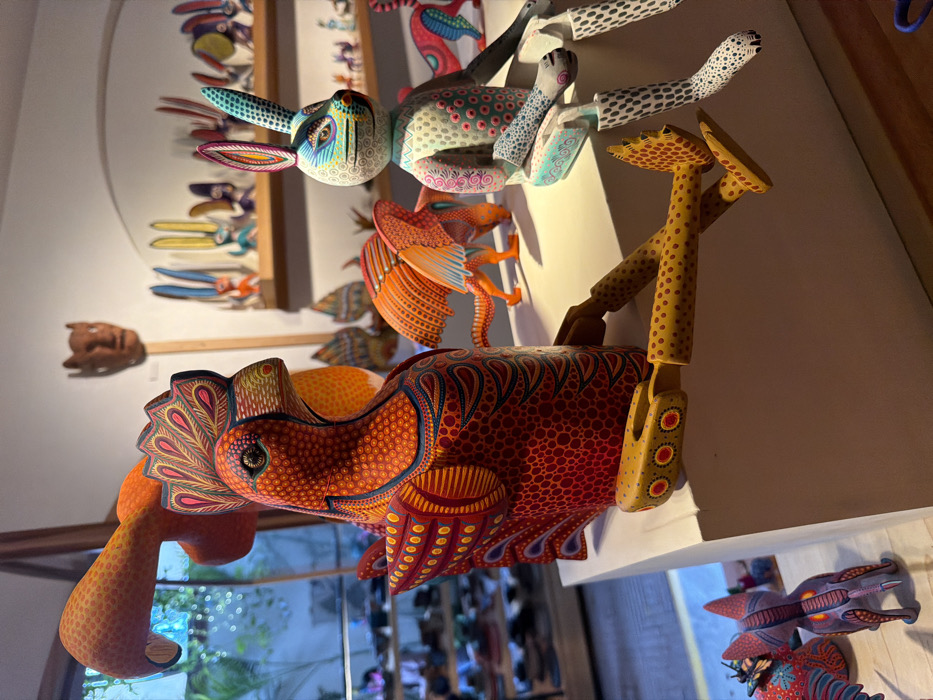
The image showcases a collection of vibrant, handcrafted alebrijes. A red-toned animal with intricate patterns dominates the foreground, while a colorful rabbit figure floats above, adorned with polka dots. Another winged animal, orange, sits between them. These folk art sculptures are displayed on a shelf, with more alebrijes visible in the background, some mounted on the wall, creating a lively and artistic scene.
San Martín Tilcajete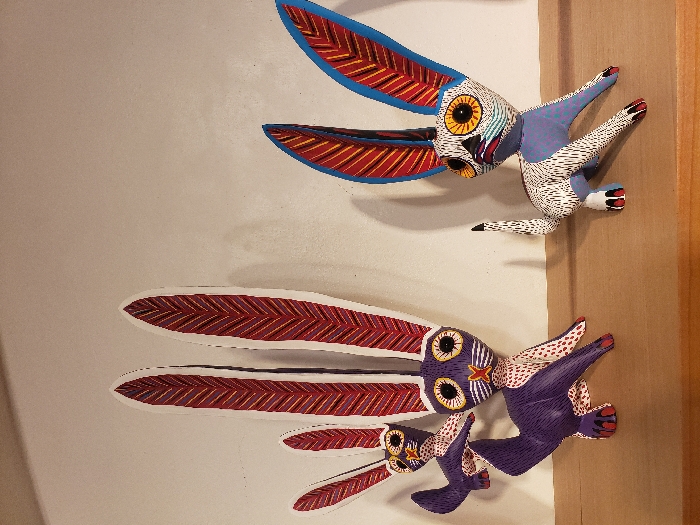
Three vibrantly painted wooden alebrijes resembling bird-like creatures are displayed. The top figure exhibits a white body speckled with black dots, striking yellow eyes, and wings colored with red and blue patterns. Below, two purple-bodied figures follow, with wings displaying red and white patterns. The alebrijes are mounted on a white wall with a tan wooden frame on the right, creating a visually captivating display of Mexican folk art.
San Martín Tilcajete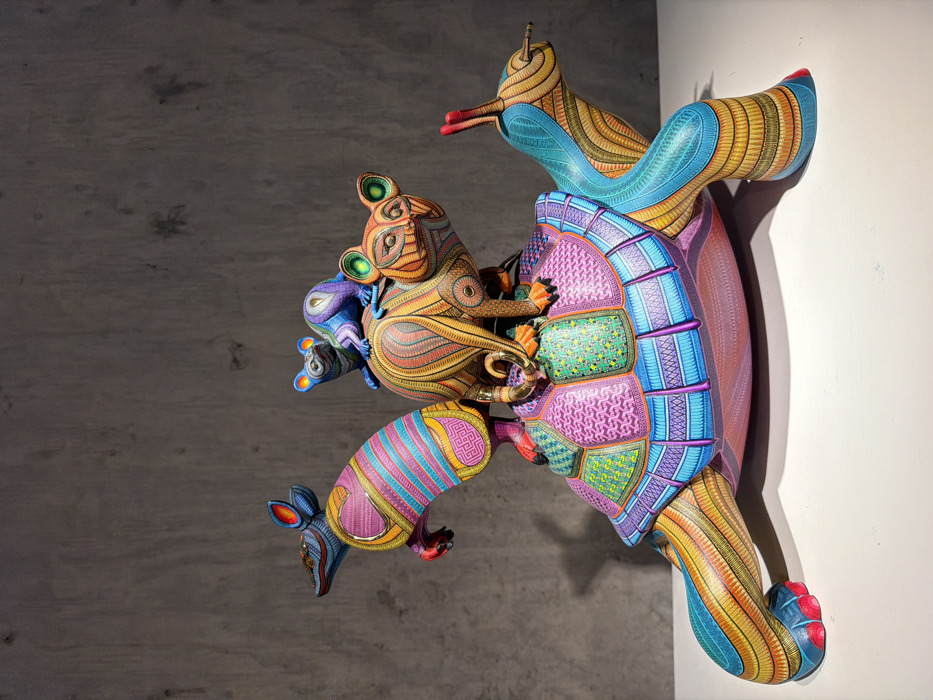
This media file captures a vibrant, intricately carved and painted alebrije sculpture, a traditional form of Mexican folk art, originating from San Martín Tilcajete, Mexico. The sculpture features multiple fantastical animals stacked and interconnected. The central and largest component is a multi-colored turtle, serving as a base. Its shell is adorned with geometric patterns and swirls in shades of purple, blue, green, and pink. Perched atop the turtle is a larger animal, possibly a stylized fox or feline, with prominent green-rimmed eyes. Its body is covered in flowing yellow and orange patterns. Clinging to its back are two smaller, similarly stylized creatures, one purple and one blue, both with large eyes and detailed patterns. Extending from the lower-left side of the turtle is an armadillo-like animal, characterized by pink and blue stripes and a patterned body. Another creature, resembling a bird with a long beak and blue and yellow plumage, extends from the upper-right of the turtle. All parts of the sculpture are meticulously decorated with fine lines, dots, spirals, and geometric motifs in a dazzling array of bright, contrasting colors. The polished finish of the wood (or similar material) enhances the vividness of the paintwork. The sculpture is displayed indoors, positioned vertically against a corner formed by two walls. The wall on the right is a plain, light grey, while the wall on the left is darker with a subtle texture, suggesting a gallery or exhibition space. Artificial lighting illuminates the piece, casting shadows that emphasize its three-dimensional form. No people are visible, and there is no visible text. The image focuses entirely on the elaborate artistry of the alebrije.
San Martín Tilcajete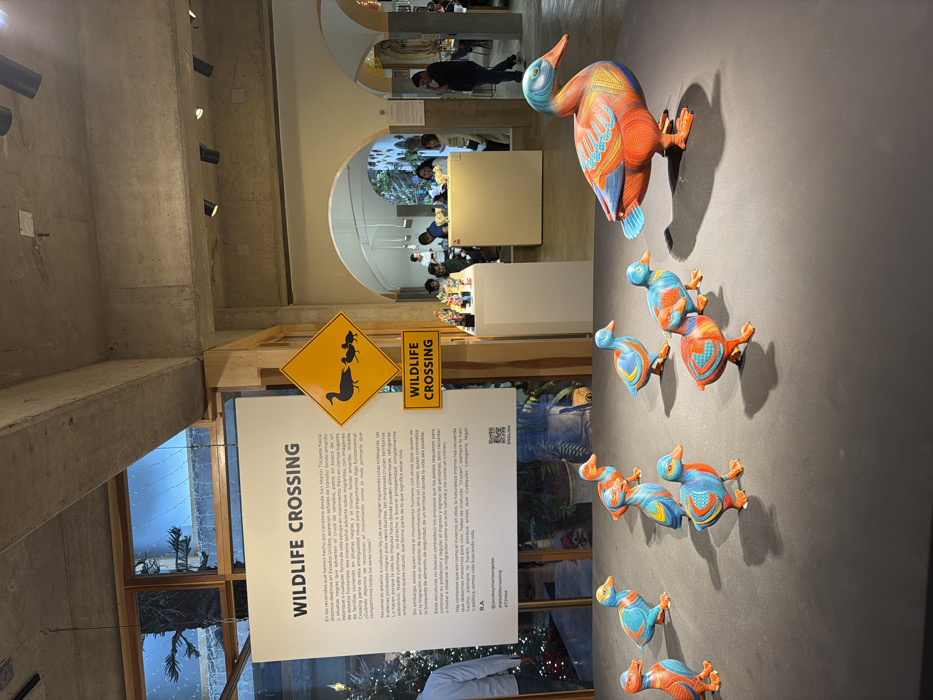
The image depicts an indoor display featuring "Wildlife Crossing" art. A large sign with the same title in both Spanish and English discusses migration as a natural phenomenon. Several stylized, colorful duck figurines are mounted on a wall, seemingly "crossing" it. A yellow "Wildlife Crossing" sign with duck silhouettes is prominently displayed. In the background, people are visible in an adjacent room. The display combines artistic expression with a message about migration and the natural world.
San Martín Tilcajete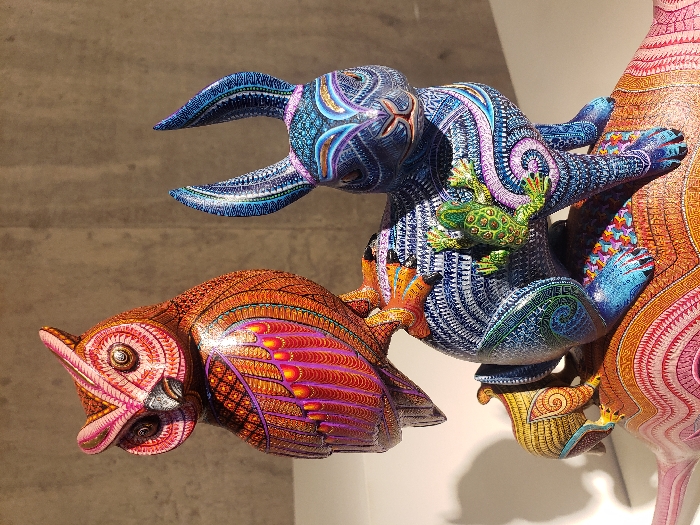
The image shows ornately decorated wooden animal sculptures in vibrant colors. A blue rabbit-like figure with long ears balances a green frog on its back and hangs onto a larger, abstract creature. Below, an orange owl-like figure faces left. The sculptures are covered in intricate patterns and details. The background is a neutral gray wall.
San Martín Tilcajete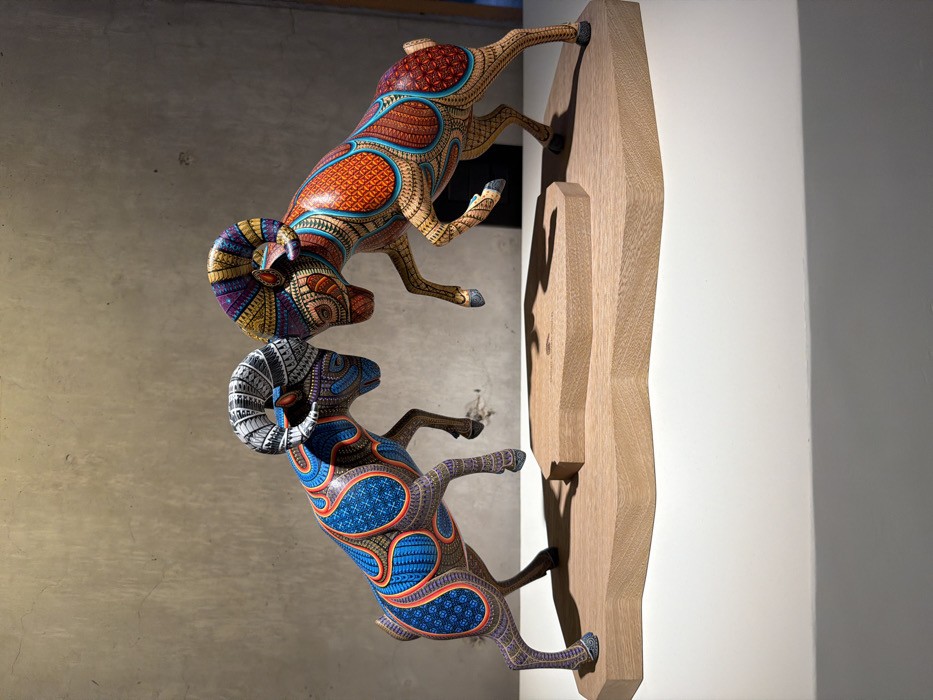
Two brightly painted wooden ram sculptures are mounted on a neutral wood panel affixed to a wall. The lower ram, decorated with blue and orange patterns, faces upward. Above it, the second ram, adorned with orange and turquoise designs, faces downward. The ram's horns are intricately detailed with multiple colors and patterns. The wall behind the panel is divided into two sections, one a smooth white, and the other a textured grey.
San Martín Tilcajete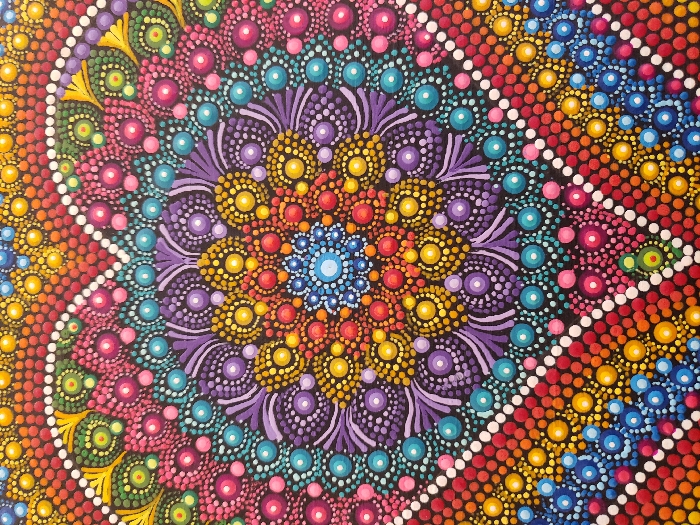
A close-up view of a vibrant, colorful dot mandala. Concentric circles of blue, orange, yellow, purple, pink, and green dots radiate from the center. Intricate patterns and radial symmetry are created with the various colored dots. Black background separates the patterns. The use of white dots creates the effect of diamonds and further emphasizes the layers and symmetry of the design.
San Martín Tilcajete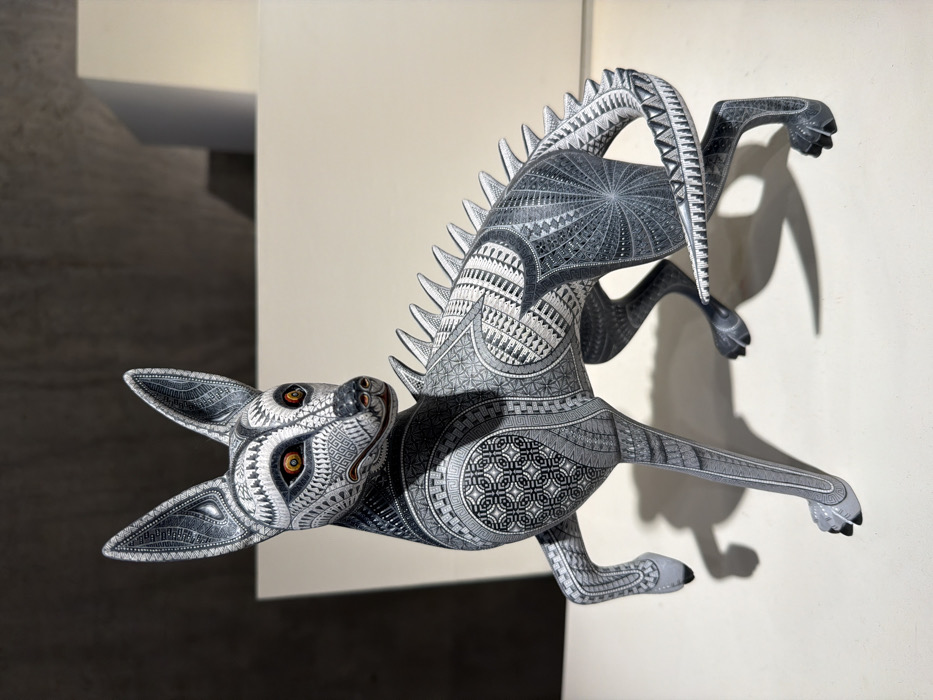
A meticulously carved, monochrome alebrije-style sculpture of a mythical creature is showcased against a neutral backdrop. The figure boasts the body of a canine with intricate geometric patterns etched onto its surface. The creature's back arches with a prominent ridge of spiky scales. Its amber eyes are vividly detailed, contrasting with the overall grayscale palette. The sculpture appears to be leaping or climbing, with its paws outstretched and a curled tail adding to the dynamic pose. The sculpture's shadow is visible on the wall behind it.
San Martín Tilcajete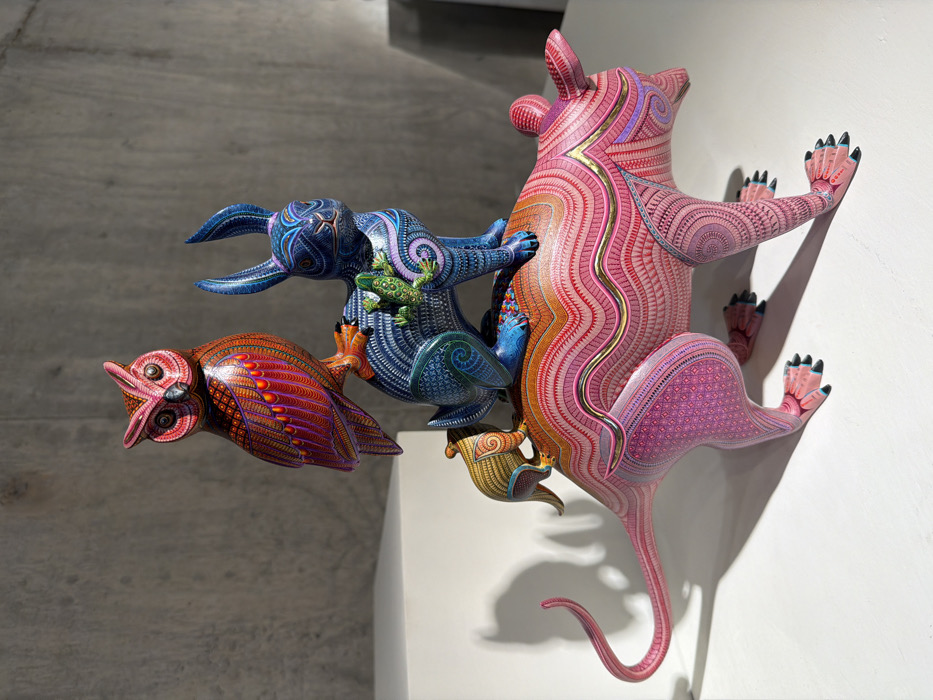
The image displays a vibrant stack of three intricately carved and painted wooden animal figures, characteristic of Mexican *alebrijes* from San Martín Tilcajete. These fantastical creatures appear to be climbing or clinging to each other and a plain white wall, creating a dynamic, vertical composition. The largest figure, a pinkish-red creature resembling a bear or a stylized monster, clings to the white wall on the right. Its body is covered in elaborate, swirling patterns of various shades of pink, red, orange, and gold, with distinctive black-tipped claws. Positioned on the back of this pink creature is a smaller, blue animal, possibly a rabbit or a similar mythical beast, adorned with complex, wave-like patterns in blues, purples, and greens. A small, bright green frog or lizard with dark spots clings to the blue creature's back, near its head. The third figure, an orange and red owl with its mouth slightly ajar, perches atop the blue creature, showcasing detailed feather-like designs and intricate patterns in warm hues. The bright, directional lighting from the left casts prominent shadows on the white wall and the neutral grey background, emphasizing the three-dimensionality and playful interaction of the sculptures. The scene takes place indoors, likely in a gallery or art display setting, highlighting the meticulous craftsmanship and vibrant colors associated with traditional Mexican folk art. No text is visible in the image.
San Martín Tilcajete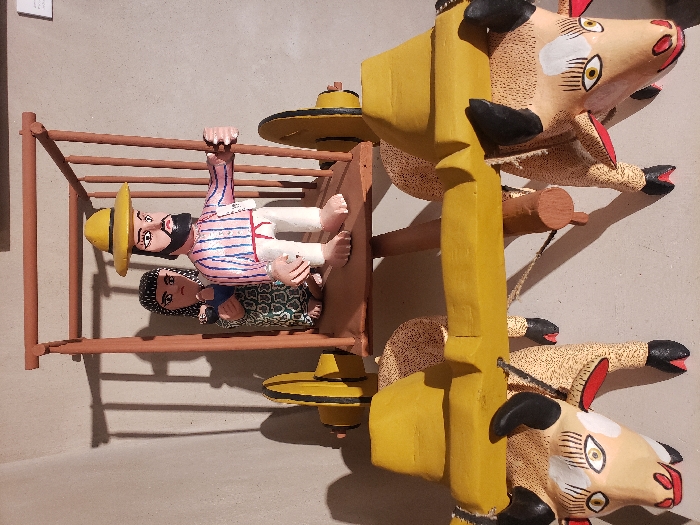
A colorful folk art sculpture depicts a whimsical scene. Three painted bovine figures with black horns pull a yellow-framed cart. Inside the cart, a man with a yellow hat hangs upside down, holding onto a horizontal bar. Beneath him, a woman sits in a patterned dress. The entire piece is brightly colored and appears to be made of wood.
San Martín Tilcajete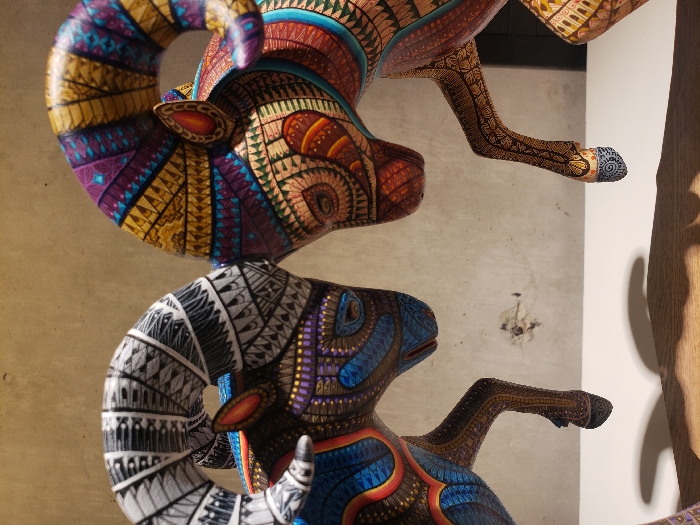
Two intricately decorated wooden ram figurines are stacked vertically. The top ram displays vibrant colors including yellow, orange, purple, and turquoise with detailed patterns. The lower ram features contrasting black and white patterns on its horn, while its body is adorned with blue and purple designs. The background includes a pale wall with visible texture and a partial view of a wooden structure on the right side.
San Martín Tilcajete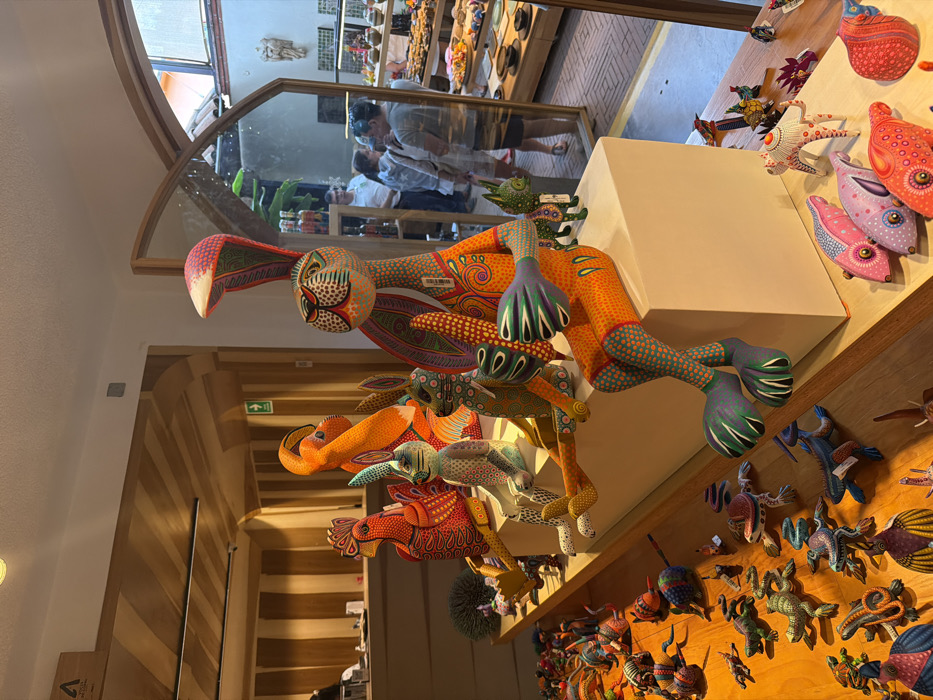
The image showcases a collection of colorful, intricately designed alebrijes, folk art sculptures, arranged on a wooden shelf. Dominating the foreground is a rabbit-shaped alebrije with vibrant orange and green accents. Smaller alebrijes, including foxes and birds, are stacked beneath it. A mirror in the background reflects the store's interior, revealing a shopper. Other alebrijes, in the shapes of fish and other animals, line the shelf, creating a whimsical display.
San Martín Tilcajete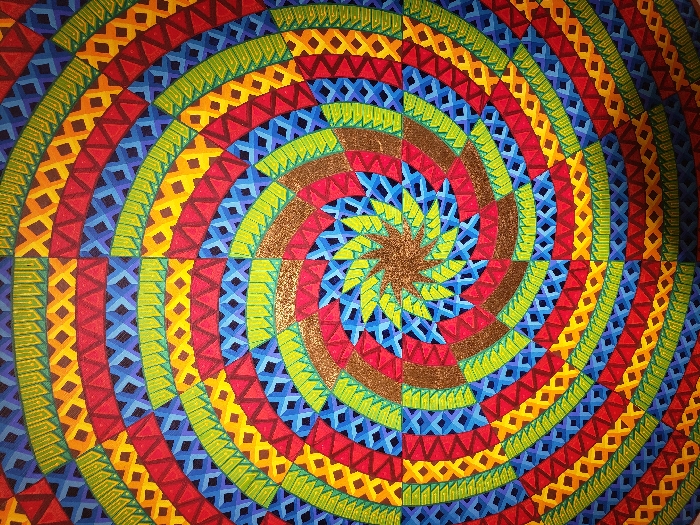
A vibrant, radial pattern dominates the scene, featuring concentric bands of geometric shapes. Triangles, diamonds, and x-shaped patterns repeat in blocks of red, blue, yellow, and green, creating a visual swirl. The center features a starburst design in metallic tones, surrounded by segments of brown and blue. The overall effect is a dynamic and colorful geometric composition with a focal point at the center.
San Martín Tilcajete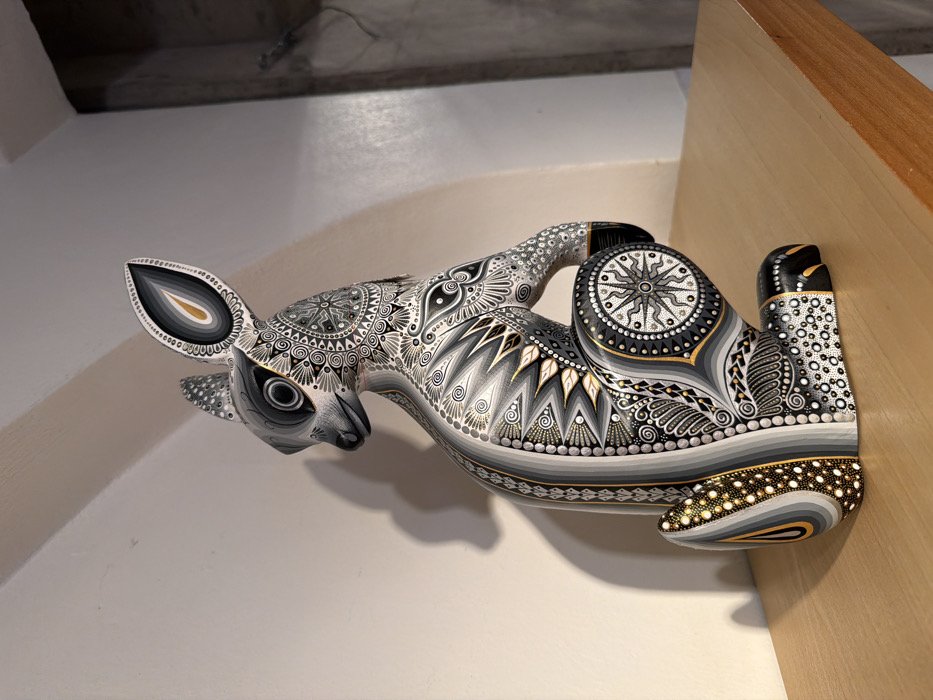
A unique, hand-carved animal sculpture rests against a cream wall, adjacent to a light wood surface. The piece appears to be a deer, intricately adorned with grayscale patterns, including concentric circles, geometric shapes, and delicate dot work. These designs highlight the curves and contours of the animal form, creating a captivating visual texture. The contrasting colors accentuate the details, drawing the viewer's eye to the meticulous craftsmanship.
San Martín Tilcajete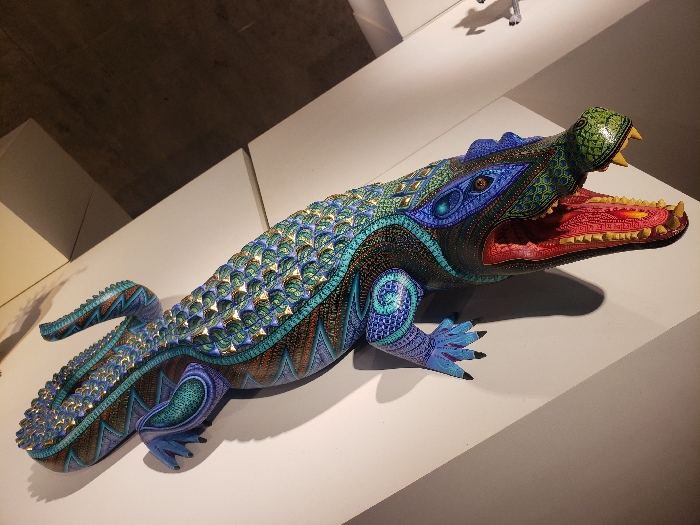
A brightly painted wooden alligator statue sits on a white platform. The alligator is decorated with patterns of teal, blue, green, purple, orange, gold, and brown. The statue's mouth is open, revealing a bright red interior and yellow teeth. The alligator has claws on its feet and its tail curls to the left. The background consists of a slanted white wall and a grey concrete ceiling.
San Martín Tilcajete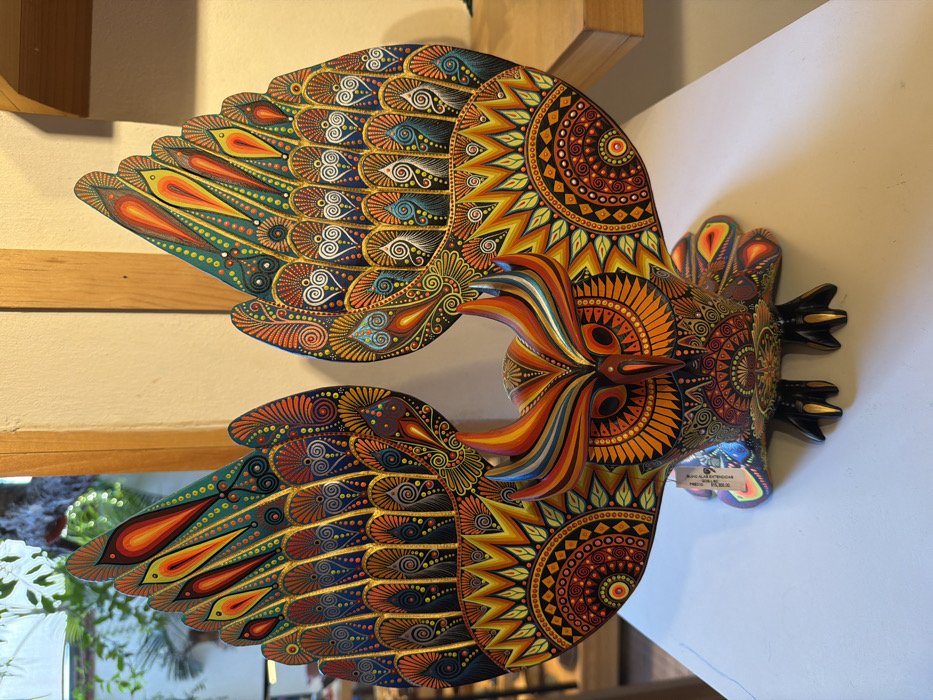
This media file features a vibrantly painted wooden sculpture of an owl, characteristic of Zapotec alebrije folk art from San Martín Tilcajete, Mexico. The owl is depicted with large, outstretched wings, adorned with intricate, psychedelic patterns and a rich palette of colors including brilliant oranges, yellows, greens, blues, reds, and black, highlighted with gold-like accents. Every section of the owl, from its feathers to its body, is covered in meticulously painted motifs such as concentric circles, spirals, teardrop shapes, dots, and geometric patterns, creating a highly detailed and captivating visual. The owl's stylized face features prominent eyes and a sharp beak, while its black, clawed feet are visible on the right side of the sculpture. The sculpture is displayed indoors, mounted against a light-colored wall. Wooden beams or shelves are visible in the background, and green foliage can be glimpsed through a window or opening in the lower left, suggesting natural light. A small tag is attached near the owl's feet, displaying the following text: "BUHO DE 4 PIEZAS" (Owl of 4 pieces), "VIVE", and "PRECIO $5,200.00". The intricate craftsmanship and vibrant aesthetic are hallmarks of Oaxacan artisanal traditions.
San Martín Tilcajete