Seia, Portugal
30 memories from Seia, Portugal
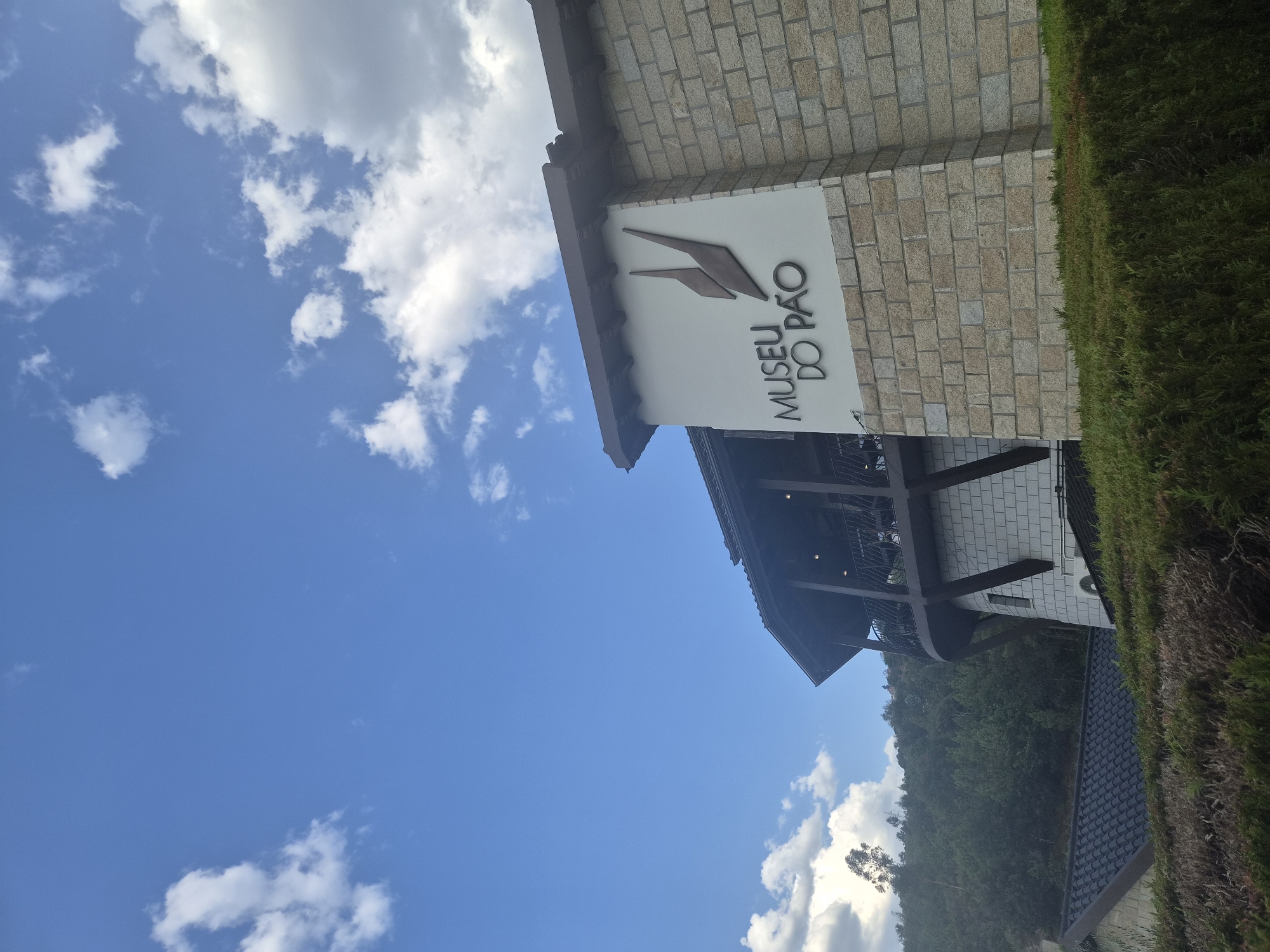
The image shows the exterior of the Museu do Pão (Bread Museum) in Seia, Portugal. The museum is a modern building with a distinctive architectural style, featuring a combination of white brick and stone facades. The museum's name is prominently displayed on a white section of the building, along with a stylized logo that appears to be abstract bread or wheat stalks. The building has multiple levels, with a dark-colored, cantilevered upper story that has a balcony with railings. Below this, there is a section with white brickwork and dark diagonal structural elements. The museum is situated on a hillside, with lush green vegetation and trees in the foreground and background. The backdrop consists of a forested hillside under a bright blue sky with scattered white clouds. The overall impression is one of a contemporary cultural institution set within a natural landscape.
Seia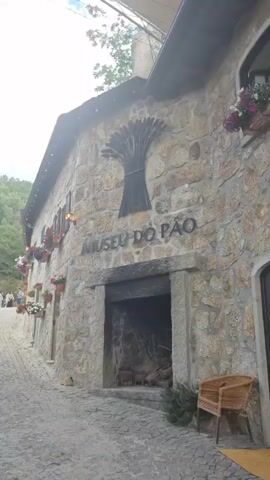
The video pans across the exterior of a stone building with the words "MUSEU DO PAO" above the entrance. Wheat stalks are carved into the stone above the text. Flower boxes hang on the walls. To the left of the building, a cobblestone path leads uphill past a carousel with people around it. The background is a dense forest with green trees.
Seia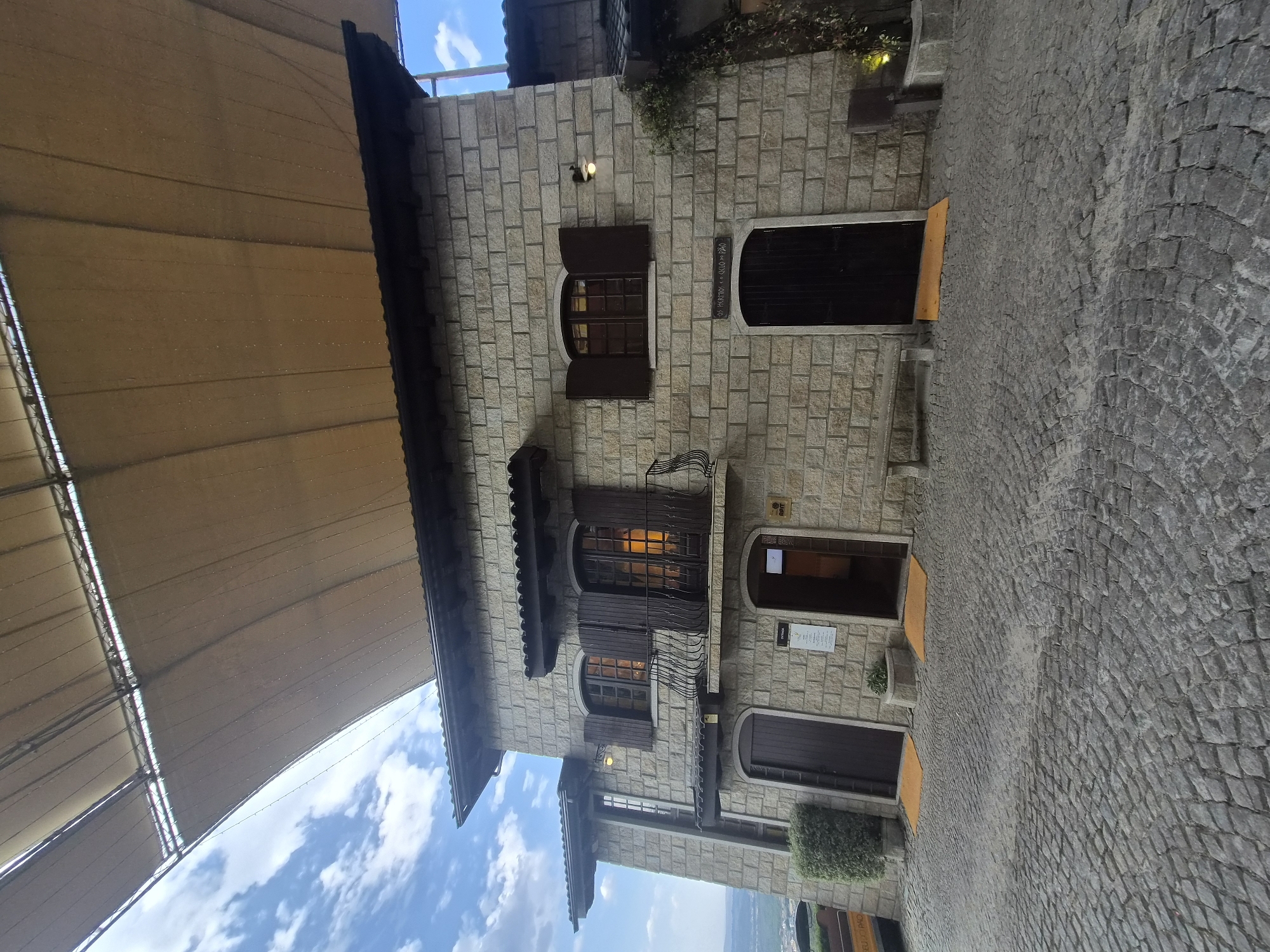
The image depicts the exterior of a stone building with a rustic architectural style, likely in Seia, Portugal. The building has multiple windows, some with wooden shutters, and a small balcony with an ornate iron railing. The entrance doors are dark wood. The ground in front of the building is paved with cobblestones. A large beige awning extends over the top of the structure, supported by a metal frame. The sky is blue with some white clouds. Green foliage is visible to the left of the building and climbing on the right side. There is a bench visible in front of one of the doors. A sign with text is mounted on the wall near an entrance. The overall scene suggests a tourist attraction or a commercial establishment in a scenic location.
Seia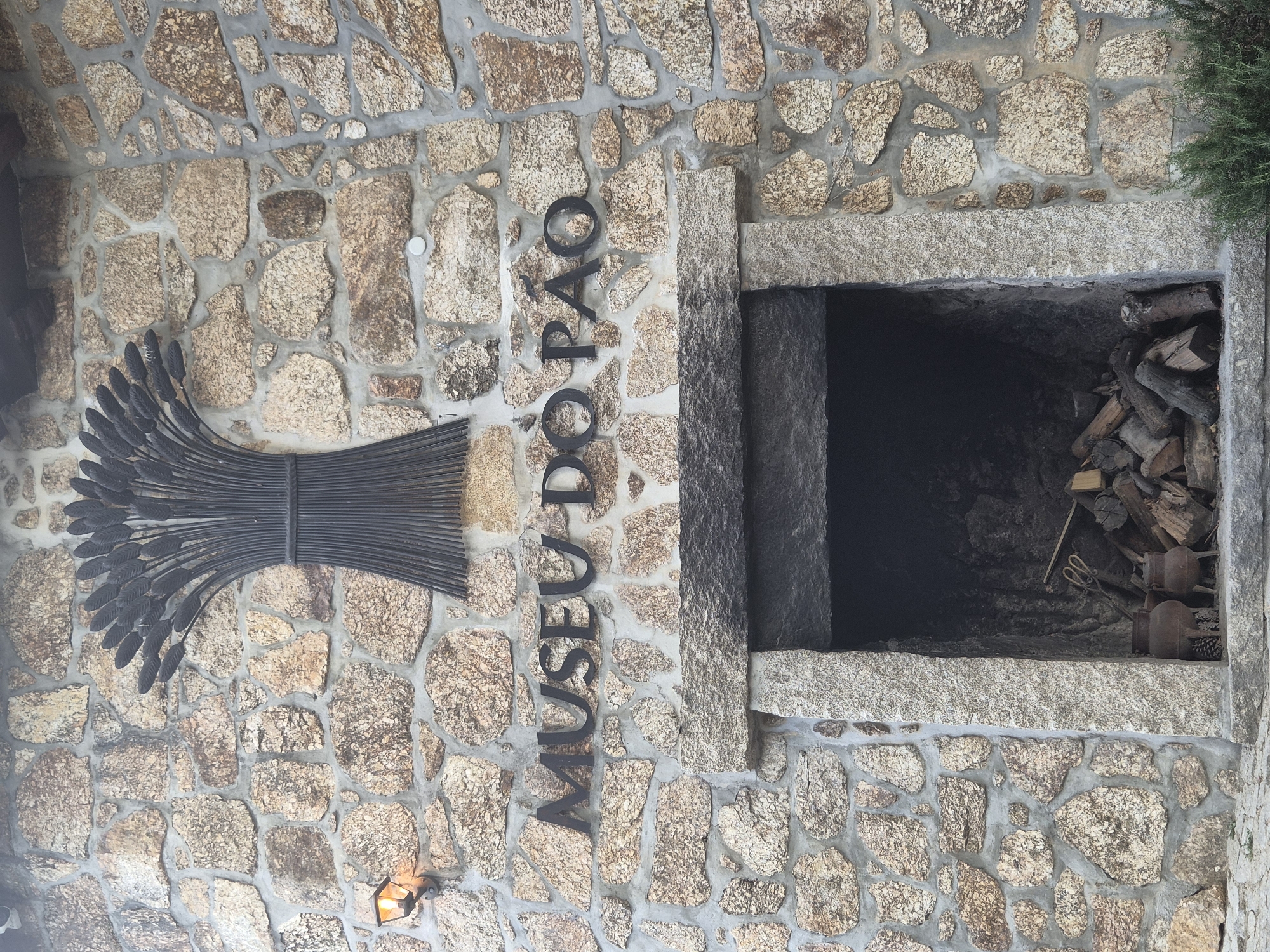
The image shows the exterior facade of the Museu do Pão (Bread Museum) in Seia, Portugal. The museum is built of rough-hewn, natural stone blocks of varying sizes, with visible mortar. Above a large, dark opening that appears to be a hearth or oven, black metal letters spell out "MUSEU DO PÃO". Directly above the lettering is a large, dark metal sculpture resembling a bundle of wheat stalks. To the left of the sculpture, mounted on the stone wall, is a single, old-fashioned outdoor lamp with an orange glow. The opening of the hearth contains firewood and what appear to be two cast-iron pots with legs. A sprig of rosemary or a similar herb is visible in the lower right corner of the image, against the stone wall. The lighting suggests it is daytime, possibly late afternoon or early evening given the warm glow of the lamp.
Seia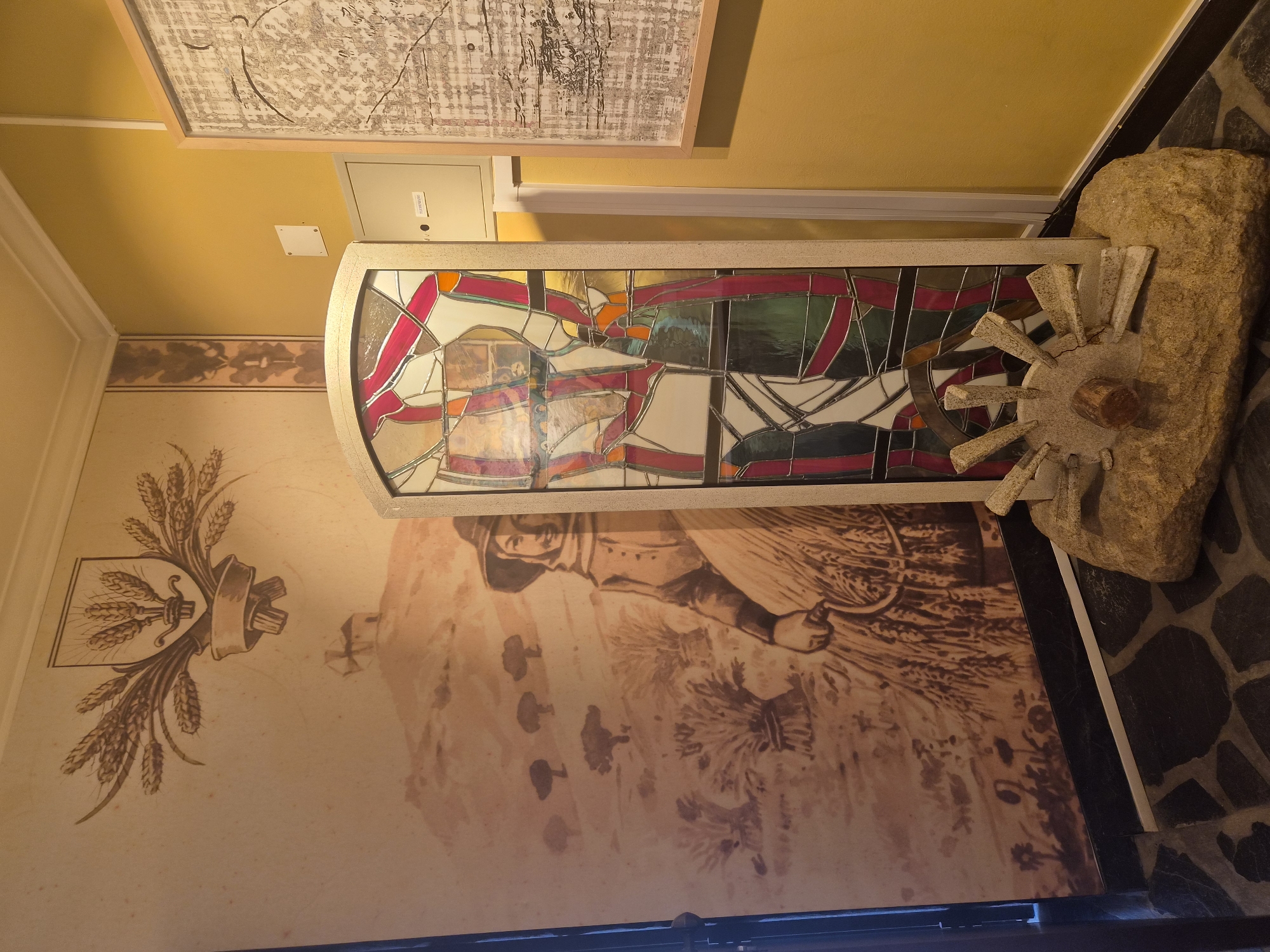
The image depicts an interior scene, likely within a museum or historical exhibition space, in Seia, Portugal. The dominant feature is a large mural on the left wall, rendered in a sepia tone. This mural illustrates a rural landscape with a windmill atop a hill in the background, and in the foreground, a woman in traditional attire, possibly a farmer or harvester, is depicted with a sickle amidst fields of wheat. Above the mural, a crest featuring wheat stalks and a shield is prominently displayed. To the right of the mural stands a decorative stained-glass panel, tall and narrow, framed in a neutral-colored material. This panel features an abstract design with various colored glass pieces, including red, white, green, and orange, set against a lighter background. In front of the stained-glass panel, resting on a large, rough-hewn stone, is a stone decorative element resembling a millstone or wheel with spokes. A small wooden piece is centrally embedded in this stone structure. The floor is tiled with irregularly shaped dark grey stones. The walls are painted a warm yellow, with a white molding running along the top. To the right of the stained-glass panel, a light-colored electrical panel or utility box is mounted on the yellow wall, with a small white square plate above it. Further to the right, a framed artwork with a complex, abstract pattern, possibly a map or textile, is hung on the yellow wall. The overall impression is one of a culturally themed exhibit, possibly related to agriculture or local heritage in Seia.
Seia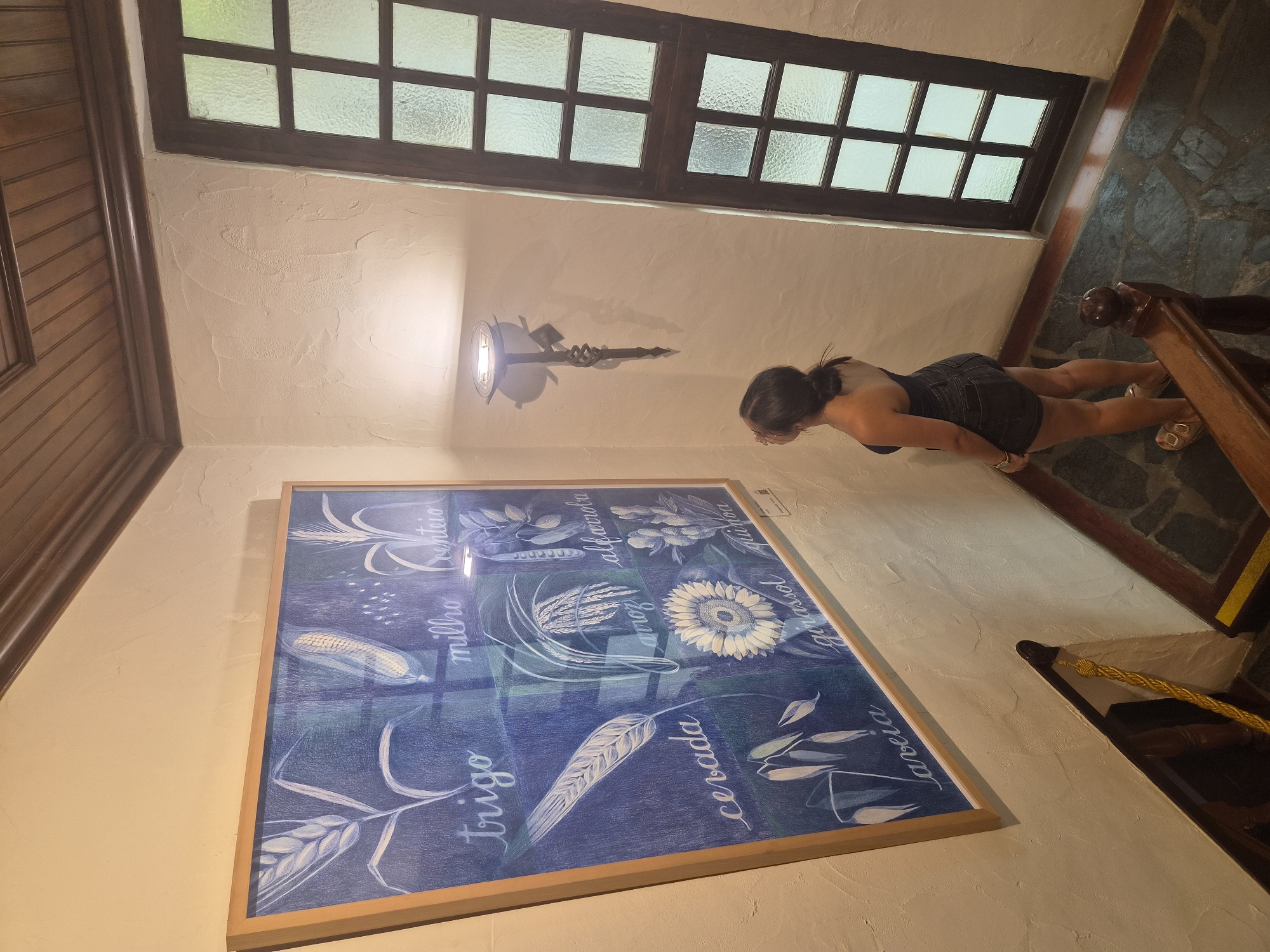
A woman stands on a staircase in what appears to be a museum or historical building in Seia, Portugal, observing a large framed artwork. The artwork, rendered in shades of blue and white, depicts various grains and plants, including wheat, corn, rice, oats, and a sunflower, with their names written in cursive in Portuguese. The woman, wearing a dark strapless top and denim shorts, is facing the artwork and looking up at it. The staircase has dark wooden banisters and treads, and the walls are textured and painted white. A vintage wall sconce illuminates the space. To the right of the woman is a tall, multi-paned window with frosted glass. The flooring is composed of irregular stone tiles.
Seia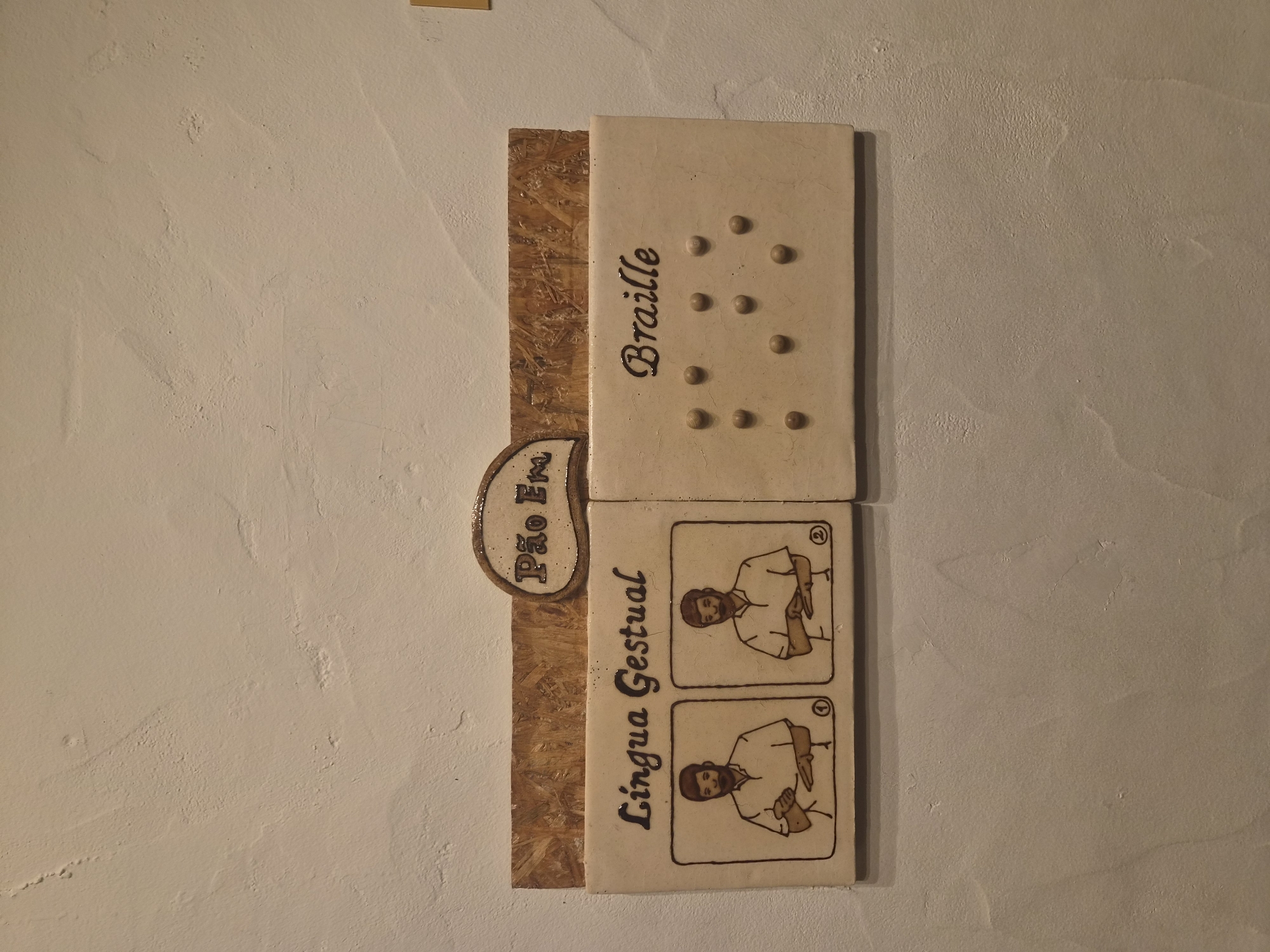
This image shows a sign on a textured, off-white wall. The sign is mounted on a piece of wood and has two sections. The left section, labeled "Lingua Gestual" (Gestural Language), features two framed illustrations of a person making hand gestures. The right section, labeled "Braille", displays a pattern of raised dots, characteristic of Braille writing. Above these sections, a small, oval-shaped sign reads "Pão Em" (Bread In). Based on its presence in Seia, Portugal, this sign likely serves as an informational or accessibility feature, possibly indicating that bread is available or that information about bread is provided in both gestural language and Braille.
Seia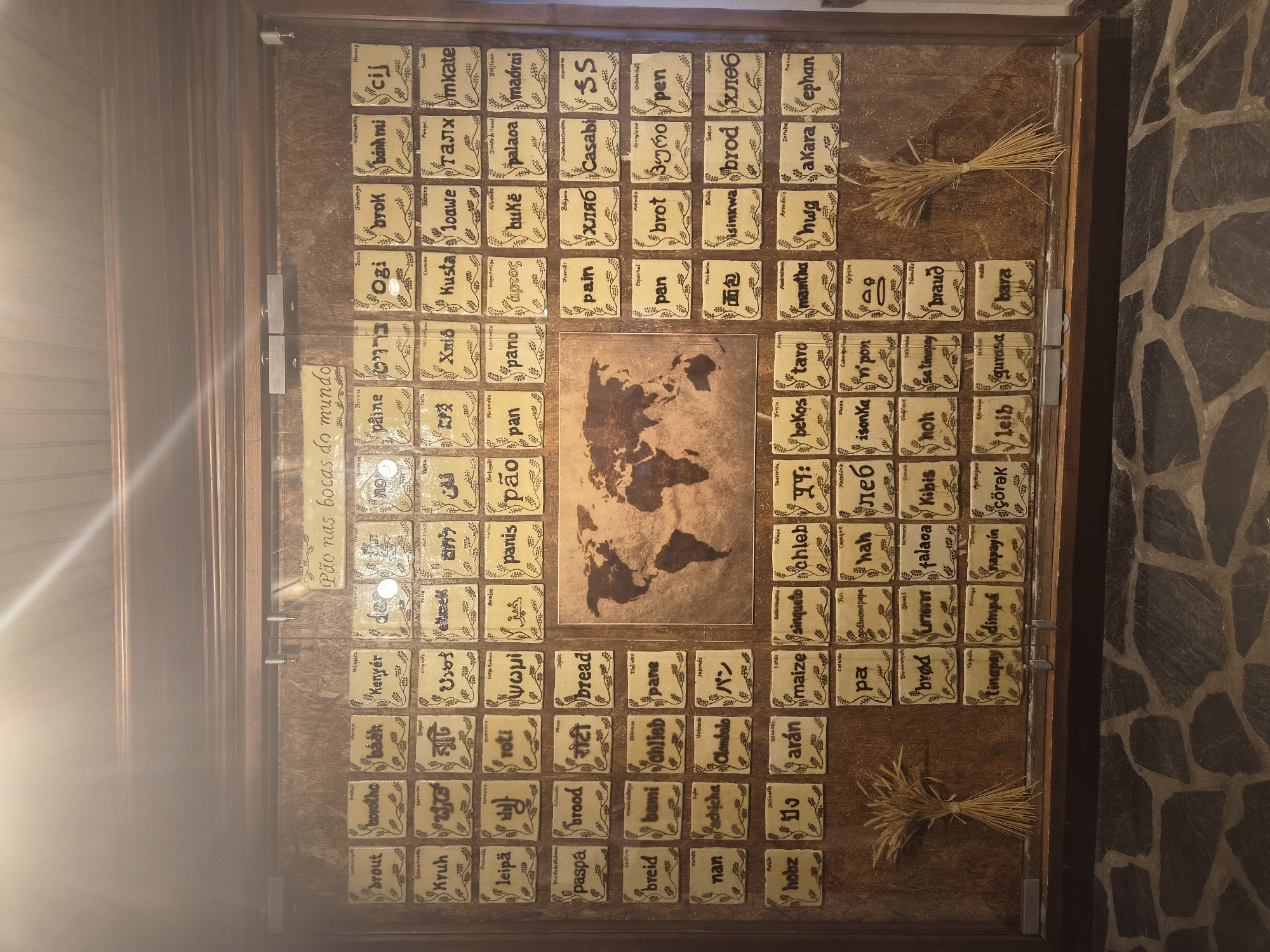
The image displays a wall-mounted exhibit featuring a world map and numerous small, square ceramic tiles, each adorned with a word written in a different language, likely representing the word "bread." The exhibit is located in Seia, Portugal, at the Museu do Pão (Bread Museum). The tiles are arranged in a grid-like pattern above and to the sides of the map. The overall backdrop of the exhibit appears to be a textured, wood-like material. The lighting suggests an indoor environment, possibly dimly lit to highlight the display. The bottom of the image shows a stone floor.
Seia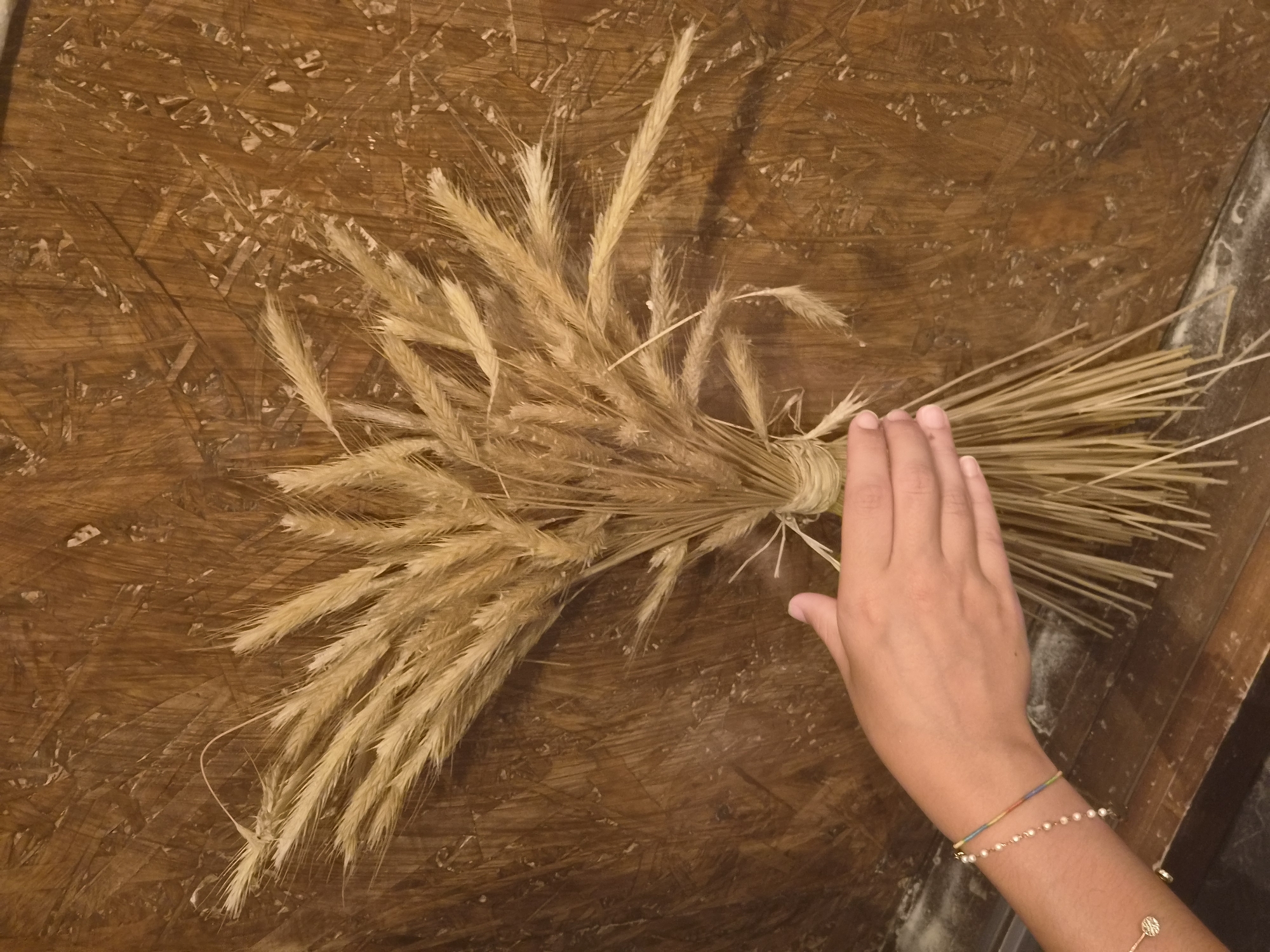
A hand with beaded bracelets is holding a dried bouquet of wheat stalks. The wheat is tied together with a string and leans against a textured brown wooden background. The wooden surface appears to be made of particle board. The scene is illuminated by warm lighting. The location is identified as Seia, Portugal.
Seia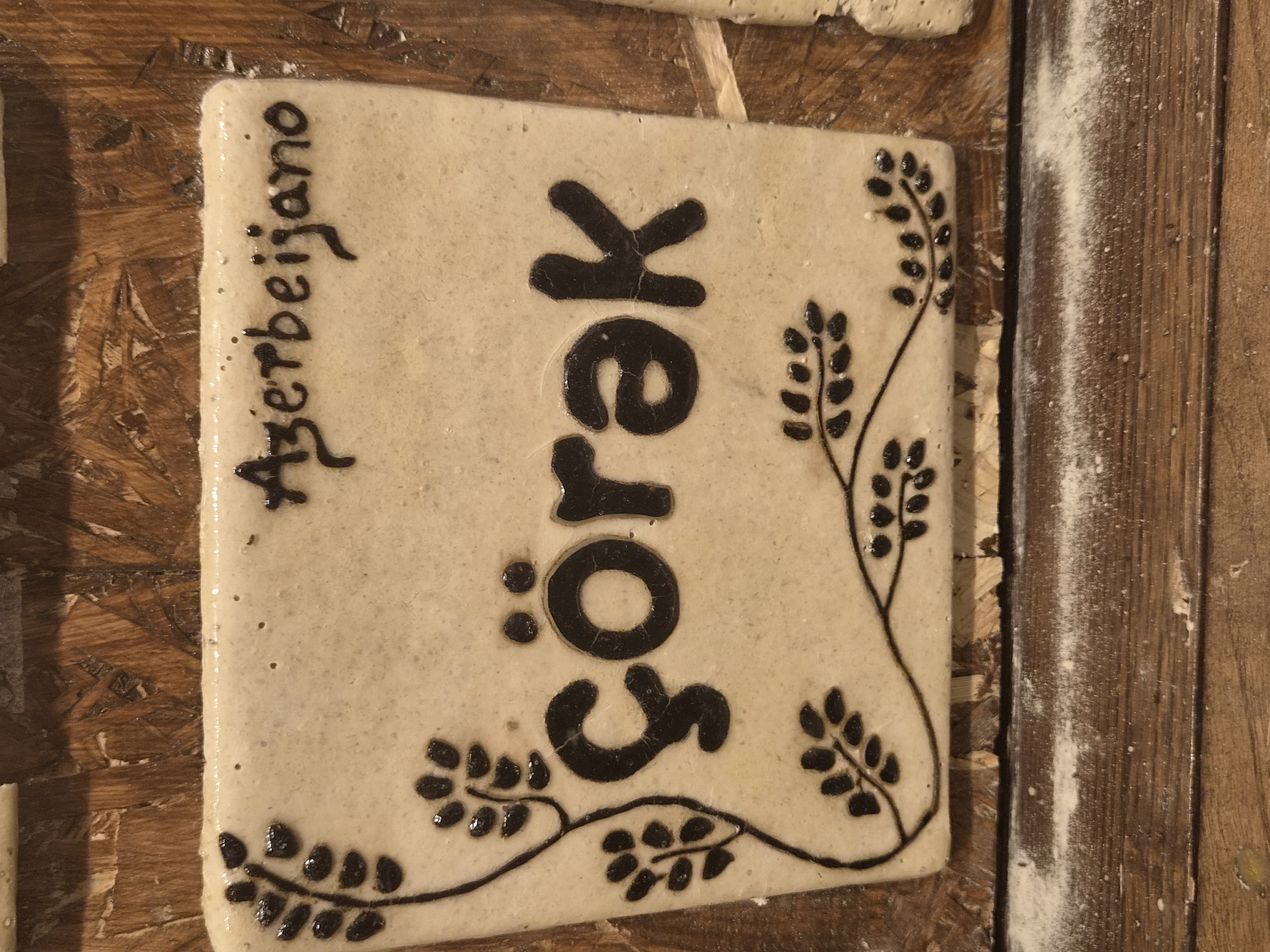
A light-colored ceramic tile with dark brown lettering and decorative motifs is placed on a wooden surface. The tile features the word "çörək" in large, stylized letters in the center, with the word "Azerbeijano" written in smaller, cursive script above it. Swirling lines with small leaf-like shapes adorn the left and bottom edges of the tile. The wooden surface appears to be a table or shelf, with visible grain and some scattered white powder, possibly flour. The overall impression is of a craft or artisanal item, possibly a decorative label or marker. This object is located in the city of Seia, Portugal.
Seia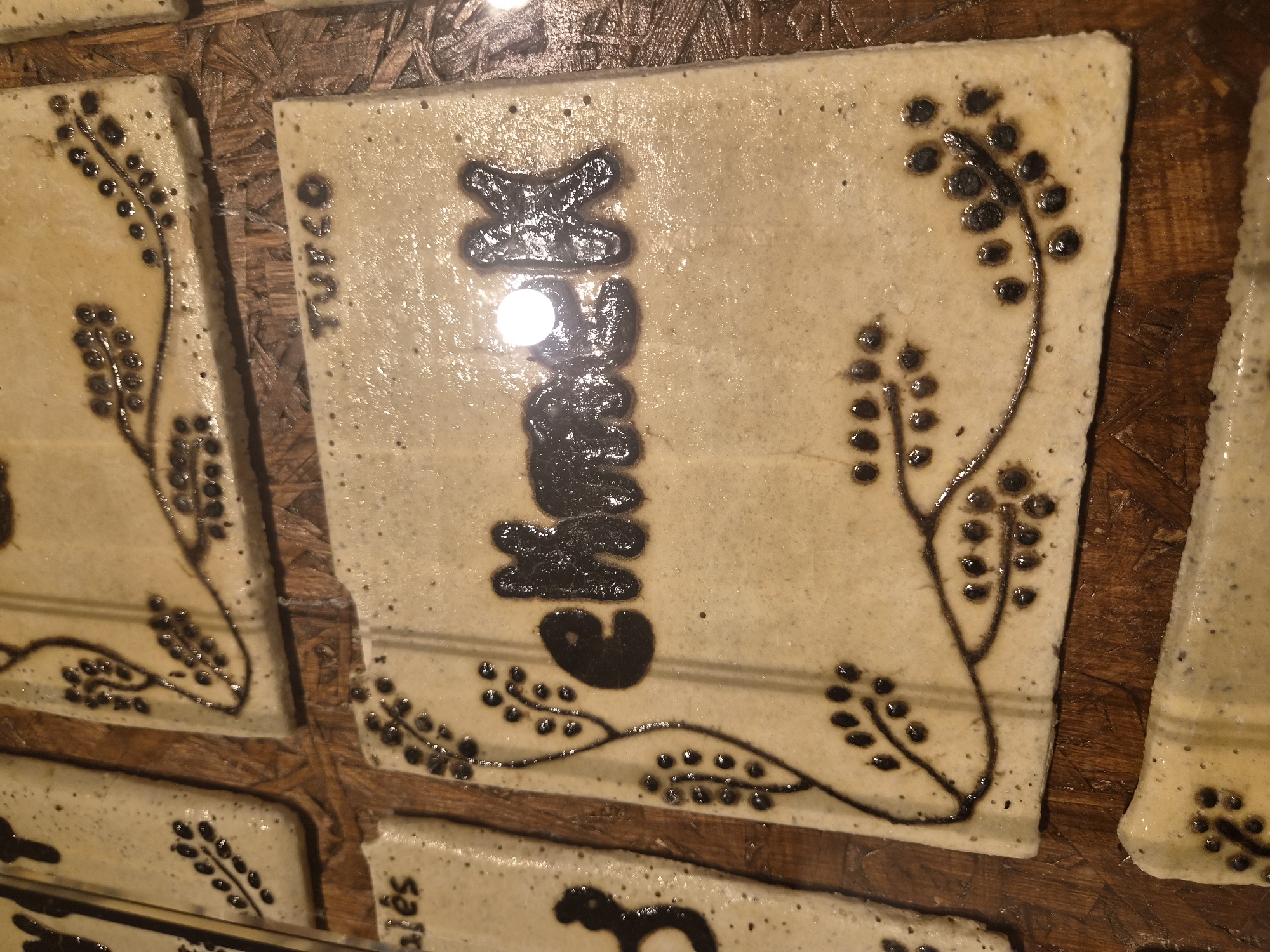
The image shows several ceramic tiles, each with a decorative pattern and some with lettering. One tile in the center has the word "chmeck" written in raised black lettering. To the top right of this tile, another tile has the word "TURCO" in raised black lettering. The tiles are laid on a wooden surface. This display of ceramic tiles is located in Seia, Portugal.
Seia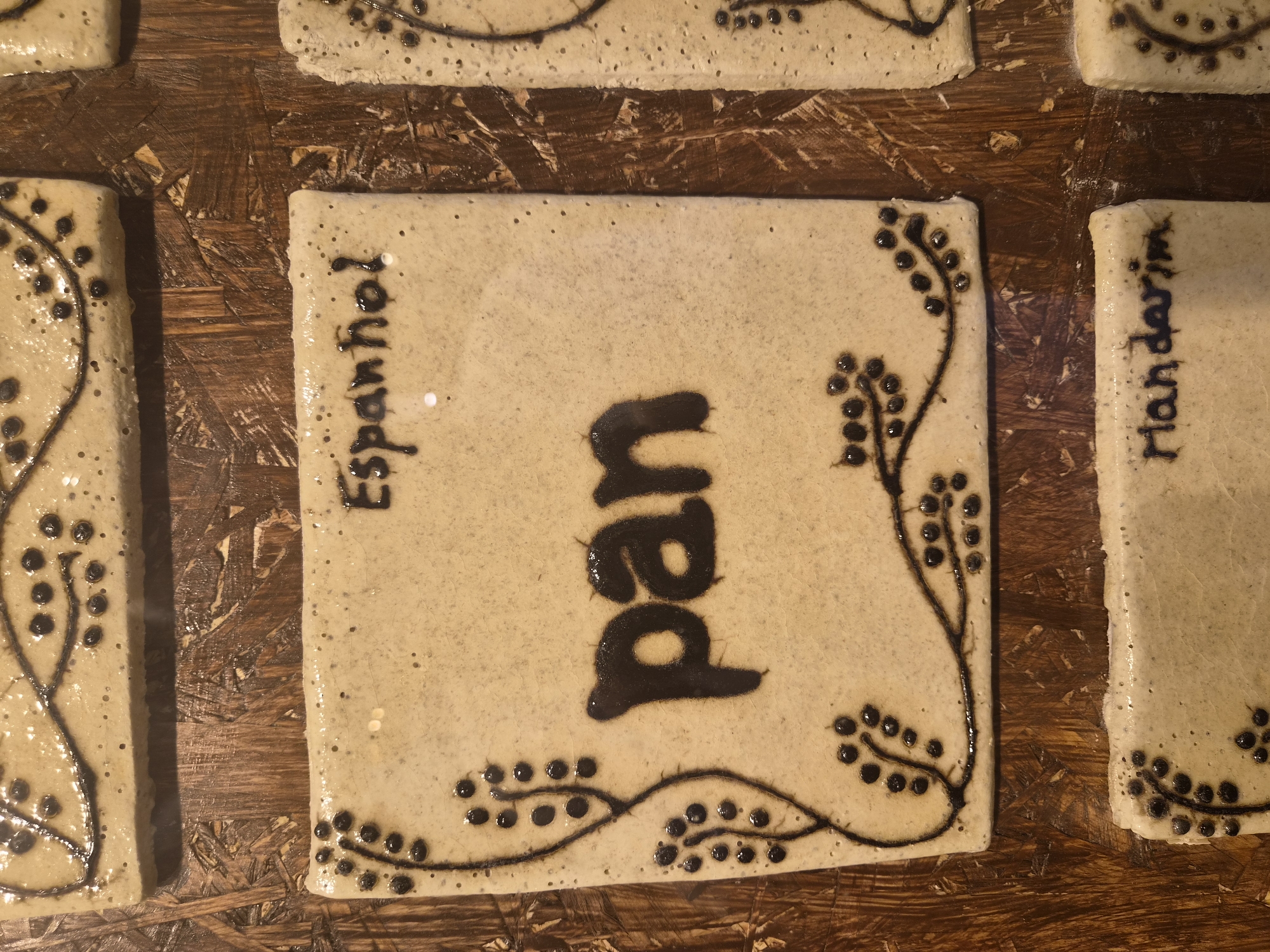
The image shows a close-up, eye-level view of four ceramic tiles arranged on a wooden surface. The tiles are rectangular and appear to be decorative elements or part of a larger installation. Each tile is beige with dark brown lettering and vine-like designs featuring small dots. The top tile displays the word "Espanhol" written in dark brown cursive script. It also has a decorative vine with dots on the left side. The central tile features the word "pan" in large, bold, dark brown lettering. Similar to the top tile, it has decorative vines with dots on the left and right sides, extending from the edges towards the center. The bottom left tile has a vine design on its left edge and the word "Mandarim" written in dark brown cursive script. The bottom right tile is partially visible, showing a dark brown vine design. The wooden surface beneath the tiles has a rough, textured appearance with visible grain and variations in color, suggesting it might be a tabletop or a wall. The lighting is slightly diffused, highlighting the texture of the tiles and the wooden surface. The image is likely taken indoors. This image is likely from the Museum of Bread (Museu do Pão) in Seia, Portugal, where similar ceramic tiles are displayed, representing different types of bread in various languages.
Seia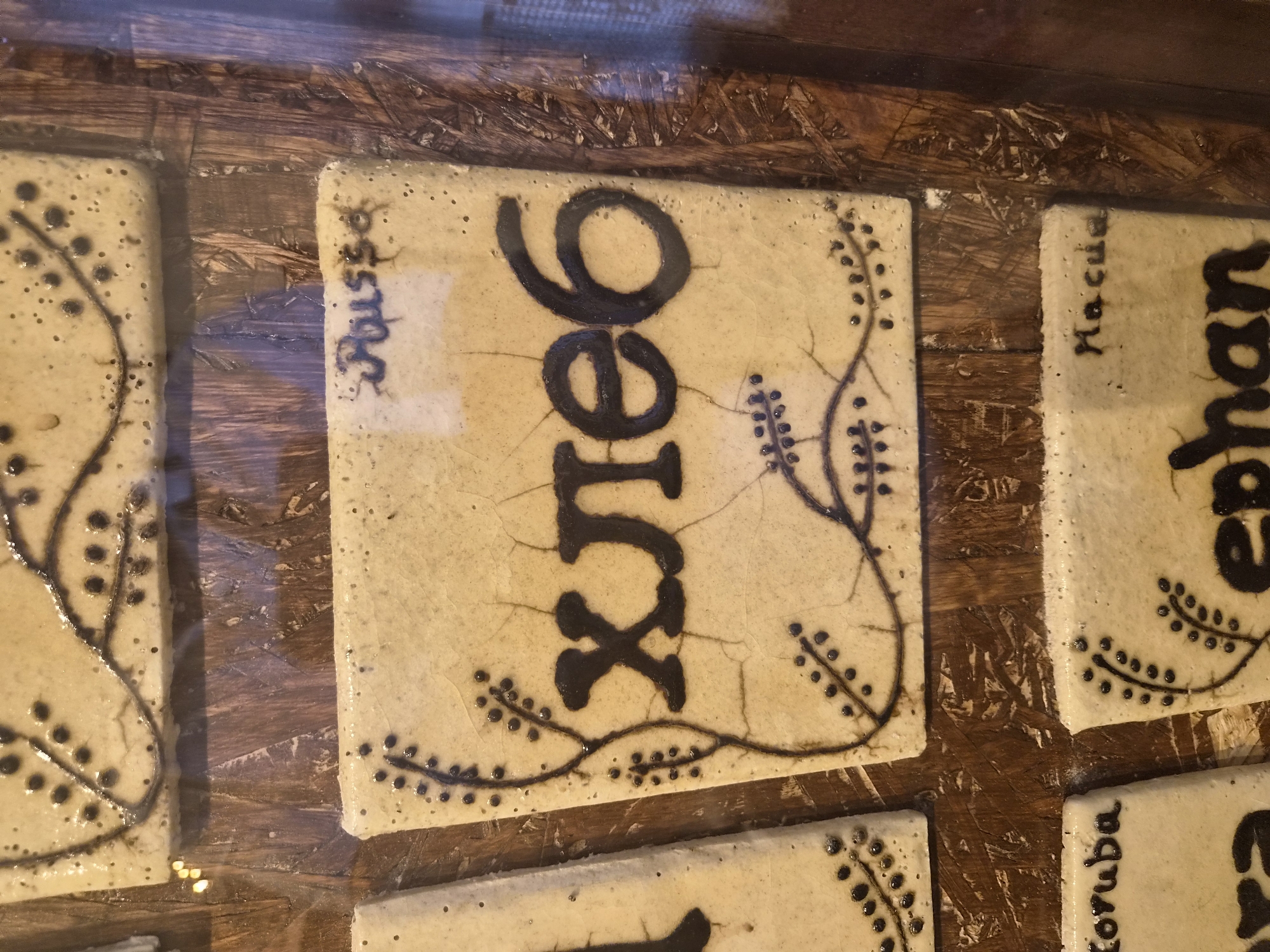
The image displays a close-up view of decorative tiles mounted on a wooden surface. The tiles are light-colored with a crackled glaze and feature dark, hand-painted designs. One prominent tile in the center has the Cyrillic word "хлеб" (khleb), meaning "bread," written in large, bold, black lettering. To the upper right of this tile, the word "Roussa" is written in a smaller, dark script. Another tile to the lower right shows the word "Hacua" in a similar script. Partially visible tiles on the left and bottom show partial words that are difficult to decipher clearly. The overall presentation suggests these are artisanal creations, possibly souvenirs or decorative items. There is no visible indication of the city of Seia, Portugal, within the image itself.
Seia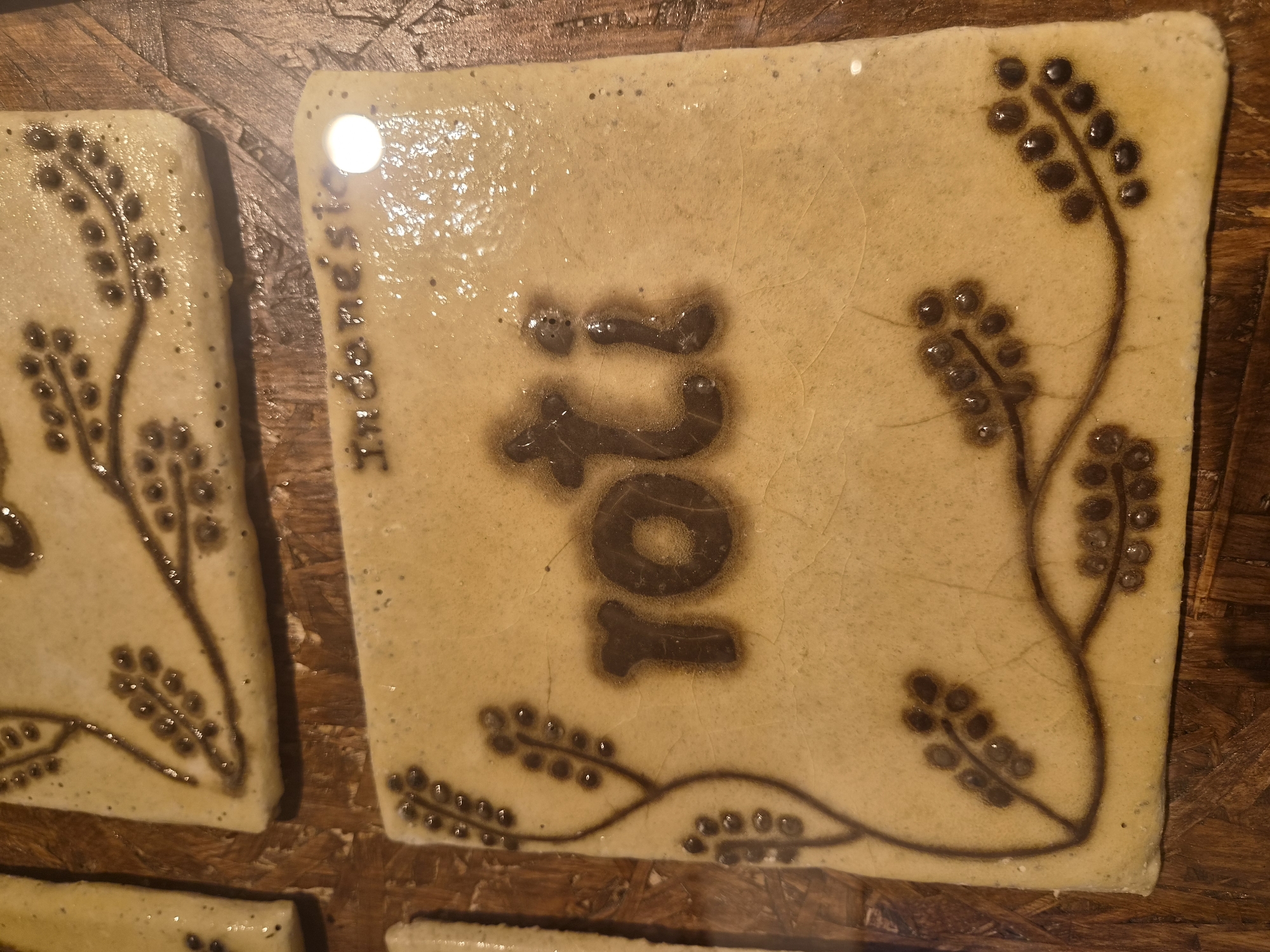
This is a close-up, eye-level, indoor shot of a square, light-brown tile with a dark brown floral design and the word "roti" stamped on it. The tile is positioned on a dark wooden surface. The word "roti" is in the center of the tile, and the floral design consists of thin, branching lines with clusters of small dark dots, resembling berries or seeds. There are also faint markings above the word "roti" that appear to be text, possibly "Indonesia". The tile has a slightly glossy finish and some minor imperfections and cracks. There are no people or animals visible in the image. The lighting creates a reflection on the surface of the tile, obscuring some of the details. The image does not provide any information about the city of Seia, Portugal, as it is not depicted in the scene.
Seia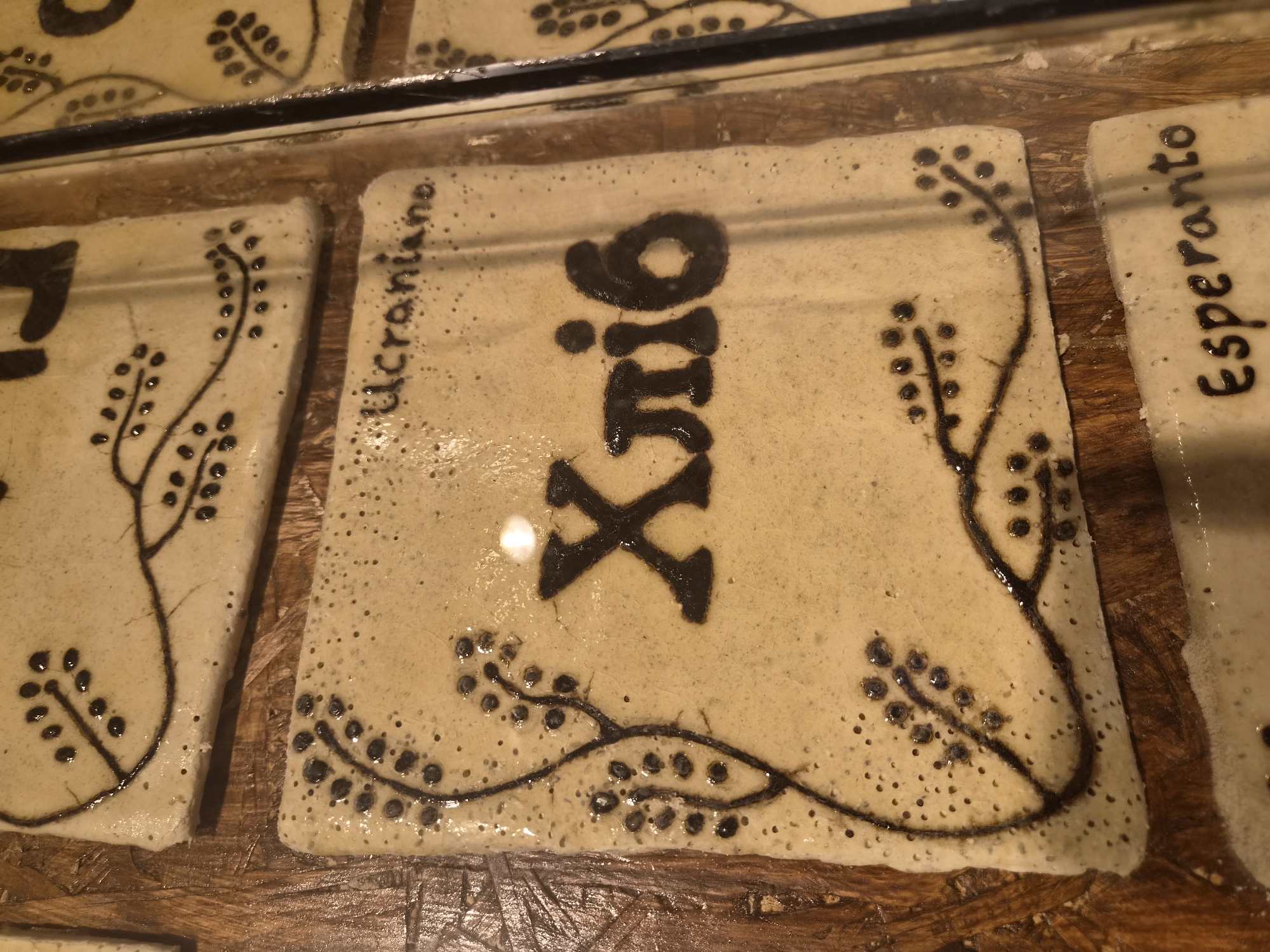
The image shows a close-up of three ceramic tiles with dark lettering and decorative elements, likely displayed on a wooden surface. The tiles appear to be part of a larger installation. The top tile has a decorative pattern of dots and lines resembling branches with berries. The middle tile features a decorative border and the Cyrillic word "Хліб" (Khlib), meaning "bread" in Ukrainian, alongside the word "Ucraniane" written in Latin script. The bottom tile displays the word "Esperanto" in dark lettering. The overall aesthetic suggests a display related to languages or cultural greetings, possibly in a public space. The lighting in the image is warm, and there is a slight sheen on the ceramic surfaces, indicating they might be glazed. The background is a rough wooden texture. The context of Seia, Portugal is not evident from the image itself.
Seia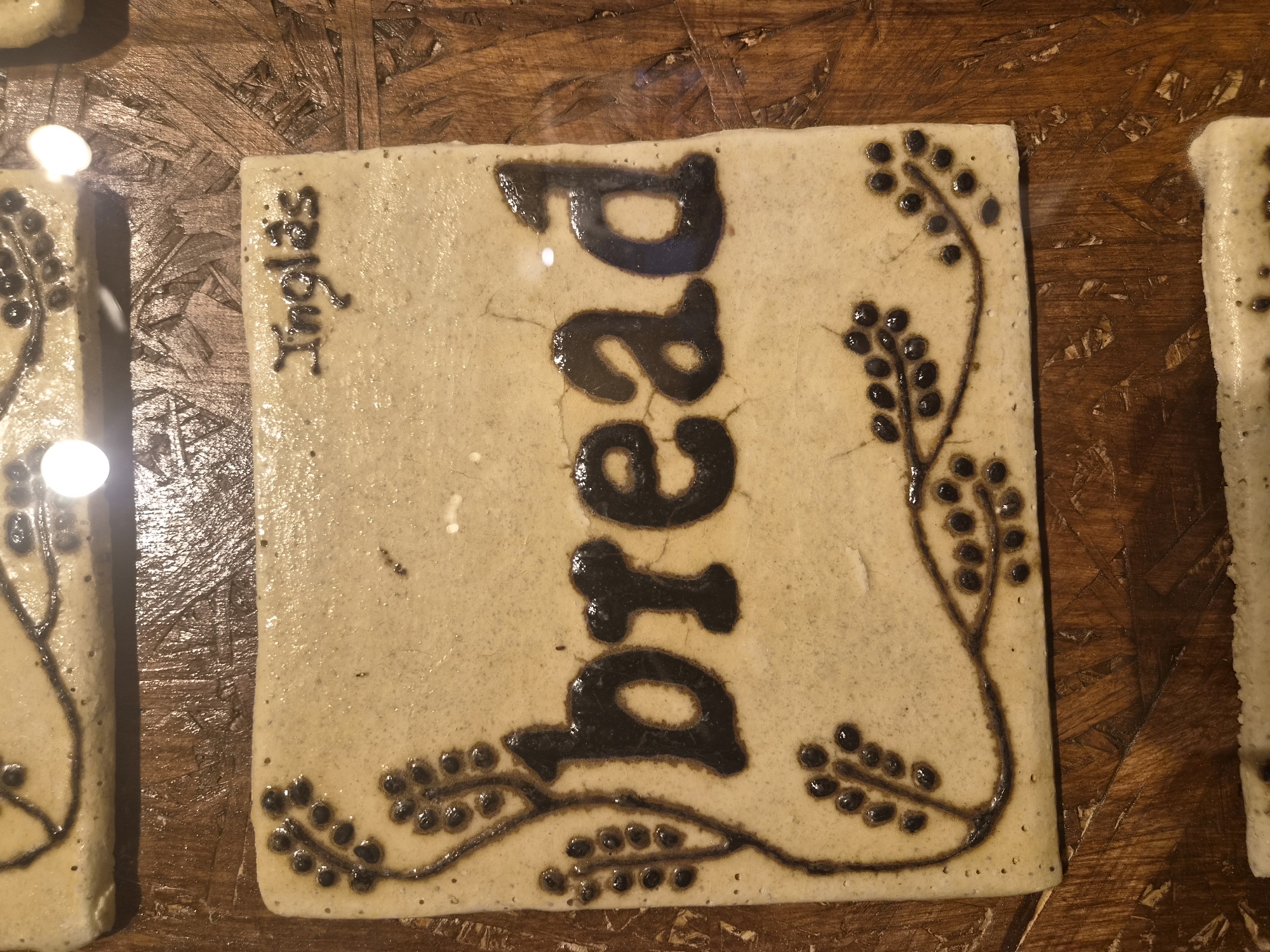
The image shows a close-up of two ceramic tiles on a wooden surface. The top tile is partially visible and has a decorative pattern. The bottom tile is rectangular and features the word "bread" in large, dark letters in the center. Above the word "bread," the word "Inglês" is inscribed in smaller, darker letters. The tile is adorned with a dark brown decorative design that resembles branches with berries, flanking the word "bread" on the left and extending across the bottom. The background is a textured wooden surface, likely a table or countertop. The lighting appears to be artificial, casting a slight glare on the glossy surface of the tiles. The context suggests a shop or display of artisanal food-related ceramic items, possibly in Seia, Portugal, given the presence of the Portuguese word "Inglês" (English). There are no people or actions depicted in the image.
Seia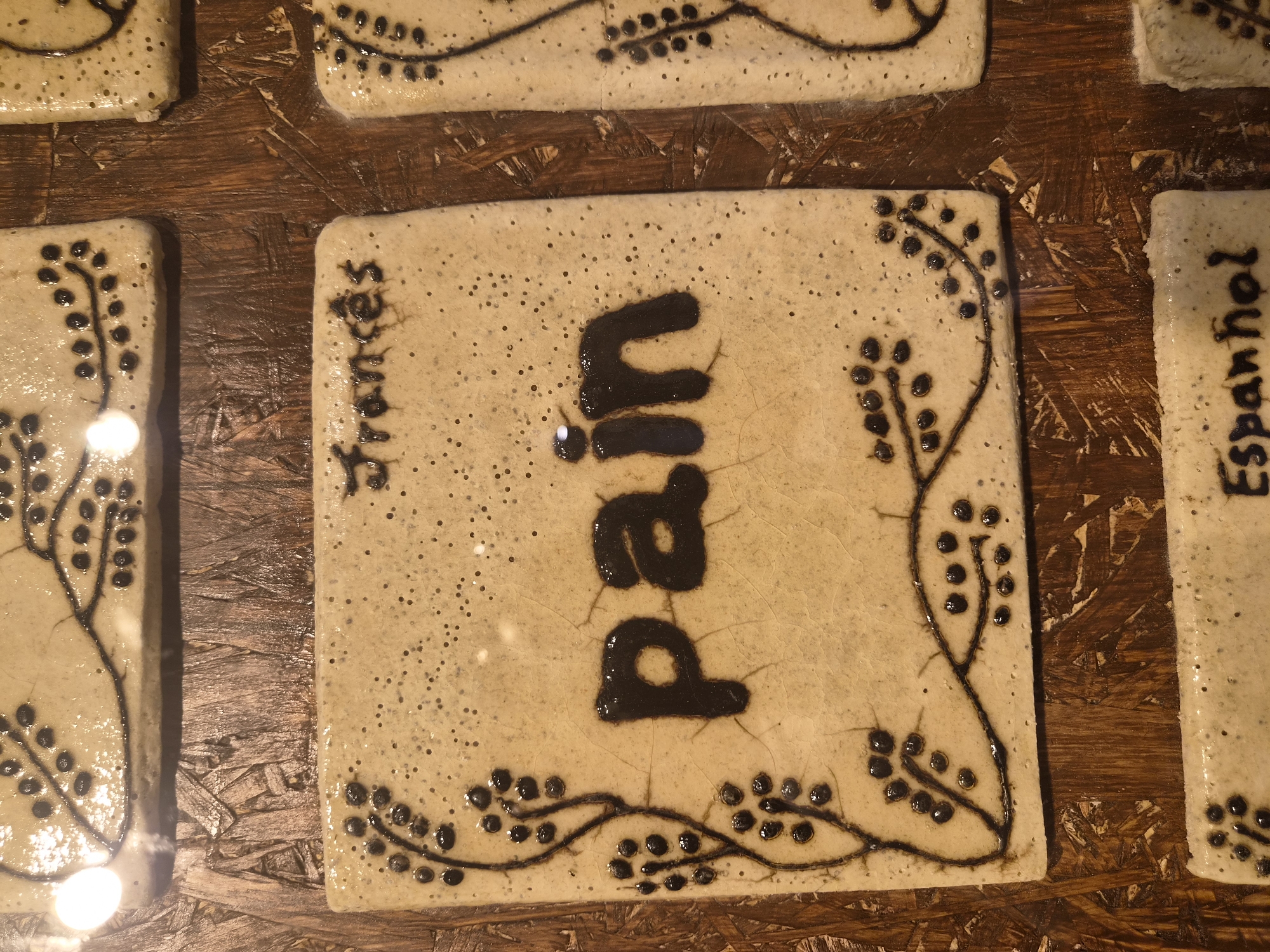
The image displays a close-up, eye-level view of ceramic tiles with dark brown, glossy lettering and decorative elements, placed on a rough, textured wooden surface. The tiles are rectangular and appear to be part of a larger installation, possibly a wall or a decorative piece. The most prominent tile in the center features the word "pain" written in large, bold, sans-serif letters. To the left of "pain" is a decorative vine-like pattern with small, dark circular berries. Above and to the right of the "pain" tile, another tile shows the name "Francés" written in a smaller, stylized font. Further to the right, partially visible, is another tile with a similar decorative vine pattern. In the bottom section of the image, another tile is visible with the word "Espanhol" and decorative elements. The ceramic tiles have a matte, speckled off-white finish. The lettering and designs are raised and have a high-gloss finish that reflects light. The wooden background is composed of planks with a visibly rough and splintered texture, suggesting it might be unfinished or distressed wood. The lighting in the scene creates highlights and shadows, adding depth and texture to the image. The overall impression is of a handcrafted, artistic display. The location of this scene in Seia, Portugal is not indicated by any visual cues in the image itself.
Seia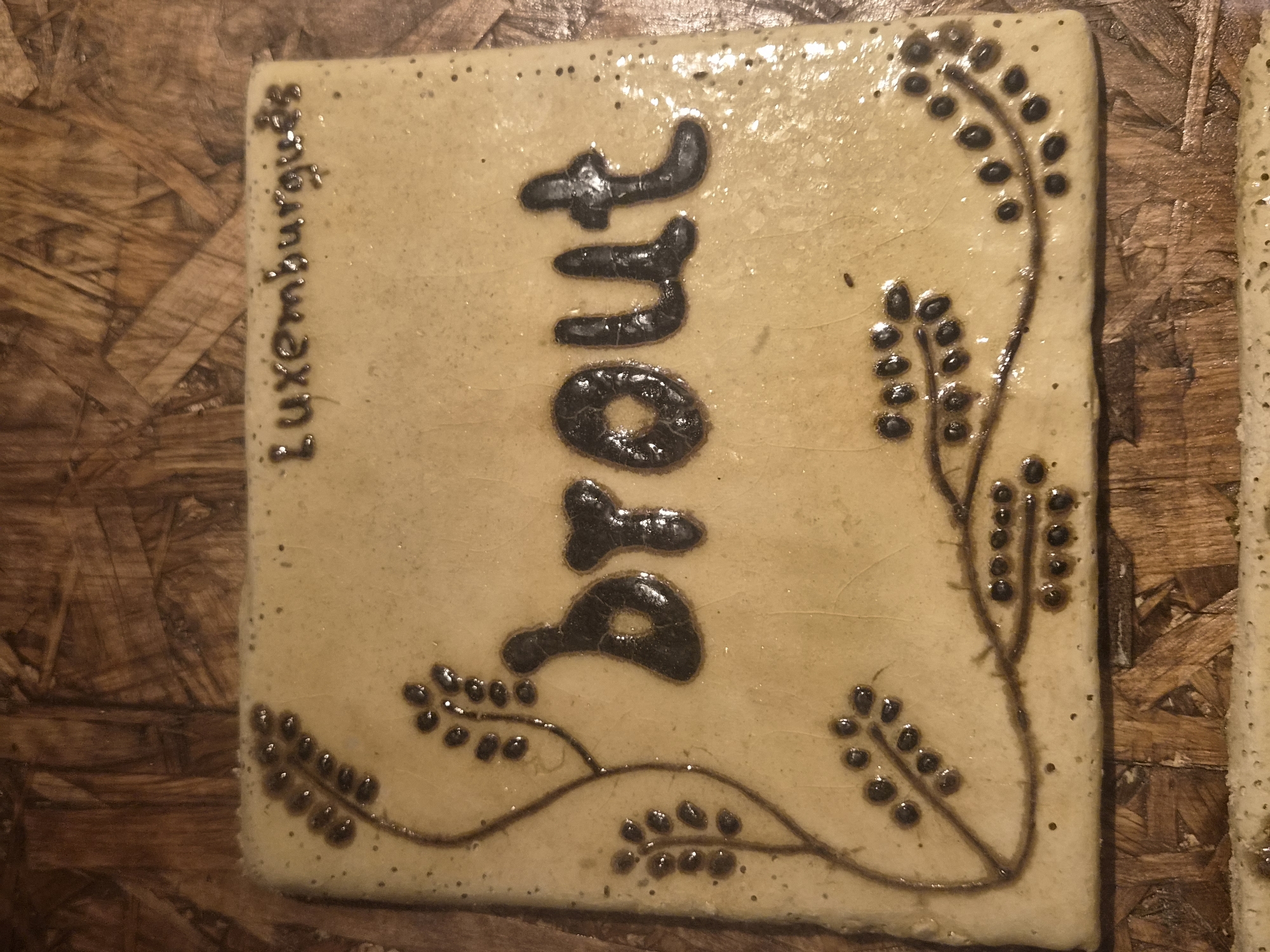
The image shows a rectangular ceramic tile with a light beige, slightly crackled glaze, resting on a wooden surface. The tile has decorative elements and text. On the upper right corner of the tile, the word "Luxemburguds" is inscribed in dark brown lettering. The center of the tile features the word "brout" in large, bold, dark brown, raised lettering with a glossy finish. To the left and bottom of the tile, there are thin, vine-like dark brown lines with small, berry-like dark brown dots, creating a botanical motif. The wooden surface appears to be made of pressed wood or particle board with a visible grain pattern. No people or specific location in Seia, Portugal are visible in the image.
Seia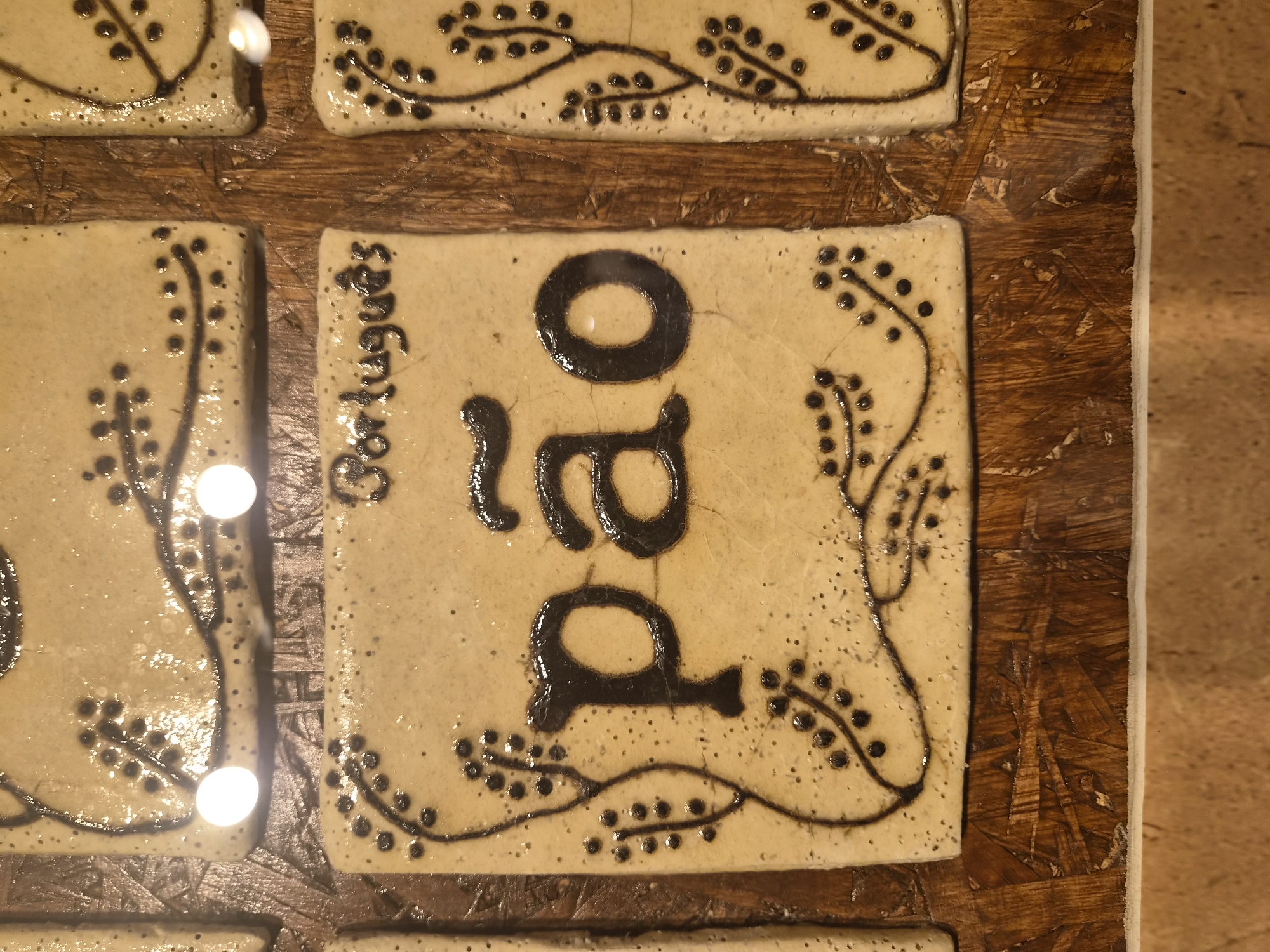
The image shows three ceramic tiles on a wooden surface. The central tile features the word "pão" in large, dark letters, with a tilde above the 'a'. Above "pão" and on the tile to its right, the word "Português" is written in smaller letters. All three tiles are decorated with dark, line-drawn botanical motifs, resembling branches with small berries or dots. The tiles are arranged in a horizontal row, with the central tile being the most prominent. The background appears to be made of pressed wood chips. The ceramic tiles have a light, speckled glaze. Two bright white circular reflections are visible on the surface of the tiles, likely from a light source. The scene is an exterior shot of a display of artisanal tiles. The overall impression is one of rustic craftsmanship and cultural representation, possibly in a shop or market stall. The context of Seia, Portugal, suggests a connection to Portuguese culture and artisanal traditions.
Seia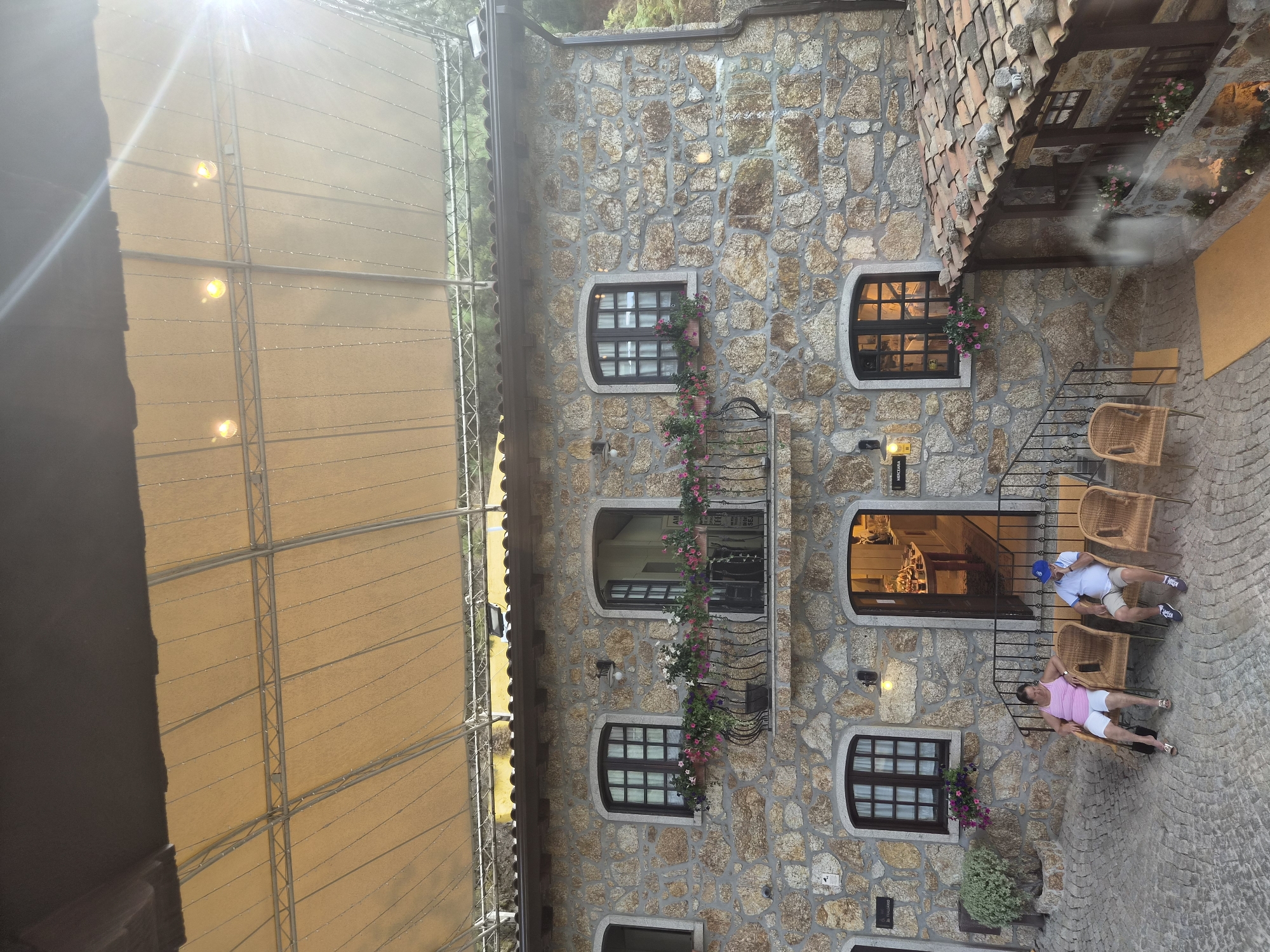
In Seia, Portugal, a two-story stone building features a second-story balcony adorned with potted flowers. Two individuals are seated on chairs outside the building's entrance. The building is partially shaded by a large, beige canopy supported by metal scaffolding. The scene is illuminated by sunlight and overhead lights.
Seia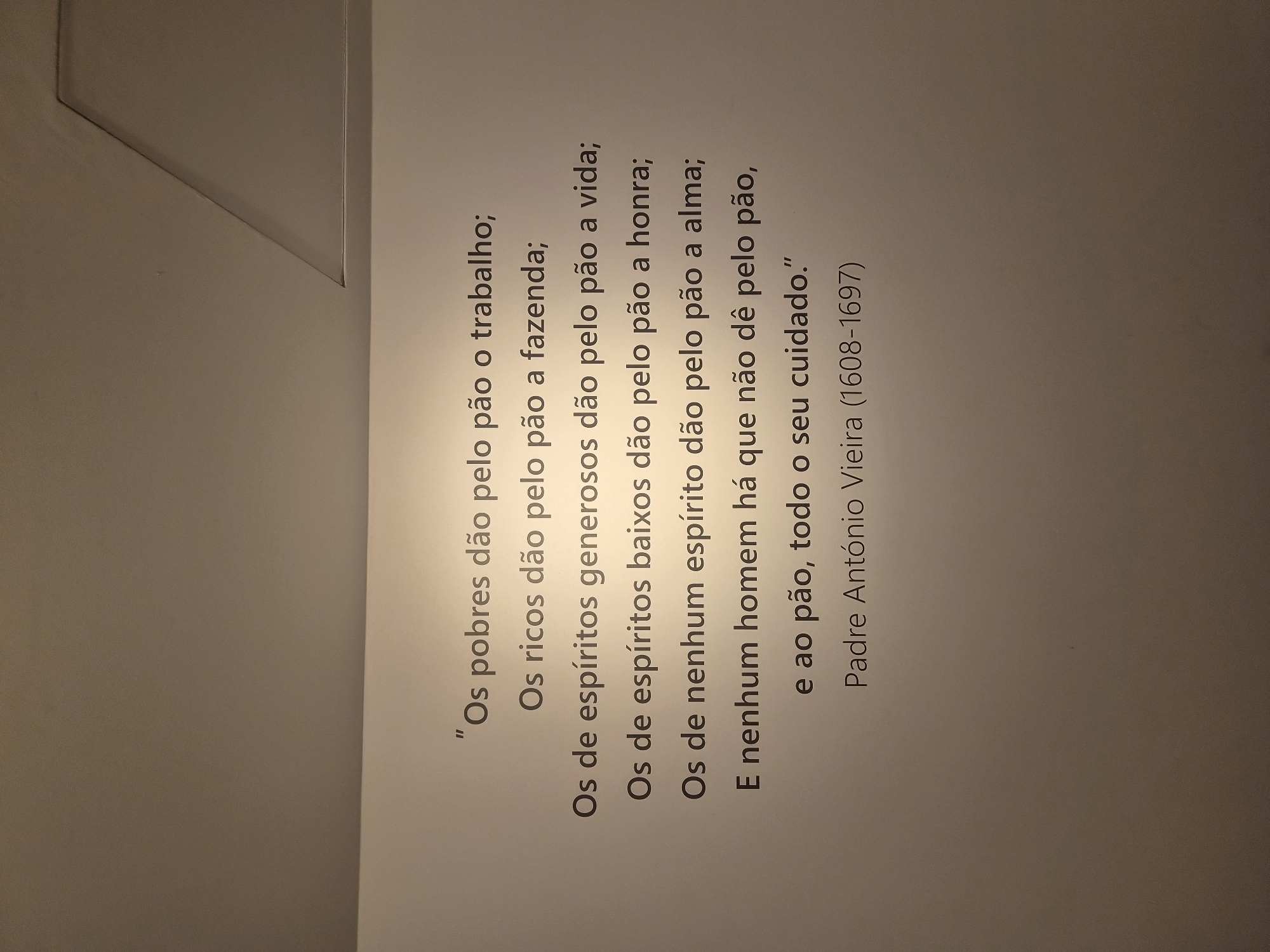
The image is a vertical, close-up shot of a wall with text printed on it. The text is in Portuguese and appears to be a quote. The quote is attributed to "Padre António Vieira (1608-1697)". The wall is a neutral, light color, with a subtle shadow or architectural detail visible in the upper left portion of the frame. The lighting is even, suggesting an indoor setting. The text itself is the primary subject. The quote, when translated, discusses how different types of people provide for "bread" (representing sustenance or livelihood), with the poor contributing labor, the rich their property, the generous their lives, the mean-spirited their honor, and the spiritless their souls. The final line states that no man exists who doesn't give his care to bread. The text is printed in a dark, sans-serif font. The image is likely taken in Seia, Portugal, as indicated by the location context, though no specific visual cues in the image directly point to this location.
Seia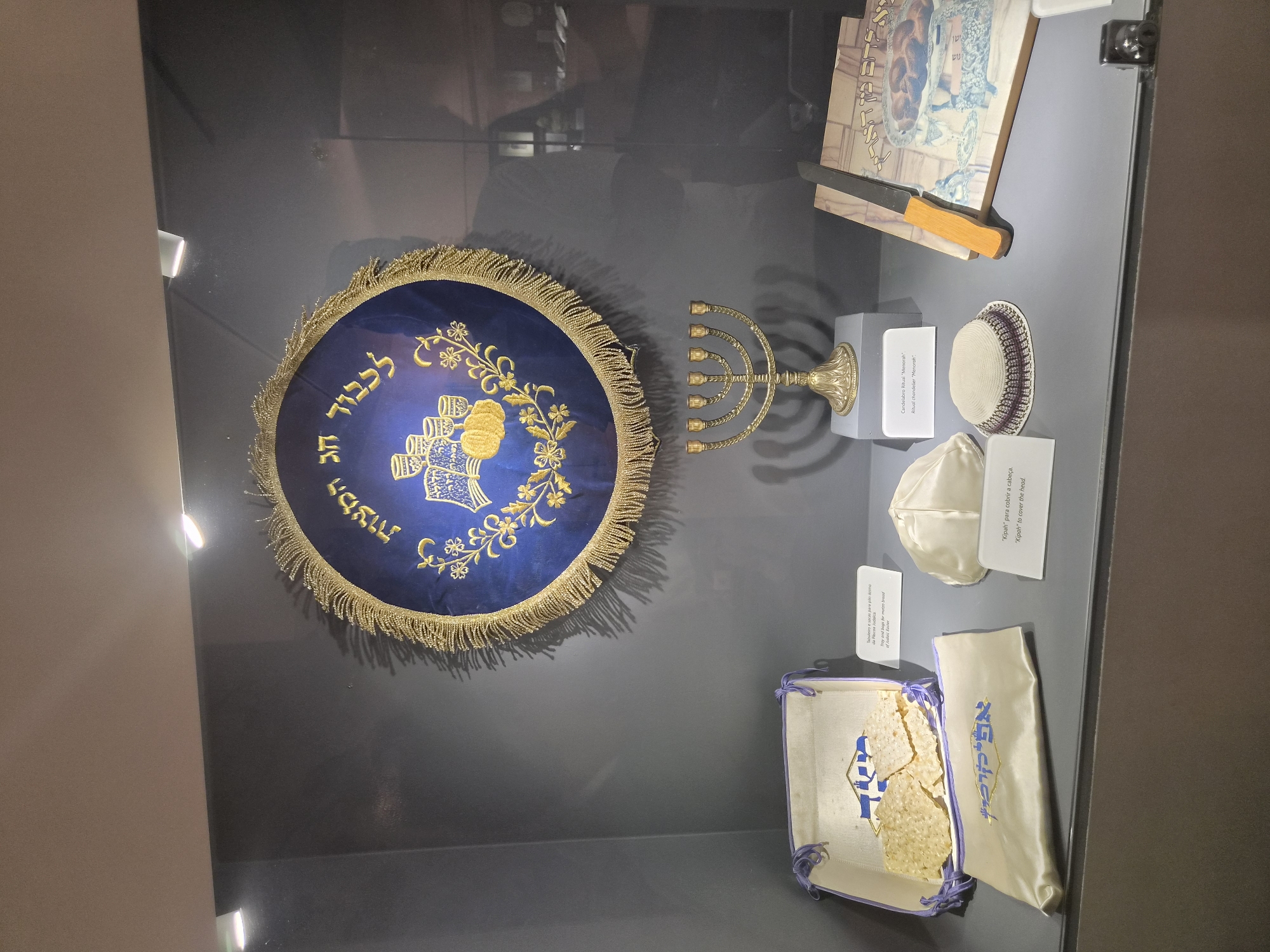
In Seia, Portugal, a display case showcases various objects related to Jewish tradition and Passover. A large, circular blue cloth with gold embroidery, featuring Hebrew writing and decorative elements, hangs on the dark gray wall behind the items. In front of it, a gold menorah stands on a gray pedestal. To the left, a white basket contains several pieces of matzah, a unleavened bread. Beside the basket is a white satin bag with blue Hebrew embroidery. In the center, two kippahs (skullcaps) are displayed, one white and one white with a dark brim and pattern. To the right, a knife with an orange handle rests on a book or plaque with Hebrew writing and an illustration. The display case has a reflective surface, showing faint reflections of people and the surroundings. The lighting is artificial, with spotlights directed at the display.
Seia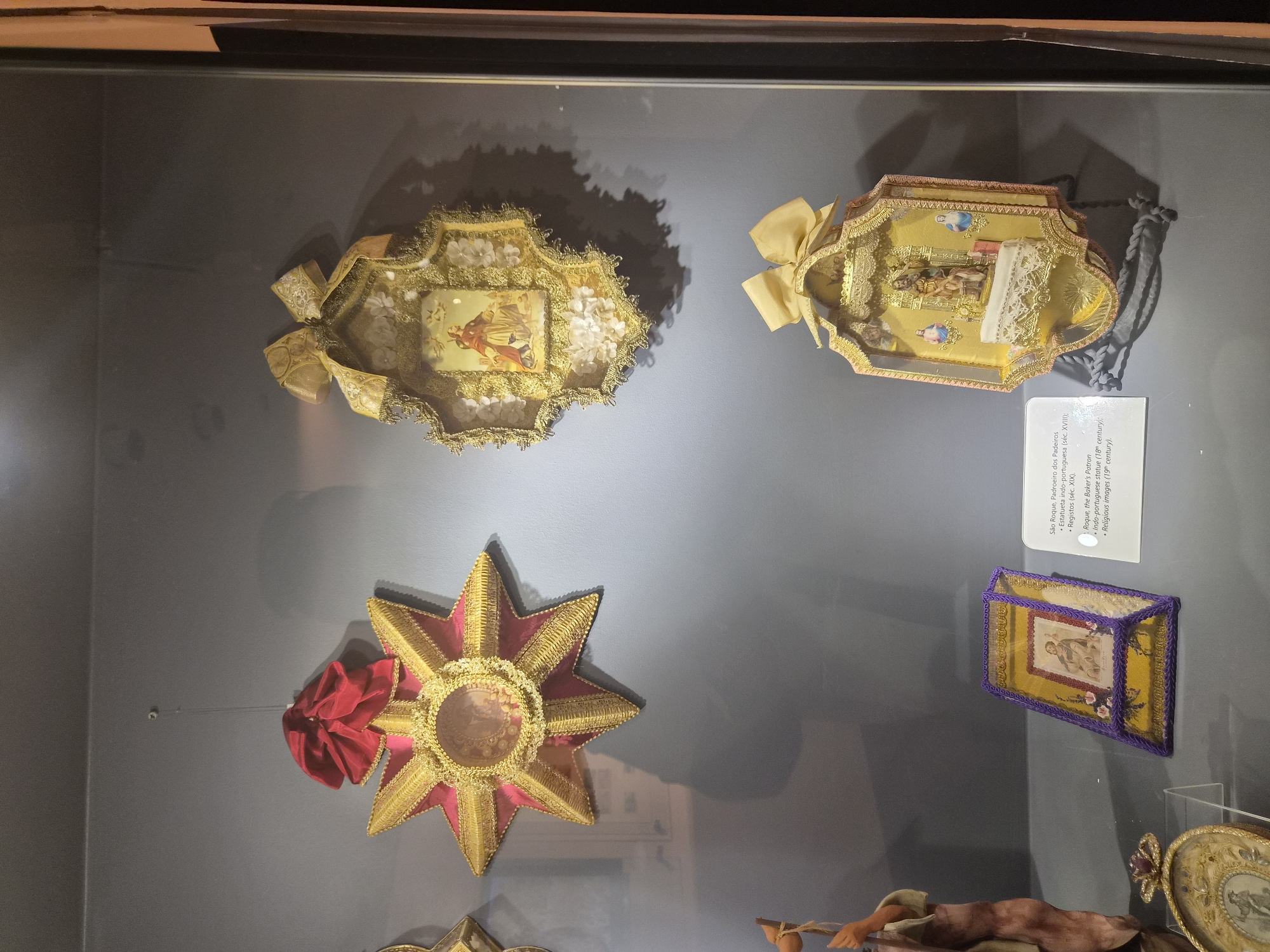
In a dimly lit museum display case, several religious artifacts are exhibited against a dark gray wall. The most prominent items are ornate, gilded frames holding religious imagery and statuettes. To the left, a star-shaped object with red and gold fabric is suspended, adorned with a red bow. To its right, a more elaborate, ornate gold frame, also with a gold bow at the top, contains a painting of a robed figure with a halo. Below this, a smaller, similarly decorated gold frame houses a miniature scene with figures and a white lace accent. In the lower left quadrant, a small, purple-trimmed display case with a yellow interior holds a framed image of a robed figure. To its right, a small, white informational plaque is visible, with text that appears to be in Portuguese. A portion of a statue of a figure in rustic clothing is visible in the lower left corner. In the bottom foreground, a circular object with intricate gold detailing and a central image is partially visible. The lighting casts shadows on the wall behind the exhibits, suggesting the objects are displayed in a museum setting. The overall impression is one of historical and religious preservation. The text on the plaque suggests the location is Seia, Portugal, and refers to Indo-Portuguese artifacts, possibly indicating the origin of some of the items.
Seia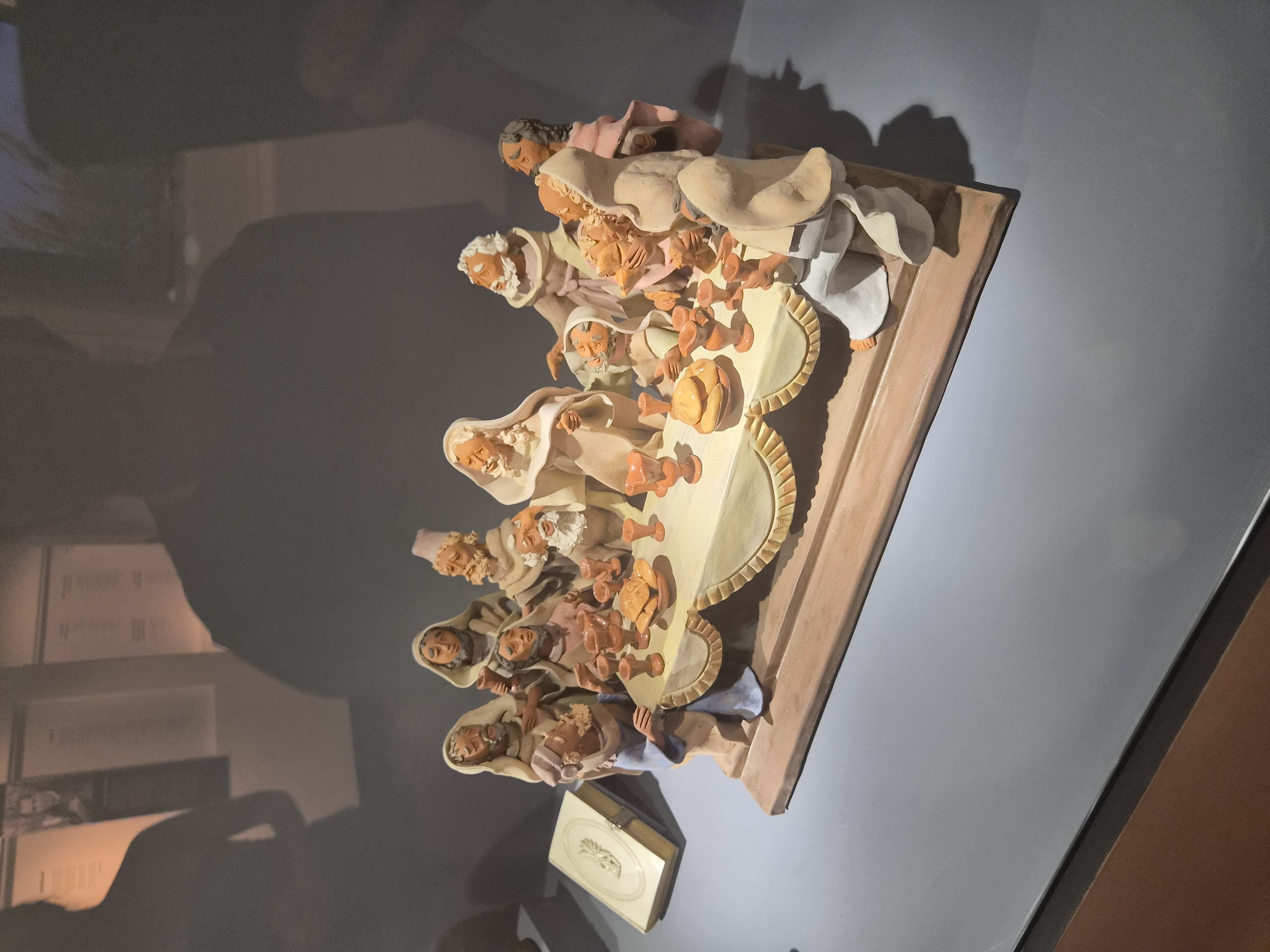
The image shows a religious ceramic sculpture depicting the Last Supper. The sculpture is set on a wooden base, which sits on a grey surface. Thirteen figures, dressed in robes, are gathered around a long table laden with bread and goblets. The figures appear to be engaged in conversation or communion. A book or tablet with intricate carvings is placed to the left of the table. The background is dimly lit with shadows suggesting the presence of people or other exhibits. This sculpture is located at the Museu de Artes Decorativas in Seia, Portugal.
Seia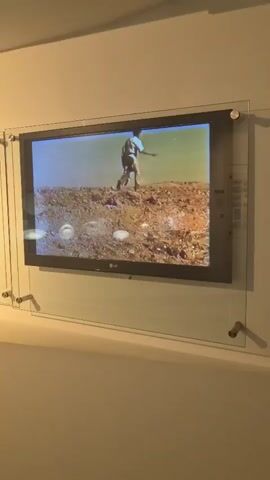
A video plays on a flat-screen television mounted on a wall. The video shows a person from the waist up, wearing a light-colored shirt and dark pants, walking across a dry, rocky terrain under a bright sky. The person is walking away from the camera. The terrain is covered in small rocks and dirt. The video is framed by a clear acrylic panel held to the wall by four metal screws. To the left of the television, there is a display of what appear to be postage stamps mounted on a lighter colored panel, also enclosed in acrylic. The wall is painted a neutral color.
Seia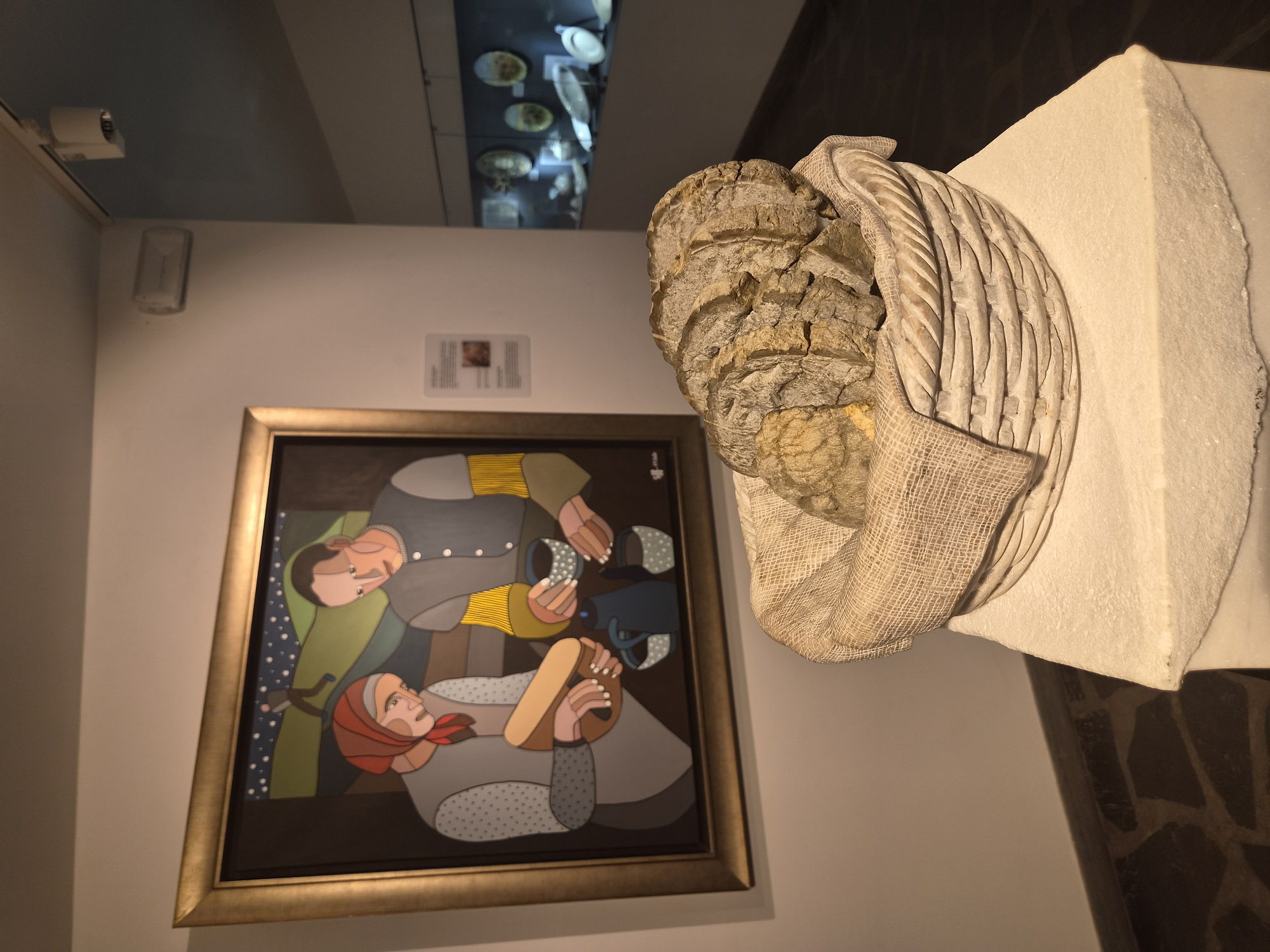
In Seia, Portugal, an indoor scene displays a framed painting on a white wall, depicting two figures in a rustic setting. To the right of the painting, a white stone pedestal supports a woven basket lined with burlap. The basket contains several large, rough-hewn slices of what appears to be bread. In the background, a glass display case exhibits various ceramic plates and dishes under soft lighting, suggesting a museum or exhibition space. The flooring is a mix of dark, polished wood and irregularly shaped stones.
Seia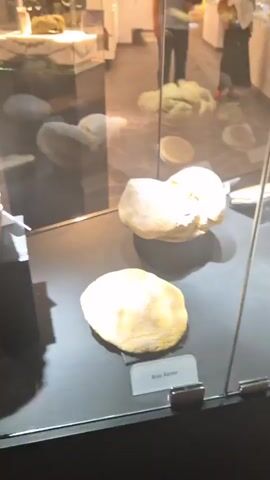
The video shows the interior of a museum exhibit. In the foreground, a display case with a glass front contains several loaves of bread of varying shapes and sizes. Some of the loaves are whole, while others appear to be broken or cut. Labels are visible in front of some of the bread items. In the background, through the glass, two people are visible. One is a man wearing a grey t-shirt and dark pants, and the other is a woman wearing a white top and dark skirt. They are looking at other exhibits in the museum. The environment appears to be well-lit with soft lighting. The overall impression is that of a cultural or historical exhibit focused on food, specifically bread.
Seia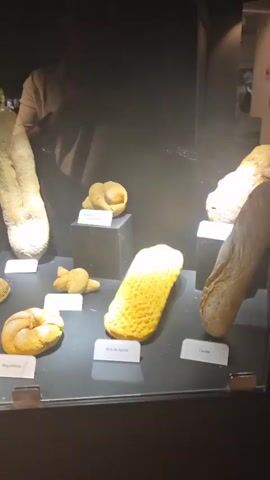
The video shows a museum display case containing various specimens of what appear to be dried or preserved fecal matter, arranged on shelves and pedestals. Each specimen has a small label in front of it. A person's reflection is visible in the glass of the display case, suggesting they are filming the exhibit. The background is dark, typical of a museum setting.
Seia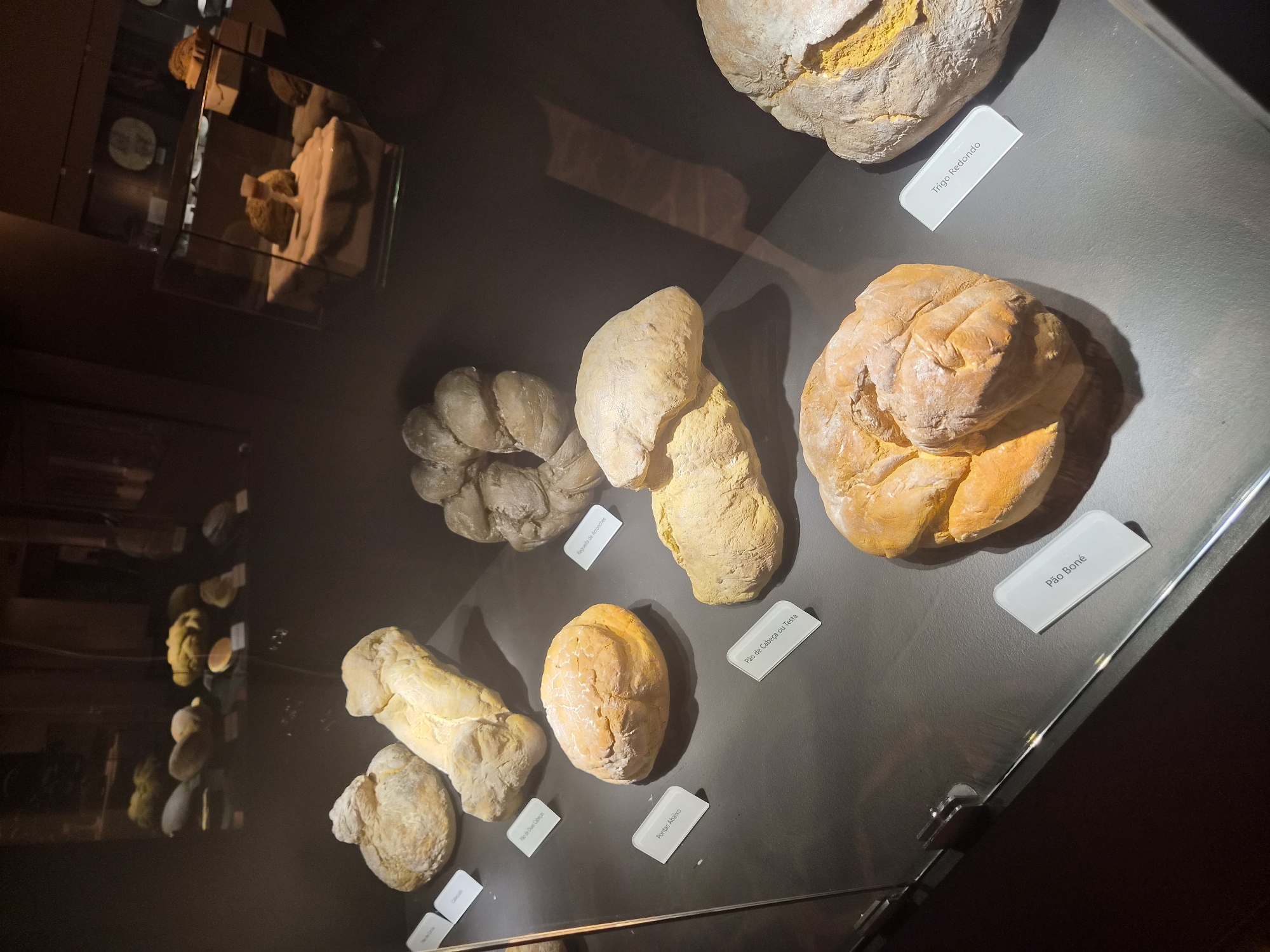
The image depicts a museum exhibit of various types of bread, likely historical or artisanal, displayed behind a glass case. The breads are predominantly golden brown and exhibit different shapes and textures, some appearing rustic and handmade. Several small white labels are placed in front of the breads, indicating their names or descriptions in Portuguese. In the background, other exhibits are visible, including items in glass cases and some blurred objects on shelves. The overall lighting is dim, with spotlighting on the bread exhibit, creating shadows and reflections on the glass surface. The scene appears to be located in the Bread Museum (Museu do Pão) in Seia, Portugal, given the context of bread exhibits and the Portuguese labels. No people are visible in the image.
Seia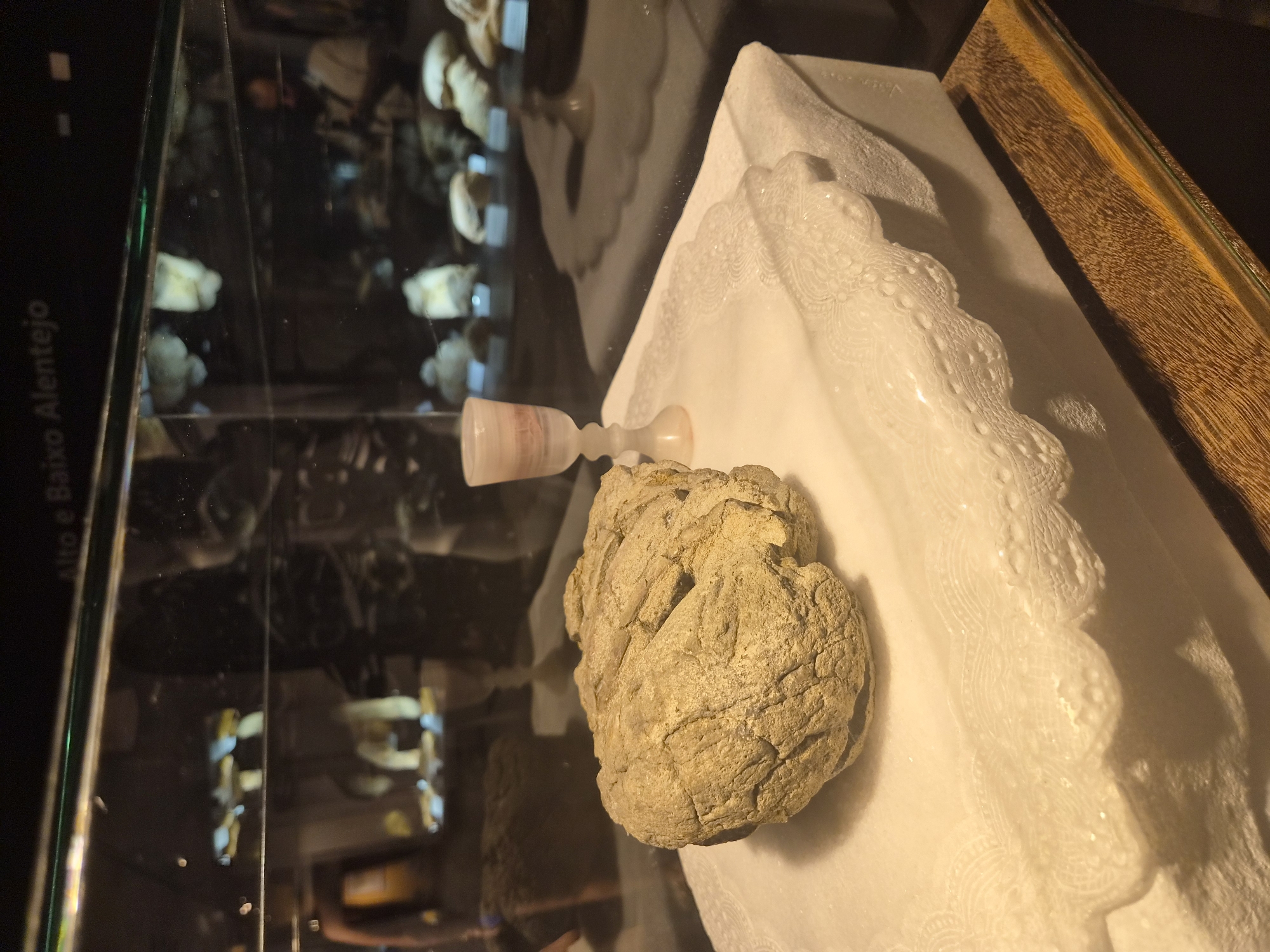
An exhibit is displayed within a glass case. A large, irregular, textured, tan-colored rock or fossil rests on a white, lace-edged platform. To the right of the rock is a small, ornate, stemmed goblet with pink and white banding. The background shows other exhibits and people, suggesting a museum or exhibition space. A sign at the top of the case reads "Alto e Baixo Alentejo." This exhibit is located at the Museu da Miniatura de Arte Sacra, also known as the Museum of Miniature Sacred Art, in Seia, Portugal.
Seia