Tumpokbeurandang, Indonesia
6 memories from Tumpokbeurandang, Indonesia
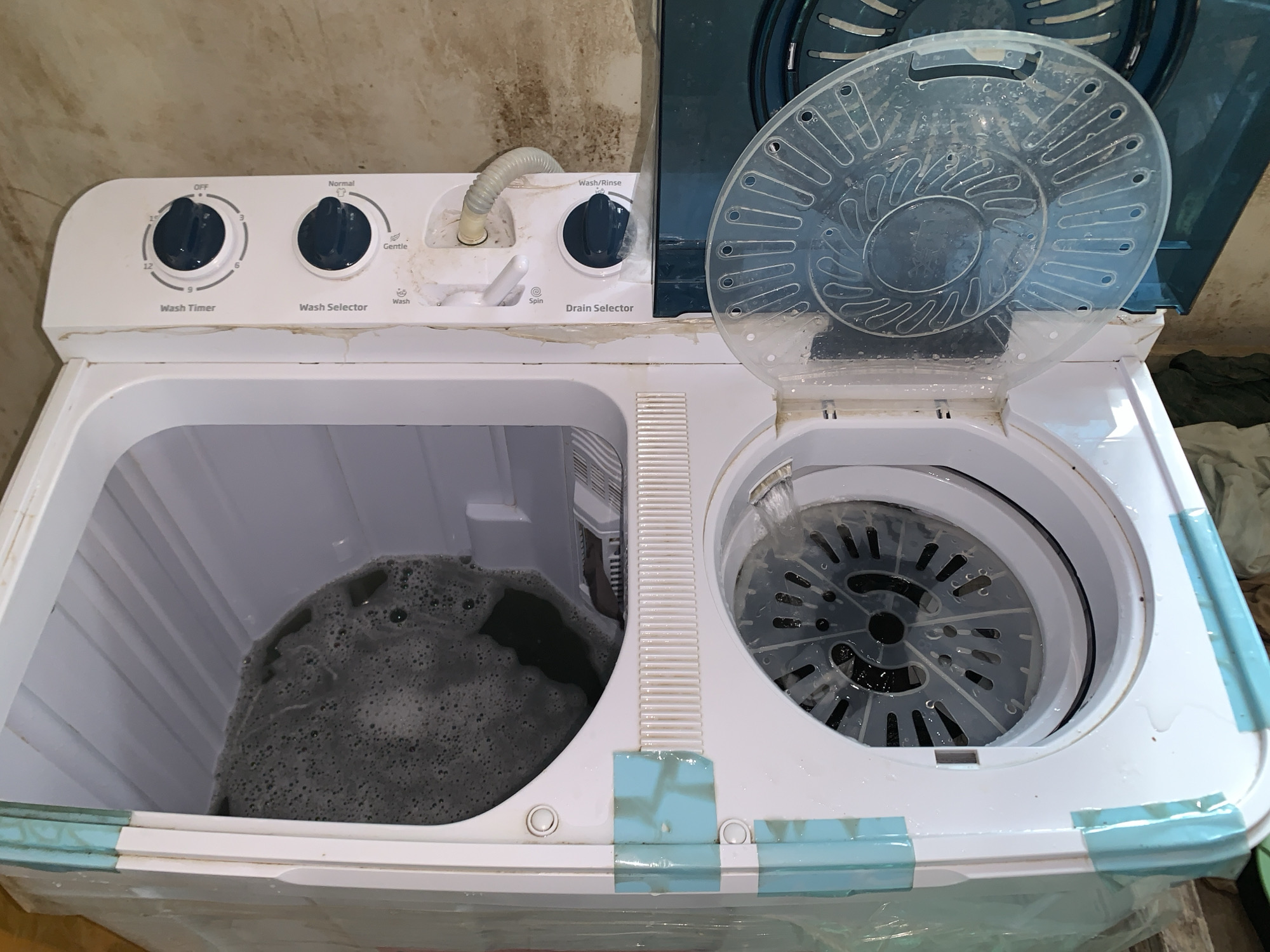
The image shows a top-loading twin tub washing machine. The washing tub on the left is filled with soapy water and appears to be in use or has recently been used. The spin tub on the right is open, revealing a transparent lid resting on the edge of the tub. The machine has control knobs on the side, indicating functions such as wash timer, wash selector, and drain selector. The washing machine is located indoors, with a wall in the background that appears to be made of concrete or plaster and shows signs of age and staining. The floor is not clearly visible. The overall environment suggests a residential setting, possibly a laundry area.
Tumpokbeurandang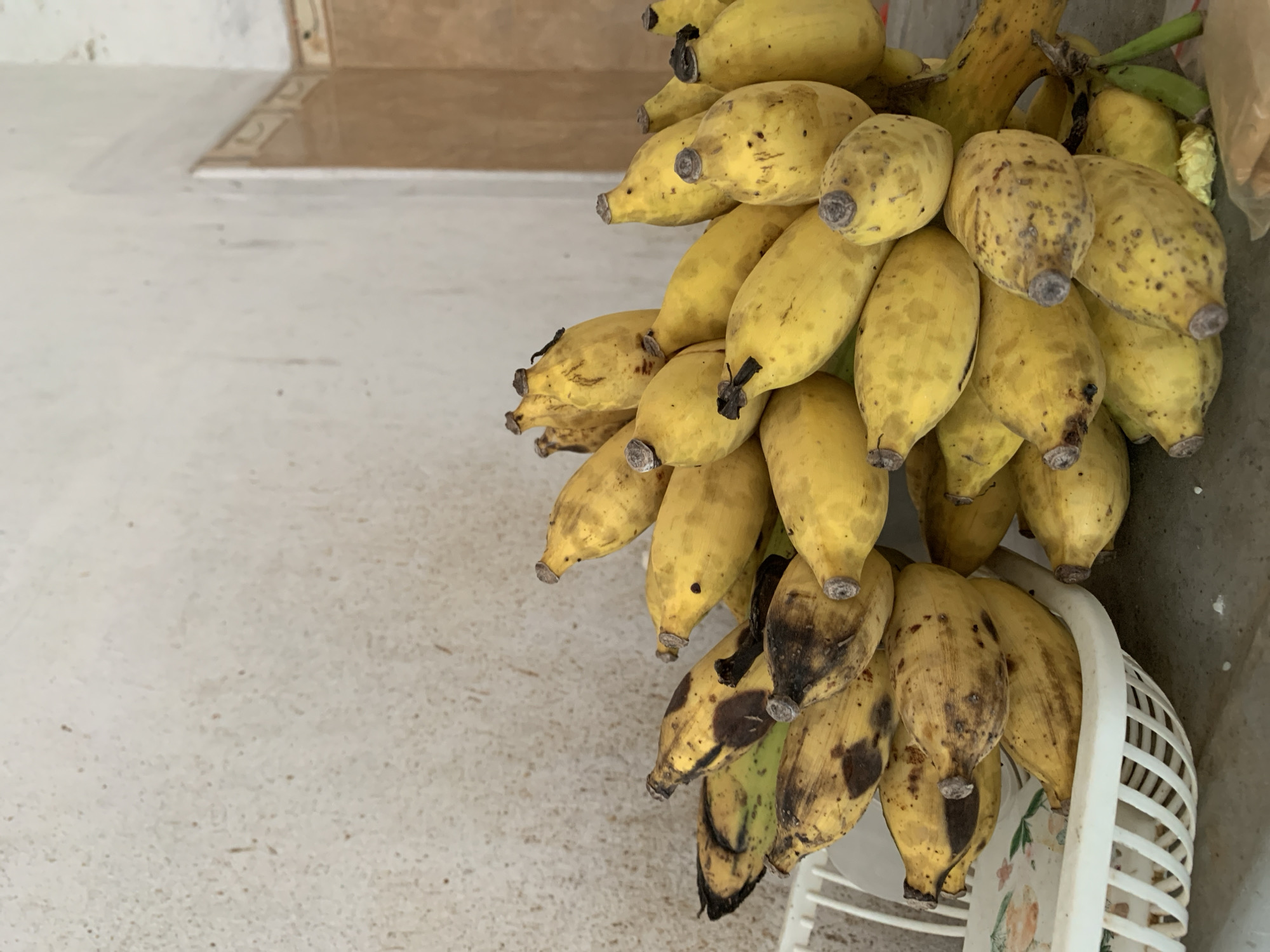
A bunch of ripe yellow bananas, some with brown spots indicating ripeness, are displayed in a white plastic basket. The bananas are arranged in a dense cluster, filling most of the frame. Behind the bananas, a textured, off-white wall with some subtle staining is visible. In the upper right corner, a section of tiled wall with a repeating square pattern in earthy tones can be seen, suggesting an indoor setting. The overall impression is of a simple, domestic scene, possibly in a kitchen or market stall. There are no people or animals visible in the image. The lighting appears to be natural and diffused.
Tumpokbeurandang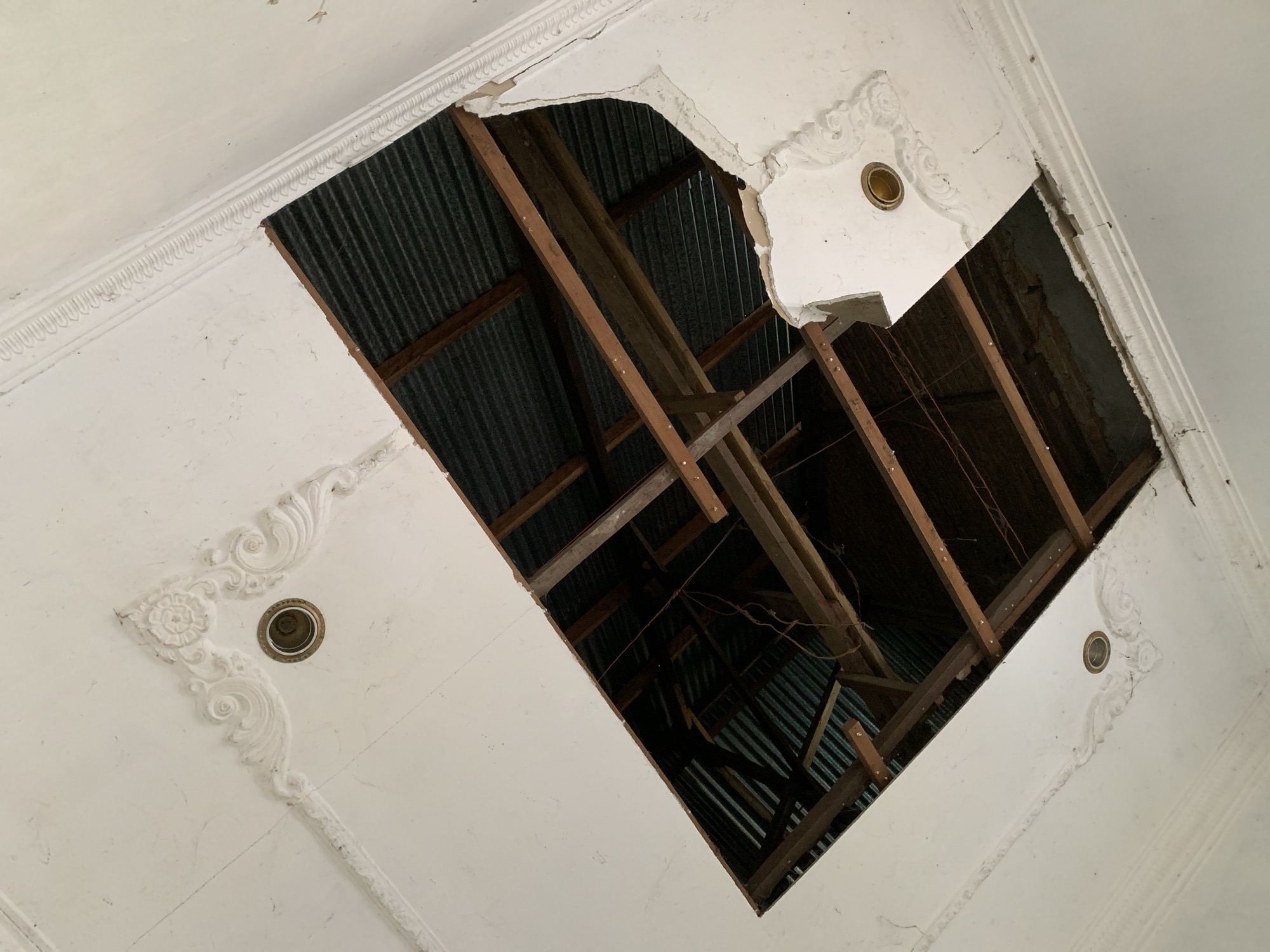
The image shows a damaged white ceiling with a large rectangular hole exposing the corrugated metal roof and wooden beams of the structure above. The ceiling has decorative molding and what appear to be recessed lights or vents. The damage to the ceiling is significant, with plaster broken and hanging. The scene appears to be indoors, looking upwards at the ceiling. The location is identified as Tumpokbeurandang, Indonesia. There are no people or visible actions taking place in the image.
Tumpokbeurandang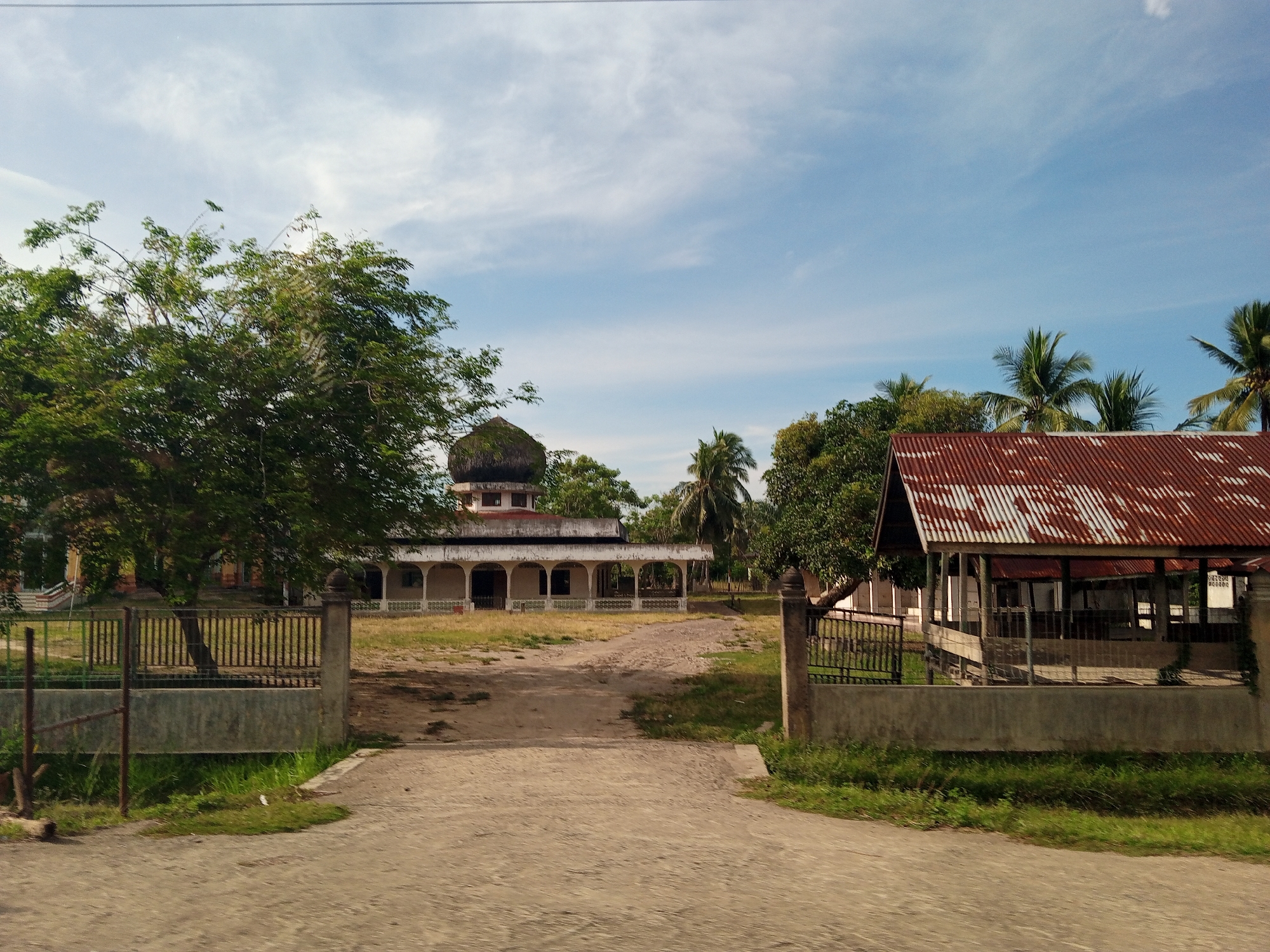
This image depicts an outdoor scene in Tumpokbeurandang, Indonesia, under a partly cloudy blue sky. The foreground features a light-colored, unpaved road or path leading into an open area. Flanking this entrance are two low concrete walls topped with metal fences; the left fence has green horizontal bars and brown vertical bars, while the right fence is darker, likely black or dark brown. Behind the fences and along the path, patches of green grass are visible, suggesting a somewhat unkempt environment. In the midground, a wide, unpaved expanse of dry earth and sparse grass leads to two distinct structures. To the left, a light-colored building, possibly white or cream, stands with a prominent rounded, dark, possibly thatched or shingled dome on its roof. The building features an open veranda or porch supported by multiple arches. To the right, another building with a rusted, corrugated metal roof, predominantly reddish-brown with white weathered patches, is partially visible. This structure appears more open-sided. The scene is heavily vegetated with various trees. A large, dense green tree is prominent on the left, partially obscuring the building behind it. Numerous palm trees and other green trees are scattered across the midground and background, particularly visible beyond both buildings, indicating a tropical or subtropical setting. No individuals or animals are present in the visible frame. The overall impression is a quiet, rural or semi-rural landscape.
Tumpokbeurandang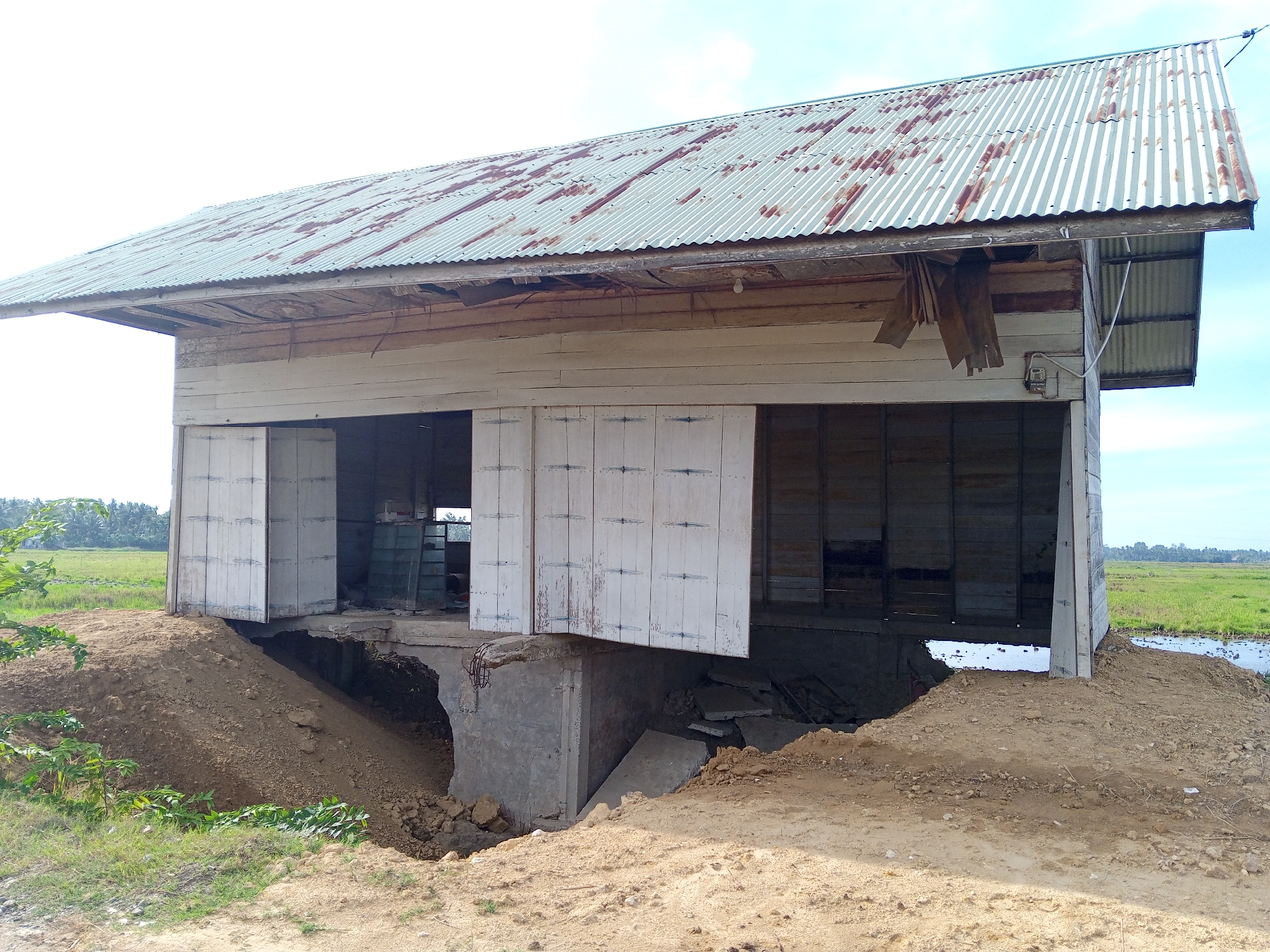
This image depicts a single-story, elevated wooden structure with a corrugated galvanized metal roof, located in Tumpokbeurandang, Indonesia. The roof shows extensive rust and weathering. The exterior walls are constructed from horizontal wooden planks, painted a faded white, with visible wear and tear. Multiple multi-panel wooden shutters or doors, also painted white and showing distress, are partially open or ajar along the front façade, revealing a dark interior. Exposed wooden framing is visible beneath the eaves, and some fascia or soffit panels are damaged and hanging. An electrical meter box is affixed to the exterior wall on the right side of the building. The structure is built on an elevated foundation, primarily concrete, which is significantly exposed due to considerable earth displacement or erosion beneath and around the building. Large mounds of reddish-brown soil and sand are piled against the foundation, particularly on the left. A substantial void exists beneath the main floor, revealing broken concrete slabs, exposed rebar, and debris, indicating structural compromise or an incomplete state. The building is situated in an agrarian environment, surrounded by vast, flat green fields, likely rice paddies, which extend to the horizon. Distant trees, including palm trees, are visible on the left horizon. On the right side of the building, a waterlogged area or small body of water abuts the structure, leading into the fields. The sky above is light blue with scattered white clouds, indicating daytime conditions. No people are visible in the scene.
Tumpokbeurandang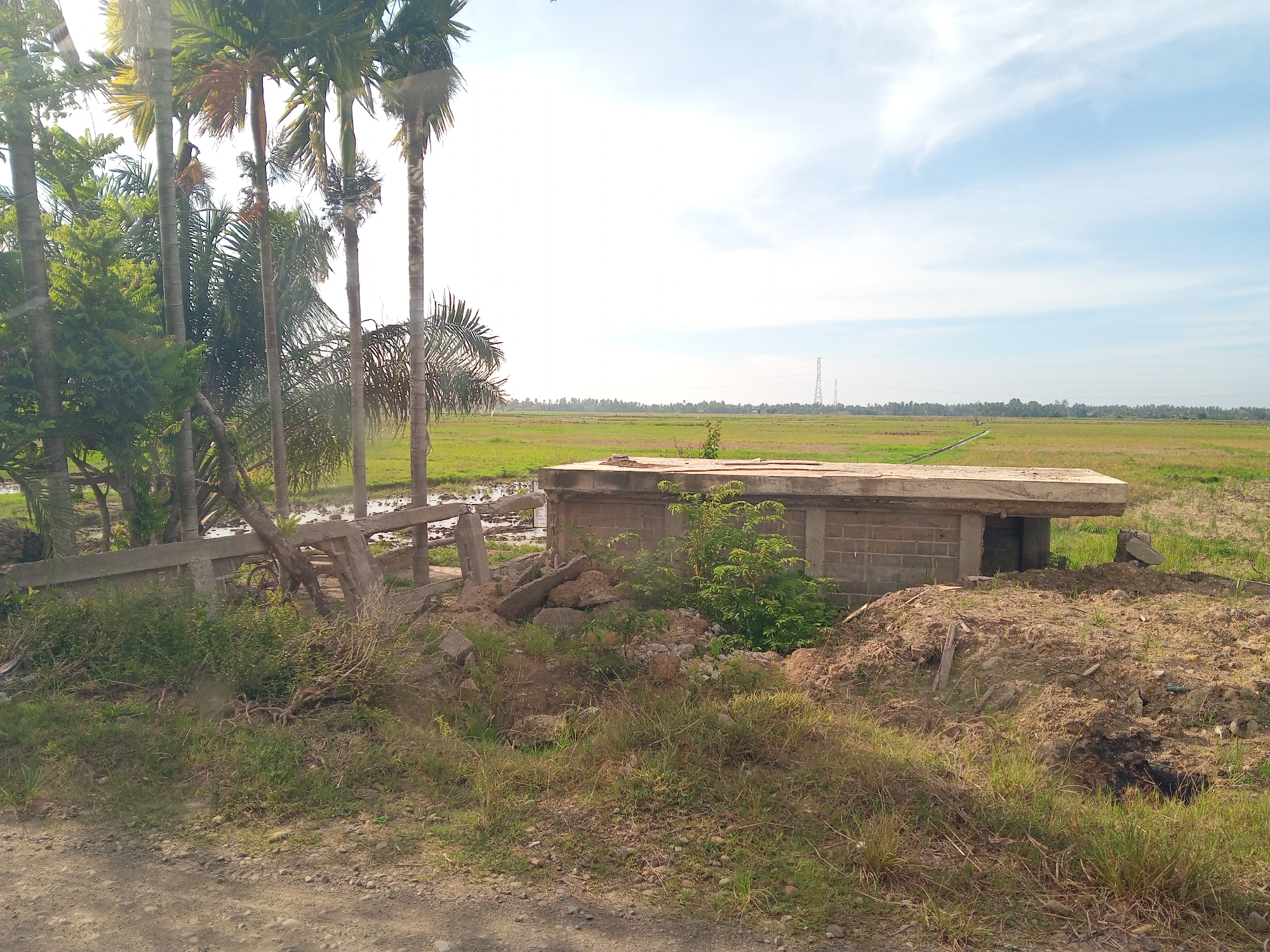
This image captures a rural landscape in Tumpokbeurandang, Indonesia, under a bright, partly cloudy sky. The foreground features a dirt and gravel path with sparse green grass. To the right, a partially constructed or dilapidated single-story concrete block structure with a flat concrete roof stands atop a mound of earth and rubble. Small green foliage grows around this structure and on the surrounding earth piles. In the midground, a cluster of tall palm trees and dense green vegetation occupies the left side. Adjacent to these trees, a broken or unfinished concrete bridge or culvert spans a waterlogged area, possibly a small canal or ditch. The midground extensively features flat, green fields, characteristic of rice paddies, some showing standing water. A narrow dirt track or path runs through these fields, disappearing into the distance. The background reveals a continuation of the green fields stretching to a distant treeline. Two prominent, tall, latticework metal towers, likely transmission or communication structures, are visible against the horizon. No people are present in the scene.
Tumpokbeurandang