Unguwar Shanu, Nigeria
30 memories from Unguwar Shanu, Nigeria
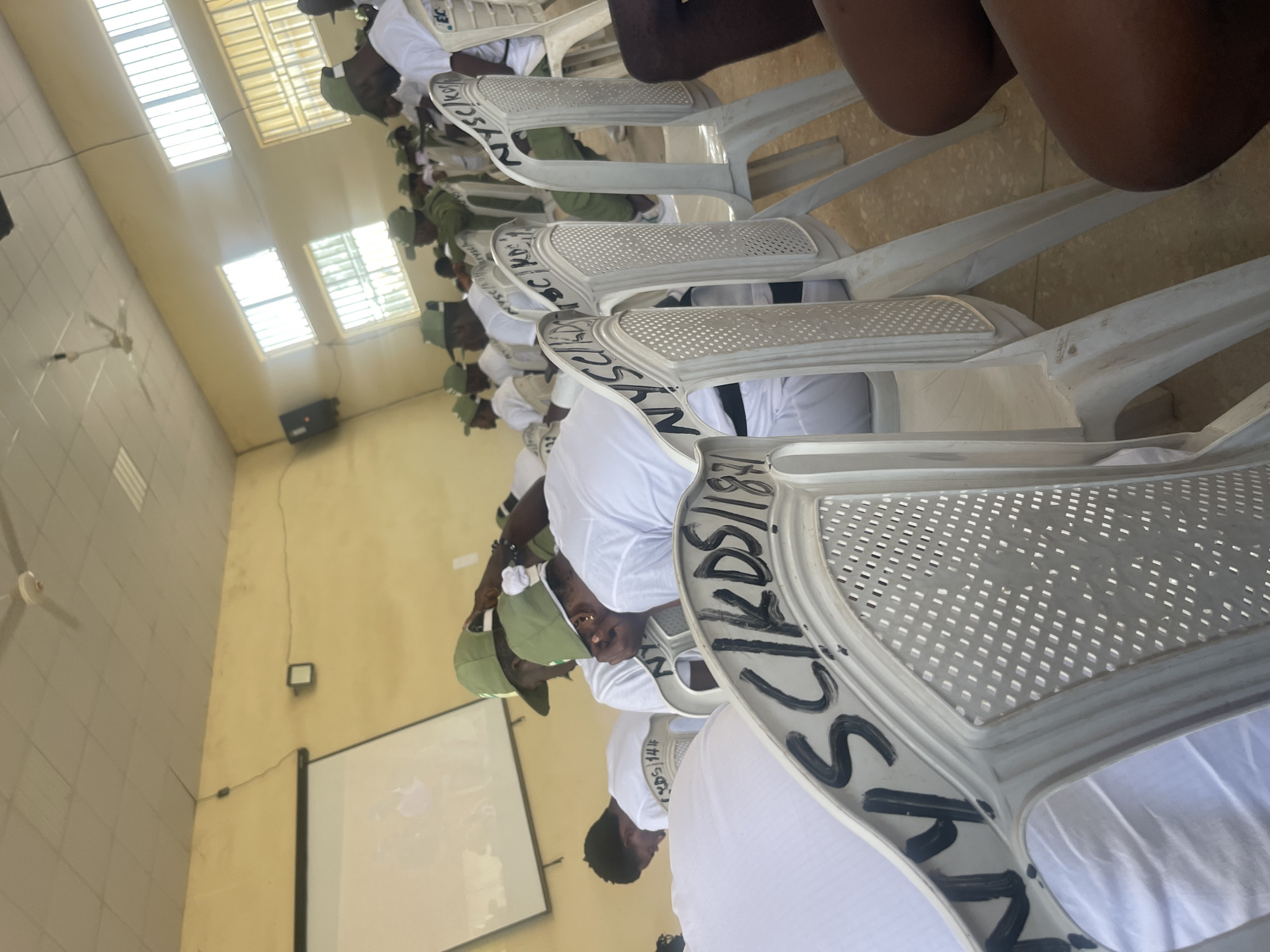
In a room with a pale yellow wall and a tiled floor, several young adults are seated in rows of white plastic chairs, facing a projected image on a screen at the front of the room. Most of the individuals are wearing white t-shirts and green caps. Many of the chairs have writing on them, appearing to be names or identification numbers, such as "NYSC/KDS/1187" and "NYSC/KDS/1481." Some individuals are looking at the screen, while others are looking down or interacting with their surroundings. The room is illuminated by natural light coming from windows and artificial light from ceiling fixtures and a ceiling fan. The scene appears to be a gathering or orientation session, possibly at a school or training facility in Unguwar Shanu, Nigeria, given the context of the "NYSC" (National Youth Service Corps) markings.
Unguwar Shanu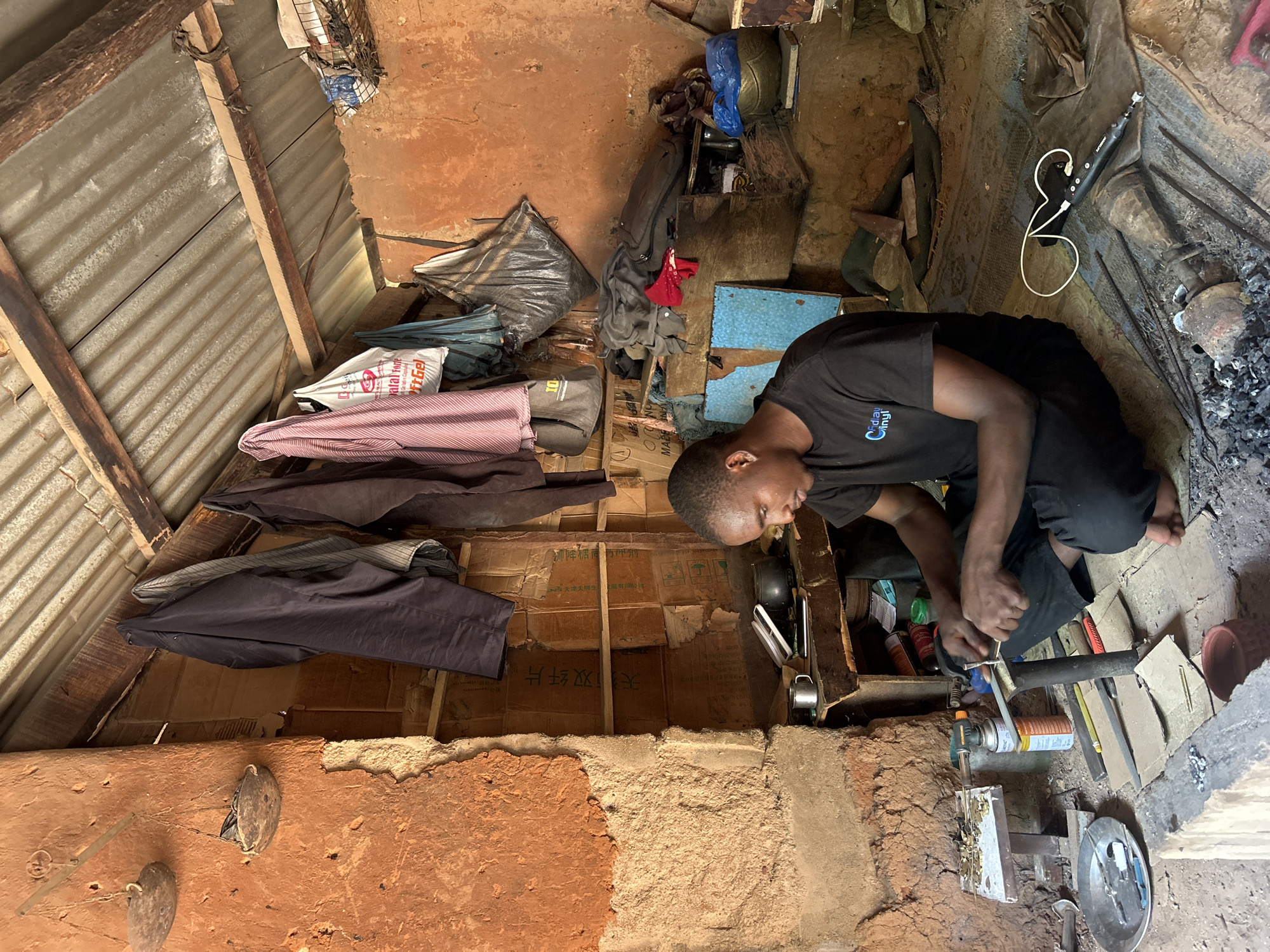
A young Black man is working in what appears to be a small workshop or home in Unguwar Shanu, Nigeria. He is seated on the floor, focused on a metal object held in a clamp on his workbench. He is wearing a black t-shirt with a blue and white logo that reads "Cadillac Vinyl." His legs are crossed and he is wearing black pants. The workshop is rustic, with walls made of reddish-brown mud or clay. The ceiling is made of corrugated metal sheeting supported by wooden beams. Various items are stored around the workshop, including what appear to be tools, clothing hanging from hooks, sacks, and bags. On the workbench, there are various tools, including what looks like a soldering torch, metal files, and small metal pieces. A metal plate sits on the floor to his left with several tools on it. In front of him, a small charcoal brazier is visible with some metal rods and tools scattered around it. The floor is covered with a patterned rug and dirt. The overall impression is of a working environment that is functional but simple, likely typical of a craftsperson's space in this region. The lighting suggests it is daytime, with light filtering in from the open front of the structure.
Unguwar Shanu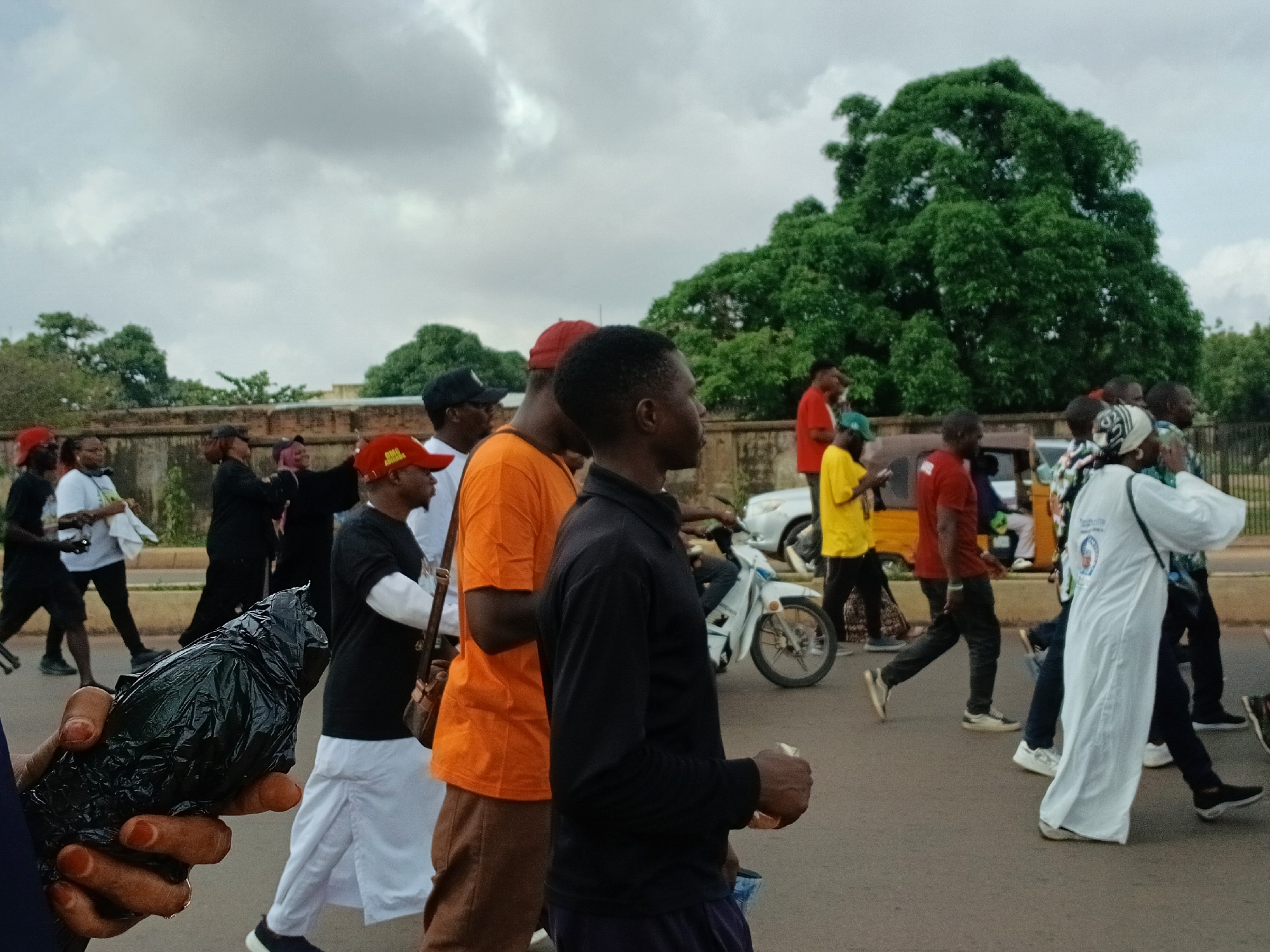
In Unguwar Shanu, Nigeria, a group of people are walking on a paved road under a cloudy sky. In the foreground, a person's hands are visible, holding a dark, amorphous object wrapped in black plastic. The object appears somewhat elongated. To the right of this, a man in a black long-sleeved shirt and dark pants is walking, with his profile visible. Further to the right, a man in an orange t-shirt walks past, followed by another man in a white garment and head covering. Behind them, other individuals are walking, some wearing caps and casual clothing. A white motorcycle is parked on the side of the road, and in the background, a large, dense green tree dominates the landscape, with some buildings and other trees visible. The overall scene suggests a public gathering or procession.
Unguwar Shanu
A group of people are gathered on a street. Some are standing, some are sitting, and some are walking. There is a car on the left side of the frame. The sky is cloudy. There are trees and buildings in the background. The people are dressed in casual clothing. Some of the people appear to be talking to each other. One person is holding a phone. Another person is wearing a blue tank top and white shorts. Another person is wearing an orange t-shirt and black pants. The ground is paved with concrete. There are some shadows on the ground.
Unguwar Shanu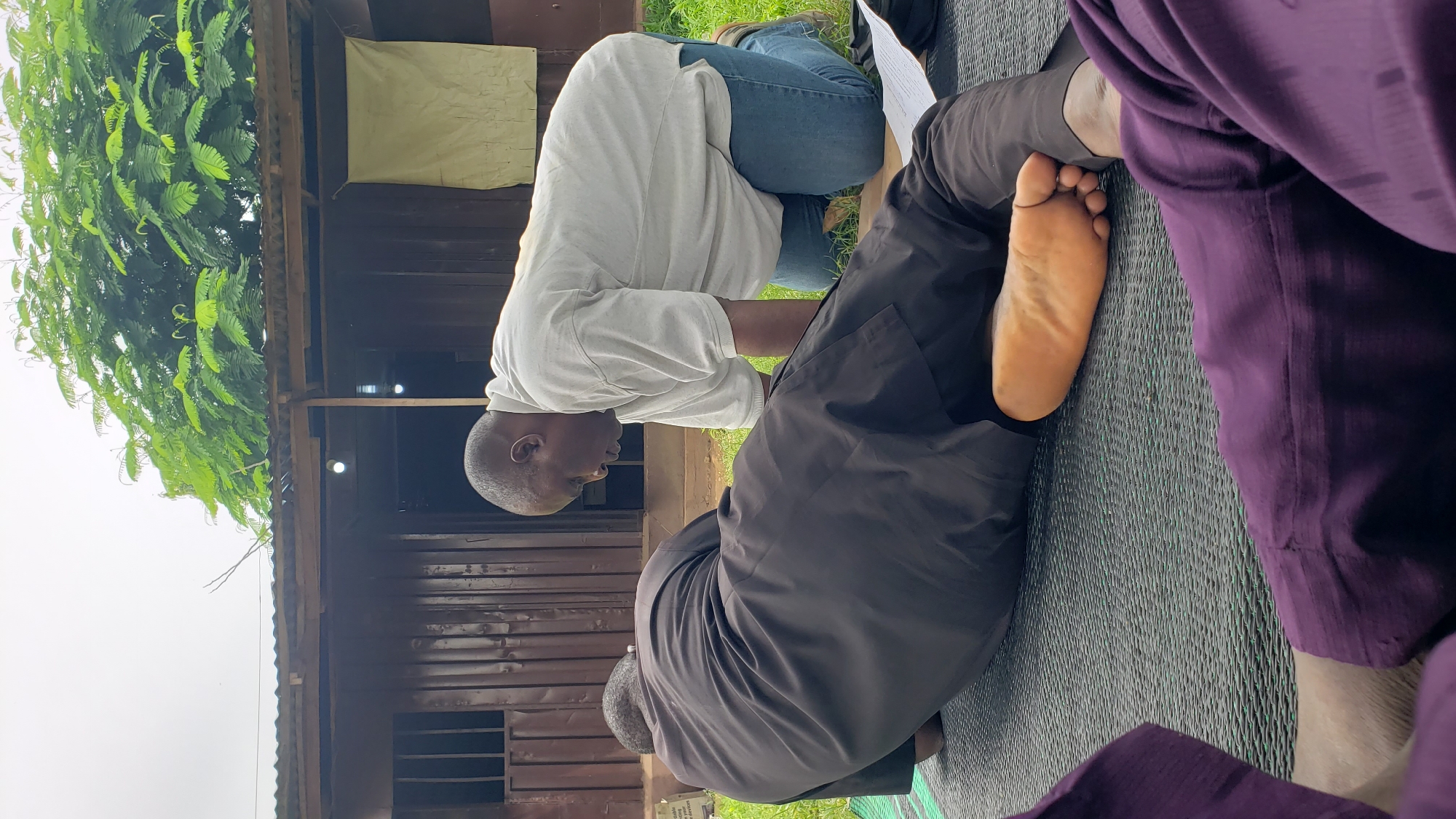
In Unguwar Shanu, Nigeria, two men are engaged in an activity outdoors. One man, wearing a white t-shirt and blue jeans, is kneeling and leaning over a second man who is lying prone on a dark mat. The man on the ground is wearing dark clothing and his bare foot is visible. A piece of paper, possibly a document or book, is on the mat near the man's feet. Behind them is a rustic wooden building with a corrugated metal roof. Lush green foliage is visible above the roof, and the sky appears overcast. The overall setting suggests an informal gathering or lesson taking place in a semi-rural or less developed urban environment.
Unguwar Shanu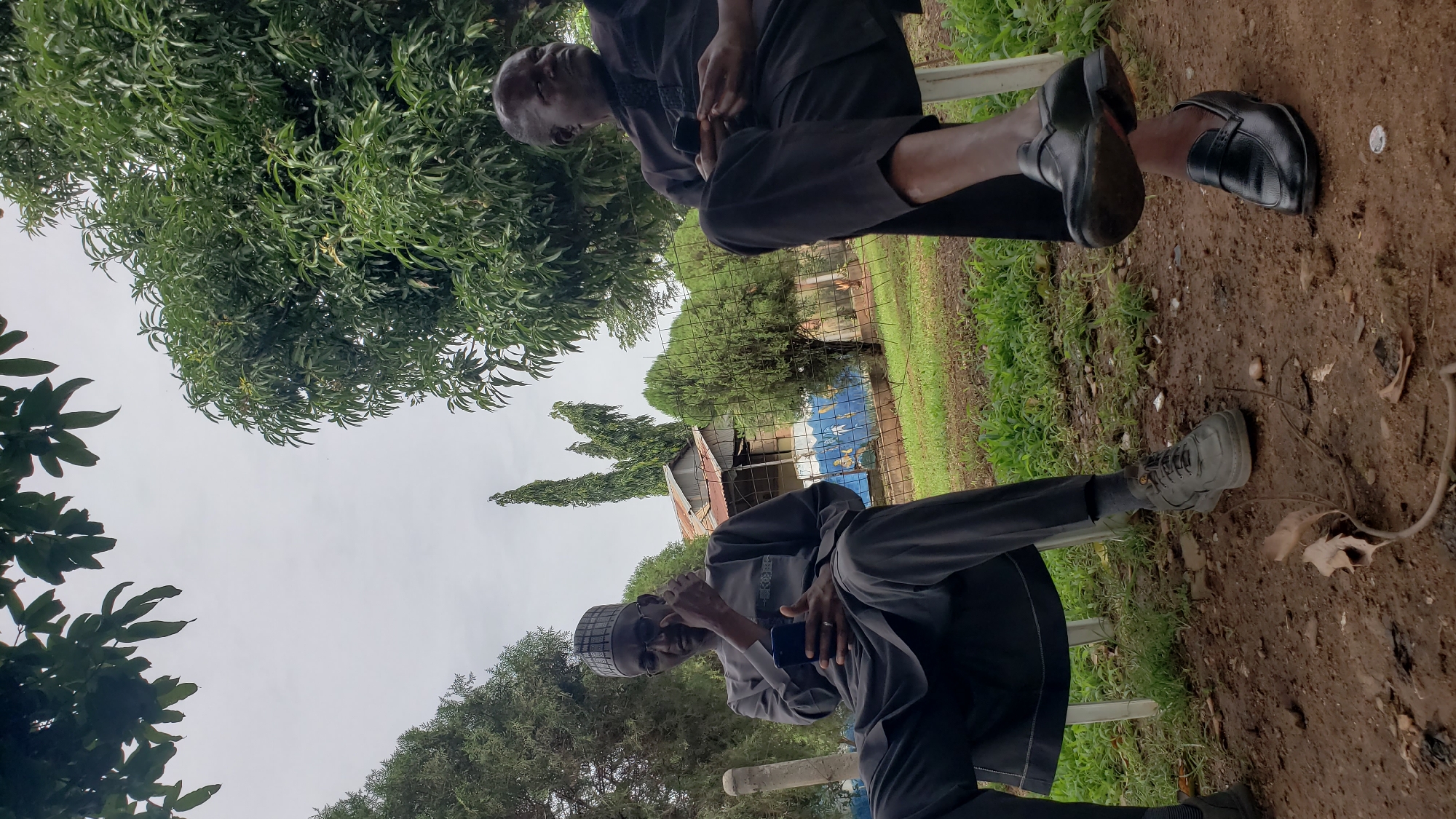
Two men are seated outdoors on white plastic chairs, facing towards the viewer, in what appears to be Unguwar Shanu, Nigeria. The man on the left is wearing a dark grey cap with a checkered pattern, glasses, and a matching dark grey traditional outfit. He is holding a smartphone in his right hand and gestures with his left hand. The man on the right is wearing a black traditional outfit and is looking to his right, holding a smartphone in his hands. Both men are wearing shoes; the man on the left has on grey sneakers, and the man on the right has on black loafers. The background features lush green trees, some with large leaves, and a cloudy sky. A rustic building with a corrugated metal roof is visible behind a wire fence. The ground is a mix of dirt and sparse green grass. The overall atmosphere is casual and relaxed, suggesting an outdoor gathering or break.
Unguwar Shanu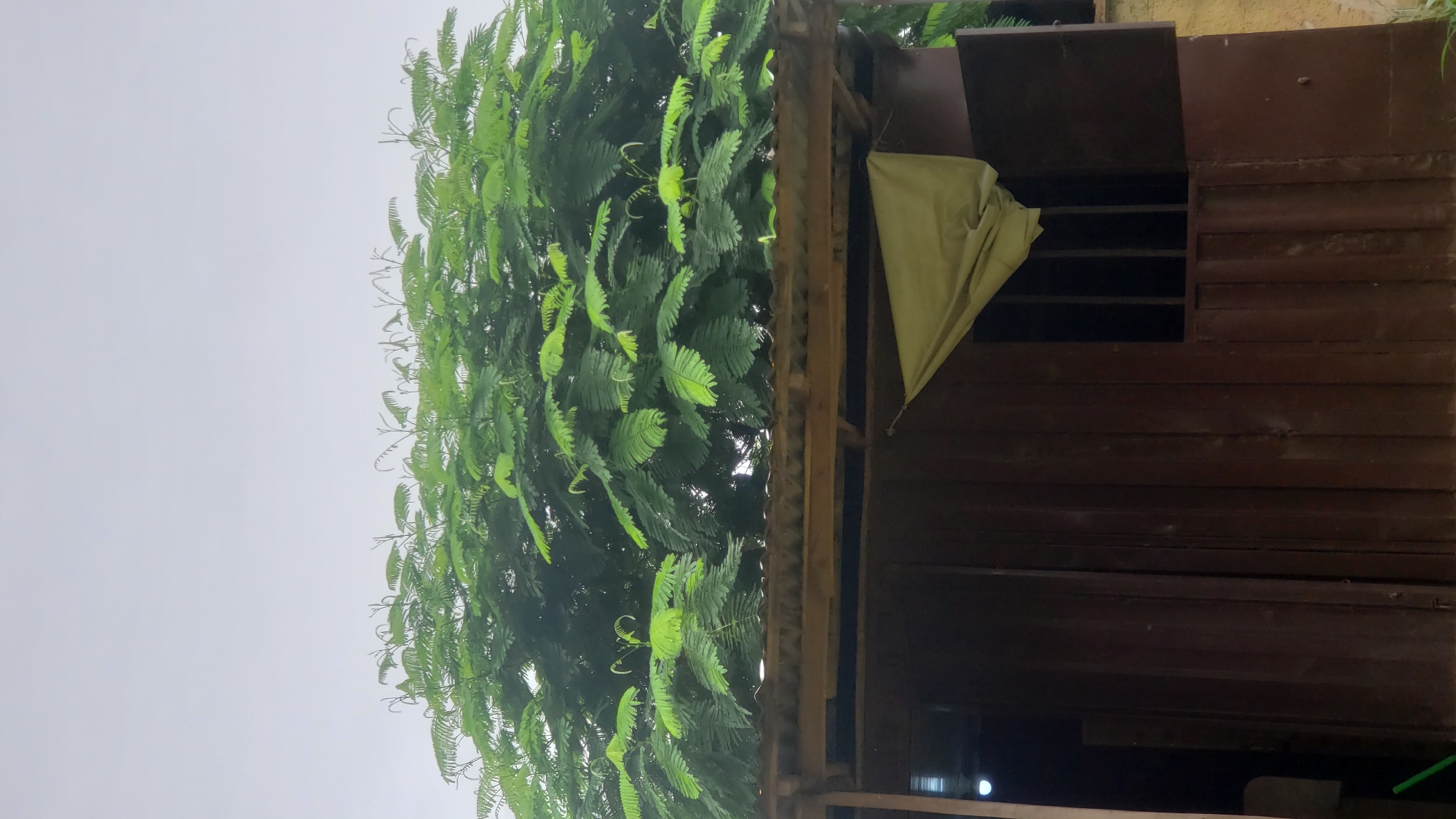
In Unguwar Shanu, Nigeria, a dense canopy of vibrant green leaves from a large tree overhangs the corrugated metal roof of a modest, dark brown wooden structure. The tree's foliage, composed of delicate, feathery leaves, creates a lush green ceiling against a hazy, overcast sky. Below the roof, the structure appears to be a simple building, possibly a shop or dwelling, with vertical wooden planks forming its walls. A small, barred window is visible, with one metal shutter slightly ajar. A piece of light-colored, possibly yellow, fabric is draped over the top of the structure near the window, adding a contrasting texture and color to the scene. The overall impression is one of a humid, perhaps rainy, day in a residential or commercial area.
Unguwar Shanu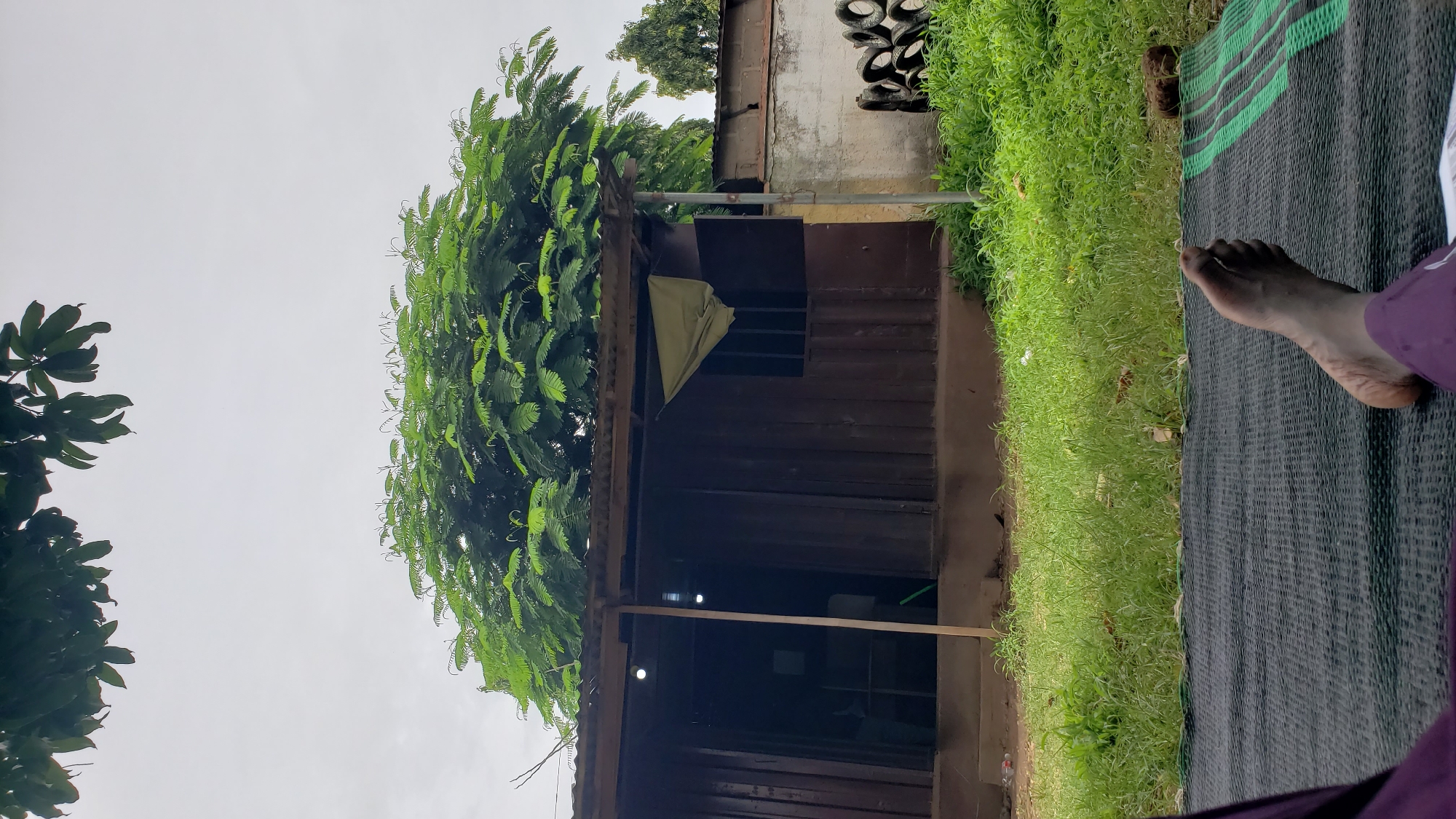
The image depicts an outdoor scene in Unguwar Shanu, Nigeria. In the foreground, a person's bare foot, covered in dark dirt, rests on a dark mat with green stripes. The mat is positioned on a patch of green grass. Behind the mat, a simple wooden structure with a corrugated metal roof is visible. Two white light bulbs illuminate the interior of the structure, which appears to be a shop or shelter. A light-colored cloth is draped over a section of the structure's roof. To the right of the wooden building, a concrete wall stands next to a stack of used tires. Lush green grass covers the ground around the structure and tires. A large tree with abundant green foliage dominates the upper portion of the image, its branches extending over the wooden building. The sky is overcast and a pale gray.
Unguwar Shanu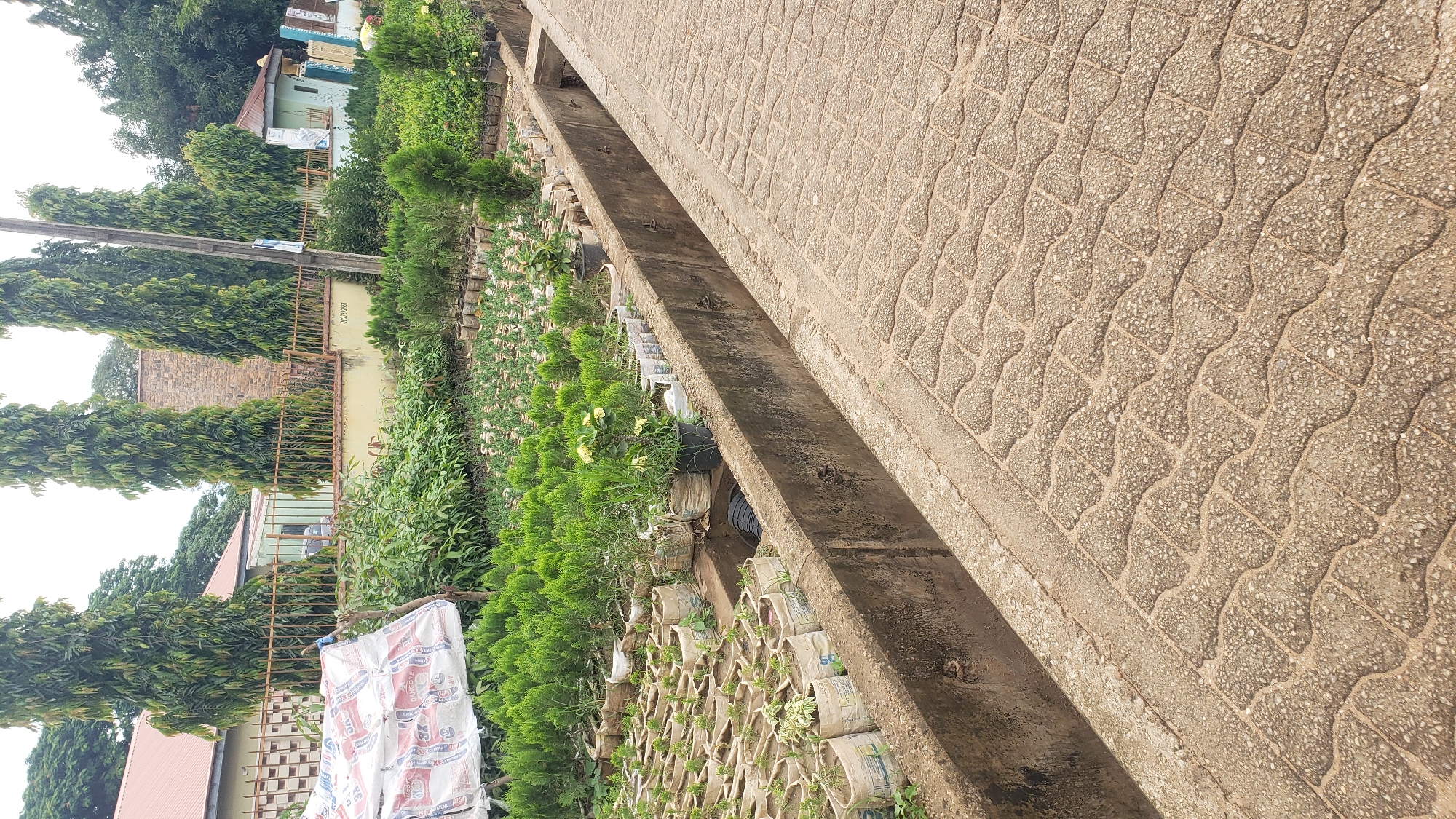
A daytime, eye-level, medium shot shows a nursery in Unguwar Shanu, Nigeria. In the foreground, a concrete drainage ditch runs diagonally from the lower left to the upper right corner. The ditch is partially filled with dark material, and a black pipe is visible within it. A pathway paved with interlocking concrete blocks runs alongside the ditch on the right. In the middle ground, a large variety of potted plants and seedlings are arranged in neat rows. Many of the plants are small evergreen trees in white and beige bags. Some larger plants in black pots are also visible. A white tarp, possibly covering supplies, is draped over a wooden frame on the left side of the image. In the background, several tall, slender evergreen trees stand in front of a low, yellow-painted wall topped with a metal fence. Behind the fence, buildings with reddish-brown roofs and light-colored walls are visible. The sky is overcast. The scene appears to be an outdoor plant nursery.
Unguwar Shanu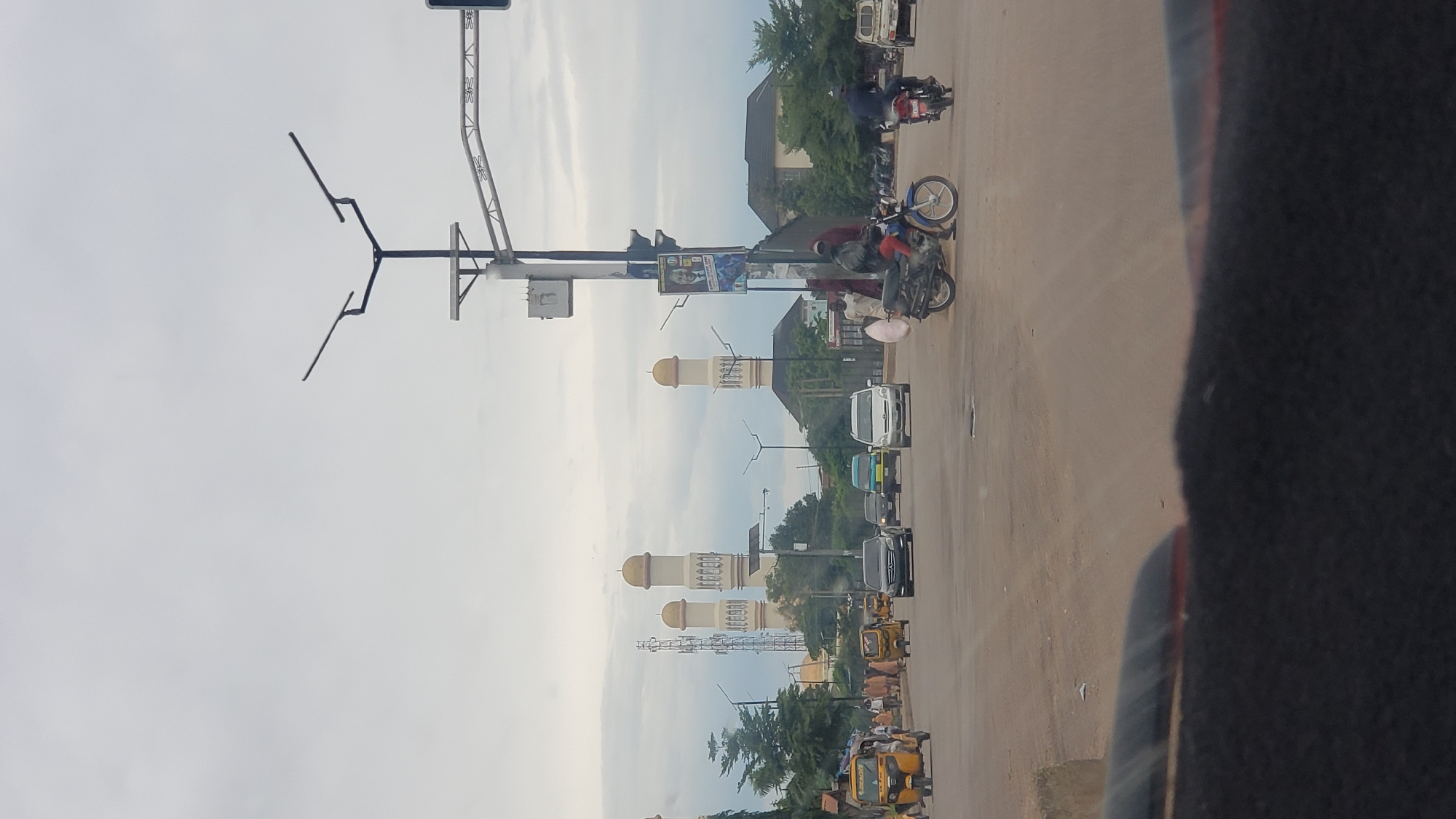
The image depicts a street scene in Unguwar Shanu, Nigeria. The sky is overcast, suggesting a cloudy day. In the background, a prominent mosque with multiple golden-domed minarets stands as a central architectural feature. Several trees are visible, interspersed with buildings. On the road, a variety of vehicles are present, including yellow auto-rickshaws, cars, and motorcycles. People are seen walking on the sidewalk and riding on the vehicles. A traffic light pole with signage is positioned on the right side of the image, and a banner with a portrait is attached to it. The foreground shows the interior of a vehicle, with the dashboard and windshield partially visible. The overall impression is of a busy urban intersection with a blend of traditional and modern elements.
Unguwar Shanu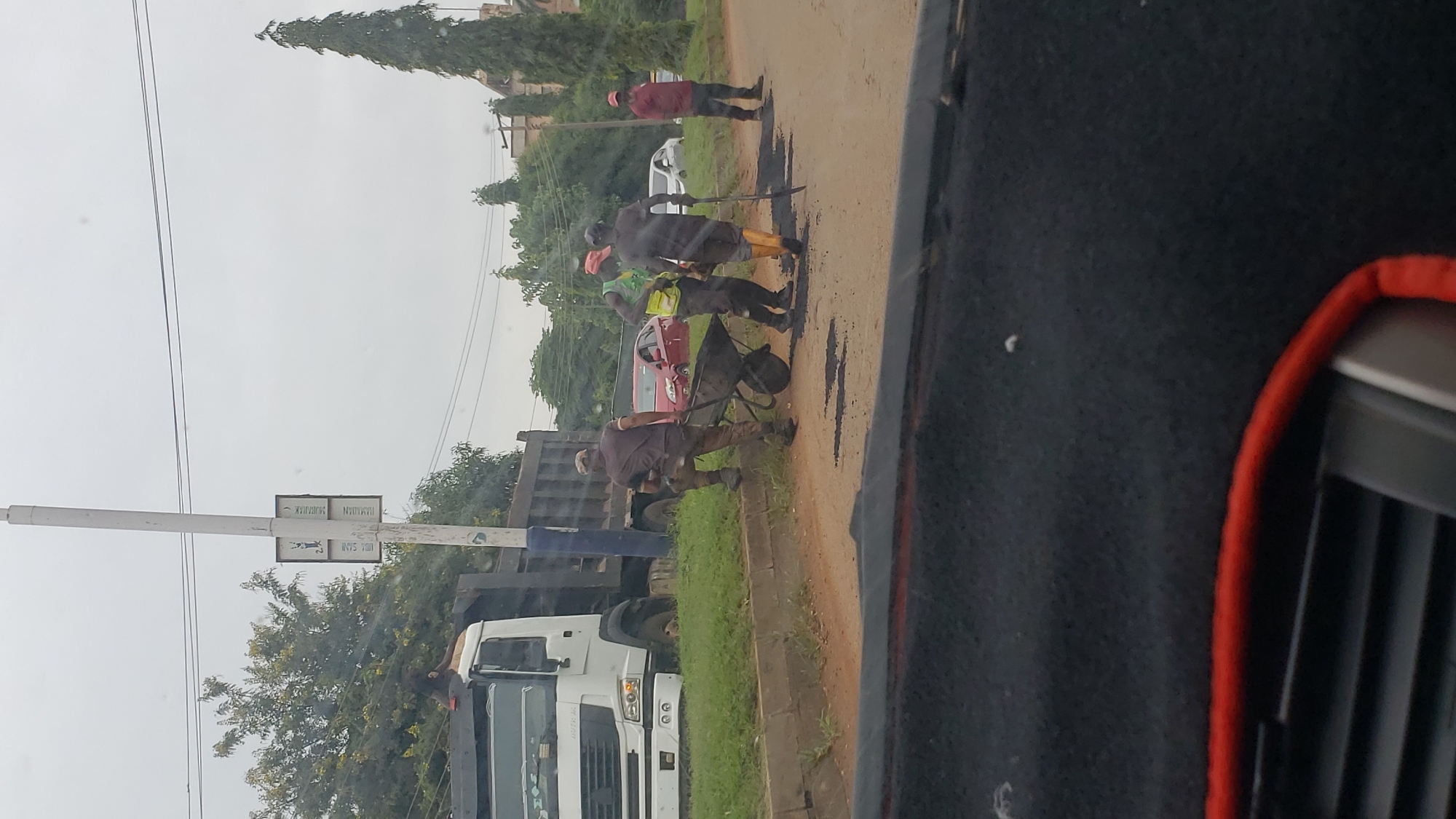
The image depicts a road construction scene in Unguwar Shanu, Nigeria, on an overcast day. In the foreground, the interior of a vehicle is visible, with a dark dashboard and red trim. The main focus is on the road and its surroundings. A white dump truck is parked on the side of the road, with a dark bed. Several construction workers are engaged in roadwork. One worker, wearing a camouflage uniform, is pushing a wheelbarrow filled with what appears to be asphalt. Another worker, in a yellow vest and red cap, is also near the wheelbarrow, assisting or supervising. A third worker, in a red shirt and cap, stands further down the road, holding a shovel. There are piles of asphalt on the road surface, indicating active repair or construction. A red car is parked behind the dump truck. The background features a grassy area, trees, and a tall, thin tree on the right side of the image. A tall, white utility pole with signs attached stands near the construction site. The sky is uniformly gray, suggesting cloudy weather.
Unguwar Shanu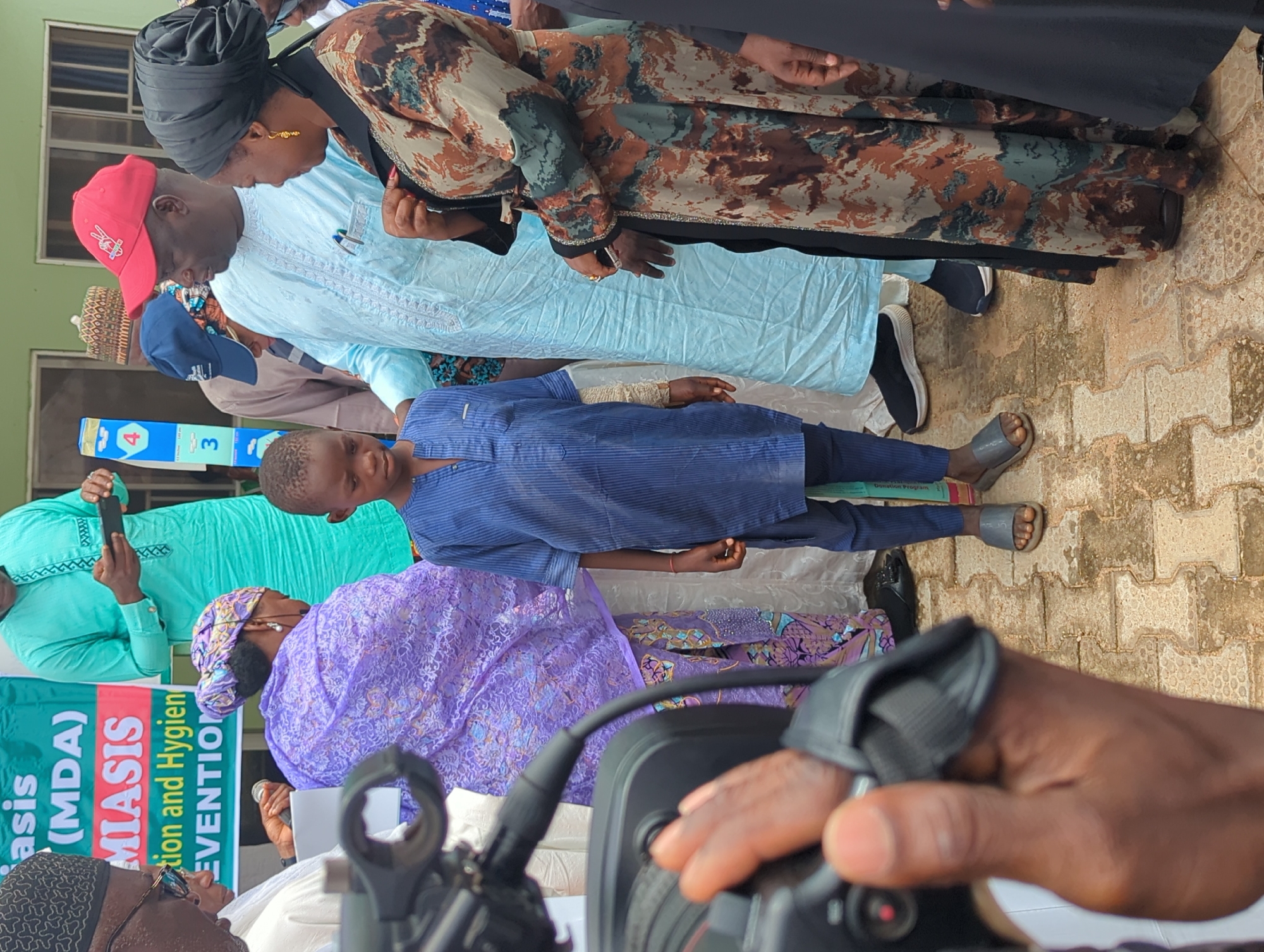
A young boy in a blue striped shirt and pants stands looking down. He has a bandage on his left arm. He is surrounded by adults. To his left is a woman in a purple headscarf and dress. To his right is a man in a light blue robe and a woman in a patterned dress and headscarf. Behind them, other people are visible, some wearing traditional clothing. In the background, a green building is visible. A banner with text that includes "MDA" and "MIASIS" is also partially visible. A camera operator's hand is in the foreground, holding a camera. The ground is paved with interlocking bricks. The event appears to be outdoors in Unguwar Shanu, Nigeria.
Unguwar Shanu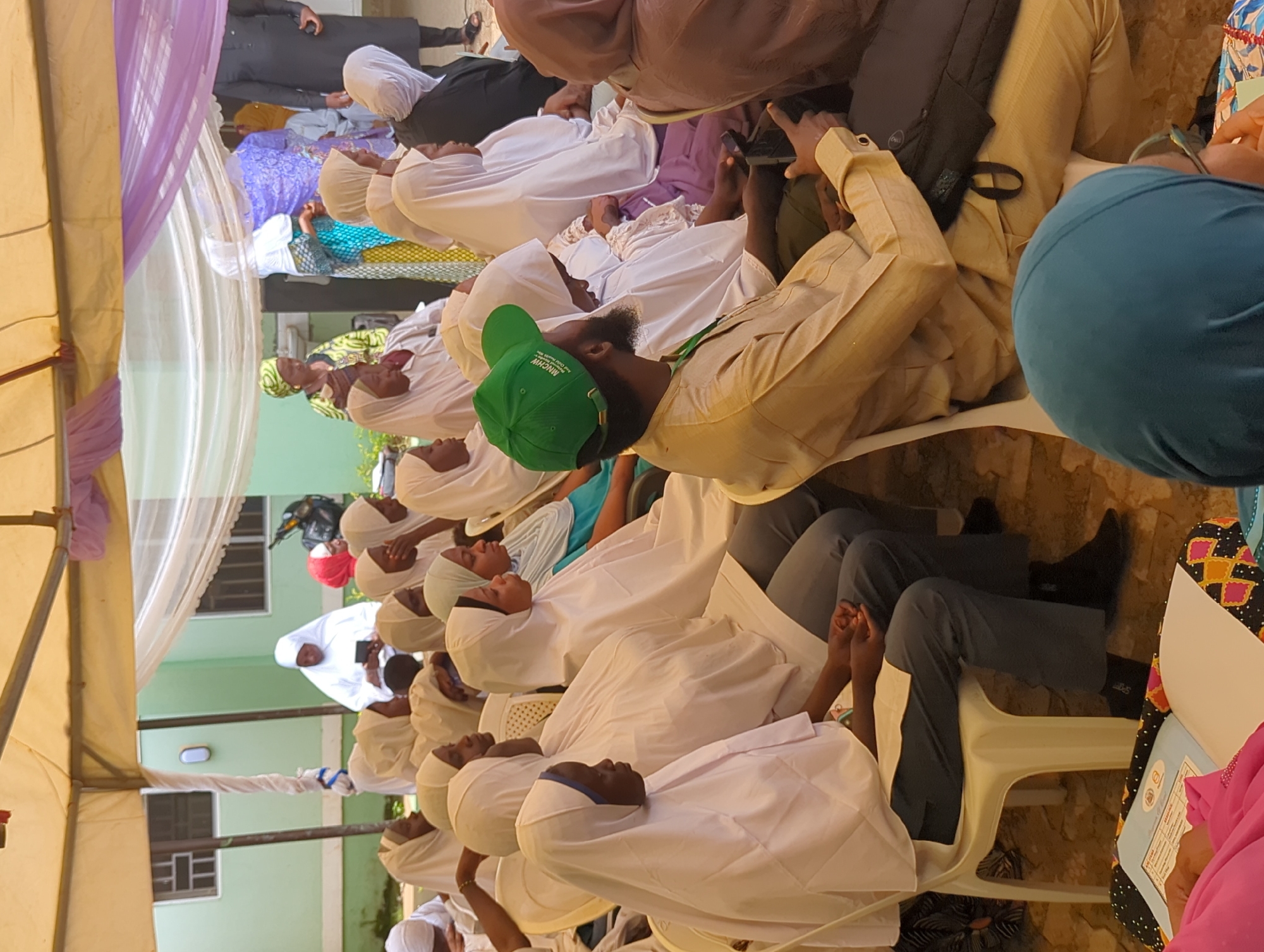
In Unguwar Shanu, Nigeria, a group of people, primarily women and a few men, are seated under a tan tent, attending an event. The majority of the women are dressed in white hijabs and modest clothing, suggesting a religious or educational gathering. In the foreground, a man in a tan outfit and a green baseball cap is visible, holding a black object that could be a phone or wallet. Other attendees are seen in various stages of engagement, some looking towards the front, others conversing. The environment appears to be outdoors, with a green building visible in the background, hinting at a community center or similar establishment. The overall scene conveys a sense of a communal gathering, possibly a lecture, prayer service, or a similar event.
Unguwar Shanu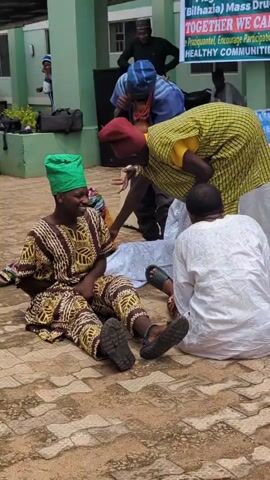
The video shows an outdoor scene with several people gathered. In the foreground, two individuals are sitting on a paved surface, dressed in traditional clothing. One person, wearing a green headscarf and a patterned tunic and pants, is smiling and looking towards the left. Another person, wearing a red head covering and a yellow and green patterned garment, is leaning down and interacting with the first person. Behind them, another person in a white robe is kneeling. In the background, there is a building with green walls and a stone facade. A banner is displayed on the building, featuring text related to a flag-off ceremony. Other individuals are visible in the background, some standing and some seated. The environment appears to be a courtyard or open area outside a public building, possibly for an event or ceremony.
Unguwar Shanu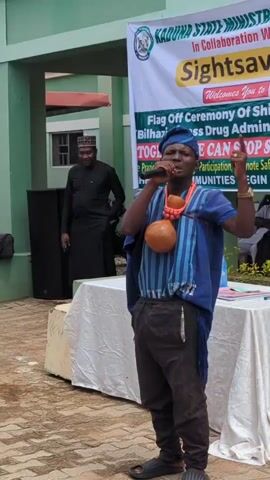
A man in traditional attire, including a blue and striped tunic, dark pants, and sandals, stands center frame speaking into a microphone. He has a gourd around his neck. He gestures with his right hand, which is raised with his index finger extended. Behind him, a banner reads "KADUNA STATE MINISTRY OF HEALTH In Collaboration With SIGHTSavers" and "Flag Off Ceremony Of Schistosomiasis MIDA Drug Administration. STOP SCHISTOSOMIASIS BEGIN WITH PREVENTION". To the left of the man, a speaker is visible. In the background, a man in a black tunic and cap stands near a green building. Several people in white hijabs and one person in a red hijab are seated to the left, some looking at a tablet. Other individuals are seated under a white tent in the background. The ground is paved with brick-like stones, and there is a small table covered with a white cloth to the right of the main speaker. The environment appears to be an outdoor gathering, possibly a public health event.
Unguwar Shanu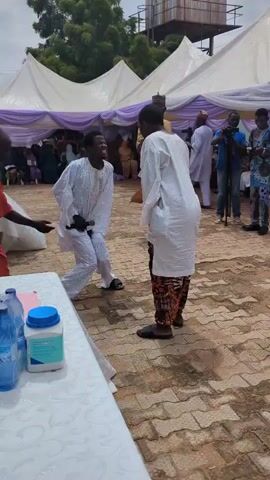
In an outdoor event, two young men are in the center of the frame. The man on the left is wearing a white traditional outfit with intricate embroidery. He is in a dynamic pose, leaning forward with his arms extended and his head tilted back as if shouting or laughing. The man on the right is wearing a white traditional top and patterned pants. He is facing the first man and holding a microphone close to his face, seemingly interacting with him. A third person in a red outfit is partially visible on the far left, also appearing to be interacting with the man in white. In the background, there are white tents with purple drapes, suggesting a festive or celebratory occasion. Other people are visible further back, some holding cameras. A table in the foreground on the left holds several bottles of water and a container with a blue lid. The ground is paved with interlocking bricks. The sky is cloudy.
Unguwar Shanu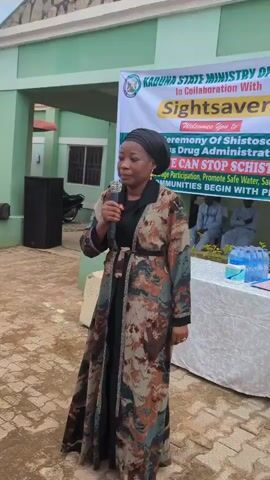
The video begins with a medium shot of a woman speaking into a microphone. She is wearing a headscarf and a long, patterned coat. Behind her, a green building with stone accents is visible. A banner with text is partially obscured but appears to be related to the Kaduna State Ministry of Health. To the left of the woman, a person in a green and yellow patterned outfit walks away from the camera. In the foreground, several tripods with cameras and microphones are set up, suggesting a press conference or media event. A man in a blue t-shirt and jeans is adjusting one of the cameras. Other individuals are seated in the background, some under a white tent. The ground is paved with interlocking bricks. The sky is overcast. The woman speaking is identified as Anita Buba.
Unguwar Shanu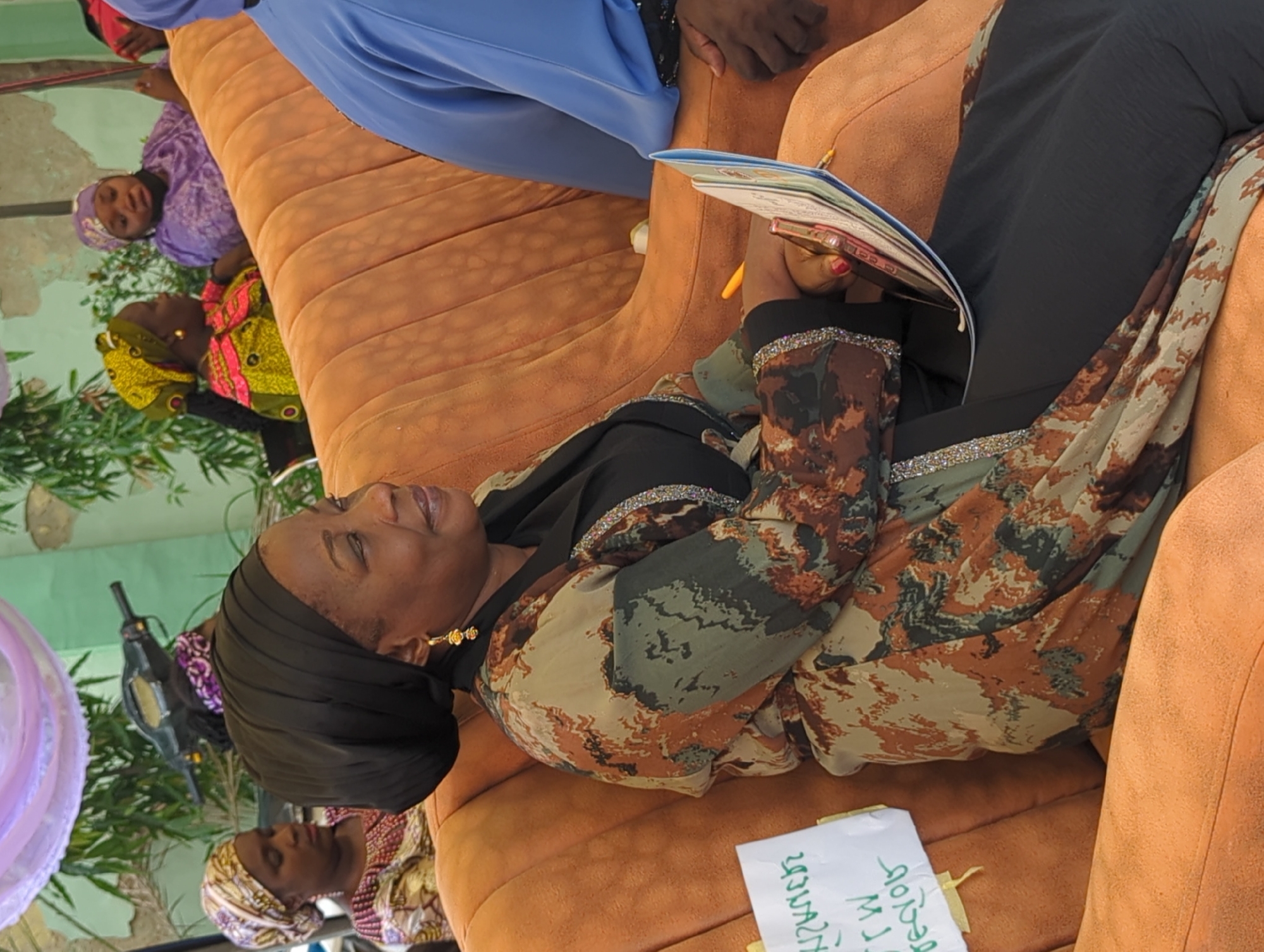
In Unguwar Shanu, Nigeria, several women are seated on a large orange sofa. The central figure, wearing a black headscarf and a camouflage-patterned overgarment, is looking to her right and holding a book or pamphlet. She has gold earrings. To her left, another woman in a patterned headscarf and pink and yellow attire is also seated. Further to the right, another woman in a purple headscarf and matching outfit is visible. In the background, a portion of a motorcycle and some greenery can be seen. A white piece of paper with handwritten text in green ink is attached to the sofa in the foreground. The overall setting appears to be an outdoor gathering or event.
Unguwar Shanu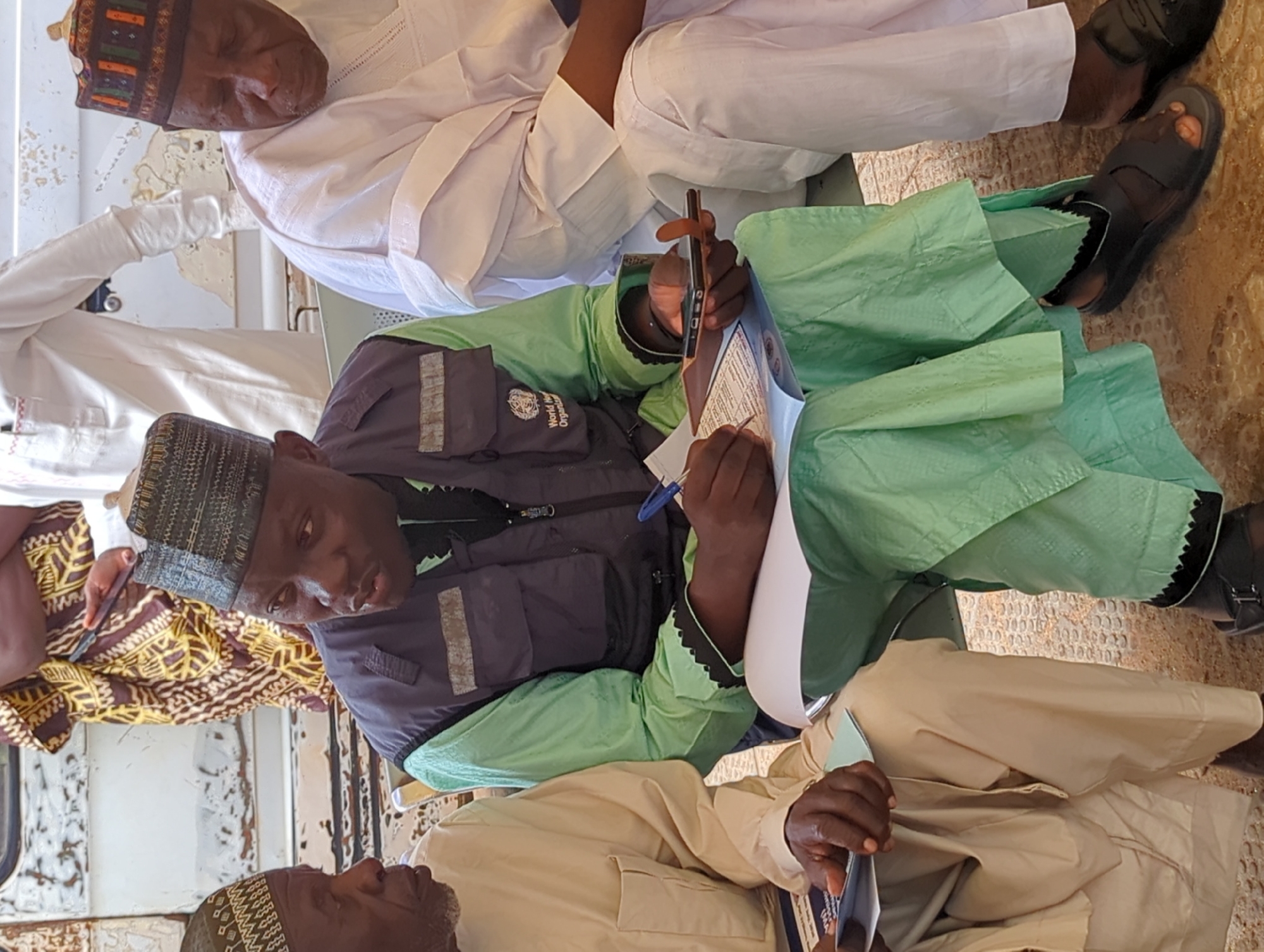
In Unguwar Shanu, Nigeria, three men are seated together. The man in the center, wearing a green traditional outfit and a dark vest with a "World Health Organization" logo, is actively engaged in writing with a blue pen on a document. A mobile phone is held in his other hand. To his left, an elderly man in a light-colored traditional outfit and a patterned cap is looking towards the central figure. To the right of the central man, another elderly man, also in white traditional attire and a colorful patterned cap, appears to be listening or observing. They are seated on a bench in what appears to be an outdoor setting with a textured, sandy ground and a weathered wall in the background. The overall scene suggests a discussion or an interview.
Unguwar Shanu
A group of people, mostly women and children wearing hijabs, are gathered under a tent. In the foreground, a woman in a blue hijab is holding a baby and talking to a child in a purple hijab. The child is sitting on a white chair, and the woman is holding a booklet or paper. Other people are seated in the background, some of whom are also wearing hijabs. The environment appears to be outdoors, with a patterned ground visible. A large draped piece of purple fabric hangs in the center of the frame.
Unguwar Shanu
A full-shot video captures a man standing in front of a banner and addressing an audience. He is wearing a light brown kaftan and a patterned cap, holding a microphone and a document. The banner, partially visible, has text indicating "KADUNA STATE MINISTRY OF HEALTH" and "Sightsavers," along with a message about drug administration and promoting safe water. Behind him, another man in a yellow garment stands with his arms crossed. Several other people are seated in the background. The setting appears to be outdoors, with a paved ground and greenery visible. The man is speaking and gesturing, suggesting he is giving a speech or presentation.
Unguwar Shanu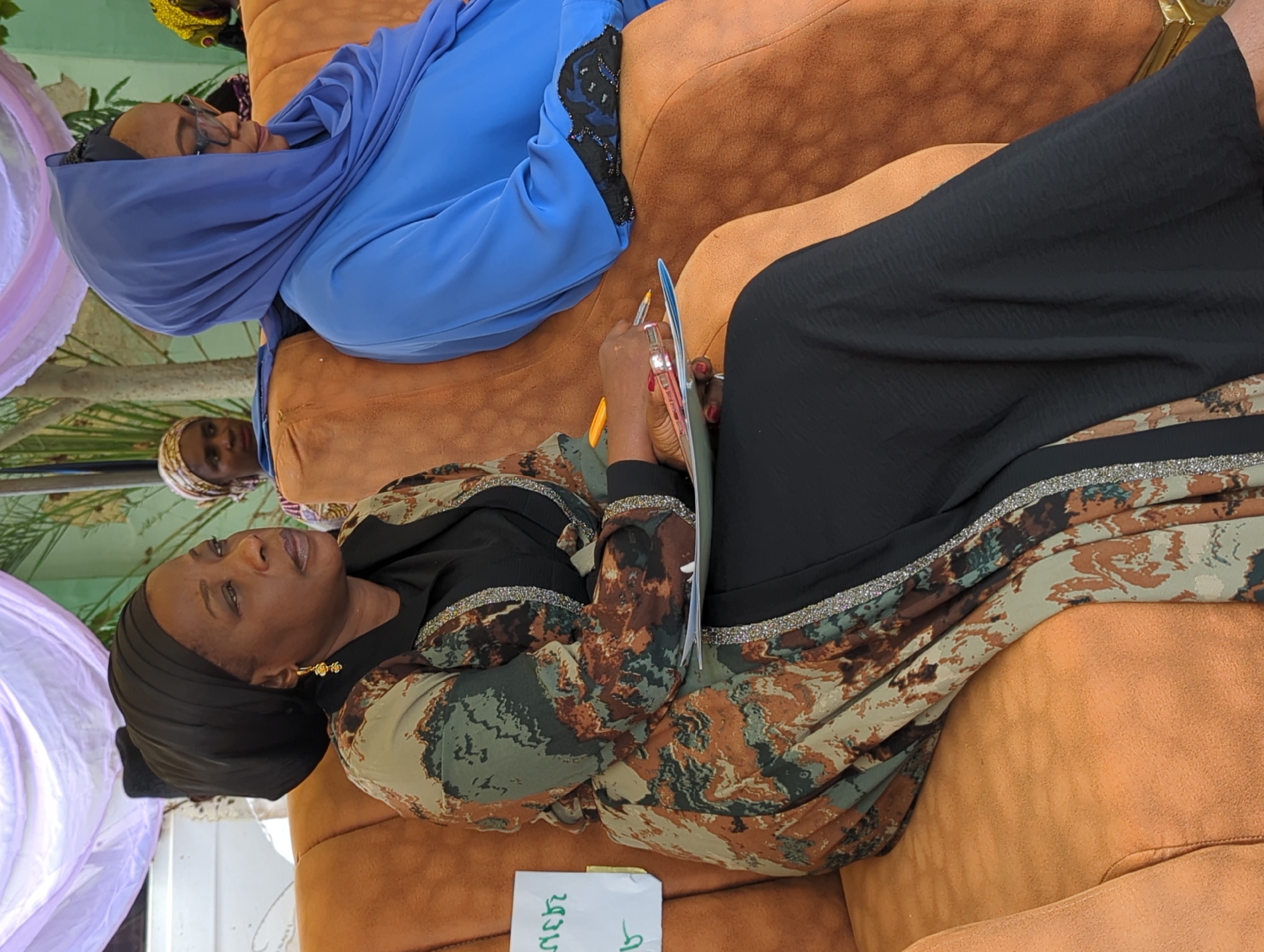
Two women are seated on a brown couch in what appears to be an outdoor event setting in Unguwar Shanu, Nigeria. The woman on the left is wearing a black hijab and a patterned abaya with earth tones and a black undergarment. She has gold earrings and is holding a pen and a tablet. The woman on the right is wearing a blue hijab and a blue abaya with black beaded trim. She is wearing glasses and looking down. In the background, another woman with a patterned headscarf is visible, looking towards the left. The environment suggests a casual gathering or meeting, possibly with some decorations like purple fabric draped in the background. A white paper with handwritten text in an unfamiliar script is attached to the couch to the left of the woman on the left.
Unguwar Shanu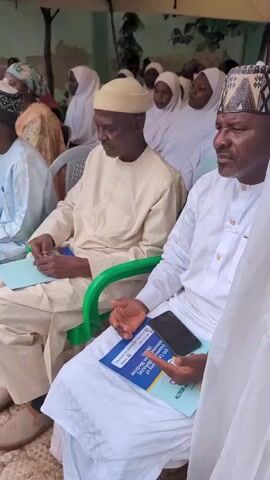
A group of people are gathered outdoors under a tent draped with purple and white fabric. In the foreground, several men and women, mostly wearing traditional Muslim attire, are seated on chairs. They are looking in various directions, and some appear to be listening or observing. One man in a light-colored garment is holding a document and a pen, while another man is holding a smartphone and a brochure. In the background, more people are visible, some seated and others standing. The ground is covered with a patterned paving material. The overall impression is of an outdoor gathering or event, possibly a ceremony or meeting.
Unguwar Shanu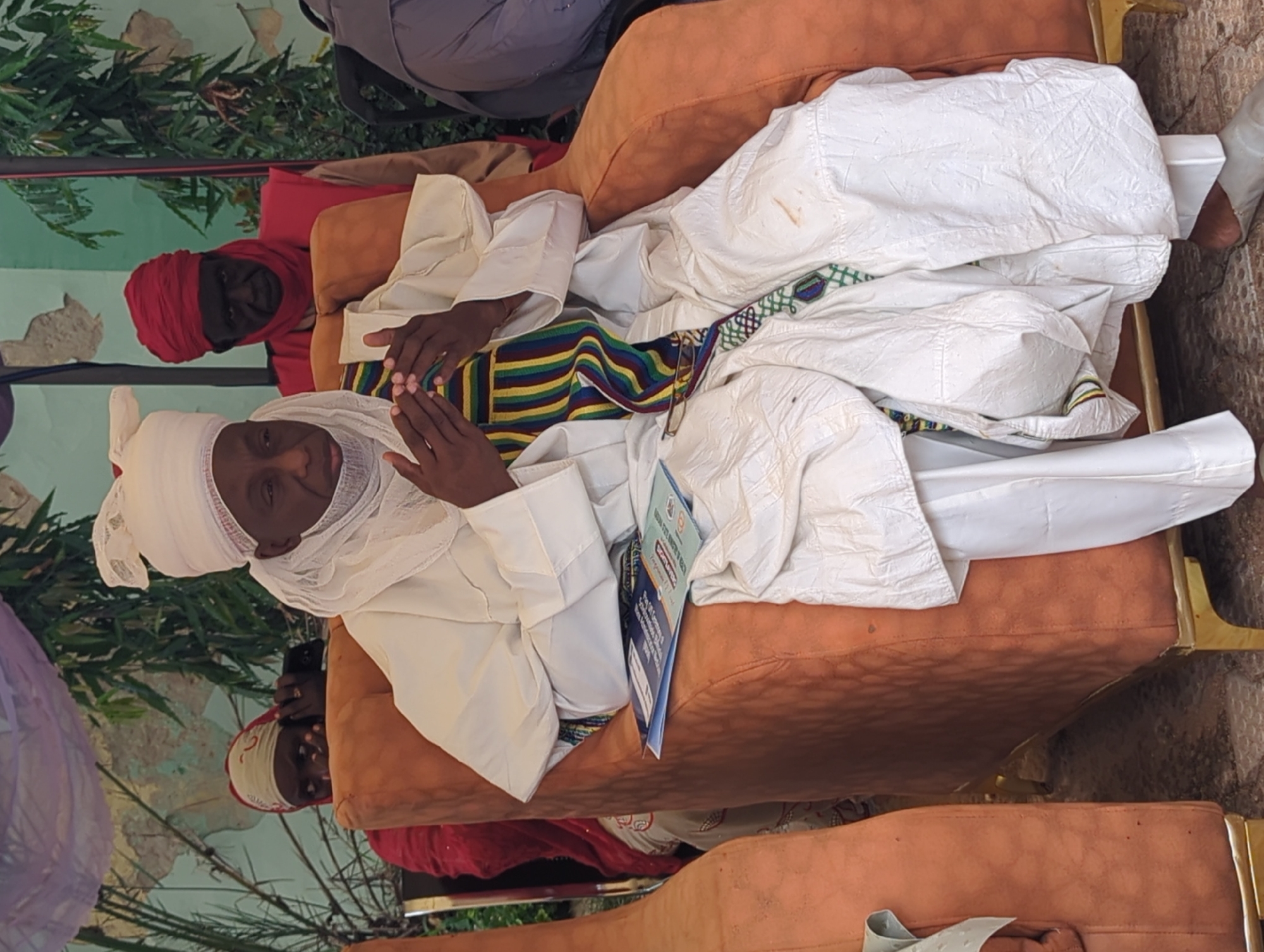
In Unguwar Shanu, Nigeria, a man in a white traditional attire and headdress sits in a brown armchair. He is holding his hands together in front of him. A colorful sash is draped over his chest. A booklet is placed on the armrest of his chair. Behind him, another person wearing a red headdress and garment is visible. The background appears to be an outdoor setting with some vegetation and a wall. The scene suggests a formal gathering or event.
Unguwar Shanu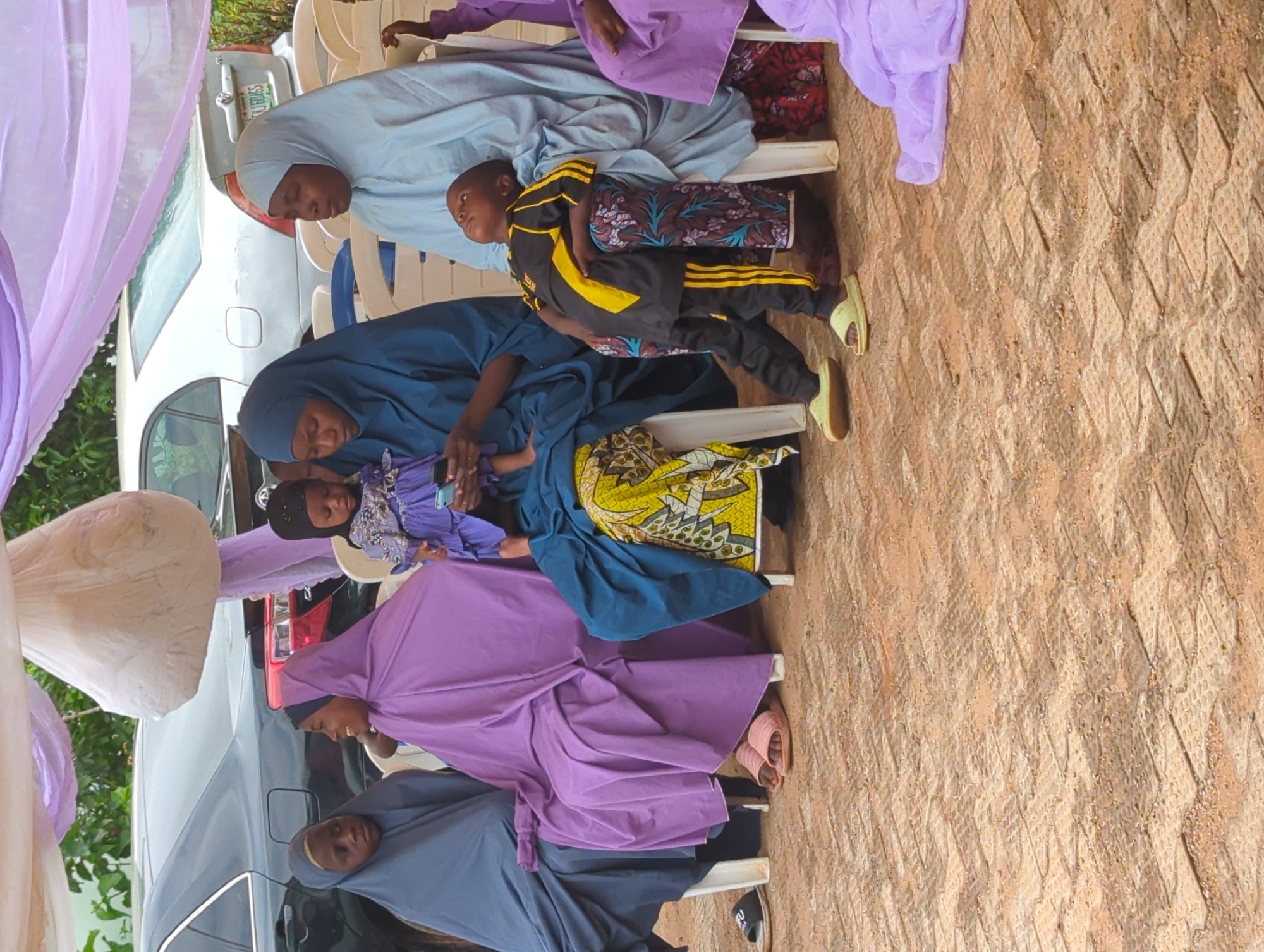
In Unguwar Shanu, Nigeria, several individuals are seated outdoors under a draped purple fabric shelter. On the left, a person wearing a blue hijab sits on a white plastic chair. Next to them, another person in a purple hijab is seated, with their legs crossed and wearing pink slippers. To their right, a person in a dark blue hijab holds a baby dressed in a purple outfit and is looking at a mobile phone. A young boy in a black and yellow tracksuit and light yellow slides is seated, leaning back and looking upwards. Behind him, a person in a light blue hijab is also seated. To the far right, part of another person in a purple garment is visible. The ground is paved with brown interlocking bricks. In the background, cars are parked, including a black sedan and a silver sedan with a license plate that reads "LU6DGS". Green foliage is visible behind the cars.
Unguwar Shanu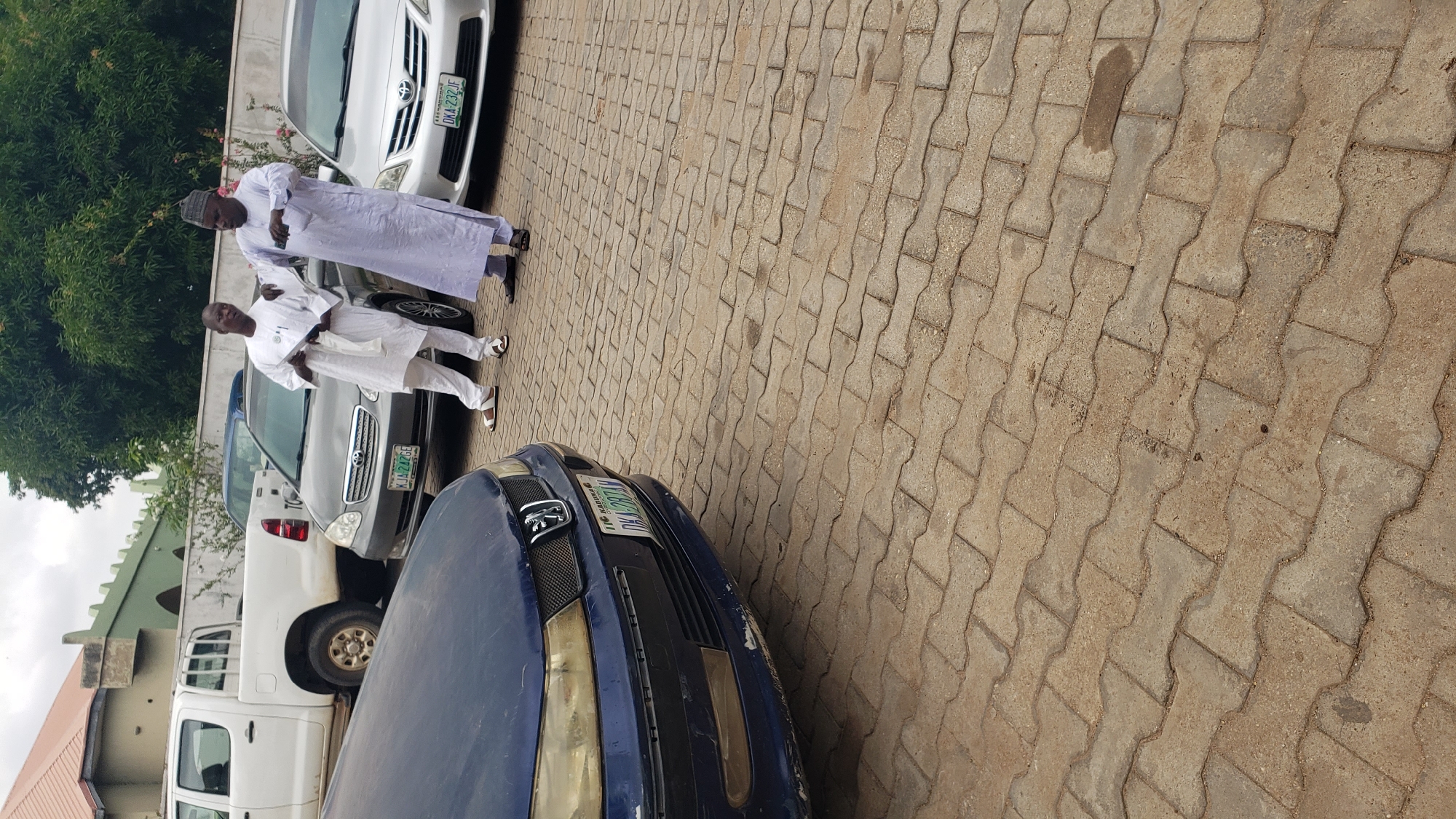
The image shows an outdoor scene in Unguwar Shanu, Nigeria, with two men standing next to parked cars on a paved surface. The man on the left is wearing a white kaftan and a white cap, holding a piece of paper. The man on the right is wearing a light purple kaftan and a dark cap, appearing to be taking a photo with his phone. In the background, there are several cars including a white pickup truck, a silver Toyota sedan with license plate "OKA-232JF", and a dark blue sedan with license plate "OKA 297AD" visible on the front. The environment appears to be a parking area with a building and trees in the background. The overall lighting suggests an overcast day.
Unguwar Shanu
In Unguwar Shanu, Nigeria, a woman wearing a black baseball cap that says "KADVS" and black leggings is leaning against the hood of a damaged blue car. She is holding a baby wrapped in a blue and green patterned cloth, with the baby's legs dangling. The baby is wearing black shoes. A man in a white shirt and black pants is walking away from the scene in the background, past a grey car. Another person, mostly out of frame on the left, is wearing a white patterned shirt. The ground is paved with interlocking bricks, and there are trees and a building in the background. The blue car has visible damage on its front bumper.
Unguwar Shanu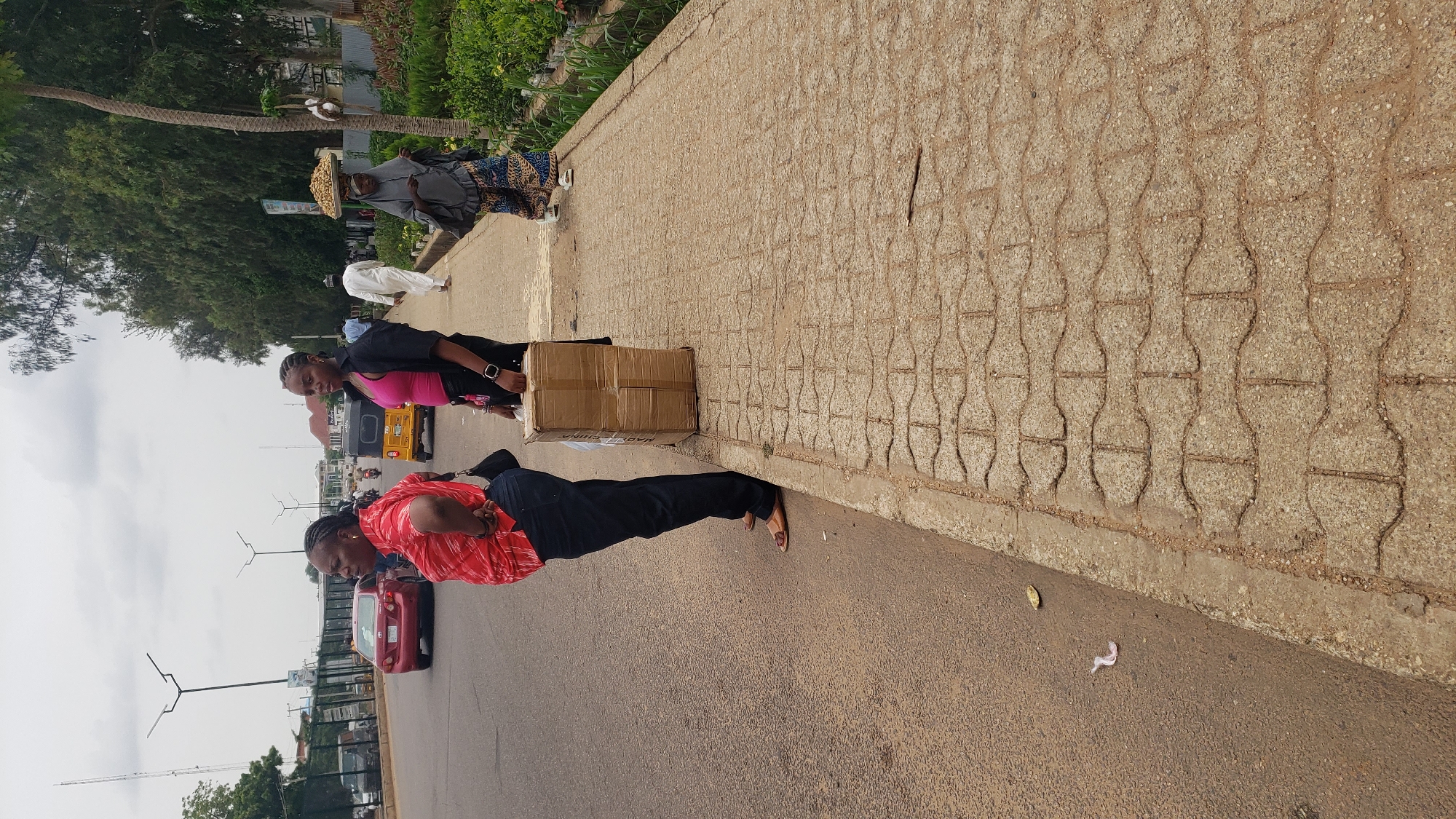
In Unguwar Shanu, Nigeria, on a cloudy day, two women stand by the side of a paved road. The woman on the left, wearing a red patterned shirt and dark jeans, has her hands on her hips. The woman on the right, in a black jacket over a pink top, holds a cardboard box in her hands. Behind them, a person in a white robe walks away, and another woman, wearing a headscarf and a colorful skirt, carries a basket of goods on her head. Traffic, including a red car and a yellow tricycle, is visible on the road. The sidewalk is made of interlocking concrete pavers. Trees and greenery line the far side of the road.
Unguwar Shanu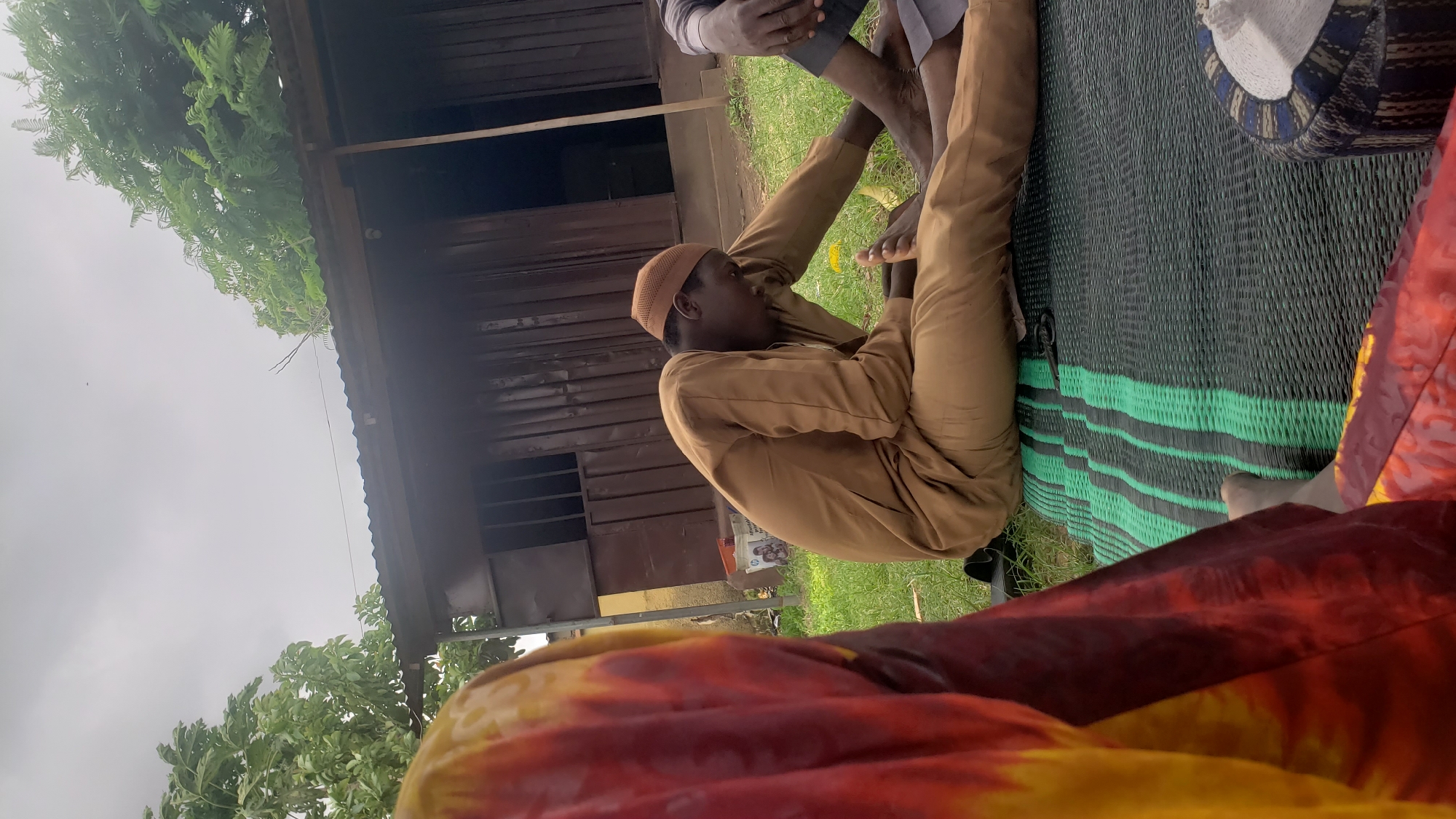
This media file captures an outdoor scene in Unguwar Shanu, Nigeria. The primary subject is a young man wearing a light brown traditional outfit and a matching cap. He is seated on a woven mat with green and black stripes, his legs bent in front of him. His gaze is directed downwards and to his right, with a thoughtful or perhaps slightly strained expression. Another person's legs and feet are visible to his left, also seated. The background features a rustic wooden structure with a corrugated metal roof, suggesting a simple dwelling or workshop. Lush green foliage from trees flanks the scene on the left and top, and the ground is covered in grass, indicating a rural or semi-rural setting. The sky is overcast, suggesting a cloudy or possibly rainy day, and the lighting is diffused, indicating it is likely daytime, perhaps late morning or afternoon. A colorful garment, predominantly red and yellow, is visible in the foreground, partially obscuring the view and framing the bottom of the image. The overall atmosphere feels relaxed and informal, with people gathered outdoors. No visible text is present in the image.
Unguwar Shanu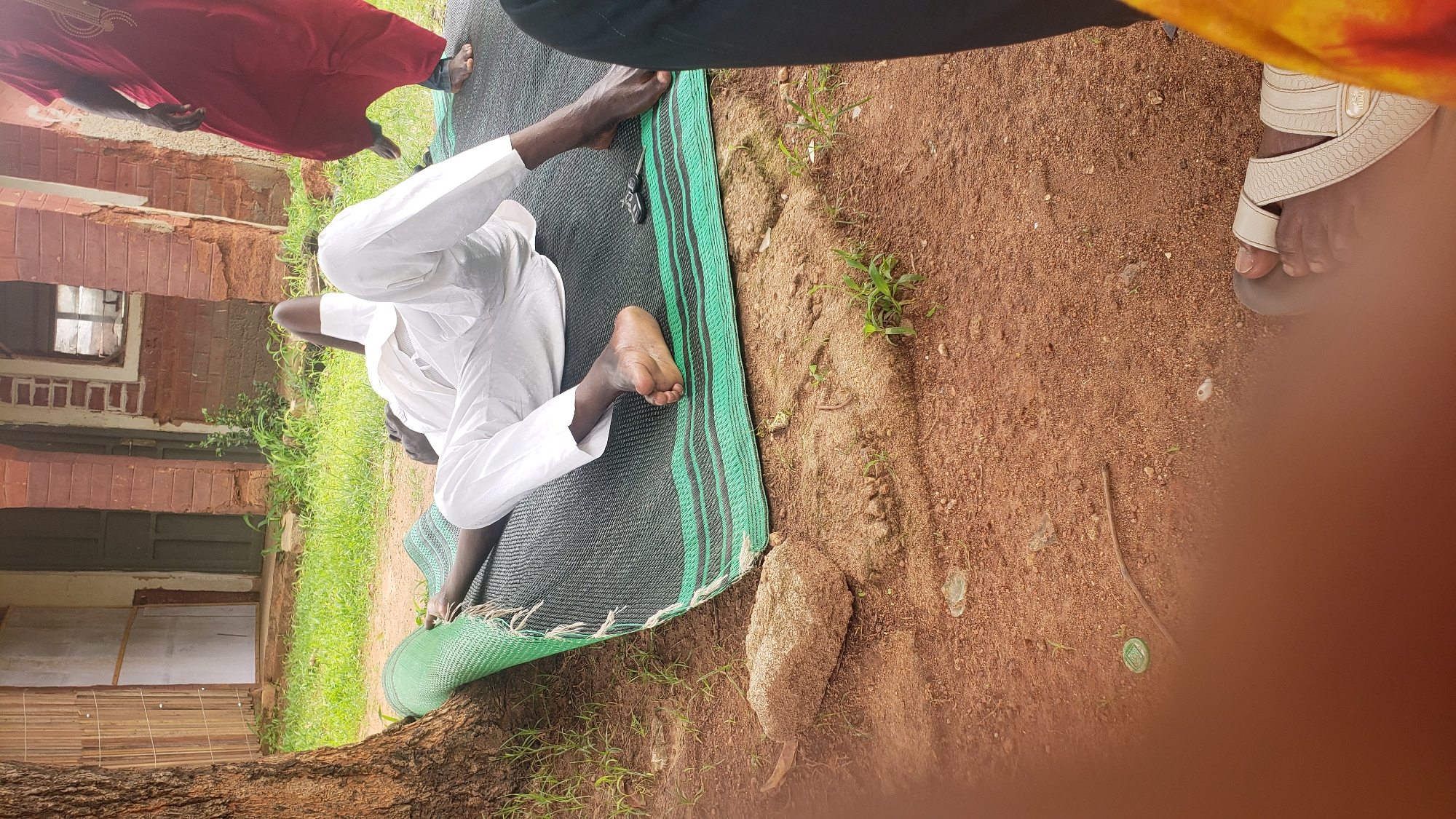
A dark-skinned man wearing white clothing is lying on his back on a green and black mat outdoors. He is positioned on the ground next to a tree trunk. His head is propped up by his hands, and his legs are extended. In the background, a red brick building with arched doorways and a broken window is visible. Green grass and red soil make up the surrounding environment. To the right, a person wearing a red garment and another in black clothing are partially visible. A few small green plants are growing in the dirt.
Unguwar Shanu