Zaitsevo (Verevskoe S/P), Russia
16 memories from Zaitsevo (Verevskoe S/P), Russia

A dashcam view of a wet road at dusk with cars driving in the rain. The road is dark and reflects the headlights of oncoming vehicles. Trees line the right side of the road, and a few streetlights are visible in the distance. The sky is overcast and gray. A bus is visible in the distance on the left side of the road.
Zaitsevo (Verevskoe S/P)
A woman with short, wavy, silver-purple hair and light makeup, wearing a black long-sleeved shirt and multiple necklaces, sits in the driver's seat of a car. She is looking directly at the camera and speaking. Her left hand is raised and gesturing with a pointed finger. The car's interior is visible, including the black leather headrest of the seat behind her and a gray seatbelt. A blue and white checkered fabric is visible on the passenger side. The background outside the car appears to be a blurred landscape with trees and sky.
Zaitsevo (Verevskoe S/P)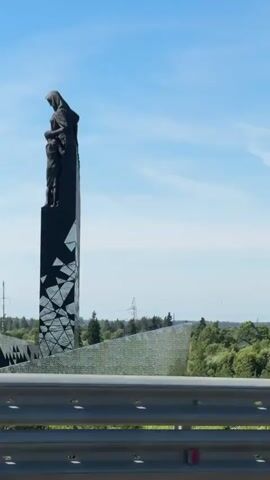
This is a vertical, stabilized video of a dark, tall, obelisk-like monument with a sculpted figure on top. The monument is dark, possibly black, and appears to be made of stone or metal. The sculpted figure at the top depicts a person, possibly a woman, with a child. The lower portion of the monument is decorated with a pattern of shattered or fragmented geometric shapes, which appear to be white or light-colored against the dark background. In the background, there is a clear blue sky with some white clouds. Below the monument, there is a green landscape with trees and some man-made structures, including what appears to be a highway guardrail in the foreground. The overall impression is that of a memorial or monument viewed from a moving vehicle, possibly on a bridge or elevated road.
Zaitsevo (Verevskoe S/P)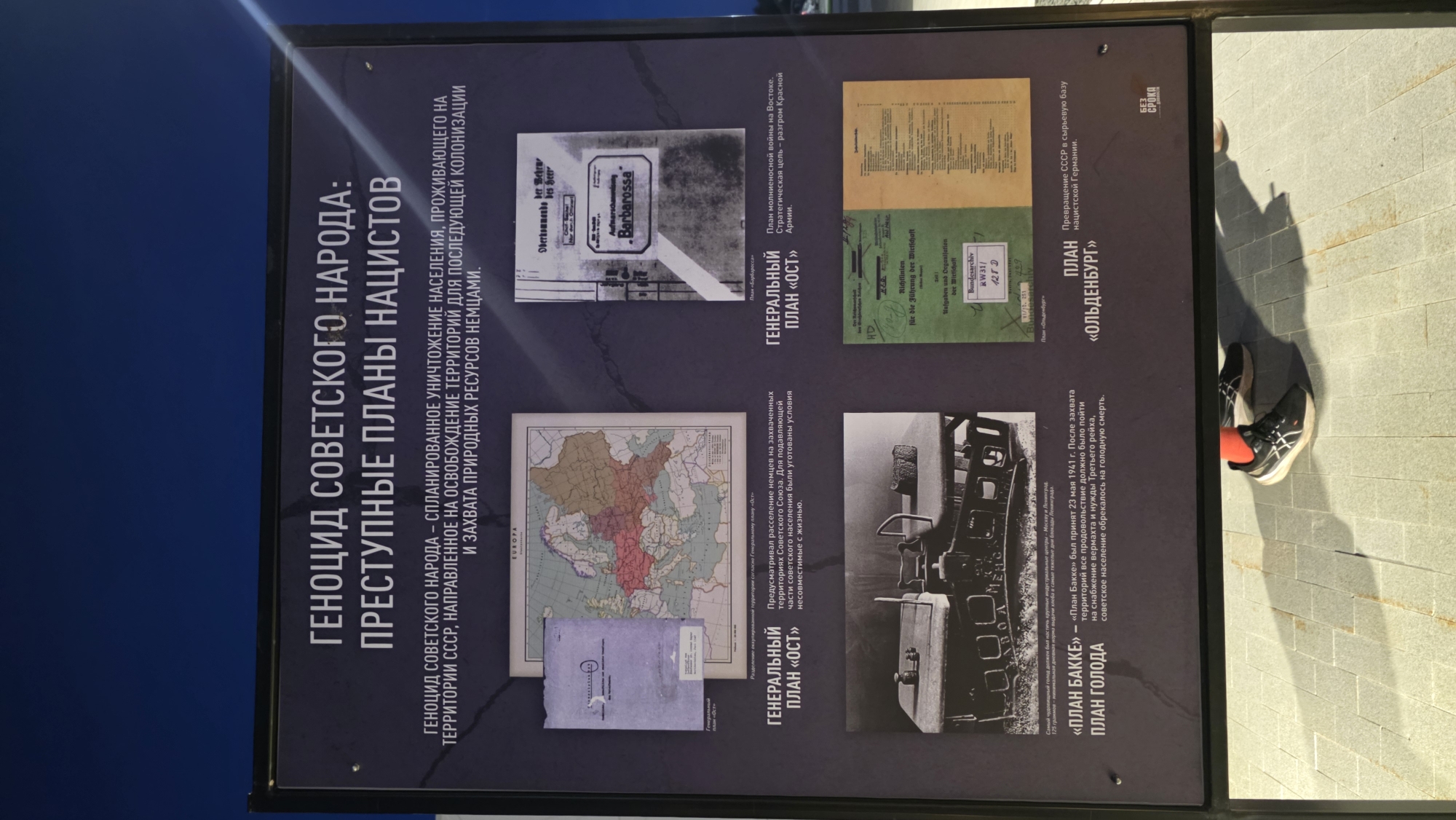
Here's a detailed description of the image: The image shows a display board, likely part of an exhibition, presenting information about the Nazi plans for the genocide of the Soviet people. The board is divided into sections, each containing text in Russian and related images. The main title reads: "Genocide of the Soviet People: Criminal Plans of the Nazis." The accompanying text elaborates on the planned destruction of the population living in the territory of the USSR, aimed at freeing up territories for subsequent colonization and the seizure of natural resources by the Germans. Specific plans mentioned and illustrated on the display board include: * **"General Plan Ost":** This section features a map of Eastern Europe with different colored areas, presumably indicating regions designated for German resettlement and Soviet population displacement. There is also a picture of a document with text on it. The accompanying text says the plan envisioned the resettlement of Germans in the captured territories of the Soviet Union, with the conditions for the majority of the Soviet population being incompatible with life. It is described as a plan for a lightning war in the East, with the strategic goal of defeating the Red Army. * **"Plan Oldenburg":** Another section features a document and text that states the plan was for turning the USSR into a raw material base for Nazi Germany. * **"Bakke Plan" ("Hunger Plan"):** This part of the display board includes a photograph of railway cars and describes the "Bakke Plan" as a plan to supply the Wehrmacht (German army) and the needs of the Third Reich, with the consequence that the Soviet population was doomed to starvation. This plan was adopted on May 23, 1941. In the reflection of the display are legs of a person wearing white/black shoes and a bright orange sock. Based on the information provided, it is not possible to determine the exact location in Zaitsevo (Verevskoe S/P), Russia, but it is likely inside a museum or memorial complex that focuses on WWII history.
Zaitsevo (Verevskoe S/P)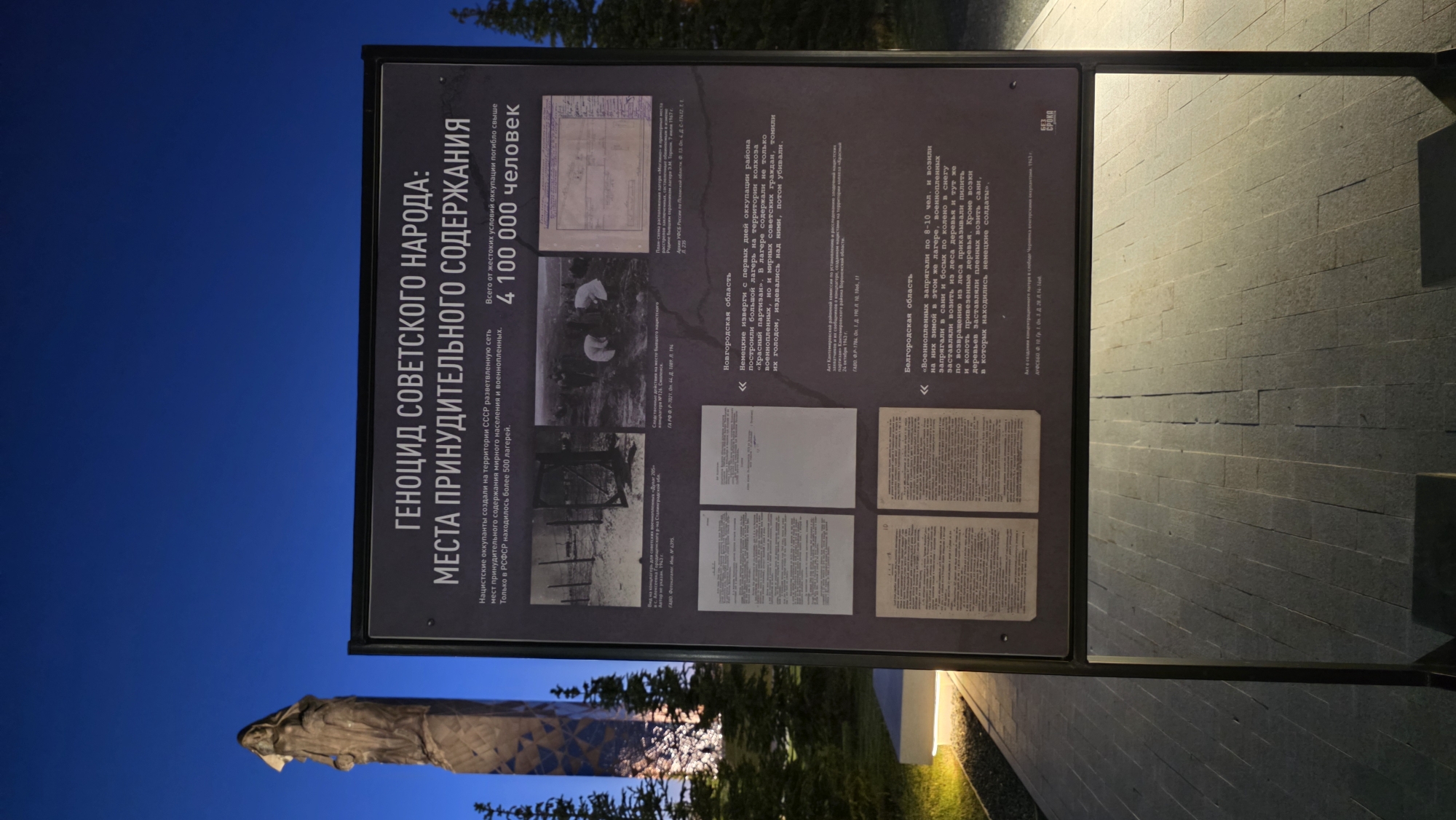
Here is a detailed description of the image: **Scene Description:** The image shows an information panel standing in an outdoor location, likely a memorial site or museum. The panel is upright and displays text and images related to the "Genocide of the Soviet People: Places of Forced Detention." The panel's text is in Russian, detailing the Nazi occupation's establishment of a network of forced detention sites across the USSR. The panel mentions over 500 camps in the RSFSR alone, with over 4,100,000 people perishing due to harsh occupation conditions. There are images of camps and historical documents. The location appears to be outdoors, with brick pavers visible on the ground. Behind the panel, there's a statue in the background, partially obscured by trees. The sky is a gradient of blue, suggesting dusk or dawn. There is artificial lighting illuminating the pavers on the right side of the image. **Location:** Based on the text and subject matter, this is likely a memorial or museum in or related to Zaitsevo (Verevskoe S/P), Russia. The presence of a memorial statue further confirms that it is a dedicated memorial location. **Objects:** * Information Panel * Brick pavers * Statue * Trees * Artificial lights * Historical Documents **Overall Impression:** The scene creates a somber atmosphere, highlighting a dark period in history. The erected panel and statue suggest commemoration and remembrance.
Zaitsevo (Verevskoe S/P)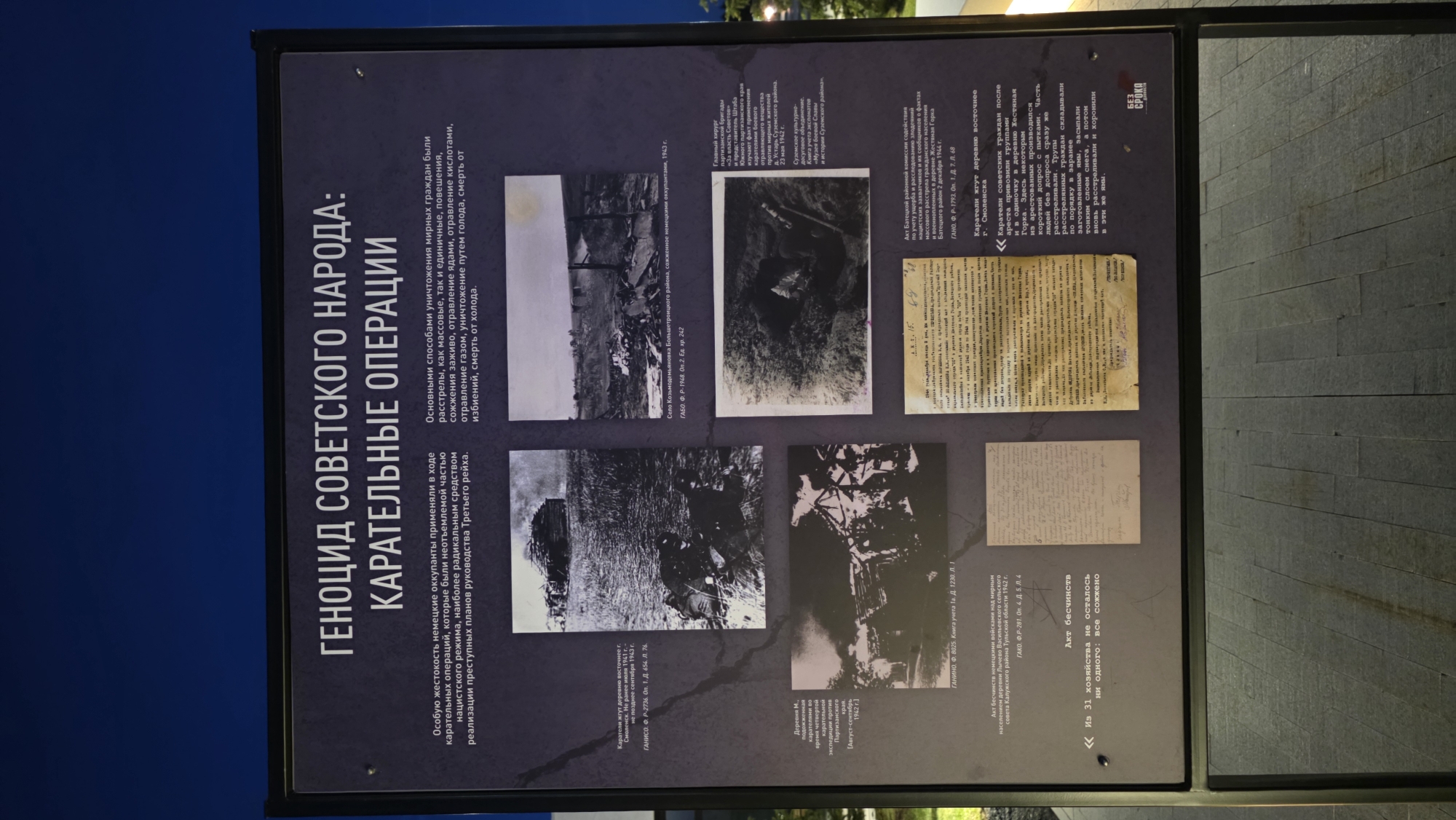
The image shows a vertical display panel, likely an outdoor exhibit or informational sign, about the genocide of the Soviet people and punitive operations during wartime. The location is unspecified, but the panel's text is in Russian, and one caption refers to villages in the Smolensk region. The panel features a dark gray background with lighter gray text and monochrome photographs. The text headings are "GENOCIDE OF THE SOVIET PEOPLE: PUNITIVE OPERATIONS." The body of the text describes the cruelty of German occupiers during punitive operations. It lists methods of destruction such as mass shootings, burnings alive, poisoning, starvation, torture, and freezing. There are four black and white photographs arranged in a grid. These include: * A picture of arsonists burning a village east of Smolensk. * A picture of the village of Kozmodemyanovka, a picture of the burning expedition against the partisan territory. * A close-up photo of a group of people examining a site where a chemical weapon was used, apparently in the Suzem district. * A photo of a written document, presumably an official record. Additional text includes captions for each photograph and quotes or excerpts from historical documents related to the atrocities committed. At the bottom of the panel, there is an “Act of Lawlessness”, and a statement indicating that “Of the 31 households, not a single one remained: all burned.”
Zaitsevo (Verevskoe S/P)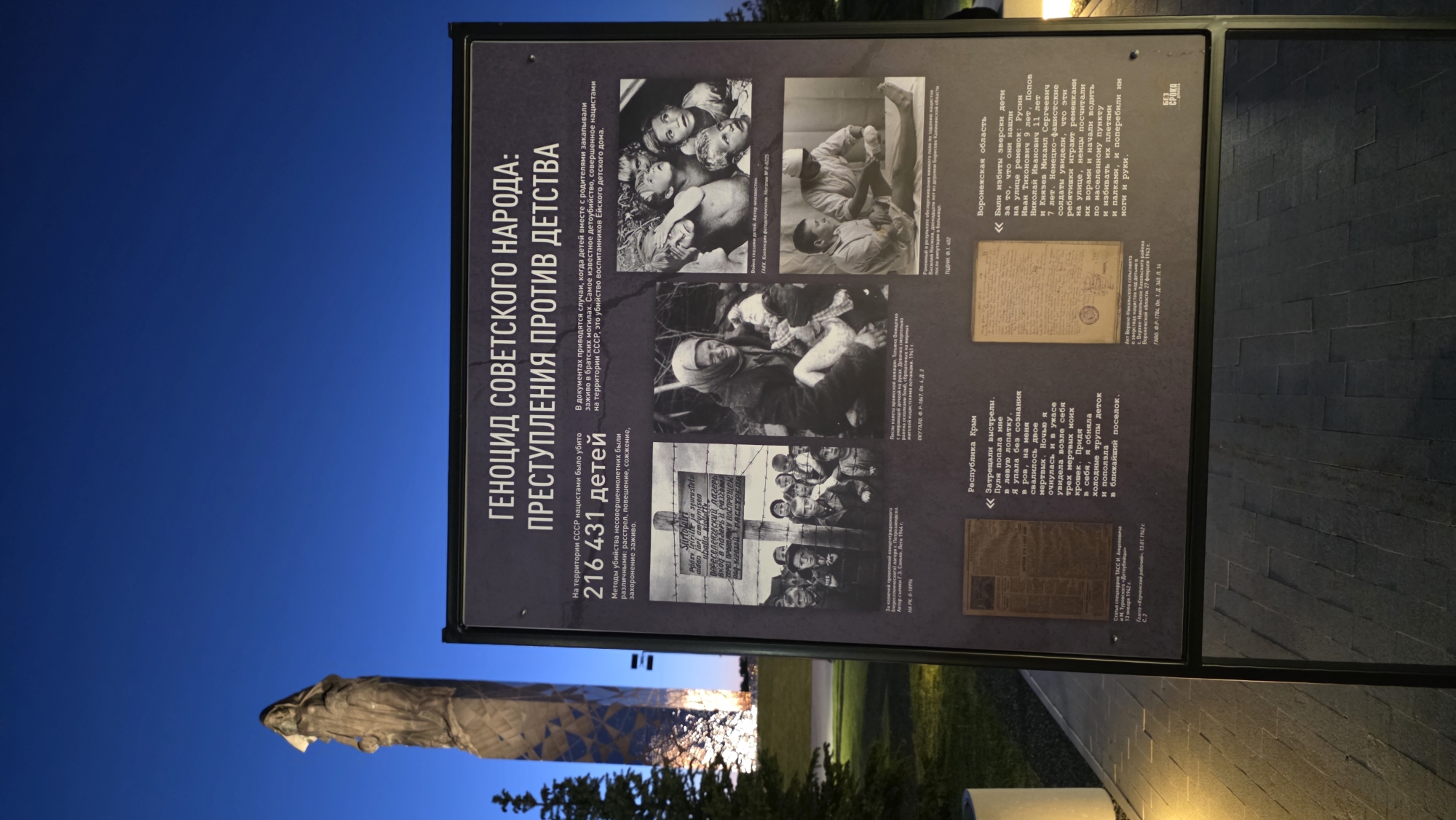
The image shows an outdoor information sign in Zaitsevo (Verevskoe S/P), Russia. The sign details the "Genocide of the Soviet People: Crimes Against Childhood" and cites that 216,431 children were killed by the Nazis in the USSR. It includes black-and-white photographs and historical documents, with text in Russian. In the background, a statue and illuminated structures are partially visible against a dusk or night sky.
Zaitsevo (Verevskoe S/P)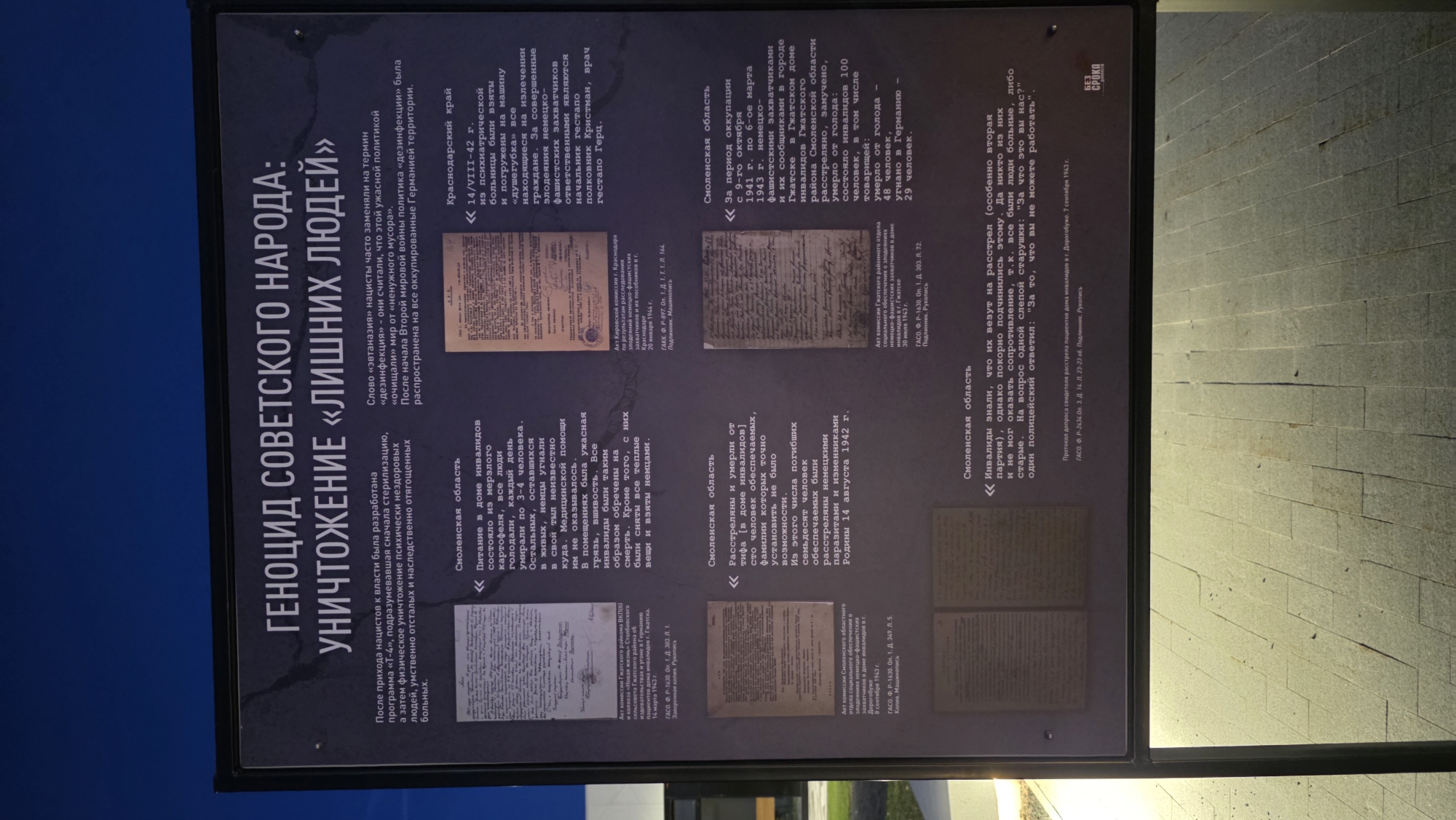
The image shows an outdoor information panel displaying information about the genocide of the Soviet people during World War II, specifically focusing on the extermination of "superfluous people" (those deemed undesirable by the Nazi regime). The location is likely a memorial or historical site. The panel contains text in Russian and reproductions of historical documents related to the persecution and extermination of disabled people, mentally ill individuals, and others deemed unfit by the Nazi regime in occupied territories of the Soviet Union, such as the Smolensk and Krasnodar regions. The documents include reports, testimonies, and official communications detailing atrocities committed by German forces. The panel is placed in an outdoor location with a paved area in the background.
Zaitsevo (Verevskoe S/P)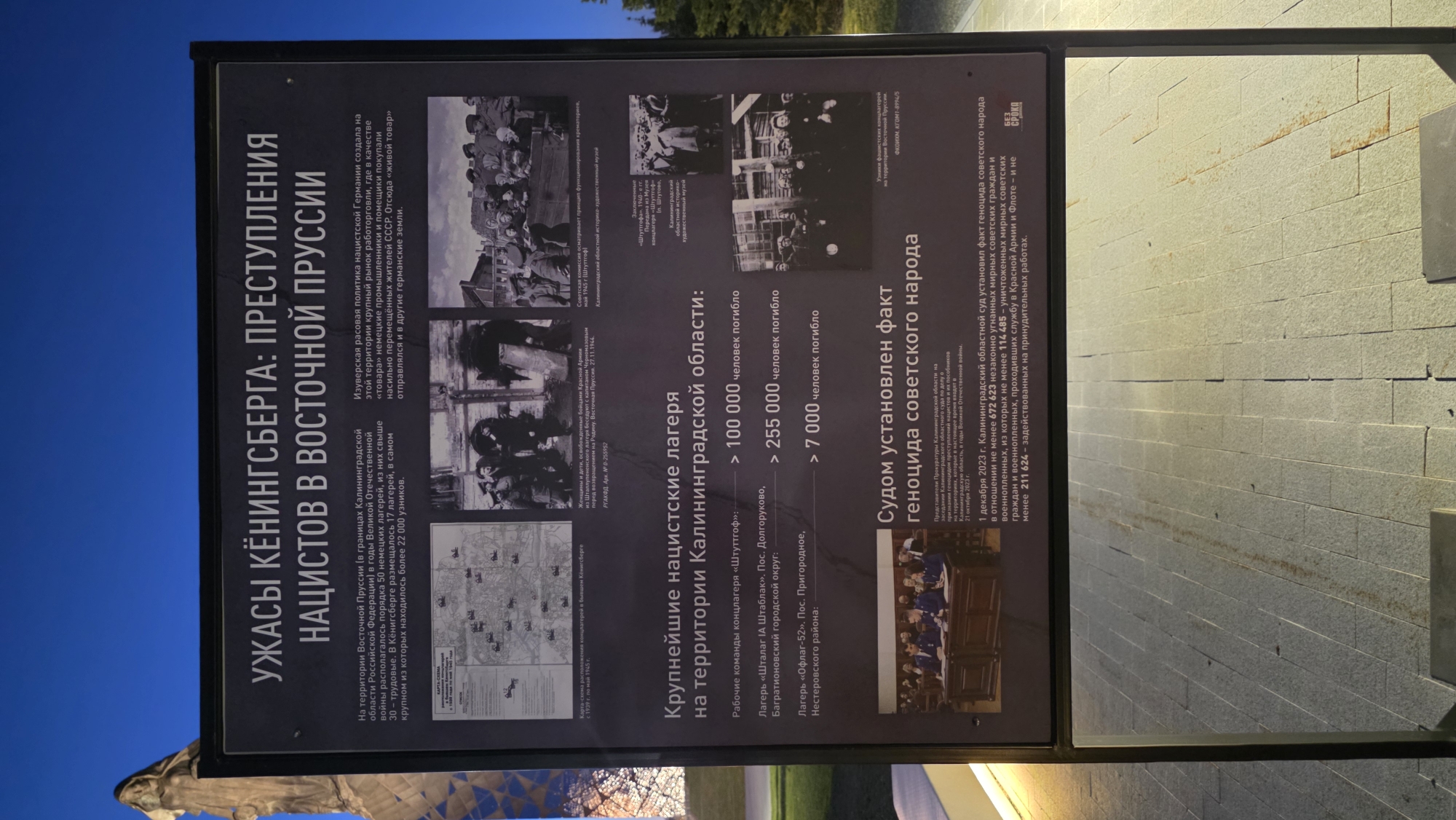
The image shows an information sign titled "Horrors of Königsberg: Crimes of the Nazis in East Prussia". The sign details atrocities committed by Nazi Germany in the East Prussia region, particularly within what is now the Kaliningrad Oblast of Russia. It mentions the presence of around 50 Nazi camps, including 17 in Königsberg, and highlights the enslavement and forced labor of Soviet citizens. The sign lists major Nazi concentration camps in the Kaliningrad Oblast and estimates the number of deaths. It states that on December 1, 2023, the Kaliningrad Regional Court established the fact of genocide against the Soviet people. The sign includes photographs of prisoners and documentation. The location of the sign is Zaitsevo (Verevskoe S/P), Russia, but the image gives no details about that location.
Zaitsevo (Verevskoe S/P)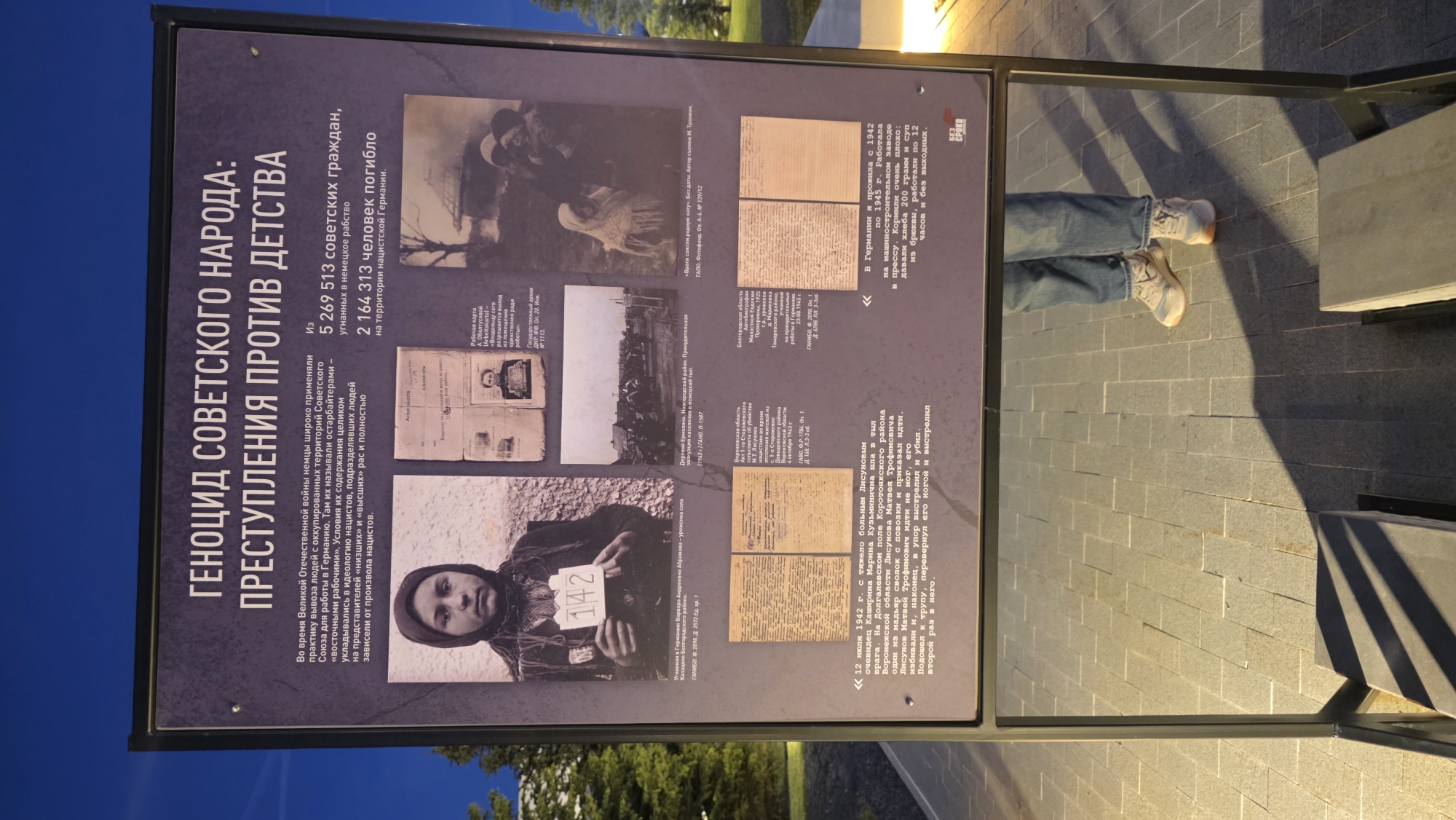
Here's a detailed description of the image: **Location:** Likely Zaitsevo (Verevskoe S/P), Russia. This is based on the Russian text in the image. **Description:** The image shows a rectangular information panel, likely part of a memorial or historical display, standing outdoors. The panel details the genocide of the Soviet people, specifically focusing on crimes against children during the Great Patriotic War (World War II). **Content of the Panel:** * **Headline:** The panel's title is "Genocide of the Soviet People: Crimes Against Childhood." * **Text:** The text describes the practice of the German occupiers during World War II, who deported Soviet citizens from occupied territories to Germany as forced laborers ("Ostarbeiters"). It mentions the poor conditions, and the ideological motivations based on the Nazi's division of people into "lower" and "higher" races. Statistics are given regarding the number of Soviet citizens deported and killed. * **Images:** The panel contains several black and white photographs and scanned documents as visual evidence to support the narrative. These include: * A photograph of a child with a sign showing their assigned number "142". * Various historical documents in Russian, including work permits, reports about murders committed by Nazi troops, and personal autobiographies. * Images of a village being burned. * **Citations:** There are citations referring to various archives (e.g., GANIRO, GAVO). **Other Details:** * In the bottom right corner, there is a portion of a person's lower legs and feet visible, wearing jeans and sneakers, implying someone is standing nearby and looking at the display. * The panel is mounted on a metal frame. * The surrounding environment seems to be a paved area, possibly a park or memorial site, with some greenery visible in the background. **Overall:** The image appears to be part of an outdoor exhibit or memorial, likely focused on the historical impact of World War II on the Soviet people, with an emphasis on the crimes committed against children.
Zaitsevo (Verevskoe S/P)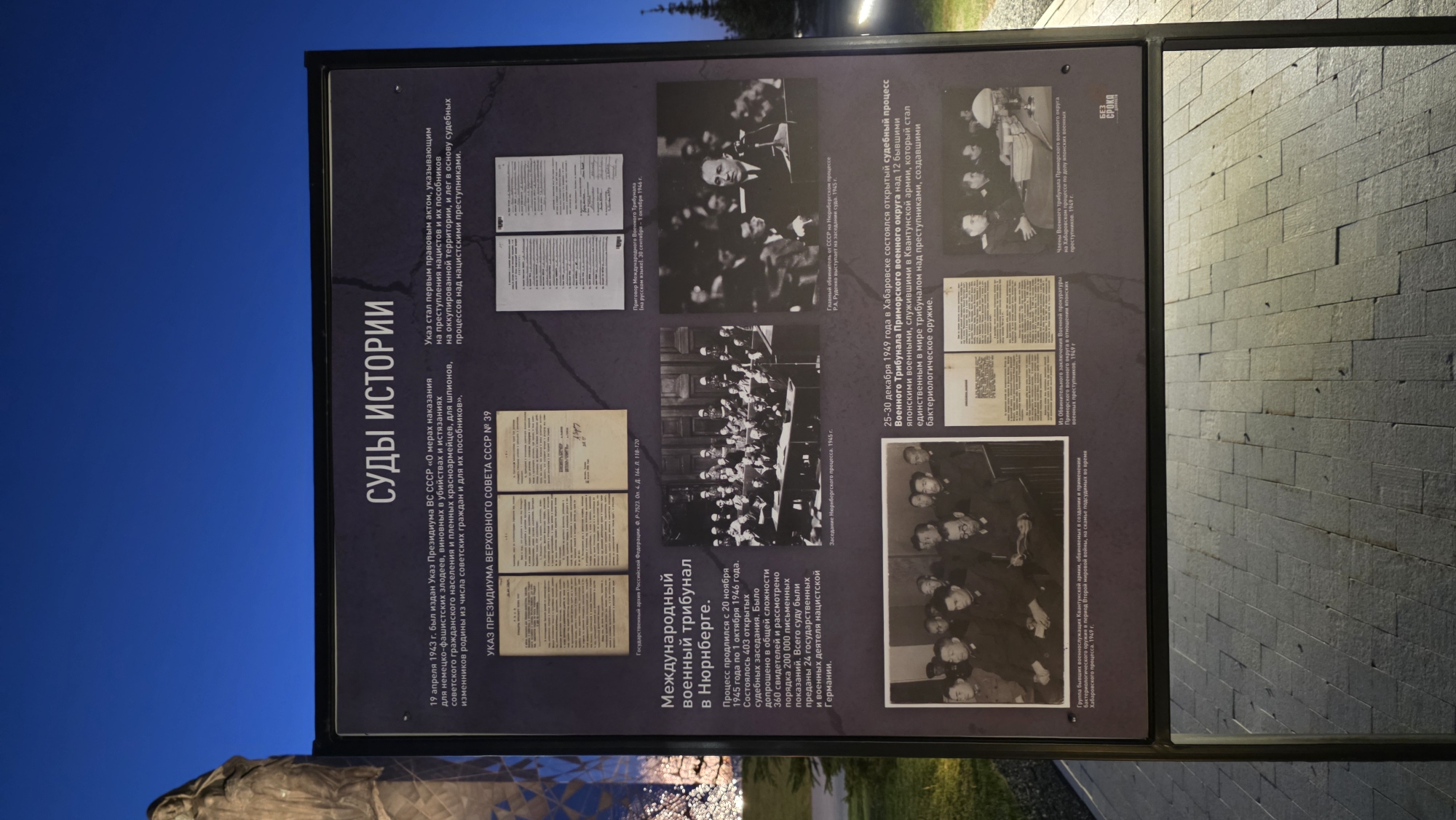
Here is a description of the image: **Scene:** The image shows an informational display panel, possibly part of an outdoor exhibit. The panel is black with white and black text and historical black and white photographs. The panel’s subject matter appears to be about war crimes trials, specifically the Nuremberg trials and trials in Khabarovsk, Russia. **Text (translated from Russian):** The main title is "COURTS OF HISTORY”. The text below the heading references a decree from April 1943 concerning punishment for Nazi-Fascist criminals, spies, and traitors. It further describes this decree as a foundational legal act for trials against Nazi criminals. The panel also mentions the International Military Tribunal in Nuremberg, and that the trials occurred from November 20, 1945, to October 1, 1946. It states that there were 403 open court sessions with 360 witnesses examined. The panel indicates the trials of former members of the Kwantung Army in Khabarovsk in December 1949. **Images:** The images on the panel include photographs of legal documents, images of the Nuremberg trials, and photographs of individuals accused of war crimes during the Khabarovsk trials. **Environment:** The panel is outdoors, with a dark blue sky in the background. There is a stone statue or monument and some greenery visible below the display. The ground nearby is paved. Based on the identified location in the city of Zaitsevo (Verevskoe S/P), Russia, this display may be a local exhibit or memorial related to World War II and its aftermath.
Zaitsevo (Verevskoe S/P)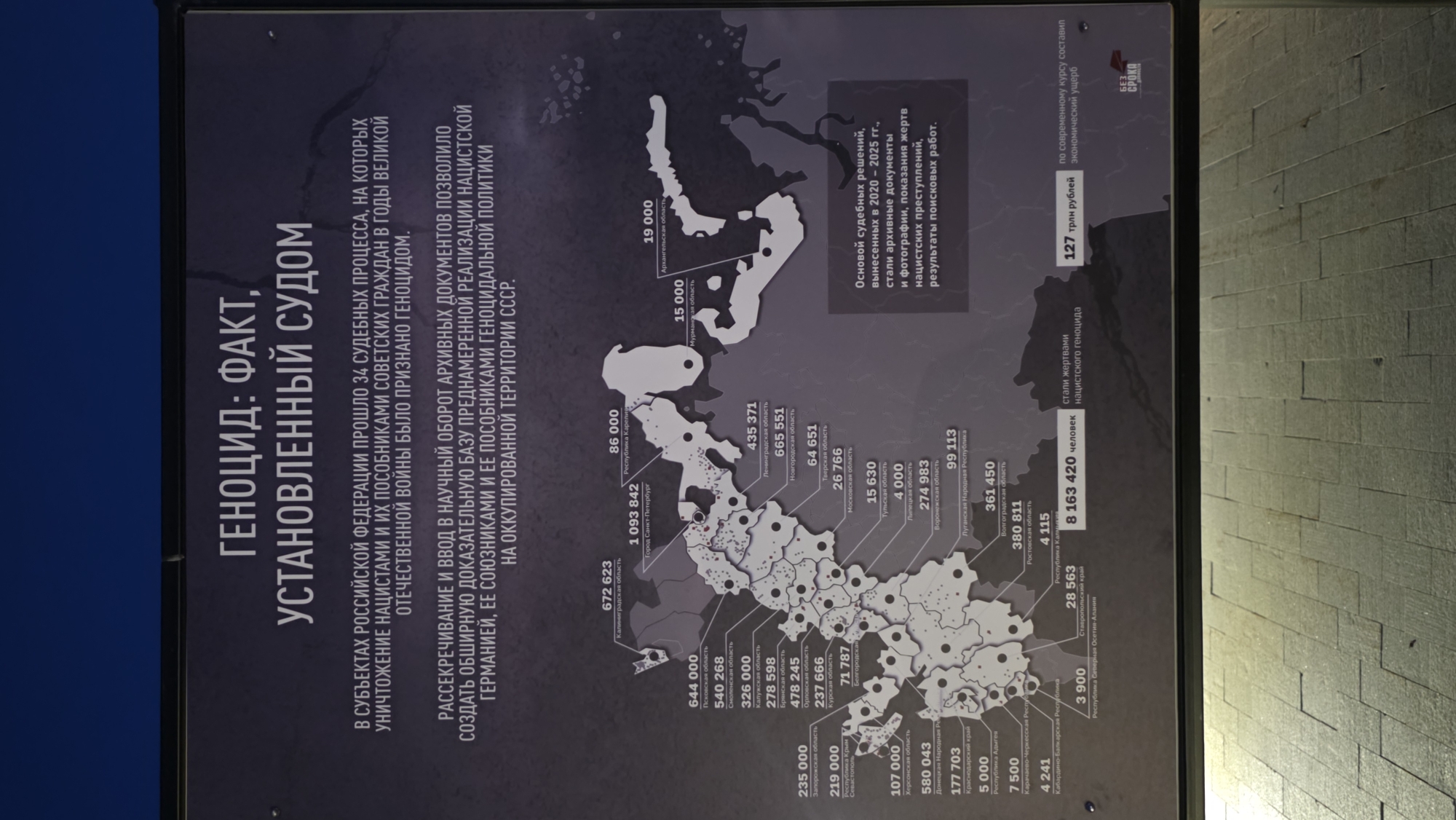
The image shows an information board with a map and text in Russian, likely displayed in a museum or historical exhibition. **Title:** The main title of the board reads "Genocide: Fact, Established by Court". **Content Overview:** The board presents information related to the recognition of the actions of Nazis and their collaborators against Soviet citizens during the Great Patriotic War (World War II) as genocide by Russian courts. The map visually represents different regions and provides numerical data, likely representing the number of victims of Nazi genocide in those areas. **Textual Information:** * It states that 34 court cases in the Russian Federation have recognized the destruction of Soviet citizens by Nazis and their collaborators during the Great Patriotic War as genocide. * It mentions that the declassification and introduction of archival documents allowed for the creation of an extensive evidentiary base for the premeditated implementation of Nazi Germany's genocidal policies in the occupied territories of the USSR. * It states that court rulings in 2020-2025 show the importance of archive documents, photographs, victims testimony, and other evidence. * The financial impact in modern terms is 127 Trillion Rubles of economic damage. **Map Visuals:** * The map appears to cover a portion of Western Russia and neighboring territories. * Different regions are outlined, and numbers are associated with them, suggesting casualties or victims in those areas. * Some areas show numbers as high as 1,093,842 and others as low as 3,900. **Overall Impression:** The board aims to present a historical narrative about the recognition of Nazi actions as genocide, supported by court cases and documented evidence. The information is presented in a serious and informative manner, suggesting a memorial or educational setting. **Location:** No information is included on the board or in the image about the city of Zaitsevo (Verevskoe S/P), Russia.
Zaitsevo (Verevskoe S/P)
Here's a concise description of the video: The video shows a memorial featuring a group of bronze statues of people holding what appear to be lanterns or candles. Above the statues is a wall decorated with geometric shapes, possibly triangles or chevrons, with lights interspersed among them. The scene is set at dusk or night, with a blue sky visible in the background. The area in front of the memorial appears to be a paved plaza.
Zaitsevo (Verevskoe S/P)
A person walks toward a tall mirrored monument, the top of which is a statue. The base of the monument appears to have lights within. The sky is blue. The person is wearing a light colored bucket hat. The ground is paved.
Zaitsevo (Verevskoe S/P)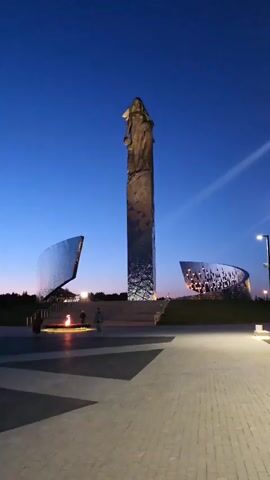
The video shows a war memorial at dusk. The memorial consists of a tall rectangular pillar topped with a statue, two curved mirrored walls, and an eternal flame. People are walking around the memorial plaza. The sky is a deep blue, with hints of orange on the horizon. Streetlights illuminate the plaza.
Zaitsevo (Verevskoe S/P)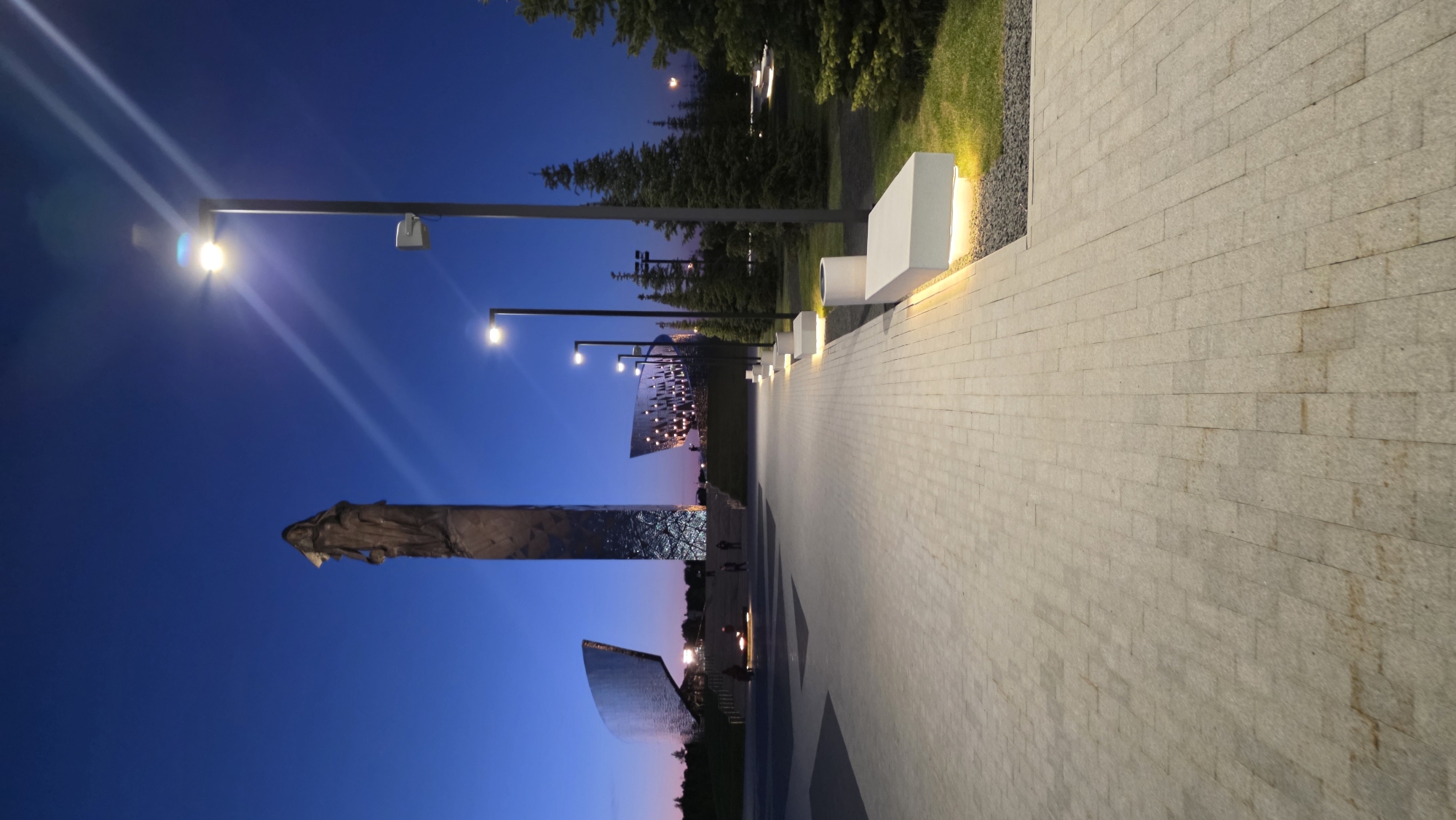
The image shows a paved walkway in Zaitsevo (Verevskoe S/P), Russia, at dusk or night. The walkway is constructed of light-colored rectangular stones, laid horizontally. Parallel to the walkway are regularly spaced benches or light fixtures. To the left of the walkway is a monumental sculpture or structure reflecting the evening sky, consisting of a central high structure with a statue or figure at its top. There are two curved mirror-like structures. Streetlights illuminate the walkway, casting bright light. Trees and vegetation border the walkway on the right, with a section of grass between the walkway and the greenery. The sky transitions from blue to a subtle pink or orange hue near the horizon. There are people walking along the walkway.
Zaitsevo (Verevskoe S/P)