Untitled Story

Wednesday, August 5, 2026 · Updated Wednesday, August 5, 2026
A human skeleton is displayed in a glass enclosure. The skeleton is lying on its back with its legs extended and its arms crossed over its chest. The skeleton is well-preserved and appears to be intact. The enclosure is dimly lit, and the background is dark. There are a few spotlights illuminating the skeleton.
A forensic examination of an archaeological dig site is underway. The dig site is contained within a glass enclosure. Several tools, including trowels and brushes, are visible on the ground. In the center of the enclosure is a large, dark, irregularly shaped object, possibly a fossil or a preserved artifact. The ground is covered in what appears to be dark soil or sediment. Lights illuminate the dig site, highlighting the objects and the texture of the ground. The scene suggests a delicate and meticulous excavation process.
Tihomir Angelov
Brignoles, France · Aug 5, 2026, 7:30 PM · 8.5k attention
A forensic examination of an archaeological dig site is underway. The dig site is contained within a glass enclosure. Several tools, including trowels and brushes, are visible on the ground. In the center of the enclosure is a large, dark, irregularly shaped object, possibly a fossil or a preserved artifact. The ground is covered in what appears to be dark soil or sediment. Lights illuminate the dig site, highlighting the objects and the texture of the ground. The scene suggests a delicate and meticulous excavation process.
The video shows a glass floor with what appears to be a preserved body or remains underneath, possibly in a museum or exhibition setting. The remains are partially visible and appear to be encased in some sort of protective material or within a display case. There are lights illuminating the display from above. The surrounding environment is modern, with clean lines and some architectural elements visible. The camera moves along the glass floor, offering different views of the exhibit.
xXxTiHxXx
Brignoles, France · Aug 5, 2026, 7:22 PM · 7.5k attention
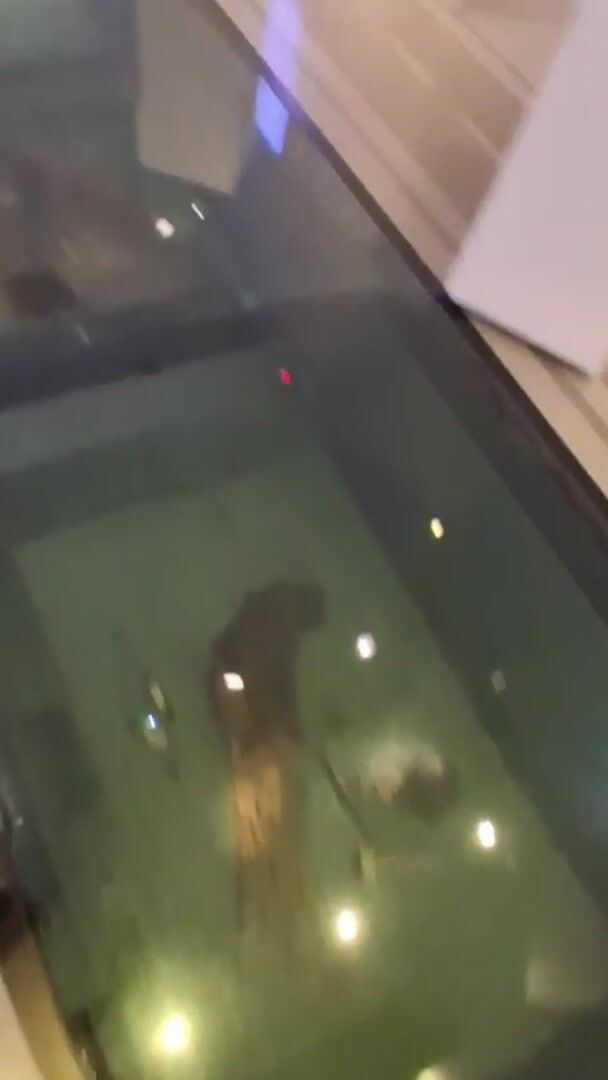
The video shows a glass floor with what appears to be a preserved body or remains underneath, possibly in a museum or exhibition setting. The remains are partially visible and appear to be encased in some sort of protective material or within a display case. There are lights illuminating the display from above. The surrounding environment is modern, with clean lines and some architectural elements visible. The camera moves along the glass floor, offering different views of the exhibit.
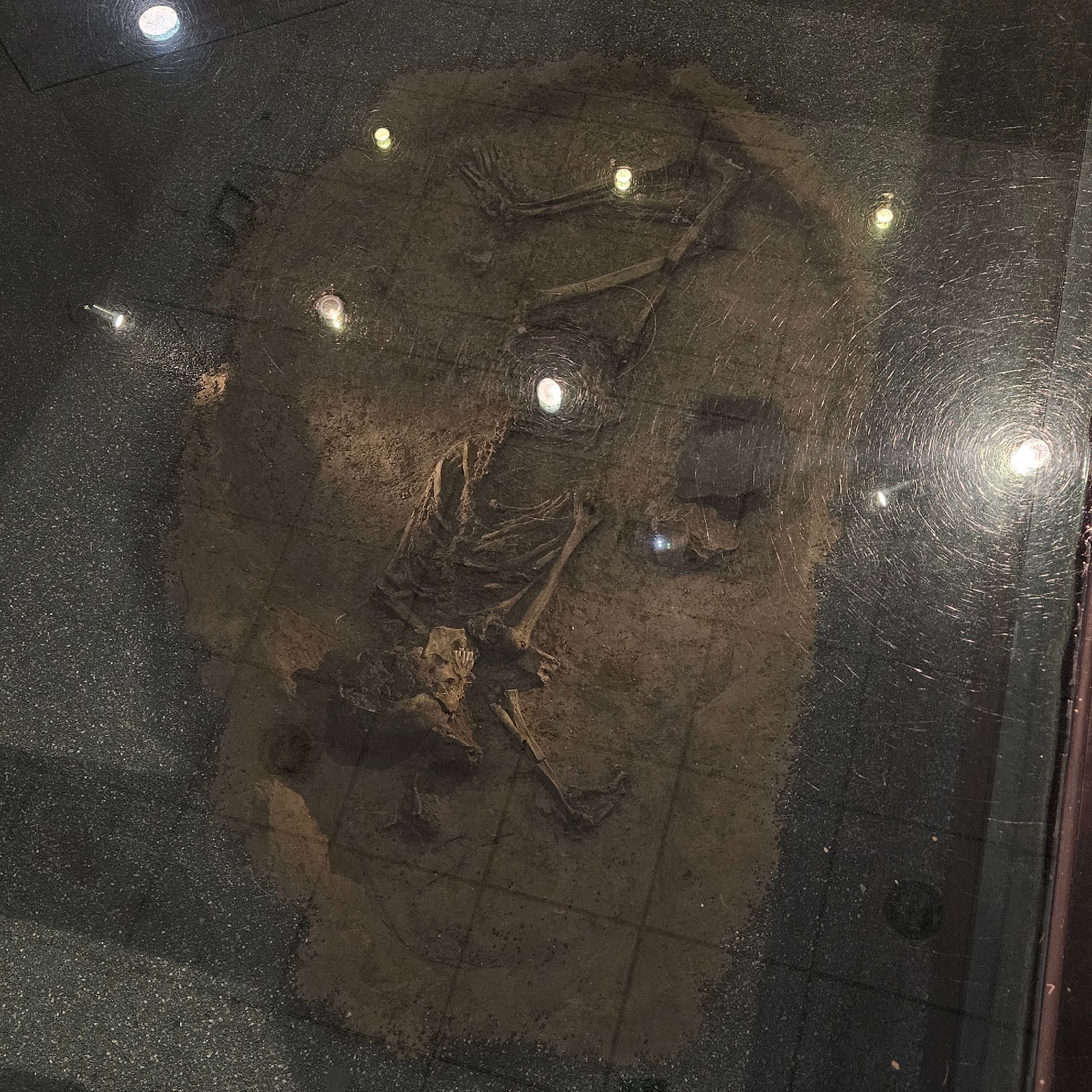
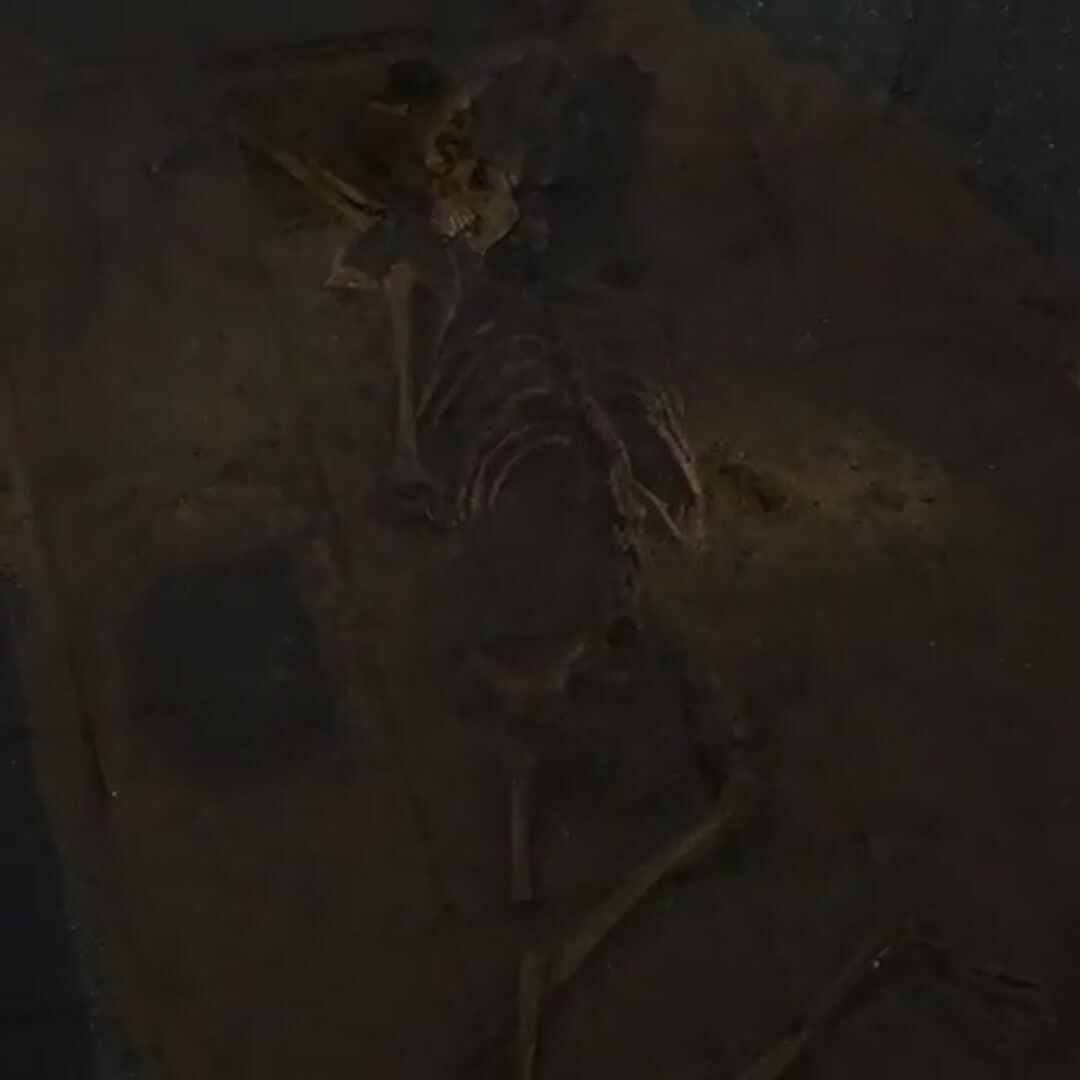
This image depicts an archaeological excavation site in Brignoles, France. The focus is on a human skeleton, partially exposed and embedded in soil. The skeleton appears to be in a supine position, with limbs articulated. There are several lights illuminating the scene, creating reflections on a glass or protective covering. The surrounding environment is dark, with some granular material visible in the lower part of the image, possibly indicating pavement or disturbed earth. The overall impression is one of careful preservation and study of an ancient find.
Tihomir Angelov
Brignoles, France · Aug 5, 2026, 7:24 PM · 7.5k attention
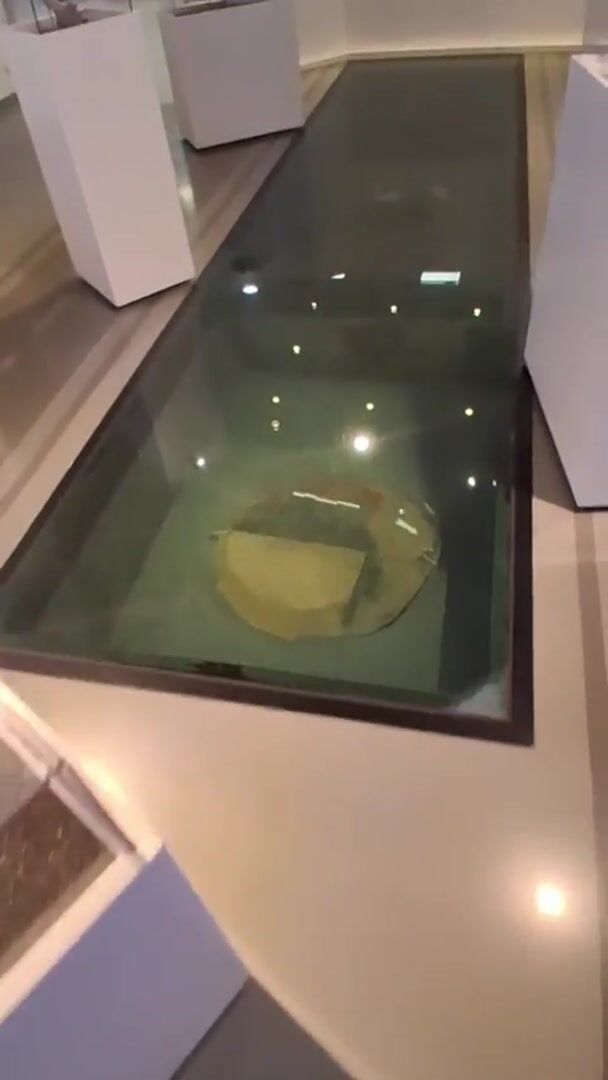
The video shows a person walking on a glass-covered floor. Beneath the glass, there is a display that appears to be a circular object submerged in water. The environment seems to be a museum or exhibition space with white display stands visible.
xXxTiHxXx
Brignoles, France · Aug 5, 2026, 7:20 PM · 0.5k attention
This image depicts an archaeological excavation site in Brignoles, France. The focus is on a human skeleton, partially exposed and embedded in soil. The skeleton appears to be in a supine position, with limbs articulated. There are several lights illuminating the scene, creating reflections on a glass or protective covering. The surrounding environment is dark, with some granular material visible in the lower part of the image, possibly indicating pavement or disturbed earth. The overall impression is one of careful preservation and study of an ancient find.
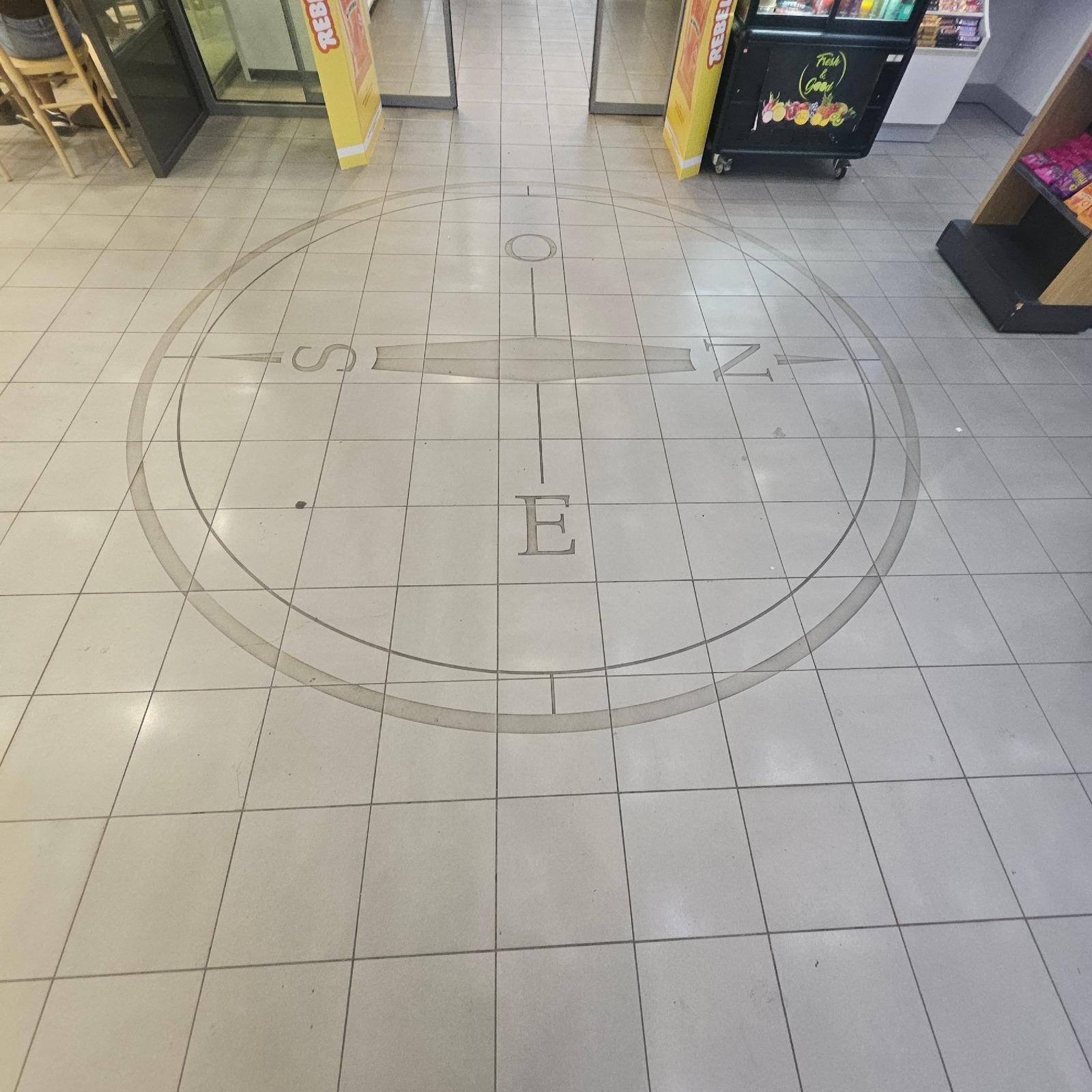
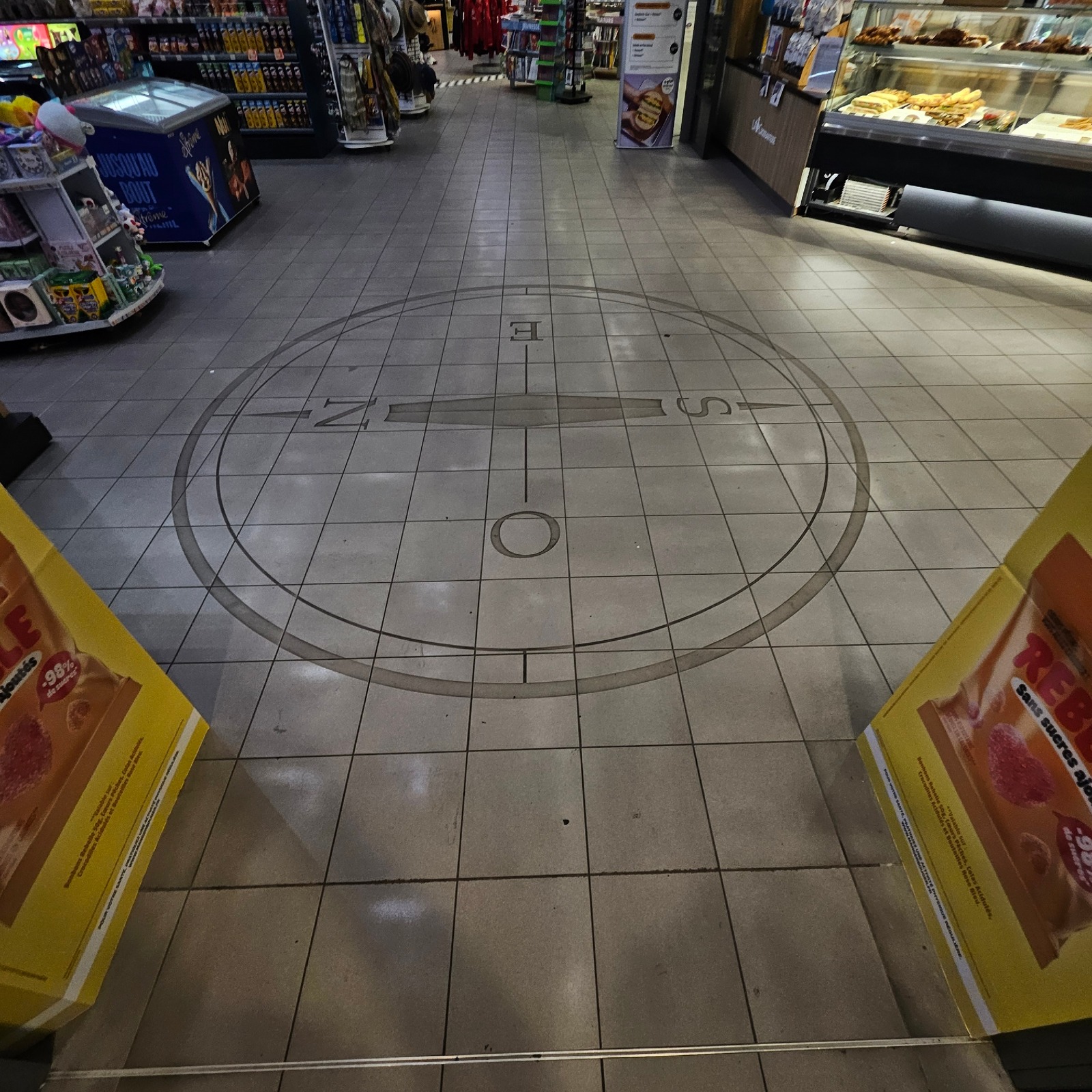
The image shows a tiled floor with a circular compass rose design etched into it. The compass rose has markings for North, South, East, and West. The letters "N", "S", and "E" are clearly visible, with the letter "W" likely obscured by the angle of the shot or its position within the design. The floor is clean and well-maintained. In the background, there are several elements suggesting a commercial or retail environment. To the left, a yellow display stand with red lettering and a black doorway are visible, with a glimpse of a person sitting on a stool. To the right, a black refrigerated display case with produce and text reading "Fresh & Good" is present, along with a wooden display shelf holding packaged goods. The overall environment appears to be an indoor walkway or entrance area of a shop or supermarket. The location is Brignoles, France, suggesting this is a retail establishment within the city.
Tihomir Angelov
Brignoles, France · Aug 5, 2026, 7:07 PM
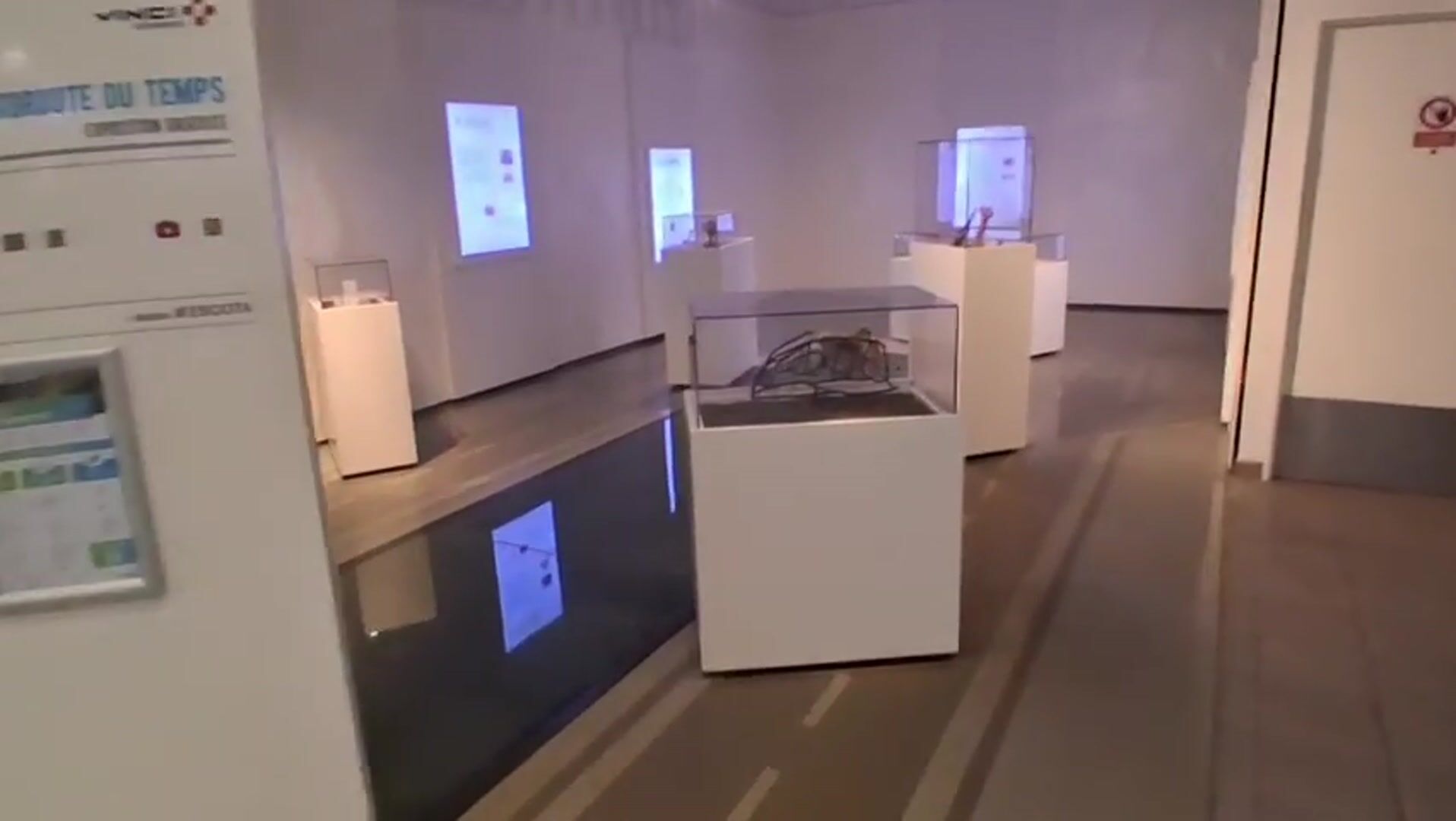
The video shows an indoor exhibit space with several display panels and pedestals. On the left, a white wall has a lit display panel showing text and images, possibly related to paleontology. Further down the wall, another lit display panel is visible. In the center of the room, white pedestals support glass display cases containing what appear to be artifacts or natural specimens on a sandy surface. A third lit display panel is on the right wall, also featuring text and images. In the background, there are shelves with merchandise, suggesting the exhibit is located in or near a store. A few people are visible in the background, appearing to browse the merchandise. The floor is a polished dark surface. The lighting is a mix of ambient overhead lights and the illuminated display panels.
The video shows a person walking on a glass-covered floor. Beneath the glass, there is a display that appears to be a circular object submerged in water. The environment seems to be a museum or exhibition space with white display stands visible.
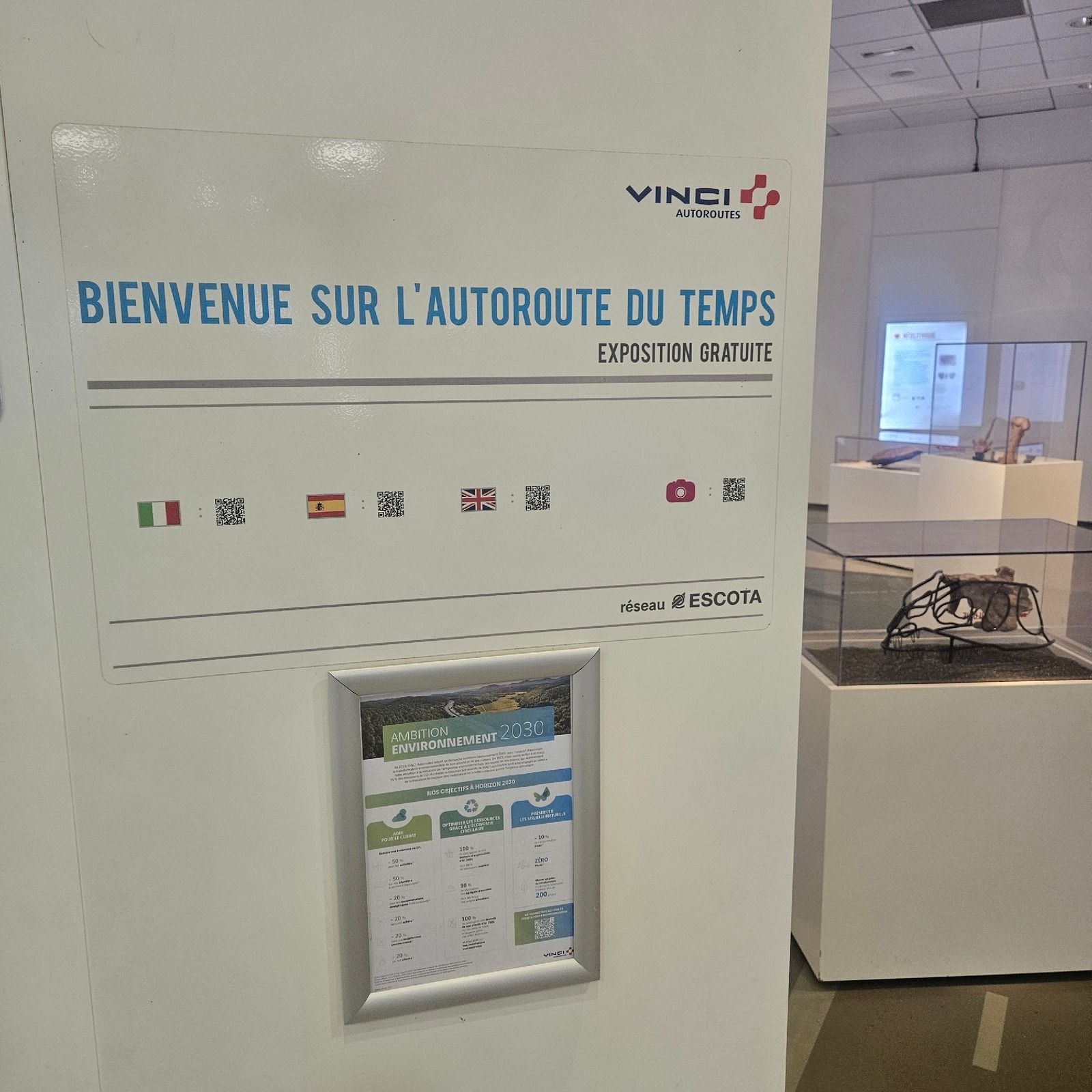
The image shows a large white sign with blue lettering that says "BIENVENUE SUR L'AUTOROUTE DU TEMPS EXPOSITION GRATUITE". Above this text is the VINCI AUTOROUTES logo. To the left of the text are small flags of Italy, Spain, and the United Kingdom, each with a QR code next to it. To the right of the text are a camera icon and another QR code. Below this is the text "réseau ESCOTA". In the bottom left corner of the main sign, there is a framed poster with the title "AMBITION ENVIRONNEMENT 2030". This poster shows various statistics and goals related to environmental initiatives. The sign appears to be displayed in an indoor exhibition space, likely at an event or museum. In the background, to the right, there are display cases with objects inside, suggesting an exhibition. The overall environment appears to be a modern, well-lit indoor space. The location of Brignoles, France is not explicitly mentioned or visually discernible in the image itself, so any information about it would need to be external to the provided visual content.
Brignoles, France · Aug 5, 2026, 7:12 PM
The image shows a tiled floor with a circular compass rose design etched into it. The compass rose has markings for North, South, East, and West. The letters "N", "S", and "E" are clearly visible, with the letter "W" likely obscured by the angle of the shot or its position within the design. The floor is clean and well-maintained. In the background, there are several elements suggesting a commercial or retail environment. To the left, a yellow display stand with red lettering and a black doorway are visible, with a glimpse of a person sitting on a stool. To the right, a black refrigerated display case with produce and text reading "Fresh & Good" is present, along with a wooden display shelf holding packaged goods. The overall environment appears to be an indoor walkway or entrance area of a shop or supermarket. The location is Brignoles, France, suggesting this is a retail establishment within the city.
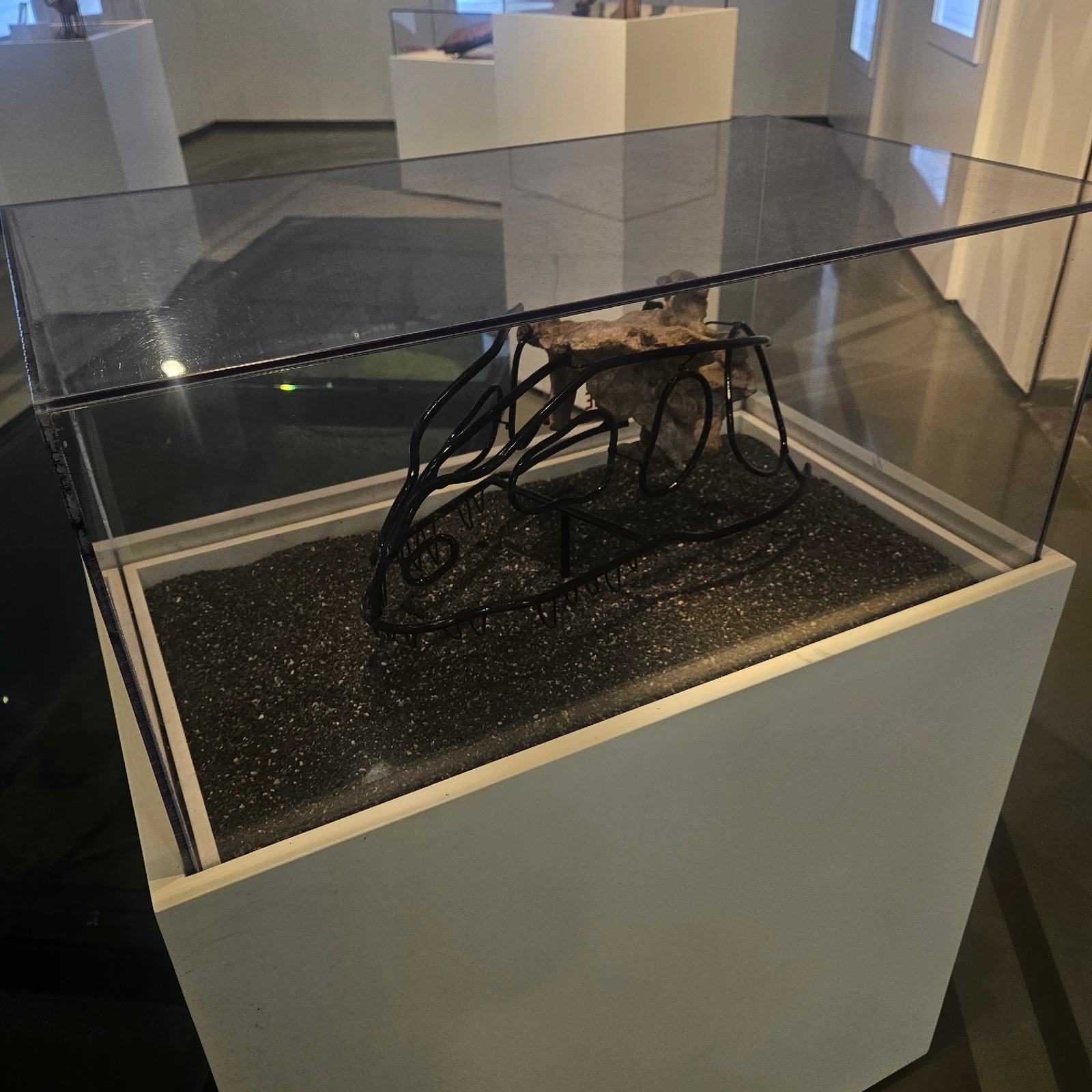
A clear glass display case, likely in a museum or exhibition, encloses a black wireframe model of a dinosaur skull. The skull model is placed on a bed of dark gravel within a white rectangular base. Behind the display case, a pale gray wall is visible, with several windows that appear to be illuminated from within. In the background, other display structures and exhibits can be seen, suggesting a public exhibition space. The scene is devoid of people. The specific location in Brignoles, France is not ascertainable from the image.
Tihomir Angelov
Brignoles, France · Aug 5, 2026, 7:12 PM
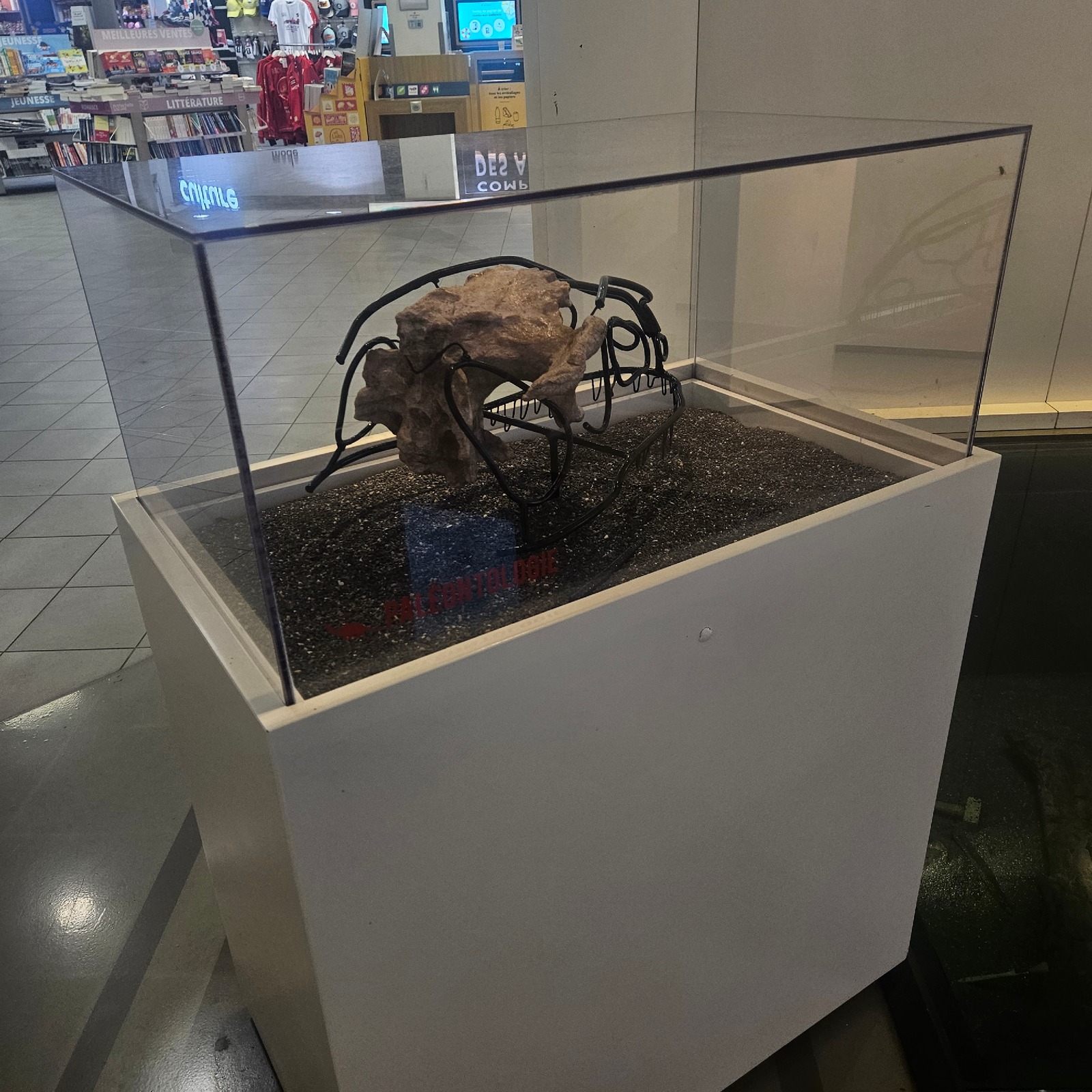
In the city of Brignoles, France, an exhibition display case is situated in an indoor retail environment, likely a bookstore or museum gift shop. The case features a fossilized skull, possibly of a dinosaur, mounted on a black metal stand. The skull is displayed on a bed of dark gravel. A glass enclosure protects the artifact, with the top surface reflecting the surrounding environment. A sign with red lettering, partially obscured, is visible beneath the fossil, reading "PALÉONTOLOGIE." In the background, shelves filled with books and merchandise are present, indicating a retail setting. The flooring is tiled. The lighting appears to be artificial.
Tihomir Angelov
Brignoles, France · Aug 5, 2026, 7:13 PM
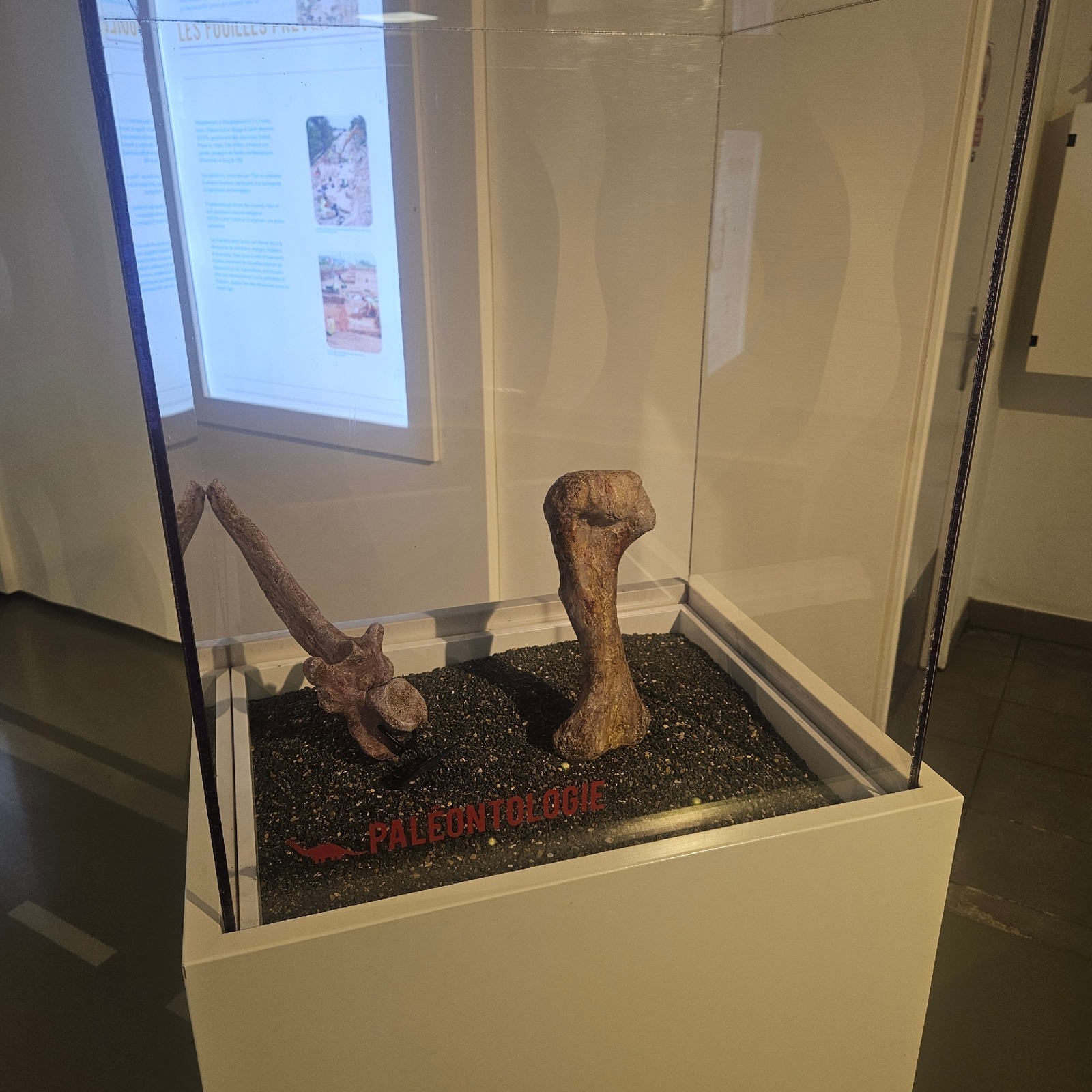
The image shows a museum display case in Brignoles, France. Inside the case, two fossilized bones are arranged on a bed of dark gravel. One bone is long and slender with a curved end, while the other is thicker and more robust with a rounded top. The display case is made of glass and rests on a white pedestal. In the background, a lit informational panel displays text and images related to paleontology. The text on the panel is partially visible and includes the title "LES FOUILLES PREMIÈRES" and smaller text discussing archaeological excavations. A red text overlay on the gravel reads "PALEONTOLOGIE" with a silhouette of a dinosaur. The lighting in the museum is artificial, creating reflections on the glass surfaces. The overall impression is a scientific exhibit showcasing paleontological findings.
Tihomir Angelov
Brignoles, France · Aug 5, 2026, 7:14 PM
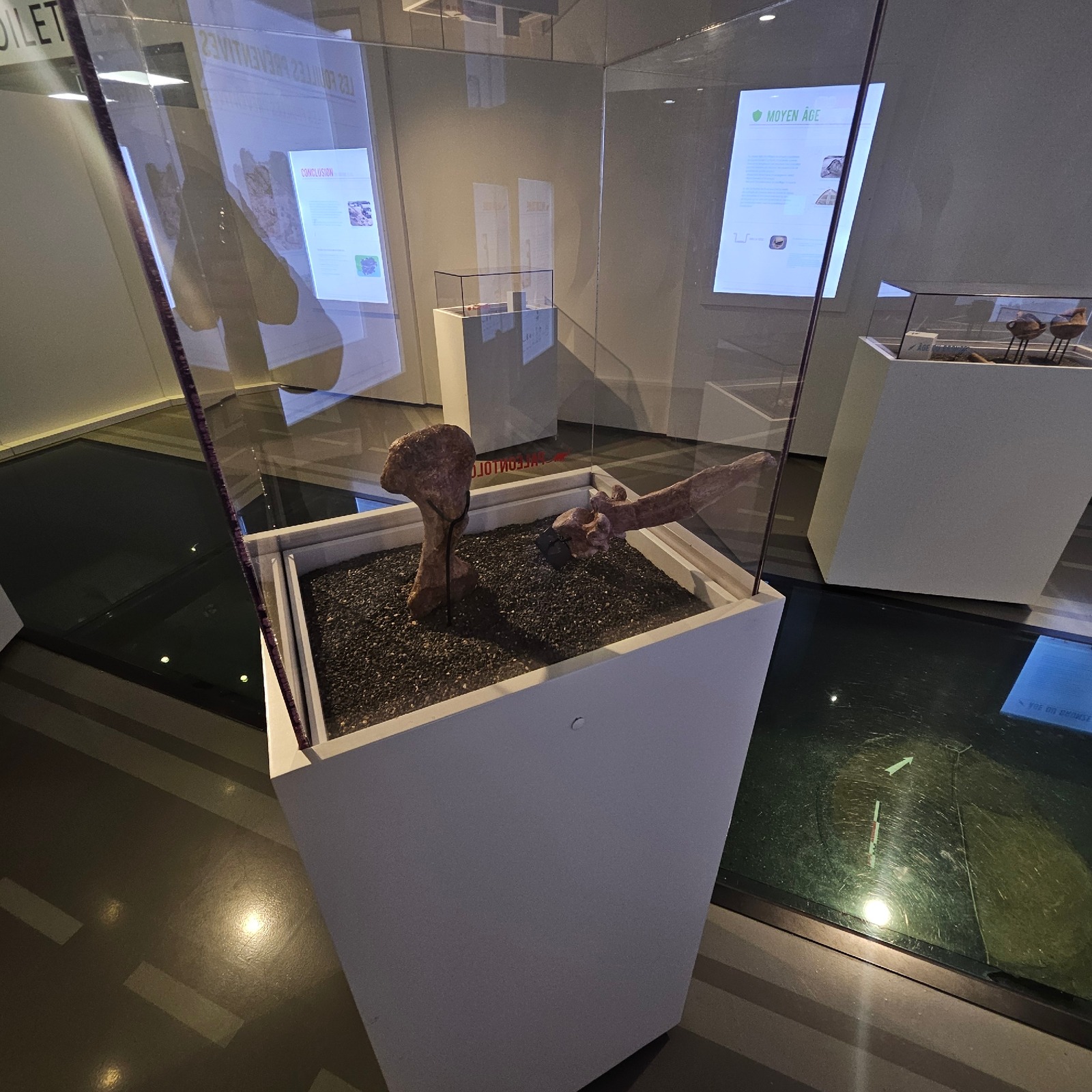
The image shows a museum exhibit featuring fossilized bones, possibly from a prehistoric animal, displayed in a glass case filled with dark soil. The exhibit is located in a modern museum space with clean, white walls and a dark, reflective floor. Informational panels are visible on the walls behind the display, one titled "CONCLUSION" and another titled "MOYEN ÂGE" (Middle Ages). Another display case containing pottery fragments is visible in the background. The overall impression is of a well-maintained educational exhibit. The museum is likely the Musée du Baroux in Brignoles, France, given the provided context and common museum displays in the region.
Tihomir Angelov
Brignoles, France · Aug 5, 2026, 7:15 PM
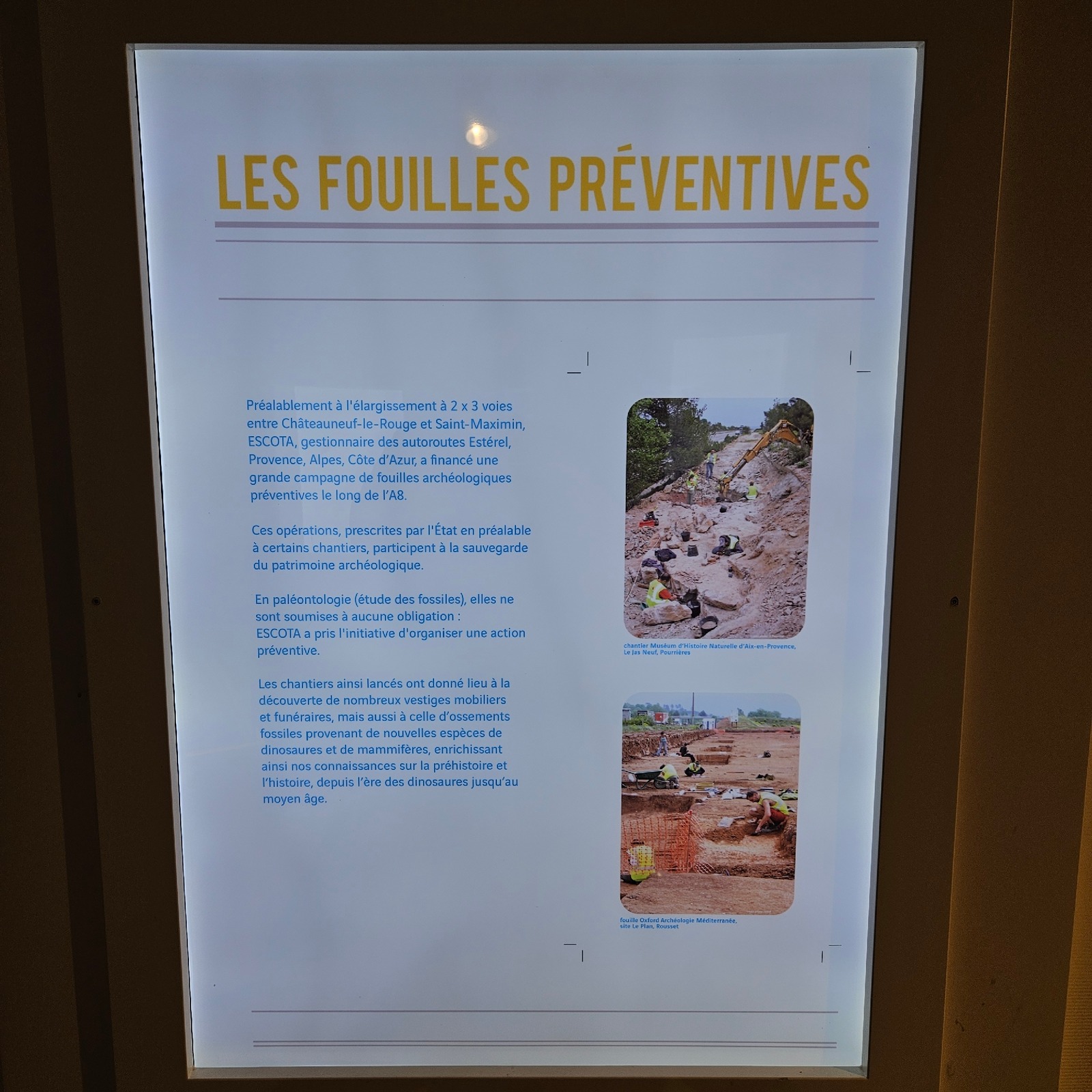
The image displays an informational panel in what appears to be an exhibition space. The panel features a large yellow title that reads "LES FOUILLES PRÉVENTIVES" which translates to "PREVENTIVE EXCAVATIONS". Below the title, there is text describing archaeological digs. The text mentions a "grande campagne de fouilles archéologiques préventives le long de l'A8" (large campaign of preventive archaeological excavations along the A8), an area that runs through Brignoles, France. There are two photographs on the right side of the panel. The top photograph shows several individuals in a hilly, excavated area with machinery, likely engaged in an archaeological dig. The caption beneath this photo is partially visible and reads "chantier Muséum d'Histoire Naturelle d'Aix-en-Provence, Le Jas Neuf, Pourrières". The bottom photograph depicts another archaeological site with several people working in trenches. The caption below this photo reads "fouille Oxford Archéologie Méditerrannée, site Le Plain, Rousset". The overall environment of the exhibition space appears to be a well-lit area with a dark brown border or wall surrounding the illuminated panel.
Tihomir Angelov
Brignoles, France · Aug 5, 2026, 7:15 PM
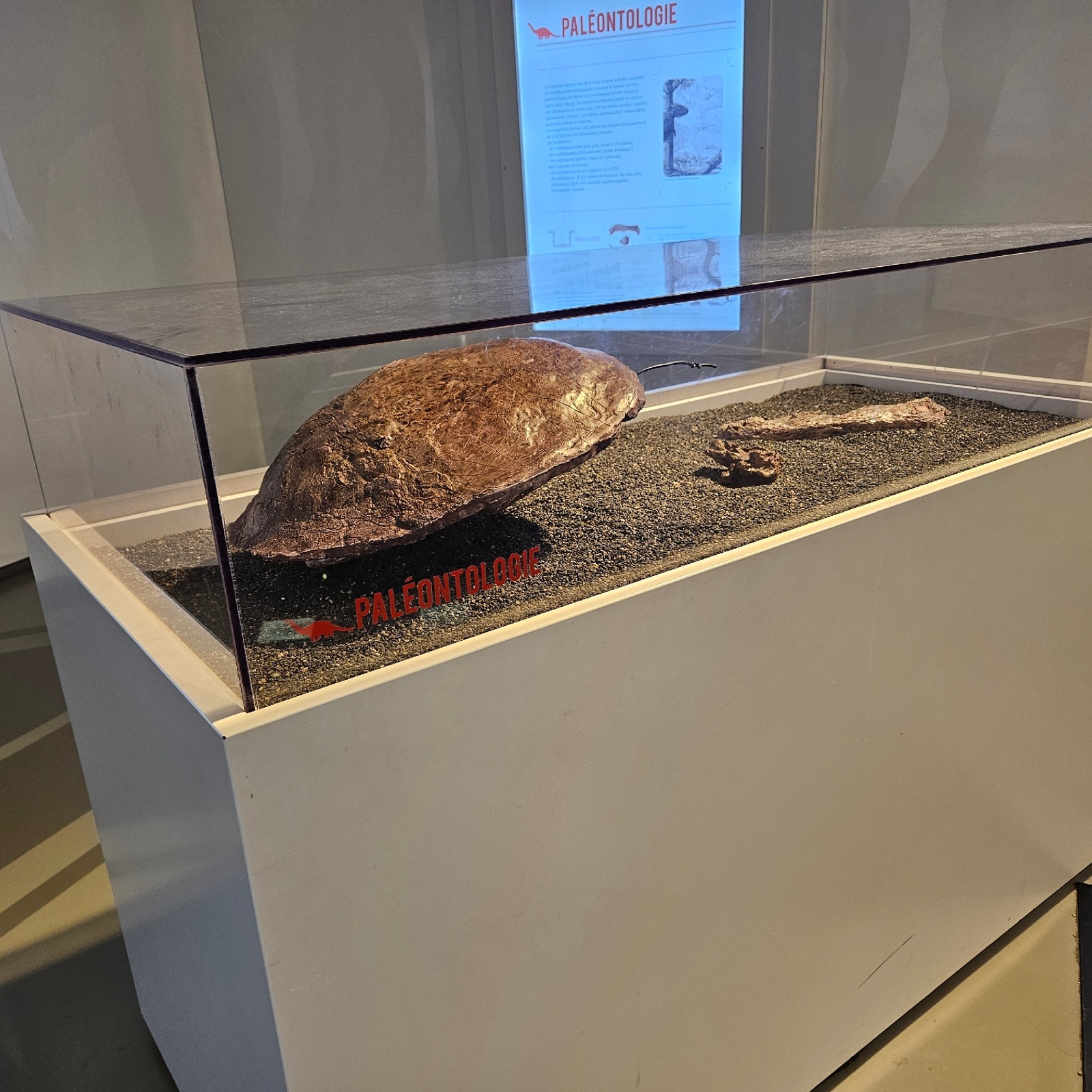
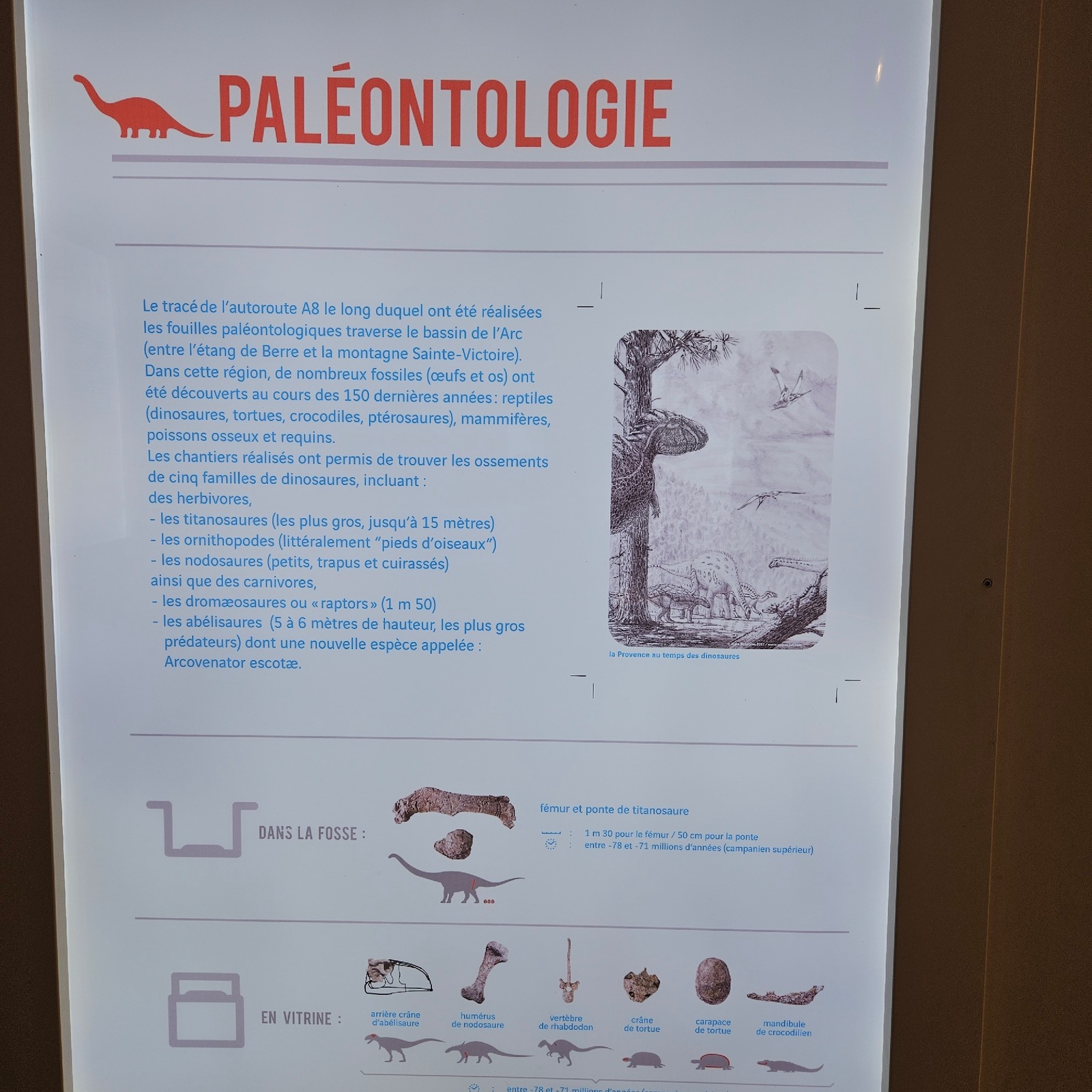
The image shows a glass display case containing a large fossilized object, possibly a dinosaur egg or a portion of a dinosaur. The fossil is resting on a bed of gravel. To the right of the fossil, there is a smaller fossilized bone fragment and a rock. Red lettering on the front of the display case reads "PALÉONTOLOGIE" with a small red dinosaur silhouette. In the background, a large information panel with text and illustrations about paleontology is visible. The scene appears to be in a museum or exhibition space in Brignoles, France, given the French text on the information panel and the "PALÉONTOLOGIE" label. The lighting is neutral, and there are no people visible in the image. The overall environment is clean and sterile, typical of a museum exhibit.
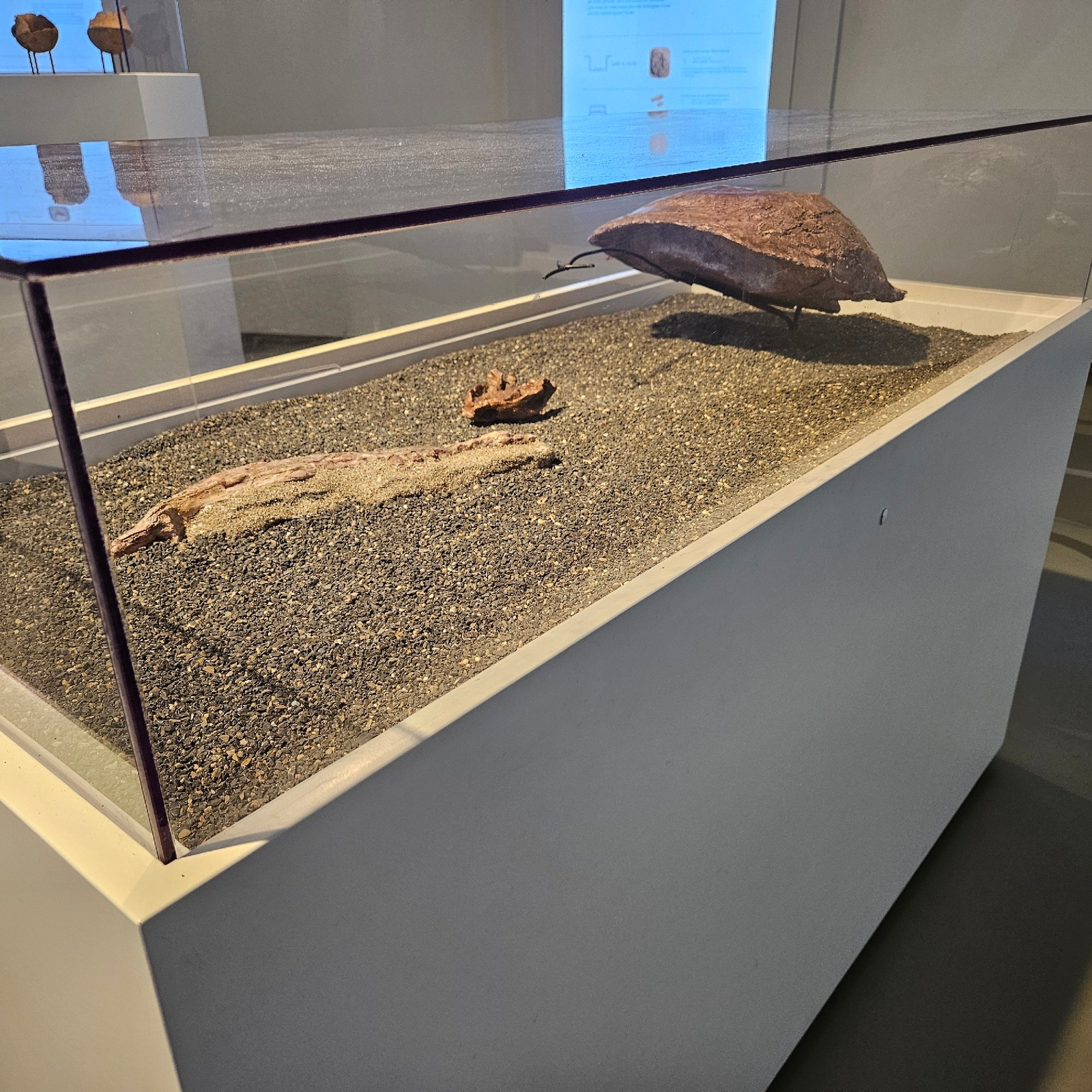
The image shows a museum display case containing fossilized specimens. The display case is made of clear glass with a dark frame, and it rests on a white pedestal. Inside the case, the specimens are set in a bed of dark gravel and sand. The main specimen is a large, flat, fossilized object with a textured surface, elevated slightly by supports. To the left of this, a long, segmented fossilized object lies horizontally, partially covered by sand. A smaller, reddish, rock-like object is also visible near the center of the display. In the background, a blue informational display with text and images is visible, mounted on a gray wall. The museum appears to be an indoor setting with controlled lighting. The location in the city of Brignoles, France, is not discernible from the visual information provided in the image.
Tihomir Angelov
Brignoles, France · Aug 5, 2026, 7:16 PM
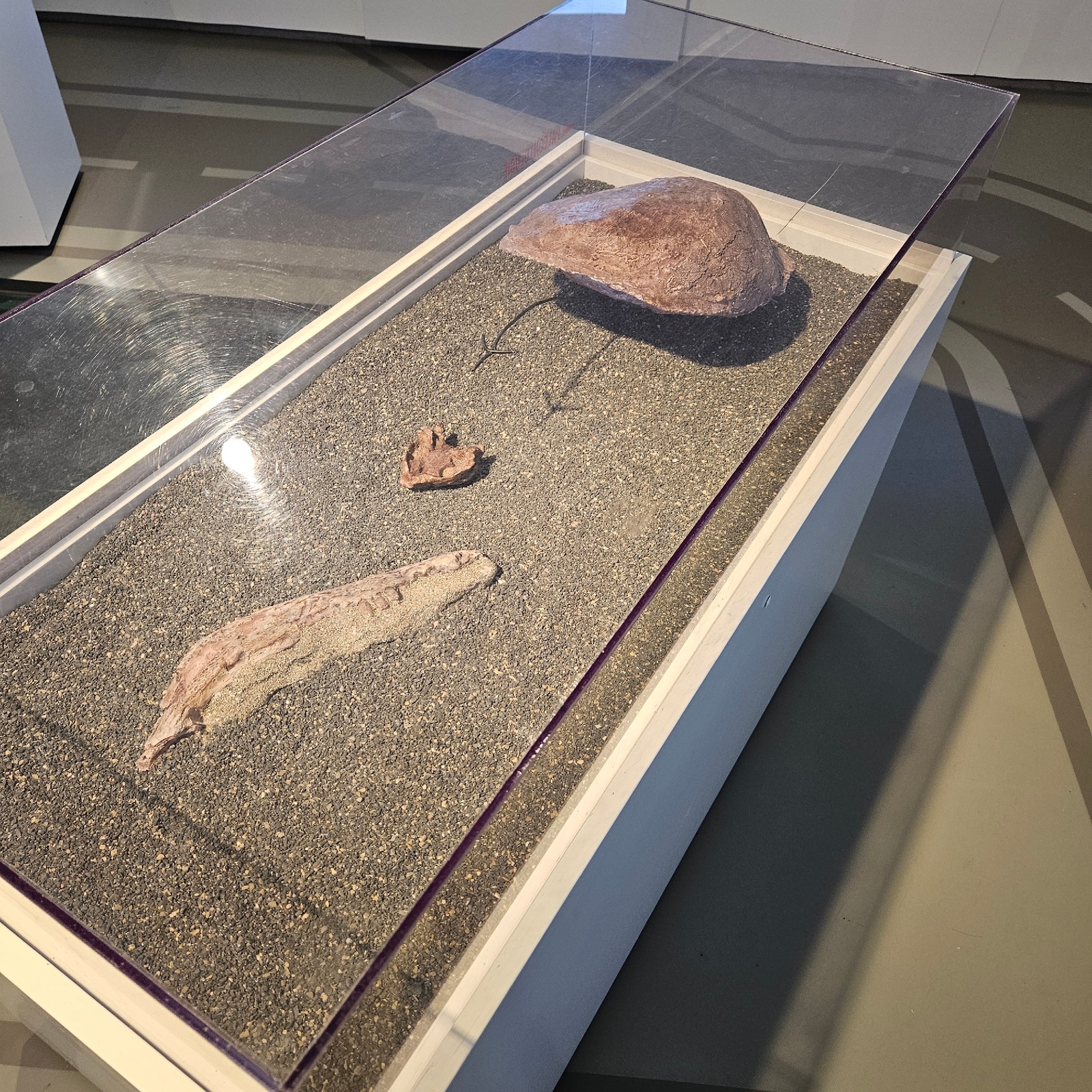
The image shows a museum exhibit of fossils displayed in a glass case. The exhibit contains three fossilized specimens: a large, roughly spherical object; a smaller, irregularly shaped object that appears to be a fossilized footprint or bone fragment; and a long, segmented object that resembles a fossilized bone or tail. The fossils are set in a bed of dark gray gravel. The exhibit case is made of clear glass with a purple trim. The background suggests an indoor setting, possibly a museum hallway, with neutral-colored walls and flooring. The lighting creates reflections on the glass case, and shadows are cast on the floor. The specific location within the city of Brignoles, France, cannot be determined from the image alone.
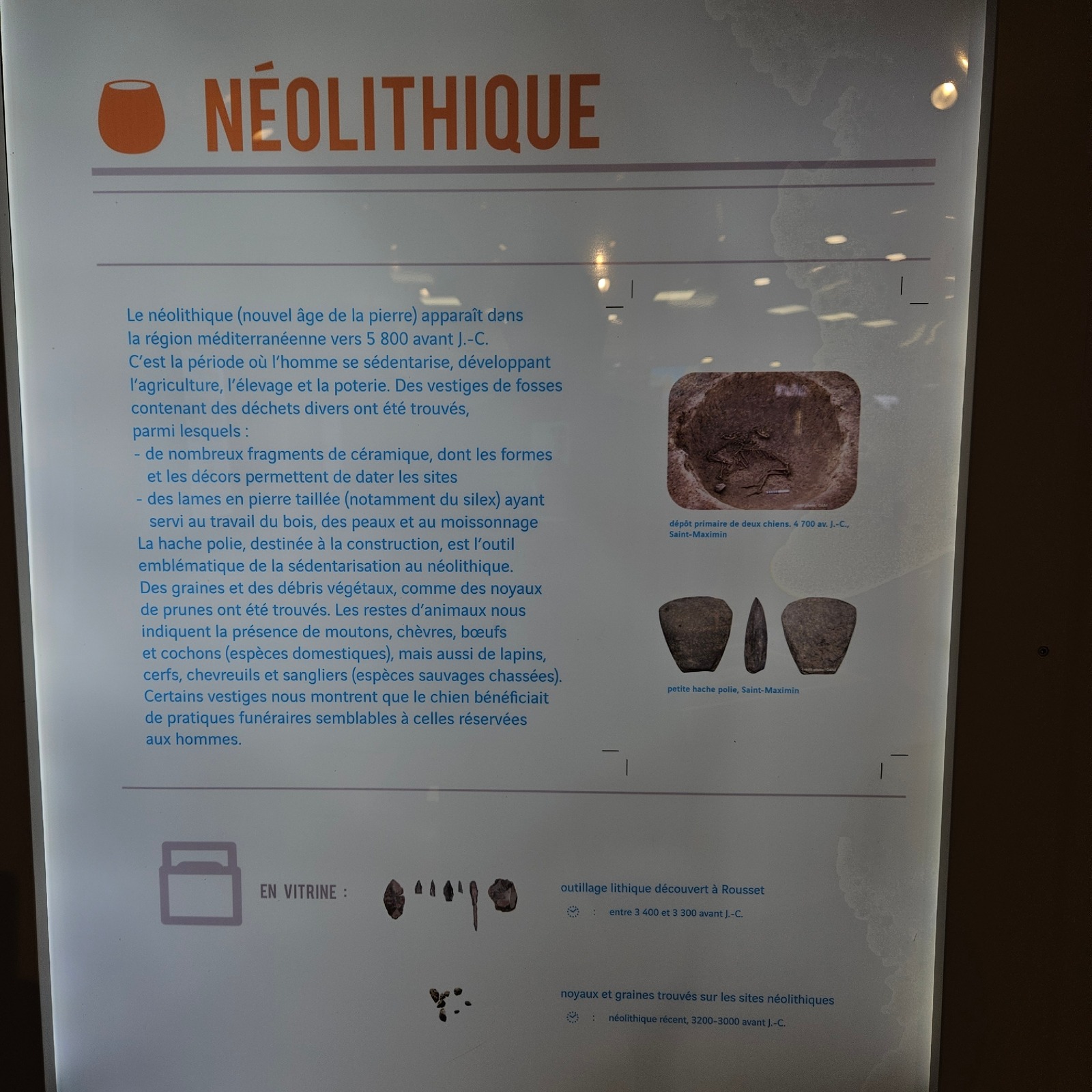
This image shows an informational display about the Neolithic period. The display is lit from behind, causing some glare and reflections on the surface. The text is in French. The title of the display is "NÉOLITHIQUE," which translates to "Neolithic." Below the title, there is an orange icon resembling a pot. The main body of the text describes the Neolithic period (new stone age) as appearing in the Mediterranean region around 5800 BC. It highlights that this was the period when humans became sedentary, developing agriculture, animal husbandry, and pottery. The text mentions the discovery of remains, including numerous ceramic fragments, stone tools (flint), polished axes used for construction, and animal remains (sheep, goats, cattle, pigs, deer, roe deer, and boars), indicating hunting practices. It also notes the presence of plum pits and evidence of canine remains, suggesting that dogs benefited from human practices. The text concludes by stating that certain remains suggest funeral practices similar to those reserved for humans. To the right of the text, there are three images of artifacts. The top image shows a pot containing what appears to be skeletal remains, labeled "dépôt primaire de deux chiens, 4 700 av. J.-C., Saint-Maximin." This translates to "primary burial of two dogs, 4700 BC, Saint-Maximin." The bottom two images display stone tools, described as "petite hache polie, Saint-Maximin," meaning "small polished axe, Saint-Maximin." At the bottom of the display, there is a section titled "EN VITRINE:" (In the display case:). Below this, there are two sets of small images. The first set appears to be stone tools, labeled "outillage lithique découvert à Rousset : entre 3 400 et 3 300 avant J.-C." (lithic tools discovered at Rousset: between 3400 and 3300 BC). The second set shows what look like seeds or nuts, labeled "noyaux et graines trouvés sur les sites néolithiques : néolithique récent, 3200-3000 avant J.-C." (pits and seeds found on Neolithic sites: recent Neolithic, 3200-3000 BC). The location in the city of Brignoles, France, is not explicitly mentioned in the provided text or visible in the image. However, the artifacts are attributed to Saint-Maximin and Rousset, which are towns in the Var department of Provence-Alpes-Côte d'Azur region of southeastern France. Brignoles is also located in the Var department, making it plausible that this display is from a museum or exhibition in or near Brignoles, showcasing artifacts from nearby archaeological sites.
Brignoles, France · Aug 5, 2026, 7:17 PM
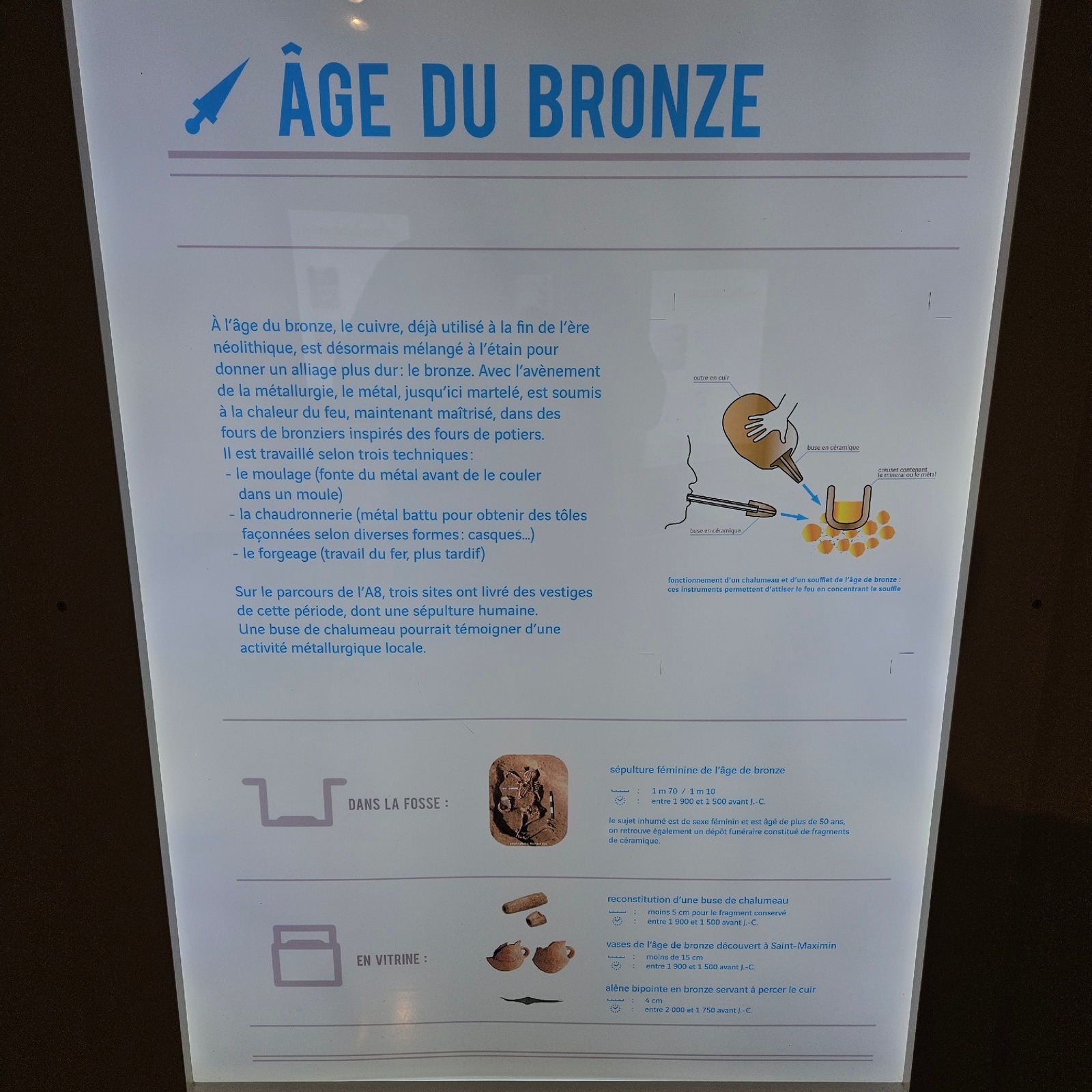
The image is a photograph of an informational display about the Bronze Age, likely from a museum. The display features a large title at the top, "ÂGE DU BRONZE" (Bronze Age), accompanied by an icon resembling a sword or spear. Below the title, there is text describing the Bronze Age, its metallurgy, and its associated techniques. To the right of the text, there is an illustration depicting the functioning of a bellows ("chalumeau") and a blowpipe ("soufflet") from the Bronze Age. The illustration shows a person blowing into a leather bellows, which is connected by a ceramic nozzle to a crucible containing molten metal. The text below the illustration explains that these instruments were used to intensify fire by concentrating the breath. Further down the display, there are sections with icons and accompanying text. One section, labeled "DANS LA FOSSE" (In the Pit/Grave), features an image of a skeletal burial with grave goods. The text describes a female burial from the Bronze Age, including its dimensions and dating, and notes that the subject is female and estimated to be over 50 years old, with a funerary deposit of ceramic fragments. Another section, labeled "EN VITRINE" (In a Display Case), shows illustrations and descriptions of various artifacts. These include a reconstitution of a bellows nozzle, Bronze Age vessels discovered in Saint-Maximin, and a bronze awl used for piercing leather. The dates for these artifacts are also provided. The image does not contain any information about the location in the city of Brignoles, France.
Tihomir Angelov
Brignoles, France · Aug 5, 2026, 7:18 PM
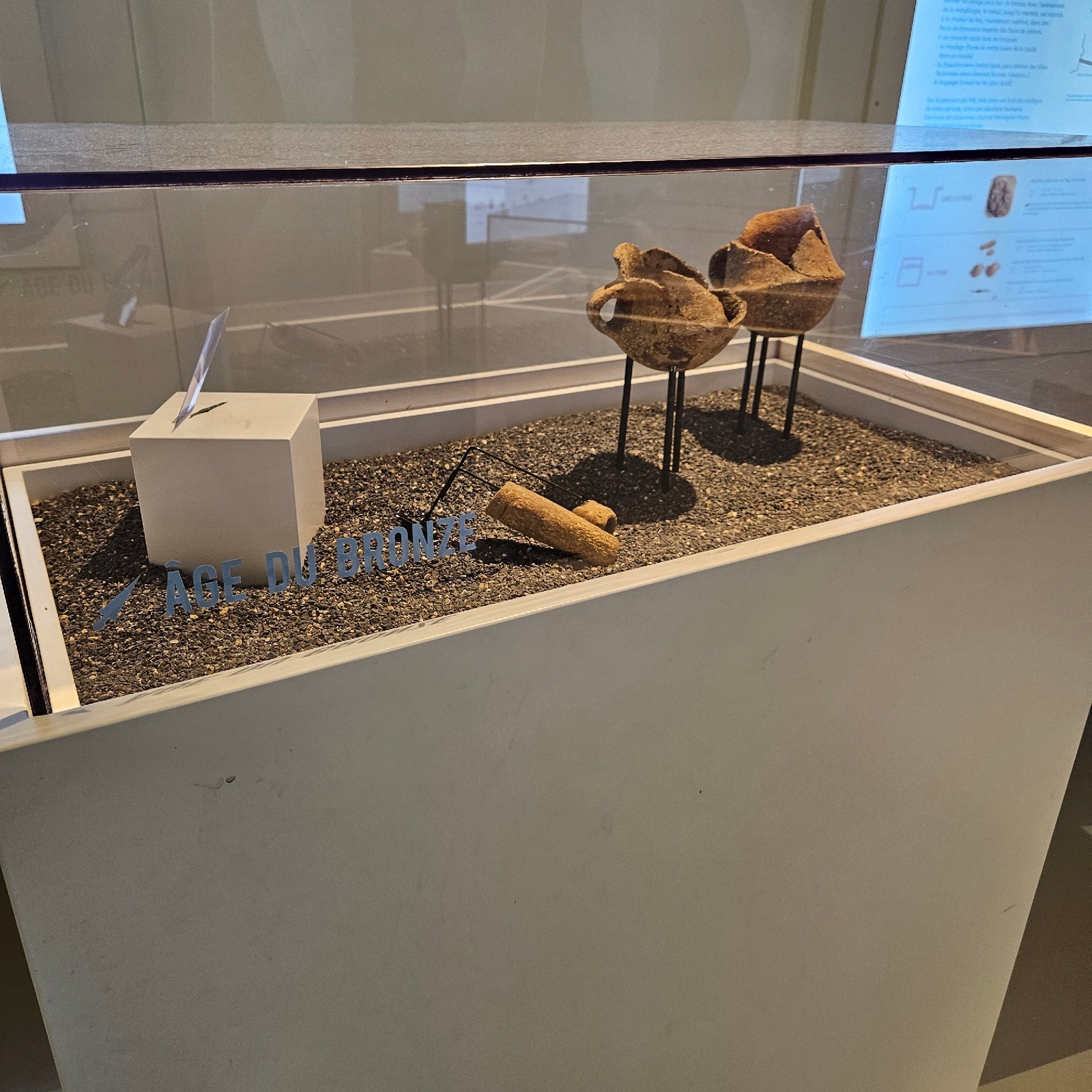
The image shows an exhibition display case at the Museum of Popular Traditions in Brignoles, France. The display case contains a white cube with a piece of paper inserted into a slit at the top. In front of the cube, letters spelling "ÂGE DU BRONZE" are arranged on a bed of gravel. To the right of the letters are two artifacts, possibly ancient pottery fragments, mounted on thin metal stands. A cylindrical artifact made of wood or bone lies on the gravel between the letters and the pottery fragments. The background of the display case shows a wall with text and images, and reflections of other exhibits. The display case itself is made of glass and sits within a larger white structure. The lighting in the image is artificial, casting shadows on the gravel.
Tihomir Angelov
Brignoles, France · Aug 5, 2026, 7:18 PM
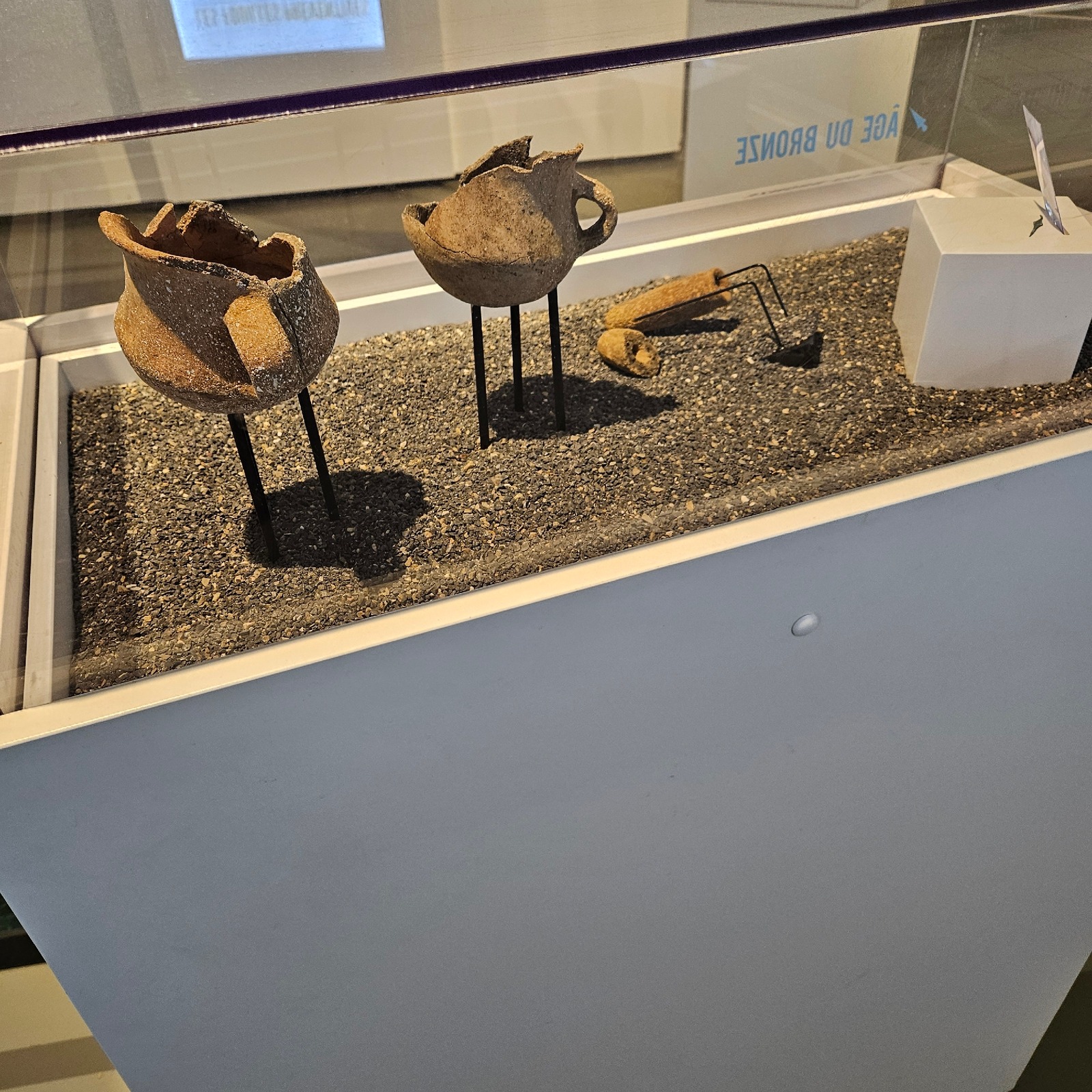
The image shows a museum display case containing ancient artifacts. Two ceramic pots, one on the left and one slightly to the right and behind, are displayed on black stands in a bed of dark gravel. To the right of the pots, a small, elongated, wooden object with a metal tip and handle rests on the gravel, possibly a tool or weapon. A small, white, rectangular pedestal stands to the far right, with a thin, metallic object piercing its top. Above the display, a reflective surface shows text that reads "ÂGE DU BRONZE," indicating that the artifacts are from the Bronze Age. The display case is set within a museum. The location in Brignoles, France is not explicitly stated in the image, but it is implied by the text "ÂGE DU BRONZE," a common historical period displayed in museums.
Tihomir Angelov
Brignoles, France · Aug 5, 2026, 7:19 PM
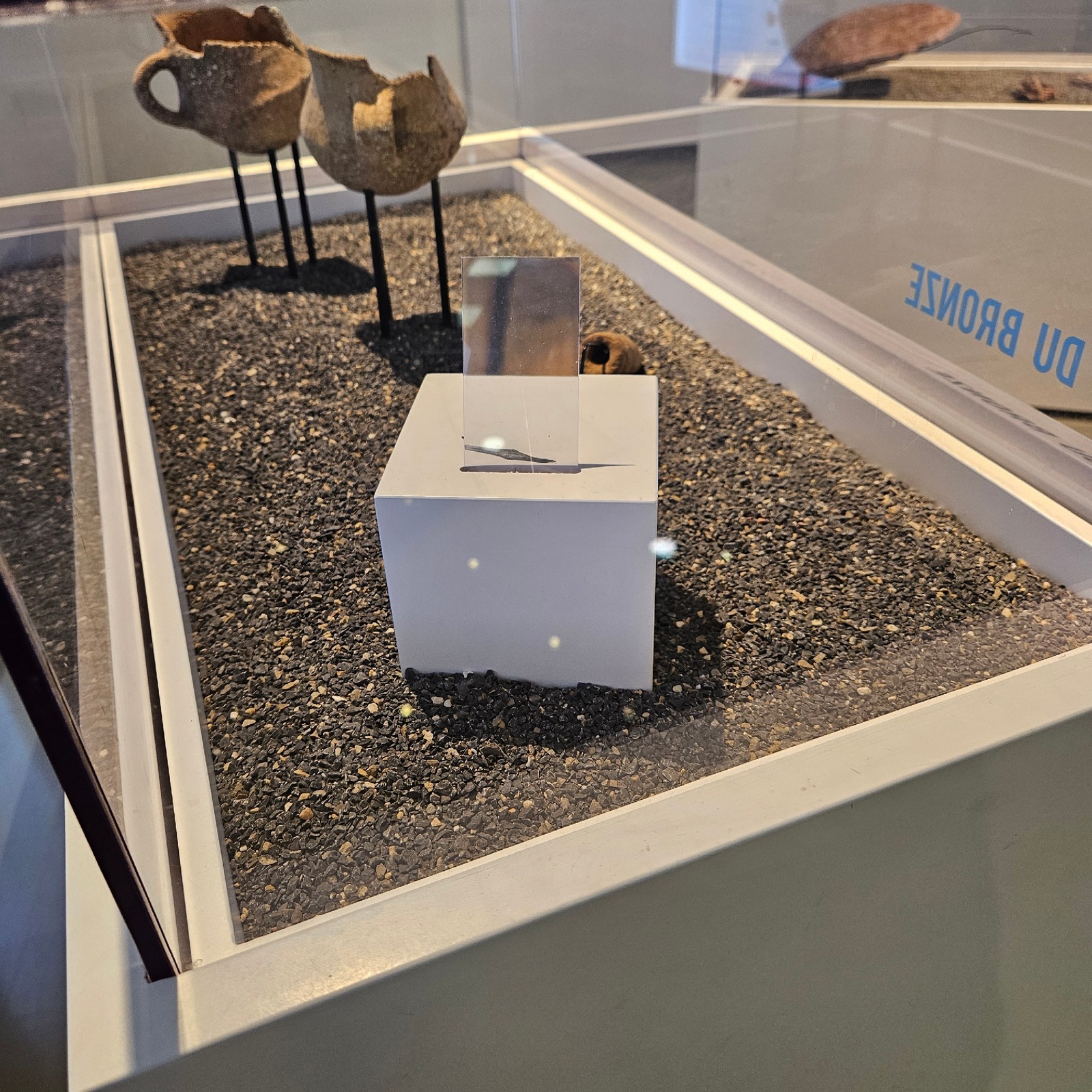
The image depicts an artifact display case in a museum. Inside the case, on a bed of dark gravel, sits a white pedestal with a small, metallic object, possibly a tool or weapon fragment, embedded in a clear material on top. To the left of the pedestal are three ancient pottery fragments, each supported by thin black stands. The background shows a wall with blue lettering that appears to spell "DO BRONZE." The museum is located in Brignoles, France.
Tihomir Angelov
Brignoles, France · Aug 5, 2026, 7:19 PM
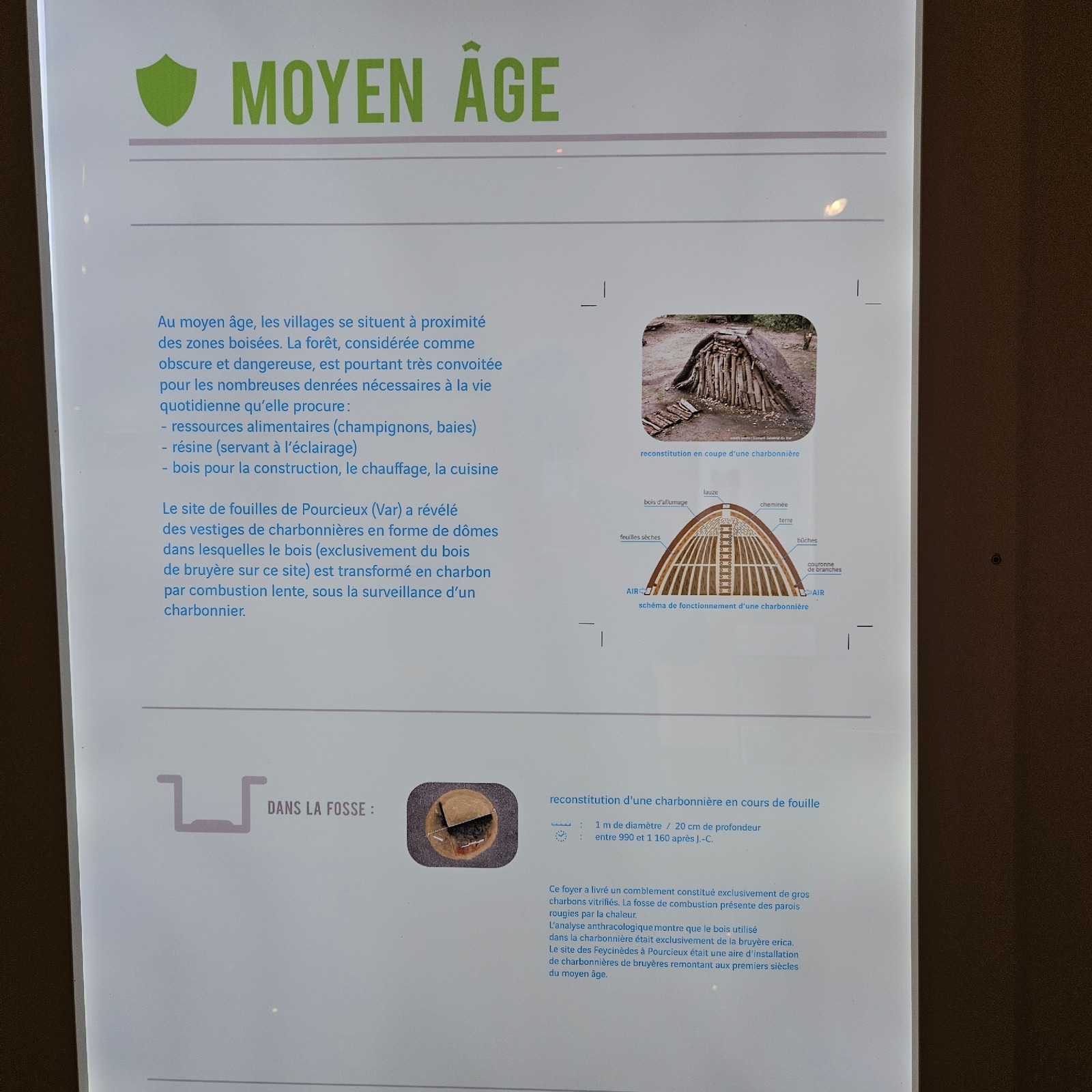
The image is a close-up shot of an informational display in what appears to be a museum or exhibition. The display features text in French and a visual representation of a historical charcoal production site. The title of the display reads "MOYEN ÂGE" (Middle Ages). The text below discusses the importance of forests to medieval villages, listing resources derived from them such as food, resin for lighting, and wood for construction and heating. It then details the excavation of charcoal kilns at Pourcieux (Var), describing their dome-like structure and the process of slow combustion under supervision. To the right of the text, there is a photograph showing a reconstruction of a charcoal kiln in cross-section. Below this photograph is a schematic diagram illustrating the internal structure and functioning of a charcoal kiln, with labels indicating components like "bois d'allumage" (kindling wood), "lauze" (roofing slate), "cheminée" (chimney), "terre" (earth), "bûches" (logs), and "air". Further down, a section titled "DANS LA FOSSE :" (In the pit:) is accompanied by an image of a circular excavation site containing remnants of what appears to be charcoal. Below this image, text provides details about the charcoal kiln, including its diameter (1 m) and depth (20 cm), and dating it to between 990 and 1160 AD. The final paragraph describes a hearth found during excavation, composed entirely of vitrified charcoal, and notes that the combustion pit shows signs of intense heat. It concludes by stating that the Feycinèdes site in Pourcieux was a charcoal production area using heather from the early Middle Ages. The image is well-lit, with a clean, modern display design. The background to the right of the display is a dark, textured surface, likely a wall. There are no people visible in the image. The overall impression is of an educational exhibit about historical artisanal practices. The location in Brignoles, France, is not explicitly mentioned on the visible display.
Tihomir Angelov
Brignoles, France · Aug 5, 2026, 7:20 PM
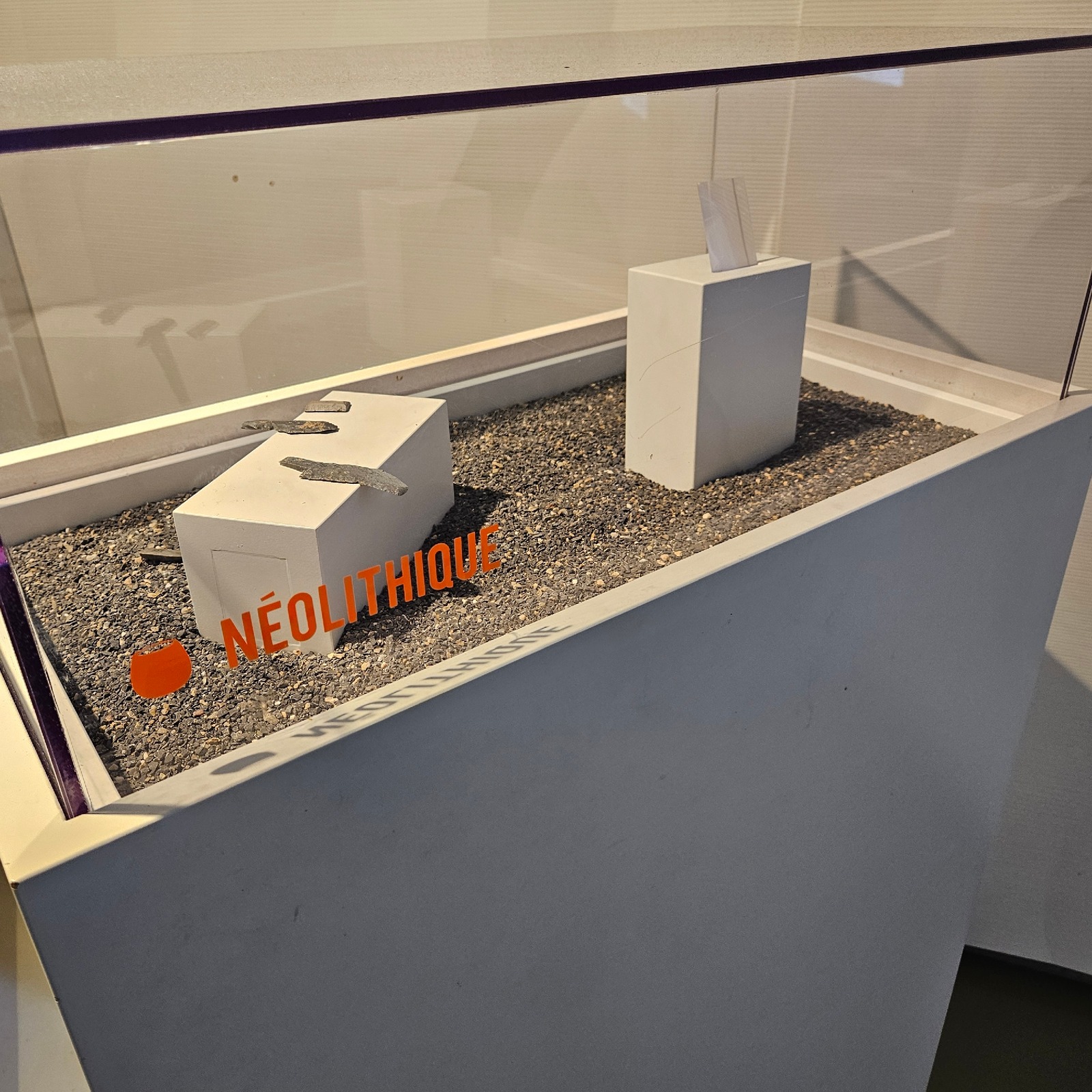
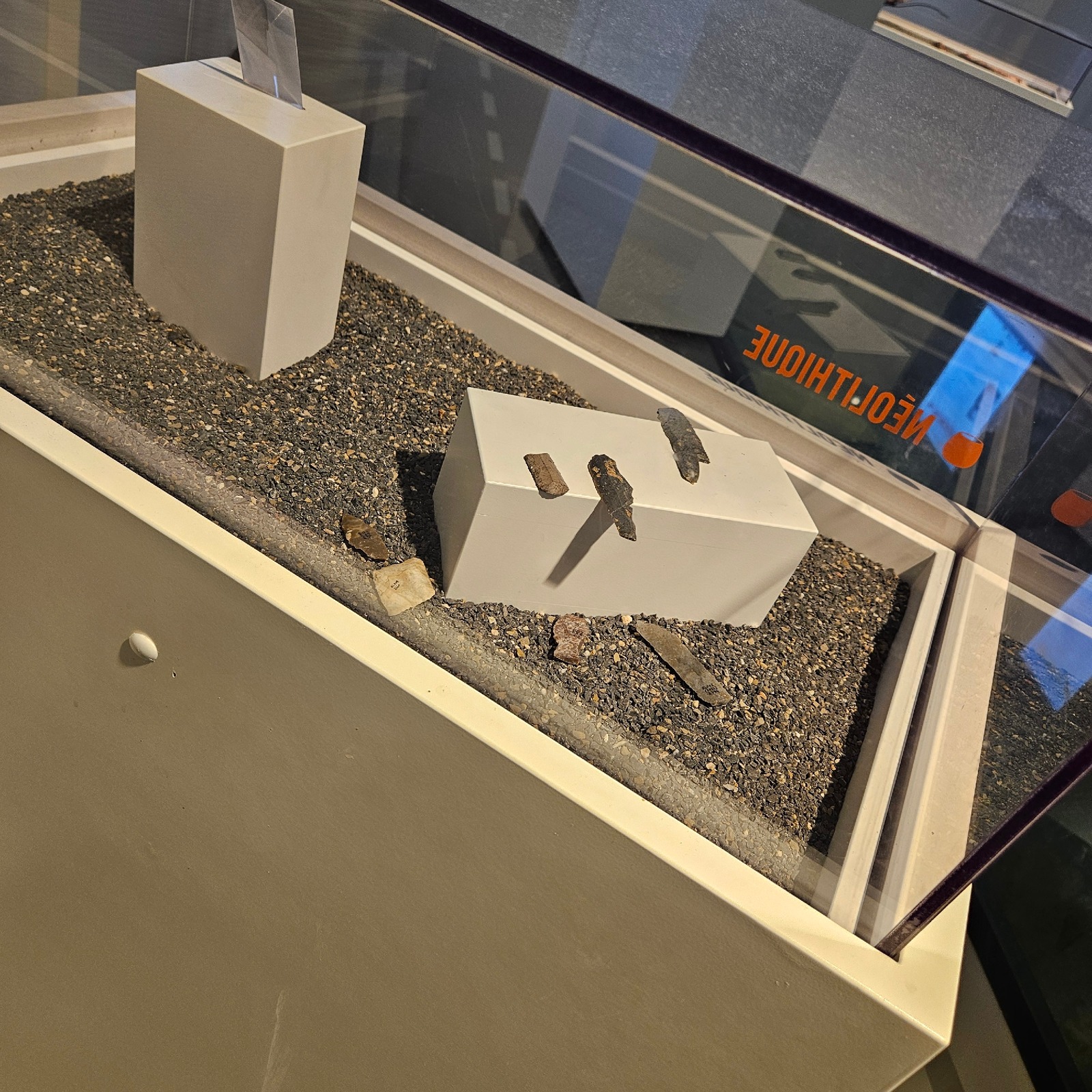
The image shows a museum display case containing artifacts in a gravel-filled exhibit. A pale rectangular pedestal with a slanted top is positioned in the left rear of the case, with a clear, angled piece of material emerging from a slit at the top. To the right of this pedestal, a smaller, white rectangular block rests on the gravel, adorned with several dark, shard-like objects, possibly flint tools or fragments. The surrounding gravel is a mix of dark gray and lighter tan pebbles. In the foreground, a smooth, oval, white object is visible on the beige surface of the display case. The background, seen through the glass of the display, is a muted, reflective surface with faint patterns that suggest a floor or wall, and a reversed orange text that reads "NEOLITHIQUE," likely indicating the exhibit's theme as Neolithic. This display is located in the Musée du Clocheton in Brignoles, France.
Tihomir Angelov
Brignoles, France · Aug 5, 2026, 7:21 PM
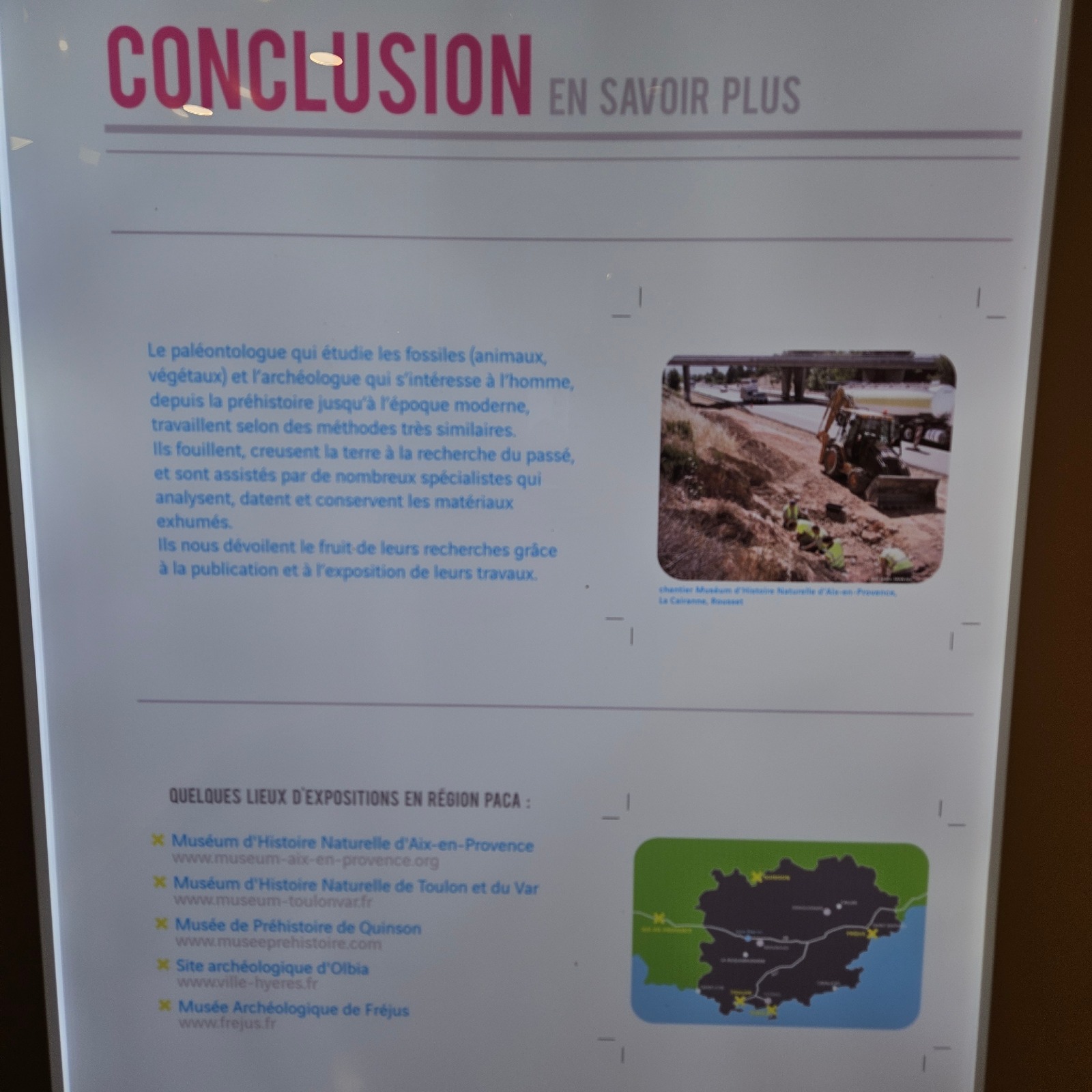
The image is a photograph of a display panel with text and an image. The top of the panel has large pink text that reads "CONCLUSION EN SAVOIR PLUS". Below this, there is a block of French text that discusses paleontology and archaeology. To the right of this text is a photograph of an archaeological dig with several people in high-visibility vests working around an excavator and a truck. A caption below the photograph reads "chantier Muséum d'Histoire Naturelle d'Aix-en-Provence, La Calerne, Rousset". The bottom left of the panel lists "QUELQUES LIEUX D'EXPOSITIONS EN RÉGION PACA", followed by a list of museums and their websites. The bottom right of the panel features a map of the PACA region of France, with several yellow markers indicating locations. Brignoles is not explicitly mentioned in the text or on the map visible in the image.
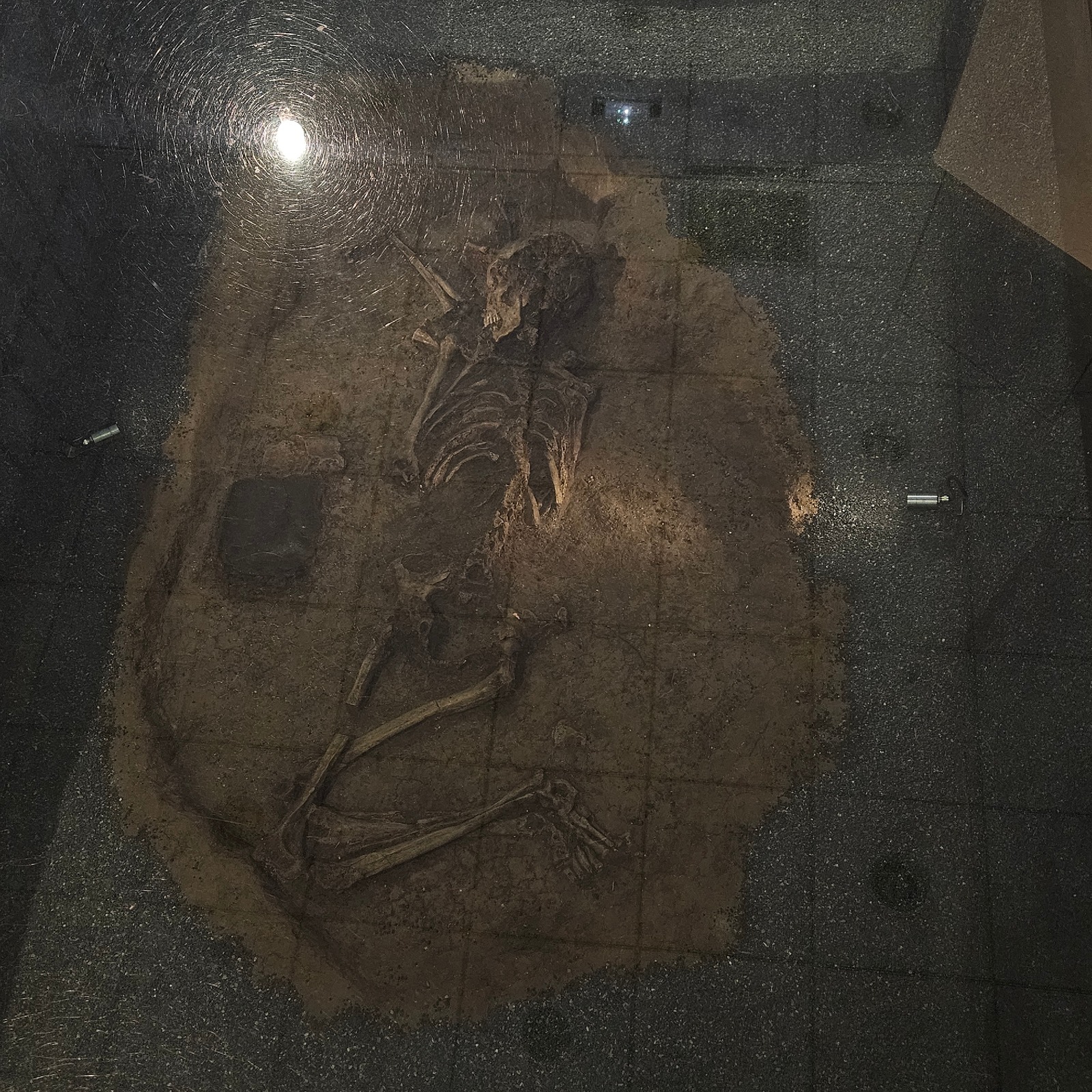
An overhead, slightly angled view captures a human skeleton, unearthed and preserved in situ within a dark, granular substrate. The remains are arranged in a supine position, with the skull positioned to the upper right of the frame. The ribs are articulated, and the long bones of the limbs are visible, some bent and positioned as if resting. The skeleton appears to be partially covered by the substrate, suggesting an archaeological excavation. The surrounding environment is composed of a dark, speckled material, possibly gravel or compacted earth, interspersed with areas of lighter-colored, rougher texture. The scene is illuminated by a bright light source originating from the upper left, casting shadows and highlighting the contours of the bones and substrate. Two cylindrical metallic objects, possibly markers or tools, are present on the left side of the frame. The overall impression is one of scientific observation and preservation of historical human remains within an excavated context. The image is a still shot, capturing a moment in time of an archaeological discovery, possibly within the city of Brignoles, France, a region known for its rich history and archaeological sites.
Brignoles, France · Aug 5, 2026, 7:23 PM
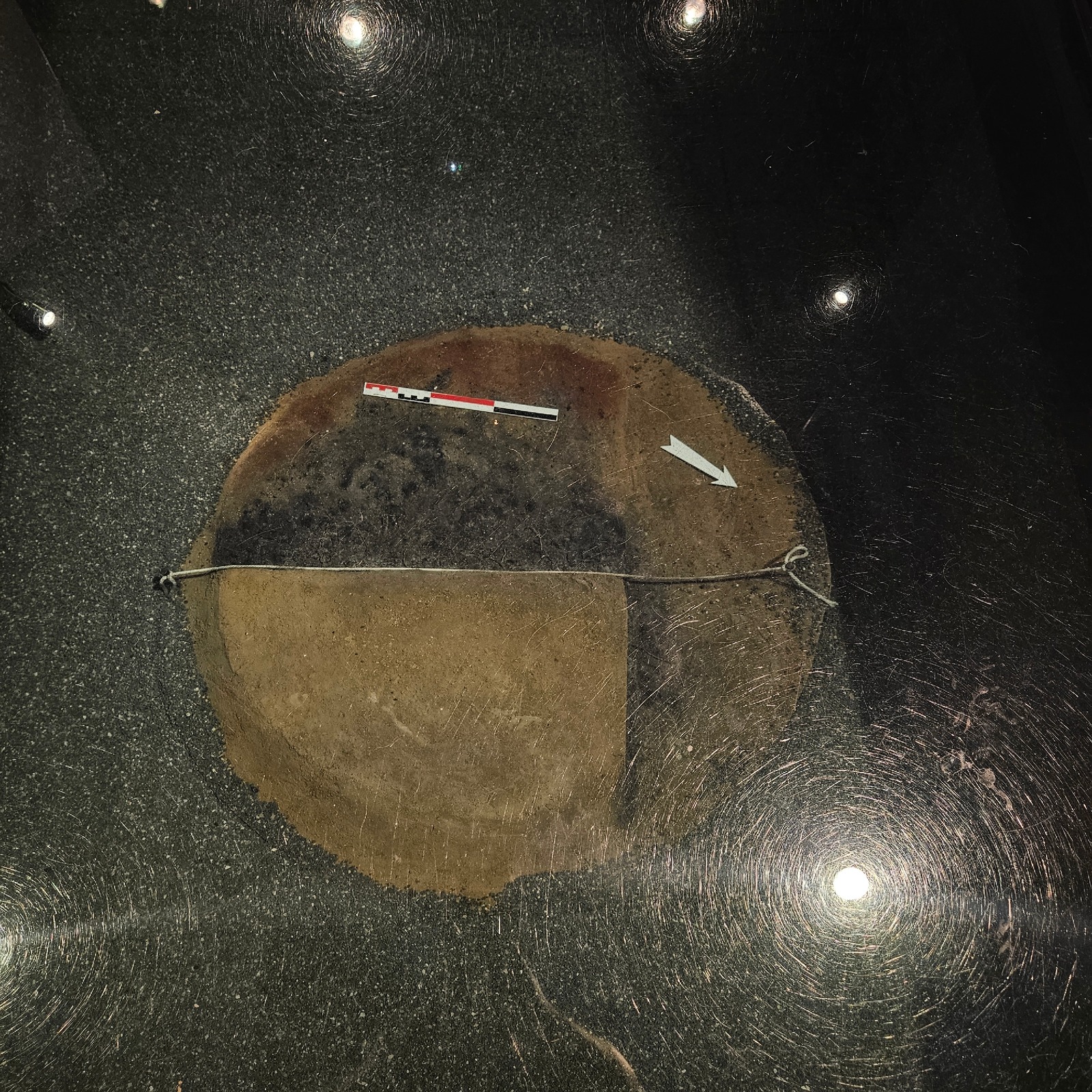
An overhead view captures an archaeological excavation site, likely within the city of Brignoles, France. The central focus is a circular pit, revealing distinct layers of soil and sediment. A scale bar, marked with black and red increments, is positioned near the upper edge of the pit, indicating measurements. A white arrow points diagonally downwards to the right, possibly indicating a direction of interest or excavation. A thin white rope is strung across the lower half of the pit, secured by knots on either side, possibly to delineate a feature or section. The surrounding surface is dark and textured, with circular patterns suggesting a polished or reflective material, possibly a table or display surface. The lighting creates bright circular reflections on this dark surface.
Tihomir Angelov
Brignoles, France · Aug 5, 2026, 7:25 PM
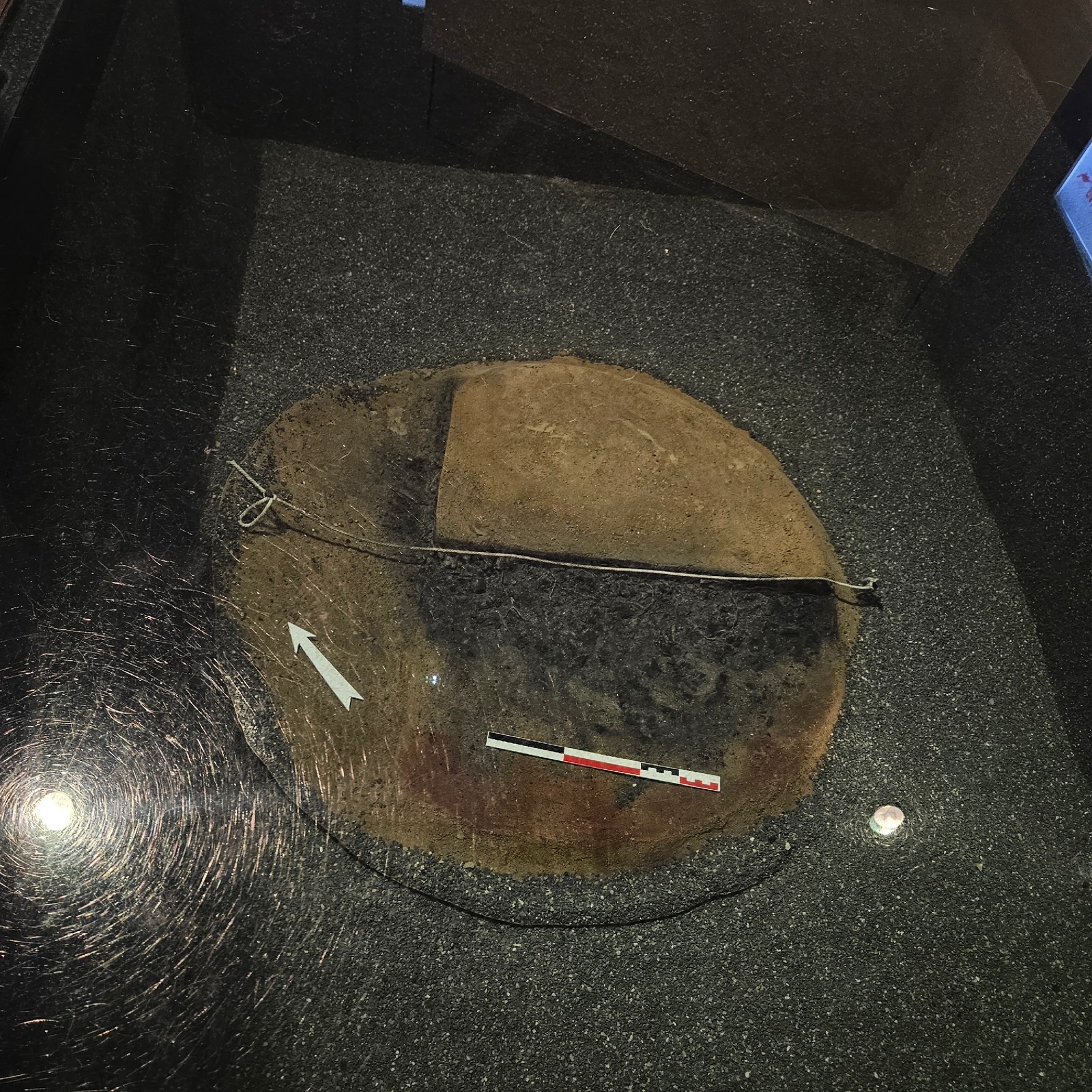
The image shows an excavated archaeological feature, likely a hearth or a pit, displayed within a museum setting. The feature is circular and appears to be composed of dark, compacted soil and ash, with a lighter-colored, hardened layer forming a cap or surface. A string is attached to the feature and runs outwards. An arrow indicator is present on the surface pointing towards the feature. A scale bar, likely for measurement, is placed on the feature. The display is set against a dark, speckled surface, possibly asphalt or a similar material, with some reflective elements suggesting artificial lighting. A small, illuminated light fixture is visible to the right of the feature. The context of Brignoles, France, suggests this may be an artifact or excavation from the region's history.
Tihomir Angelov
Brignoles, France · Aug 5, 2026, 7:25 PM
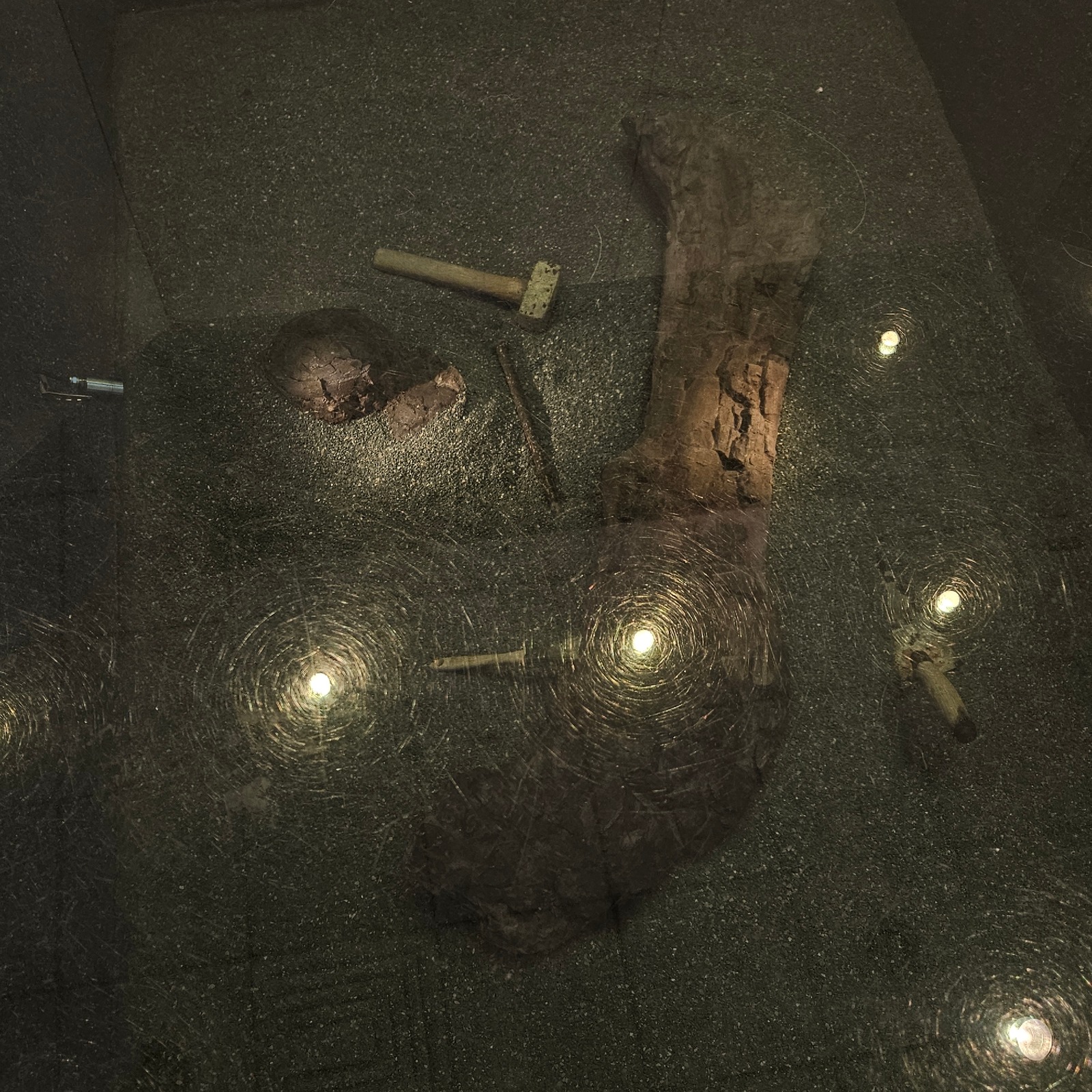
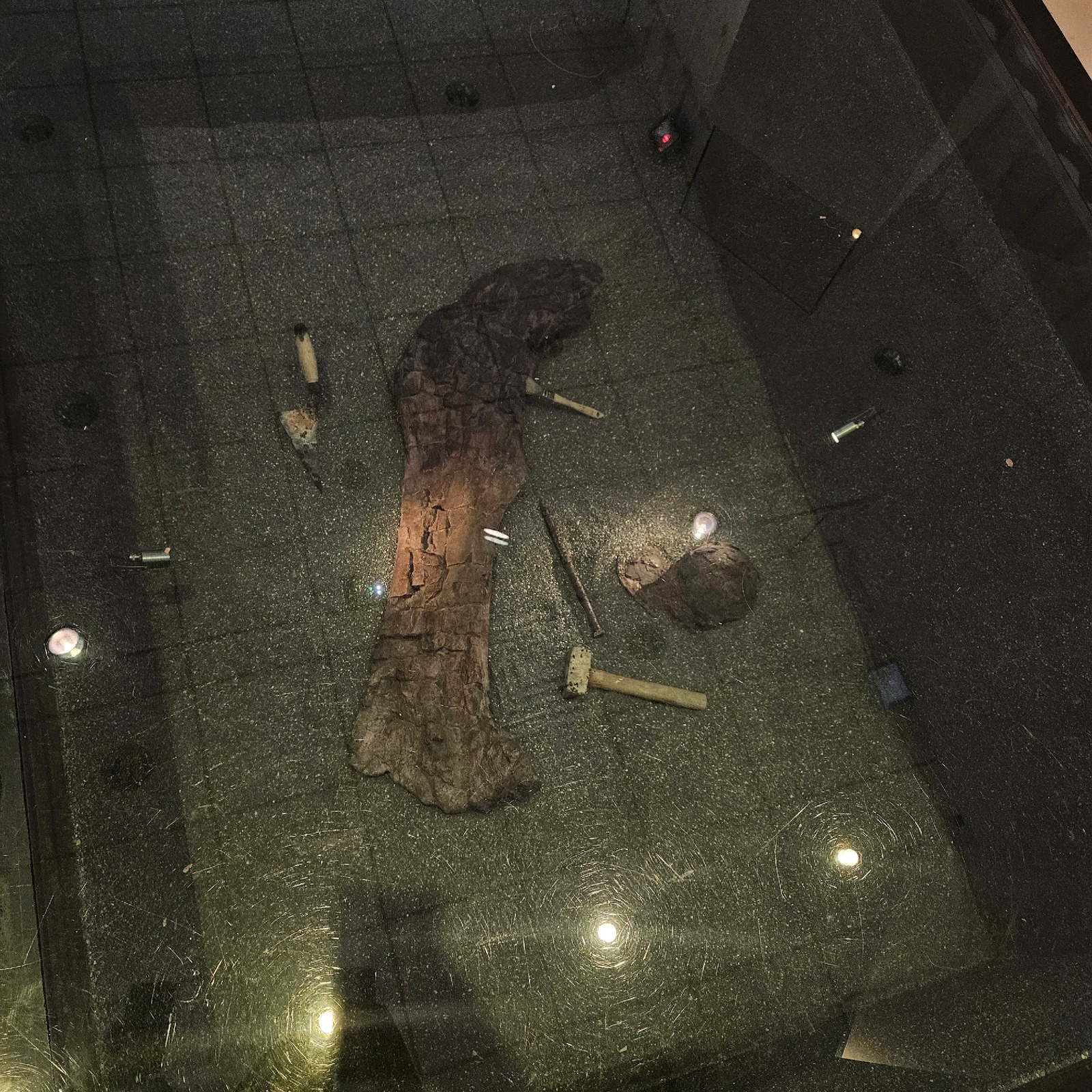
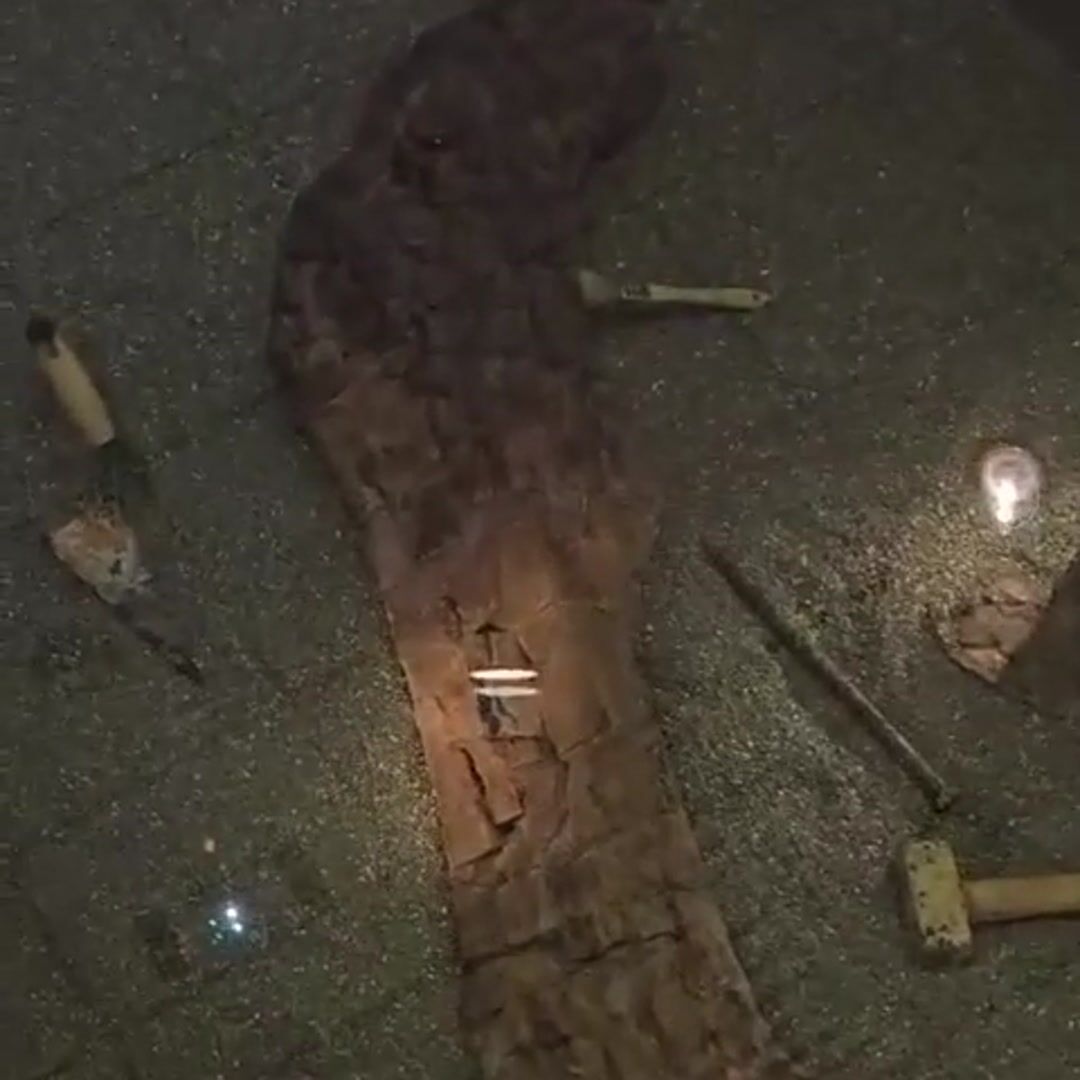
The image depicts an archaeological display inside a museum in Brignoles, France. The display showcases what appears to be a fossilized or ancient fragment, possibly bone or wood, partially encased in a dark, gravel-like material. Several tools, including what looks like a hammer and nails or spikes, are arranged around the fragment, suggesting an excavation or preservation context. The lighting in the museum creates circular reflections on the surface, indicating a glass enclosure or polished floor. The overall presentation is one of historical preservation and scientific examination.
Tihomir Angelov
Brignoles, France · Aug 5, 2026, 7:26 PM
The video shows an overhead view of a circular archaeological artifact, possibly a shield or a large ceramic object, displayed under glass. The artifact is partially divided into two sections, one darker and appearing more weathered, the other lighter and smoother. A measuring scale with red and white markings is placed across the darker section, and a white arrow points towards the right side of the artifact. A thin rope is attached to the artifact and extends to the right edge of the frame. The artifact is set against a textured dark surface, possibly a floor or a display base. Lights are reflected on the glass surface, indicating the display environment.
Tihomir Angelov
Brignoles, France · Aug 5, 2026, 7:27 PM
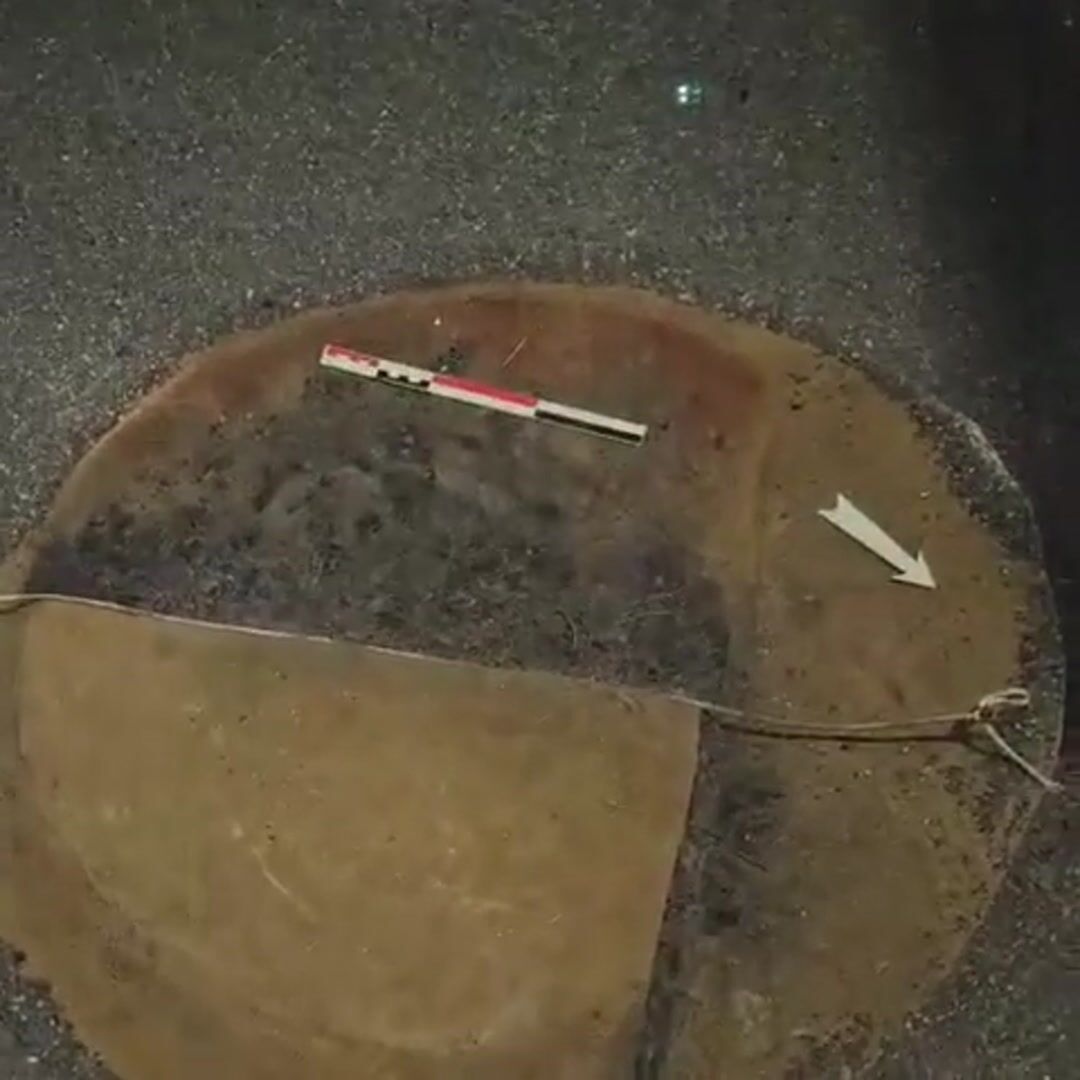
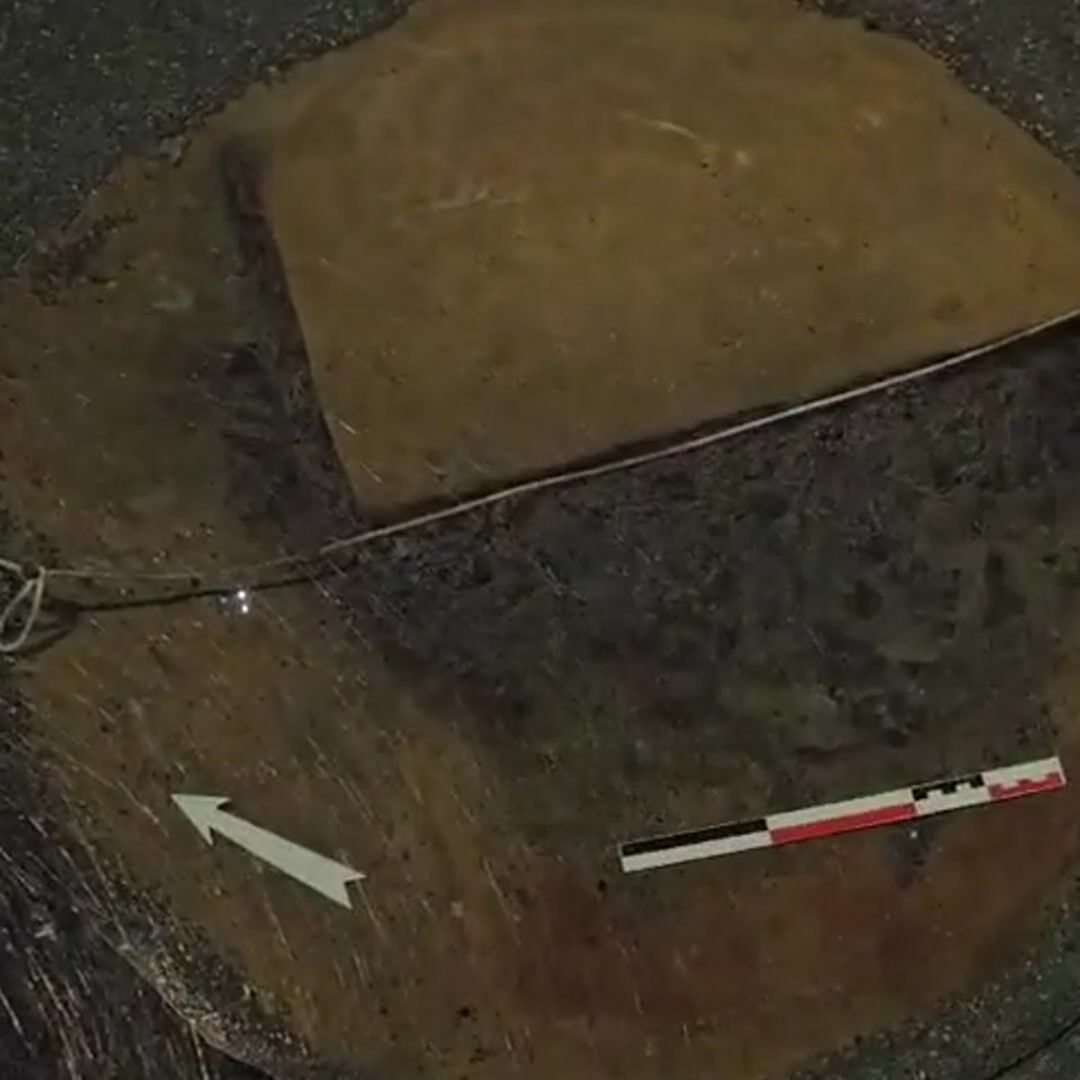
The video shows an aerial view of an archaeological excavation. A circular feature in the ground is visible, with a ruler and a directional arrow placed within it. The feature appears to be some kind of pit or posthole, with darker soil in the center and lighter soil around the edges. There is also a thin wire stretched across the feature. The surrounding ground is dark and granular, possibly dirt or gravel. The lighting is dim, suggesting the excavation is taking place in low-light conditions, possibly underground or at night.
Tihomir Angelov
Brignoles, France · Aug 5, 2026, 7:27 PM
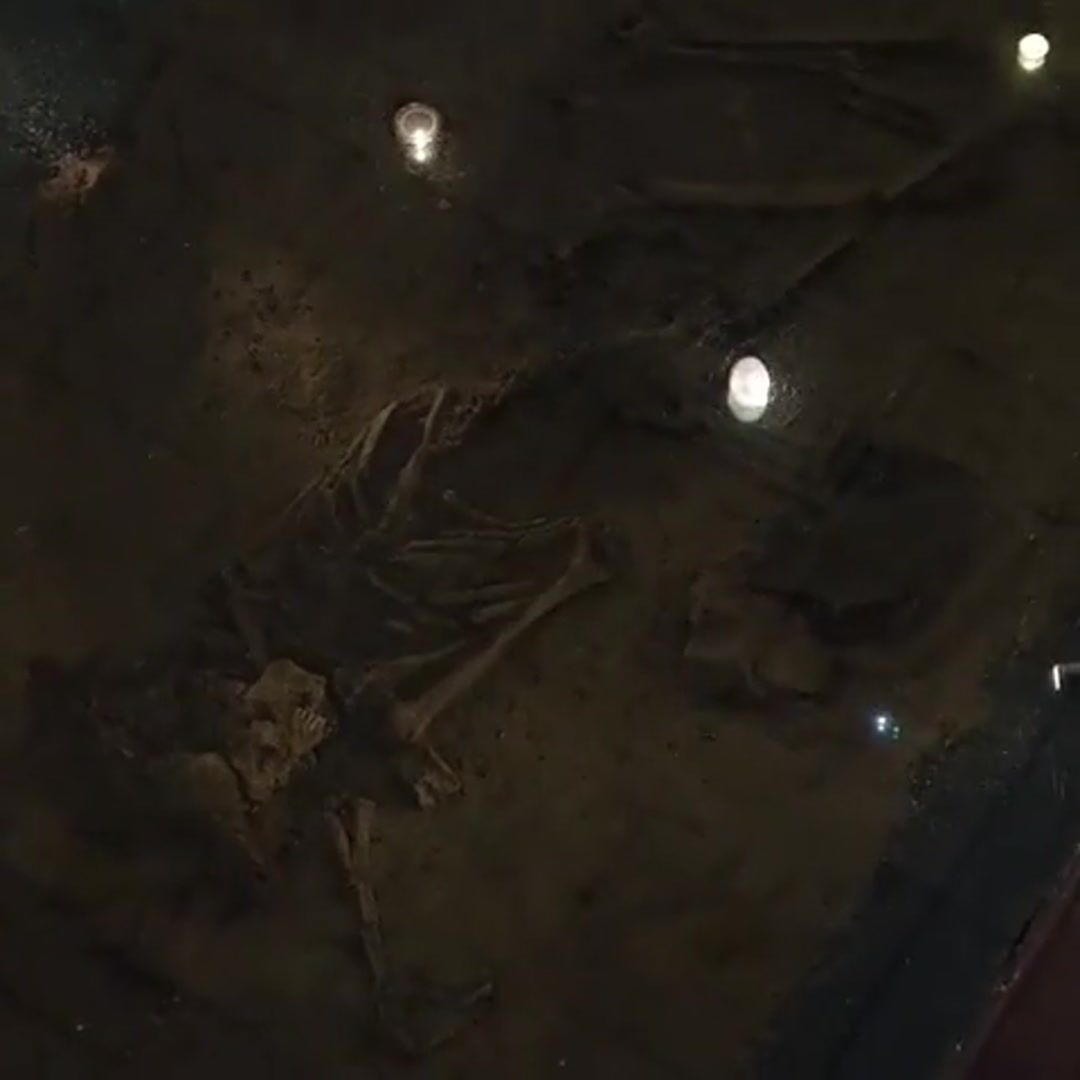
The video shows a close-up view of skeletal remains on display, likely in a museum or an archaeological exhibit. The skeleton is laid out as if in a burial, with the skull, rib cage, spine, and limbs all visible. The bones are resting on a dark, earthy surface, and there are small lights illuminating the display. The lighting creates reflections on what appears to be a glass covering over the exhibit. The remains are fragmented and appear to be ancient. The overall environment is dimly lit, with the focus solely on the skeletal remains.
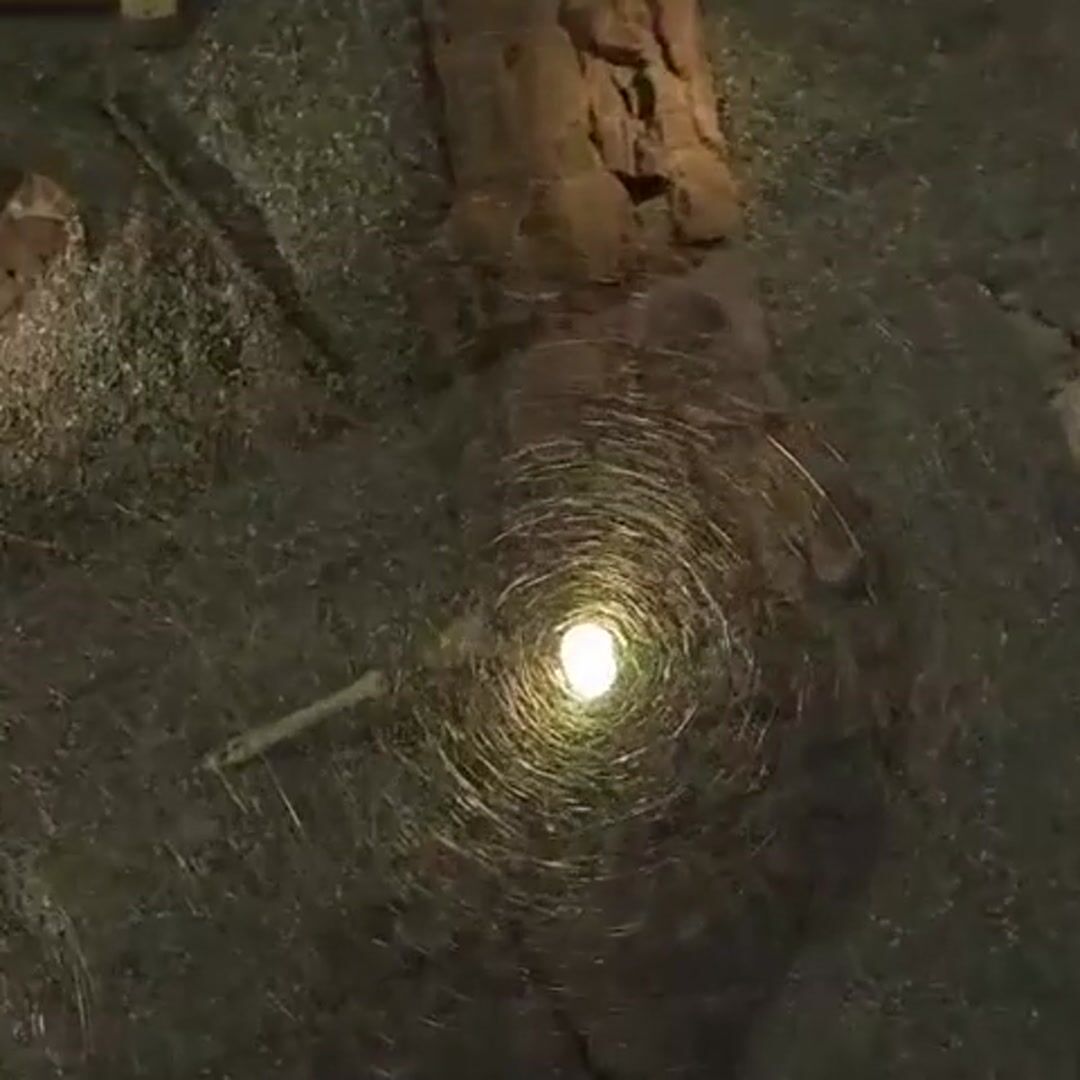
The video pans over a display case with a glass top. Inside the case, on a dark, textured surface, are several objects. The most prominent is a large, light-colored bone, possibly a femur, positioned horizontally. To the left of the bone, there are two smaller, white, rounded objects, one appearing to be a skull, partially obscured. To the left of the skull is a metallic object that resembles a hammer. To the right of the bone, there is another object, possibly a piece of wood or bone, also lying horizontally. The surface the objects are on appears to be a mix of granular material and some darker, irregular shapes, possibly rocks or earth. Several circular lights are visible, reflecting off the glass top, illuminating the display. In the background, parts of a dark, textured wall or structure are visible. The video briefly focuses on a section of the display where the textured surface appears to swirl in a circular pattern around a bright light source. The overall impression is of an archaeological or paleontological exhibit.
Tihomir Angelov
Brignoles, France · Aug 5, 2026, 7:29 PM
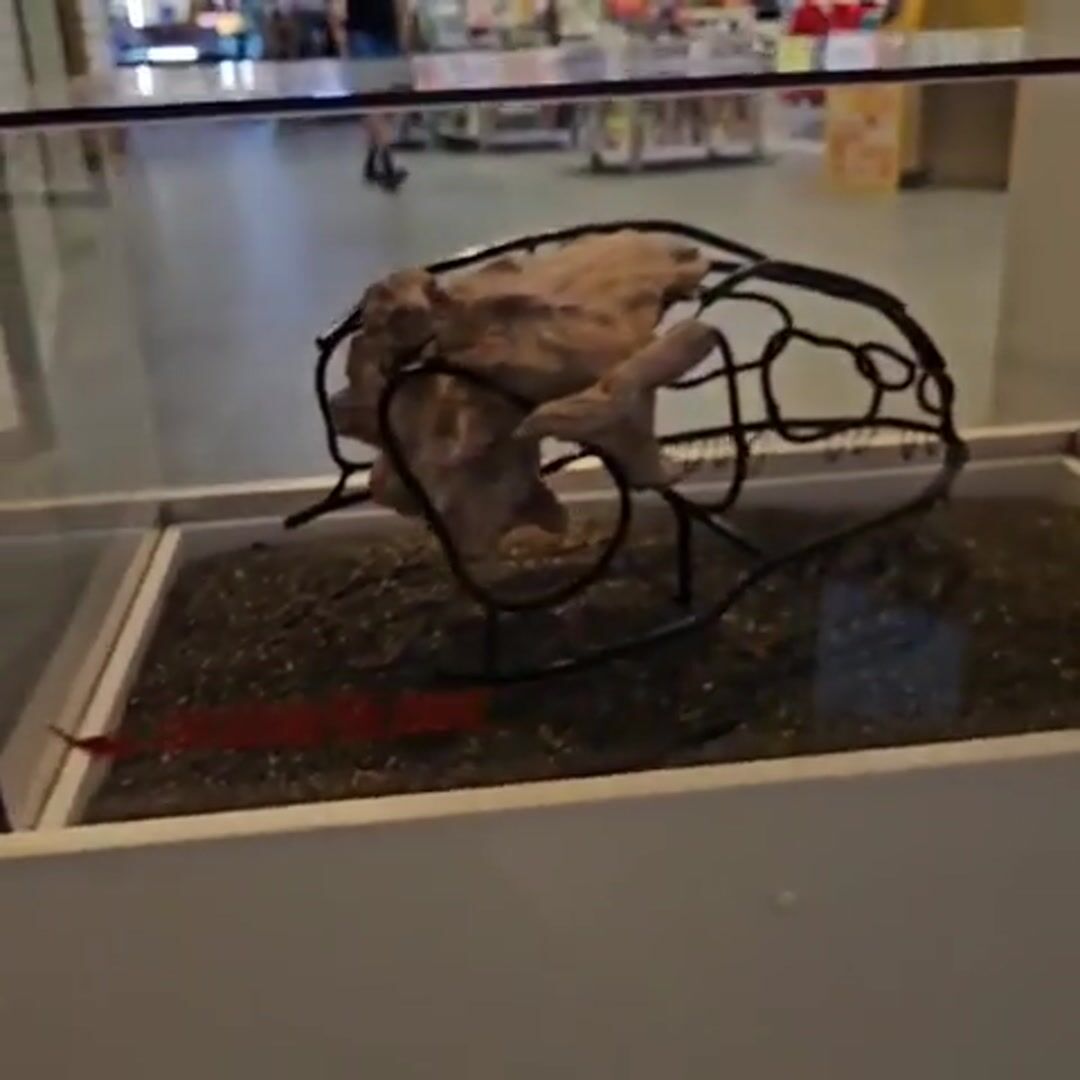
The video shows a fossil displayed in a glass case. The fossil is a light-colored, irregularly shaped object mounted on a black metal frame that outlines a skull shape. The fossil is situated on a bed of dark gravel within a white rectangular display case. The background is blurred, showing a museum or exhibition hall with other displays and people walking in the distance. The text "PALÉONTOLOGIE" is visible in red on the gravel in front of the fossil. The camera slowly pans around the display case.
38
Memories2
Contributors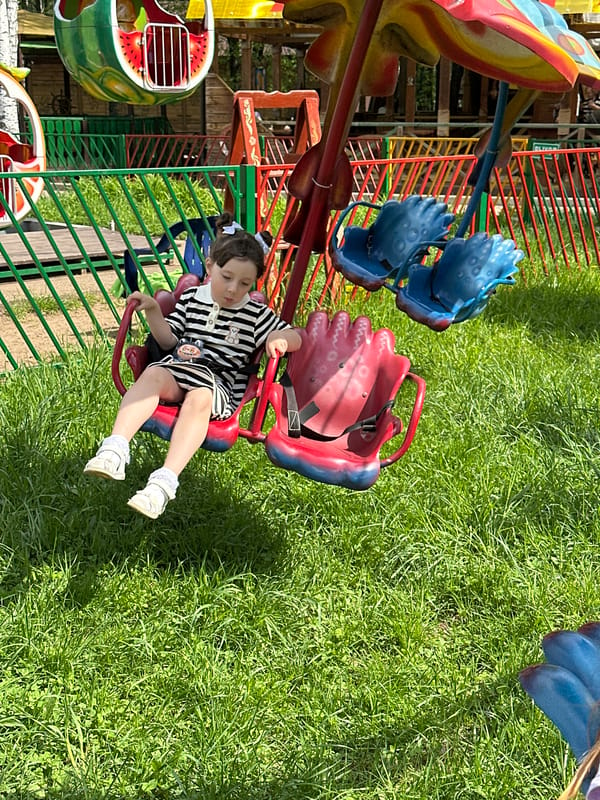
Family enjoys morning carousel rides at Chaikovsky park
Chaikovsky, Russia · Saturday, May 16, 2026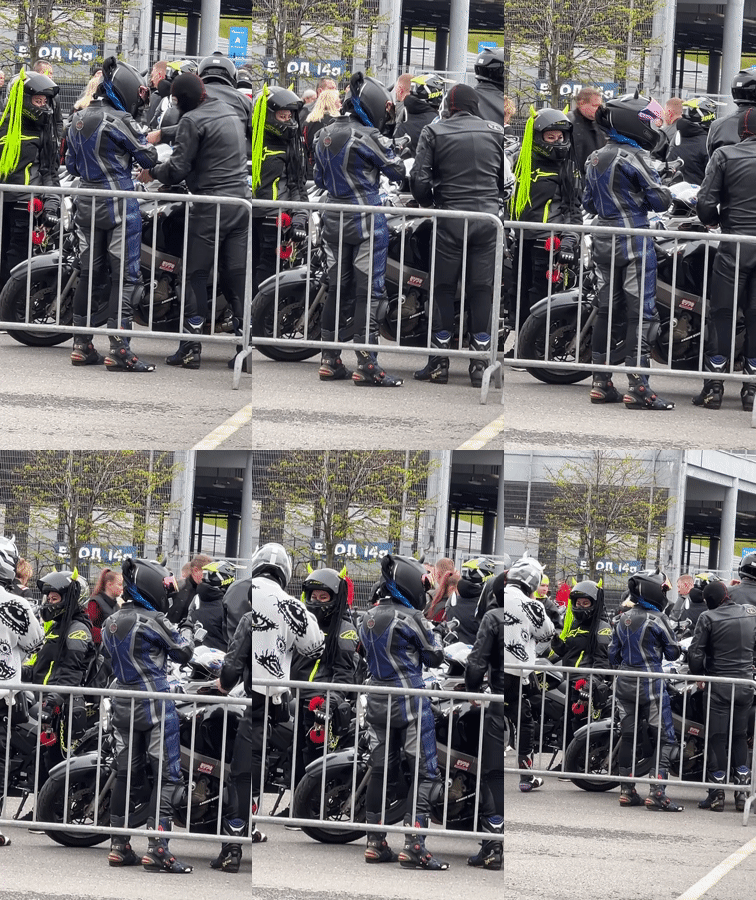
Motorcycle Rally Assembles in Saint Petersburg Under Bridge
Saint Petersburg, Russia · Saturday, May 16, 2026
Morning snapshots from Nha Trang: traffic, fast food, girl
Bac Nha Trang Ward, Vietnam · Saturday, May 16, 2026
Man in novelty beanie spotted in vehicle, Jos Nigeria
Jos, Nigeria · Saturday, May 16, 2026