Wednesday, August 19, 2026 · Updated Wednesday, August 19, 2026
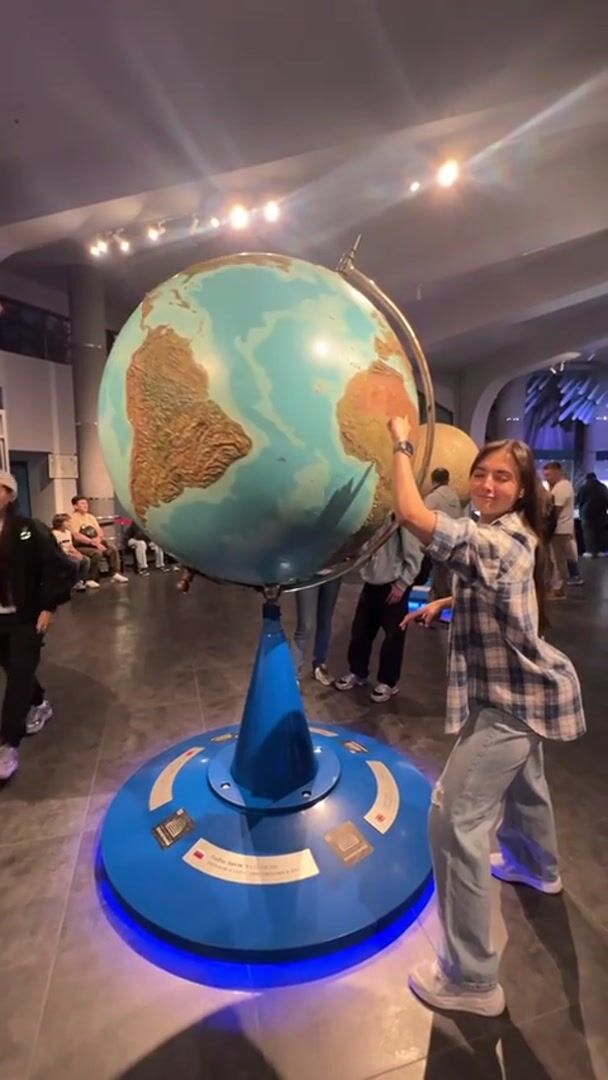
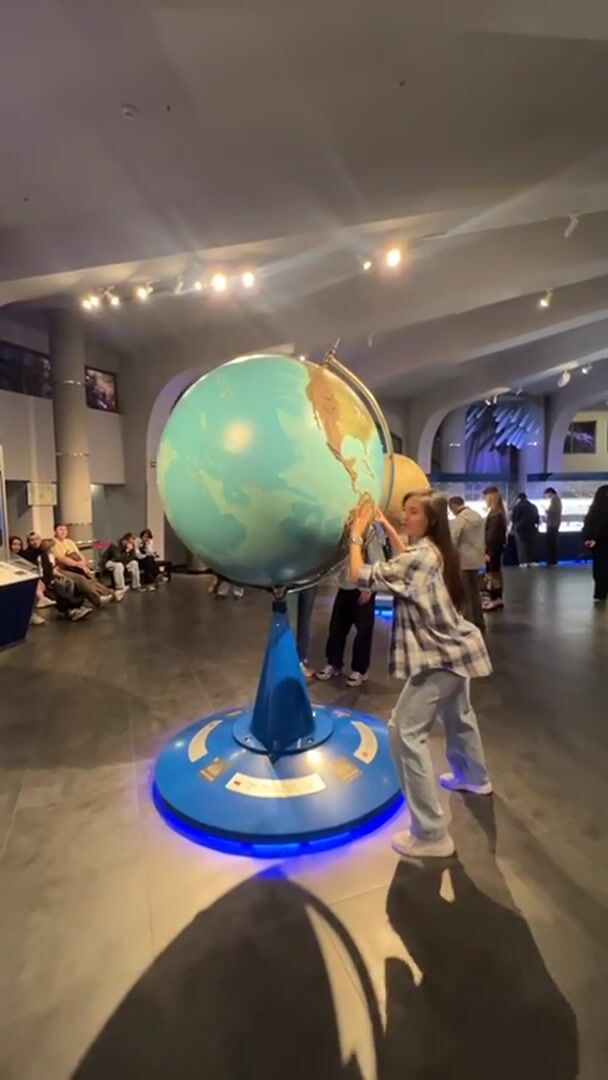
The video shows a young woman with long dark hair, wearing a blue and white plaid shirt and light blue jeans, standing in front of a large, detailed globe. She is pointing her finger at the globe, specifically at Africa. The globe is mounted on a blue stand with illuminated sections containing text. The background appears to be an indoor exhibition space, possibly a museum, with other people visible in the distance. The lighting is somewhat dim, with spotlights illuminating the globe. The woman is smiling and looking at the camera while interacting with the globe. She verbally instructs someone to "Spin it, spin it, close your eyes and point where. Oh, it's Africa."
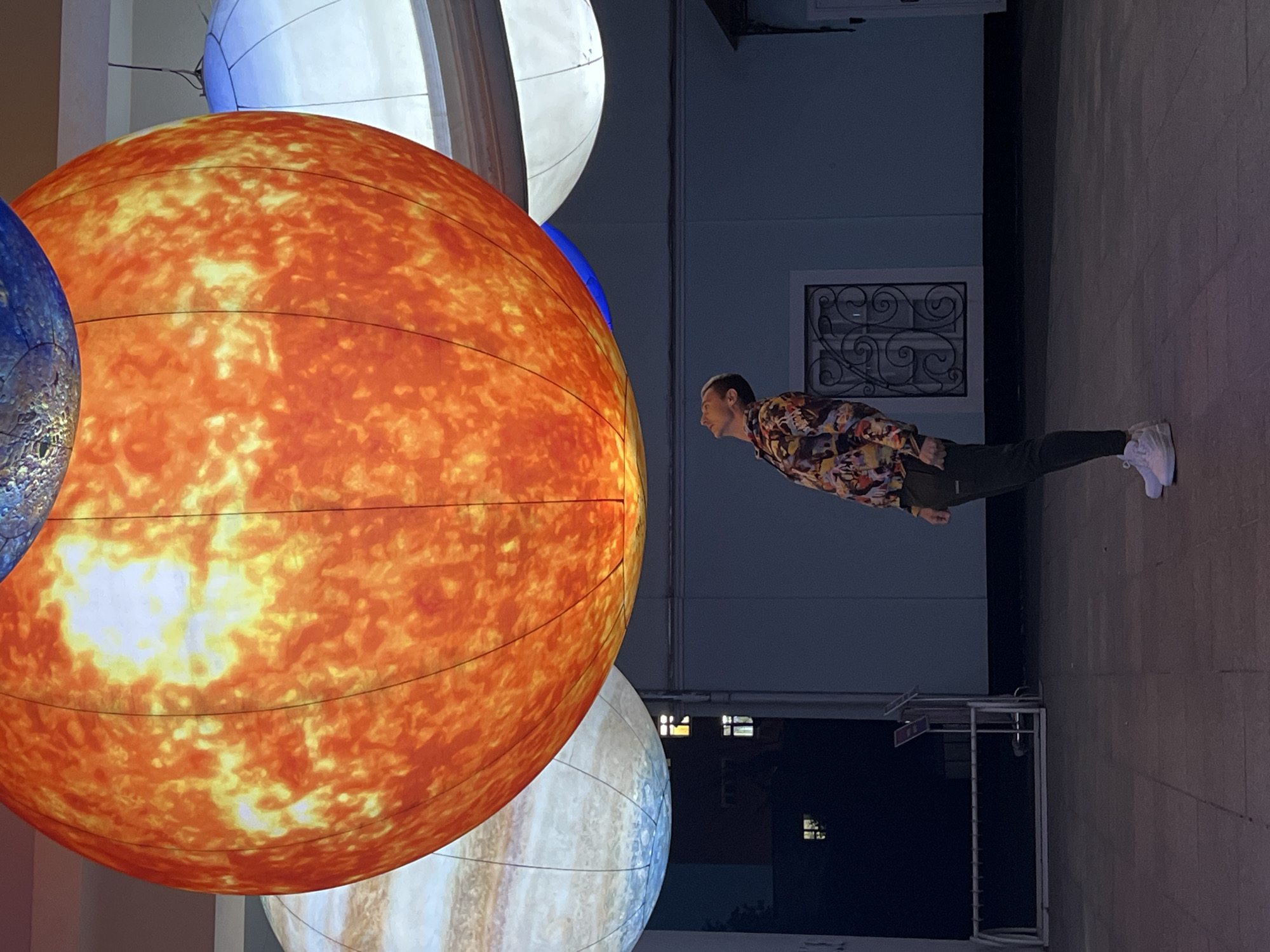
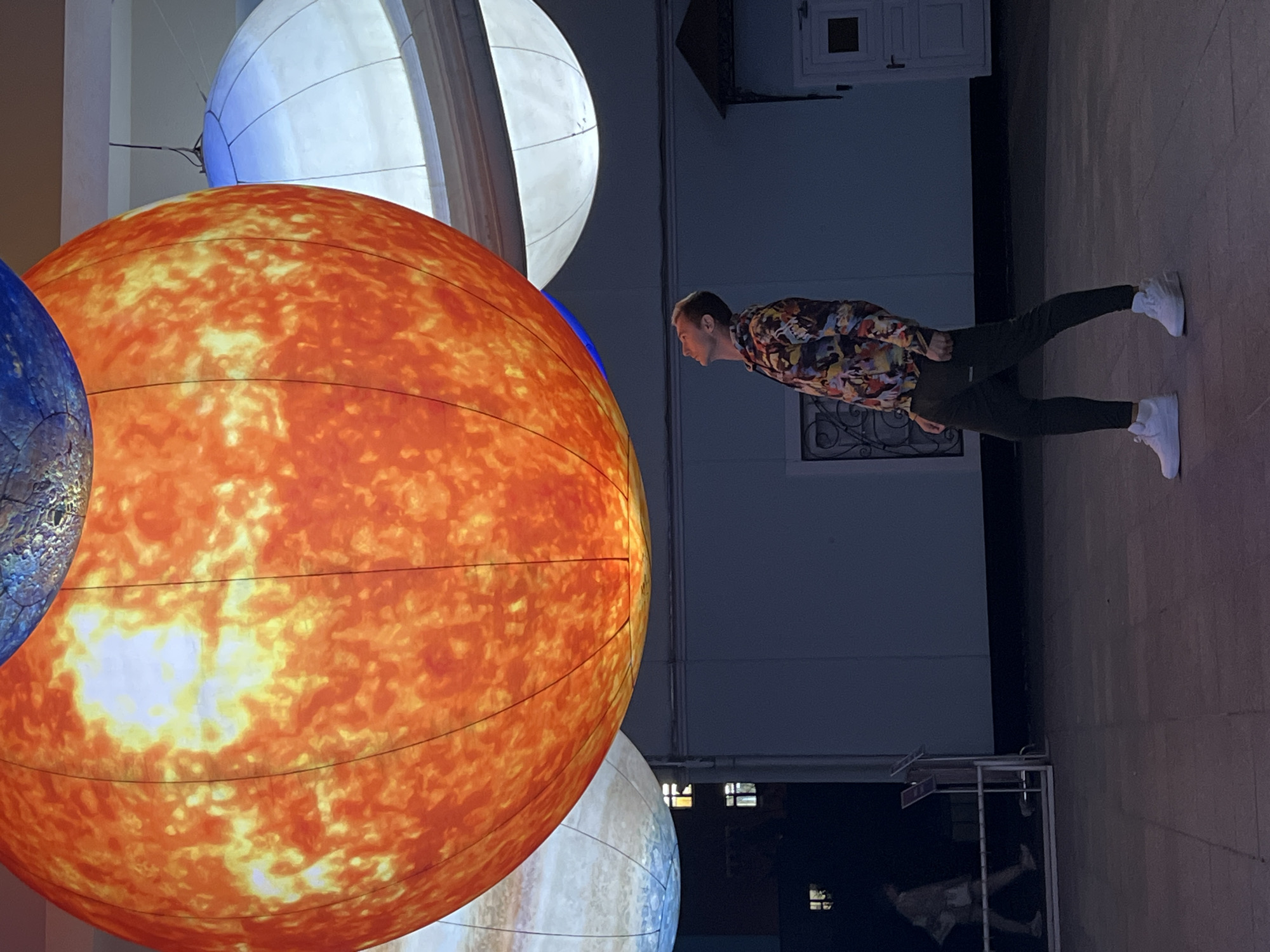
A man stands on a paved surface, looking up at three large, illuminated spheres hanging from above. The sphere directly above him is a vibrant orange and yellow, resembling the sun. To its left is a sphere with swirling white and blue patterns, possibly representing Jupiter. To the right, a white sphere is partially visible. The backdrop consists of a light blue wall with decorative metal grilles on windows and dark recesses that suggest doorways or alcoves. In the distance, through an opening in a dark structure, several windows with glowing lights are visible. The scene appears to be an outdoor exhibit, possibly at a museum or public space, set against a building. The man is wearing a colorful, patterned long-sleeved shirt, dark pants, and white sneakers. The overall lighting suggests it is evening or a dimly lit area. The location is identified as Moscow, Russia.
ARTUR LETO
Moscow, Russia · Aug 19, 2026, 6:02 PM · 112.6k attention
A man stands on a paved surface, looking up at three large, illuminated spheres hanging from above. The sphere directly above him is a vibrant orange and yellow, resembling the sun. To its left is a sphere with swirling white and blue patterns, possibly representing Jupiter. To the right, a white sphere is partially visible. The backdrop consists of a light blue wall with decorative metal grilles on windows and dark recesses that suggest doorways or alcoves. In the distance, through an opening in a dark structure, several windows with glowing lights are visible. The scene appears to be an outdoor exhibit, possibly at a museum or public space, set against a building. The man is wearing a colorful, patterned long-sleeved shirt, dark pants, and white sneakers. The overall lighting suggests it is evening or a dimly lit area. The location is identified as Moscow, Russia.

Woman plays with Pomeranian in backyard setting in Izhevsk
Izhevsk, Russia · Saturday, May 16, 2026
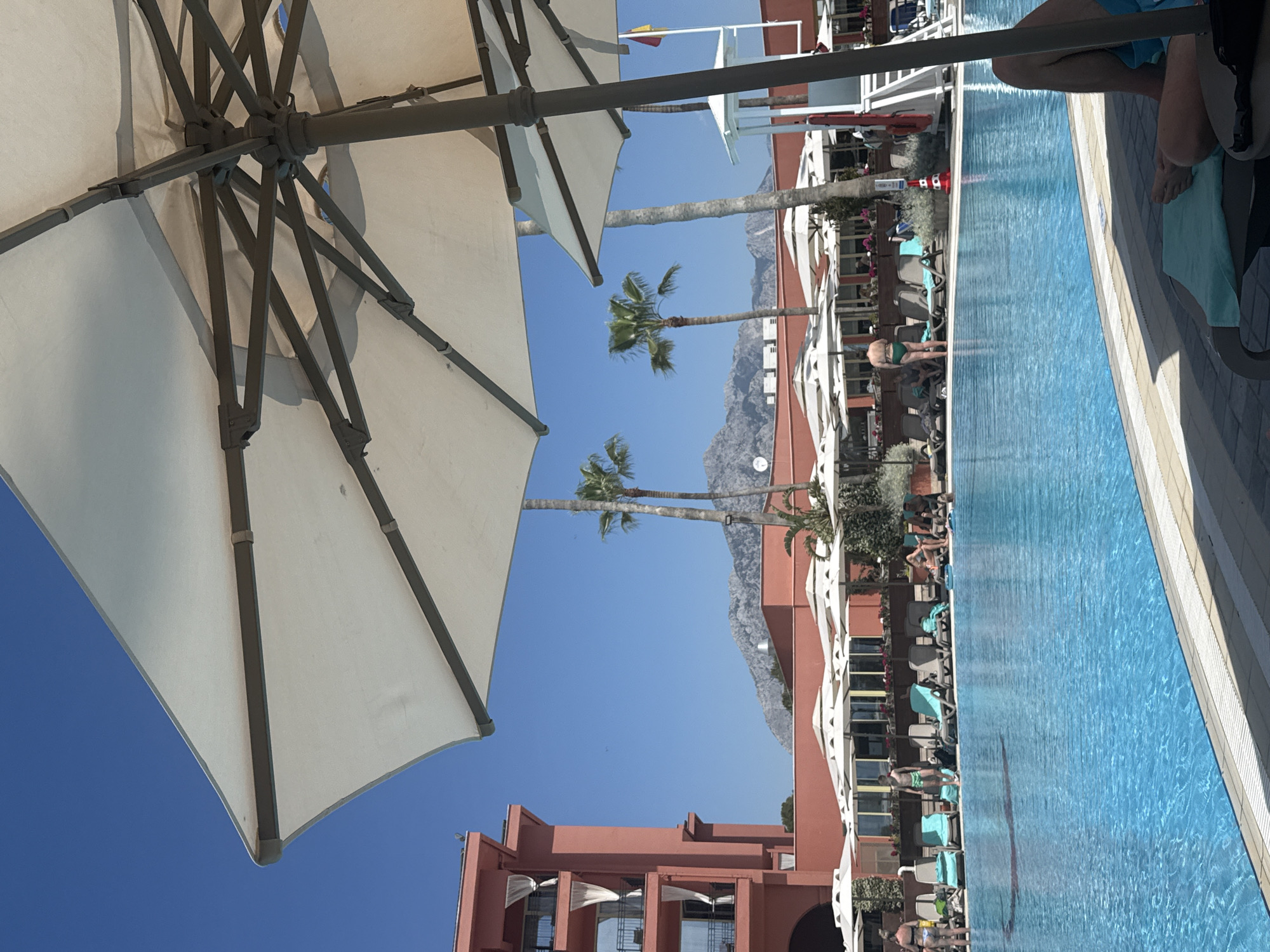
Morning poolside activity observed at Kemer resort hotel
Kemer, Turkey · Saturday, May 16, 2026
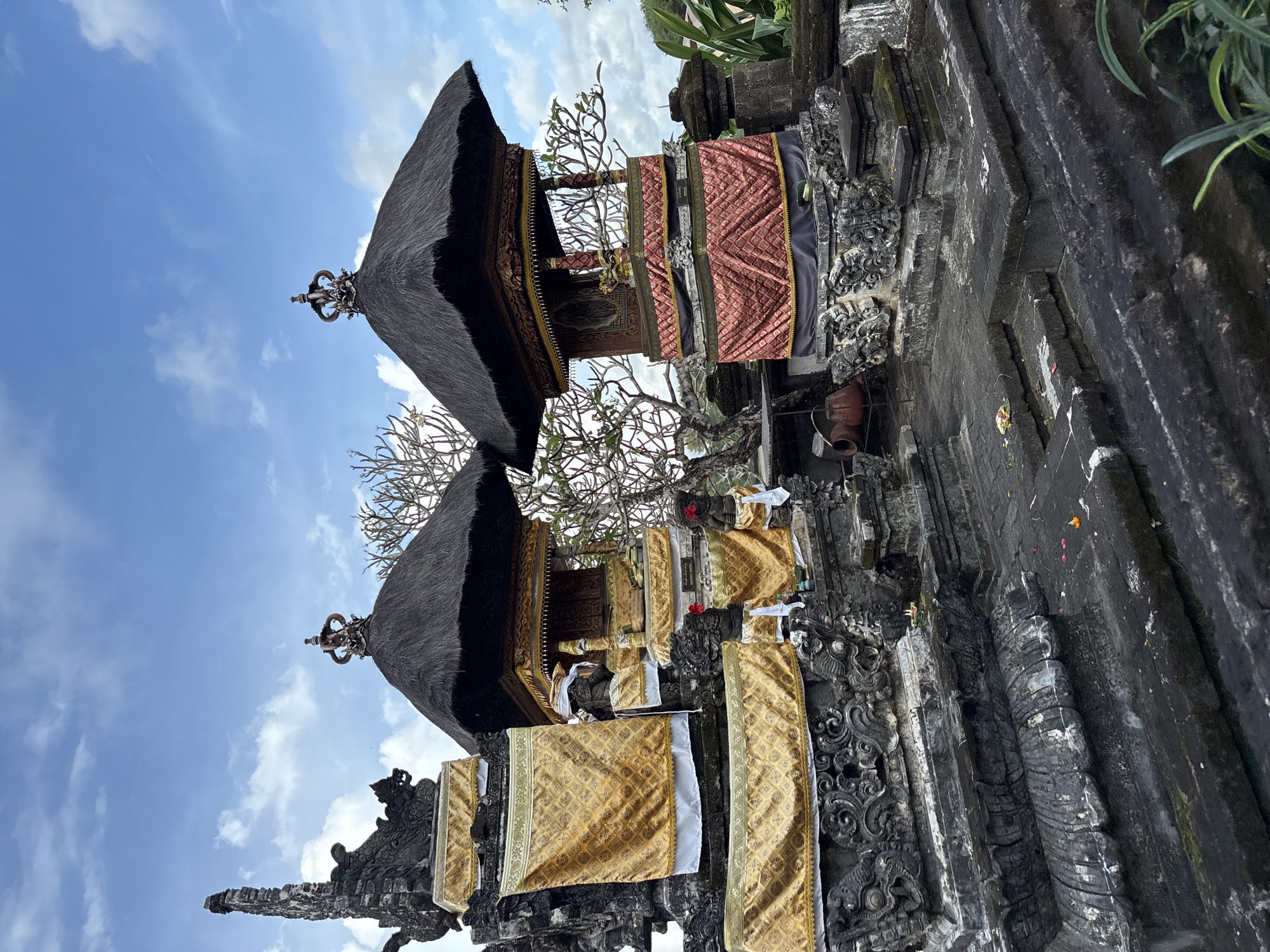
Resort walkthrough captured in Kuta Selatan, Indonesia morning scenes
Kuta Selatan, Indonesia · Saturday, May 16, 2026
Poolside bridal yoga celebration held in Ashdod
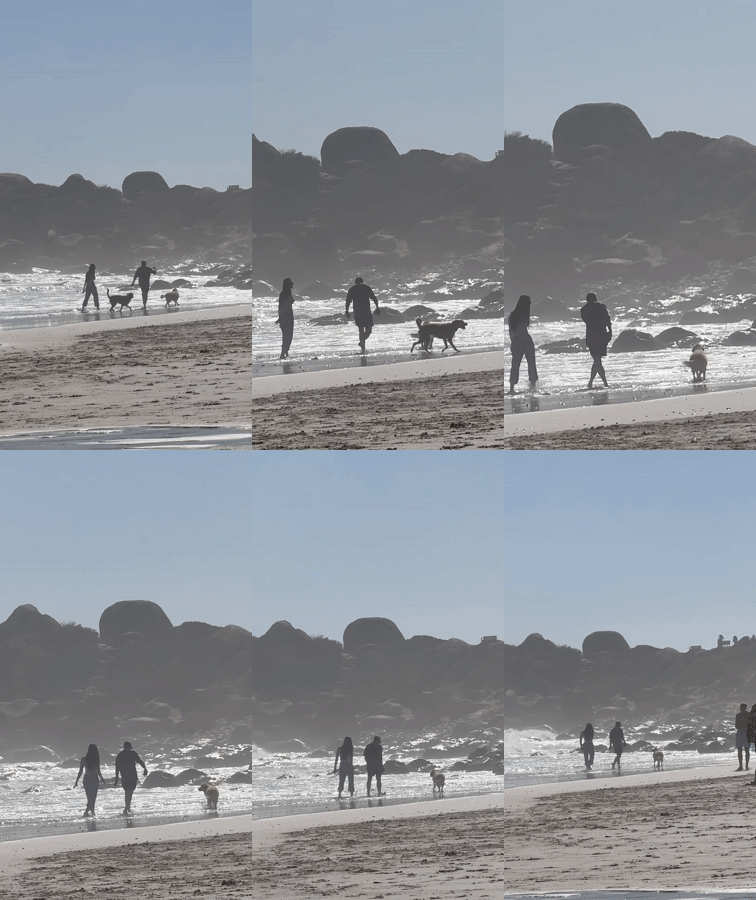
Ashdod, Israel · Saturday, May 16, 2026Morning beach recreation with dogs at Hout Bay
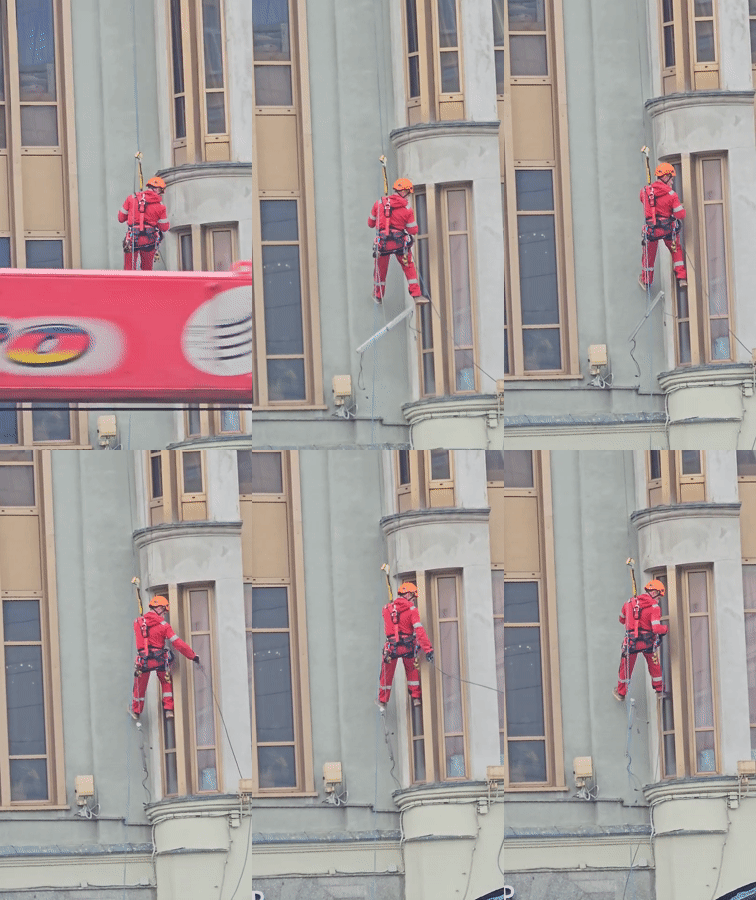
Afternoon around Moscow Planetarium, street scenes, and a skyscraper renovation
Moscow, Russia · 13 memories

Selfie time on a bus in suburban Russia
Газопровод, Russia · 1 memories
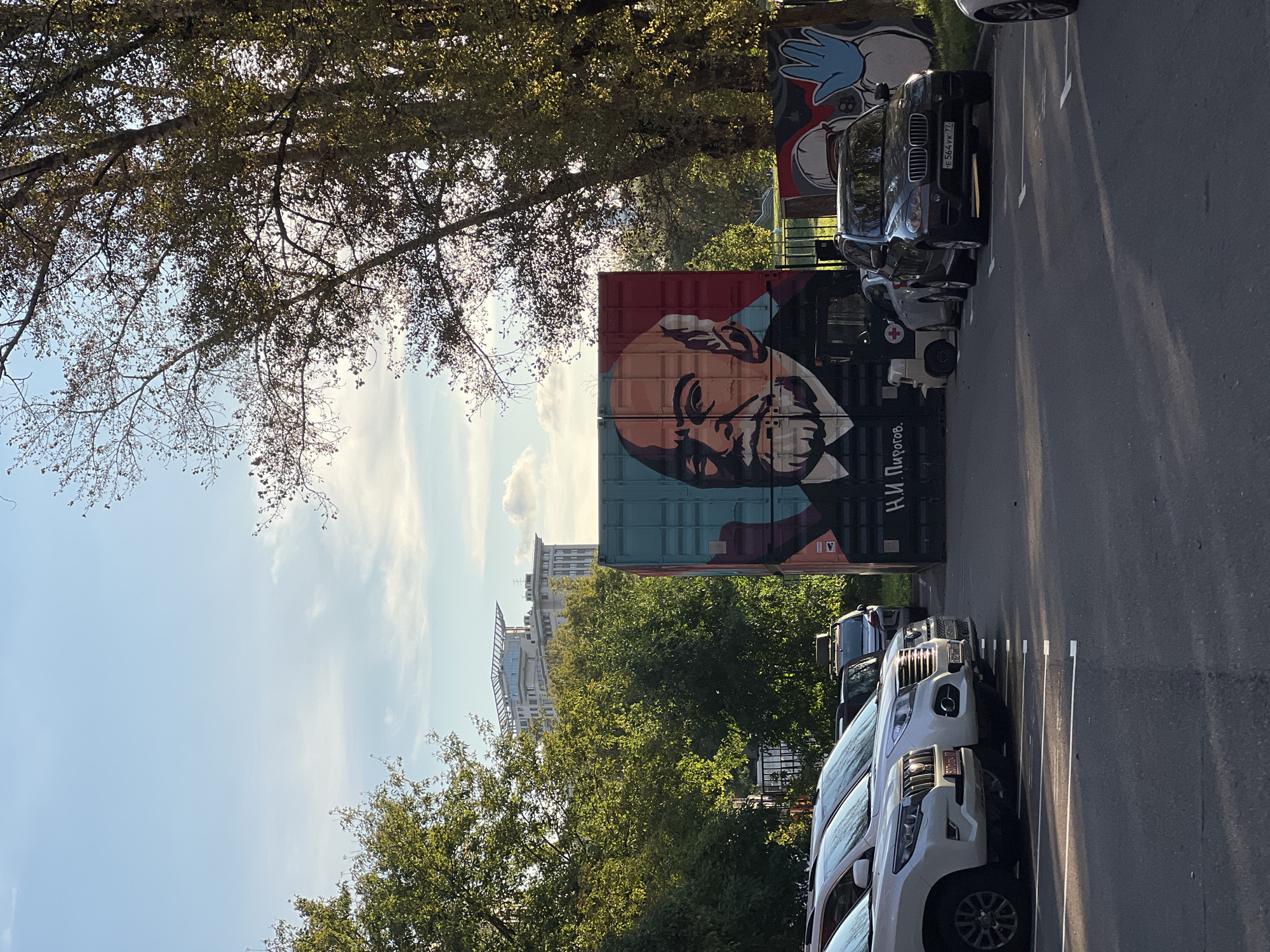
Pirogov portrait mural on a shipping container in Moscow parking lot
Moscow, Russia · 1 memories
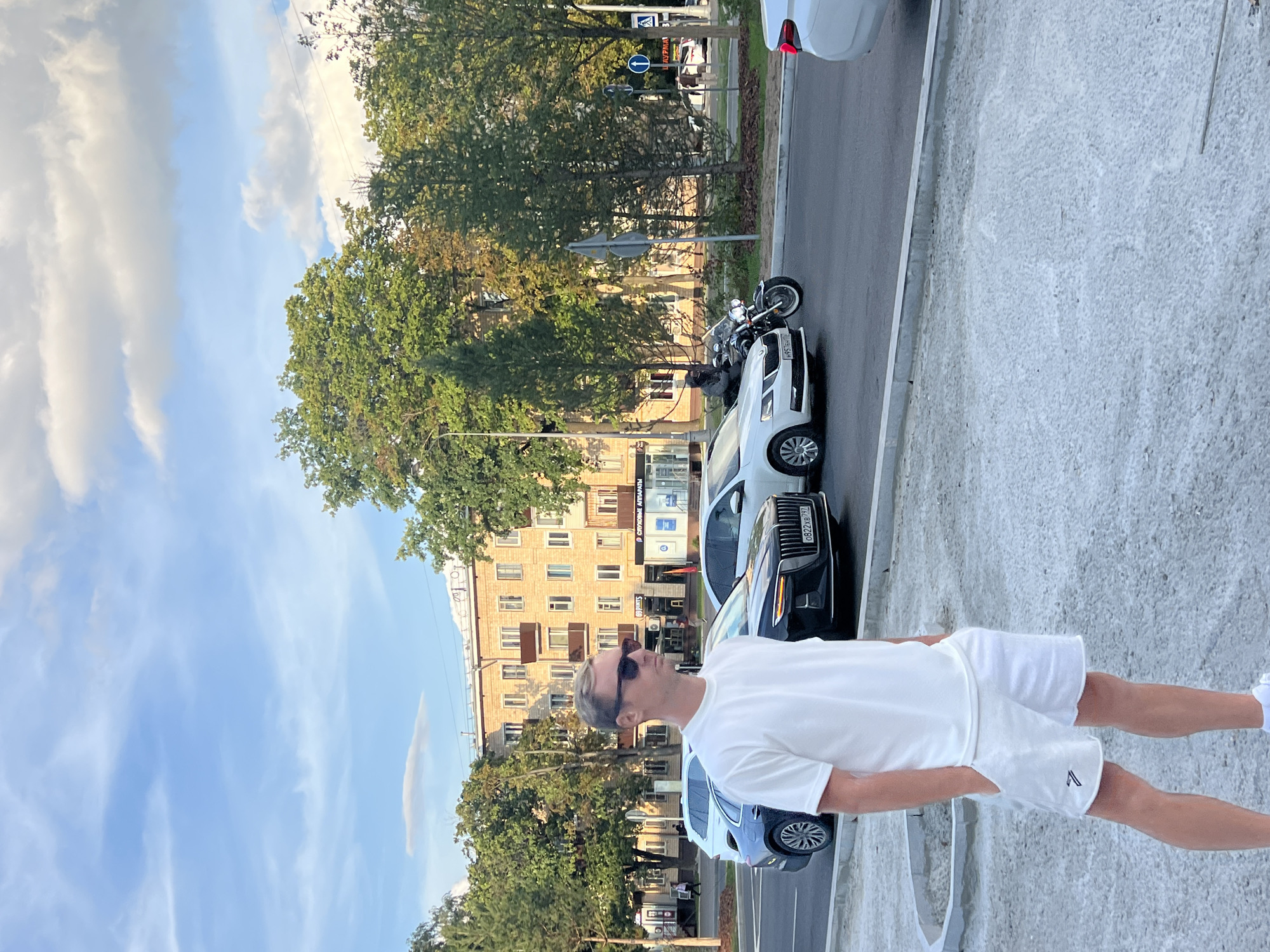
All-white outfit spotted across a Moscow construction-zone street
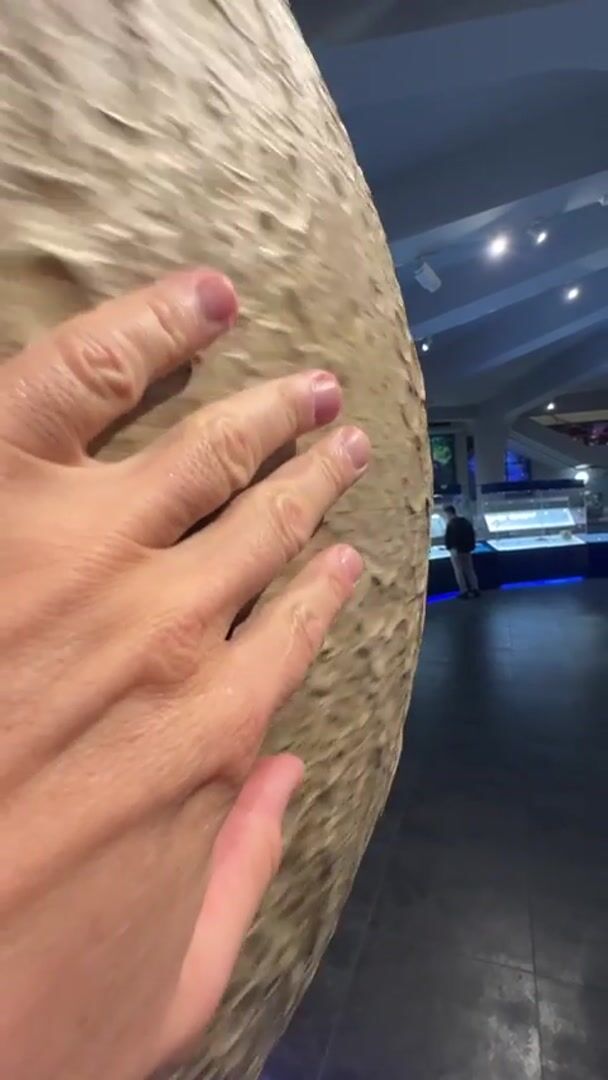
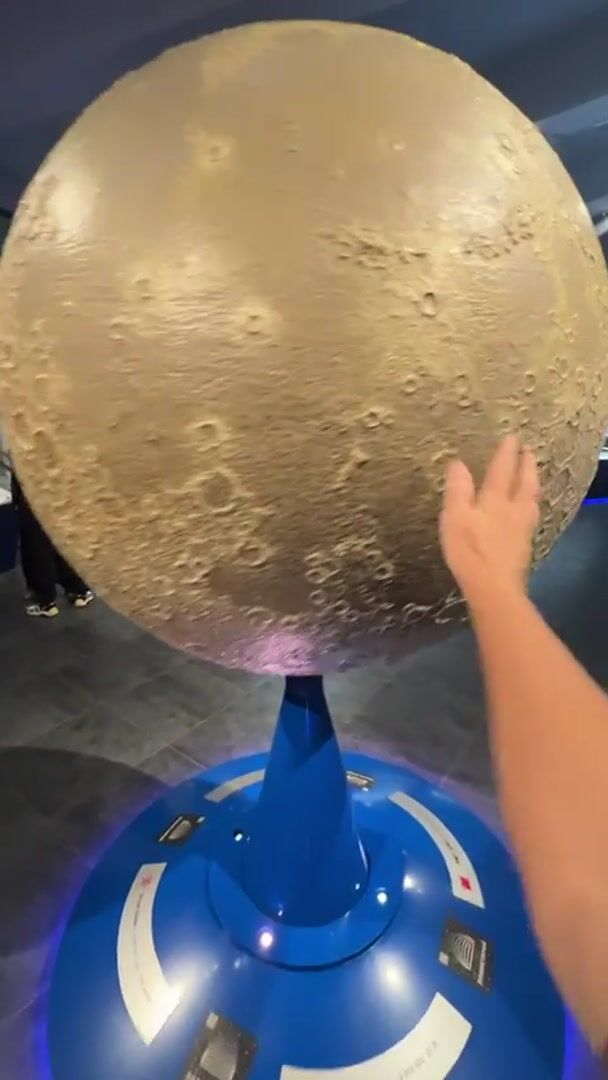
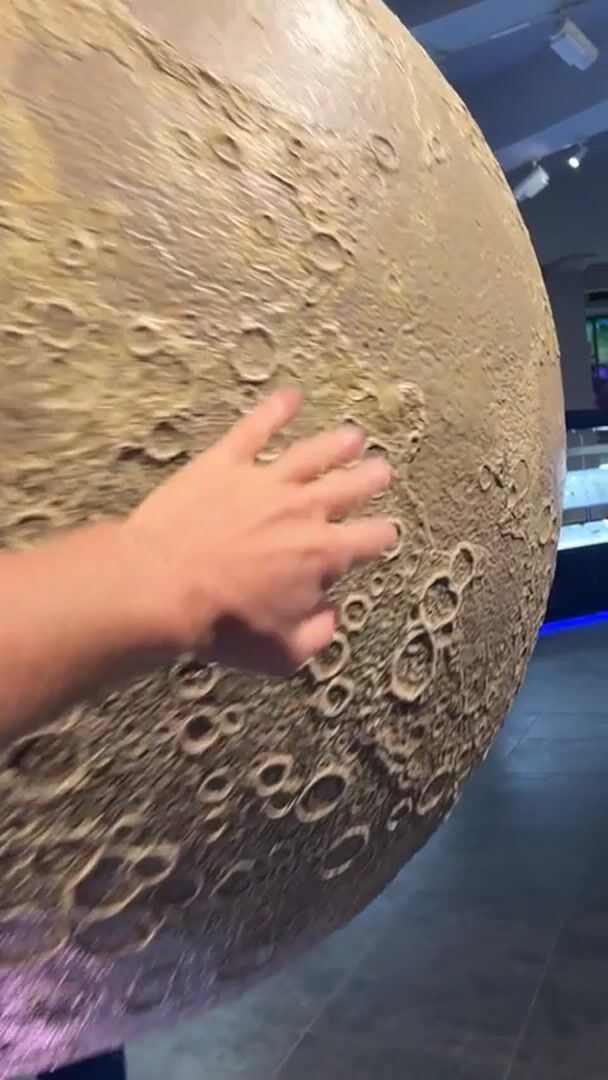
Moscow, Russia · 13 memoriesThe video shows a close-up, dynamic view of a large, textured model of the moon. The moon model is a pale tan color and is covered in numerous craters of varying sizes, giving it a rough and uneven surface. It is mounted on a blue stand. The camera is moving, with the first shot showing the full side of the moon model. In the second shot, a person's hand enters the frame from the left and briefly touches the surface of the moon model. The background appears to be an indoor exhibition space, possibly a museum, with some display cases and lighting visible. The lighting on the moon model is uneven, with a pinkish hue at the bottom and a more neutral light towards the top. The camera then pans and zooms, focusing on the intricate details of the moon's surface as it moves from left to right, blurring slightly as it accelerates. The overall impression is a close examination of the tactile and visual features of the moon model in an exhibition setting.
ARTUR LETO
Moscow, Russia · Aug 19, 2026, 4:48 PM · 20.5k attention
The video shows a close-up, dynamic view of a large, textured model of the moon. The moon model is a pale tan color and is covered in numerous craters of varying sizes, giving it a rough and uneven surface. It is mounted on a blue stand. The camera is moving, with the first shot showing the full side of the moon model. In the second shot, a person's hand enters the frame from the left and briefly touches the surface of the moon model. The background appears to be an indoor exhibition space, possibly a museum, with some display cases and lighting visible. The lighting on the moon model is uneven, with a pinkish hue at the bottom and a more neutral light towards the top. The camera then pans and zooms, focusing on the intricate details of the moon's surface as it moves from left to right, blurring slightly as it accelerates. The overall impression is a close examination of the tactile and visual features of the moon model in an exhibition setting.
The video shows a close-up, side-view of a textured, spherical object, possibly a model of the moon, with visible craters. The background is blurred, but shows a hallway with blue lighting and a few people walking in the distance. The camera is moving slowly, creating a slight blur effect.
ARTUR LETO
Moscow, Russia · Aug 19, 2026, 4:48 PM · 10.3k attention

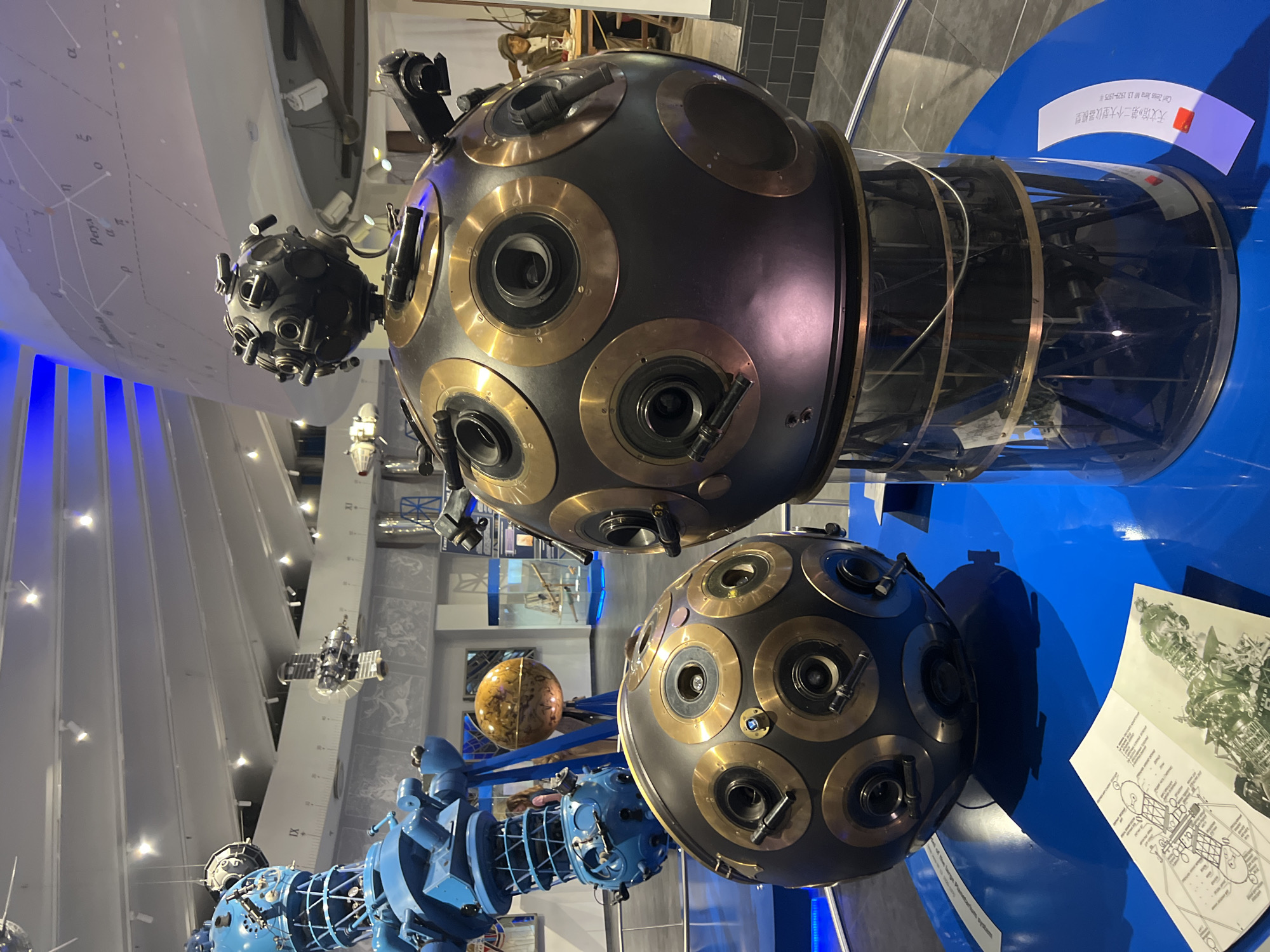
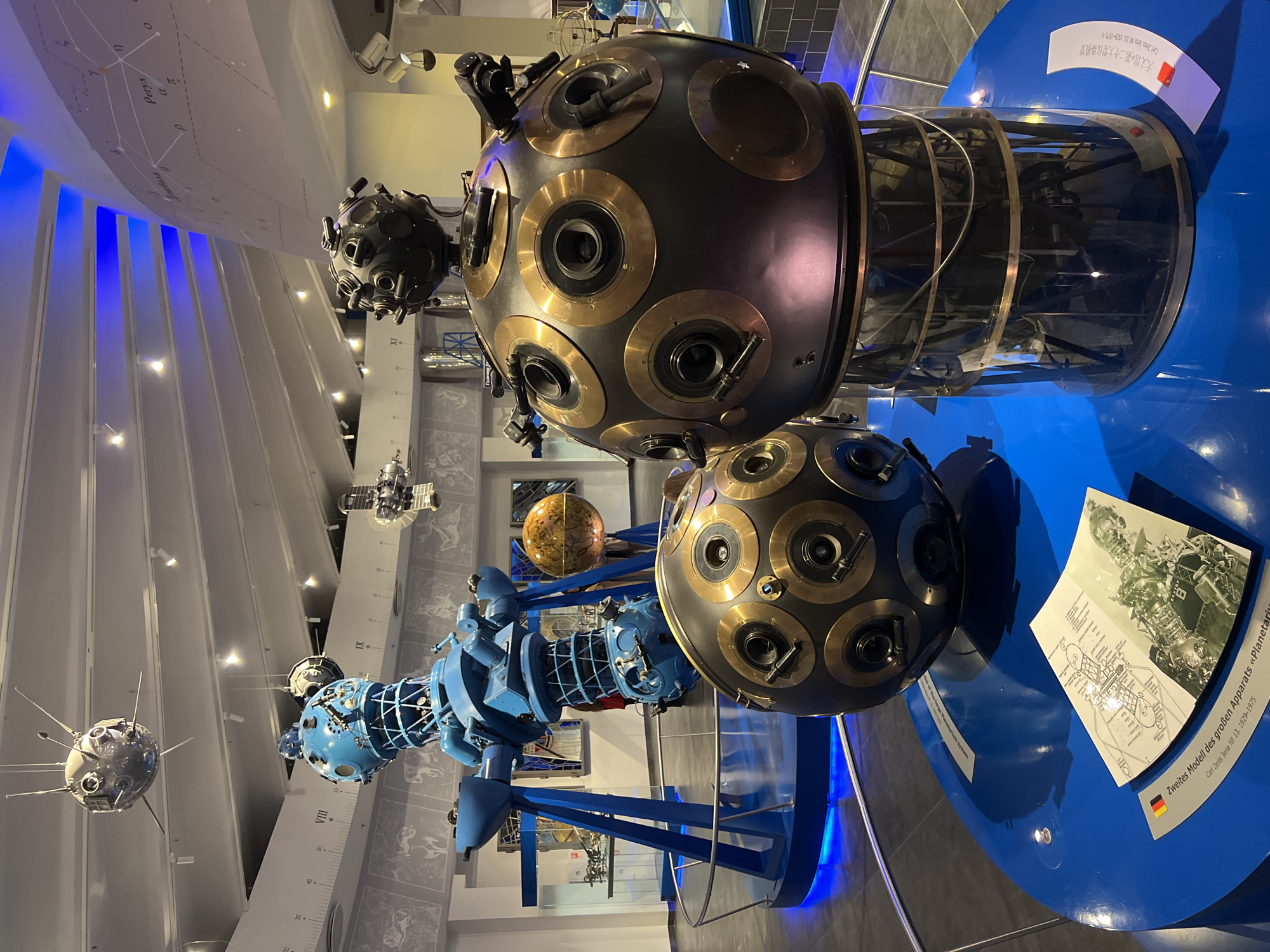
This is a medium shot, eye-level photograph taken in the State Museum of the History of Cosmonautics in Kaluga, Russia, though mistaken to be Moscow. The image features two large, spherical planetarium projectors on display, with a blue structure in the background that resembles a rocket or spacecraft. The planetarium projectors are dark gray with circular bronze accents and multiple lens-like apertures, suggesting they are complex optical instruments. The projector in the foreground is smaller and positioned to the left of the larger one, which is mounted on a clear cylindrical stand. The background shows a blue planetarium dome with a projected star map, and hanging models of satellites or spacecraft. There are also display cases with artifacts and a mannequin seated at a table in the far right background. The floor is dark gray, and the lighting is ambient, illuminating the displays. A folded document with diagrams and text is placed on the blue display table in the foreground.
ARTUR LETO
Moscow, Russia · Aug 19, 2026, 4:38 PM · 10.3k attention
The video shows a close-up, side-view of a textured, spherical object, possibly a model of the moon, with visible craters. The background is blurred, but shows a hallway with blue lighting and a few people walking in the distance. The camera is moving slowly, creating a slight blur effect.

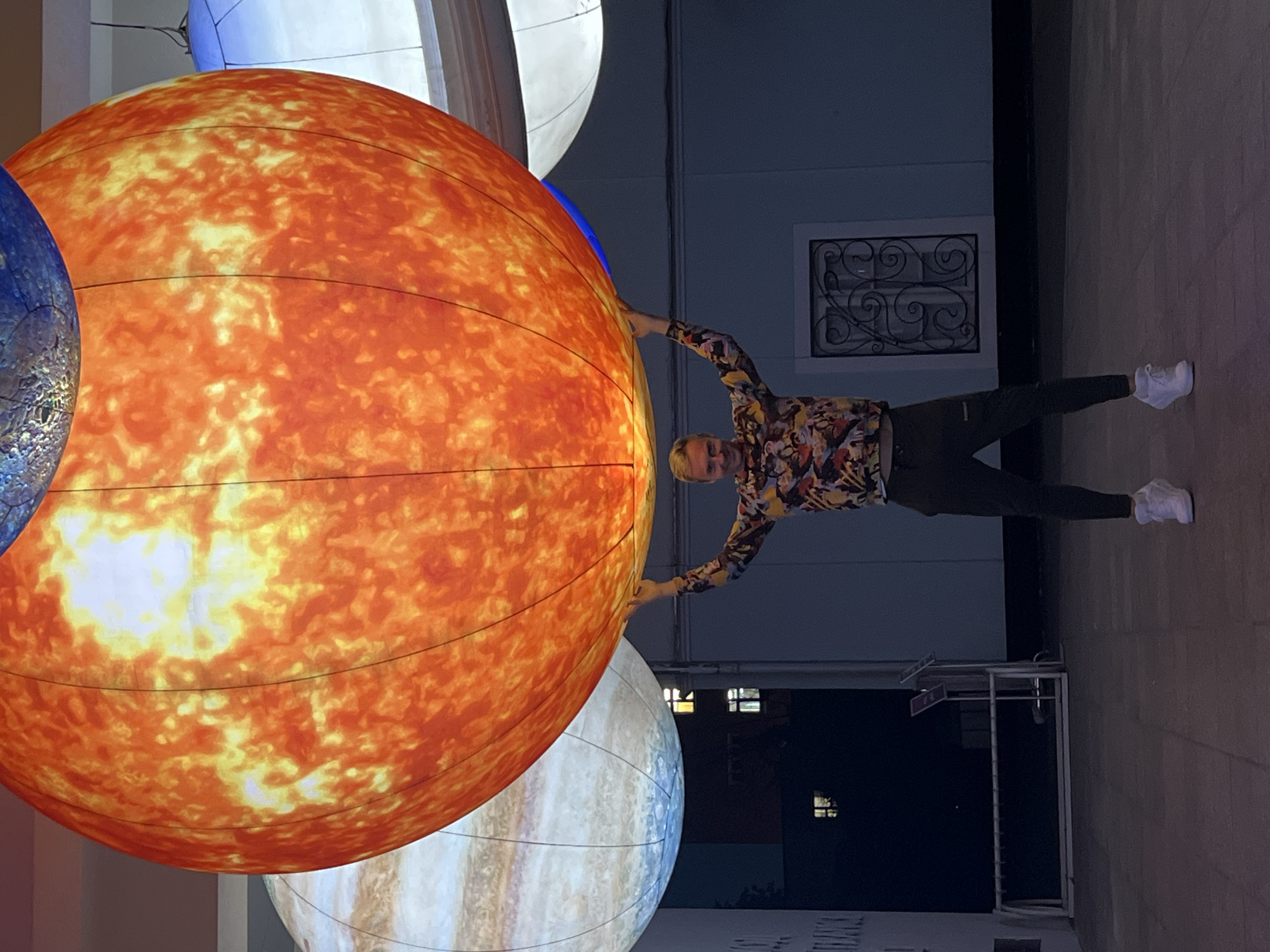
A young man with blonde hair is standing in an outdoor courtyard, holding up a large, inflatable model of the sun. He is wearing a colorful, patterned long-sleeved shirt, dark pants, and white sneakers. The sun model is orange and yellow with bright white spots, representing solar flares. Behind the sun, a model of Jupiter, with its distinctive stripes and spot, is visible. Further in the background, parts of other inflatable celestial bodies, possibly planets, can be seen. The courtyard has a dark, textured floor and light blue walls. There is a barred window on the right wall and some dark structures in the background, including a building with illuminated windows. The image appears to have been taken during the evening or at night, as indicated by the lighting and the dark background. The location is identified as Moscow, Russia, possibly at an astronomical exhibition or event.
ARTUR LETO
Moscow, Russia · Aug 19, 2026, 6:02 PM · 10.3k attention
In a museum exhibit, a young woman with long dark hair, wearing a blue and white checkered shirt and light-wash jeans, interacts with a large globe. She is positioned to the right of the globe, reaching out with both hands to touch its surface, seemingly exploring the continents. Her pose suggests curiosity and engagement with the exhibit. The globe itself is a prominent feature, with a detailed representation of the Earth, showing continents and oceans. It stands on a blue, illuminated base, which casts a glow on the surrounding floor. The overall setting is an indoor exhibition space, with a polished floor and a high ceiling. Track lighting illuminates the area, creating bright spots and shadows, including a large shadow of the woman and the globe on the floor in the foreground. In the background, other museum visitors can be seen. Some are seated on benches, observing the exhibit, while others are standing and looking around the hall. The atmosphere appears relaxed and educational, typical of a museum visit. The lighting and the arrangement of the exhibits suggest it is daytime, or at least the interior is well-lit regardless of the time of day. There is no visible information about the weather, as the scene is indoors. Some text is visible on the blue base of the globe, but it is too small and blurry to be read. The context of Moscow, Russia, adds a geographical layer to the setting, implying the museum is located within this city. The woman's expression is difficult to discern clearly due to the angle and resolution, but her posture conveys a sense of active participation and wonder.
ARTUR LETO
Moscow, Russia · Aug 19, 2026, 4:45 PM · 10.2k attention
A person's hand is touching a large, textured, spherical object, possibly a model of the moon, in a museum or exhibition hall. The object has visible craters and a rough surface. In the background, there are display cases with exhibits, lighting fixtures on the ceiling, and another person standing in the distance. The camera is moving, creating a sense of motion as it focuses on the object and the hand. The environment appears to be indoors, with a tiled floor.
ARTUR LETO
Moscow, Russia · Aug 19, 2026, 4:47 PM · 10.2k attention
This is a medium shot, eye-level photograph taken in the State Museum of the History of Cosmonautics in Kaluga, Russia, though mistaken to be Moscow. The image features two large, spherical planetarium projectors on display, with a blue structure in the background that resembles a rocket or spacecraft. The planetarium projectors are dark gray with circular bronze accents and multiple lens-like apertures, suggesting they are complex optical instruments. The projector in the foreground is smaller and positioned to the left of the larger one, which is mounted on a clear cylindrical stand. The background shows a blue planetarium dome with a projected star map, and hanging models of satellites or spacecraft. There are also display cases with artifacts and a mannequin seated at a table in the far right background. The floor is dark gray, and the lighting is ambient, illuminating the displays. A folded document with diagrams and text is placed on the blue display table in the foreground.
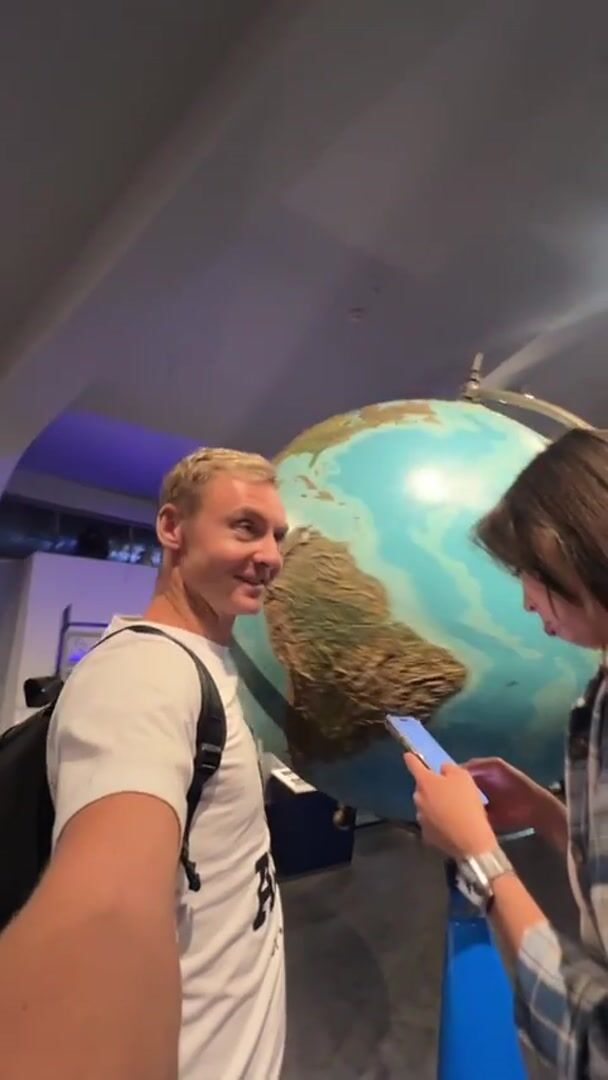
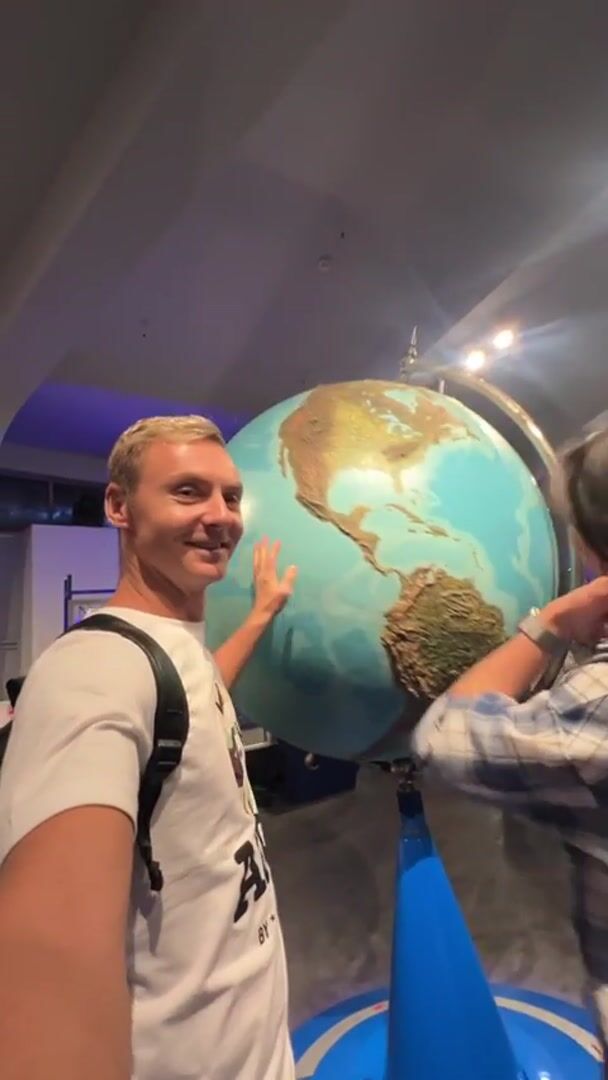
The video begins with a selfie-style shot of a man with blonde hair and a white t-shirt smiling at the camera. He is standing in front of a large, rotating globe. To his right, a person with dark hair, wearing a checkered shirt and a watch, is looking down at a smartphone. The man briefly touches the globe with his hand. The background appears to be an indoor exhibition space with dim lighting and blue accent lighting. There are displays with images of space visible behind the globe. The man then turns to look at the globe as it continues to rotate, and the woman with the phone also looks towards the globe. The man smiles and makes a gesture with his hand towards the globe. The video ends with a blurry shot as the camera moves.
Moscow, Russia · Aug 19, 2026, 4:47 PM · 10.2k attention
A young man with blonde hair is standing in an outdoor courtyard, holding up a large, inflatable model of the sun. He is wearing a colorful, patterned long-sleeved shirt, dark pants, and white sneakers. The sun model is orange and yellow with bright white spots, representing solar flares. Behind the sun, a model of Jupiter, with its distinctive stripes and spot, is visible. Further in the background, parts of other inflatable celestial bodies, possibly planets, can be seen. The courtyard has a dark, textured floor and light blue walls. There is a barred window on the right wall and some dark structures in the background, including a building with illuminated windows. The image appears to have been taken during the evening or at night, as indicated by the lighting and the dark background. The location is identified as Moscow, Russia, possibly at an astronomical exhibition or event.

The image shows a man looking up at large, illuminated spherical models of planets, possibly part of an exhibition. The largest sphere, in the foreground, is an orange and yellow representation of the Sun, with visible surface textures. Behind it, to the left, is a white sphere with subtle banding, likely Jupiter. To the right is another white sphere, possibly Saturn, distinguished by rings, though the rings are partially obscured. Another blue sphere is visible in the upper part of the frame. The man is wearing a colorful, patterned sweatshirt and dark pants, with white sneakers. He is standing on a paved surface, which appears to be an outdoor plaza or walkway. In the background, there is a building with windows, some of which are lit, suggesting it is evening or night. A portion of a dark building with visible windows is also present on the left. A person is walking in the background on the left, near a metal fence. The scene is likely located in Moscow, Russia, given the contextual information. The overall lighting is dim, with the planet models being the primary light sources.
ARTUR LETO
Moscow, Russia · Aug 19, 2026, 6:02 PM · 10.2k attention

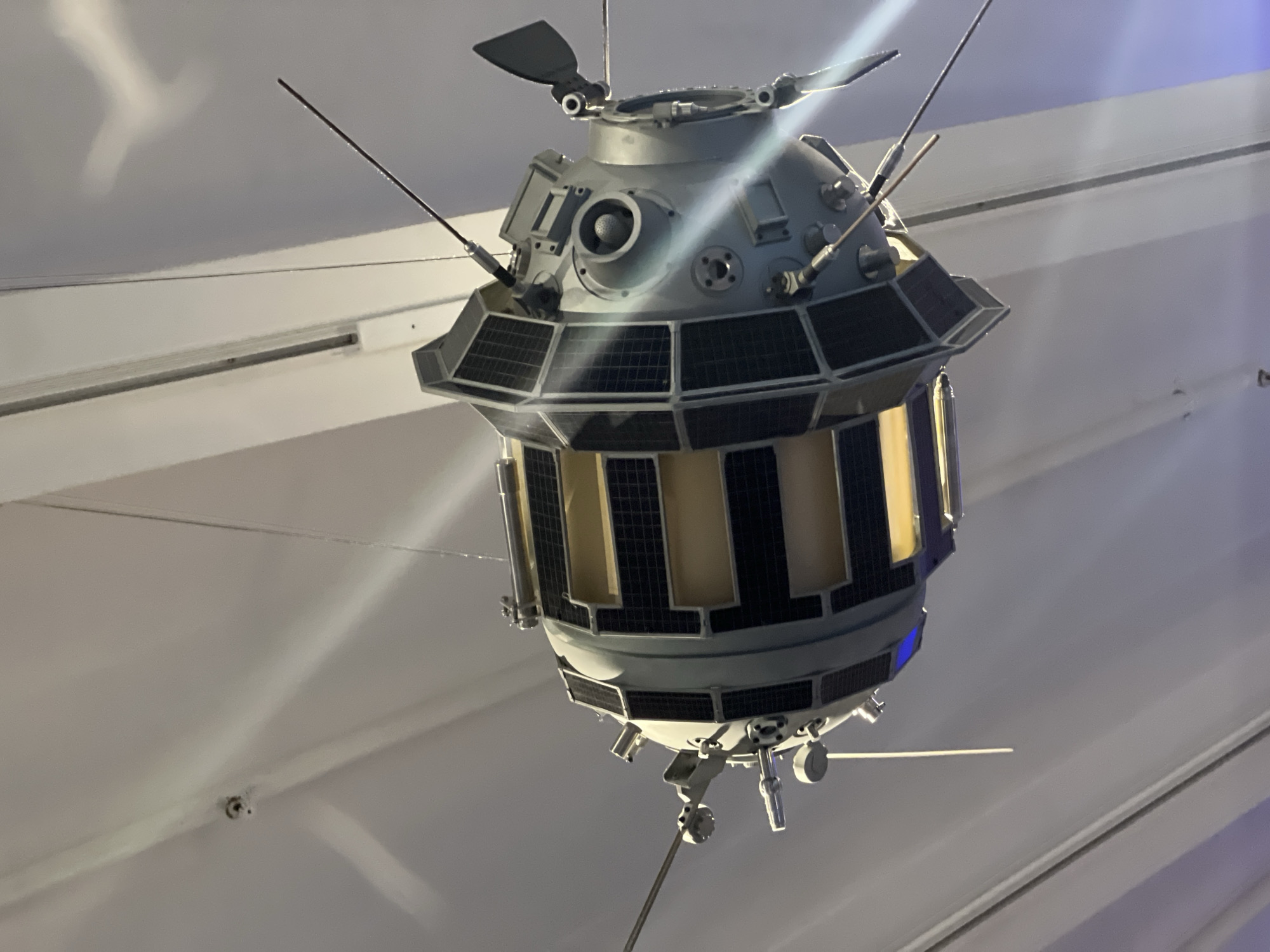
This is a low-angle, medium shot of a model of a Sputnik satellite suspended from a ceiling. The model is gray with dark solar panels and some yellow-lit rectangular sections. It has multiple antennas and probes extending from its body. The background is a plain, white ceiling with visible beams and some light glare, suggesting an indoor exhibition space. The satellite model appears to be a replica of an early Soviet spacecraft. The location is the Museum of Cosmonautics in Moscow, Russia, as indicated by the context of the exhibit. There are no people visible in the image, and the focus is solely on the suspended model.
ARTUR LETO
Moscow, Russia · Aug 19, 2026, 4:40 PM · 0.6k attention

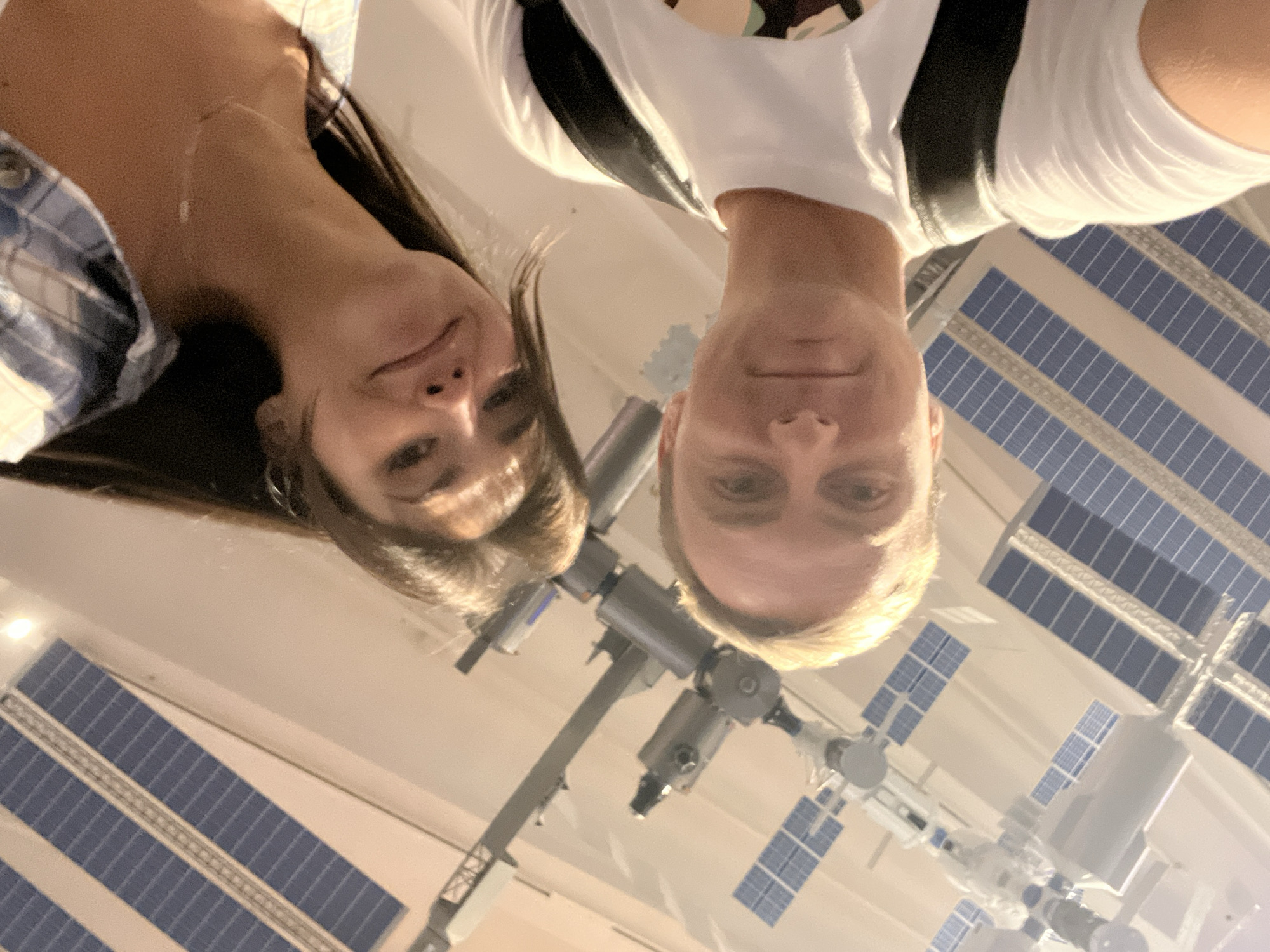
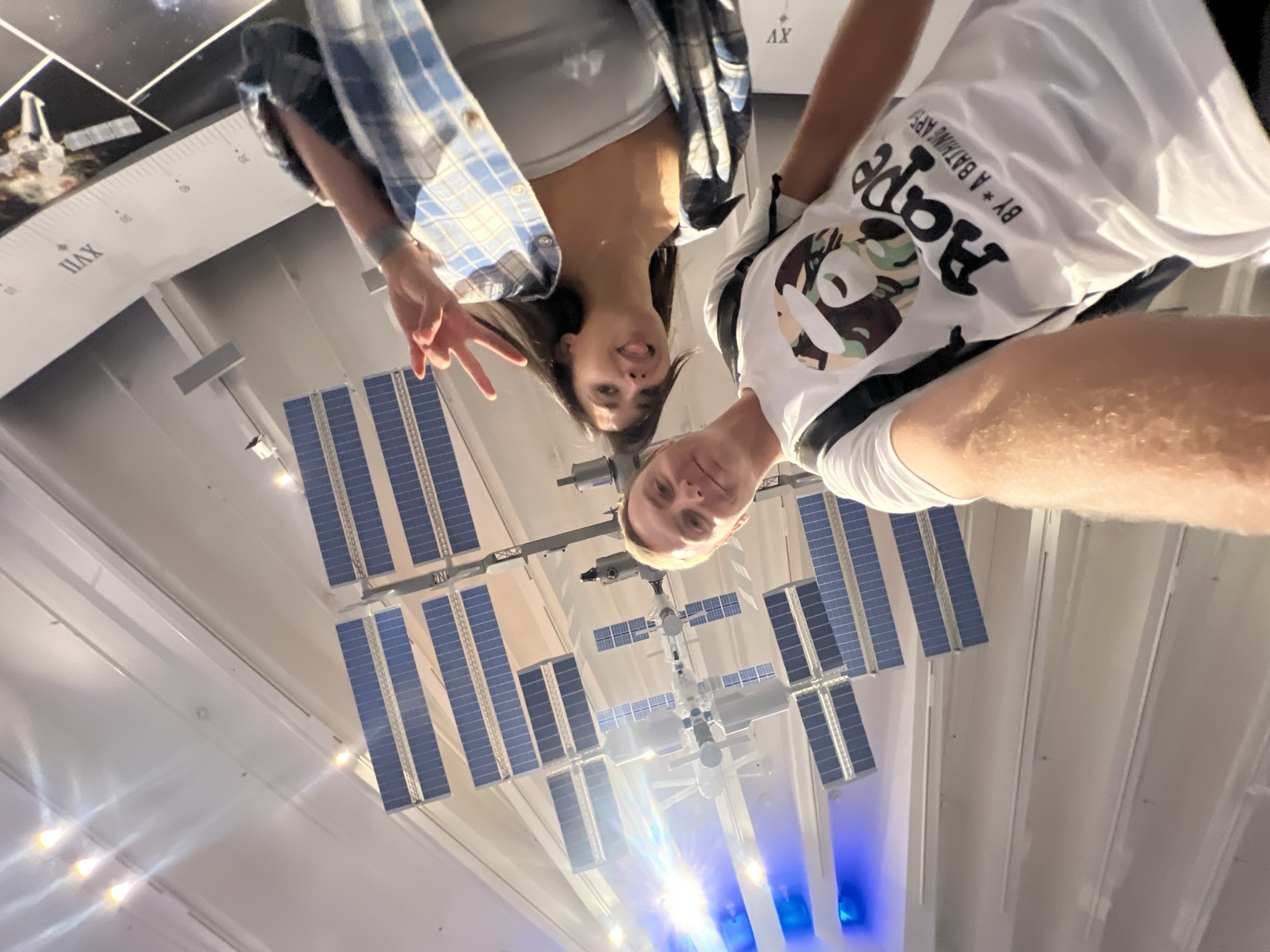
In a selfie taken from a low angle, two individuals are positioned against a backdrop featuring a model of the International Space Station (ISS). The ISS model, rendered in metallic grays and whites, is comprised of various modules, robotic arms, and numerous solar panels depicted as rectangular blue grids. The scale of the model is substantial, dominating the background. The person on the right, a woman, is seen from the upper chest up. She has long, dark brown hair, parted down the middle, and her head is tilted downwards towards the camera. She is wearing a blue and white plaid shirt and a delicate silver necklace. Her eyes are dark and her lips are slightly parted, suggesting a smile. The person on the left, a man, is also visible from the upper chest up, with his head tilted downwards. He has short, light brown hair and fair skin with a noticeable tan. He is wearing a white t-shirt with black straps visible over his shoulders. His eyes are blue, and he appears to be smiling, with his mouth slightly open. The lighting in the image is bright and diffused, casting soft shadows. The overall impression is that the photograph was taken indoors, likely in a museum or exhibition space, given the detailed ISS model. The location is identified as the Museum of Cosmonautics in Moscow, Russia.
ARTUR LETO
Moscow, Russia · Aug 19, 2026, 4:42 PM · 0.2k attention
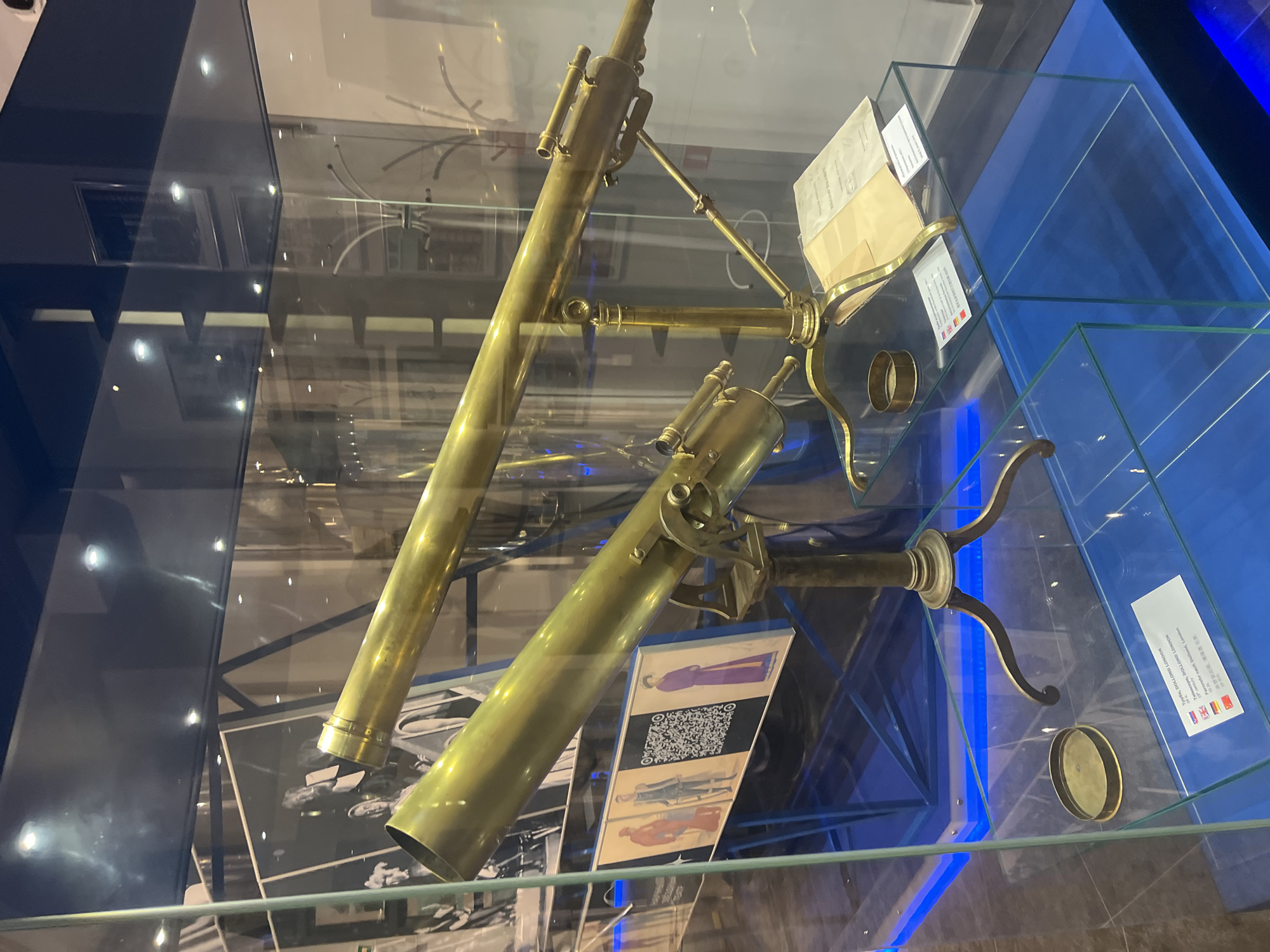
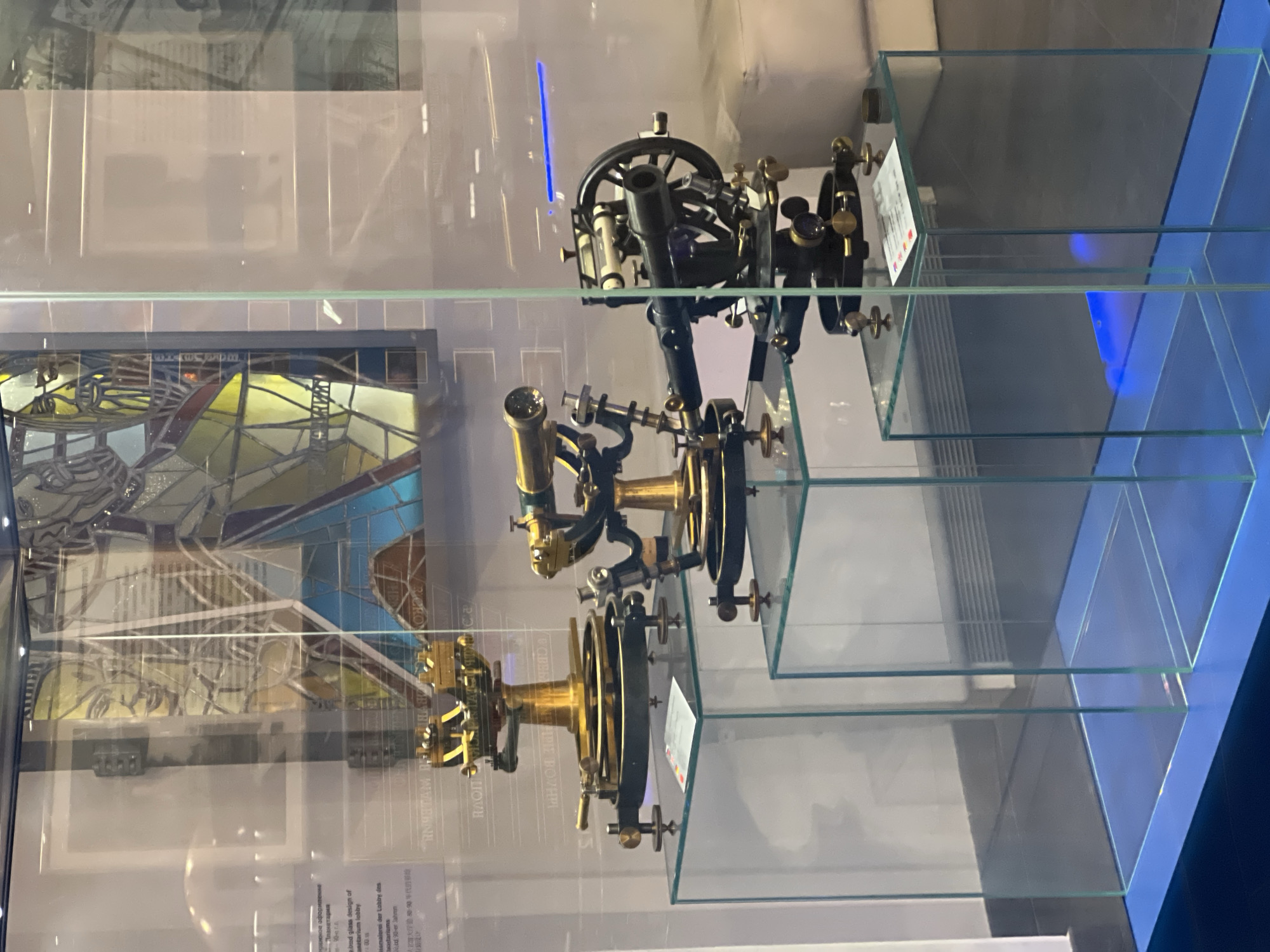
The image shows two brass telescopes displayed in a museum exhibit. The telescopes are mounted on stands and appear to be antique. In the background, there are framed pictures and what looks like a Coat rack. The exhibit is behind glass, with blue lighting visible at the bottom. A small informational plaque is visible in the lower right corner, with text in Cyrillic script and flags of Russia, the UK, and China. The exhibit is located in the State Historical Museum in Moscow, Russia.
ARTUR LETO
Moscow, Russia · Aug 19, 2026, 4:38 PM


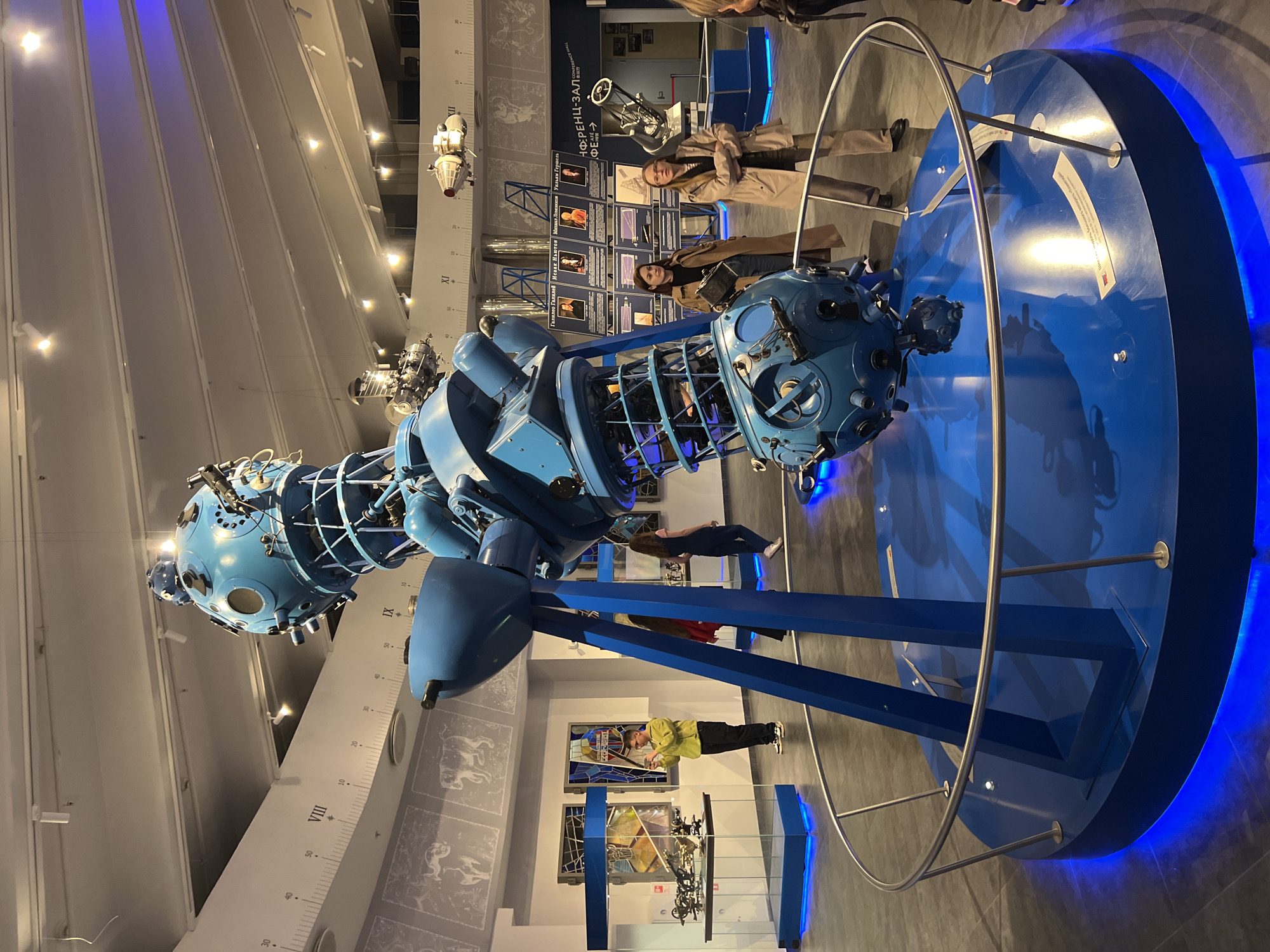
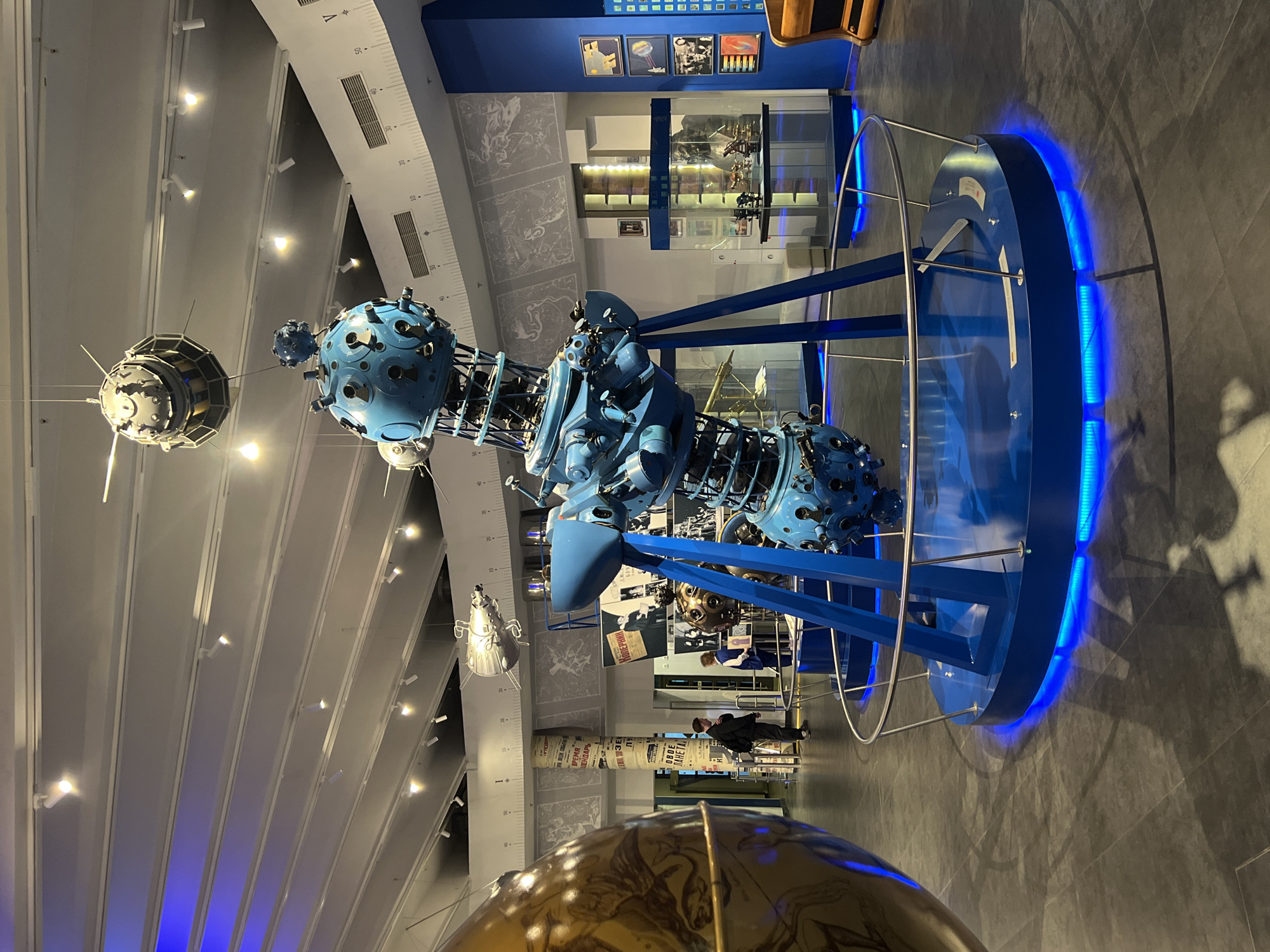
The image depicts the interior of a museum exhibition. In the foreground, two large, spherical planetarium projectors are displayed on blue platforms. The larger projector, in the right foreground, is dark grey with numerous brass circular accents, each housing a lens or projector aperture. It is supported by a transparent cylindrical structure with brass bands. To its left and slightly closer to the viewer is a smaller, similar projector, also dark grey with brass accents. A tri-fold informational pamphlet with diagrams and an image of a historical figure is placed on the blue platform in front of the smaller projector. In the middle ground, a large, intricate blue mechanical apparatus, also a planetarium projector, stands prominently. It is supported by a blue metal frame. Behind this, several model spacecraft, possibly satellites, are suspended from the ceiling. One is a detailed silver model with multiple antennae. Further in the background, a large celestial map is projected onto the curved ceiling. The museum environment features blue lighting along the floor perimeter and track lighting on the ceiling. Exhibits are visible in glass cases in the background, and two people are partially visible in the distance, one near the blue projector and another observing an exhibit. The overall scene suggests a museum dedicated to astronomy or space exploration, likely a planetarium or science museum. Based on the presence of Soviet-era space models and the specific mention of "Carl Zeiss Jena" on the informational pamphlet, which is a prominent manufacturer of planetarium projectors and optical equipment, this exhibit is likely located in a museum with a significant collection related to space history. Without further explicit information within the image, pinpointing the exact location in Moscow is not possible.
ARTUR LETO
Moscow, Russia · Aug 19, 2026, 4:39 PM

The image depicts the interior of a museum or planetarium, featuring a large, intricate blue projector resembling a celestial apparatus. The projector, the central subject, is mounted on a blue base with a silver railing surrounding it. Blue LED lights illuminate the base of the projector. In the background, several people are observing the exhibit. To the left, a person in a yellow hoodie is taking a photo with their phone. Further in the background, other individuals are seen standing and looking at displays. Above, the ceiling has a sloped design with track lighting. The walls of the museum are decorated with scientific diagrams and portraits. One prominent sign in the background reads "КОНФЕРЕНЦ-ЗАЛ" (CONFERENCE HALL) in Russian, suggesting a public institution. The overall environment suggests an educational and scientific exhibition space. The exact location in Moscow is not specified by any visible markers in the image.
ARTUR LETO
Moscow, Russia · Aug 19, 2026, 4:39 PM

The image shows a museum display case containing three antique surveying instruments. The instruments are made of brass and dark metal, with intricate gears and telescopes. They are displayed on clear glass pedestals of varying heights. Behind the instruments, a stained glass artwork featuring a human face and abstract geometric shapes is visible. Text in various languages, likely exhibit labels, can be seen on the background walls. The overall environment appears to be a museum or exhibition hall. Based on the presence of the stained glass artwork and the style of the exhibition, this scene is likely located in the Moscow Planetarium, Russia, specifically in the "Universe" exhibition hall, which features elements of Soviet-era design and art.
ARTUR LETO
Moscow, Russia · Aug 19, 2026, 4:39 PM

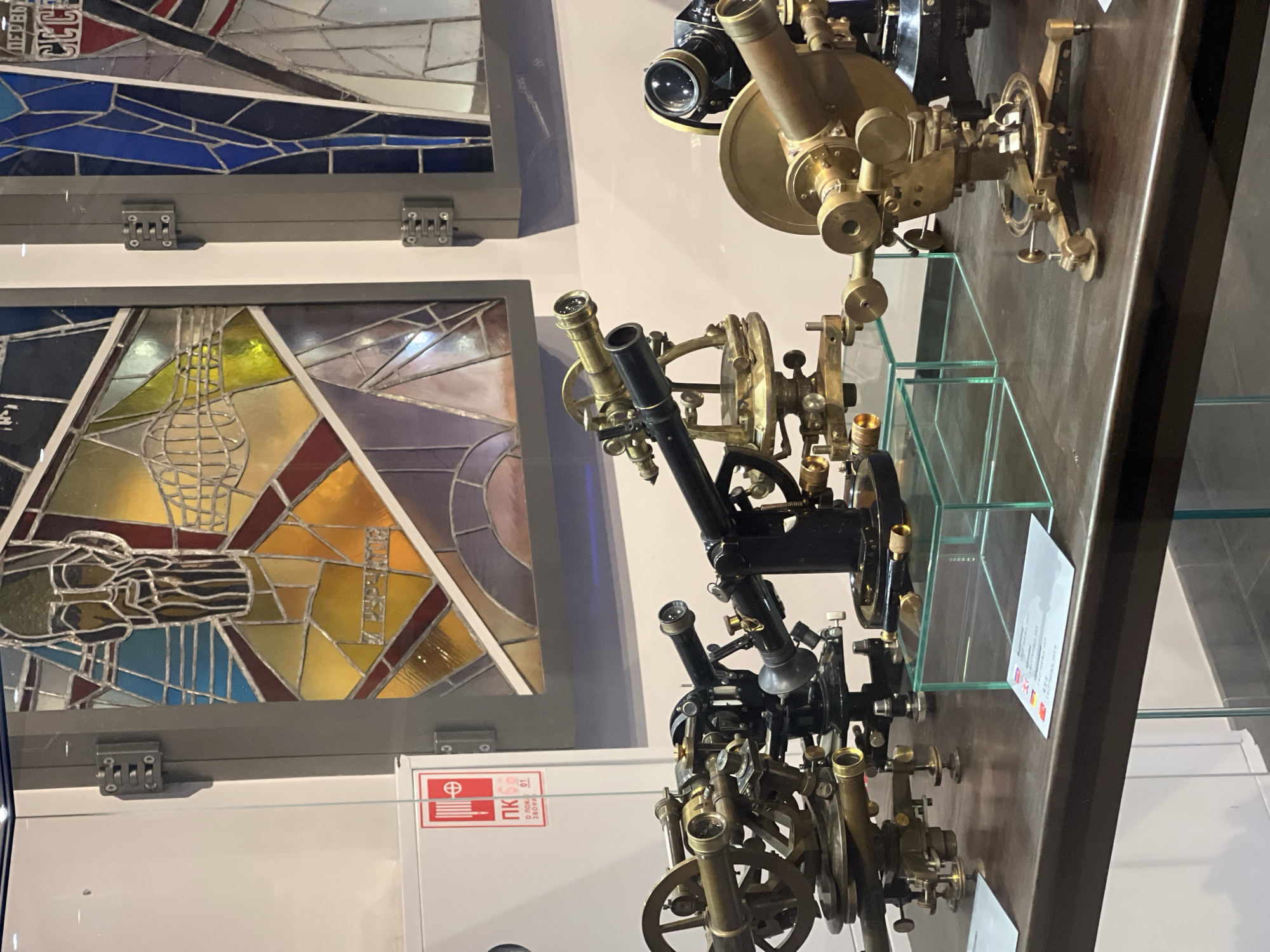
The image shows a display of vintage astronomical instruments, likely telescopes and theodolites, on a dark wooden table. The instruments are made of brass and black metal, with intricate mechanisms and lenses. In the background, a stained glass window depicts a portrait of a man and geometric patterns, with Cyrillic text visible on the glass. To the left of the stained glass, there is a white box with a red fire alarm symbol and Cyrillic text. The lighting suggests an indoor museum or exhibition setting. The overall scene appears to be a historical or scientific display.
ARTUR LETO
Moscow, Russia · Aug 19, 2026, 4:40 PM

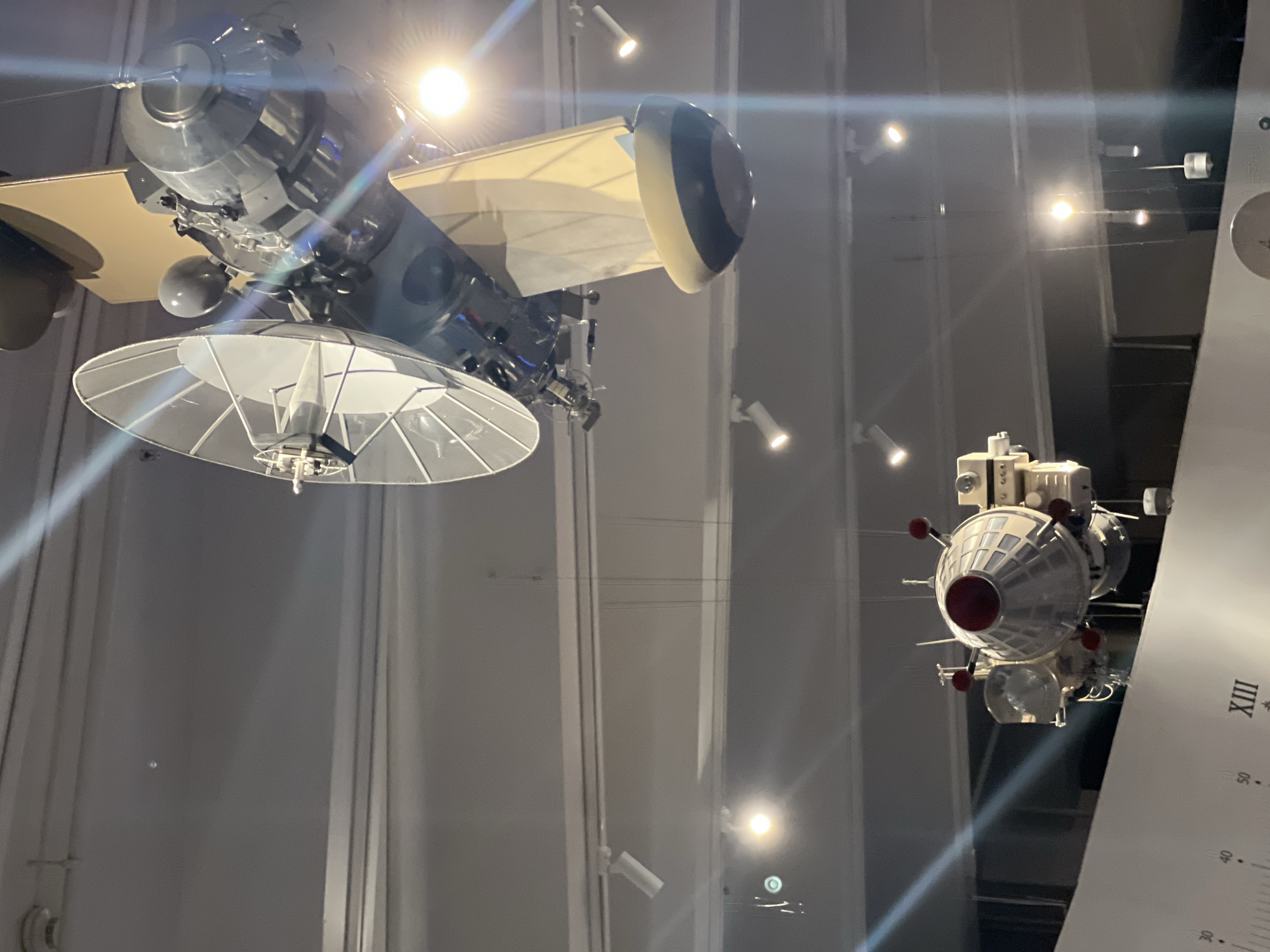
The image depicts models of spacecraft suspended from the ceiling in what appears to be a museum exhibit. One larger model, in the upper right, features a prominent parabolic dish antenna and various metallic components. Below and to the left, a smaller model, also metallic, has a conical nose cone with red accents and smaller spherical elements. Both are illuminated by track lighting, which also creates lens flares and reflections in the scene. The background is a gray ceiling with multiple light fixtures and suspension wires. A portion of a white wall with markings resembling a timeline or scale is visible at the bottom, with Roman numeral "XIII" and numerical markers like "30", "40", and "50" faintly visible. This exhibit is located in the Cosmos Hall of the VDNKh (Exhibition of Achievements of National Economy) in Moscow, Russia. There are no people visible in the frame.
ARTUR LETO
Moscow, Russia · Aug 19, 2026, 4:40 PM

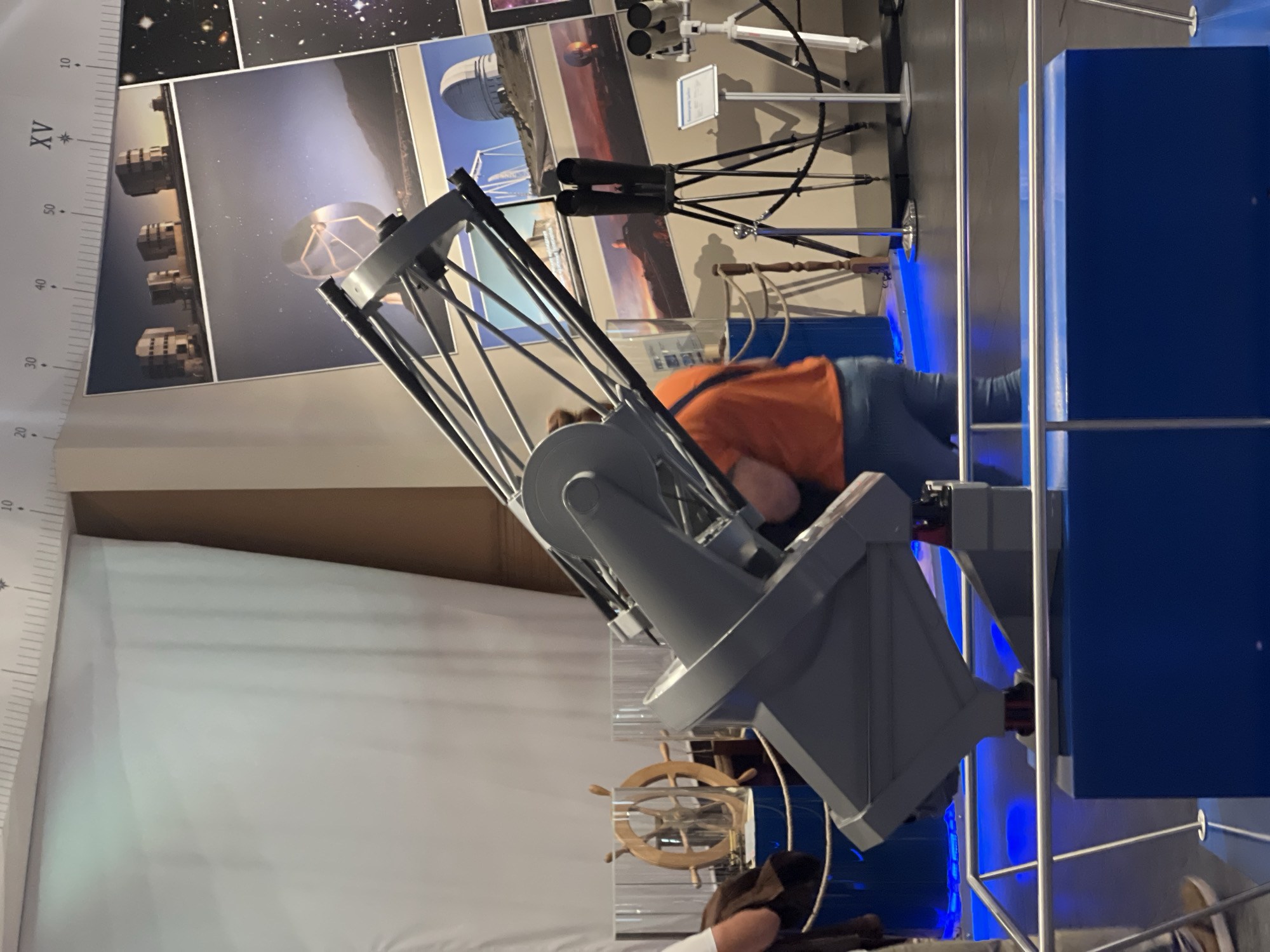
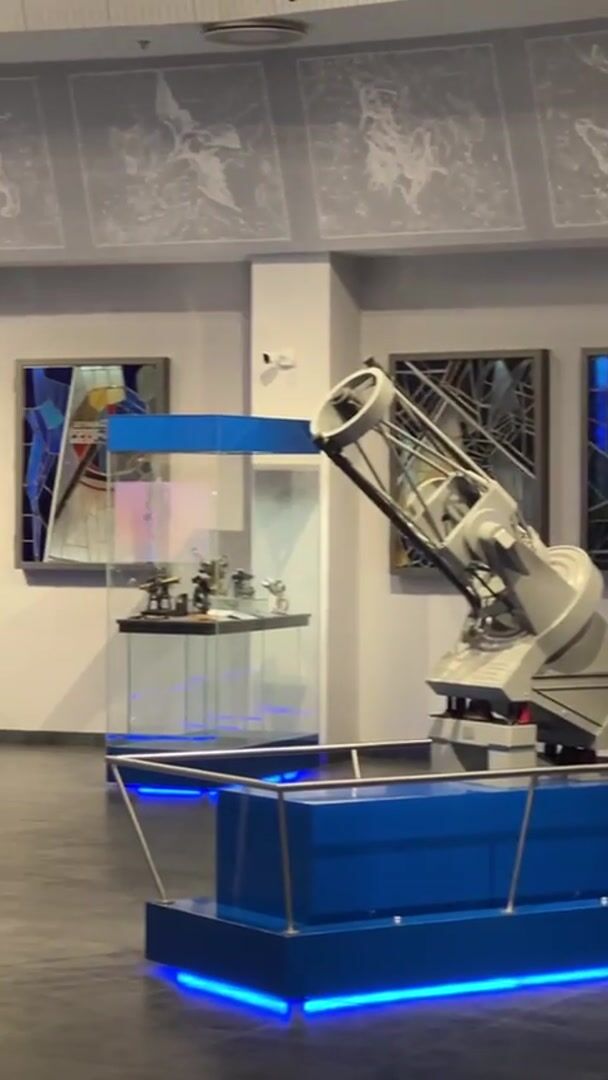
The image depicts an indoor exhibition space, possibly a museum, with a large, grey telescope as the central subject. The telescope is mounted on a dark blue platform and appears to be a functional exhibit. In the background, there are large photographic prints mounted on the wall, showcasing astronomical facilities and celestial images. To the left of the telescope, a wooden ship's wheel is displayed inside a clear cylindrical case. A person wearing an orange shirt and blue jeans is visible in the middle ground, partially obscured by the telescope. Another person's legs and feet are visible on the far left, and the legs of another person are visible on the far right. The environment is illuminated with blue accent lighting on the floor. The image does not contain any specific clues that would indicate it is located in Moscow, Russia.
Moscow, Russia · Aug 19, 2026, 4:41 PM

This is an interior shot of the Museum of Cosmonautics in Moscow, Russia. The primary subject is a large, blue, intricate mechanical device, likely a planetarium projector, displayed on a blue circular platform with a metal railing. The device is elevated and appears to be the central exhibit. In the background, other exhibits are visible, including a large golden sphere on the left, a suspended model of a spacecraft, and various displays on the walls. Two individuals, a man and a woman, are observing the exhibits in the middle ground. The environment is a museum hall with a high ceiling, track lighting, and a tiled floor. Blue LED lighting illuminates the base of the central exhibit and the surrounding area.
ARTUR LETO
Moscow, Russia · Aug 19, 2026, 4:41 PM

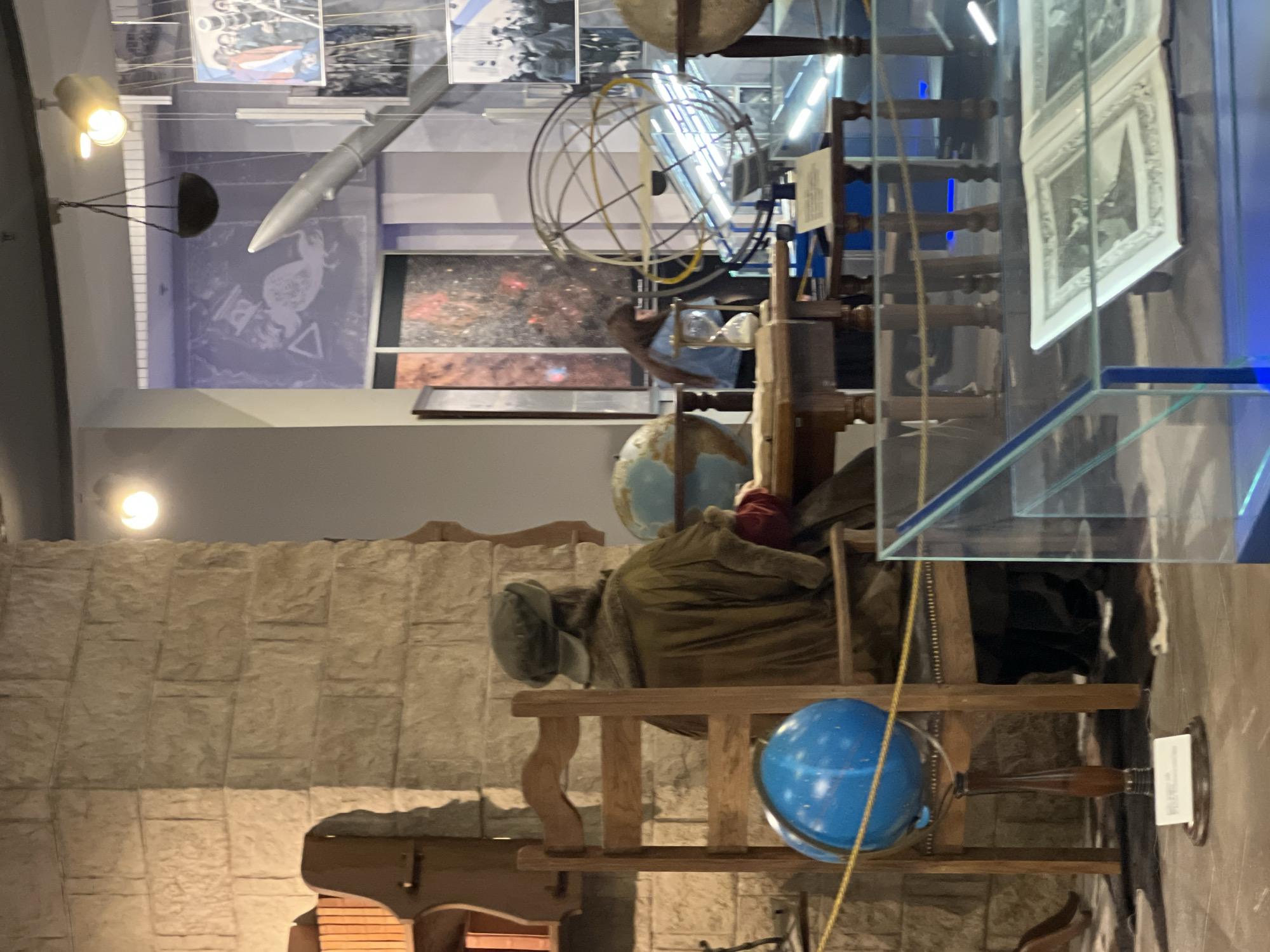
The image depicts an exhibit within a museum. In the foreground, a figure dressed in historical attire, likely a mannequin, is seated in a wooden chair facing away from the camera. The figure is looking towards a wooden desk which holds a globe and what appears to be an hourglass. To the left of the figure, another globe on a stand is visible. The background of the exhibit includes a stone wall on the left, and a display of framed images and what looks like a model of a rocket or missile hanging from the ceiling. There are also large murals or displays on the walls, one of which appears to depict celestial or scientific imagery. The overall environment suggests a museum focused on history, science, or exploration. The image does not provide any specific information to determine its location within the city of Moscow, Russia.
ARTUR LETO
Moscow, Russia · Aug 19, 2026, 4:41 PM

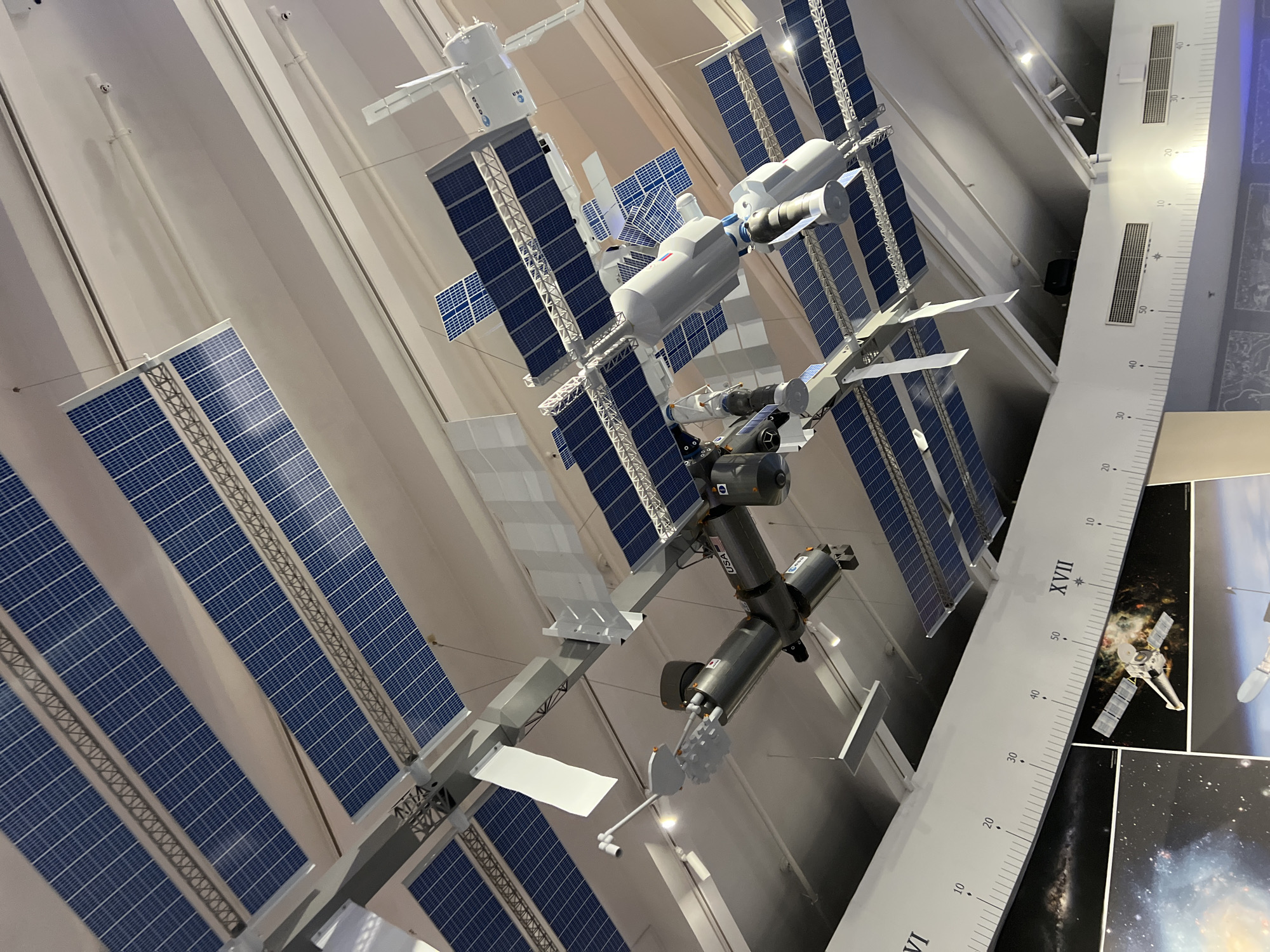
The image shows a model of the International Space Station suspended from a ceiling, likely in a museum or exhibition space. The model is detailed, featuring numerous solar panels, modules, and robotic arms. The solar panels are arranged in large arrays, and the modules are cylindrical and interconnected. The environment appears to be indoors, with a white ceiling and a long, white wall with markings and images in the background, resembling a timeline or scale. The lighting suggests it is daytime, with artificial lights also contributing to the illumination. The absence of people and the static nature of the model indicate a still environment. The model is the sole subject of the image, and its positioning suggests it is the focal point of the display. The image is taken from a low angle, looking upwards.
ARTUR LETO
Moscow, Russia · Aug 19, 2026, 4:41 PM
In Moscow, Russia, two young individuals, a male and a female, are posing for a selfie in what appears to be a museum exhibit. The background prominently features a detailed model of a space station with solar panels, suspended from the ceiling. The male, in the foreground, wears a white t-shirt with a graphic print. The female, to his right, is wearing a blue and white plaid shirt and makes a peace sign with her fingers while sticking her tongue out. The scene is illuminated by artificial lighting, with some light flares visible, and the overall environment suggests an indoor exhibition space.
ARTUR LETO
Moscow, Russia · Aug 19, 2026, 4:42 PM


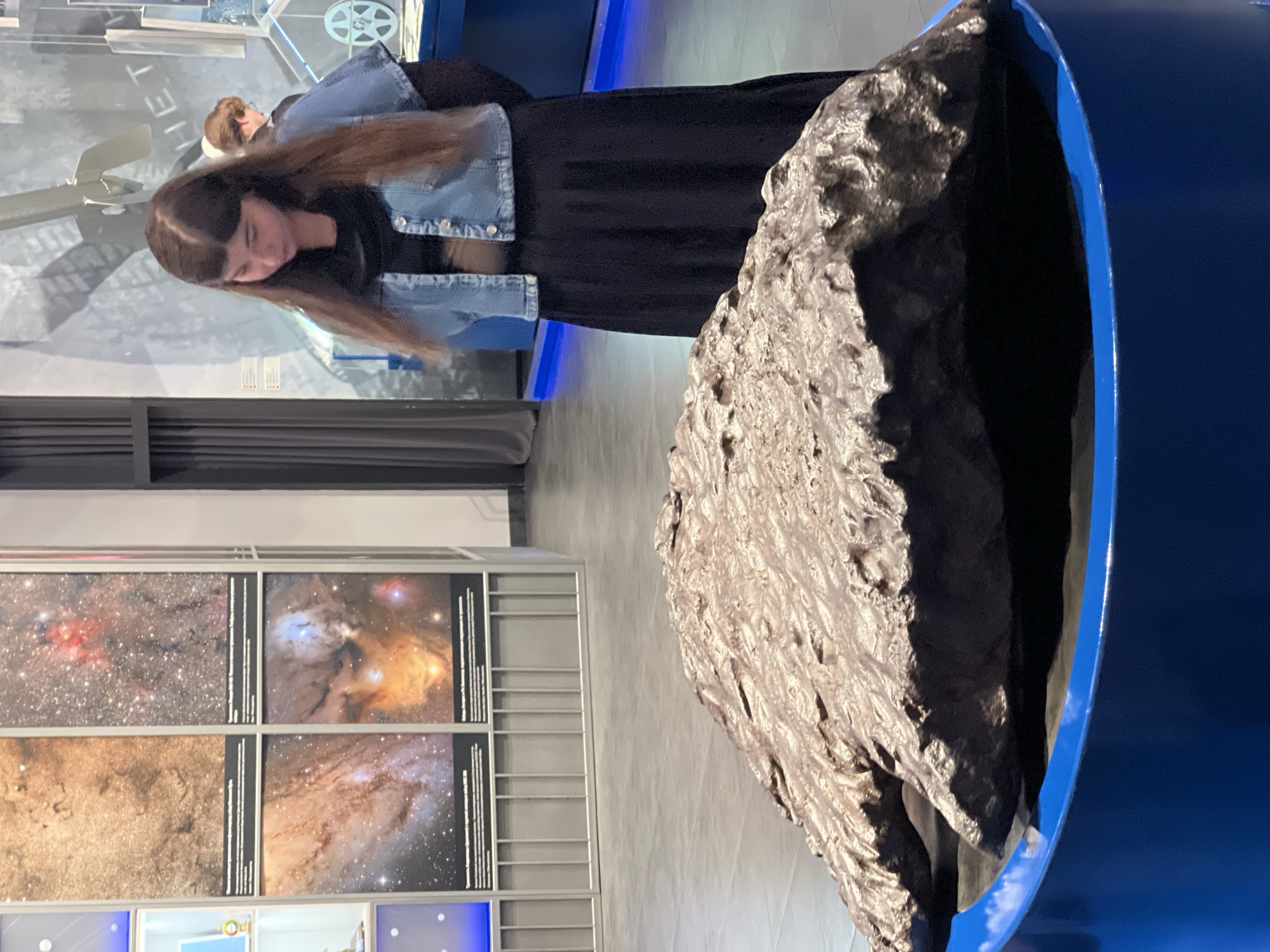
The image shows a woman in a denim jacket and black skirt standing in front of a large meteorite on display at the State Museum of the History of Cosmonautics in Kaluga, Russia. The meteorite is dark, irregularly shaped, and textured, resting on a blue pedestal. Behind the meteorite, there are large displays of space imagery. The museum is modern with a polished floor and ambient lighting. The woman is looking down at the meteorite, appearing to be observing it. Another person is partially visible in the background.
ARTUR LETO
Moscow, Russia · Aug 19, 2026, 4:42 PM
The video shows a panning shot of a museum exhibit. In the foreground, a large telescope on a blue display stand with blue LED lights is visible. To the left, a glass display case with models of spacecraft is shown. Further to the left, a framed map is on the wall. In the background, two people walk through the exhibit. One person is wearing a black jacket and backpack, and the other person is wearing a dark jacket and is looking at the camera. To the right, a large globe is displayed on a blue stand. Behind the globe, there are framed artworks on the wall. The ceiling is visible in the upper part of the frame. The walls are painted white and grey, with some artwork and displays. There are also security cameras visible on the walls.
ARTUR LETO
Moscow, Russia · Aug 19, 2026, 4:43 PM
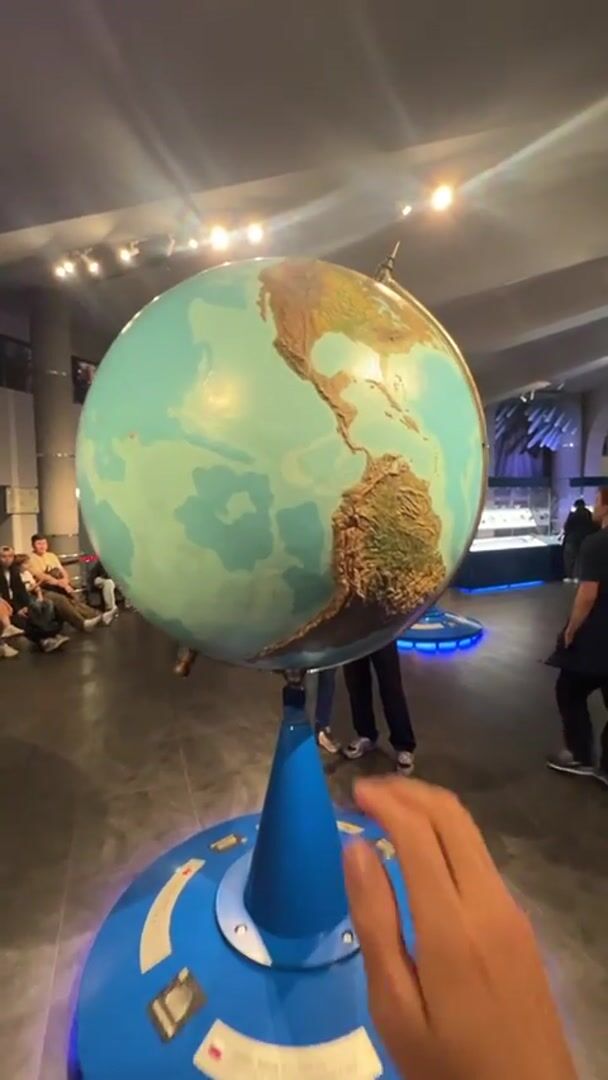
The video shows a large, three-dimensional globe of Earth on display in a museum-like setting. The globe is mounted on a blue stand with illuminated sections at its base. The lighting in the room is dim, with spotlights focused on the globe and other exhibits. Several people are visible in the background, some sitting and others standing, observing the exhibits. The foreground is dominated by a hand reaching out to touch the surface of the globe, which appears to be textured to represent landmasses and bodies of water. The hand moves across the globe, interacting with its surface. The overall atmosphere suggests an educational or exploratory environment.
ARTUR LETO
Moscow, Russia · Aug 19, 2026, 4:44 PM
A man with blonde hair and a white t-shirt stands in front of a large globe, holding a phone to record. He smiles at the camera. A woman with dark hair, wearing a plaid shirt, stands next to him and touches the globe. They appear to be in a museum or exhibit. The globe shows continents and oceans.
ARTUR LETO
Moscow, Russia · Aug 19, 2026, 4:45 PM
A large, detailed model of the moon is displayed on a blue pedestal in what appears to be a museum or exhibition space. The moon model is textured with craters and lunar features. Blue LED lights emanate from the base of the pedestal. A person's hand reaches out and touches the moon model. The camera is positioned at eye level and slightly below the moon model. In the background, out of focus, two people are standing and looking at exhibits. The floor is tiled. The overall lighting suggests an indoor environment.
ARTUR LETO
Moscow, Russia · Aug 19, 2026, 4:48 PM

The image displays a collection of dark, irregularly shaped objects, likely meteorites, arranged on a white surface and supported by clear cylindrical stands. The objects vary in size and texture, with some appearing smooth and others rough and jagged. The background is dark and blurred, suggesting an indoor setting, possibly a museum or exhibition. There are no people or specific landmarks visible that would indicate a location in Moscow, Russia. The overall impression is one of a scientific or geological display.
Moscow, Russia · Aug 19, 2026, 4:49 PM
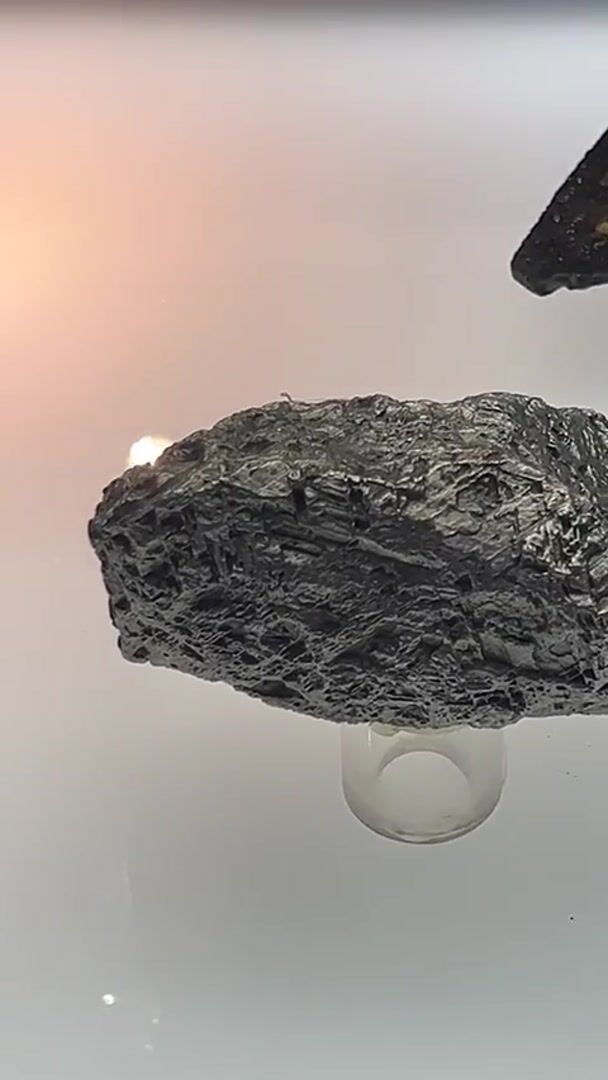
The video displays a close-up, panning shot of a dark, irregular-shaped object, possibly a rock or mineral specimen, resting on a clear circular stand. The object has a textured, almost metallic surface with deep grooves and ridges. In the background, a soft, diffused light source illuminates the scene from the upper left, casting reflections on the object. The background is a plain, light-colored surface. In the upper right corner of the frame, a small portion of another dark object is visible. The video is brief and focuses entirely on the central object, showing its texture and form from different angles as the camera moves.
ARTUR LETO
Moscow, Russia · Aug 19, 2026, 4:49 PM
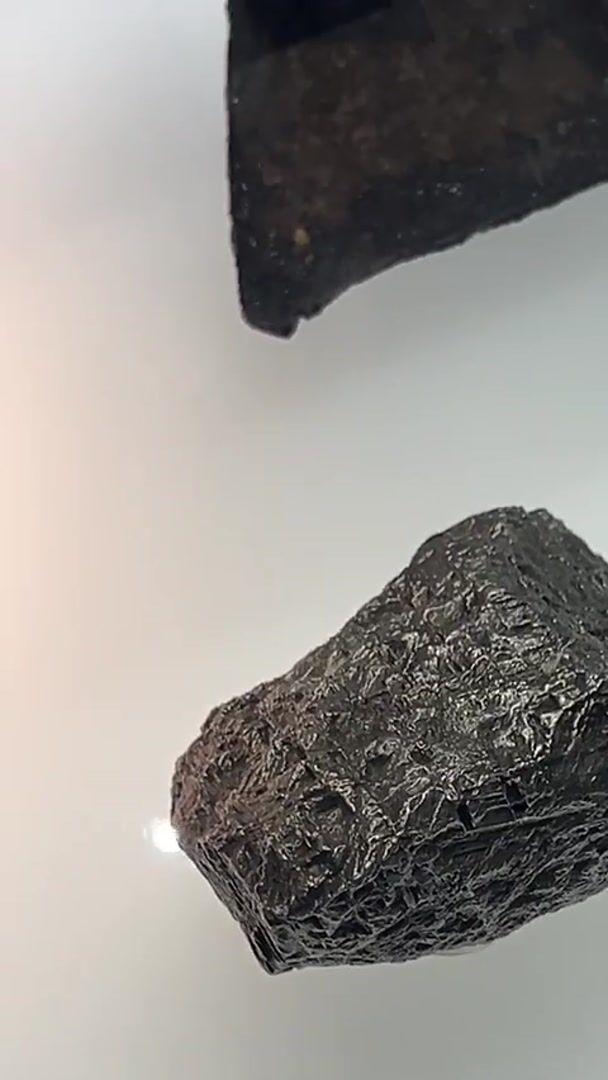
The video shows a close-up view of two meteorites displayed on a white surface, possibly in a museum or exhibition. The first meteorite, shown at the beginning of the video, appears to be a whole, irregularly shaped rock with a dark, textured surface. The second meteorite, which is also shown in detail, is a flat, sliced piece with a distinct metallic pattern. The narrator, whose voice is heard in the background, describes the first meteorite as "whole" and the second as "like it's been cut or sawn." The text on a label beneath the second meteorite, though partially obscured, appears to identify it as a "Каменный метеорит" (Stone meteorite) and mentions "Sayh al Uhaymir 322". The overall lighting is bright and the environment appears clean and minimalist, focusing attention on the meteorites.
ARTUR LETO
Moscow, Russia · Aug 19, 2026, 4:50 PM

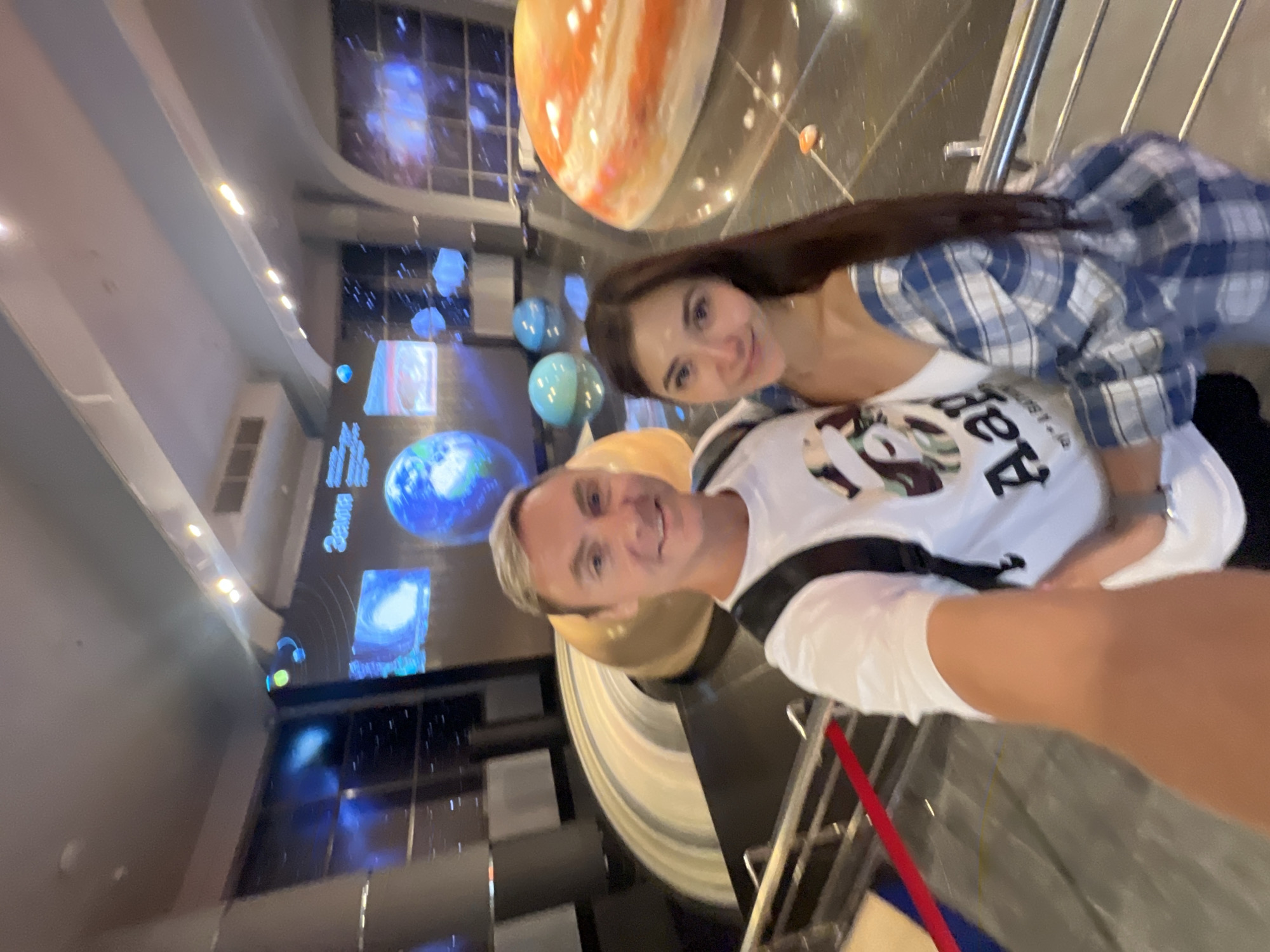
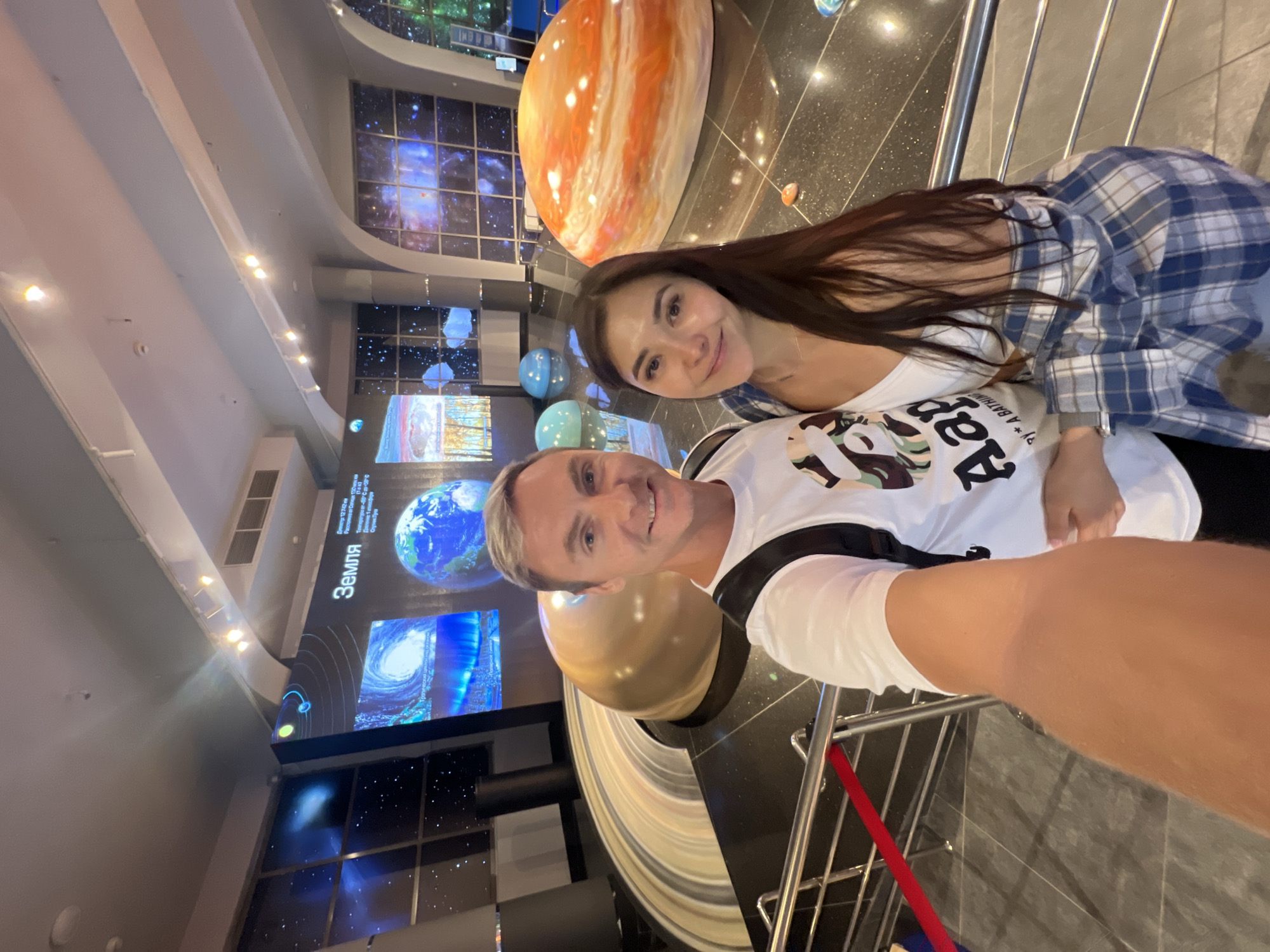
A young couple takes a selfie in what appears to be a planetarium or science museum. The man, on the left, is wearing a white t-shirt with a graphic print and a black backpack. He is holding the camera up to take the photo. The woman, on the right, is wearing a white tank top and a blue and white plaid shirt. They are standing in front of exhibits of planets, including a large model of Saturn with its rings and a model of Jupiter. In the background, there are screens displaying images of space and other planetary models. The environment suggests an indoor educational exhibit focused on astronomy. The setting is likely a public attraction, possibly in Moscow, Russia, given the presence of Russian text on one of the displays.
ARTUR LETO
Moscow, Russia · Aug 19, 2026, 4:50 PM
An overhead, wide-angle selfie captures a couple posing in what appears to be a museum exhibit dedicated to space and planetary science. The man, on the left, wears a white t-shirt with a graphic print and a backpack. He is smiling and holding the camera. The woman, on the right, has long dark hair and wears a white tank top and a blue and white plaid shirt. She is also smiling and looking towards the camera. In the background, large, colorful models of planets are visible, including what looks like Jupiter with its distinct stripes, and Saturn with its rings. A projection screen displays images of Earth, the aurora borealis, and other celestial phenomena. The exhibit features a dark, reflective floor and metal railings, suggesting it is a public space. The architectural style of the ceiling and walls, with curved elements and integrated lighting, hints at a modern museum or science center. The text on the screen and potentially on signage in the exhibit is in Russian, with the word "Земля" (Earth) prominently displayed. While the specific location within Moscow is not explicitly stated, the presence of a space-themed museum in the city is highly probable, with the State Darwin Museum or the Museum of Cosmonautics being potential candidates.
ARTUR LETO
Moscow, Russia · Aug 19, 2026, 4:50 PM


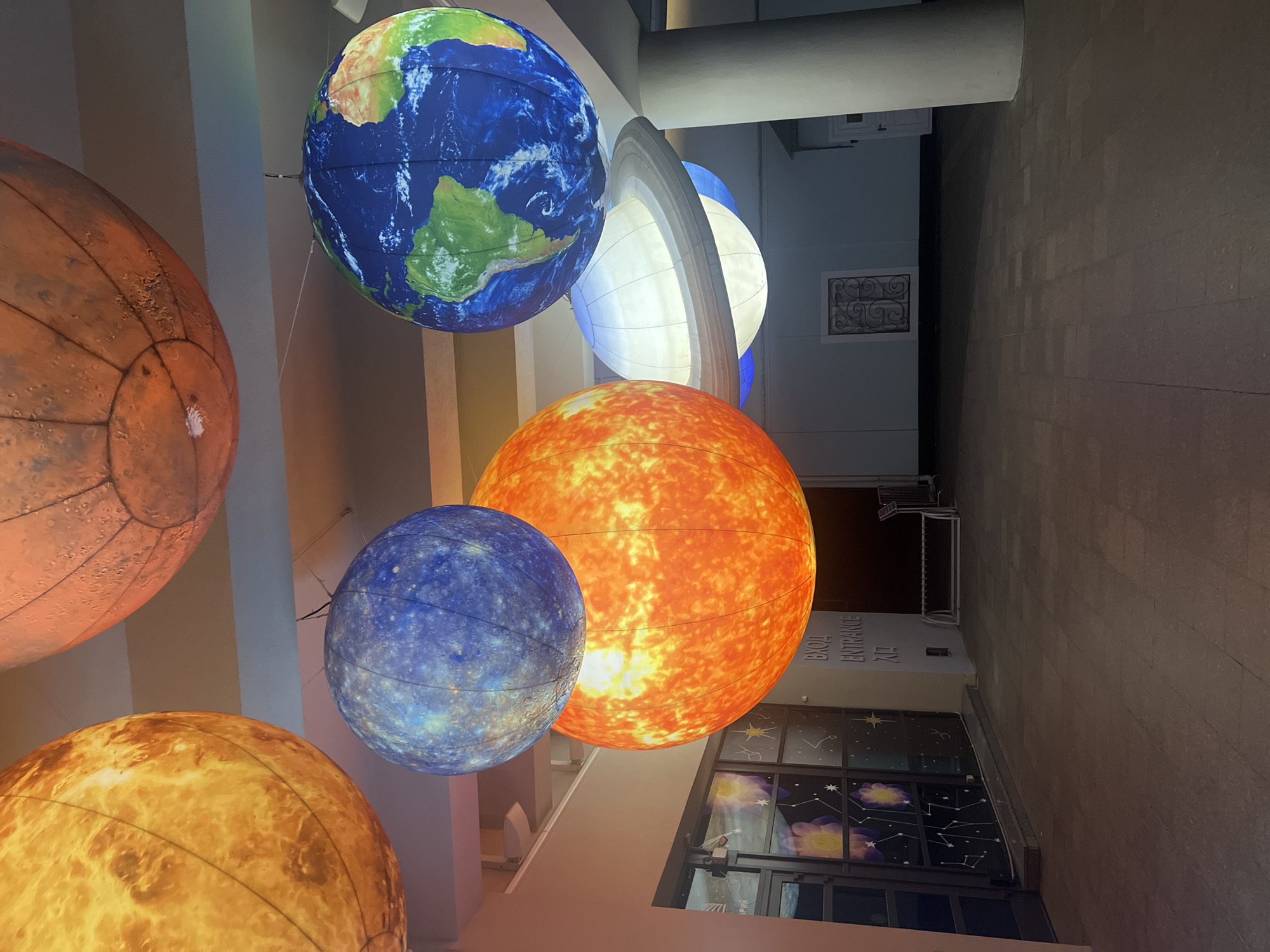
The image shows an interior space decorated with large, spherical models of planets and the sun hanging from the ceiling. In the foreground, the floor is paved with dark rectangular tiles. To the left, a glass-fronted entrance is visible, with decorative panels depicting constellations and celestial bodies. Above the entrance, a sign reads "ВХОД ENTRANCE" in Russian and English, with additional characters below. Several large, inflatable spheres representing celestial bodies are suspended from above. A large, bright orange sphere, likely the sun, dominates the lower center. Above and to its left is a smaller, bright blue sphere with intricate surface details, possibly Mercury or another planet. To the right of the sun is a large sphere depicting Earth, with visible continents and oceans. Further to the right and slightly behind Earth is a white sphere with a prominent ring, representing Saturn. At the very top of the image, partially visible, are two more large spheres, one orange and textured (possibly Mars) and another yellowish-orange sphere with a mottled surface (possibly Venus). The walls of the space are painted in light colors. A large, cylindrical pillar is present on the right side of the image. In the background, a doorway is visible, as well as a decorative metal grate on the wall. The overall impression is that of an exhibit or display, likely in a museum or educational institution, focused on astronomy or space. The presence of the "ENTRANCE" sign and the design of the space suggest it could be a public venue. The style of the building and the signage do not immediately suggest a specific well-known Moscow location without further context.
ARTUR LETO
Moscow, Russia · Aug 19, 2026, 5:59 PM