Thursday, June 25, 2026 · Updated Thursday, June 25, 2026
Vienna, Austria
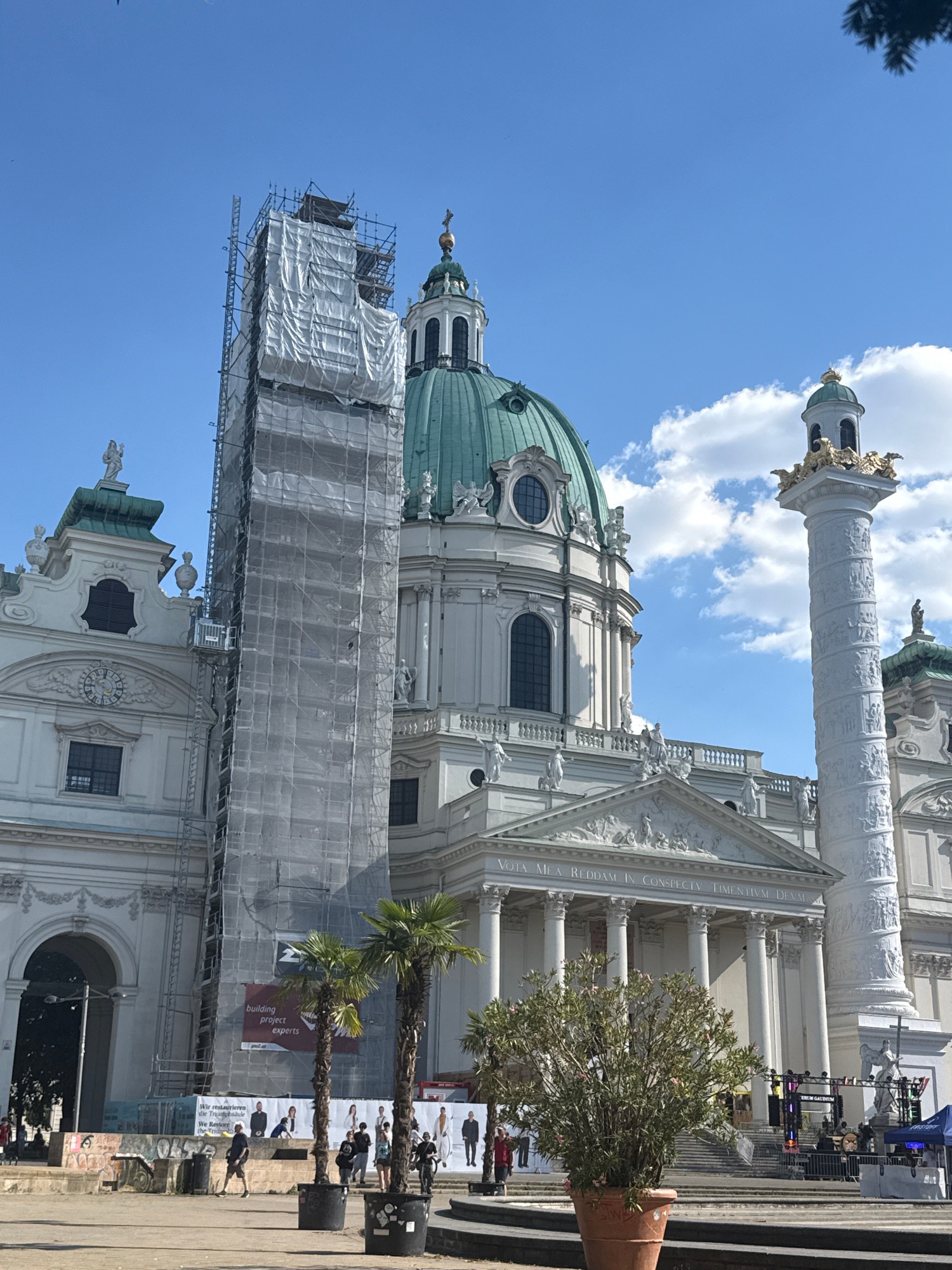
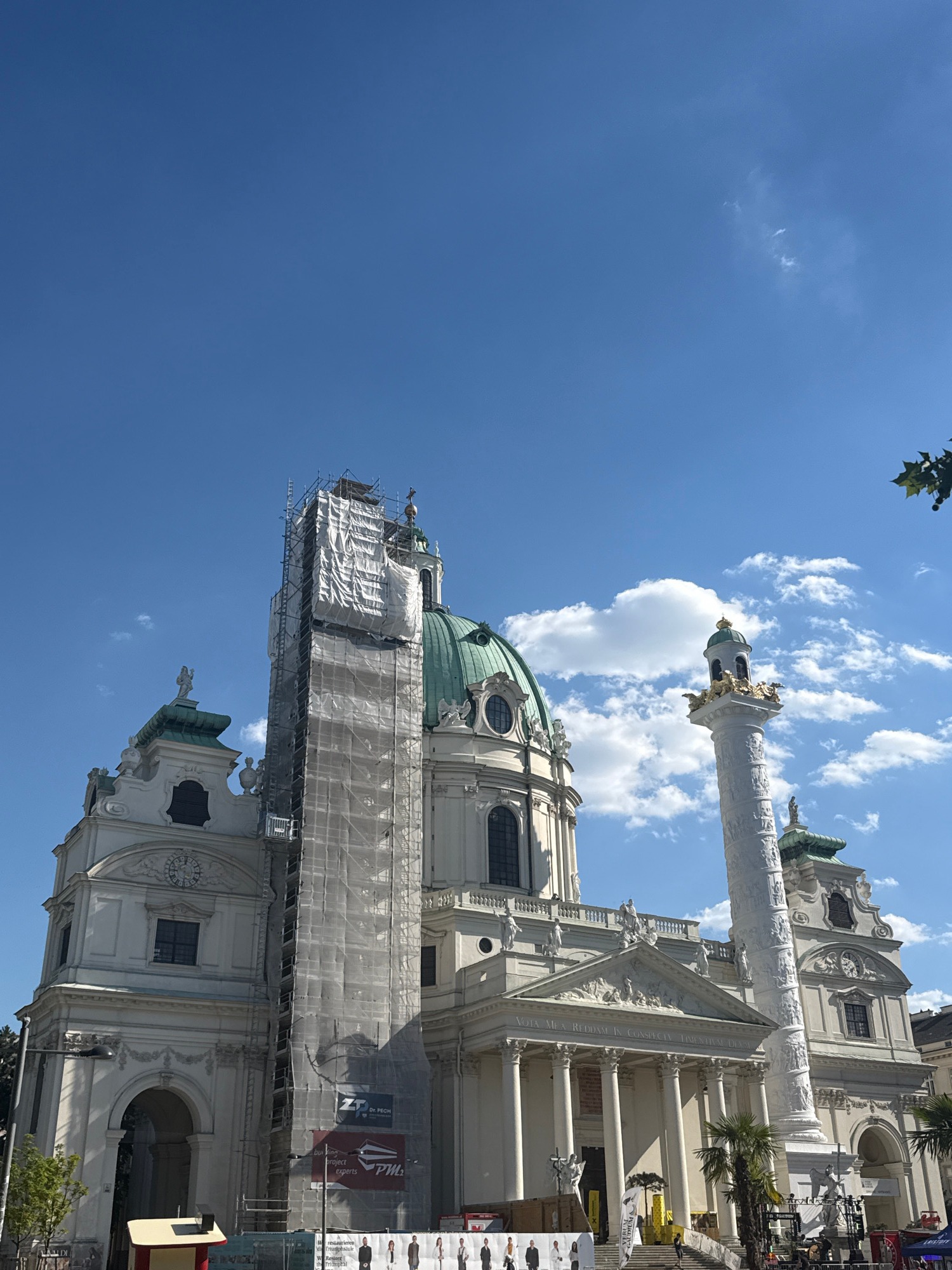
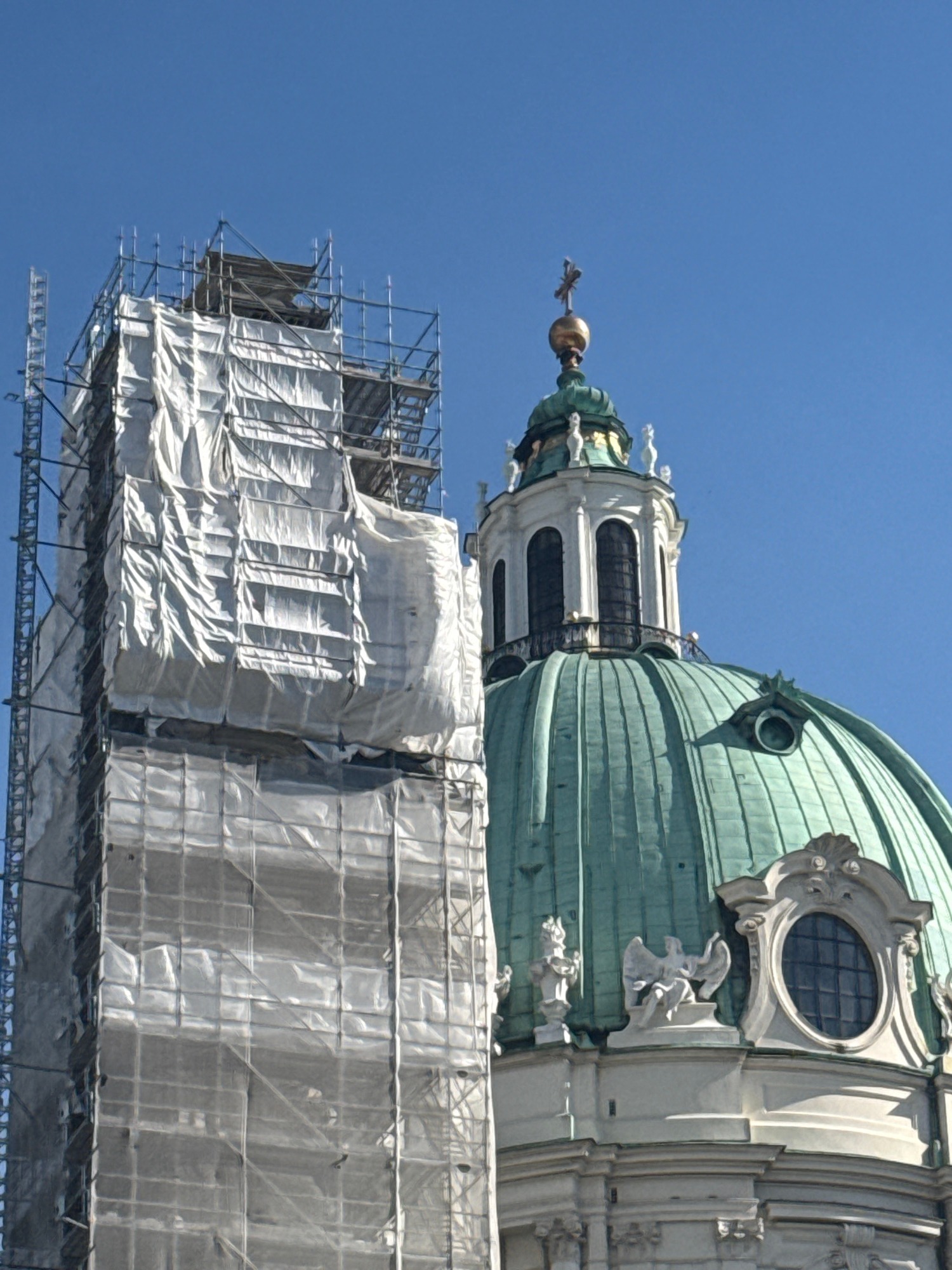
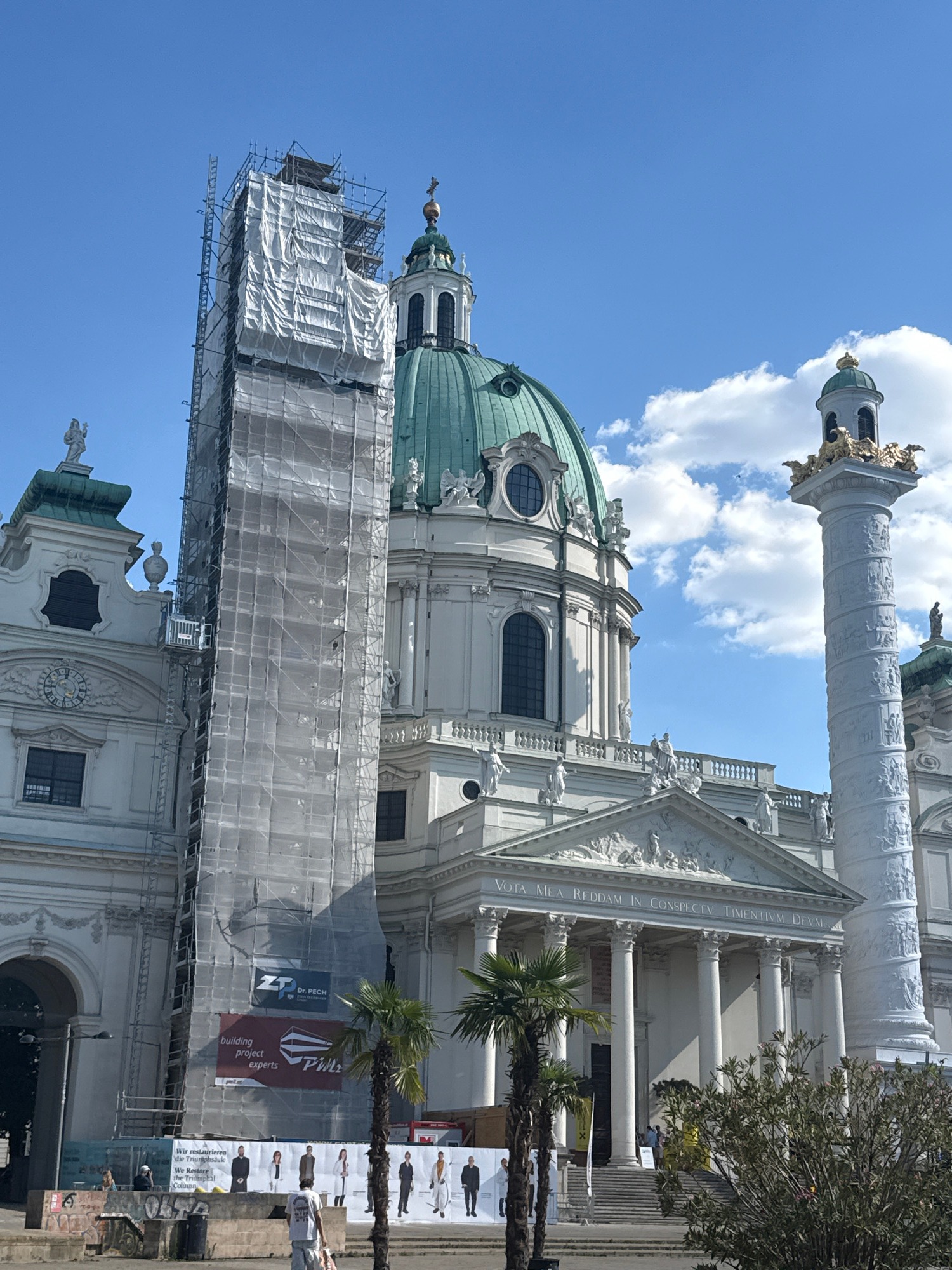
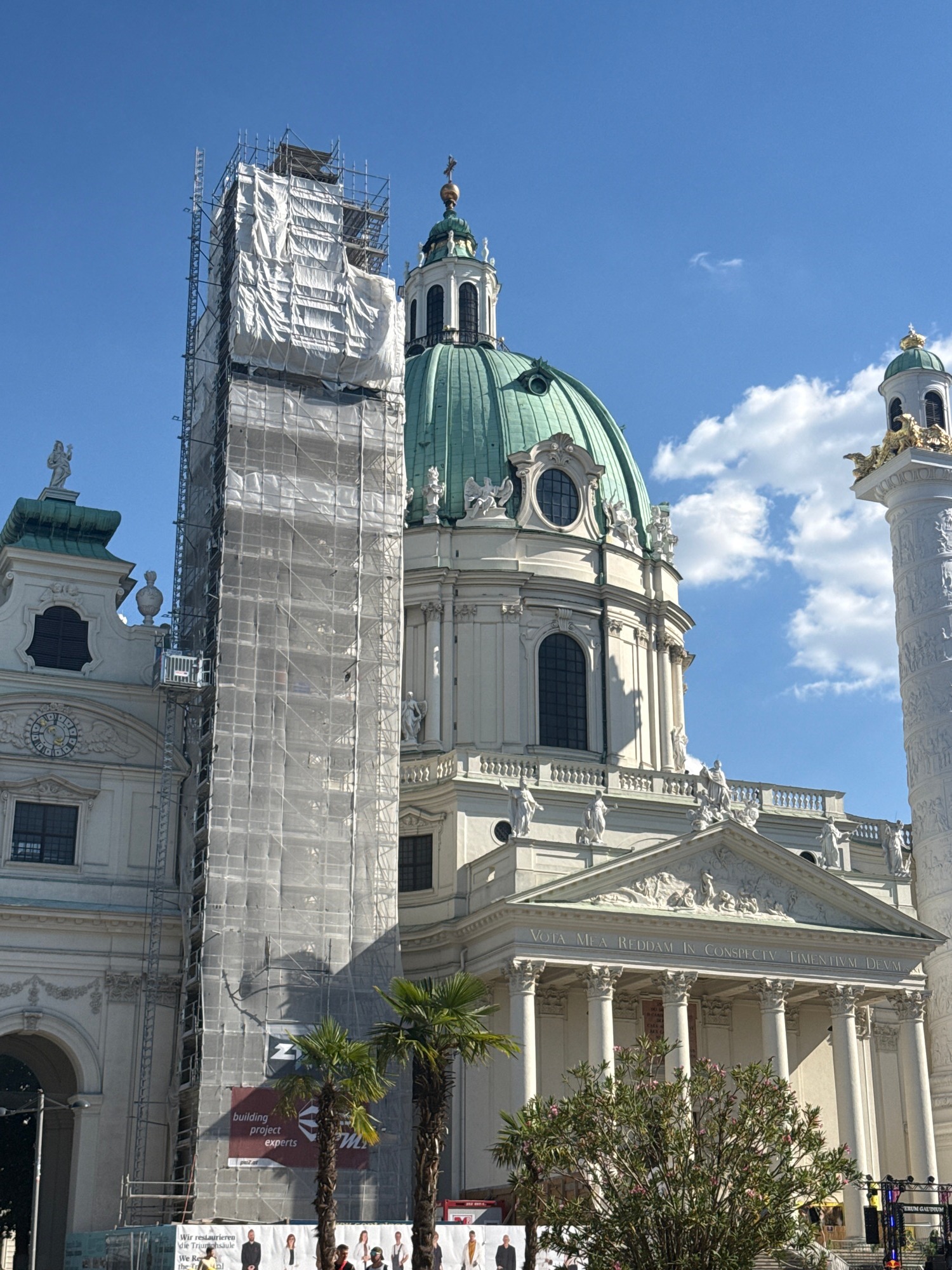
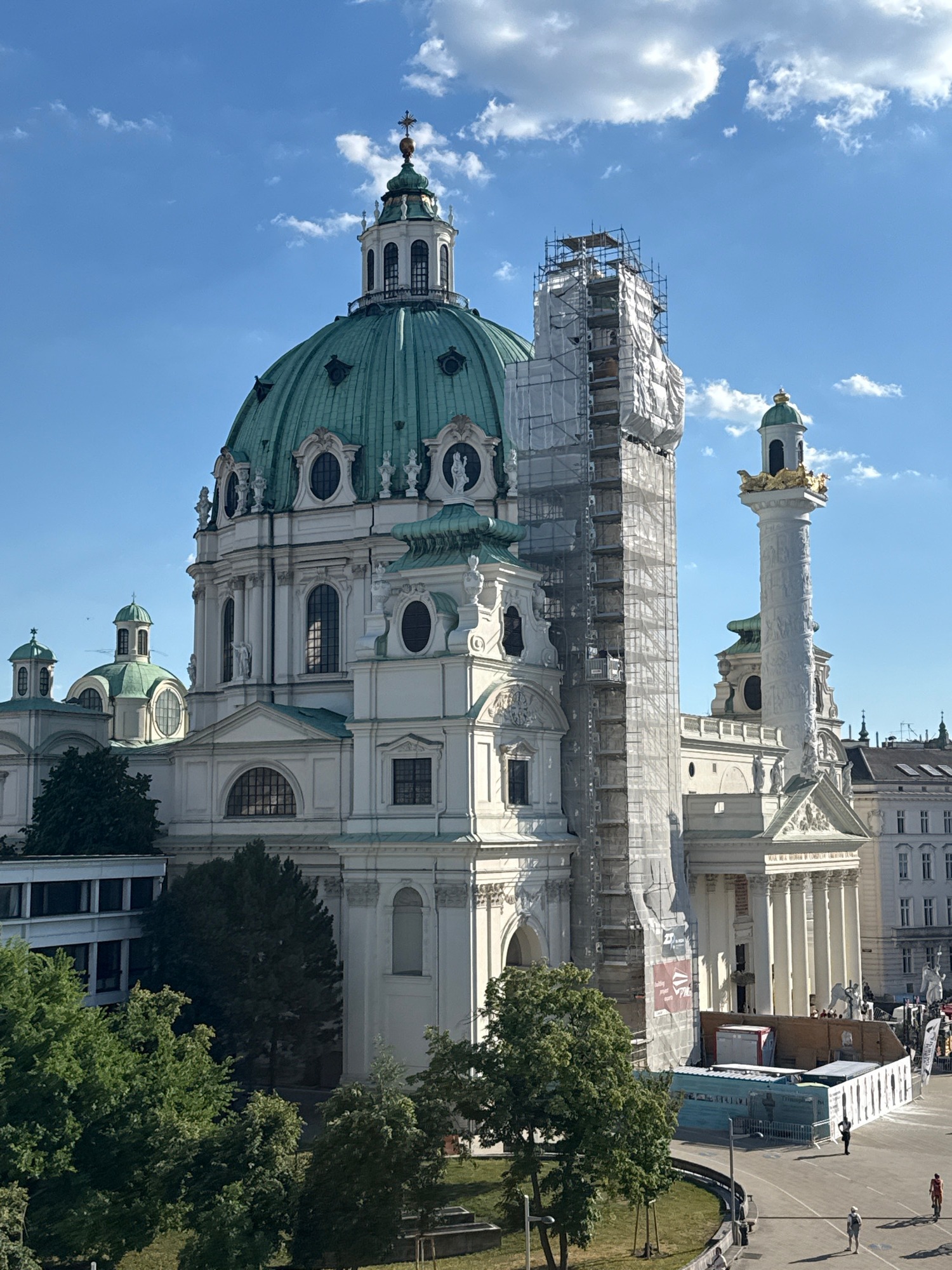
The image depicts a grand white Baroque building with a green dome, likely a church, set against a bright blue sky with scattered white clouds. A tall, ornate column stands prominently in front of the building, topped with a statue. The building appears to be undergoing renovation, as scaffolding covers a portion of it, draped with white sheeting.
In the foreground, a large potted tree adds a touch of greenery to the scene. Two palm trees are also visible, planted in pots. A paved walkway or plaza stretches out in front of the building. In the background, other buildings with classical architecture can be seen.
The scene suggests a daytime setting, possibly late morning or early afternoon, given the bright sunlight and clear sky. The weather appears to be warm and pleasant.
There is visible text on banners and signs attached to the scaffolding and in the background. One banner displays "building project" and another reads "WIEN ARCHITEKTUR". There is also a banner with stylized human figures and text that is partially obscured.
The overall impression is one of historical grandeur and ongoing preservation efforts in a public space. The bright lighting and blue sky contribute to a positive and inviting atmosphere.
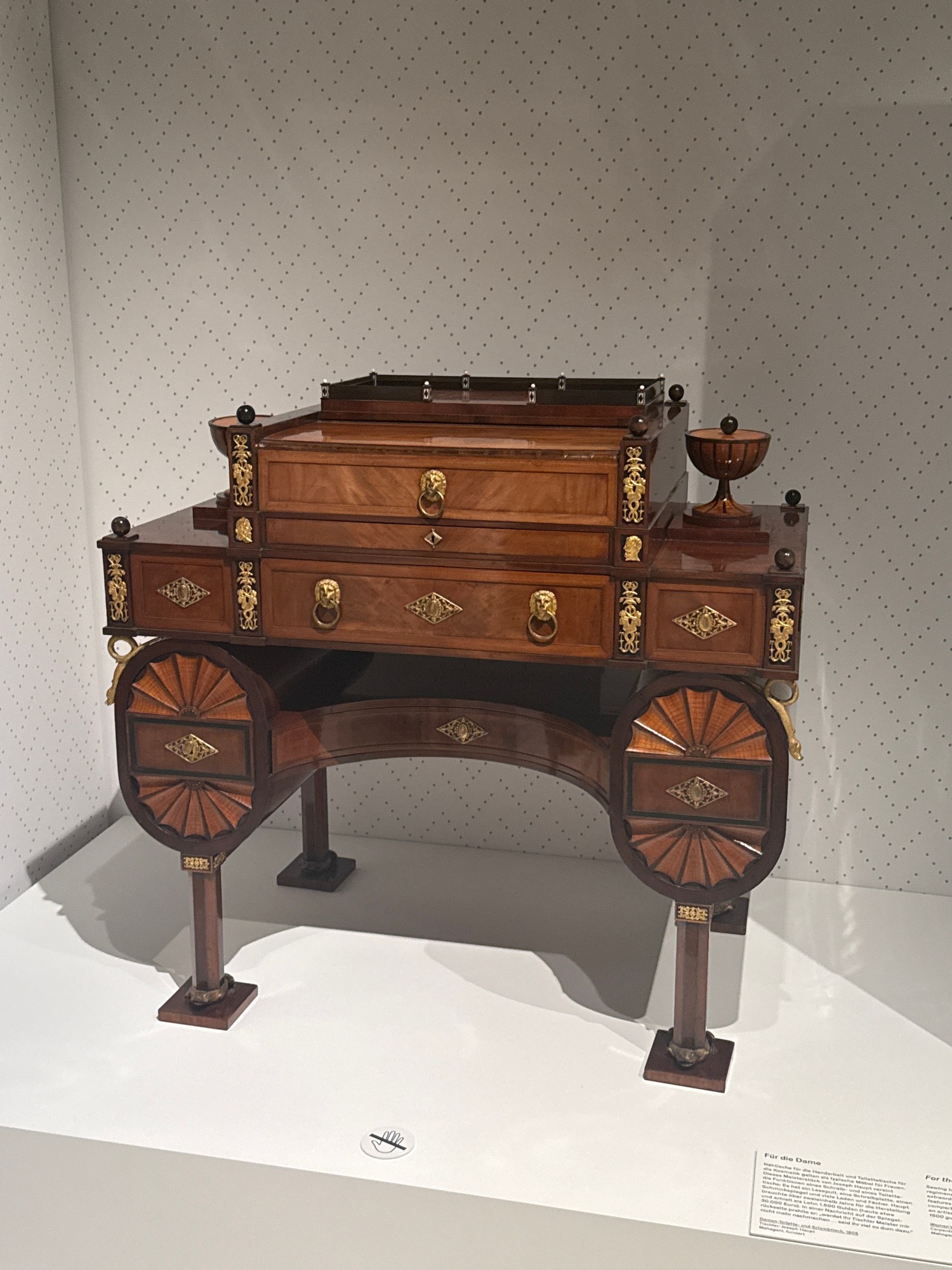
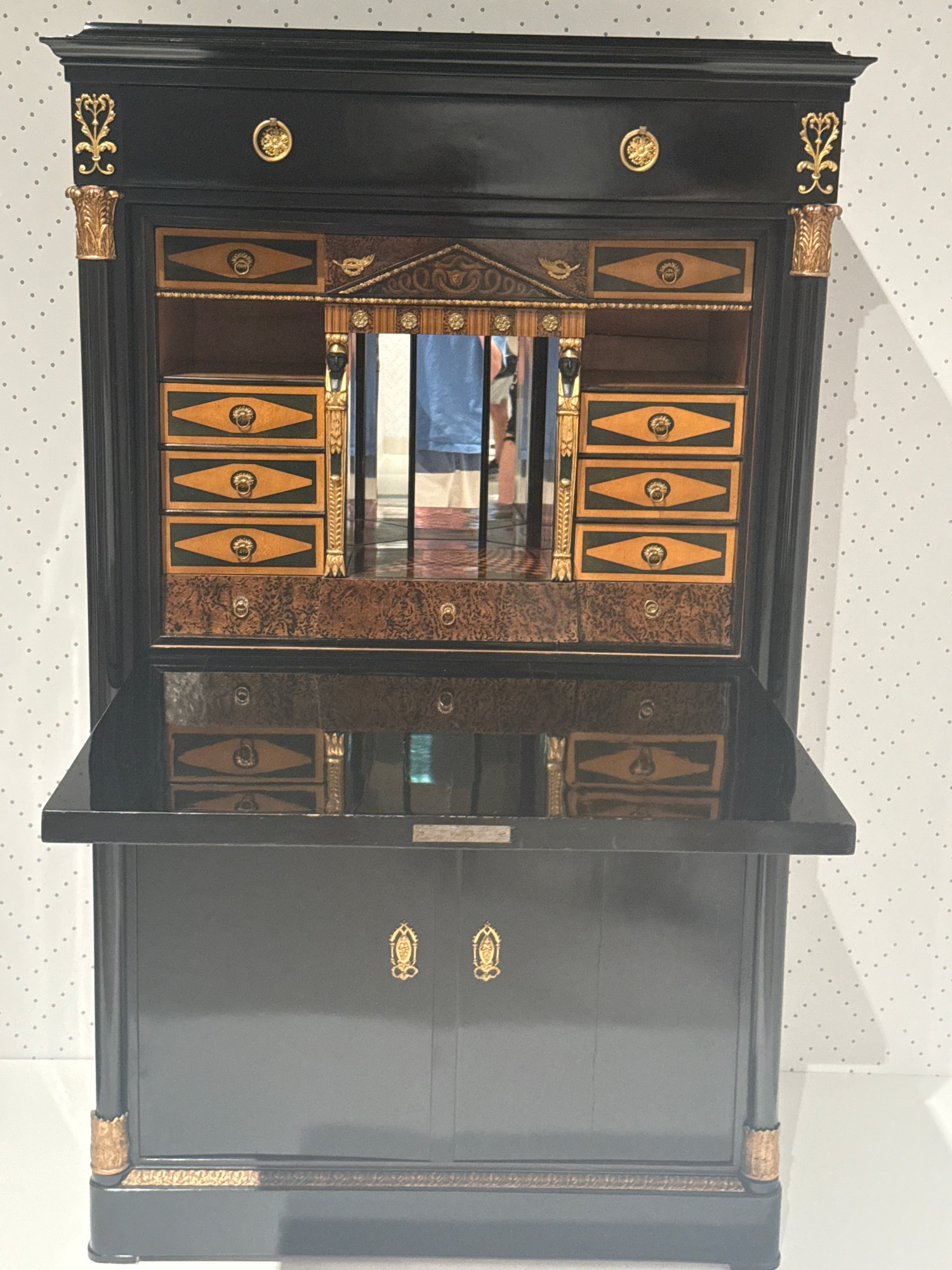
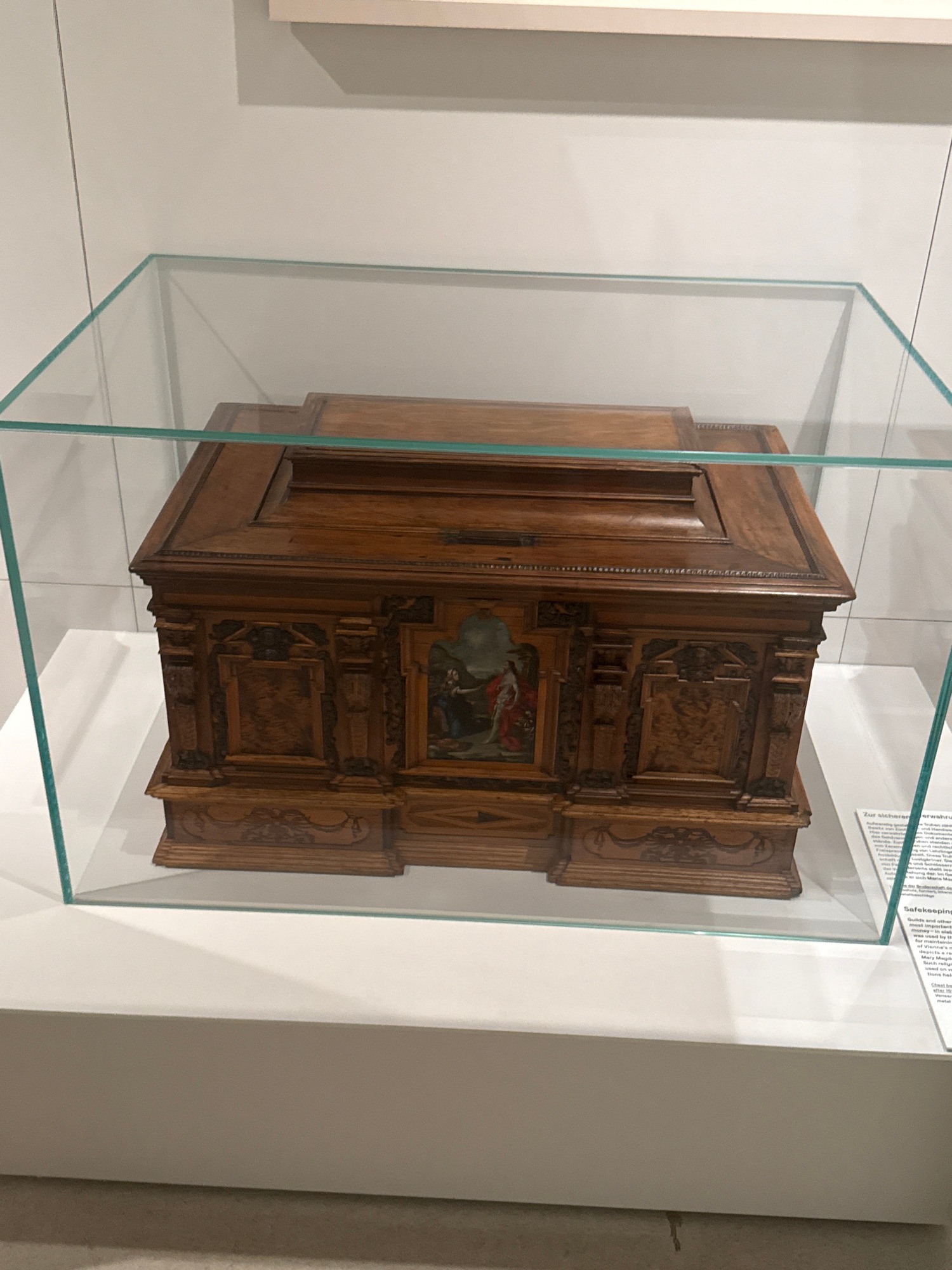
This media file features an ornate, antique wooden table with drawers and decorative gold accents. The table is positioned in a museum setting, with a dotted patterned wallpaper in the background and a plain white wall to the right. The lighting suggests an indoor environment, possibly illuminated by artificial museum lighting, as there are soft shadows cast on the wall. A museum information plaque is visible on the white wall to the right of the table, containing text in German and English. The German text, "Für die Dame," translates to "For the Lady," and the English text mentions "Sewing, writing, dressing table for ladies." The plaque also includes details about the table's history, mentioning its maker, Joseph M(e)yer, and a quoted remark about his skill. The table itself has multiple drawers, some with decorative brass handles, and intricate gold inlay work on its surfaces and legs. The overall impression is of a beautifully crafted piece of historical furniture displayed for public viewing.
Vienna, Austria · Jun 25, 2026, 3:00 PM · 15.4k attention
This media file features an ornate, antique wooden table with drawers and decorative gold accents. The table is positioned in a museum setting, with a dotted patterned wallpaper in the background and a plain white wall to the right. The lighting suggests an indoor environment, possibly illuminated by artificial museum lighting, as there are soft shadows cast on the wall. A museum information plaque is visible on the white wall to the right of the table, containing text in German and English. The German text, "Für die Dame," translates to "For the Lady," and the English text mentions "Sewing, writing, dressing table for ladies." The plaque also includes details about the table's history, mentioning its maker, Joseph M(e)yer, and a quoted remark about his skill. The table itself has multiple drawers, some with decorative brass handles, and intricate gold inlay work on its surfaces and legs. The overall impression is of a beautifully crafted piece of historical furniture displayed for public viewing.
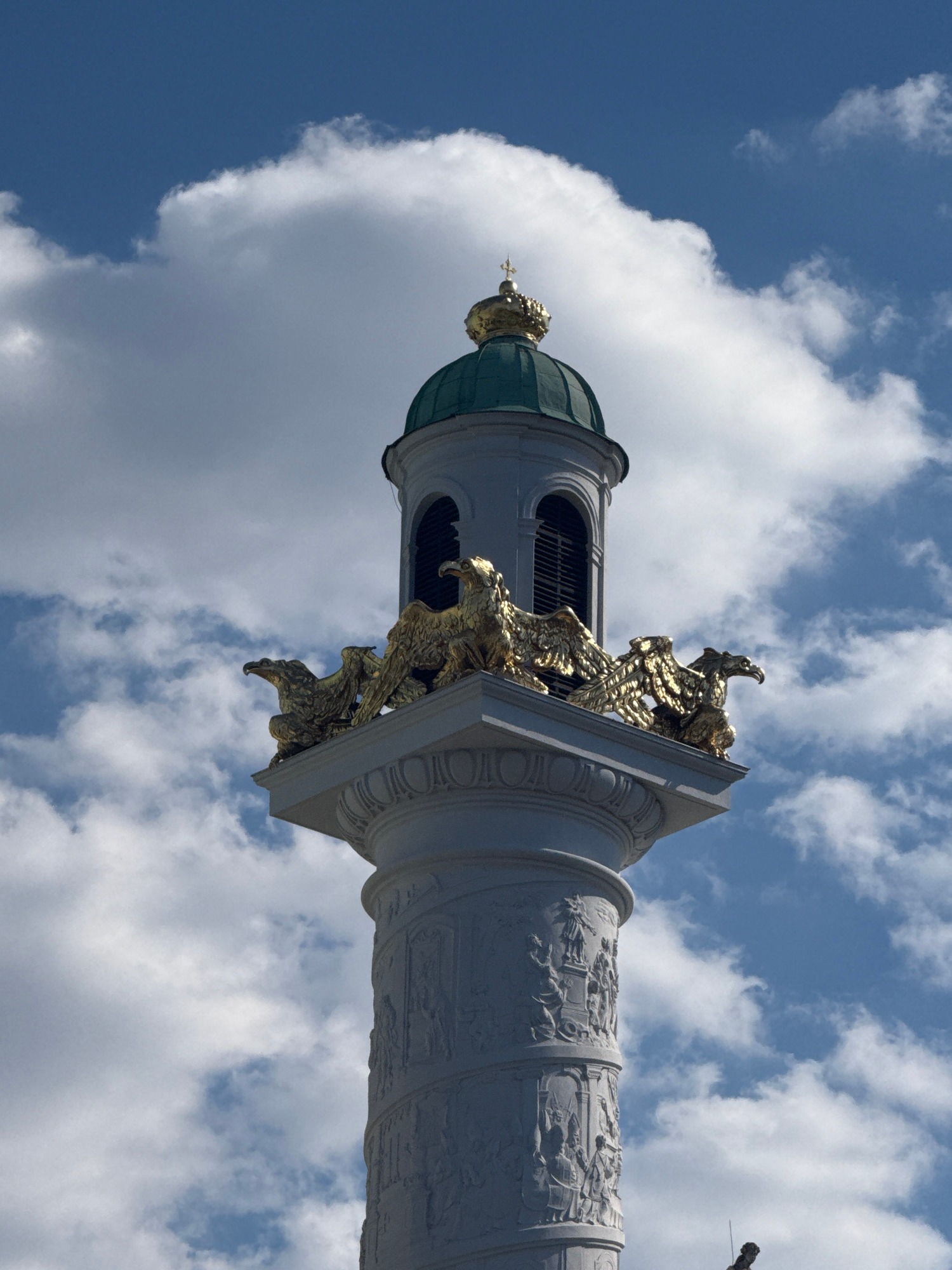
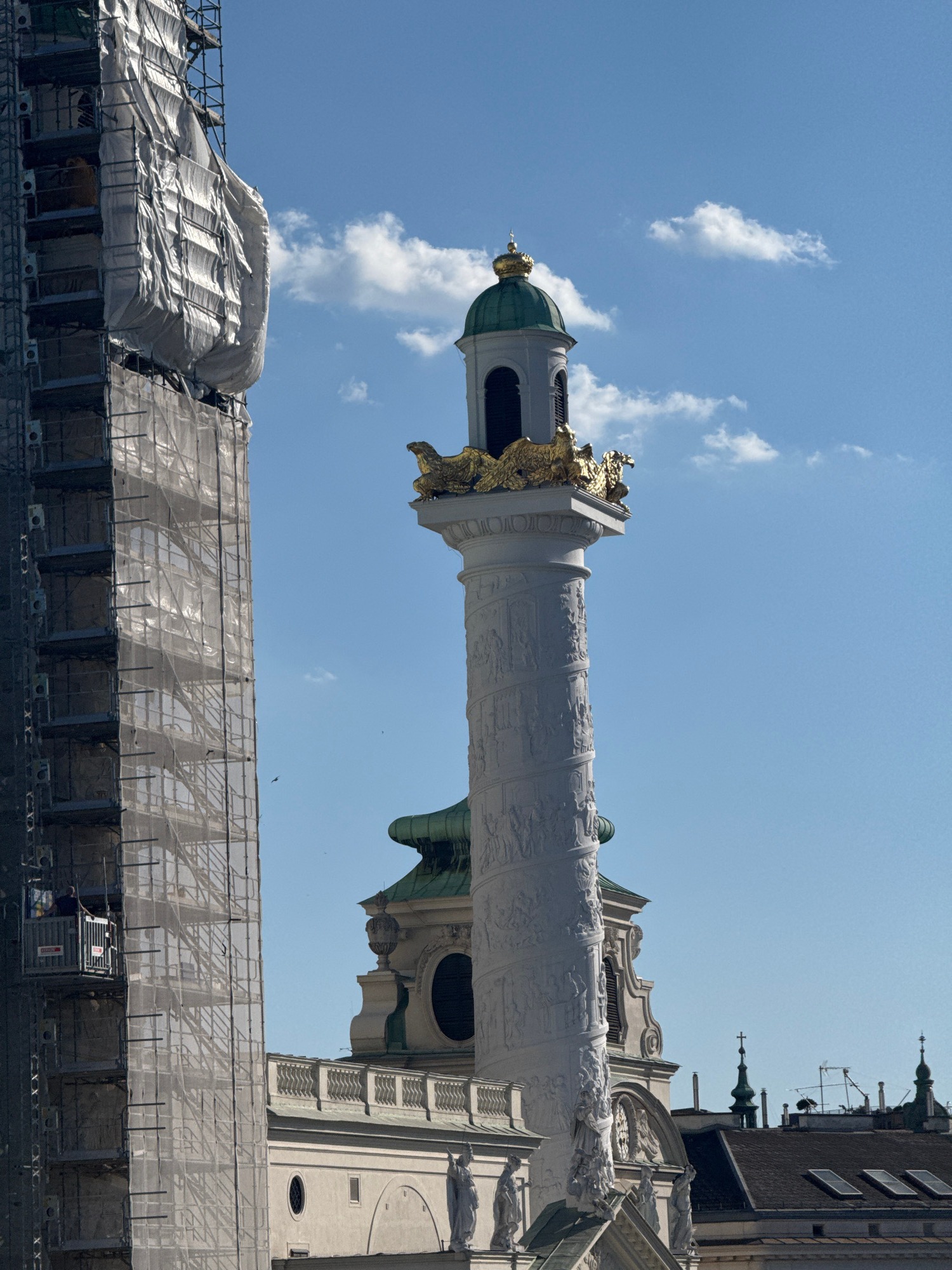
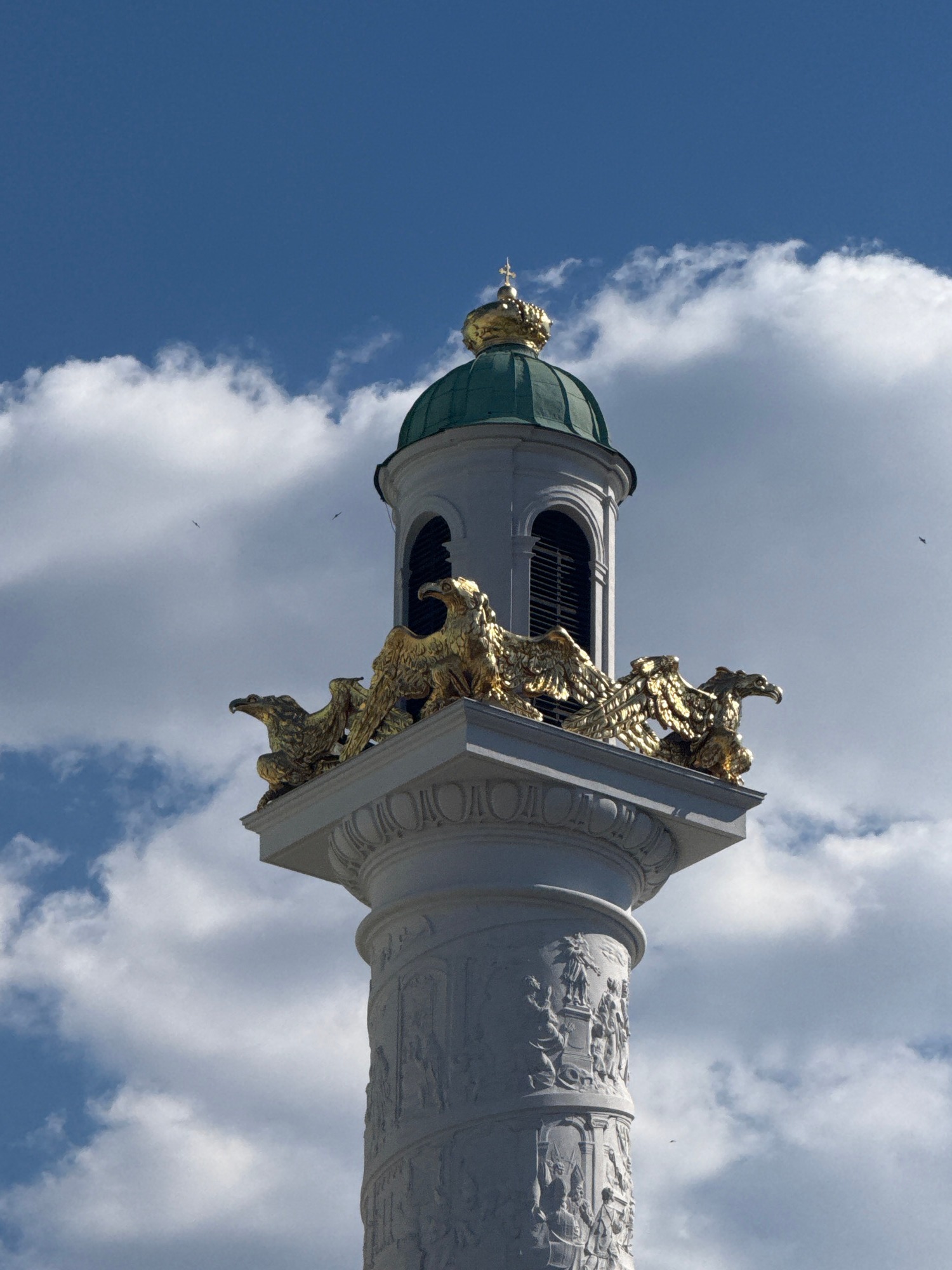
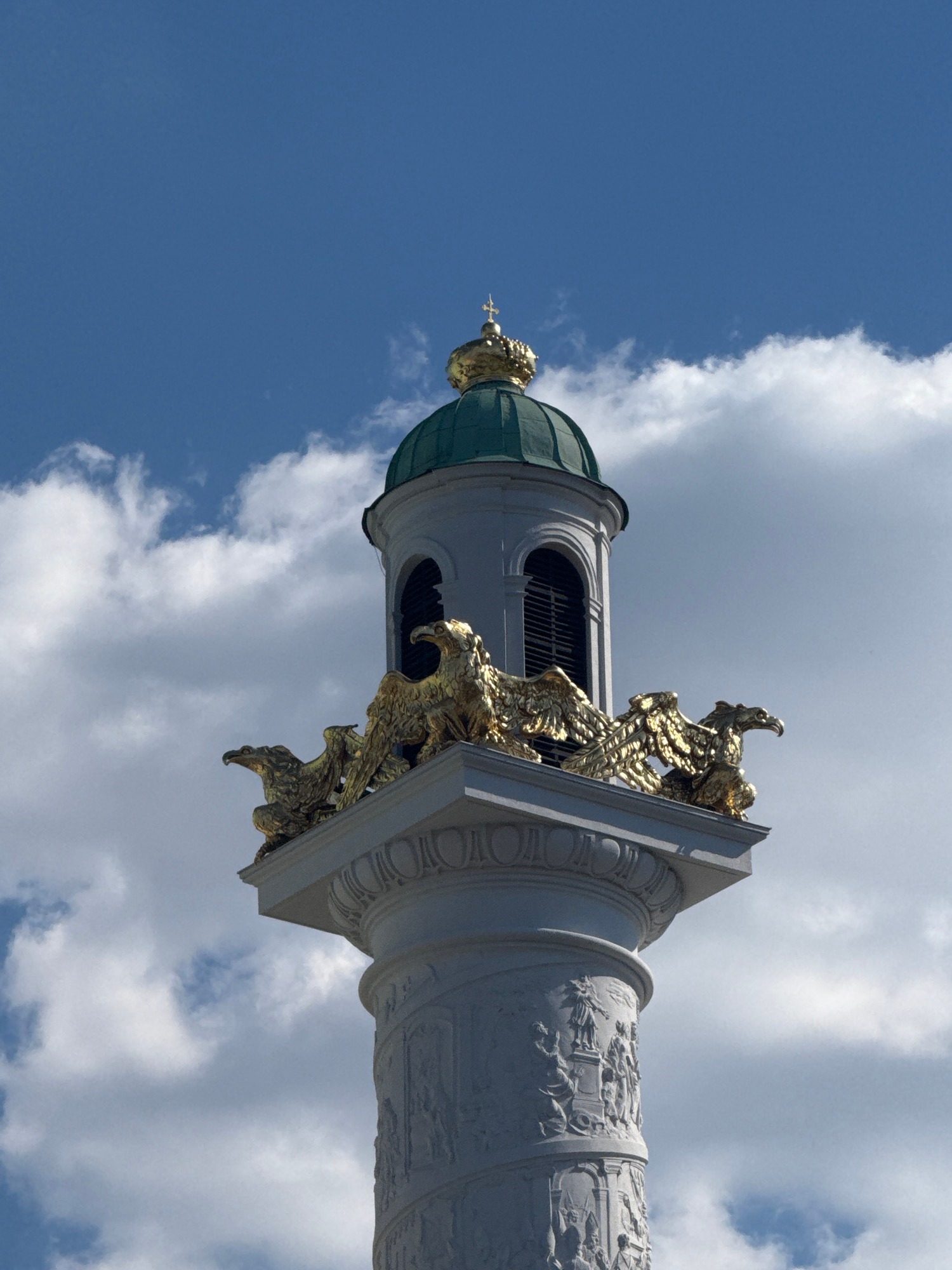
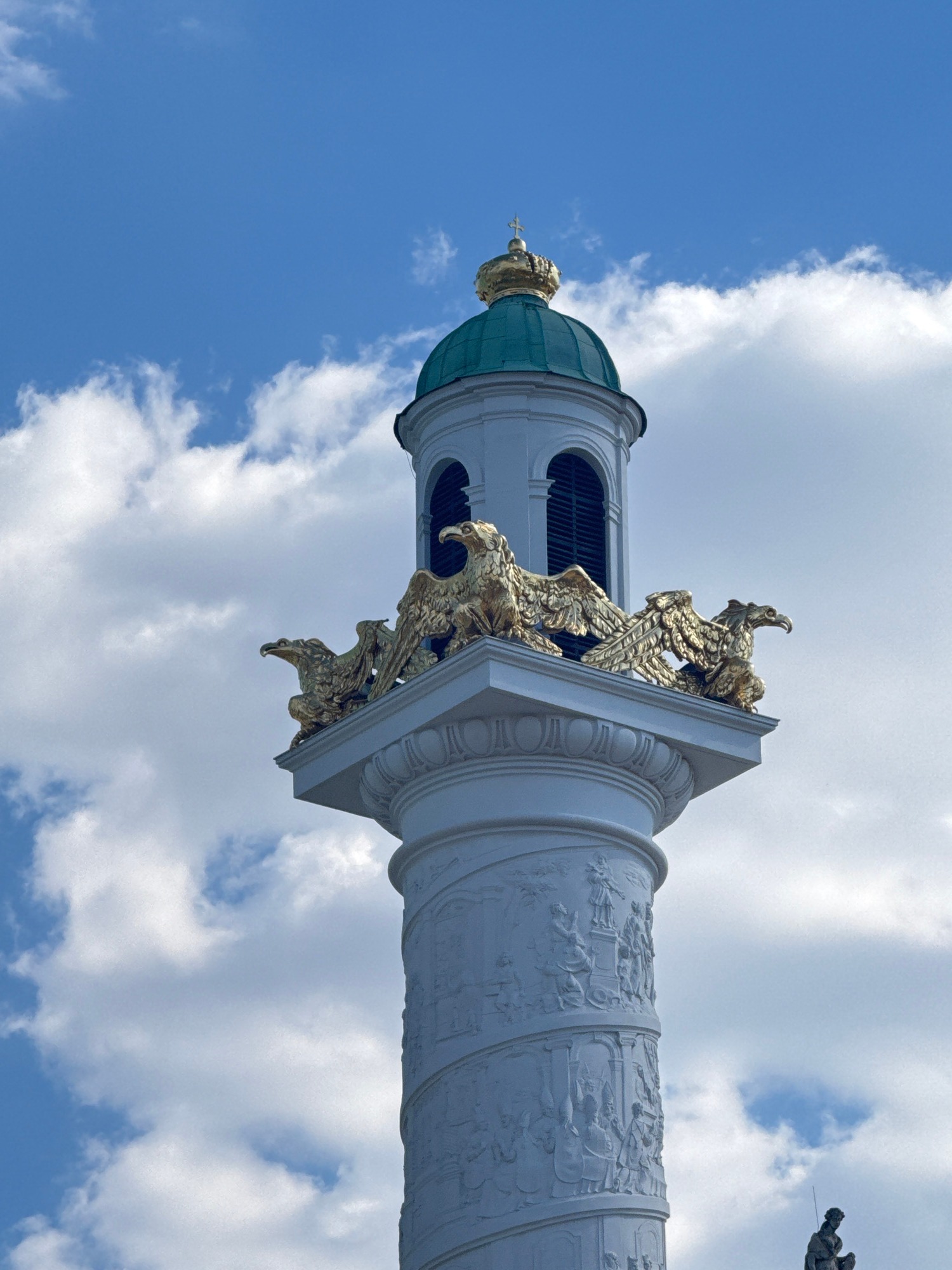
This media file features a low-angle shot of a monumental column set against a bright blue sky filled with fluffy white clouds. The column is ornate, constructed from white stone and adorned with intricate carvings. At the top of the column, there is a detailed golden sculpture of what appears to be a mythical creature, possibly an eagle or a griffin, with outstretched wings and sharp talons. This golden embellishment is supported by a capital featuring classical architectural elements. Below the golden sculpture, the column transitions into a ribbed structure, and further down, it is decorated with relief carvings depicting scenes of what seem to be historical or mythological figures and events.
The top of the column features a green dome-like structure with openings, hinting at a historical or religious monument. The overall impression is one of grandeur and historical significance. The lighting suggests it is daytime, likely a sunny day with scattered clouds, creating a dramatic contrast with the sky. There are no visible people or specific activities taking place, as the focus is solely on the architecture. The location is identified as Vienna, Austria, which aligns with the style of monumental architecture often found in European capitals. There is no visible text in the image.
Vienna, Austria · Jun 25, 2026, 2:49 PM · 13.7k attention
This media file features a low-angle shot of a monumental column set against a bright blue sky filled with fluffy white clouds. The column is ornate, constructed from white stone and adorned with intricate carvings. At the top of the column, there is a detailed golden sculpture of what appears to be a mythical creature, possibly an eagle or a griffin, with outstretched wings and sharp talons. This golden embellishment is supported by a capital featuring classical architectural elements. Below the golden sculpture, the column transitions into a ribbed structure, and further down, it is decorated with relief carvings depicting scenes of what seem to be historical or mythological figures and events.
The top of the column features a green dome-like structure with openings, hinting at a historical or religious monument. The overall impression is one of grandeur and historical significance. The lighting suggests it is daytime, likely a sunny day with scattered clouds, creating a dramatic contrast with the sky. There are no visible people or specific activities taking place, as the focus is solely on the architecture. The location is identified as Vienna, Austria, which aligns with the style of monumental architecture often found in European capitals. There is no visible text in the image.
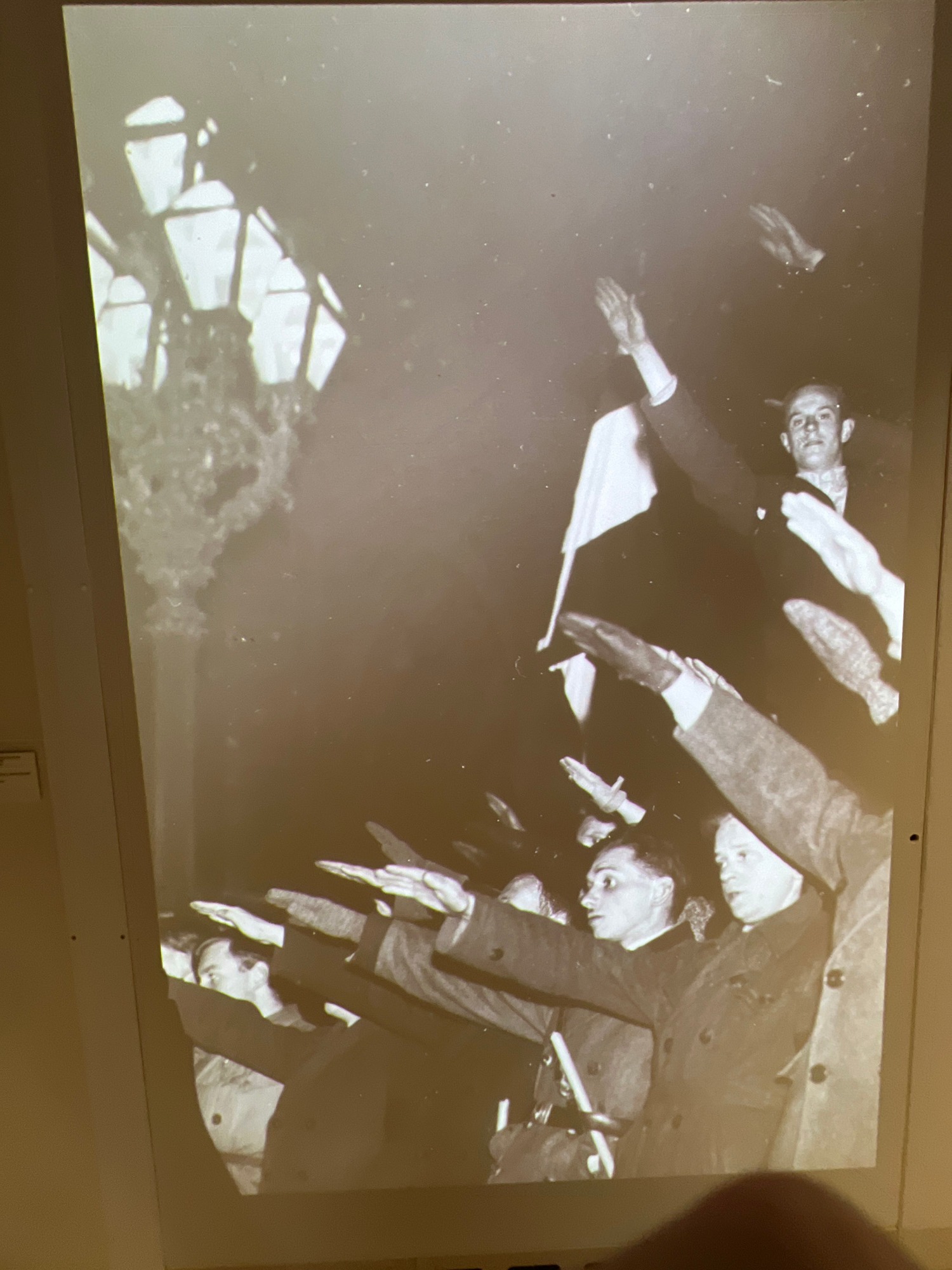
The black and white media file shows a group of men, appearing to be in a dark indoor setting, possibly a hall or auditorium. The image is projected onto a screen, as evidenced by the slight glare and visible projector beam. The subjects are mostly focused on reaching outwards with their hands.
In the foreground, several men are visible. One man, on the left, is looking up and to the left with a slight smile. His arms are outstretched. Another man in the center is reaching out with his hands, wearing gloves. A third man, to the right and slightly behind, is also reaching out. The men appear to be dressed in formal attire, including suits and coats.
In the lower left portion of the image, a geometric structure with white panes is visible, possibly part of a window or a decorative element. There are also areas of what appears to be smoke or fog, particularly around the lower structure, which might suggest a theatrical effect or a smoky environment.
The overall mood is somewhat dramatic, with the outstretched arms and the lighting creating a sense of action or a ritualistic moment. The context of Vienna, Austria, does not provide specific visual cues within the image itself, but might allude to a historical event or performance associated with that location. There is no visible text in the image.
Vienna, Austria · Jun 25, 2026, 3:45 PM · 10.9k attention
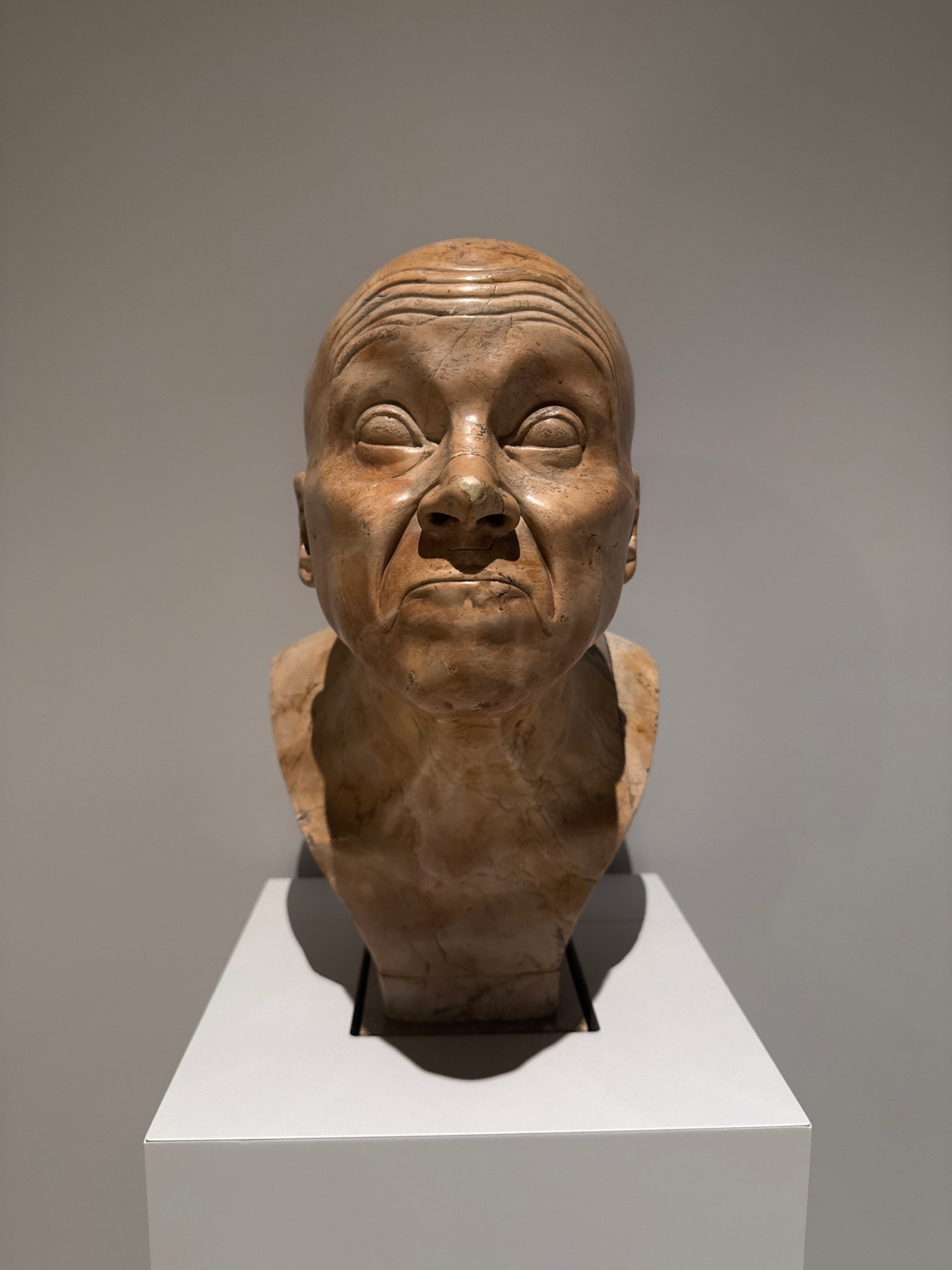
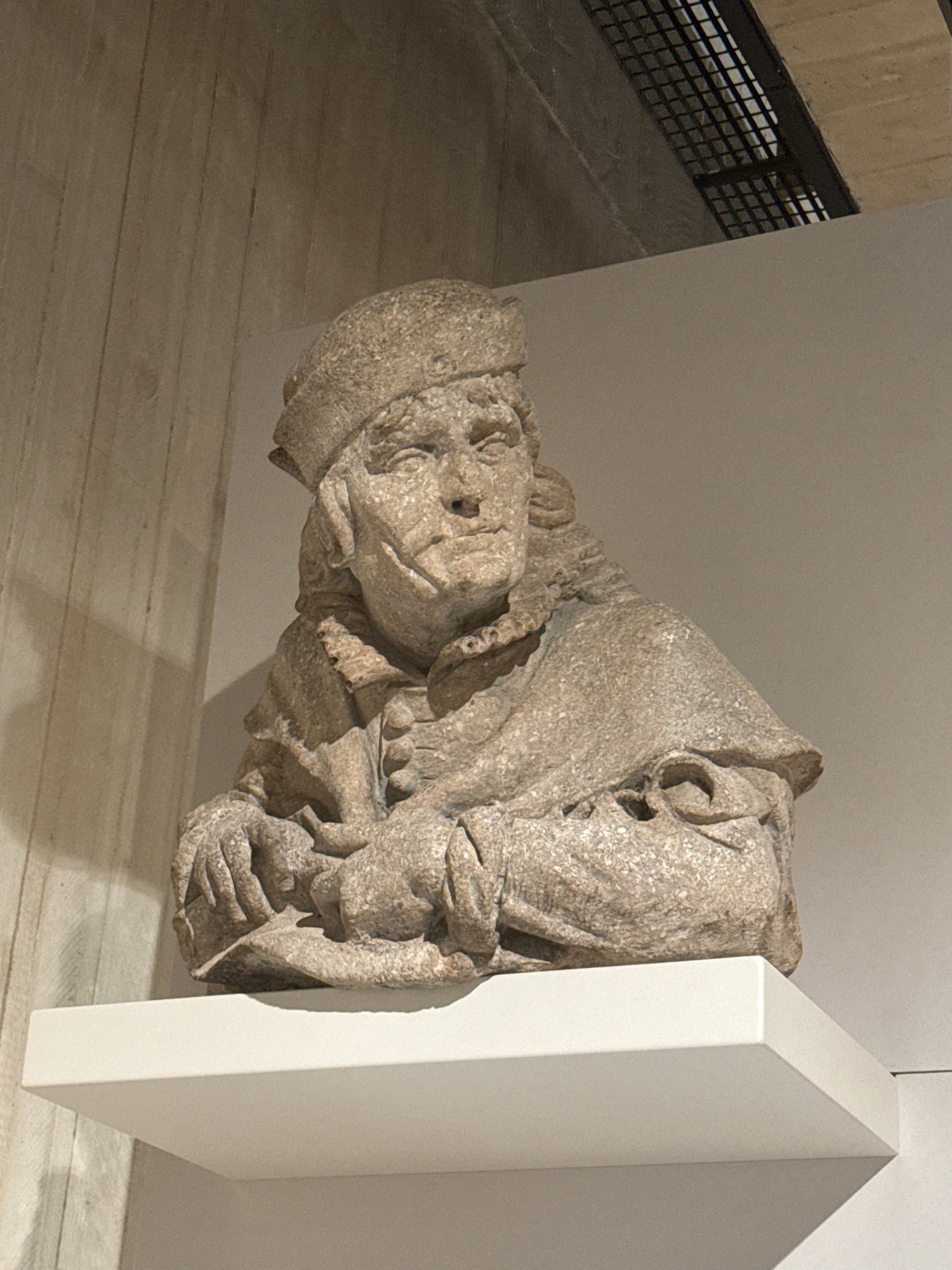
This is a vertical, medium shot of a marble bust of a person, depicted from the chest up. The bust is placed on a white rectangular pedestal, which is situated against a plain gray background. The sculpture is oriented sideways, with the face of the bust facing left. The marble has a yellowish-brown hue and shows signs of age and wear, with visible cracks and imperfections.
The face of the bust is stylized and somewhat abstract. The forehead is deeply lined, suggesting age or a particular artistic style. The eyes are large and round, with carved pupils. The nose is broad and flattened, and the mouth is open in what appears to be a grimace or a smile, revealing carved teeth. The ears are also visible, with a somewhat exaggerated shape. The back of the head and neck are also visible, with more carved lines.
The pedestal is clean and modern, providing a stark contrast to the aged texture of the marble sculpture. A thin black metal rod supports the bust, barely visible behind it. The lighting creates strong shadows, particularly on the pedestal and behind the bust, indicating a light source from the right.
The setting appears to be a museum or gallery, given the neutral background and the display on a pedestal. The overall mood of the sculpture is somewhat unsettling or grotesque, due to the exaggerated features and the expression on the face. There is no visible text in the image. The context of Vienna, Austria, does not offer any immediate visual cues within the image itself.
Vienna, Austria · Jun 25, 2026, 3:14 PM · 10.7k attention
The black and white media file shows a group of men, appearing to be in a dark indoor setting, possibly a hall or auditorium. The image is projected onto a screen, as evidenced by the slight glare and visible projector beam. The subjects are mostly focused on reaching outwards with their hands.
In the foreground, several men are visible. One man, on the left, is looking up and to the left with a slight smile. His arms are outstretched. Another man in the center is reaching out with his hands, wearing gloves. A third man, to the right and slightly behind, is also reaching out. The men appear to be dressed in formal attire, including suits and coats.
In the lower left portion of the image, a geometric structure with white panes is visible, possibly part of a window or a decorative element. There are also areas of what appears to be smoke or fog, particularly around the lower structure, which might suggest a theatrical effect or a smoky environment.
The overall mood is somewhat dramatic, with the outstretched arms and the lighting creating a sense of action or a ritualistic moment. The context of Vienna, Austria, does not provide specific visual cues within the image itself, but might allude to a historical event or performance associated with that location. There is no visible text in the image.
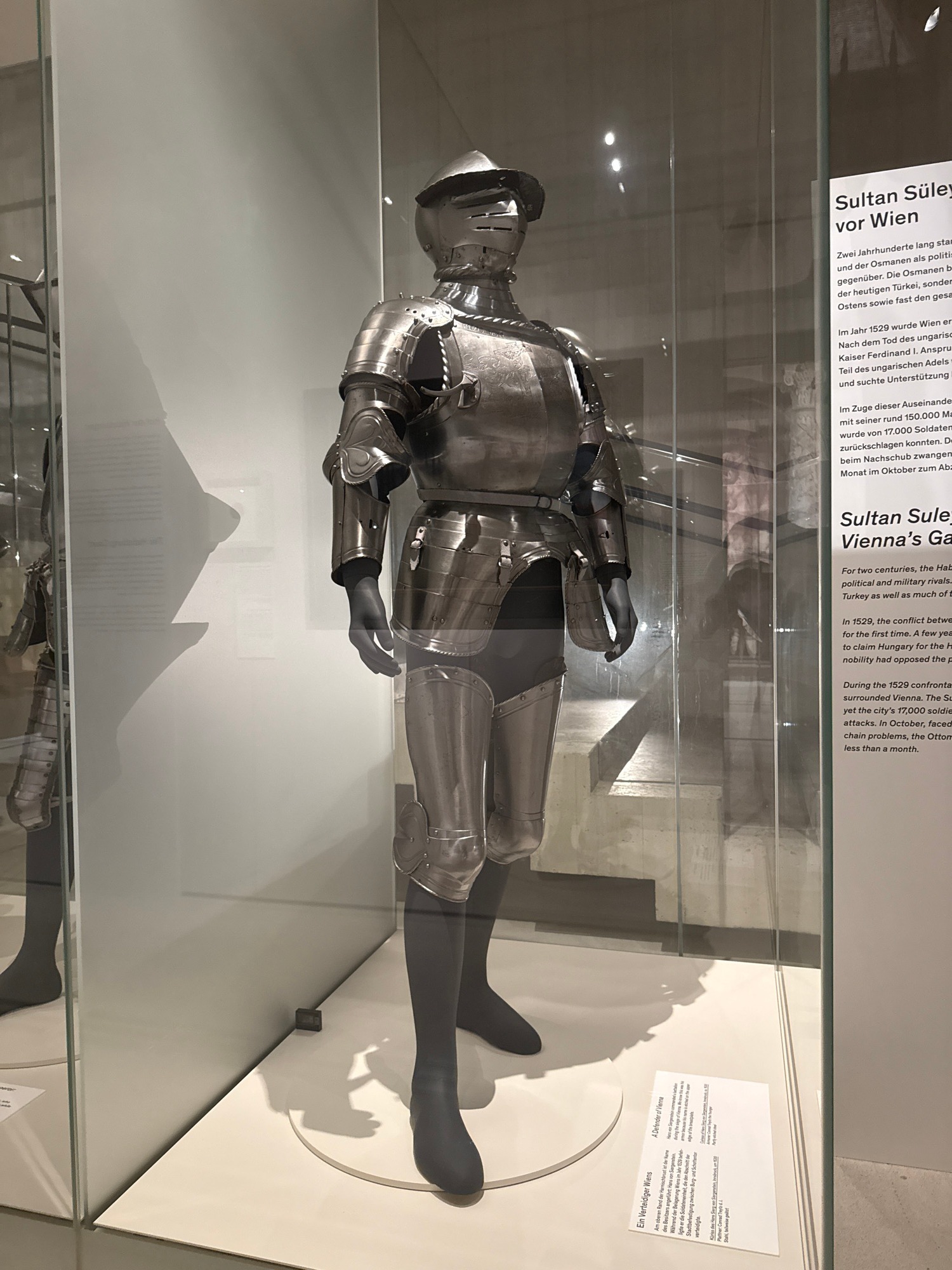
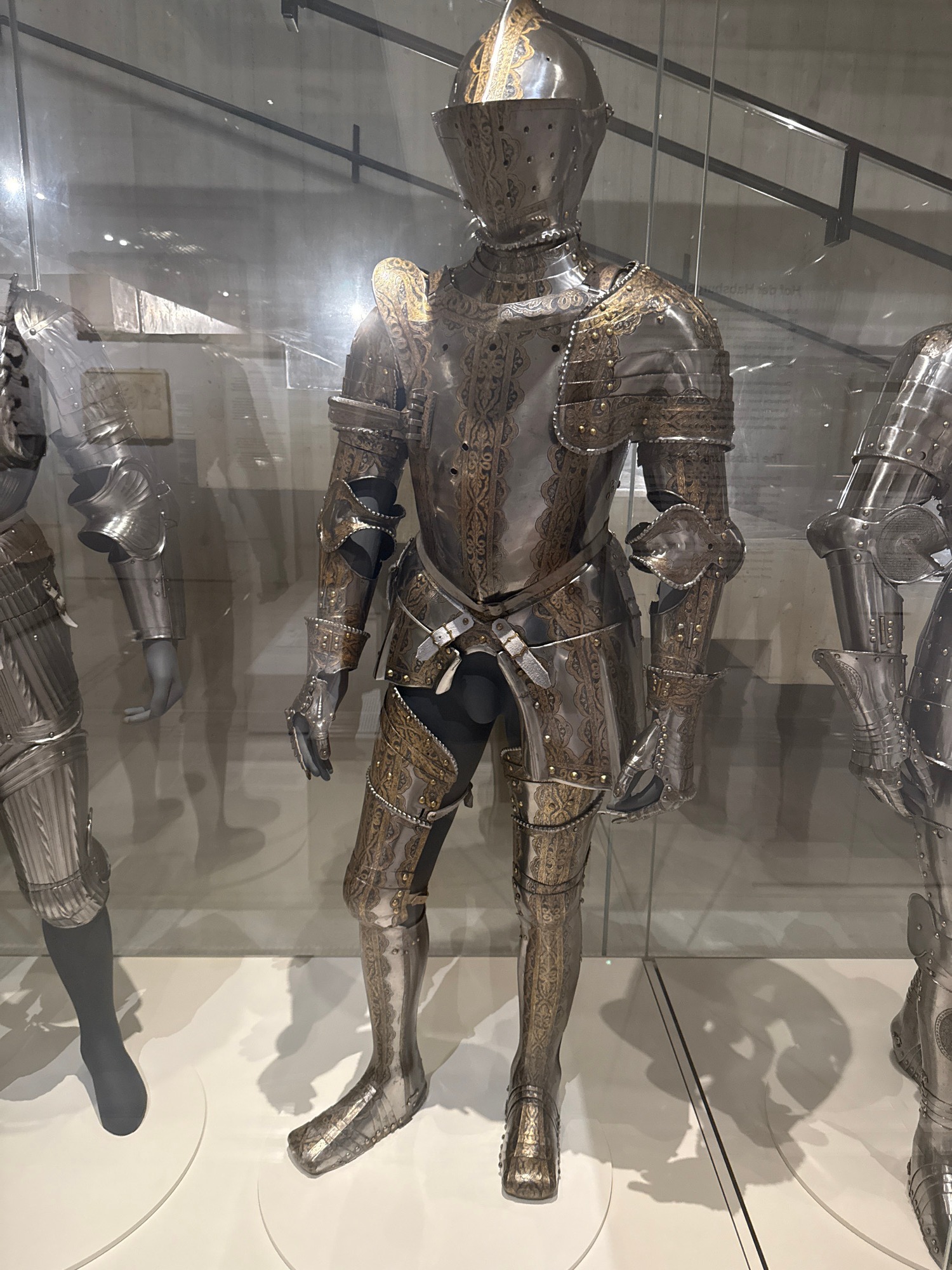
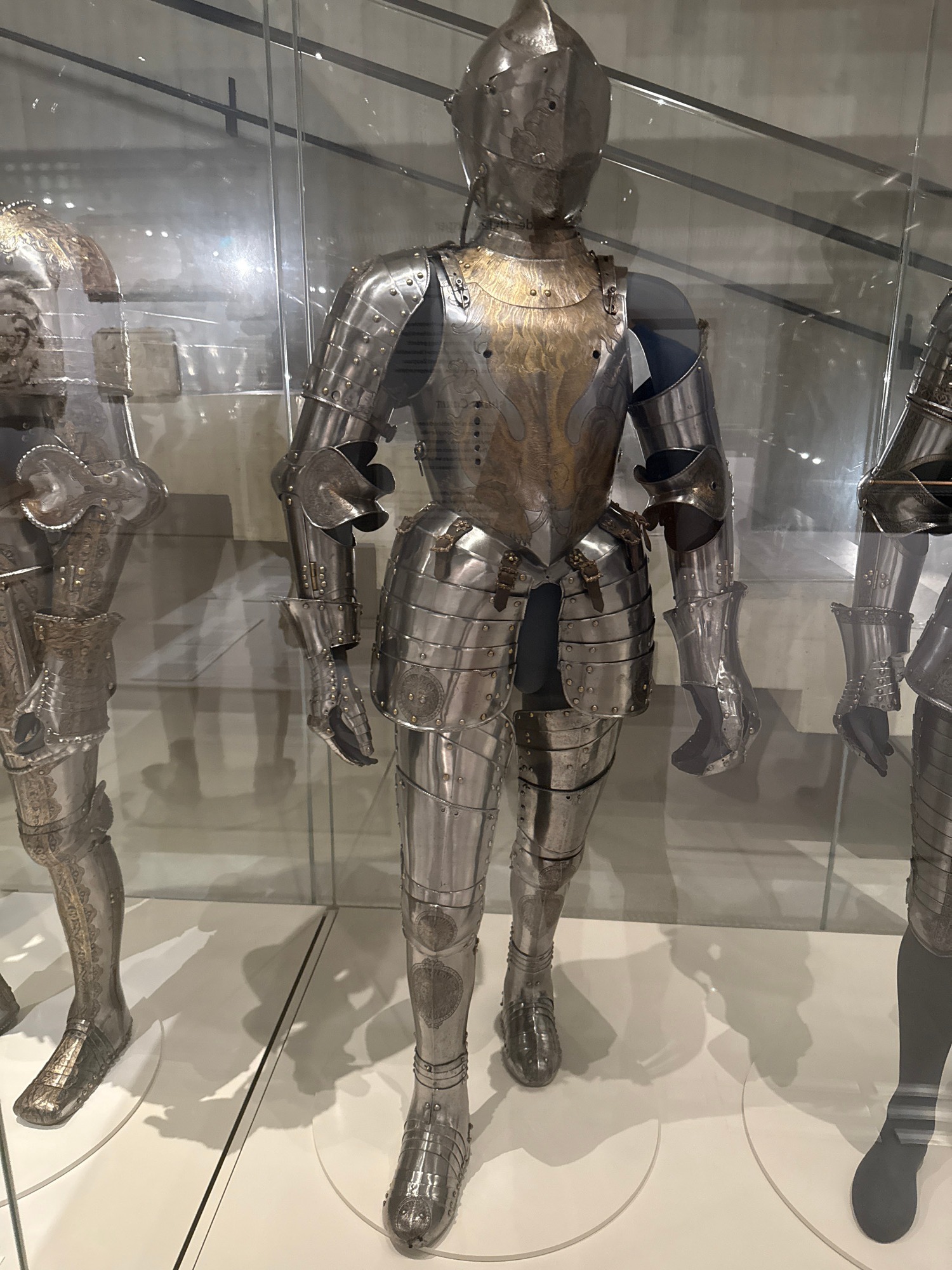
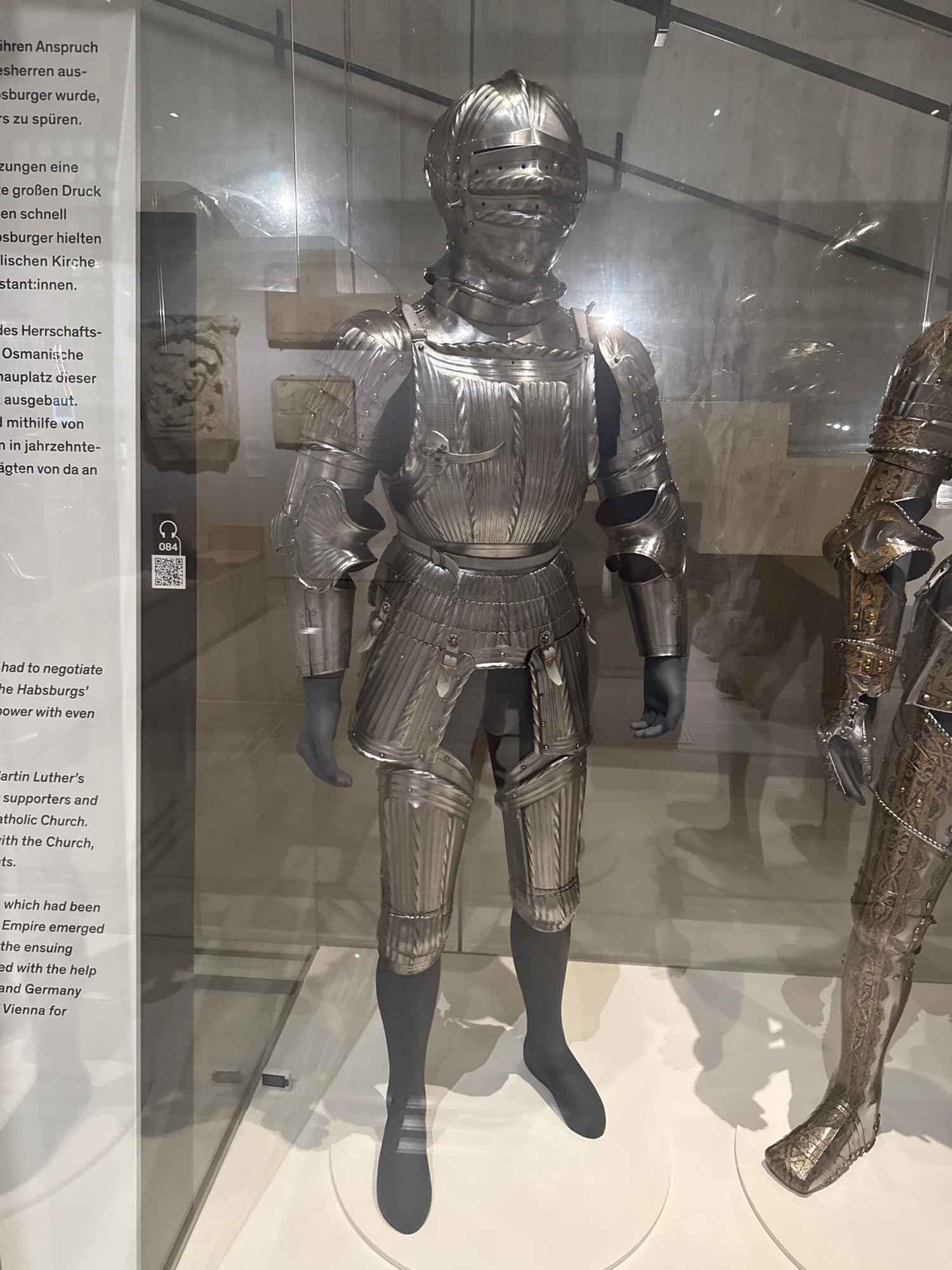
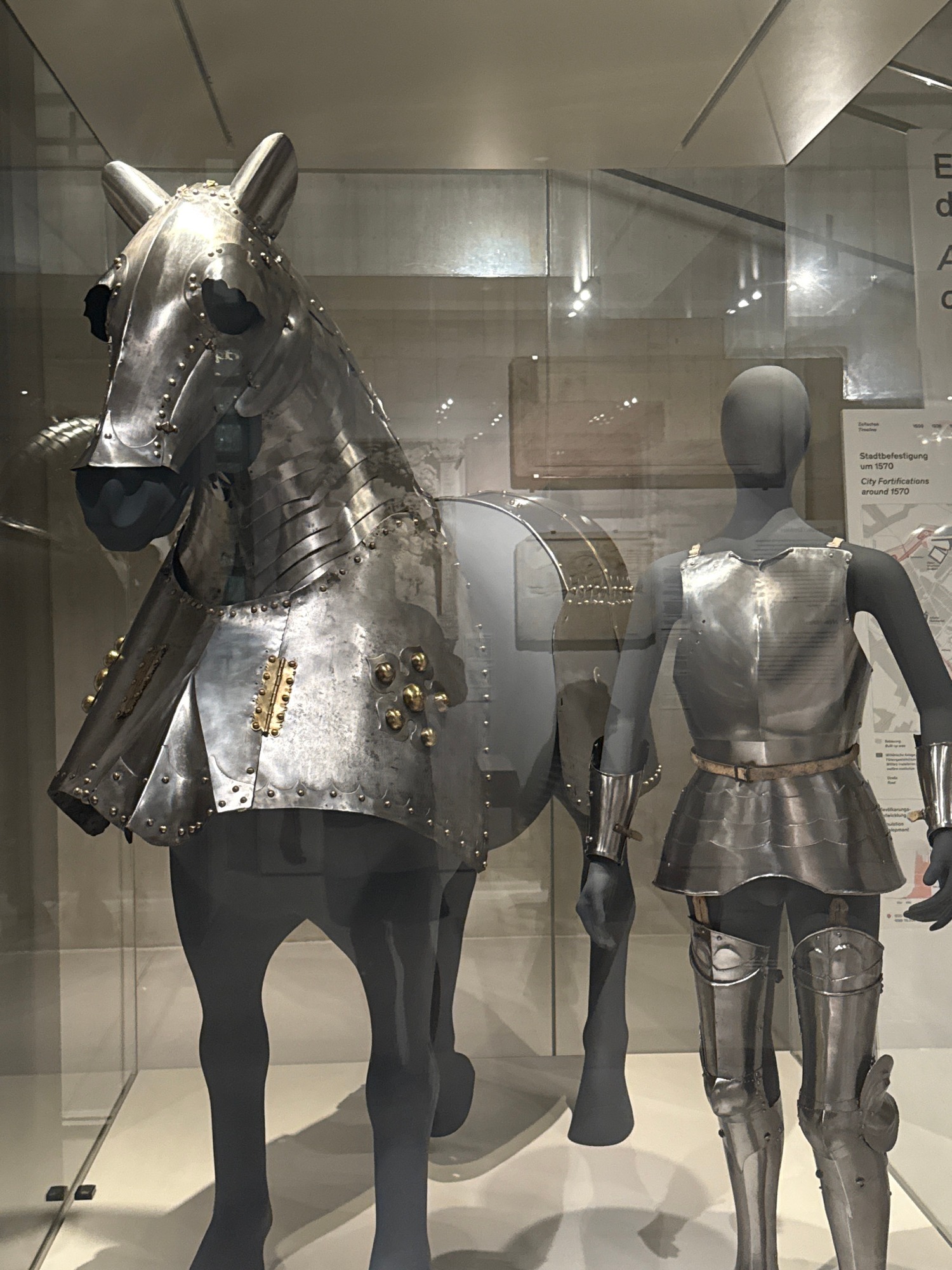
This media file shows a display case within a museum, likely in Vienna, Austria. The primary subject is a full suit of antique metal armor, presented on a mannequin. The armor is highly detailed, showcasing intricate craftsmanship on the chest plate, helmet, and limb coverings. The setting appears to be a modern exhibition space with glass barriers and white walls, featuring informational plaques.
One plaque, partially visible and rotated, is in German and English, with the German title "Sultan Süley vor Wien" and the English title "Sultan Sule Vienna's Ga". This suggests the display relates to a historical event involving Sultan Suleiman the Magnificent and his siege of Vienna. The text mentions the year 1529, the conflict between the Ottoman Empire and the Habsburgs, and the Ottoman army's attempt to conquer Hungary and Vienna. Another smaller plaque, also rotated, displays "Ein Verteidiger Wiens" and "A Defender of Vienna", indicating a focus on the defenders of the city during this period.
The lighting in the display case creates reflections on the glass, and shadows of the armor are cast onto the white background. The overall atmosphere is educational and historical, aiming to inform visitors about a significant military confrontation in Vienna's past. The presence of multiple languages on the plaques suggests an international audience.
Vienna, Austria · Jun 25, 2026, 3:19 PM · 10.4k attention
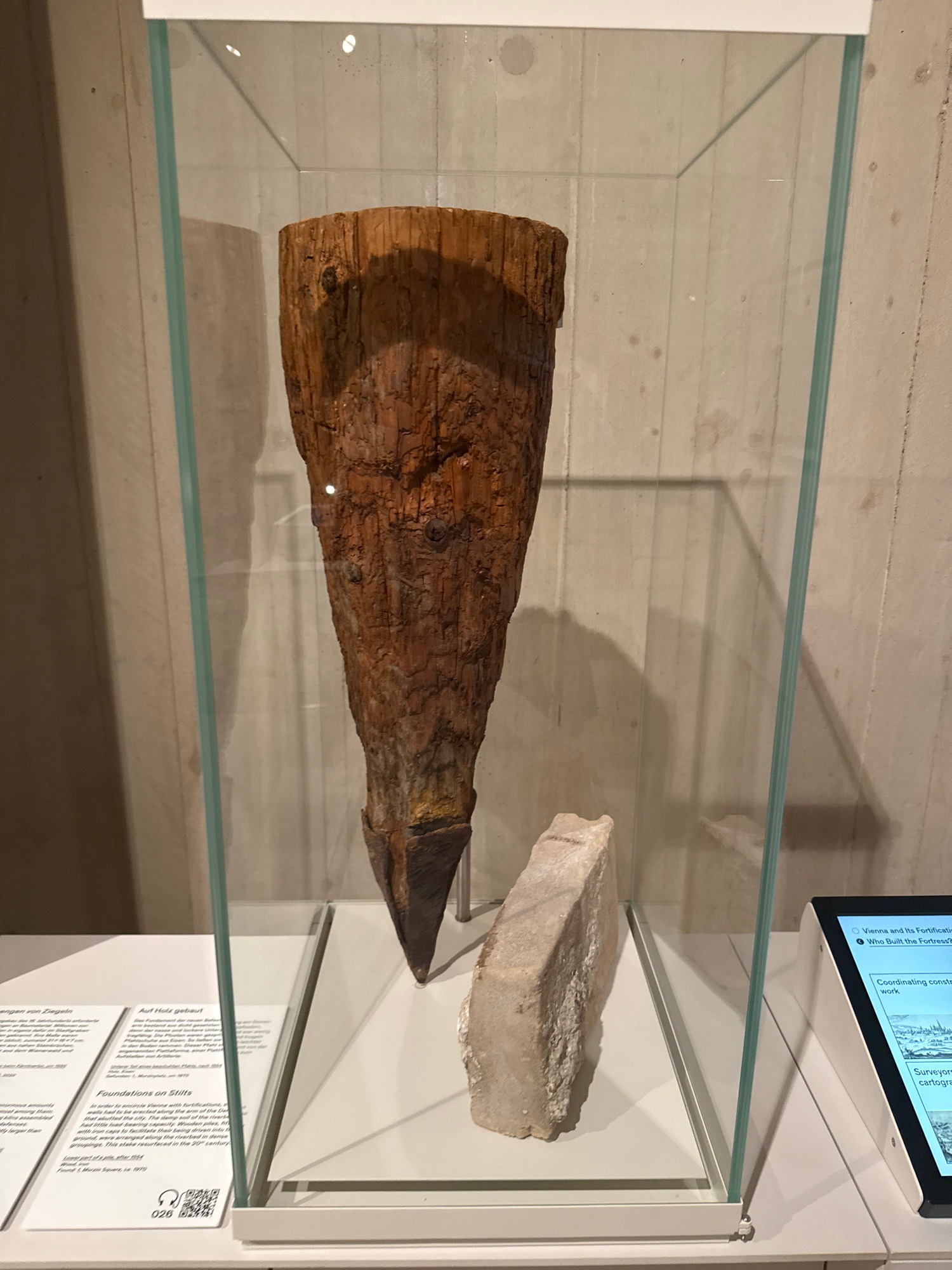
The image shows a museum exhibit case containing two artifacts. In the center, a large, sharpened wooden stake is displayed vertically. It has a pointed tip and a rough, weathered texture. To its right and slightly in front, a rectangular block of rough, light-colored stone is visible. The artifacts are placed on a white platform within a glass display case. Behind the case, a concrete wall with vertical striations serves as the backdrop. To the right of the case, a digital display screen is partially visible, showing text related to "Vienna and Its Fortifications" and "Who Built the Fortress?". A small white label with text and a QR code is located to the left of the display case, with a portion of the text reading "Foundations on Stilts". The overall environment appears to be an indoor museum setting.
Vienna, Austria · Jun 25, 2026, 3:18 PM · 10.4k attention
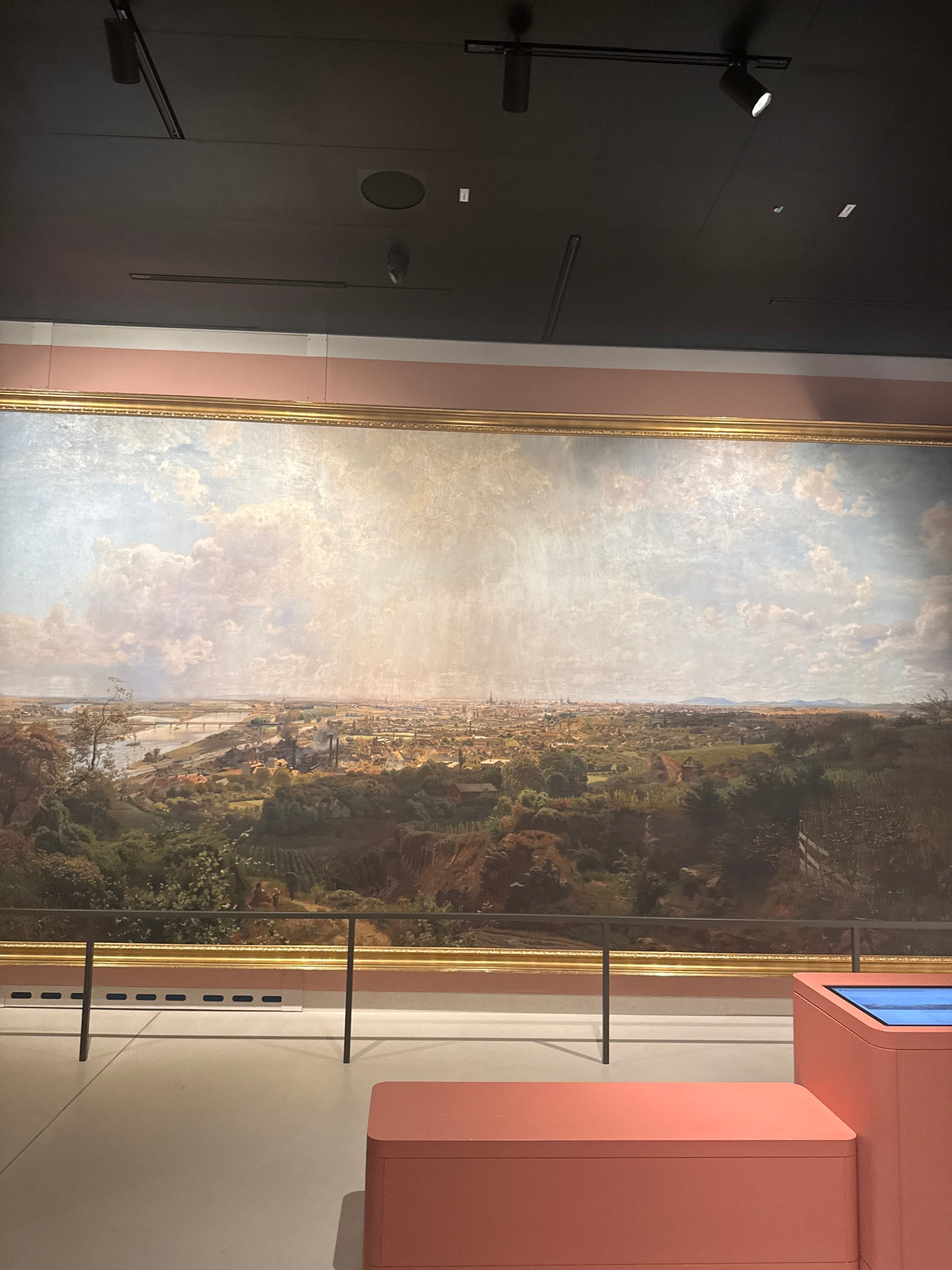
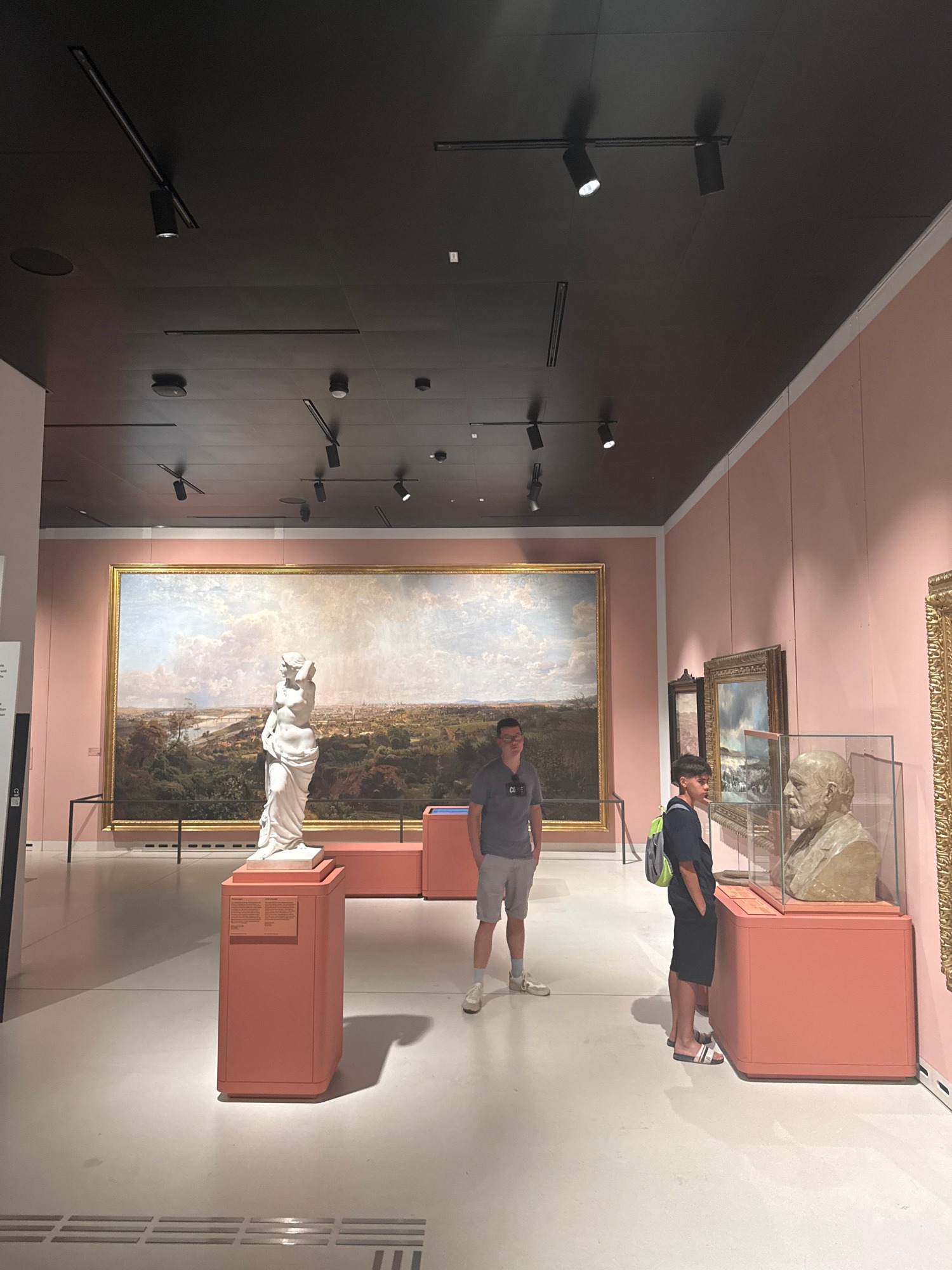
This is a vertically oriented photograph of a large, ornate painting displayed in a museum or gallery setting. The painting depicts a sweeping panoramic landscape, divided roughly into two sections. The left side is dominated by a vast, cloudy sky, with soft white and grey clouds against a pale blue background. The right side features a detailed depiction of a city and its surrounding countryside. Buildings with red roofs are clustered together, interspersed with greenery and trees. A body of water, possibly a river, flows through the scene, with bridges and industrial elements visible. The landscape appears to be rolling hills, with lush vegetation.
The painting is framed by a wide, golden, ornate frame, suggesting its historical significance or value. To the left of the painting, a dark, modern wall is visible. Several track lights are mounted on this wall, illuminating the artwork. A small, dark, circular object, possibly a speaker or camera, is also present on this wall, along with some small white labels.
To the right of the painting, a contemporary display element in a soft peach color is visible, with a screen at the top. Below this display, two thin black horizontal shelves are mounted on the wall, extending towards the painting. The overall setting appears to be a well-lit indoor exhibition space, designed to showcase the artwork effectively. The time of day is indeterminate from the painting, but the lighting in the room suggests it is an operational exhibition space. There is no visible text that is clearly legible and identifiable as a title or description within the frame of the painting itself.
Vienna, Austria · Jun 25, 2026, 3:03 PM · 10.3k attention
This is a vertical, medium shot of a marble bust of a person, depicted from the chest up. The bust is placed on a white rectangular pedestal, which is situated against a plain gray background. The sculpture is oriented sideways, with the face of the bust facing left. The marble has a yellowish-brown hue and shows signs of age and wear, with visible cracks and imperfections.
The face of the bust is stylized and somewhat abstract. The forehead is deeply lined, suggesting age or a particular artistic style. The eyes are large and round, with carved pupils. The nose is broad and flattened, and the mouth is open in what appears to be a grimace or a smile, revealing carved teeth. The ears are also visible, with a somewhat exaggerated shape. The back of the head and neck are also visible, with more carved lines.
The pedestal is clean and modern, providing a stark contrast to the aged texture of the marble sculpture. A thin black metal rod supports the bust, barely visible behind it. The lighting creates strong shadows, particularly on the pedestal and behind the bust, indicating a light source from the right.
The setting appears to be a museum or gallery, given the neutral background and the display on a pedestal. The overall mood of the sculpture is somewhat unsettling or grotesque, due to the exaggerated features and the expression on the face. There is no visible text in the image. The context of Vienna, Austria, does not offer any immediate visual cues within the image itself.
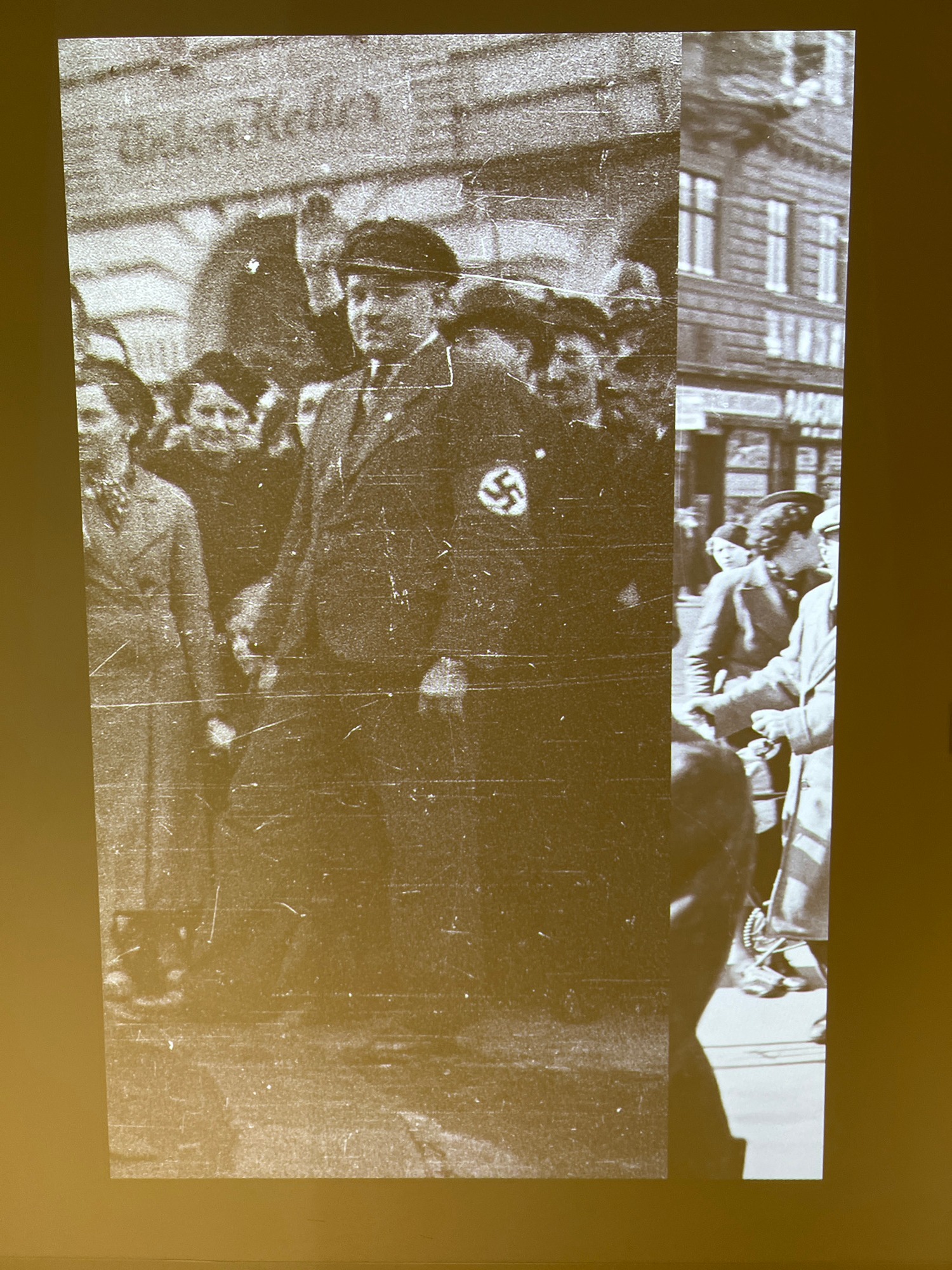
The image is a black and white photograph, projected onto a screen, showing a scene with multiple individuals. The top portion of the image depicts the facade of a building with visible windows and architectural details. Below this, a second image is visible, seemingly a close-up of a person wearing a uniform with a swastika emblem on the chest. The person appears to be kneeling or bending over. The overall image quality is degraded with visible scratches and dust, suggesting it is an older photograph or a copy of one. The context provided indicates the location is Vienna, Austria, and the swastika emblem points to a historical period related to Nazi Germany. The image might be part of a presentation or historical archive being displayed. No specific time of day, weather, or emotional cues are discernible due to the image quality and the nature of the projected scene. There is no visible text in the photograph itself.
Vienna, Austria · Jun 25, 2026, 3:45 PM · 9.5k attention
This media file shows a display case within a museum, likely in Vienna, Austria. The primary subject is a full suit of antique metal armor, presented on a mannequin. The armor is highly detailed, showcasing intricate craftsmanship on the chest plate, helmet, and limb coverings. The setting appears to be a modern exhibition space with glass barriers and white walls, featuring informational plaques.
One plaque, partially visible and rotated, is in German and English, with the German title "Sultan Süley vor Wien" and the English title "Sultan Sule Vienna's Ga". This suggests the display relates to a historical event involving Sultan Suleiman the Magnificent and his siege of Vienna. The text mentions the year 1529, the conflict between the Ottoman Empire and the Habsburgs, and the Ottoman army's attempt to conquer Hungary and Vienna. Another smaller plaque, also rotated, displays "Ein Verteidiger Wiens" and "A Defender of Vienna", indicating a focus on the defenders of the city during this period.
The lighting in the display case creates reflections on the glass, and shadows of the armor are cast onto the white background. The overall atmosphere is educational and historical, aiming to inform visitors about a significant military confrontation in Vienna's past. The presence of multiple languages on the plaques suggests an international audience.
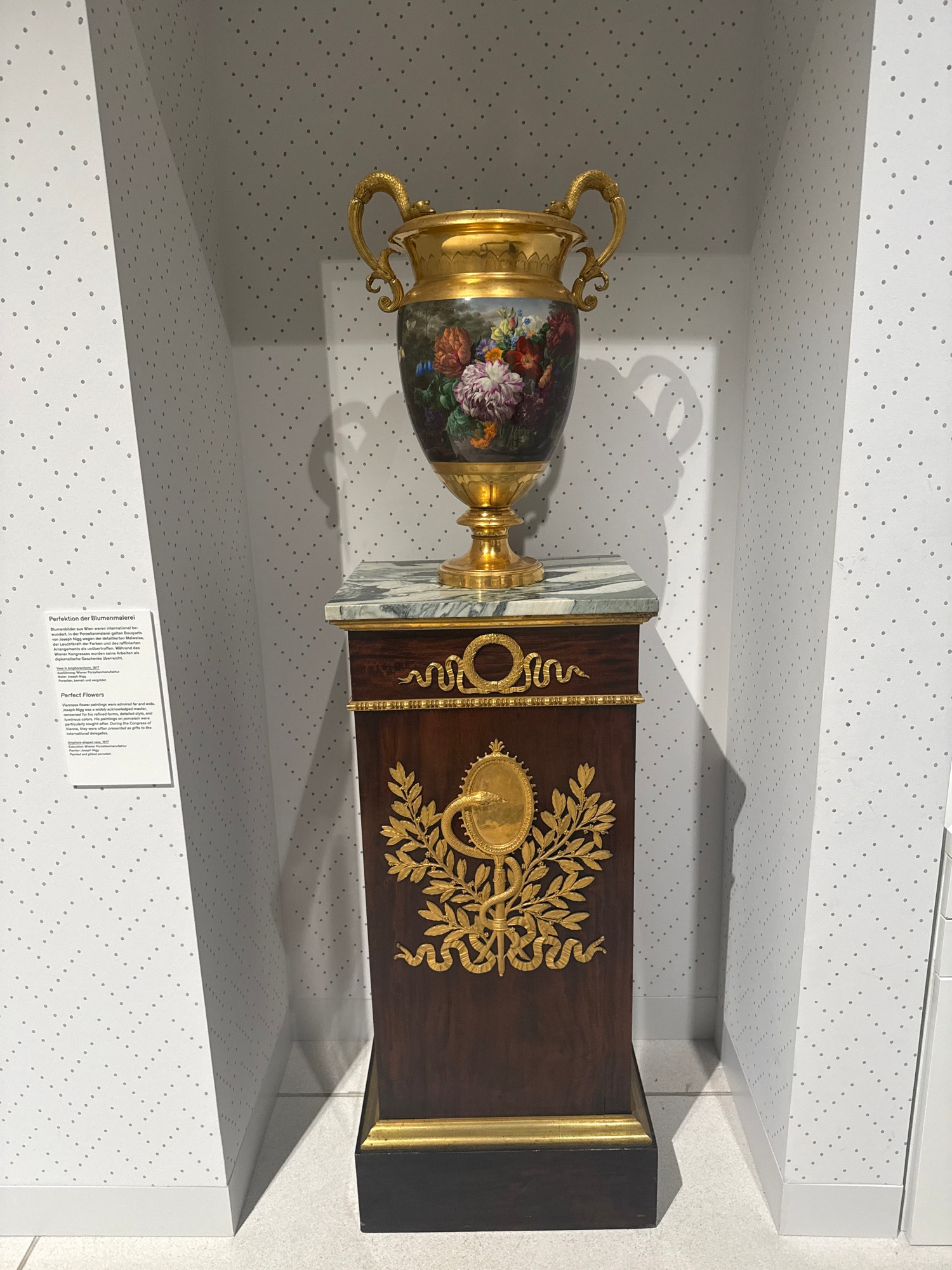
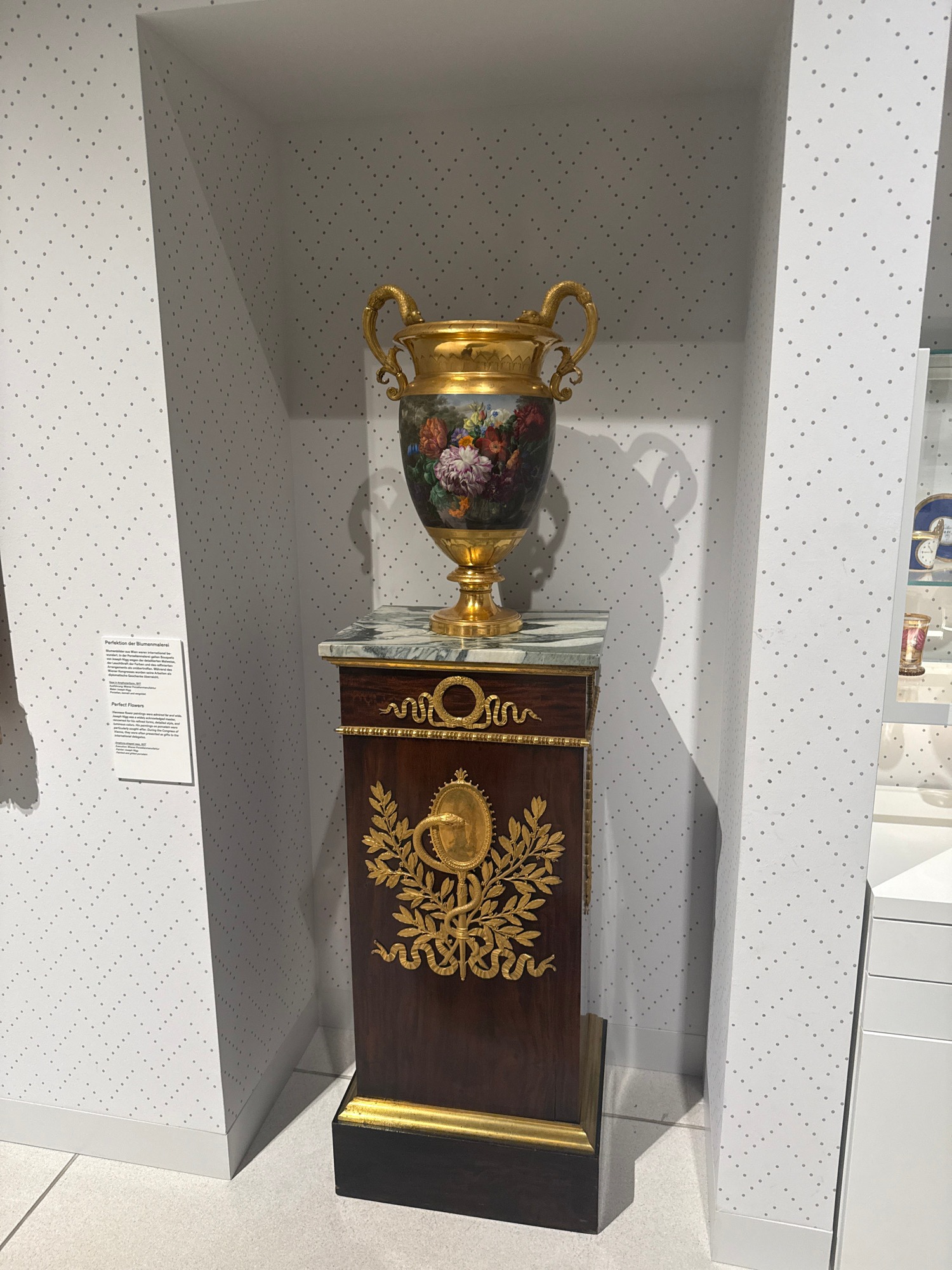
This media file shows an ornate, gilded vase resting on a polished wooden pedestal. The vase is decorated with a vibrant floral motif, featuring an arrangement of various flowers in rich colors. The pedestal itself is adorned with intricate gold detailing, including a coiled serpent and a laurel branch surrounding an oval medallion. The objects are displayed in a museum-like setting, with a white, polka-dotted background suggesting a modern exhibition space. A small informational placard is visible at the base of the pedestal, providing details in both German and English. The text on the placard, "Perfektion der Blumenmalerei" and "Perfect Flowers," indicates that the vase is a piece of art renowned for its floral depiction. The lighting suggests an indoor environment, likely during the day. The overall impression is one of elegance and historical artistry.
Vienna, Austria · Jun 25, 2026, 2:59 PM · 9.5k attention
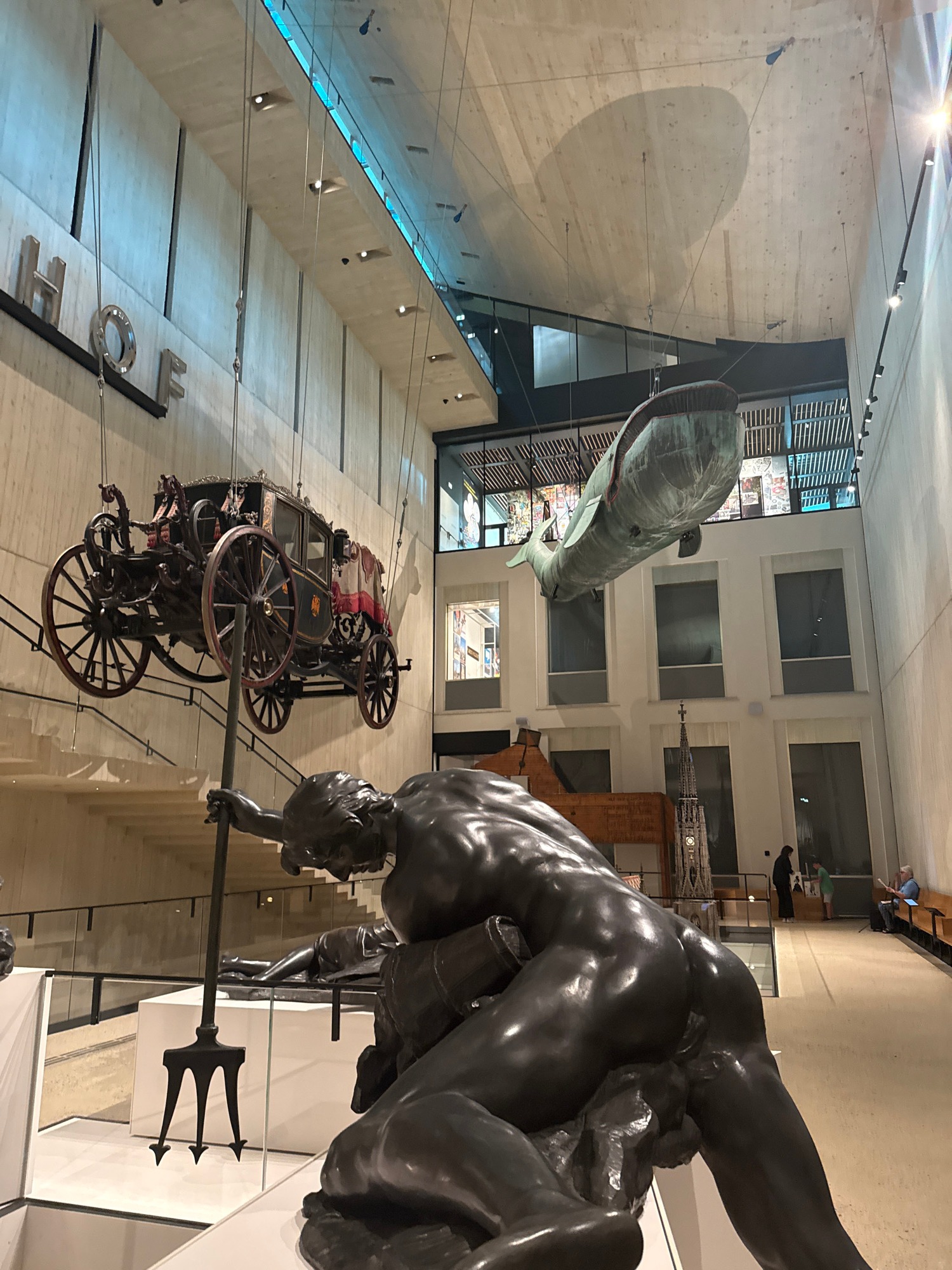
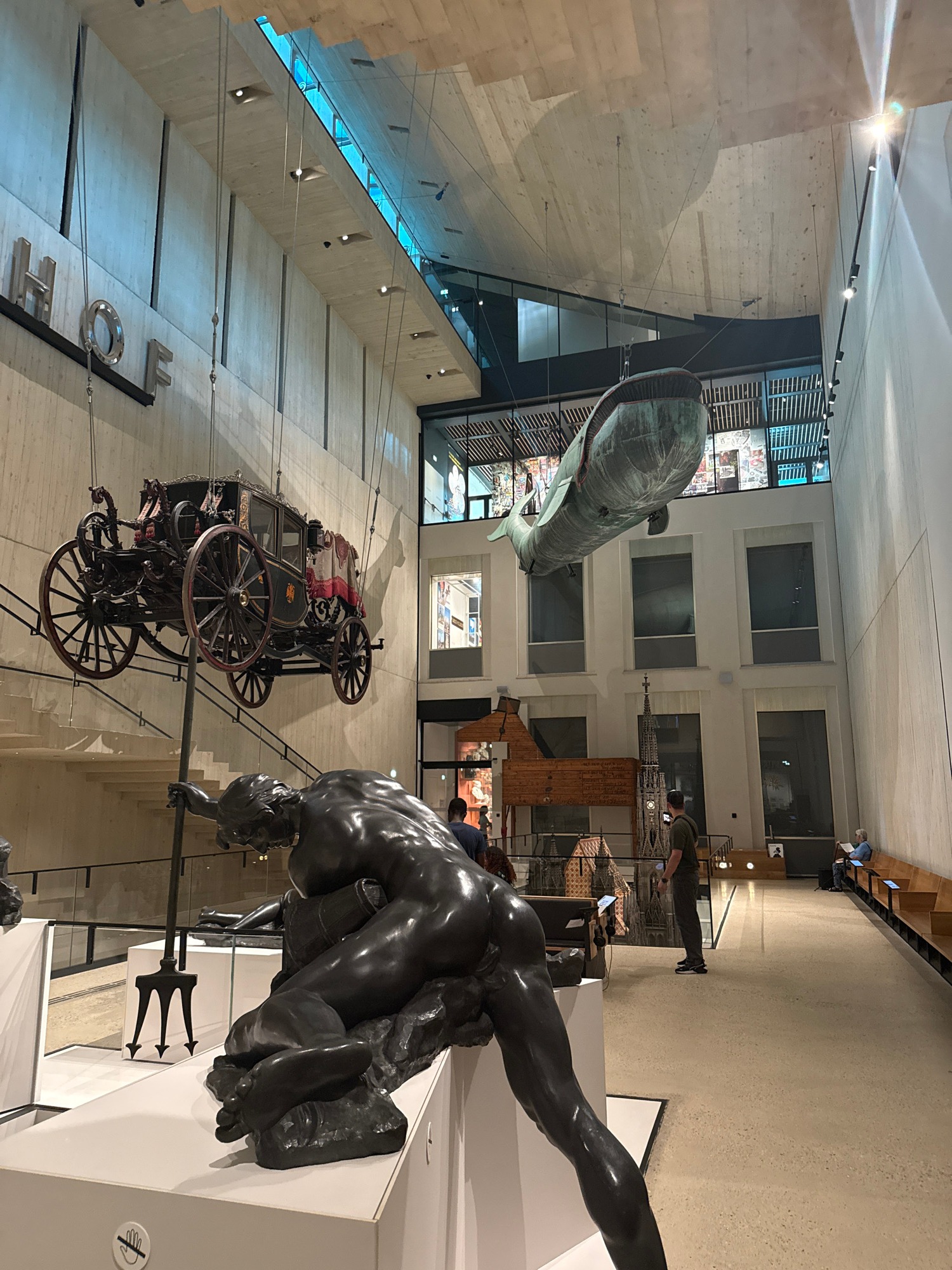
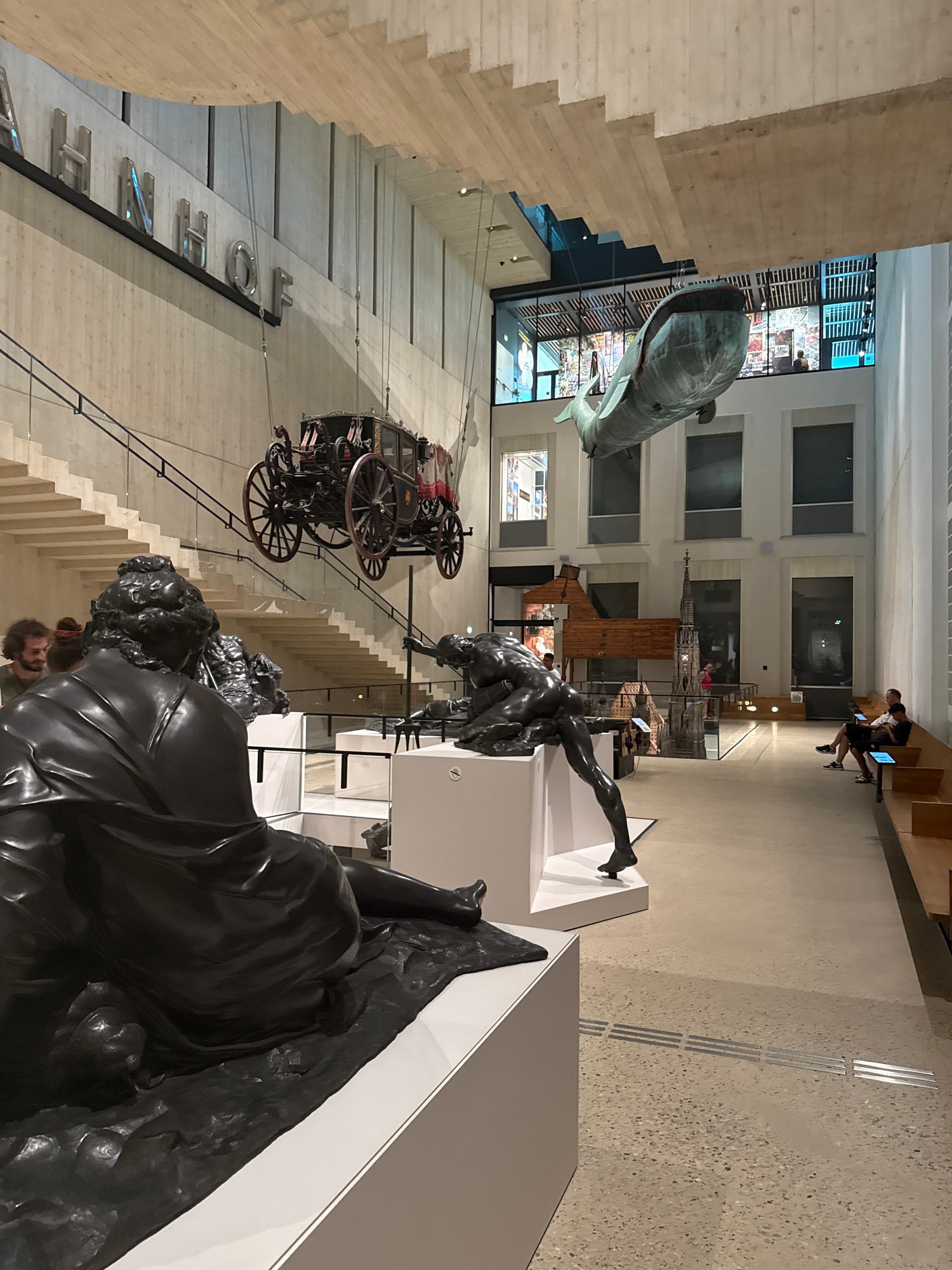
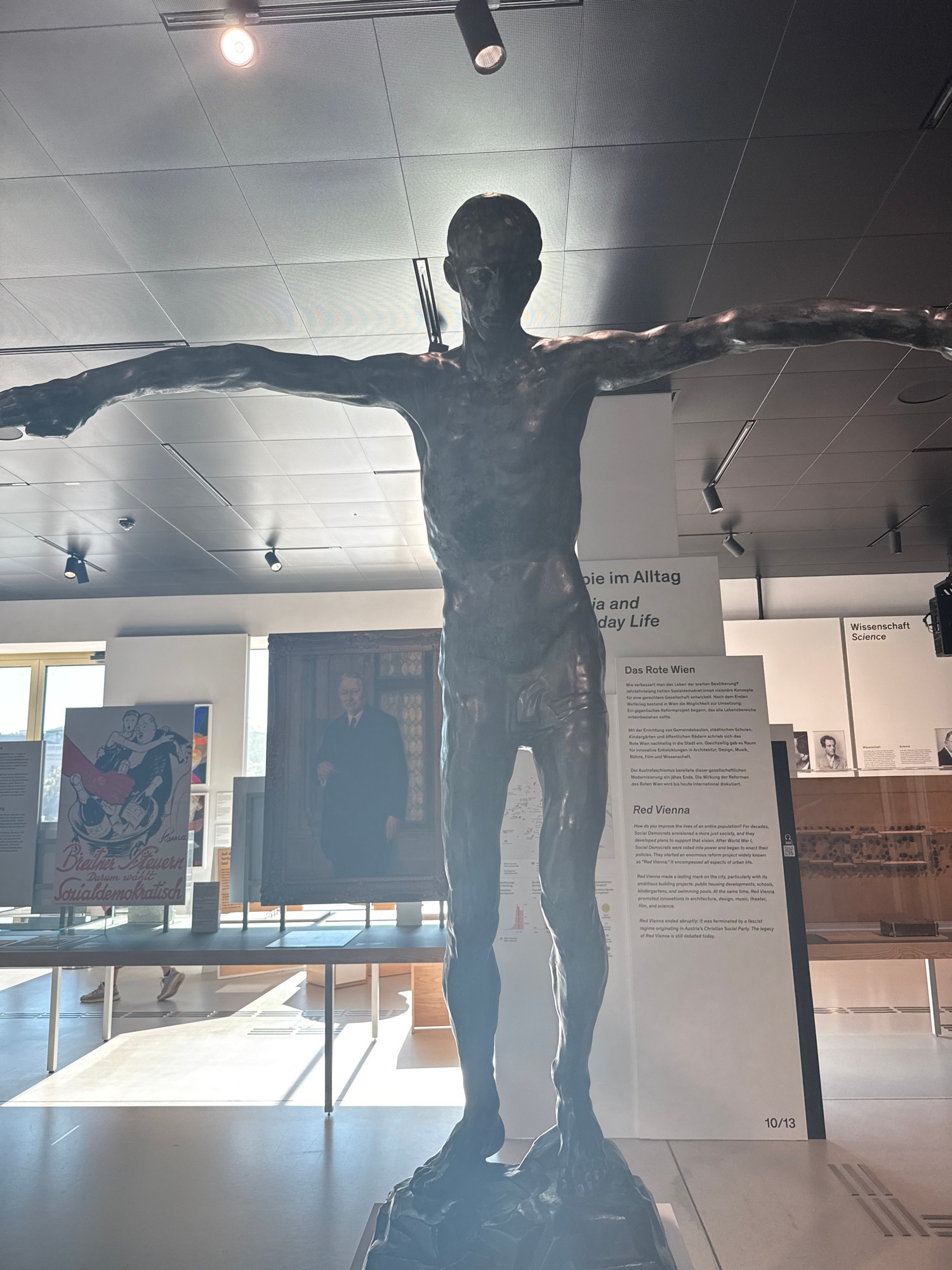
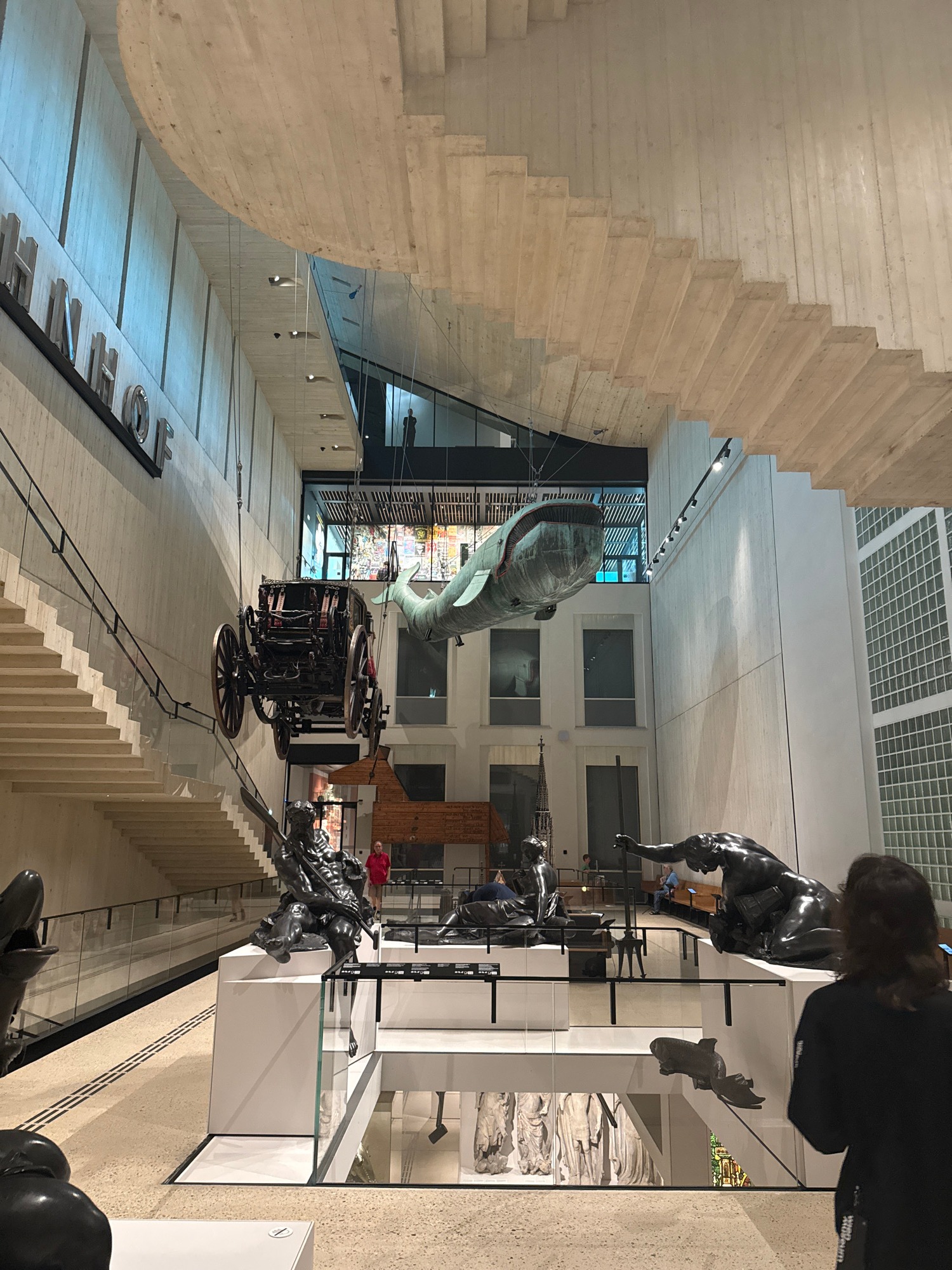
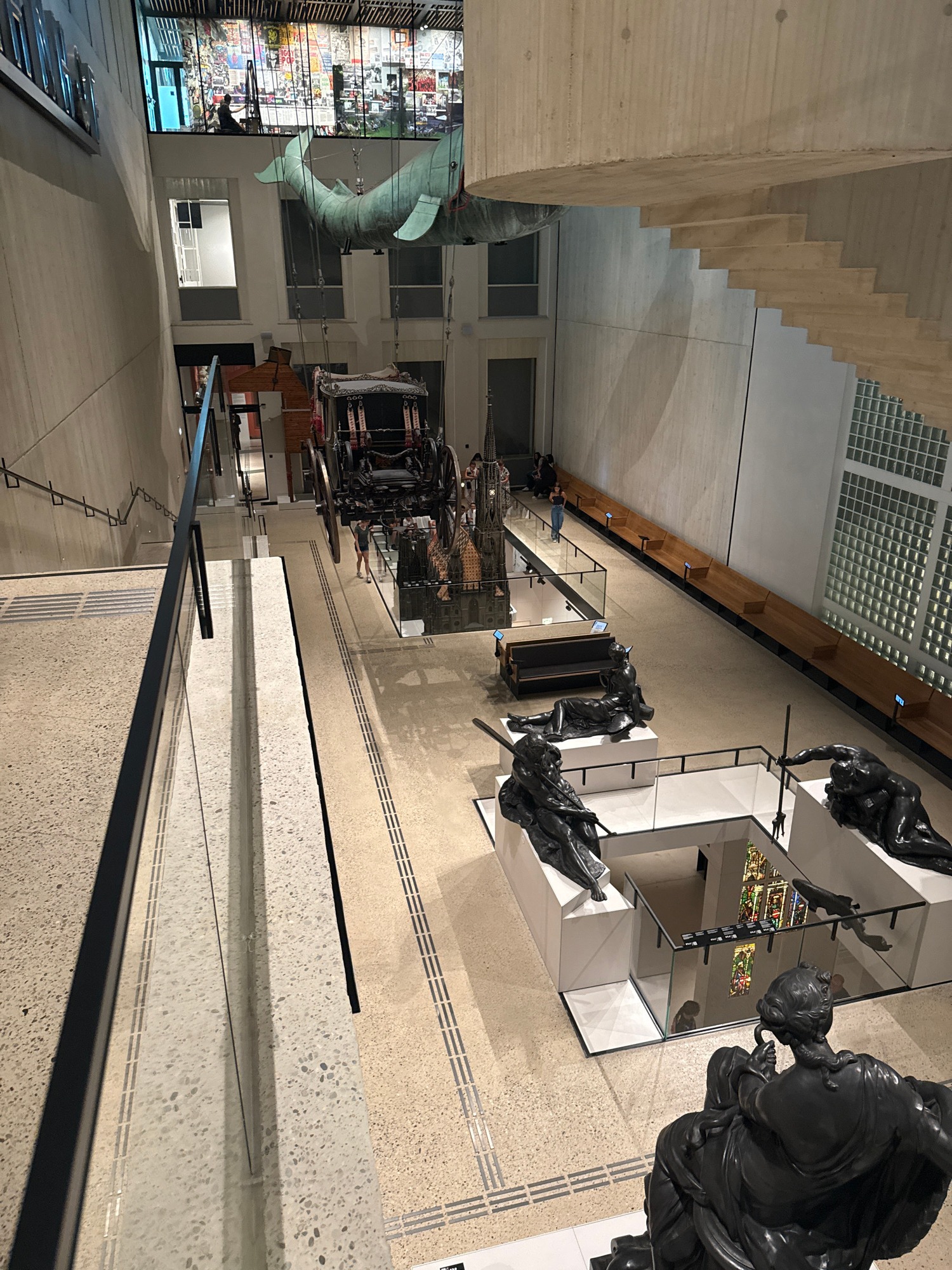
This media file shows a large, open atrium in a museum setting, possibly in Vienna, Austria. The perspective is from a high angle, looking downwards. Suspended from the ceiling by wires are several large exhibits. On the left, a full-sized whale model hangs diagonally, its tail pointing upwards. In the center, a detailed, ornate horse-drawn carriage, likely a historical exhibit, is also suspended. On the right, a large, dark bronze sculpture of a muscular human figure, possibly a mythological character like Neptune or a wrestler, is prominently displayed. This figure is seen from the chest up, holding a trident. The background reveals modern architecture with concrete walls, large windows, and metal beams. In the distance, glimpses of other exhibits and museum visitors can be seen. The lighting suggests it is daytime, with artificial lights also illuminating the space. The overall impression is of a grand, modern museum showcasing a diverse collection of large-scale art and artifacts. Visible text includes "HOPE" spelled out with metal letters on the wall in the lower left of the image.
Vienna, Austria · Jun 25, 2026, 3:25 PM · 9.3k attention
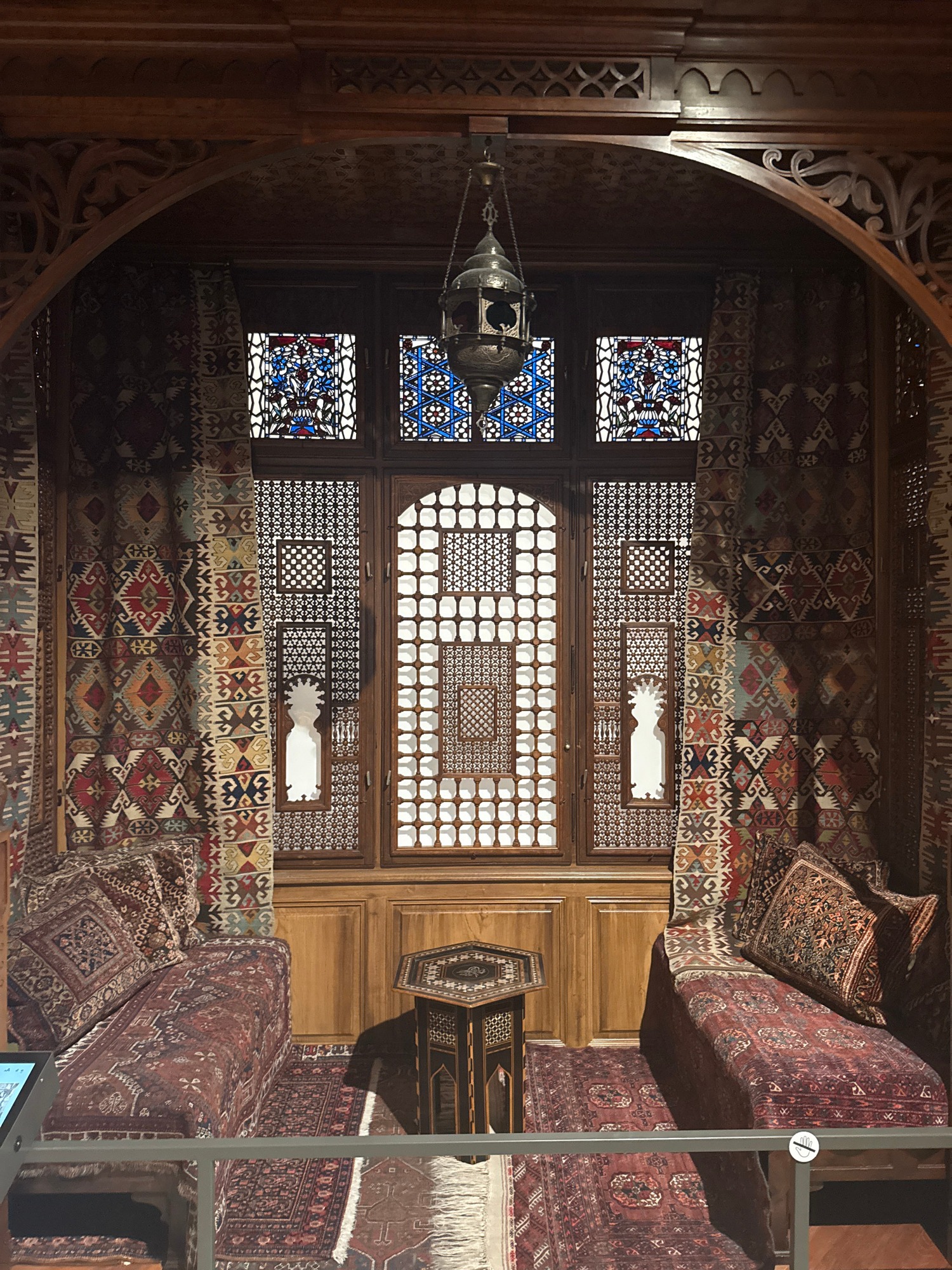
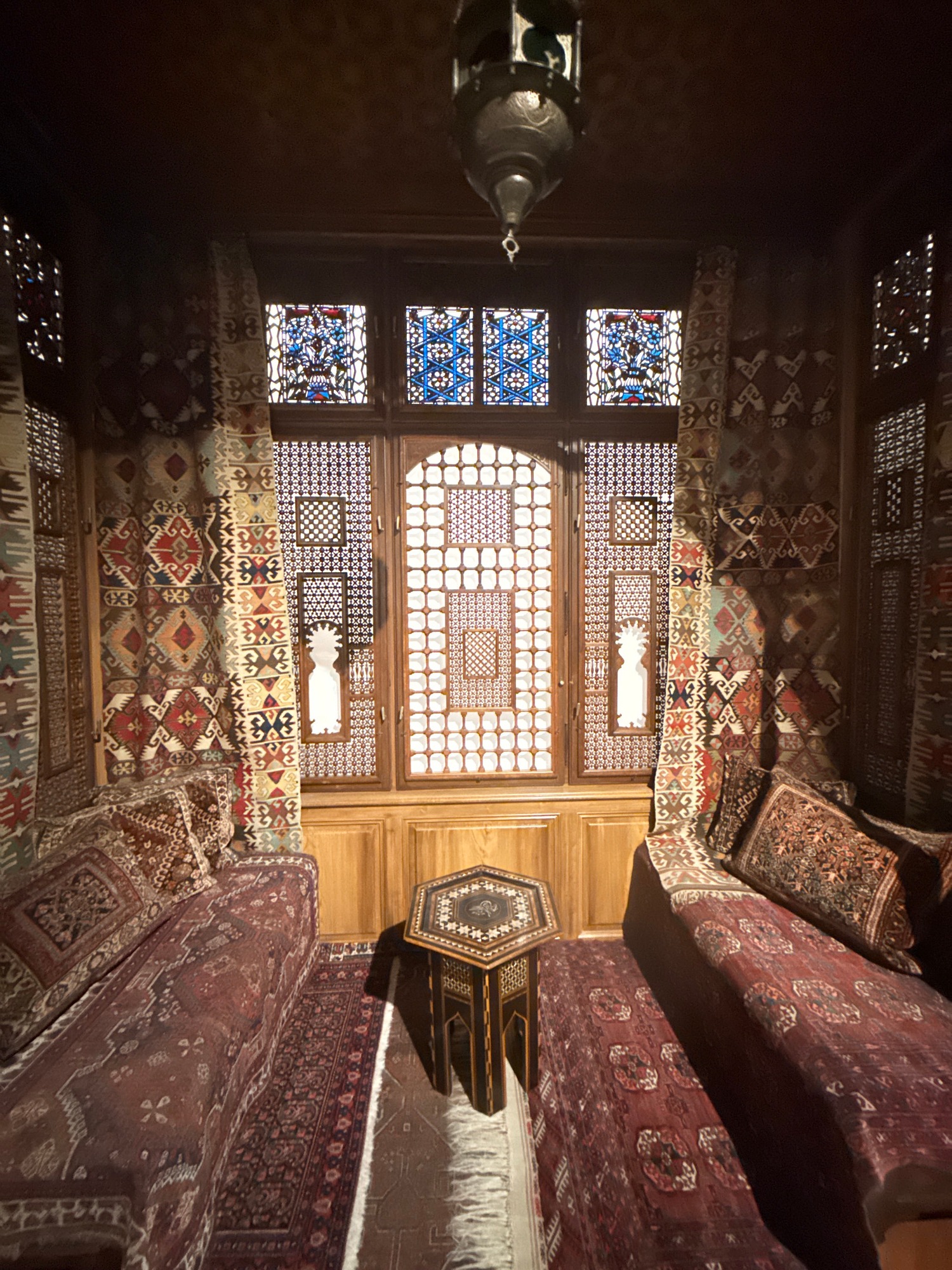
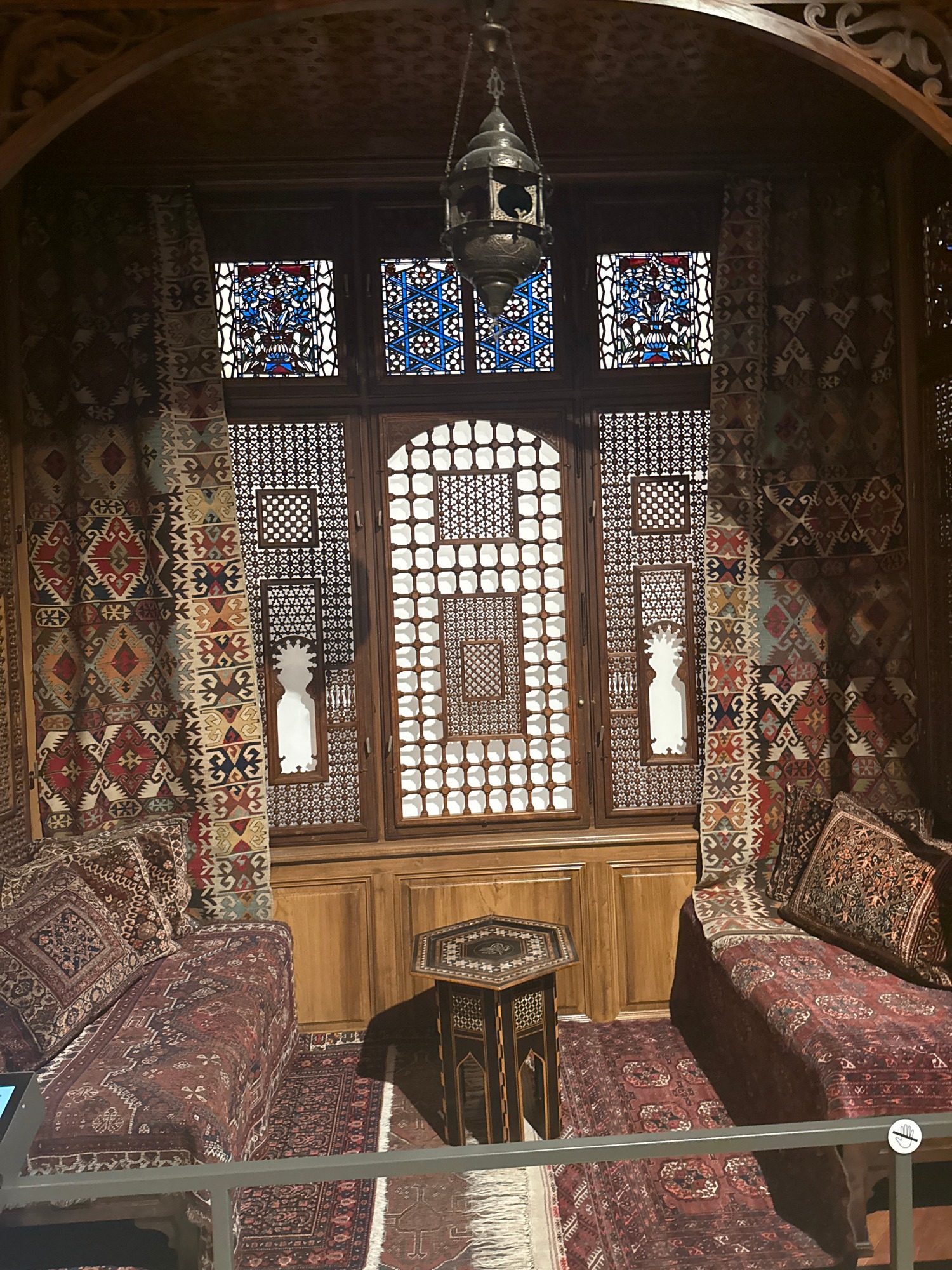
This image depicts an interior scene, likely a recreation of a traditional room, within the MAK (Museum of Applied Arts) in Vienna, Austria. The room is furnished with richly patterned carpets and textiles, featuring intricate geometric designs in warm, earthy tones. Two upholstered benches, also adorned with patterned fabrics, are positioned on either side of the space, providing seating. Between the benches, a small, octagonal table with inlaid decoration sits on the floor. Behind the benches, a large window dominates the background, divided into multiple panels. The upper panels of the window feature stained glass with blue and red geometric patterns, while the central and lower panels are made of intricately carved wooden lattice work. A decorative metal lantern hangs from the wooden ceiling, adding to the atmospheric lighting. The overall impression is one of opulent historical design and craftsmanship.
Vienna, Austria · Jun 25, 2026, 3:06 PM · 7.4k attention
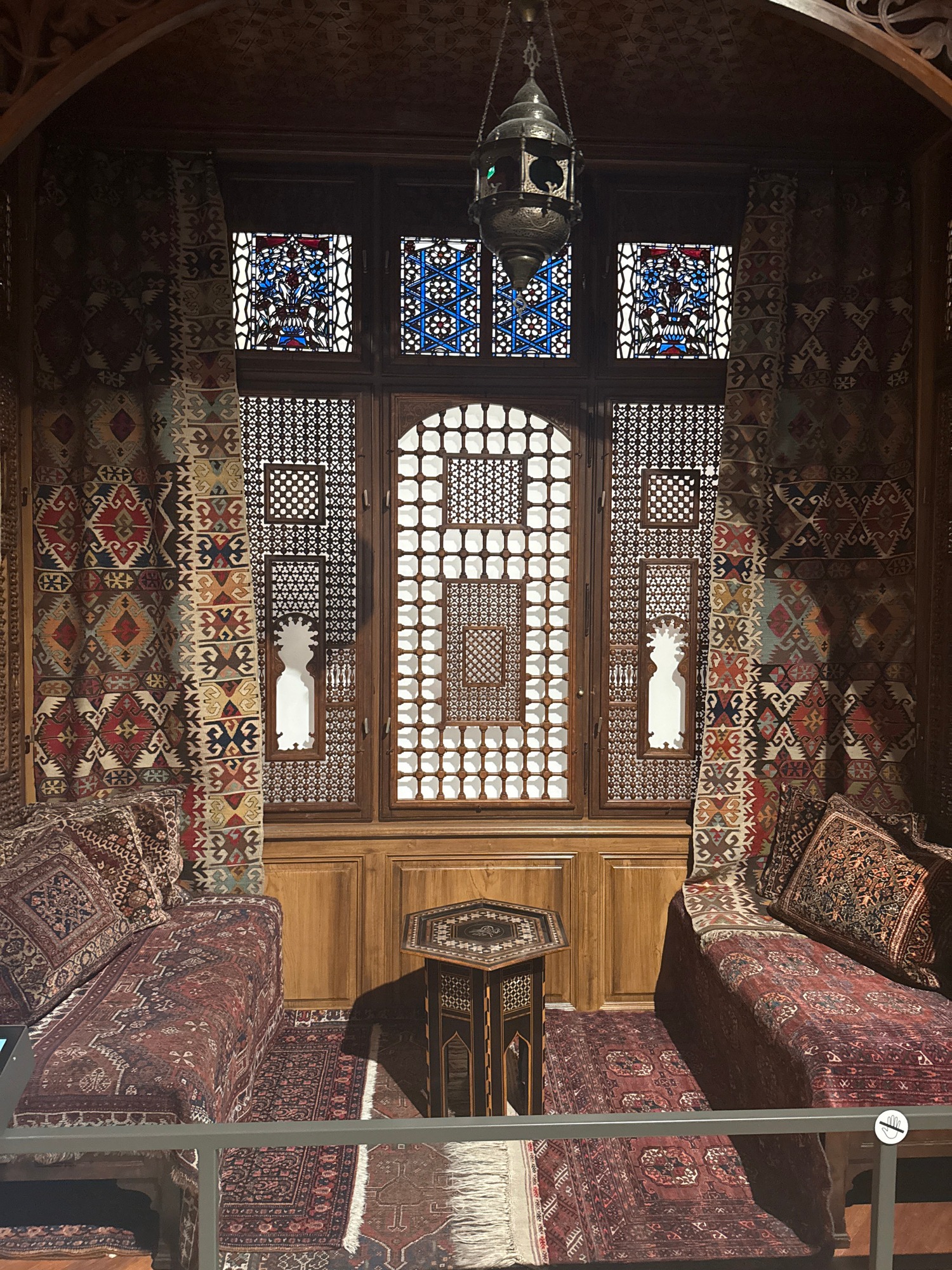
The image depicts an interior view of a room with traditional Middle Eastern or Central Asian decor, possibly part of a museum exhibit. The scene is richly adorned with patterned textiles, including several Persian-style rugs draped over seating and adorning the walls. The dominant colors are deep reds, browns, and intricate geometric patterns in various hues.
Several wooden lattice screens and stained-glass windows are visible, suggesting an architectural style with ornate detailing. One stained-glass panel features a complex blue and white geometric design, while another displays a more intricate, colorful pattern with red, blue, and white elements. Hanging from the ceiling is an ornate metal lantern, adding to the antique ambiance.
In the foreground and to the right, several cushions and seating areas covered in the patterned rugs are arranged. A wooden cabinet with inlaid geometric patterns is also present. The lighting appears to be artificial, casting shadows and highlighting the textures of the fabrics and woodwork.
The overall impression is one of opulence and cultural heritage, evoking a sense of historical display. There is no indication of people or any specific activity taking place. The location context of Vienna, Austria, suggests this is likely an exhibit within a museum or a preserved historical space. No visible text is present in the image.
Vienna, Austria · Jun 25, 2026, 3:07 PM · 5.9k attention
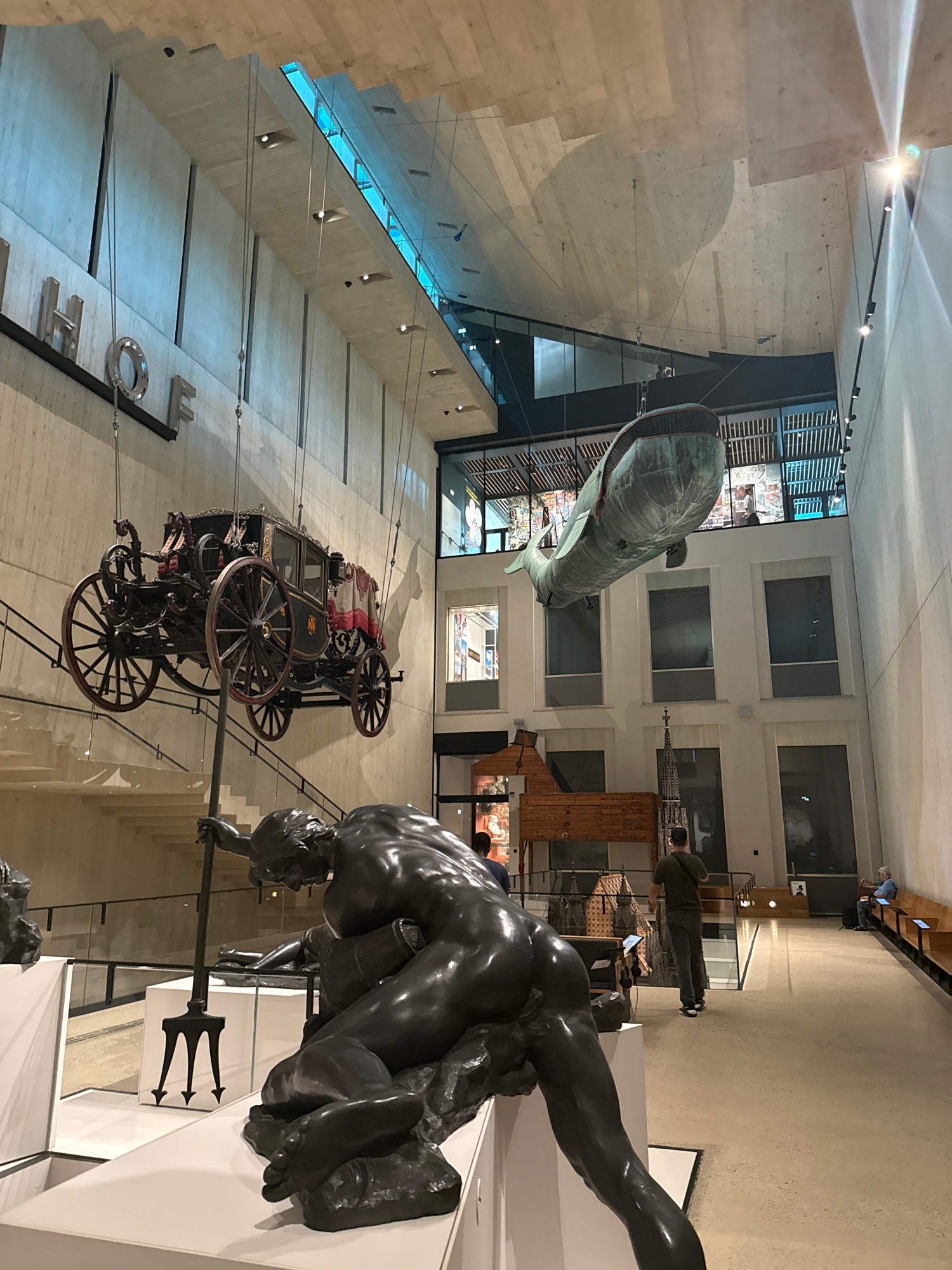
The image depicts the interior of the Kunsthistorisches Museum in Vienna, Austria. The scene is a vast hall with a high, angled ceiling made of concrete and wood. Large windows with a blue tint are visible along the upper wall.
Suspended from the ceiling are several large exhibits. In the upper left, the letters "H", "O", and "F" are visible, suggesting a potential signage or artwork. To the right of these letters, a historical carriage is suspended, appearing elaborate and ornate with large spoked wheels. Further to the right and higher up, a large, green, whale-like sculpture hangs, its tail pointing towards the right side of the frame.
In the foreground, a dark bronze sculpture of a muscular male figure is prominently displayed on a white pedestal. The figure appears to be in a dynamic pose, leaning forward, with a trident-like object to its left. Another sculpture of a similar style is partially visible behind it.
Further back in the hall, several people are visible. A man in a green t-shirt and dark pants stands near the center, looking at an exhibit. To the right, a woman sits on a long wooden bench, reading a book or document. Other individuals are seen in the background, suggesting visitors to the museum.
The environment is well-lit, with spotlights illuminating the exhibits. The floor is a polished concrete or terrazzo material. Architectural elements like columns, staircases, and a metal railing are also visible, contributing to the museum's grand and modern aesthetic. The overall impression is that of a large, contemporary museum space showcasing a diverse range of artifacts and artworks.
Vienna, Austria · Jun 25, 2026, 3:26 PM · 5.0k attention
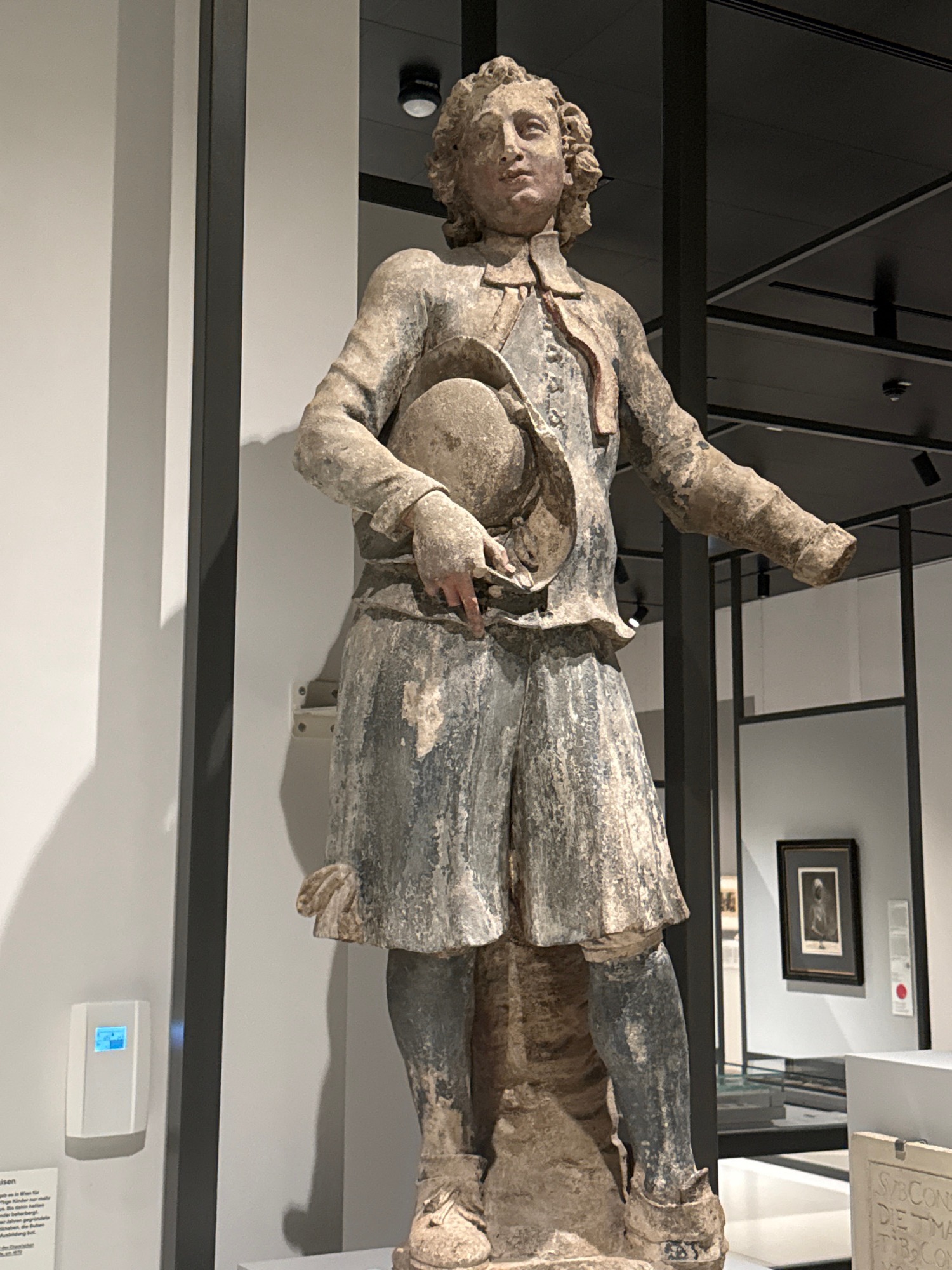
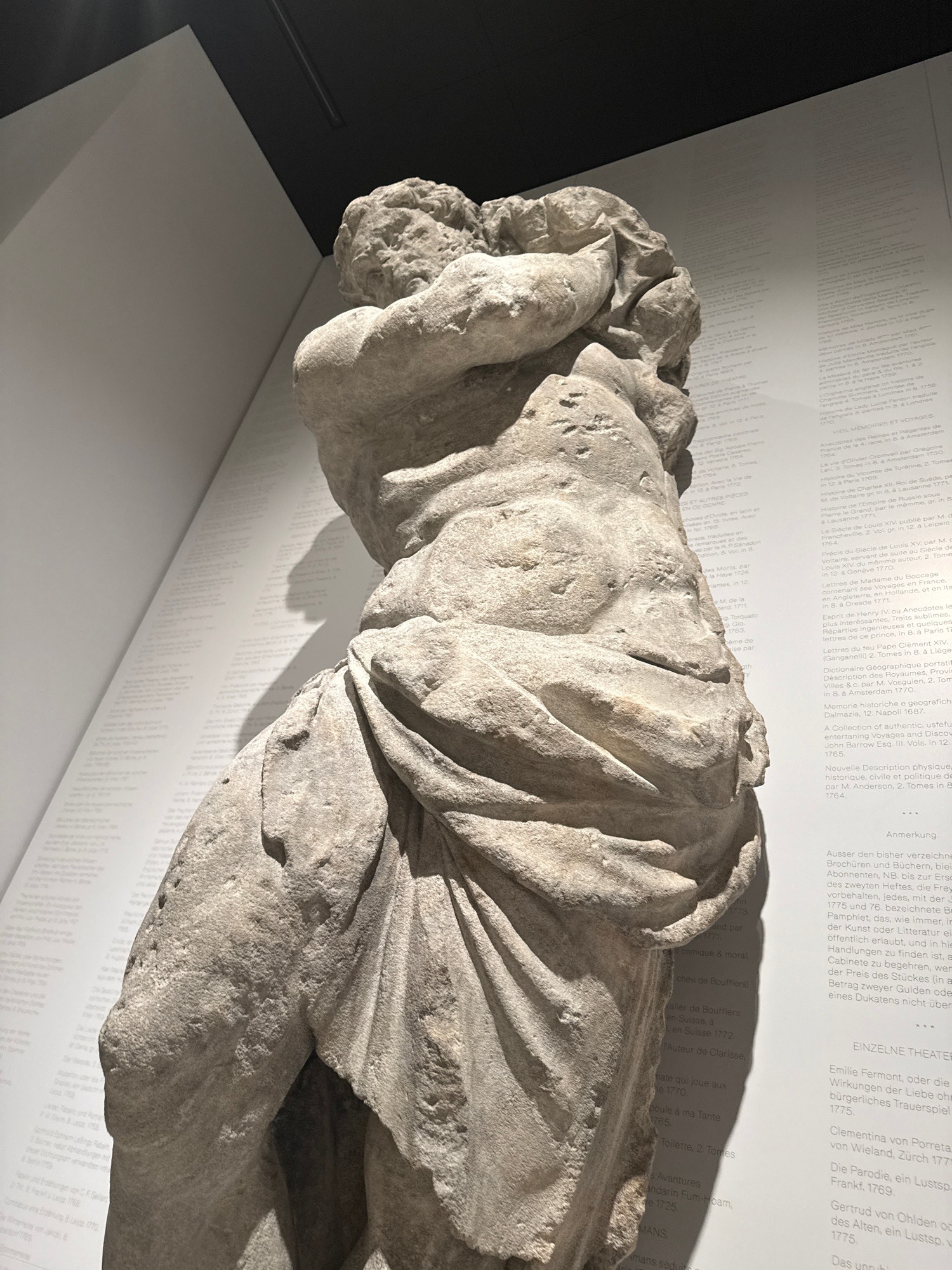
This is a photograph of a stone sculpture of a person, displayed in a museum setting. The sculpture is of a full-body figure, rendered in a weathered, antique style. The person appears to be dressed in historical clothing, with a long coat and a pleated skirt. The sculpture is positioned upright, but the photograph is taken from an angle that makes it appear to be lying on its side. The background suggests an indoor exhibition space, with dark metal shelving and white walls. In the background, a framed picture is visible on the wall, and what looks like a digital display or thermostat is mounted on the lower wall. The overall lighting is bright, indicating an artificial museum environment. The sculpture's features are somewhat eroded, giving it a sense of age and history. There is no discernible activity or event taking place, as the sculpture is a static display. The location context is Vienna, Austria. No visible text that can be read clearly.
Vienna, Austria · Jun 25, 2026, 3:13 PM · 4.6k attention
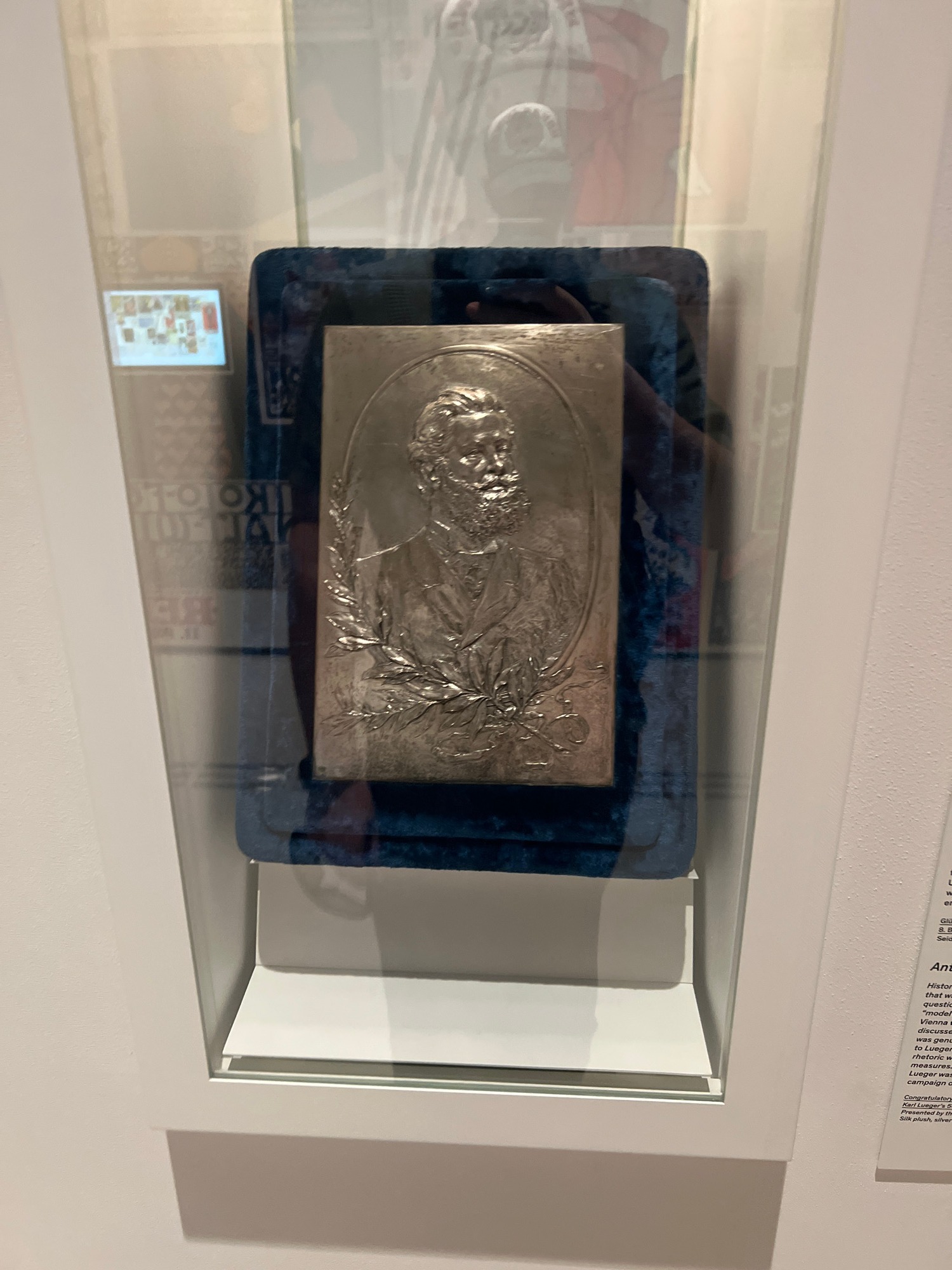
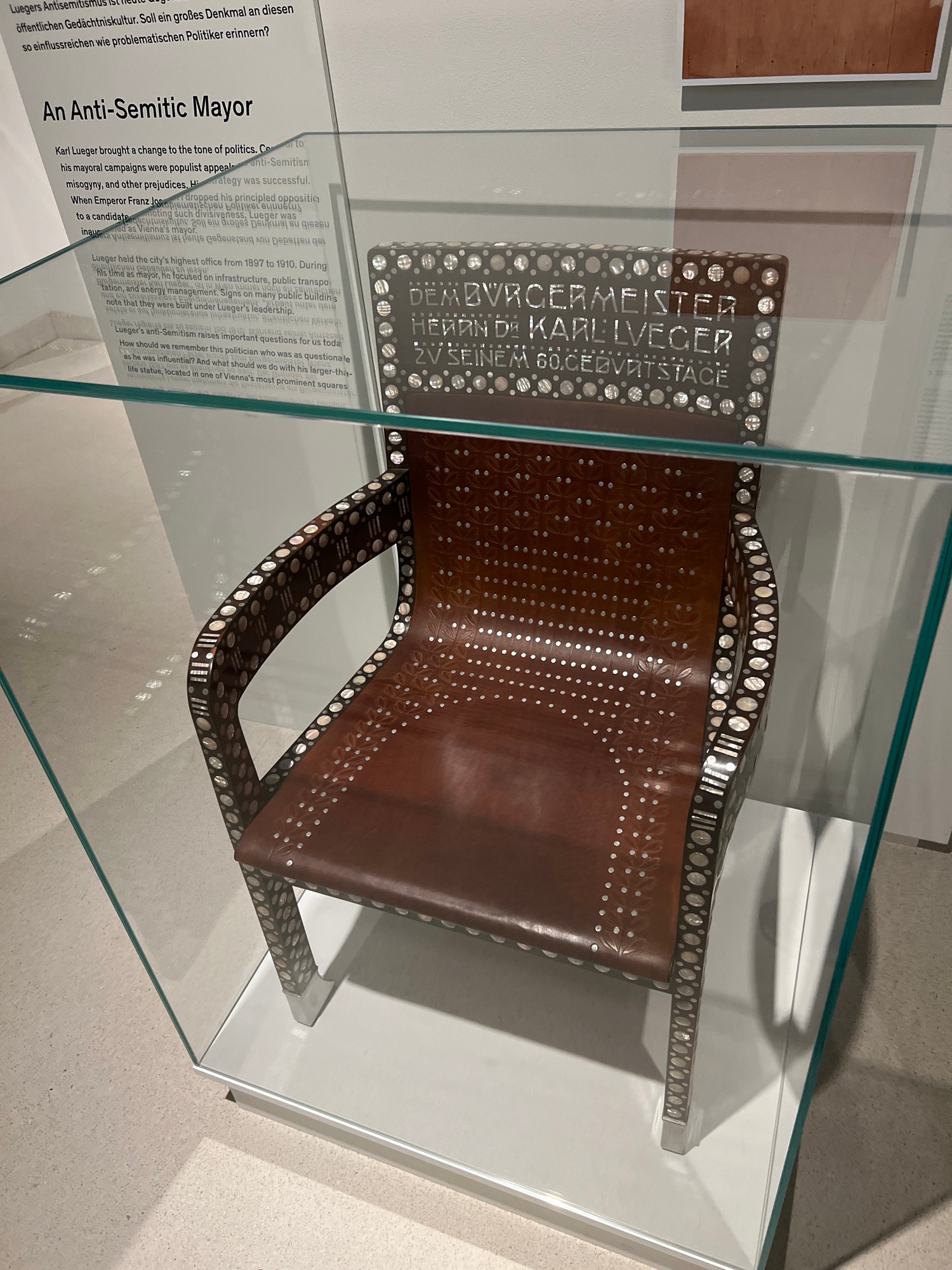
This is a close-up, slightly angled shot of a framed silver medal on display. The medal is oval-shaped and features a relief of a person's profile on the left, facing left, with intricate detailing of leaves and possibly floral elements on the right. The medal rests on a dark blue velvet cushion, which is set within a white frame. The frame appears to be part of a larger display case, as indicated by the reflection of a screen or poster on the glass in front of the medal. The background behind the medal is blurred, but hints of other displays and text can be seen, suggesting a museum or exhibition setting.
Visible text in the image includes snippets from exhibit descriptions, such as "History", "question", "model", "Vienna", "discuss", "was genc", "to Lueger", "rhetoric w", "measures.", "Lueger was", "campaign c", "Congratulator", "Karl Lueger's 5-", "Presented by the", and "Silk plush, silver". These fragments suggest the medal is related to Karl Lueger, a historical figure likely associated with Vienna, and that the display provides biographical or contextual information. The overall impression is one of a historical artifact presented for public viewing. The lighting appears to be artificial, typical of an indoor exhibition space.
Vienna, Austria · Jun 25, 2026, 3:49 PM · 4.2k attention
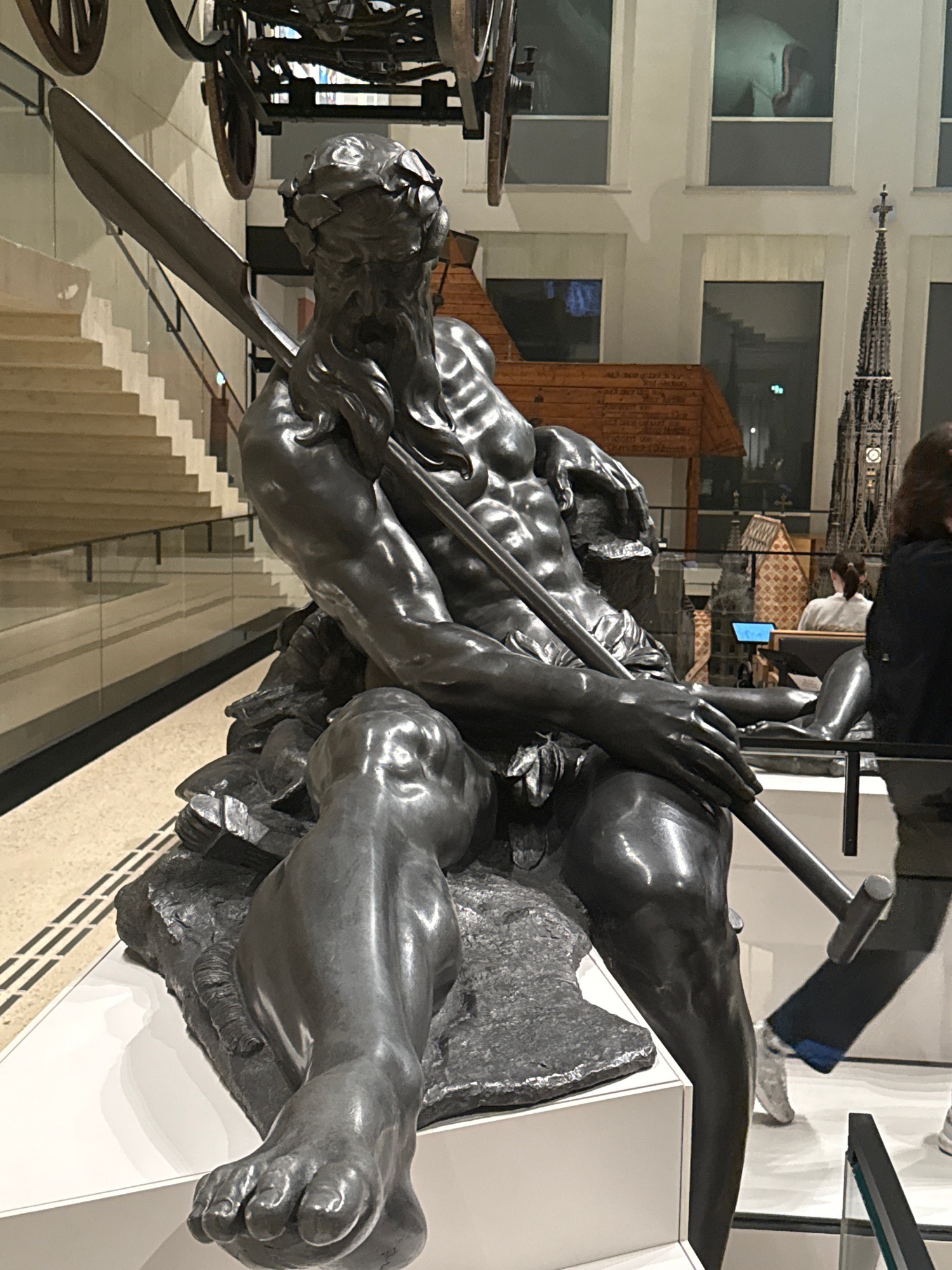
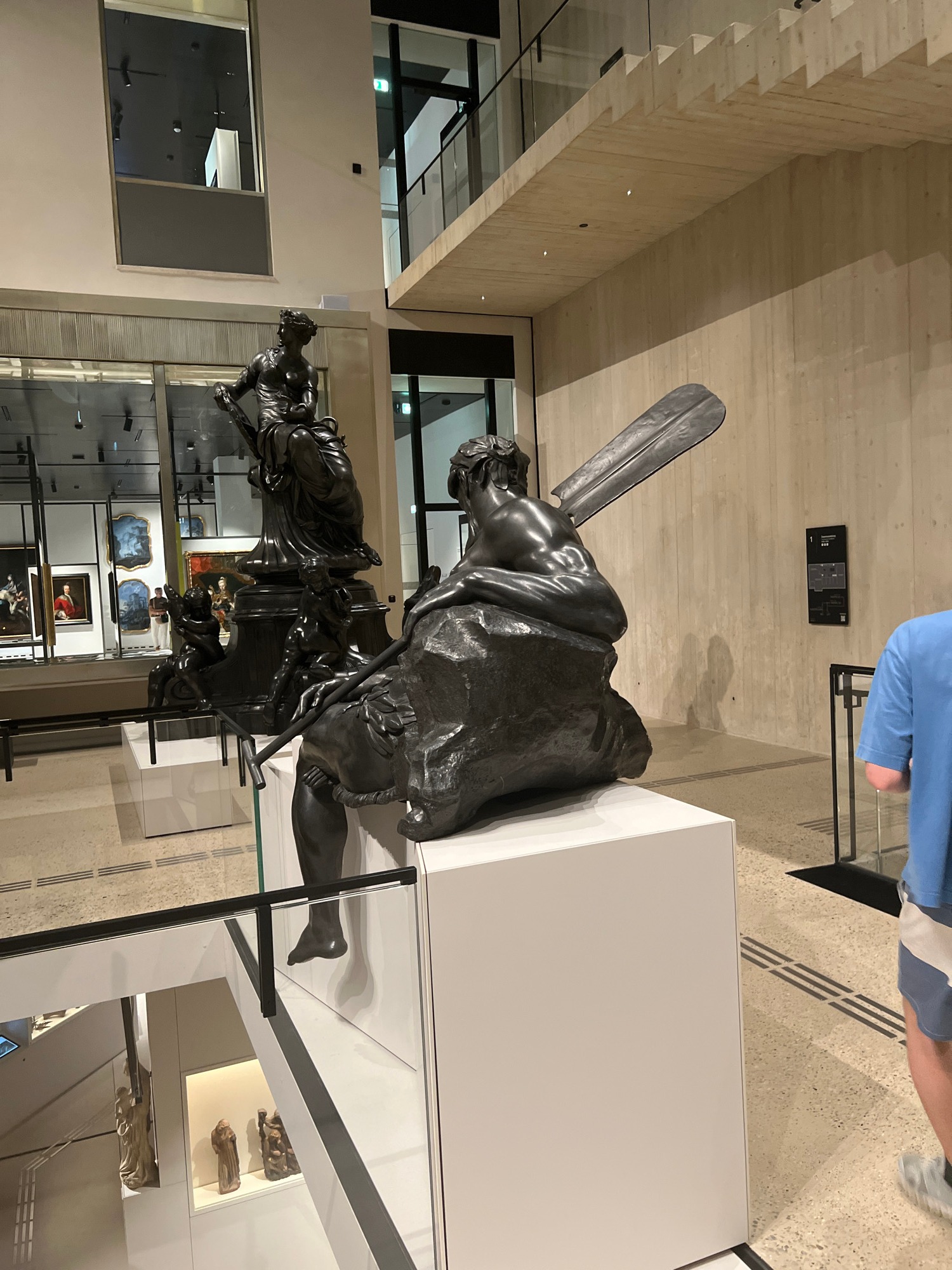
This image captures a dynamic bronze sculpture of several muscular figures, seemingly engaged in a struggle or effort. The sculpture is oriented vertically, with the figures appearing to be in motion. One prominent figure, in the foreground, is depicted with an outstretched arm holding a long, flat object, possibly a spear or oar. Another figure is partially visible behind it, its body contorted. The sculpture itself is dark and metallic, with a polished surface that reflects light, highlighting the musculature and dramatic poses of the figures.
The setting appears to be an indoor exhibition space, possibly a museum. In the background, architectural elements are visible, including what looks like a Gothic spire, suggesting a European location, specifically Vienna, Austria, as indicated. There are also glimpses of display cases, lighting, and what appears to be a staircase. The overall atmosphere is one of artistic display, with the sculpture as the central focus. The lighting is artificial, and no specific time of day or weather conditions can be determined. No visible text is present in the image. The focus is solely on the powerful and dramatic form of the sculpture.
Vienna, Austria · Jun 25, 2026, 3:15 PM · 4.1k attention
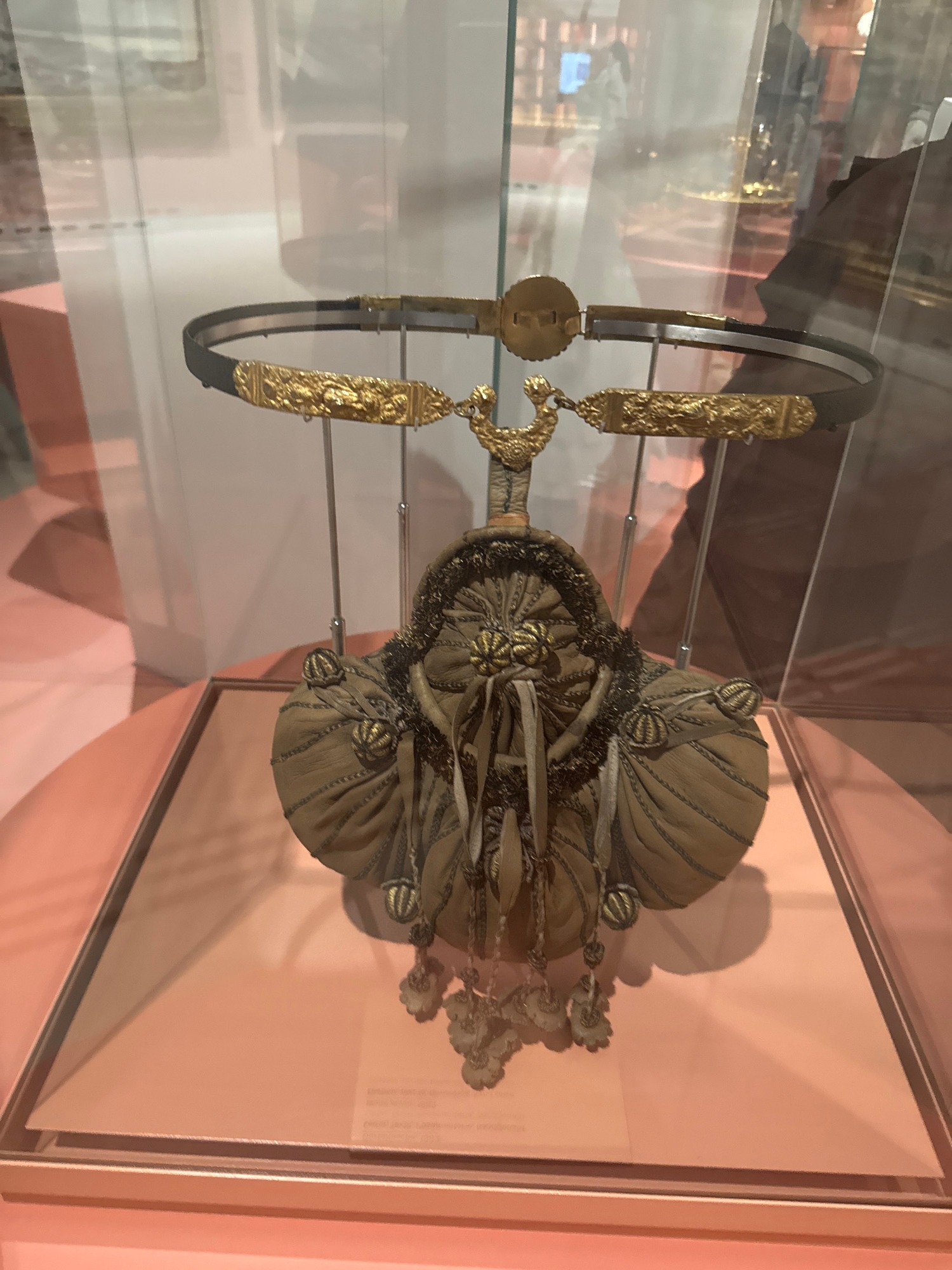
This image shows a museum display case containing an ornate, historical accessory, likely a sporran or similar pouch worn with formal attire. The object is primarily made of a tan-colored fabric, intricately pleated and decorated with darker stitching. It features elaborate gold metalwork, including a decorative clasp at the top and hanging tassels and ornaments, some of which appear to be shaped like small, decorative knots or rosettes. A dark leather strap, also adorned with gold metal detailing, extends from the top of the pouch.
The object is displayed horizontally within a glass case, which reflects the surrounding environment, including other displays and lighting. The background within the case is a soft, warm pinkish-orange hue, creating a subtle contrast with the artifact. The lighting appears to be artificial, typical of a museum setting. The overall impression is one of an antique or ceremonial item, preserved and presented for public viewing. The hints suggest the object is in a vertical orientation within the display, though the image is rotated. No people are visible in the frame, and the activity is that of exhibition. There is no visible text in the image. The context provided places this museum in Vienna, Austria.
Vienna, Austria · Jun 25, 2026, 3:03 PM · 4.1k attention
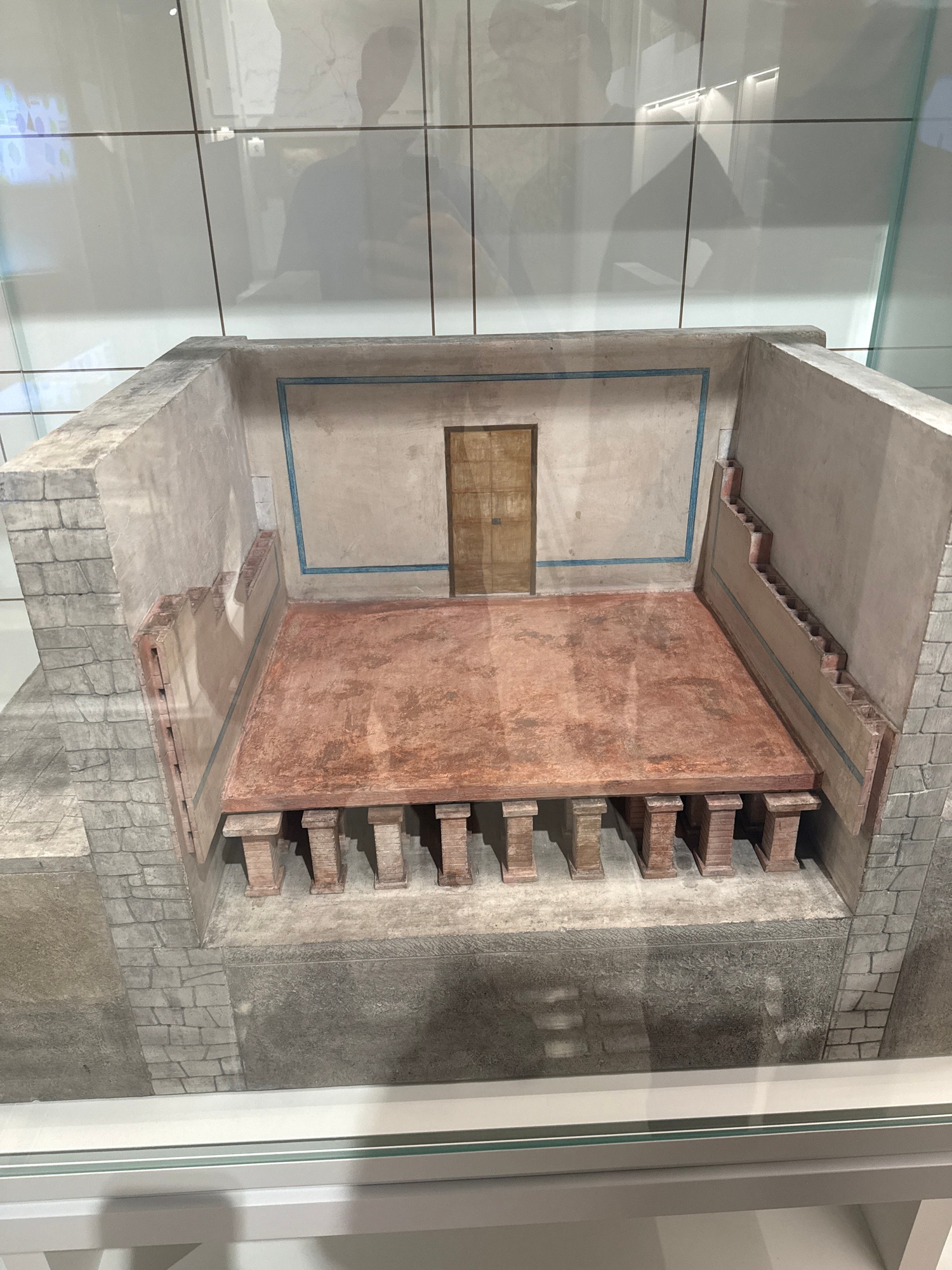
This media file features a detailed architectural model, likely part of a museum exhibit in Vienna, Austria. The model showcases a cross-section of a building, revealing its internal structure and construction. The primary subject is the model itself, a miniature representation of a space with walls, floors, and a ceiling.
The visible section of the model includes a large, reddish-brown wall dominating the right side of the frame. To its left, a lighter-colored wall is outlined with a thin blue line, creating a rectangular border. Within this bordered area, a wooden element, possibly a panel or a piece of furniture, is positioned centrally. The floor in this section is composed of concrete and smaller brick-like elements.
The ceiling exhibits an interesting architectural detail: a series of recessed, stepped sections with small rectangular openings. This detail is repeated along a horizontal band. On the right side of the model, a vertical structure features a series of stacked, box-like protrusions, suggesting shelves or structural supports. The exterior of the model is finished to mimic stonework, with a rough, grey texture and rectangular stone patterns.
The scene is well-lit, likely by artificial museum lighting, highlighting the textures and details of the model. There are reflections on the glass casing of the exhibit, suggesting the viewer is looking through a protective barrier. No people are visible in the image, and the focus is solely on the intricate model. The overall impression is one of historical or architectural significance, presenting a glimpse into construction or design techniques. No discernible text is visible within the frame of the model itself.
Vienna, Austria · Jun 25, 2026, 3:38 PM · 4.0k attention
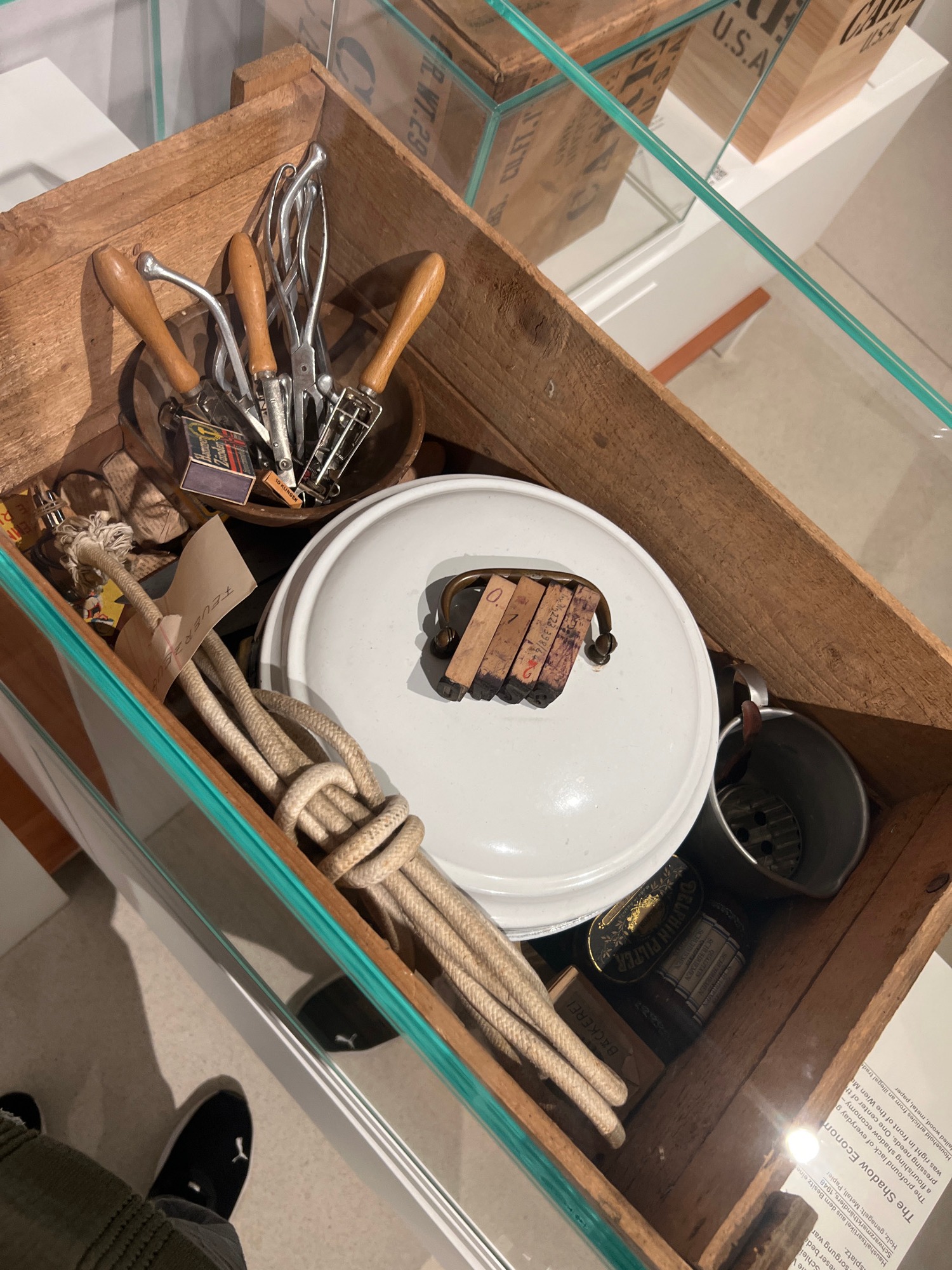
This media file is a close-up, eye-level shot of a wooden crate filled with various items, displayed behind a glass enclosure. The crate contains an assortment of vintage objects, suggesting a historical exhibit. Among the items are kitchen utensils like whisks and beaters with wooden handles, a white lidded pot, a metal grinder, spools of what appear to be thread or twine, and a box of matches labeled "FEUERZEUG" (lighter/matchbox in German). There are also several small wooden blocks with what seem to be stamps or numbering tools. In the background, parts of wooden crates with "U.S.A." and weight markings are visible, hinting at goods or shipping. A piece of paper with German text, including the phrase "The Shadow Economy," is also present, suggesting the context of the display relates to economic history, possibly in Vienna, Austria, given the German language text. The lighting appears to be artificial, casting some reflections on the glass. A person's legs and shoes are visible in the lower right corner, indicating the viewer's presence in front of the exhibit. The overall impression is one of an organized display of historical artifacts from a time of scarcity.
Vienna, Austria · Jun 25, 2026, 3:42 PM · 4.0k attention
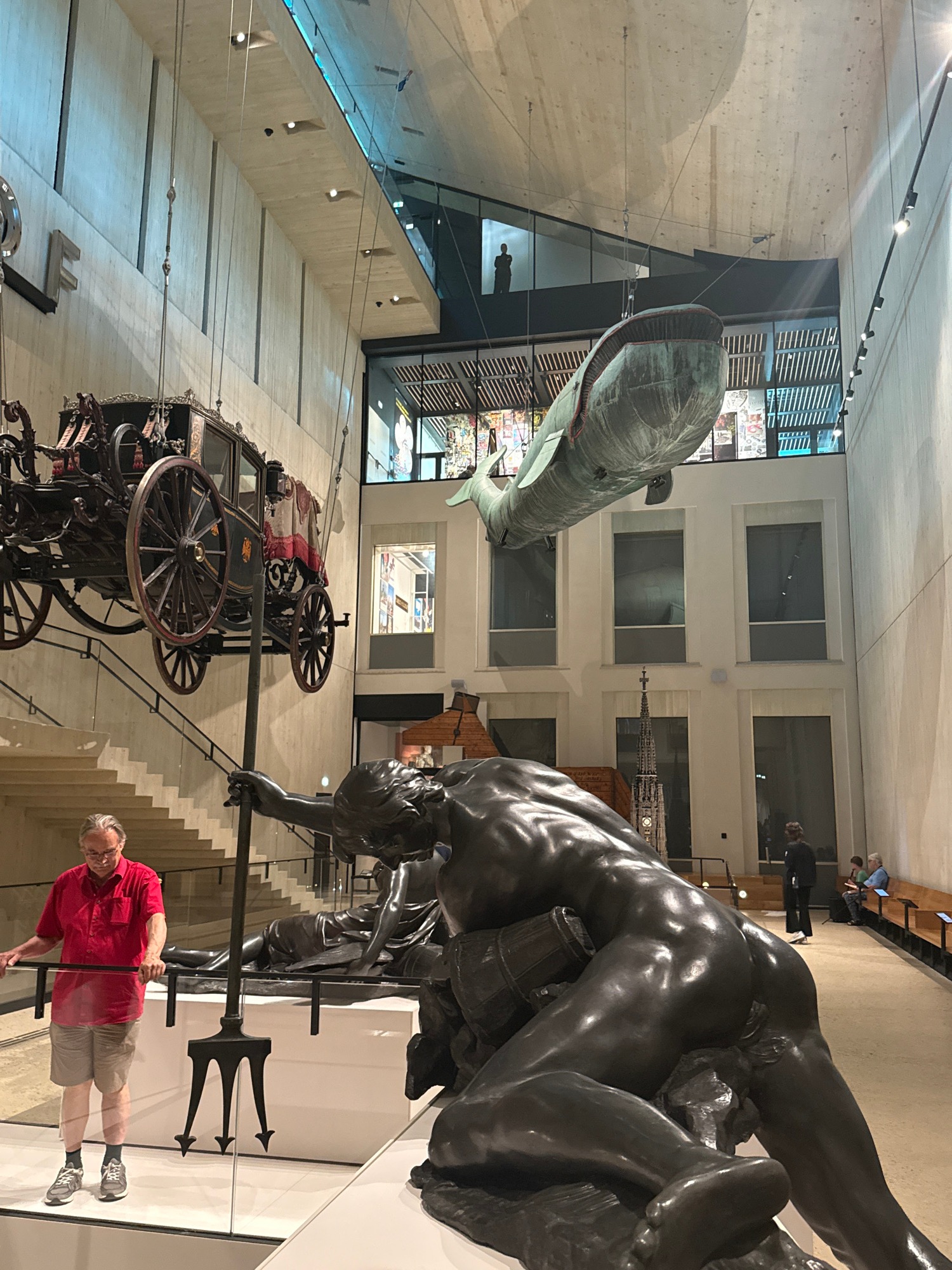
The image depicts a dimly lit interior space, likely a museum, with a man in a red shirt and khaki shorts standing in the foreground. He appears to be observing a large bronze sculpture of a muscular figure, possibly a mythological one, holding a trident. Behind the sculpture, a model of an antique carriage with intricate details and large spoked wheels is visible. Further in the background, a large sculpture of a whale, appearing to be made of bronze or a similar material, is suspended from the ceiling. The setting features high ceilings, concrete walls, and multiple levels with windows and displays. The lighting is artificial and creates dramatic shadows, suggesting it is either evening or an indoor environment with controlled lighting. The overall atmosphere is one of awe and contemplation, typical of a museum exhibition. There is no visible text in the image.
Vienna, Austria · Jun 25, 2026, 3:25 PM · 4.0k attention
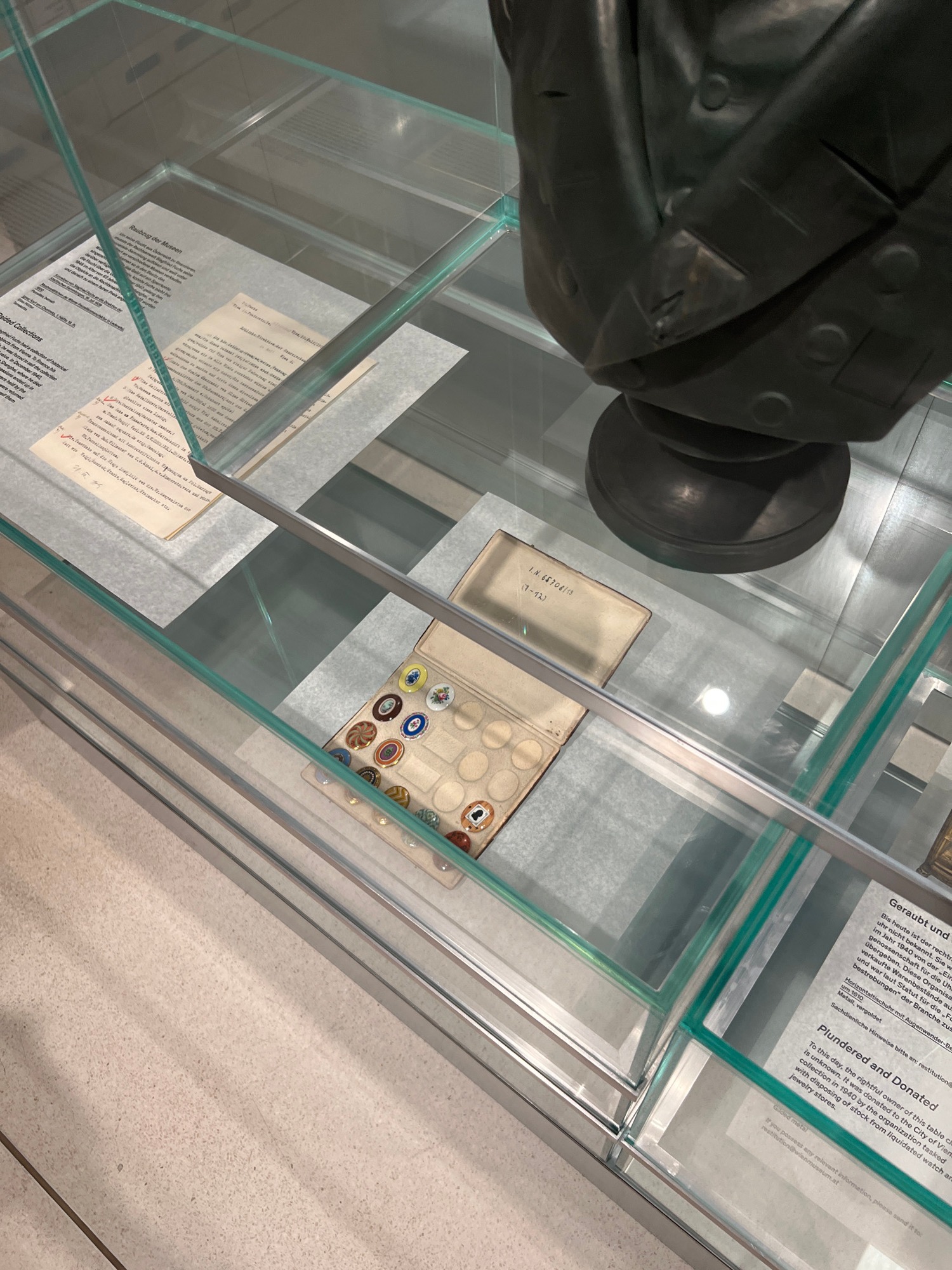
This image shows a museum display case containing various objects. In the foreground, a small, open, rectangular box with padded compartments holds a collection of round objects, many of which appear to be buttons or pins with decorative designs, including floral patterns and what looks like a playing card symbol. To the left of this box, a document is partially visible, suggesting an informational display. Behind these items, a dark bust on a pedestal is visible, dominating the upper right portion of the frame. The display case itself is made of glass and metal framing. In the background, on the right side of the image, a text panel with the heading "Geraubt und..." (looted and...) and "Plundered and Donated" is visible, indicating that the objects in the display case are likely part of a collection related to historical artifacts, possibly with a history of being looted or donated. The text on the panel suggests a connection to Vienna, Austria, with the phrase "Stadt Wien," referencing the city. The environment appears to be a museum or gallery setting, with clean, well-lit displays.
Vienna, Austria · Jun 25, 2026, 3:44 PM · 3.9k attention
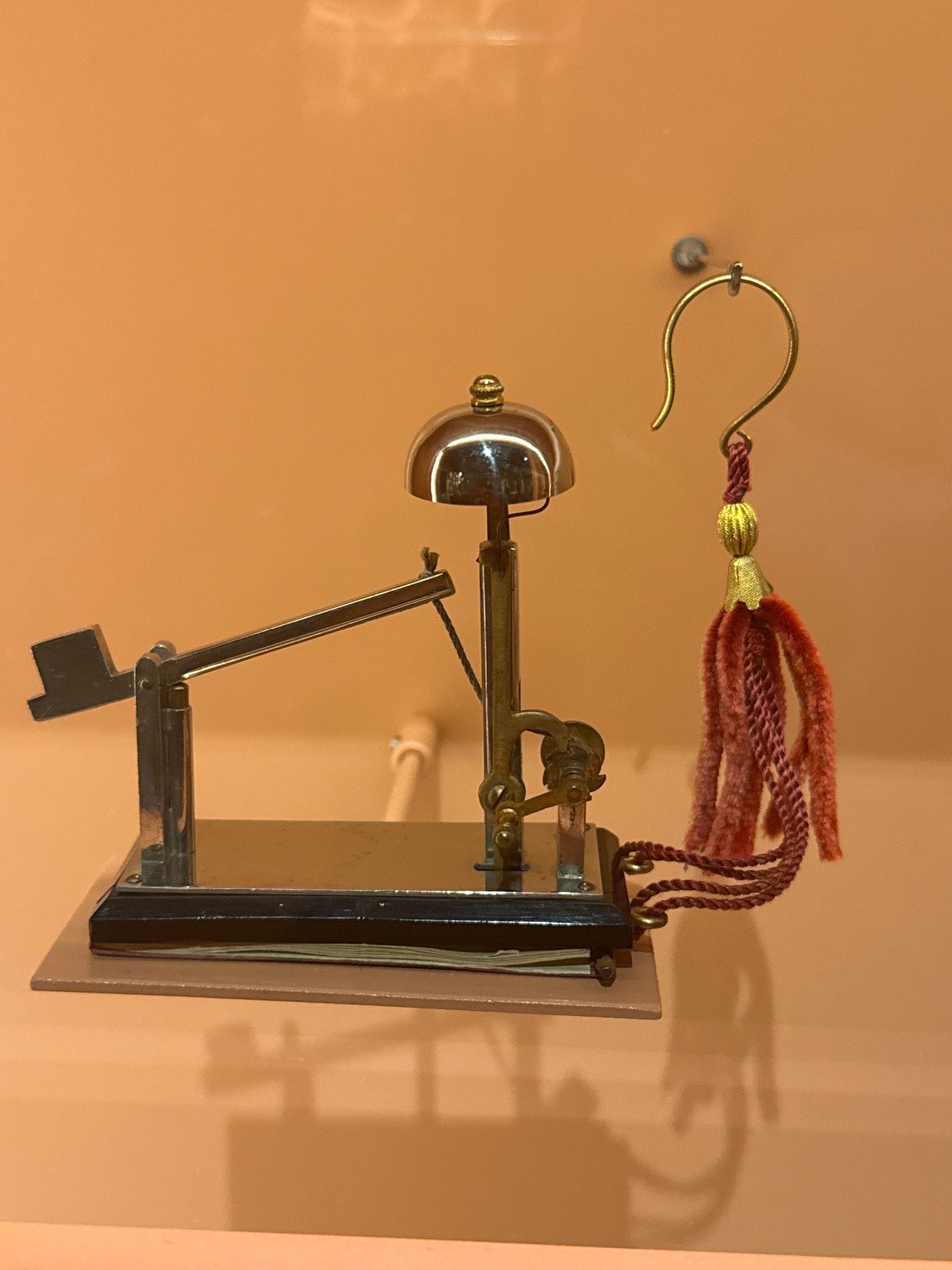
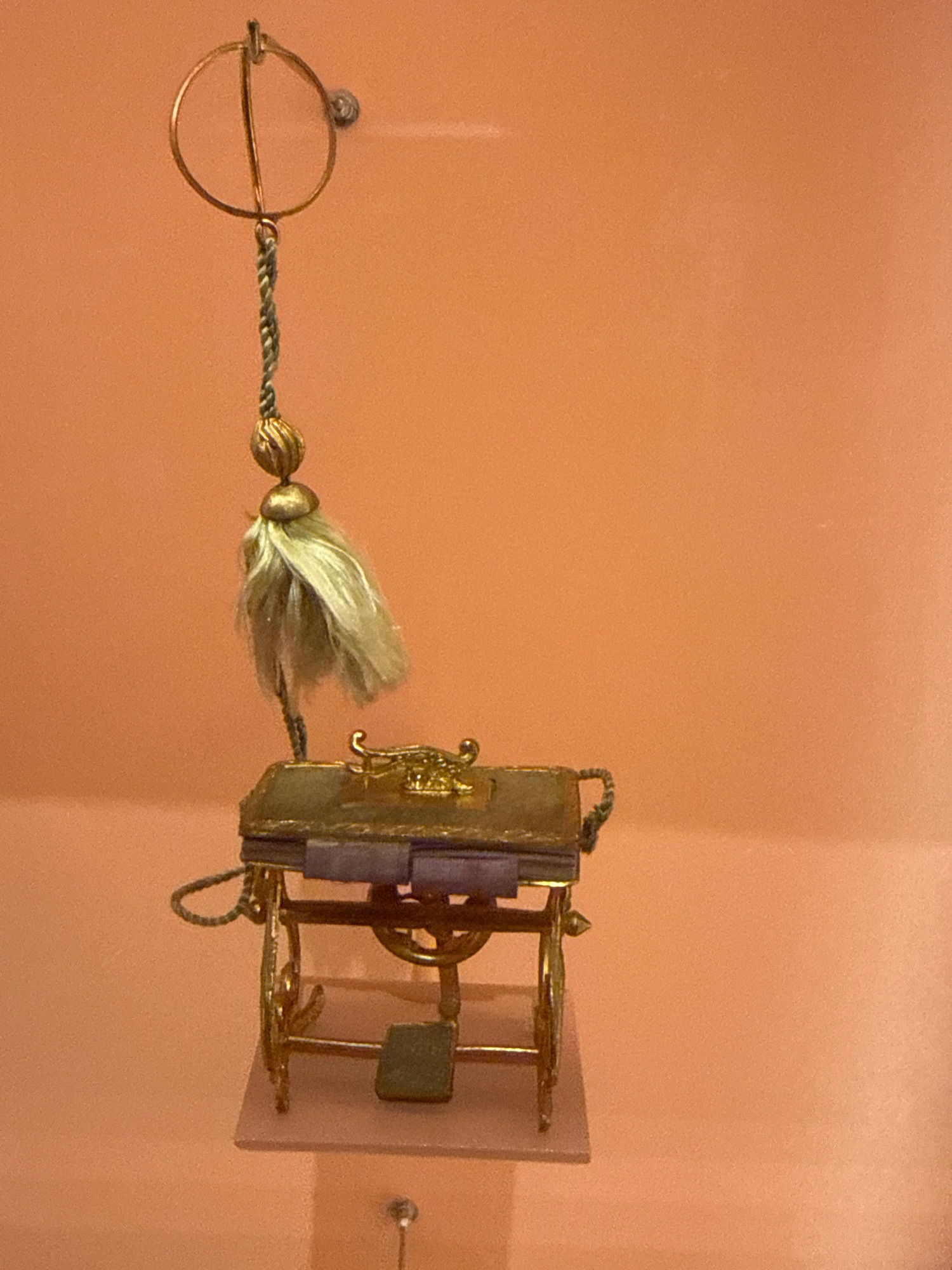
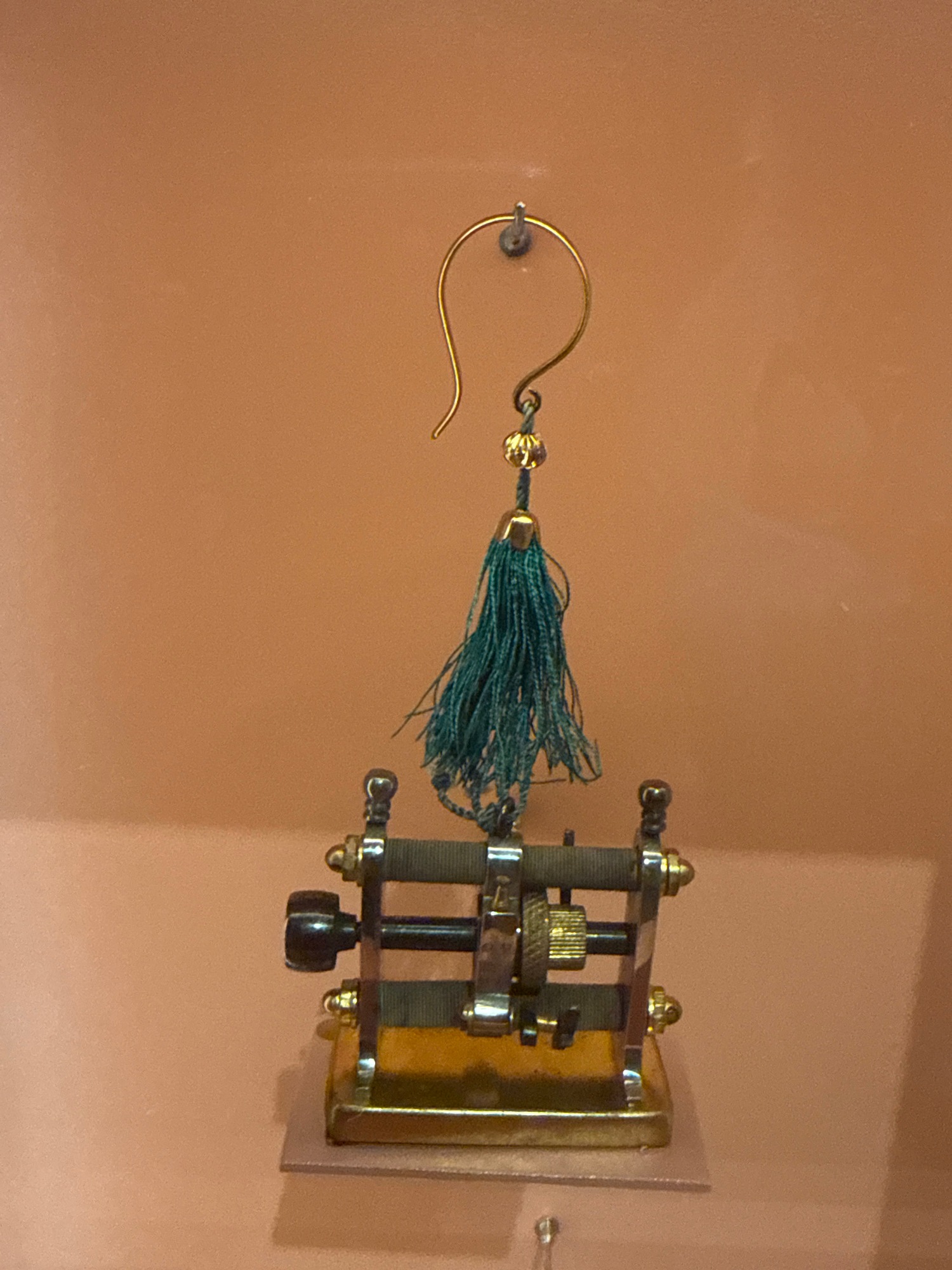
A small, antique brass and metal contraption, resembling a miniature telegraph machine with a bell, sits on a light brown platform. The machine has a lever on the left and a bell atop a vertical rod on the right. A red tasseled ornament is attached to the bell mechanism via a gold hook and cord. The object is displayed against an orange-toned wall, casting shadows to the right and below. A small grey screw is visible on the wall to the upper right of the object. This object is on display at the Technisches Museum Wien, Vienna, Austria.
Vienna, Austria · Jun 25, 2026, 3:04 PM · 3.9k attention
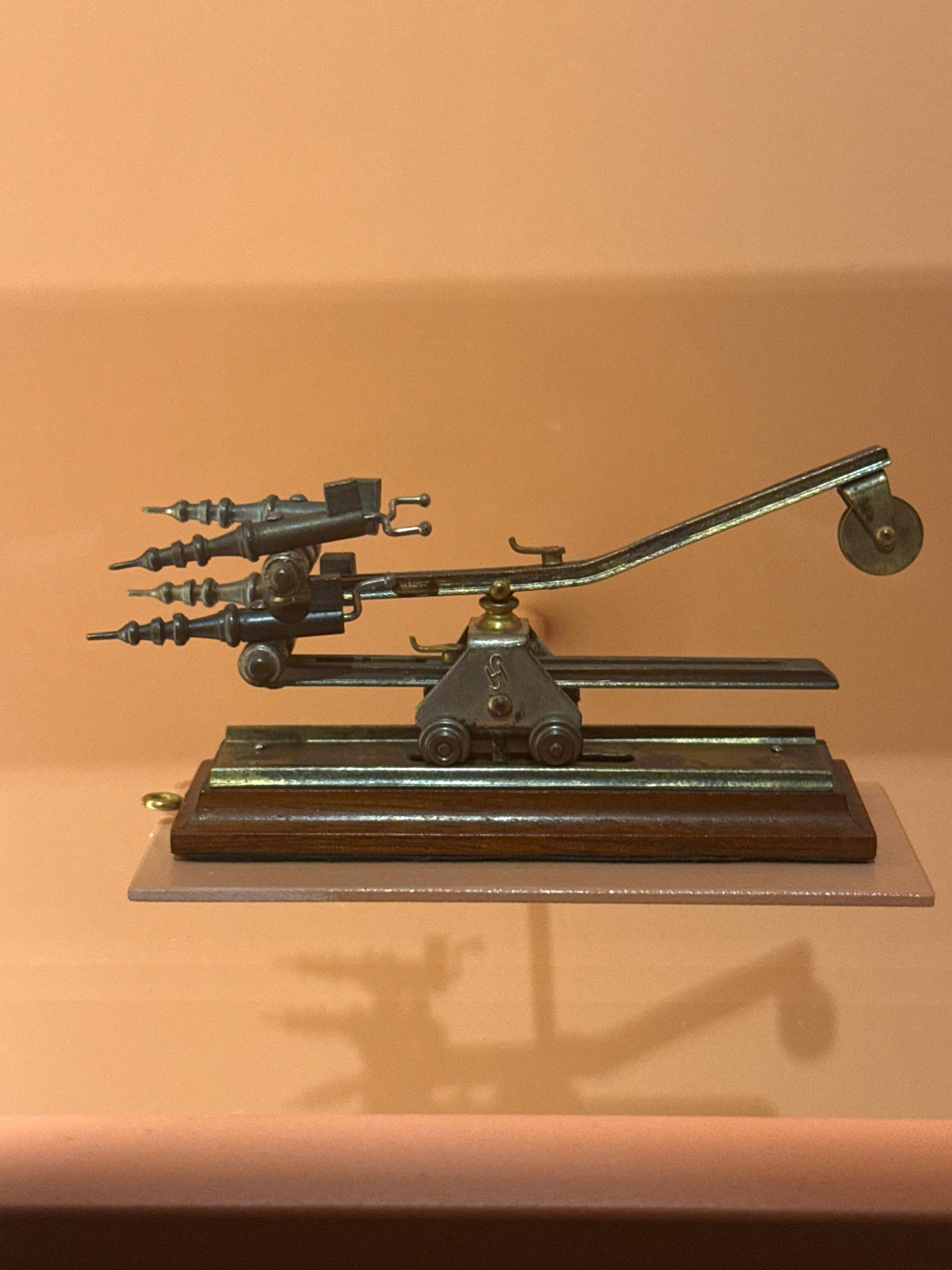
This media file is a photograph of an antique mechanical instrument mounted on a wall. The instrument appears to be made of metal and wood, with several articulated arms and a roller at the top. It is positioned against a peach-colored wall, and a shadow of the instrument is cast on the wall behind it. The instrument has a complex, almost skeletal appearance with various levers, pivots, and what seem to be drawing points or styluses at the bottom.
The setting appears to be indoors, likely a museum or a historical display given the nature of the object and its presentation. There are no people visible in the photograph. The lighting suggests it's daytime, but the artificial lighting setup is not discernible. The object itself is the sole subject of the photograph.
Notable details include the intricate craftsmanship of the mechanical device, suggesting it might be an early drafting tool, a musical automaton component, or a scientific instrument. The wooden backing board is rectangular with rounded corners, and a small brass knob is visible at the bottom right of the board. The metallic parts of the instrument show signs of age and use, with a patina that hints at its historical significance. The shadow on the wall is detailed, mirroring the shape of the instrument and further emphasizing its three-dimensional form. No visible text is present on the instrument or the wall. The overall impression is one of historical preservation and the appreciation of intricate machinery.
Vienna, Austria · Jun 25, 2026, 3:04 PM · 3.9k attention
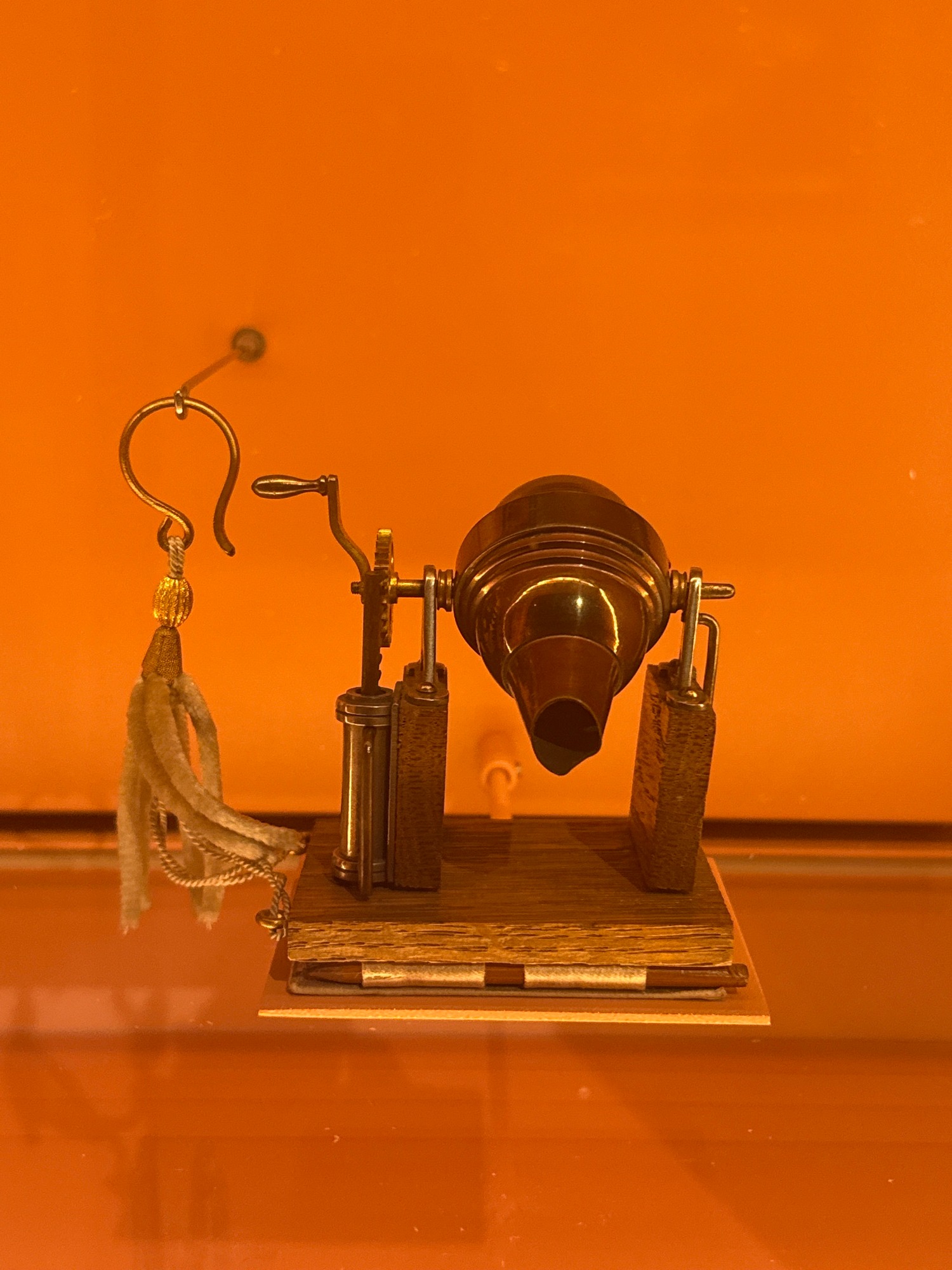
This image shows a close-up, angled view of a historical object, likely a scientific instrument or a piece of antique technology, displayed against an orange background. The object is mounted on a light wooden base.
The main subject is a brass and metal device with several distinct components. At the center is a round, metallic bell-shaped element with ridged detailing, connected to a conical mouthpiece or nozzle. This part of the device appears to be mounted on a more complex mechanism featuring gears and levers. A small crank handle with a teardrop-shaped knob extends from the side, suggesting manual operation. Beneath this mechanism, a decorative element is visible: a gold-colored beaded connector attached to a soft, white, corded tassel. To the left of the main apparatus, a small, dark circular shadow is cast on the orange surface, with a thin, curved wire leading from the shadow towards the object.
The setting is an indoor display, possibly a museum or exhibition in Vienna, Austria, given the context provided. The bright orange background, which appears to be a wall or display surface, is smooth and illuminated, causing reflections on the metallic parts of the object. The lighting is direct and appears to be from above and to the right, creating defined shadows and highlighting the polished surfaces of the brass components. There are no people visible in the image. The overall impression is one of meticulous craftsmanship and historical significance, with the object presented as an exhibit. No text is visible in the image.
Vienna, Austria · Jun 25, 2026, 3:04 PM · 3.9k attention
This image captures a wide-angle view of an indoor exhibition space, possibly a museum or gallery in Vienna, Austria. The scene is filled with a variety of sculptures and exhibits, creating a dynamic and visually rich environment.
In the foreground, a large, dark bronze sculpture of a reclining figure dominates the lower right of the frame. Its detailed musculature and dramatic pose suggest a classical or mythological theme. To the left and slightly behind this sculpture, another bronze figure is depicted in a more active, wrestling pose, reaching out towards something unseen.
Above these sculptures, a large model of a whale hangs suspended from the ceiling, its dark, metallic form casting shadows. Further back, a horse-drawn carriage with ornate detailing is also displayed, seemingly at a different height or angle. In the background, the architecture of the space is visible, featuring modern, clean lines with exposed concrete and wooden elements. Large windows reveal glimpses of other exhibits or parts of the museum.
A few people are visible in the scene, scattered throughout the exhibition. Two individuals are seated at computers on a raised platform in the distance, suggesting a digital interactive exhibit or a workspace. Other visitors can be seen walking through the space, interacting with the displays or observing the art.
The lighting appears to be a mix of artificial lights from the ceiling and ambient light filtering through the windows. There is no indication of the time of day or weather. The overall emotion evoked is one of awe and intellectual curiosity, characteristic of a museum visit.
Visible text includes individual letters spelling out words, such as "THE" and "ZEN," mounted on a vertical surface on the left side of the image. These might be part of a larger installation or exhibit title.
Vienna, Austria · Jun 25, 2026, 3:15 PM · 3.9k attention
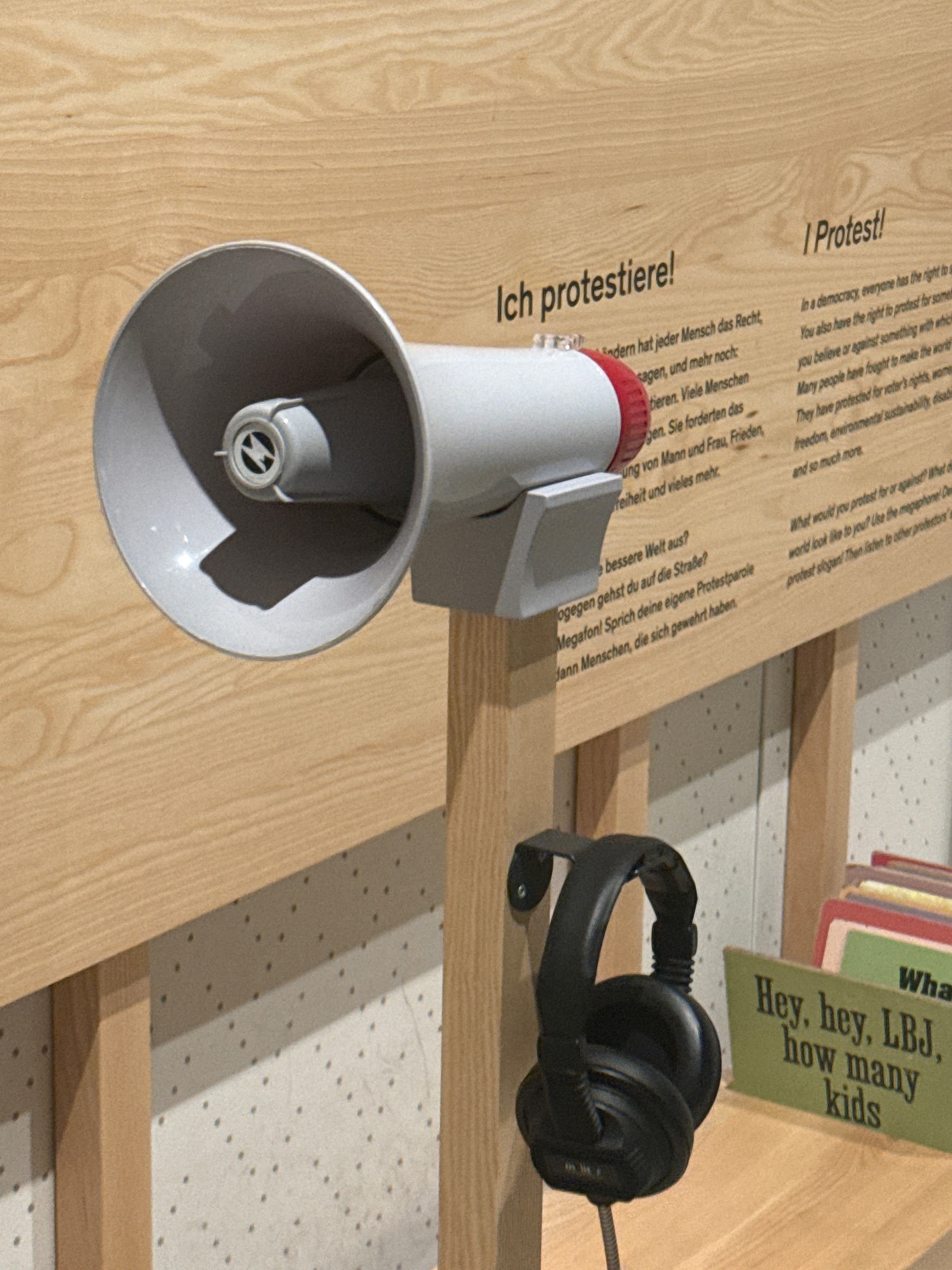
This media file features a close-up view of a display or exhibit, likely in a museum or public space in Vienna, Austria. The primary objects visible are a white and red megaphone and a pair of black headphones. The megaphone is positioned prominently in the foreground, angled slightly, revealing its wide opening and a portion of its handle. The headphones are placed behind and to the right of the megaphone, resting on a wooden surface.
The background consists of wooden panels and what appears to be a textured wall with a pattern of small dots. Several pieces of paper or cards with text are visible, leaning against a wooden support structure. One card is green and prominently displays the text "Hey, hey, LBJ, how many kids". Other cards have text in both German and English.
The German text on the wooden panel reads, "Ich protestiere!" (I protest!) and discusses the right to protest, demanding rights, and fighting for freedom, peace, and equality. The English text on another panel also discusses the right to protest in a democracy, mentioning protests for voter's rights, women's freedom, and environmental sustainability.
The overall impression is that of an interactive exhibit related to the theme of protest and civil rights. There are no people visible, and the lighting suggests an indoor setting, possibly during the daytime or with artificial lighting. The scene conveys a sense of historical or social commentary.
Vienna, Austria · Jun 25, 2026, 3:07 PM · 3.8k attention
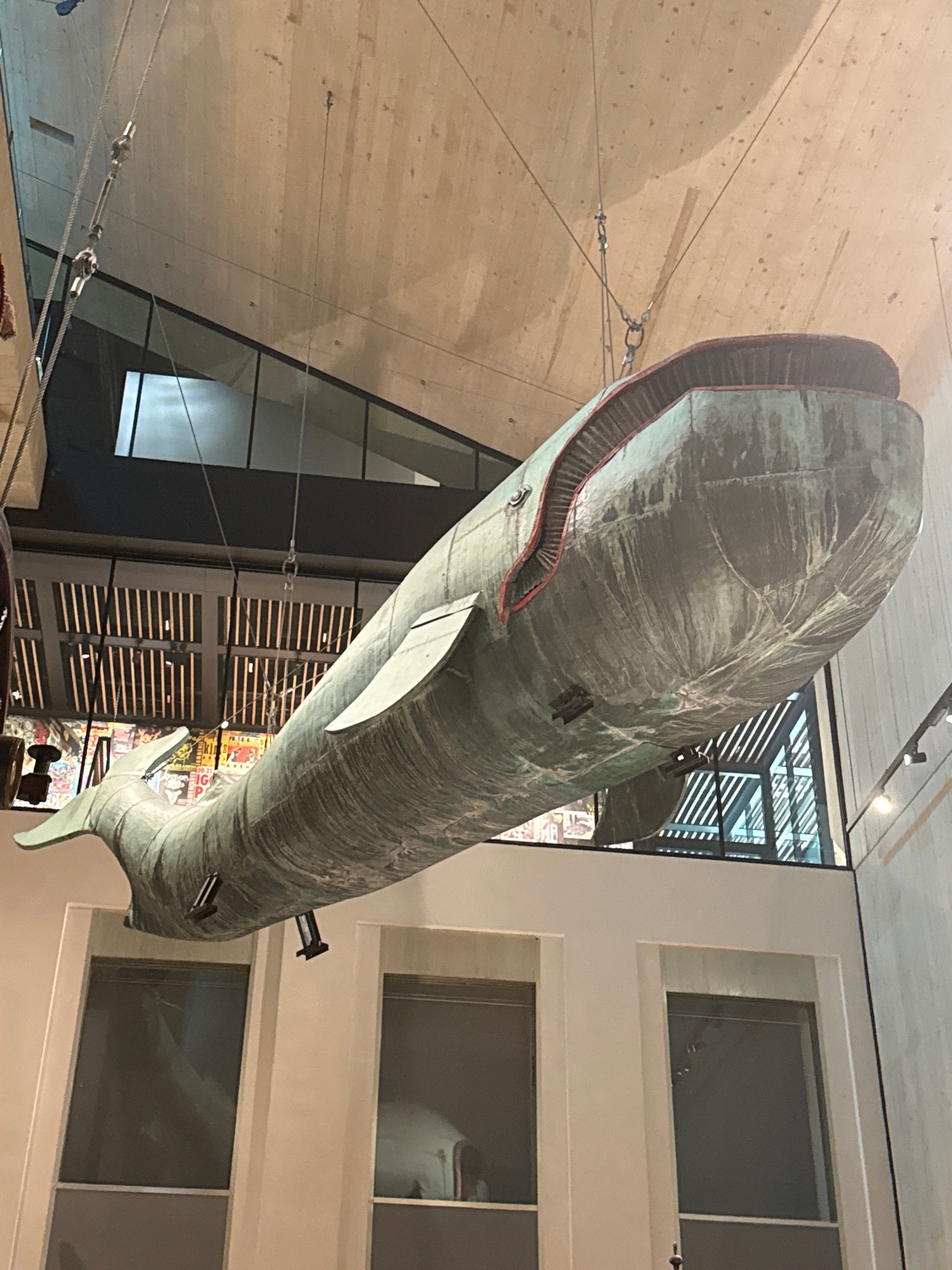
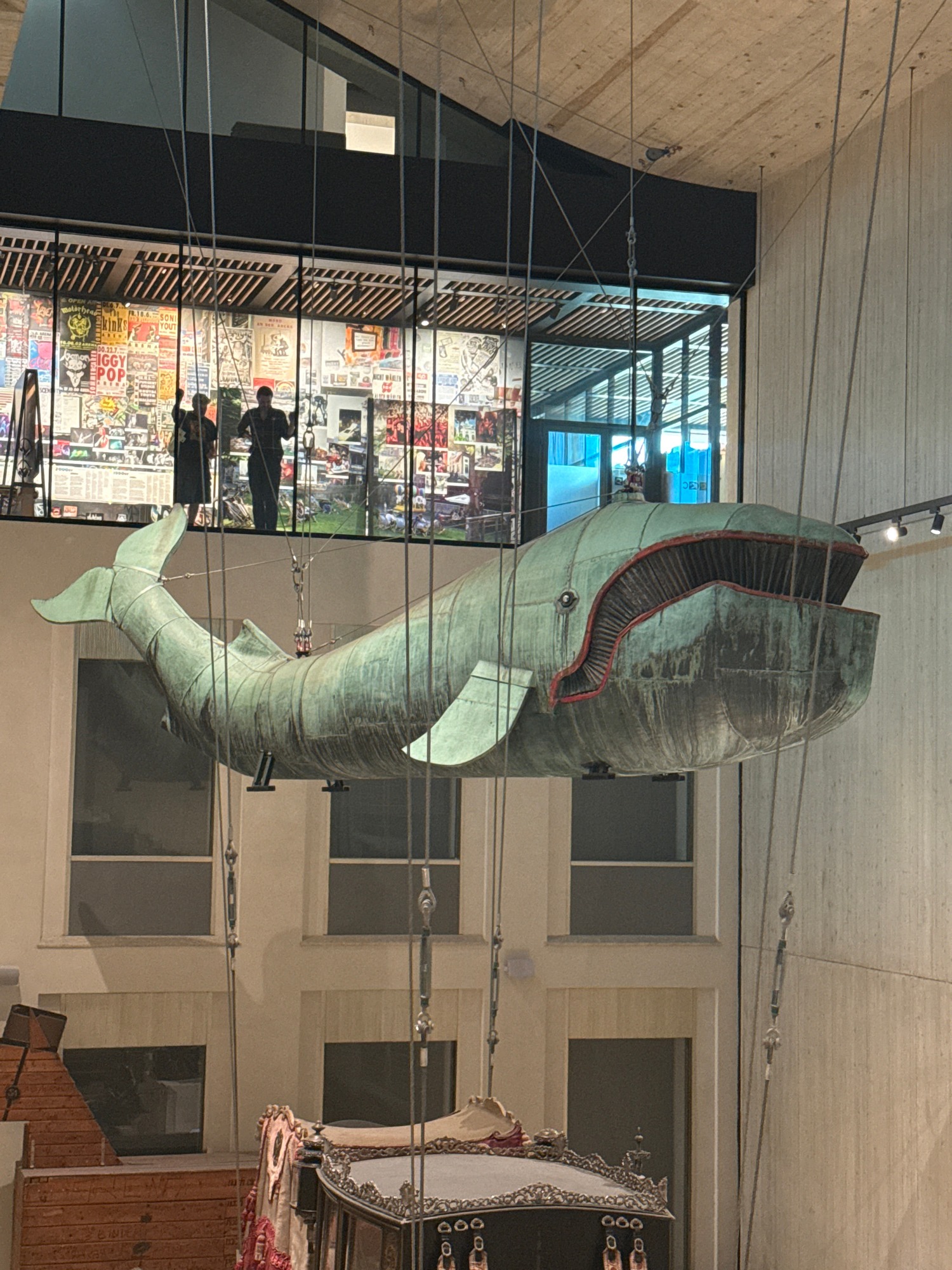
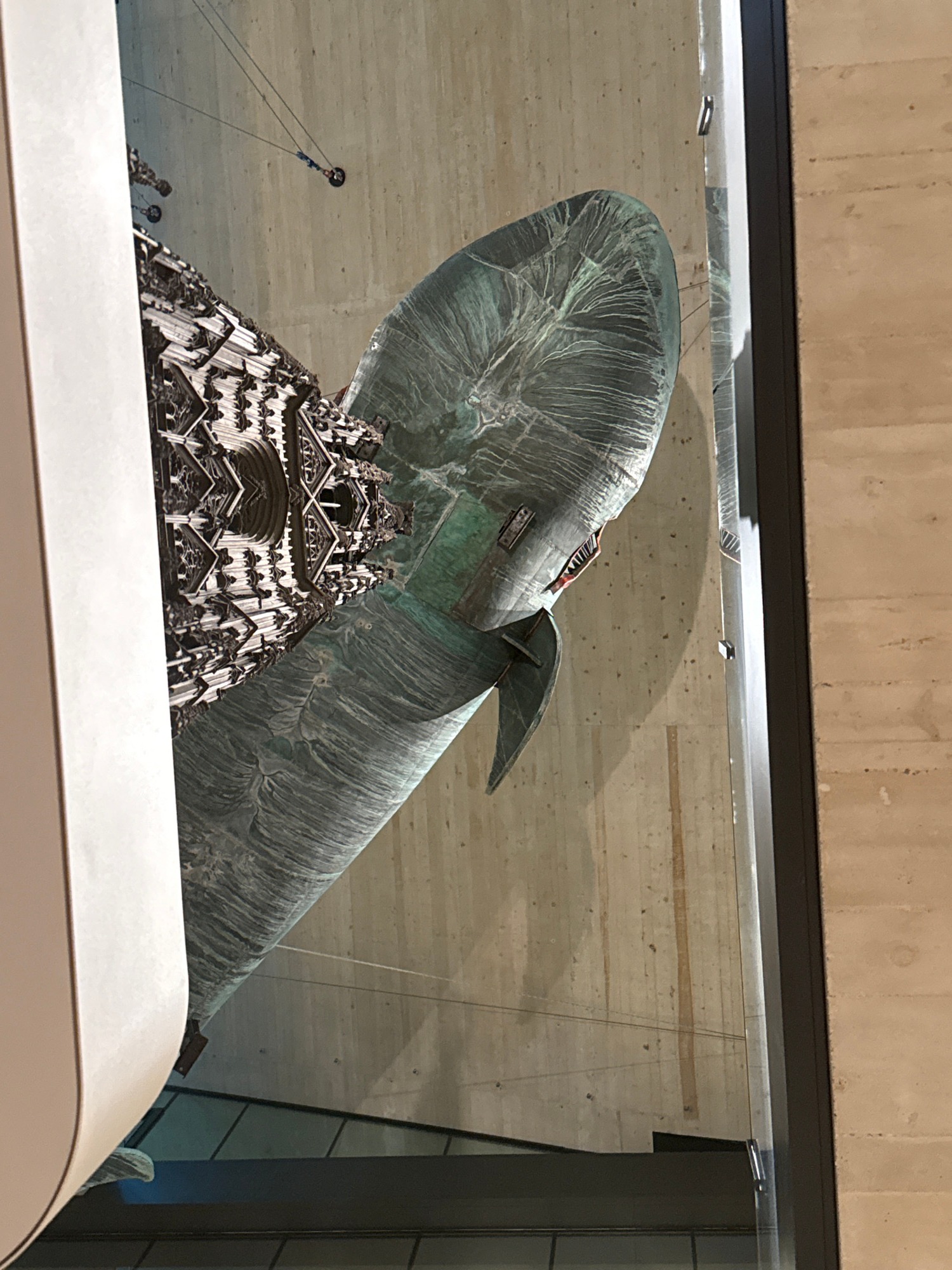
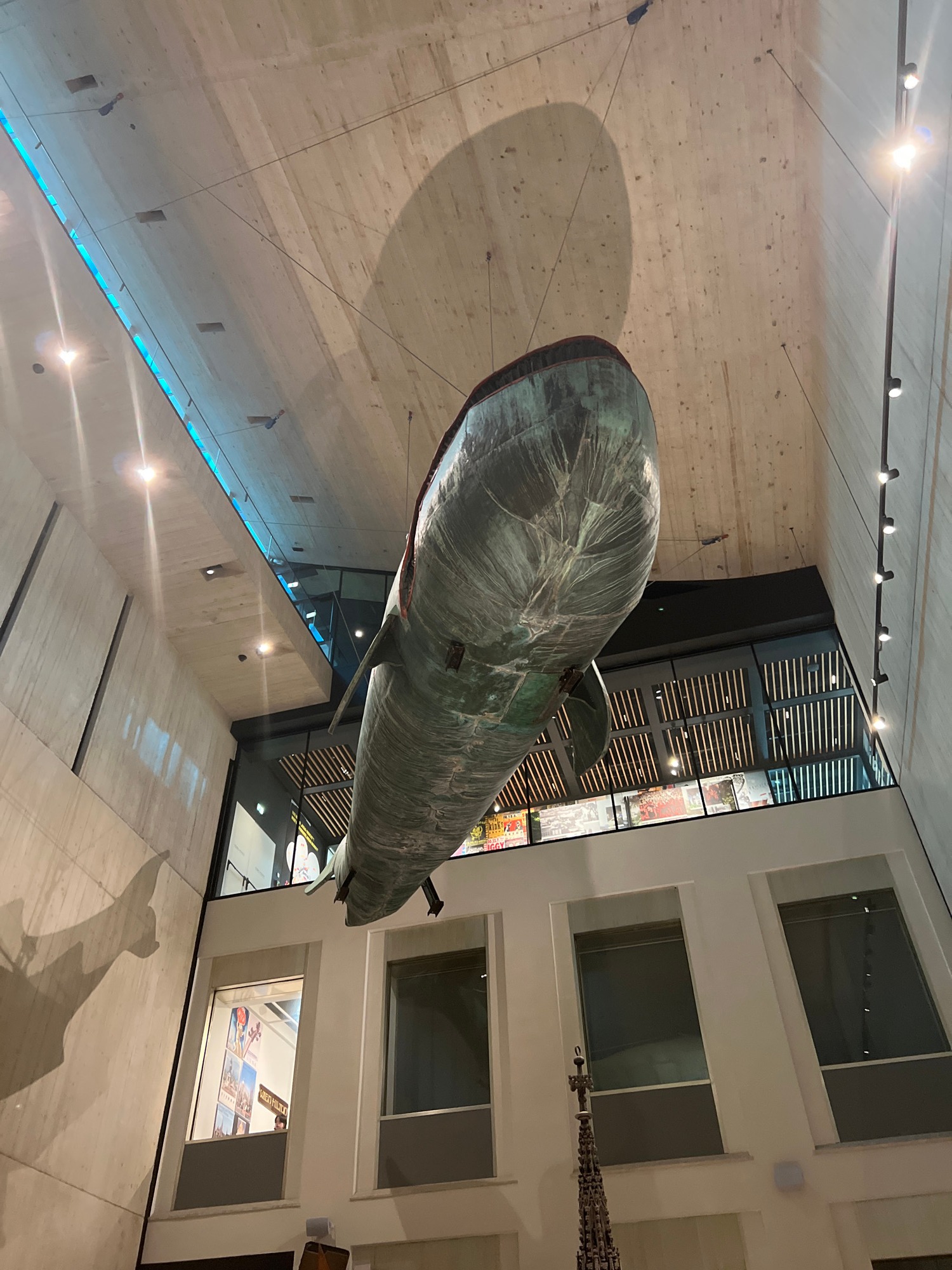
This is a medium-angle, low-light shot of a large whale sculpture suspended from the ceiling of a modern building, likely a museum or exhibition space. The whale, appearing to be made of a dark, metallic material with green undertones, is angled downwards, with its head towards the top of the frame. The textured surface of the sculpture, with its visible seams and weathered appearance, suggests it's a significant art installation. Red detailing is visible around the opening of the whale's mouth, and a white fin is prominent on its side.
The background reveals architectural elements of the building, including wooden-paneled walls, exposed metal beams, and large windows. The lighting suggests an indoor environment, possibly during the day, but without direct sunlight. In the distance, through the windows, some colorful posters or exhibits are visible. The overall impression is one of a grand, public space designed to showcase large-scale art. There are no people clearly visible in the frame, adding to the sense of scale and the focus on the artwork. The image is oriented with the whale's head pointing upwards.
Vienna, Austria · Jun 25, 2026, 3:16 PM · 3.8k attention
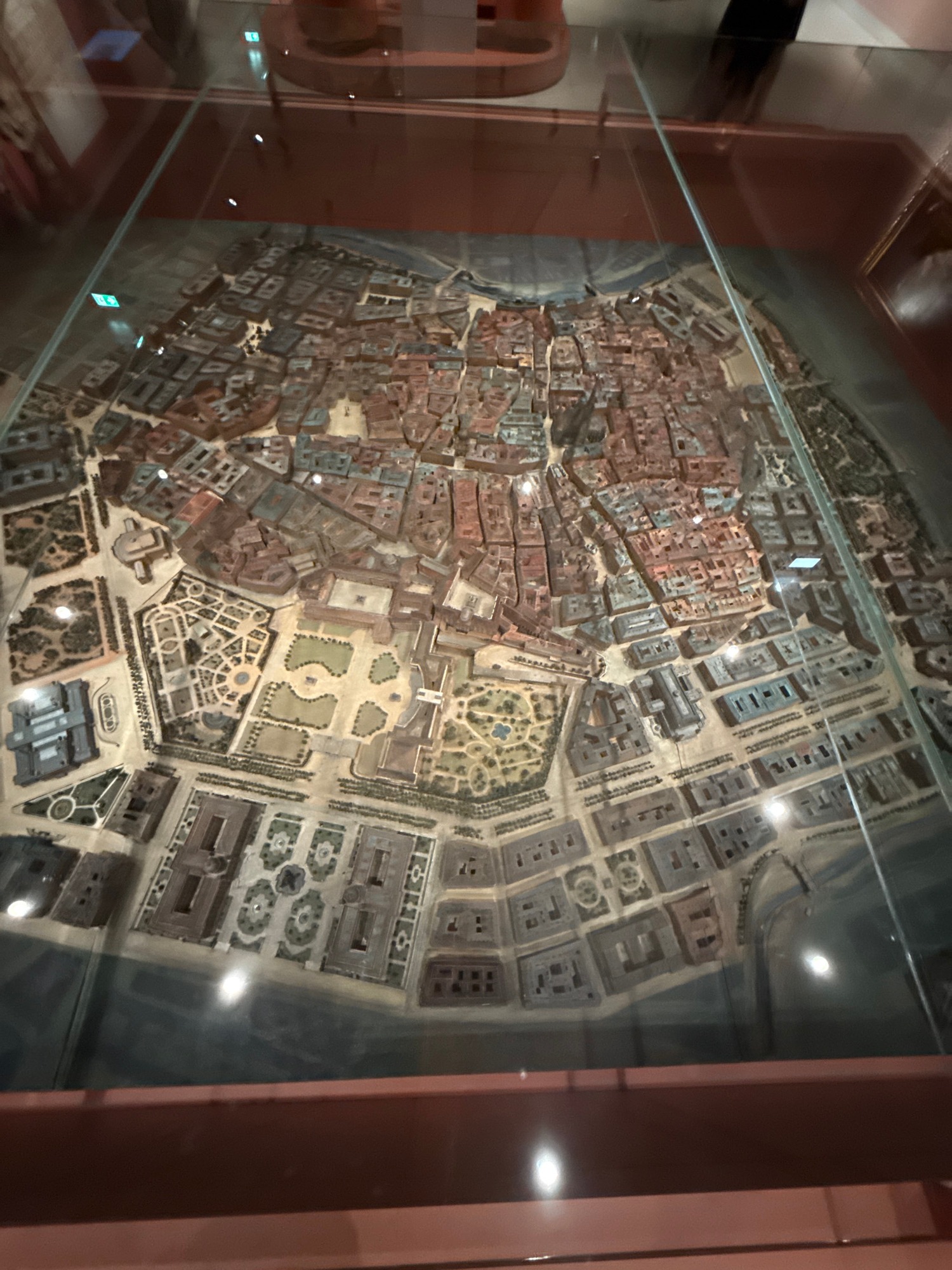
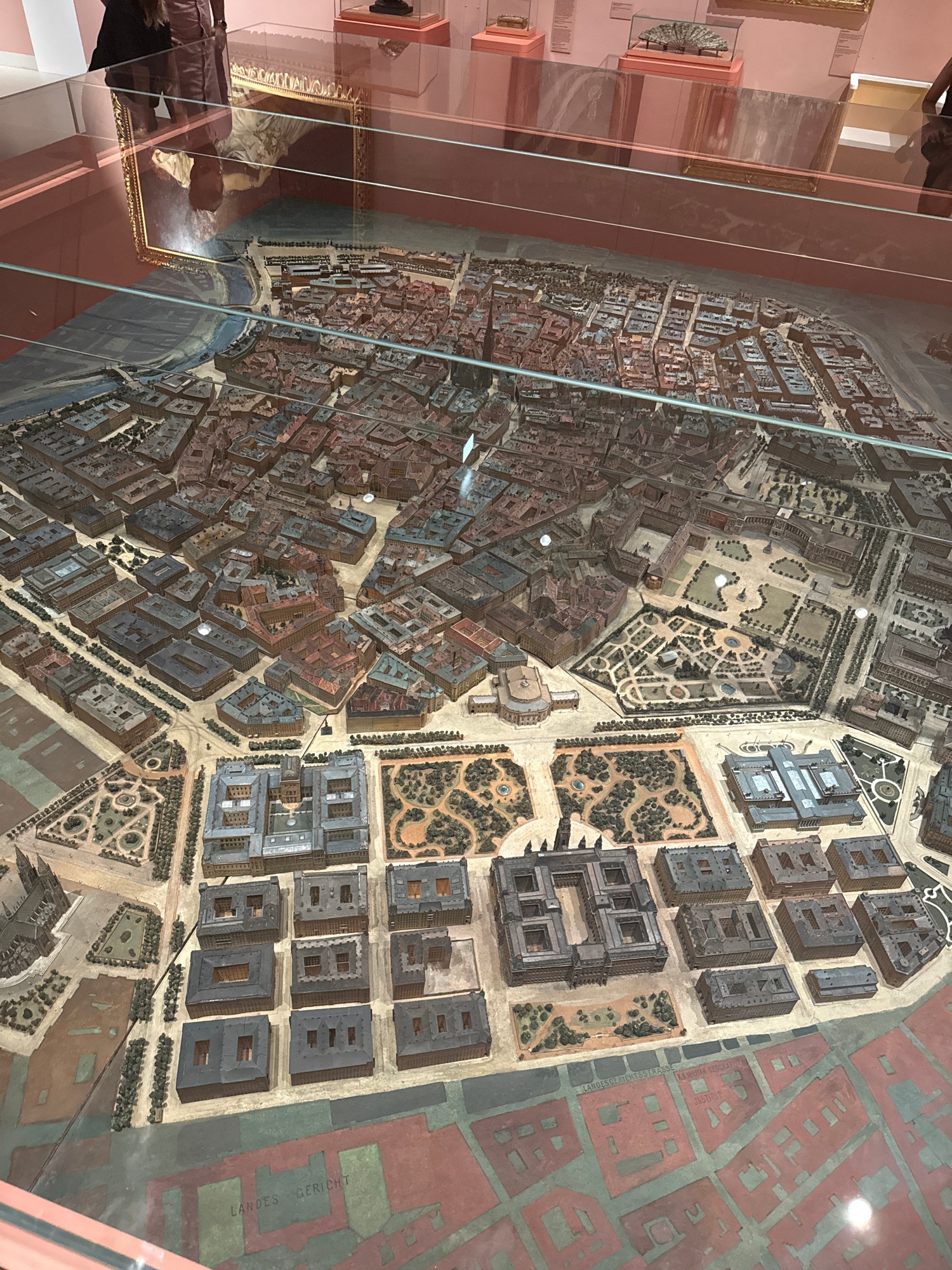
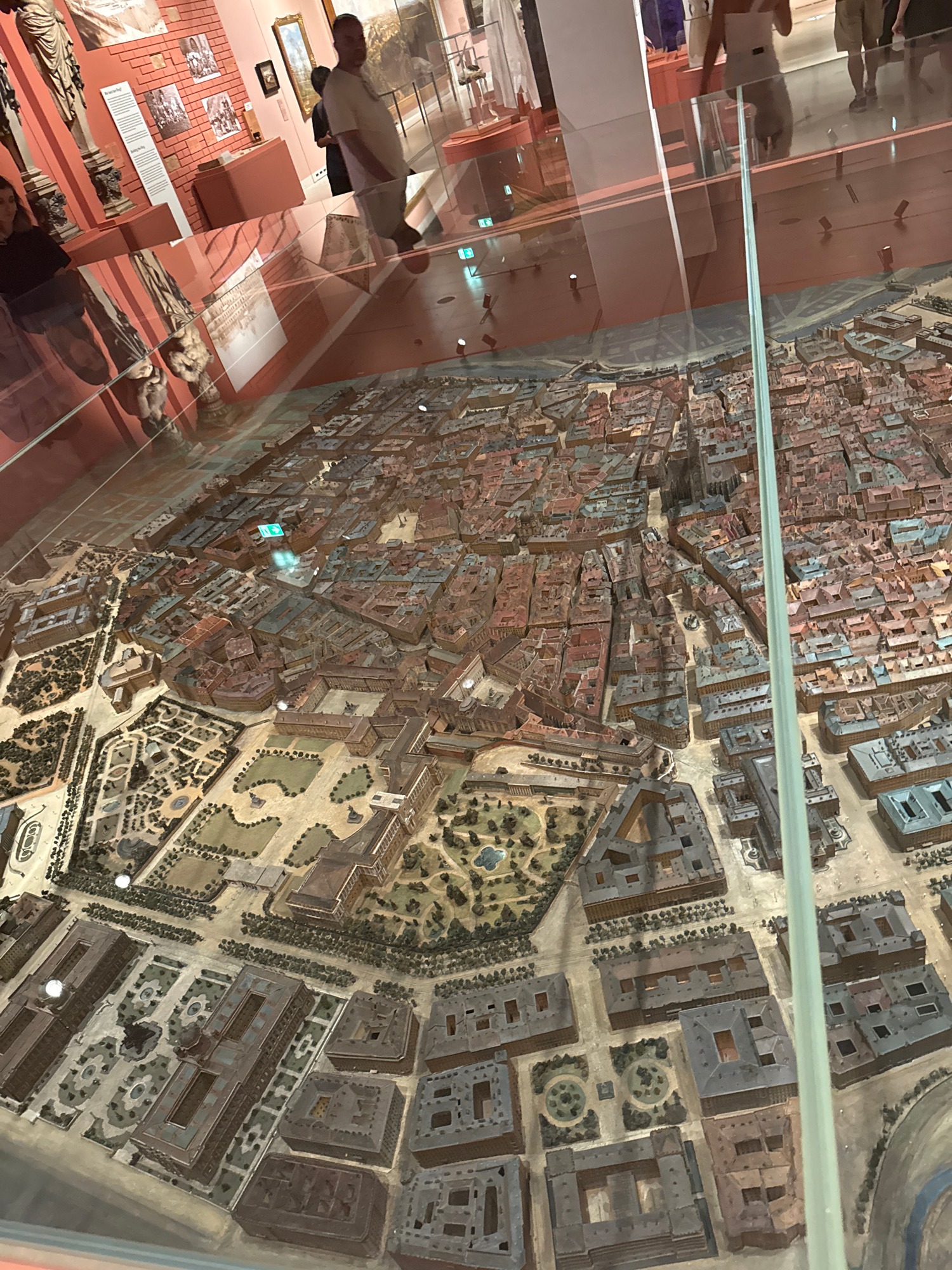
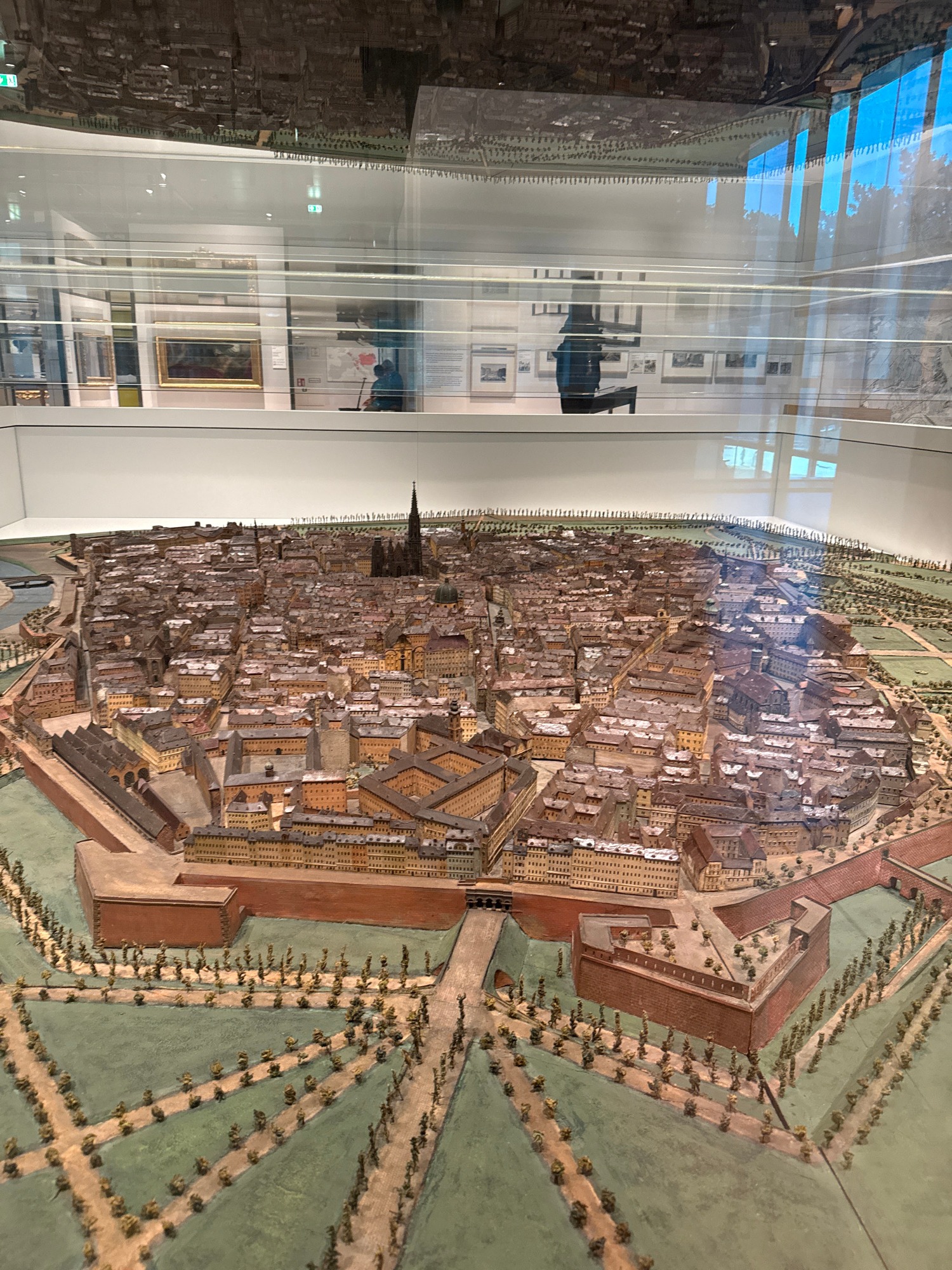
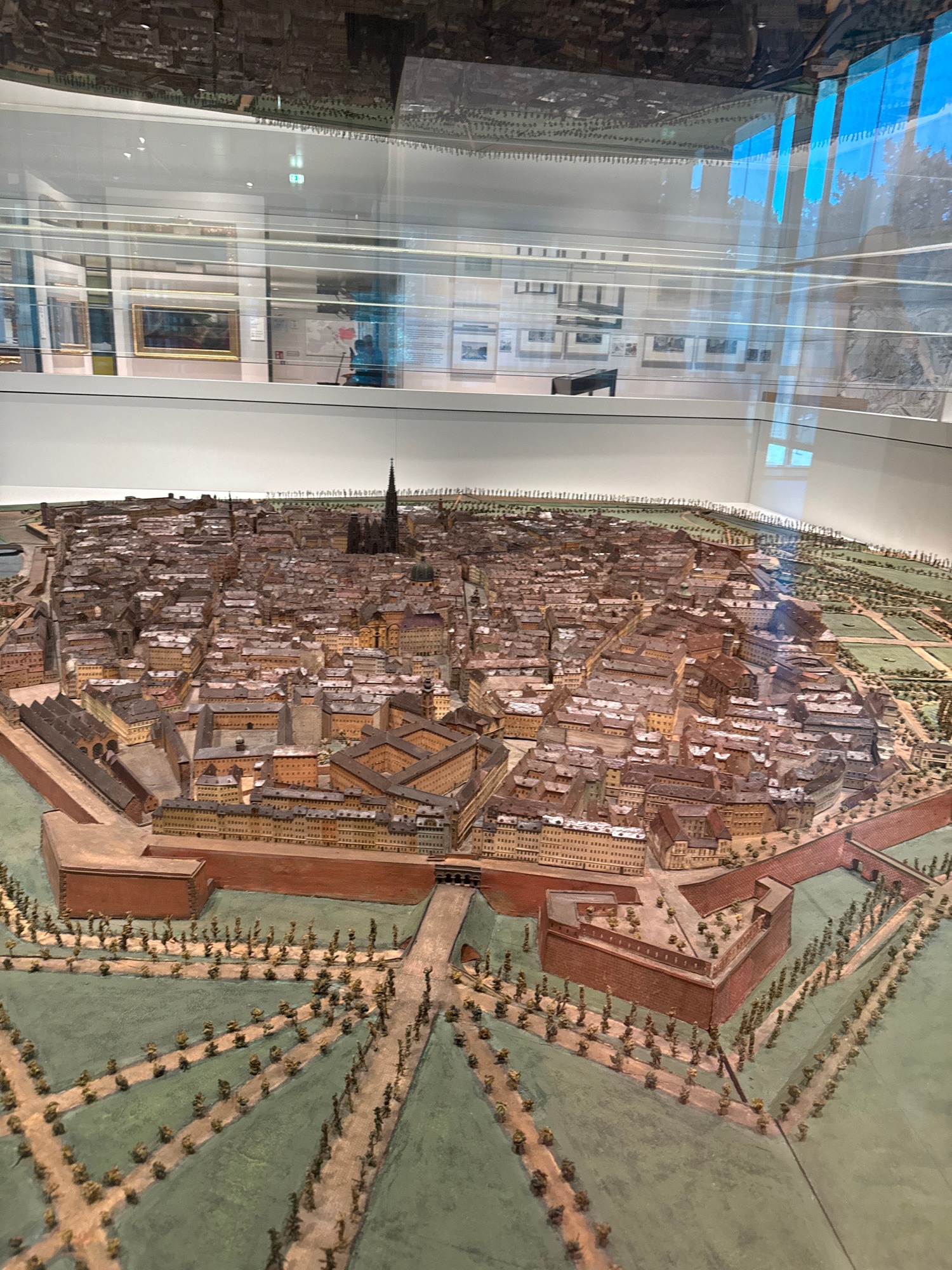
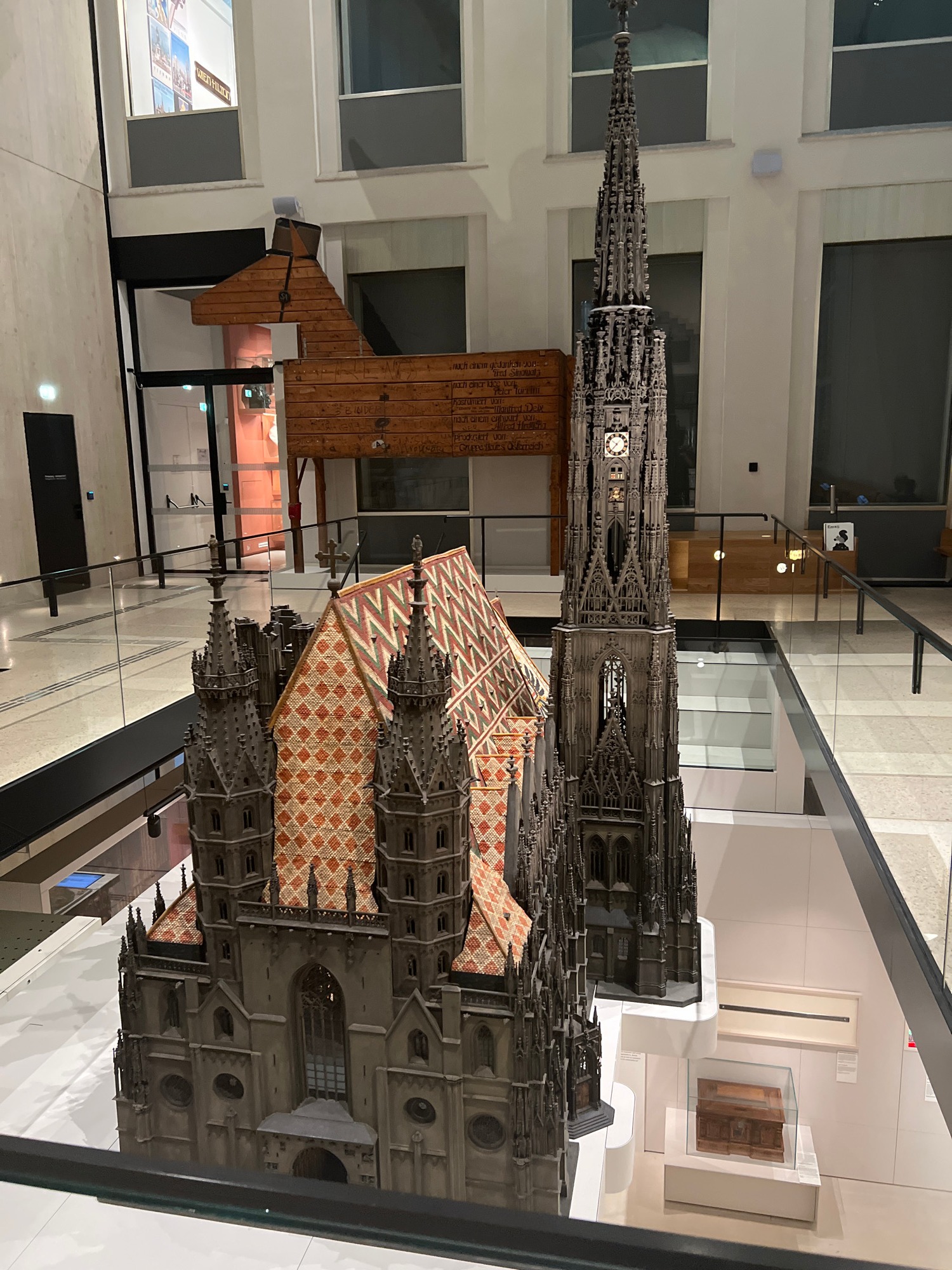
The image shows a detailed architectural model of a city, likely Vienna, Austria, as suggested by the location context. The model depicts a dense urban area with a river winding through it, bordered by intricately designed buildings and what appear to be formal gardens. The buildings are rendered in shades of brown and grey, suggesting older architecture with tiled roofs and courtyards. Streets are laid out in a grid-like pattern in some areas, while others exhibit a more organic, winding street plan.
The model is displayed behind glass, as evidenced by reflections of lights and the surrounding display environment, including the reddish-brown frame of the display case and a glimpse of what might be another exhibit to the left. The lighting in the scene is artificial, creating bright spots on the model's surface and reflections on the glass. There is no indication of people actively participating in any event within the model itself. The focus is entirely on the static representation of the city.
Notable details include the presence of a large body of water, likely a river, which is a significant feature of the cityscape. The architectural style of the buildings suggests a historical period, possibly pre-20th century. The formal gardens are meticulously detailed with pathways, water features, and manicured greenery. The overall impression is one of a preserved historical urban landscape. No visible text is present in the image that is clearly legible. The setting appears to be a museum or exhibition space, given the presentation of the model.
Vienna, Austria · Jun 25, 2026, 3:05 PM · 3.8k attention
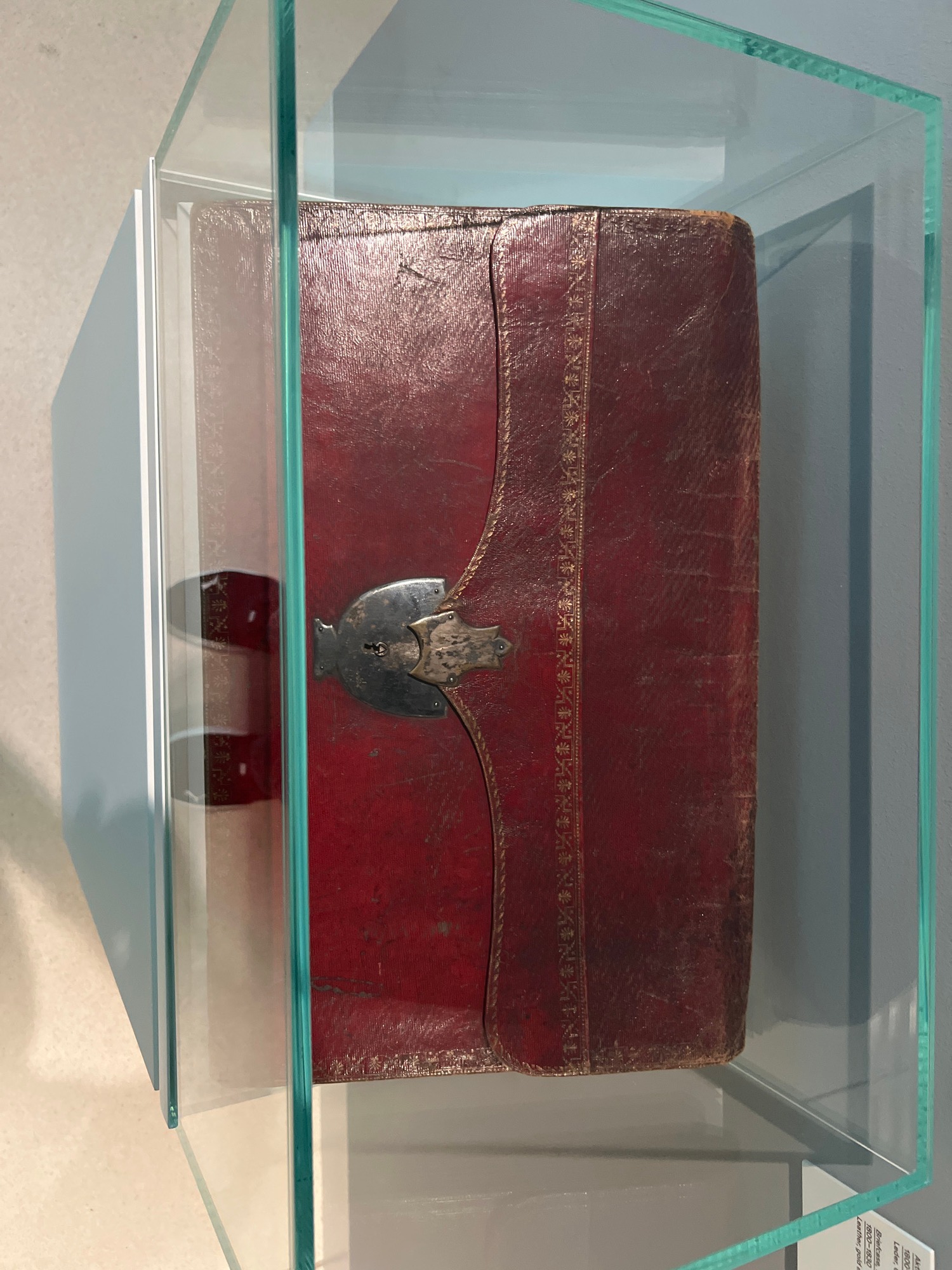
This media file shows a red leather briefcase with ornate gold tooling along the top edge of its flap and a decorative metal clasp in the center. The briefcase appears to be old, with signs of wear and creasing on the leather. It is displayed inside a glass case, likely in a museum or exhibition. The glass case is lit, casting reflections on the briefcase and the surrounding environment. A white label with text is partially visible to the right of the briefcase, behind the glass. Some of the visible text on the label includes "Akt-", "1800–1830", "Leder, g", and "Briefcase, 1800–1830, Leather, gold em". The background is a muted gray wall. The overall setting suggests a historical exhibition of artifacts, possibly in Vienna, Austria, given the location context. No people are visible in the image. The lighting suggests an indoor environment, likely during daytime.
Vienna, Austria · Jun 25, 2026, 3:24 PM · 3.8k attention
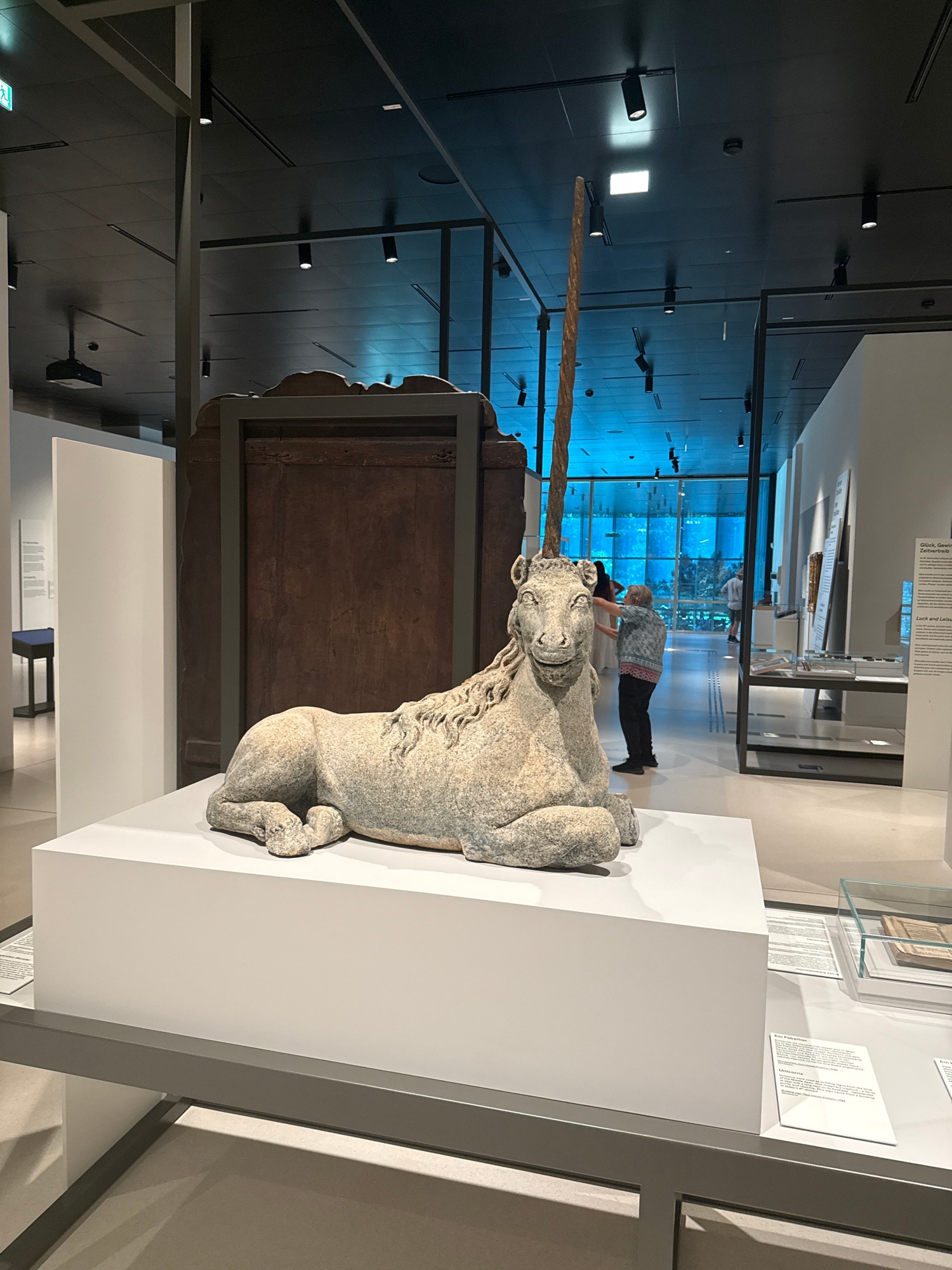
This image depicts a museum exhibit, likely in Vienna, Austria, featuring a stone sculpture of a creature with a horn, possibly a unicorn or a narwhal, displayed on a white pedestal. The sculpture has a detailed, rough-hewn texture. A long, twisted rope-like object extends from the sculpture's forehead, adding to its fantastical appearance.
In the background, through large glass windows, an outdoor scene with trees and sunlight is visible, suggesting it's daytime. Inside the museum, the lighting is dim with spotlights illuminating the exhibits. A dark, wooden structure, possibly part of another exhibit or an architectural element, is visible behind the sculpture.
Two individuals are present in the exhibit space. One person, wearing dark pants and a patterned shirt, is bent over in front of the sculpture, seemingly examining it closely. Another person, partially visible, is also in the background, looking towards the display. The overall atmosphere appears to be calm and contemplative, typical of a museum setting. Visible text appears on informational plaques mounted on the walls, but the content is too small to read. The modern architecture of the museum, with its clean lines and lighting design, is evident.
Vienna, Austria · Jun 25, 2026, 3:13 PM · 3.8k attention
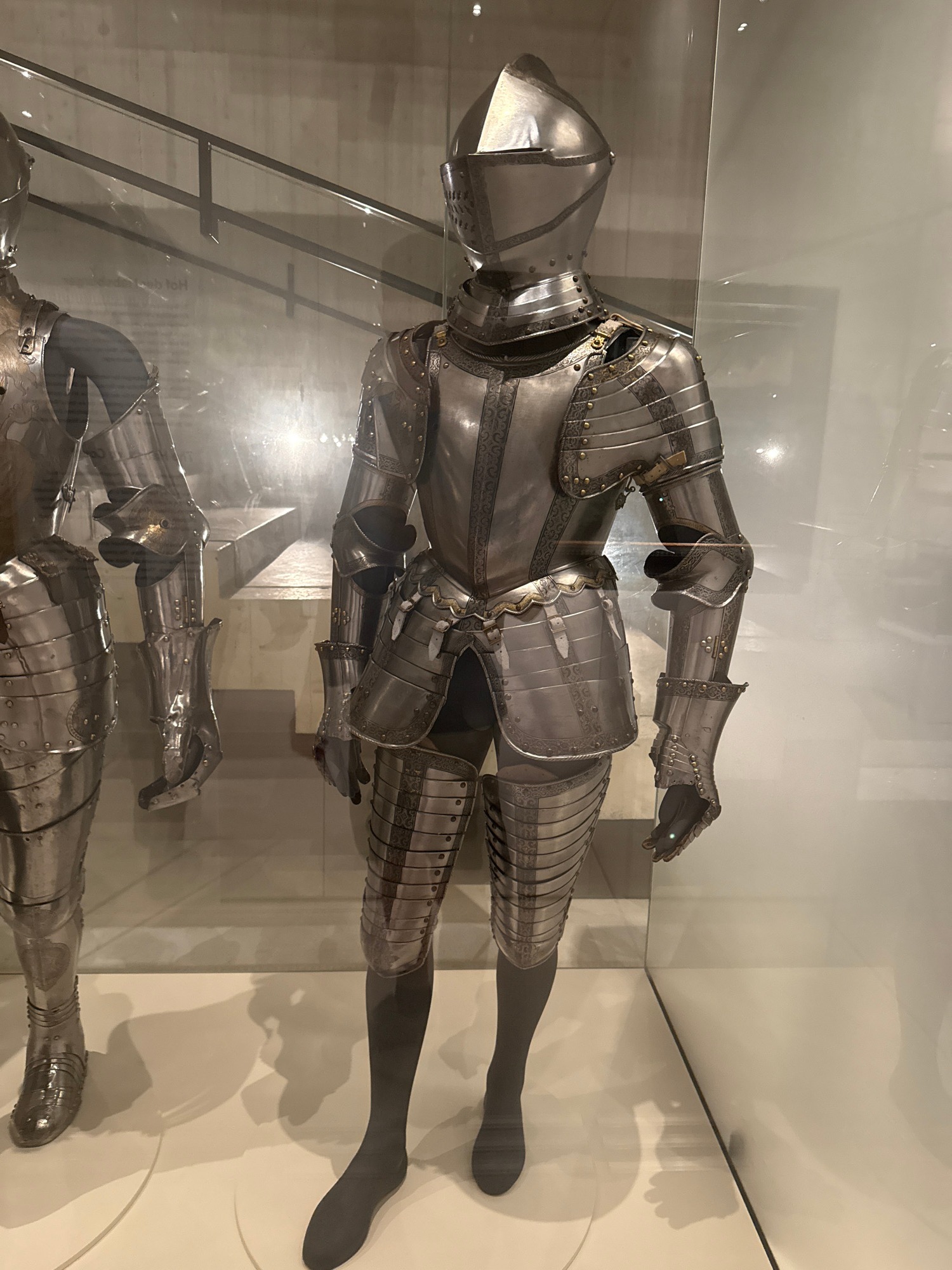
This is a photograph of full suits of armor on display, likely in a museum. The armor appears to be made of polished metal and is designed to protect a full human body. The suit in the foreground is more centrally positioned and is intricately decorated with engraved patterns. It features a closed helmet, a segmented cuirass, pauldrons, vambraces, gauntlets, and leg armor. The figure is wearing dark stockings. To the left, another suit of armor is partially visible, also appearing to be made of polished metal. The suits are standing upright, suggesting they are displayed on mannequins. They are housed within a glass enclosure, indicated by reflections on the surface. The background is muted, with some architectural elements and lighting visible. The overall impression is that of a historical exhibit showcasing medieval or Renaissance combat attire. The context suggests this scene is located in the city of Vienna, Austria.
Vienna, Austria · Jun 25, 2026, 3:20 PM · 3.7k attention
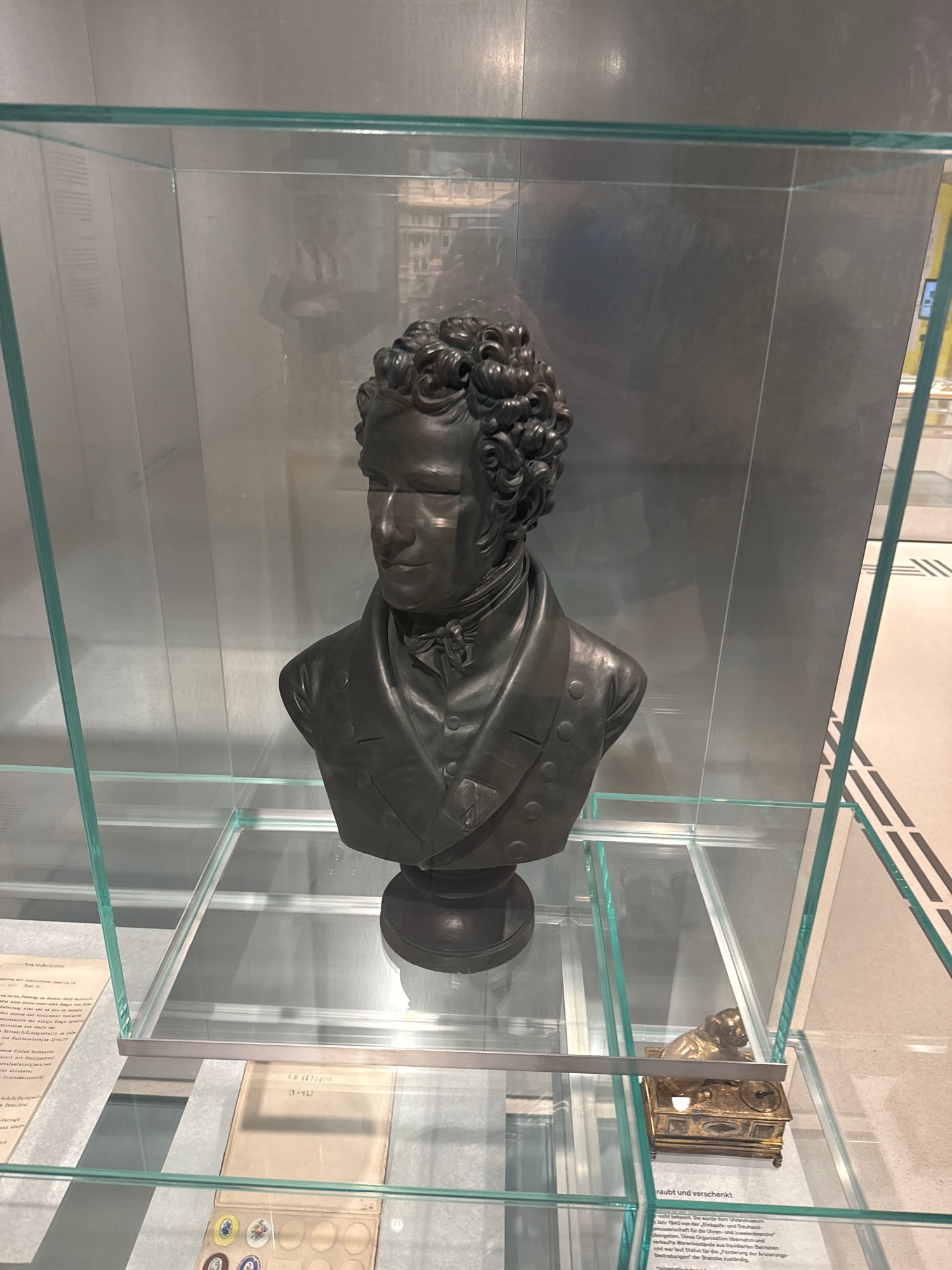
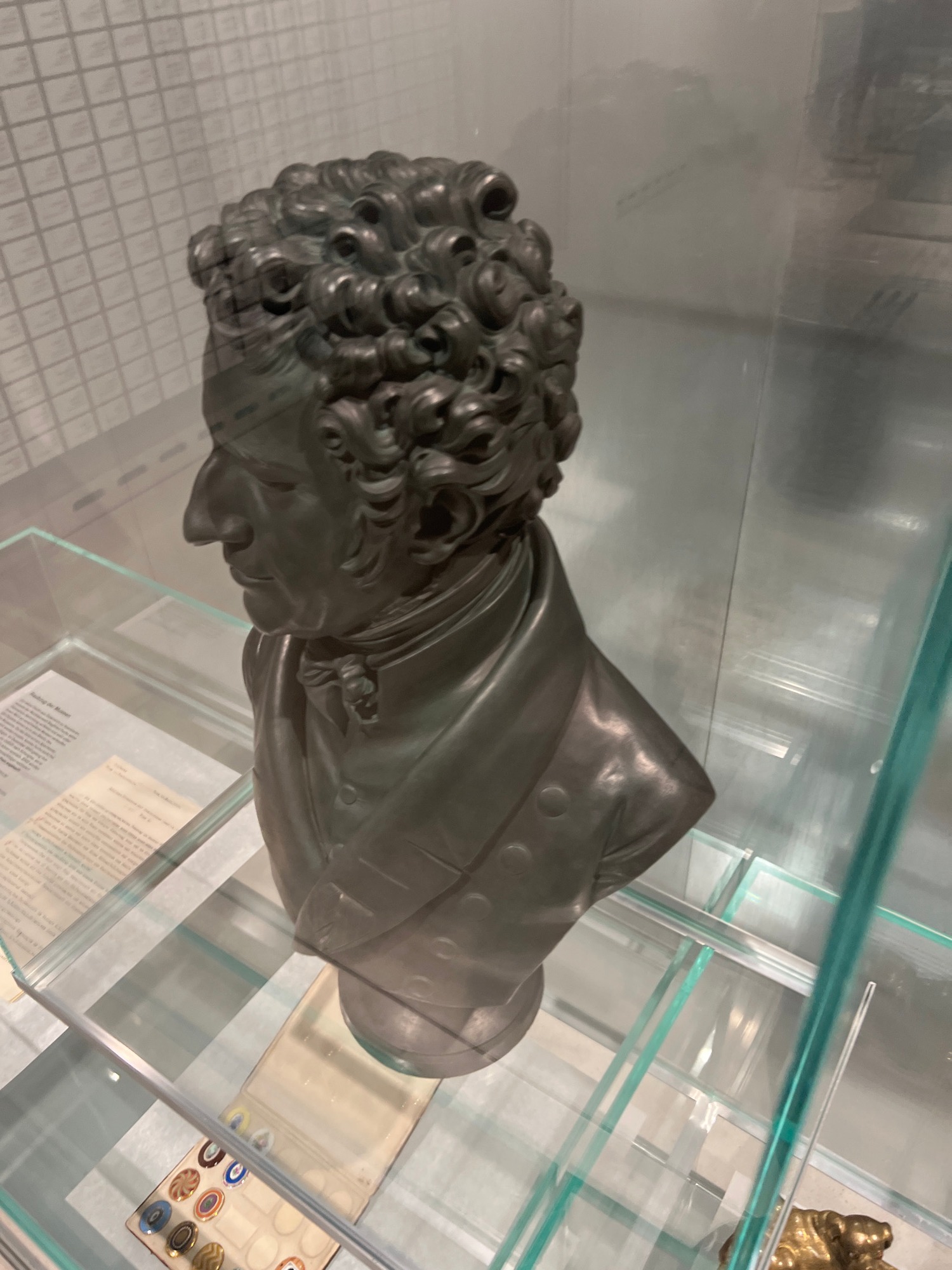
This media file is a photograph of a museum exhibit, featuring a bronze bust of a man with curly hair and a military-style jacket. The bust is displayed in a glass case. To the right of the bust, also within a glass case, is a small, ornate golden object that appears to be a clock or reliquary, with intricate carvings and what looks like a face or figure on top. Below these items, there are framed documents and small display cases with what appear to be medals or enamel pins. The background of the exhibit is a dark, reflective surface, and the top of the display case shows the museum's lighting. The scene is indoors, likely in a museum or gallery setting, with a focus on historical artifacts. Text is visible on a document to the right of the golden object, with some legible words in German. The overall impression is of a curated historical display.
Vienna, Austria · Jun 25, 2026, 3:44 PM · 3.7k attention
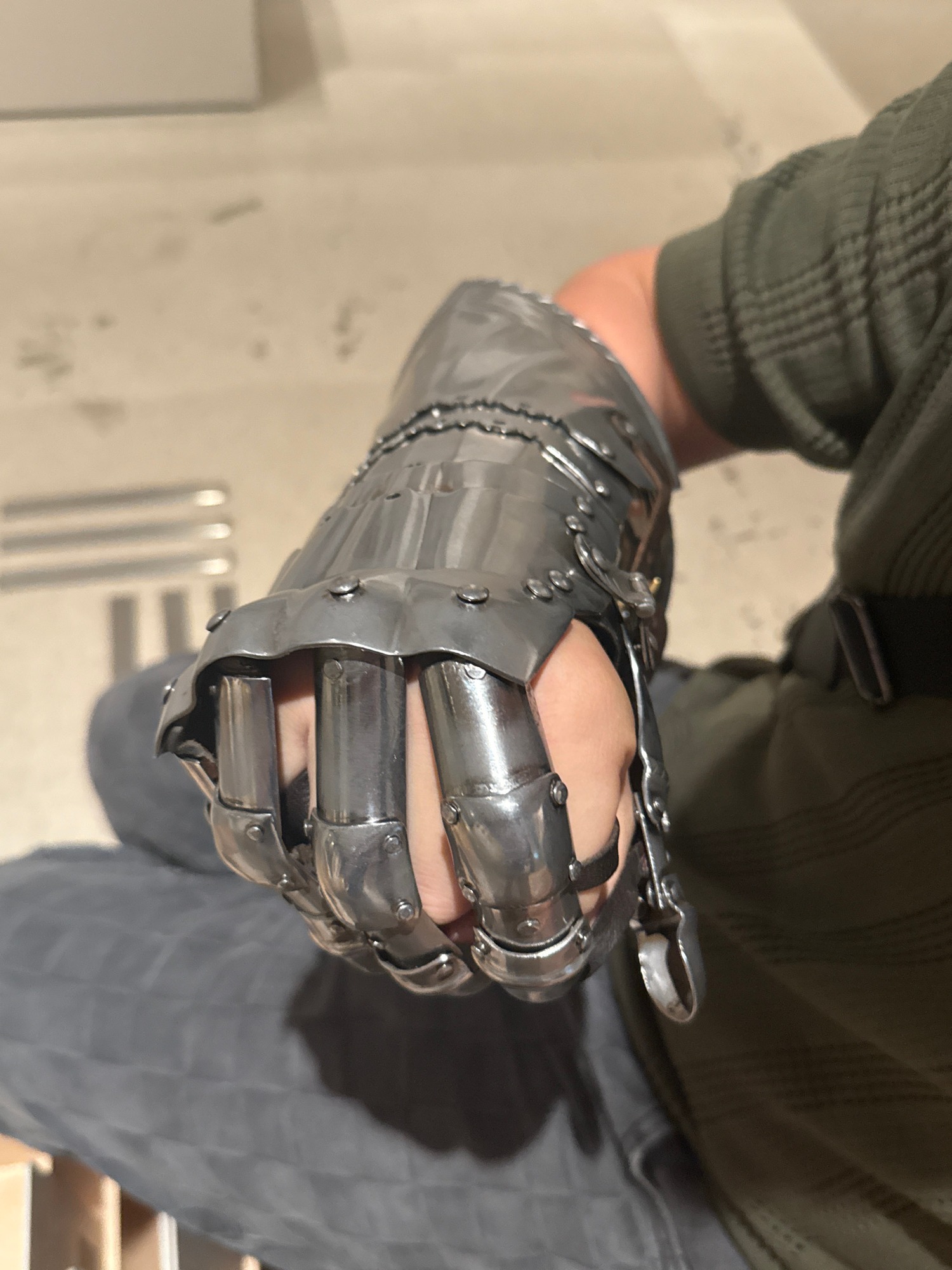
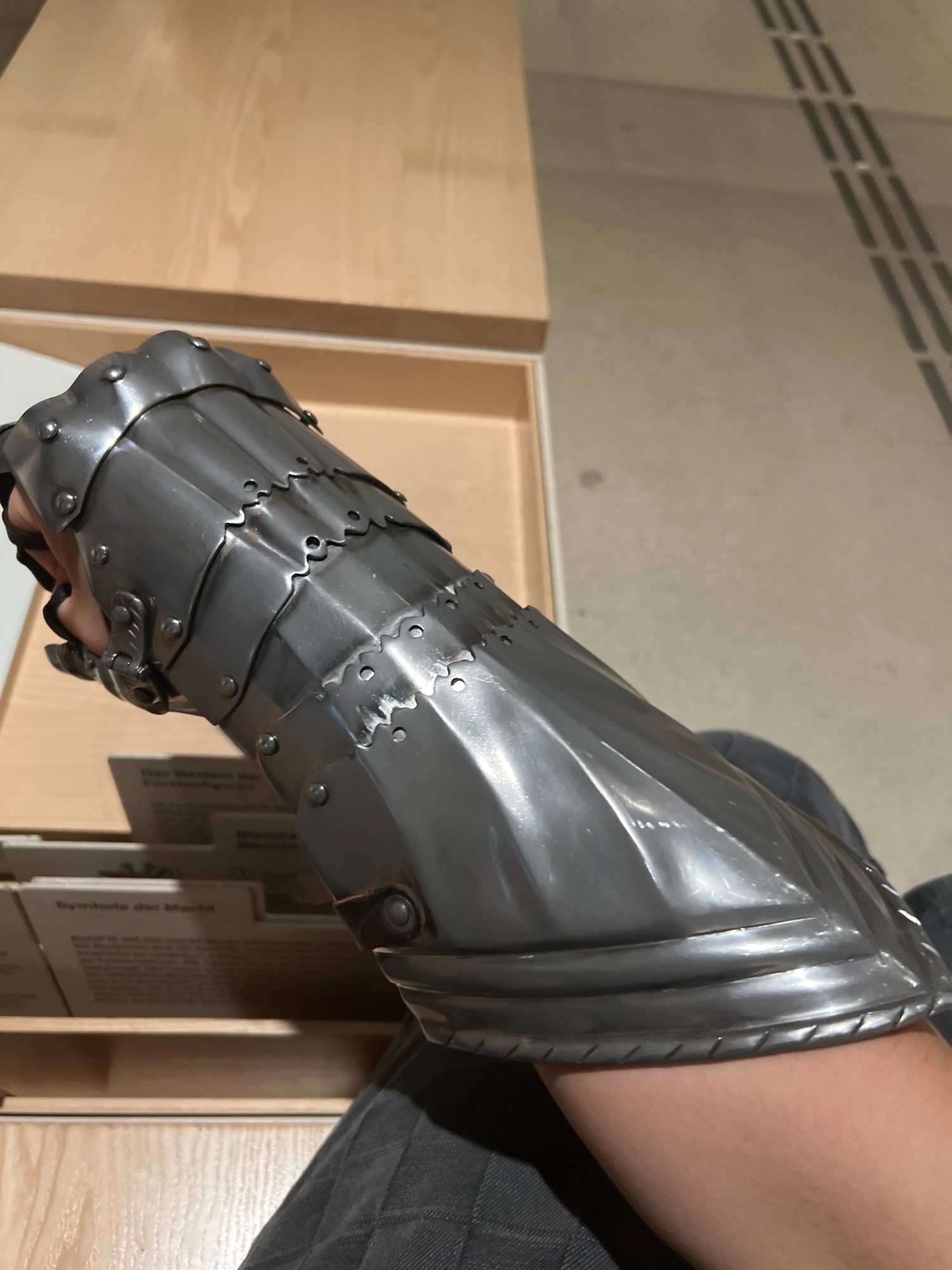
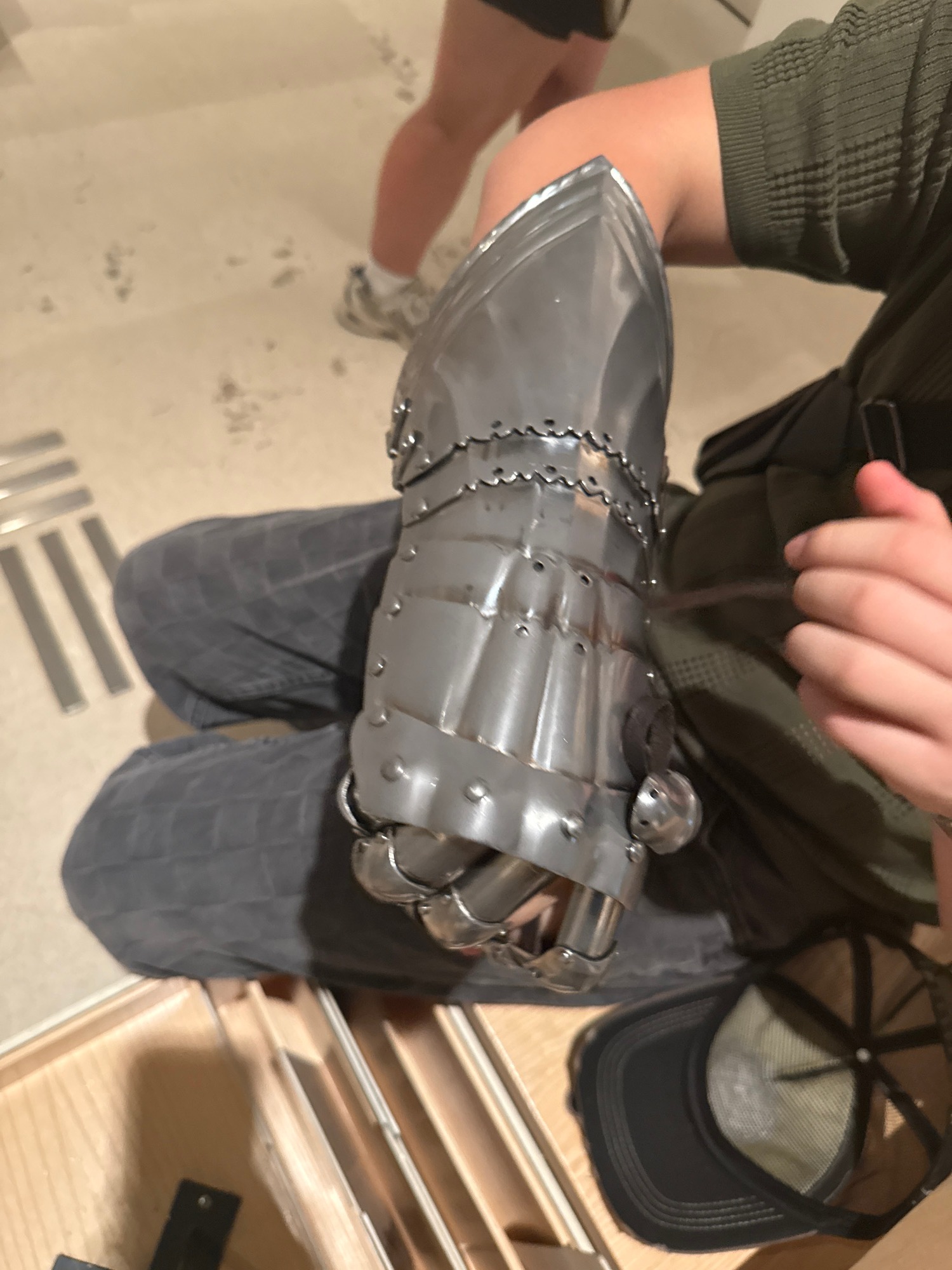
The image shows a person wearing a metallic gauntlet on their right hand. The gauntlet is intricately constructed with overlapping plates for each finger and the back of the hand, suggesting it is for historical reenactment or costume purposes. The person is wearing a green, ribbed long-sleeved shirt and grey pants, which are casual attire. The background is out of focus, but appears to be an indoor setting with a light-colored wall and floor. There are some faint vertical lines in the lower left corner, possibly part of shelving or furniture. The lighting suggests it is daytime. The image focuses on the gauntlet and the hand inside it, with the person's upper body visible. The overall impression is one of detail and craftsmanship of the gauntlet. No text is visible in the image.
Vienna, Austria · Jun 25, 2026, 3:29 PM · 3.6k attention
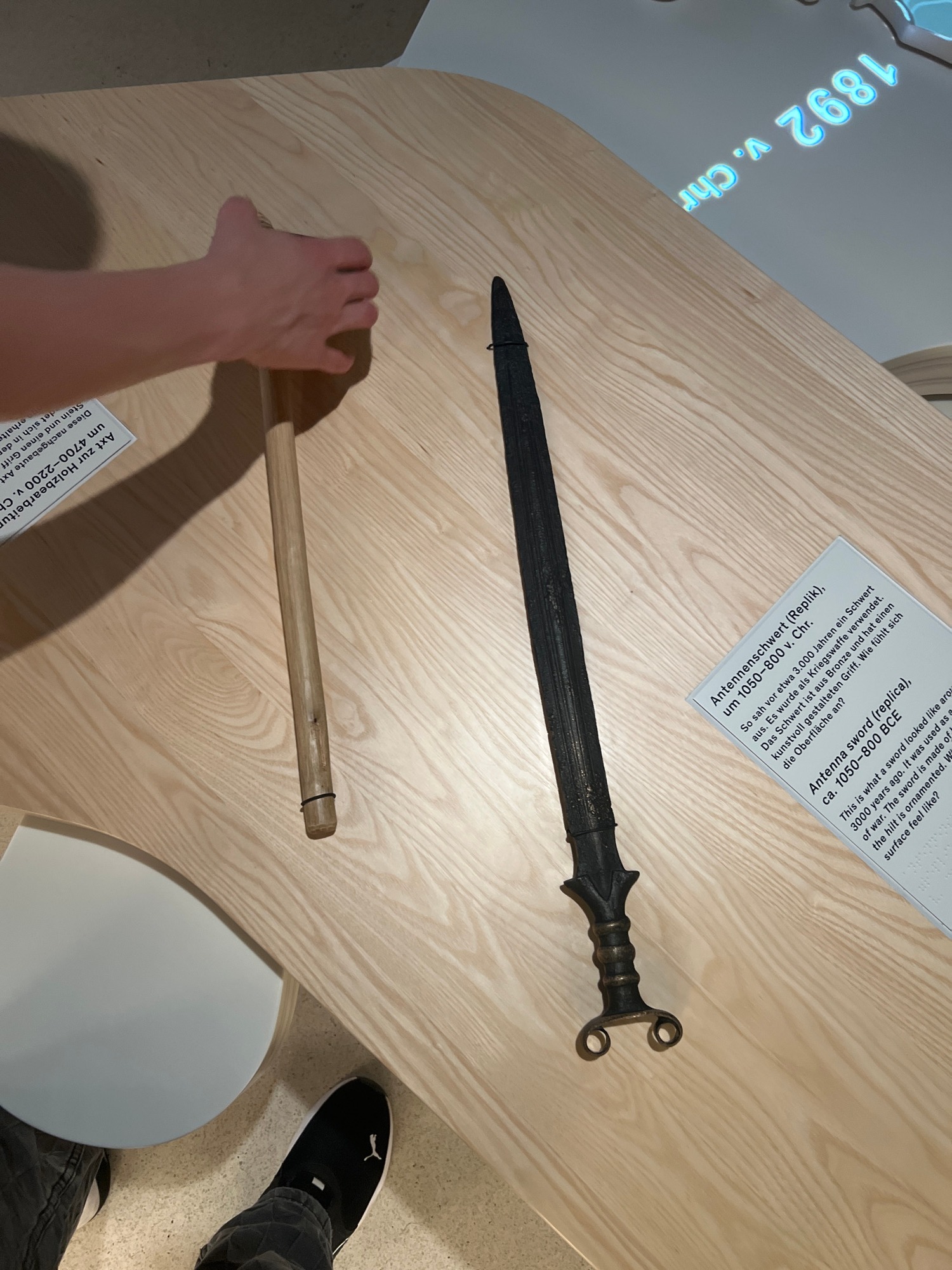
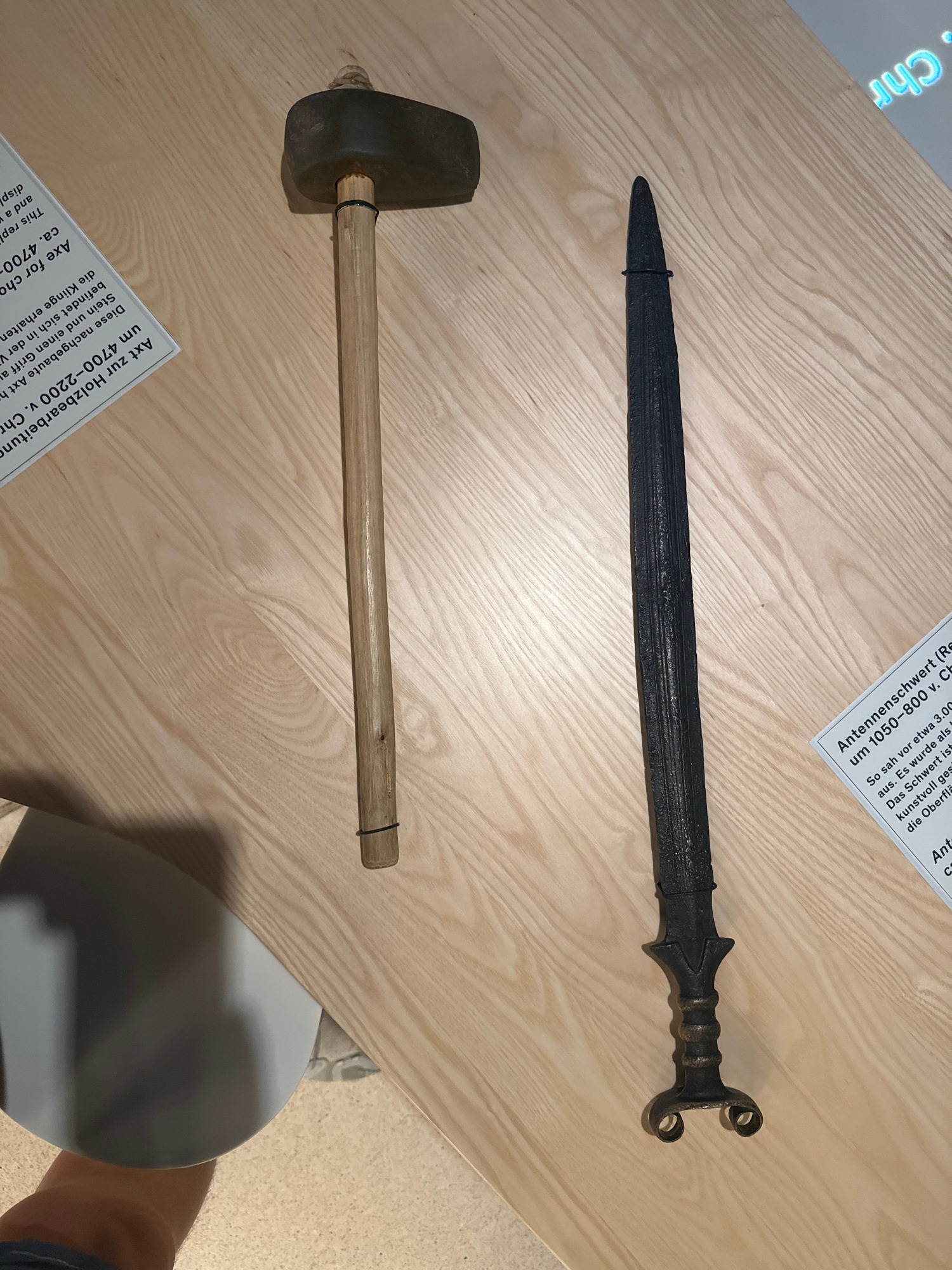
This media file depicts a close-up, overhead view of a wooden table in what appears to be a museum setting, possibly in Vienna, Austria. The table is laid out with historical artifacts and a small informational display.
The primary objects are two replicas of ancient weaponry. The most prominent is a dark, metal replica of an "Antenna sword," dating from approximately 1050-800 BCE. Its hilt is intricately designed with curled ends, and the blade is dark and shows some texture. Beside it lies a wooden shaft, which is part of a replica "Axt zur Holzbearbeitung" (axe for woodworking), dating from around 4700-2200 BCE. A person's hand is visible, gently touching the wooden shaft of the axe.
An informational placard, written in both German and English, provides details about the artifacts. The English text reads: "Antenna sword (replica), ca. 1050-800 BCE. This is what a sword looked like around 3000 years ago. It was used as a weapon of war. The sword is made of bronze and the hilt is ornamented. What does the surface feel like?" The German text offers similar information about the sword and the axe.
In the background, a projected image displays the text "1892 v. Chr," indicating a date. The floor appears to be concrete, and a light gray, curved object, possibly a part of a display or seating, is visible in the lower right corner. A person's feet, wearing black athletic shoes and dark pants, are also visible in the lower right. The lighting suggests an indoor environment, likely well-lit for display purposes. The scene conveys a sense of historical exploration and learning.
Vienna, Austria · Jun 25, 2026, 3:33 PM · 3.5k attention
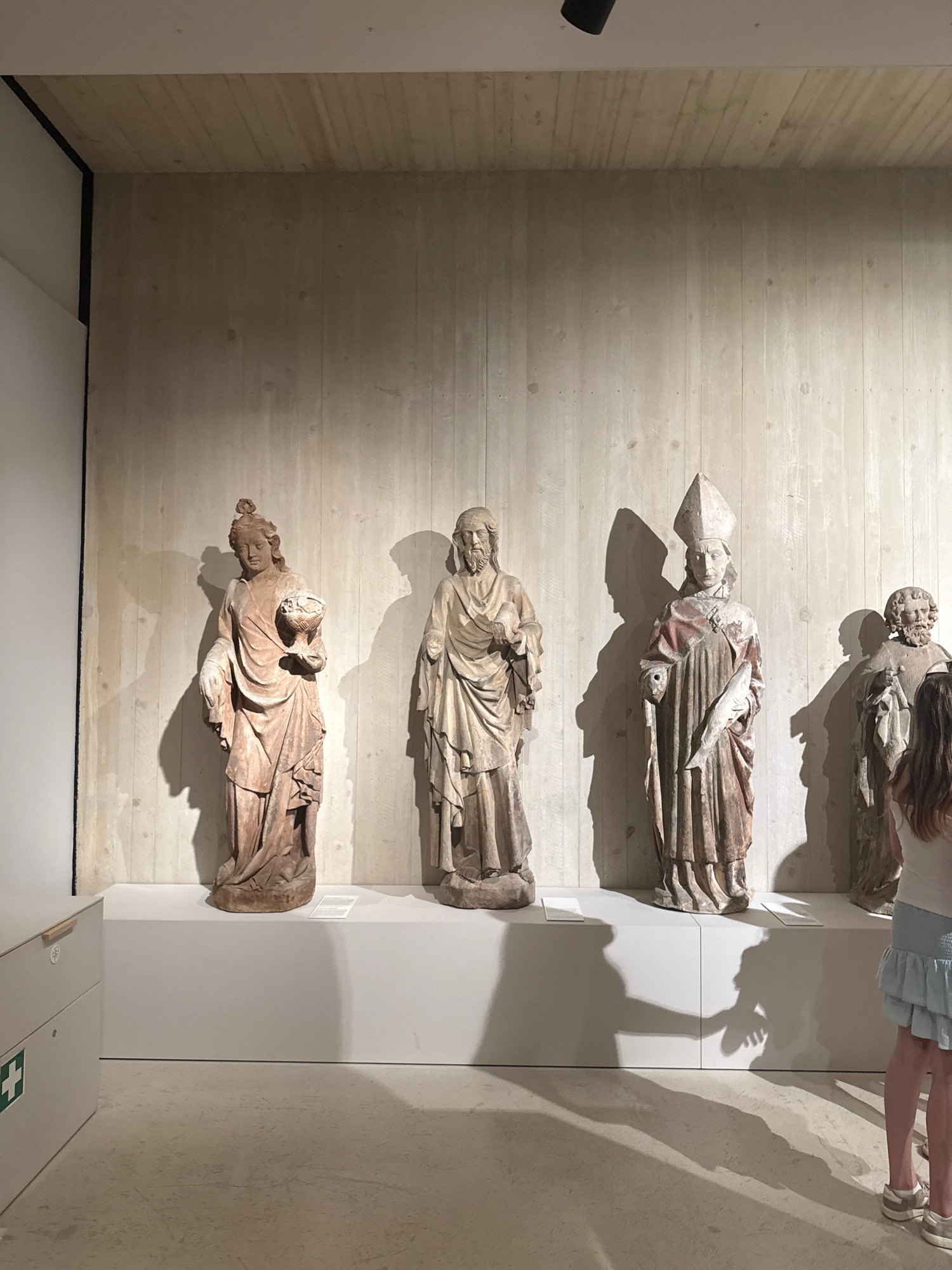
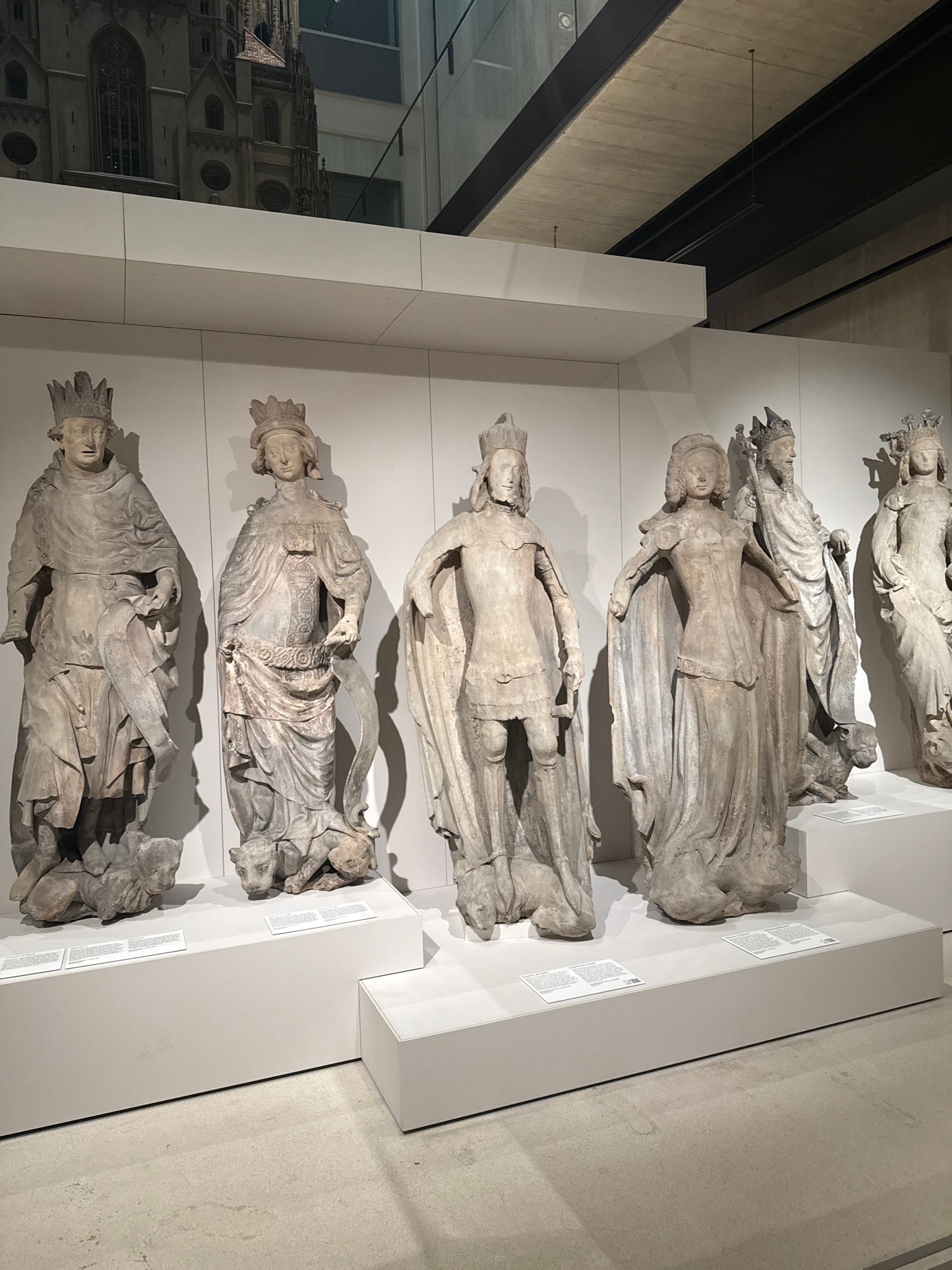
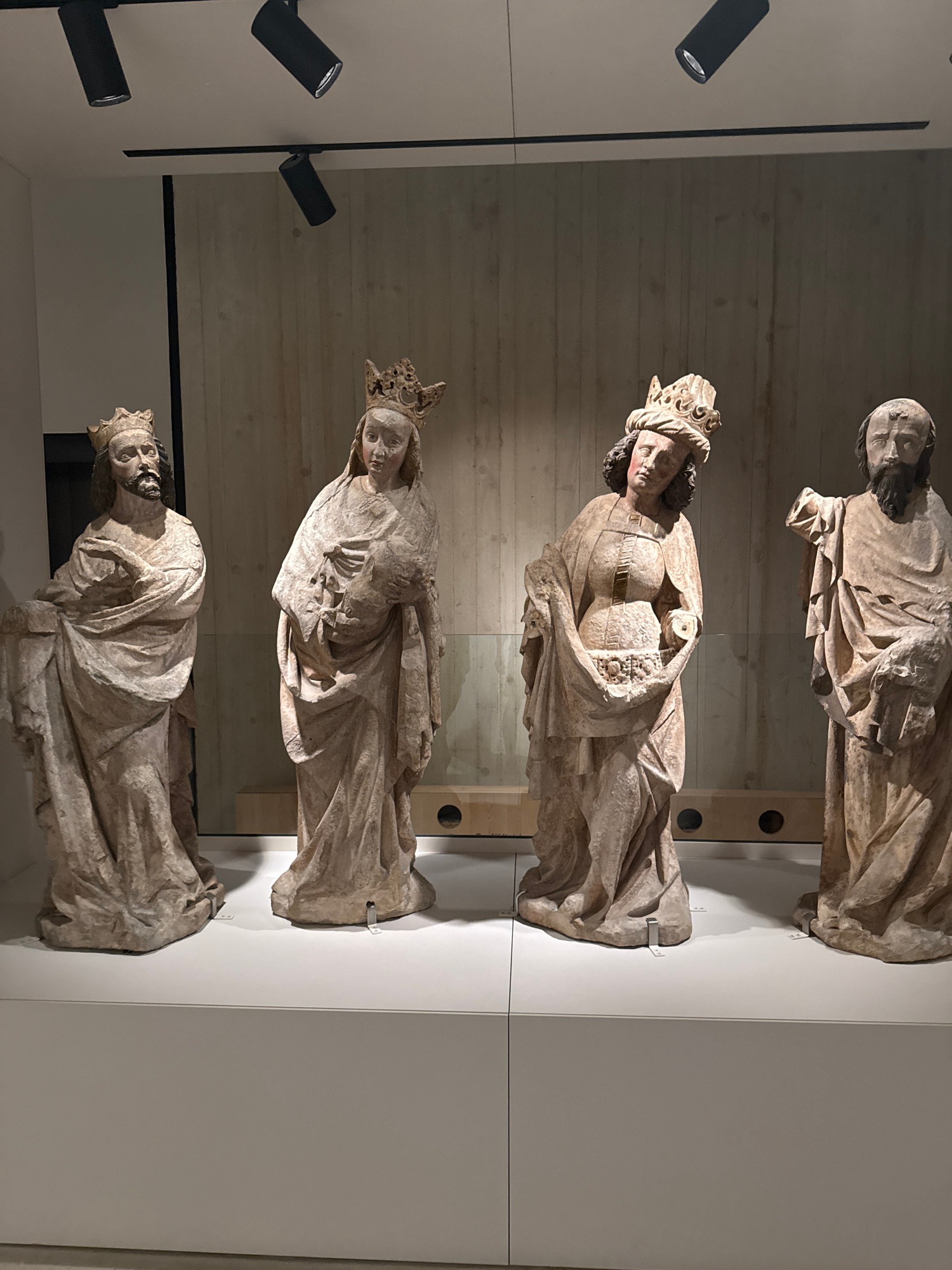
This image shows a museum exhibit featuring several stone statues of figures, likely religious or historical in nature. The statues are displayed on a white platform against a textured concrete wall. The lighting creates strong shadows, suggesting an indoor setting, possibly a museum.
There are at least four statues visible, arranged vertically in the frame. The uppermost statue is partially obscured but appears to be a person with long hair. Below this, a statue wears a pointed hat and religious robes, with hints of red coloring on its garment. The third statue down is a standing figure in draped clothing. The lowest visible statue is also a standing figure, carved in stone, with a serene expression.
In the upper right corner of the image, the legs and feet of a person are visible, wearing a white top and light blue skirt, along with white sneakers. This person is casting a distinct shadow on the wall, indicating their presence near the display. The shadow appears to be a raised hand, possibly interacting with the exhibit or posing for a photograph.
The setting appears to be a modern museum with a focus on historical artifacts. The concrete wall has a distinct horizontal line pattern, likely from the formwork used during its construction. The overall atmosphere is quiet and contemplative, typical of a museum environment. There is no visible text in the image, except for a small green cross symbol on a white box in the bottom right corner, which might indicate a first-aid station. The context suggests this location is in Vienna, Austria.
Vienna, Austria · Jun 25, 2026, 3:32 PM · 3.4k attention
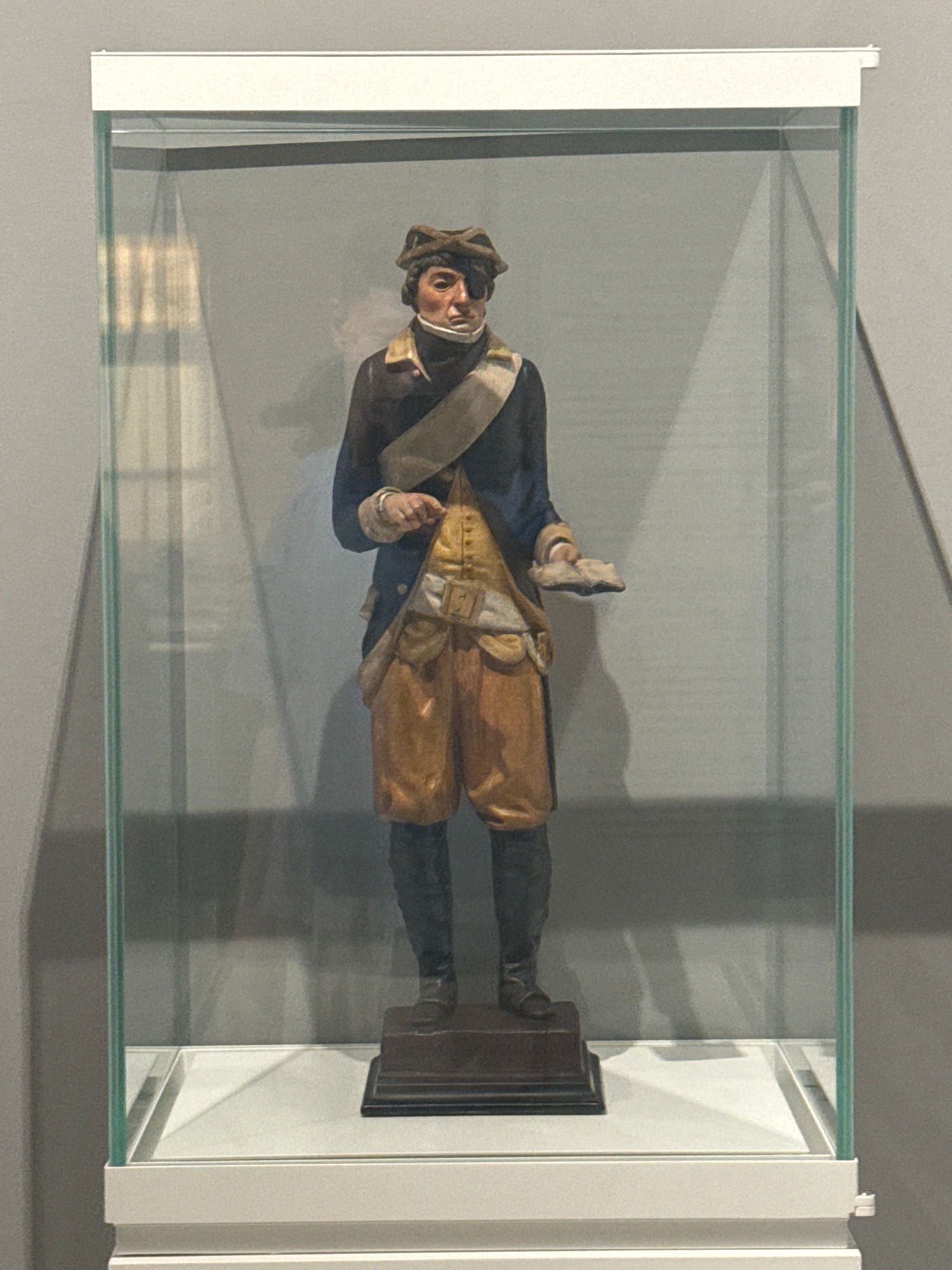
The media file shows a full-body porcelain figurine of a man in military uniform, standing inside a glass display case. The figurine is depicted from a slightly elevated side view, and it is oriented horizontally within the frame. The man wears a dark blue jacket with gold trim and buttons, a light-colored sash across his chest, and tan breeches. He also has a dark hat and appears to be wearing a cravat. His left hand is raised, and his right hand is near his side.
The figurine is mounted on a dark rectangular base. The display case has white framing and clear glass. Behind the figurine, the background is a plain, neutral gray wall, which casts subtle shadows from the figurine. Reflections of light are visible on the glass, creating horizontal bands of lighter and darker areas.
The overall presentation suggests an exhibit in a museum or gallery. The context provided indicates the location as Vienna, Austria. There is no visible text within the image, and the scene appears to be indoors, likely in a controlled environment. The lighting is even, and there are no indicators of time of day or weather conditions. The figurine itself is detailed and appears to be a representation of a historical military figure.
Vienna, Austria · Jun 25, 2026, 3:01 PM · 2.9k attention
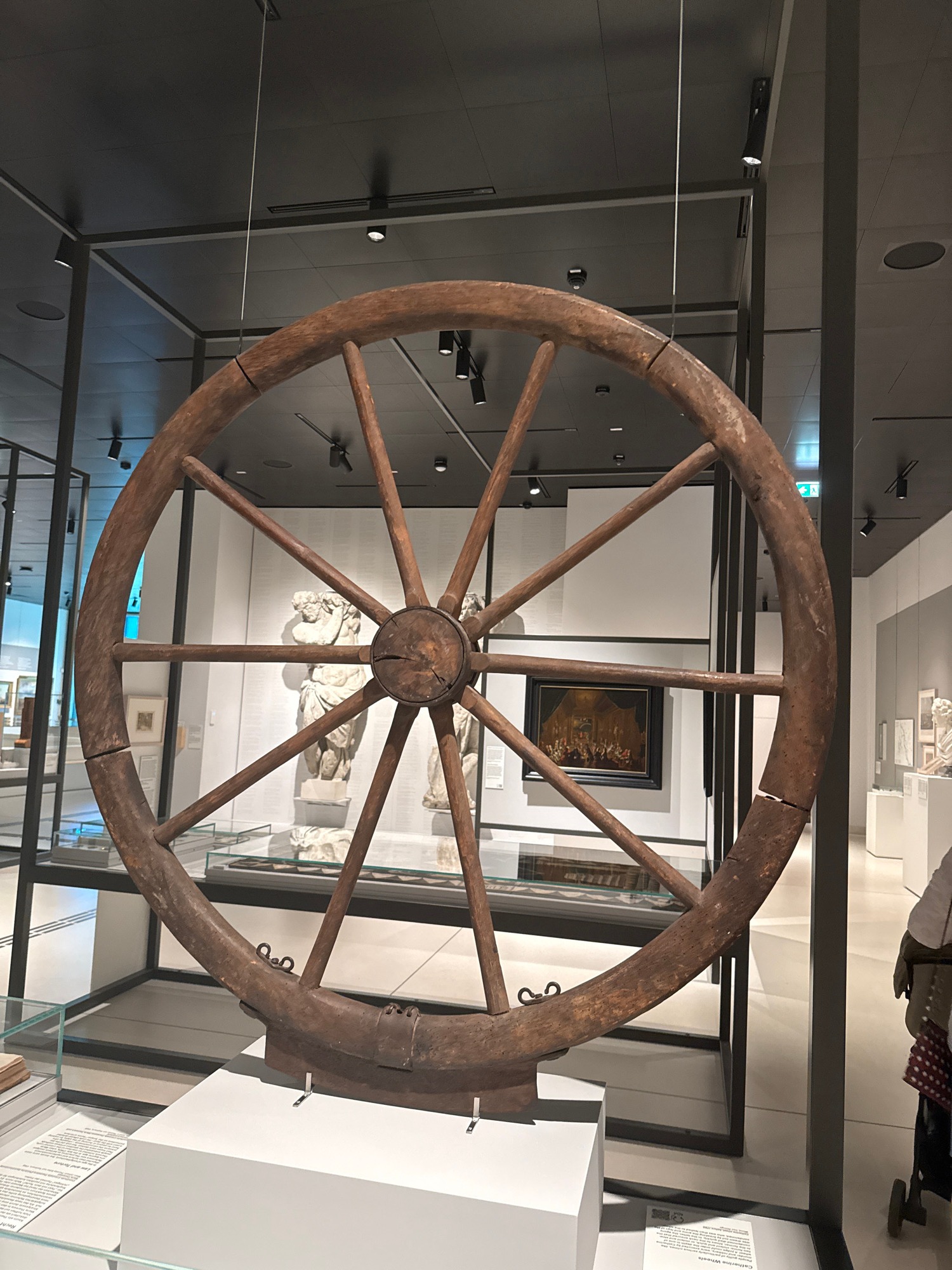
An oversized, weathered wooden wagon wheel is displayed on a white pedestal in a museum exhibition hall in Vienna, Austria. The wheel, with its spokes and rim, occupies the central foreground of the image. The background reveals museum display cases containing sculptures and paintings, as well as architectural elements of the museum, including track lighting and suspended cables. A partial view of a person, dressed in a white shirt and patterned skirt, is visible on the right side of the frame, near a display. The lighting is dim, typical of a museum environment, highlighting the artifacts on display.
Vienna, Austria · Jun 25, 2026, 3:12 PM · 2.0k attention
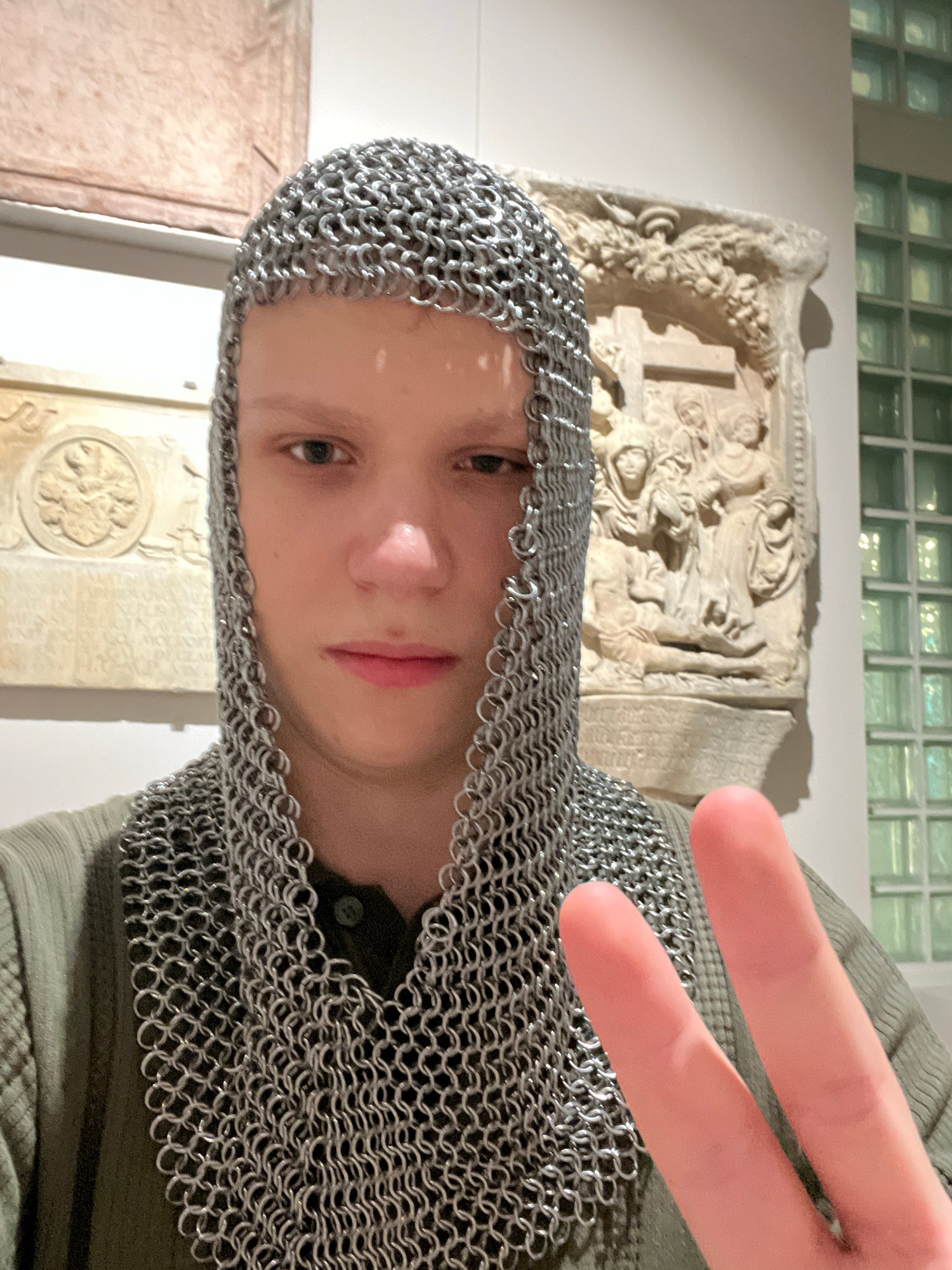
The media file features a person wearing a chainmail coif, reminiscent of historical armor. The person's face is partially visible, with their eyes and lips showing. They are making a peace sign with their right hand, which is extended towards the camera.
In the background, there are several artifacts that appear to be stone carvings or sculptures. One carving, in particular, is prominent and depicts figures in what seems to be a narrative scene. The setting suggests a museum or historical exhibition, with the lighting and display of the artifacts contributing to this impression. The environment is indoors, with a wall behind the artifacts and a tiled ceiling structure visible at the top of the image.
The person is wearing a green garment beneath the chainmail. The overall mood is playful and perhaps a bit theatrical, given the costume and the gesture. The image is oriented vertically, with the person's head tilted downwards. No visible text is present in the media file. The location context is Vienna, Austria, which might imply the artifacts are of Austrian historical significance.
Vienna, Austria · Jun 25, 2026, 3:31 PM · 2.0k attention
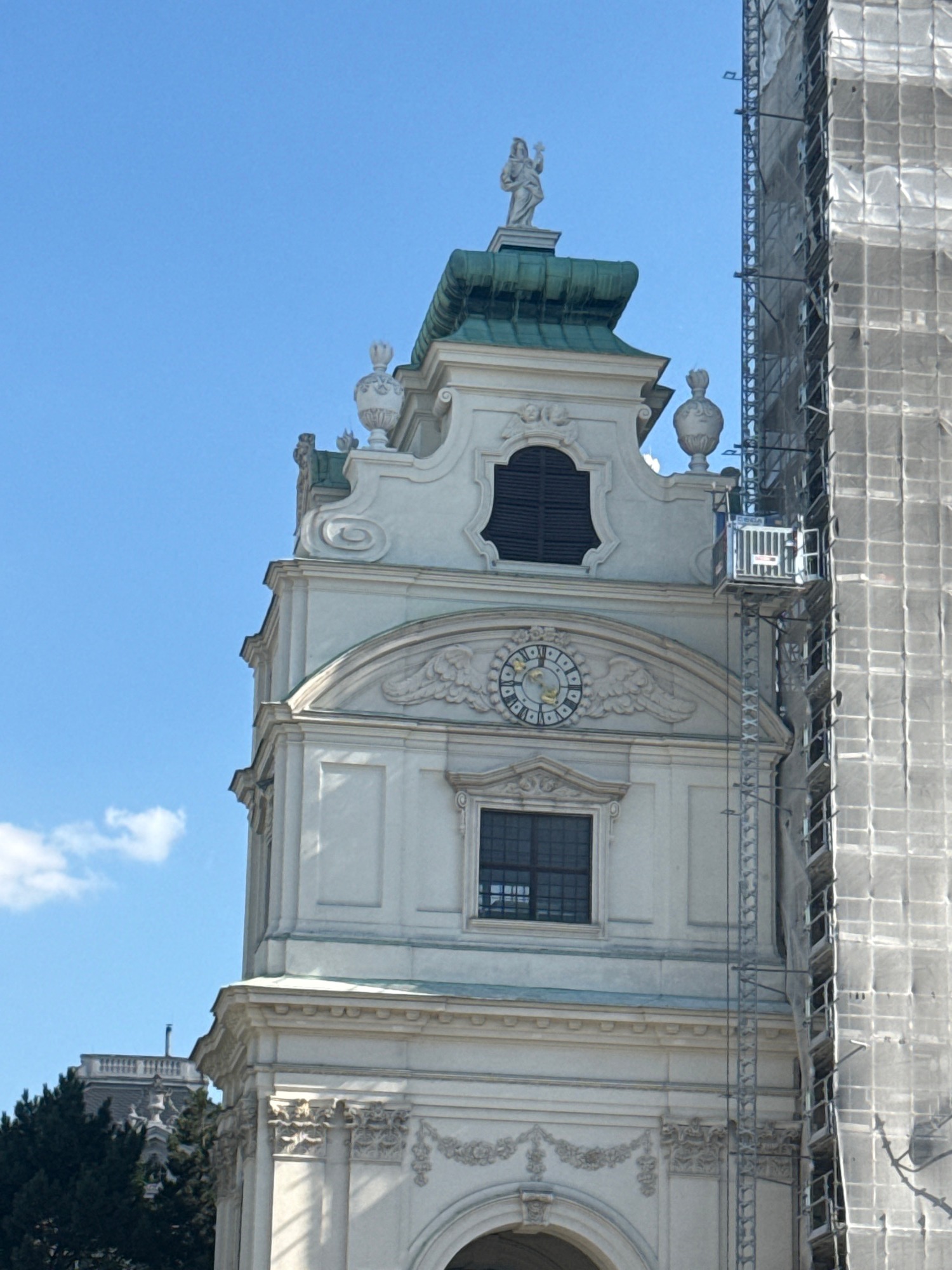
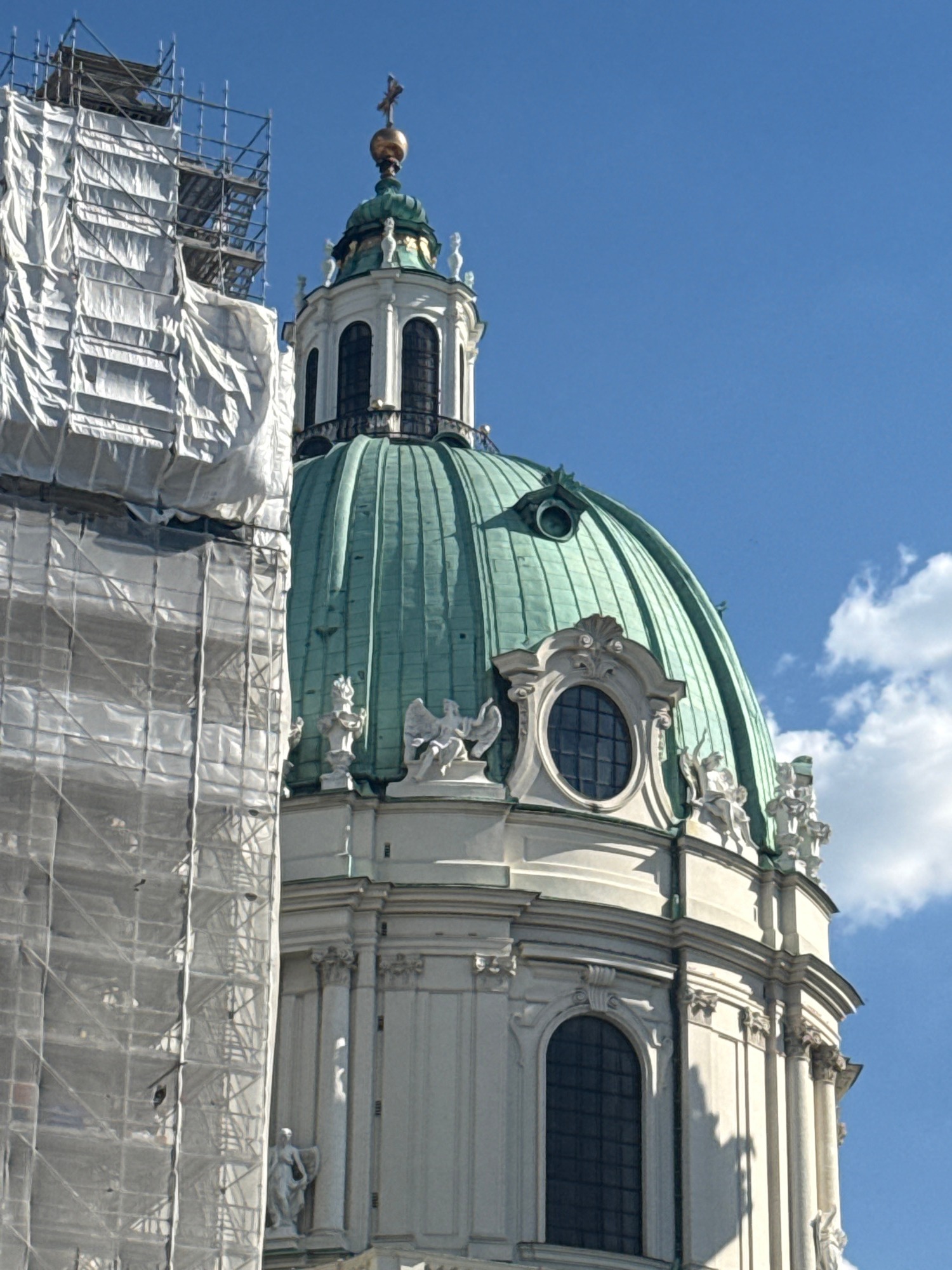
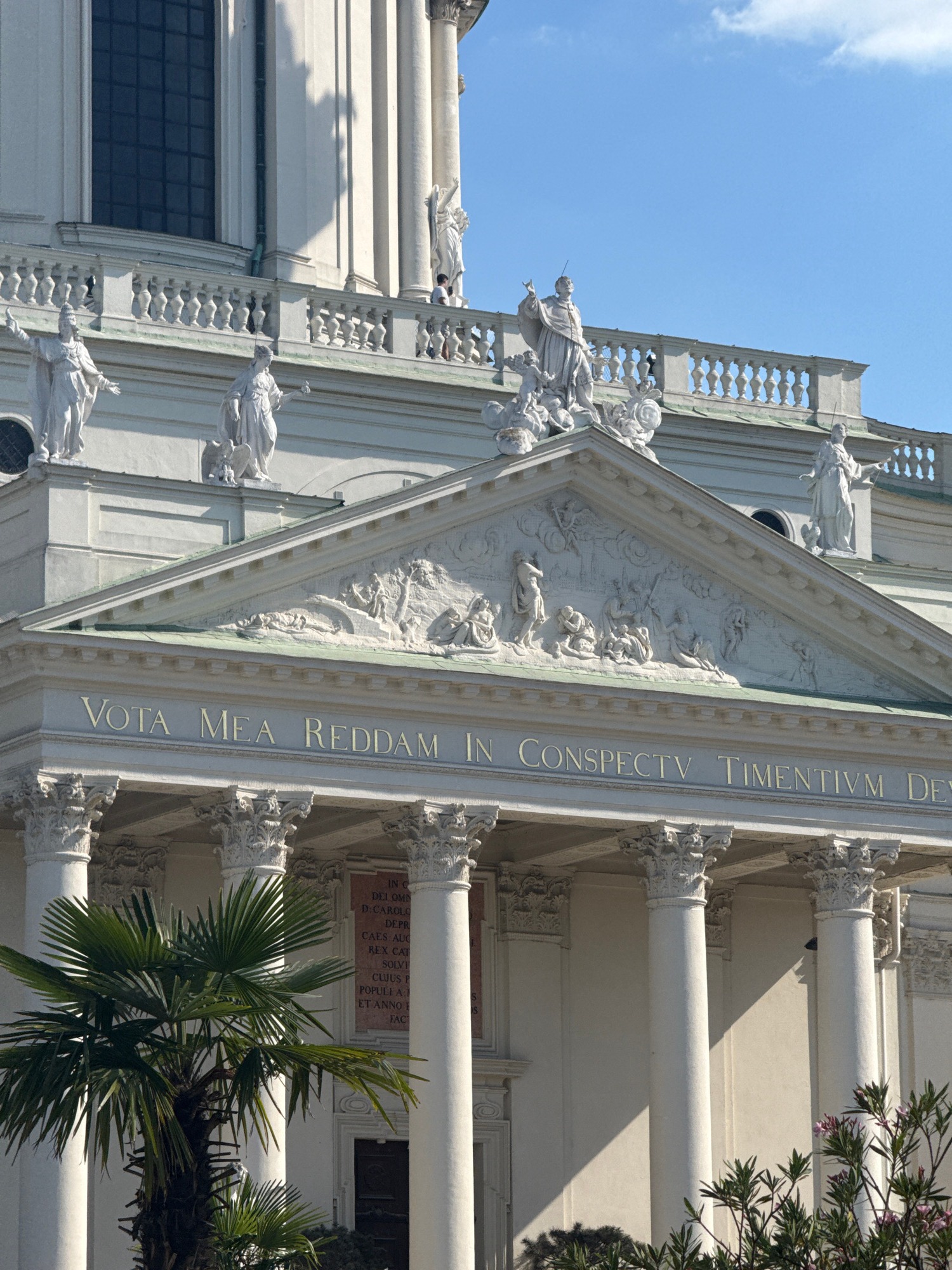
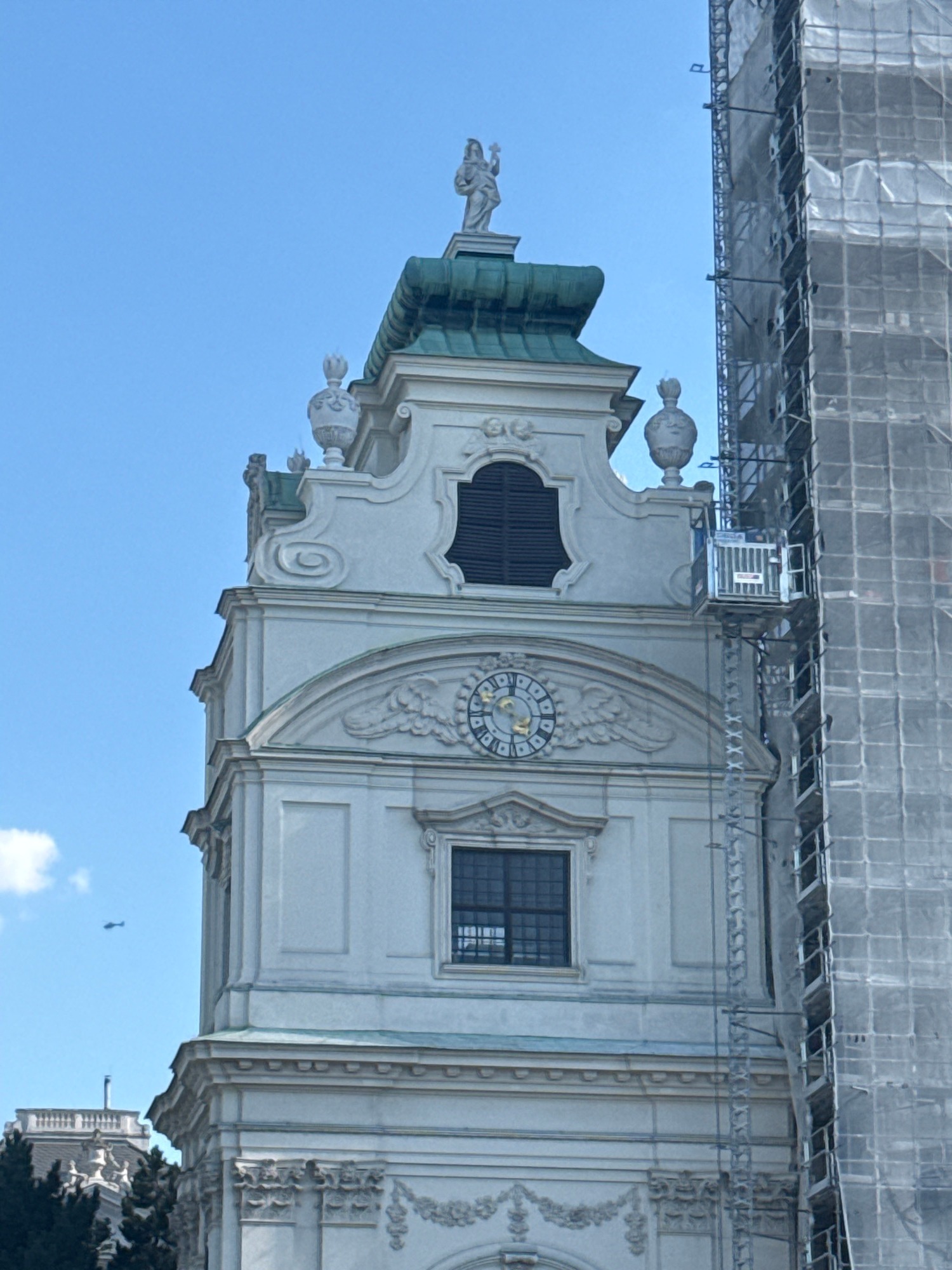
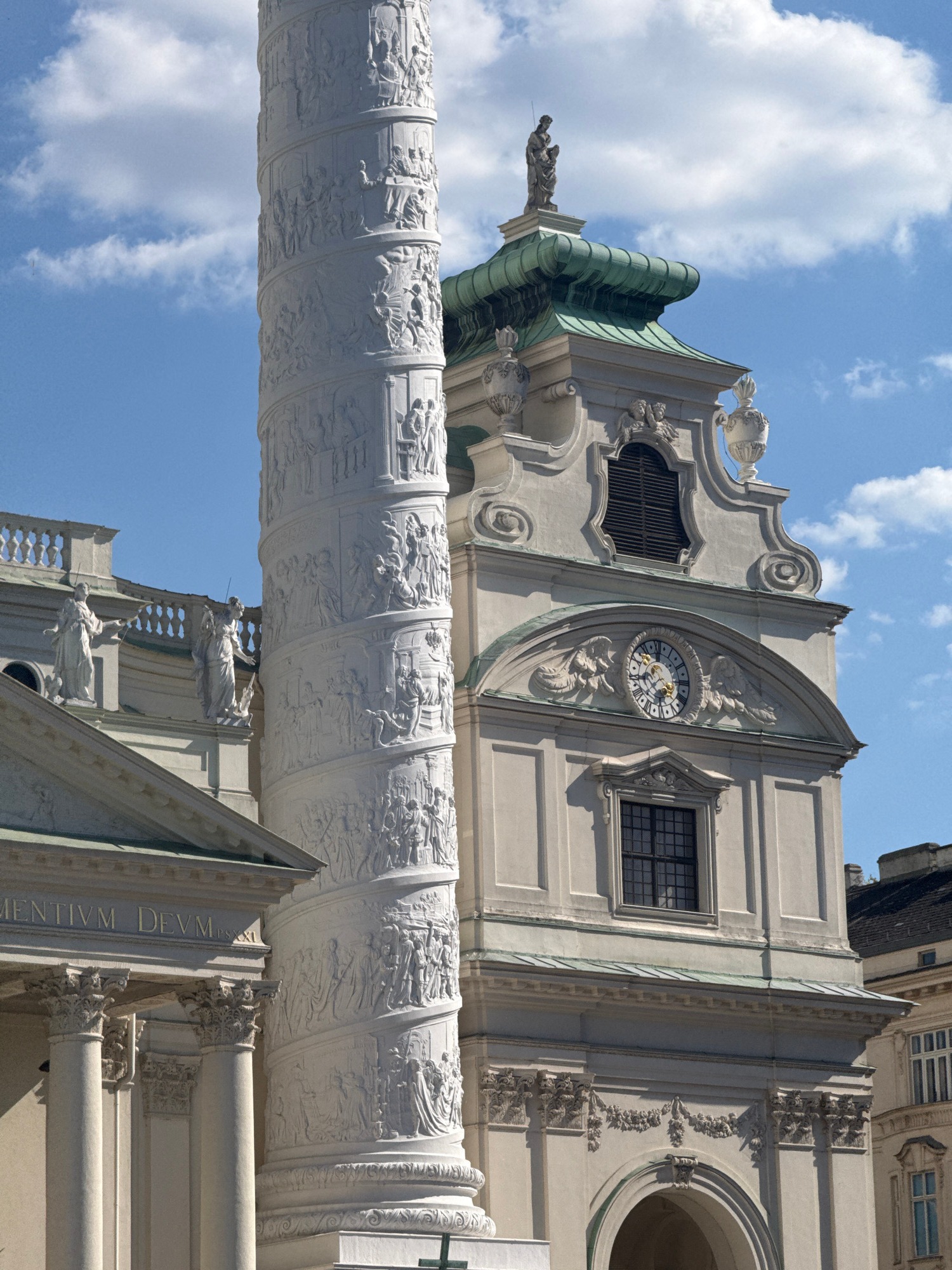
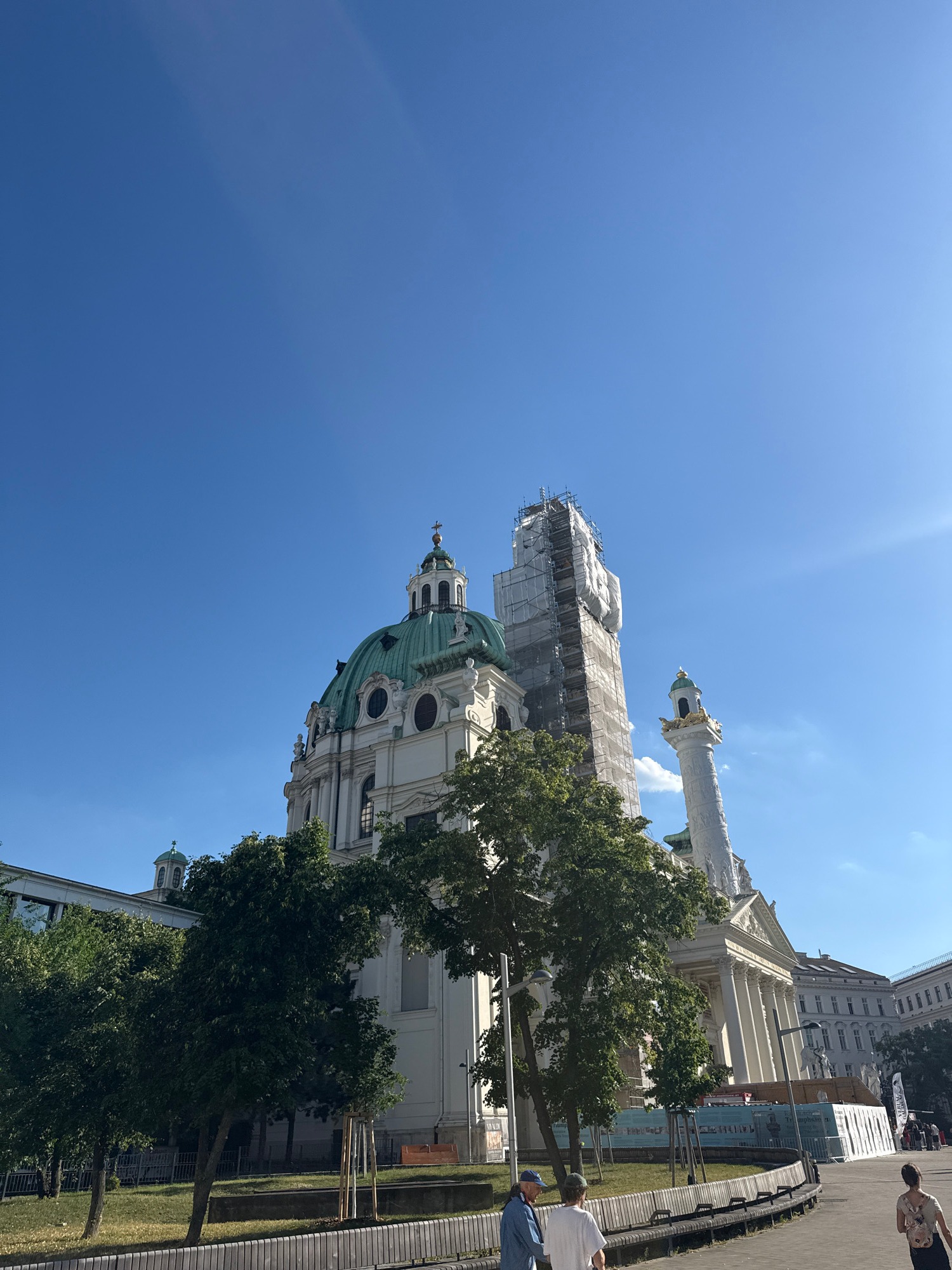
The image shows a close-up of a tall, ornate white building with a green roof, set against a clear blue sky with a few wispy clouds. The building features classical architectural elements, including decorative moldings, arched windows, and a statue atop the roof. A clock face is visible on the facade, with Roman numerals. To the right of this building, a tall structure covered in scaffolding and white netting is partially visible, suggesting ongoing construction or renovation work. In the background, another building with a distinctive roofline and a chimney can be seen peeking out from behind trees. The scene is likely a historical district in Vienna, Austria, given the architectural style.
Vienna, Austria · Jun 25, 2026, 2:50 PM · 1.6k attention
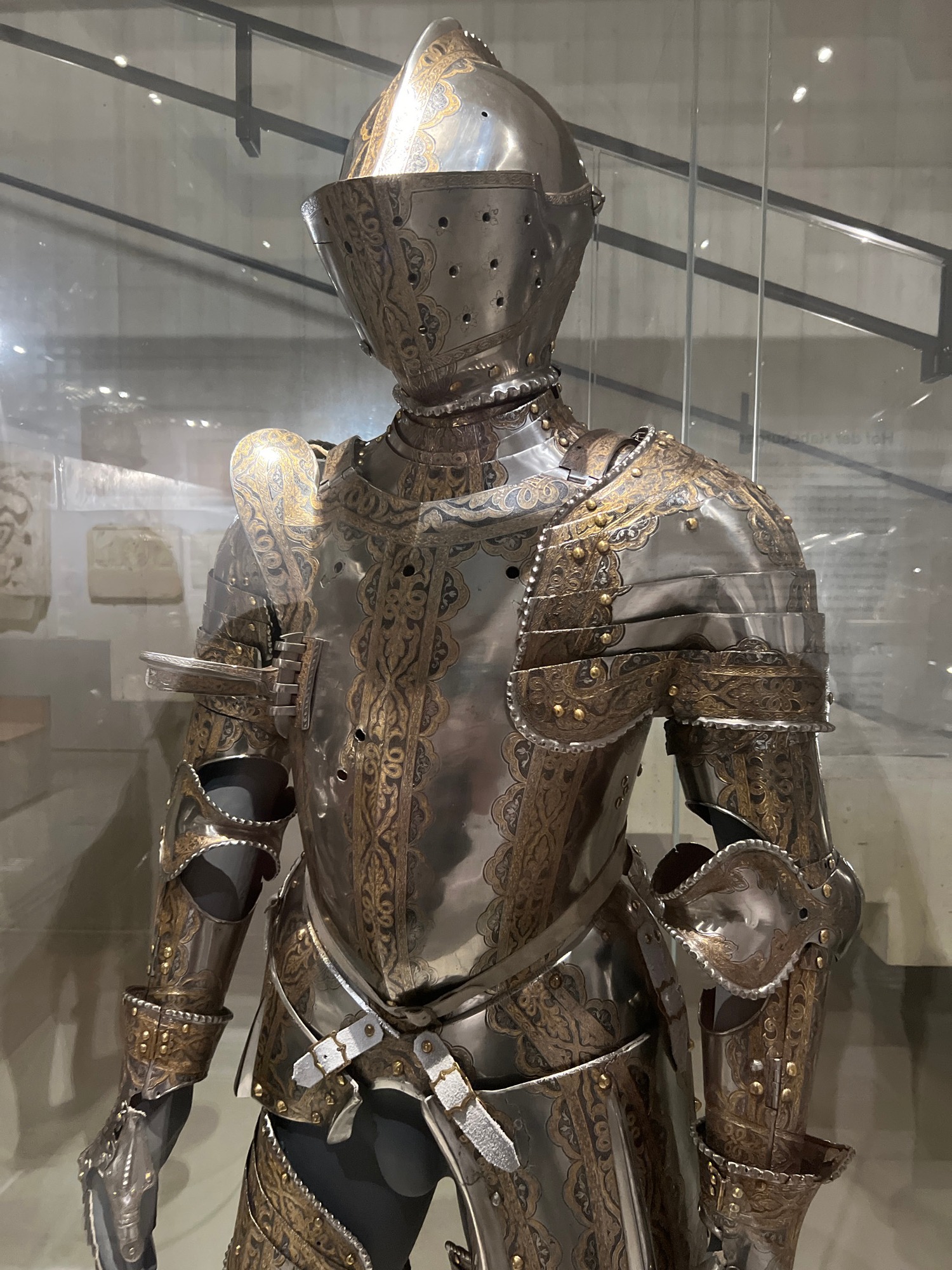
The image shows a full suit of ornate, full-plate armor displayed inside a glass case, likely in a museum. The armor is made of polished metal and decorated with intricate gold inlay patterns featuring swirling motifs and floral designs. It includes a helmet with a visor, a breastplate, pauldrons (shoulder armor), vambraces (forearm armor), gauntlets, and leg armor. The armor is mounted on a mannequin, suggesting it is on display for public viewing. The background is out of focus but appears to be an indoor setting with museum exhibits. This armor is on display at the Imperial Armoury (Waffensammlung) in the Kunsthistorisches Museum in Vienna, Austria.
Vienna, Austria · Jun 25, 2026, 3:28 PM · 1.6k attention
The image shows a partial view of a grand, ornate white building with a green dome, possibly a church or historical landmark, under a bright blue sky with scattered white clouds. A tall, fluted column with intricate carvings and a golden top stands prominently in the foreground, leaning towards the left of the frame. Part of the building is covered in scaffolding and white sheeting, suggesting ongoing renovation or maintenance work.
In front of the building, there are palm trees in large dark pots and a large terracotta pot containing a leafy plant. Several people are visible, walking on a paved area or near the building. Some are close to the palm trees, and others are further in the background, near the scaffolding. A banner with text is visible on the scaffolding.
Further to the right, a stage setup with lighting equipment and a large screen or backdrop is visible, suggesting an event or performance is taking place or being set up. Text is visible on the banner and on a poster on the ground. The scene appears to be a public square or plaza in front of a significant architectural site. The sunlight indicates it is daytime, and the clear sky suggests fair weather. The text visible includes "building project experts," and a German phrase that seems to relate to restoration. The overall impression is one of historical grandeur, ongoing preservation, and public activity.
Vienna, Austria · Jun 25, 2026, 2:50 PM · 1.6k attention
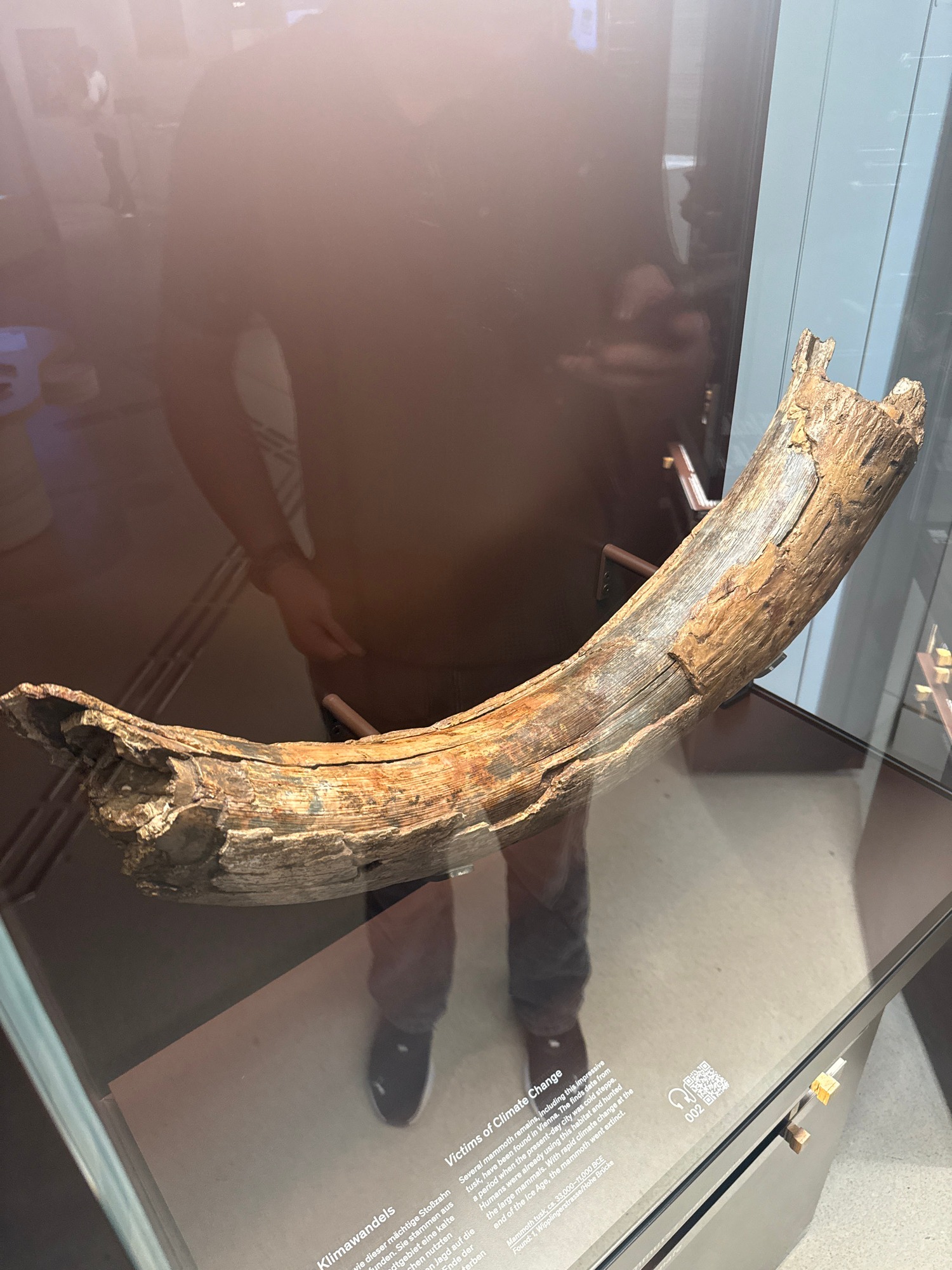
This media file shows a mammoth tusk displayed in a museum exhibit. The tusk is large and appears fossilized, with a rough, textured surface. It is positioned at an angle, leaning against a support.
In the background, a person is visible reflected in the glass display case, appearing to be looking at the exhibit. Their legs and part of their torso are discernible. The setting seems to be indoors, possibly a museum, with a smooth, reflective surface dominating the lower portion of the image. Above the tusk, a grey wall and a sliver of ceiling are visible.
Text is present on a label within the display case, partially obscured by reflections. The visible text indicates the exhibit is about "Victims of Climate Change" and features a "Mammoth tusk, ca. 33,000-11,000 BCE." It mentions that the tusk was found at 1, Wipplingerstrasse/Hohe Brücke in Vienna, Austria. The text further explains that the finds date from a period when Vienna was a cold steppe and that humans hunted mammoths. It concludes by stating that rapid climate change at the end of the Ice Age led to the extinction of the mammoth. A QR code and the number "002" are also visible on the label.
The lighting suggests it might be daytime, possibly with natural light filtering into the museum. No specific weather conditions are evident. The overall impression is of an educational display, providing information about prehistoric life and environmental changes.
Vienna, Austria · Jun 25, 2026, 3:34 PM · 1.5k attention
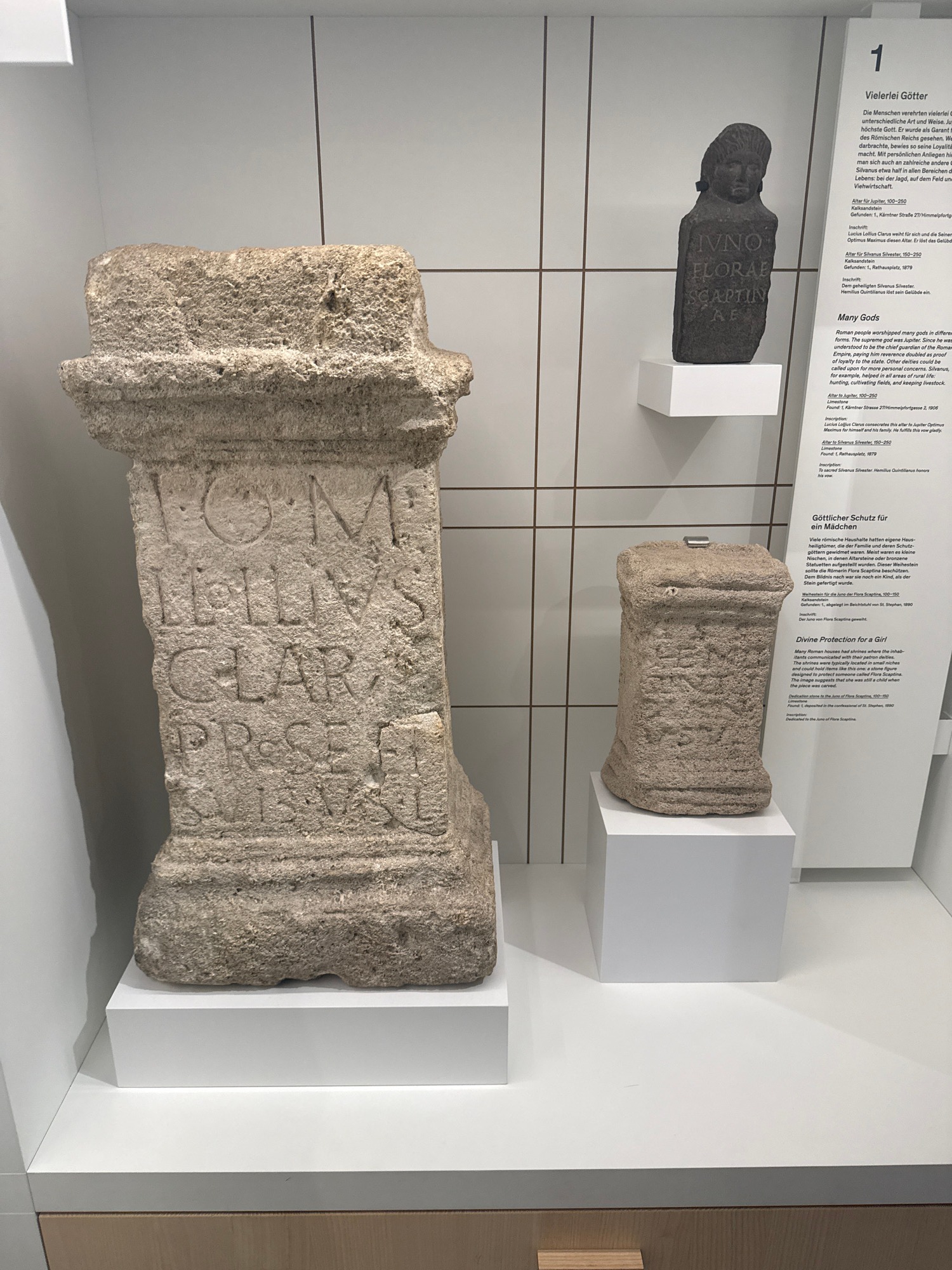
The image shows a museum exhibit featuring Roman artifacts. In the foreground, on the left, is a large stone altar with carved Latin inscriptions. To the right of this altar is a smaller, rectangular stone altar. Further to the right, on a white pedestal, is a bust of a person, likely a deity or important figure, with a carved inscription on its base. Behind these objects, a wall is visible with a tiled grid pattern. To the right of the tiled wall, a white display board with text in German and English provides information about the artifacts. The top of the display board features the number "1" and the title "Vielerlei Götter" (Various Gods). The English section includes titles like "Many Gods" and "Divine Protection for a Girl." Based on the context of Roman artifacts and the typical exhibits found in major European cities, this scene is likely located in a museum in Vienna, Austria. However, the specific museum or exhibition hall is not explicitly identified in the image.
Vienna, Austria · Jun 25, 2026, 3:38 PM · 1.5k attention
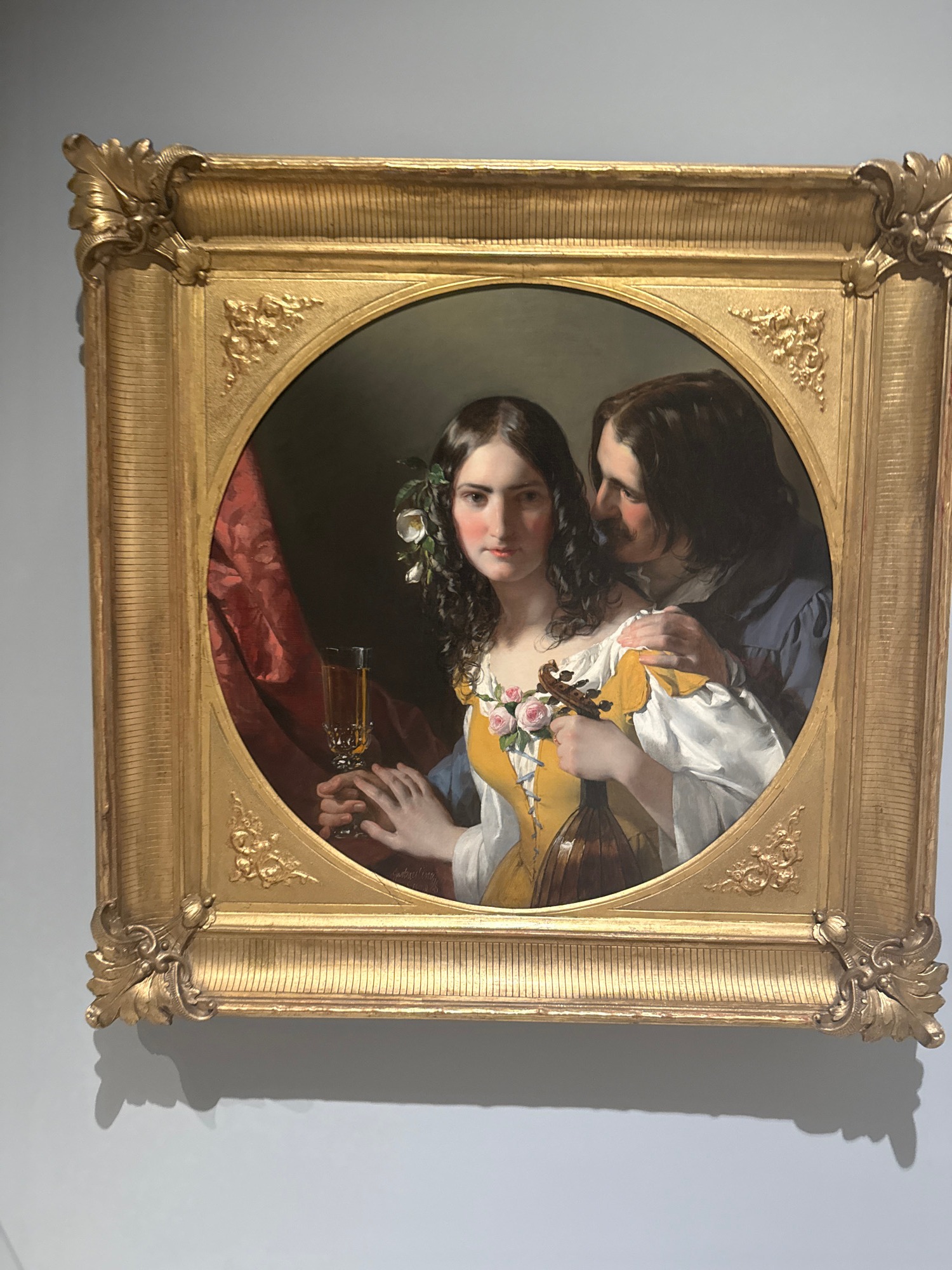
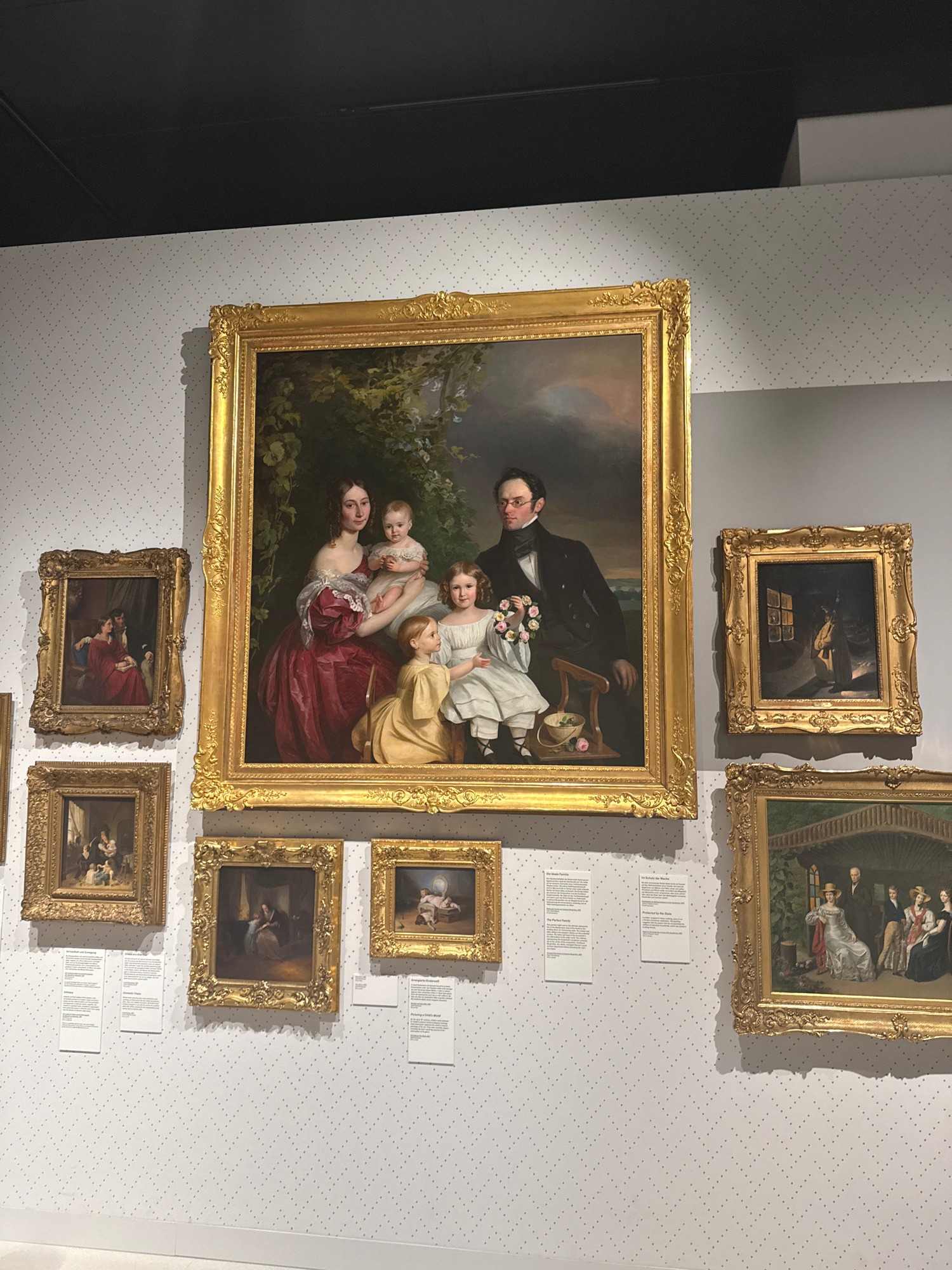
The media file shows a framed painting of a scene depicting two people in an intimate embrace. The painting is circular and framed in an ornate gold frame with intricate carvings. The subjects are a man and a woman. The man, with dark hair, is leaning in to kiss or whisper to the woman. He is wearing a dark blue garment. The woman, with dark, wavy hair adorned with a white flower and greenery, is looking directly at the viewer. She is wearing a white blouse with puffy sleeves and a yellow bodice, possibly part of a Renaissance-era costume. Her right hand holds a glass with amber liquid, and her left hand rests near the man's embrace. A dark red fabric is draped in the foreground. The background is dark, creating a strong contrast with the figures. The overall mood appears romantic and intimate. There is no visible text within the painting or on the frame. The provided location context of Vienna, Austria, does not offer any direct visual cues within the image itself.
Vienna, Austria · Jun 25, 2026, 2:59 PM · 1.4k attention
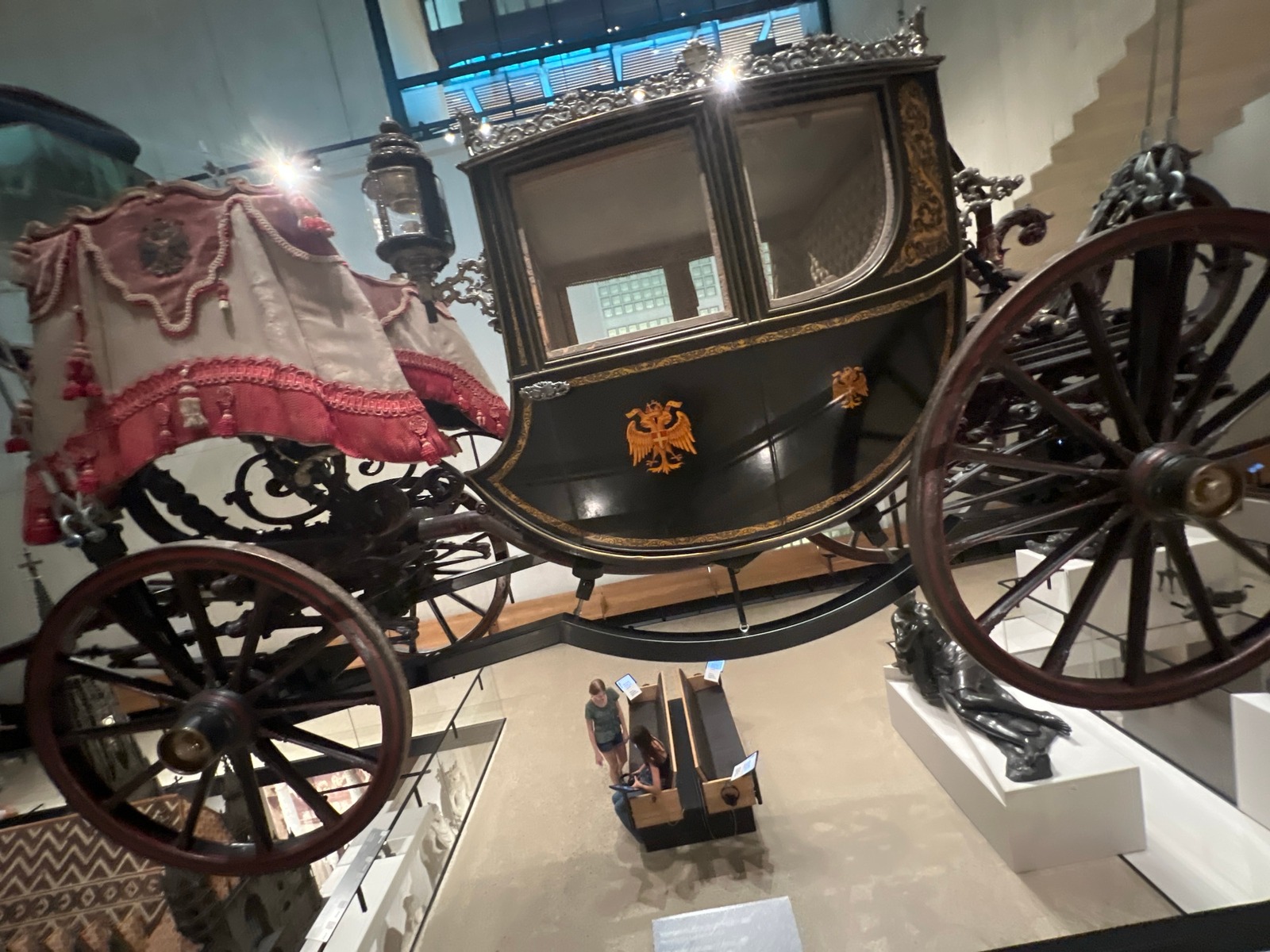
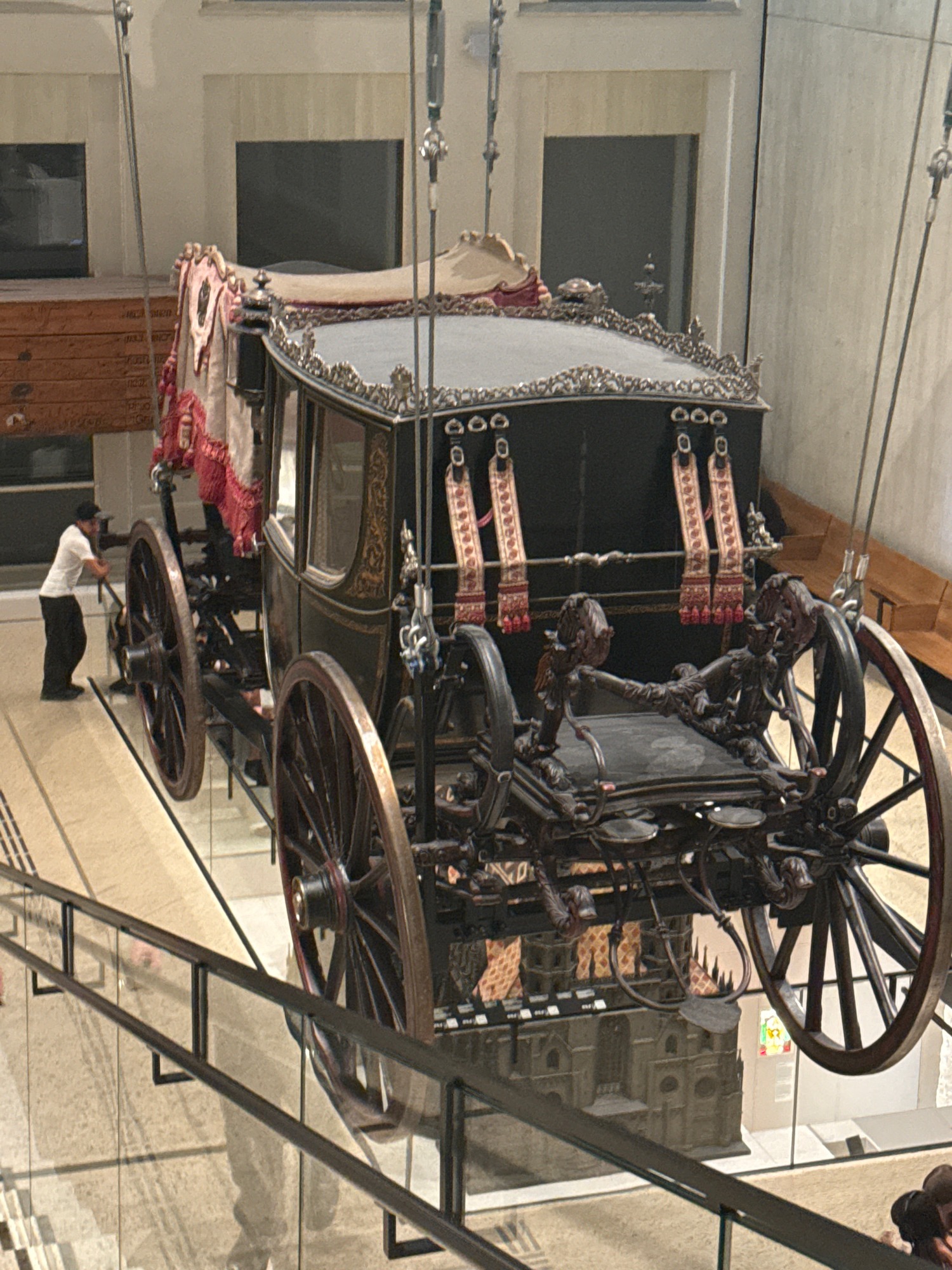
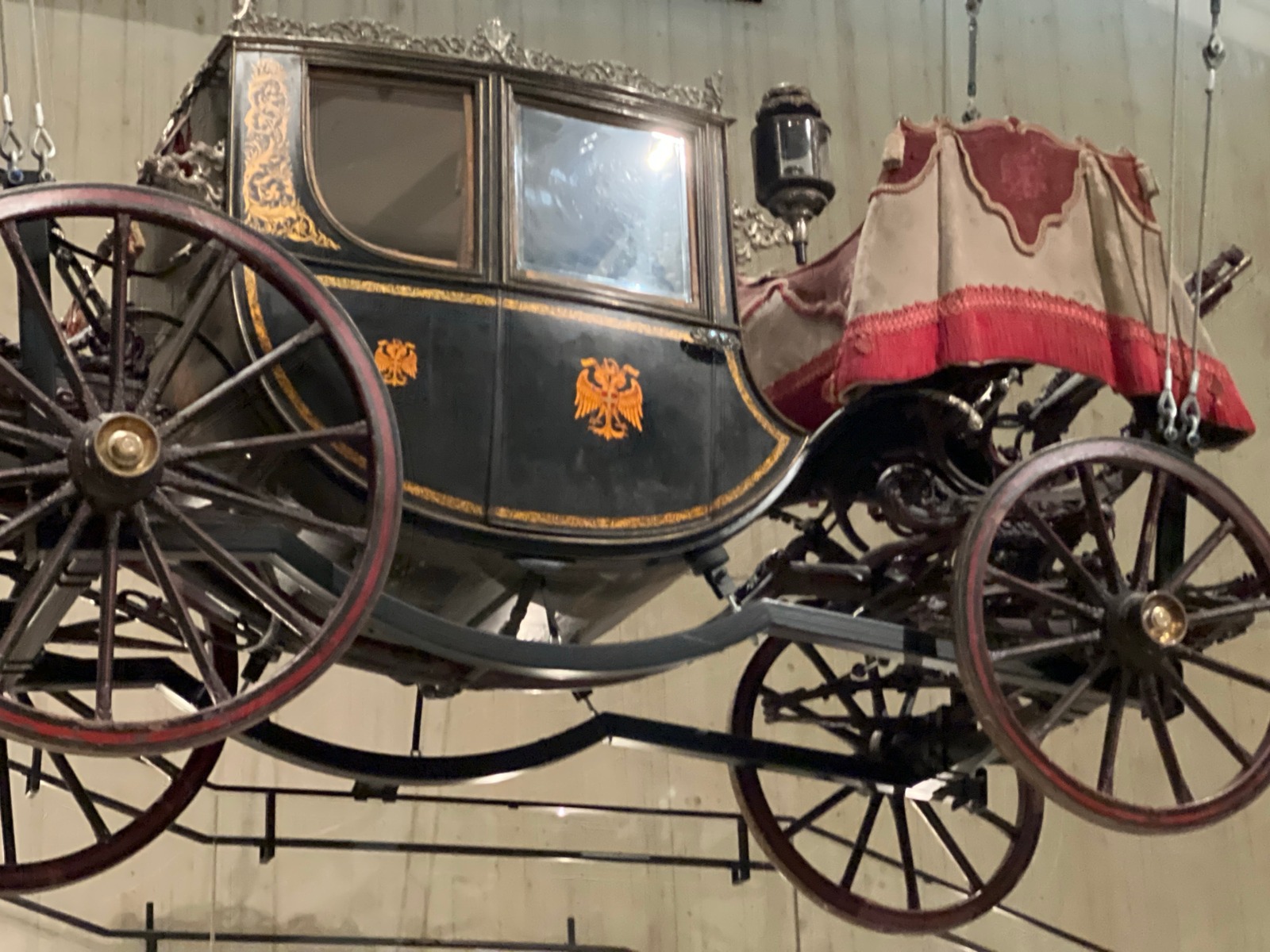
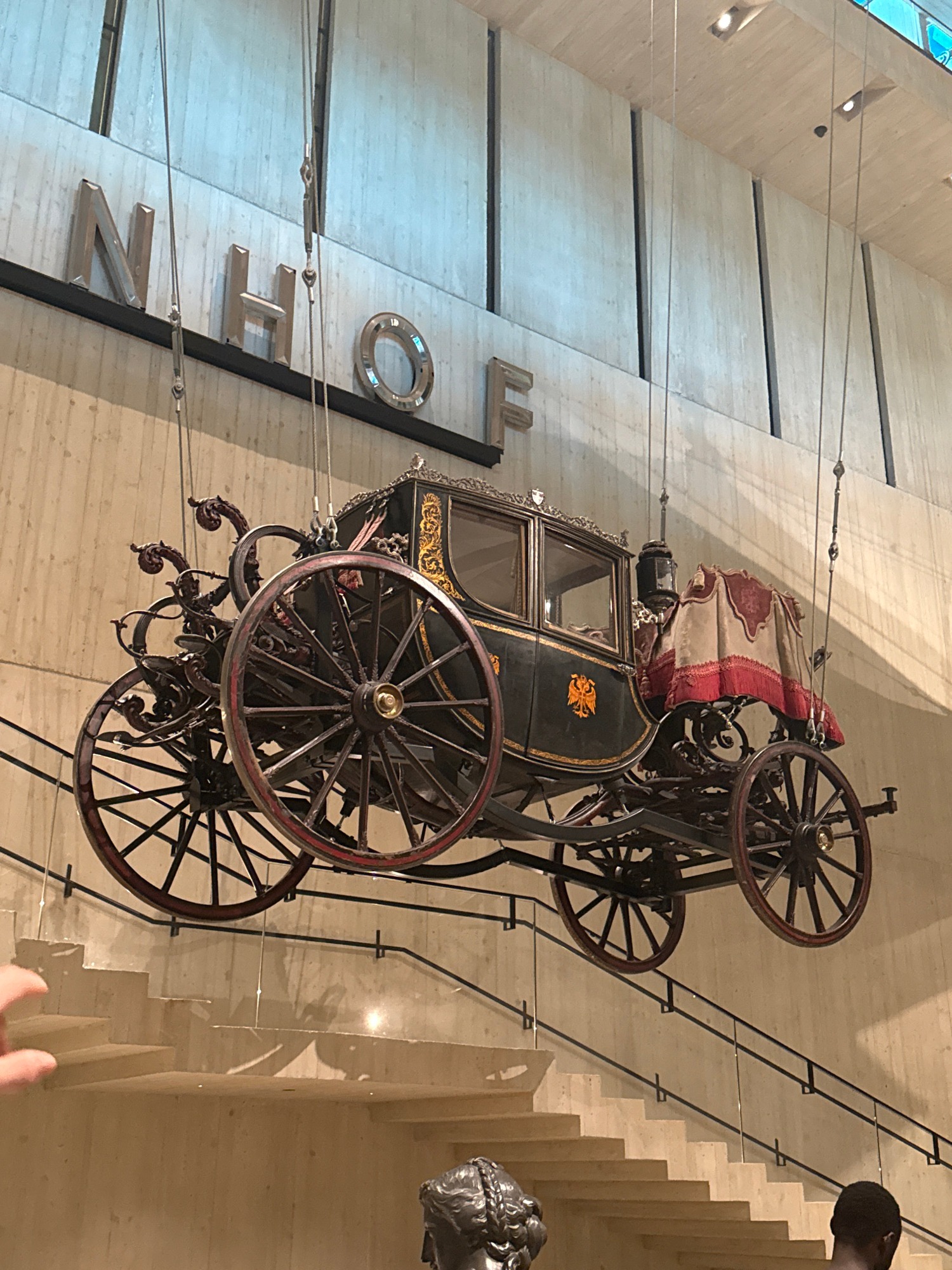
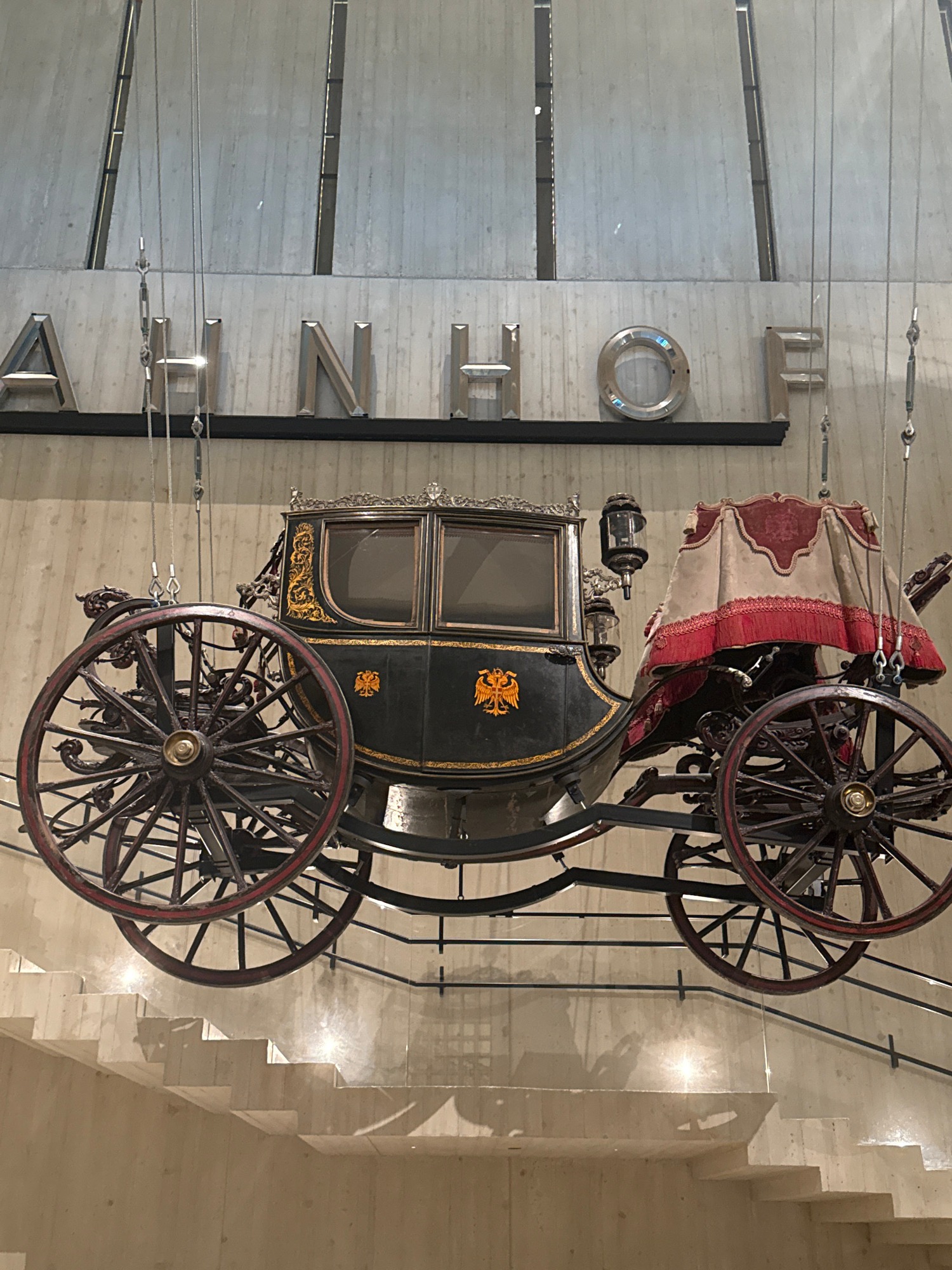
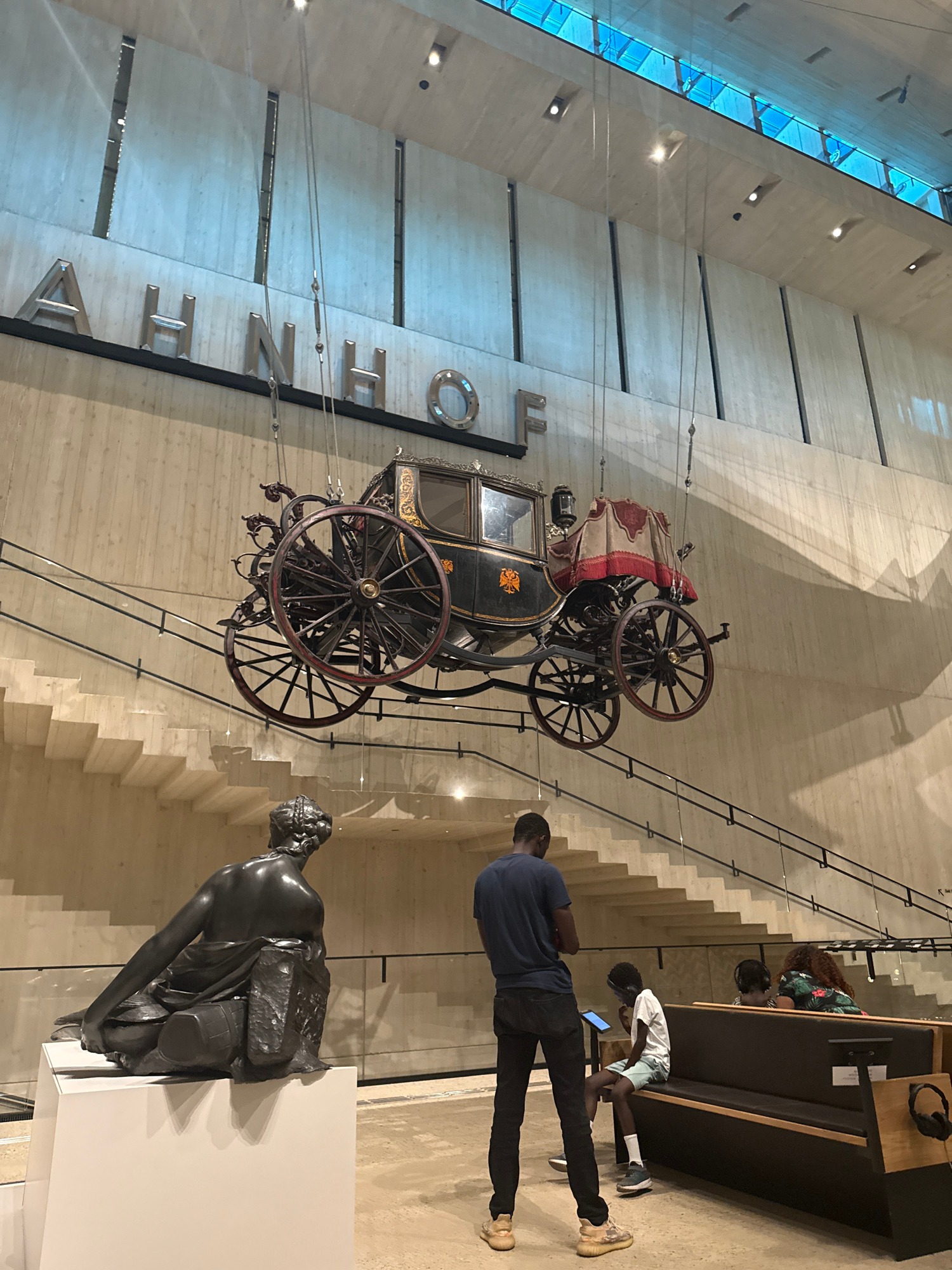
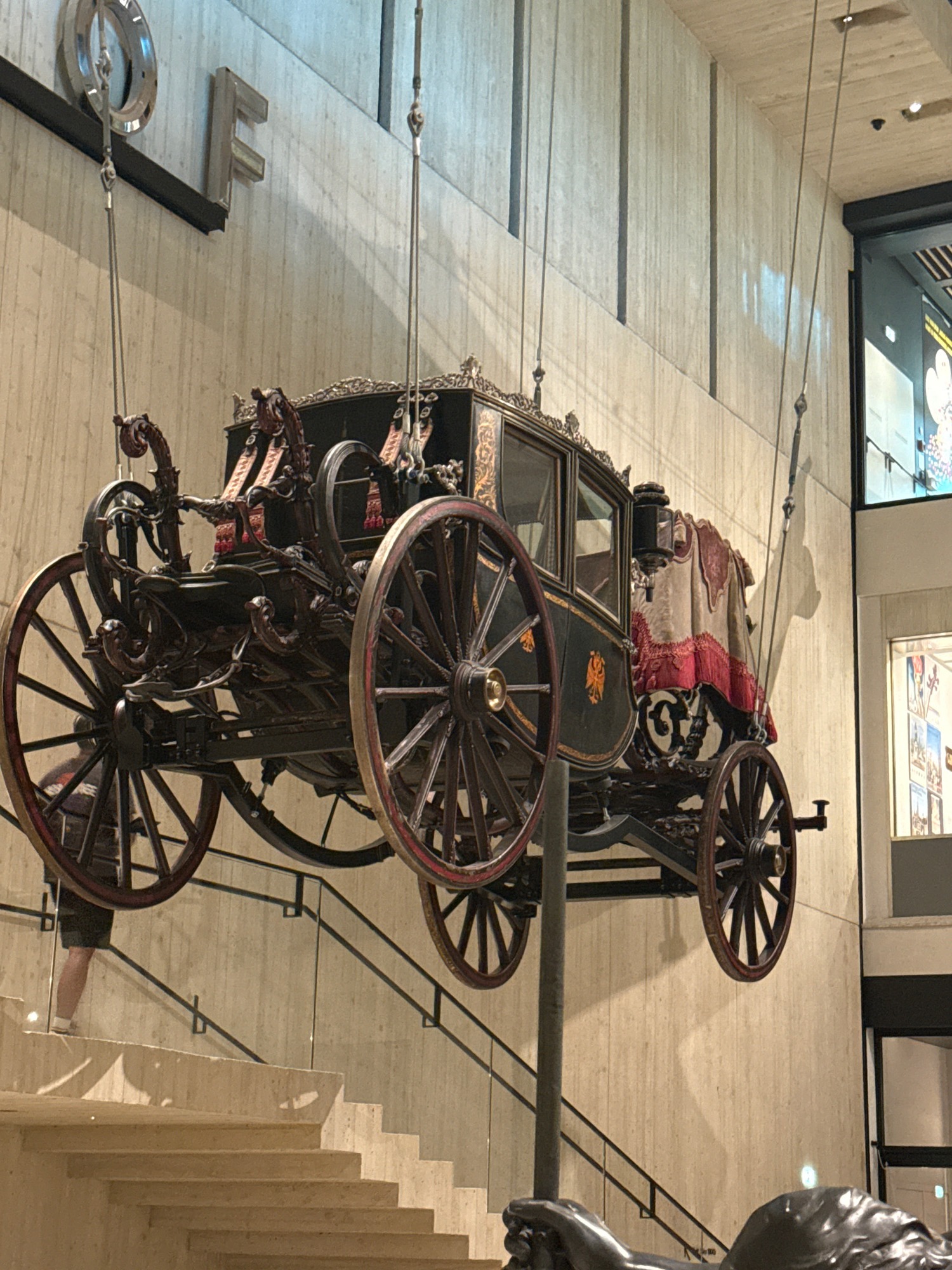
In a museum setting, likely in Vienna, Austria, a grand, ornate carriage is displayed. The carriage is predominantly black with gold accents and features two large glass windows and a decorative crest with a golden eagle. A canopy of light-colored fabric with red trim and tassels drapes over the front of the carriage. Two large wooden wheels are visible on either side of the carriage.
Below the carriage, two young people are interacting with exhibits. They appear to be standing near a display with laptops or touch screens, suggesting an educational or interactive element to the museum visit. The overall atmosphere seems quiet and contemplative, typical of a museum. The lighting suggests an indoor environment, possibly during daylight hours as indicated by the natural light filtering in from the ceiling.
On the far right, a dark sculpture of a figure is displayed on a white pedestal. The floor has a patterned rug visible in the lower left corner. The background reveals more museum displays and architectural elements, including what appears to be a staircase. The focus of the image is the elaborate carriage, highlighting its historical significance and intricate craftsmanship.
Vienna, Austria · Jun 25, 2026, 3:52 PM · 1.3k attention
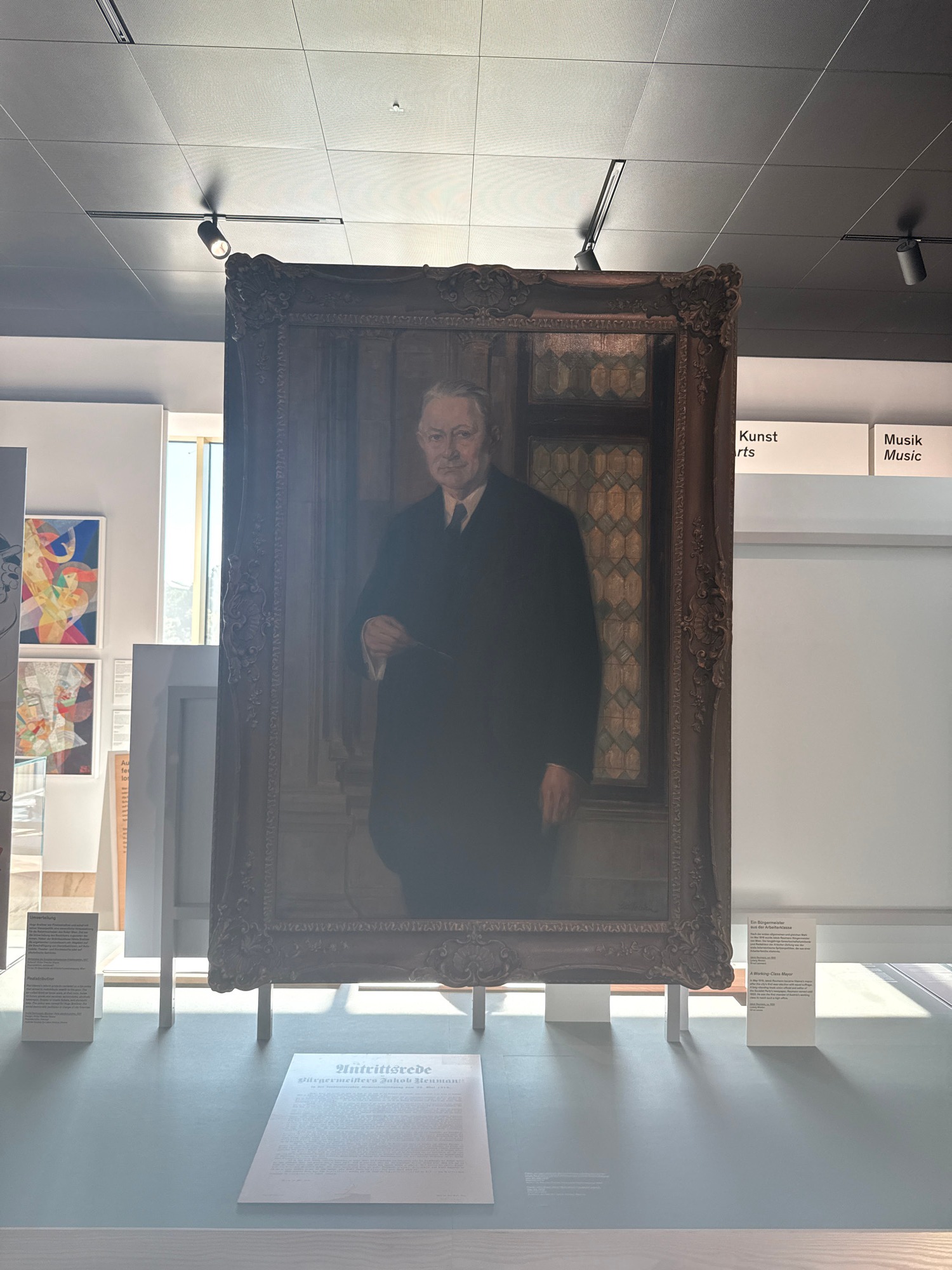
A vertical, candid shot shows a large, ornate framed portrait of a man. The man in the portrait is elderly, with white hair and a stern expression. He is dressed in a dark suit. The portrait is hanging on a wall in what appears to be a museum or gallery. The background shows a modern, minimalist design with a tiled wall and track lighting. There are labels on the wall next to the painting, with some text visible in German and English. The lighting suggests it is daytime, with natural light streaming in from an unseen source.
To the left of the portrait, there is a white wall with text that reads "Musik Music" and "Kunst rts". To the right of the portrait, there are several hanging panels with text in German. One panel has the title "Antrittsrede" followed by "Bürgermeister Jakob Steiner". Below the portrait, there are more panels and framed artworks, including what appears to be abstract paintings. The overall impression is an exhibition focused on art and history, possibly related to a prominent figure. The setting is clean and well-lit, indicative of a public exhibition space in Vienna, Austria.
Vienna, Austria · Jun 25, 2026, 3:46 PM · 1.2k attention
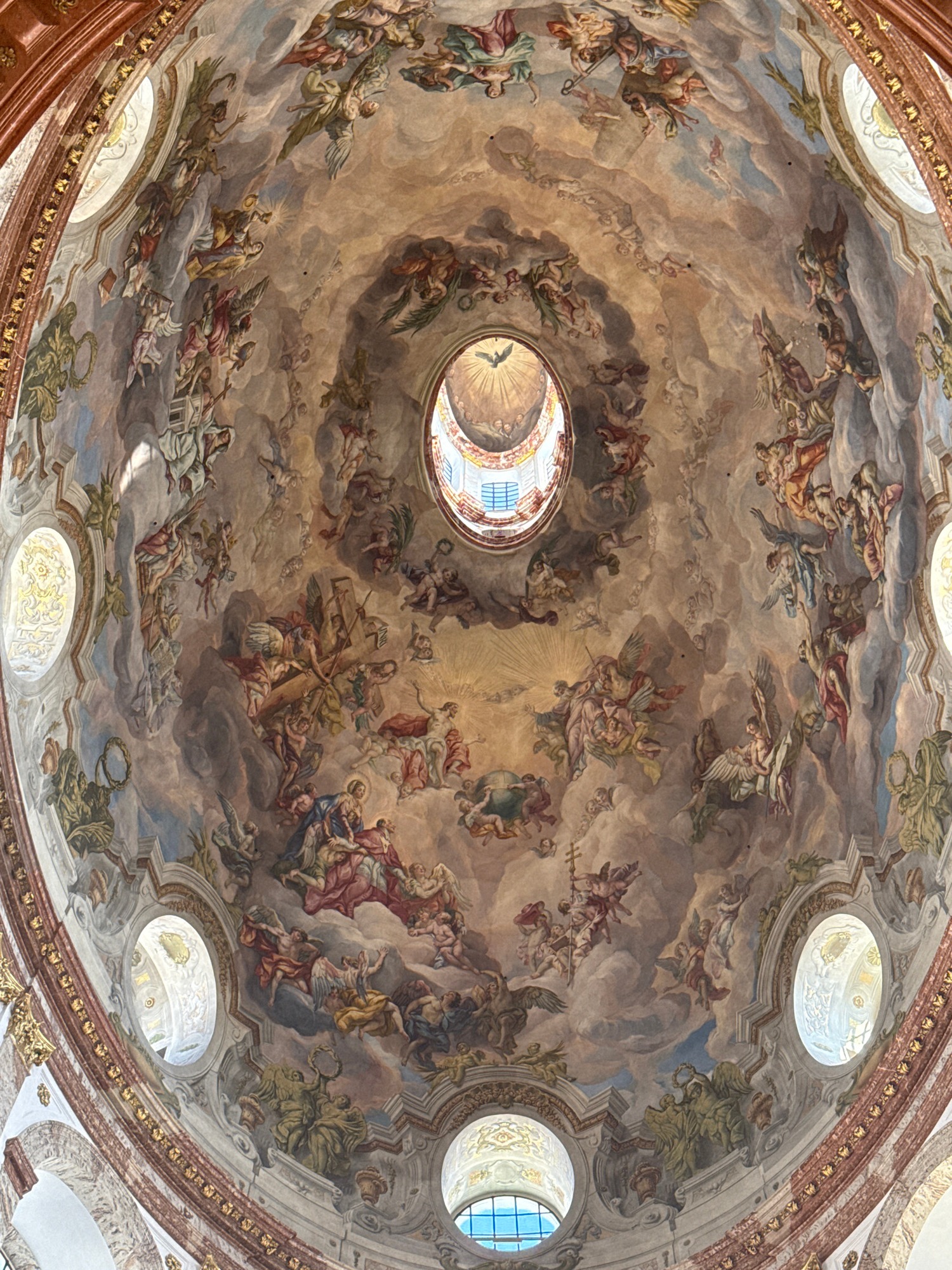
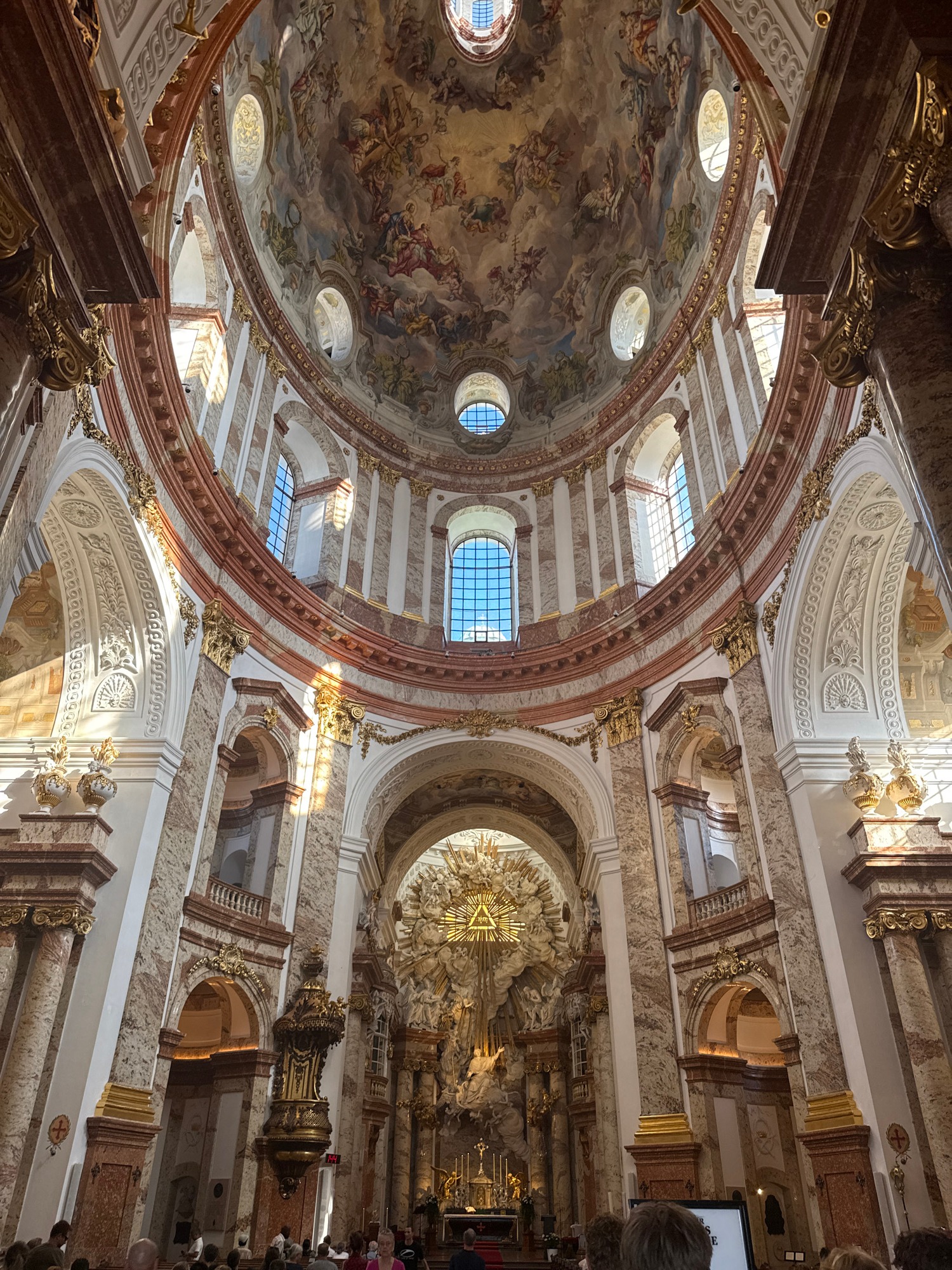
The media file displays a vast, domed ceiling fresco in Vienna, Austria. The artwork depicts a celestial scene filled with numerous figures, predominantly angels and human-like beings, floating amidst clouds. The style is Baroque, characterized by dramatic lighting, dynamic poses, and rich, blended colors ranging from earthy tones to vibrant reds and blues.
The central part of the fresco features a dramatic depiction of the crucifixion, with figures carrying a cross. Other scenes show individuals in prayer, holding symbolic objects like chalices, books, and laurel wreaths. There are also cherubic figures and winged beings scattered throughout the composition, creating a sense of heavenly activity and divine presence. The figures appear to be engaged in a variety of actions, including ascending, descending, carrying, and observing, suggesting a narrative of religious significance.
Several circular openings are visible in the dome, allowing natural light to illuminate parts of the fresco. One of these openings in the center reveals a dove, often a symbol of the Holy Spirit. Another opening shows a glimpse of the sky and architectural elements, possibly windows. The ornate golden and marble architectural details of the dome's rim are also visible, framing the painted heavens. The overall impression is one of grandeur, spiritual exaltation, and masterful artistic execution. There is no visible text in the artwork.
Vienna, Austria · Jun 25, 2026, 3:58 PM · 1.2k attention
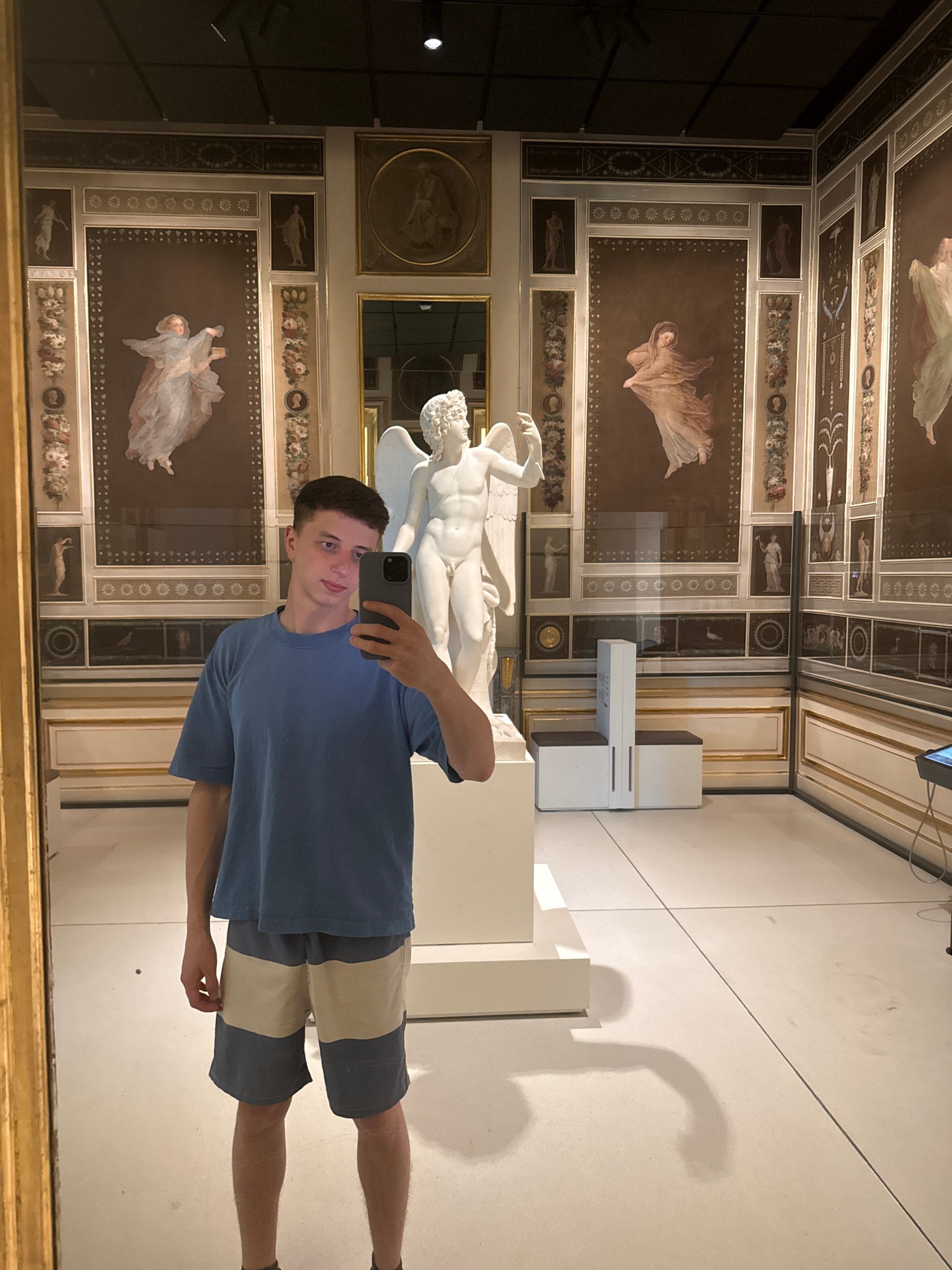
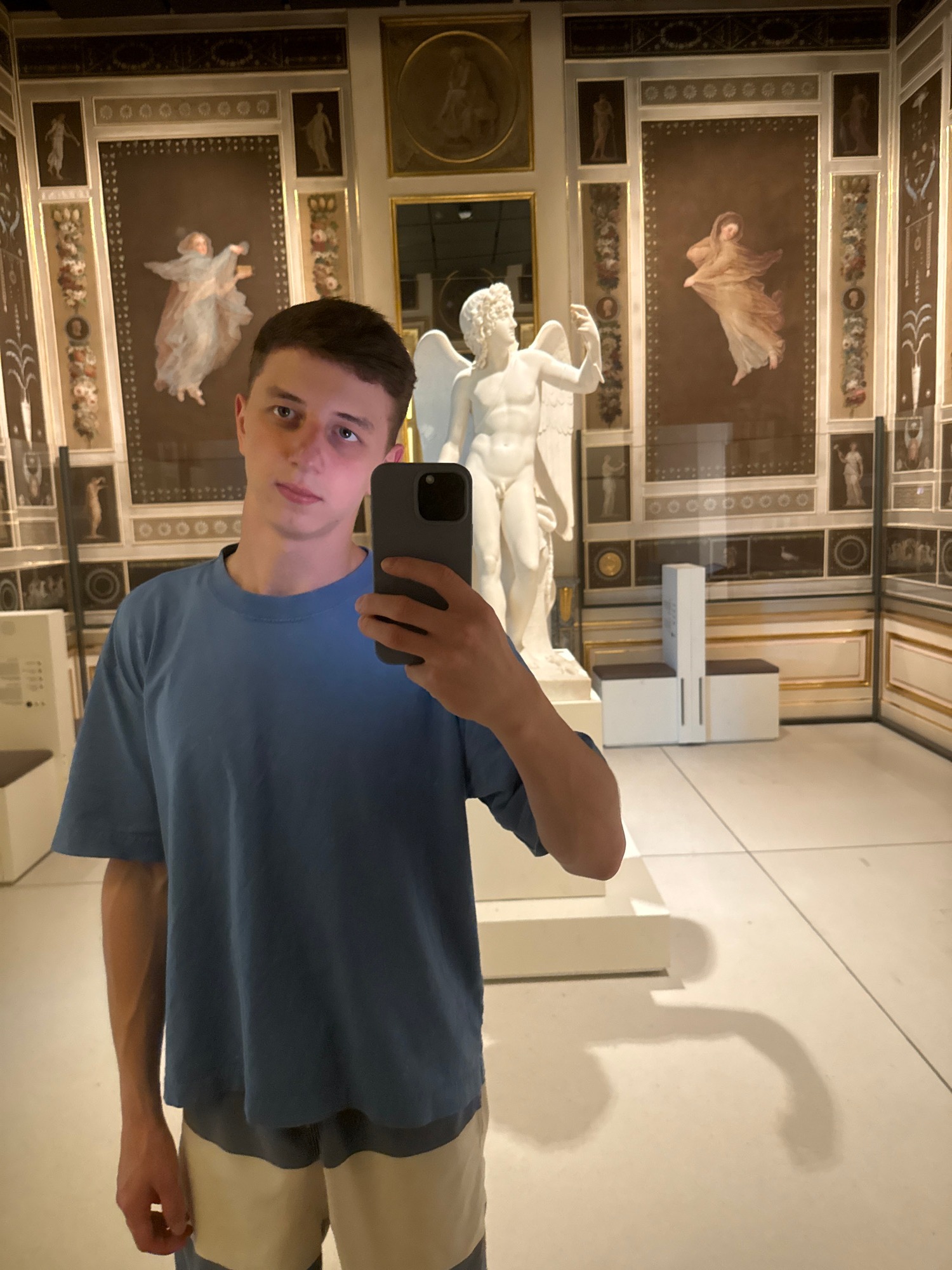
A young man with short brown hair is taking a mirror selfie in a museum in Vienna, Austria. He is wearing a blue t-shirt and beige and blue striped shorts. He is holding a black smartphone in his right hand. Behind him, a white marble statue of an angel is visible. The walls of the museum are decorated with large paintings and intricate patterns. The floor is tiled and the lighting is dim.
Vienna, Austria · Jun 25, 2026, 3:10 PM · 1.2k attention
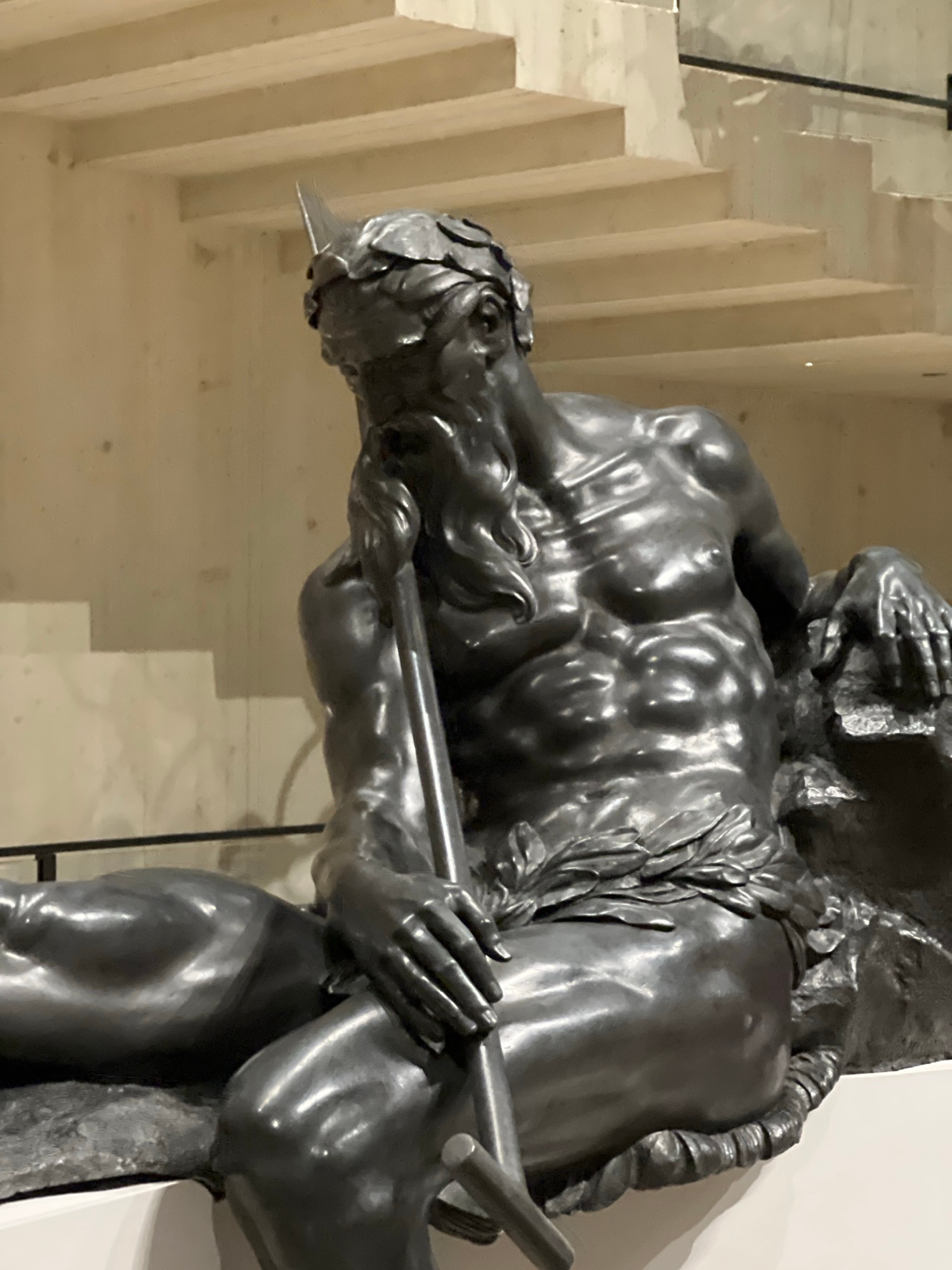
This media file features a close-up, low-angle shot of a dark, metallic sculpture depicting two figures. The sculpture is highly detailed, showcasing musculature and drapery. One figure appears to be holding a long, slender object horizontally, possibly a staff or a sword, with both hands. This figure's head is bowed, and their face is partially obscured, suggesting a pose of grief, struggle, or contemplation. The other figure is positioned behind and above, with one arm raised as if to strike or grasp, and their head is turned away from the viewer. The metallic surface of the sculpture is highly polished, reflecting the surrounding environment.
The background of the image is composed of pale, layered architectural elements, possibly part of a building's interior. These elements have a stepped or tiered appearance and are lit from above, casting shadows. The overall impression of the scene is dramatic and somber, amplified by the dark material of the sculpture and the lighting. No text is visible in the image. The setting is suggested to be Vienna, Austria, likely an indoor space such as a museum or gallery given the nature of the artwork and the architectural context. The time of day is not discernible, but the lighting suggests an interior environment.
Vienna, Austria · Jun 25, 2026, 3:25 PM · 1.0k attention
The image shows two ancient replicas displayed on a light-colored wooden surface, likely in a museum setting in Vienna, Austria. In the upper portion of the frame, a dark, intricately designed sword with a curved hilt is laid horizontally. Below it, a stone axe with a wooden handle is also positioned horizontally. A thin black band secures the axe head to the handle. Partially visible in the foreground is a person's arm and leg, suggesting the viewer is observing the display. Two informational placards are also visible, one to the left of the sword and another below the axe. The text on the placards, in German and English, provides details about the artifacts, dating the sword to approximately 1050-800 BC and the axe to 4700-2200 BC, indicating they are reconstructions for wood processing and are found in the Vienna Natural History Museum. The lighting suggests an indoor, controlled environment, likely during the day.
Vienna, Austria · Jun 25, 2026, 3:33 PM · 0.9k attention
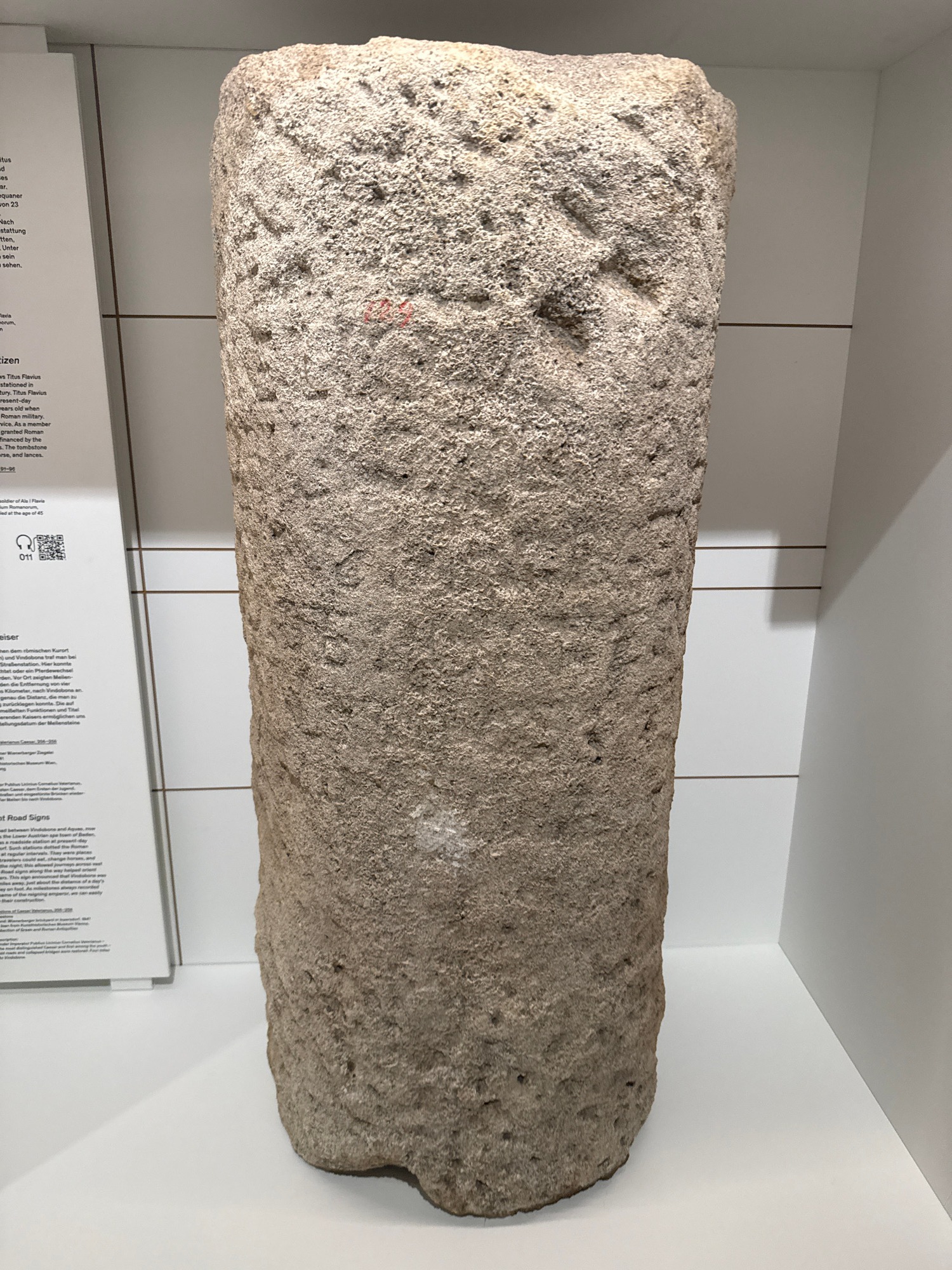
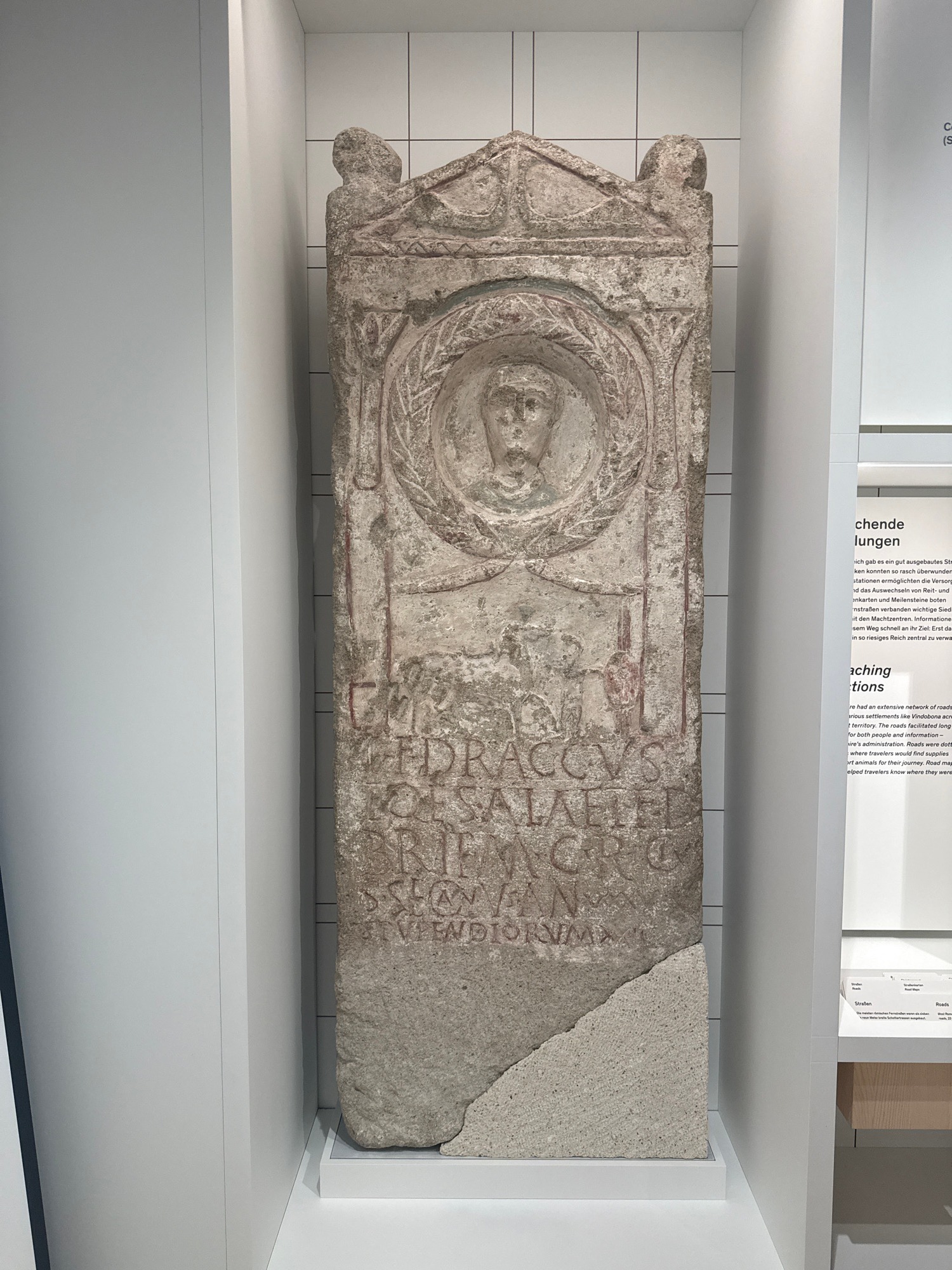
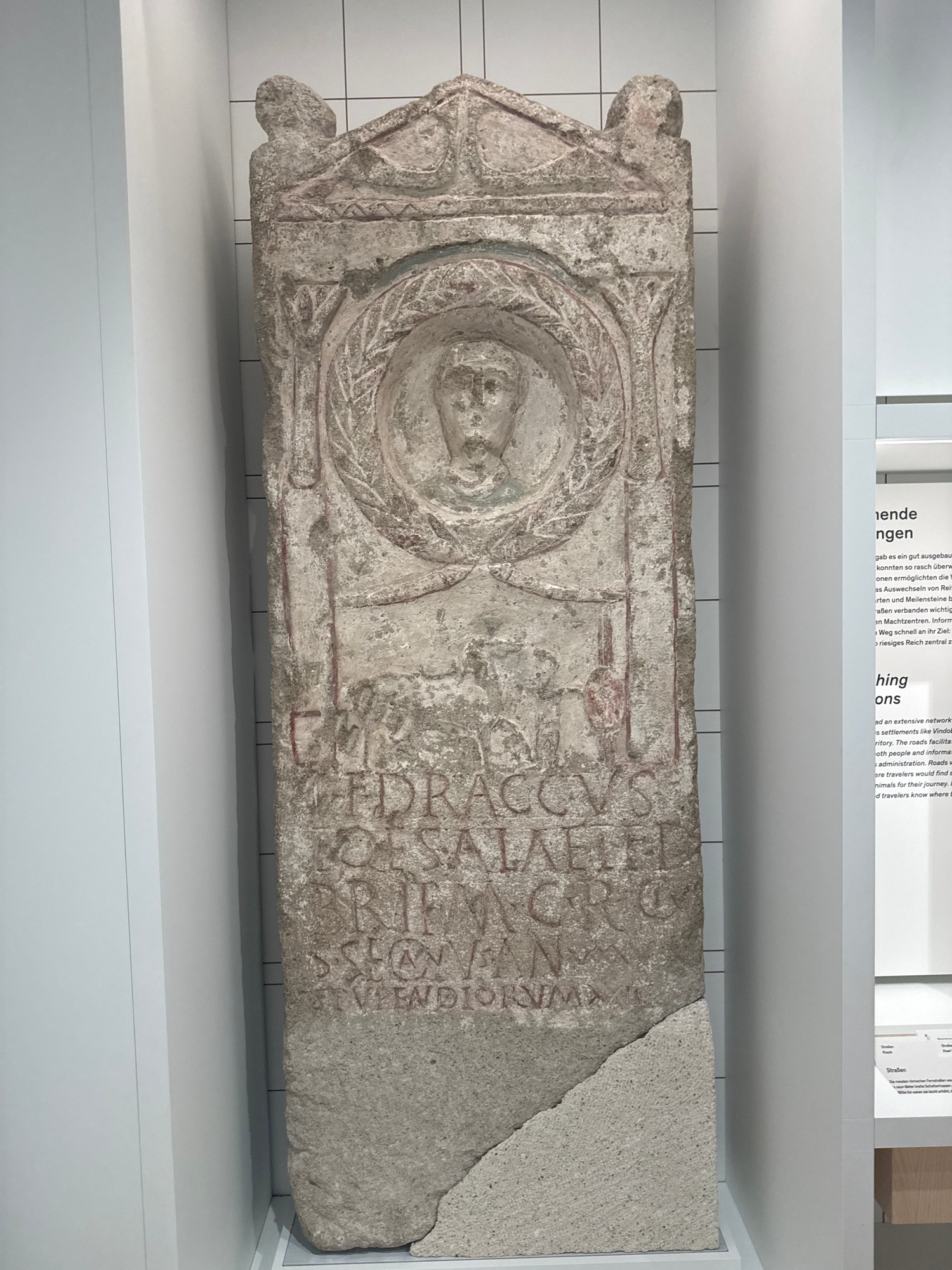
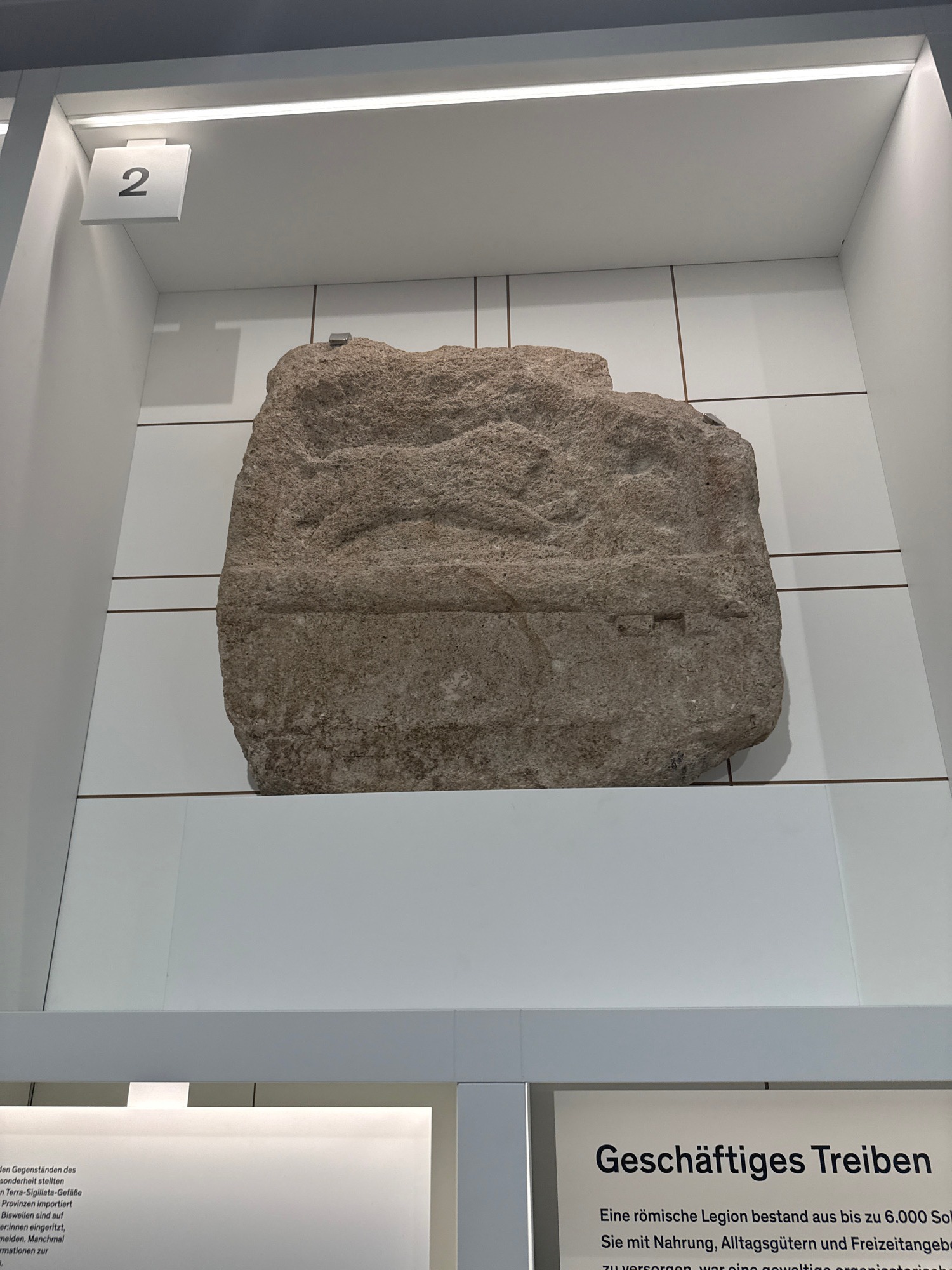
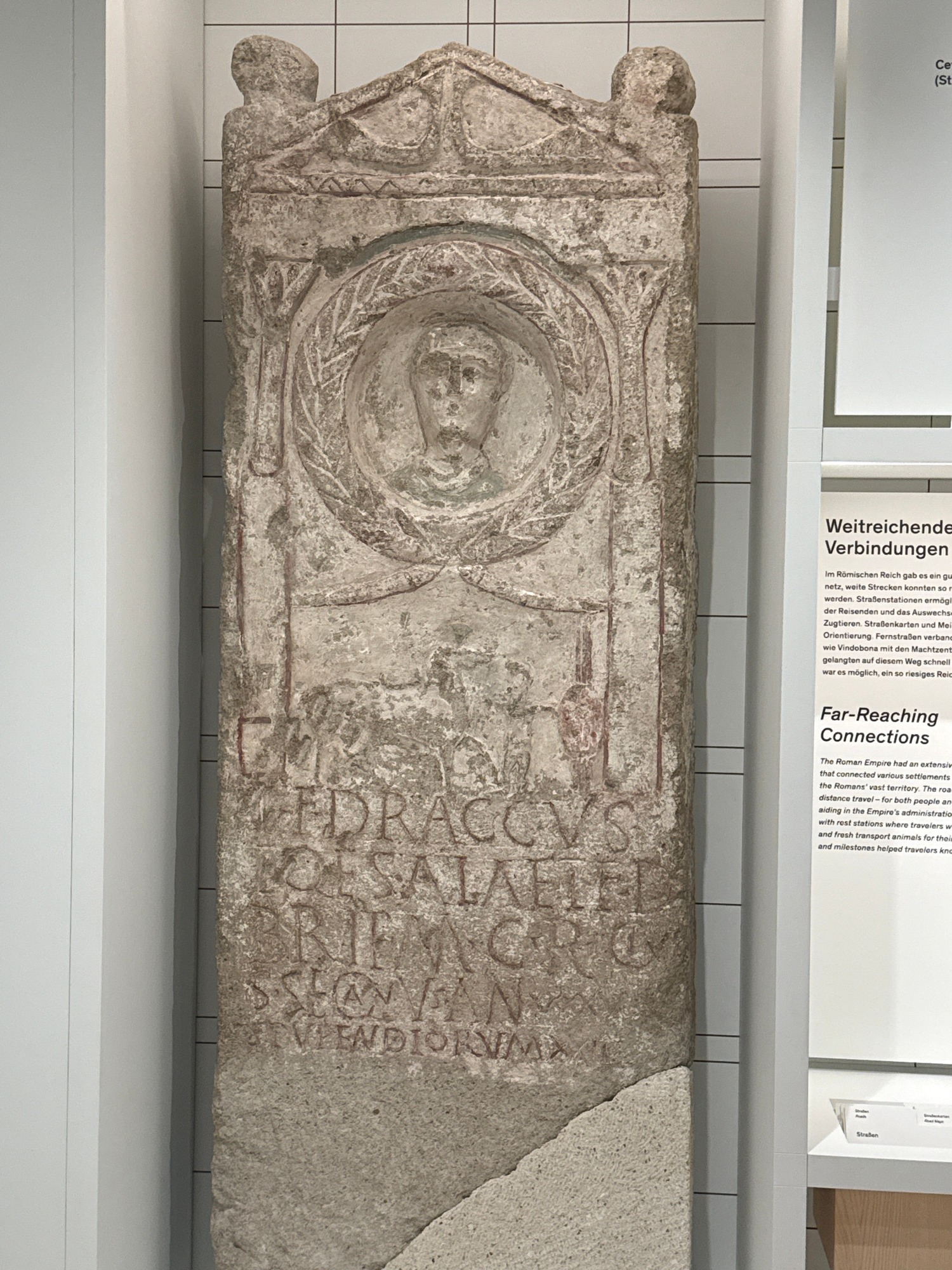
This media file depicts a weathered, rectangular stone object, likely an artifact, displayed in a museum setting. The stone is rough in texture and appears to have inscribed markings along its surface, though they are partially obscured by erosion. The stone is positioned horizontally, taking up the majority of the frame. Behind the artifact, a white wall with faint vertical lines suggests a museum display or exhibit. In the lower portion of the image, a white panel with text is partially visible, indicating this is likely an informational exhibit. The text, in both German and English, provides context about the artifact. The English text mentions "Roman military service," "tombstone," and "lances," suggesting the artifact has historical significance related to Roman times. It also references a location called "Vindobona," which is identified as modern-day Vienna, Austria, placing the artifact's origin or display context in that region. The overall scene is clean and well-lit, typical of a museum display. There are no people visible in the frame, and the focus is entirely on the artifact and its display. The lighting appears to be artificial, casting subtle shadows. The mood is educational and historical. The visible text elements include partial words and phrases related to Roman history, military, and geography.
Vienna, Austria · Jun 25, 2026, 3:39 PM · 0.8k attention
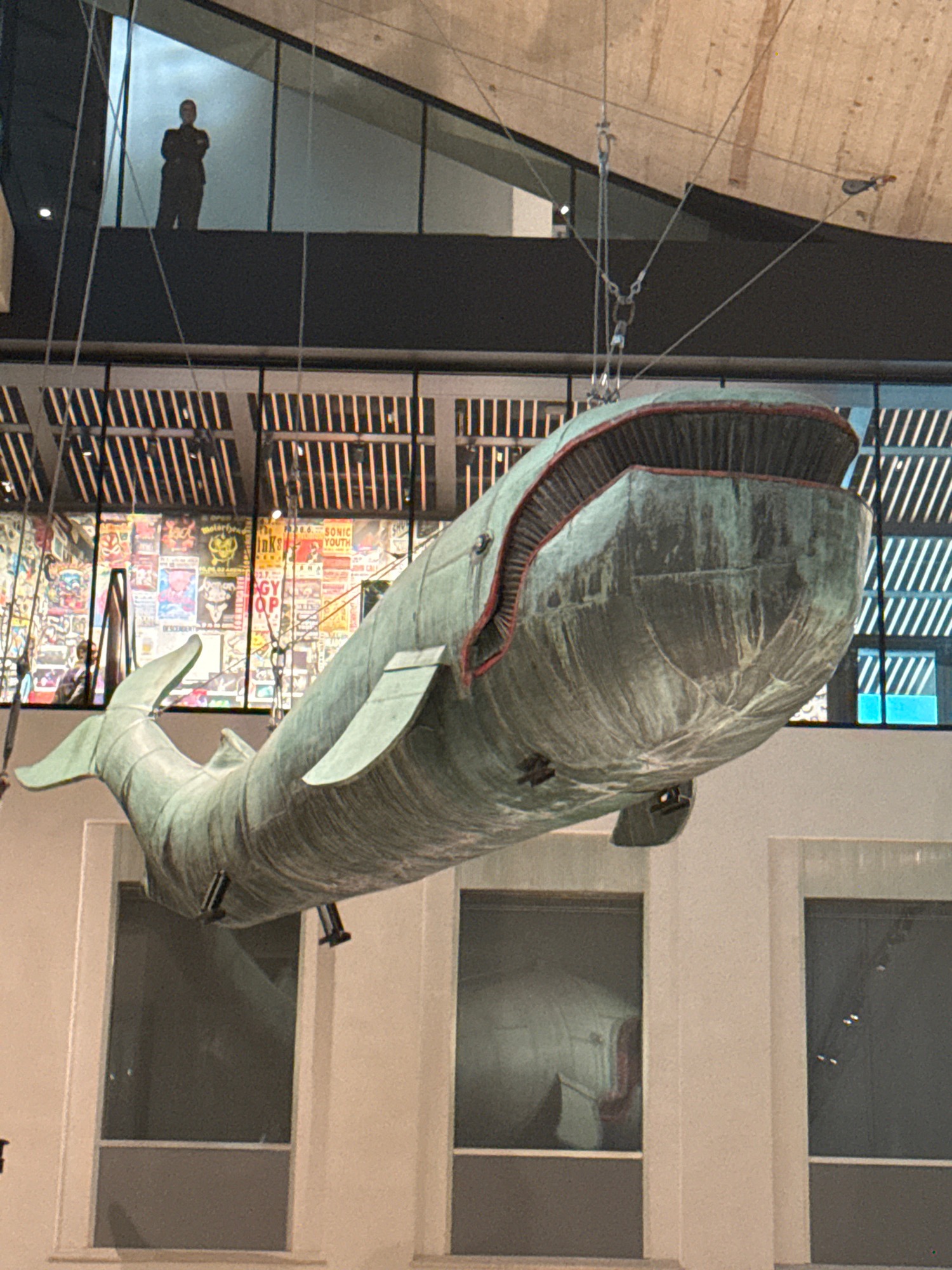
This image depicts a large, green whale sculpture suspended from the ceiling of a modern building. The whale sculpture is viewed from its side, with its mouth open. The interior of the building is visible, featuring a multi-story structure with glass walls and balconies. In the background, a wall is covered with numerous posters, suggesting it might be an exhibition space or a public area with displayed artwork. A person in a dark suit is visible on an upper level, looking out. The scene appears to be indoors, with architectural elements of a contemporary building. The description does not specify the city as Vienna, Austria.
Vienna, Austria · Jun 25, 2026, 3:25 PM · 0.8k attention
The image shows a display of an ornate carriage in what appears to be a museum or exhibition in Vienna, Austria. The carriage is black with intricate dark brown decorative carvings and gilded accents. It has large spoked wooden wheels. Red and gold decorative tassels and fabric hang from the side of the carriage. The carriage is suspended and appears to be part of a display. A person in a white shirt and black pants is visible at the bottom of the frame, walking past the carriage, and holding what appears to be a pole. The setting is indoors, with neutral-colored walls and a ceiling with visible structural elements. The lighting suggests it is daytime.
Vienna, Austria · Jun 25, 2026, 3:50 PM · 0.7k attention
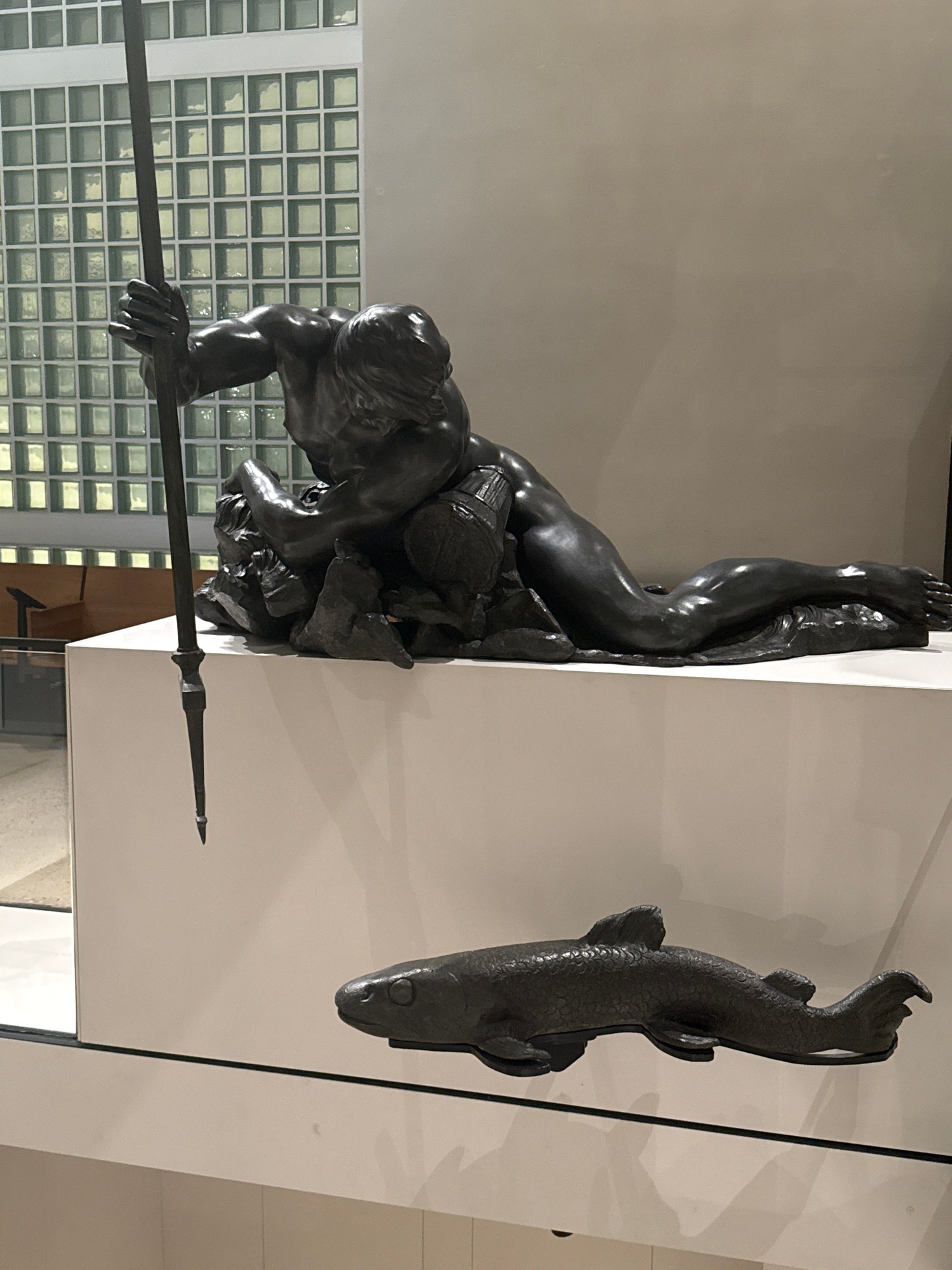
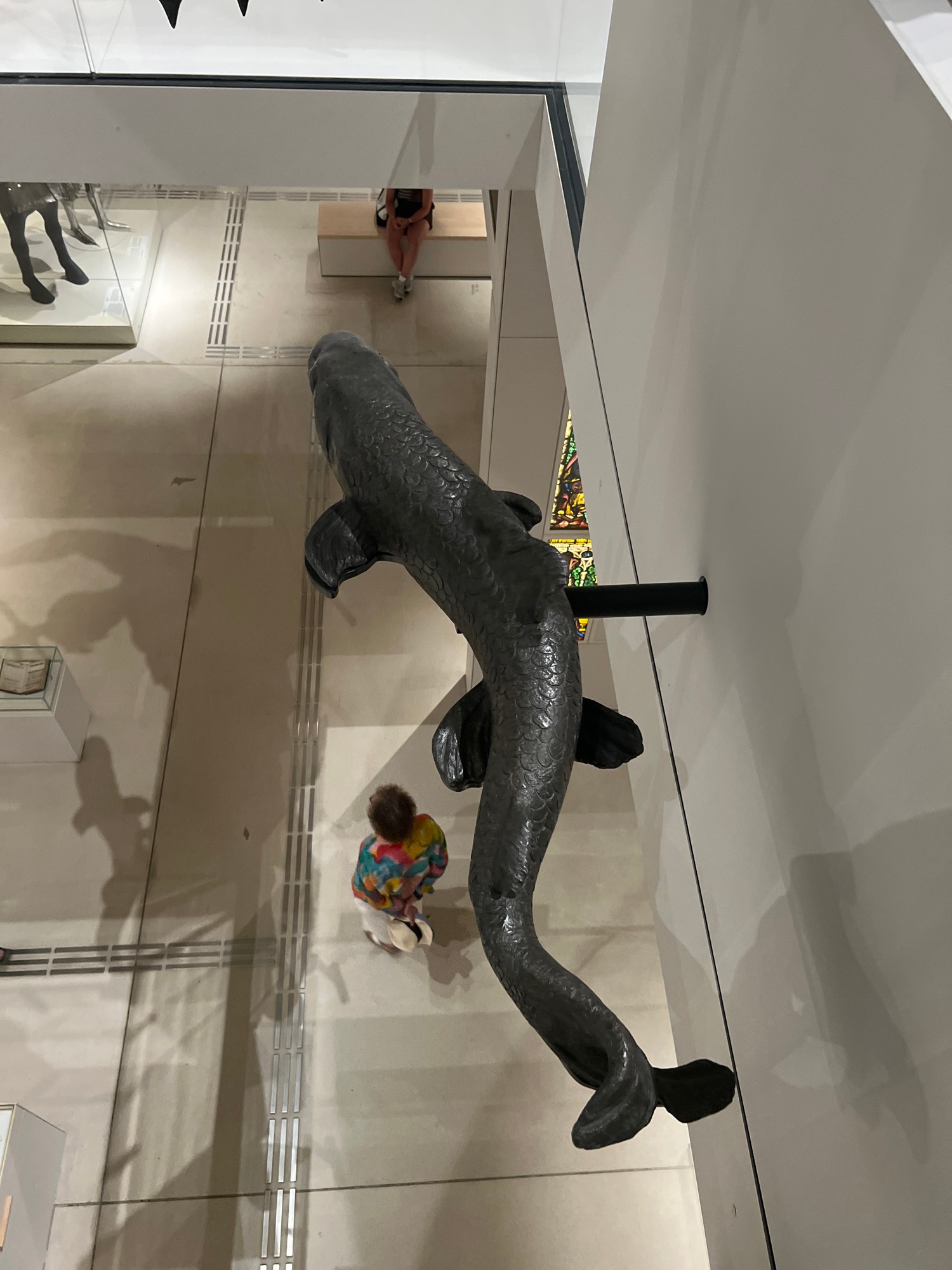
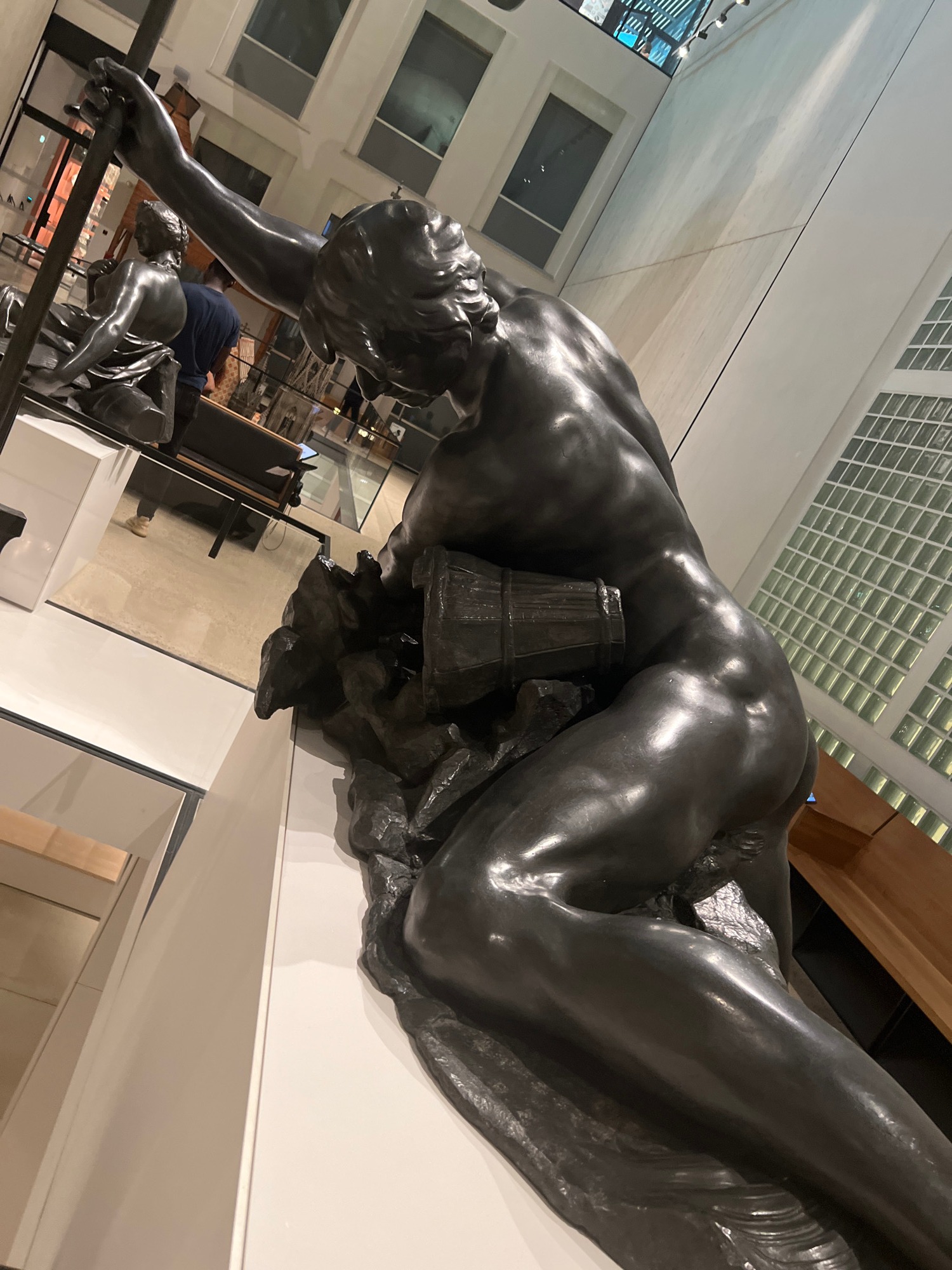
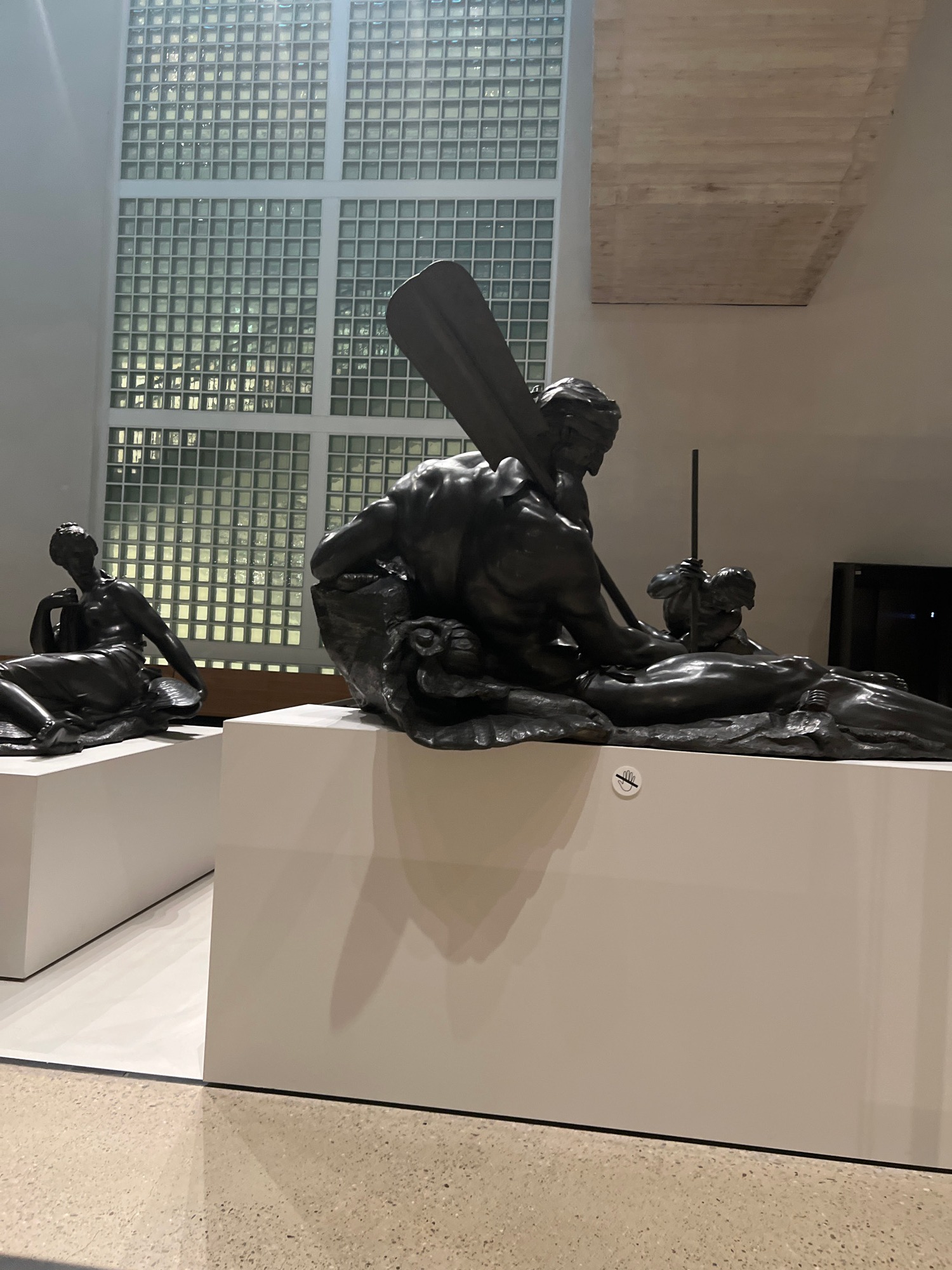
This media file shows a sculpture of a muscular male figure, seemingly a depiction of a mythological or heroic character, with one leg bent and the other extended as he appears to be pushing off from a wall. He is adorned with a small bag or satchel slung over his shoulder. Extending from his grasp is a long spear, positioned horizontally in the foreground. The sculpture is dark in color, likely bronze or a similar material, and is mounted on a white wall. To the right of the human figure, also mounted on the wall, is a sculpture of a fish, appearing to be a pike or a similar species, facing upwards. The background consists of a wall that transitions from a light beige to white, and behind the human figure, a wall of square glass blocks is visible, creating a grid pattern. The lighting appears to be artificial and even, suggesting an indoor setting such as a museum or gallery. There is no visible text in the image. The overall impression is of a dynamic and powerful artistic display, likely found in a public space or exhibition in Vienna, Austria. The poses of the figures suggest movement and action, with the human figure appearing to be in mid-struggle or exertion, while the fish is depicted in a more static, yet still, evocative pose.
Vienna, Austria · Jun 25, 2026, 3:15 PM · 0.7k attention
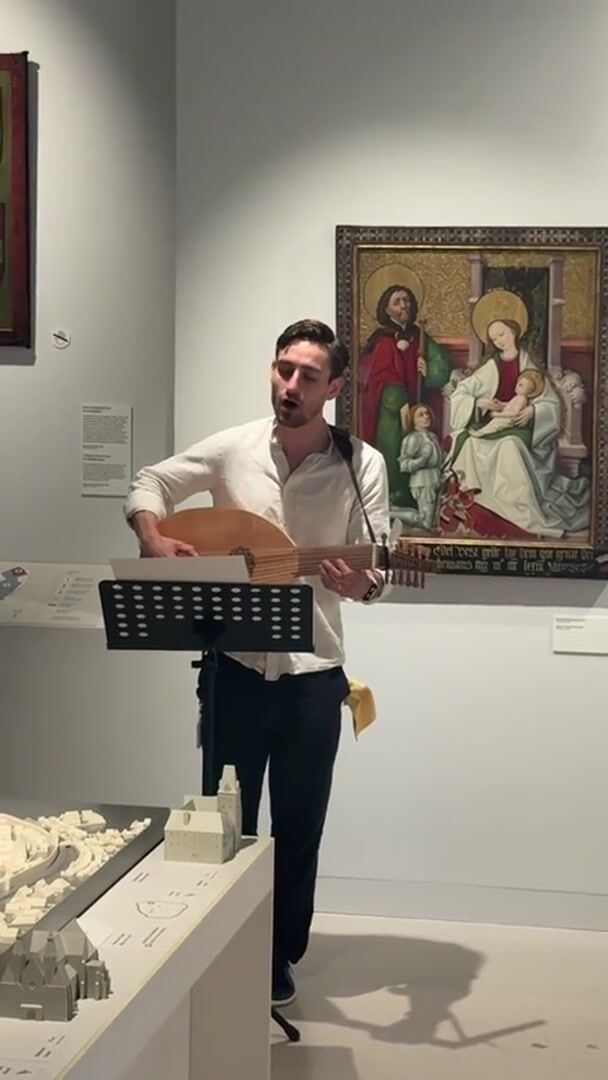
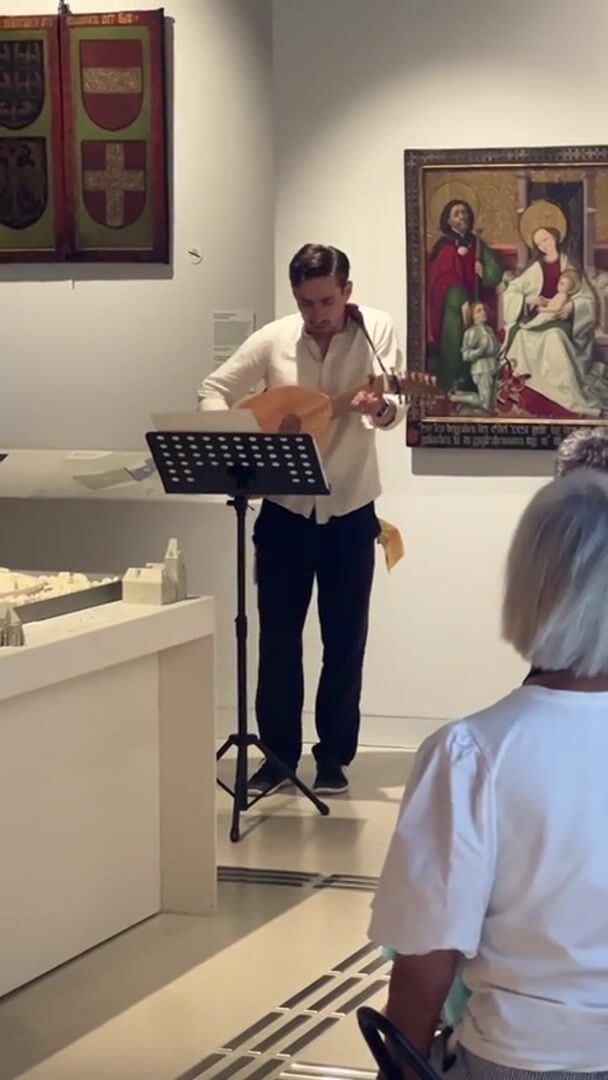
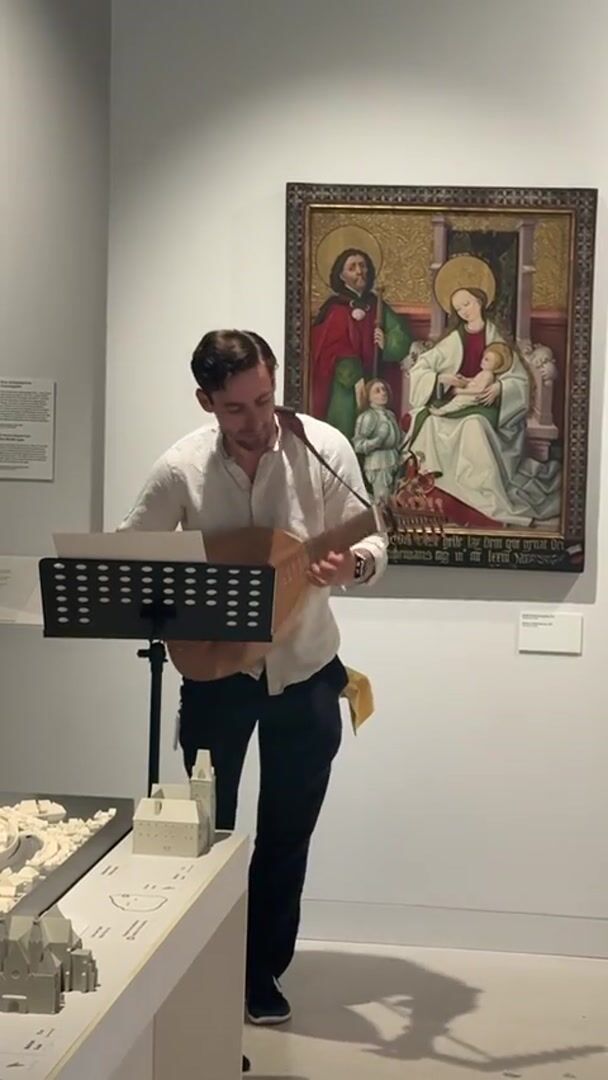
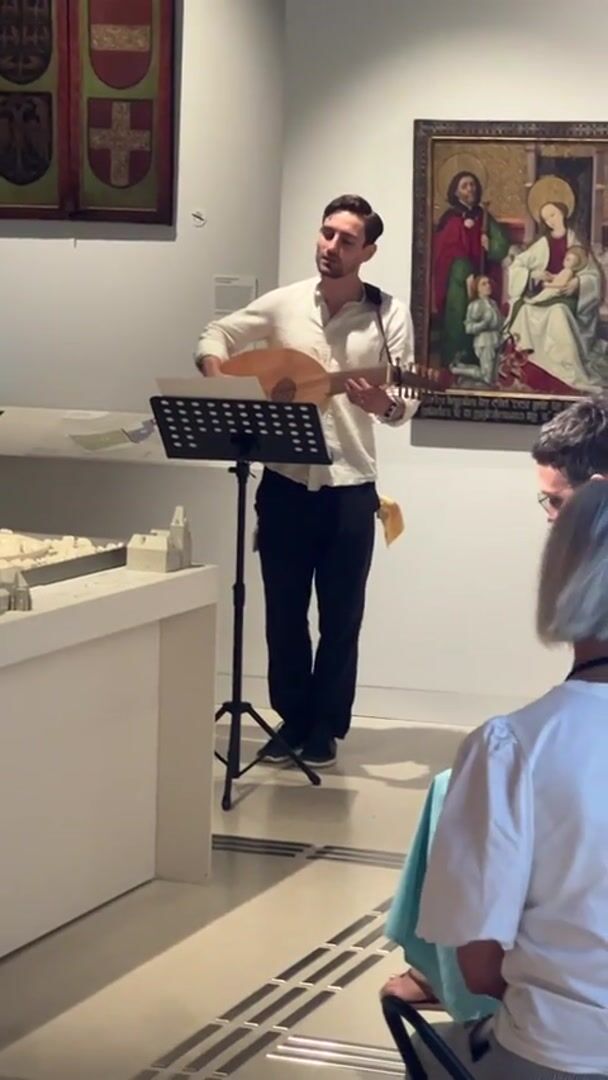
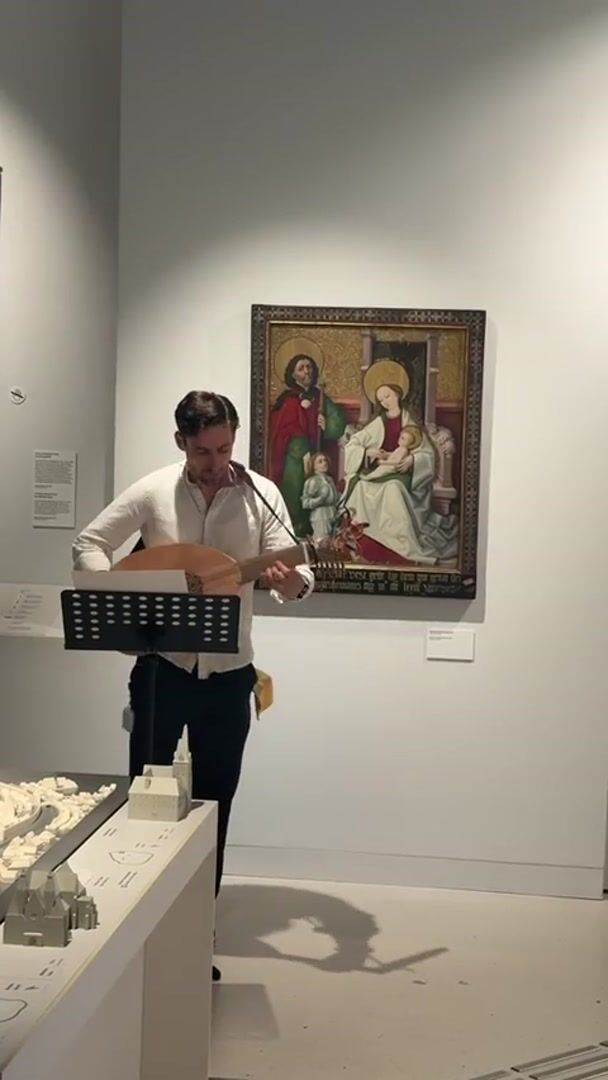
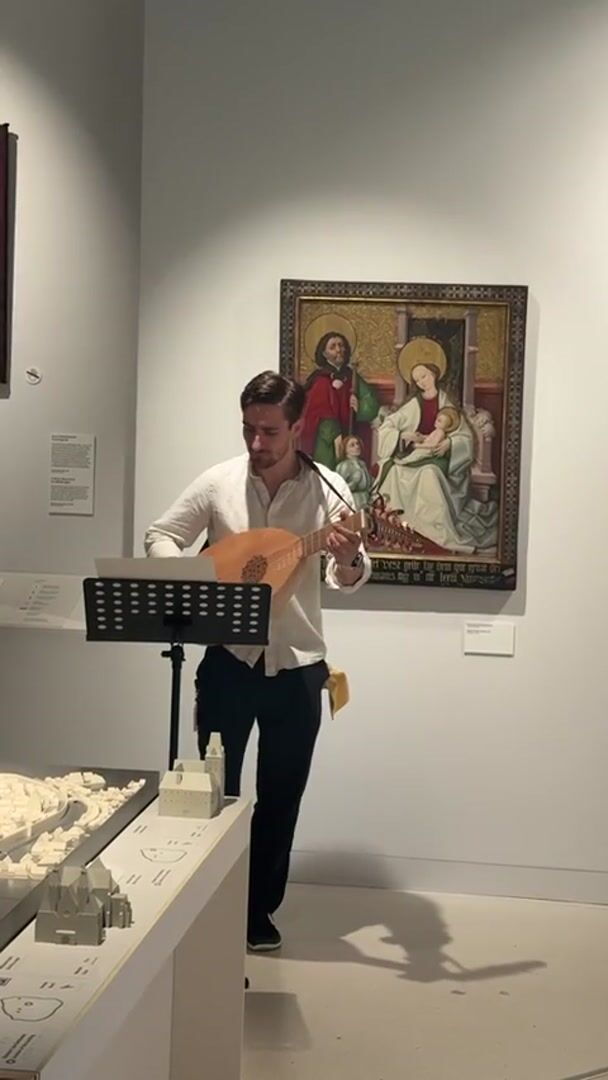
A man with dark hair and a light-colored shirt is playing a lute in front of a painting in a museum. He is standing and has a music stand in front of him. The painting appears to be religious in nature, depicting Mary, Jesus, and other figures. In the foreground, there are architectural models on display. The lighting suggests an indoor setting, likely a museum or gallery. The man's posture and focus indicate he is engaged in a performance. There is no discernible text that is legible enough to transcribe. The overall scene appears calm and focused on the performance and the art.
Vienna, Austria · Jun 25, 2026, 3:36 PM · 0.7k attention
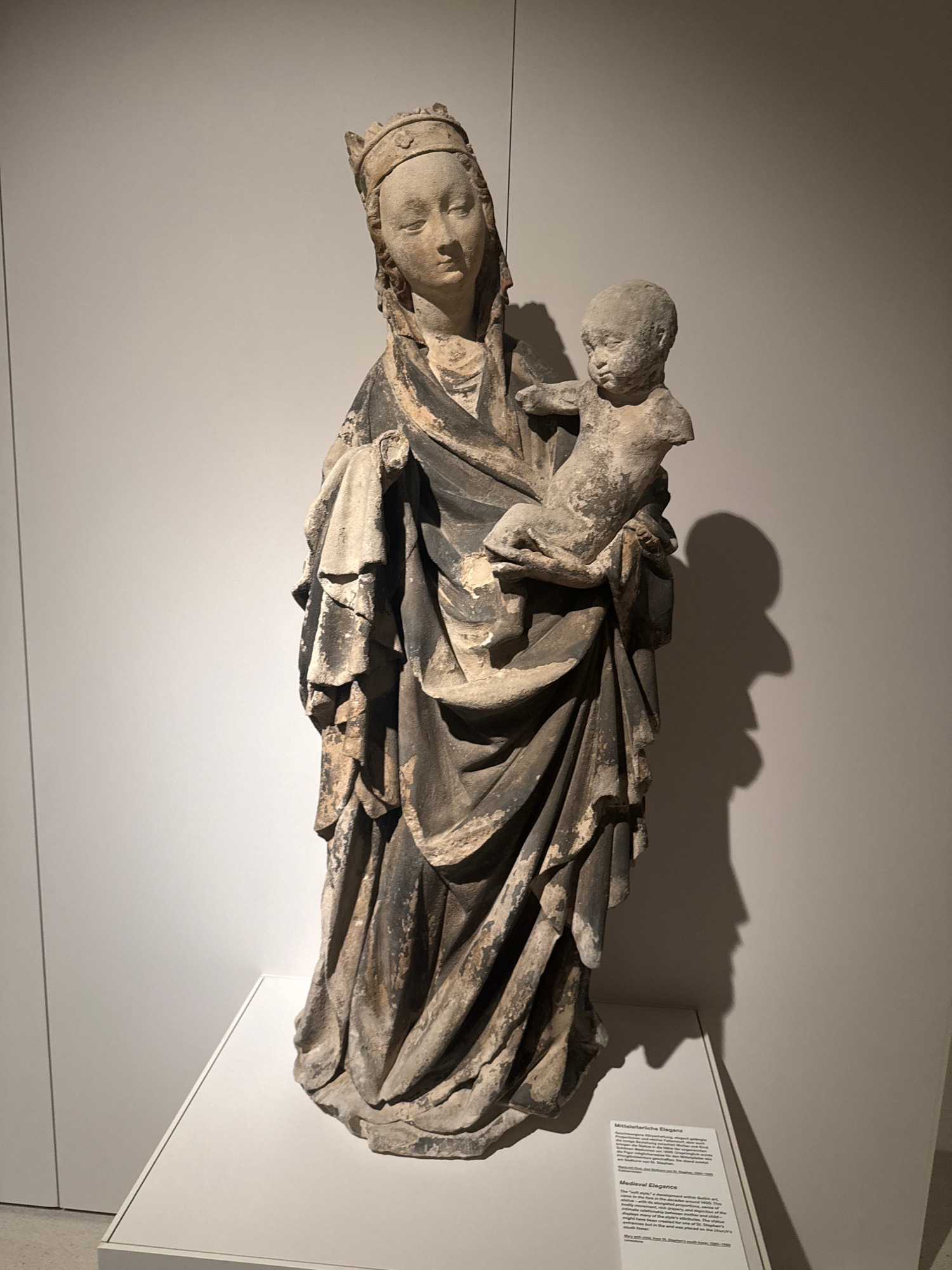
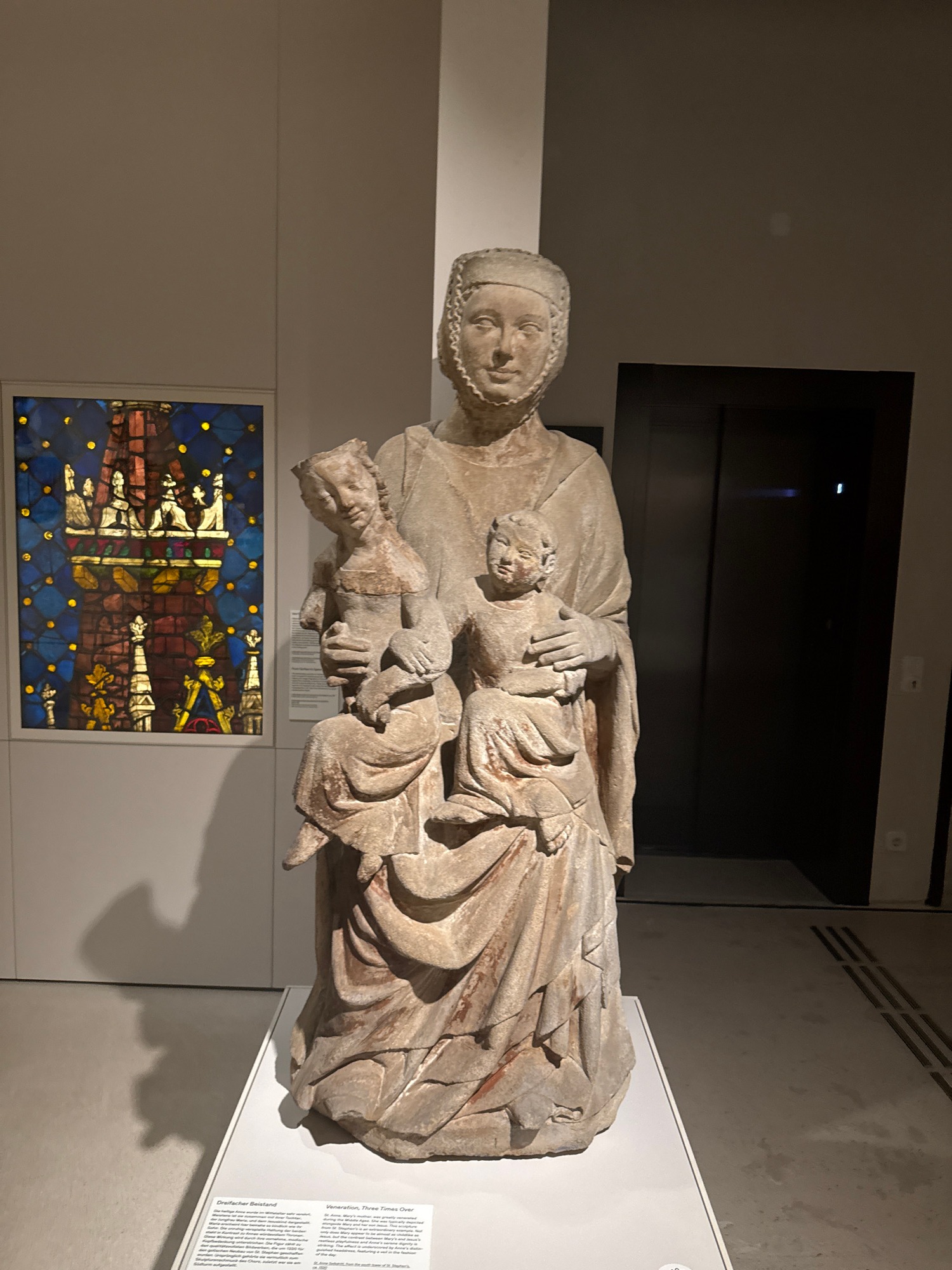
This is a stone sculpture depicting the Virgin Mary holding the infant Jesus. The figures are rendered in a realistic style, with the Virgin's face showing a serene expression and the infant Jesus appearing in a typical posture. The sculpture is draped in flowing robes that create deep shadows, adding to the dramatic effect. The details of the drapery are intricately carved, suggesting the movement of the fabric. The overall tone of the sculpture is somber and reverent.
The sculpture is displayed against a plain, neutral background, likely in a museum setting. A shadow of the sculpture is cast on the wall behind it, accentuating its three-dimensionality. To the right of the sculpture, a white informational placard is visible. The text on the placard is partially obscured and angled, but the visible portion includes headings in German ("Mittelalterliche Eleganz") and English ("Medieval Elegance"), along with descriptive text about the artwork. The placard mentions "The 'Soft style'" and dates the artwork to around 1400. It also notes the origin as "South German." The lighting in the scene appears to be artificial, casting strong shadows and highlighting the textures of the stone. The setting suggests a gallery or exhibition space in Vienna, Austria. The time of day is irrelevant due to the controlled lighting.
Vienna, Austria · Jun 25, 2026, 3:28 PM · 0.6k attention
This video captures a man playing a lute in what appears to be a museum setting. The man, dressed in a white shirt and black pants, stands in front of a music stand displaying sheet music. Behind him, a large, ornate painting depicts religious figures, likely the Virgin Mary and child with Saint John the Baptist. To the left of the painting, two framed crests with red and gold detailing hang on the wall. In the foreground, a woman with blonde hair wearing a white top is seated, facing away from the camera, observing the performance. The room is well-lit, suggesting it's daytime. The overall atmosphere seems calm and focused on the musical performance. The location is identified as Vienna, Austria. There is no visible text in the immediate foreground or on the artwork that is clearly legible within the frame.
Vienna, Austria · Jun 25, 2026, 3:36 PM · 0.5k attention
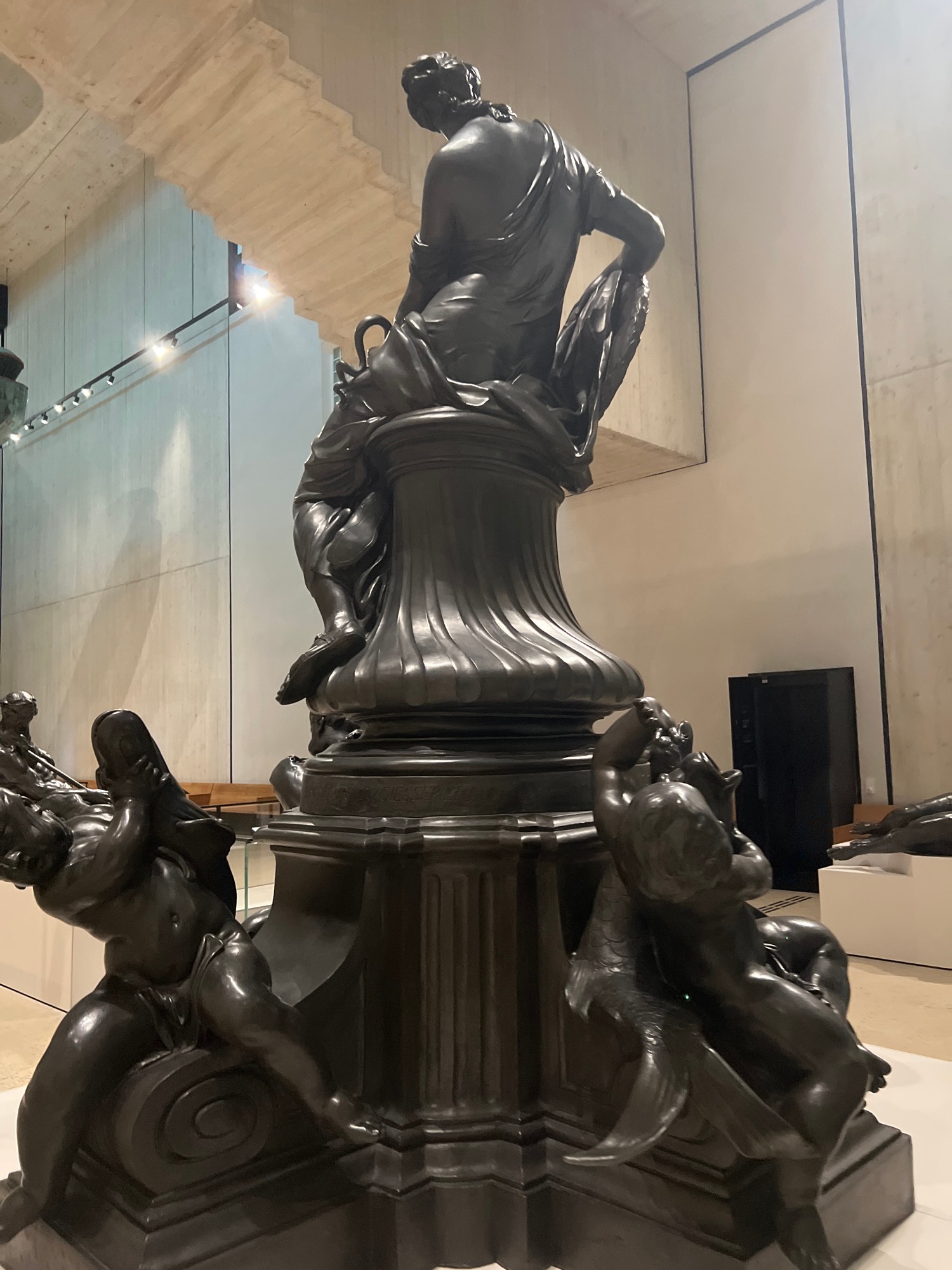
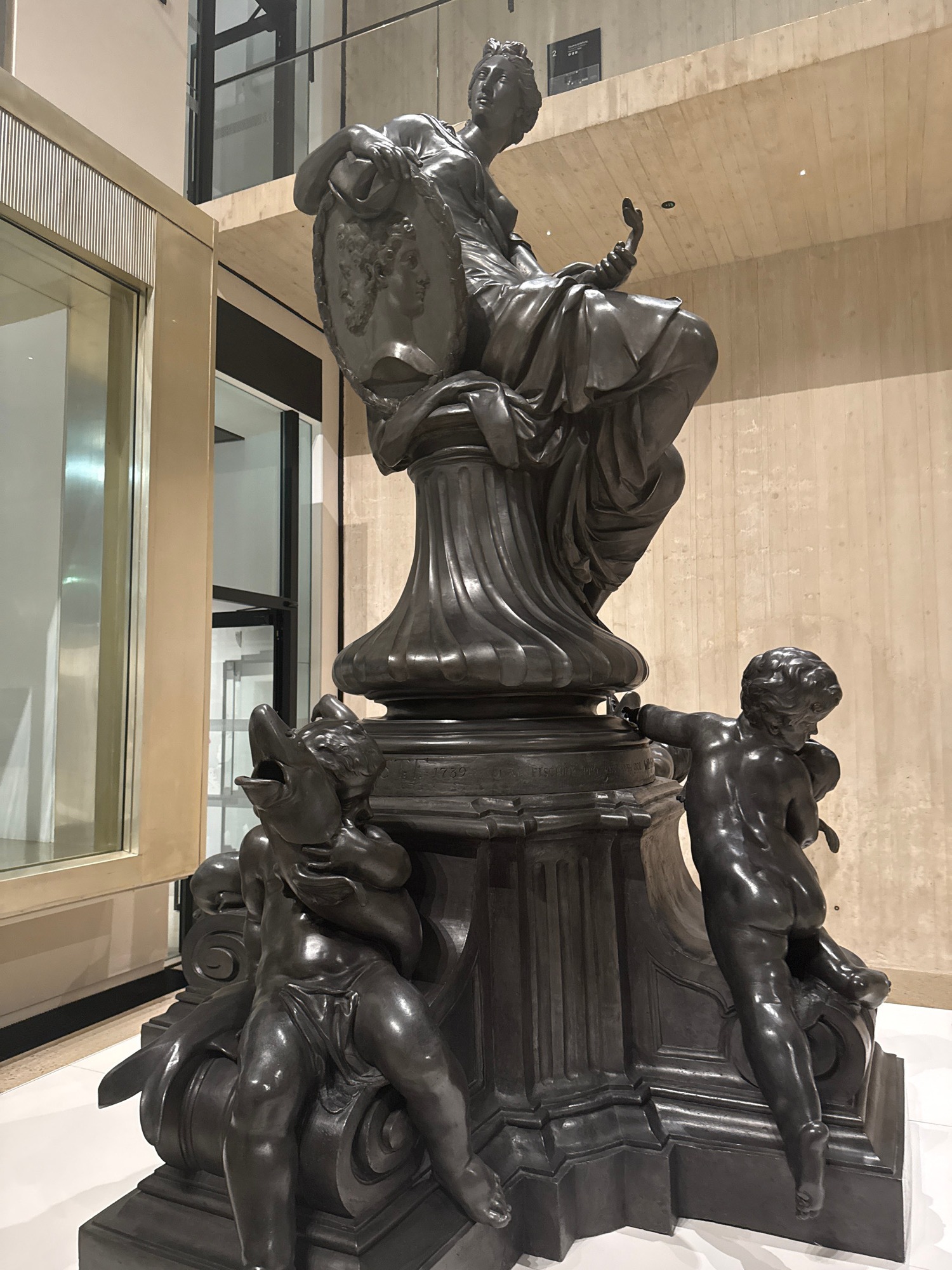
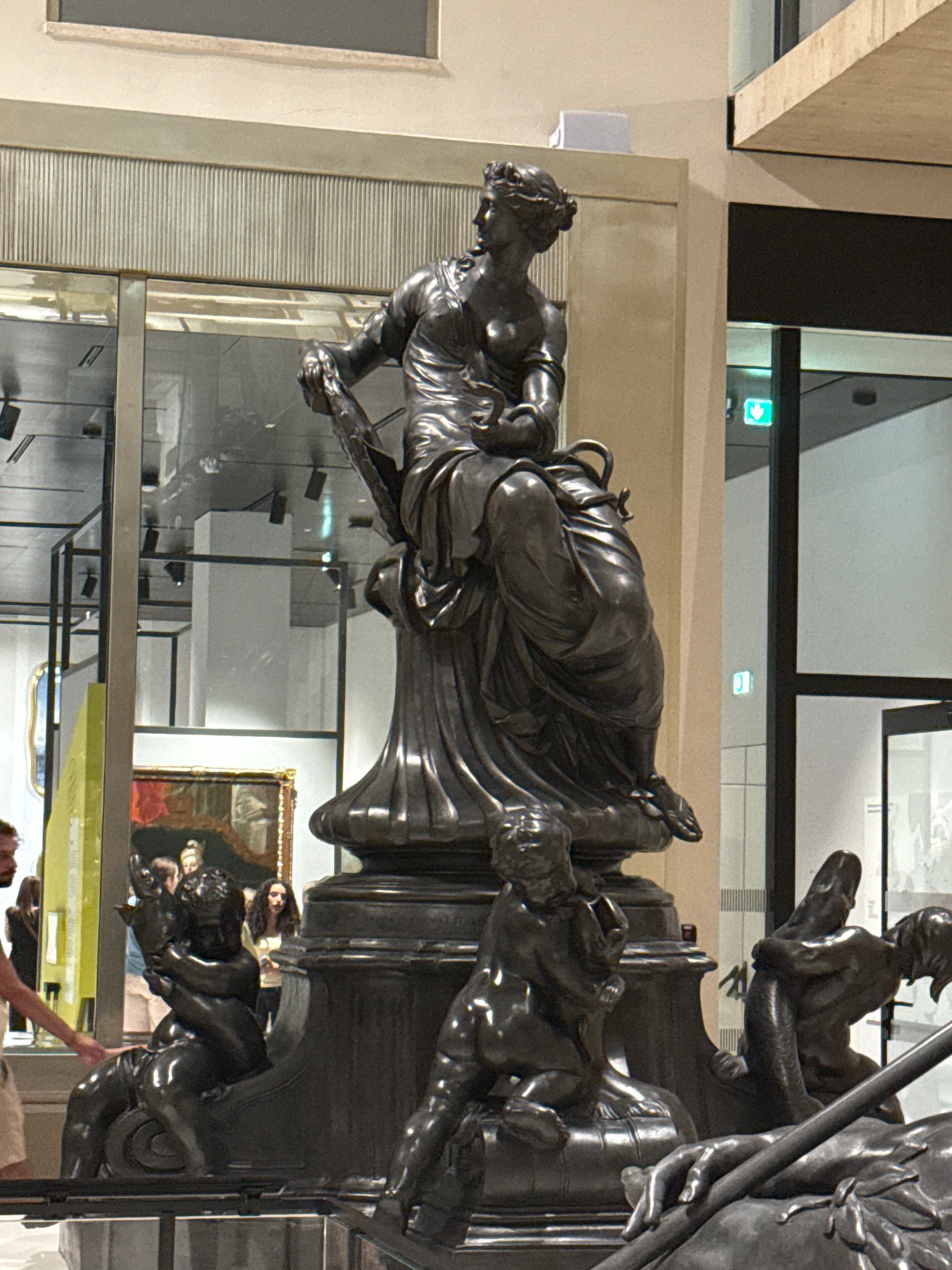
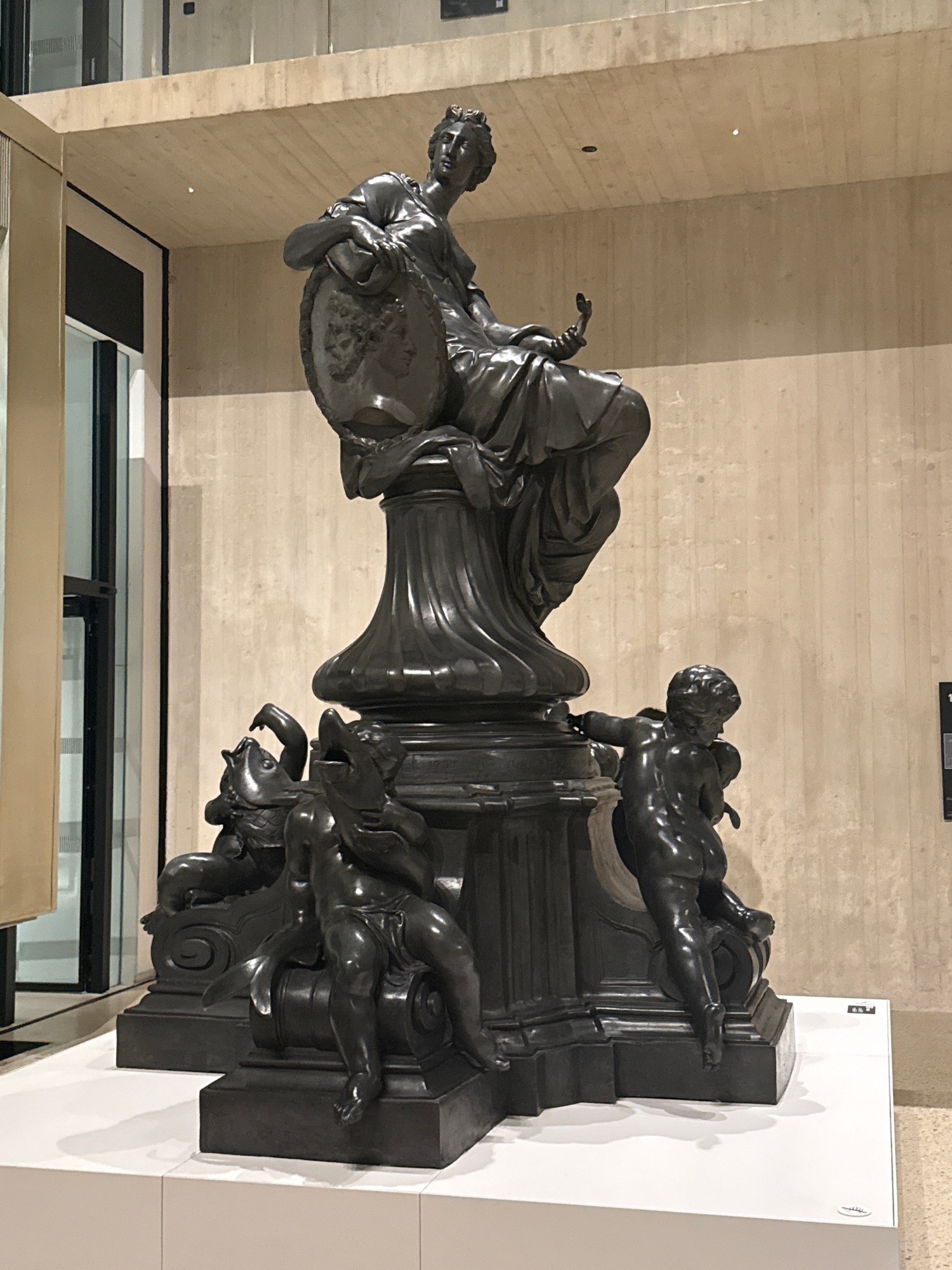
This is a medium shot, vertically oriented photograph of a dark bronze sculpture. The sculpture depicts multiple figures, including at least one adult female in draped clothing and several cherubic figures, some of whom are interacting with sea creatures. The adult female figure is positioned on the left side of the frame, with her head tilted back and her right arm raised. The cherubic figures are on the right, with one appearing to ride on the back of a stylized fish-like creature. The sculpture is placed on a dark, fluted pedestal, and rests on a reflective surface, possibly a polished floor or a display platform.
The setting appears to be an indoor exhibition space, possibly a museum. The background features a light-colored wall with some architectural elements, including what looks like a modern archway or staircase on the left. A dark rectangular object, possibly a screen or a projector, is mounted on the wall in the upper right quadrant. Lighting in the space is artificial, with bright reflections visible on the reflective surface below the sculpture, suggesting overhead lights.
The overall mood of the sculpture is one of dynamism and perhaps allegorical representation, given the mythological or classical nature of the figures and their interaction. There is no discernible weather or time of day information. No visible text is legible in the image. The location context of Vienna, Austria, is provided externally and does not influence the visual description itself.
Vienna, Austria · Jun 25, 2026, 3:25 PM · 0.5k attention
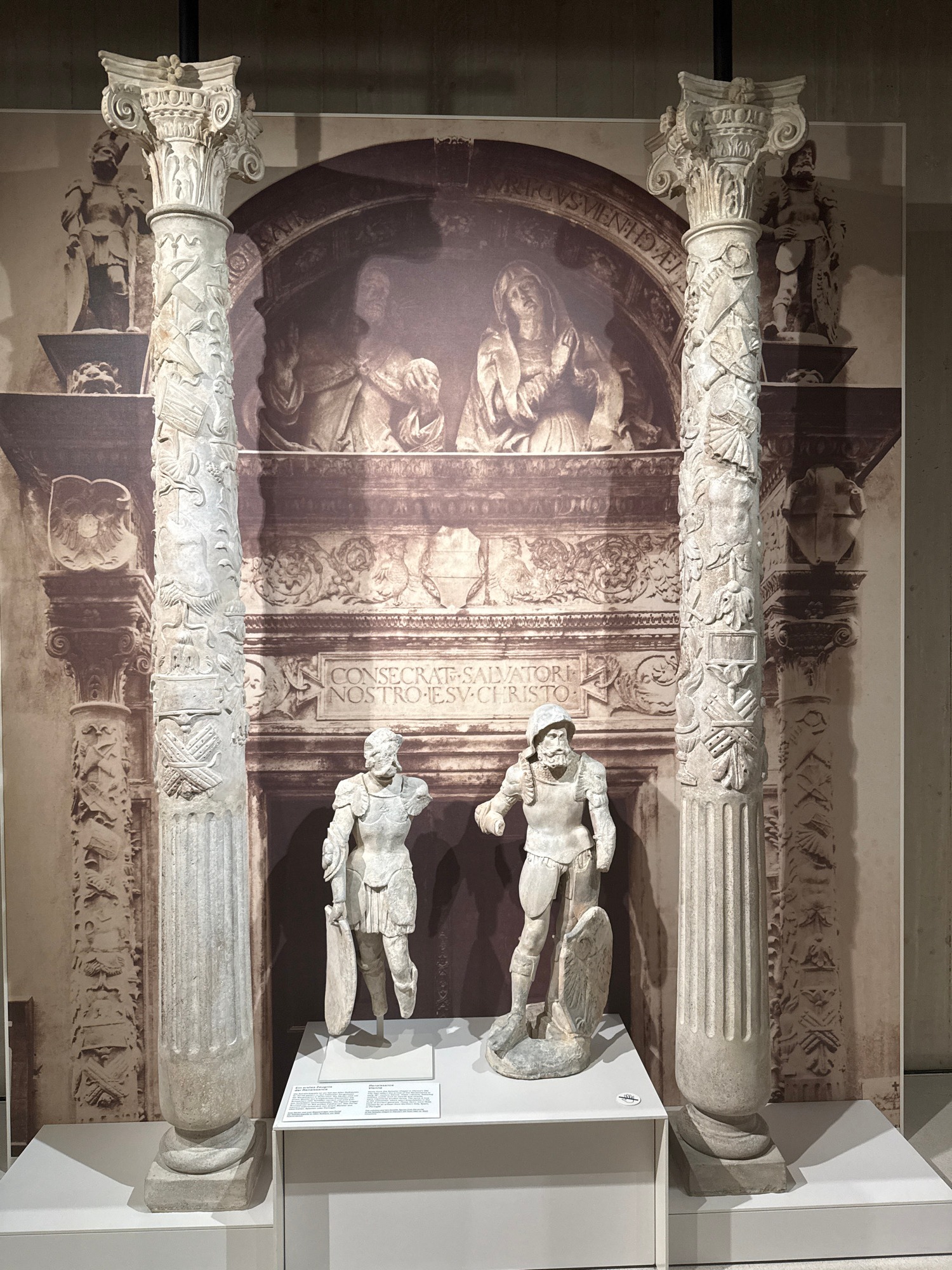
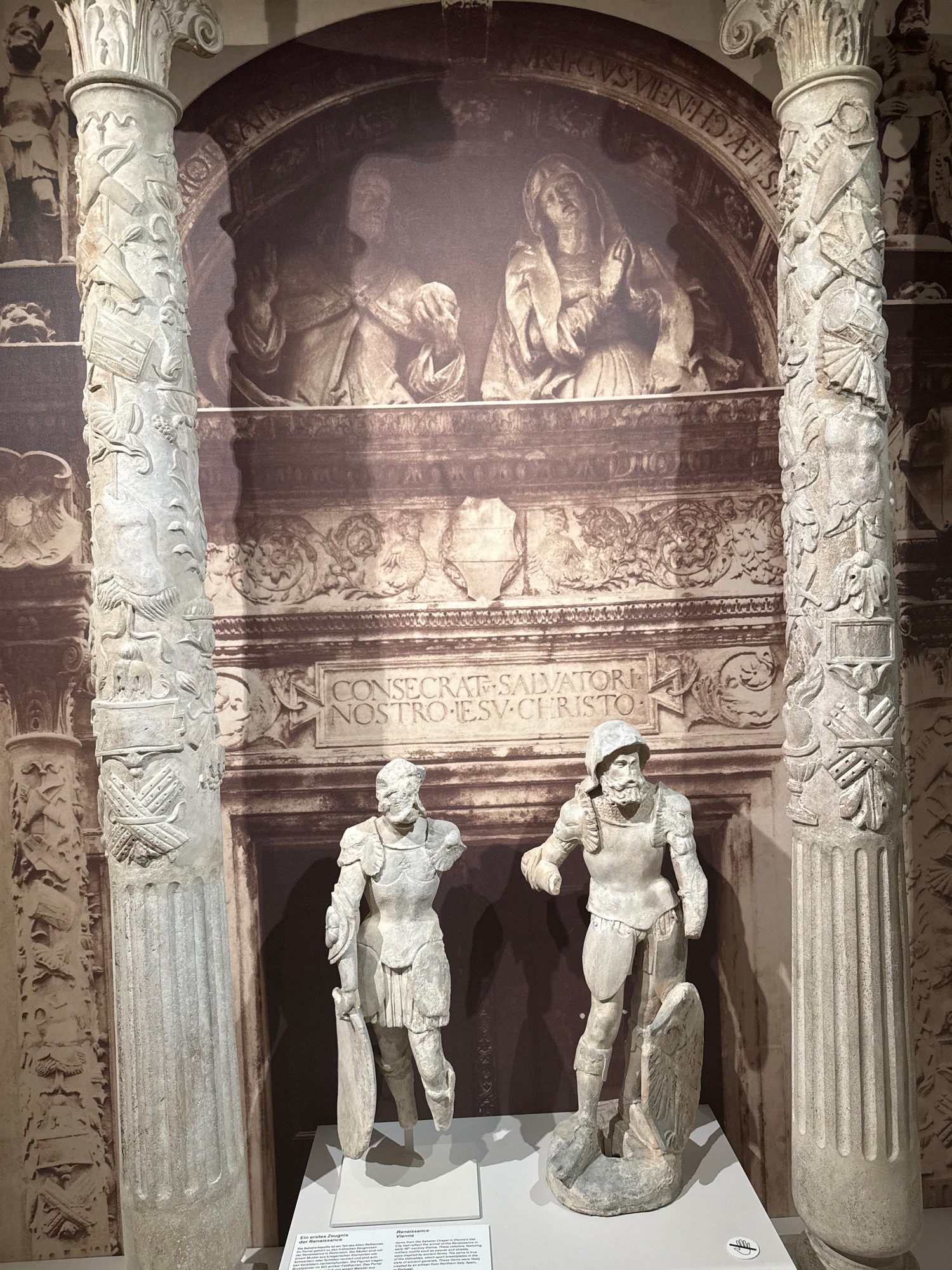
This media file depicts a museum exhibit featuring ancient sculptures and a large-scale photographic backdrop. Two elaborately carved stone columns, likely architectural elements, are positioned vertically, with their fluted shafts and ornate capitals prominently displayed. Between the columns, a dramatic photographic mural creates a sense of depth and historical context, showing figures and architectural details reminiscent of classical or religious art.
On pedestals placed in front of the mural, two stone statues of male figures in armor are visible. The figures are posed dynamically, suggesting a narrative or historical scene. The statue in the foreground is a full-body representation, while a second figure is partially visible behind it.
The backdrop features a large, semicircular depiction of what appears to be a religious scene with multiple figures, possibly a Madonna and child with saints or angels, rendered in a classical artistic style. Above and around this central image, the backdrop displays intricate decorative carvings and what looks like text.
Visible text on the backdrop reads: "CONSECRATE SANCTI NOSTROS ESV CHRISTO". This inscription suggests the dedication or purpose of the artwork or building depicted.
The lighting in the exhibit is subdued, highlighting the textures and details of the sculptures and the mural. The overall setting is indoors, consistent with a museum display. The artifacts and their presentation evoke a sense of historical significance and artistic appreciation. The location context of Vienna, Austria, further situates these objects within a rich European cultural heritage.
Vienna, Austria · Jun 25, 2026, 3:20 PM · 0.4k attention
This is a photograph of an exhibit in a museum, likely in Vienna, Austria, based on the text. The exhibit displays archaeological finds, primarily pottery fragments, in a glass display case. The fragments are labeled with numbers and descriptions in both German and English, indicating their origin and historical period.
The display case is lit, and the reflections on the glass suggest an indoor environment, possibly a museum hall. A projection on the wall behind the display case shows abstract geometric shapes and building-like structures, adding a modern visual element to the historical artifacts.
One of the prominent artifacts appears to be a large fragment of pottery, labeled with the number 4 and described as a "Topf (grave good), mid to 2nd half of the 10th c." or "Pot (grave good), mid to 2nd half of the 10th c." Other numbered fragments include a "Platte" (plate) and a "Lampe" (lamp) from the 11th/12th century.
A person's arm and shoulder are visible in the reflection on the glass, indicating that a visitor is observing the exhibit. The lighting suggests it is daytime, or the museum is well-lit. The overall scene conveys a sense of historical exploration and learning, highlighting the early days of Vienna's resettlement. The text explicitly mentions the site of the former Roman legionary fortress.
Vienna, Austria · Jun 25, 2026, 3:33 PM · 0.4k attention
This media file shows a close-up, side view of a very ornate, black and gold carriage. The carriage is suspended by wires, suggesting it is on display in a museum or exhibit. It has large, spoked wheels with red rims, and elaborate decorative elements. The main body of the carriage is black with gold trim and a prominent golden eagle emblem on the side. There are two windows on the side, with reflective glass. A lantern is mounted to the top of the carriage. A draped fabric canopy, with red trim and fringe, covers part of the rear of the carriage. The background appears to be a wall, possibly concrete or wood-paneled, with vertical lines suggesting it might be a display wall. The lighting is artificial, casting reflections on the carriage's surfaces. There is no visible text in the image. Given the opulent design and the likely museum setting in Vienna, Austria, this carriage is probably a historical artifact, possibly belonging to royalty or nobility.
Vienna, Austria · Jun 25, 2026, 3:26 PM · 0.3k attention
This image shows a close-up, angled view of the dome and upper section of a grand, ornate building, likely a church or cathedral, situated in Vienna, Austria. The building's architecture features a prominent, mint-green copper dome with fluted detailing, topped by a golden finial. Elaborate white stonework adorns the structure, including decorative carvings of figures and architectural elements around windows and along the roofline. Several arched windows with dark panes are visible on the building.
In the foreground, a significant portion of the building is covered in scaffolding and white tarps, suggesting ongoing renovation or construction work. The scaffolding creates a grid-like pattern over the lower sections of the building, partially obscuring its details.
The sky is a clear, bright blue with a few wispy white clouds, indicating fair weather during the daytime. The lighting suggests it is likely midday, with strong sunlight casting shadows on the building.
No people are clearly visible in the image, though the presence of scaffolding might imply workers are present but out of frame or obscured. There is no visible text in the image. The overall impression is of a historic and architecturally significant landmark undergoing preservation work.
Vienna, Austria · Jun 25, 2026, 2:50 PM · 0.3k attention
This is a vertical, low-angle, outdoor photograph of the Karlskirche church in Vienna, Austria. The sky is a vibrant blue with scattered white clouds, suggesting a sunny day, likely in the late morning or early afternoon.
The church itself is a grand Baroque structure, predominantly white with green domes. A prominent feature is the large, ornate column in the foreground, which appears to be decorated with relief sculptures. Part of the church's facade is covered in scaffolding and white sheeting, indicating ongoing construction or renovation work. Several windows are visible on the building, some with dark panes. Palm trees can be seen near the building, adding an exotic touch to the scene.
In the distance, there are hints of urban activity, including a red structure that might be a kiosk or part of a shop, and some people are visible, though they are small and not the focus of the image. There is also a banner with text, though it is partially obscured and difficult to read clearly. Some text is visible on banners attached to the scaffolding, including "ZT DR PECH" and "PM | BUILDING | project | experts". Another banner has the text "VOTA MEA REDD | IN CONSILCI | LIBEM DOMINI".
The overall impression is one of architectural grandeur set against a bright, clear day, with the ongoing work adding a dynamic element to the historic setting.
Vienna, Austria · Jun 25, 2026, 2:49 PM · 0.3k attention
This is a photograph of the interior of St. Peter's Church in Vienna, Austria, looking upwards towards the dome and the altar area. The dome is elaborately painted with a fresco depicting religious figures and celestial scenes, surrounded by circular windows that allow natural light to enter. The walls are adorned with marble columns and intricate gold detailing. In the background, the altar is visible, featuring a large, ornate sculptural arrangement with a golden sunburst and angelic figures. A pulpit is also present on the right side of the nave. Several people are gathered in the lower part of the image, appearing to be visitors or worshippers, some looking up at the architecture and artwork, while others are engaged in conversation or looking at displays. The overall impression is one of grandeur and religious devotion.
Vienna, Austria · Jun 25, 2026, 3:58 PM · 0.3k attention
The image shows an interior scene, likely a room decorated in a traditional or ornate style. The primary subjects are various textiles, including intricately patterned carpets and cushions, which are draped over seating areas and possibly laid on the floor. A large, multi-paned window with stained glass and latticework is a prominent feature, suggesting a historical or culturally significant building. The lighting appears to be dim, with light filtering through the window, casting shadows and highlighting the textures of the fabrics. The overall impression is one of a richly decorated and perhaps tranquil space. There are no people visible in the image. The setting could be a museum, a traditional home, or a historic building. The location context of Vienna, Austria, could suggest a European historical architectural style. There is no discernible text in the image.
Vienna, Austria · Jun 25, 2026, 3:06 PM · 0.3k attention
This media file is a vertical, eye-level shot of an ancient Roman relief carving displayed in a museum. The carving, made of stone, features a circular medallion containing a bust of a person, likely a Roman figure, adorned with a laurel wreath. To the right of the medallion, there is an inscription in Latin. The relief is displayed on a white shelf, with the background showing a museum wall with informational text panels.
The carving itself appears to be a tombstone or a votive relief, typical of Roman funerary art. The detail on the bust, though worn, suggests it was once finely crafted. The Latin inscription, though partially obscured by damage and wear, is a key element, potentially providing the name of the deceased, their profession, or a dedication.
The setting is clearly a museum in Vienna, Austria. The minimalist white display and the presence of printed informational texts indicate a modern exhibition space designed to preserve and present historical artifacts. The lighting is neutral and even, typical of museum displays, with no specific indications of time of day or weather. The overall mood is one of historical preservation and academic presentation.
Visible text includes the Latin inscription on the relief. Additionally, fragments of text on the museum panels are visible, but largely unreadable due to the image resolution and angle. One panel appears to have headings in German like "che Lungen" and "chting tions", and another has "Strassen" and "Roads" in English.
Vienna, Austria · Jun 25, 2026, 3:38 PM · 0.3k attention
This media file shows a museum display featuring architectural elements and sculptures. In the foreground, there are two large, ornately carved stone columns, oriented vertically. The carvings on the columns appear to depict a frieze with various figures and decorative motifs.
Behind the columns, a large photographic backdrop or mural is visible. This backdrop features detailed images of what seem to be religious scenes or historical frescoes, possibly from an interior space like a church or palace. One section of the backdrop clearly shows two figures in a reclining or seated position, rendered in a classical style.
In the middle ground, placed in front of the backdrop, are two stone sculptures of men in armor, also oriented vertically. The figures are in a stylized, possibly Renaissance or Baroque style. The sculpture on the right depicts a standing man holding a shield and a weapon. The sculpture on the left shows a man in a similar pose. The lighting in the scene is artificial, suggesting an indoor museum environment.
Visible text on the backdrop includes inscriptions that appear to be in Latin, such as "CONSECRATE NOSTRO ESV CHRISTO." There is also a small white information plaque with text in German and possibly English on the right side of the image, indicating location cues such as "Ein erstes Zeugnis der Renaissance" (A first testimony of the Renaissance). The overall impression is a curated exhibition highlighting historical art and architecture. The location context provided is Vienna, Austria.
Vienna, Austria · Jun 25, 2026, 3:20 PM · 0.3k attention
This media file, shot in Vienna, Austria, captures a close-up, upward-facing view of a grand architectural structure against a clear blue sky. The primary subject is the ornate dome and spired roof of a building, possibly a church or a historical monument, undergoing extensive renovation.
The building features a prominent, large, turquoise-green dome with distinct ribbed detailing. A smaller, white, multi-tiered structure with arched windows and decorative elements is visible adjacent to the dome. At the very top of the spired section, a golden orb and cross gleam, suggesting religious significance. Decorative sculptural elements, including what appear to be gargoyles or ornate brackets, are visible on the building's facade.
A significant portion of the lower part of the building is obscured by scaffolding and protective sheeting, indicating ongoing restoration work. The scaffolding is a complex network of metal poles and platforms, over which large, white, opaque tarps are draped, creating a layered, textured effect.
The bright blue sky suggests it is daytime, likely a sunny day, given the strong light and shadows cast on the building. The orientation of the image, looking upwards, emphasizes the scale and grandeur of the architecture. The overall impression is one of monumental architecture and preservation efforts. No visible text is present in the image.
Vienna, Austria · Jun 25, 2026, 2:51 PM · 0.3k attention
This media file depicts a display of ancient artifacts, likely within a museum setting in Vienna, Austria. The primary subjects are stone carvings, one prominently featuring a human face with distinctive headdress and open mouth. The carvings appear to be old and weathered, suggesting historical significance. They are arranged vertically, with one piece positioned above another, suggesting they are fragments of a larger structure or artwork.
The background consists of a wall with a grid pattern, possibly a tiled surface or a display board designed to evoke a sense of order and organization, common in museum exhibits. To the left of the display, there's a dark vertical element, and a bright, thin light source casts a glow. Shadows are visible on the grid wall, indicating directional lighting, likely from artificial sources within the exhibit space. The overall scene suggests a static display rather than an active event.
Notable details include the evident age and texture of the stone, the detailed carving of the human face, and the number "542" inscribed on one of the stone fragments, likely an inventory or identification number. The lighting creates subtle shadows that highlight the three-dimensional quality of the carvings. The setting appears to be indoors, well-lit and curated, consistent with a museum exhibition. There are no clear indications of the time of day or weather conditions, as the scene is contained within an artificial environment. The emotion conveyed is one of historical preservation and artistic appreciation.
Vienna, Austria · Jun 25, 2026, 3:37 PM · 0.2k attention
This is a high-angle, full shot of a detailed architectural model of St. Stephen's Cathedral in Vienna, Austria. The model is displayed indoors on a white surface, possibly in a museum, with a glass barrier visible in the background. The cathedral model is intricately crafted, featuring dark, gothic-style architecture with numerous spires, buttresses, and detailed facades.
The most prominent features are the roofs. One large roof section is covered in red tiles, with a decorative pattern of alternating red and yellow zigzags along its ridges. The number "1831" is emblazoned in gold on this red tile section. Another roof section is covered in a mosaic of colorful tiles arranged in a zigzag pattern of green, red, and yellow.
In the background, behind the model, there is a glimpse of the actual cathedral's exterior through a glass wall, showcasing a section of its Gothic architecture and spires. Further in the background, there is a display of what appears to be artwork or historical artifacts on a wall. A person in a white shirt and black pants is visible standing near the model, observing it. The lighting in the scene is bright, creating shadows that highlight the model's three-dimensional details.
Vienna, Austria · Jun 25, 2026, 3:17 PM · 0.2k attention
This media file shows a full suit of ornate, historical armor displayed vertically behind glass. The armor is made of polished metal and features intricate decorative patterns in gold along the torso, legs, and arms. The helmet is also detailed with gold accents. The suit appears to be a museum exhibit, with other pieces of armor visible above and below, and a plain white wall serving as the background. Shadows cast by the armor and the display structure are visible on the wall, suggesting internal lighting. There are no people visible. The scene is an indoor setting, likely a museum in Vienna, Austria, given the location context. The image is taken from a slightly elevated angle, looking down at the suit. The lighting creates reflections on the glass.
Vienna, Austria · Jun 25, 2026, 3:21 PM · 0.2k attention
This media file shows an antique carriage suspended from the ceiling in a large, modern interior space. The carriage is ornate, with detailed metalwork, a gilded emblem on its side, and a red and white patterned canopy. It has several large spoked wheels. The interior walls are made of pale, ribbed material, and there are thin cables running across the space, suspending the carriage.
Large metallic letters spelling out "VIENNA" are visible on the wall, confirming the location. The lighting appears to be artificial, suggesting it is indoors. A person's head and shoulder are visible in the upper right corner, looking down. Another person's hand is visible in the lower right corner, reaching upwards. The overall impression is of a museum or exhibition space showcasing historical artifacts within a contemporary architectural setting. The carriage is the primary focus, presented as a dramatic display.
Vienna, Austria · Jun 25, 2026, 3:26 PM · 0.2k attention
This image captures a close-up view of an ornate Baroque ceiling or altar decoration, likely within a church in Vienna, Austria. The central subject is a dramatic sculptural ensemble of white figures and golden rays, emanating from a triangular motif that encloses Hebrew text, possibly representing the Tetragrammaton (the four-letter Hebrew name of God). The sculpture depicts numerous putti (cherubs) and winged angelic figures seemingly emerging from clouds, bathed in the golden light.
In the upper right corner, the head and shoulder of a person are visible, looking down into the scene. Their presence suggests that this is a photograph taken by a visitor. The architectural elements surrounding the sculpture include marble columns with intricate gold detailing and richly decorated stucco work on the ceiling. The overall impression is one of grandeur and divine presence, characteristic of Baroque religious art. The lighting appears to be artificial, as is common in indoor settings. The specific location cues such as the architectural style and the detail of the Hebrew text point towards a significant religious building in Vienna, likely a cathedral or a historical church. No specific time of day or weather is discernible from the image.
Vienna, Austria · Jun 25, 2026, 3:59 PM · 0.2k attention
The image shows a richly decorated Baroque ceiling in what appears to be a church or grand hall in Vienna, Austria. The focal point is a large, ornate oval painting depicting a scene of heavenly figures and humans engaged in what seems to be a religious or mythological event. Numerous cherubic figures and winged beings are intertwined with people in classical attire, creating a dynamic and chaotic composition. The painting is framed by elaborate gilded stucco work, which is itself set within a marble structure featuring red and white veining.
Below the main painting, on the right side, there are two tall, white candles in elaborate golden candelabra, suggesting a setting where religious services or ceremonies might take place. To the left of the painting, a large arched window with a grid of panes allows bright daylight to illuminate the space, indicating it is daytime.
The surrounding architecture is also highly ornate, with more marble columns, gilded decorative elements, and sculptural accents. A white winged angelic sculpture is visible on the left side, reaching towards the window. Another decorative urn-like object with gilded elements is present on the lower left. The overall impression is one of opulence, grandeur, and spiritual or historical significance, characteristic of Baroque art and architecture. There is no visible text in the image.
Vienna, Austria · Jun 25, 2026, 3:59 PM · 0.2k attention
This is a high-angle, full shot of Karlskirche in Vienna, Austria, on a clear, sunny day. The church's green dome is visible on the left, partially obscured by scaffolding. In front of the church, a tall column topped with a golden statue stands. The plaza in front of the church is busy with people walking, biking, and congregating. Trees and landscaped areas are interspersed throughout the plaza. In the foreground, a modern outdoor seating area with dark gray umbrellas and tables is visible, along with a person sitting on a bench. A black metal railing runs along the bottom of the image.
Vienna, Austria · Jun 25, 2026, 3:52 PM · 0.2k attention
This is a vertical, eye-level, medium shot of St. Charles Church in Vienna, Austria, on a sunny day. The sky is a vibrant blue with fluffy white clouds. The church is a magnificent Baroque building with a grand green dome, intricate white stonework, and a tall column adorned with relief sculptures. Part of the church is covered in scaffolding and white sheeting, suggesting ongoing renovations or maintenance. Several palm trees are visible in the foreground, adding a touch of exoticism to the scene.
In the background, a tall, ornate column rises towards the sky, topped with a golden statue. The facade of the church features classical columns and statues. Banners are displayed on the scaffolding, with one featuring the text "Dr. PECH" and "building project experts PM." Another banner has Latin text that translates to "I will pay my vows in the sight of those who fear him." There are also banners with images of people in formal attire and German text, likely advertisements for the restoration work.
The overall impression is one of architectural grandeur and historical significance, with a hint of modern activity due to the scaffolding. The bright sunlight and blue sky suggest it is daytime, likely late morning or early afternoon.
Vienna, Austria · Jun 25, 2026, 2:49 PM · 0.2k attention
An ancient Roman funerary stele, approximately two meters tall and made of rough-hewn stone, is displayed upright in a museum setting. The stele is weathered and damaged, particularly at the lower right corner where a large piece is broken off. The upper portion of the stele features a relief carving of a human face within a laurel wreath, framed by a pediment with decorative elements. Below the portrait, Latin inscriptions are carved into the stone, with some letters showing remnants of red pigment. The stele is positioned against a white tiled wall, with a white vertical element to its left and a text panel on a white background to its right. The text panel contains information about roads, settlements, and travelers in the Roman Empire, indicating the stele's likely context. The lighting is even, suggesting an indoor exhibition space.
Vienna, Austria · Jun 25, 2026, 3:38 PM · 0.2k attention
This image shows a section of the Peterskirche (St. Peter's Church) in Vienna, Austria, seen from a low angle, with the sky and clouds as the backdrop. The image is rotated 90 degrees clockwise.
The prominent subject is a section of a large, ornate column, likely part of the church's architecture, with intricate relief carvings spiraling around it. The top of the column is adorned with golden decorative elements and a green dome. To the right of the column, parts of the church's facade are visible, featuring architectural details and windows. In the foreground, the lower part of the image displays scaffolding covered with white tarpaulins, suggesting that some part of the building is undergoing renovation or construction. Some metal structures of the scaffolding are visible, as well as what appear to be air conditioning units attached to the building behind the scaffolding.
The sky is a clear blue with scattered white clouds, indicating a bright, sunny day, likely late morning or early afternoon due to the strong sunlight. There are no people clearly visible in the image, though the presence of scaffolding implies that some construction or maintenance work may be ongoing. The overall scene evokes a sense of grandeur associated with historical architecture, juxtaposed with the practicalities of upkeep and preservation.
Vienna, Austria · Jun 25, 2026, 3:52 PM · 0.2k attention
This is a low-angle, vertical shot of the facade of a grand, white building, likely a church or historical monument, under a bright blue sky with scattered clouds. The architecture is ornate, featuring columns, decorative carvings, and statues of figures in flowing robes.
The main subject is the detailed facade with a triangular pediment above the entrance, filled with bas-relief sculptures depicting numerous human figures in various poses, seemingly engaged in a narrative. To the right of the pediment, large, fluted white columns rise vertically. Inscribed in gold lettering on a lighter background panel, read the Latin words "VOTA MEA REDDAM IN CONSPECTV TIMENTIVM DE". Beneath this, another inscription appears, partially visible, with lines of text that seem to be names or titles, including "DEI OMN", "D:CAROLO", and "REX CAT".
Statues of figures in draped garments are positioned on balconies and ledges along the building's exterior. A lush green palm tree with fronds partially obscures the lower right portion of the facade, suggesting a warm climate or a sheltered courtyard. The sunlight casts sharp shadows, indicating it is midday. The overall impression is one of historical grandeur and religious significance.
Vienna, Austria · Jun 25, 2026, 2:50 PM · 0.2k attention
This media file showcases a collection of historical suits of armor displayed behind glass, likely in a museum. The main subject is a full suit of gleaming metal armor, predominantly silver with ornate gold detailing on the breastplate. It is presented in a recumbent position, as if a knight lies in repose. The armor consists of a helmet, breastplate, pauldrons, vambraces, gauntlets, cuisses, greaves, and sabatons, all meticulously crafted.
Other suits or parts of suits of armor are visible above and below the central piece, also enclosed within display cases. These appear to be made of similar metallic materials and exhibit intricate craftsmanship. The setting is a brightly lit interior, with reflections from the glass display cases overlaying the armor. The reflections create a sense of depth and also reveal the surrounding environment, which includes what appear to be other display elements or architectural features.
The lighting suggests an indoor setting, possibly during daytime, though the exact time of day is not determinable. There are no overt indications of weather conditions. The location cues are minimal, but given the context of Vienna, Austria, this could be a museum such as the Kunsthistorisches Museum, known for its extensive collection of arms and armor.
No specific activity or event is taking place beyond the static display of these historical artifacts. The mood conveyed is one of historical preservation and appreciation for craftsmanship. The focus is entirely on the objects themselves, evoking a sense of past eras and martial history. No visible text is discernible in the image.
Vienna, Austria · Jun 25, 2026, 3:21 PM · 0.2k attention
This media file captures a display of ancient artifacts, likely in a museum exhibit. The subjects are a collection of stone tools and possibly metal objects, each mounted on a slender metal rod and labeled with a number. The background is a dark, smooth surface, reflecting a hand and arm, suggesting the presence of a person observing the exhibit, possibly taking the photograph. The lighting appears to be from above, creating soft shadows and highlighting the textures of the artifacts. The scene is enclosed within a glass display case, a common setting for museum exhibits. There is no indication of the time of day, weather, or specific emotions. The location is identified as Vienna, Austria, but there are no explicit visual cues within the image to confirm this. Some of the visible numbers on the labels are 1, 2, 3, 4, 5, 6, 7, 8, 9, and 10. The overall impression is one of historical preservation and public display of archaeological finds.
Vienna, Austria · Jun 25, 2026, 3:34 PM · 0.2k attention
A man plays a lute in front of a painting in a museum. The painting depicts the Virgin Mary, Jesus, Joseph, and other figures. The man is wearing a white shirt and black pants. He has a music stand in front of him with sheet music. In the foreground, there is a diorama of buildings. The man appears focused on his playing. The lighting suggests an indoor setting, likely during the day. There is some text visible on a plaque to the left of the painting, but it is not legible.
Vienna, Austria · Jun 25, 2026, 3:37 PM · 0.2k attention
This media file showcases two heavily aged and damaged ledger books, likely historical documents, displayed in a modern exhibition frame. The books are bound and appear to be made of thick paper, with visible signs of wear and tear, including torn pages, burnt edges, and discoloration. The pages are filled with handwritten text in German, organized into columns with headings such as "Benennung, Datum, Zahl und Gegenstand der Eingabe" (Name, Date, Number, and Subject of Entry) and "Erledigung und Bestätigungstag" (Completion and Confirmation Day).
Some legible dates, such as "1890" and "1905", are visible on the pages, suggesting the ledgers are from the late 19th and early 20th centuries. The handwriting is in a script common for that era. The overall impression is one of historical preservation, with the damaged state of the books hinting at their age and perhaps a significant event like a fire.
The books are presented within a clean, white frame and are viewed through glass, indicating they are part of a museum or archival display. The lighting in the display case is even, highlighting the textures and details of the aged paper. The background is a soft, out-of-focus white and grey, typical of museum exhibition spaces. The setting is likely an archive or museum in Vienna, Austria, given the context. No people are directly visible in the frame.
Vienna, Austria · Jun 25, 2026, 3:46 PM · 0.2k attention
This image, taken from a low angle, features a close-up view of the top section of a large, ornate column against a backdrop of a bright blue sky filled with fluffy white clouds. The column is made of white stone and is intricately decorated. The upper part of the column showcases a detailed frieze depicting scenes with human figures and what appear to be battles or processions. Above this frieze, there is a capital adorned with detailed reliefs and golden, winged mythical creatures that resemble griffins or dragons. At the very top, a green dome-like structure is visible, topped with a golden spire and a small cross.
The lighting suggests it is daytime, likely late morning or early afternoon, given the brightness of the sun on the golden elements. The weather appears pleasant, with a clear sky punctuated by dramatic clouds. The orientation of the image is vertical, with the column angled diagonally upwards.
The setting is clearly urban, given the monumental architecture. The style of the column and its embellishments suggest it is a historical monument, possibly located in a city with significant baroque or classical architecture. Given the context provided, this is likely the Ankeruhr (Anker Clock) in Vienna, Austria, a famous clock tower known for its moving figures and Art Nouveau design, or another significant monument in the city with similar architectural features. There is no visible text in the image. The overall mood is one of grandeur and historical significance.
Vienna, Austria · Jun 25, 2026, 2:50 PM · 0.2k attention
This media file depicts an interior scene of what appears to be a room with antique furniture. The room features a polished wooden floor in a reddish-orange hue. Several pieces of wooden furniture are present, including a large desk with a dark surface, several chairs with woven seats, a long wooden cabinet or sideboard, and a chest of drawers. The furniture has a classic, possibly turn-of-the-century style.
On the desk, there are some items that suggest use, such as plates and what might be a pitcher or vase. Above the desk, on the wall, hang two framed pictures. The room is illuminated by natural light filtering through windows covered with blinds that create striped patterns of light and shadow. Two smoke detectors are visible on the ceiling.
The overall impression is one of a preserved historical space, possibly a study or a formal reception room. The lighting and the style of the furnishings suggest a daytime scene, but the overall mood is somewhat subdued due to the lighting conditions and the focus on inanimate objects. There is no visible text within the media file. The provided location context of Vienna, Austria, suggests this might be a room in a historical building or museum in that city.
Vienna, Austria · Jun 25, 2026, 3:01 PM · 0.2k attention
This media file shows a closed, antique folding fan displayed in a museum exhibit. The fan is made of thin wooden ribs and paper, with the paper adorned with numerous small, black and white photographs of individual faces. The photographs are arranged in rows, overlapping and densely packed across the entire surface of the fan. Many of the individuals appear to be men and women in formal attire, suggesting portraits from an earlier era, possibly the late 19th or early 20th century.
The fan is positioned upright, partially opened, and mounted within a glass display case. The background consists of a soft pink wall and a textured off-white surface. The lighting in the exhibit is subdued, casting gentle shadows. A faint reflection is visible on the glass, obscuring some details of the fan.
The context indicates this artifact is located in Vienna, Austria. There is some visible text printed on the fan's surface, appearing as small captions below some of the photographs. One legible fragment, partially obscured, reads "und Massenblatter. MAX HERZIG, Wien, Franzensring 22". This suggests the fan may be related to a publication or a collection of notable figures from Vienna, with "Wien" being the German name for Vienna. The overall impression is one of historical preservation and display of a personal or public collection of images.
Vienna, Austria · Jun 25, 2026, 3:06 PM · 0.2k attention
The image features a large, pale sculpture of a reclining nude female figure, likely made of plaster or marble, in what appears to be a museum setting. The sculpture is positioned on a textured, rocky base. The figure has long, flowing hair that frames her face and shoulders. Her body is partially obscured by her arms, which are bent and positioned near her chest. Her hands are delicate, with one appearing to be holding a small object. The figure's legs are bent, with one foot resting near the viewer and the other extending upwards, with a bent knee. The sculpture exhibits a sense of languidness and contemplation.
In the background, there are framed artworks, possibly posters or prints, displayed on a wall. One poster is partially visible with text in German, including "K.K. PRIV. WIENER BANK-VEREIN." and "KRIEGSANLEIHE". Another artwork to the right has a dark background and appears to depict figures in red and black. Further in the background, another display with text is visible, indicating "Darstellende Kunst Performing Arts" and "Musik Music". These elements suggest the setting is an exhibition related to performing arts and music, possibly in Vienna, Austria, given the German text. The lighting is diffused, suggesting an indoor environment, typical of a museum. There is no indication of the time of day or weather conditions.
Vienna, Austria · Jun 25, 2026, 3:47 PM · 0.2k attention
This media file is a photograph of a golden monstrance, an ornate religious object used in the Catholic Church to display the consecrated Eucharistic host. The monstrance is prominently displayed inside a glass-enclosed museum exhibit. The object itself is highly detailed, featuring intricate carvings, likely of cherubs or angels, surrounding a central circular area. A halo-like structure made of radiating spikes emanates from the main body of the monstrance. The entire piece appears to be made of polished gold, reflecting the surrounding light and contributing to its grandeur.
The setting is a museum, indicated by the glass display case with metal framing and the presence of informational text panels. The background within the display case is a plain white wall, which serves to highlight the monstrance. Shadows are cast on the back wall, suggesting a light source from above. The bottom of the display case appears to have a glass shelf.
Visible text on the display panel includes headings like "Demonstrations of Faith" and "Adoration". There are also descriptions of the object's historical context, mentioning "Baroque" and specific dates like "1693" and "1713", suggesting the monstrance is a historical artifact. The text also hints at its connection to Emperor Karl VI and Maria Theresia, as well as religious events like the Corpus Christi and plague epidemics. The location context is confirmed as Vienna, Austria. The overall mood is solemn and reverent, befitting a religious artifact in a museum setting.
Vienna, Austria · Jun 25, 2026, 3:12 PM · 0.2k attention
This media file features a display of busts of notable figures, likely from Vienna, Austria, as indicated by some of the text. The busts are presented in individual glass display cases, arranged in a grid-like pattern on a wall with a peachy-pink hue. Each bust is accompanied by a small plaque with a name and profession, such as "Christine Hebbel Schauspielerin/Actress," "Ferdinand von Hebra Arzt/Physician," "Johannes Brahms Komponist/Composer," and "Johann Strauss Komponist/Composer." Some of the busts are made of white marble, while others appear to be bronze or terracotta. The lighting in the display appears to be artificial, illuminating the busts and casting shadows. The overall scene is that of a museum exhibition dedicated to commemorating individuals of historical significance. One plaque poses the question, "Wer fehlt hier? / Who is missing here?", suggesting a potential for incompleteness in the collection or an interactive element for visitors.
Vienna, Austria · Jun 25, 2026, 3:05 PM · 0.2k attention
The image shows a close-up of a white baroque building with intricate architectural details, including decorative carvings, windows, and a clock face. The building appears to be undergoing renovation, as evidenced by the scaffolding and protective sheeting covering a portion of the upper structure. A green, glass-paneled roof section is visible on the left, topped with a statue. The building is set against a clear blue sky, with a few wispy clouds. The orientation of the image is sideways. A small drone is visible in the sky. The scene appears to be during the daytime, under fair weather conditions. The architectural style suggests a historical European city, and the context provided identifies the location as Vienna, Austria.
Vienna, Austria · Jun 25, 2026, 2:49 PM · 0.2k attention
The media file displays a close-up, eye-level shot of a decorative, golden sunburst object mounted on a plain, light-colored wall. The sunburst is intricate, with a central circular design composed of swirling metallic elements, and radiating outward are numerous thin, flame-like rays. These rays are textured and appear to be made of metal, with a shiny, reflective surface. The lighting in the scene casts distinct shadows from the sunburst onto the wall, indicating a strong light source, likely from the side or slightly above.
To the left of the wall with the sunburst, a portion of a dark, textured surface is visible, possibly a piece of furniture or paneling. This dark surface creates a strong contrast with the brightly lit wall and the golden object. The overall impression is of a decorative piece displayed in an indoor setting, perhaps an art gallery, museum, or a well-decorated room in Vienna, Austria. There is no text visible in the image. The image does not depict any people or specific activities, focusing solely on the object and its presentation. The time of day and weather are not discernible from the visual information.
Vienna, Austria · Jun 25, 2026, 3:12 PM · 0.2k attention
The image displays two ancient stone statues, likely of mythological figures, positioned in a museum or exhibition space. Both statues are weathered and show signs of age. The statue on the left is a male figure with a muscular build, draped in cloth. It stands on a white pedestal and appears to be carrying a burden on its shoulders. The statue on the right is also a male figure, similarly draped and muscular, standing on a textured stone base. The background is a white wall covered with text in a grid pattern, suggesting informational panels or a thematic display. The lighting creates shadows on the wall behind the statues, highlighting their three-dimensional forms. The overall impression is one of historical preservation and display. This scene is located in the Kunsthistorisches Museum in Vienna, Austria, specifically in the Collection of Greek and Roman Antiquities.
Vienna, Austria · Jun 25, 2026, 3:11 PM · 0.2k attention
This media file shows a close-up, overhead view of an antique clockwork mechanism, likely from Vienna, Austria. The object is made of metal and features intricate gears, springs, and levers, suggesting a complex and precise design. The mechanism is housed within a decorative metal frame that tapers at one end, resembling a projectile or a stylized bird. A prominent, textured cylinder is visible within the mechanism, possibly a weight or a drum. Attached to the clockwork are several lengths of rough, brown rope, each tied around a pointed, metallic object that appears to be a spike or a weapon. The overall impression is of an artifact displayed in a museum or collection, given the clean, white background and the sharp focus on the object. The lighting is even, indicating an indoor setting, likely a display case or exhibit area. There is no visible text in the image. The image captures a static display of historical technology, with no discernible activity or event taking place beyond the presentation of the object itself. The focus is purely on the craftsmanship and components of the antique clockwork.
Vienna, Austria · Jun 25, 2026, 3:32 PM · 0.2k attention
The image shows the top of the Pestsäule (Plague Column) in Vienna, Austria, against a bright blue sky with fluffy white clouds. The column is made of white stone and is ornately decorated. At the top of the column is a green dome topped with a golden crown and cross. Surrounding the dome are several golden eagle sculptures. The shaft of the column, visible in the lower part of the image, features relief carvings depicting scenes from the plague and historical events. The perspective is from a low angle, looking up at the monument.
Vienna, Austria · Jun 25, 2026, 2:51 PM · 0.1k attention
This media file captures an ornate interior scene, likely within a church or grand hall in Vienna, Austria. The primary subject is a large, elaborately framed fresco depicting a religious scene with numerous figures. These figures, appearing to be a mix of adults and cherubic beings, are rendered in a dynamic, ethereal style, with flowing drapery and energetic poses. They are set against a sky-like background, suggesting a celestial or divine event.
Flanking the fresco are large, marble-like columns with ornate golden capitals and decorative elements. White marble sculptures of winged figures, possibly angels, are positioned on either side of the architectural elements, adding to the grandeur of the space. One sculpture, on the left, appears to be holding a bouquet of flowers, while another, on the right, is depicted in a dramatic, swooping posture.
The architectural style is distinctly Baroque, characterized by rich ornamentation, dramatic curves, and a profusion of gold accents. A large, arched window with a grid pattern is visible on the left side of the image, letting in natural light that illuminates parts of the scene. Decorative urns with golden flourishes are also integrated into the architecture.
The overall impression is one of opulence and religious devotion. The lighting suggests it is daytime, with light streaming in from the window. There are no visible signs of text in the image.
Vienna, Austria · Jun 25, 2026, 3:59 PM · 0.1k attention
This media file features a framed astronomical instrument, likely a mariner's astrolabe or a similar navigational tool. The object is presented against a neutral, light-colored background, suggesting it is on display in a museum or gallery. The instrument is primarily constructed from wood, with some metal components, and displays a golden-brown patina, indicating its age.
The main body of the instrument consists of a large, curved arc, resembling a segment of a circle, with markings and what appears to be a stylized drawing of a hand with a finger pointing upwards. There is also visible text on the arc, including "No 1579" and other illegible script. Radiating from the center of the arc are four pointed, star-shaped arms, also made of wood and metal. A thin metal rod extends from the center, passing through the star-shaped element and projecting beyond it, likely serving as an alidade or sighting mechanism.
The lighting casts shadows on the background, highlighting the three-dimensional nature of the object and suggesting a museum exhibition setting. The overall impression is one of historical significance and scientific craftsmanship. The location context of Vienna, Austria, might imply a connection to the scientific history of the region or a specific museum collection. There is no discernible activity or event taking place; the focus is solely on the artifact itself.
Vienna, Austria · Jun 25, 2026, 3:19 PM · 0.1k attention
The image depicts a large, green, suspended whale sculpture in an indoor space, likely a museum or exhibition hall. The whale is made of metal and appears to be suspended by wires and cables. Its mouth is open, revealing a red interior and what look like baleen or teeth. Behind the whale, a wall of posters, some featuring band logos and event flyers, is visible through a large window. Two people, silhouetted against the posters, stand on a raised platform, seemingly interacting with the display or the suspended elements. Below the whale, part of a decorative carriage or float is visible. The environment appears modern, with concrete walls and industrial-style lighting fixtures. The scene is set within the city of Vienna, Austria.
Vienna, Austria · Jun 25, 2026, 3:50 PM · 0.1k attention
This media file captures a collection of five stone effigies, likely funerary monuments, displayed in a museum setting. The effigies, each depicting a person in regal attire with crowns, are arranged vertically on pedestals against a plain, light-colored wall. The figures are sculpted in a historical style, with detailed drapery and distinct facial features. Some figures hold objects such as staffs or scepters. The lighting in the scene is artificial, creating shadows that emphasize the three-dimensionality of the sculptures.
The background includes architectural elements, suggesting an indoor exhibition space. To the left, a large window reveals a reflection of a Gothic architectural facade, possibly a cathedral, which serves as a contextual clue to the location being Vienna, Austria. The overall impression is one of historical preservation and exhibition of significant artworks.
There are small, rectangular plaques visible on the pedestals in front of some of the effigies, which likely contain descriptive text or information about the individuals depicted. However, the text on these plaques is too small and indistinct to be legible in the image. The orientation of the image is such that the effigies are displayed in a vertical line, with the viewer looking at them from the side.
Vienna, Austria · Jun 25, 2026, 3:28 PM · 0.1k attention
The image displays a museum exhibit featuring an ornate, gilded vase with intricate floral paintings. The vase is gold-colored and has two decorative handles. It rests on a marble base which is part of a larger wooden display pedestal. The pedestal is dark wood with rich gold embellishments, including a laurel wreath design, a coiled snake, and a circular medallion.
The display is housed within a modern museum setting, indicated by the clean white shelving with a subtle grey polka dot pattern. The lighting suggests an indoor environment, likely a gallery or exhibition space, with shadows cast by the objects on the dotted surfaces. There are no people visible in the image.
A small information plaque is visible at the bottom right of the image, with text in both German and English. The German title appears to be "Perfektion der Blumenmalerei" and the English title is "Perfect Flowers". The text on the plaque provides details about the artwork, likely its origin, artist, and date, but the resolution is too low to read the specifics.
The overall impression is one of a preserved historical artifact presented in a contemporary exhibition space. The focus is on the artistry and craftsmanship of the vase and its accompanying pedestal. The setting is clean and well-lit, emphasizing the displayed object. The location is identified as Vienna, Austria, suggesting a cultural institution.
Vienna, Austria · Jun 25, 2026, 2:59 PM · 0.1k attention
This is a vertical, eye-level shot of a dark bronze sculpture depicting allegorical figures. The sculpture is situated indoors, with a concrete wall and a modern interior visible in the background. The lighting suggests an indoor setting, likely a museum or gallery.
The main subject is a large, elaborate bronze sculpture composed of multiple figures and decorative elements. In the foreground, at the bottom left, is a female figure draped in classical robes, holding a round shield or platter with intricate relief work. To the right and slightly behind her, a grotesque face with an open mouth, possibly a gargoyle or a symbolic representation, emerges from the base.
Above and to the right of the female figure, a plump, winged cherub is depicted in a dynamic pose, reaching out towards something beyond the frame. Another cherub figure is visible lying on its back on the pedestal to the right, with its legs extended. The pedestal itself is ornately carved with classical architectural elements.
The overall scene is static, focused on the artistry of the sculpture. The bronze material gives the figures a sense of weight and permanence. The emotional tone is dramatic and possibly somber, given the classical and allegorical themes.
Visible text on the pedestal appears to read "1739" and part of a name, possibly "FISCH..." or similar, which could indicate the artist and date of creation. Given the location context of Vienna, Austria, this could be a piece of Baroque sculpture found in a Viennese museum or palace.
Vienna, Austria · Jun 25, 2026, 3:15 PM · 0.1k attention
The image shows a display case containing a large, rough stone artifact, possibly an archaeological find. The artifact is encased in glass, with a light-colored backing and a grey textured floor visible. The stone itself is irregular in shape and texture, with layers of lighter and darker material. It appears to be a section of a larger structure, possibly architectural in nature. The lighting highlights the textures and contours of the stone.
To the left of the display case, part of a white shelving unit is visible, suggesting an indoor exhibition space or museum. The wall behind the artifact has a subtle textured finish. A person's feet, wearing black sneakers and dark pants, are visible in the lower right corner of the image, indicating the viewer's perspective and scale. The overall setting appears to be a museum or gallery in Vienna, Austria, given the provided location context. There are no discernible weather conditions or specific time of day cues. The focus is on the artifact and its presentation. No visible text is present in the image.
Vienna, Austria · Jun 25, 2026, 3:38 PM · 0.1k attention
This media file shows a close-up view of a Masonic apron displayed in a glass case, likely at a museum in Vienna, Austria. The apron is made of fabric and is decorated with various symbols and patterns.
The central part of the apron features a black background with several embroidered or painted elements. Prominently displayed are two large, elongated columns, one on the left and one on the right, which appear to be stylized representations of architectural columns. Between these columns, a series of stairs is depicted, leading upwards. Various Masonic symbols are also visible, including a compass and square, a plumb bob, and a level. Circular medallions with symbols, possibly representing the sun and moon, are also present.
The border of the apron is decorated with alternating black and light-colored triangles, forming a geometric pattern. Above this border, there are scrolls with what appears to be Latin text, although it is partially obscured and difficult to read clearly. The text "SUD" is visible on the top right, and "NORD" is visible on the bottom left. The apron has a worn, aged appearance, with visible texture and some areas of discoloration.
The apron is displayed in a glass vitrine, which reflects the surrounding environment, including lights and parts of other displays. The lighting in the scene appears to be artificial and evenly distributed. The overall impression is of a historical artifact carefully preserved and exhibited.
Vienna, Austria · Jun 25, 2026, 3:11 PM · 0.1k attention
This media file showcases an exhibit on a wall, likely in Vienna, Austria, related to early human history. The central subject is a three-dimensional map or relief model of a geographical area, possibly depicting a river system and surrounding terrain with topographic contours. The map is illuminated with a light blue glow that highlights waterways and settlements, represented by small white dots. Text overlays provide historical context.
On the left side of the image, a wooden display board holds two archeological artifacts: a hammer and a pointed tool, possibly an awl or spearhead. These objects are positioned to draw attention to the historical period being discussed. Several small informational plaques are also affixed to the wooden board.
The map itself is divided into sections, with different eras indicated by text. One prominent text reads "Frühe Jungsteinzeit," which translates to "Early Neolithic Period." Another visible text, oriented vertically, says "4962 v. Chr.," indicating the year 4962 BC. Below the map, further text states "Early Neolithic." The overall scene suggests an educational exhibit designed to inform visitors about ancient settlements and periods of history. The lighting and presentation create a modern, engaging display. There are no people or clear indications of weather or time of day, as the focus is on the exhibit itself.
Vienna, Austria · Jun 25, 2026, 3:39 PM · 0.1k attention
This is a vertical, eye-level medium shot of a white marble bust of a woman, displayed on a white pedestal. The bust is positioned on the right side of the frame, angled to the left, with the subject’s face turned slightly to the viewer's left and looking downwards. Her hair is styled in elaborate curls, adorned with what appears to be a laurel wreath. She is draped in flowing robes that cover her chest and shoulders, with a detailed, intricately carved design visible on her garment. The bust sits on a dark, polished stone base.
The bust is situated against a pale grey wall with a subtle dotted pattern. To the right of the bust, a white corner of a display case or shelf is visible, casting a soft shadow on the patterned wall behind the bust. Below the bust, a framed document with text is partially visible, leaning against the white surface.
The lighting appears to be artificial and diffused, characteristic of an indoor exhibition space. The setting suggests an art gallery or museum in Vienna, Austria, given the context. There is no indication of time of day or weather. The subject's expression is serene and contemplative. The text in the frame is illegible at this resolution but appears to be a musical score with accompanying handwritten notes.
Vienna, Austria · Jun 25, 2026, 3:10 PM · 0.1k attention
The image shows a low-angle, close-up view of the Ankeruhr clock in the center of the Hoher Markt in Vienna, Austria. The clock is located on the side of a light-colored building with a green roof. The clock face is round with Roman numerals and ornate hands. To the left of the clock, a white spiral column with intricate relief carvings dominates the foreground. The column is partially obscured by a portion of a building with classical columns and a balustrade. The background consists of a bright blue sky with scattered white clouds.
Vienna, Austria · Jun 25, 2026, 2:51 PM · 0.1k attention
This is a medium shot, taken from a high angle, of a dark metal bust of a man with curly hair, a bow tie, and a double-breasted jacket with two buttons. The bust is displayed inside a glass case, possibly in a museum. The background of the display case is a white grid pattern. To the left of the bust, a document with text is visible. Below the bust, a white tray containing several small, colorful, circular objects resembling buttons or medallions is displayed. The overall lighting is dim. The image is located in Vienna, Austria.
Vienna, Austria · Jun 25, 2026, 3:43 PM · 0.1k attention
This media file captures a dynamic bronze sculpture of multiple figures, possibly from a mythological or allegorical scene, displayed indoors. The sculpture is complex, featuring at least three distinct figures in contorted poses, suggesting a moment of action or struggle. One prominent figure, a woman with flowing drapery, lies on her side, supported by other figures and architectural elements of the sculpture. Her face is detailed, conveying a sense of distress or exertion. Another figure, a muscular male, is positioned below, appearing to support or interact with the central female figure. Above, a smaller, winged figure or cherub is depicted in a resting pose, seemingly detached from the main action.
The sculpture is set against a backdrop that indicates an indoor exhibition space. Large glass panels and modern architectural features, including horizontal ribbed panels and what appears to be a railing or display barrier, are visible. In the background, through the glass, a framed painting is partially visible, featuring a dark composition with human figures. Lighting suggests an interior, potentially museum or gallery setting, with artificial illumination. The overall impression is one of grandeur and artistic craftsmanship. No text is clearly legible in the image. The image appears to have been taken in Vienna, Austria, given the location context.
Vienna, Austria · Jun 25, 2026, 3:16 PM · 0.1k attention
This image shows two statues in a museum setting. The statues are of male figures, sculpted in a classical style, and are presented in a standing pose. Both figures are muscular and appear to be draped in fabric that suggests ancient attire. They are mounted on ornate pedestals that feature decorative carvings. The background is a plain, solid-colored wall, likely a salmon or coral hue, which serves to highlight the sculptures. The lighting in the scene casts shadows, indicating artificial illumination typical of a museum display.
The top statue depicts a figure with a beard, looking forward with a stern expression. The lower statue shows a figure with smoother features and darker coloration, also looking forward. Both sculptures are positioned vertically, suggesting they are part of an exhibition.
There are informational plaques visible on the wall behind the statues. One plaque, located behind the upper statue, is rectangular and contains text and a QR code. Another smaller plaque is visible above and to the left of the upper statue. The overall presentation implies an educational exhibition, likely in a museum in Vienna, Austria. The context suggests a display of historical art or artifacts. The emotions conveyed by the statues are stoic and powerful, characteristic of classical representations of male figures. There is no indication of time of day or weather as the setting is indoors.
Vienna, Austria · Jun 25, 2026, 3:03 PM · 0.1k attention
This media file captures a dimly lit interior space, likely a museum or exhibition hall, showcasing a large, dark sculpture of a human figure with outstretched arms and legs, seemingly suspended or mounted. The sculpture is metallic and appears to be a stylized representation of a human form, possibly in a pose of movement or contemplation.
The background features a grid-like ceiling with track lighting, and on the walls, several information panels are displayed. One prominent panel, partially obscured by the sculpture, has text in both German and English. The German text reads "pie im Alltag / ia and / day Life" and "Das Rote Wien". The English text, titled "Red Vienna", discusses how Social Democrats in Vienna aimed to improve the lives of the population through ambitious reform projects after World War I, focusing on public housing, schools, and promoting innovation in various fields like architecture, design, music, theater, film, and science. It also mentions the abrupt termination of this project by a fascist regime. Another panel to the left has "Wissenschaft / Science". A small sign in the upper right corner displays "10/13".
Further into the background, a framed portrait of a man in a suit is visible, and below it, several colorful posters or prints. A window or opening in the far background offers a glimpse of a bright, sunlit exterior, suggesting it is daytime. The overall ambiance is that of an educational exhibit dedicated to a historical period in Vienna.
Vienna, Austria · Jun 25, 2026, 3:47 PM · 0.1k attention
The media file displays a close-up, low-angle shot of a person's arm wearing a highly detailed, articulated metal gauntlet. The gauntlet is made of polished steel and consists of multiple overlapping plates riveted together, creating a segmented appearance that allows for flexibility. The upper portion of the gauntlet, covering the forearm, features ridged detailing that tapers towards the elbow. The lower section, encasing the wrist and hand, is also segmented, with individual plates forming a protective shell. The texture of the metal is smooth and reflective, catching the light and highlighting the craftsmanship.
The person's arm, visible beneath the gauntlet, appears to be fair-skinned. The individual is wearing dark, possibly grey, checkered fabric on their leg, which extends into the frame from the right. Behind the arm and gauntlet, a light-colored wooden surface is visible, suggesting a display case or furniture. Further in the background, a concrete wall with a horizontal ventilation grate is apparent. Partially obscured by the gauntlet, several pieces of paper or cards with text are visible, suggesting an exhibition or museum setting. The lighting appears to be ambient, likely artificial, as there are no strong shadows indicating natural light sources. The overall impression is one of historical or decorative armor being presented.
Visible text on the cards includes fragments that appear to be in German, such as "Symbole der Med." and other partially legible words, suggesting a display related to symbolism or historical artifacts within a museum context in Vienna, Austria.
Vienna, Austria · Jun 25, 2026, 3:30 PM · 0.0k attention
This media file depicts a museum exhibit within a brightly lit display case. The primary object of interest is a glass specimen jar containing what appears to be preserved biological material, possibly tissue or an organ, preserved in a liquid. The jar is placed on a white surface within the display.
To the right of the jar, an informational text panel is mounted. The text is presented in both German and English. The German title reads "Beforscht und ermordet" (Researched and murdered), and the English title is "Doctors as Murderers." The text explains that the specimen jar contains organs from a fourteen-year-old girl murdered at Am Spiegelgrund in 1943. It further details that doctors involved in the crimes at the "nervous clinic" received minor punishments, and the remains of murdered children were only buried in 2002. The text also mentions that at least 789 minors, including children with mental illnesses or disabilities, were killed at Am Spiegelgrund by doctors like Heinrich Gross for research purposes. Preserved body parts were kept in specimen jars for study.
The setting is a modern museum or exhibition space, suggested by the clean, white display case and the artificial lighting. The overall tone of the exhibit is somber and educational, aiming to inform viewers about historical atrocities. The image is oriented such that the text panels appear to be at an angle, and the display case itself is viewed from a slightly elevated perspective.
Vienna, Austria · Jun 25, 2026, 3:43 PM · 0.0k attention
The media file shows an exhibit featuring a decorative leather chair with inlaid metal details. The chair is displayed inside a glass case in what appears to be a museum or gallery setting. A wall with white paneling is visible behind the chair, and a textured floor is visible beneath the glass case.
The chair itself is made of brown leather with a patterned embossed design. The edges of the seat, armrests, and back are adorned with a decorative inlay of small, circular and rectangular metallic elements, creating a patterned border.
Attached to the glass case, or positioned nearby, is a text panel. The visible text on the panel reads: "An Anti-Semitic Mayor". Below this title, there is further text in English, discussing Karl Lueger, who was mayor of Vienna from 1897 to 1910. The text notes his successful mayoral campaigns, his dropped opposition to his political opponents, and his use of anti-Semitism, misogyny, and other prejudices. It also mentions that the Emperor Franz Joseph I gave his approval to Lueger, despite his controversial views. The text panel poses a question about whether Lueger's anti-Semitism raises important questions for us today, and what should be done with his larger-than-life statue, located in one of Vienna's most prominent squares.
Additionally, a metallic plaque is affixed to the back of the chair, angled towards the viewer. This plaque has engraved text in German. The legible parts of the German text include: "BÜRgermeister" (Mayor), "KARL LUEGER", and "SEINEM GECBEVVTSTACE".
The setting appears to be indoors, with neutral lighting. There are no indications of the time of day or weather. The overall tone of the exhibit, as suggested by the title and text, is historical and contemplative, focusing on a controversial political figure.
Vienna, Austria · Jun 25, 2026, 3:48 PM · 0.0k attention
This is a full-shot, eye-level, interior photograph of a fireplace area in a room with dark wooden ceiling beams and bookshelves. The fireplace is made of red brick with white grout. It features a large, conical copper hood above the opening. Inside the fireplace, a metal grate holds a round, brass-colored plate or gong. To the left of the fireplace is a framed drawing of a seated figure and a black, ornate chest. To the right of the fireplace is a wooden chest. In front of the fireplace, on a wooden floor, is a large, antique rug with a muted pattern in shades of brown, blue, and beige.
On the mantelpiece above the fireplace, there are two clocks. The clock on the left is a dark wood mantle clock with decorative columns and a white face. The clock on the right is a gold-colored ornate mantel clock with a white face, topped with a floral arrangement. There are also various decorative objects on the mantelpiece, including what appears to be a mortar and pestle, small bowls, and a decorative urn.
The room appears to be a library or study, with visible bookshelves filled with books on the left side of the image. The lighting is somewhat dim, creating shadows and highlighting the textures of the materials. There is no indication of the city of Vienna, Austria, in the image or its contents.
Vienna, Austria · Jun 25, 2026, 3:48 PM · 0.0k attention
The image shows a dimly lit dining area with a dark, rectangular table. Two wooden chairs with intricate backrests are positioned around the table. One chair is fully visible, while the other is partially obscured by the table. The chairs appear to be made of bentwood. Behind the table, there's a sectional sofa upholstered in a light-colored fabric with a subtle floral pattern. A small decorative pillow with a geometric design rests on the sofa. To the left of the frame, a pendant light fixture with a rectangular, fringed lampshade hangs from the ceiling. The overall impression is one of a cozy, possibly vintage, dining space. The lighting suggests it could be evening or a room with limited natural light. No people are visible in the image, and no text is present. The scene appears to be an indoor setting, likely a dining room or a combined living and dining area. The wooden floor and the furniture style might suggest a traditional European aesthetic, consistent with the Vienna, Austria location context.
Vienna, Austria · Jun 25, 2026, 3:48 PM · 0.0k attention
This is a painting of a bustling harbor scene, likely in Vienna, Austria, given the context. The artwork depicts a busy waterway lined with buildings and industrial elements. Cranes and ship-like structures are prominent, suggesting activity related to trade or construction. The buildings on the left are rendered in warm, reddish-brown hues, while the structures and water on the right are in shades of green and grey. The overall impression is one of industrial activity and urban life. The lighting suggests it could be a cloudy day, with diffused light casting shadows and highlighting certain areas. There's a sense of movement and energy conveyed through the brushstrokes and composition. No people are clearly distinguishable in the painting, but the activity implies their presence. A small, partially visible label is present at the top of the painting, but the text is illegible.
Vienna, Austria · Jun 25, 2026, 3:42 PM · 0.0k attention
This is a vertical, eye-level, close-up shot of a dark, weathered bronze sculpture of a reclining figure. The sculpture is highly detailed, showing the musculature of the body, the folds of clothing, and the texture of the base. The figure is positioned on a white display platform in what appears to be a museum or gallery setting. In the background, a large glass window reflects the interior of the museum, revealing more exhibits and visitors. The reflection shows framed paintings, display cases, and several individuals looking at the art. The overall lighting is bright, suggesting daytime. The atmosphere is quiet and contemplative, typical of a museum. The location is indicated as Vienna, Austria. No discernible text is visible within the frame of the sculpture itself or on the immediate display.
Vienna, Austria · Jun 25, 2026, 3:15 PM · 0.0k attention
The image shows a person wearing a chainmail coif, obscuring their face, in what appears to be a museum exhibit. The person is wearing a blue long-sleeved shirt. In the background, there are several stone sculptures, one of which appears to depict a Madonna and child. Further in the background, another person is visible, facing away from the camera, wearing a black t-shirt. A bright yellow exhibit structure is also visible. The ceiling has exposed beams and lighting fixtures, including a green emergency exit sign. The overall environment suggests an indoor public space, likely a museum in Vienna, Austria, given the presence of historical sculptures and the architecture. The person in chainmail is the primary subject, with their obscured face drawing attention.
Vienna, Austria · Jun 25, 2026, 3:30 PM · 0.0k attention
The image shows a bronze sculpture of a reclining woman holding a jug, displayed on a white pedestal in a museum setting. The sculpture is dark bronze and depicts the woman in a classical style. Behind the sculpture, a pale, textured concrete wall runs vertically, suggesting a modern architectural design. To the right and left of the sculpture, light-colored wooden benches are visible, placed against the wall. In the background, a tall, black, cabinet-like structure with several levels is present. The floor is a speckled concrete material. The overall environment suggests an art exhibition or gallery space. The scene appears to be devoid of any direct human interaction with the sculpture, though hints of people are visible on benches in the background, suggesting a public space. No explicit landmarks or signage indicate a specific location within Vienna, Austria.
Vienna, Austria · Jun 25, 2026, 3:25 PM · 0.0k attention
This image captures an outdoor scene featuring a large, abstract metal sculpture that dominates the foreground. The sculpture is composed of intertwined, smooth, dark metallic elements, suggesting a fluid or organic form despite its material. Behind the sculpture, a multi-story building with a classical facade is visible, characterized by rows of windows and decorative architectural details. The building appears to be made of light-colored stone or stucco. To the left of the building, several trees with dark green foliage are present.
The perspective of the image is tilted, giving the impression that the camera is looking upwards at an angle. The lighting suggests it is daytime, with strong sunlight casting shadows. The shadows of the sculpture fall across the textured pavement in the foreground, which appears to be made of granite or similar stone.
In the background, behind the sculpture and in front of the building, a row of portable toilets is visible, some of which have logos or text. One visible logo appears to be "TOI TOI". The presence of these portable toilets suggests a public event or construction nearby.
On the right side of the image, a narrow strip of greenery runs along the edge of the paved area, with a small, ginger-colored animal, possibly a cat or a squirrel, visible near the edge.
The overall impression is of an urban environment in Vienna, Austria, where a modern sculpture is juxtaposed with historical architecture. The scene is brightly lit, indicating fair weather. There are no discernible emotions conveyed in the image, as it focuses on the architecture and sculpture.
This vertical, eye-level shot captures a majestic architectural scene under a bright blue sky with scattered clouds. The primary subject is a grand, ornate building with a prominent green dome and elaborate white detailing, including columns, statues, and intricate carvings. Much of the building's lower section is obscured by scaffolding covered in white sheeting, suggesting ongoing renovation work.
Several palm trees are visible, adding a touch of tropical flair to the otherwise classical European architecture. In the upper portion of the image, a tall, fluted column with decorative elements rises towards the sky.
Text elements are visible, including Latin inscriptions on the building facade and signage on banners attached to the scaffolding. One banner displays the words "building project experts" and the German phrase "Wir restaurieren die Triumphsäule" (We are restoring the Triumphal Column). Another banner has the Latin inscription "VOTA MEA REDDAM IN CONSPECTU TIMENTIVM DEVM". Small images of people are also visible on the banners.
The clear blue sky and bright sunlight indicate it is daytime, likely late morning or early afternoon. The scene evokes a sense of historical grandeur and the meticulous effort involved in preserving important cultural landmarks. The presence of scaffolding suggests a temporary alteration to the building's appearance, highlighting the active care and maintenance of the site. The location is identified as Vienna, Austria.
The media file shows a close-up, tilted view of a white marble column against a blue sky with white clouds. The column is ornate, with a green dome topped by a gold cross at its apex. The dome is surrounded by gold eagle sculptures. Below the dome, the column is decorated with bas-relief carvings depicting what appear to be historical scenes or figures. The style of the architecture and the eagles suggest a classical or baroque influence, consistent with the location of Vienna, Austria. The sunlight suggests it is daytime. The image captures a section of a grand monument, likely a triumphal column, in an outdoor setting. No text is visible.
This is a painting framed in an ornate gold frame, hung on a wall with a white background and a pattern of small grey dots. The painting depicts a scene of people, likely in a historical setting, possibly Vienna, Austria.
In the foreground of the painting, several figures are gathered. One figure, a woman with an apron, appears to be handing something to a man who is reclining or sitting. In the background, other figures, including children, are visible, some carrying bundles on their heads. The setting appears to be a somewhat dilapidated outdoor area with wooden structures and piles of bricks, suggesting construction or demolition work. The overall atmosphere of the painting might convey a sense of hardship or daily labor.
Adjacent to the painting, there are two informational plaques. The plaque on the left, with German text, is titled "Gefahr" (Danger) and mentions "flut" (flood) and "Wiens" (Vienna), suggesting the painting might be related to a historical flood event in Vienna. The plaque on the right, with English text, is titled "Child Labor" and also mentions "Vienna's" and "flood." It describes the painting as "puzzling" and relates it to child labor and the demolition of buildings. The text on both plaques also indicates the artist is Ferdinand Georg Waldmüller and the medium is oil on wood, with dates such as 1830.
This is a photograph of an oil painting framed in ornate gold. The painting depicts a dramatic scene of people in a crowded, makeshift boat. They appear to be in distress, with many figures contorted in agony or despair. Some are reaching out, others are slumped over, and a few are being held up by others. The lighting is dark and moody, suggesting either night or a storm-ridden day. The sky above is a deep, ominous blue-black, and the water below is not clearly visible, but the boat itself appears to be on rough seas or possibly a turbulent river.
The figures are dressed in what appears to be 19th-century clothing, with many wearing white shirts and some with red headscarves. The boat is wooden and appears to be overloaded. There are some objects in the boat, including what looks like a lantern and oars. One figure in the foreground is extending a makeshift fishing rod with a small bird attached, possibly in a desperate attempt to catch food or signal for help. The overall mood is one of desperation, fear, and survival.
Below the painting, a small white placard with text is visible. The text is too small to read clearly in the photograph, but it likely contains information about the artwork, such as its title, artist, and date, as well as potentially an artist statement or historical context. Given the context of Vienna, Austria, the painting might be a depiction of a historical event or a narrative scene that resonates with Austrian history or art. The wallpaper in the background is light-colored with a pattern of small, evenly spaced grey dots.
A painting is displayed in a golden ornate frame. The painting depicts an outdoor scene with two main figures and a landscape background. The central figures are an older man with a beard and a young boy. The older man is seated, wearing dark clothing and a light-colored scarf. He is holding something in his hands. The young boy is standing, barefoot, wearing lighter colored clothing. He is looking down. In the background, there is a body of water with mountains and a building. There are also two other figures visible in the distance, appearing to be a couple. To the right of the painting, there is a label with text in German and English. The wall behind the painting has a pattern of small gray dots on a white background. The overall lighting suggests an indoor exhibition space.
This media file shows a collection of framed paintings displayed on a patterned wall in what appears to be a museum or gallery setting. The dominant painting, positioned centrally and significantly larger than the others, depicts a family portrait. A man in a dark suit and spectacles stands behind a woman in a voluminous red dress who is seated or reclining. They are surrounded by three young children, one in a white dress and bonnet, another in a yellow garment, and a third, a baby, being held by the woman. The figures are rendered in a realistic style with soft lighting, suggesting an indoor or garden setting with dappled light. The overall mood appears serene and familial.
Several smaller paintings are arranged around this central piece. To the upper left, a small painting shows a seated figure at a desk with books. Above and to the right of the central painting, another larger framed artwork depicts a group of people in formal attire, possibly in a garden or architectural setting with a bridge. Below the central painting, there are three smaller framed works arranged horizontally. The leftmost one shows figures in historical dress. The middle one depicts a scene with two figures, one in red and blue. The rightmost one shows a group of people gathered around a table.
The wall itself has a subtle, light-colored pattern of small, evenly spaced dots. To the right of the central painting and below it, there are white informational plaques, though the text is not legible in this file. The lighting suggests an indoor environment, likely well-lit for viewing art. The frames of all the paintings are ornate and gold-colored. The presence of museum-style displays and informational plaques suggests this is a public exhibition space. The context "Vienna, Austria" implies the location of this display.
The image shows a framed oil painting displayed on a wall covered with a light-colored wallpaper featuring a pattern of grey polka dots. The painting itself depicts an indoor scene with several individuals. In the center of the painting, a woman wearing a yellow head covering and a blue and white garment is seated, holding a baby. Two young boys are also in the scene. One boy, wearing a brown outfit with a white collar, stands to the left, holding a sword-like object. Another boy, dressed in lighter clothing, sits on the floor to the right. The room appears to be a domestic interior with a window to the left, curtains, a stove or fireplace in the background, and various objects on the floor.
Below the painting, there are two text panels. The left panel, titled "Vertrautheit und Zuneigung," describes an allegorical painting of partnership and affection, featuring portraits of Auguste von Littrow and her husband, Carl Ludwig von Littrow. The right panel, titled "Chaos und Anarchie," describes a scene with a boy aiming a bird at a window, and a frightened baby. It mentions the painting is by Josef Dengler and is an oil on cardboard.
The overall impression is of an art exhibition or gallery setting in Vienna, Austria, given the mention of the "Wiener Sternwarte" (Vienna Observatory) and the presence of descriptive plaques likely in German. The ornate gold frame of the painting suggests it is a historical artwork.
This media file captures a close-up, vertically oriented, eye-level view of an antique, ornate black cabinet with intricate gold detailing. The cabinet is open, revealing a complex interior. The left side of the cabinet displays multiple small drawers or compartments, each decorated with a diamond-shaped inlay of warm-toned wood and a central circular emblem, framed by black and gold. Above these, a decorative panel features a geometric pattern. A mirrored section is also visible within the cabinet, reflecting a person's legs and torso, suggesting a person is present, likely viewing or interacting with the cabinet, though their face is not visible.
The right side of the cabinet consists of two larger, flat doors, also black with gold embellishments. One door is slightly ajar, revealing more of the cabinet's interior, which appears to be a continuation of the decorative drawer fronts. Prominent gold hardware, including an oval escutcheon, is present on the right-hand doors. The cabinet is situated against a wall with a subtle, grey-and-white polka dot pattern wallpaper. The lighting appears to be artificial, casting some reflections on the glossy surfaces of the cabinet. The overall impression is one of luxury, craftsmanship, and historical significance. Given the location context of Vienna, Austria, this could be an item from a museum, an antique shop, or a historic home. There is no visible text in the media file.
A dimly lit room features antique furniture. The primary subject is a grand piano with a polished wooden finish, its curved body reflecting the ambient light. A wooden chair with a woven seat is positioned near the piano, and another wooden chair with a slatted back is visible further back, casting long shadows on the reddish-brown wooden floor. To the left, a tall wooden wardrobe with intricate detailing stands against a white wall. There are windows with yellow striped and sheer white curtains, allowing some light to filter into the room. On the wall above the windows, a small framed picture with a golden frame is hung. In the background, a wooden shelf unit filled with books is partially visible. The overall impression is of a historical interior, likely a museum or a preserved period room in Vienna, Austria. The scene appears still and quiet, with no people visible, suggesting a preserved moment in time. The lighting suggests it could be daytime, but the room is not brightly illuminated. There is no visible text in the image.
Vienna, Austria · Jun 25, 2026, 3:01 PM
The image shows a historical Jacquard loom in a museum setting, likely in Vienna, Austria. The loom is constructed from wood and features a complex system of wooden levers, rods, and a series of perforated cards that were used to control the weaving pattern. Red threads are visible, suggesting a fabric is being or has been woven.
The loom is the primary subject, presented in a vertical orientation within the frame. In the background, a stark white wall with horizontal lines is visible, characteristic of a modern museum display. To the left, a bright yellow wall is present, adorned with framed prints and a small digital screen displaying a portrait of a person. This screen and the prints are part of the exhibition context.
The overall scene appears to be an indoor exhibition space. No specific time of day or weather conditions are discernible. The mood is informative and educational, typical of a museum.
Visible text in the image includes a title on a label near the bottom left, which appears to read "Democracy." Other text is present on the prints and the digital screen, but it is not clearly legible. The perforated cards on the loom itself also contain patterns of holes, which represent the programming for the loom.
The image shows a framed portrait of a woman wearing a blue dress, displayed in a museum setting. The portrait is vertical and centrally placed. The woman has dark hair styled in curls and is adorned with a pink flower in her hair. She is standing and leaning on a draped fabric that has a patterned design. Behind her, a floral arrangement in a vase is visible. The wall on which the portrait is hung has a light gray background with a subtle dotted pattern. To the left of the main portrait, another smaller framed painting with a golden frame is visible. This smaller painting depicts a woman in a white dress. Below the main portrait, there is a white plinth. There are also two informational plaques on the wall next to the main portrait. The overall environment suggests an art exhibition, likely within a museum. Based on the information provided on the plaques which contain German text, and the context of art exhibitions, this scene is likely located in Vienna, Austria.
This is a portrait of a young man, likely royalty or nobility, wearing a white military uniform adorned with medals and sashes. He has dark hair and is looking directly at the viewer with a neutral expression. The background depicts a landscape with trees and a cloudy sky. The painting is enclosed in an ornate, gilded frame. A small pink label is affixed to the wall to the right of the painting, containing text that is partially obscured. The label appears to provide information about the artwork, possibly its title, artist, and date. The setting appears to be a museum or gallery, indicated by the lighting and the presence of other artwork visible below. The overall impression is one of formality and status.
The image depicts two people in a museum exhibit, likely in Vienna, Austria. The scene is indoors, with a light-colored wall and floor. On the left side of the image, a dark wall is illuminated by several track lights, creating a stark contrast. The right side of the image features a pink wall displaying artworks.
In the foreground, a man wearing a gray t-shirt and shorts stands looking at a large, framed landscape painting. The painting is golden-hued and appears to depict a scenic view with a body of water and trees. To the right of the painting, a white statue of a person is displayed on a coral-colored pedestal.
Further back, another individual, a young man wearing a dark t-shirt and shorts, is looking at a sculpture behind a glass case. The sculpture appears to be a bust. Above this display, another framed painting is visible. The room has a modern, clean aesthetic, typical of a museum setting. The lighting suggests it is daytime, and the indoor setting indicates no specific weather conditions are relevant. There is no visible text in the image.
This is a painting in a gilded frame depicting a bustling riverside market scene in Vienna, Austria. The painting is oriented vertically, with the top of the image showing the sky and the bottom showing the foreground of the market.
The scene is populated by numerous figures engaged in various activities. People are shown on boats docked along the riverbank, interacting with vendors, and browsing wares. There are baskets filled with fruits, and other goods are visible. In the background, grand buildings line the river, suggesting an urban setting. The architecture and the presence of a bridge in the middle ground are indicative of a European city, consistent with the Vienna location context.
The painting captures a lively atmosphere, with many individuals, some in traditional attire. The sky is filled with clouds, suggesting it might be a partly cloudy day. The overall impression is one of a vibrant, active marketplace.
There is no visible text in the image.
This media file is a photograph of a museum display featuring historical clothing. The primary subjects are two mannequins dressed in period attire, viewed through a glass display case.
The mannequin in the foreground is adorned in an elaborate dark brown Victorian-era dress. The dress features a fitted bodice with intricate dark beadwork and lace detailing around the neckline and cuffs. It has a high collar and long sleeves. A white glove with decorative stitching is placed on its right hand. The skirt of the dress is full and also decorated with dark lace and ruffles at the hem.
Behind the foreground mannequin, another mannequin is visible wearing a white ruffled dress. This dress appears to be made of a lighter fabric, possibly cotton or linen, with extensive pleating and ruffles, characteristic of late 19th or early 20th-century fashion. A pair of black shoes are visible on a shelf beneath this dress, reflecting in the glass.
The setting appears to be a museum exhibit hall. The lighting is ambient and somewhat diffused, casting shadows on the walls. Reflections are visible on the glass surface of the display case, obscuring some details of the background. In the lower left portion of the image, a small digital screen is visible, likely providing information about the exhibit. Below this screen, a framed map or historical document is displayed on the wall.
The overall mood is one of historical preservation and display. The image captures a static scene, presenting the clothing as artifacts for public viewing. There are no indications of time of day or weather, but the museum setting suggests an indoor, controlled environment. No specific location cues beyond "Vienna, Austria" are discernible from the visual elements, though the styles of dress are consistent with European fashion of the era.
An ornate, gilded desk set, likely made of gold or gold-plated metal, is displayed in a glass case at the Imperial Treasury (Schatzkammer) in Vienna, Austria. The set features a central ornate stand with elaborate scrollwork and decorative elements. Flanking the central stand are two lidded inkwells, each topped with a small finial. In front of the inkwell stand, a single gilded letter opener rests horizontally. The desk set is placed on a light pink surface within the display case, which is illuminated from above, creating highlights and shadows on the intricate metalwork. The background, seen through the glass, includes reflections of other museum artifacts.
The image shows a miniature golden carriage with a light green tassel hanging from a decorative loop above it. The carriage appears to be a display piece, possibly an ornament or a part of a larger collection. It is positioned on a light-colored base, with a plain, peach-colored wall as the background. The lighting is soft and even, suggesting an indoor setting like a museum exhibit. Without further information or context, the specific location in Vienna, Austria, cannot be determined from the image alone.
The image shows a close-up of a miniature, intricate mechanical device, possibly a watchmaking tool or a scientific instrument, displayed on a shelf against a plain, peach-colored background. The object, made primarily of brass and dark metal with some black components, features several gears, rollers, and a small black knob. A delicate gold earring hook with a teal tassel hangs from the top of the device. This item is on display at the J. & J. Typewriter Museum in Vienna, Austria, a museum dedicated to the history of typewriters and related technologies. The lighting is soft, suggesting an indoor exhibition setting. There are no people visible in the image.
The image shows a detailed architectural model of a section of Vienna, Austria, likely from the late 19th or early 20th century, judging by the architectural styles. The model depicts a densely built urban area with many red-roofed buildings, cobblestone streets, and several prominent public buildings and green spaces.
In the foreground, a large, rectangular public building complex with a central courtyard is visible. This complex is labeled "LANDES GERICHT" in German, indicating it is a courthouse or administrative building. Adjacent to this, there are formal gardens with pathways and trees.
Further into the model, a river or canal winds through the city, with bridges and buildings lining its banks. The model meticulously represents individual buildings, their facades, and roof structures, giving a sense of the city's historical layout. Trees and greenery are interspersed throughout the urban fabric, along streets and in courtyards.
The model is displayed under glass in what appears to be a museum or exhibition setting. Reflections of people and framed artwork are visible on the glass surface, indicating the presence of visitors and exhibits in the surrounding space. The lighting is soft and ambient. The overall impression is of a preserved historical urban landscape presented for educational or historical purposes.
Vienna, Austria · Jun 25, 2026, 3:04 PM
This is a photograph of a large, dark, and dramatic oil painting housed within a museum. The painting depicts a chaotic and somber scene populated by numerous figures, predominantly men, some of whom appear to be suffering or in distress. The composition is dominated by a central, silhouetted figure, possibly a soldier or a person in uniform, who is leaning over a pile of bodies. The figures are rendered in a realistic, yet painterly style, with a strong emphasis on shadow and light. The scene appears to be set indoors, possibly a battlefield or a scene of disaster, given the suggestion of debris and a dimly lit, possibly broken environment. The overall mood is one of intense emotion, with a sense of struggle, despair, and perhaps sacrifice.
Visible text in the painting, though partially obscured and difficult to read with certainty, appears to be on a wooden beam or sign in the upper right portion of the canvas. It seems to include words like "Trinity" and possibly a date or numbers. The painting is framed in a heavy, ornate, golden frame. The museum wall is painted a soft, muted pink. The lighting in the photograph is somewhat dim, with a spotlight directed at the painting, enhancing its dramatic chiaroscuro. The photograph is taken from a slightly elevated angle.
The image shows a museum exhibit displaying a collection of busts and figurative sculptures of notable individuals, likely in Vienna, Austria, given the textual labels. The sculptures are presented in individual glass display cases with lighting, mounted on a reddish-orange wall. The busts represent various professions and artistic fields, including actors, composers, scientists, dancers, and bankers, as indicated by the German and English text on the labels. Some of the individuals identified are Alexander Girardi, Johann Strauss, Leopold von Wertheimstein, and Christine Hebbel. The sculptures vary in material, with some appearing to be marble or plaster, and others of darker material, possibly bronze or wood. The overall presentation suggests a historical or biographical exhibition focusing on cultural and scientific figures. The arrangement is organized by rows and columns within the display cases. The lighting is primarily from within the display cases, creating a spotlight effect on each piece. The scene appears to be indoors, in a well-lit exhibition space. The mood conveyed is one of reverence and historical appreciation for the featured individuals.
The image shows a detailed miniature model of a city, likely part of a museum exhibit. The model depicts densely packed buildings with red-tiled roofs, intricate street layouts, and green spaces that appear to be parks or gardens. In the foreground, a clear glass barrier with a vertical support rod runs across the model. Reflections in the glass show people, including a man in a white t-shirt and shorts, and other museum visitors, as well as parts of the museum environment, such as display walls with artwork and signage. The museum has pink-colored walls and various displays of historical artifacts and artwork, some framed on the walls and others as sculptures. The lighting suggests an indoor museum setting. Based on the architectural style and layout of the miniature city, it is highly probable that this represents a historical section of Vienna, Austria, possibly the Innere Stadt (Inner City), given its dense urban fabric and the presence of prominent historical buildings often depicted in such models.
This is a vertical, eye-level medium shot of a bust of a woman, displayed in a glass case within a museum. The bust is made of light-colored material for the face and darker material for the hair, clothing, and base. The woman has dark, curly hair that is pulled back. She is wearing a dark garment with a ruffled neckline and a dark jacket or shawl draped over her shoulders. A rose detail is visible on the right side of her clothing.
The lighting in the scene is soft and diffused, with some reflections from the glass case. The background is a plain, light-colored wall, typical of a museum setting. A shadow of the bust is cast on the wall to the right, highlighting the three-dimensional form. A label with text is visible at the bottom of the frame, though the text is too small to read clearly. There are also some reflections on the glass case, including what appears to be a framed object in the lower left corner. The overall impression is that of an art exhibition, likely in Vienna, Austria, given the location context. The bust itself appears to be an artistic representation of a historical or notable figure.
This media file is a photograph of an ornate, dark green, upholstered object, likely a seat or part of a carriage, displayed in a glass case. The object has elaborate gold-colored rococo-style scrollwork and foliage accents. The seat itself is decorated with a geometric pattern of stylized trees and diamond shapes. The object is supported by dark wooden legs with decorative bronze or brass fittings. The setting appears to be a museum or exhibition space, with a pale pink wall visible behind the glass case and a light pink frame around the case. The lighting suggests daytime. There are faint reflections on the glass. Small informational plaques are visible on the wall to the left. The image is taken from a slightly elevated angle and is rotated clockwise, so the object appears to be upright. The context provided indicates this scene is in Vienna, Austria.
The image depicts the interior of a room with ornate decorations, likely a museum exhibit. The walls are paneled with dark wood and adorned with intricately patterned textiles, possibly carpets or kilims, draped and hung. Several windows with stained glass in geometric patterns, featuring blue, white, and red colors, are visible. These windows are framed by decorative wooden screens with complex lattice work.
In the foreground, a large, silver-colored lantern with intricate metalwork hangs from the ceiling. A hexagonal wooden table with inlaid designs, possibly a decorative box or a small table, is placed on the floor. Various rugs with detailed patterns, predominantly in shades of red, brown, and cream, are spread out or piled up, suggesting a display of traditional textiles. The overall impression is one of rich cultural heritage and craftsmanship. The lighting suggests an indoor setting, possibly during the day, as there are no obvious signs of artificial lighting dominating. The display appears to be carefully arranged, possibly in a museum or historical exhibition. There is no visible text in the image. The setting is identified as Vienna, Austria.
This media file is a photograph of an interactive exhibit, likely in a museum or gallery, featuring record covers and accompanying audio experiences. The exhibit is designed to allow visitors to select a record cover, place it into a groove, and then listen to a soundtrack that matches the image. Visitors can also search for other sounds related to the artwork.
The photograph shows a wooden display unit with several record covers arranged vertically. The covers feature various images, including "Großvaters Geburtstag" (Grandfather's Birthday), "Die Rosenzeit" (The Rose Season), "Griechen und Türken im Kaffeehaus" (Greeks and Turks in the Coffee House), "Musikalische Soiree bei Freiherr von Eskeles" (Musical Soiree at Home of Freiherr von Eskeles), "Der Stephan" (St. Stephen's Cathedral), and "Auf dem Glacis" (On the Glacis). Text in both German and English describes the exhibit's function and provides titles for the record covers.
Next to the record covers, there are visual representations of sound waves and musical notes, suggesting the audio component of the exhibit. Two pairs of headphones are visible, indicating that visitors can listen to the soundtracks. The exhibit is set against a neutral background, with wooden shelving units positioned nearby. The overall impression is one of an engaging and educational display that uses music and imagery to tell stories or evoke atmospheres. The inclusion of specific Viennese landmarks and historical references suggests a focus on Austrian culture or history.
The image depicts an interior view of a modern museum exhibit. The primary subject is a dark, rectangular display case with glass panels, positioned at an angle in the foreground. This case appears to be part of an exhibition, as evidenced by framed artworks visible both inside and on the surrounding walls.
Several framed paintings are displayed on the walls, some in gilded frames. One painting, a landscape with a classical architectural element, is prominent on the upper wall. Below this, a cluster of smaller framed artworks, also appearing to be paintings, is arranged on a white wall. Reflections in the glass of the display case suggest there are more artworks within.
The lighting appears to be artificial, with spotlights visible on the dark ceiling, casting strong shadows onto the white walls and floor. The overall atmosphere is one of a clean, minimalist exhibition space, likely in a museum or gallery. The presence of museum labels near the artworks indicates an informational context.
A glimpse of a person is visible through the glass of the display case, wearing striped trousers and a white top, suggesting visitors are present. The overall scene conveys a sense of quiet contemplation and appreciation of art. There is no visible text that can be deciphered in the provided image. The location context of Vienna, Austria, suggests this is a cultural institution within the city.
The image showcases a detailed diorama of a historic city, likely Vienna, Austria, given the location context. The diorama depicts a densely packed urban landscape with numerous buildings of varying heights and architectural styles, rendered in muted tones of brown, beige, and white. A prominent spire of a church or cathedral rises above the cityscape, suggesting a significant religious or historical landmark.
The city is surrounded by green areas that appear to be formal gardens or parks, with tree-like models lining pathways. Along the edges of these green spaces, fortified walls or structures, possibly representing city defenses, are visible. The overall impression is one of a meticulously crafted miniature representation of a historical European city, likely from a period before extensive modern development.
The diorama is displayed indoors, as indicated by the reflections on a glass surface that separates the viewer from the exhibit. These reflections show windows with a bright blue sky visible through them, suggesting daylight, and possibly part of the museum or exhibition space itself. Within the reflections, some framed pictures or artworks are faintly discernible on a white wall, hinting at the context of a museum setting. The lighting appears to be artificial, illuminating the diorama from above. No people are clearly visible within the diorama itself, but the presence of pathways suggests it represents a populated area. The scene is static, representing a preserved moment in time rather than an ongoing event.
The image shows a detailed architectural model of the city of Vienna, Austria, likely depicting the area within the former city walls, known as the "Inner Stadt." The model features a dense urban landscape with numerous buildings of varying heights and architectural styles, many with reddish-brown roofs. A prominent church spire, characteristic of St. Stephen's Cathedral, rises from the center of the city. The model also includes fortifications, with brick walls and bastions encircling the city, suggesting a historical period when defensive structures were essential. Surrounding the city are green park-like areas with meticulously arranged trees along pathways, representing gardens or open spaces that existed outside the walls. Reflections are visible on the glass casing of the model, indicating it is on display in a museum or exhibition. The overall scene is static and presented for observational purposes.
Vienna, Austria · Jun 25, 2026, 3:09 PM
The image shows a young man taking a mirror selfie in what appears to be a museum in Vienna, Austria. He is wearing a blue t-shirt and shorts. In the background, there is a statue of a winged figure and walls decorated with paintings and ornate trim. The floor is tiled and there are some white benches or display structures. The lighting is bright, creating a distinct shadow of the man and the statue on the floor.
The image depicts an interior scene, likely a museum or gallery, in Vienna, Austria. The primary subject is a white marble sculpture of a winged male figure, possibly Cupid, reclining and holding a bow. The sculpture is detailed and appears to be in motion. Behind the sculpture, the walls are adorned with a series of framed paintings or frescoes, arranged in a grid-like pattern. These artworks feature classical figures and floral motifs, executed in muted tones.
The setting is richly decorated, with ornate frames and decorative borders surrounding the artworks. The ceiling also features elaborate ornamentation. The lighting in the room is a mix of natural and artificial, with spotlights directed at the artworks. The overall atmosphere is one of historical grandeur and artistic display. No specific activity or event is clearly indicated, but the presence of a sculpture and paintings suggests an exhibition or a permanent collection.
Notable details include the flowing drapery of the figures in the paintings and the anatomical detail of the sculpture. The presence of modern white display units in the foreground suggests that this is a contemporary museum setting that has incorporated historical art. There is no visible text in the image. The time of day and weather are not discernible.
A bronze bust of a man with curly hair is displayed on a marble pedestal in a museum. The bust is dark brown and appears to be of a historical figure, with the name "Metternich" inscribed on a golden plaque at the base of the bust. A small white card with text in German and English is placed to the right of the bust, providing information about "Das System Metternich" and "The Metternich System." The background is a plain, light-colored wall, suggesting an indoor exhibition space. The lighting casts a subtle shadow of the bust on the wall behind it. The overall impression is of a formal display of a historical artifact in a museum setting.
This media file is a photograph of a stone sculpture, likely ancient, positioned in front of an informational display with German text. The sculpture, which appears to be a full-body figure, is rendered in a rough, textured stone, suggesting it has weathered over time. The figure is partially draped, with the fabric depicted in a way that conveys a sense of movement or struggle, its pose conveying a degree of distress or exhaustion. The lighting in the photograph is dramatic, with a strong spotlight creating deep shadows that highlight the sculpture's contours and weathered texture.
The background consists of a white wall with a large, open book or display panel that features columns of densely printed text in German. The text is a list of titles and authors, possibly a bibliography or catalog entry, with dates ranging from the late 18th century. The black vertical element on the left side of the image suggests the sculpture and display are in a museum or gallery setting. The overall impression is one of historical preservation and academic presentation. The context of Vienna, Austria, suggests this might be from a museum collection there.
The image displays a museum exhibit featuring Masonic artifacts behind glass. In the foreground, two glass display cases are visible. The left case contains a light blue ribbon and a gold square and compass emblem with a blue ribbon. To the left of this case, labels with German text are partially visible. The right case holds a black pipe with a white band, a silver pair of compasses, and a circular tapestry. The tapestry depicts a scene with architectural elements, trees, stars, and a central sun symbol within a blue border. To the right of the tapestry, a checkered pattern is visible. Below the cases, more text labels in German and English are present, with one stating "Symbolisches Abbild der W" and another "Masonic Textiles for Freemason". The background appears to be a museum wall. The overall scene suggests a historical or cultural exhibition focused on Freemasonry.
The image shows a display case containing a collection of small metallic religious artifacts, primarily crucifixes and medals, laid out on a white background. The display case has a glass top and is housed within a museum or gallery. The artifacts are diverse in size and design, with some appearing to be older than others, indicated by their patina and wear. The context provided by the accompanying text implies this collection is located in Vienna, Austria, likely within a museum dedicated to religious history or artifacts. In the foreground, a person's legs and feet are visible, wearing grey athletic shoes and casual clothing, suggesting they are a visitor to the exhibit. The lighting appears to be ambient museum lighting.
This image depicts a red and gold embroidered coat displayed in a glass case at the Imperial Carriage Museum in Vienna, Austria. The coat, likely an exhibit, is central to the frame, with its intricate gold embroidery prominently visible against the red fabric. In the background, through the glass, a painting of a woman in blue and red attire is visible, along with classical sculptures and a portion of a wooden wagon wheel. The museum environment is suggested by the glass display case, lighting fixtures on the ceiling, and other exhibits in the background. The scene is static, focusing on the preserved historical artifact.
The image displays an art exhibition in a gallery, likely in Vienna, Austria, given the context. The main subjects are several framed paintings. At the top of the frame, a large, landscape-oriented painting with a golden frame depicts a bustling city scene with many figures and horse-drawn carriages. Below this, arranged on a white wall, are four smaller, uniquely shaped paintings, also in ornate golden frames. These paintings feature dark, atmospheric scenes with architectural elements like arches and ruins, set against a backdrop of pale blue skies and dramatic clouds.
The lighting in the gallery appears to be a mix of ambient and spotlighting, highlighting the artworks. The wall on the right is a neutral beige, while the wall on the left is black. A section of text is visible on a white panel between the upper and lower rows of smaller paintings. The text is in two columns, with one column appearing to be in German ("Kunst im Dämmerlicht der Nacht") and the other in English ("Art and Architecture in the Service of Power"). The overall mood is one of quiet contemplation, typical of a museum setting. The time of day and weather are not directly discernible from the interior shots, but the paintings themselves suggest various atmospheric conditions, from bright daylight in the upper painting to more subdued and dramatic lighting in the lower ones.
This is a photograph of a gilded Rococo-style framed portrait painting displayed on a white wall in what appears to be a museum or gallery setting in Vienna, Austria. The painting itself is oriented vertically in the photograph, and depicts a woman in opulent attire.
The central figure is a pale-skinned woman wearing an elaborate, ornate gown. The gown features a light blue bodice with intricate silver and white lace detailing around the neckline and sleeves. The skirt is a pale blue fabric richly embroidered with large, swirling gold patterns. She is holding a piece of white fur or fabric in her right hand. Her hair is styled up, and she wears a delicate tiara or headdress. She is seated on a throne or opulent chair draped with rich red velvet fabric and appears to be wearing royal regalia, including a crown and a jeweled scepter. The background of the painting is dark and somewhat indistinct, with hints of architectural elements and more fabric drapery.
To the left of the main portrait, attached to the elaborate frame, is a smaller, oval-shaped inset portrait. This inset shows a bust of a young man wearing a red coat and a crown, suggesting a royal connection, possibly a son or husband of the main subject.
The ornate gold frame of the painting is highly decorative, characteristic of the Rococo period, with swirling carved acanthus leaves, scrolls, and floral motifs. The shadow of the frame is cast onto the wall above, creating a dynamic visual effect.
The overall impression is one of wealth, status, and royalty, typical of Baroque or Rococo portraiture. There is no visible text in the image. The lighting suggests an indoor, controlled environment, likely illuminated for display.
This media file is a video tour through a museum exhibition in Vienna, Austria. The first shot showcases a large, ornate portrait of a woman in a blue and white gown, adorned with gold embroidery and a fur stole. She is seated on a throne-like chair, with a crown and scepter on a velvet cushion beside her. Above her, a smaller portrait depicts a young child, possibly royalty. The frame of the painting is elaborately gilded.
The video then pans to reveal a modern museum interior. White walls are adorned with informational panels. In one section, a blurred figure of a person in dark clothing walks past the displays. Further on, the camera moves to show a display featuring taxidermied animals, including a shark suspended from the ceiling and a lion on a platform. Other artifacts are visible in glass cases, such as a large wooden trunk. The lighting suggests it is daytime. The overall impression is of a well-lit, contemporary exhibition space dedicated to historical and perhaps natural history subjects.
Vienna, Austria · Jun 25, 2026, 3:13 PM
The image shows a full-body dark bronze sculpture of a reclining male figure, possibly an athlete or mythological figure, displayed in what appears to be a museum setting. The sculpture is positioned on a textured base. Behind the sculpture is a wall with a section of frosted glass block windows, reflecting a muted, cool light. To the right of the sculpture is a large, white display surface with subtle shadows and light patterns, suggesting an artificial lighting environment.
In the foreground, on the left side of the image, two people are partially visible. One person is wearing a light-colored shirt, dark pants, and a red cap, and appears to be walking away from the camera and the sculpture. Another person is visible behind them, wearing a light-colored top and dark pants. They are positioned on a textured, beige floor.
The overall scene suggests an indoor exhibition space, likely a museum or gallery, with modern architectural elements. The lighting is consistent with an indoor environment, and there are no clear indicators of the time of day or weather. The emotional tone is neutral, focusing on the presentation of the artwork and the presence of museum visitors. No visible text is present in the image. The location context provided is Vienna, Austria.
This media file captures a black, ornate horse-drawn carriage suspended from the ceiling in a modern, well-lit museum-like setting. The carriage has large spoked wheels with red detailing, a black body with gold trim, and a red and white canopy. The interior is partially visible through its windows. The carriage is the primary subject, appearing to be an exhibit.
The background consists of light-colored concrete walls and reflective surfaces, suggesting an architectural space. Several wires and cables are visible, supporting the carriage and possibly other elements of the display.
To the left of the carriage, on the wall, there are large metallic letters that spell out "WIEN," the German name for Vienna. This indicates the location is likely in Vienna, Austria. The lighting is bright and even, casting some shadows on the wall, which might suggest it's daytime or the museum is well-illuminated. There is no discernible activity or event taking place other than the display of the artifact. The overall impression is one of historical preservation and exhibition within a contemporary architectural environment.
This media file showcases a detailed architectural model of a Gothic cathedral, likely St. Stephen's Cathedral in Vienna, Austria. The model is intricately crafted, featuring spires, arched windows, and a distinctive patterned roof with red and white diamond shapes. The scale of the model is impressive, dominating the foreground of the image.
In the background, several people are visible, observing the model. One person is kneeling on a walkway above, looking down at the model. Further in the background, two individuals are interacting, with one appearing to embrace the other. A stained-glass window is visible on the wall behind them, suggesting an indoor museum or exhibition setting. Other display cases and informational panels are also present in the background, reinforcing the museum context.
The scene appears to be indoors, likely a museum or exhibition space, with clean white walls and polished floors. The lighting is even and artificial, indicating it is likely daytime or evening. Some visible text on the model itself, in German, provides clues about its creation and potentially its subject matter. Text such as "nach einem gedanken von" (based on a thought from) and "produziert von" (produced by) suggests it's a collaborative project. Another piece of text, "GREENW," is visible on the clothing of one of the individuals in the background. The overall atmosphere is one of quiet observation and appreciation of the detailed craftsmanship of the cathedral model.
The image captures a section of a modern building's exterior, with a prominent wooden structure adorned with text as a focal point. The building features large, multi-paned windows, some with horizontal blinds, set within a clean, white facade. A contemporary railing system, made of dark metal and glass, is also visible, suggesting an indoor or covered outdoor space.
The wooden structure appears to be an art installation or a decorative element. It is composed of planks of wood, some of which are inscribed with handwritten text in German. The text includes phrases like "nach einem gedanken von" (based on a thought from) and "kostumiert von" (costumed by), along with names that are likely artists or collaborators. The names "Fred Sinoval," "Peter Martini," "Manfred Deix," and "Alfred Hardena" are discernible, as is "Gruppe neues Österreich" (Group New Austria). The inscription "SAALR/MORTHENA" is also present.
Below the wooden structure, a display case is visible through a large glass window. Inside the case, various objects are arranged on shelves and stands, suggesting an exhibition or a museum display. A person, likely a visitor or staff member, is partially visible in the reflection of the glass, looking into the display case. The lighting inside the building, particularly in the lower left window which shows a brightly lit interior with posters or artworks, suggests it might be evening or the interior lighting is emphasized. The overall setting seems to be an architectural space in Vienna, Austria, likely a cultural institution or a public building.
This is a medium shot of a stone carving displayed in a museum setting in Vienna, Austria. The carving depicts a grotesque or monstrous figure with a human-like face and body, rendered in a rough, textured stone. The figure appears to be in a state of struggle or distress, with its mouth open in what could be a grimace or a scream. The carving is attached to a lighter-colored surface, possibly a wall or a pedestal, and is partially obscured by a sharp, geometric white object on the right side of the frame.
The figure's head is adorned with a helmet or headdress, and its body is clad in what appears to be armor or heavy clothing. The carving's details are worn, suggesting its age, and the texture of the stone is clearly visible, showing imperfections and the grain of the material. The background consists of a mottled gray wall and a wooden floor with horizontal planks. To the left of the carving, a glimpse of a metal grate and a concrete structure suggests a staircase or an architectural feature of the museum.
The lighting in the scene is somewhat dim, with shadows cast by the carving and the white object, creating a dramatic effect that emphasizes the creature's unsettling appearance. The overall impression is one of historical artifact preservation and display within a modern museum environment. No visible text is present in the image.
The image shows a close-up, rotated view of a large, abstract sculpture that appears to be made of metal with a greenish patina. The sculpture has a complex, detailed section with intricate geometric patterns, resembling gothic architecture, that transitions into a smooth, curved, fin-like structure. The background is a concrete wall and a large window with a wooden-toned frame, reflecting the interior. The sculpture is suspended from thin wires, visible against the concrete wall. This sculpture is located in the Museum of Natural History in Vienna, Austria.
The image shows a small, intricately carved wooden cabinet displayed inside a glass enclosure. The cabinet has multiple panels, some of which appear to be doors or drawers. The carved details are elaborate, featuring scrollwork and possibly figural elements. One of the panels on the right side of the cabinet displays a small painting, seemingly depicting a religious scene with figures. The cabinet is made of a dark wood and exhibits signs of age and craftsmanship.
The cabinet is situated in a museum setting, as indicated by the glass display case and the text visible on the wall behind it. The text, which appears to be informational labels, includes phrases like "Zur sicher" (likely German for "For safety" or "For secure"), "Safekeeping," and mentions "Buch reg." The overall impression is of a historical artifact preserved for public viewing. The lighting is even, suggesting an indoor environment. The background is a plain white wall, which helps to highlight the artifact. The overall scene conveys a sense of preservation and historical significance, common in museum exhibits.
This media file features a full suit of medieval armor displayed in a glass case. The armor is highly detailed, with intricate metalwork and segmented plates covering the body, arms, and legs. A helmet is positioned on the head of the mannequin, and the hands are gloved in metal. The suit appears to be in excellent condition, suggesting it is a museum exhibit.
Behind the main suit of armor, another partial suit is visible, suggesting a collection of historical armaments. The background is a plain, light-colored wall, characteristic of a museum setting. A descriptive plaque with text and a QR code is visible below the armor, indicating the exhibit's informational content. The text on the plaque is in German and English, with snippets of phrases like "The Habsburgs'" and "Martin Luther's" suggesting historical context related to the Holy Roman Empire and the Reformation. The overall scene conveys a sense of history and preservation, highlighting the craftsmanship of the armor and its significance in past eras. The lighting is even, indicating indoor display. The absence of people, weather, or time of day cues points to a static, curated presentation. The context provided by the plaque suggests the location is Vienna, Austria, a city with a rich historical connection to the Habsburg dynasty.
The image shows the interior of the Kunsthistorisches Museum in Vienna, Austria. The museum features a large, multi-story atrium with a modern architectural design. Several large artworks are suspended from the ceiling, including a life-size whale sculpture and a horse-drawn carriage. The walls are made of concrete and glass, and a wide staircase is visible on the left side of the image. Bronze sculptures of human figures are displayed on pedestals at various levels. A woman in a black shirt is standing in the foreground, looking towards the exhibits. Several other visitors are scattered throughout the atrium.
The image shows a large, dark sculpture of a fish or sea creature suspended from the ceiling in an indoor exhibition space. The sculpture is highly detailed, with visible scales and fins. Below the sculpture, two individuals are present. One person, seen from above, is walking away from the camera and wears a colorful, tie-dye patterned shirt and white pants. Another person is partially visible further in the background, sitting on a wooden bench. The setting appears to be a modern museum or gallery, with white walls and a polished floor. A stained-glass window or artwork is visible in the background. The lighting suggests it is daytime, and the overall mood is calm and observational, typical of a museum visit. No visible text is present in the image. The context provided indicates the location is Vienna, Austria.
Vienna, Austria · Jun 25, 2026, 3:25 PM
The image shows a close-up of a dark bronze sculpture in a museum setting. The sculpture depicts a muscular, nude male figure leaning forward, with his back to the viewer. He appears to be engaged in some strenuous activity, possibly lifting or working with a bundle of cylindrical objects at his side. His pose suggests effort and exertion.
In the background, slightly out of focus, is another smaller bronze sculpture of a seated female figure. Behind the sculptures, the museum environment is visible, with white walls, glass display cases, and architectural elements that suggest a modern or contemporary museum design. The lighting is artificial, creating highlights and shadows on the sculptures, emphasizing their form and texture. The overall impression is one of a dynamic and powerful artistic display within a refined institutional space.
In a modern museum setting, a horse-drawn carriage is suspended from the ceiling, showcasing intricate craftsmanship. The carriage, adorned with red and gold fabric, has large spoked wheels and ornate detailing. Below the carriage, a dark bronze sculpture depicts a figure in a dynamic pose, resting on a pedestal. The museum's architecture is characterized by high, sloped ceilings and polished concrete walls, with narrow windows letting in diffused light, suggesting an indoor daytime scene. Stairs with metal railings ascend along one wall, leading to a platform where a desk with headphones is situated.
Several people are present, observing the exhibits. In the foreground, a person in a blue shirt stands with their back to the camera, looking towards the carriage. To the right, a young person in a white shirt and blue shorts leans over a tablet or display screen. Further up the stairs, a person with curly hair is visible near the desk. The overall atmosphere appears to be one of quiet contemplation and learning, typical of a museum visit. The visible text on the wall includes large metallic letters that appear to spell out "WIEN" and "BAHNHOF" or "GAHNHOF," suggesting the location is related to Vienna and possibly a train station, consistent with the Vienna, Austria context. The lighting is subdued, with spotlights illuminating the exhibits.
This media file depicts the interior of a museum in Vienna, Austria, likely during daytime as indicated by the interior lighting. The scene is an atrium with high ceilings and concrete walls. Several exhibits are visible. In the foreground, a large, dark bronze sculpture of a muscular male figure with a trident is prominently displayed. To the left and suspended from the ceiling, a realistic model of a whale is also a significant exhibit. Further in the background, a vintage carriage with large spoked wheels is exhibited, and architectural elements like large windows, lighting fixtures, and signage are visible. People are present in the scene, observing the exhibits. The overall atmosphere appears to be one of cultural exploration and learning. Visible text includes "HOFE" on a wall, likely part of a larger sign.
This is a photograph of a detailed architectural model of a Gothic cathedral, likely St. Stephen's Cathedral in Vienna, Austria, given the location context and the text on the model. The model is displayed indoors, possibly in a museum or exhibition space, with modern architecture visible in the background, including glass cases and white walls.
The model itself is a complex and intricate representation of a large cathedral. It features soaring spires, ornate facades with detailed carvings, and a distinctive tiled roof with a red, white, and green diamond pattern. A clock face is visible on one of the towers. The scale of the model suggests it is a significant undertaking.
In the foreground and to the left, there is a wooden structure, possibly part of the exhibition design, with visible text printed on it. The text is in German and appears to be a list of names and acknowledgments, such as "Fred Sinowatz," "Peter Torrini," and "Manfred Dely," along with phrases like "nach einem gedanken von" (based on a thought by) and "kostümiert von" (costumed by), and "produziert von Gruppe Theres Österreich" (produced by Group Theres Austria). This indicates the collaborative effort involved in creating the model.
The lighting in the scene is artificial and somewhat dim, suggesting the photograph was taken at night or in a controlled environment designed for exhibition display. There are no people directly visible interacting with the model, emphasizing the focus on the artifact itself. The reflection of lights and the environment can be seen on the glass display cases, adding depth to the image. The overall impression is one of a historical and artistic presentation of architectural heritage.
This is a photograph of a dark bronze sculpture depicting mythological figures and putti. The sculpture is mounted on a dark, ornate base, which in turn is placed on a pedestal. The main figure on the left appears to be a woman draped in flowing robes, holding a shield or circular object. To the right of the woman, several putti, or cherubic figures, are incorporated into the design. One putto is lying on its back, with its legs extended, reaching upwards. Another putto is positioned at the bottom of the sculpture, with its face in profile, appearing to be attached to a scroll-like element. The sculpture is highly detailed, with musculature and drapery rendered realistically.
The setting appears to be indoors, likely a museum or gallery, given the clean, neutral-toned walls and the white display panel visible on the right side of the image. The lighting is artificial, casting subtle shadows that highlight the sculpture's forms. There is no visible indication of the time of day or weather conditions. The overall mood conveyed by the sculpture is one of dynamic energy and classical grandeur.
On the white display panel, there is a small label with some text and a logo. While the text is too small to be legible, the presence of such labeling suggests this is an exhibited artwork. The location context provided is Vienna, Austria.
An ornate, dark-colored carriage is suspended from the ceiling in a museum. The carriage has large wooden wheels with red rims and intricate decorative metalwork. A light-colored fabric with red trim is draped over the back of the carriage. The walls of the museum are made of a textured, light-colored material. In the lower left of the image, a person wearing shorts and a t-shirt is seen walking down a concrete staircase. The carriage is a prominent exhibit, likely a historical artifact. The setting appears to be the Sisi Museum or the Imperial Carriage Museum in Vienna, Austria, given the focus on historical carriages and royal artifacts associated with Empress Elisabeth (Sisi).
The image depicts the interior of a modern building, likely a museum or exhibition hall, with a large whale sculpture suspended from the ceiling. The sculpture, made of a metallic material with a patina, is viewed from below and slightly from the side. Its body is elongated and detailed, with visible lines and a curved tail fin. The ceiling is constructed of wood panels and concrete, with visible lighting fixtures and cables supporting the whale. A shadow of the whale is cast on the ceiling.
In the background, there are multiple levels of the building visible. One level features large windows displaying what appear to be posters or exhibits. Another level has a dark, slatted ceiling. The walls are a light concrete color, with some sections appearing darker. The environment is well-lit, with spotlights and a strip of blue light along an elevated walkway.
The location is identified as the Naturhistorisches Museum Wien (Natural History Museum Vienna) in Vienna, Austria. The whale exhibit is a prominent feature within this museum, known for its vast collections and impressive displays. No people are clearly visible or identifiable in the main focus of the image. The scene captures the scale and presentation of the whale exhibit within the architectural space of the museum.
The image shows a museum interior with several sculptures and displays. In the foreground, a dark bronze sculpture of a winged figure in a dynamic, kneeling pose is prominently displayed on a white pedestal. This sculpture is partially reflected in a glass case below, which also holds another bronze sculpture, this one depicting multiple figures in a chariot-like structure.
Behind these main sculptures, a multi-level display case contains various artworks, including framed paintings and what appear to be ceramic plates or tiles with blue designs. Further in the background, there are other display cases and architectural elements of the museum, including concrete walls and wooden accents. The lighting suggests an indoor environment, likely during the day or evening.
A person wearing a blue long-sleeved shirt and shorts is partially visible in the upper right corner of the image, indicating the presence of visitors in the museum. The floor has a patterned design with dark stripes. On the wall in the background, a black sign with white text and a map-like graphic is visible, labeled with the number "1".
The overall scene is one of a public art exhibition, focusing on classical or historical sculpture and other art forms. The atmosphere appears calm and contemplative, typical of a museum setting. No specific weather conditions are discernible. The location is identified as Vienna, Austria.
This media file shows a close-up view of a bronze sculpture of several nude figures. The main sculpture depicts a group of intertwined human bodies, with one figure appearing to be in motion, possibly rowing or struggling. Another smaller figure is visible, positioned above and behind the larger figure, also engaged in a similar pose. The sculpture is dark bronze and has a highly detailed, muscular finish.
The sculpture is displayed on a white pedestal in what appears to be an indoor exhibition space. In the background, a wall with a textured, light-colored finish is visible, as well as a large pane of frosted glass blocks arranged in a grid pattern, suggesting a modern architectural setting. Part of a dark screen or monitor is also visible on the wall above the sculpture. A small circular sign with a red border and a black symbol inside is affixed to the white pedestal to the right of the sculpture. This sign appears to be a "no touching" symbol.
The lighting in the scene is somewhat dim, with artificial light sources casting shadows. The overall mood conveyed by the sculpture is one of struggle, effort, and perhaps a narrative of shared human experience. The focus is on the physical form and the dynamic interaction between the figures. The location cues, such as the modern display and the architectural elements, suggest a museum or art gallery setting, possibly in Vienna, Austria, as indicated by the provided location context.
This media file shows a museum display featuring a full suit of plate armor for a horse and rider. The armor is made of polished metal, likely steel, and is ornately decorated with rivets and some gold-colored embellishments, particularly on the horse's barding and the rider's chest plate. The rider's armor covers the torso, arms, and legs with articulated plates. The horse's armor includes a full head defense (chanfron), neck armor, and body protection. The display is behind glass, reflecting some of the museum environment, including lighting fixtures and a wall with text and images.
In the background, on the wall, there is visible text in German and English. The German text reads "Stadtbefestigung um 1570" and below it, "City Fortifications around 1570". Other small text is also visible. The overall scene suggests a historical exhibition, likely in a museum in Vienna, Austria, given the context. The lighting is typical of a museum display, with spotlights highlighting the armor. There is no indication of time of day or weather conditions. The mood is one of historical preservation and display of a significant artifact. The subjects are mannequins dressed in armor, representing a medieval or Renaissance mounted warrior. The objects are the pieces of armor themselves. The scene is a museum exhibit.
Vienna, Austria · Jun 25, 2026, 3:28 PM
This is a photograph of a stone relief carving, likely an epitaph, displayed on a plain wall. The carving depicts a scene of religious significance, with multiple figures. In the upper portion, there are at least three figures with draped clothing, their faces rendered with sculpted features. Below them, a larger figure appears to be in distress or mourning. To the right of this central group, a winged creature, possibly an angel or dragon, is depicted with detailed scales and a serpentine body. A large cross is prominently featured in the composition, with its base on the left side of the carving. The left side of the relief is adorned with a floral or leafy motif, with circular elements that may represent decorative medallions. The right side of the carving features a vertical inscription in a Gothic script.
A small informational plaque is placed below the carving. The text on the plaque, visible in both German and English, identifies the artifact as "Memories" and indicates it is a plaque from St. Stephen's in Vienna, belonging to Matthias Heuer. It explains that such epitaphs were common in Vienna during the humanist period and often combined religious motifs with an image of the commemorated individual. The depicted scene is identified as the Lamentation of Christ, symbolizing the hope of resurrection after death. The text also notes that the deceased individual is depicted praying to the Savior. The lighting in the photograph suggests an indoor display, likely a museum or gallery setting, with a spotlight highlighting the relief and casting a shadow on the wall behind it. The overall mood conveyed by the carving is solemn and reflective, in keeping with its funerary purpose.
The image shows a person wearing a full metal gauntlet on their right arm, which extends from the wrist to the forearm. The gauntlet is made of segmented metal plates and has a pointed tip. The person is seated, wearing dark gray pants with a quilted pattern and a dark green knitted shirt. To the left of the gauntlet, on the floor, are several metallic strips arranged in a row. In the foreground, a wooden surface is visible with what appears to be a black cap with a mesh backing. The background shows legs of another person wearing athletic shoes and a dark garment. The environment appears to be indoors with a light-colored floor. There is no indication of the location in Vienna, Austria.
A first-person perspective photo shows a person wearing a metal chainmail coif that completely covers their face and head. The coif is made of interlocking metal rings and appears to be a historical replica or artifact. The person is wearing a plain blue long-sleeved shirt. The background suggests an indoor museum exhibition space. To the left, there are display cases with statues or figures, and a bright yellow geometric display. To the right, another display case shows a piece of armor, possibly a suit of armor. The ceiling features track lighting and black structural elements. This scene is consistent with the Armory (Waffensammlung) within the Kunsthistorisches Museum in Vienna, Austria, known for its extensive collection of arms and armor.
This media file shows a display of historical artifacts in a museum setting in Vienna, Austria. The primary subjects are three decorative shields mounted on a white wall, each with a distinct design and associated carved wooden elements.
The topmost display features a shield with a black eagle emblem on a gold background, accompanied by a carved blue and red eagle with spread wings and a gold helmet. This is likely a representation of imperial or noble regalia. Below this, a shield with two golden fish on a red background is displayed alongside a carved wooden figure of a siren or mermaid with a golden tail and upper body, wearing a crown and a red garment. The lowest display showcases a shield with a green background adorned with a white dragon or serpent motif. This shield is paired with a carved wooden object that appears to be a part of a sword or ceremonial weapon, with a golden hilt and a green blade.
The display is illuminated by artificial museum lighting, suggesting the image was taken indoors during operating hours. The white walls and clean presentation indicate a modern museum exhibition. Small informational plaques are visible near the top right of the display, with one reading "Das Burgwappen Kaiser Friedrichs III." (The Town Crest of Emperor Frederick III). Another plaque below it is partially obscured but appears to contain descriptive text, likely in German. The overall mood is one of historical reverence and educational presentation. The artifacts are arranged to highlight their individual artistry and potential historical significance.
This media file shows a statue of Saint Anne holding the Virgin Mary and the Christ Child. The sculpture is made of stone and appears to be ancient, with worn details and a slightly weathered appearance. Saint Anne is depicted as a mature woman with a serene expression, wearing a headdress and a flowing robe. She cradles the Virgin Mary in her arms, who in turn holds the Christ Child. The figures are rendered with realistic proportions and delicate folds in their garments. The sculpture is displayed in a museum setting, with a muted gray wall and a white pedestal supporting it. In the background, a dark, recessed area suggests a display case or an entrance to another exhibit. Below the sculpture, a framed stained-glass window with a dark blue, starry background and imagery of figures and architectural elements can be seen. There is also a white informational plaque to the right of the sculpture, with text in both German and English, providing details about the artwork. The lighting is artificial and casts subtle shadows, creating a contemplative atmosphere. This artwork is located in Vienna, Austria.
The media file shows a close-up, eye-level view of a grey stone sculpture of a grotesque creature, possibly a gargoyle or a mythical beast, in a museum display. The sculpture is carved from rough, weathered stone and depicts a creature with a gaping mouth, pointed ears, and a distinctive facial structure. The creature's head is tilted upwards and to the right, with its mouth open in a scream or roar. The sculpture is mounted on a white display stand, suggesting it is an artifact of historical or artistic significance.
The background is a plain white wall with a shadow cast on it from the sculpture, indicating a light source from the left. To the left of the main sculpture, another stone artifact is partially visible, also appearing to be ancient or historical. The overall setting suggests an indoor exhibition, likely in a museum or gallery. No people are visible in the frame. The lighting appears to be artificial, common in museum settings. The image is sharp and well-focused on the stone sculpture, highlighting its texture and form. The location context provided is Vienna, Austria, which could indicate a specific museum or collection. No text is visible in the image. The sculpture itself evokes a sense of ancient power, fear, or perhaps even humor, depending on the viewer's interpretation.
The image shows a museum display of architectural fragments, possibly from St. Stephen's Cathedral in Vienna, Austria. The fragments are housed in a white, multi-compartment display case with a light wood-paneled background. The objects appear to be made of stone and are weathered, suggesting they are historical artifacts.
In the left-hand compartment, the top shelf holds a large, intricate carving resembling stylized foliage or floral elements. Below it is a smaller, layered stone piece. The bottom shelf of this compartment contains another substantial, multi-faceted carving, similar in style to the one above but more fragmented.
The right-hand compartment features a long, detailed stone carving on the top shelf, appearing to be a decorative frieze or a section of a larger architectural element, possibly with animal or grotesque figures. Below this, a smaller, diamond-shaped stone object with carved circular motifs is displayed. On the bottom shelf of this compartment is another decorative stone fragment with a swirling, organic design.
To the far right of the display, a digital screen is visible, showing images of architectural elements and text that appears to be in German. One line of text is partially visible: "200 Jahre im Bau," which translates to "200 years in construction." This, along with the location context, strongly suggests the exhibit is related to the history and construction of St. Stephen's Cathedral. The lighting in the display case is even and bright, typical of an indoor museum environment. There are no people visible in the image, and the focus is entirely on the artifacts.
This media file displays four stone sculptures of figures, likely from a historical or religious context, arranged vertically in a museum setting. The sculptures are illuminated by spotlights, casting shadows and highlighting the textures of the stone. The background consists of a light-colored, textured wall and a reflective surface, possibly a glass display case, which mirrors the lower sculptures.
The subjects are human figures, each appearing to wear a crown or headdress, suggesting they might represent royalty, saints, or biblical figures. The figures are depicted in a solemn, static pose, and their facial expressions are difficult to discern due to the angle and resolution. The material appears to be aged stone, with visible cracks and wear, indicating their antiquity.
The first sculpture from the top, partially visible, shows a figure with a beard and long hair. Below it, the second sculpture depicts a figure wearing a crown, with their hands clasped in front of their chest. The third sculpture, a mirror image of the second, also shows a crowned figure in a similar pose. The fourth and bottom sculpture shows a figure lying down, also wearing a crown, with their head tilted back.
The setting appears to be a modern museum exhibition space in Vienna, Austria, given the contemporary lighting fixtures and display design. The arrangement suggests a deliberate curation of these artifacts for public viewing. No visible text is present within the image. The overall mood is one of historical reverence and quiet contemplation.
The image shows a long, dark, conical object suspended against a light-colored wall. The object appears to be made of metal, with a wide, flared opening at one end and a narrower, cylindrical end with a small, circular stopper or cap at the other. The surface of the object is somewhat rough and appears aged or weathered, with some visible seams and possibly some wear around the flared opening. Thin wires are attached to the object and appear to be holding it in place, as well as attached to the wall in the background. The background consists of two distinct planes: a larger, lighter colored plane that takes up most of the frame, and a smaller, darker, angular section in the upper left corner. The lighting suggests an indoor setting, possibly a museum or exhibition space, given the way the object is displayed. There is no visible text in the image. The object resembles a megaphone or a very large horn.
The media file displays an indoor museum exhibit featuring ancient artifacts. The subjects are various objects, primarily ancient tools and jewelry, arranged within a glass display case. These objects appear to be made of bone, metal, and possibly stone. Some of the items are bone fragments, possibly used as tools or decorative elements. There are also metal rings, likely ancient jewelry, and several sharp, blade-like objects made of bone, resembling knives or scrapers. Smaller, square or rectangular objects, possibly stone or metal inlays, are mounted on thin rods, suggesting they were part of a larger artifact or decoration. One item is a fragment of a pottery vessel or a hollowed-out bone. The setting is a museum, indicated by the display case and the professional lighting. The background of the display case is a plain, dark brown, which serves to highlight the artifacts. Reflected on the glass of the display case are abstract shapes and lines, possibly from an informational display or projection in the museum. No people are directly visible, but reflections suggest their presence. There are no clues about the time of day or weather, as the scene is entirely indoors. The location context is Vienna, Austria, though no specific Viennese landmarks or text confirming the location are visible within the frame.
Vienna, Austria · Jun 25, 2026, 3:33 PM
This media file displays a museum exhibit featuring ancient artifacts, likely from the early Iron Age. The central focus is a large, intricately decorated stone object with a curved top and four prominent, cylindrical protrusions. To its left, a dark, urn-like vessel with geometric patterns is partially visible. Several smaller, dark figurines, possibly of animals, are displayed on slender rods. The objects are housed in a glass display case, with a brown, reflective background. Subtle lighting highlights the textures and decorations of the artifacts.
The text on the right side of the display case, labeled "Attention to Details" and "Detailverliebt," indicates that the exhibit showcases a new style of decoration that emerged in eastern Austria during the early Iron Age. This style involved extensive plastic ornamentation on various objects. The text also mentions the first appearance of lifelike animal figurines made of bronze or pottery in the Vienna region. A label at the bottom of the text identifies artifact "1" as a "Pot with decorations from the Kalenderberg culture" made of "Pottery." This suggests the exhibit is located in Vienna, Austria, and is dedicated to understanding the artistic and cultural developments of that period. The overall scene conveys a sense of historical exploration and appreciation for ancient craftsmanship.
This is a photograph of a museum exhibit showcasing ancient artifacts, likely from the Bronze Age. The primary subjects are a collection of intricately designed bronze objects, including what appear to be pins, pendants, arm circlets, and anklets, all with spiral motifs. These objects are displayed in a glass-cased exhibit against a dark, reflective background that also shows a blurred reflection of people.
The exhibit is divided into sections with numbered labels and explanatory text in both German and English. The German text translates to "Serious Attire," describing how social status was conveyed even in the afterlife through burial with the finest clothing and rich adornments, specifically mentioning these bronze spirals as typical for the period and coming from the grave of a 16-year-old girl. The English text, "Formal Clothes," conveys the same information. The artifacts are dated to approximately 1600-1500 BCE and were found in Sulz, Austria, suggesting the location context.
The lighting in the exhibit is bright, illuminating the objects clearly. There are no specific indications of the time of day or weather conditions outside of the museum. The overall mood of the exhibit is one of historical preservation and educational display, intended to inform viewers about ancient burial customs and craftsmanship. The reflective surface of the display case creates a sense of depth and includes fragmented images of museum visitors, hinting at the bustling environment of a public exhibition space.
This media file depicts a museum display case showcasing artifacts from the first permanent settlements in what is now Vienna, Austria. The display case is made of glass, with reflections of the surrounding environment visible on its surface, including a warm, artificial light that suggests an indoor setting, likely a museum.
The primary subjects are several ancient stone tools and pottery fragments. Specifically, items labeled 1-3 are described as axes and hatchets for woodworking, dating from approximately 4700-2200 BCE. Item 4 is a fragment of a bowl with distinctive incised line and "musical note" decoration, characteristic of the Linear Pottery culture (circa 5200-5000 BCE). Item 5 is identified as a jewelry pendant, possibly partially worked, also from the period 5200-5000 BCE, presented alongside an oyster shell. The objects are placed on a dark background within the display, with small, numbered labels (1, 2, 3, 4, 5) indicating their individual identity. Reflections on the glass show hints of people and architectural elements, suggesting a public space.
The text on a label in the display provides detailed information in both German and English. It explains that during the Neolithic period, people established permanent settlements in the Vienna area, engaging in farming and animal husbandry. The artifacts are presented as evidence of their daily lives. The text also lists the specific locations where these artifacts were found, including Satzberg, Praterspitz, Aspern, and Rasumofskygasse/Rochusmarkt, all within or near Vienna. The overall scene evokes a sense of historical exploration and the preservation of ancient human history.
A display case in a museum contains a collection of ancient artifacts. The case is made of dark material and has a reflective surface. Mounted on the back wall of the case are several objects, including what appear to be metal tools and pottery. Two larger, dark-colored ceramic vessels are visible towards the top right and bottom right of the display. Smaller objects, possibly jewelry or decorative items, are arranged in rows below the tools. Each artifact has a small, numbered label in front of it. Visible labels include "1", "2", "3", "5", "6", and "7". The reflection on the glass surface shows a dimly lit room with what appears to be other exhibits in the background. A person's hand is visible in the center of the frame, possibly interacting with or pointing to the artifacts. The overall impression is a museum exhibit showcasing historical artifacts, likely from an archaeological context. The lighting suggests an indoor environment, possibly during daytime hours as museum lighting is typically used. The setting is a museum in Vienna, Austria.
A male musician stands in front of a music stand and plays a lute-like instrument. He is wearing a white shirt and black pants. He is performing in what appears to be a museum or gallery, with art pieces on the walls behind him and a display case in the foreground. An audience is seated in the foreground, facing away from the camera. The lighting is bright and even.
A man in a white shirt and black pants plays a lute in front of a painting. The painting depicts a religious scene with Mary holding the infant Jesus, with Joseph and a child beside them. The man is standing at a music stand with sheet music, and a yellow cloth is tucked into his waistband. In the foreground, there are white architectural models on a display shelf. The scene appears to be in a museum or gallery, with white walls and neutral lighting. The overall atmosphere is calm and focused, suggesting a performance or exhibition. There is no visible text in the video.
A man in a white shirt and dark pants plays a lute in front of a painting in a museum. He stands next to a music stand with sheet music. A display case with architectural models is in the foreground.
This media file displays a stone artifact, likely a fragment of a larger structure or sculpture, showcased in a museum exhibit. The artifact is rough-hewn and appears to be made of a coarse-grained stone, with visible texture and some indentations. A linear carving or indentation runs down the center of the visible face, and there are other indistinct markings suggesting it may have once borne carvings or inscriptions.
The stone is placed in a white display case, illuminated by soft lighting, creating a clean and modern presentation. The background is a white, tiled wall, with thin vertical metal rods or wires creating a subtle grid pattern. To the left of the artifact, a small white square sign with a black numeral "2" is affixed to the wall.
To the right of the artifact, a display panel with text is visible. The text is oriented vertically and is in German. The visible portion of the text reads "Geschäftiges Treiben", which translates to "Busy Activity" or "Bustling Activity". Below this heading, a description in smaller print states: "Eine römische Legion bestand aus bis zu 6.000 Sol- Sie mit Nahrung, Alltagsgütern und Freizeitangeb zu versorgen, war eine gewaltige organisatorische auf." This translates to: "A Roman legion consisted of up to 6,000 soldiers. To supply them with food, everyday goods, and leisure activities was a huge organizational task."
The overall scene suggests a museum exhibit in Vienna, Austria, focusing on Roman history or archaeology, specifically detailing the logistical challenges of maintaining a Roman legion. The lighting and clean display suggest a professional museum setting, and the focus is solely on the artifact and its accompanying explanatory text. There are no people or animals visible in the frame. The time of day and weather are not discernible from the image.
This media file showcases a Roman artifact, likely a tombstone or monument, displayed in a museum setting. The artifact is made of stone and features carved reliefs and inscriptions. On the left side, there is a circular relief of a human face, possibly representing the deceased or a deity, framed by laurel leaves. To the right of the portrait, a carved inscription is visible, with some letters still discernible, though partially worn. The artifact is placed on a white pedestal, and in the background, a museum display with text panels provides context. One text panel is in German, titled "Weitreichende Verbindungen" (Far-Reaching Connections), and an English translation is also present. The German text discusses the extensive Roman road network and its importance for travel, trade, and communication across the vast Roman Empire. The English text elaborates on how the Roman Empire's administration relied on this infrastructure, including rest stations and fresh transport animals, to facilitate long-distance travel for people and goods, with milestones aiding travelers. The artifact itself appears to be made of a light-colored stone, with some reddish pigments still visible in the carved lines, suggesting it might have been painted originally. The overall scene suggests an educational display about Roman history and infrastructure in what appears to be a museum in Vienna, Austria, given the mention of Vindobona (ancient Vienna) in the text.
This media file displays a museum exhibit featuring historical artifacts related to the fall of the Iron Curtain. The primary subjects are a pair of large bolt cutters and a section of barbed wire. These objects are displayed within a glass-enclosed white box, which is itself mounted on a light-colored wooden background.
The bolt cutters, made of dark metal with wooden handles, are positioned on the left side of the display. The barbed wire, a dark, rusty metal with sharp barbs and a wooden handle on one end, is shown on the right, appearing to have been cut. The arrangement suggests the act of dismantling or breaking through a barrier.
Above the display case, several informational plaques are visible. The text on the plaques, though partially obscured, indicates a historical context related to events in 1989. One plaque reads "Einschnitt 1989" (Cut 1989) and mentions the dismantling of the Austrian-Hungarian border and symbolic border cutting by foreign ministers. Another plaque is titled "Turning Point: 1989" and refers to the symbolic cutting of the border fence. A third plaque, "No More Barbed Wire," is dated May 31, 1989, and speaks of the border fence between Austria and Hungary. The location context is Vienna, Austria. The overall impression is one of historical significance, commemorating a pivotal moment in the end of the Cold War and the opening of borders.
Vienna, Austria · Jun 25, 2026, 3:41 PM
The image shows a glass jar containing a realistic-looking head with blue eyes and fair hair. The head appears to be a wax model or a doll. It is positioned inside a wooden frame with carved elements. The frame has text written vertically on its sides. On the left side, the text reads "LA MORT". On the right side, the text reads "DEN TOD ATMEn MÜSSEN". The head is adorned with a red, textured necklace. The entire display is enclosed in a glass cabinet, suggesting it is an exhibit in a museum or gallery. The setting is indoors, with neutral-colored walls visible in the background. The lighting is even, indicating a well-lit exhibition space. The image is taken at a slight angle, giving a clear view of the head and the surrounding display. The text suggests a macabre or philosophical theme related to death and the necessity of breathing, possibly related to historical medical or anatomical displays. Given the location context of Vienna, Austria, this could be a historical artifact displayed in one of the city's museums.
This media file captures a close-up view of a blue wooden toy truck displayed inside a glass case. The toy appears old and weathered, with chipped blue paint revealing darker wood underneath. It has two visible wooden wheels with dark centers. The truck is angled, showing its body and part of its cargo area.
Behind the toy, a white wall is visible, with a portion of a map or diagram on the left. This map has colored sections and numerical labels like "10." and "23.", along with text in German and English. Some visible text from the map includes "British sector," "French sector," and "US sector," suggesting a historical or geographical context, possibly related to the post-war division of a city.
Above and to the right of the toy truck, a descriptive plaque is partially visible. Text on the plaque identifies the object as "Notspielzeug Lastwagen, 1946/47" (Toy truck, 1946/47) and mentions its likely production as part of a Christmas campaign for needy children in Vienna, made of wood and metal. The location context provided is Vienna, Austria. The lighting is even, suggesting an indoor museum or exhibition setting. No people are visible in the frame. The overall impression is that of a historical artifact presented for educational or exhibition purposes.
This is a high-angle, close-up shot of an architectural model of a building, likely a hotel given the signage. The model is crafted from light-colored wood and meticulously detailed, featuring multiple stories with numerous windows, balconies, and decorative elements like columns and ornate moldings. The building appears to be in an urban setting, possibly a city street, as suggested by the architectural style and the context of Vienna, Austria. The model is displayed within a glass case, likely in a museum or exhibition, with reflections of the surroundings visible on the glass.
The building facade has a classical or Beaux-Arts style. There are rows of rectangular windows, some with arched tops, and others with prominent shutters or frames. Balconies with railings and decorative supports are also visible. On the left side of the model, a prominent clock face is incorporated into the architecture, indicating a specific time. The word "HOTEL" is clearly visible in raised lettering on one section of the building, and "METROPOLE" is visible on another section, suggesting the name of the hotel. The model is lit, likely by artificial museum lighting, creating some shadows and highlighting the textures of the materials. There are no people visible in the image, and the scene appears static, representing a fixed architectural form. The overall impression is one of craftsmanship and historical representation.
This media file depicts a display case in a museum setting, likely in Vienna, Austria, as suggested by the text. The display showcases a collection of objects related to the Nazi era, from 1938-1945.
The primary subjects are various artifacts, including photographs, documents, and personal items. Several black and white photographs are prominently displayed, some featuring groups of people and architectural scenes, with a recurring presence of swastika symbols. There are also postcards with autumnal imagery and months indicated as "Oktober," "November," and "Dezember," suggesting a connection to propaganda or seasonal events.
Among the notable objects are a book open to a page with handwritten text and German writing, possibly a personal letter or document. A ring box containing a small gold item, a coin, and several pins and badges adorned with swastikas and an eagle emblem are also visible. A plate with swastika motifs and a small eagle figurine are placed together. The text on the display's descriptive panels, "Hakenkreuze überall" (Swastikas Everywhere) and its English translation, confirms the theme of Nazi symbolism's pervasive presence.
The setting is a museum display case with a glass top, allowing a clear view of the artifacts laid out on a reflective surface. The lighting appears to be artificial, typical of indoor exhibition spaces. The overall mood conveyed is one of historical reflection, presenting a somber collection of objects from a significant and dark period in history. The presence of a QR code and a number "221" suggests an informational or cataloging system for the exhibit.
The image shows a framed painting hanging on a plain white wall. The painting depicts an abstract scene with stylized figures rendered in bold colors and patterns. The composition is complex, with figures layered and interwoven. In the upper portion, a person in a blue robe with a patterned garment underneath is visible. Below this, another figure's head with a brown headband and eyes is depicted, holding a white object, possibly a lamb. A third figure, appearing to be a child, lies asleep in a patterned bed or cradle, with their head resting on their hands. The background is a dark, starry sky with white diamond shapes scattered throughout. The artwork has a distinctive folk art or naive art style. The frame is golden and appears slightly aged. The overall impression is one of a dreamlike or narrative scene, possibly with religious or mythical undertones. No visible text is present on the artwork or frame. The setting appears to be an indoor environment, likely a home or gallery, given the plain wall and the way the artwork is displayed. The lighting suggests it is daytime, but the artificial nature of the display makes it difficult to determine the time of day.
This media file captures a detailed architectural model of a building, seemingly a hotel, enclosed within a glass display case. The model is constructed primarily from light-colored wood, with intricate details like windows, columns, and signage. The word "HOTEL" is clearly visible on the facade. A clock face is also part of the model.
Reflected on the glass, we can see a person wearing a light-colored garment, suggesting they are observing the exhibit. The setting appears to be an indoor exhibition or museum space, indicated by the glass enclosure and the informational text panels visible in the background. These panels are written in German and seem to pertain to historical events, with visible headings like "Bürokratie der Deportation" and "In aller Öffentlichkeit," suggesting a context related to the history of Vienna. One panel specifically mentions the "Hotel Metropole" and deportations of Jewish people from Vienna, dating events to between 1941 and 1942. The overall mood is solemn and educational, given the historical content presented alongside the model. The lighting suggests an indoor environment, likely during the day, though no specific weather conditions are discernible.
This media file features a close-up, angled shot of a large, dark gray sculpture of a human head. The sculpture is resting on a reflective surface, possibly glass, which is part of a display case. The head is depicted in a somewhat somber or contemplative pose, with deep-set eyes and a furrowed brow. The texture of the sculpture appears rough and detailed, highlighting the contours of the face.
Several bright lights are reflected on the surface of the sculpture, suggesting artificial lighting within the display. Above the sculpture, a wooden shelf or frame is visible, adding to the sense of it being an exhibit. In the background, the environment is dark and out of focus, with hints of other display elements.
The image does not clearly indicate a specific time of day or weather conditions. The overall impression is that of an art exhibition or museum display in Vienna, Austria, where the sculpture is being presented. There is no visible text in the image. The focus is entirely on the sculpture itself, emphasizing its form and the artistry involved in its creation.
This media file captures a painting displayed in a museum, depicting a historical scene in Vienna, Austria. The painting, framed in a weathered silver frame, portrays a panoramic view of a city skyline with numerous buildings and a prominent building with red awnings adorned with swastika symbols. In the foreground, bare trees and a crowd of people are visible, with more red banners featuring swastikas hung along a parade route.
To the left of the painting, a display case holds several circular badges, also bearing swastika symbols, and a small piece of paper with text, possibly a label or information card. Below this, a white placard with text is placed on a grey display stand, likely providing context or historical information about the artwork and the event it depicts. The overall scene in the painting suggests a formal gathering or parade, given the banners and the organized crowd. The sky is overcast with some light, indicating it could be daytime. The artwork is exhibited against a pale blue, angled wall, typical of a museum's interior. The lighting in the space appears to be artificial, with spotlights visible on the ceiling. The presence of the swastika symbols strongly suggests the historical context of Nazi Germany's influence in Austria.
The image displays a close-up view of several antique books, each exhibiting significant damage, with large sections of their bindings torn and pages exposed. The books appear to be displayed in a museum or exhibition setting, with a white wall on the left and a grey display case or shelf on the right. One book has a dark blue label with gold lettering that reads "Spielhagens Romane." Another book has a similar blue label. The damage suggests they may have been exposed to fire or significant physical trauma.
In the background, on a light-colored surface, is a partially visible book or document with German text. A portion of the text reads "Die Ruinen des Proletariats." A smartphone is also visible, angled to capture the text of this document, suggesting that someone is documenting the exhibit. The lighting suggests an indoor environment. The overall impression is of historical artifacts preserved despite their severe condition, offering a glimpse into a past event. The text on the background document refers to events in Vienna in February 1934, indicating the historical context of the exhibit relates to the Austrian Civil War.
This media file features three antique books on a shelf. The book in the foreground is the most prominent, with a damaged spine that has a large hole, revealing a charred interior. The book's cover is decorated with an intricate, raised floral pattern in a light brown and white color scheme. The second book, partially obscured by the first, also shows significant damage to its spine, with frayed fabric and evidence of burning. It has a blue label with German text, reading "Spielmanns Roman." The third book, to the right, is less damaged but still shows wear. It also has a blue label with German text. The books are positioned on a white shelf against a plain, light gray wall. The lighting suggests an indoor setting, possibly in a home or library. The overall impression is one of age and destruction, likely due to a fire. The context of Vienna, Austria, does not provide any specific visual cues within the image itself.
Vienna, Austria · Jun 25, 2026, 3:46 PM
The image displays a close-up, rotated view of an antique copper jug or vessel. The object is predominantly dark brown with patches of verdigris, suggesting age and exposure. It features a wide, flanged lip and a bulbous body that tapers towards the base. A small, ring-shaped handle is visible on the side near the top. A spout-like extension with a small lever or knob is also present.
The jug is situated within a display case, indicated by the reflective surface it rests upon and a subtle metallic frame at the bottom. In the background, a black and white photographic mural or artwork is visible, depicting architectural elements with strong shadows and light contrasts, possibly representing a building facade or interior. A ruler-like object with lettering is also partially visible leaning against the mural, with letters "K," "R," "E," and "M" discernible.
The overall setting suggests a museum or exhibition space, likely in Vienna, Austria, given the location context. The lighting appears to be artificial, typical of indoor displays. No people are visible in the frame, and the focus is solely on the artifact and its immediate surroundings. The mood is one of historical presentation and quiet observation, emphasizing the artifact's form and texture. The time of day and weather conditions are not discernible from the image.
This media file shows an artifact displayed in a museum exhibit. The primary subject is a rectangular object with a decorative border and an oval central image. The border is predominantly red with white and black geometric designs, including stylized letters that appear to be "Wien" and "KS" or "KG". The oval in the center features a black and white image of a sculpture depicting a group of people, possibly cherubs or mythological figures, interacting with a larger figure. The artifact is enclosed in a clear glass display case, suggesting it is a historical or cultural exhibit.
The scene is set indoors, likely in a museum or gallery, indicated by the display case, the lighting, and the text panels visible in the background. These text panels contain information about the displayed item and its historical context, with visible text fragments such as "KODER STADT WIENN", "Windeln für", and "Diapers for". The location is identified as Vienna, Austria, and the text mentions the year 1927, hinting at the artifact's historical period.
The overall mood is informative and educational, typical of a museum setting. The focus is on the artifact itself and the information provided to contextualize it. The lighting appears to be artificial, suggesting an indoor exhibition space. The artifact's design suggests it might be related to a civic initiative or campaign in Vienna, potentially concerning infant care or welfare, given the "Windeln für" (Diapers for) text. The sculpture in the center adds an artistic and perhaps allegorical dimension to the object.
This media file captures a museum exhibit, likely in Vienna, Austria, showcasing a detailed architectural model. The model, constructed from wood, depicts a long, multi-tiered structure with numerous small, dark objects resembling trees or figurines arranged along its platforms and edges. The overall scene is presented behind glass, with reflections of people and the museum environment visible on the surface.
In the background, large white panels display text in German and English. Visible headings include "ende Kunst / ing Arts", "Musik / Music", "Wissenschaft / Science", and "Architektur / Architecture". These suggest the exhibit is part of a larger display exploring various fields.
In the foreground, a small, textured object, possibly a brick or a manhole cover, is displayed on a wooden stand. Adjacent to it, a plaque with text in both German and English provides information about the exhibit. The visible German text reads "Arbeitsplatzbeschaffung" and the English text reads "Creating Jobs". This indicates the model might represent a project or infrastructure related to job creation. Reflections in the glass show visitors, including a person wearing a light-colored garment partially obscuring the right side of the frame. The lighting appears to be indoor museum lighting. The exact time of day and weather conditions are not discernible.
This is a photograph taken in a museum in Vienna, Austria, displaying an architectural or design exhibit. The scene is oriented sideways, with the top of the image appearing on the left.
The main subject is a large, abstract, beige-colored object that appears to be a model or installation. It has a layered, rectangular top with horizontal indentations and a prominent circular element on its front face. To the left of this main object are several open, curved shelves or alcoves, also made of a similar material. In the background, a projection of what looks like a construction site or industrial structure is displayed on a white wall, with its shadow cast onto the ceiling and the main exhibit.
Below the exhibit, a grid pattern is visible on the floor. Two people are partially visible in the lower portion of the frame. One person is wearing blue shorts and black shoes, with their legs and feet facing the viewer. Another person's hand, holding a black object (possibly a phone), is visible in the lower right corner.
On the wall to the left of the exhibit, there is a white panel with text. The visible text includes "Kulturelle Leistungen" and "Cultural Achievements," suggesting the exhibit's theme. Below this panel, there are several framed black and white photographs arranged in a grid, showing interior architectural spaces and exterior building facades.
The lighting suggests an indoor setting, likely a museum, with no indication of the time of day or weather. The overall mood appears to be contemplative, typical of an art or design exhibition.
This media file shows a display case containing an antique garment. The garment appears to be a historical dress or costume, possibly from the late 19th or early 20th century, as suggested by its intricate lace details, high collar, and full skirt. It is displayed on a mannequin within a glass case, with a white, opaque material forming the lower part of the skirt, creating a voluminous silhouette. The top of the garment features a high, ruffled collar with vertical stripes, and lace appliques adorn the bodice and cuffs. The fabric of the main garment appears to be dark, likely black, velvet or a similar rich material.
To the right of the garment, several pieces of paper are visible, partially reflected in the glass. These documents have a distinctly vintage appearance, with stamps and printed text in what appears to be German. One document is labeled "RECHNUNG FÜR POSTWERTZEICHEN" which translates to "Invoice for Postage Stamps." Another document has the date "31. III. 1929" visible. These papers suggest the garment might be part of an exhibition related to historical invoicing, postal history, or the social context of the period it represents.
The background of the display case is a plain white wall, with subtle reflections of what might be windows or lights. A small, modern-looking white device with a black button is visible on the right side of the display. The overall impression is of a museum exhibit, with the garment as the central focus, complemented by historical documents. The lighting is bright and even, typical of an indoor exhibition space. The setting is likely a museum in Vienna, Austria, given the provided location context and the appearance of the documents.
The image shows a painting of a man seated in an armchair, with his body turned to his left and his head facing the viewer. The man is wearing a dark brown suit and a white shirt with a dark tie. He is leaning back in the chair, with his right hand resting on his lap and his left arm bent, with his hand resting on the armrest. The armchair is upholstered in a rich red fabric with a patterned design. Behind the armchair, the background is a textured greenish-blue wall. There are reflections visible in the painting, suggesting it may be under glass or illuminated by overhead lights.
Above the painting, a white label is attached to the wall with text in both German and English. The German text reads "Vom Freund zum Konkurrenten" and the English text reads "From Friend to Rival". Below these titles, a brief description of the artwork is provided, mentioning the artist, subject, and context. The painting itself is framed in dark wood. The overall impression is of a formal portrait in an indoor setting, likely a museum or gallery in Vienna, Austria, given the contextual information. The lighting appears to be artificial, typical of an indoor exhibition space. The man's expression is calm and perhaps contemplative.
The media file shows a bust of a person, likely a man, made of a dark material. The bust is mounted on a dark, rectangular pedestal. The person in the bust has curly hair and appears to be looking downwards. The sculpture is displayed in what appears to be a museum or gallery setting, with plain, neutral-colored walls. The lighting is soft and diffused, suggesting an indoor environment. The overall impression is one of a classical or historical artwork. There is no visible text in the media file. The location context is Vienna, Austria.
This image depicts a dimly lit, cozy room that appears to be a study or living area, possibly in Vienna, Austria. The dominant features are bookshelves filled with books lining the walls, a prominent brick fireplace with a copper hood, and a patterned rug on the wooden floor.
Several objects are visible, including two clocks – one ornate gold clock on the mantelpiece and another vintage clock-like object to the left – and various decorative items on the mantelpiece and hearth. A framed picture hangs above the fireplace. There are also storage chests, one dark wooden and another black, and a small wooden stool. In the background, a sectional sofa or built-in seating area is visible, accompanied by a small dark table and a lamp. A striped curtain hangs to the right, partially obscuring a dark piece of furniture.
The scene suggests a quiet, indoor setting, likely in the evening or on a day with subdued natural light. The abundance of books and the fireplace indicate a space designed for reading, relaxation, and intellectual pursuits. The overall atmosphere is one of historical charm and comfort. No people are visible in the image, and there is no clear indication of weather or specific time of day beyond the ambient lighting. No visible text can be identified.
This media file depicts a glass-encased diorama of a historical cityscape, likely representing a scene from Vienna, Austria. The diorama, crafted from what appears to be paper or cardboard, showcases a dense arrangement of miniature buildings with detailed facades and rooftops. The style of architecture suggests a historical period, possibly from the 17th century, as indicated by the inscription "1692" visible within the diorama.
Mounted on the dark background of the display case, to the right of the diorama, is a decorative plaque with an inscription. The text on the plaque provides context for the diorama: "HERRN COMMERCIALRATH OSCAR HOEFFT zur späteren Erinnerung an die Intern Musik-u.Theater Ausstellung. Weihnachten 1891 Architekt Marmorek." This translates to: "To Herr Commercial Councillor Oscar Hoefft, in later remembrance of the International Music and Theatre Exhibition. Christmas 1891. Architect Marmorek." This indicates the diorama was created as a commemorative piece for an exhibition in 1891, honoring Oscar Hoefft, and was designed by an architect named Marmorek.
The scene is indoors, likely in a museum or gallery, given the display case and the sterile white wall in the background, which casts subtle shadows. The lighting appears to be ambient, typical of an interior exhibition space, and there are reflections on the glass case. The overall impression is one of historical preservation and artistic craftsmanship, offering a glimpse into a past architectural and cultural event.
This is a vertically oriented, ornate oil painting in a gilded frame, depicting a historical scene in Vienna, Austria. The painting is divided into two horizontal sections.
The upper section portrays a grand building, possibly a palace or government structure, illuminated by gas lamps. In front of this building, a crowd of elegantly dressed individuals, many wearing top hats and elaborate hats, are gathered. The mood appears to be one of observation or celebration. The time of day is clearly night, suggested by the artificial lighting and the dark sky.
The lower section of the painting shifts to a street-level view, also at night, under the glow of street lamps. Here, a prominent female figure, adorned in regal attire with a crown, holds a shield. She appears to be part of a procession or a symbolic representation. Beside her, a woman kneels, possibly tending to something or gathering items. Further down the street, more figures are depicted, some in uniforms, and others in civilian attire, engaged in various activities. The scene suggests a bustling urban environment at night, with elements of both grandeur and everyday life.
Notable details include the intricate rendering of clothing, the distinct architectural style of the building, and the warm glow of the gas lamps that illuminate the scenes. The overall atmosphere is theatrical and somewhat dramatic.
Visible text on the painting includes a signature or inscription in the lower right portion of the painting which reads "CARL EDLERS von STUR 1906".
Vienna, Austria · Jun 25, 2026, 3:49 PM
This is a vertical, medium shot of an art installation in a museum, likely in Vienna, Austria, given the location context. The scene is an indoor, modern space with concrete walls and a terrazzo floor.
The primary subjects are a series of dark, sculpted figures displayed on white pedestals. These figures appear to be in dynamic, dramatic poses, possibly depicting mythological or historical scenes. Some of the sculptures are quite detailed, showing human anatomy and drapery. In the foreground, a large, light-colored concrete staircase with a wooden railing ascends to the left.
Suspended from the ceiling in the mid-ground is a large, light-colored sculpture resembling a whale or a sea creature. Further back, a large display wall features a vibrant collage of colorful images, possibly comic book panels or advertisements.
The overall atmosphere is one of serious artistic contemplation. The lighting suggests it is daytime, though no windows are directly visible in the main exhibition area. The focus is on the art and the architectural space designed to showcase it. No visible text is present in the image.
The image depicts a close-up, vertically oriented view of St. Charles Church (Karlskirche) in Vienna, Austria, during daytime. The church's iconic green dome and baroque architecture are prominent, with scaffolding and white coverings indicating ongoing renovations or maintenance on parts of the structure, including a tall column topped with a golden sculpture. The sky is bright blue with scattered white clouds, suggesting fair weather.
In the foreground, the massive green dome of the church dominates the left side of the frame. Further back, the white facade of the church is visible, adorned with classical architectural elements and statues. A tall, ornate column, also under protective covering, rises above the main building. In the upper right and lower right portions of the image, parts of surrounding buildings and lush green trees are visible. The scene conveys a sense of historical grandeur and active preservation. The lighting suggests it is a sunny day, likely mid-morning to late afternoon.
The image captures a moment of ongoing work on a significant historical landmark, blending the architectural beauty of the church with the practicalities of its upkeep. No discernible text is visible in the image.
The image depicts a sunny day in Vienna, Austria, likely during the daytime given the bright blue sky and clear shadows. The main subject is a grand white building with a green dome, possibly a church or a significant historical structure. The building appears to be undergoing renovation, as evidenced by scaffolding and white tarps covering parts of its facade.
To the left of the building, a tall, ornate white column rises towards the sky, also featuring some architectural embellishments and a green cap. Lush green trees with dense foliage are scattered around the building and in the foreground, adding a natural element to the scene.
In the foreground and along the right side of the image, there are elements of a public space. A paved walkway or plaza is visible, bordered by a curved wooden bench with metal supports. Several people are present, some walking and others appearing to be resting or observing the surroundings. One person in the foreground is wearing a white t-shirt and a blue cap, while another further back has on a light-colored t-shirt. A person is also visible further in the distance on the right.
The architectural style of the building suggests a European city, and the context provided confirms the location as Vienna, Austria. The overall atmosphere is one of a typical urban day, with historical architecture set against a backdrop of clear skies and greenery, with people enjoying the public space. No discernible text is visible in the image.

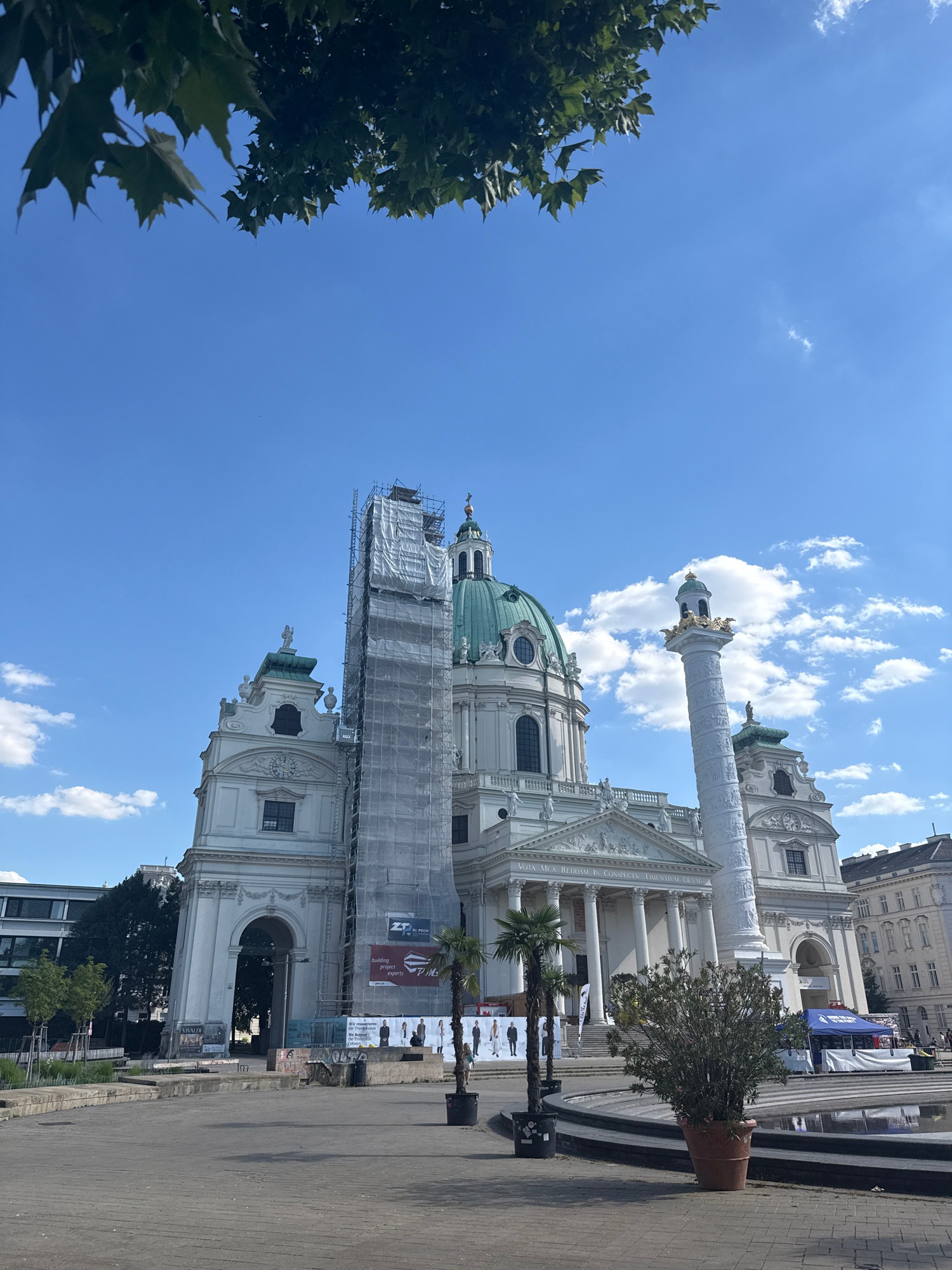 Vienna, Austria