Wednesday, April 22, 2026 · Updated Wednesday, April 22, 2026
Yaru Karez, Pakistan
Deep within the arid landscapes of Pakistan, particularly around areas like Saranan and Yaru Karez, lie the mesmerizing remnants of ancient mud-brick civilizations. These archaeological sites offer a profound glimpse into a bygone era, with vast networks of crumbling walls and foundations stretching as far as the eye can see, creating a labyrinthine tapestry across the desert floor.
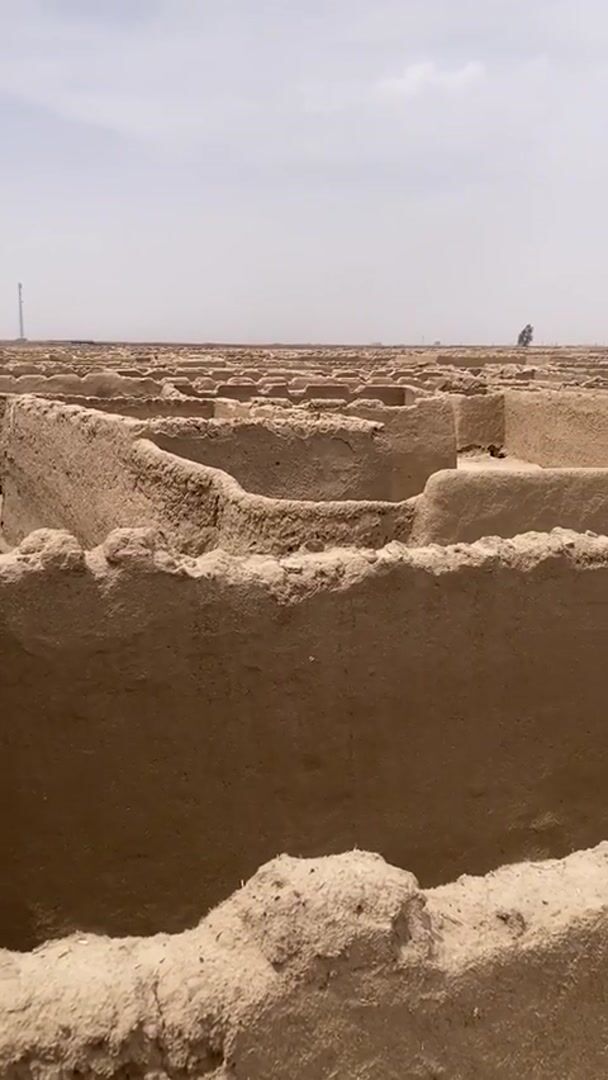
The video displays an expansive aerial view of an ancient or abandoned mud-brick settlement, likely an archaeological site, in Saranan, Pakistan. The scene is dominated by numerous low mud-brick walls and foundations, stretching into the distance and forming a dense, maze-like grid. The structures are uniform in their sandy-brown color and construction material, indicative of traditional architecture in arid regions.
The camera pans slowly from left to right, revealing the vast scale of the site. In the far distance, a single slender tree and a cell tower are faintly visible against the horizon. The sky is a light, hazy gray, suggesting either an overcast day or atmospheric dust common in desert environments. There are no people visible, and no discernible activity other than the camera's movement. The overall impression is one of historical significance and abandonment, with the weathered mud walls standing as remnants of a past community. No text is visible in the video.
The structures, primarily composed of earthen materials like mud brick or adobe, have gracefully weathered centuries of exposure to the elements. What remains are low walls, intricate pathways, and the skeletal outlines of what were once bustling homes and communal spaces. The scale of these abandoned settlements, such as those near Derawar Fort, is truly remarkable, hinting at complex societies that once thrived in these challenging environments. From an aerial perspective, the sites reveal an ordered, maze-like grid, a testament to ancient urban planning.
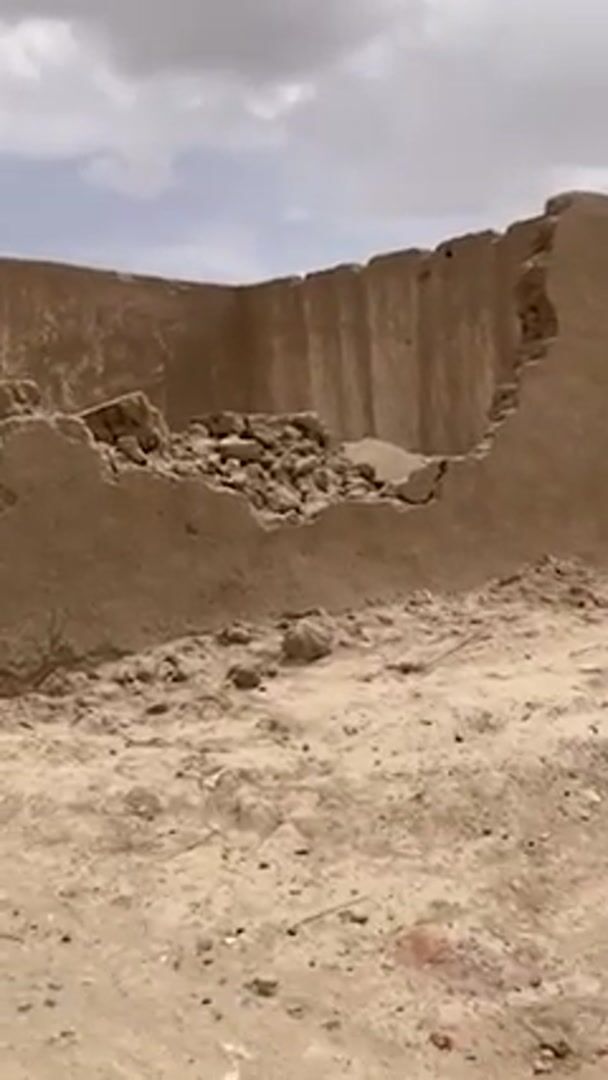
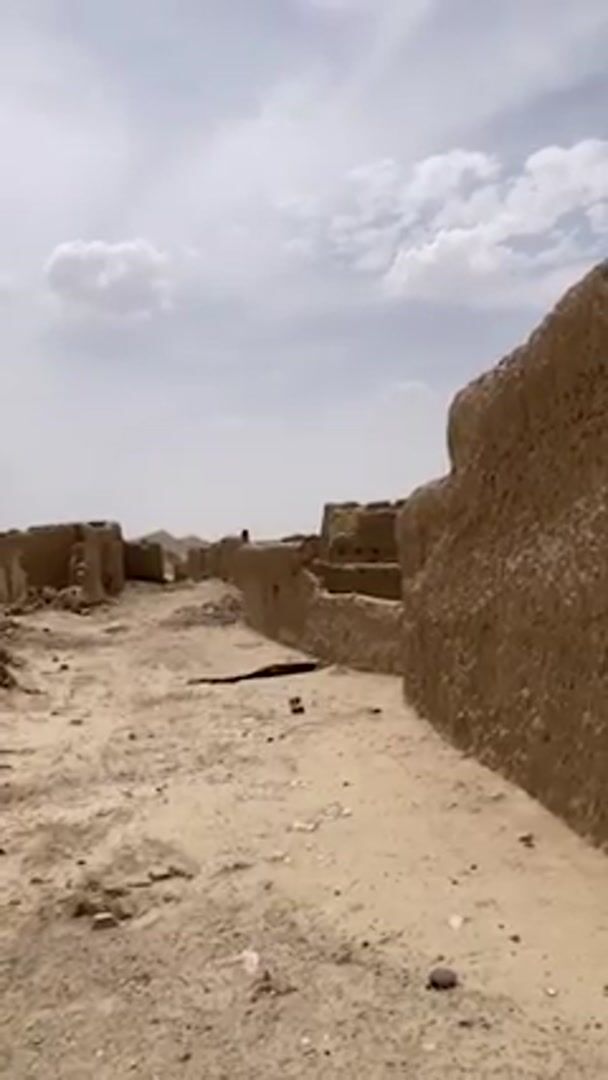
The video showcases the ruins of mud-brick structures under a cloudy sky. The ground is dry, dusty, and uneven, covered with scattered debris from collapsed walls.
The camera begins by panning right, revealing a heavily damaged mud-brick wall with a large section missing, exposing a pile of rocks and crumbled earth within. As the pan continues, a more intact section of a wall comes into view, characterized by its earthen-brown color and rough texture. This wall has a distinct concrete base and features vertical sections that appear to be buttresses or remnants of doorways.
The camera then moves around a corner, presenting a longer stretch of these dilapidated mud-brick walls, some partially collapsed and others showing significant erosion. The interior areas of the structures are filled with rubble and uneven terrain. Small pieces of modern trash, like a plastic bottle and wrappers, are visible on the ground, contrasting with the ancient appearance of the ruins. The sky is overcast with patches of lighter clouds. An audible engine sound or machinery noise is present throughout the video. No people are visible. The setting suggests an arid or semi-desert environment, consistent with the Yaru Karez region of Pakistan.
The surrounding environment is characterized by its stark beauty: sandy grounds interspersed with sparse patches of green vegetation, all under a vast, often hazy sky. Distant hills and mountains frame the horizon, adding to the sense of isolation and timelessness that pervades these historical grounds. The quiet desolation of these ruins invites contemplation on the impermanence of human endeavor and the enduring power of nature.
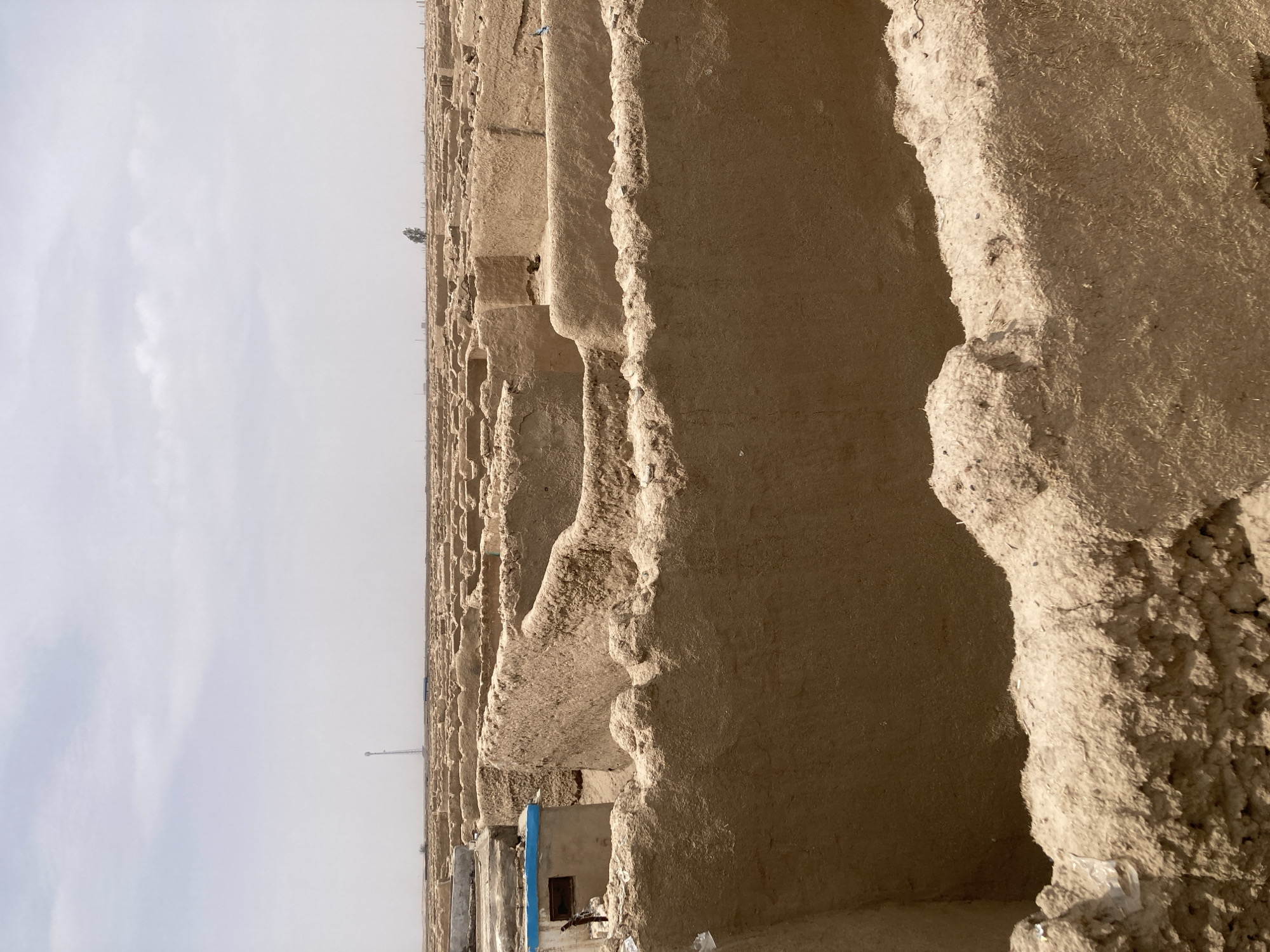
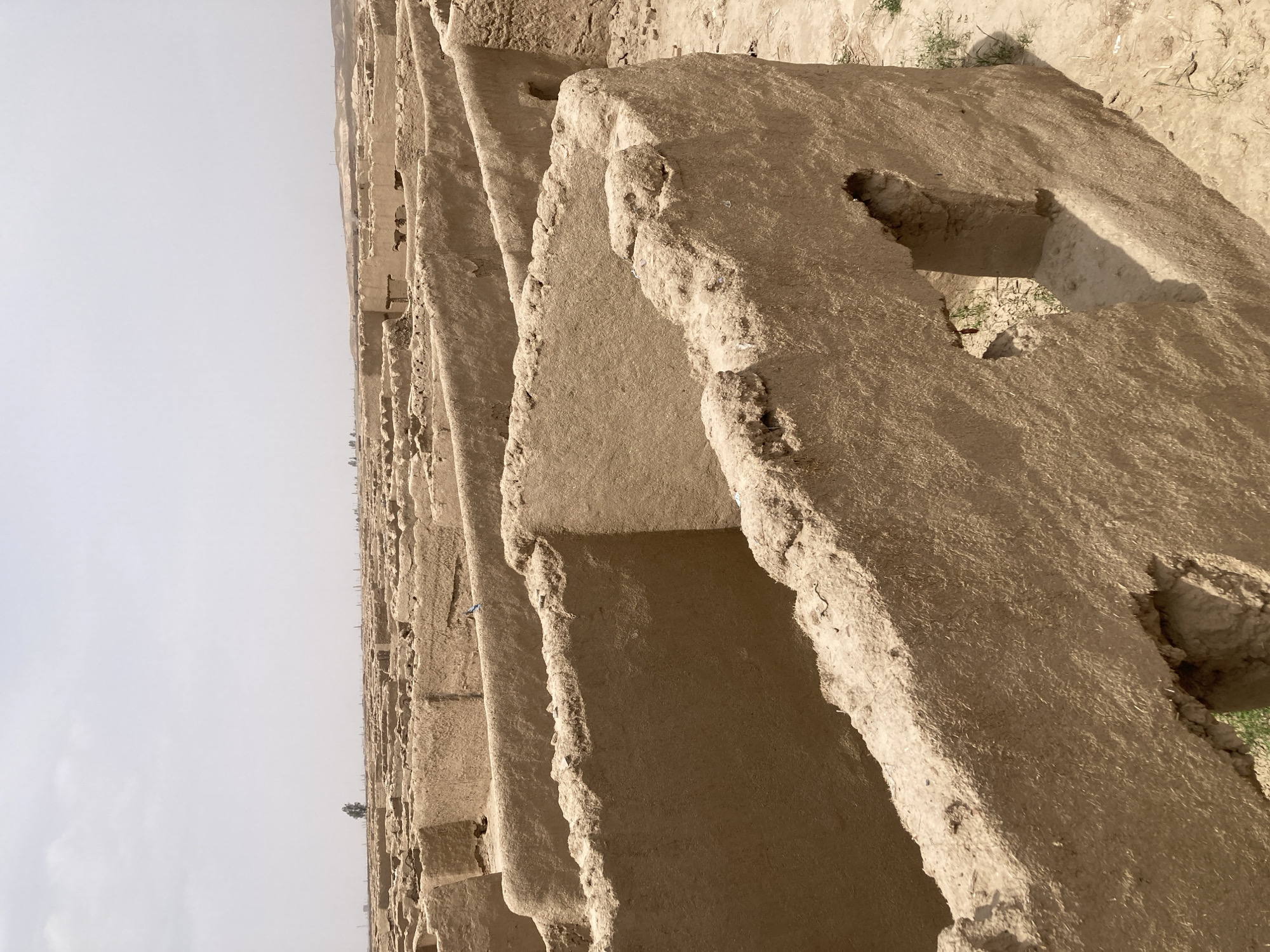
The image shows the ruins of Derawar Fort, located near the city of Saranan in Pakistan. The scene depicts an extensive network of interconnected structures with crumbling mud walls, forming a maze-like pattern. The architecture is characterized by rounded and rectangular shapes. The ground between the structures is sandy, with sparse patches of vegetation in some areas. In the background, the landscape is flat and hazy, with a single tree visible in the distance. The overall impression is one of an ancient and desolate settlement.
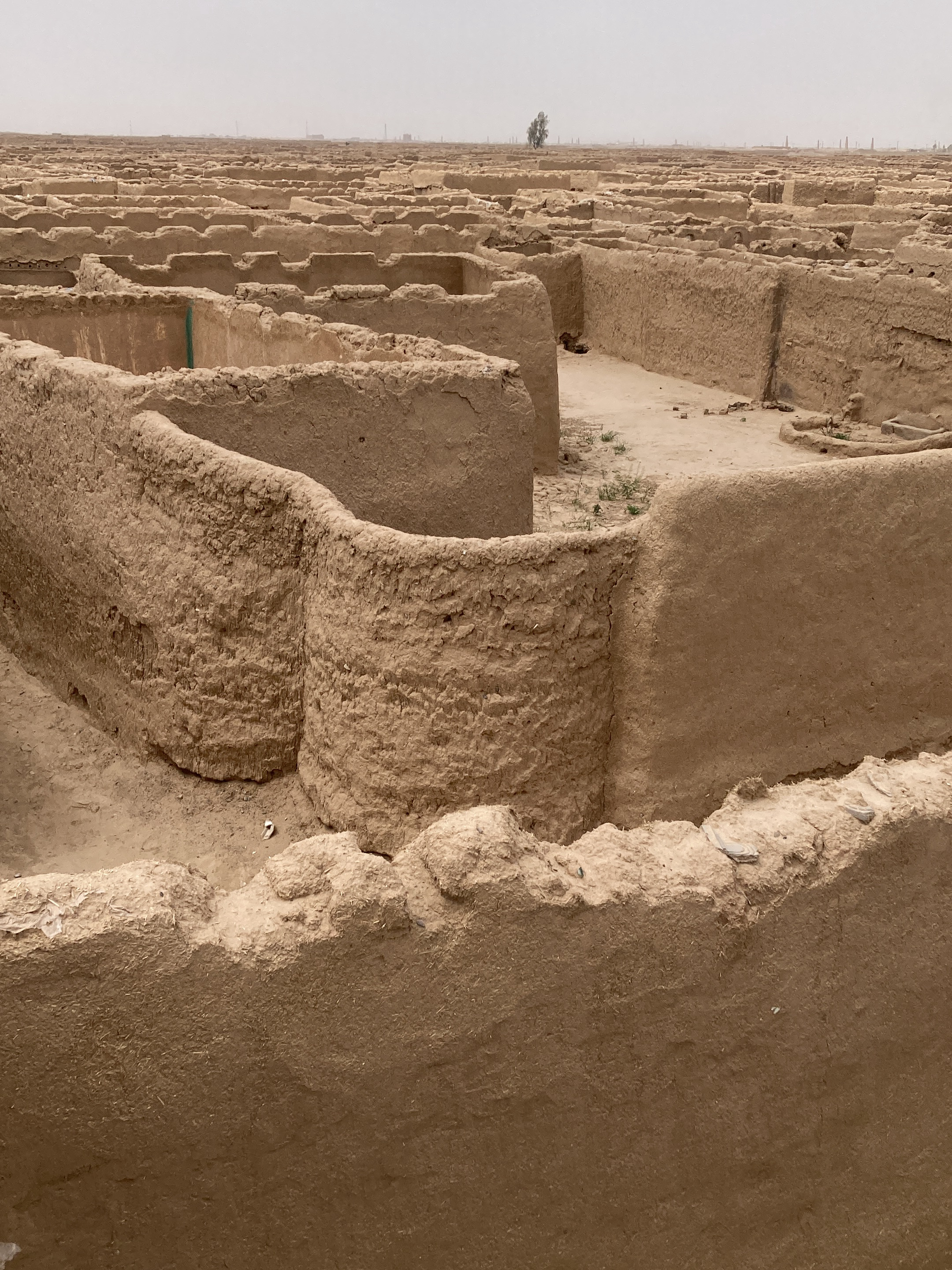
The image depicts a vast, arid landscape dominated by an extensive array of ancient or traditional mud-brick structures, likely kashans or a settlement, stretching into the distant horizon under an overcast sky. The photograph, correctly oriented, shows these earth-colored formations filling the right side of the frame, extending from the foreground to the background.
The structures are characterized by their multi-layered, stepped, and heavily eroded appearance, suggesting significant age and exposure to weather. They are constructed from what appears to be sun-dried mud or adobe, with visible textures of coarse earth and embedded fibers (possibly straw) in the close-up views. The edges of these formations are irregular and jagged due to extensive weathering.
The sky occupies the left half of the frame and is a uniform, light gray, indicating overcast conditions or a hazy atmosphere. The diffused light results in soft shadows and a general lack of harsh contrasts across the scene.
In the foreground, towards the right, a small, partially obscured structure with a distinct blue-painted section and a small, dark rectangular opening is visible, offering a subtle hint of recent human presence or habitation amidst the older ruins. Further in the distance, a solitary, sparse tree stands out against the muted backdrop. A faint, slender white pole or tower is also barely discernible on the distant horizon.
No human activity or individuals are visible in the scene. The overall impression is one of stillness, desolation, and historical depth. Given the context of Saranan, Pakistan, these structures are indicative of traditional architecture adapted to a desert or semi-desert environment, reflecting a rich cultural heritage. There is no visible text in the image.
Visitors to these sites embark on a journey through history, walking dirt paths that once bustled with life. The occasional glimpse of a more intact structure, perhaps with a faded hint of blue paint, or a lone distant tree, serves as a focal point in the expansive, uniform brown landscape. These ancient mud-brick ruins are not just archaeological sites; they are profound cultural heritage, offering a unique window into Pakistan's rich, layered past and the mysteries of its forgotten empires.
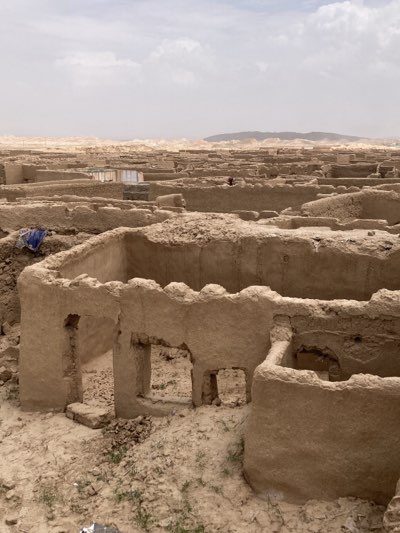
The image depicts an extensive view of the ruined city of Saranan, Pakistan. The scene shows numerous decaying mud-brick structures, mostly roofless, spread across an arid landscape. The sky is overcast, with a hazy horizon. In the background, elevated terrain can be seen. Some of the structures contain patches of water. A piece of blue fabric rests atop a wall towards the left-hand side of the image. In the middle distance, a figure in red is visible. The foreground is primarily sandy soil, with sparse vegetation.
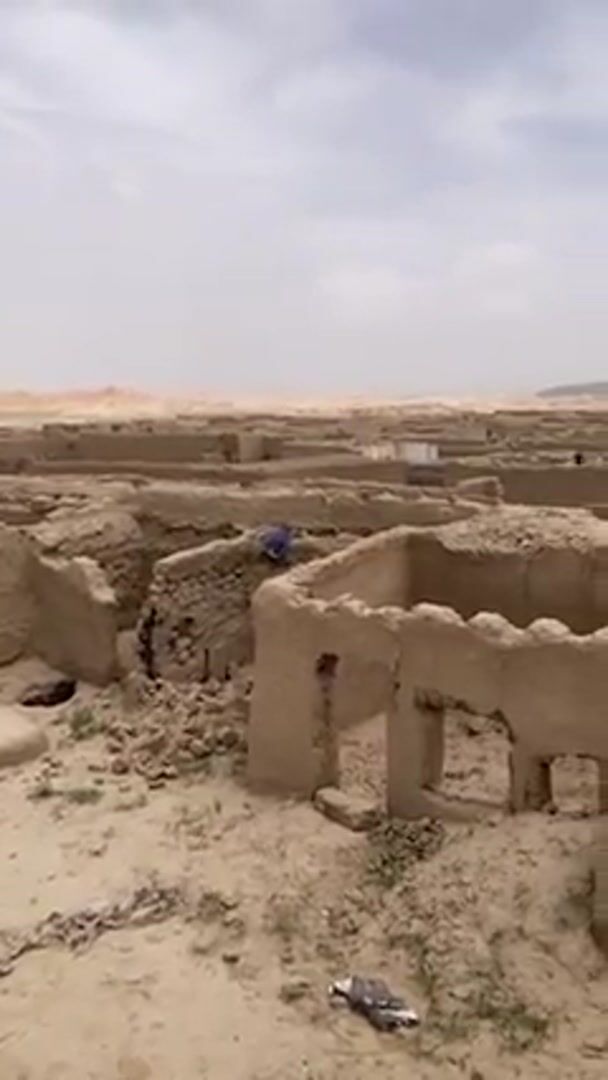
The video presents an extensive panorama of an abandoned settlement, identified as Saranan, Pakistan. The scene is dominated by numerous ruined mud-brick structures, appearing as low walls and foundations of what were once buildings, stretching far into the arid landscape. The ground is dry, sandy, and strewn with debris, including a white plastic bag and some very sparse green vegetation. One structure features a section of corrugated metal sheeting, painted blue along its lower edge. The sky is overcast with light clouds, and distant hills or mountains are visible on the horizon. No people or specific activities are visible; the video simply pans across the desolate ruins under daylight conditions.
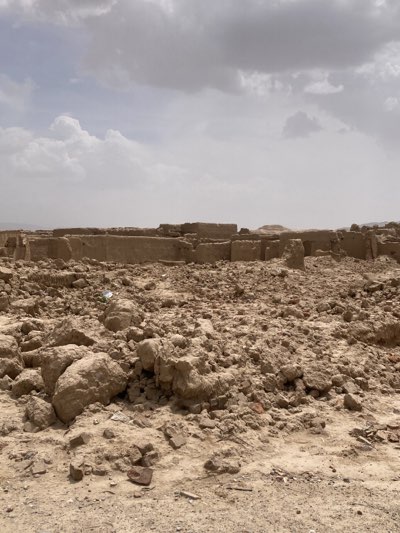
The image captures an arid, desolate landscape dominated by ancient or ruined structures under an overcast sky, characteristic of a dry region like Yaru Karez, Pakistan.
In the foreground, the ground is covered extensively with loose, light brown soil, sand, and numerous irregular chunks of dried earth and broken building materials, likely mud bricks or adobe. These fragments vary in size, with larger clods and smaller debris scattered across the surface. A small piece of silvery litter, possibly plastic, is visible near the center-left.
The midground and background feature the low, eroded remains of structures, appearing as continuous walls and foundations. These structures, also made of earth-toned material, show significant decay and blend into the surrounding environment, suggesting they are either very old or long abandoned. They form a linear arrangement, hinting at the layout of former buildings or enclosures. In the far distance, faint, low hills or elevated terrain are visible, merging with the hazy sky.
The sky, occupying the upper portion of the image, is covered by diffuse, light grey and white clouds, indicating an overcast daytime. Despite the cloud cover, the overall illumination is bright. No people are visible, and no activity is taking place, contributing to a sense of stillness and historical depth. The scene evokes feelings of antiquity, natural weathering, and abandonment. There is no visible text in the image.
The video presents a panoramic view of an extensive archaeological site or an abandoned settlement in Saranan, Pakistan. The scene is dominated by a vast labyrinth of dilapidated mud-brick structures, most of which are reduced to low walls, suggesting former homes or buildings. The walls are made of light brown, earthen material, showing signs of age and erosion.
The camera slowly pans from left to right, revealing the sheer scale of the ruins, which stretch far into the distance under a light gray, hazy sky. The ground within and around the structures is sandy, with sparse patches of green vegetation, indicating an arid or semi-arid environment. In the background, distant hills or low mountains are visible, blending with the hazy horizon.
A few slightly more intact structures, including one with blue paint on its upper section, are visible closer to the camera, standing out subtly from the uniform brown landscape. A lone, distant tree or shrub can be seen further out in the landscape, providing the only visible greenery apart from the ground cover. The overall impression is one of an ancient or long-abandoned city or village, with a sense of historical depth and desolation.
The video presents a panning view of extensive ruins in what appears to be an arid or desert landscape. The scene is dominated by the remnants of mud-brick structures, many of which have collapsed into piles of rubble and debris, littering the sandy ground. Initially, a dirt path is visible between two lines of decaying walls, extending into the distance. As the camera pans from right to left, a wider area of destruction is revealed, showing numerous collapsed buildings and fragmented walls. In the far background, faint outlines of hills or mountains are visible beneath a cloudy, yet bright, sky. The overall impression is one of desolation and abandonment. The footage seems to be captured from a moving vehicle, with a small portion of a car window visible at the bottom right towards the end of the pan. No people or active events are present, only the silent ruins of a past settlement. The location context provided is Yaru Karez, Pakistan.
The video displays an expansive aerial view of an ancient or abandoned mud-brick settlement, likely an archaeological site, in Saranan, Pakistan. The scene is dominated by numerous low mud-brick walls and foundations, stretching into the distance and forming a dense, maze-like grid. The structures are uniform in their sandy-brown color and construction material, indicative of traditional architecture in arid regions.
The camera pans slowly from left to right, revealing the vast scale of the site. In the far distance, a single slender tree and a cell tower are faintly visible against the horizon. The sky is a light, hazy gray, suggesting either an overcast day or atmospheric dust common in desert environments. There are no people visible, and no discernible activity other than the camera's movement. The overall impression is one of historical significance and abandonment, with the weathered mud walls standing as remnants of a past community. No text is visible in the video.
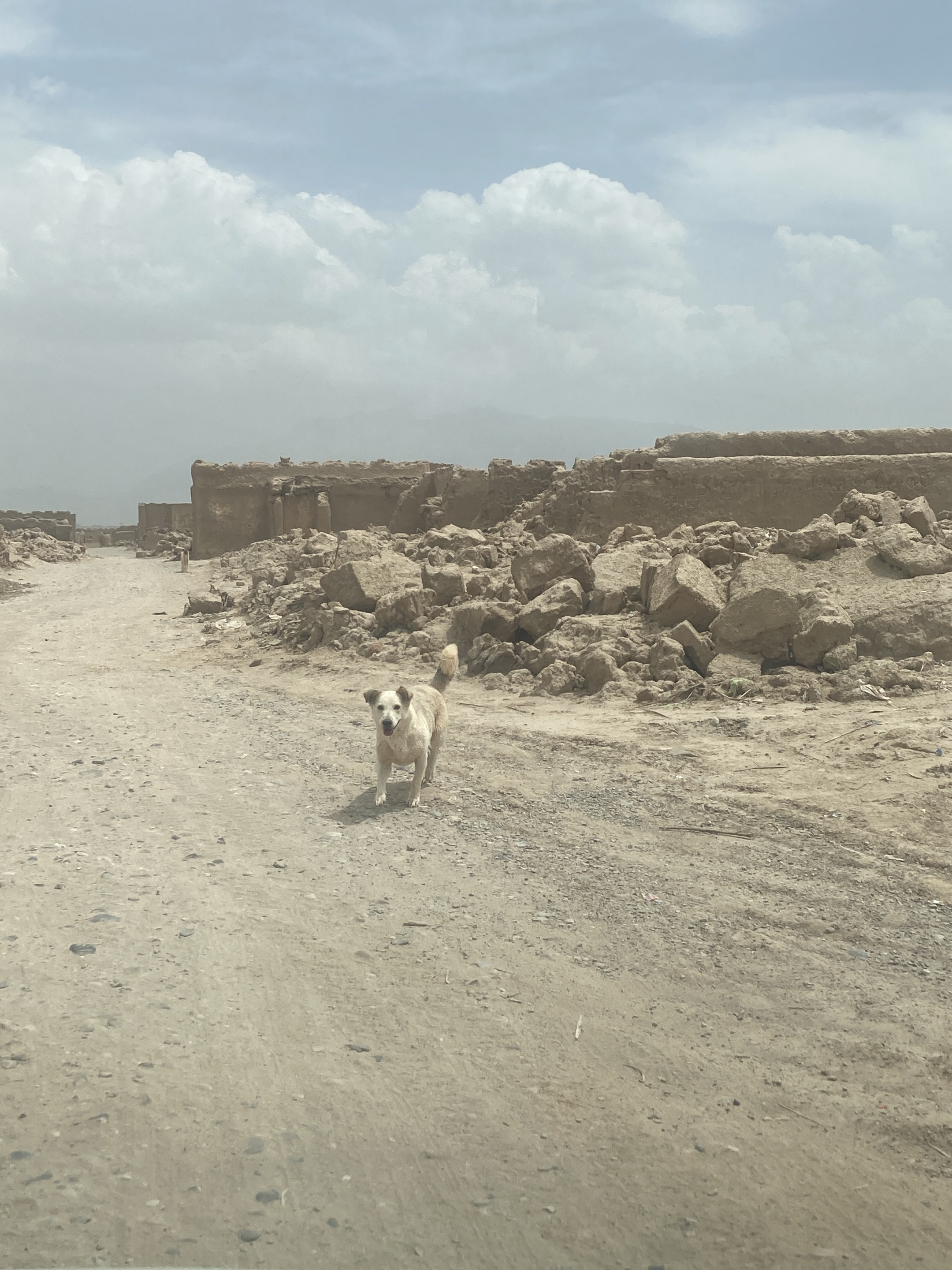
The image depicts a tan-colored dog standing on a dirt road in Yaru Karez, Pakistan. Behind the dog, to the right, are piles of rubble and remnants of mud-brick structures. Similar ruins line the left side of the road, leading into the distance. The sky is overcast with visible clouds. In the background, a distant, hazy mountain range is visible. No people are present in the frame.
The video showcases the ruins of mud-brick structures under a cloudy sky. The ground is dry, dusty, and uneven, covered with scattered debris from collapsed walls.
The camera begins by panning right, revealing a heavily damaged mud-brick wall with a large section missing, exposing a pile of rocks and crumbled earth within. As the pan continues, a more intact section of a wall comes into view, characterized by its earthen-brown color and rough texture. This wall has a distinct concrete base and features vertical sections that appear to be buttresses or remnants of doorways.
The camera then moves around a corner, presenting a longer stretch of these dilapidated mud-brick walls, some partially collapsed and others showing significant erosion. The interior areas of the structures are filled with rubble and uneven terrain. Small pieces of modern trash, like a plastic bottle and wrappers, are visible on the ground, contrasting with the ancient appearance of the ruins. The sky is overcast with patches of lighter clouds. An audible engine sound or machinery noise is present throughout the video. No people are visible. The setting suggests an arid or semi-desert environment, consistent with the Yaru Karez region of Pakistan.
This image depicts the ruins of an ancient mud-brick structure in Saranan, Pakistan. The structure is composed of multiple layers or platforms, with visible eroded edges and a rectangular opening on one of the higher levels. The environment is arid and dusty, with sparse vegetation. The sky is overcast, providing muted lighting.
The image shows the ruins of Derawar Fort, located near the city of Saranan in Pakistan. The scene depicts an extensive network of interconnected structures with crumbling mud walls, forming a maze-like pattern. The architecture is characterized by rounded and rectangular shapes. The ground between the structures is sandy, with sparse patches of vegetation in some areas. In the background, the landscape is flat and hazy, with a single tree visible in the distance. The overall impression is one of an ancient and desolate settlement.
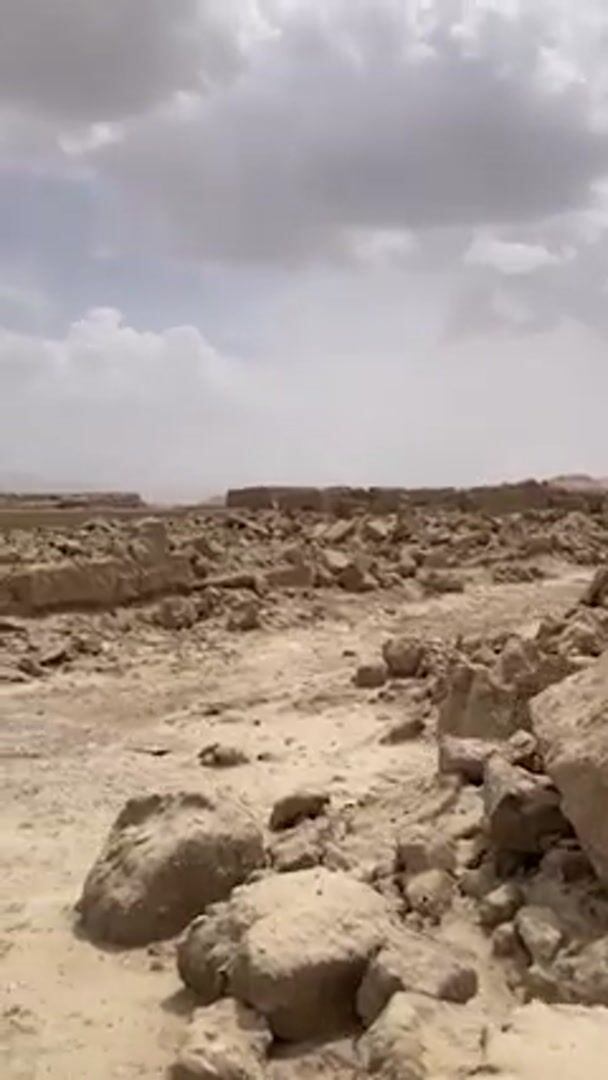
The video captures a wide shot of a desolate, arid landscape, likely filmed from a slowly moving vehicle as indicated by the visible side mirror in the bottom left of the frame. The scene is dominated by a dry, dusty ground covered with large, light-colored rocks and the crumbling remains of what appear to be ancient mud-brick or adobe structures. These ruins are scattered across the mid-ground, extending into the distance where more intact, flat-topped structures are faintly visible under a hazy sky. The sky itself is partially overcast with large, white and grey clouds. The overall impression is one of historical ruins in a desert or semi-desert environment, consistent with the provided location context of Yaru Karez, Pakistan. No people or visible text are present in the video.
The image depicts a vast, arid landscape dominated by an extensive array of ancient or traditional mud-brick structures, likely kashans or a settlement, stretching into the distant horizon under an overcast sky. The photograph, correctly oriented, shows these earth-colored formations filling the right side of the frame, extending from the foreground to the background.
The structures are characterized by their multi-layered, stepped, and heavily eroded appearance, suggesting significant age and exposure to weather. They are constructed from what appears to be sun-dried mud or adobe, with visible textures of coarse earth and embedded fibers (possibly straw) in the close-up views. The edges of these formations are irregular and jagged due to extensive weathering.
The sky occupies the left half of the frame and is a uniform, light gray, indicating overcast conditions or a hazy atmosphere. The diffused light results in soft shadows and a general lack of harsh contrasts across the scene.
In the foreground, towards the right, a small, partially obscured structure with a distinct blue-painted section and a small, dark rectangular opening is visible, offering a subtle hint of recent human presence or habitation amidst the older ruins. Further in the distance, a solitary, sparse tree stands out against the muted backdrop. A faint, slender white pole or tower is also barely discernible on the distant horizon.
No human activity or individuals are visible in the scene. The overall impression is one of stillness, desolation, and historical depth. Given the context of Saranan, Pakistan, these structures are indicative of traditional architecture adapted to a desert or semi-desert environment, reflecting a rich cultural heritage. There is no visible text in the image.
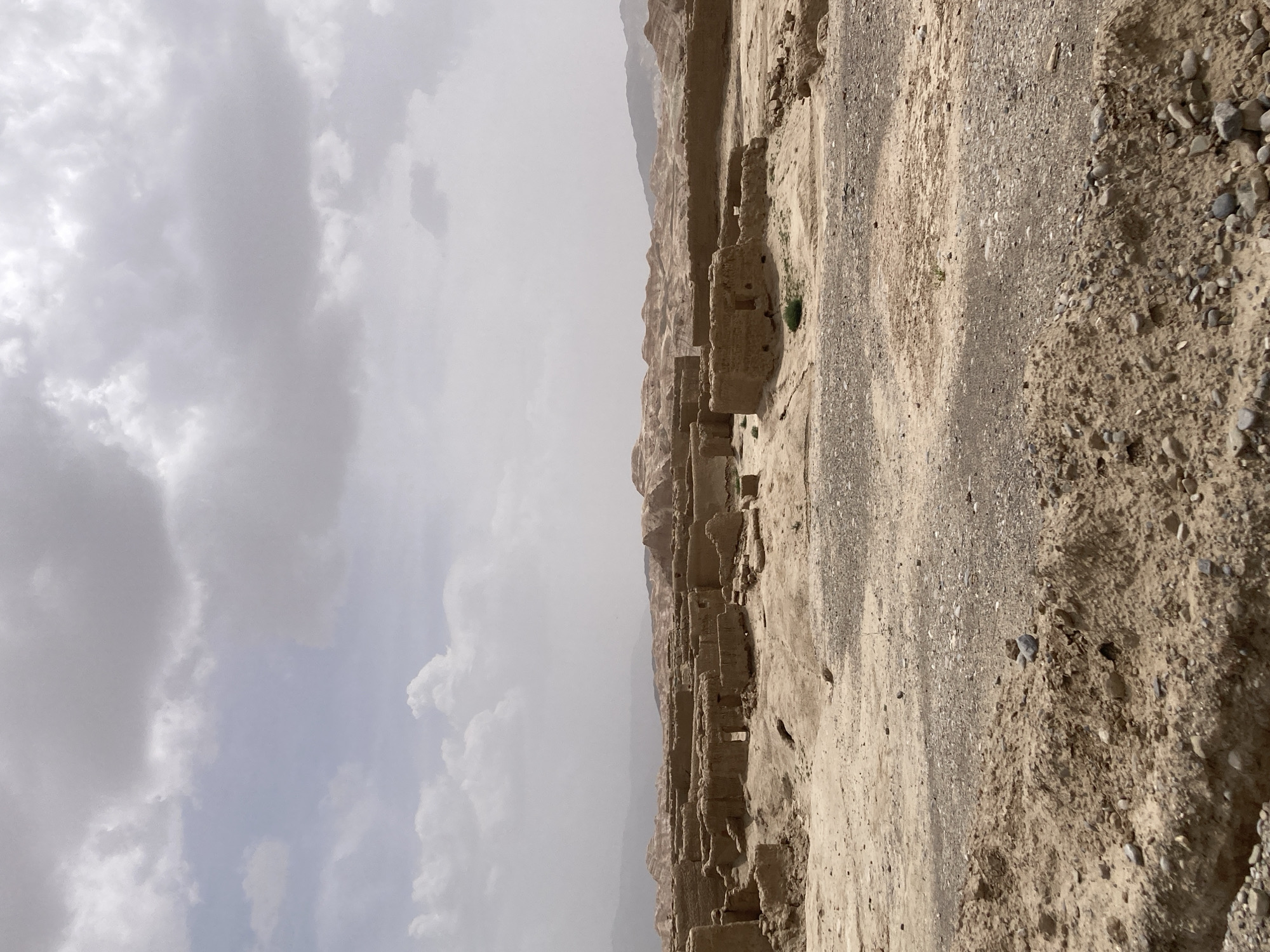
The image captures a vast, arid landscape in Saranan, Pakistan, under an overcast sky. The horizon line runs horizontally across the middle of the frame, separating the sky from the rugged terrain below.
In the foreground, a rough dirt and gravel track or path stretches from the right side of the image, leading towards the left. The ground is dry, with varying textures of packed earth, small stones, and larger pebbles. Sparse, small patches of green vegetation can be seen dotted across the dusty ground.
The midground is dominated by what appears to be the extensive ruins of an ancient settlement or fortress. These structures are made of earthen materials, likely mud brick or adobe, and are in various states of decay. Walls, foundations, and remnants of buildings line a raised ridge or plateau, suggesting a once-inhabited area. Some structures still show distinct openings or window-like features, hinting at their original purpose. The weathered architecture blends seamlessly with the surrounding natural environment, reflecting centuries of exposure to the elements.
In the background, a range of mountains or hills rises, their peaks receding into a light atmospheric haze, suggesting distance and the vastness of the landscape. The sky above is largely covered by light grey, diffuse clouds, indicating an overcast day. There are no clear shadows, and the overall lighting is soft and even.
No human activity or individuals are visible in the scene. There is no visible text. The image evokes a sense of timelessness and historical significance in a desolate, natural setting.