
b1vwlylqLyTb4V2s5VmPA4euyLP2

FM-euyLP2

Creator

Fri, Jun 19, 2026, 04:55 PM

7d ago

Santiago De Compostela, Spain

42.88000, -8.54600

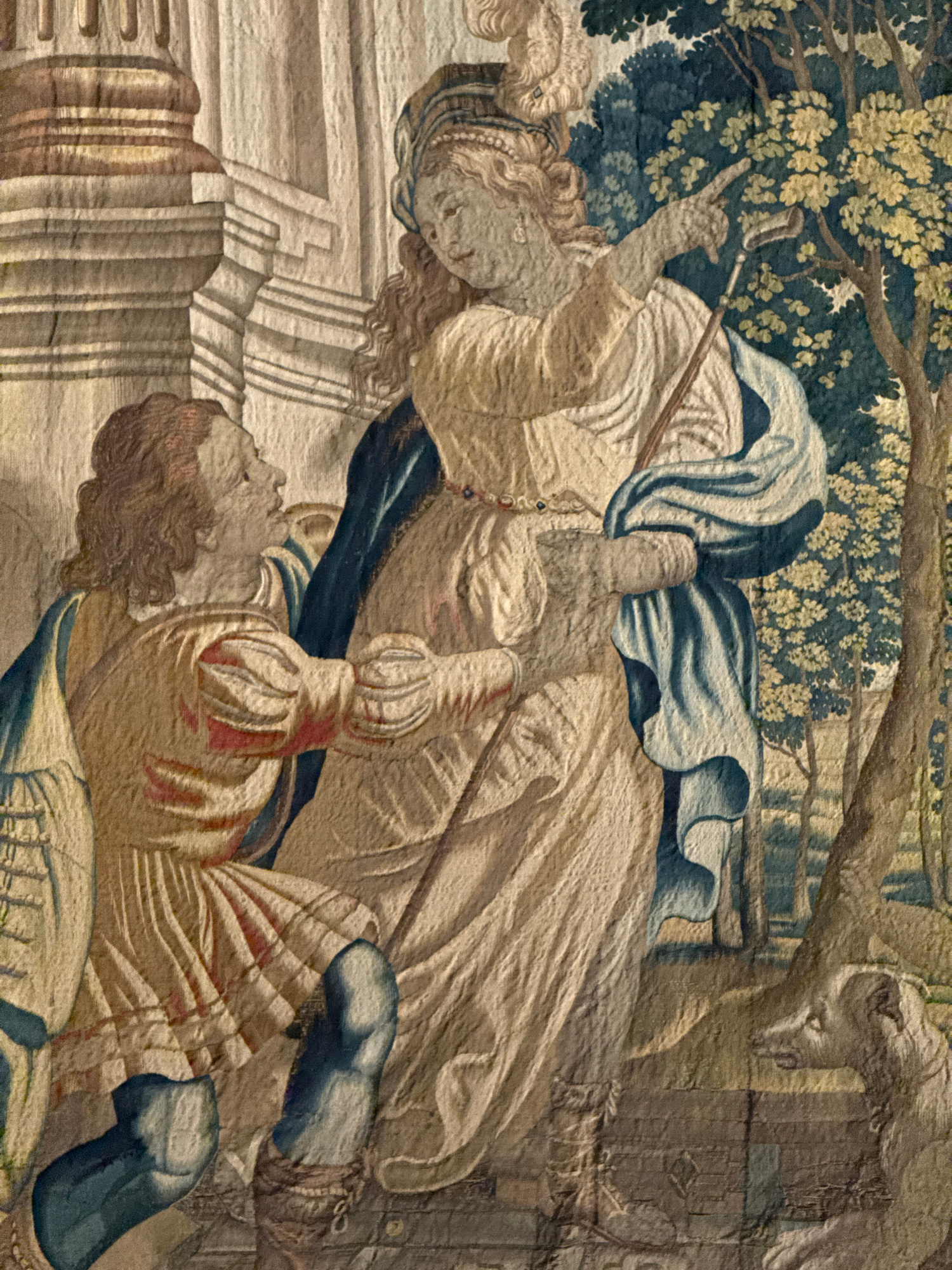
This tapestry depicts a scene with multiple figures in what appears to be an outdoor setting, possibly a garden or forest, suggested by the lush foliage and trees in the upper left. Two prominent figu…read more

longing
admiration
yearning
hopeful
devotion

Technical

ID

0d2b73a8-4338-40a6-8

Usage Rights

This media is free for non-commercial use with proper attribution.

Commercial use, AI/ML training, and derivative works are prohibited without explicit consent from the creator.

Licensed under CC BY-NC 4.0 with additional AI/ML restrictions. Full terms →

This tapestry depicts a scene with multiple figures in what appears to be an outdoor setting, possibly a garden or forest, suggested by the lush foliage and trees in the upper left. Two prominent figures, a woman and a man, are central to the composition. The woman, in the upper part of the image, is dressed in flowing garments of white and blue and holds a staff or rod. Her head is turned, and her expression is difficult to discern clearly due to the tapestry's texture and detail. She seems to be in motion, perhaps gesturing or walking. Below and to the right of the woman lies a man, also richly dressed in attire that includes striped fabric, red accents, and blue leg coverings. He appears to be either lying down or wounded, with his head turned to the side. His posture suggests a state of repose or vulnerability. In the lower left, architectural elements resembling steps or platforms are visible, rendered in muted tones. The overall color palette is dominated by earthy browns, blues, greens, and creams, typical of historical tapestries. The lighting seems subdued, consistent with an indoor or shaded outdoor environment. There is no visible text in the image. The scene evokes a narrative, possibly from mythology, history, or a religious story, though the specific event or context is not explicitly clear from the visual information alone. The style suggests a Renaissance or Baroque period of art. The location context of Santiago de Compostela, Spain, might suggest a connection to a pilgrimage or a historical event relevant to the region, but this is not directly represented in the tapestry itself.